Hi Friends!
We offer PICK UP or LOCAL DELIVERY only (NO SHIPPING).
Thank you!
Thursday–Sunday, 10am–4pm | 941-322-1915
We offer PICK UP or LOCAL DELIVERY only (NO SHIPPING).
Thank you!
Thursday–Sunday, 10am–4pm | 941-322-1915
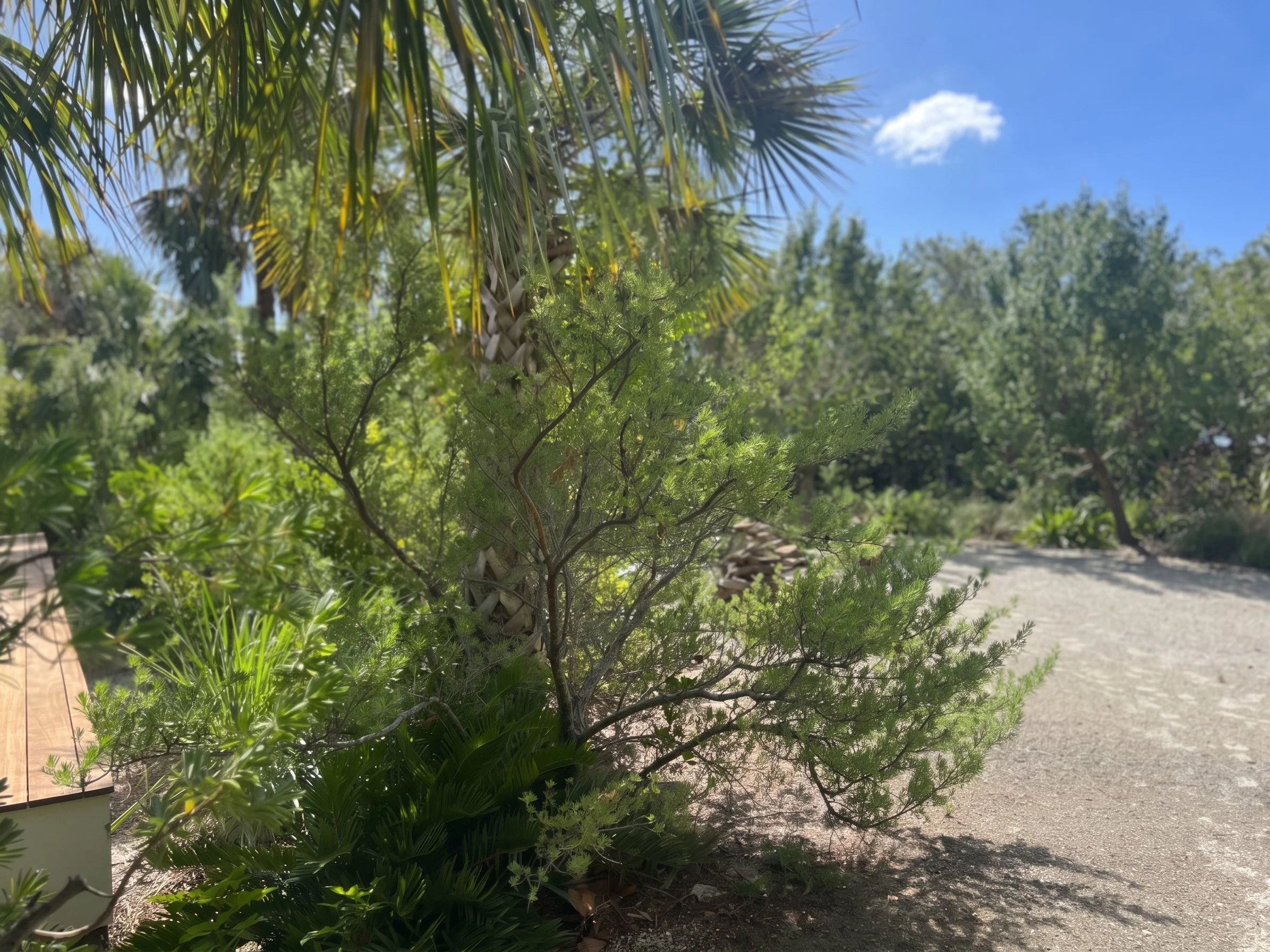
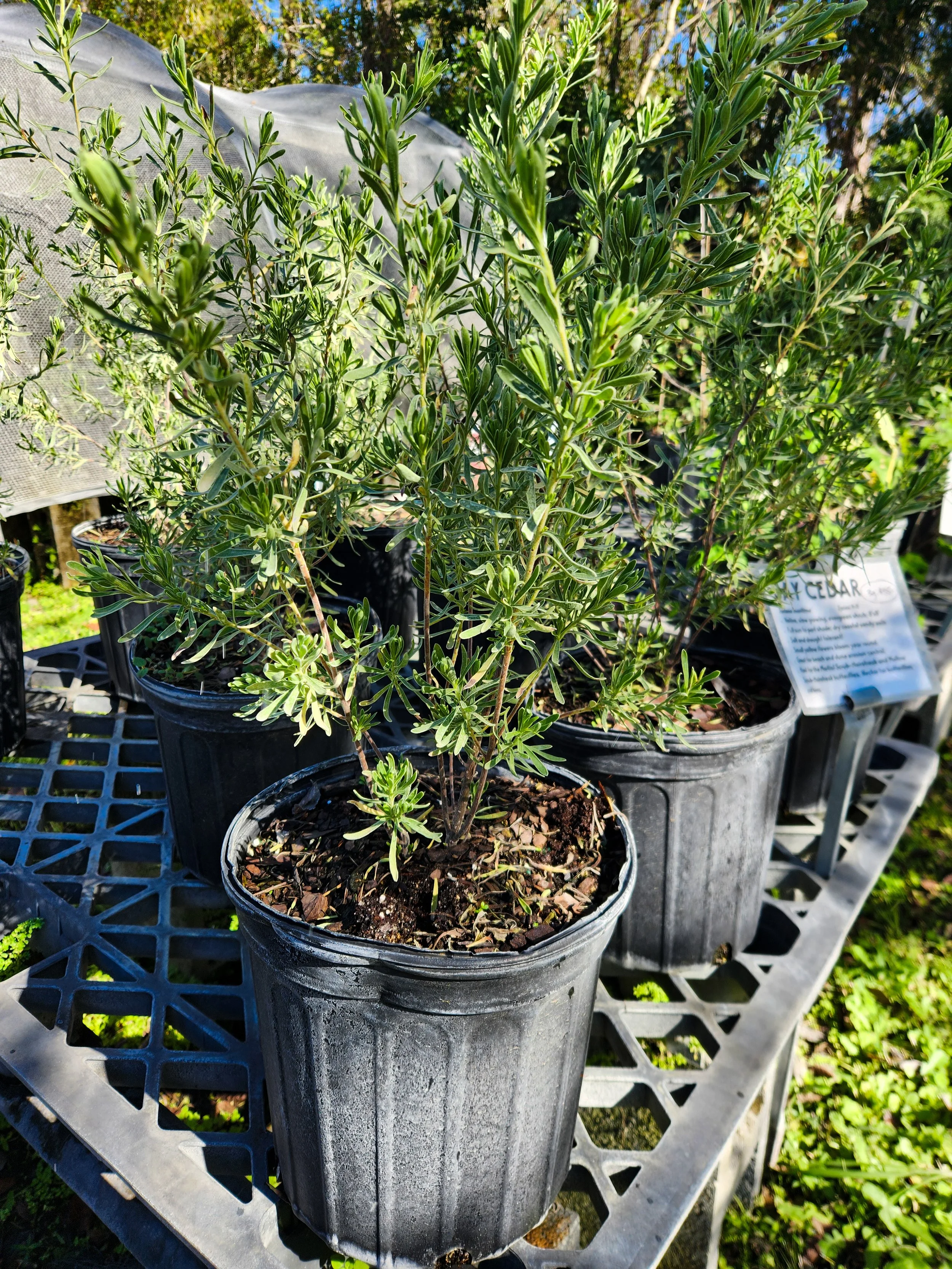
Suriana maritima
Bay Cedar is a slower growing, native, evergreen coastal shrub that is naturally found on sand dunes and beaches. This hurricane resistant shrub can weather storm surges, and is salt spray and drought tolerant! The Bay Cedar is excellent for erosion control of dunes and beaches. Small yellow flowers bloom year round and attract pollinators, and it is a host plant for certain hairstreak butterflies.
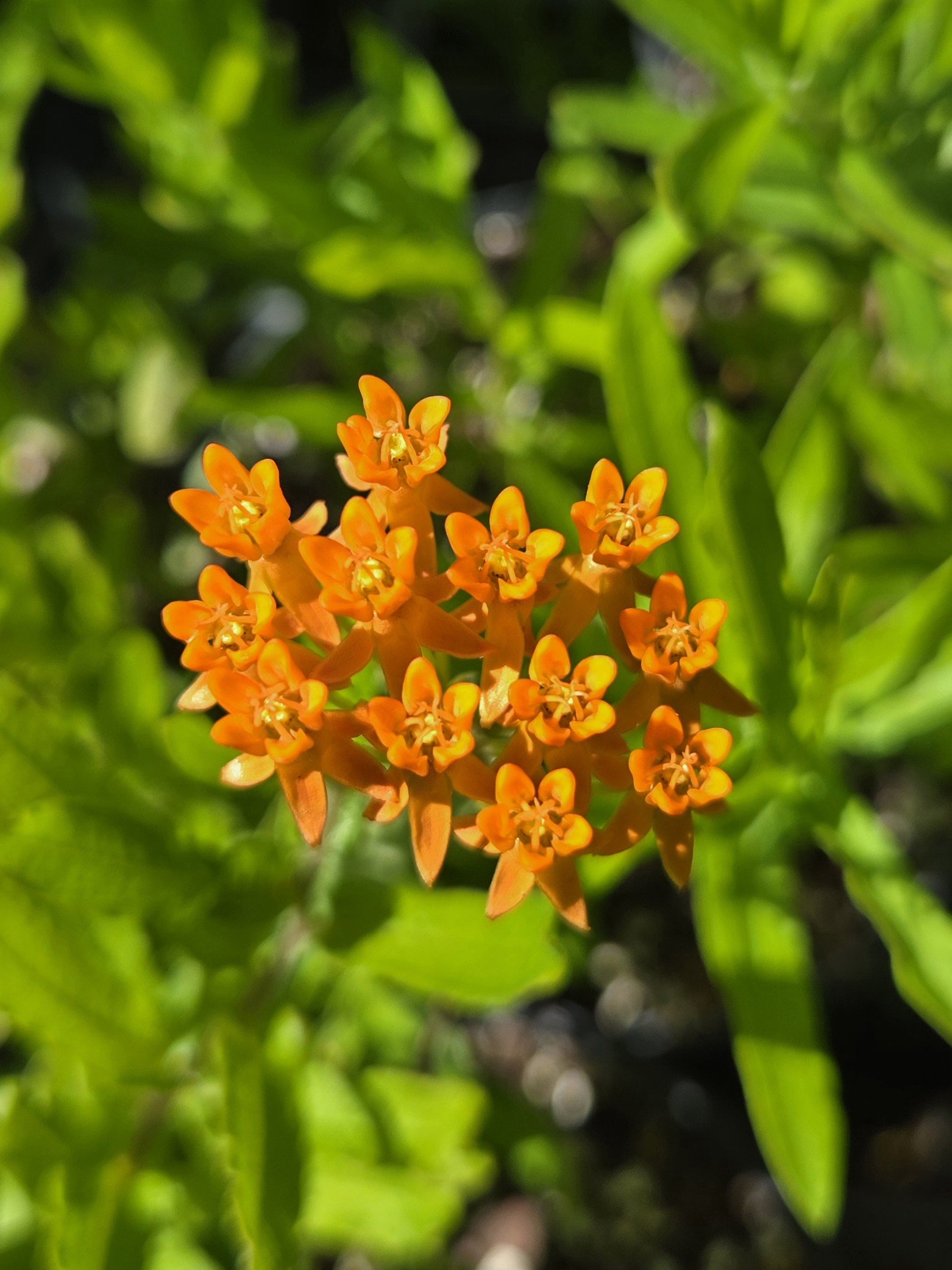
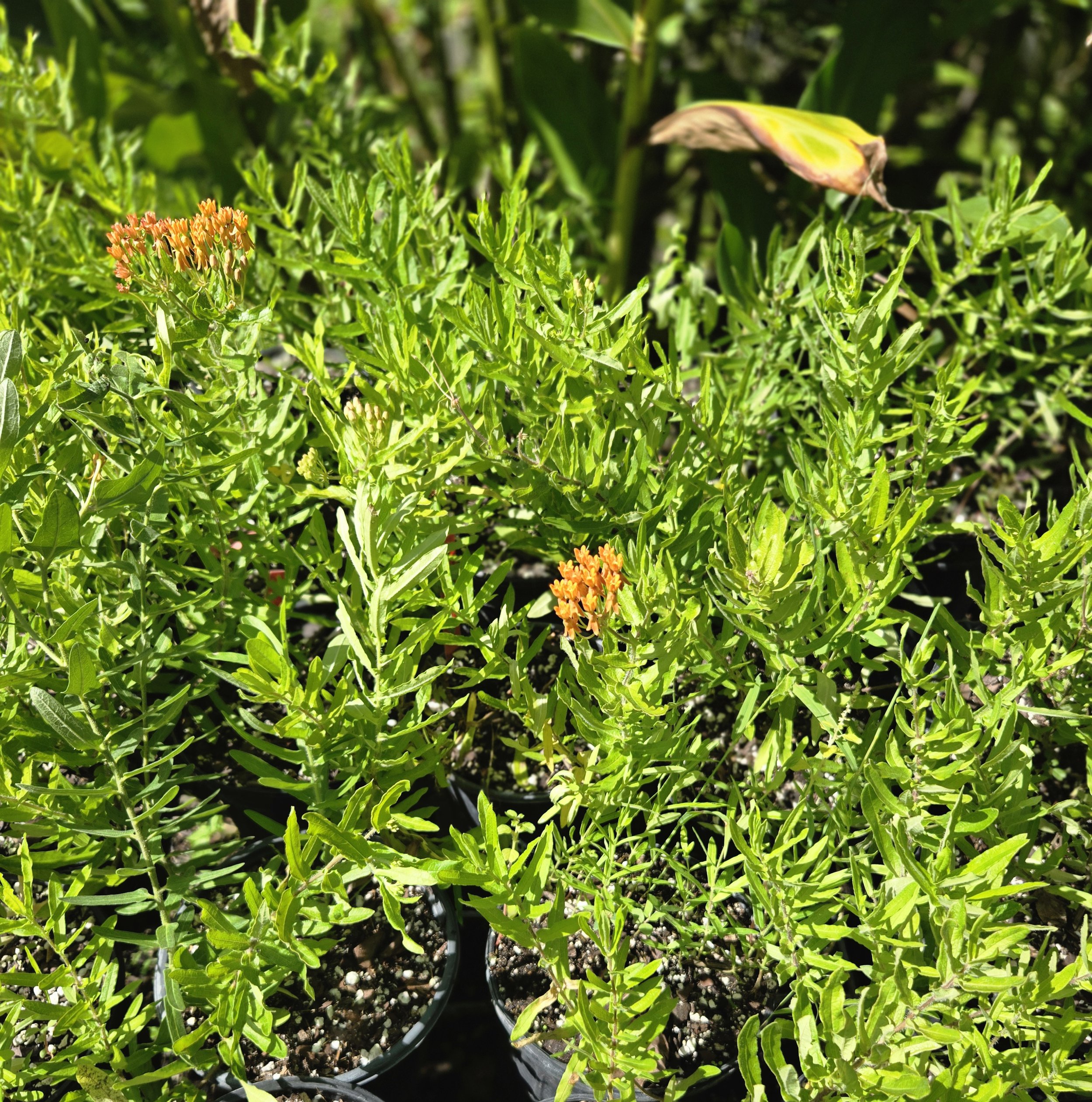
Asclepias tuberosa
This Florida native milkweed is lower growing at 1-3' and has bright red orange blooms summer-fall. Butterfly milkweed is a great choice for Monarch lovers with dry, sunny yards. Found naturally in hot sunny and dry sandhill environments it does well in landscapes with full sun and no irrigation. This milkweed is not only a host to Monarch and Queen butterflies but is also a pollinator magnet!
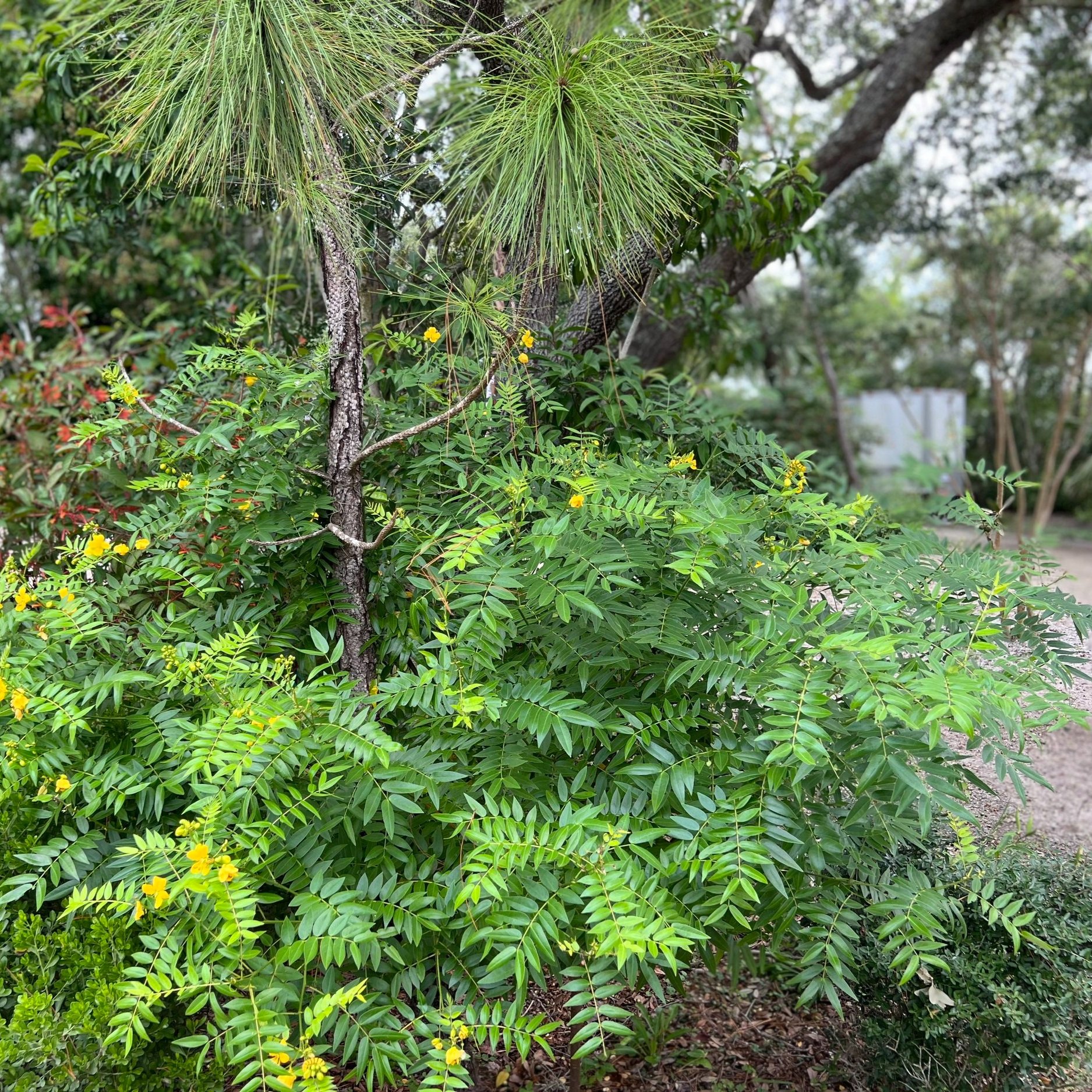
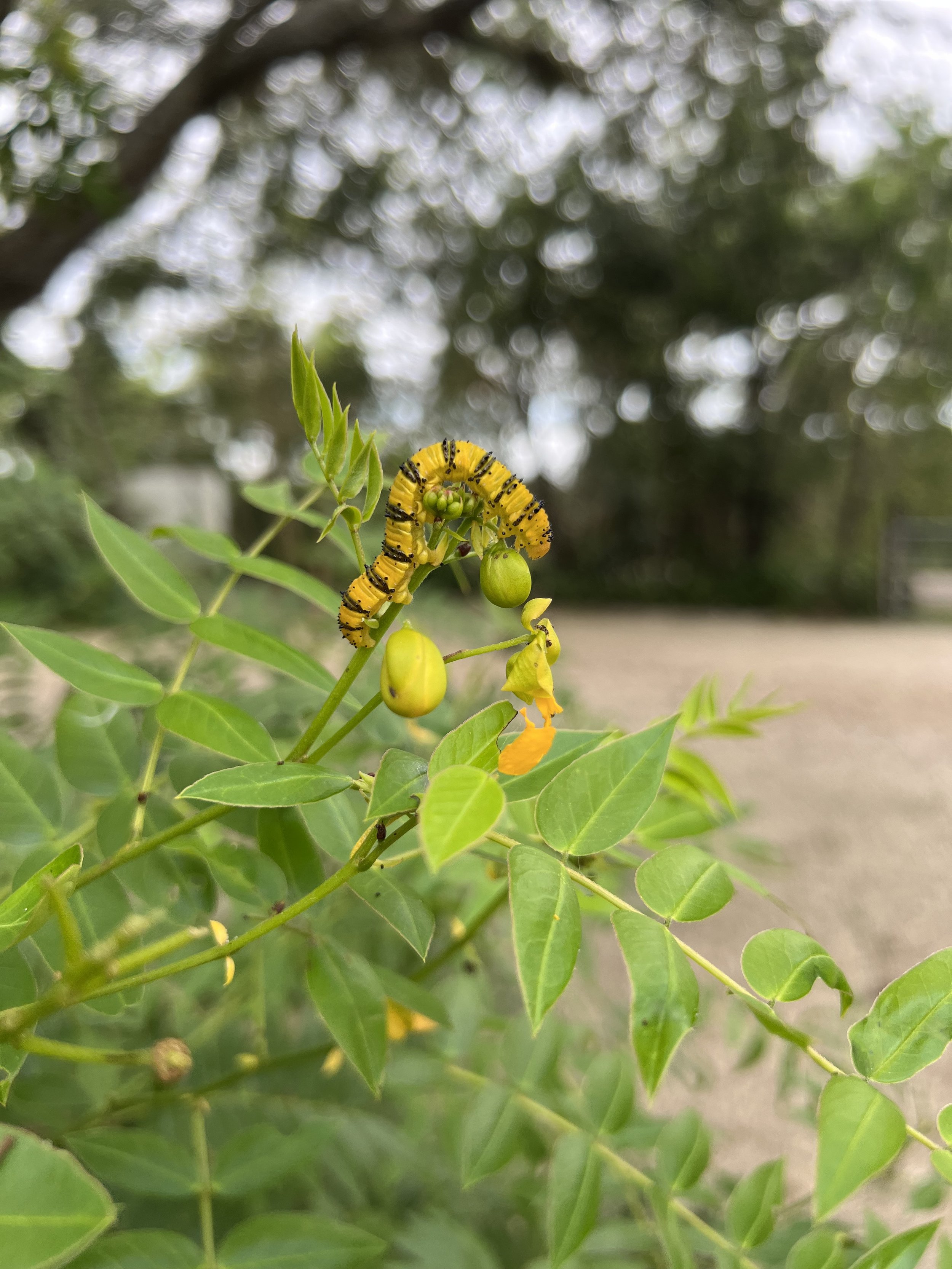
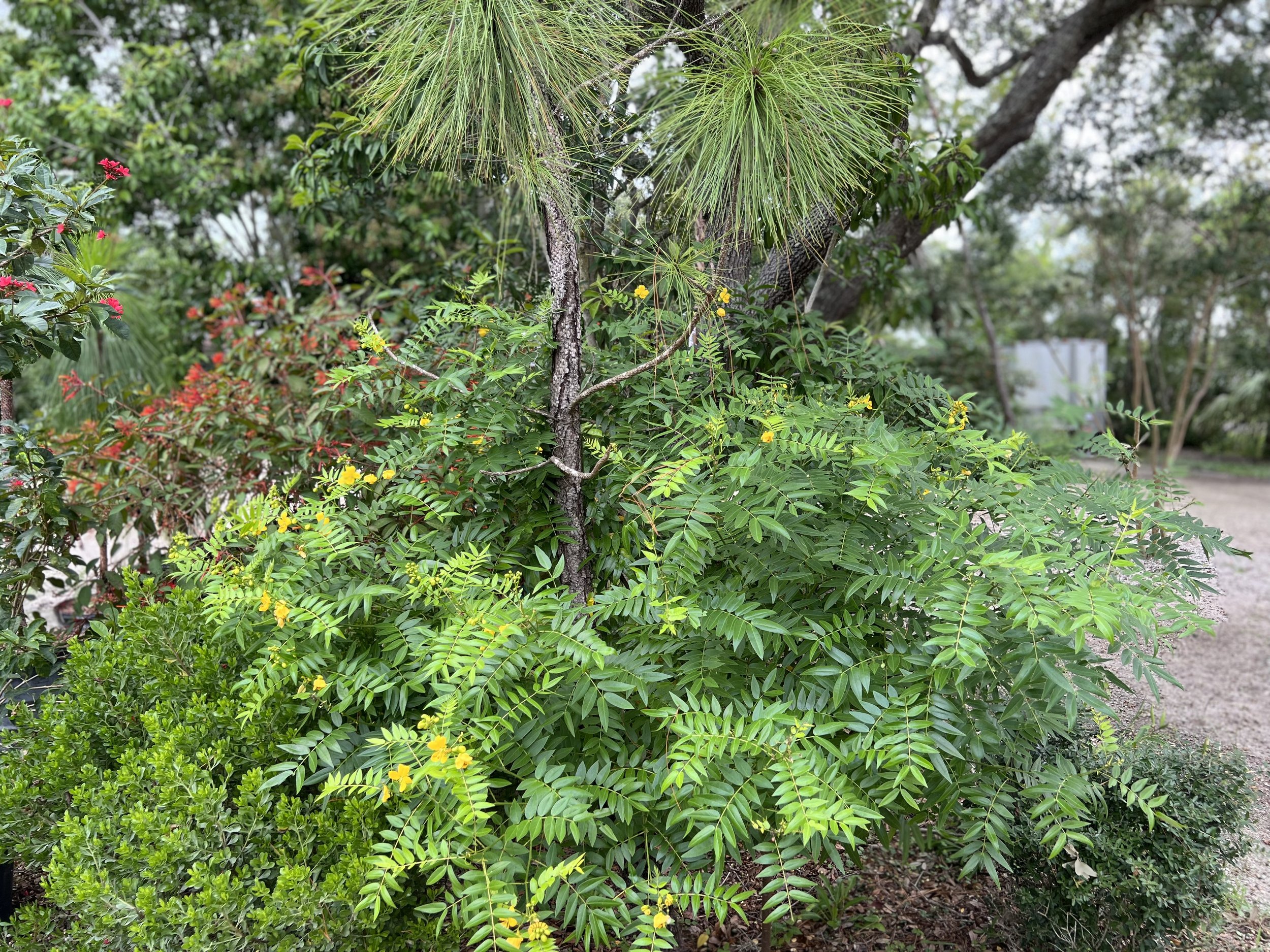
Senna ligustrina
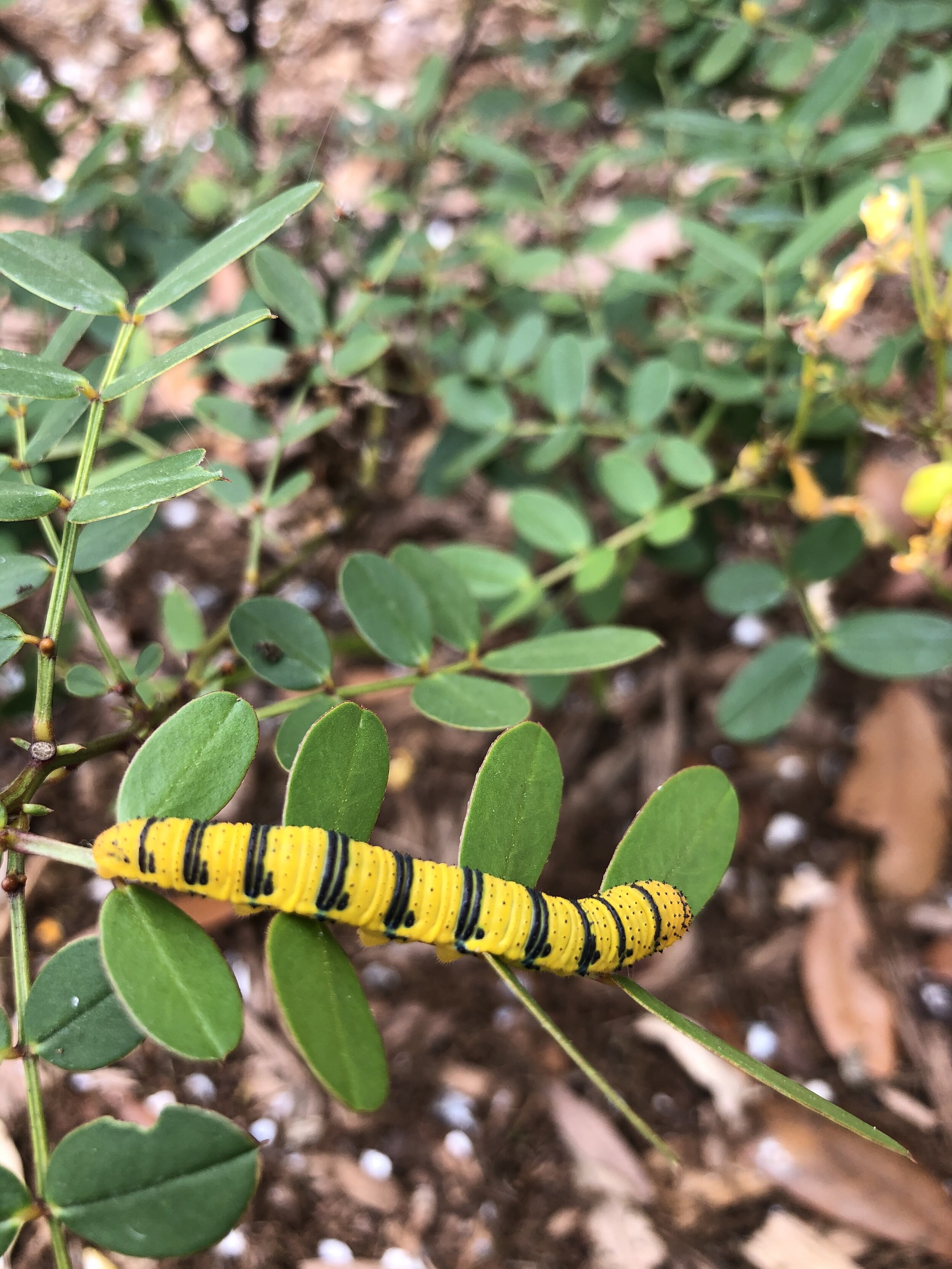
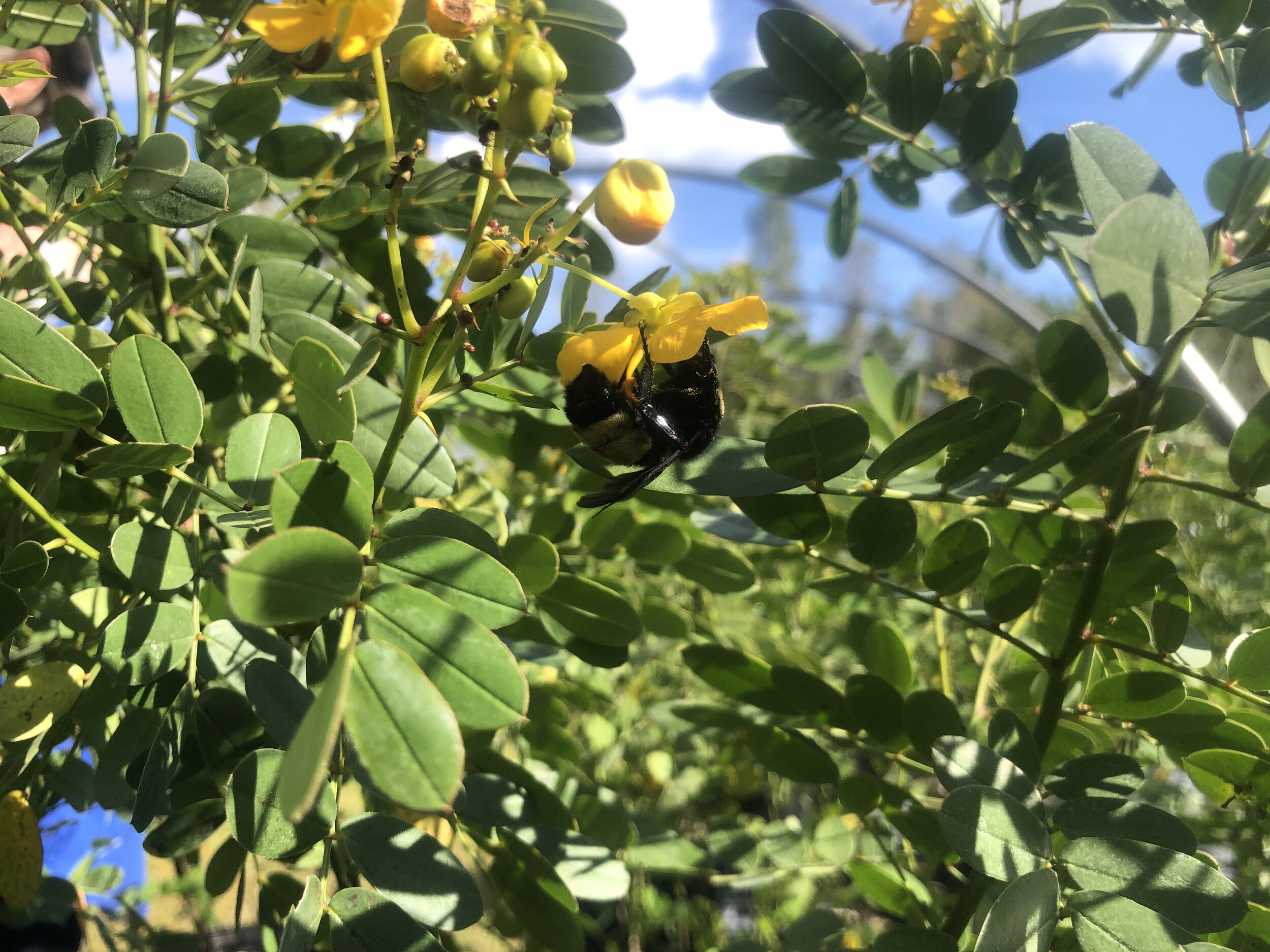
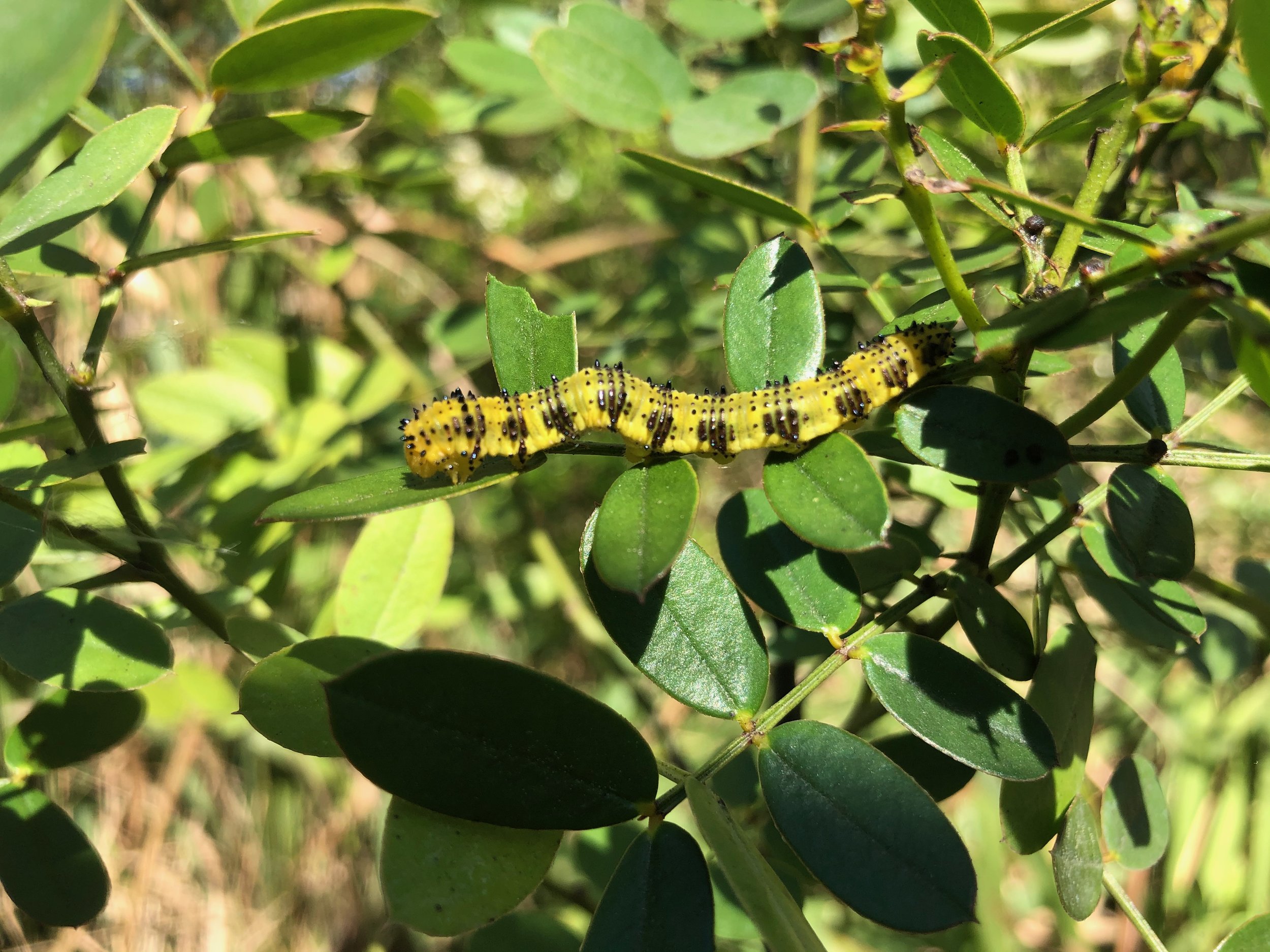
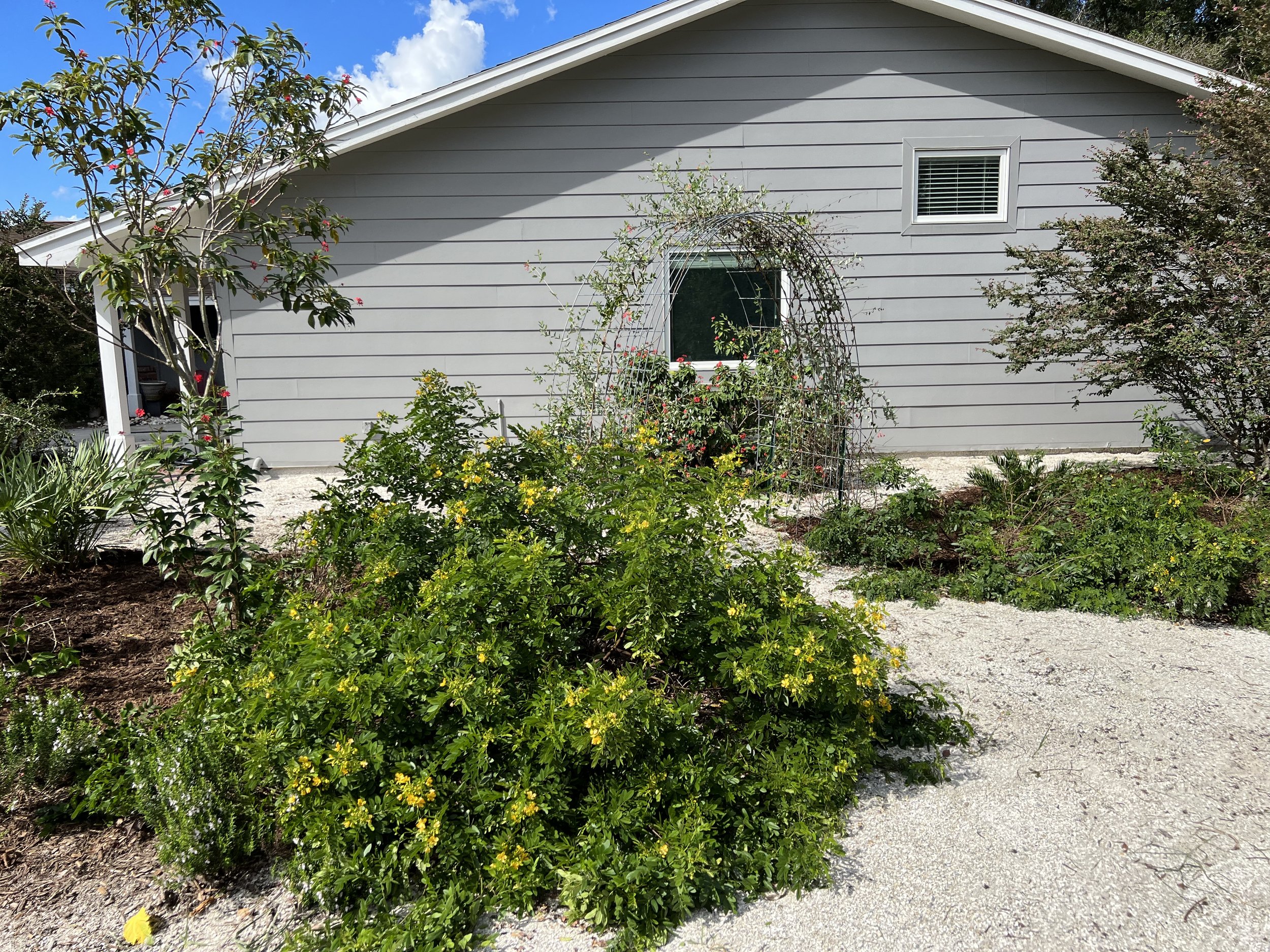
Privet Senna is an evergreen perennial shrub native to Florida that grows 4’-8’ tall with an upright, narrow-crowned habit. This fast-growing member of the legume family features pinnately compound leaves with many small, dark green leaflets and produces clusters of bright yellow, five-petaled flowers from fall through spring. The blooms are followed by thin, brown seed pods approximately 5” long. Serving as a larval host plant for cloudless Sulphur, sleepy orange, and orange-barred Sulphur butterflies, it's an excellent choice for butterfly gardens while also attracting bees and other pollinators. Thriving in full sun to partial shade with well-drained soils, it naturally occurs along forest edges and hammocks from central Florida southward and readily self-seeds in suitable conditions.
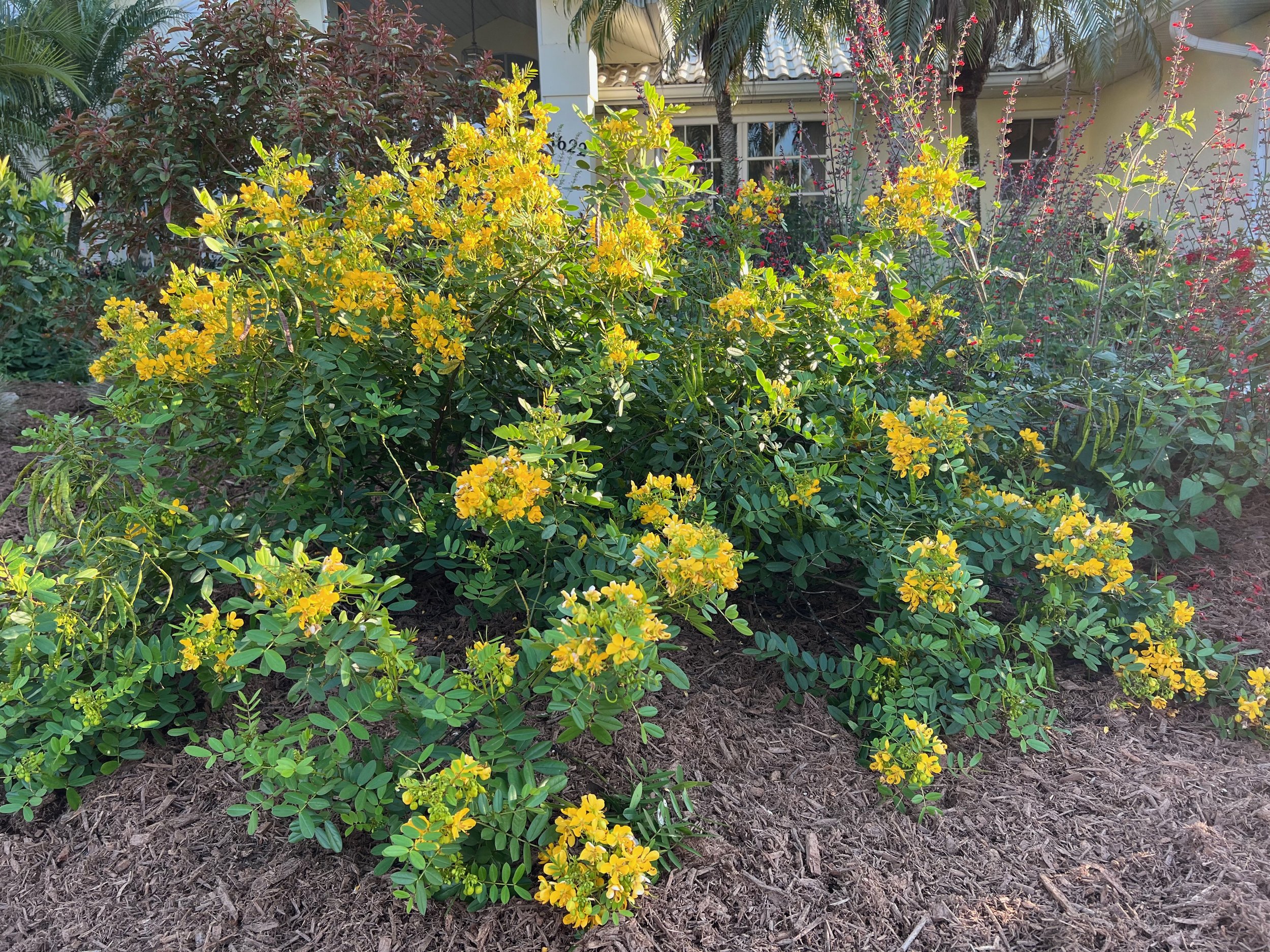
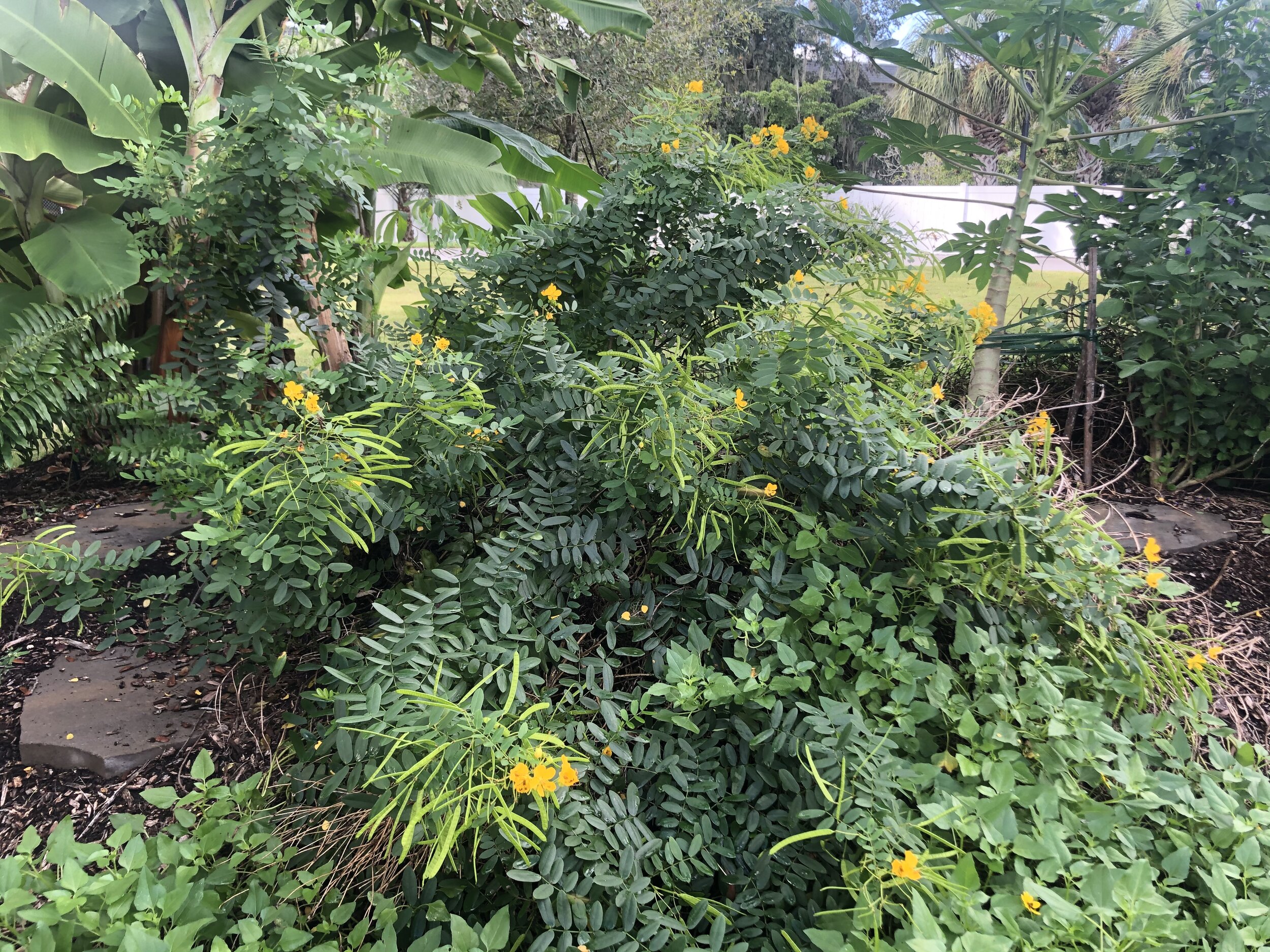
Senna mexicana var. Chapmanii
This beautiful Florida native butterfly garden must-have thrives in many local gardener’s gardens. It is evergreen and grows to be about 4’ by about 3’ and enjoys full sun to light shade and dry to moist (well-drained) soils. It is an important larval food source for Sulphur butterflies. Most people know it for its showy yellow flowers that bloom spring through fall and because it attracts and hosts butterflies and pollinators.
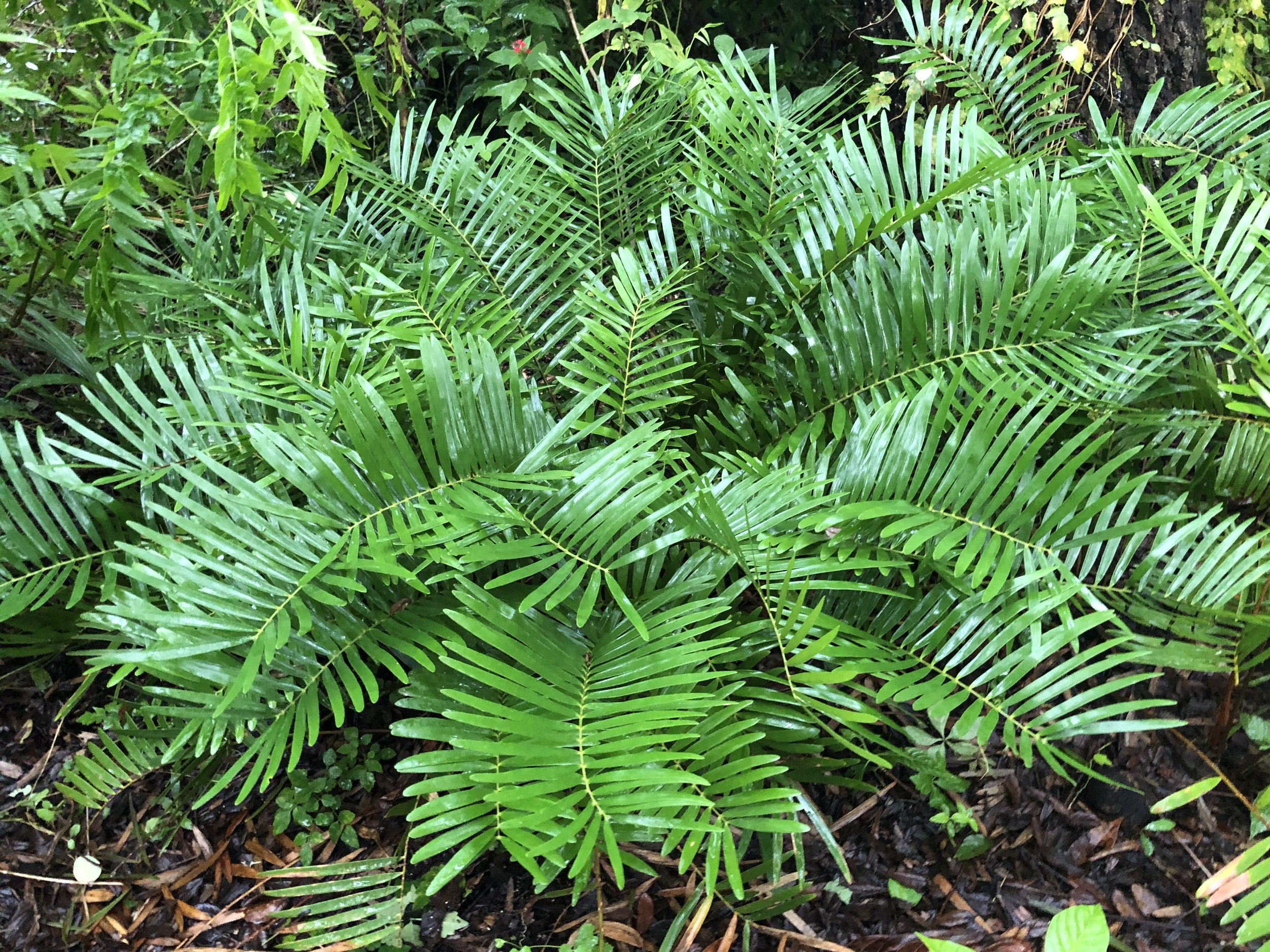
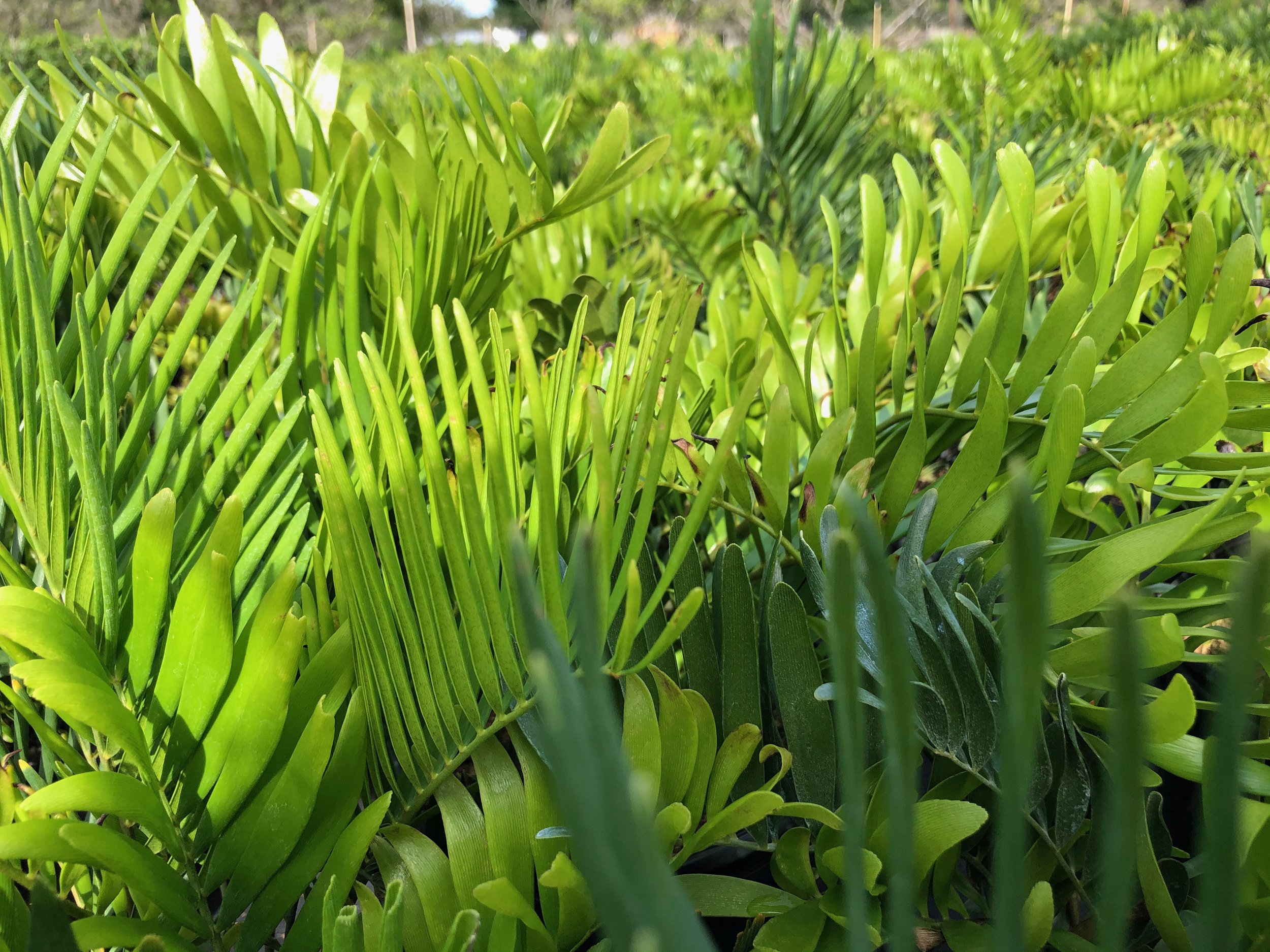
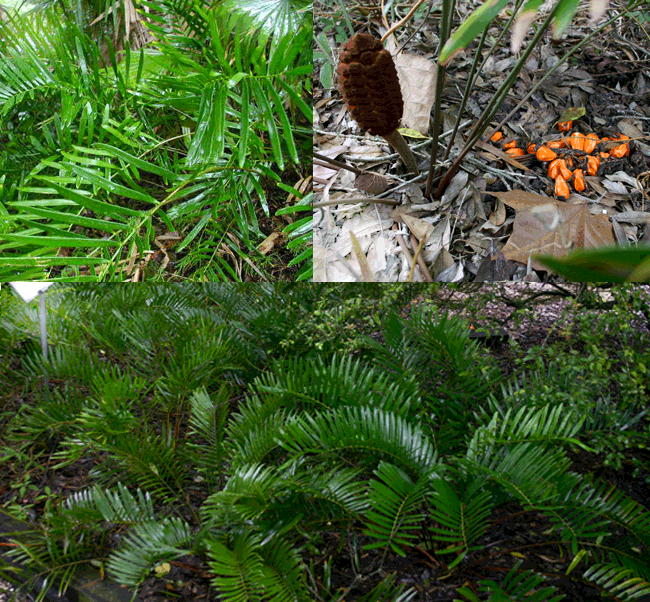
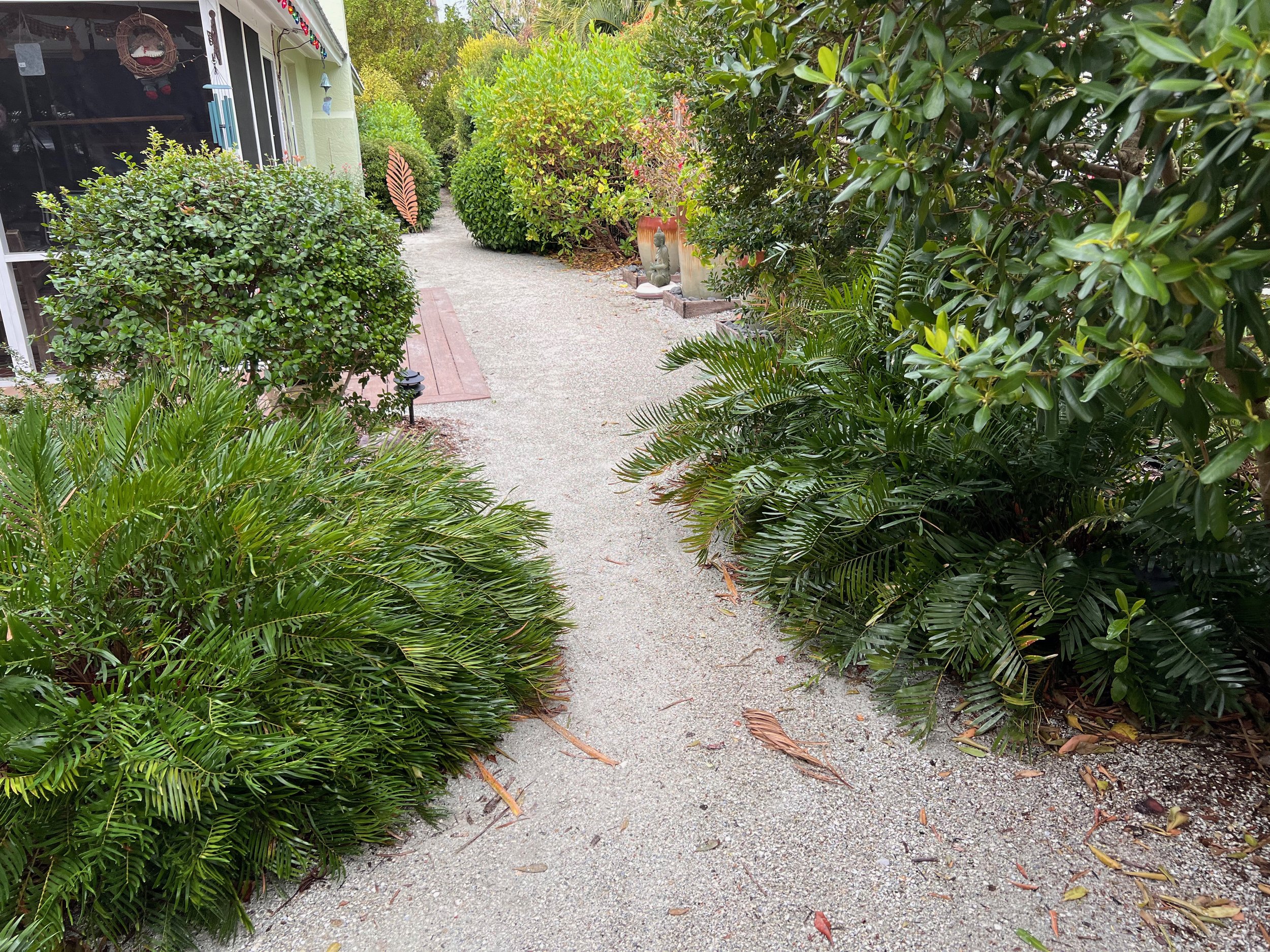
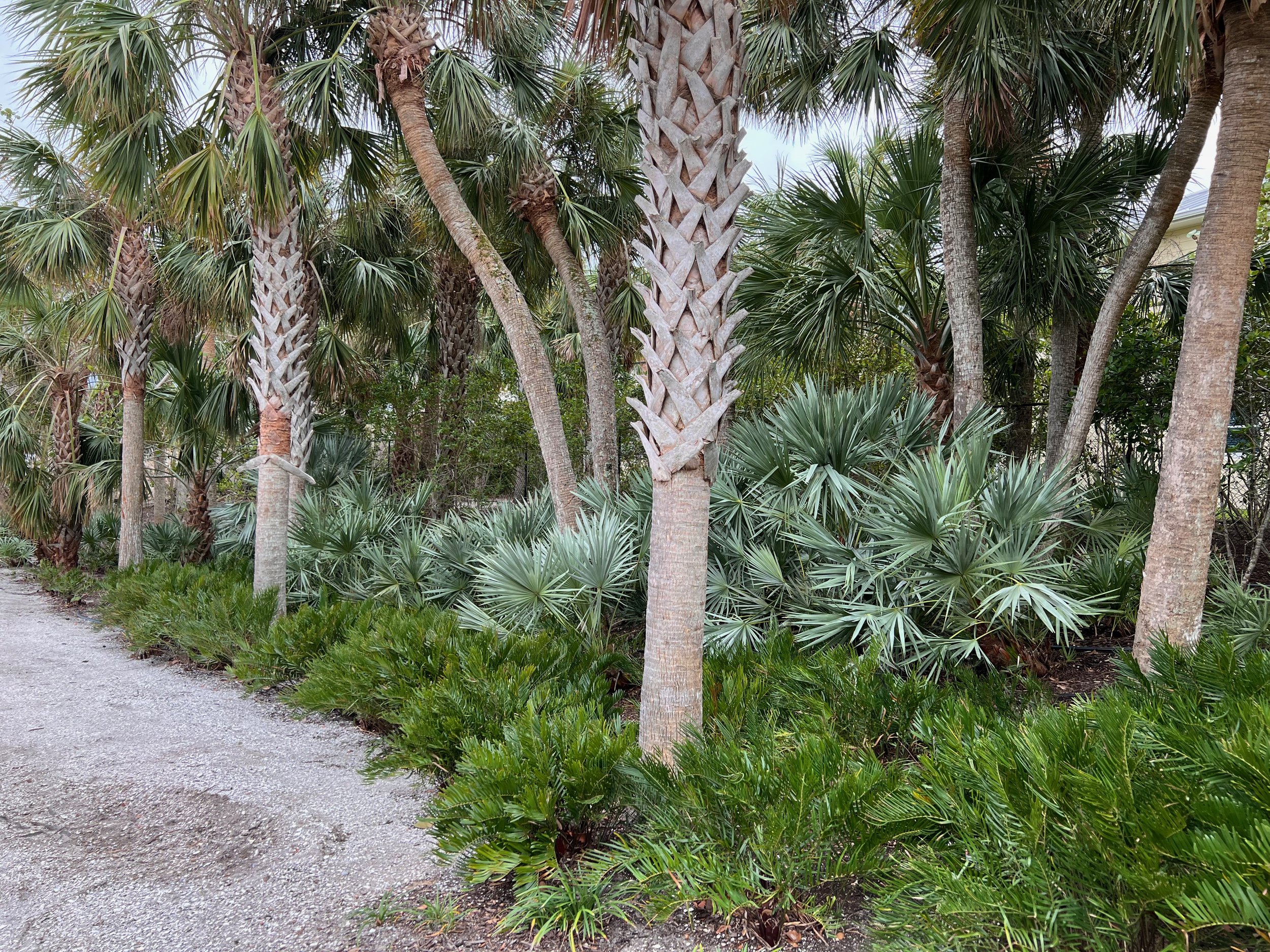
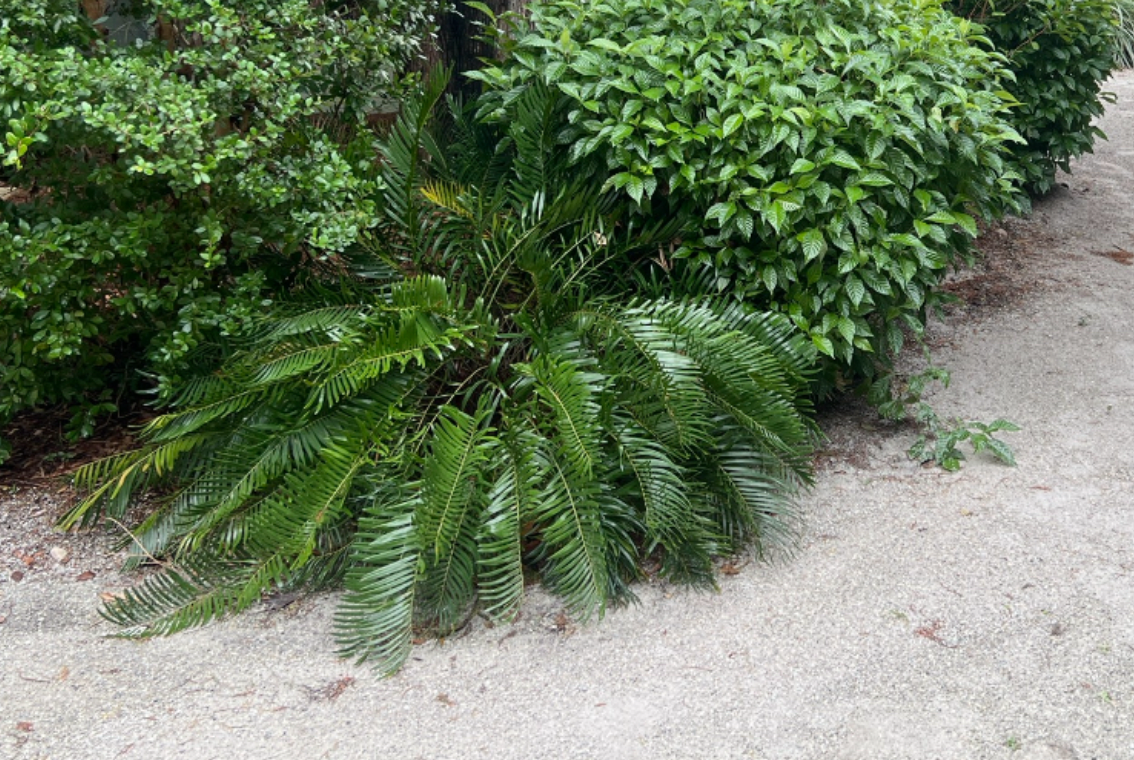
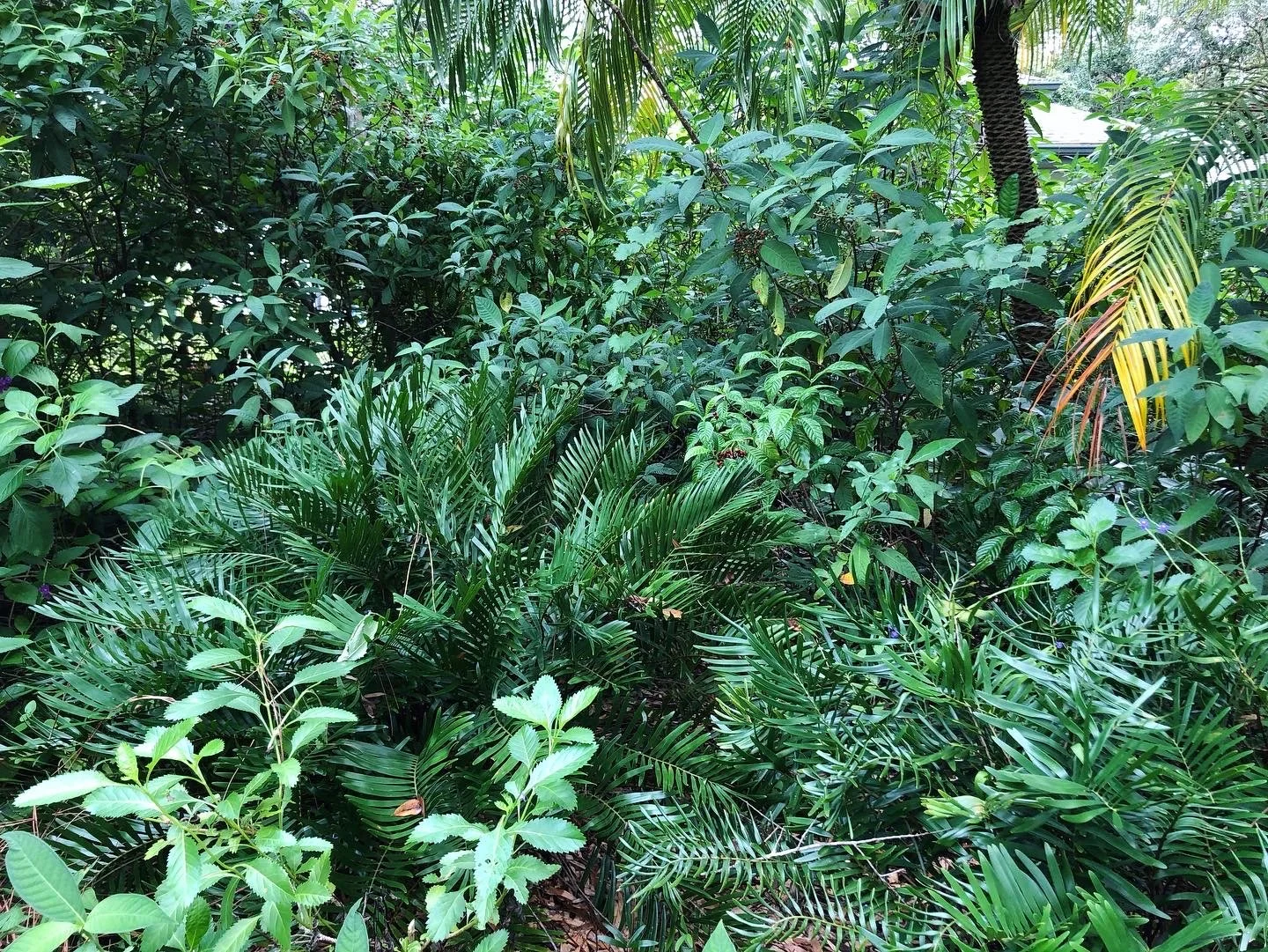
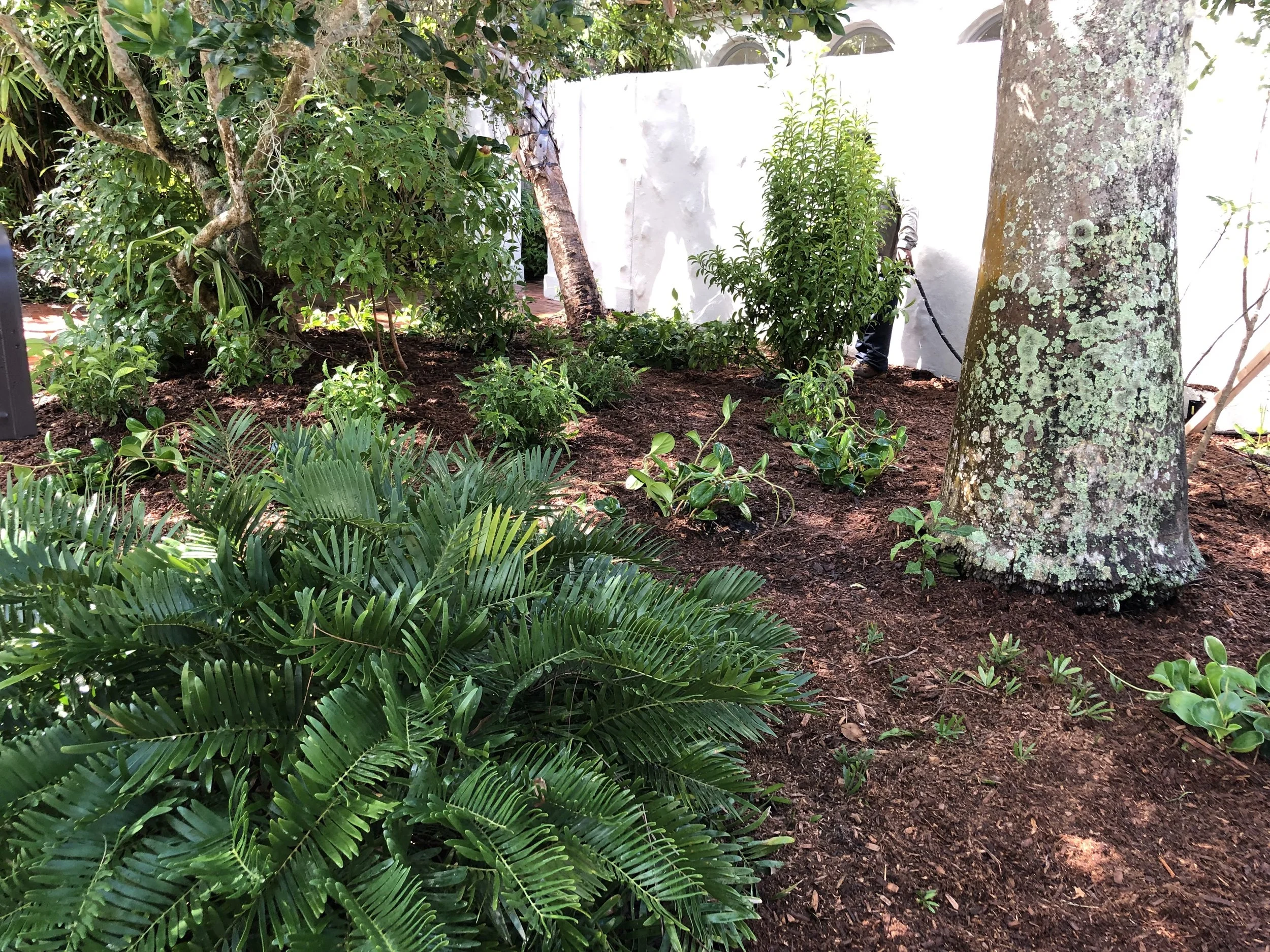
Zamia integrifolia
Coontie is perfect for a dry sunny or shady spot in the garden. It is extremely hardy and drought tolerant and is successful in harsh conditions like highway medians. It generally stays under three feet tall and 3 feet wide and has a tropical Florida feel. Coontie is an ancient plant and is Florida’s only living cycad. It is the important host plant for the Atala butterfly.
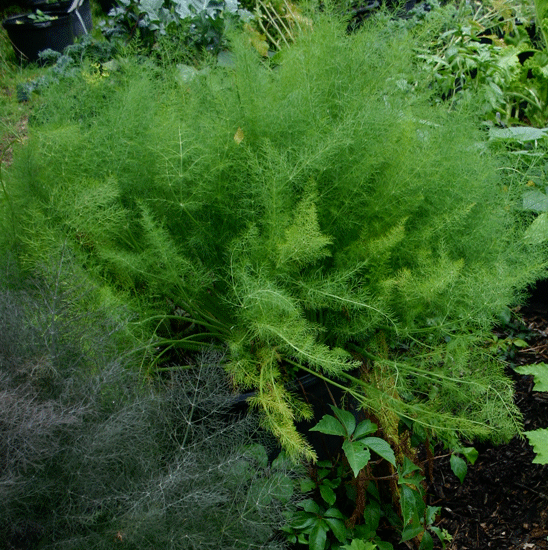
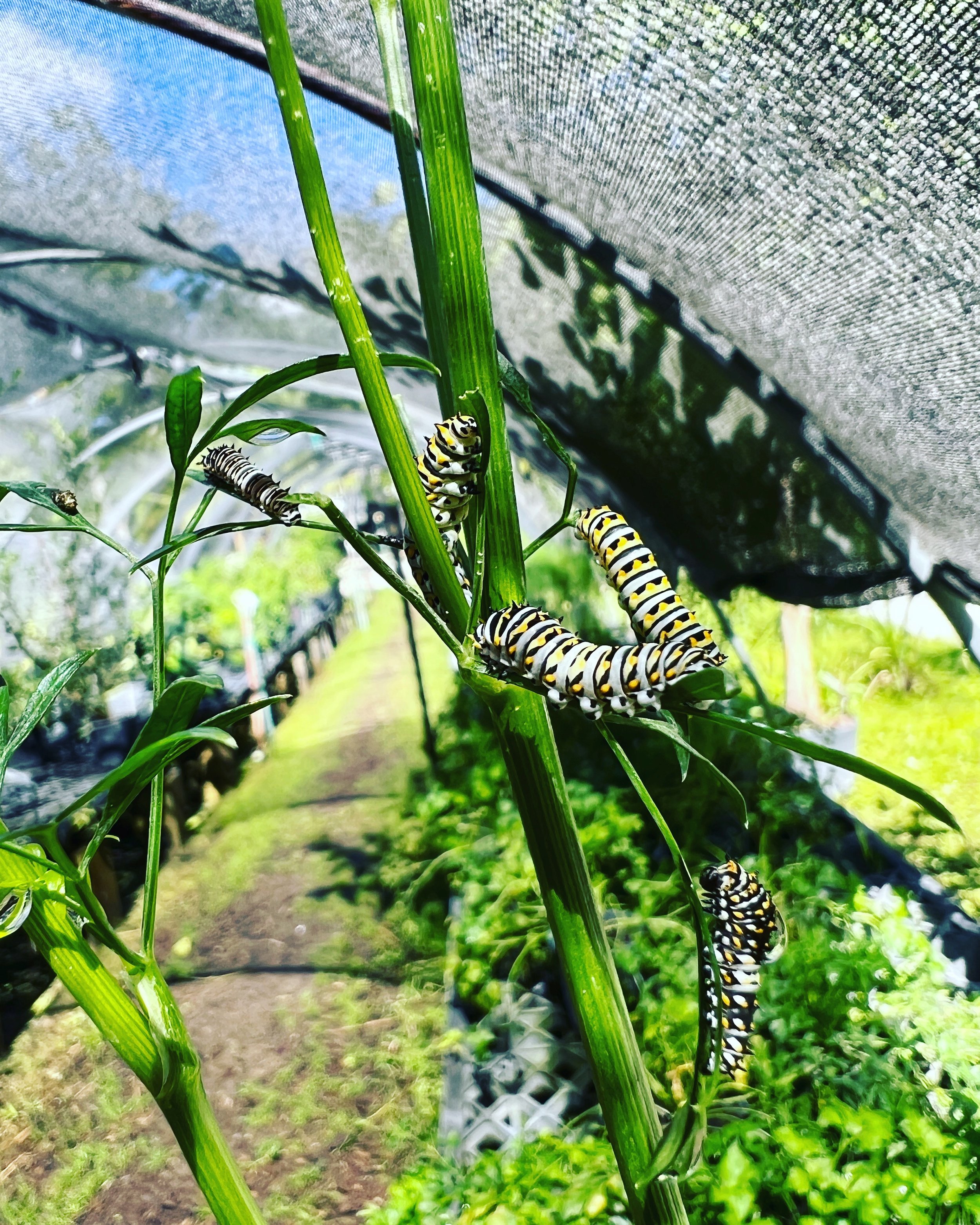
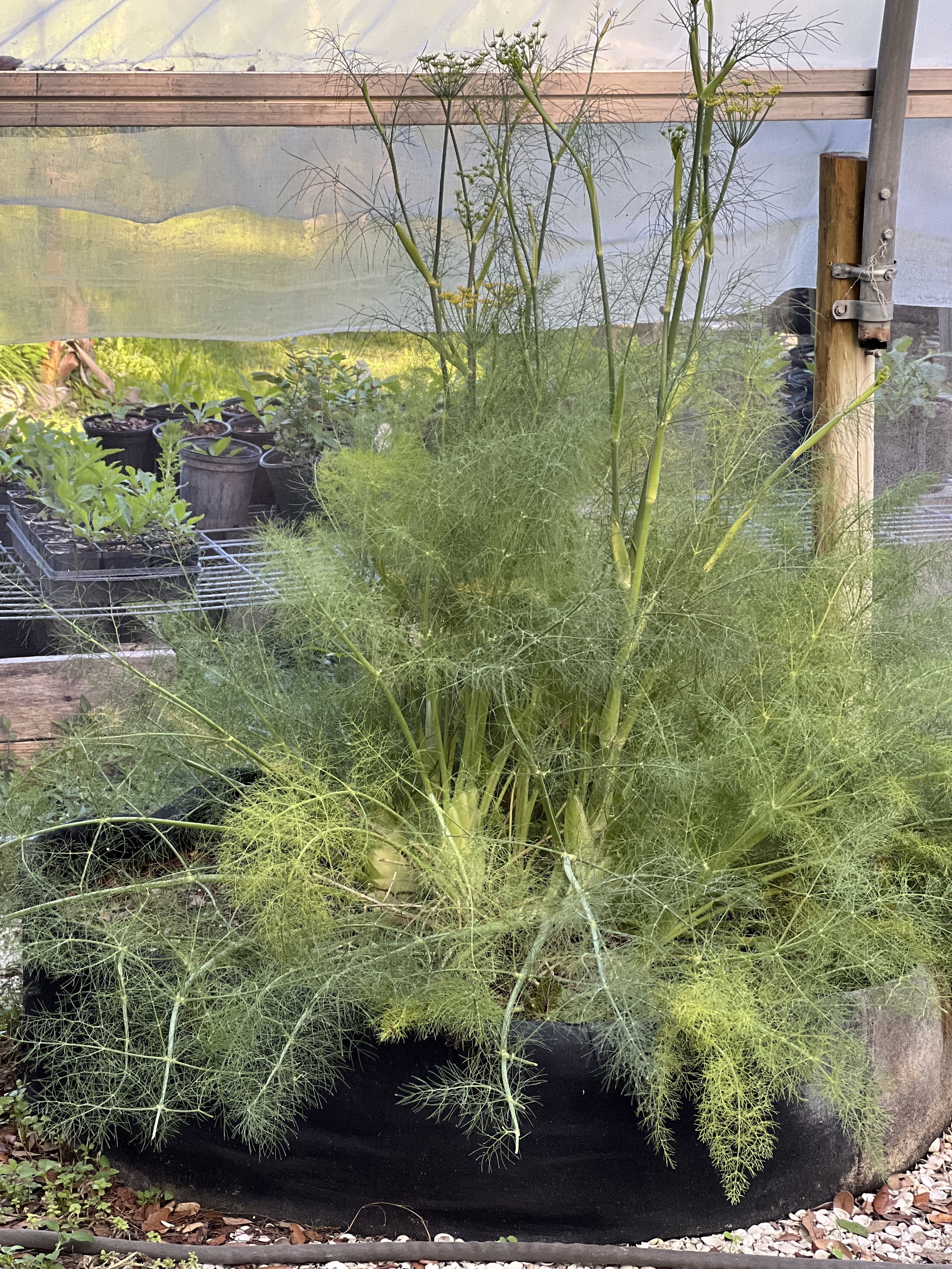
Foeniculum vulgare
Fennel is a highly aromatic, dual-purpose perennial herb that serves both the kitchen garden and the landscape as a vital host plant for swallowtail butterflies. Prefers full sun during the winter but benefits from partial shade during the intense summer heat. Grows best in average to moist, well-drained soil enriched with organic compost. It can be successfully grown as a perennial all year round in Florida, though optimal growth occurs during the cooler months. Features fine, thread-like, feathery foliage and bright yellow umbrella-shaped flower clusters (umbels). It can grow from 3 to 6 feet tall. An essential larval host plant for the Eastern Black Swallowtail butterfly. The plant brings a sweet, anise-like flavor to seafood, soups, and salads.
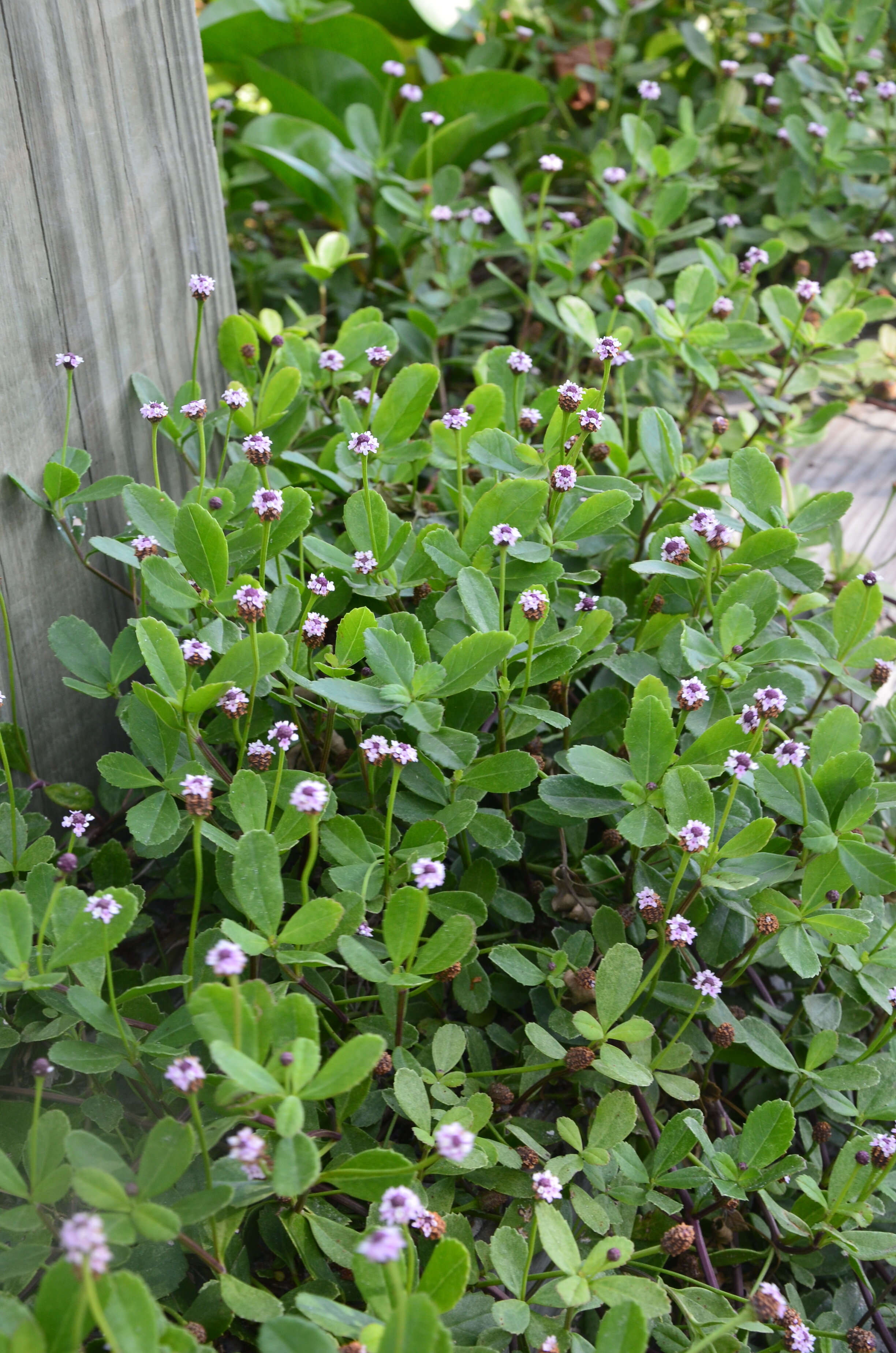
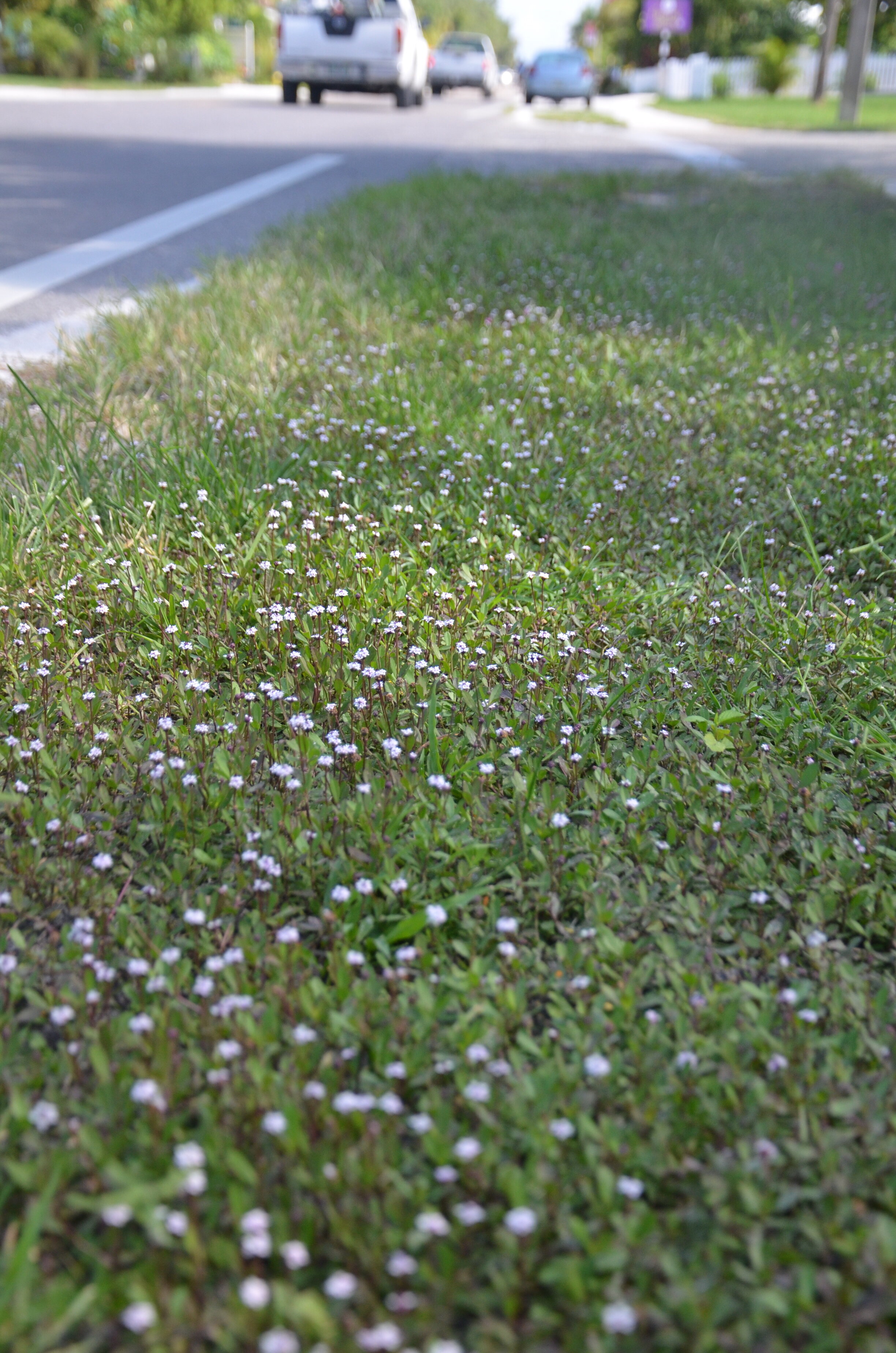
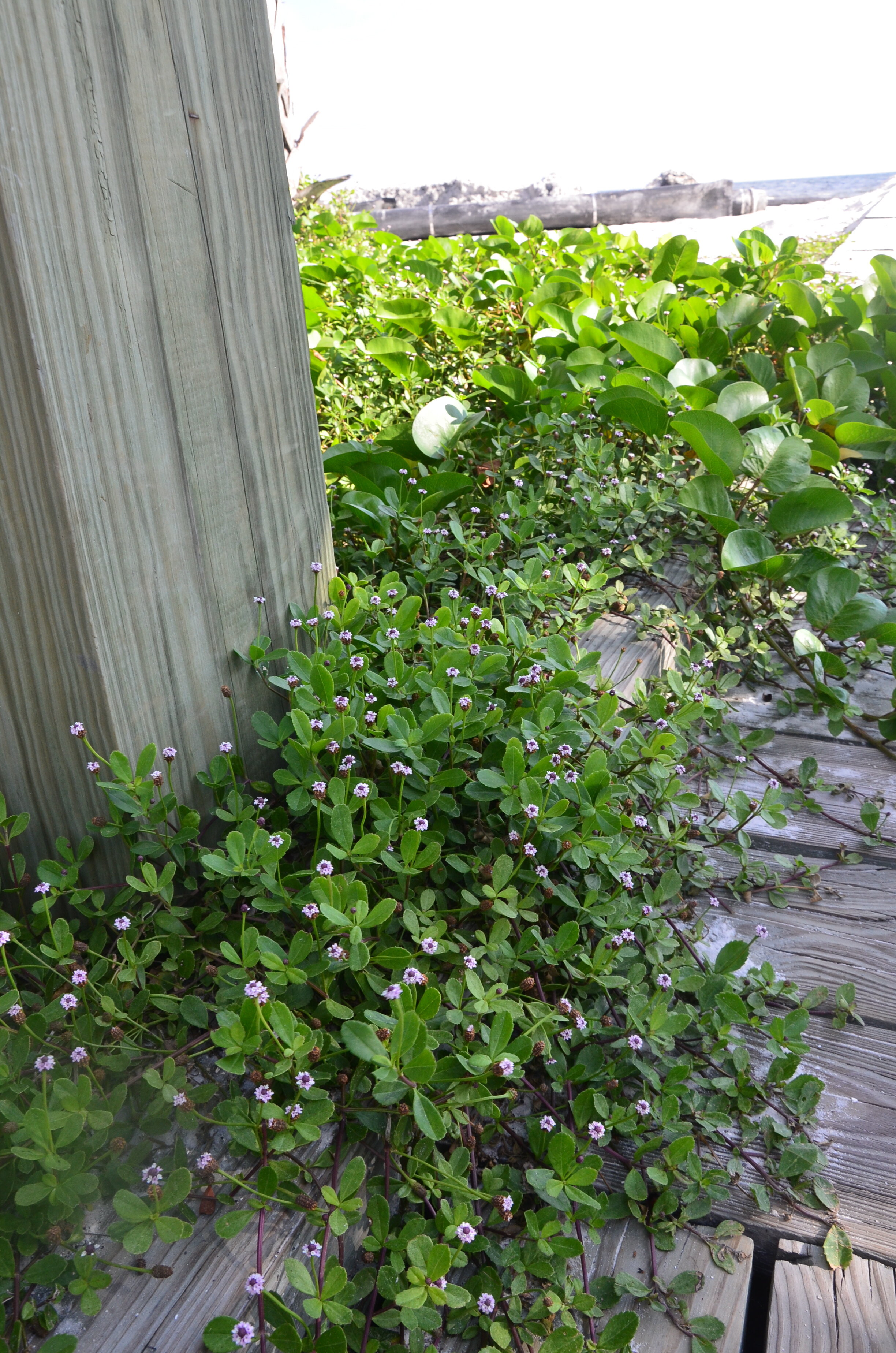
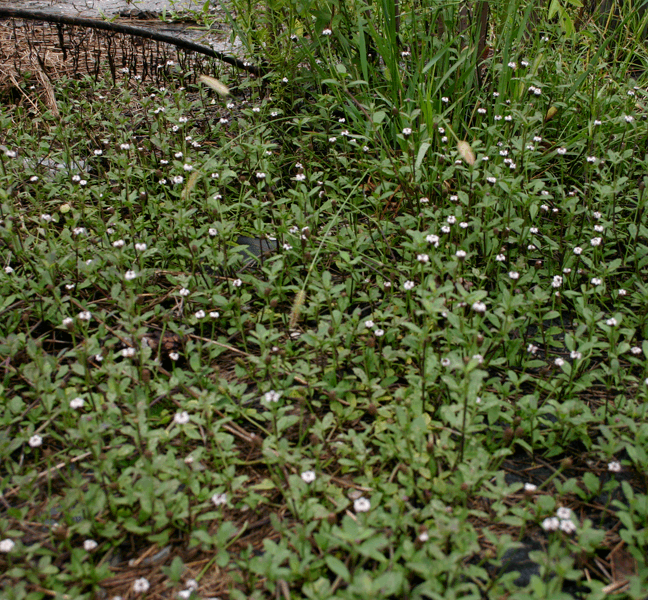
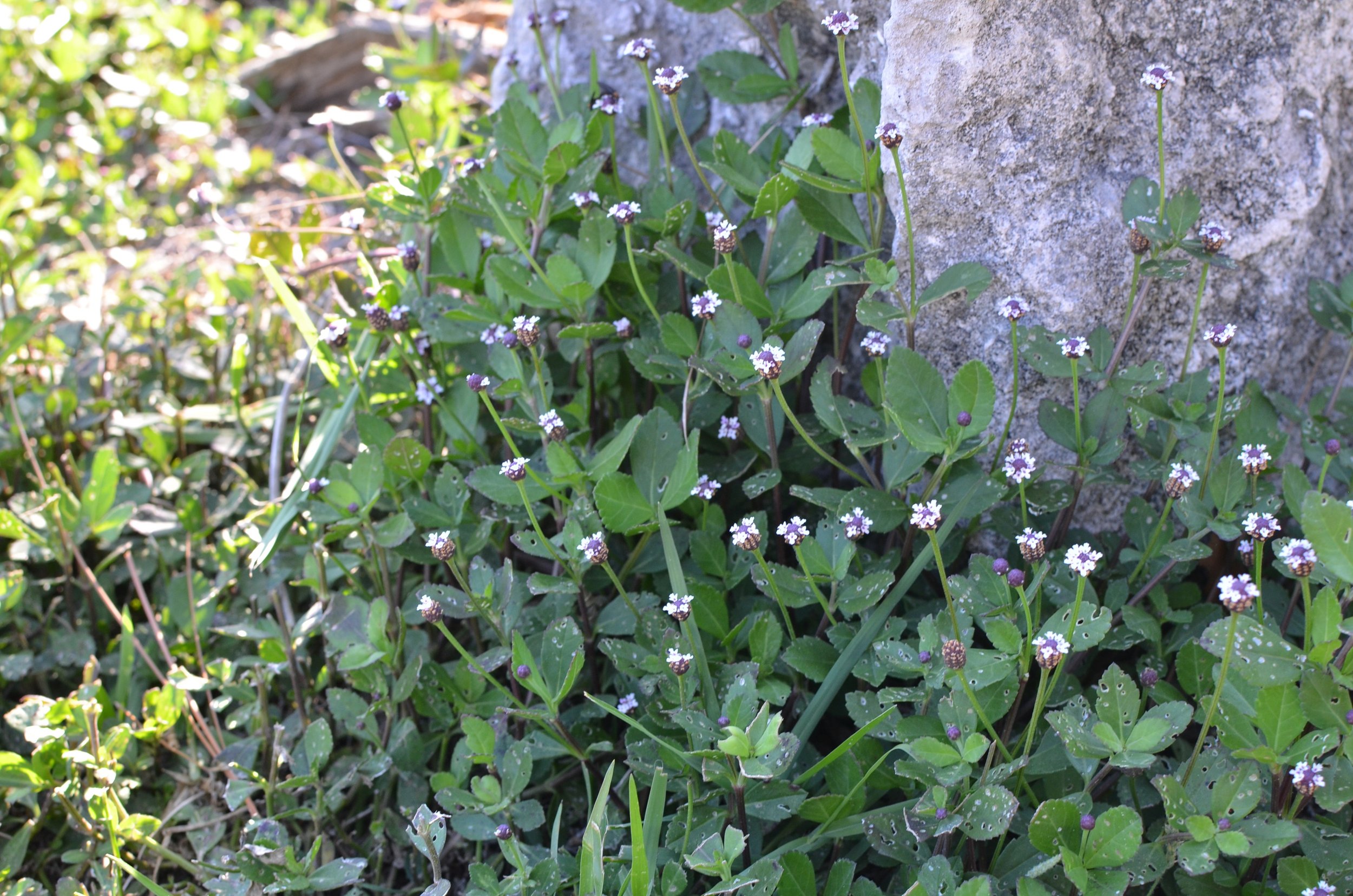
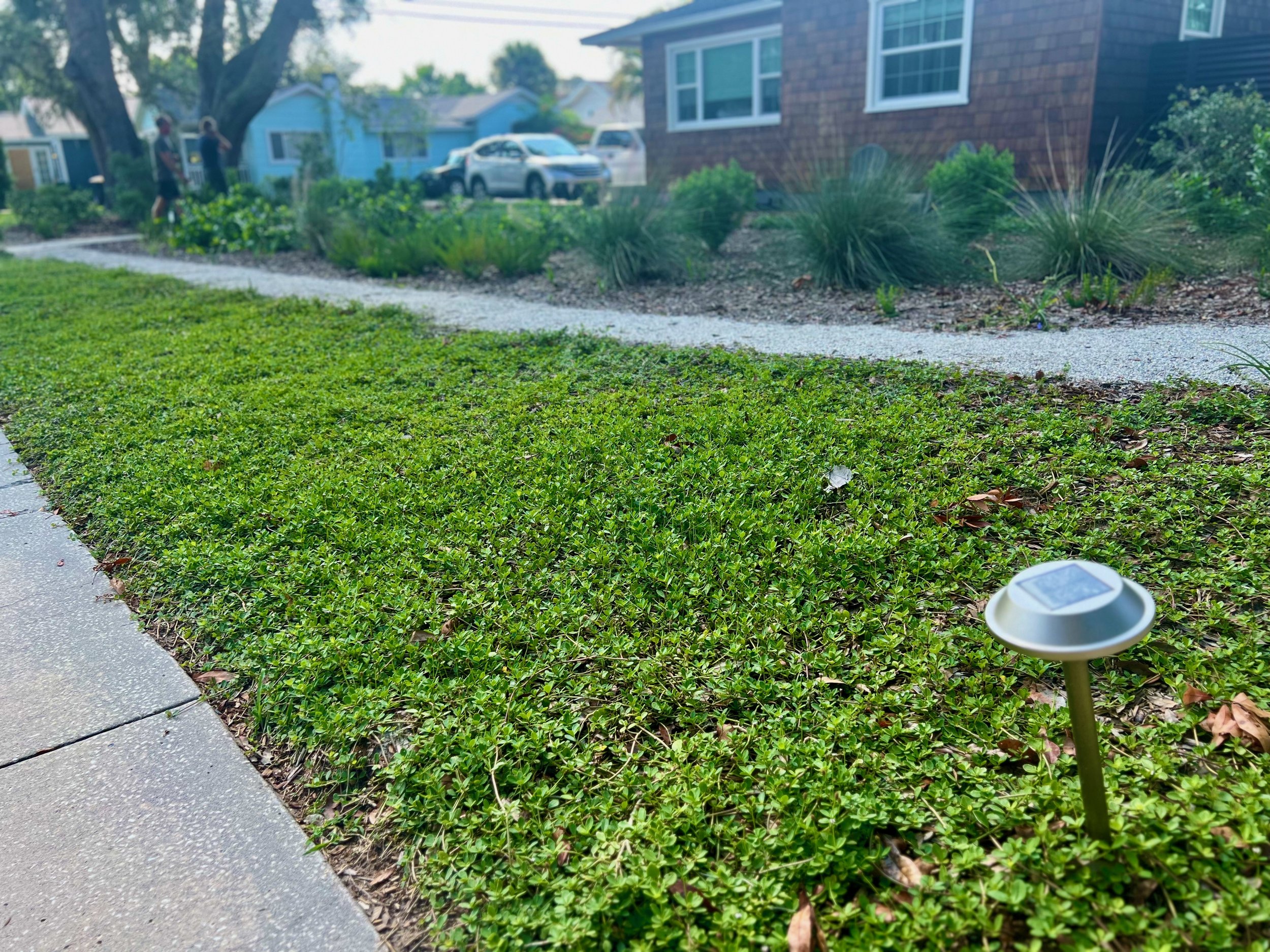
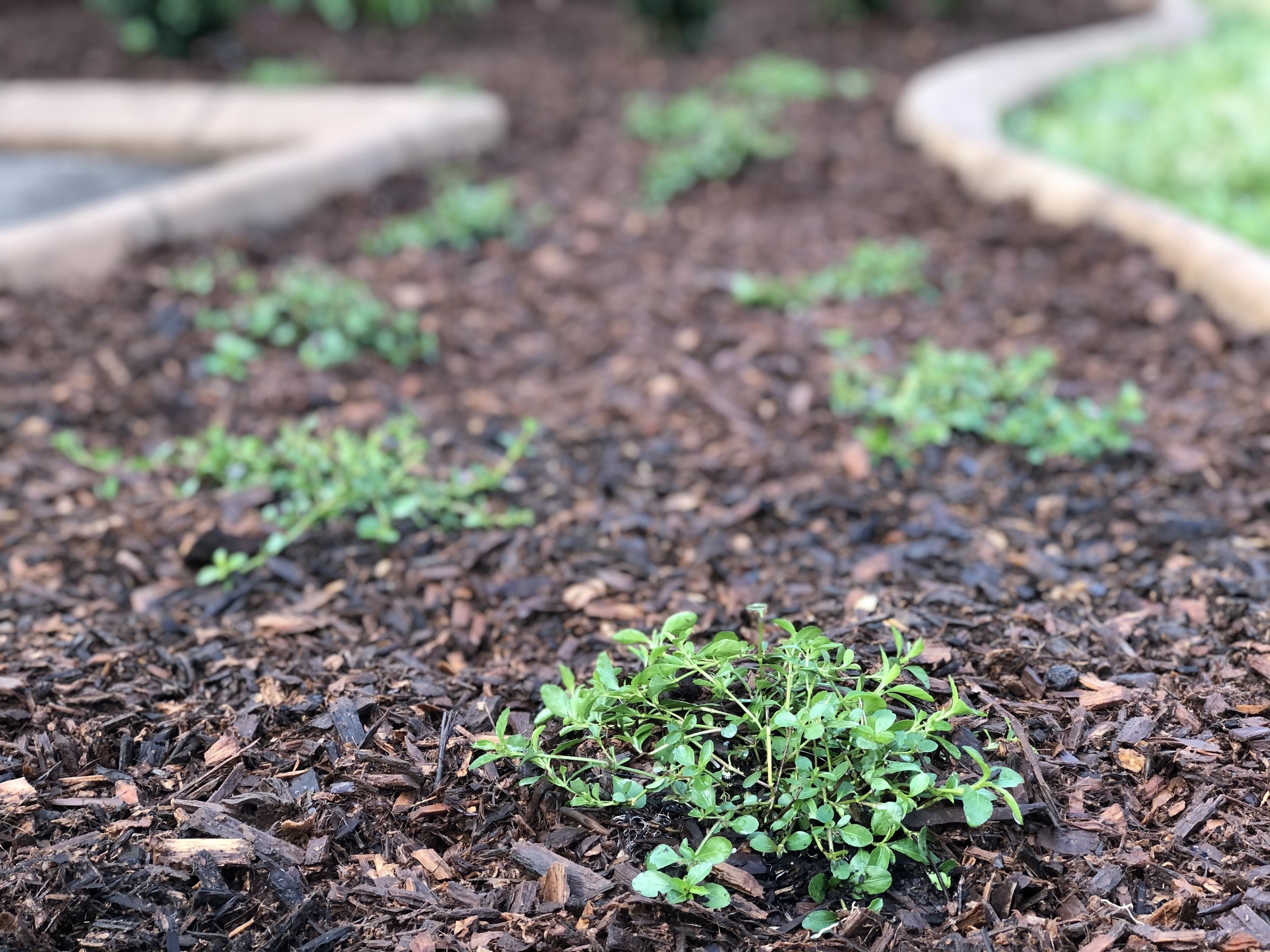
Phyla nodiflora
One of our favorite native plant “lawn alternatives,” Frogfruit is a low growing, perennial evergeen groundcover that grows in full sun to partial shade and in dry to moist soils. Frogfruit is highly salt-tolerant, fast growing, mow-able and lightly walk-able. It’s also an important host plant to the Phaon Crescent, White Peacock and Common Buckeye butterflies and is a nectar source pollinators including hummingbirds.
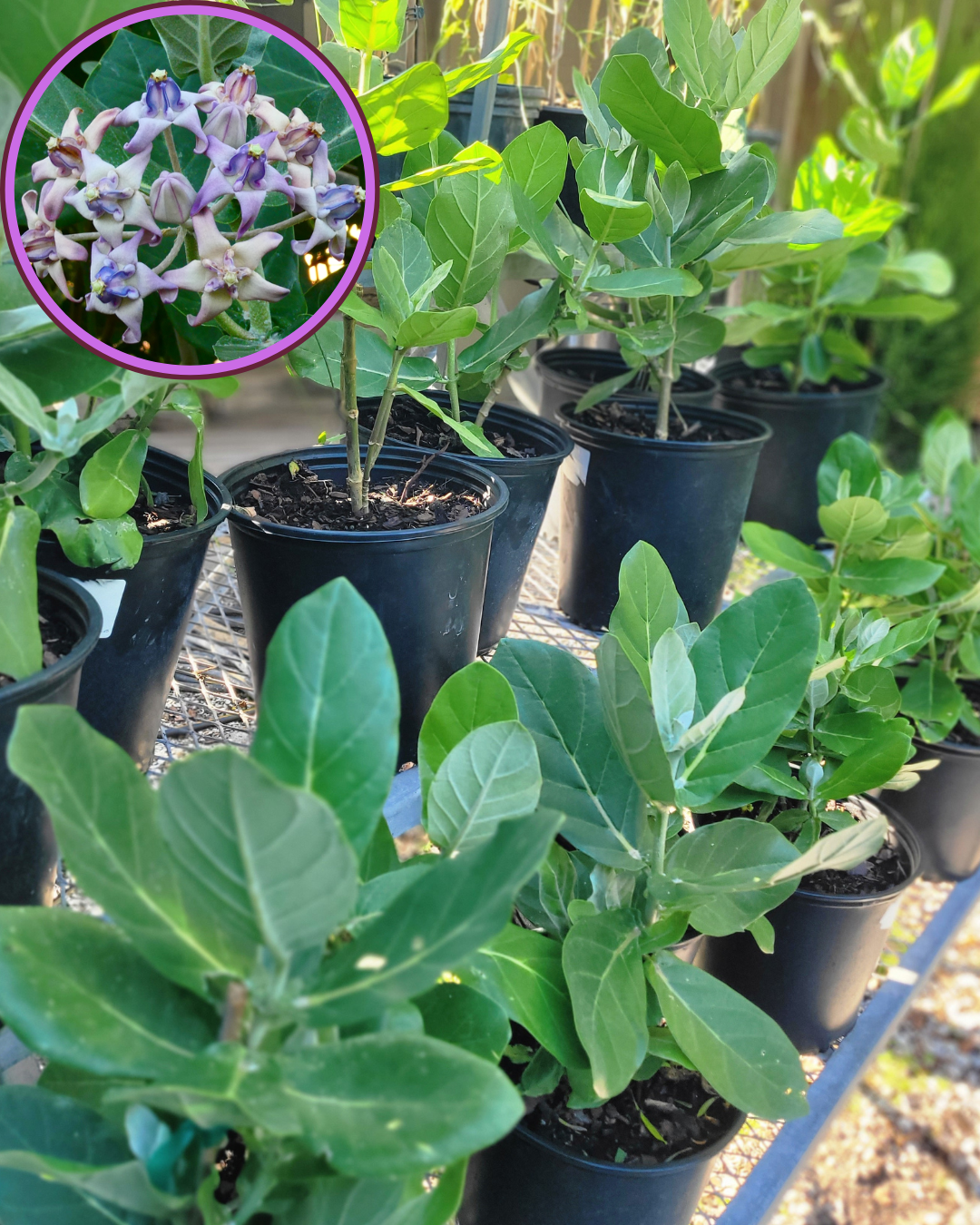
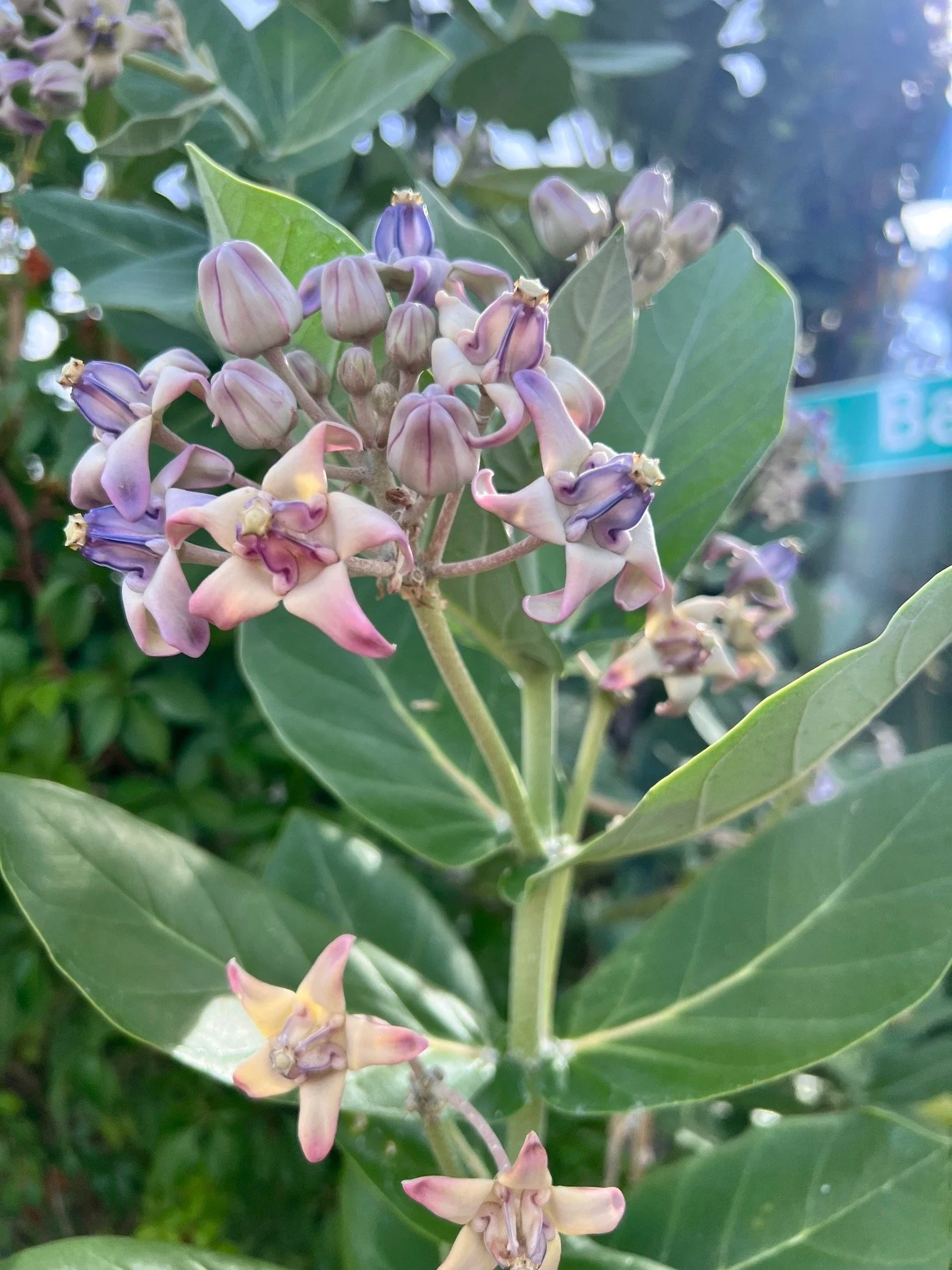
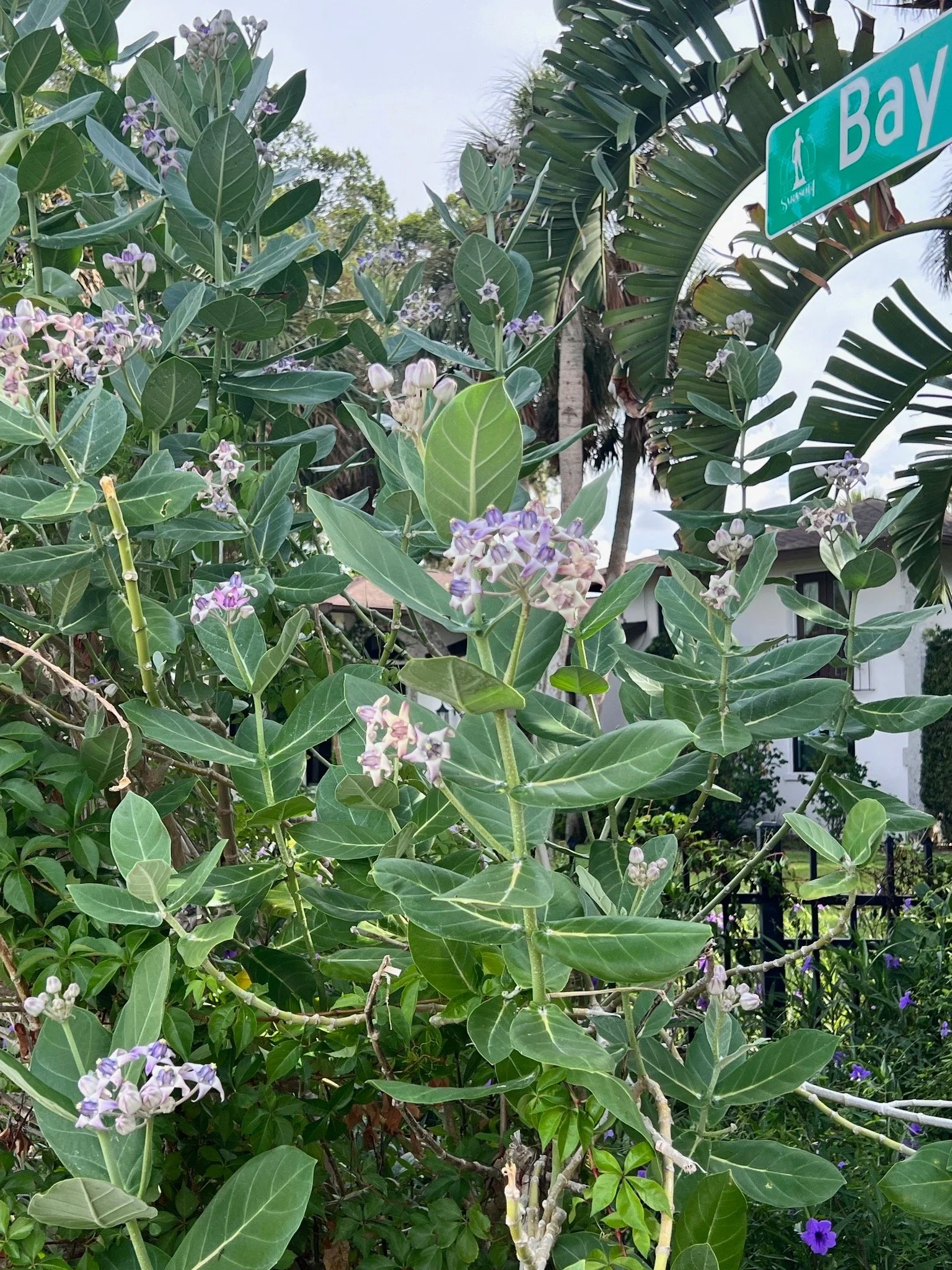
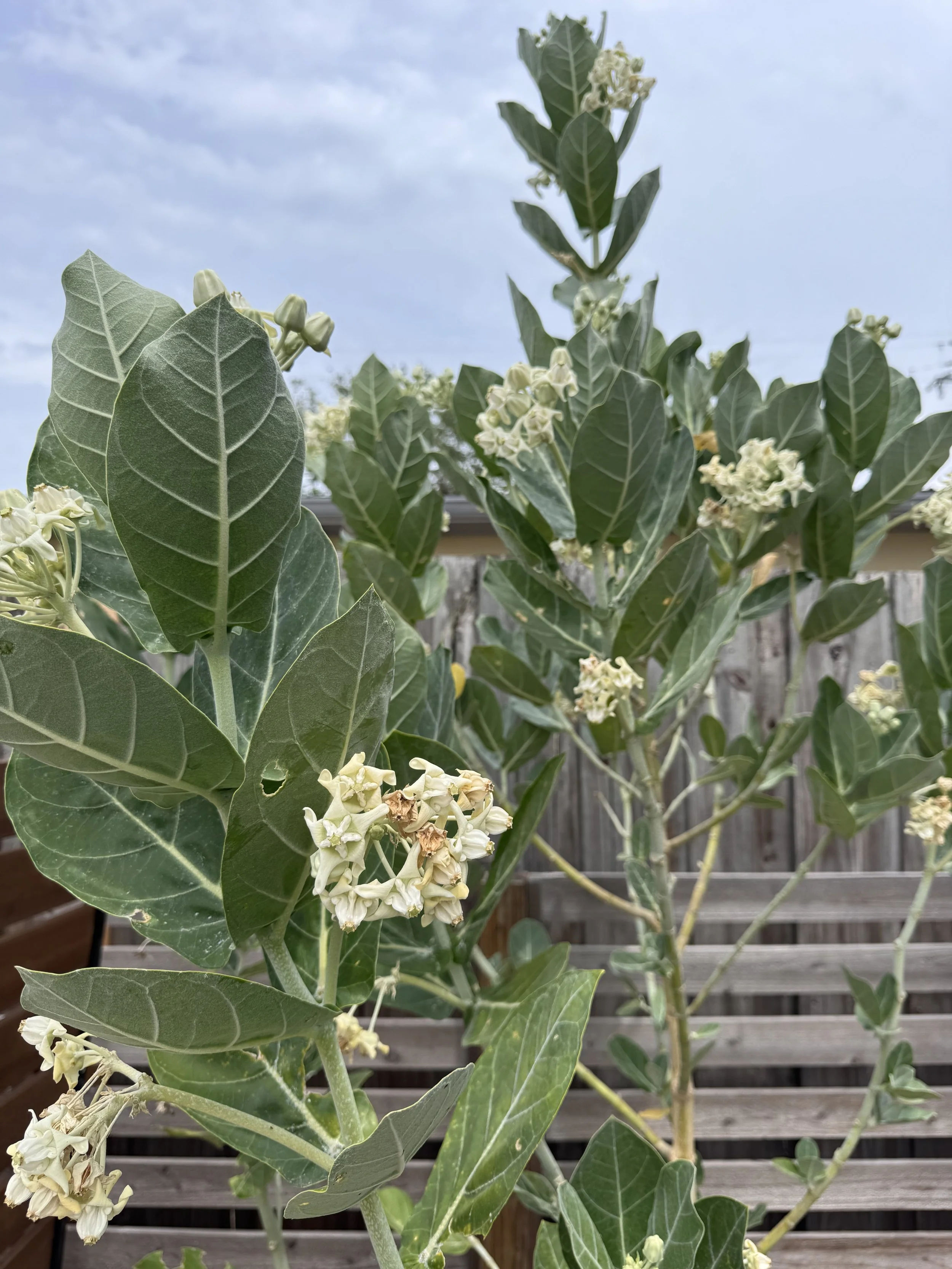
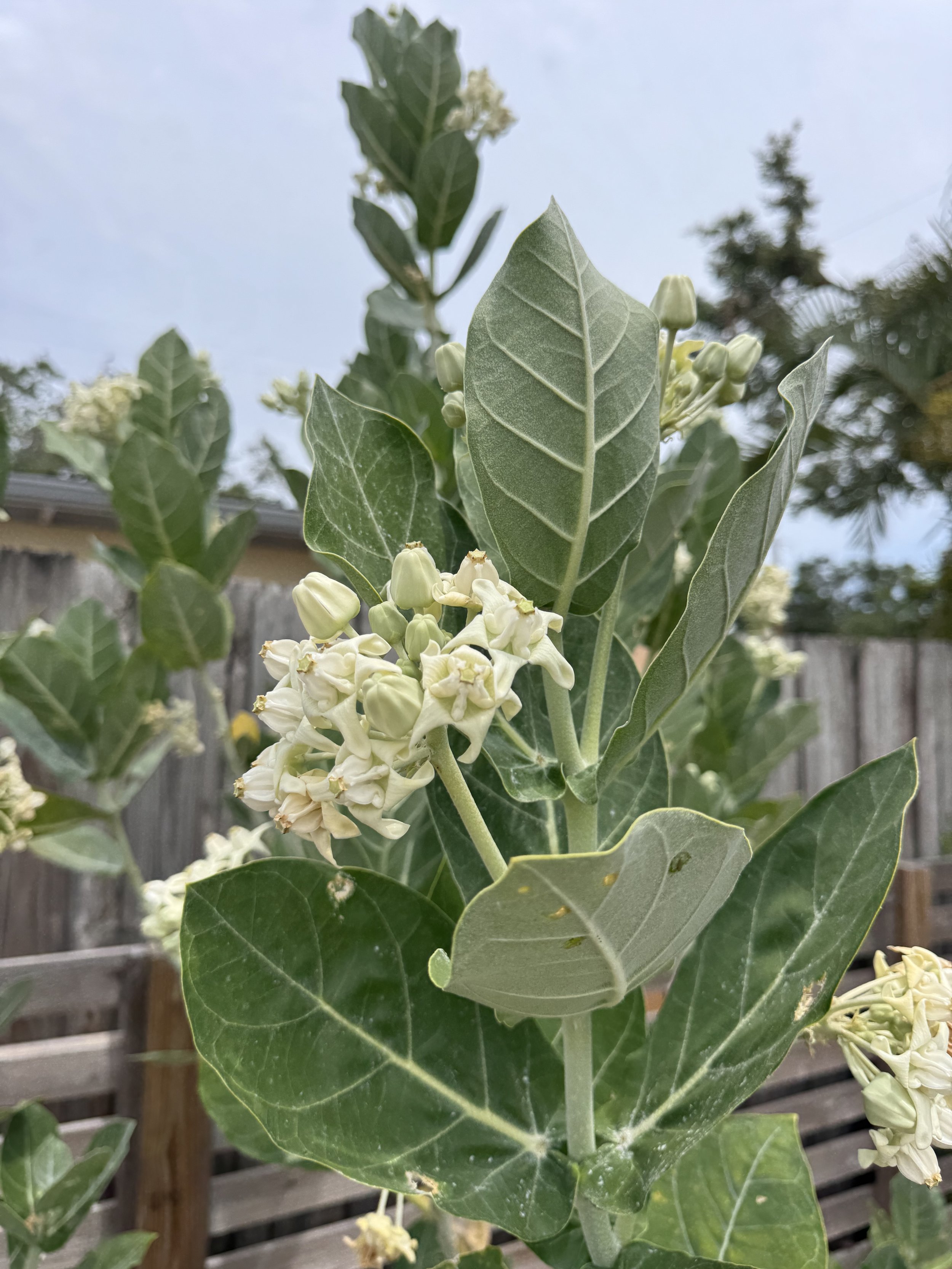
Calotropis gigantea
Giant Milkweed is non-native fast-growing evergreen shrub that can reach 8-15 feet in height. As a member of the milkweed family, it serves as a host plant for Monarch butterfly caterpillars and attracts various pollinators including bees and butterflies. It has thick, leathery, silvery-green leaves and produces clusters of waxy, pale lavender or white flowers that bloom year-round. Extremely drought-tolerant once established, it thrives in full sun and well-drained soils. We sometimes carry a white-flowering variety as well.
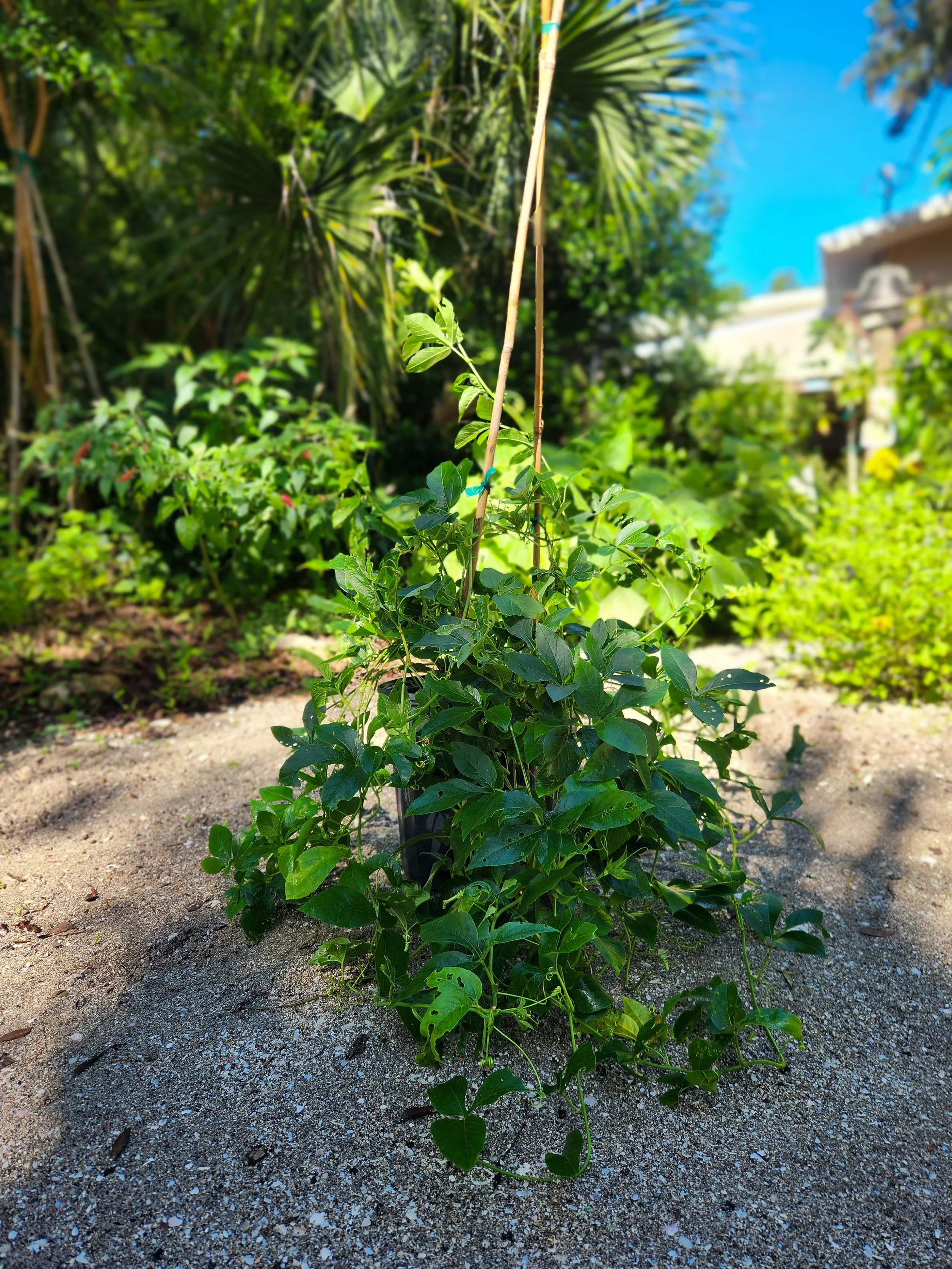
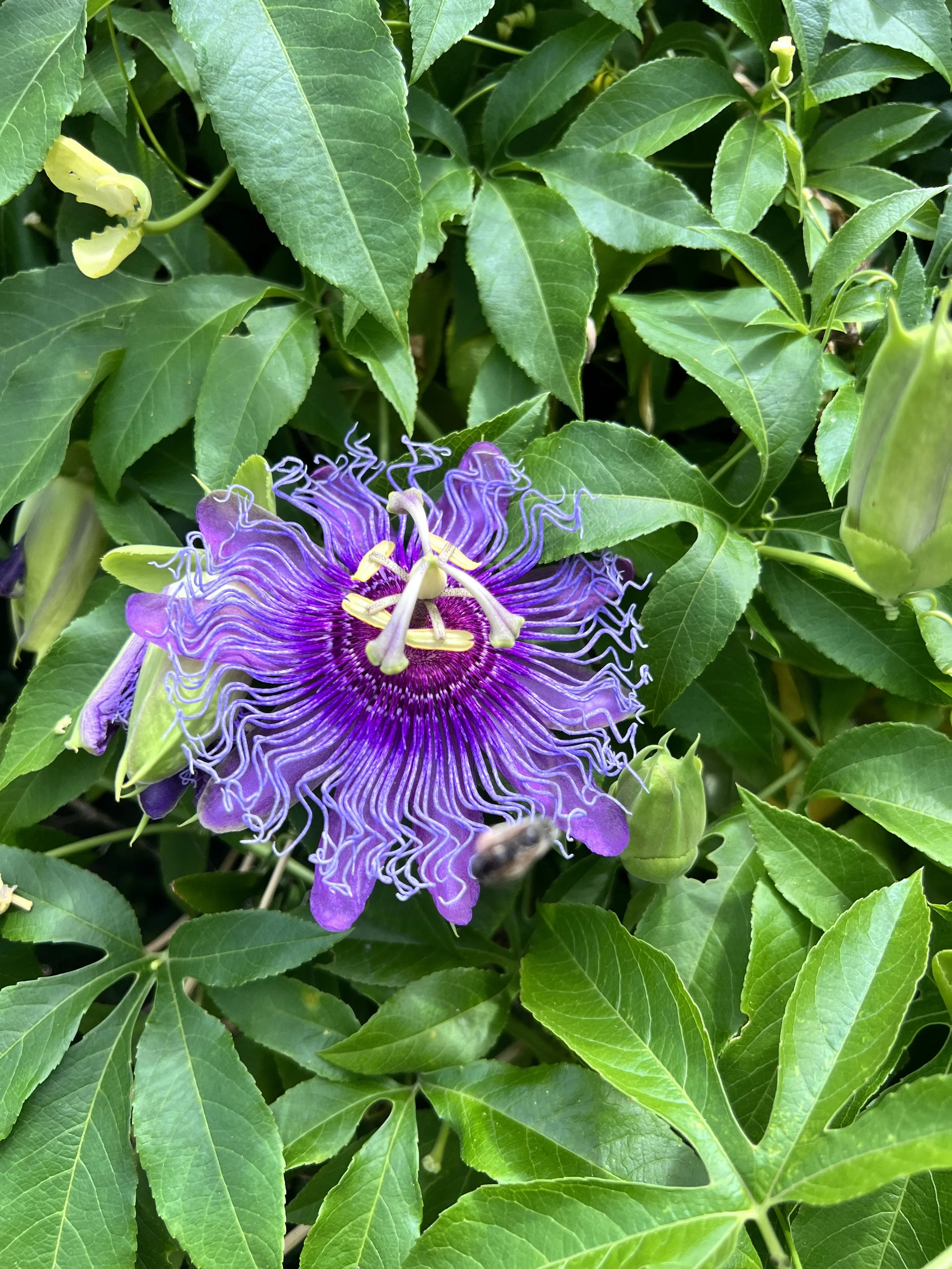
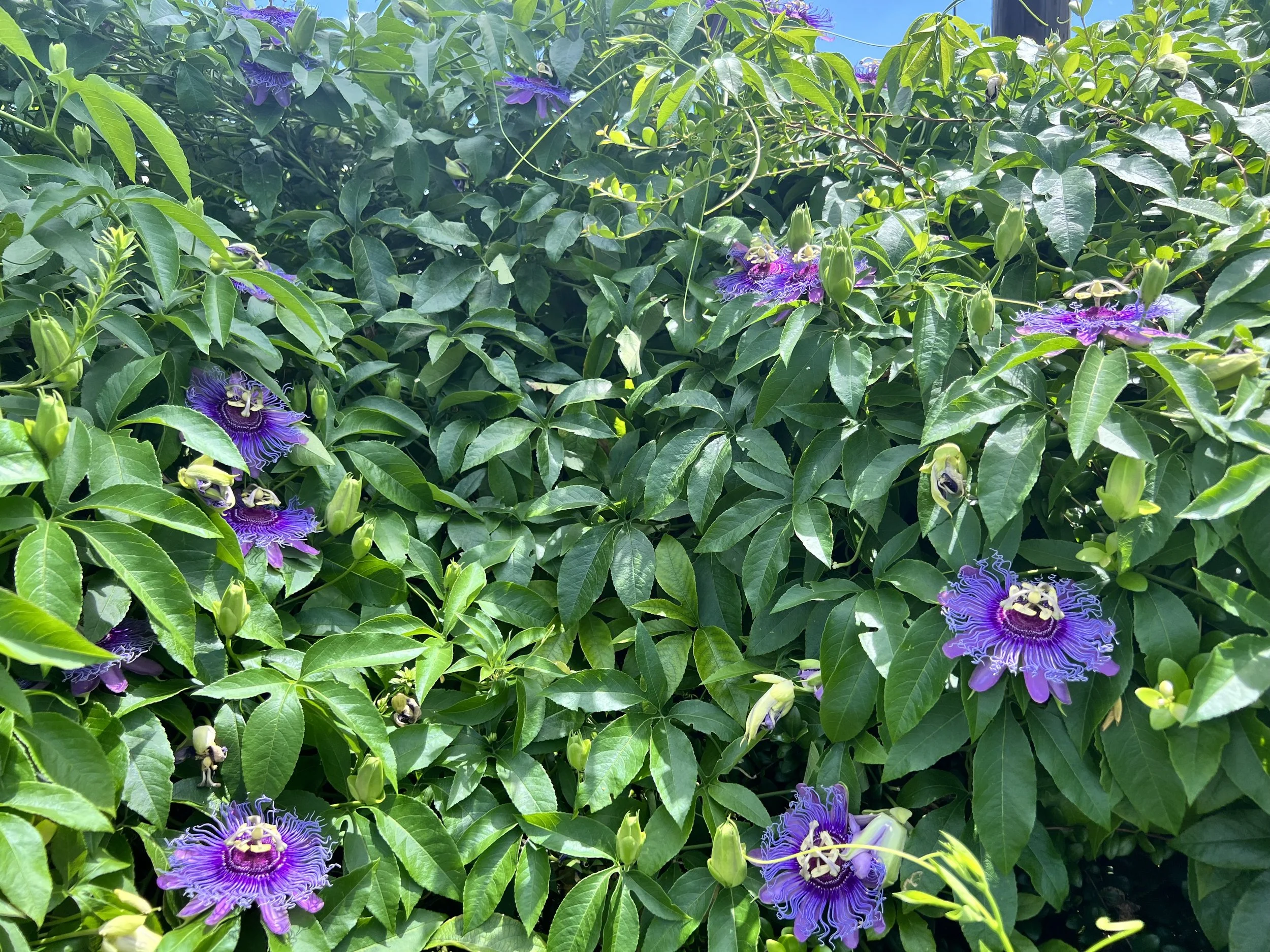
Passiflora 'Incense'
Incense Passionvine is a non-native, Florida-friendly hybrid passionvine that is a cross of the native Maypop Passionvine and a South American variety. They can grow 10’-20’ with support, and do well in full sun to shade, with well-draining, rich organic soil. These vines have dark green leaves and beautiful, fragrant blooms that bring in butterflies and pollinators. They also serve as a larval hot for Gulf Fritillary, Zebra Longwing, and Julia butterflies.
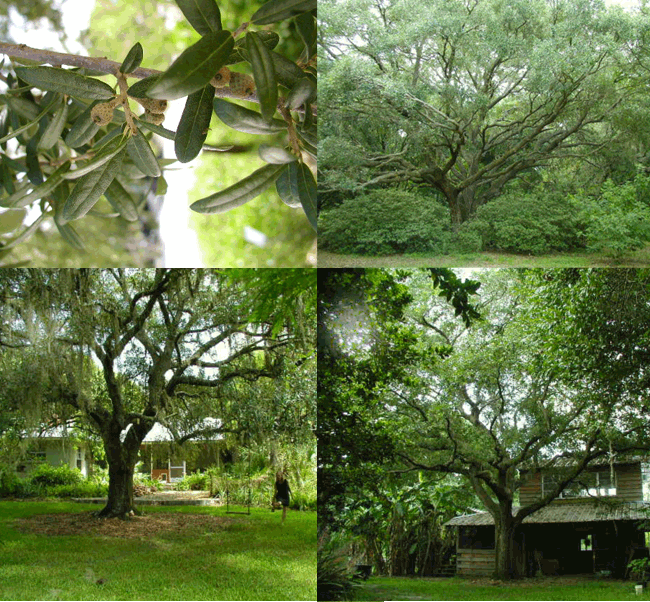
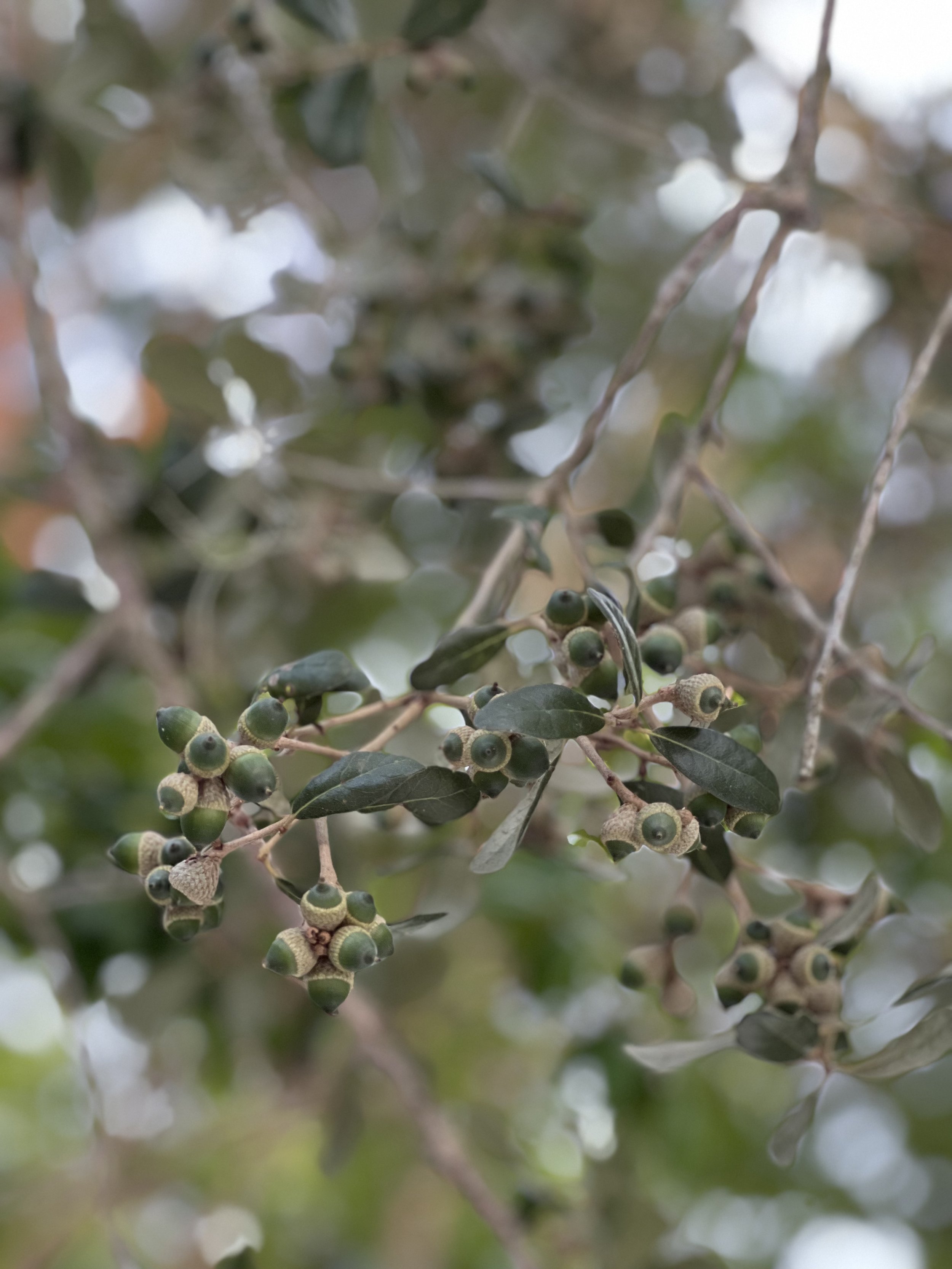
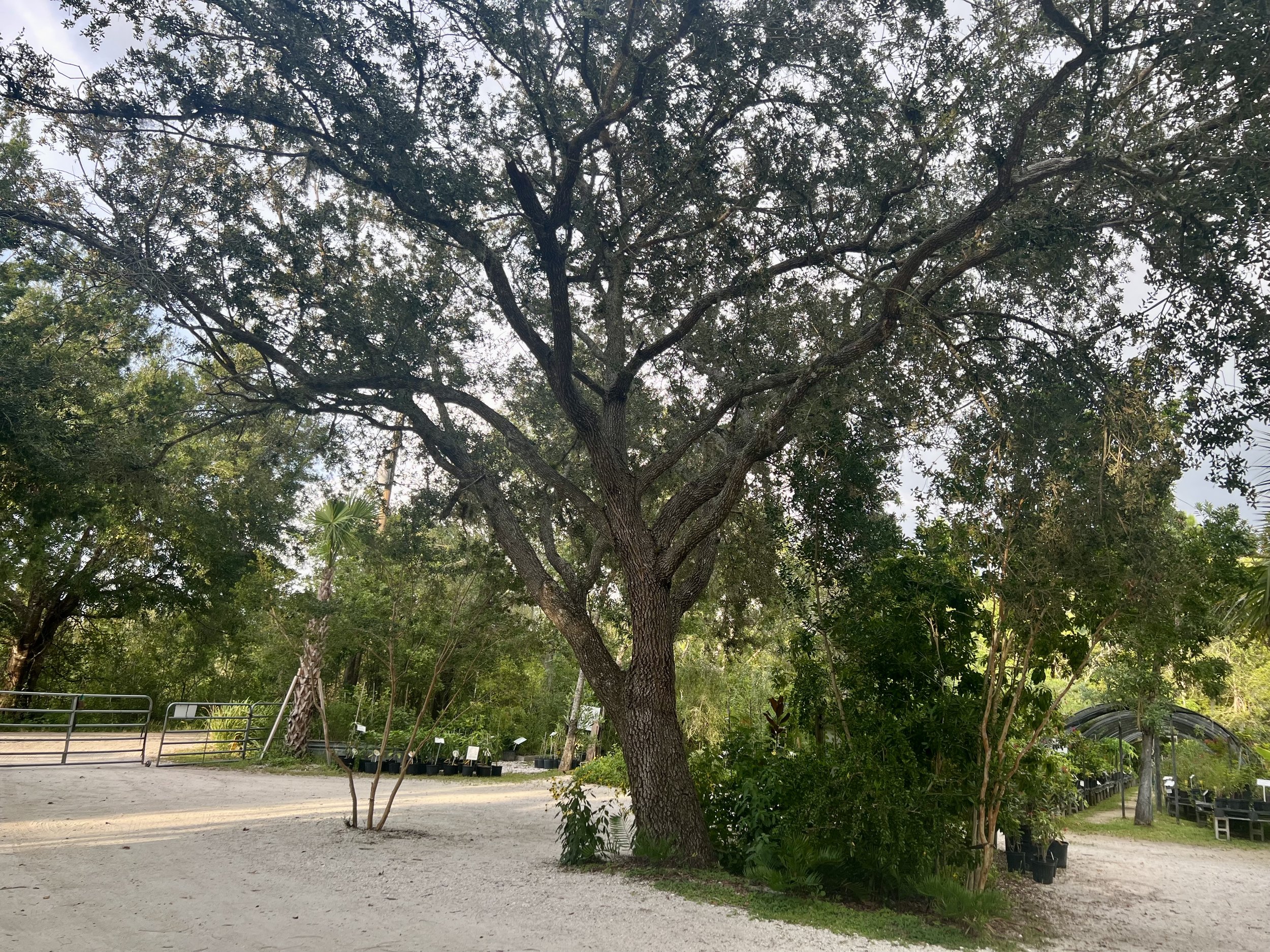
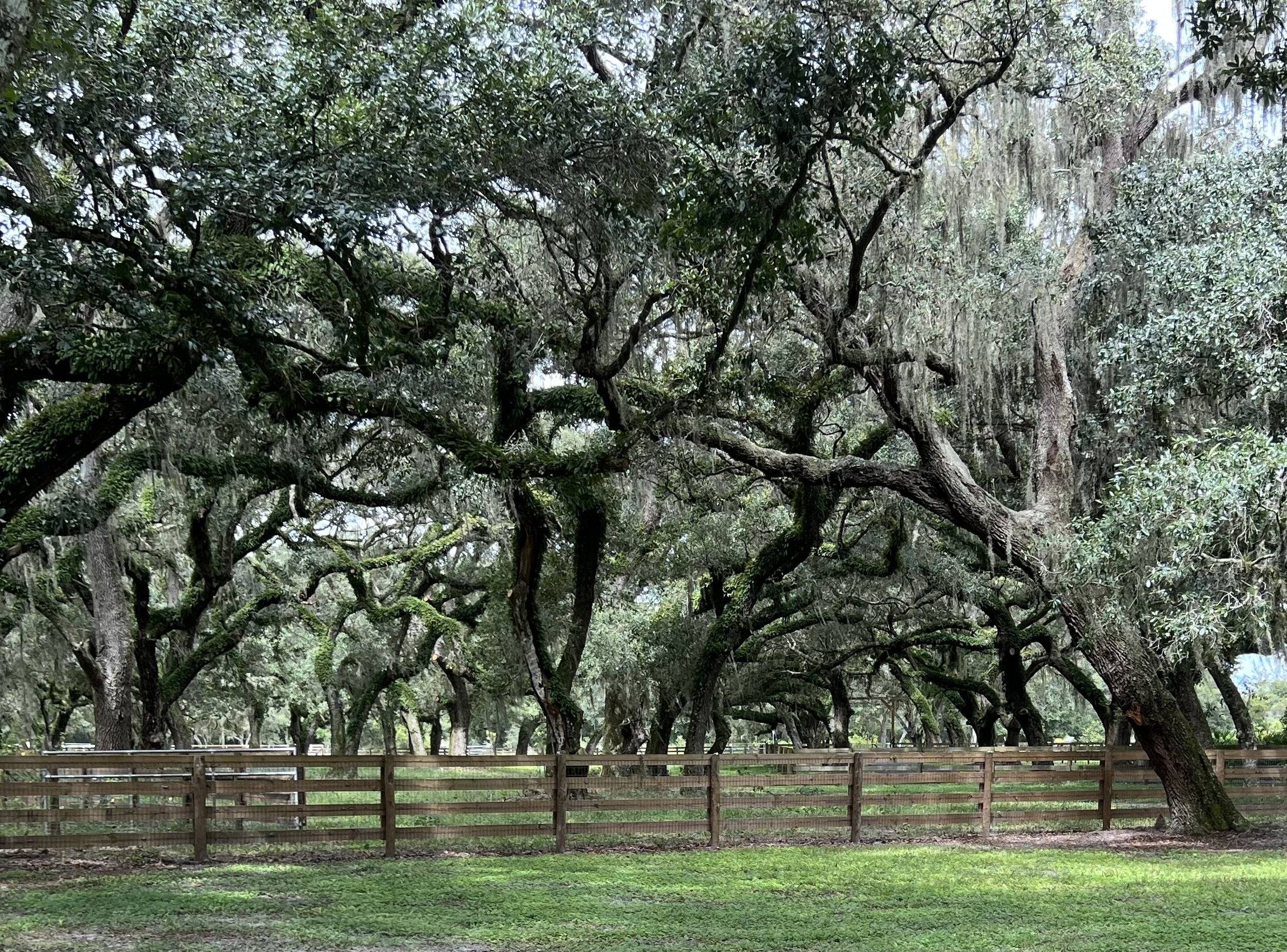
Quercus virginiana
Live Oak is a magnificent, slow-growing evergreen oak native to the southeastern United States from Virginia to Texas that can live for centuries. This iconic tree typically grows 40’-60’ tall but spreads dramatically wider, with massive horizontal and arching branches forming a broad, rounded canopy that can extend 100’ or more. The thick, leathery leaves are dark green and elliptical, often draped with Spanish moss in its native range. It produces inconspicuous flowers followed by acorns that provide critical food for squirrels, deer, and numerous bird species. Extremely durable and salt-tolerant, it thrives in sandy coastal soils and can withstand hurricanes, making it a symbol of the Old South and an excellent choice for large landscapes, parks, and street plantings in zones 8-10.
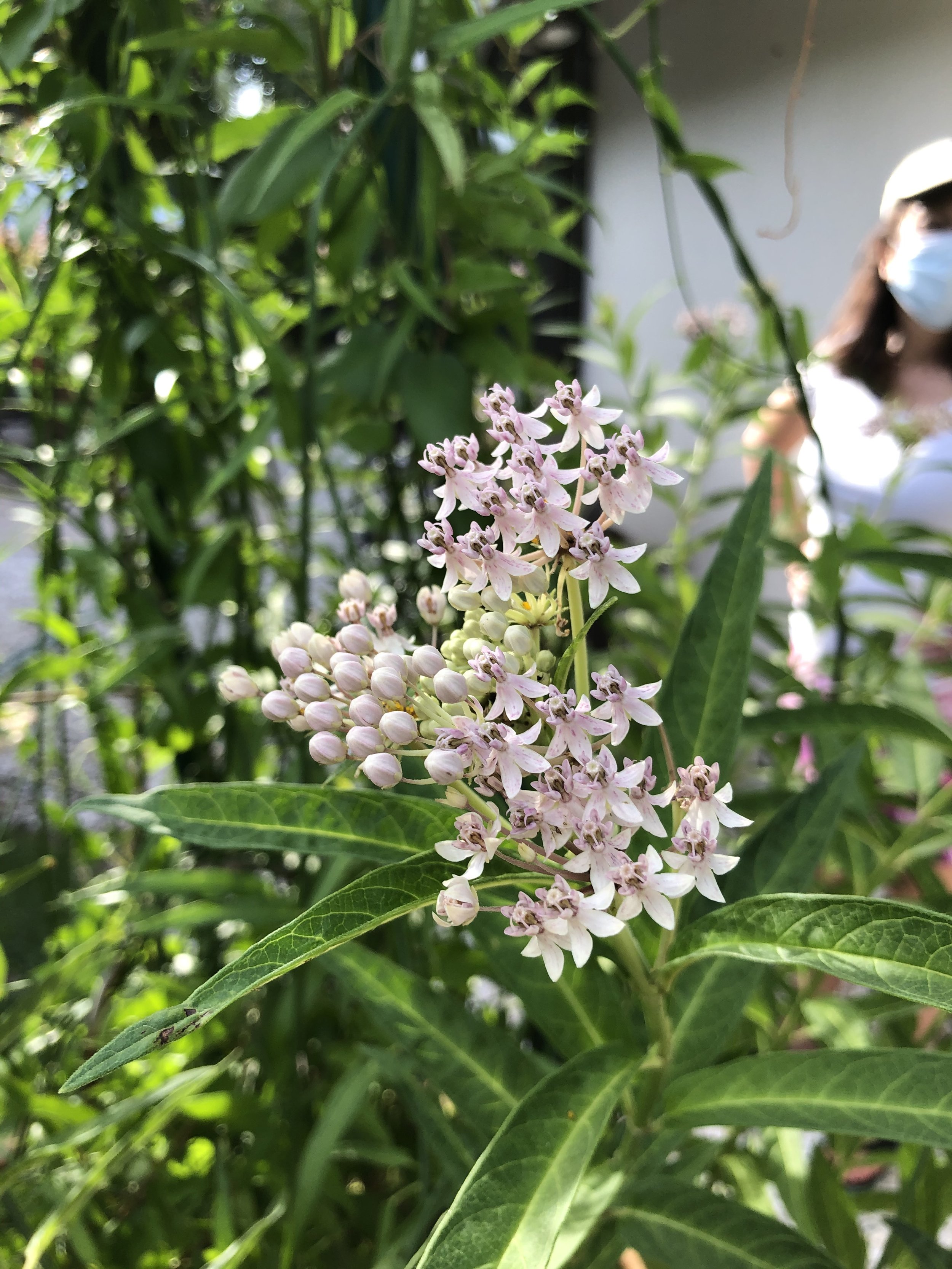
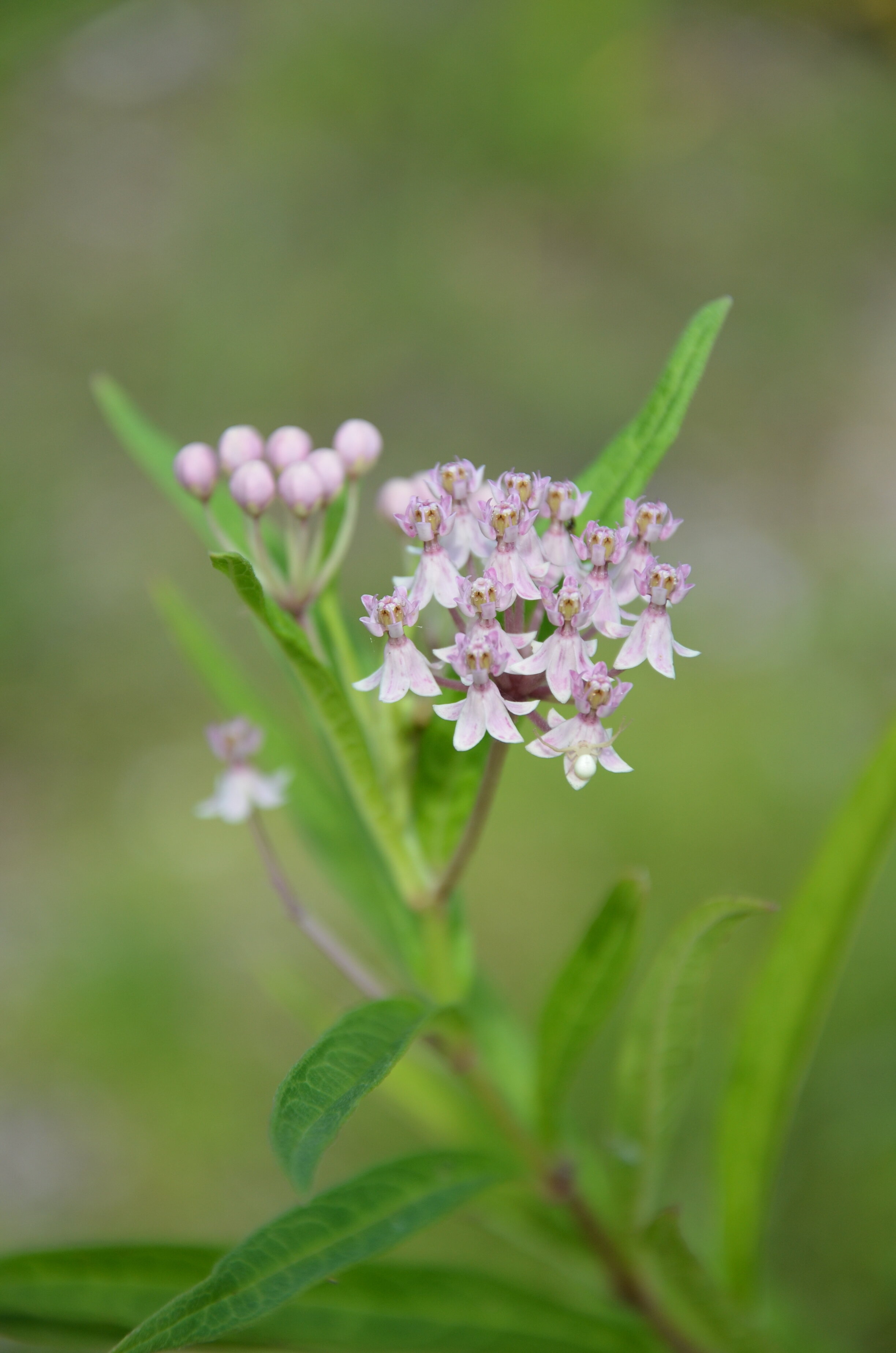
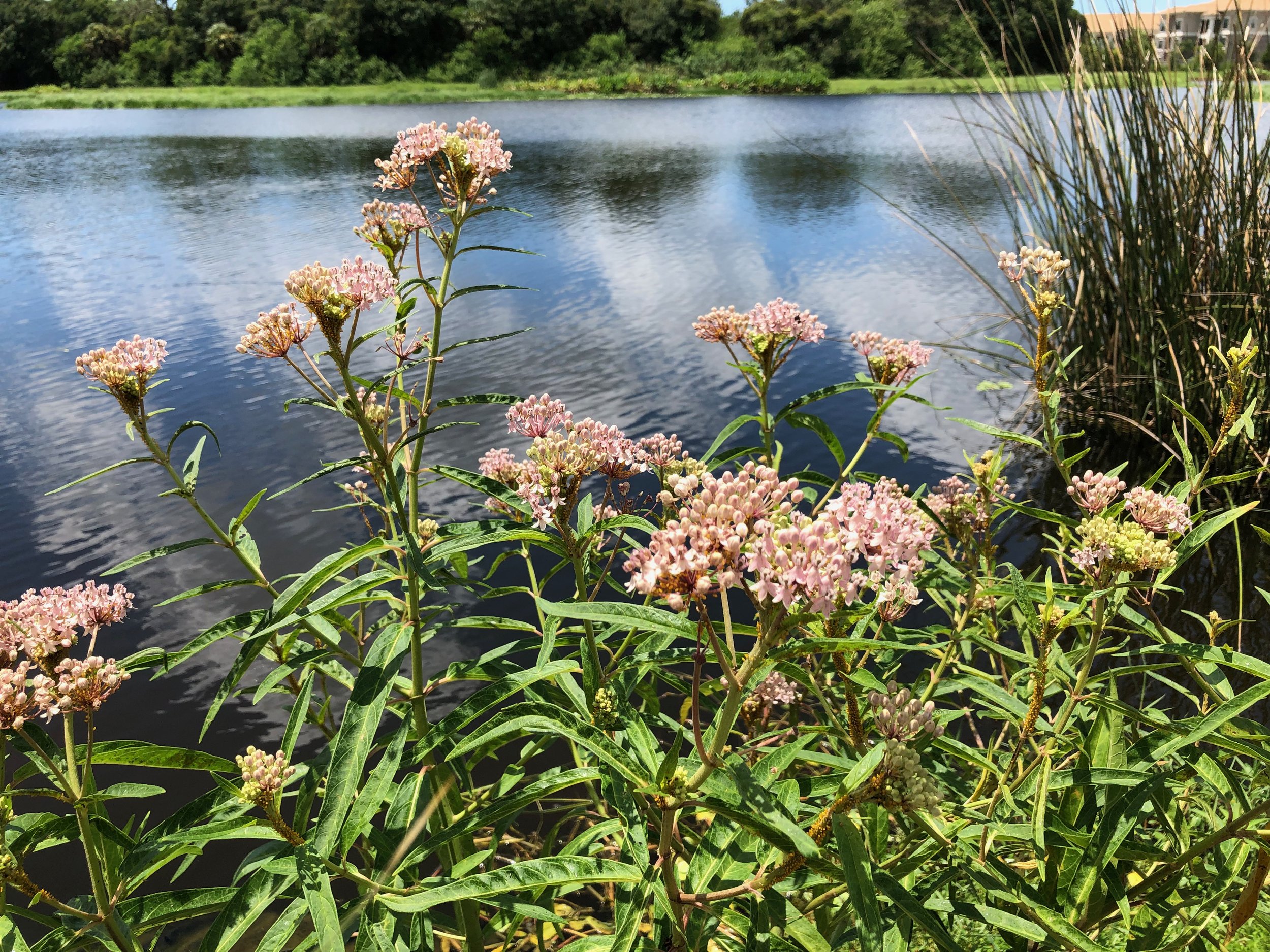
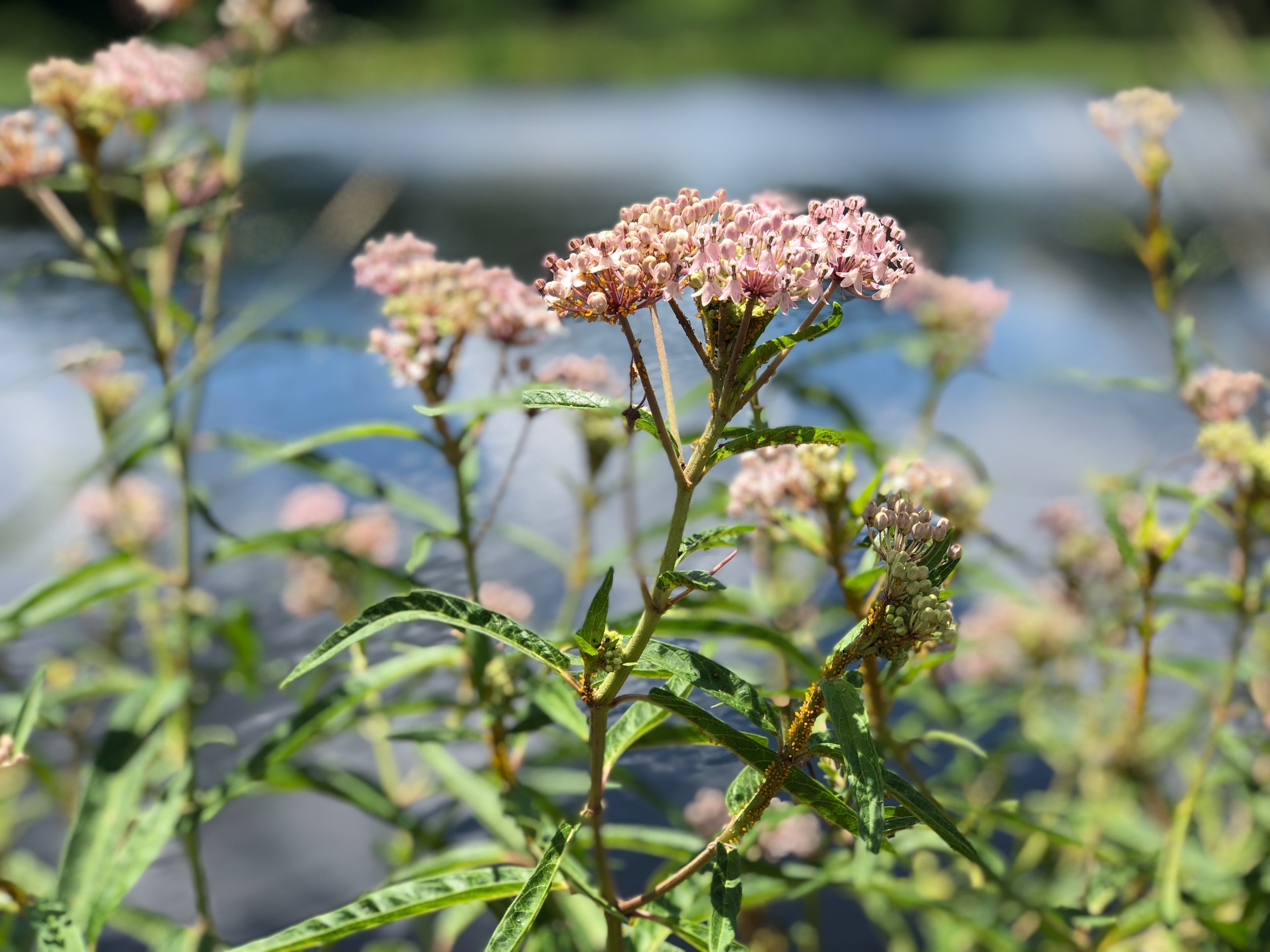
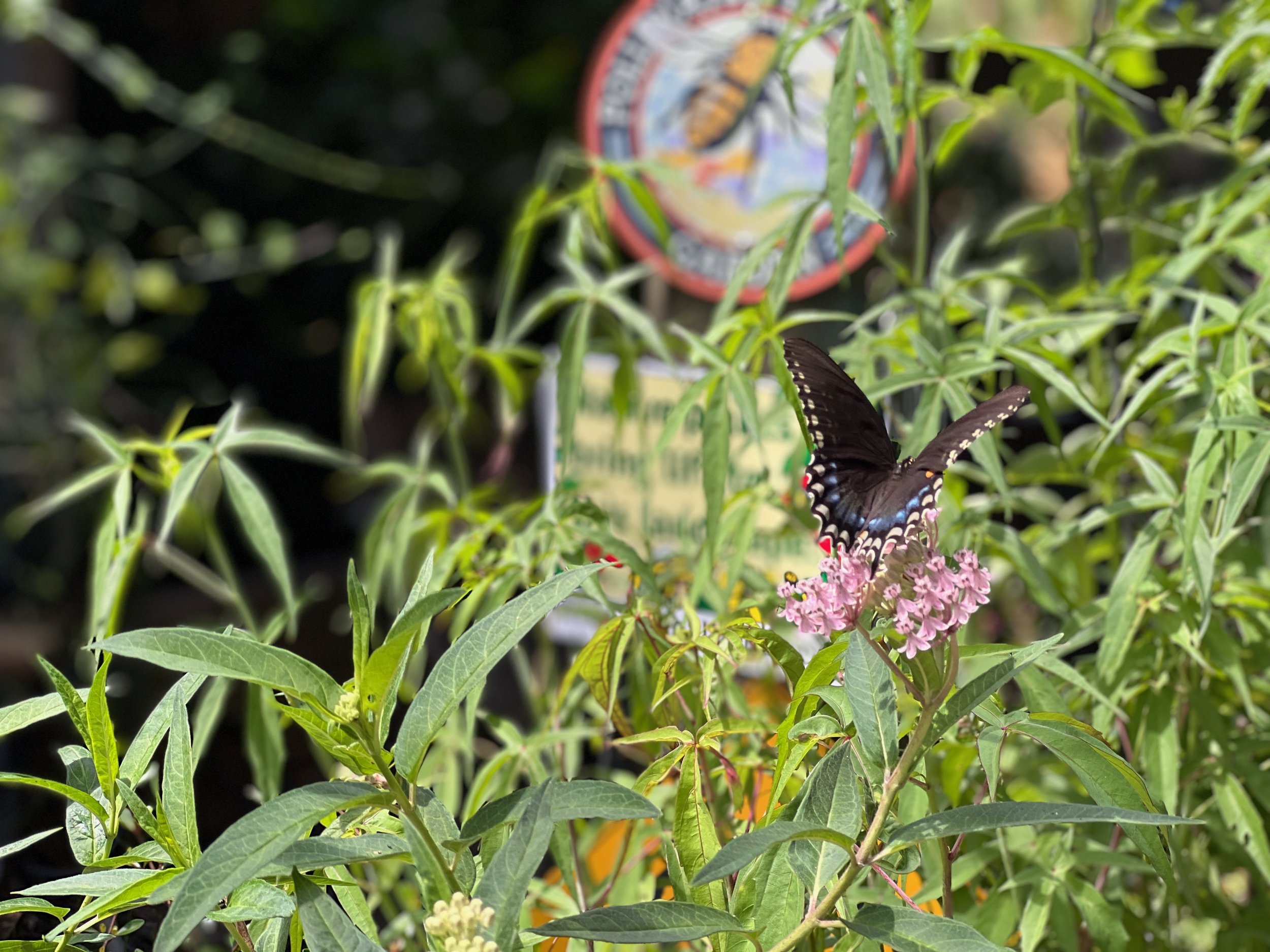
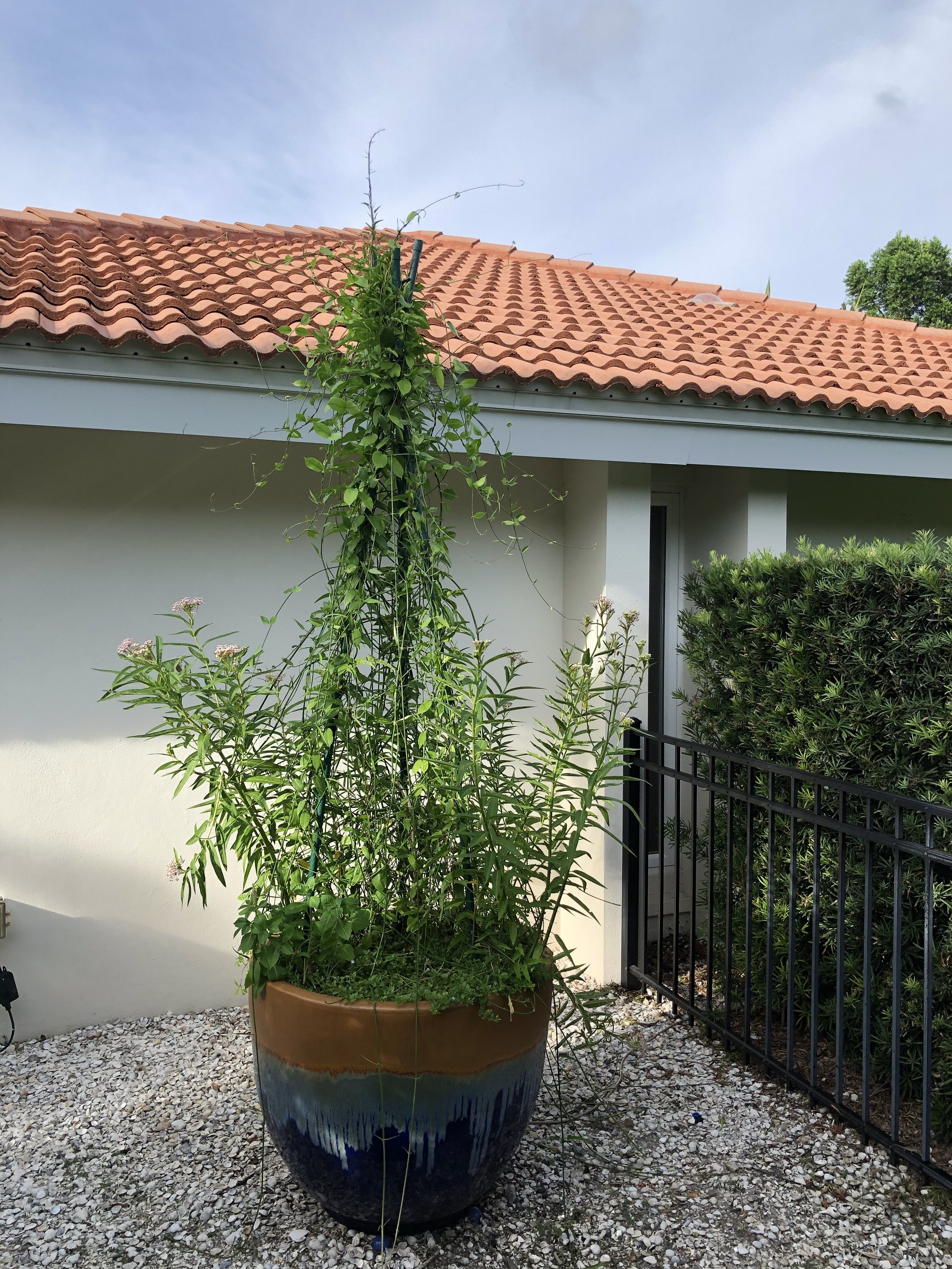
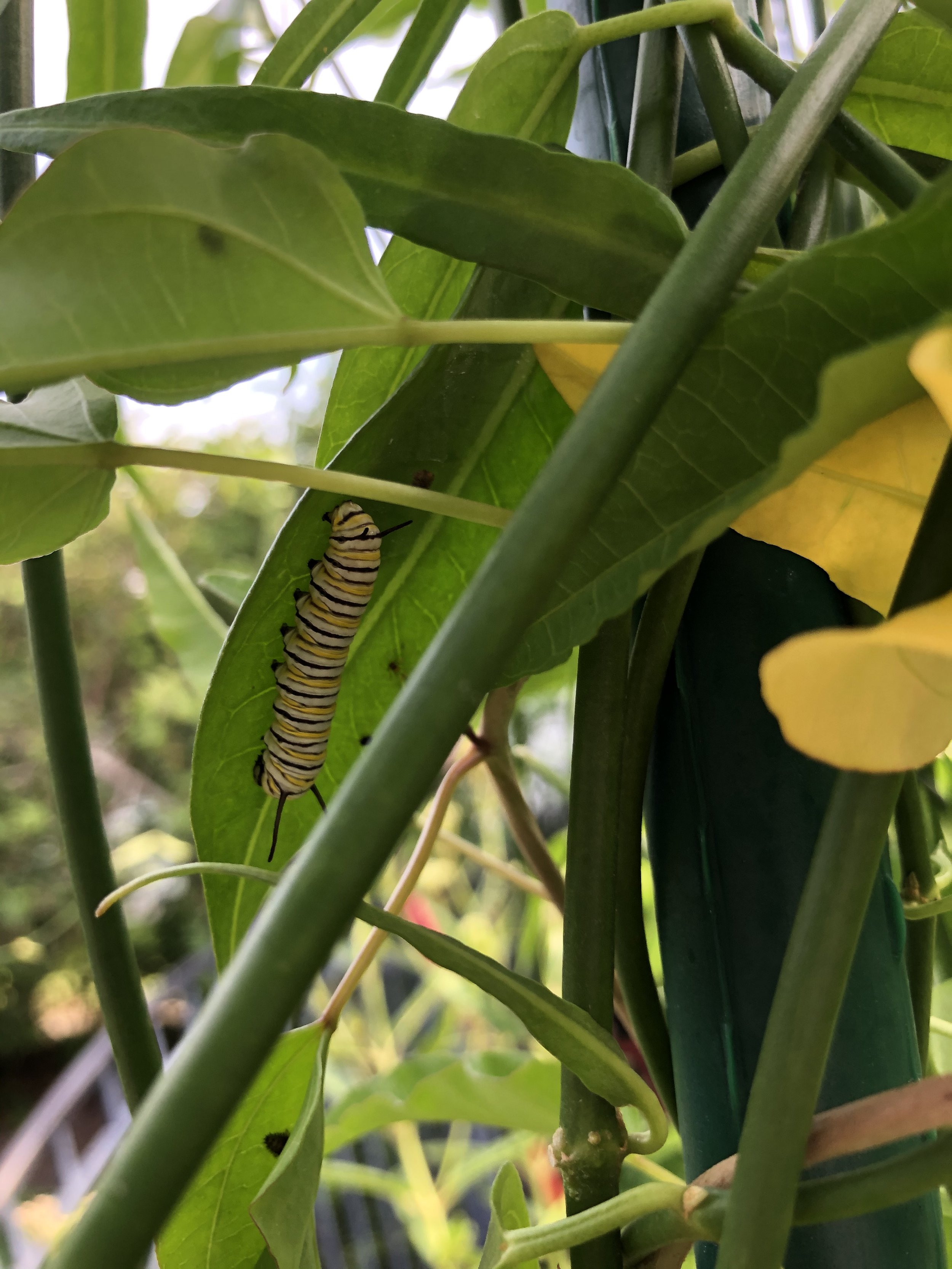
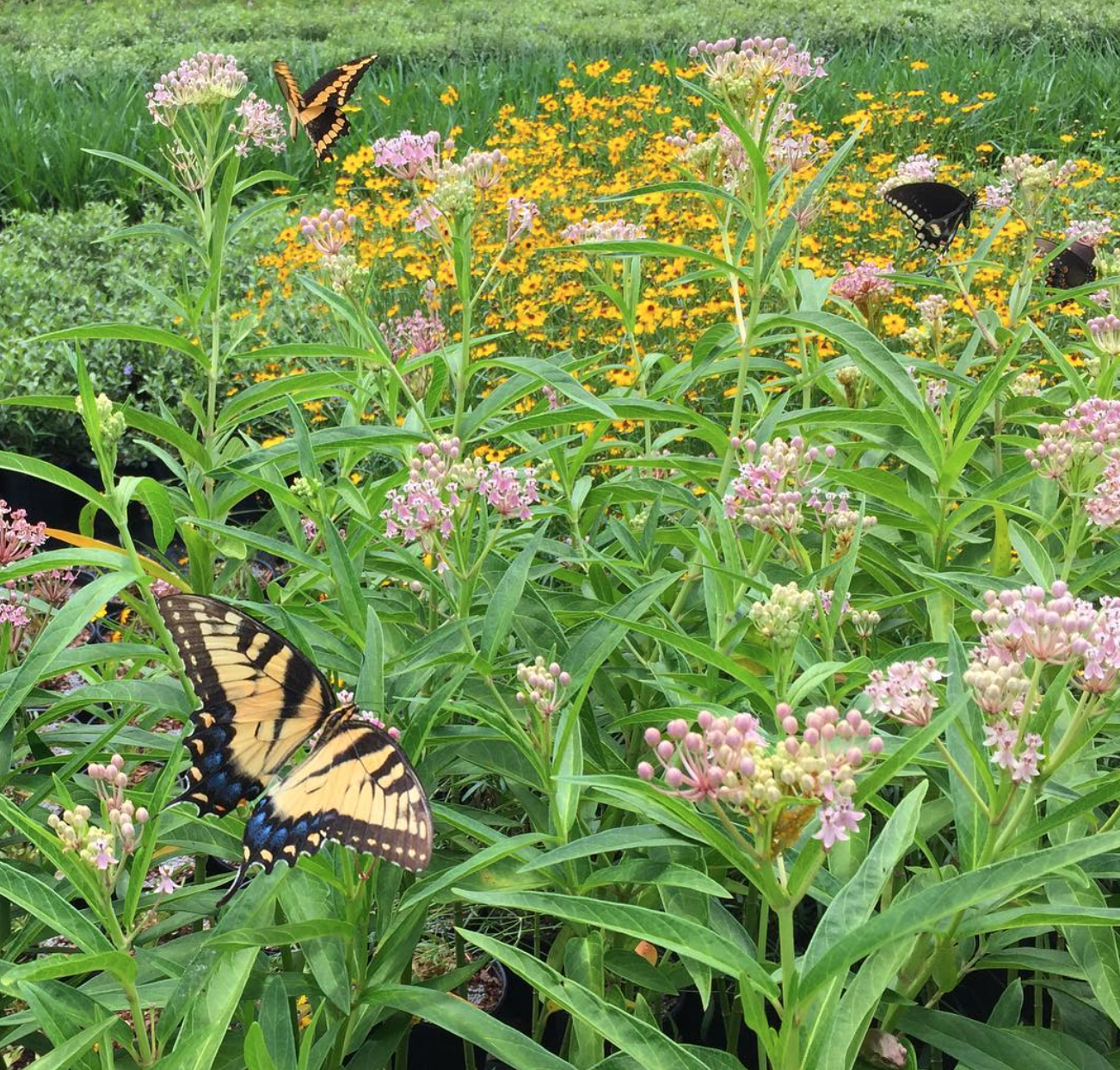
Pink Milkweed is a native, perennial, re-seeding, winter-dormant host plant for monarch and queen butterflies. Its foliage dies back in the winter and returns in the spring. It prefers moist soil conditions but can be grown in containers if kept moist. It is one of the most hardy of the native milkweeds for Florida gardeners to grow.
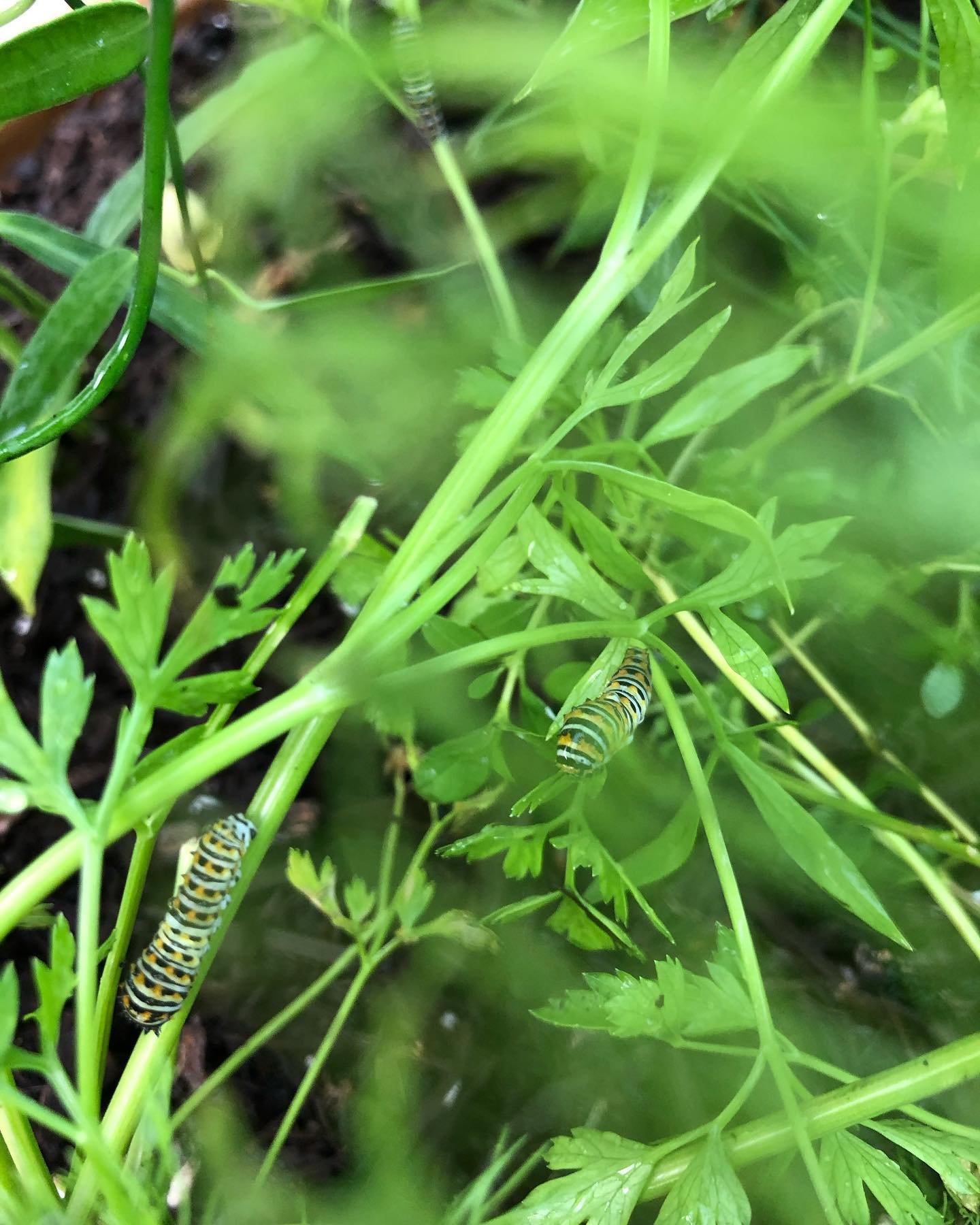
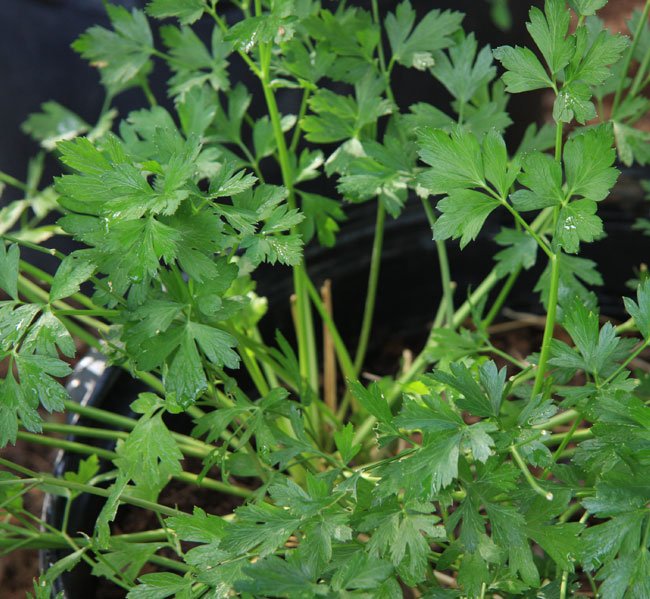
Petroselinum crispum
Parsley is a non-native and Florida-friendly many-purpose garden plant that can be grown year-round in Florida. It is an edible plant for both people and butterflies. Many gardeners include it in their butterflies gardens as it is an easy-to-grow host plant for Black Swallowtail butterflies. It can tolerate sun (in winter) and partial shade (in summer), average to moist (well-drained) soils, and it benefits from amended soils (organic compost/content).
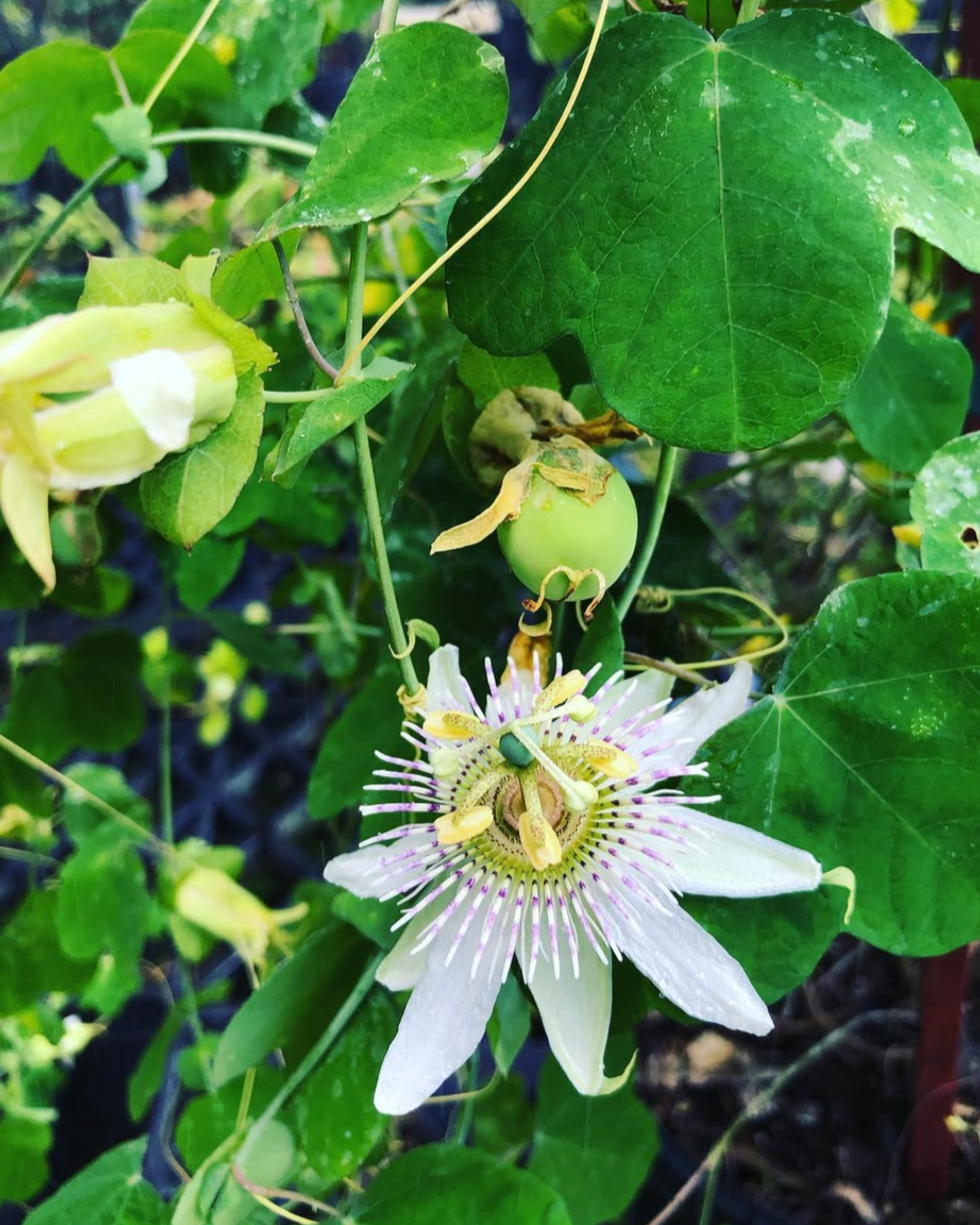
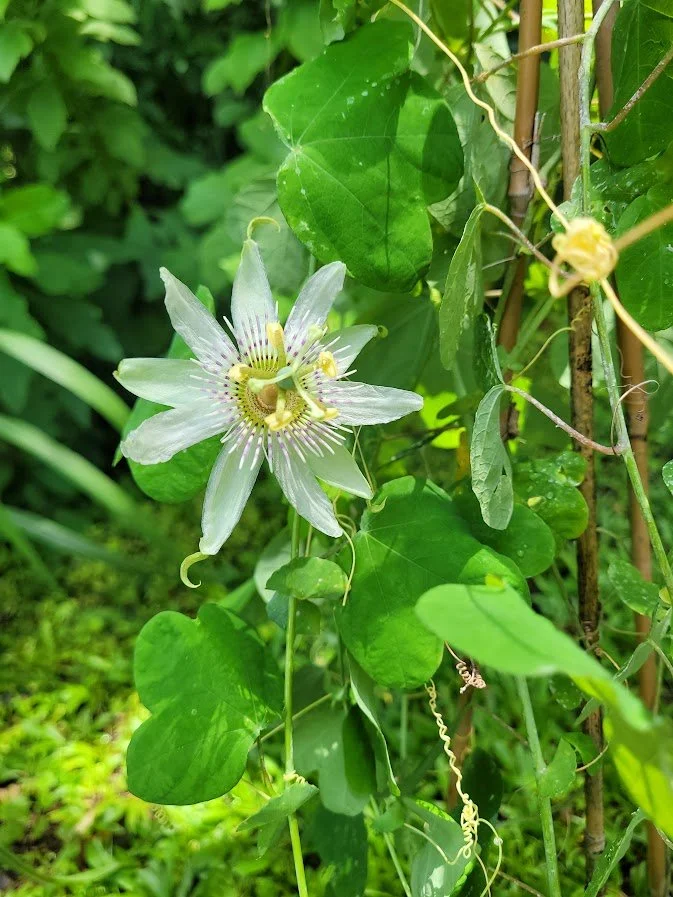
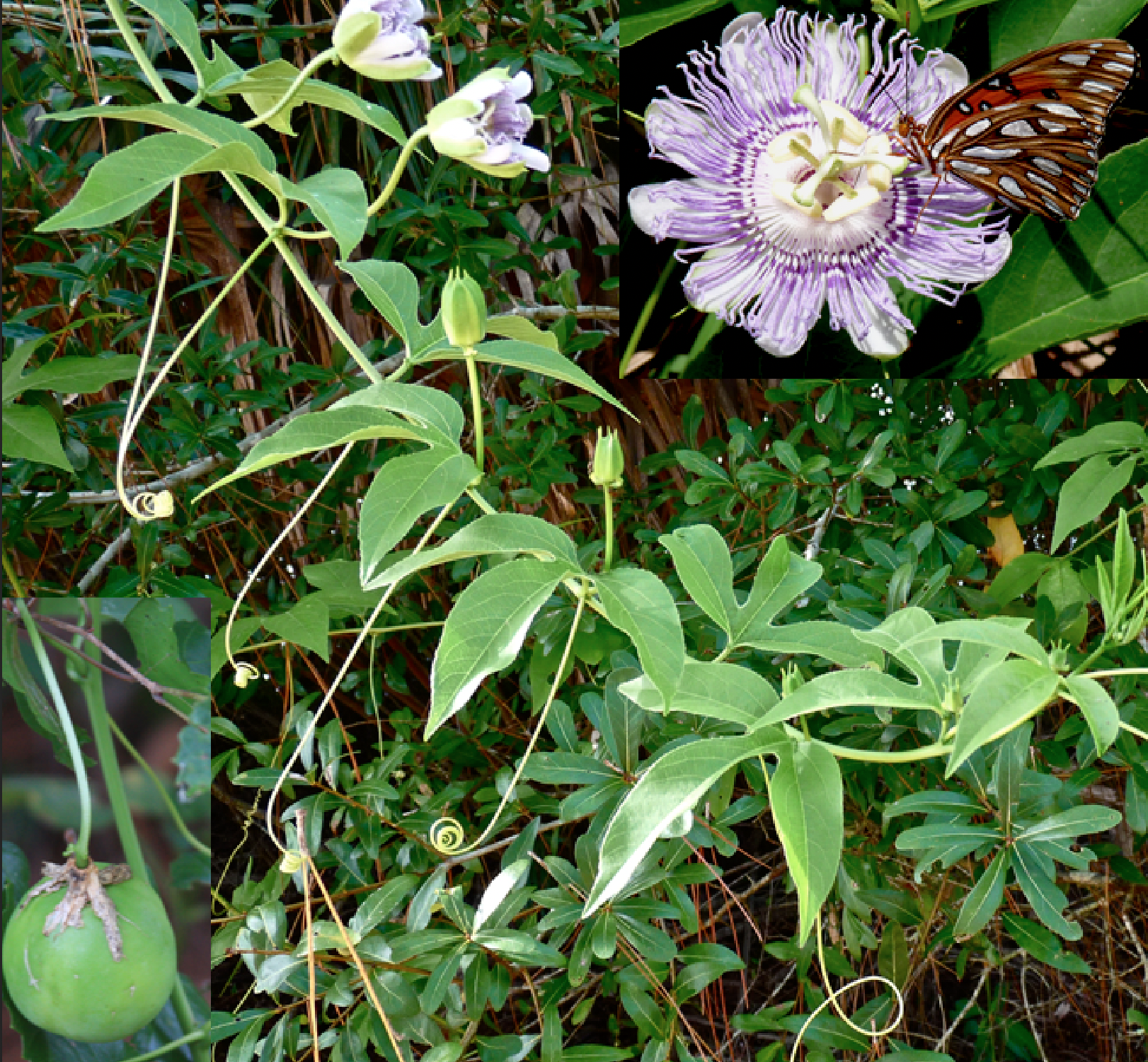
Passiflora pallens
Pineland Passionvine is a rare, state-endangered perennial climbing vine endemic to Florida. This delicate species features small, pale yellow-green flowers with white coronas that are much less conspicuous than those of other passion vines. It thrives in mesic to wet tropical woodlands, preferring sunny openings and woodland margins with well-drained soils. As a host plant for several butterfly species, including the Gulf Fritillary, it serves an important ecological role despite its rarity. This vine requires full sun to filtered light and regular water, making it suitable for specialized native plant gardens and restoration projects in zones 10-11.
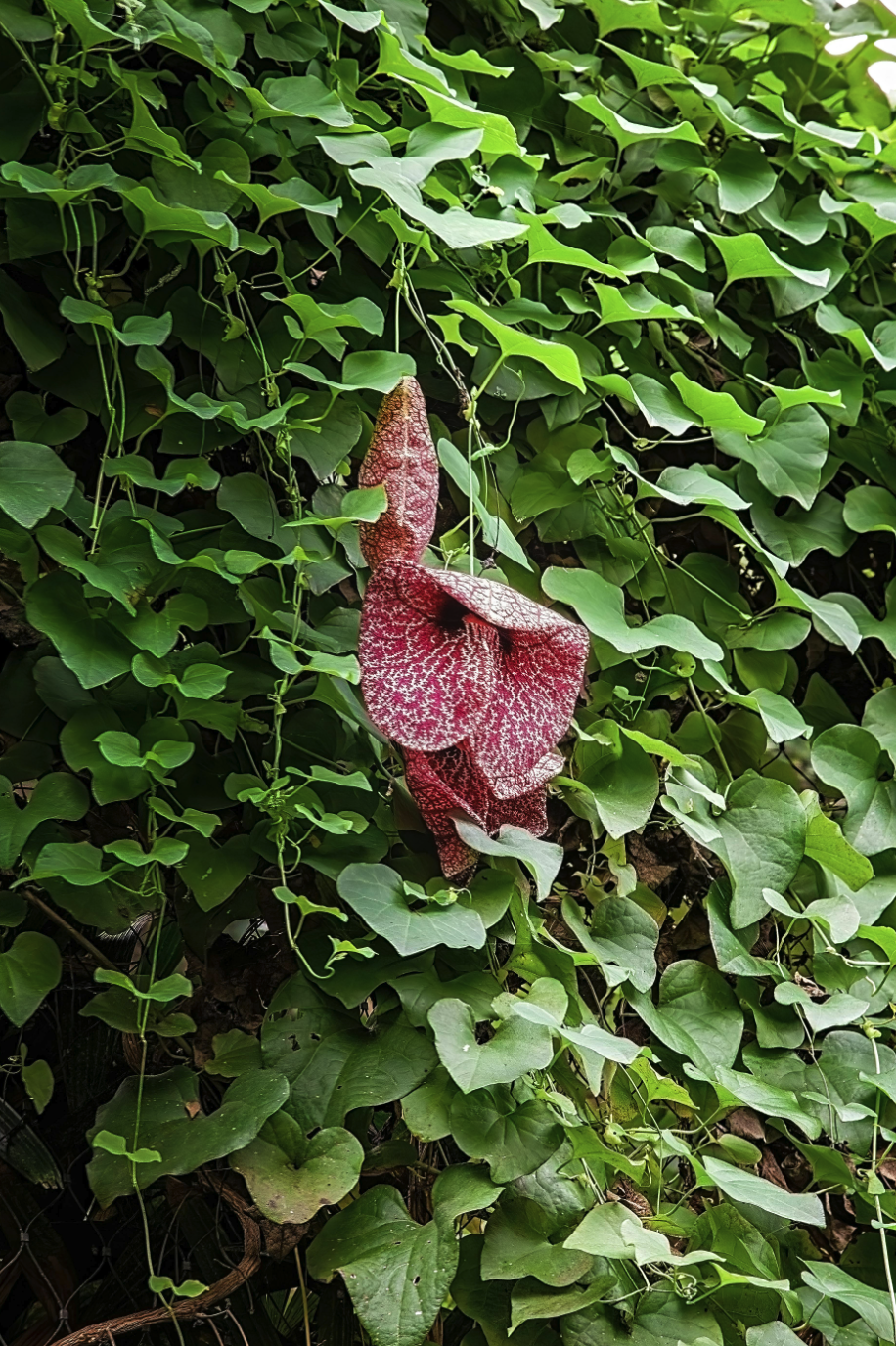
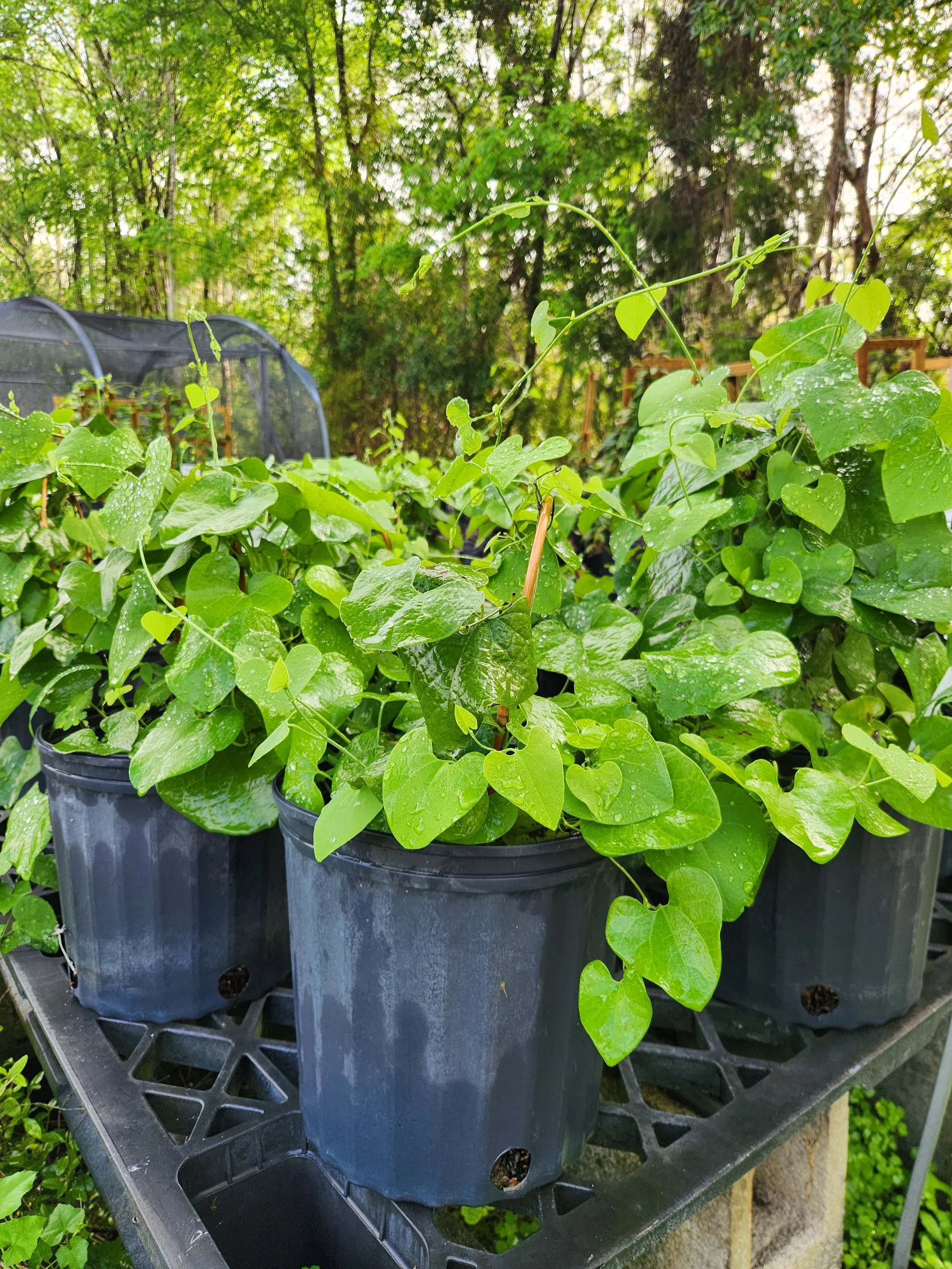
Aristolochia macrophylla
Pipevine is a Florida-friendly deciduous climbing vine that grows up to 15ft with large, heart-shaped leaves reaching 12in long. The leaves overlap in a shingle-like pattern to create dense screening, making it excellent for privacy on arbors, trellises, or fences. In late spring to early summer, it produces distinctive pipe-shaped flowers that are greenish-yellow and mottled with burgundy, though they're often hidden beneath the lush foliage. Native to moist woodlands and stream banks, it serves as the primary host plant for the Pipevine Swallowtail butterfly. This shade-tolerant vine prefers rich, moist soil and requires consistent moisture, making it unsuitable for dry conditions.
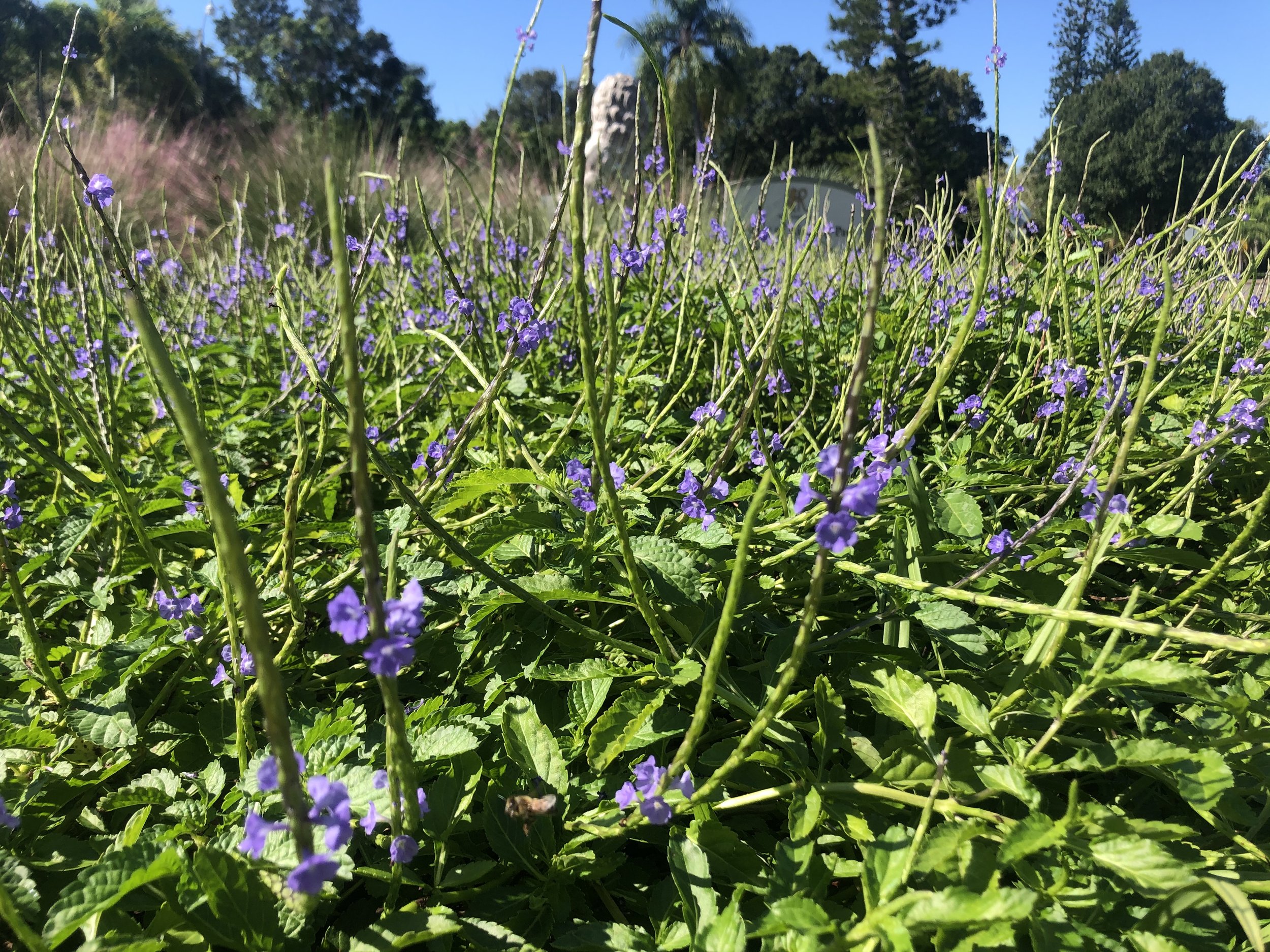

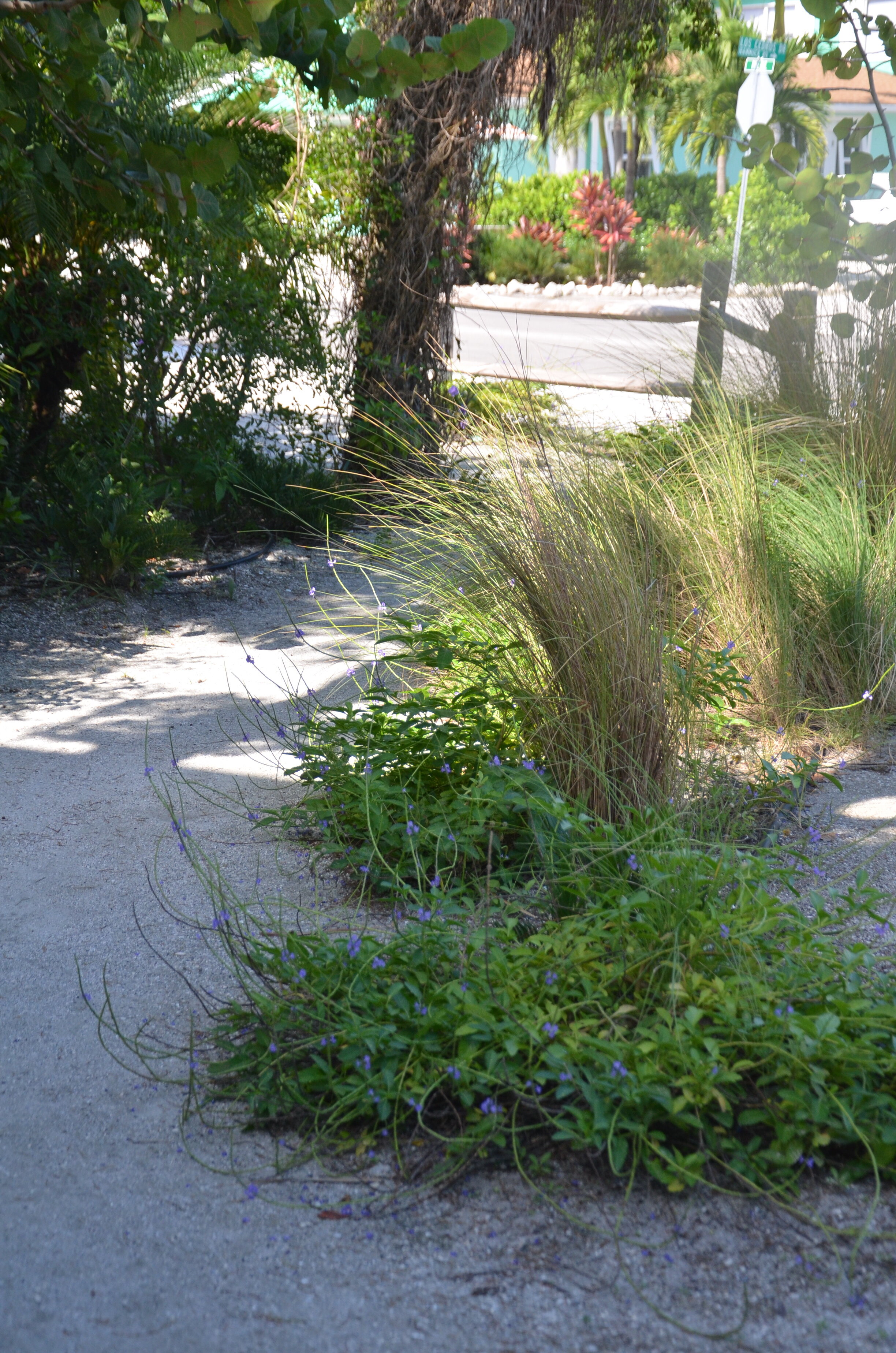
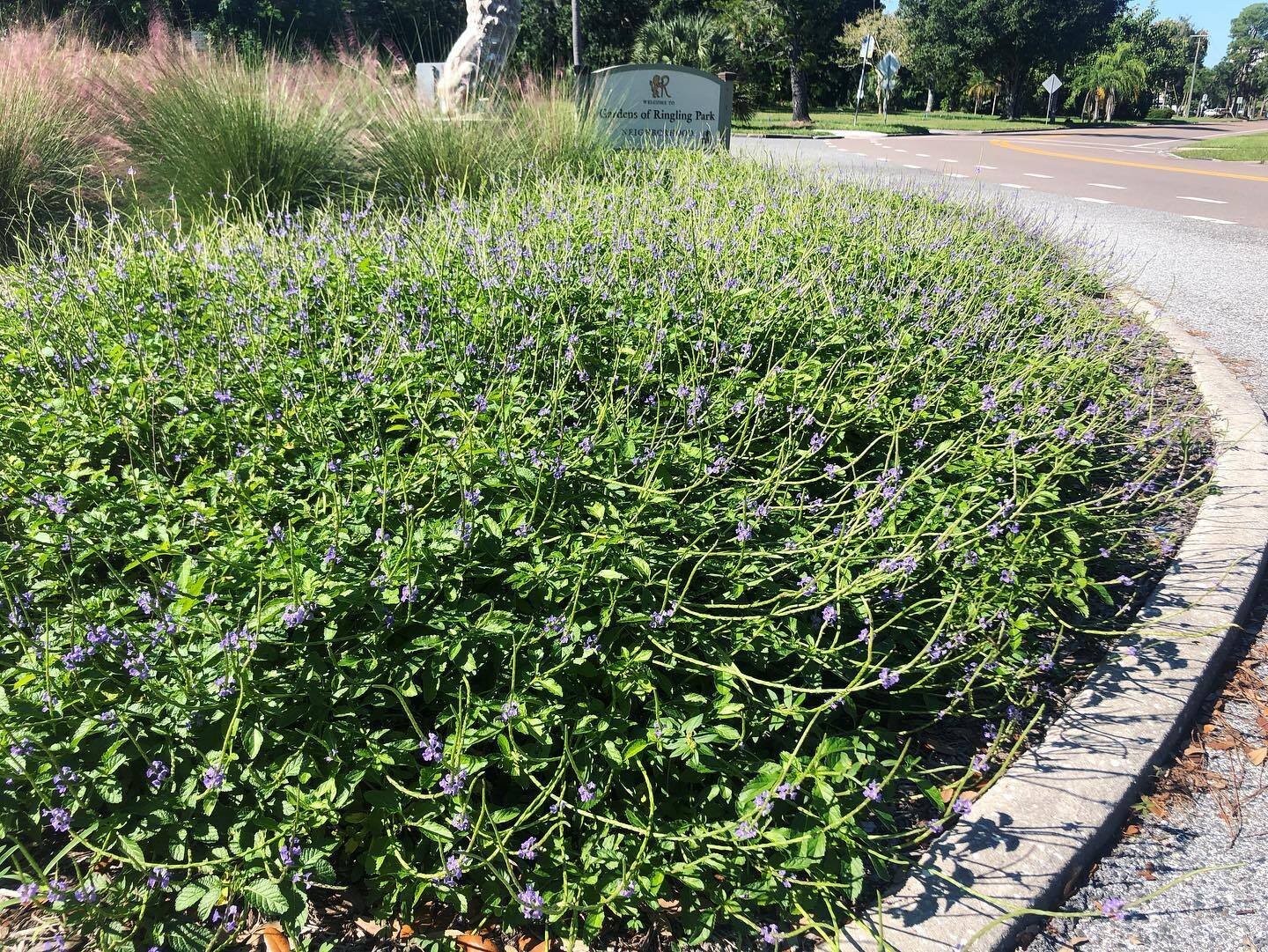
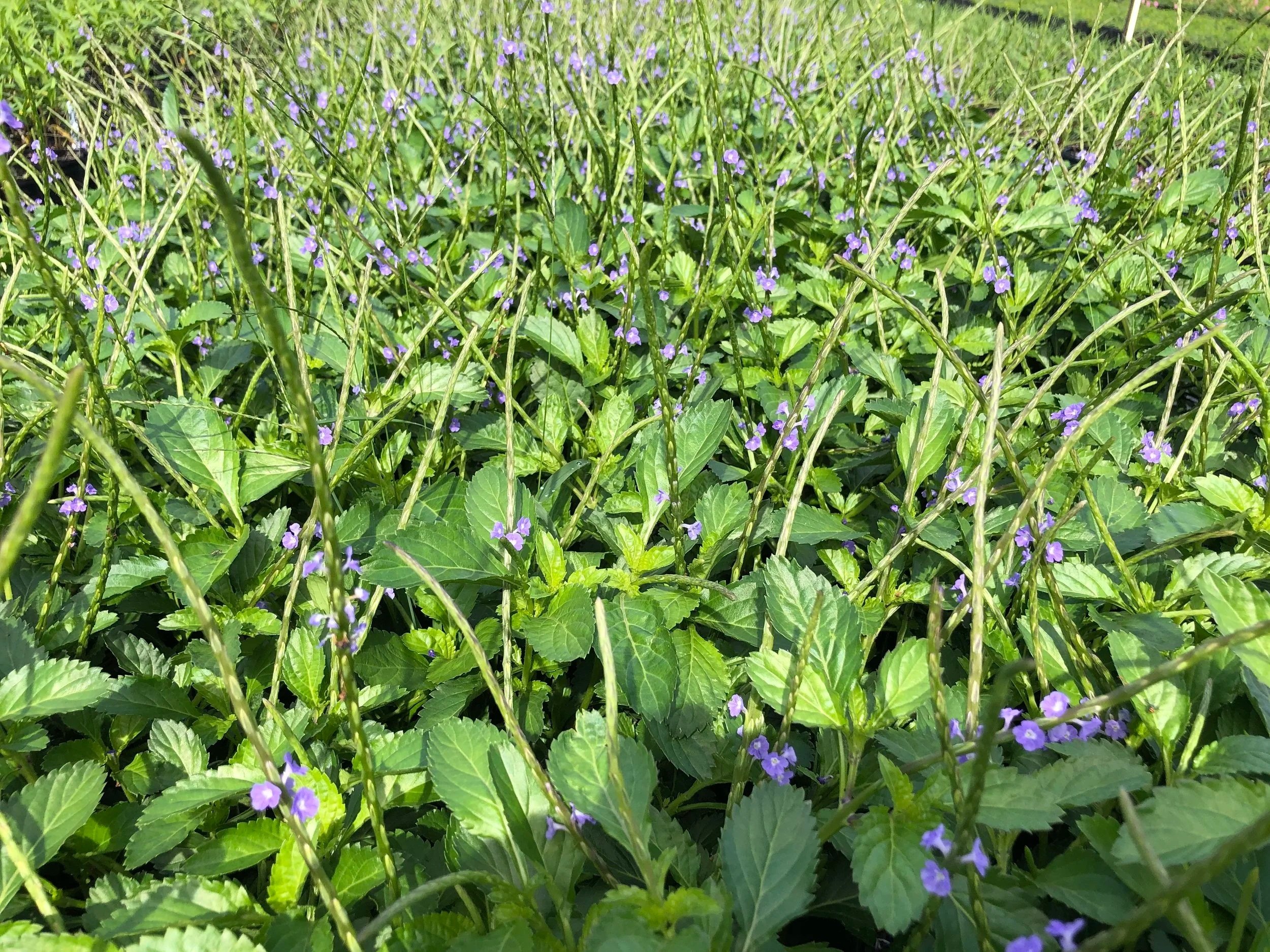
Stachytarpheta jamaicensis
Blue Porterweed is the only porterweed native to Florida. It is a low-growing plant, typically reaching 1 to 2 feet tall, that thrives in full sun or light shade. It is highly drought-tolerant and grows well in average to dry soils. This plant is a favorite for local wildlife. It serves as the primary food source for Tropical Buckeye caterpillars and provides nectar for many other butterflies and hummingbirds. Its unique, spike-like purple flowers bloom year-round, making it a reliable and attractive addition to any low-maintenance garden.
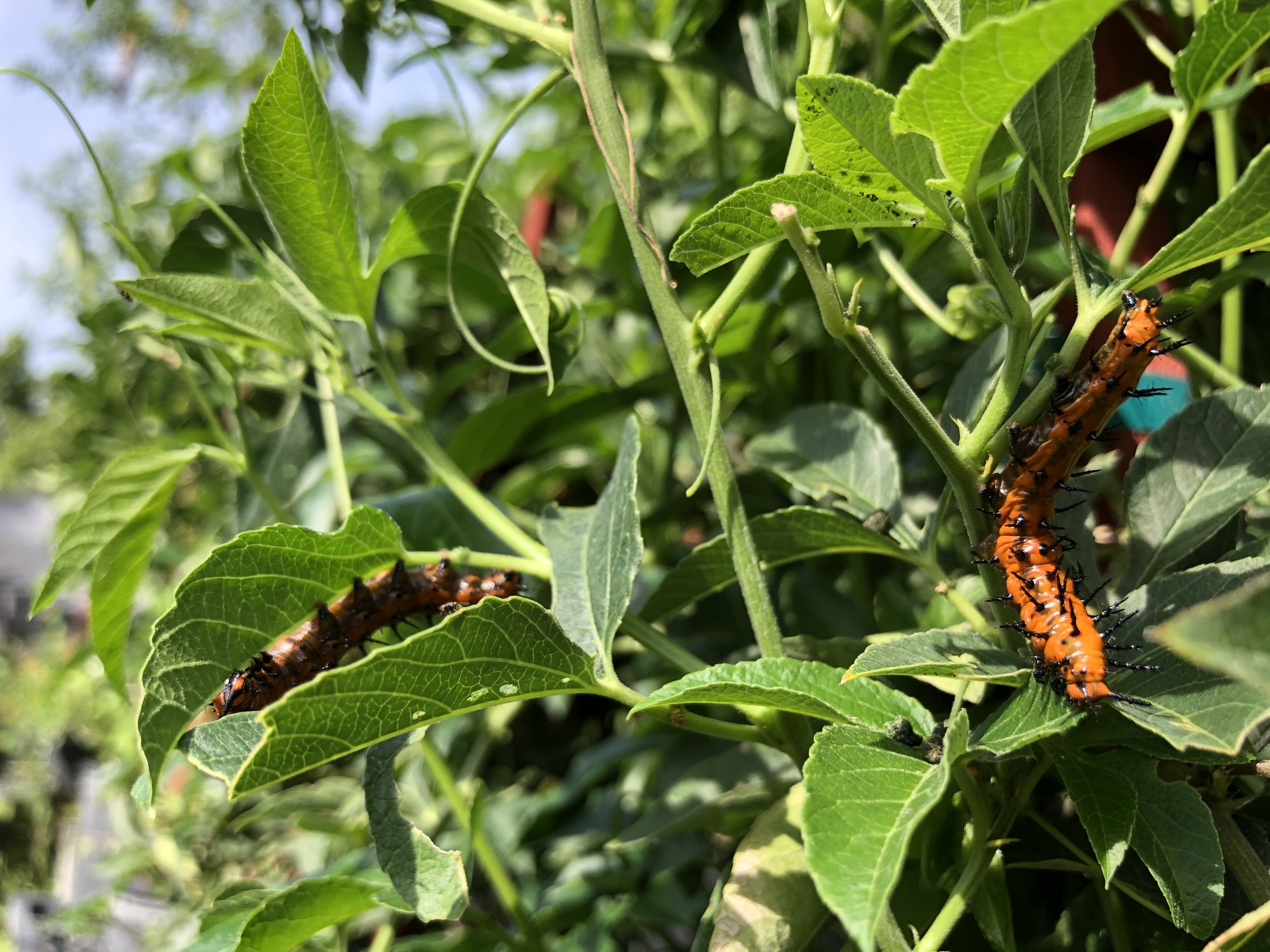
Passiflora edulis “Purple Possum”
Purple Passionvine is a Florida-friendly, evergreen, perennial, showy passion variety known for it’s fruit, unlike other passion varieties that are known for serving as host plants. While the fruit and the flowers are the stars of the show, Purple Possum also serves as a host plant for Zebra Longwing and Gulf Fritillary caterpillars, so you can use this plant to feed yourself, and your local butterflies! Grow in full sun with rich, well-draining sandy soil for the best blooms and fruit. The vines and fruit get heavy as they grow, so provide a sturdy trellis, arbor, tree, or fence to support them.
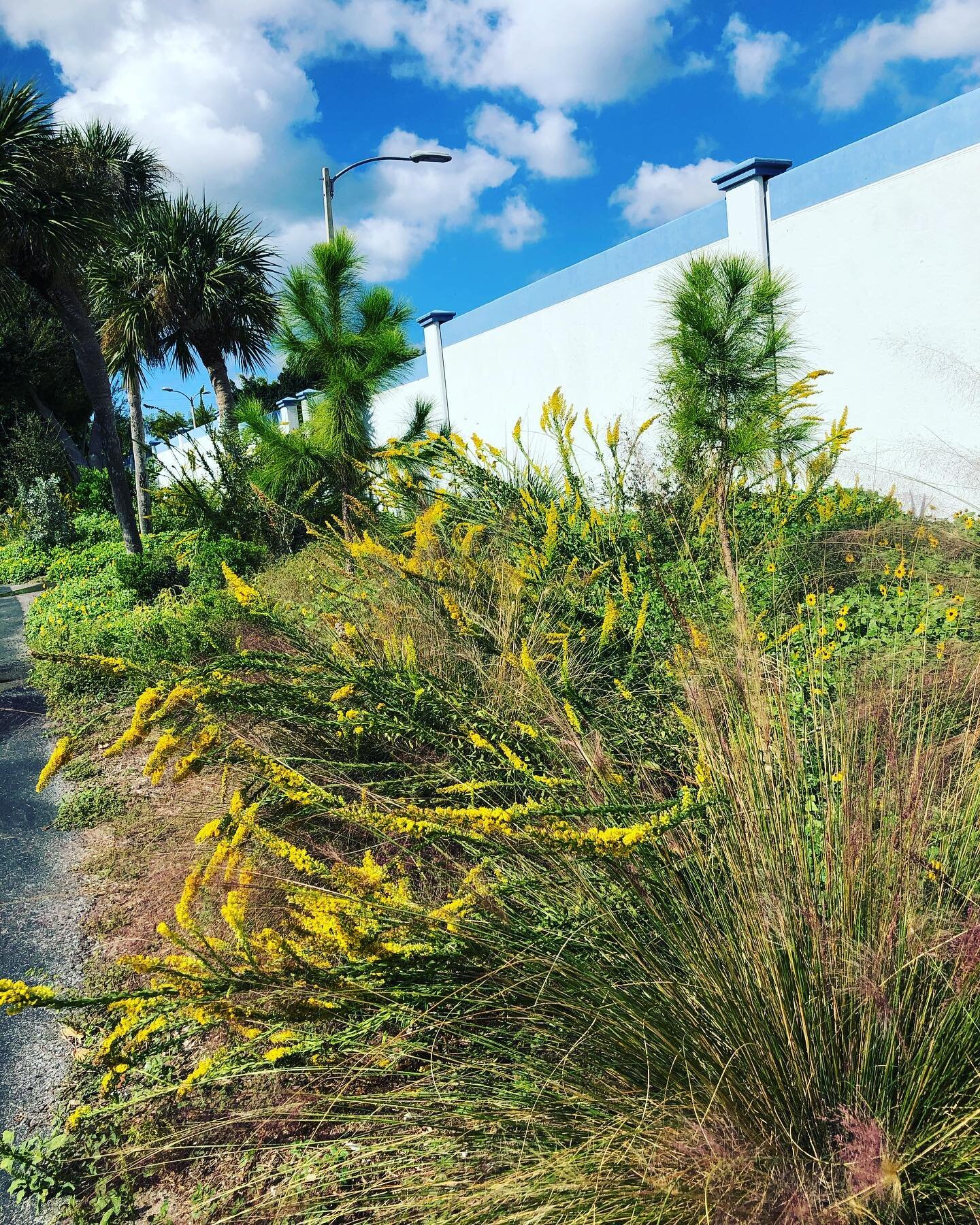
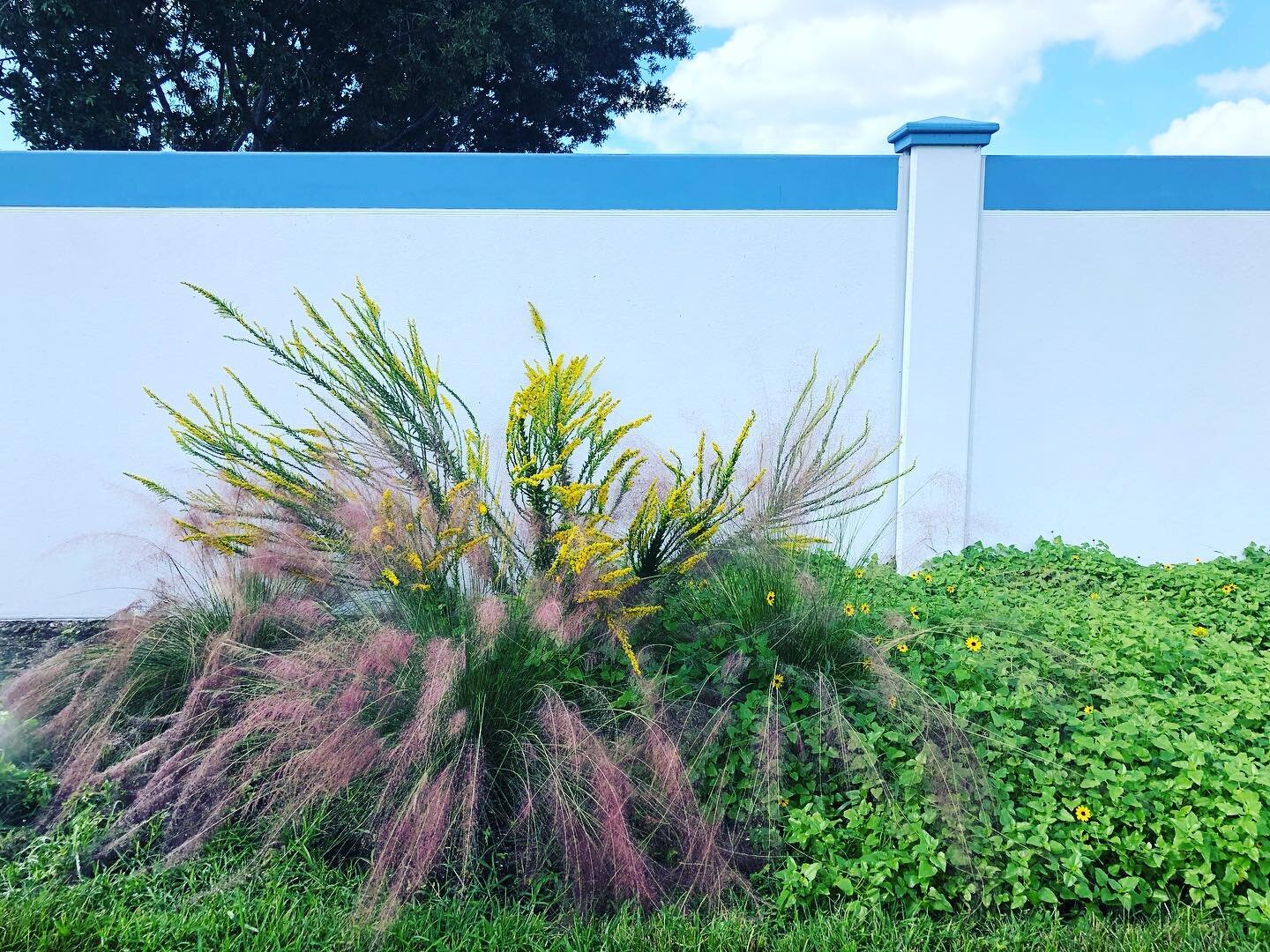

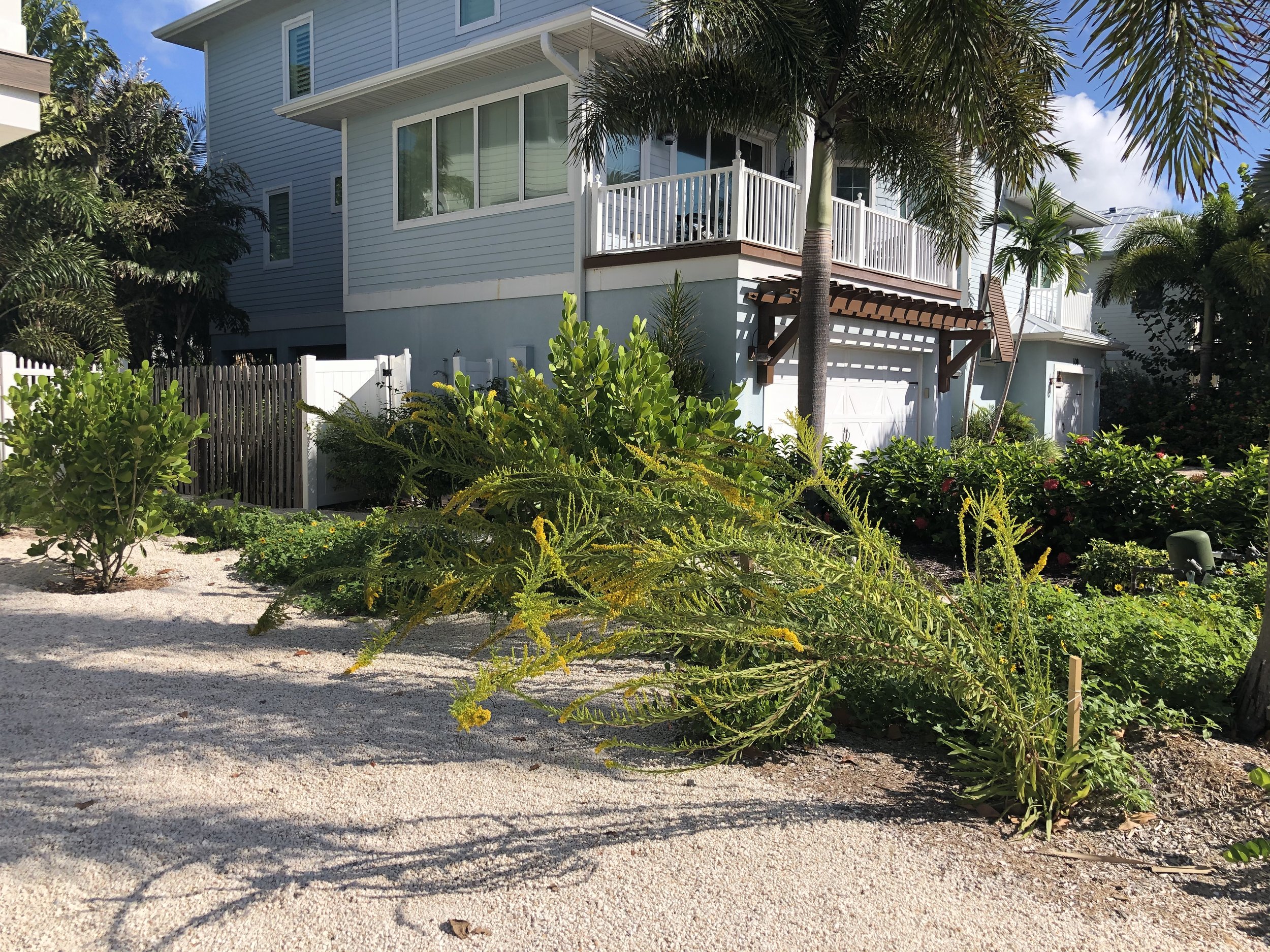
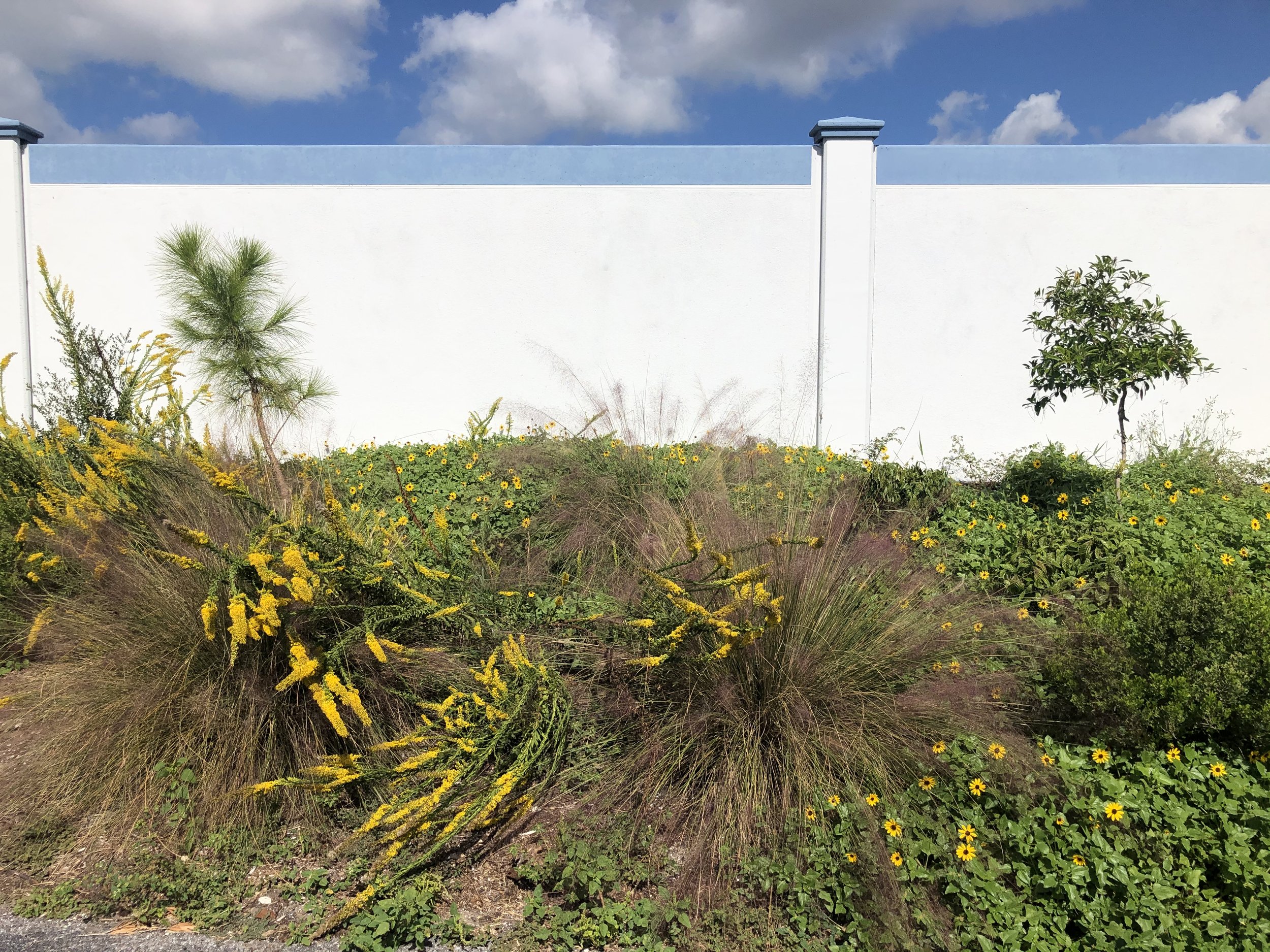
Solidago sempervirens
Seaside Goldenrod is a large, showy goldenrod species that can get showy flower spikes that are up to 7 foot tall! They are salt-tolerant and drought-tolerant as they are a coastal species frequently found near dunes. They attract a plethora of pollinators and are buzzing with action in fall when they bloom.
They are a keystone species! Host plant for over 80 different species of butterflies and moths!
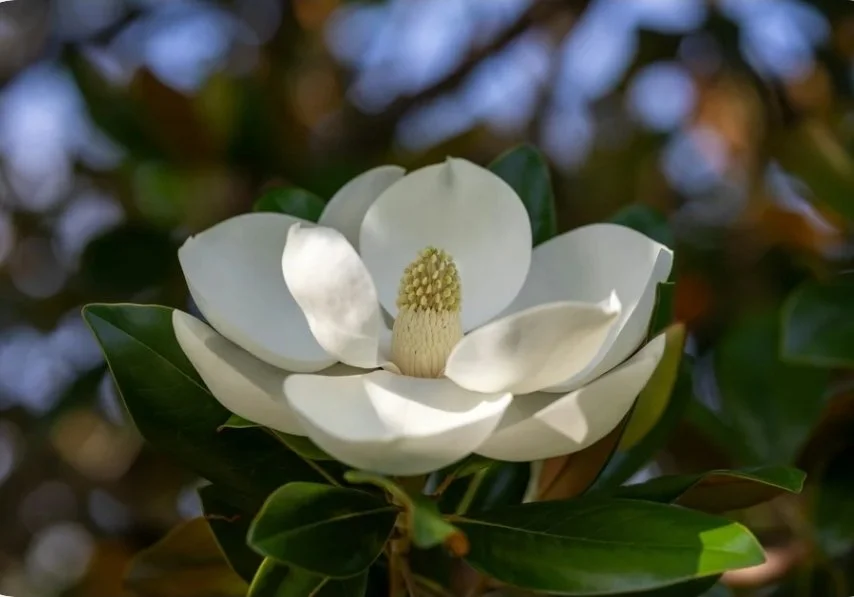
Magnolia grandiflora
Southern Magnolia is a native, evergreen flowering tree that grows to be 60’-80’ tall and 30’-50’ wide. They grow best in full sun to partial shade, with moist, rich, acidic well-drained soils. With their dark green leathery leaves and their large, heavily fragrant white flowers in late spring and summer, Southern Magnolias make a great addition to Florida landscapes as part of a privacy screen or specimen plant. Their flowers predate bees, so they are instead pollinated by beetles, but their seeds provide food for birds and small mammals, and their dense branches provide year-round cover for local wildlife.
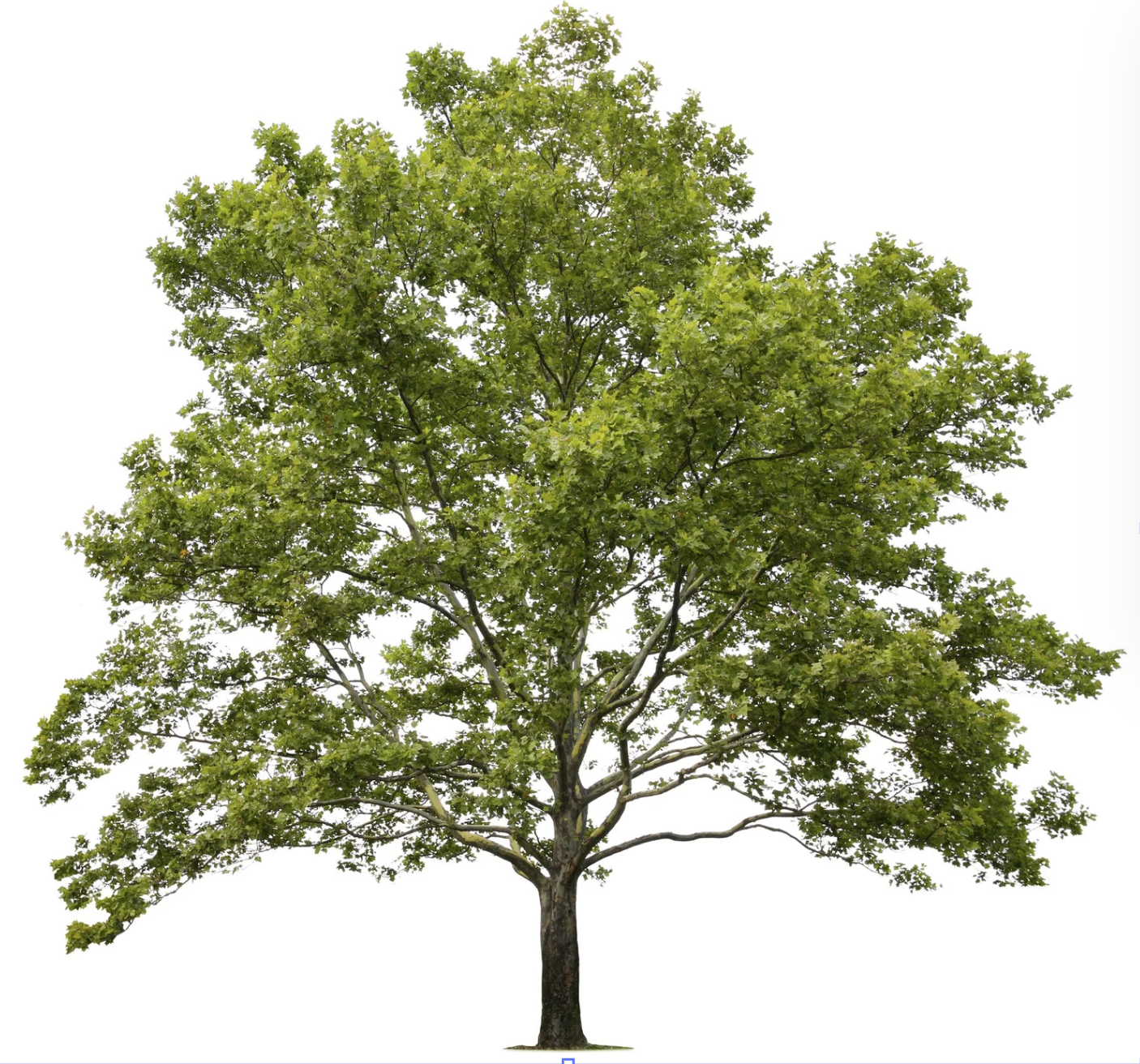
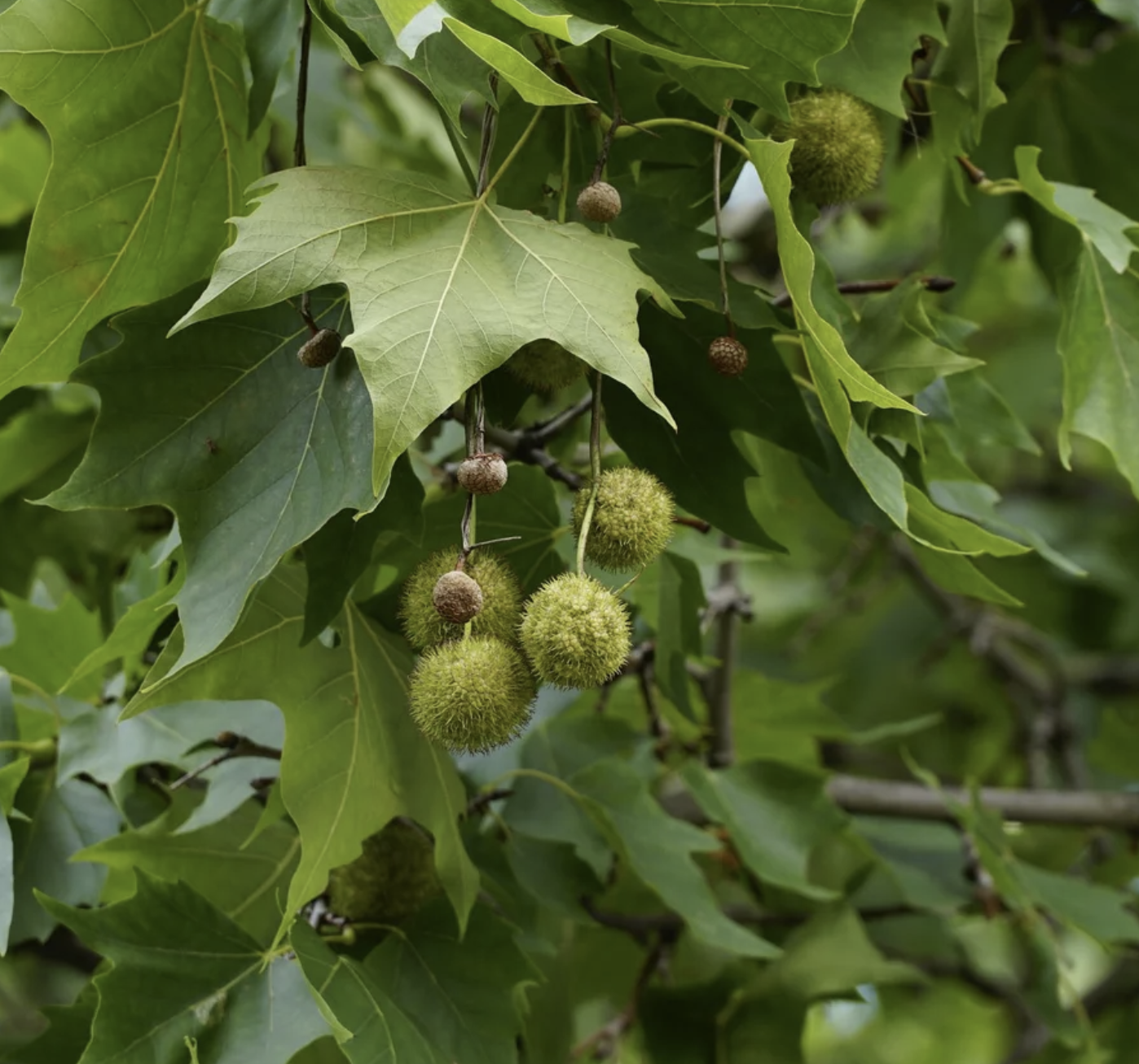
Platanus occidentalis
Sycamore is a large, deciduous, native shade tree that grows to be 75’-100’ tall, with an equally large canopy. They grow best in full sun and moist soil. With their exfoliating camouflage bark and large leaves that seasonally drop off, they are best suited for larger yards where the leaf and bark litter won’t be an issue. Sycamores have large branches that serve as great nesting sites for birds, and as they age, they hollow out, creating cavities which provide cover for owls, raccoons, and other mammals. Their seed pods feed songbirds, and their leaves are a larval host for the Tiger Swallowtail and various native moths.
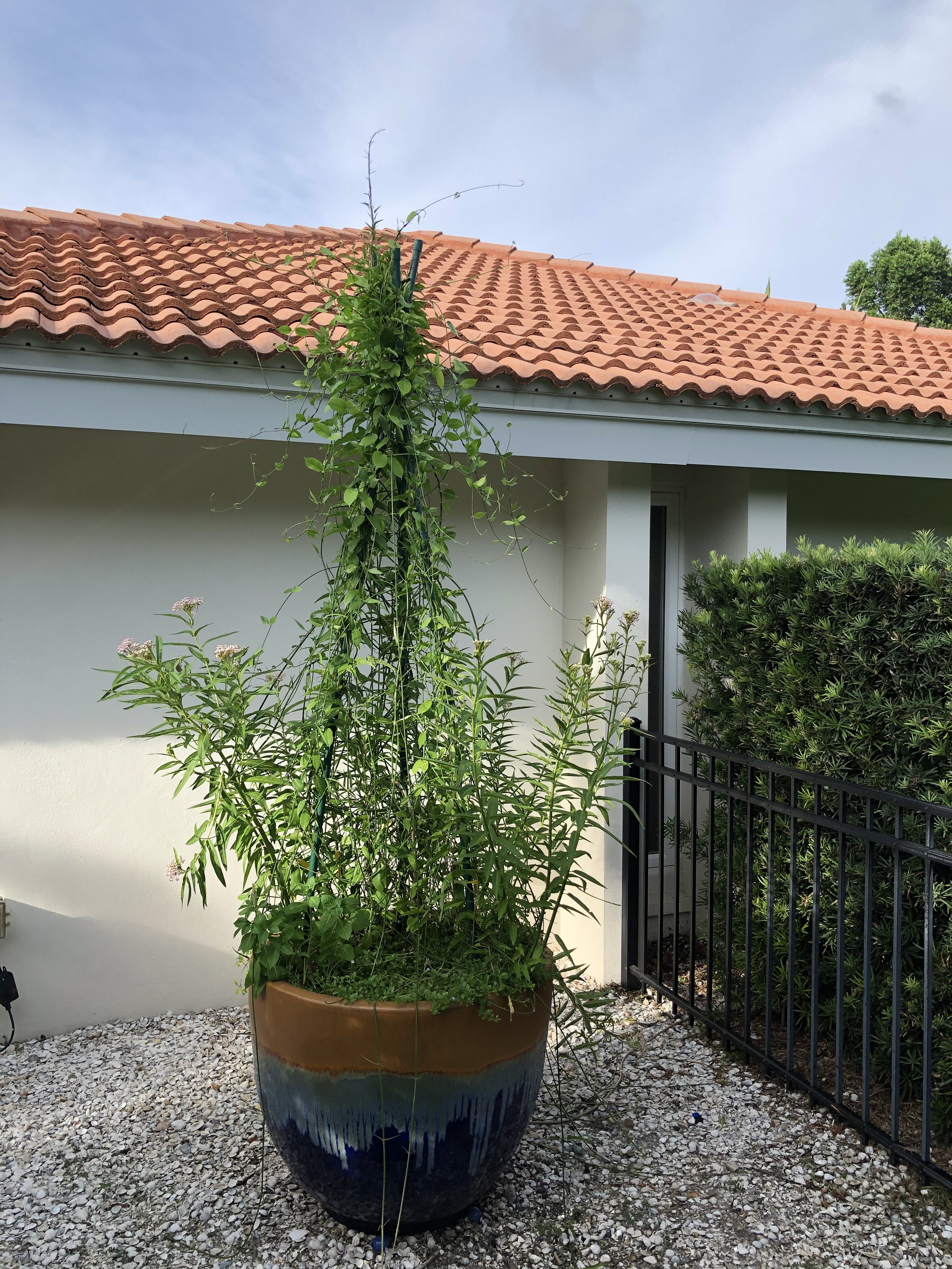
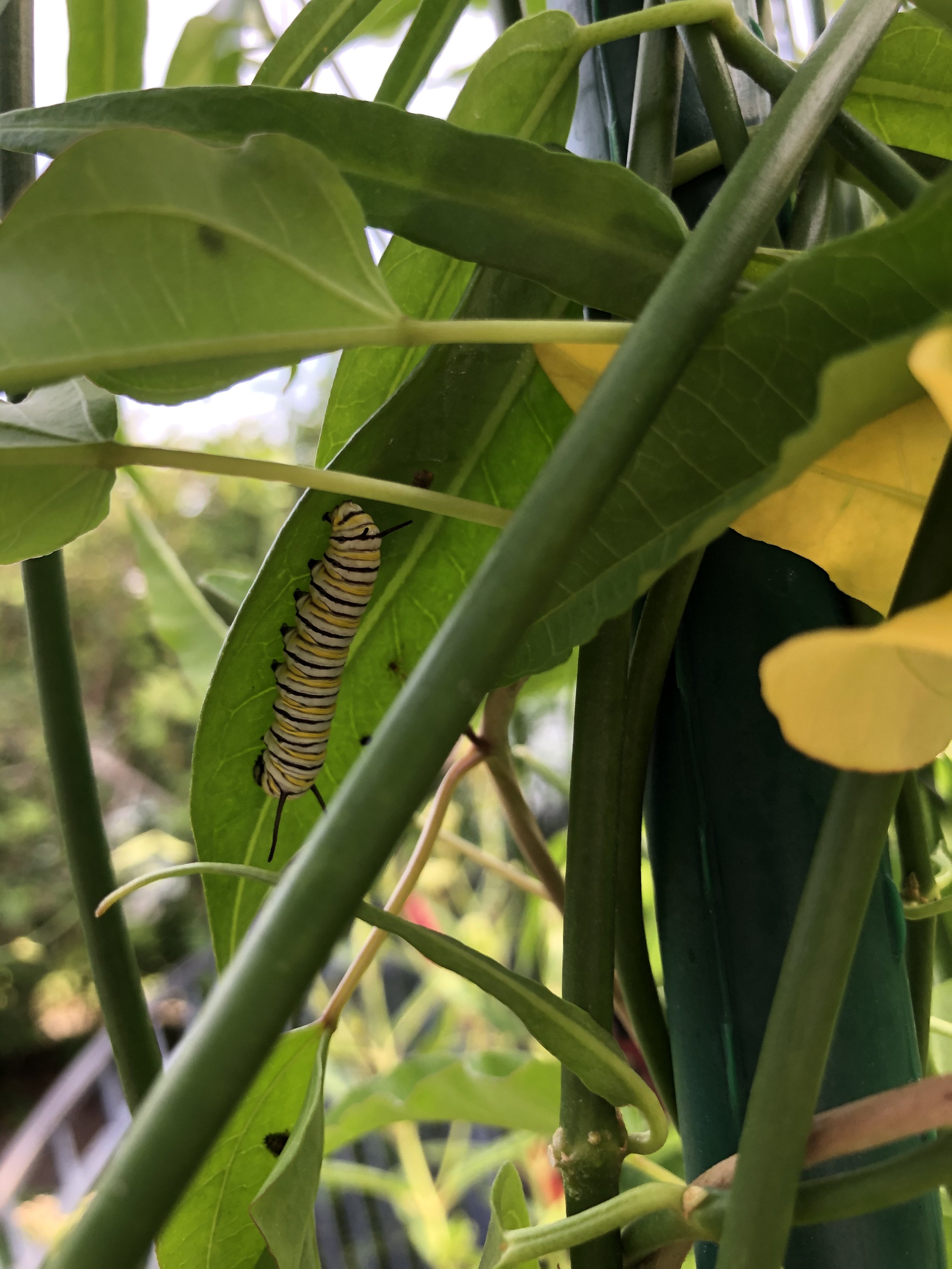
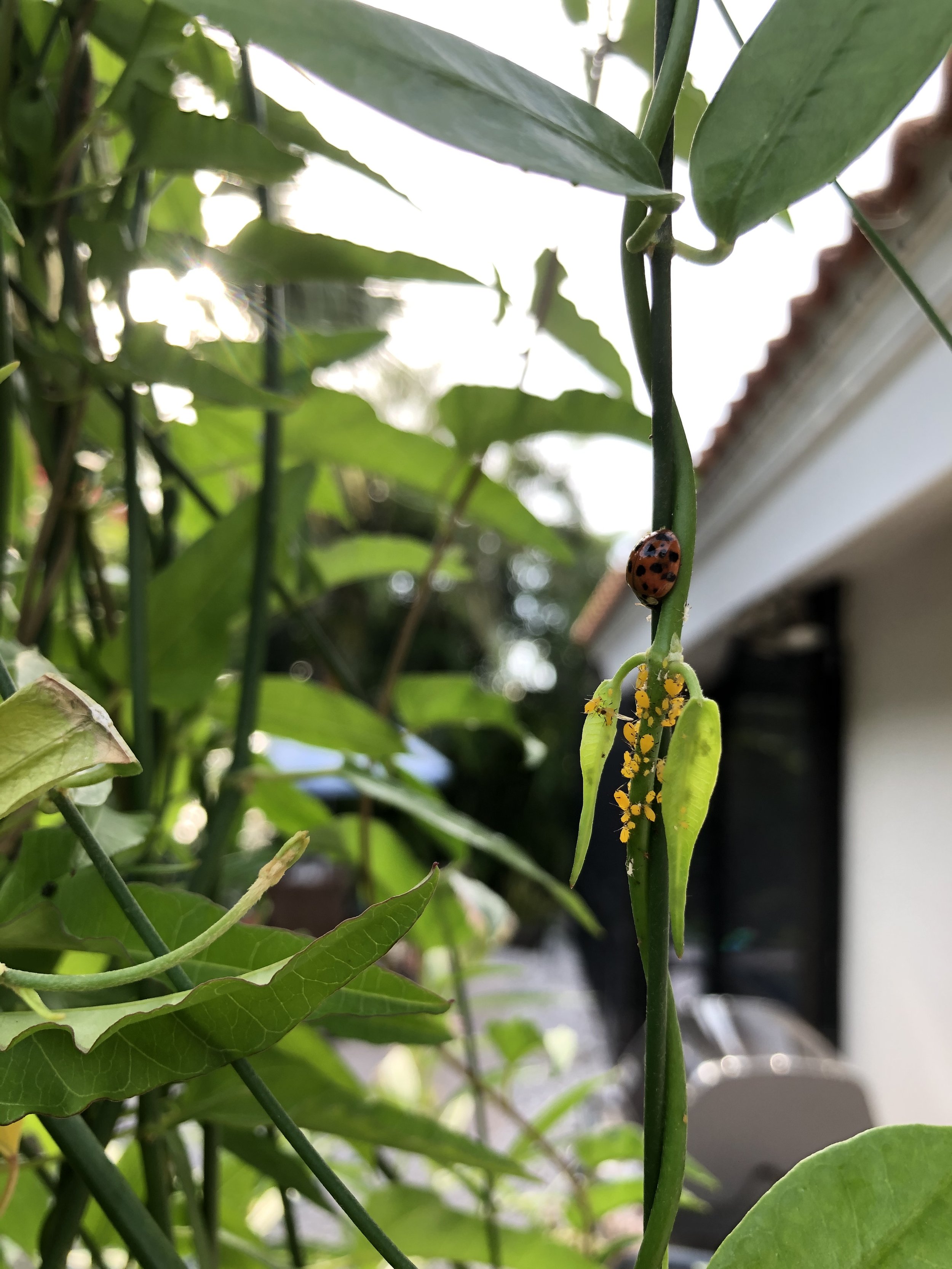
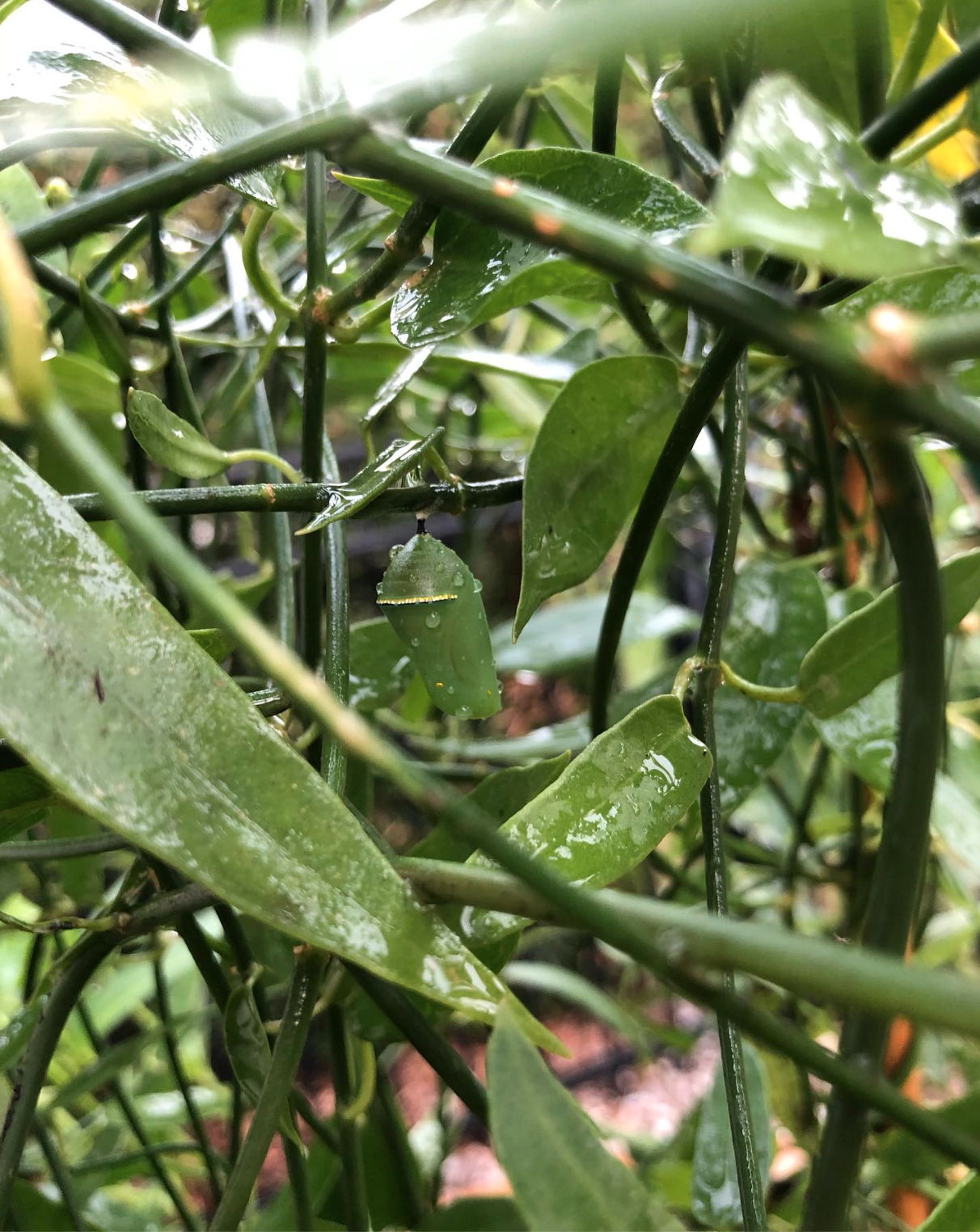
Funastrum clausum
Twine Vine is a native perennial flowering vine that is planted in butterfly gardens. It is a year-round host plant for monarch, queen and soldier butterflies as well as a nectar source for many other butterflies and pollinators. It prefers moist to average soils and can be grown well in a container to control its growth. It’s showy clusters of white flowers can bloom year round.
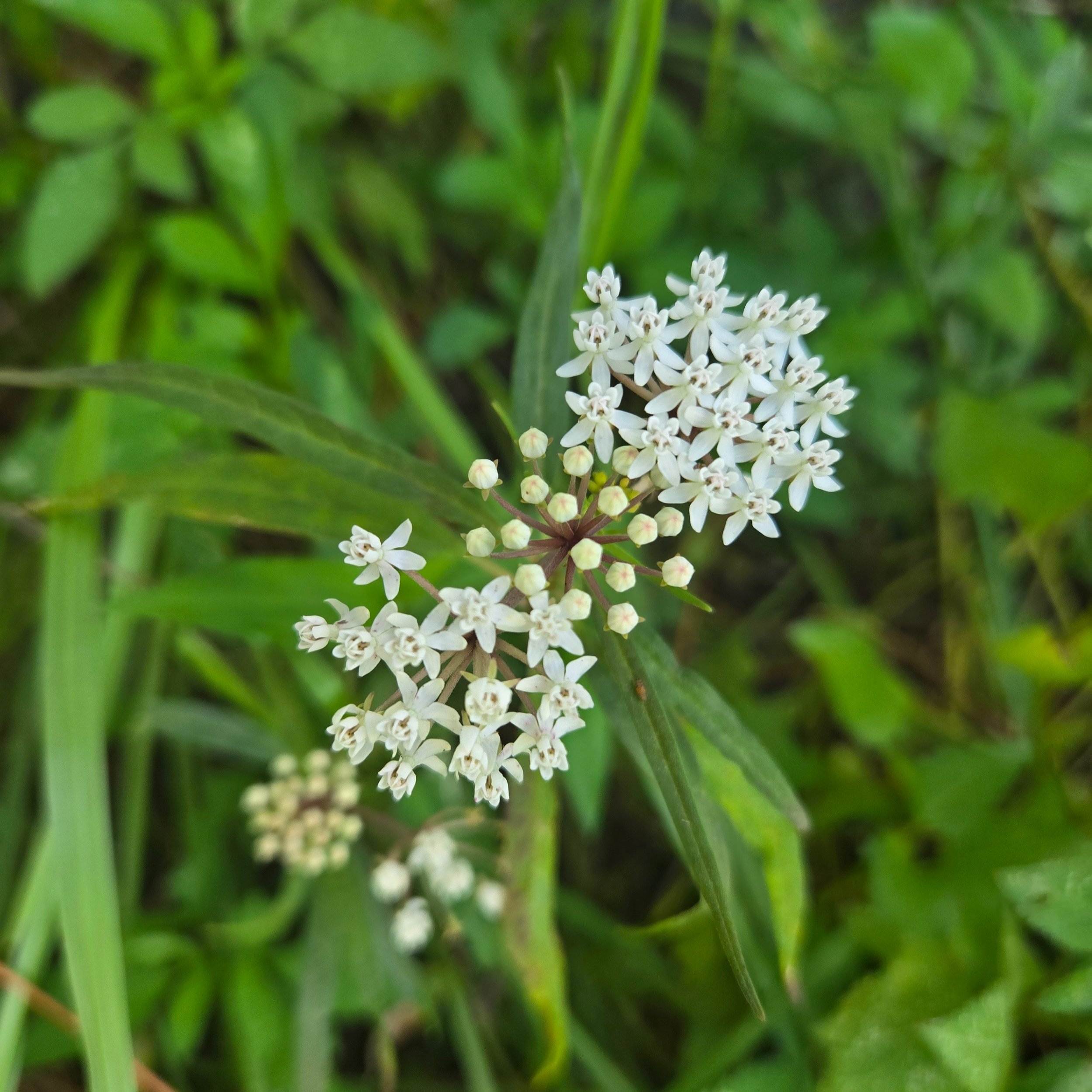

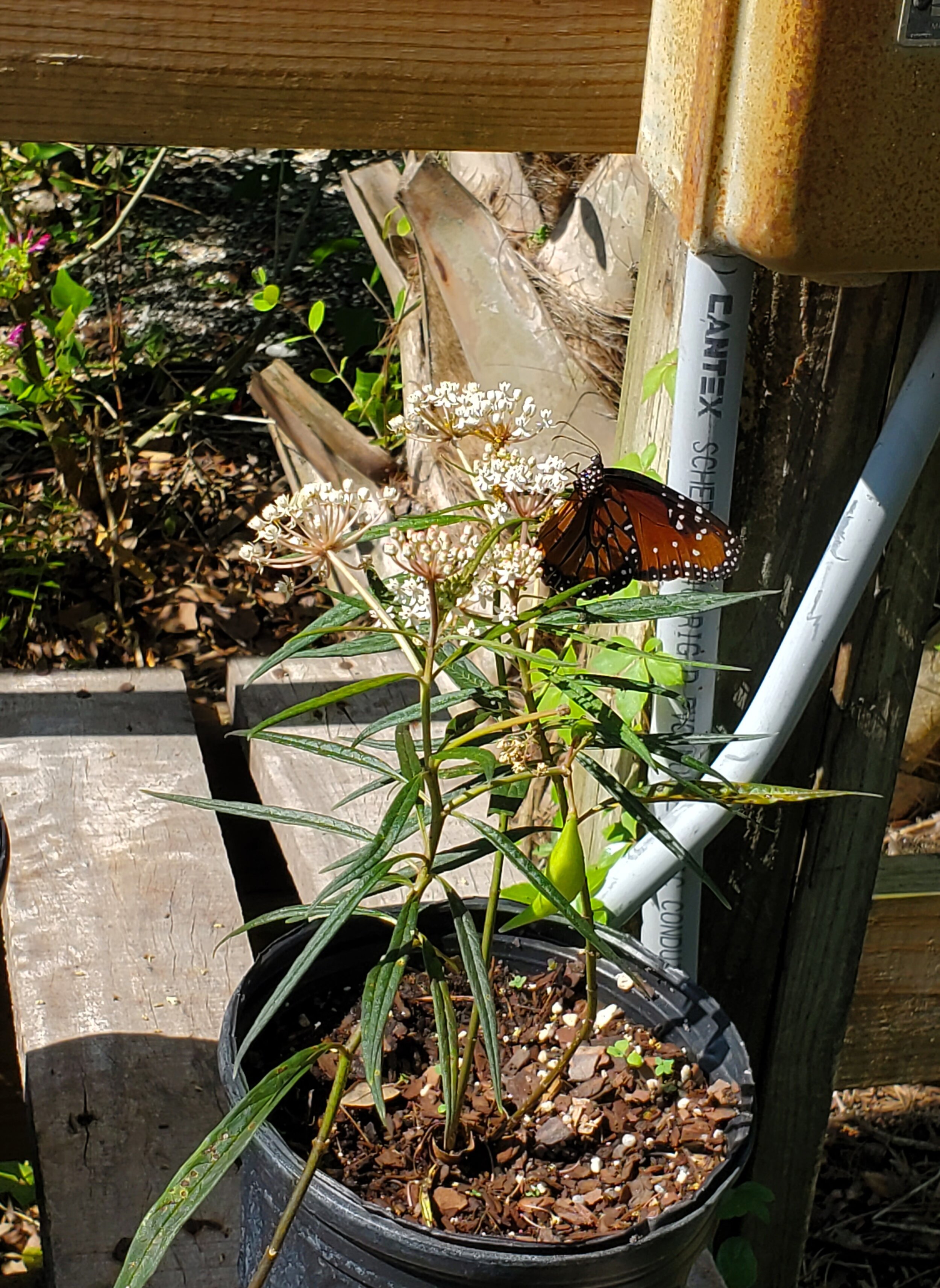
Asclepias perennis
aka Aquatic Milkweed
A. perennis is a perennial, reseeding small wildflower that likes wetter conditions but if planted in shadier spots can be quite drought tolerant once established. It's white flowers bloom from spring though fall and serve as a nectar source for many pollinators. As a native milkweed, this plant is a well-known host for Monarch and Queen butterflies, but it also serves as a host plant for a few cool moths and unique to this genus bugs. A. perennis works well in butterfly gardens, along pond edges and in containers.
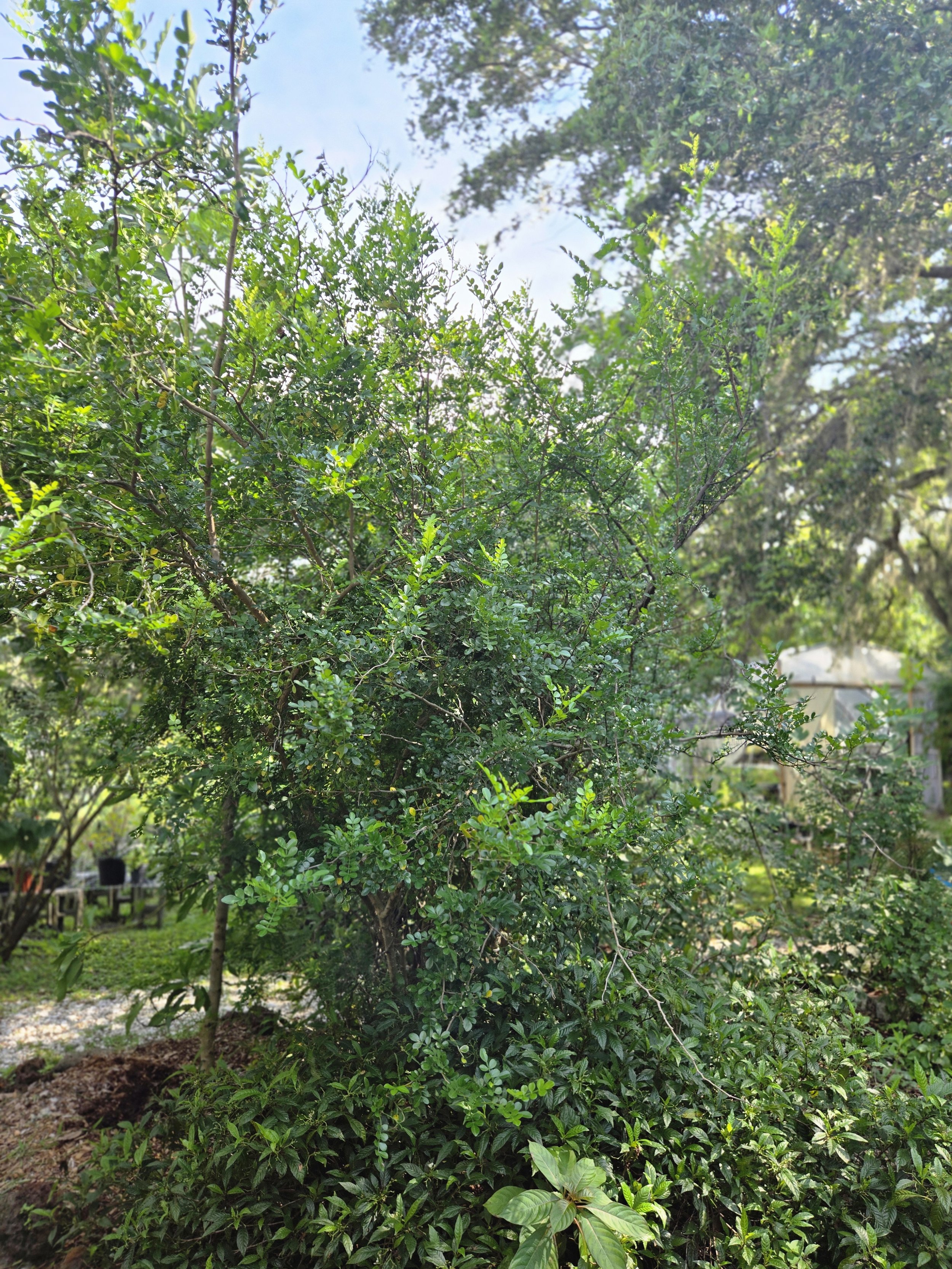
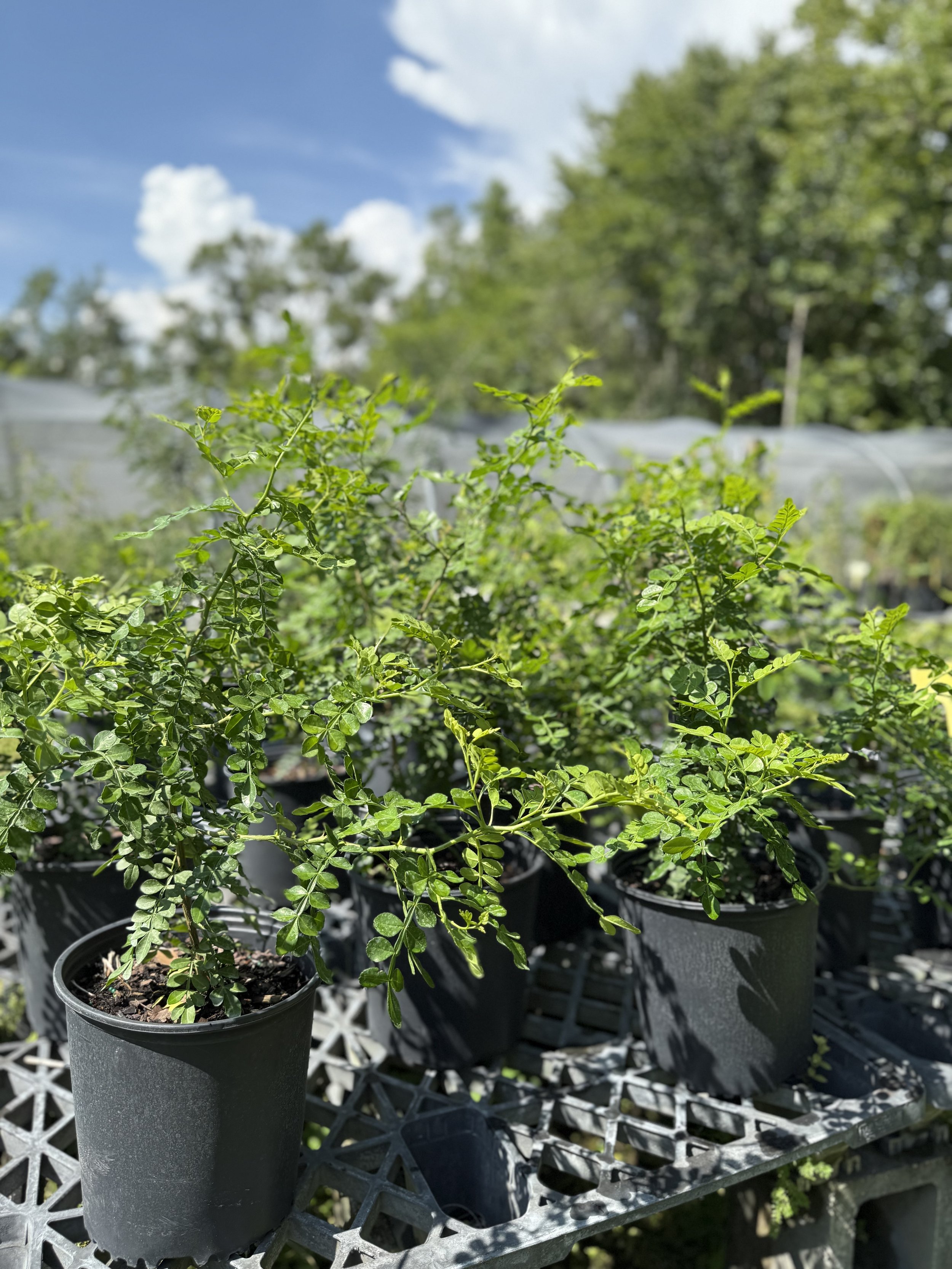
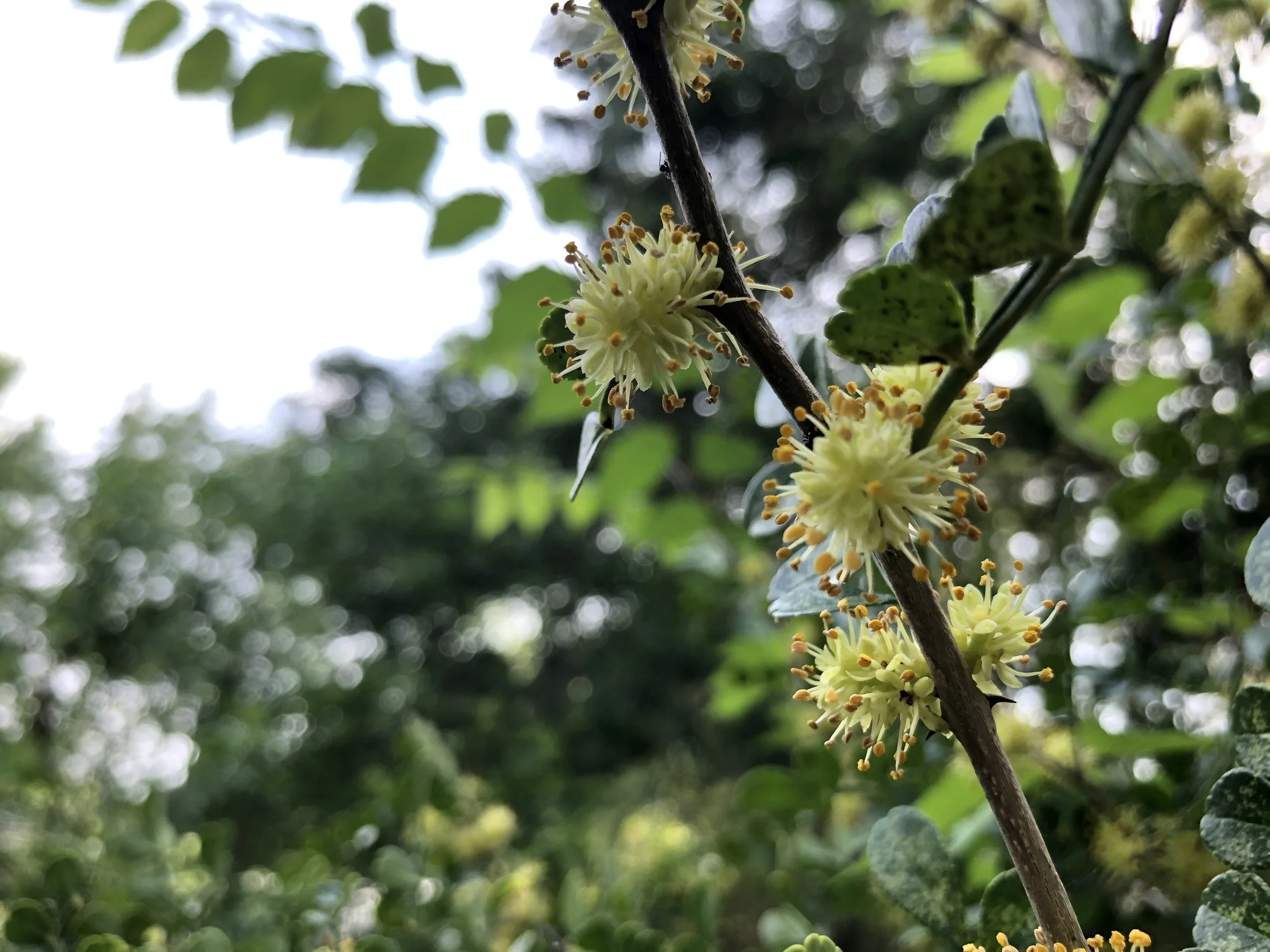
Zanthoxylum fagara
Wild Lime is a native evergreen shrub or small tree native to southern Florida and the Florida Keys that grows up to 23 feet tall with a spreading, often multi-trunked form. This member of the citrus family features compound leaves with distinctly winged leaf stems and 7-11 rounded leaflets that emit a strong lime fragrance when crushed. The trunk and branches are armed with sharp spines, and it produces small, greenish-yellow flowers in dense clusters followed by brown seed capsules containing black seeds. Thriving in hammocks and woodland edges, it serves as a larval host plant for giant swallowtail butterflies and provides cover and food for various wildlife species. With its dense, thorny foliage, it makes an excellent natural barrier or privacy screen for central and south Florida landscapes.
No results match your search. Try removing a few filters.