Hi Friends!
We offer PICK UP or LOCAL DELIVERY only (NO SHIPPING).
Thank you!
Thursday–Sunday, 10am–4pm | 941-322-1915
We offer PICK UP or LOCAL DELIVERY only (NO SHIPPING).
Thank you!
Thursday–Sunday, 10am–4pm | 941-322-1915
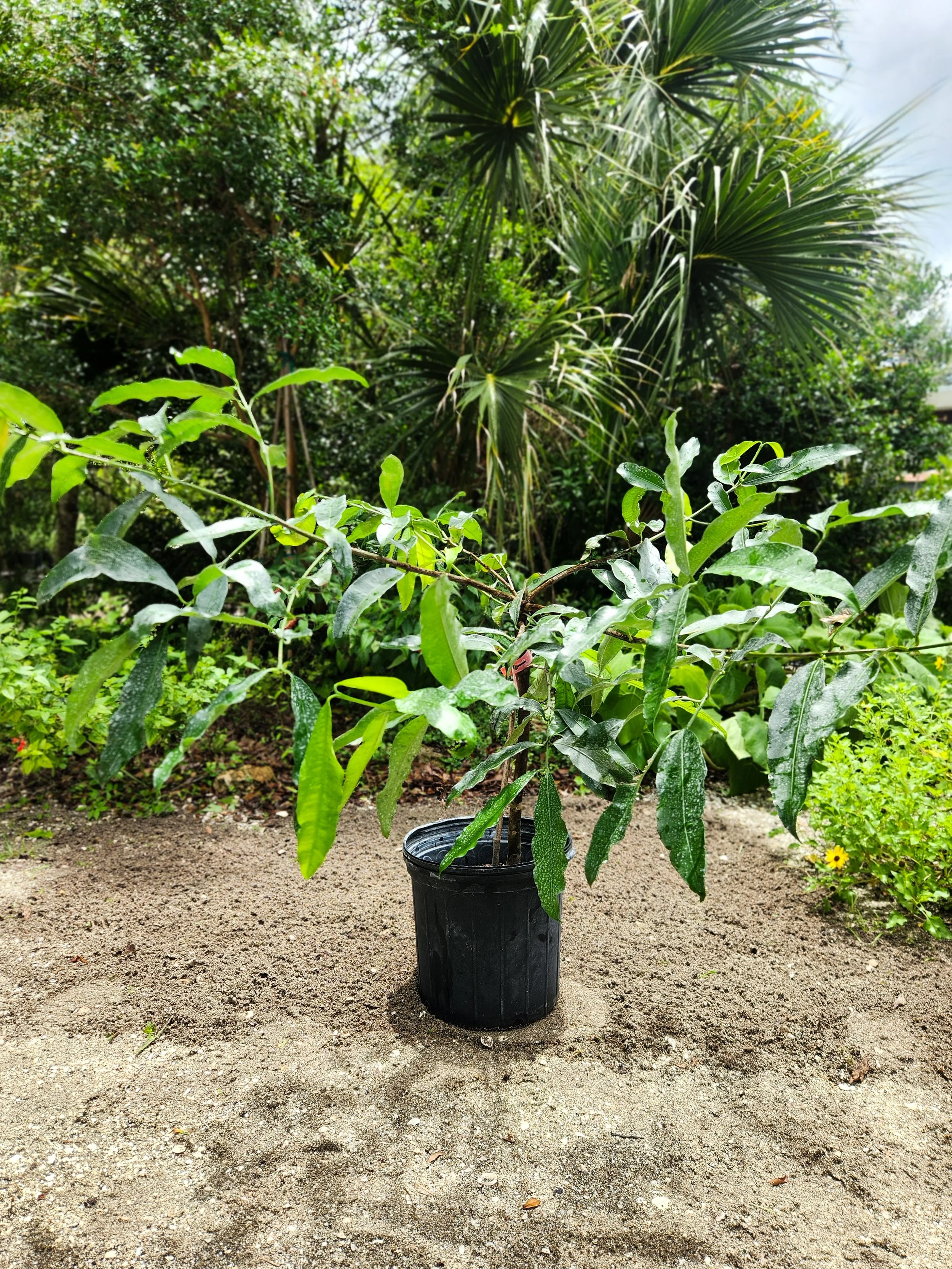
Garcinia humilis
Achachairu is a slow-growing, Florida-friendly tree that can reach a height of 20’ to 50’. Achachairu grows best in full sun to partial shade, with average to moist, nutrient rich soil. Can tolerate some drought and flooding, but is not wind resistant. The new growth emerges copper and then matures to a dark green, and the small, orange fruit is edible for both birds and humans!
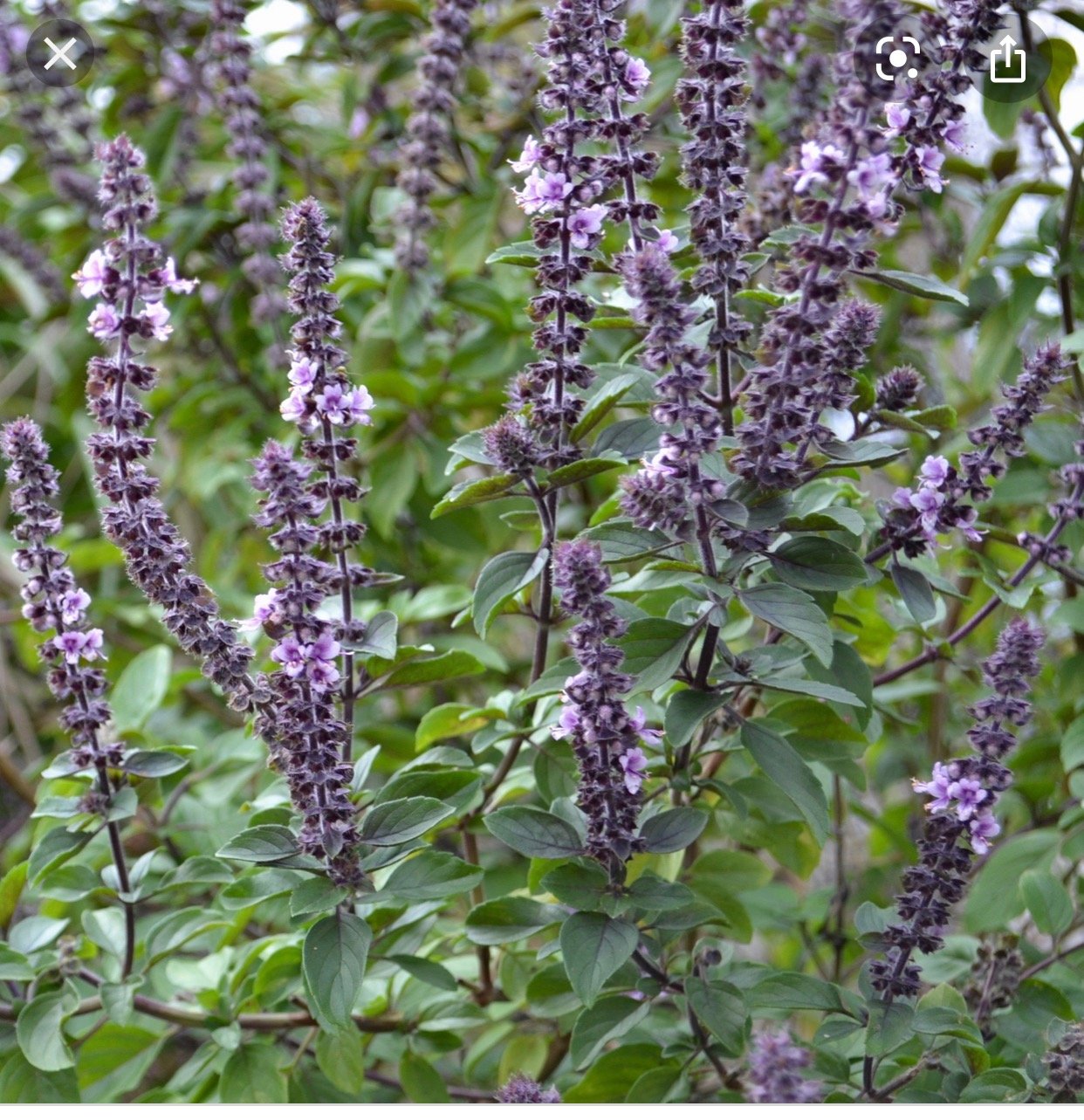
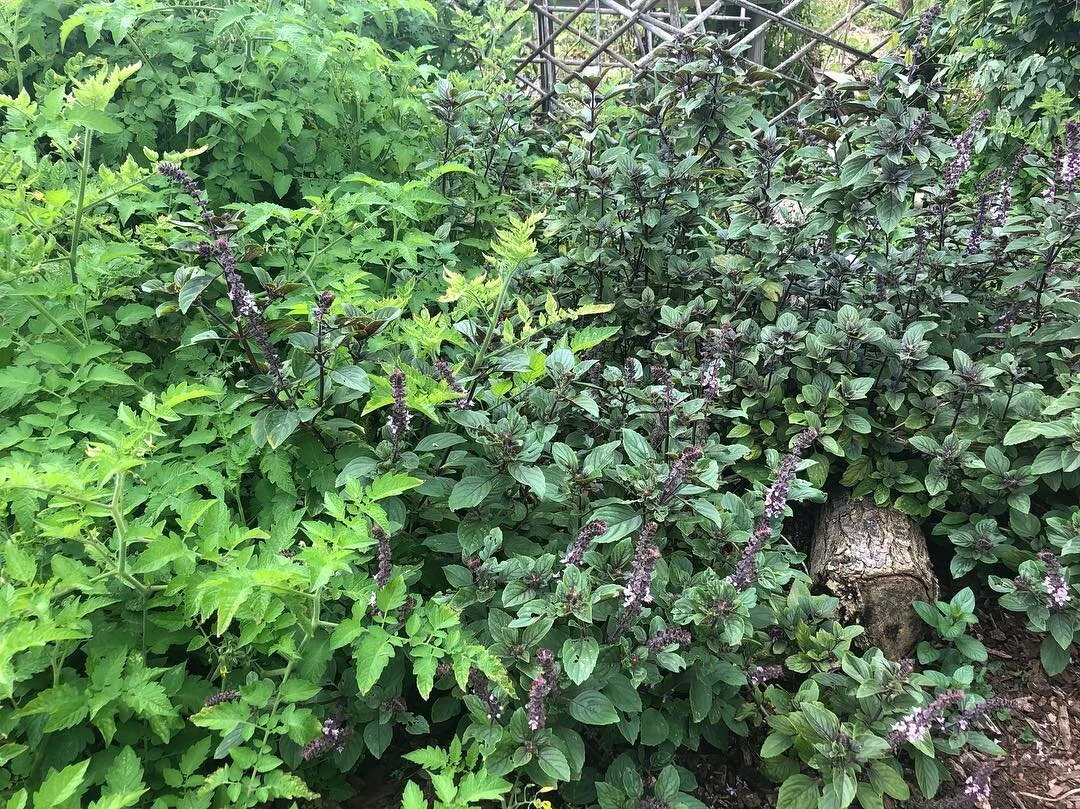
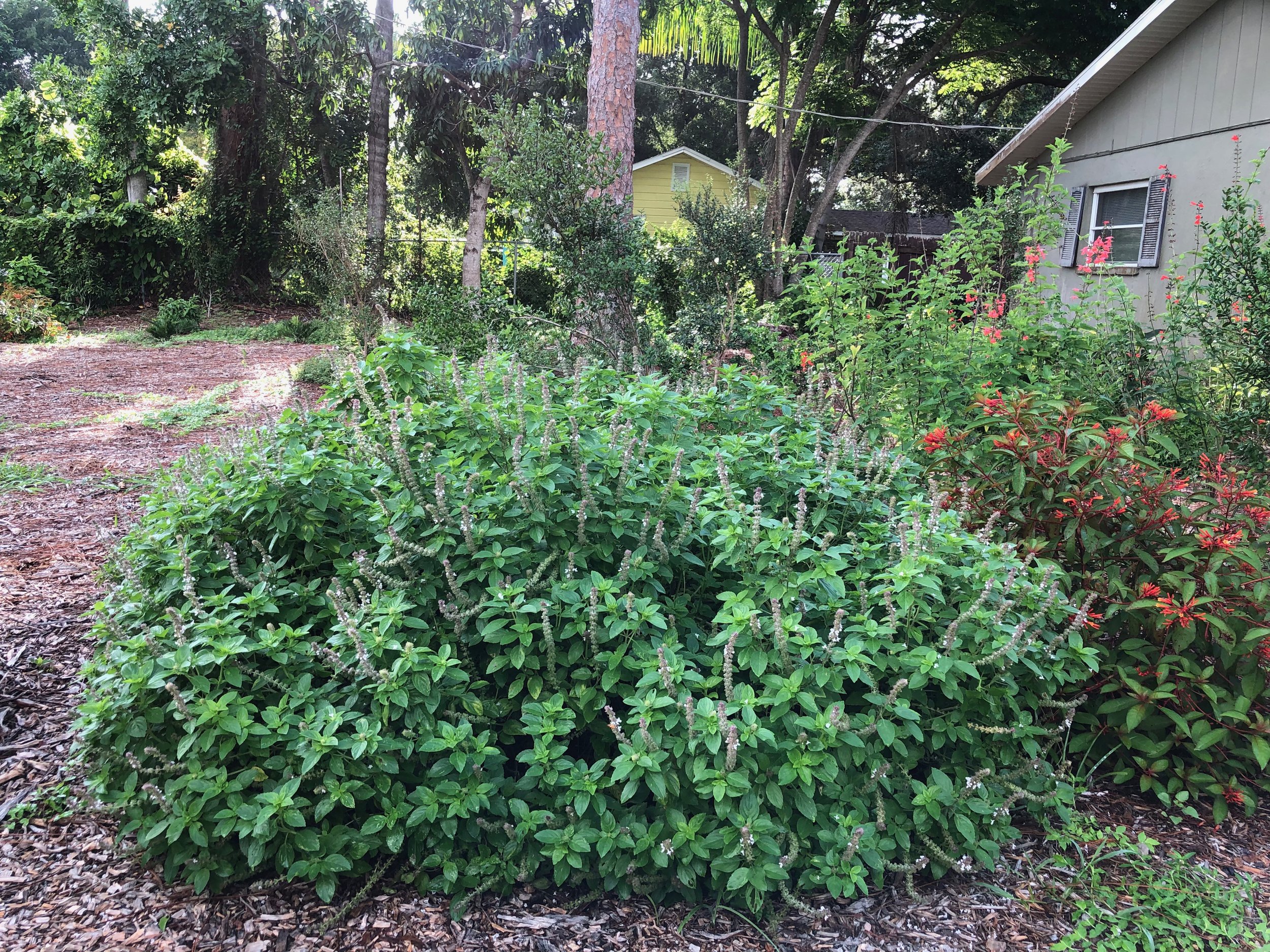
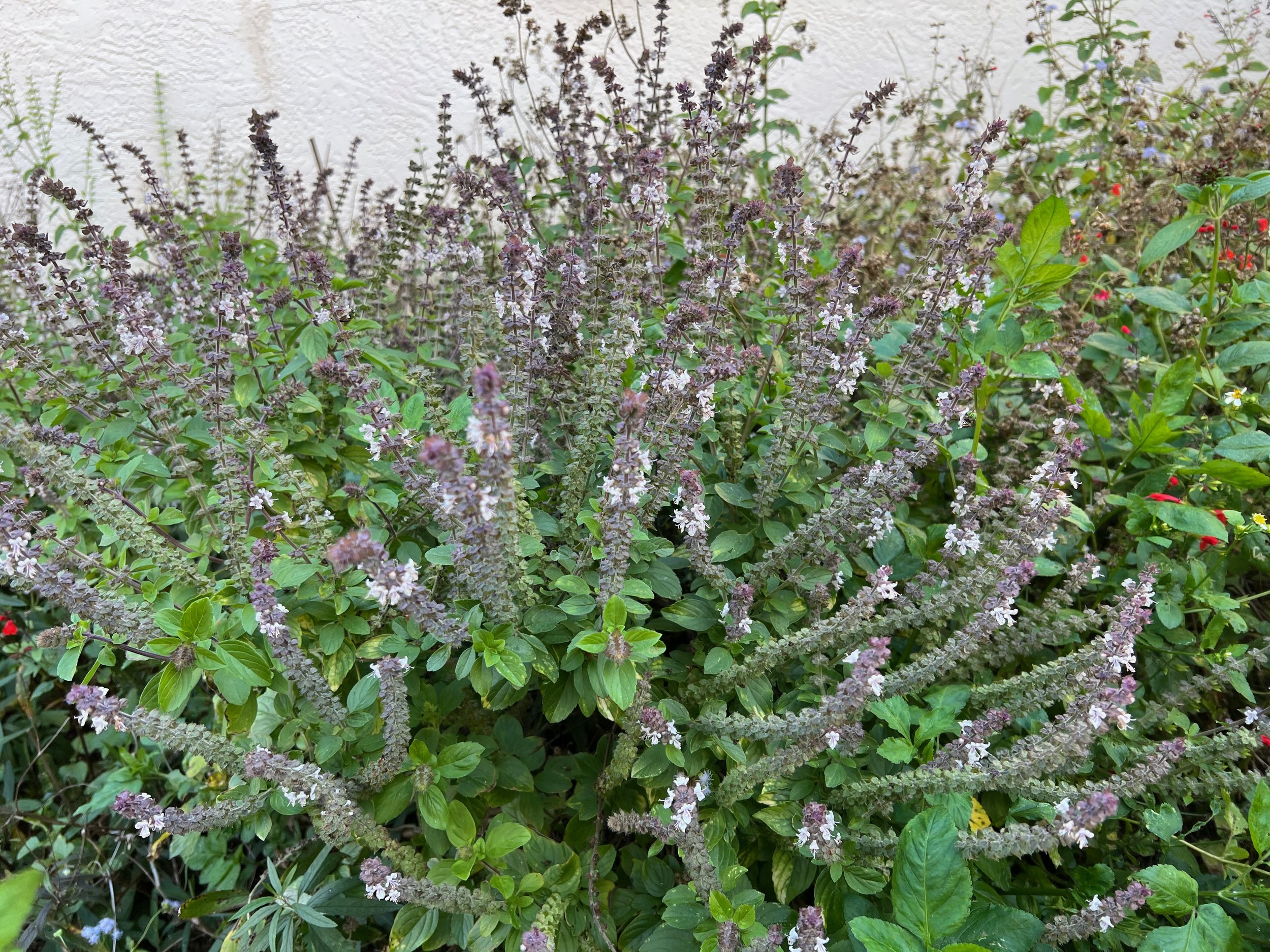
Ocimum kilimandscharicum × basilicum 'Dark Opal'
Non-native, Florida-friendly, fragrant edible perennial herb. African Blue Basil is a hardy herb that prefers full sun in winter and light shade in summer. Grows to be 3’-4’ tall. Average, composted soil, frost protection required. Pollinators, especially honey bees, love this shrub.
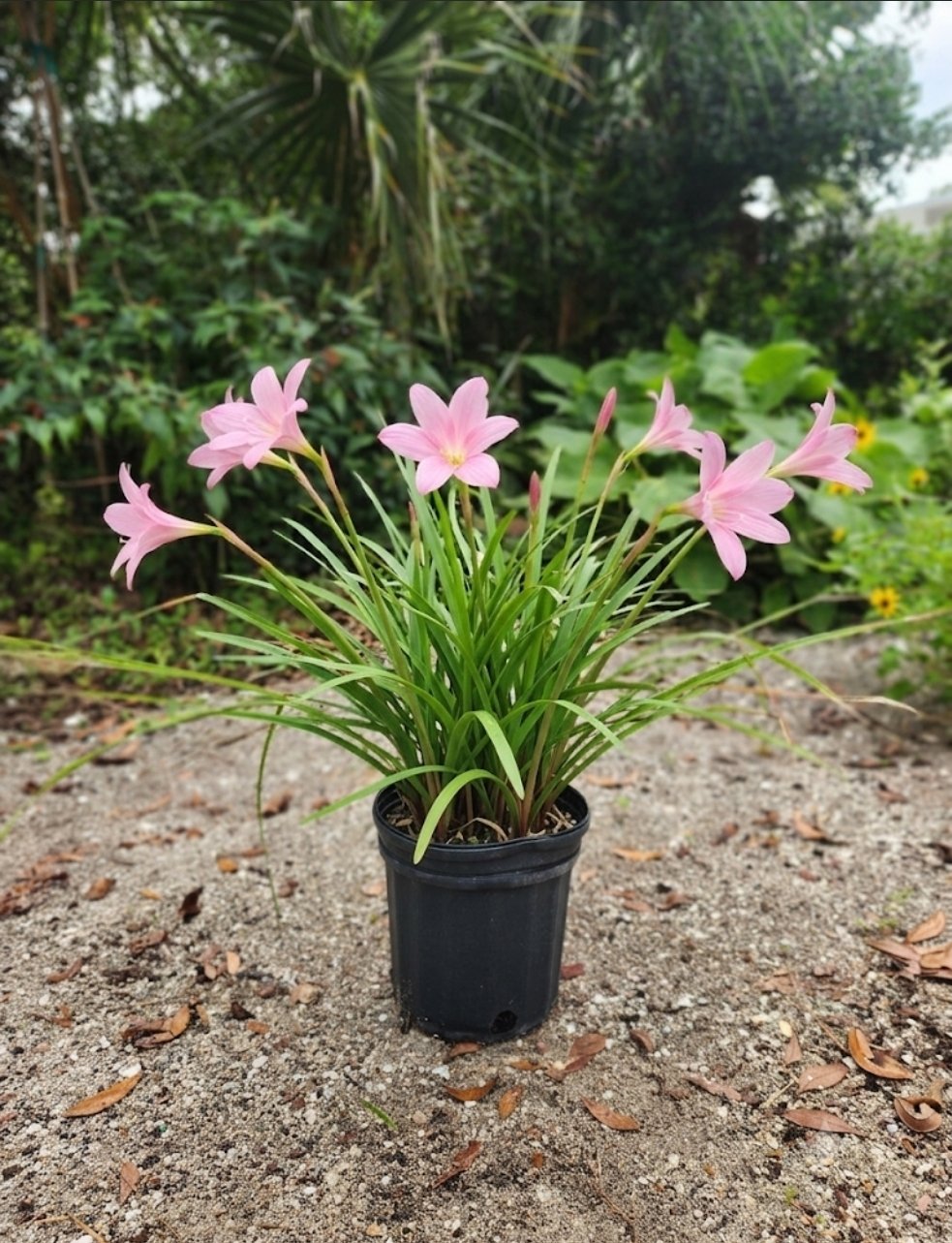
Habranthus robustus
Argentine Rain Lily is a non-native, Florida-friendly, perennial, reseeding wildflower that is a lovely addition to wetland and rain garden applications. They do best in full sun to part shade, and moist to average soil. With showy, pink flowers that bloom after it rains, they are great for attracting pollinators to your space, spreading via seed and bulb.
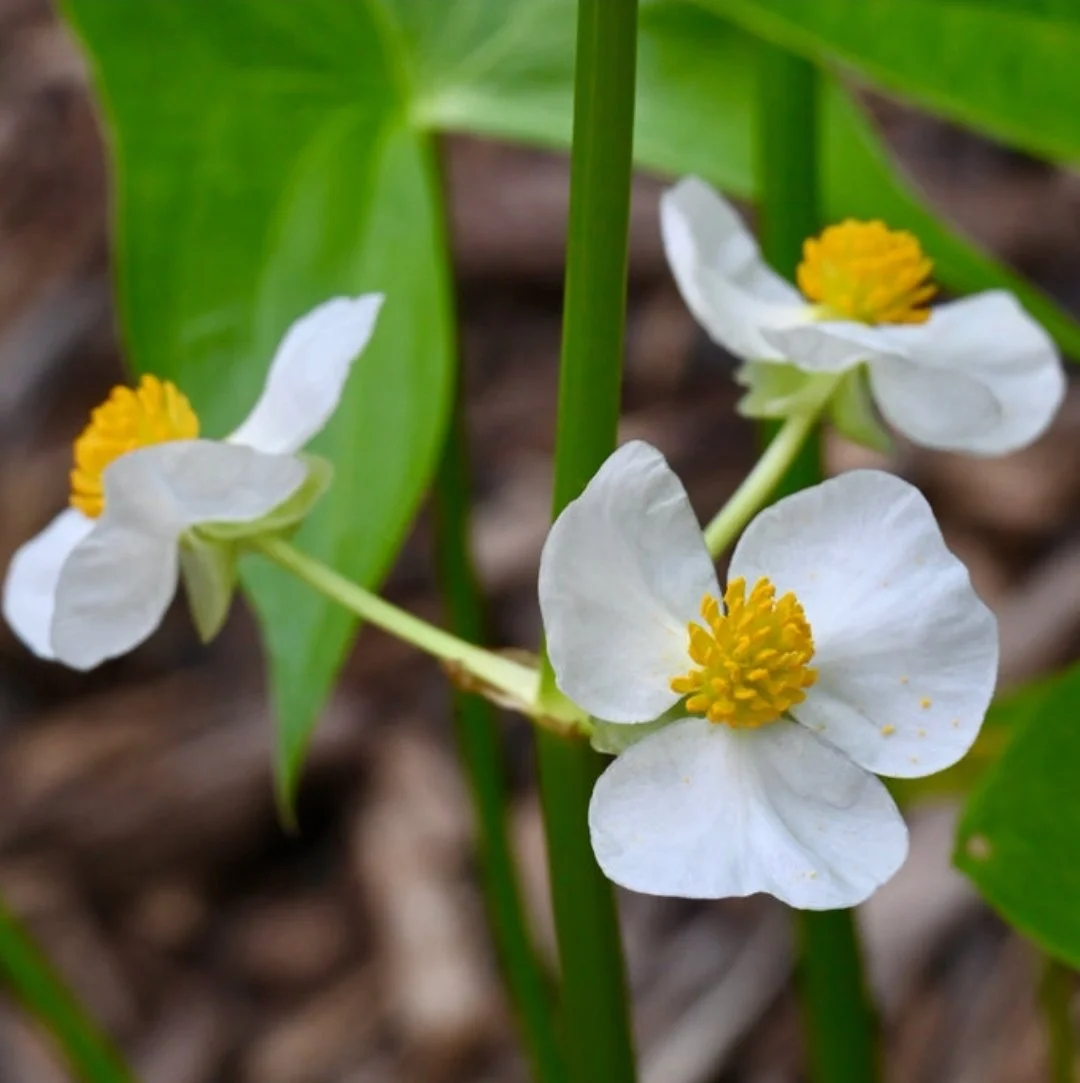
Sagittaria lancifolia
Arrowhead is a native, perennial wetland wildflower. It grows 3’-6’ tall and 2’-3’ wide, thriving in full sun and very wet soil, mud, and pond muck with a high content of organic material. Its white summer blooms are highly attractive to bees and butterflies, and the plant also serves as a food source for waterfowl, songbirds, frogs, and fish. It spreads reliably via underground rhizomes to stabilize muddy shorelines and naturally absorb excess nutrients from the water.
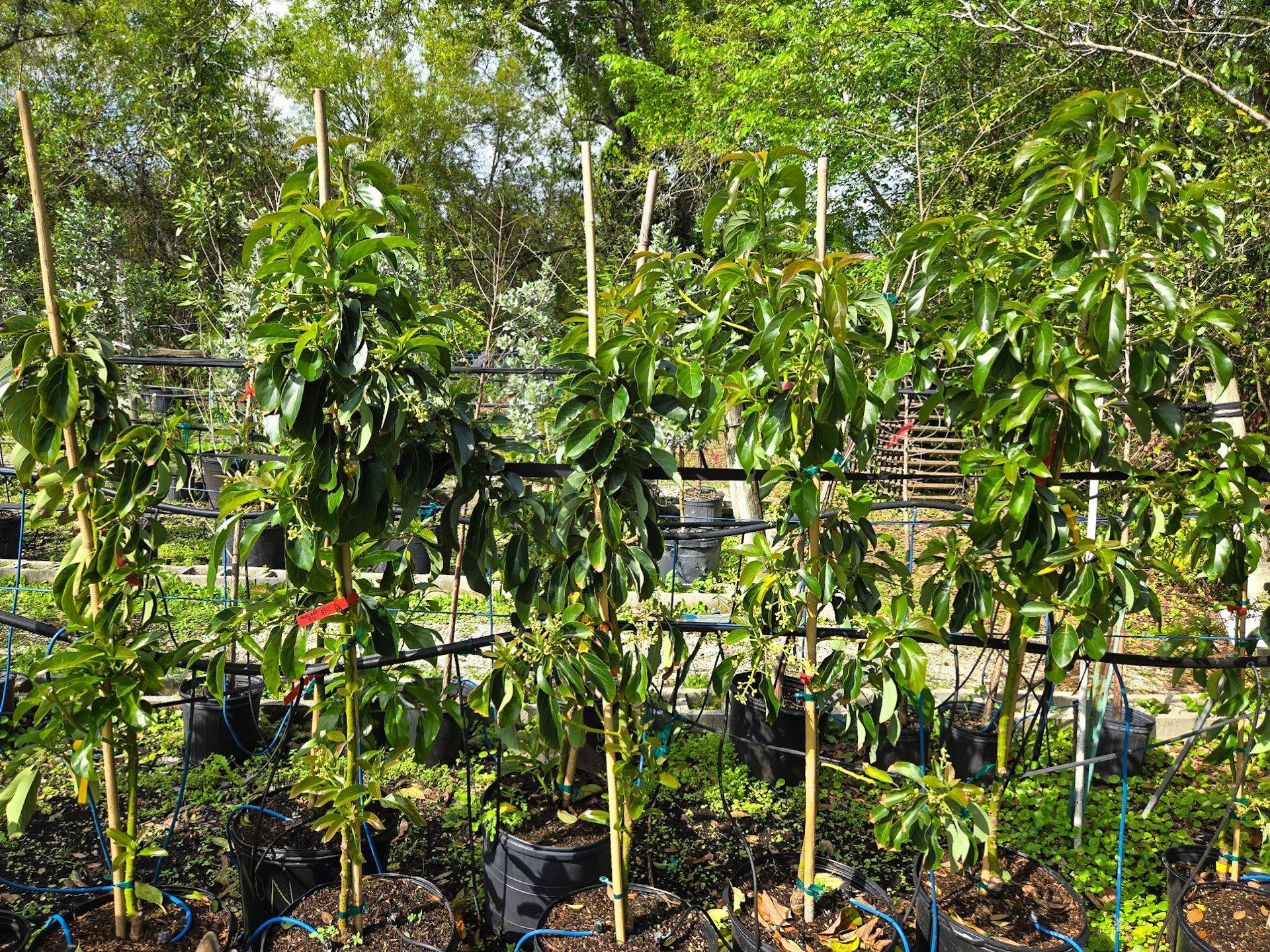
Persea americana
Florida-friendly, evergreen, fast-growing fruit tree; 30’-50’ tall, but can be kept at 10’ tall for easy fruit picking. Full sun is best for fruit production, with average to dry, well-drained soil; not flood-tolerant. Should be planted 25’-30’ away from trees or buildings.
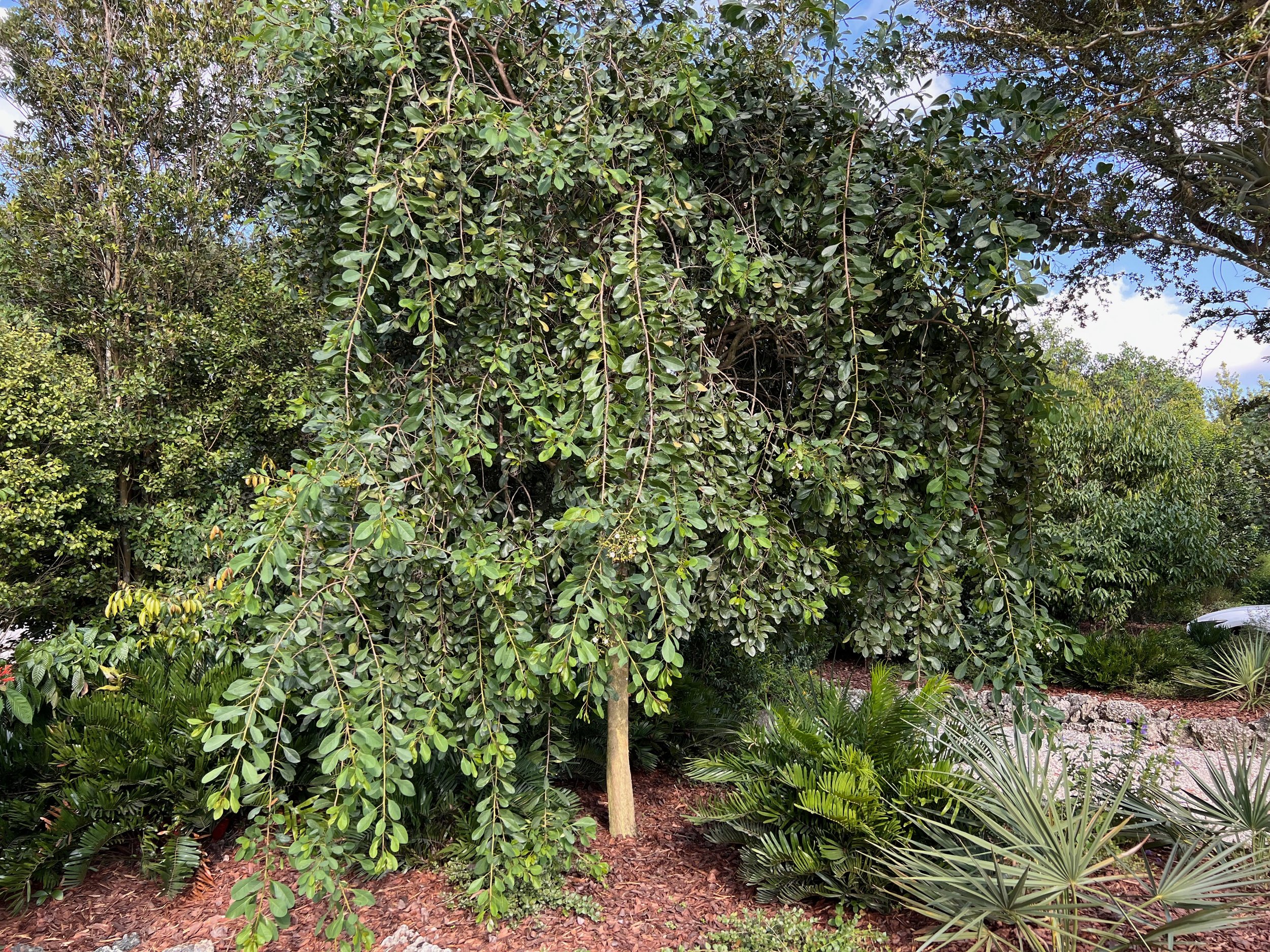
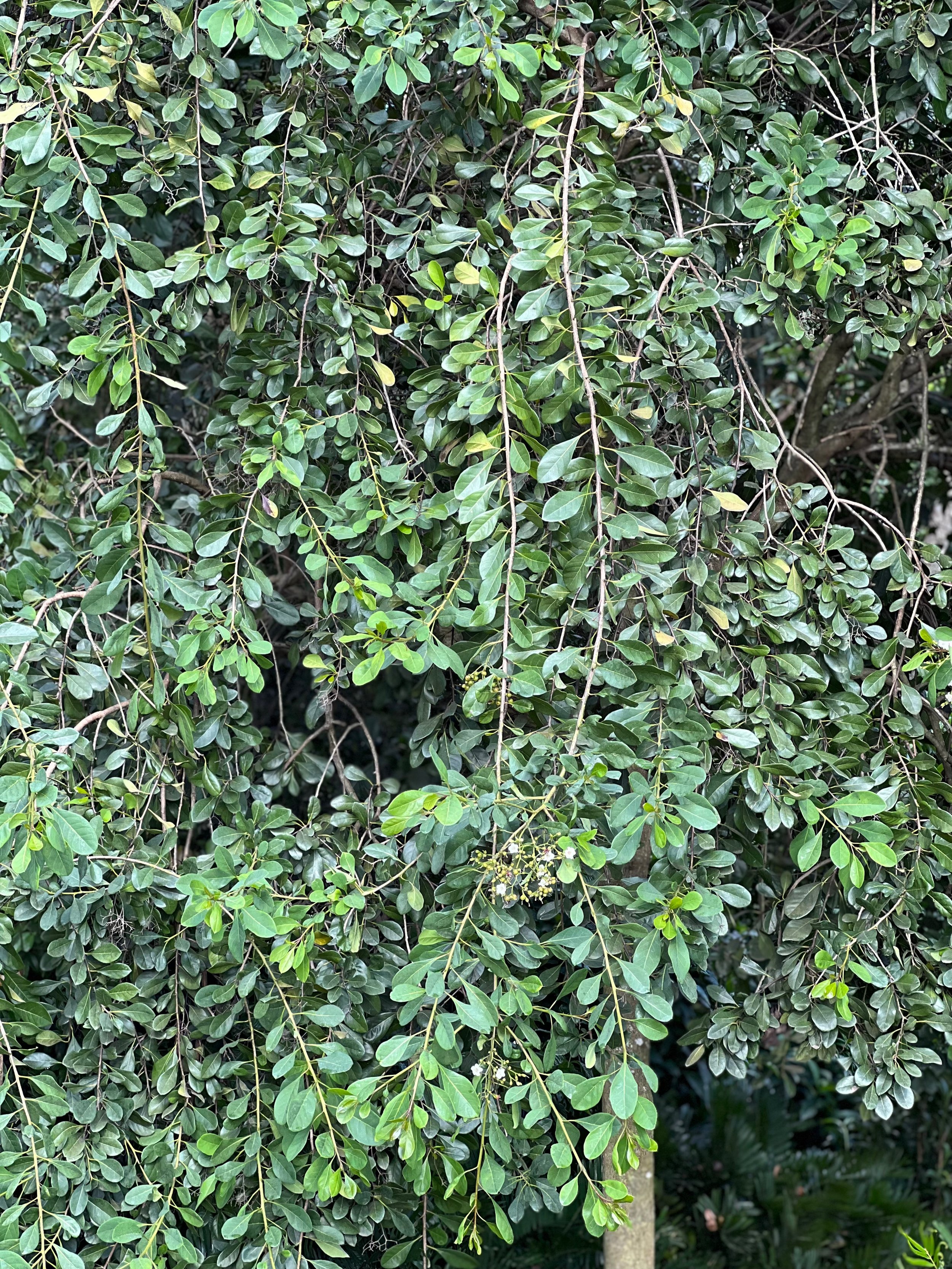
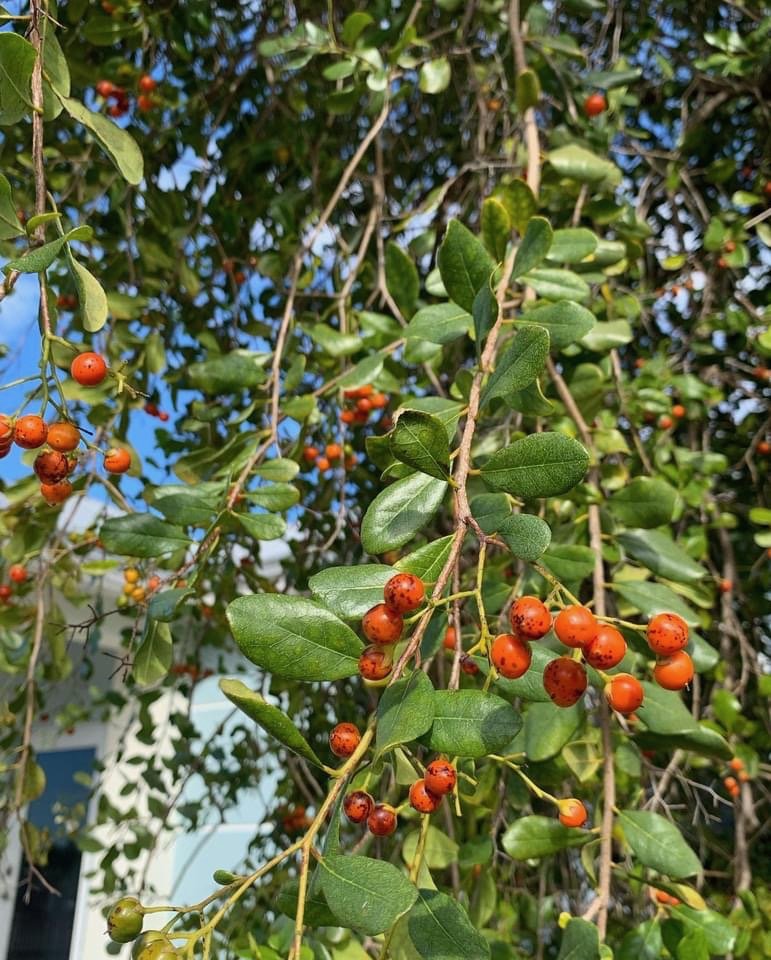
Bourreria succulenta
Bahama Strongbark is a weeping evergreen tree native to South Florida and the Florida Keys that grows 15’-25’ tall with gracefully drooping branches. This member of the borage family features smooth, leathery leaves and produces clusters of fragrant white flowers year-round that attract a diverse array of pollinators including bees, butterflies, hummingbirds, and hummingbird moths. Following the blooms, it develops showy bright orange berries that are highly attractive to birds and other wildlife. Thriving in full sun and well-drained, dry soils with moderate salt tolerance, it naturally occurs in rockland hammocks and can serve as an excellent specimen tree or screening plant in zones 10-11.
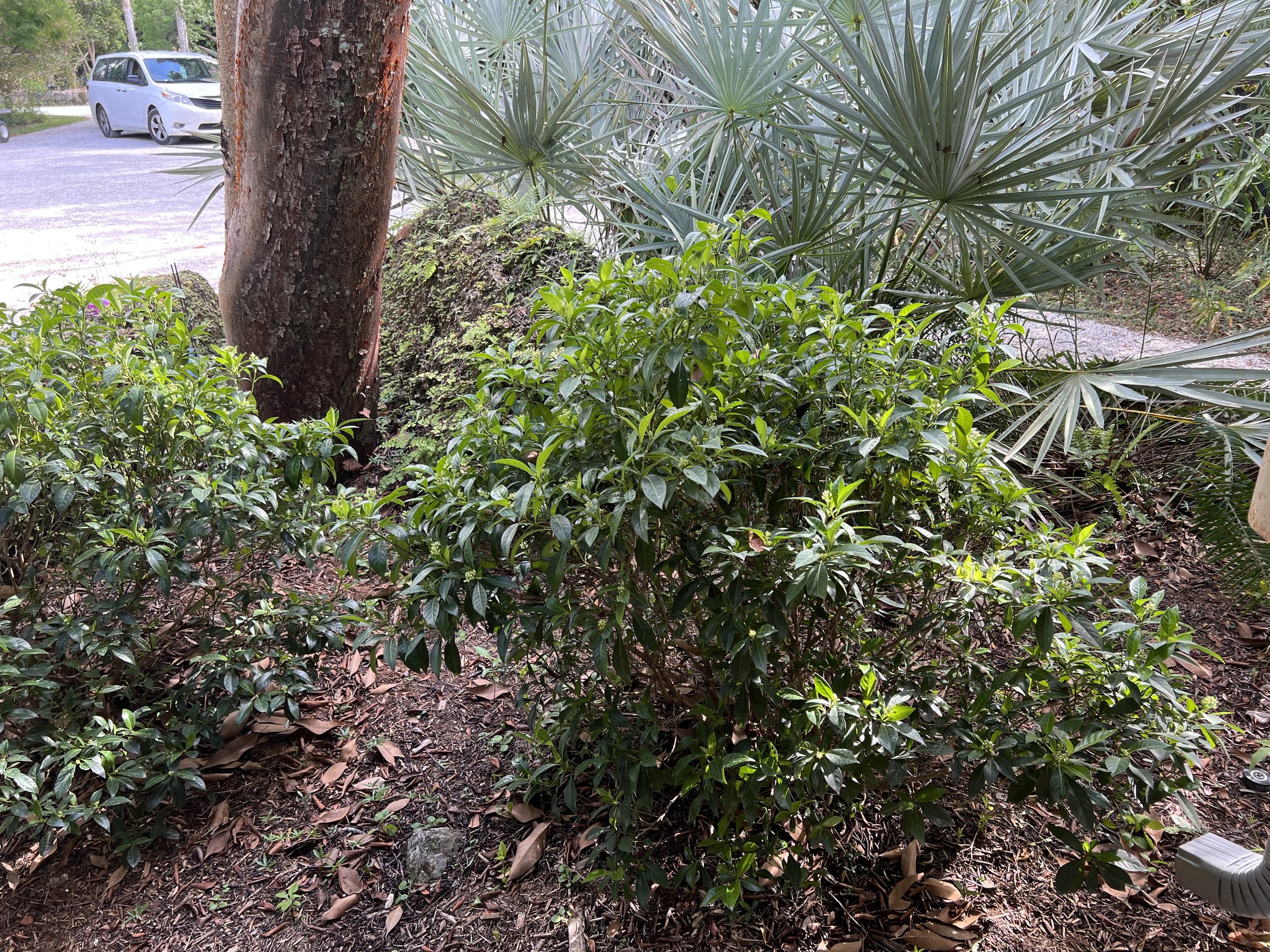
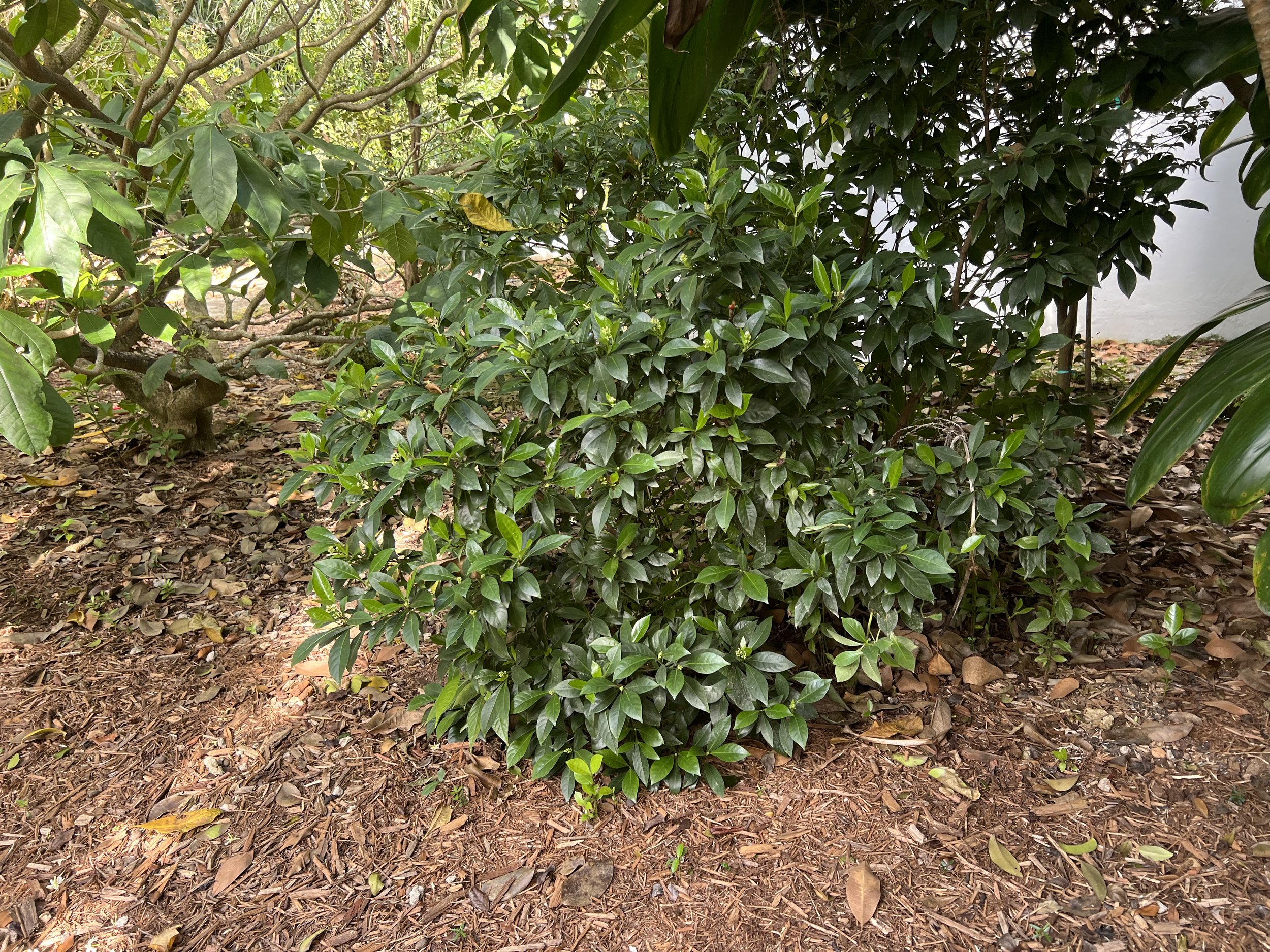
Psychotria ligustrifolia
Bahama Wild Coffee is an evergreen and low-growing understory shrub that can adapt to more sun than it’s relative Wild Coffee (Psychotria nervosa). It’s deep green, glossy leaves are tropical looking and can help a garden feel soft and lush. The berries are a superior food source for birds and they eat them fall through winter. The white flowers feed pollinators in the summer.
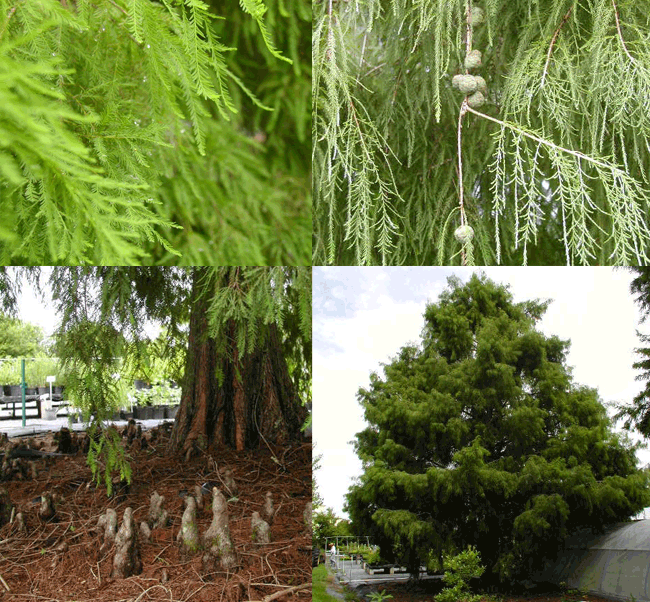

Taxodium distichum
Bald Cypress is a majestic deciduous conifer native to the southeastern United States that can reach 50’-120’ tall with a distinctive buttressed base when growing in water. This long-lived species features feathery, light green needles that turn brilliant russet-orange in fall before dropping, and fibrous, reddish-brown bark. Its most distinctive characteristic is the development of "knees" - woody projections that grow upward from the root system when the tree is in standing water or wet soils. Naturally occurring in swamps, bayous, floodplains, and along rivers from Maryland to Texas, it's remarkably adaptable, tolerating both permanently flooded conditions and surprisingly dry soils once established. This iconic tree provides critical habitat for wildlife, including nesting sites for wood ducks and various wading birds, and serves as an excellent specimen or street tree in zones 4-10.
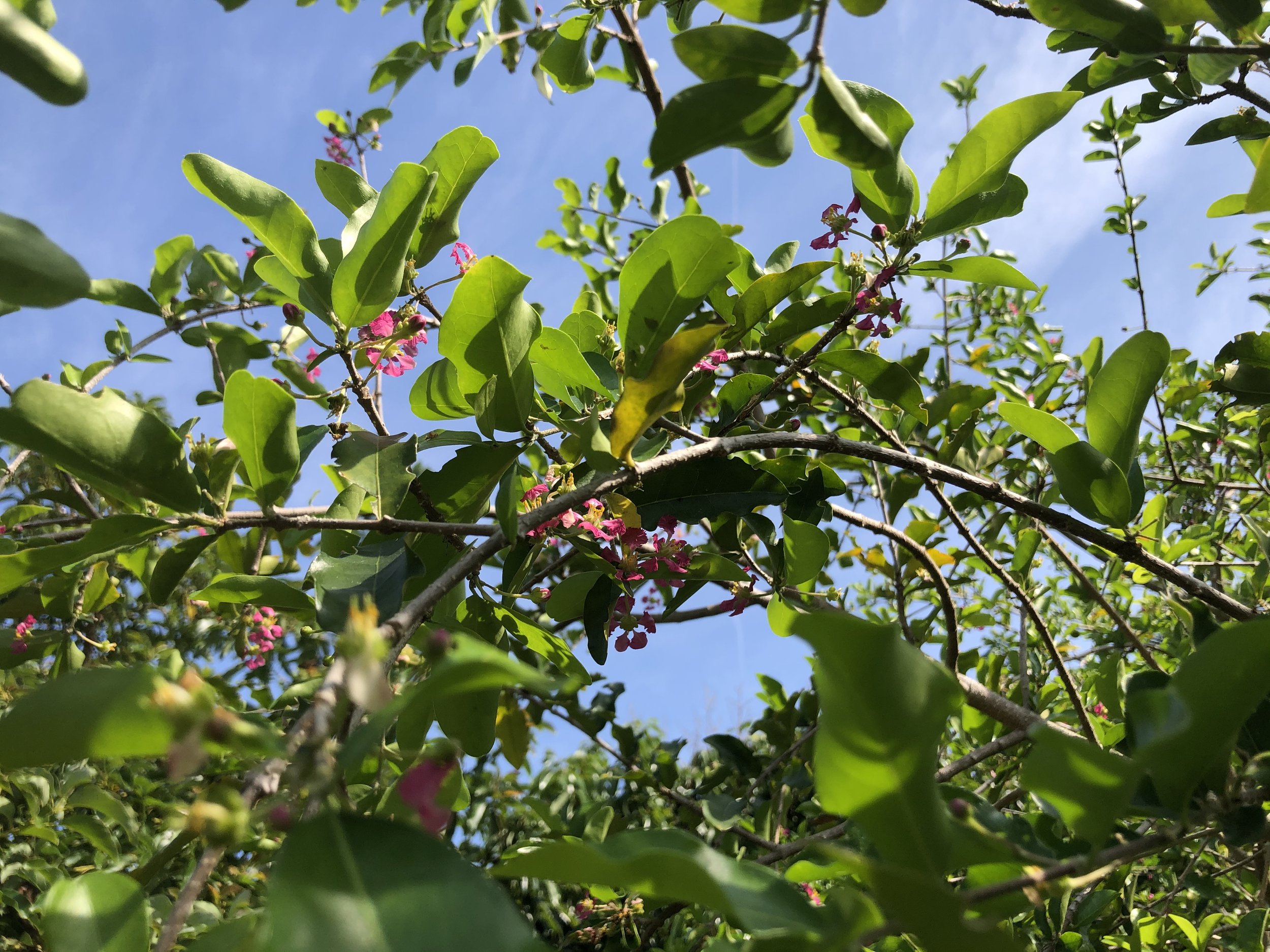
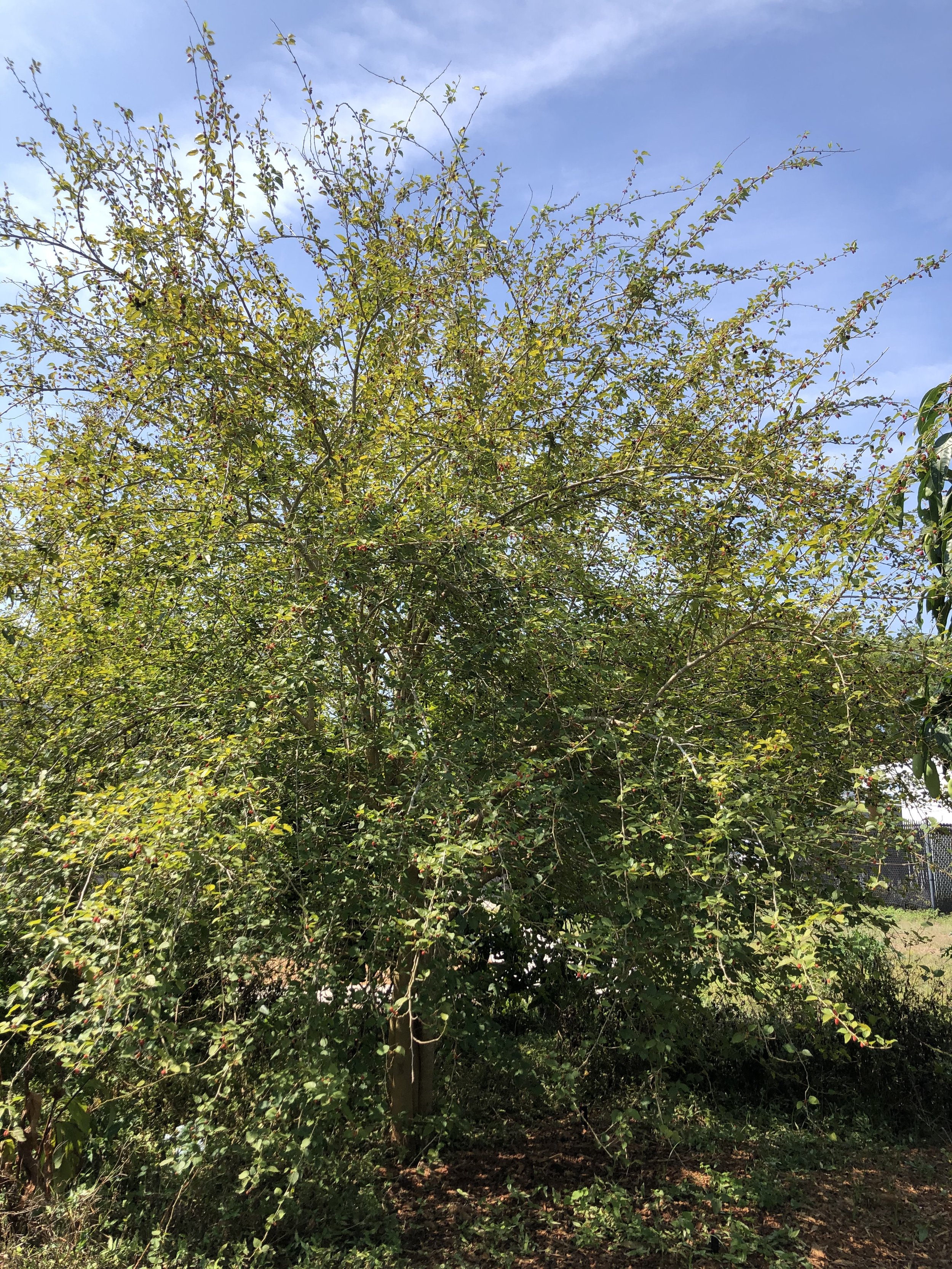
Malpighia emarginata
Barbados Cherry is an evergreen shrub or small tree native to South America, Central America, and the Caribbean that grows up to 12 feet tall and wide with a rounded, multi-trunked form. This fast-growing tropical plant features delicate foliage and produces small, attractive pink flowers intermittently from spring through fall, followed by bright red, cherry-like fruits. The tart, edible fruits are exceptionally high in vitamin C—containing 30 times more than oranges—and ripen about one month after flowering. Thriving in full sun to partial shade with well-drained soils, it's drought-tolerant once established and serves as an excellent ornamental shrub, specimen plant, or container plant in zones 9B-11, attracting butterflies and providing edible fruit for both wildlife and humans.
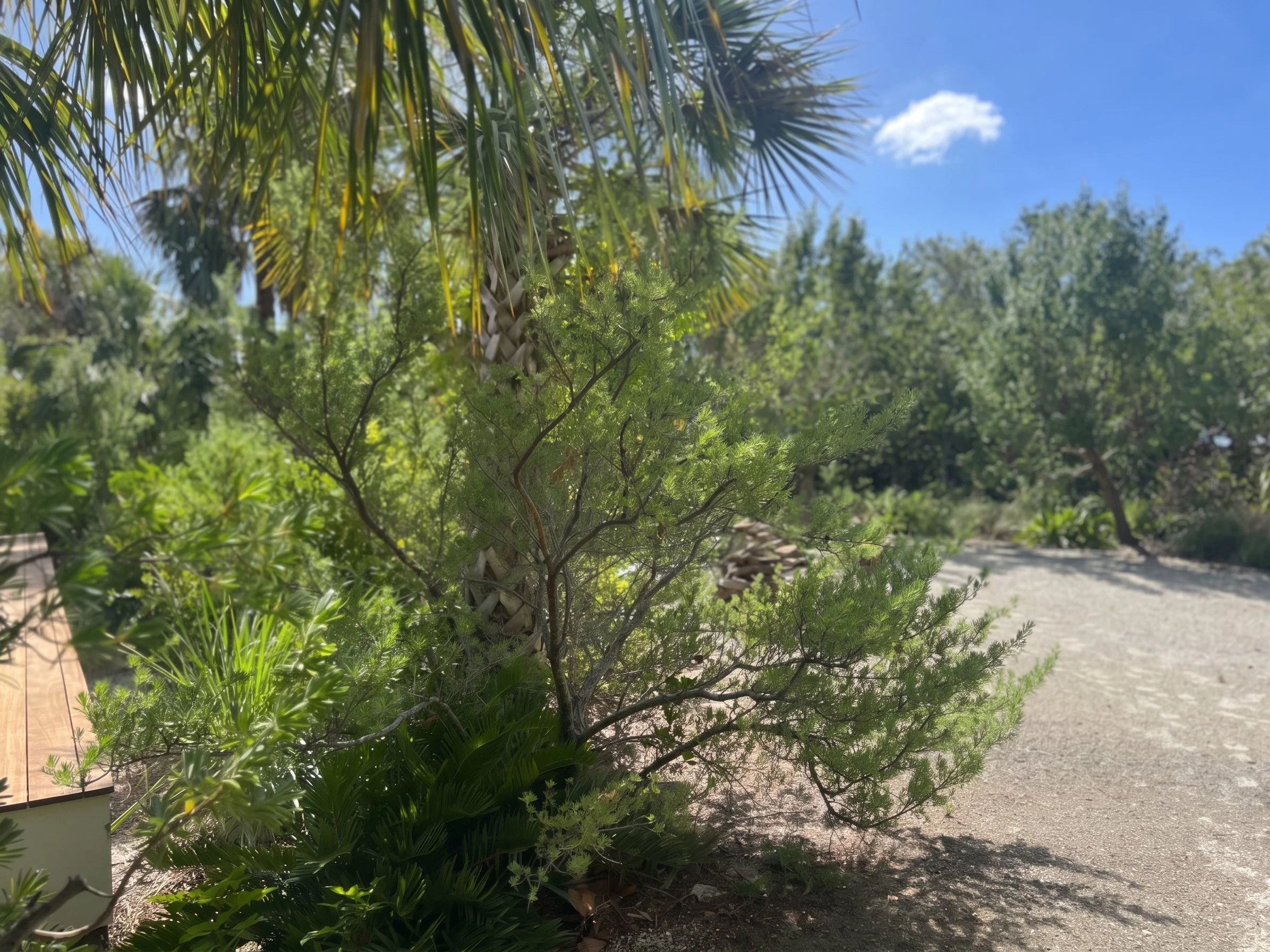
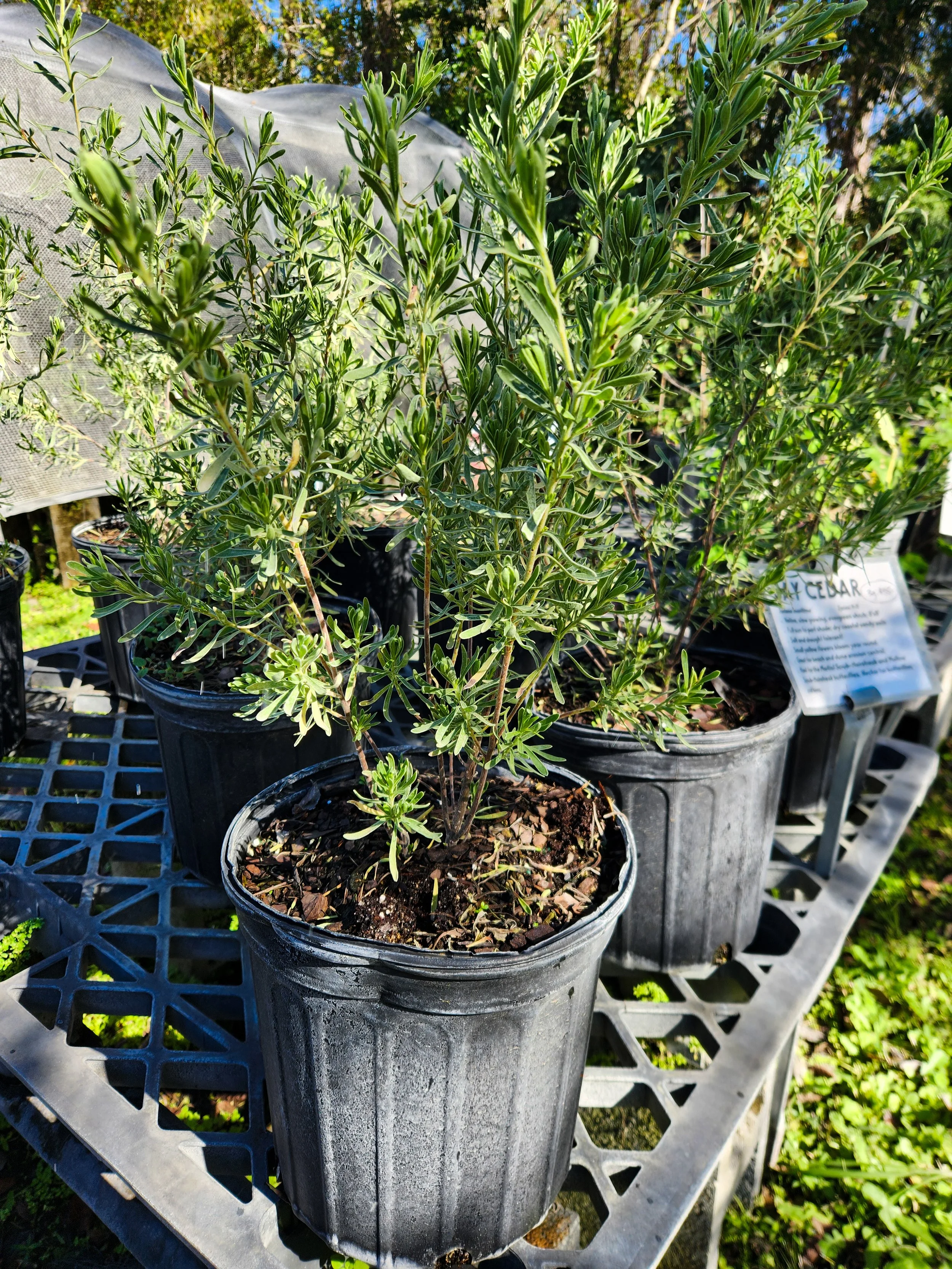
Suriana maritima
Bay Cedar is a slower growing, native, evergreen coastal shrub that is naturally found on sand dunes and beaches. This hurricane resistant shrub can weather storm surges, and is salt spray and drought tolerant! The Bay Cedar is excellent for erosion control of dunes and beaches. Small yellow flowers bloom year round and attract pollinators, and it is a host plant for certain hairstreak butterflies.
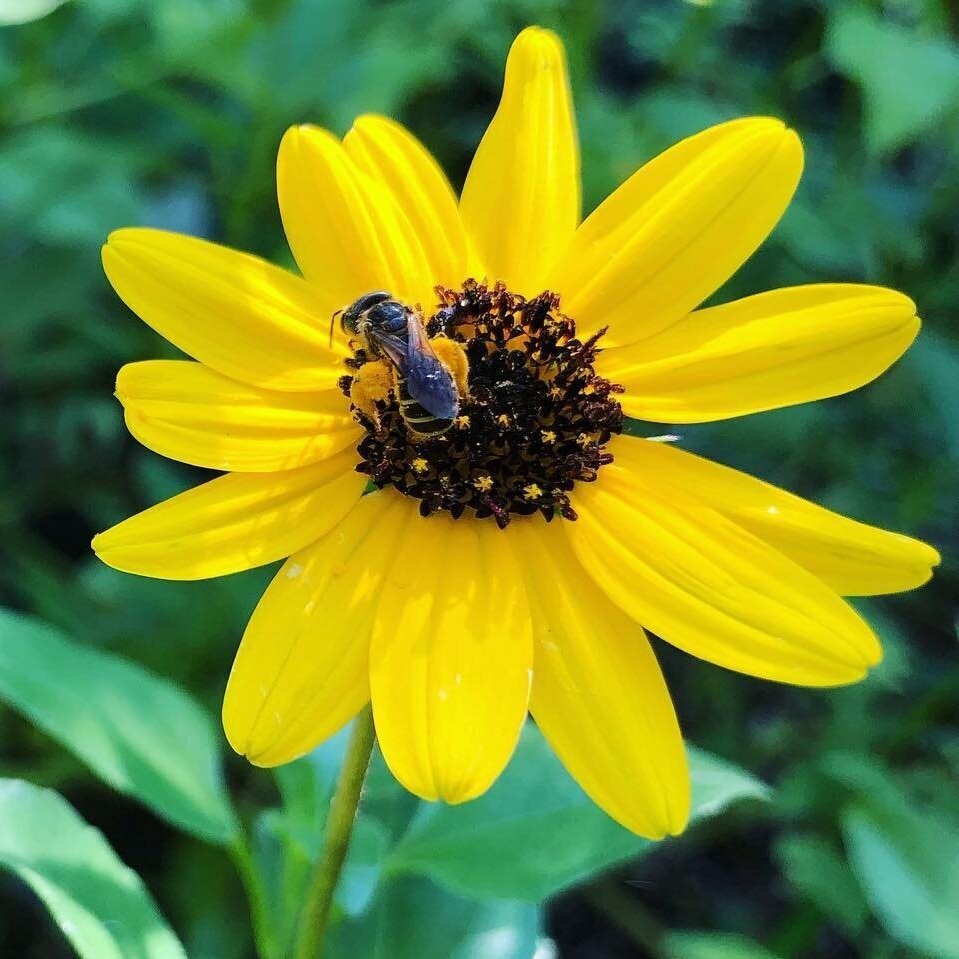
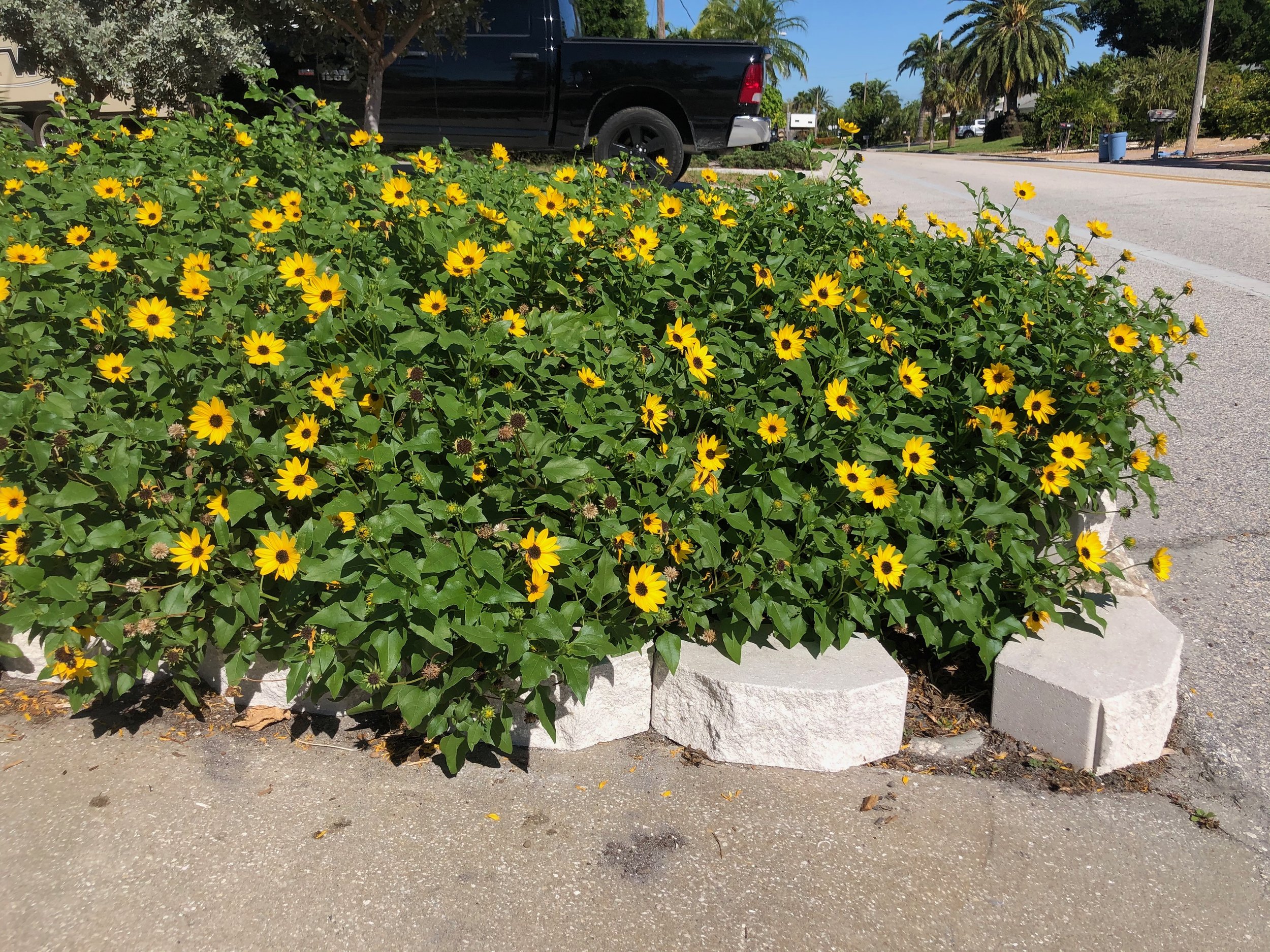
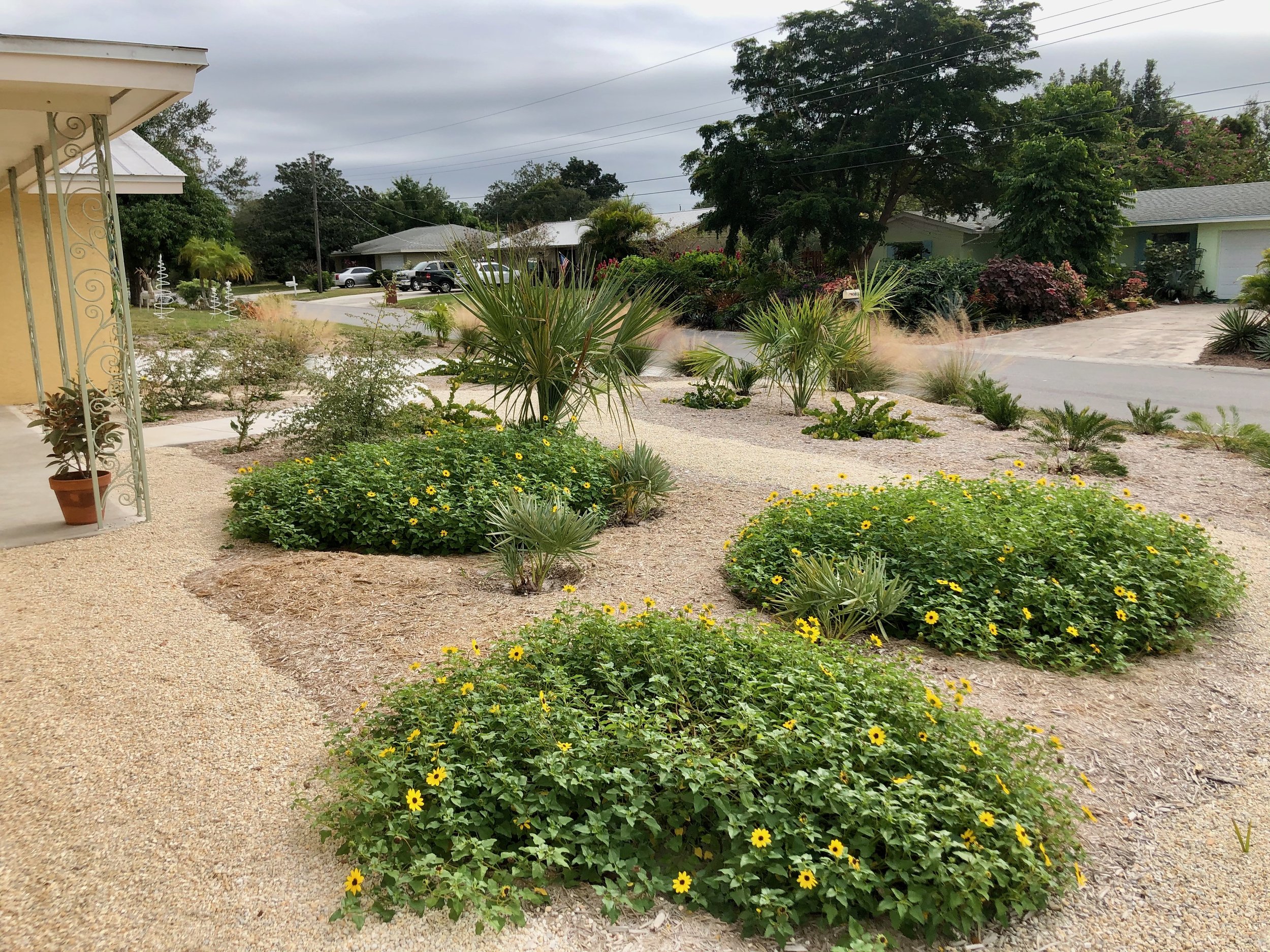
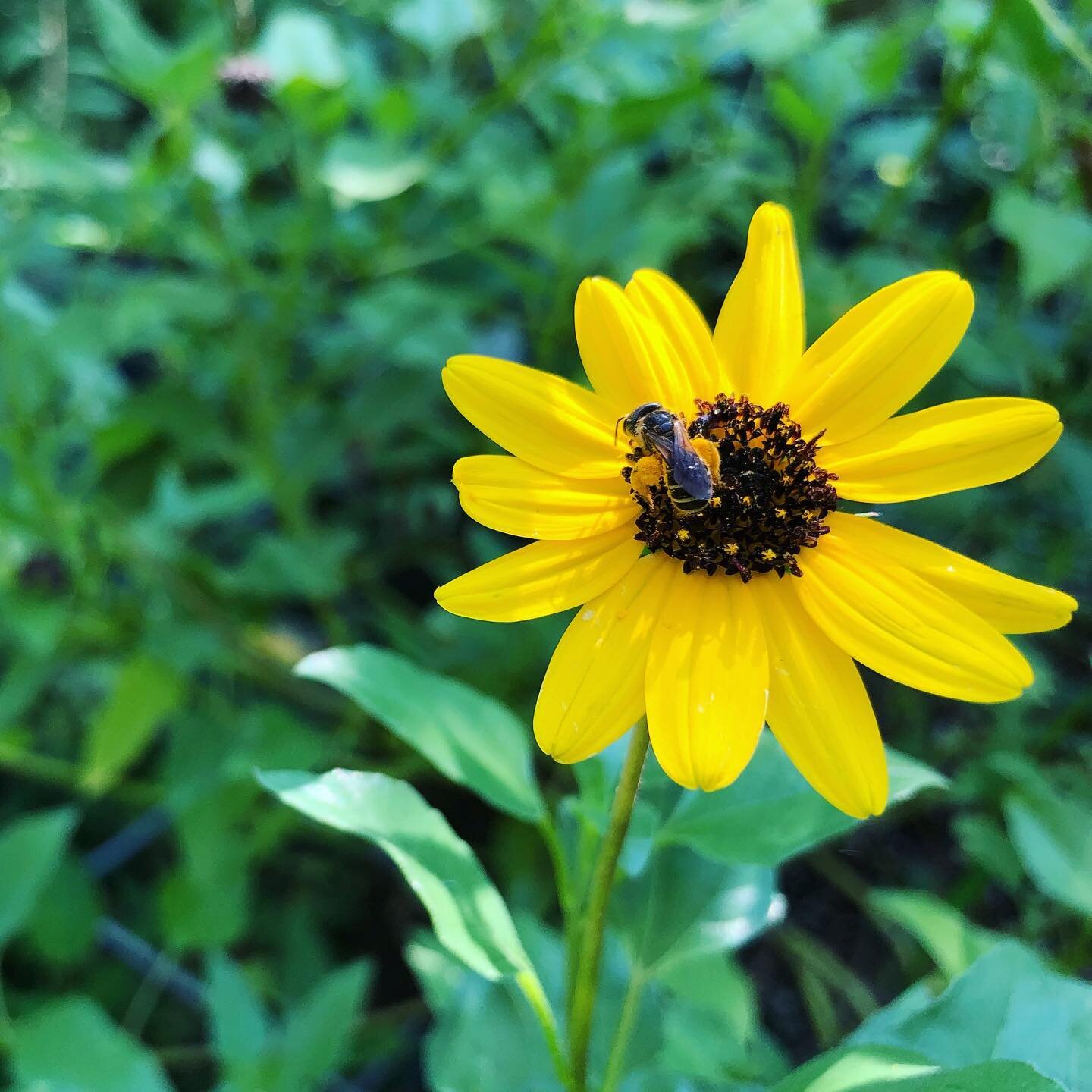
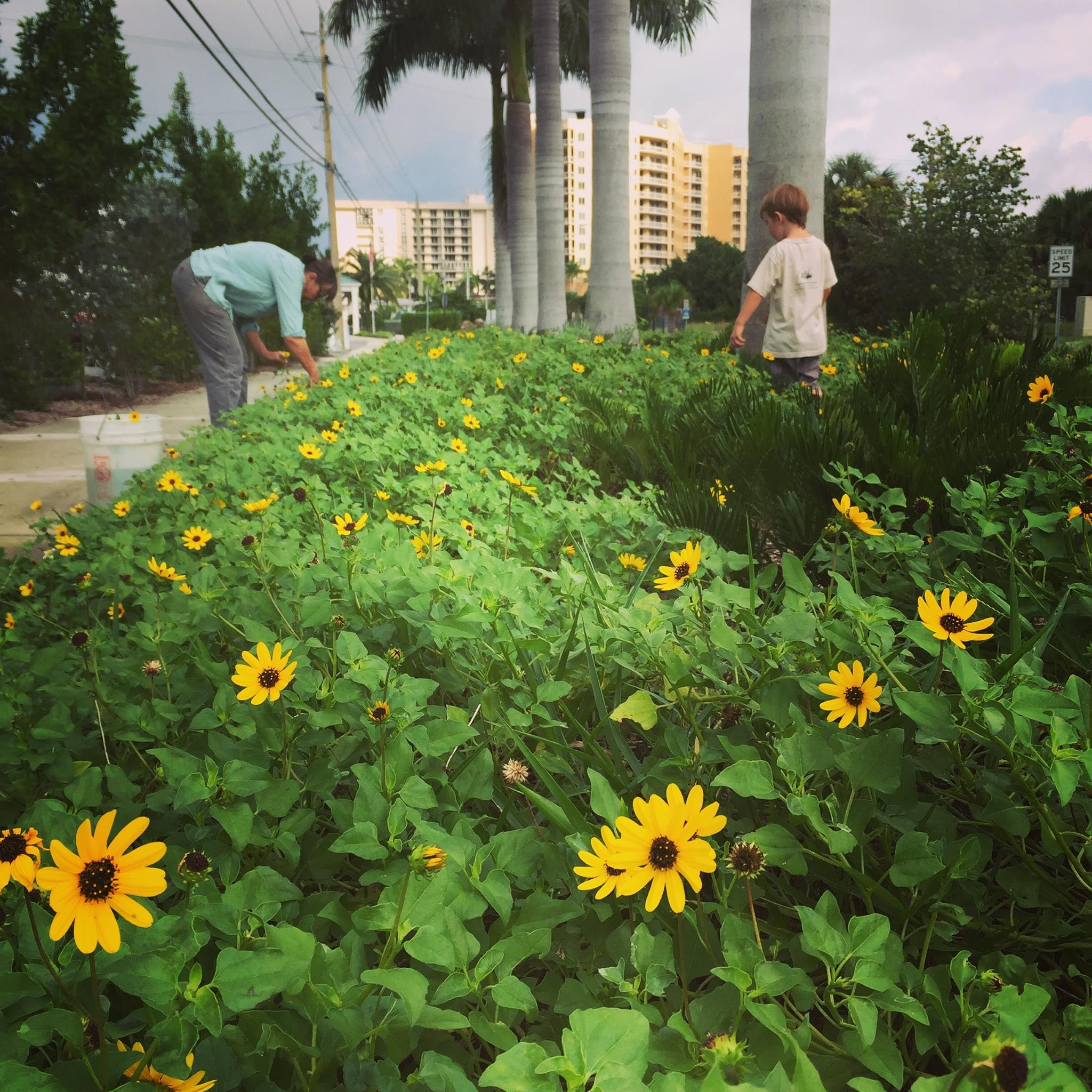
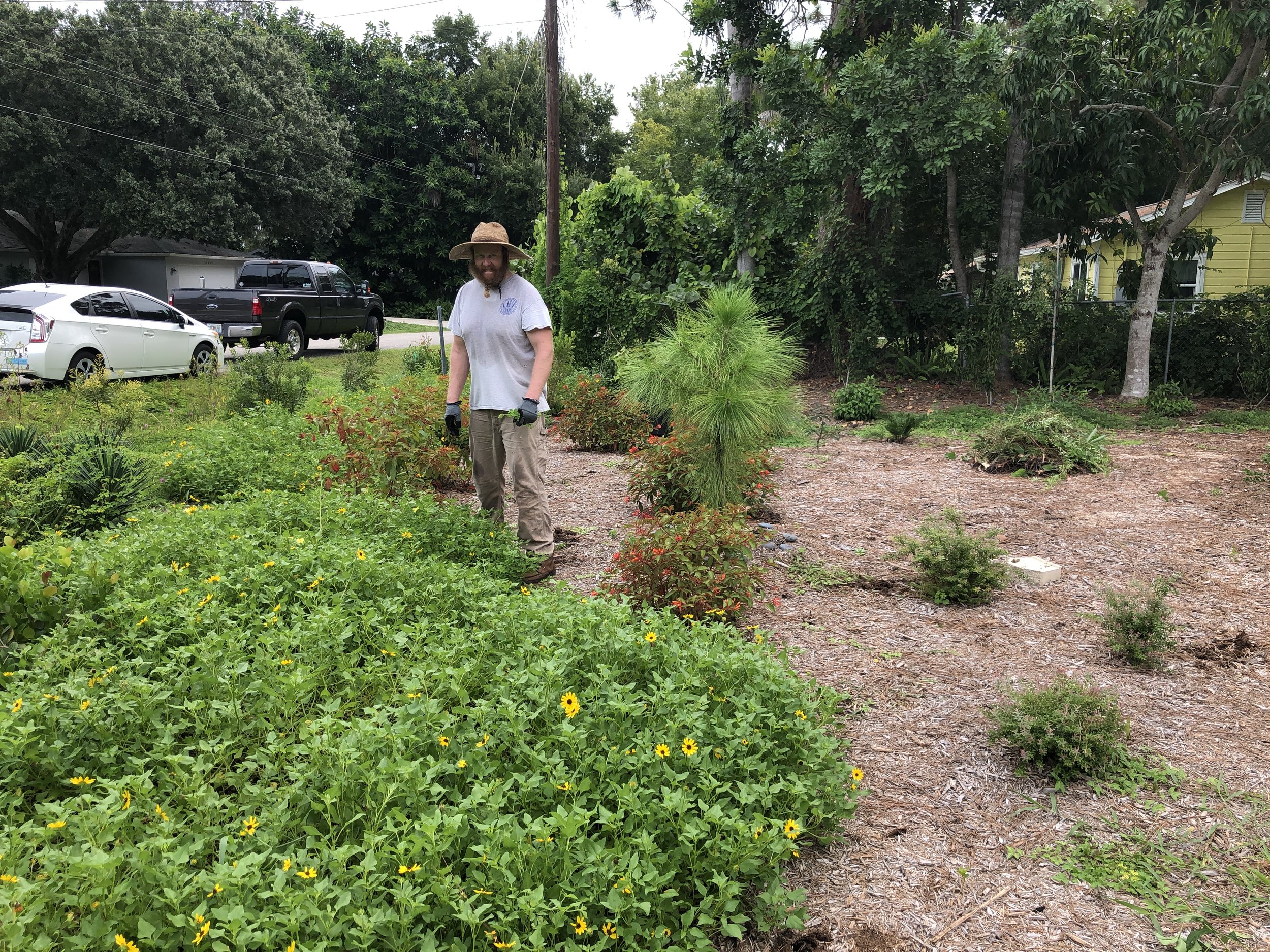
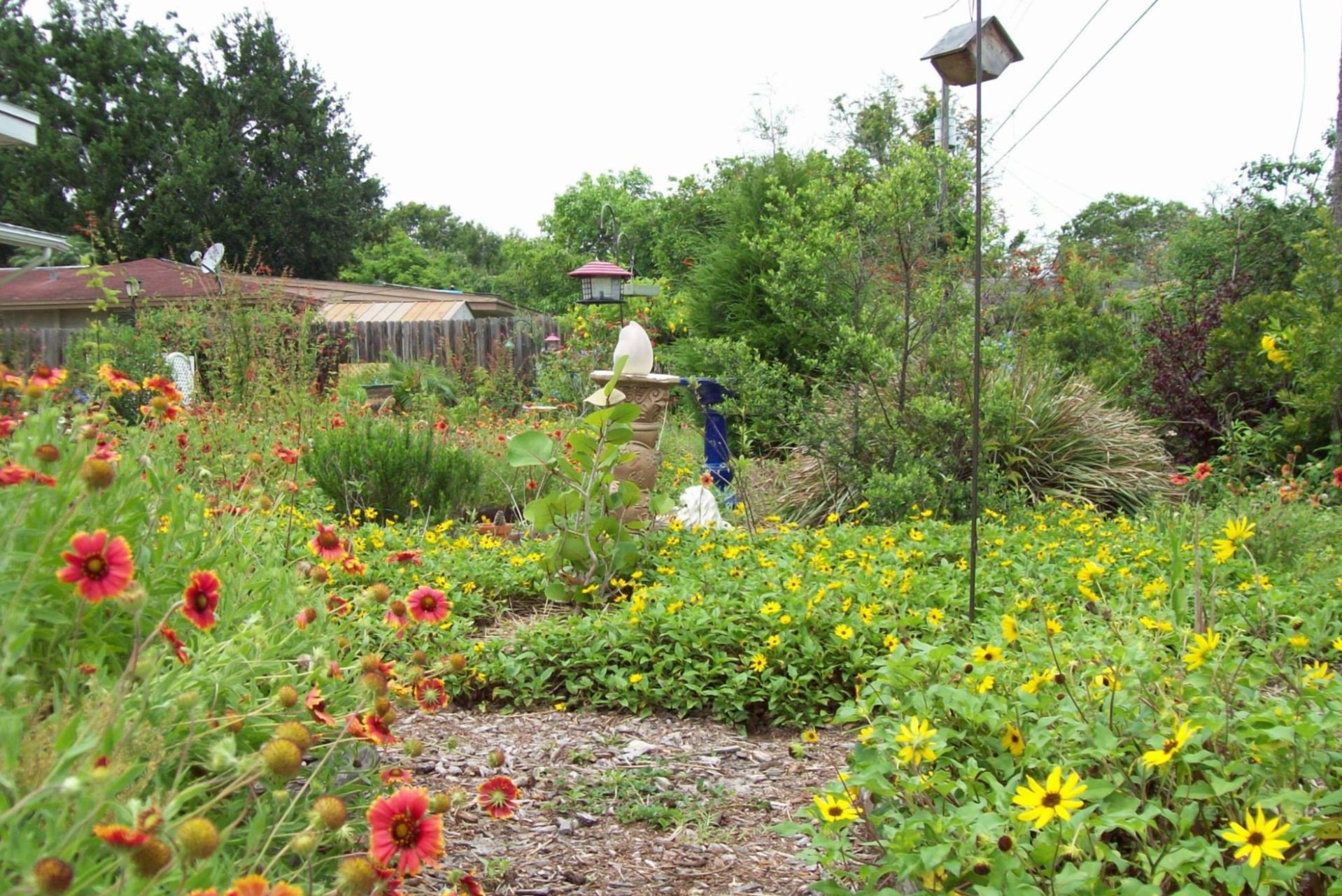
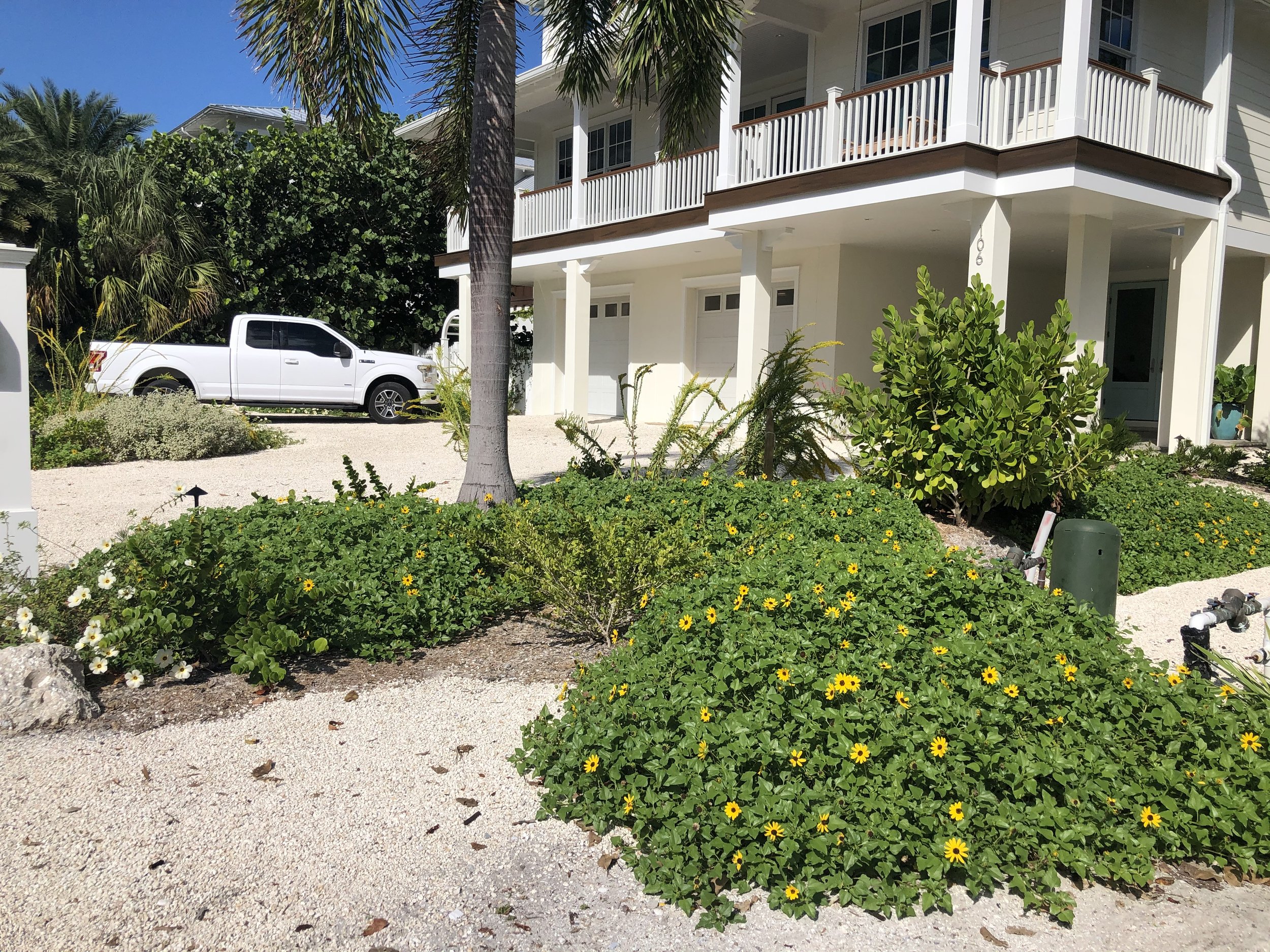
Helianthus debilis ‘vestitus’
West Coast Beach Dune Sunflower is one of the best ground covers for sunny, dry areas where things just don't grow! One plant can spread 4' wide and grows fast, so you'll see beautiful greens and yellow blooms abound in no time! This sunflower is an annual that reseeds in place so once the mature plants start to die back, just cut them back and watch the babies grow. Loved by pollinators and birds, its the perfect Florida plant in any yard! Want to grow this in a coastal area? You sure can! Beach Dune Sunflower naturally occurs on beach dunes and can take salt spray and brief storm surges. It's extremely drought tolerant too!
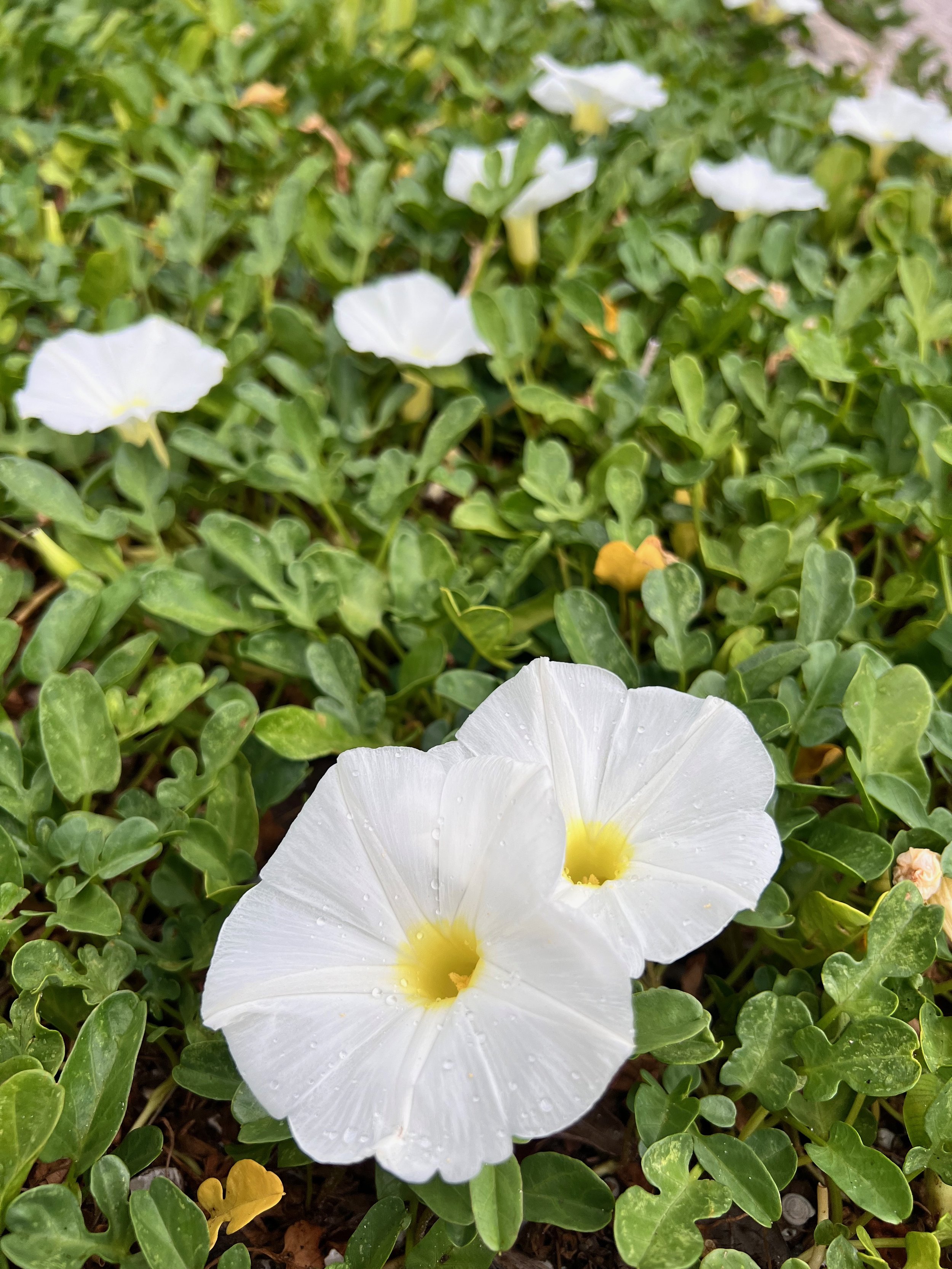
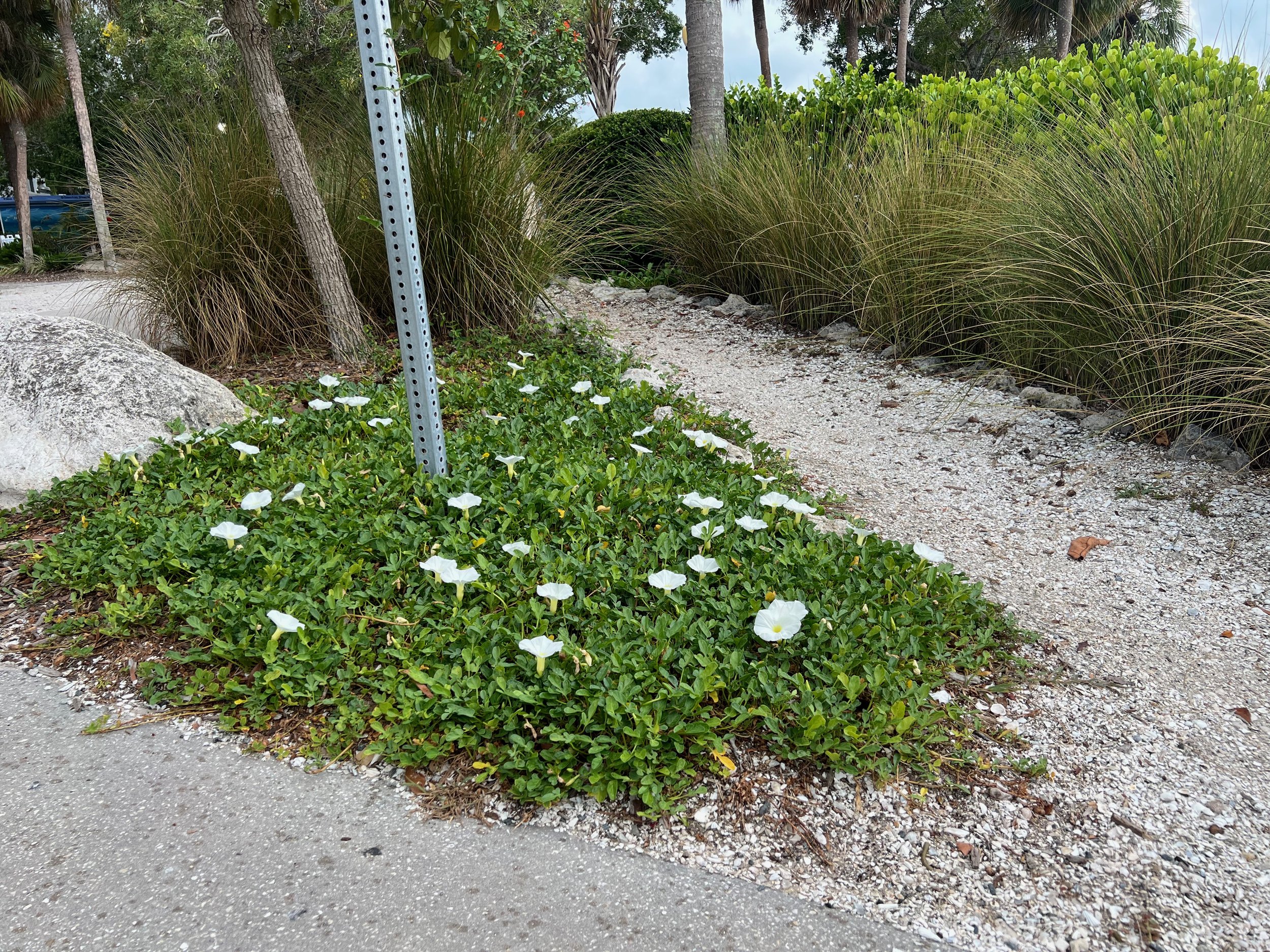
Impomoea imperati
Beach Morning Glory is a native, long-lived, perennial, low-growing, flowering vine that grows along the ground. It is wonderful for coastal sites or full sun, dry sandy soils. It is highly drought and salt tolerant and has showy white flowers that are great for bee, butterflies and pollinators including hummingbirds.
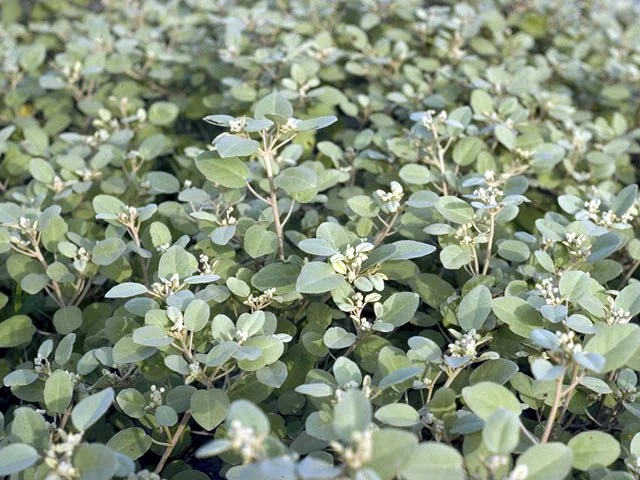
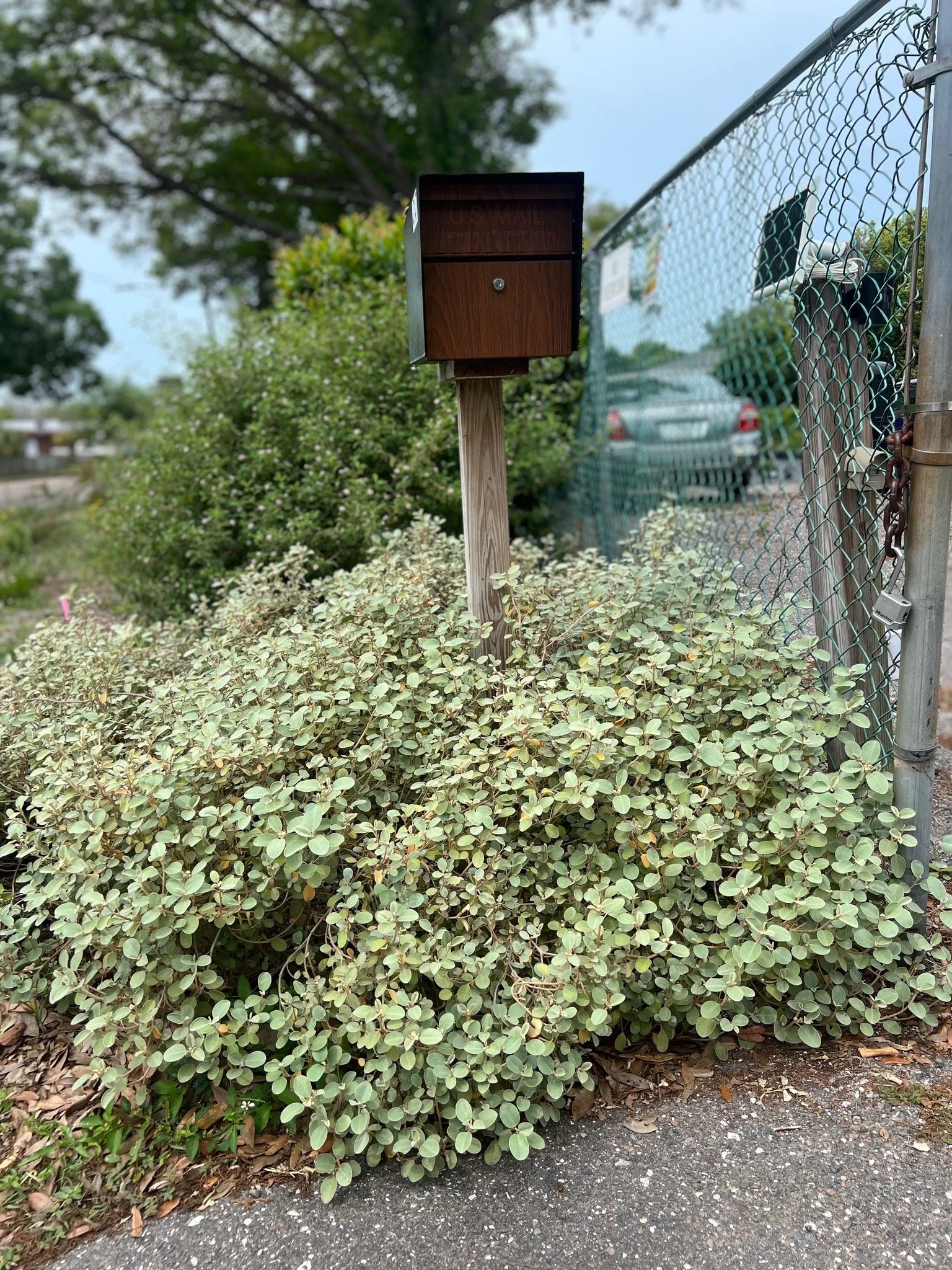
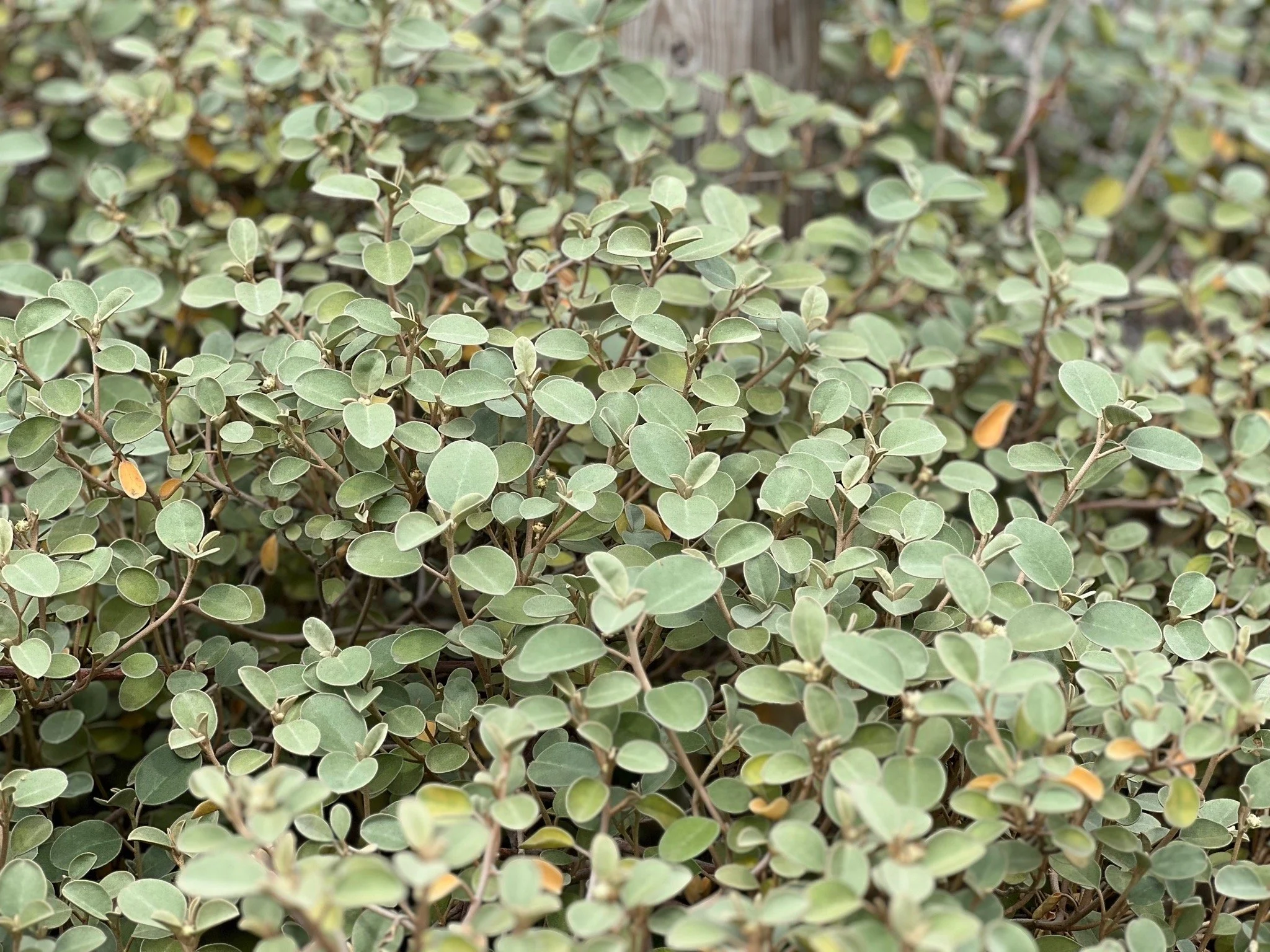

Croton punctatus
Beach Tea is a small, low-growing shrub native to Florida’s coastal dunes. Naturally drought-, salt-, and wind-tolerant, it thrives in dry, sunny gardens with well-drained sandy soil. This resilient plant is ideal for mass plantings, borders, or as a specimen plant, adding soft texture and silvery-green foliage. Its flowers attract pollinators, making it both a beautiful and ecologically valuable choice.

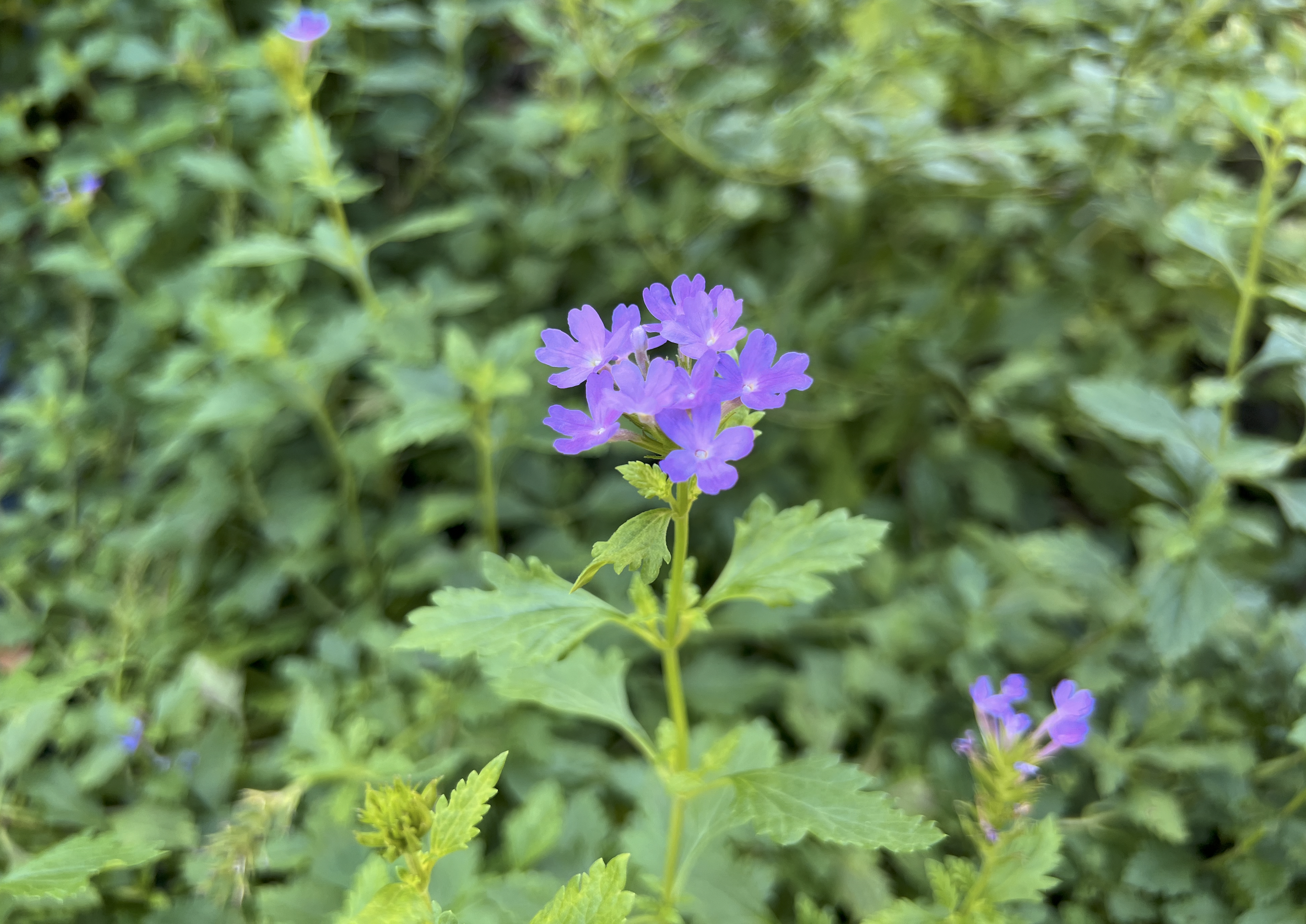
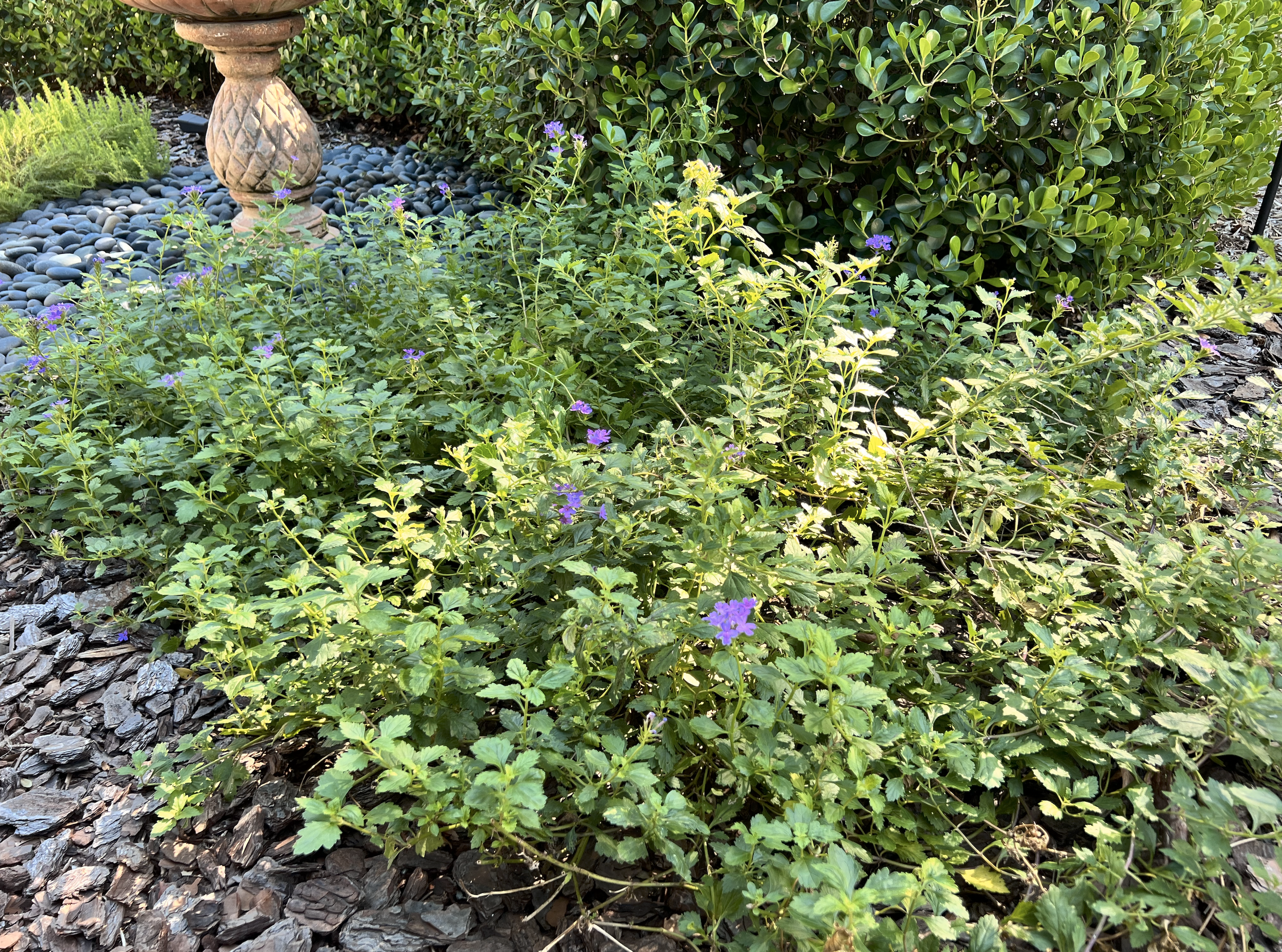
Glandularia maritima
Beach Verbena is an endangered, prostrate perennial native to Florida's coastal dunes that forms dense, evergreen ground cover mats. This spreading species produces deep pink to lavender flowers in flat-topped clusters that bloom year-round with peaks in spring and summer. Extremely salt-tolerant and adapted to sandy soils and full sun, it thrives in harsh coastal environments but can also adapt to less challenging landscape settings. Due to its low-growing, spreading habit and continuous flowering, it serves as an excellent groundcover for sunny, well-drained areas.
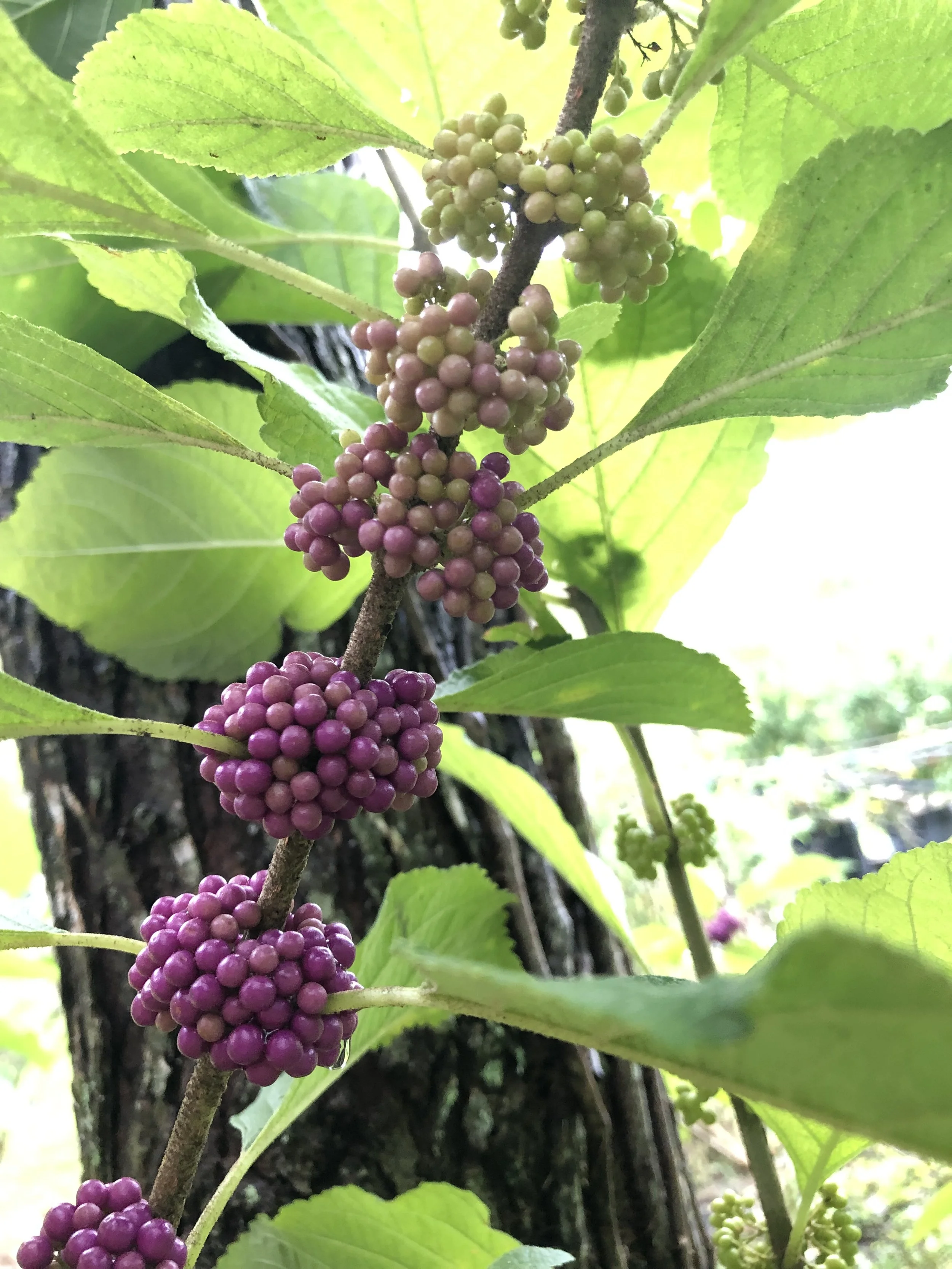
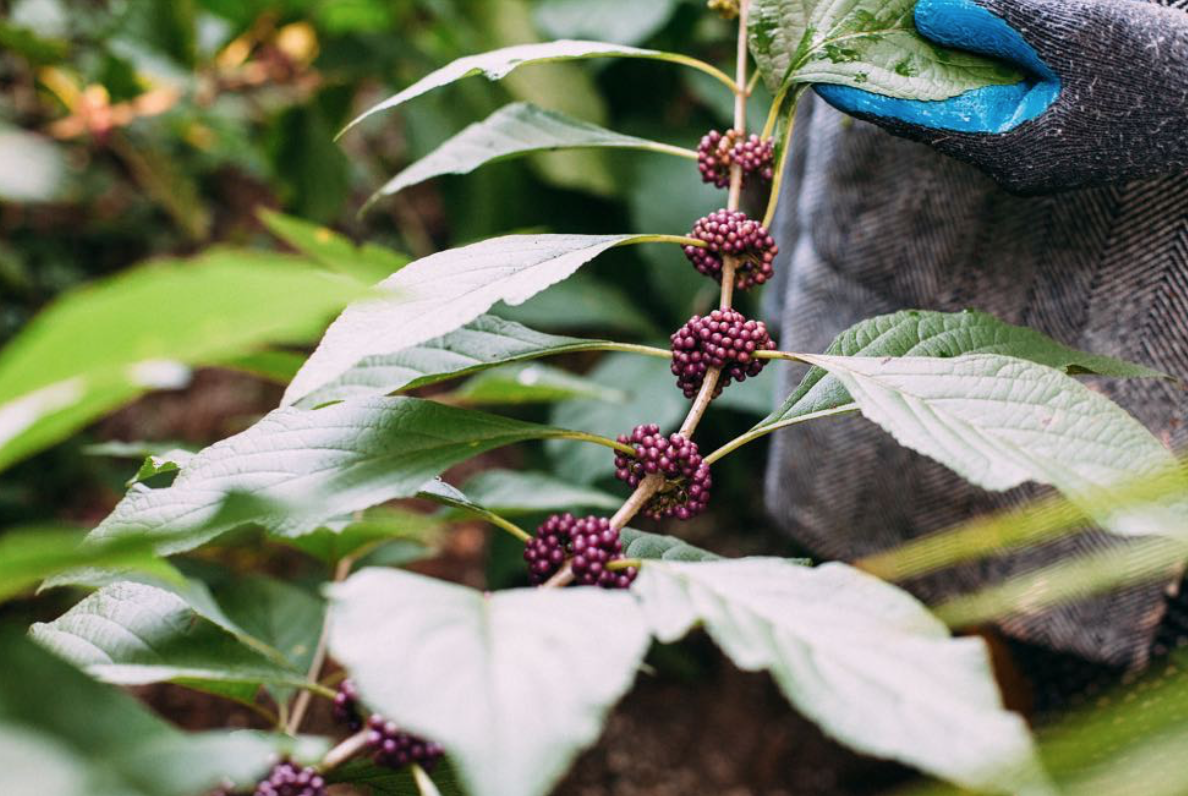


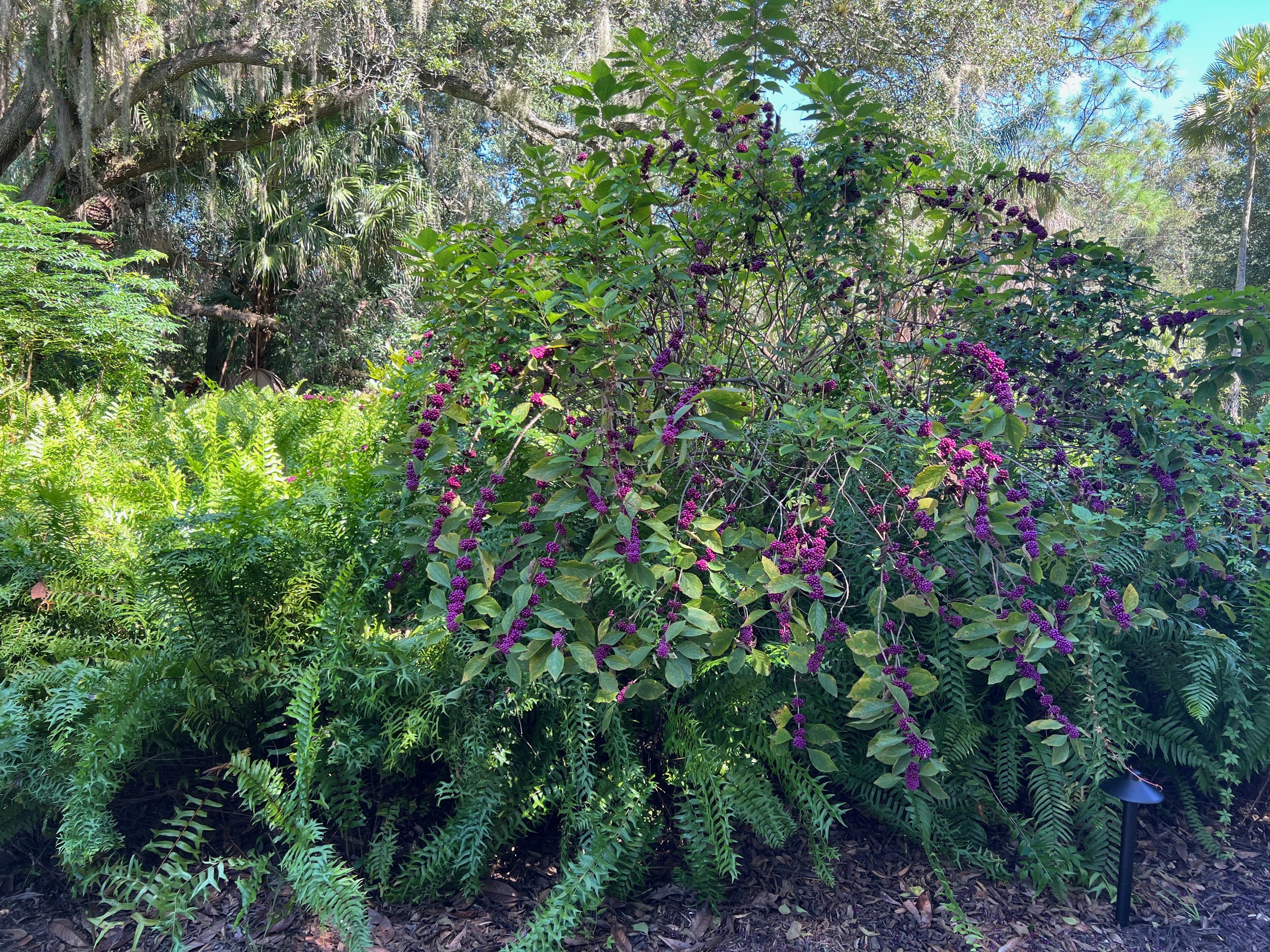
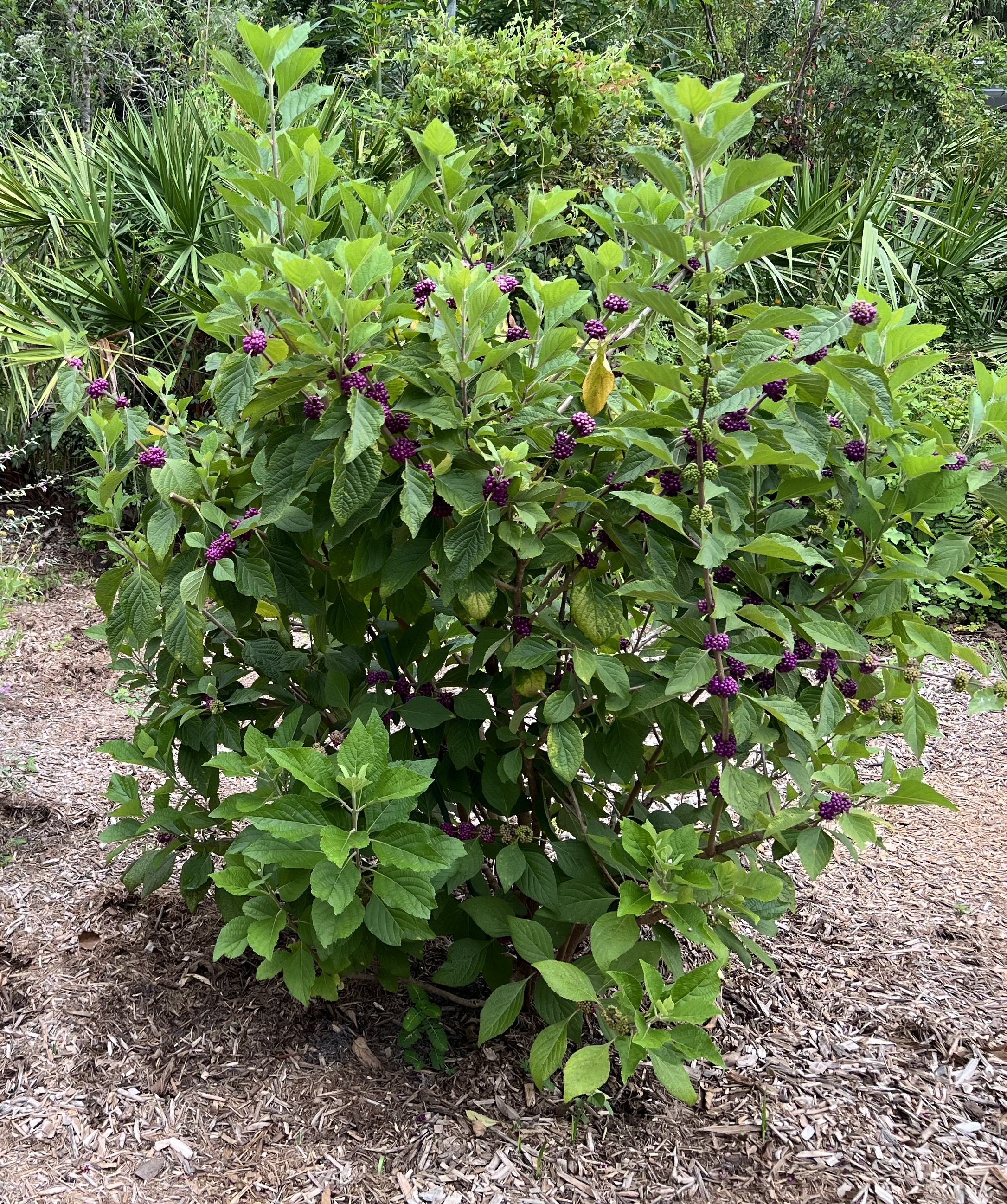
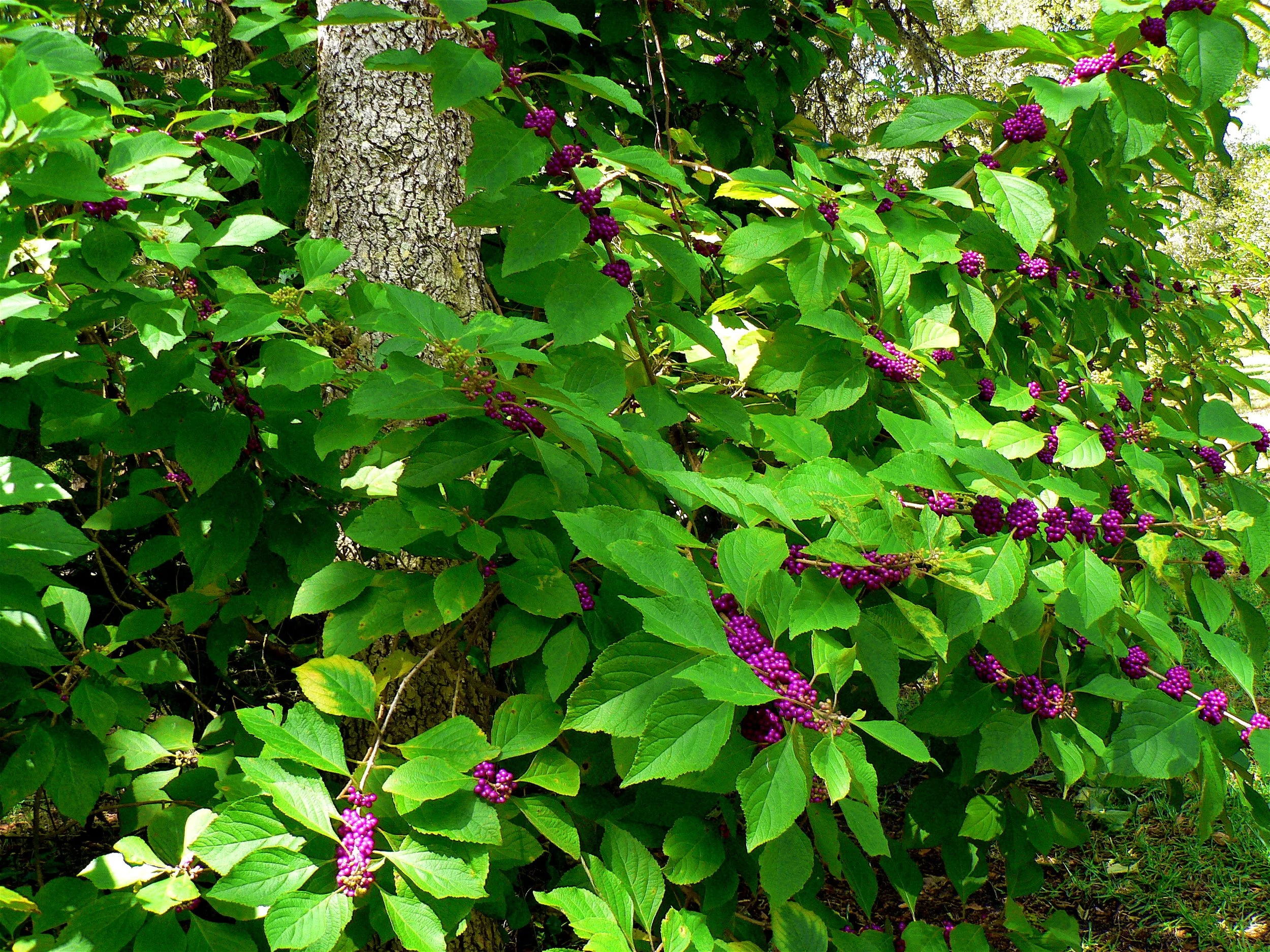
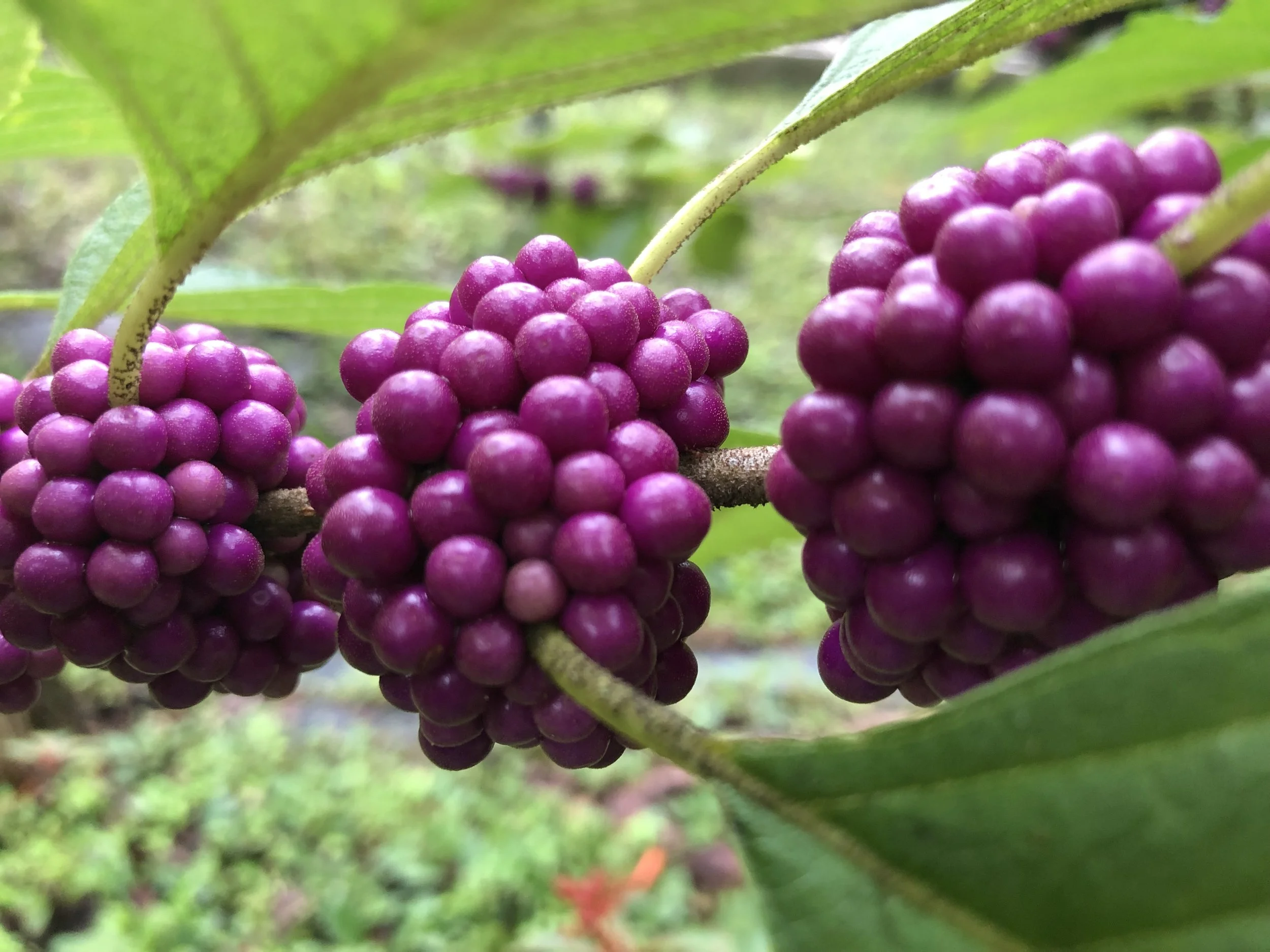
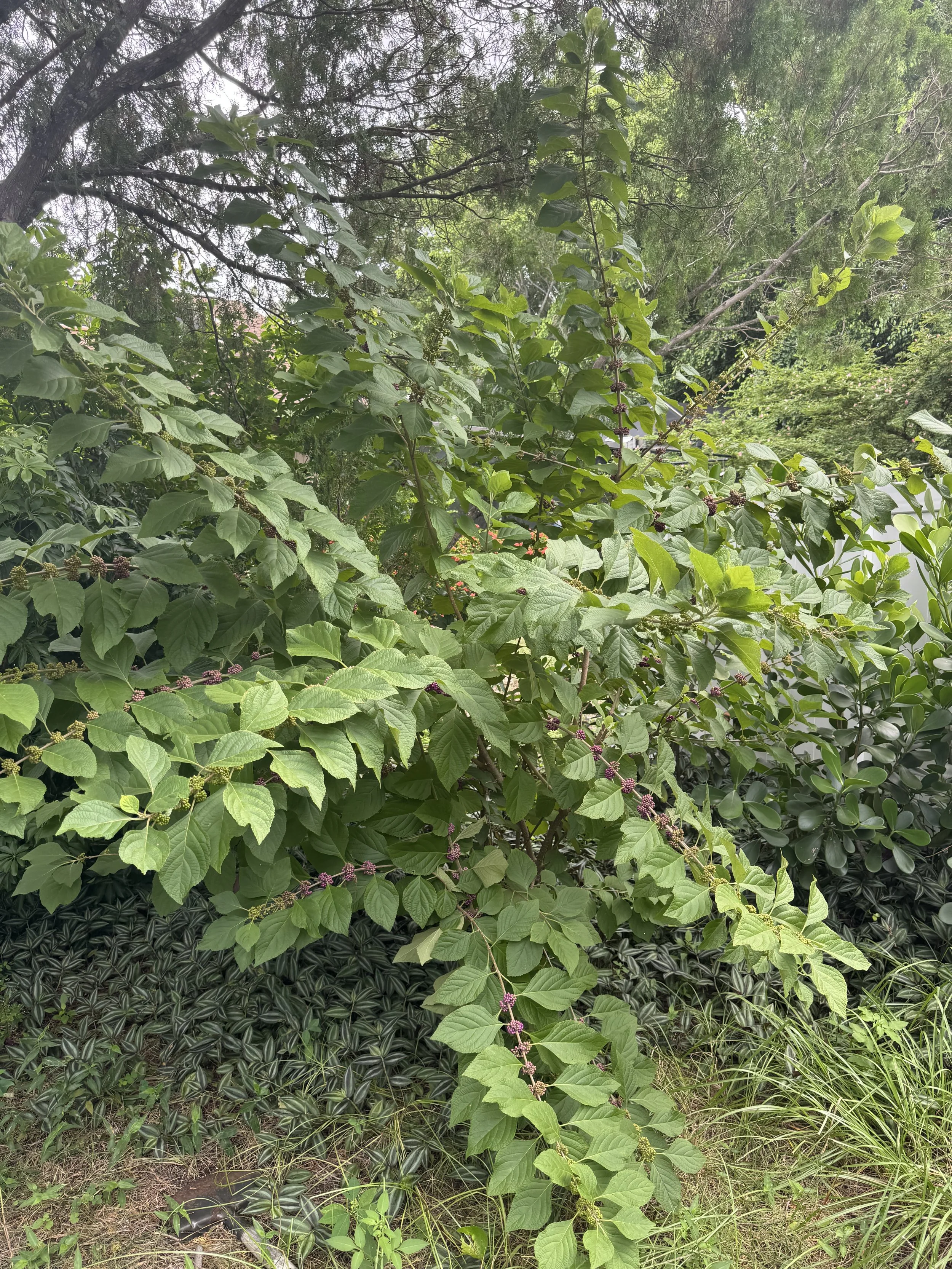
This native, deciduous, prunable shrub grows to be 6’x6’ and does best in dry to moist (well-drained) soils, with full sun to shade. With light purple flowers in spring and showy purple berries in fall, Beautyberry makes a great addition to many Florida landscapes. The attractive weeping branches look lovely when planted under trees, bringing in pollinators with their flowers and birds with the berries. Their berries are edible for humans as well, and can be turned into jams and syrups!

Capsicum annuum 'Pequin'
Bird Pepper is a native edible pepper that grows to be 12”-24” tall and 12”-18” wide. They grow best in full sun and well-drained, fertile, slightly acidic soil. They have small, dark-green pointed leaves and white flowers that are followed by very small, but very spicy, edible orange peppers. While the spice is on the higher side, they have a unique, smoky and citrusy flavor that works well in a variety of culinary applications.
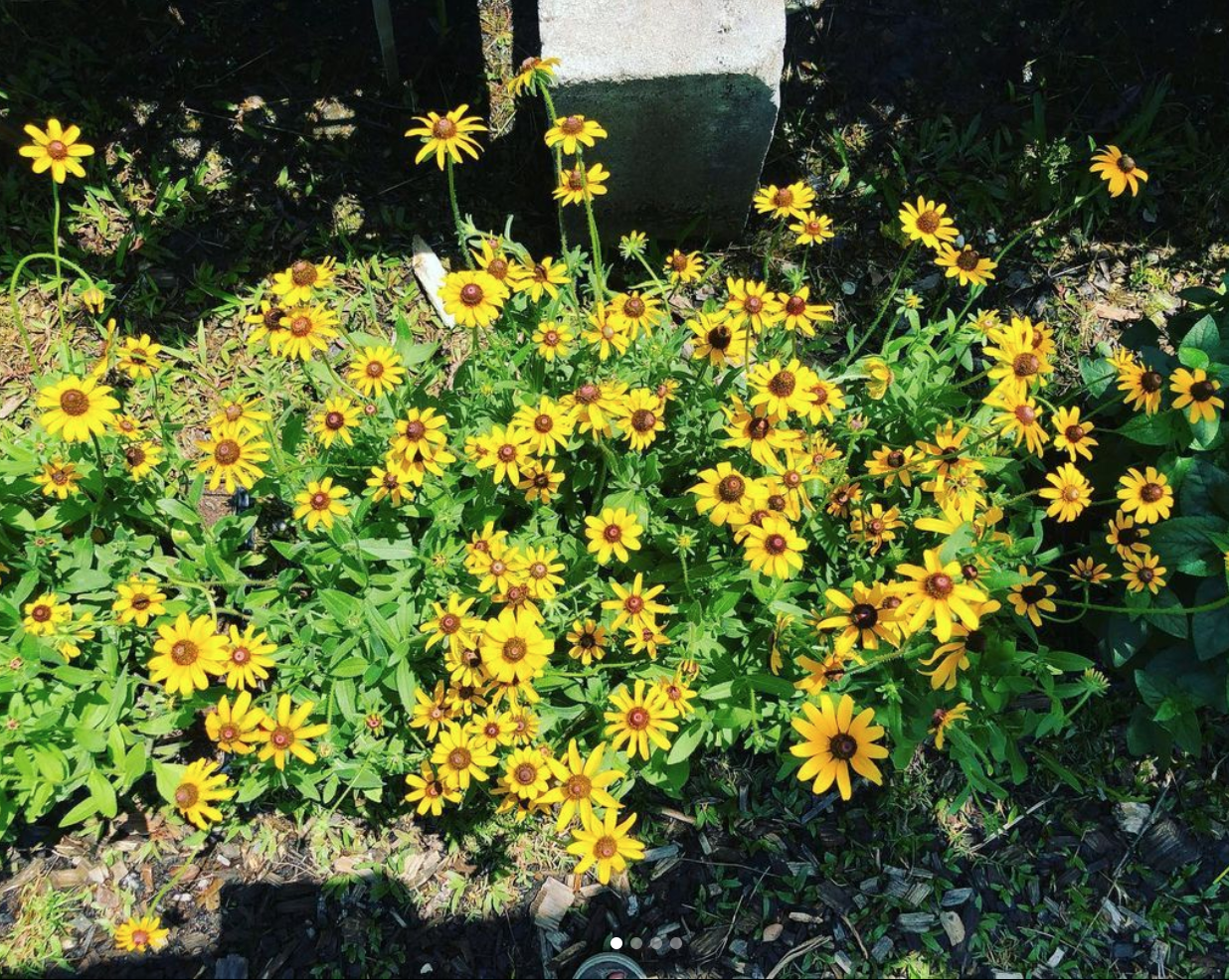
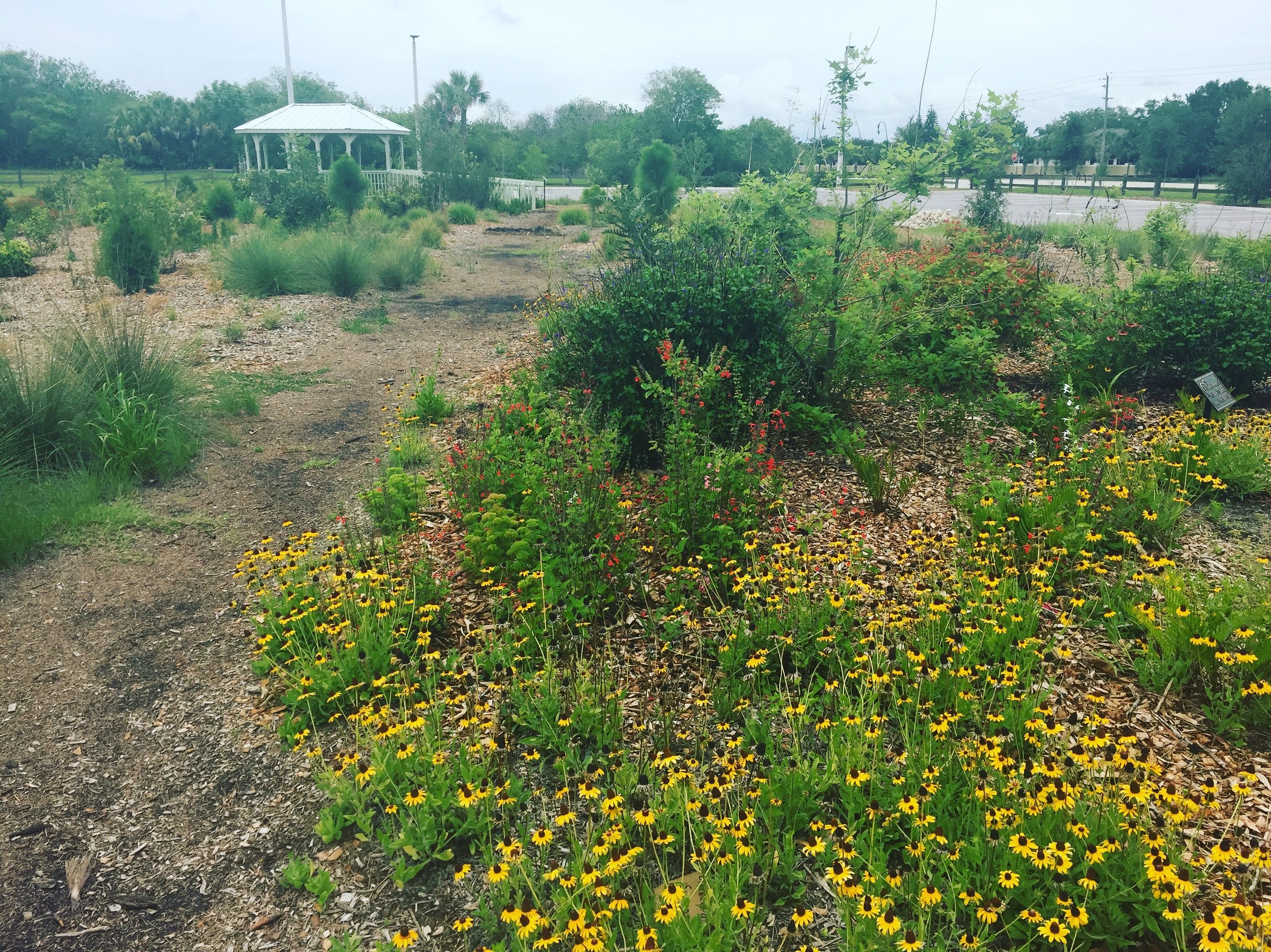
Rudbeckia hirta
Black-Eyed Susan is a classic. It’s a fast-growing, perennial, reseeding, native wildflower that prefers an area of the garden that gets part shade in our area of South Florida. It can adapt to more sun as long as it’s getting ample well-drained but moist to average soils. Its showy yellow flowers have brown centers and attract numerous pollinators.
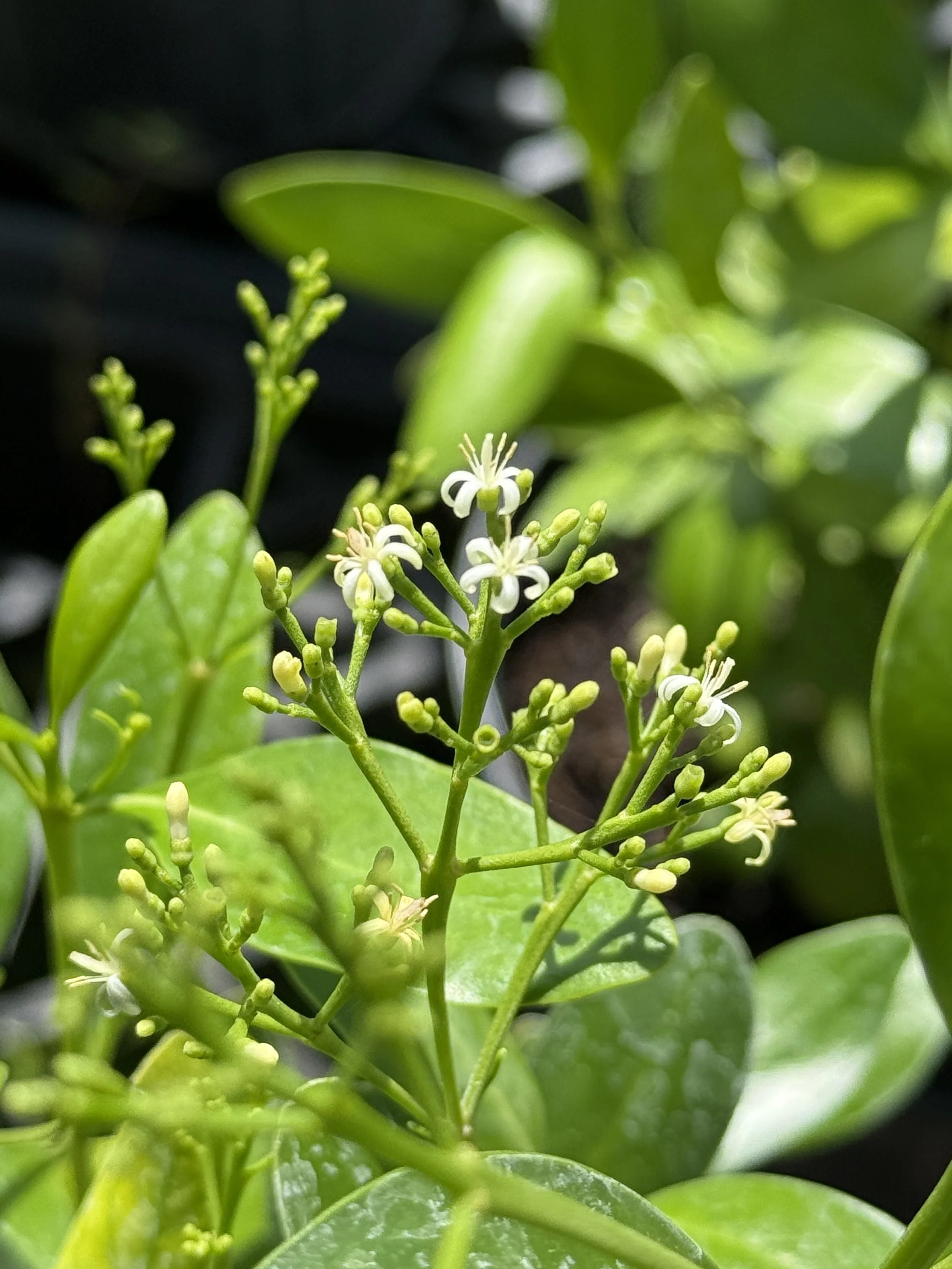
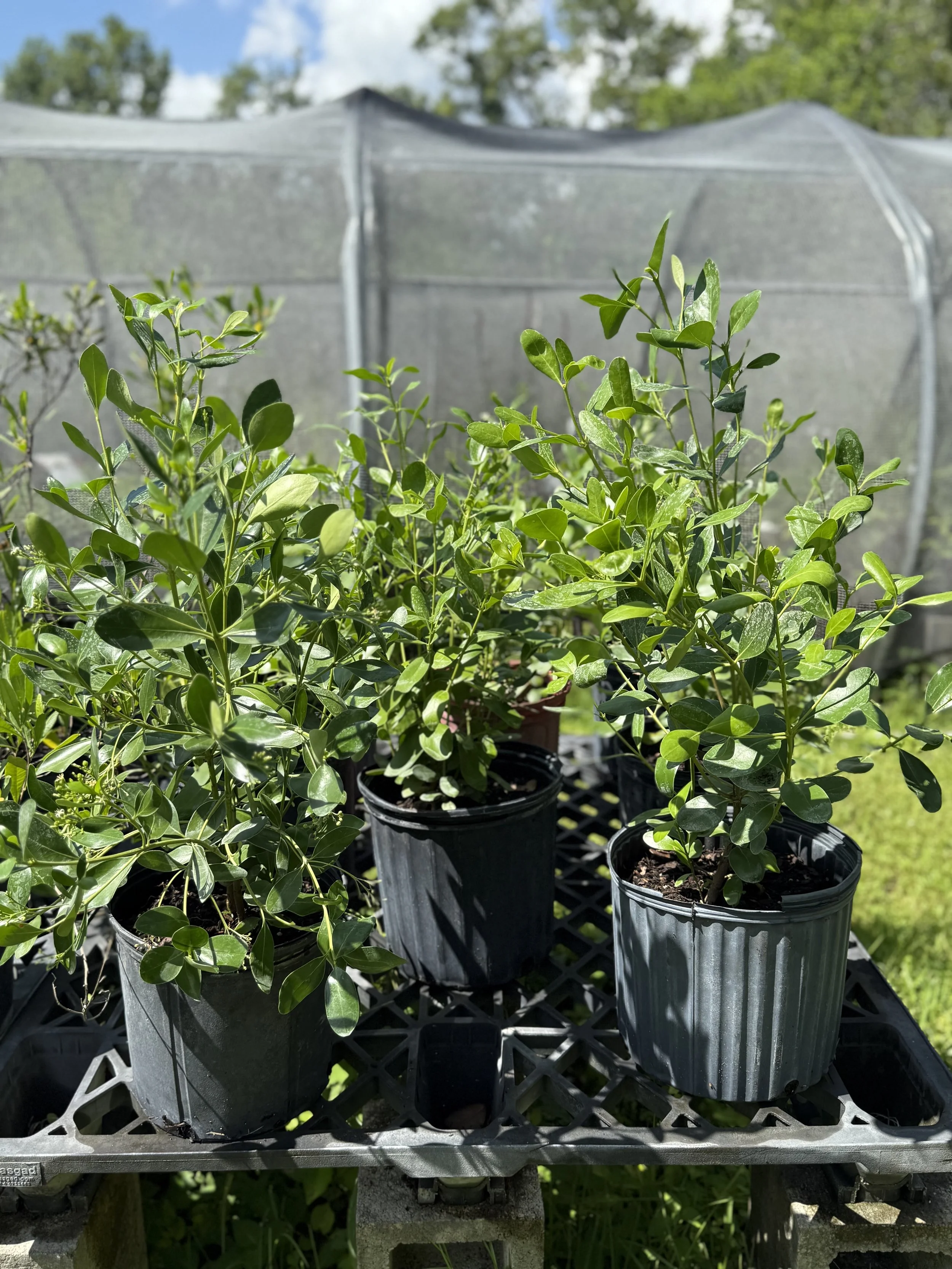
Erithalis fruticosa
Black Torch is a native, evergreen shrub that reaches 8 feet in height. It produces clusters of small, white flowers followed by berry drupes that support both pollinators and birds. Black Torch is perfect for coastal and wildlife gardens and can be grown as a specimen or informal buffer. It is a salt-tolerant, low-maintenance plant that thrives in well-drained alkaline soils with a moderate level of soil moisture.
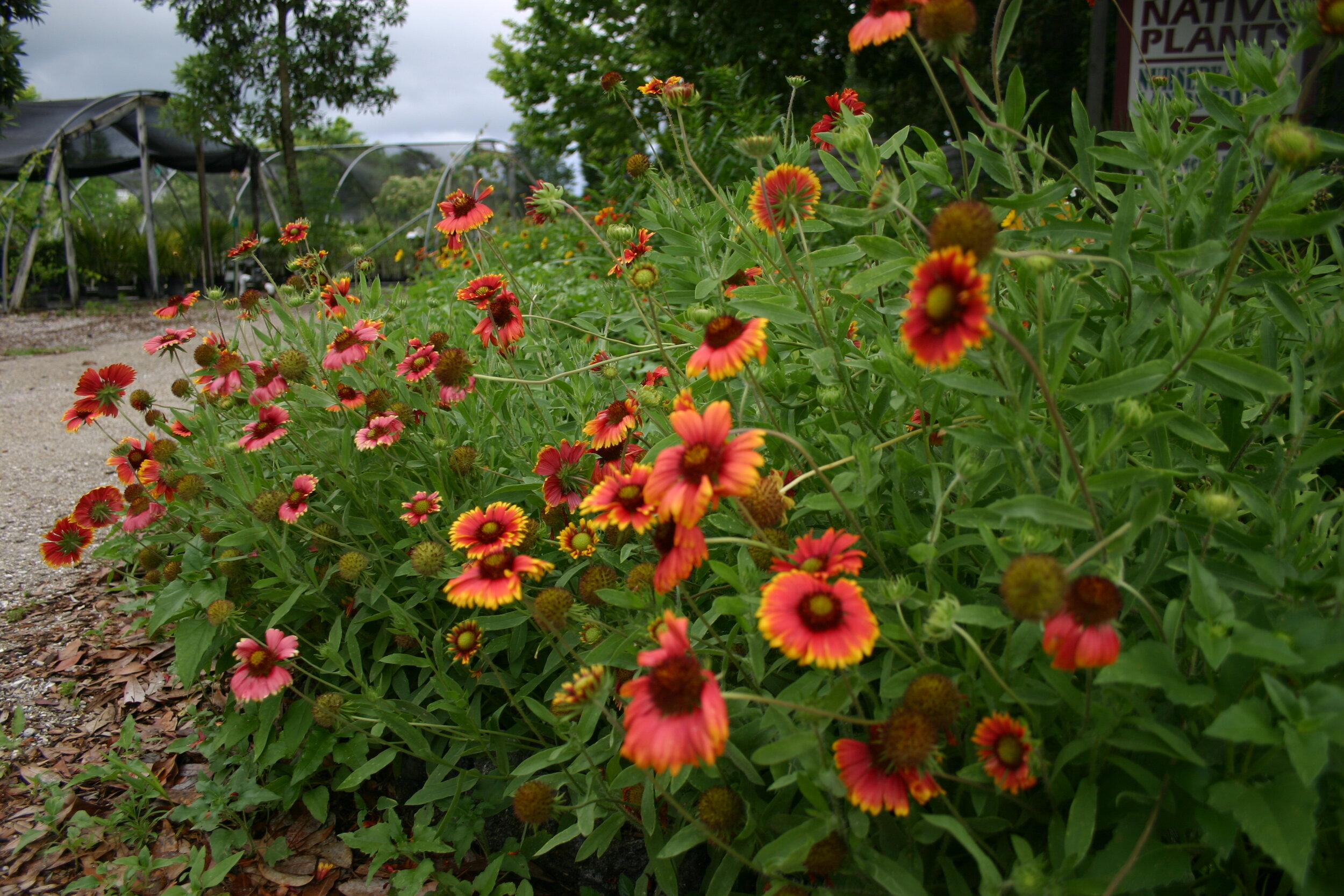

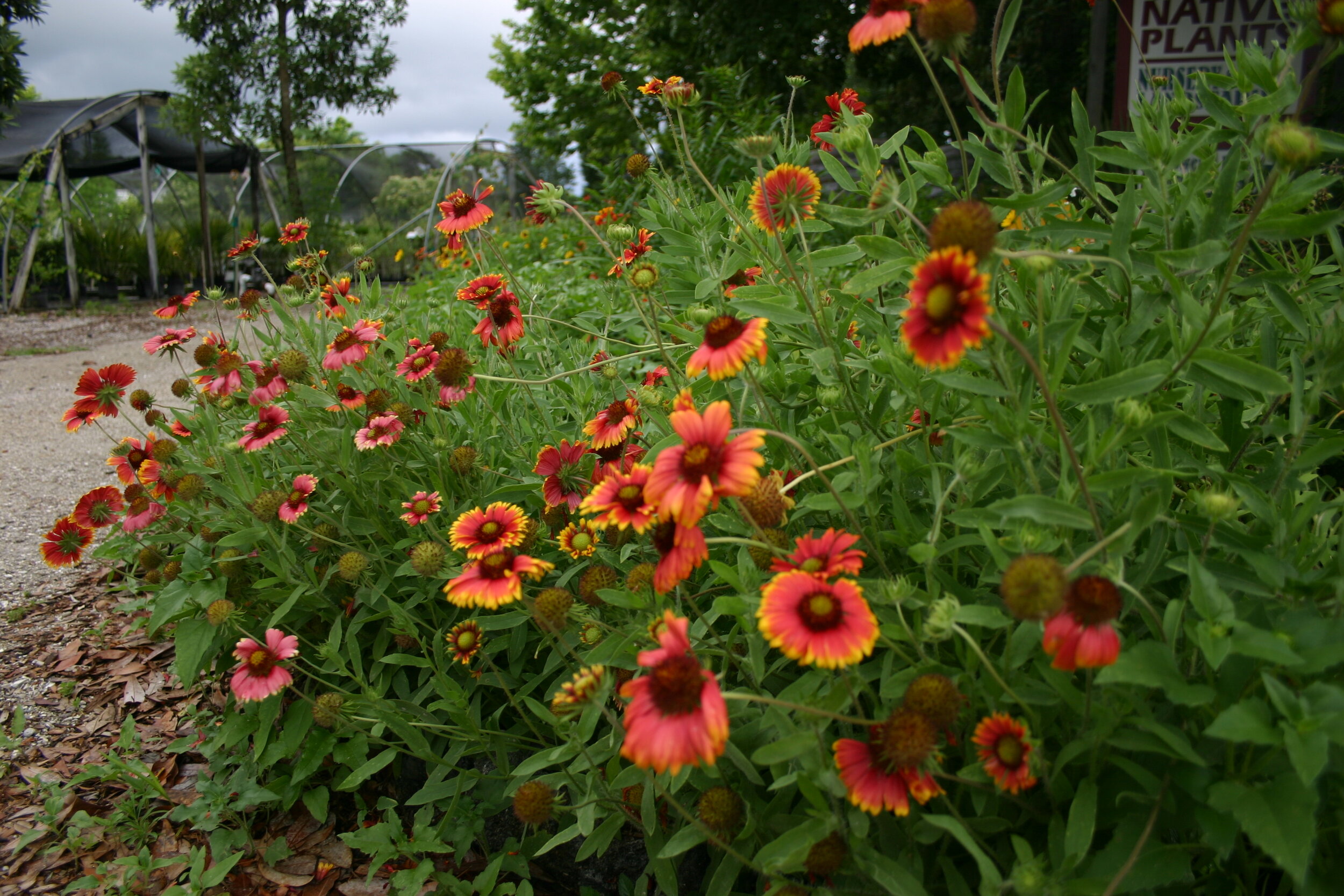
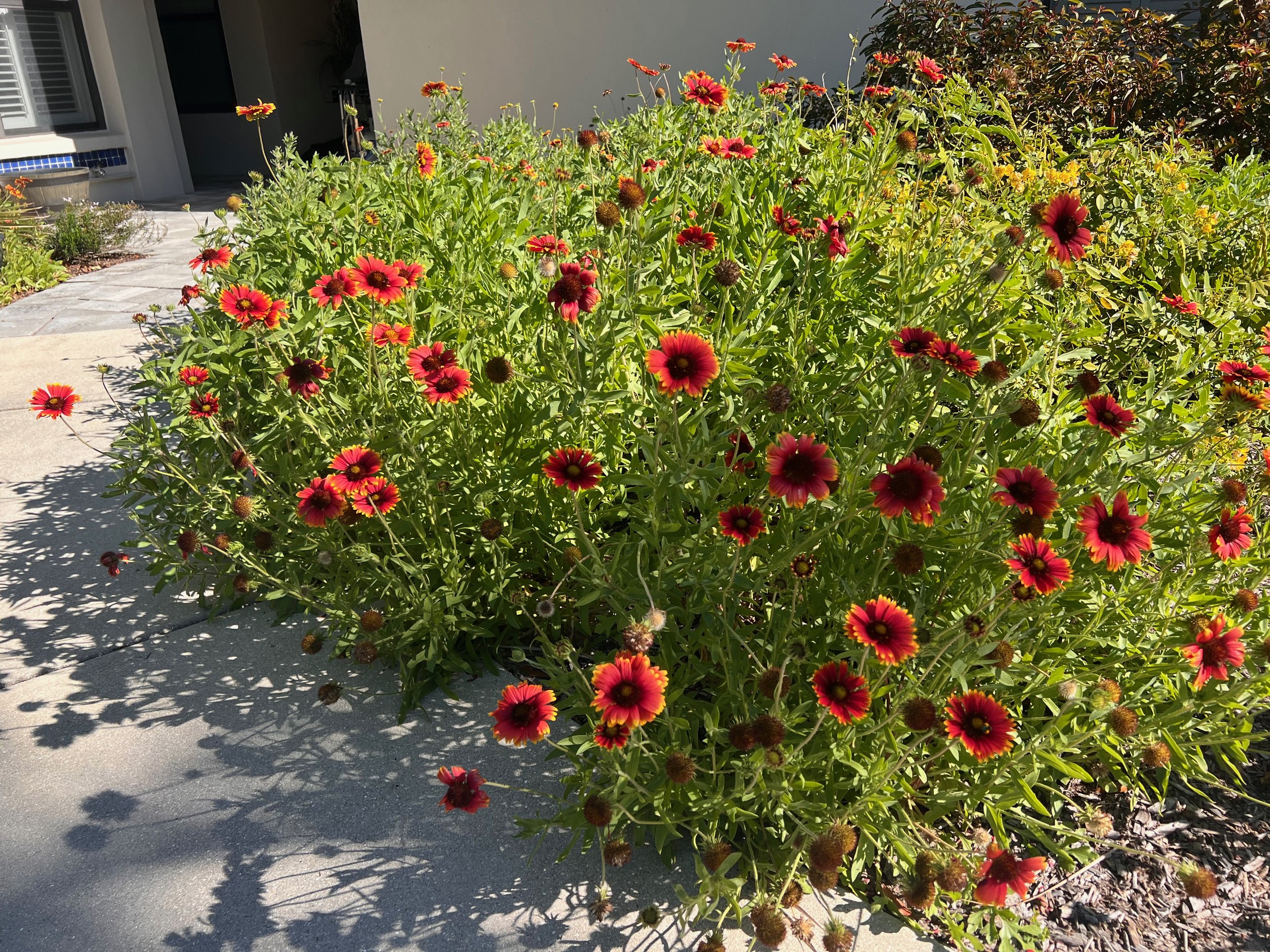
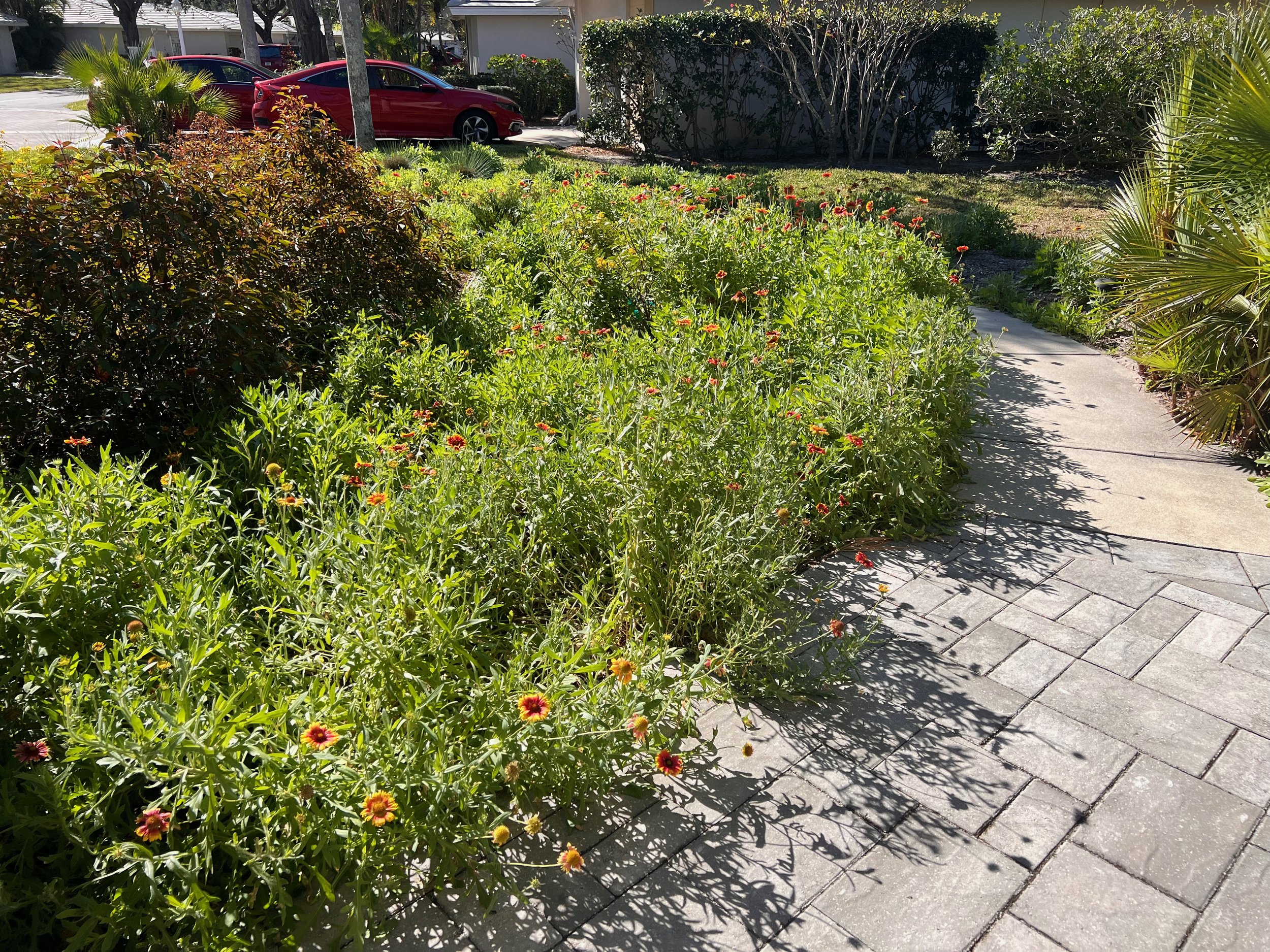
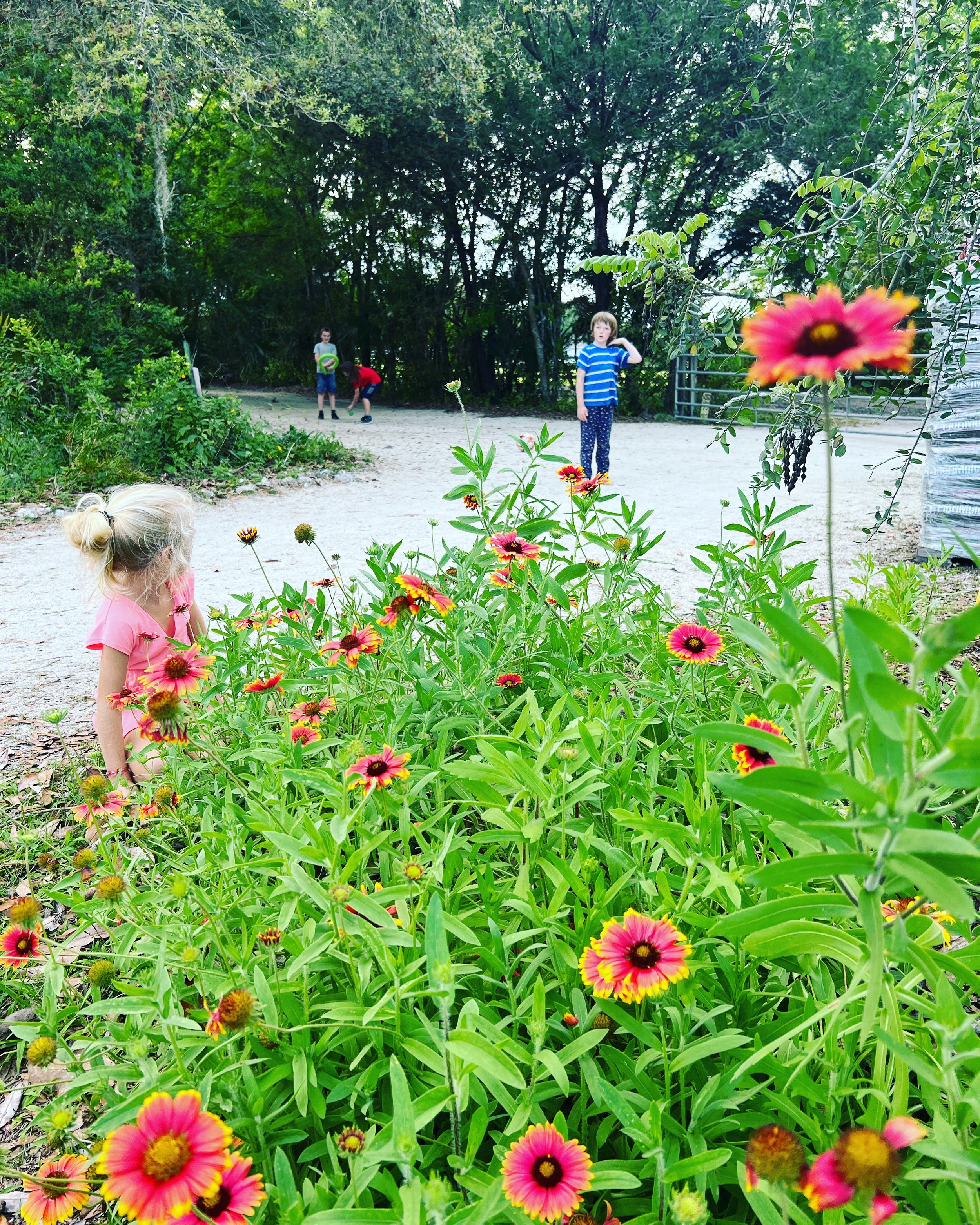
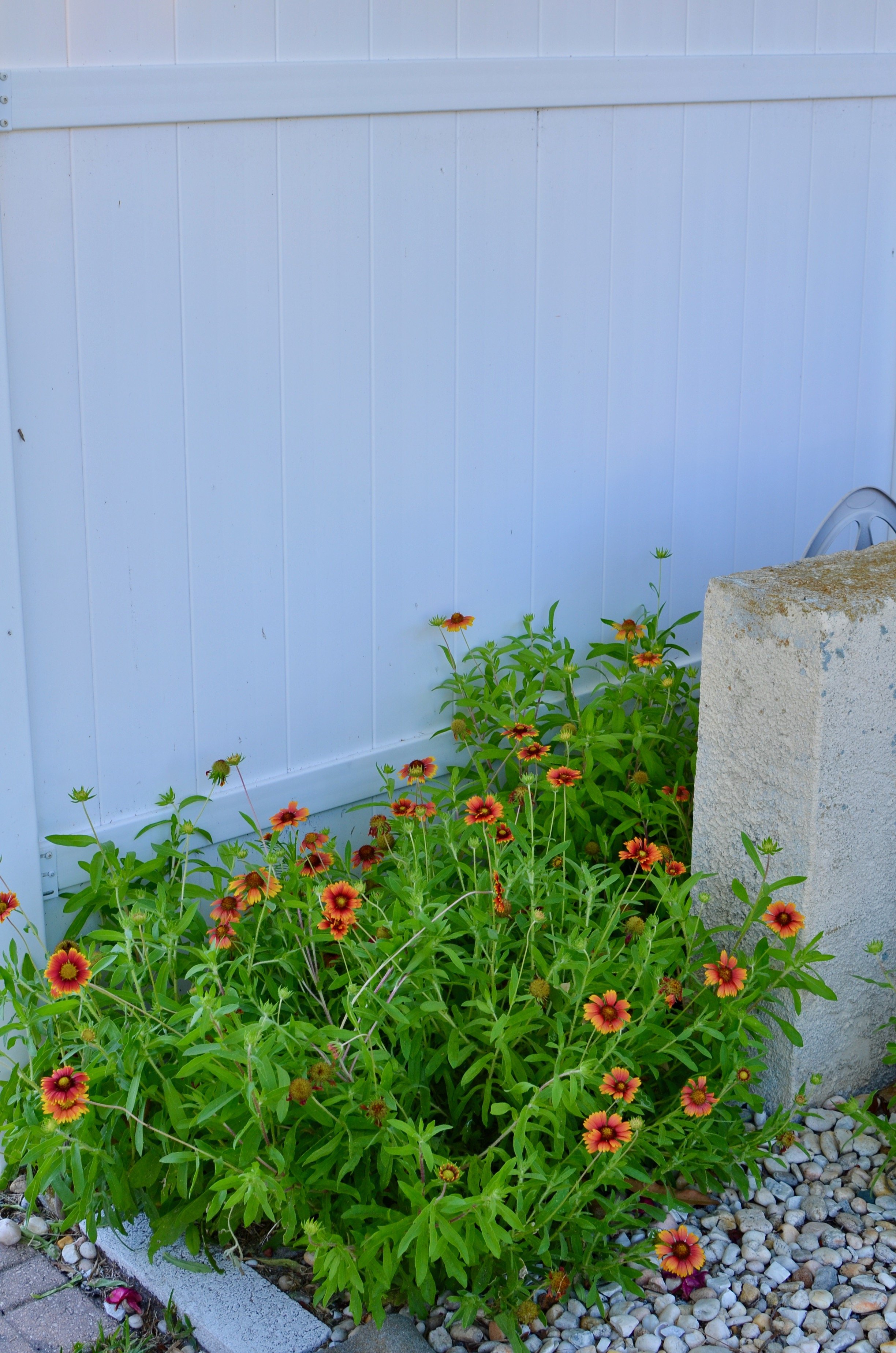
Gaillardia pulchella
Blanket Flower is a non-native, Florida-friendly wildflower that readily reseeds and spreads rapidly. Reaching 1’-2’ in height, they are a great source of nectar for bees and butterflies that bloom in the warm and hot months. They thrive in full sun and dry, sandy soil and are very drought and salt tolerant. Great for coastal applications and dry spots of a landscape as pops of red and yellow.

Liatris spicata
A statement wildflower for the fall season! Blazing Star is unapologetically bold with tall, electric purple spikes that strut through like they own the garden. It’s the life of the pollinator party with the amount of bees and butterflies it attracts. If your landscape needs a little drama and a whole lot of fabulous in the fall, this is the wildflower you've been waiting for.
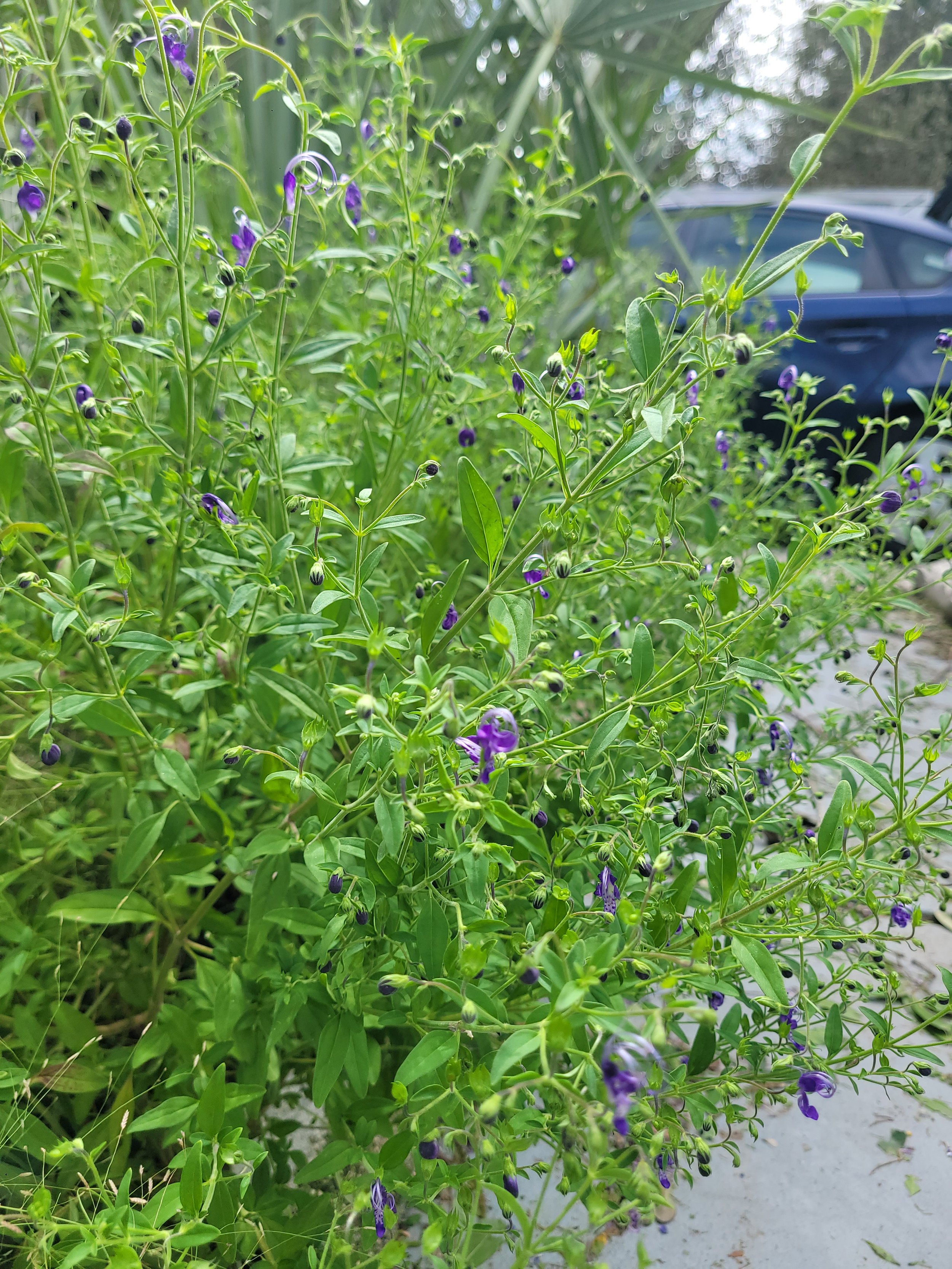
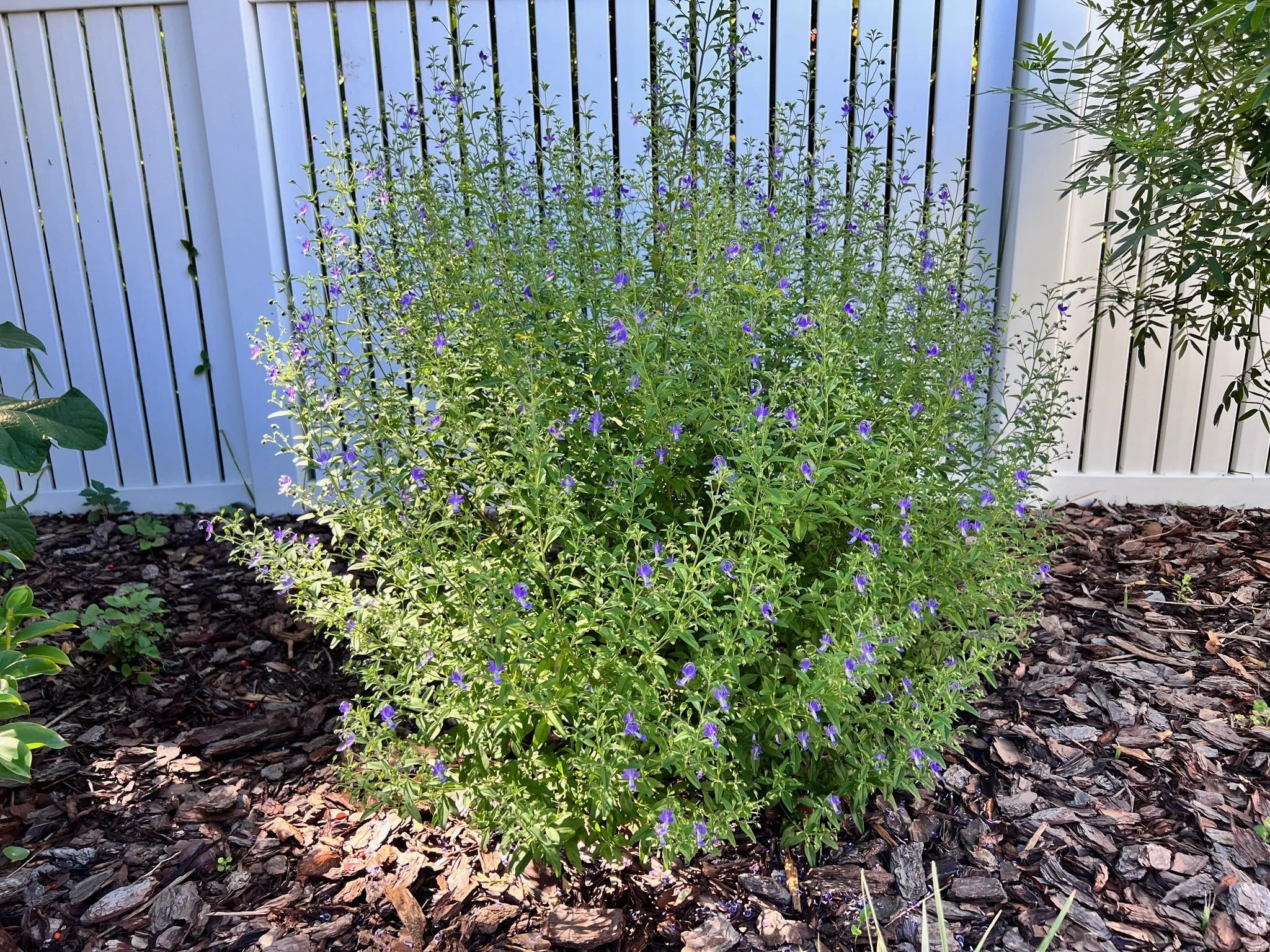

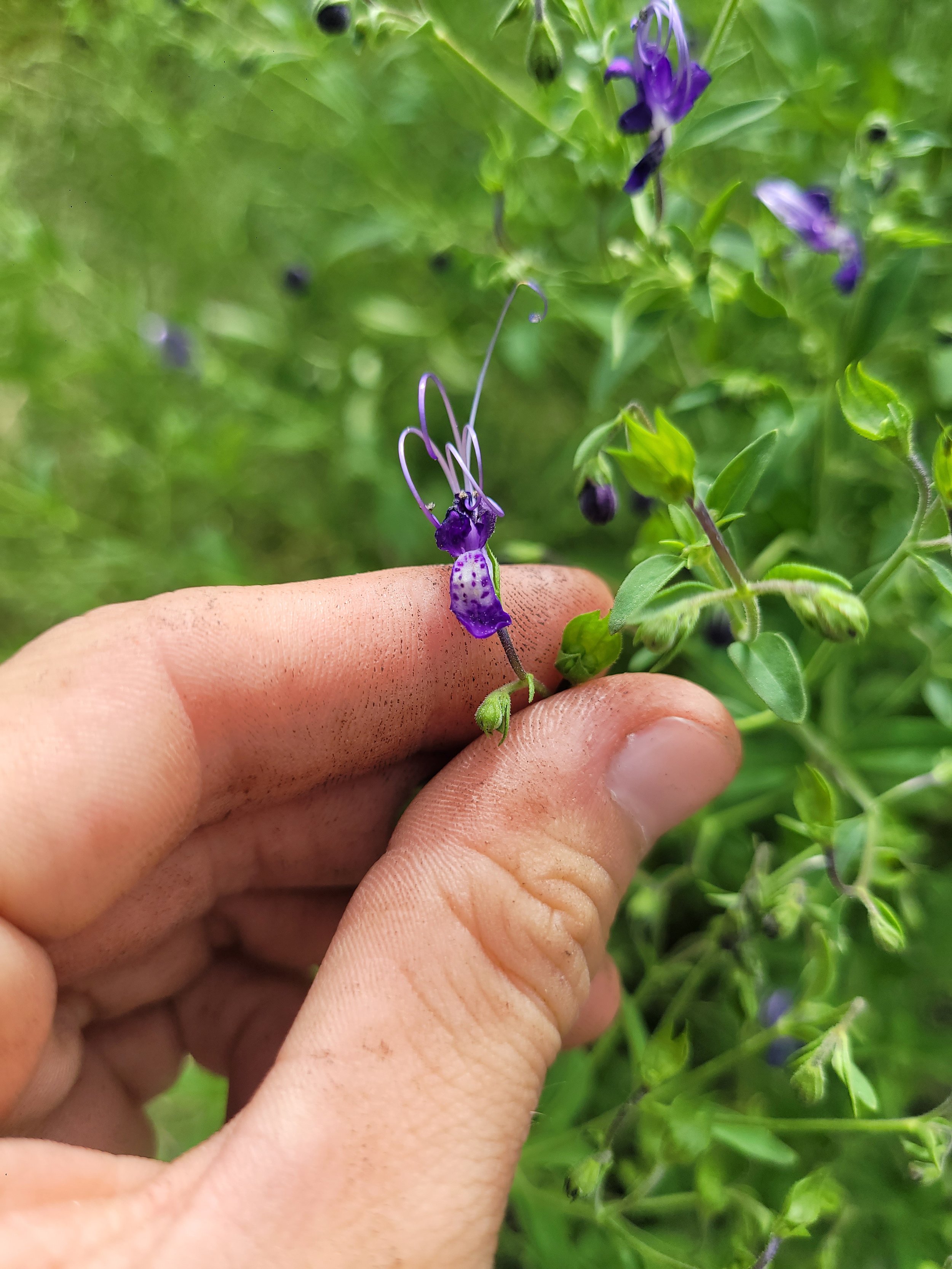

Trichostema dichotomum
Blue Curls is a fabulous reseeding wildflower that will fill in empty spaces. Their lush foliage grows dense till fall when it flowers with ornate blue flowers with a “forked” anther, almost like tiny orchid flowers. An plant that reseeds where you plant it, Blue Curls can create patches of blooms year after year.
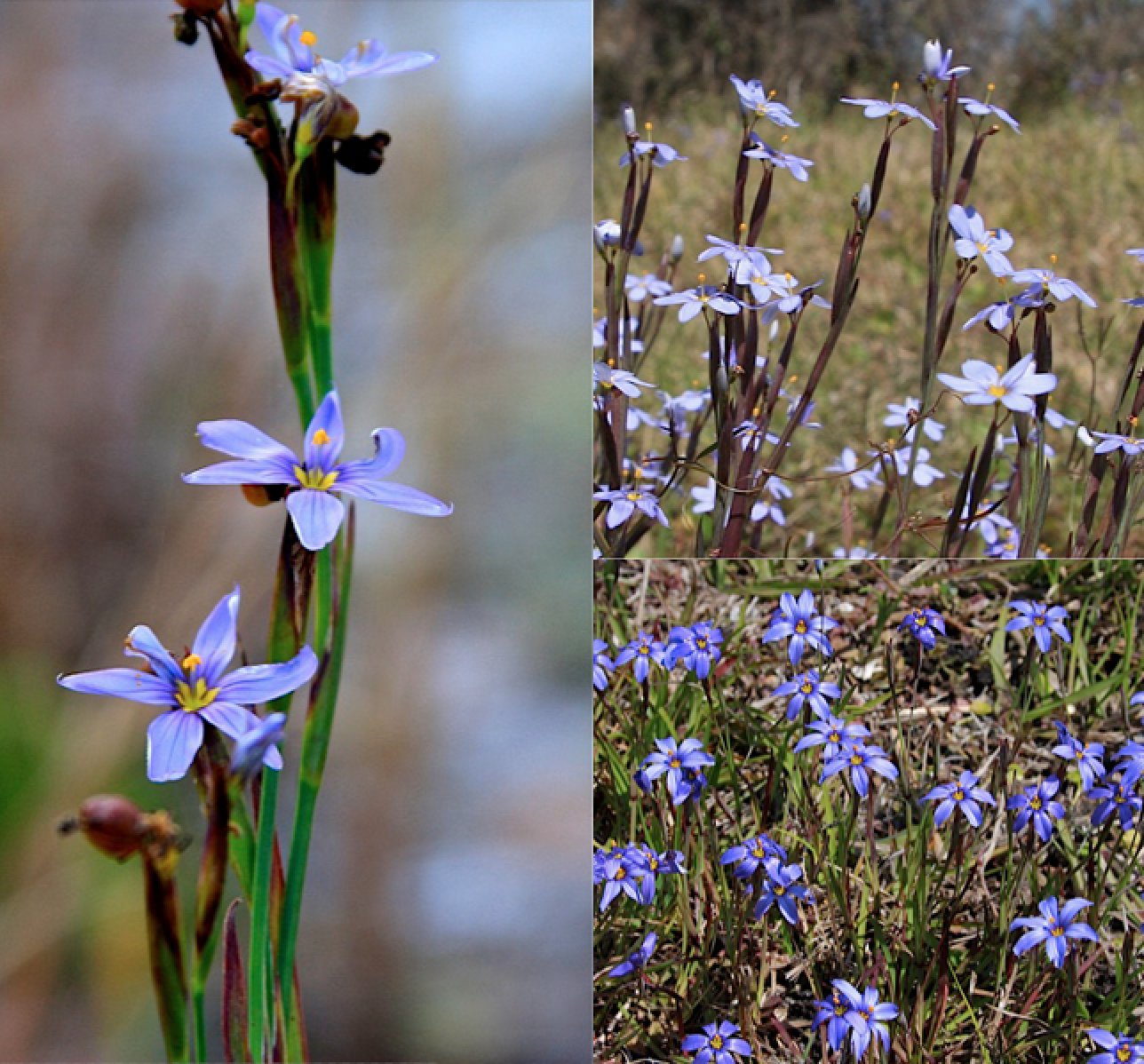
Sisyrinchium angustifolium
Blue Eyed Grass is a native re-seeding, perennial wildflower that likes moist soils. A member of the iris family, it has little blue/purple flowers that bloom profusely in the spring, attracting pollinators, and then it appears as a clump of grass the rest of the year. It likes sun to partial shade, average to wet soils and is best when planted in mass along moist or irrigated garden edges or pathways.
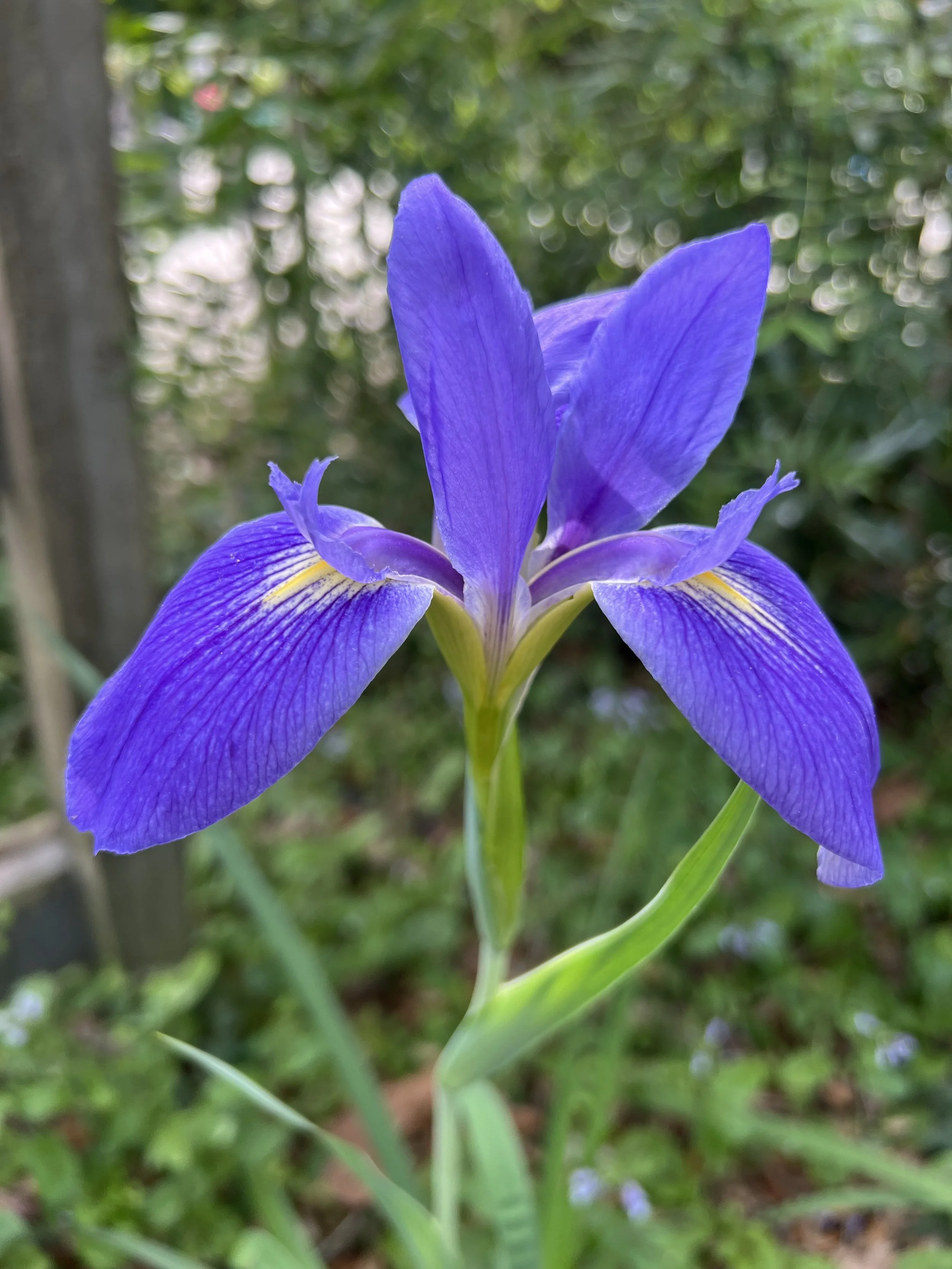
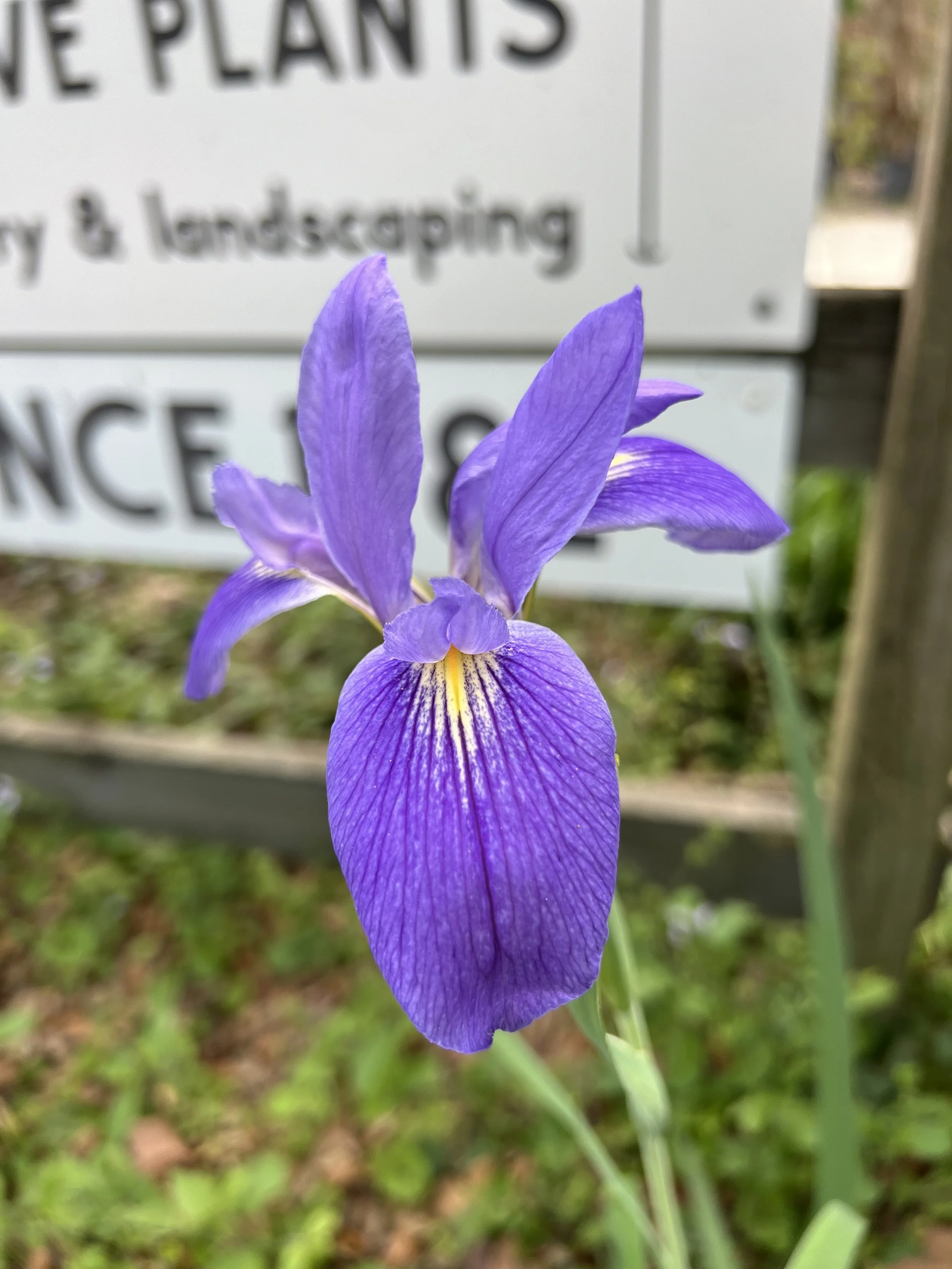
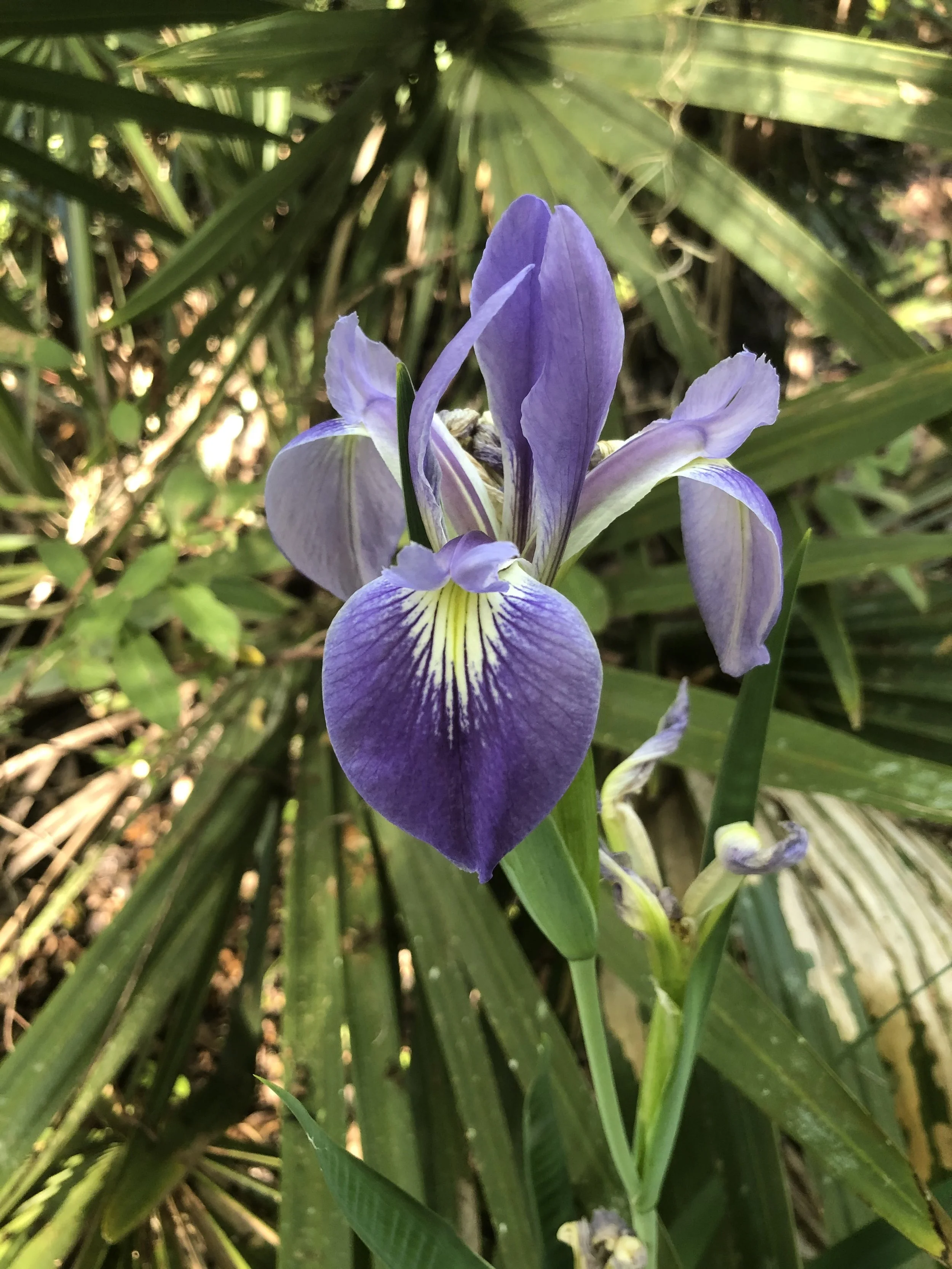
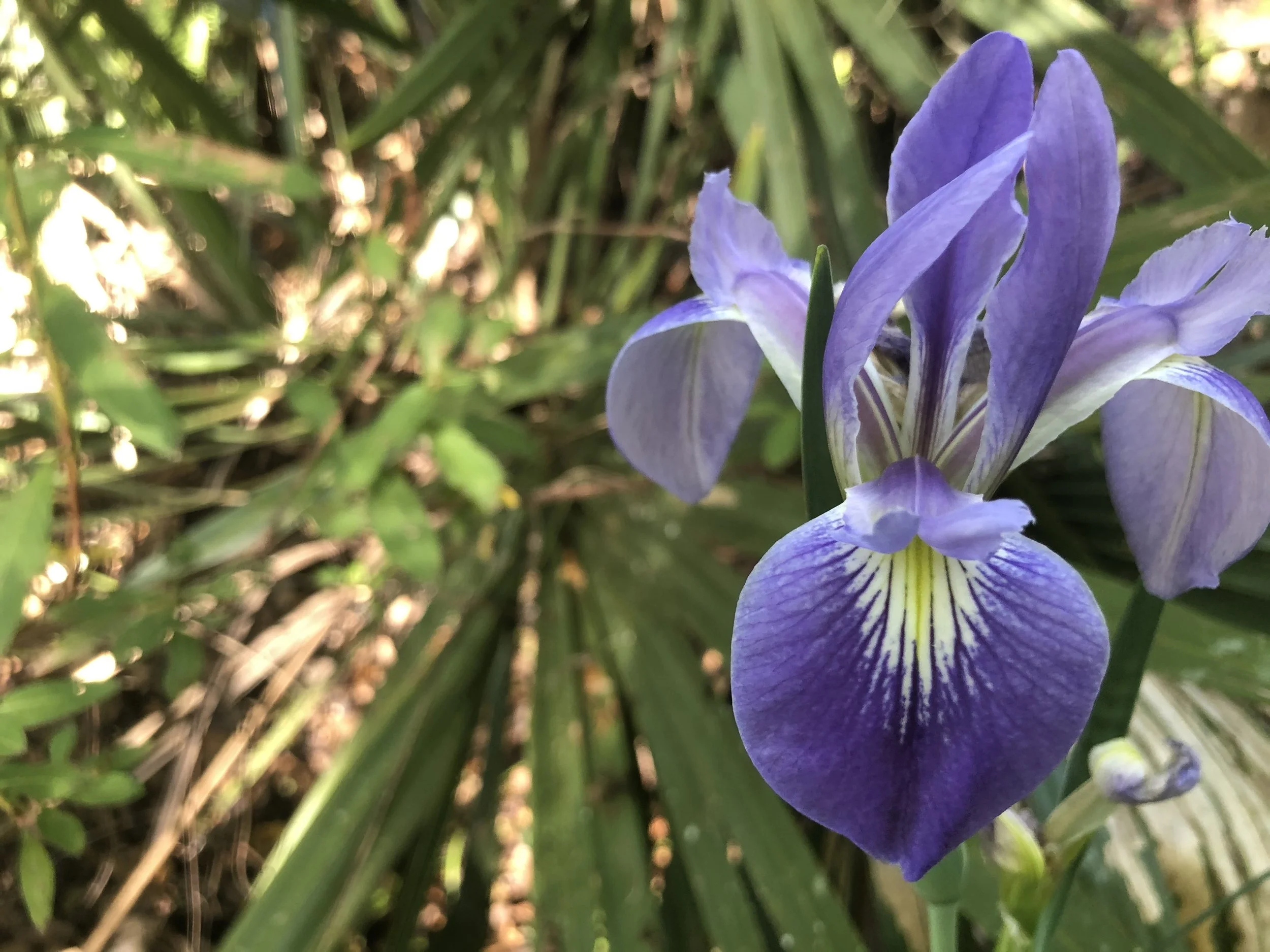
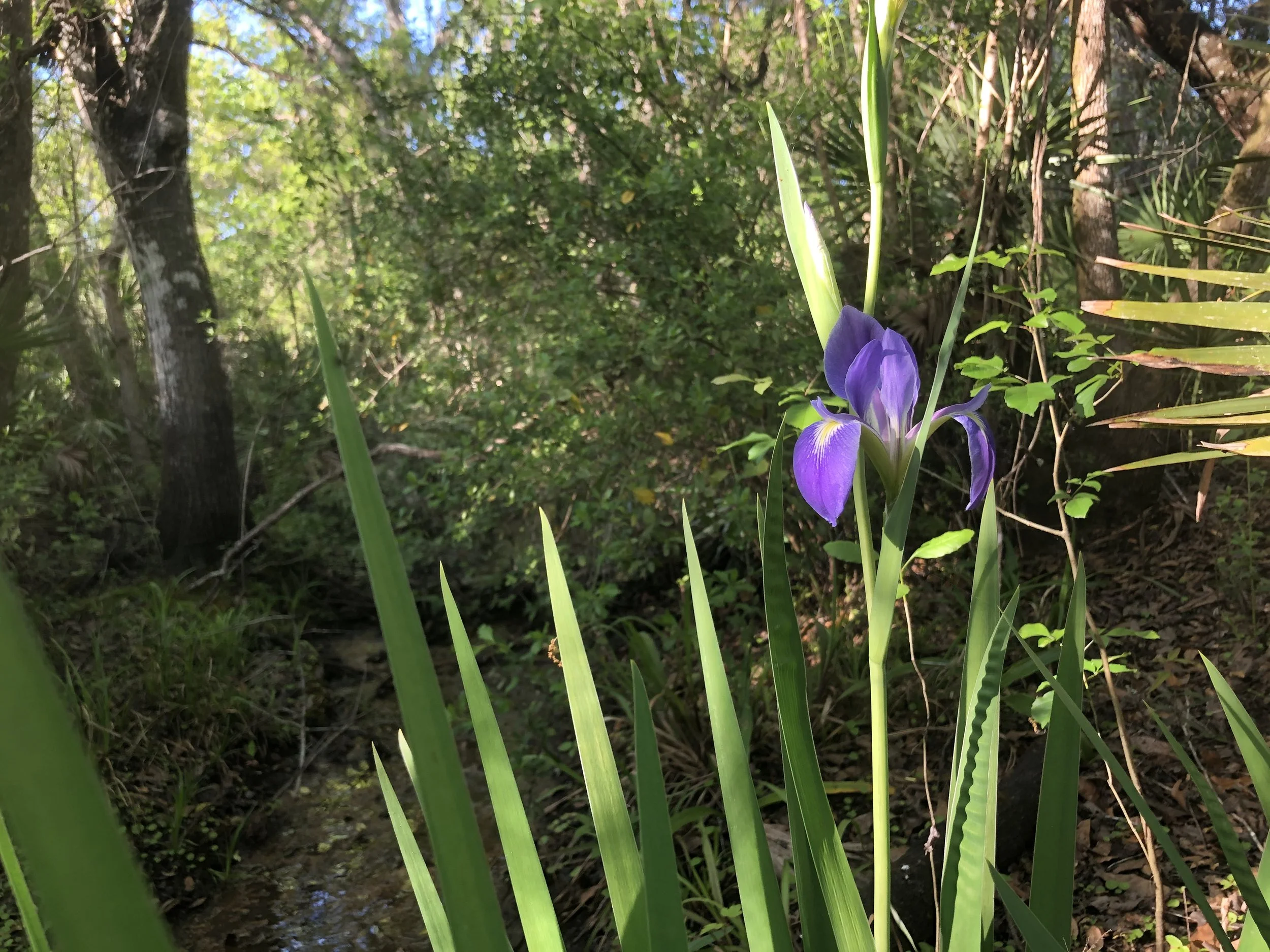
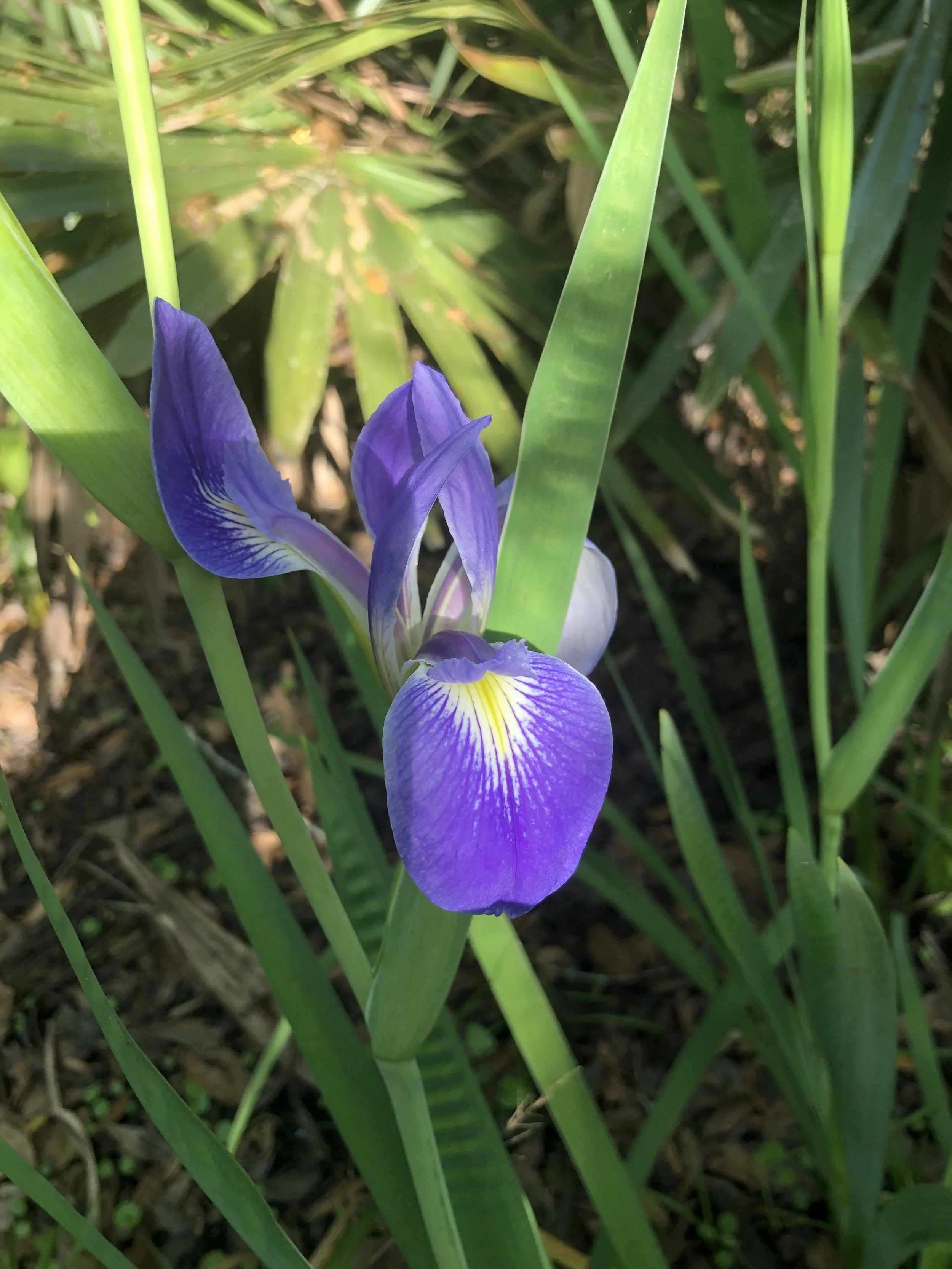
Iris virginica
Blue Flag Iris is a Florida-native perennial wetland plant that grows 2’-3’ tall and wide with bright green, sword-shaped leaves. It produces showy blue to violet flowers in late spring, each measuring 3”-5” across with drooping sepals marked with white and yellow near the throat. Thriving in wet soils and shallow water, it naturally occurs in marshes, swamps, and pond edges throughout Florida, making it excellent for rain gardens and bog plantings in zones 6-10.
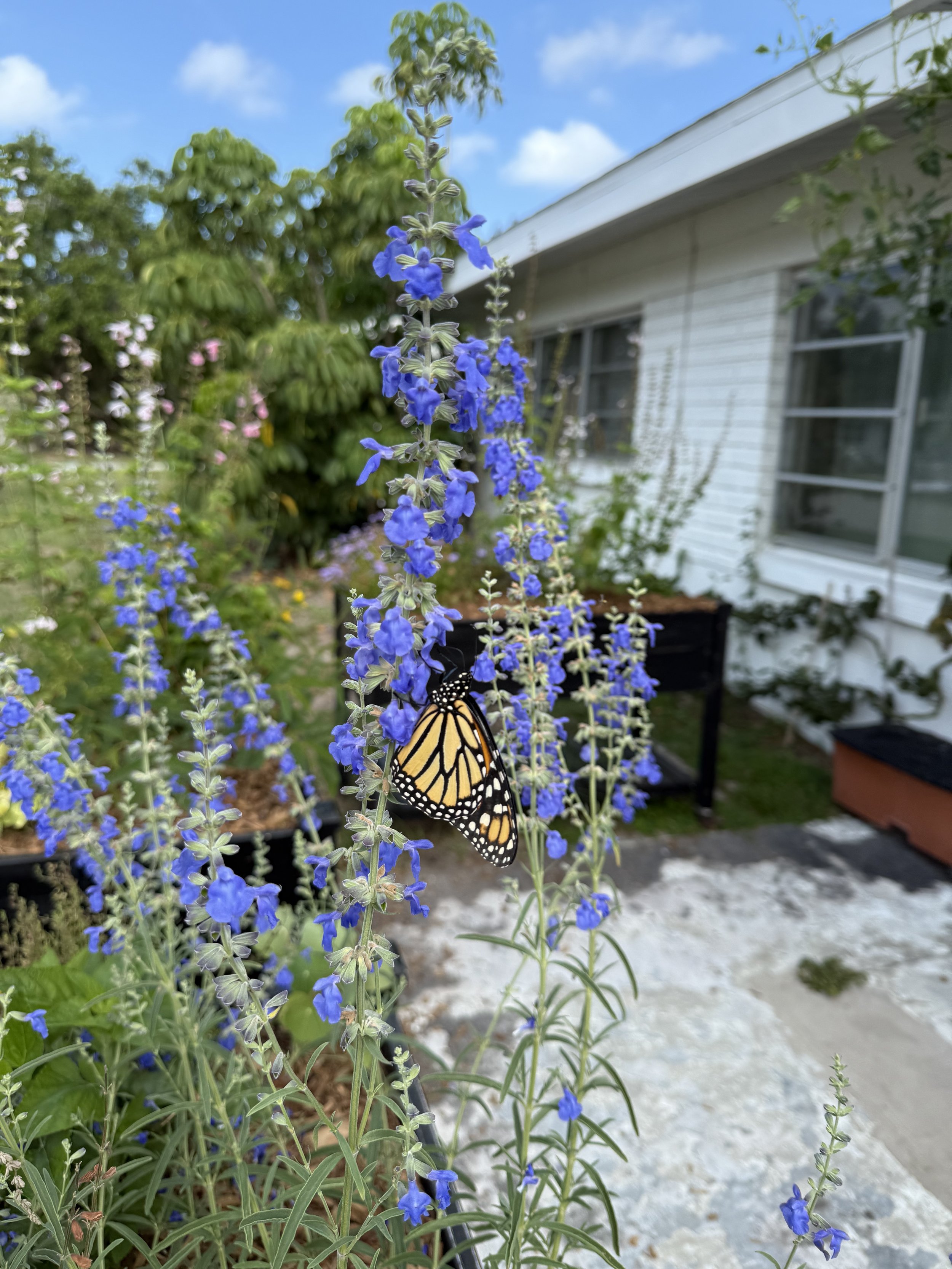
Salvia azurea
Blue Sage is an excellent native with vibrant blue flowers from summer until winter. Often found in pine sandhills and flatwoods, they prefer full sun and dry, well-draining soils. They work well as filling in a dry area or mixed in with other wildflowers in a butterfly patch.
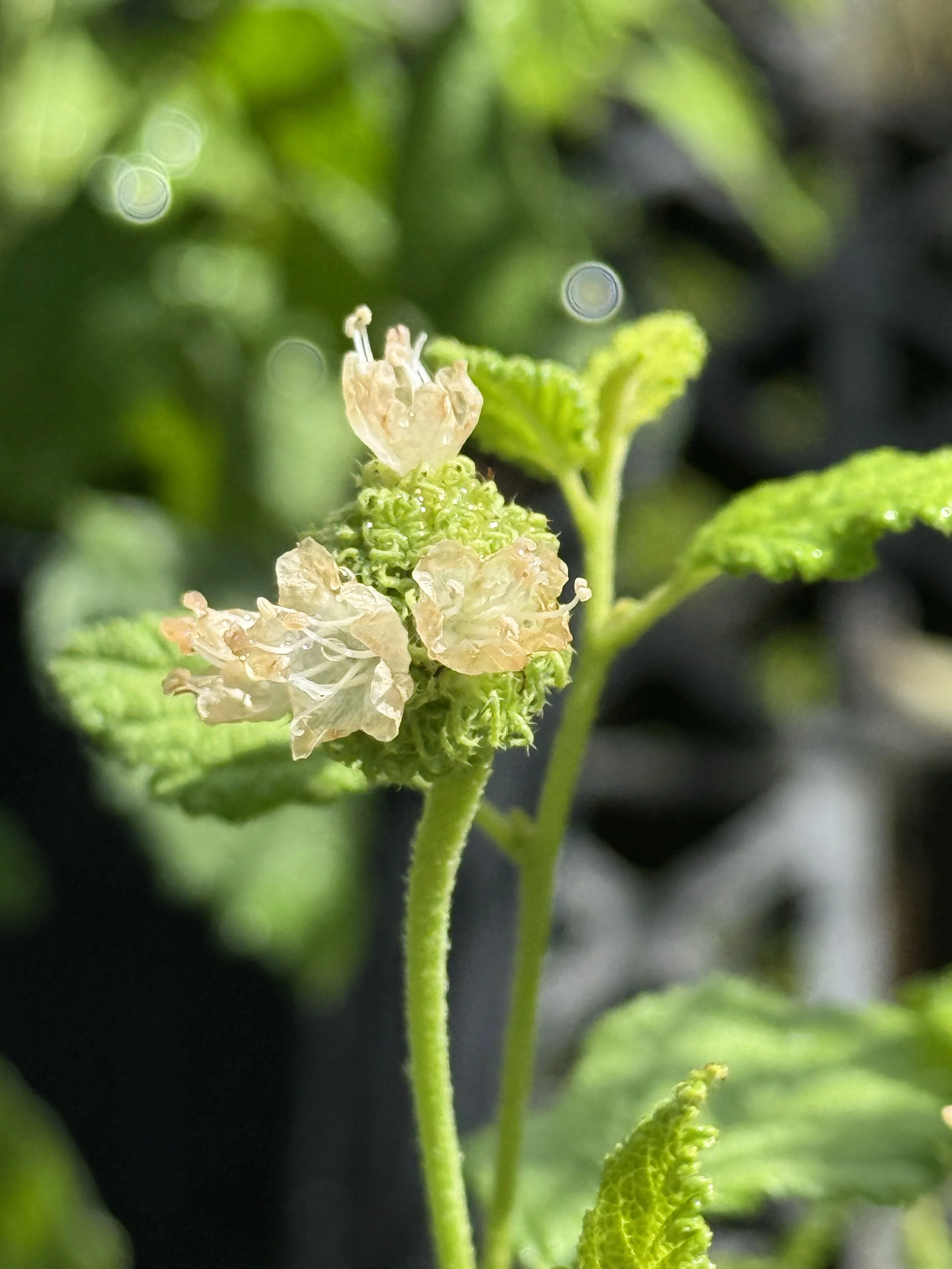
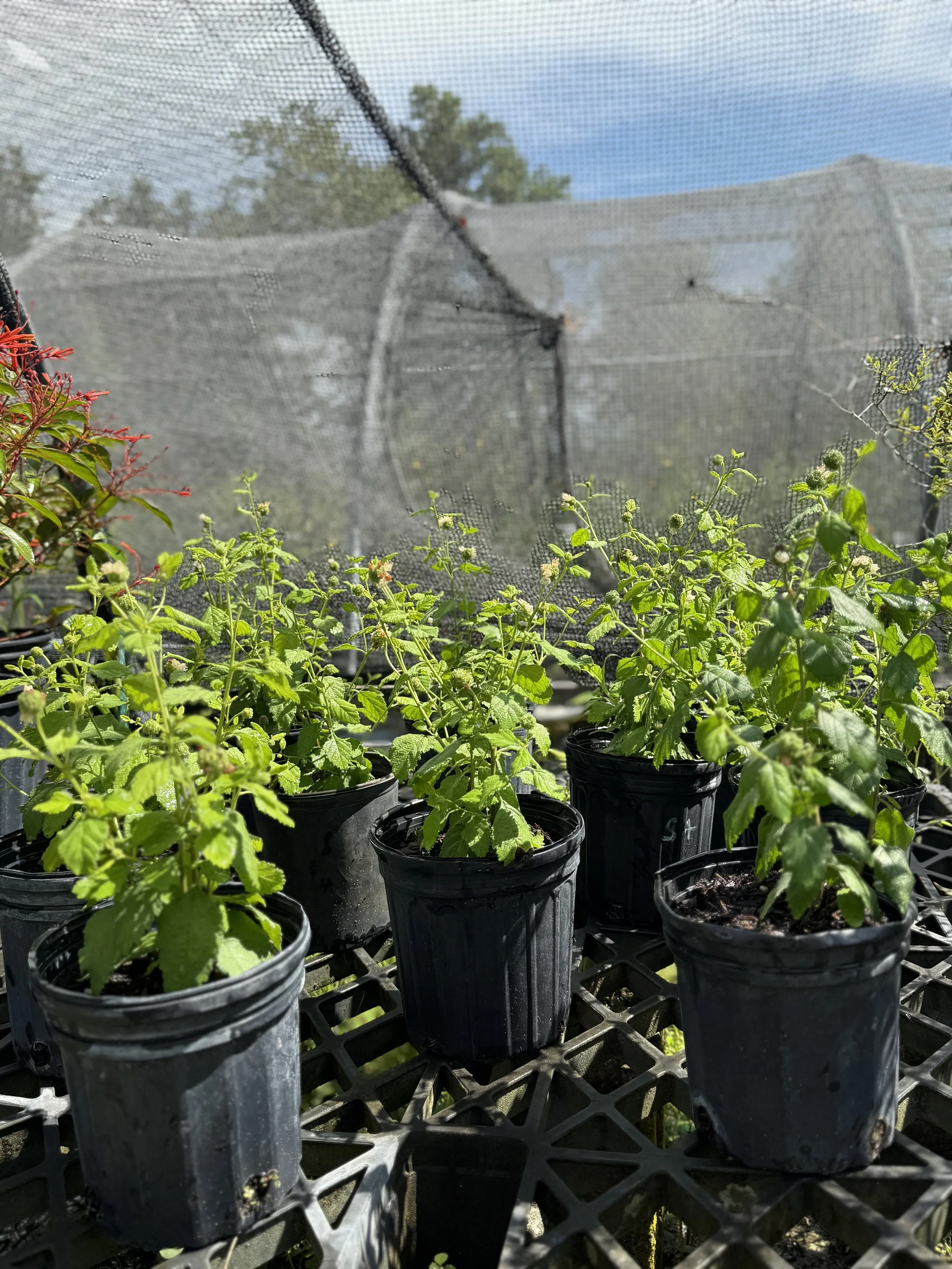
Varronia globosa
Bloodberry aka Butterfly Sage is a native, perennial, evergreen shrub. With clusters of small white blooms followed by bright red berries, it attracts many butterflies, bees and birds. As a smaller shrub, usually not taller than 6 feet, it blends beautifully into a pollinator garden. Bloodberry is salt-tolerant but not for direct salt spray and drought-tolerant.
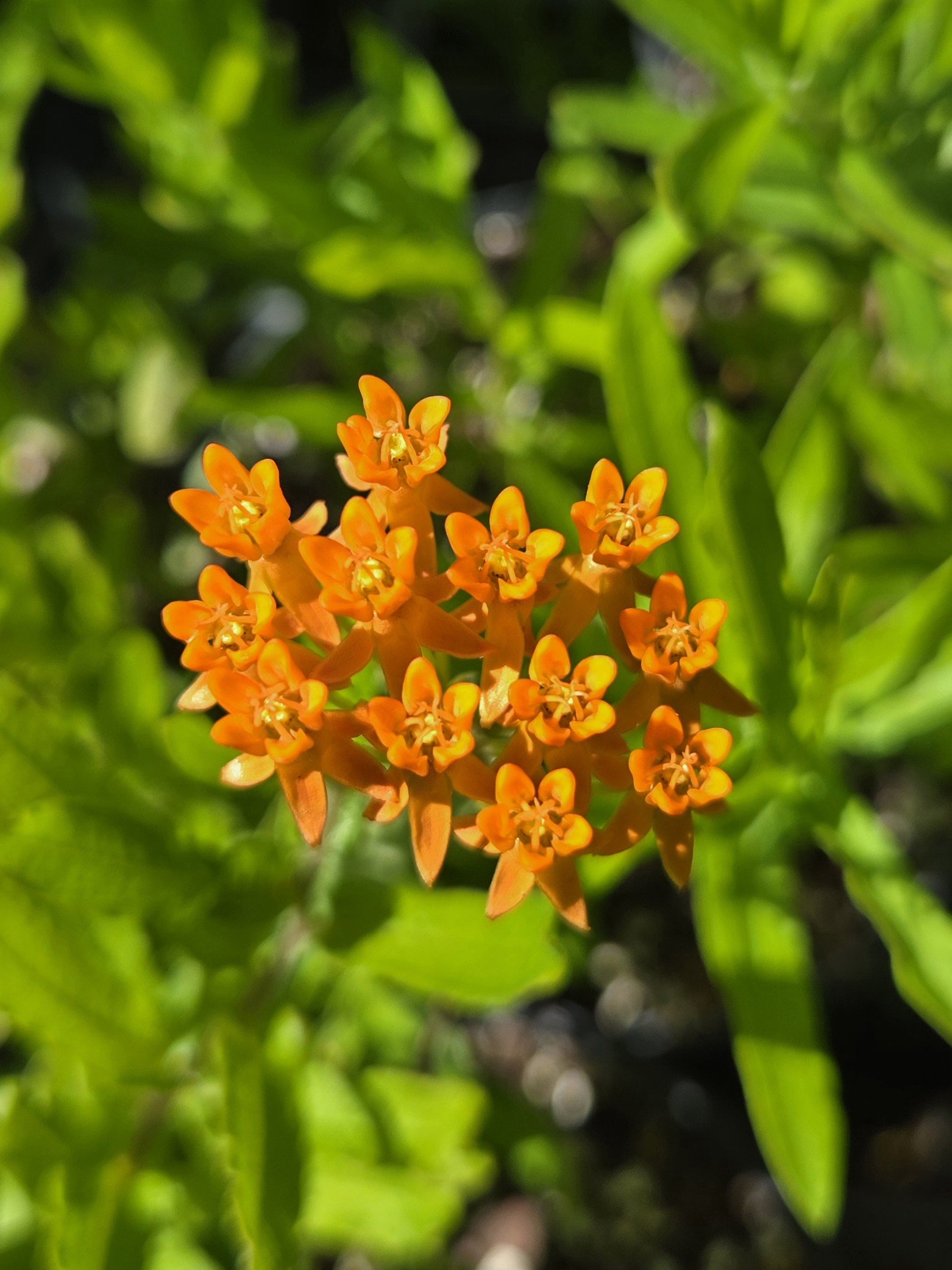
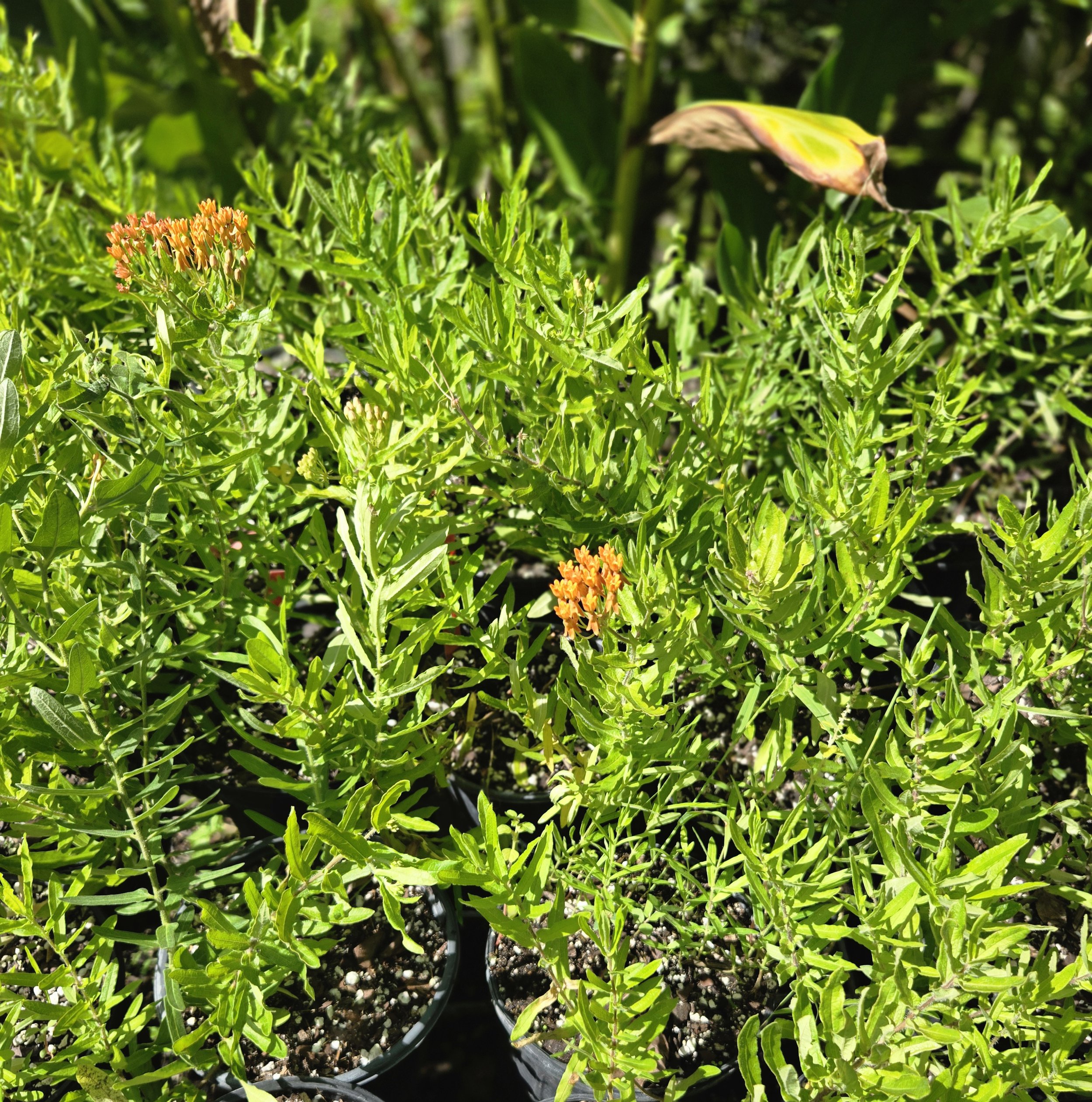
Asclepias tuberosa
This Florida native milkweed is lower growing at 1-3' and has bright red orange blooms summer-fall. Butterfly milkweed is a great choice for Monarch lovers with dry, sunny yards. Found naturally in hot sunny and dry sandhill environments it does well in landscapes with full sun and no irrigation. This milkweed is not only a host to Monarch and Queen butterflies but is also a pollinator magnet!
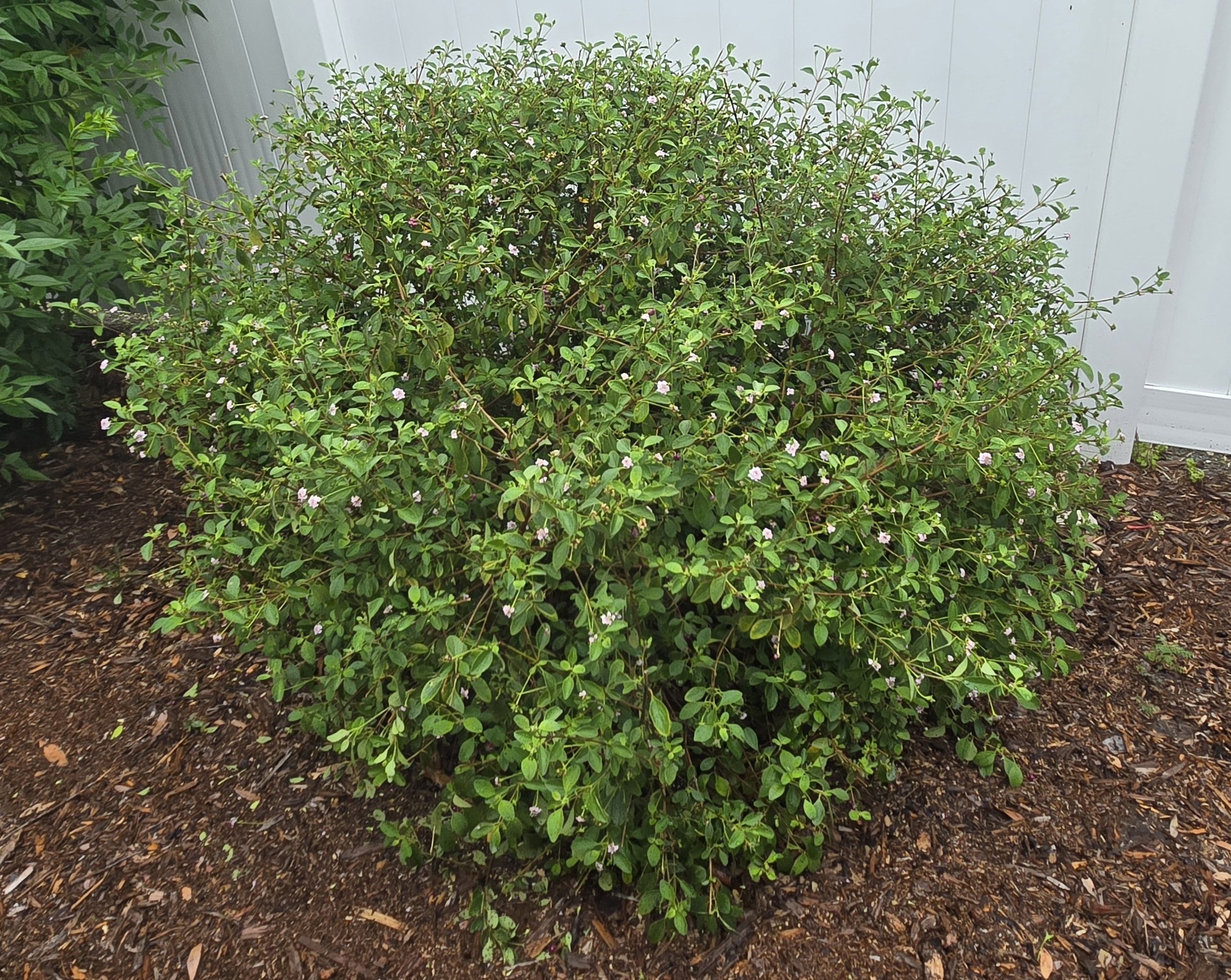
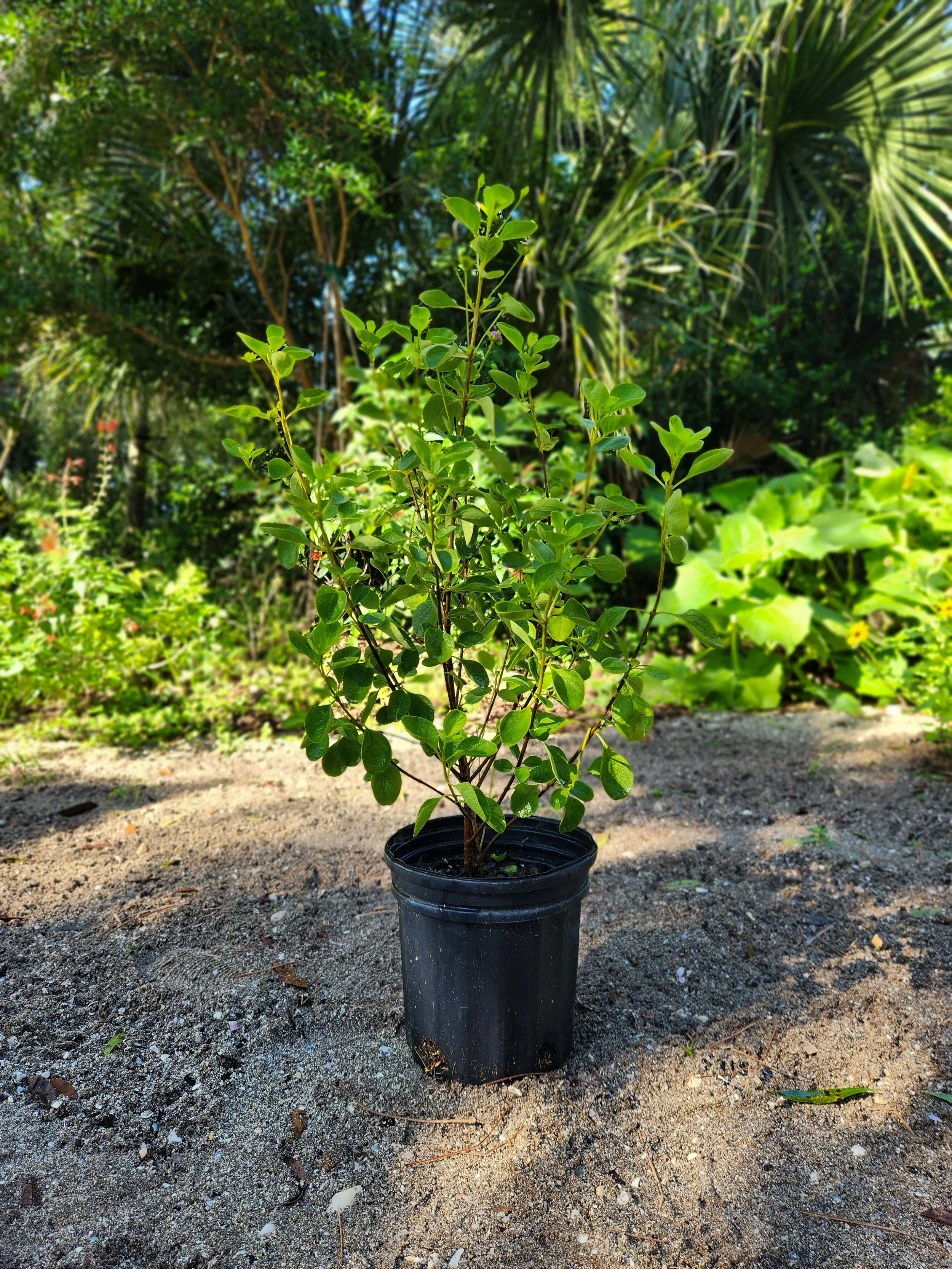
Lantana involucrata
Buttonsage or Wild Lantana is a gorgeous, evergreen, perennial, native shrub that has a place in any home landscape! Buttonsage is a mid sized shrub, growing to 5', with a naturally round growth habit with dense clusters of pastel flowers and bright purple berries that attract pollinators and birds. It prefers sunny, dry conditions and is deer resistant and salt and drought tolerant.
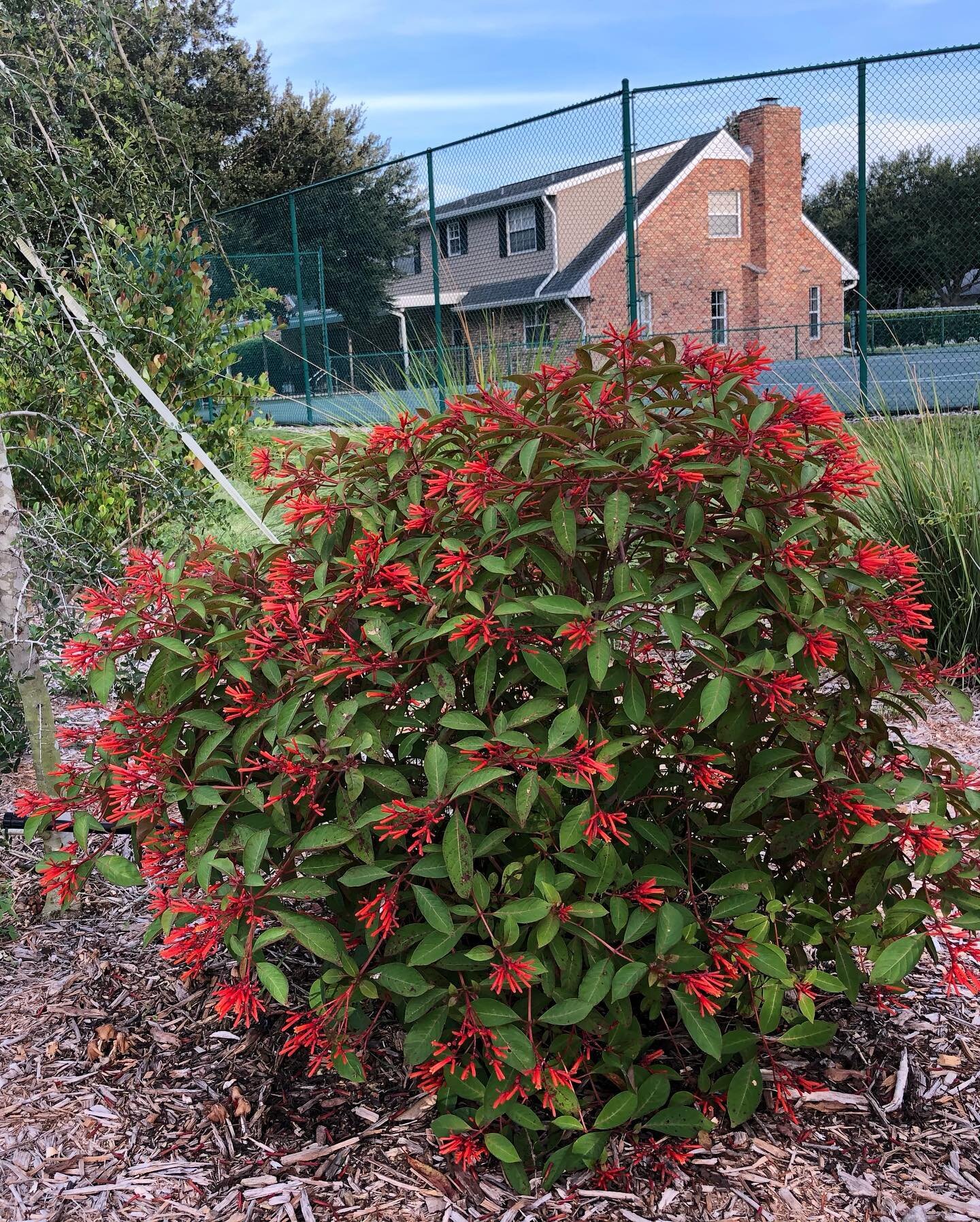
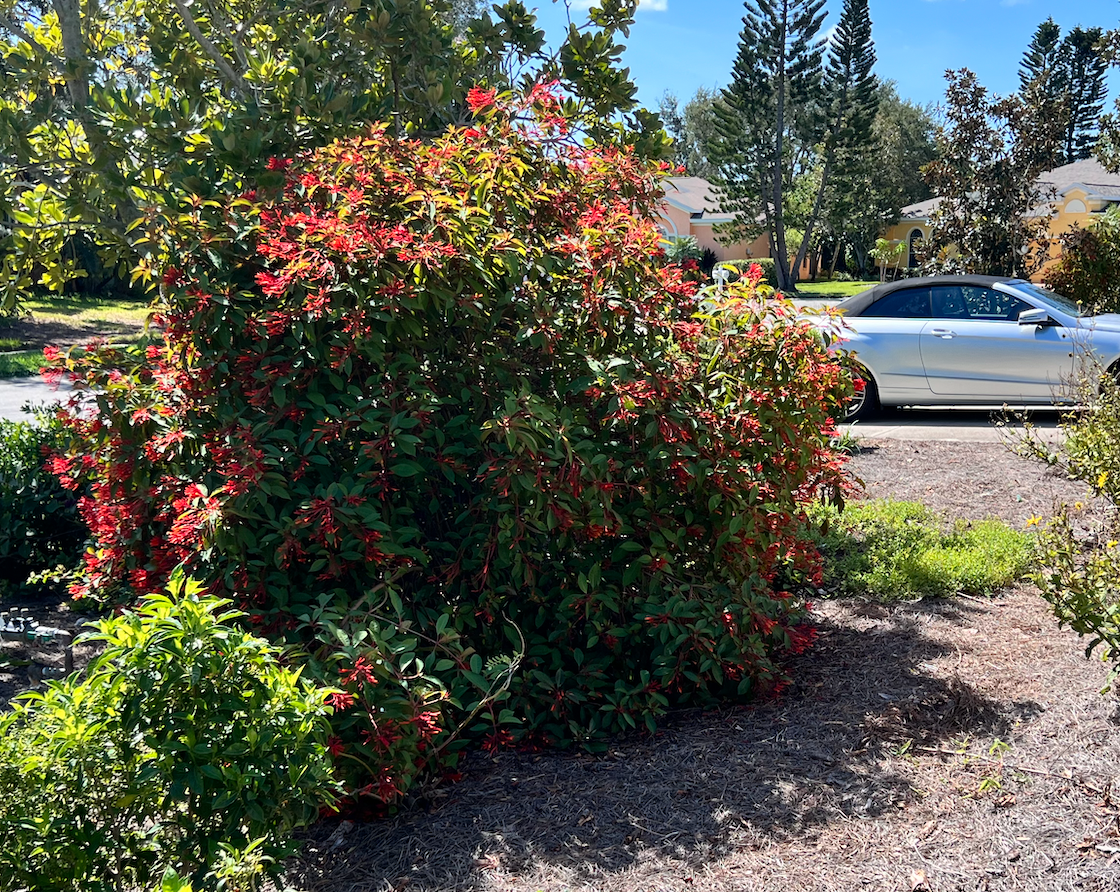
Hamelia patens var. ‘calusa’
Calusa is shorter growing native cultivar of the large native firebush. It is evergreen, flowering, long-lived shrub that can be kept easily at its mature height of approx. 6’. It needs average to moist (well-drained soils) but can adapt to dry in little bit of shade. The year-round red-orange flowers attract hummingbirds and butterflies and provide food for birds. The foliage on Calusa tends to be a deeper red than the larger traditional native firebush and can turn burgundy in cooler weather. The fruit is edible and has a long history of medicinal and industrial use and can be made into syrup or wine.


Averrhoa carambola
Carambola or Star Fruit is a non-native, Florida-friendly, small evergreen fruit tree that grows to be 22’-33’ tall and 20’-25’ wide. They grow best in full sun to partial shade and moist, well-draining soil. They have soft-green leaves and yellow, star-shaped fruit that have a delightful sweet-tart taste.
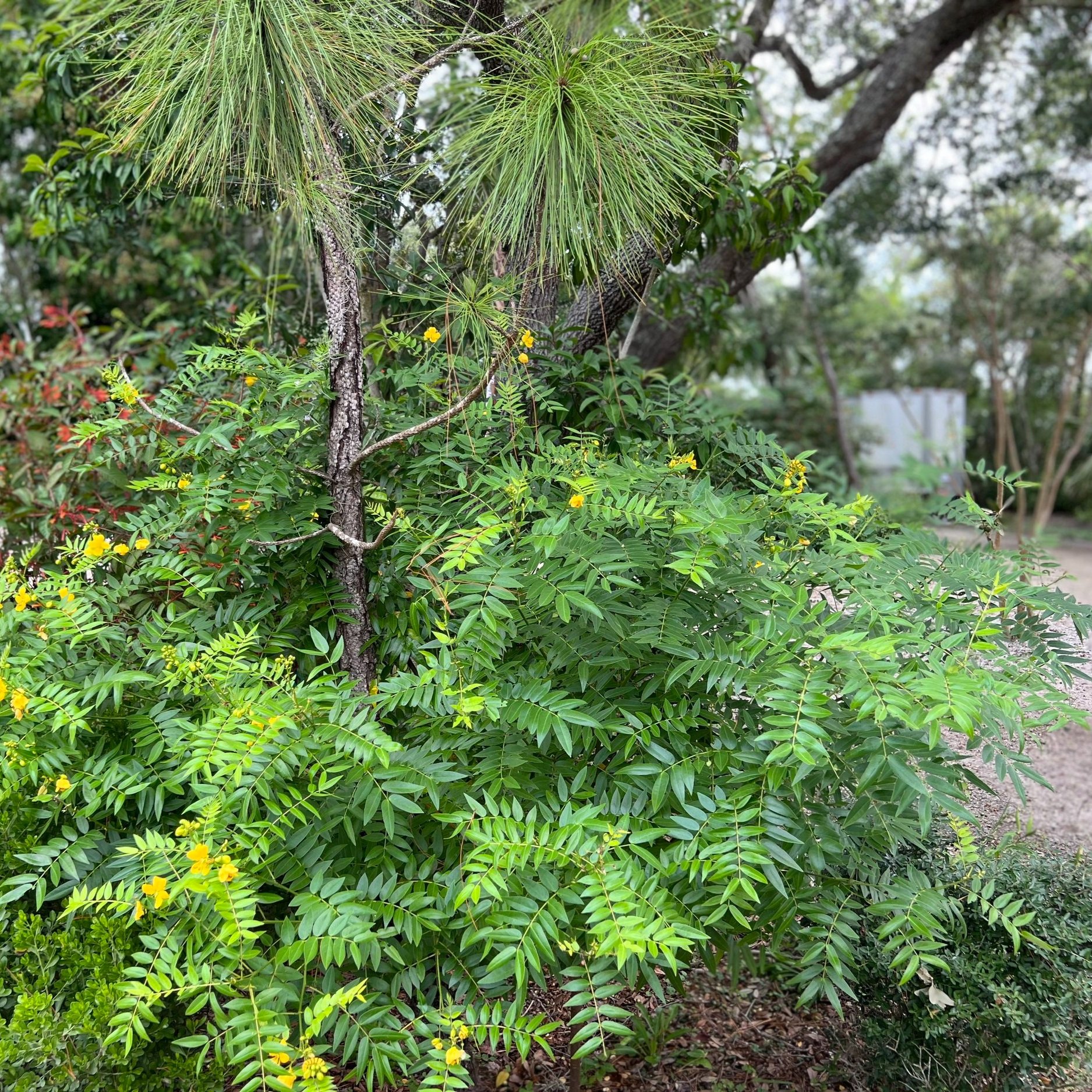
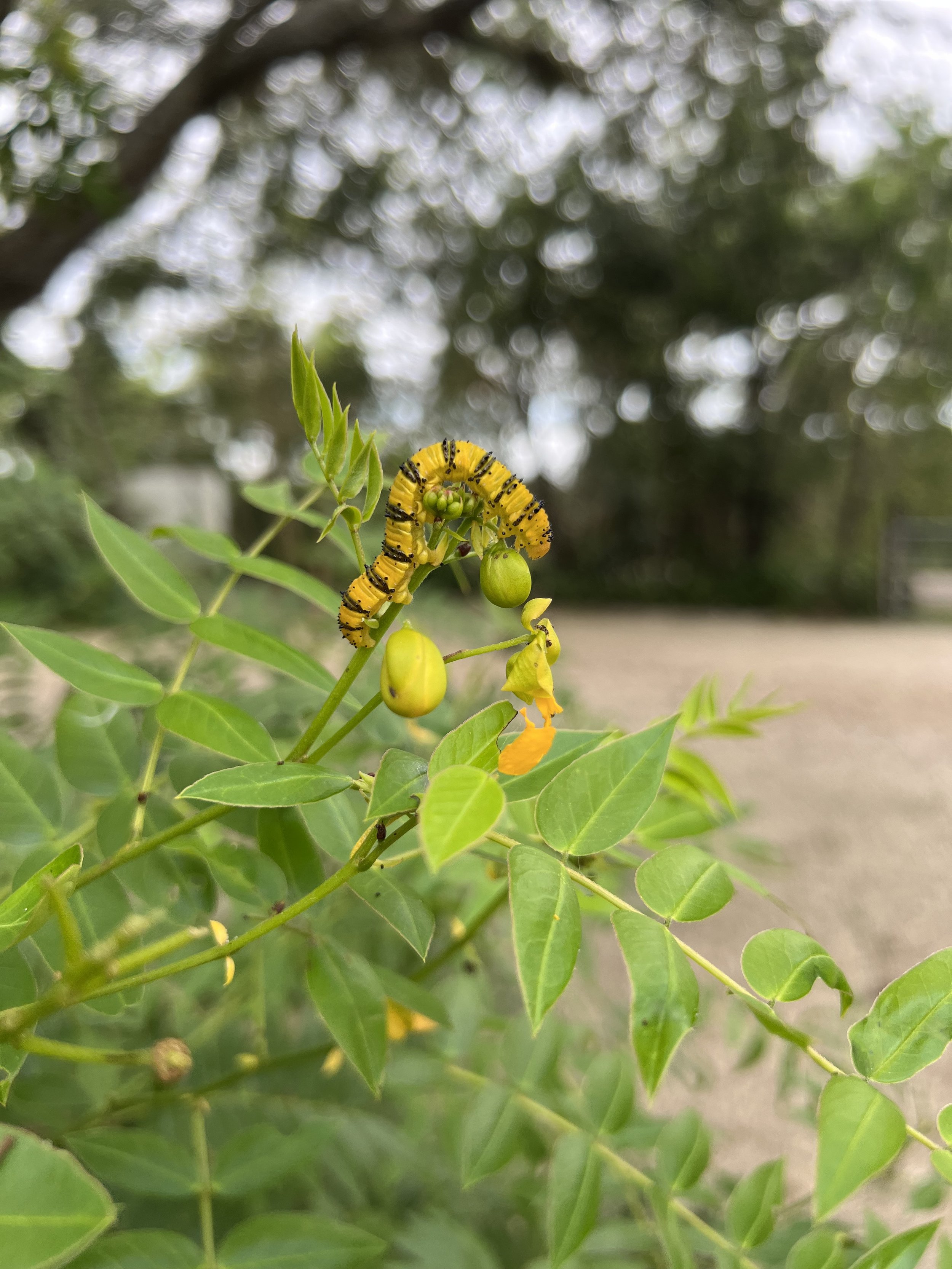
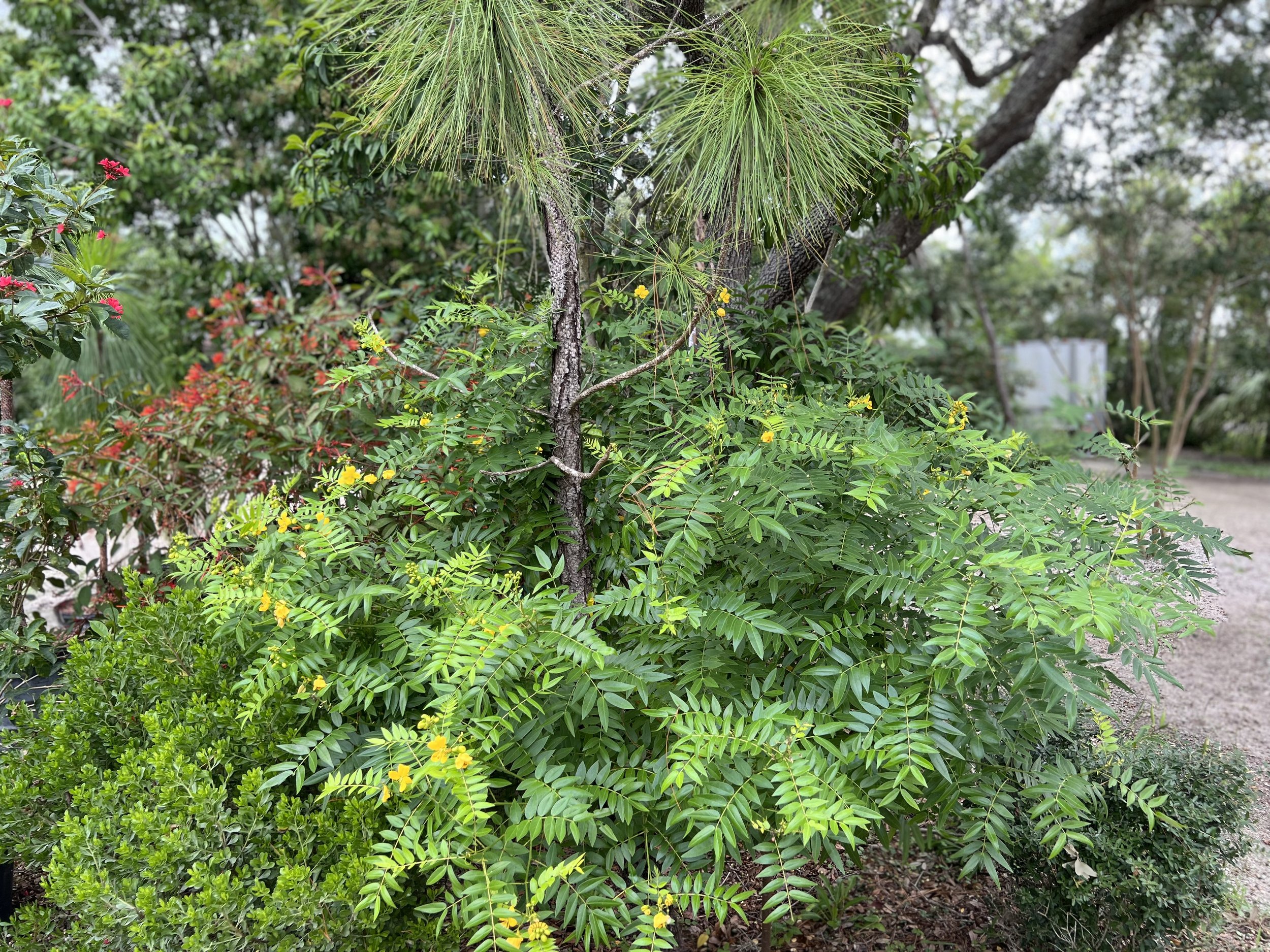
Senna ligustrina
Privet Senna is an evergreen perennial shrub native to Florida that grows 4’-8’ tall with an upright, narrow-crowned habit. This fast-growing member of the legume family features pinnately compound leaves with many small, dark green leaflets and produces clusters of bright yellow, five-petaled flowers from fall through spring. The blooms are followed by thin, brown seed pods approximately 5” long. Serving as a larval host plant for cloudless Sulphur, sleepy orange, and orange-barred Sulphur butterflies, it's an excellent choice for butterfly gardens while also attracting bees and other pollinators. Thriving in full sun to partial shade with well-drained soils, it naturally occurs along forest edges and hammocks from central Florida southward and readily self-seeds in suitable conditions.


Solidago chapmanii
Chapman's Goldenrod is a medium-sized goldenrod native to Florida and southeastern Georgia that grows 3-4 feet tall in dry sandy uplands. This deciduous species emerges in early spring and is one of the earliest goldenrods to bloom, producing irregular panicles of small yellow flowers from late summer through fall. This Goldenrod spreads slowly by underground runners without forming dense colonies. Thriving in well-drained soils and full sun, it's commonly found in longleaf pine sandhills, dry hammocks, and other xeric habitats, making it an excellent choice for naturalized plantings and pollinator gardens.
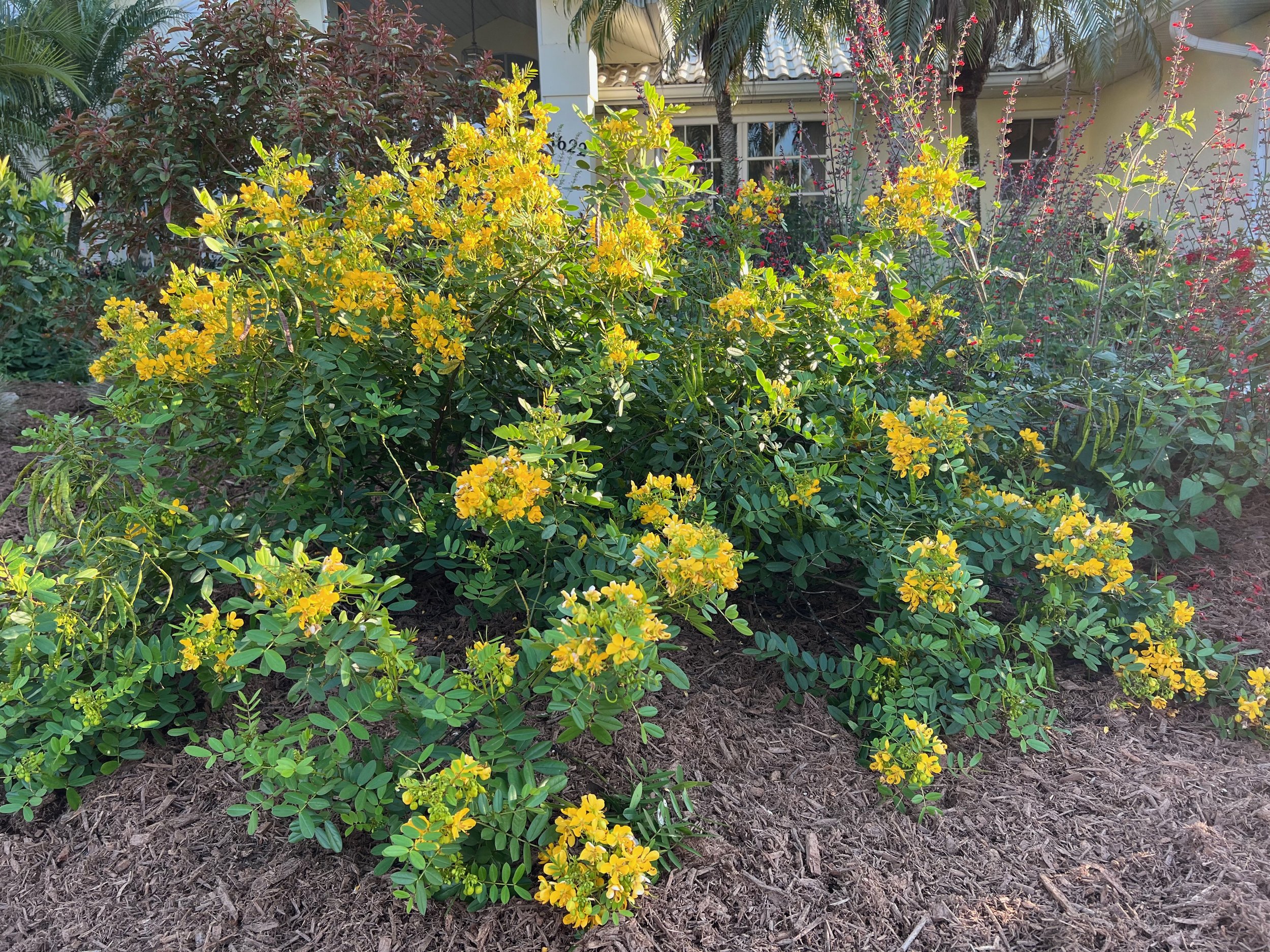
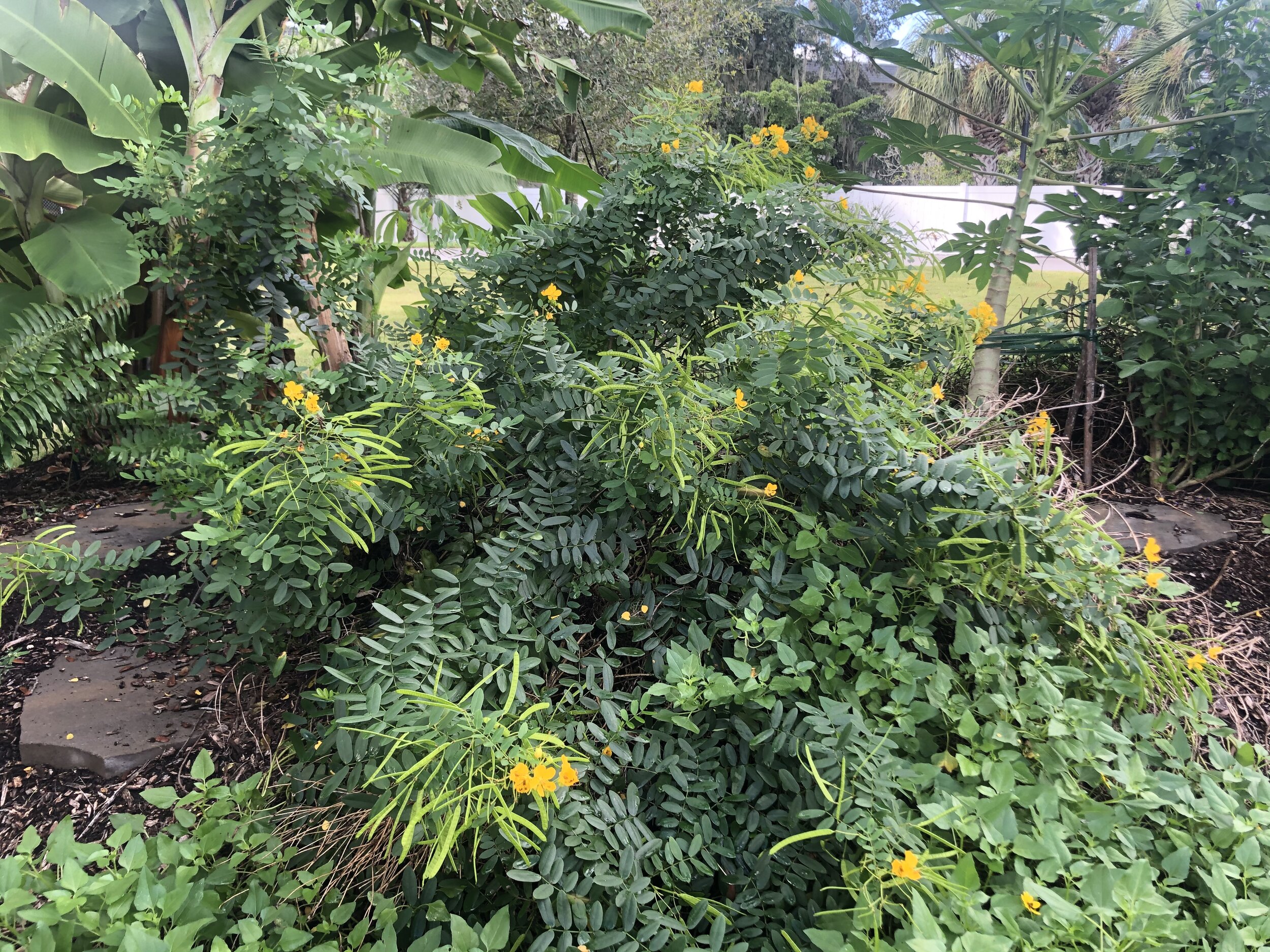
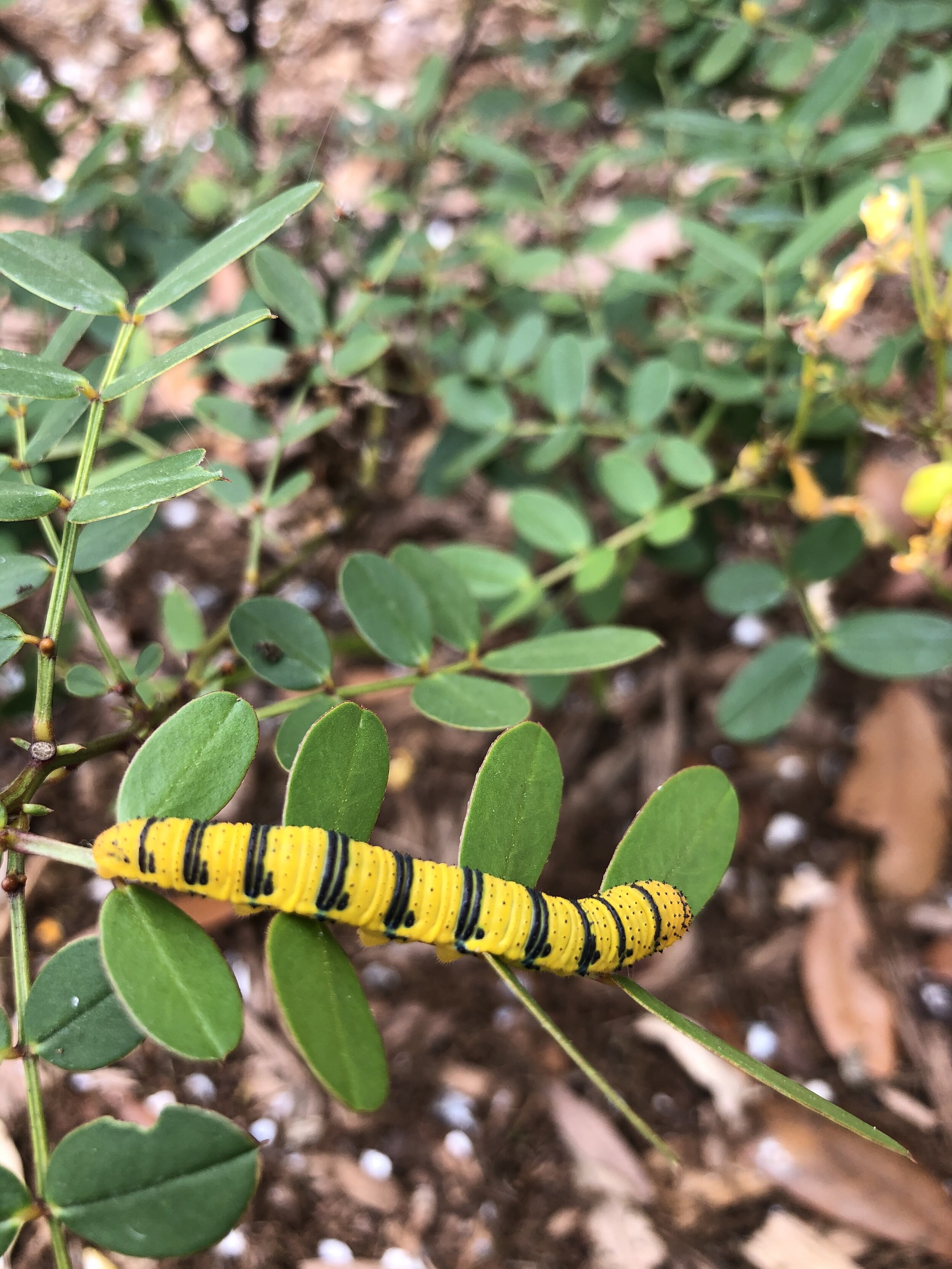
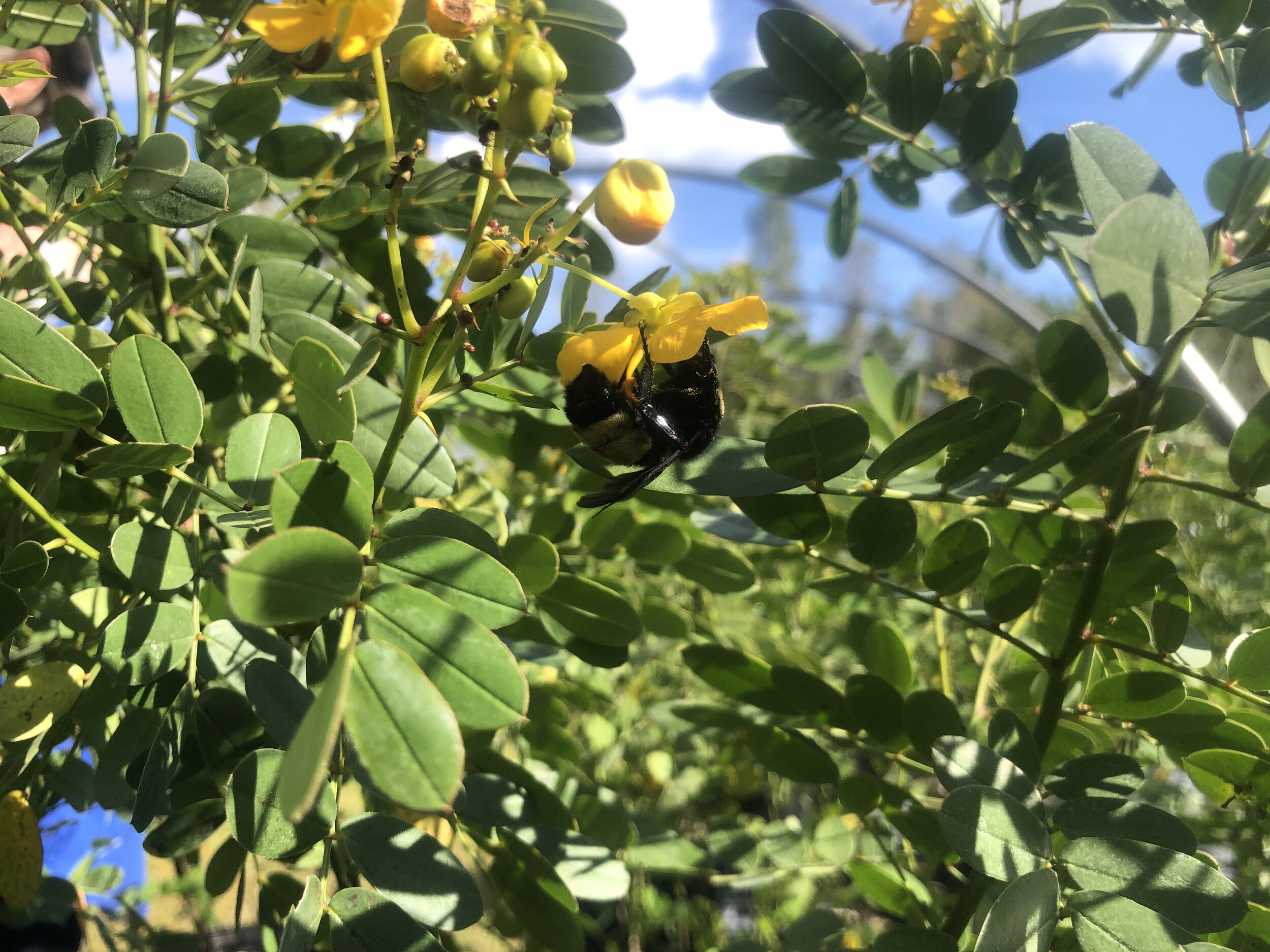
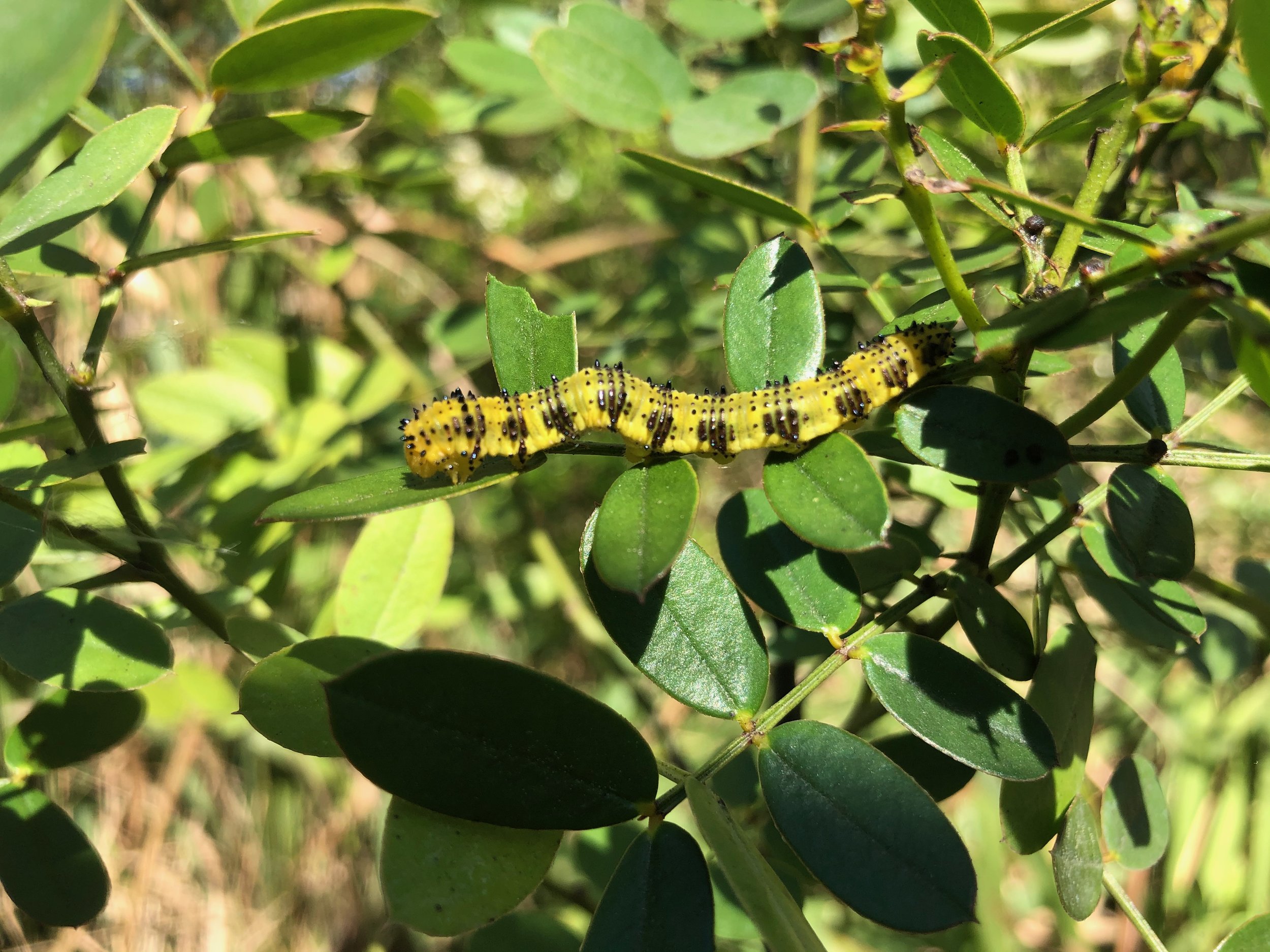
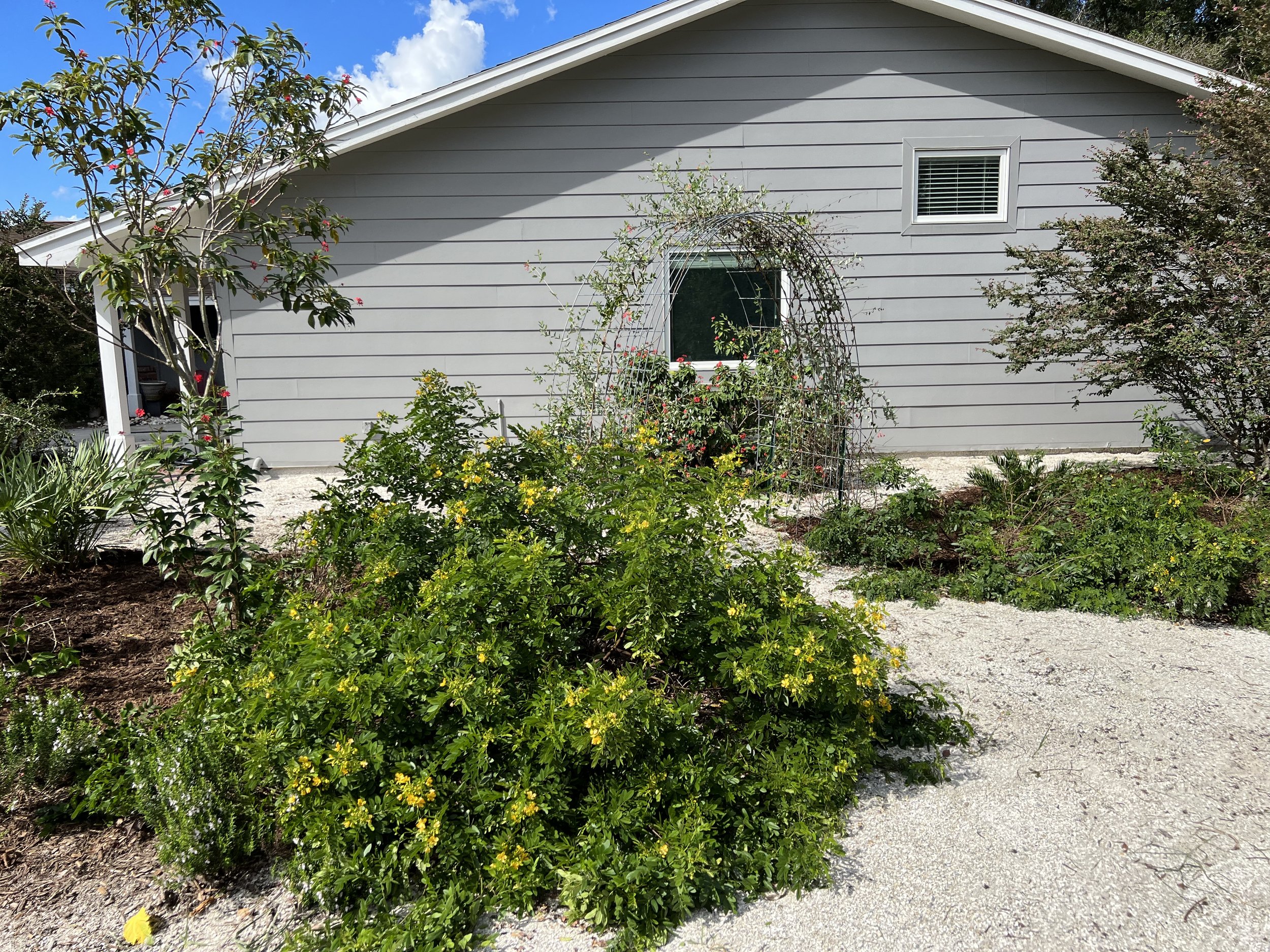
Senna mexicana var. Chapmanii
This beautiful Florida native butterfly garden must-have thrives in many local gardener’s gardens. It is evergreen and grows to be about 4’ by about 3’ and enjoys full sun to light shade and dry to moist (well-drained) soils. It is an important larval food source for Sulphur butterflies. Most people know it for its showy yellow flowers that bloom spring through fall and because it attracts and hosts butterflies and pollinators.
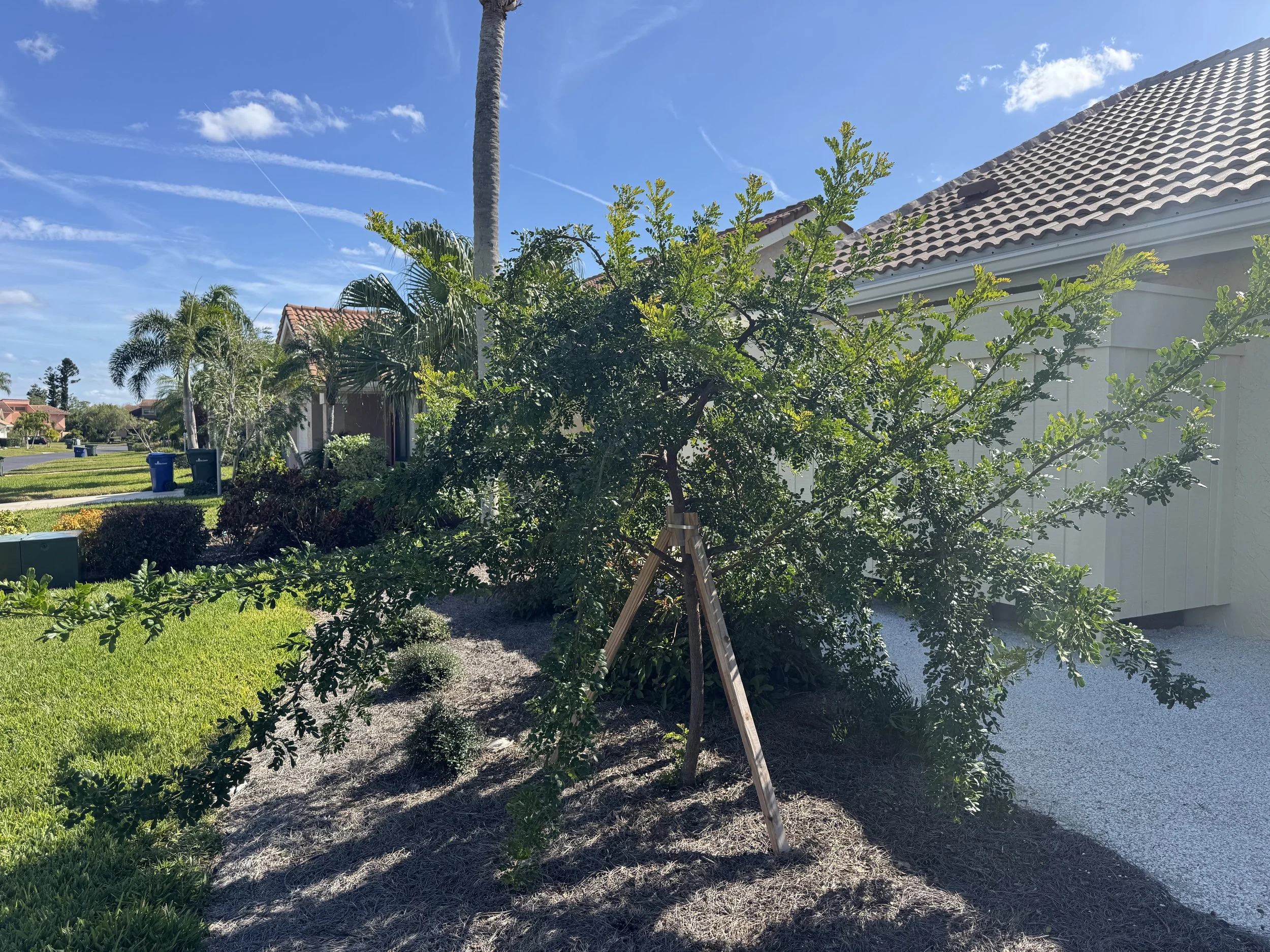
Acacia choriophylla
Native evergreen tree, ranging from 15-25ft. Cinnecords have dark green foliage and fragrant yellow pom-pom flowers that attract pollinators and people alike. They are fast-growing and salt-tolerant, growing in full sun with well-drained sandy soils. In addition to attracting pollinators, Cinnecords also provide habitat and seeds for birds.
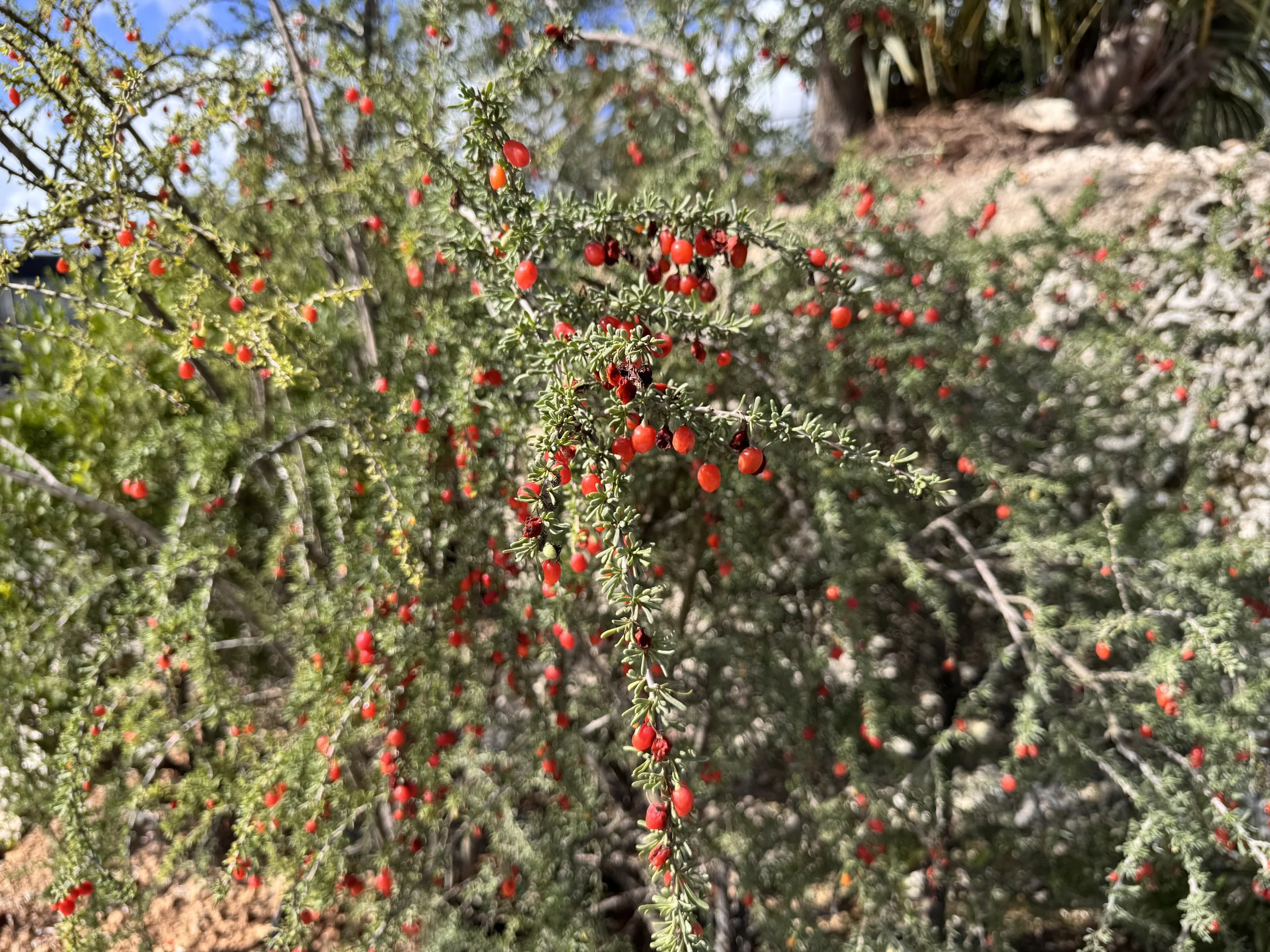
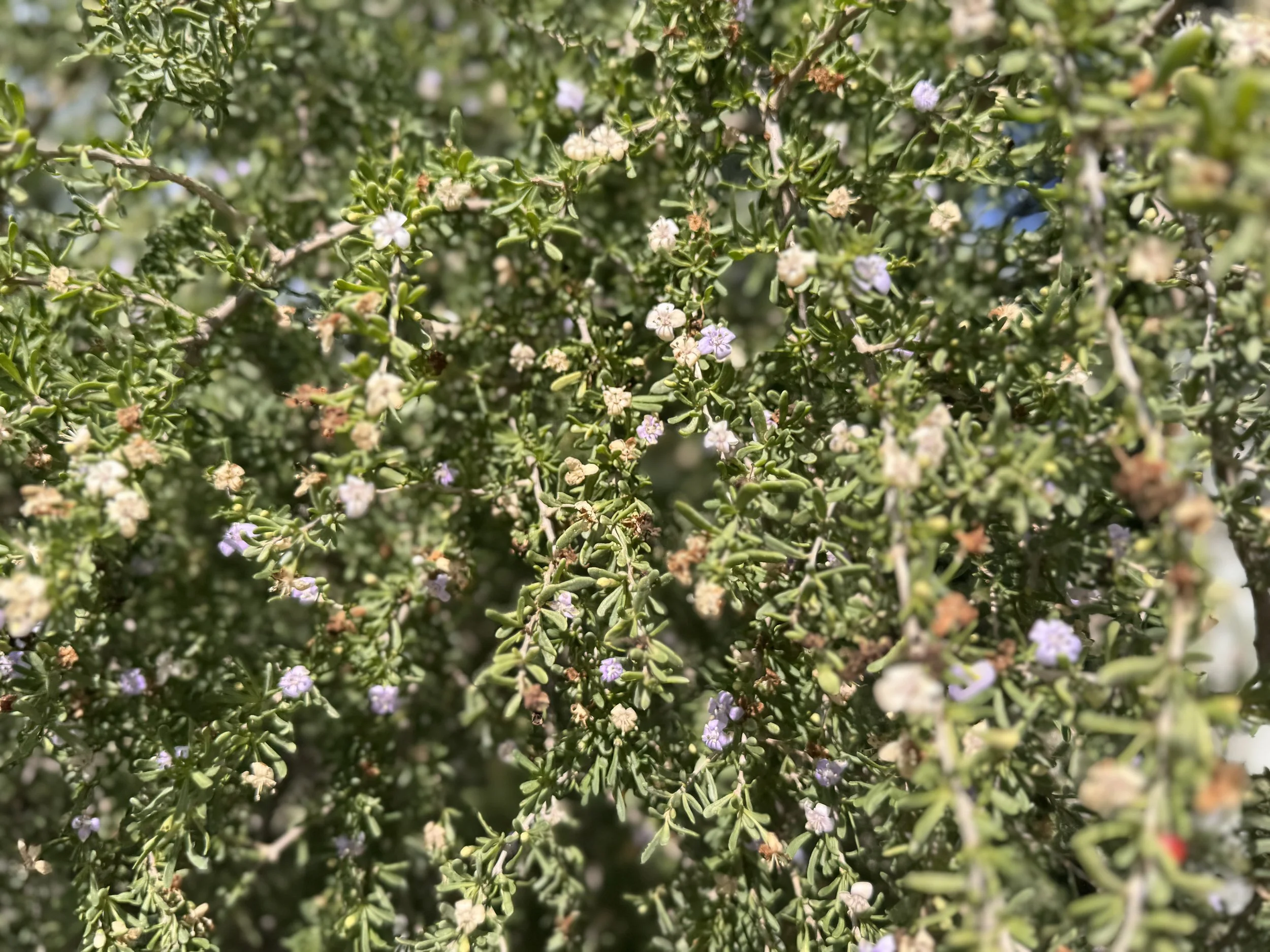
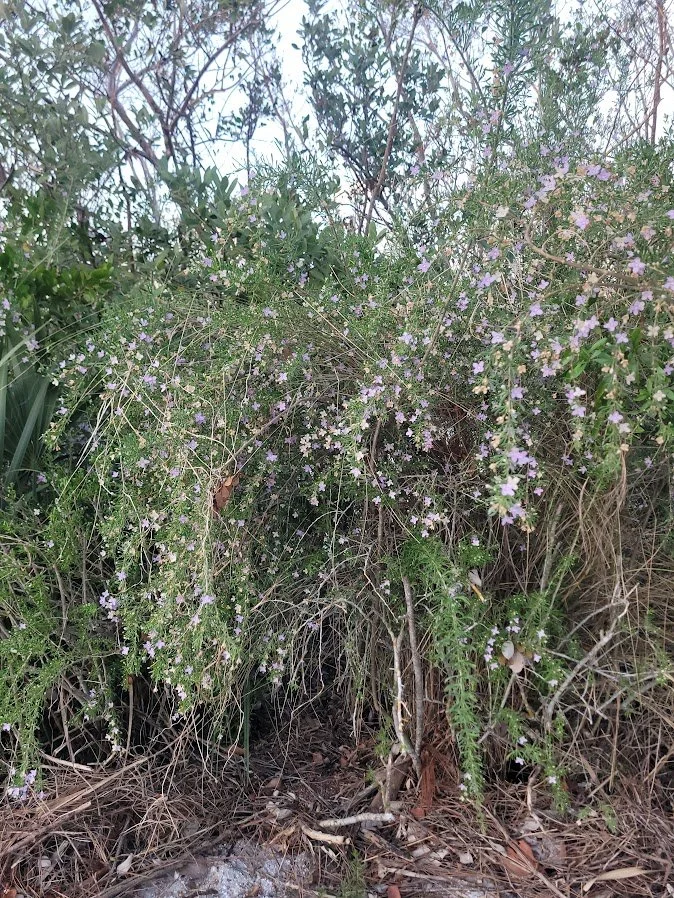
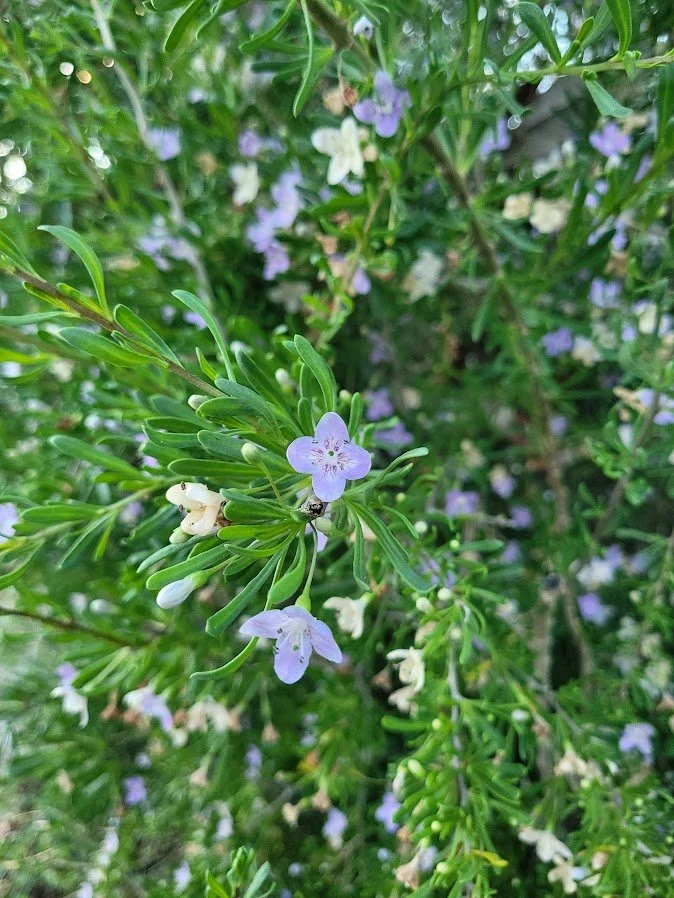
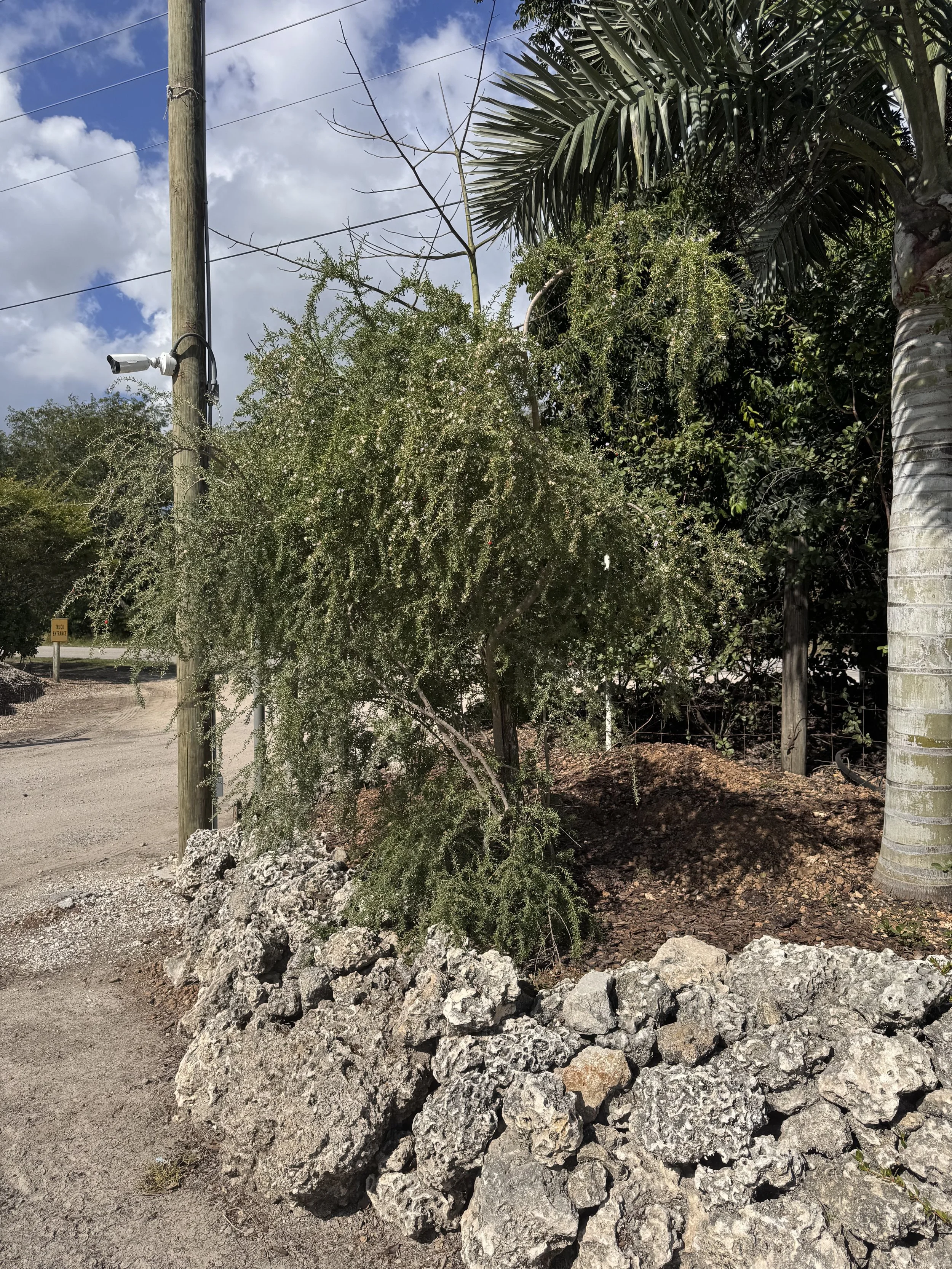
Lycium carolinianum
Christmas Berry is a sprawling evergreen shrub native to Florida's coastal regions that grows 3-6 feet tall with rigid, thorn-tipped branches. This hardy species features small, succulent linear leaves clustered along thorny branches and produces small, tubular blue to lavender flowers that bloom primarily in fall. True to its common name, it develops bright scarlet-red berries in December that attract birds and wildlife. Extremely salt and drought tolerant, it naturally occurs in salt marshes, mangrove edges, shell middens, and coastal dunes, making it an excellent choice for harsh coastal conditions.
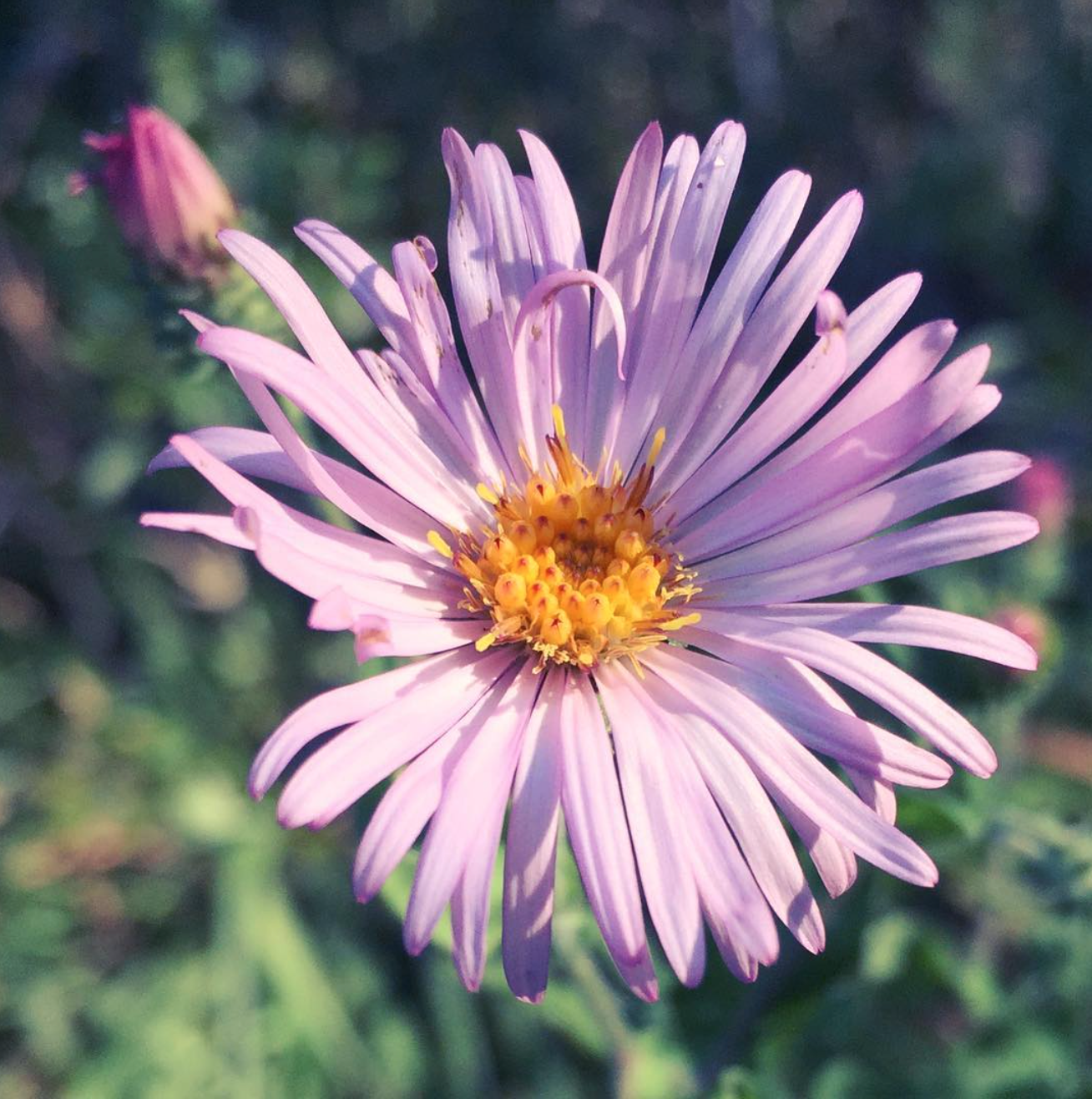

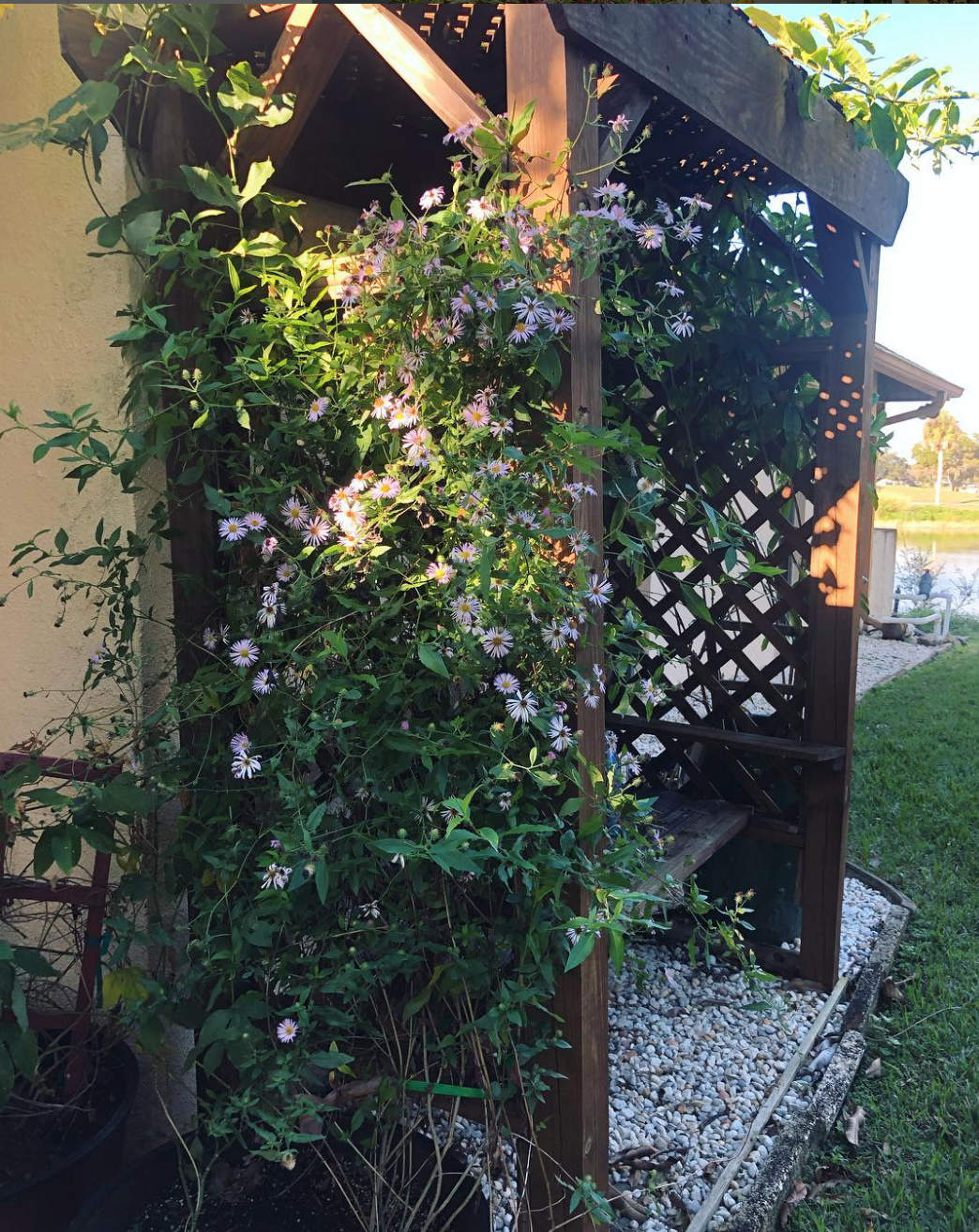
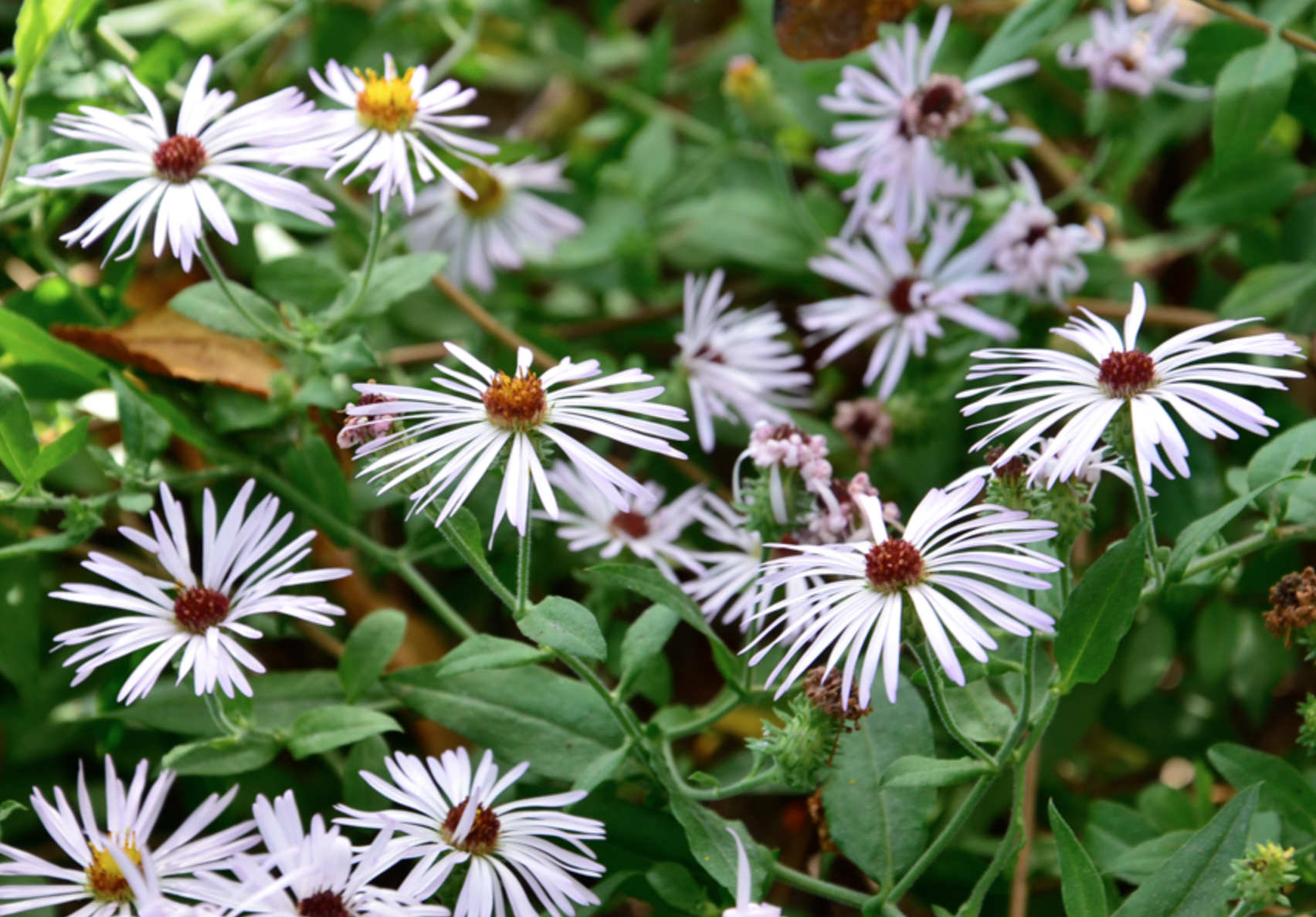
Aster carolinianus
Climbing Aster is a perennial, flowering, vine-like shrub, that can be trained to grow up a trellis or can be trimmed to a more formal shape and lower height. It prefers average to wet soils and full sun to partial shade. In the late summer through winter, it is covered in small lavender aster flowers. It’s a pollinator favorite!
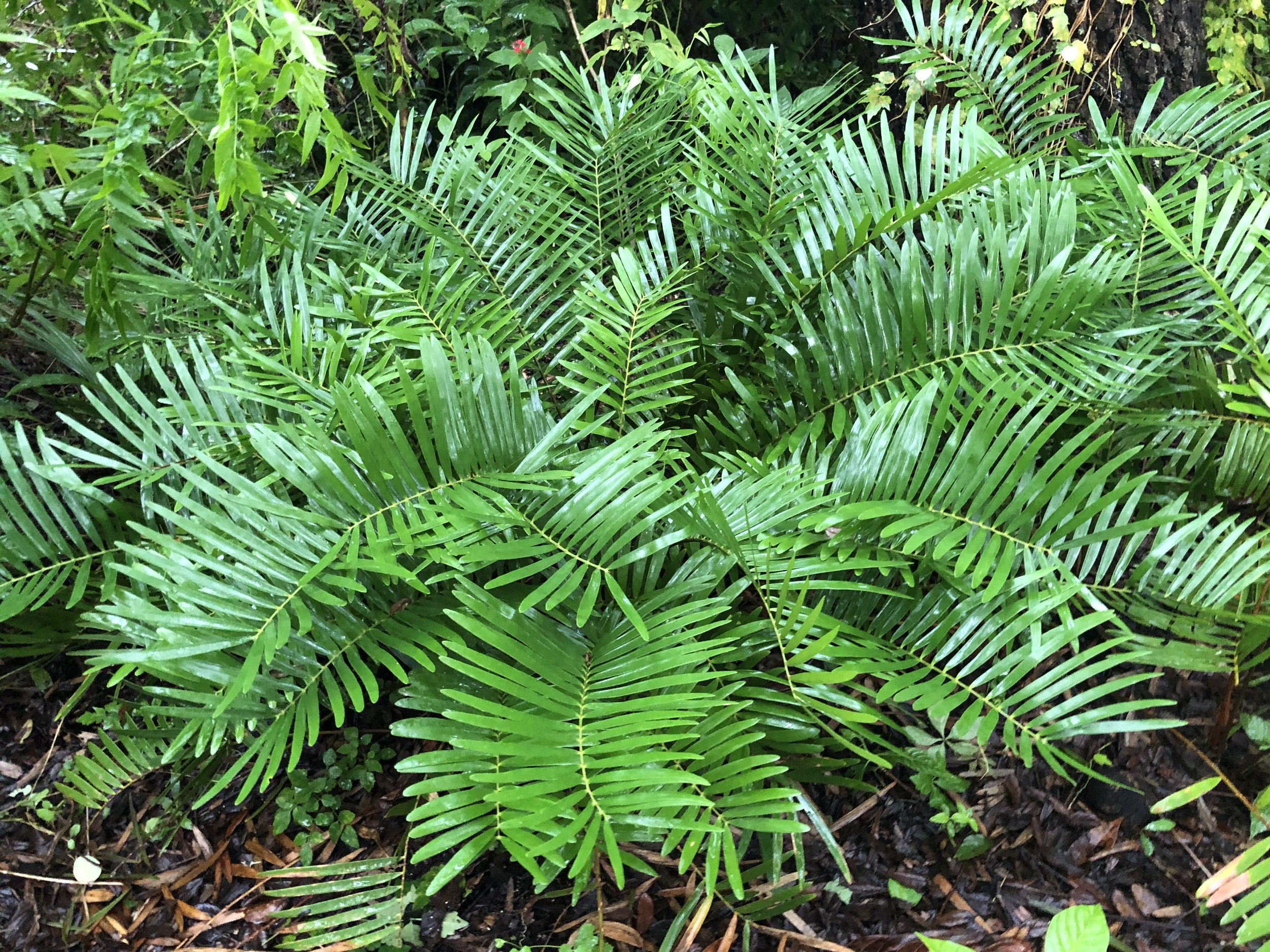
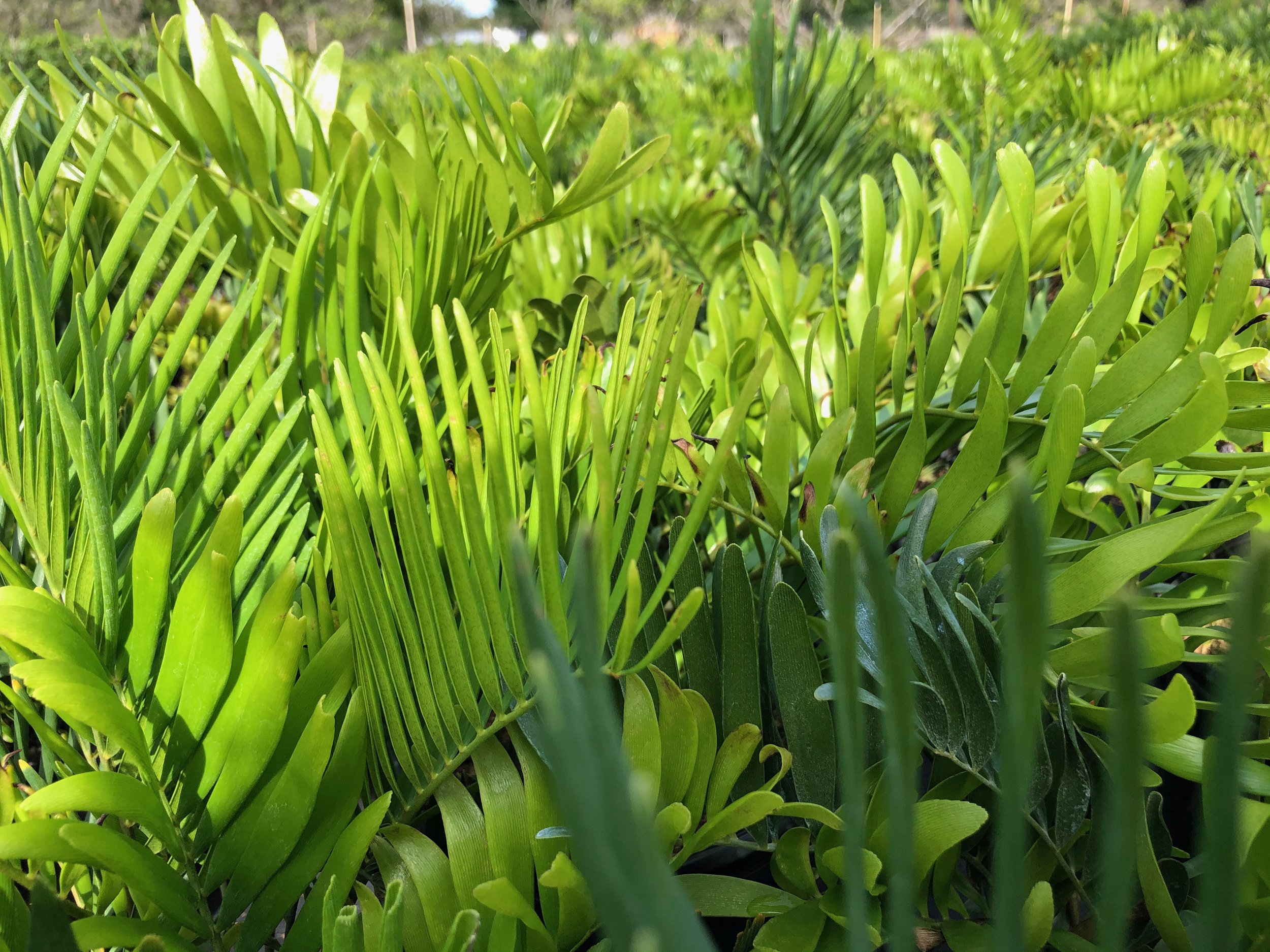
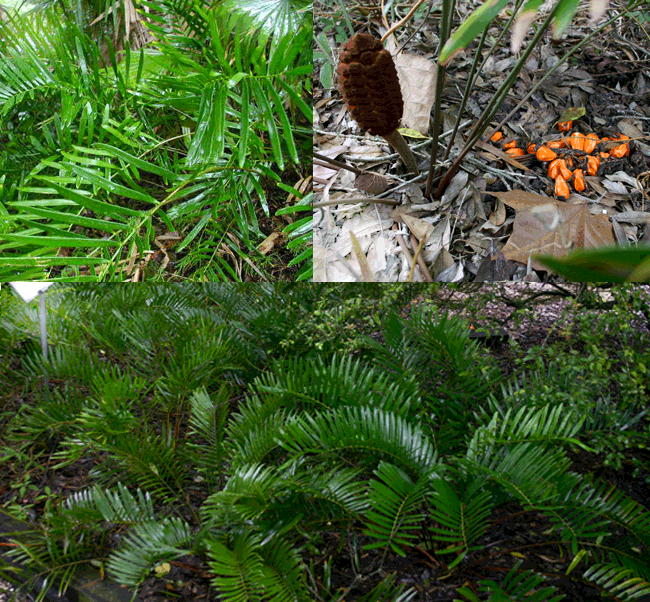
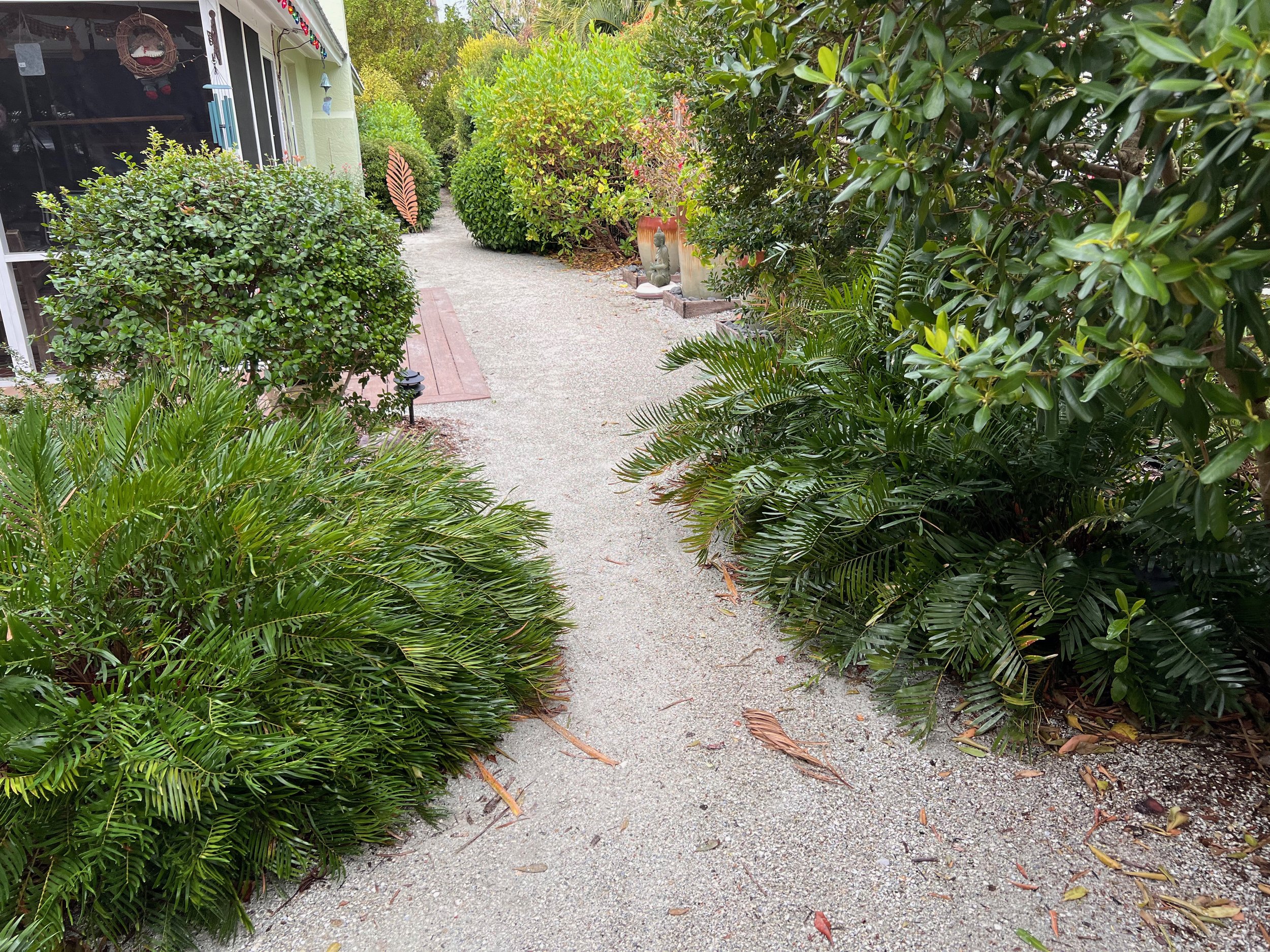
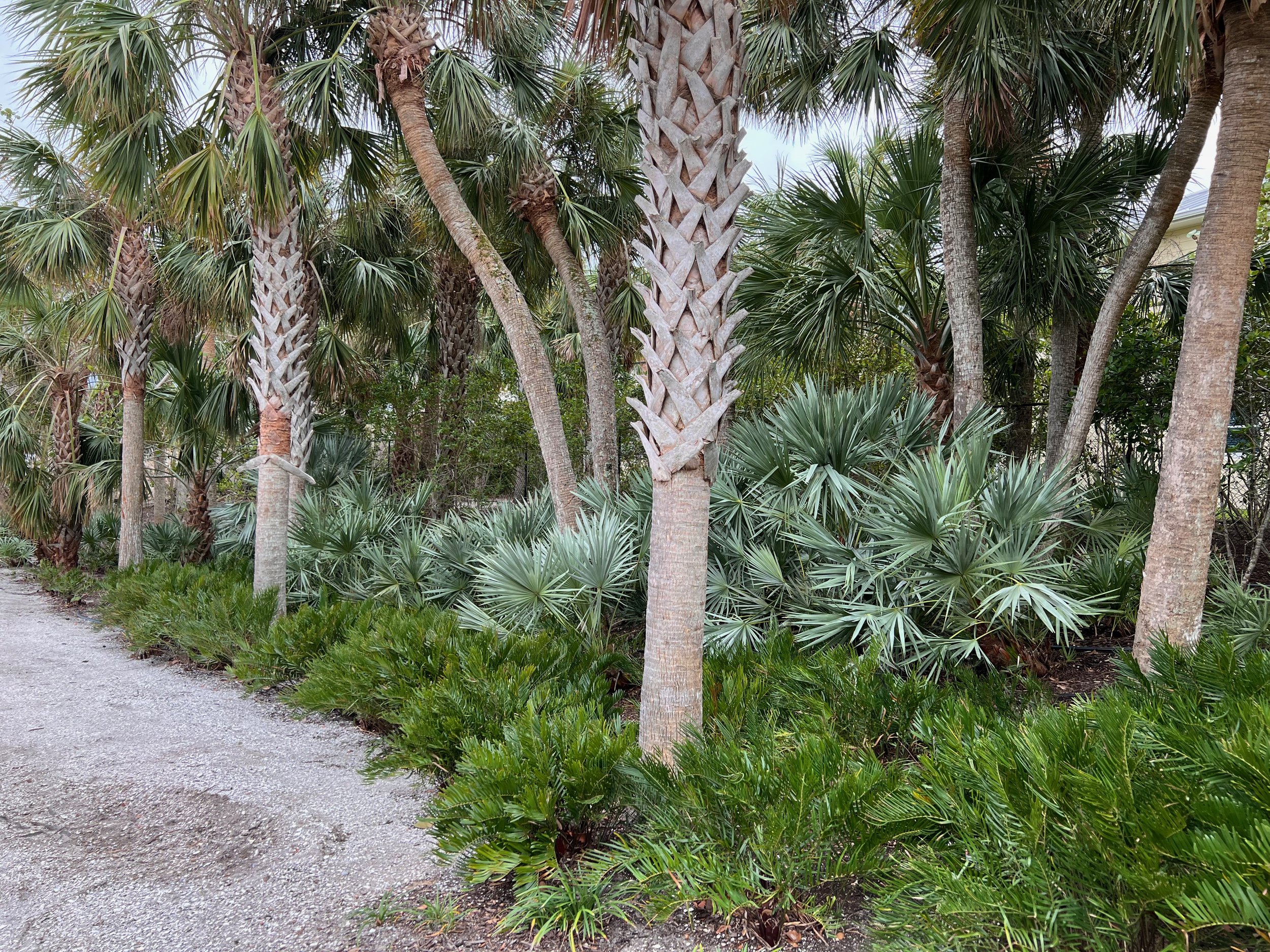
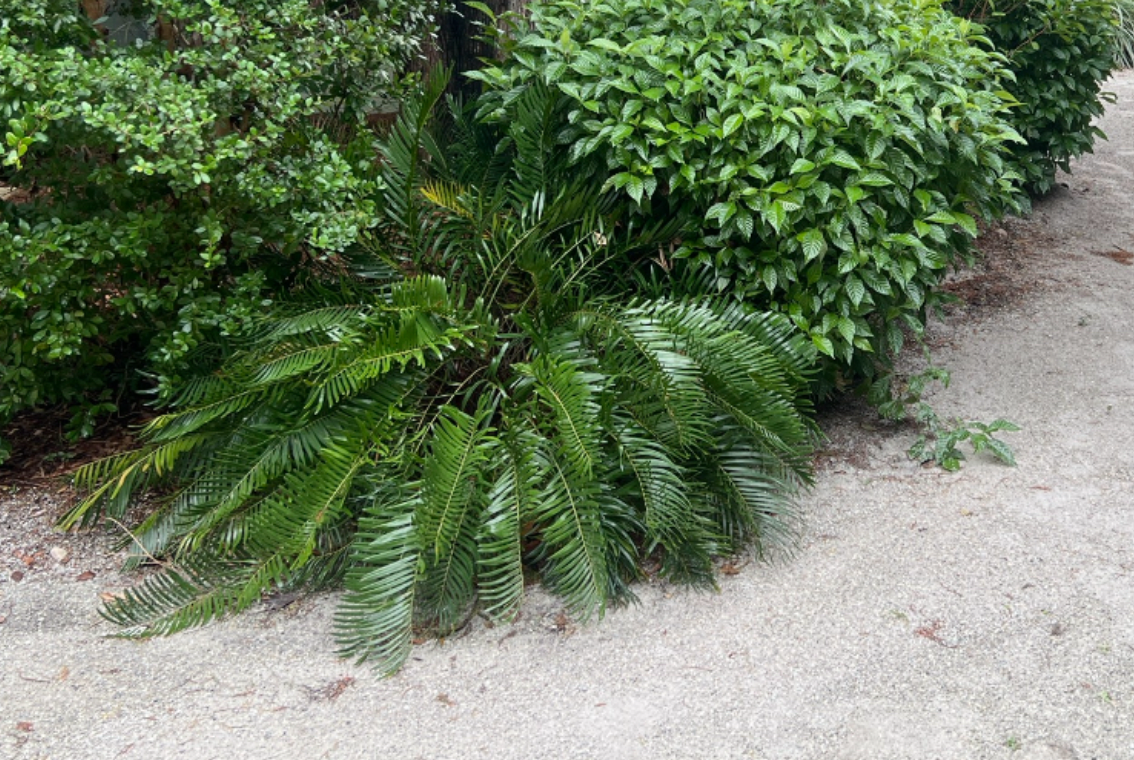
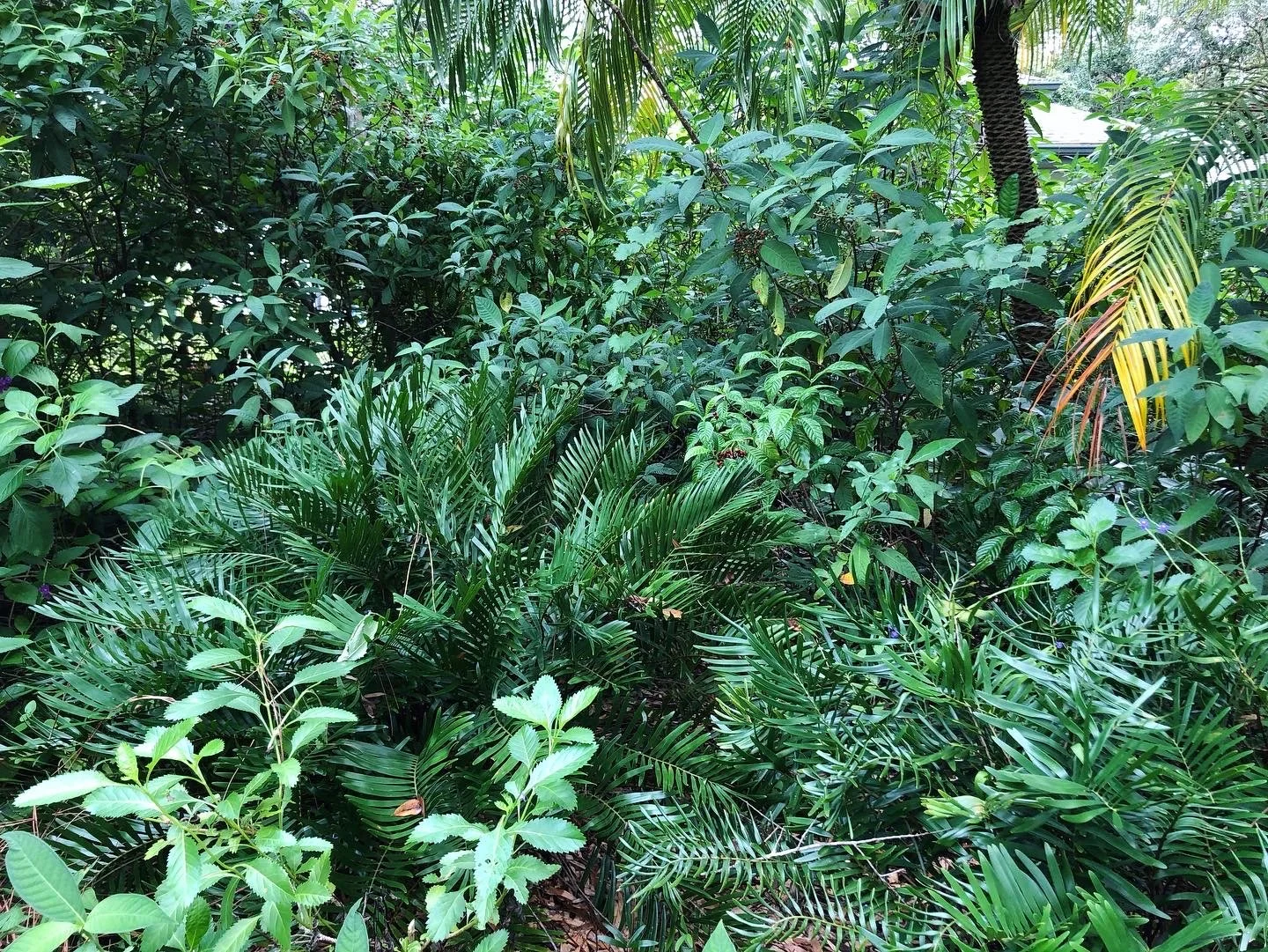
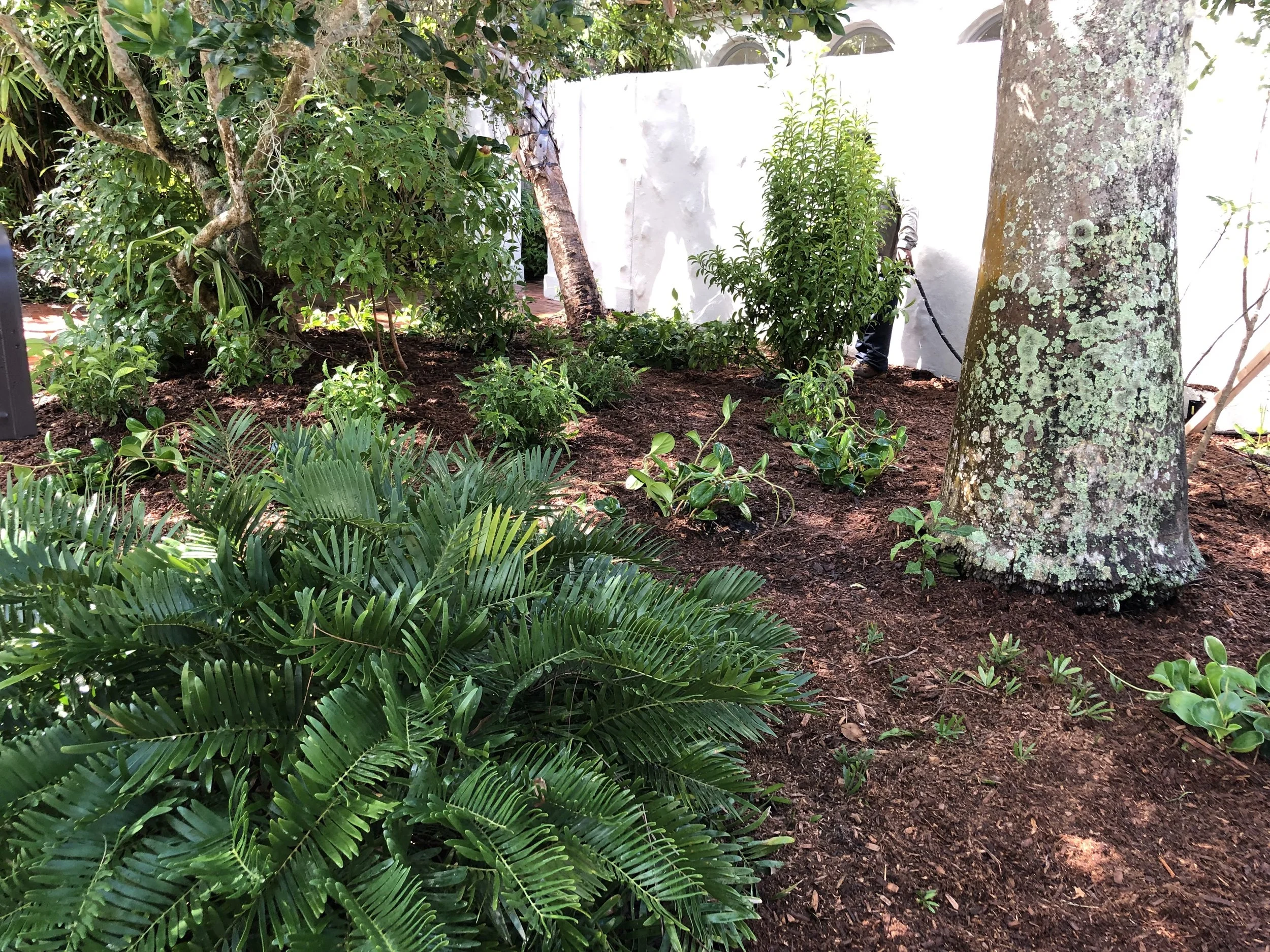
Zamia integrifolia
Coontie is perfect for a dry sunny or shady spot in the garden. It is extremely hardy and drought tolerant and is successful in harsh conditions like highway medians. It generally stays under three feet tall and 3 feet wide and has a tropical Florida feel. Coontie is an ancient plant and is Florida’s only living cycad. It is the important host plant for the Atala butterfly.
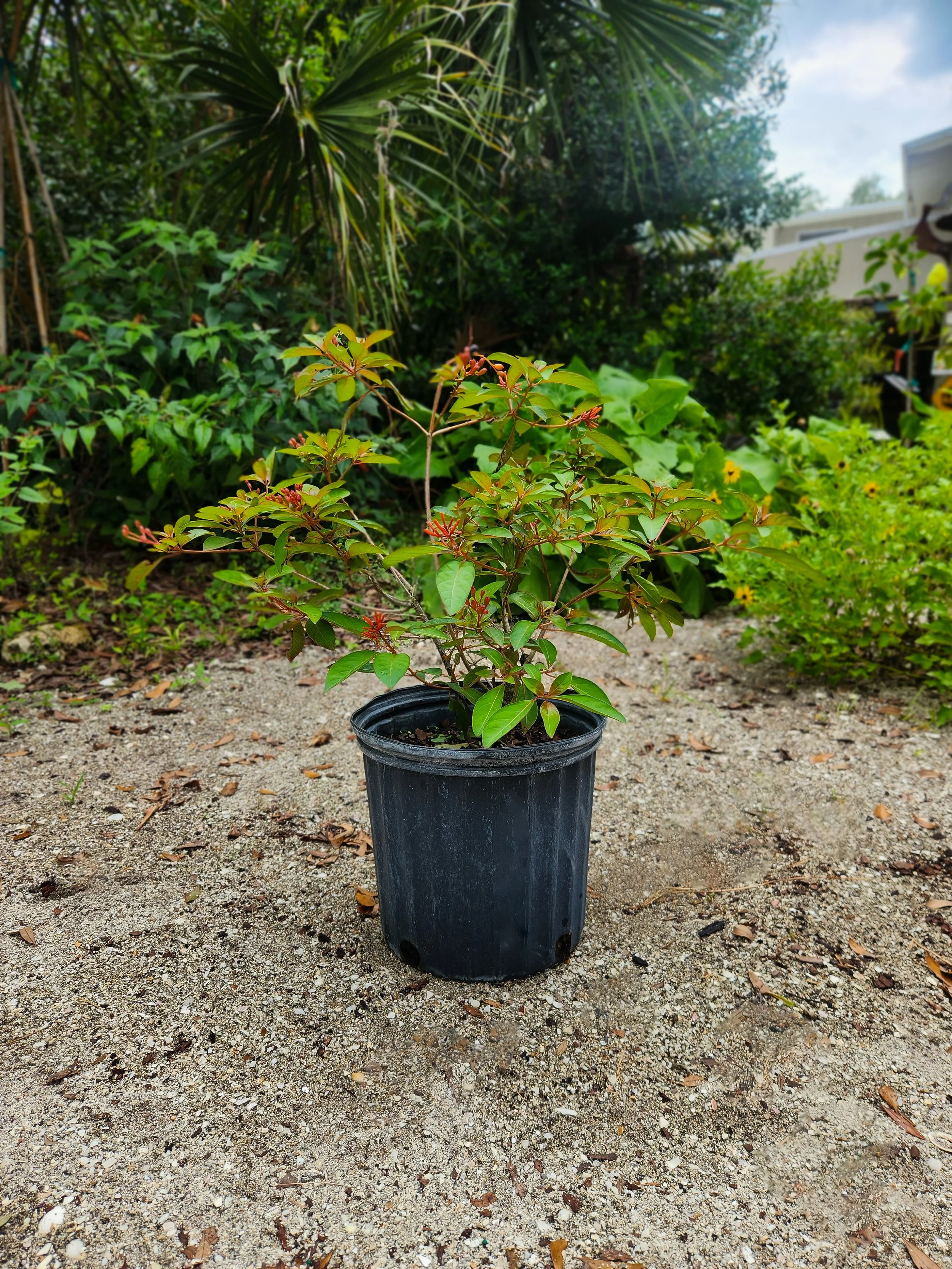
Hamelia Patens 'Compacta’
Compact Firebush is a dwarf cultivar of the Florida-native Firebush that grows to be 4’-6’ tall. These plants grow best in full sun to partial shade and average, well-drained soil. With its red and green leaves and red to orange flowers, Compact Firebush can be used as part of a hedge or as a specimen plant. The flowers are highly attractive to hummingbirds, bees, and butterflies, particularly the Zebra Longwing, which often feed on the nectar and pollen of Compact Firebush flowers. The flowers are followed up by small, dark berries that have a long history of medicinal use, but can also be used to make syrups and wine.
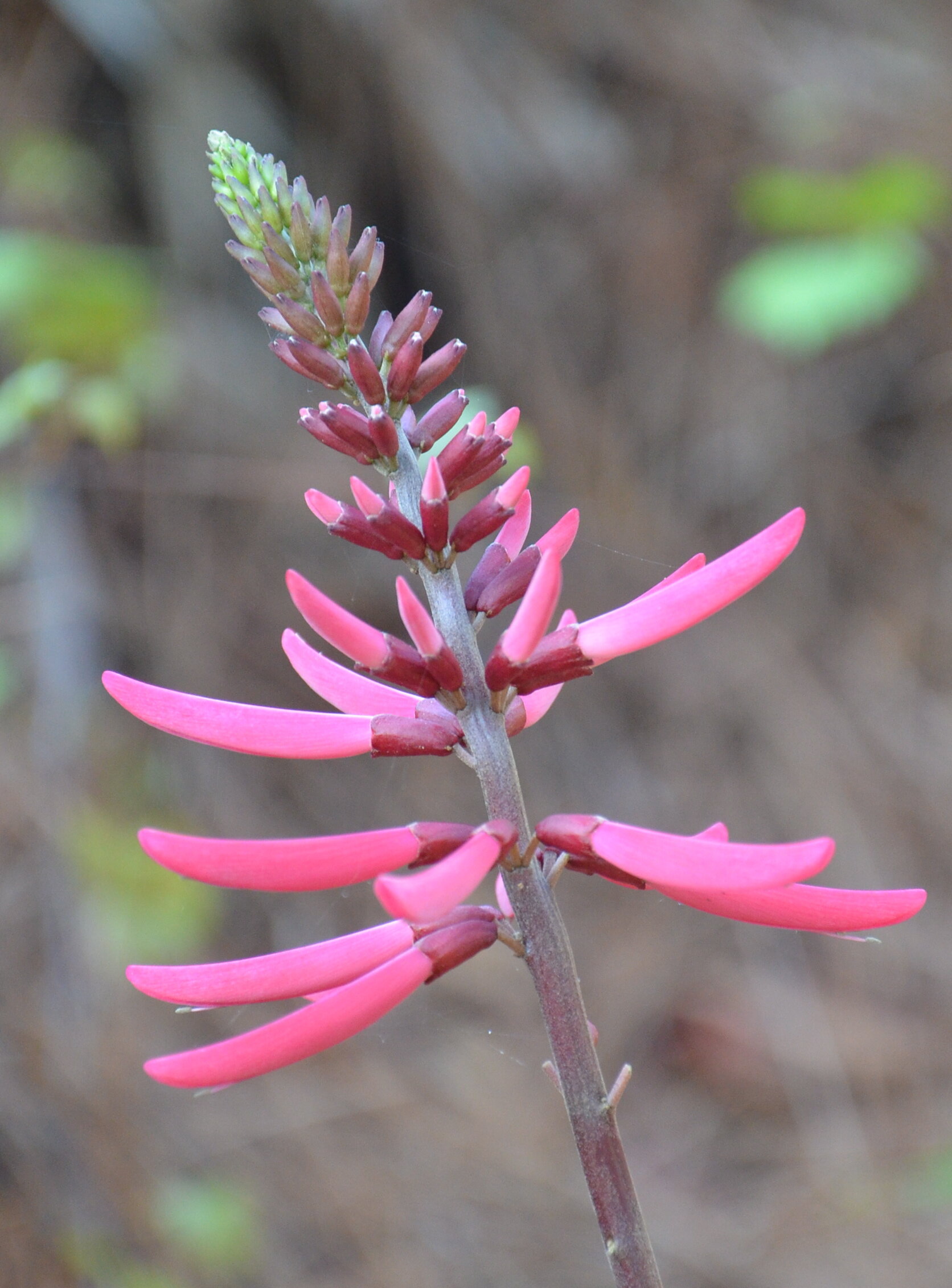

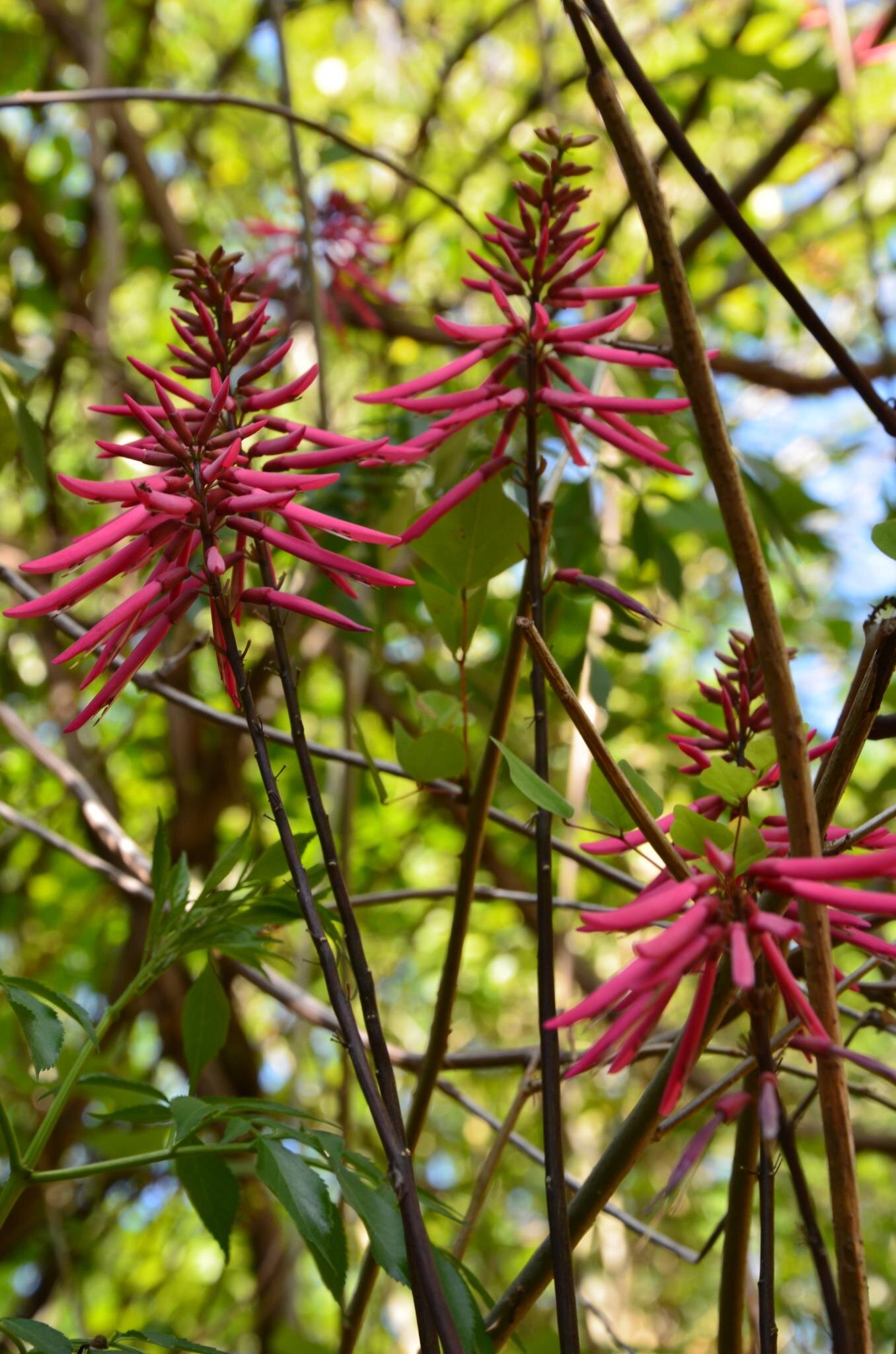
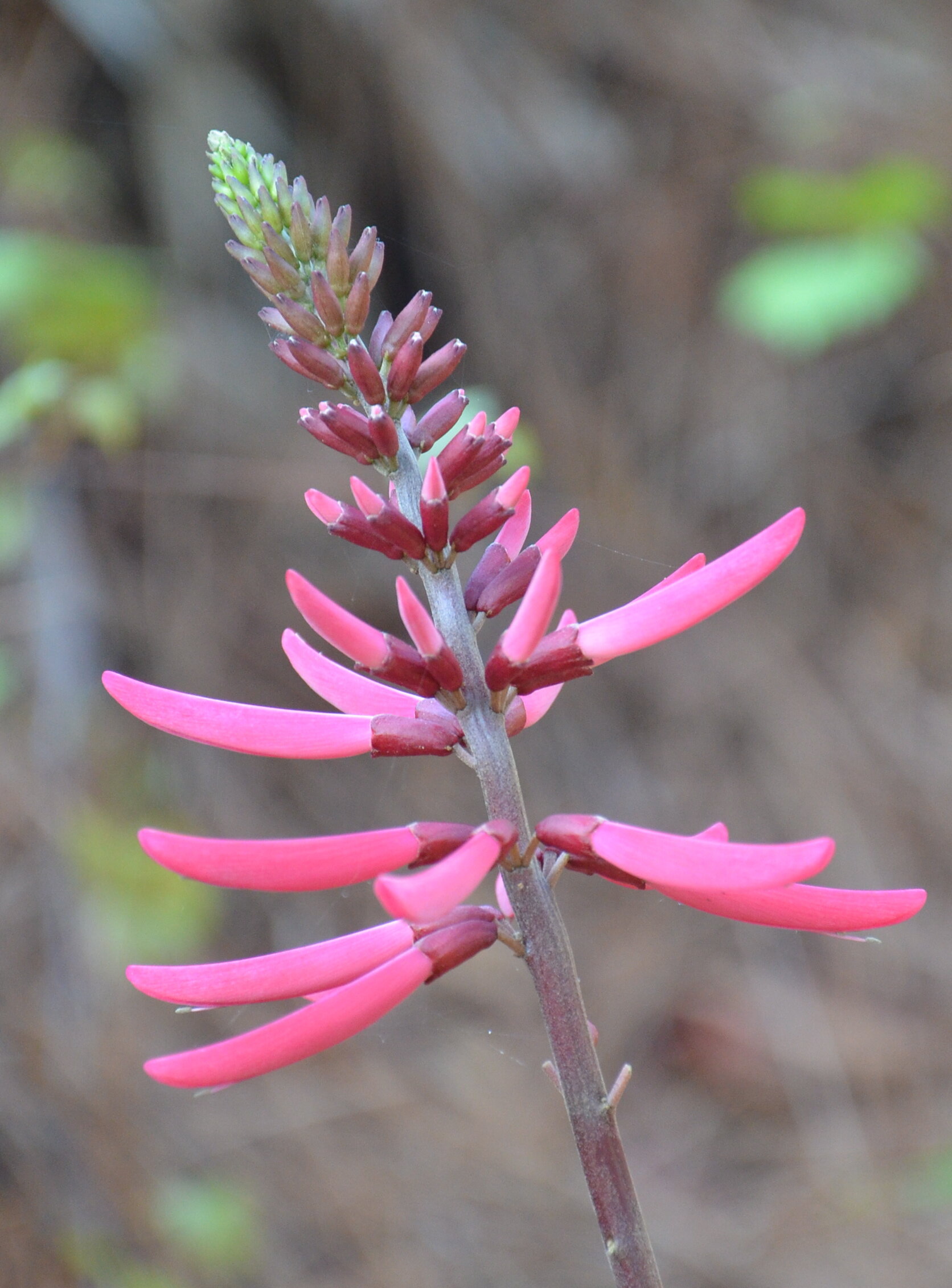
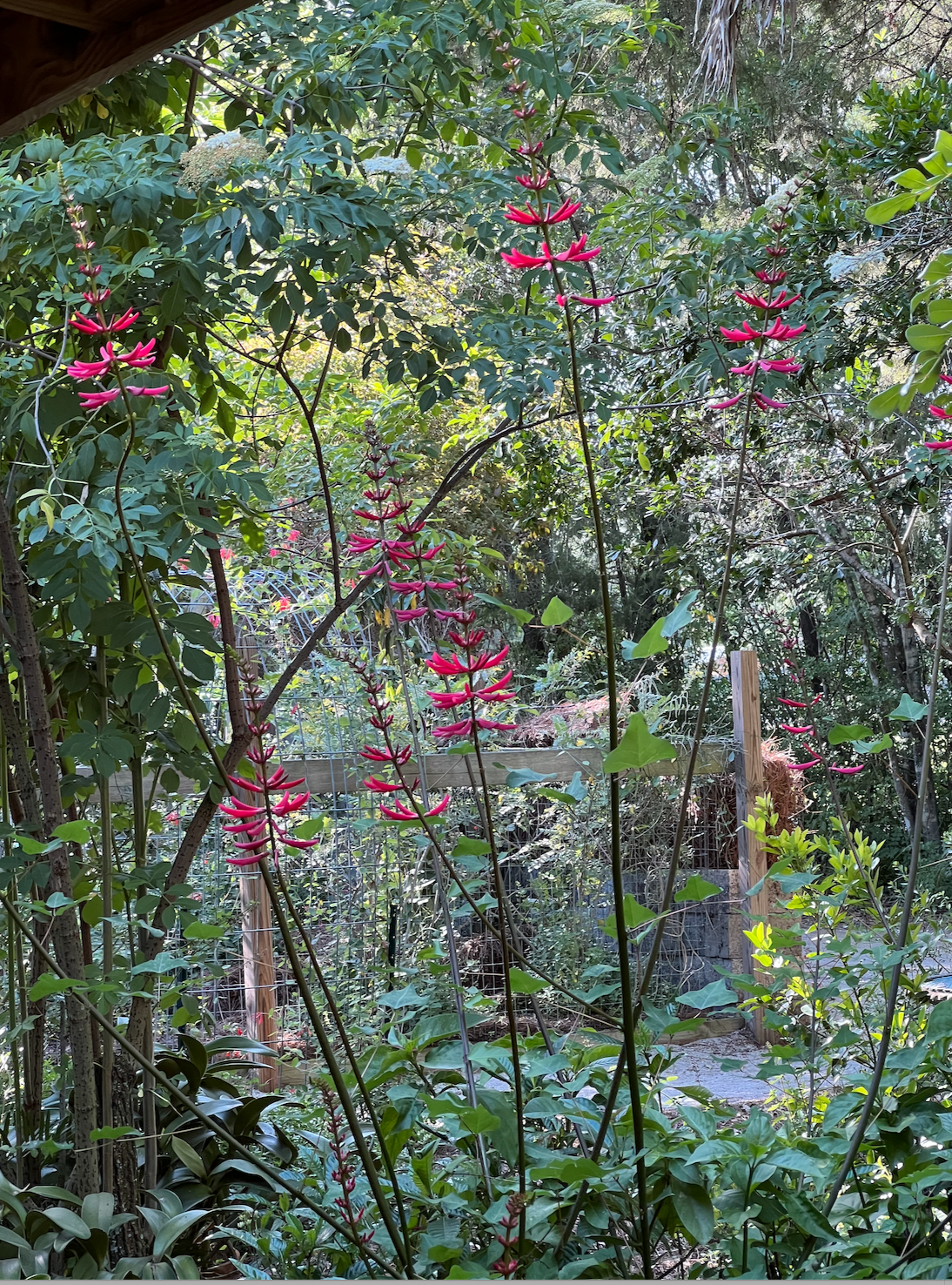
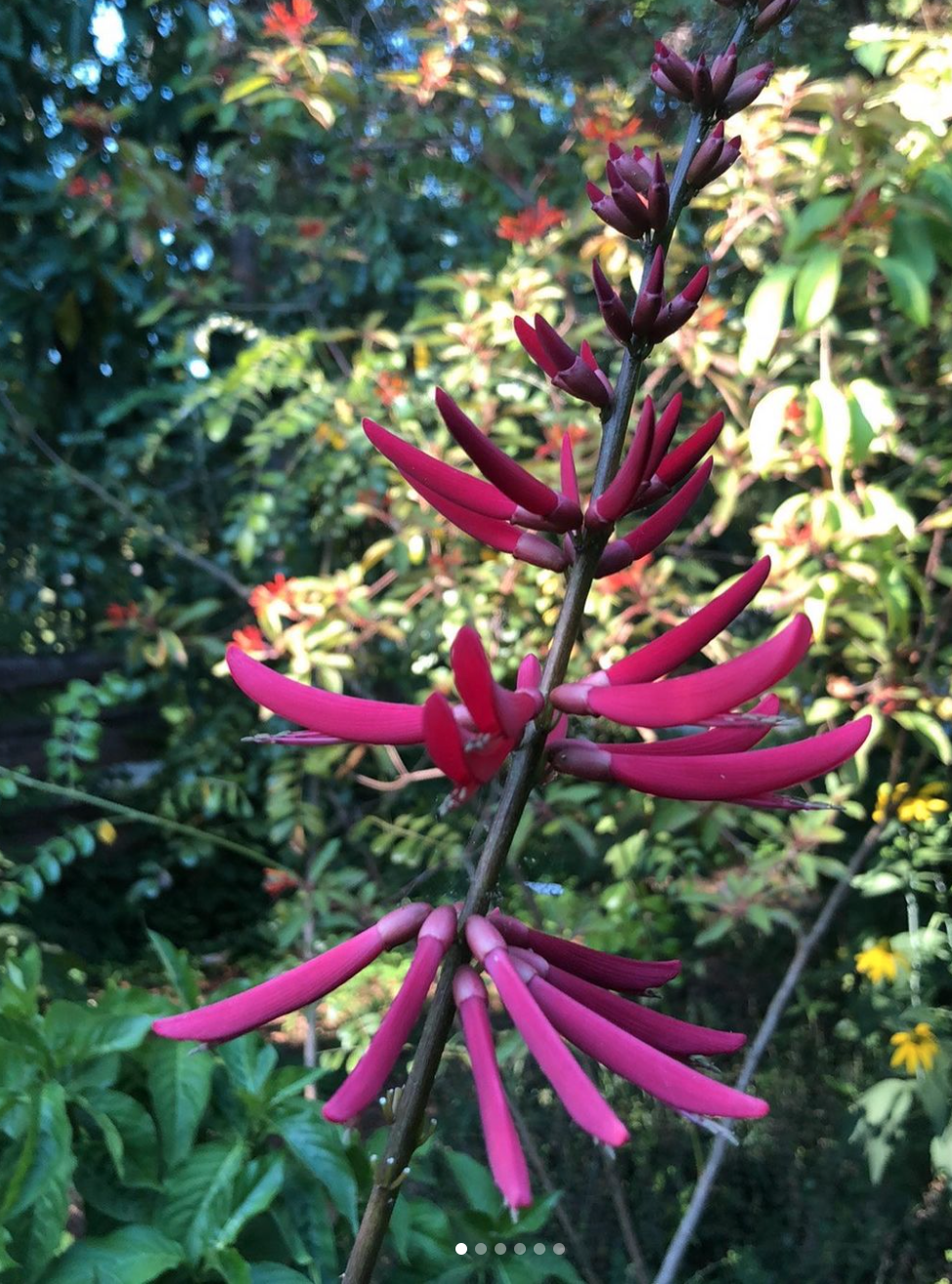
Erythrina herbacea
Coral Bean (Erythrina herbacea) is a deciduous perennial shrub or small tree native to the southeastern United States that grows 3-8 feet tall with compound, lance-shaped leaves. This striking plant produces tall spikes of brilliant scarlet, tubular flowers in early spring that are perfectly timed to coincide with Ruby-throated hummingbird migration patterns, providing critical nectar for these travelers. The blooms also attract long-tongued butterflies and bees, while the bright red seeds that follow are dispersed by birds, though all parts of the plant are toxic. Thriving in sandy, well-drained soils in open woods and forest edges, it serves as an excellent specimen plant for wildlife gardens in zones 8-10.
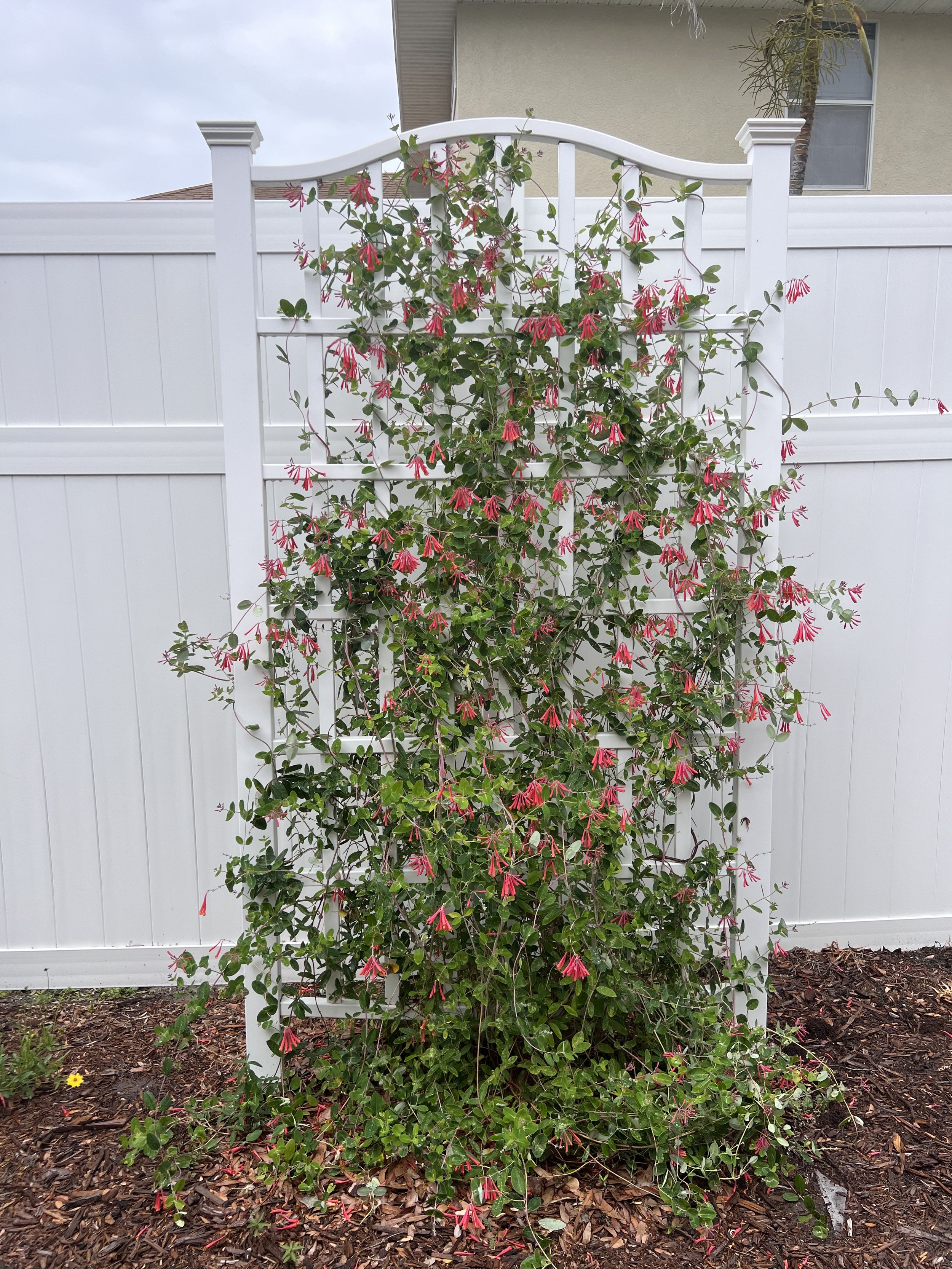
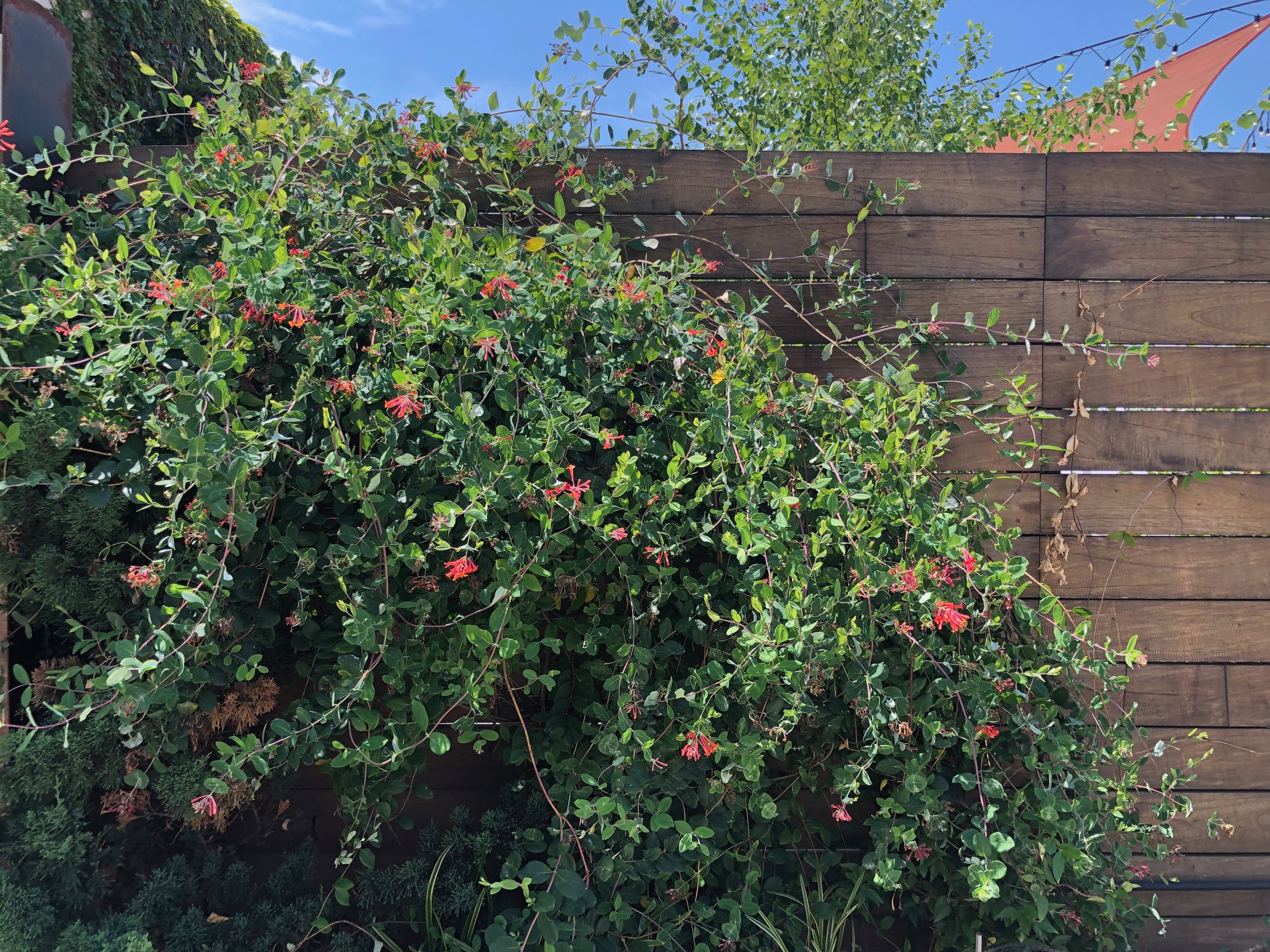
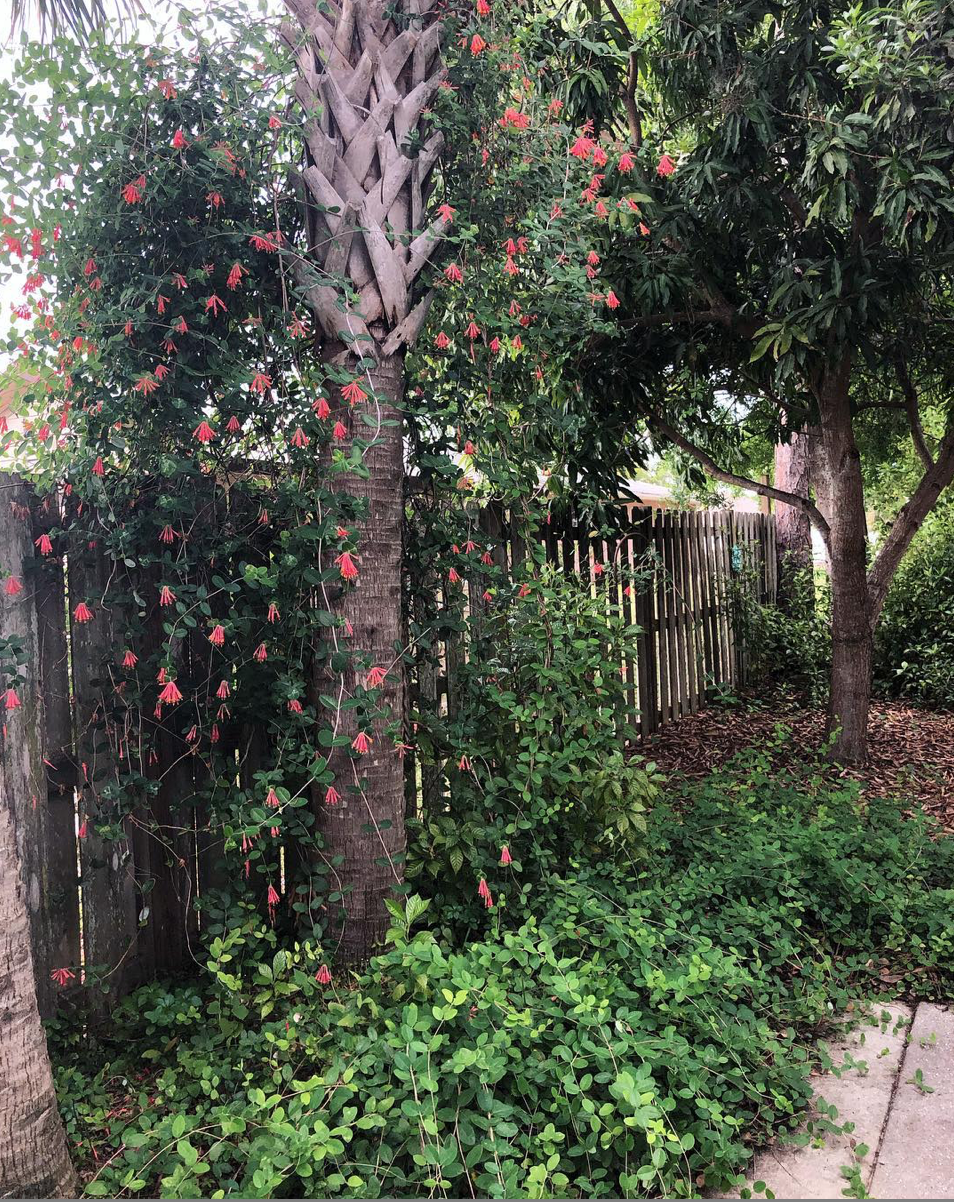
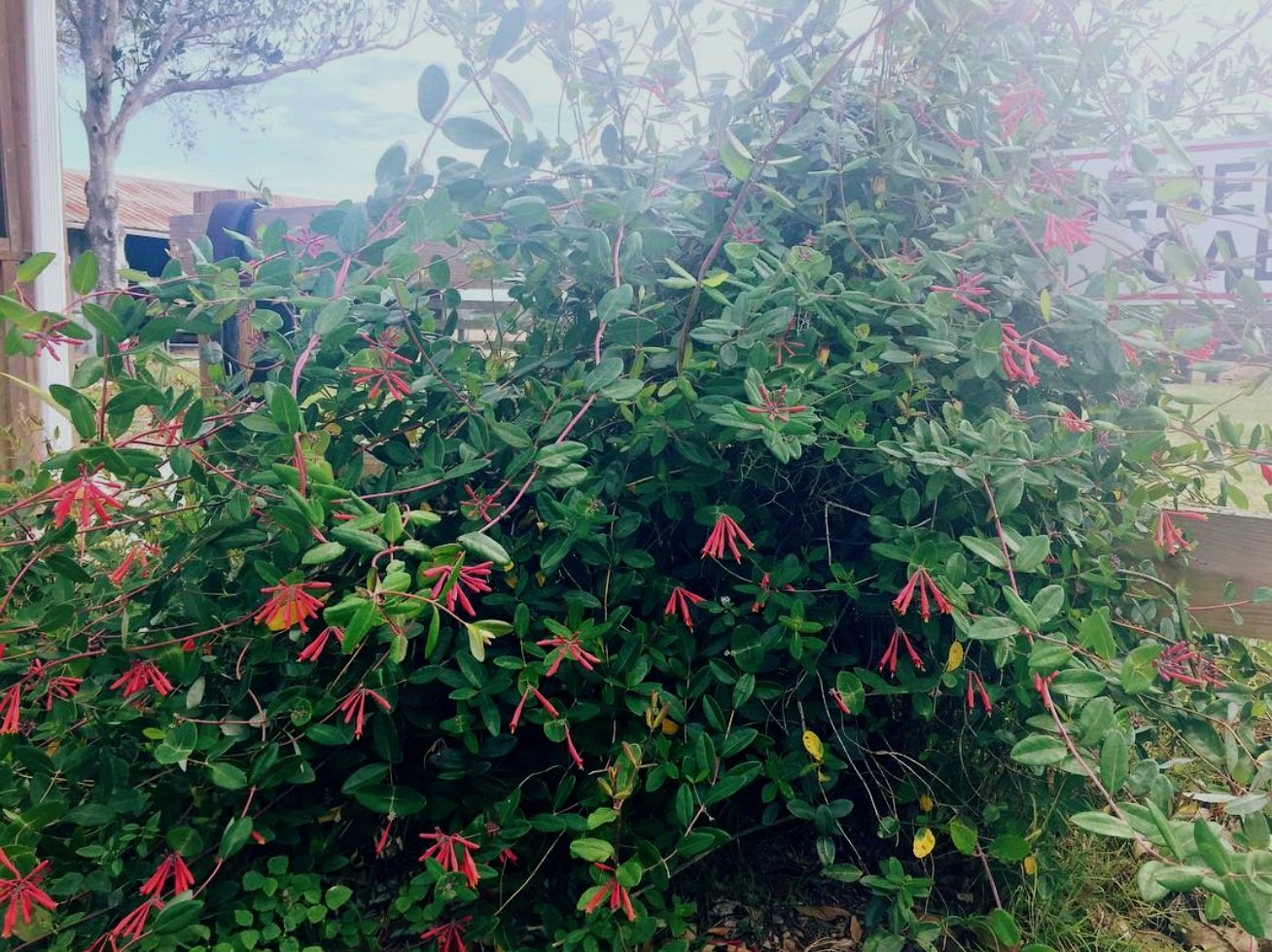
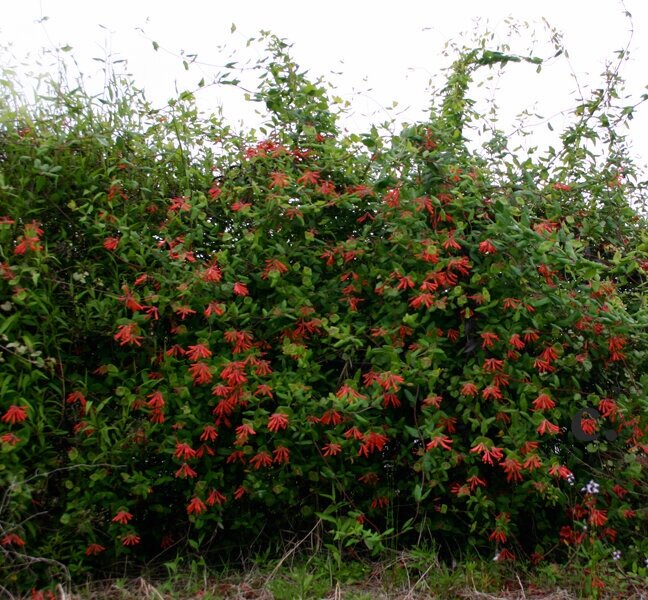
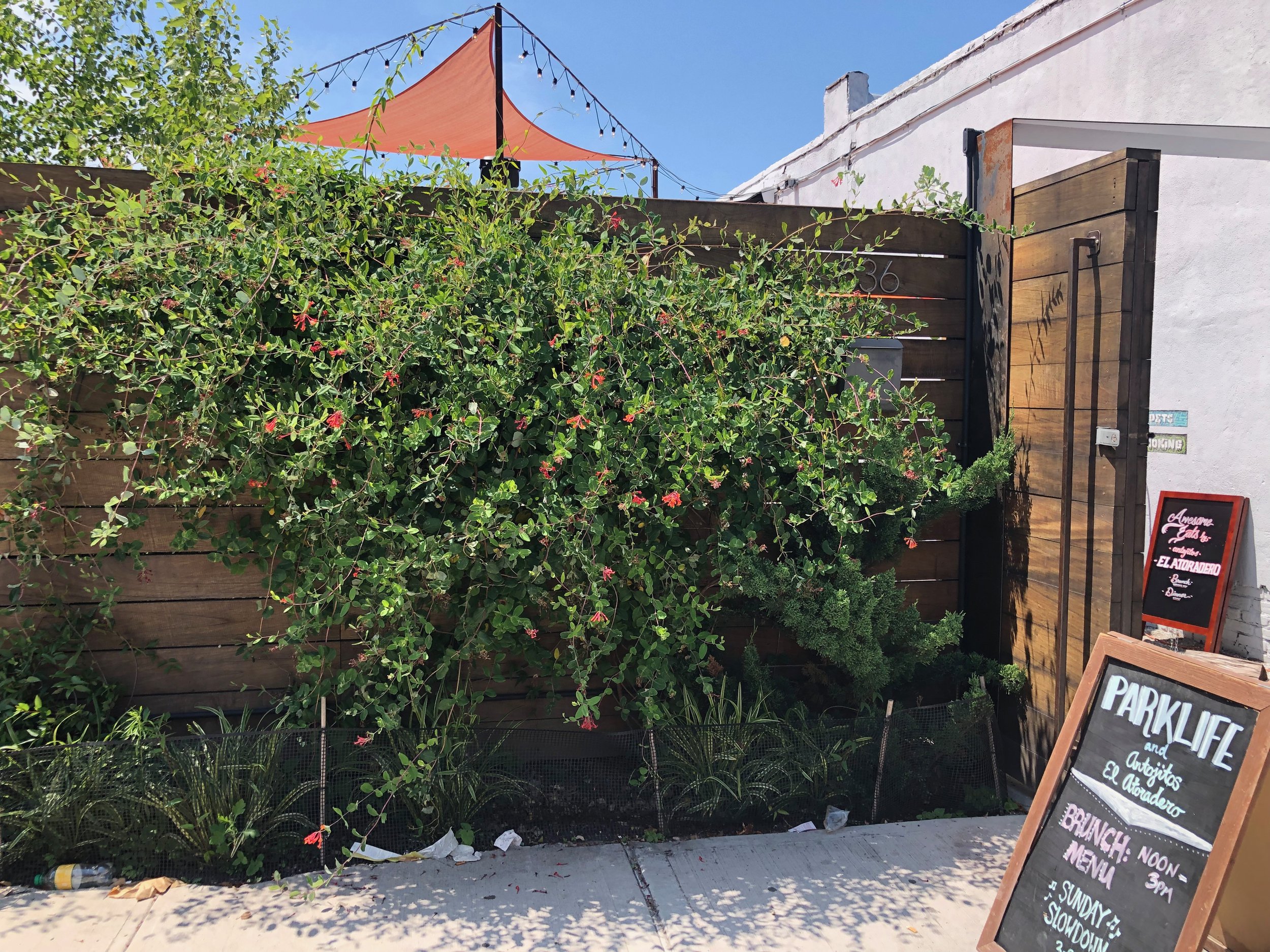
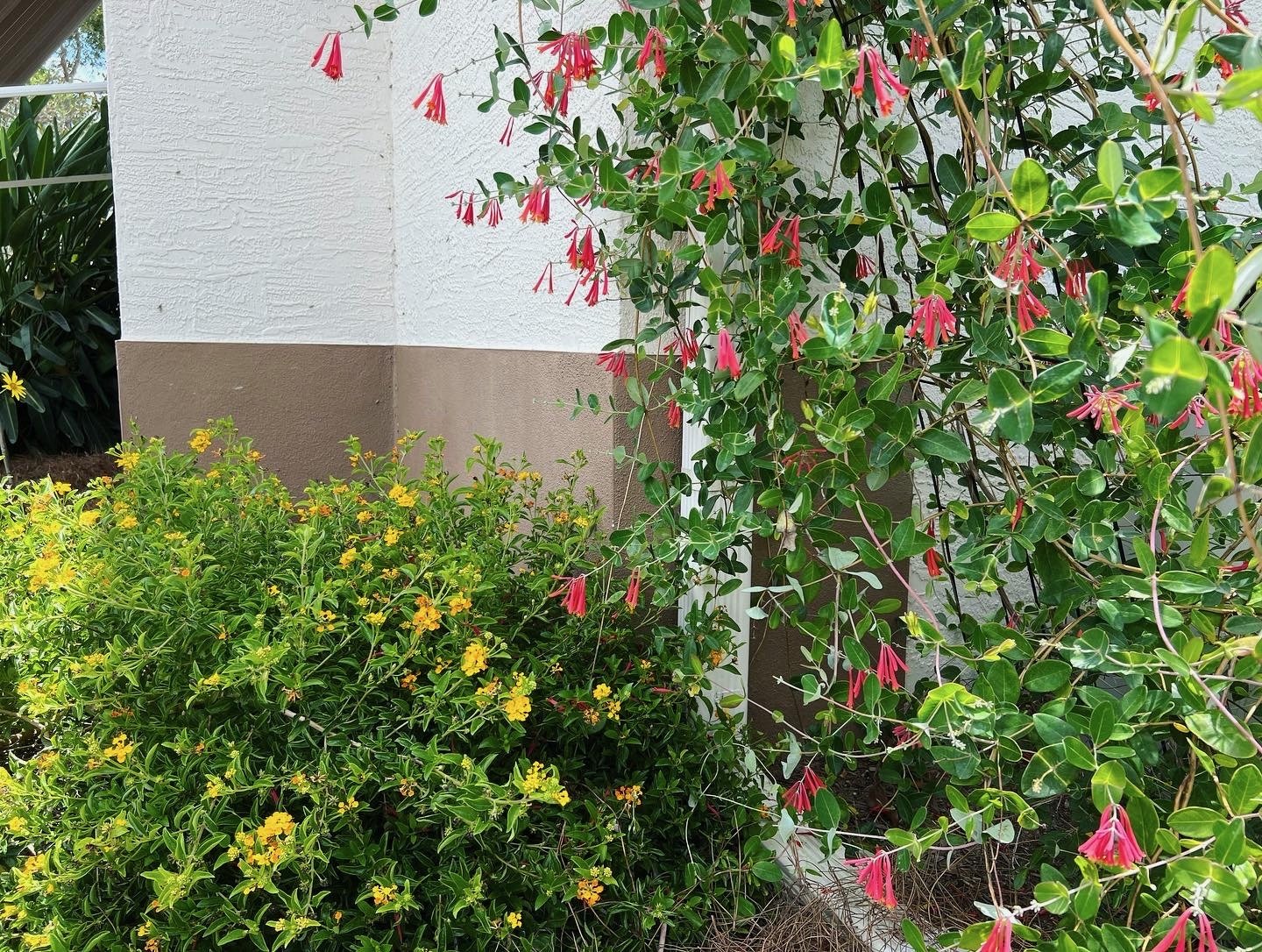
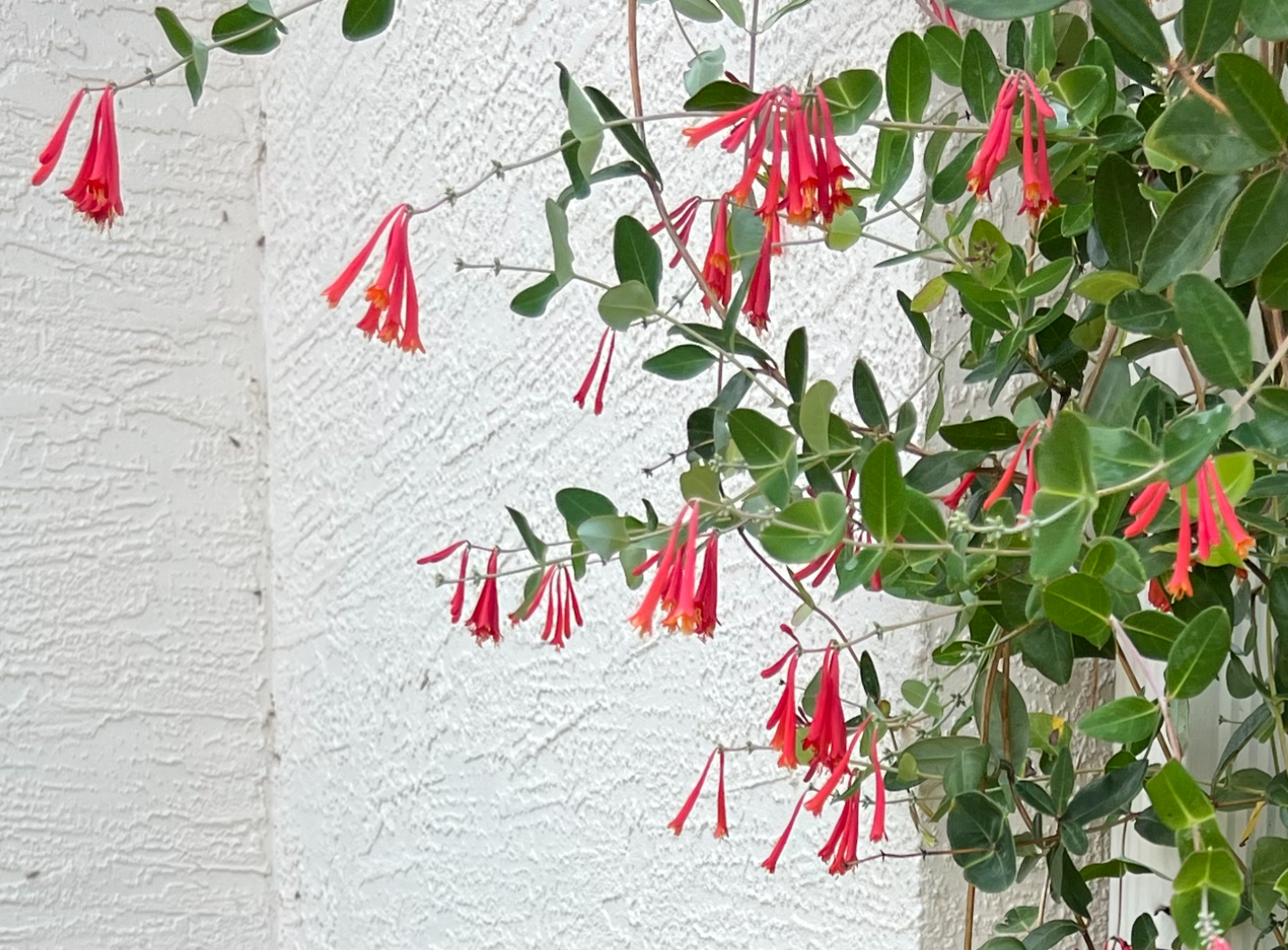
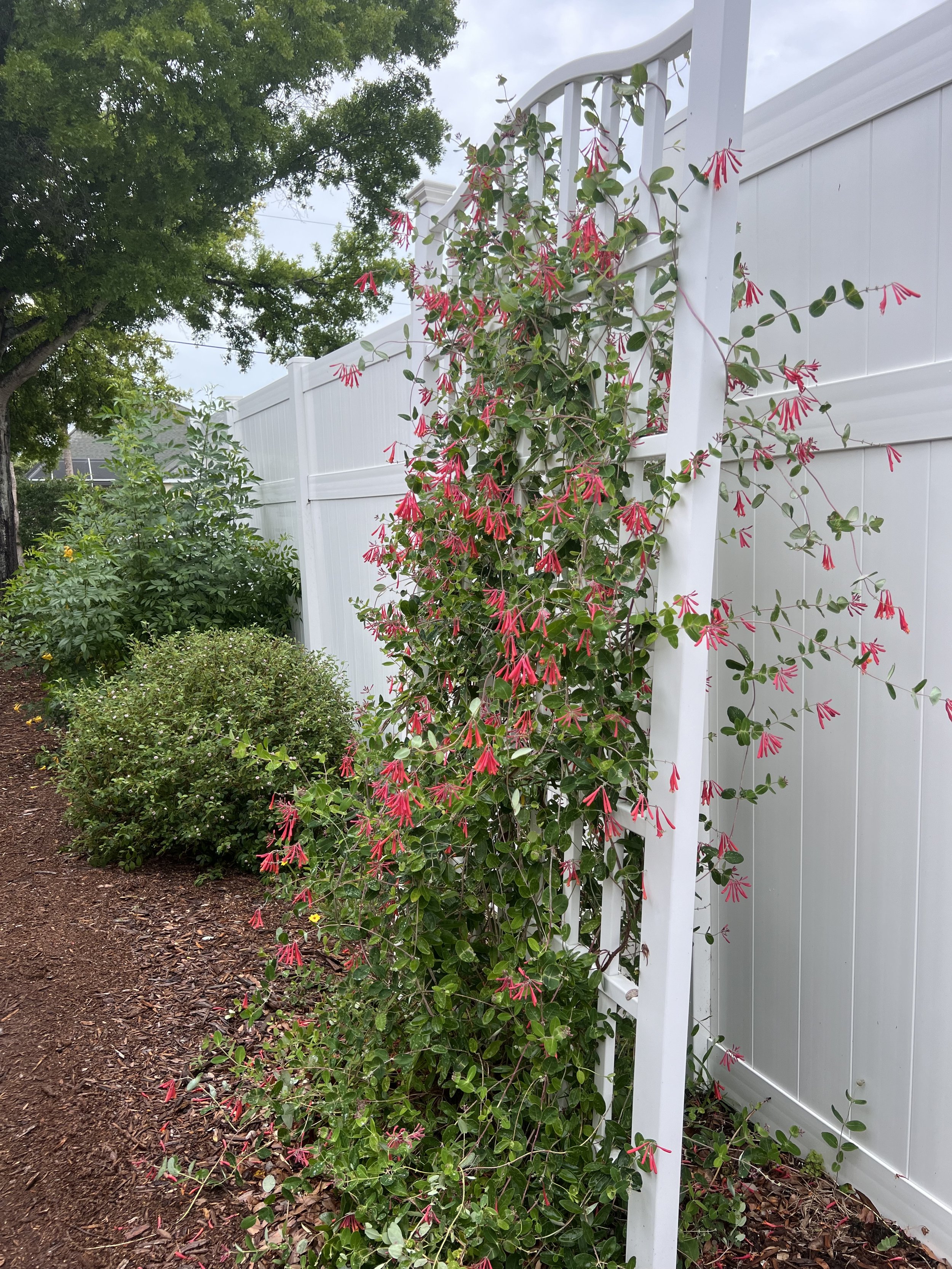
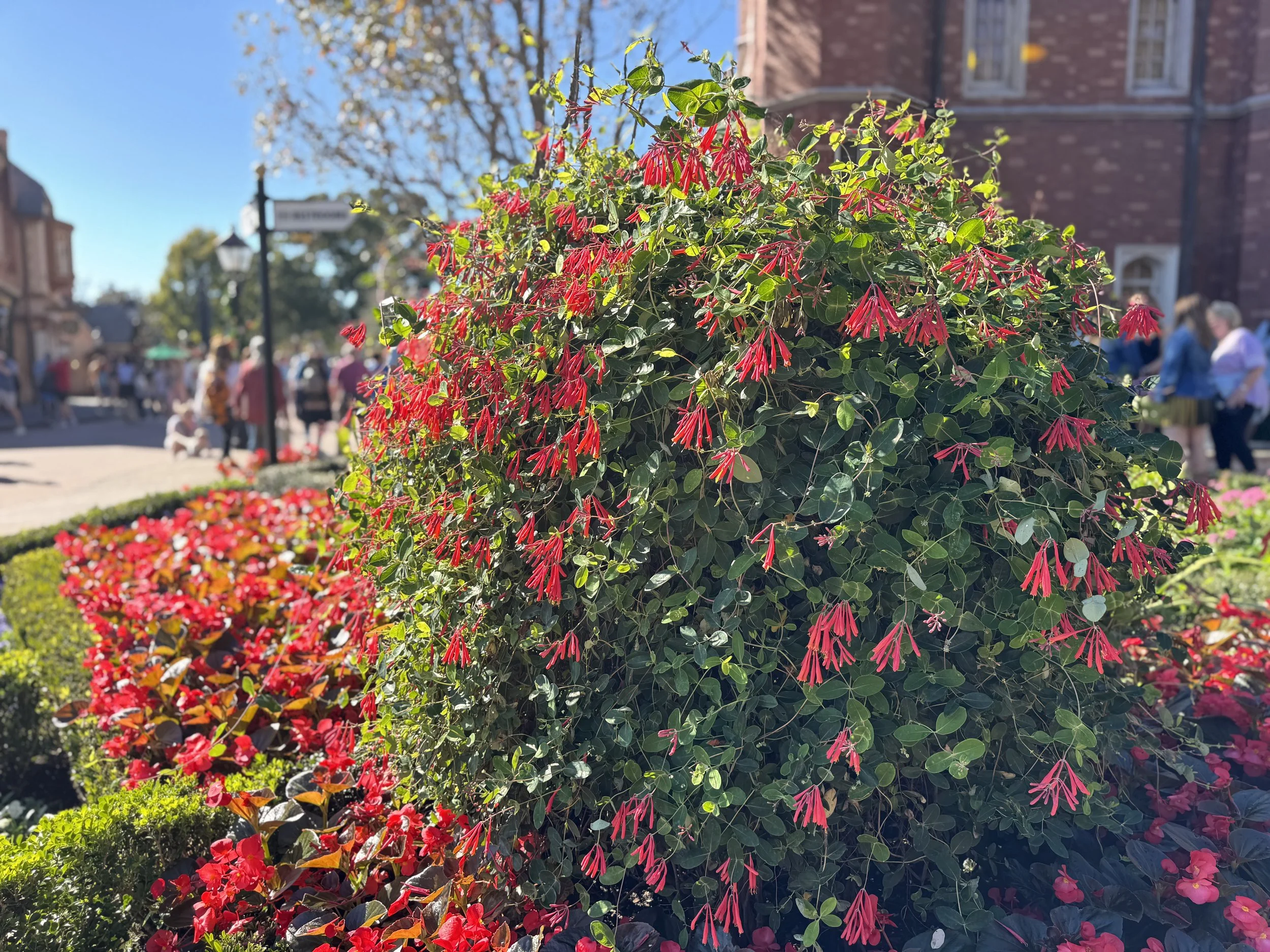
Lonicera sempervirens
Coral Honeysuckle is an easy-to-grow, well-behaved and showy native vine that stays green all year. It thrives in sun or partial shade. You can let it climb a fence, use it as a groundcover, or let it grow like a shrub. Its bright coral flowers bloom nearly year-round, making it a favorite for hummingbirds and butterflies.
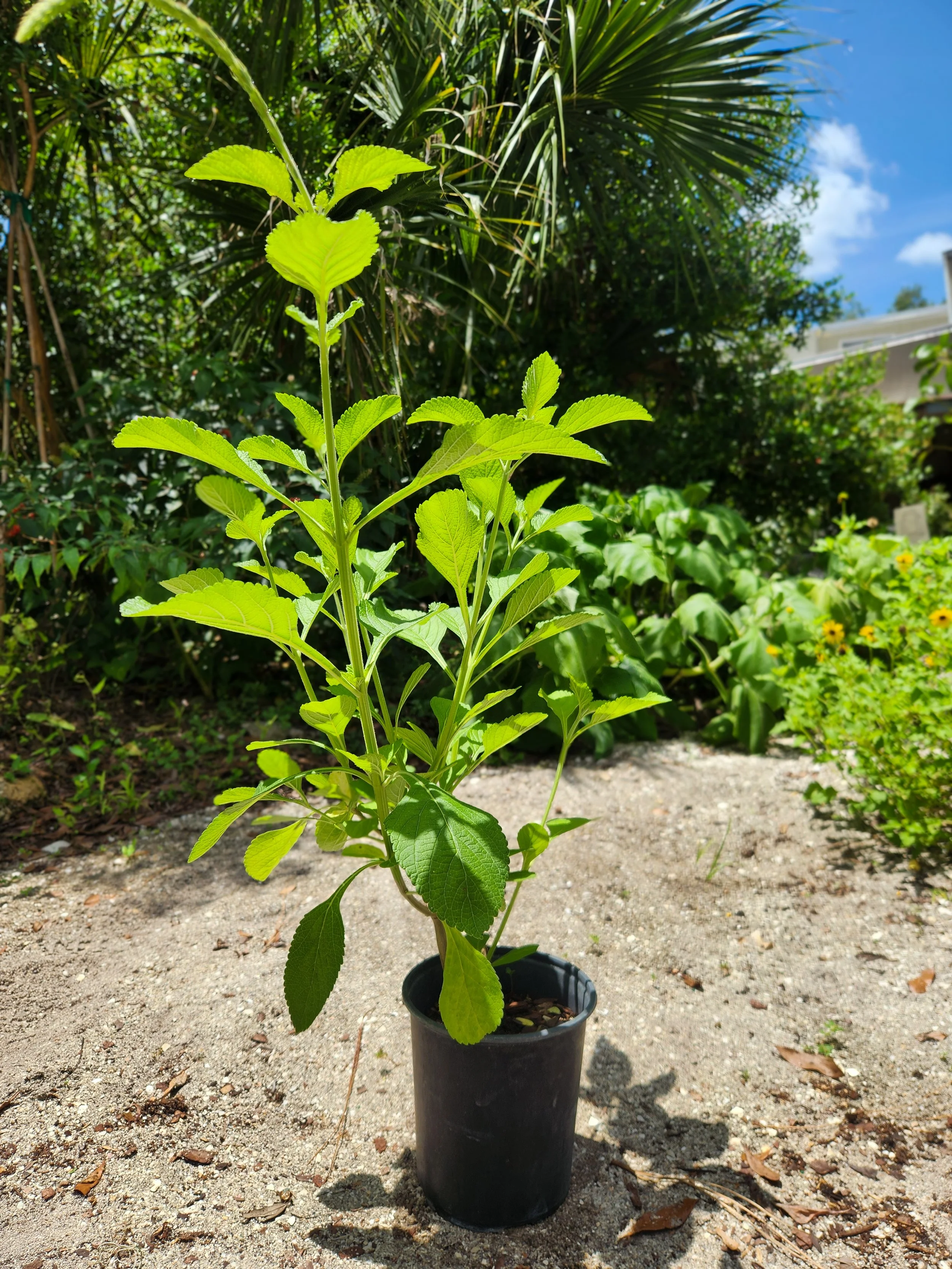
Stachytarpheta mutabilis
Coral Porterweed is a non-native, Florida-friendly fast-growing flowering shrub, growing 4’-6’ tall and 3’-5’ wide. They grow best in full sun to partial shade and average sandy soil, with moderate drought tolerance once they’re established. They bloom throughout the warm months, with salmon-colored bloom spikes that are highly attractive to hummingbirds, bees, and butterflies.
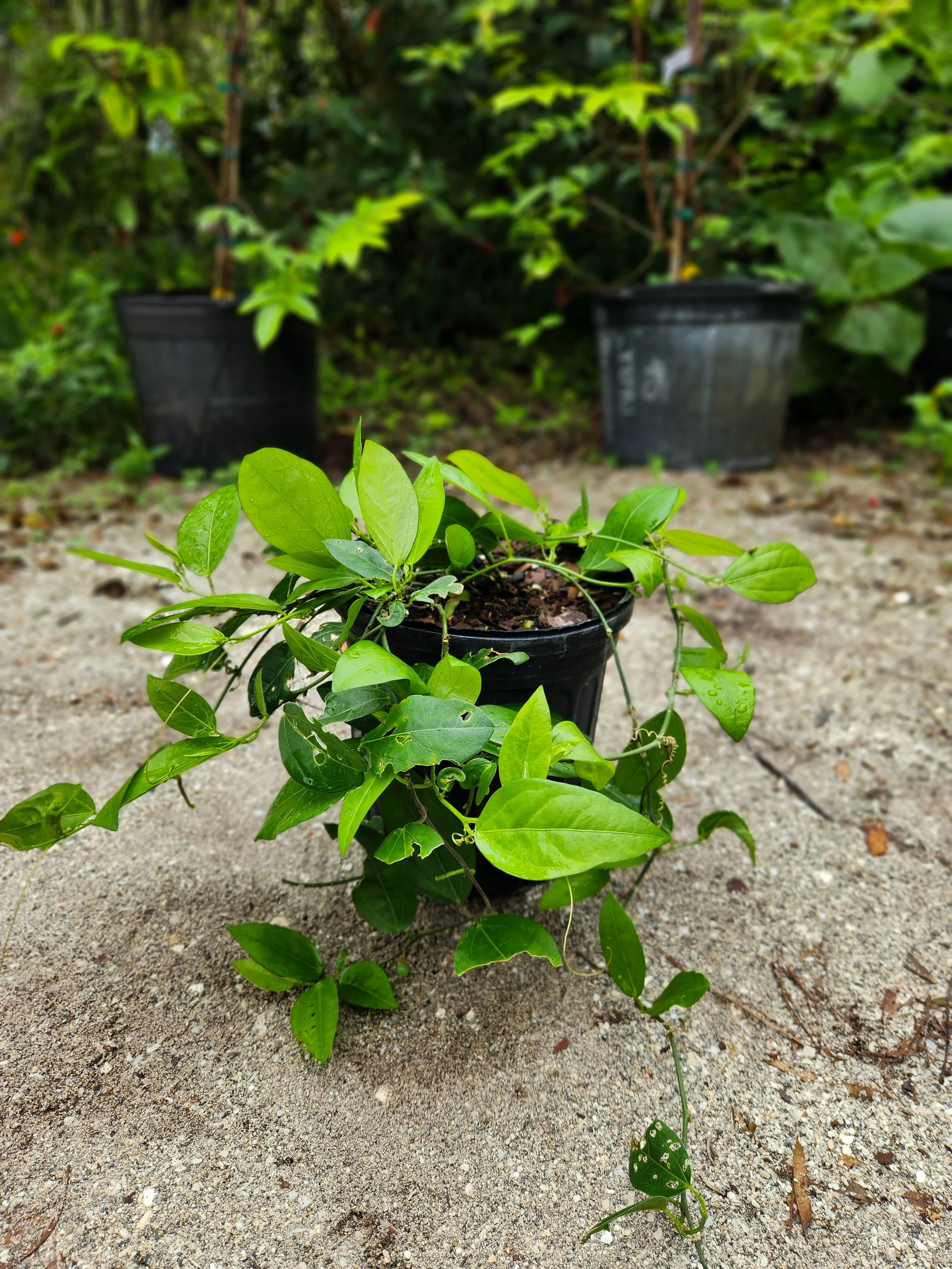
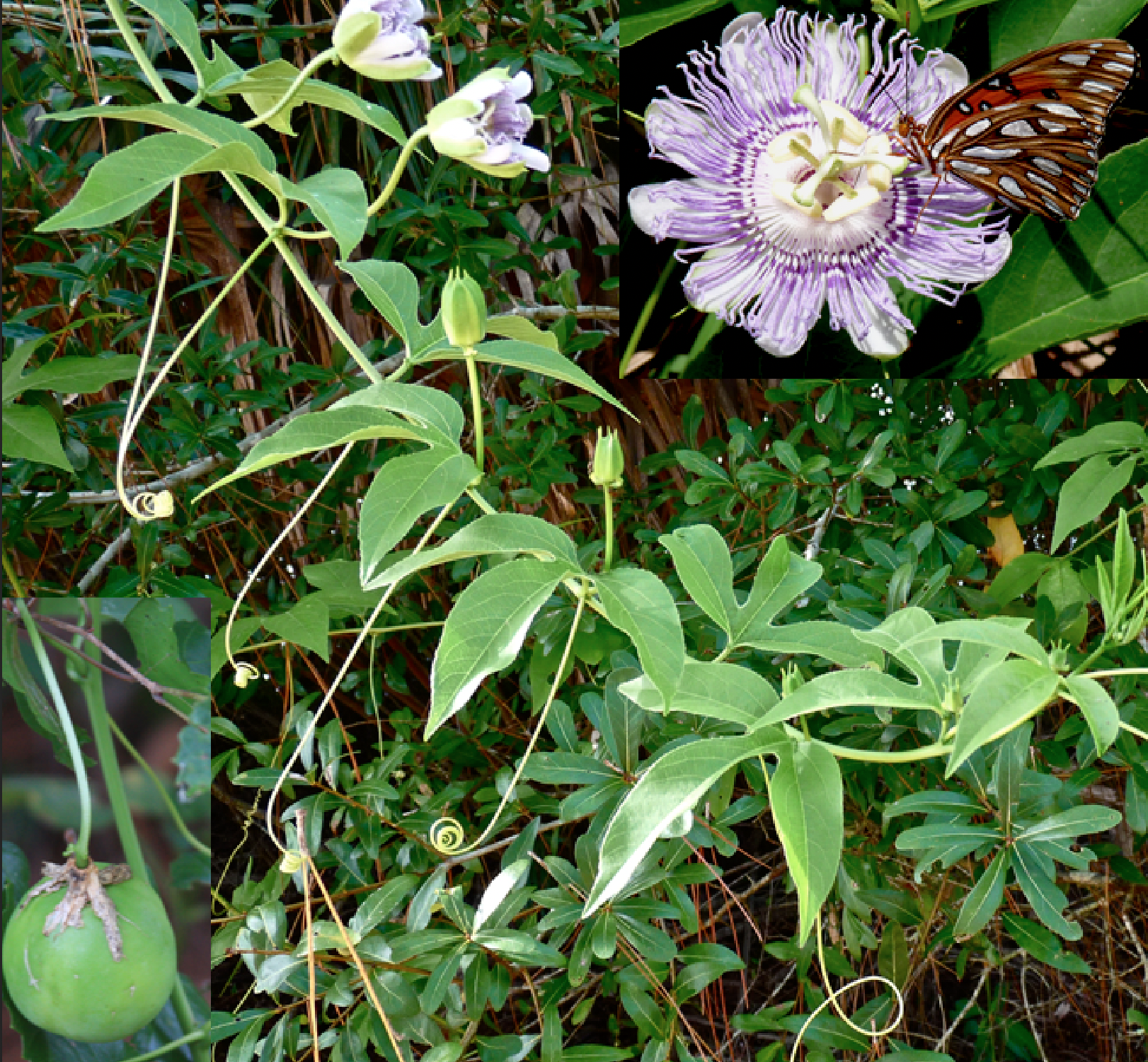
Passiflora suberosa
Corkystem Passionvine is a fast-growing, native, flowering vine that can grow to be 10’-15’ long with proper support. They can be grown in full sun, partial shade, or light shade and moist, well-drained, sandy, loamy, and limestone soils. They have small, greenish-yellow flowers for pollinators and dark berries that are loved by birds. They also serve as a host plant for Gulf Fritillary, Zebra Longwing, and Julia butterflies, making them an excellent option for pollinator and butterfly gardens.


Eryngium aquaticum
Corn Snakeroot is a standout plant that will call attention to your rain or bog garden. The showy blue flower spikes are are unique and can be used as cut flowers! This Eryngium is one of the best species to add to your moist pollinator garden as they attract the one of the most diverse numbers pollinators in the state.
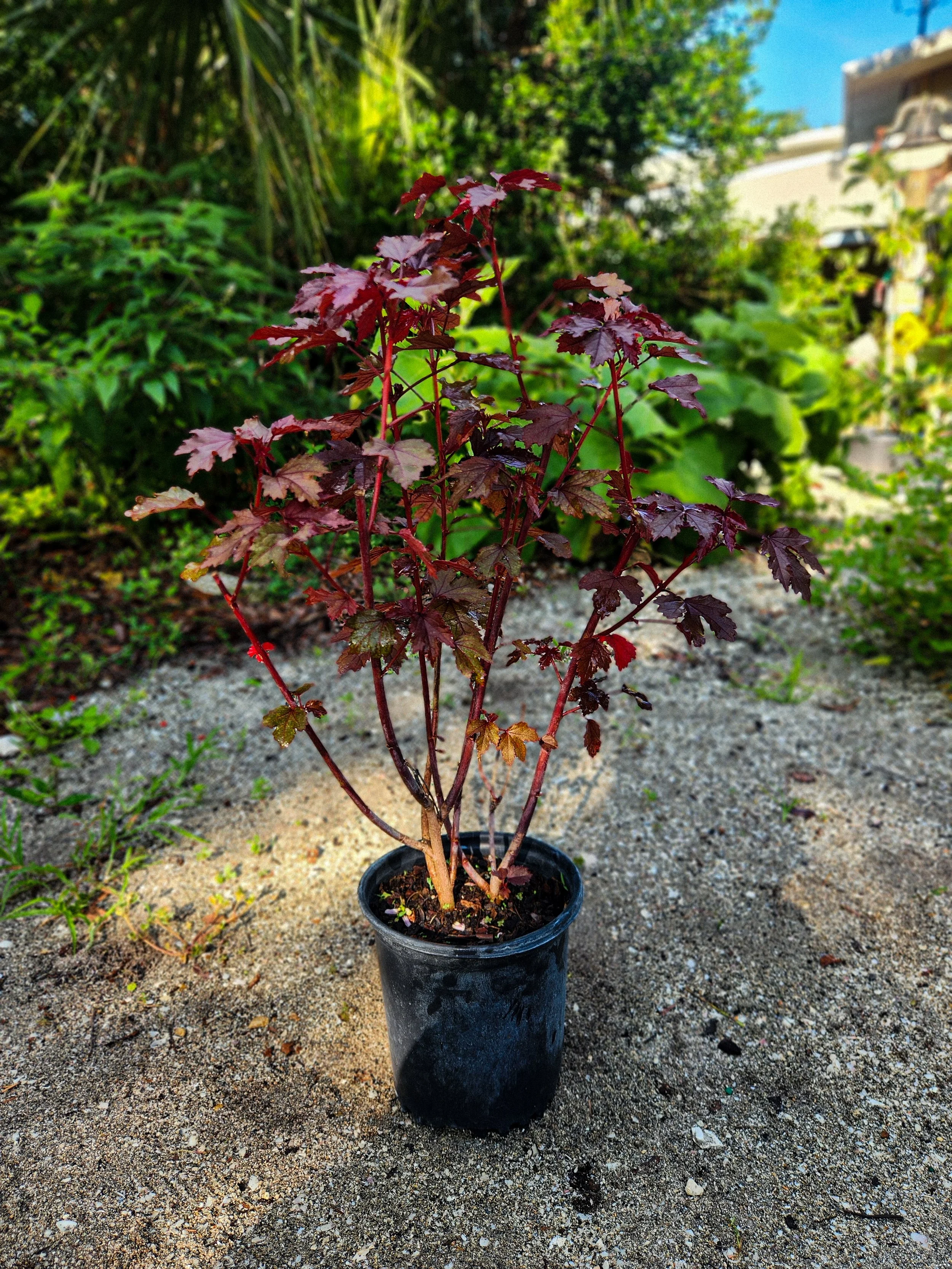
Hibiscus acetosella
Cranberry Hibiscus is a non-native, Florida-friendly flowering shrub that grows to be 3’-5’ tall. These fast-growing plants feature dark red stems, foliage, and flowers, making them a dramatic addition to gardens and landscapes. They grow best in full sun and loose, rich organic soil. In addition to bringing in butterflies, pollinators, and hummingbirds, their flowers are edible for humans, and can be used to make teas, along with the young leaves.
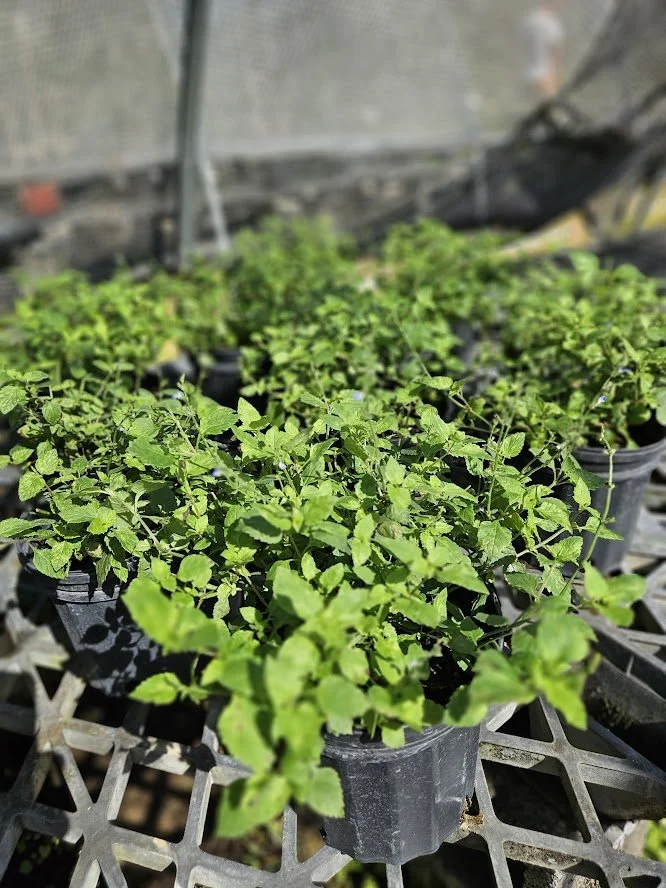
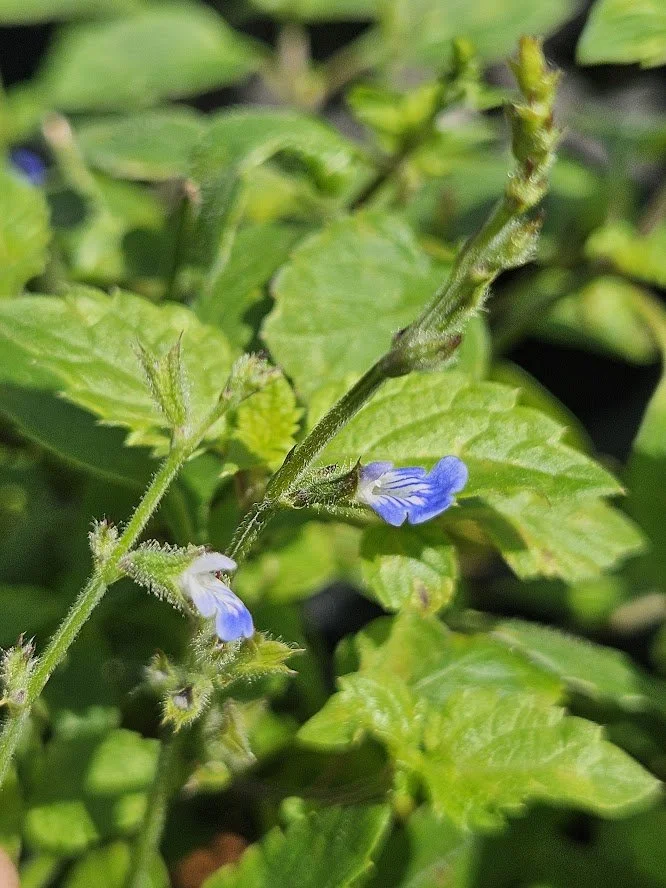
Salvia misella
Creeping Sage is a low-growing perennial native to Florida that forms dense, aromatic ground cover mats. This species produces small blue flowers and thrives in well-drained, average to dry soils. It serves as an excellent choice for planting between shrubs and trees as it prefers dappled sunlight to full shade.
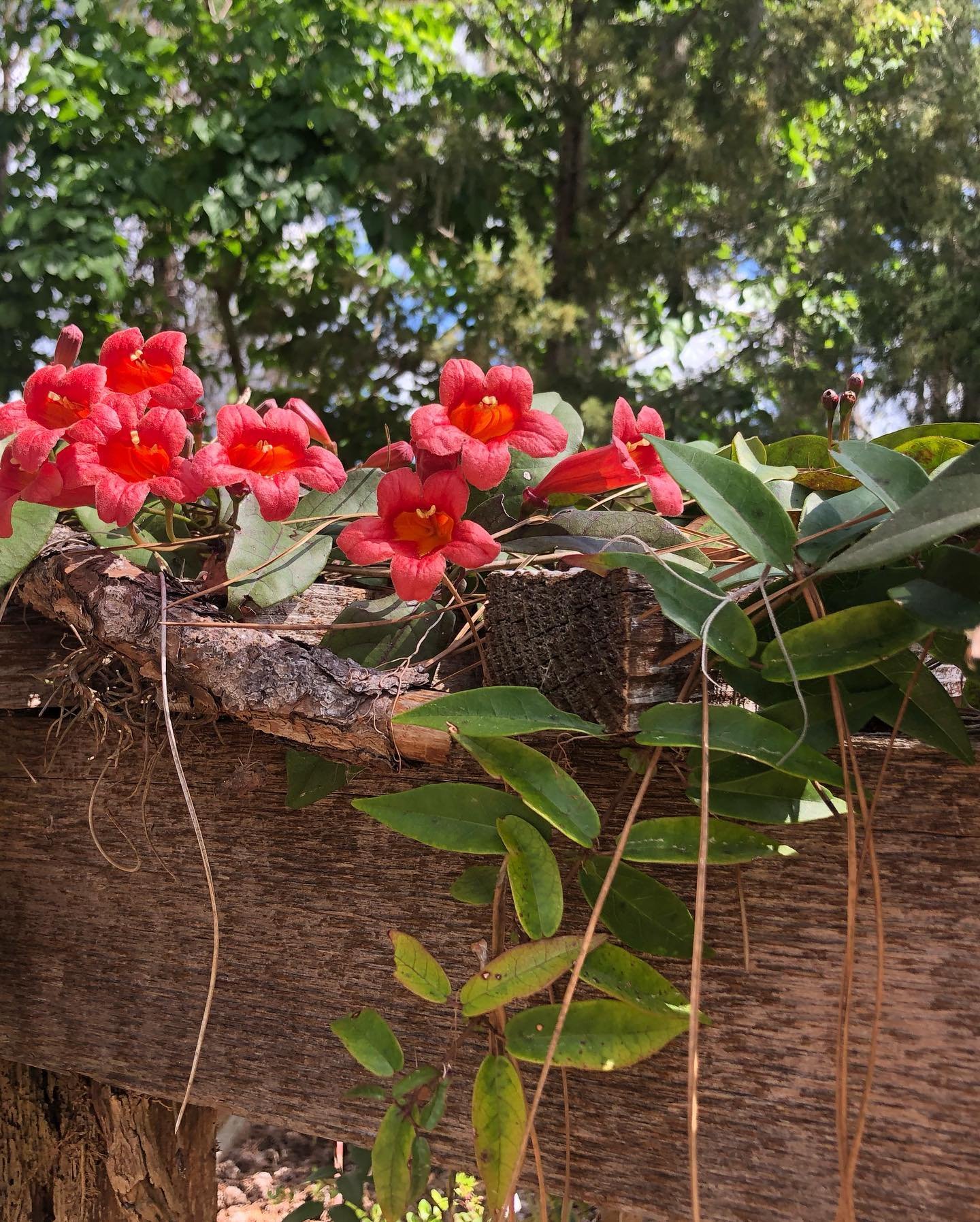
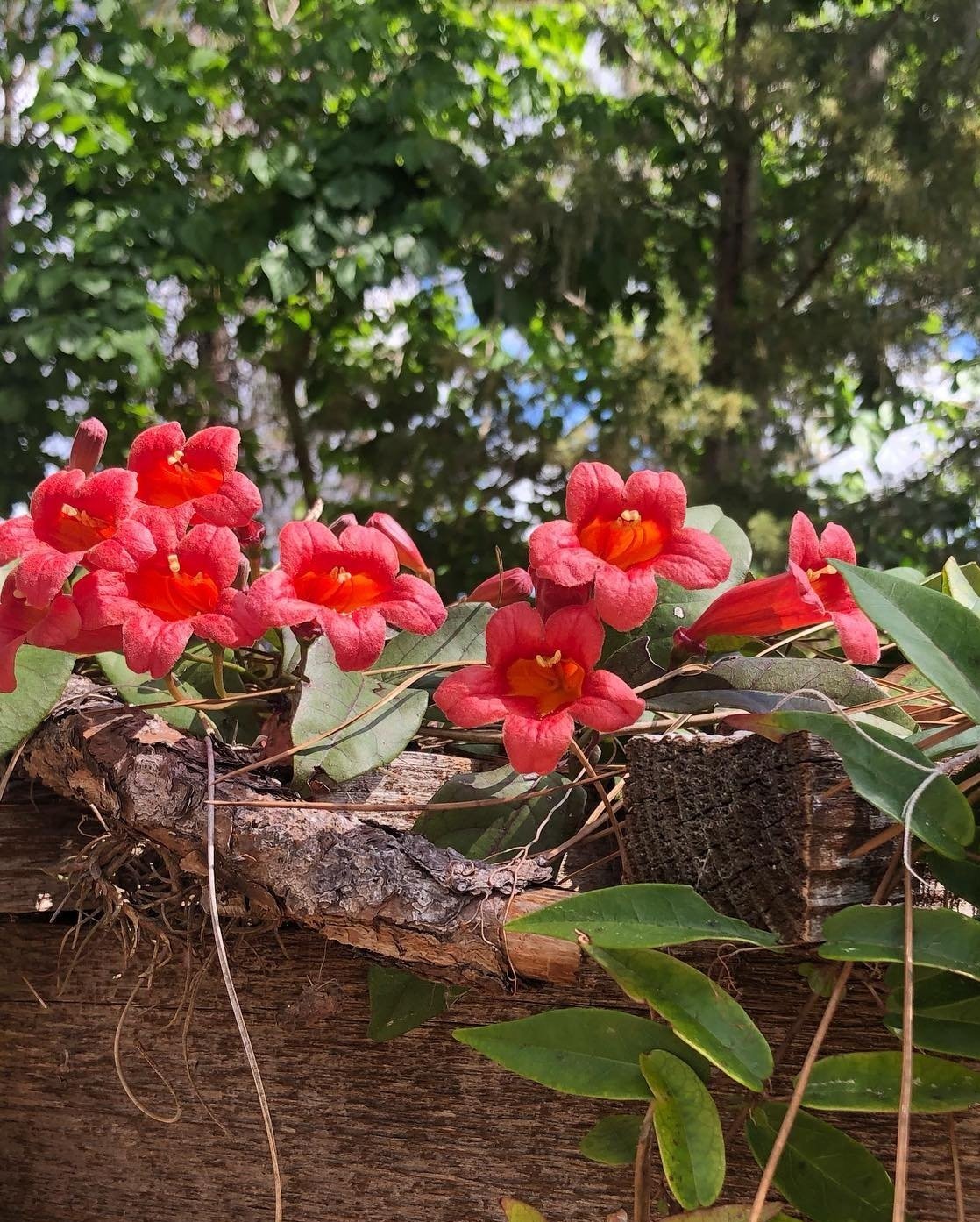
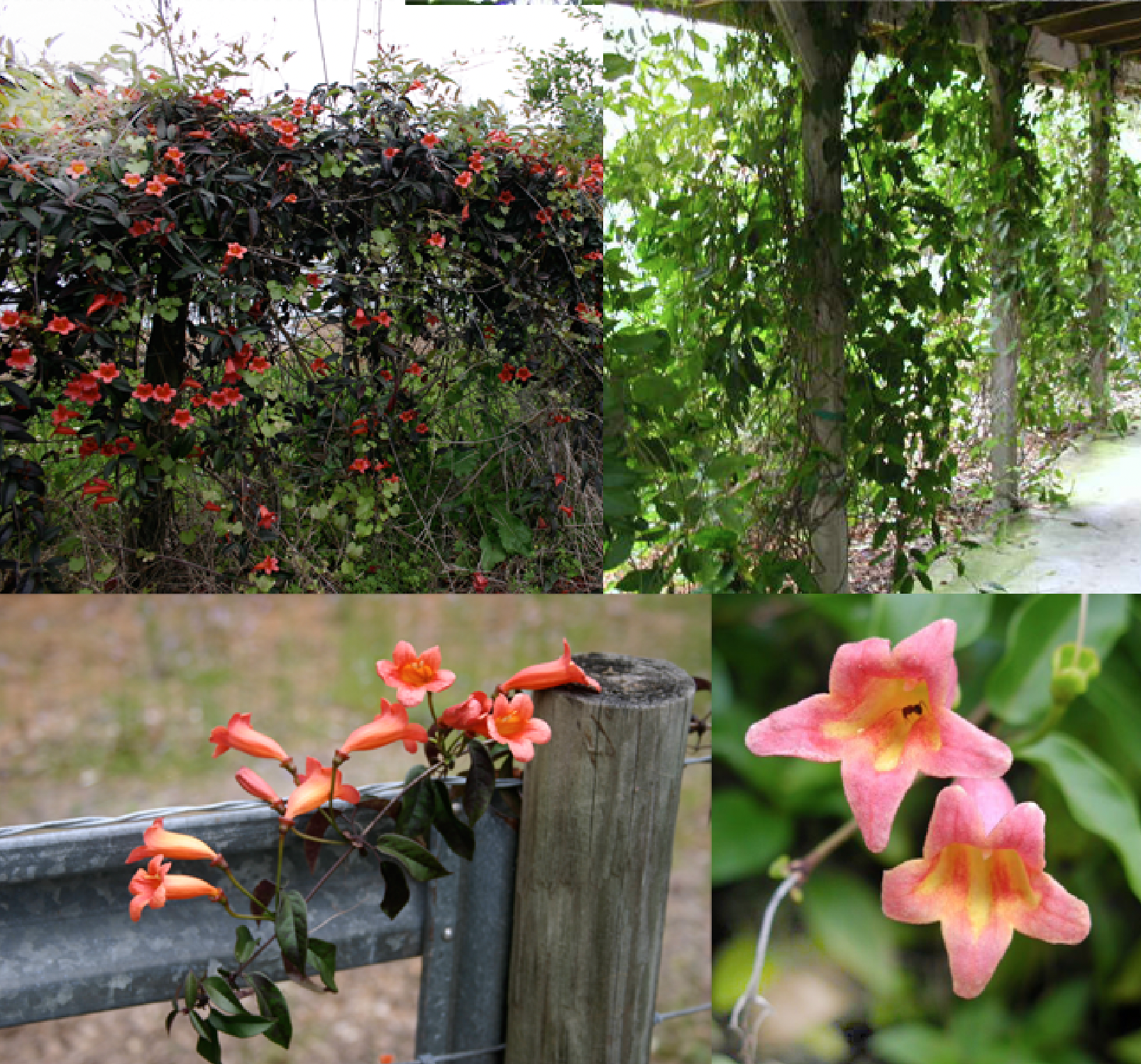
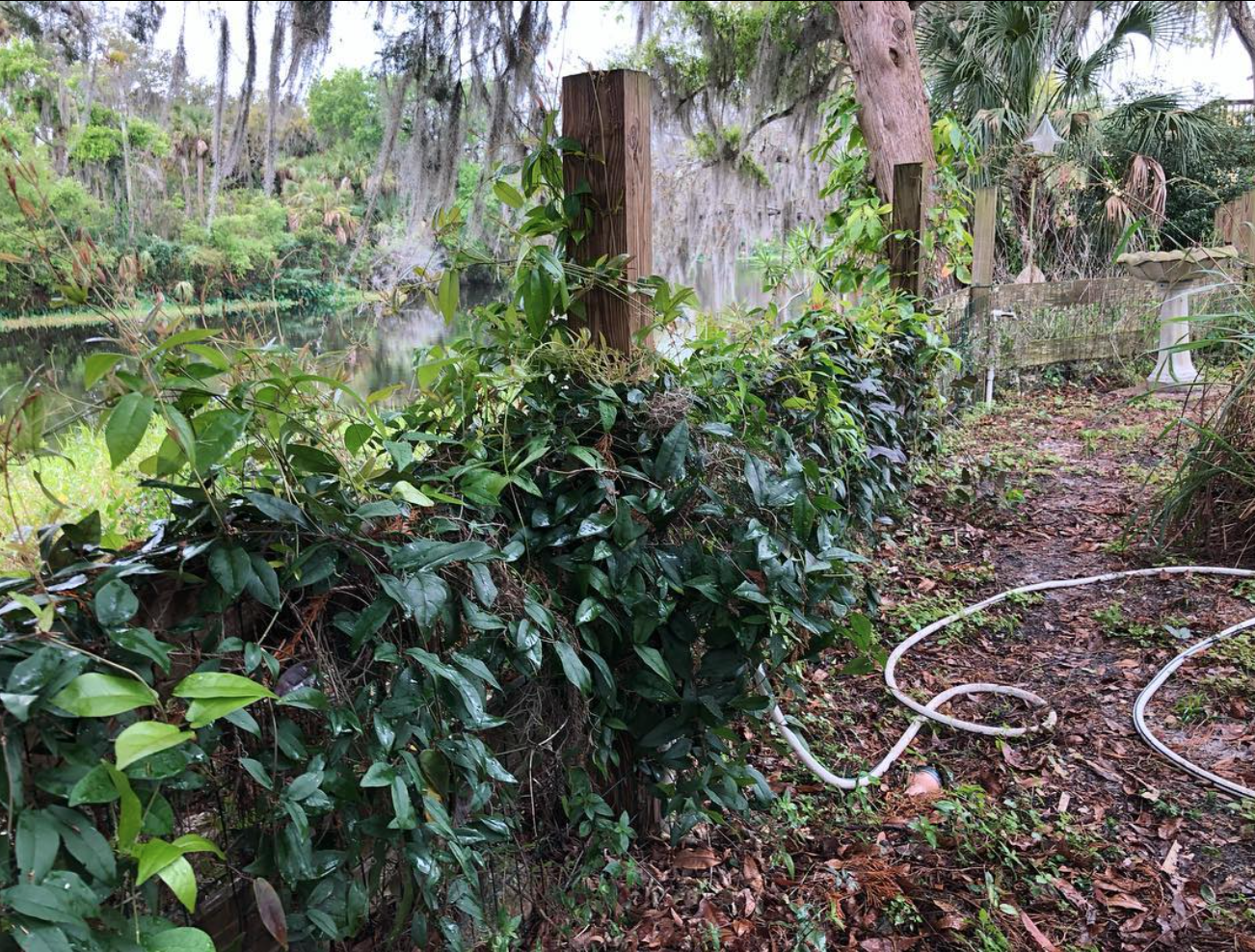
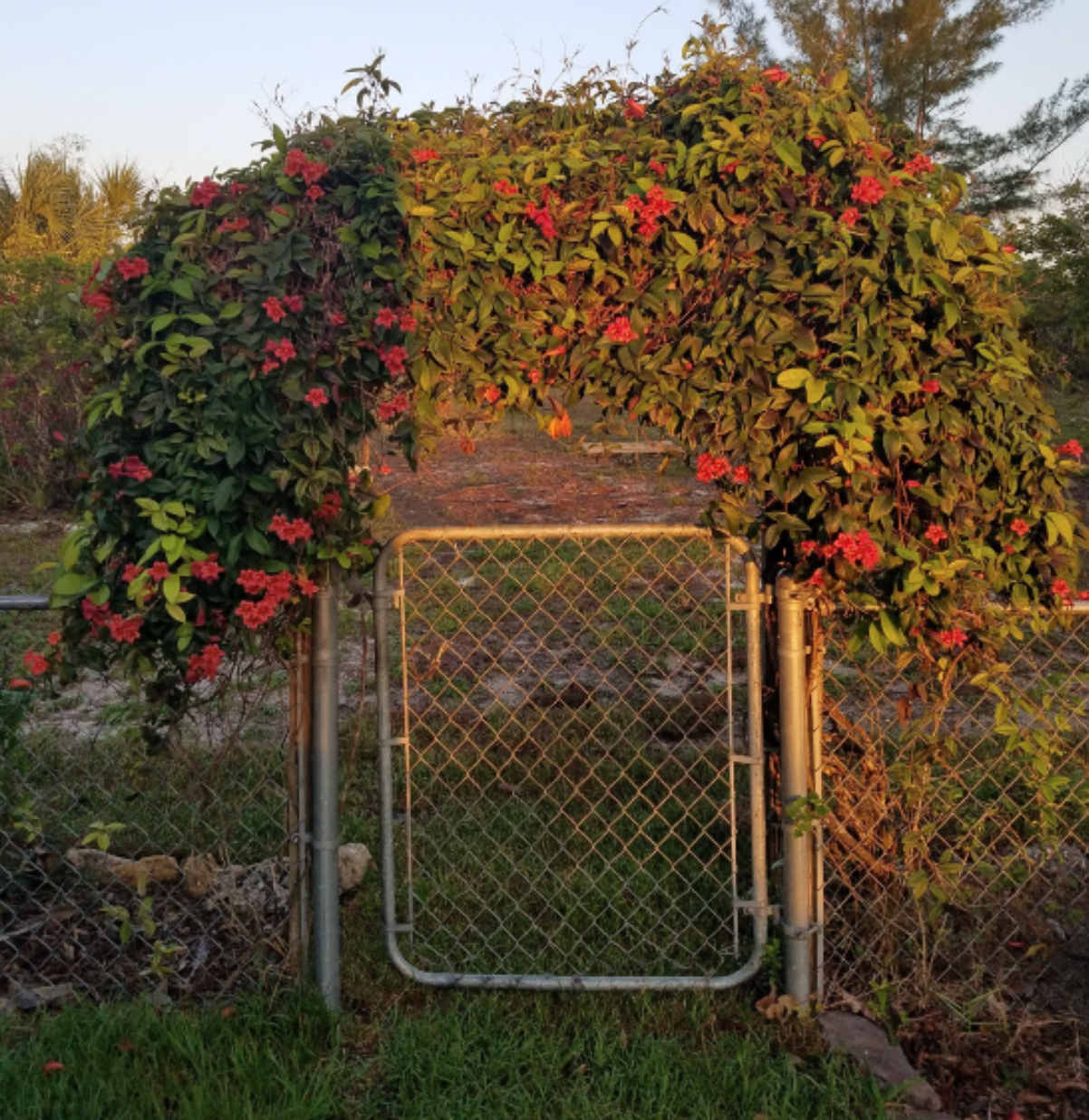
Bignonia capreolata
Crossvine is a perennial, evergreen vine that can bloom late winter through spring through mid summer. Crossvine’s red tubular flowers are an important food source for hummingbirds but also attracts butterflies and other pollinators. It can be grown in full shade or full sun, is cold hardy, drought tolerant and prefers moist soils that are well-drained. It can be controlled if planted on a trellis or in an large container, but can also be planted at the base of large trees like native Live Oak to add flowers to the tree branches and protection for songbirds from birds of prey.
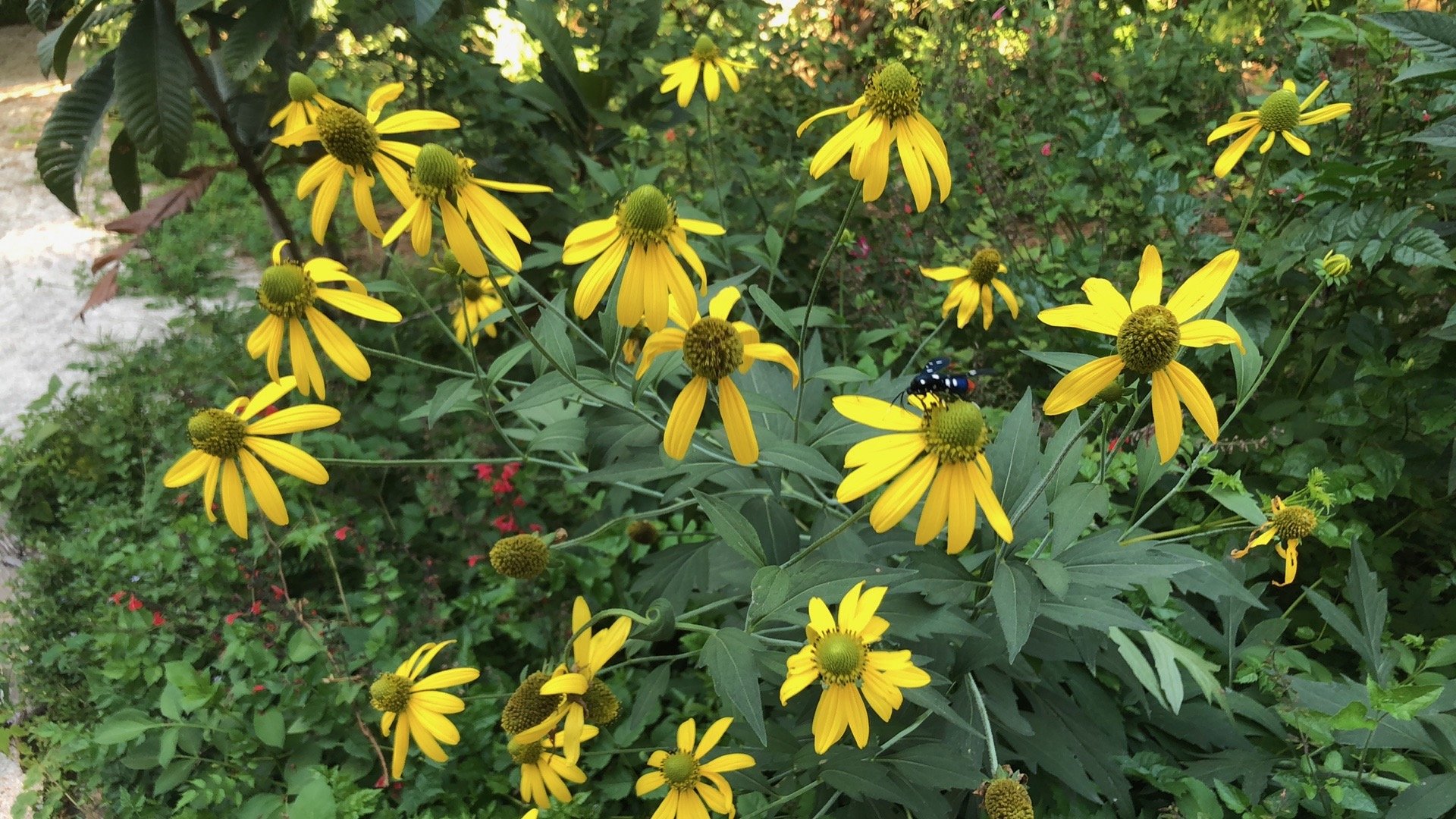
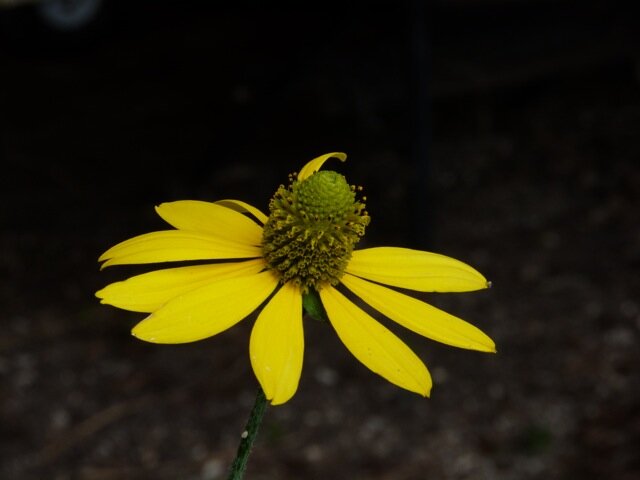
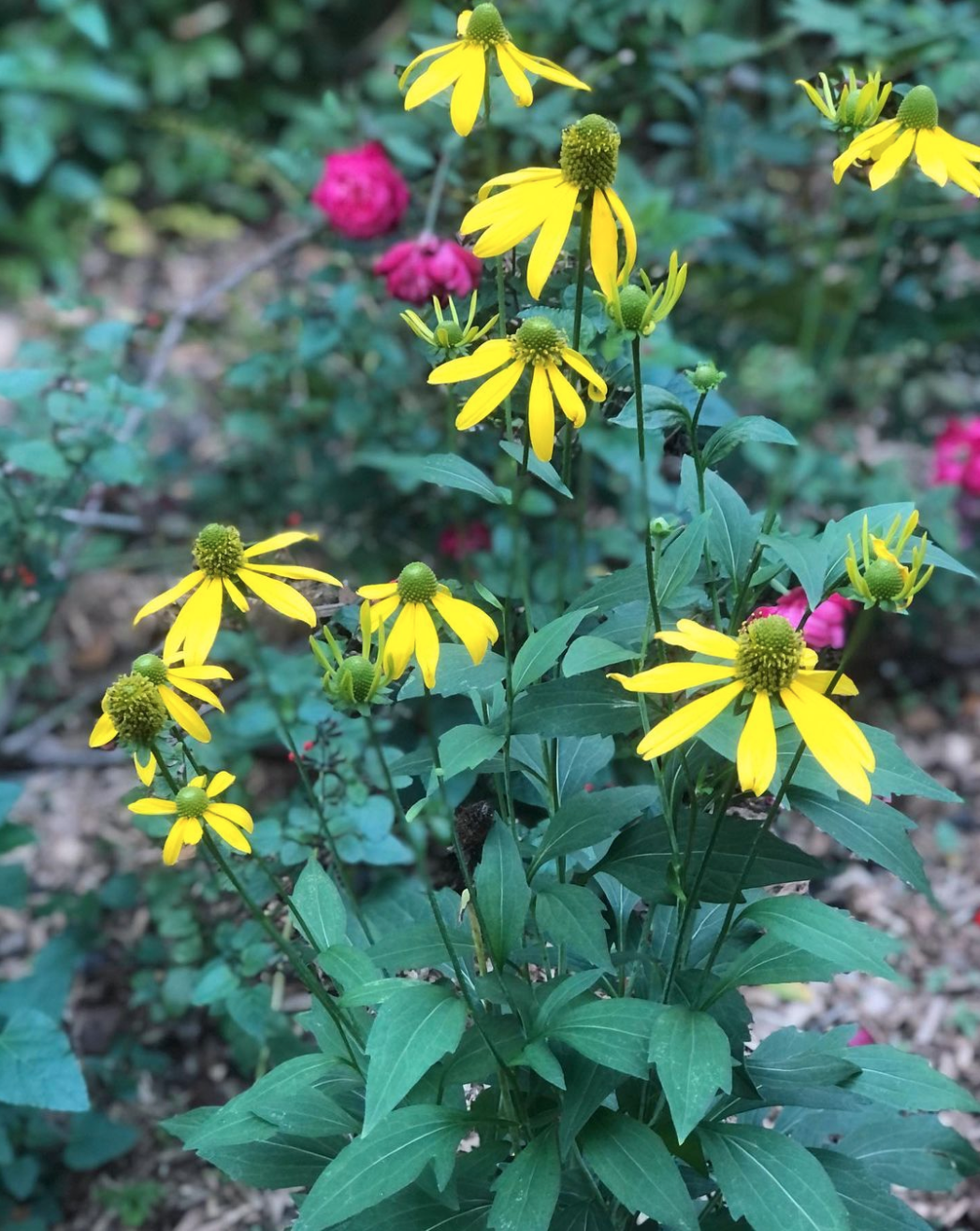
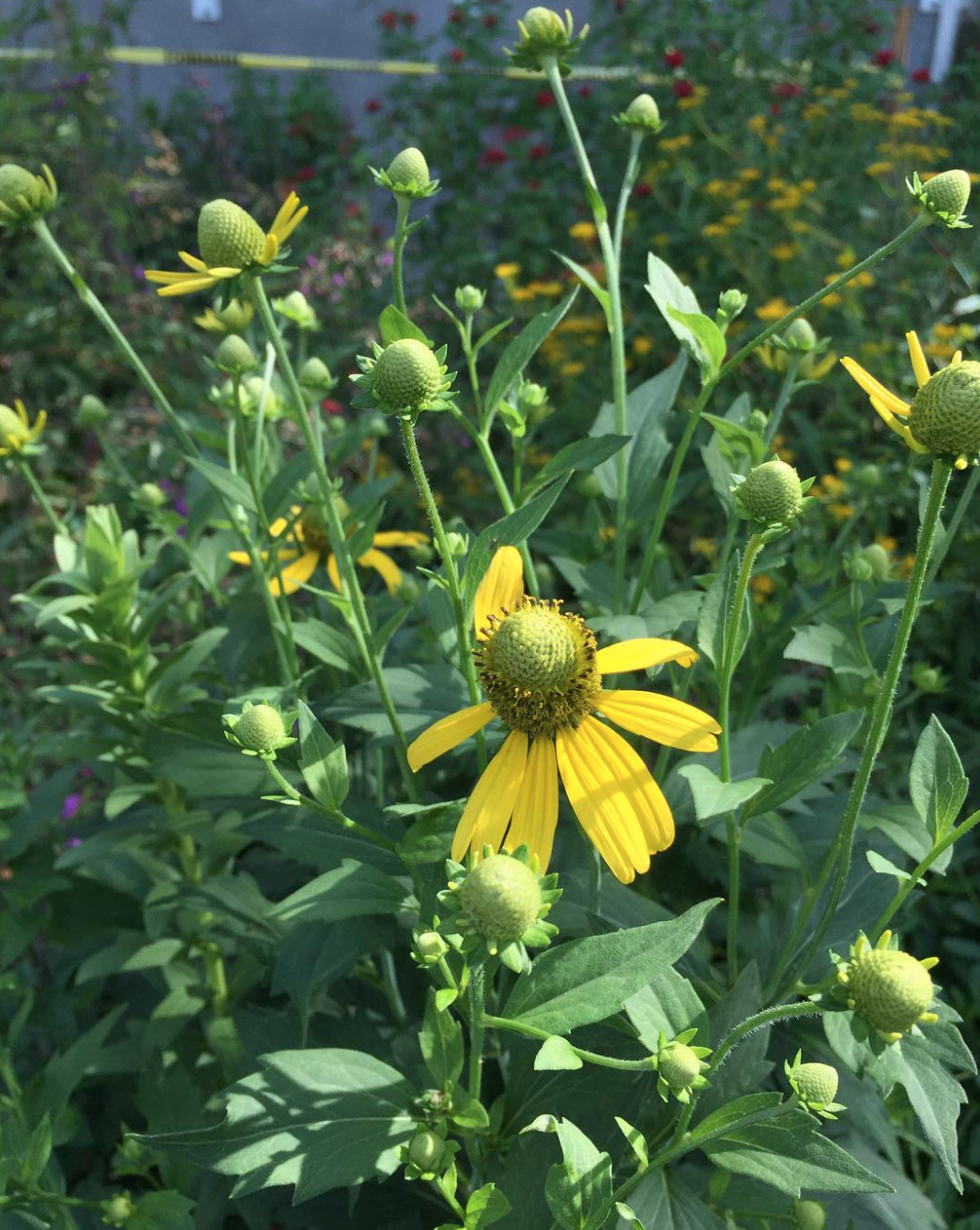
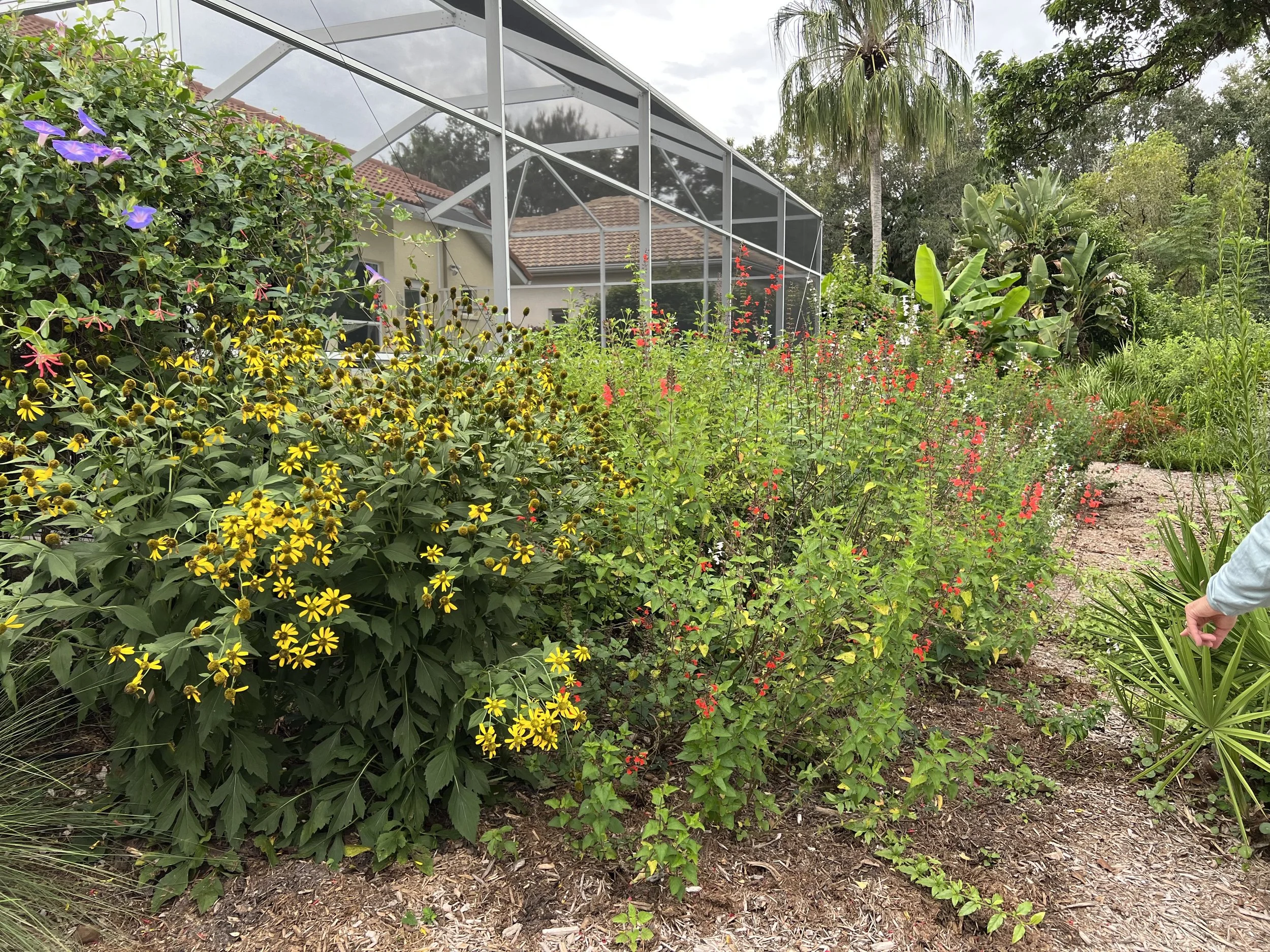
Rudbeckia laciniata
A cold-hardy, reseeding perennial that thrives in light shade to shade. It is easily identified by its unique, deeply dissected basal leaves and bright yellow flowers with distinct green centers. Reaching 2–3 feet in height, it blooms from summer through fall, providing a consistent source of nectar for butterflies and other pollinators. It prefers average to moist soil, making it a great addition to slightly damper or shadier spots in the landscape.
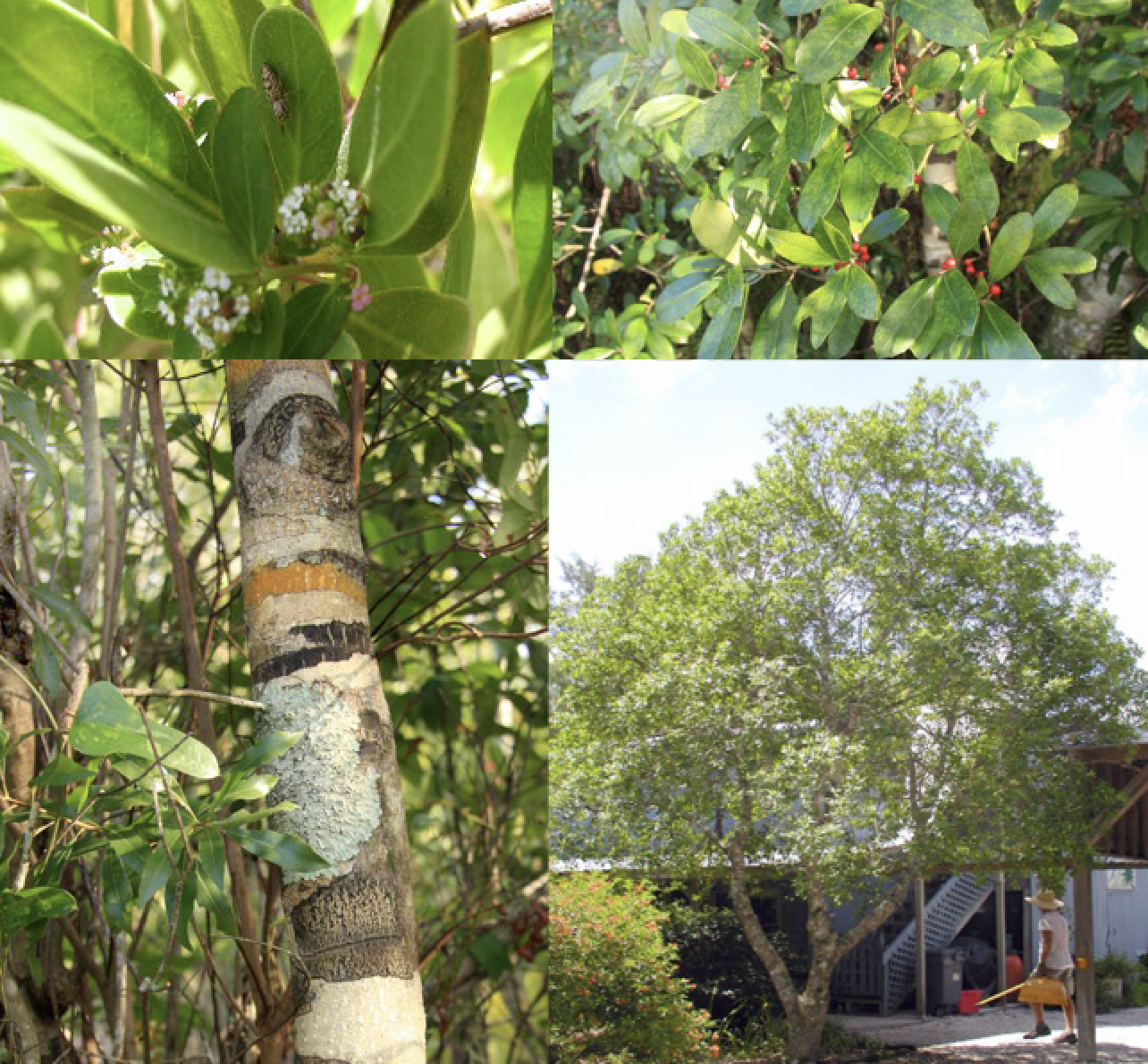
Ilex cassine
Dahoon Holly is a native, evergreen tree, with heights ranging from 20-30ft and it grows best in full sun to partial shade with moist, clay, loamy, or sandy soils. While they are moderately drought tolerant, they may need irrigation in dry, sandy conditions. Moderately salt-spray tolerant. Their foliage is dark green, with clumps of white flowers in spring that are replaced by red berries in fall and winter that provide food for birds and small mammals.
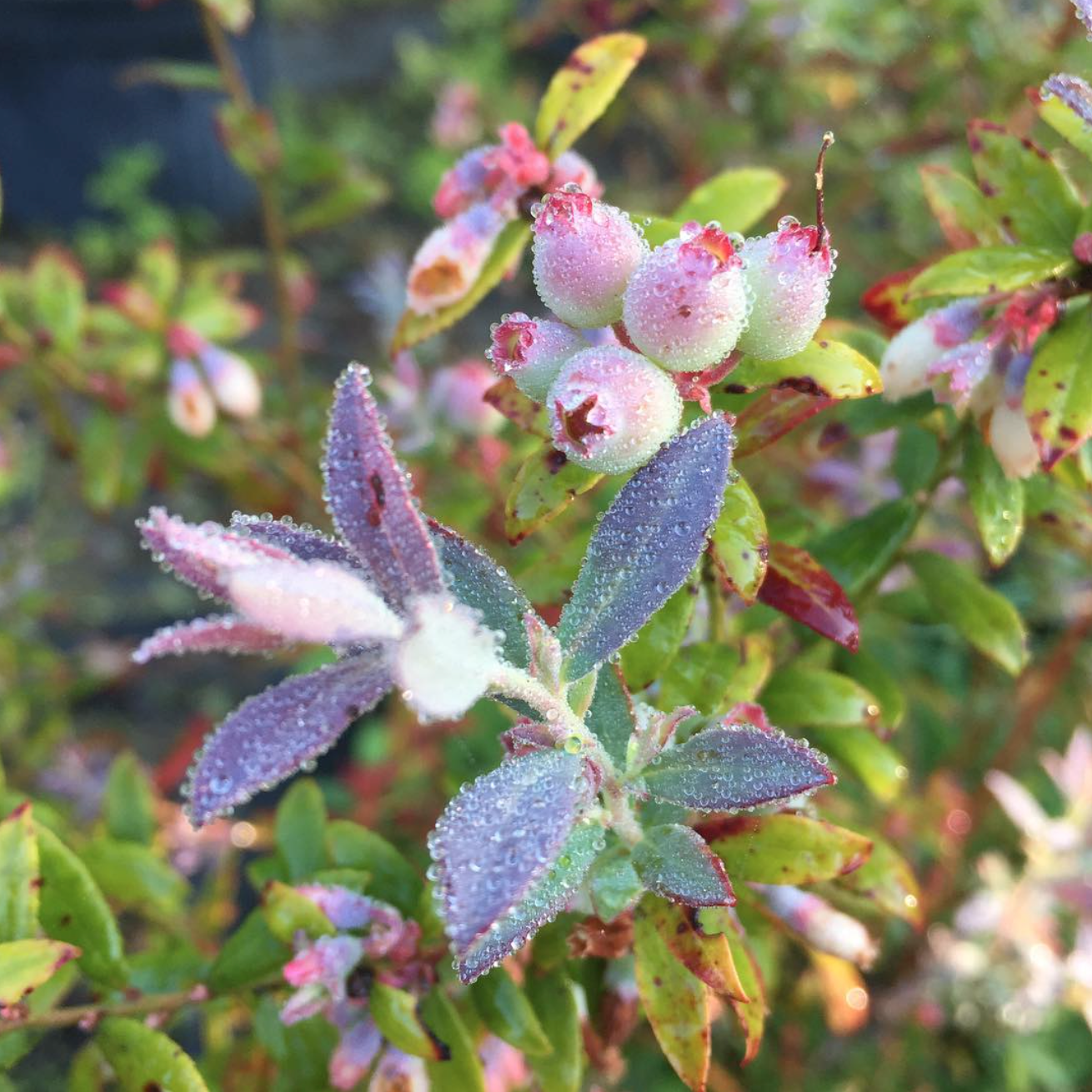
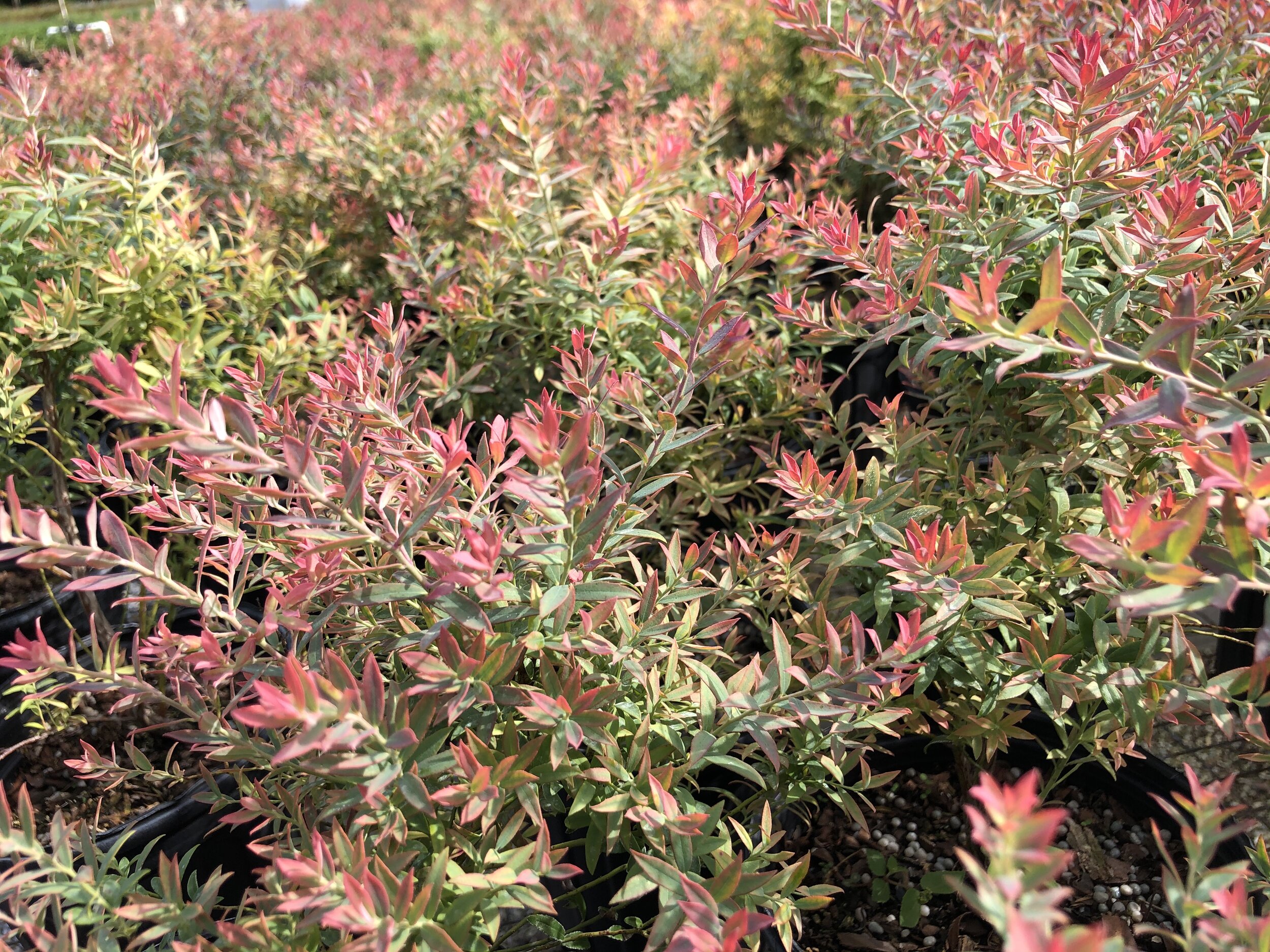

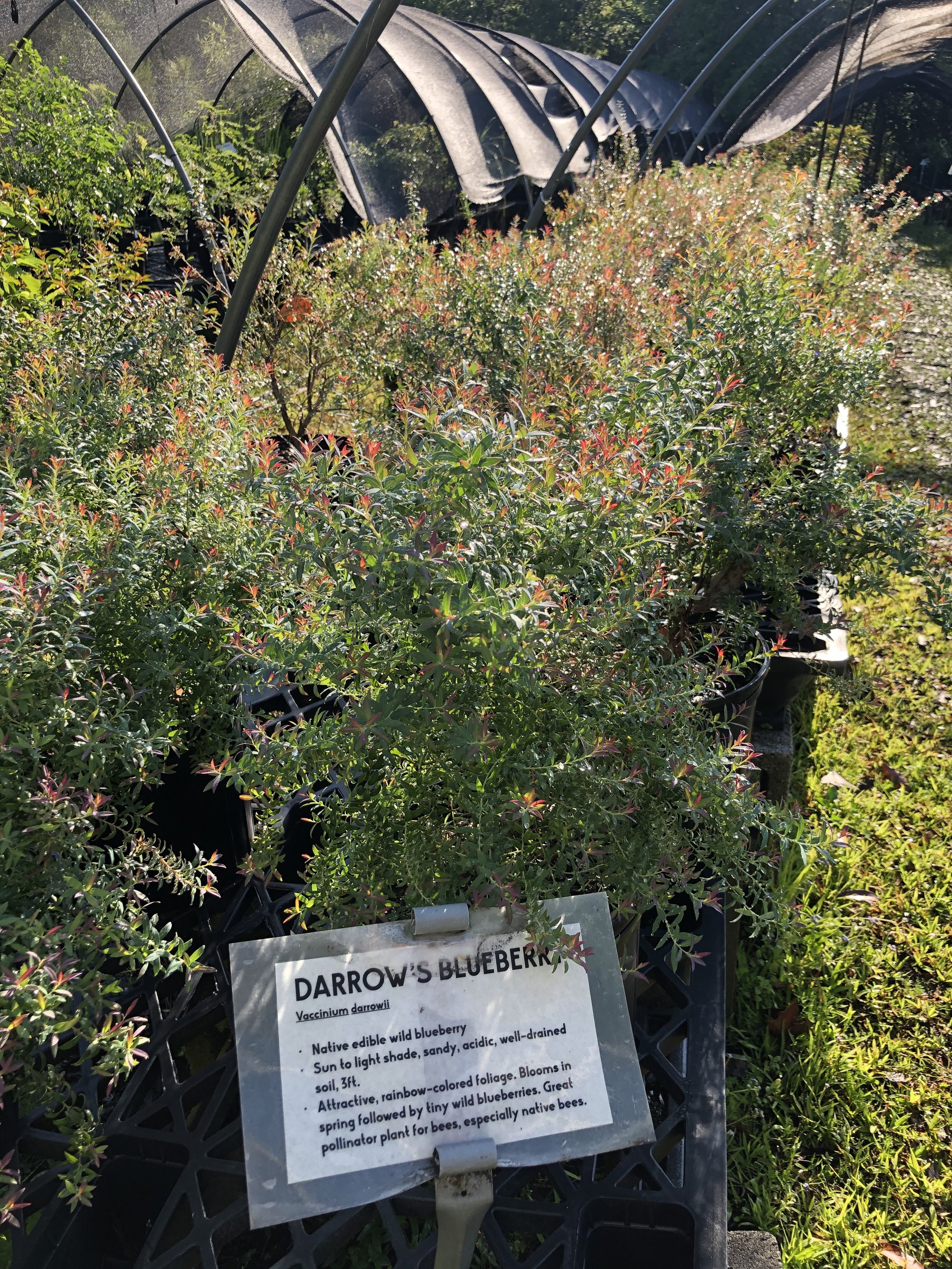
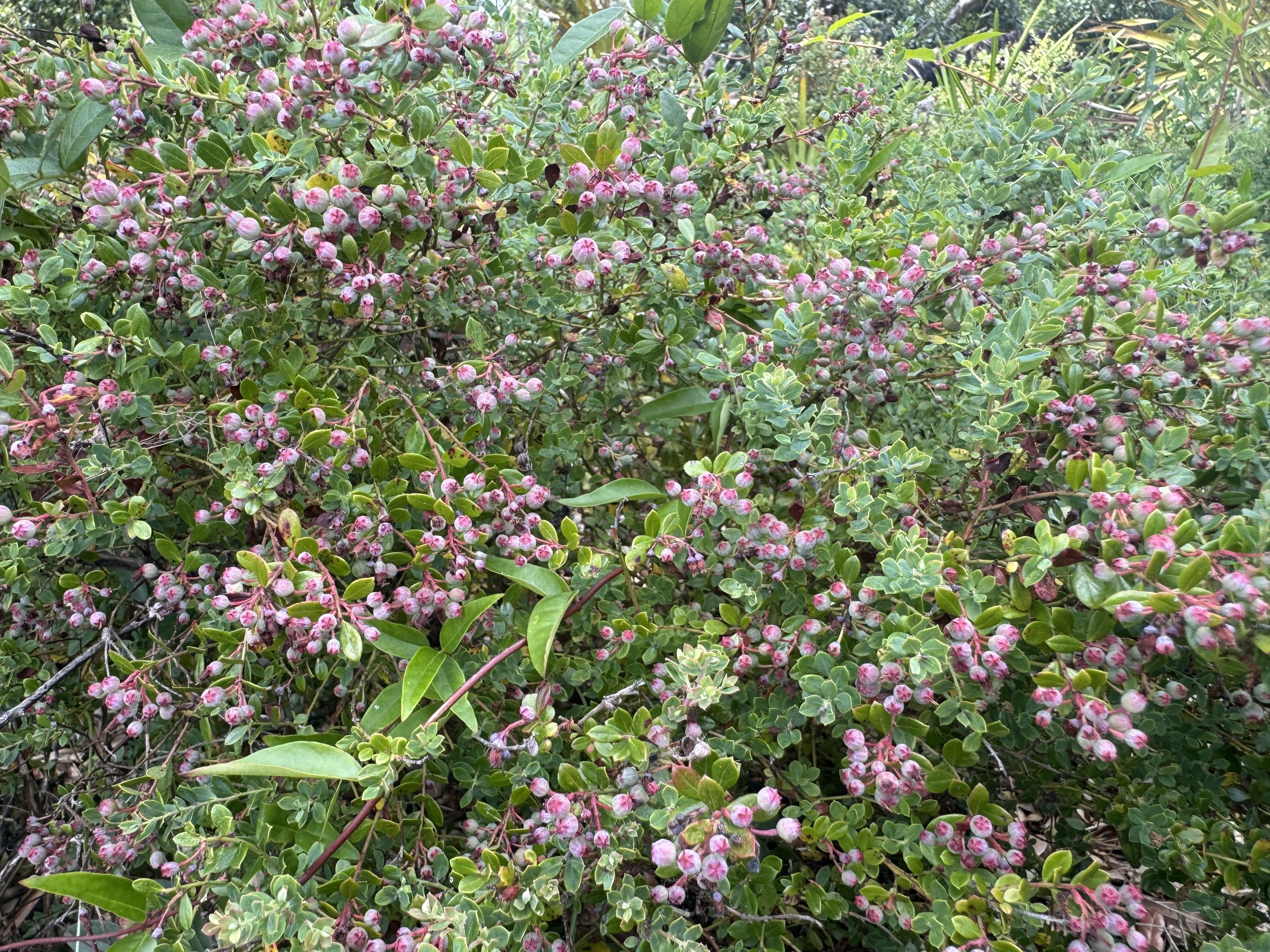

Vaccinium darrowii
Darrows Blueberry is a native perennial shrub that grows to about 2’ tall with a 2’ spread. Full sun to light shade, sandy, acidic, well-drained soil. Darrows Blueberry has attractive, rainbow-colored foliage with white flowers in spring followed by tiny purple, blue, or black wild blueberries. Great pollinator plant for bees, especially native bees!
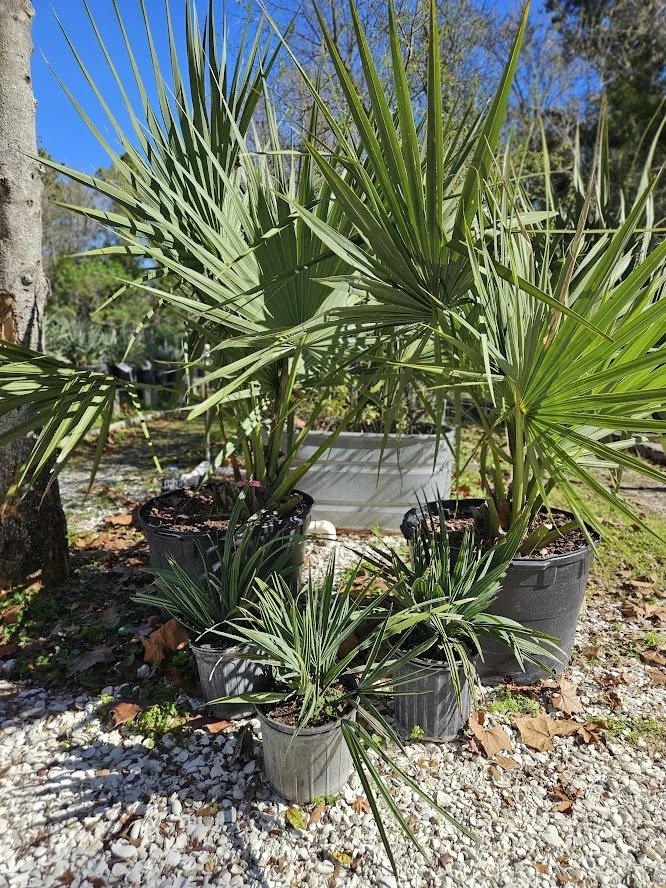
Sabal minor
Dwarf Blue Stem Palmetto is a small, clumping palm that typically grows 3-6 ft tall with a trunkless or short-trunked form. It is extremely cold-hardy, flood-tolerant, and drought-tolerant once established. It thrives in full sun to partial shade with average to moist soil. This low-maintenance native requires little care and provides excellent textural interest and tropical appeal to landscapes. Its fan-shaped fronds create dense, attractive foliage year-round, making it ideal for understory plantings or as a distinctive accent plant.
Tripsacum floridana
Dwarf Fakahatchee Grass is a Florida-native ornamental grass with dense, clumping foliage that can reach 2’-3’. It does well in full sun to partial shade with average to moist soil. Perfect for rain gardens, borders, and erosion control, this grass produces graceful, spiky foliage and unique, showy flower spikes. The foliage provides shelter for birds and small mammals, the seeds are a food source for many birds, and the foliage is a larval host for several Skipper butterflies.
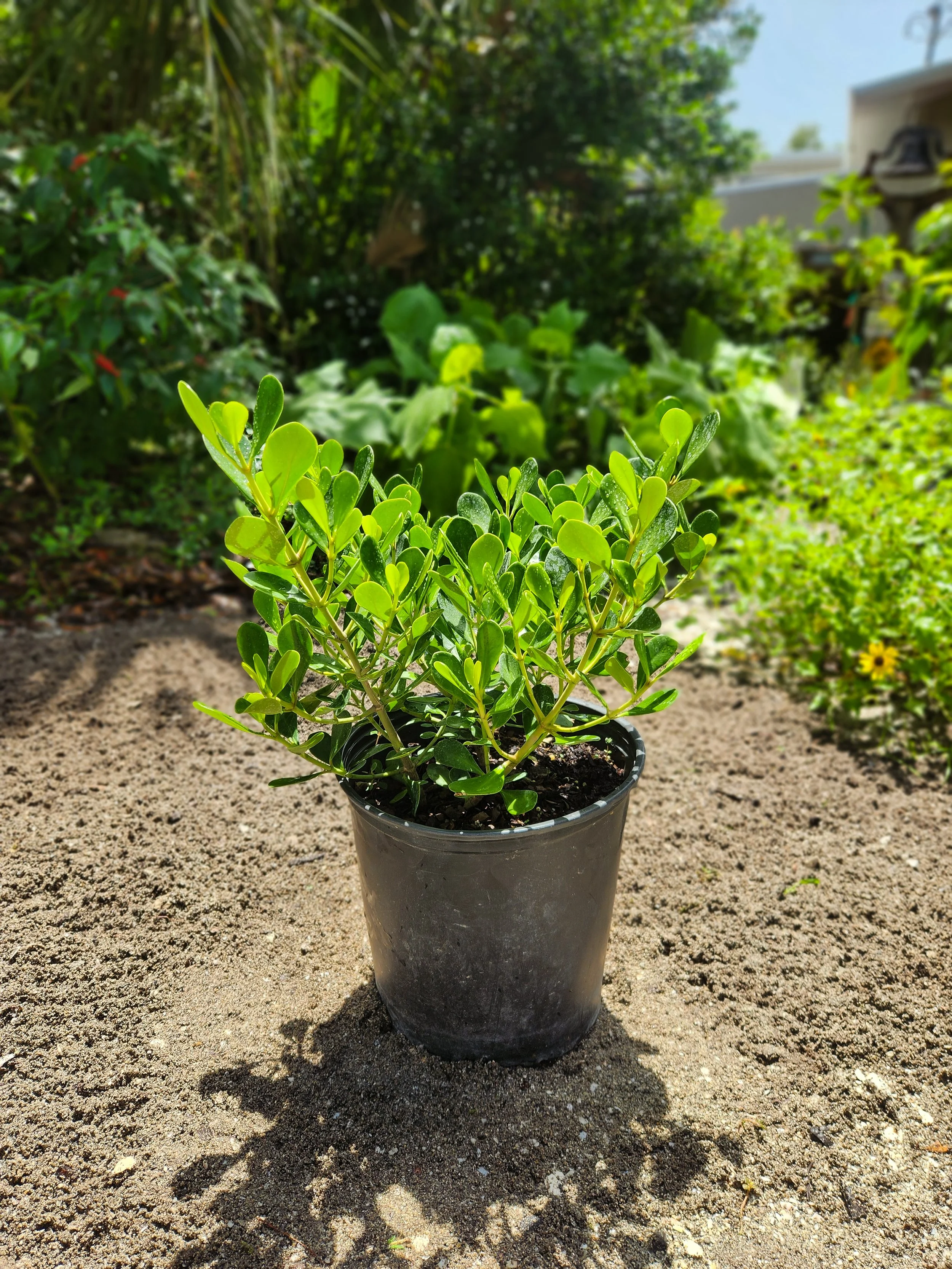
Clusia guttifera ‘Nana’
Dwarf Pitch Apple is a compact, slow-growing cultivar of the native Florida pitch apple that stays low to the ground as a spreading shrub. This semi-succulent plant features the same distinctive thick, leathery paddle-shaped leaves as its full-sized parent but in a much more manageable form, typically reaching only 2-4 feet in height and spreading wider than it is tall. It produces waxy pink and white flowers with apple-like buds and can develop aerial roots, adding to its unique tropical appearance. Extremely low-maintenance and drought-tolerant once established, it thrives in full sun to partial shade and serves as an excellent border plant or accent specimen for South Florida landscapes in zones 9-11.


Stachytarpheta sanguinea
This Florida-friendly, compact, evergreen shrub is a perfect addition to a sunny or partial shade landscape. The vibrant, red spikes of tubular flowers bloom year-round and are a magnet for pollinators like bees, butterflies, and hummingbirds. Growing to just 2-3 feet tall and wide, it’s an excellent choice for borders, groundcovers, or container gardening. Dwarf Red Porterweed thrives in well-drained soil and tolerates drought once established.
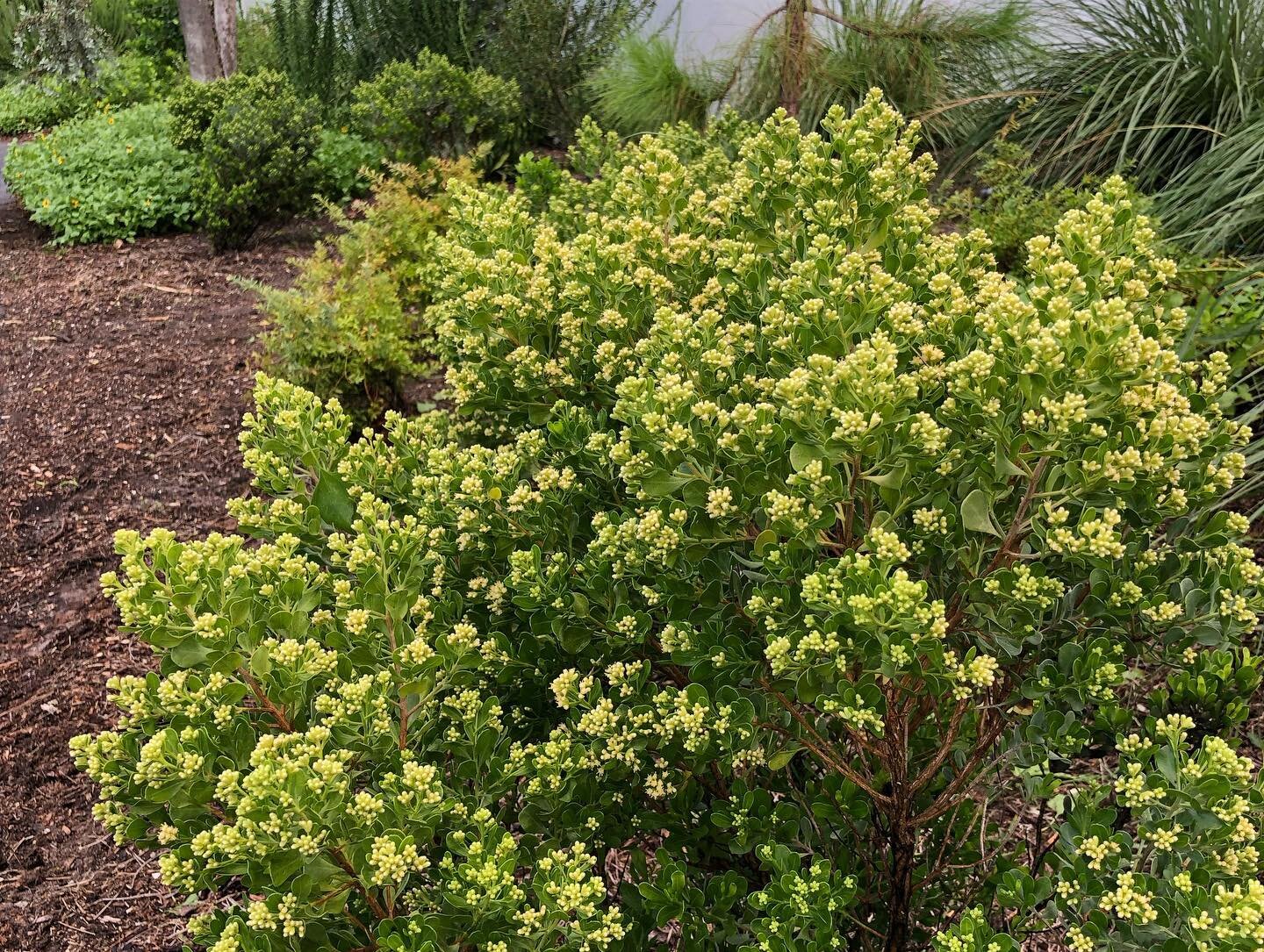
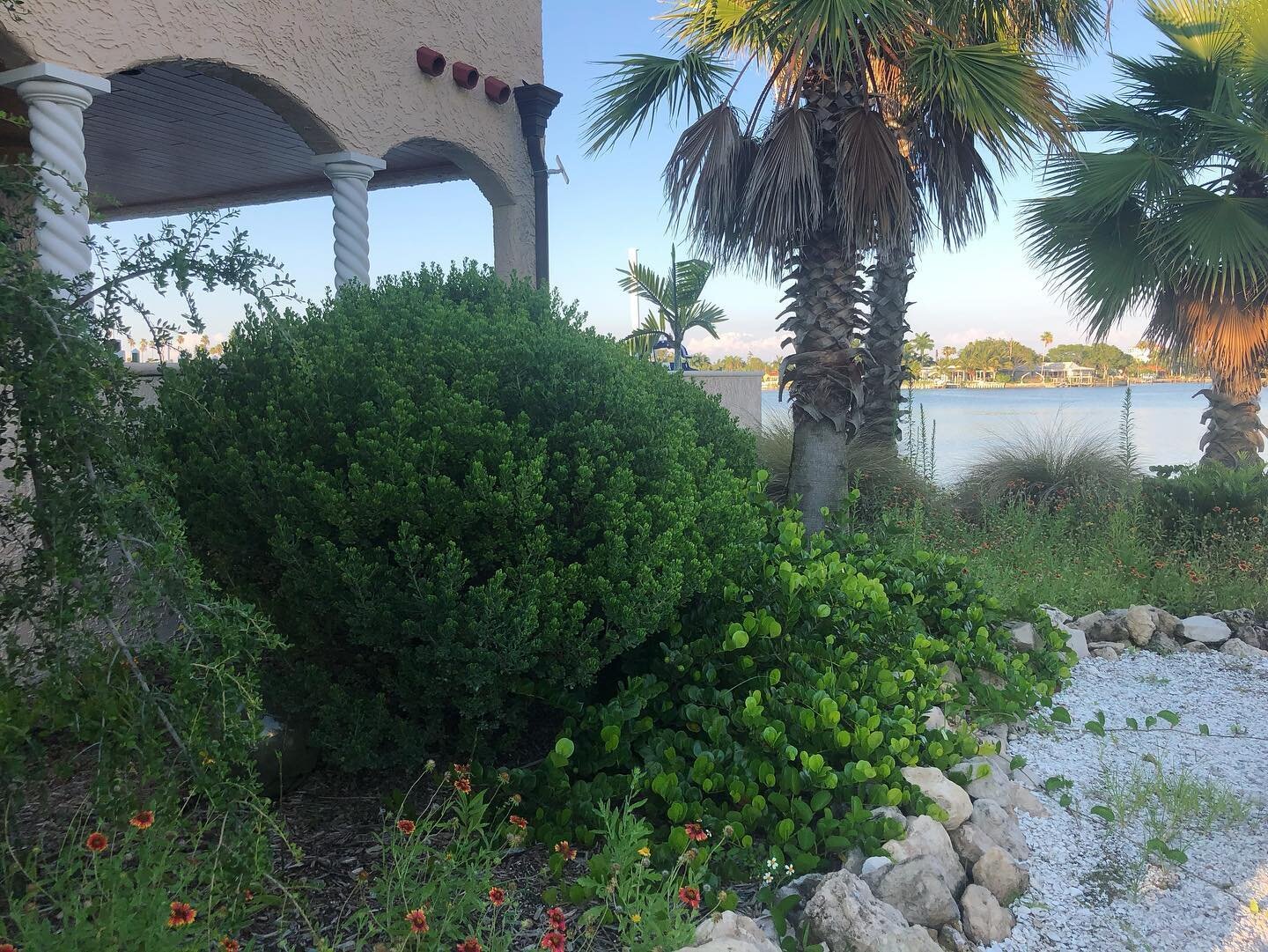
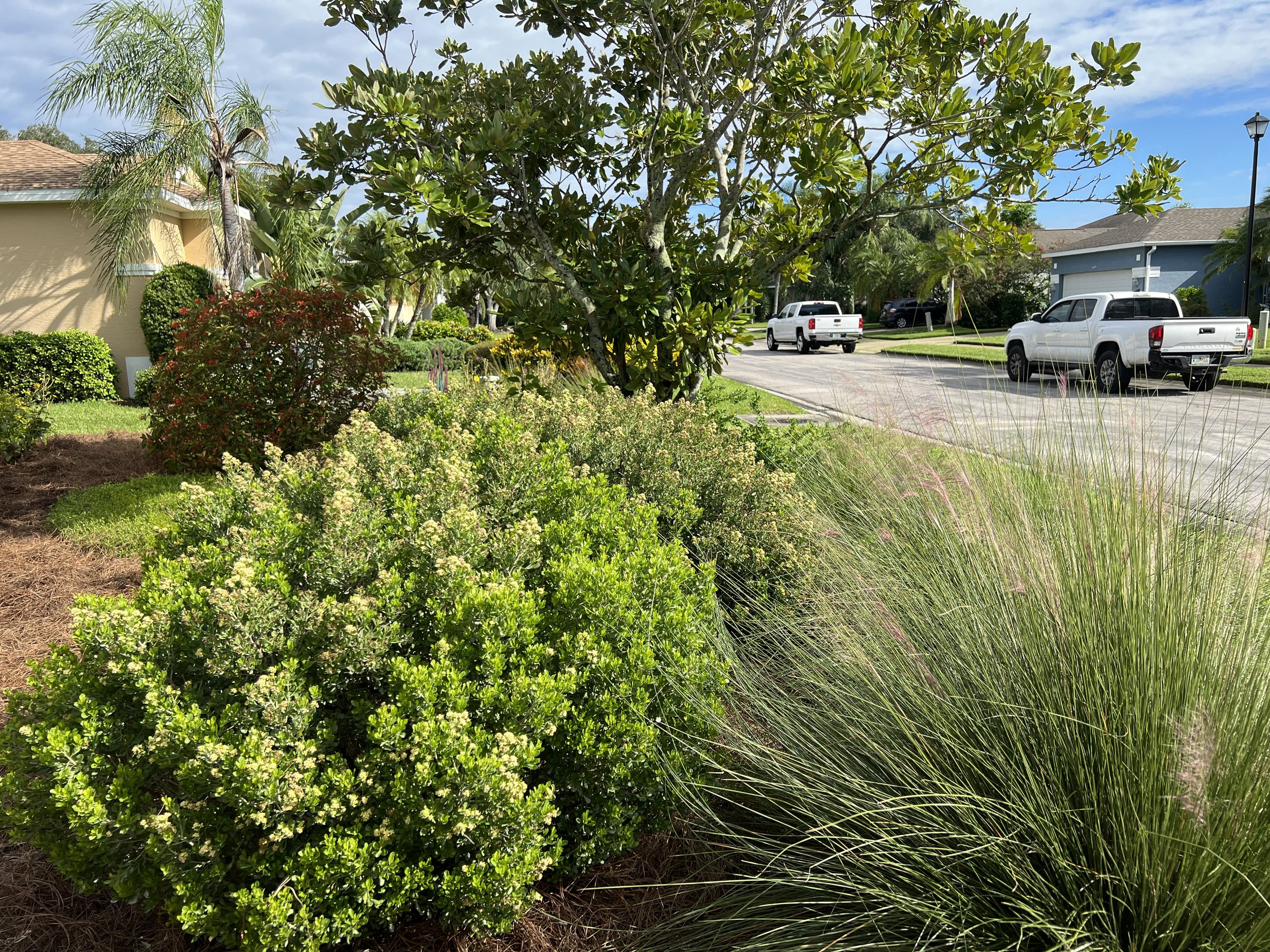
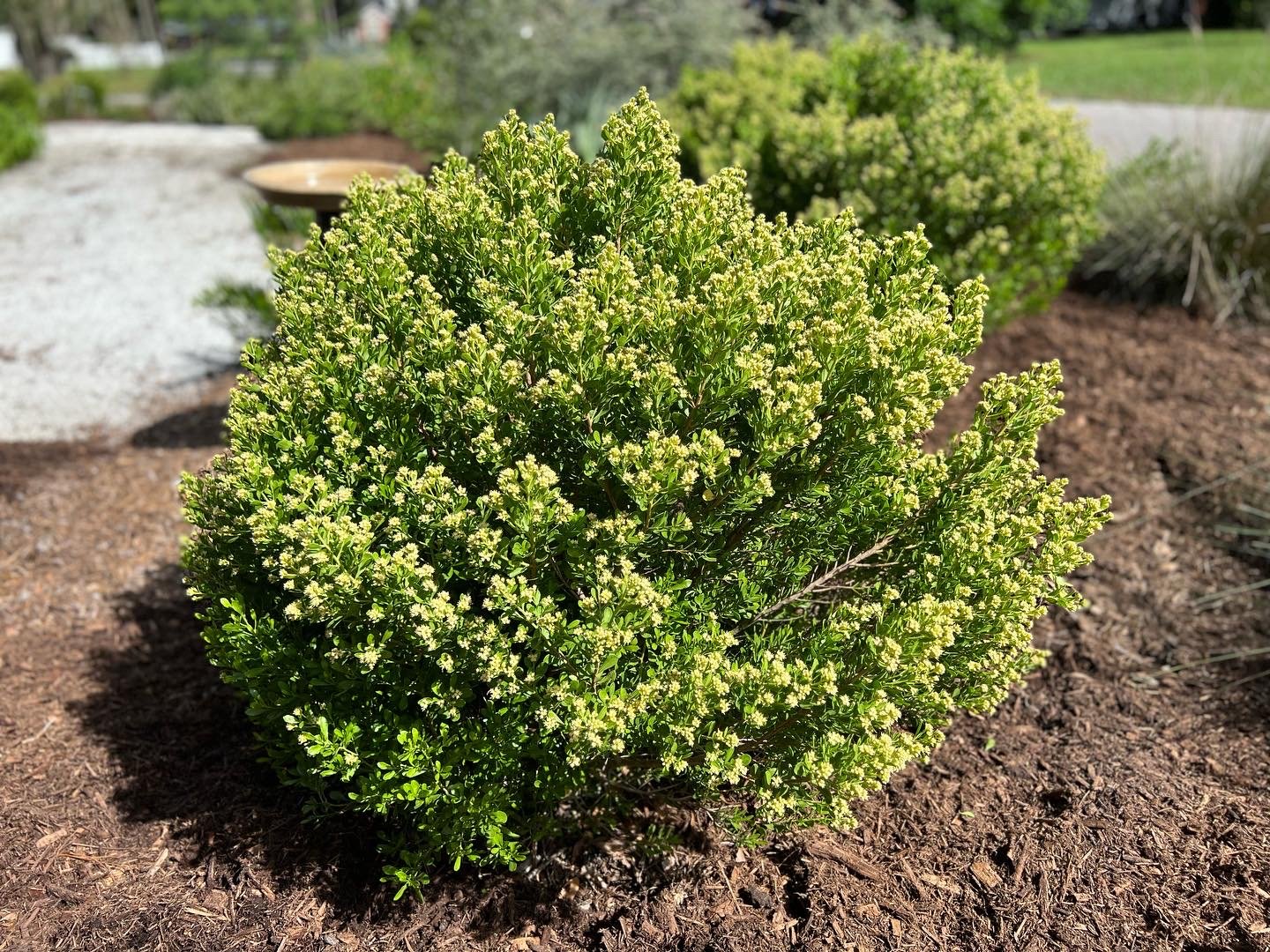
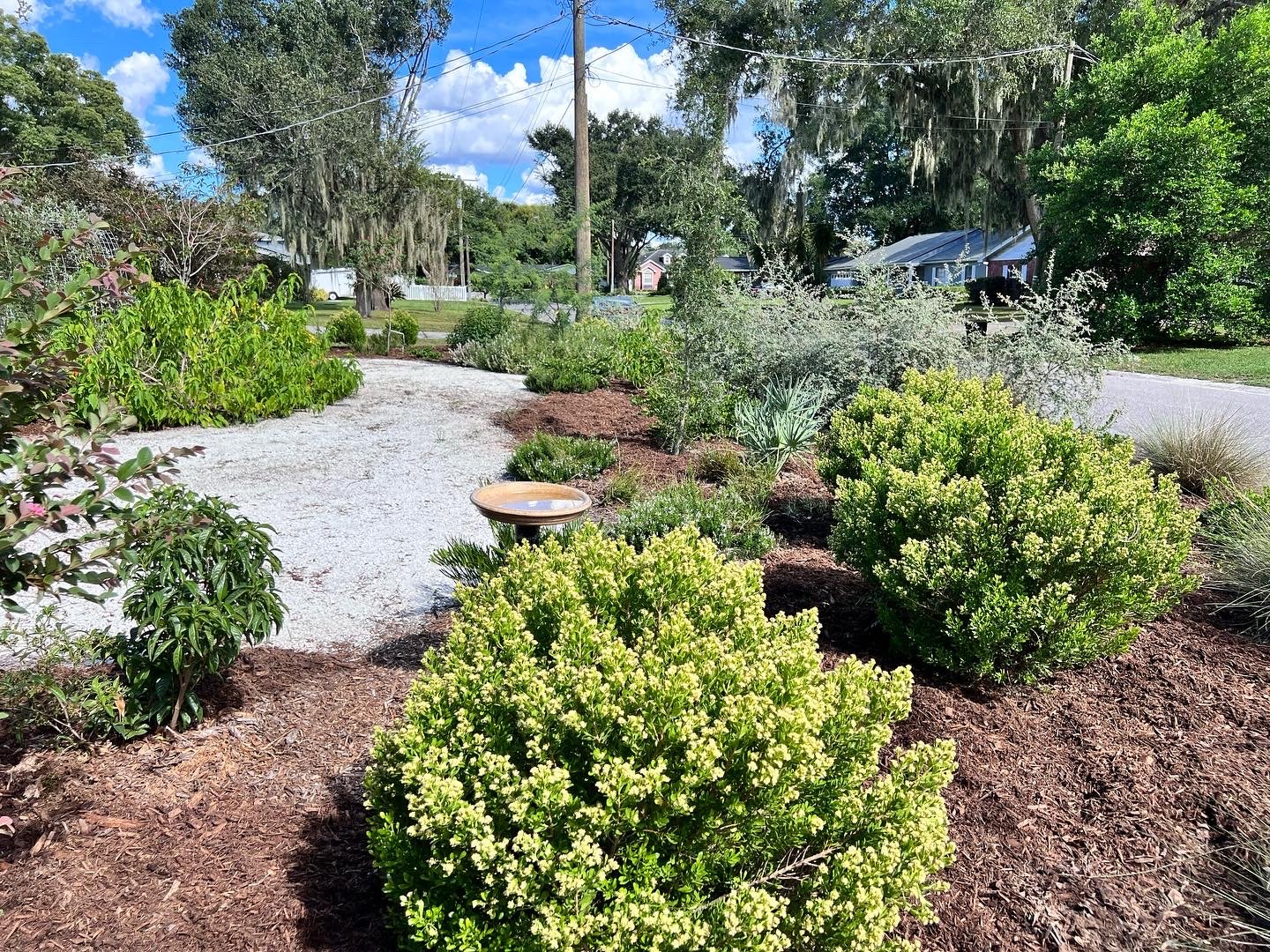
Baccharis dioca
Also known as Broombush and Falsewillow
This hardy, lower-growing native shrub always seems to look great in a garden setting and it does well in a lot of different garden conditions. It holds its space well and has beautiful texture year round. The flowers bloom late summer through early fall and attract numerous pollinators. It is drought tolerant but also high tolerant of salt spray and salt inundation.
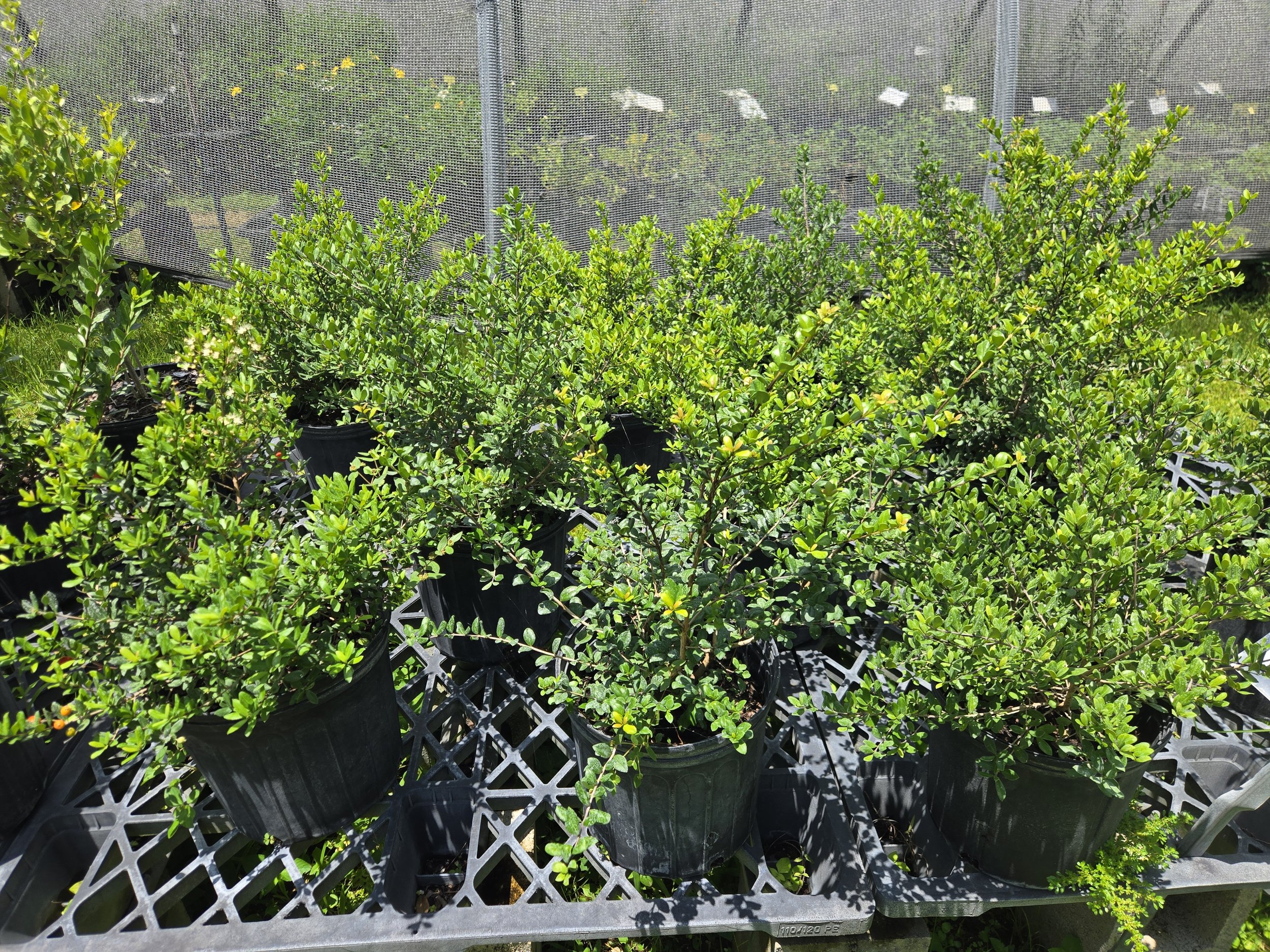
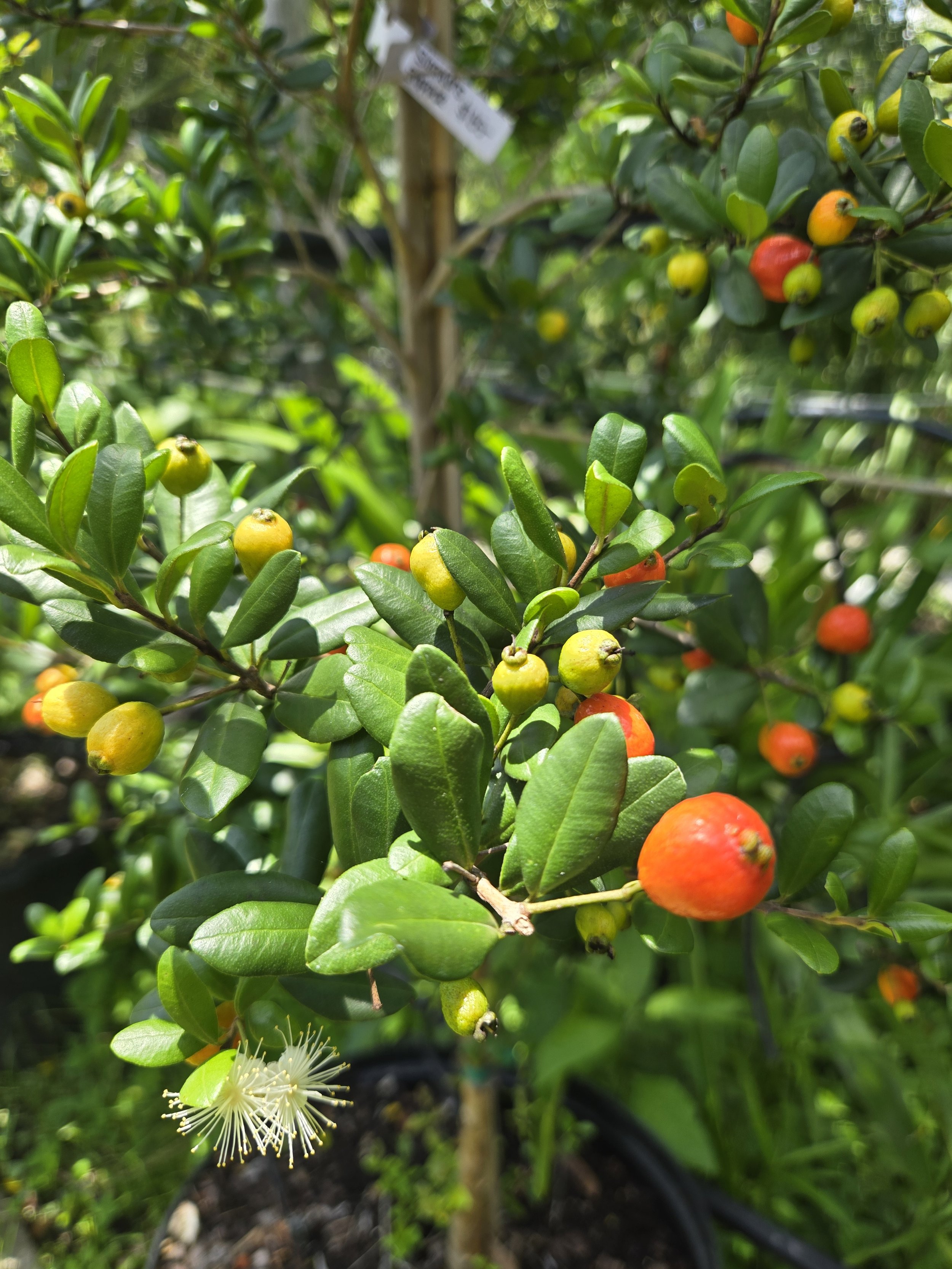
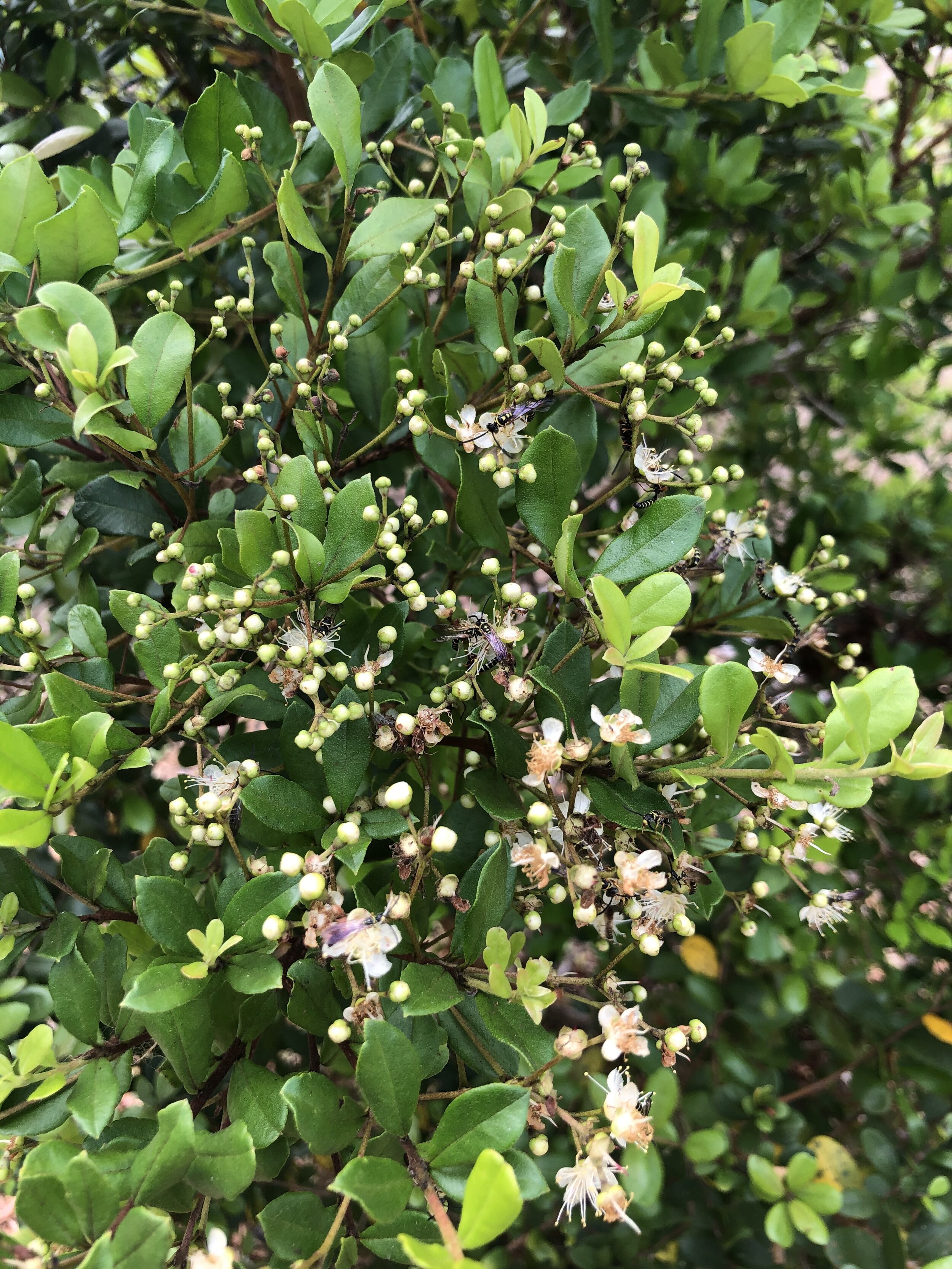
Myrcianthes fragrans ‘Compacta’
Dwarf Simpson Stopper grows to 4’ and creates a nice low hedge or border planting. Cream puff blooms and vibrant red berries add color and texture to any landscape. Drought tolerant once established, these small shrubs work well in non-irrigated landscapes. Of course, they don’t mind irrigation either!
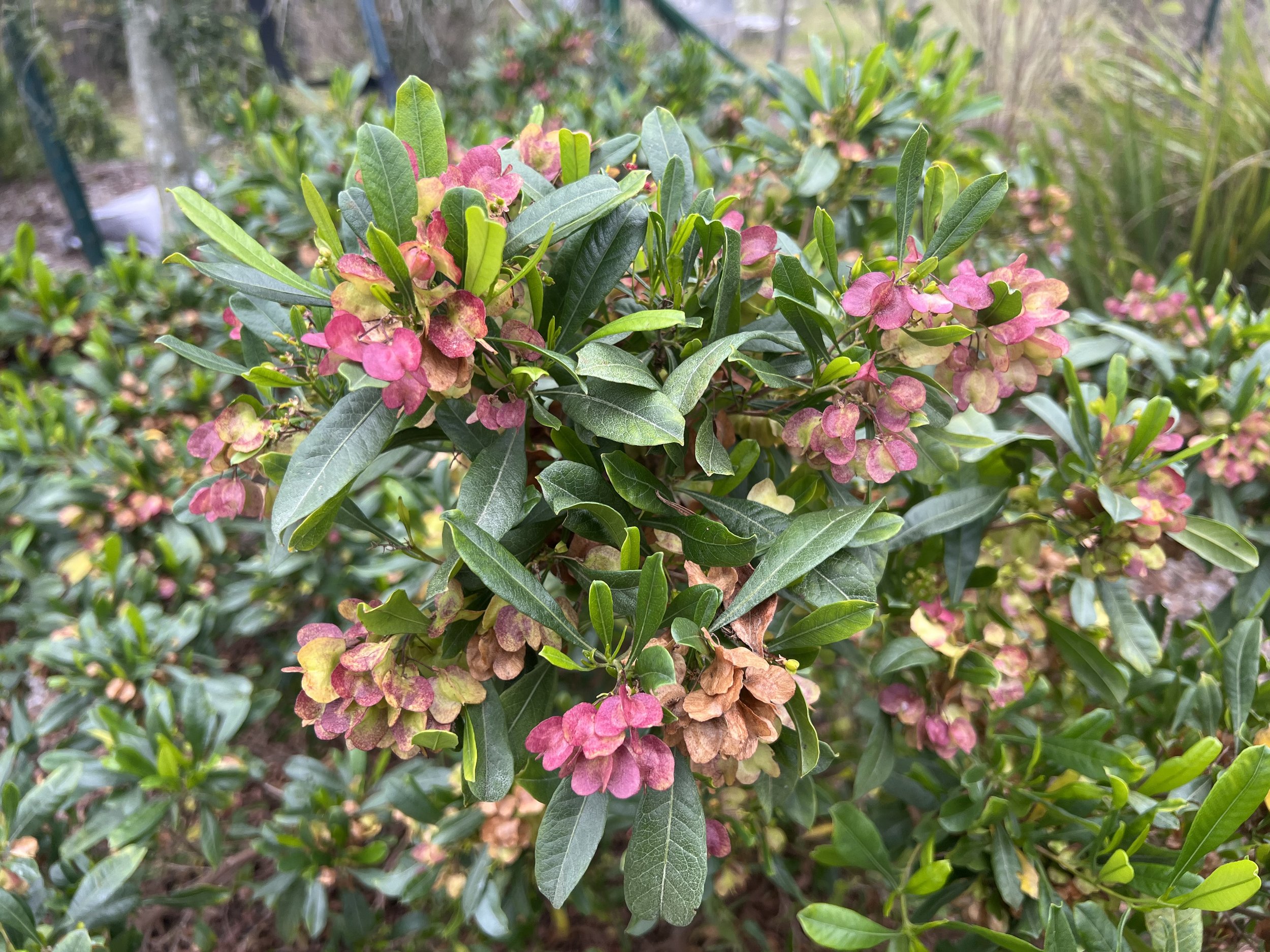
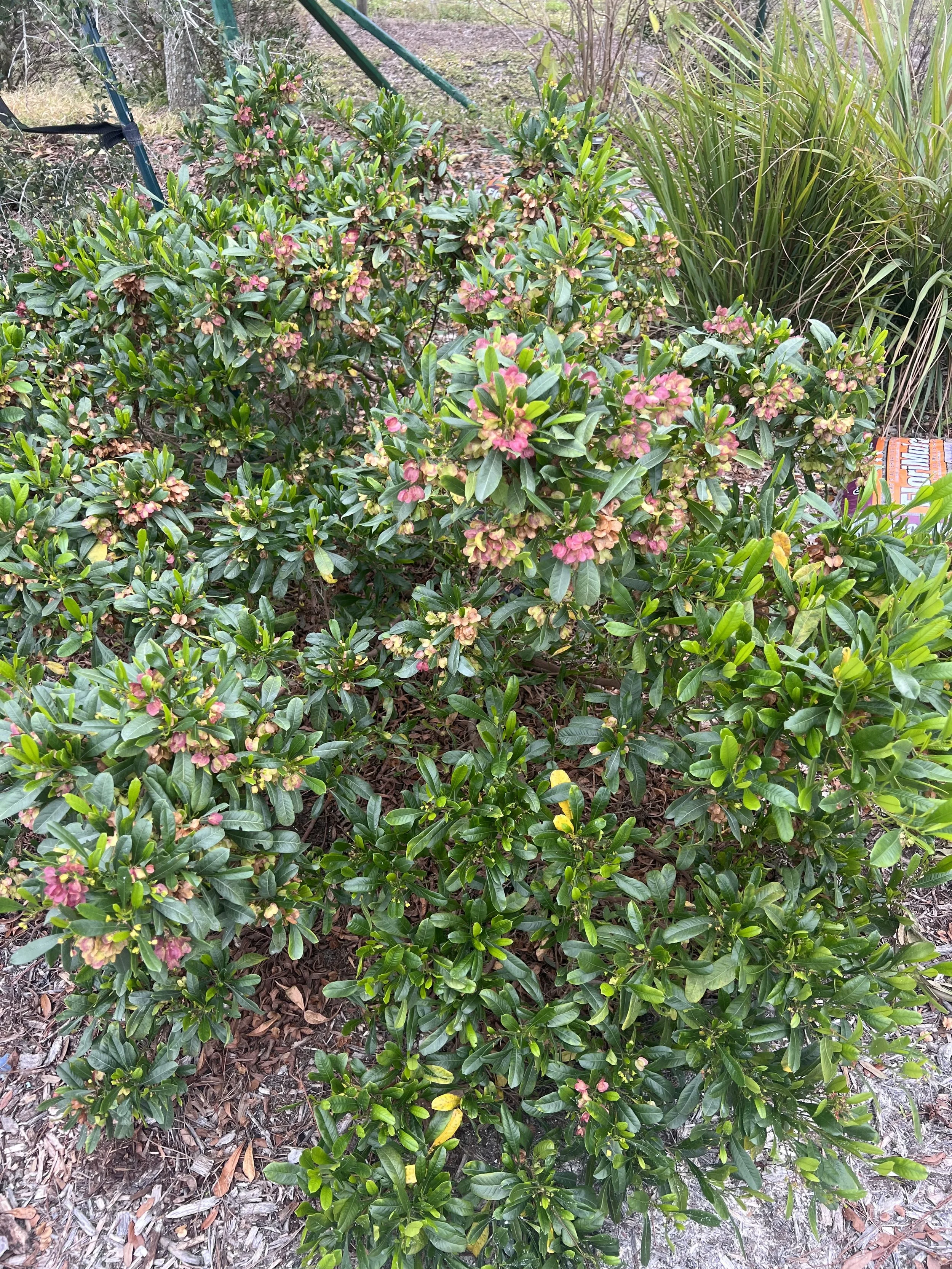
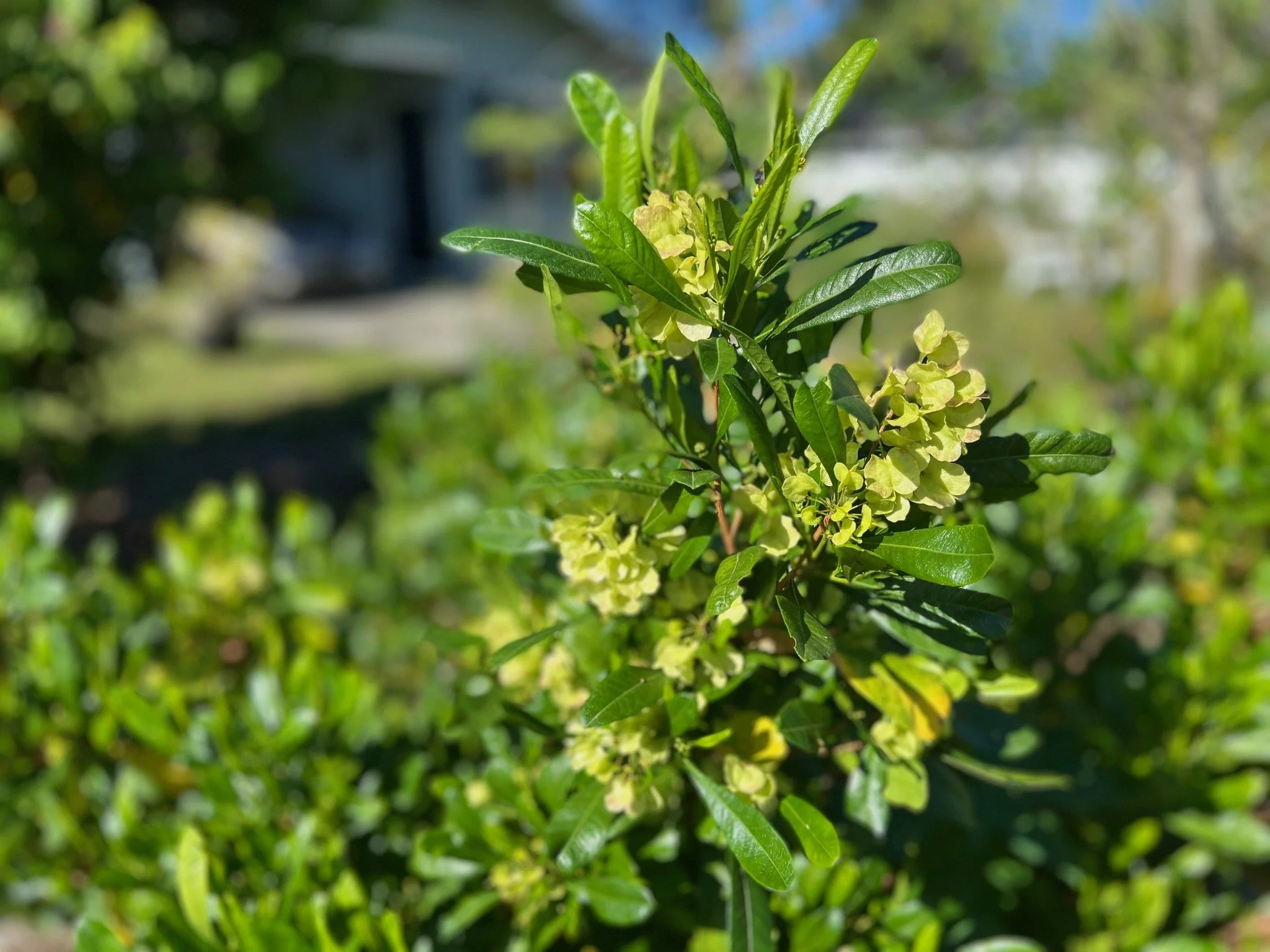
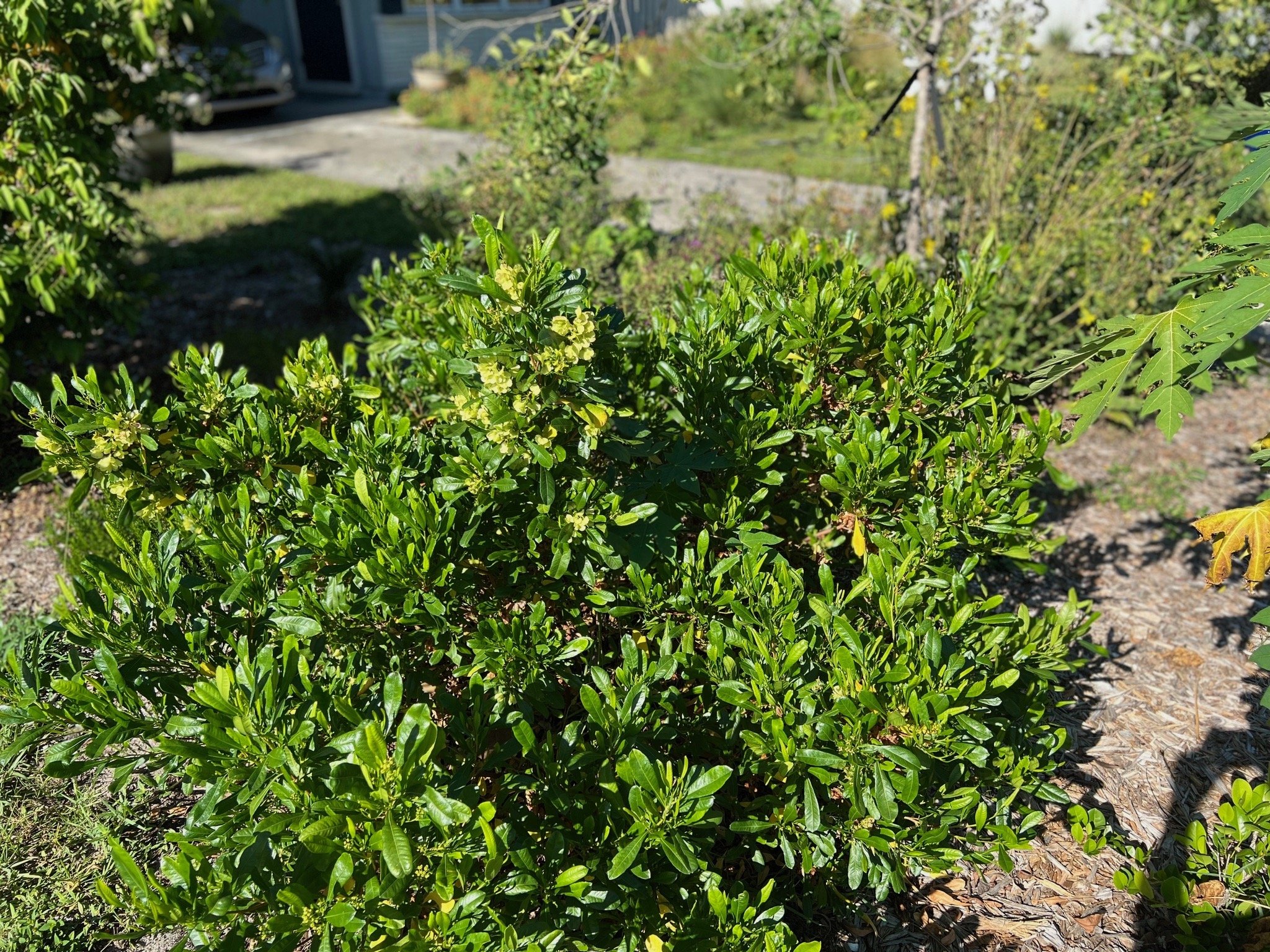
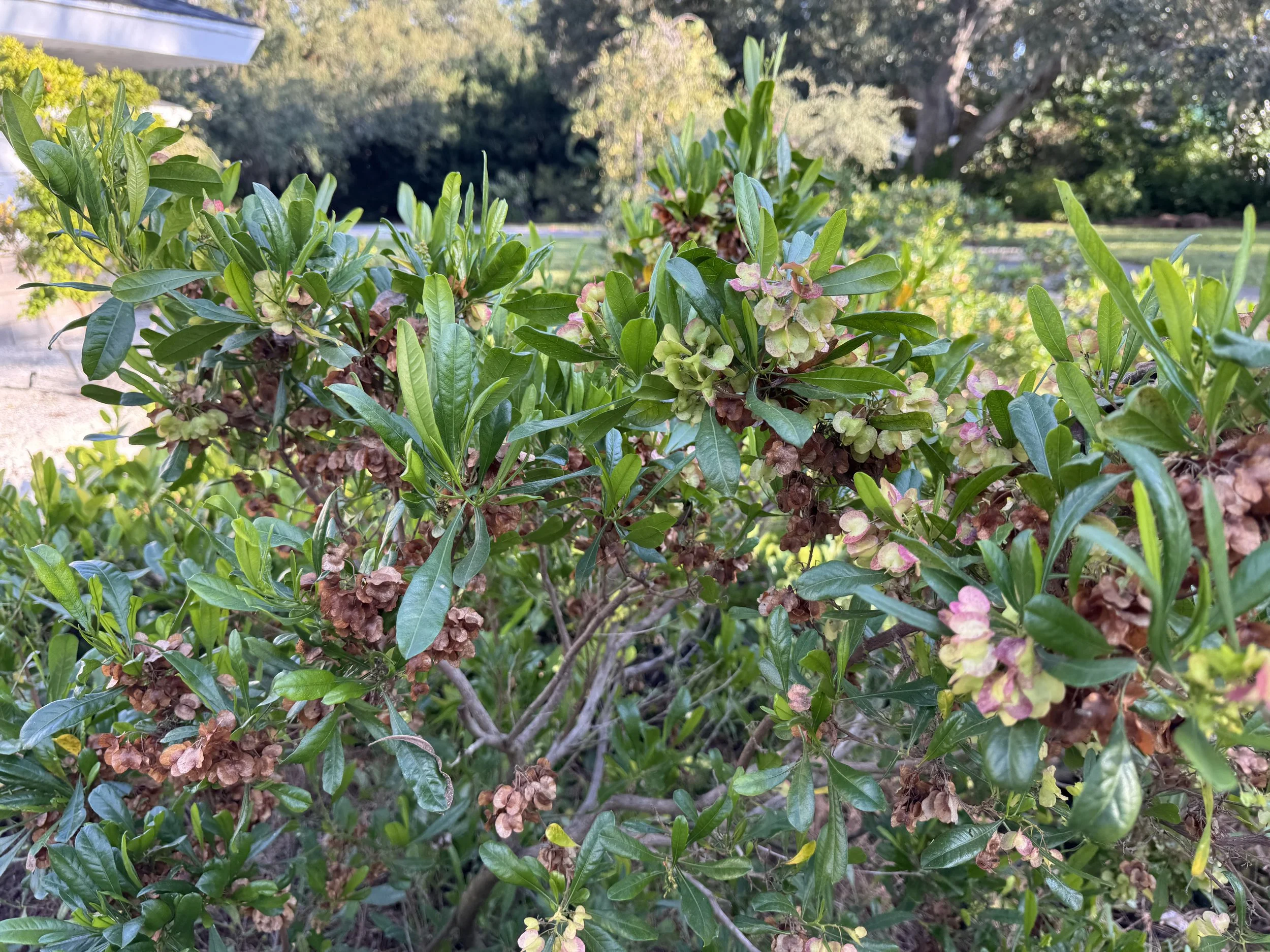
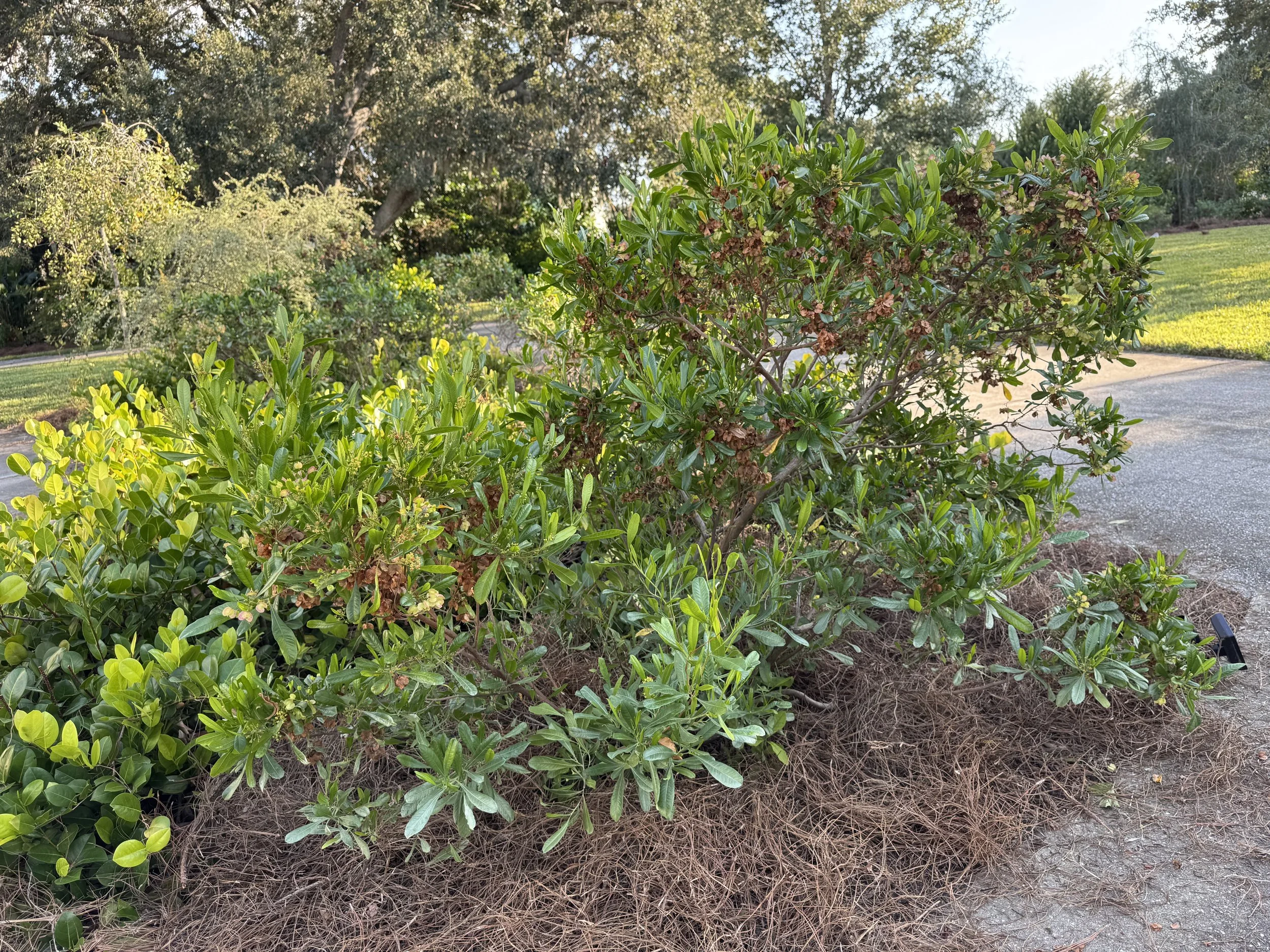
Dodonaea viscosa
Dwarf Varnish Leaf is a fast-growing evergreen shrub that features many upright stems, densely clothed in shiny, narrow green leaves. The leaves are covered with a sticky resin that gives them a distinctive varnished appearance and helps the plant achieve exceptional drought tolerance. This species produces small, inconspicuous yellow flowers followed by striking three-winged papery seed capsules that are highly ornamental. We carry a lower-growing variety that tends to stay in the 6ft range but could possibly get taller and can be trimmed to stay lower. It's extremely hardy and adaptable to various soil types, making it excellent for use as a specimen plant, dense hedge, or evergreen screen in zones 9-11.
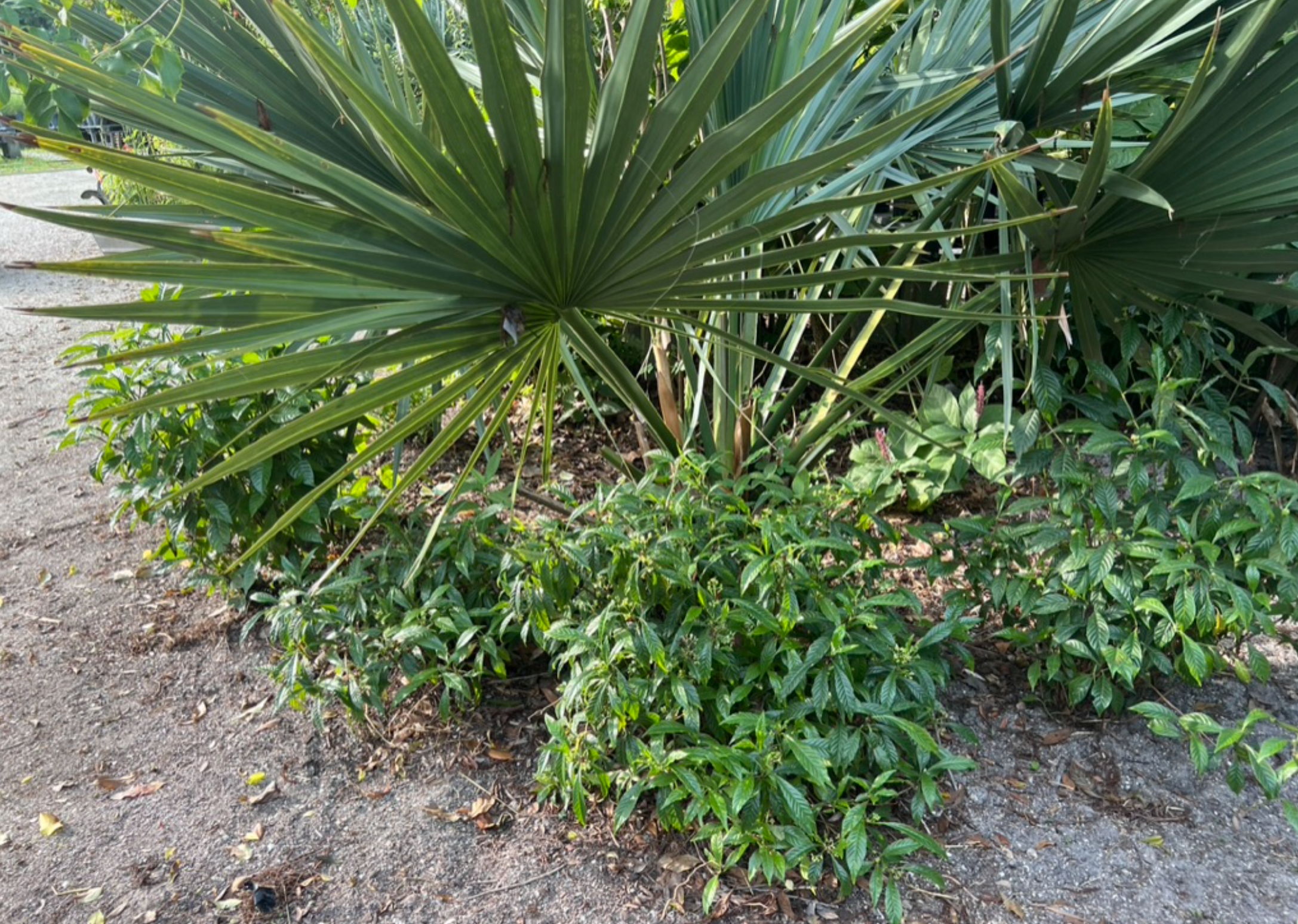
Psychotria nervosa 'Little Psycho'
Little Psycho is a smaller native evergreen shrub that grows to 4'. This dwarf coffee is great for planting under smaller trees or in shadier areas. Pollinators love the summertime flowers and birds eat the berries fall-winter. It's also a host plant for the Tersa Sphinx Moth!
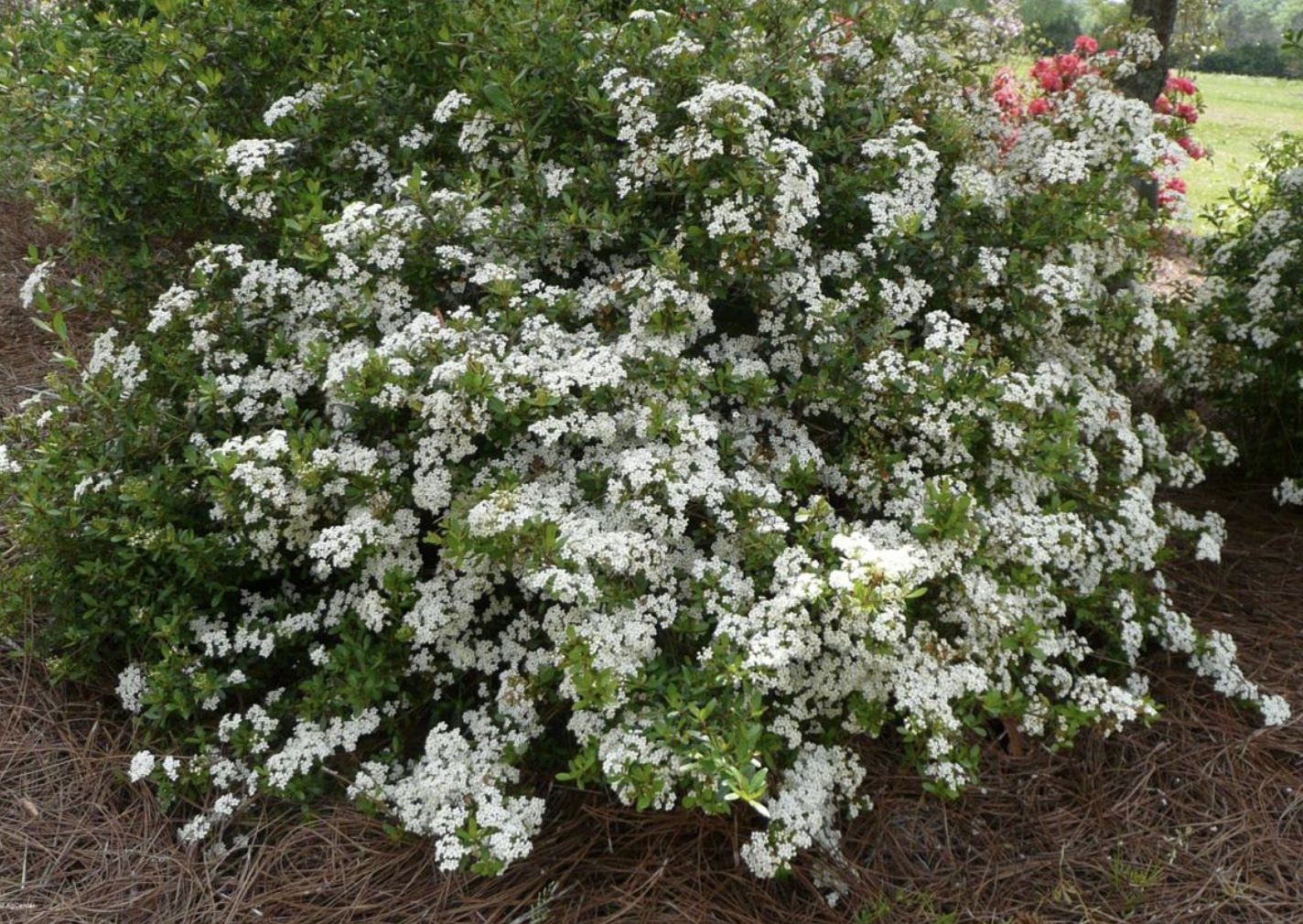
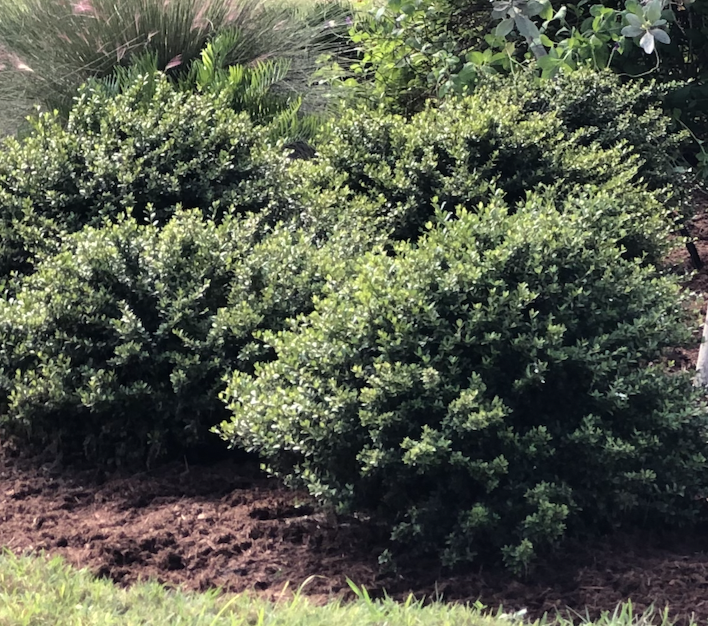
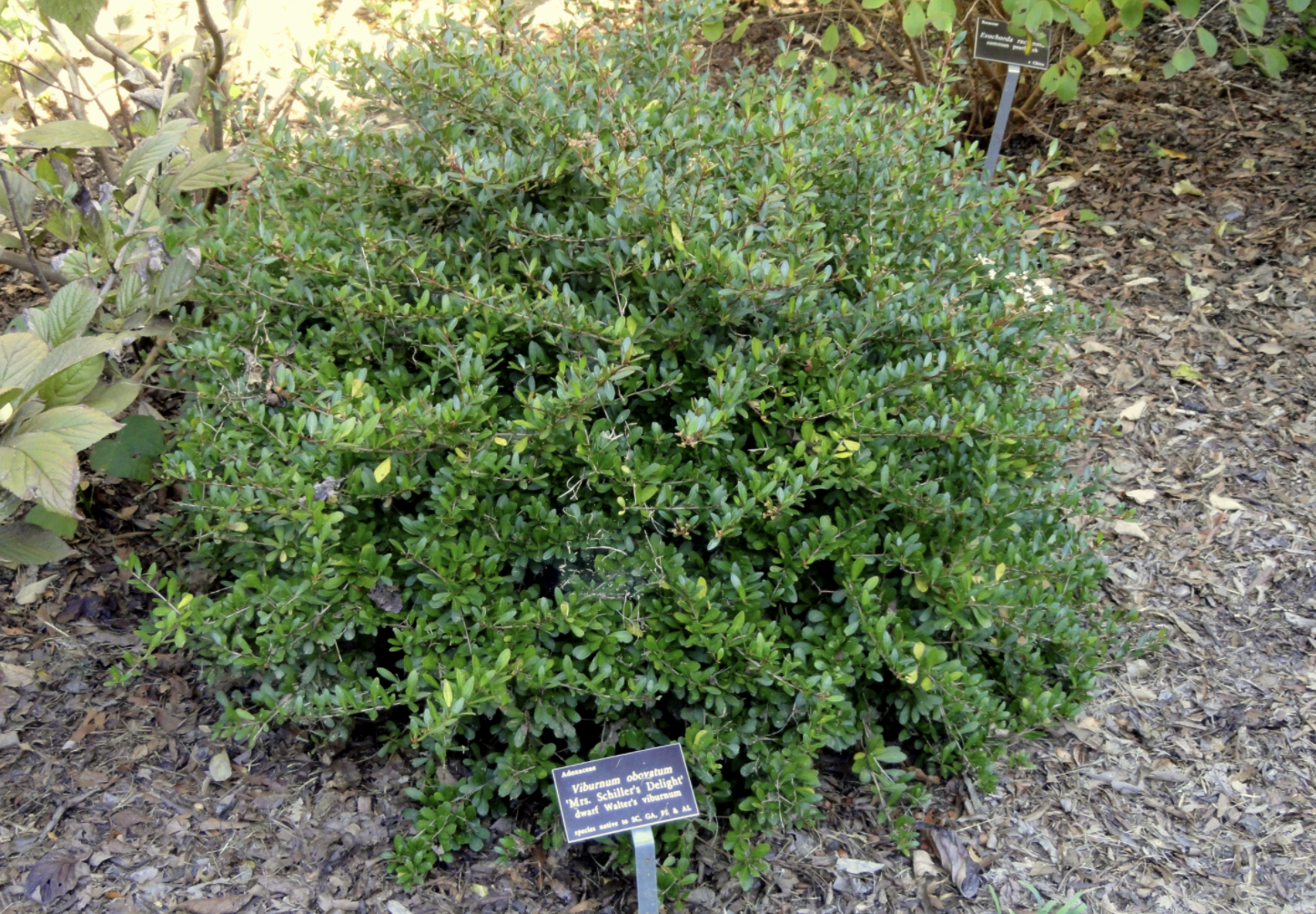
Viburnam obovatum Dwarf
This hardy, evergreen native low-growing shrub is a foundational plant for any Florida garden. With a height of about 4 feet, it provides a dense, low-growing habitat that stays compact without constant maintenance. For the environment, its near-constant clusters of white flowers offer a reliable nectar source for pollinators, while the subsequent berries provide essential forage for local songbirds. Whether used as a sturdy border or in mass plantings, it thrives in everything from full sun to part shade and adapts well to average or moist soils, offering year-round structure and ecological value to your landscape.
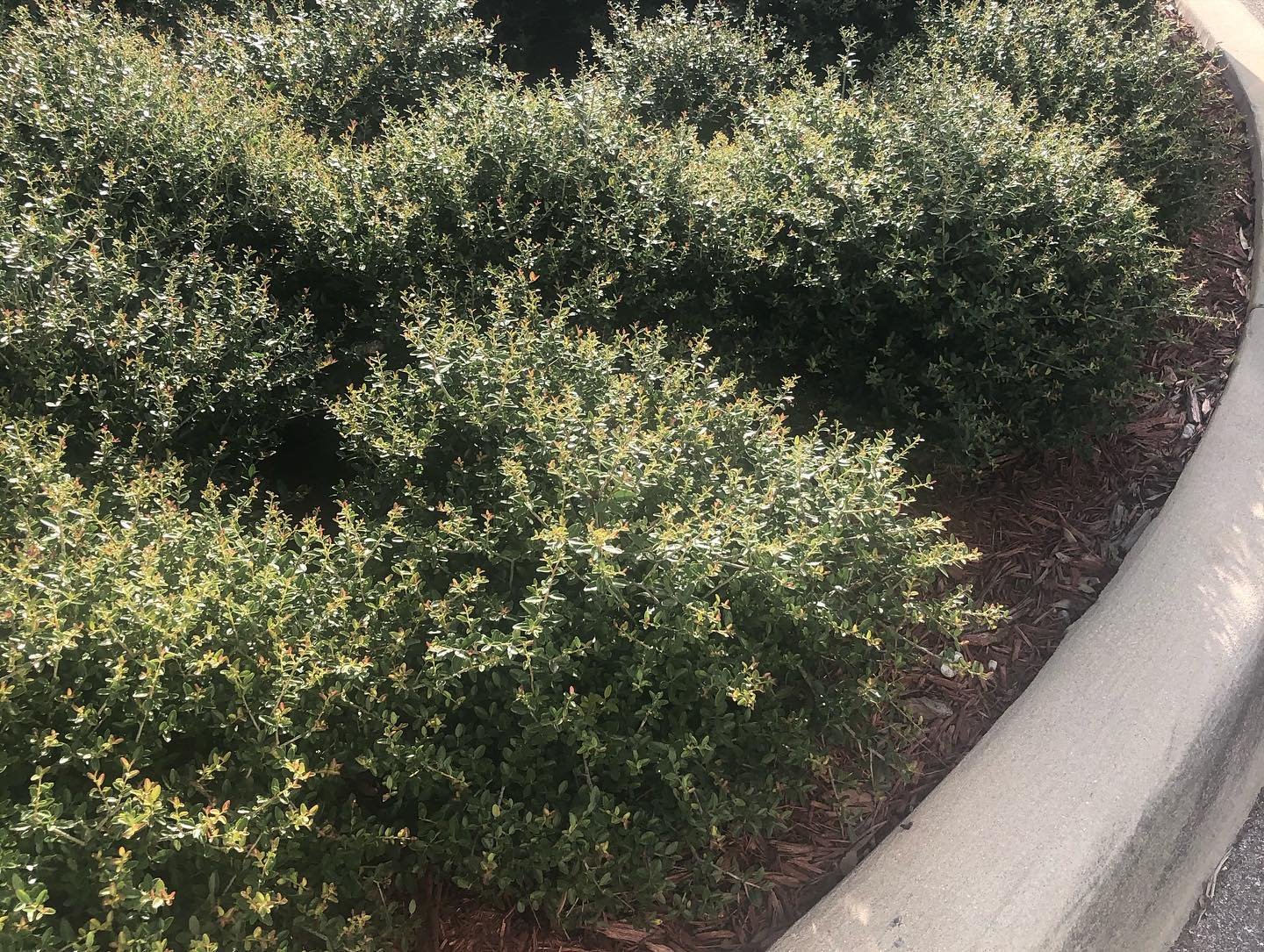
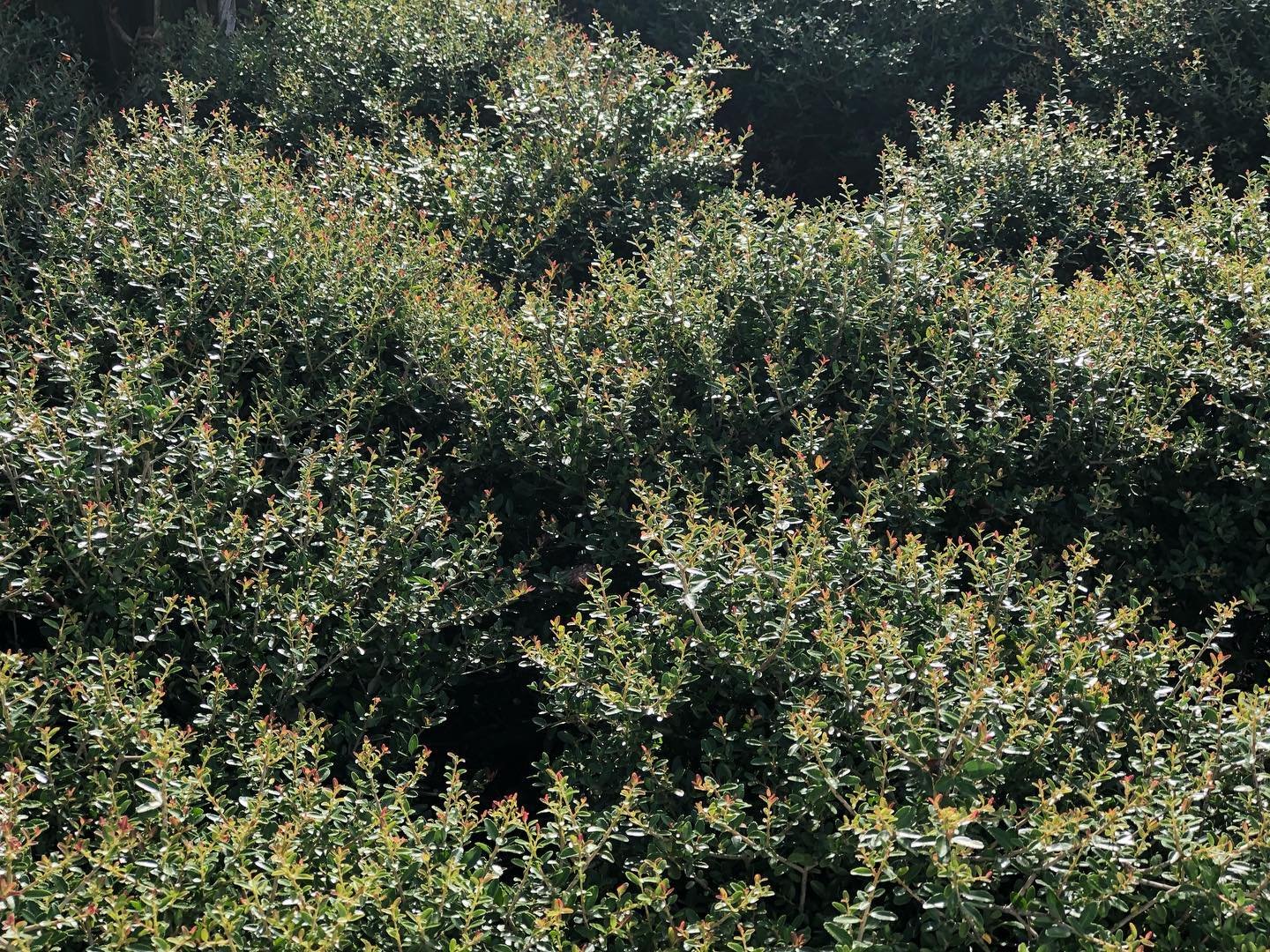
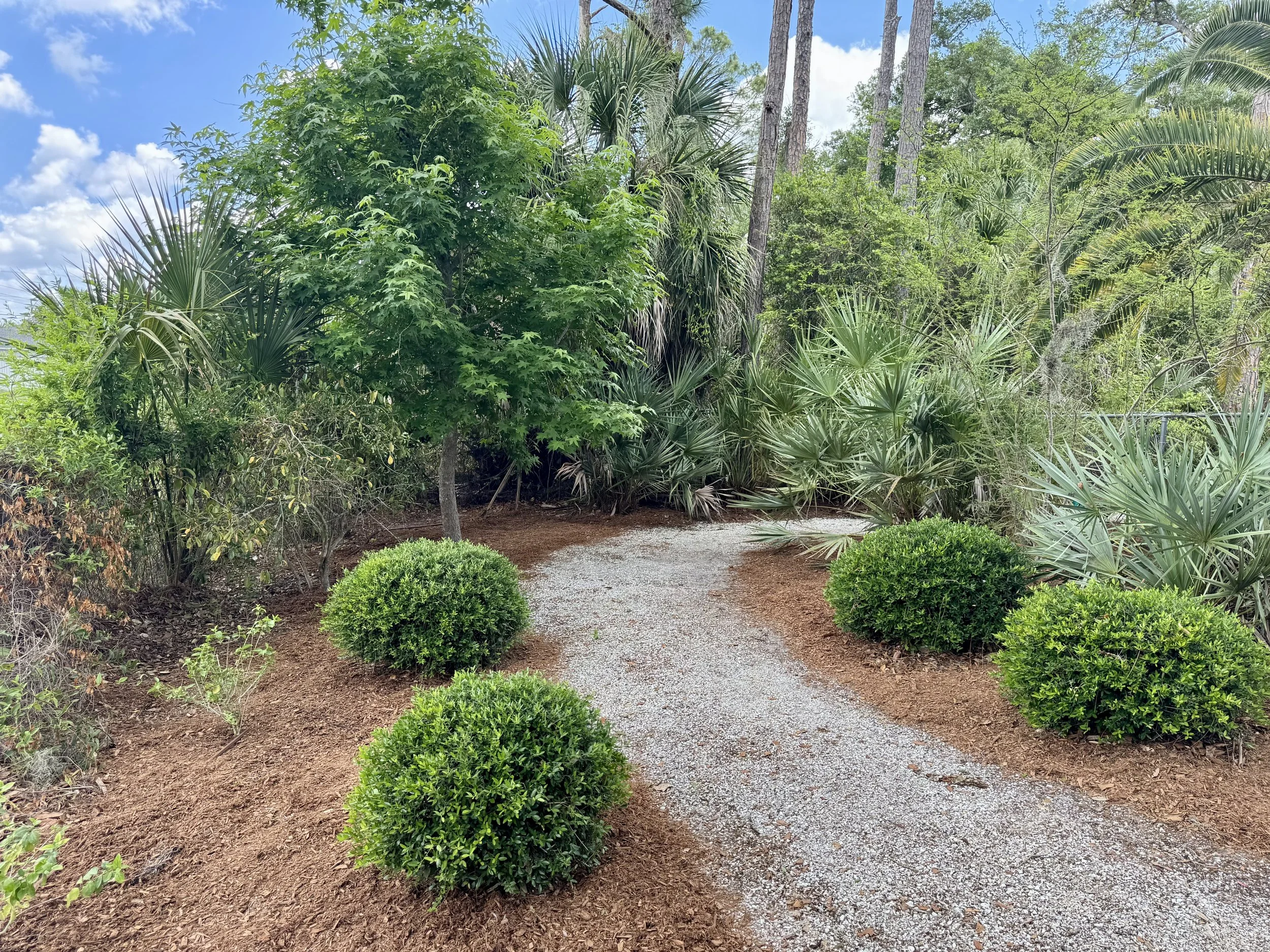
Ilex vomitoria 'Schillings Dwarf'
Dwarf Yaupon Holly is a super hardy and adaptable small shrub that makes a great low growing border or mass planting. It’s easily prunable and it’s full height is 3-4 ft. It does well in full sun to partial shade with dry to moist (well-drained) soils.The dwarf plants are male and produce a flower but no berries, however they help to pollinate female upright Yaupon Hollies and the Yaupon Holly cultivars like Weeping Yaupon Holly.
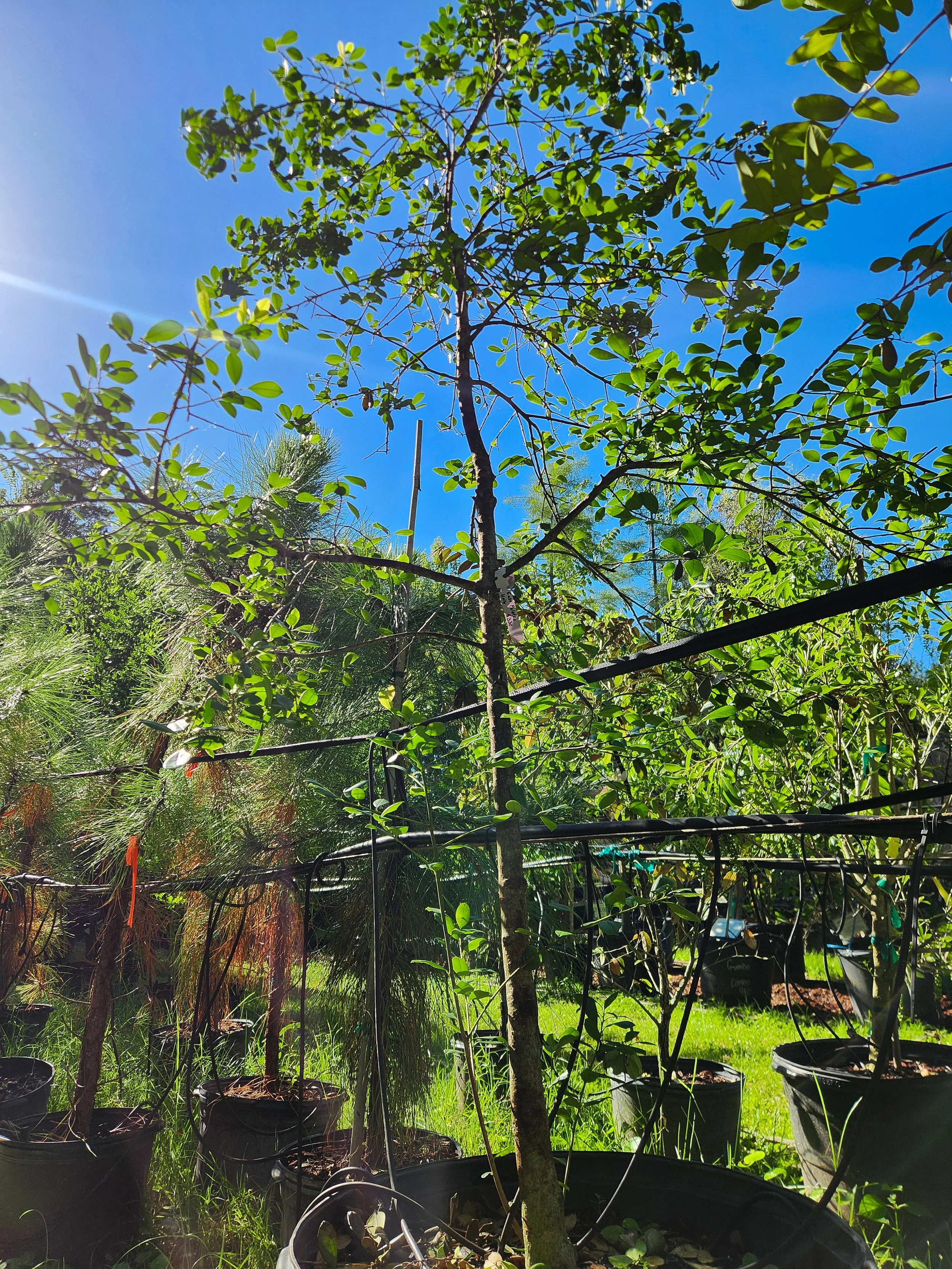
Ilex x attenuata
Florida native evergreen tree, with heights ranging from 35-40ft. With a pyramidal shape, soft green leaves and bright red berries, East Palatka Hollies make great screening plants, or can be planted as a specimen tree. For ideal growth, plant in full sun to partial shade, with rich, well-drained acidic soil. With flowers that provide nectar for pollinators, berries that provide food for small mammals and birds, and branches that provide shelter, East Palatka Hollies are a great plant for wildlife-loving gardeners!
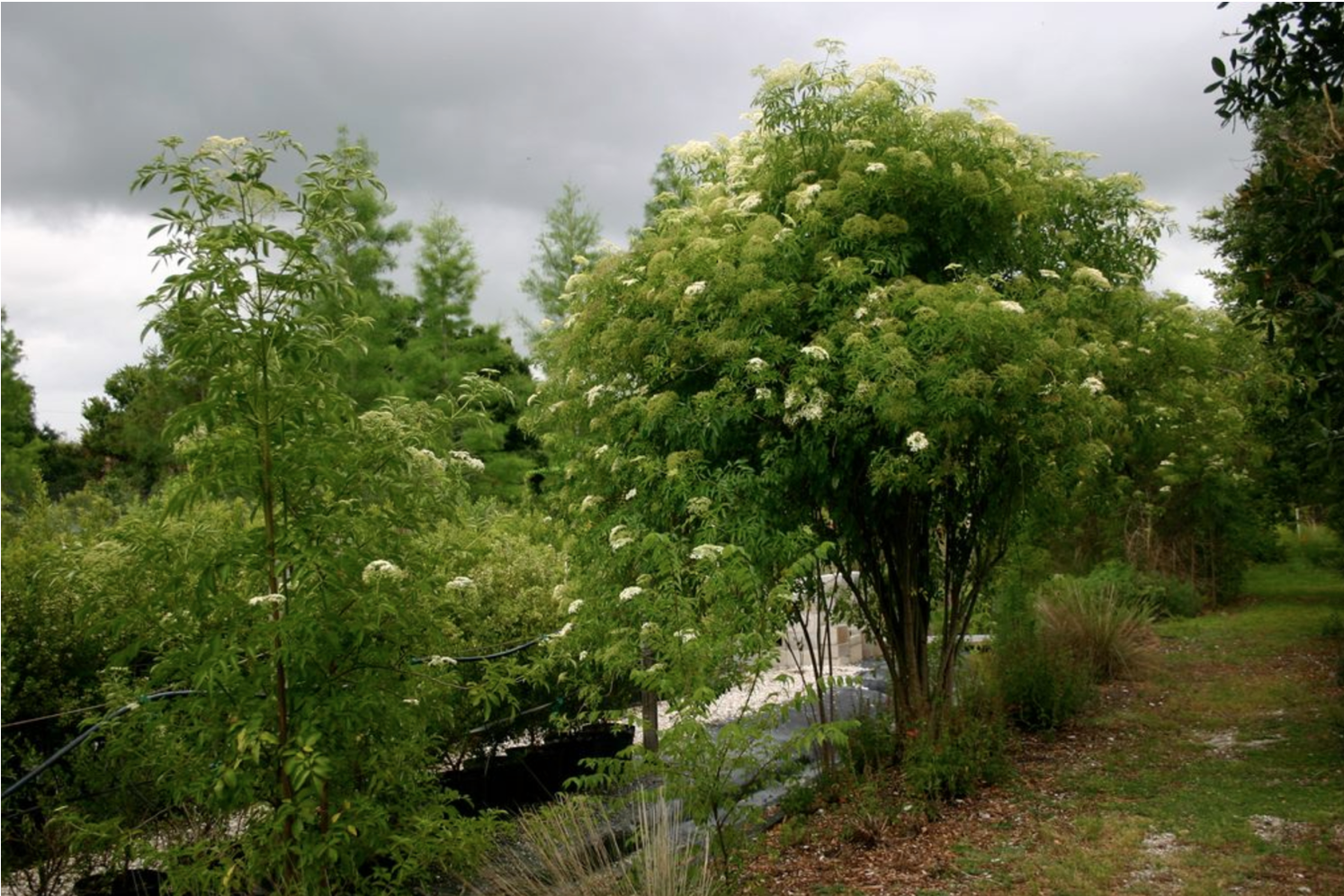

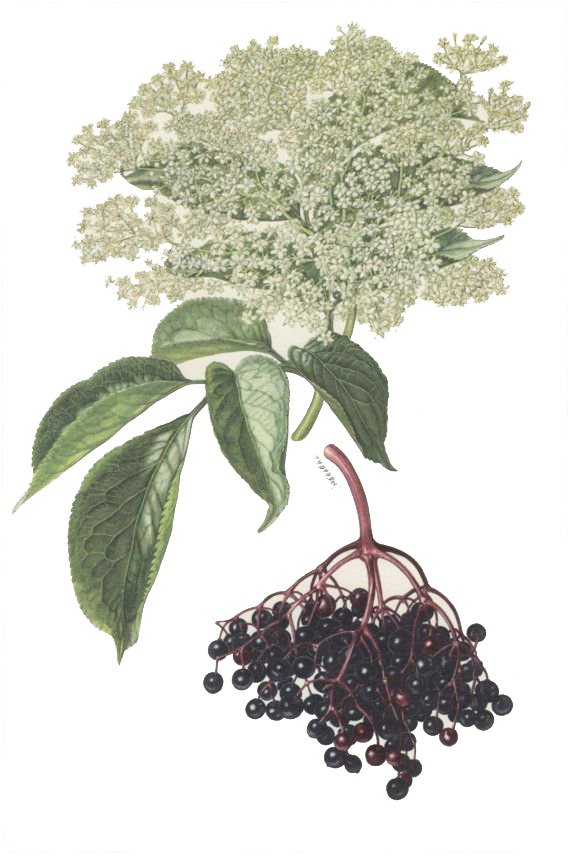
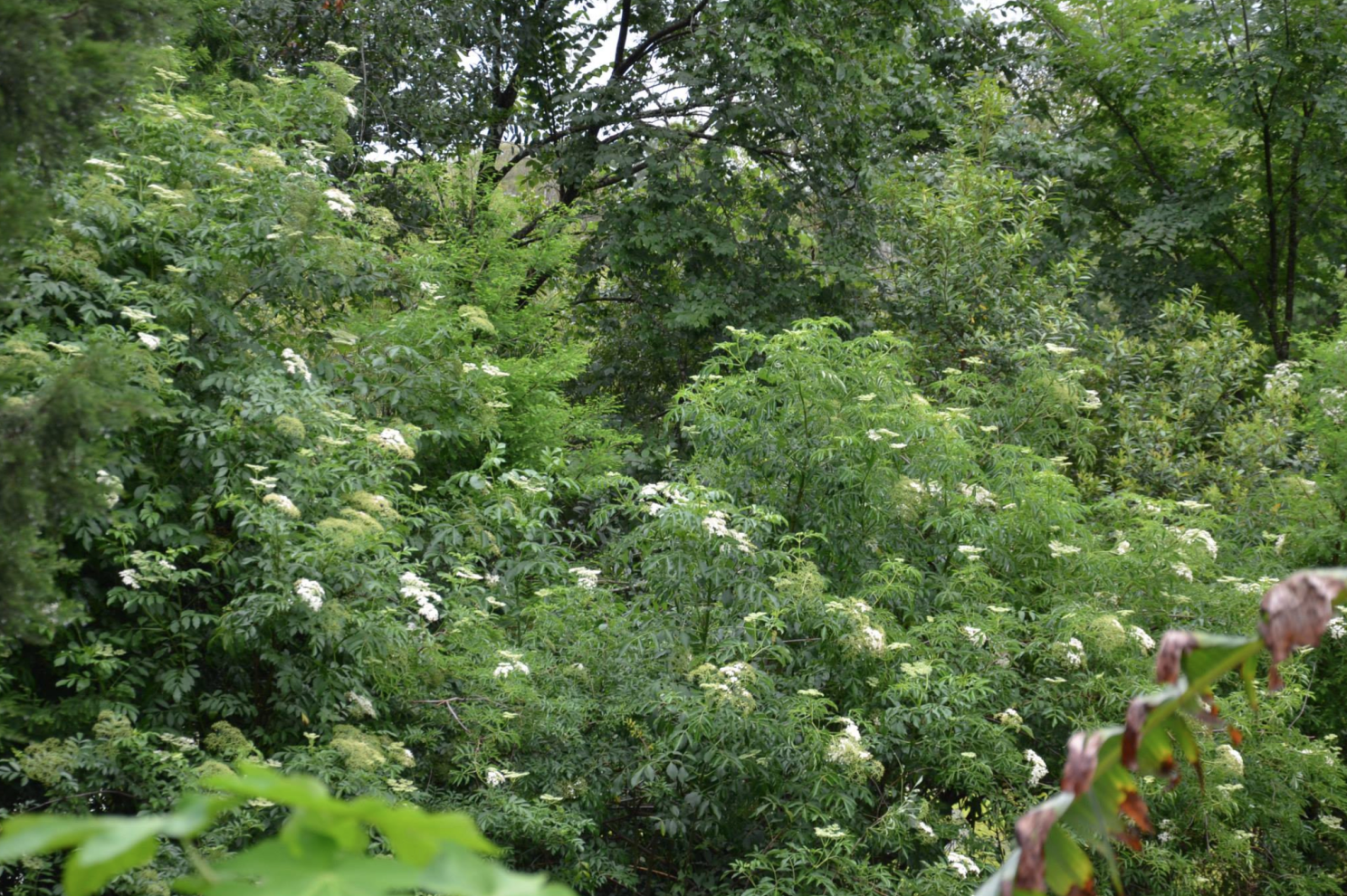
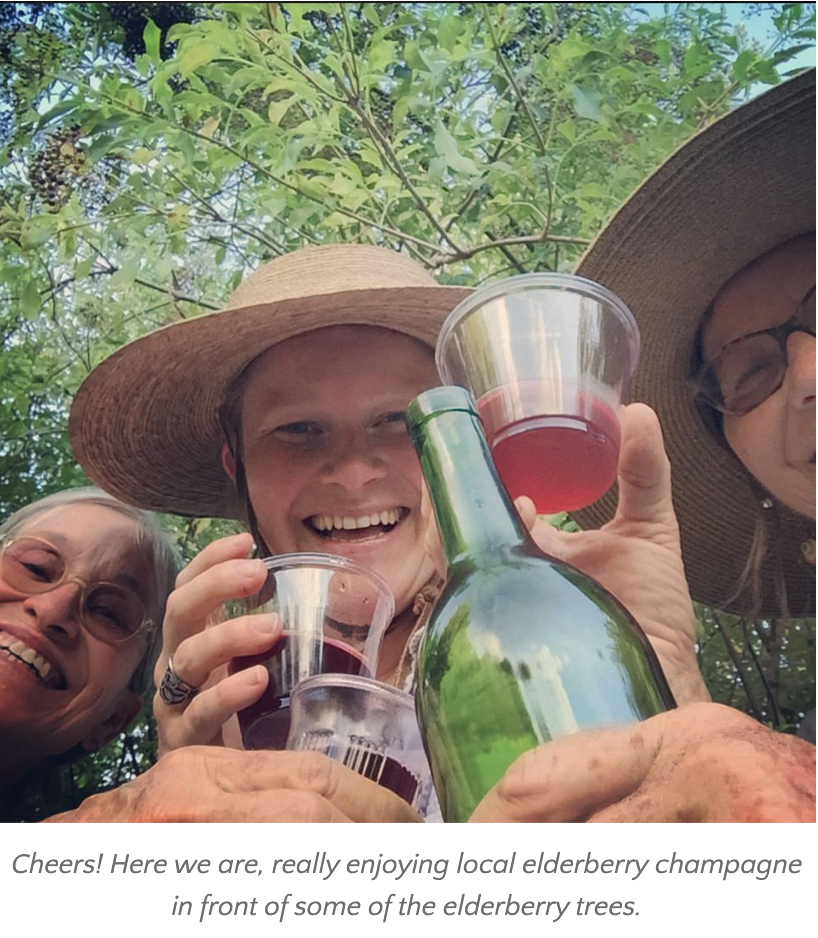
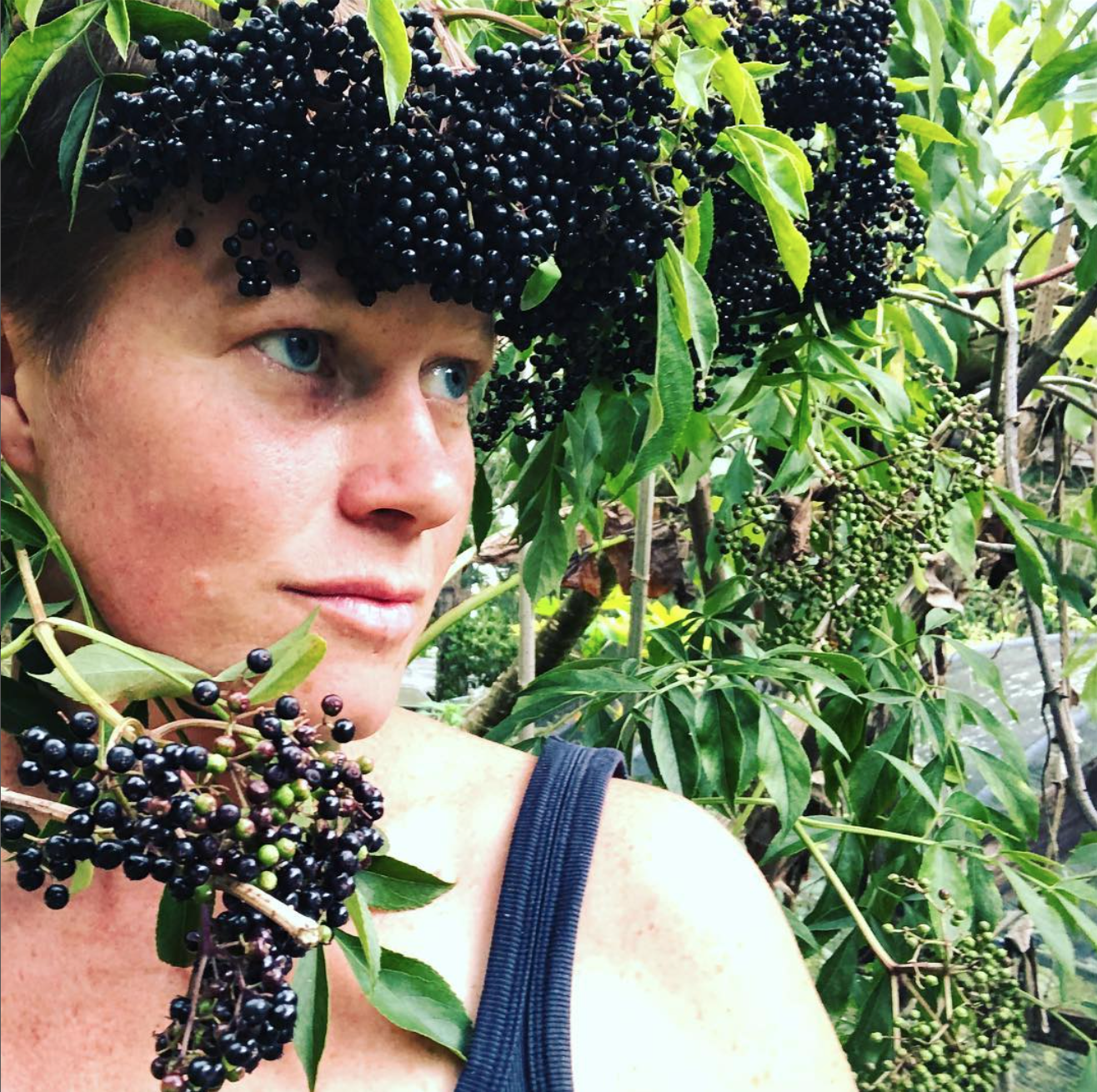
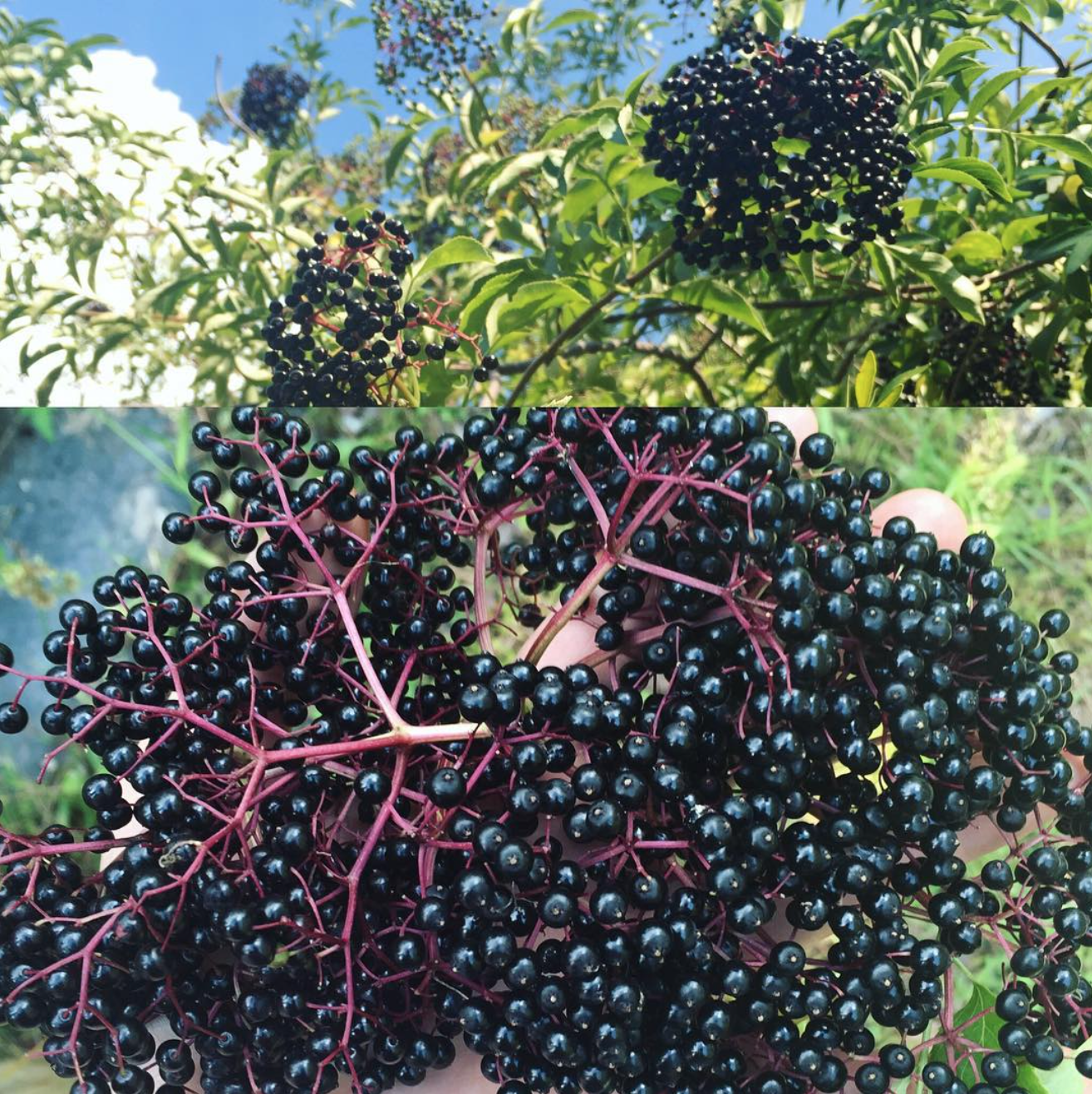
Sambucus canadensis
Elderberry is a fast-growing native shrub that offers beauty, food, and unmatched wildlife value. This versatile plant thrives in moist soils and adapts easily to sun or partial shade, reaching 6-20 feet to create a lush, pollinator-friendly hedge or specimen plant. In early summer, you'll enjoy massive clusters of fragrant white flowers that attract butterflies, followed by nutrient-rich dark purple berries perfect for homemade syrups and jams. As a cornerstone of the native wildlife garden, Elderberry is a favorite for songbirds and beneficial insects alike.
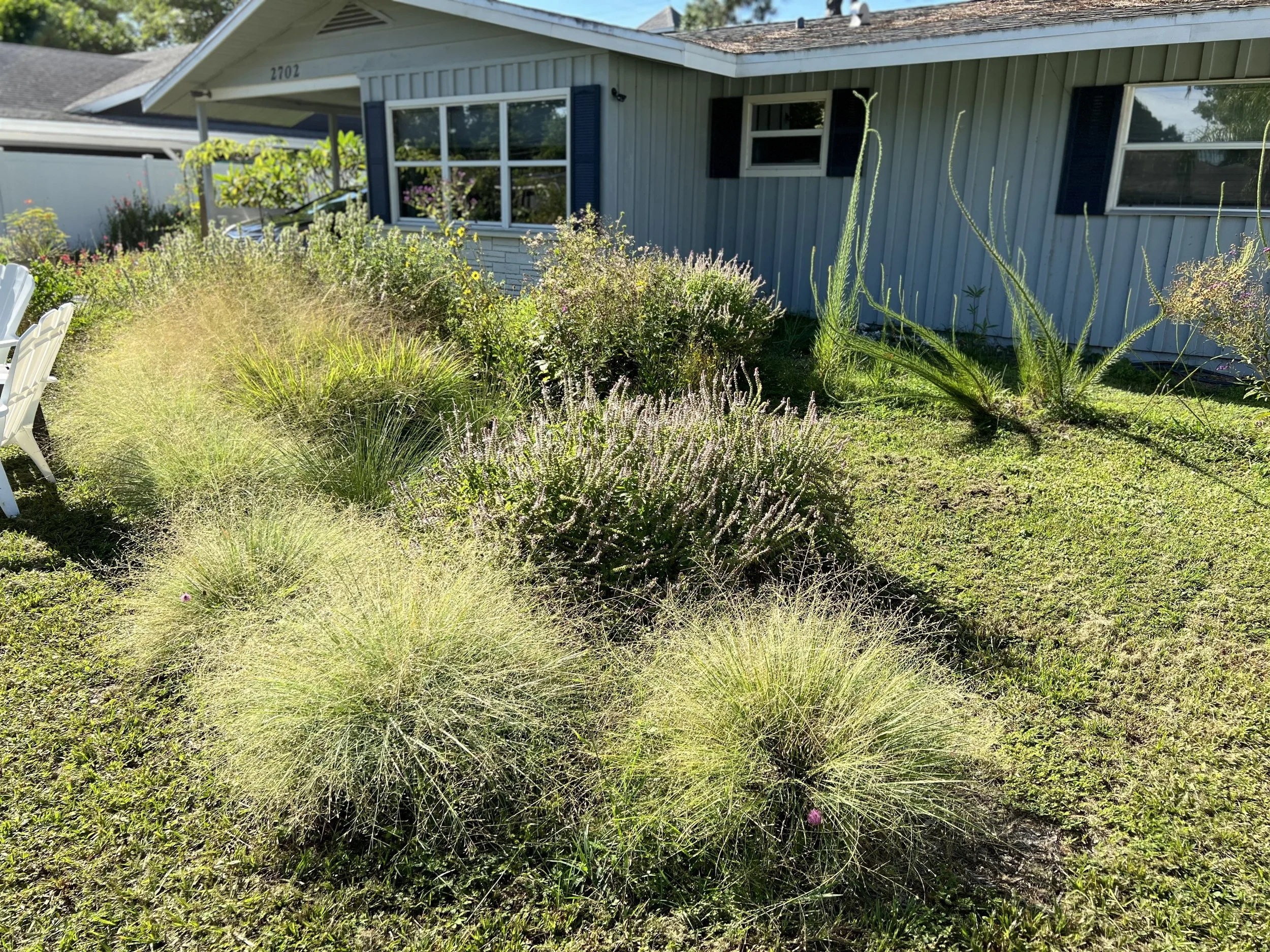
Eragrostis elliotti
Elliott's Lovegrass is a native perennial bunchgrass. This delicate species produces silvery blue-green foliage topped by airy panicles of tiny beige to pinkish flowers that create a billowy, cloud-like appearance when in bloom from late summer through fall. It demonstrates remarkable tolerance to both drought and periodic flooding with fresh water and salt-wind spray. This re-seeding and adaptable grass thrives in sandy, low-nutrient soils and provides excellent texture and late-season interest for naturalized plantings.
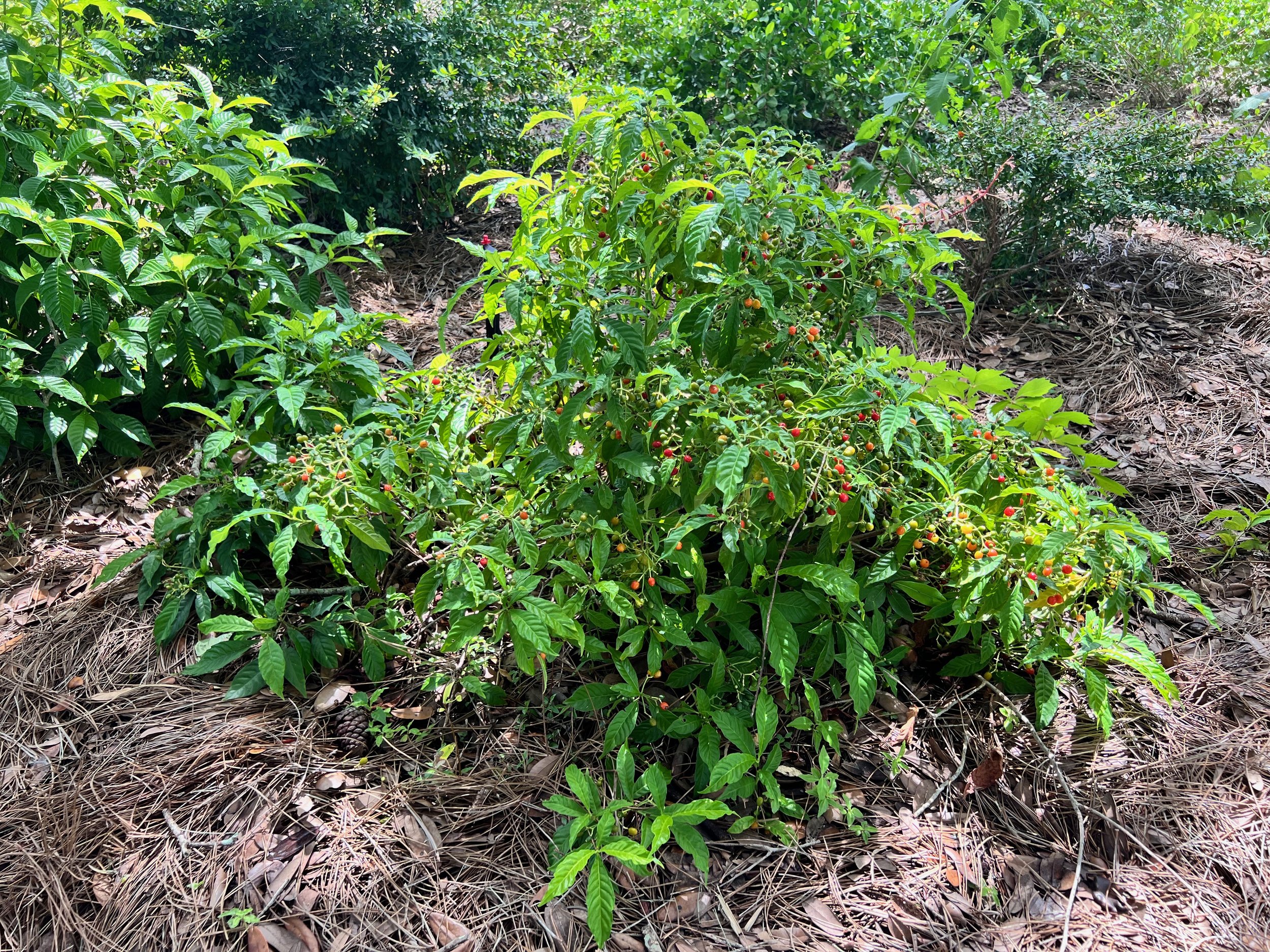

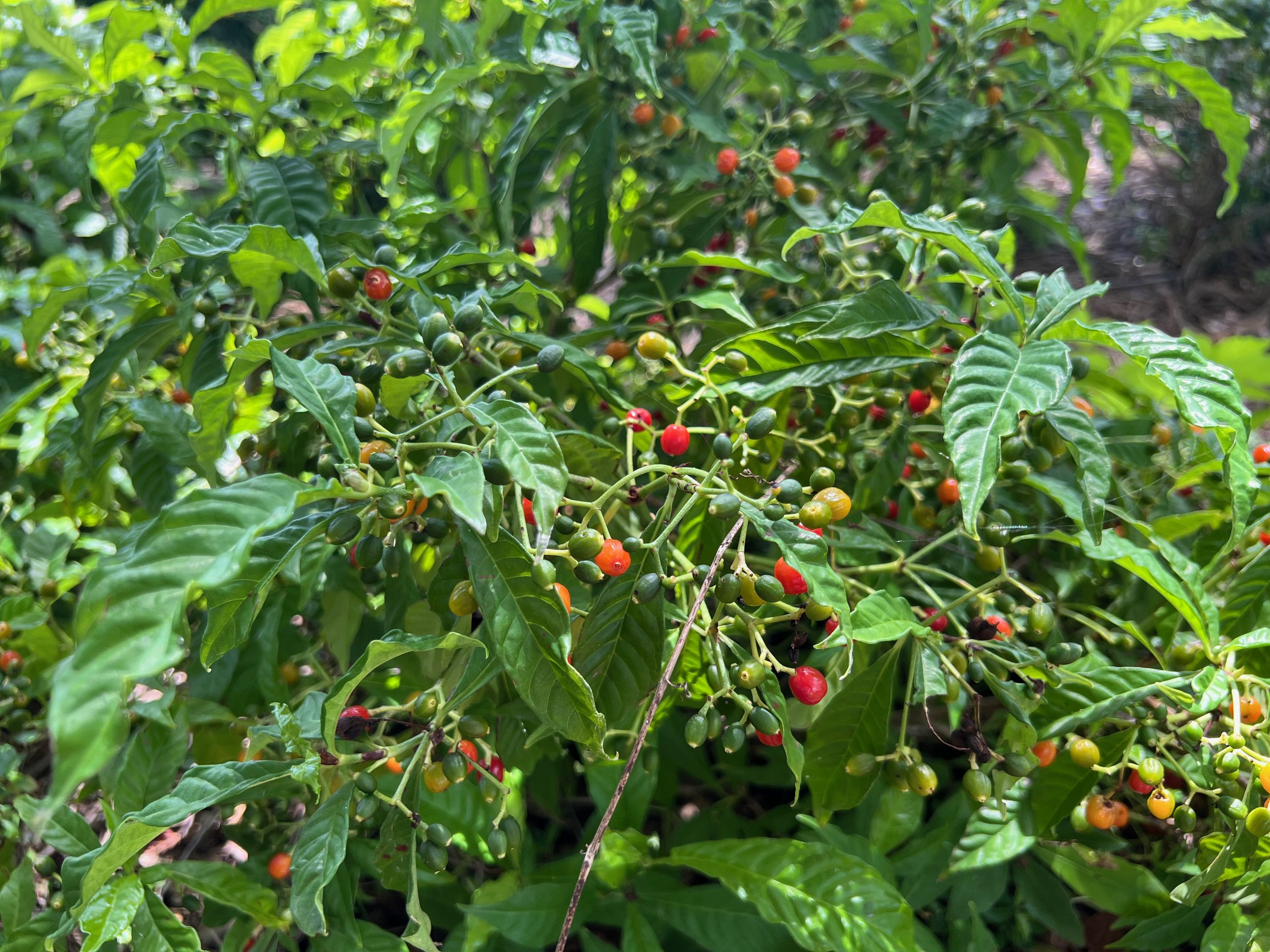
Psychotria nervosa
This evergreen native shrub is loved by pollinators and birds. Staying small at 2' or shorter, Extra Dwarf Wild Coffee is perfect as a low ground cover in shady areas, under oaks or as a border plant. Flowers bloom through summer turning into red berries in fall and winter.
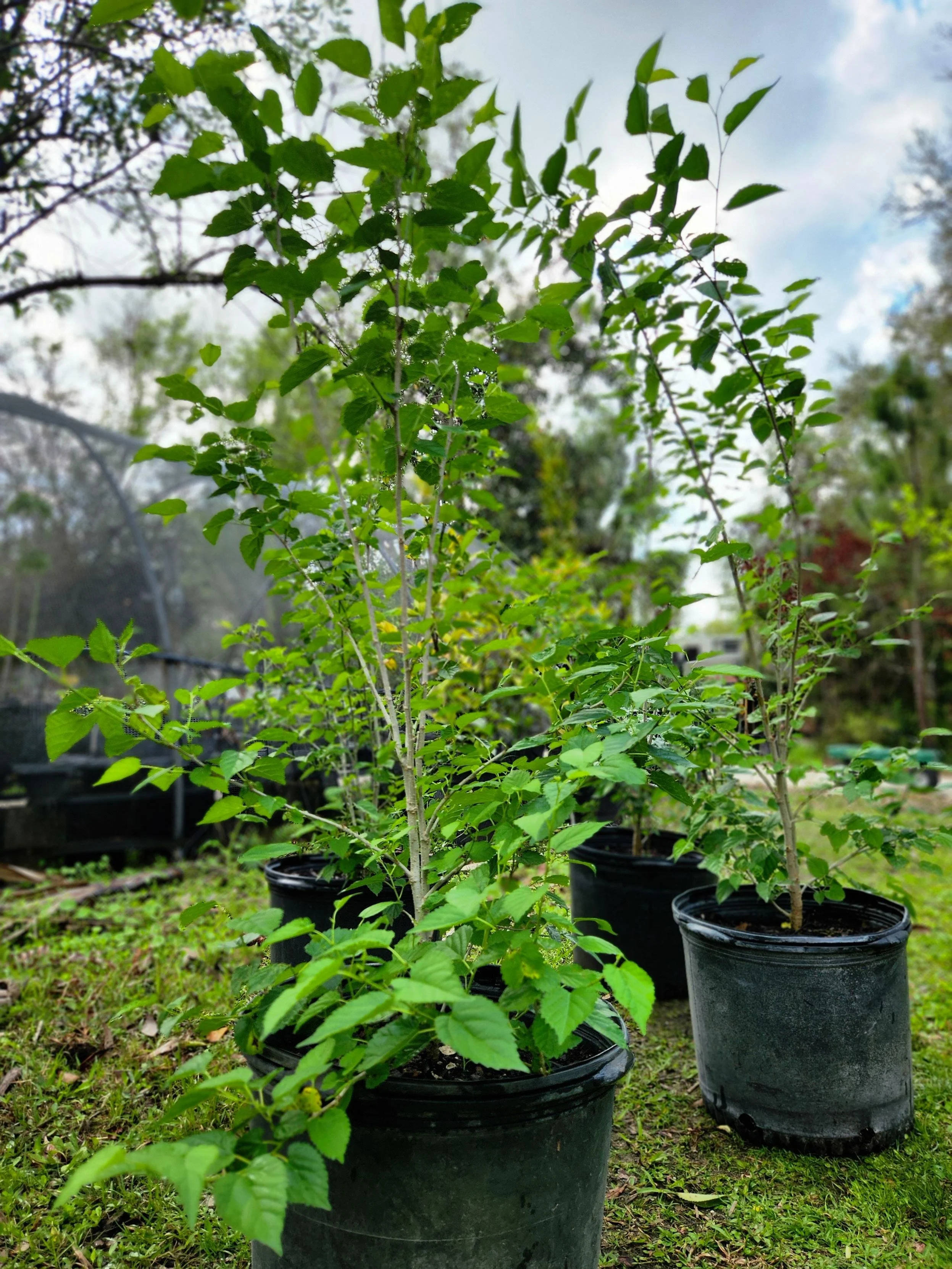
Morus nigra
Florida-friendly, dwarf variety. The Everbearing Mulberry is a low-maintenance, self-fertile, edible black mulberry. Perennial shrub or small tree. They do well in full sun, with moist, but well-drained soil. Use an organic, slow release fertilizer. They bloom year-round and fruit Spring through Summer. Also works well as a potted plant!
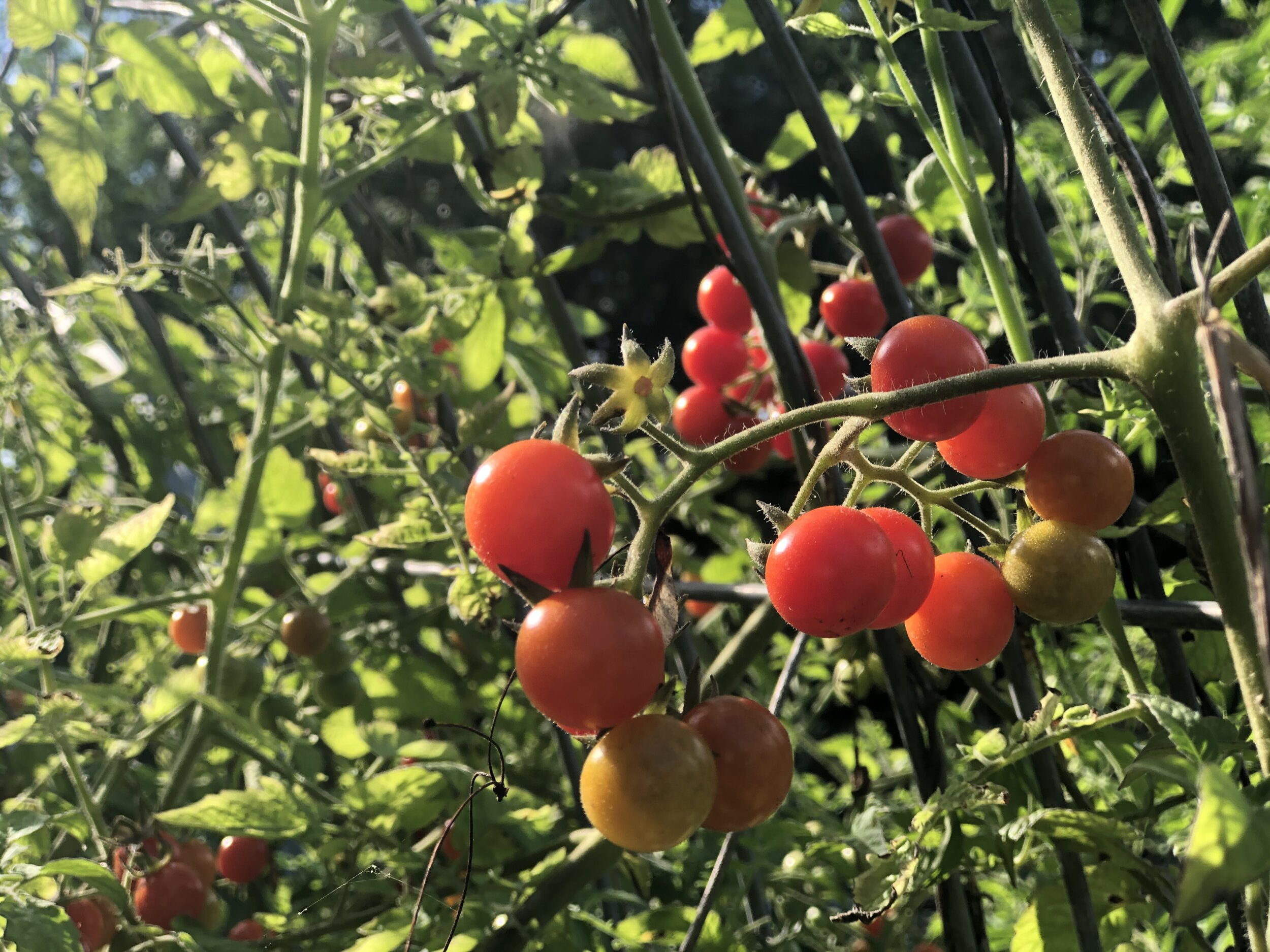

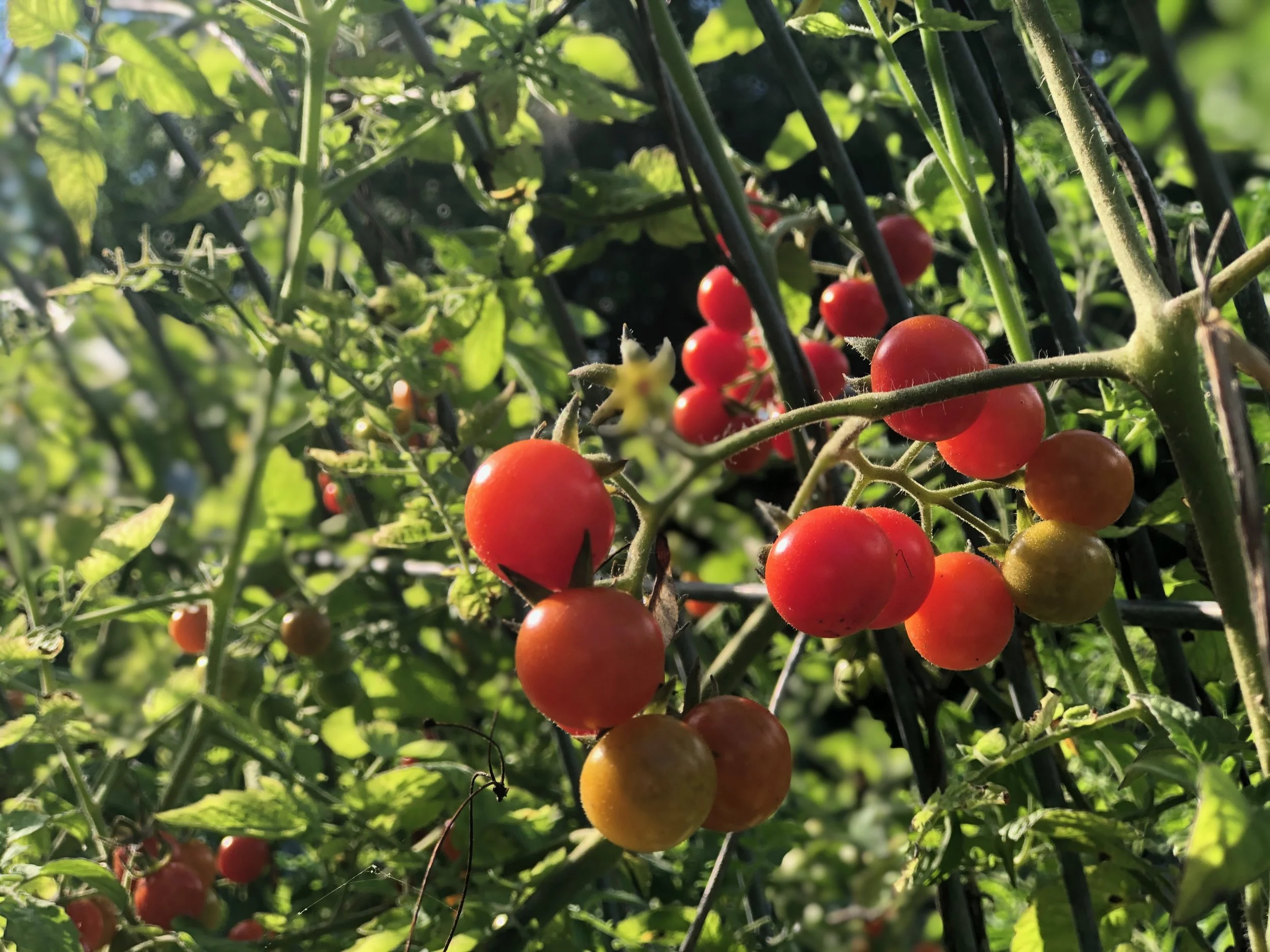
Solanum pimpinellifolium
Everglades Tomato is a hardy tomato that naturalizes here in Florida and can be grown all year. Growing best in sun to partial shade and average to moist soil, this plant does well in many Florida landscapes and provides delicious, small tomatoes all summer long. While it does need to be protected from frost, it is disease and pest resistant!
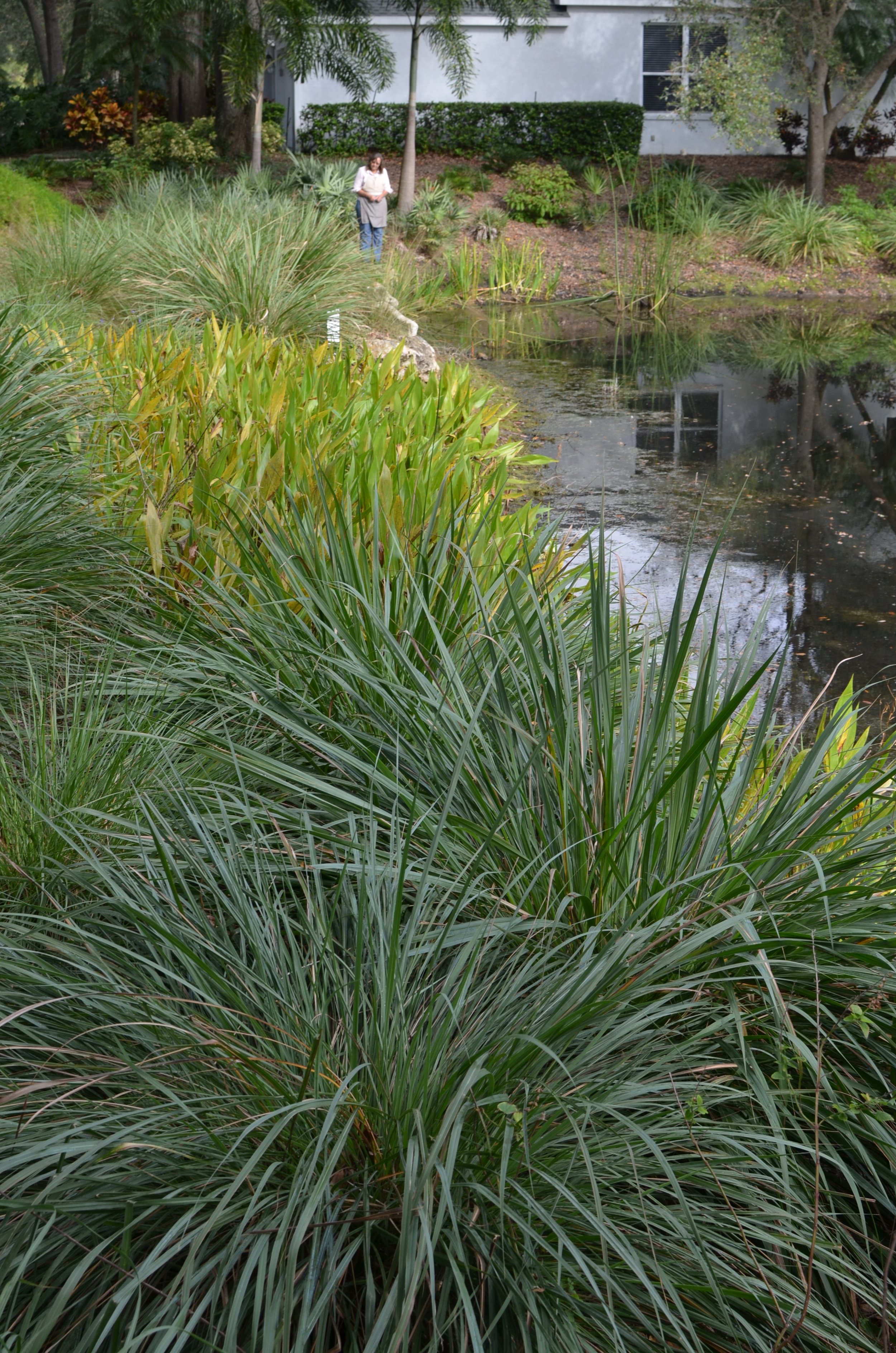
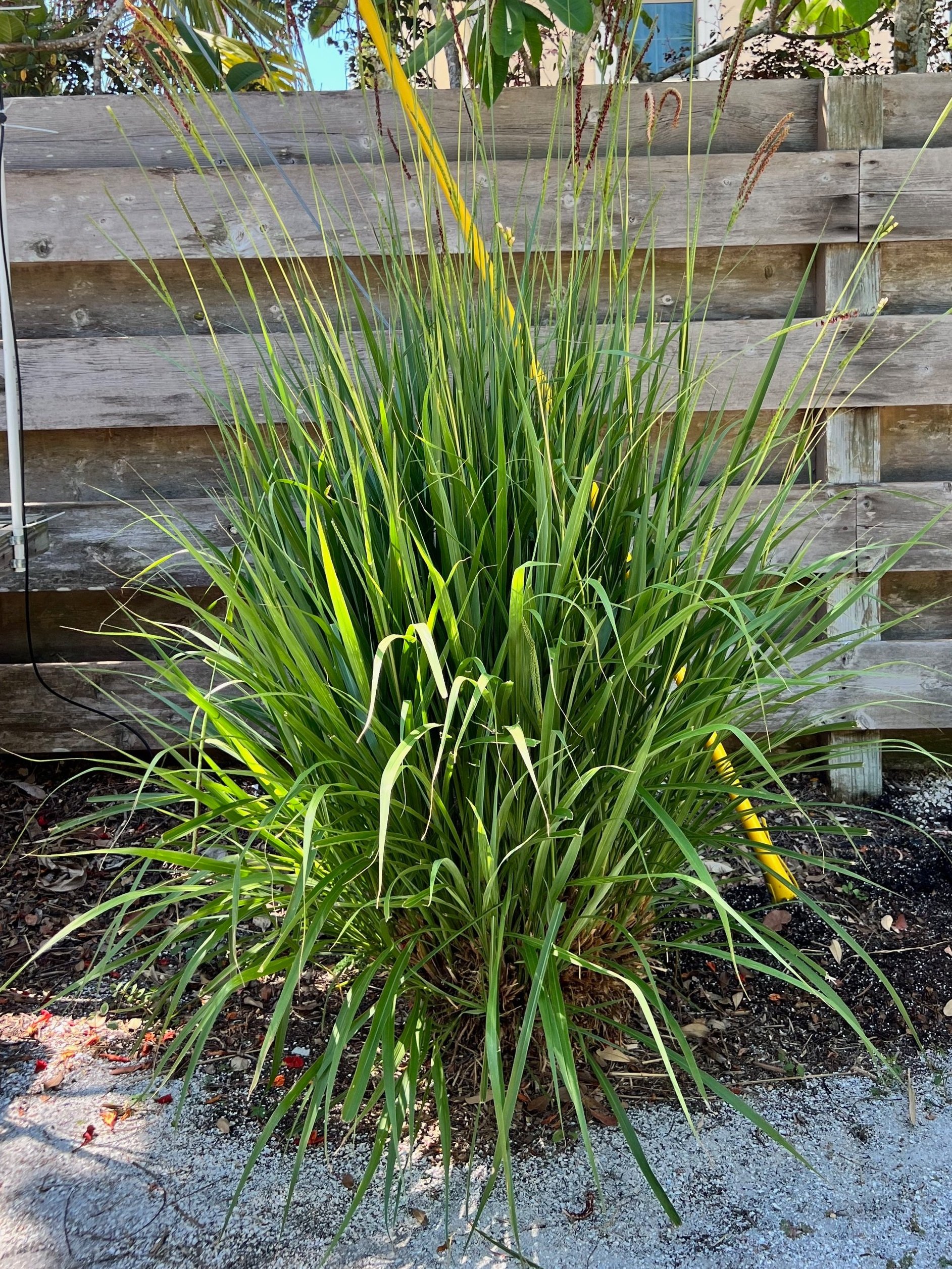
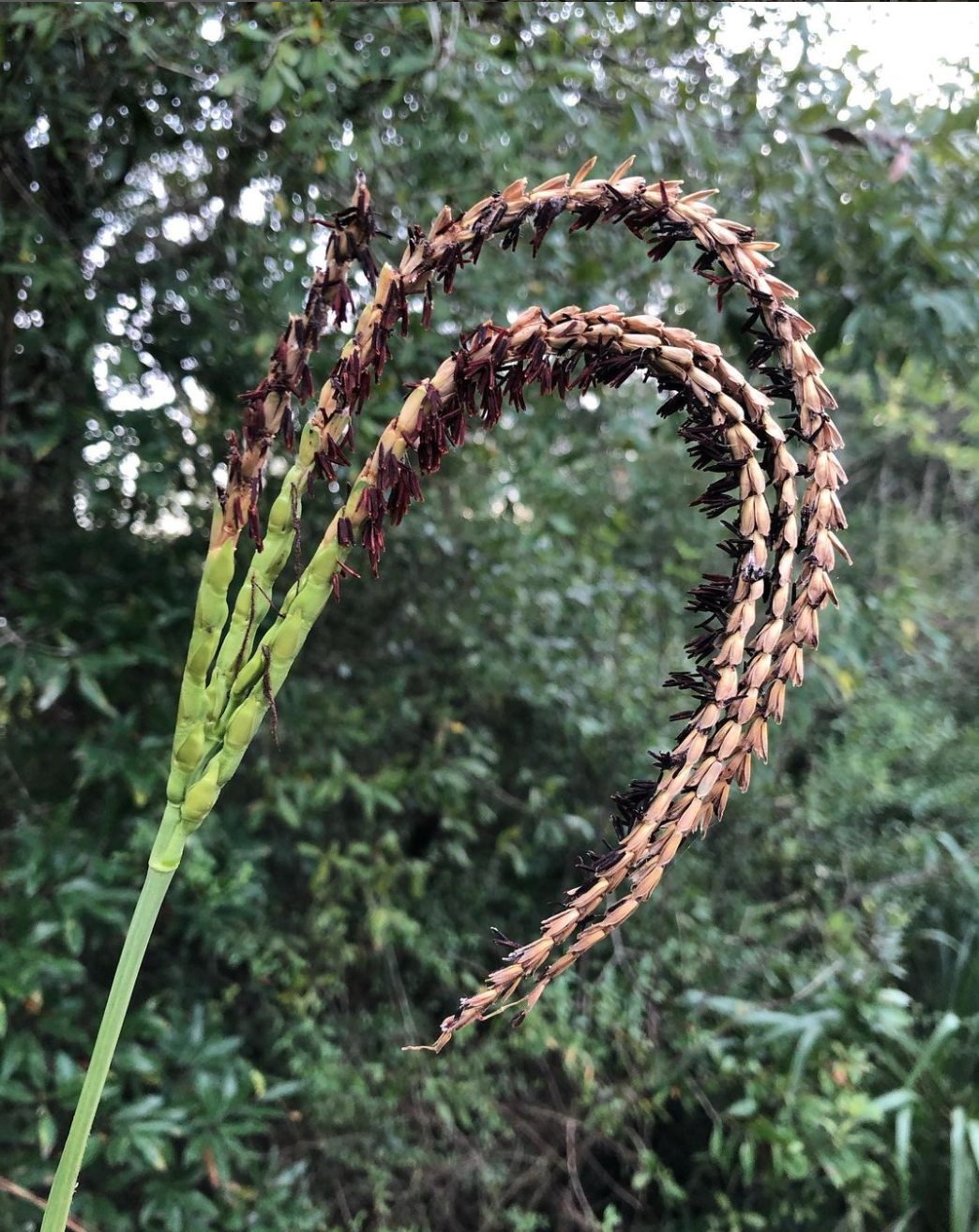
Tripsacum dactyloides
Fakahatchee Grass is a large Florida-native ornamental grass with dense, clumping foliage that can reach 4’-6’. It does well in full sun to partial shade with average to moist soil. Perfect for rain gardens, borders, and erosion control, this grass produces graceful, spiky foliage and unique, showy flower spikes. The foliage provides shelter for birds and small mammals, the seeds are a food source for many birds, and the foliage is a larval host for several Skipper butterflies.
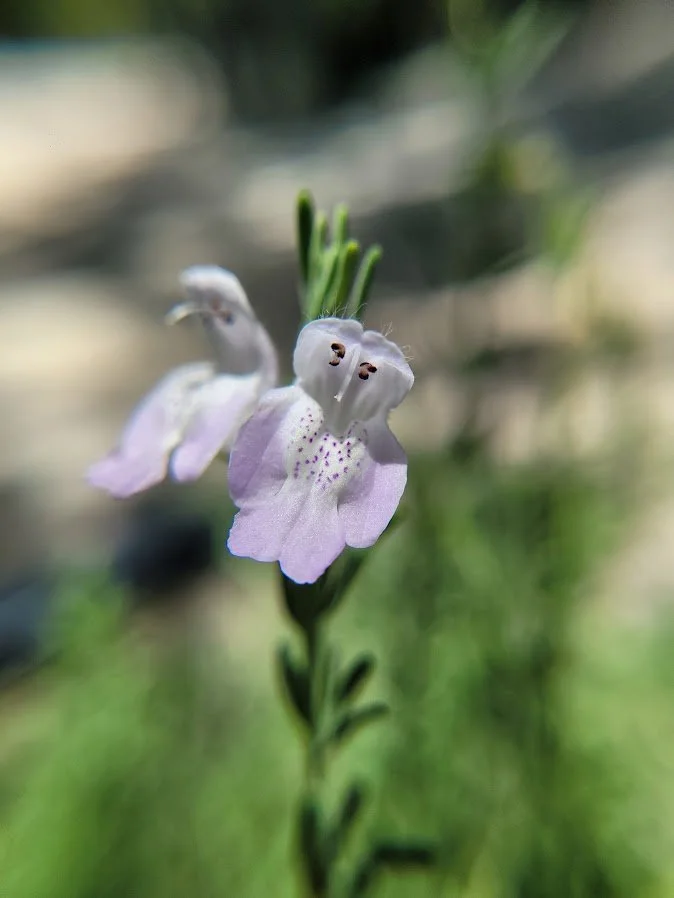
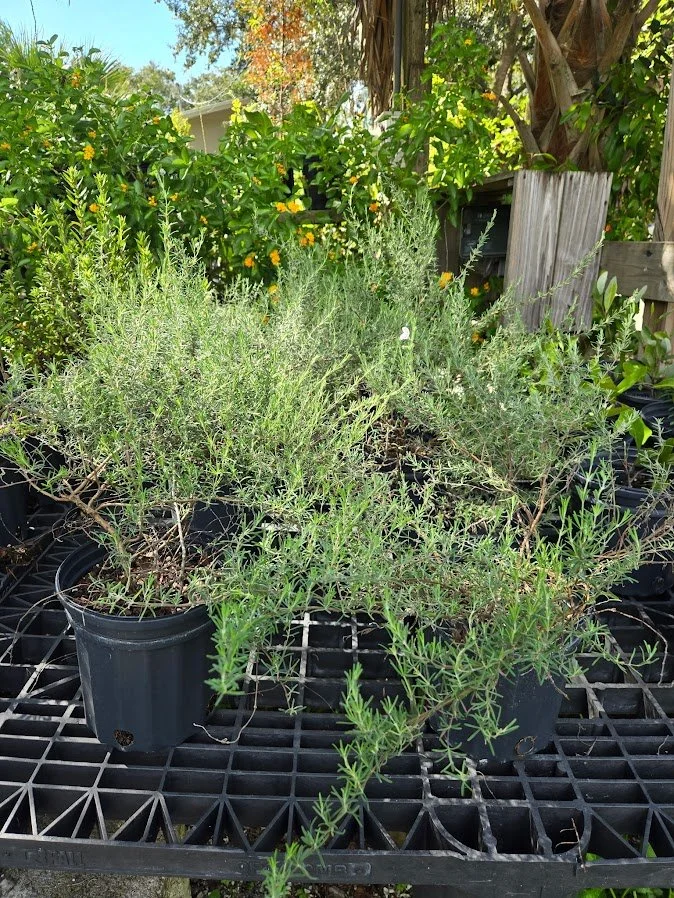
Conradina canescens
False Rosemary is an evergreen woody shrub in the mint family native to sand dunes, back dunes, and inland scrub of the west coast of Florida. This low-growing, sprawling plant features aromatic, gray-green needle-like leaves that release a mint fragrance when crushed. From spring through fall, it produces small two-lipped flowers in shades of lavender, white, or purple that attract bees and other pollinators. Extremely drought-tolerant and adapted to sandy soils, it thrives in full sun and is commonly used for dune stabilization, low hedges, and pollinator gardens in coastal landscapes. It is salt-wind tolerant.
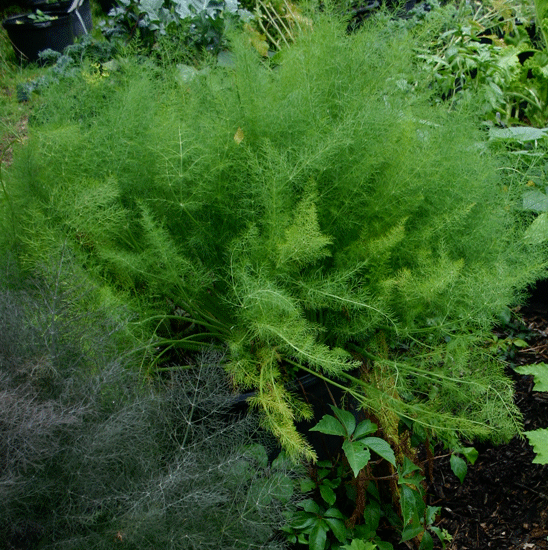
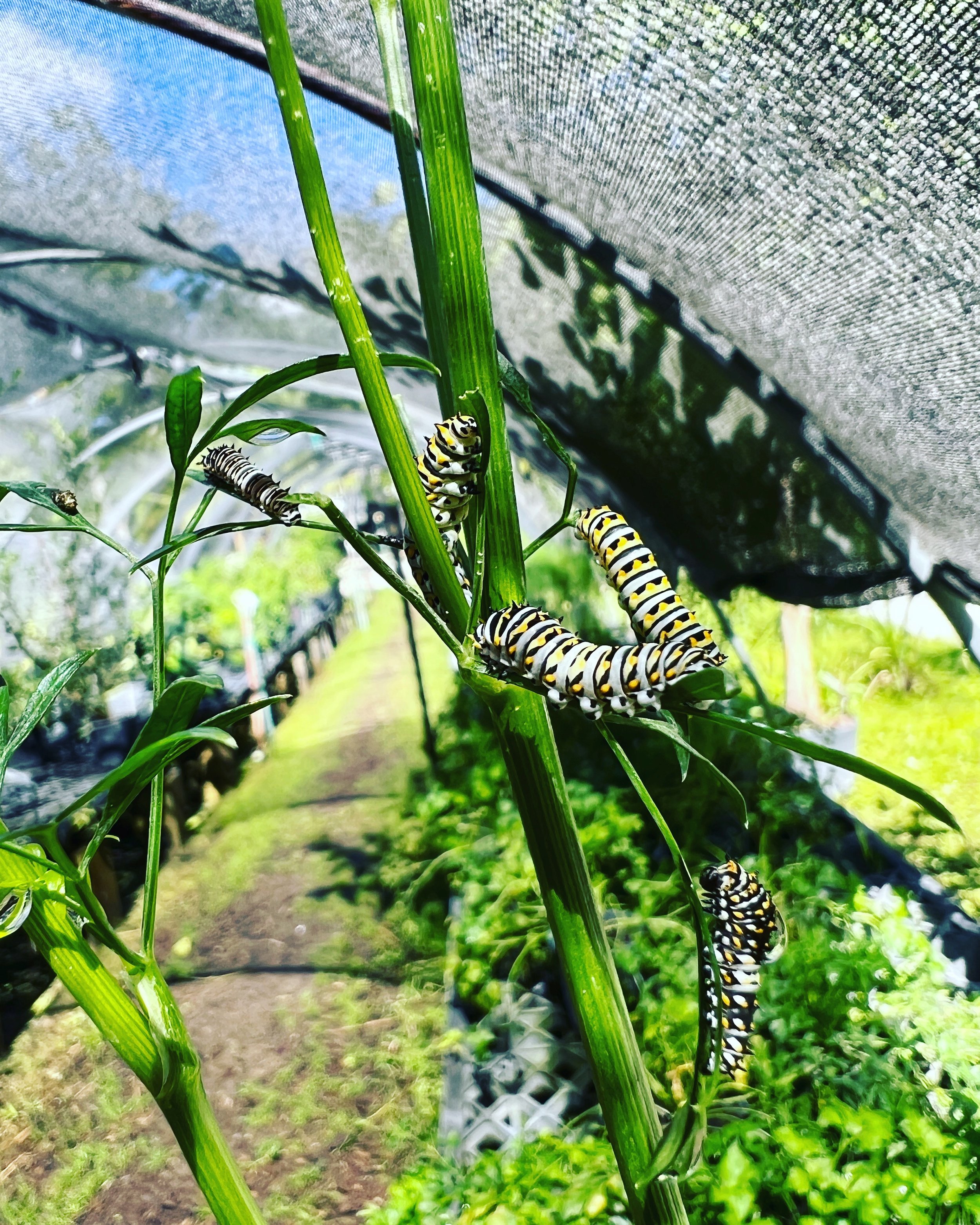
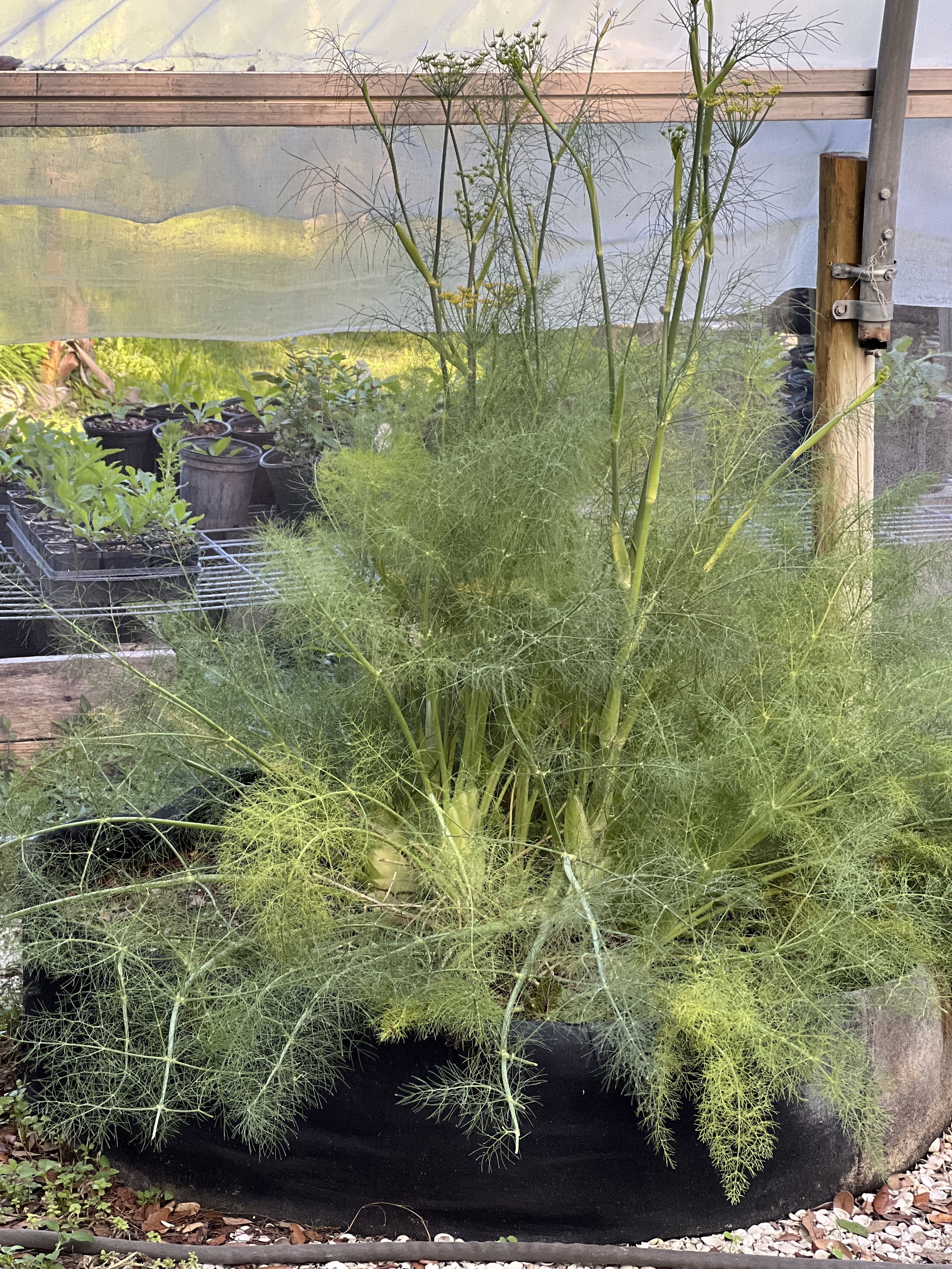
Foeniculum vulgare
Fennel is a highly aromatic, dual-purpose perennial herb that serves both the kitchen garden and the landscape as a vital host plant for swallowtail butterflies. Prefers full sun during the winter but benefits from partial shade during the intense summer heat. Grows best in average to moist, well-drained soil enriched with organic compost. It can be successfully grown as a perennial all year round in Florida, though optimal growth occurs during the cooler months. Features fine, thread-like, feathery foliage and bright yellow umbrella-shaped flower clusters (umbels). It can grow from 3 to 6 feet tall. An essential larval host plant for the Eastern Black Swallowtail butterfly. The plant brings a sweet, anise-like flavor to seafood, soups, and salads.
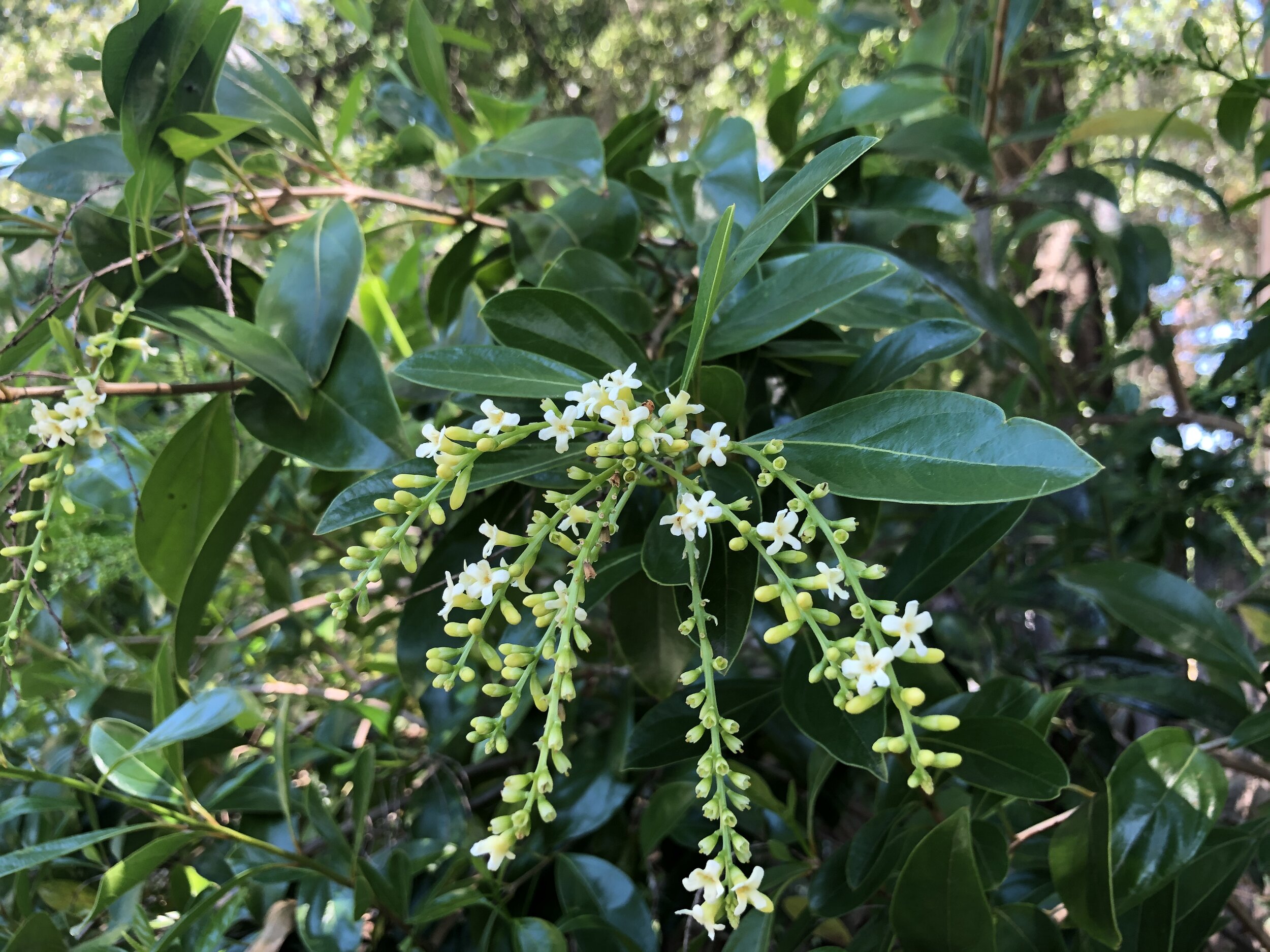
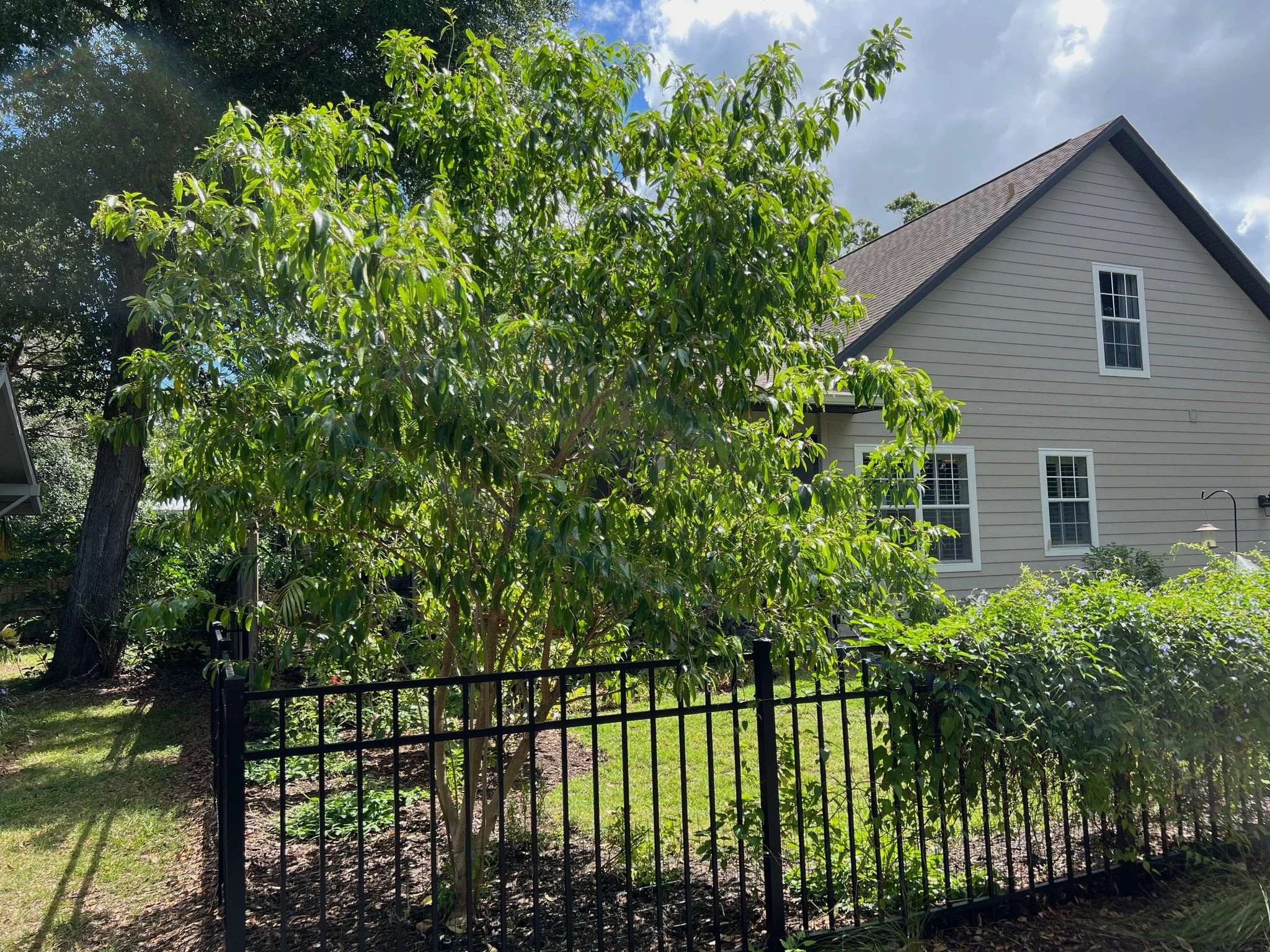
Citharexylum spinosum
Fiddlewood is a delightful fast growing native large shrub or small tree. Fiddlewood is evergreen, with shiny deep green leaves and fragrant white blooms all year long! This plant is dioecious, so if you have a female plant you will also have orange berries throughout the year that birds adore! This wonderful plant can go in full sun or in shade and is drought tolerant once established. It has a moderate salt tolerance so it can be planted in coastal uplands.
Fiddlewood can be used in a mixed hedge or as a specimen plant to make all the neighbors ask "What is that beauty covered in butterflies?!"
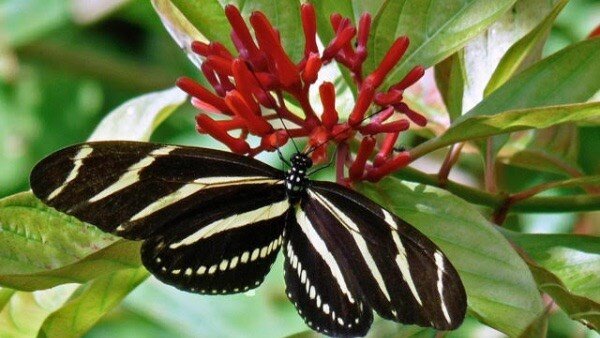
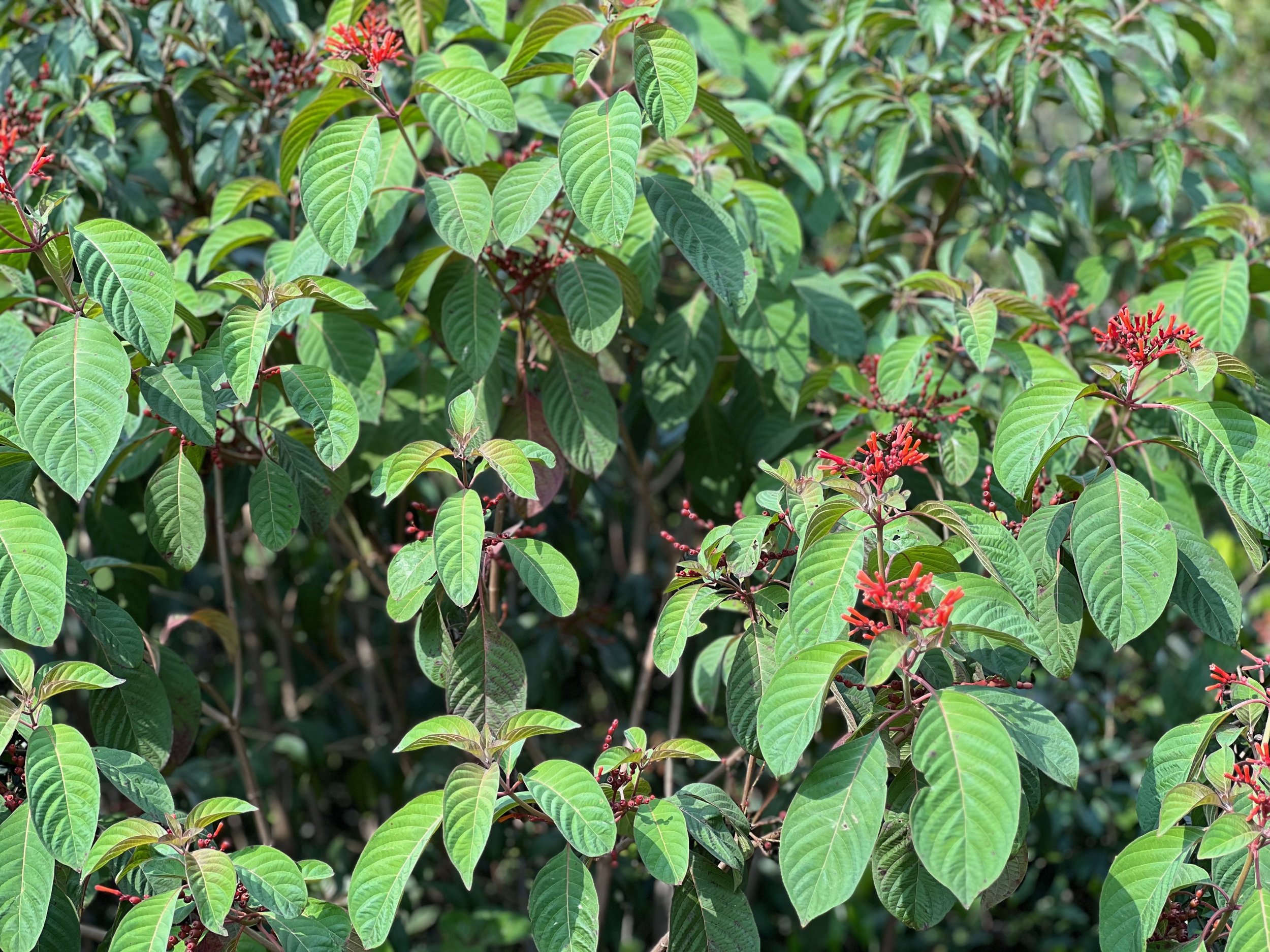
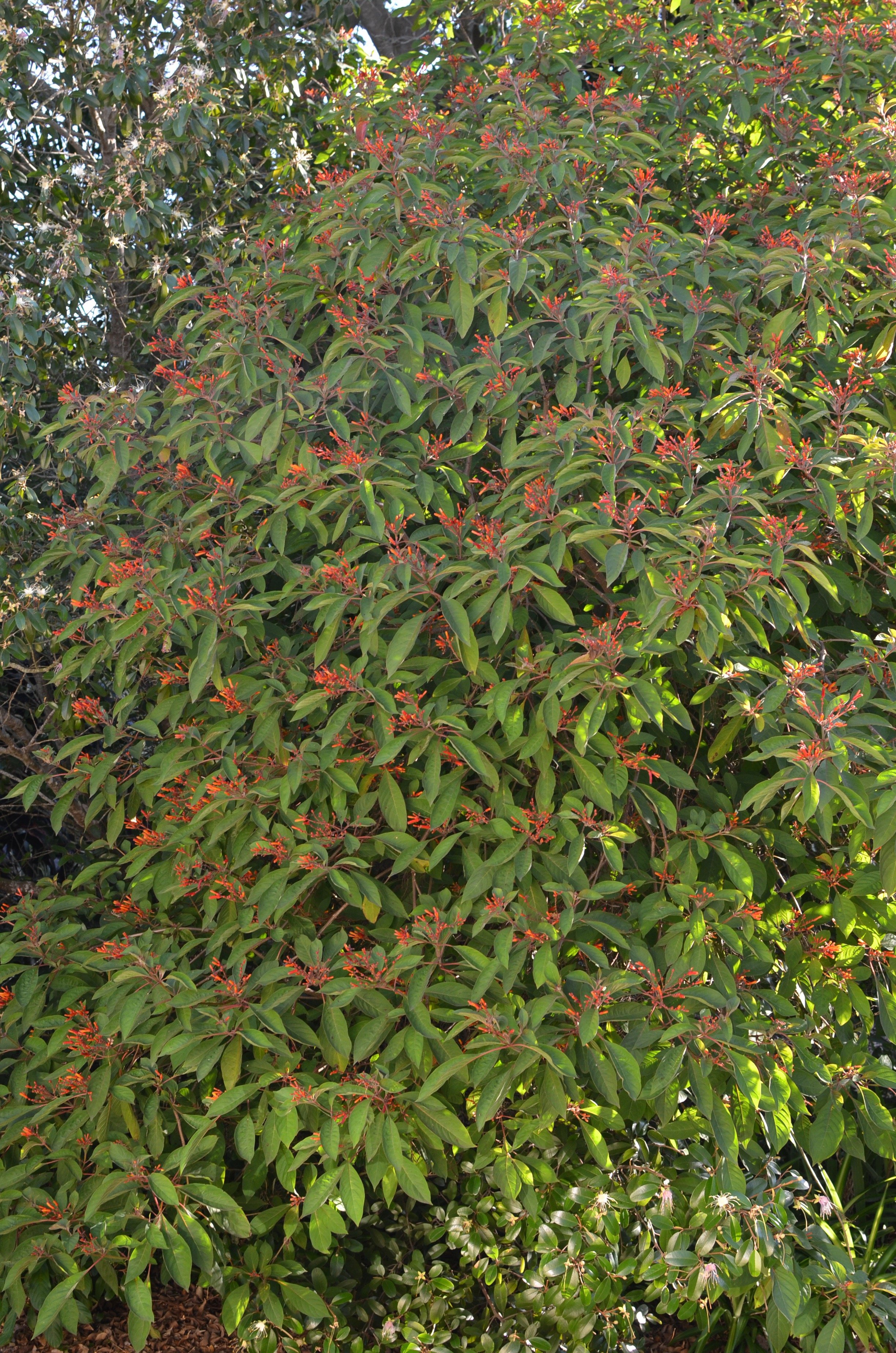


Hamelia patens
Firebush is a native, evergreen, 12’, prunable, shrub. It does best in dry to moist (well-drained) soils, sun/part shade, and is very fast-growing. With year-round, showy flowers that attract hummingbirds and butterflies, and berries that serve as a food source for song birds, Firebush makes a lovely addition to many Florida landscapes, especially pollinator and hummingbird gardens. In addition to its ecological benefits, the fruit is edible and has a long history of medicinal and industrial uses. Ripe fruit is black, edible raw and can be made into a syrup or wine!
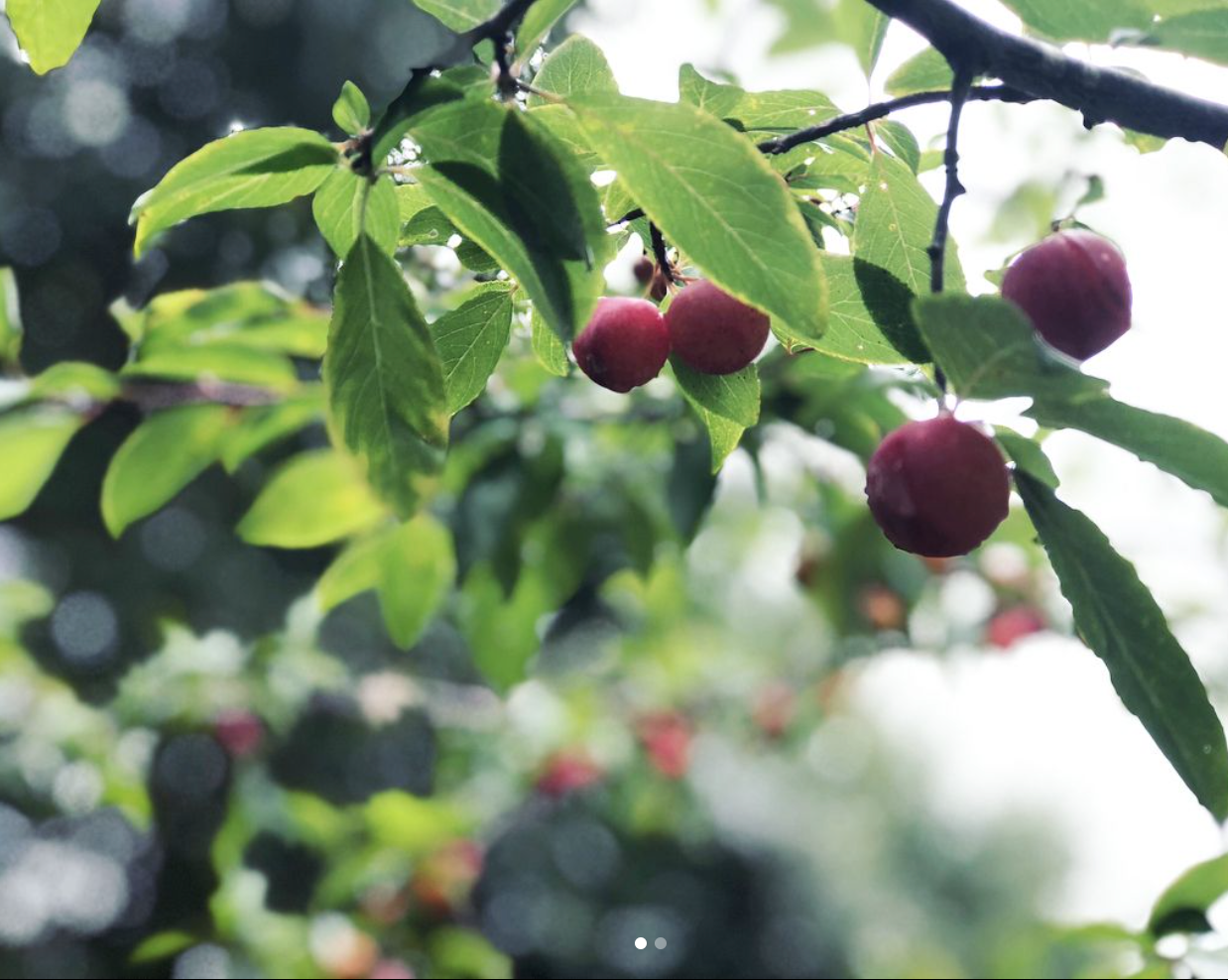
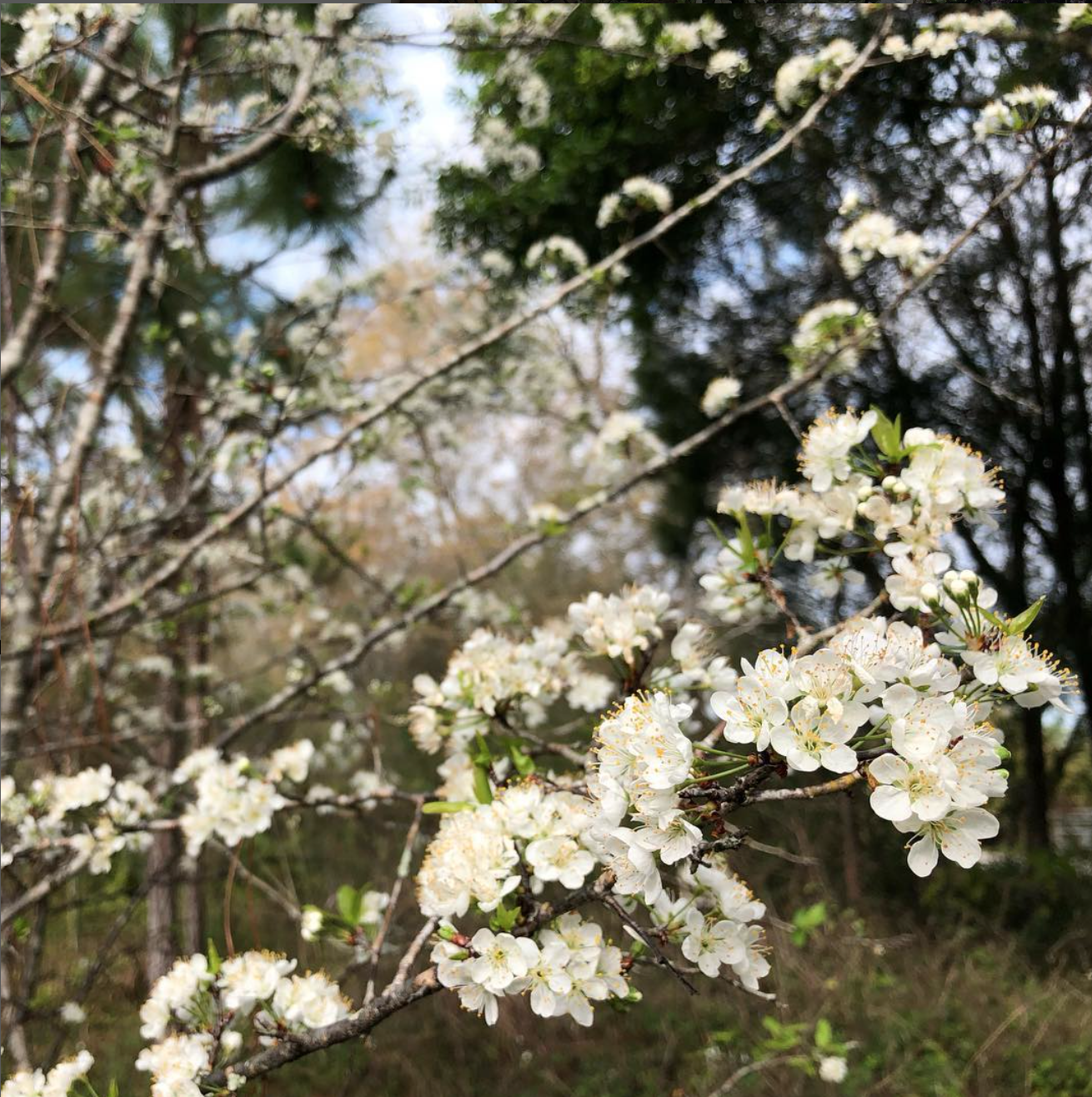
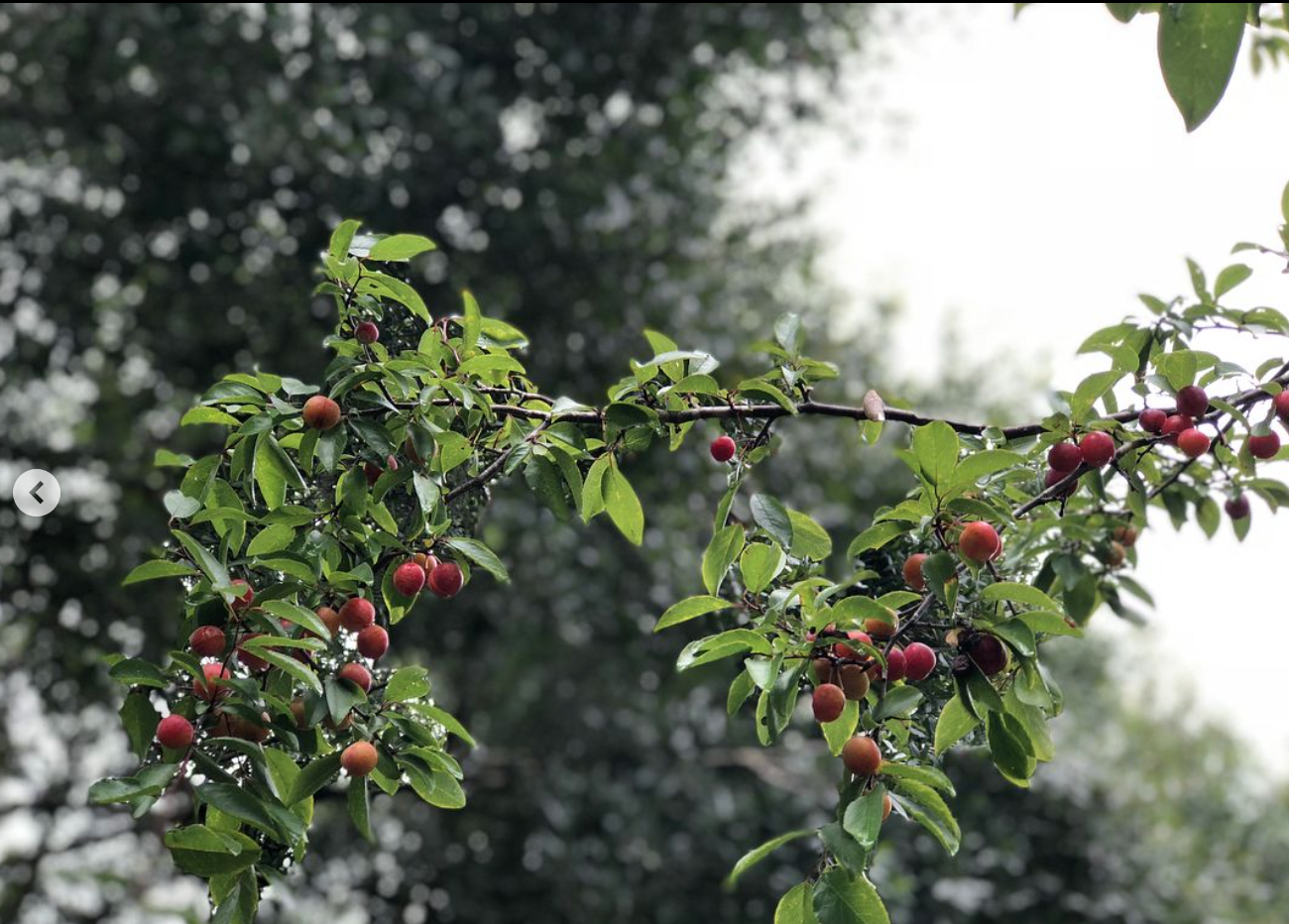
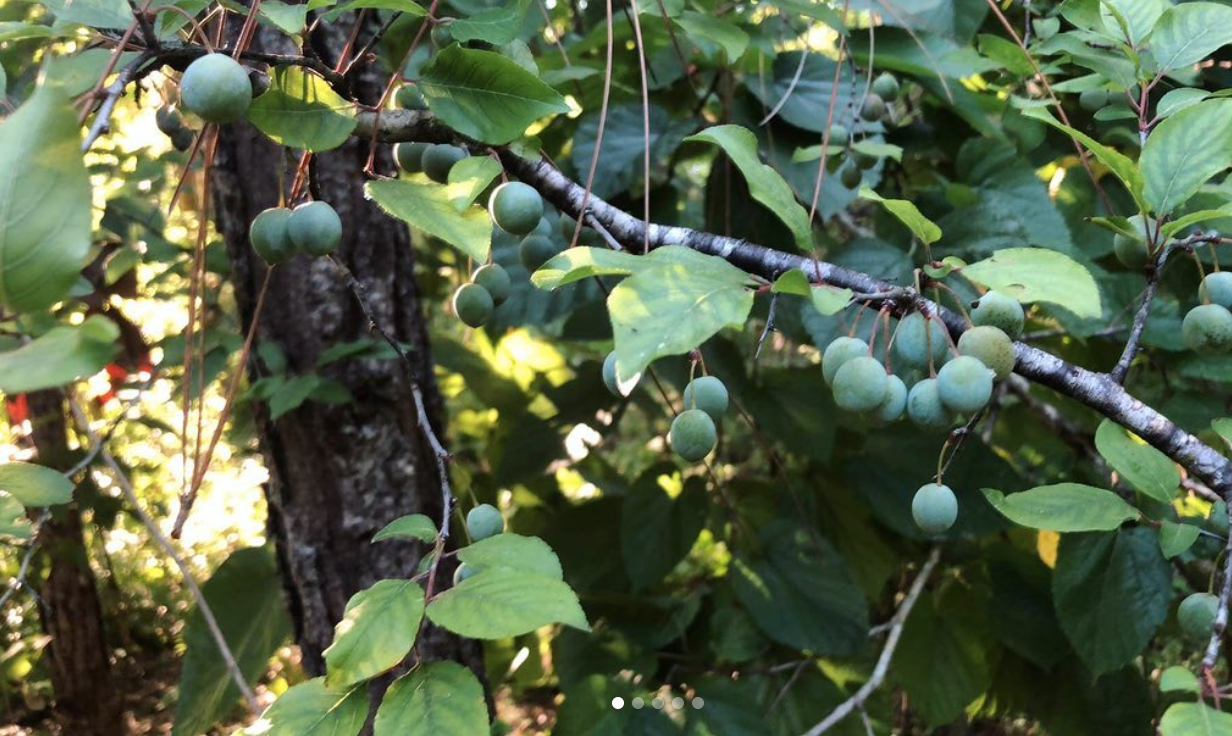
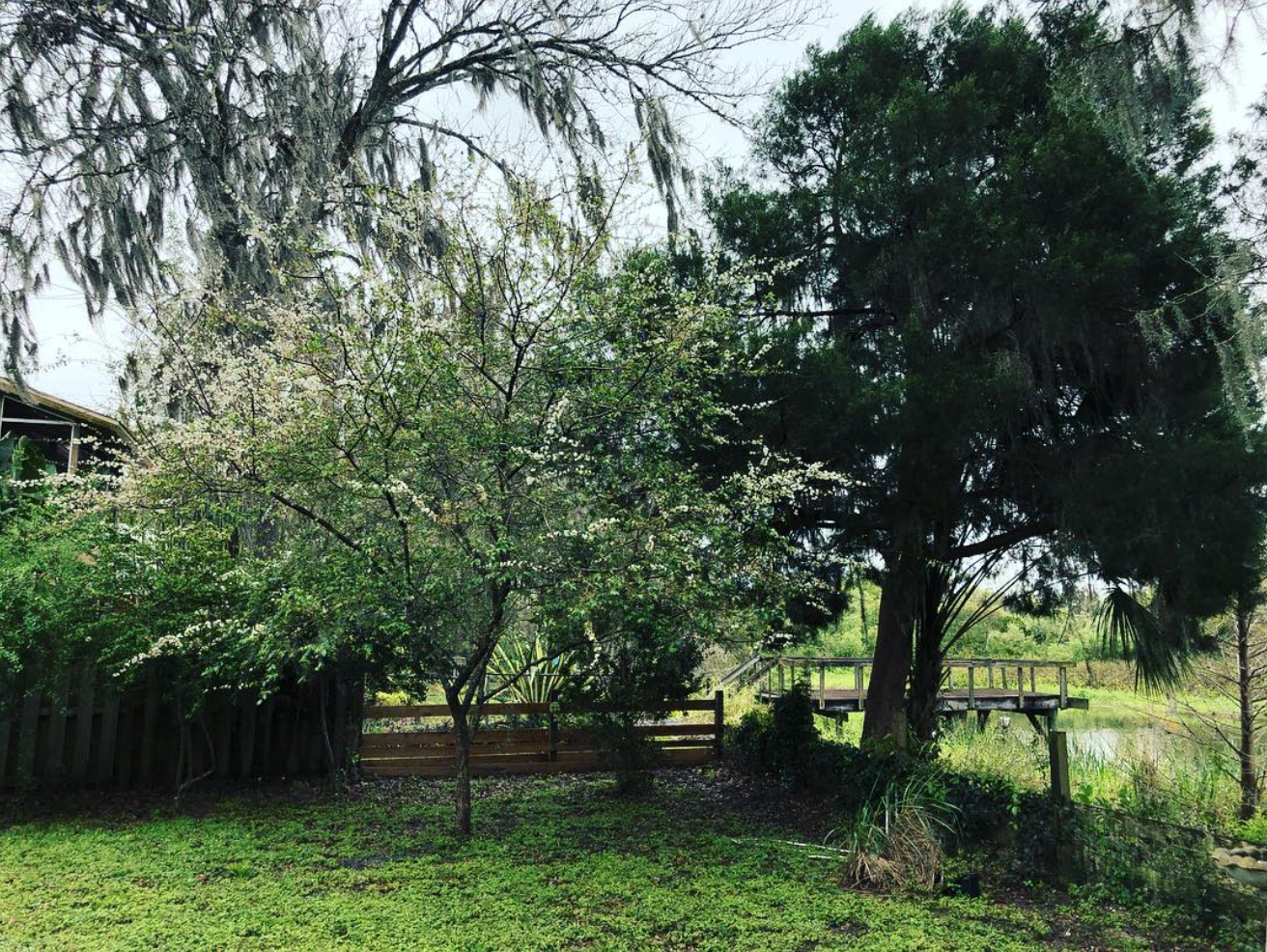
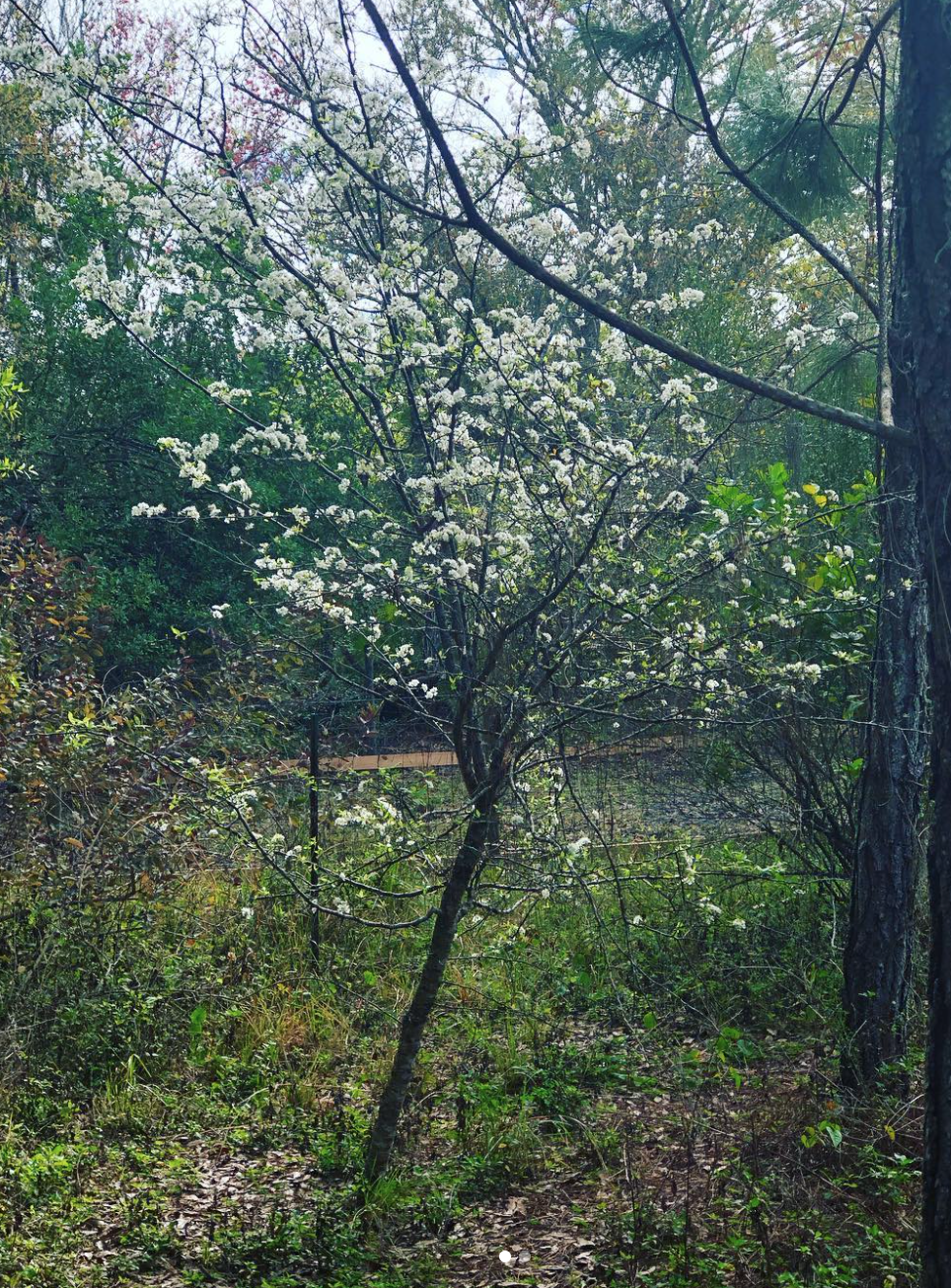
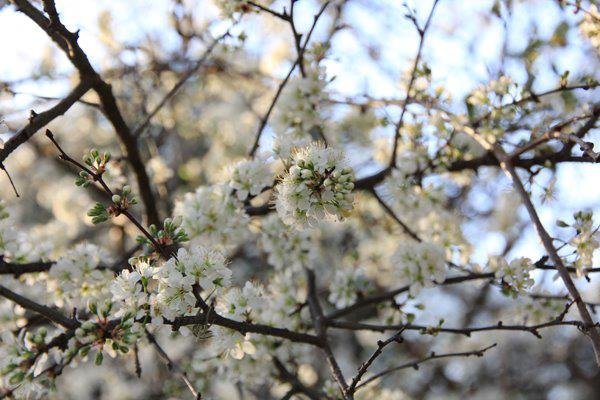
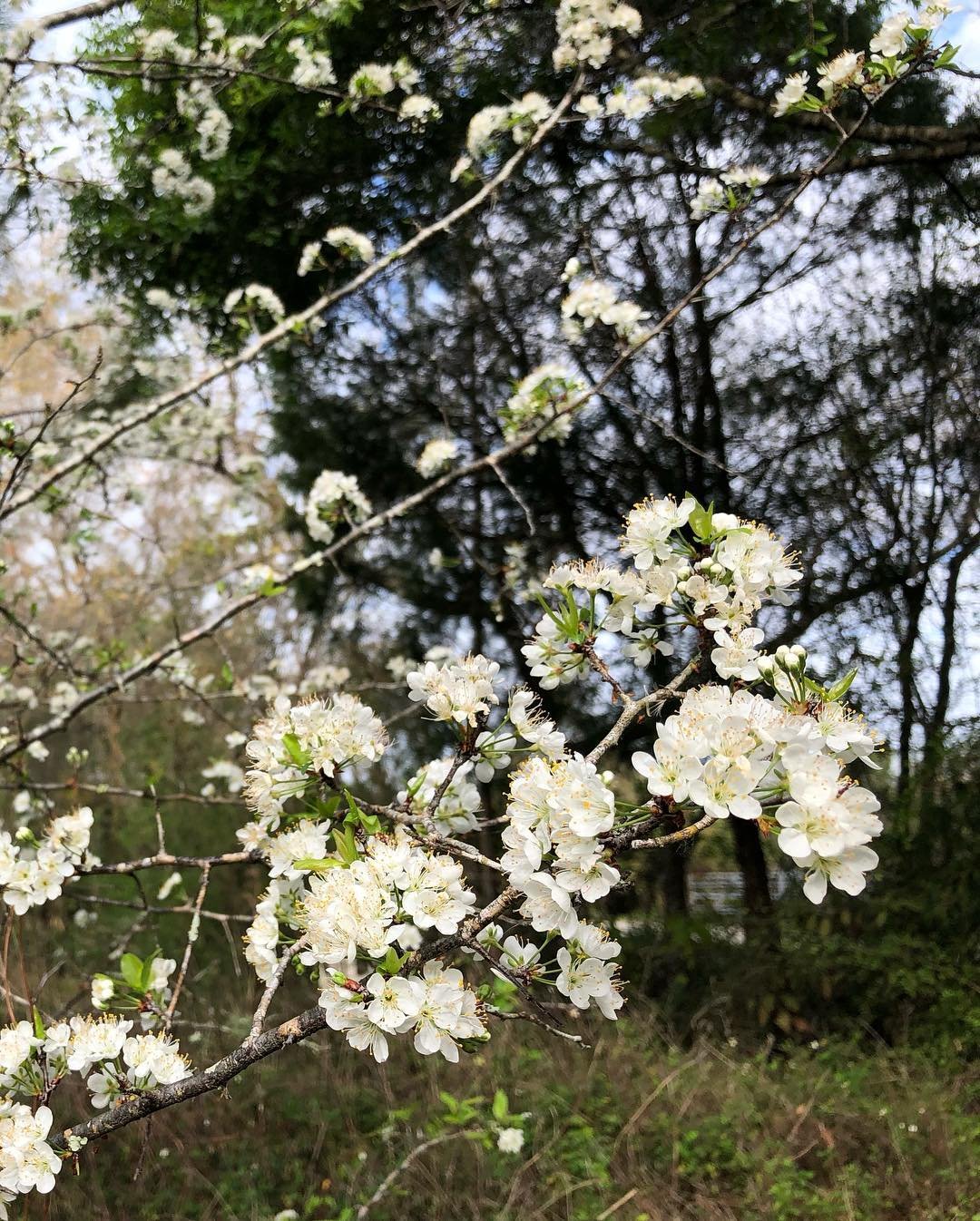
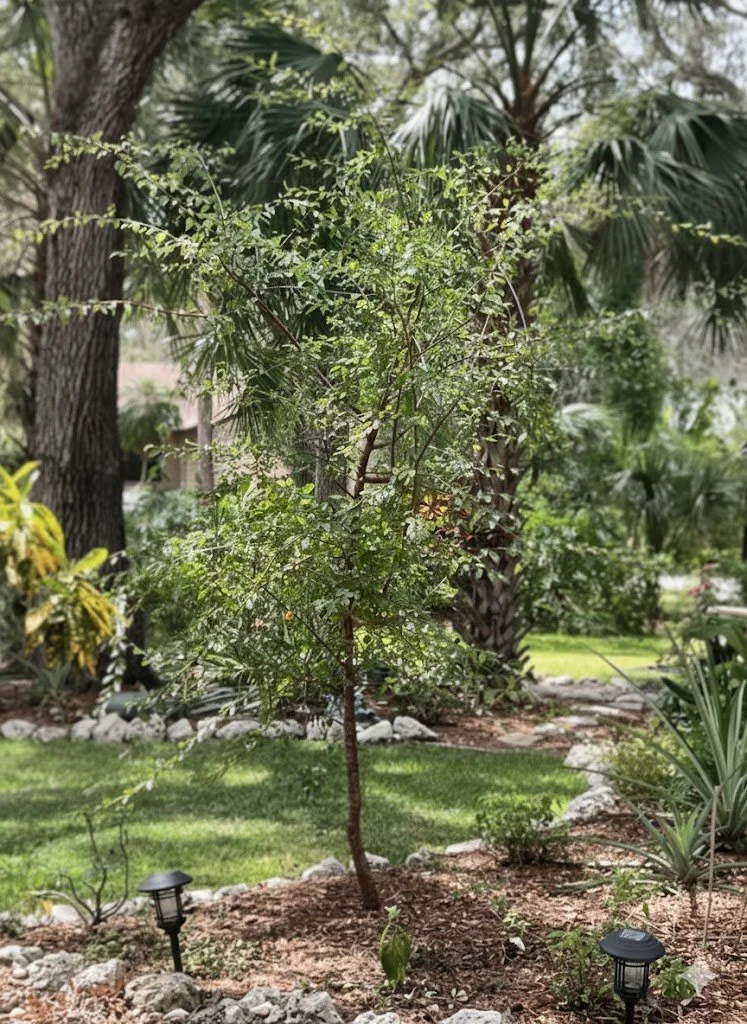
Prunus umbellata
Flatwoods plum is a small, native, deciduous, flowering and fruiting edible wild plum tree that can be grown in sun or under larger trees. It’s beautiful white flowers in the spring attract pollinators and it produces plums in summer that are small tart and edible for both people and birds.

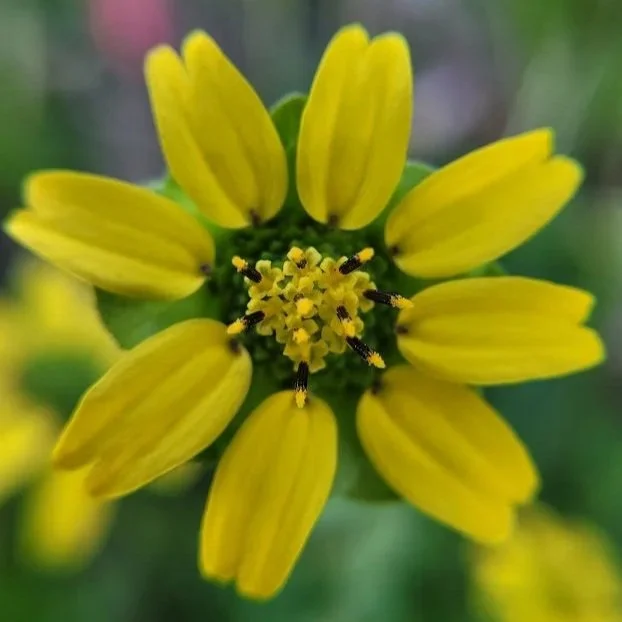
Berlandiera subacaulis
Florida Greeneyes is a long-lived perennial in the daisy family endemic to Florida that grows 1-2 feet tall with short-stemmed, bright yellow flowers. Also known as Florida Chocolate Flower, it produces fragrant blooms that emit a distinctive chocolatey scent and feature yellow ray petals surrounding dark red or maroon disc florets. This drought-tolerant wildflower develops a substantial tuberous root system that can grow up to 12 inches thick, providing exceptional water storage capacity. Blooming from spring through fall, it thrives in full sun to partial shade with well-drained soils and naturally occurs in sandhills, dry pine flatwoods, and disturbed sites throughout Florida, serving as an important nectar source for bees and butterflies.


Ruellia caroliniana
Petunia’s are a beloved household wildflower that grows and reseeds prolifically in Florida. Often dappling the floors of woodlands and forests, this wildflower likes average to moist soils with dappled sunlight to full shade. It attracts many pollinators but is favored by bees.
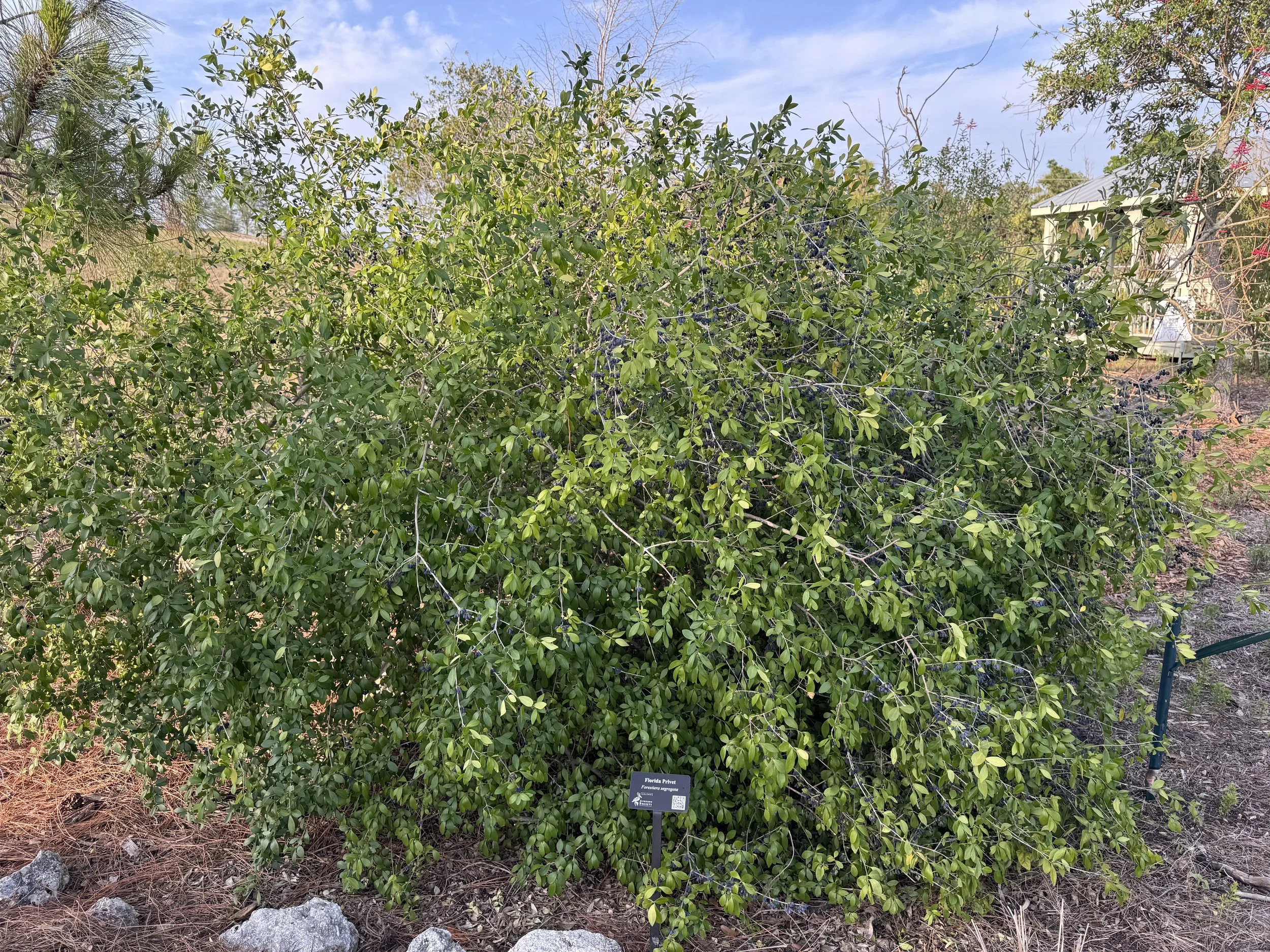
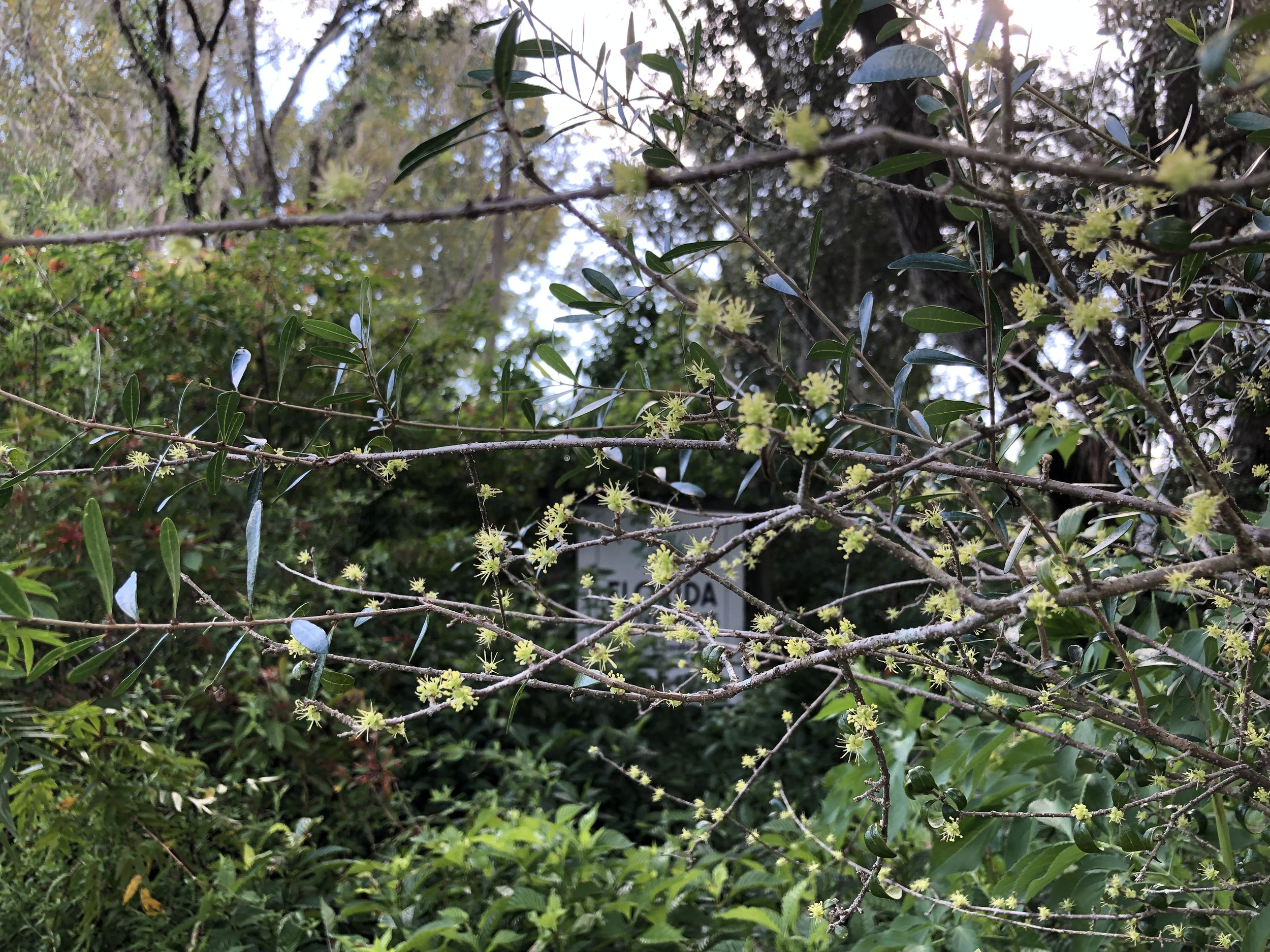
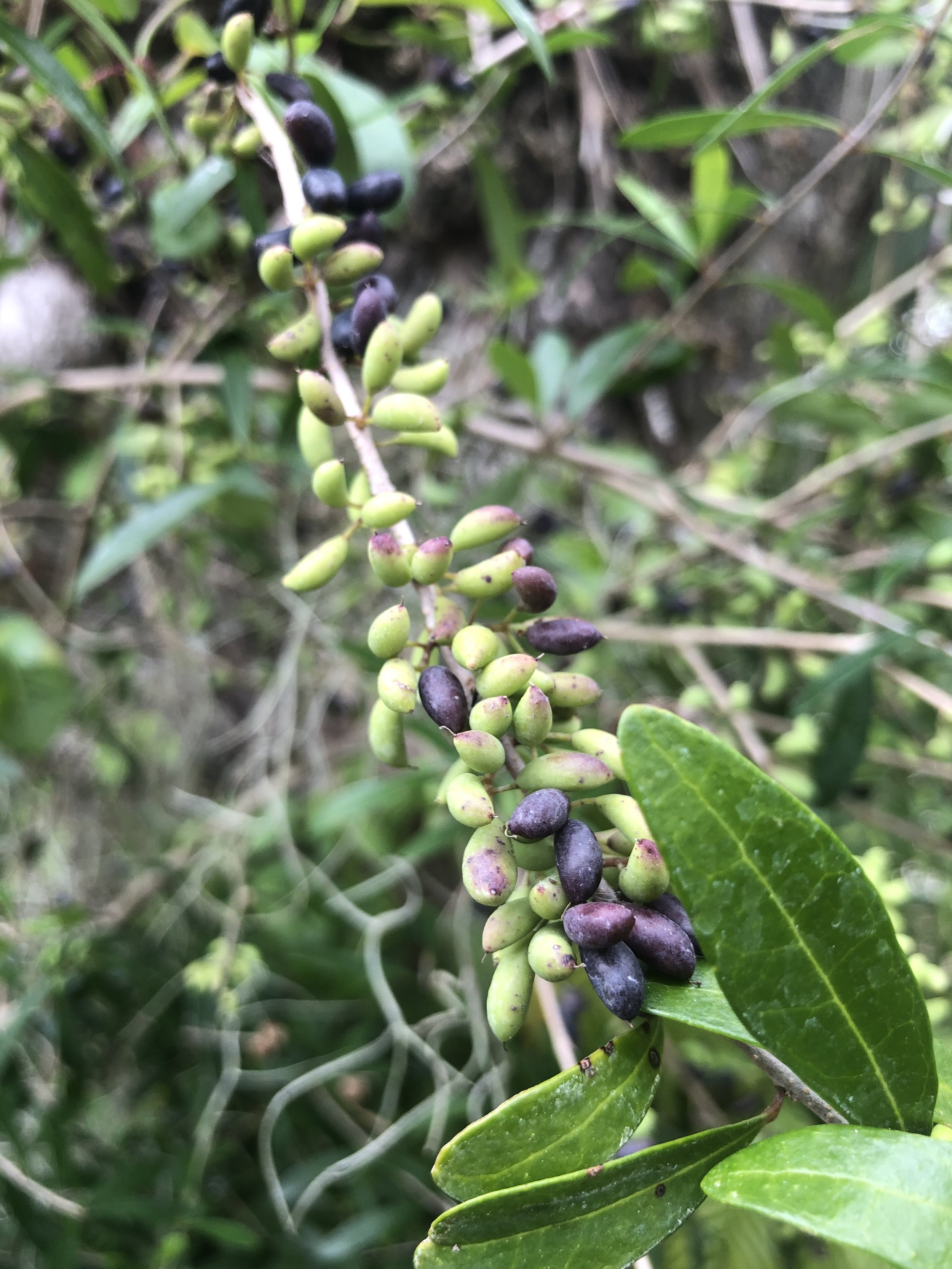
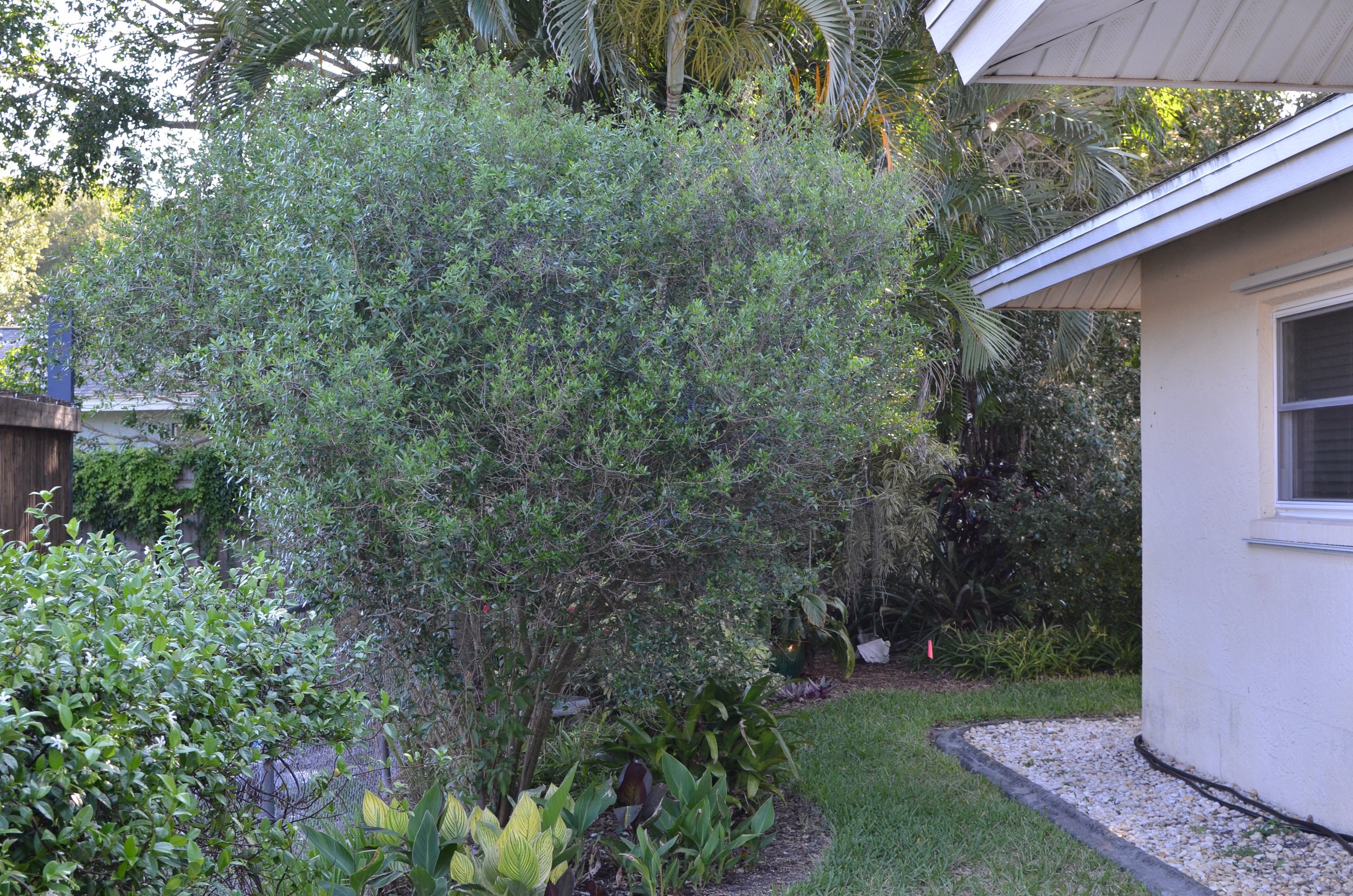
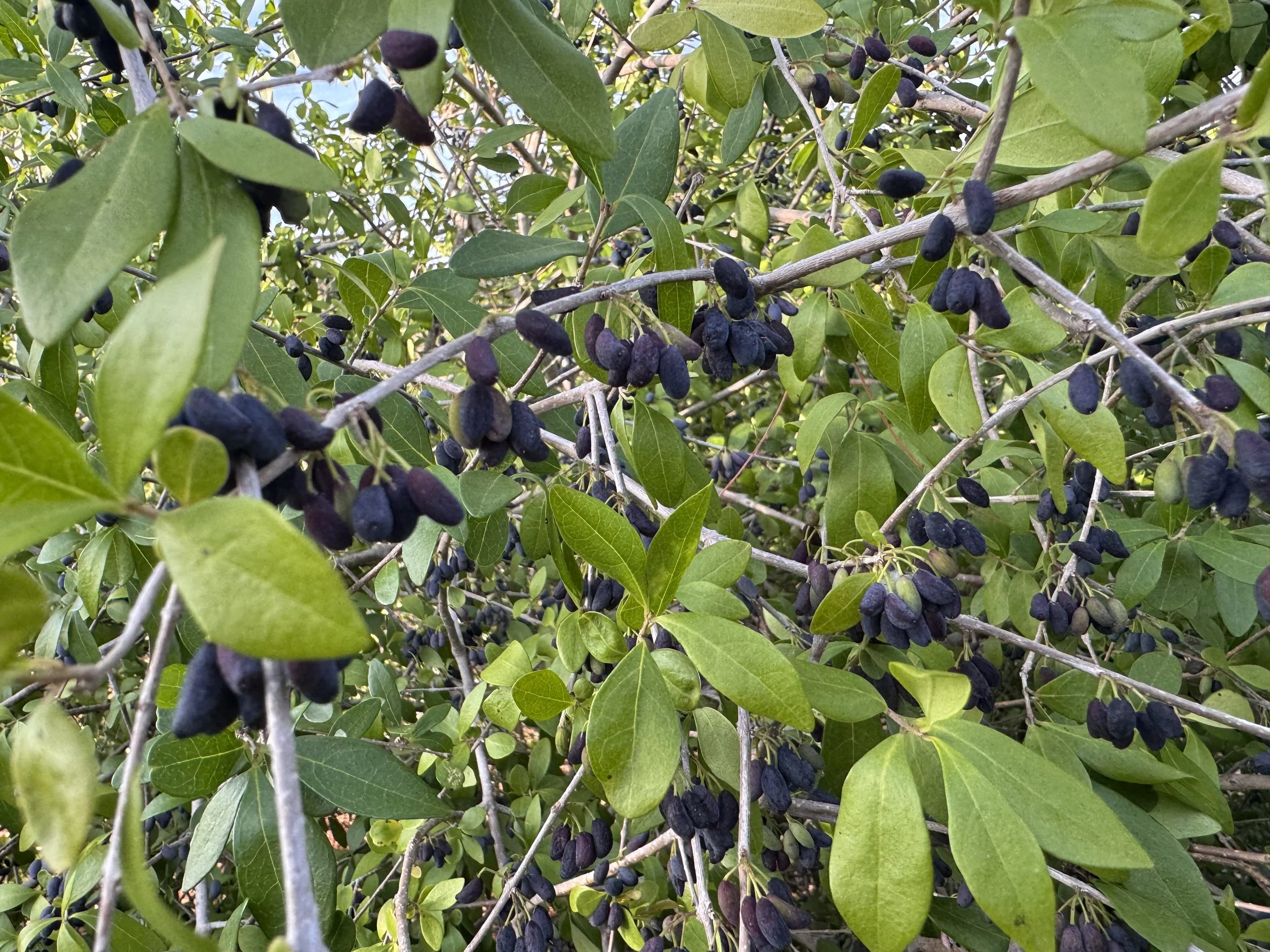
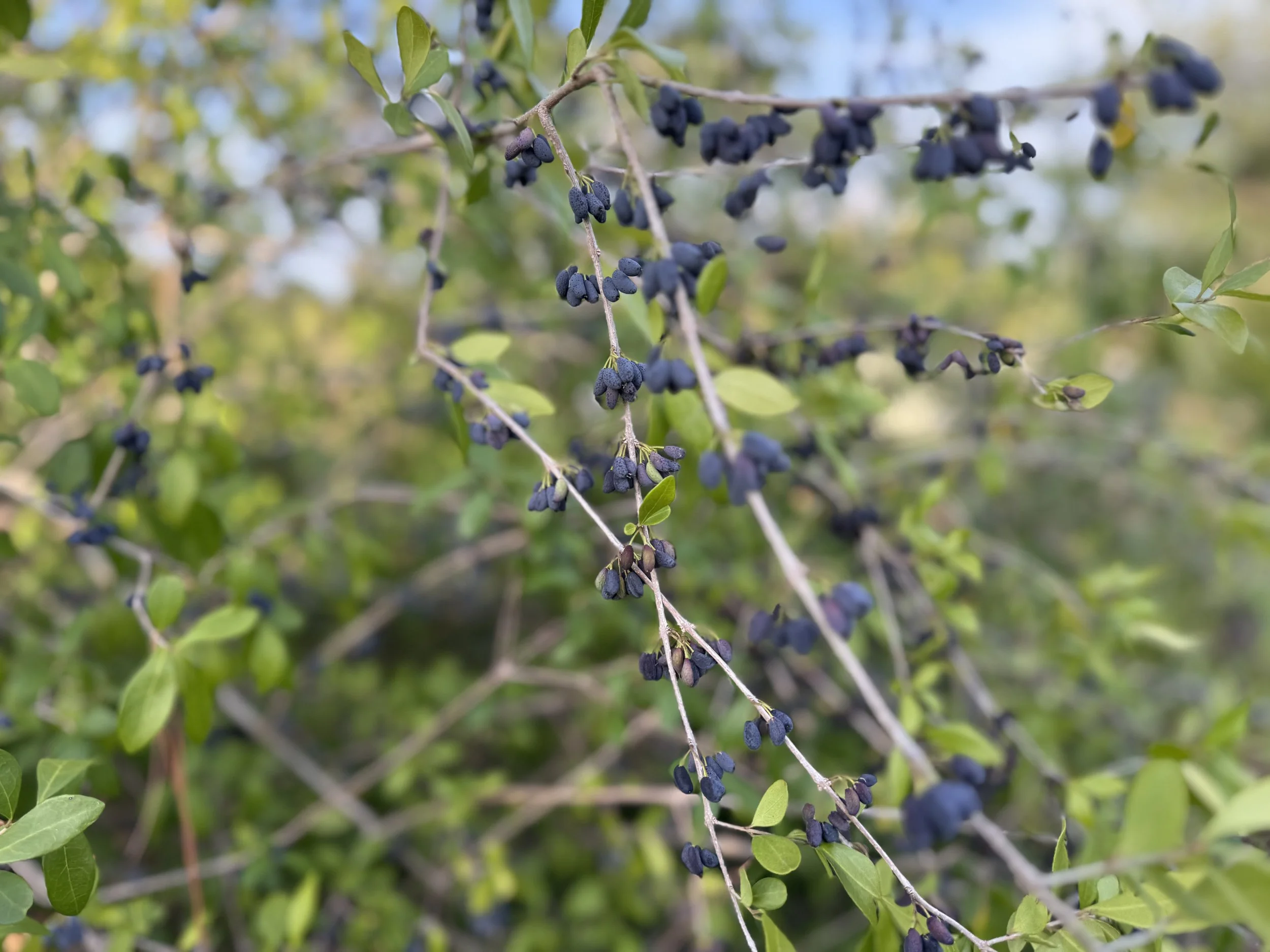
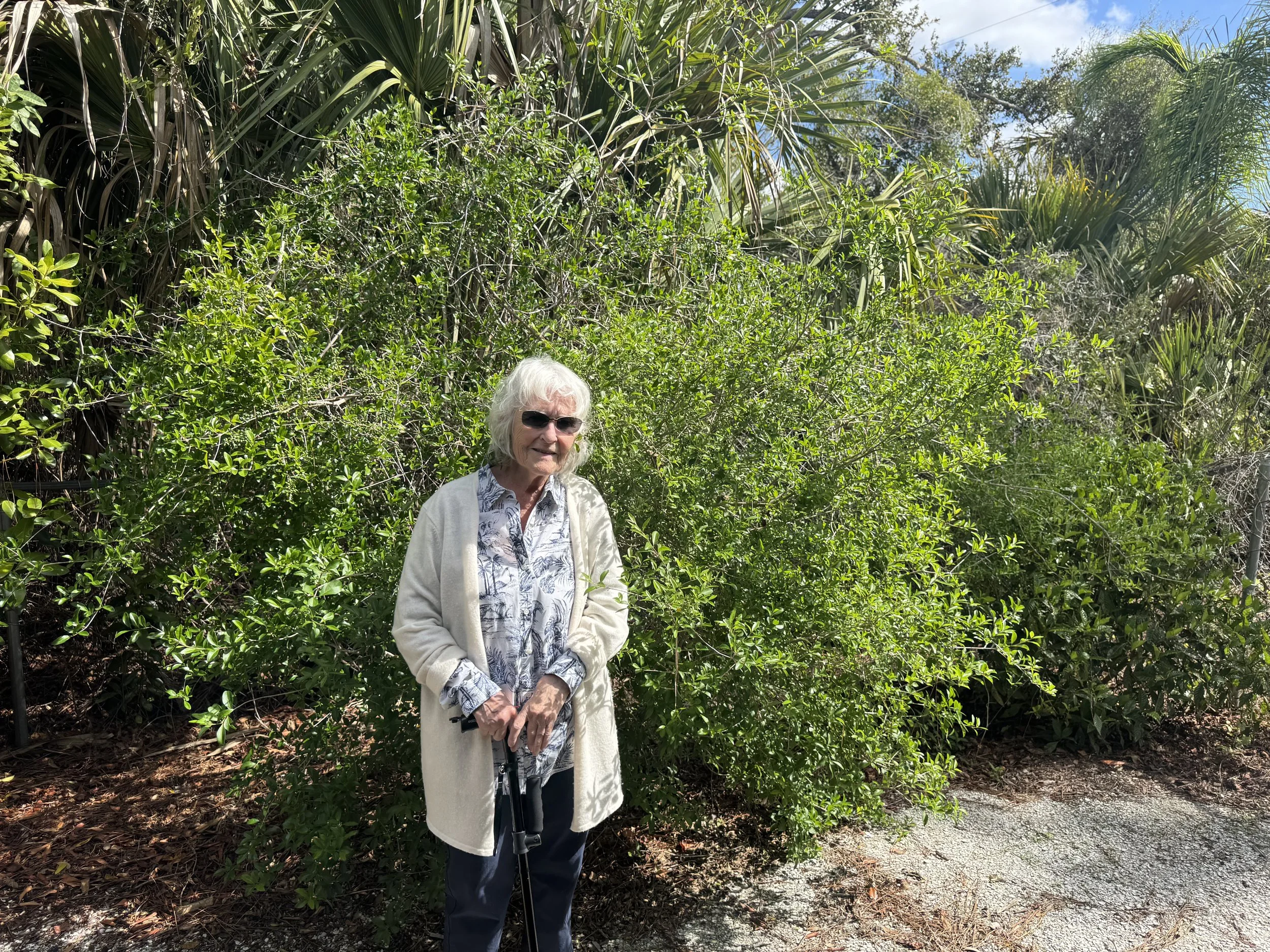
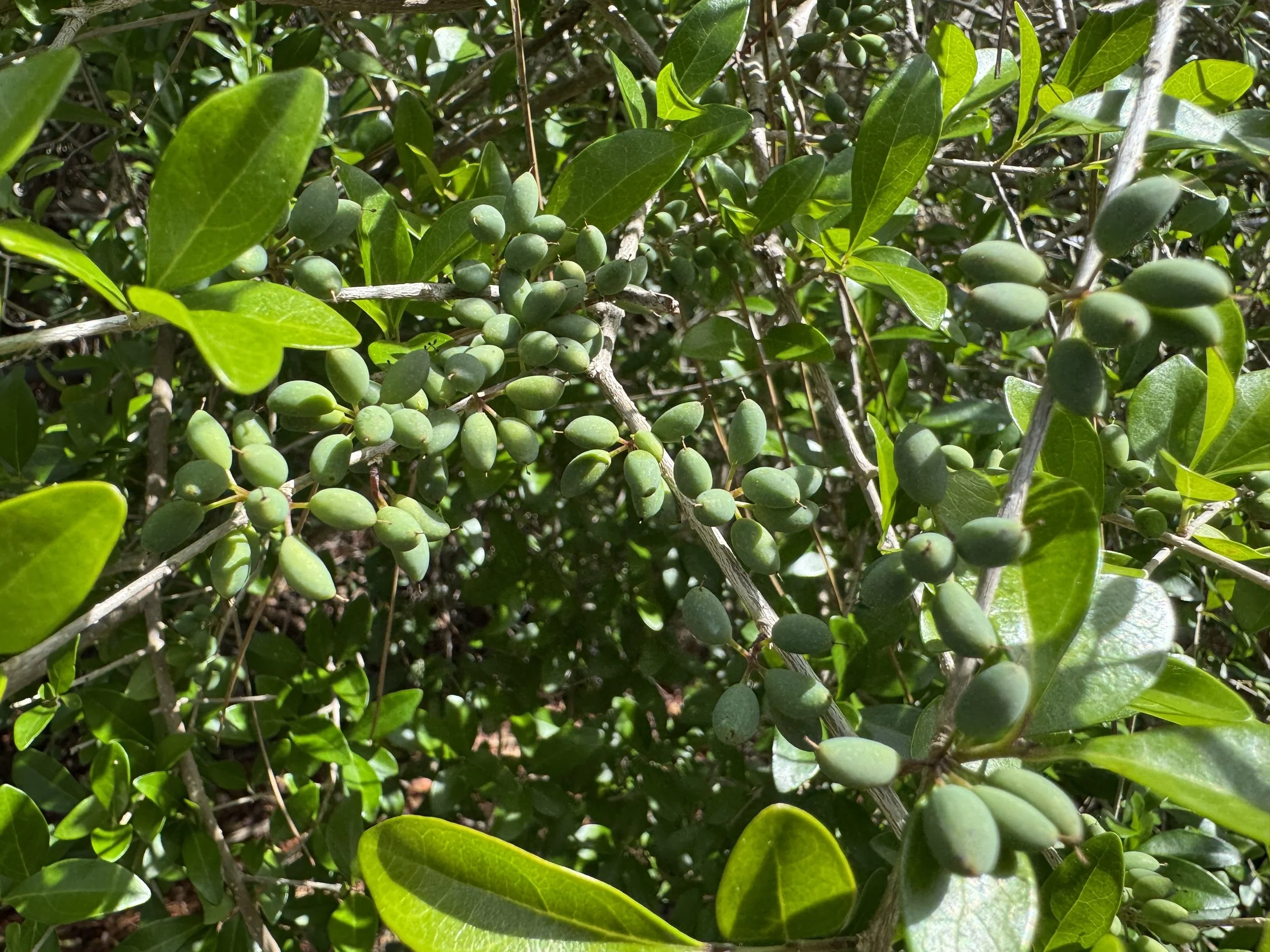
Forestiera segregata
Florida Privet is a versatile native evergreen shrub that typically grows up to 15’t tall and 10’ wide. It is highly adaptable and easy to maintain, as it responds well to pruning and can be kept as a formal hedge or a small specimen tree. It thrives in full sun to light shade and prefers average to dry, well-drained soils.
This hardy shrub is exceptionally salt-tolerant, making it an ideal choice for coastal landscapes. Beyond its greenery, it provides essential habitat and food for local wildlife; its small flowers attract pollinators, while the dark berries serve as a valuable food source for birds.
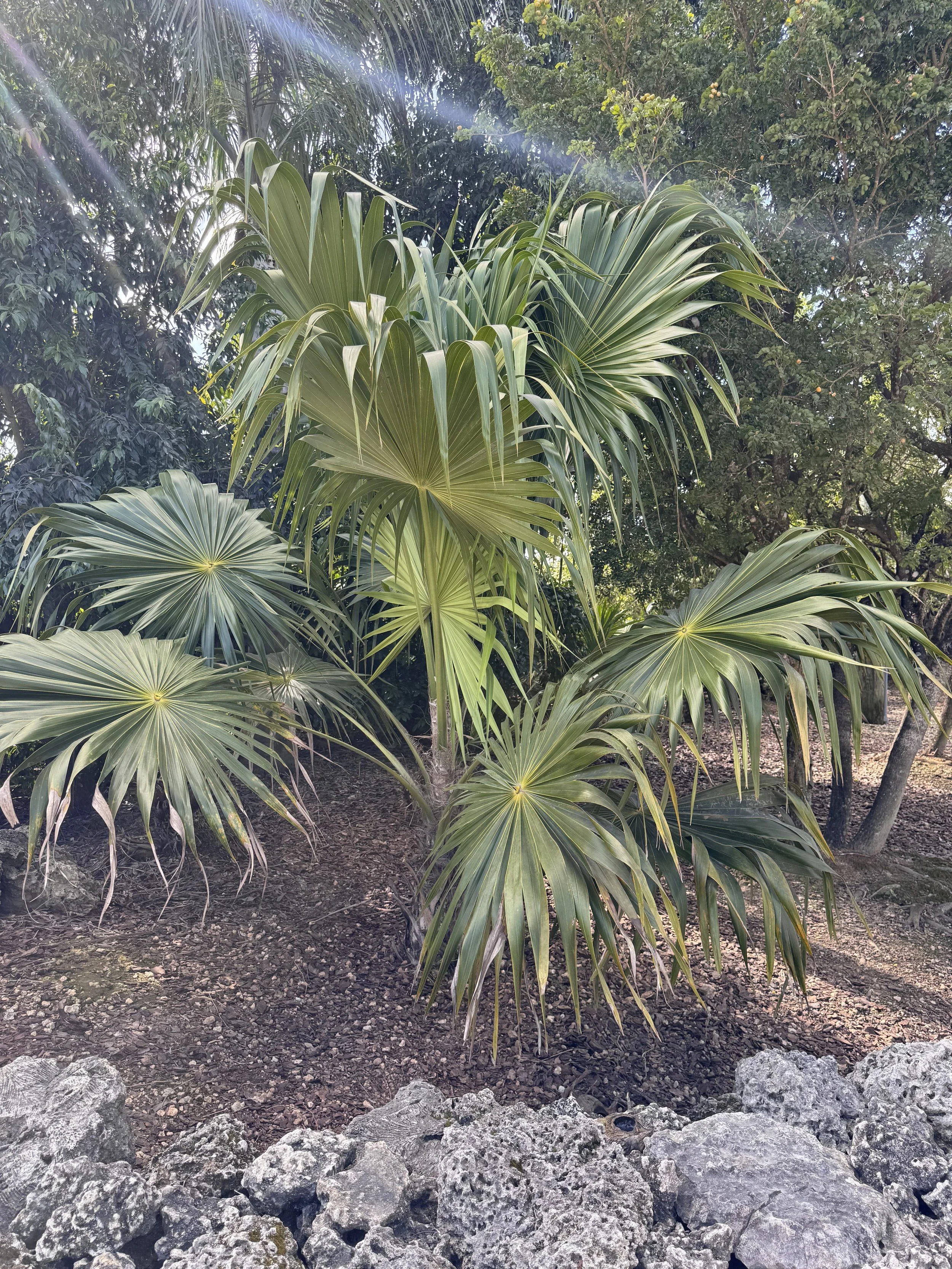
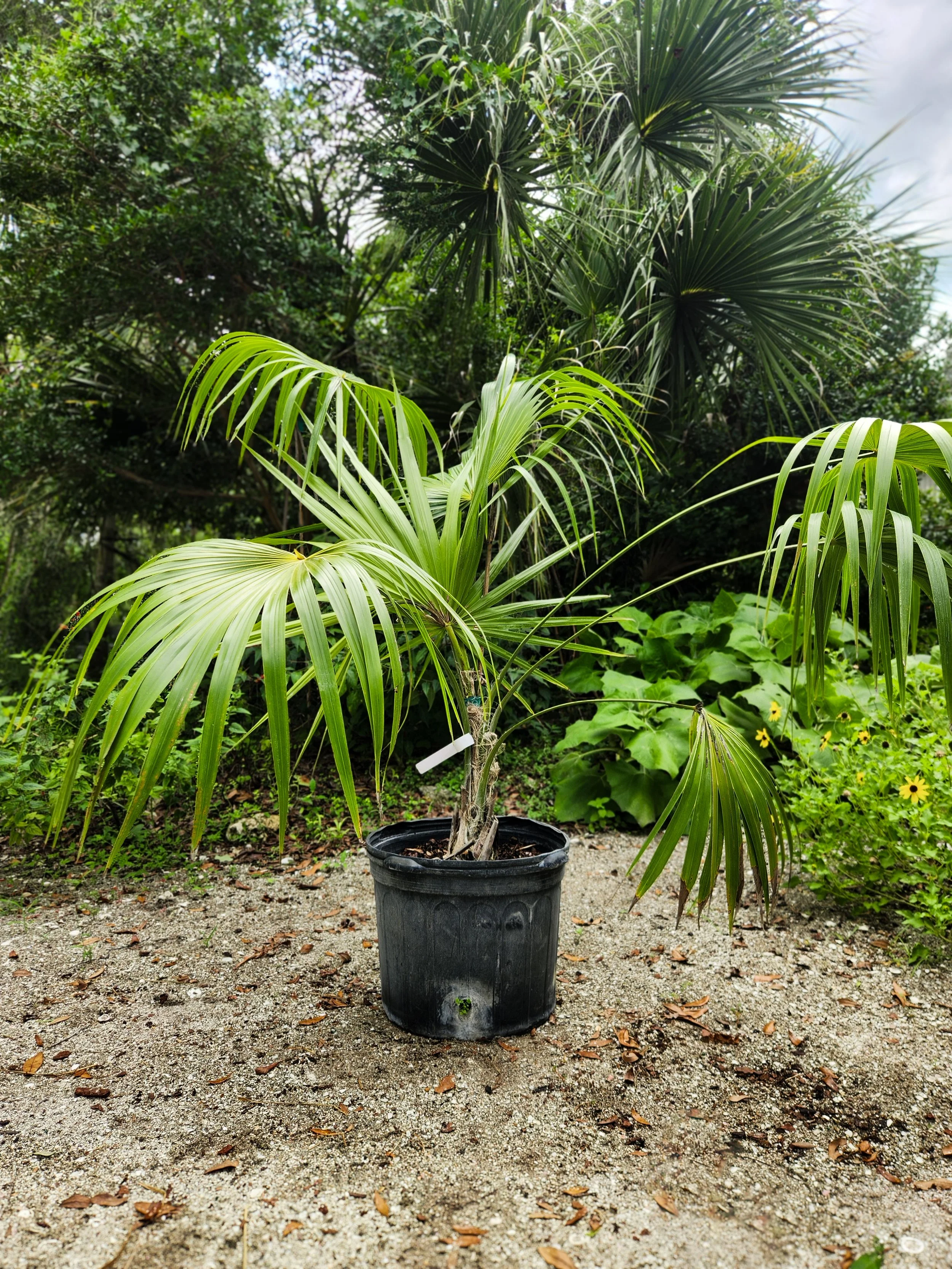
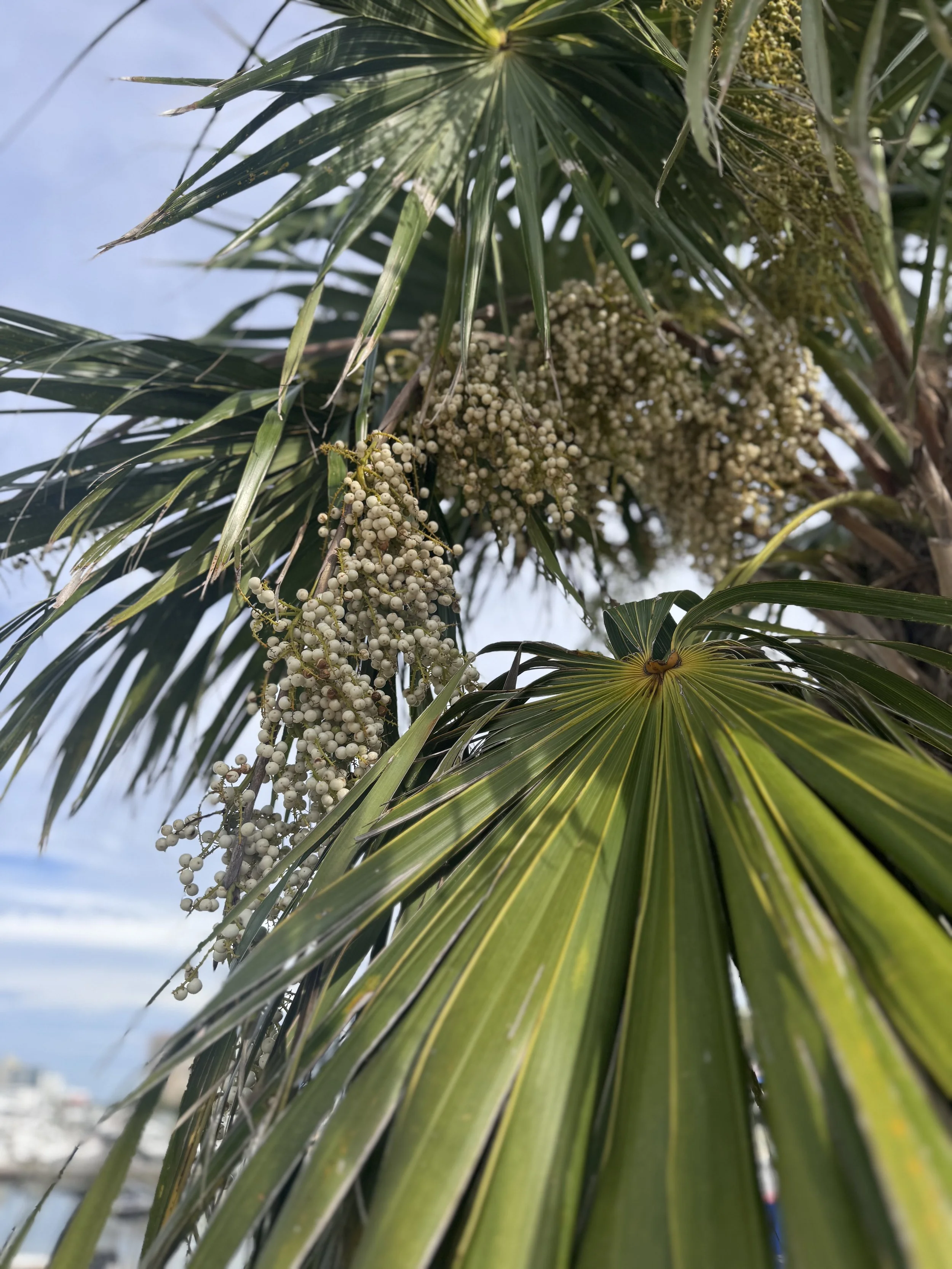
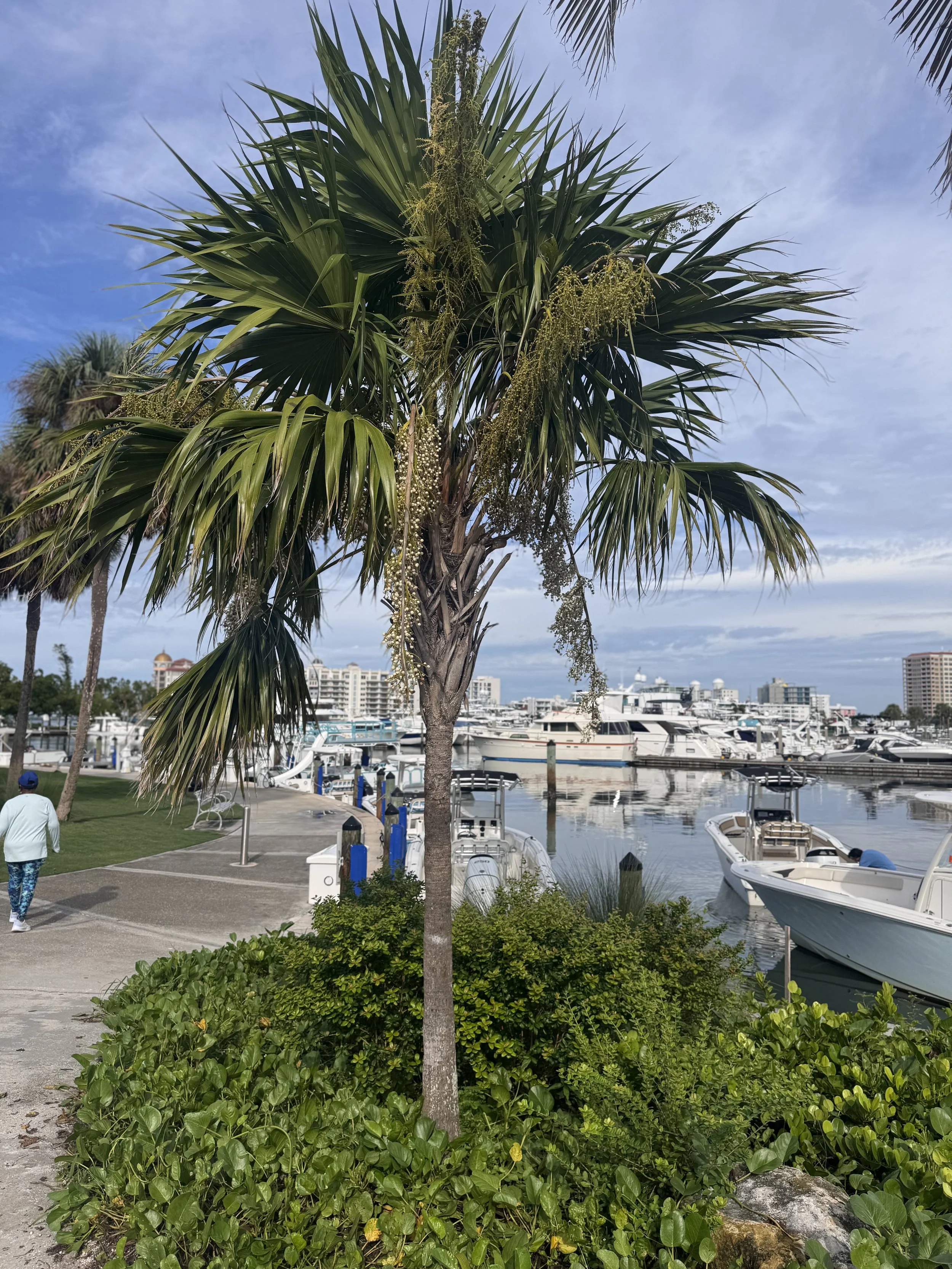
Coccothrinax argentata
Florida Thatch Palm is native evergreen palm that grows to be 6’-15’ tall and 5’-7’ wide. They grow best in full sun and are highly adaptable with their soil environment once established. With flowers in summer that bring in pollinators, followed by berries that bring in birds, Florida Thatch Palm is the perfect plant for attracting wildlife to the space. They are also highly salt and drought tolerant, and can stand up to hurricane winds.
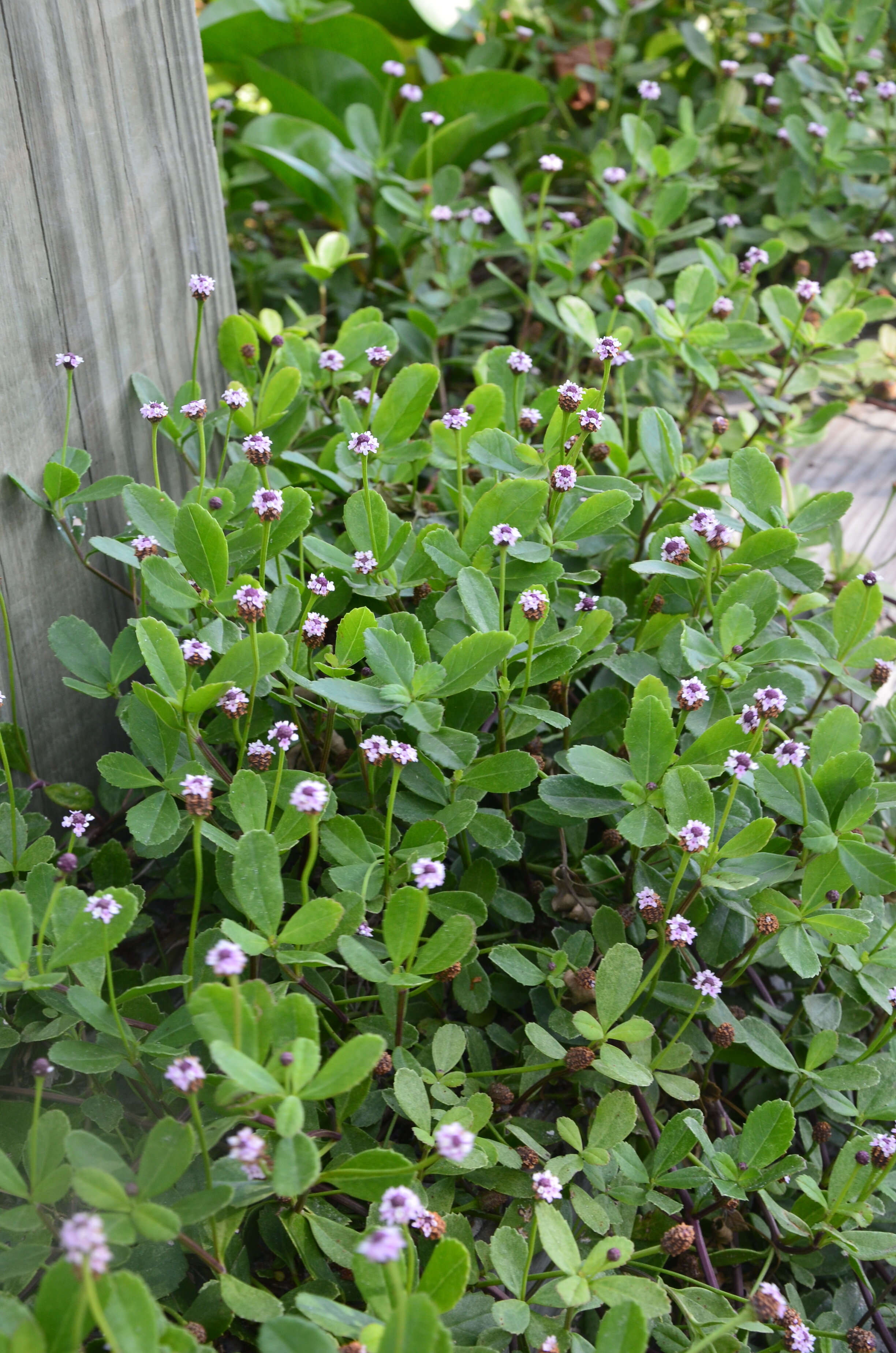
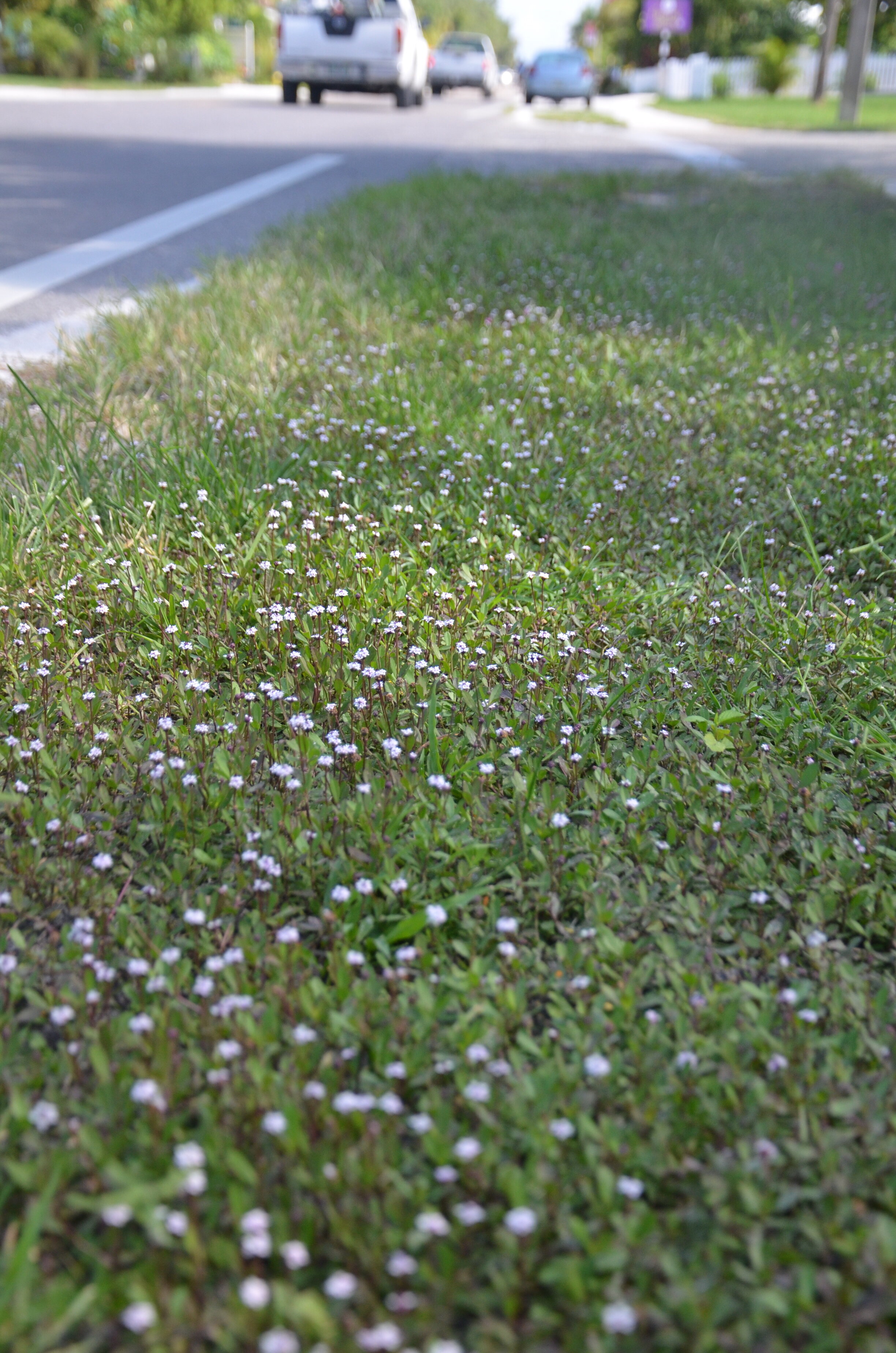
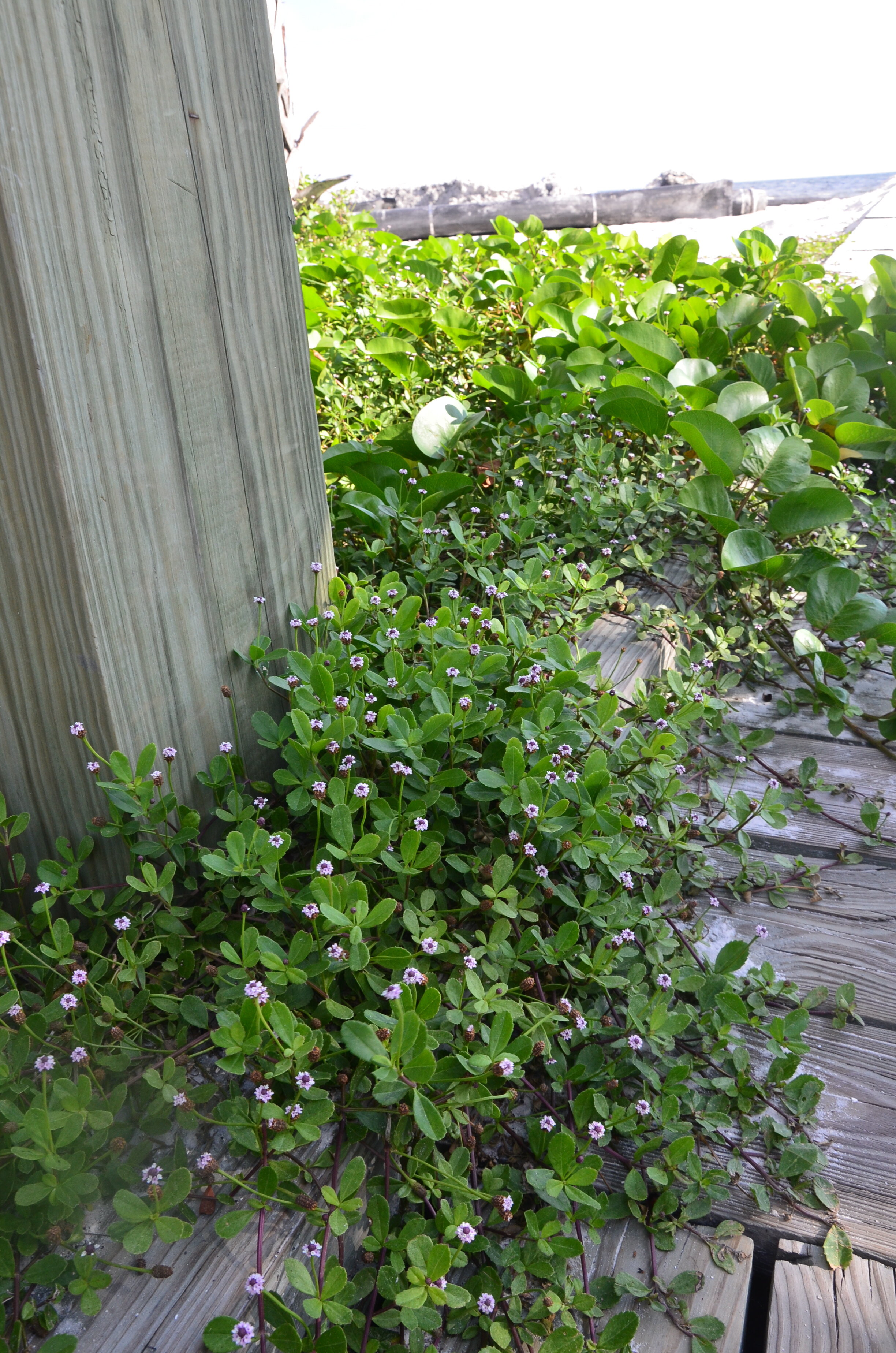
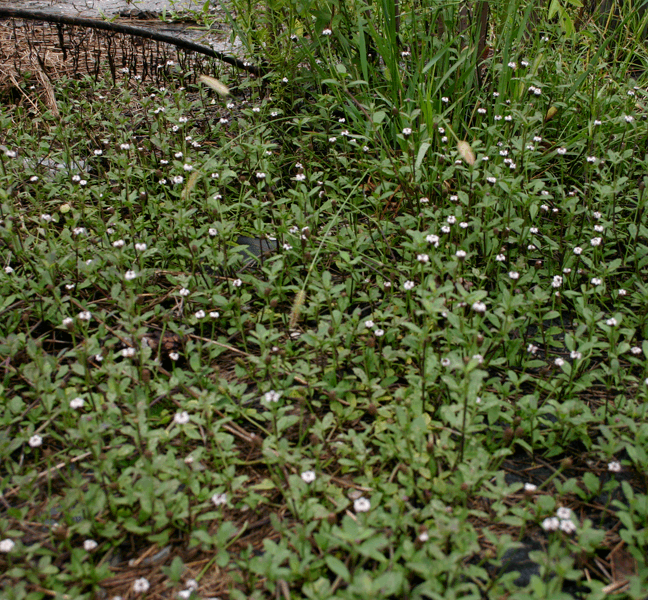
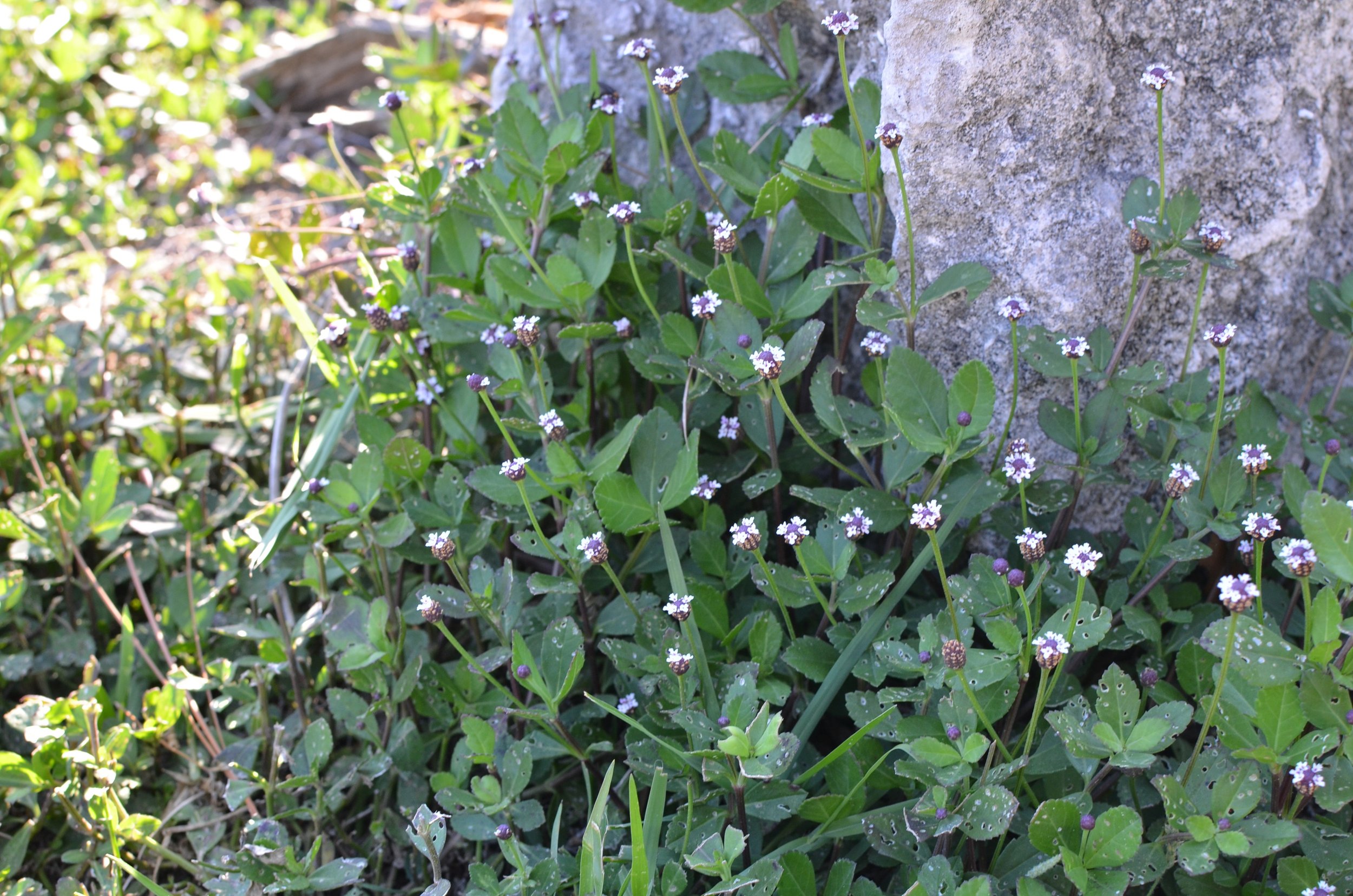
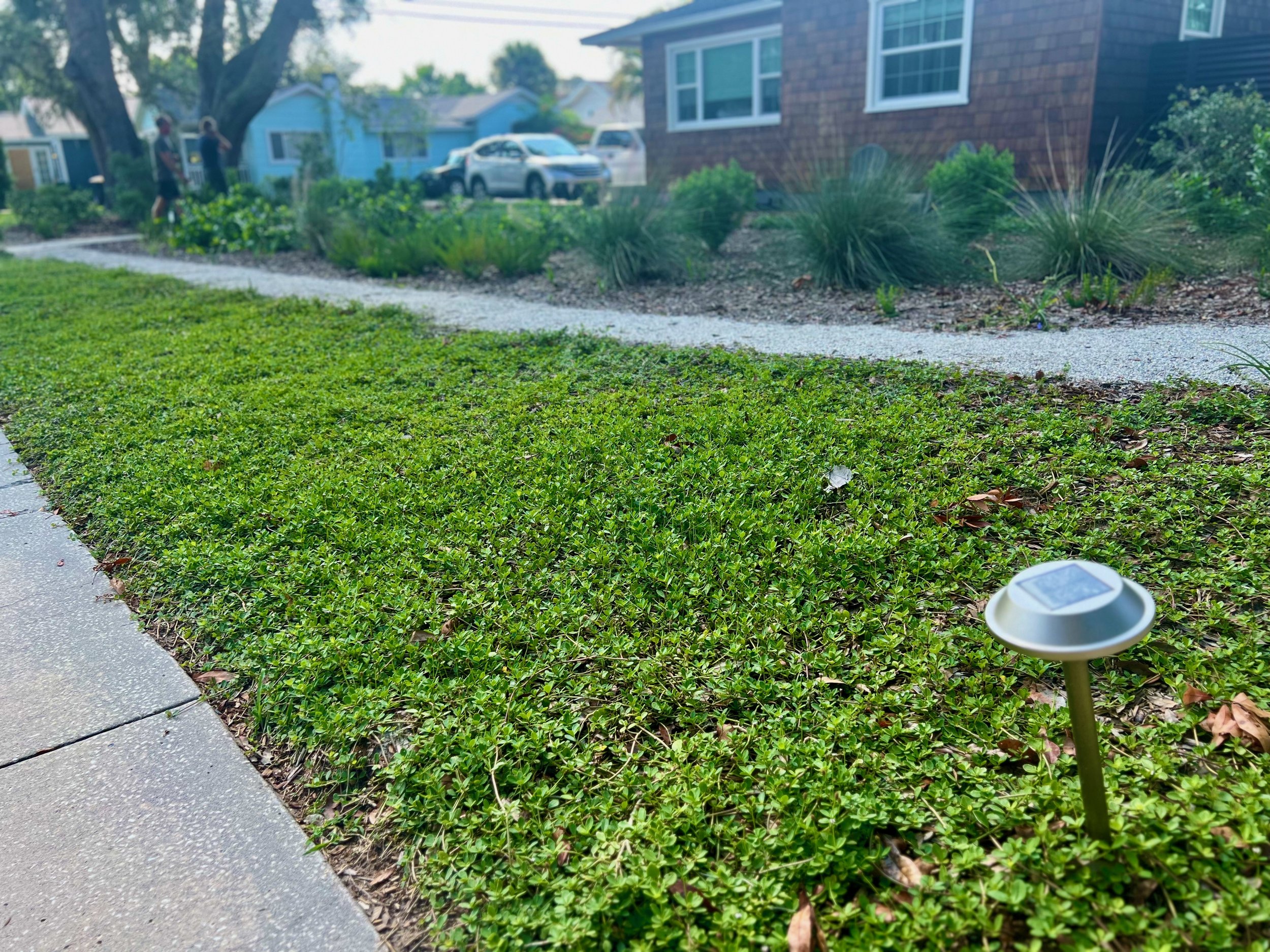
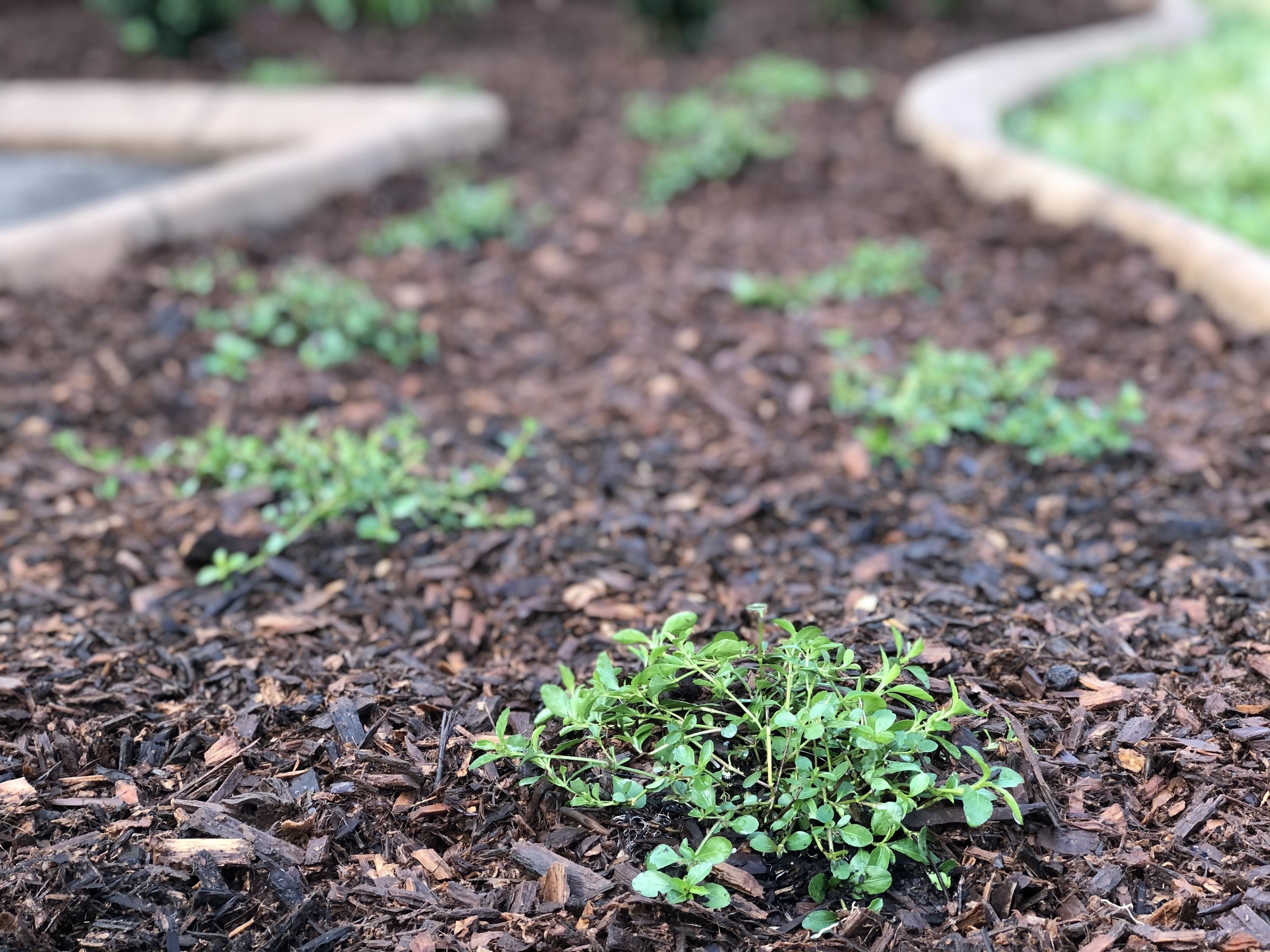
Phyla nodiflora
One of our favorite native plant “lawn alternatives,” Frogfruit is a low growing, perennial evergeen groundcover that grows in full sun to partial shade and in dry to moist soils. Frogfruit is highly salt-tolerant, fast growing, mow-able and lightly walk-able. It’s also an important host plant to the Phaon Crescent, White Peacock and Common Buckeye butterflies and is a nectar source pollinators including hummingbirds.
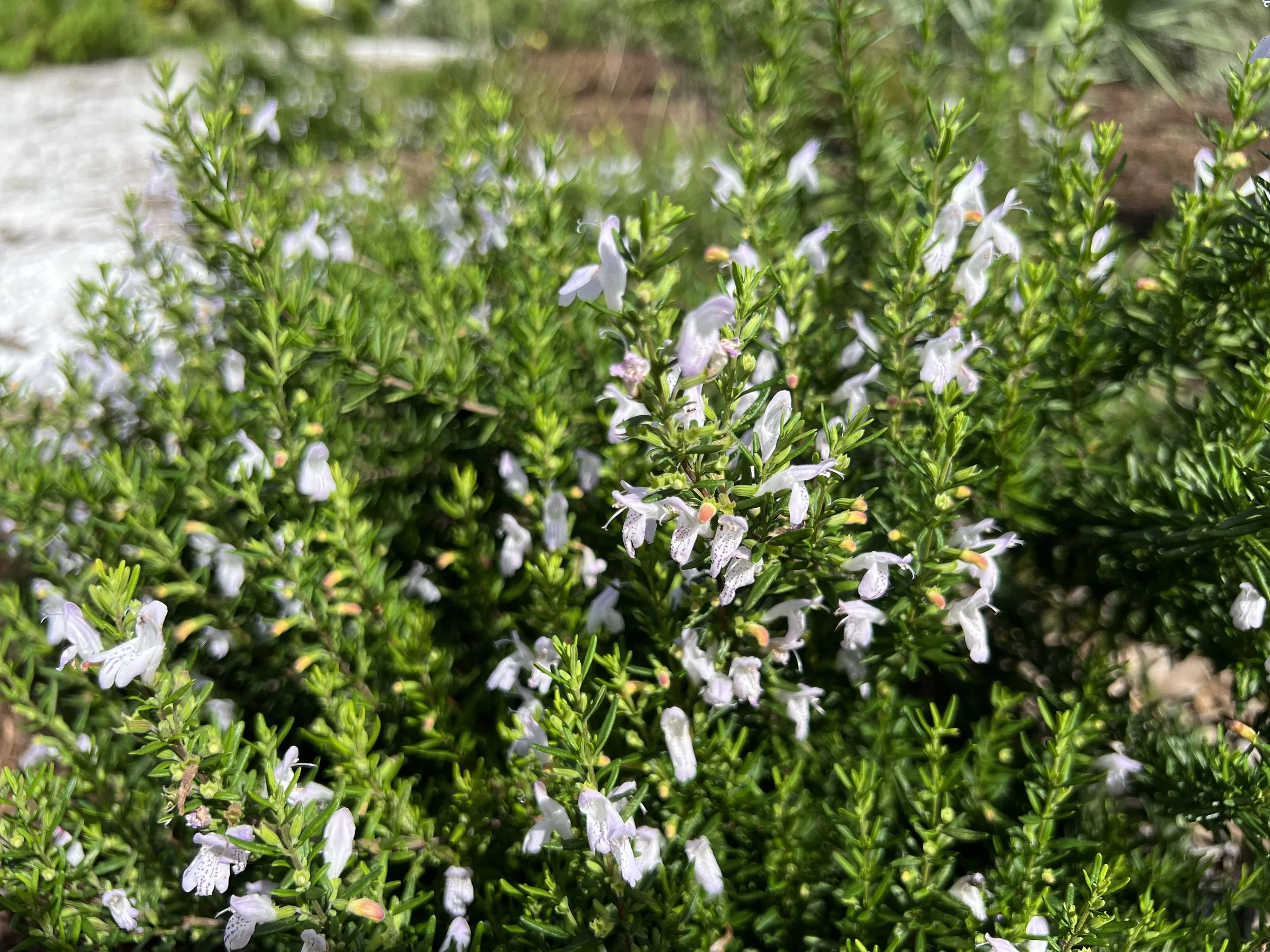
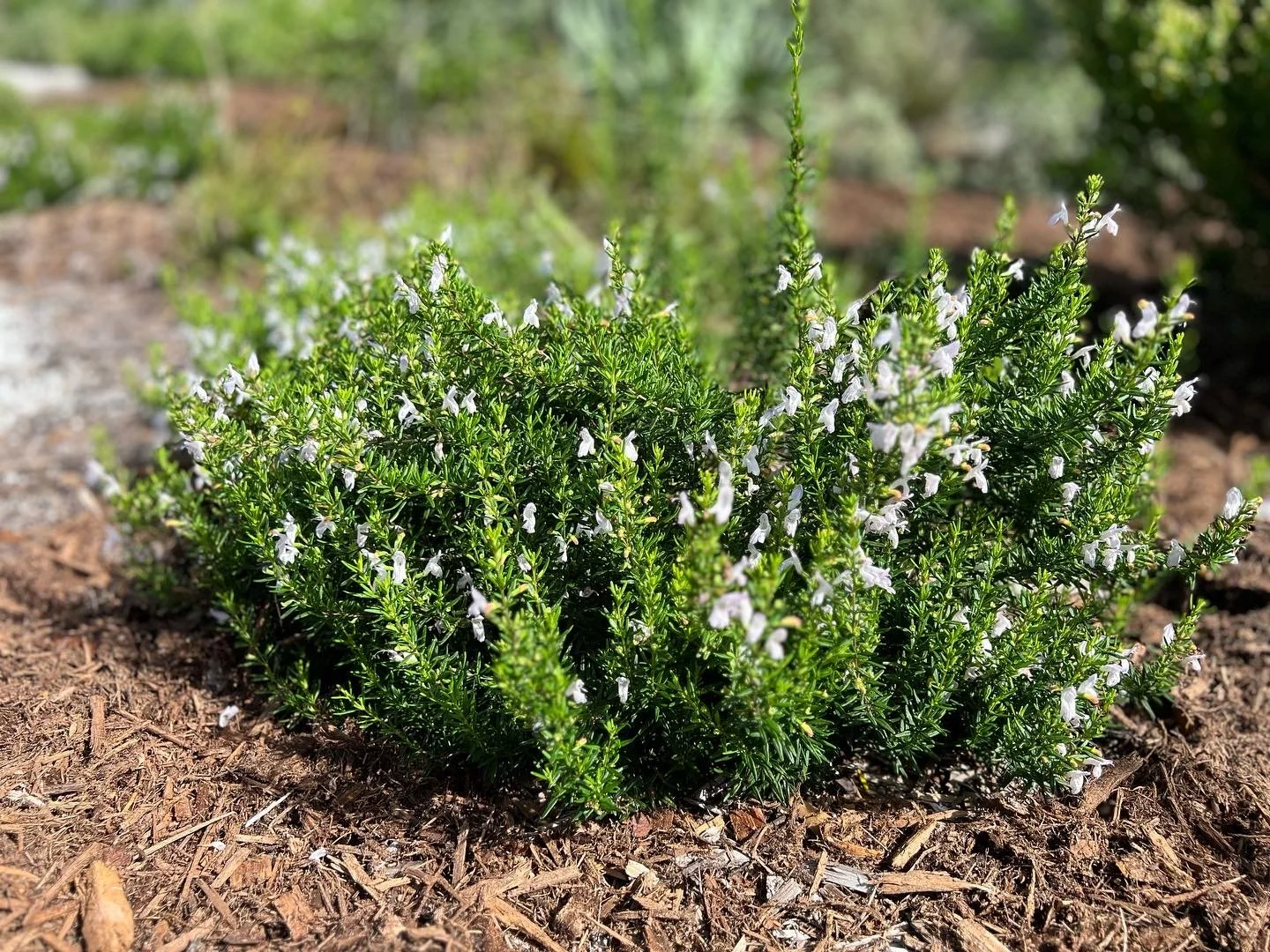
Clinopodium georgianum
A charming native perennial sub-shrub that grows into a tidy 2’ x 2’ mound. It thrives in full sun to partial shade and prefers well-drained, dry to average soil. Its most standout feature is the intensely fragrant foliage, making it a perfect choice for planting along pathways where the scent can be enjoyed by passersby. From summer into fall, it is covered in delicate light pink-to-purple flowers that are a magnet for pollinators, particularly bees.
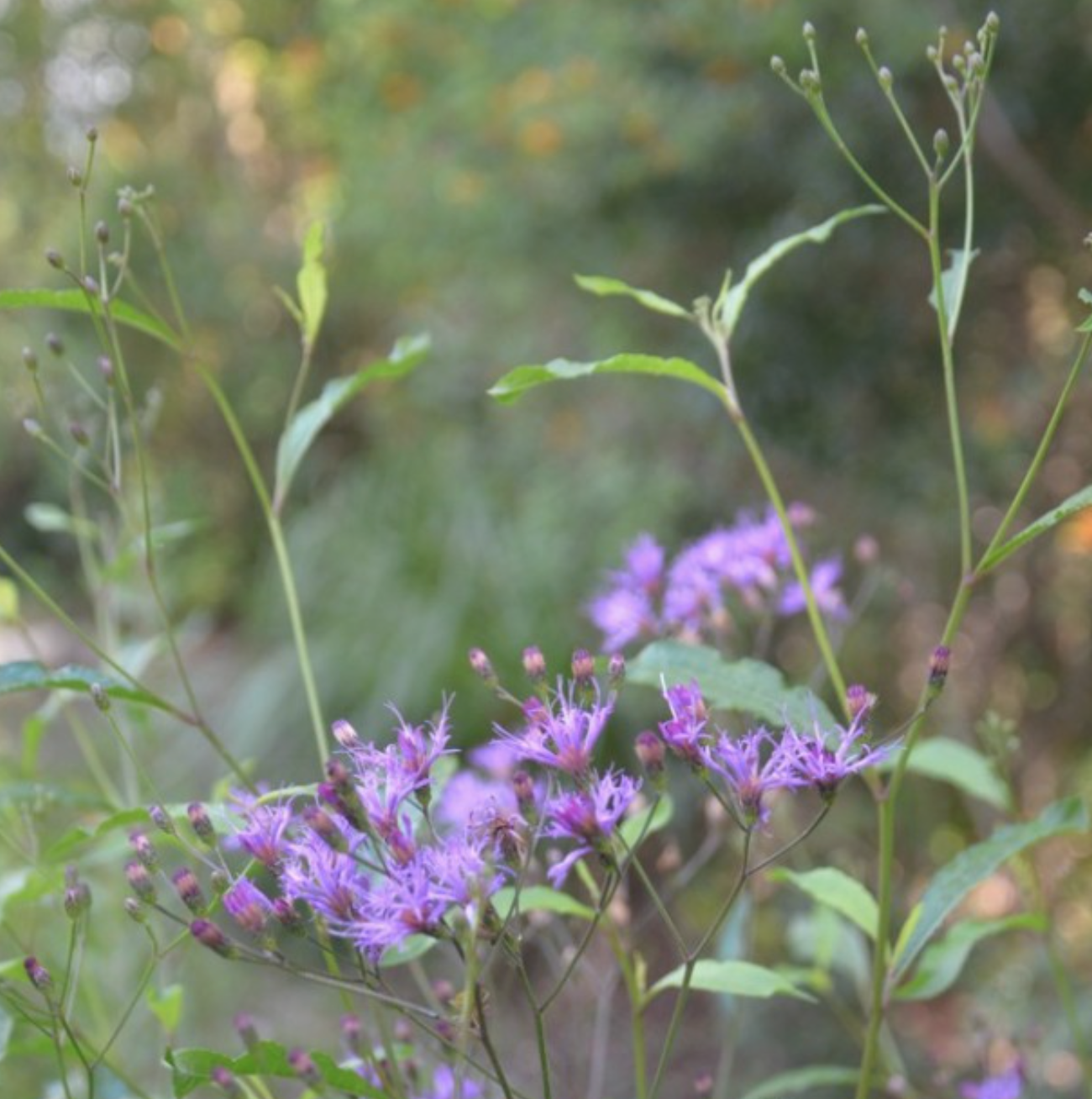
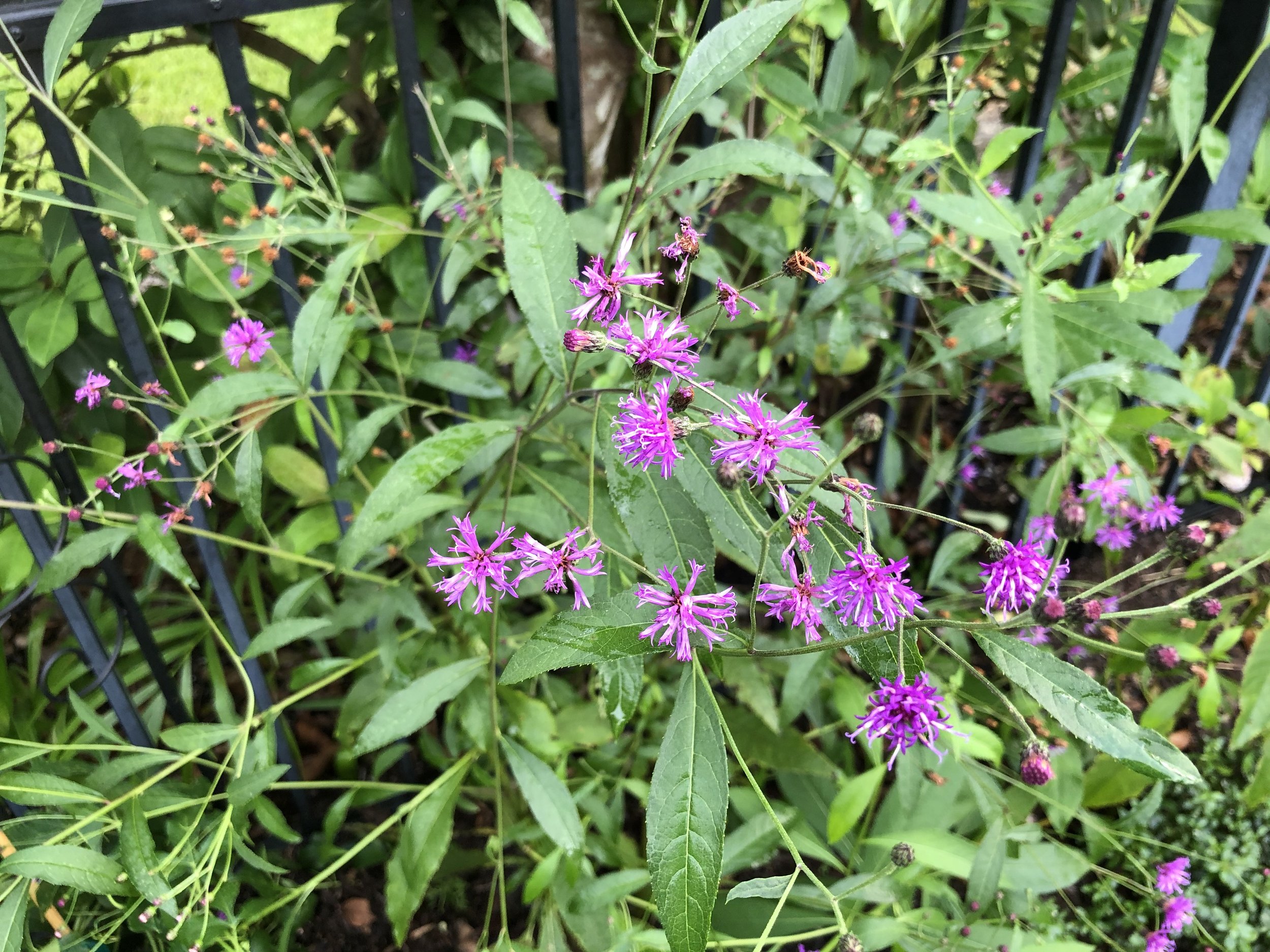
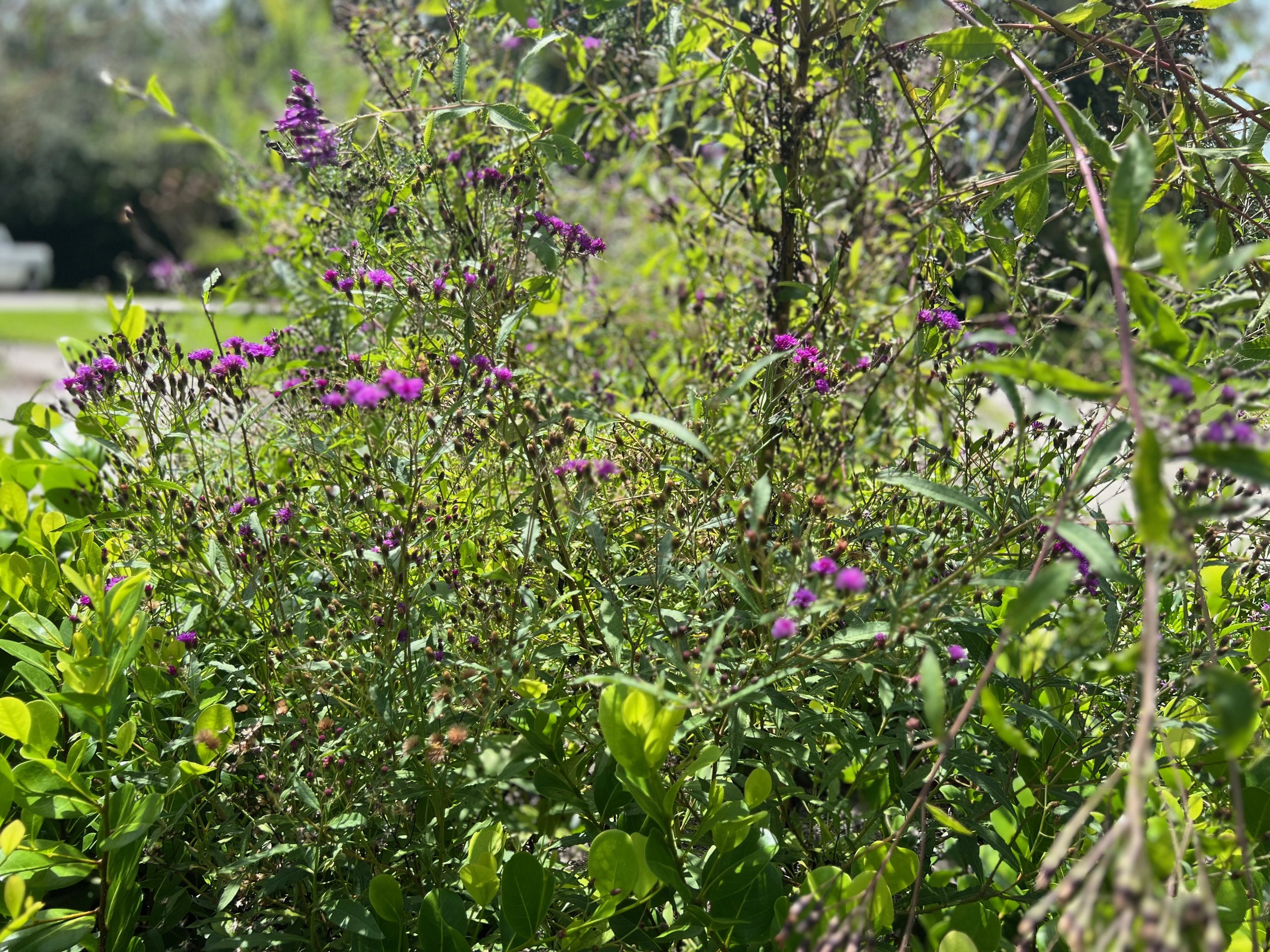
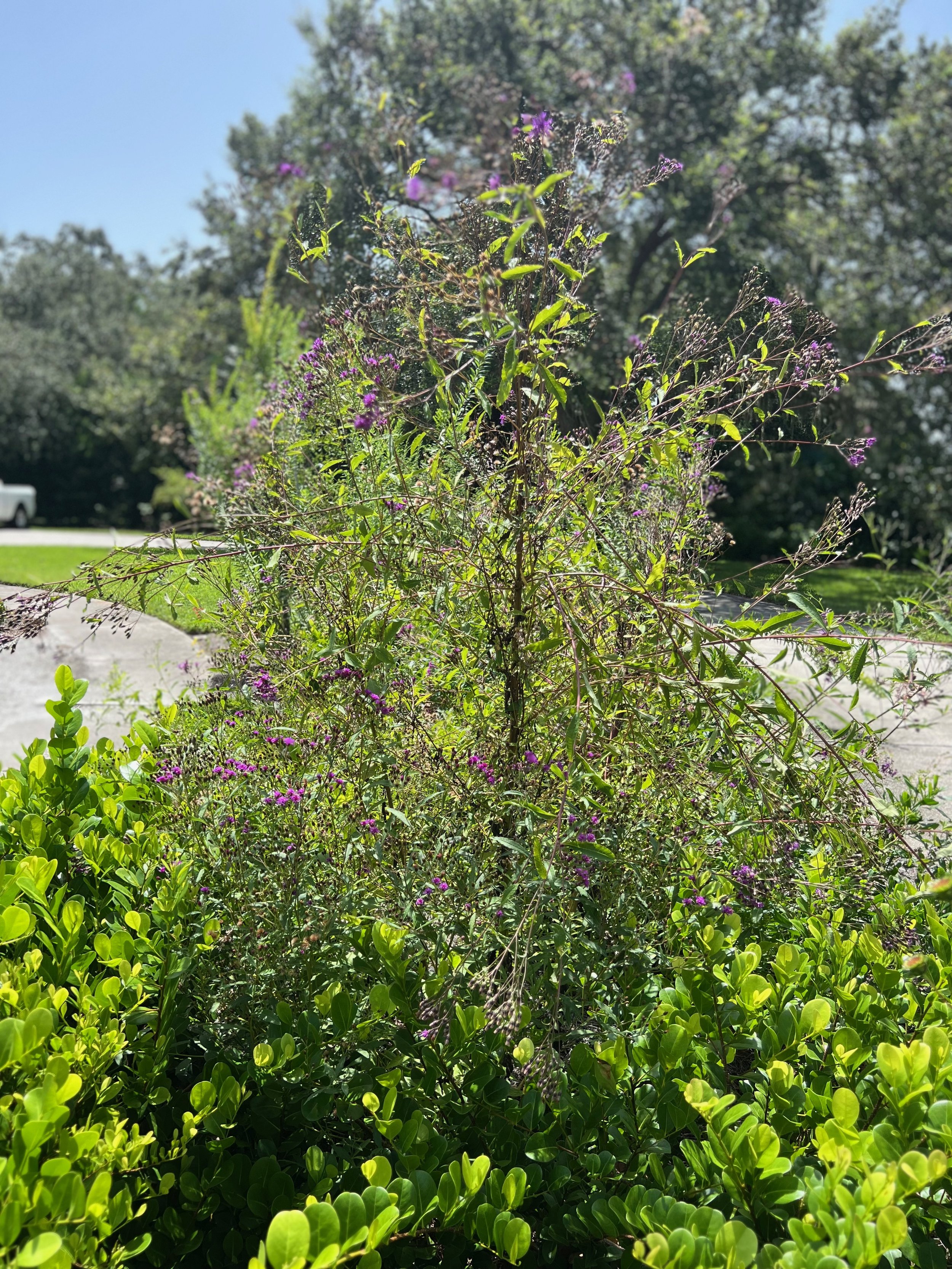
Vernonia gigantea
Giant Ironweed is a perennial, reseeding, native wildflower that prefers sun to light shade and average to moist (well-drained) soils in the garden. The rich purple flowers add bright pops of color to the garden summer through fall. Giant Ironweed brings height and unique color to a butterfly garden and attracts many other pollinators, too.
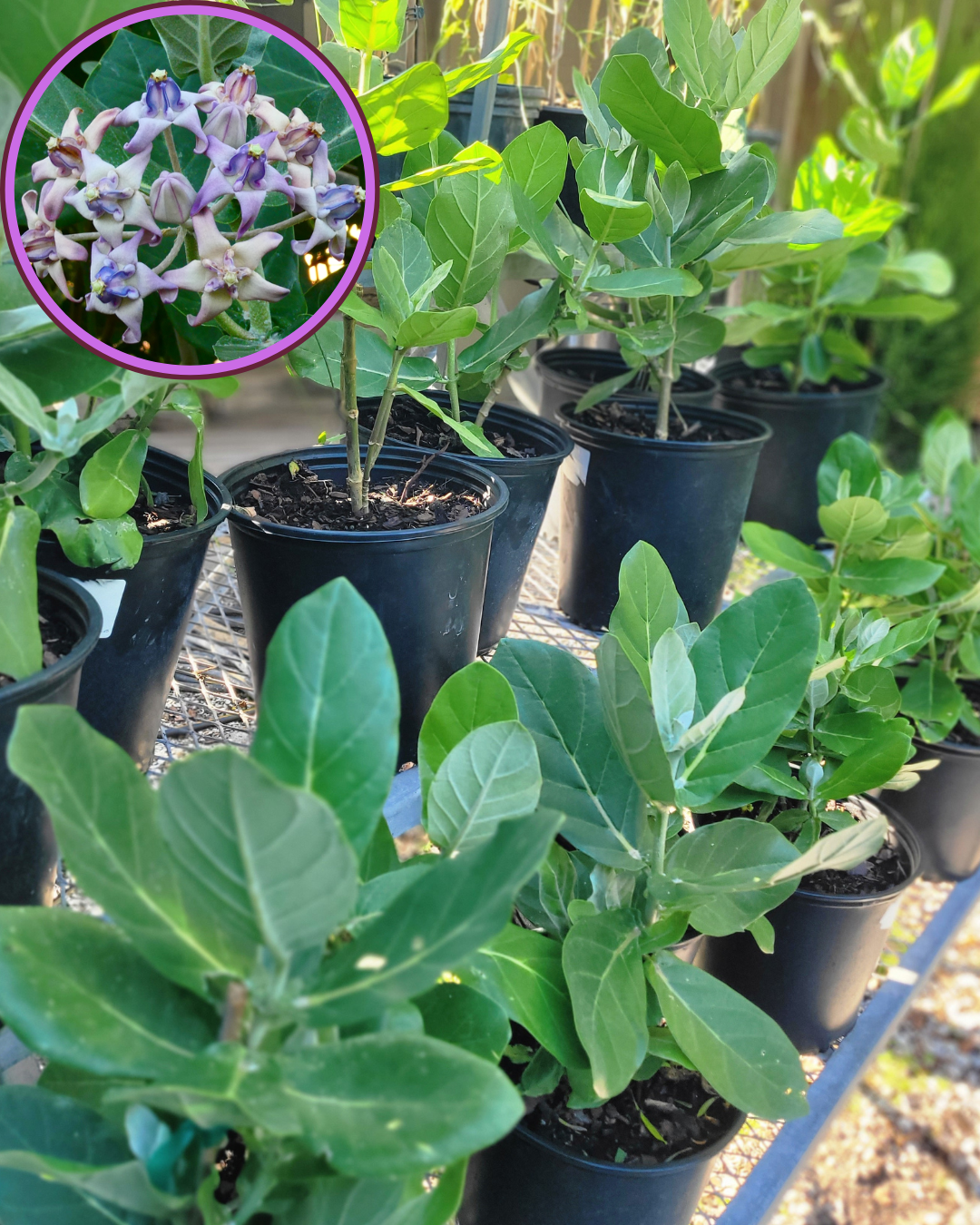
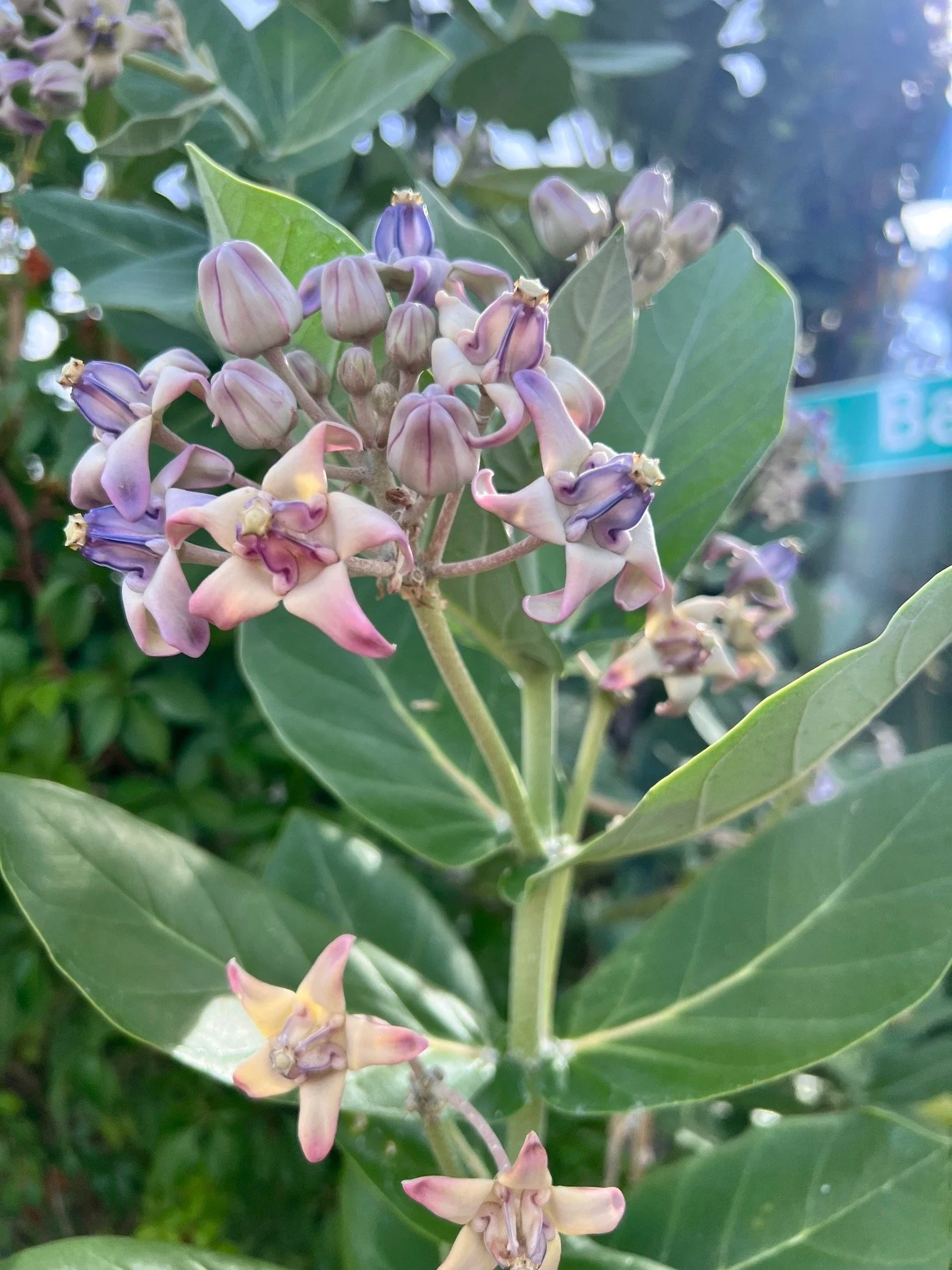
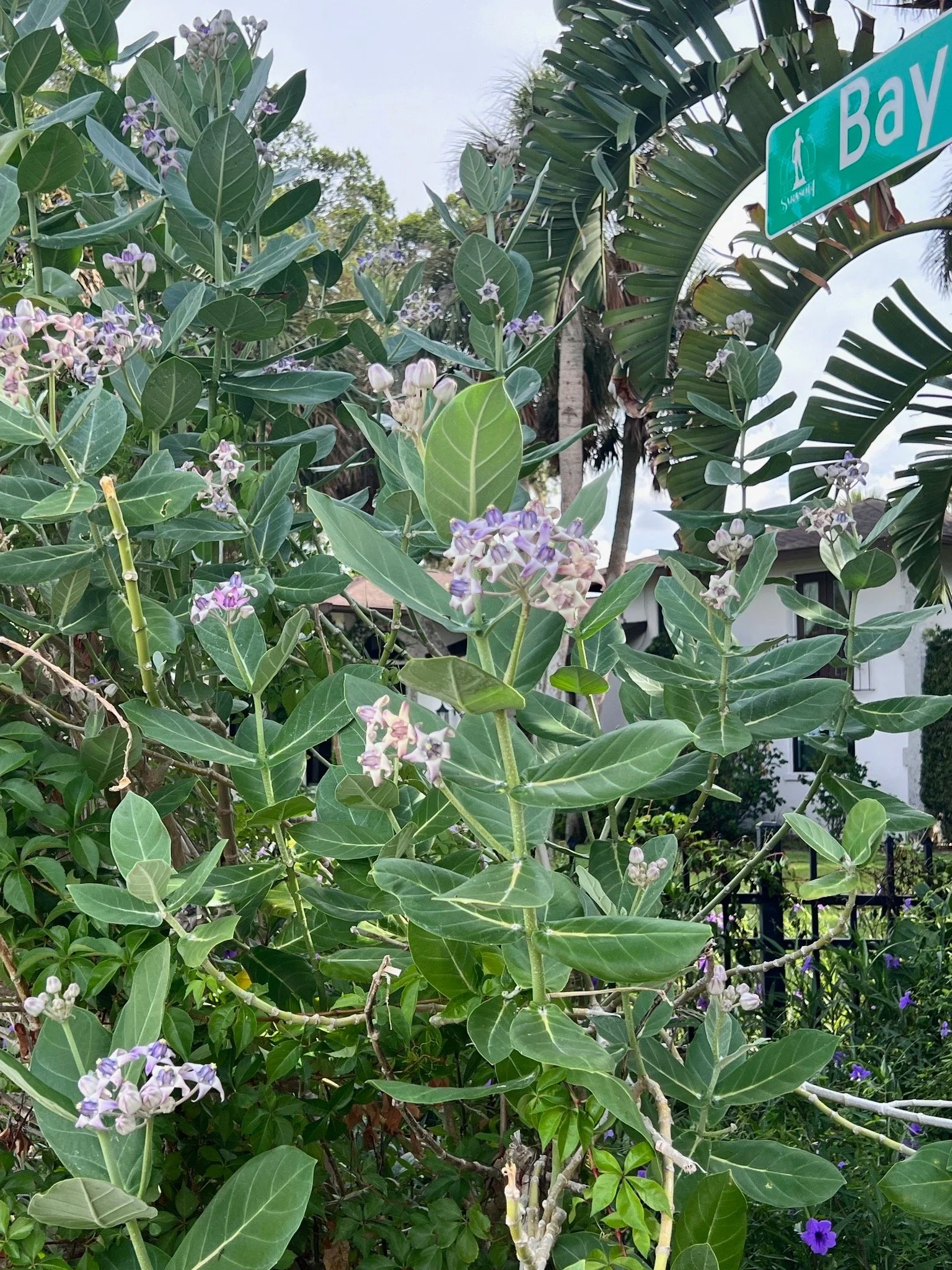
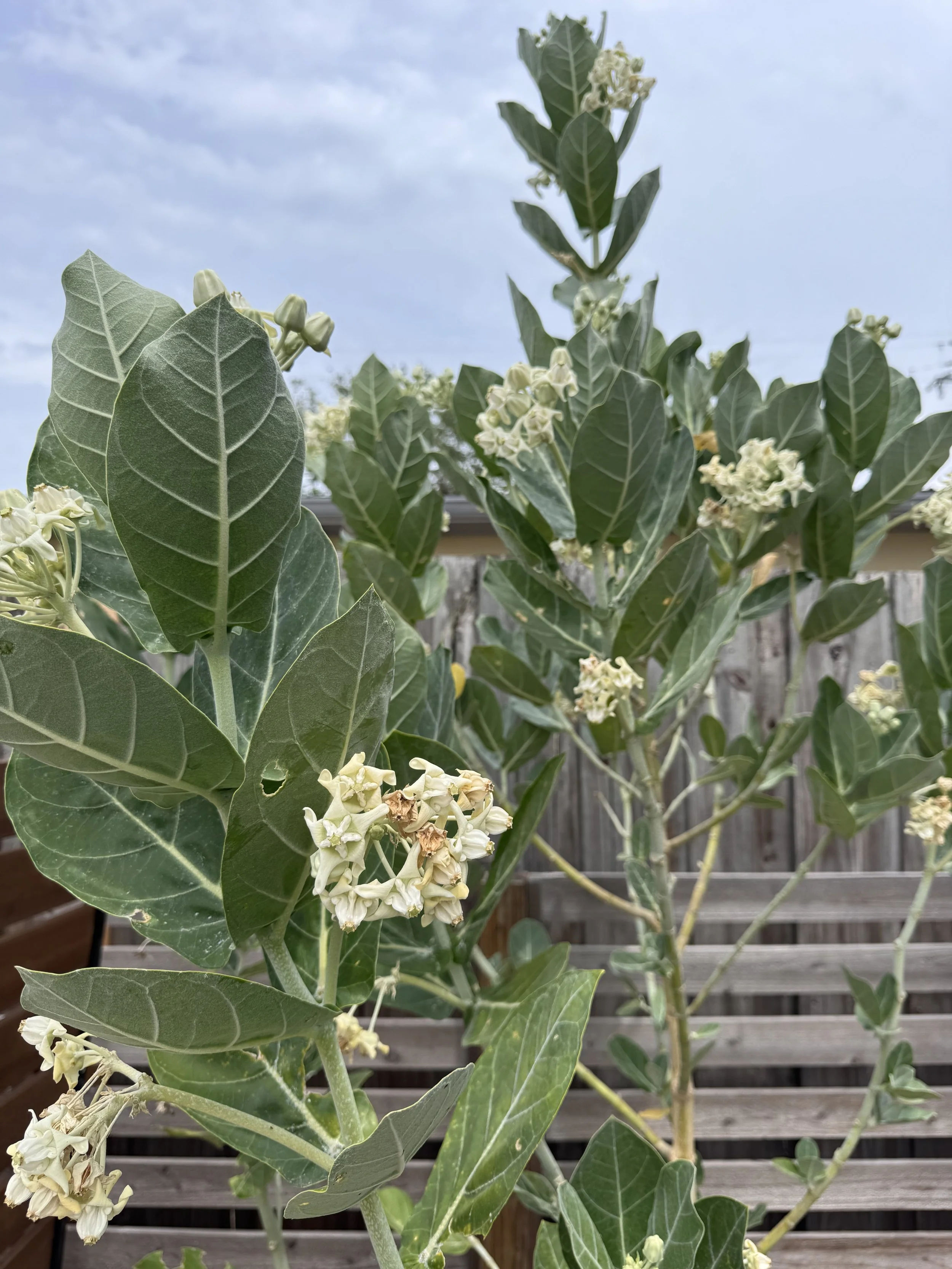
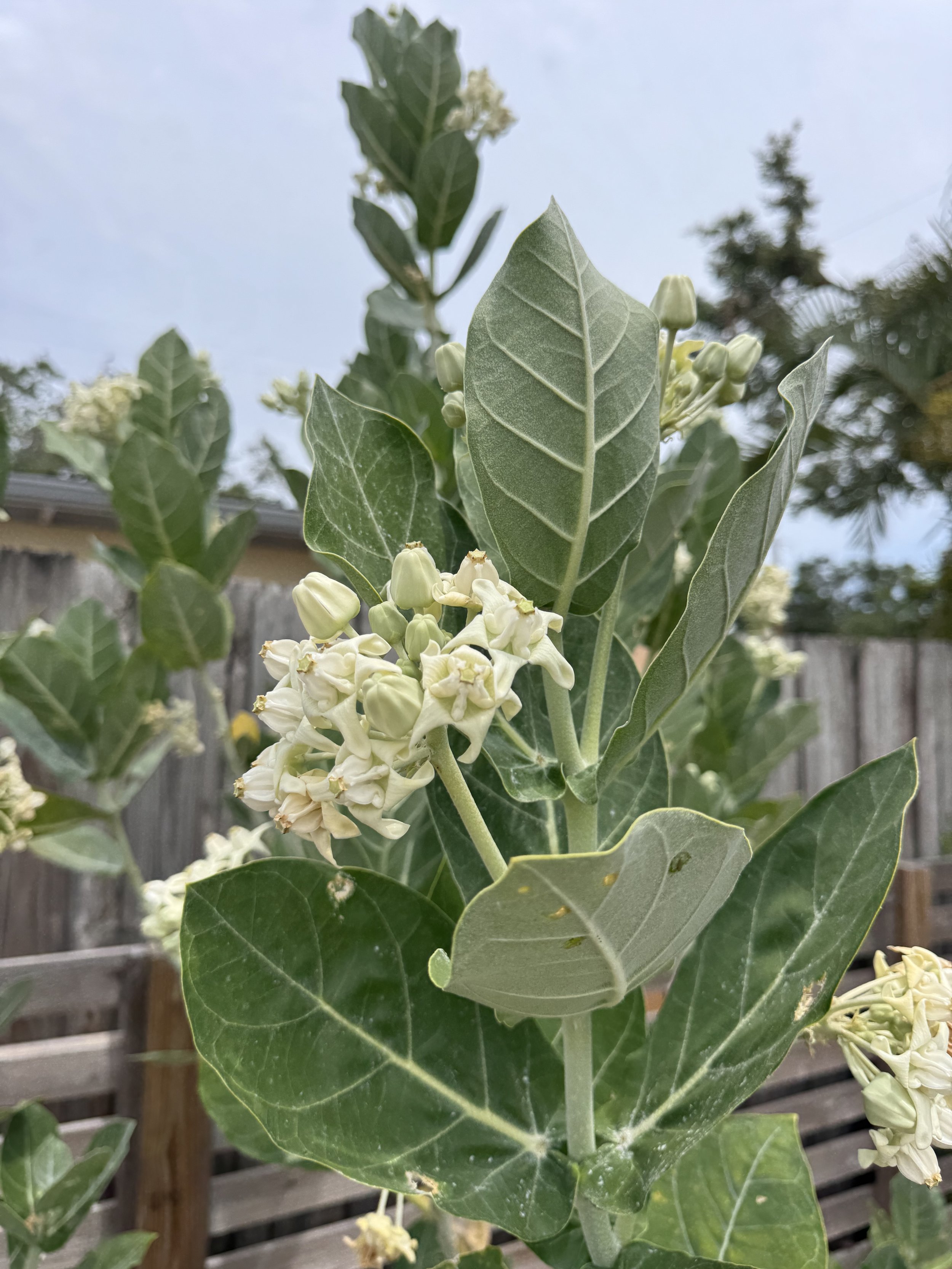
Calotropis gigantea
Giant Milkweed is non-native fast-growing evergreen shrub that can reach 8-15 feet in height. As a member of the milkweed family, it serves as a host plant for Monarch butterfly caterpillars and attracts various pollinators including bees and butterflies. It has thick, leathery, silvery-green leaves and produces clusters of waxy, pale lavender or white flowers that bloom year-round. Extremely drought-tolerant once established, it thrives in full sun and well-drained soils. We sometimes carry a white-flowering variety as well.
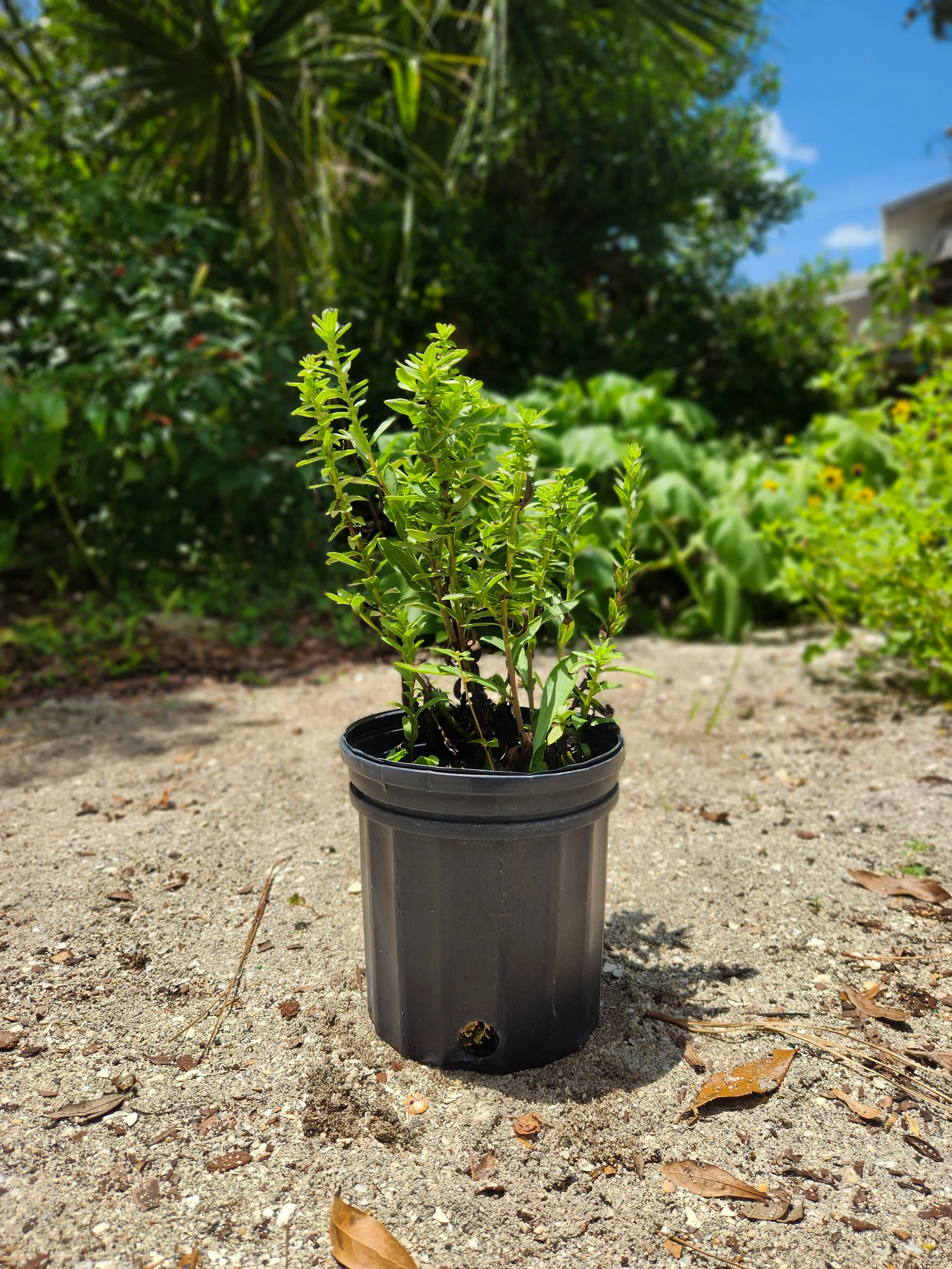
Chrysopsis mariana
Golden Aster is a native perennial wildflower that grows 1’-2’ tall, with showy yellow flowers that bloom from late spring to fall. They grow best in full sun to partial shade and well-drained, moist to dry sandy soil. The flowers provide a nectar source for butterflies and other pollinators, and add a bright pop of color to the garden.
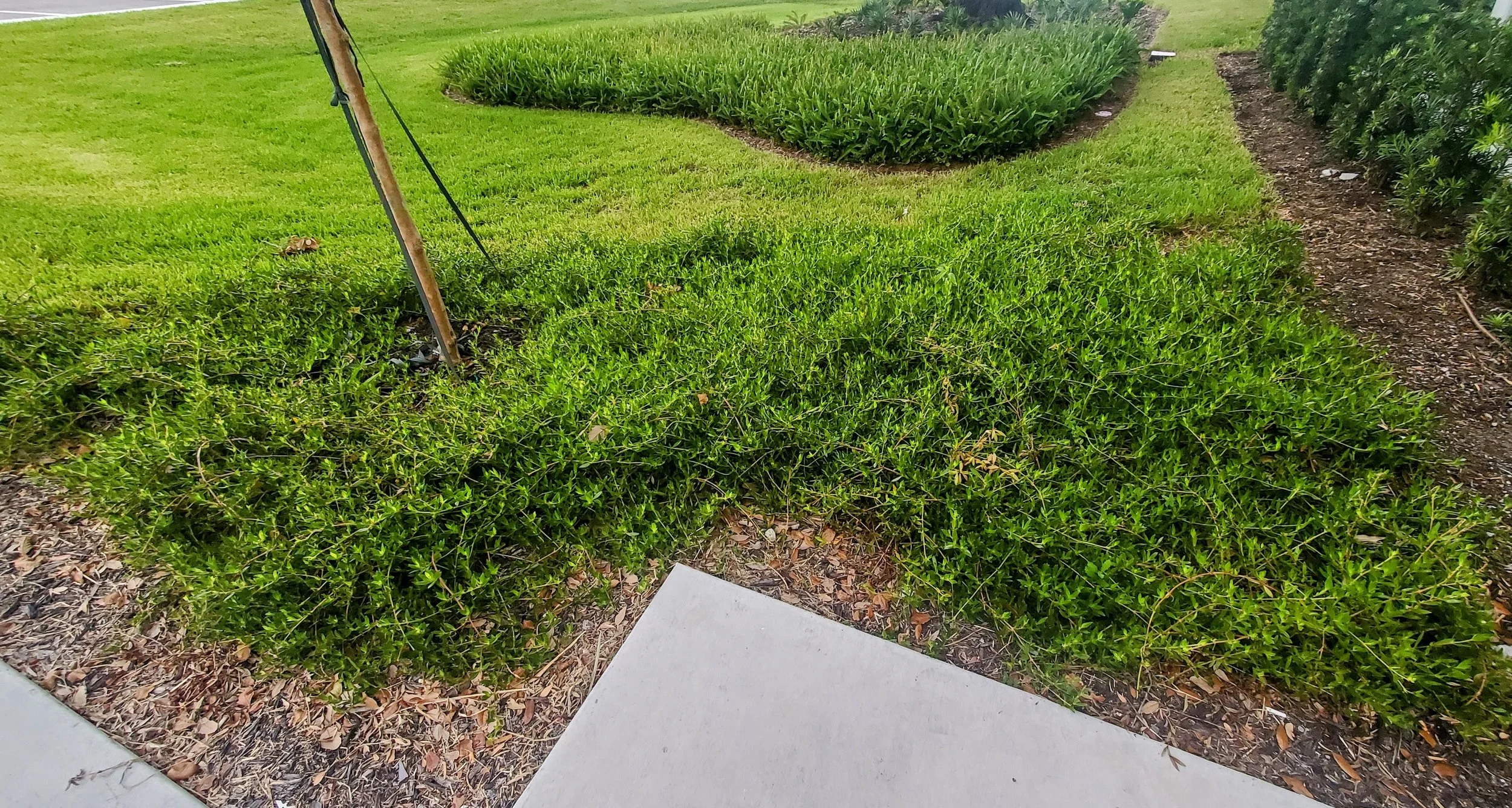
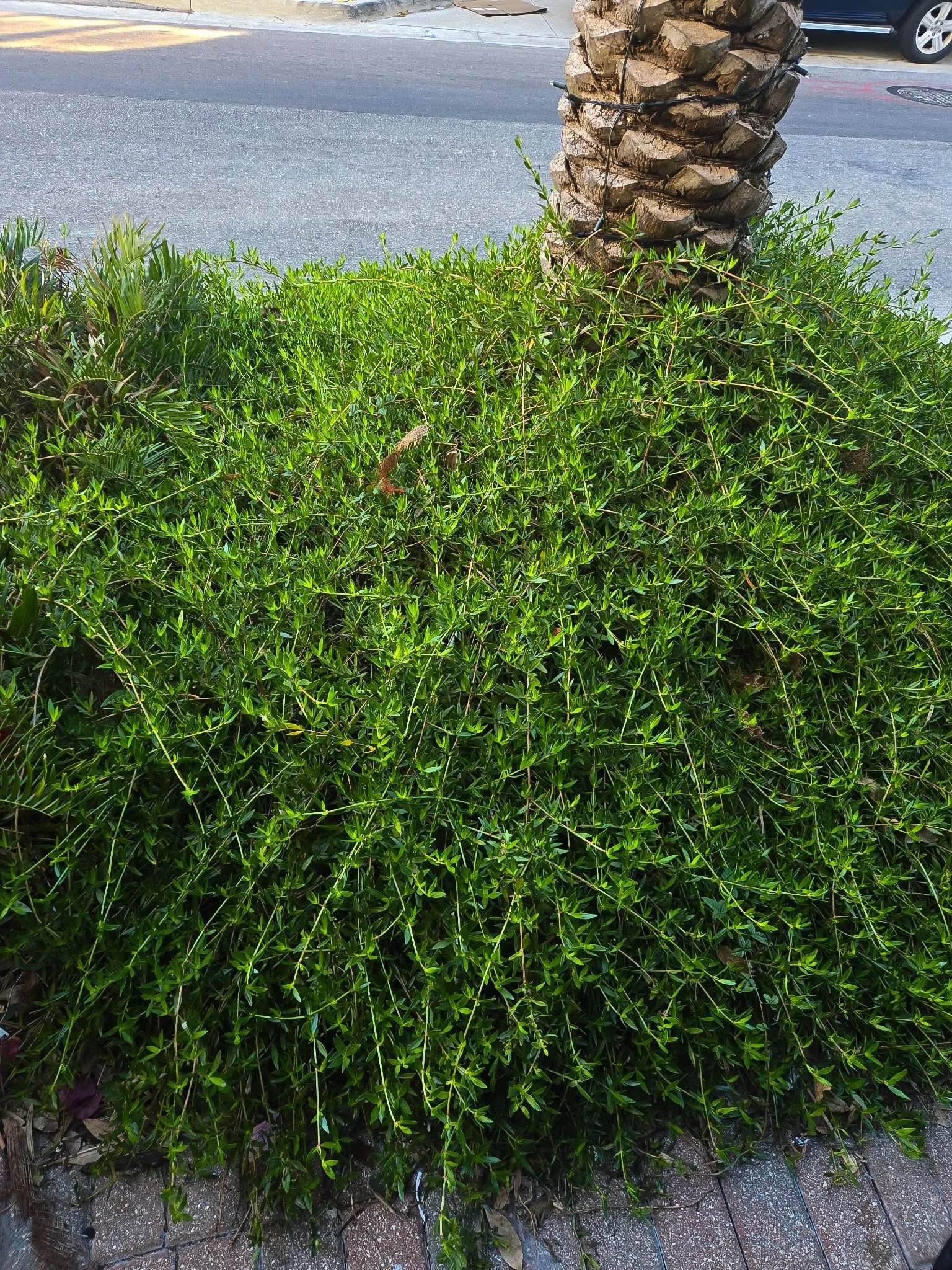
Ernodea littoralis
Golden Beach Creeper (Ernodea littoralis) is a low-growing, prostrate ground cover with small, green, succulent leaves on bright red stems. This hardy plant is extremely salt and drought tolerant, naturally occurring in dune systems and adapted to harsh coastal conditions, including salt winds. It produces inconspicuous pinkish-white tubular flowers and round golden-colored fruits that provide food for birds.
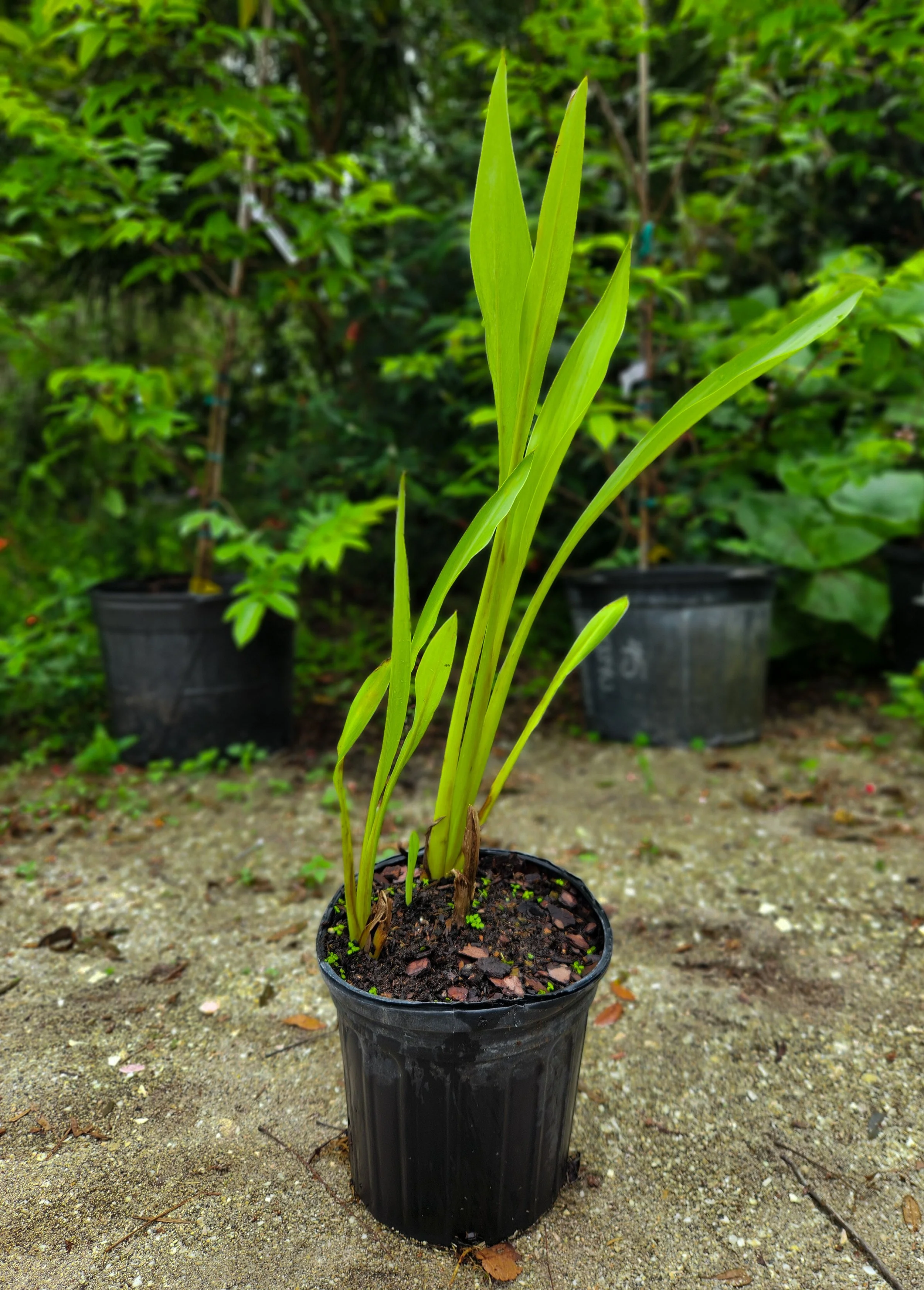
Canna flaccida
Golden Canna is a native, upright flowering wetland plant growing 2’ tall. This plant thrives in very moist to wet, soggy soil, and full submersion up to 6”. It has large, butter-yellow blooms that are highly attractive to hummingbirds, butterflies, and bees; it also serves as a vital larval host plant for the native Canna Skipper butterfly.
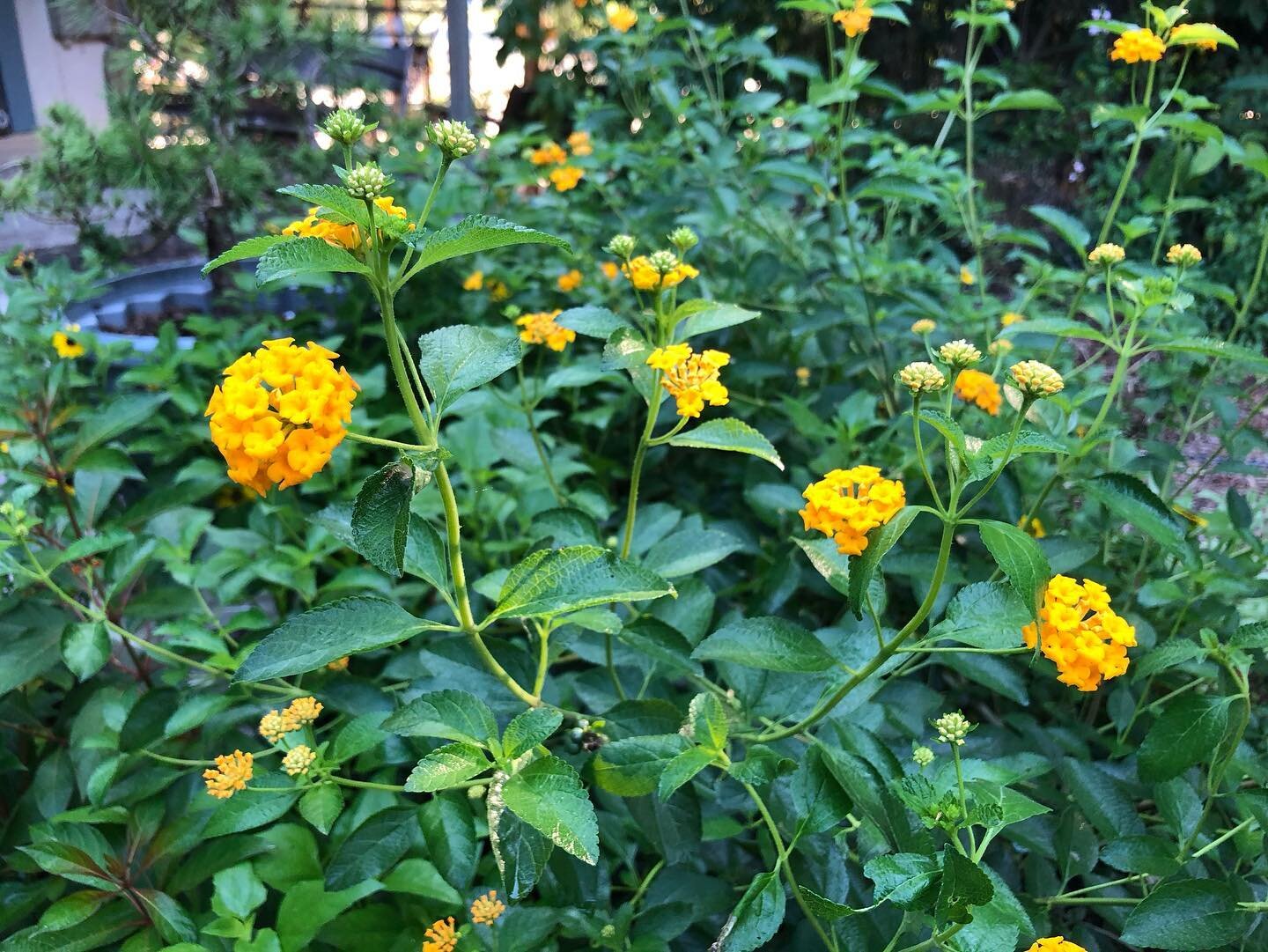
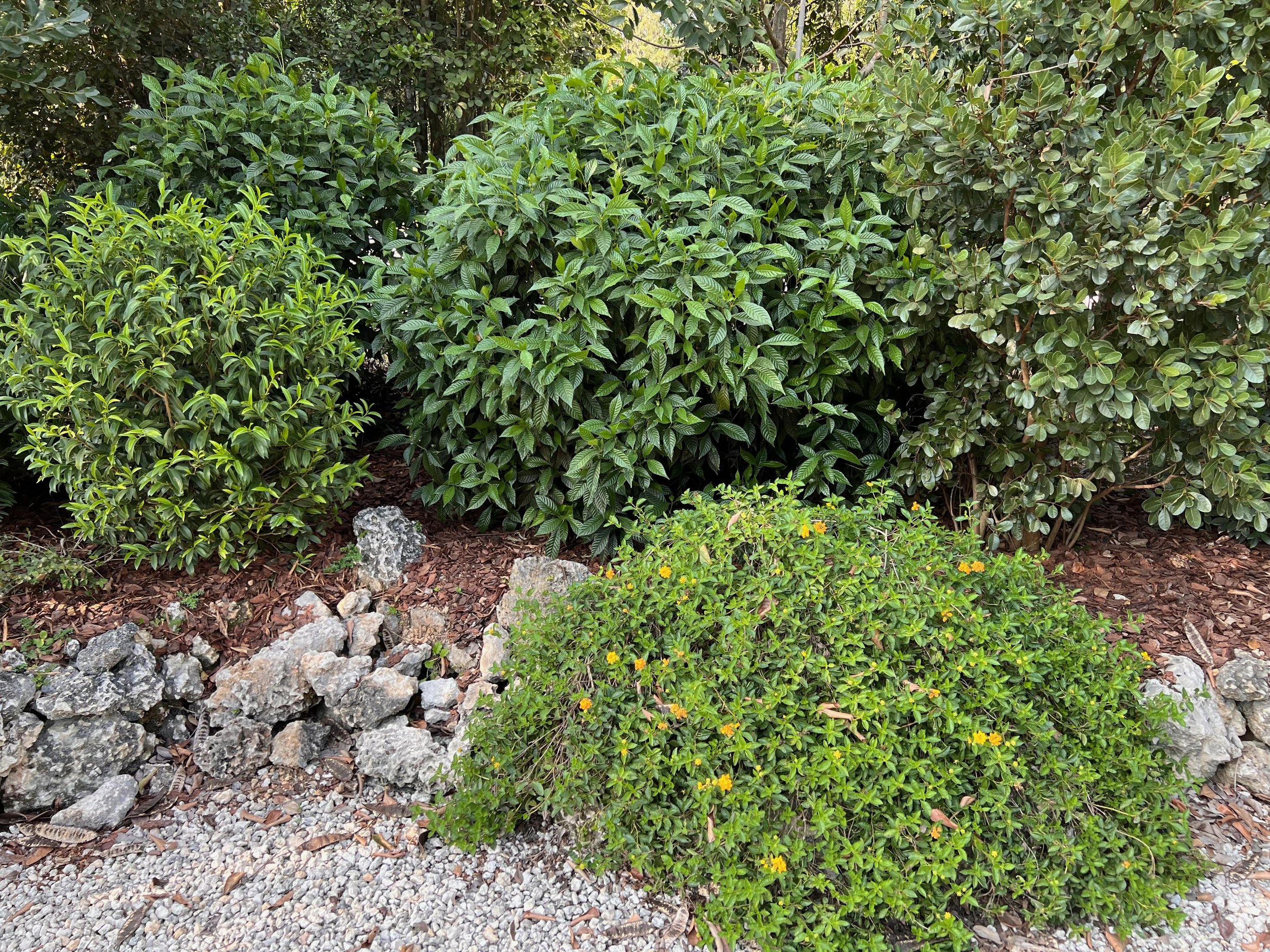
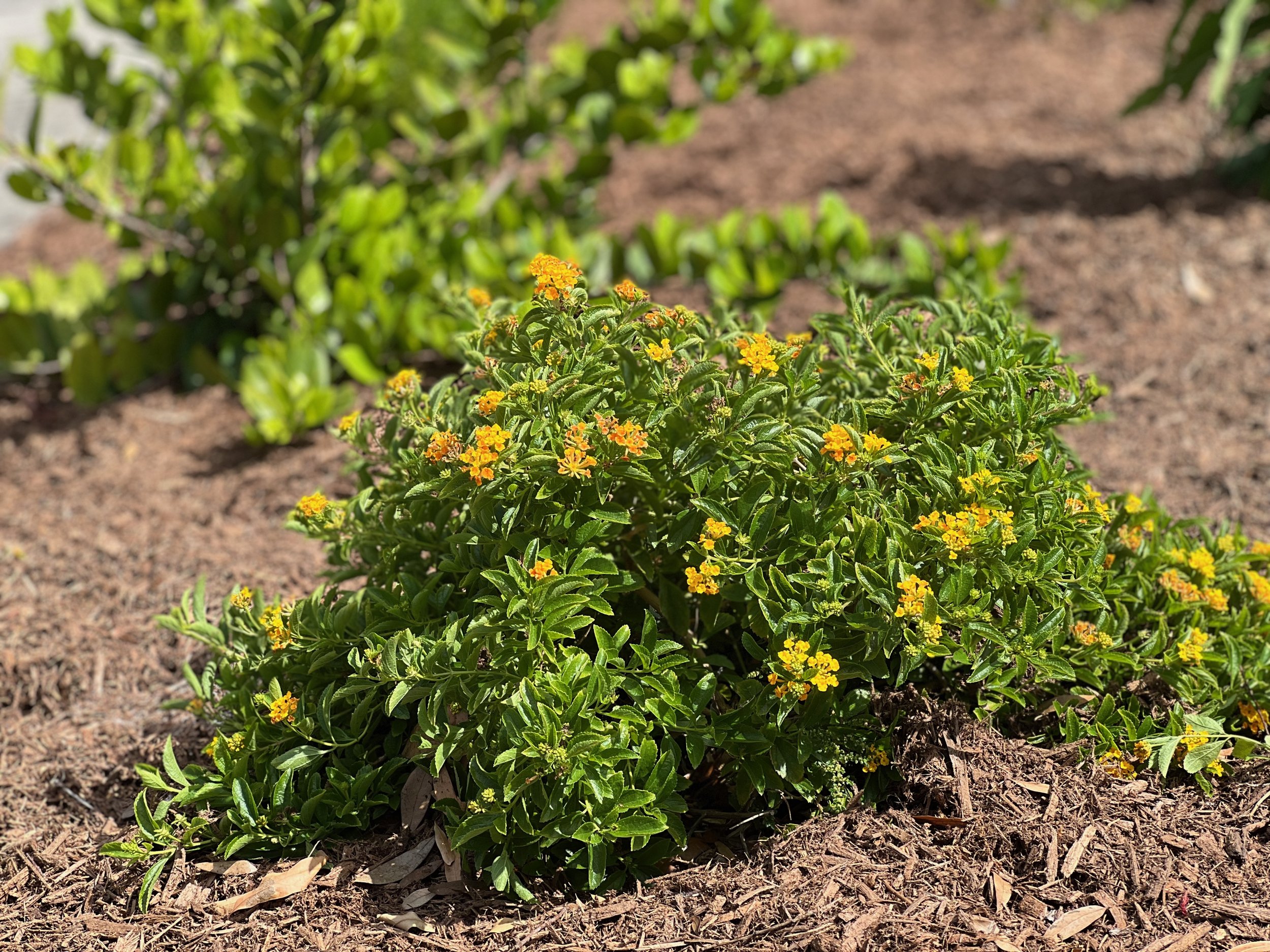
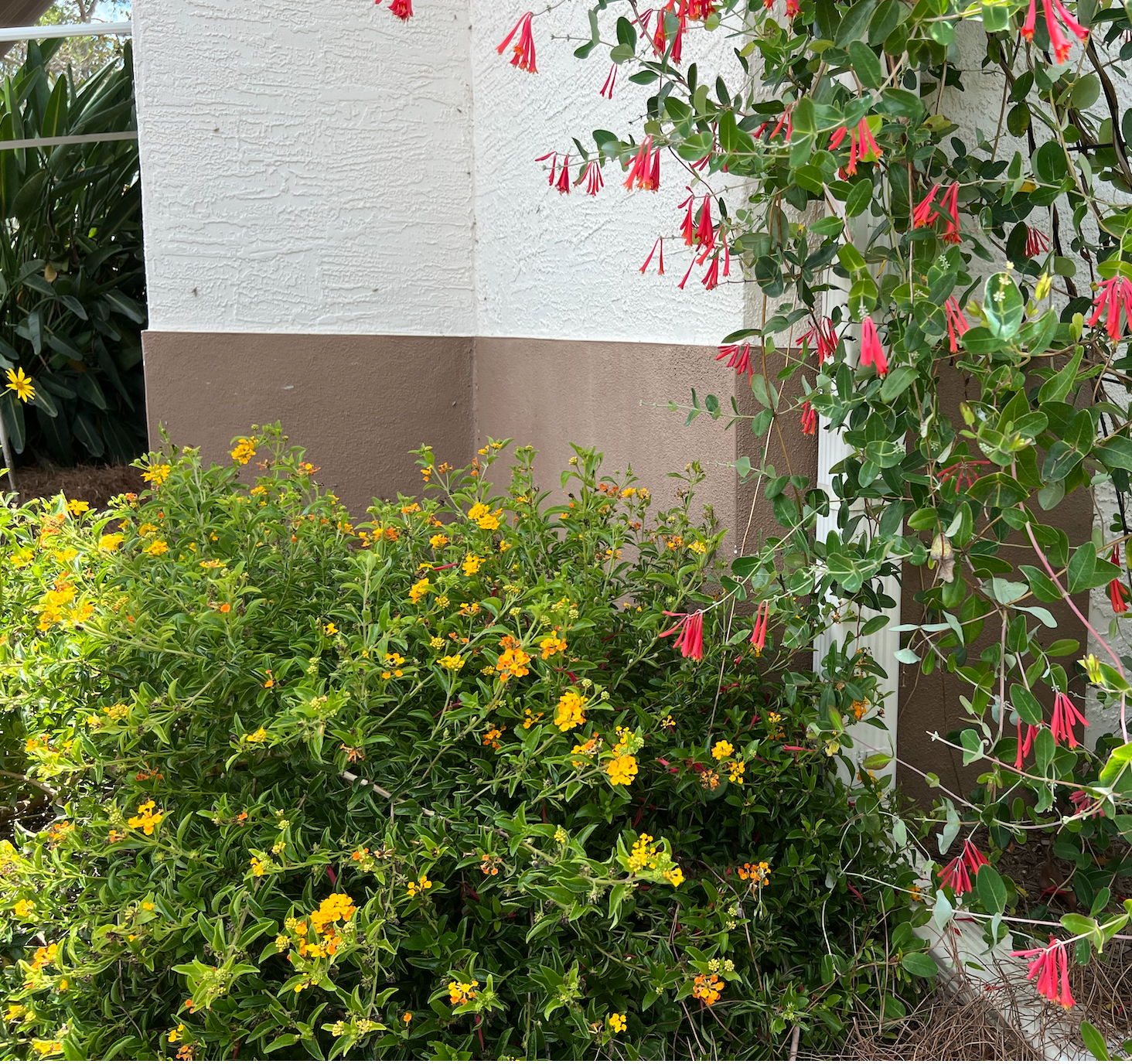
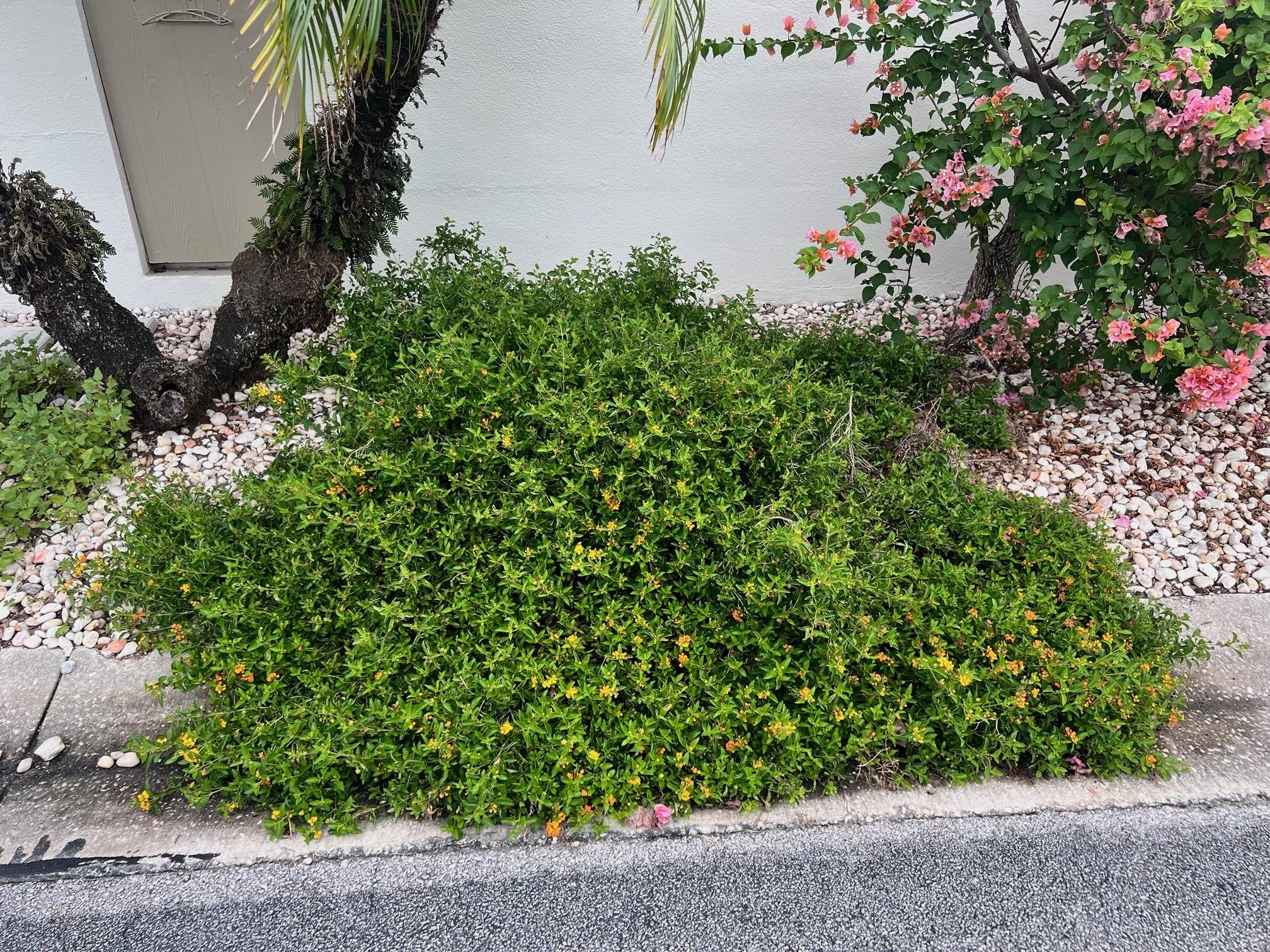
Lantana depressa var. ‘depressa’
Gold Lantana is an evergreen, low-growing, rare, native lantana. Growing 1’-2’ tall and 3’-4’ wide, with showy gold flowers on and off all year that attract butterflies and purple fruit for birds, this plant makes a great addition to landscapes and pollinator gardens. Plant in full sun with average (well-drained) to dry soil, and enjoy this fragrant, semi-salt-tolerant shrub!
Liatris gracilis
Graceful Blazing Star is a moderately tall perennial wildflower native to Florida, reaching 2-3 ft. height. This drought-tolerant species features a single, slender stem covered in fine hairs and narrow, grasslike leaves. It produces spikes of small, purple star-shaped flowers that bloom from summer into fall, attracting butterflies and other pollinators. Thriving in well-drained soils and full sun, it naturally occurs in flatwoods, sandhills, and open woodlands throughout Florida and is valued for both wildlife gardens and cut flower arrangements.
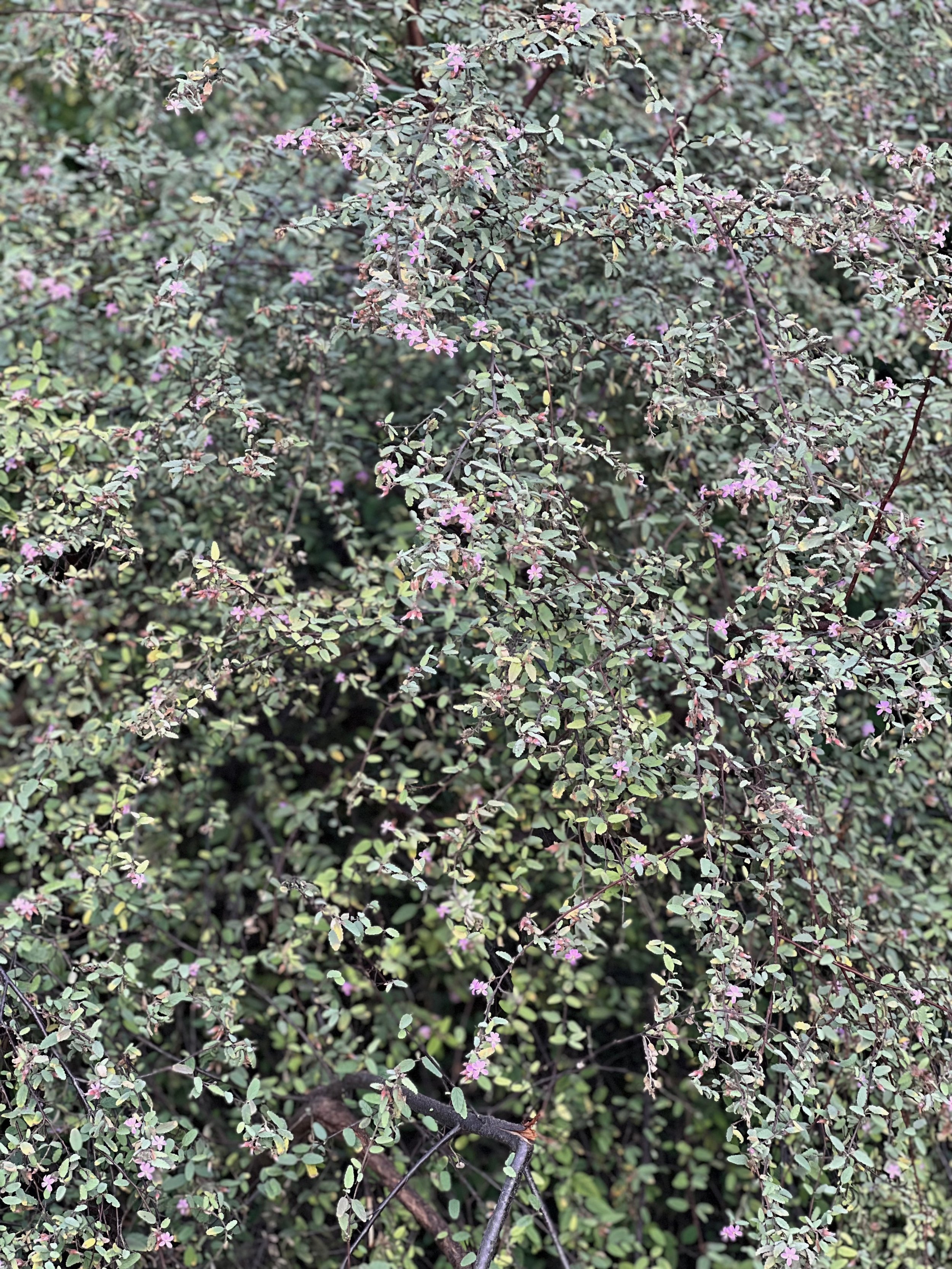
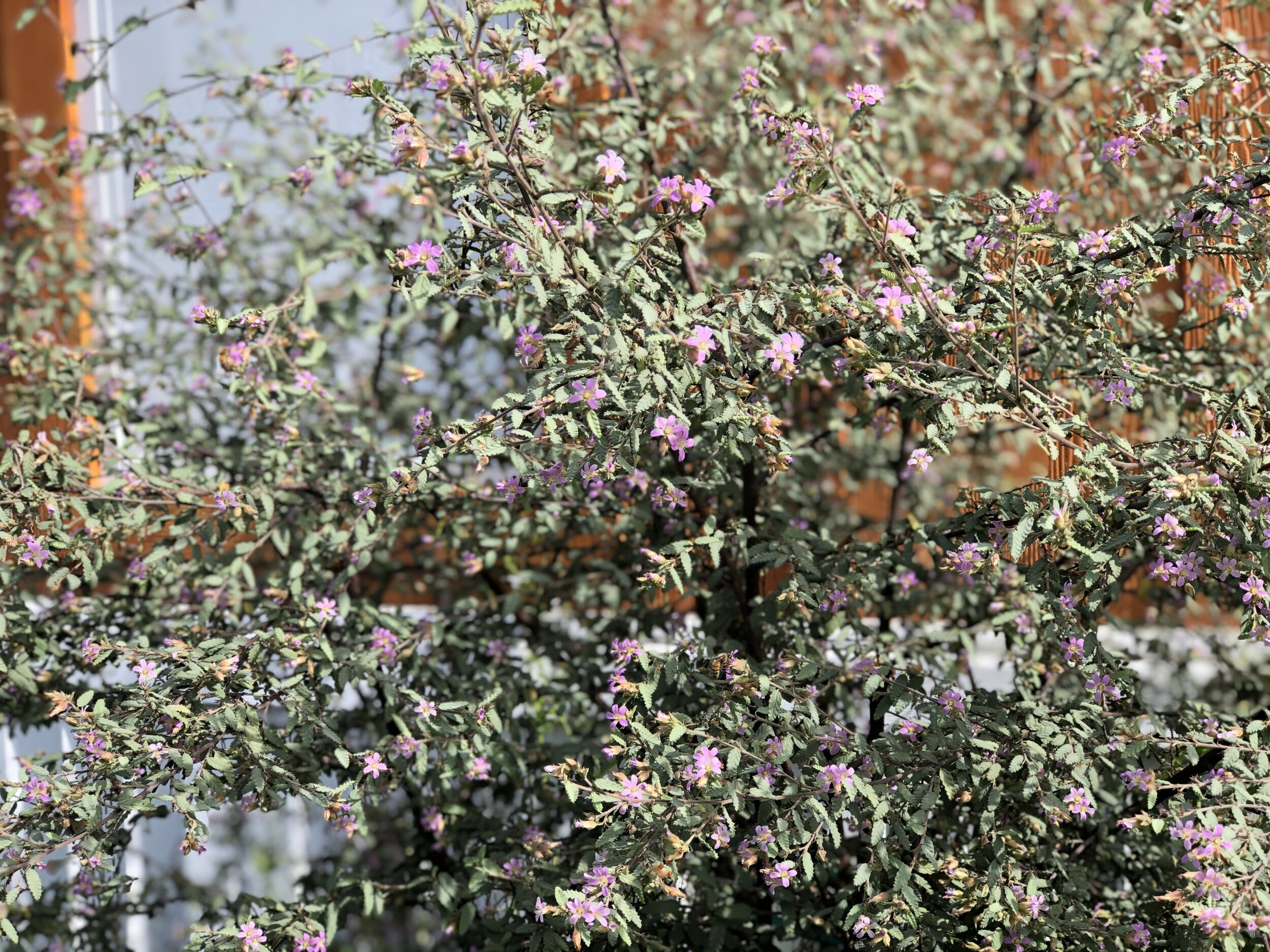
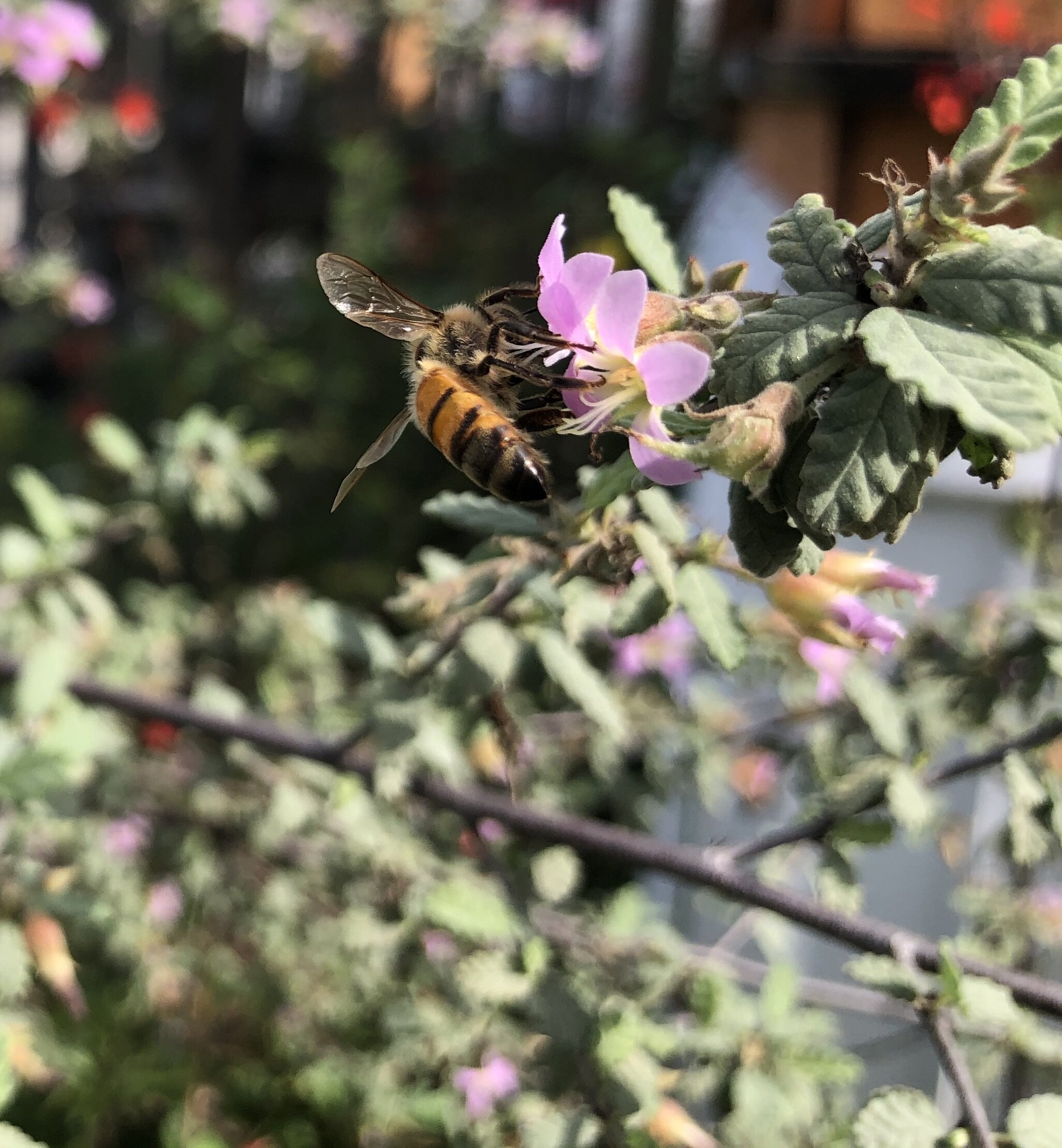
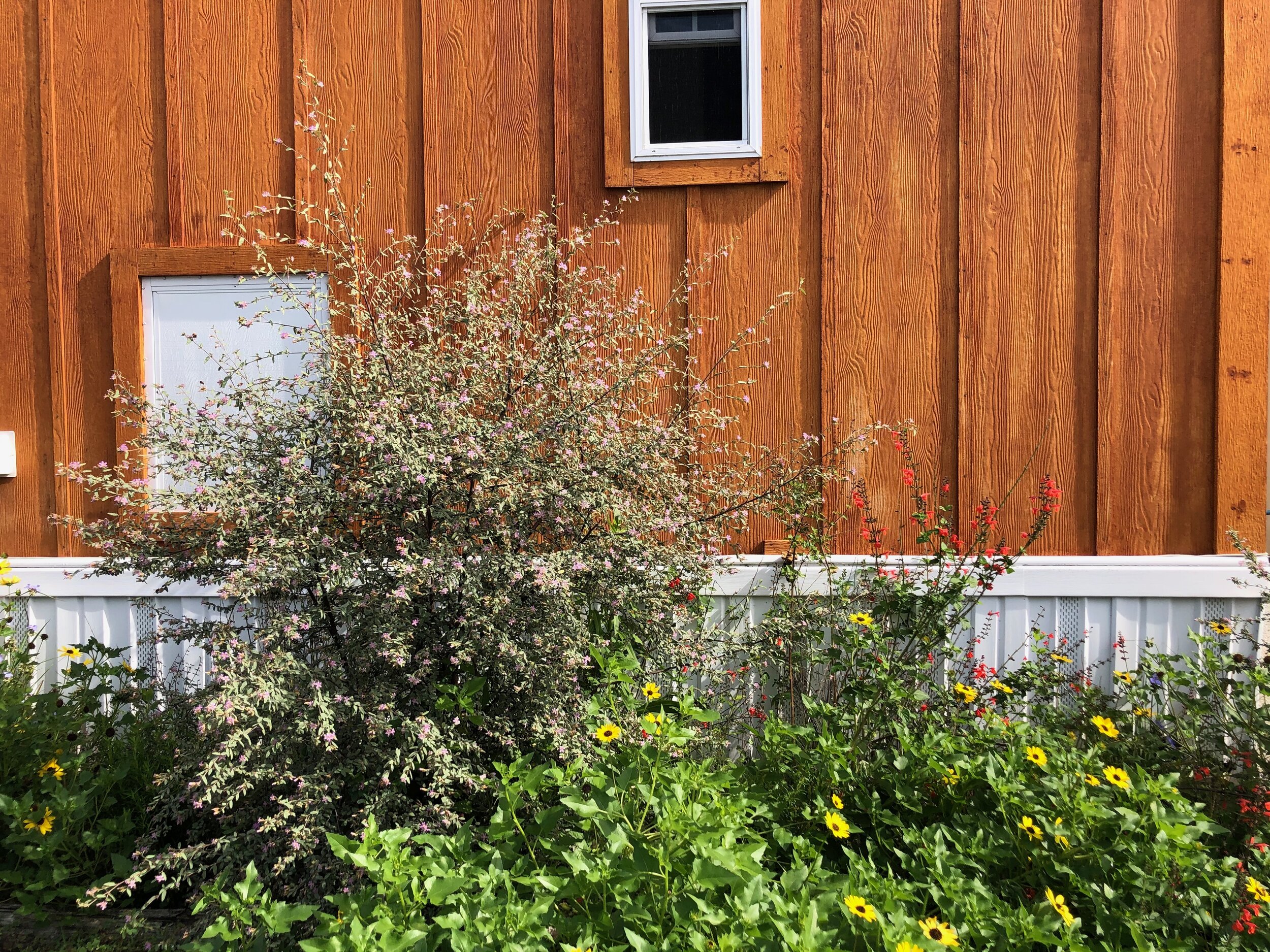
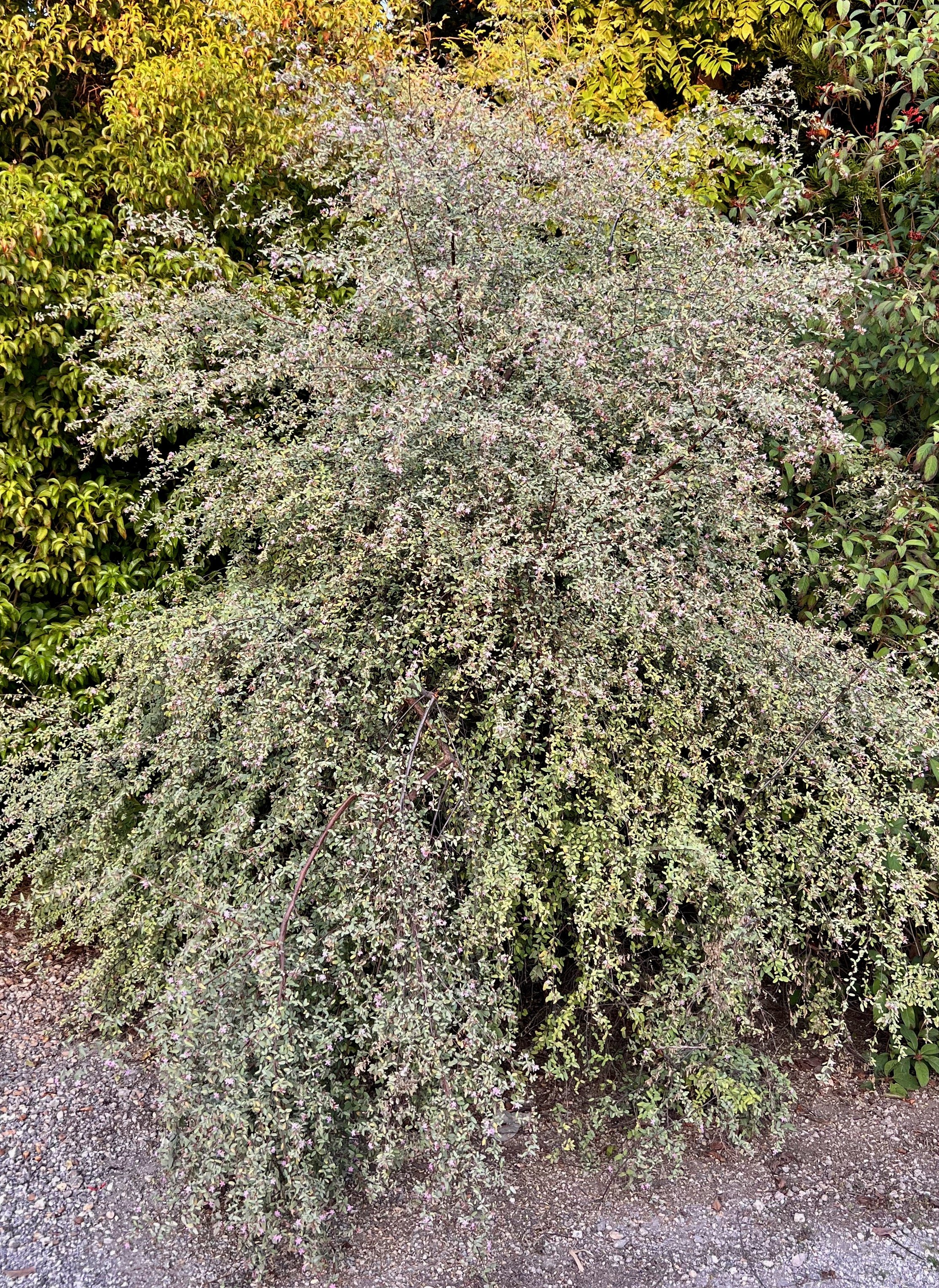
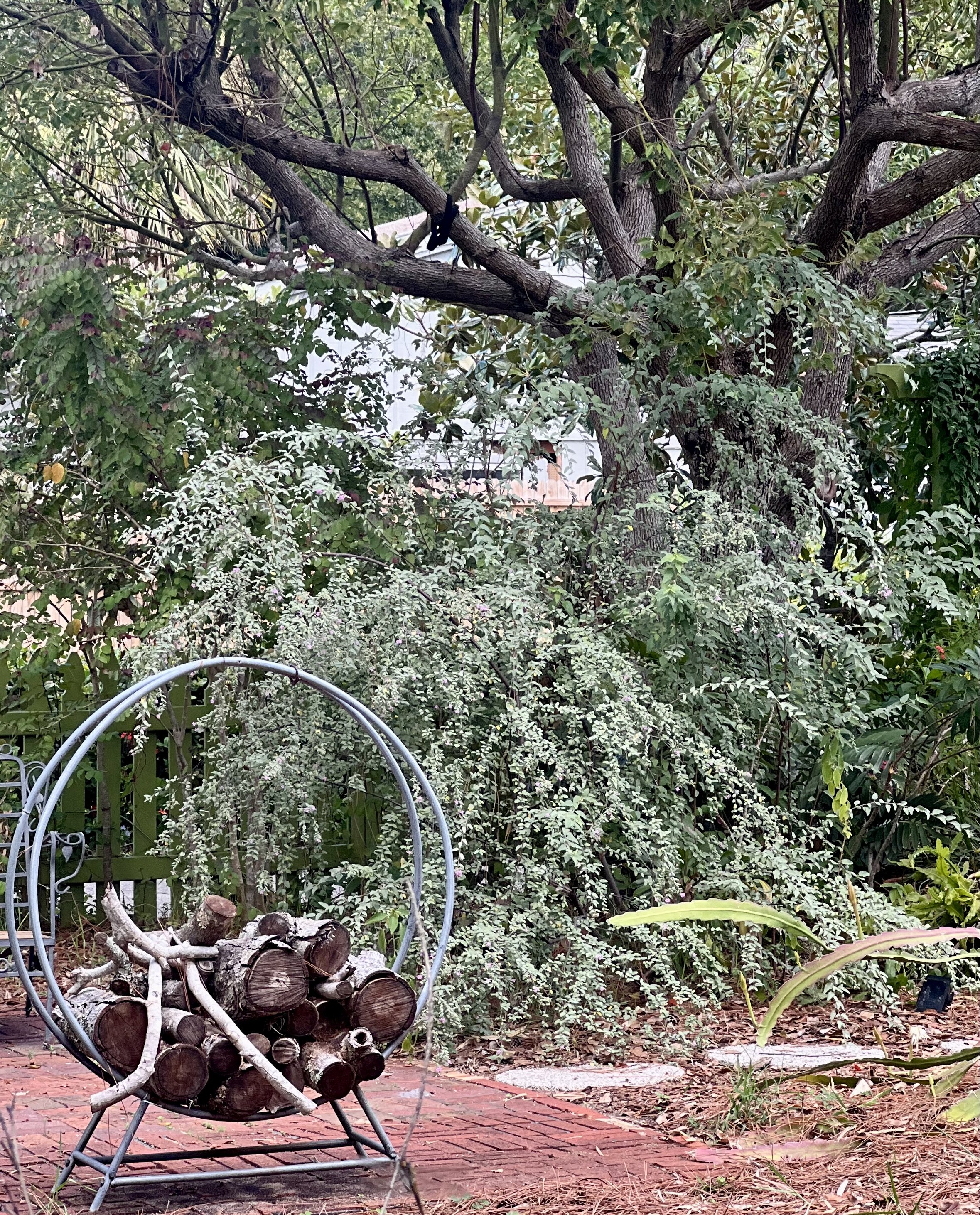
Melochia tomentosa
This native, evergreen, large flowering shrub is a super pollinator magnet. It is a keystone species for gardeners in South Florida because of the diversity and numbers of pollinators it attracts, including hummingbirds. Blooming year-round, it has tiny pink flowers and tiny grey leaves on dark stems and a beautiful soft and open habit in the garden.
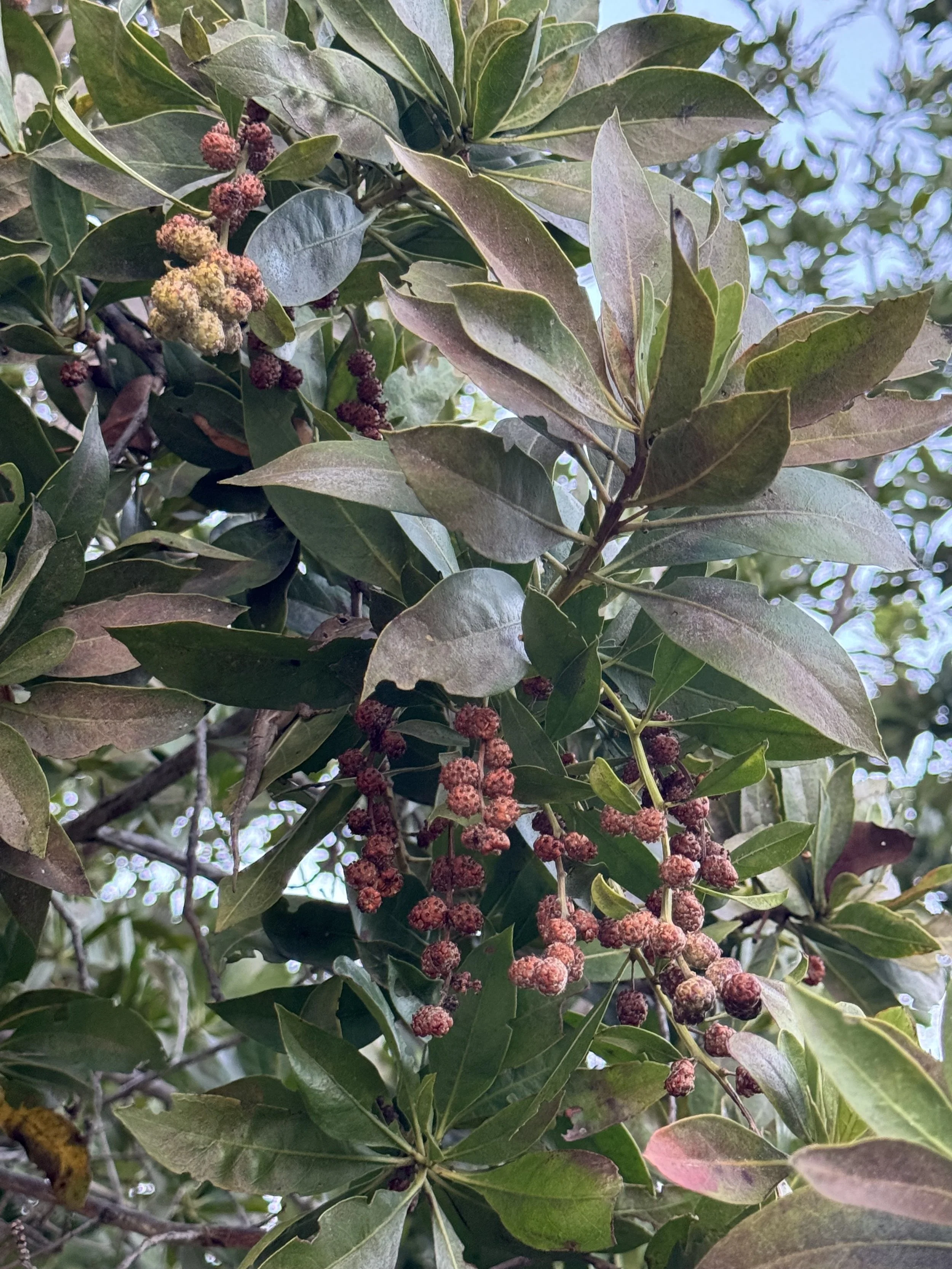

Conocarpus erectus
The Green Buttonwood is an evergreen, coastal, native small tree or large shrub that can reach 20' and has vibrant green leaves and small brown berries that look like wood buttons. This buttonwood is considered the 4th type of mangrove and really thrives in coastal conditions, and can take salt water inundation and salty soils. The Buttonwood also has high wind tolerance making it a great windscreen on coastal properties.
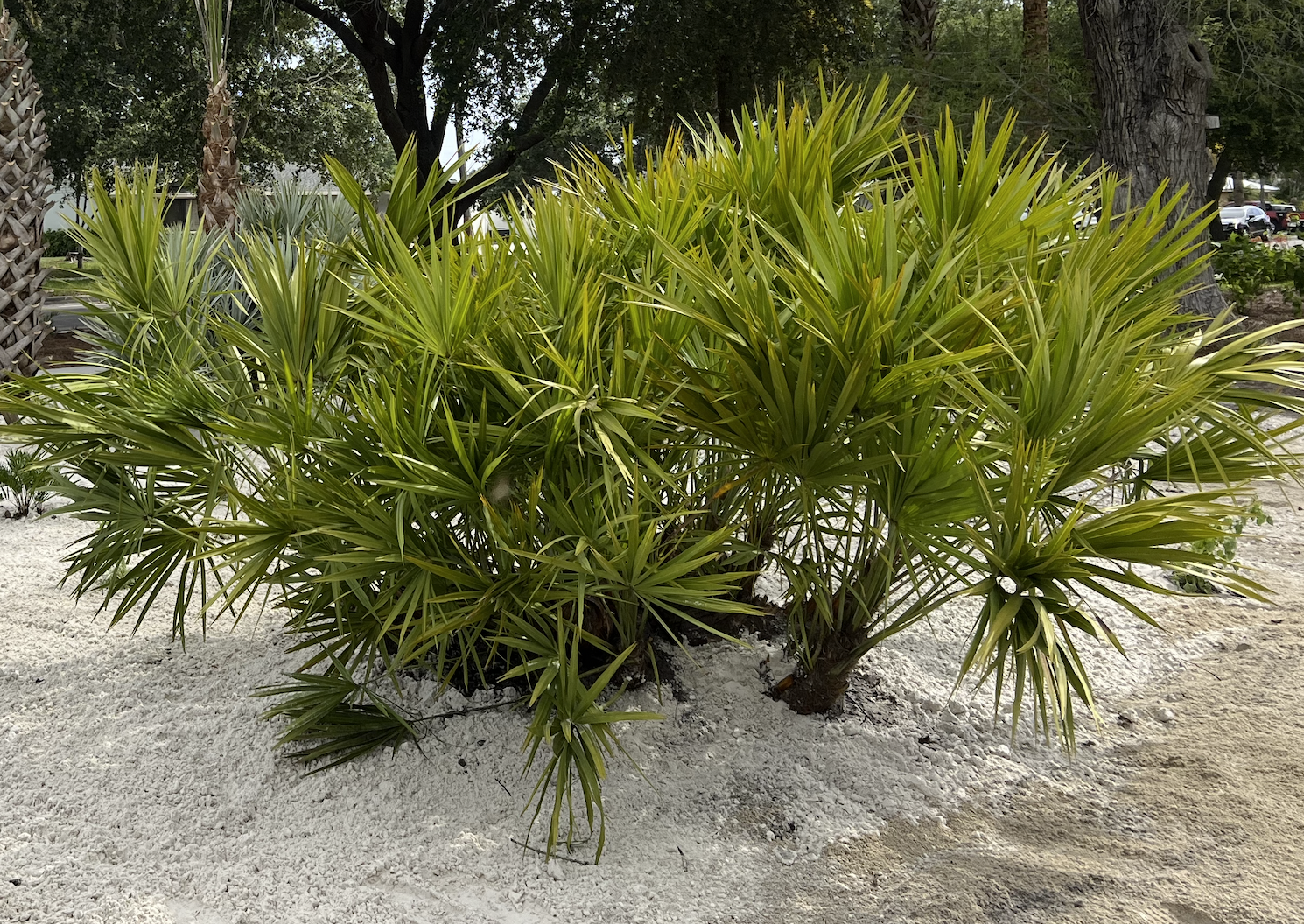
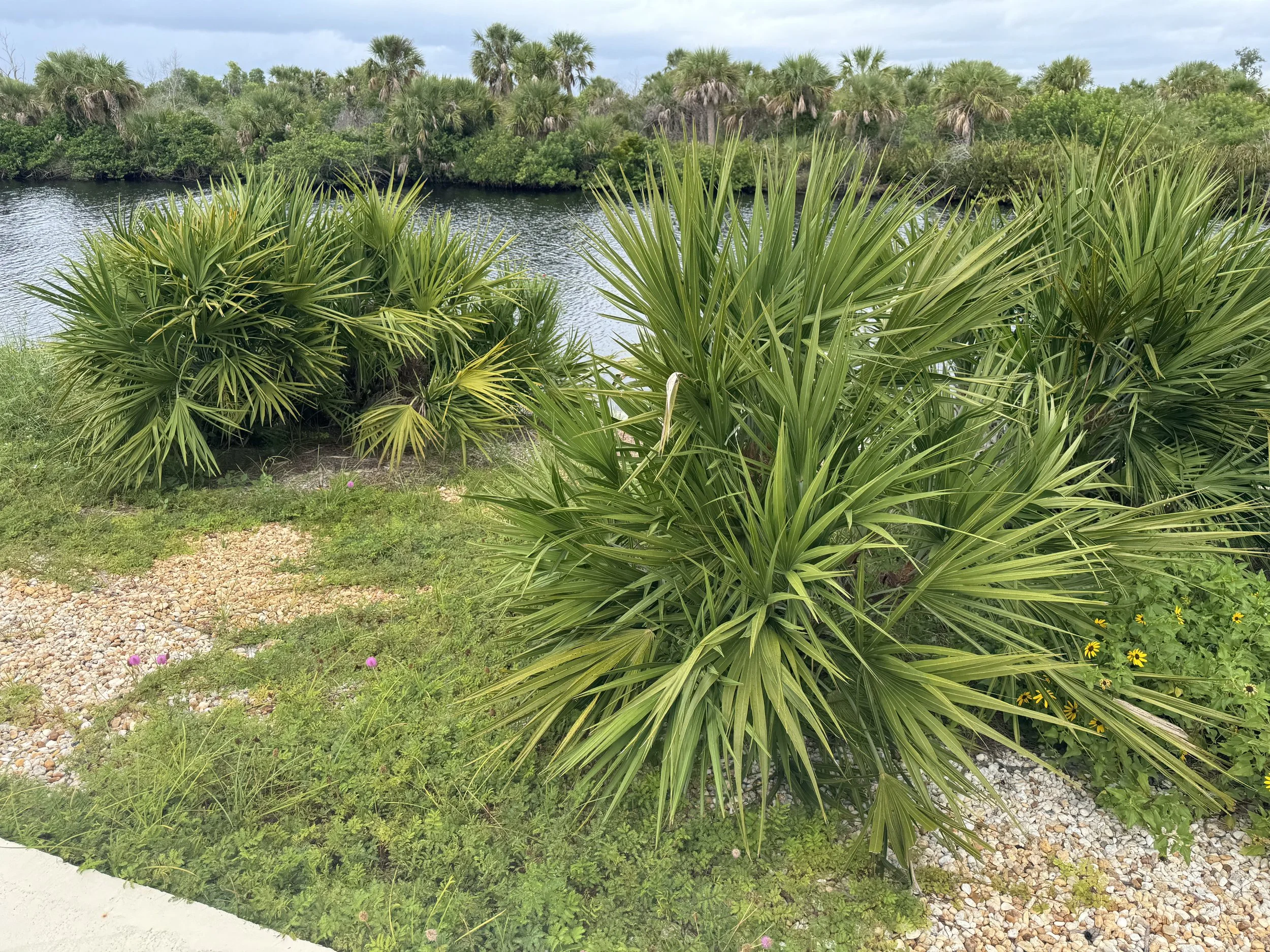
Serenoa repens
The Green Saw Palmetto is a tough, drought-tolerant Florida native fan palm perfect for coastal landscapes and understory planting. It features sprawling horizontal stems, brilliant green fronds, and distinctive saw-toothed leaf stalks. In spring, it produces fragrant blooms that attract pollinators, followed by wildlife-supporting berries. Plant in full sun or shade and dry, sandy soil.
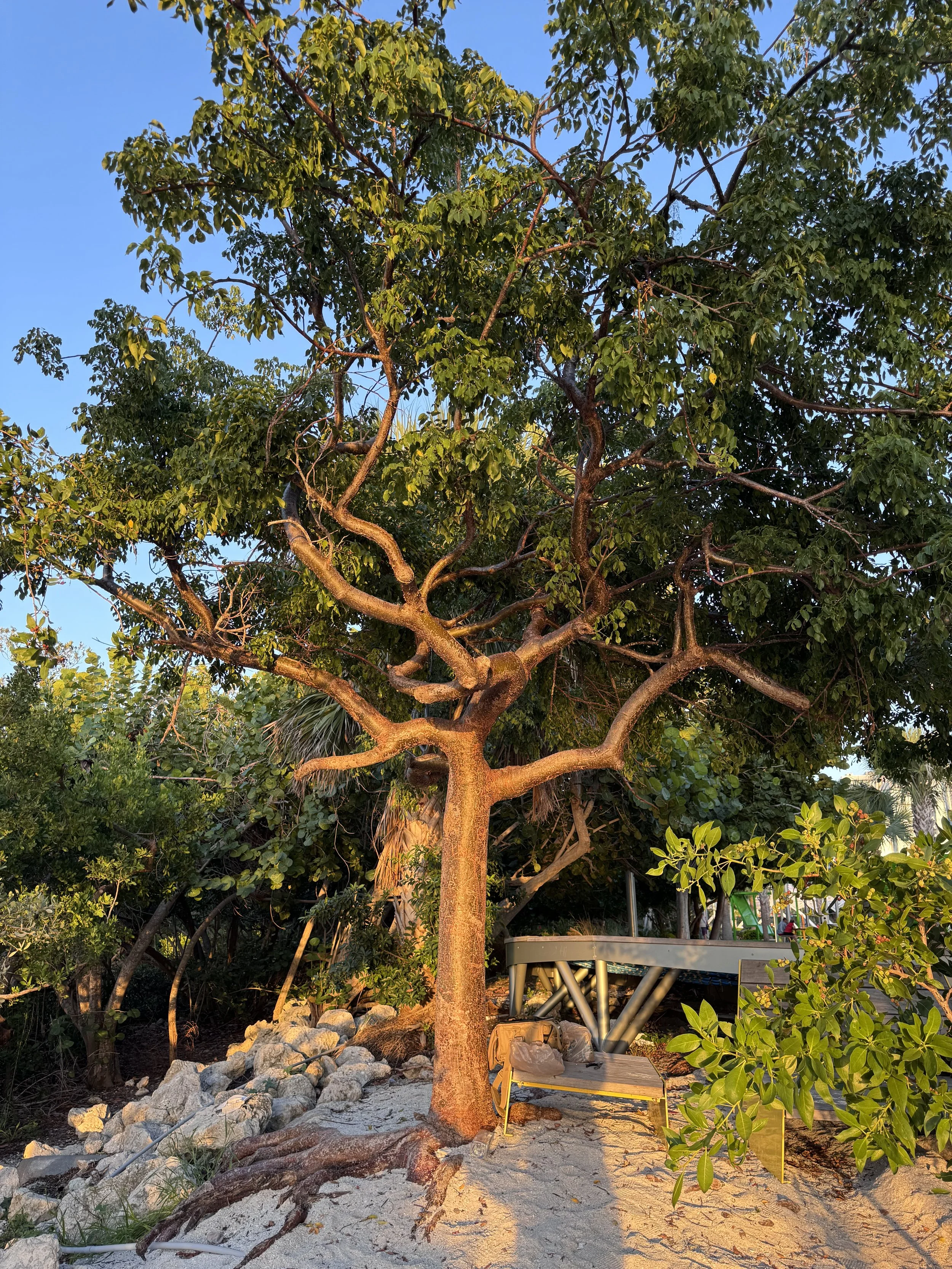
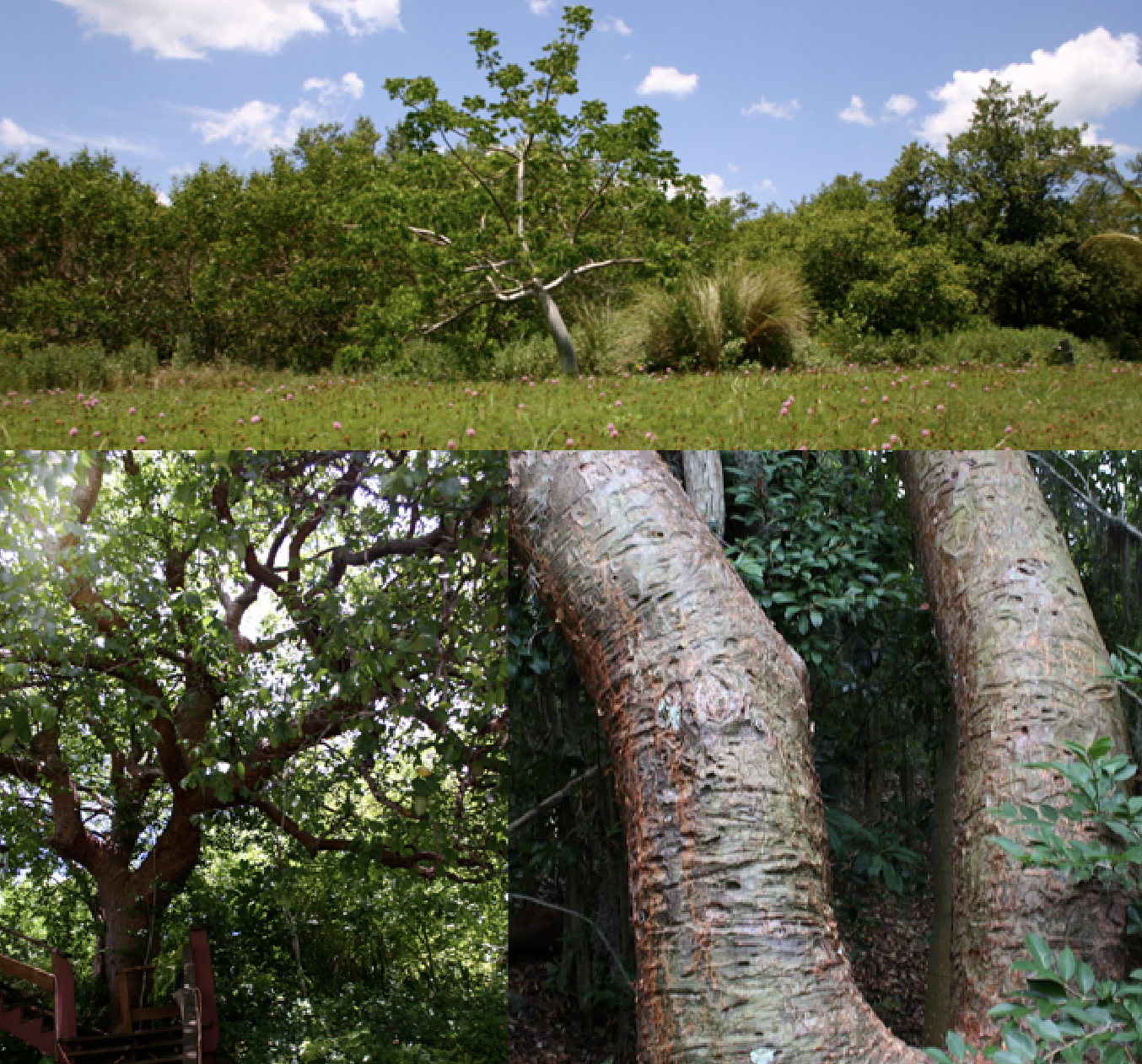
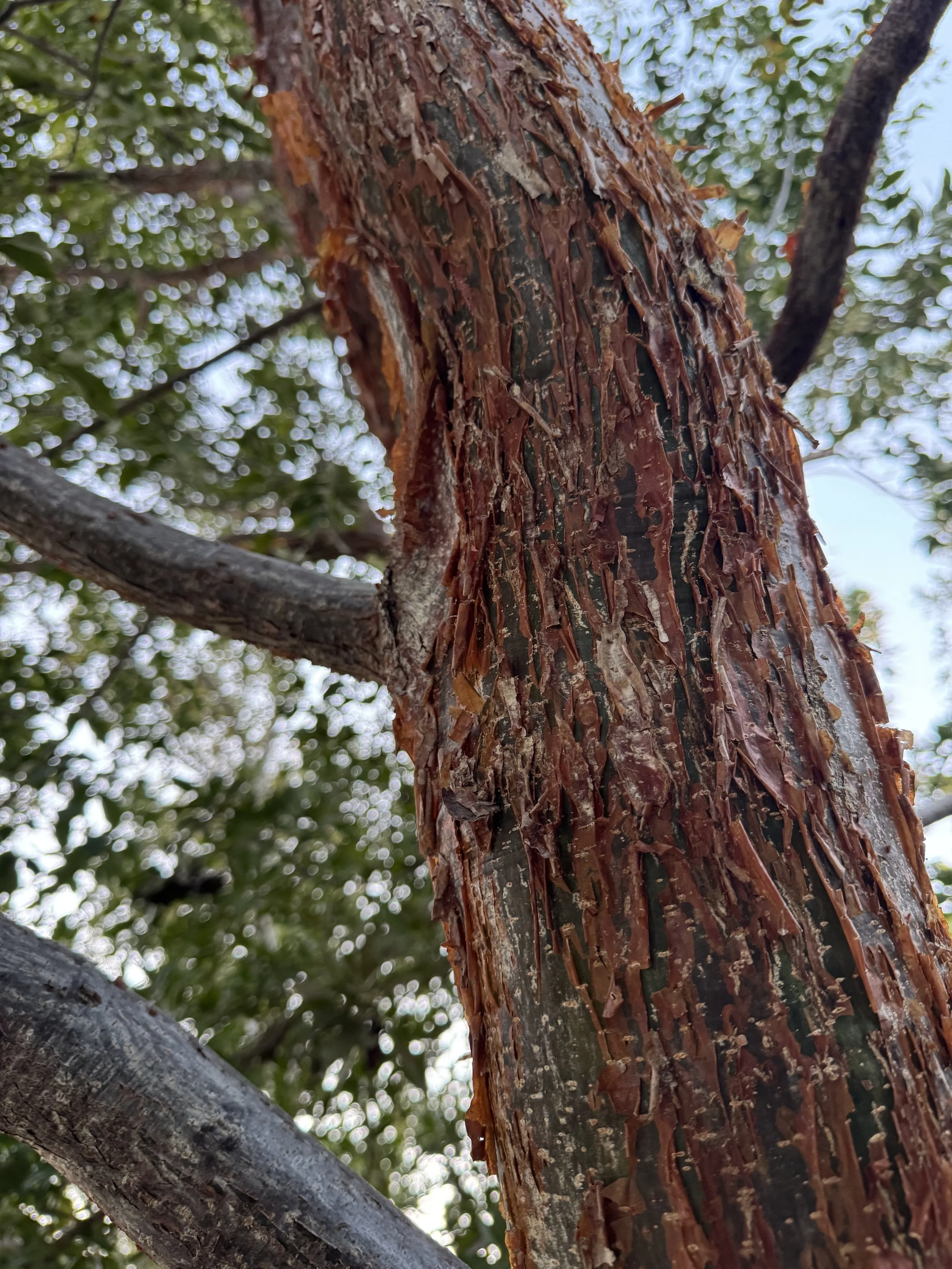
Bursera simaruba
Native semi-deciduous tree. Gumbo Limbos have smooth, red peeling bark that have earned them the nickname “tourist tree”, due to their resemblance to sunburned tourists. For best growth, plant in full sun to partial shade with sandy or rocky soils. They have green leaves that drop but are quickly replaced during dry seasons, and a thick trunk with a wide, rounded canopy, making them a great shade tree. Once established, they are drought and salt-spray tolerant.
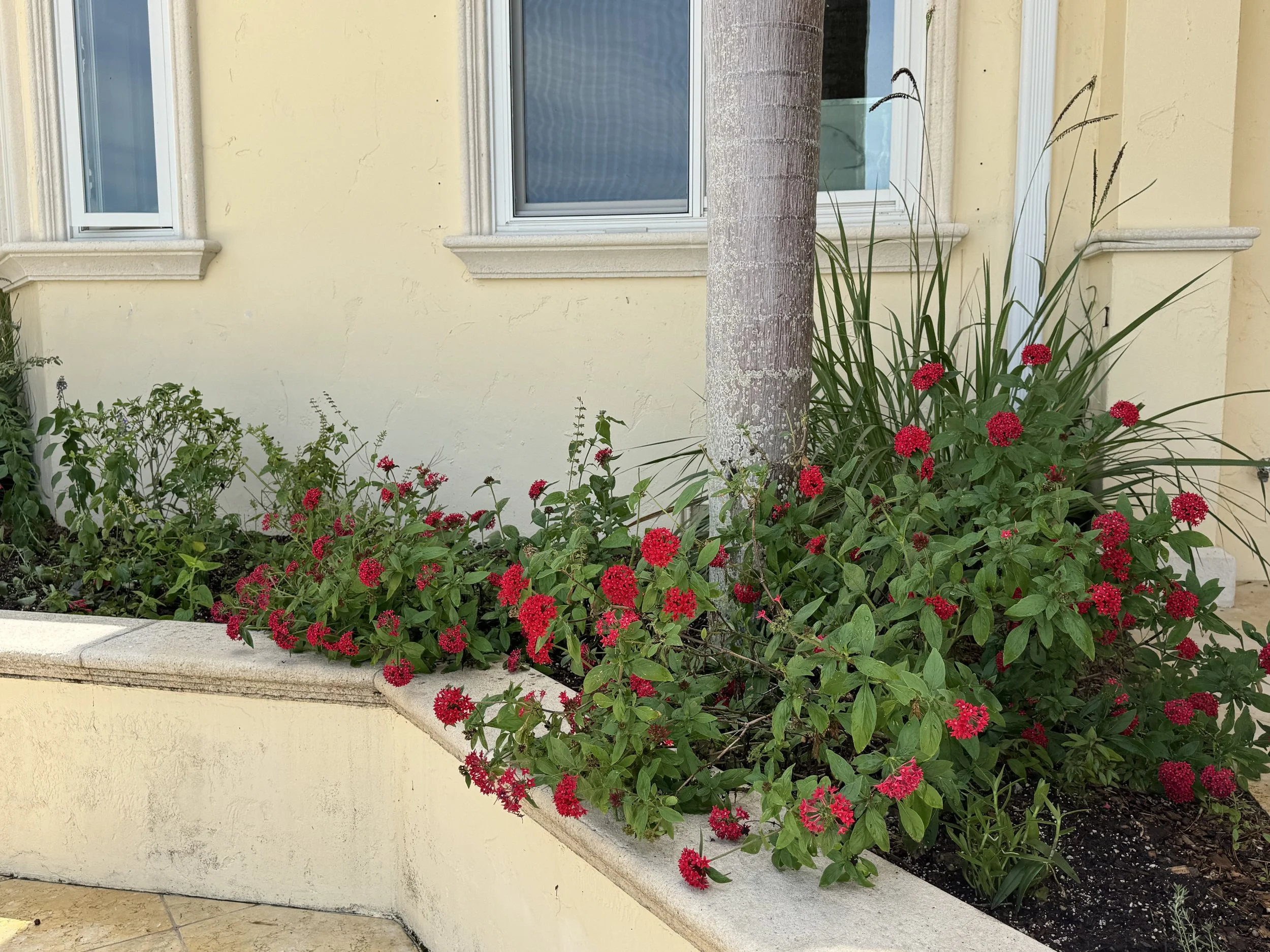
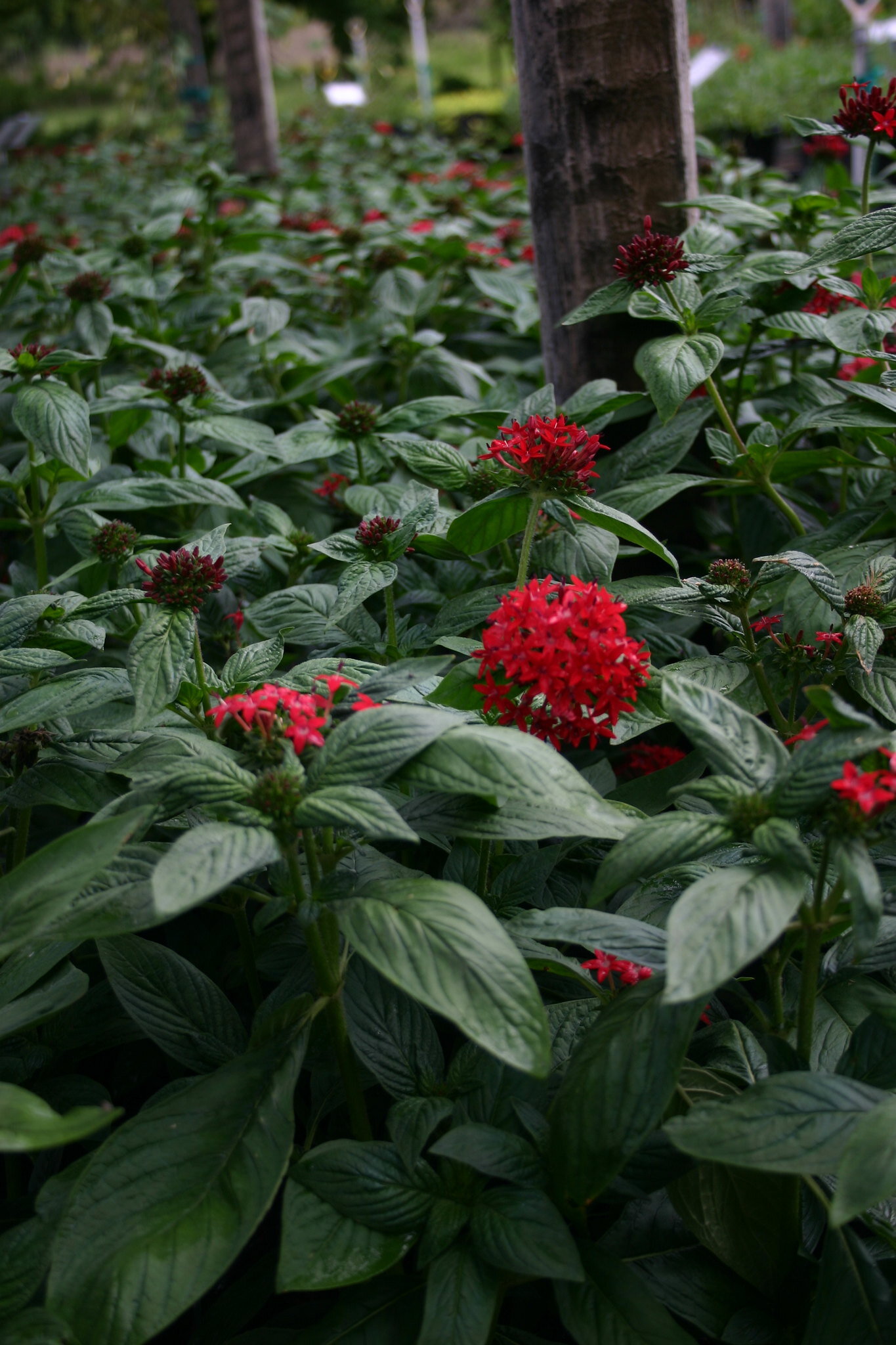
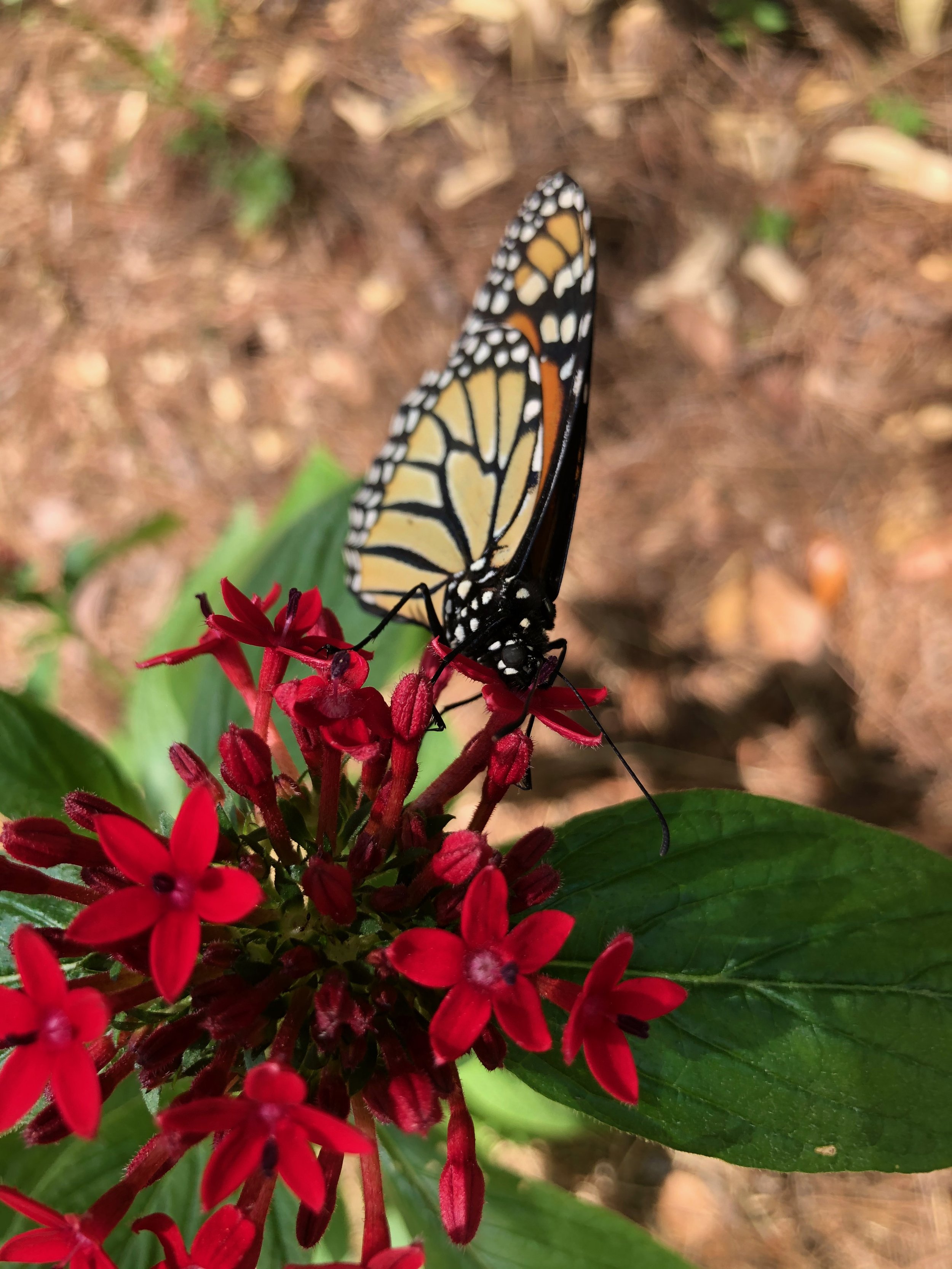
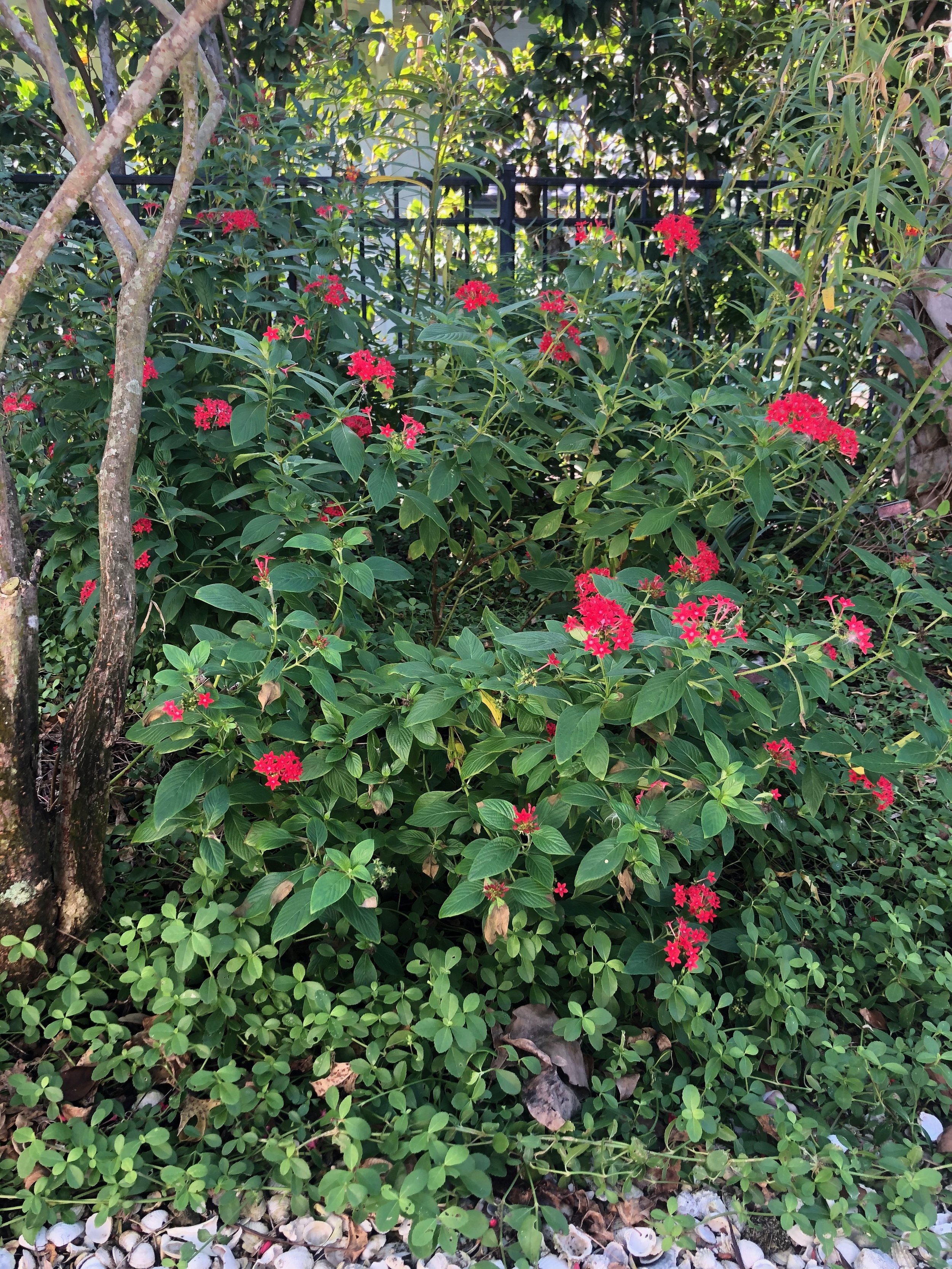
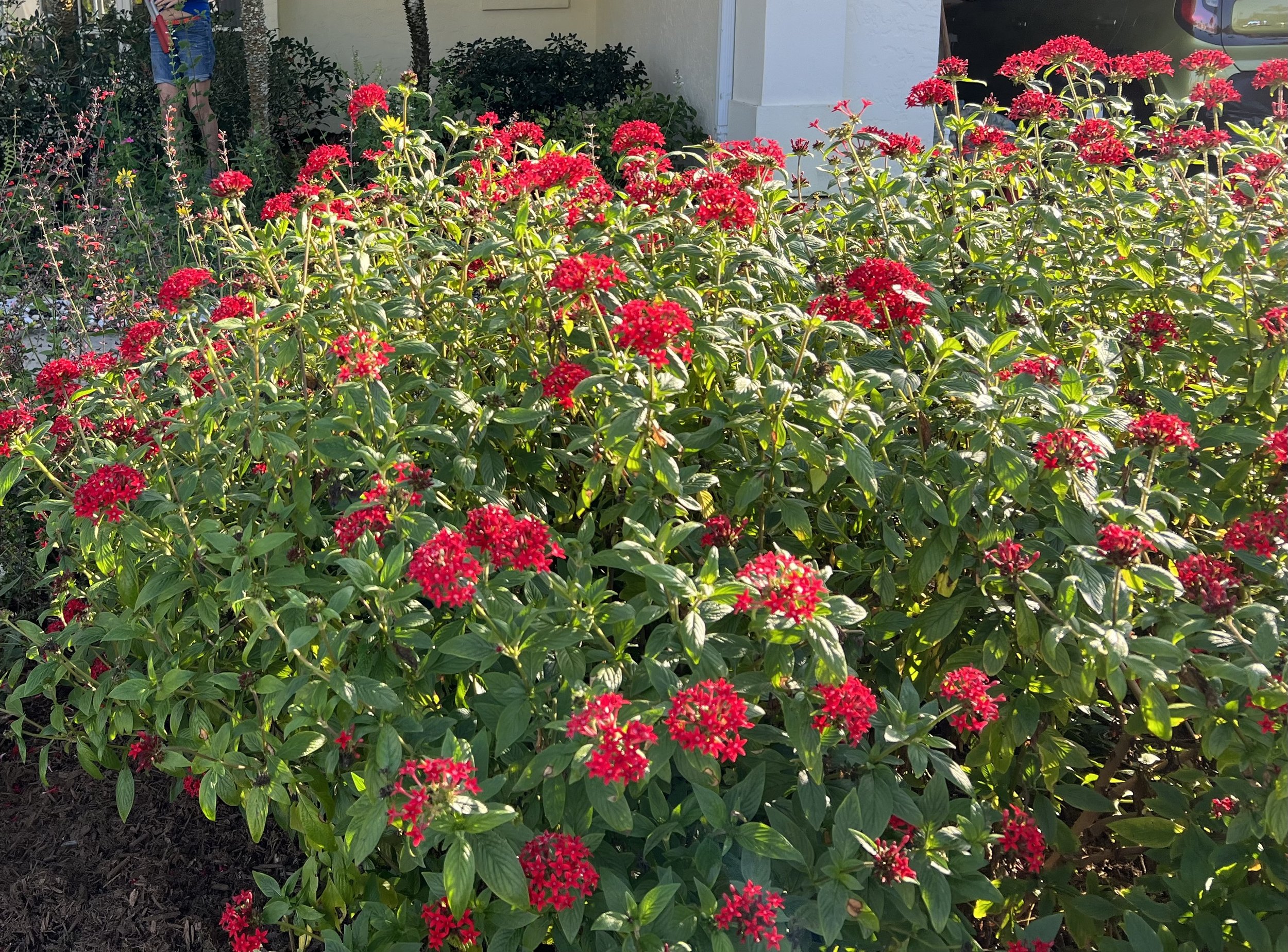
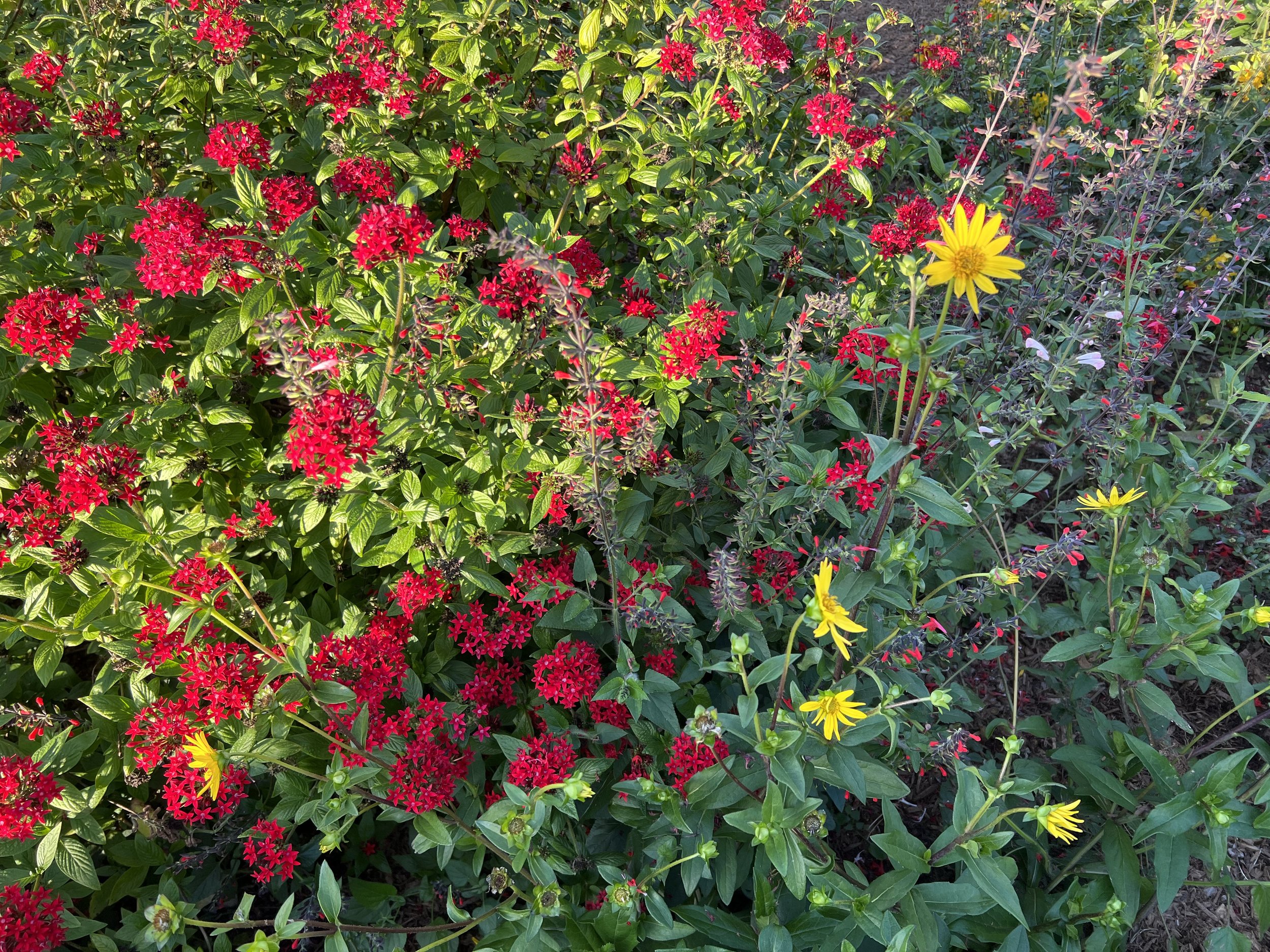

Penta lanceolata ‘Ruby Glow’
Also called “Old-Fashioned Red Penta“ or “Ruby Glow Red Penta” this non-native but Florida-friendly, perennial, evergreen, small flowering shrub is the hardiest of the pentas for Florida gardens. It makes a great addition to a butterfly and pollinator garden as it blooms almost all year (and in the winter months) making it a year-round nectar source year round for many pollinators including Monarch butterflies and hummingbirds. It is adaptable to sun and dry soils but does best in partial shade with average soils. Best planted in groups.
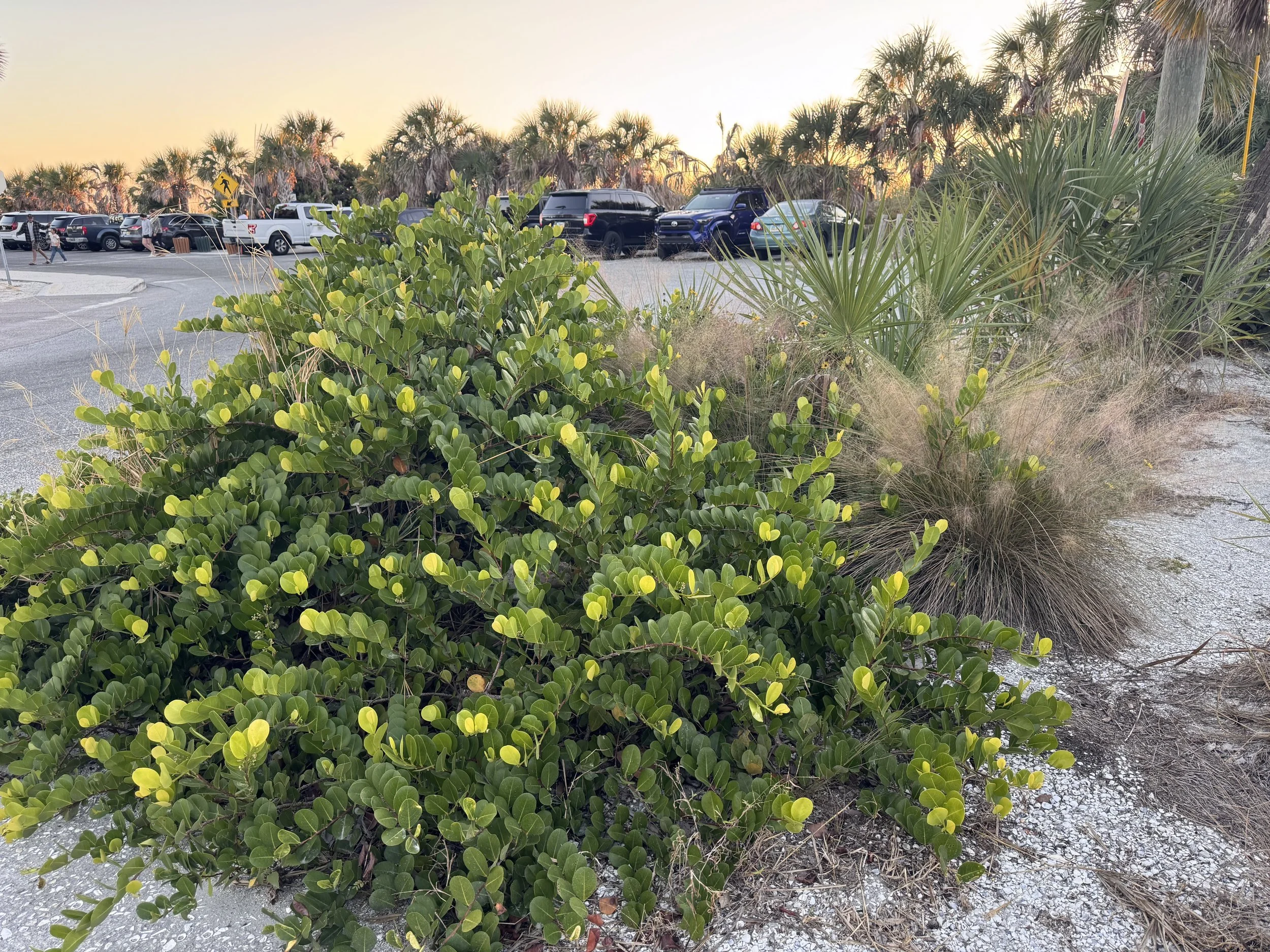
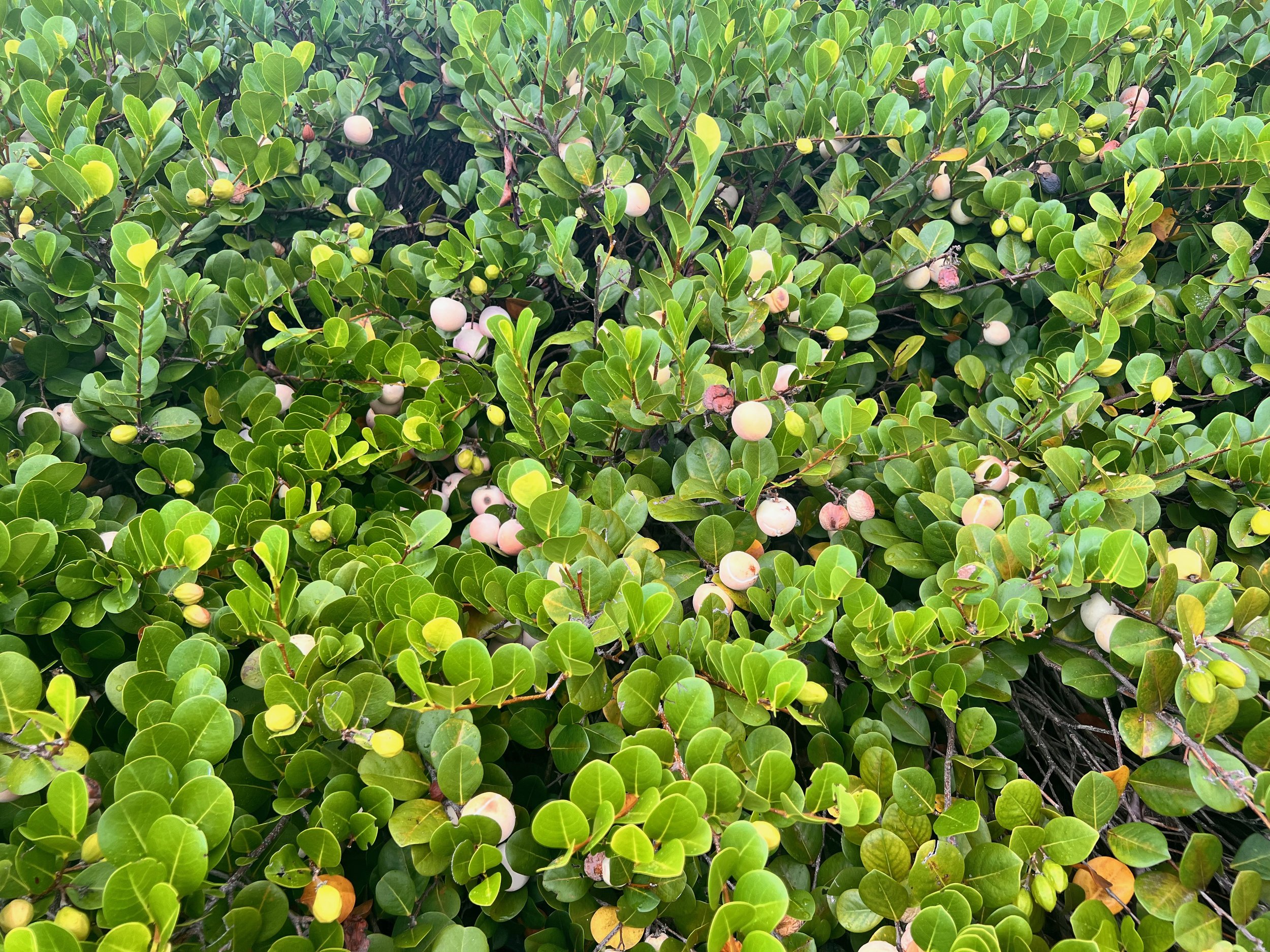
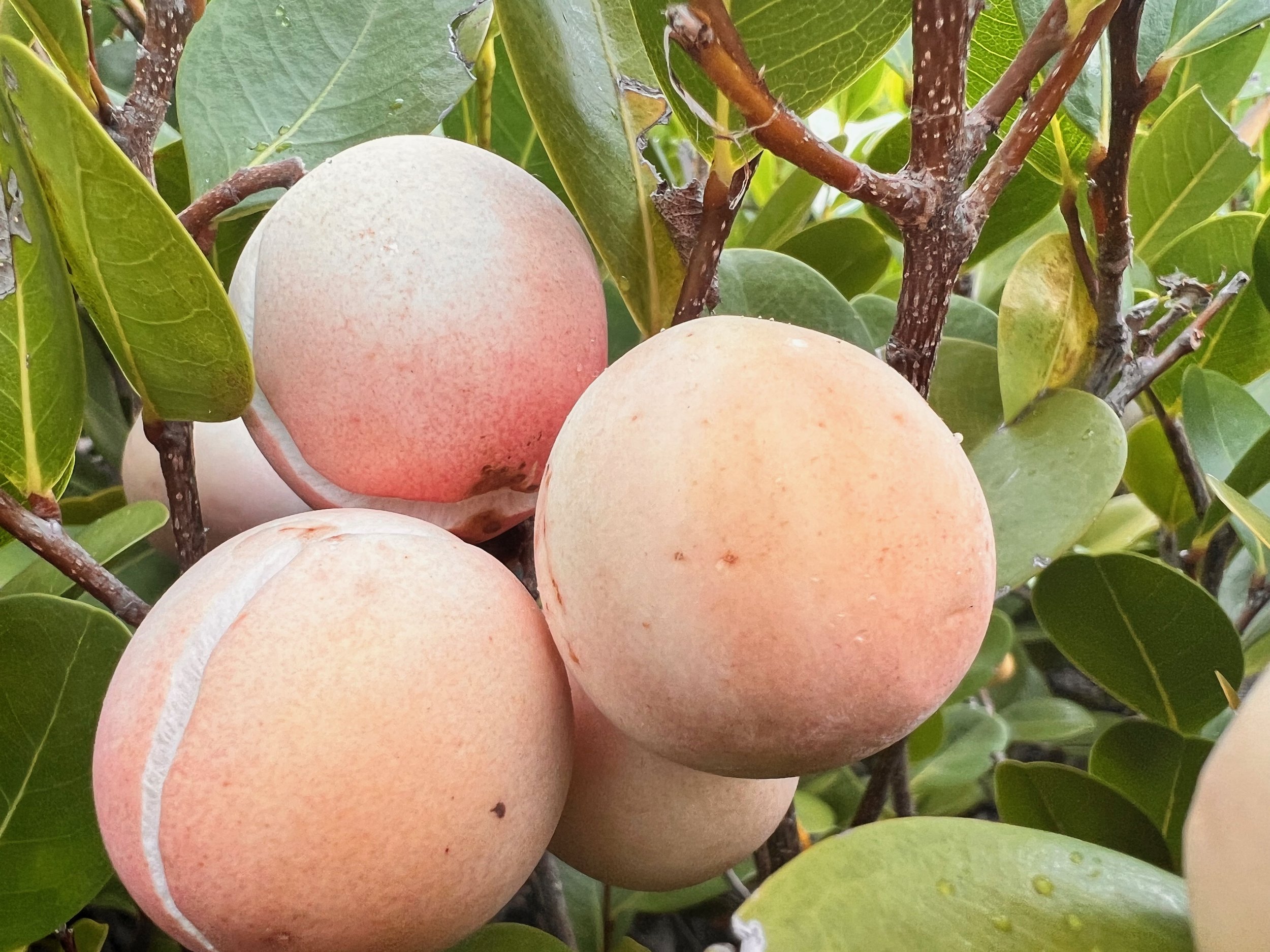
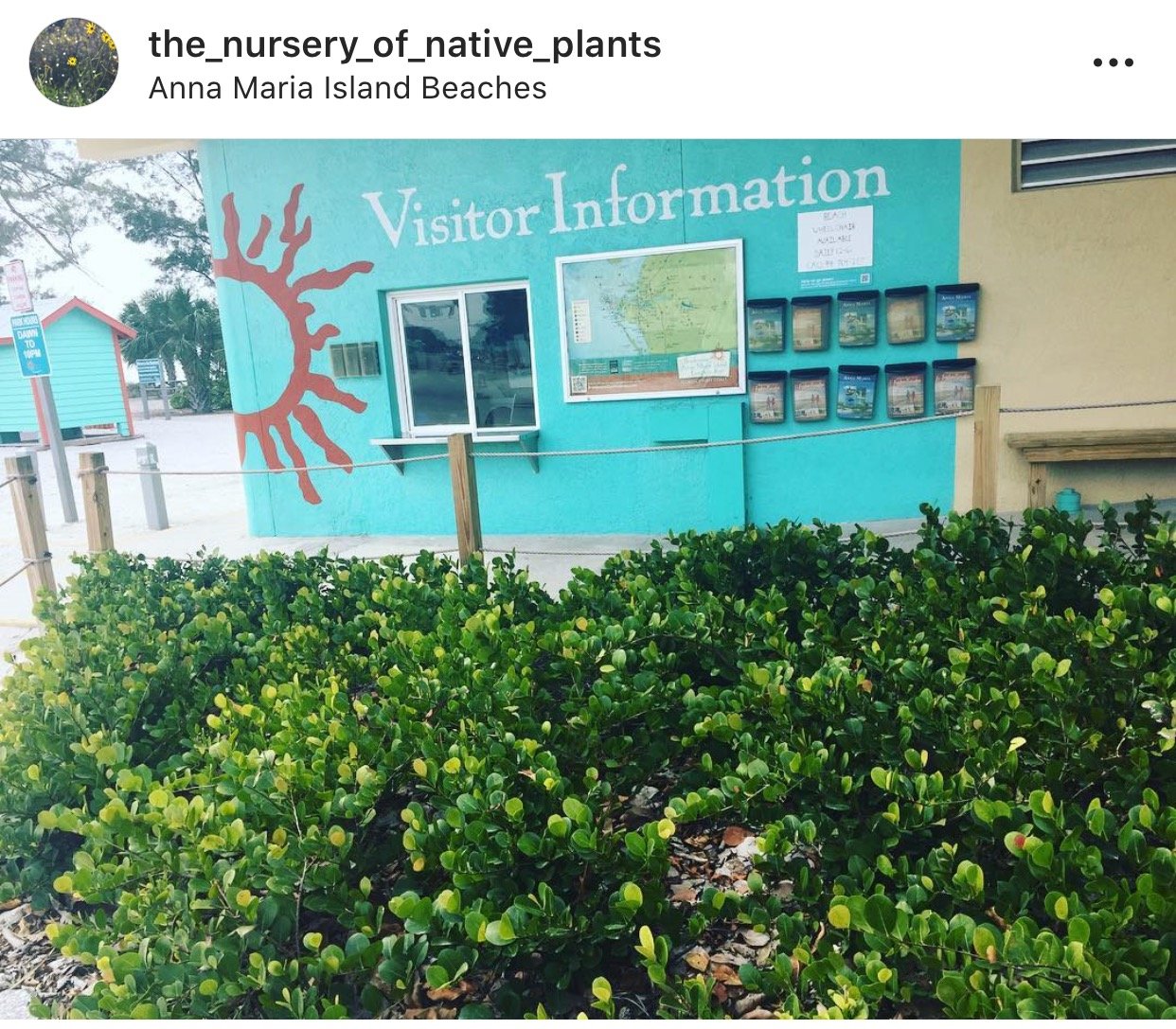
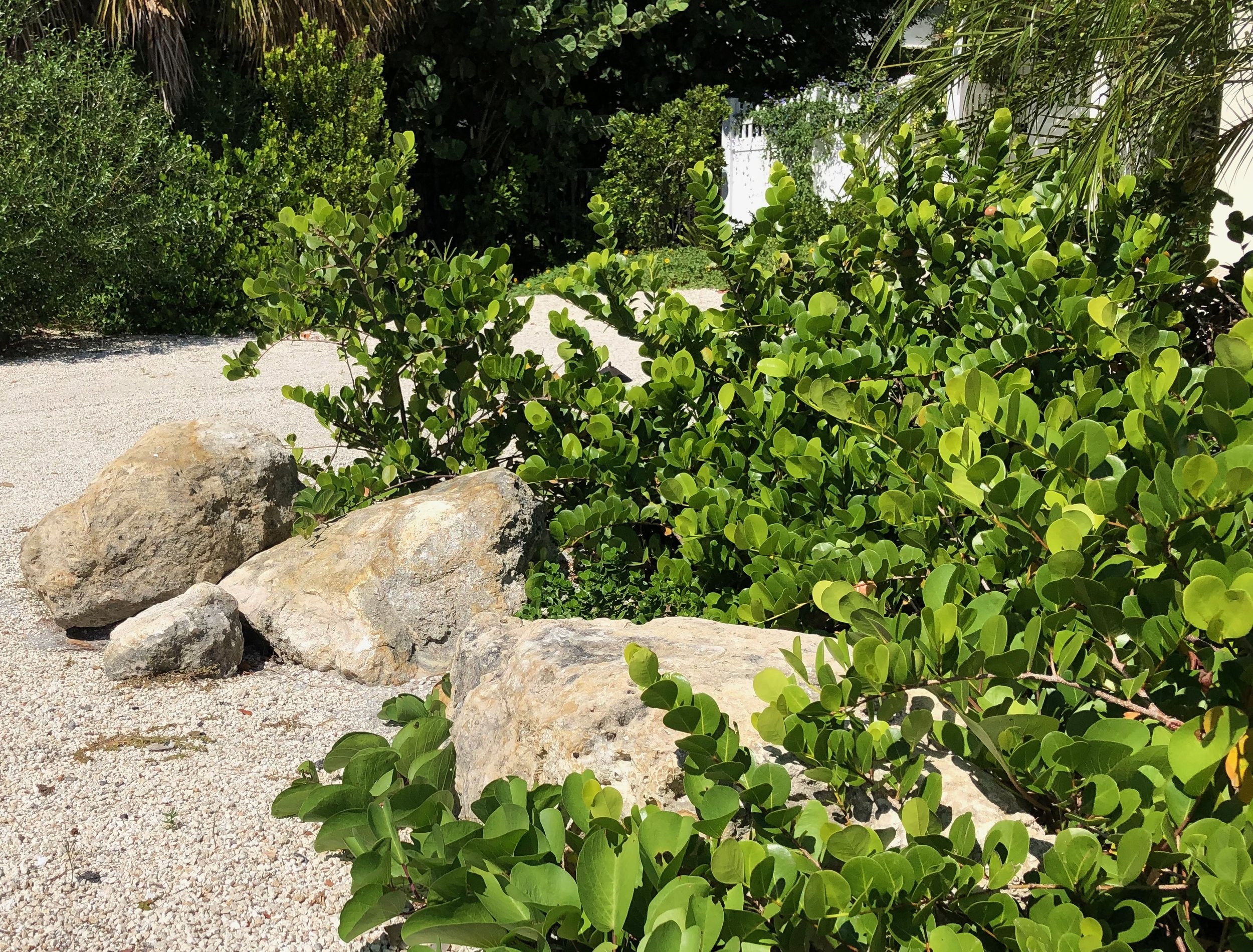
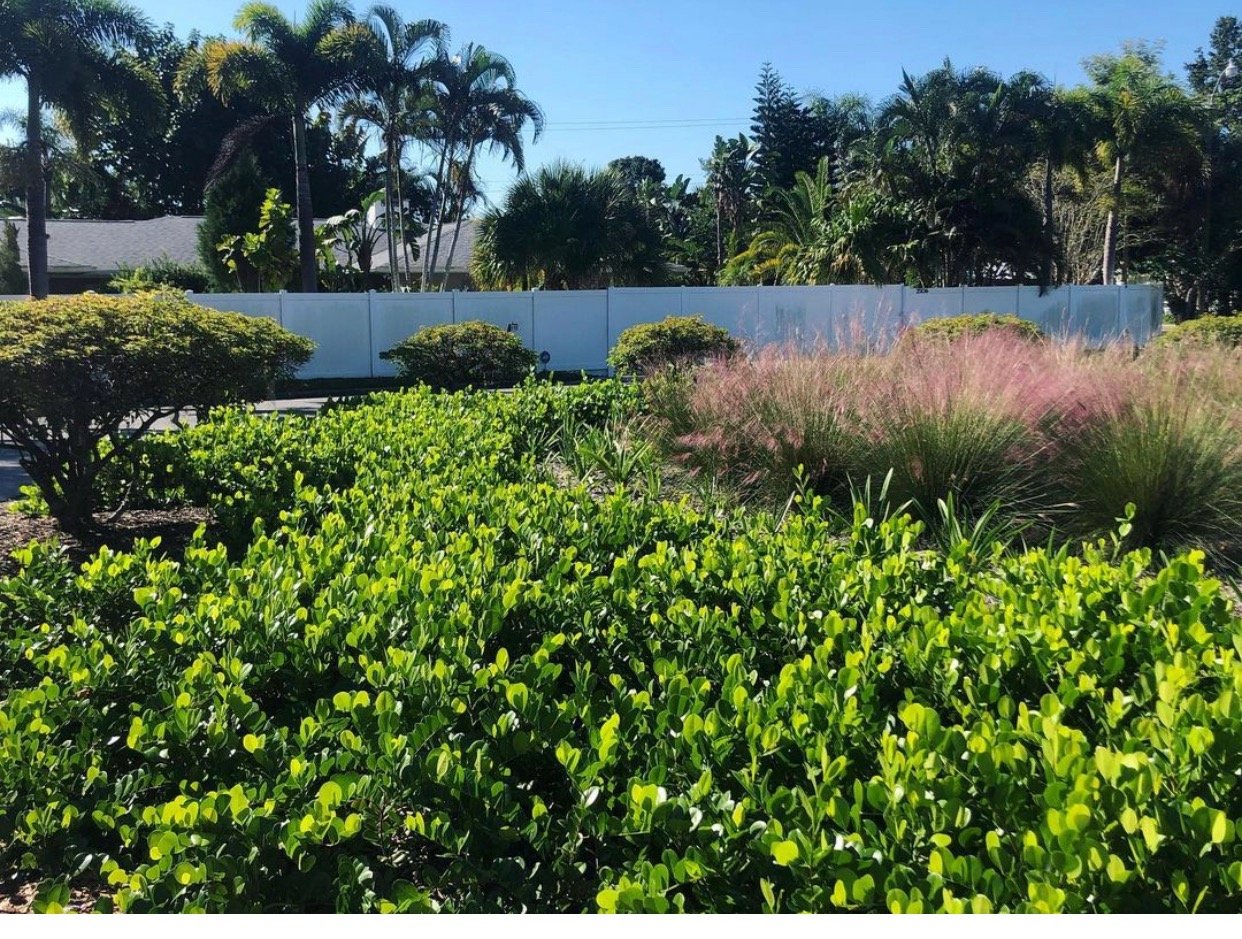
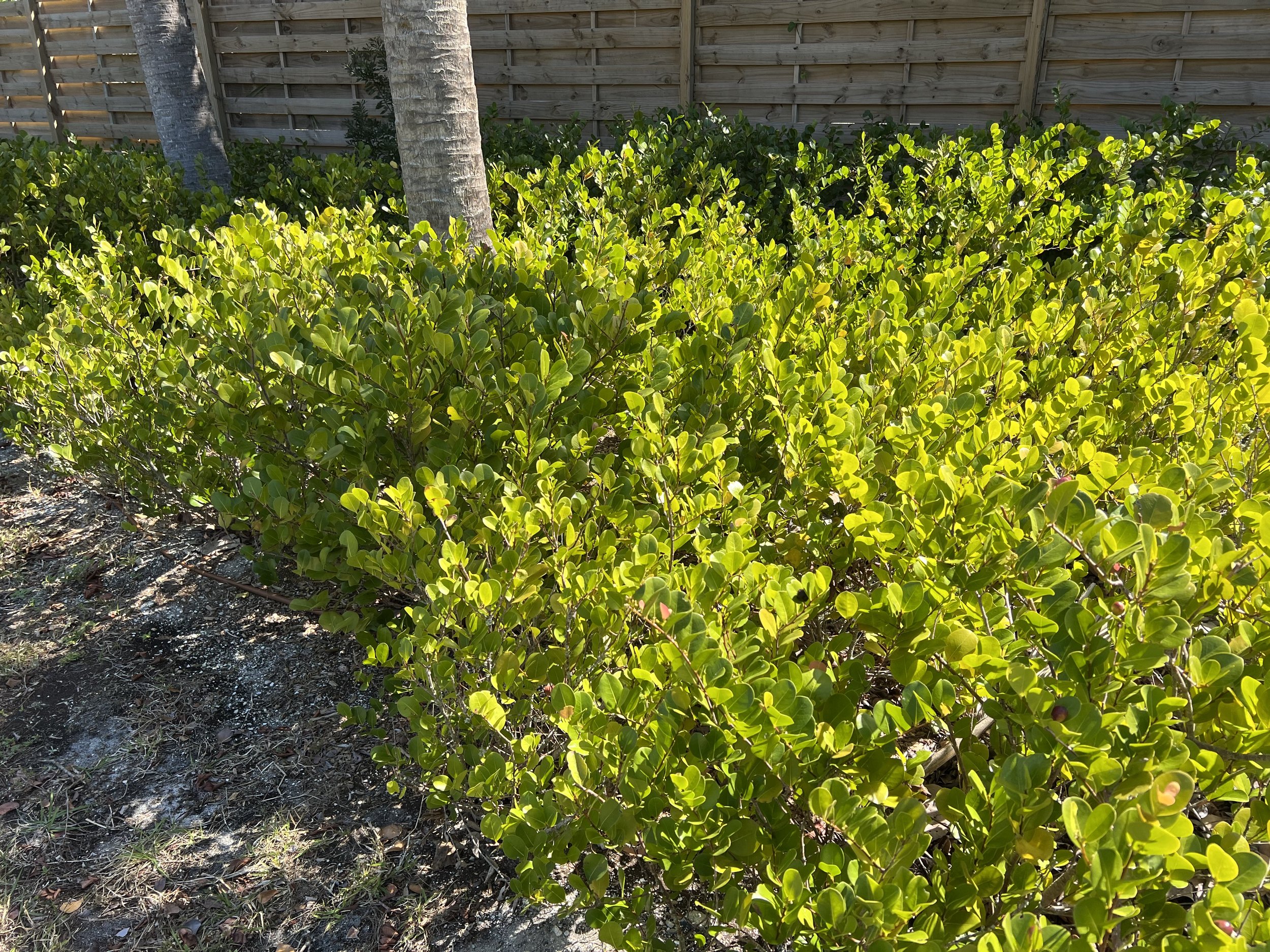
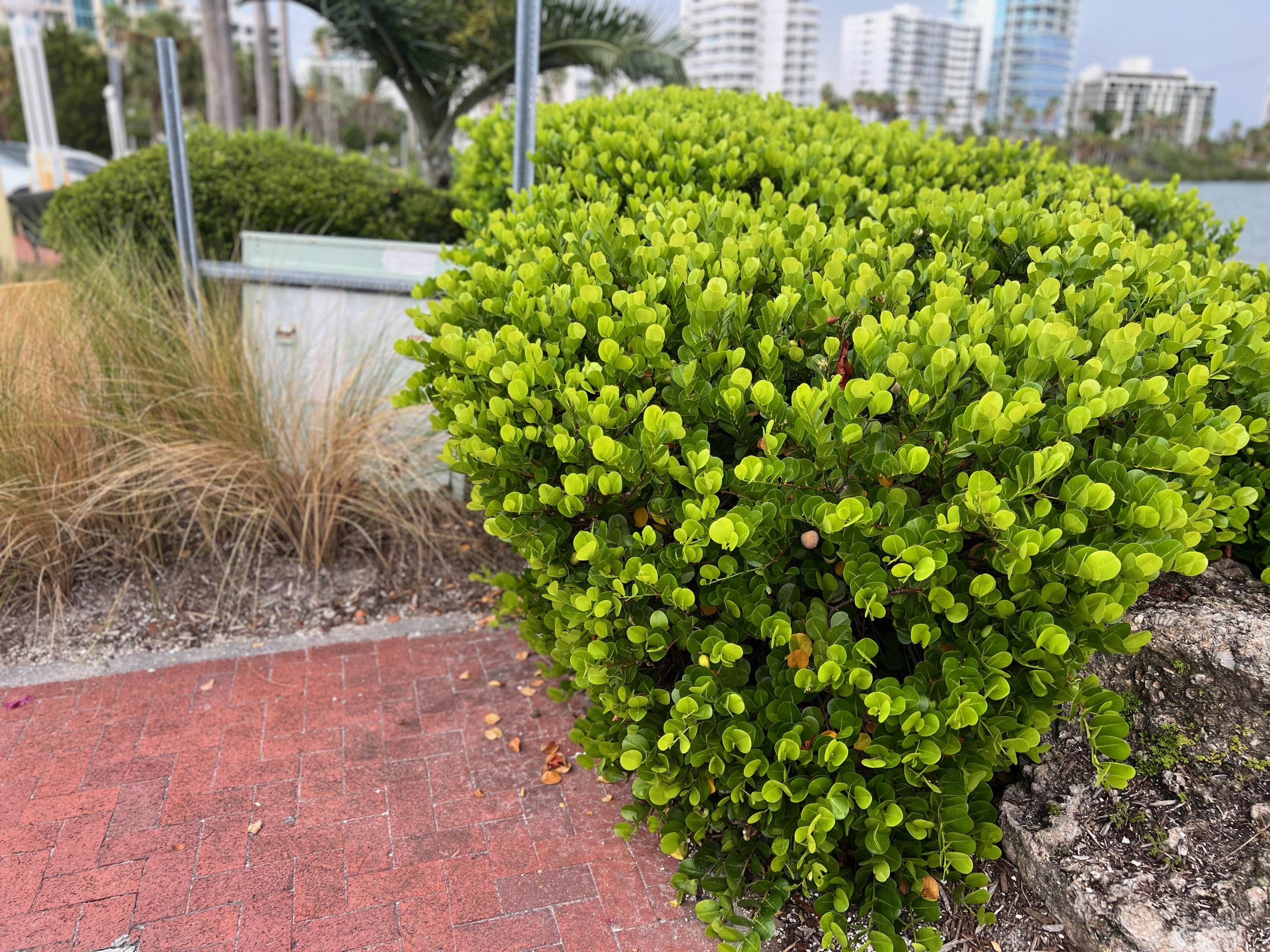
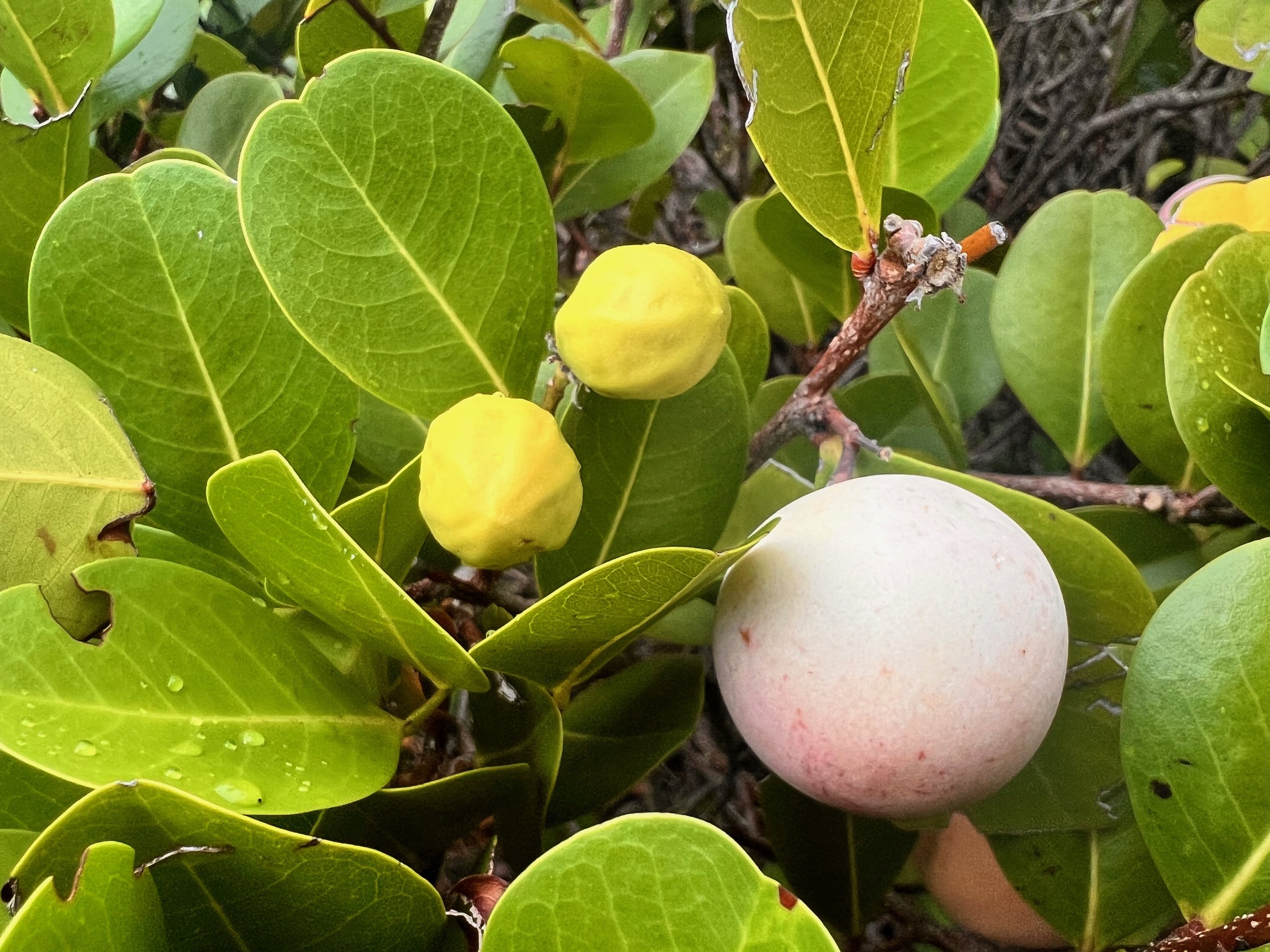
Chrysobalanus icaco var. ‘Horizontal’
Horizontal cocoplum is a lower-growing, sprawling and easily trim-able native relative of the upright red-tipped or green cocoplum. It does well in coastal conditions because it is highly salt-tolerant and can withstand full sun. It has flowers for pollinators and its fruits are edible for birds and people.
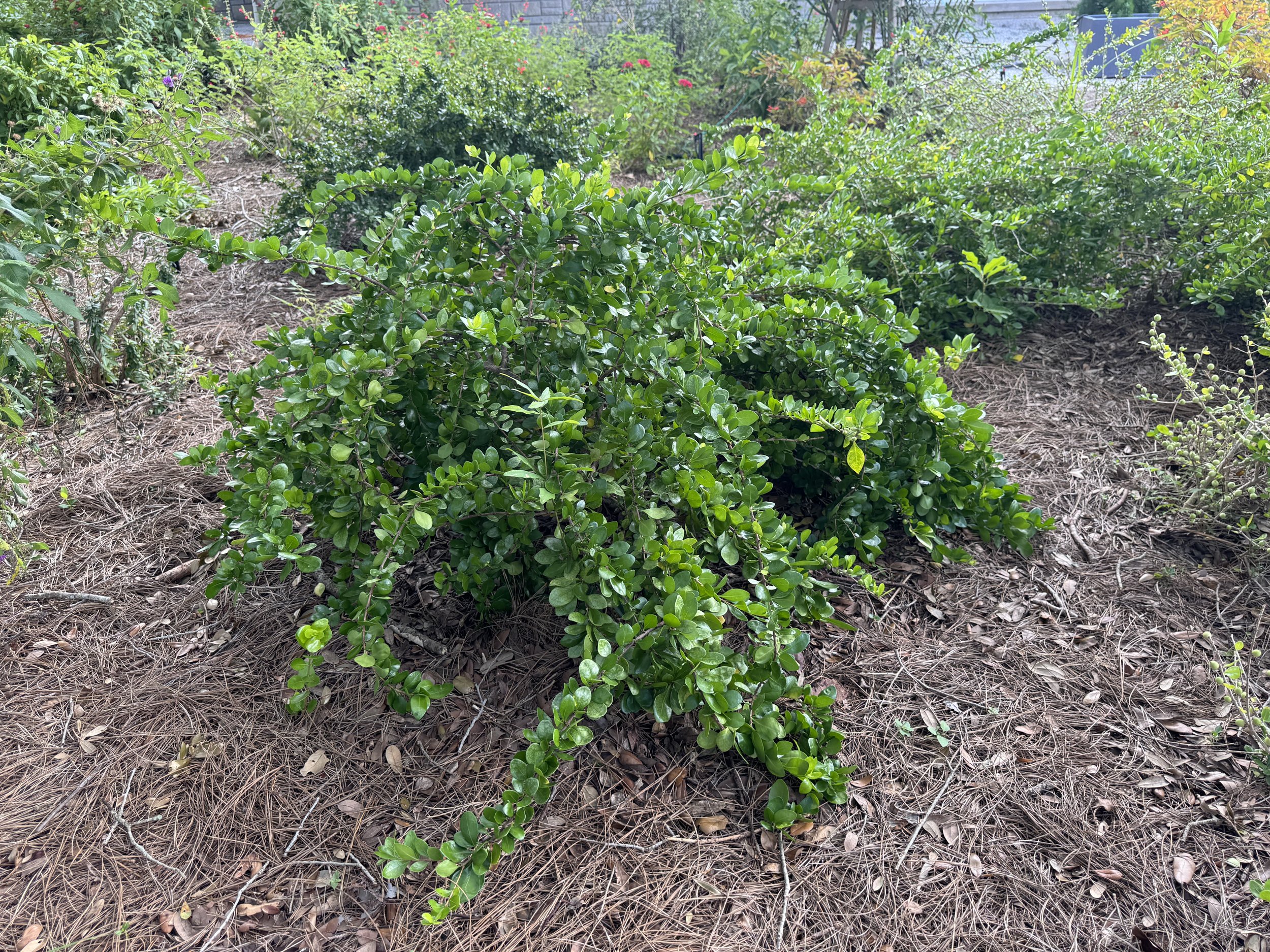
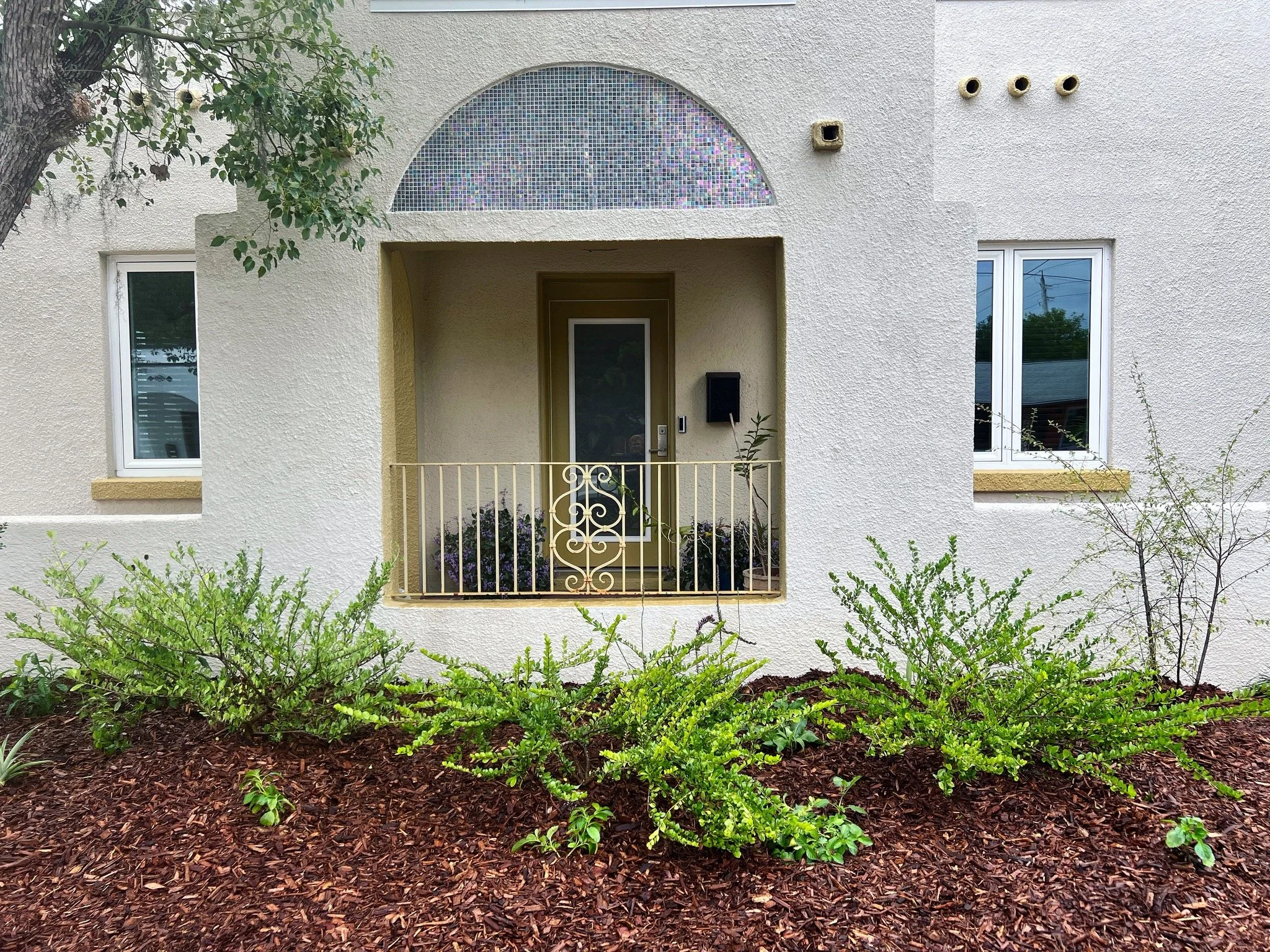
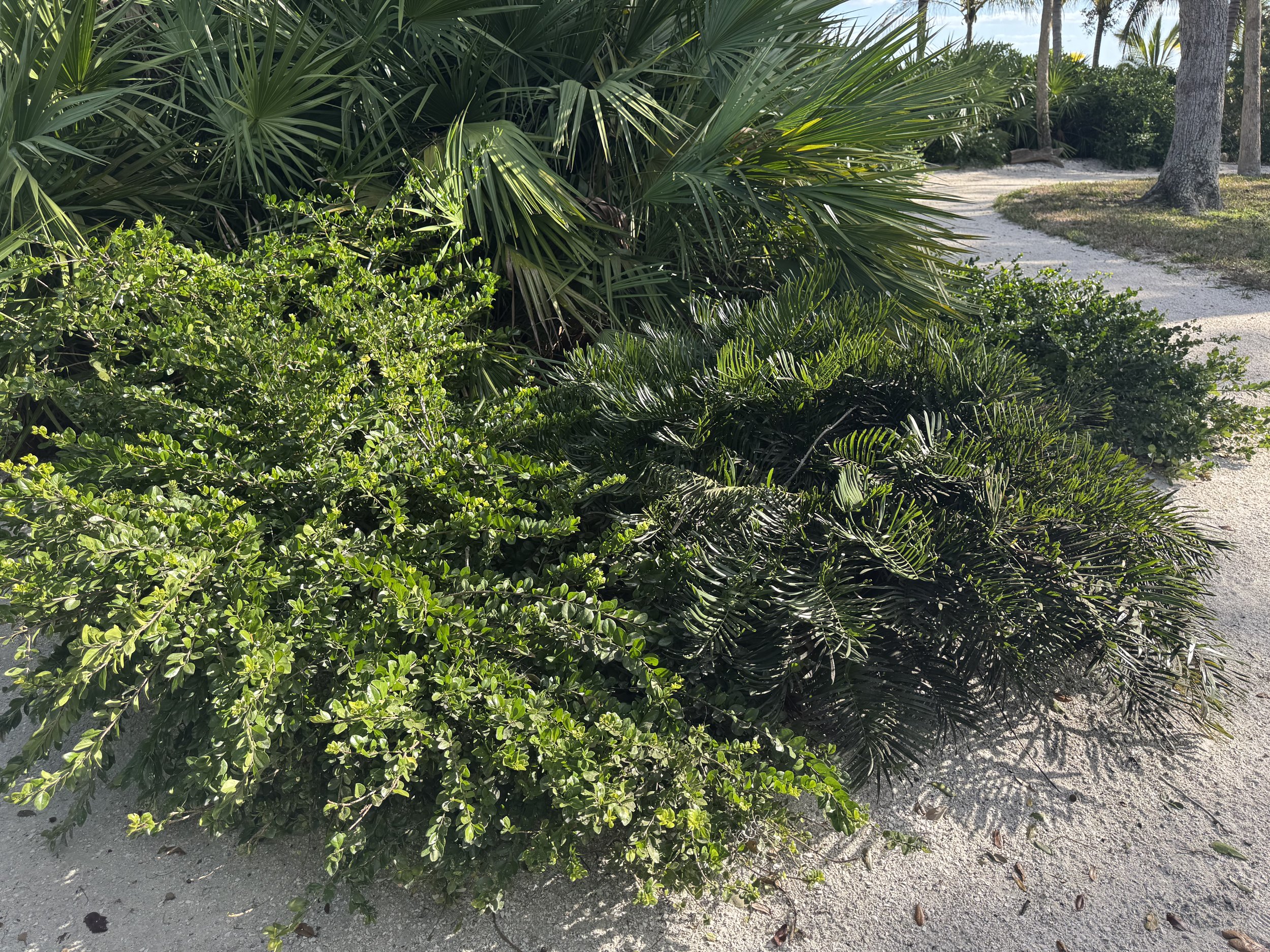
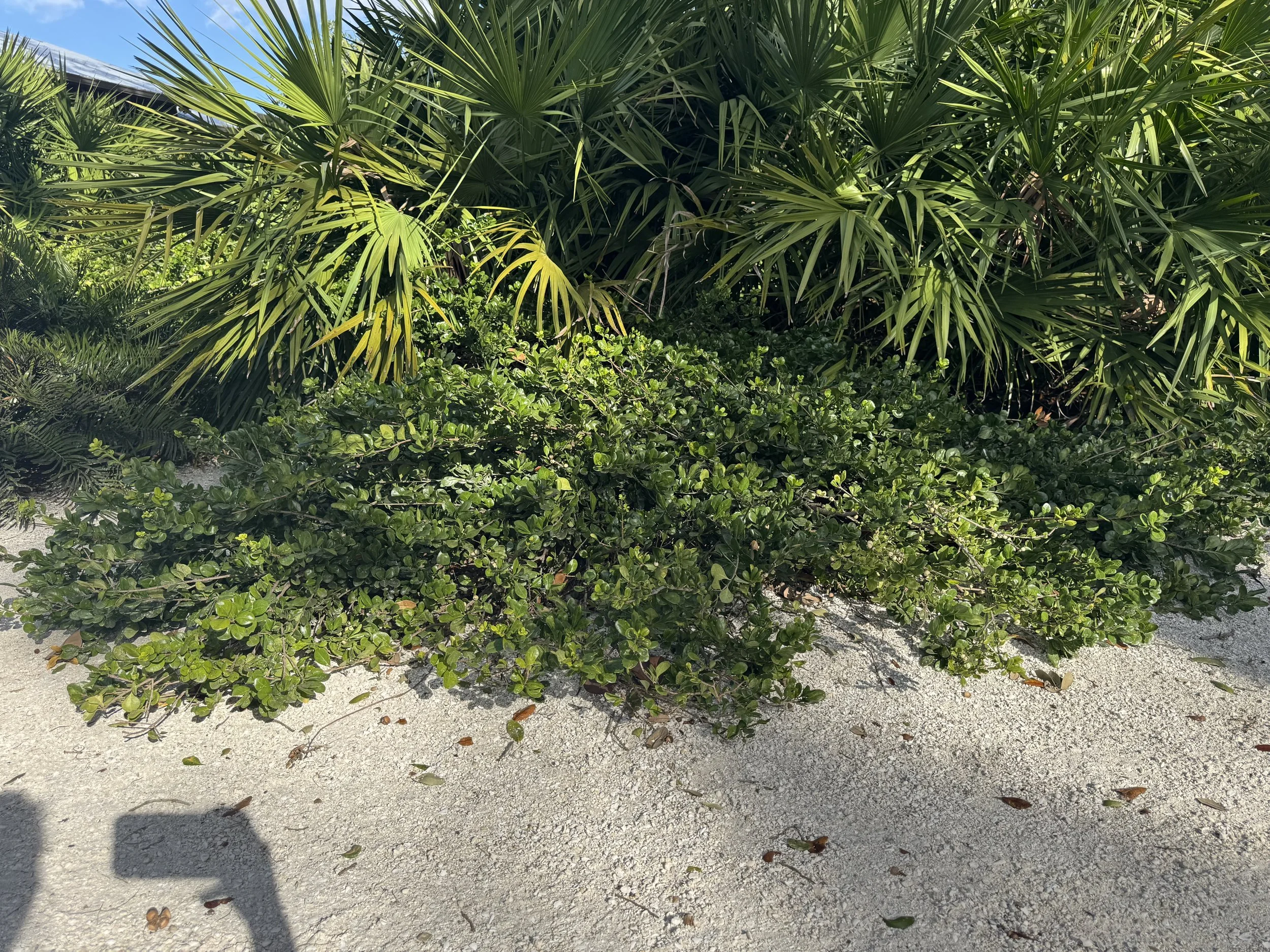
Randia aculeata
Horizontal Indigoberry is a native, evergreen, lower-growing and weeping ecotype of Upright Indigoberry. It makes a beautiful, lush and hardy and low-maintenance layer in a full sun to shade, well drained garden. The small white flowers attract pollinators and the white berries with deep purple centers are a food source for birds.
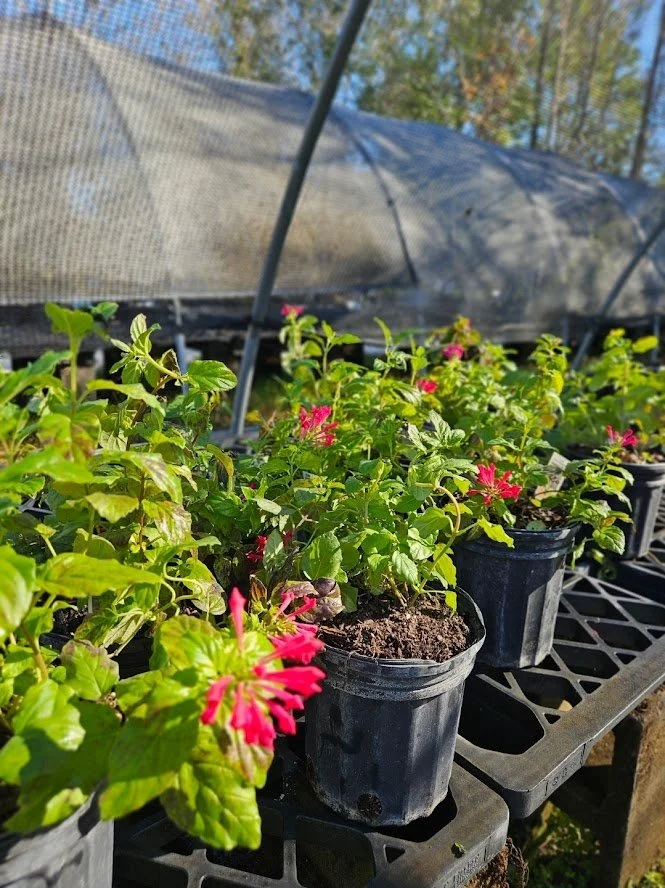
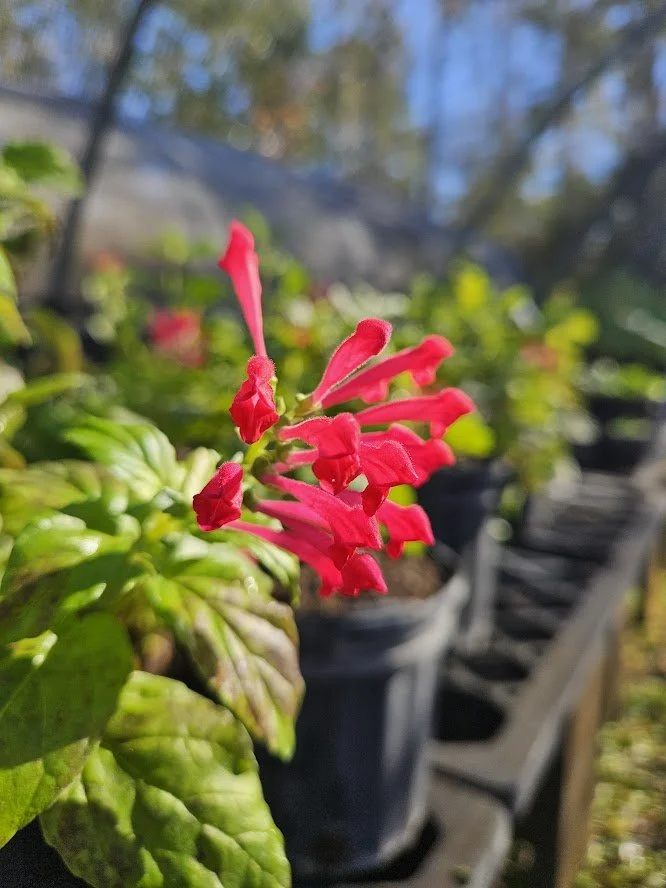
Scutellaria longifolia 'Red Fountains
Hot Pink Skullcap is a perennial wildflower that grows 1-2 ft tall with an upright, branching habit. It produces vibrant hot pink tubular flowers along tall spikes from late spring through summer, creating a stunning display. This hardy native is easy-to-grow and thrives in full sun to partial shade with well-drained to average soil. It attracts hummingbirds, butterflies, and other pollinators while requiring minimal maintenance once established, making it an excellent choice for naturalized gardens and pollinator-friendly landscapes.
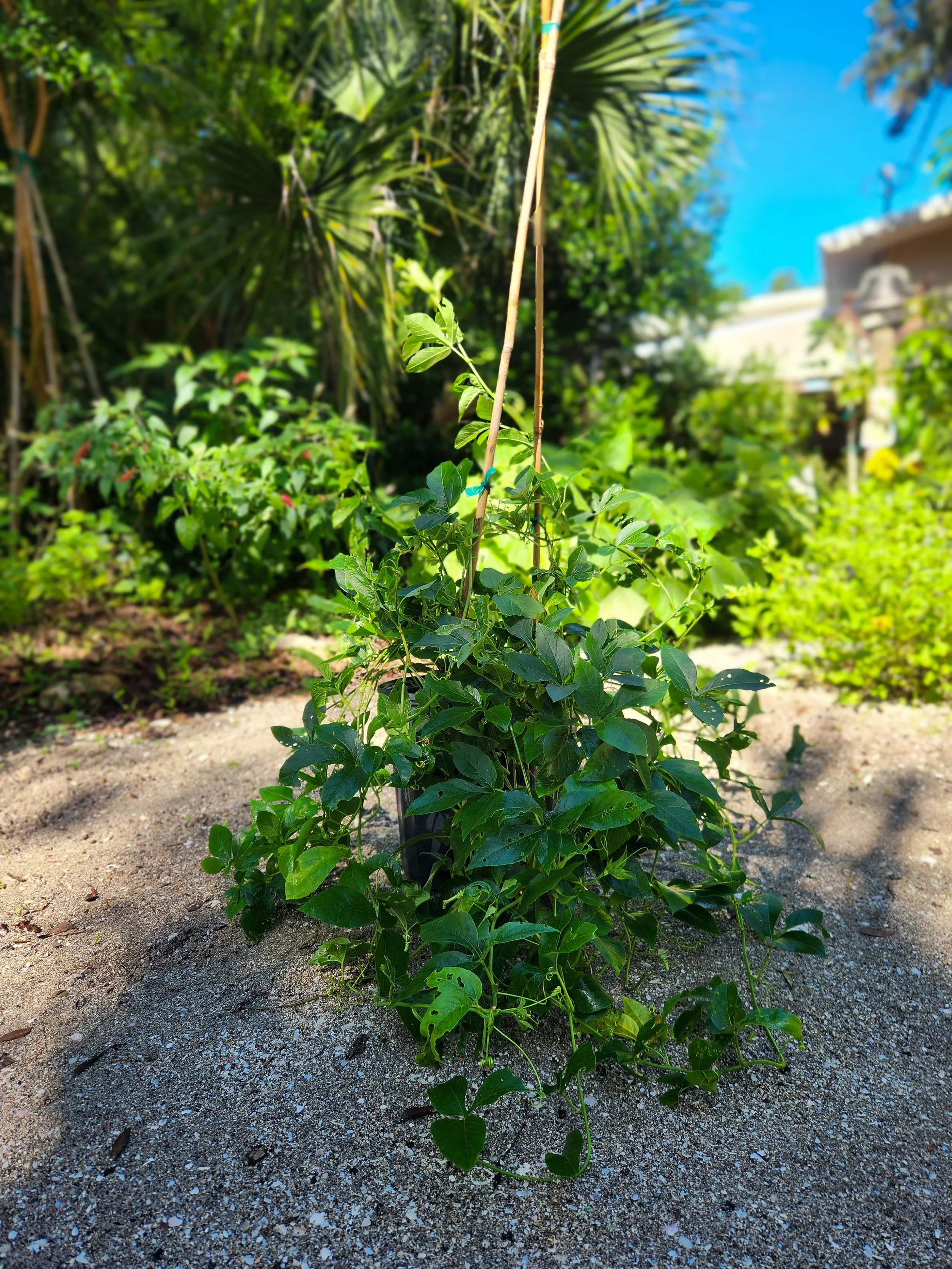
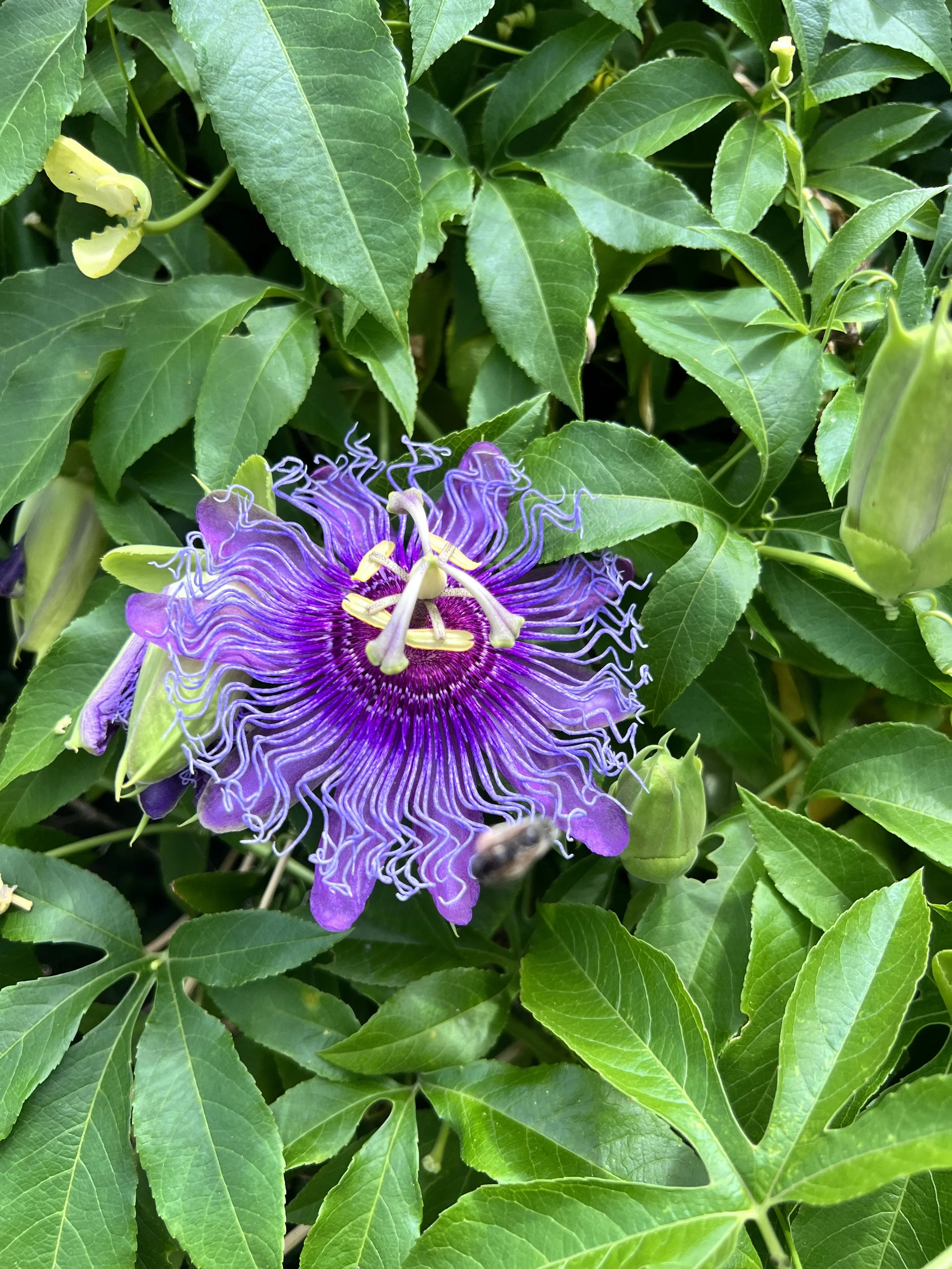
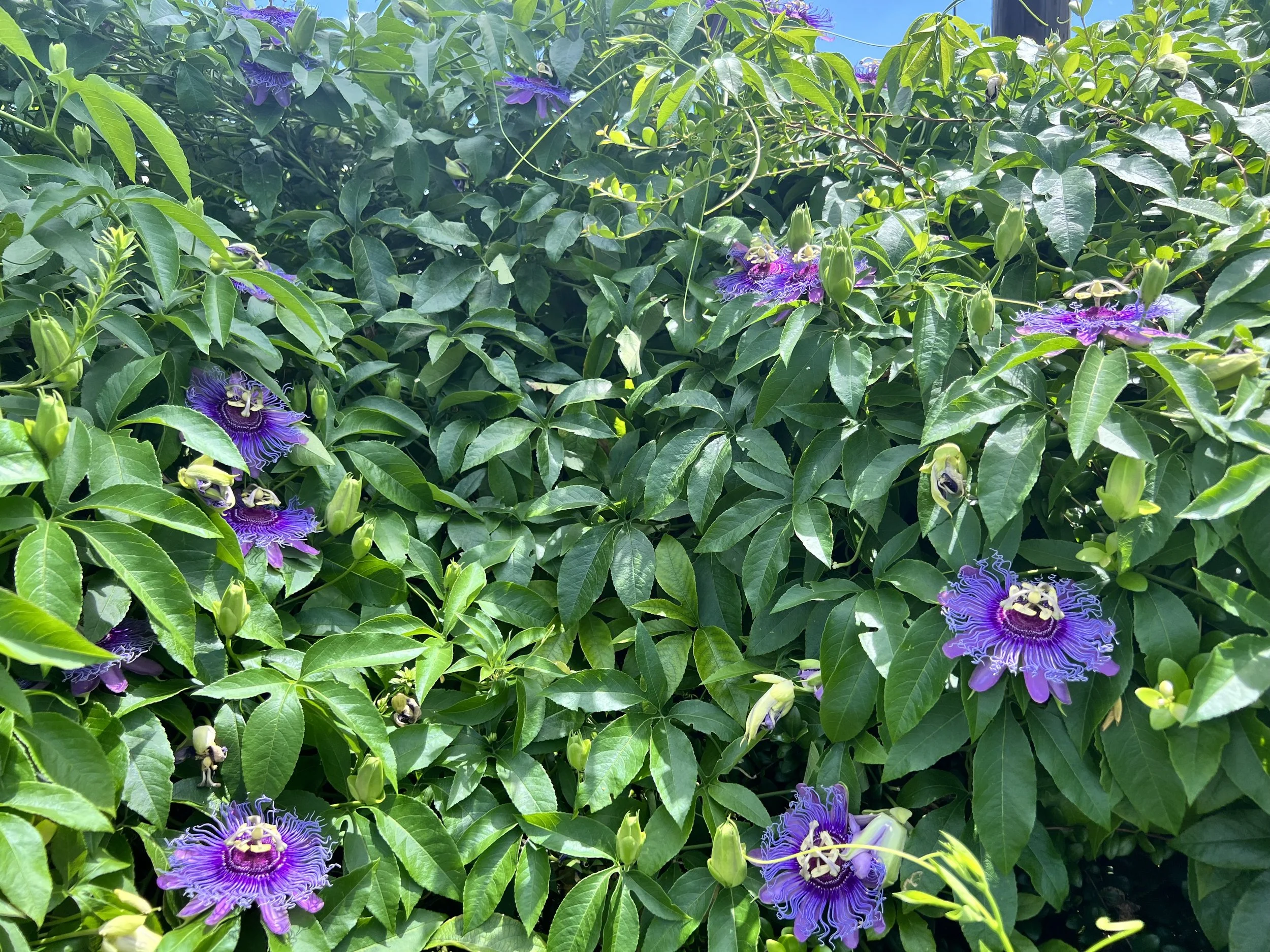
Passiflora 'Incense'
Incense Passionvine is a non-native, Florida-friendly hybrid passionvine that is a cross of the native Maypop Passionvine and a South American variety. They can grow 10’-20’ with support, and do well in full sun to shade, with well-draining, rich organic soil. These vines have dark green leaves and beautiful, fragrant blooms that bring in butterflies and pollinators. They also serve as a larval hot for Gulf Fritillary, Zebra Longwing, and Julia butterflies.
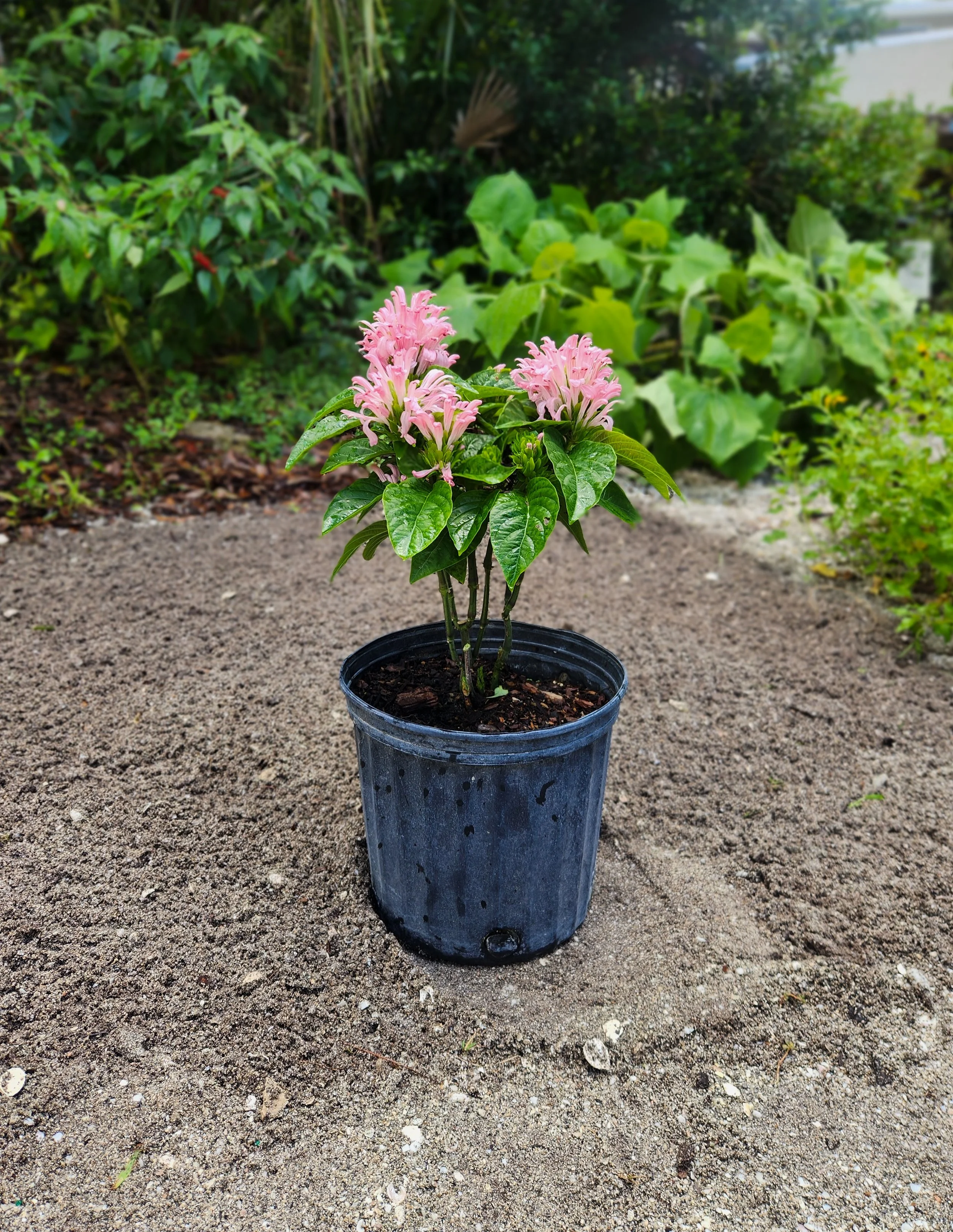
Justicia carnea
Jacobinia is a non-native, Florida-friendly perennial shrub with showy pink blooms and dark green leaves. It grows to be about 4’ tall with a 2’ spread. This plant thrives in shade and requires rich, moist, well-draining soil. The pink flowers are great for attracting butterflies and hummingbirds!
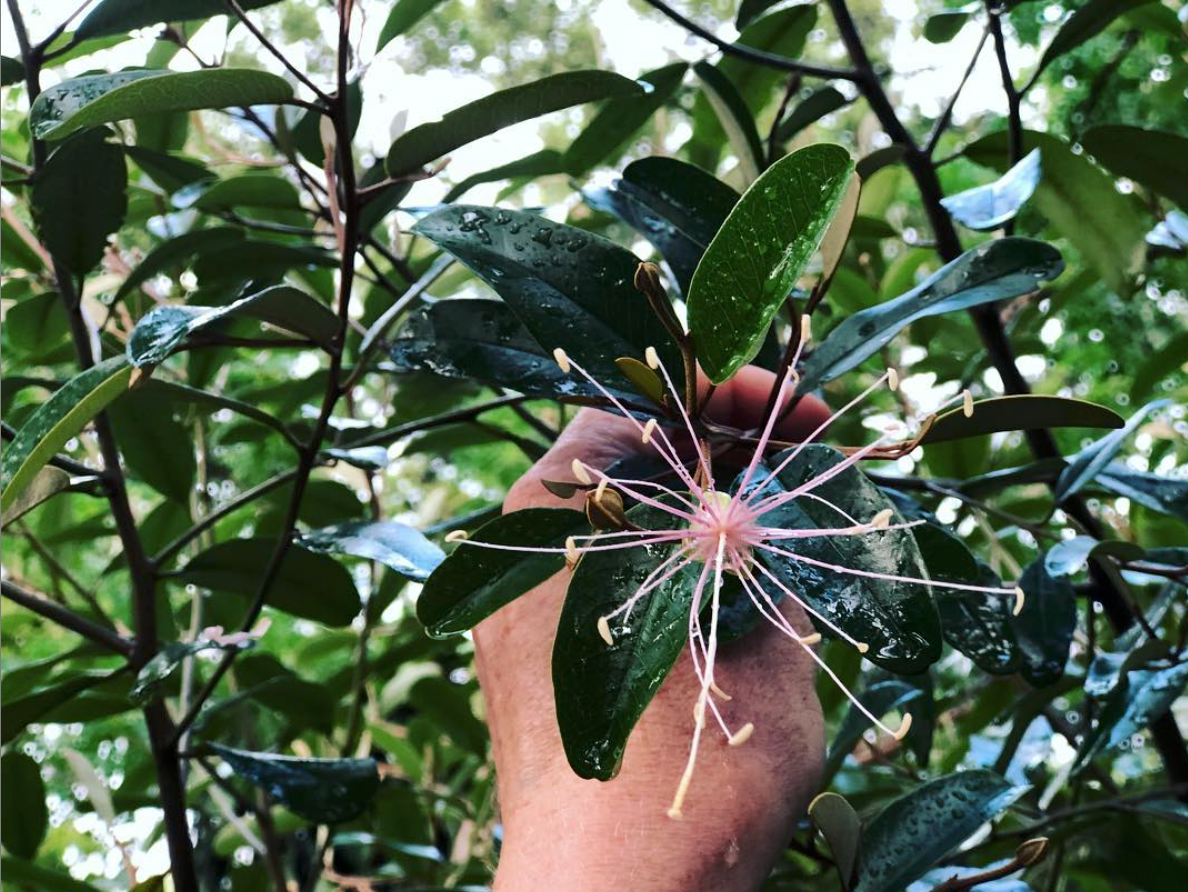

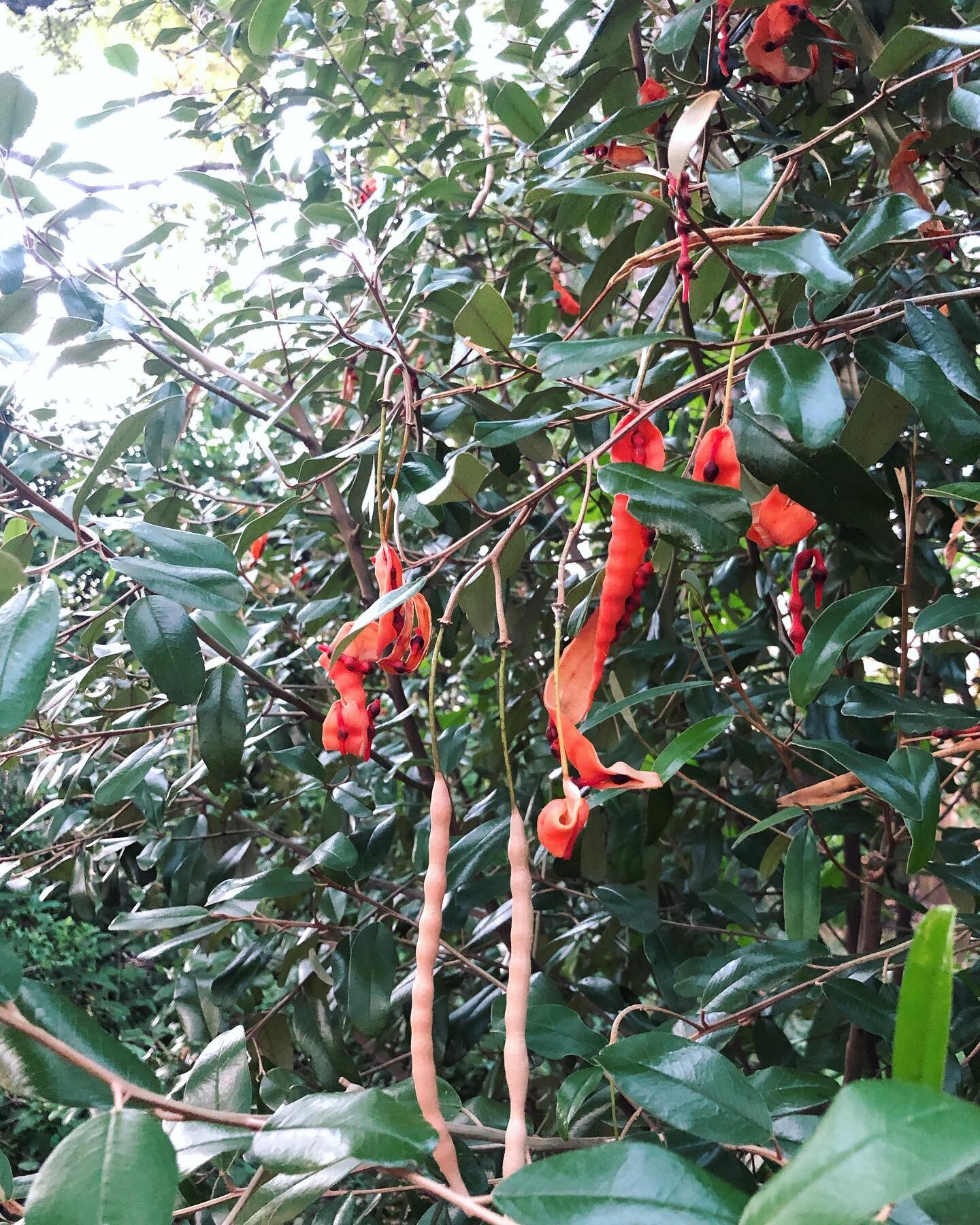
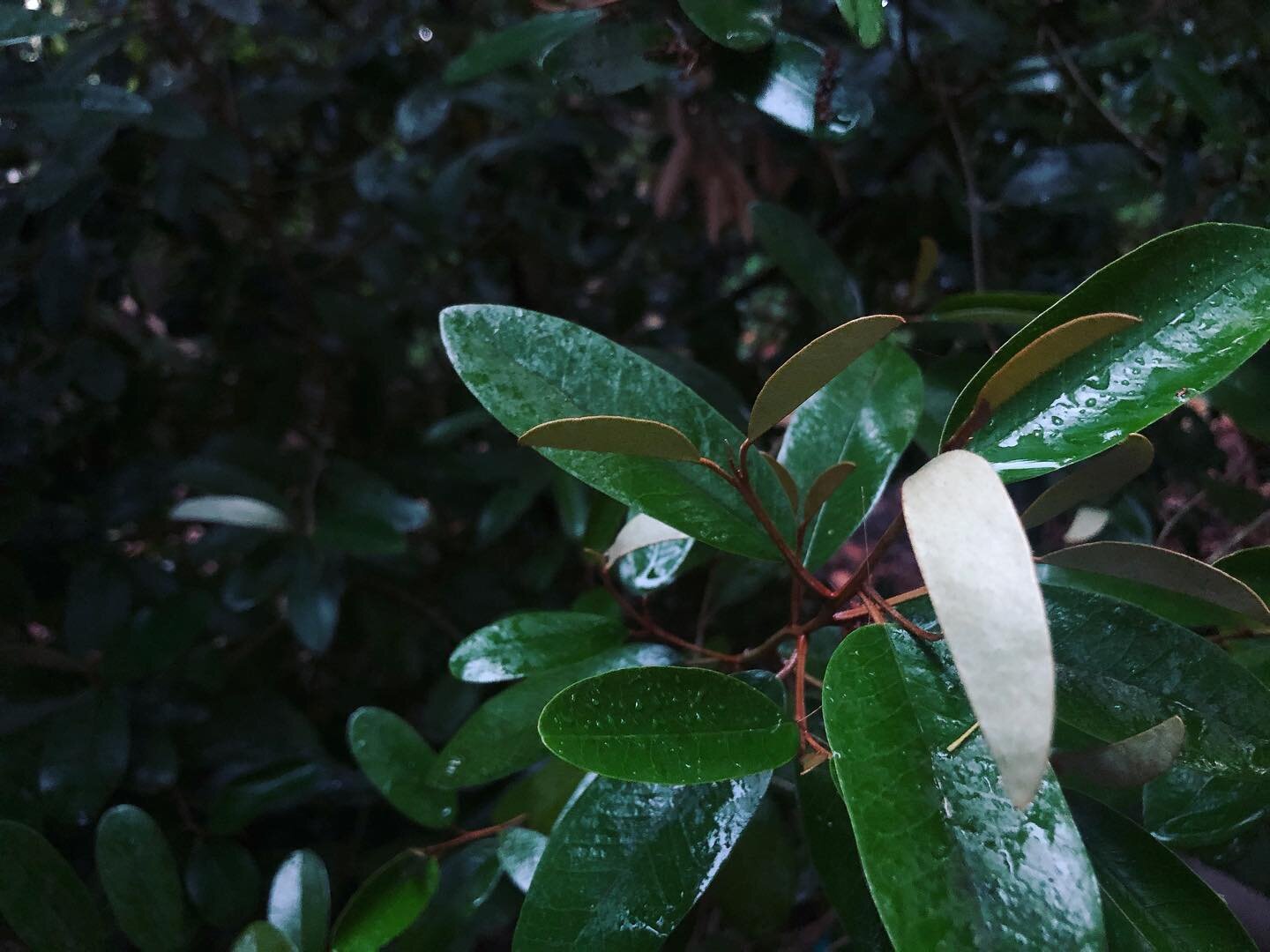
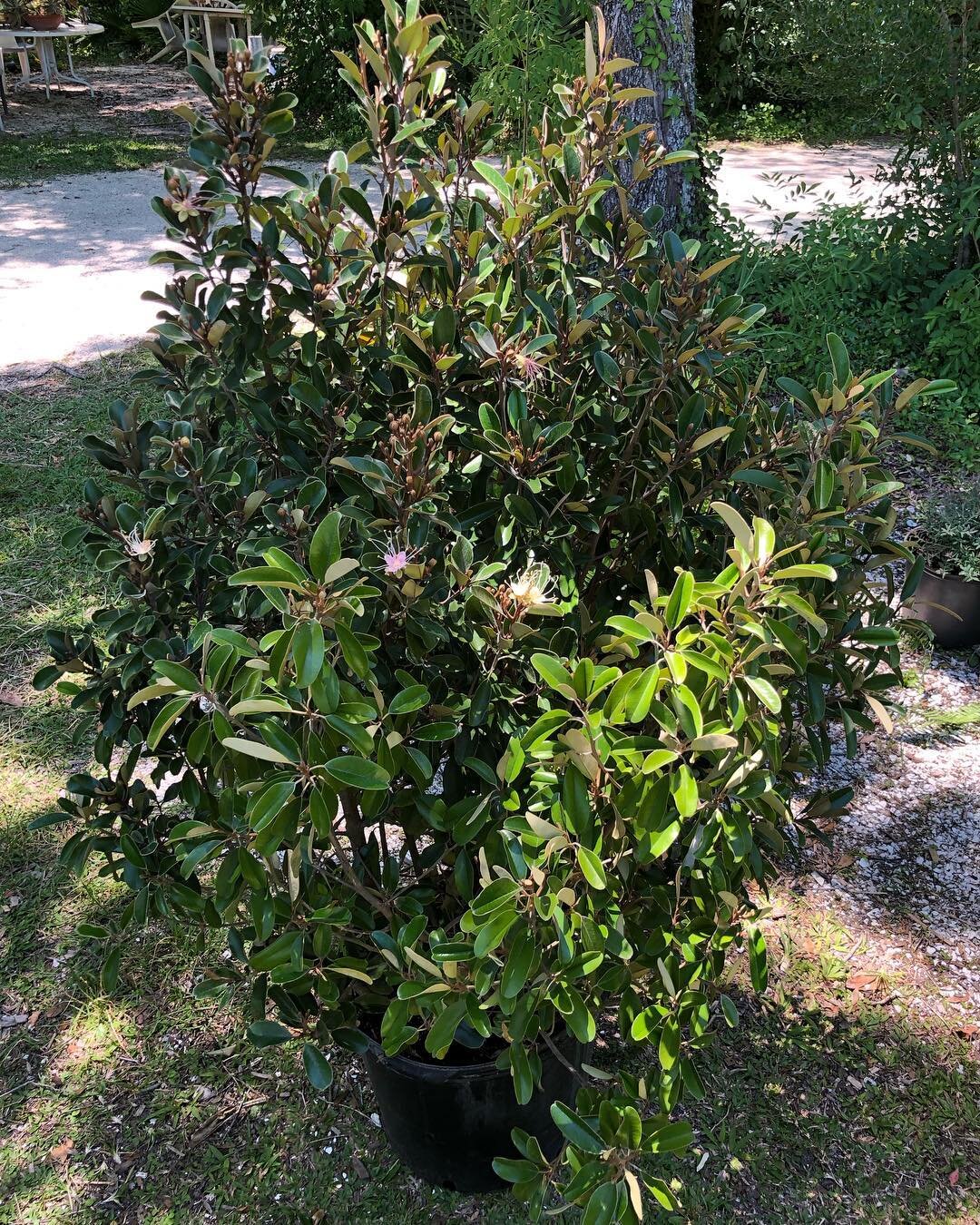
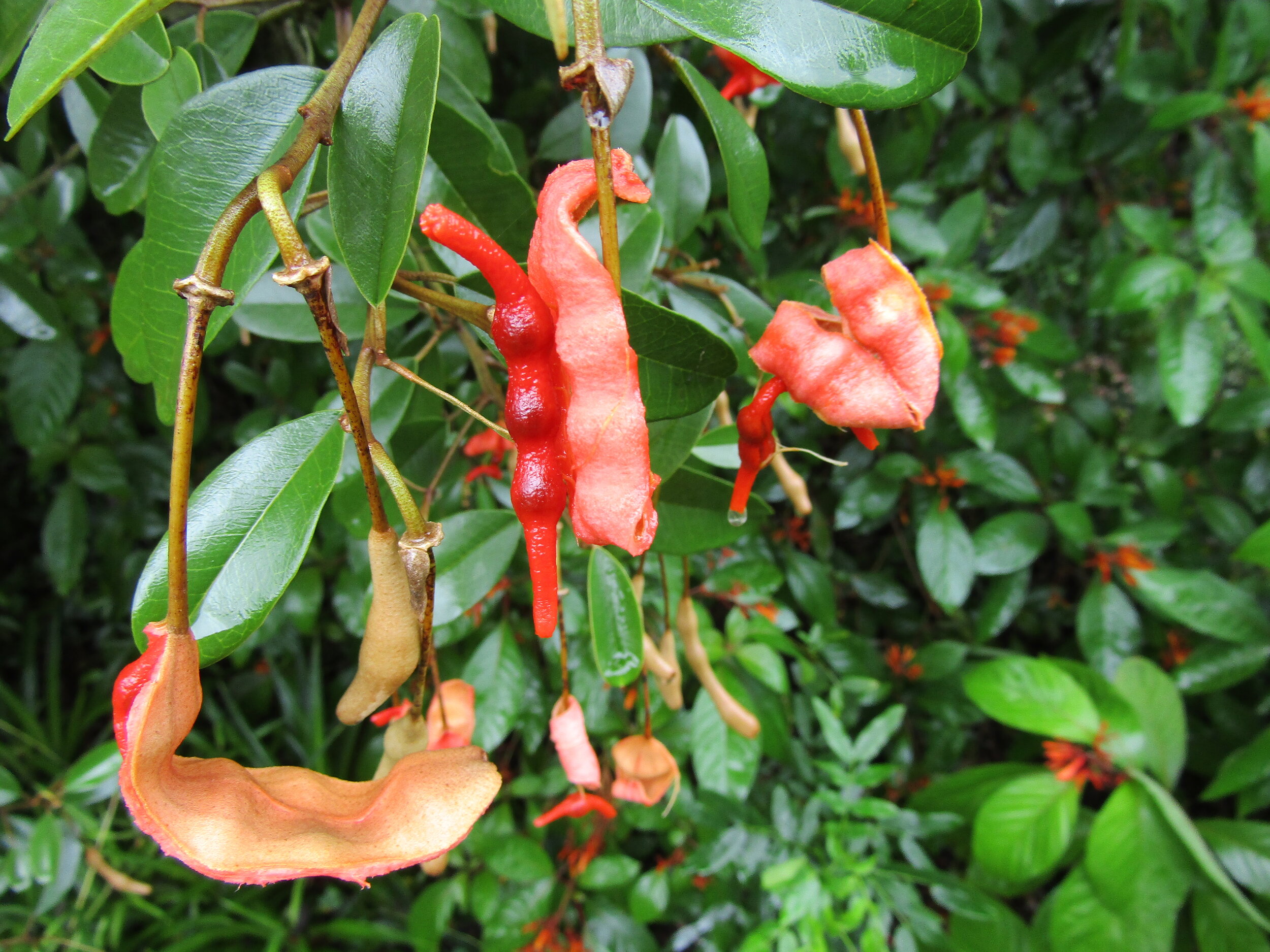
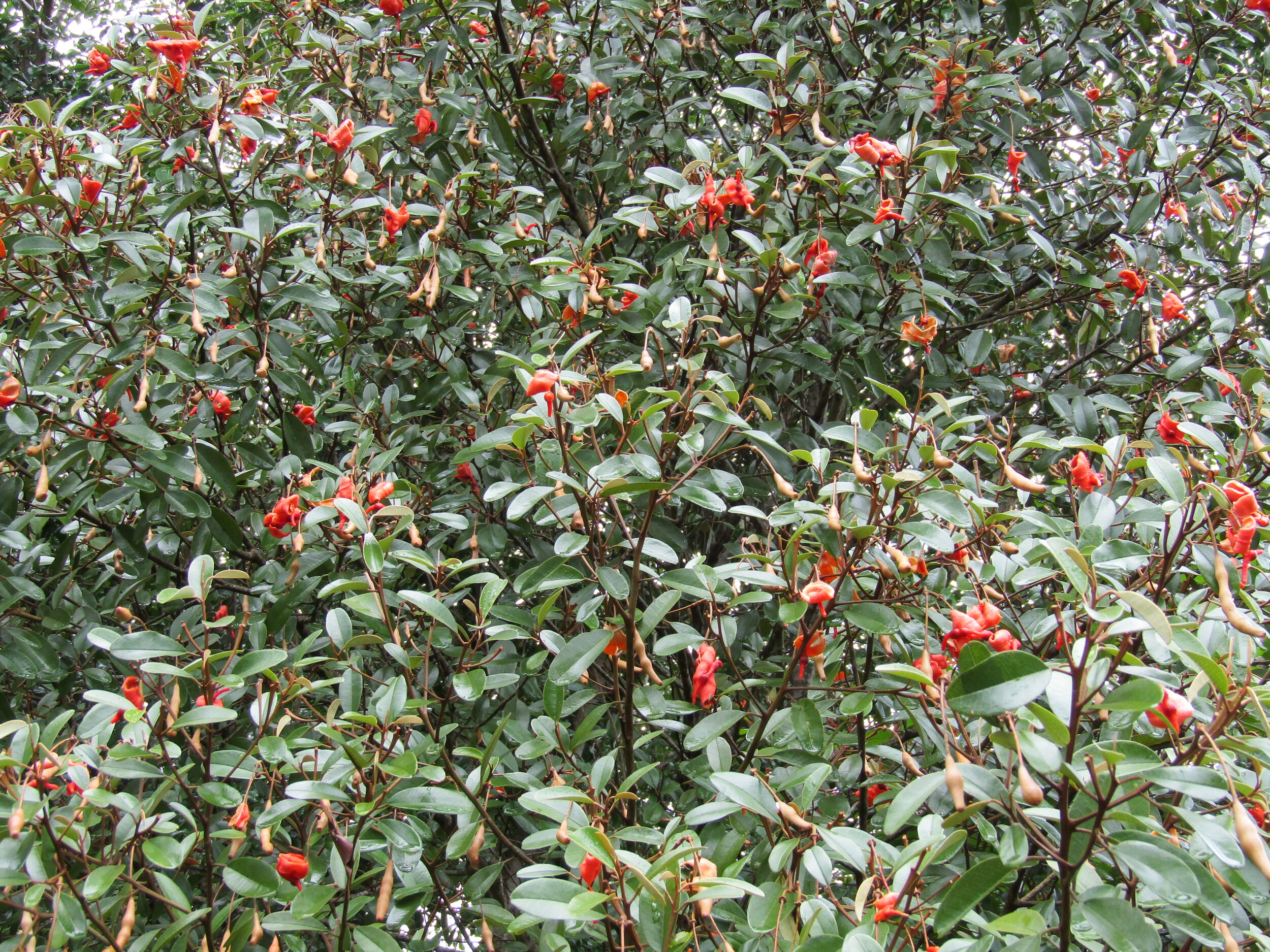
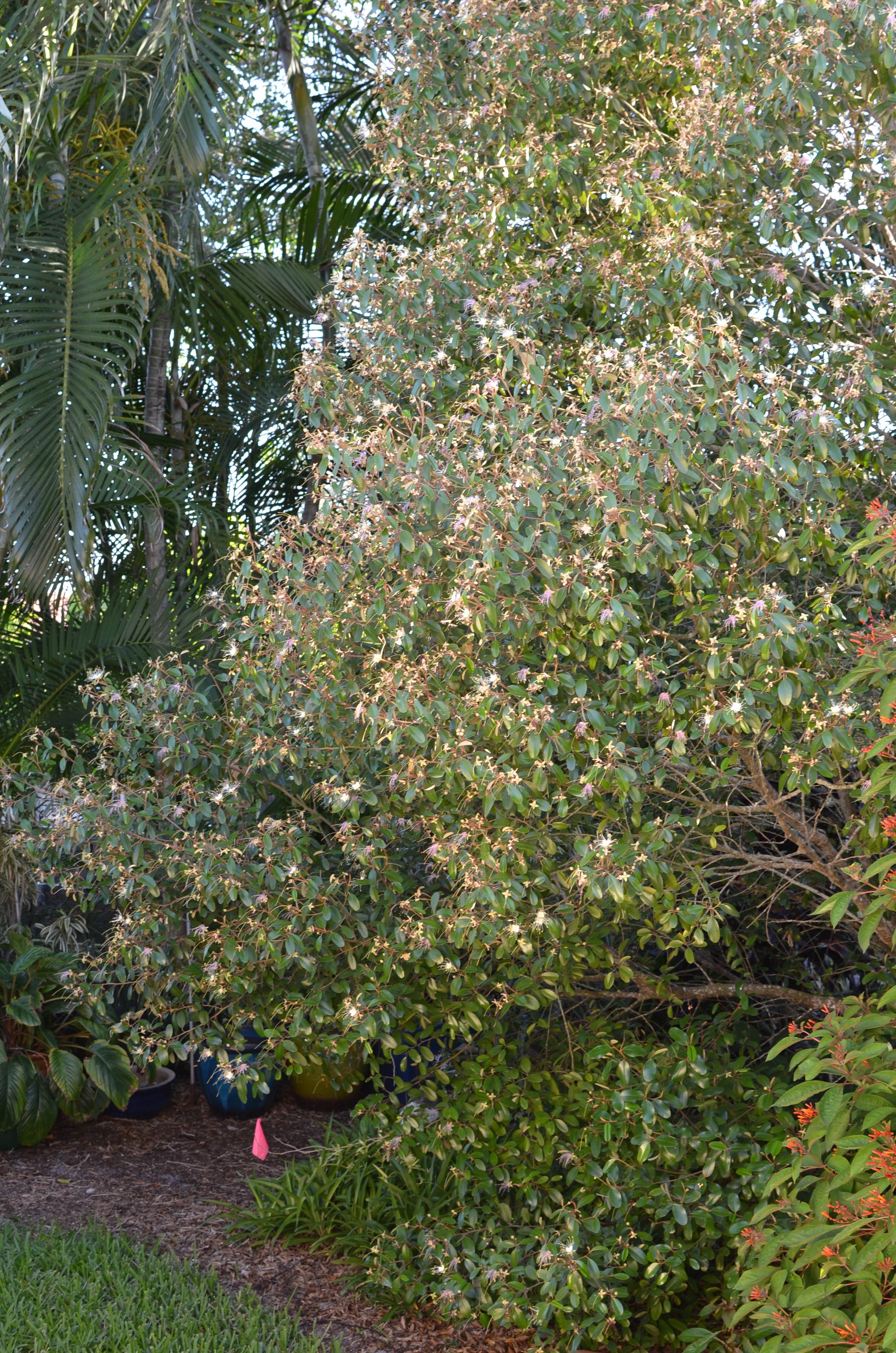
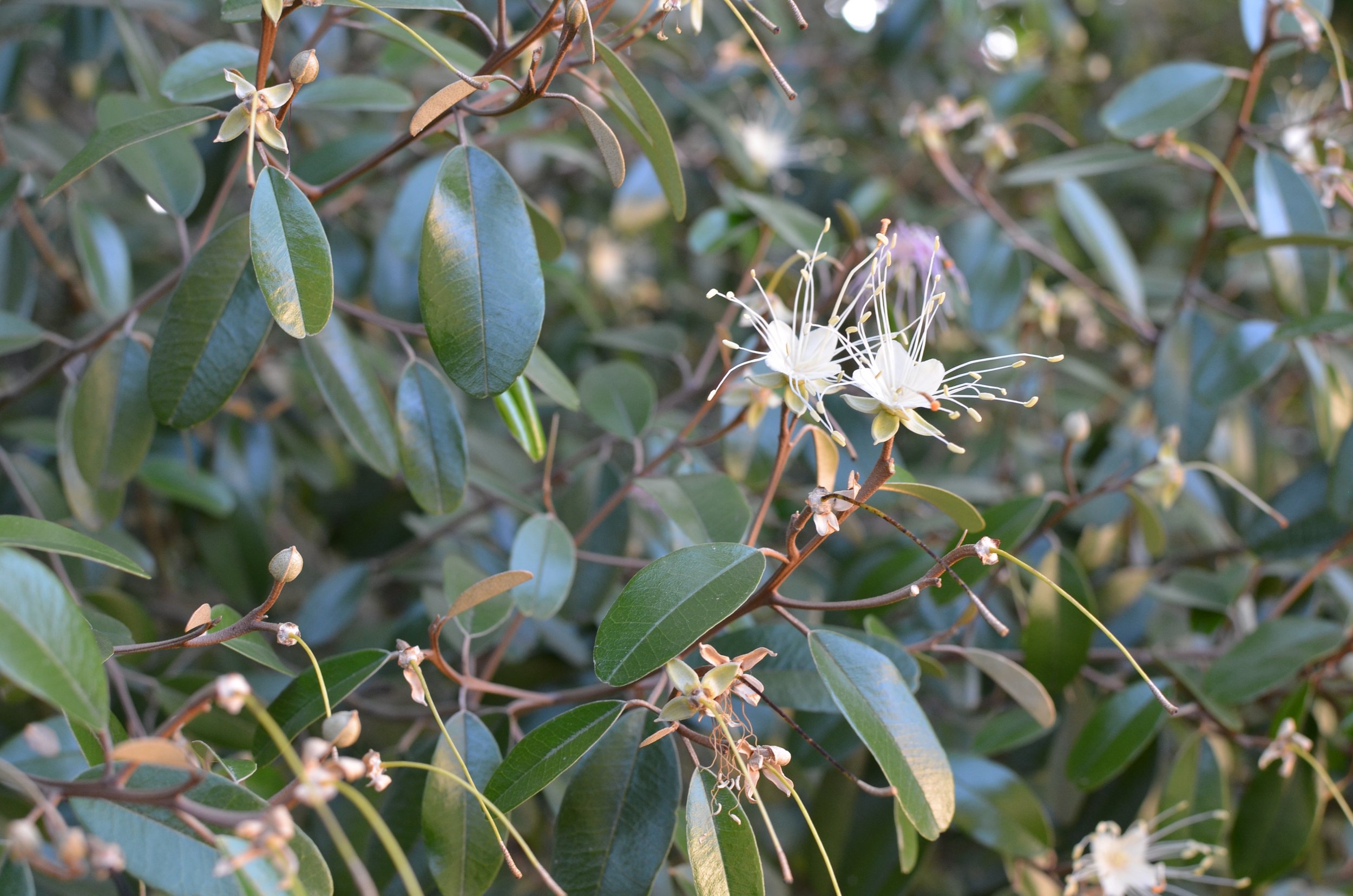
Capparis cynophallophora
Jamaican Caper is an evergreen shrub or small tree native to coastal Florida that grows 6’-20’ tall with an upright to spreading growth habit. This striking plant features glossy, oval leaves that emerge folded and bronze-colored before maturing to light green with notched tips. In spring, it produces spectacular showy flowers with white petals and prominent purple stamens up to 2” long that attract butterflies and other pollinators. Following flowering, it develops distinctive cylindrical seed pods 3”-8” long containing brown seeds embedded in scarlet pulp. Extremely drought and salt-tolerant, it thrives in full sun to partial shade with well-drained soils, making it an excellent choice for coastal landscapes, screens, or specimen plantings in zones 10-11.
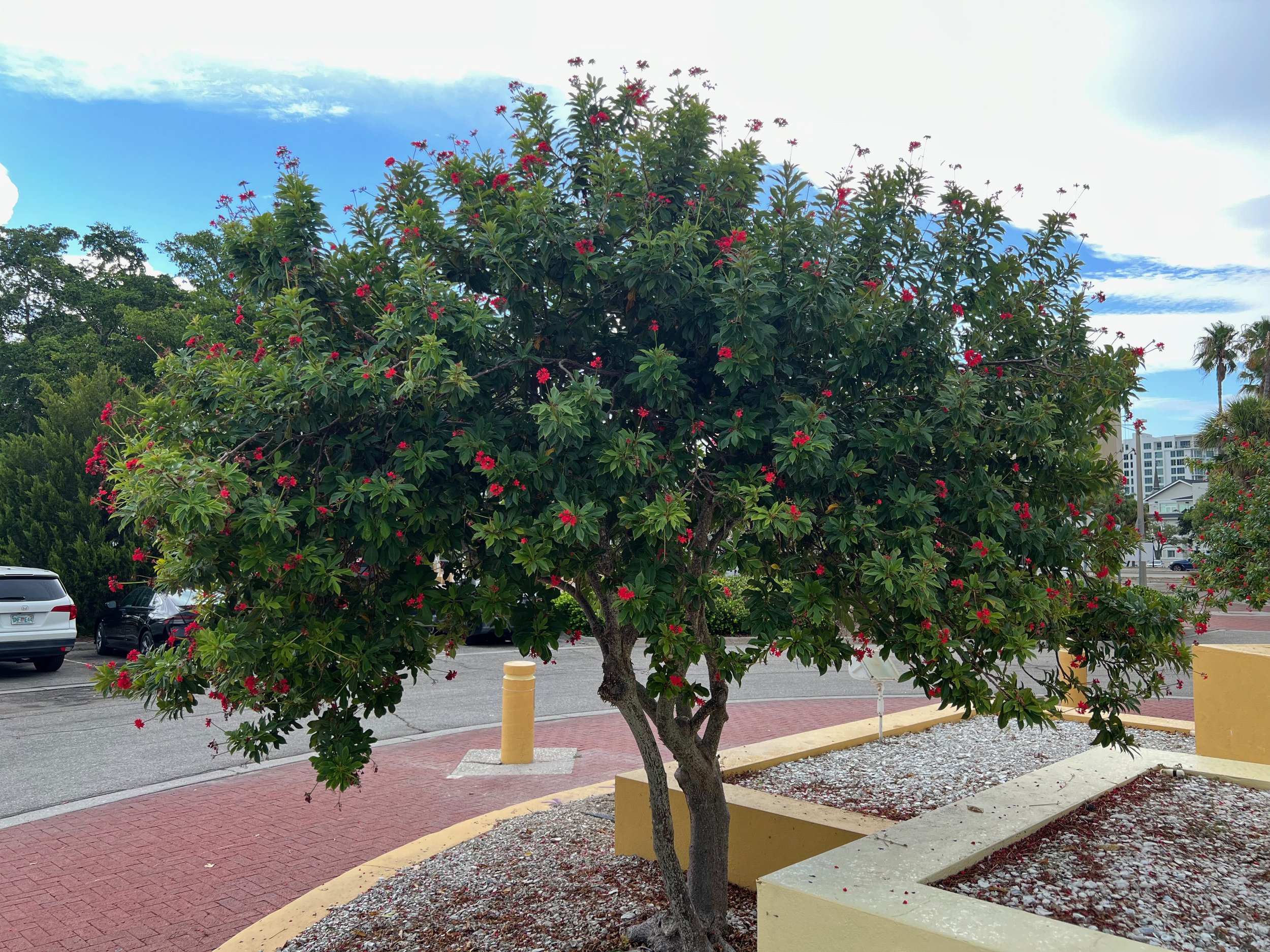
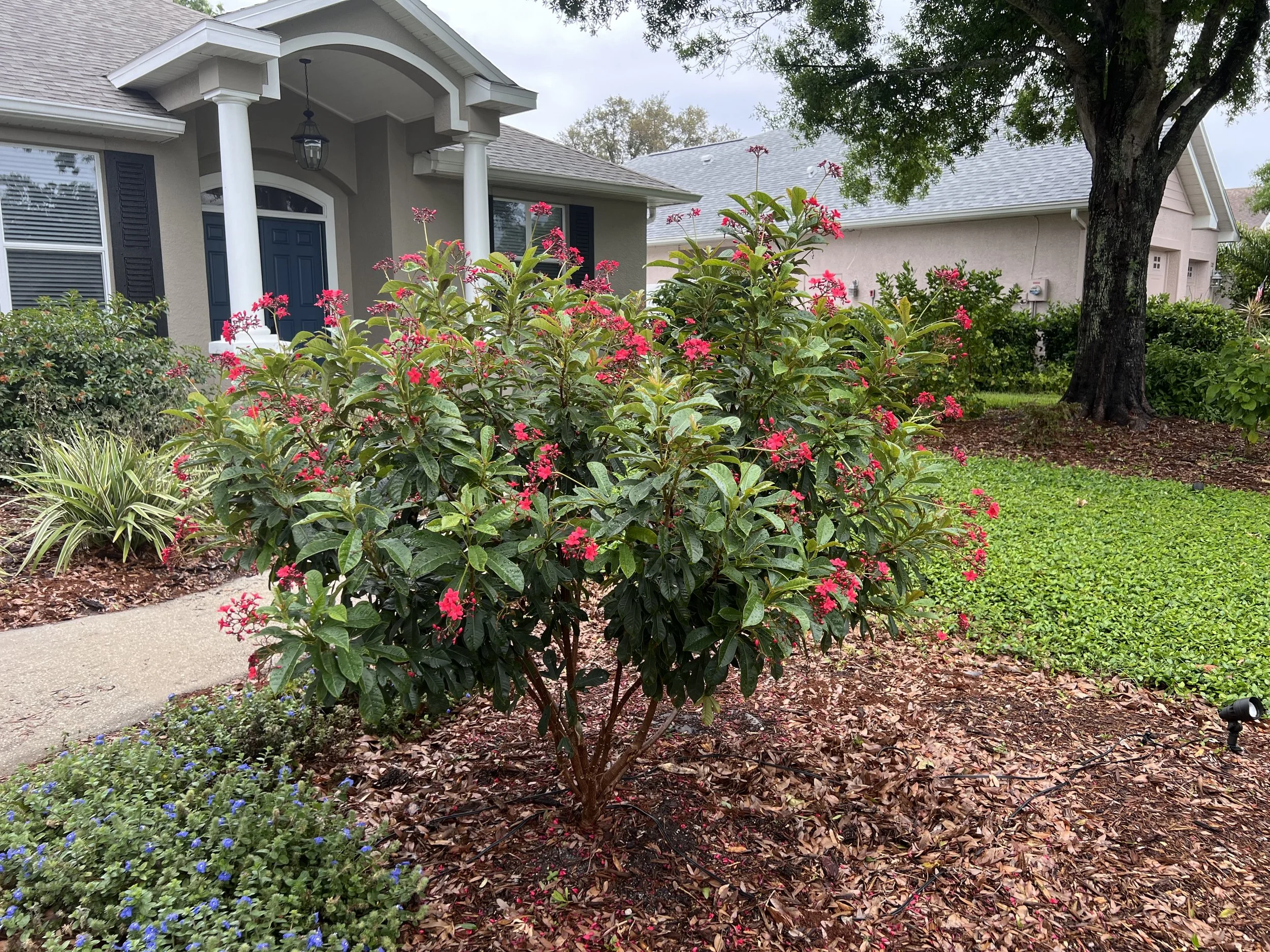
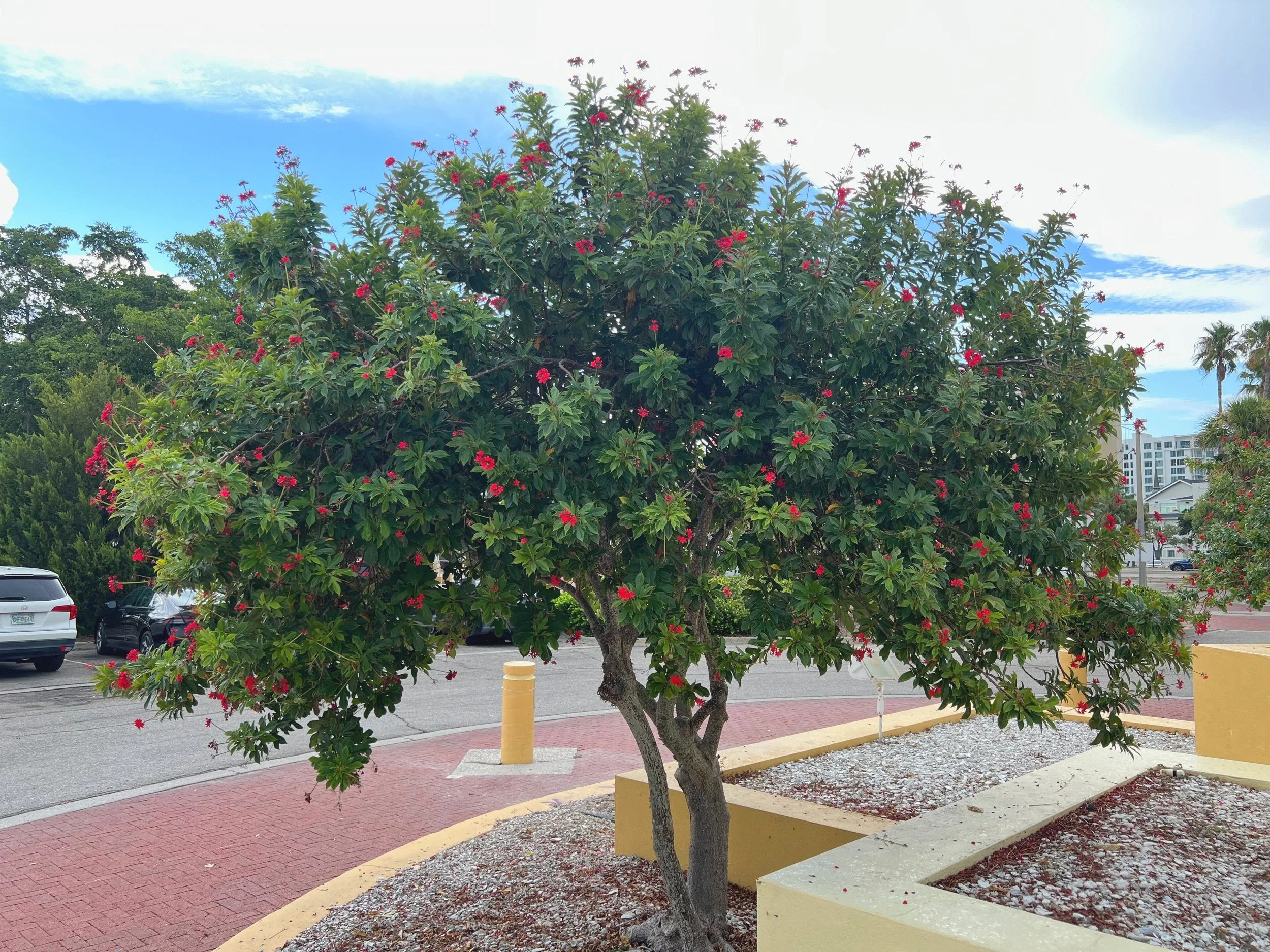
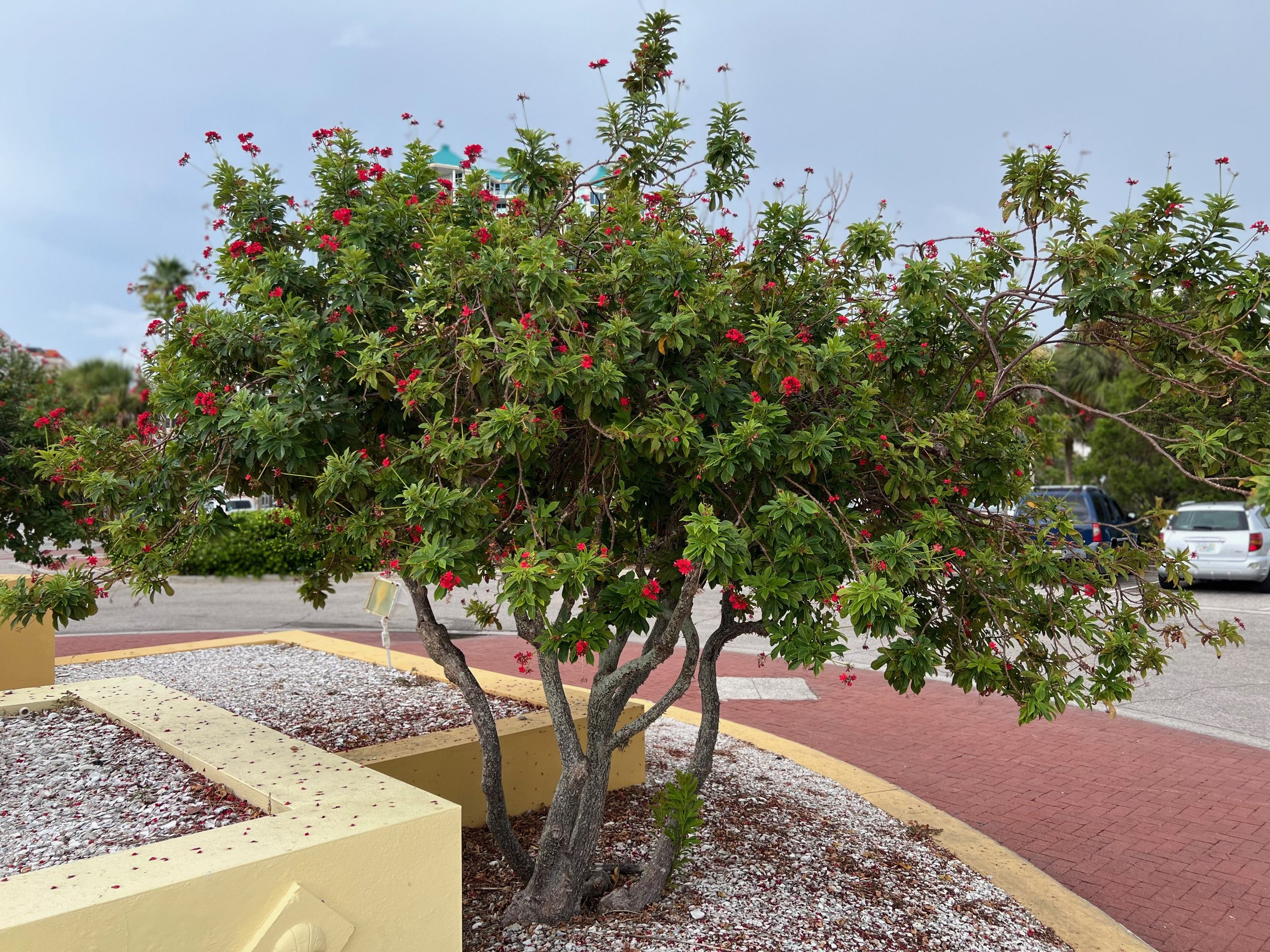
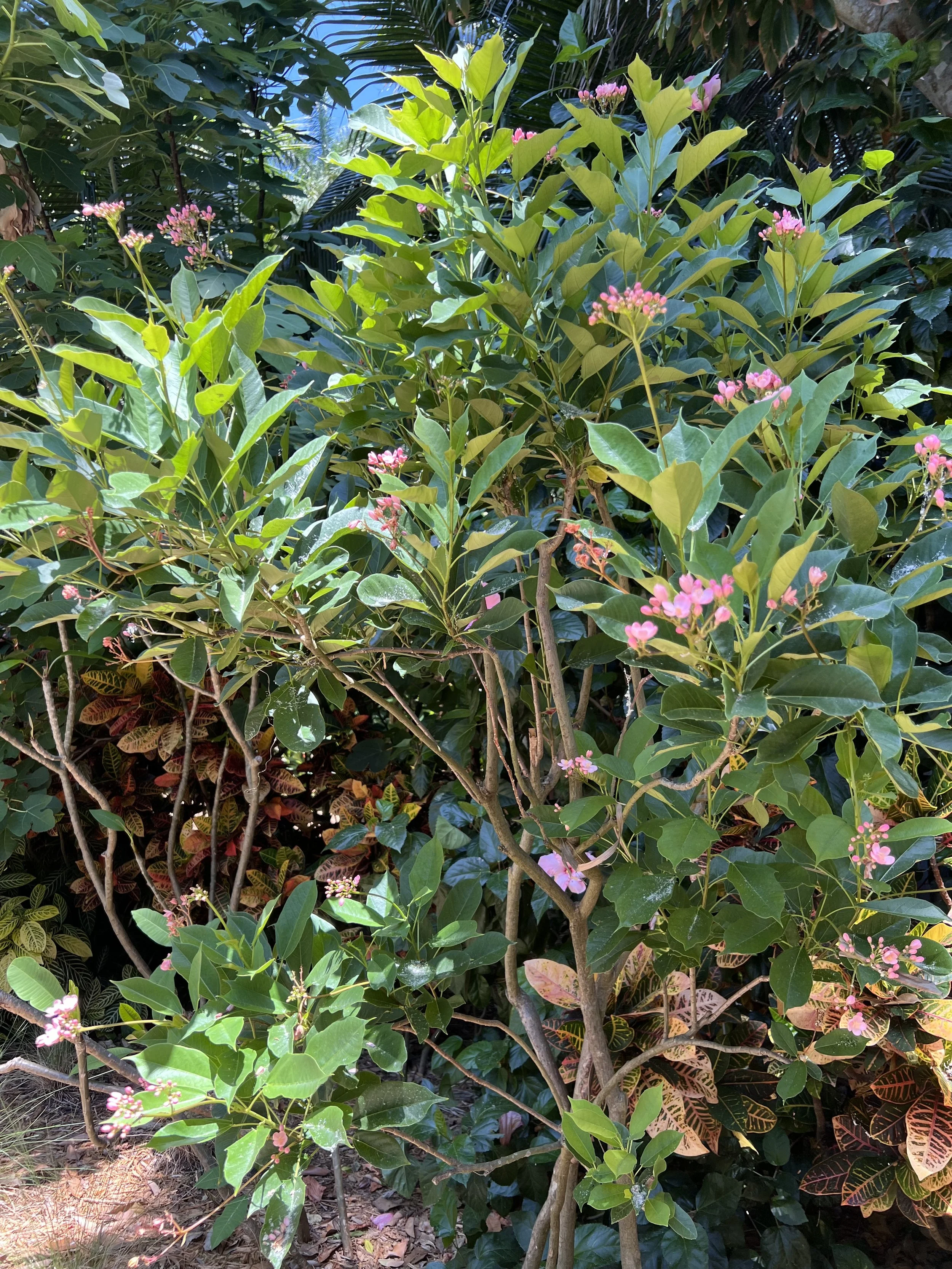
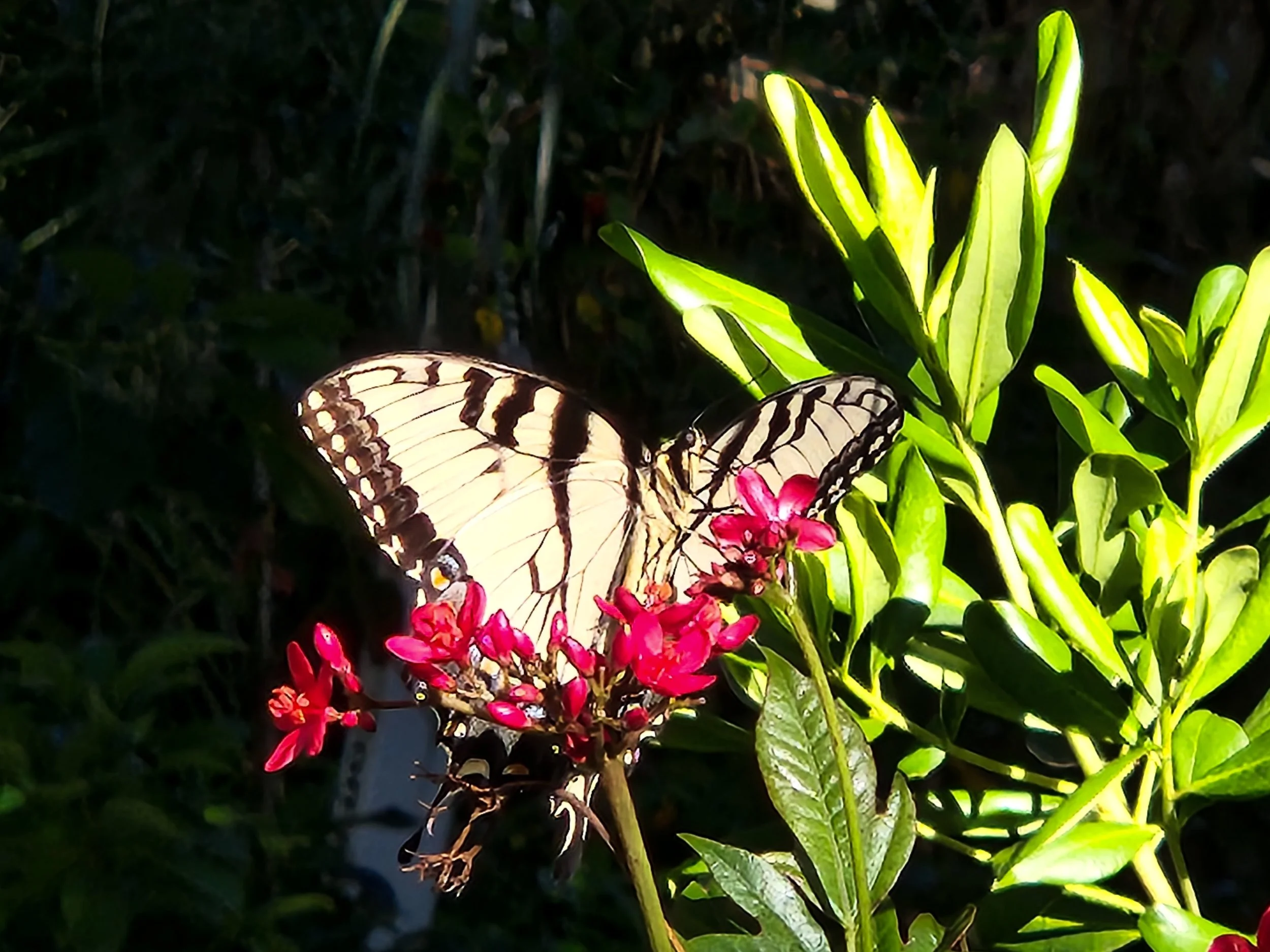
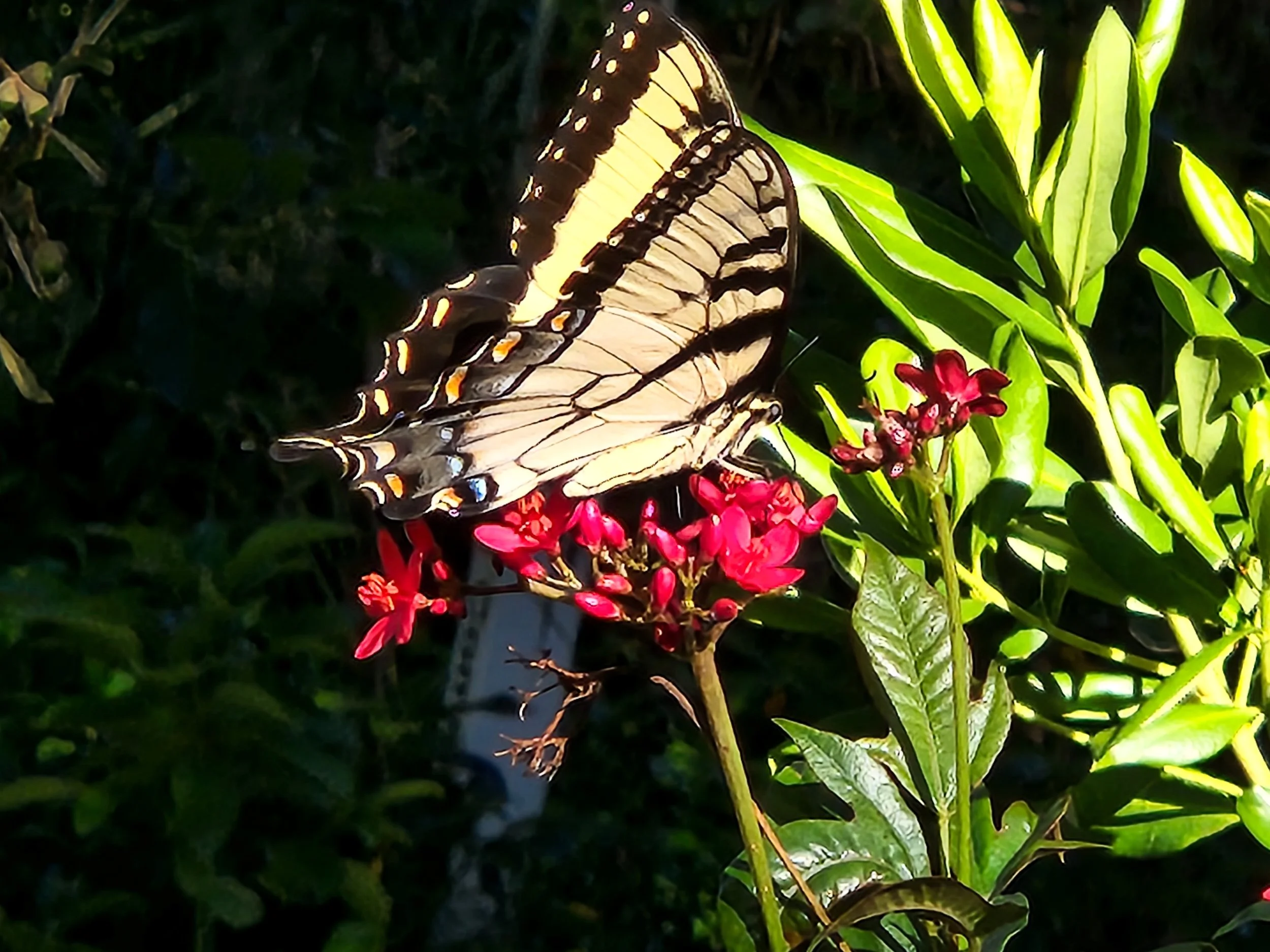
Jatropha integerrima
Jatropha is a non-native, Florida-friendly, evergreen shrub or small tree that attracts butterflies and hummingbirds with its showy red flowers that bloom almost all year round. It grows in full sun to partial sun, dry to average soils. Parts of this plant are poisonous to people and pets.
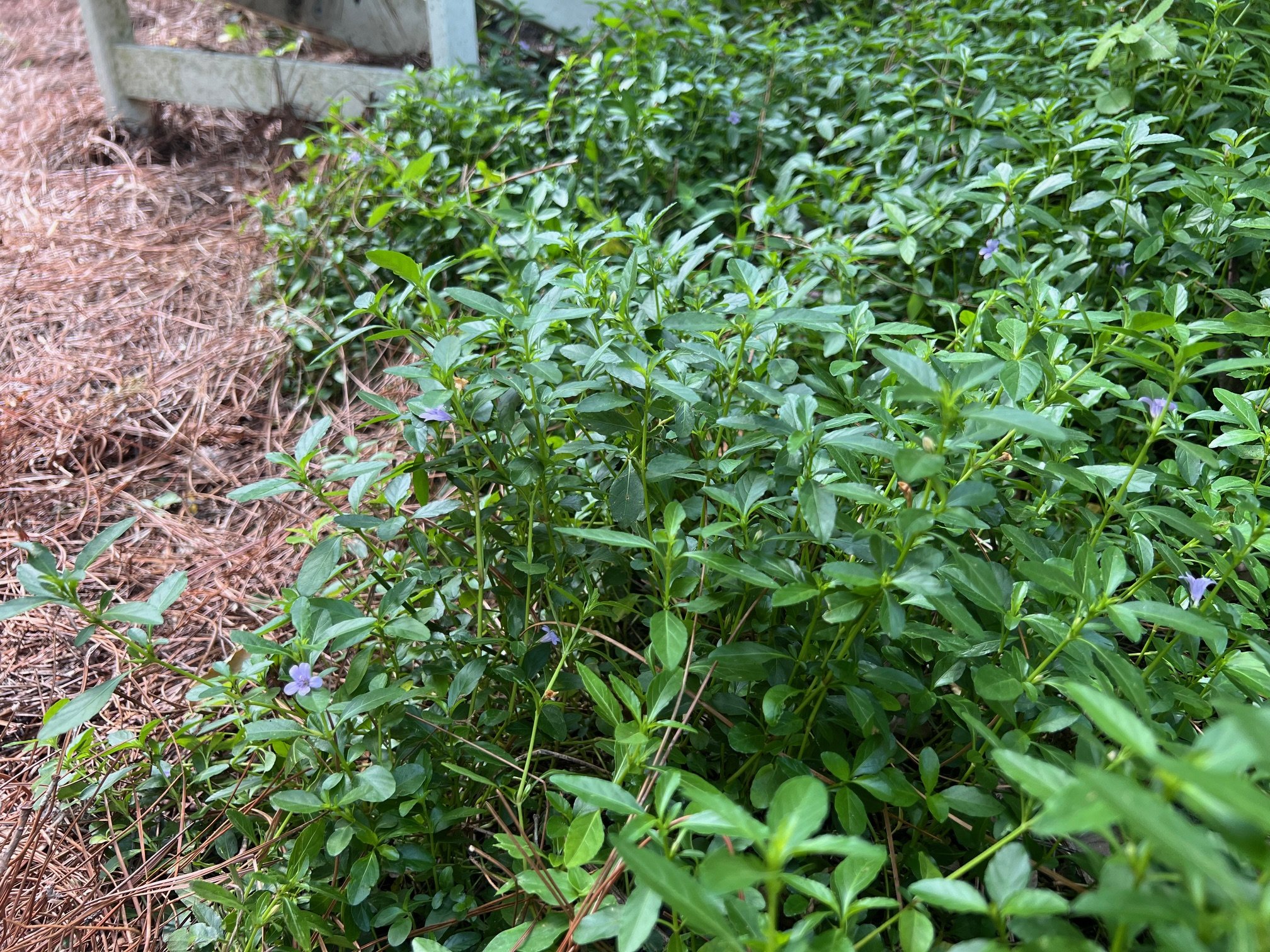

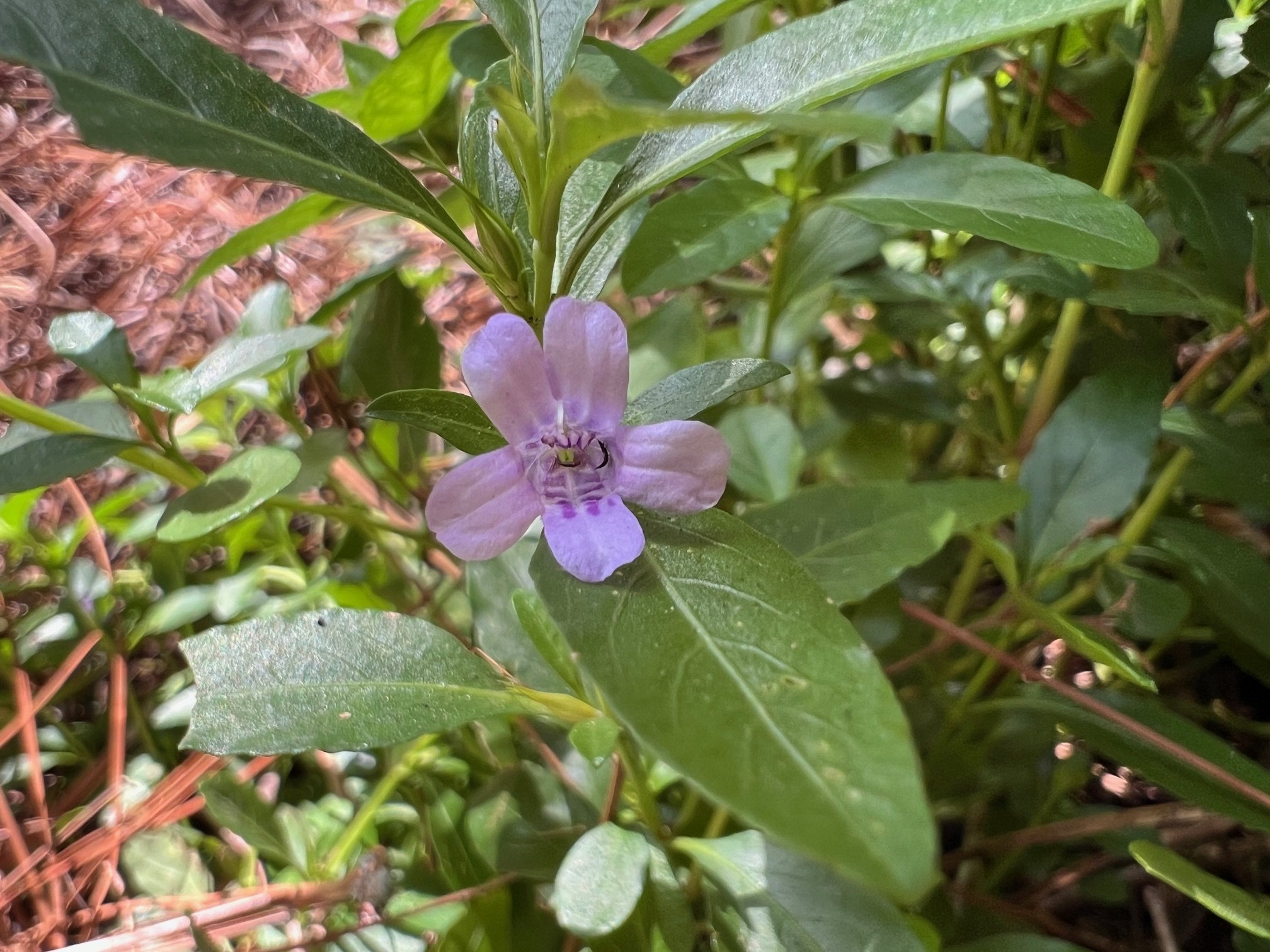
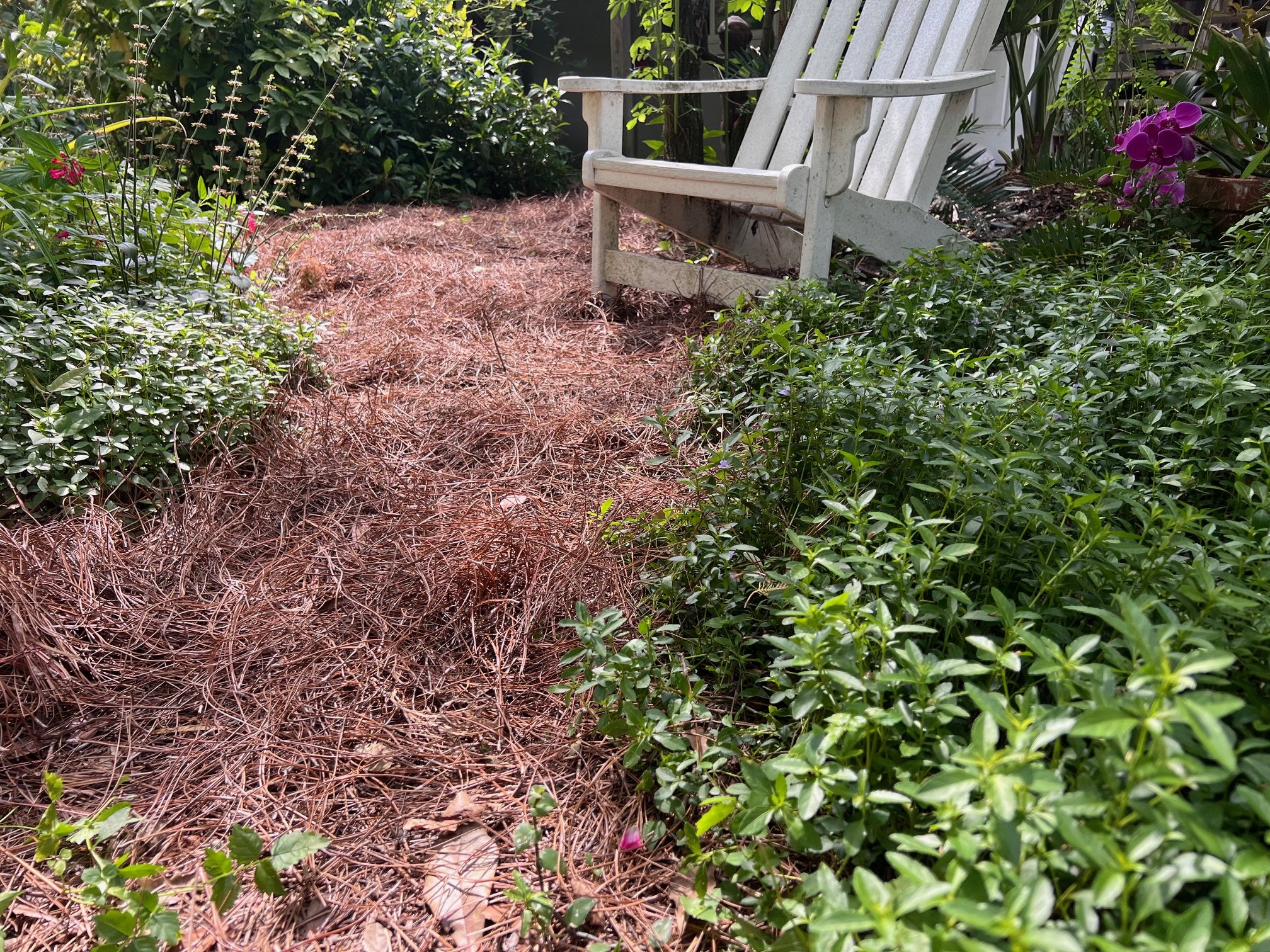
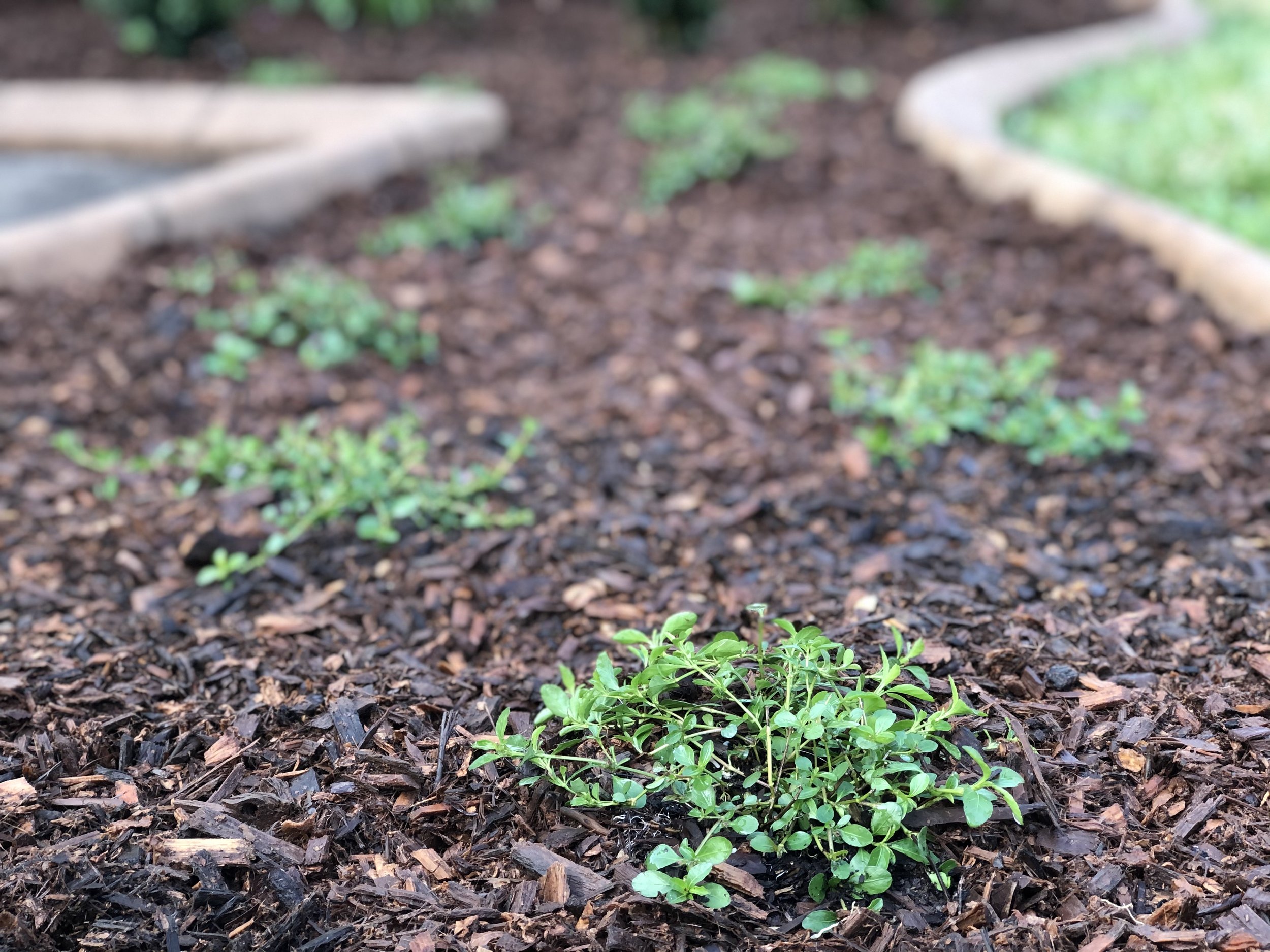
aka Hammock Twinflower or Swamp Twinflower
Dyschoriste humistrata
Lakeside Twinflower is a lawn alternative for areas where there is soil moisture (lakesides or swales) and/or regular irrigation. It’s perennial and can be semi-dormant if there is a freeze. Lakeside Twinflower blooms blue/purple flowers spring to fall and is a larval food source for the Buckeye butterfly.
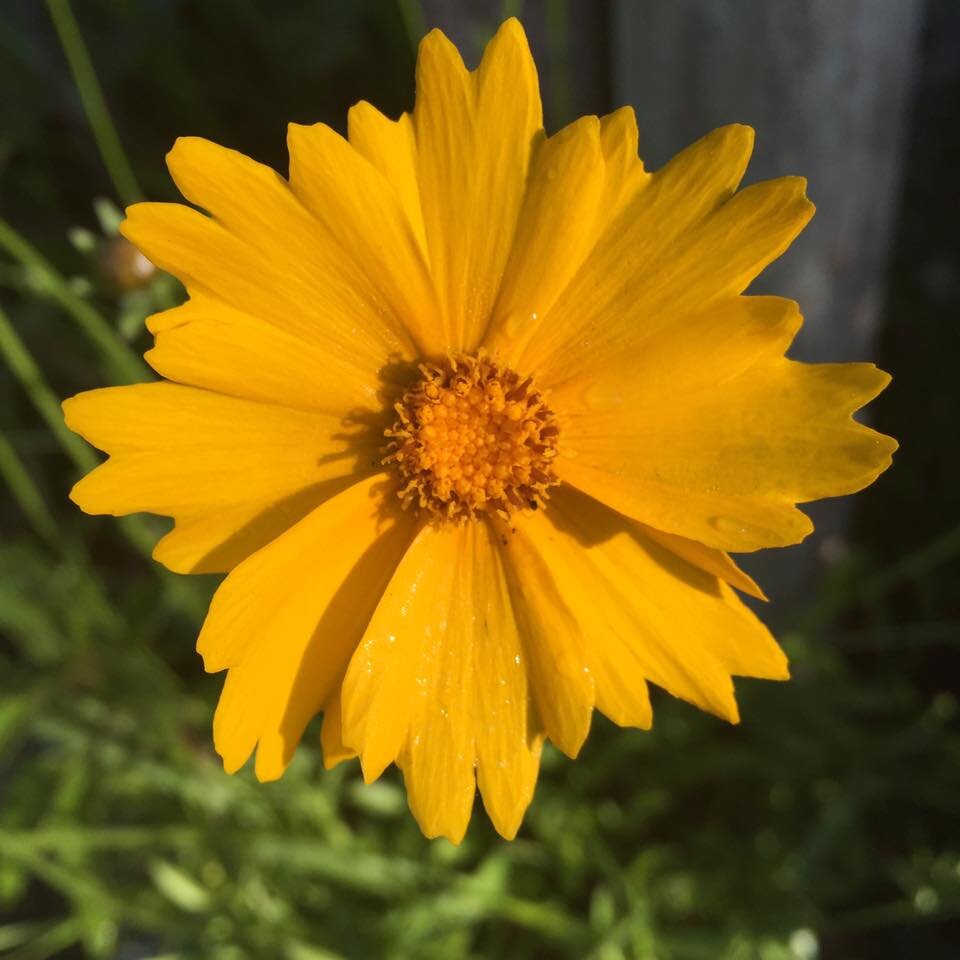

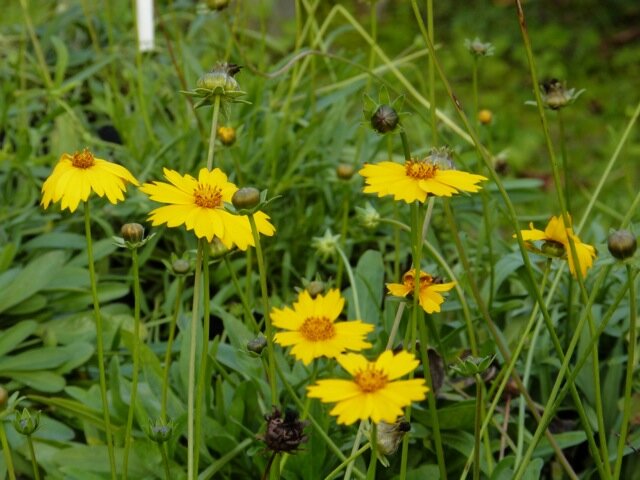
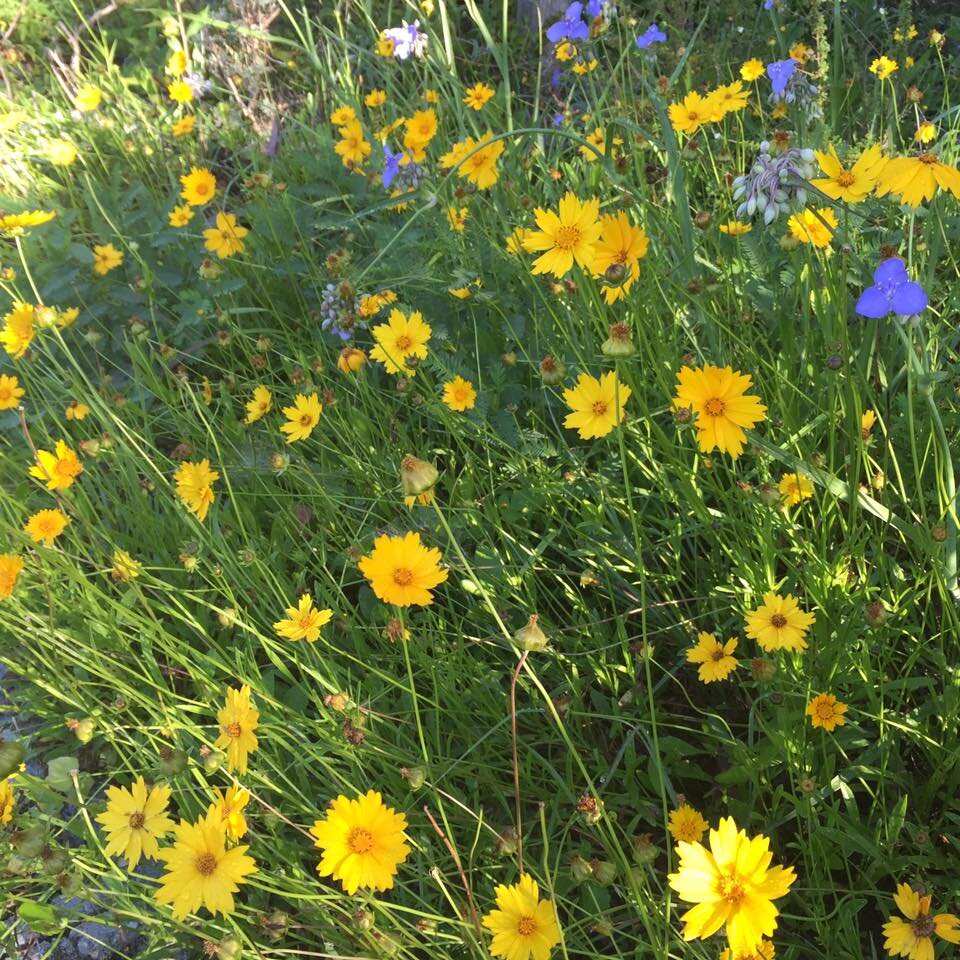
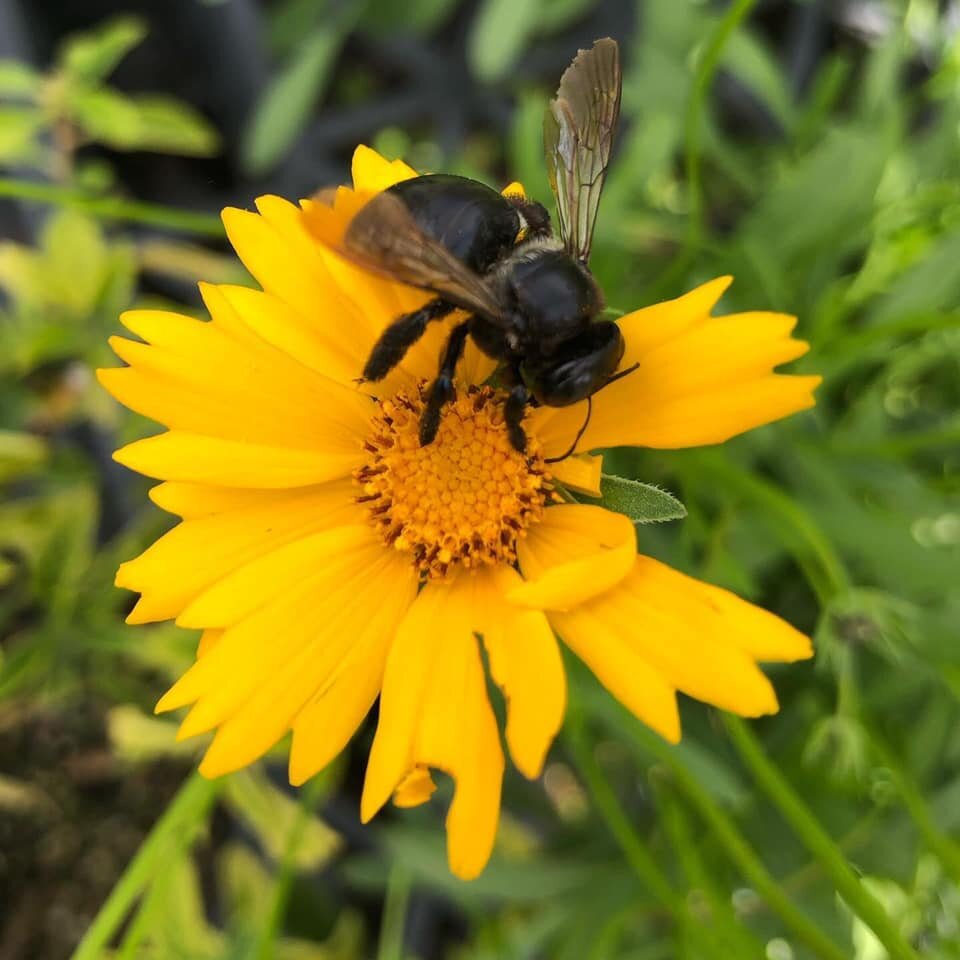
Coreopsis lanceolata
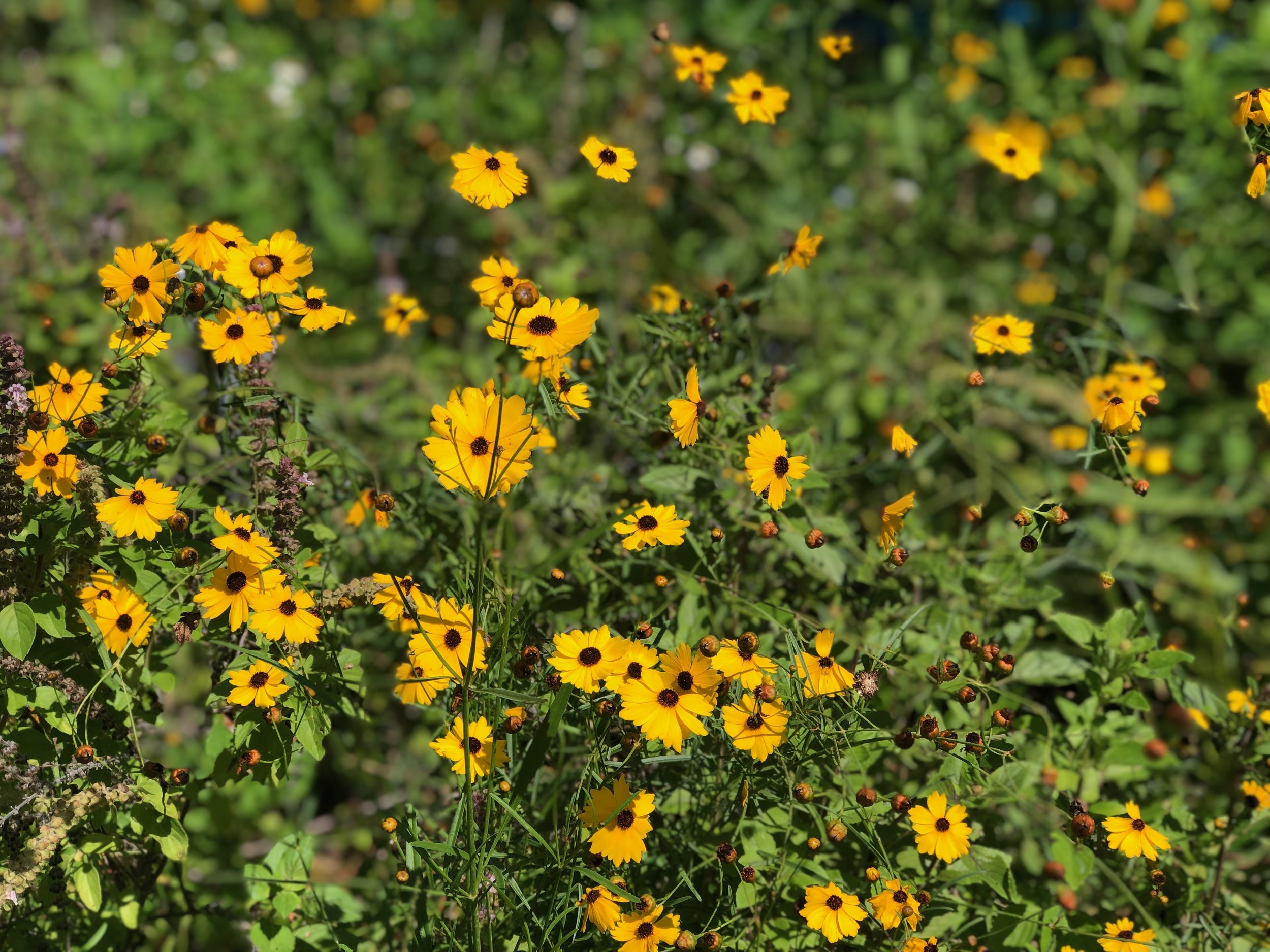
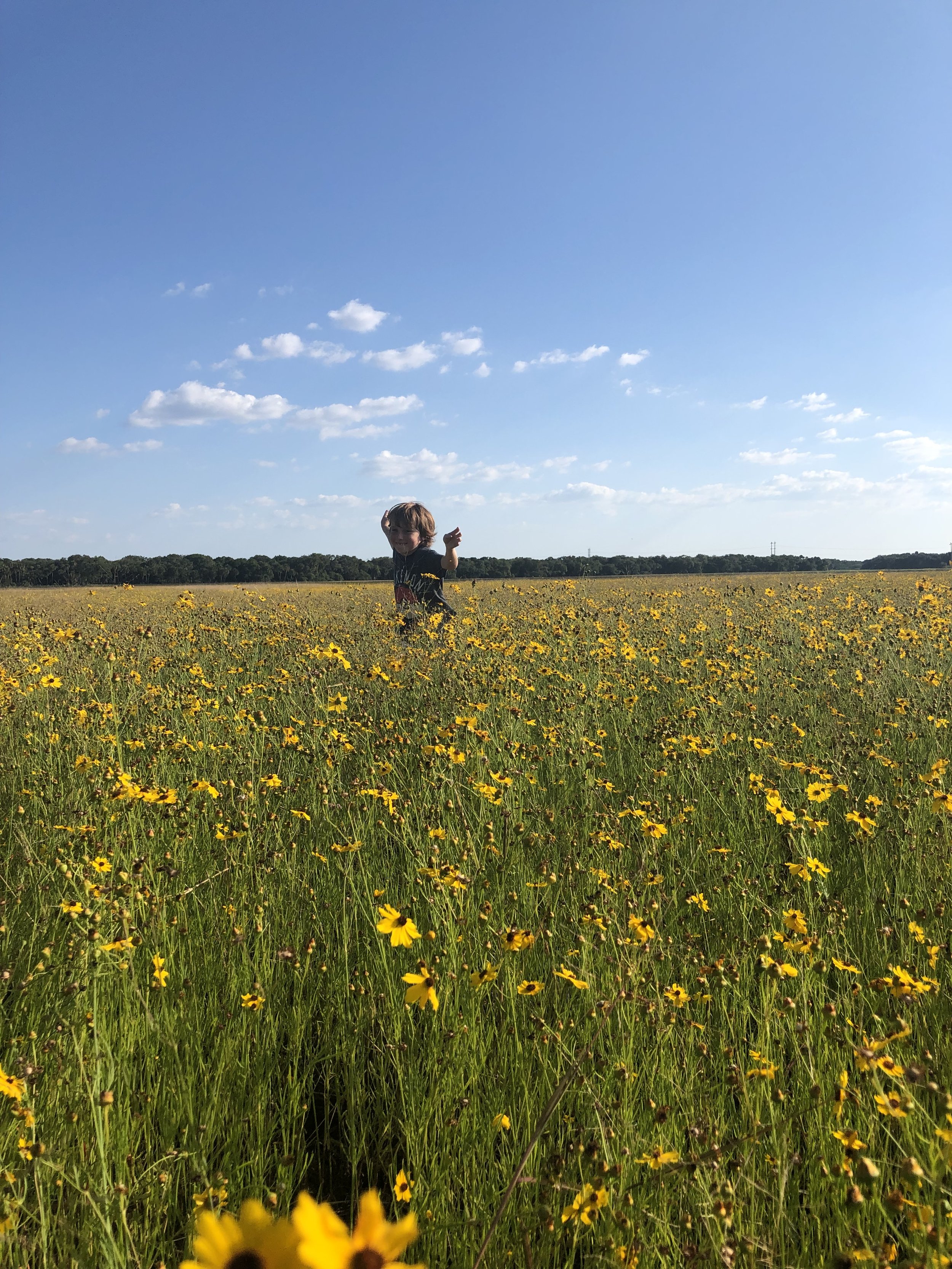
Tickseed is the Florida State Wildflower. Lanceleaf tickseed is a perennial and reseeding wildflower that likes sun to light shade, is 1-2 ft in height and likes average to dry soils. It’s bright yellow flowers attract butterflies and other pollinators mostly year round.
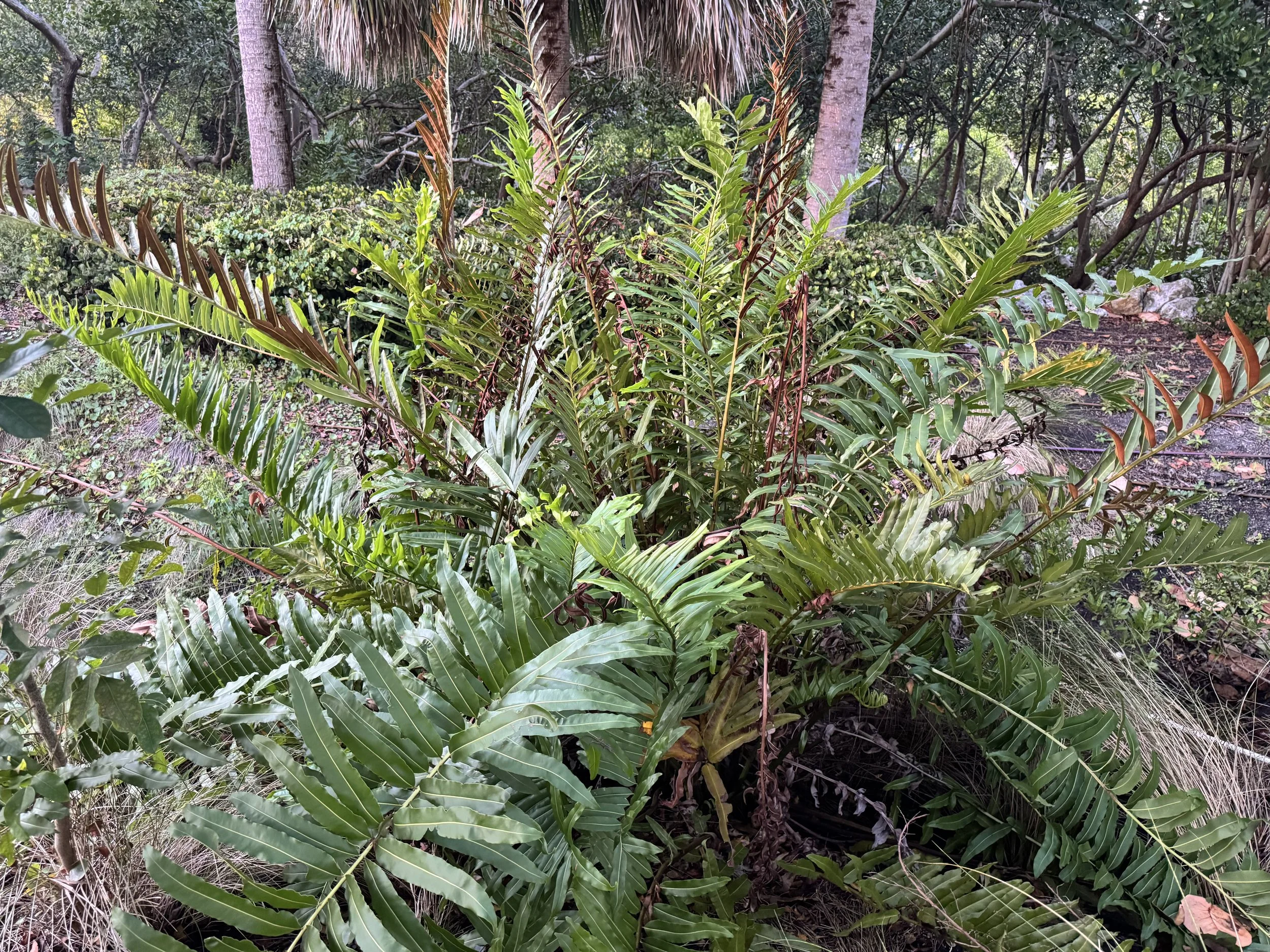
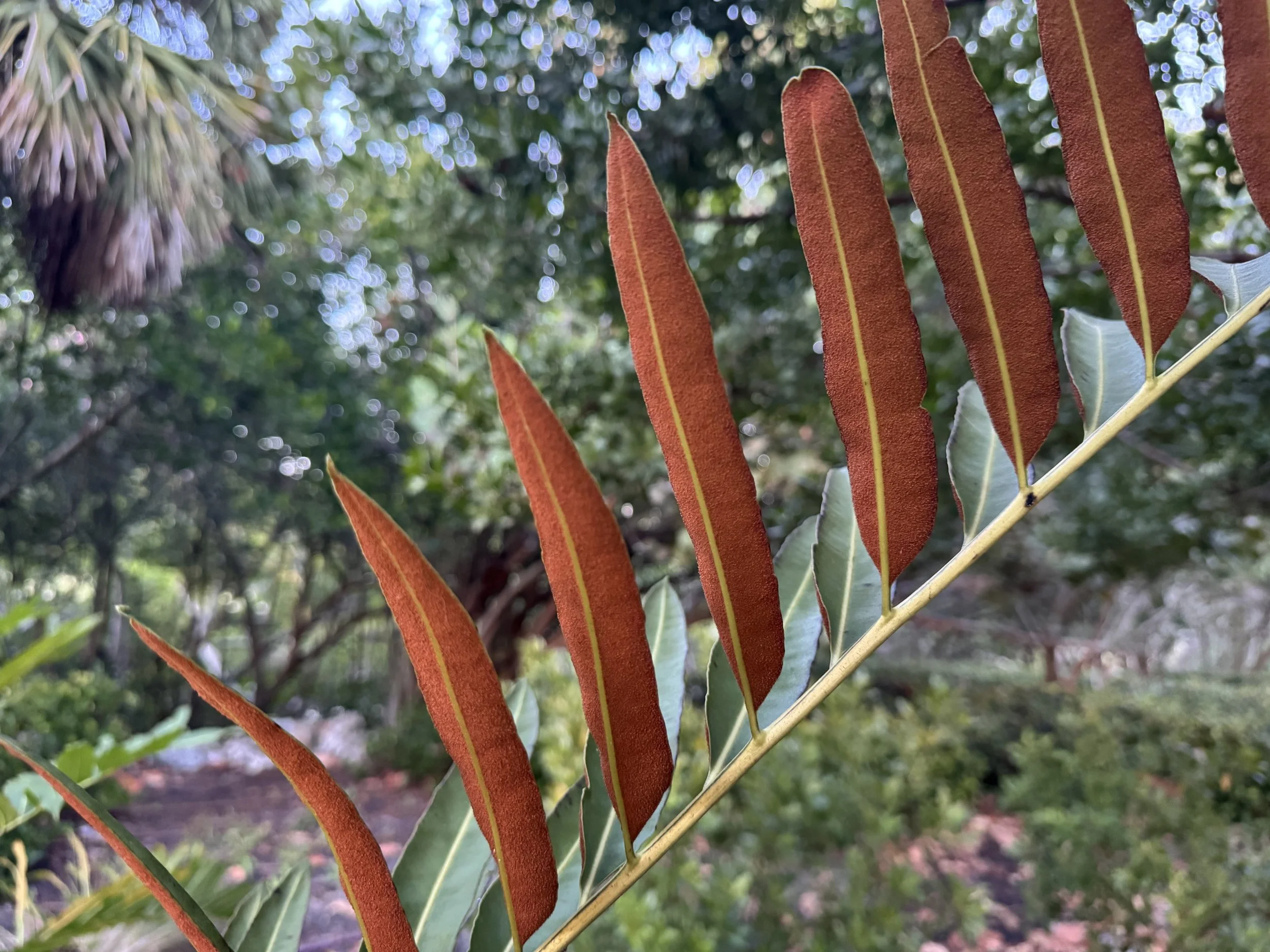
Acrostichum danaeifolium
A majestic and prehistoric-looking native fern that makes a bold architectural statement in the landscape. It features large, upright, leathery fronds that can reach impressive heights of 6 to 12 feet. This robust fern thrives in full sun to deep shade and is particularly well-suited for wet areas, pond edges, or low spots in the garden. It is highly salt-tolerant and adds a lush, tropical texture to any damp or aquatic setting.

Cymbopogon citratus
Lemongrass is a non-native, Florida-friendly, perennial edible grass that grows 3’-4’ tall and 2’-3’ wide. They require full sun and rich, well-draining, loamy, clay, or sandy soil. When crushed, their leaves give off a lovely citrusy scent, and their lower stalks can be used to flavor soups, curries, and teas. As large clumping grass, they also make great border plants for folks who want to add some texture to their landscape.
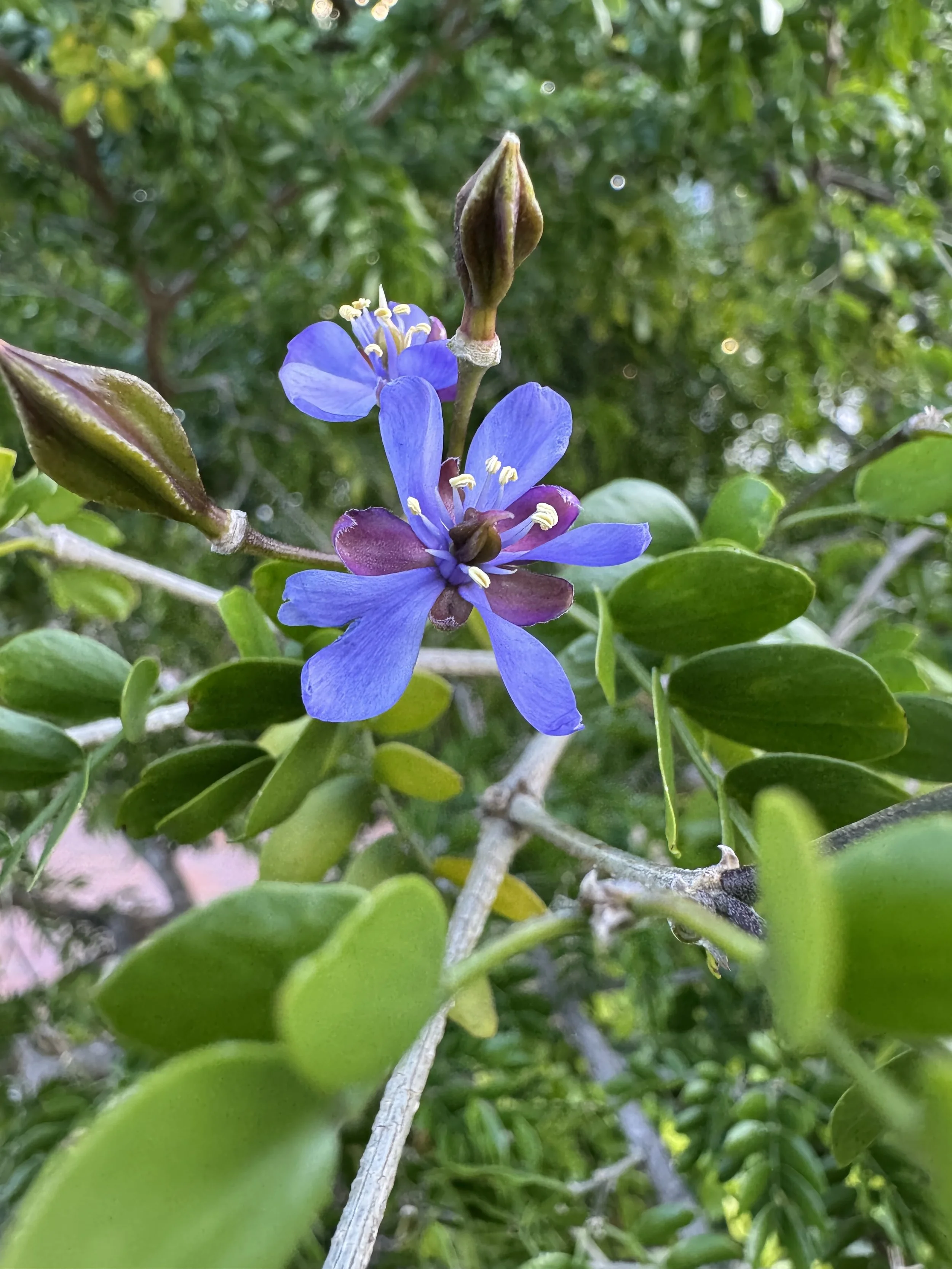

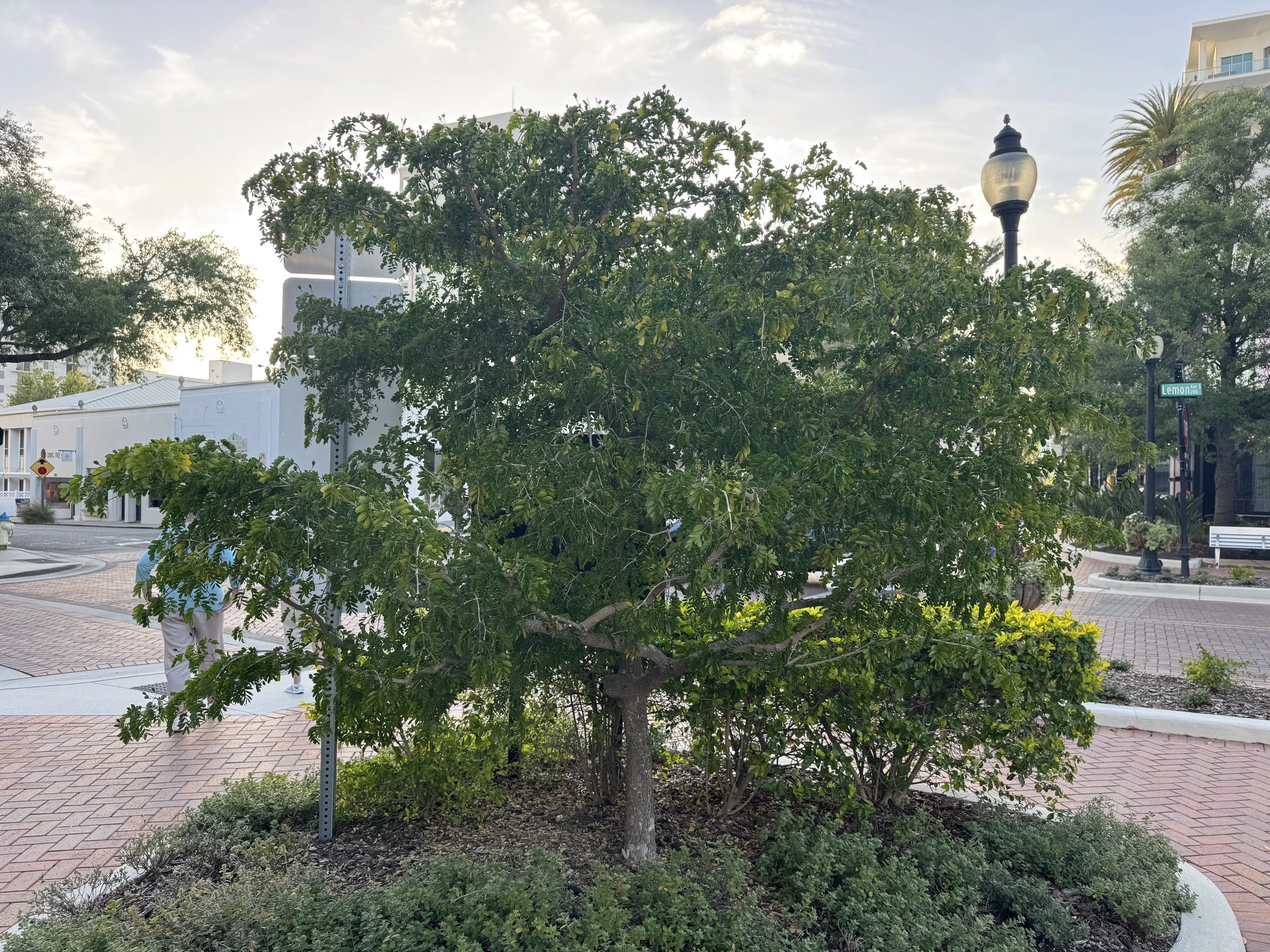
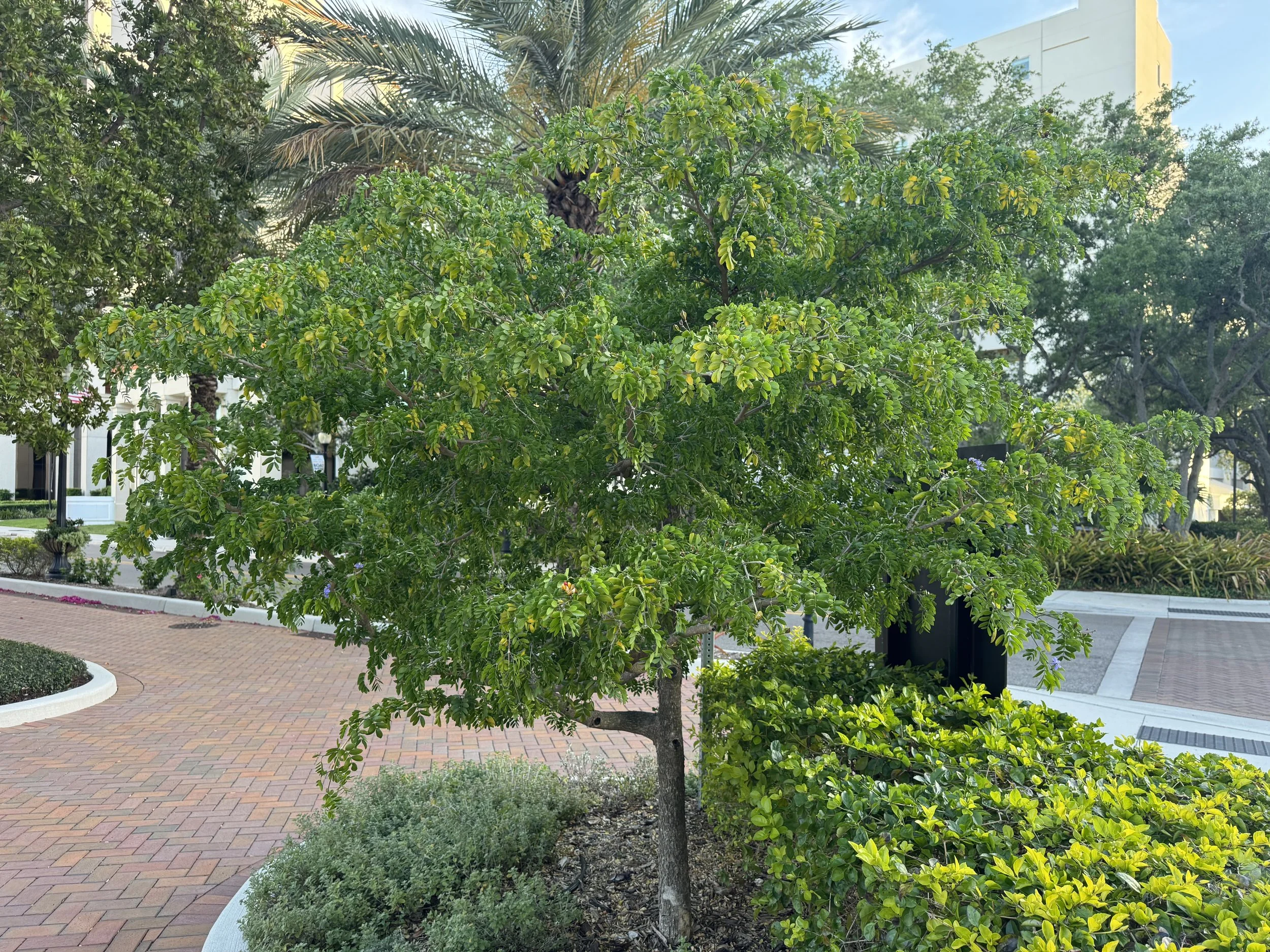
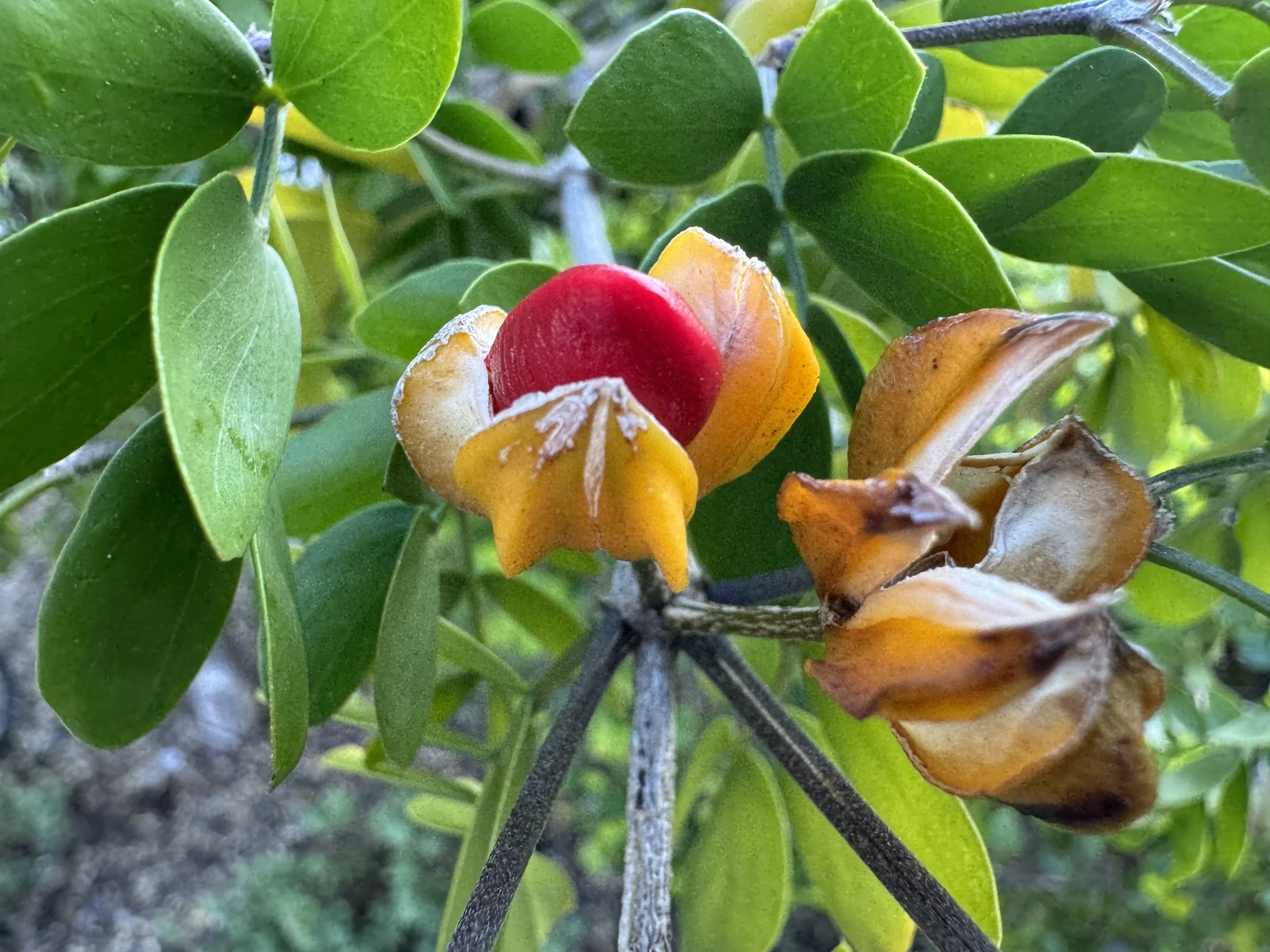

Guaiacum sanctum
The “Wood of Life” tree has a rich ethnobotanical history due to its dense wood and spectacular flowers. For best growth, plant in full sun to partial shade, with well-drained soil. This small tree is slow growing but worth the wait. Rich blue blooms lead to orange fruits which Catbirds adore. Its drought tolerance, hurricane resistance and ability to take salt spray make this tree a great choice for coastal landscapes.
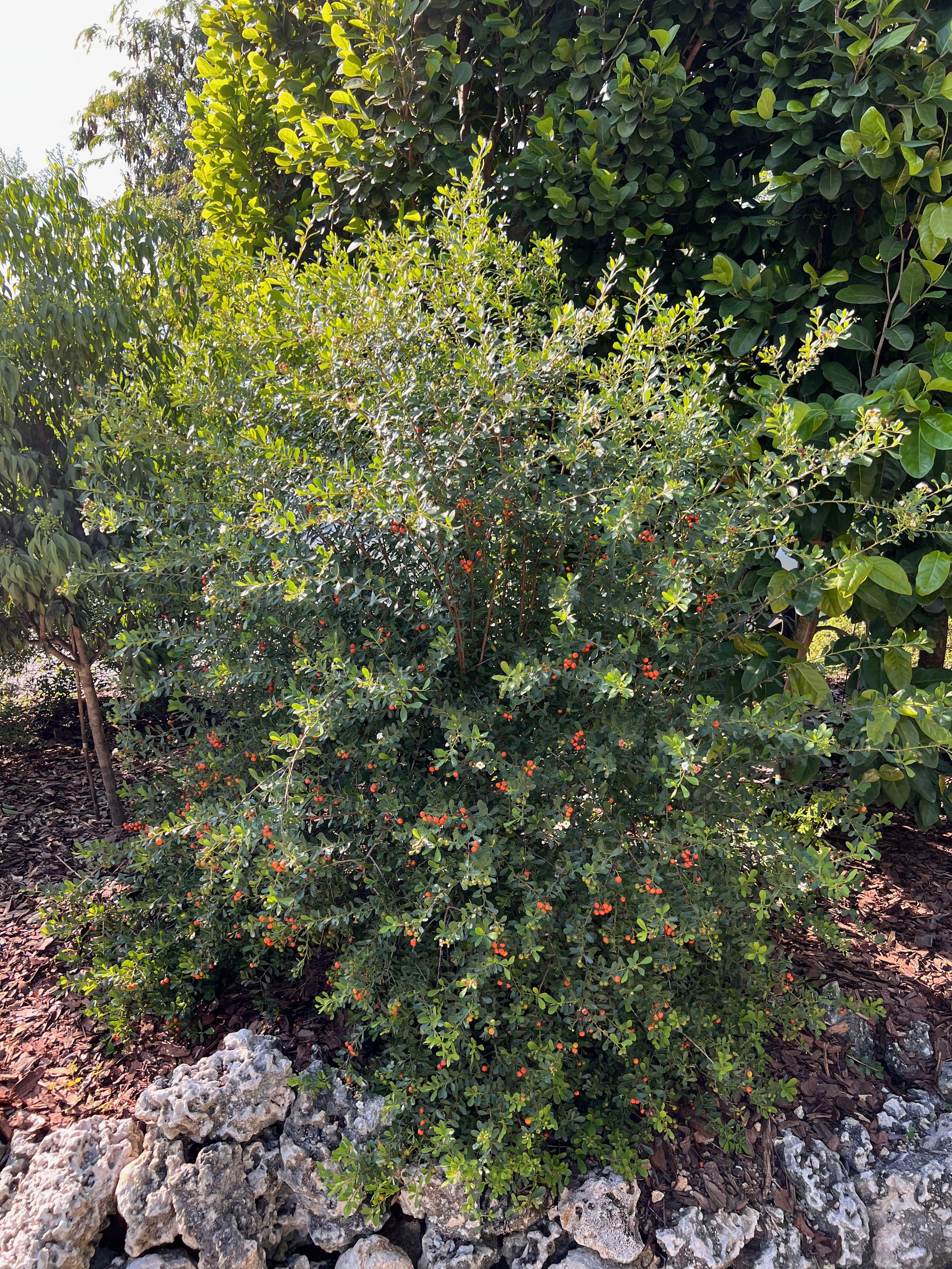
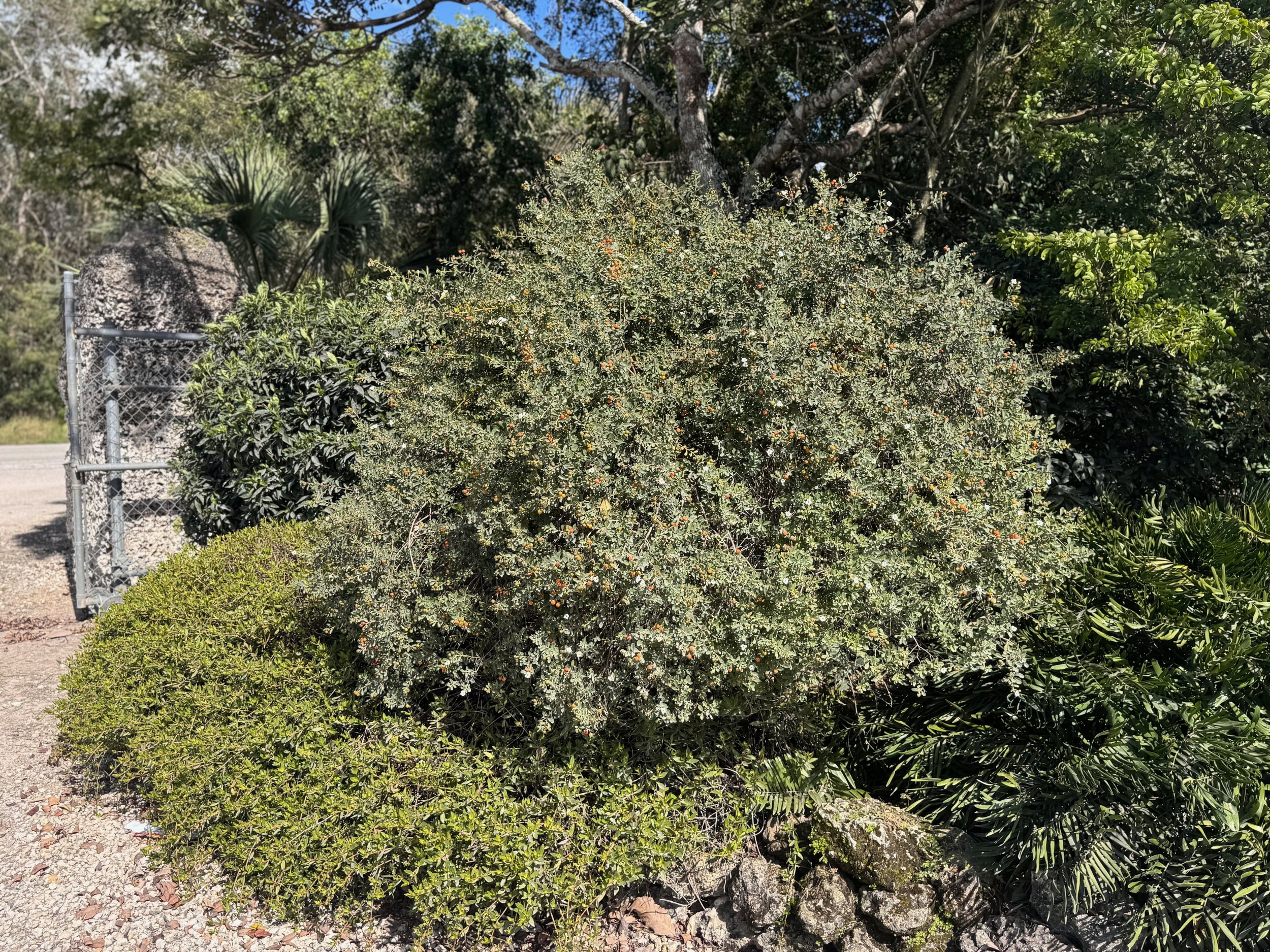
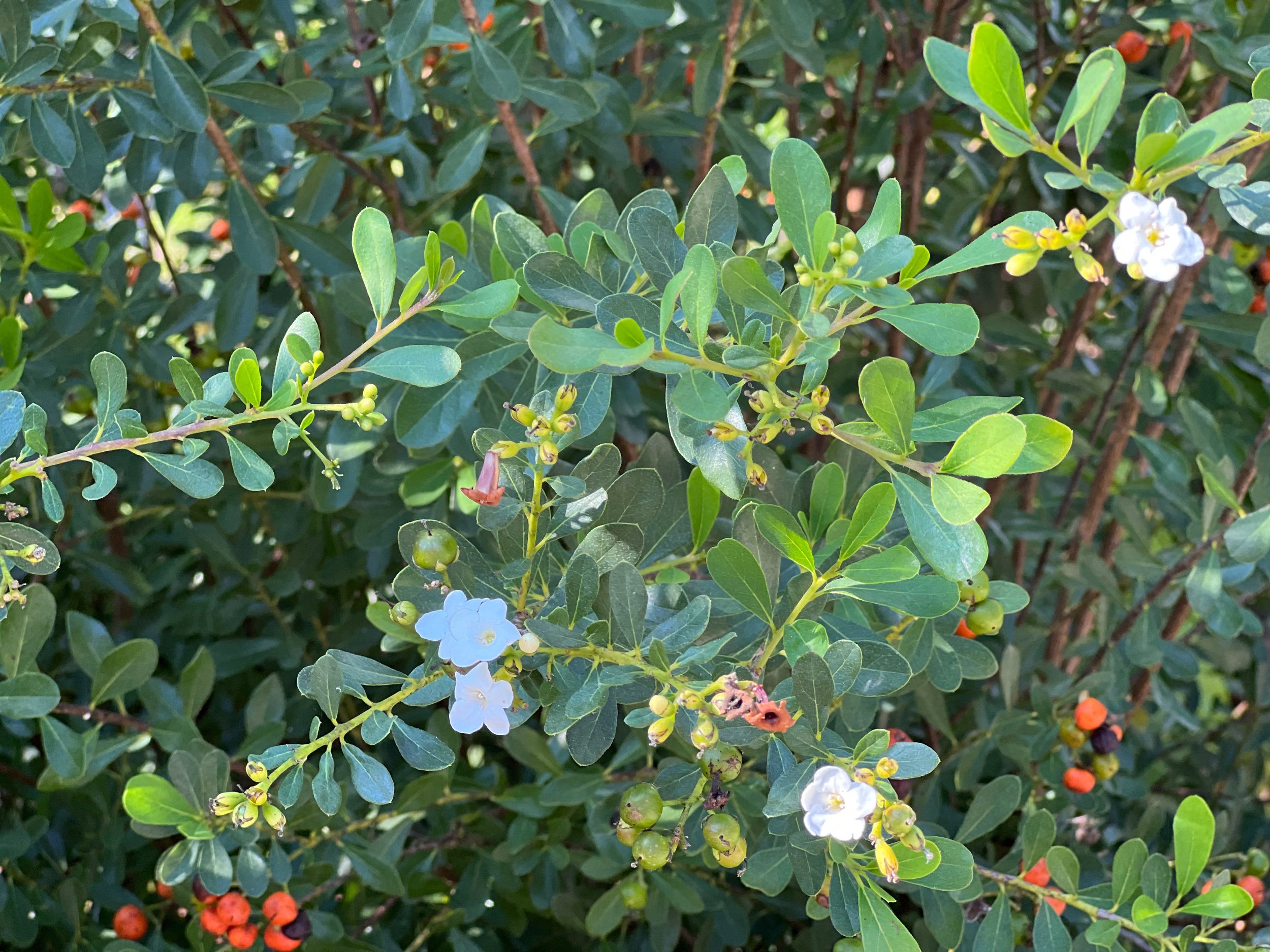
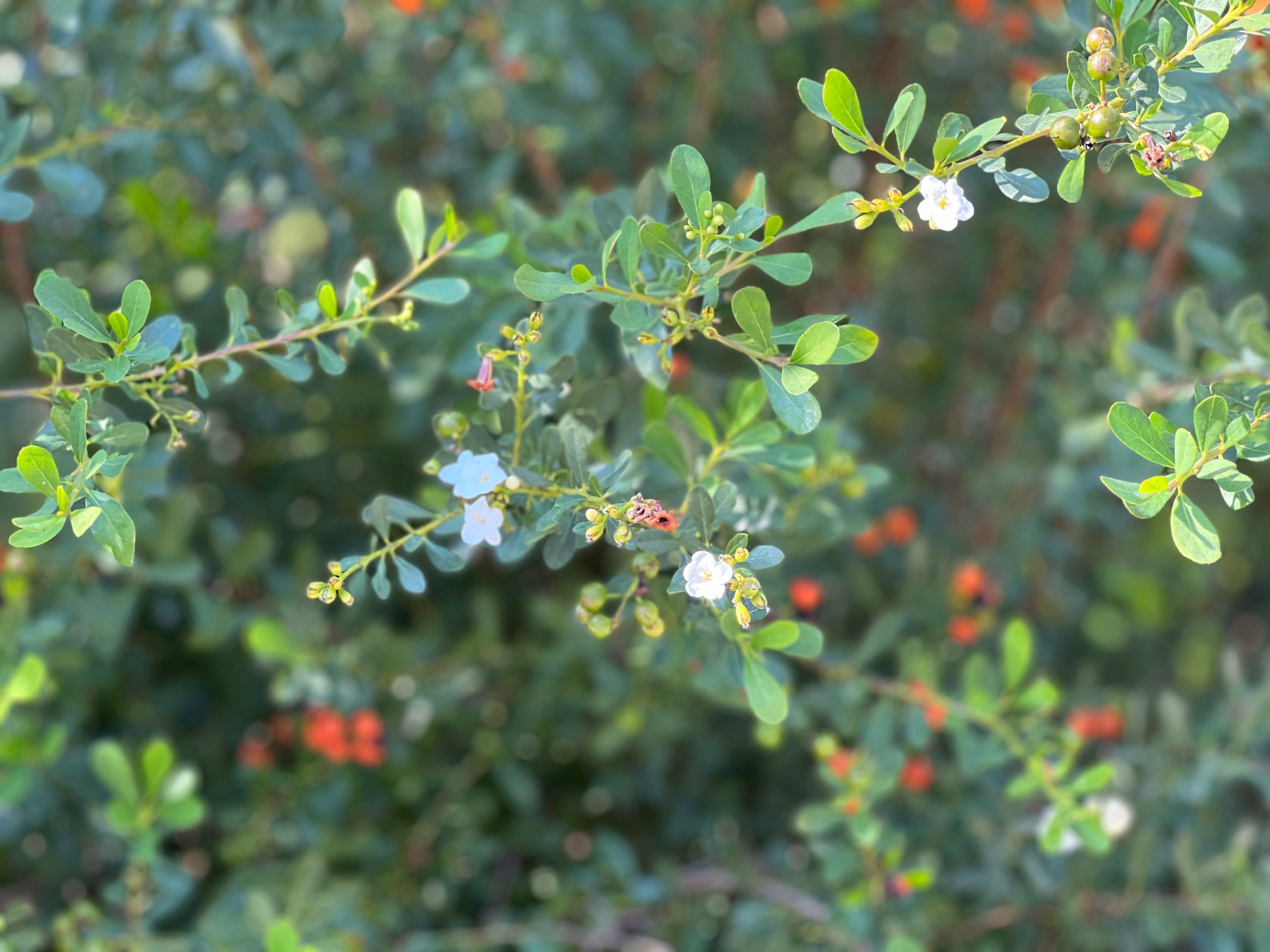
Little Strongbark is a native, evergreen, lower-growing flowering shrub native to pine rocklands of southern Florida. It is listed as endangered in Florida but is found throughout the West Indies. It enjoys full sun to light shade, moist to average well-drained soils. The small white flowers attract a wide variety of pollinators, including hummingbirds. They produce little orange berries that are a favorite food source for birds.
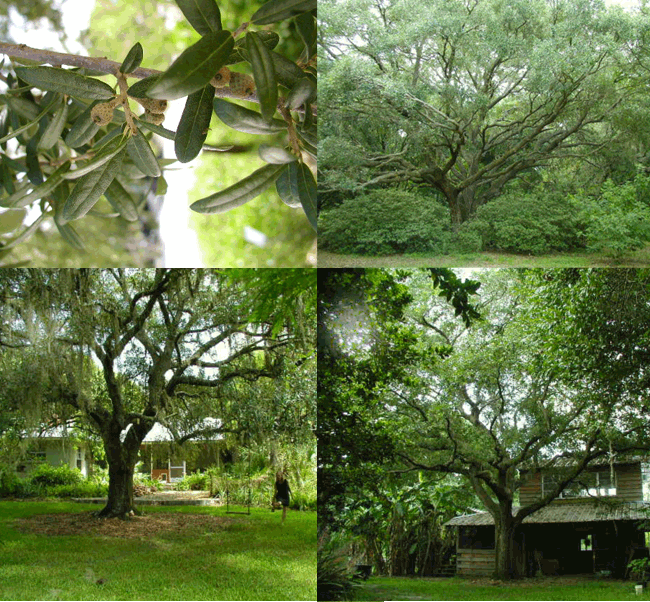
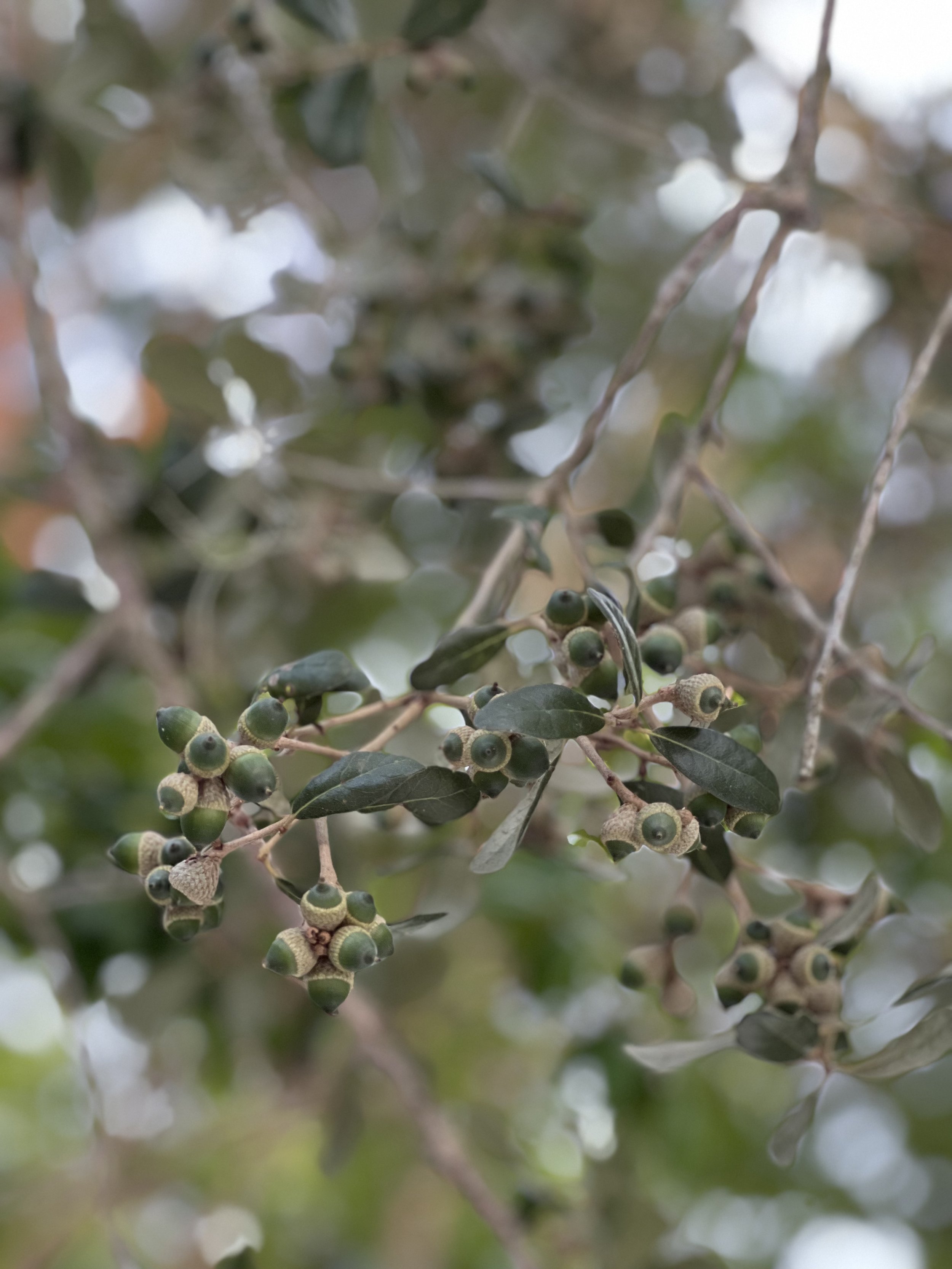
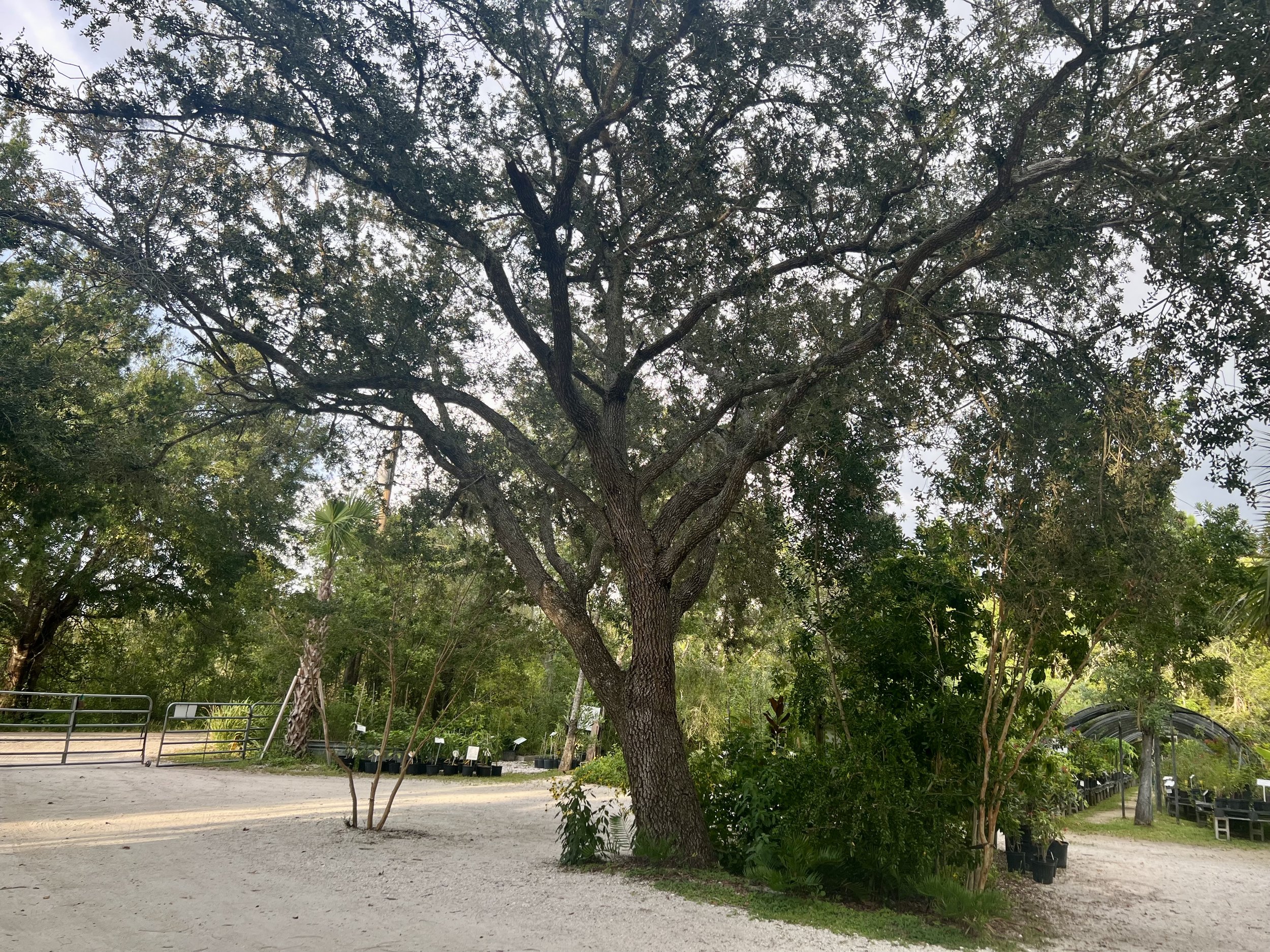
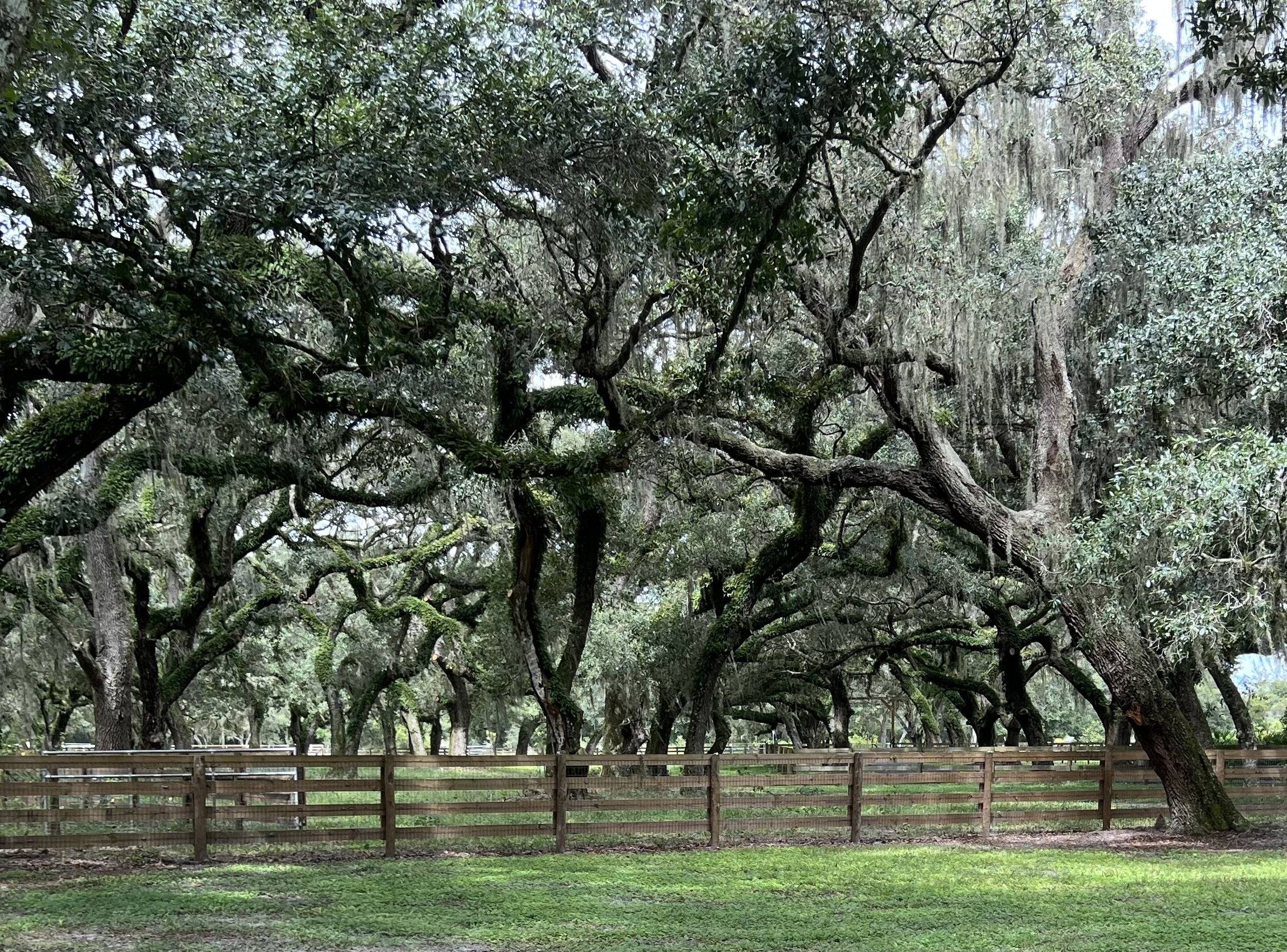
Quercus virginiana
Live Oak is a magnificent, slow-growing evergreen oak native to the southeastern United States from Virginia to Texas that can live for centuries. This iconic tree typically grows 40’-60’ tall but spreads dramatically wider, with massive horizontal and arching branches forming a broad, rounded canopy that can extend 100’ or more. The thick, leathery leaves are dark green and elliptical, often draped with Spanish moss in its native range. It produces inconspicuous flowers followed by acorns that provide critical food for squirrels, deer, and numerous bird species. Extremely durable and salt-tolerant, it thrives in sandy coastal soils and can withstand hurricanes, making it a symbol of the Old South and an excellent choice for large landscapes, parks, and street plantings in zones 8-10.
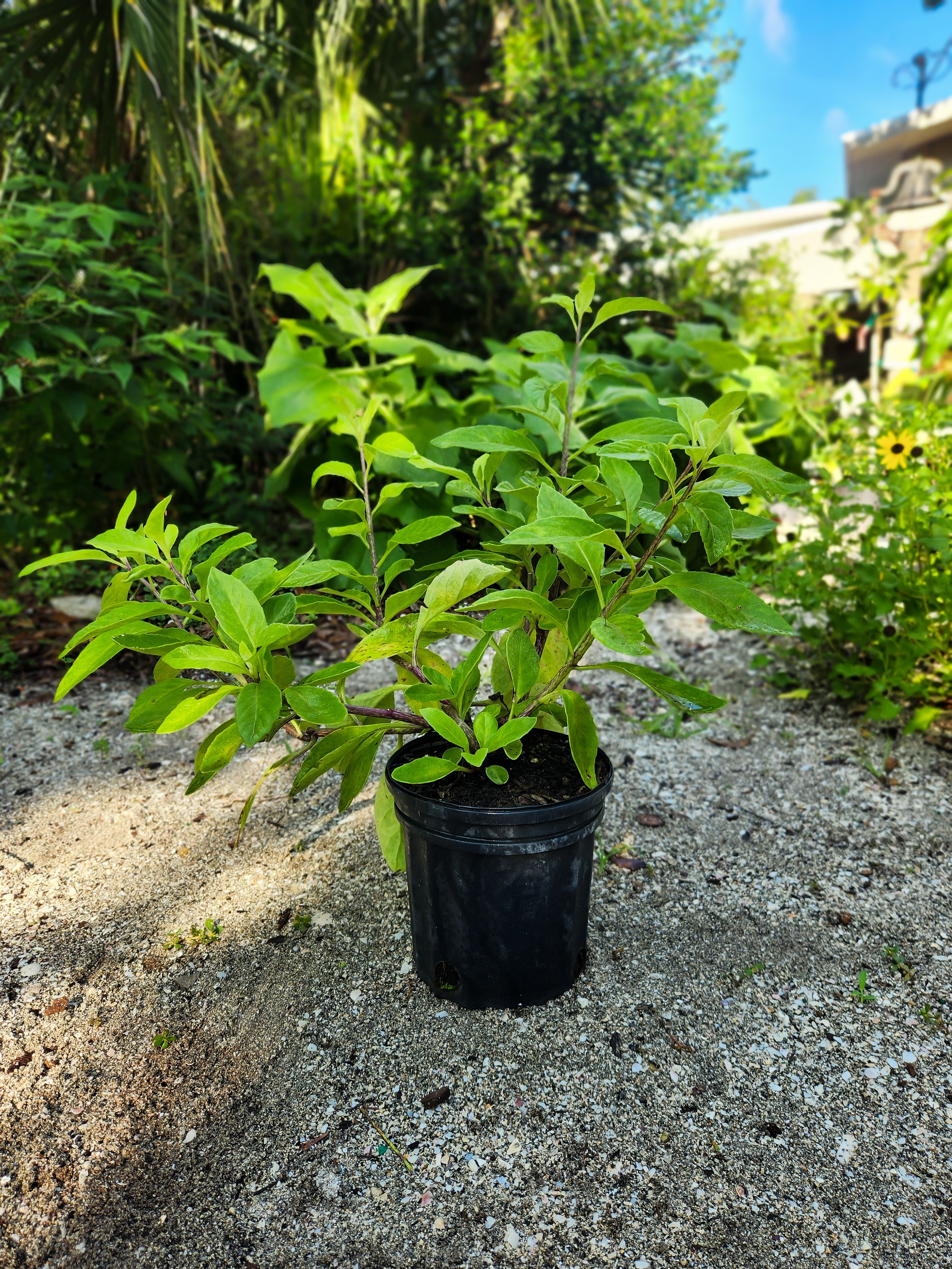
Gynura procumbens
Longevity Spinach is a non-native, Florida-friendly, edible trailing vine that grows best in indirect sun or partial shade, with rich, well-draining soil. Unlike some greens, Longevity Spinach is known for its extreme heat and humidity tolerance, making it an ideal choice for many Florida gardens and landscapes. The leaves can be enjoyed raw or cooked, and have a variety of culinary applications, such as salads, smoothies, and soups and stir-fries.
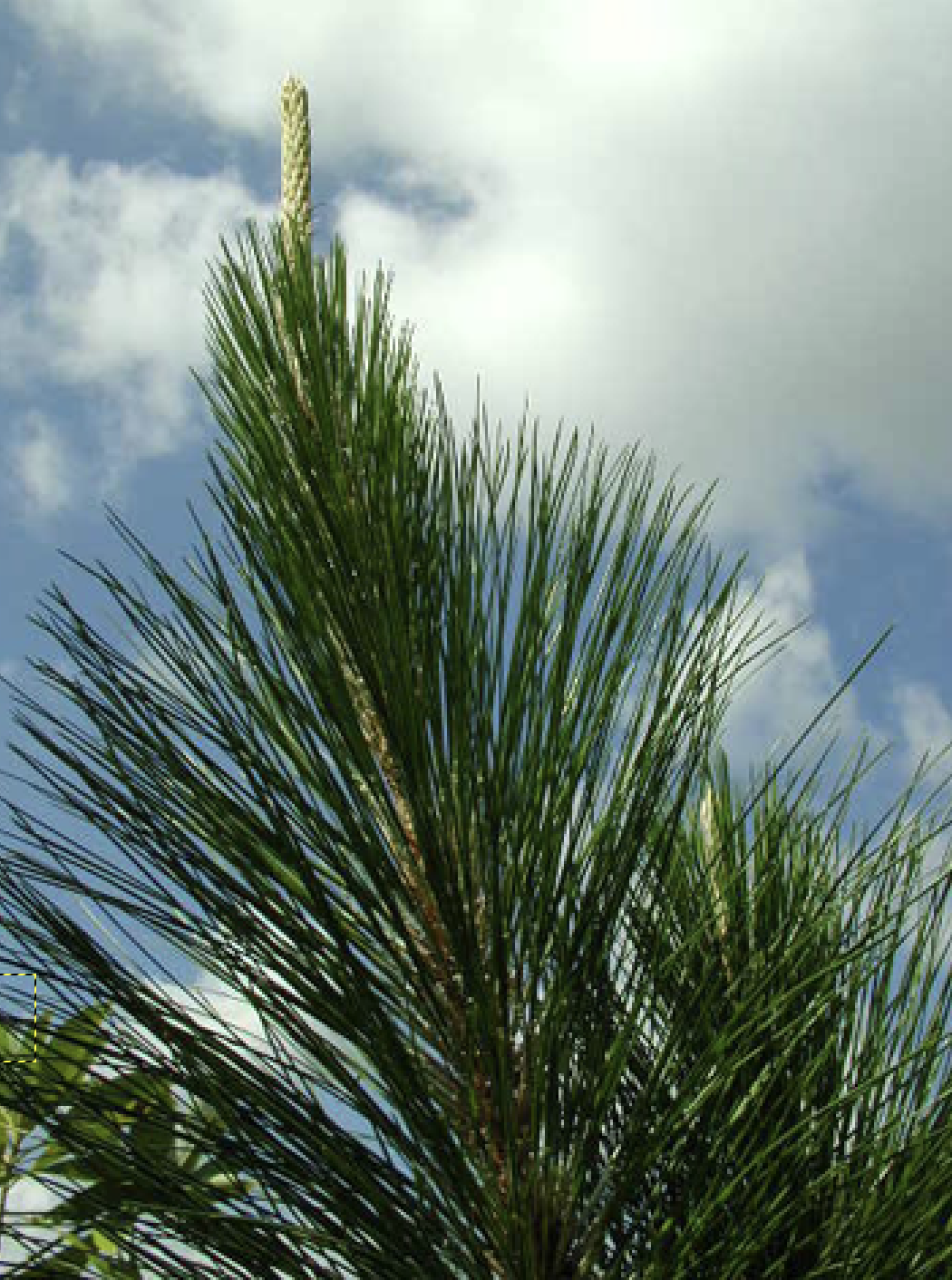
Pinus palustris
Native, evergreen, long-needle pine tree, can grow to be 125’ tall. Native to Florida sandhills, this tree does best in full sun with well-drained sandy soils. Very drought tolerant once established. Younger trees will grow slowly while they establish a healthy root system, with growth picking up after the first 5-7 years. While Longleaf Pines can make a lovely addition to a landscape, in their natural habitat, they are part of an incredibly biodiverse ecosystem, supporting deer, wild turkeys, and the endangered red-cockaded woodpecker, due to the frequent natural fires that provide rich undergrowth which provides food and shelter for many different species.
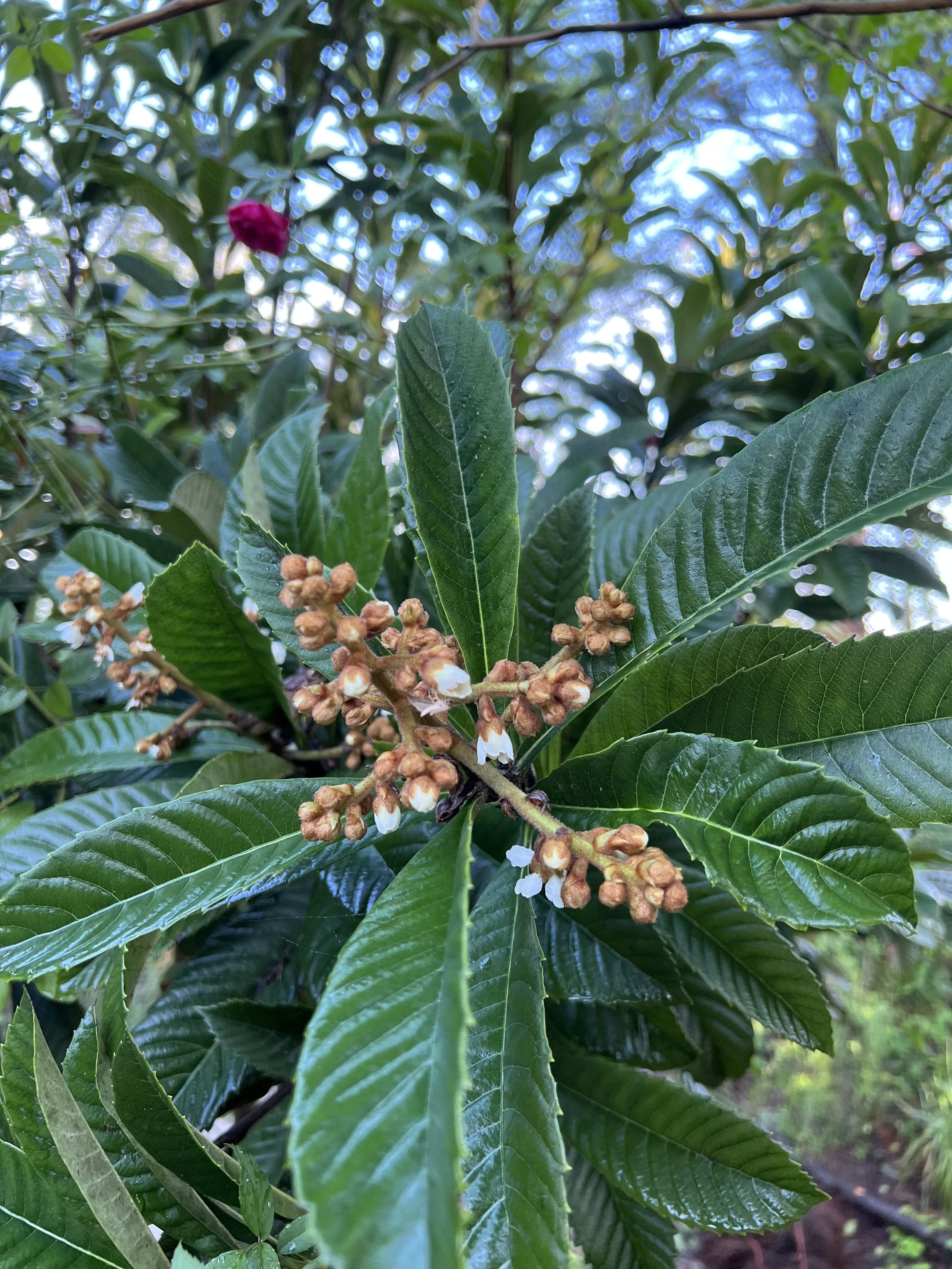
Eriobotrya japonica
Loquat is a non-native, Florida-friendly, evergreen fruiting tree that grows 15’-25’ tall. They grow best in full sun to partial shade, with average, well-draining sandy, clay, or loamy soil. Their flowers are highly attractive to butterflies and other pollinators, and their apricot-like fruit can be enjoyed by humans and wildlife alike.
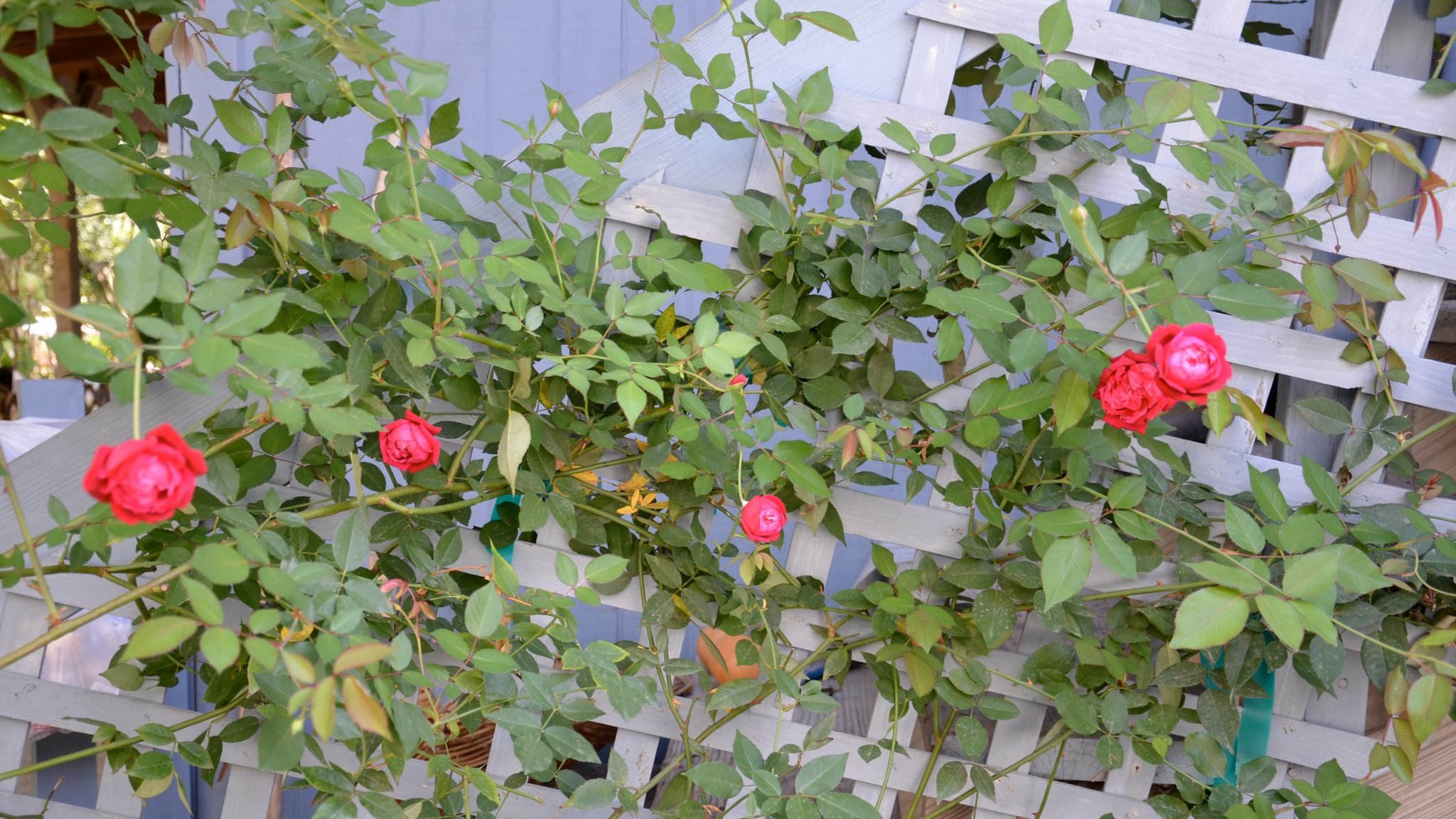
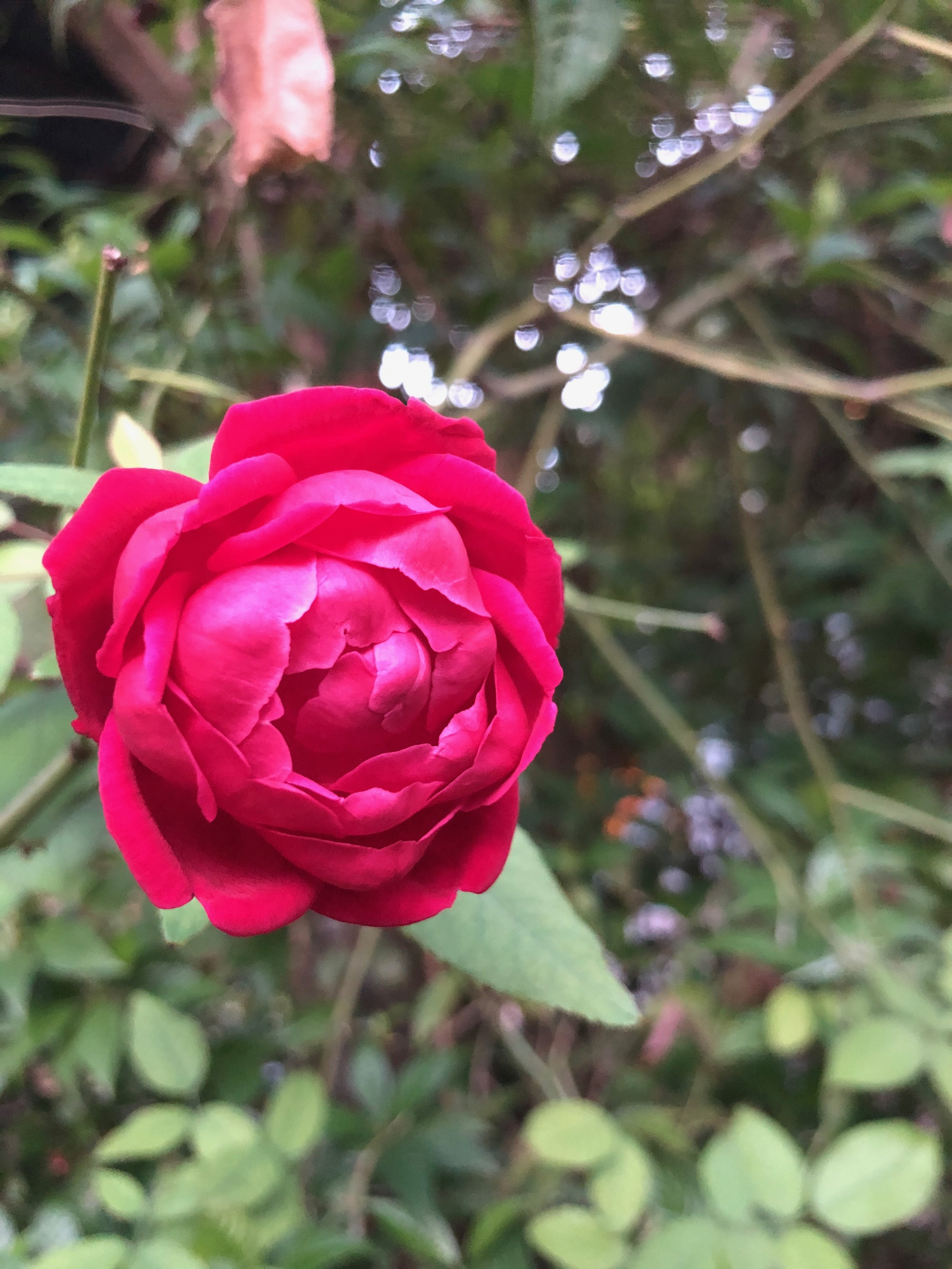
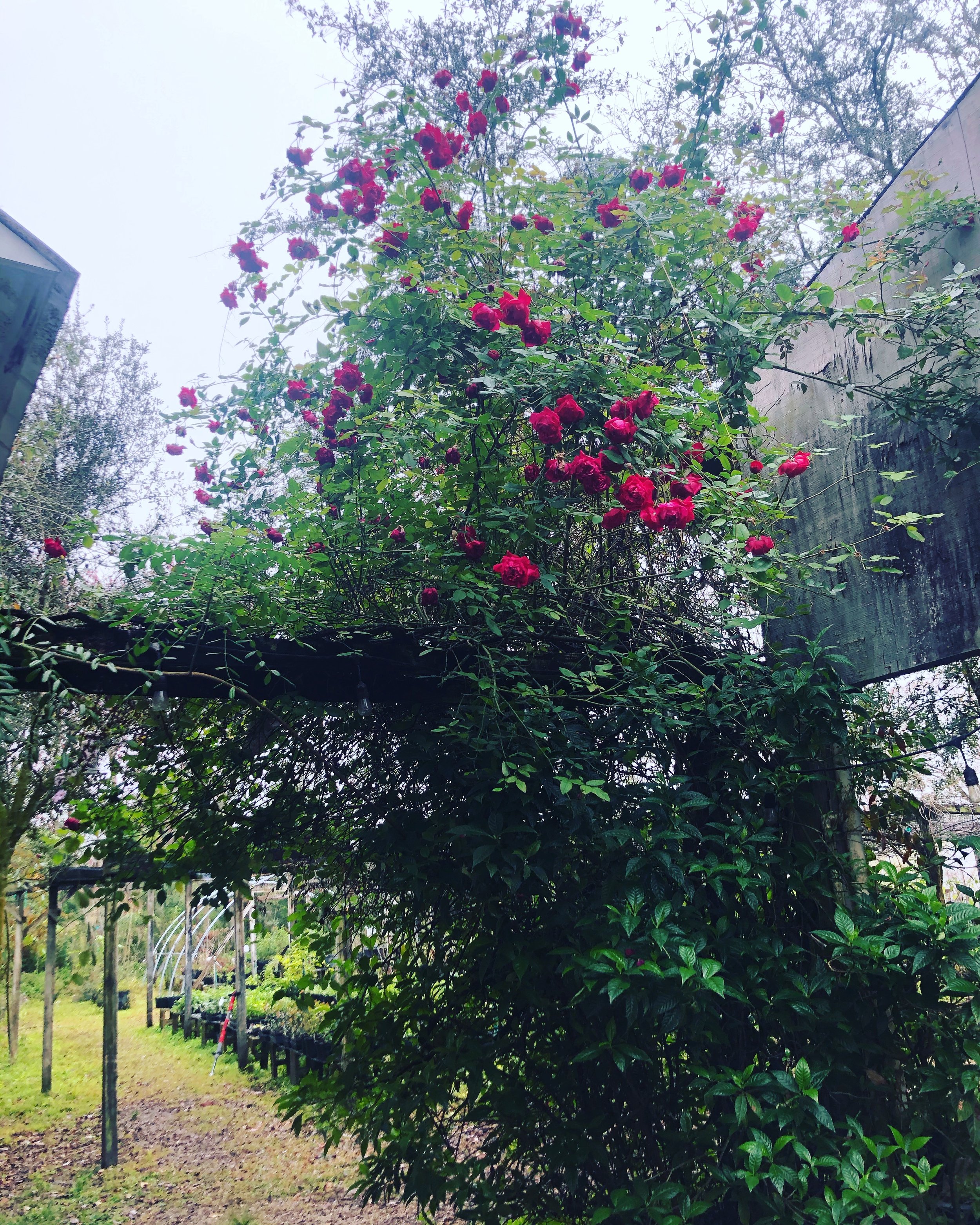
Rosa ‘Louis Philippe’
Louis Philippe Rose is a classic antique China rose introduced in 1834 and named after the French king of the same era. This tough, own-root heirloom grows 3-6 feet tall with a bushy, rounded habit and glossy, dense foliage. It produces loosely double, 2-inch flowers in deep rose red with lighter blush pink centers and occasional white stripes through the petals, blooming continuously throughout the growing season. Known as the "Cracker Rose" in the American South where it has thrived for over a century, it's extremely hardy, drought-tolerant, and disease-resistant. With its sweet fragrance and exceptional adaptability to Southern climates, it remains one of the most reliable roses for Florida gardens in zones 7-10.
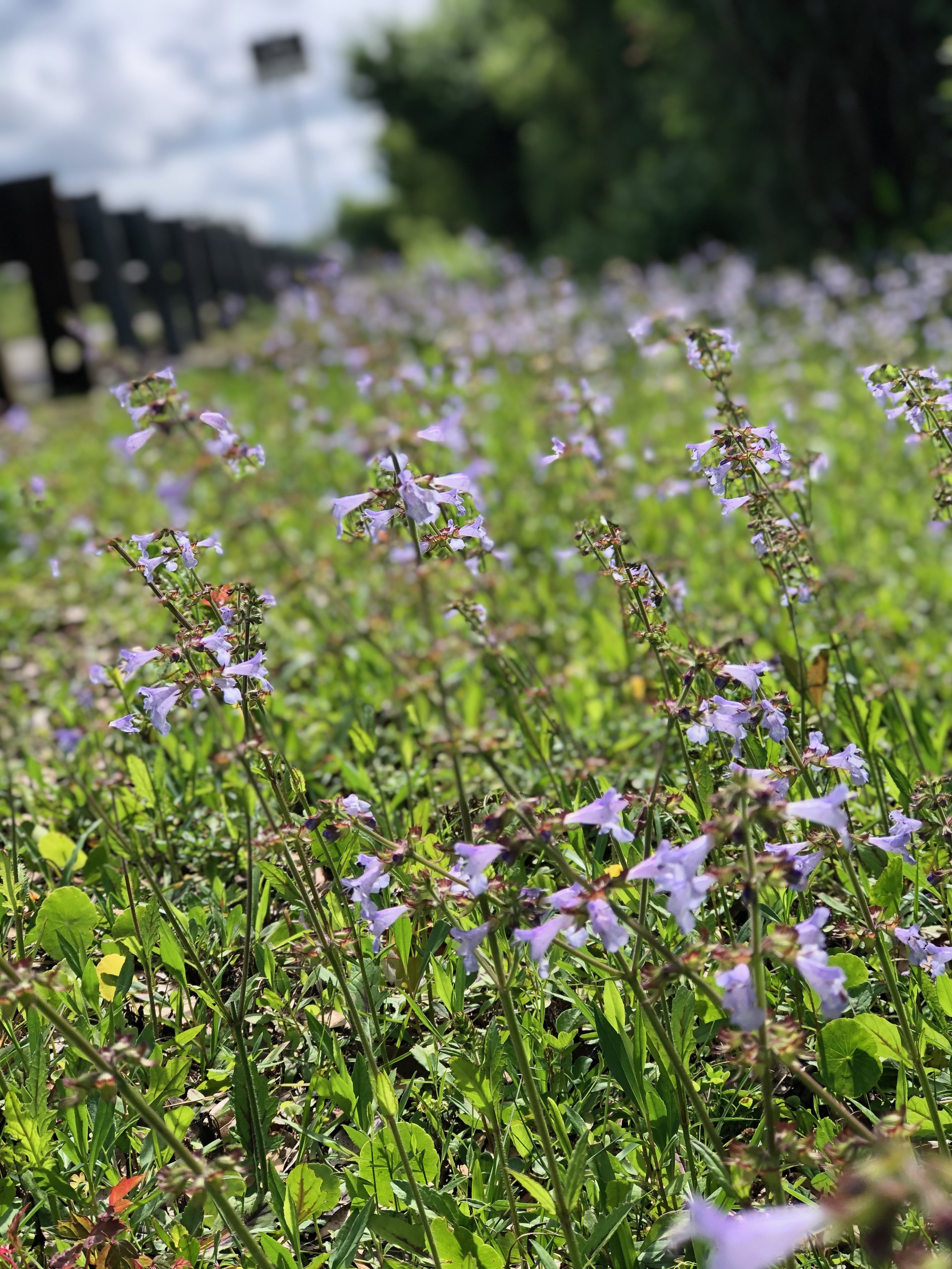
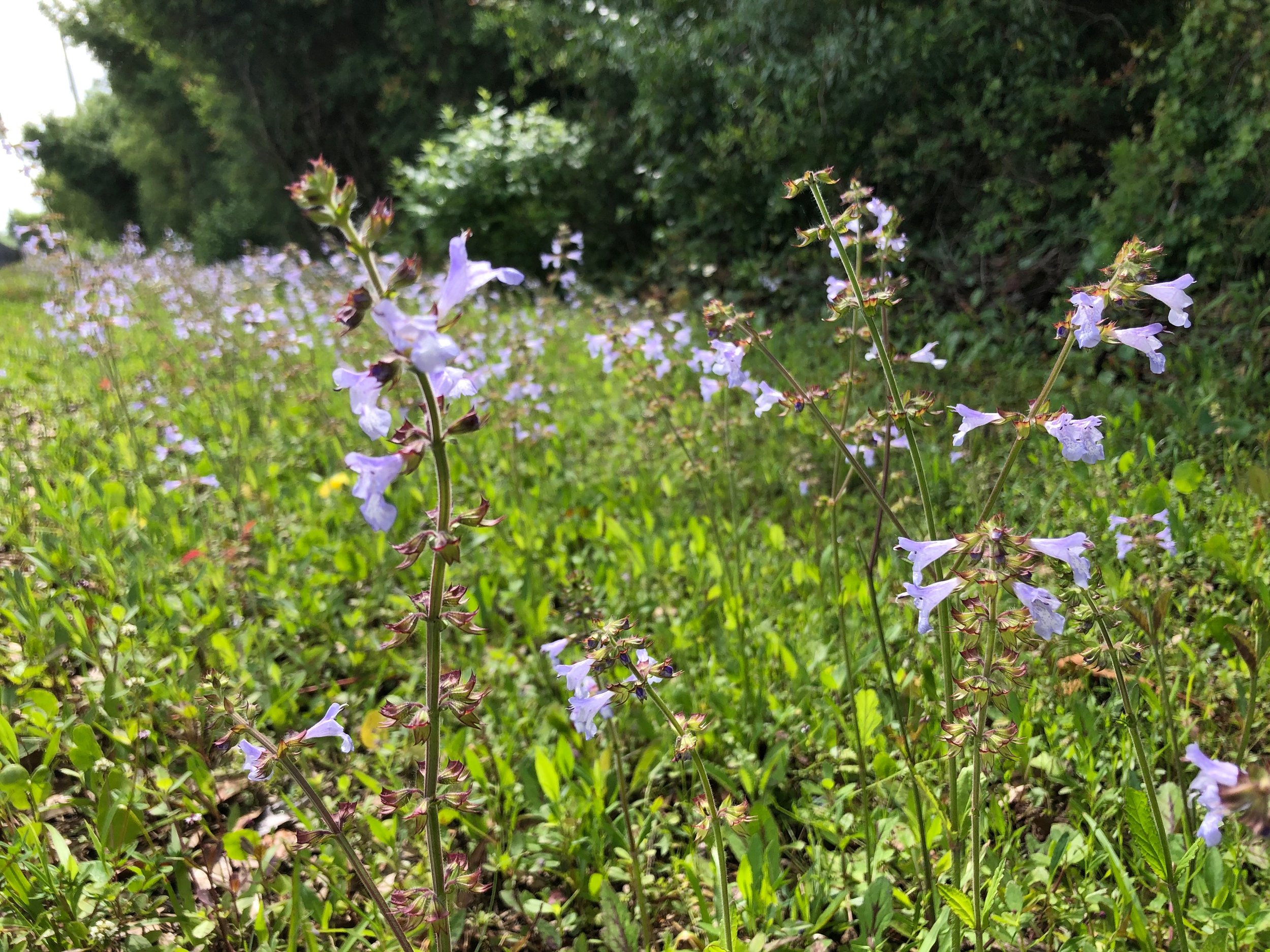
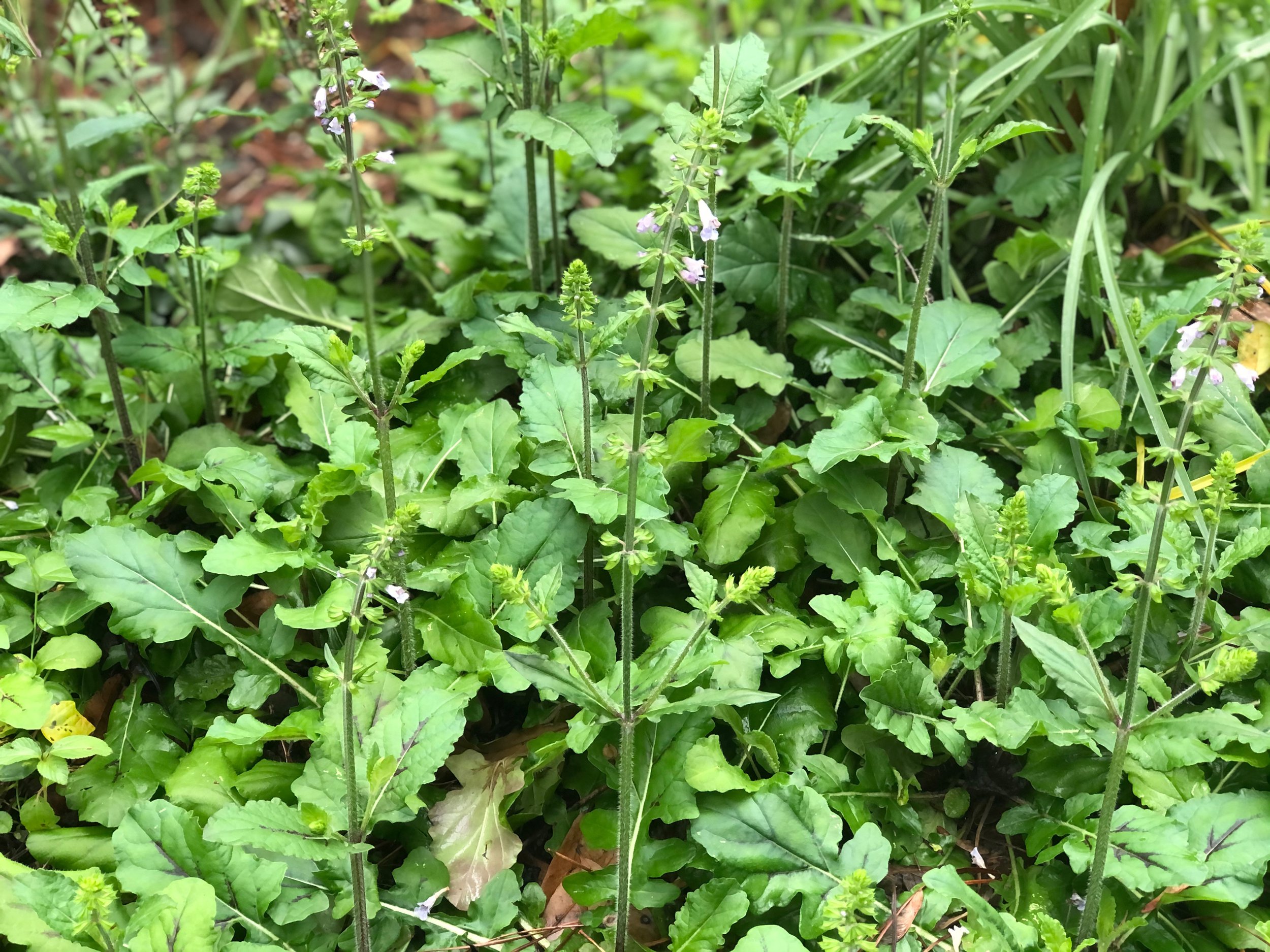
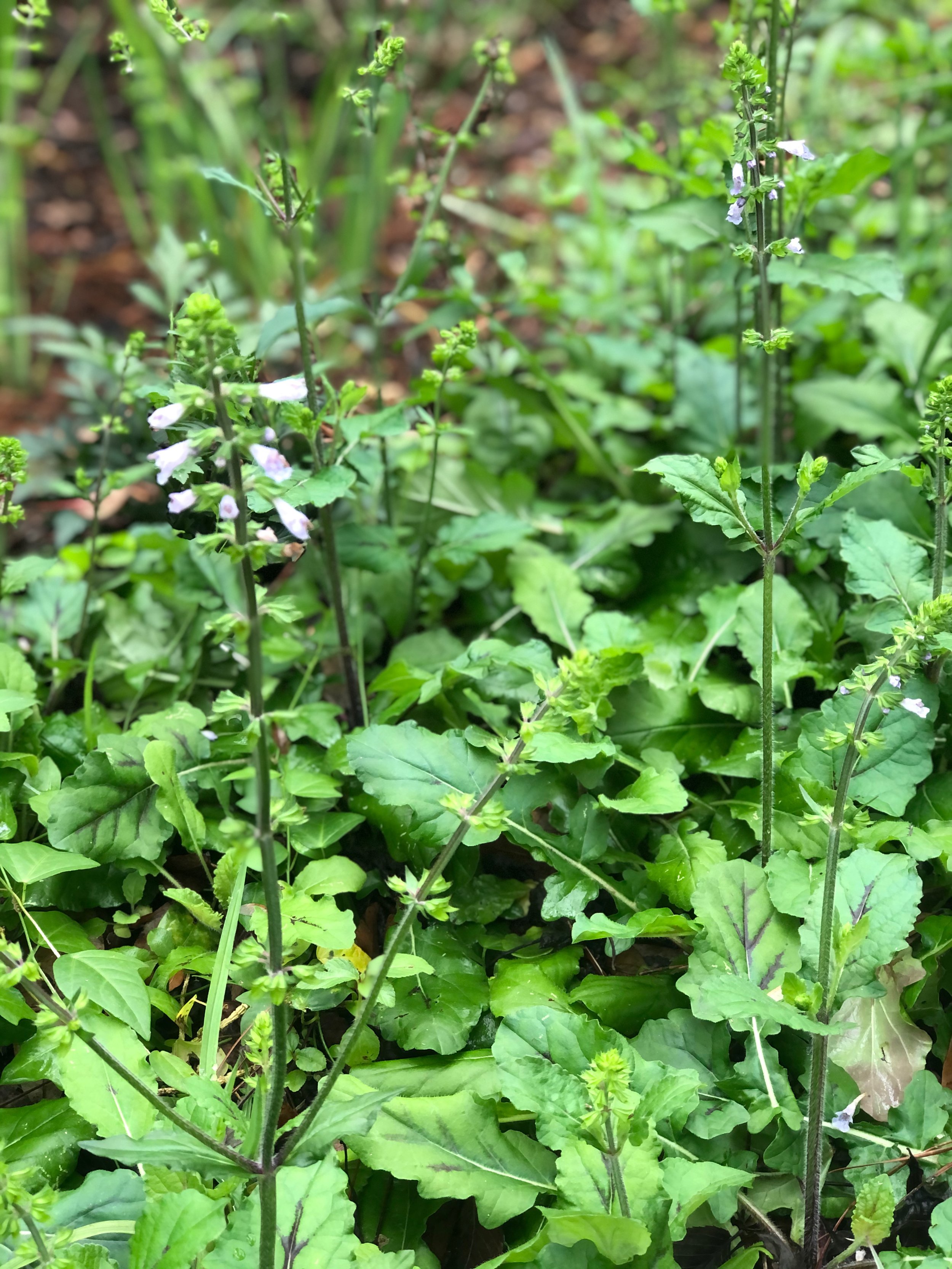
Salvia lyrata
Lyreleaf Sage is a long-lived, reseeding, perennial, evergreen, ground-covering wildflower that blooms in the spring and summer. Lyreleaf likes sun to shade and dry to wet (well-drained) soils. The purple flowers attract hummingbirds as well as other pollinators like butterflies. The young leaves are edible and the plant is used medicinally.
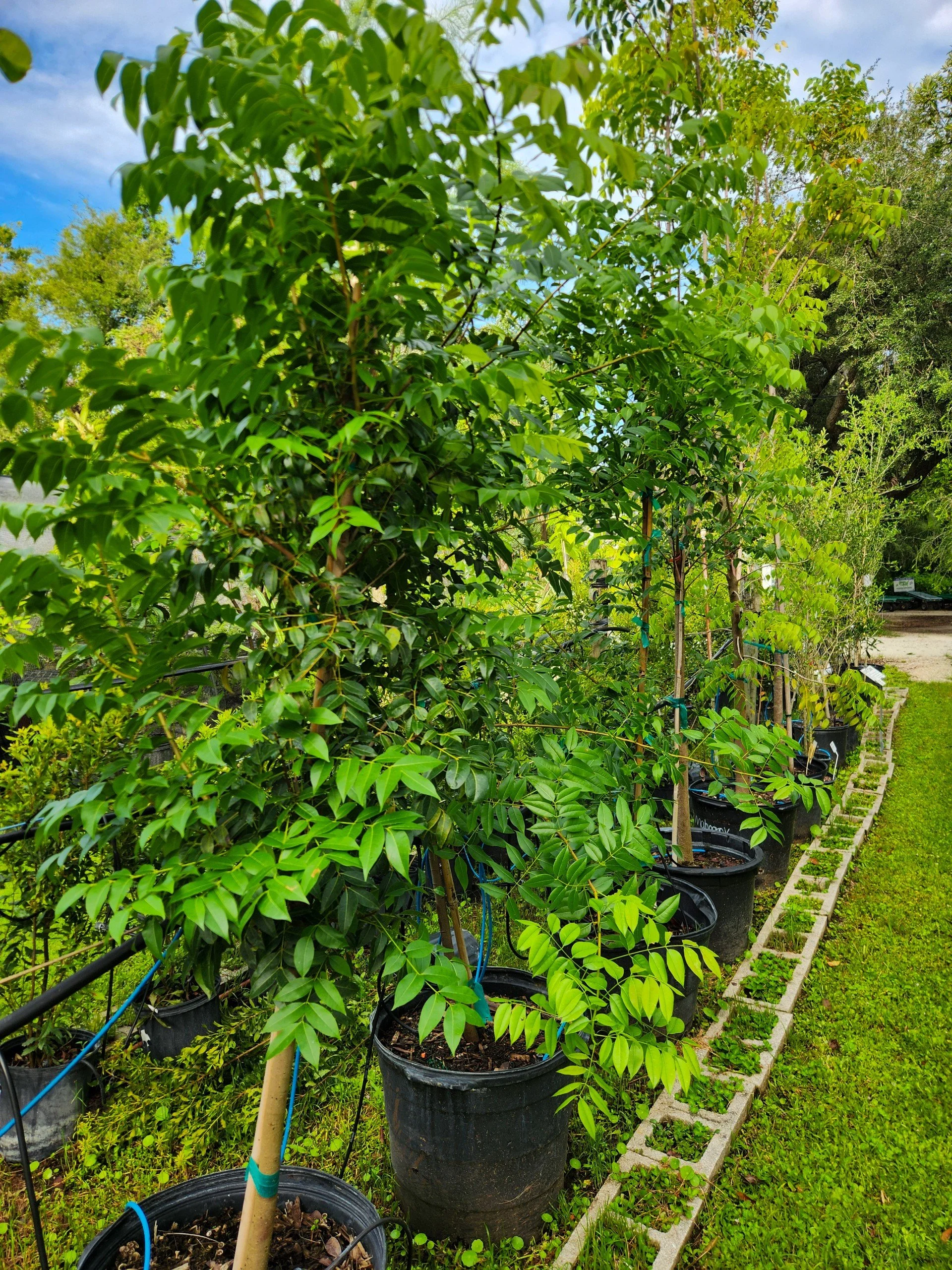
Swietenia mahagoni
Native semi-evergreen tree that grows to be 40’-70’ tall. The foliage is dark green, with inconspicuous white and yellow flowers. Plant in full sun to partial shade, with moist, but well-drained sandy soil. Salt-spray resistant once established, with dense, strong wood that is wind-resistant if properly trained. Mahogany is prone to growing multiple leader trunks, which reduces wind-resistance, so prune the tree to promote strength against wind.
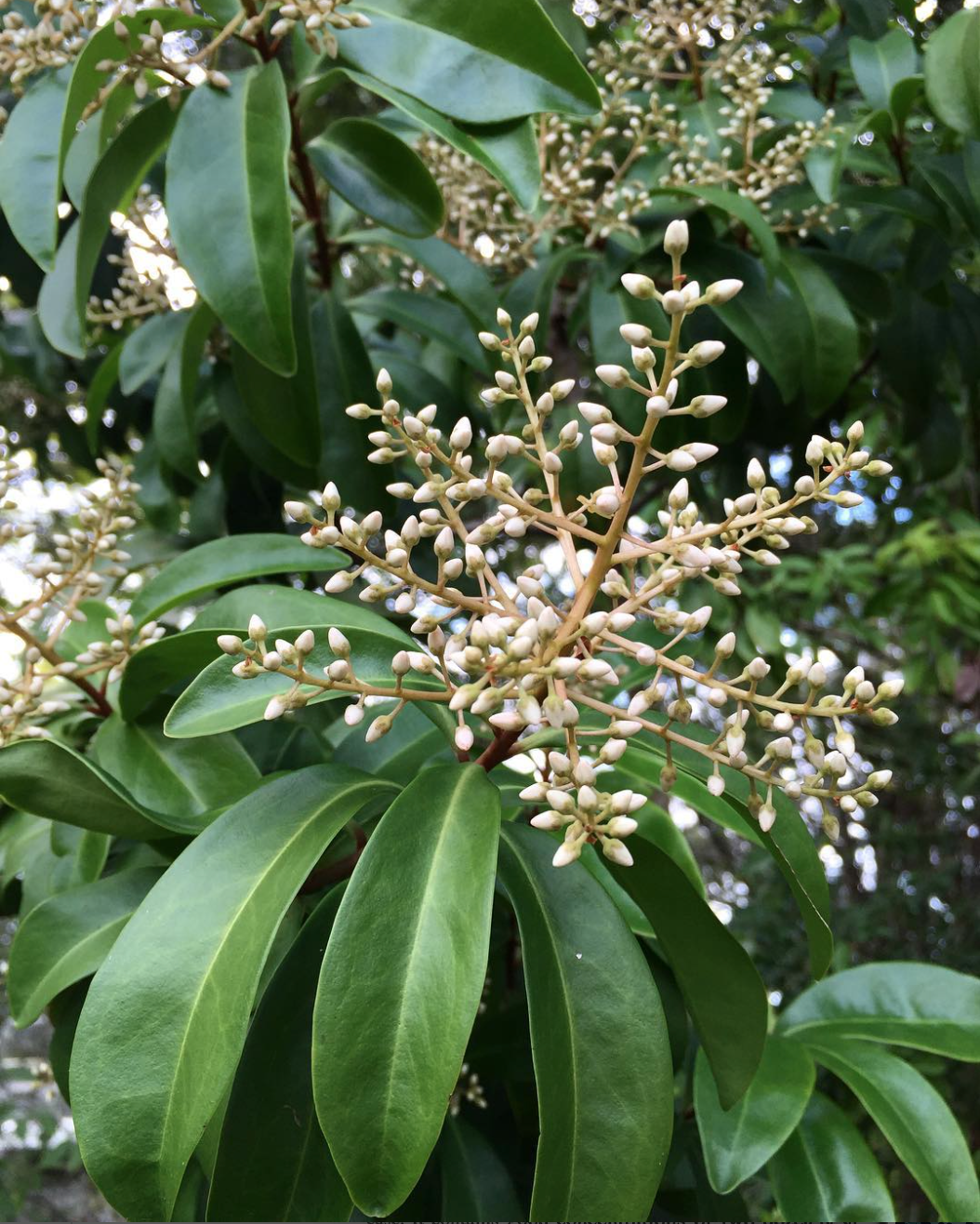
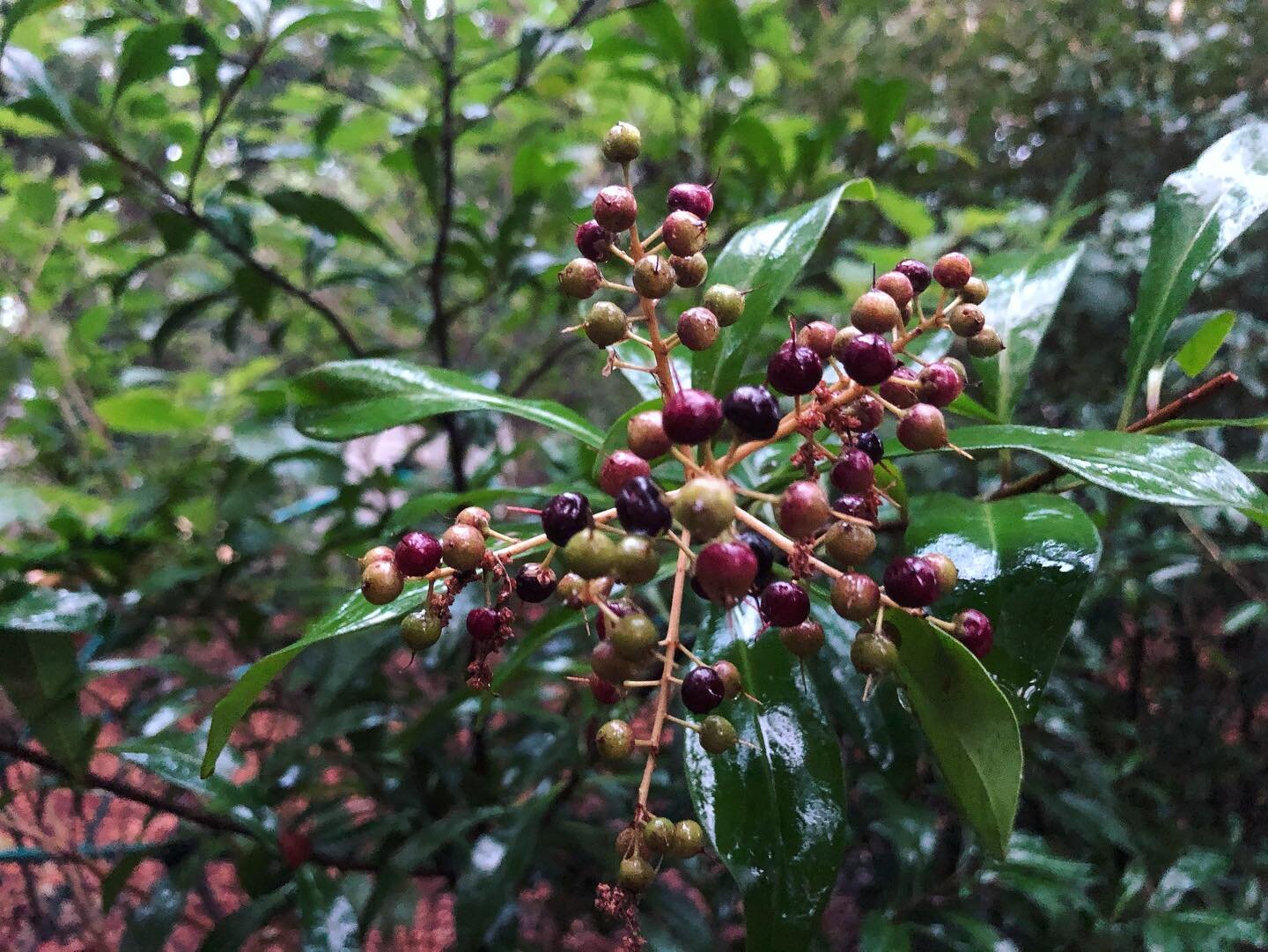
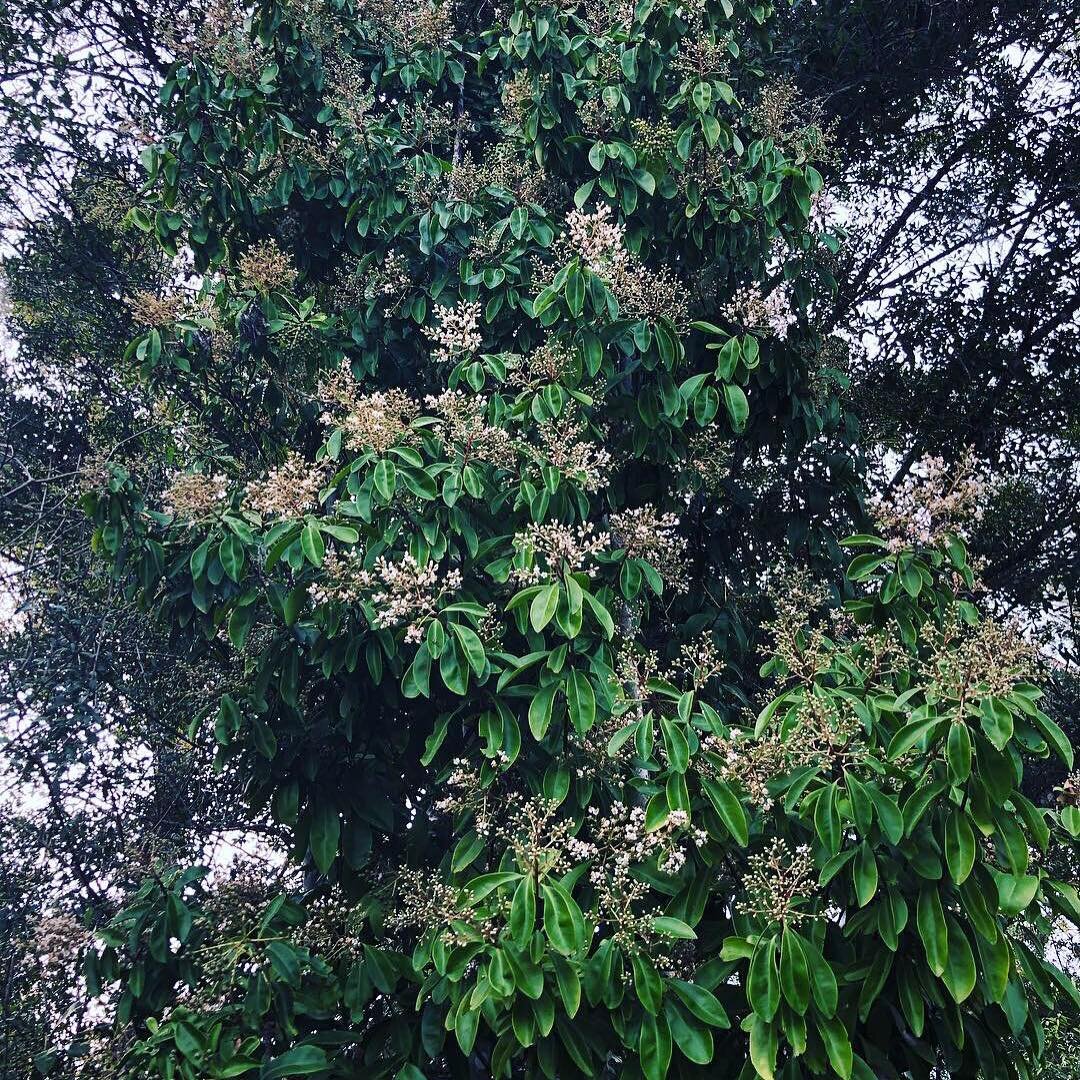
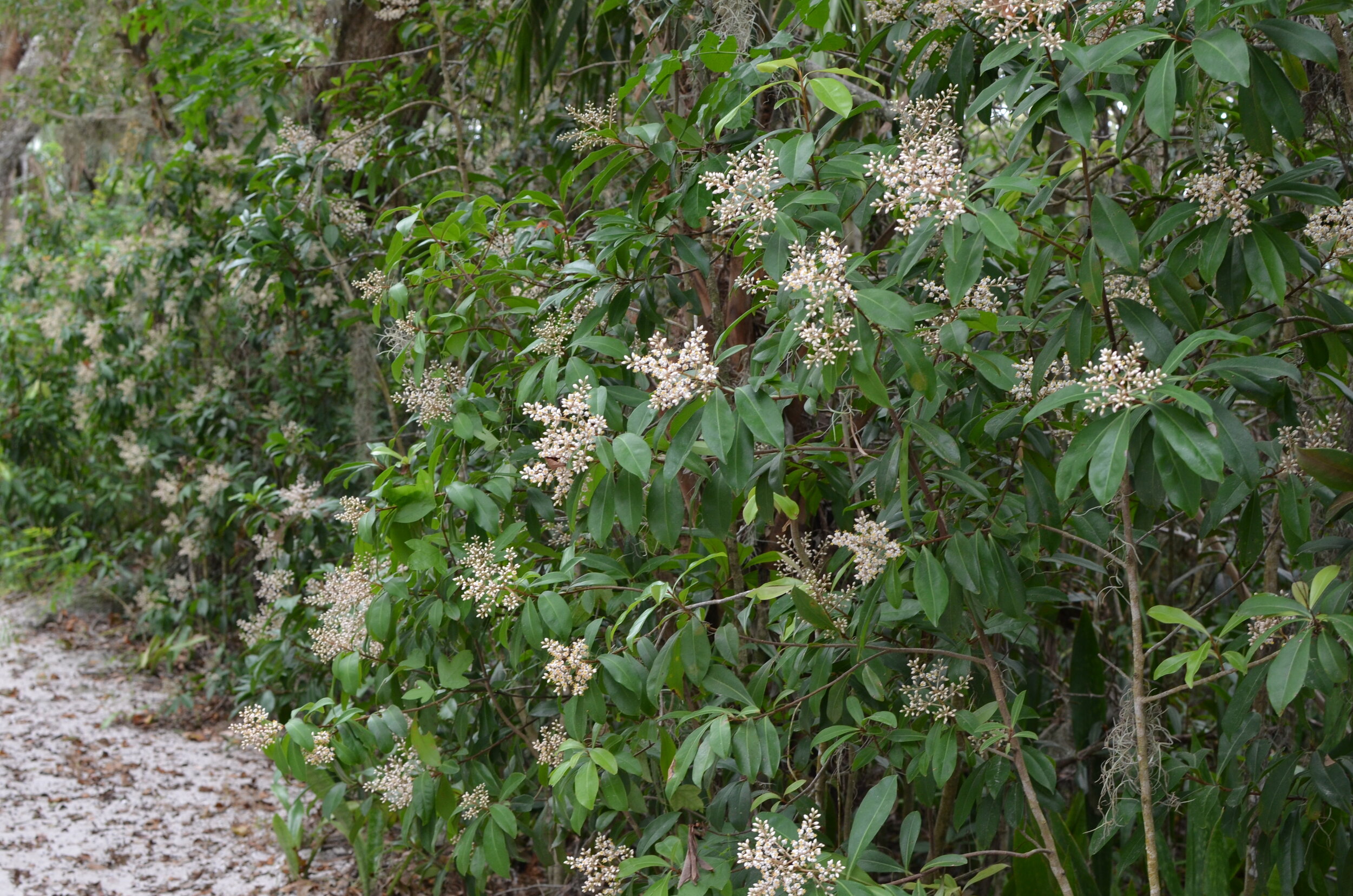
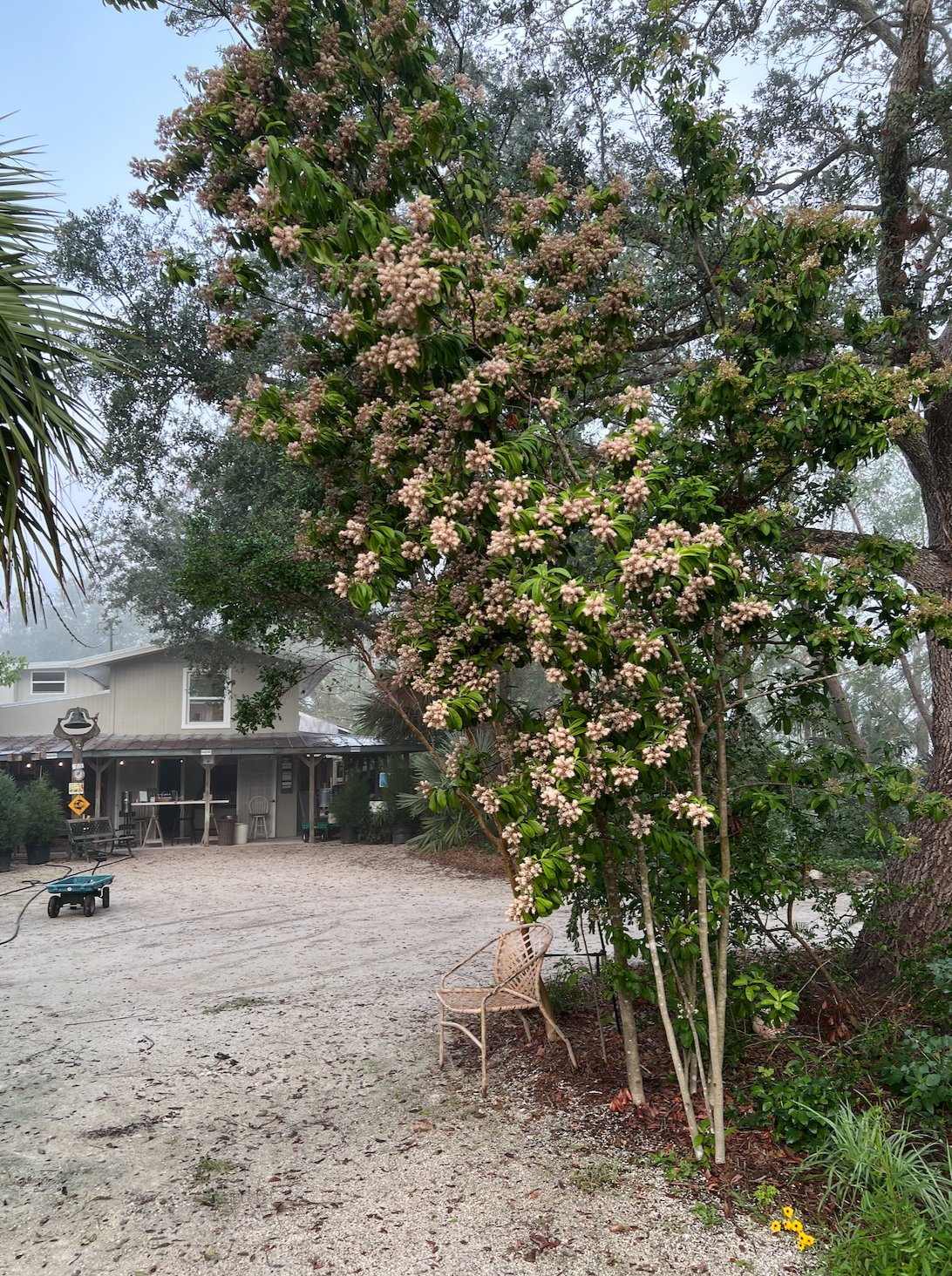
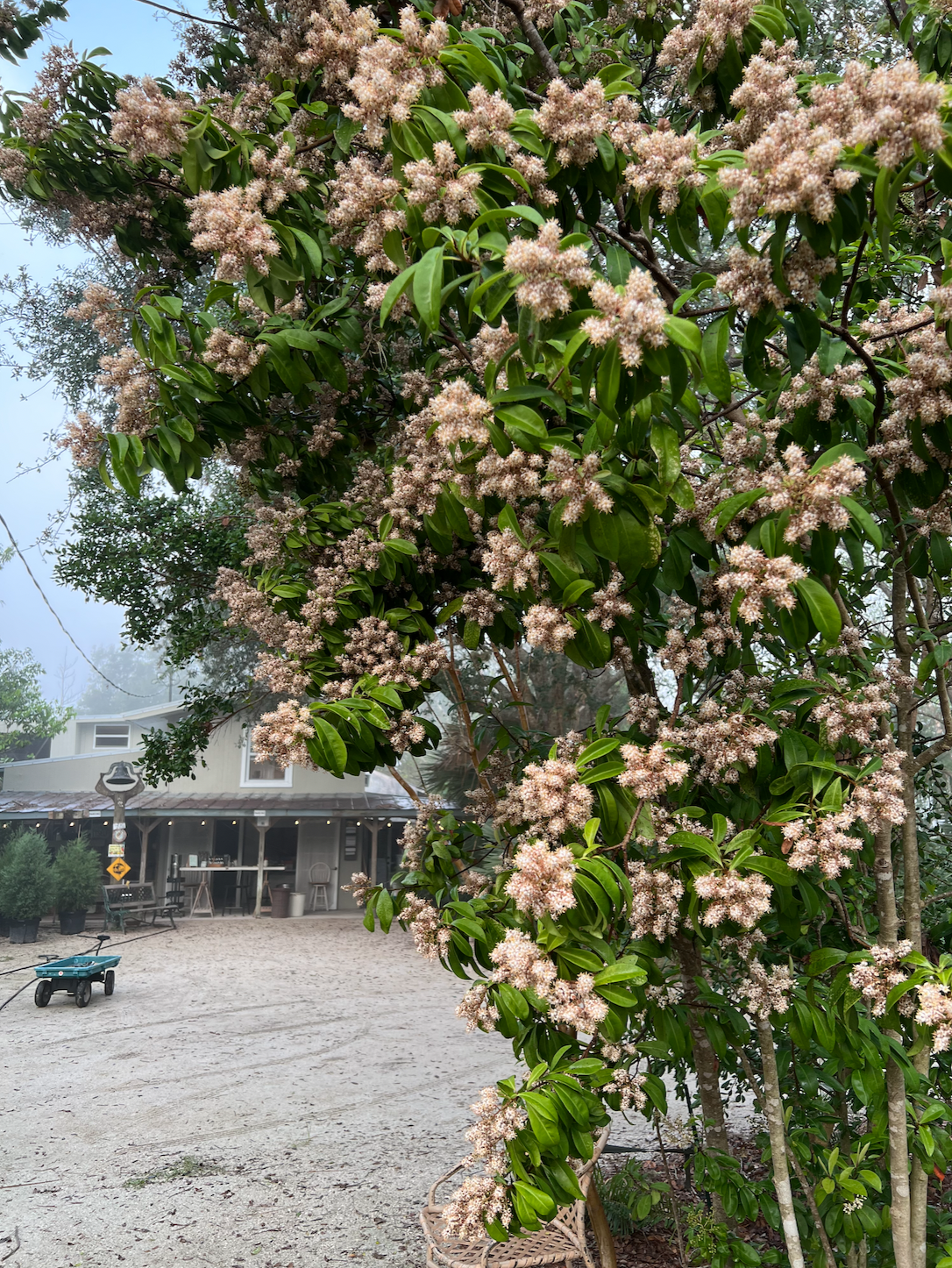
Ardisia escallonioides
Marlberry is a native evergreen shrub that typically grows 15’ tall and thrives in both shady and sunny moist hammock environments. This attractive plant features glossy, dark green leathery leaves and produces small, super fragrant white flowers followed by clusters of shiny black berries that are an important food source for wildlife.
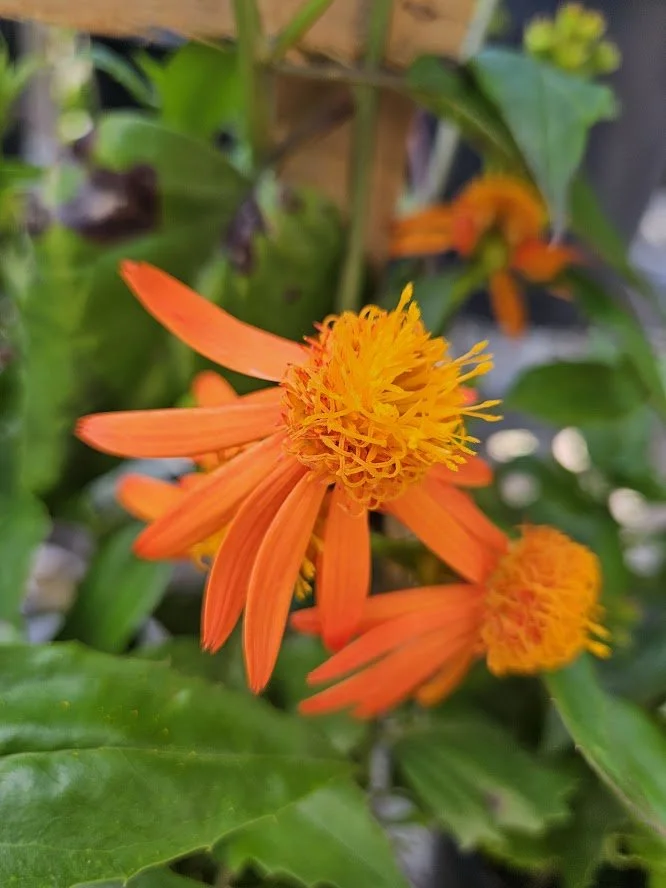
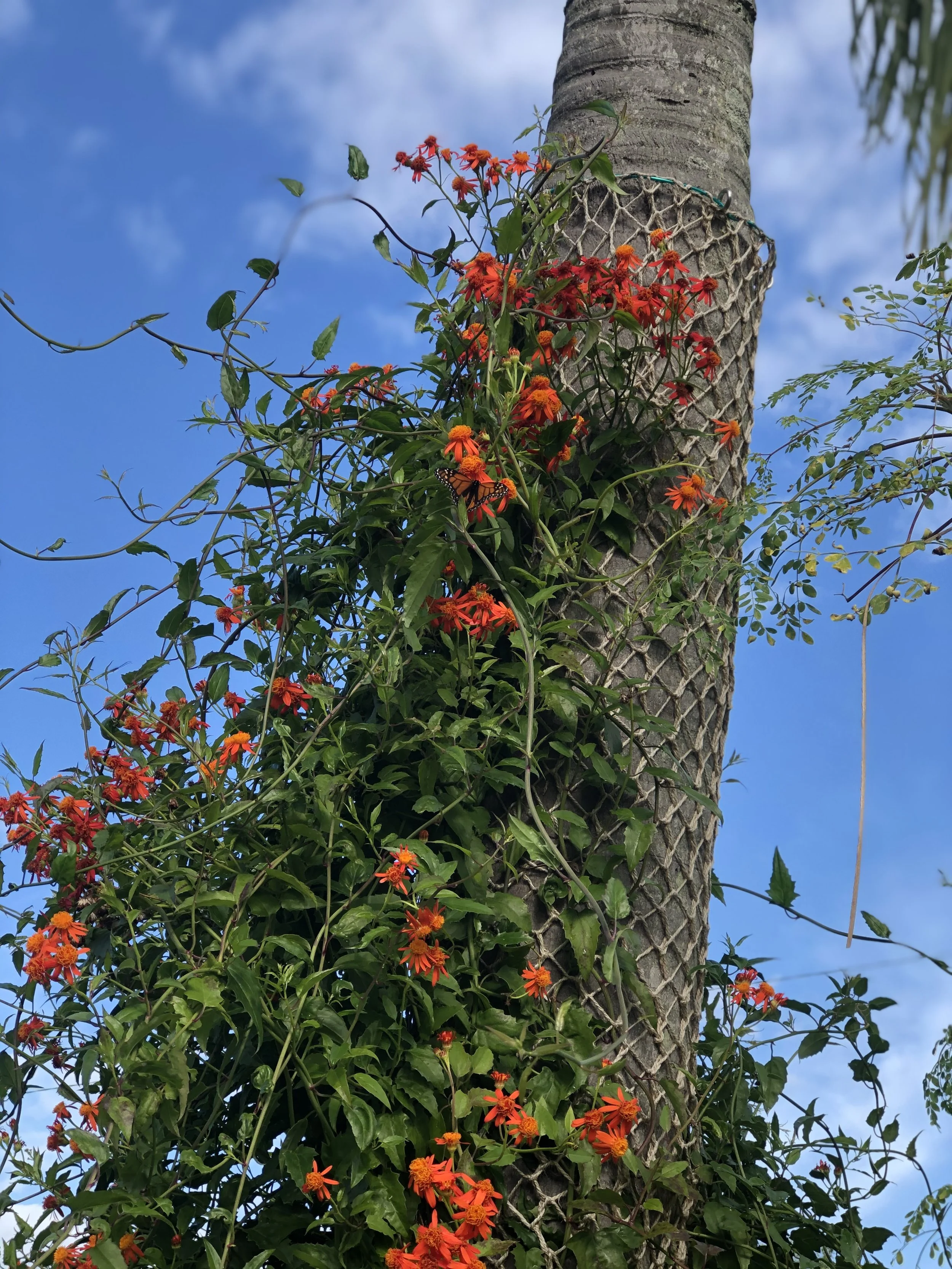
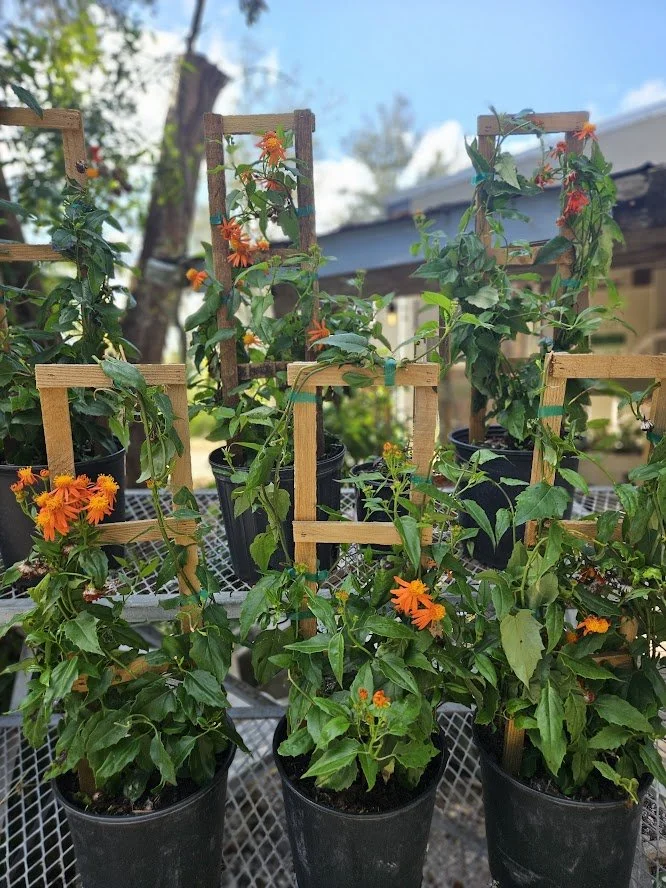
Pseudogynoxys chenopodioides
Mexican Flame Vine is a vigorous, fast-growing evergreen climber native to Mexico and Central America that reaches 12 feet in length with a 6-foot spread. This ornamental vine features attractive arrowhead-shaped leaves with purple undersides and produces clusters of brilliant orange-red daisy-like flowers from late spring through fall. The showy blooms are highly attractive to butterflies, hummingbirds, and bees, making it an excellent choice for pollinator gardens. Hardy in zones 9-11, it thrives in average to organically rich, well-drained soils in full sun to partial shade and tolerates short periods of drought once established.
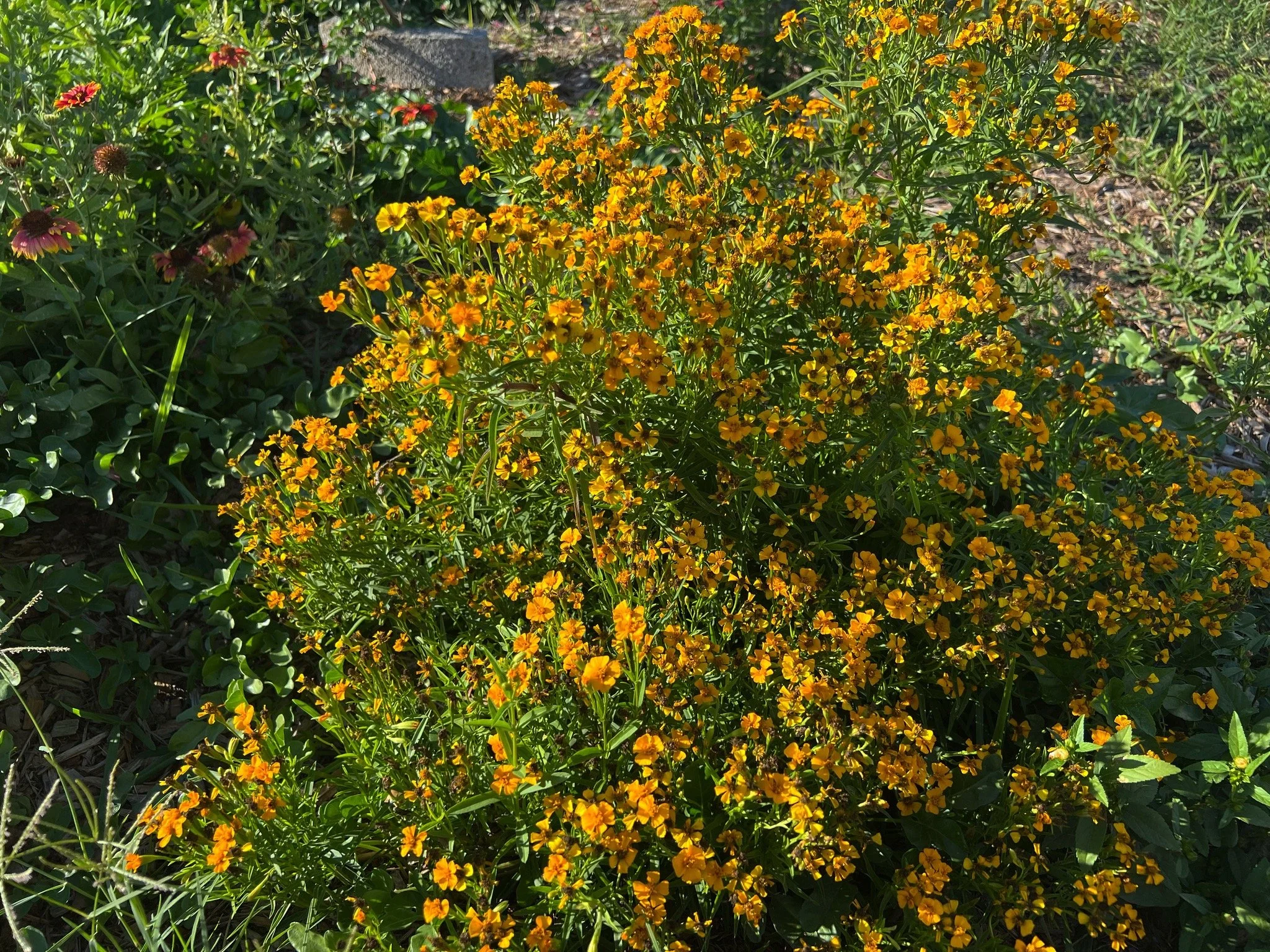
Tagetes lucida
This hardy herb is a must-have for warm-climate herb gardeners. Its glossy, narrow leaves produce a sweet fragrance and flavor remarkably similar to licorice or anise and its golden flowers are super showy.
Flavor Profile: A bold, sweet anise scent and flavor. It holds up much better in cooked dishes than French Tarragon.
Pollinator Friendly: In late summer and fall, the plant is covered in clusters of small, golden-yellow flowers that attract butterflies and bees.
Heat & Drought Tolerant: Unlike traditional tarragon, this variety loves the sun and handles humidity and dry spells with ease.
Garden Versatility: Grows into a tidy, upright bush (roughly 2–3 feet tall), making it perfect for borders, containers, or dedicated herb "cocktail" gardens.
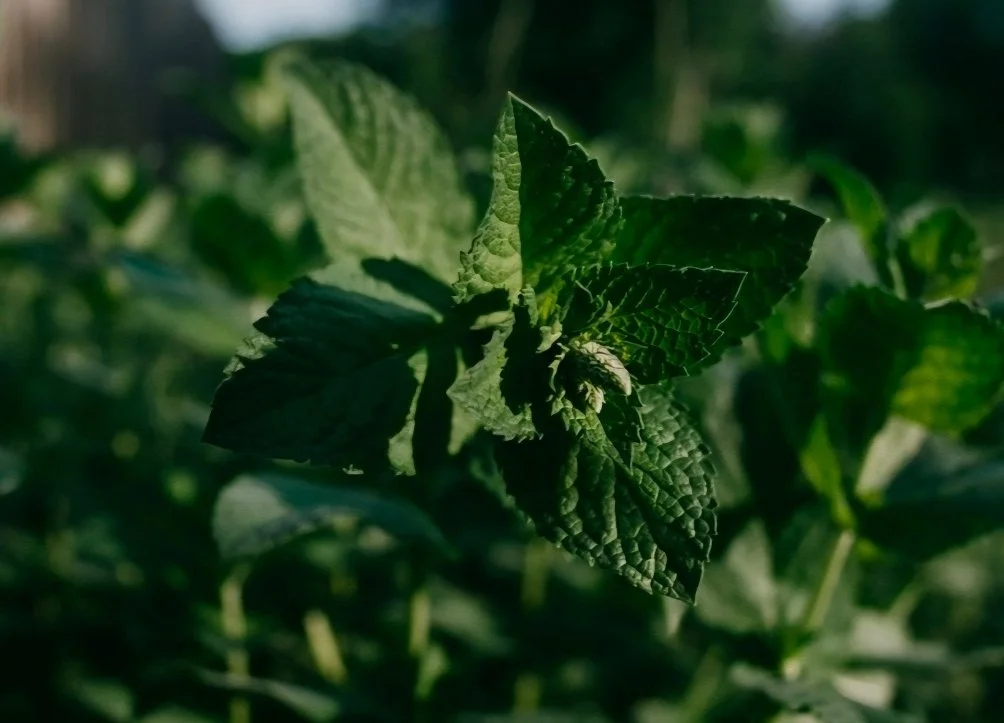
Mentha villosa
Mojito Mint is a non-native, Florida-friendly perennial herb that can grow 1’-3’ tall and 2’-3’ wide. They do well in full sun to partial shade and rich, moist, well-draining soil. The leaves are fragrant and edible, often used in mojitos and teas, salads, and as a garnish. The flowers are also highly attractive to pollinators.
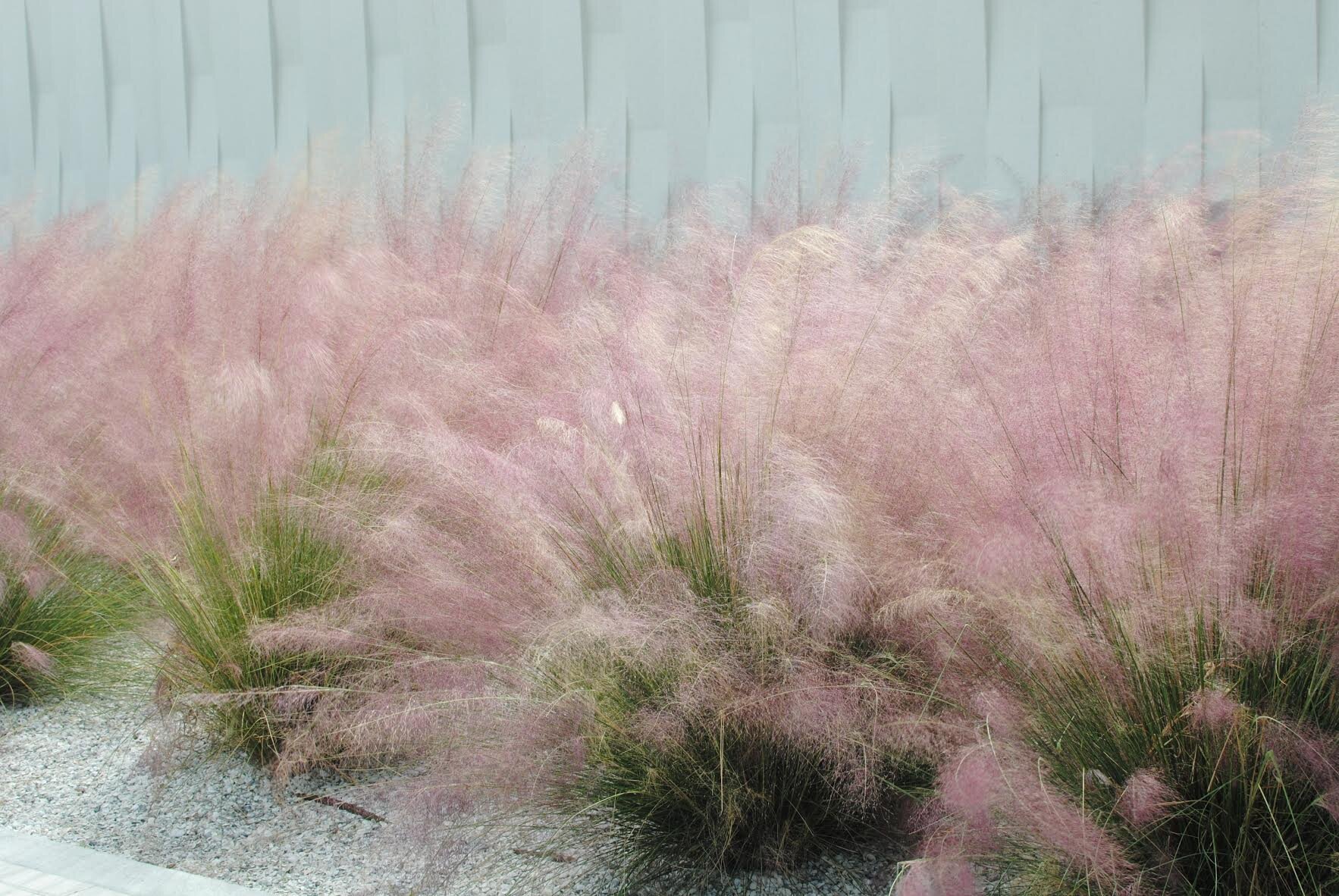


Native, perennial, weeping and thick clumping grass. Full sun to light shade, average soil, 4'. Moderately salt-tolerant, can usually spread by self-sown seeds. Attractive foliage year-round, but showiest in the fall with purple/pink flowering plumes. Combines well with wildflowers.

Vitis rotundifolia “Southern Home”
Muscadine Grape is a hardy, native grape that withstands the sun and heat of the summer - while providing you with deliciously sweet grapes! Growing 8’-10’x 8’, in full sun and average well-drained soil, they make a great addition to arbors or chain-link fences. They are a larval host for Grape Leaffolder Moths and Sphinx Moths, and are considered the best muscadine for home gardens.
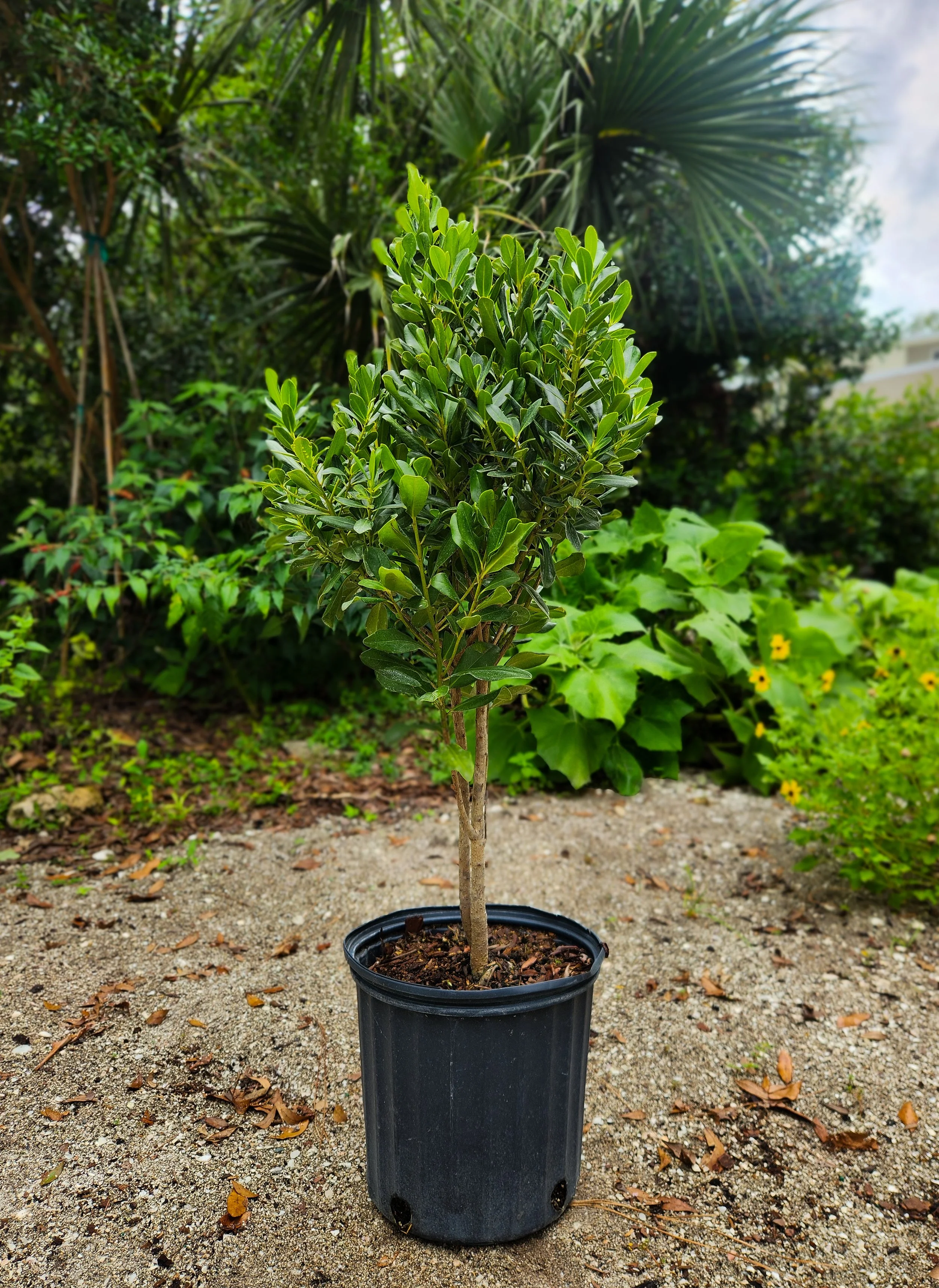
Myrsine cubana
Myrsine is native, upright evergreen shrub that grows 15’-20’ tall and 8’-12’ wide. They grow well in full sun and full shade, and are highly adaptable with their soil, tolerating poor drainage and drought once they are established. They have shiny, leathery green leaves, inconspicuous green flowers, and clusters of dark berries that provide food for both native and migratory birds.
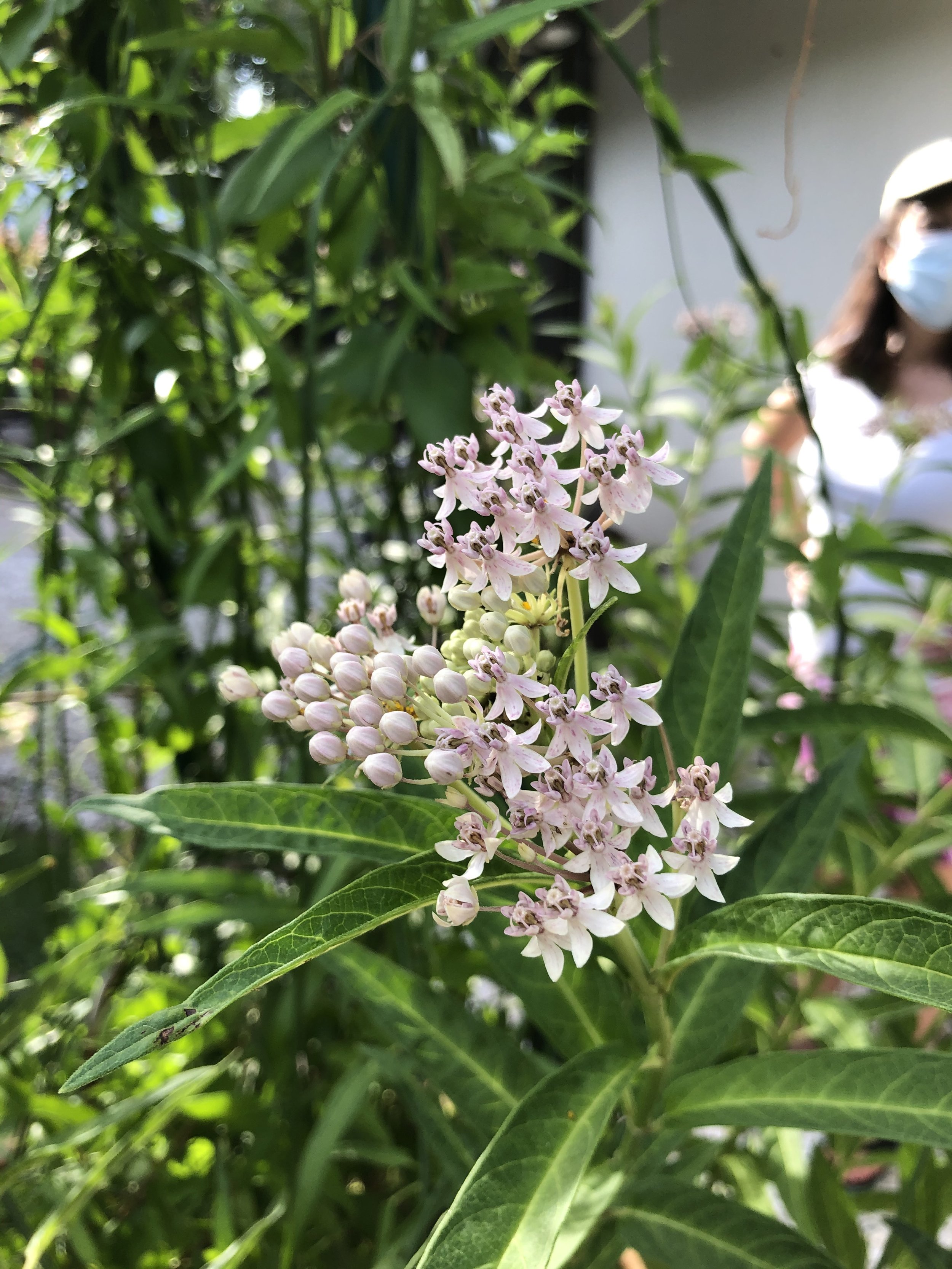
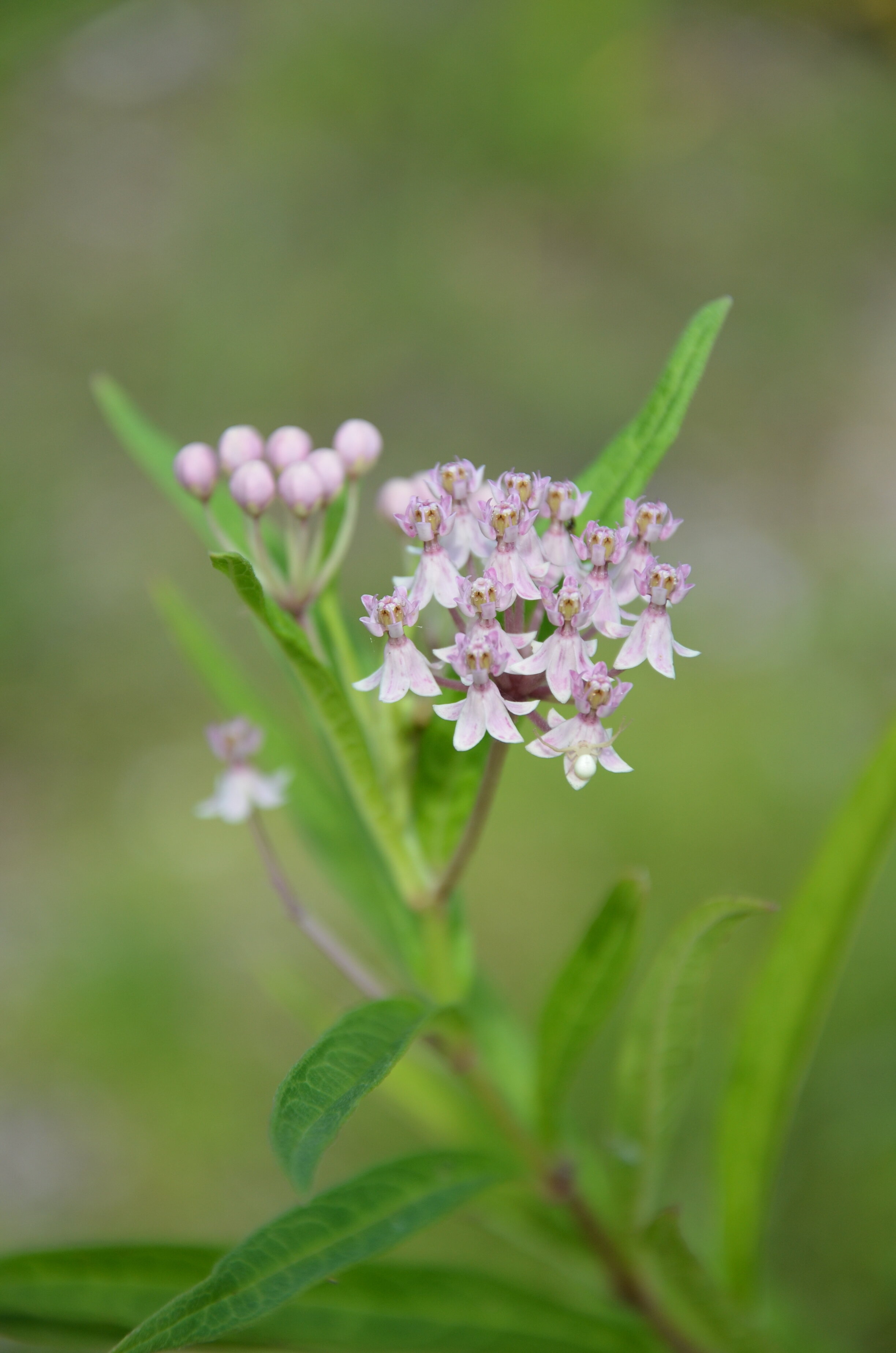
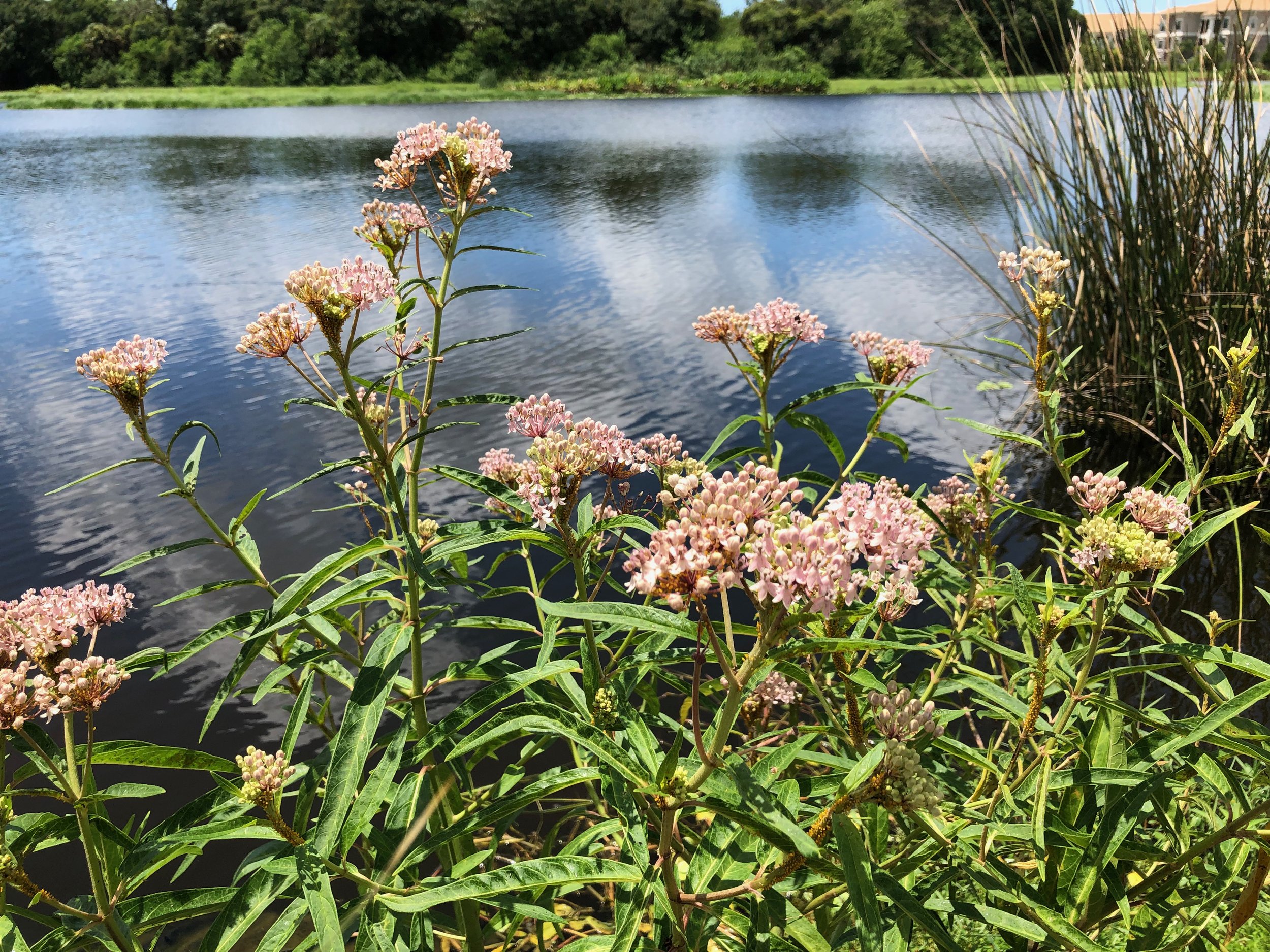
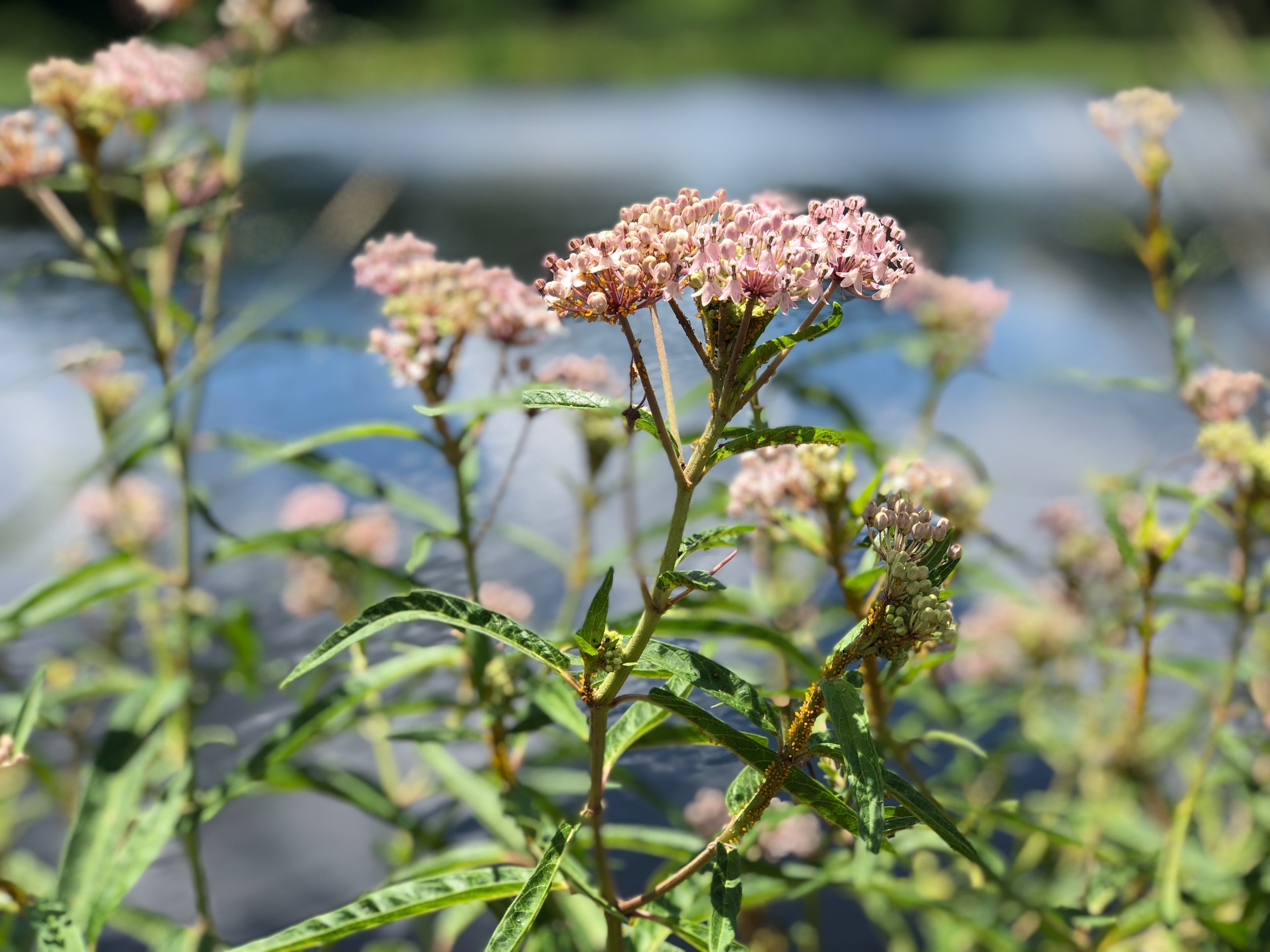
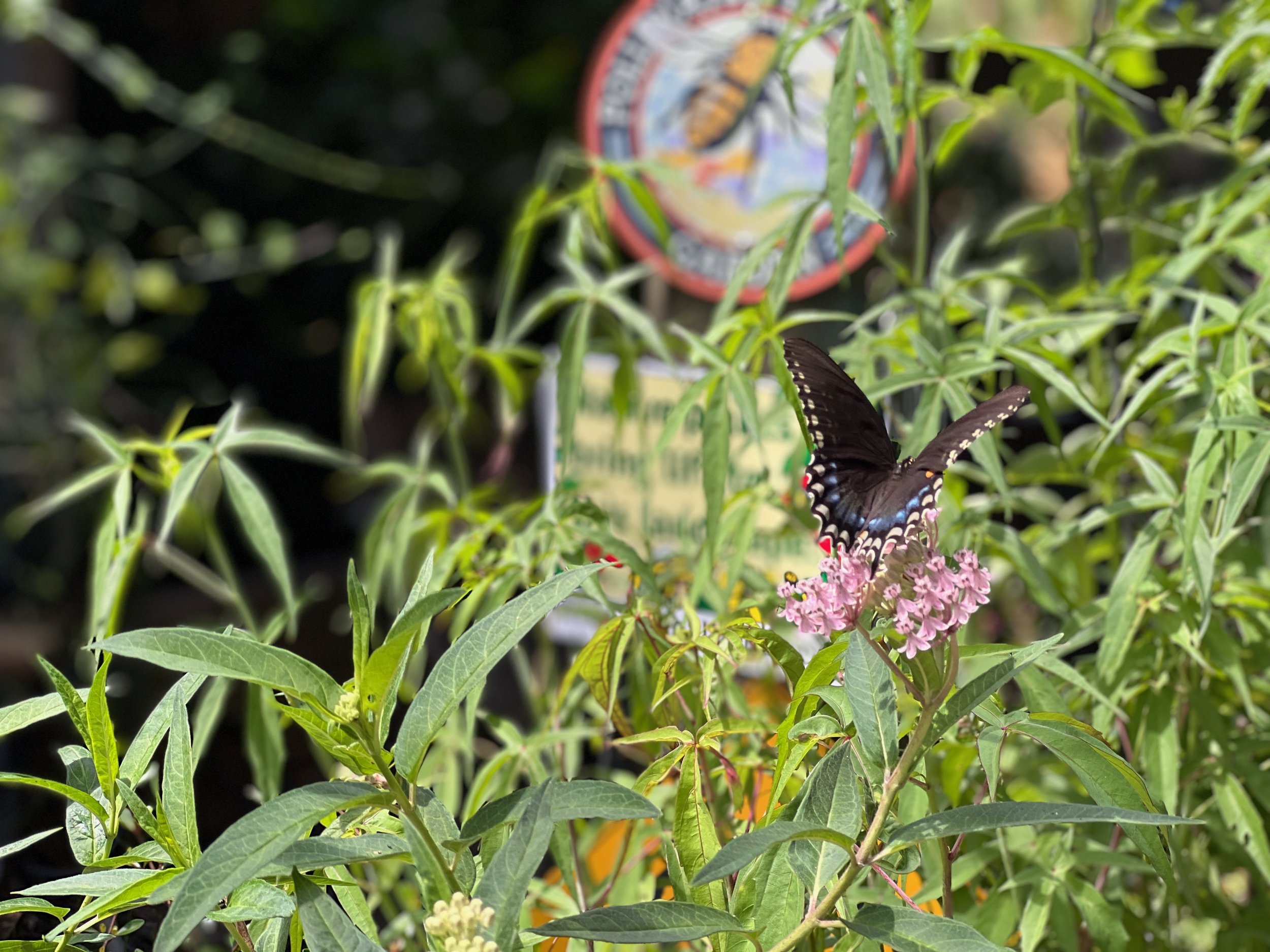
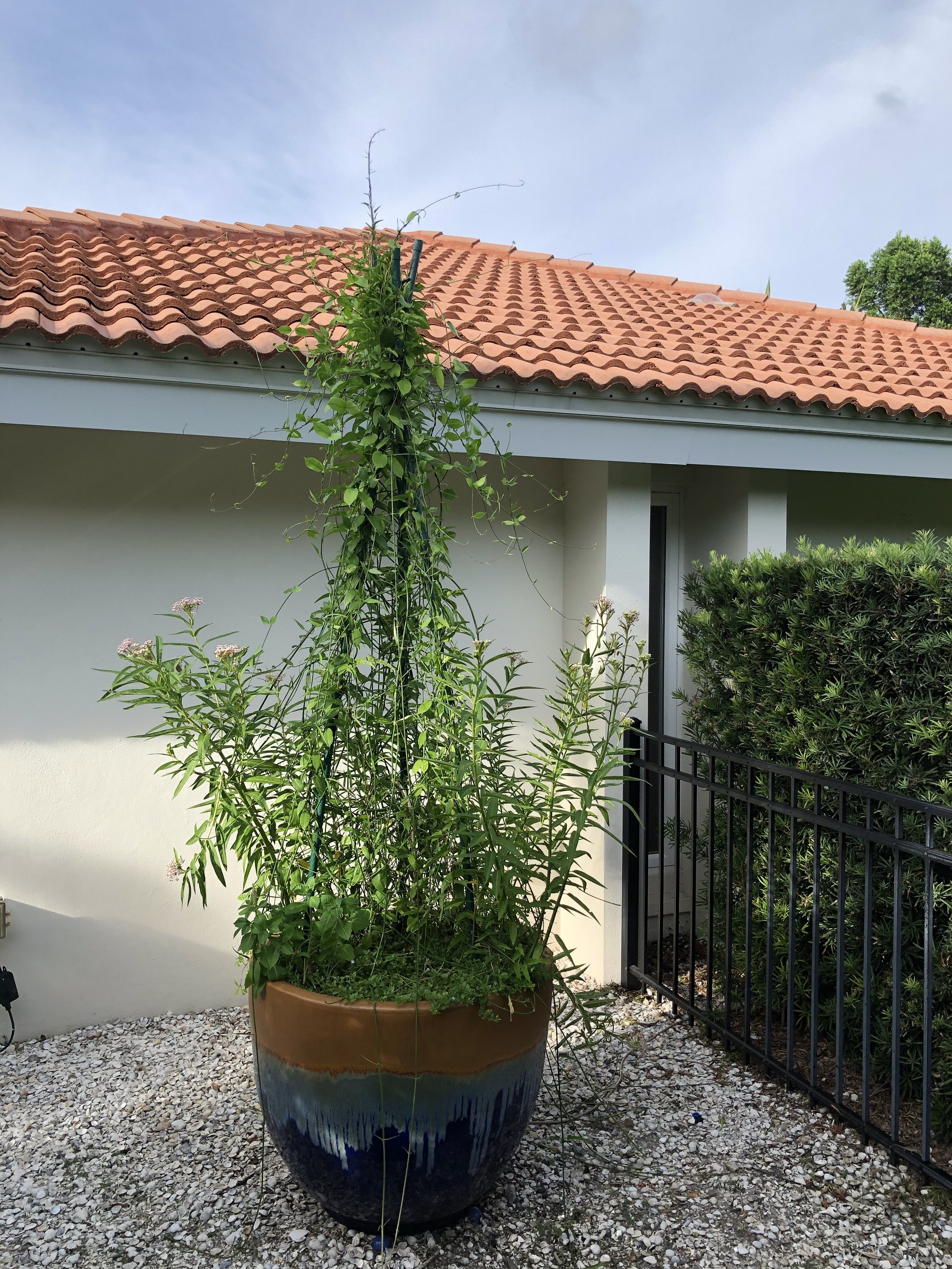
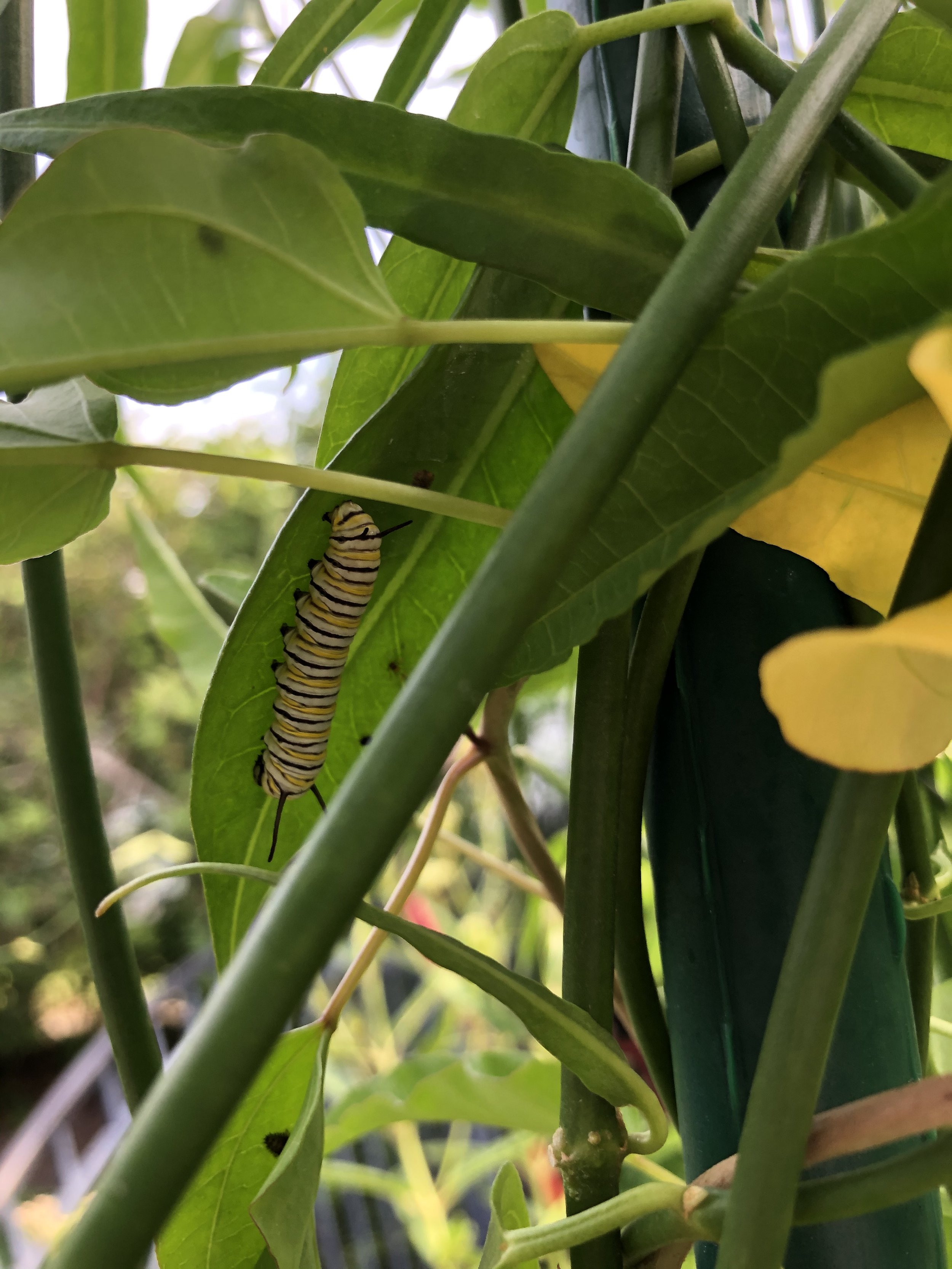
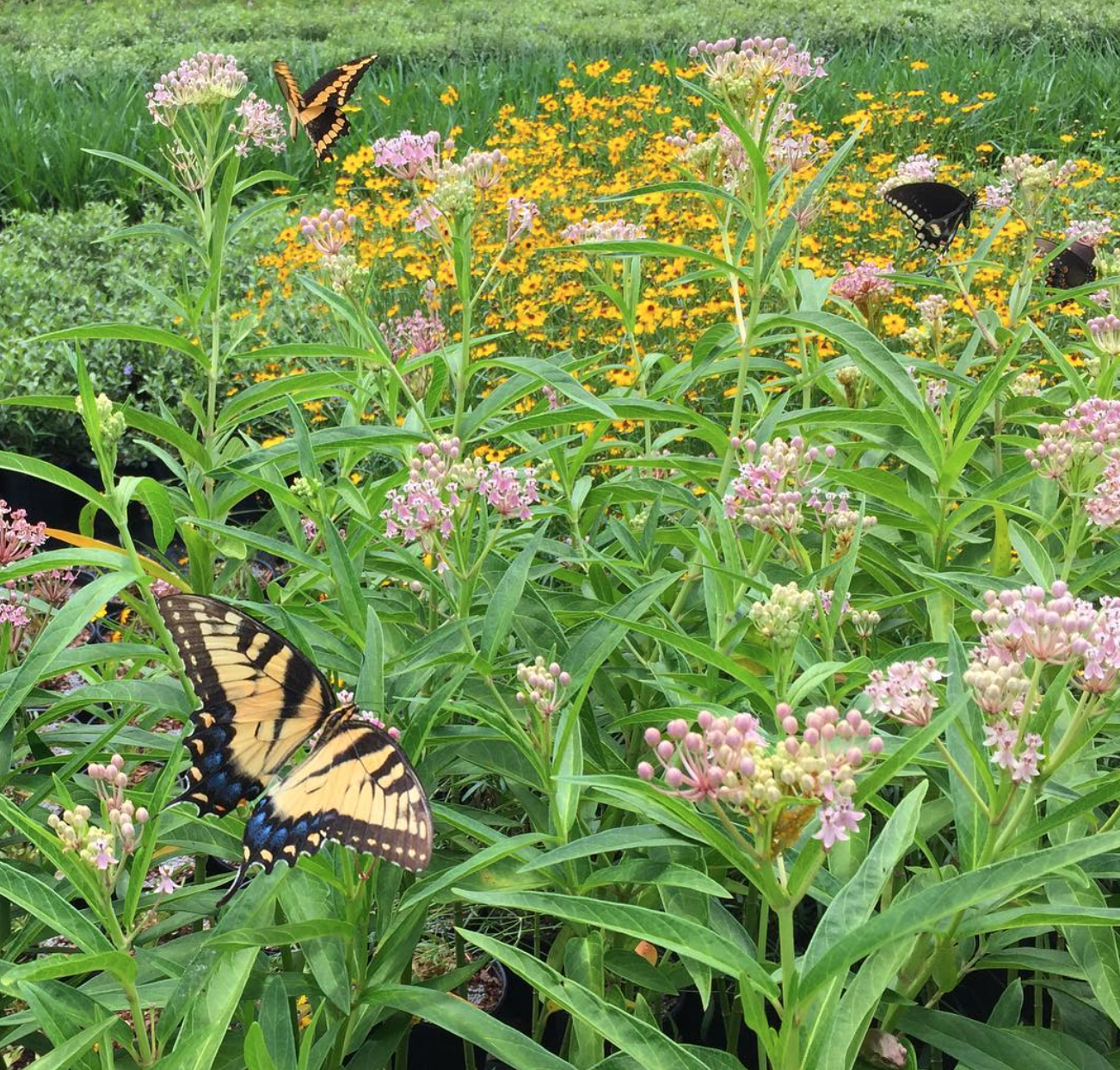
Pink Milkweed is a native, perennial, re-seeding, winter-dormant host plant for monarch and queen butterflies. Its foliage dies back in the winter and returns in the spring. It prefers moist soil conditions but can be grown in containers if kept moist. It is one of the most hardy of the native milkweeds for Florida gardeners to grow.
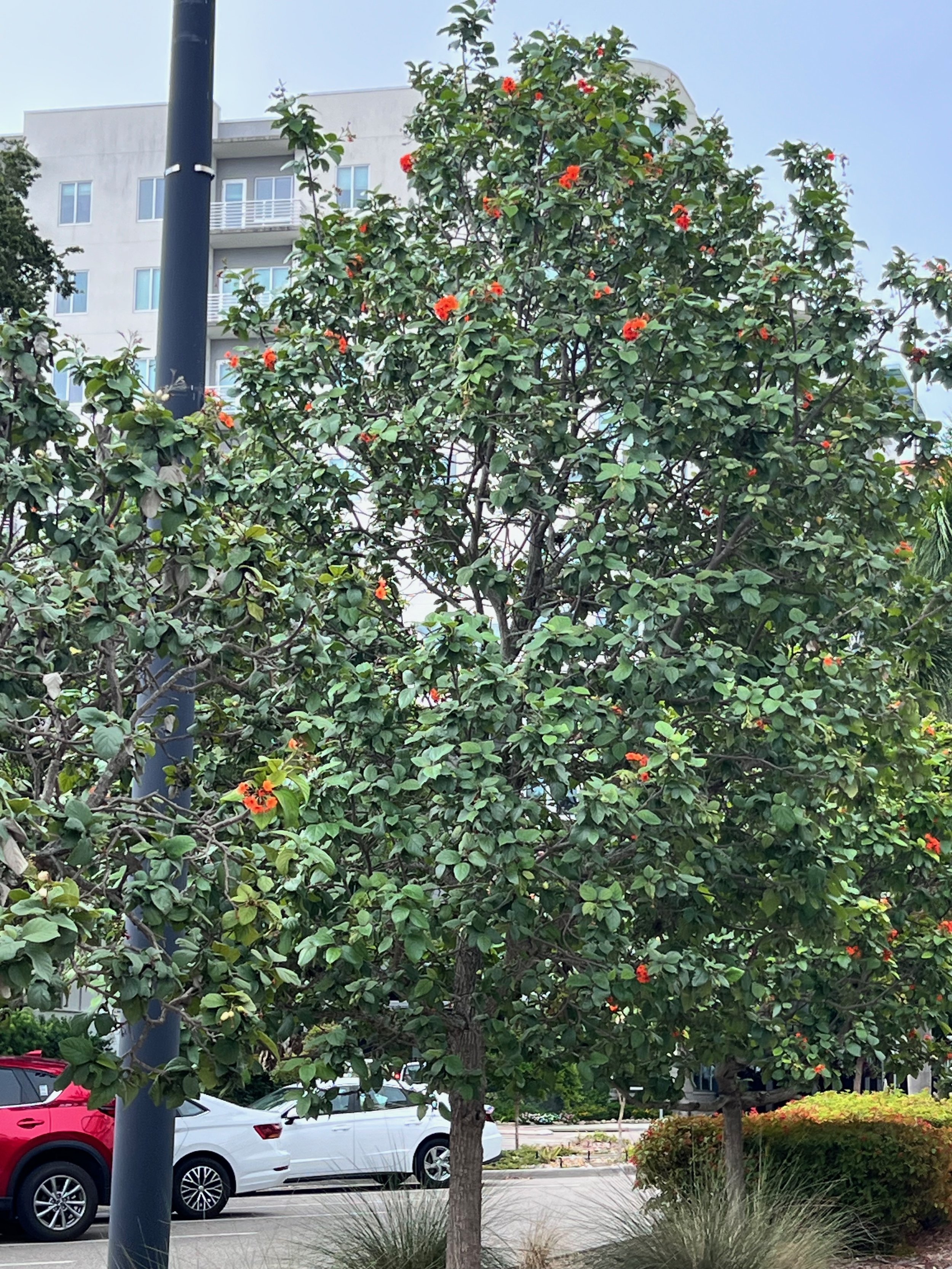
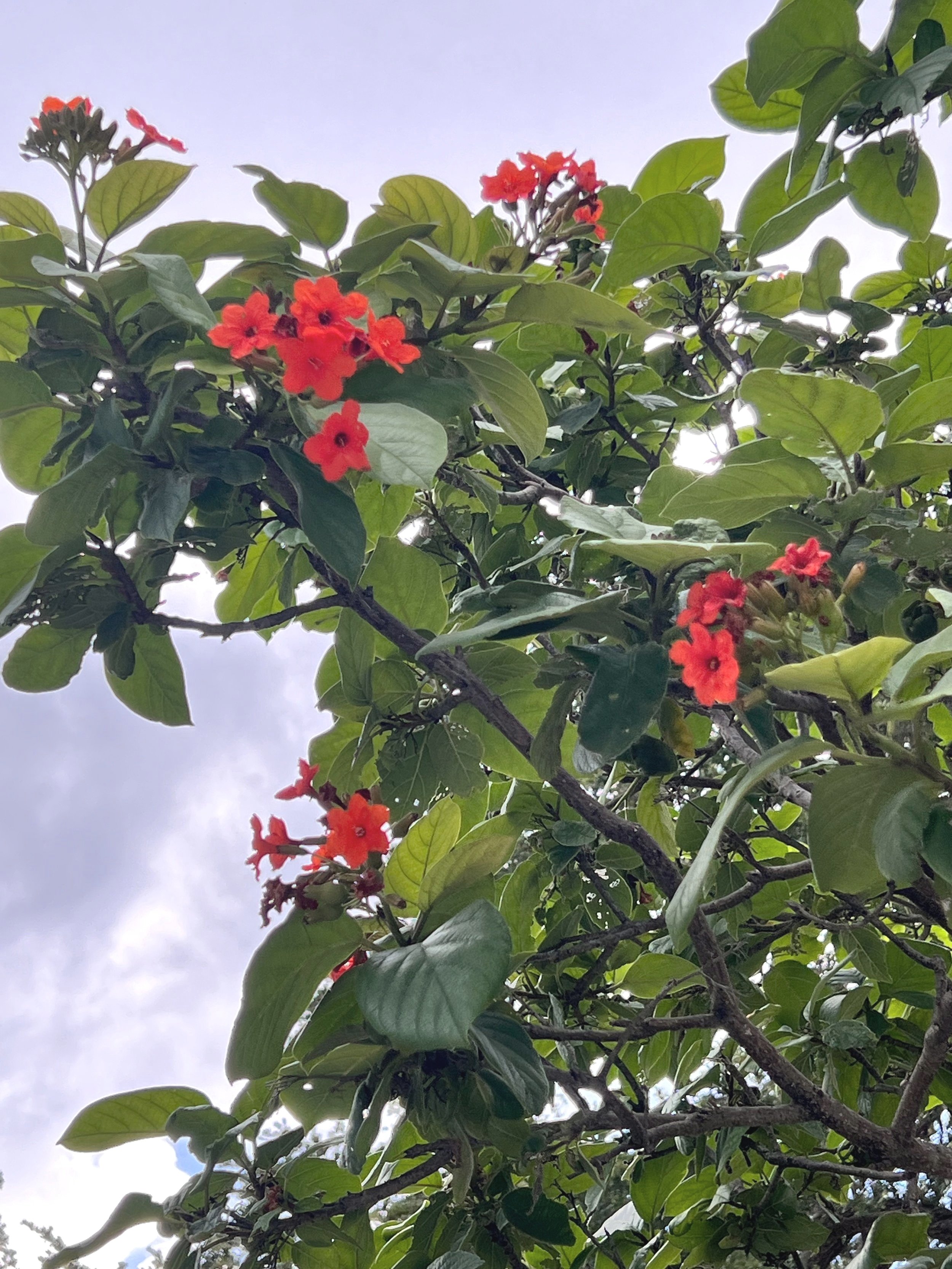
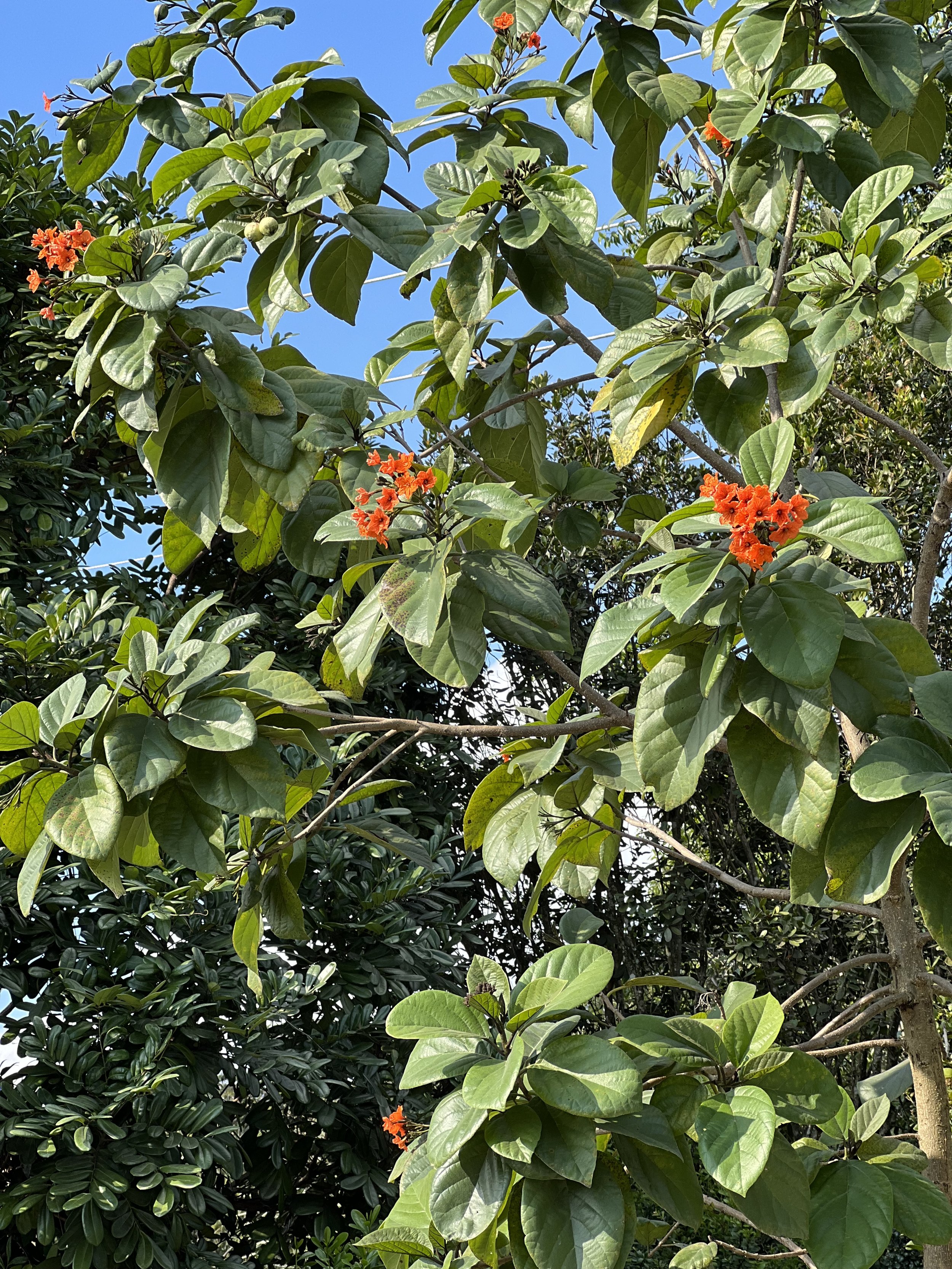
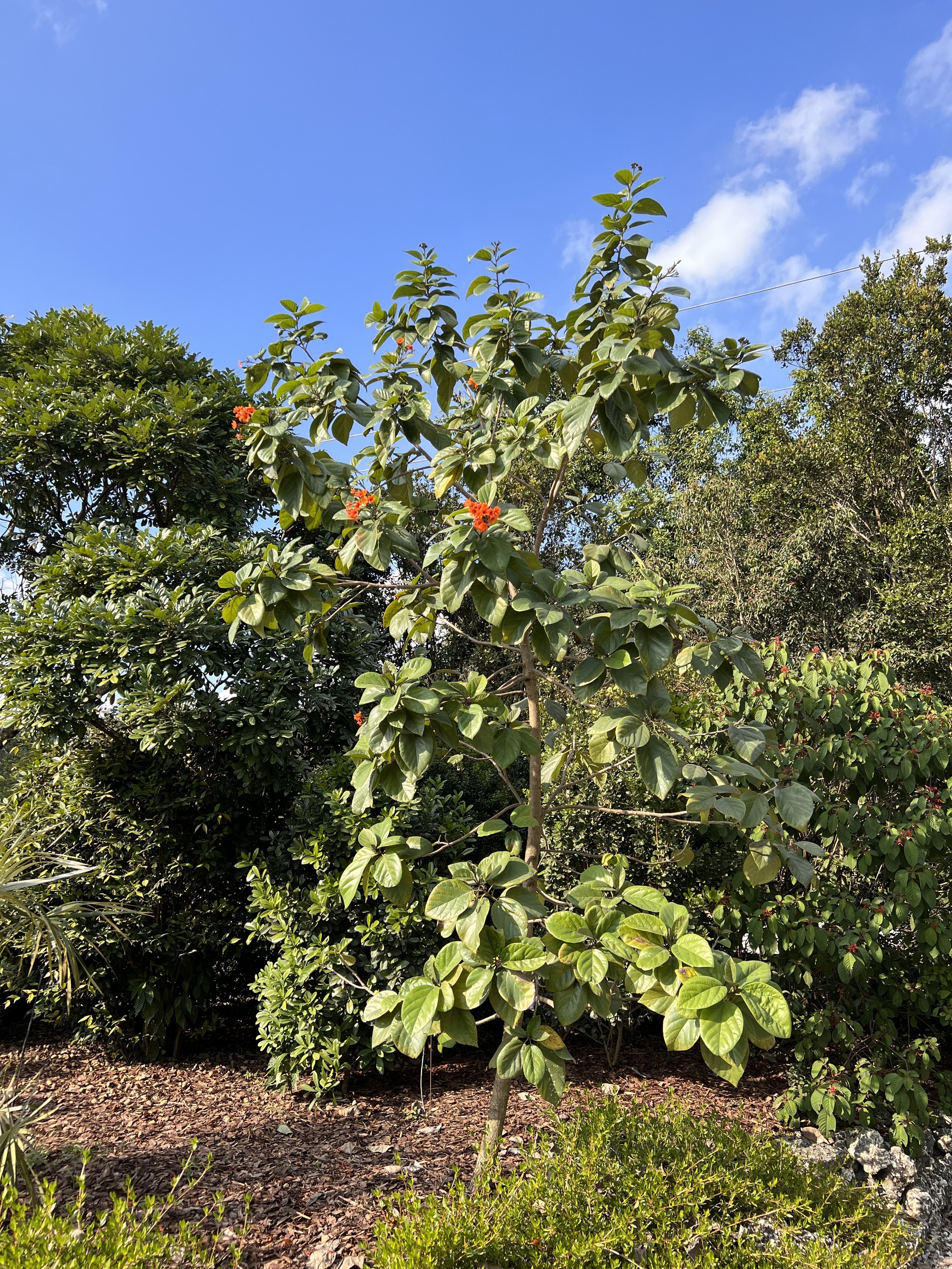
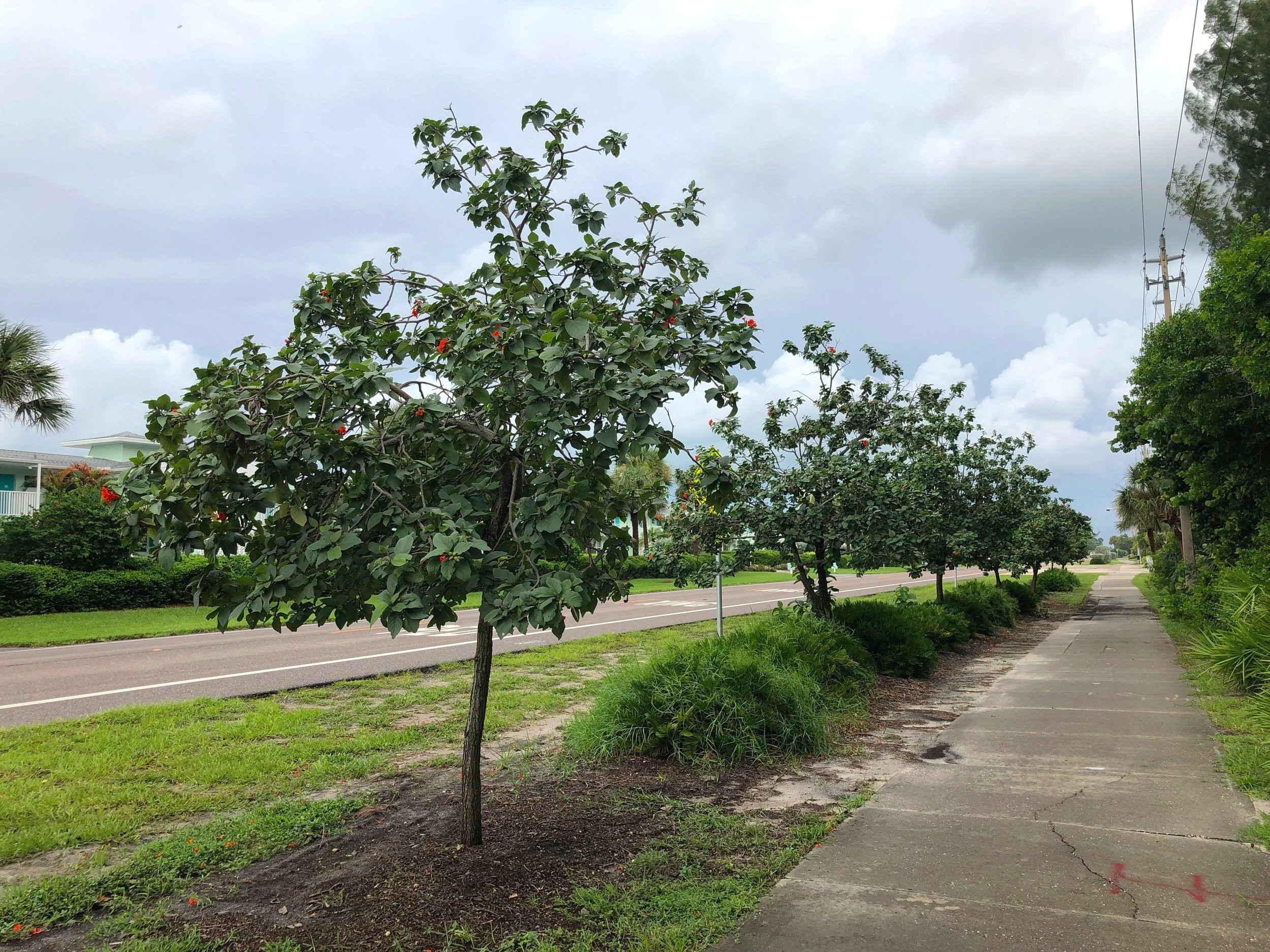
Cordia sebestena
Orange Geiger is a small, native, coastal, evergreen, flowering tree that likes full sun to light shade and well-drained soils. Orange Geiger is drought, wind and salt tolerant with large dark green leaves and showy orange flowers almost all year that attract butterflies and hummingbirds.
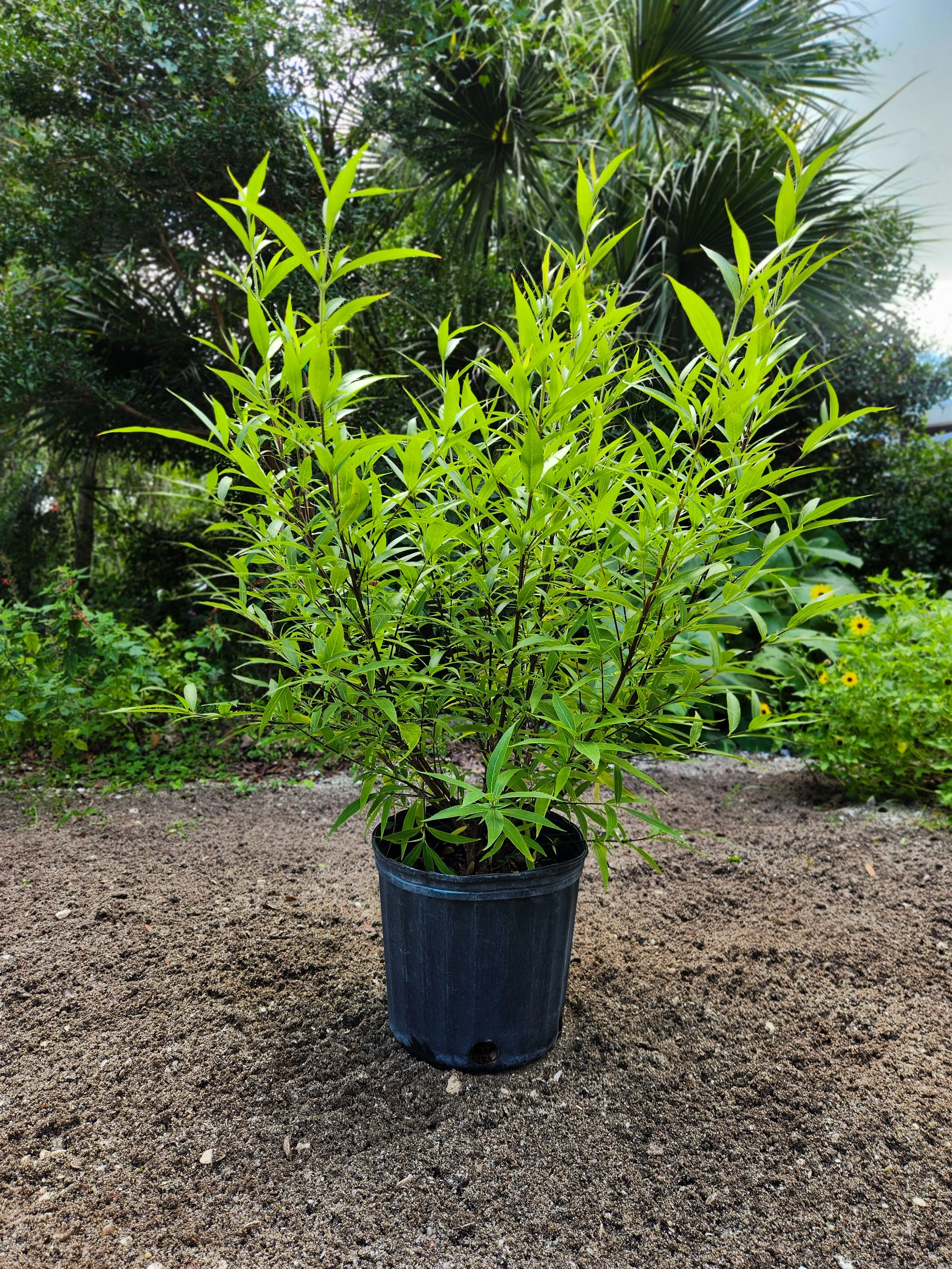
Roneletia leucophylla
Panama Rose is a Florida-friendly, flowering, evergreen shrub, aka “Bush Penta”. They reach heights of 3’-6’, but they are easy to keep at 3’. These plants thrive in full sun to part shade, and do well in average soil. Drought tolerant once established. They have fragrant, bright pink flowers that bloom year-round, and are a butterfly favorite! They attract hummingbirds, butterflies, and other pollinators.
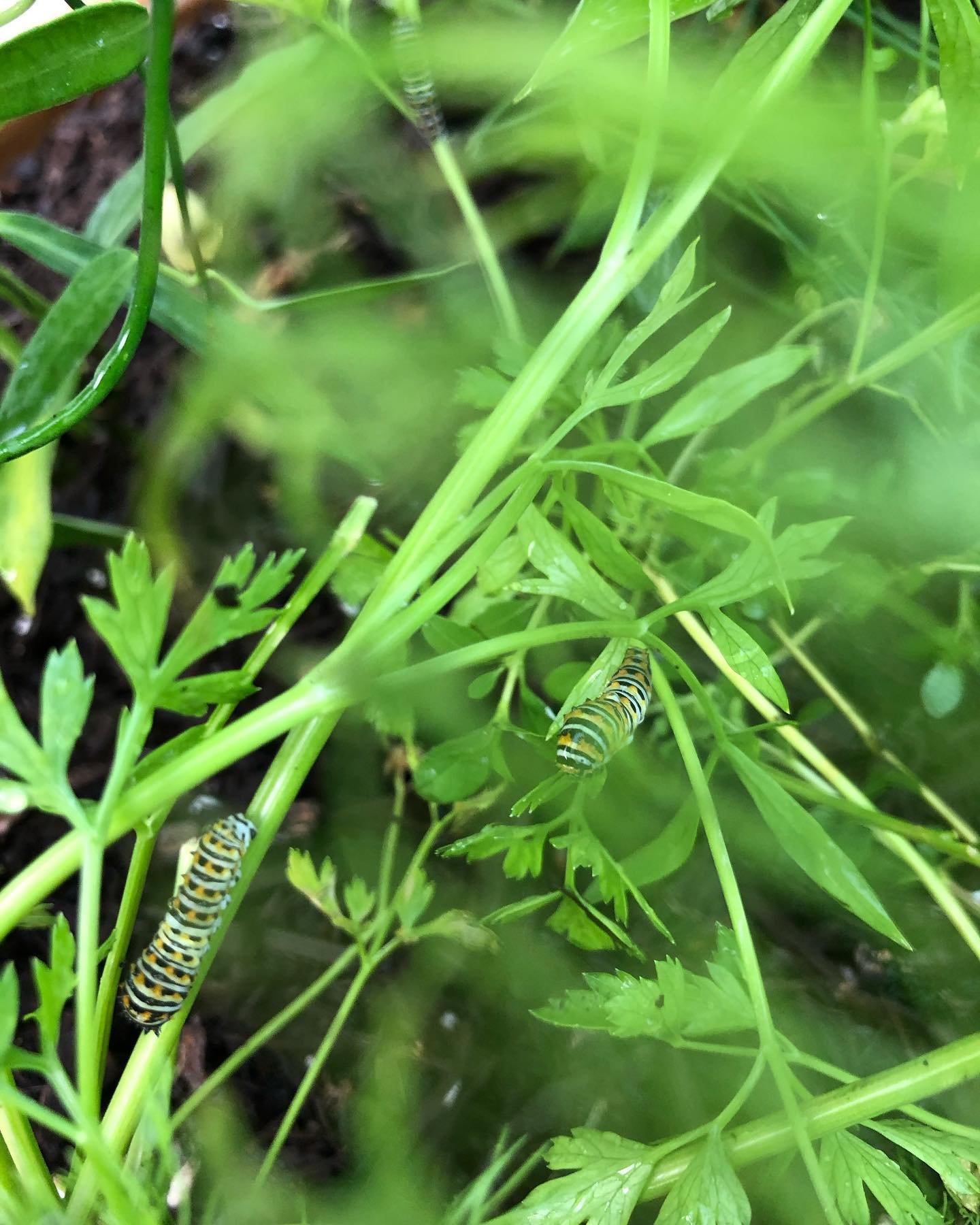
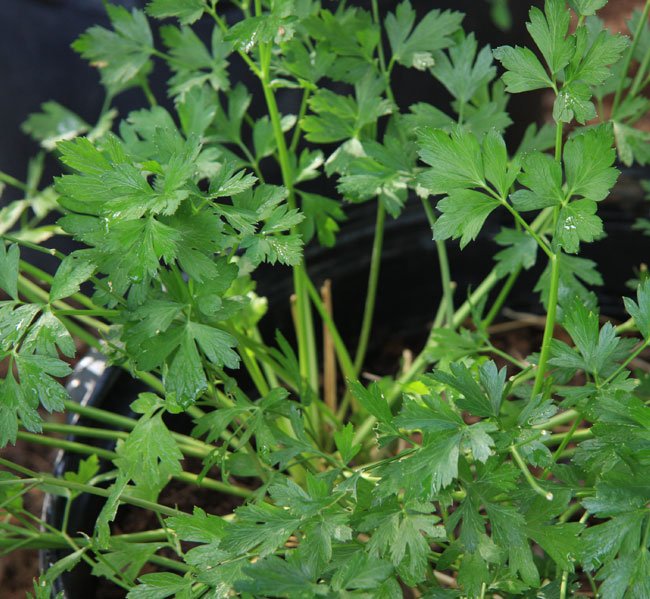
Petroselinum crispum
Parsley is a non-native and Florida-friendly many-purpose garden plant that can be grown year-round in Florida. It is an edible plant for both people and butterflies. Many gardeners include it in their butterflies gardens as it is an easy-to-grow host plant for Black Swallowtail butterflies. It can tolerate sun (in winter) and partial shade (in summer), average to moist (well-drained) soils, and it benefits from amended soils (organic compost/content).
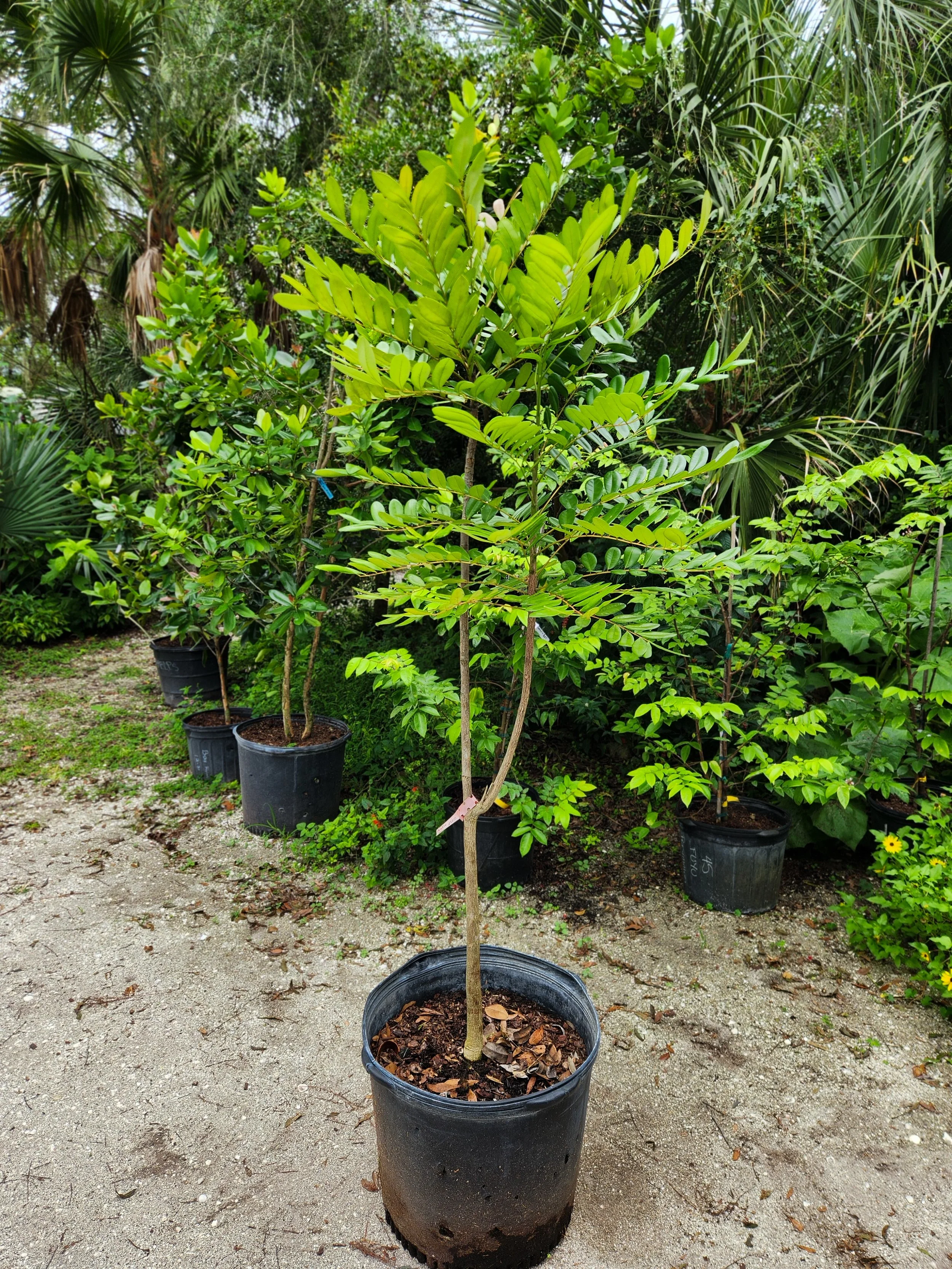
Simarouba glauca
Paradise is a native, evergreen, tropical tree with shiny, leathery, oval shaped green leaves and a rounded canopy, reaching 40’-50’ tall and 25’-30’ wide. They grow well in full sun to partial shade and are highly adaptable to different common Florida soil types. They have yellow-white flowers in spring that attract pollinators and dark summer berries that provide a food source for birds.
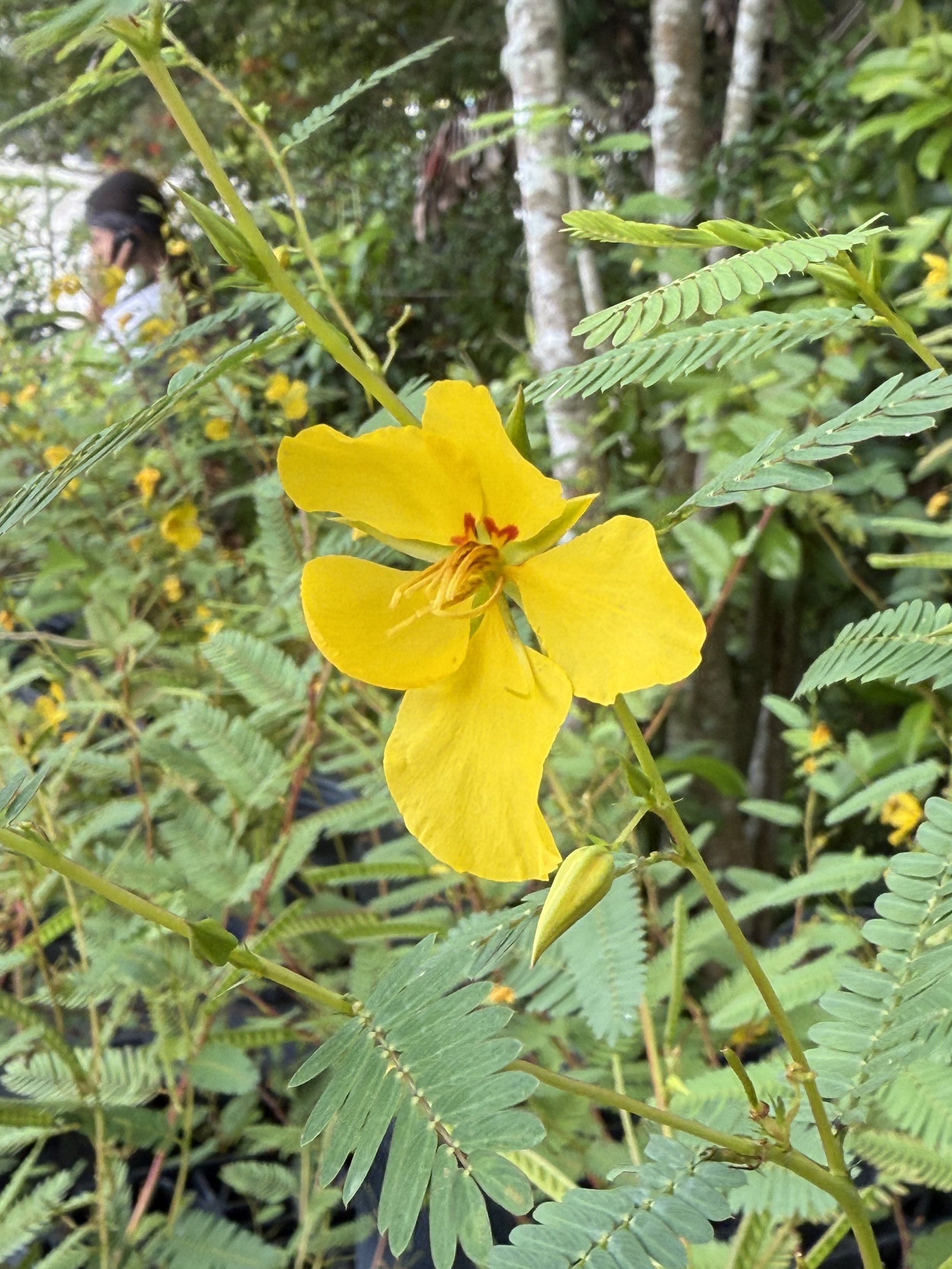

Chamaecrista fasciculata
Partridge pea is a native short-lived wildflower with attractive foliage and bright yellow flowers. Native to scrub, sandhill, flatwoods, beach dunes and disturbed areas in Florida, Partridge Pea does well in dry sandy environments. It appeals to a number of different pollinators such as long-tongued bees and butterflies such as the cloudless sulfer, gray hairstreak, and more!
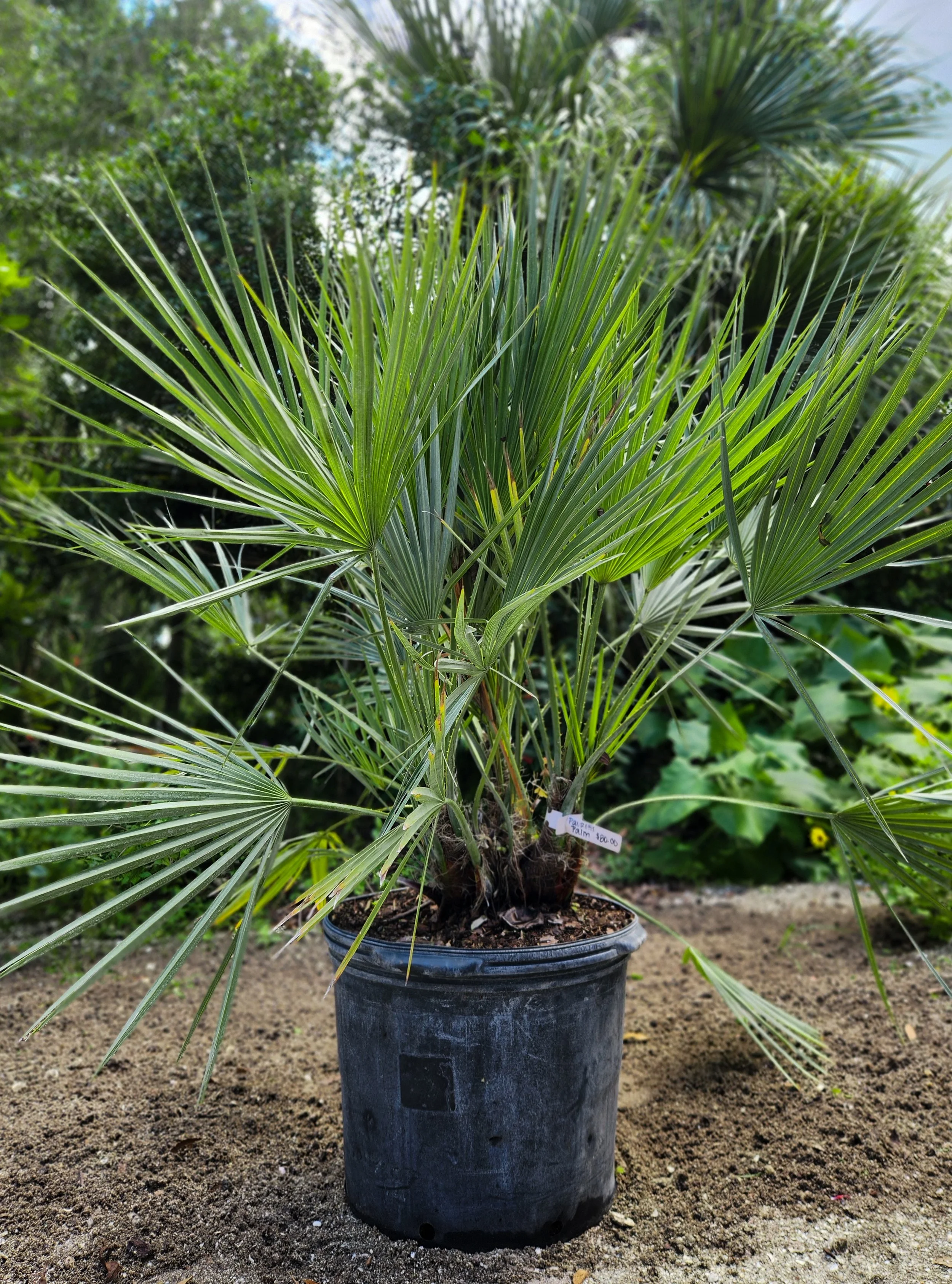
Acoelorrhaphe wrightii
Paurotis Palm is a Florida native palm that grows to be 15’-25’ tall and 8’-15’ wide. They grow best in full sun and moist to wet sandy soil. They can tolerate standing water, but they are surprisingly drought tolerant once they are established. They are very salt-tolerant, and their dense, multi-trunk growth habit provides cover for local wildlife.
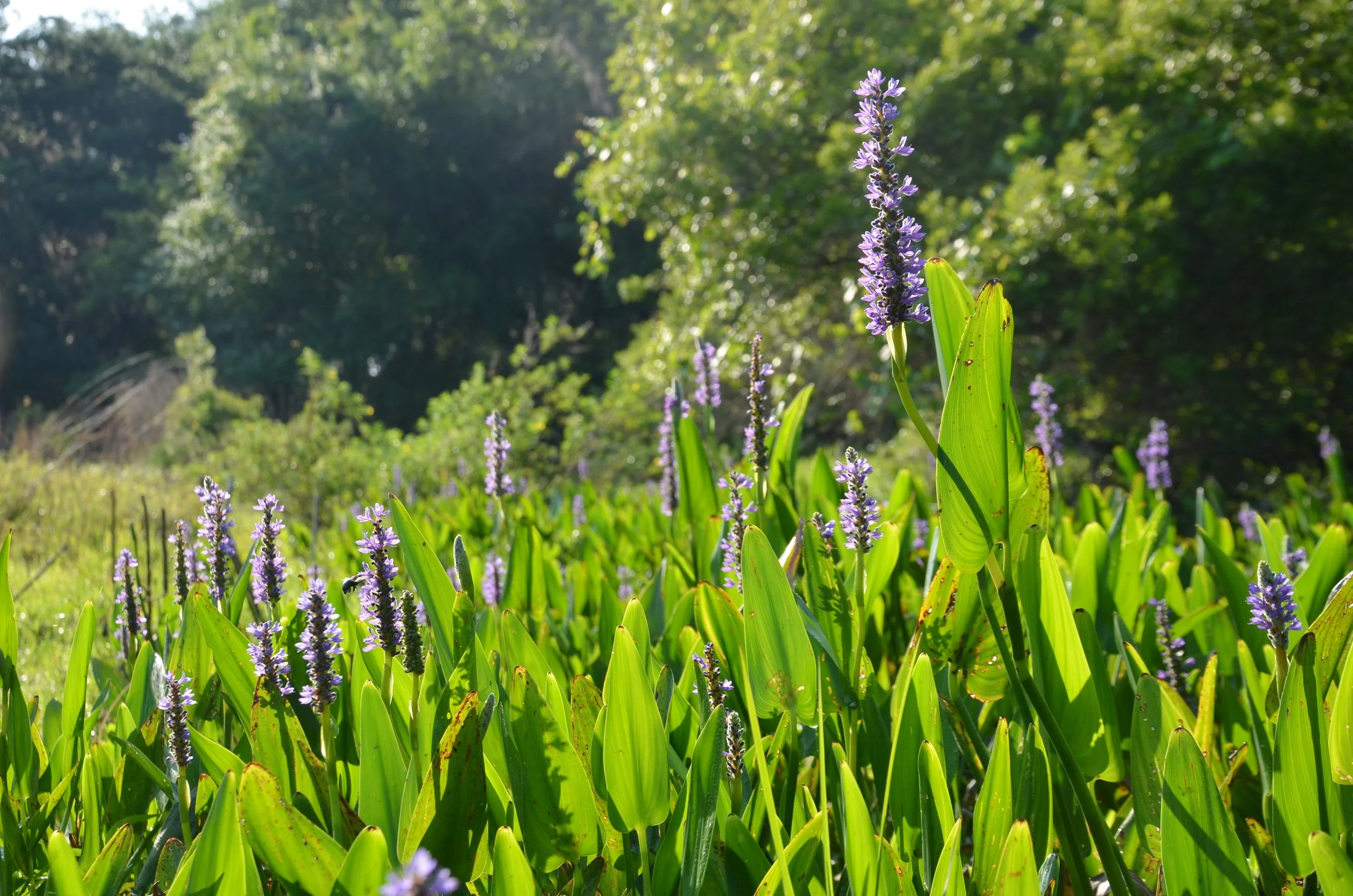


Pontederia cordata
An iconic native wetland edge plant that not only stabilizes bank edges, but has beautiful purple flower spikes that attract all sorts of pollinators. It reaches 3’ in height, does well in sun to partial shade, and very wet soil - even when submerged in up to 2’ of water. Use as a pop of color for wetland edges, streams, lakes, and swales. The foliage is also an important nesting material for wetland bird species!
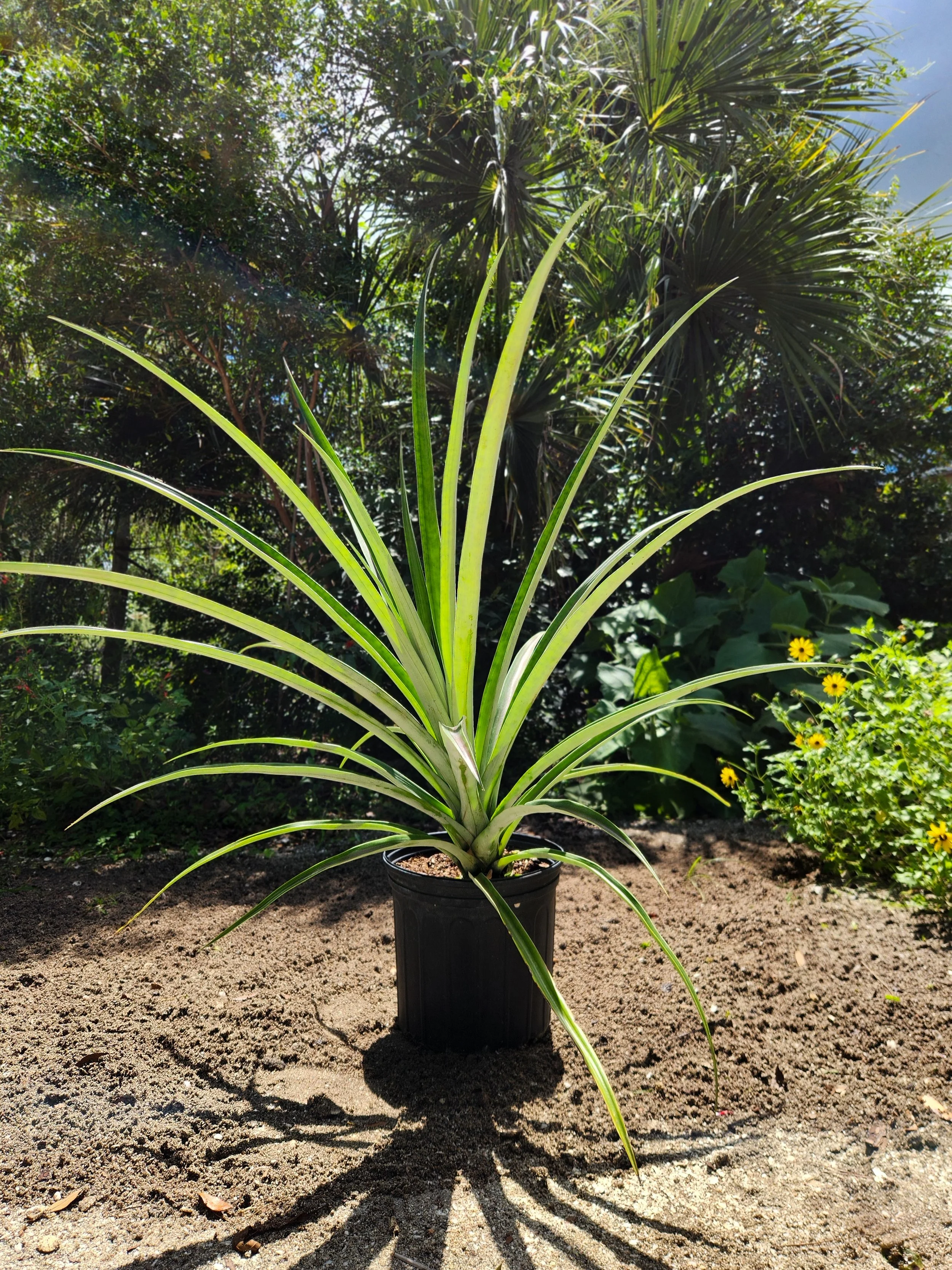
Ananas comosus ‘Florida Special’
Pineapple is a non-native, Florida-friendly edible plant that can grow 2’-3’ tall. They grow best in full sun with average to dry sandy soil. Each plant will produce one pineapple fruit, and they can be planted in the ground or grown in containers. The Florida Special pineapple is a golden variety. It can withstand temperatures down to the mid 30s.
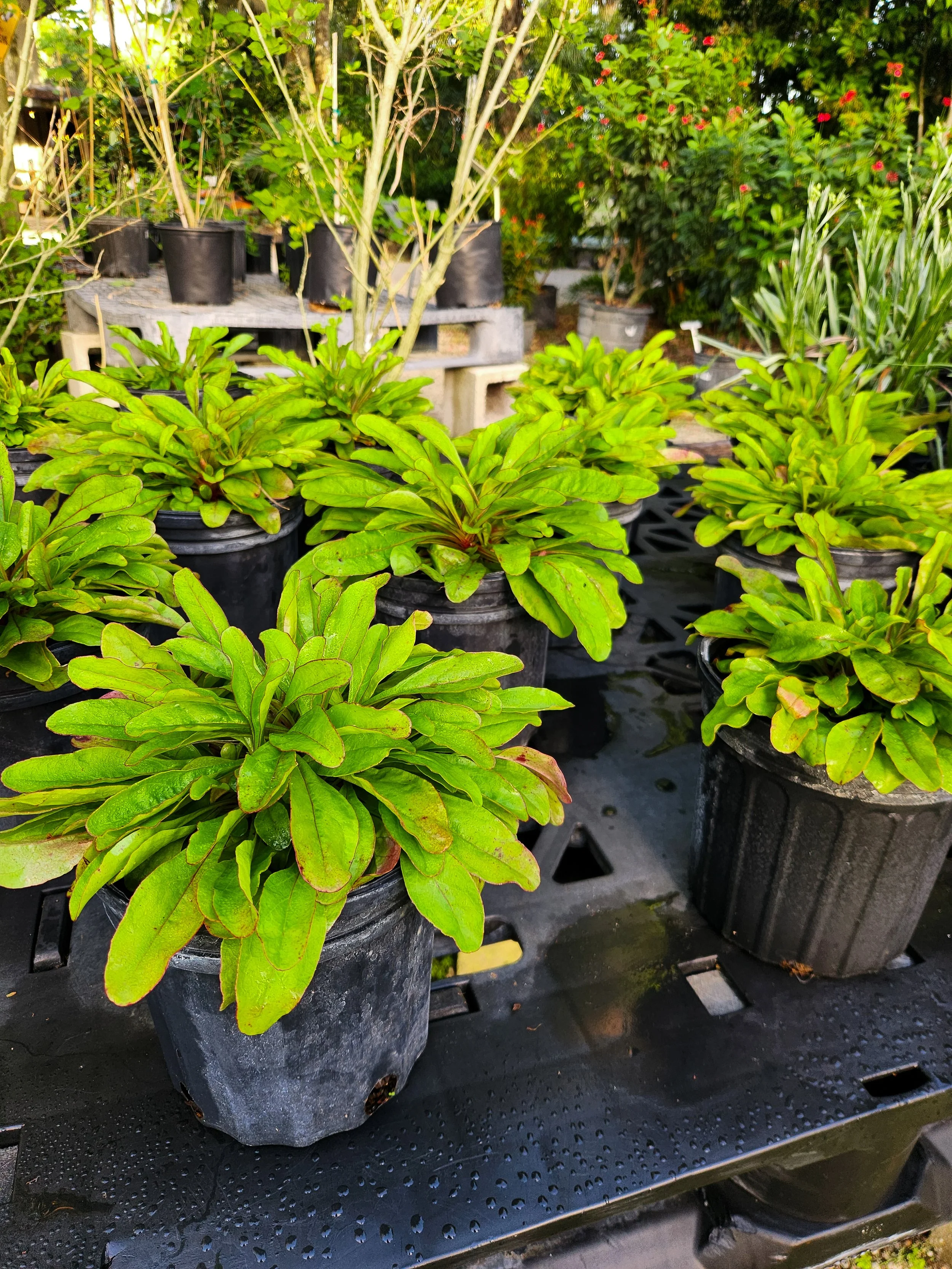
Penstemon australis
Pink Beardtongue is a long-lived perennial wildflower native to Florida. This herbaceous species forms basal rosettes of smooth, toothed leaves and produces spikes of tubular pink to purple flowers that bloom in spring and early summer. It thrives in dry, sandy soils and can be found in pinelands, sandhills, and open woodlands. It readily self-seeds and adapts well to well-drained garden conditions in sun to partial shade.
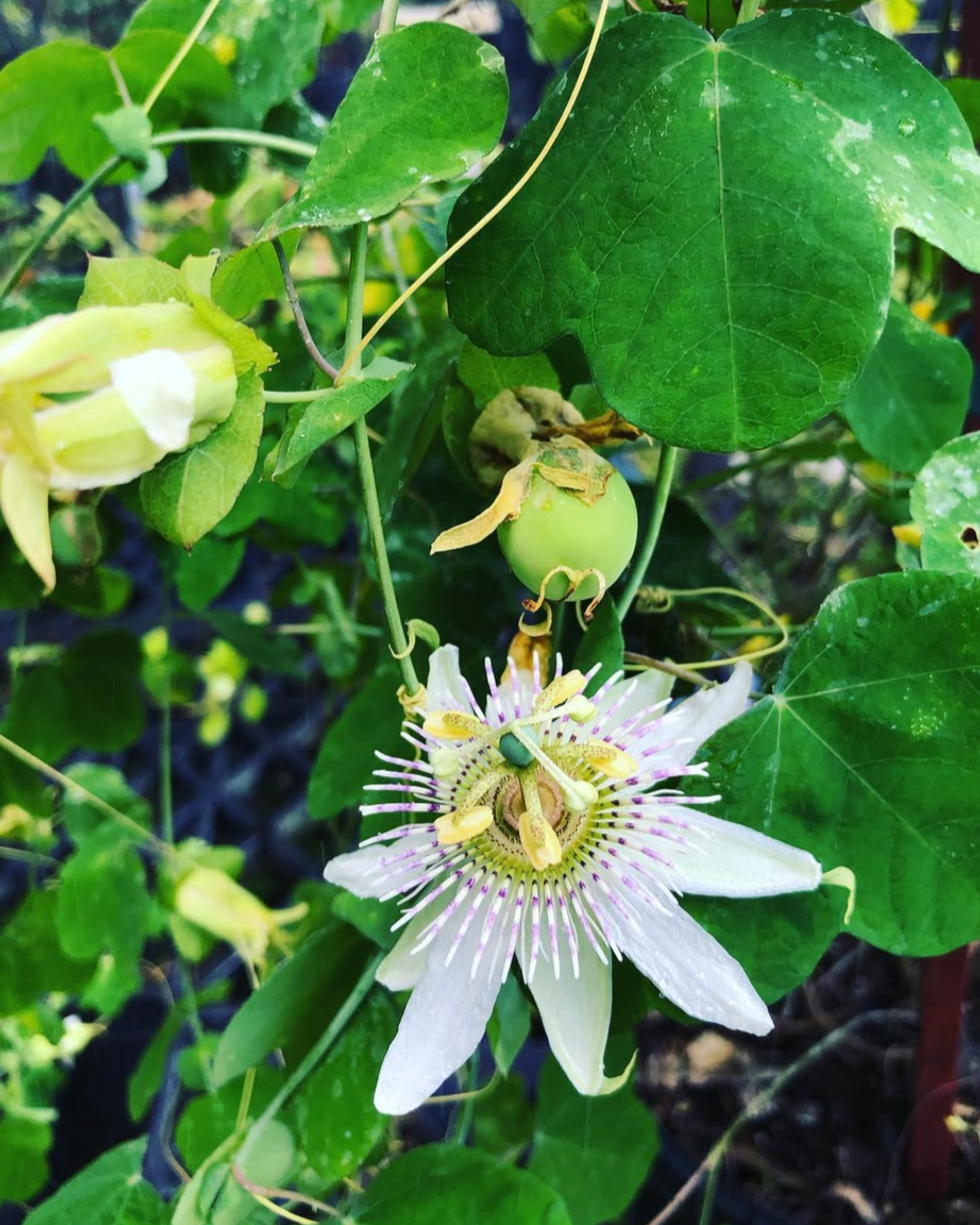
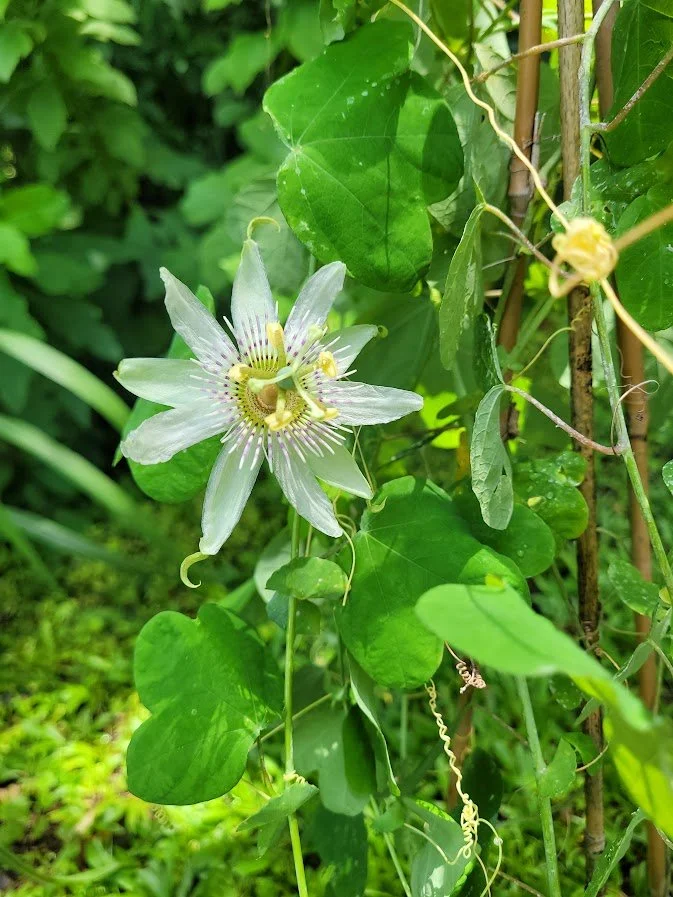
Passiflora pallens
Pineland Passionvine is a rare, state-endangered perennial climbing vine endemic to Florida. This delicate species features small, pale yellow-green flowers with white coronas that are much less conspicuous than those of other passion vines. It thrives in mesic to wet tropical woodlands, preferring sunny openings and woodland margins with well-drained soils. As a host plant for several butterfly species, including the Gulf Fritillary, it serves an important ecological role despite its rarity. This vine requires full sun to filtered light and regular water, making it suitable for specialized native plant gardens and restoration projects in zones 10-11.
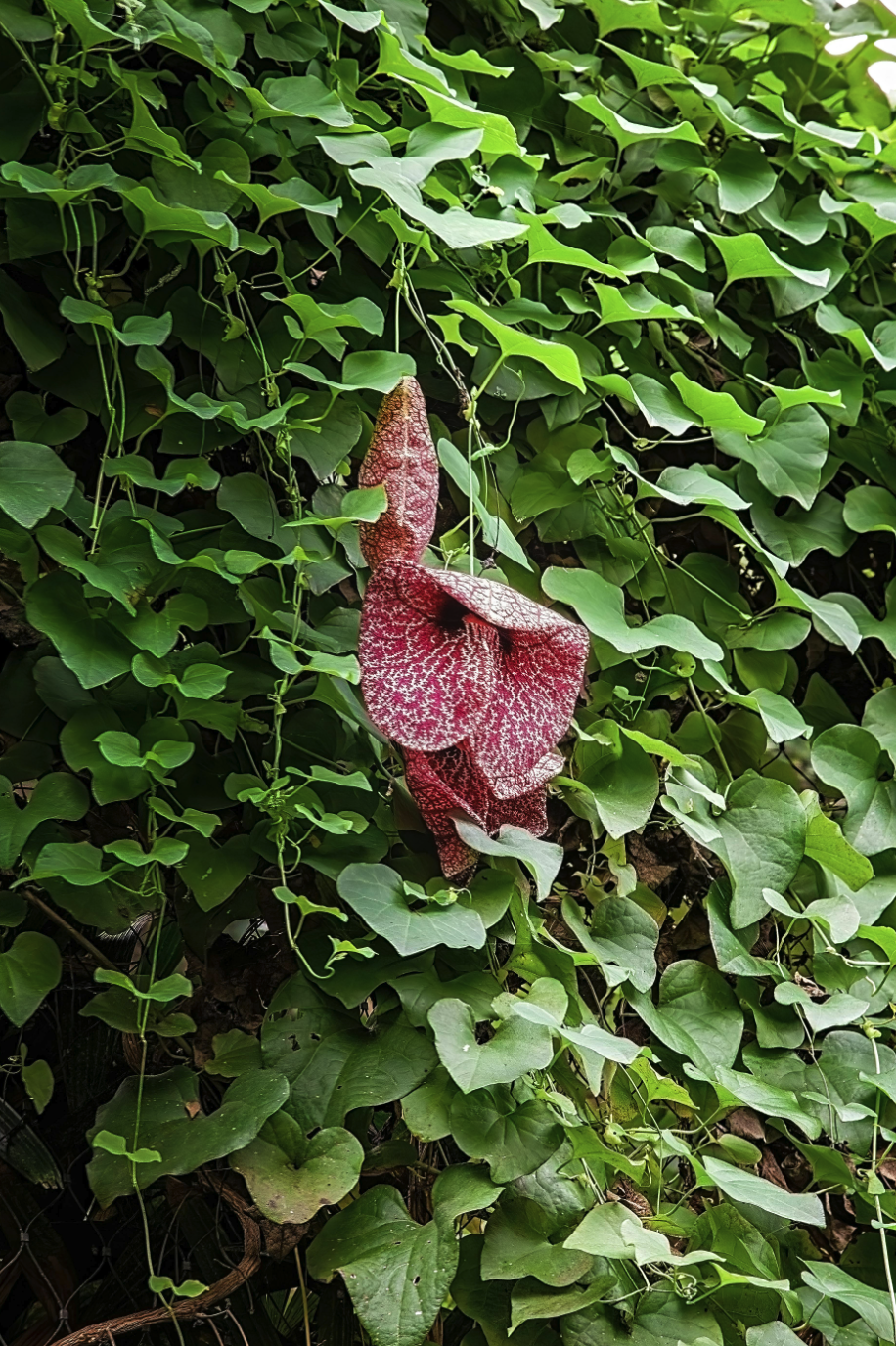
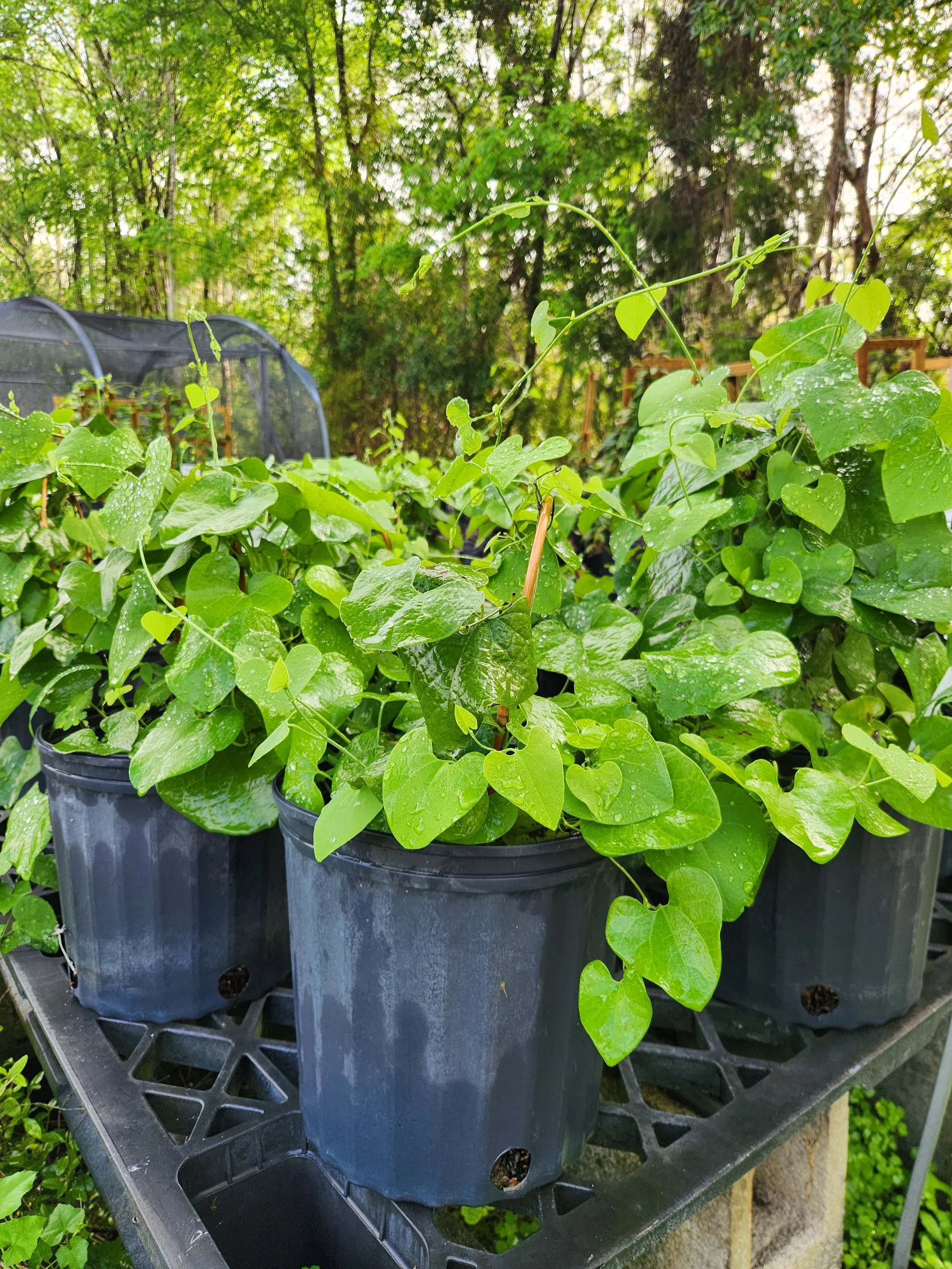
Aristolochia macrophylla
Pipevine is a Florida-friendly deciduous climbing vine that grows up to 15ft with large, heart-shaped leaves reaching 12in long. The leaves overlap in a shingle-like pattern to create dense screening, making it excellent for privacy on arbors, trellises, or fences. In late spring to early summer, it produces distinctive pipe-shaped flowers that are greenish-yellow and mottled with burgundy, though they're often hidden beneath the lush foliage. Native to moist woodlands and stream banks, it serves as the primary host plant for the Pipevine Swallowtail butterfly. This shade-tolerant vine prefers rich, moist soil and requires consistent moisture, making it unsuitable for dry conditions.
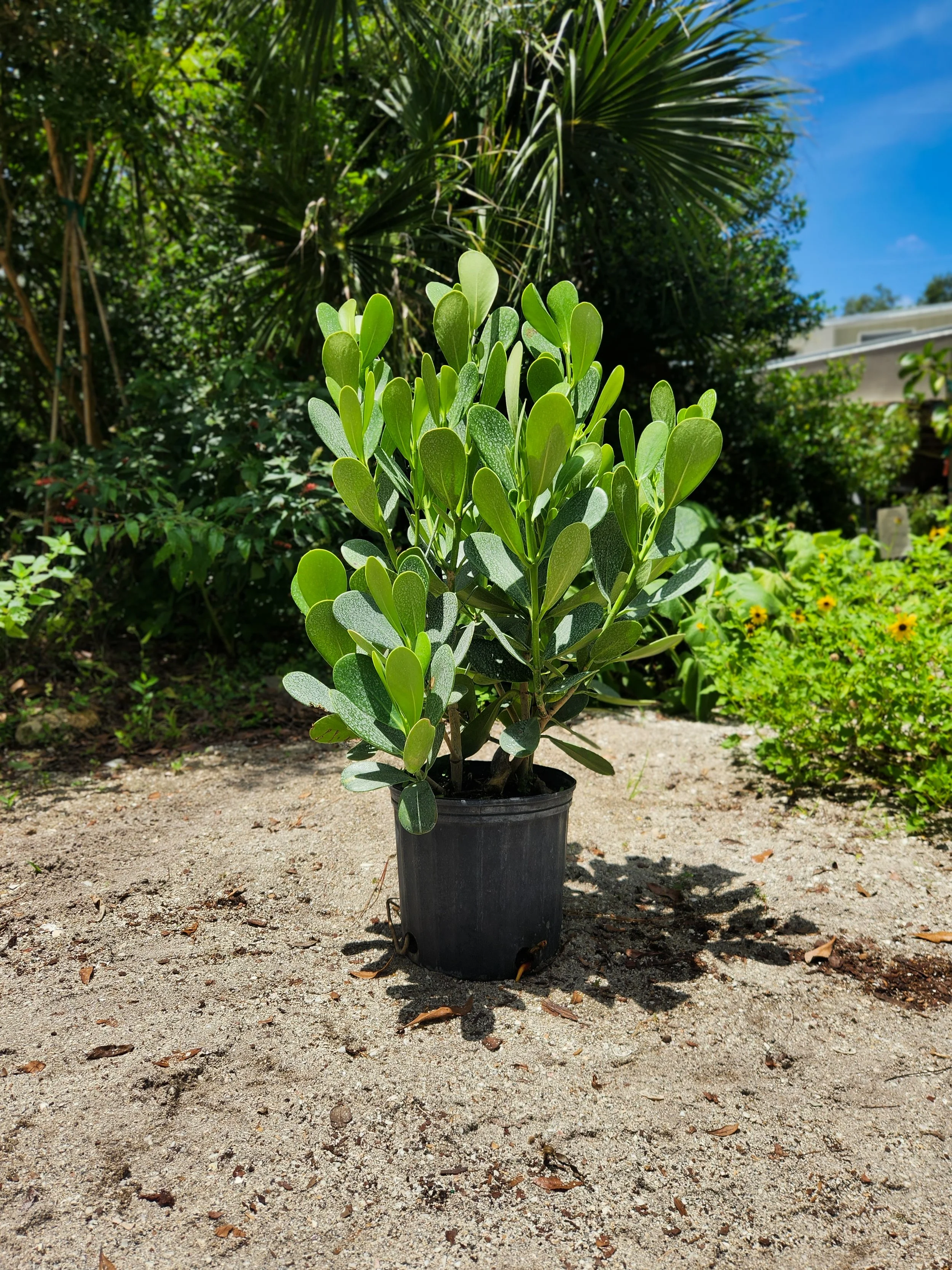
Clusia guttiferra
Non-native, Florida-friendly, prunable evergreen shrub. Pitch Apples can reach a height of about 15’, with a 15’ spread. These shrubs do well in full sun to shade, well-drained sandy or loamy soil, and are salt-tolerant once established. They are fast growing, and make a great hedge or buffer, specimen, or container plant.
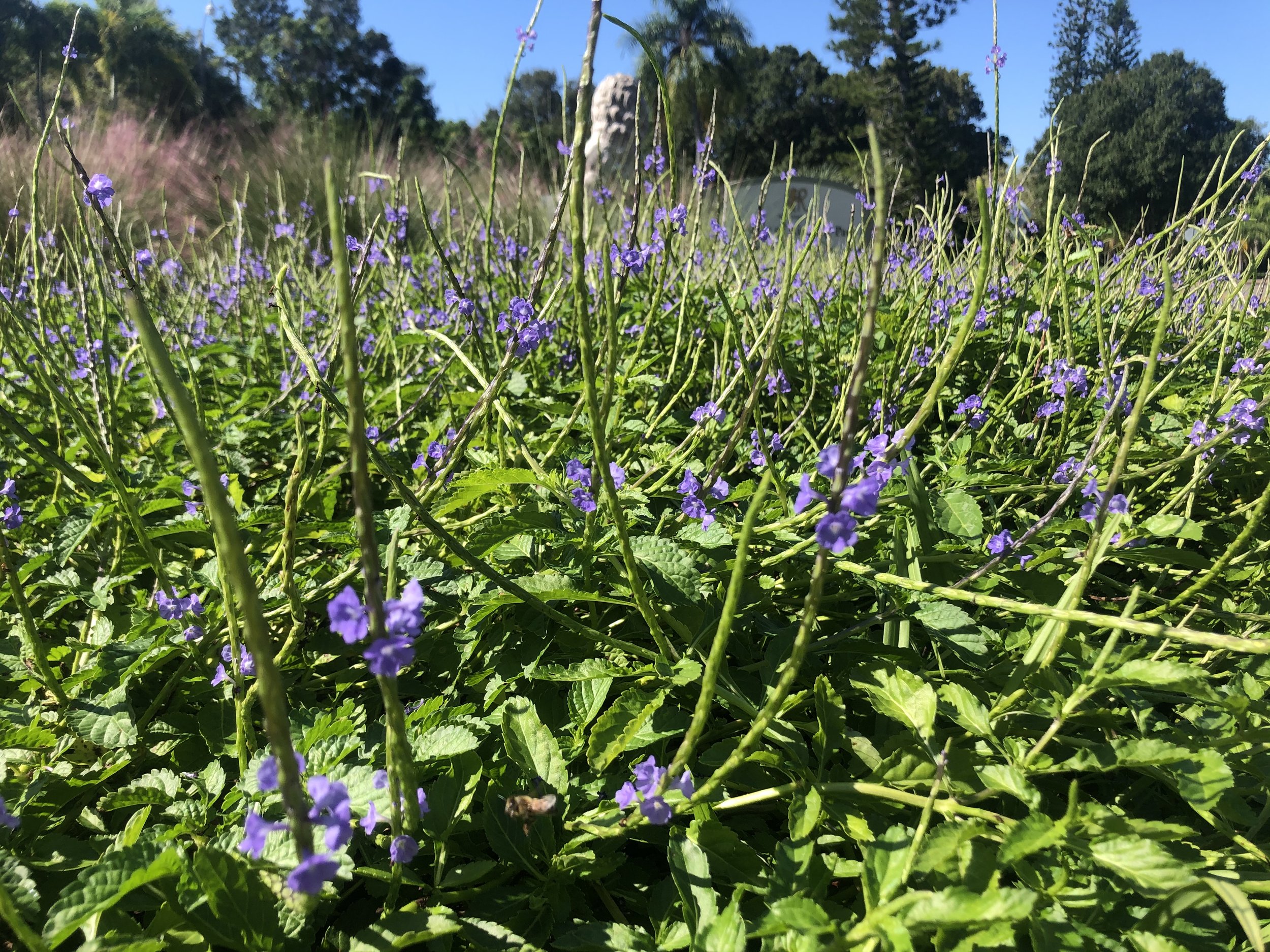

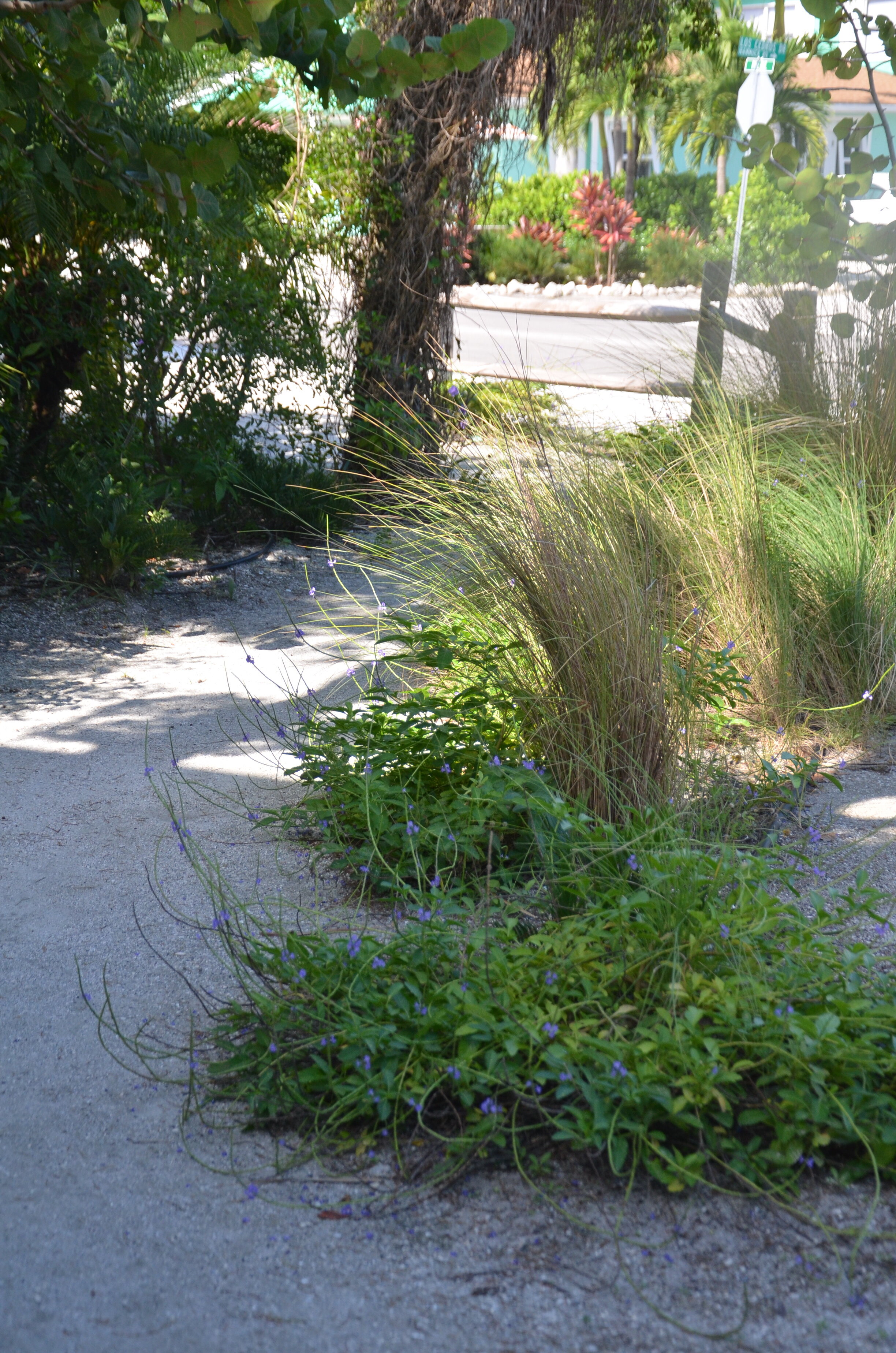
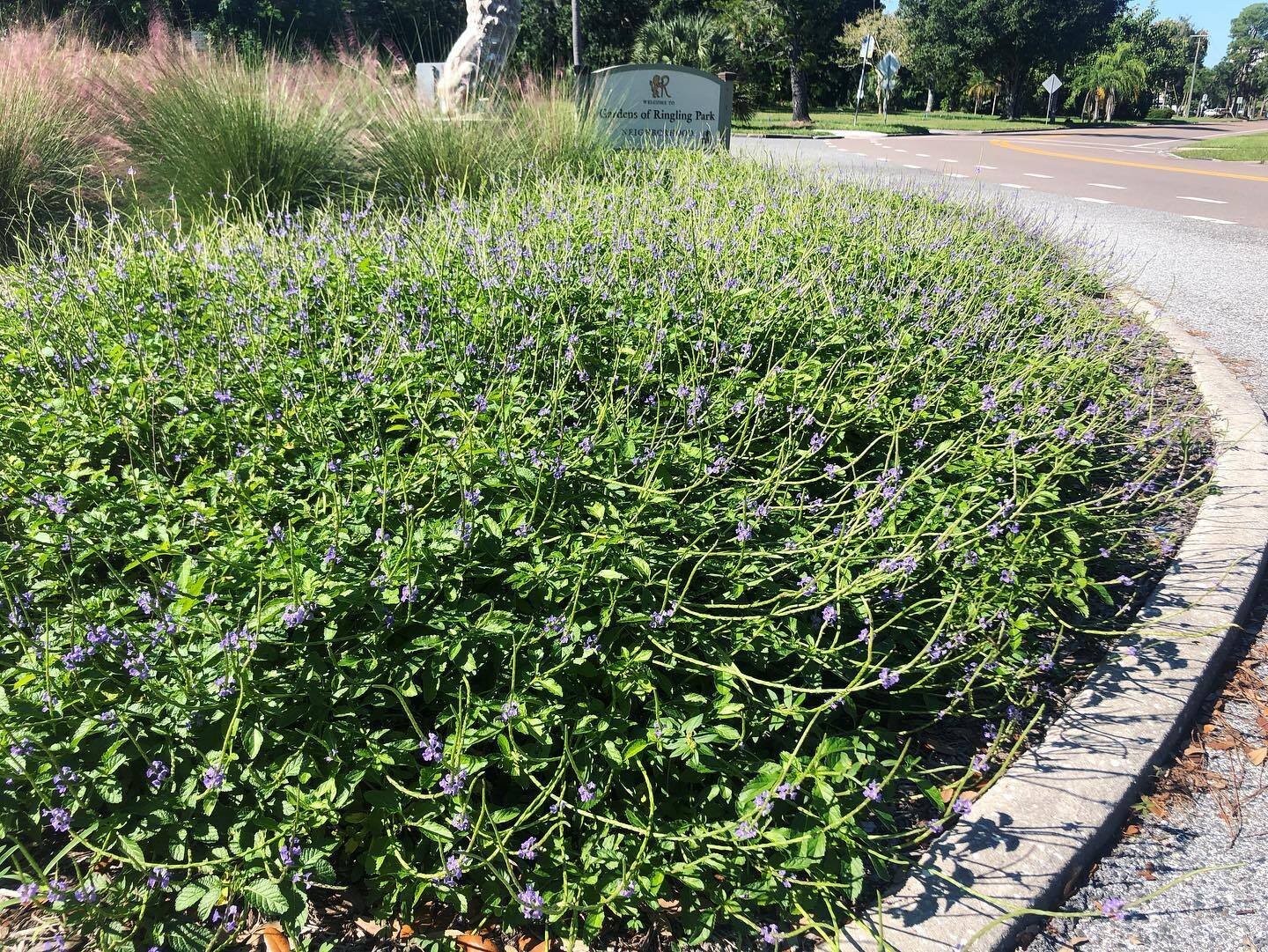
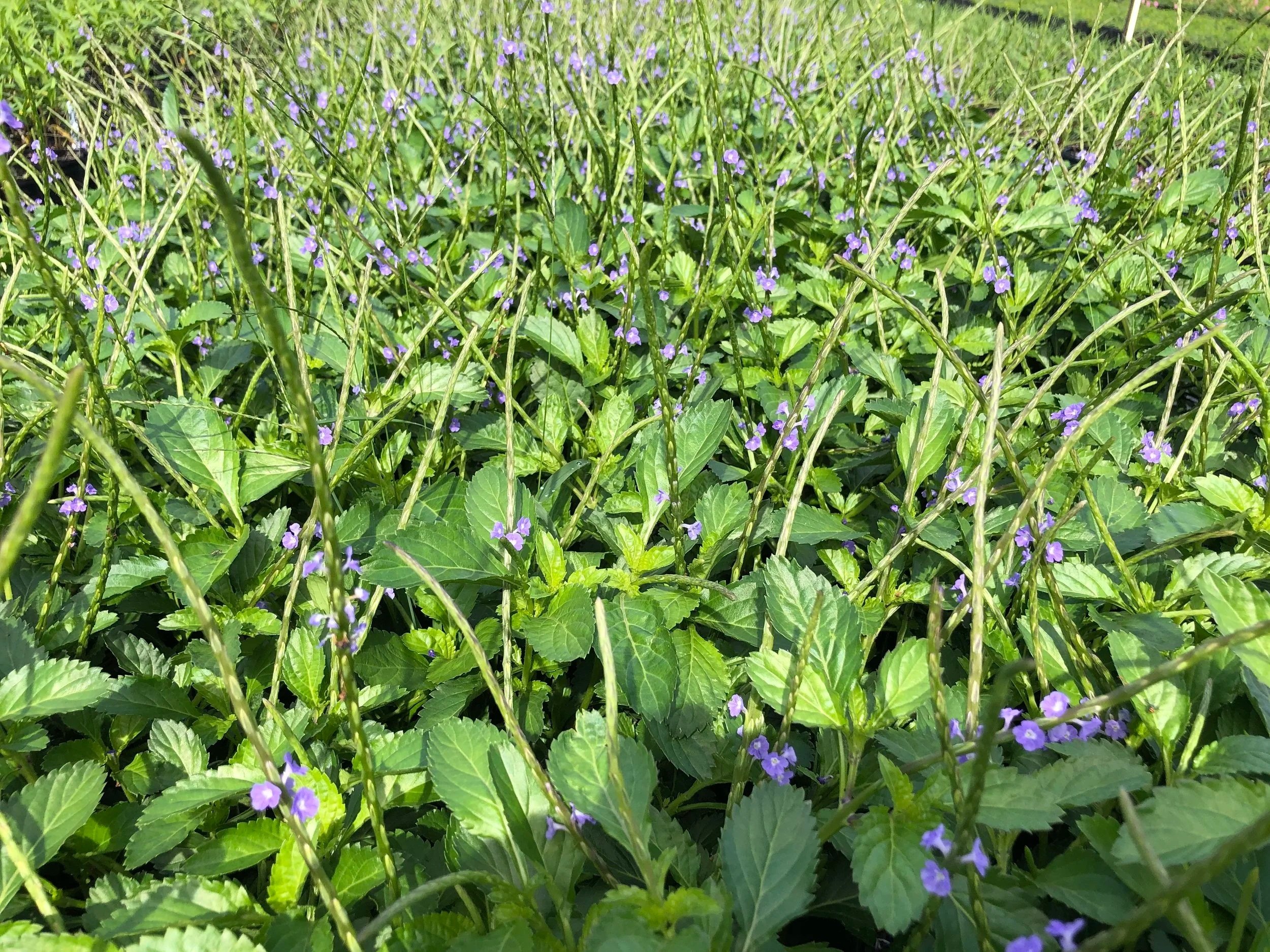
Stachytarpheta jamaicensis
Blue Porterweed is the only porterweed native to Florida. It is a low-growing plant, typically reaching 1 to 2 feet tall, that thrives in full sun or light shade. It is highly drought-tolerant and grows well in average to dry soils. This plant is a favorite for local wildlife. It serves as the primary food source for Tropical Buckeye caterpillars and provides nectar for many other butterflies and hummingbirds. Its unique, spike-like purple flowers bloom year-round, making it a reliable and attractive addition to any low-maintenance garden.
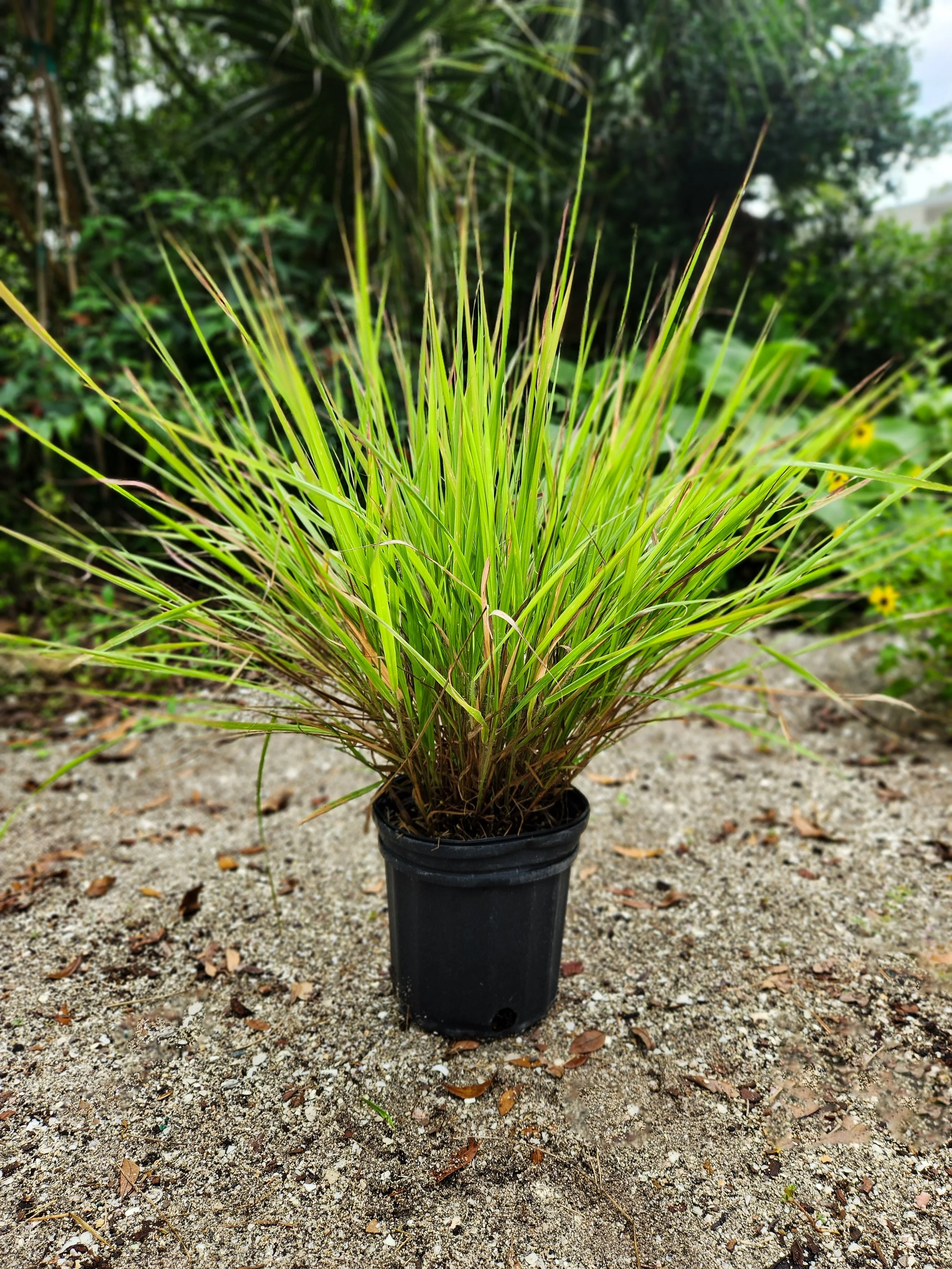
Eragrostis spectabilis
Purple Lovegrass is a warm-season bunchgrass native to eastern and central North America that forms low, mounding clumps 1’-2’ tall and wide. This drought-tolerant species features flat, blue-green basal leaves topped by airy, delicate flower panicles that create a stunning purple-pink haze above the foliage in late summer. Extremely hardy and well-suited for hot, dry conditions, it thrives in sandy or gravelly soils, where few other plants can survive, and spreads slowly by short rhizomes and self-seeding. Found naturally in abandoned fields, roadsides, dry prairies, and upland savannas from Maine to Florida, it serves as an excellent ornamental grass for xeriscaping and naturalized plantings, providing late-season color and texture to challenging sites.
Passiflora edulis “Purple Possum”
Purple Passionvine is a Florida-friendly, evergreen, perennial, showy passion variety known for it’s fruit, unlike other passion varieties that are known for serving as host plants. While the fruit and the flowers are the stars of the show, Purple Possum also serves as a host plant for Zebra Longwing and Gulf Fritillary caterpillars, so you can use this plant to feed yourself, and your local butterflies! Grow in full sun with rich, well-draining sandy soil for the best blooms and fruit. The vines and fruit get heavy as they grow, so provide a sturdy trellis, arbor, tree, or fence to support them.

Stachytarpheta frantzii
Purple Porterweed is a non-native, Florida-friendly flowering shrub that grows 3’-4’ tall and wide. They grow best in full sun and average to moist sandy soil. Their purple flower spikes bloom from spring until the first frost and serve as a nectar source for bees, butterflies, and hummingbirds.
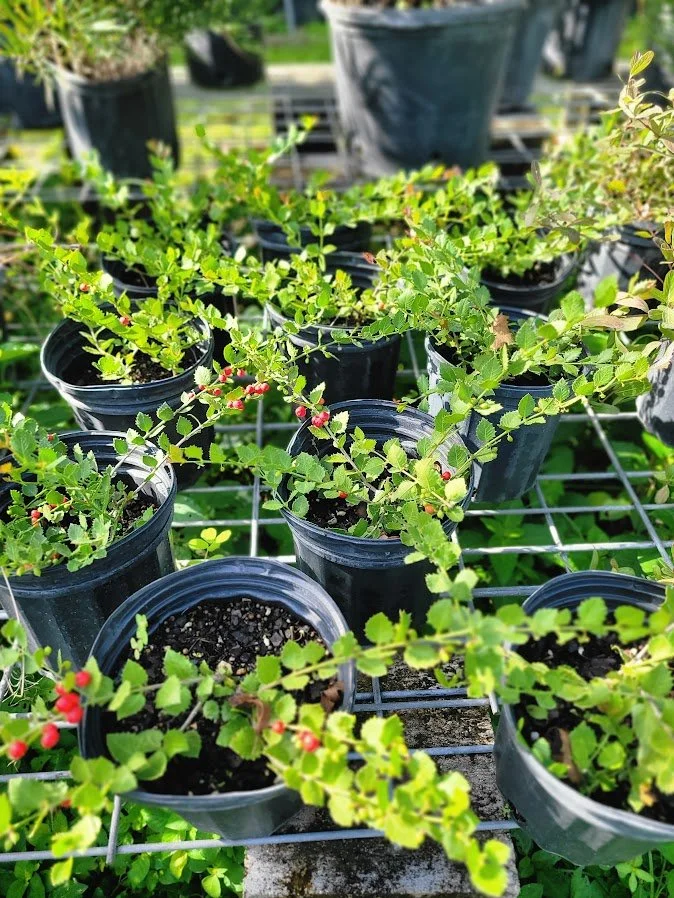
Crossopetalum illicifolium
Quailberry is a low-growing evergreen groundcover native to Florida and the Caribbean that reaches only 12 inches tall while spreading 2-3 feet wide. This prostrate shrub features small, stiff leaves that resemble miniature holly leaves with spiny-toothed margins and may show reddish coloration on new growth. It produces tiny, inconspicuous pale green flowers year-round followed by attractive bright red berries that are highly ornamental and provide food for birds and small wildlife. Found naturally in coastal hammocks and pinelands from central Florida southward, it thrives in well-drained soils and serves as an excellent native groundcover for shaded areas, rock gardens, and naturalized plantings in zones 9-11.
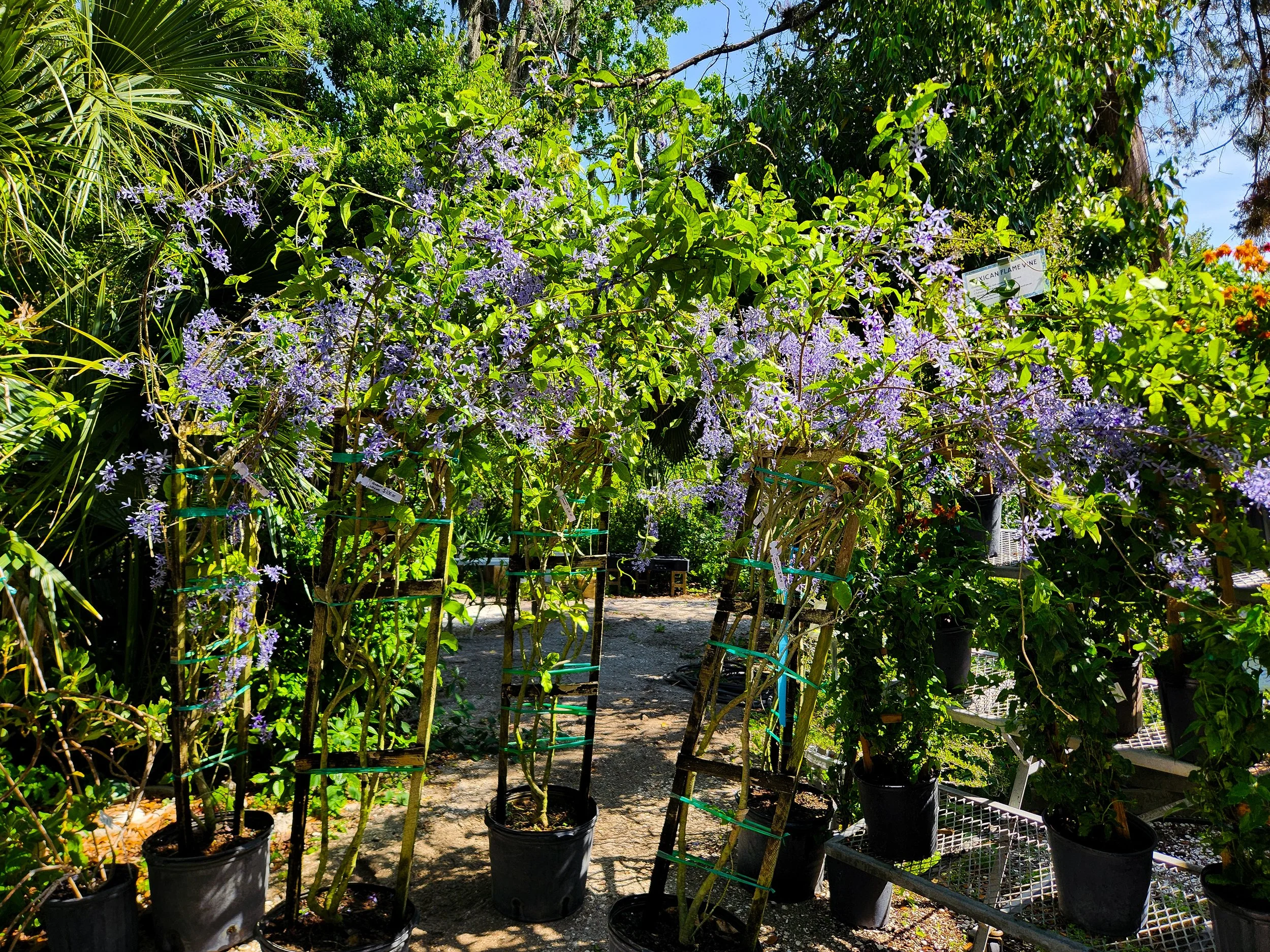
Petrea volubilis
Queen’s Wreath is a non-native, Florida-friendly, fast-growing evergreen vine. It grows best in full sun to part shade, but flowers more abundantly in full sun, and average soil; they are somewhat drought tolerant once established. These vines have showy purple flowers that bloom profusely from Feb-June, which are highly attractive to bees, butterflies, and hummingbirds.
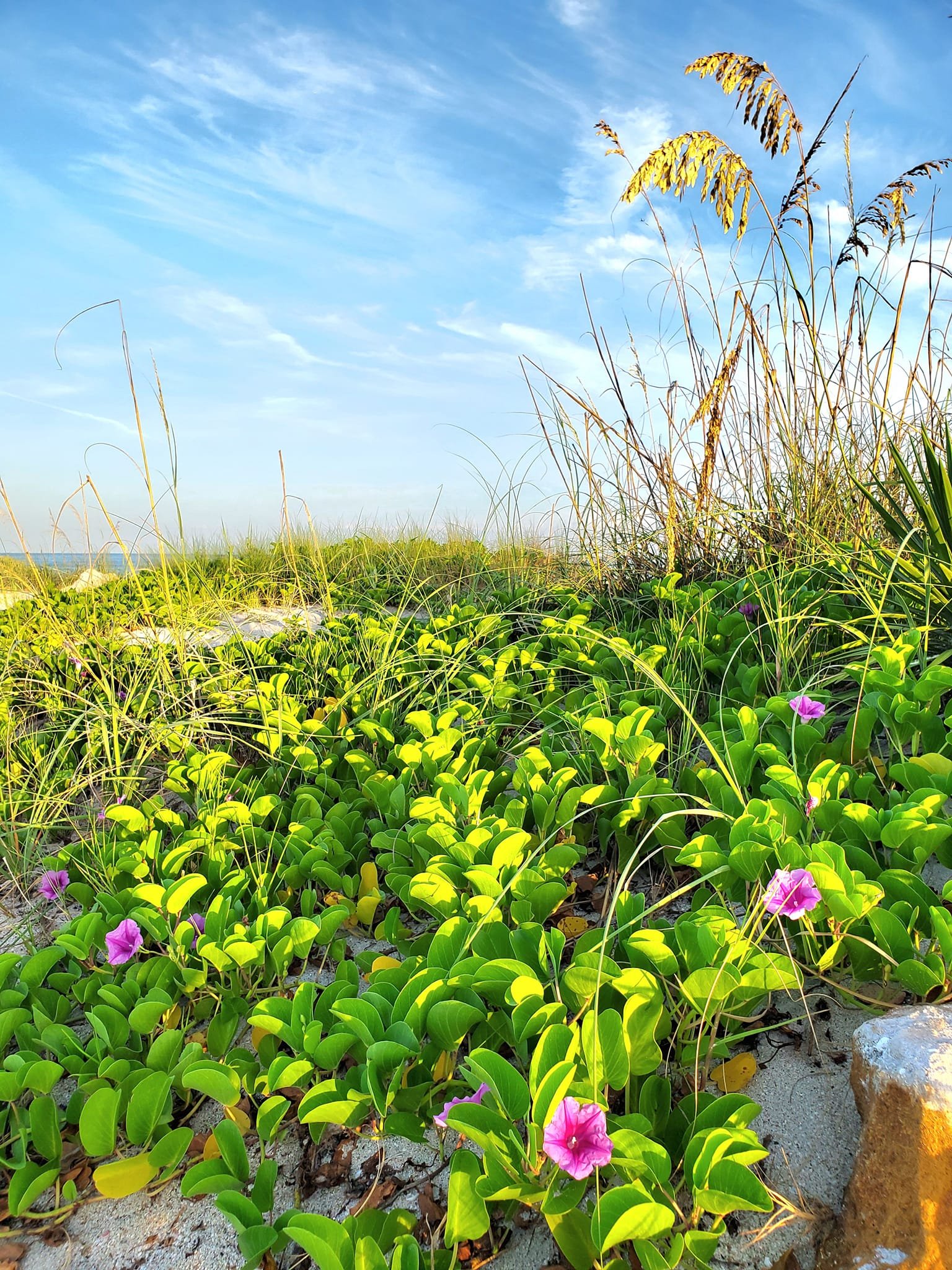
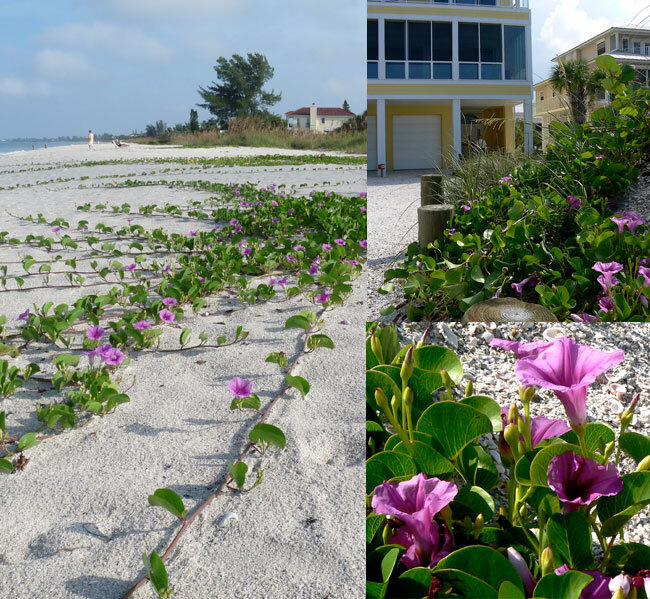
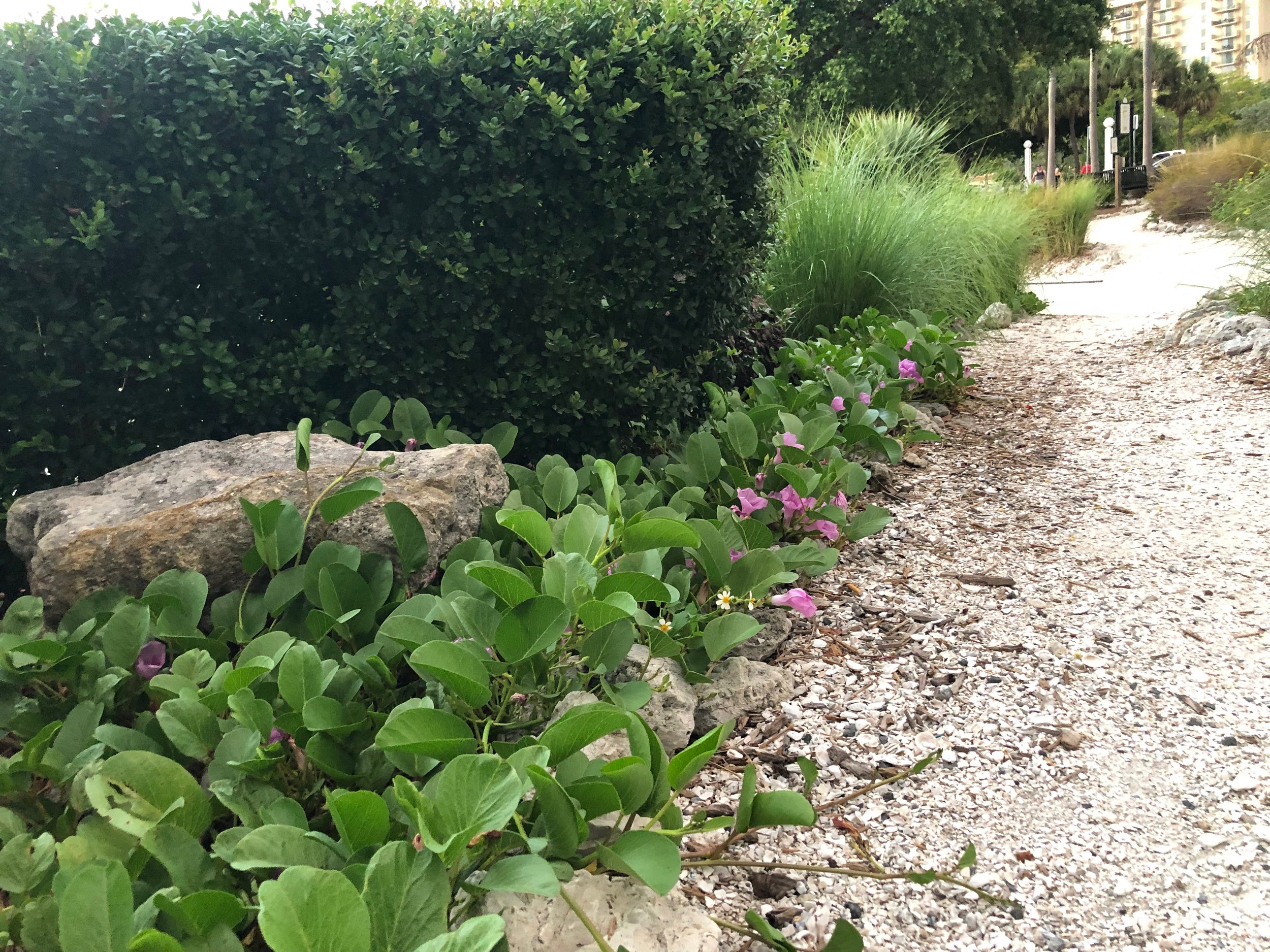
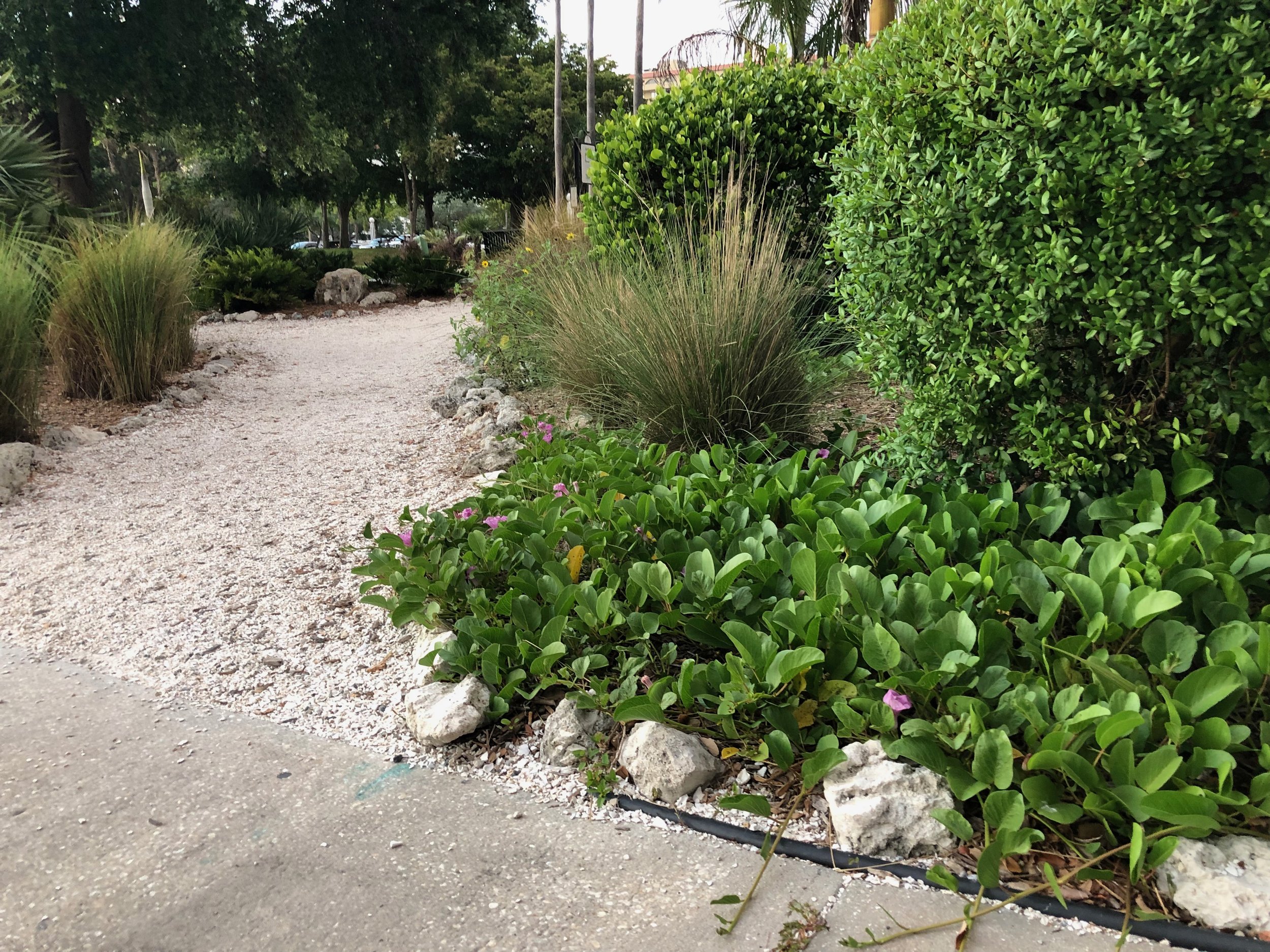
Ipomoea pes-caprae
Railroad vine is an evergreen, flowering, vining groundcover. It is fast growing, does not require a trellis, and reaches 1ft in height. It thrives in full sun on coastal landscapes, is salt tolerant, but very cold-sensitive. It needs dry, sandy soils, and is great for stabilizing beach dunes. Showy pink/purple trumpet flowers are great for bees, butterflies and other pollinators.
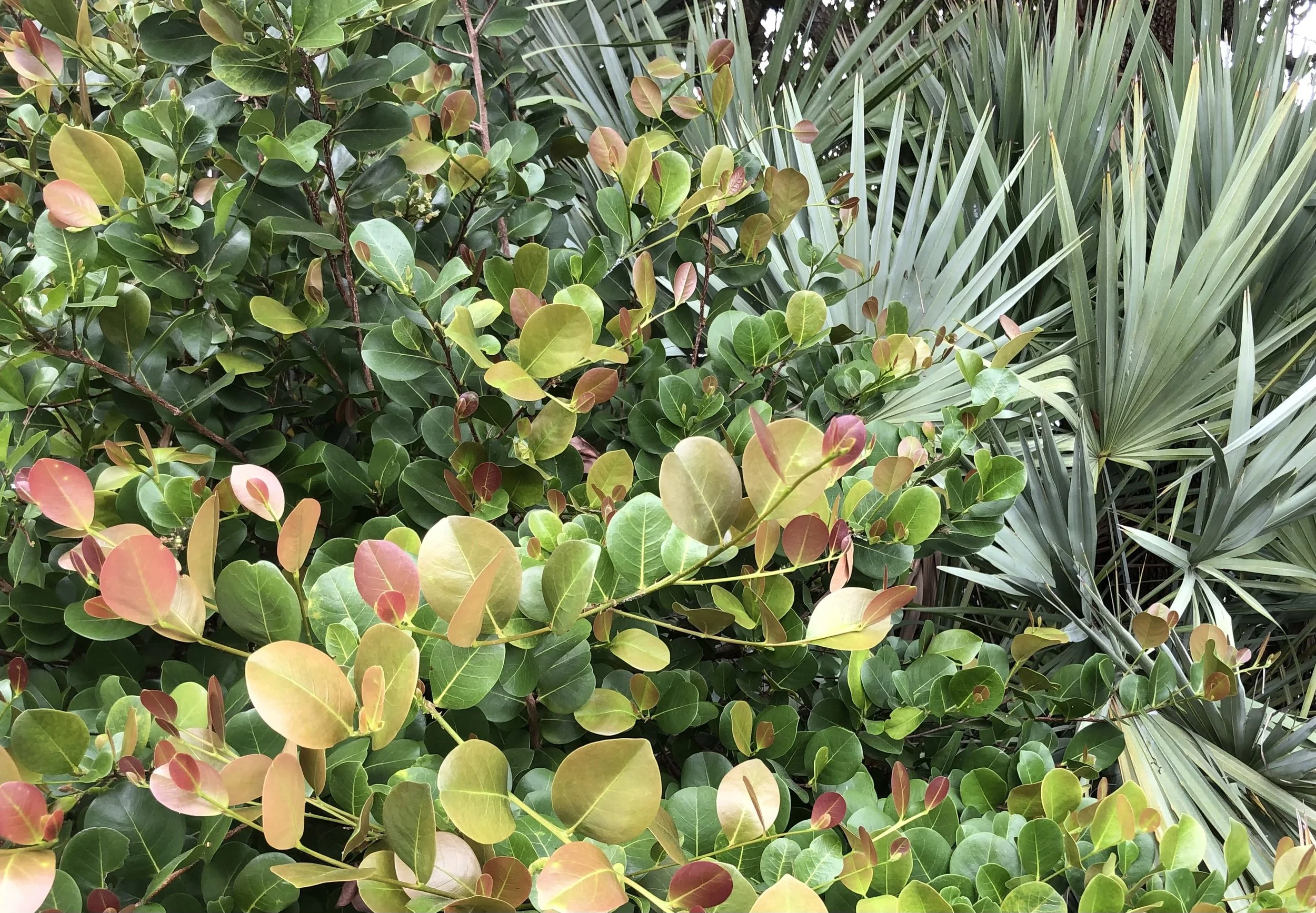
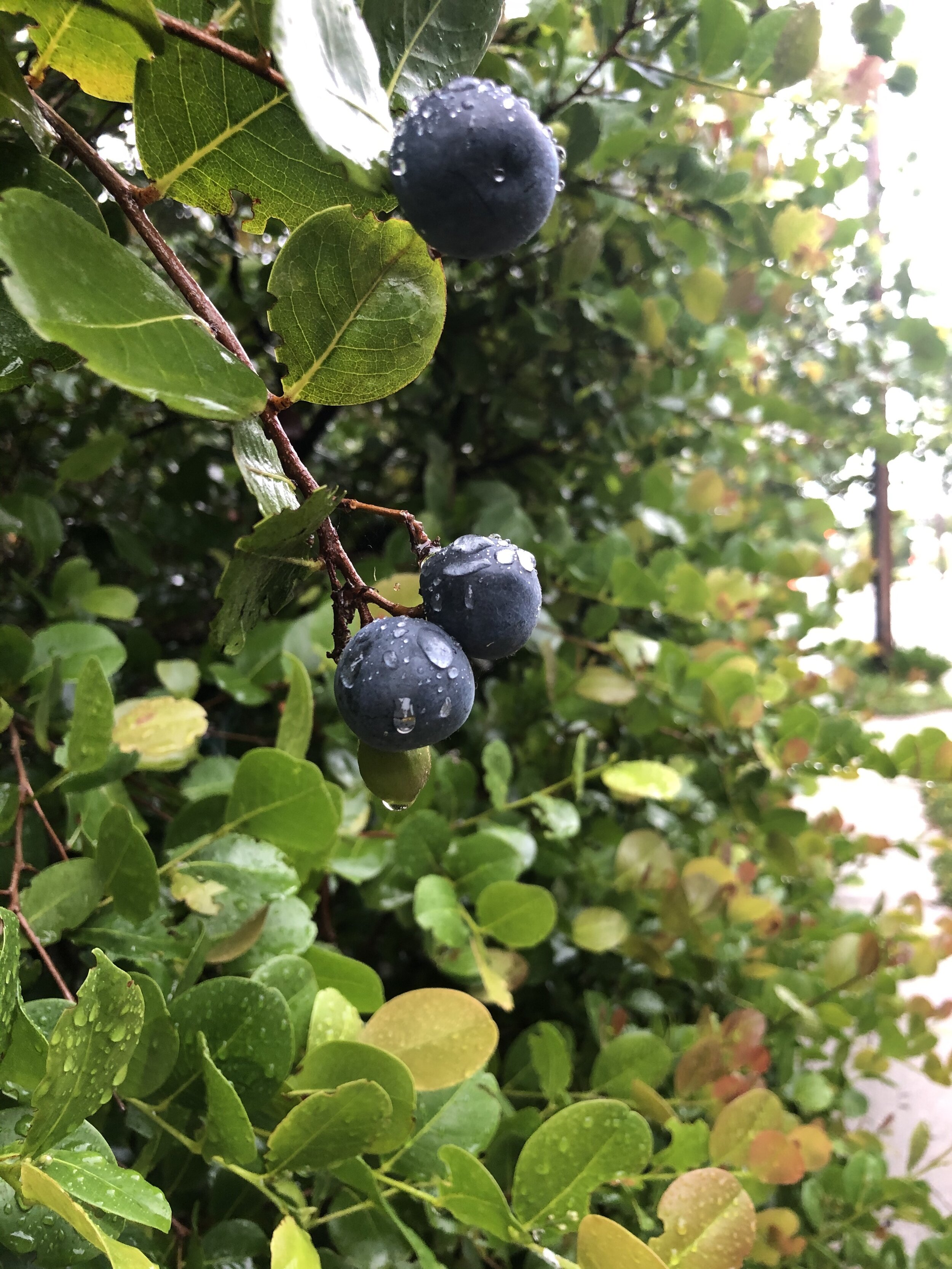
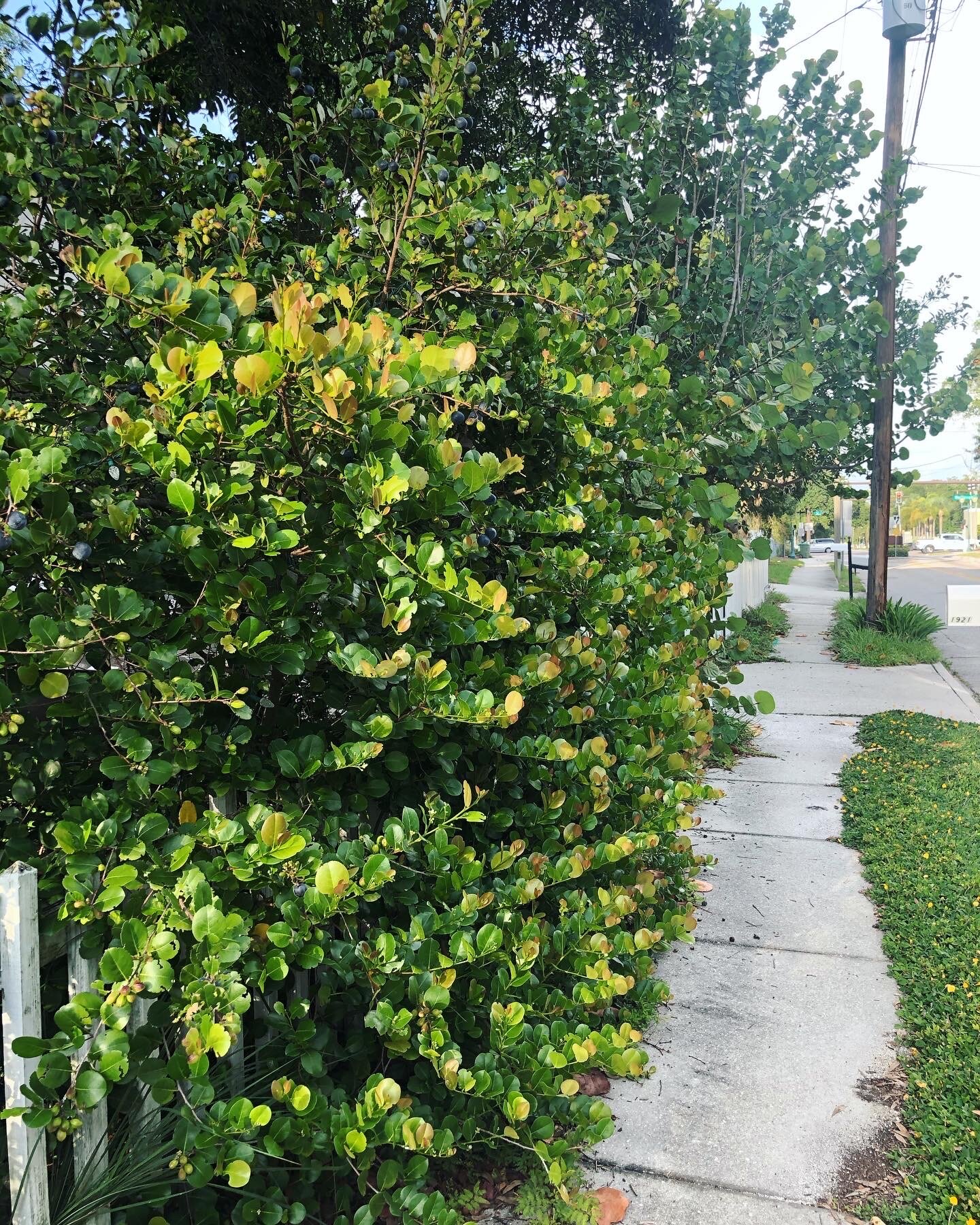
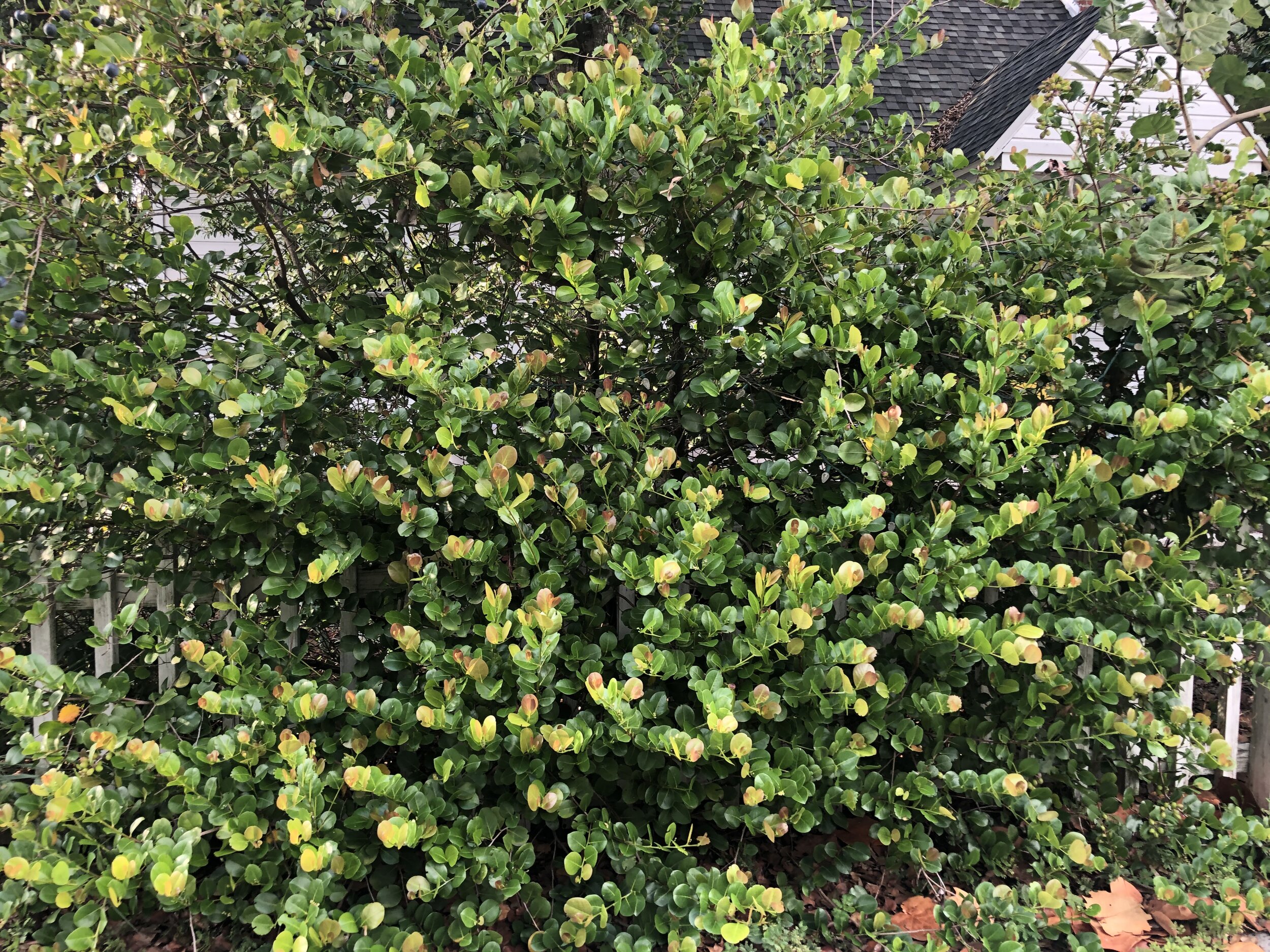
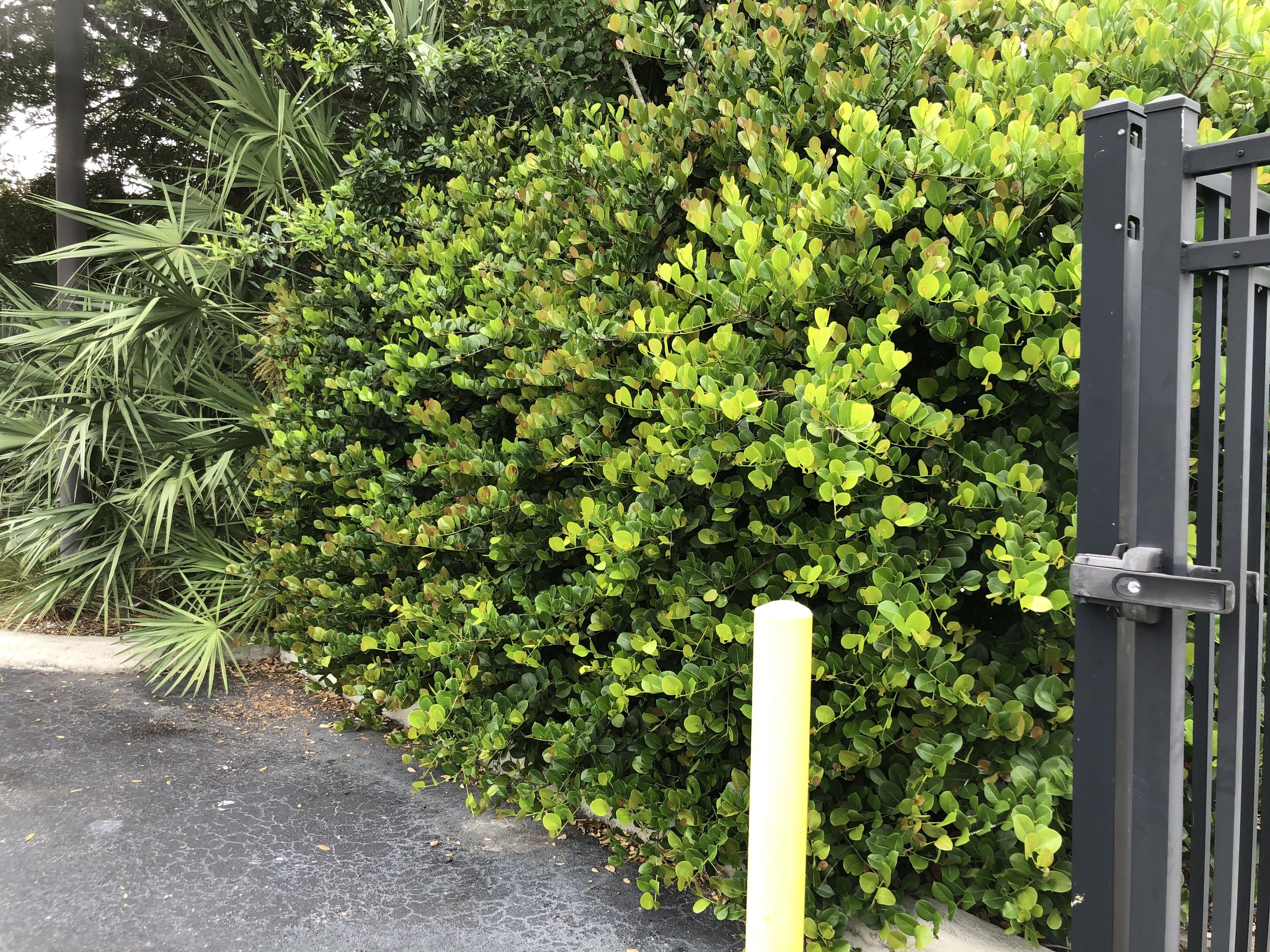
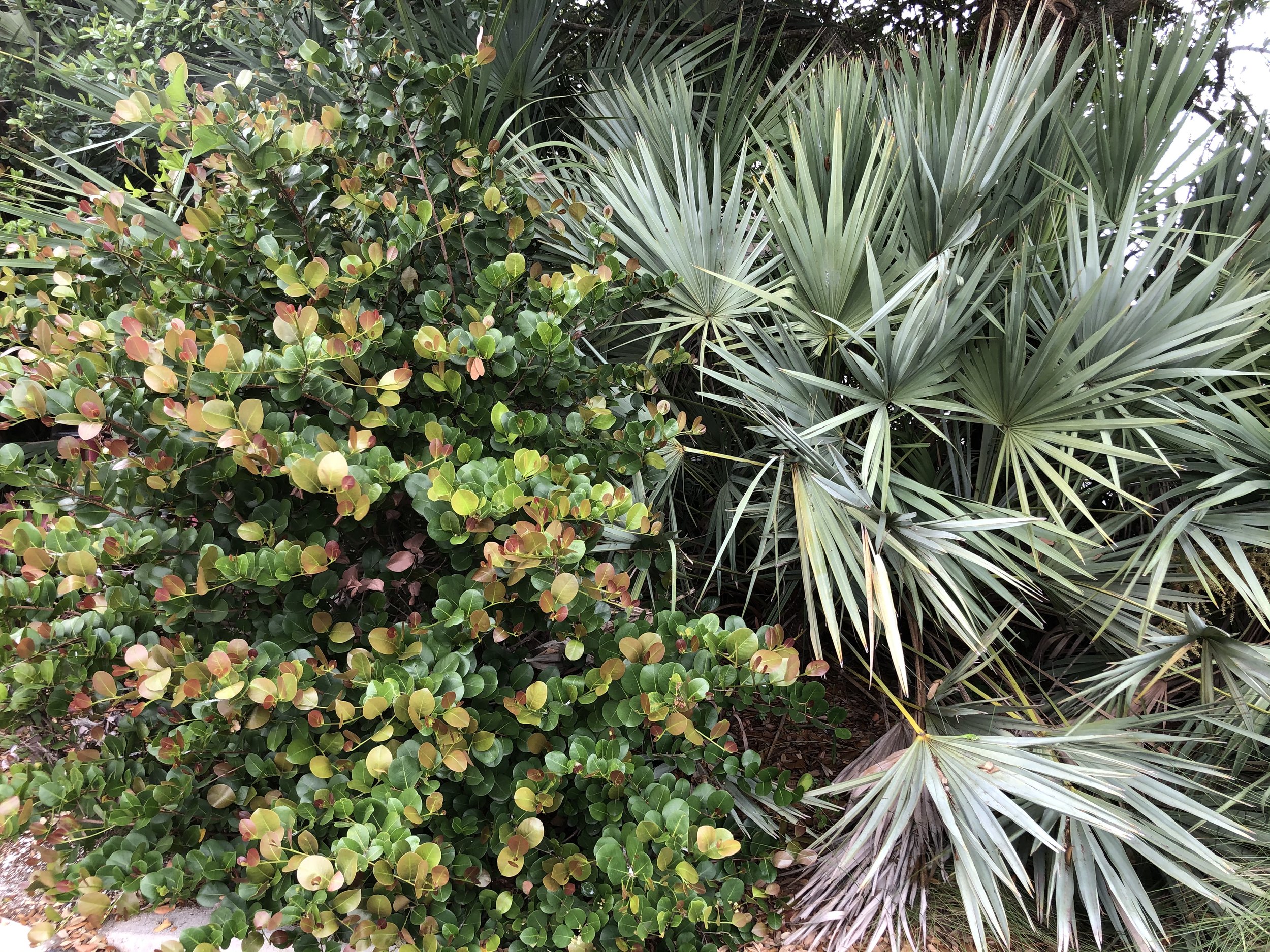
Chrysobalanus icaco ‘Red Tip’
Red Tip Cocoplum is a popular cultivar of the native Florida cocoplum that grows 5’-20’ tall with an attractive upright to spreading form. This evergreen shrub is distinguished by its striking new growth that emerges bright red to orange-bronze before maturing to glossy, dark green rounded leaves. It produces clusters of small white flowers in summer followed by edible dark purple fruits that can be used for jellies and preserves. It thrives in full sun to partial shade with well-drained soils, making it an excellent choice for hedging, privacy screens, and buffer plantings in zones 10-11.
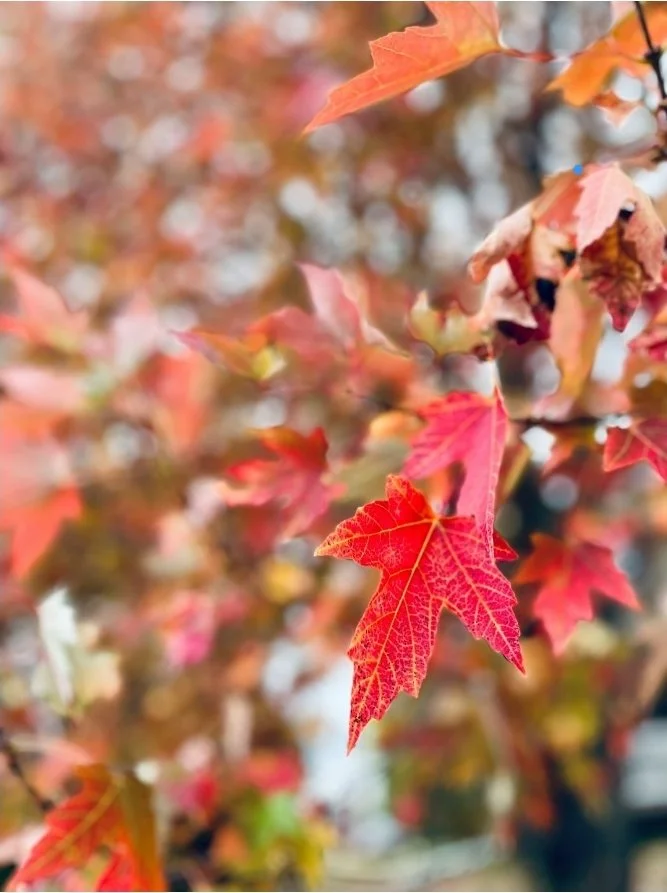
Acer rubrum
Red Maple is a native deciduous tree that can grow 40’-70’ tall and 30’-50’ wide. They grow best in full sun to partial shade and moist, well-draining, slightly acidic soils. They can tolerate both short dry periods and very wet soil once established. In spring, they produce showy pink to red blooms that attract pollinators, which are followed by seeds that feel local birds and small mammals.
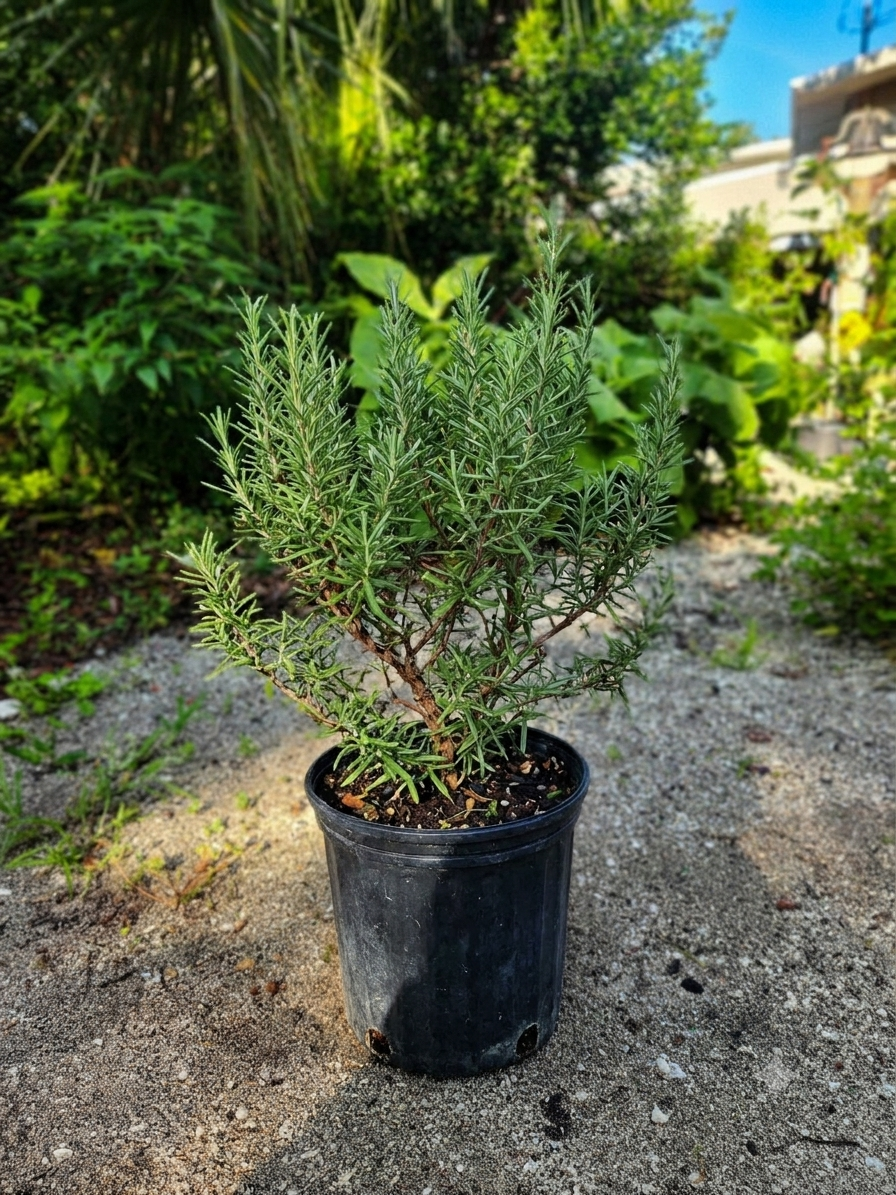
Salvia rosmarinus
Rosemary is a non-native, Florida-friendly evergreen woody herb that serves a purpose in the garden and the kitchen. Reaching 2’-5’ in height, with full sun and dry to average, well-draining sandy or rocky soil, Rosemary is a great drought-tolerant herb that handles the Florida heat very well. With flowers for pollinators from late winter to spring, and an undeniably delicious flavor when using the leaves, this plant can be used in a butterfly garden and in teas, soups, and roasts.
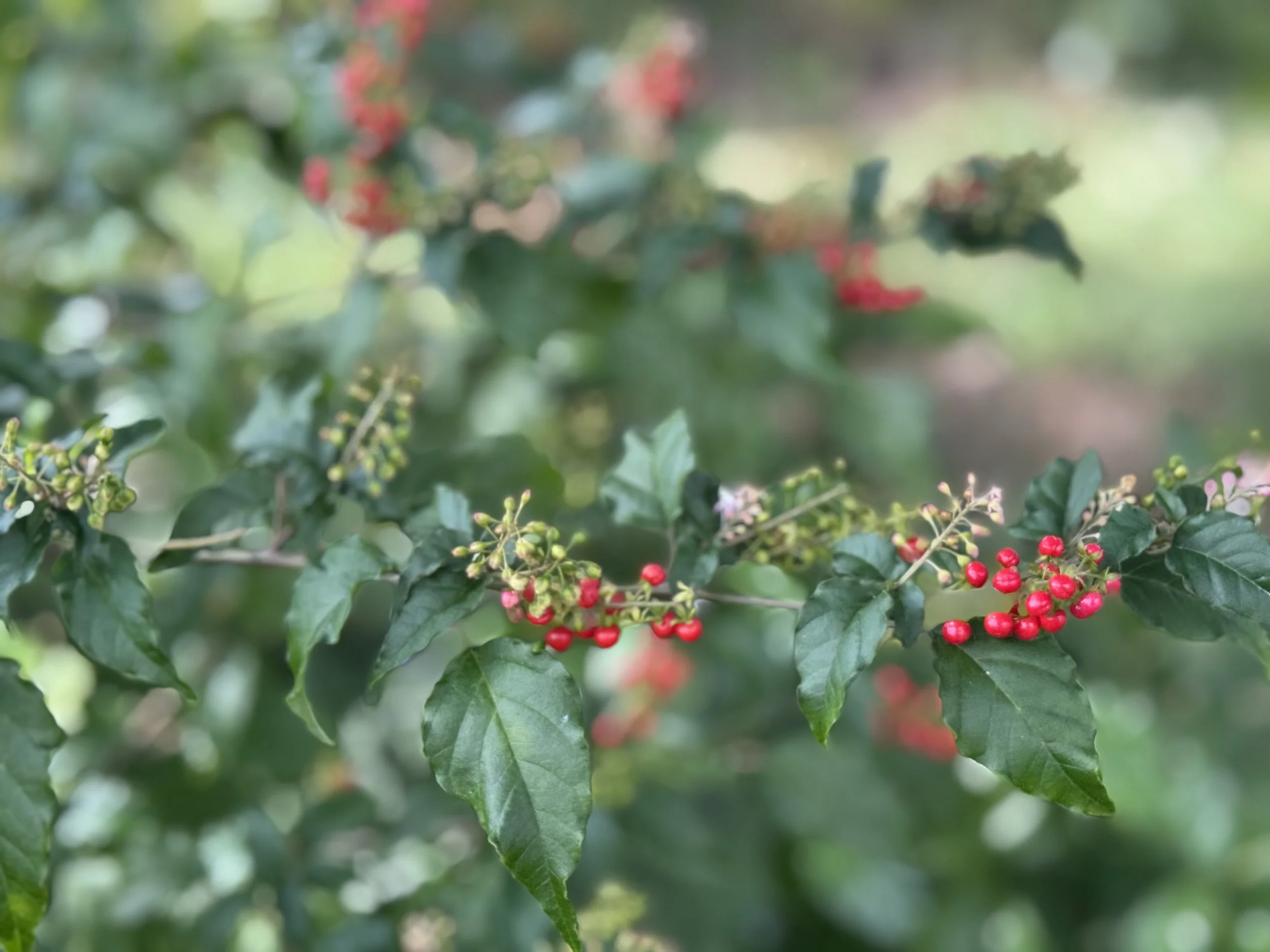


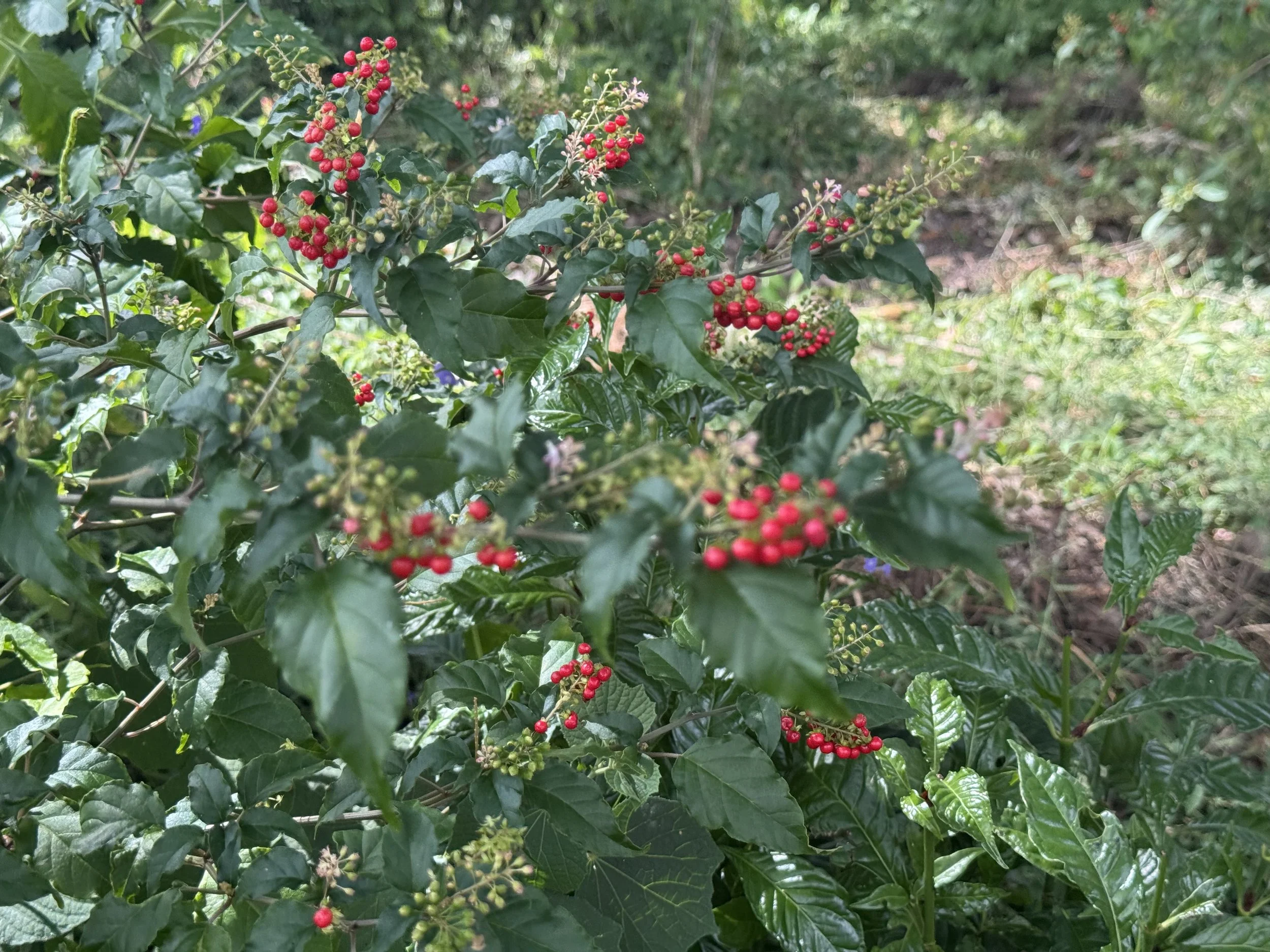
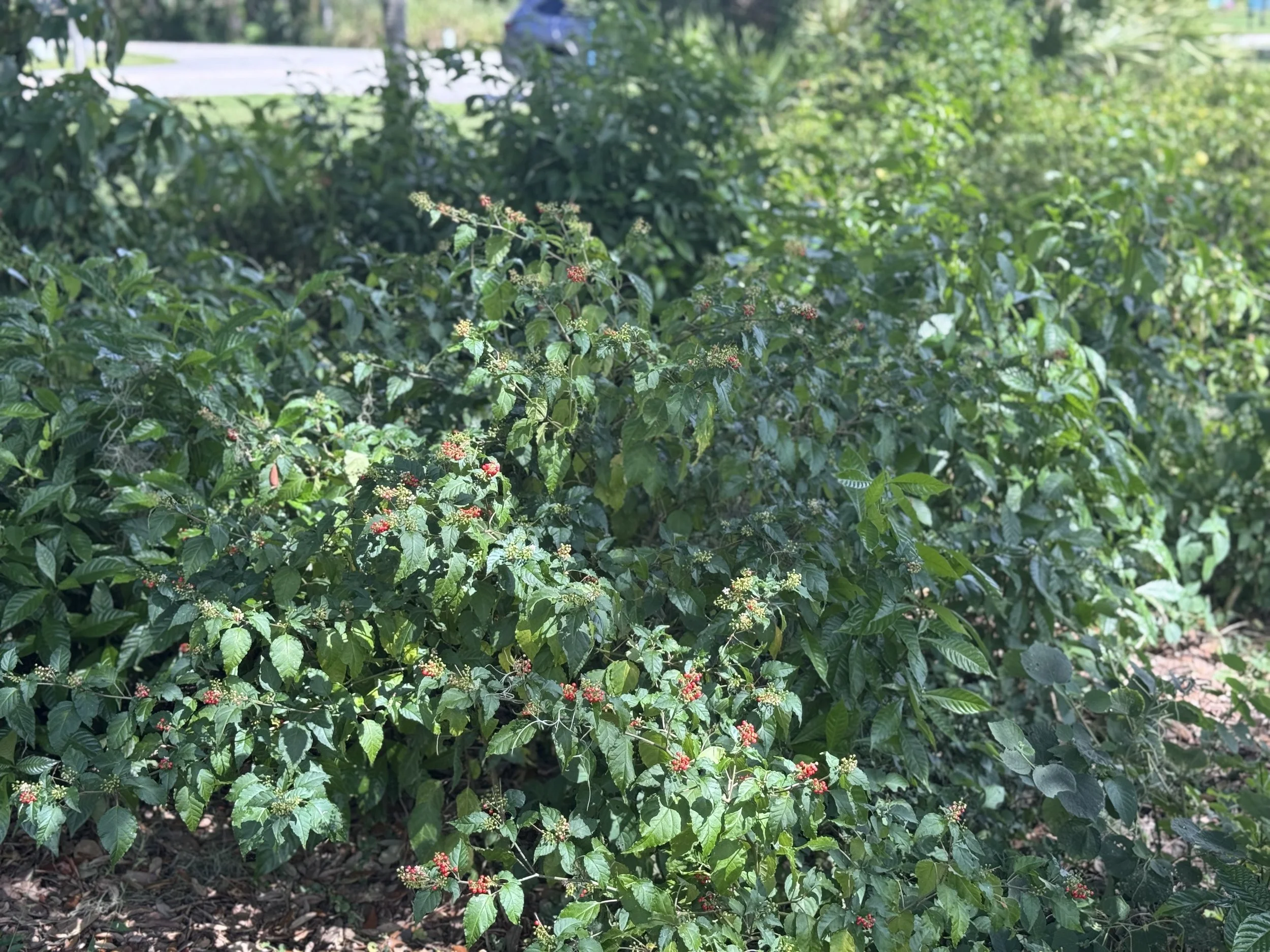
Rivina humilis
Birds will be flocking to your yard if you add this to your garden! This small, flowering shrub produces small red berries after their delicate, white flowers. They flower year-round so there is always a splash of color in their green foliage. They prefer shade to part shade but can handle sun when established.
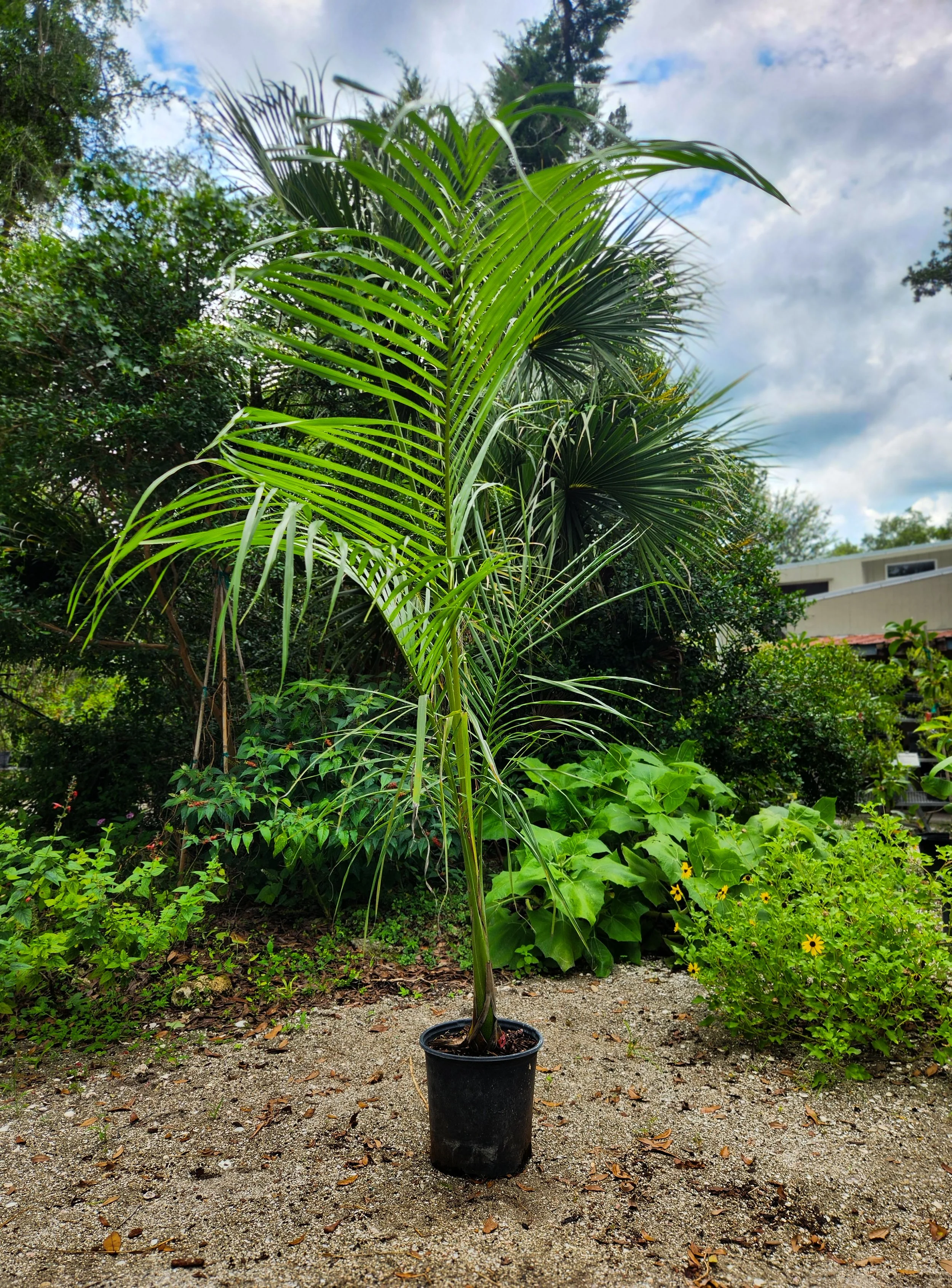
Roystonea regia
Royal Palm is a Florida native palm that grows to be 50’-100’ tall and 20’-25’ wide. They grow best in full sun and moist, well-draining soil, but they are highly adaptable to different soil conditions once established. Their flowers are highly attractive to pollinators and the fruit that follow are highly attractive to birds, making them an excellent plant for bringing wildlife to the landscape.
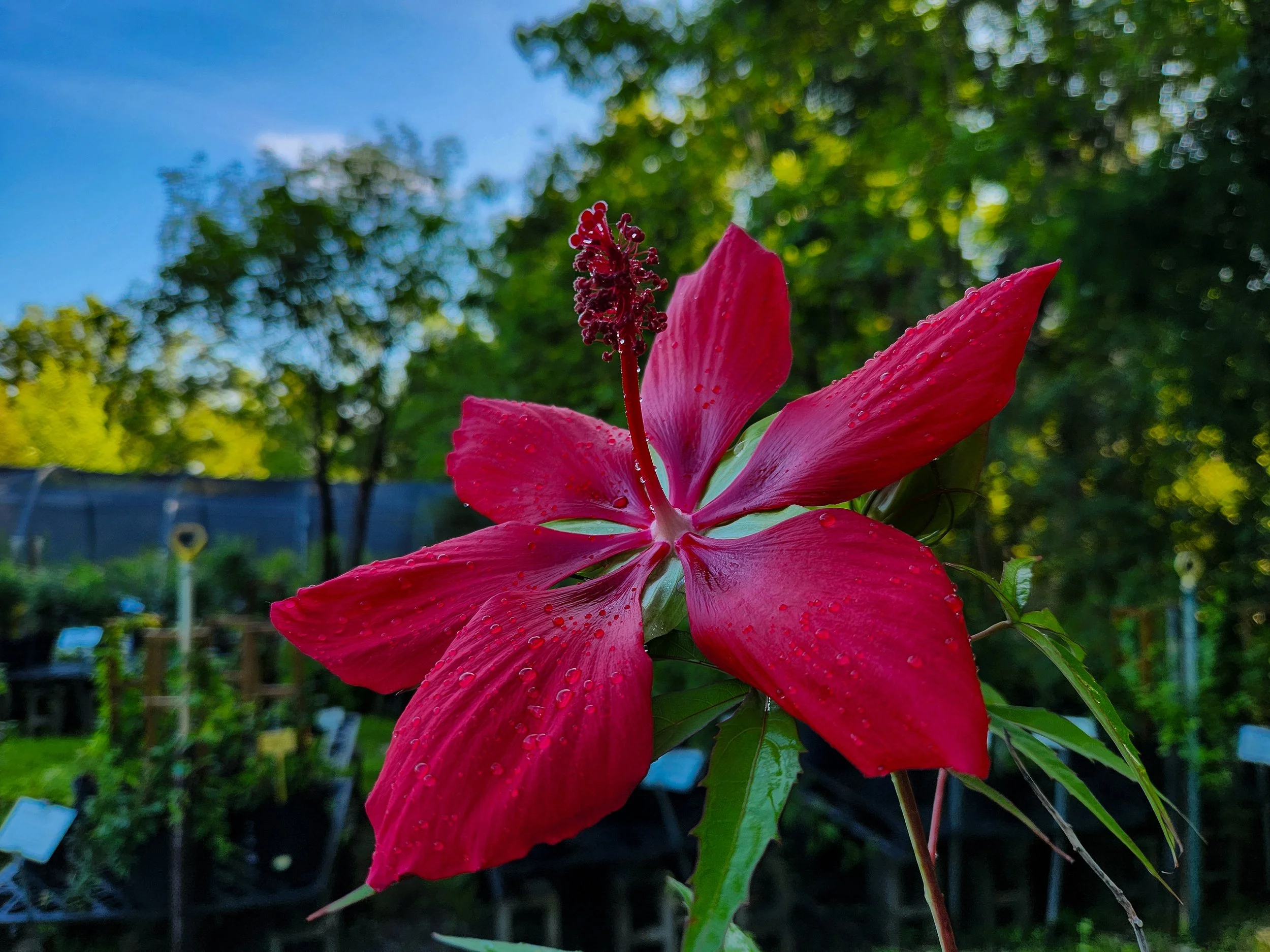
Hibiscus coccineus
Scarlet Hibiscus is a native, perennial flowering shrub that grows 3’-8’ tall and 2’-4’ wide, with large, lobed leaves and large red star-shaped, long-lasting flowers that bloom from mid-summer to early fall. They grow best in full sun to partial shade with moist to wet, rich soil. They naturally grow in very wet areas and are very tolerant of soggy soil, but they can adapt to average soil environments with adequate watering. They are very attractive to Ruby Throated Hummingbirds, butterflies, and native bees!


Heliotropium angiospermum
Scorpiontail is a notable wildflower that grows and reseeds in wildflower gardens quite frequently. The curled flower heads with small white flowers attract an abundant amount of rare, niche wasps and other pollinators. The seeds on the long seed stalks are favored by small songbirds.
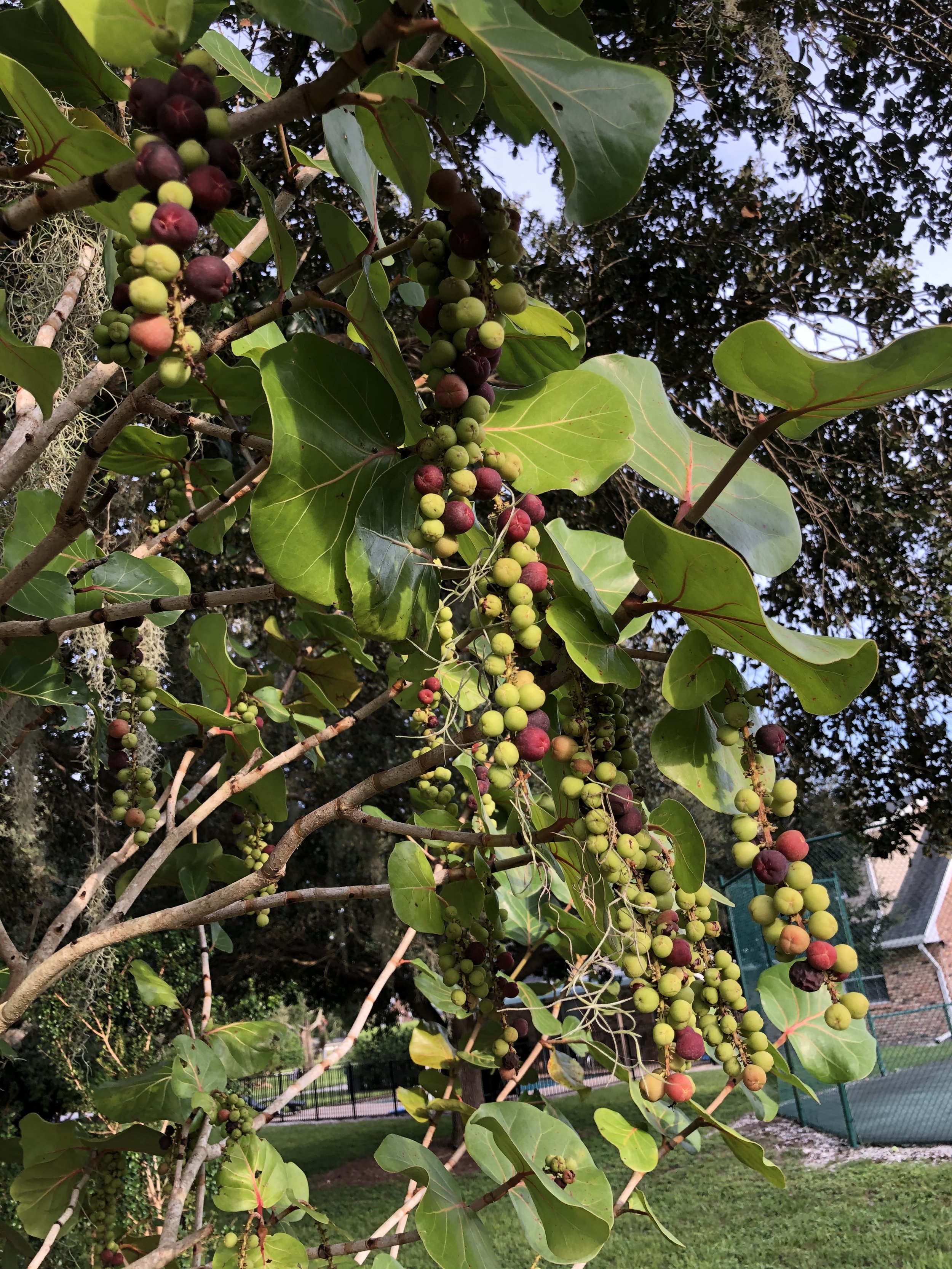
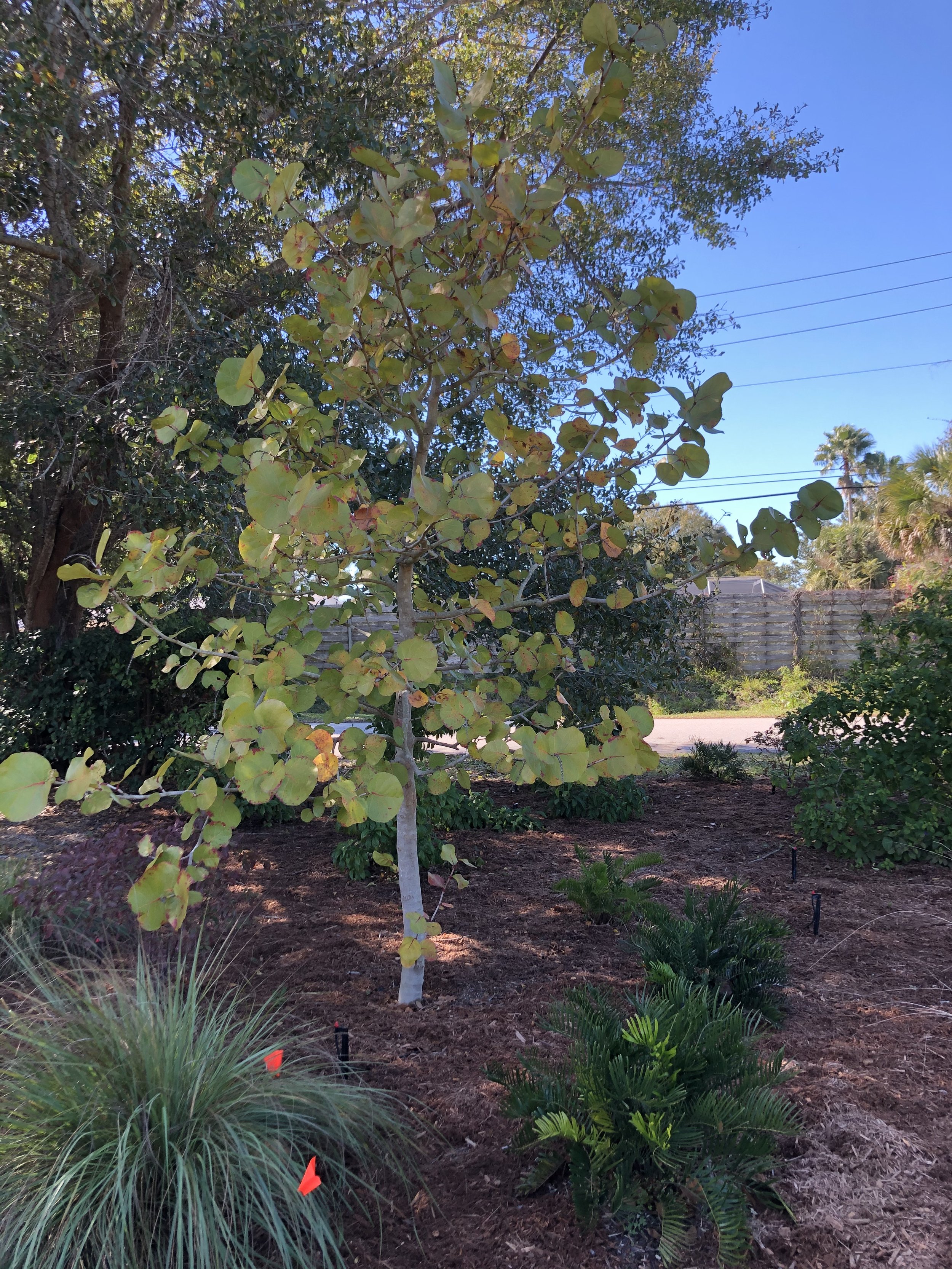
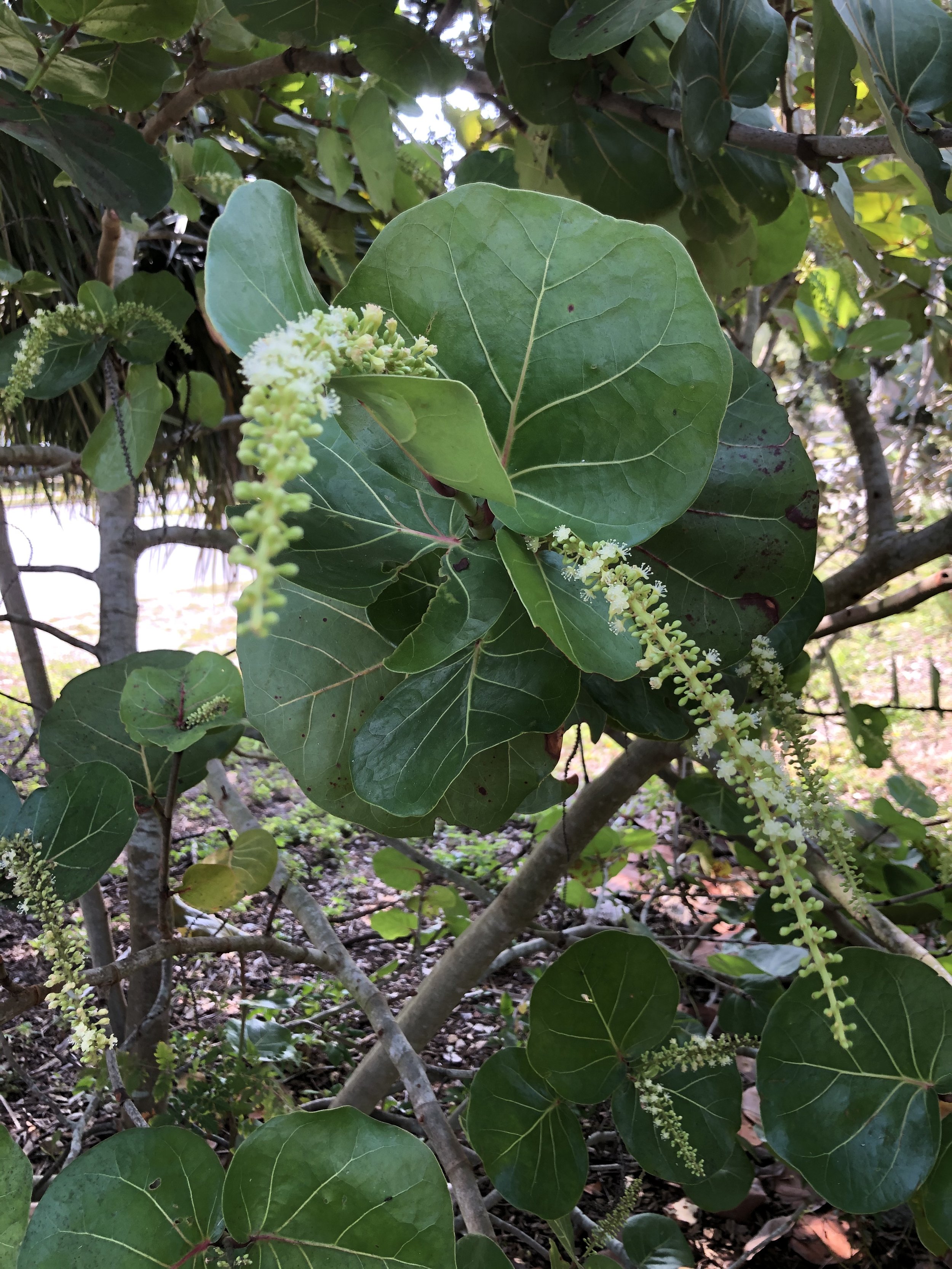
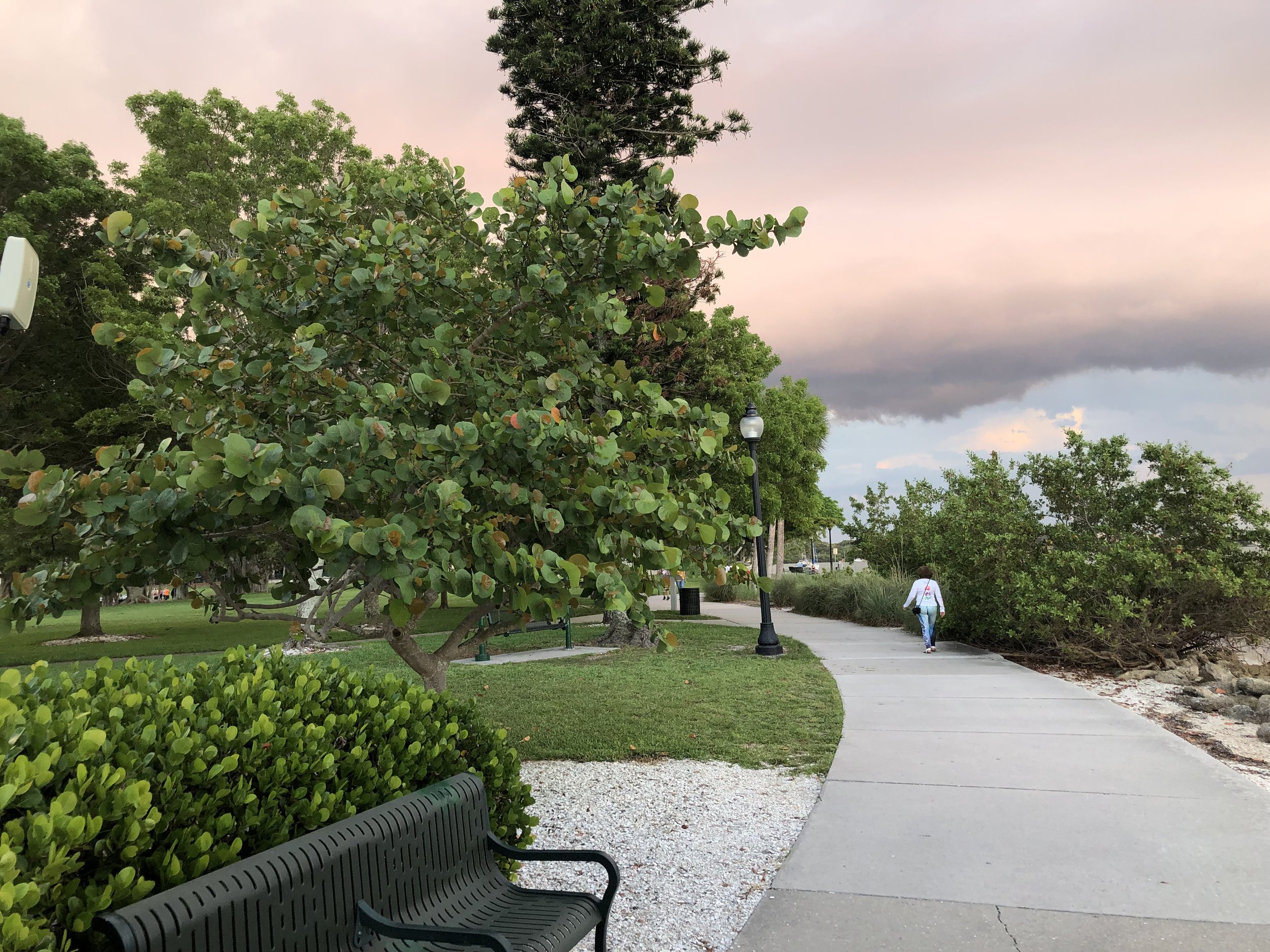
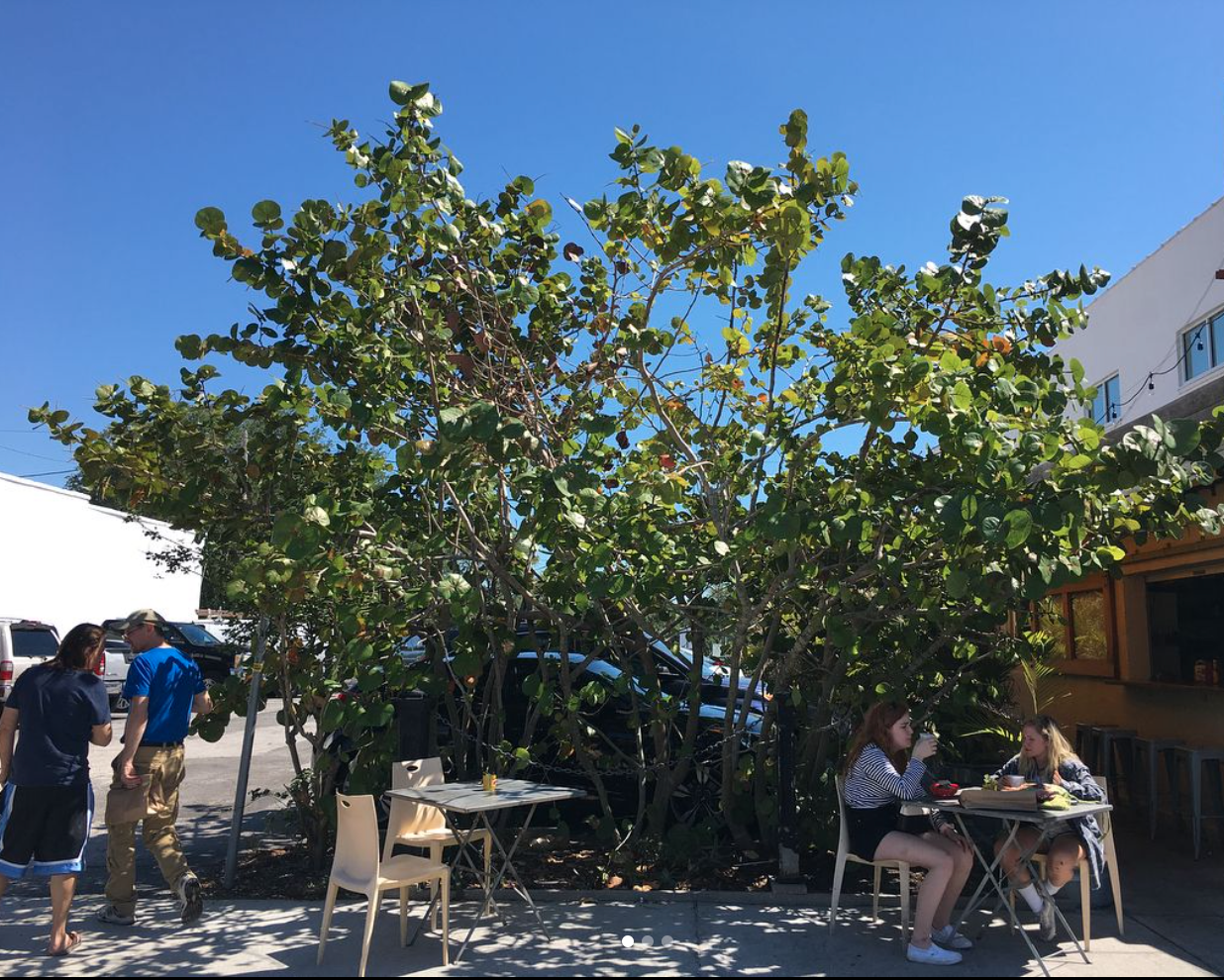
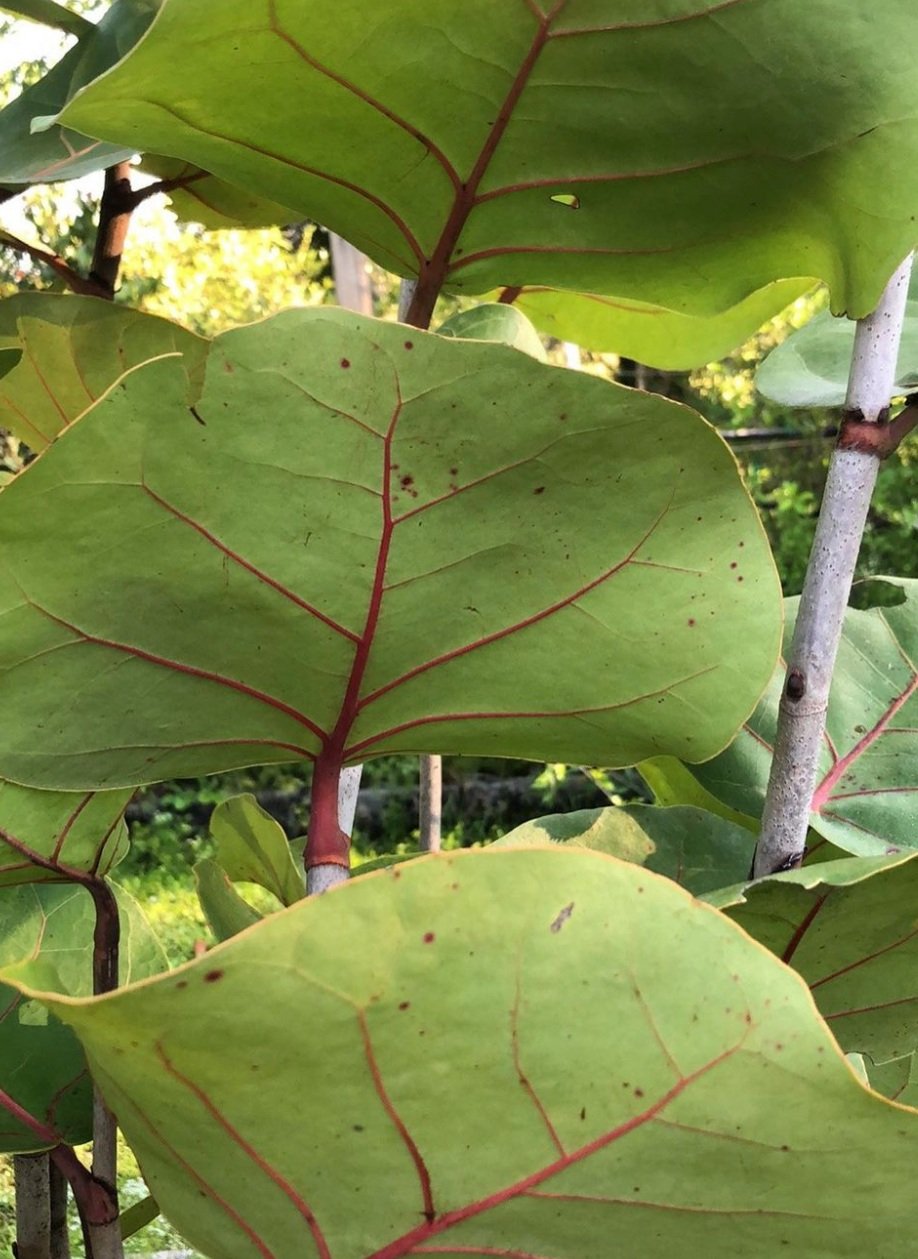
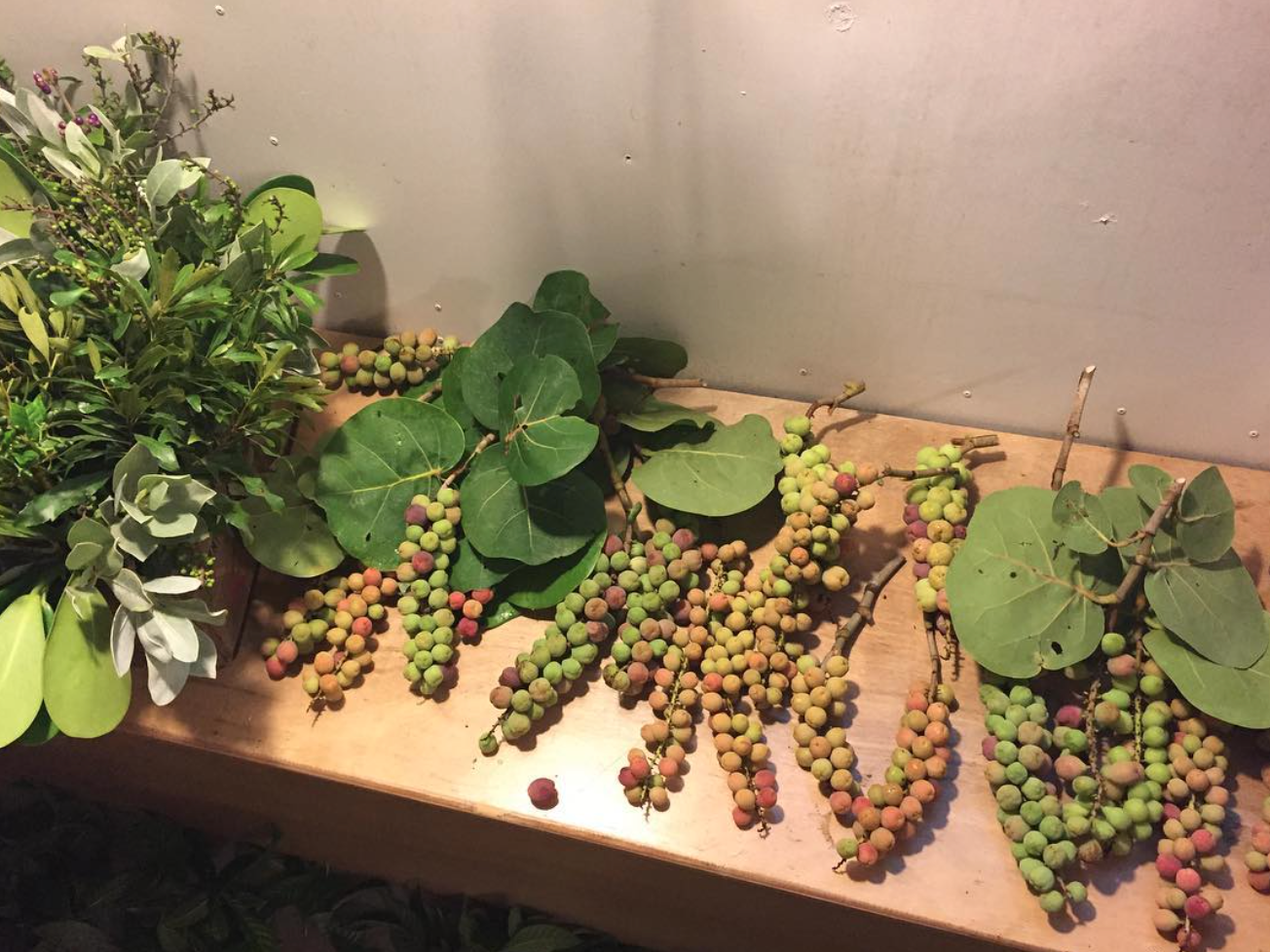
Coccoloba uvifera
A tropical-looking and unique native plant, Sea Grape grows to 10-30 ft tall and can be trimmed. Grow in full sun as a large shrub for screening and privacy or as a large sculptural tree in semi-shade. The leaves of Sea Grape are lightly deciduous and interesting with seasonal changes in color. The fruit grows in beautiful clusters and is enjoyed by both birds and people.
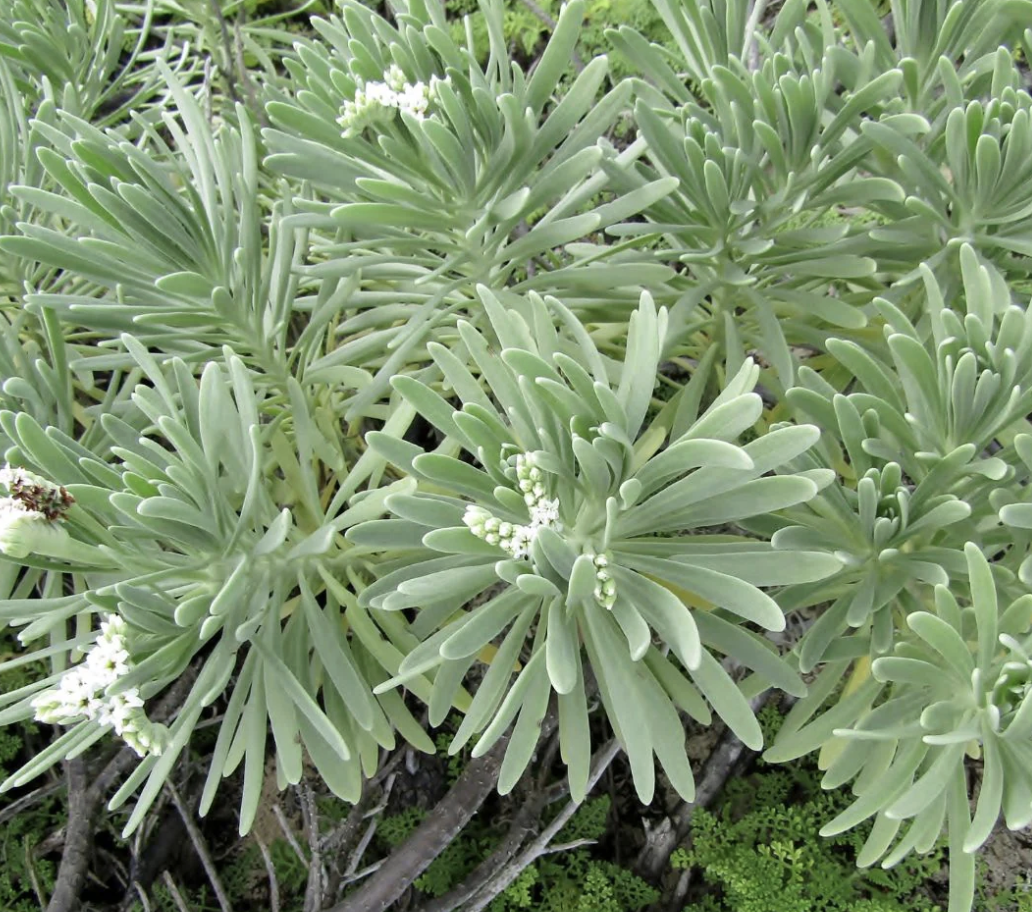


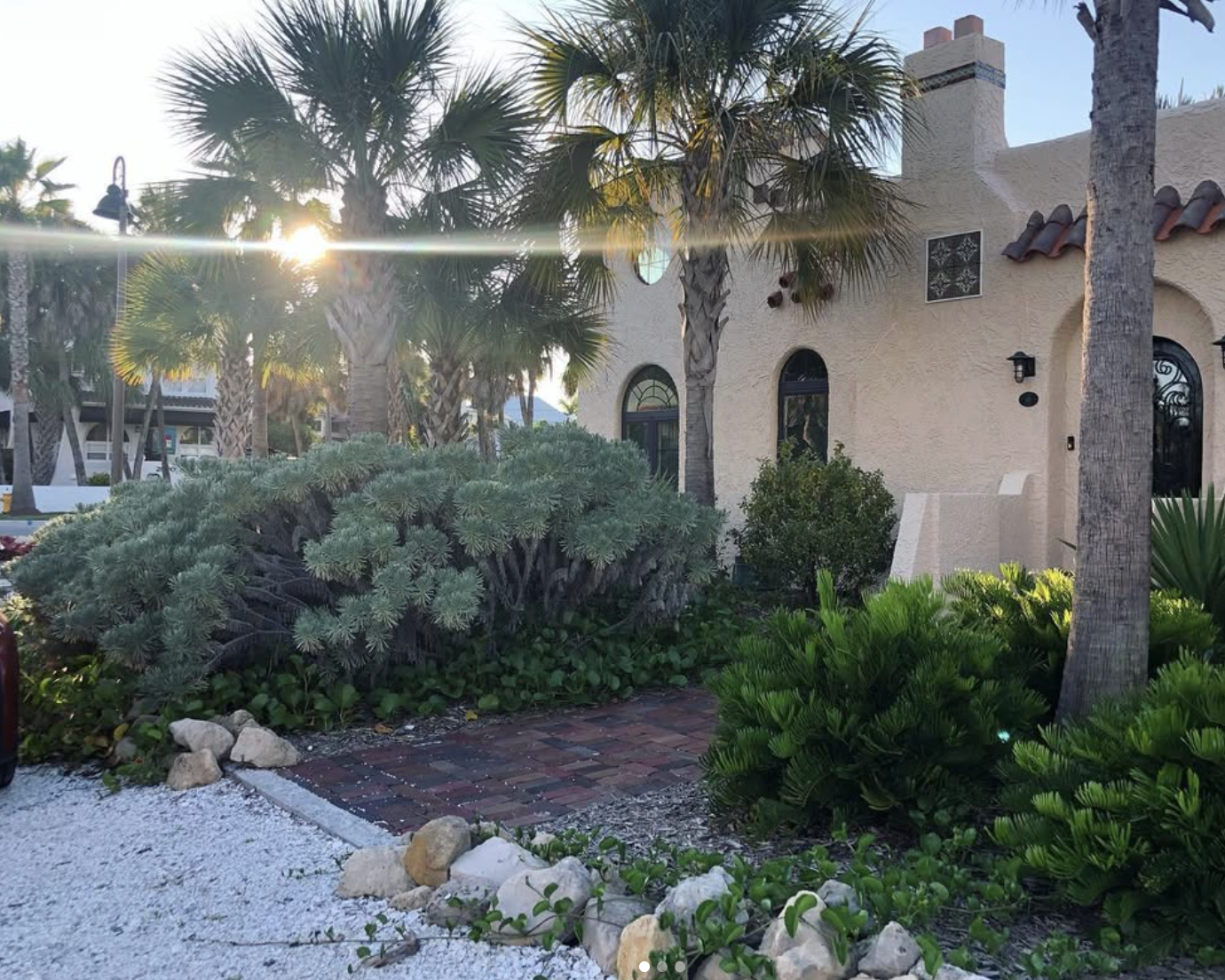
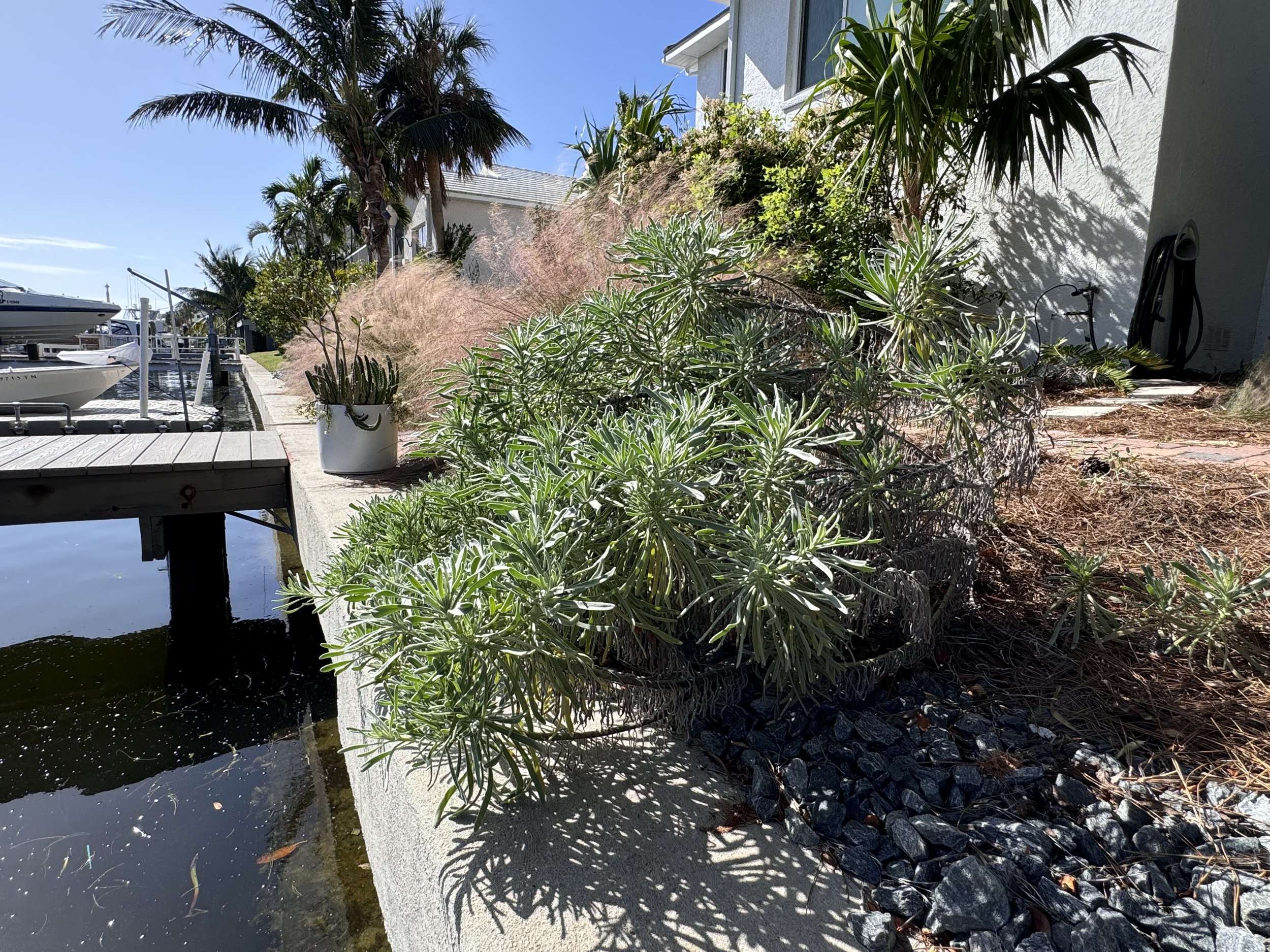
Heliotropium gnaphalodes
Sea Lavender is a coastal shrub that grows up to 6’ tall and 10’ wide. It’s a great plant for hedges, mass planting, and even dune reclamation. It is also highly drought tolerant and tolerant of occasional/brief salt inundation and can survive storm surges.
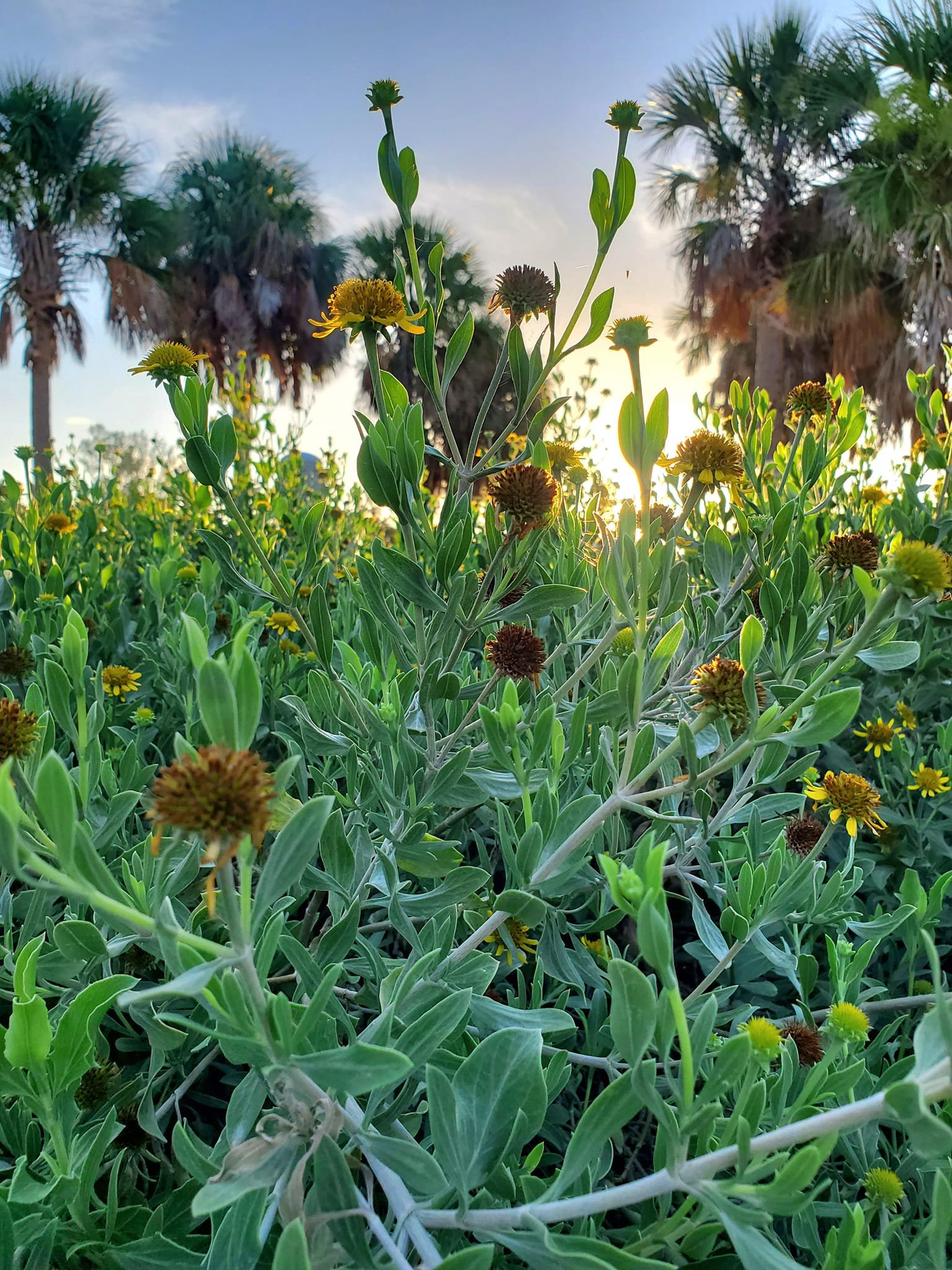
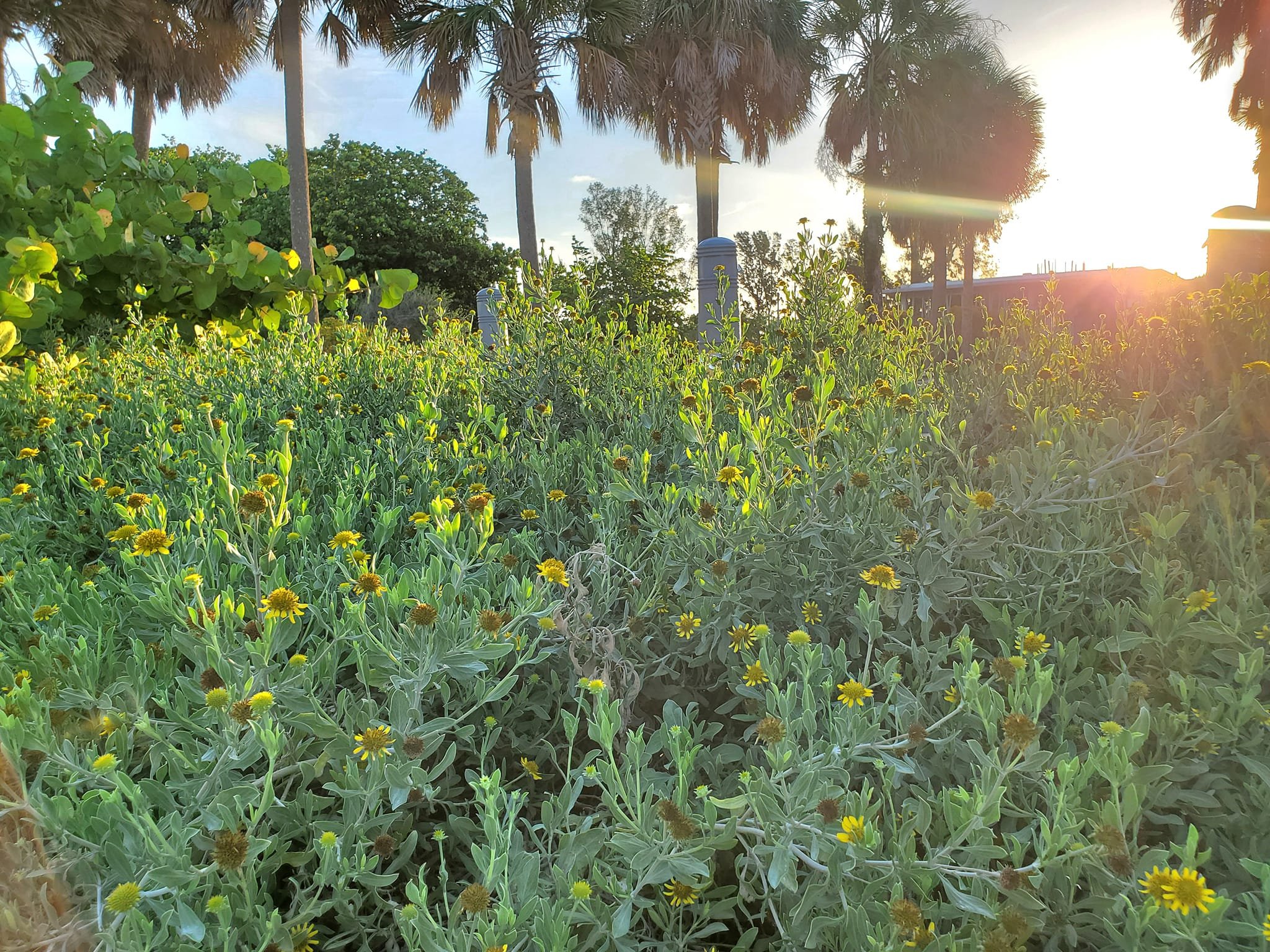
Borrichia frutescens
Sea Oxeye Daisy is a great shrubby wildflower for coastal areas. One plant grows to be 3x3' but they can colonize in areas they love creating a beautiful pollinator patch! Great for coastal areas where the tide comes in, this plant is highly salt tolerant and can take flooding, tides, and salty soil and wind. Does best in full sun. Sea Oxeye Daisy attracts many small butterflies like hairstreaks and blues and other pollinators like native bees. Birds eat the seeds. Blooms heavily spring-summer and on and off the rest of the year.
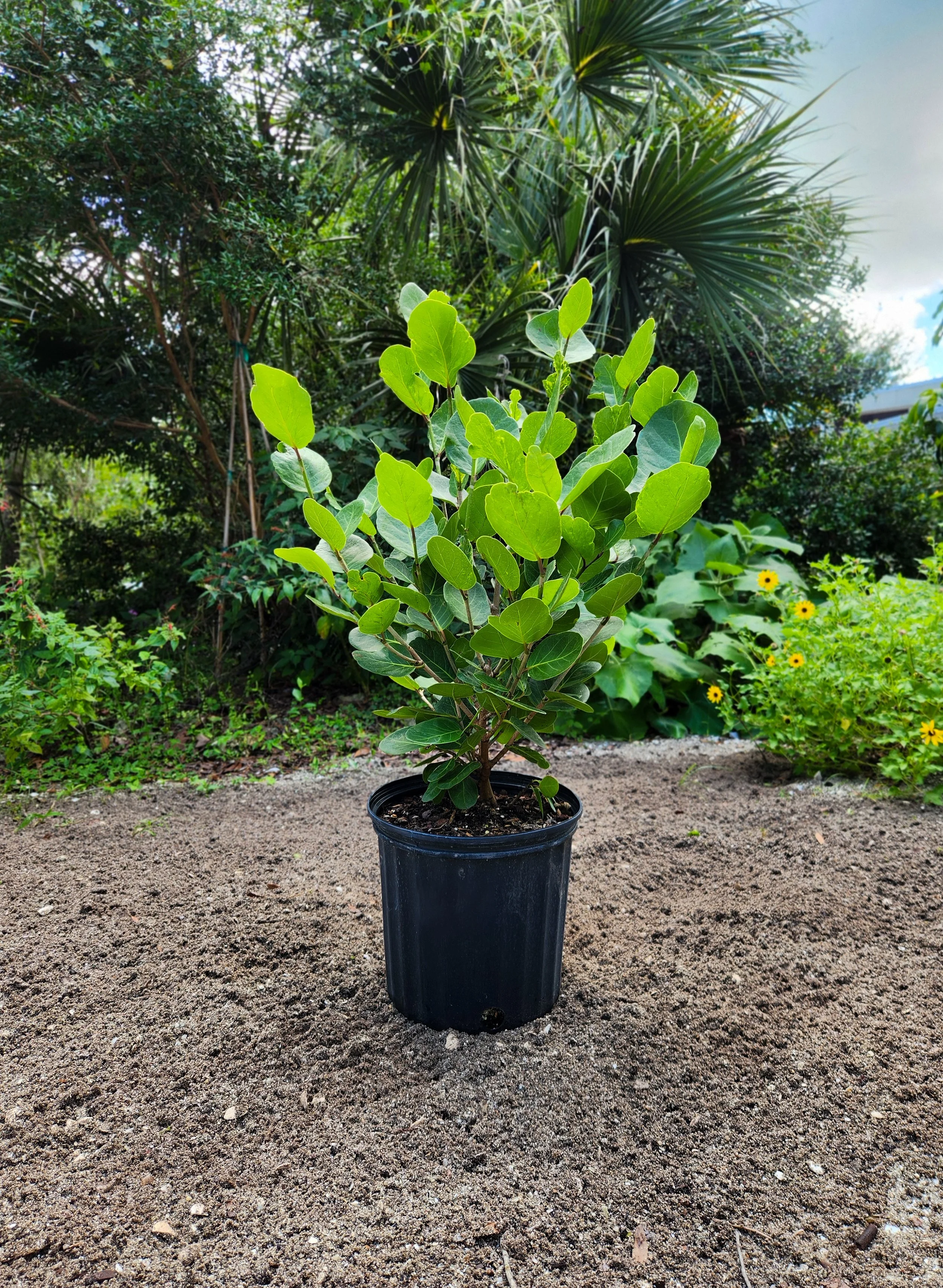
Coccoloba uvifera x diversifolia
Sea Plum is a naturally occurring hybrid between Sea Grape and Pigeon Plum that combines the best traits of both native Florida parents. This evergreen shrub typically grows 6’-12’ tall and 4’-6’ wide, though it has the potential to reach larger sizes given its parentage. It features attractive foliage that blends characteristics of both parents and produces fruit on female plants that birds readily consume. Exceptionally hardy and low-maintenance, it thrives in full sun to light shade with well-draining sandy soils and demonstrates excellent tolerance to wind, salt spray, and drought conditions. This versatile hybrid works well as a specimen plant or screening hedge and is particularly valuable for beachfront landscapes in zones 9-11.
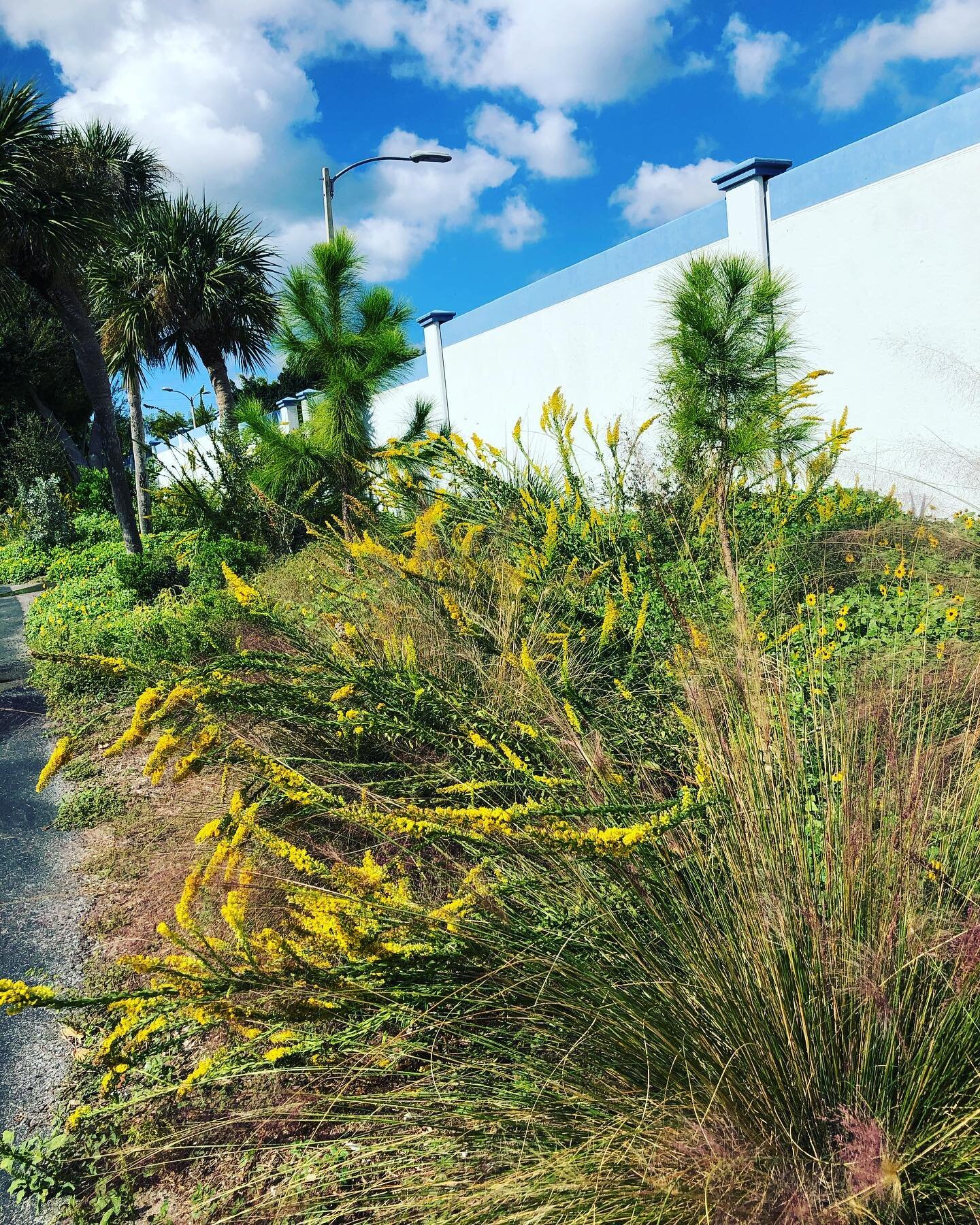
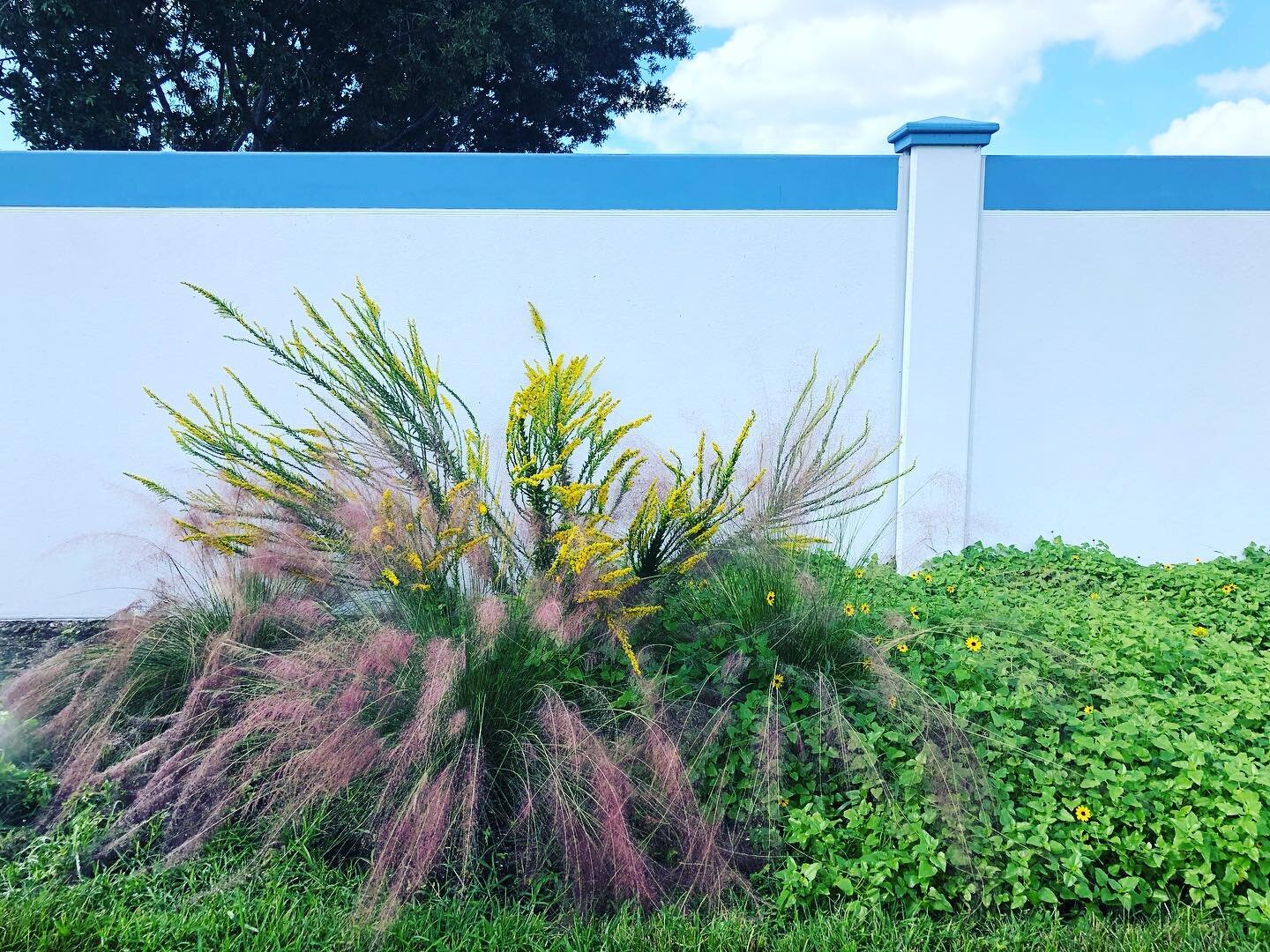

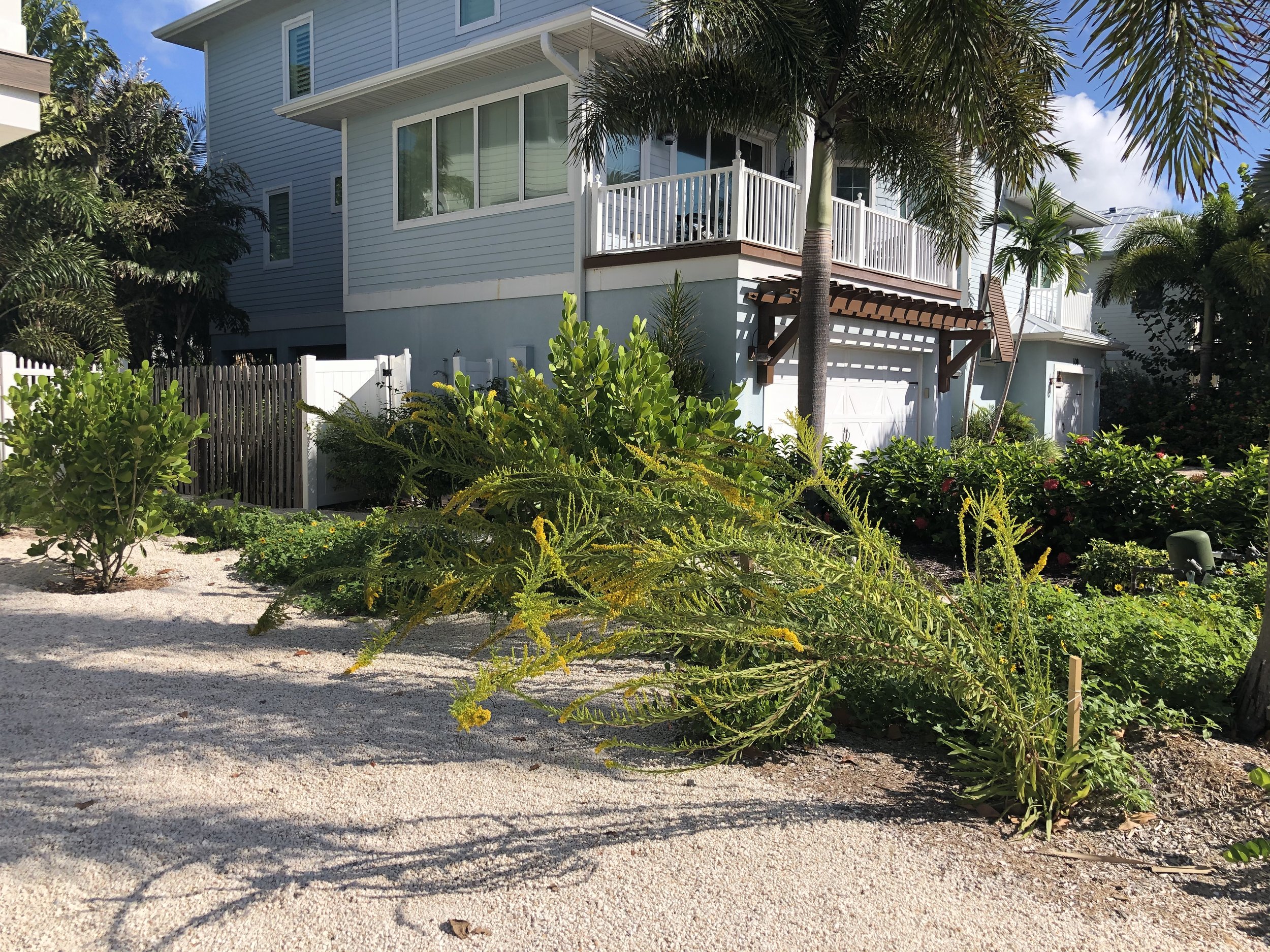
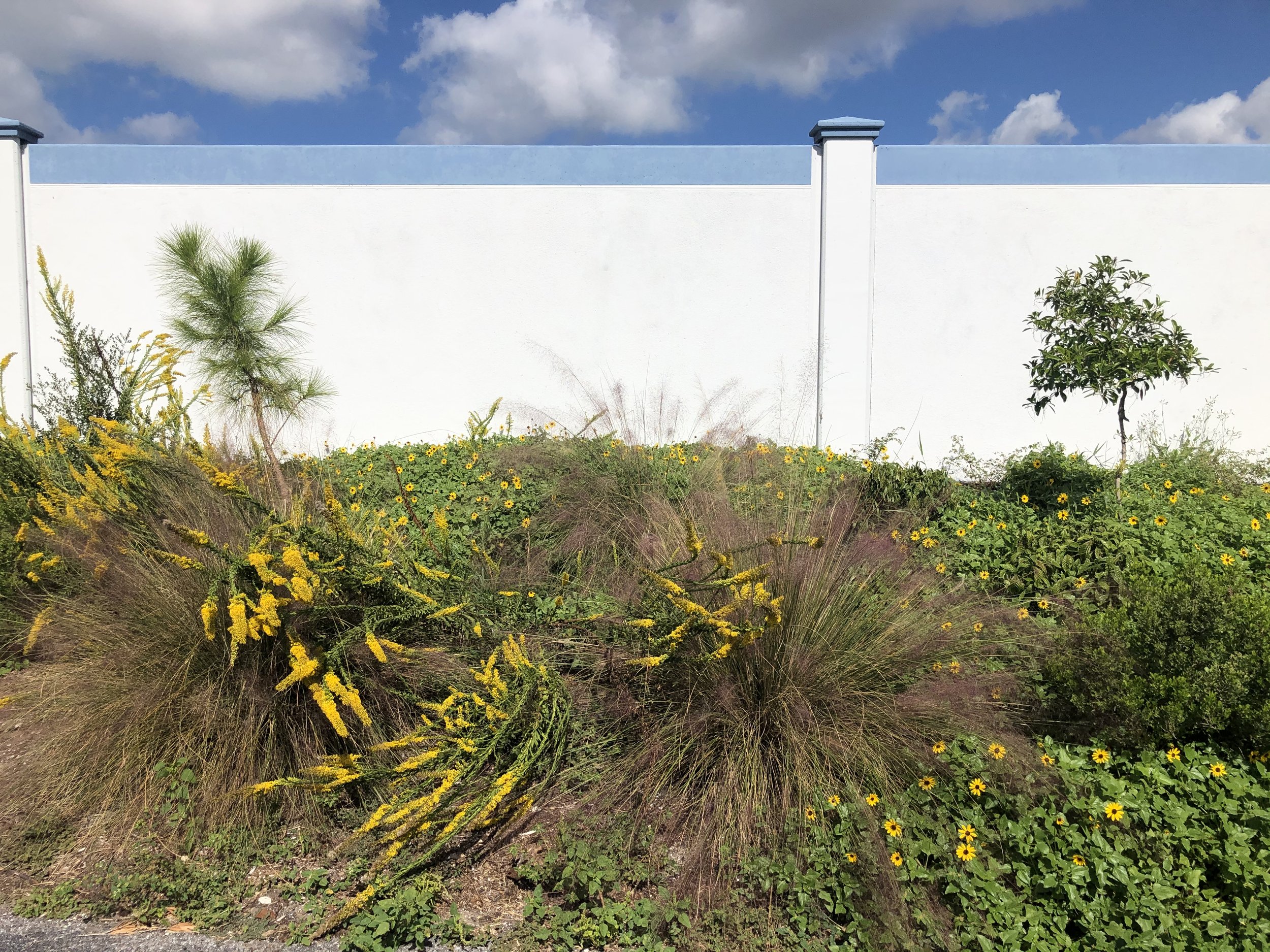
Solidago sempervirens
Seaside Goldenrod is a large, showy goldenrod species that can get showy flower spikes that are up to 7 foot tall! They are salt-tolerant and drought-tolerant as they are a coastal species frequently found near dunes. They attract a plethora of pollinators and are buzzing with action in fall when they bloom.
They are a keystone species! Host plant for over 80 different species of butterflies and moths!
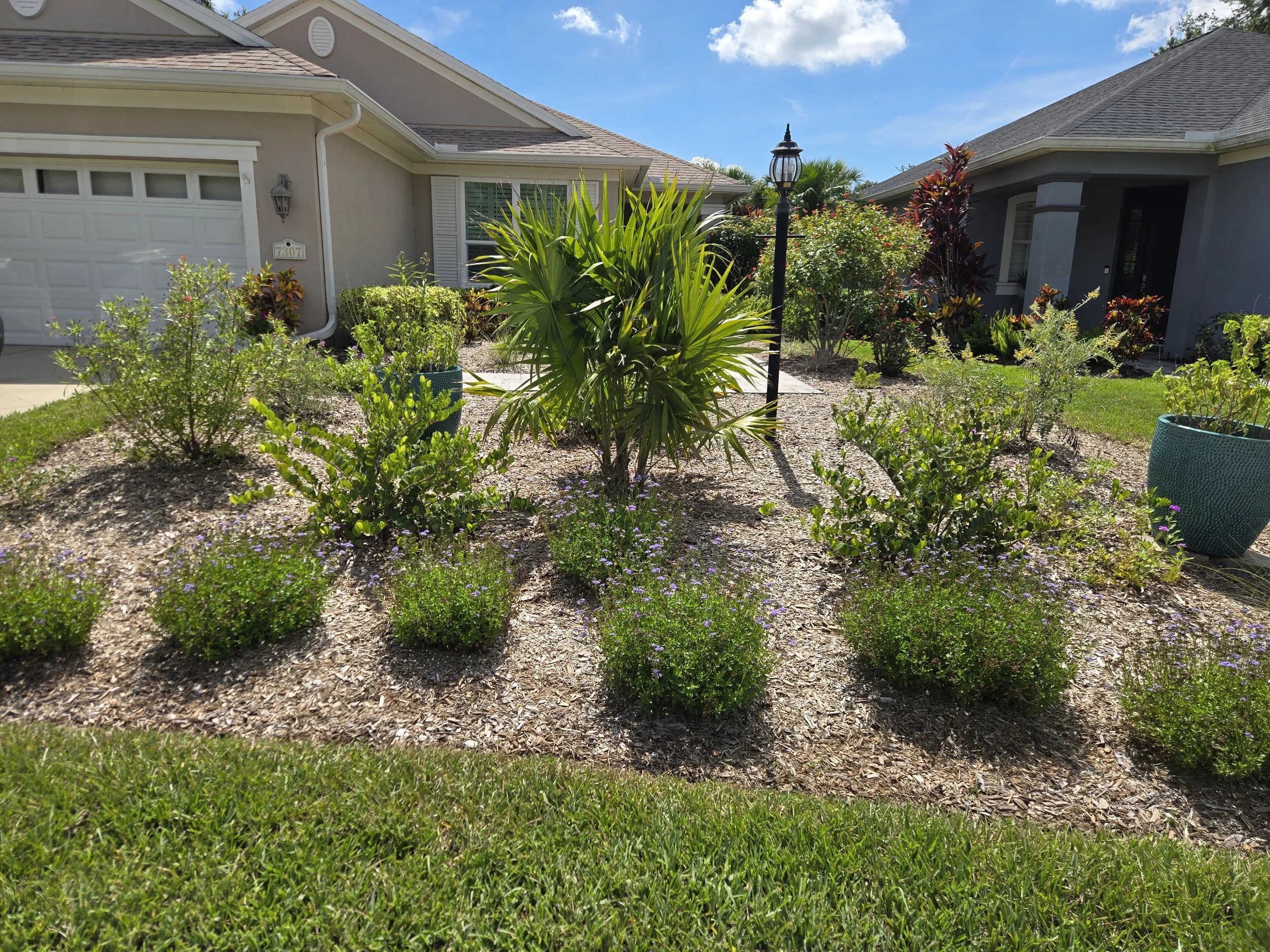
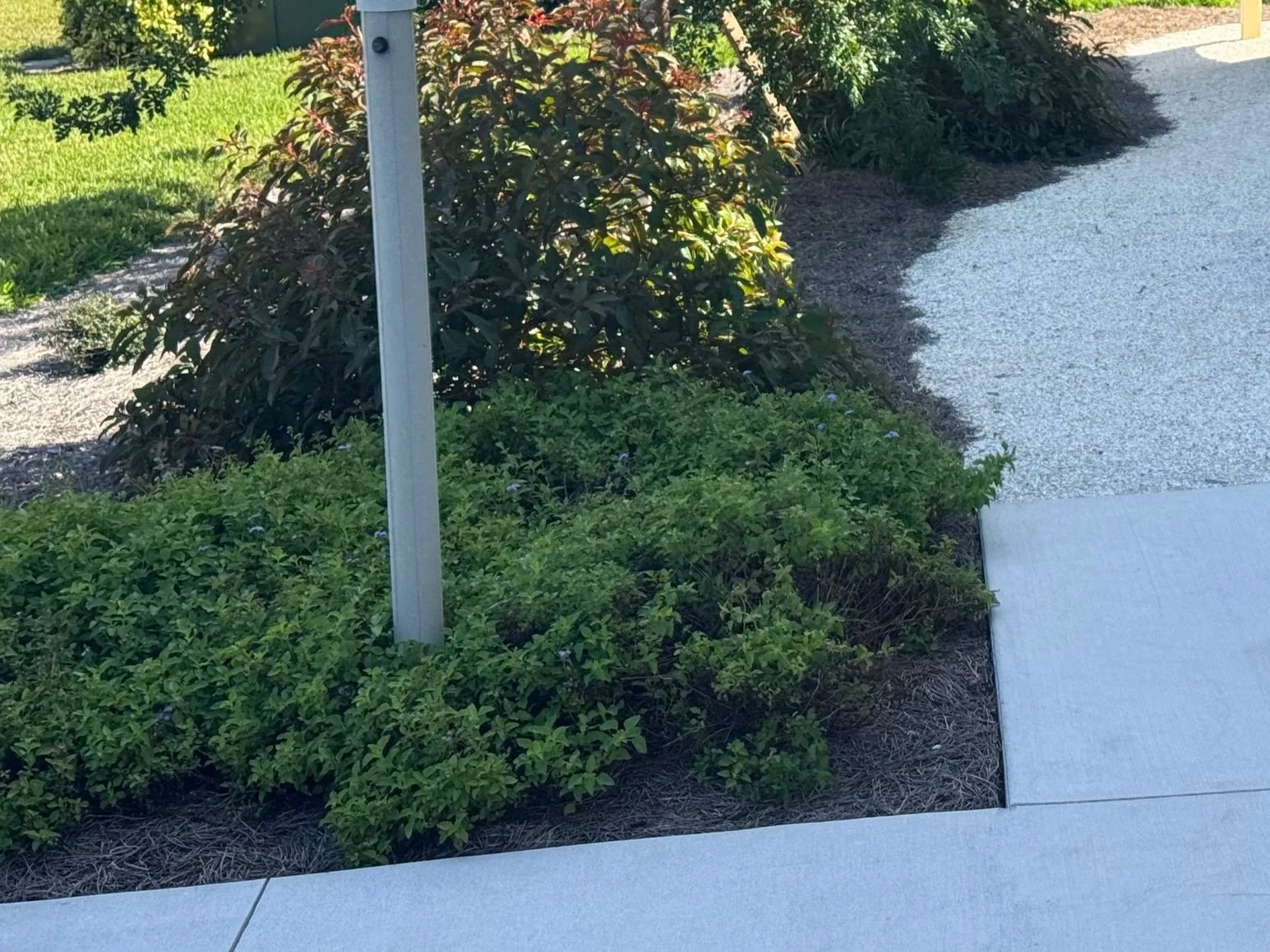
Ageratum maritimum
Seaside Mistlfower or Seaside Ageratum is a charming, low-growing wildflower native to Florida’s coastal habitats. Its soft, bluish-purple blooms attract butterflies and add color to sunny, sandy spots. Perfect for coastal landscape or pollinator gardens, this hardy plant thrives in salty, well-drained conditions.
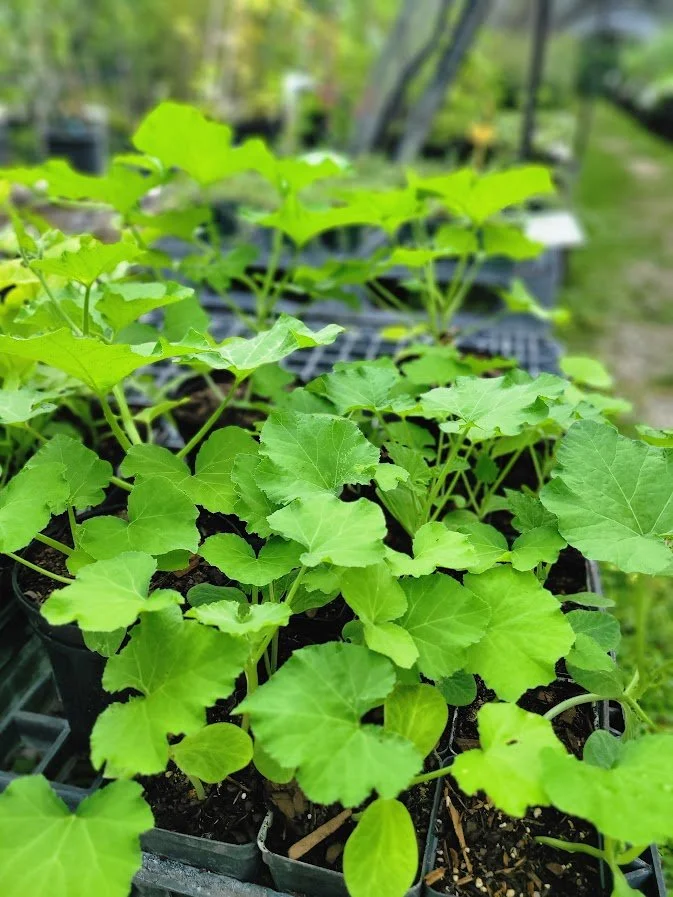
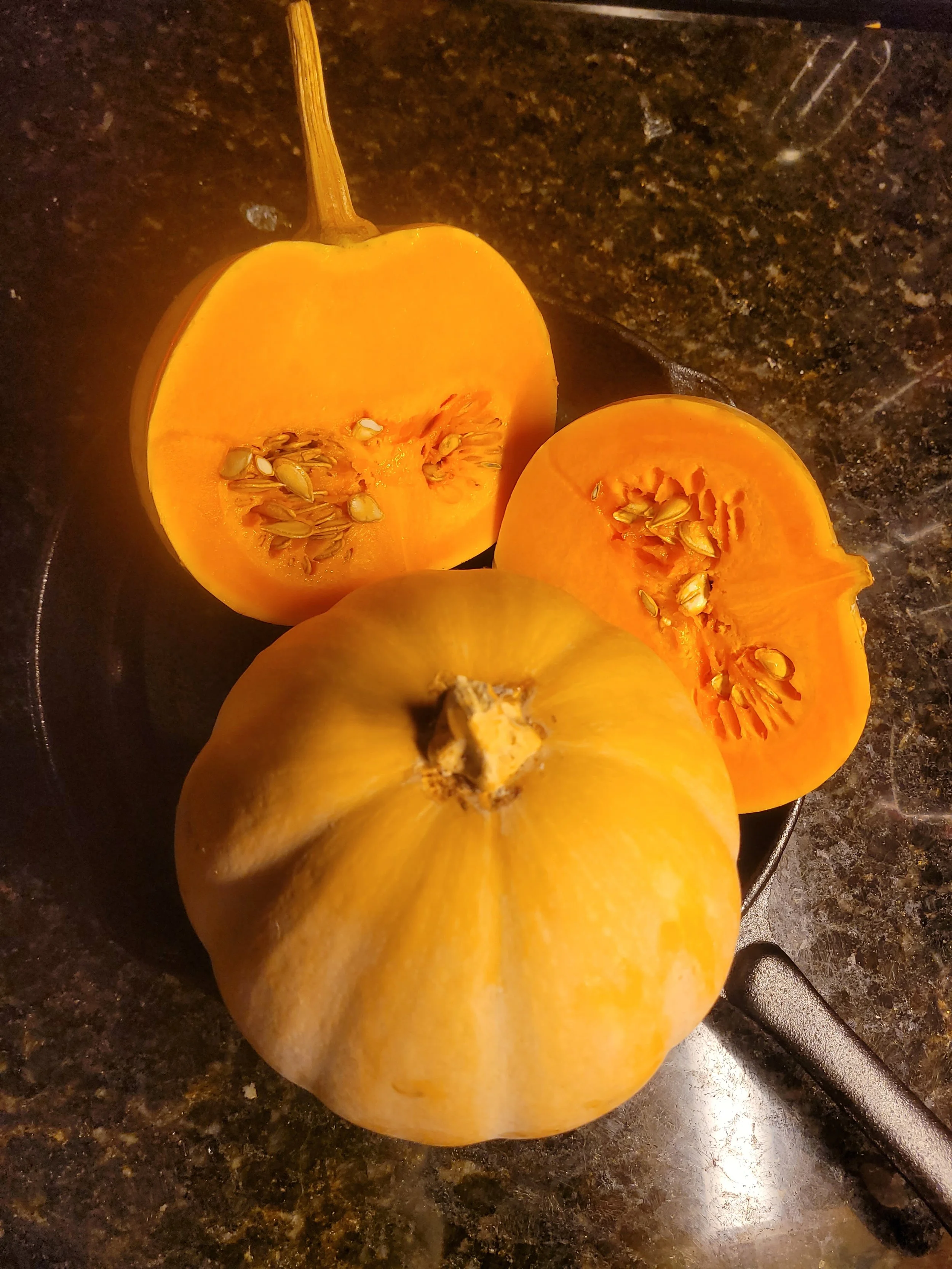

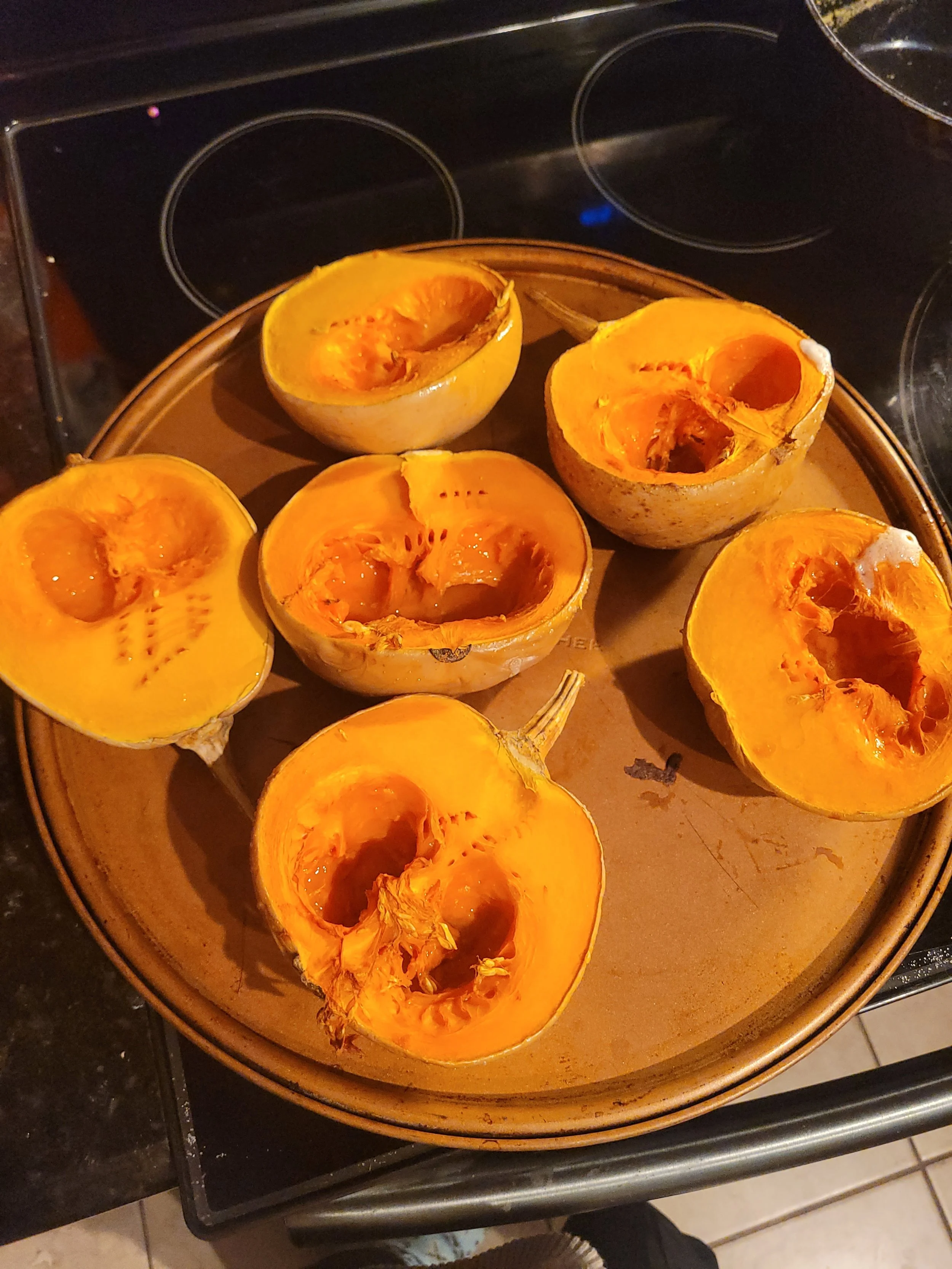
Cucurbita moschata
Seminole pumpkin is a heat-tolerant, vining squash that was traditionally cultivated by the Seminole tribe. This hardy variety produces small to medium-sized, tan or buff-colored fruits with sweet, orange flesh that stores well for months. It's perfectly adapted to hot, humid climates and is prized for both its nutritional value and its ability to thrive in challenging growing conditions where other squash varieties fail.
It takes 90-140 days to go from flower to fruit.
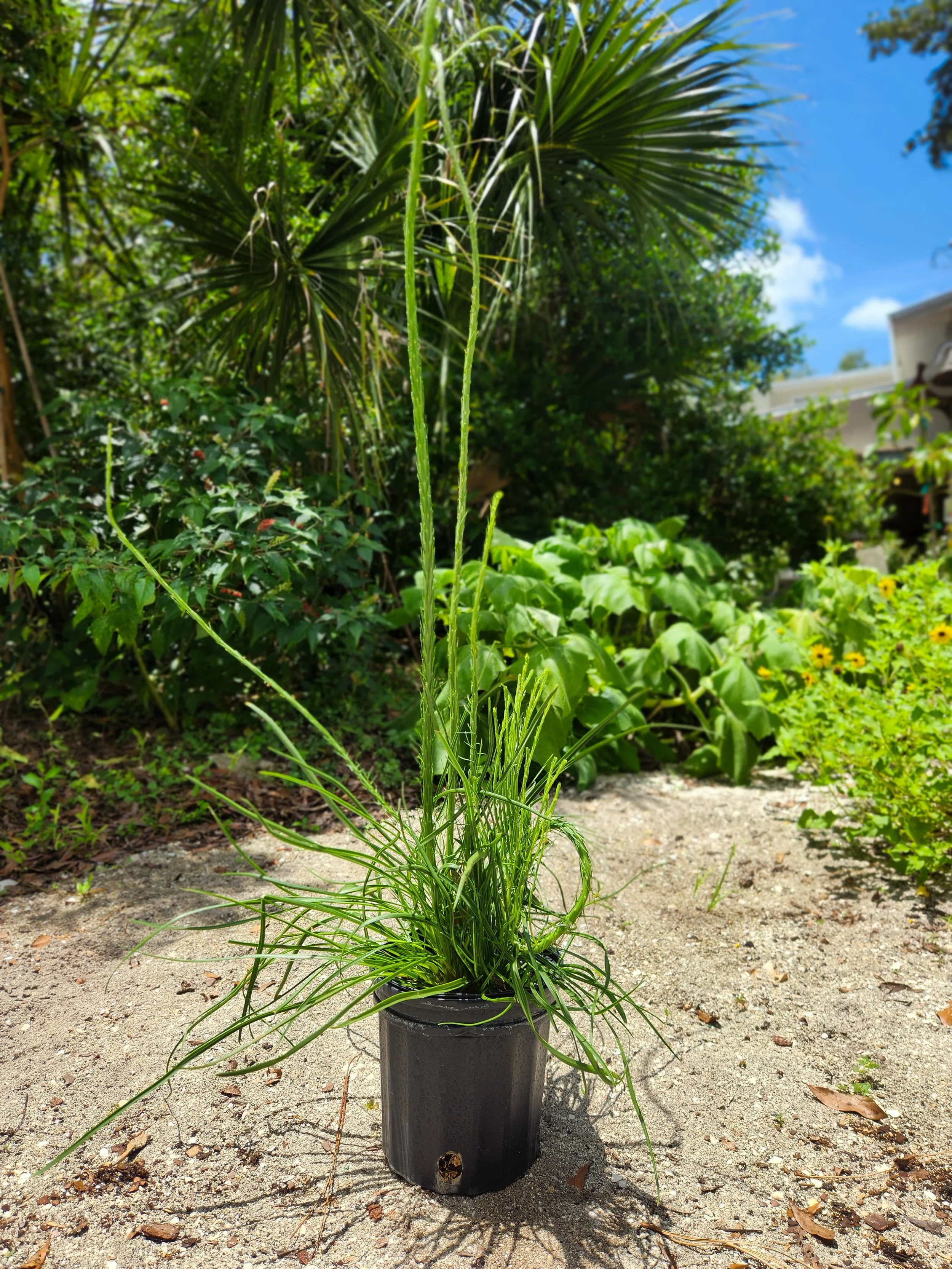
Liatris tenuifolia
Love the idea of Blazing Star but have a super dry, hot yard without irrigation? Try Shortleaf Blazing Star! A statement wildflower for the fall season! This wildflower is unapologetically bold with tall, electric purple spikes that strut through like they own the garden. It is the life of the pollinator party with the amount of bees and butterflies it attracts. If your landscape needs a little drama and a whole lot of fabulous, this is the wildflower you've been waiting for.
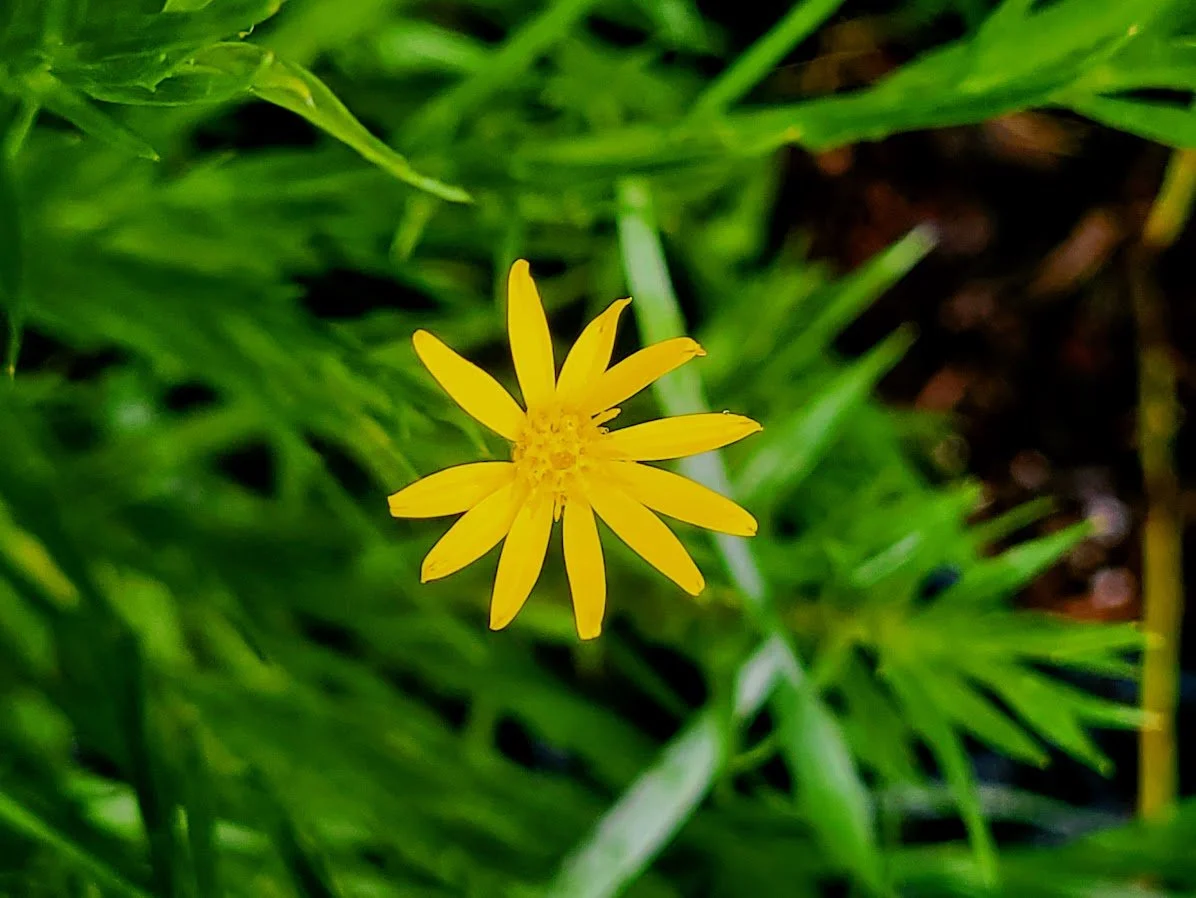
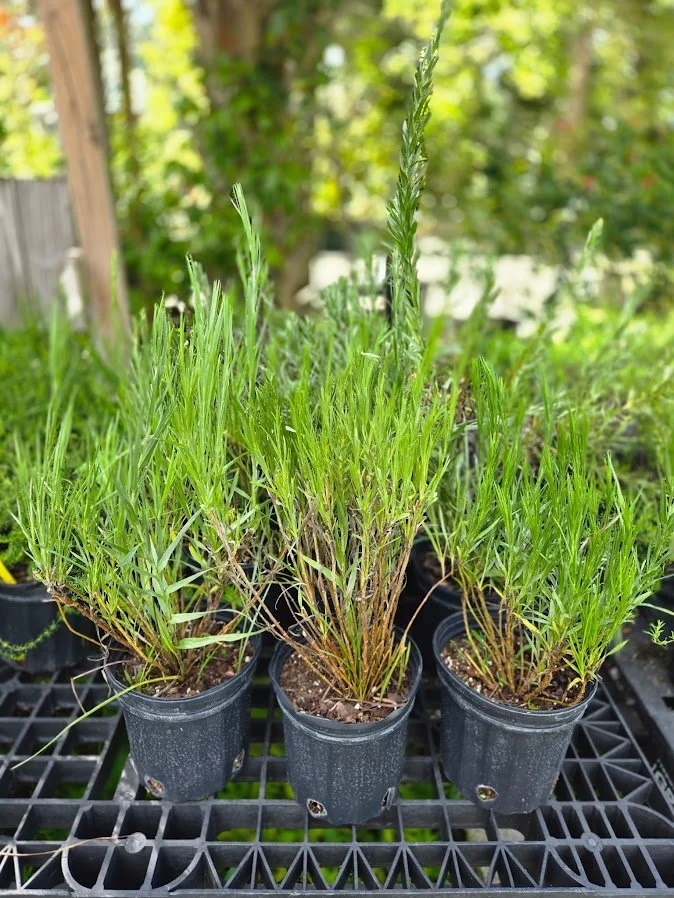
Pityopsis gramnifolia
Narrowleaf Silkgrass is a rhizomatous perennial wildflower native to Florida. This tough, evergreen ground cover thrives in full sun and sandy, well-drained soils. Despite what its name suggests, Silkgrass does not produce silk and is not a true grass, but features grass-like, linear leaves covered in distinctive silvery hairs. Its bright yellow, daisy-like flowers bloom from late summer through early winter, and provide an important source of nectar for pollinators such as native bees.
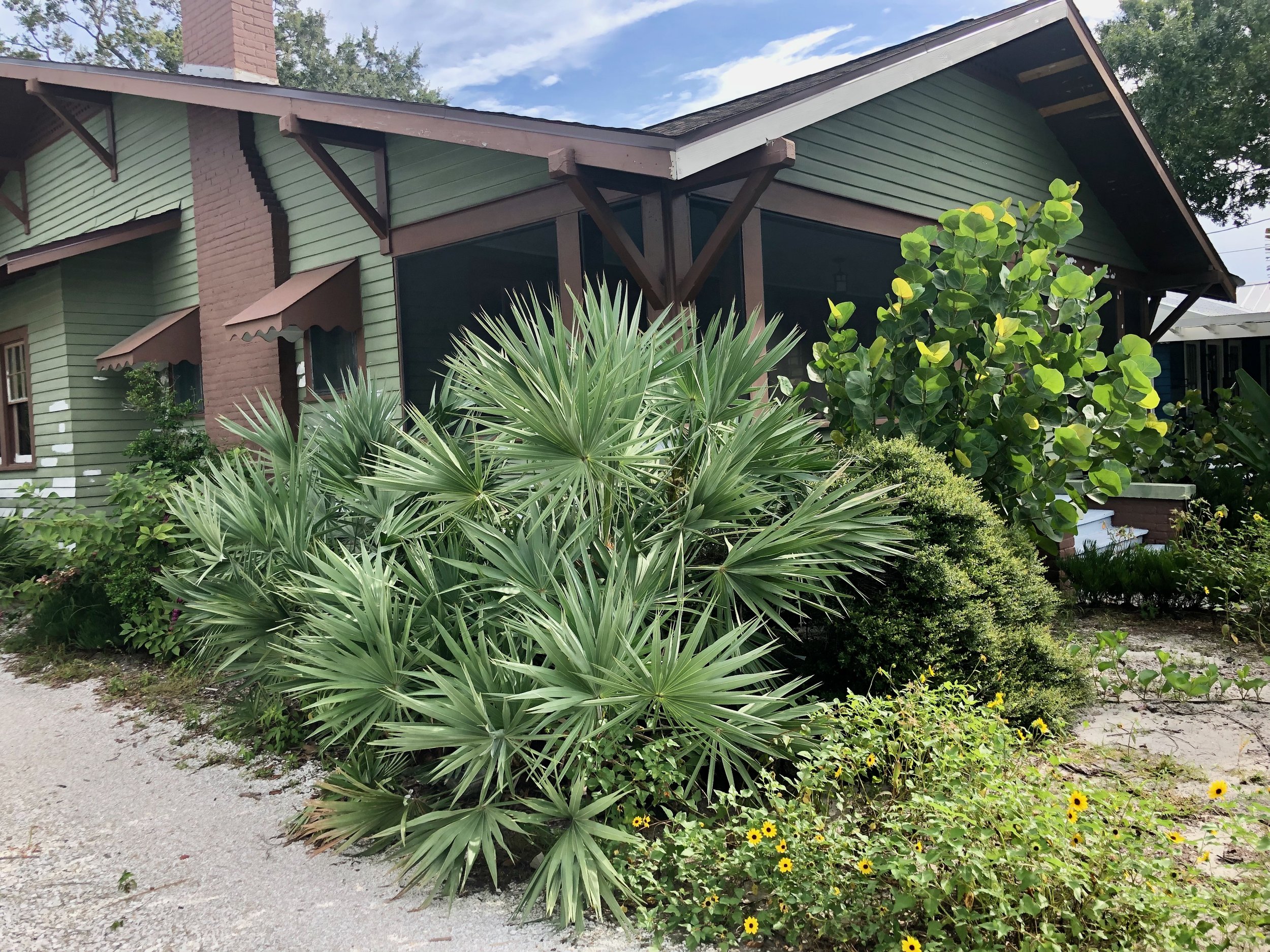
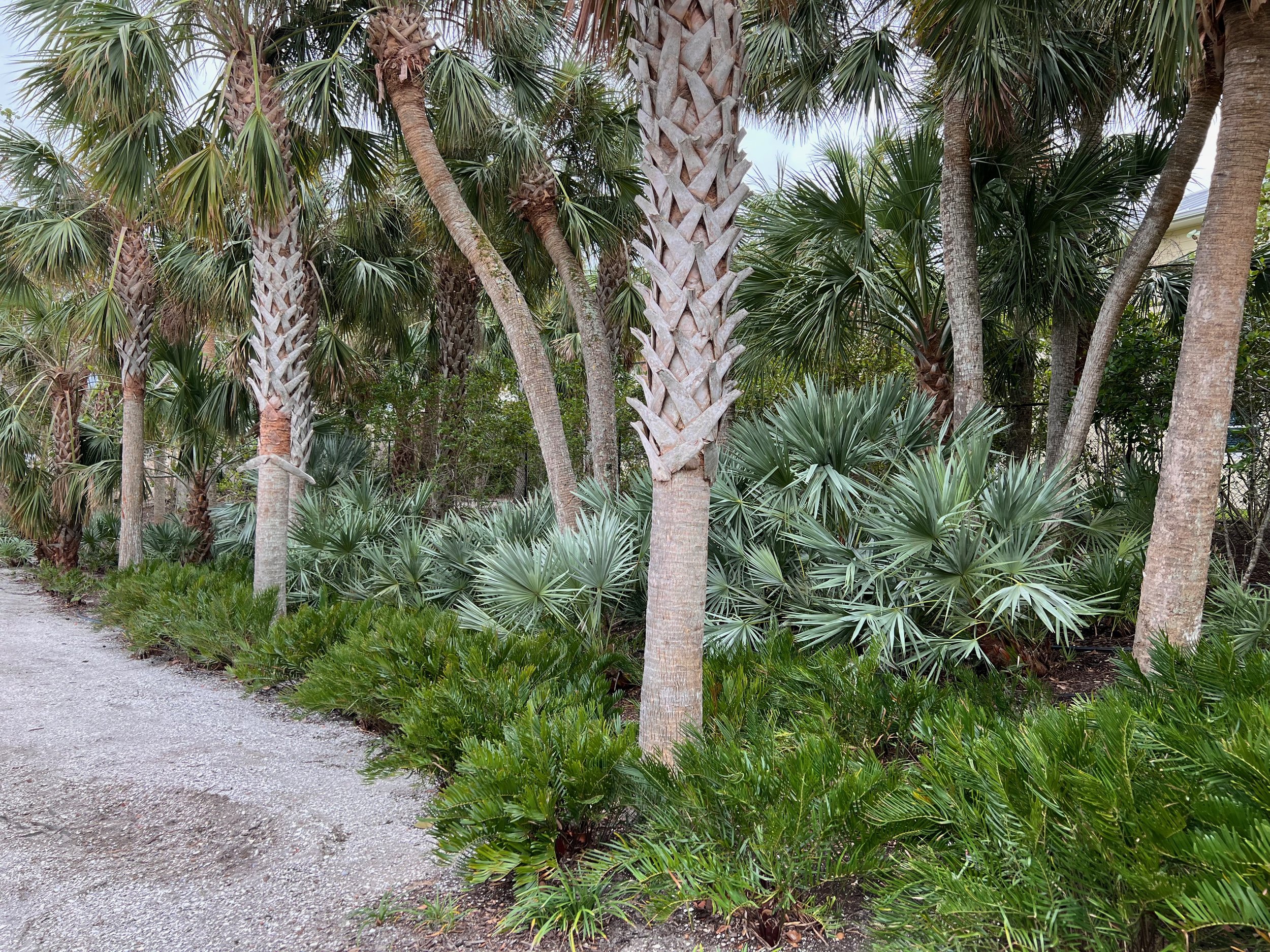
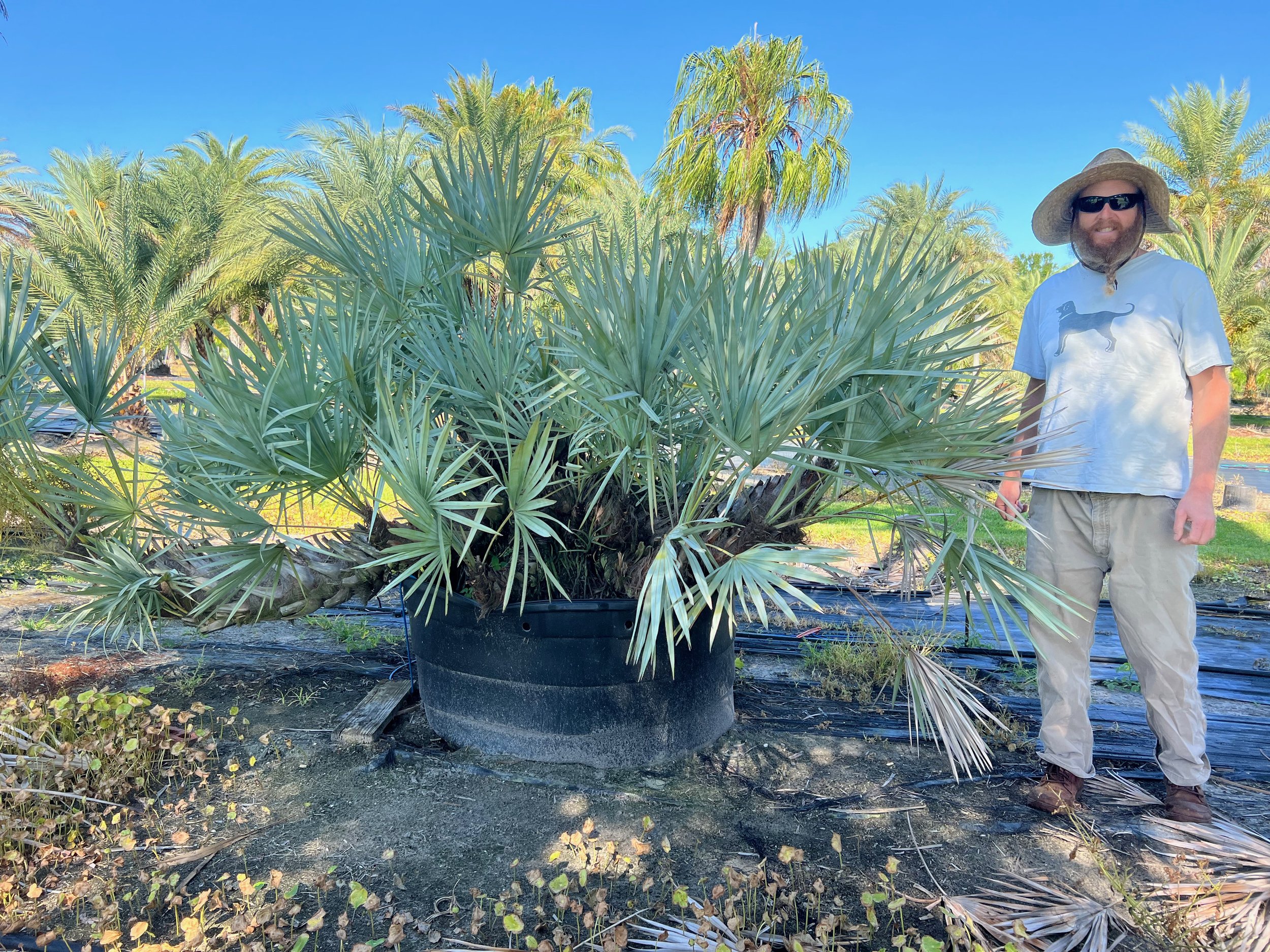
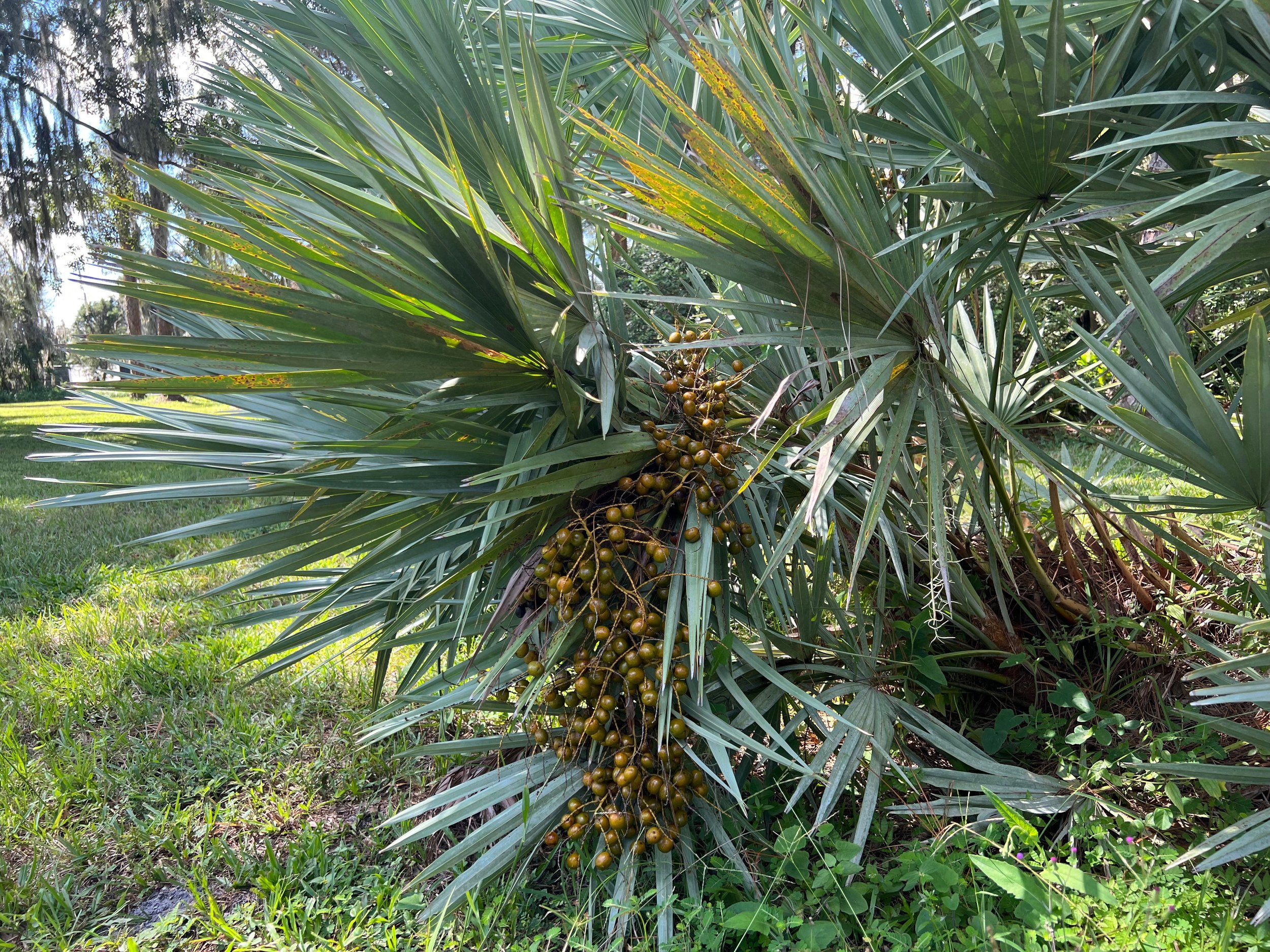
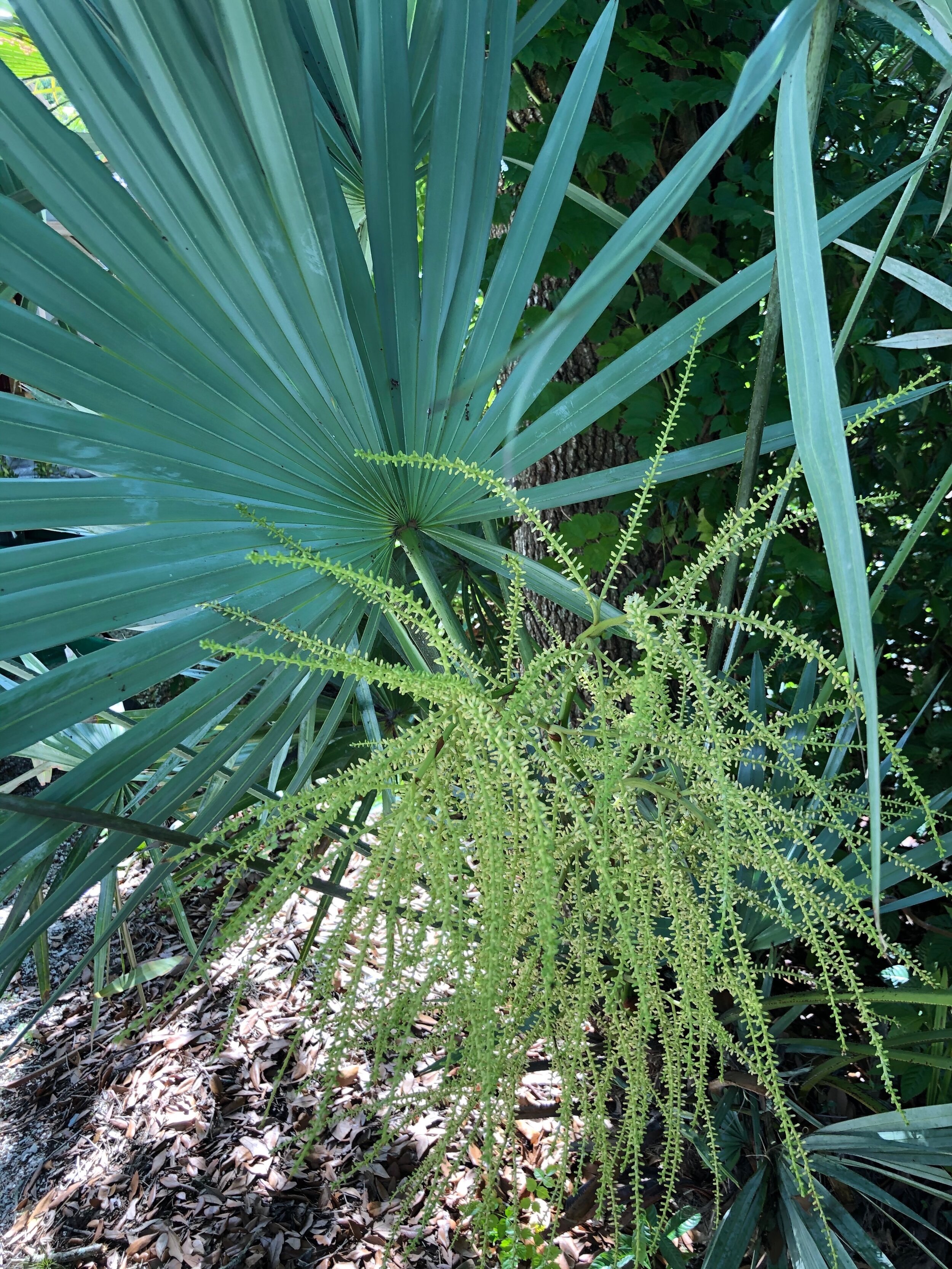
Serenoa repens
The Blue Saw Palmetto is a tough, drought-tolerant Florida native fan palm perfect for coastal landscapes and understory planting. It features sprawling horizontal stems, blue/silver fronds, and distinctive saw-toothed leaf stalks. In spring, it produces fragrant blooms that attract pollinators, followed by wildlife-supporting berries. Plant in full sun or shade and dry, sandy soil.
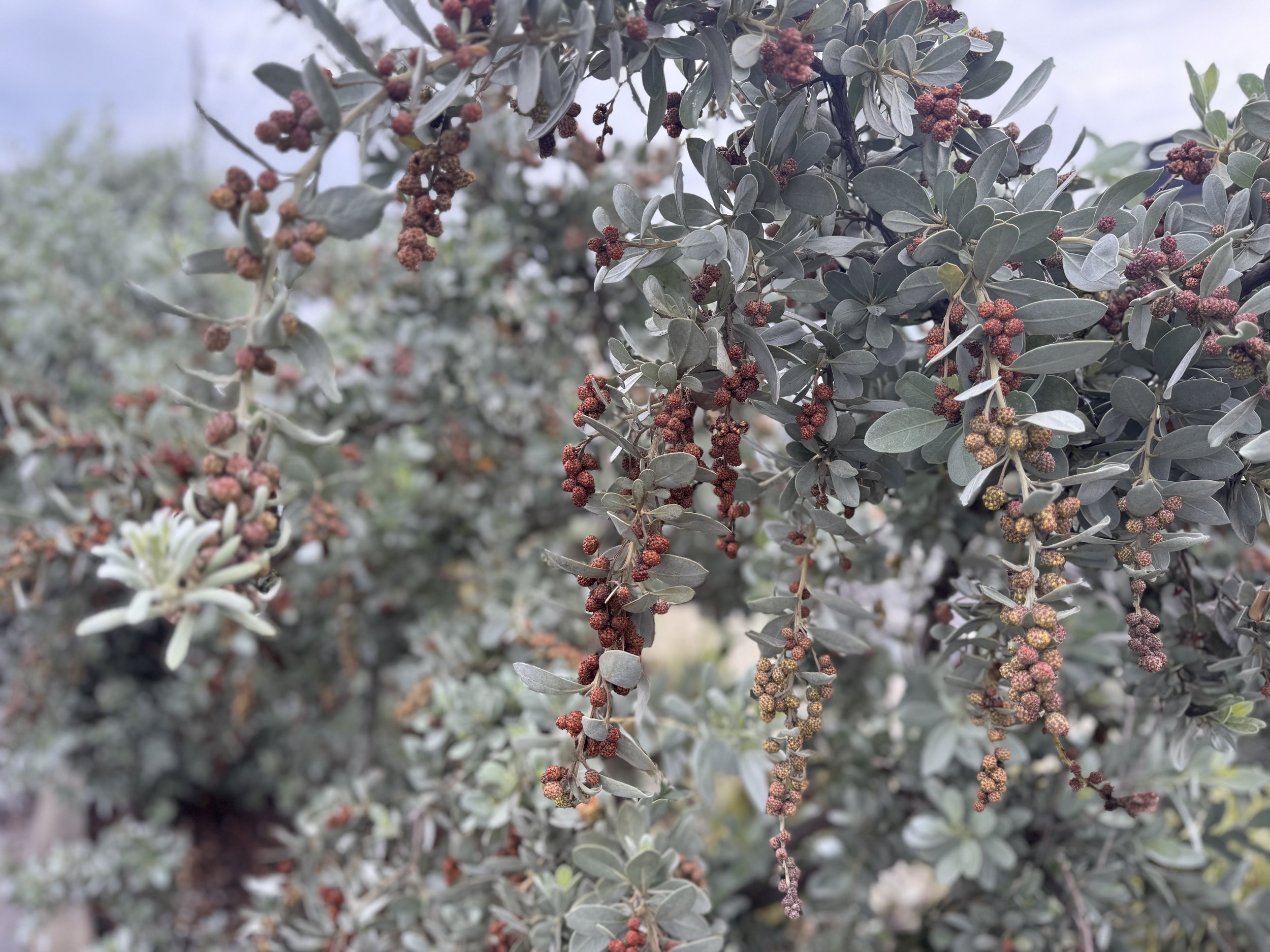
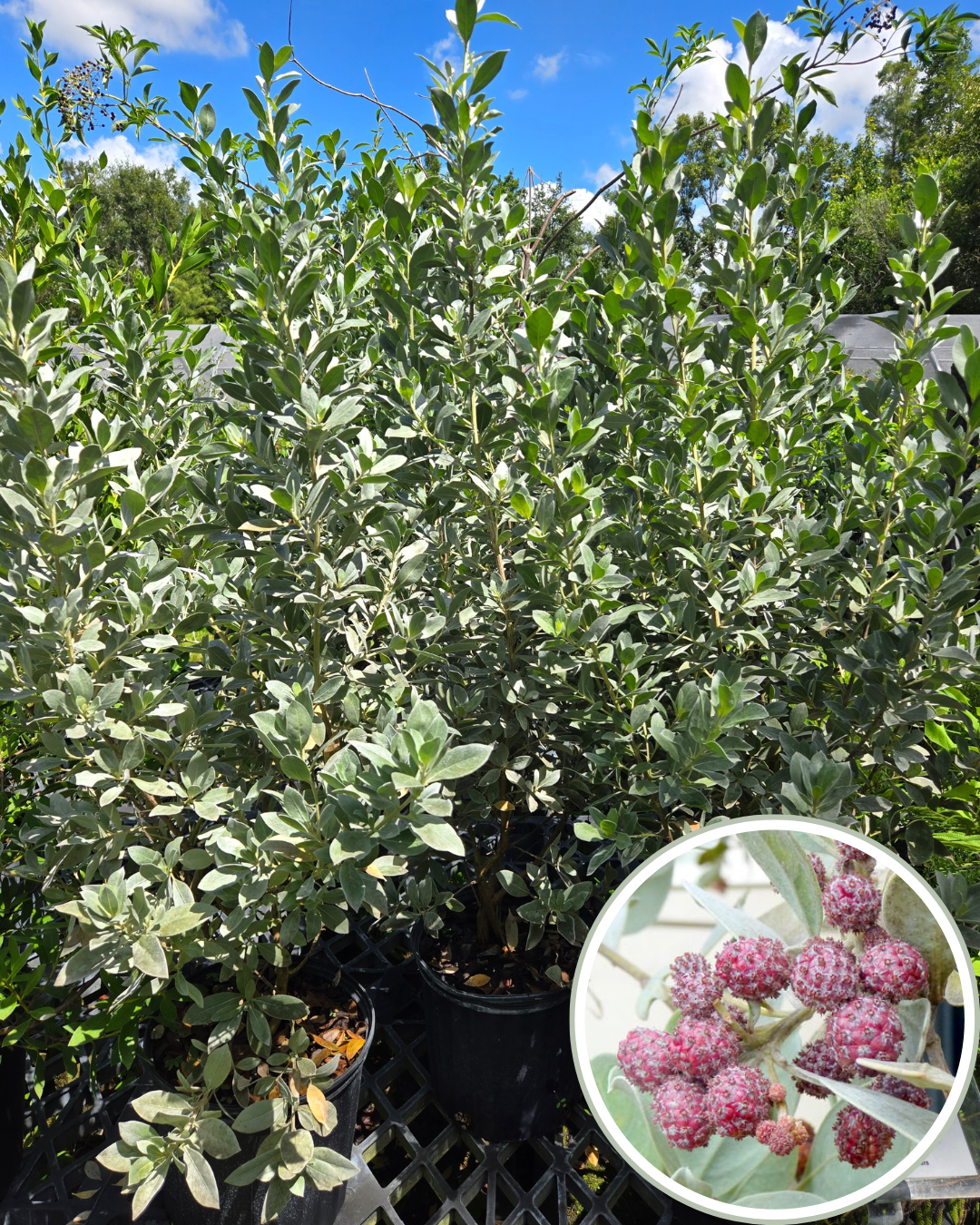
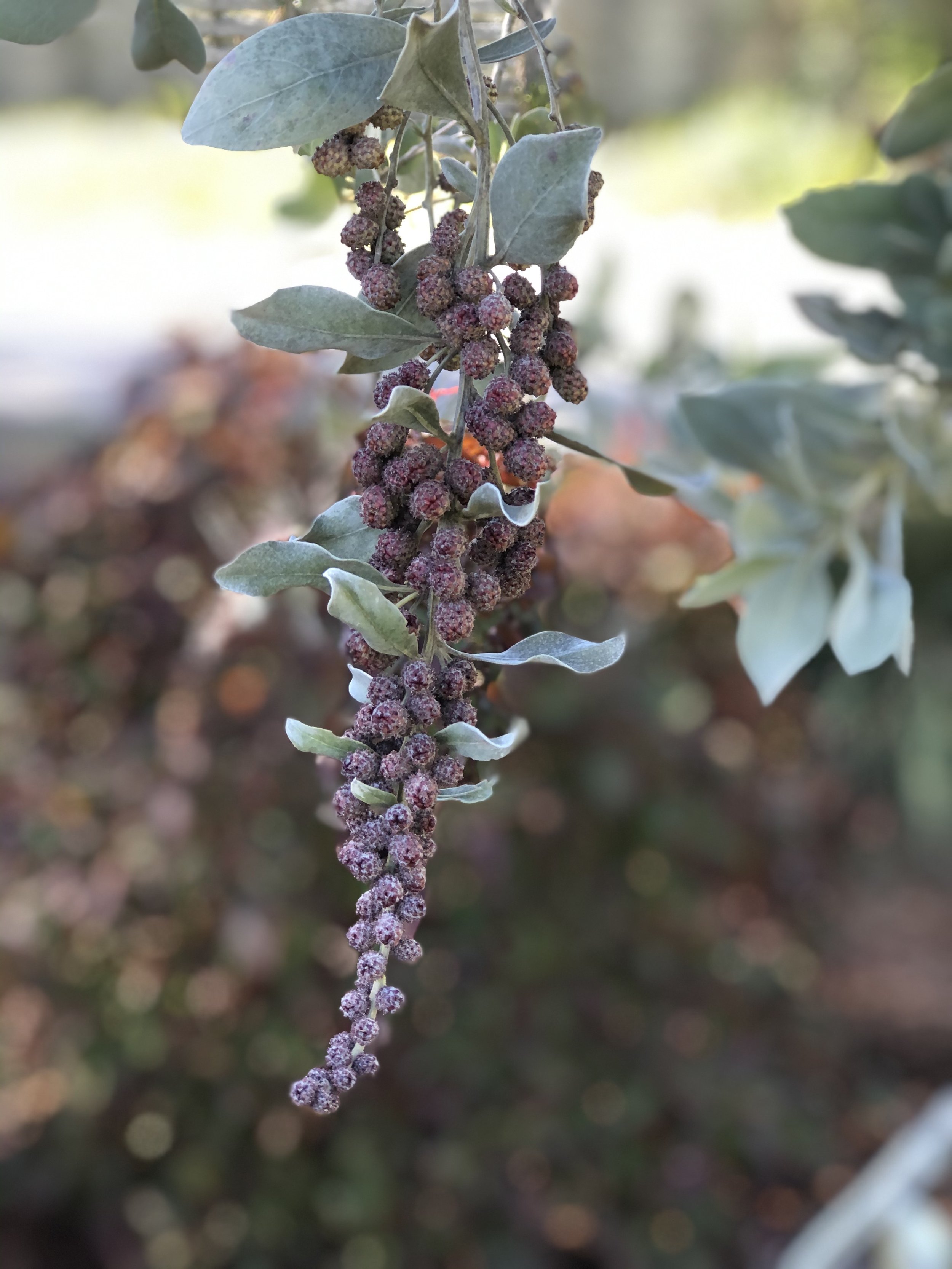
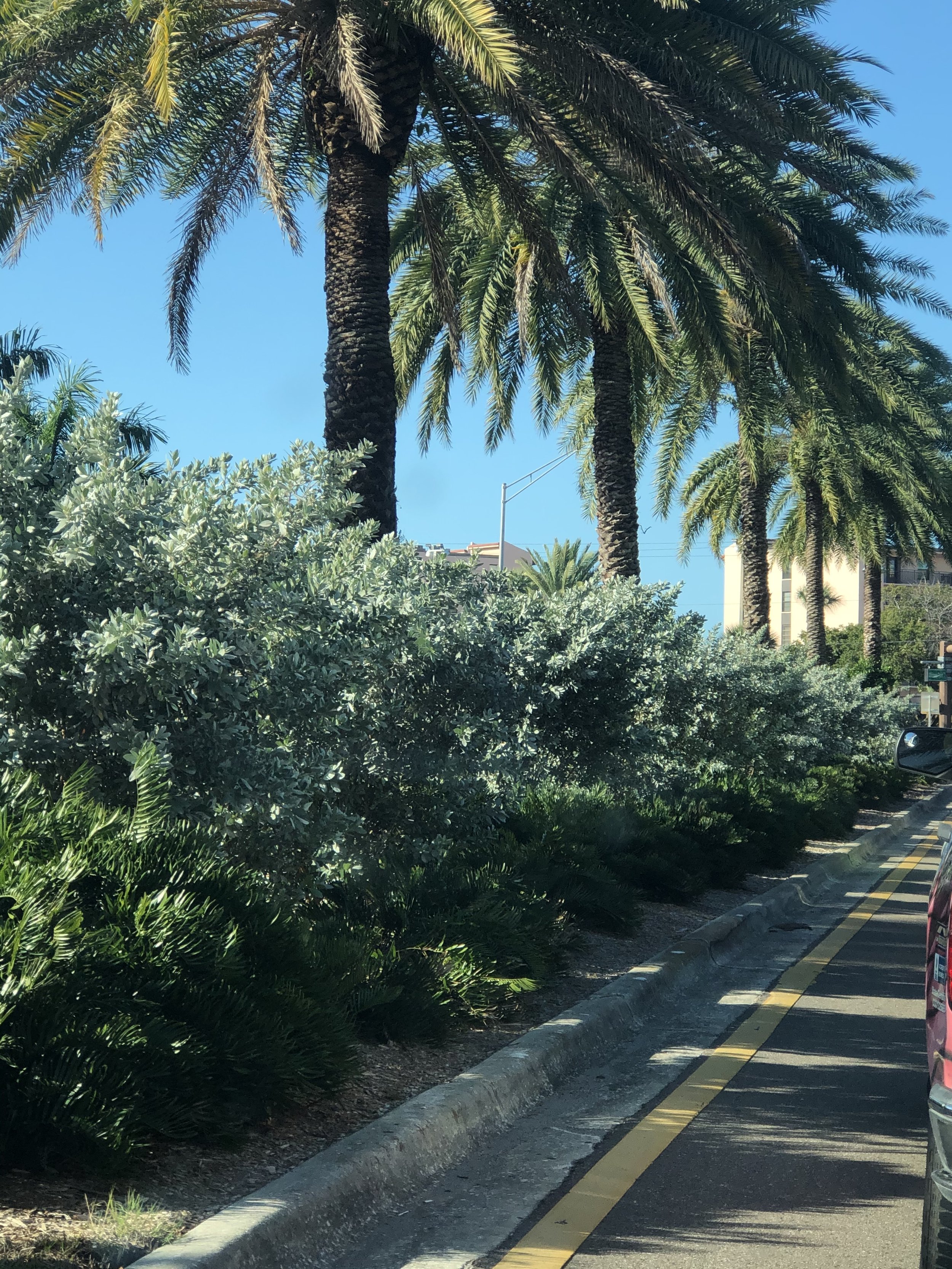
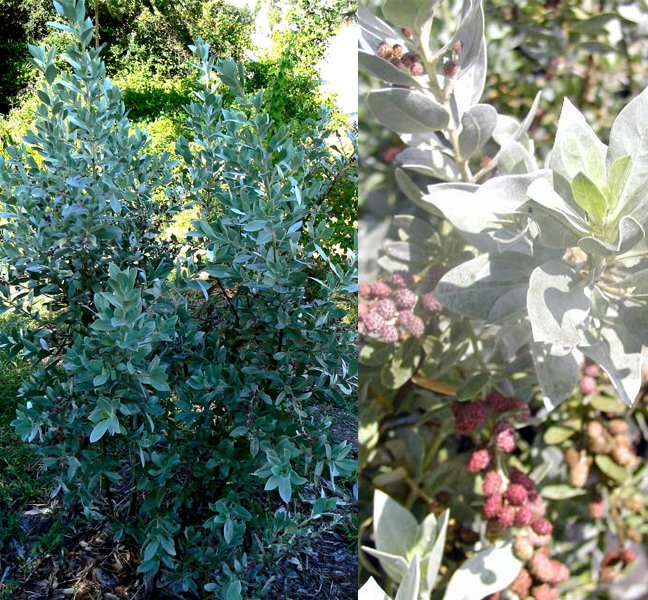
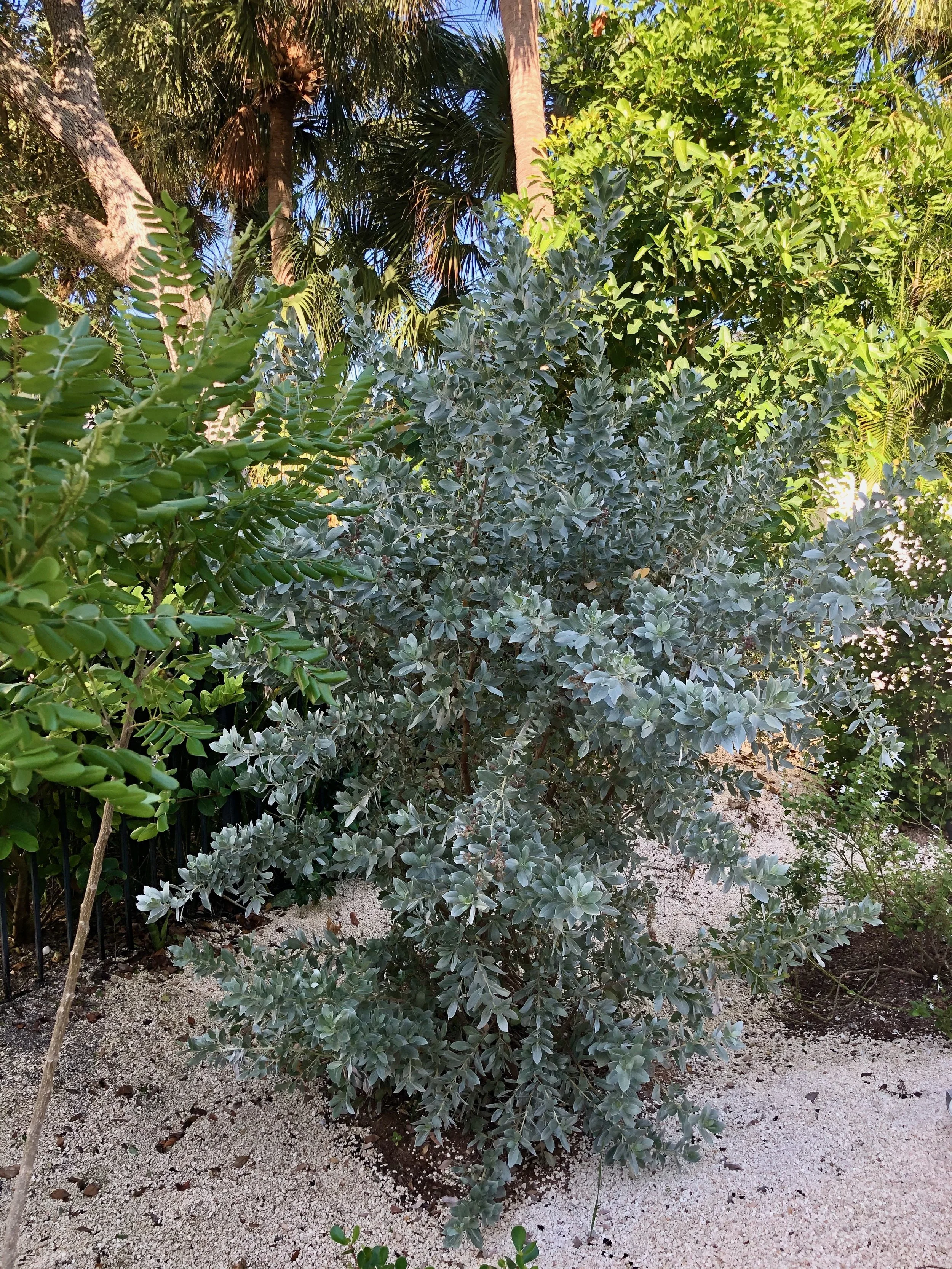
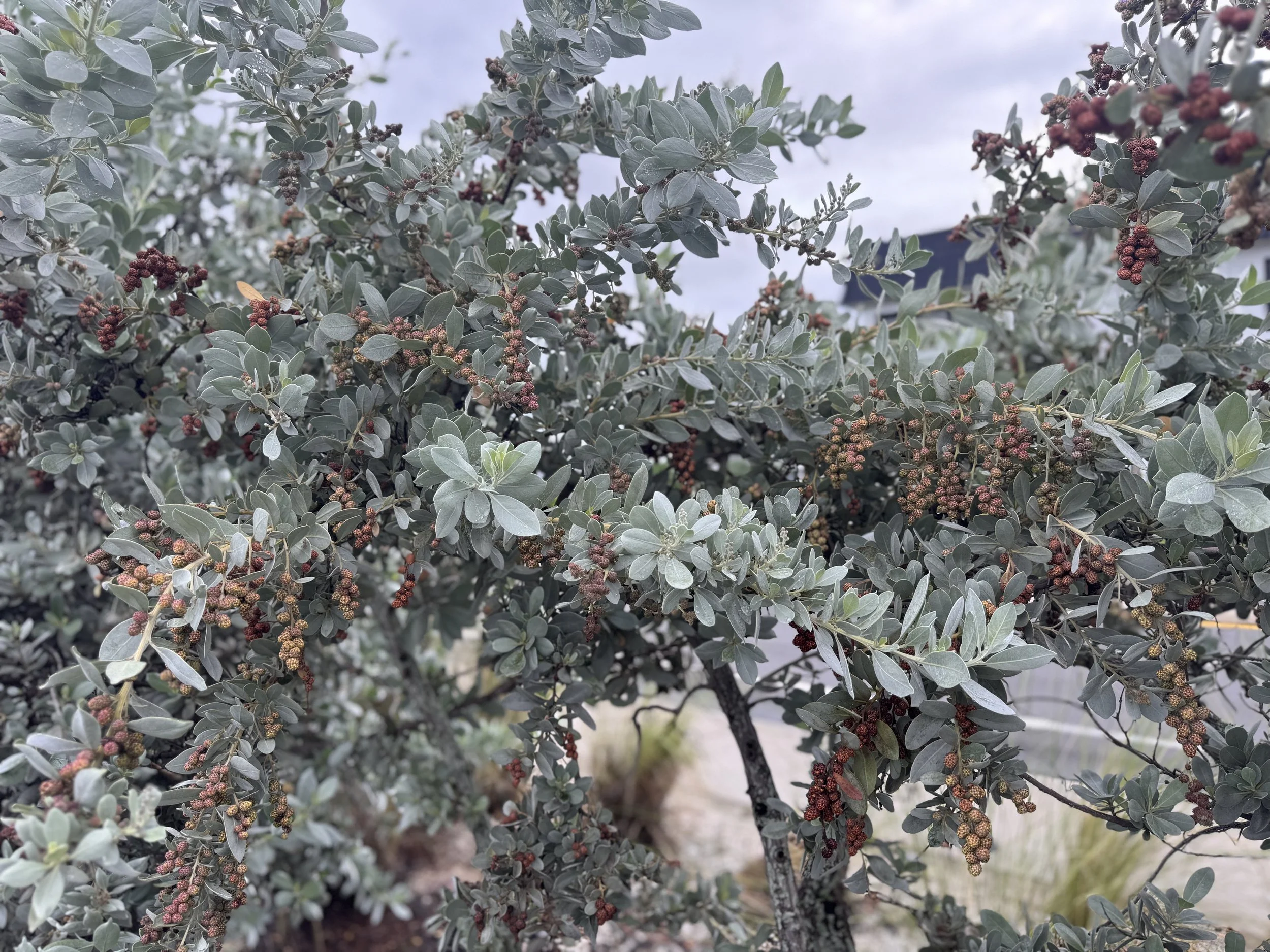
Conocarpus erectus var. sericeus
Silver Buttonwood is a unique coastal native shrub or small tree that can reach 20' and has soft silvery leaves and small brown berries that look like wood buttons. While it thrives in coastal landscapes, taking salt inundation and salty soils like a champ, it can be planted inland as well. Silver Buttonwood can be used as a specimen tree, part of a natural privacy screen or pruned into hedge.
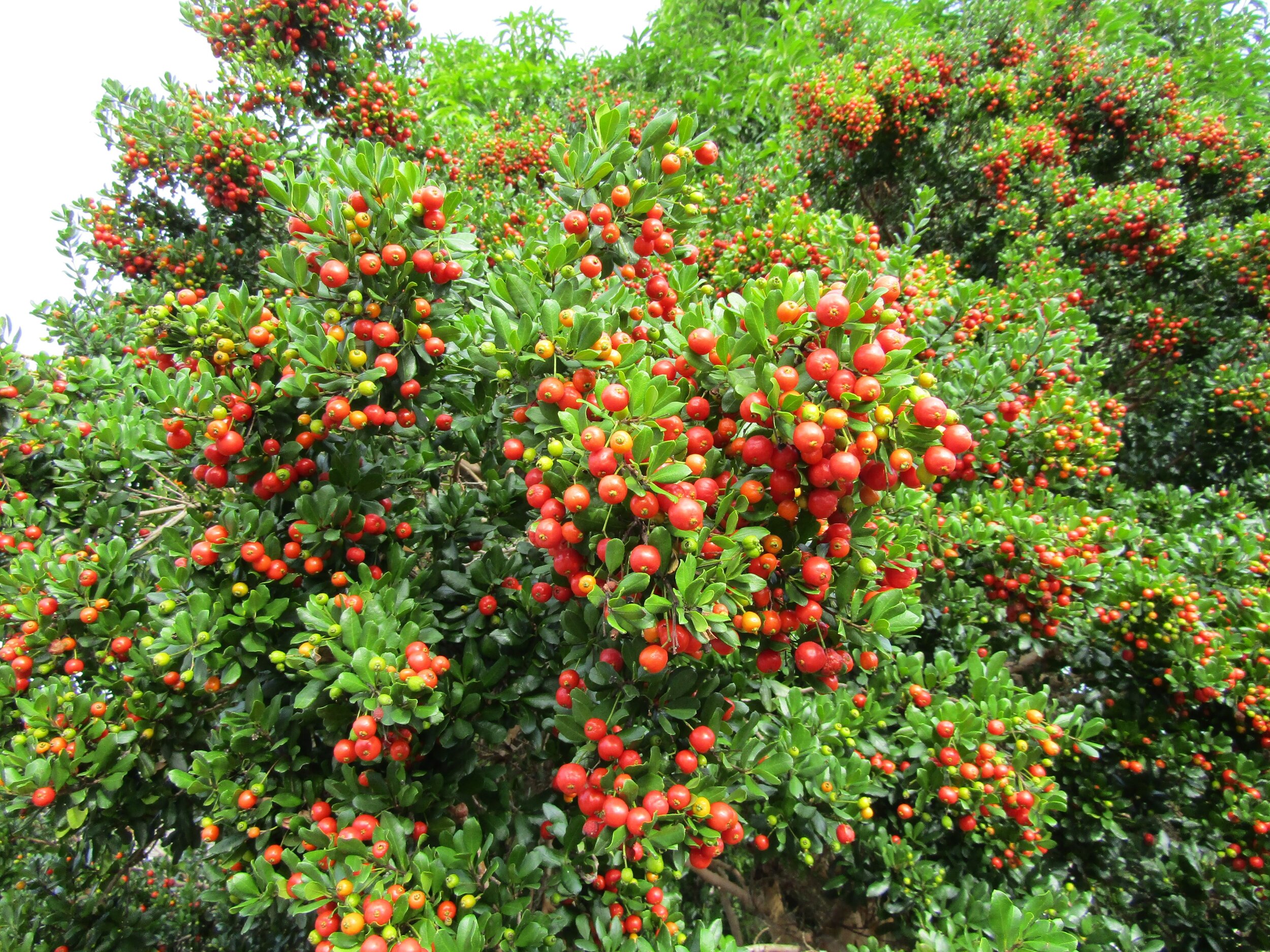

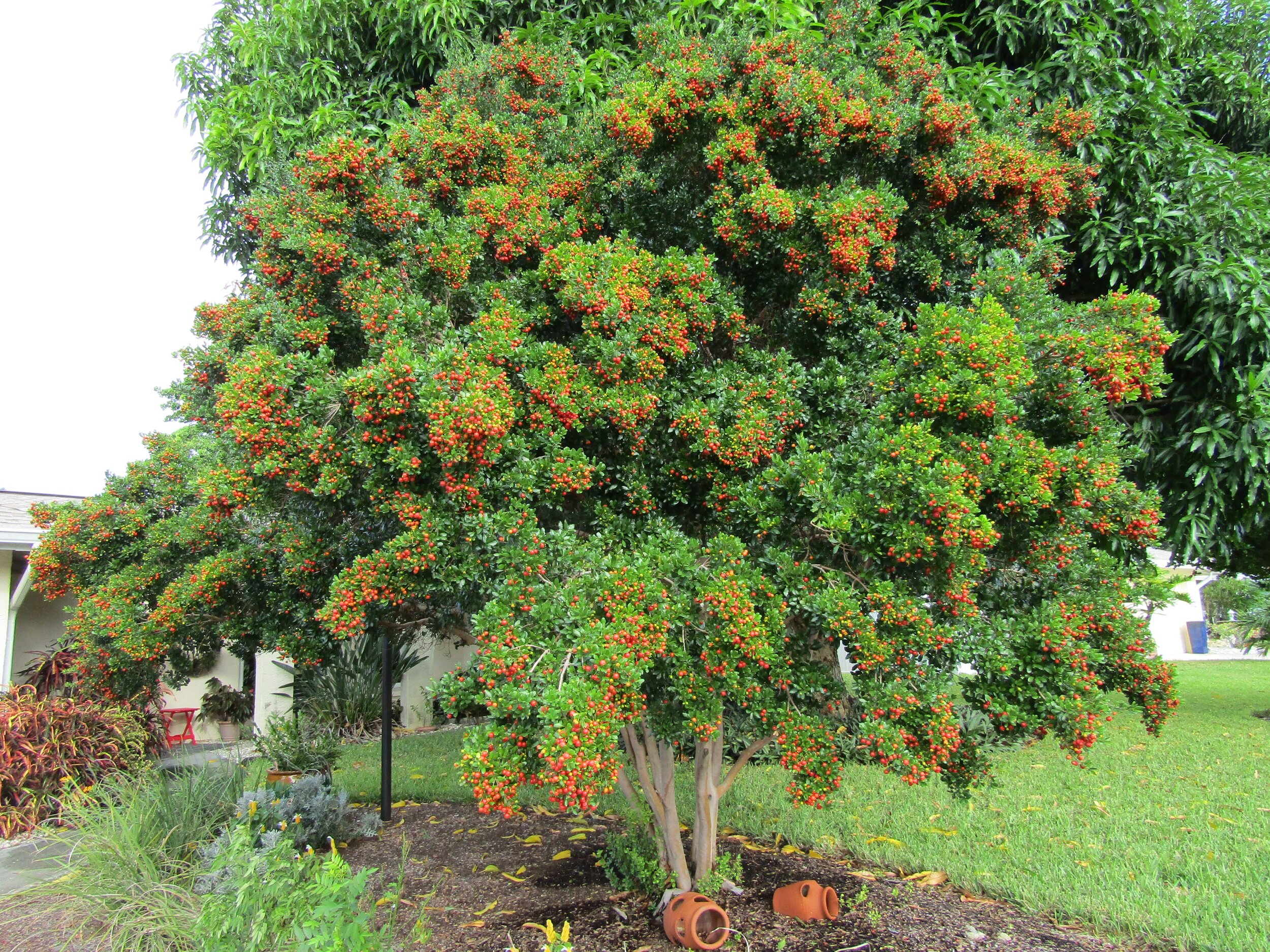
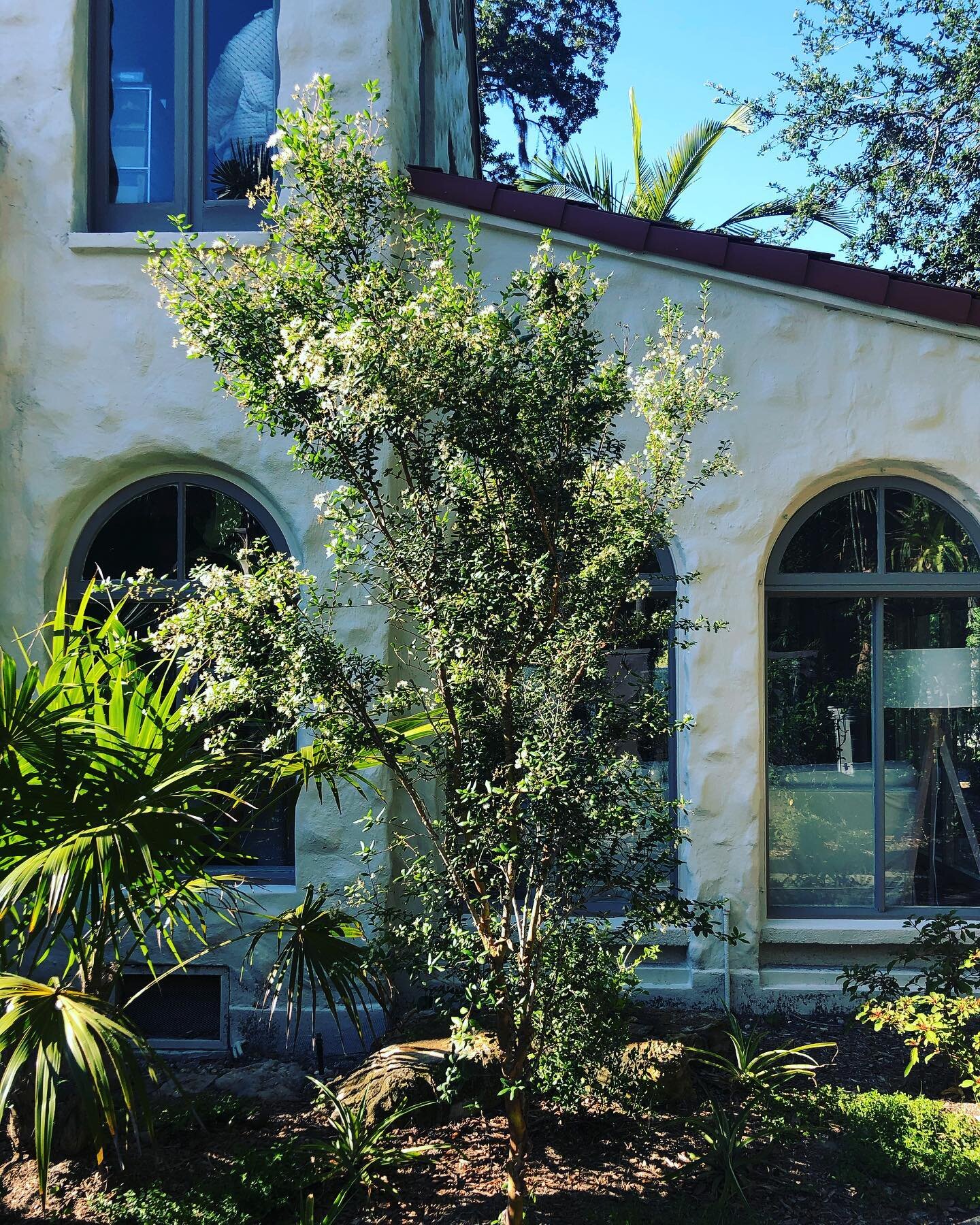
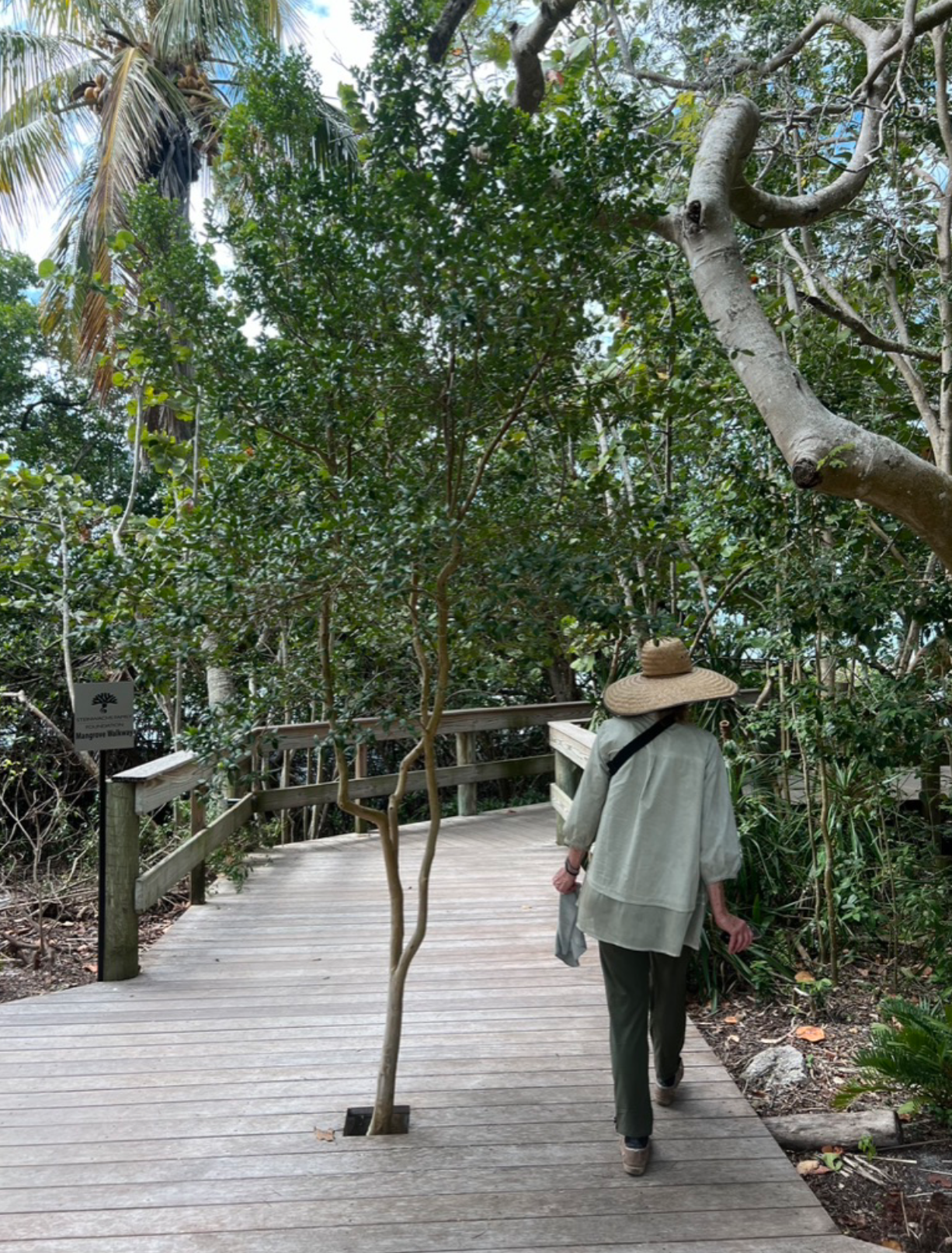
Myrcianthes fragrans
Simpson's Stopper is an evergreen shrub or small tree native to Florida and the Caribbean that grows 5’-20’ tall with glossy, dark green leaves. The new growth emerges in attractive colors ranging from pale chartreuse to deep wine red, and the leaves emit a spicy, nutmeg-like fragrance when crushed. In spring, it produces clusters of fragrant white flowers followed by orange to red berries that attract birds including cardinals, blue jays, and mockingbirds. The plant features distinctive exfoliating bark that flakes off to reveal reddish-brown underneath, providing year-round visual interest. Extremely versatile and low-maintenance, it thrives in full sun to partial shade, tolerates salt, drought, and poor drainage, and can be used as a hedge, specimen tree, or even container plant in zones 8b-11.
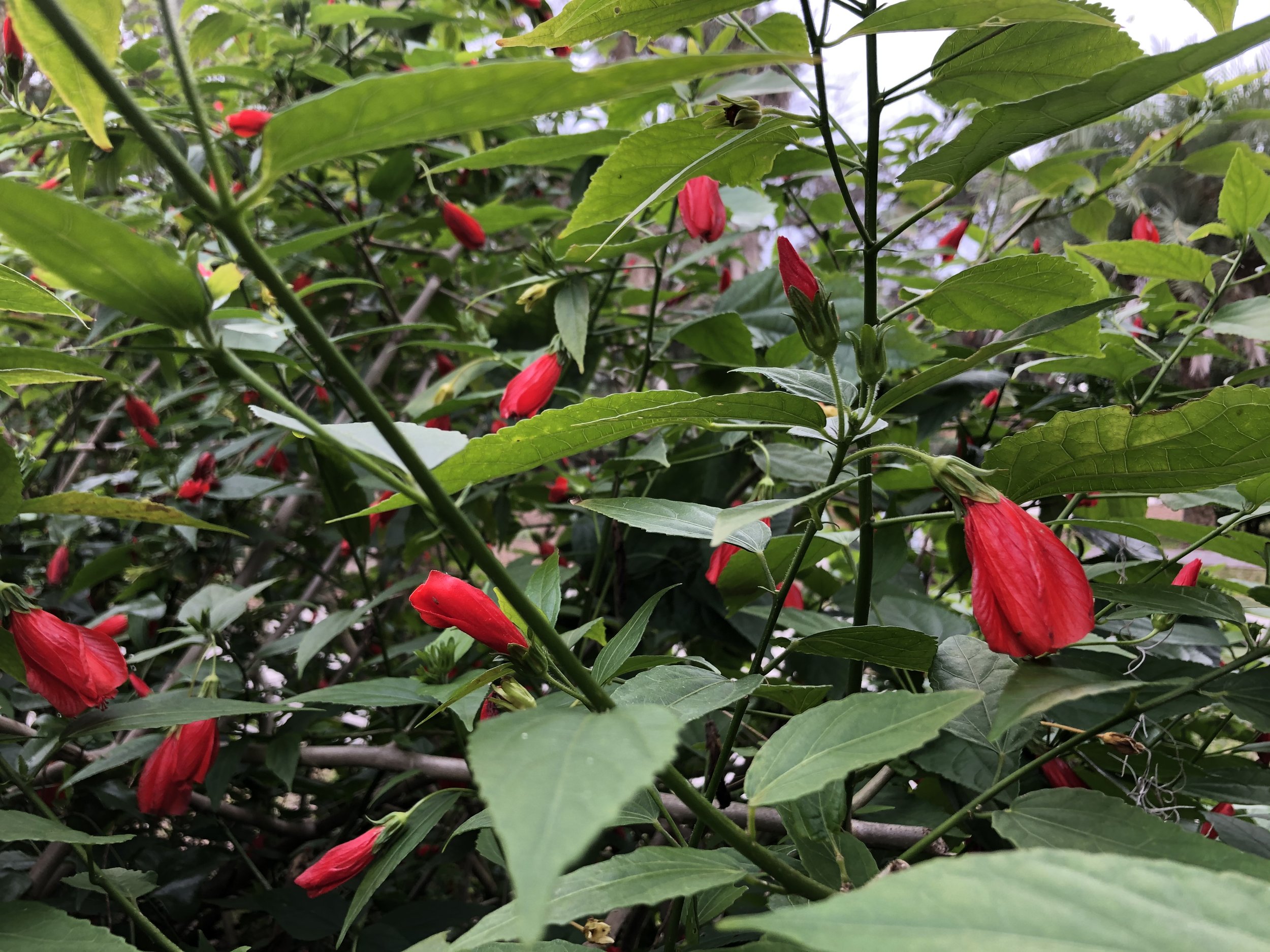
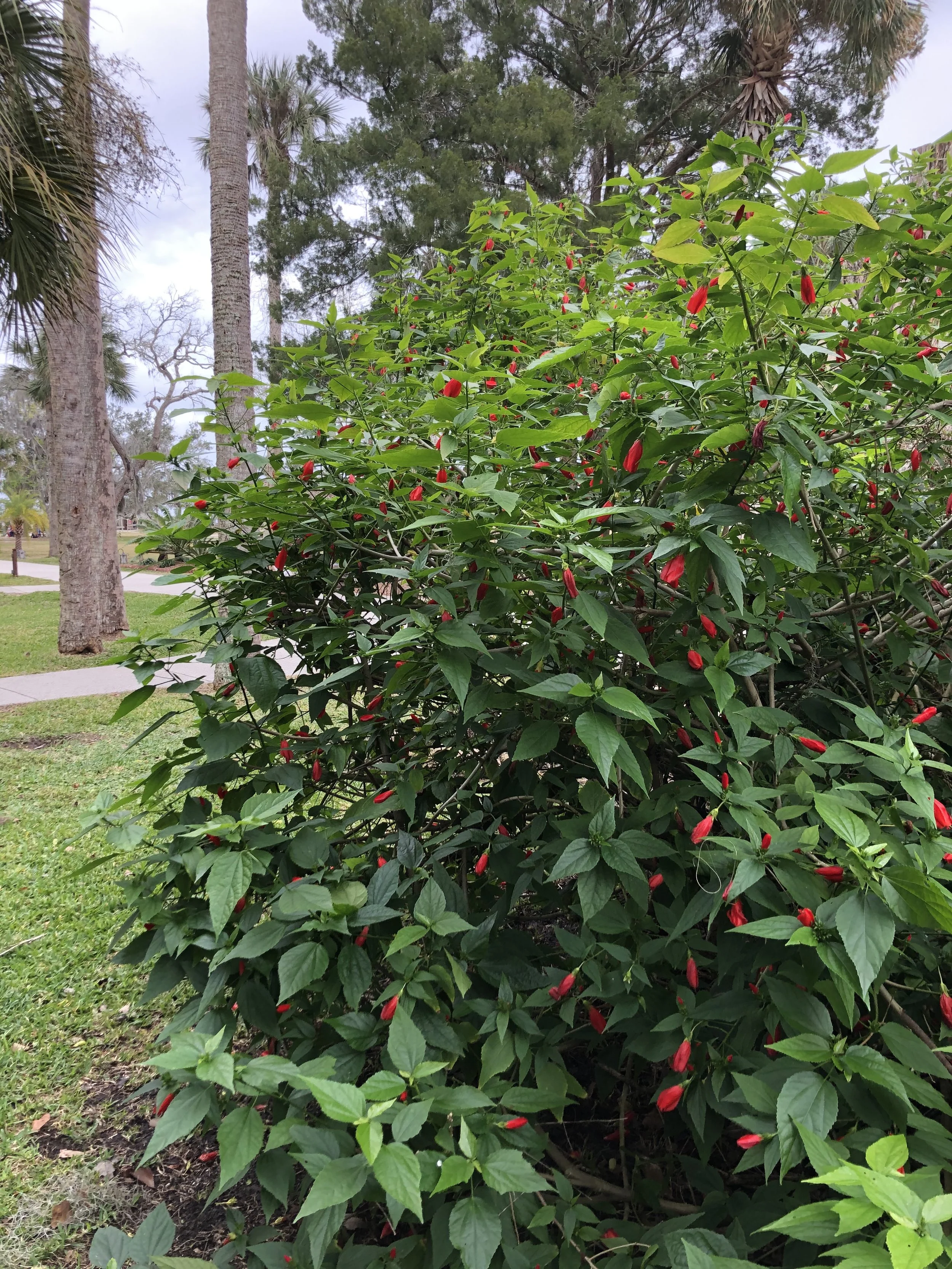
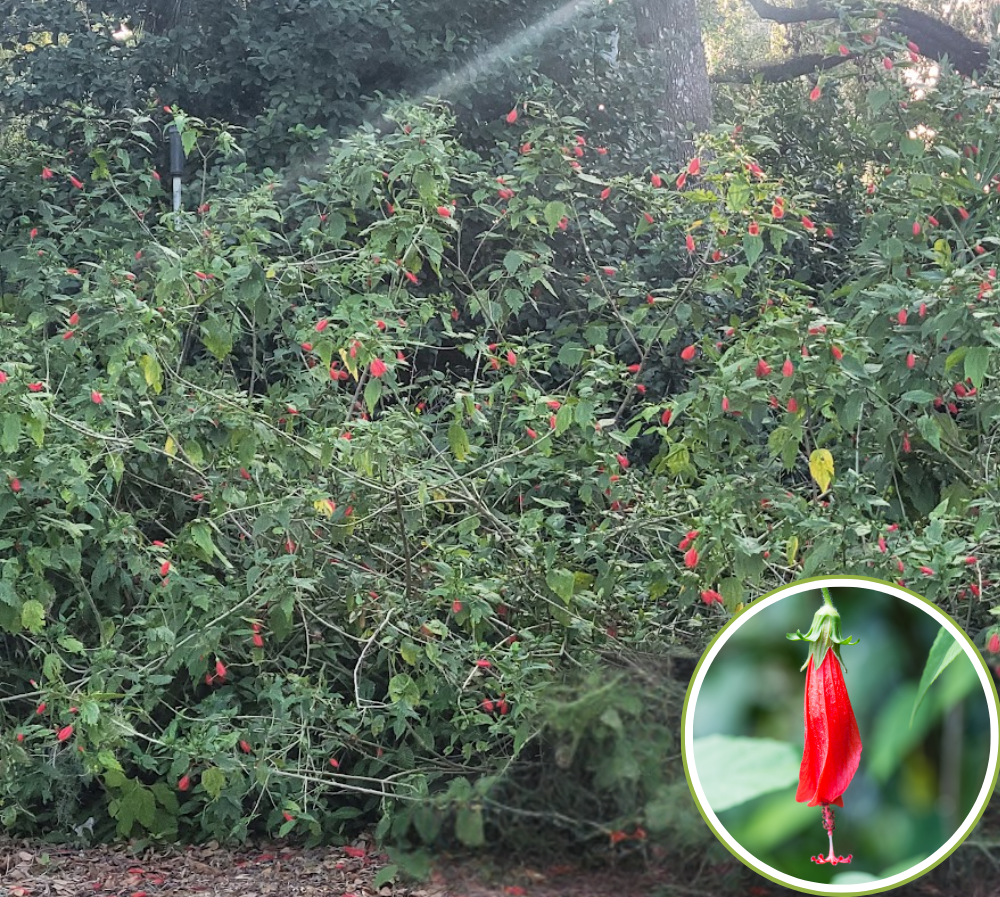
Malvaviscus penduliflorus
Sleeping Hibiscus is a Florida-friendly upright shrub in the hibiscus family that can reach up to 10ft tall and wide. This drought-tolerant plant produces distinctive bright red flowers that never fully open, blooming continuously from early summer until the first frost. This low-maintenance shrub prefers light shade in tropical areas and full sun with afternoon shade in northern regions, making it an excellent choice for adding late-season color to Florida landscapes. With the constant blooms, sleeping hibiscus is a great plant for butterflies and hummingbirds!
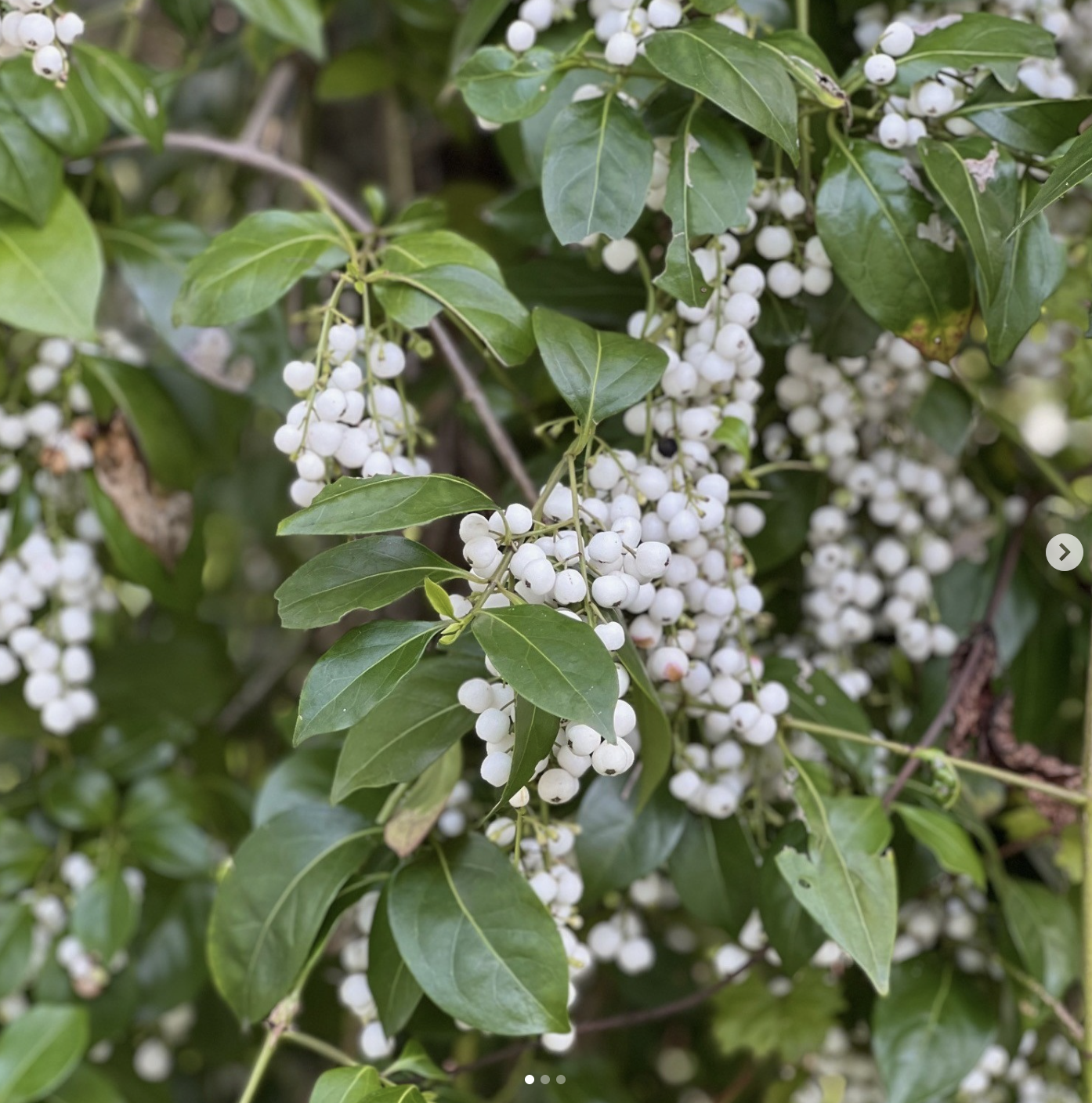
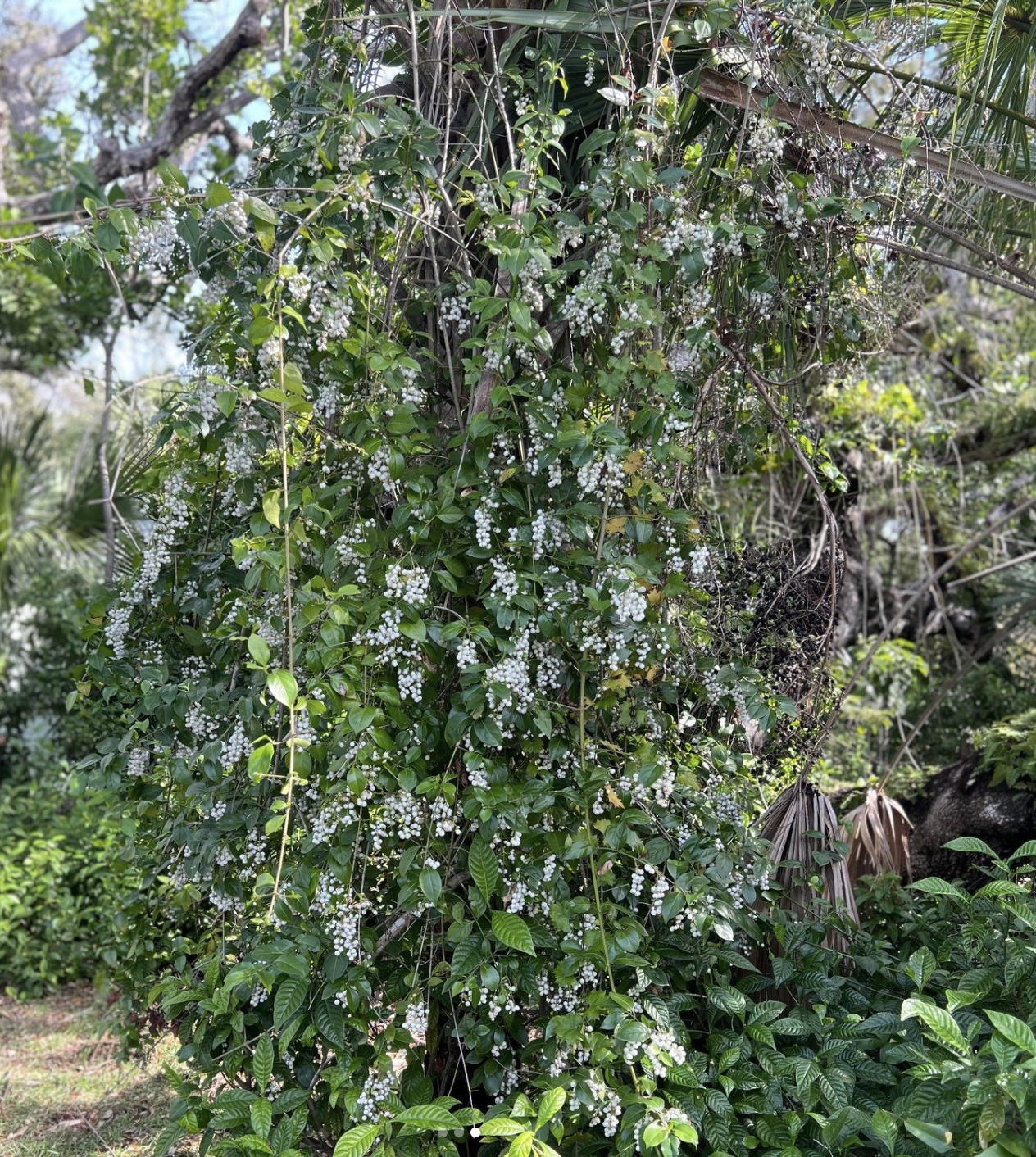
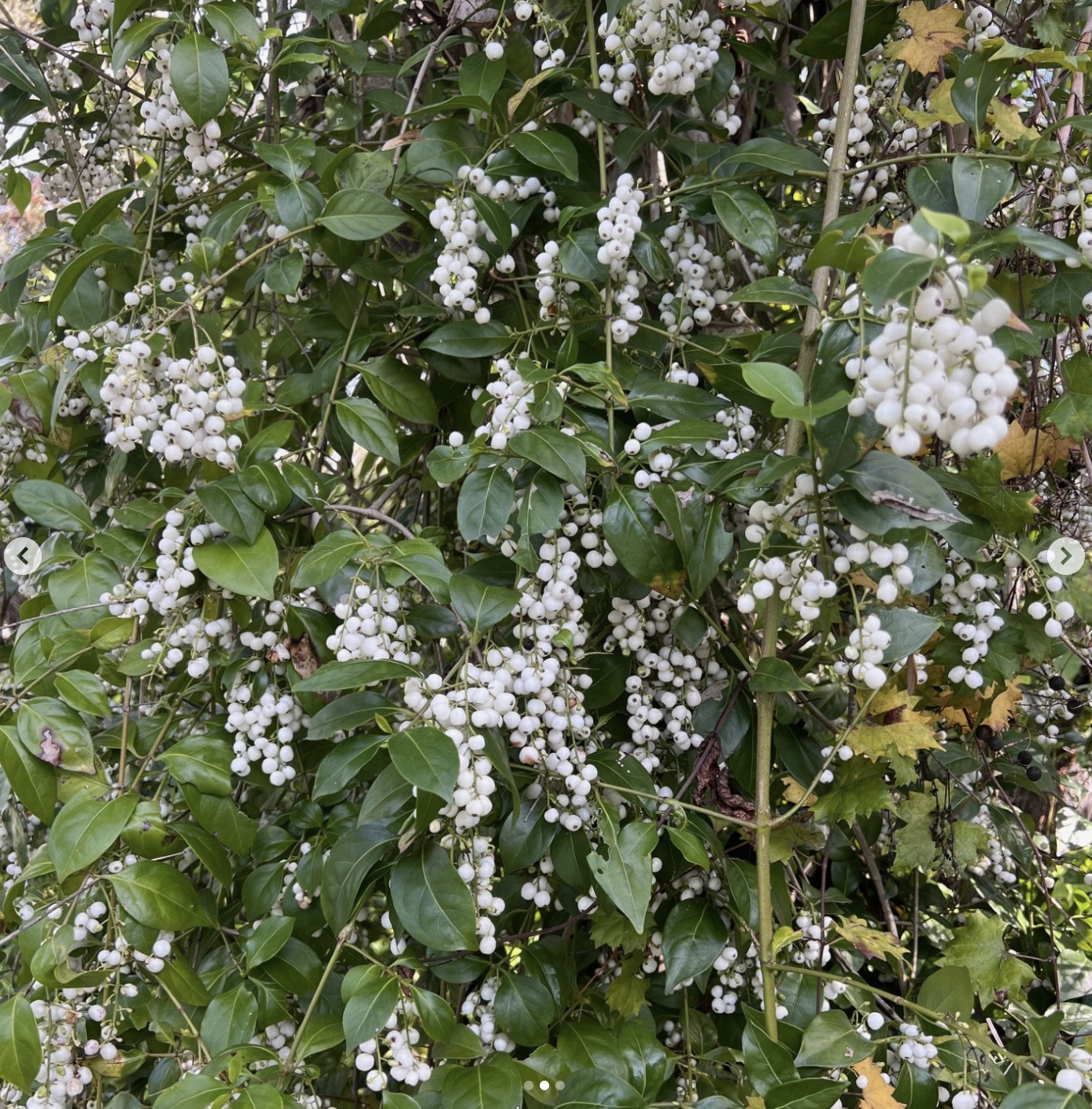
Chiococca alba
Snowberry is a native perennial vine or sprawling shrub found in coastal hammocks and disturbed habitats. Its small white tubular flowers attract butterflies and other pollinators, while the distinctive white berries provide an important food source for birds that disperse its seeds. It tolerates a range of soil conditions and light levels, making it adaptable to various landscape settings including naturalized areas and native plant gardens.
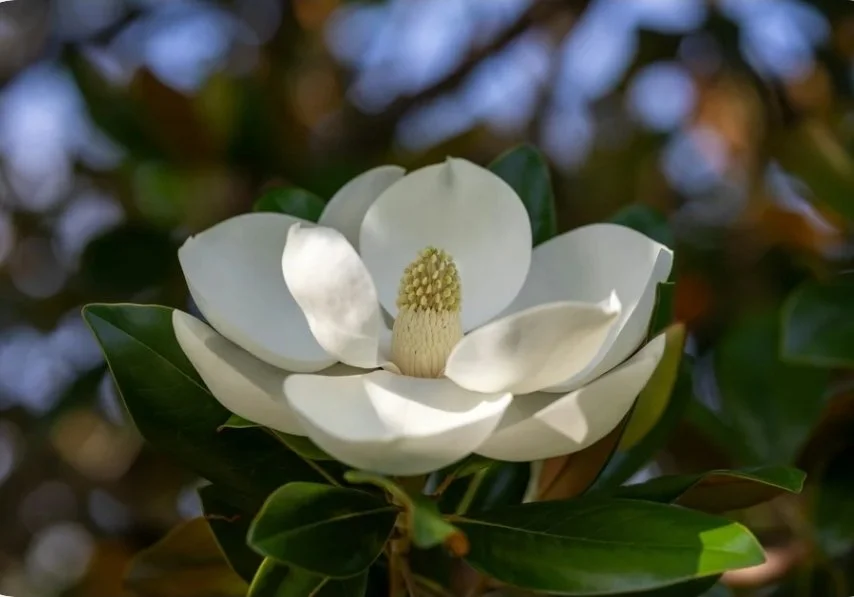
Magnolia grandiflora
Southern Magnolia is a native, evergreen flowering tree that grows to be 60’-80’ tall and 30’-50’ wide. They grow best in full sun to partial shade, with moist, rich, acidic well-drained soils. With their dark green leathery leaves and their large, heavily fragrant white flowers in late spring and summer, Southern Magnolias make a great addition to Florida landscapes as part of a privacy screen or specimen plant. Their flowers predate bees, so they are instead pollinated by beetles, but their seeds provide food for birds and small mammals, and their dense branches provide year-round cover for local wildlife.
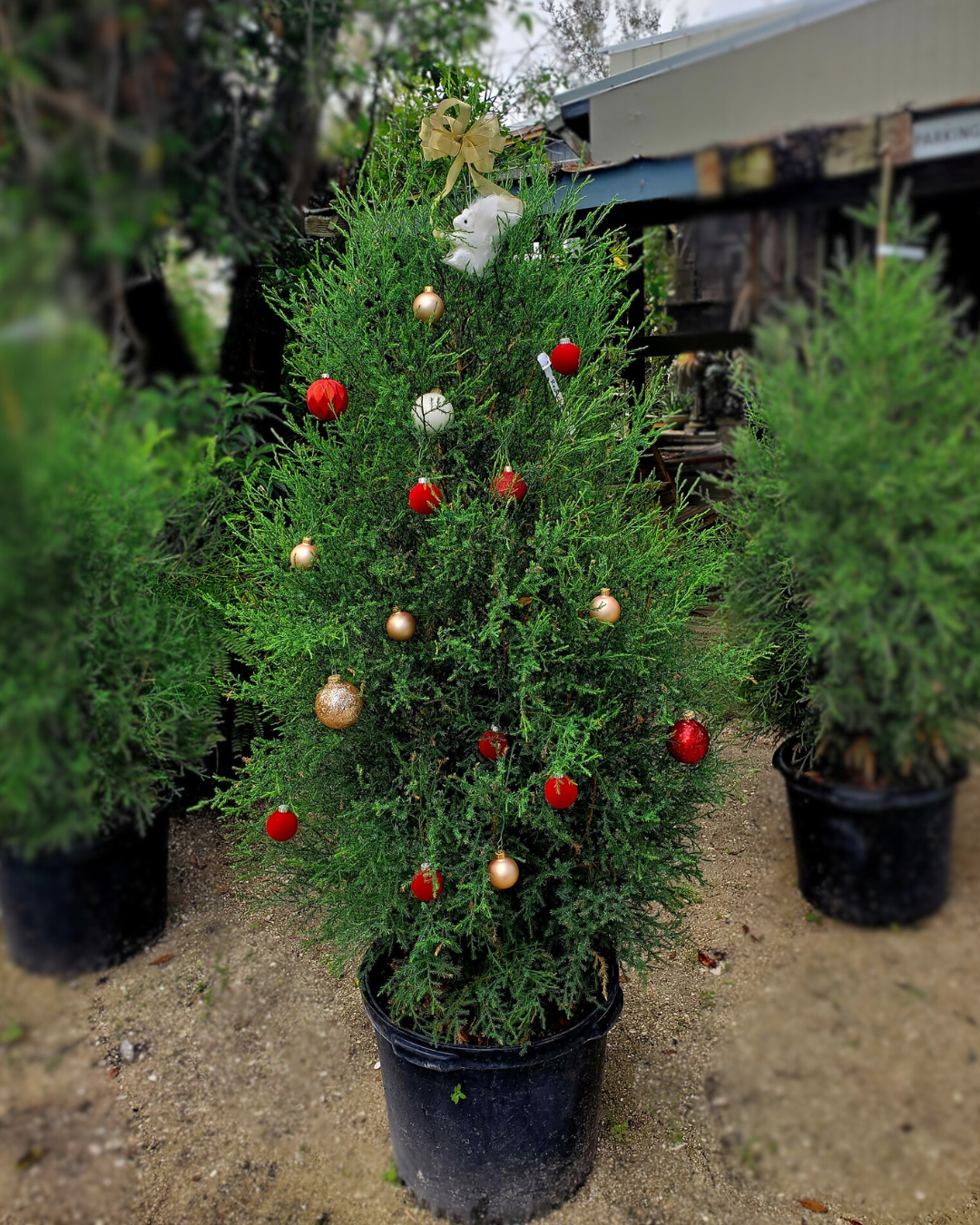
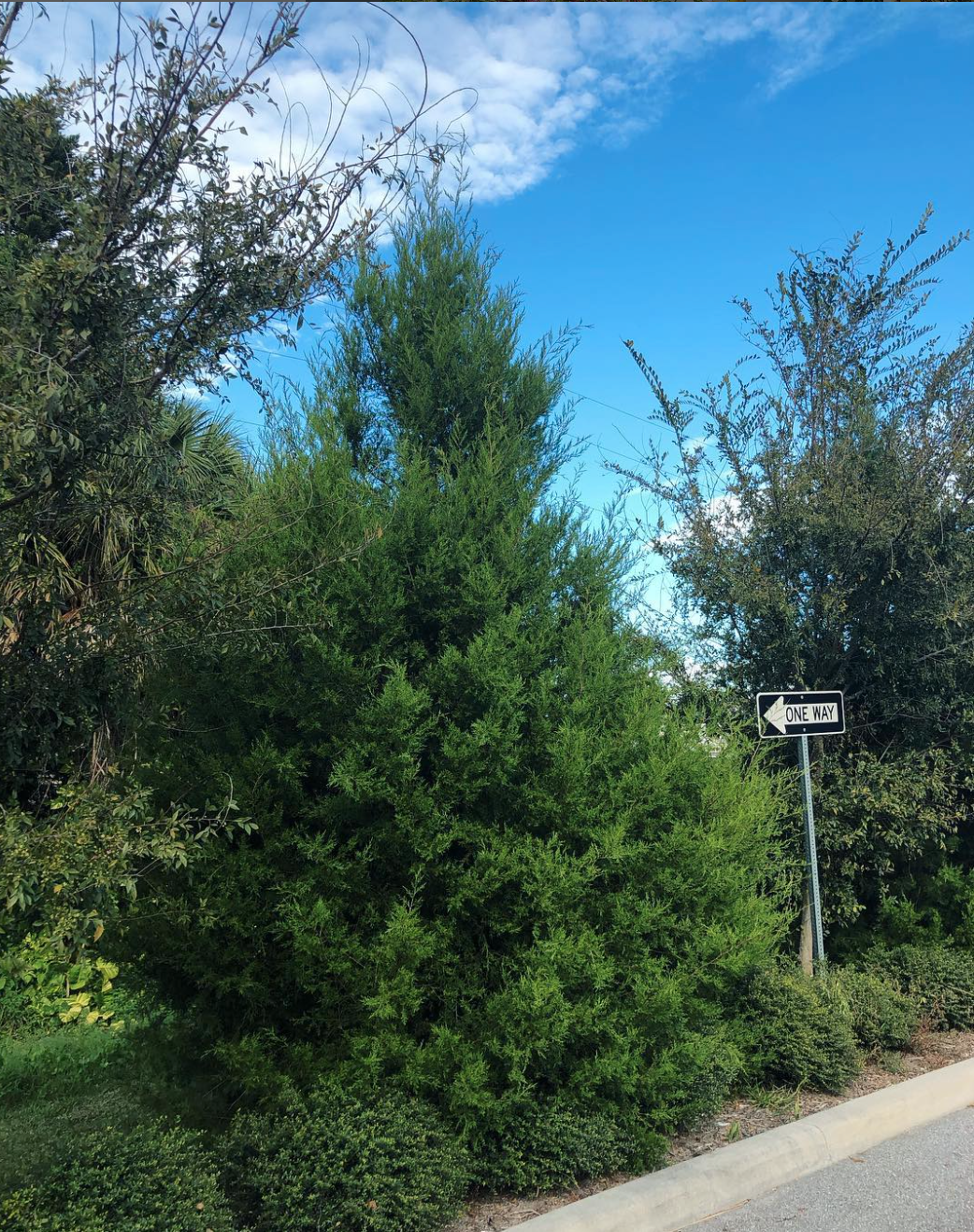
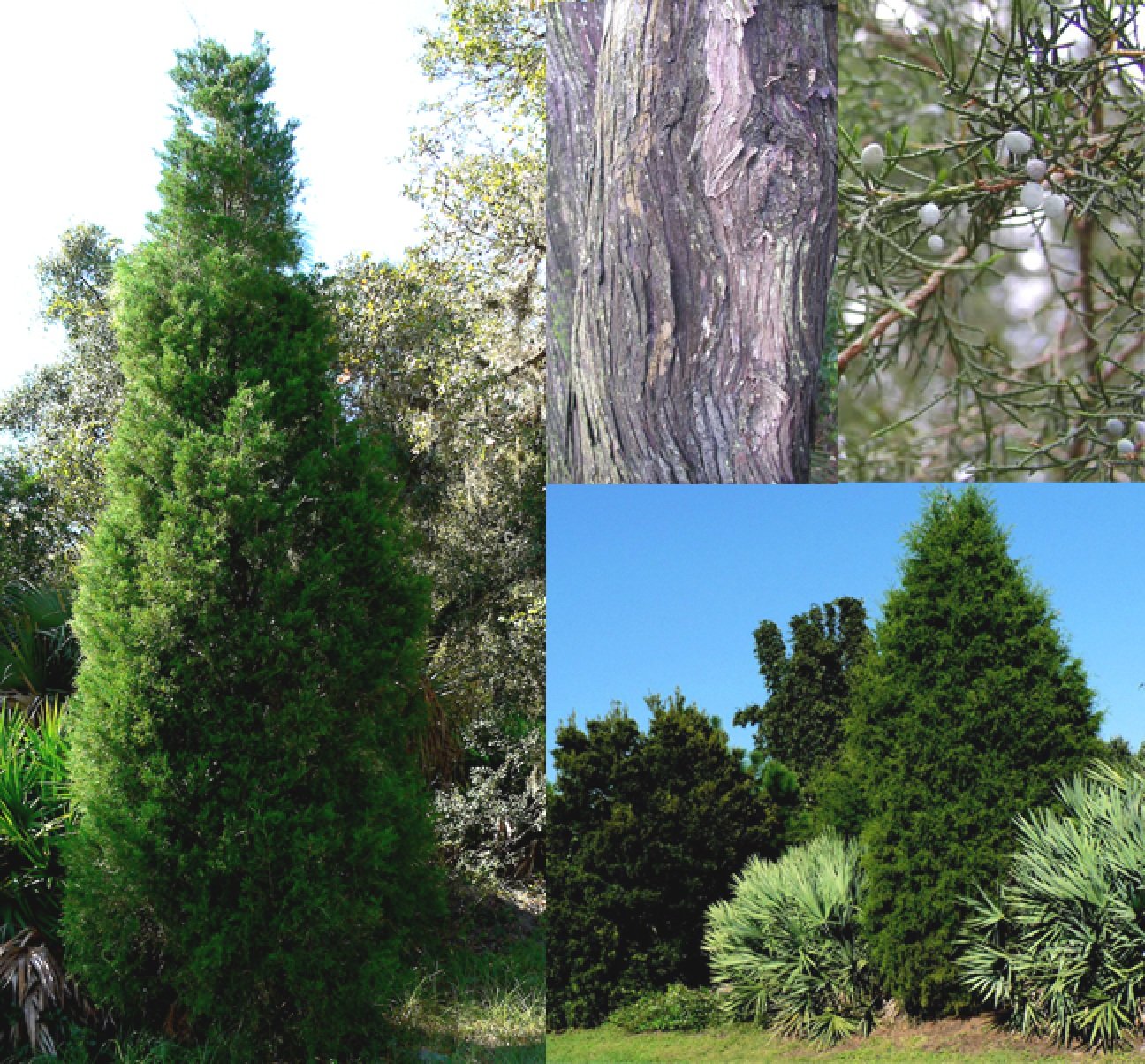
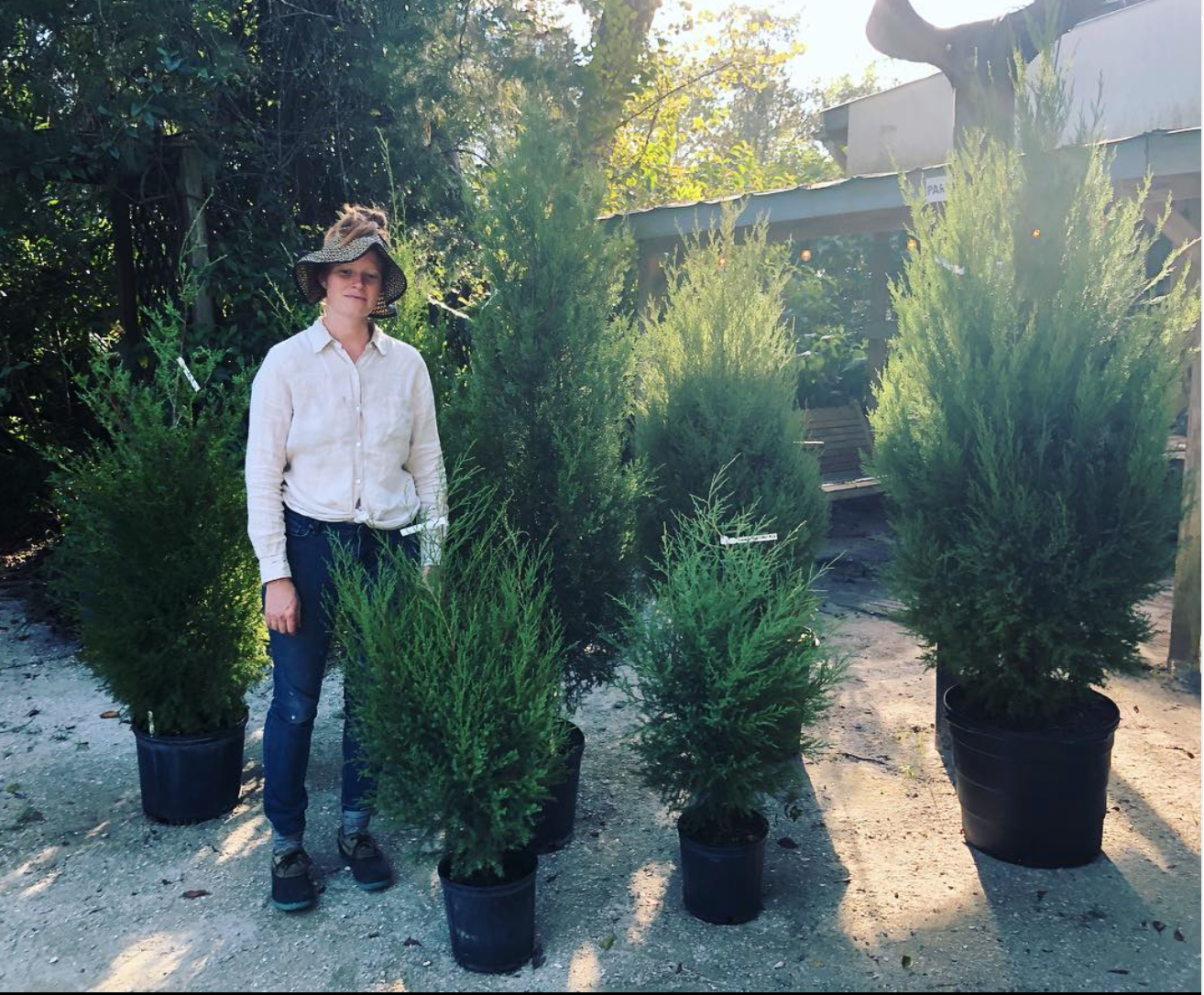
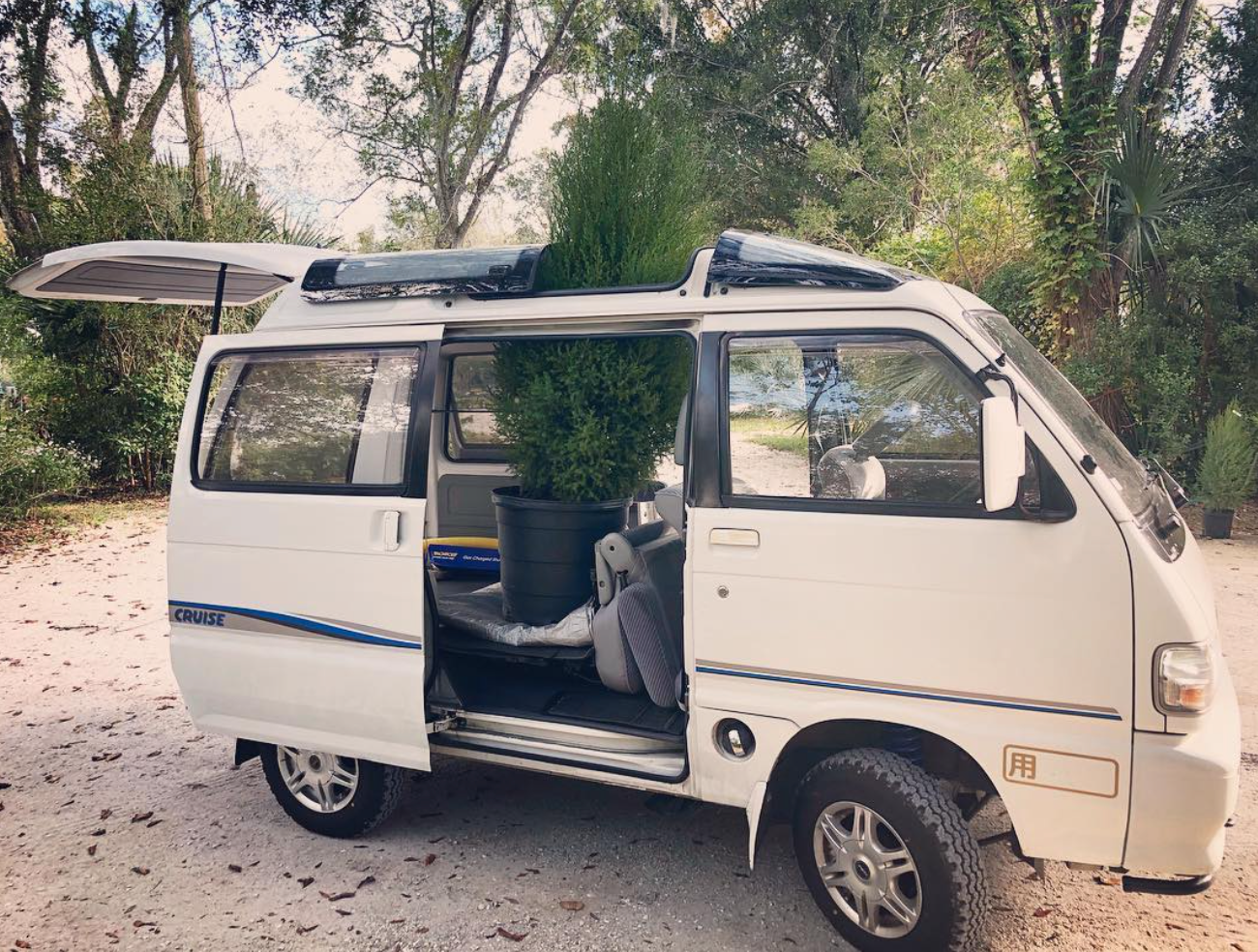
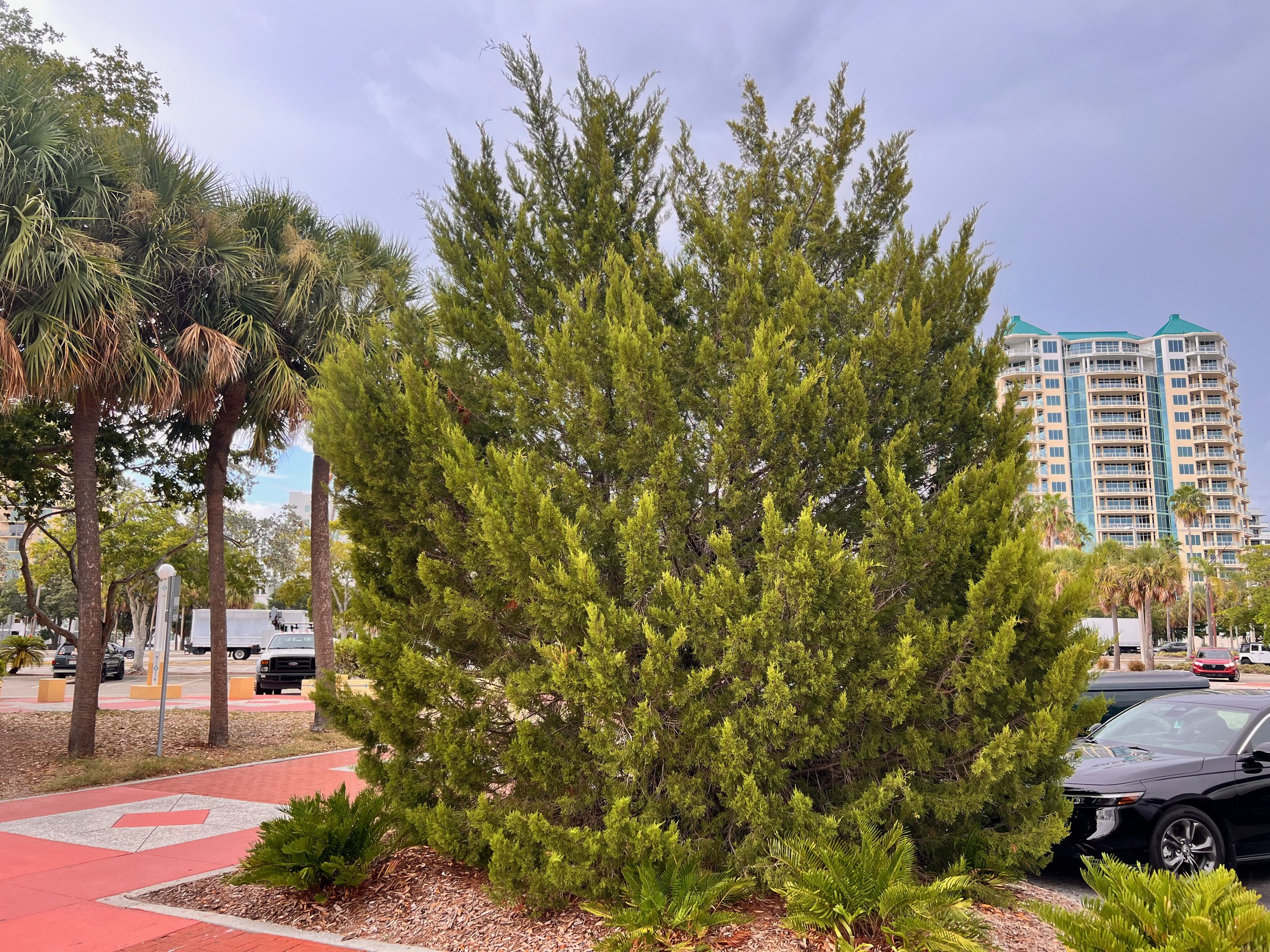
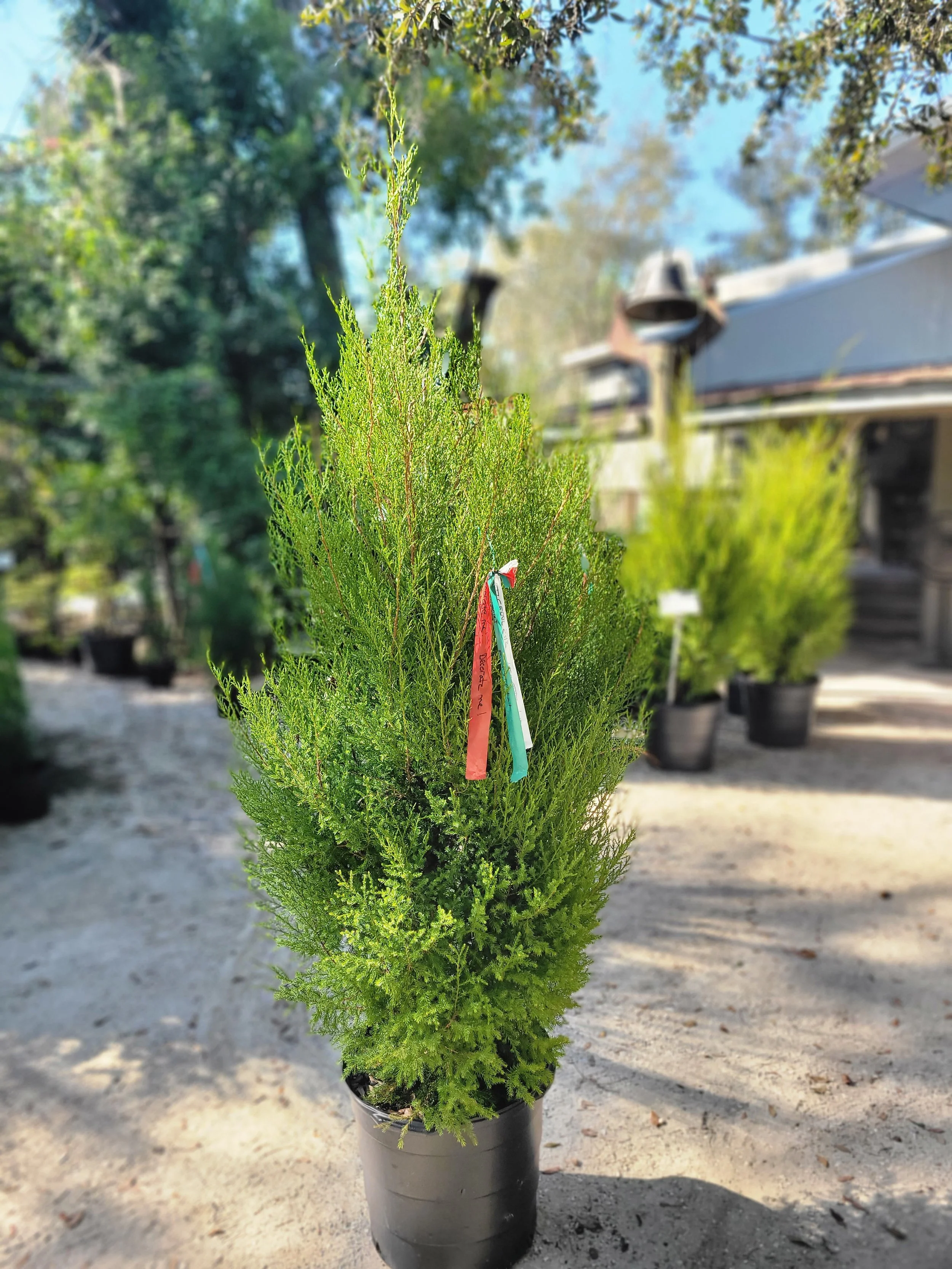
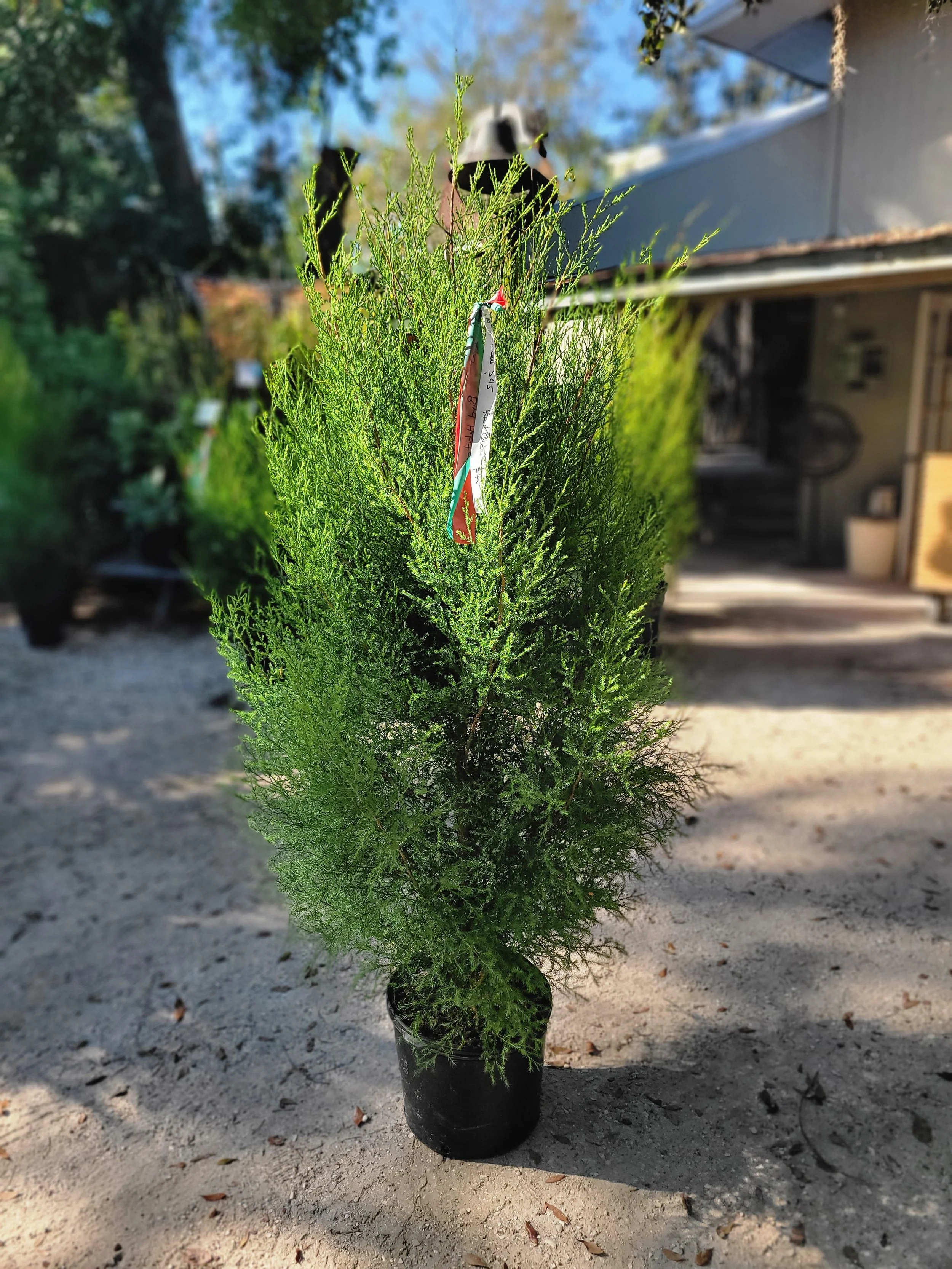
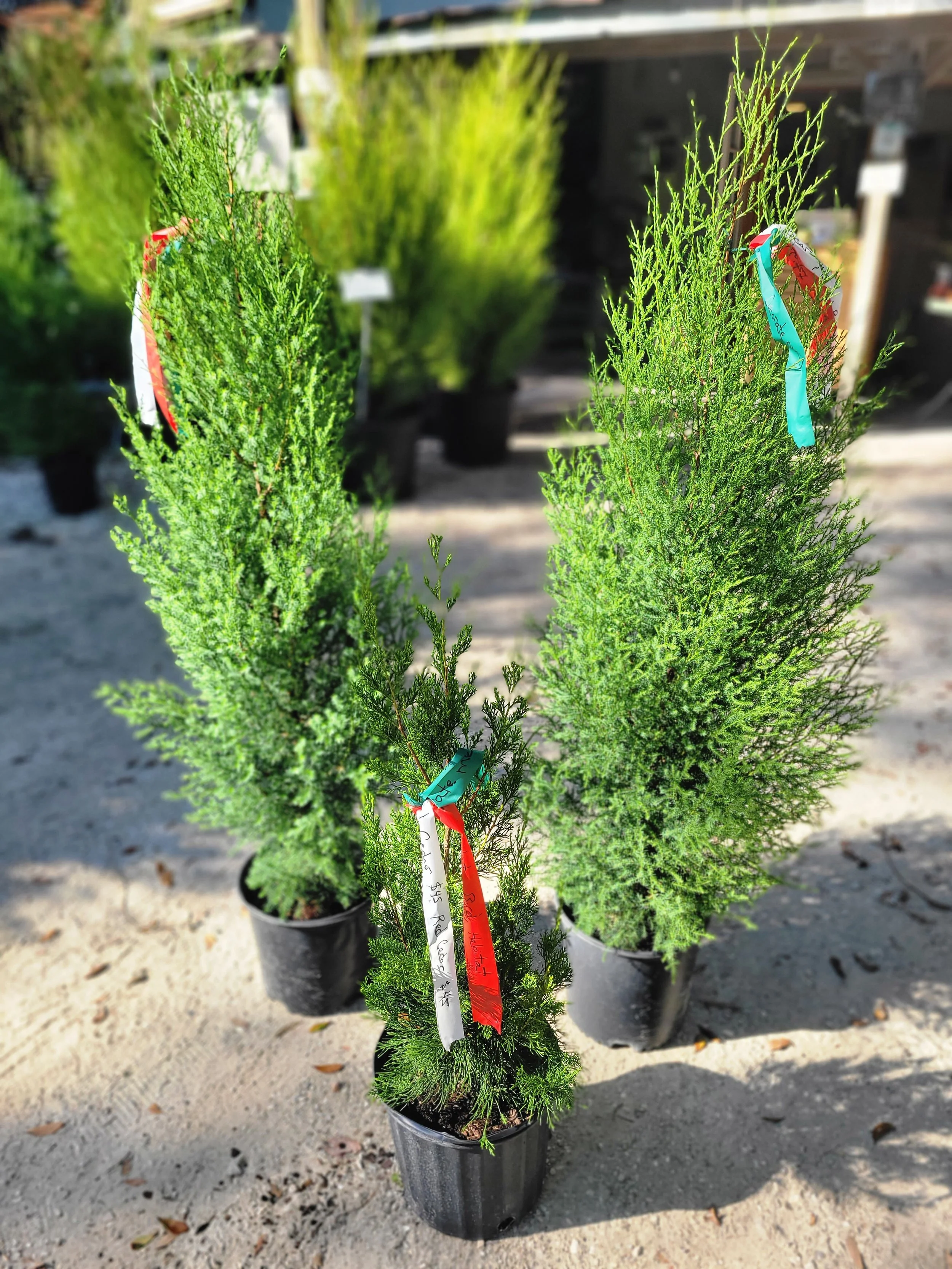
Juniperus virginiana silicoa
Red Cedar is an evergreen shade tree that is also excellent for a privacy screen or buffer planting. It’s long-lived, it can grow to approximately 30’ over many years, is adaptable to dry and moist soils and does well in full sun to light shade. It can be used as a coastal plant as it is salt tolerant. Red Cedars are an important nesting and food source for birds.
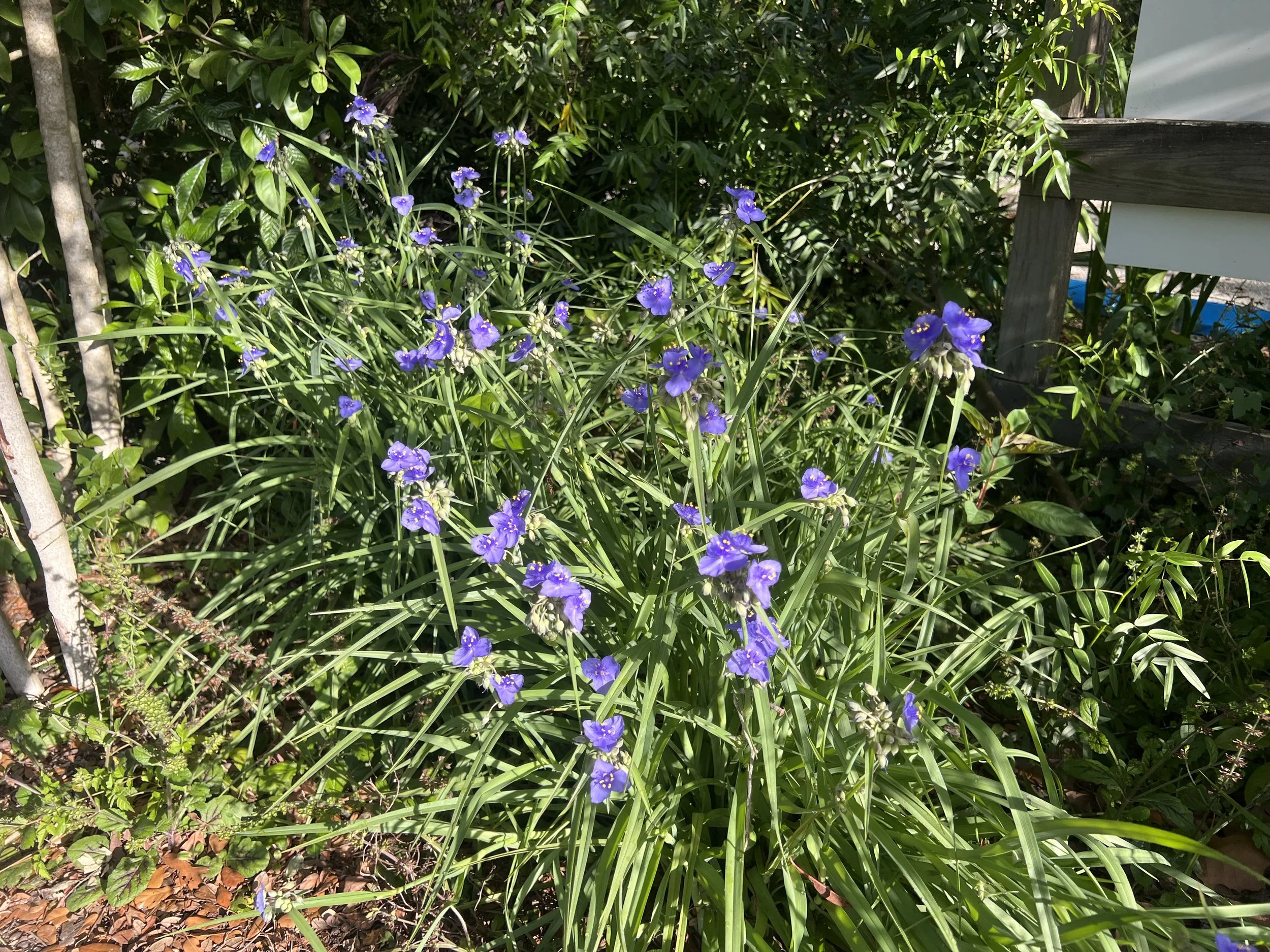
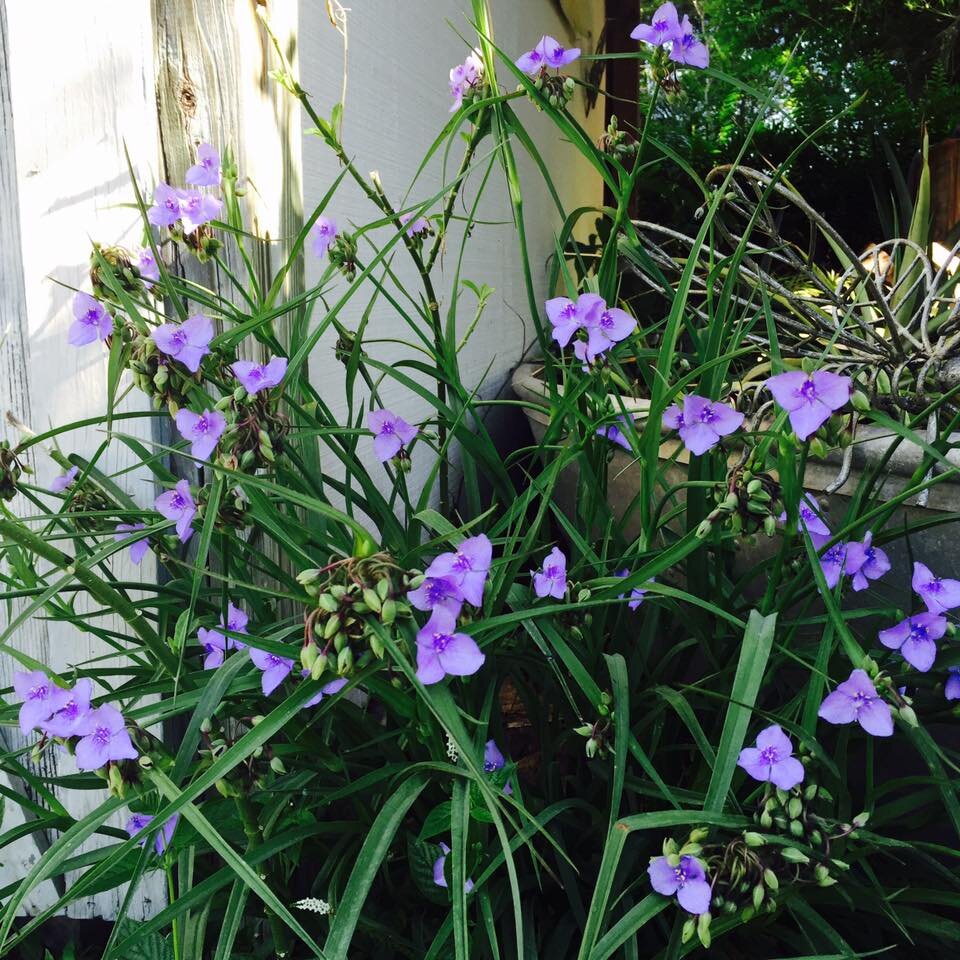
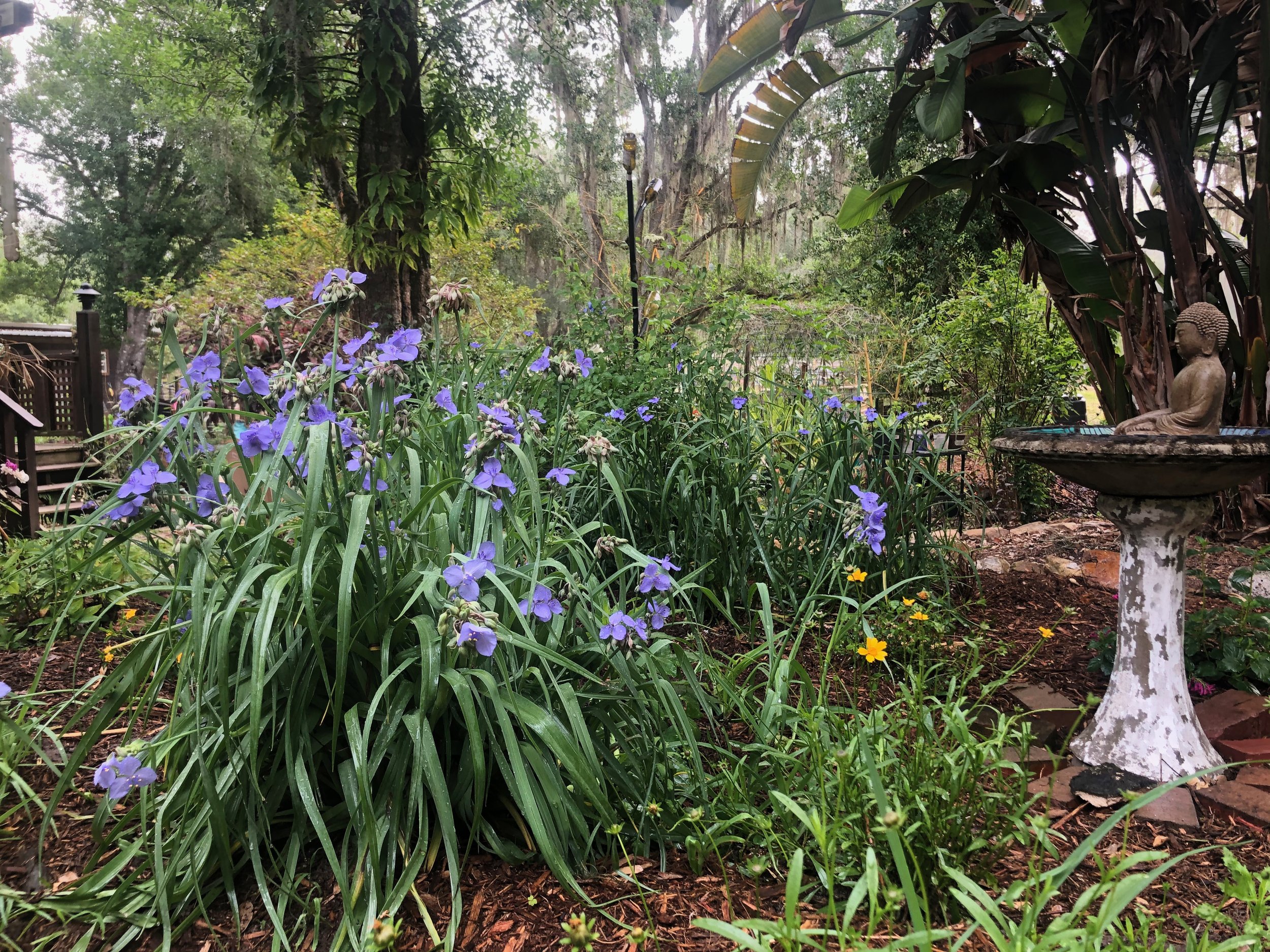
Tradescantia ohiensis
This commonly known wildflower is widespread across the east of the United States in woodlands and forests. It likes part sun to full sun with well-draining soils with average moisture and can grow 2’-4’. Its delicate blue flowers are a pop of color in any garden and attract a variety of native pollinators.
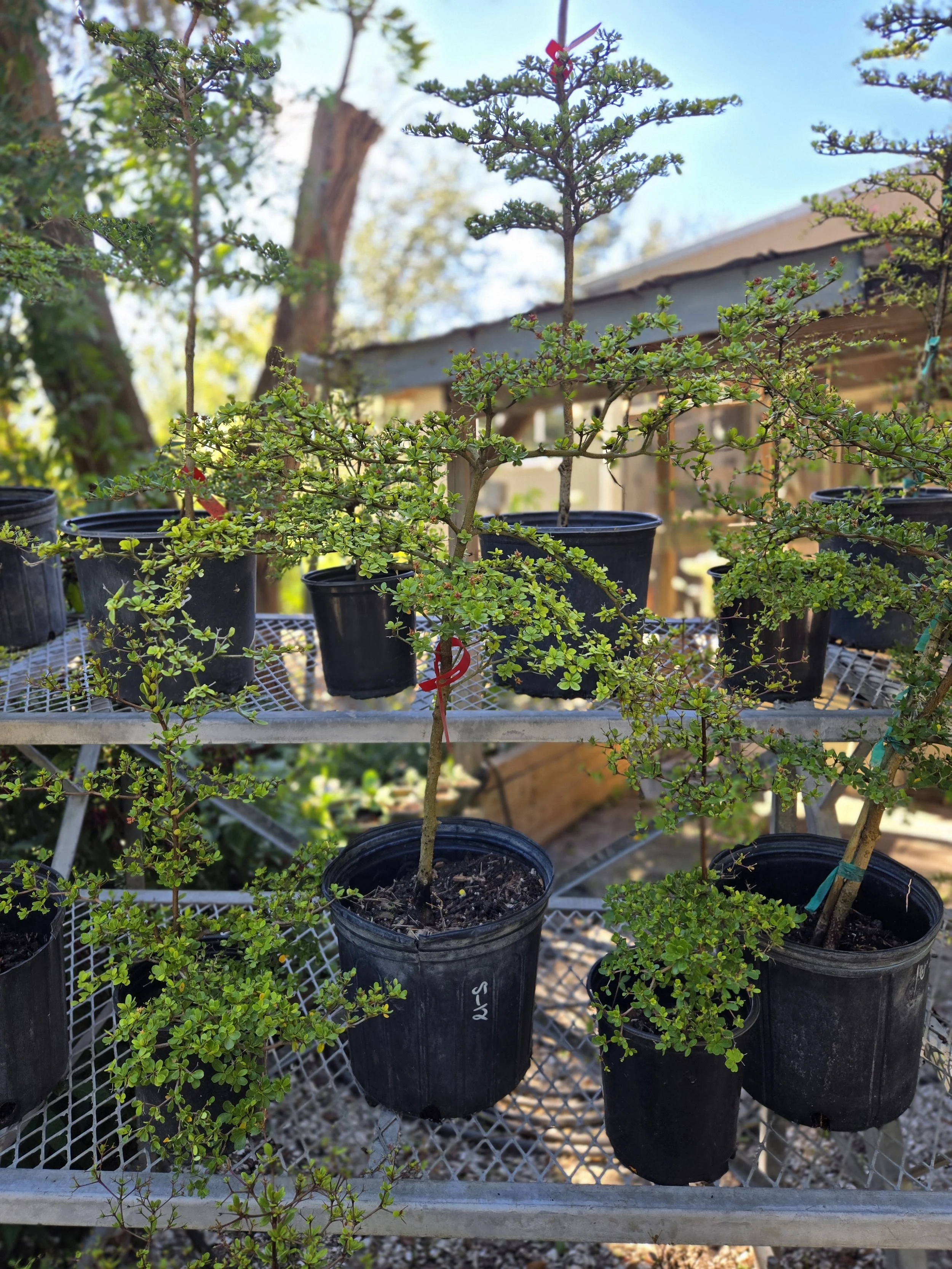
Terminalia molinetii
Spiny Black Olive is a rare south FL native small tree that has a unique and distinct growth habit lending it its nickname the Geometry Tree. Salt and drought tolerant, this small tree is great for warm, coastal landscapes in zone 10 and up. Limited space, or need to plant in pots? The Spiny Black Olive does great in containers and is commonly used as a bonsai tree!
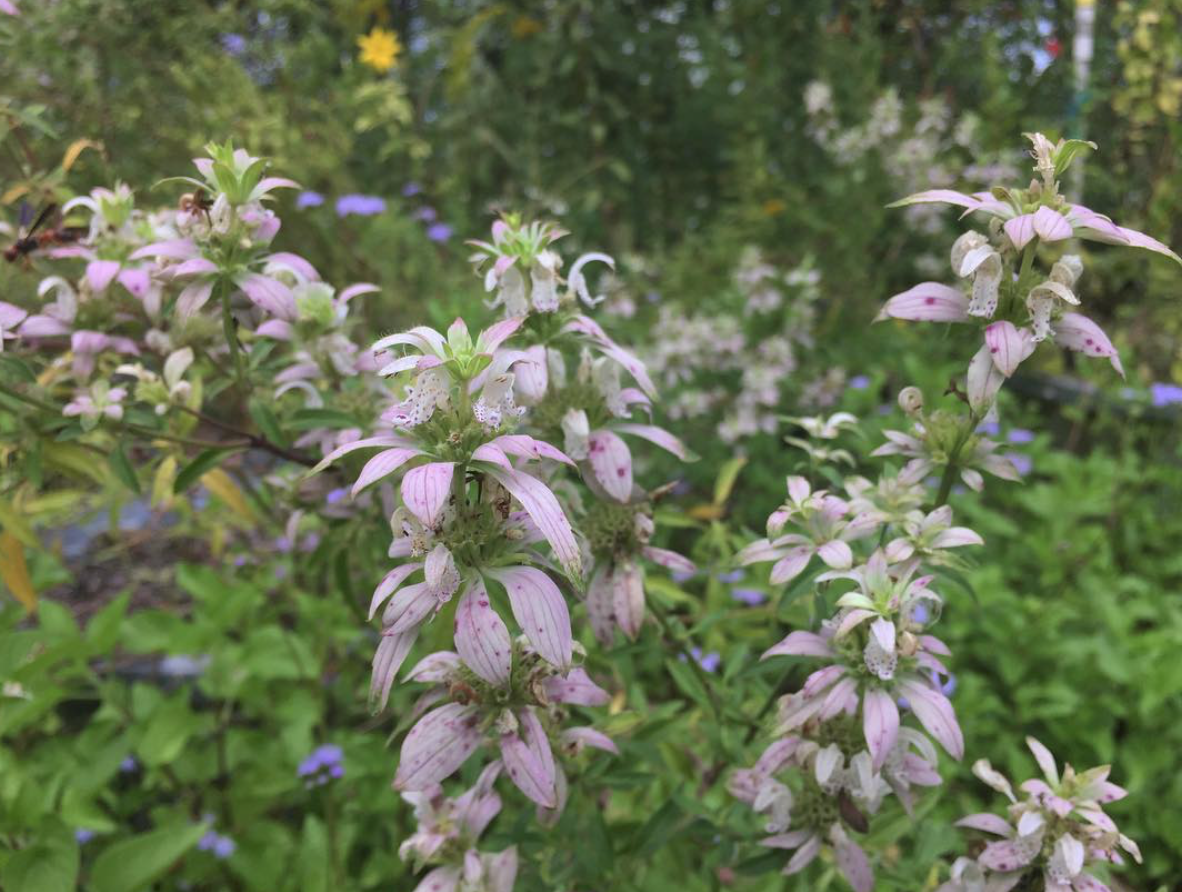

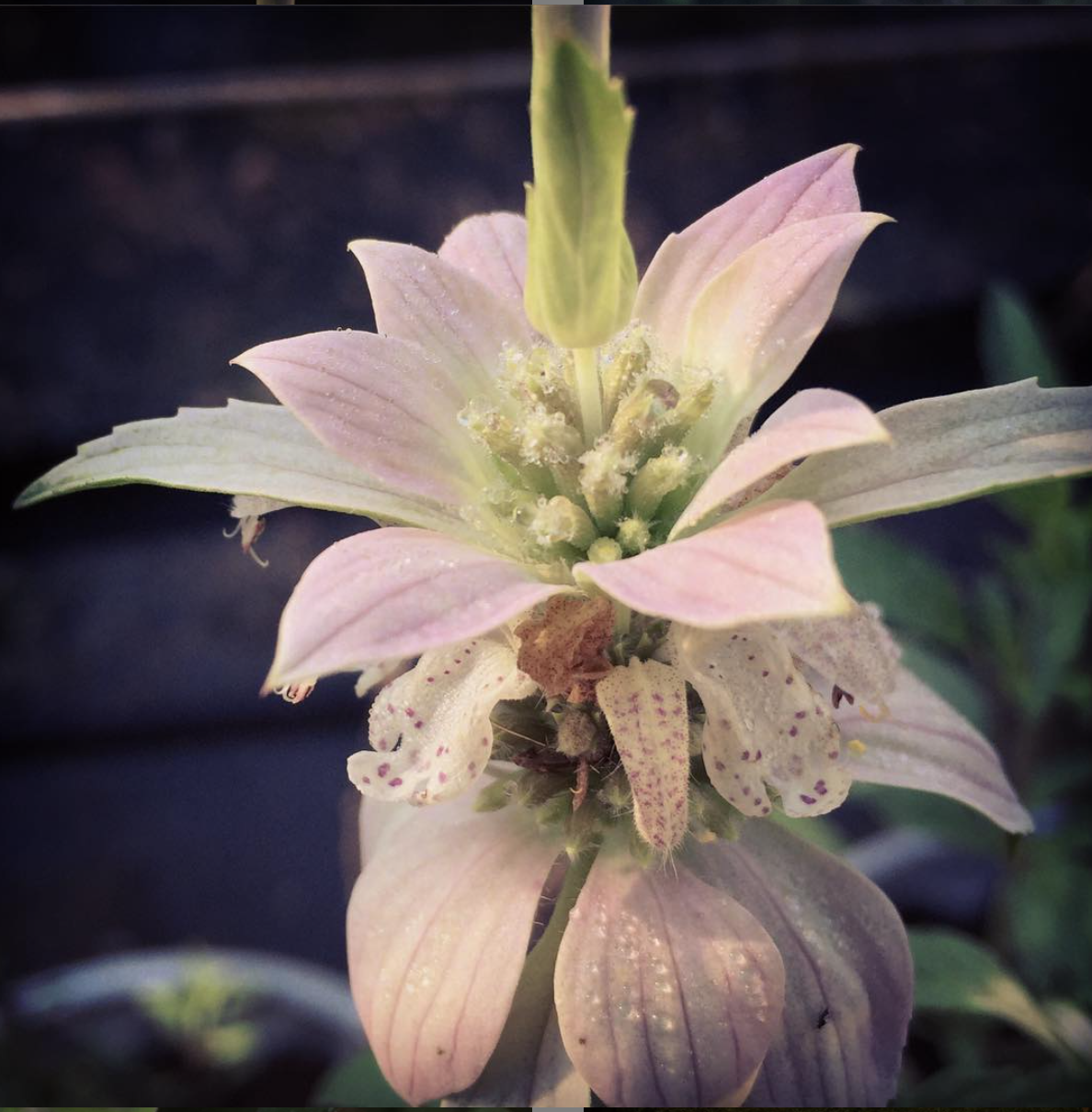
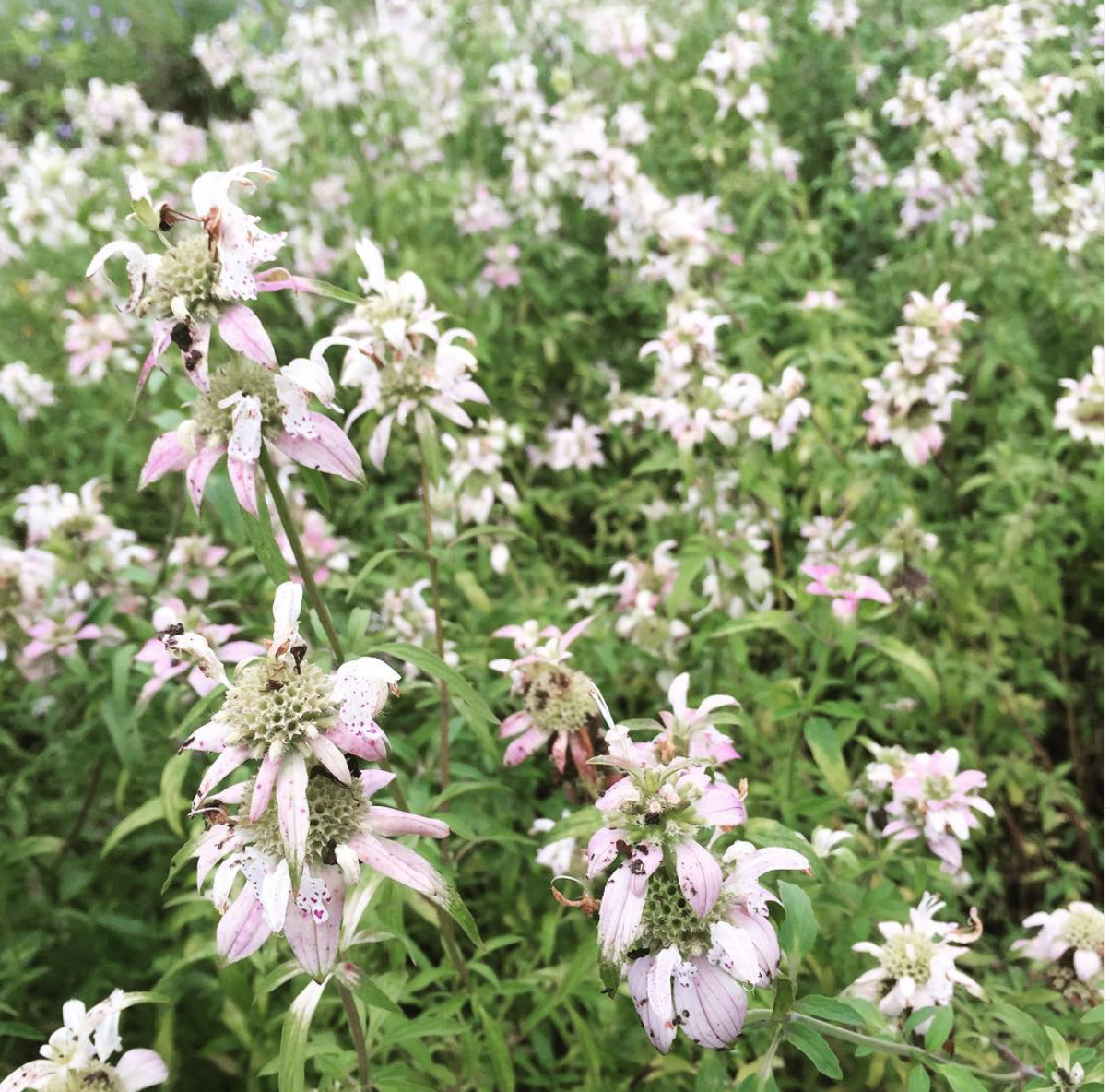
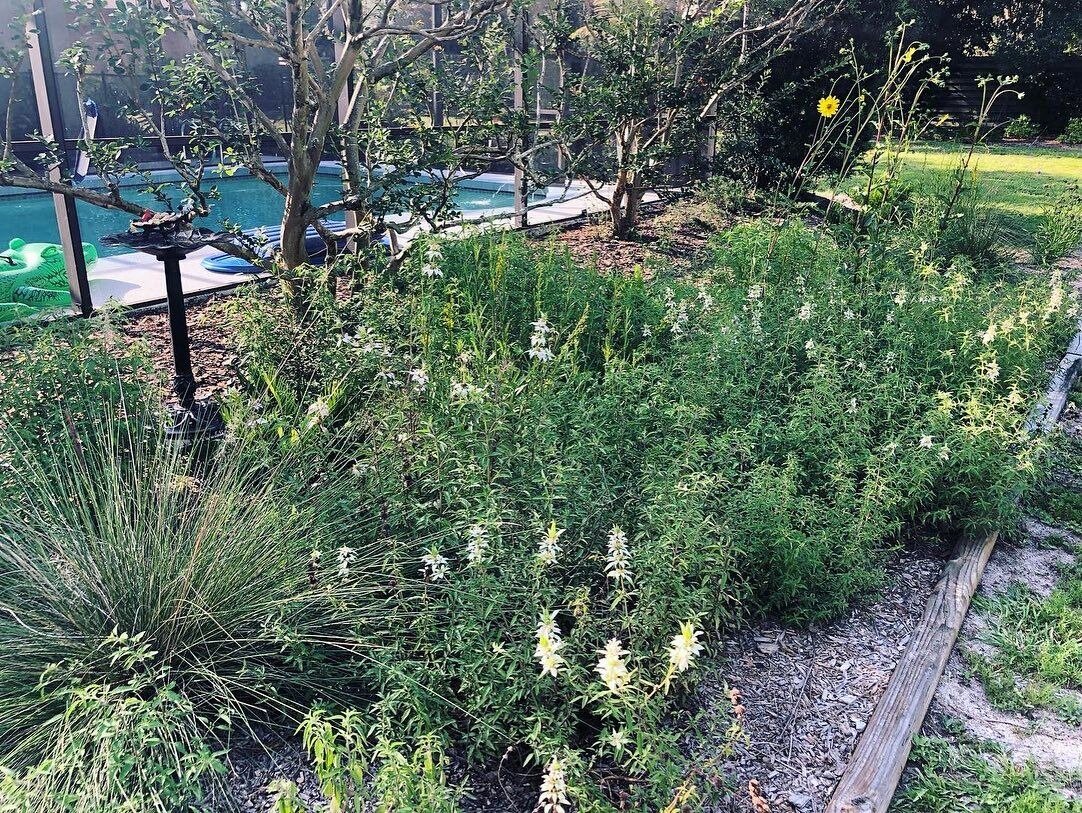
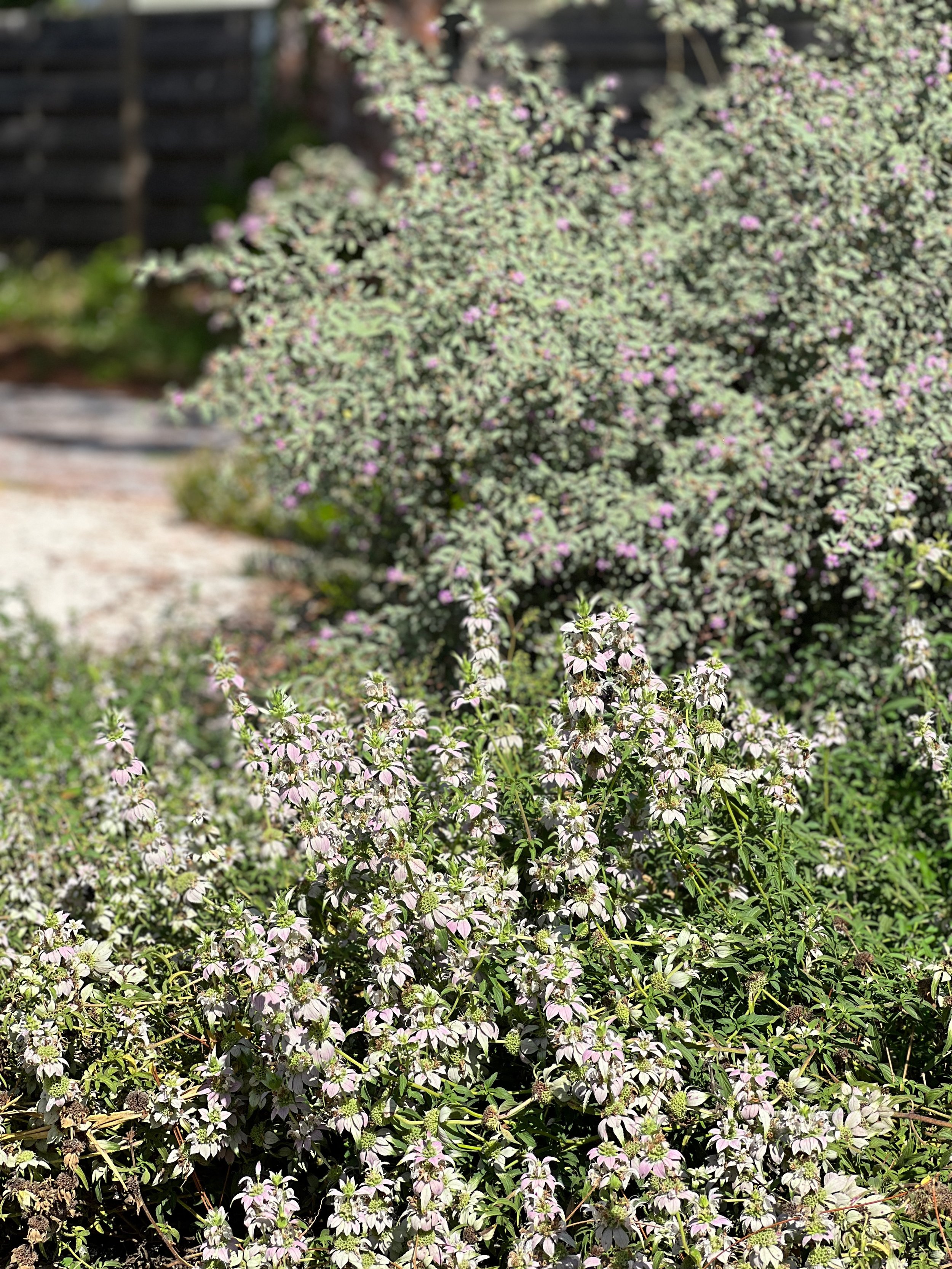
Monarda punctata
Also known as Dotted Horsemint, this perennial, re-seeding, native wildflower grows to about 2’-3’ in the average garden. It can thrive in full sun to light shade, in dry to moist (well-drained) soils, and has light pink to purple flowers from late spring through early fall. It’s aromatic and can be used as a culinary and medicinal herb in the kitchen. Spotted beebalm attracts numerous pollinators including our native bumblebees.
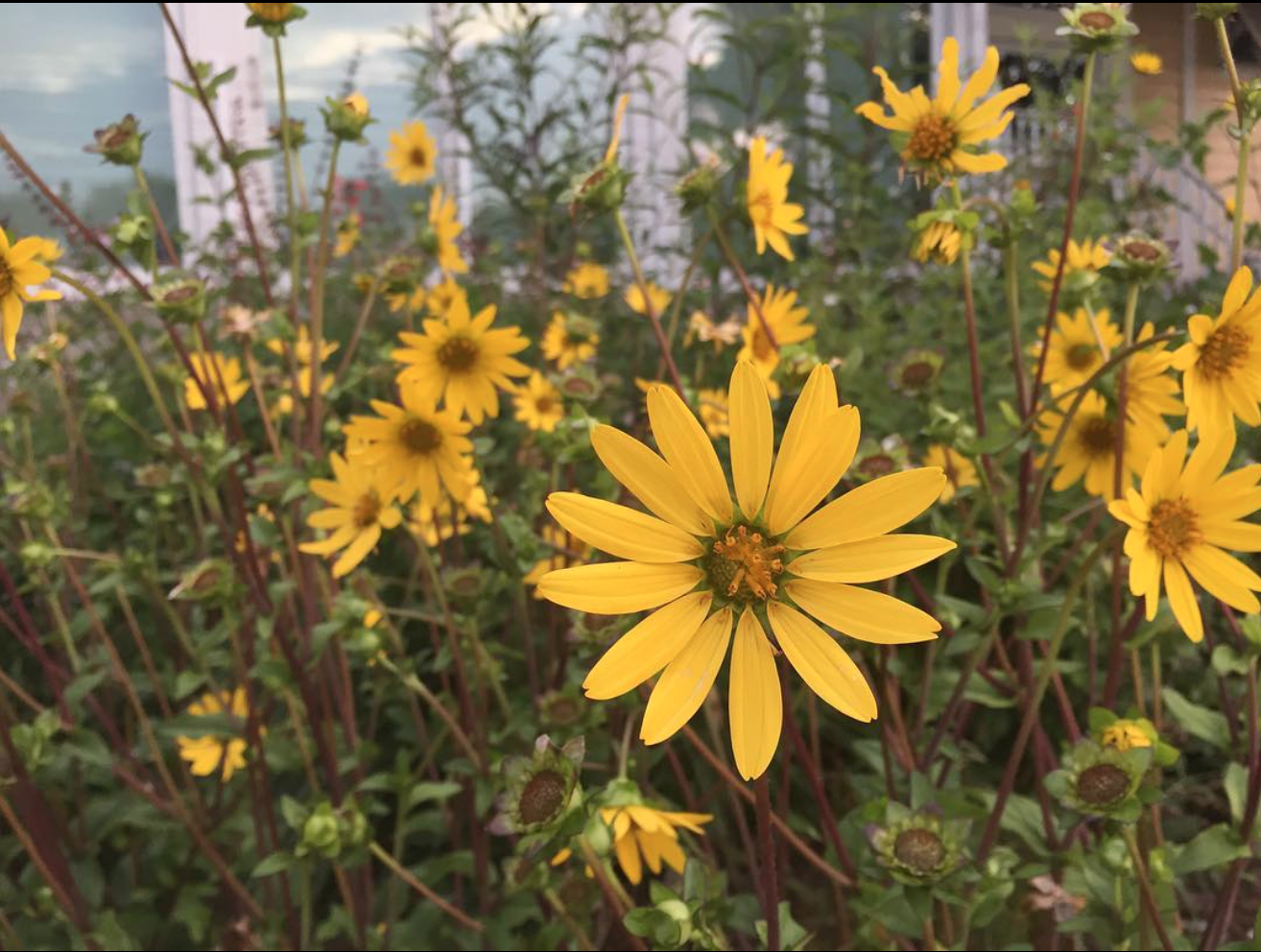
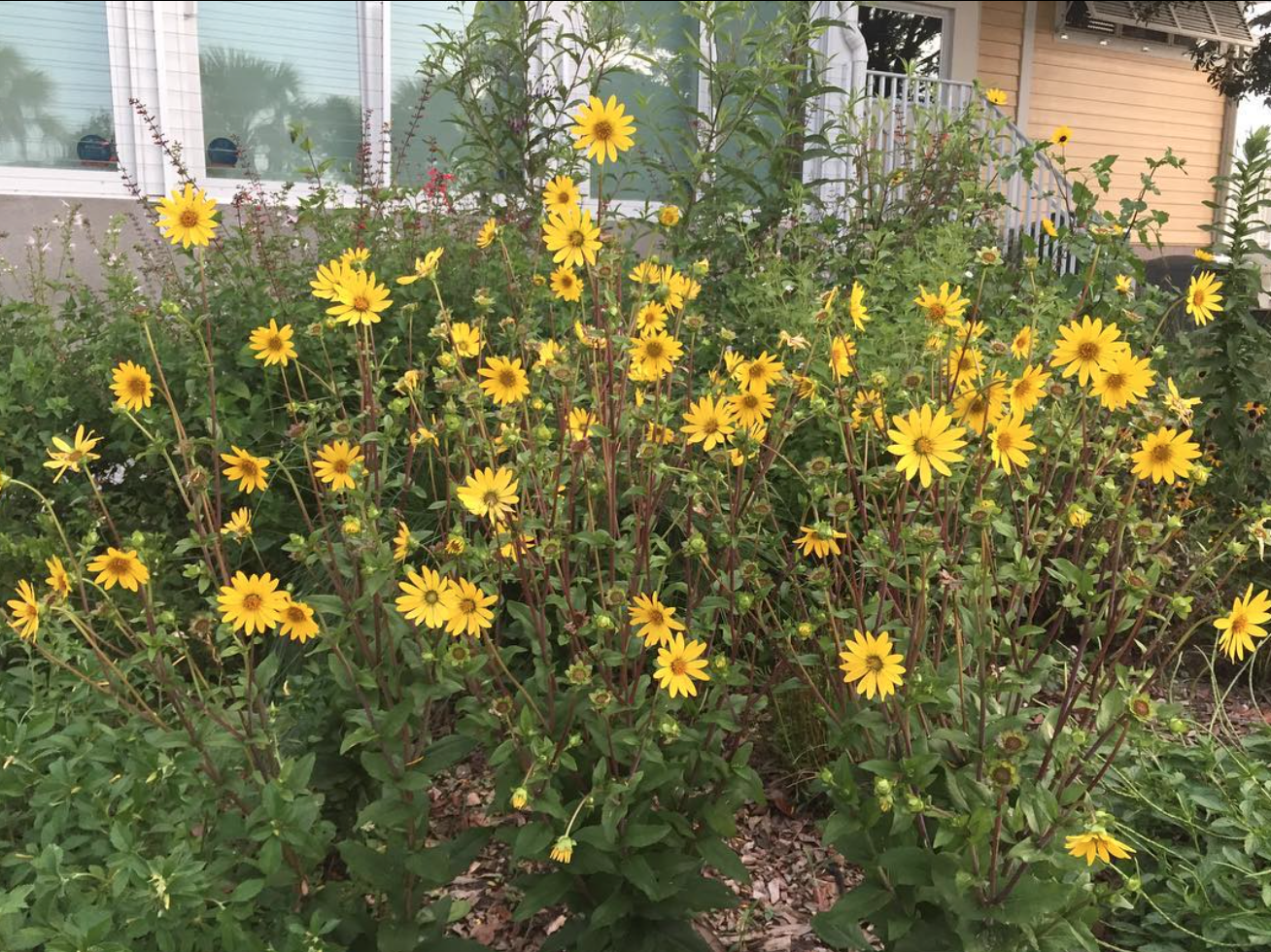
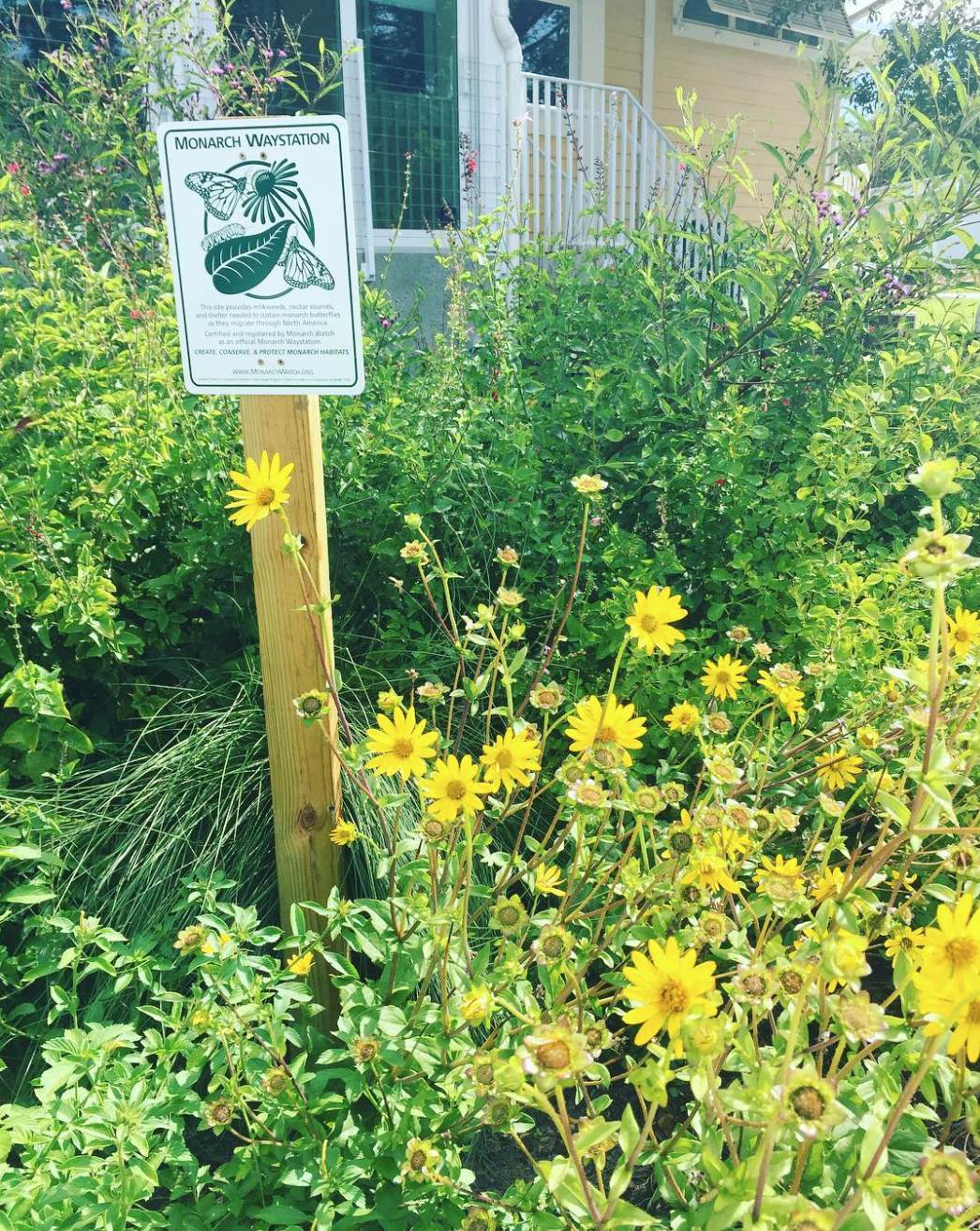
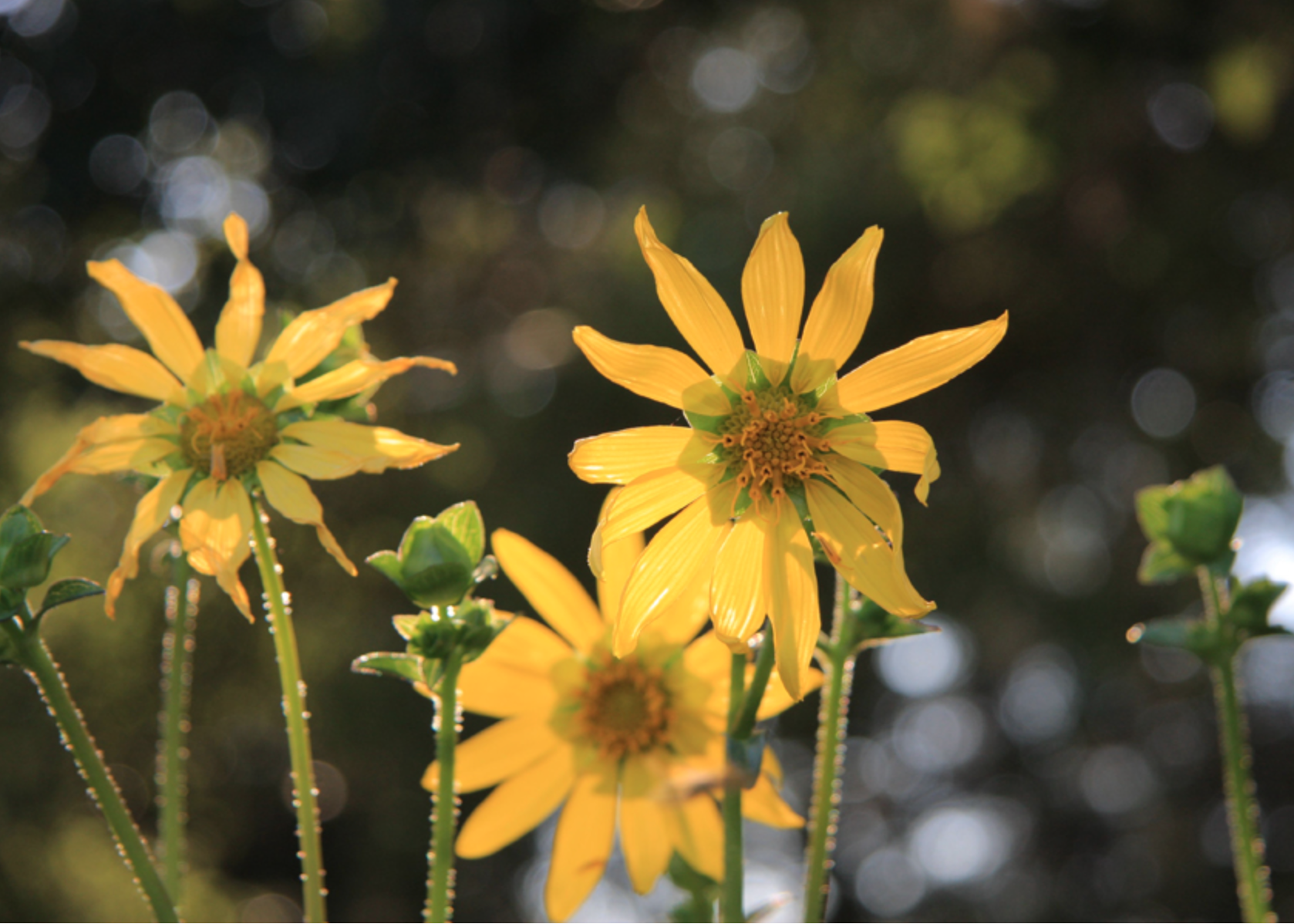
Silphium asteriscus
Starry Rosinflower, also called Starry Rosinweed is a perennial and re-seeding Florida native wildflower. We consider it to be one of the easiest wildflowers to grow in our area because of its adaptability to a variety of local garden conditions such as irrigation, dry soils, semi-shade and full sun. Starry Rosinflower’s yellow, sunflower-like flowers bloom spring through fall and attract many pollinators.

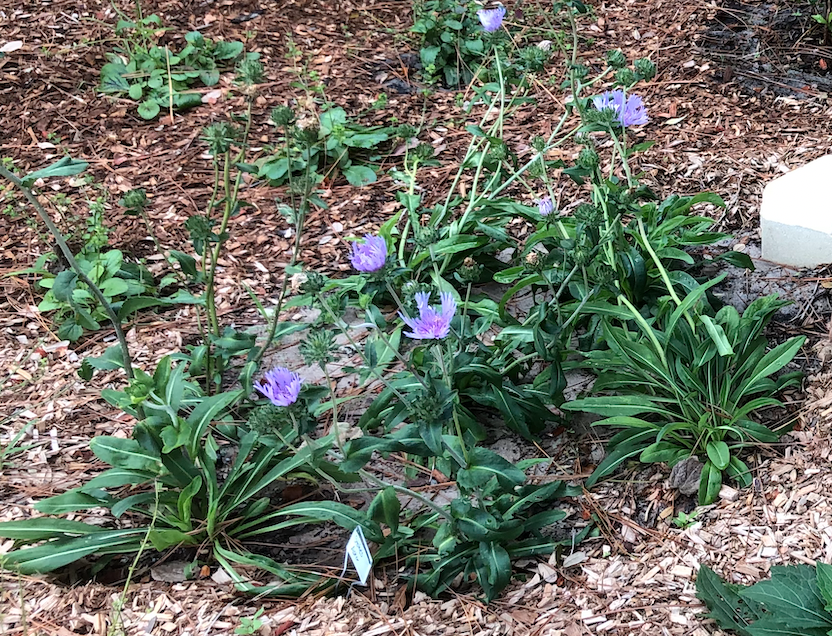
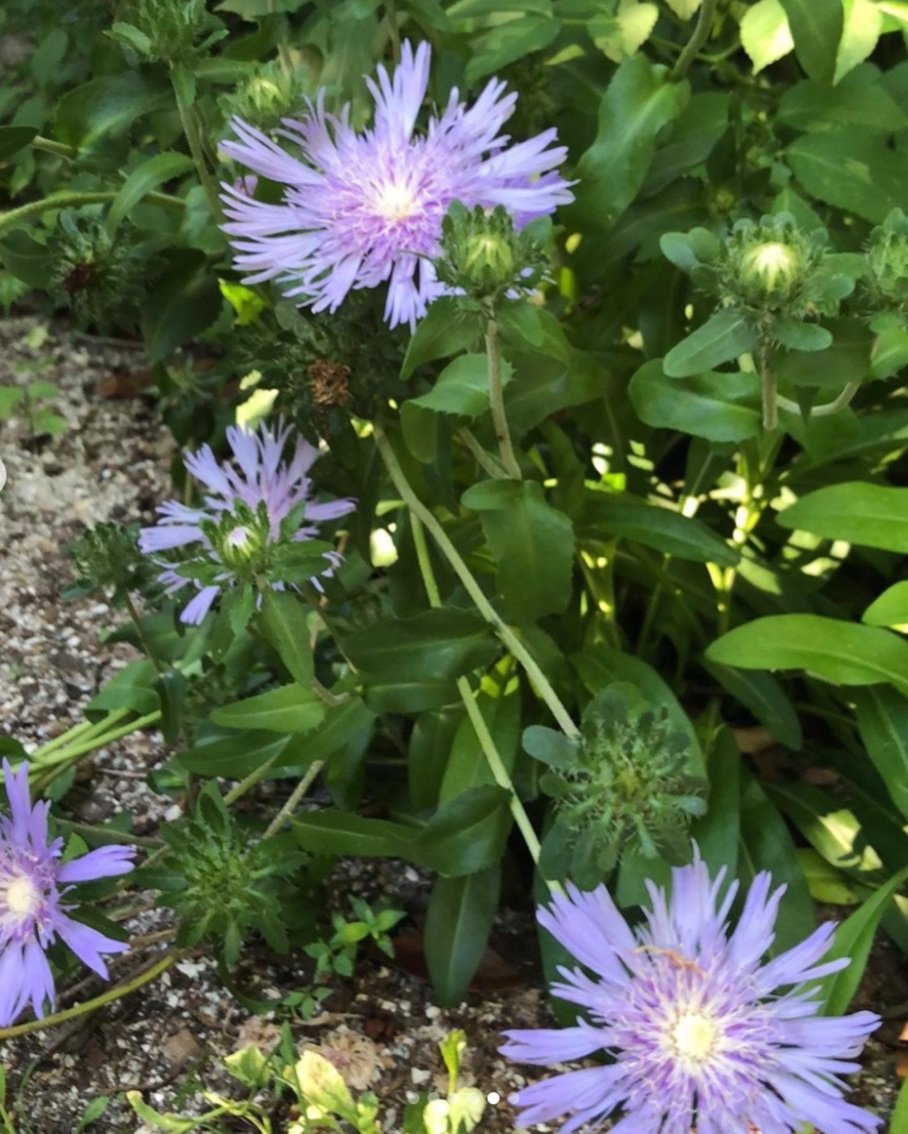
Stokesia laevis
Stokes’ Aster is a hardy, 1’–2’ perennial known for its large, fringed purple-blue flowers. It is a reliable bloomer that provides color from spring all the way through fall. This plant thrives in part sun and prefers moist, well-drained soil. It grows in tidy clumps that are easy to divide every few years. It’s a great choice for borders and is excellent at attracting bees and butterflies.
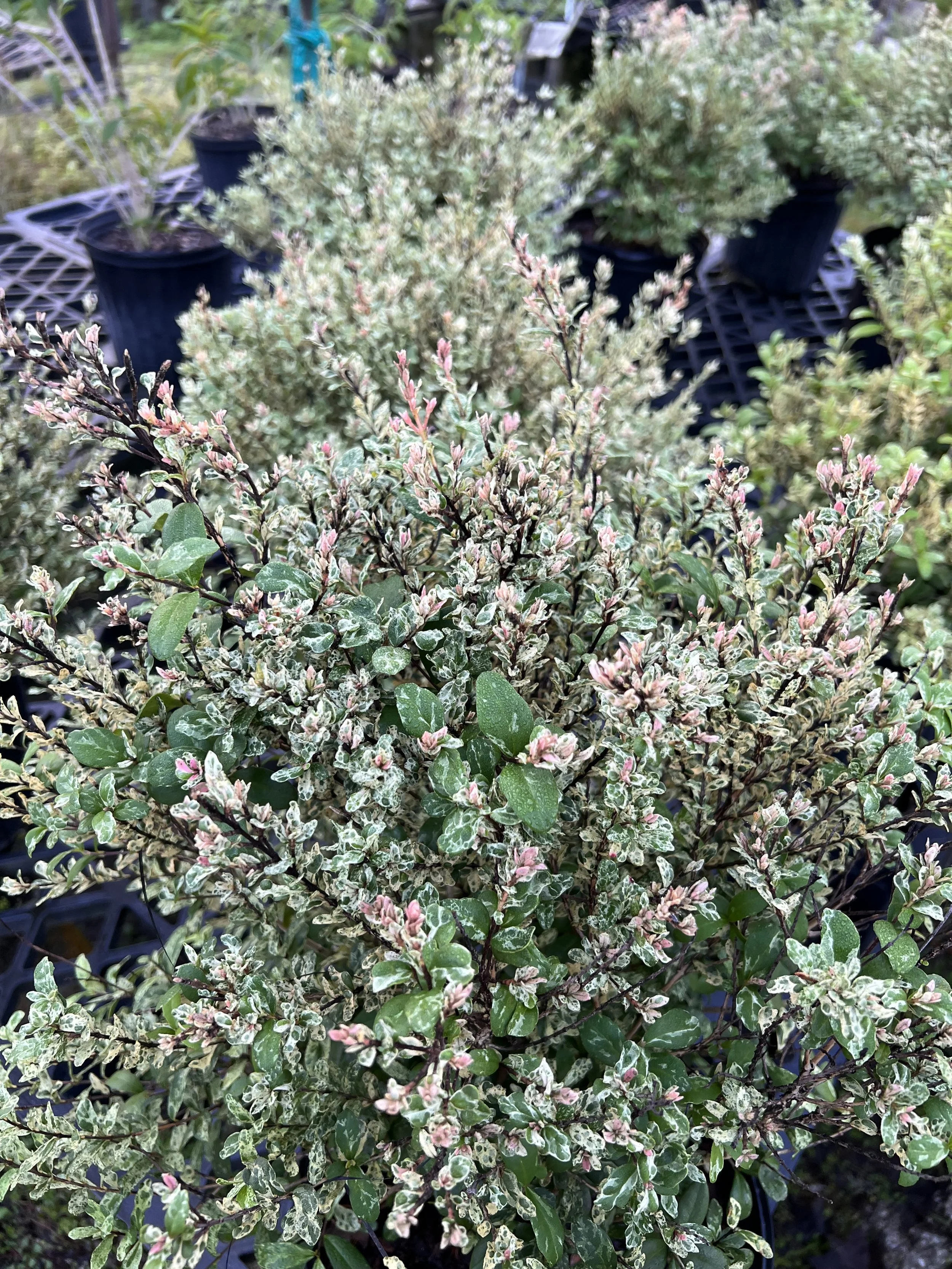
Myrcianthes fragrans ‘Stopper Morph’
Simpson Stopper 'Stopper Morph' is a striking variegated lower-growing cultivar that features dramatic foliage coloration. The new growth emerges in shades of white and pink before gradually maturing to green, creating a beautiful tri-colored effect throughout the growing season. This evergreen shrub requires full sun and occasional trimming to maintain its vibrant variegation. It has fragrant white flowers that attract pollinators and berries for birds. It can be used as either a specimen shrub, pruned into a small tree form, or kept low, making it an excellent ornamental choice for South Florida landscapes in zones 9-11.
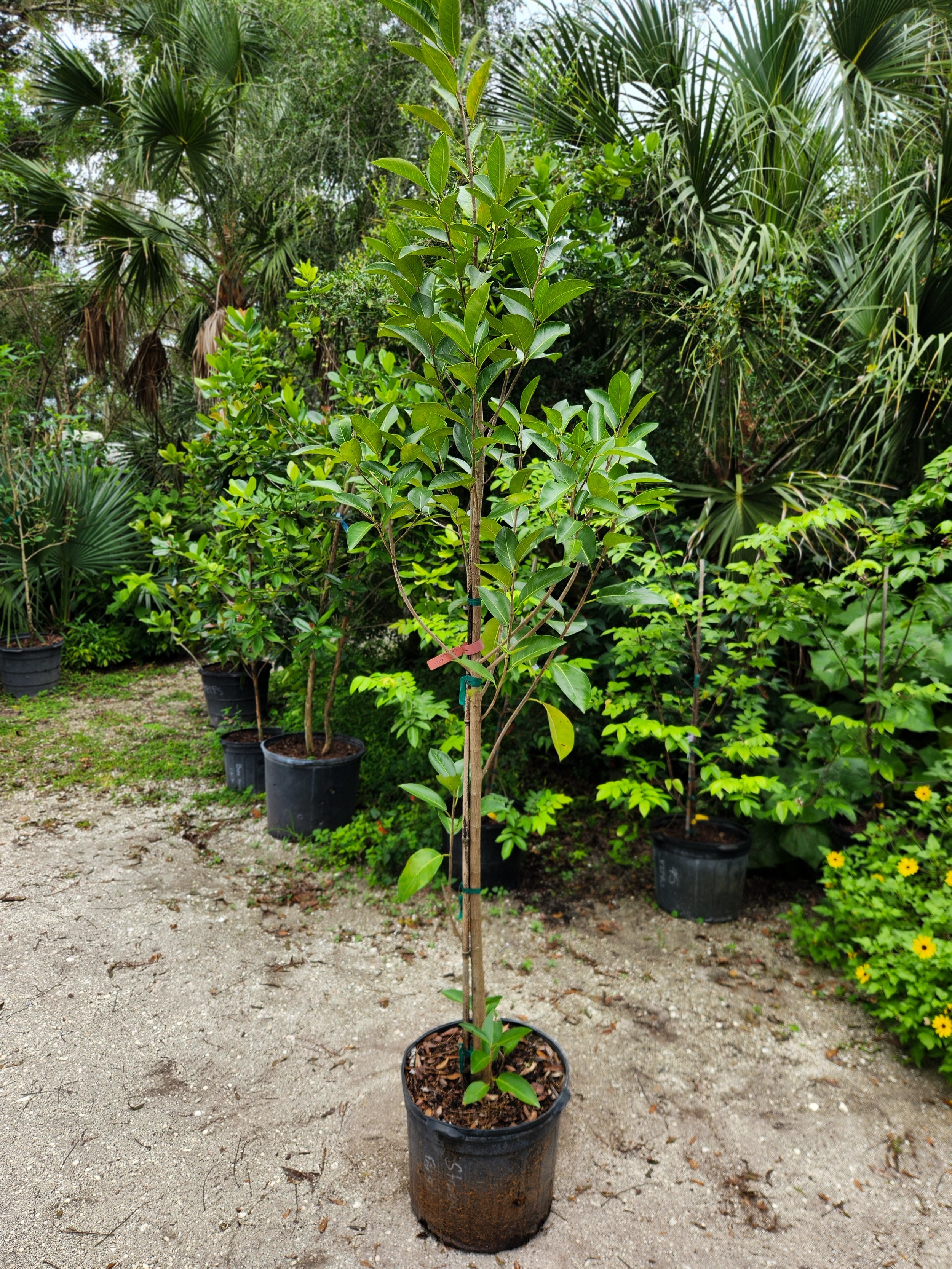
Ficus aurea
Strangler Fig is a native evergreen tree that grows to be 40’-60’ tall with an equally large canopy. They have dark green leathery leaves and produce small, dark figs that provide a food source for birds and other wildlife. They grow best in full sun to partial shade, and thrive in a wide range of soil types and are moderately drought and salt tolerant once established.
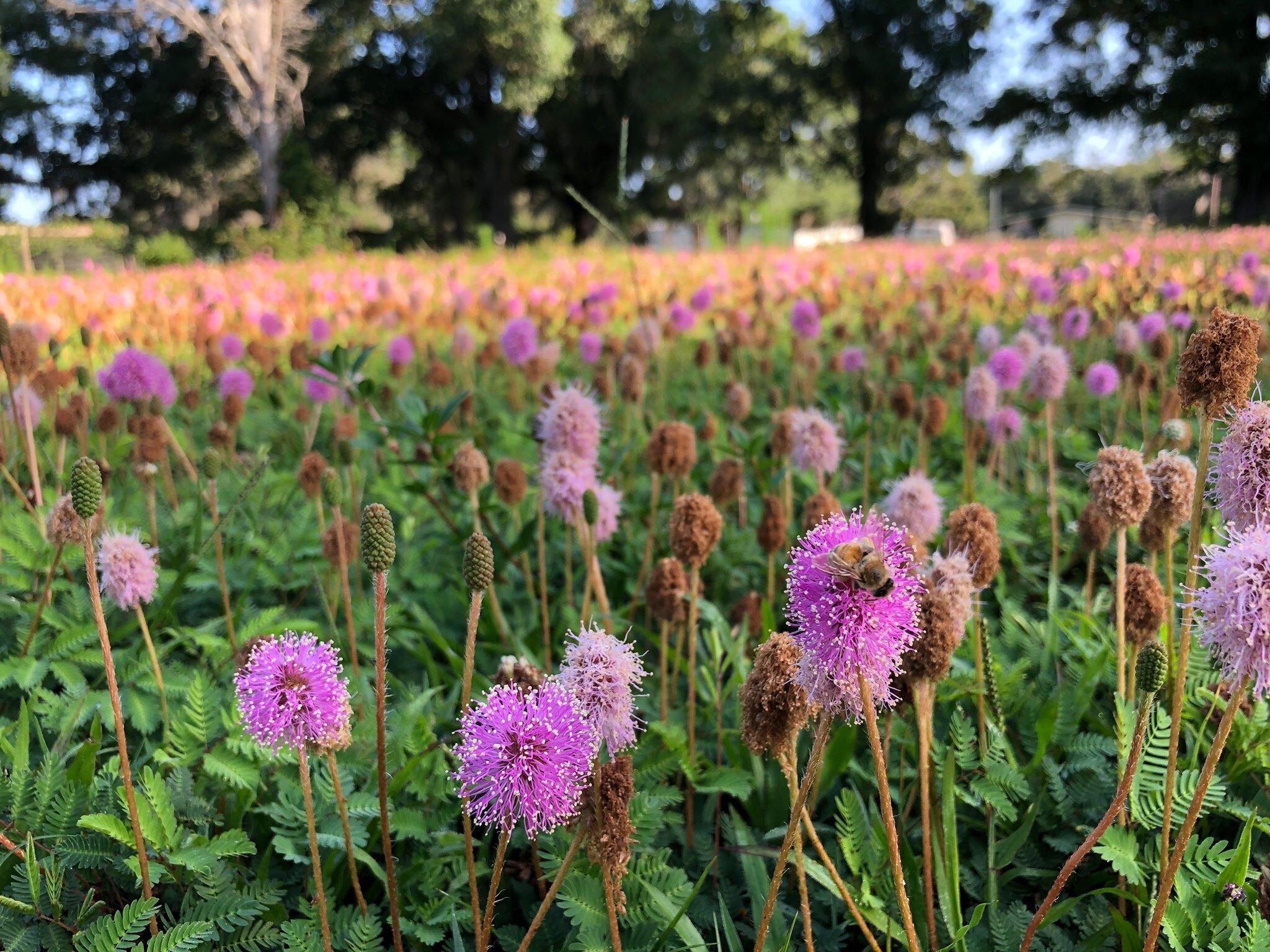

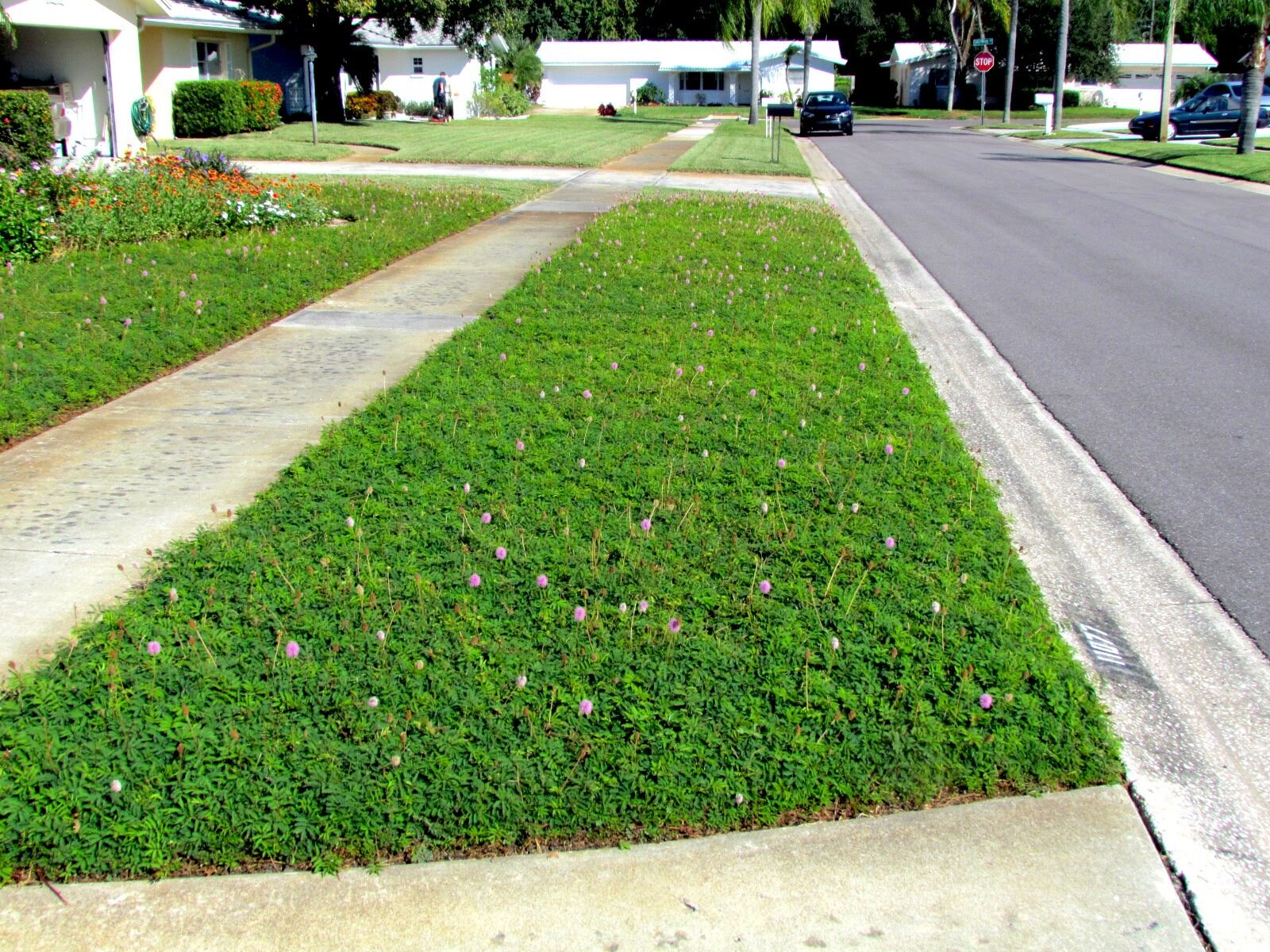
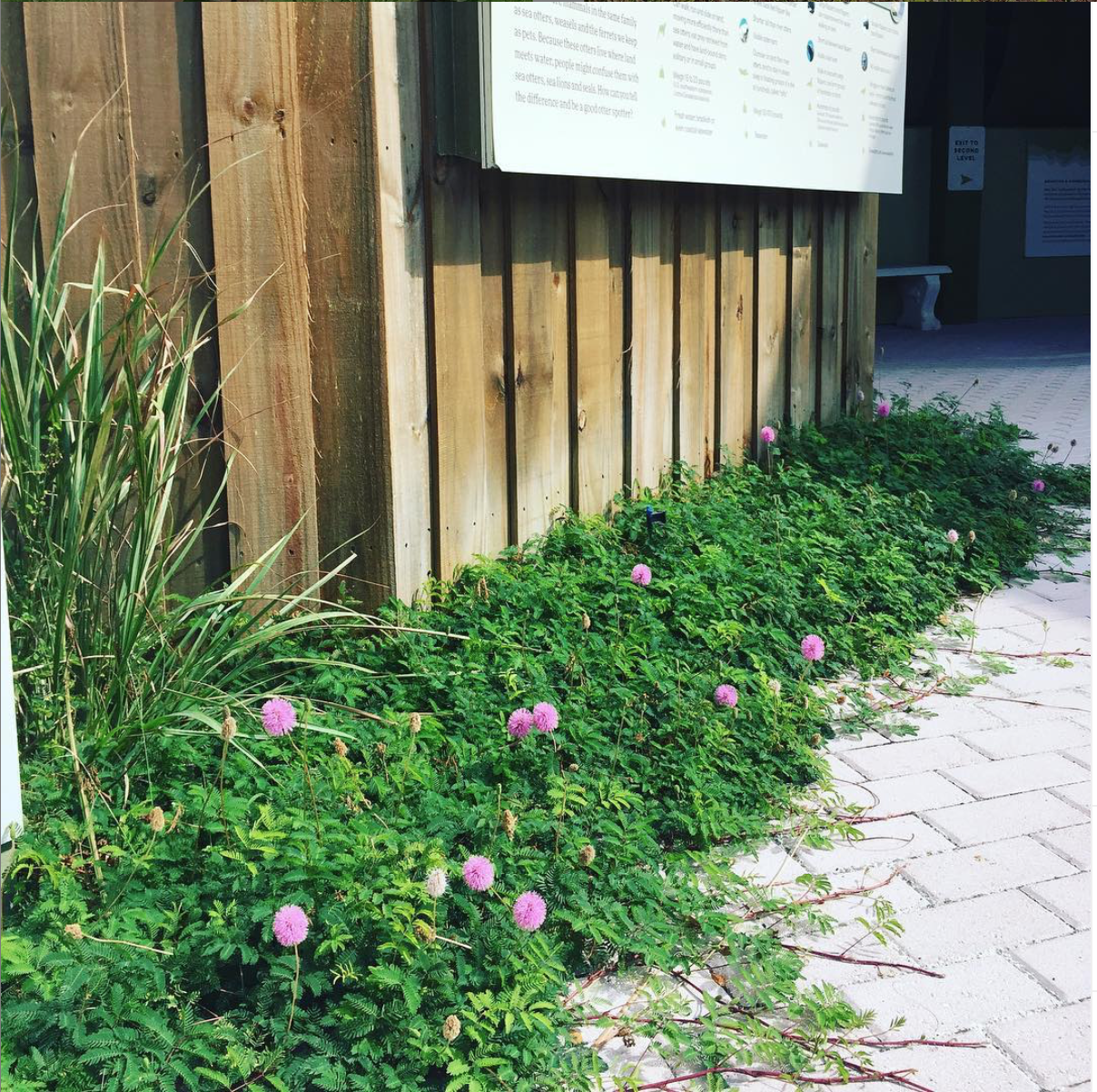
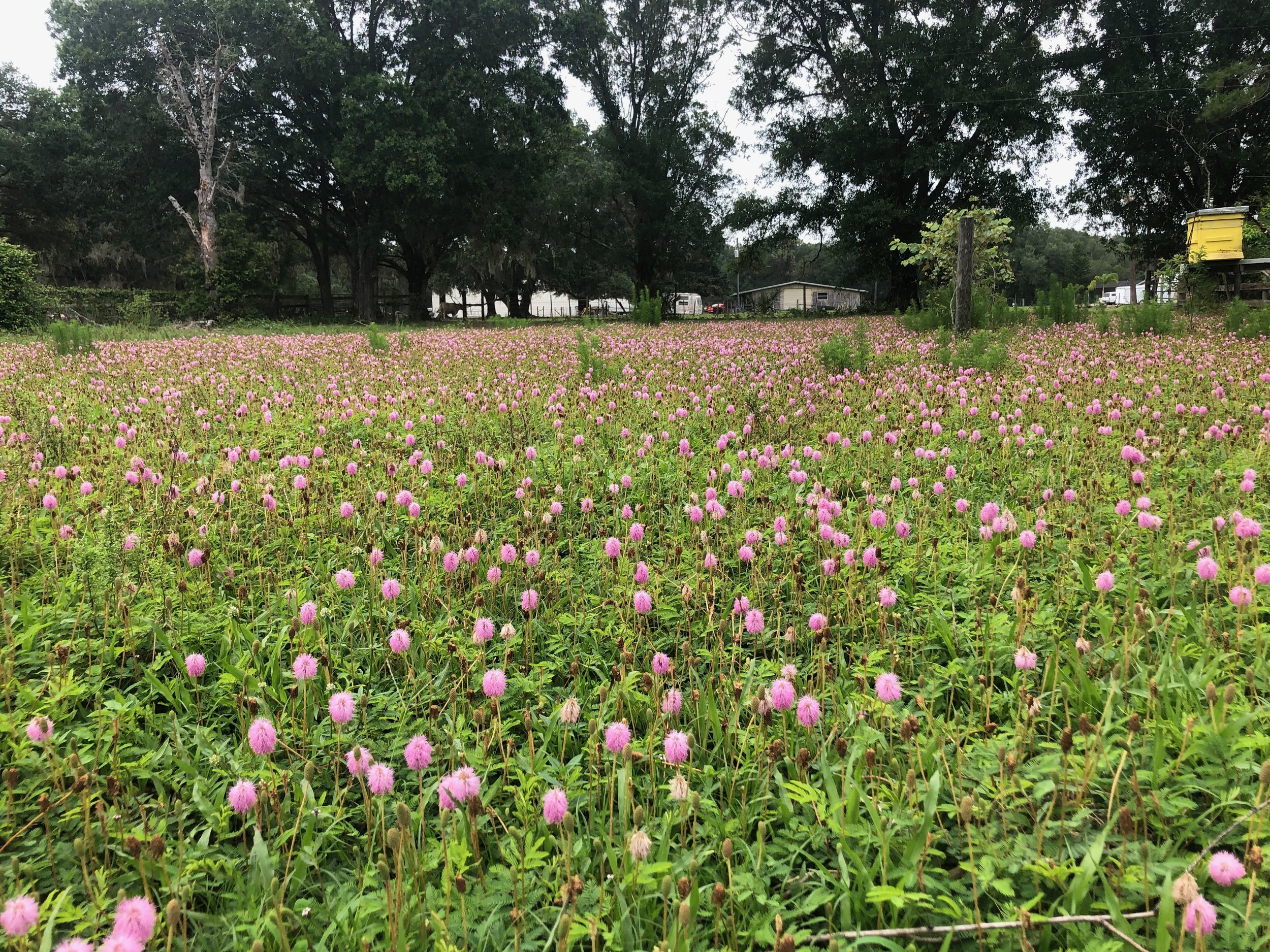
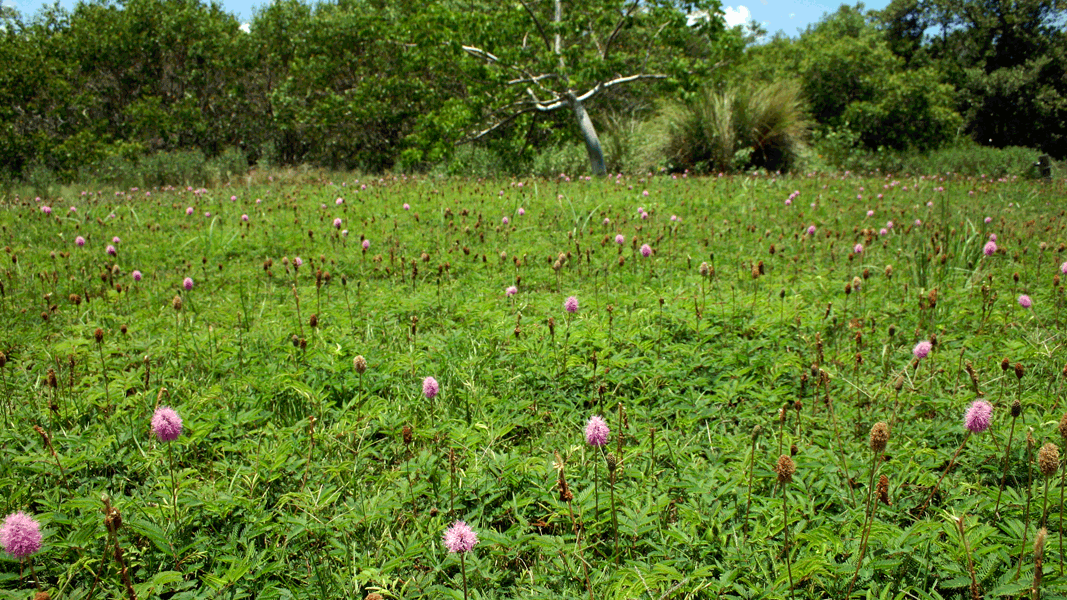
Mimosa strigillosa
Sunshine Mimosa is a native perennial groundcover that grows 6–9” tall, with a deep root system and a fast-spreading habit. It thrives in full to partial sun and adapts to dry to wet soils. This hardy plant is salt-tolerant, cold-tolerant, and perfect for walkable or mowable spaces, making it an excellent choice for multi-species or “floral lawns.” Pollinators love it.
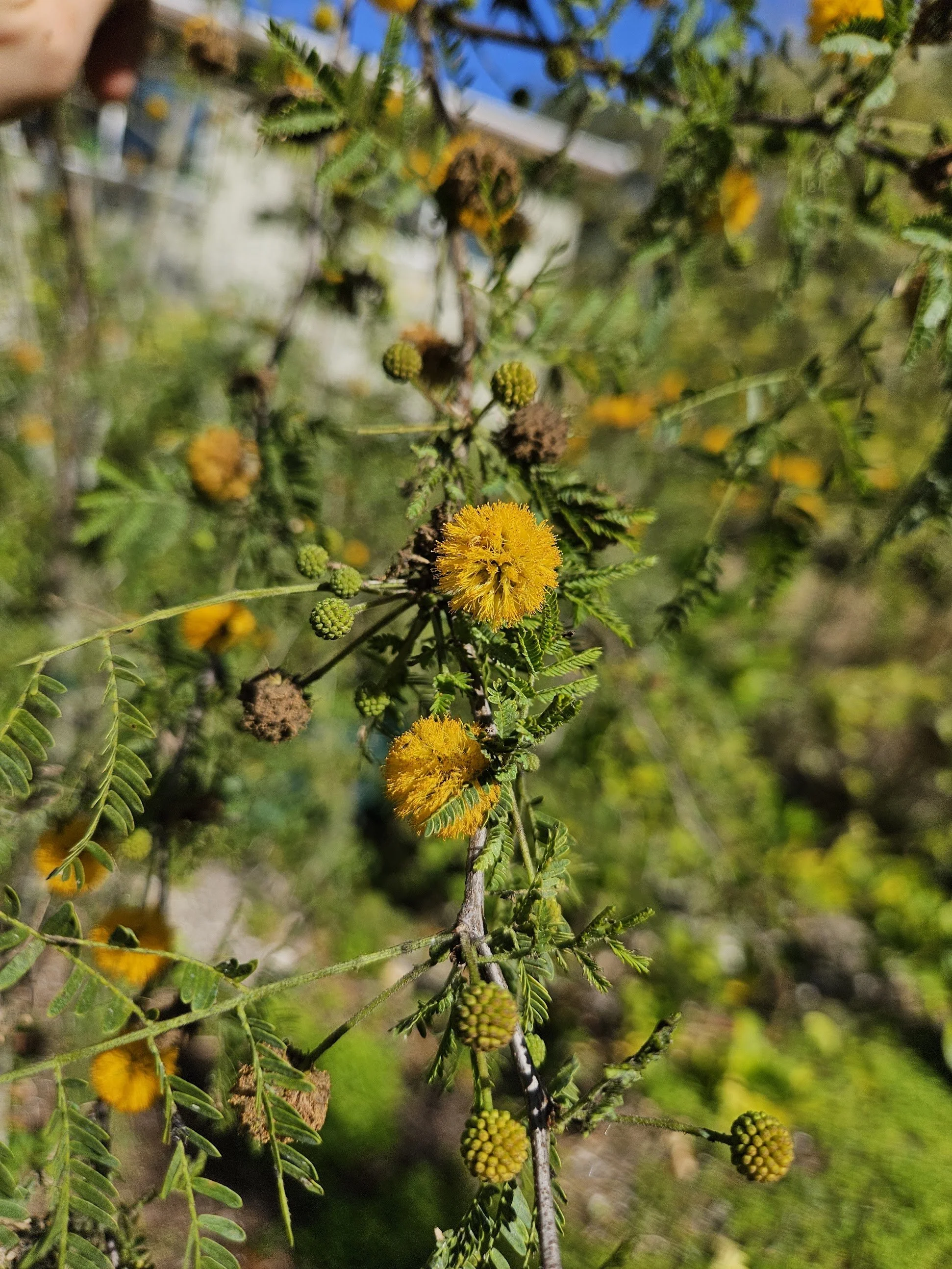

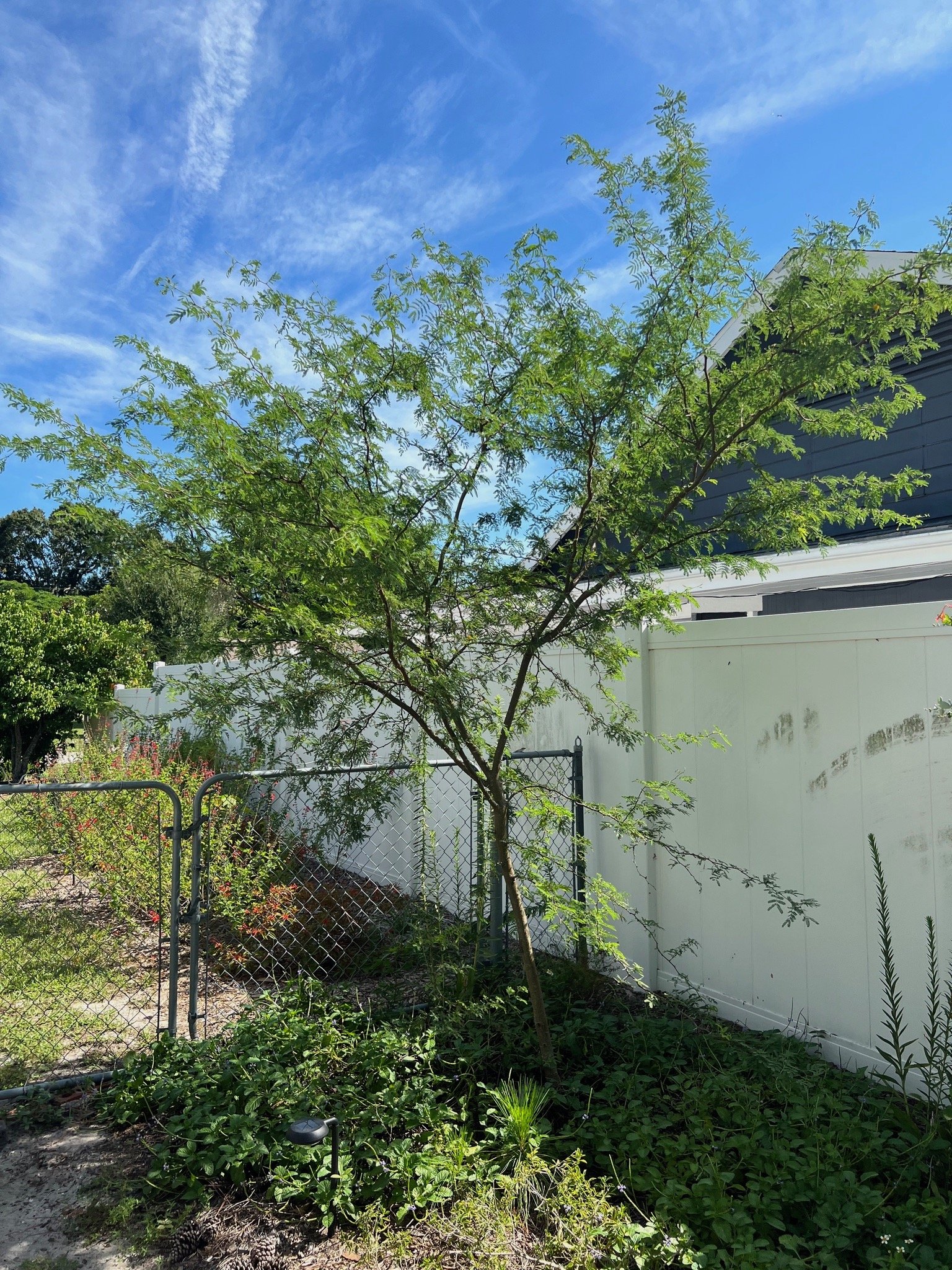
Acacia farnesiana
Sweet Acacia is a native, pollinator-attracting, small tree or large shrub. It’s fragrant, golden-yellow puffball flowers bloom in winter and spring. It's highly drought-tolerant once established, making it ideal for water-wise landscapes, and attracts bees, butterflies, and other pollinators.


Aloysia virgata
Sweet Almond bush is a Florida-friendly, non-native, highly scented, large, climbing vining shrub with almond colored flower drupes and nicely textured leaves. It is very attractive to pollinators including multiple butterfly species and bees. Adaptable to most garden conditions, this shrub has a place in any Florida Friendly landscape!
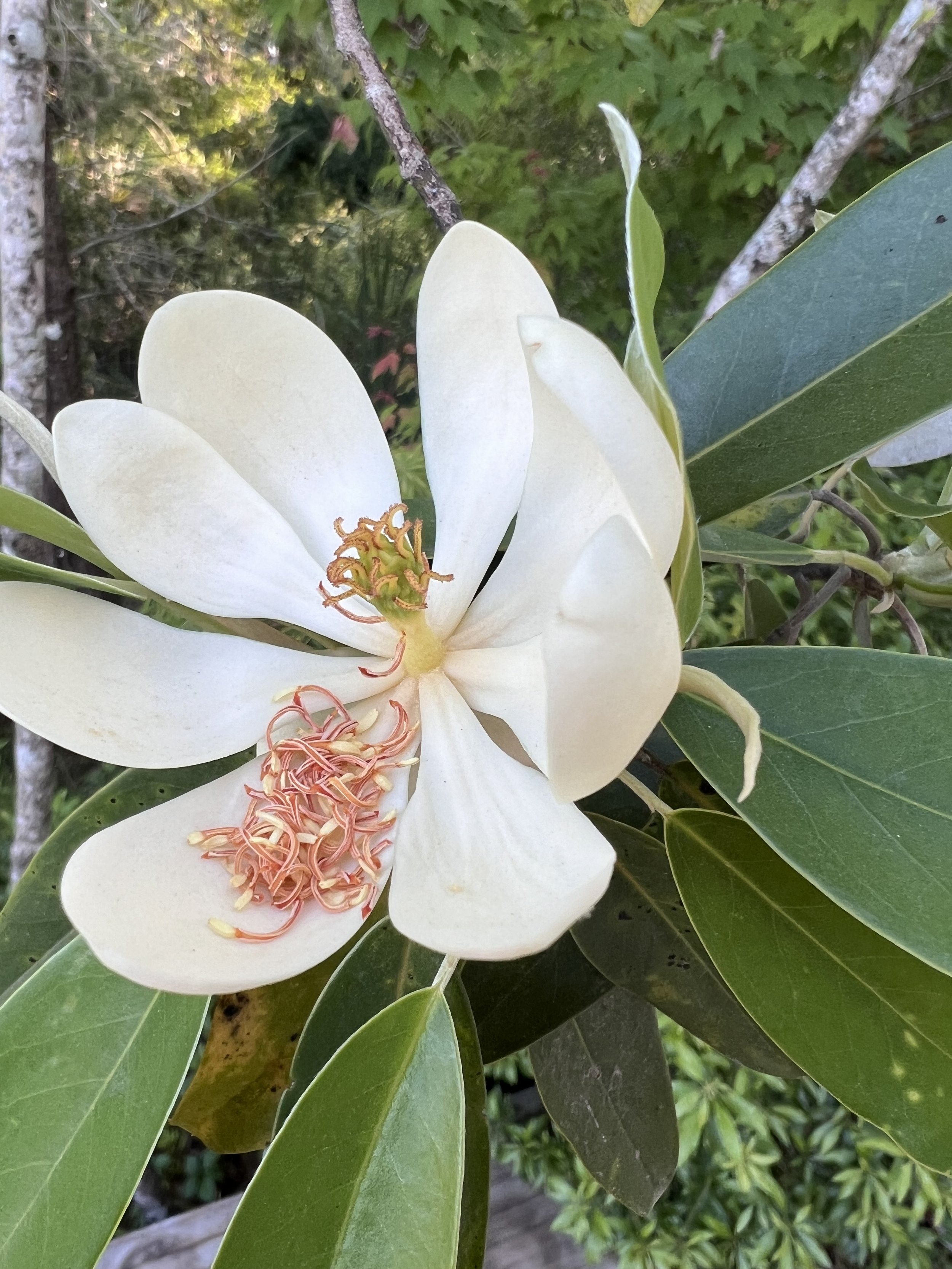
Magnolia virginiana
Sweetbay Magnolia is a native, evergreen flowering tree with beautiful, soft-green pointed foliage and heavily fragrant, ivory flowers that are significantly smaller than the large blooms of the Southern Magnolia. They grow to be 15’-30’ tall, and do well in full sun to partial shade and moist to wet sandy, loamy, and clay-heavy soil. Sweetbay Magnolias also serve as a larval host for the Sweetbay Silk Moth, Eastern Tiger Swallowtail, and the Spicebush Swallowtail, and the seeds feed local songbirds.

Nephrolepis exaltata
Sword Fern is a Florida-native fern that can grow to be 2’-3’ tall and wide. They grow best in shade with moist to wet, organic soil. These plants can be planted in the ground, kept as a potted plant on the porch, or used as a house plant. Plant in shade or rain gardens to provide cover for ground-dwelling wildlife.
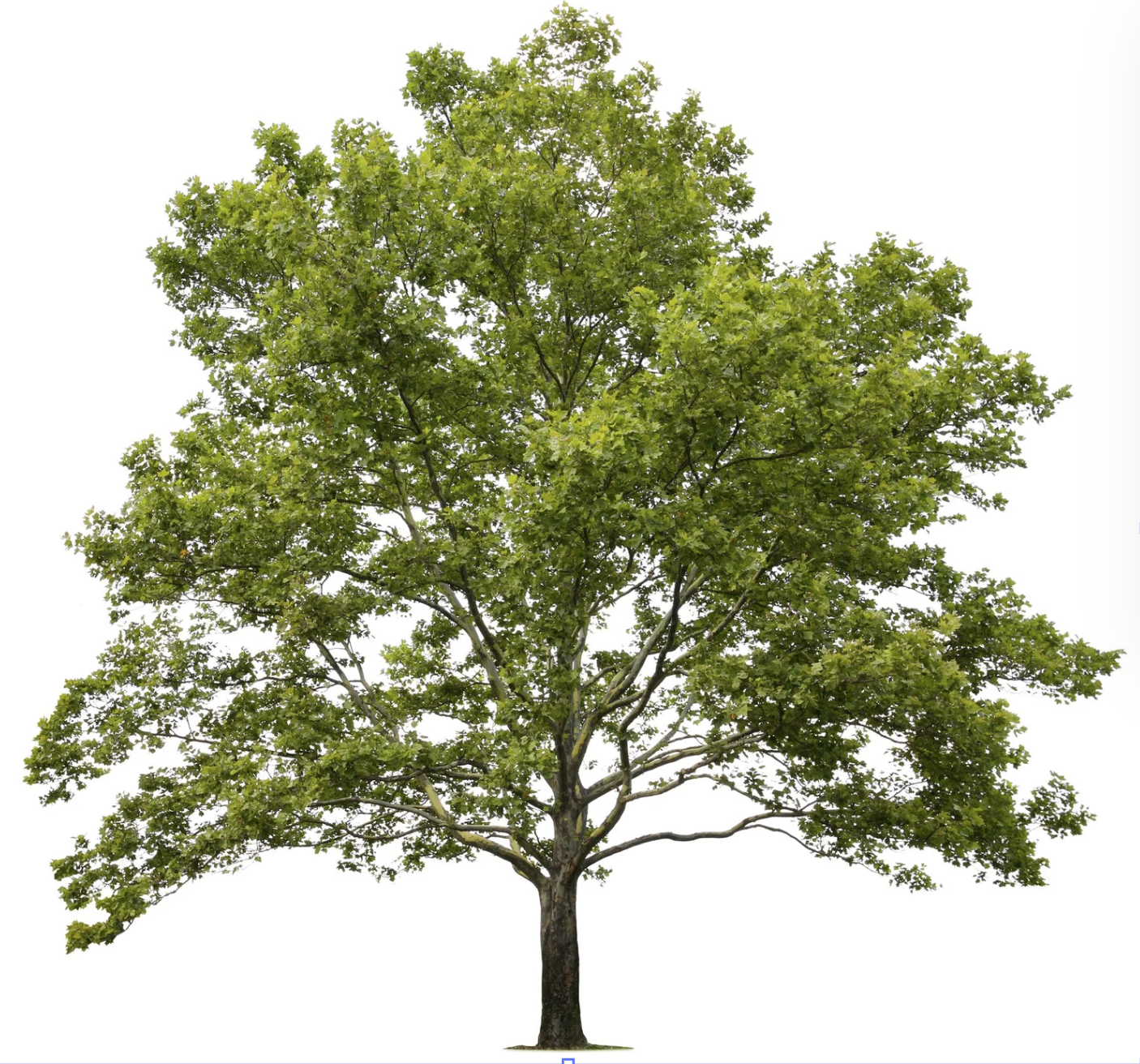
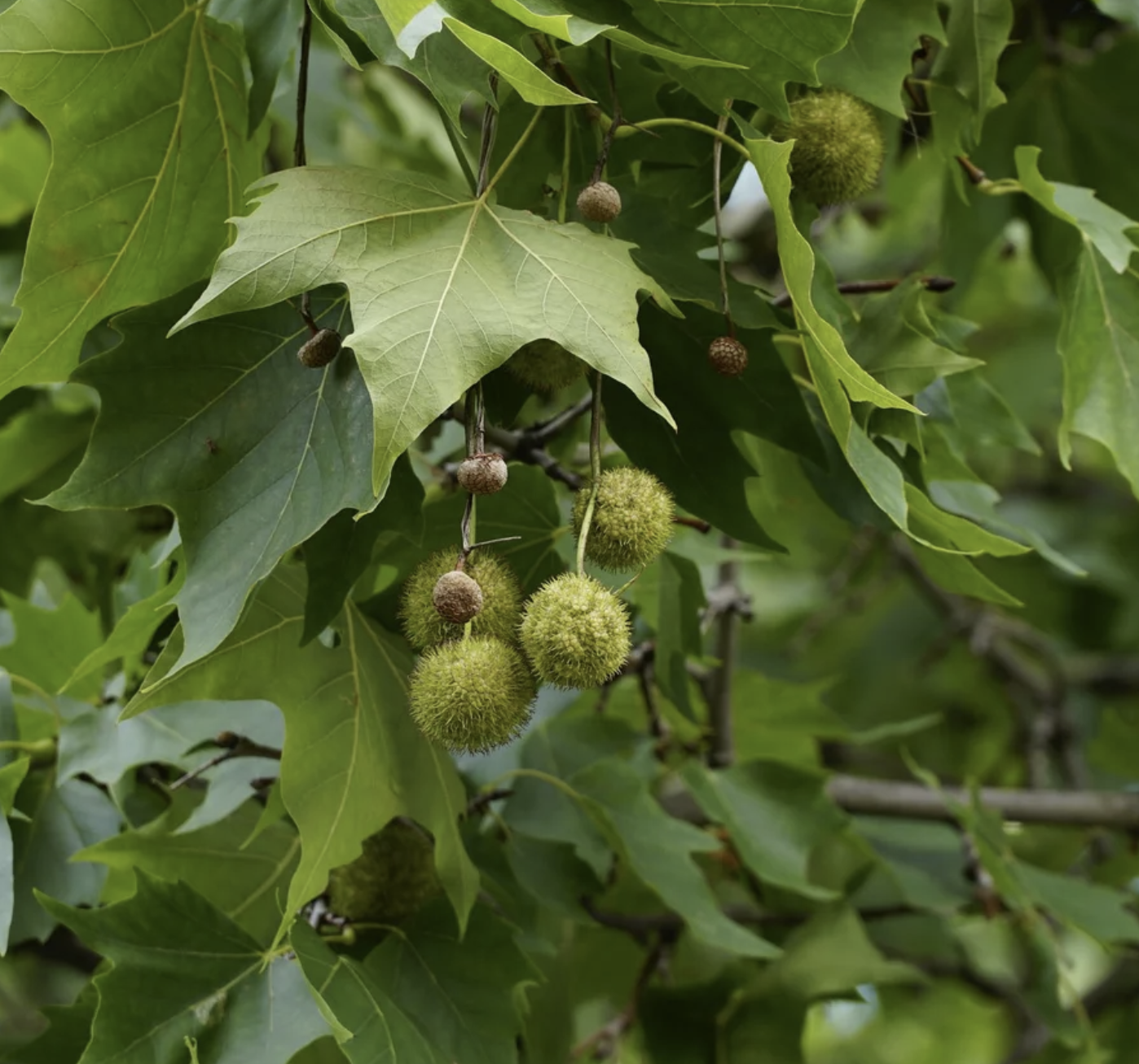
Platanus occidentalis
Sycamore is a large, deciduous, native shade tree that grows to be 75’-100’ tall, with an equally large canopy. They grow best in full sun and moist soil. With their exfoliating camouflage bark and large leaves that seasonally drop off, they are best suited for larger yards where the leaf and bark litter won’t be an issue. Sycamores have large branches that serve as great nesting sites for birds, and as they age, they hollow out, creating cavities which provide cover for owls, raccoons, and other mammals. Their seed pods feed songbirds, and their leaves are a larval host for the Tiger Swallowtail and various native moths.
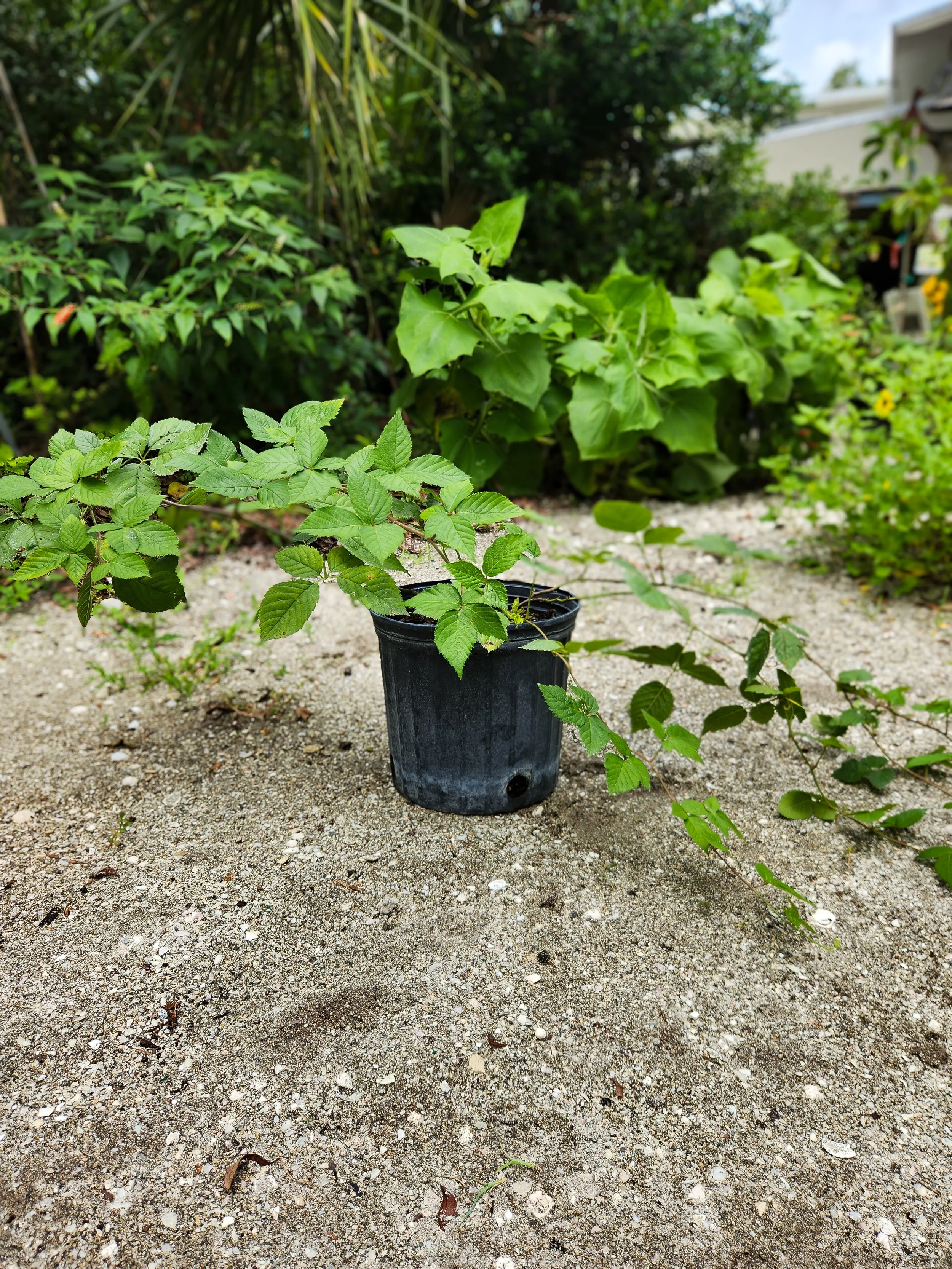
Rubus fruticosus 'Natchez'
Thornless Blackberry ‘Natchez’ is a non-native, Florida-friendly, deciduous, edible vining shrub that grows 4’-6’ tall and 4’-5’ wide. They do well in full sun, and rich, moist, slightly acidic soil. The flowers attract pollinators and the fruit are edible for birds and humans.
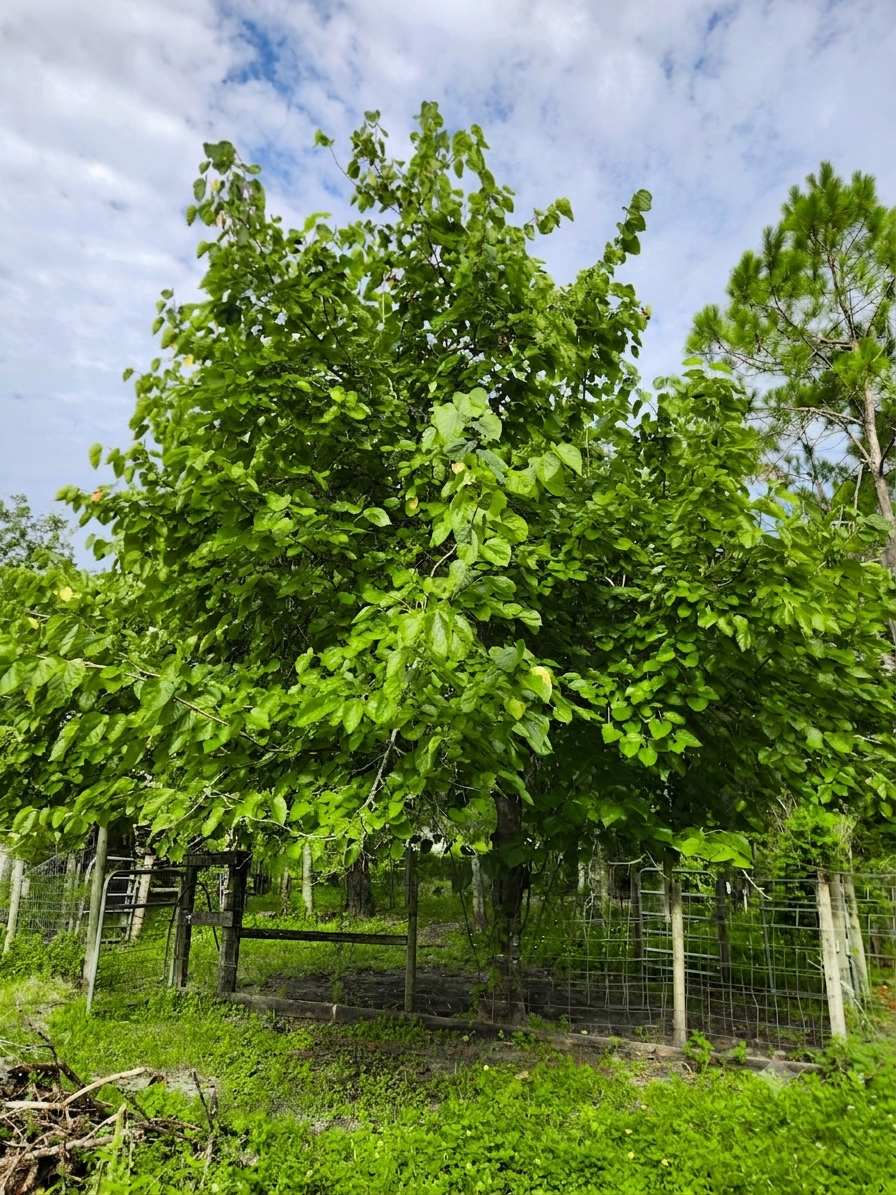
Morus hybr. ‘Tice’
Tice Mulberry is a non-native, Florida-friendly deciduous fruit tree that grows to be 15’-60’ tall, depending on the pruning methods used to maintain it. They grow best in full sun to light shade with rich, well-draining loamy soil, though they are highly adaptable to poor soil conditions. While the Tice Mulberry fruits seasonally, they fruit profusely during their season, producing many large, black, delicious berries that are edible for humans and local wildlife.


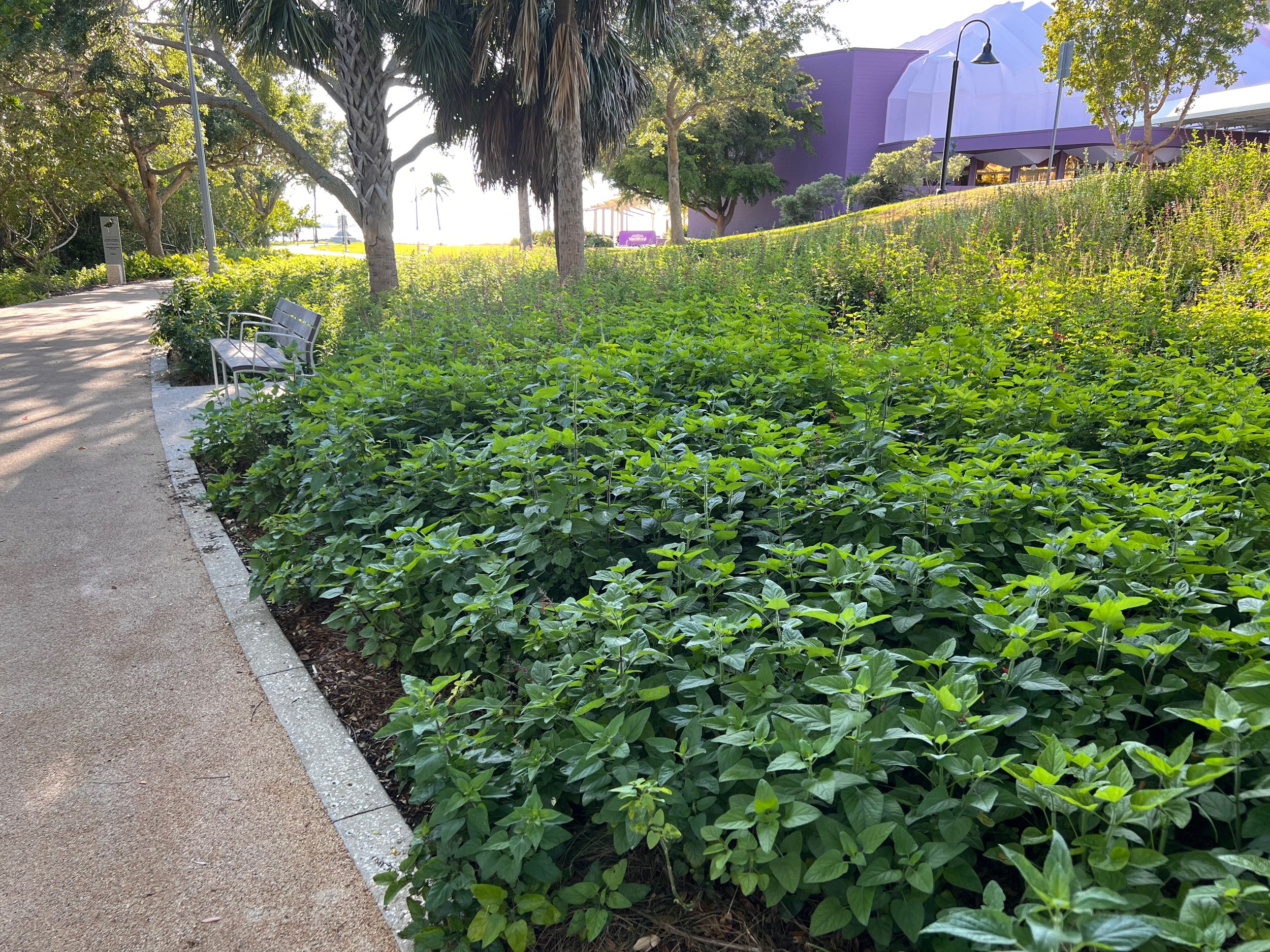
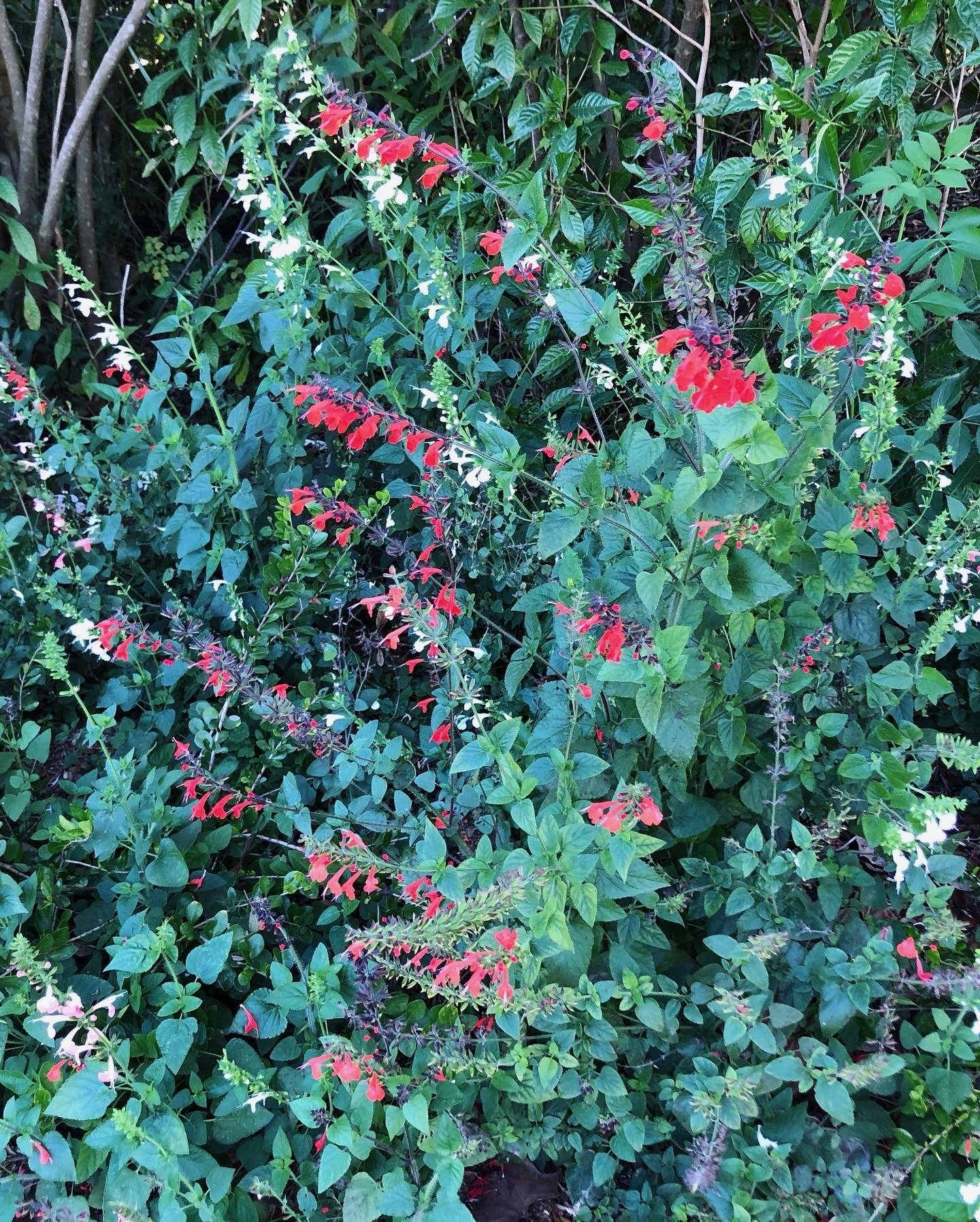


Salvia coccinea
Tropical Sage is a non-native, Florida-friendly reseeding annual wildflower that is highly adaptable in the garden. It can be grown in sun to shade and dry to moist soils. It has fragrant leaves and comes in three different colors that attract both butterflies and hummingbirds.
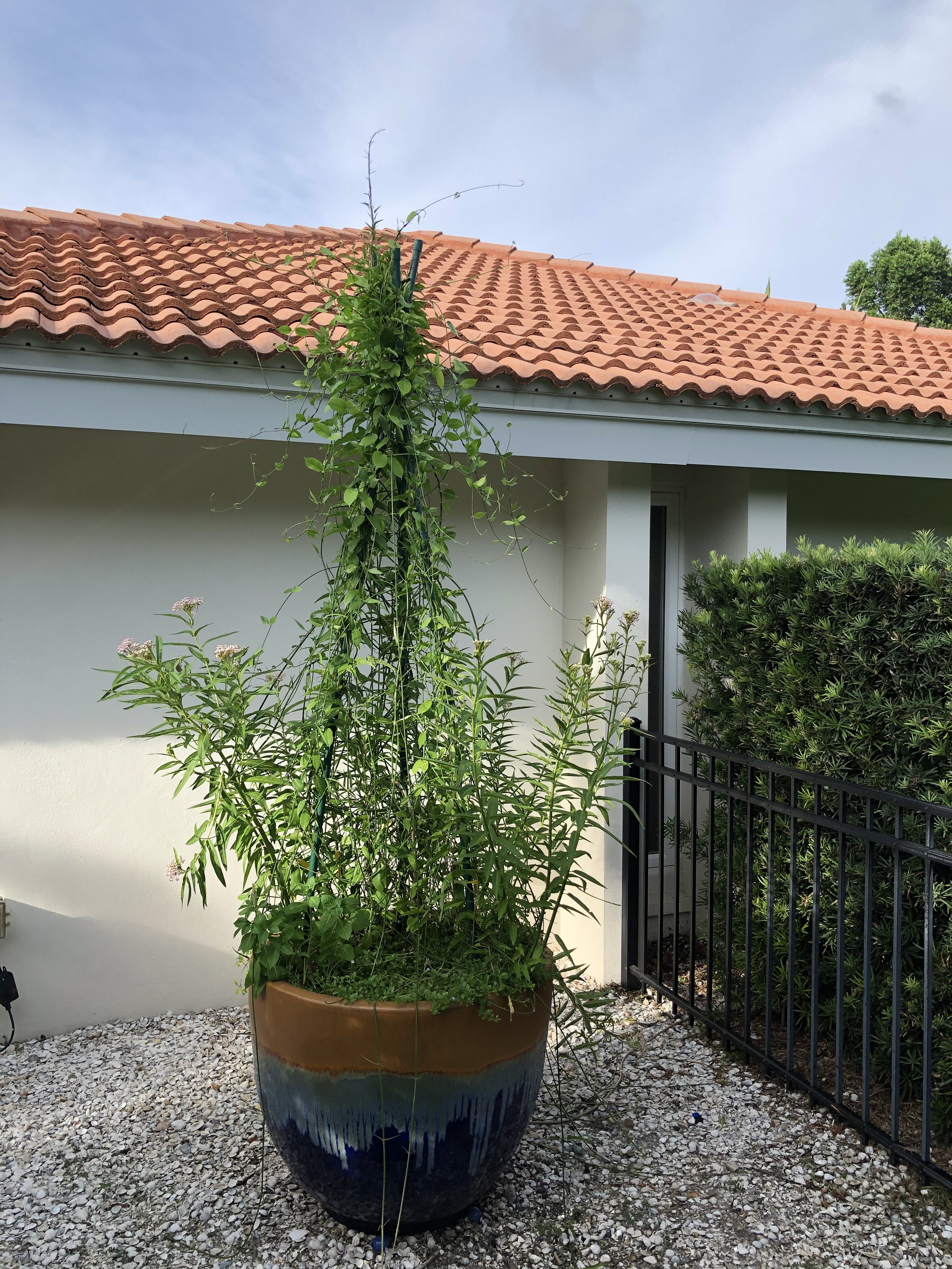
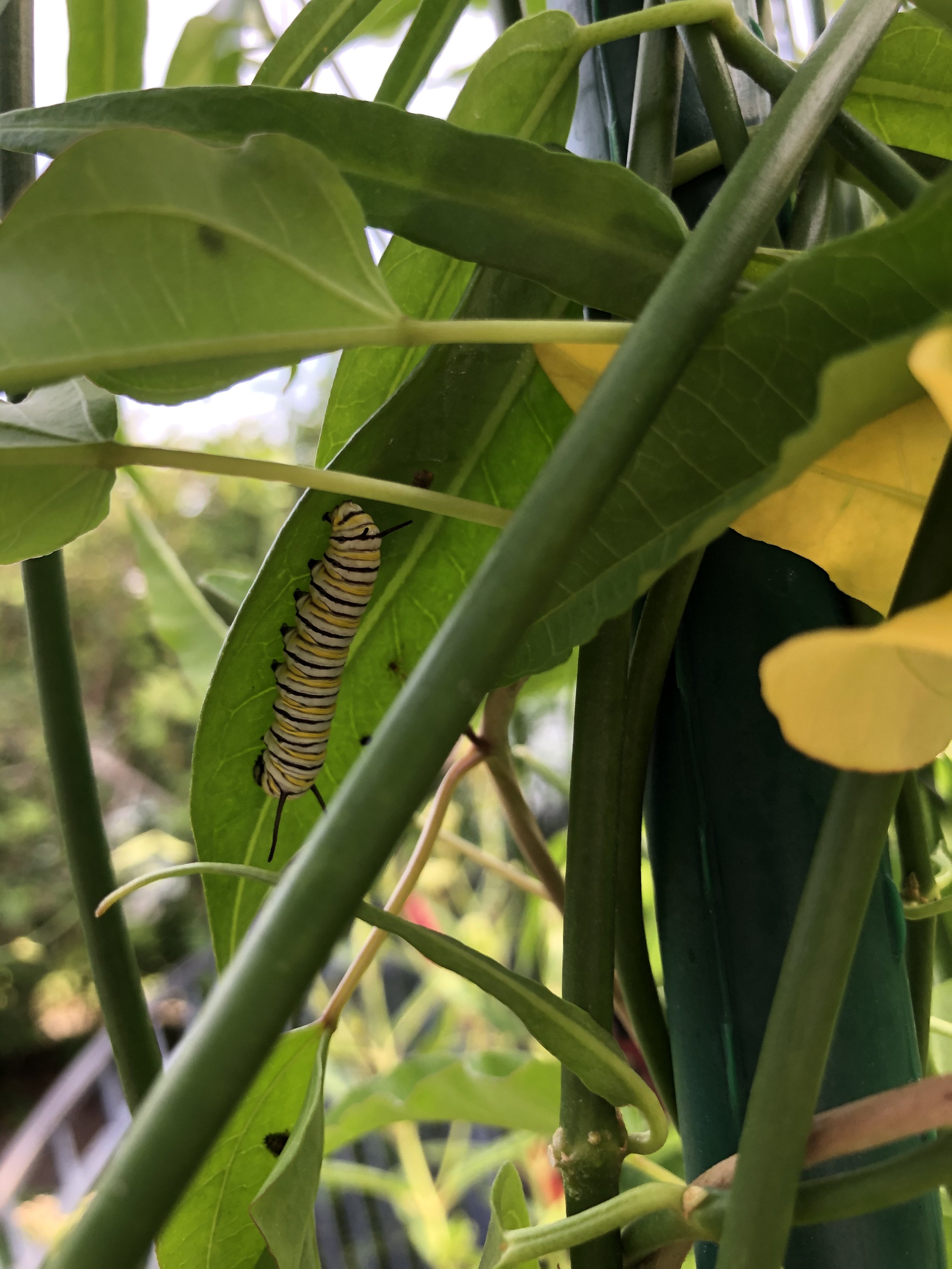
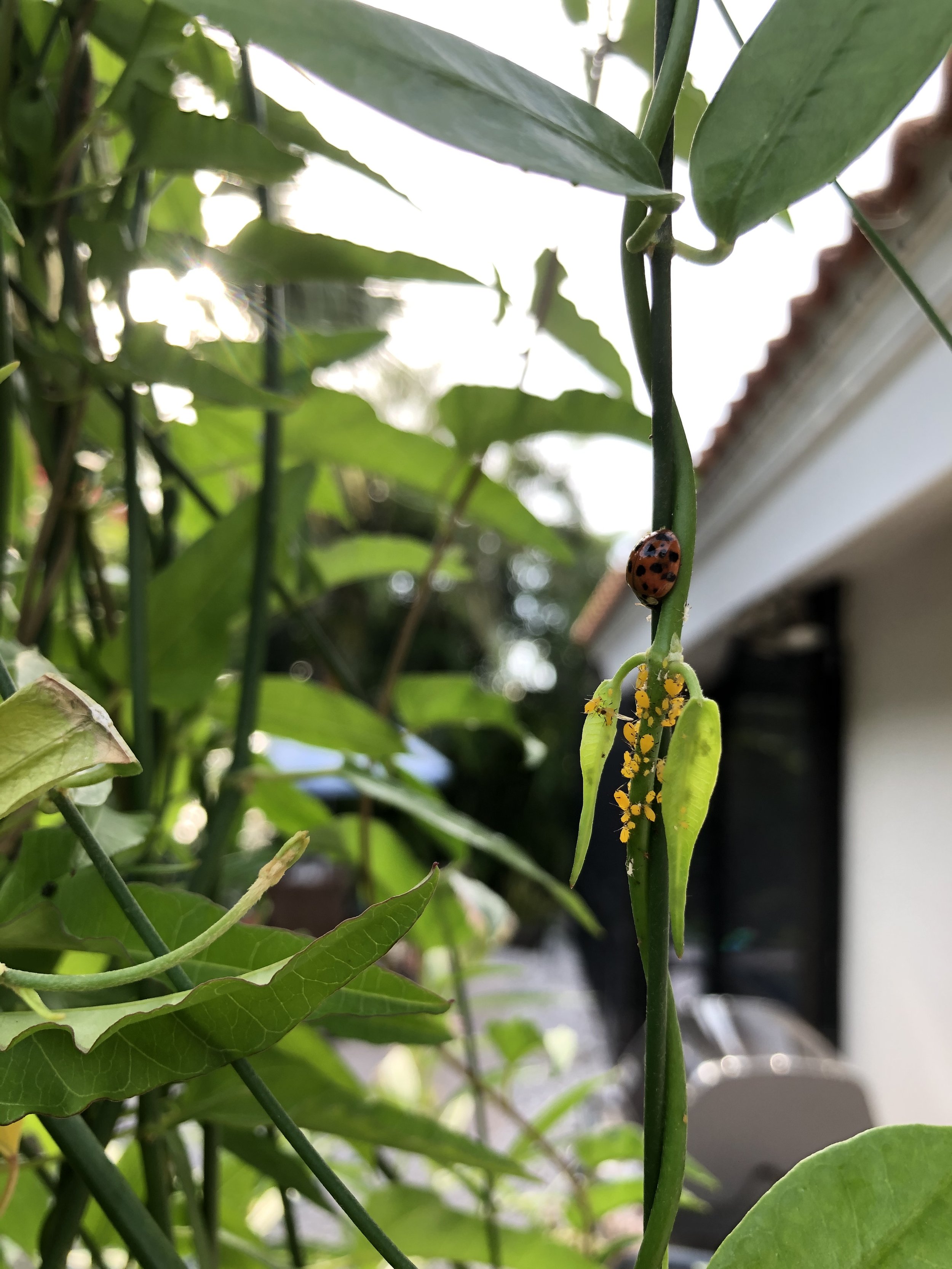
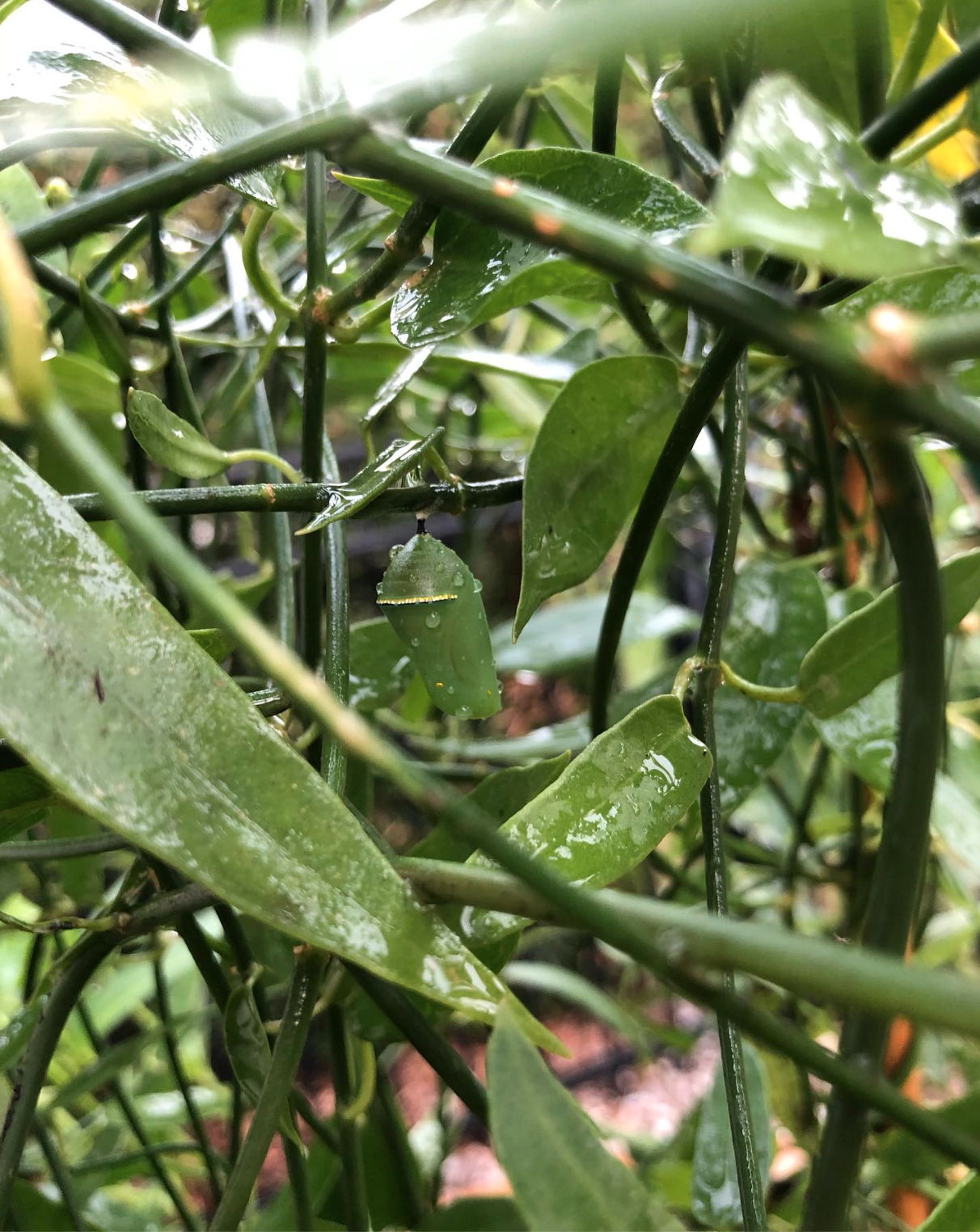
Funastrum clausum
Twine Vine is a native perennial flowering vine that is planted in butterfly gardens. It is a year-round host plant for monarch, queen and soldier butterflies as well as a nectar source for many other butterflies and pollinators. It prefers moist to average soils and can be grown well in a container to control its growth. It’s showy clusters of white flowers can bloom year round.
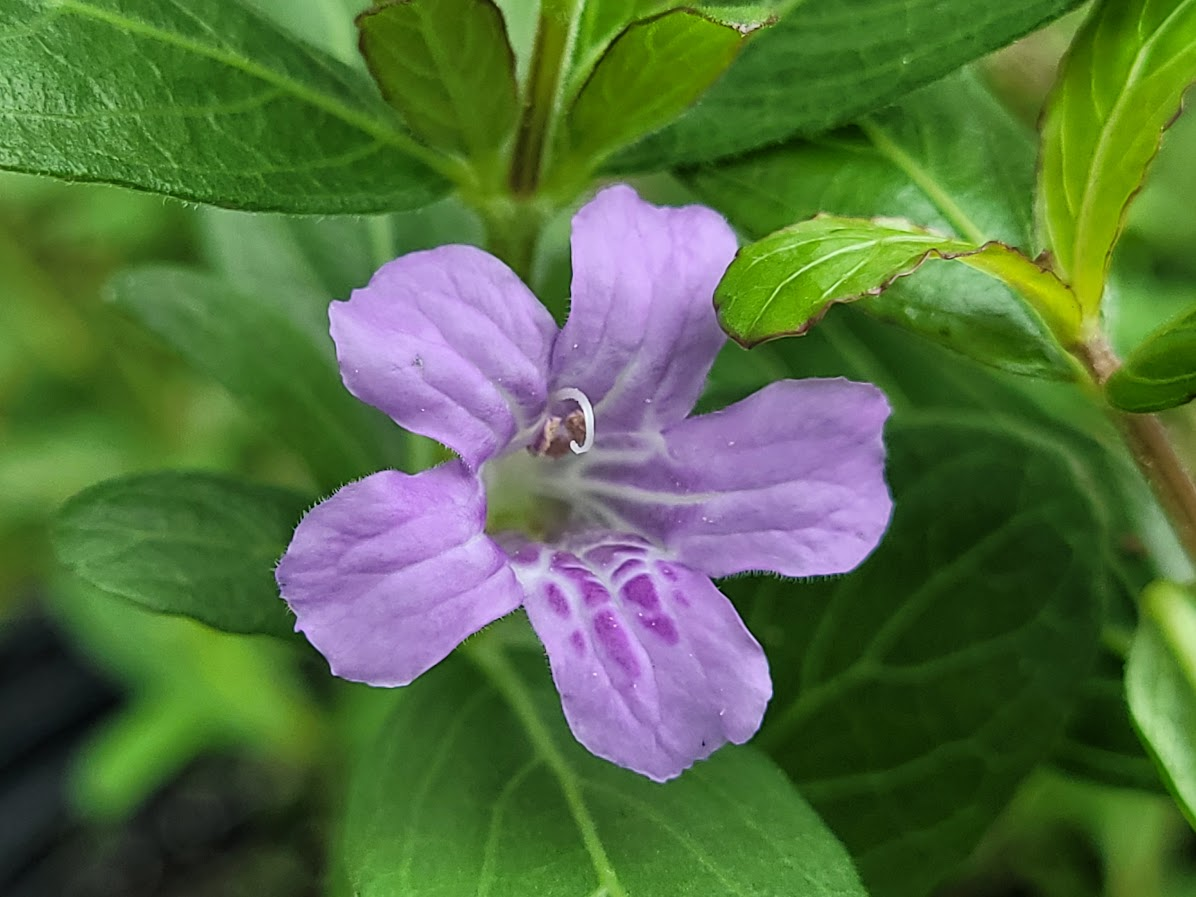
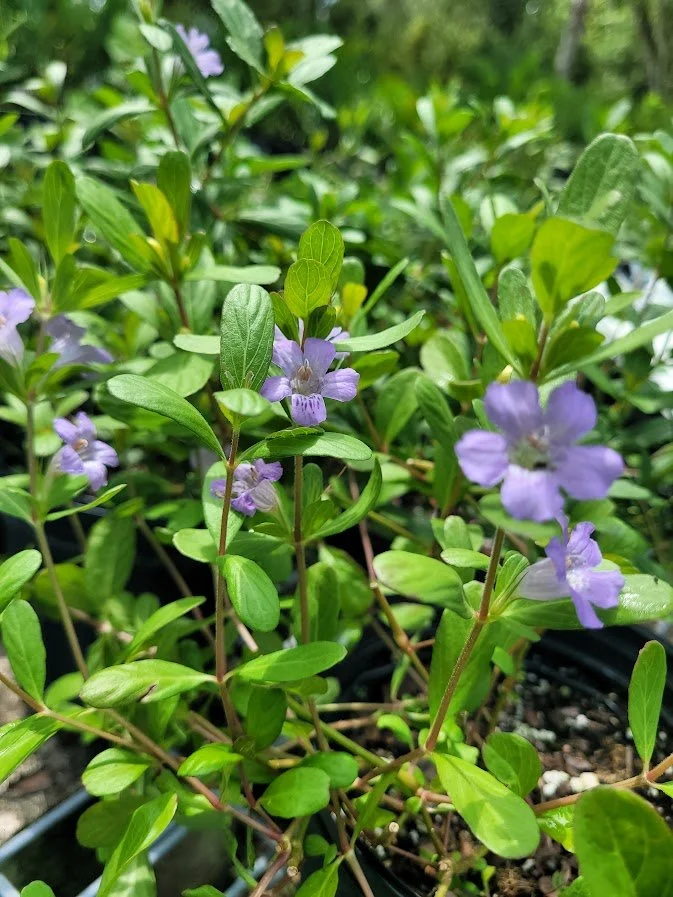
Dyschoriste oblongifolia
This low-growing wildflower acts like a groundcover and is found growing naturally in pine flatwoods, sandhills, and savannas. Twinflower has ornate purple-blue flowers that tend to come in pairs with deep green to reddish colored leaves. This wildflower is best in sunny, dry areas that are well-draining.
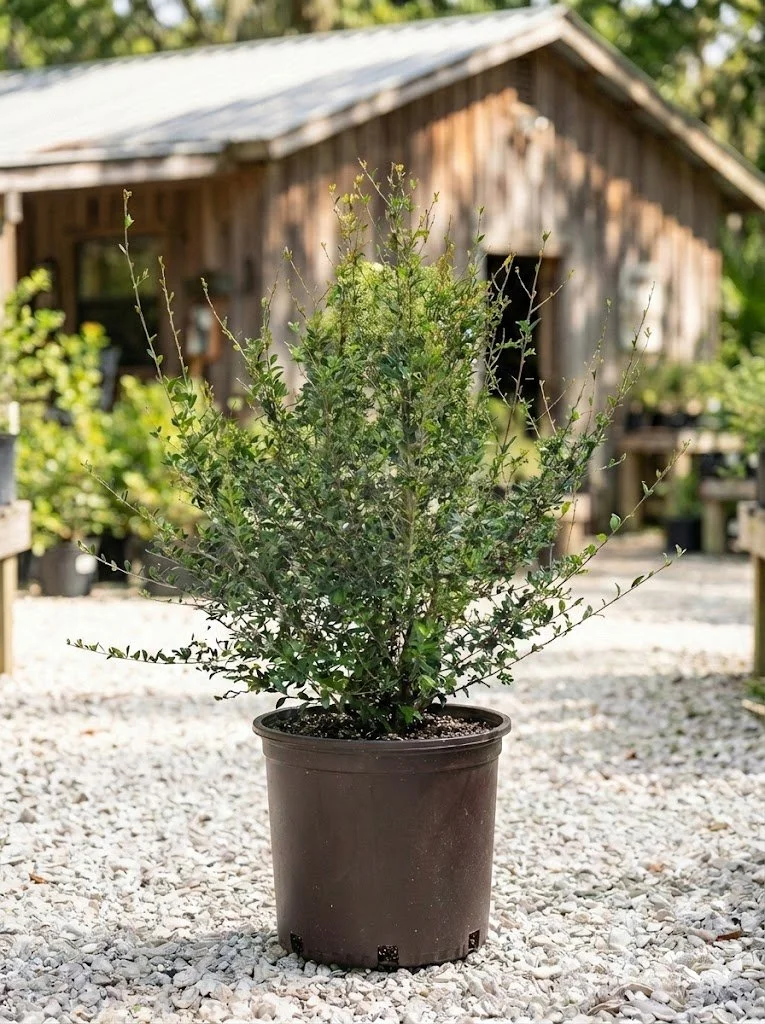
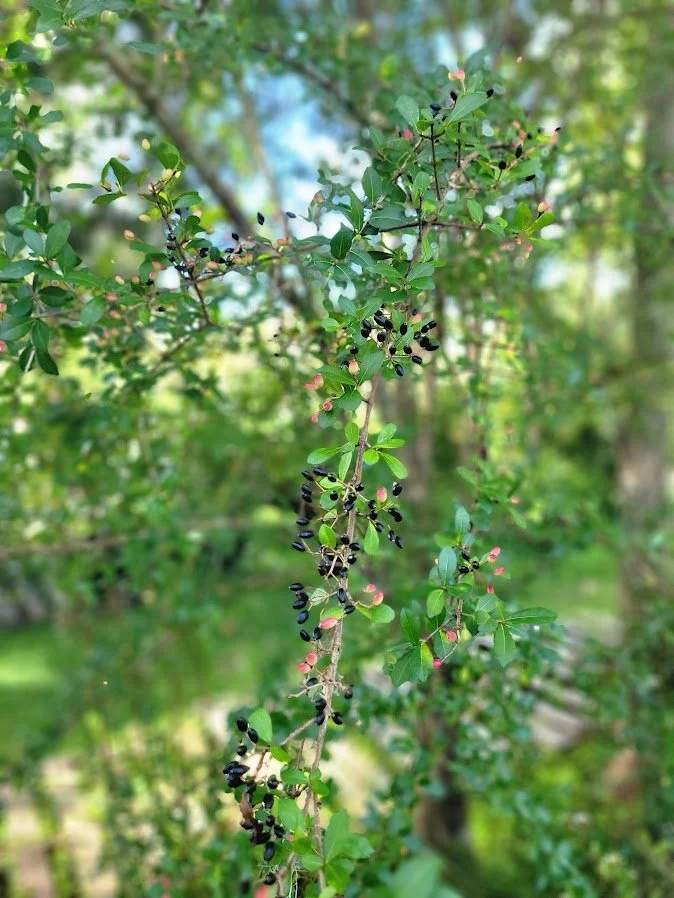
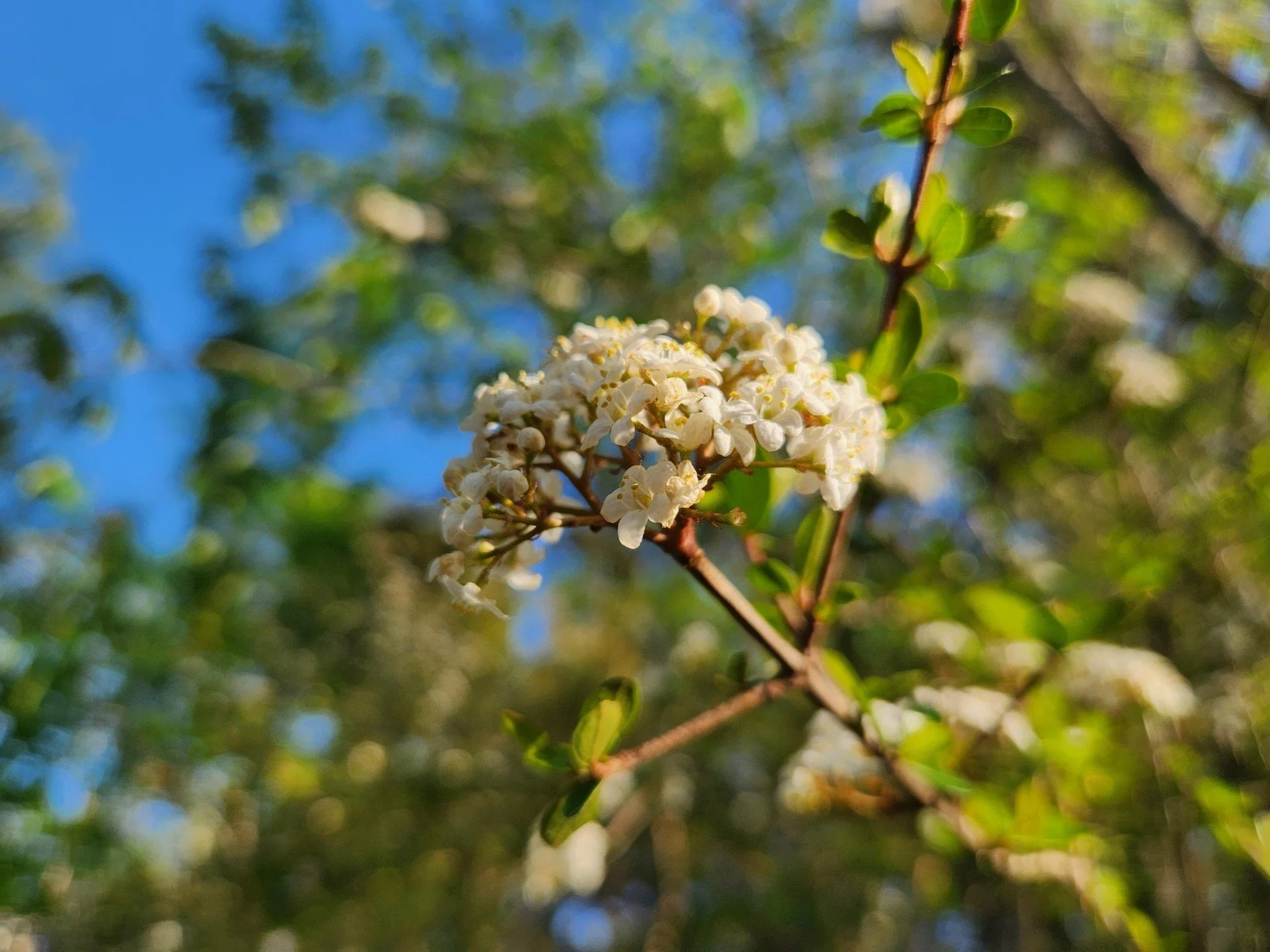
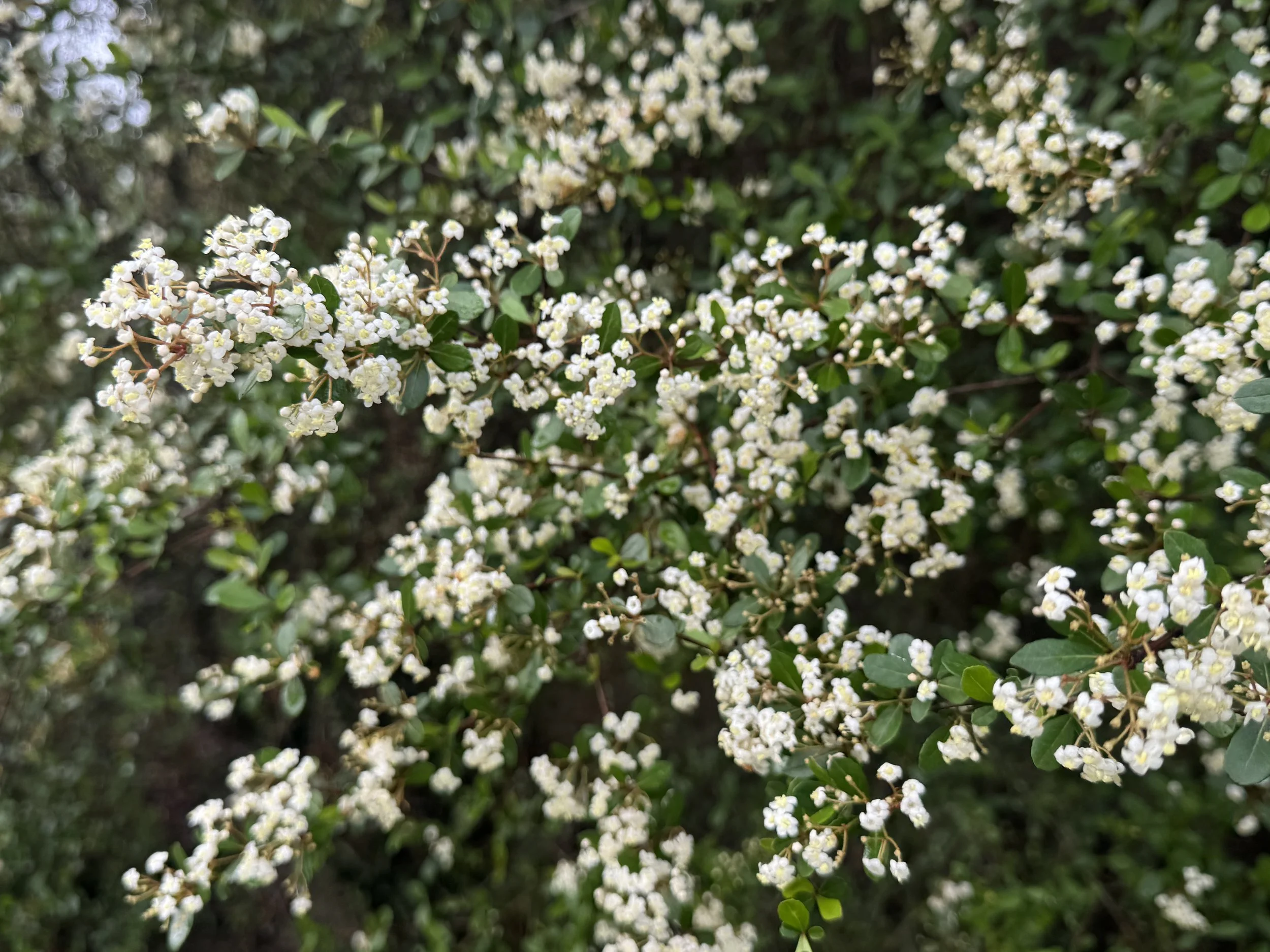
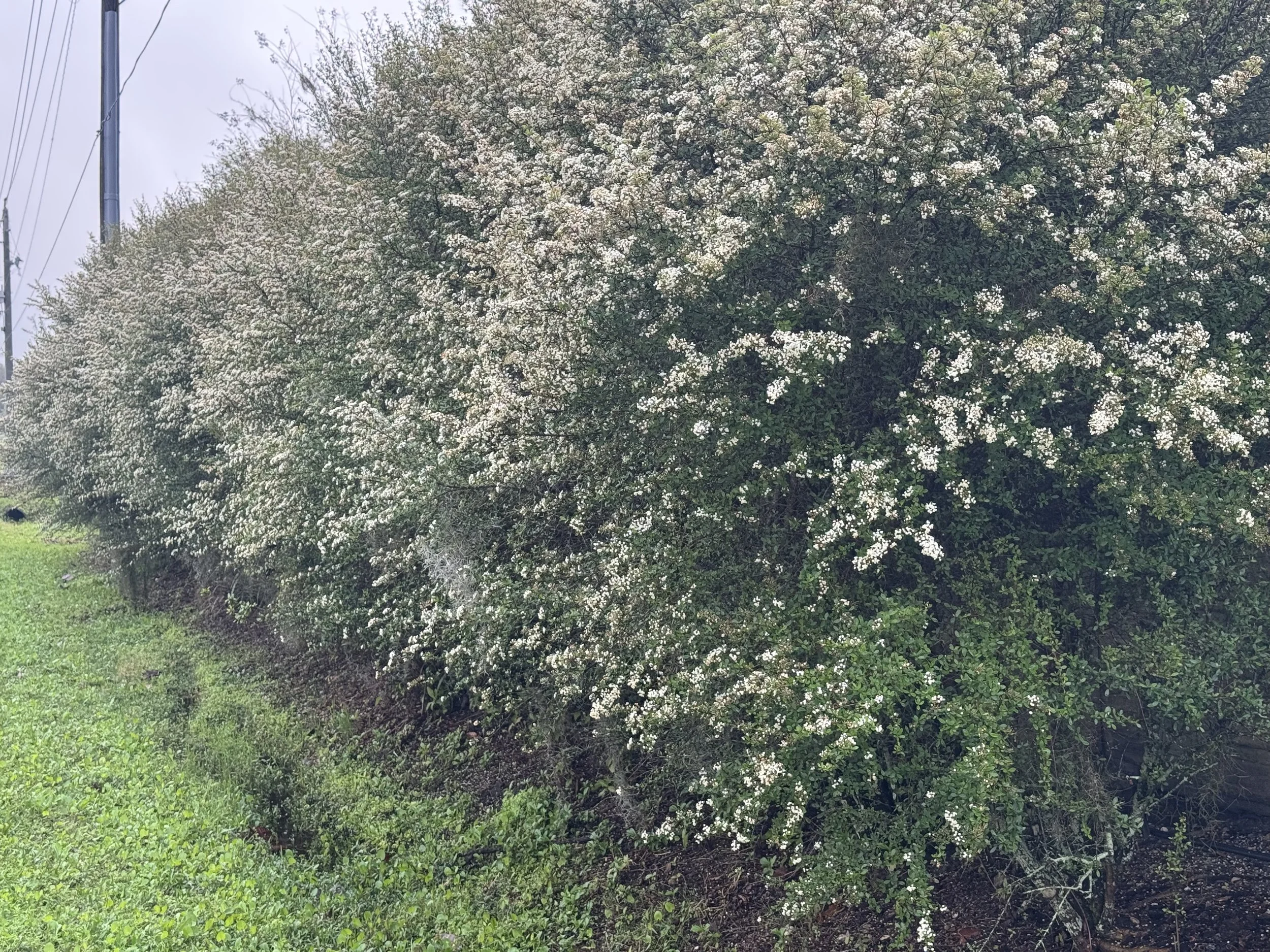
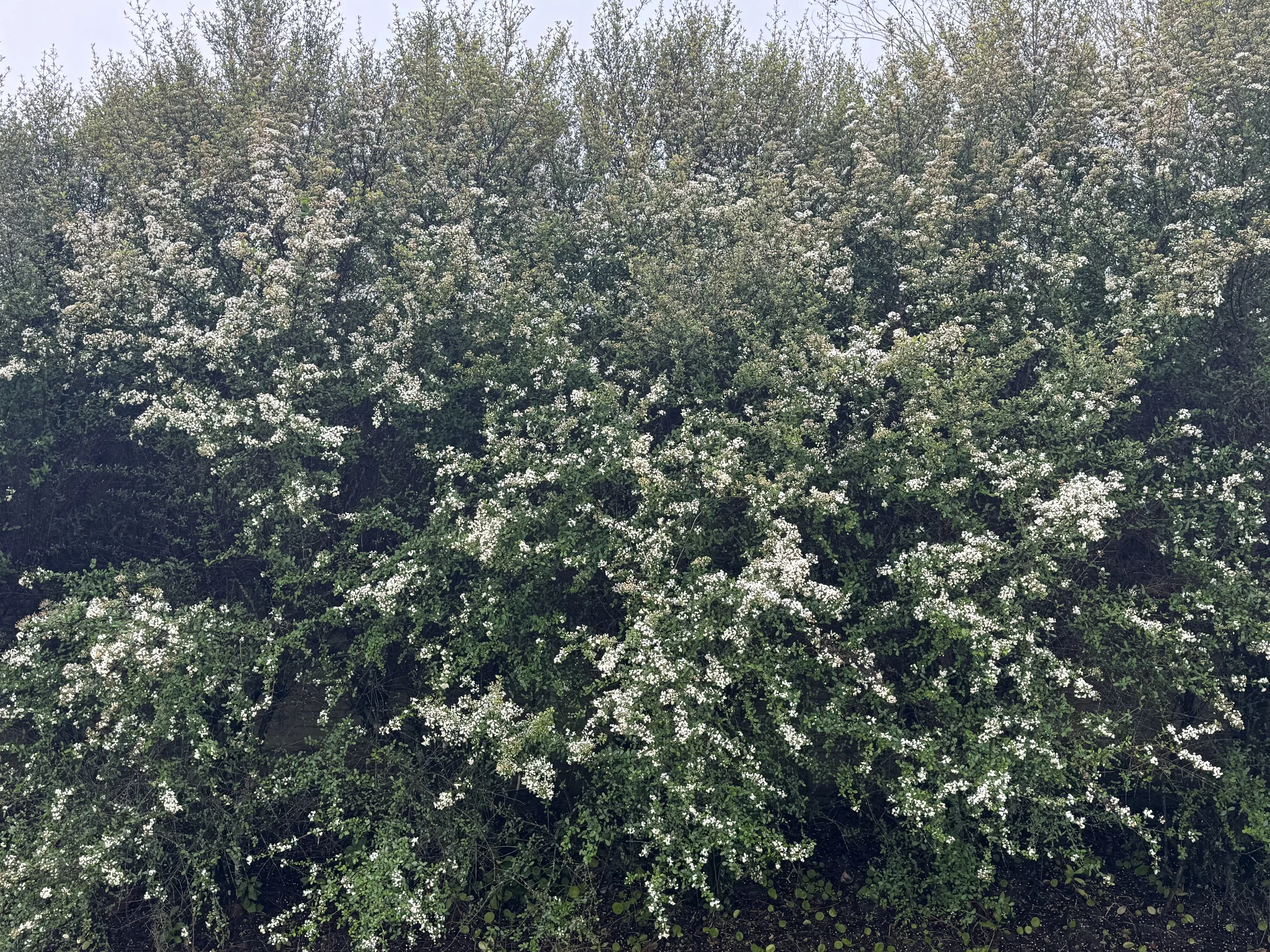
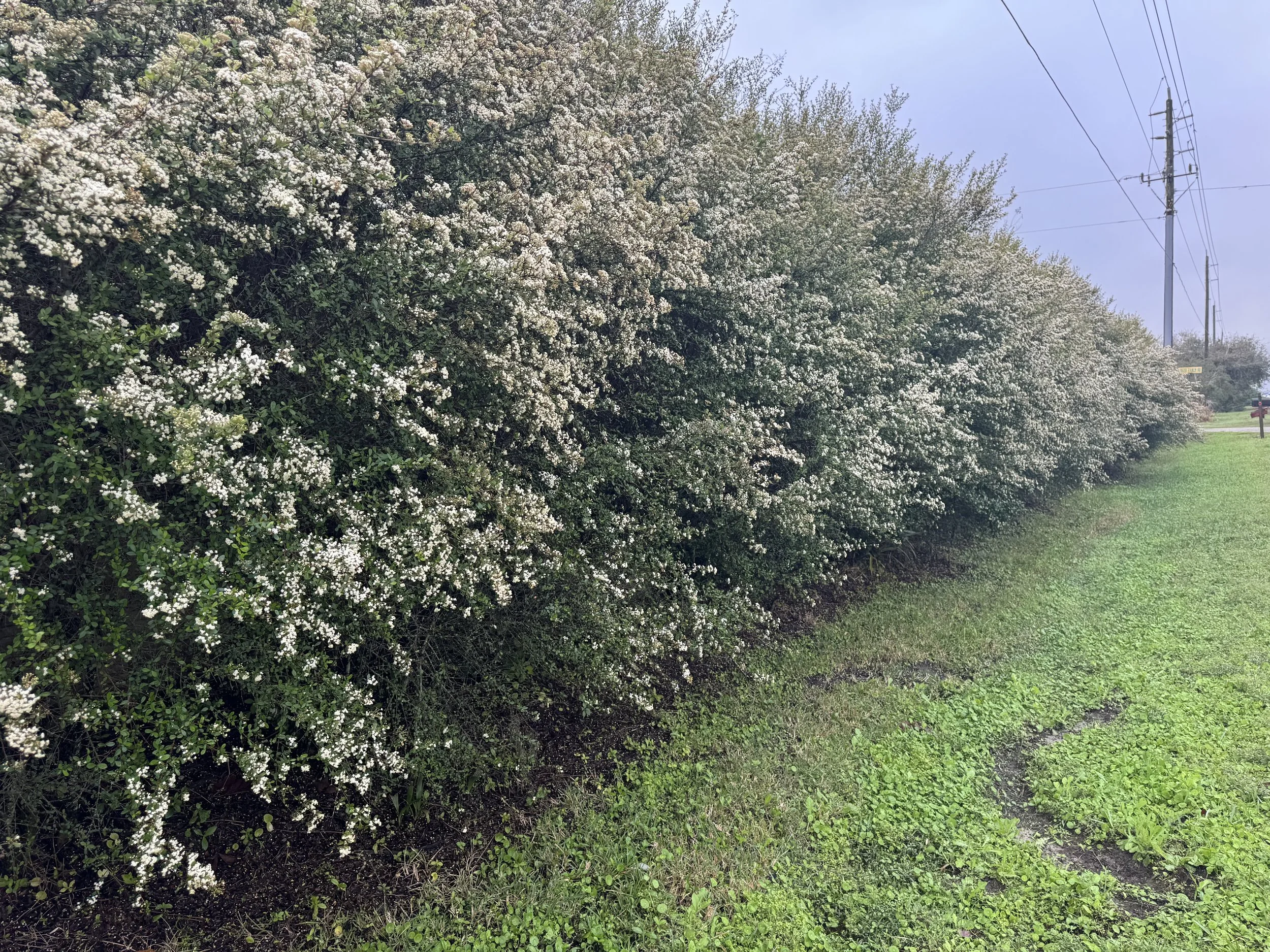
Viburnum obovatum
Walter's Viburnum is an evergreen shrub or small tree native to the southeastern United States that can reach up to 20’ tall but is commonly pruned as a hedge or screen. This densely branched species features fine-textured foliage and produces masses of small, fragrant white flower clusters in early spring, giving it its nickname "Florida snow," that attract butterflies and other pollinators. In fall, it develops dark blue berries that provide food for birds and wildlife. Thriving in zones 7-10, it adapts to various soil types and light conditions from full sun to partial shade, making it an excellent choice for native landscaping, wildlife gardens, and as a Florida-friendly alternative to boxwood hedges.
Sizing of cultivars:
‘Withlacoochee’ - 12’-15’
‘Select’ - 6’-8’
‘Densa’ - 4’-5’
‘Snow Fury’ - 5’-10’
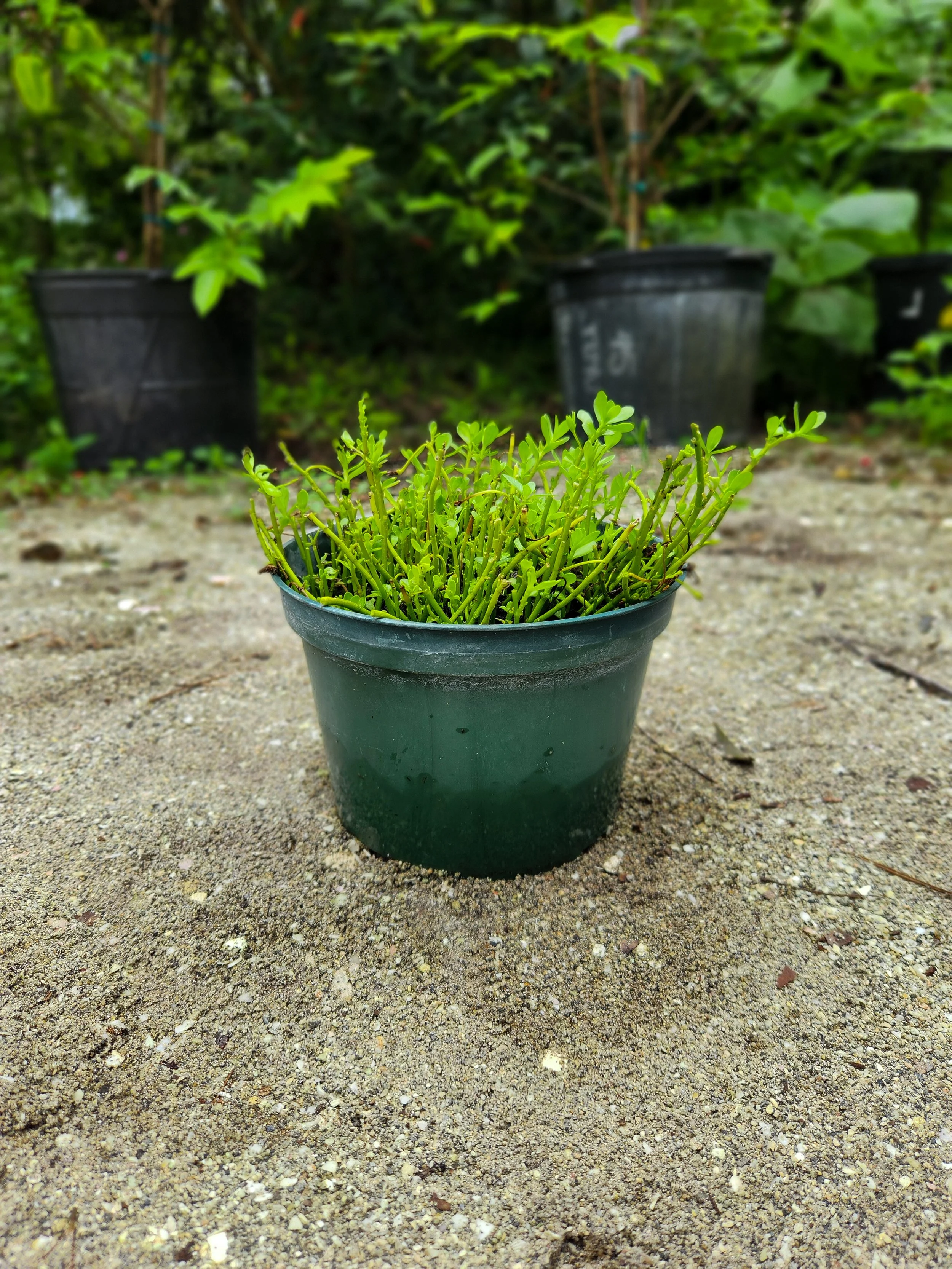
Bacopa monnieri
Water Hyssop is a native, perennial wetland ground cover that grows 3”-6” tall, and 1’-2’ wide, forming dense mats. They have green, succulent leaves and small, white flowers from spring to fall. They grow best in full sun to partial shade and moist, wet, or waterlogged soils, including soils that are submerged in 4”-12” of water. The flowers are attractive to bees and butterflies, and the leaves serve as a larval host for the White Peacock butterfly.
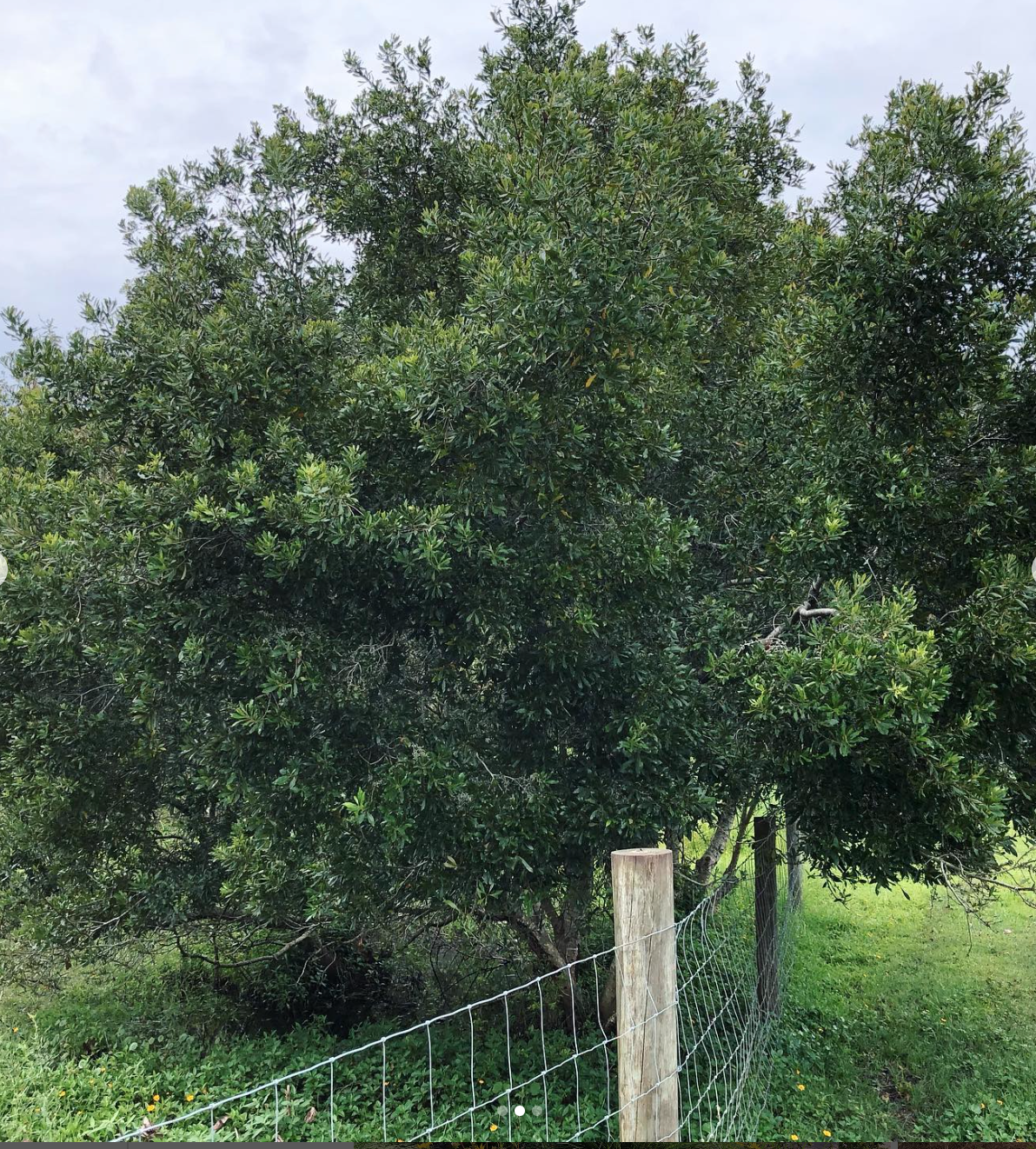
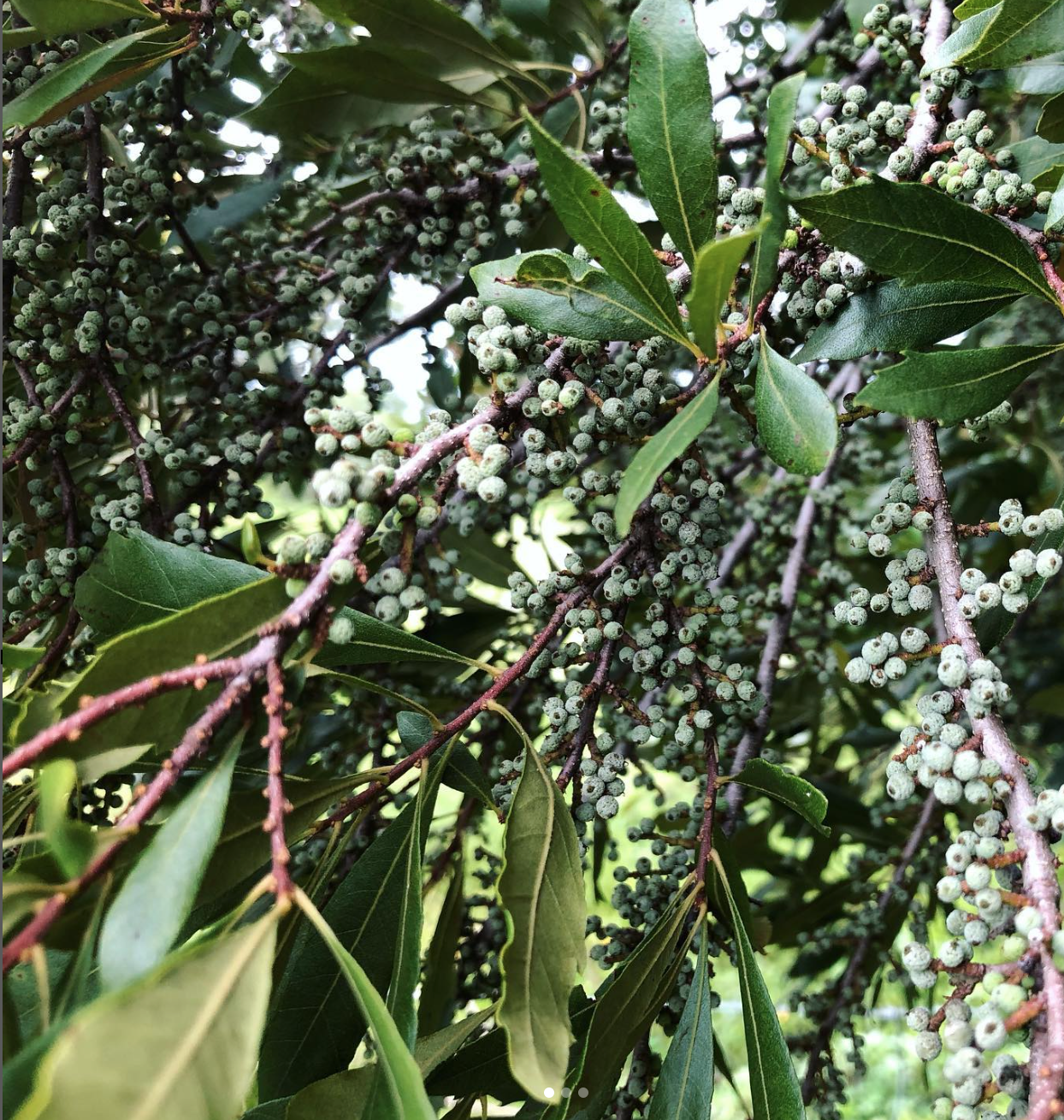
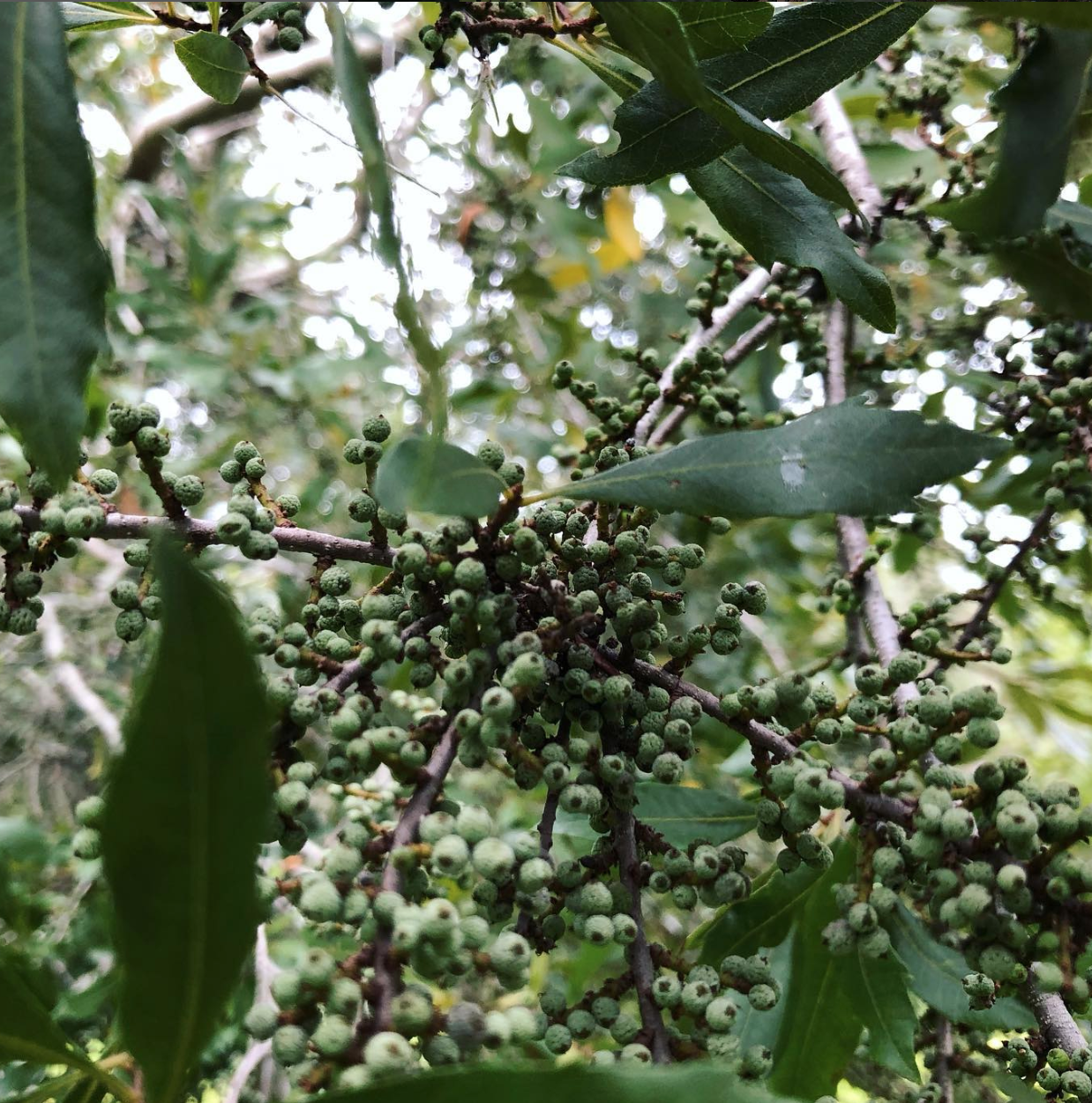
aka Southern Bayberry
Myrica cerifera
Southern Bayberry is a go-to large shrub for tough conditions that require plants that can tolerate moist soils and full sun. It’s also highly adaptable to dry soils and partial shade. It is evergreen and best left untrimmed and allowed to get to its natural height of about 15’. Southern Bayberry makes a nice hedge, natural screen or buffer planting or a specimen shrub and it is an excellent wildlife attractor. The waxy berries on the female plants are a food source for birds, and also used to make traditional bayberry candles.
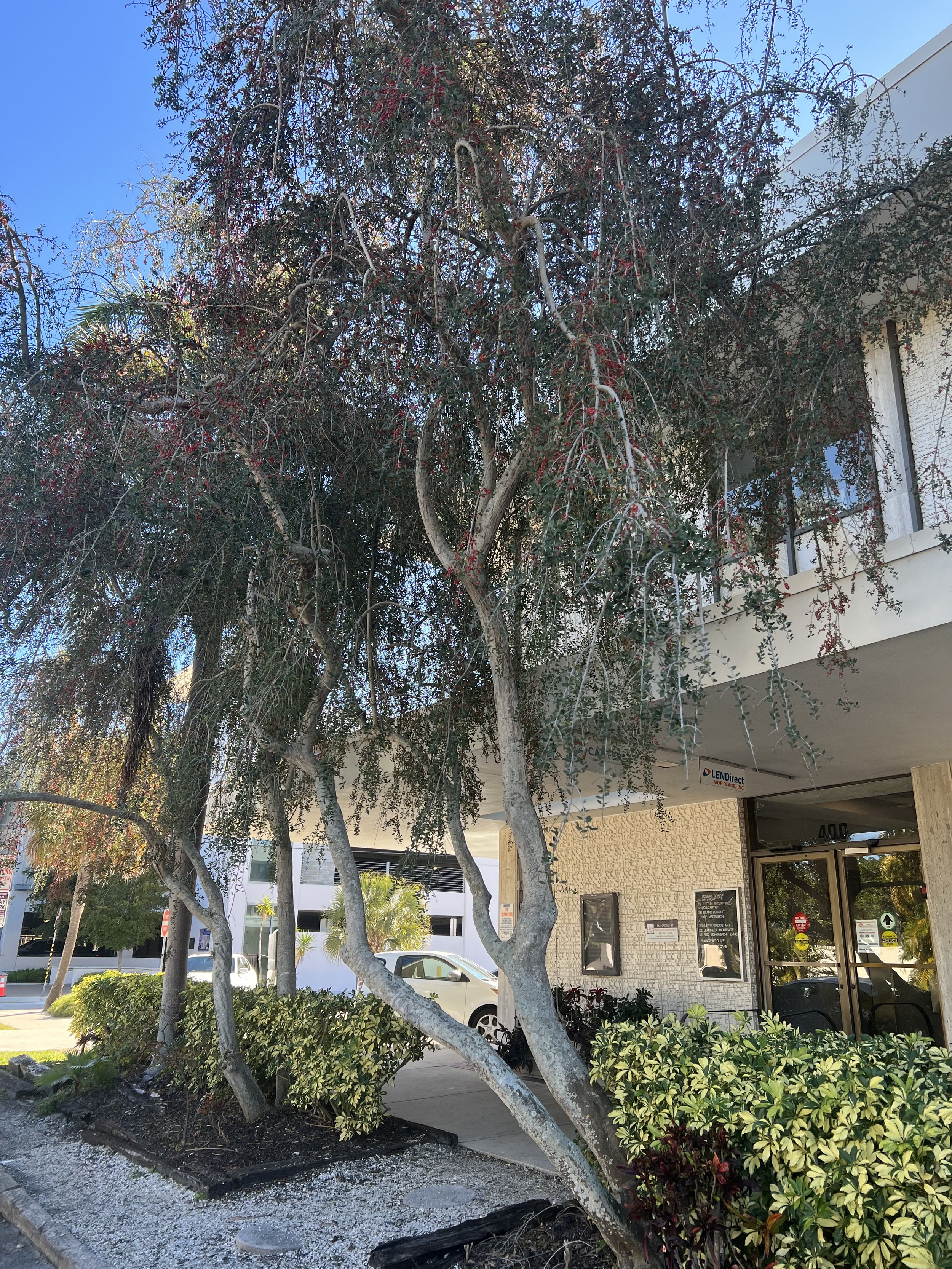
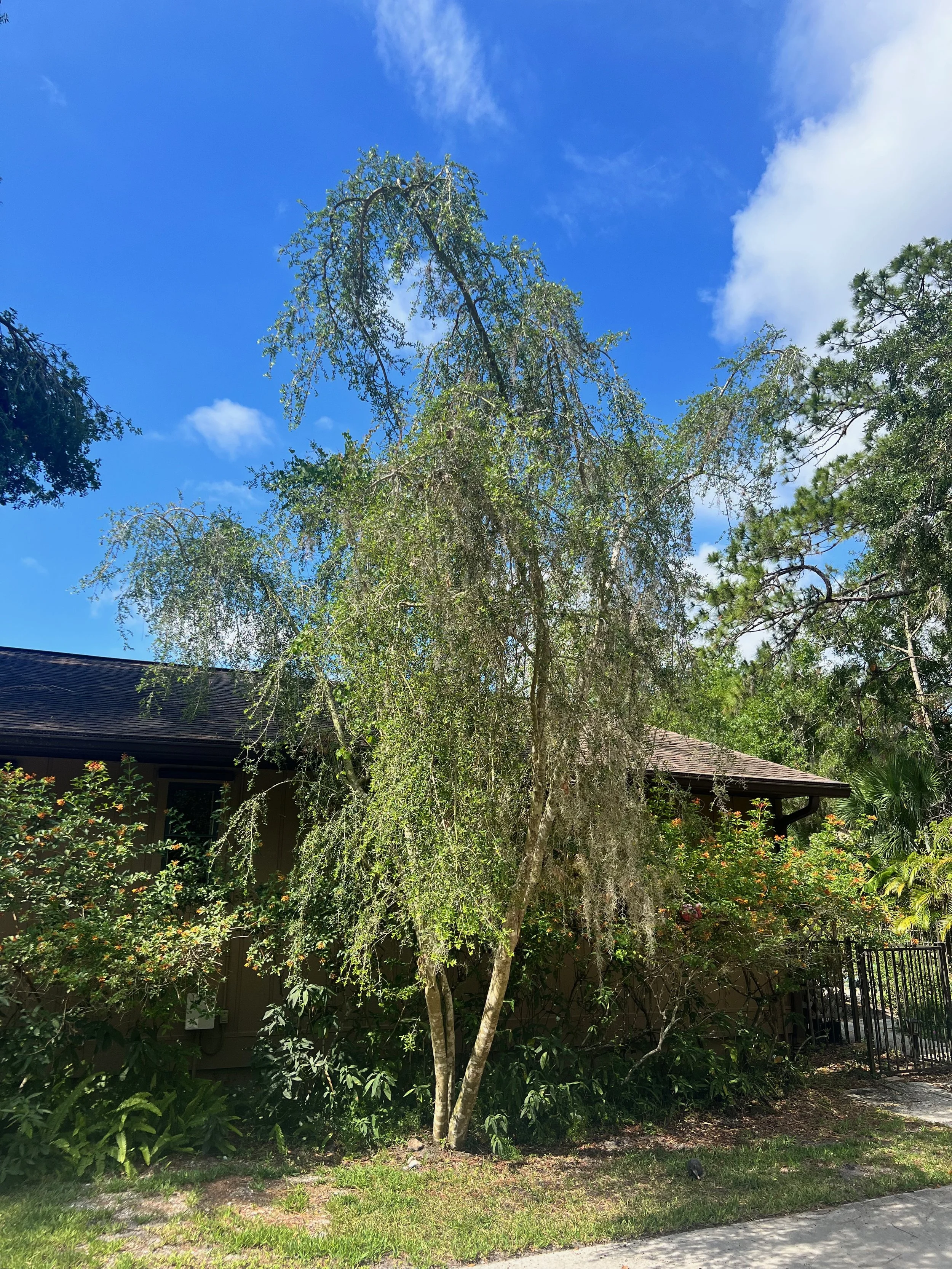
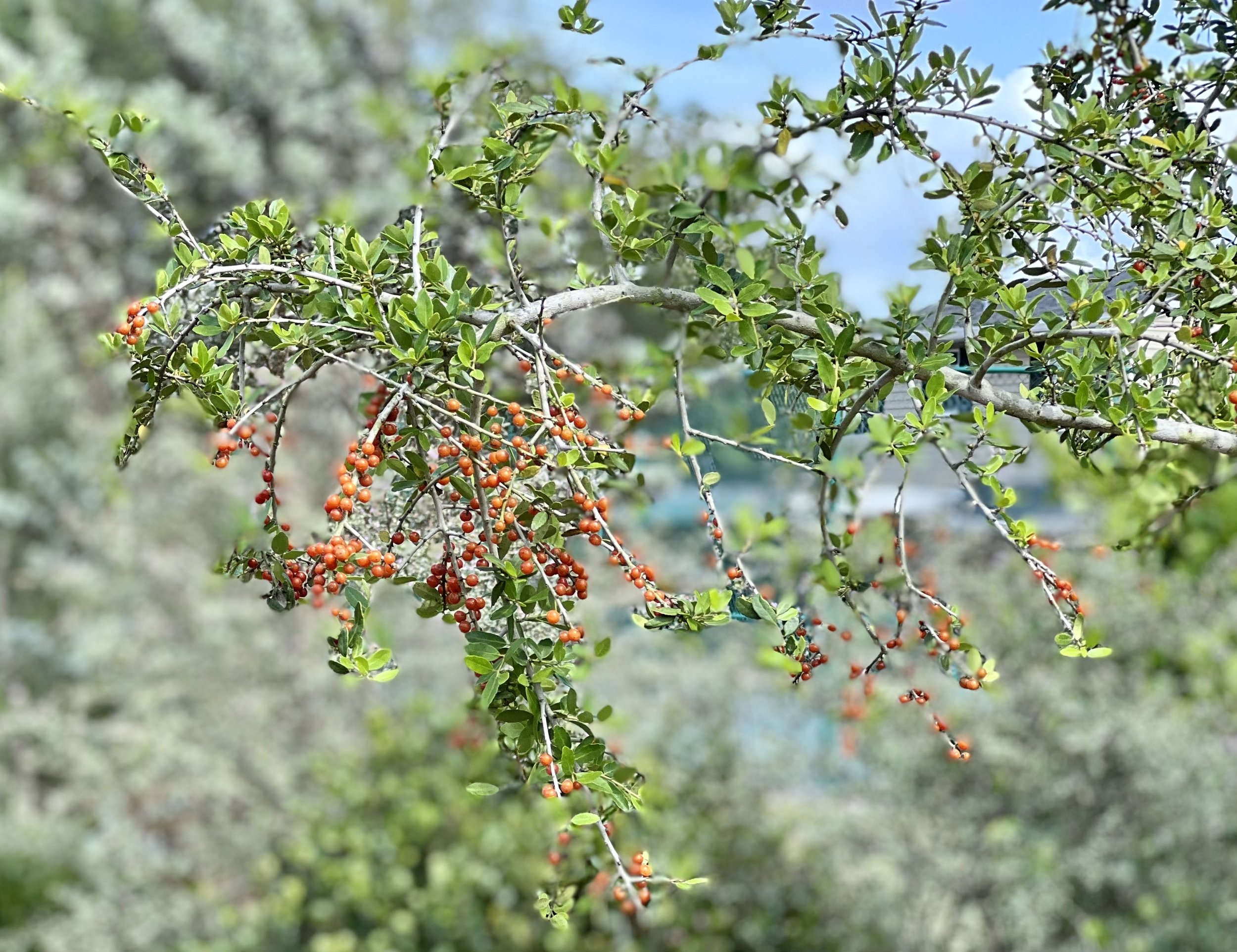
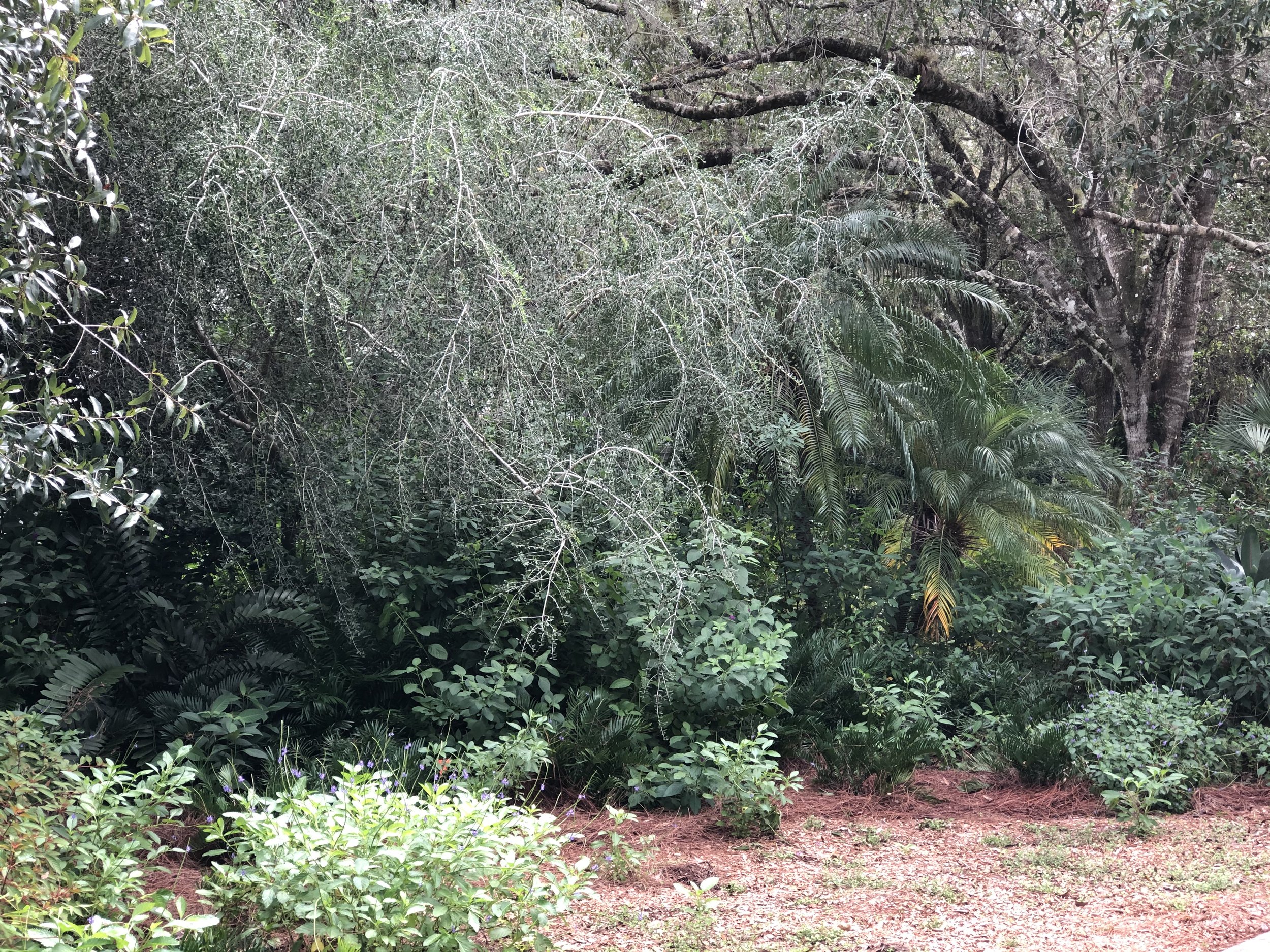
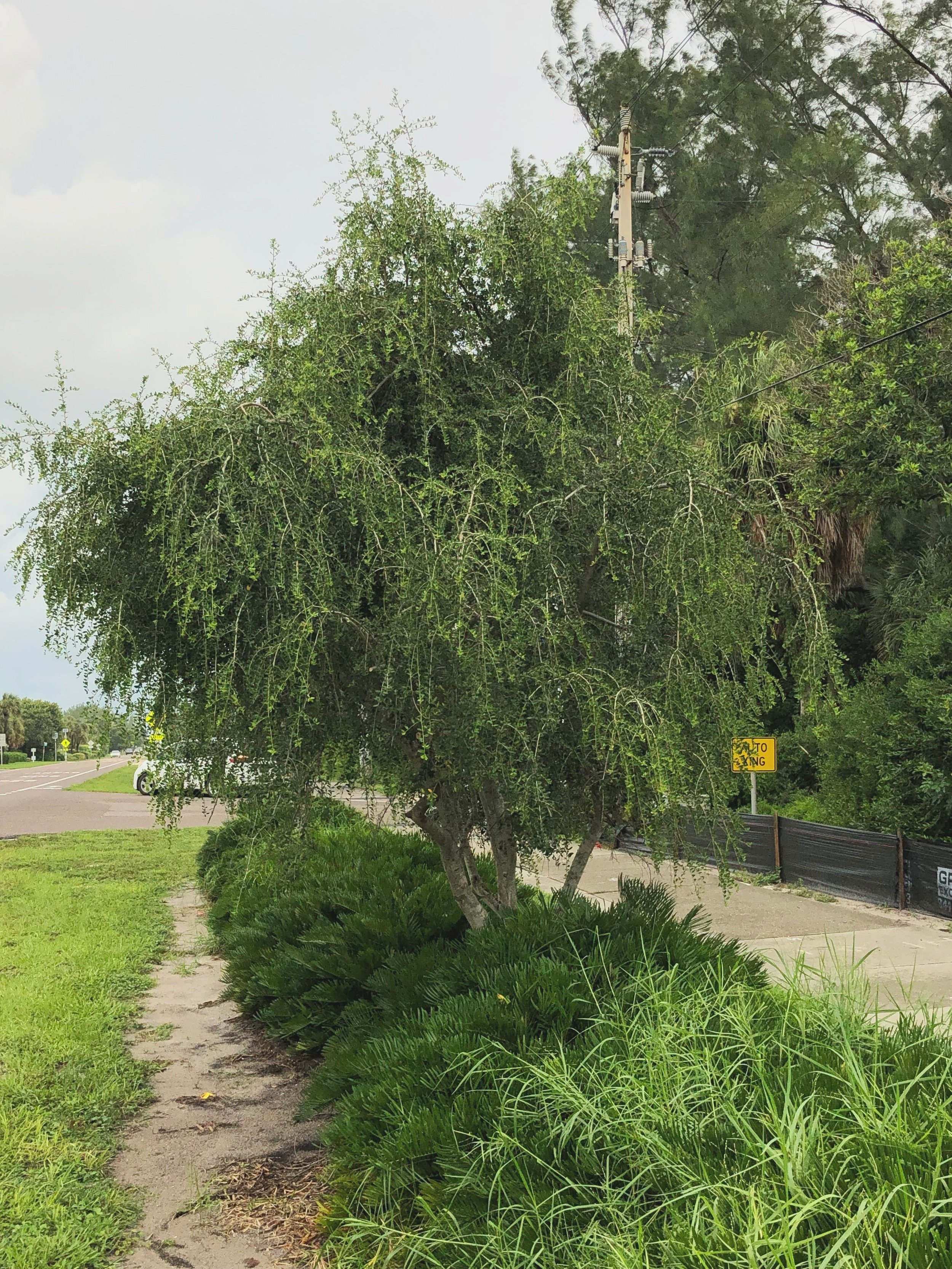
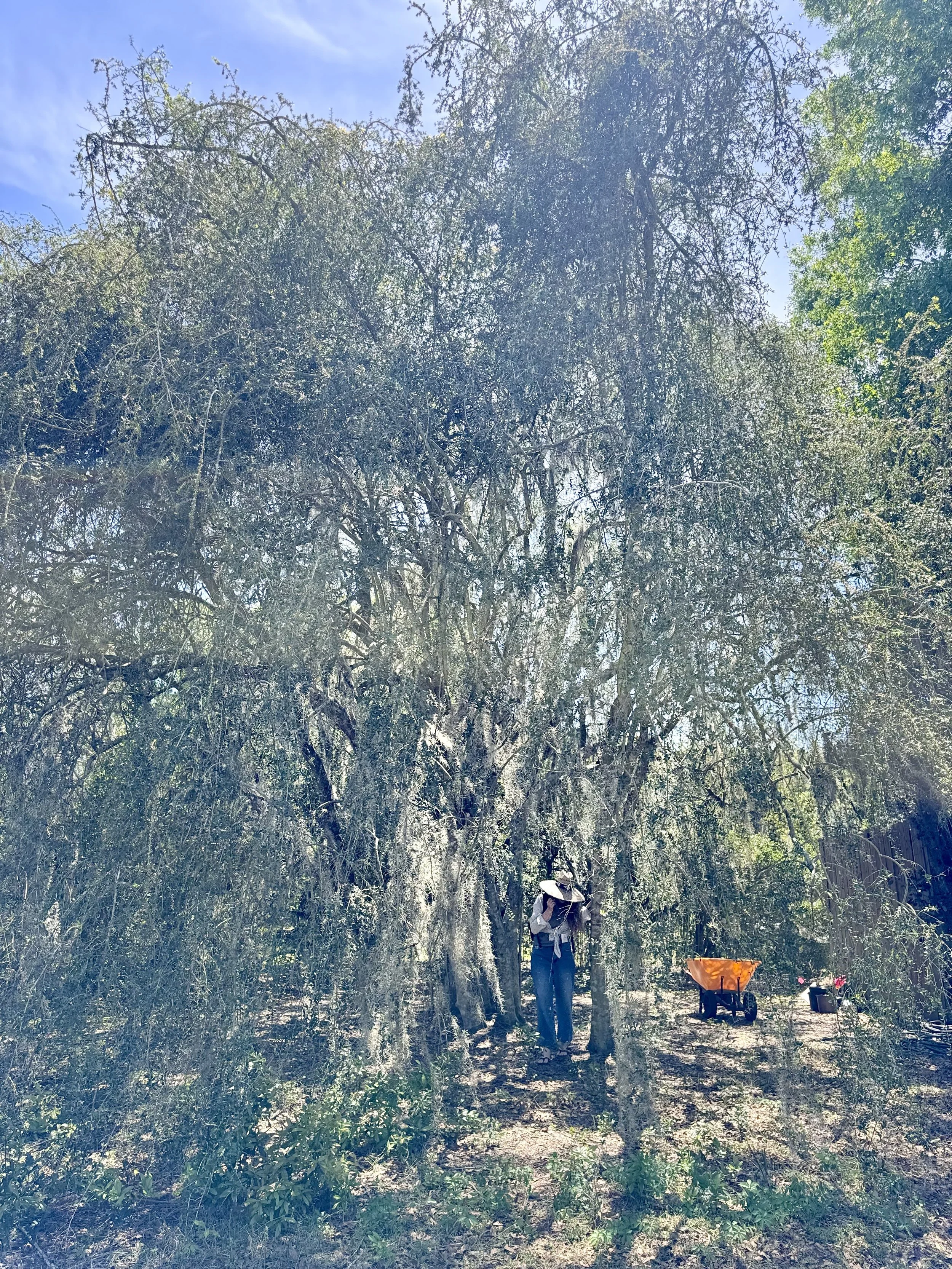
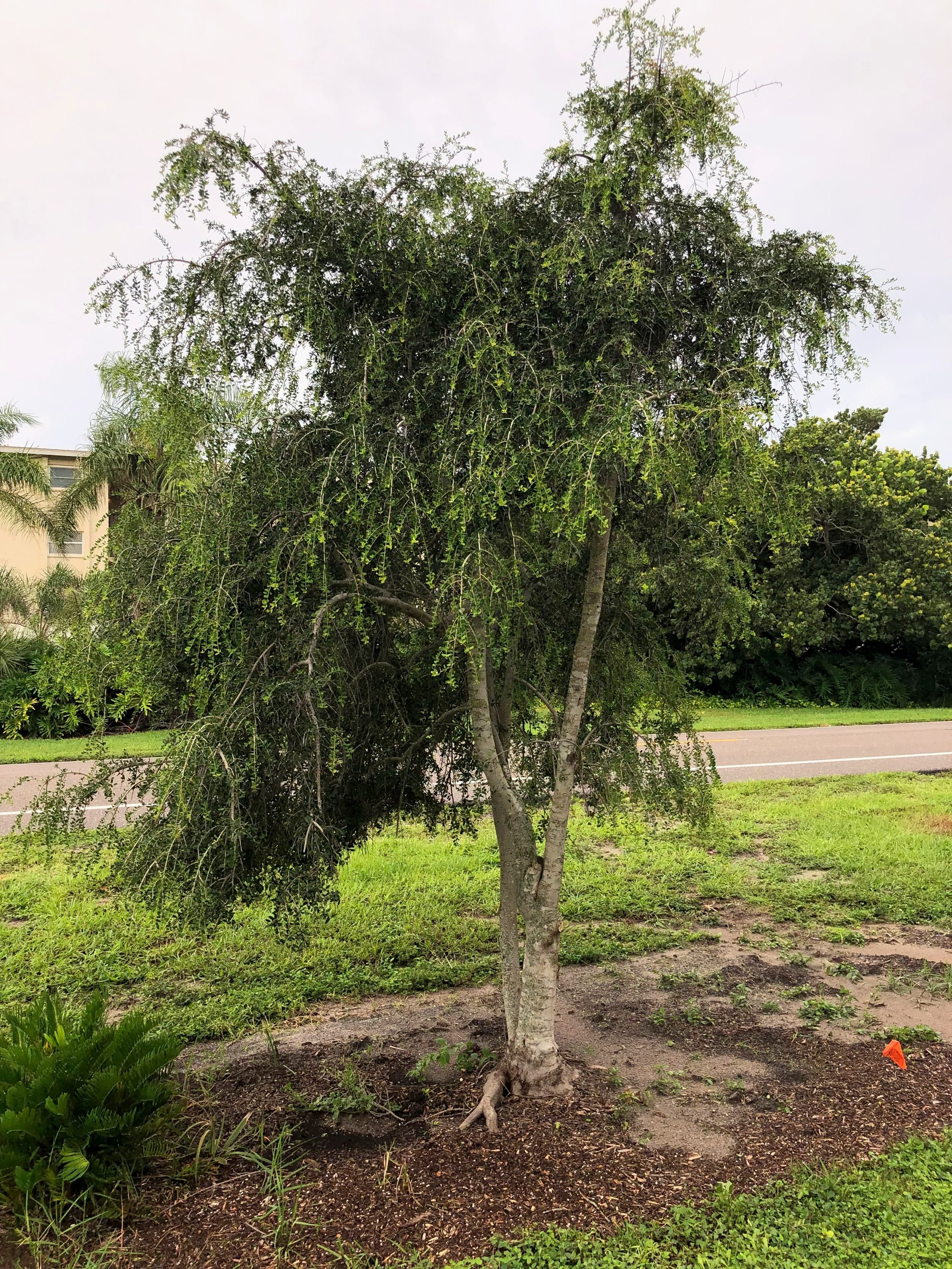
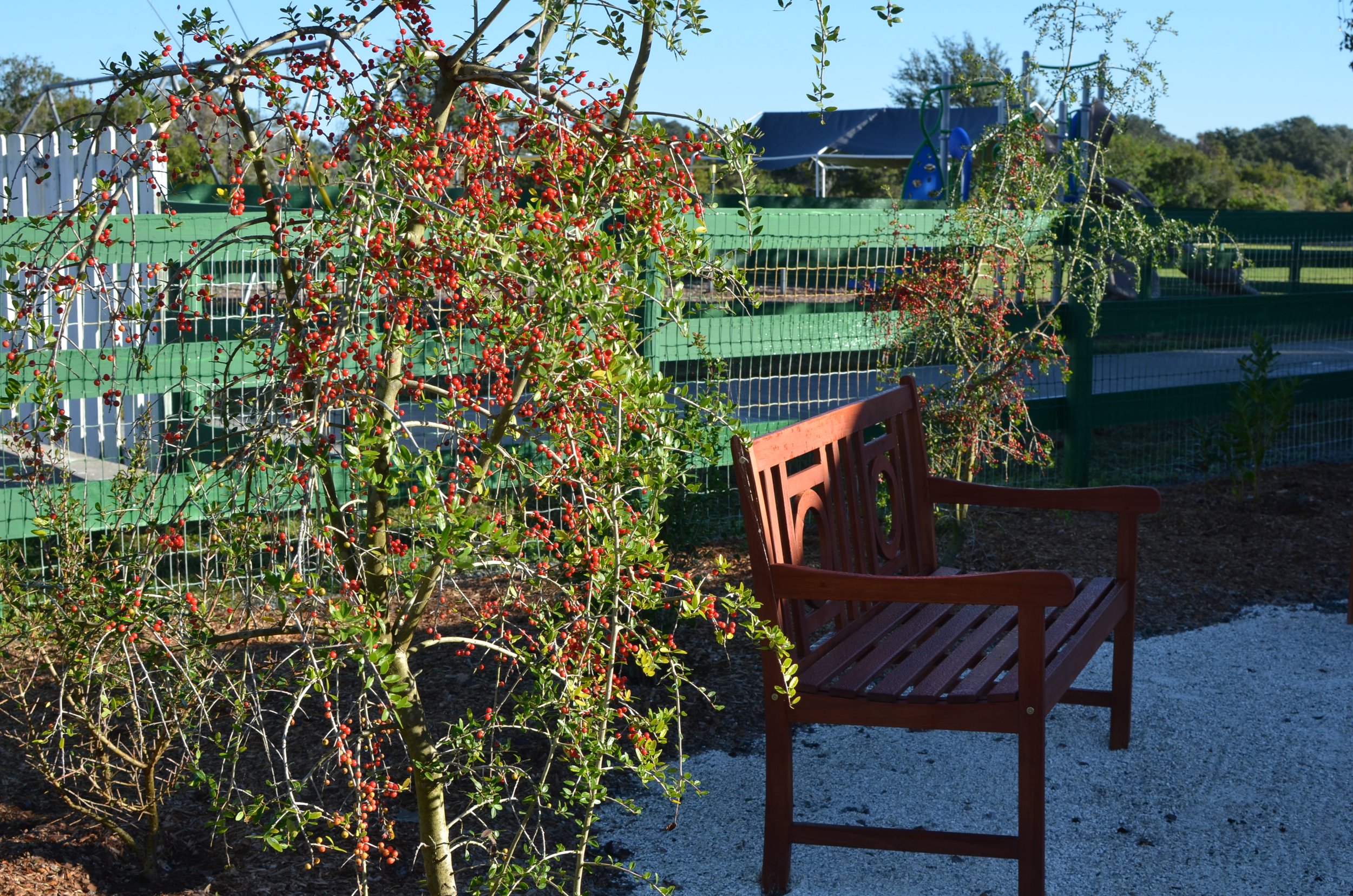
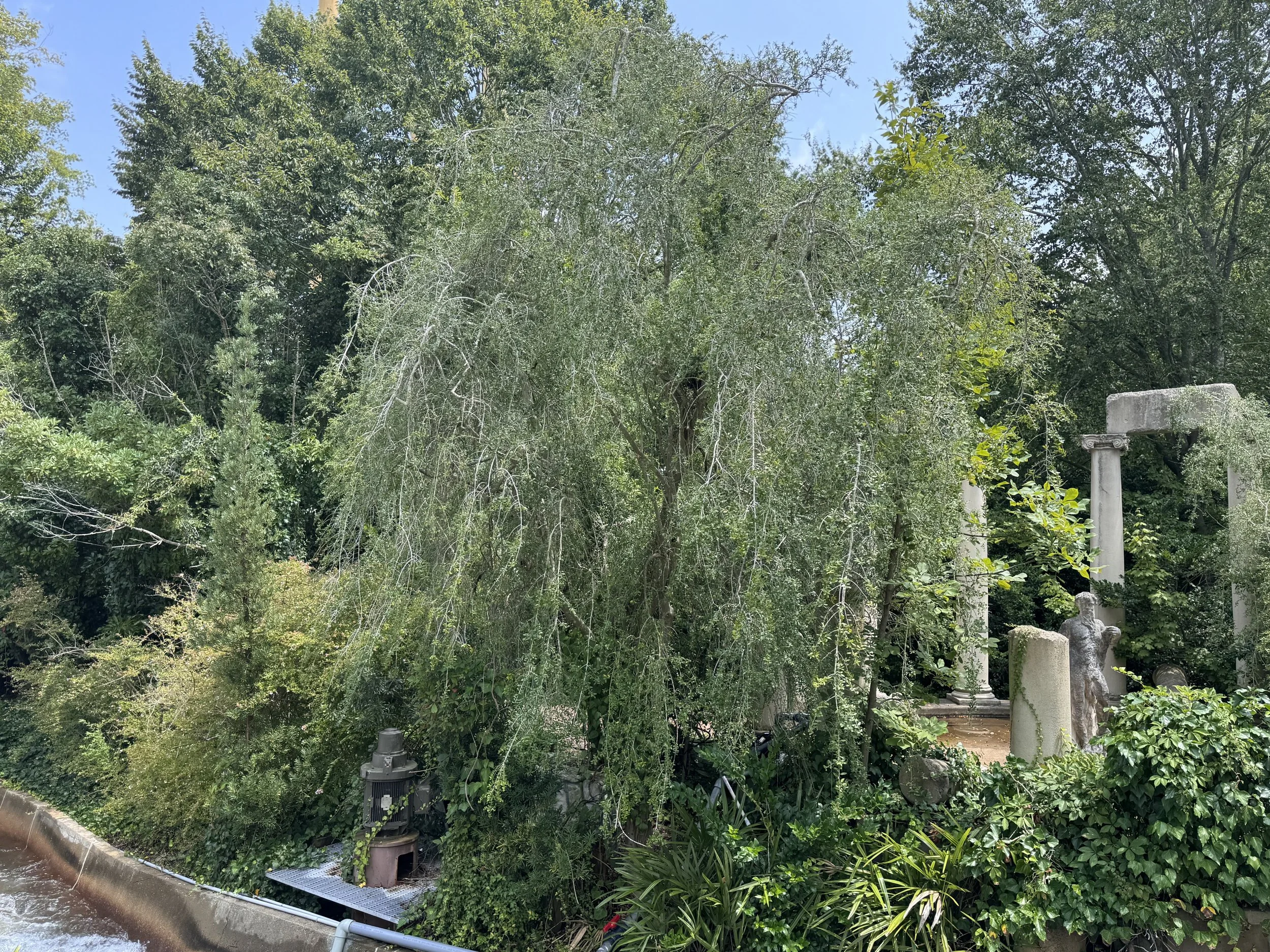
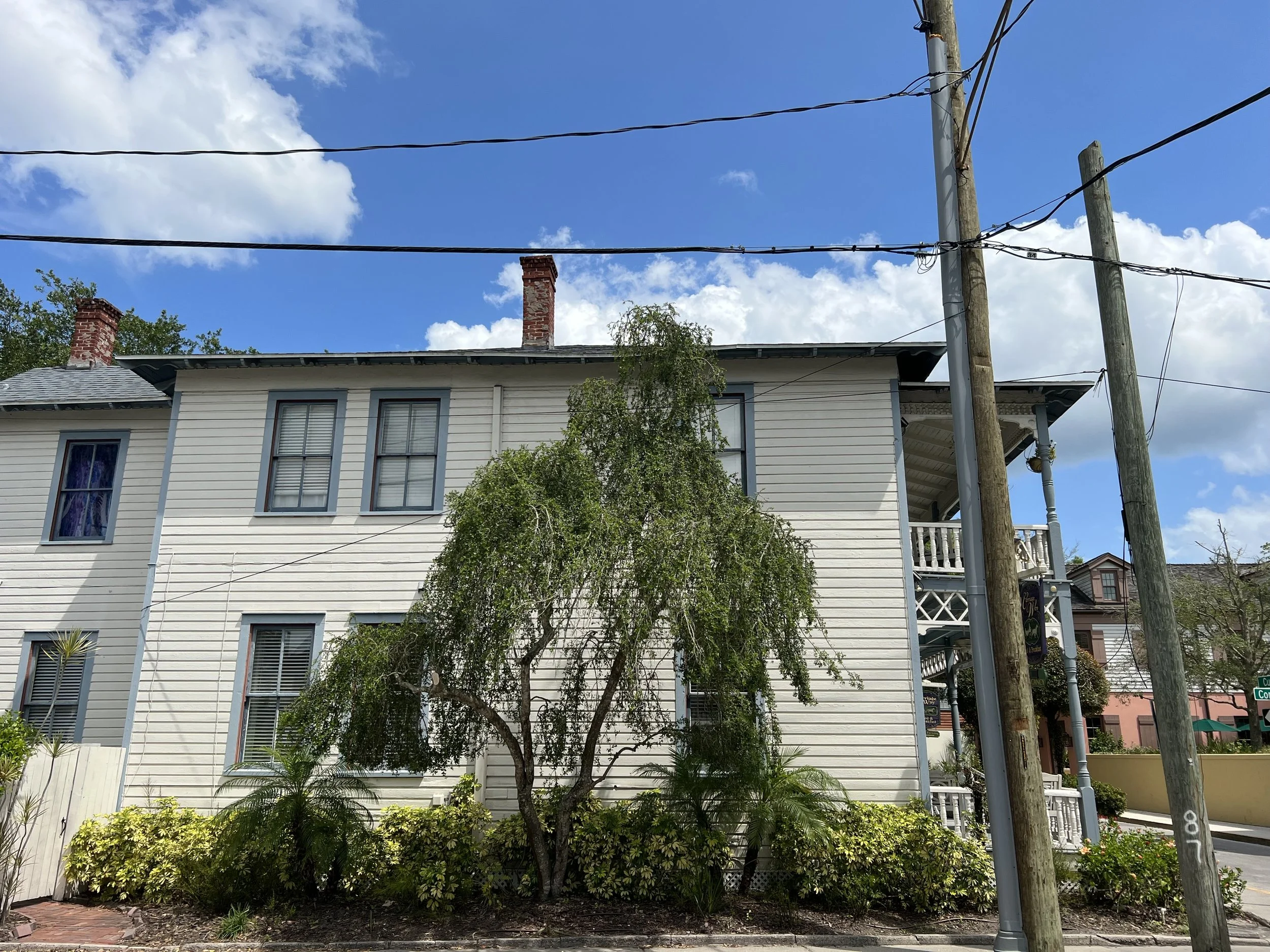
Ilex vomitoria ‘Pendula’
Weeping Yaupon Holly is a graceful cultivar of the native yaupon holly that grows 15-25 feet tall with distinctive drooping, pendulous branches that create an elegant weeping form. This evergreen cultivar features the same small, leathery dark green leaves as the species and produces inconspicuous flowers followed by bright red berries on female plants that attract birds. The cascading branches give it a unique architectural quality, making it an excellent focal point or specimen tree for large landscapes. Like its parent species, it's extremely drought and salt-tolerant, adaptable to various soil conditions, and requires minimal maintenance once established.
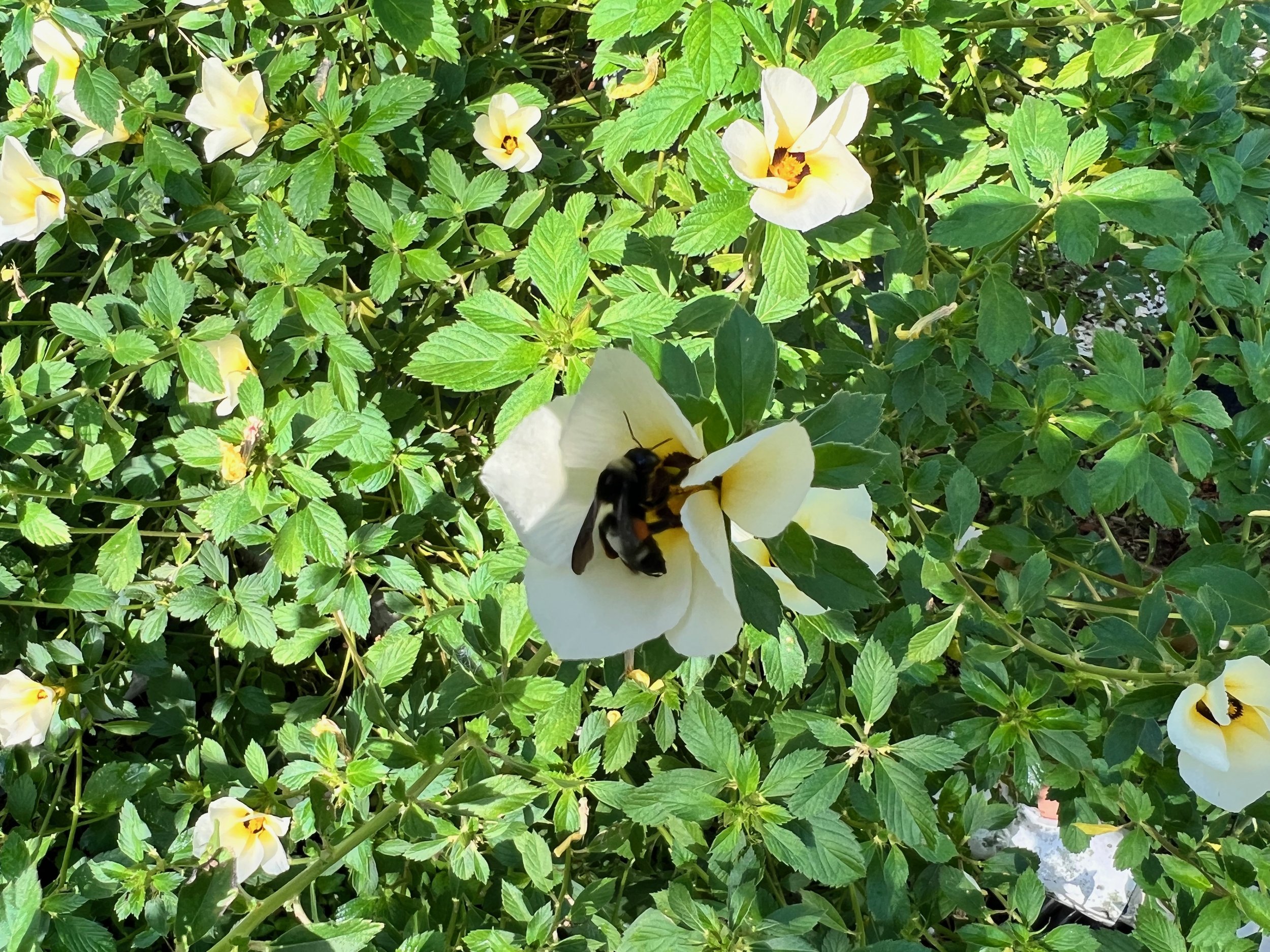
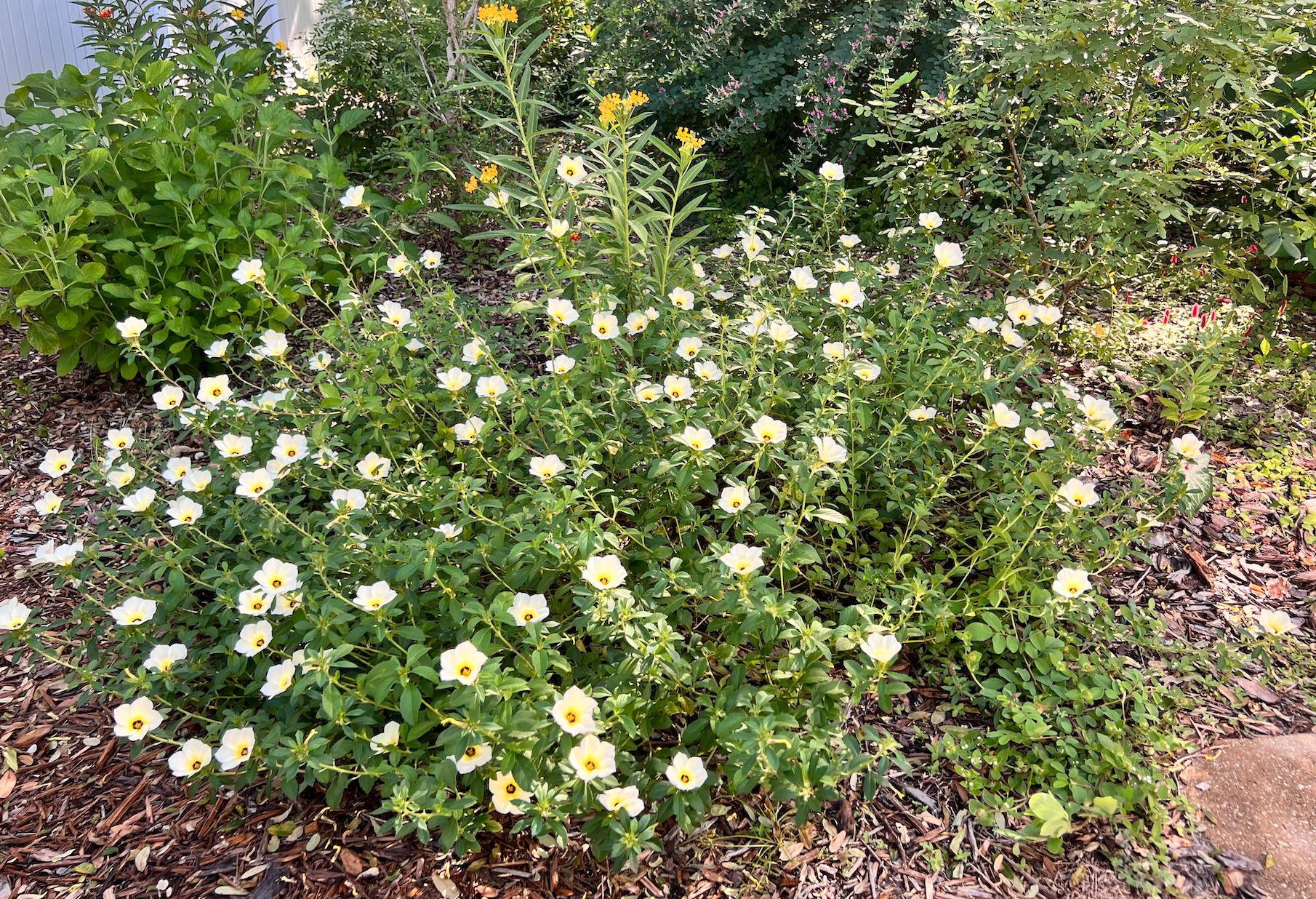
Turnera ulmifolia ‘Alba’
White Beach Buttercup is an eye-catching non-native Florida friendly that blooms throughout the year. It is a low-growing, sprawling subshrub with dark green leaves and flowers that open in the morning and close up by noon. White Beach Buttercup grows in full sun to part shade and average to moist well-draining soils. While it can grow a little leggy, you can trim it back to keep it more dense and amend the soil with a slow-release organic fertilizer or compost occasionally. The creamy-white flowers with a yellow blushed, “black-eye” attract bumblebees, carpenter bees, hummingbirds, and other pollinators.
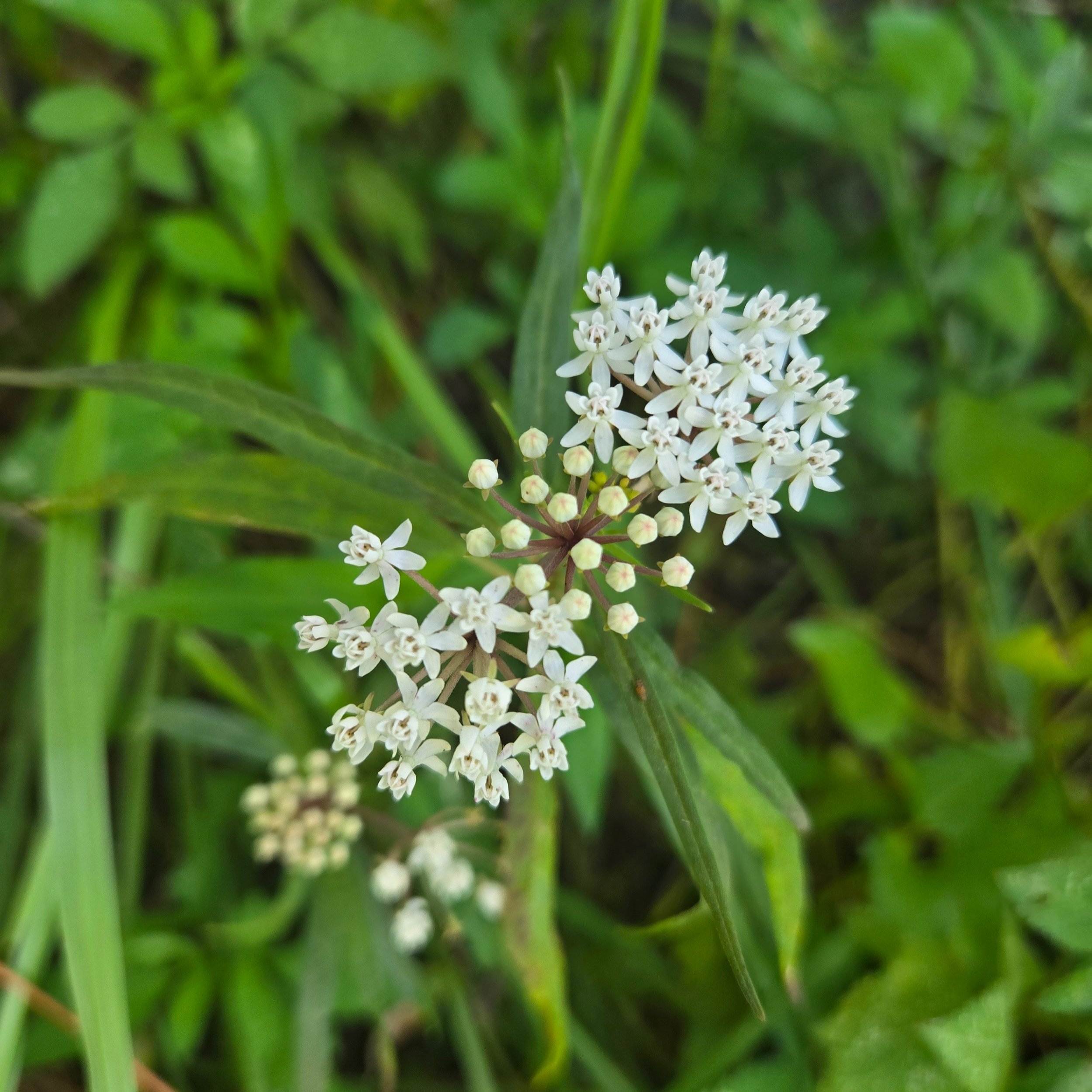

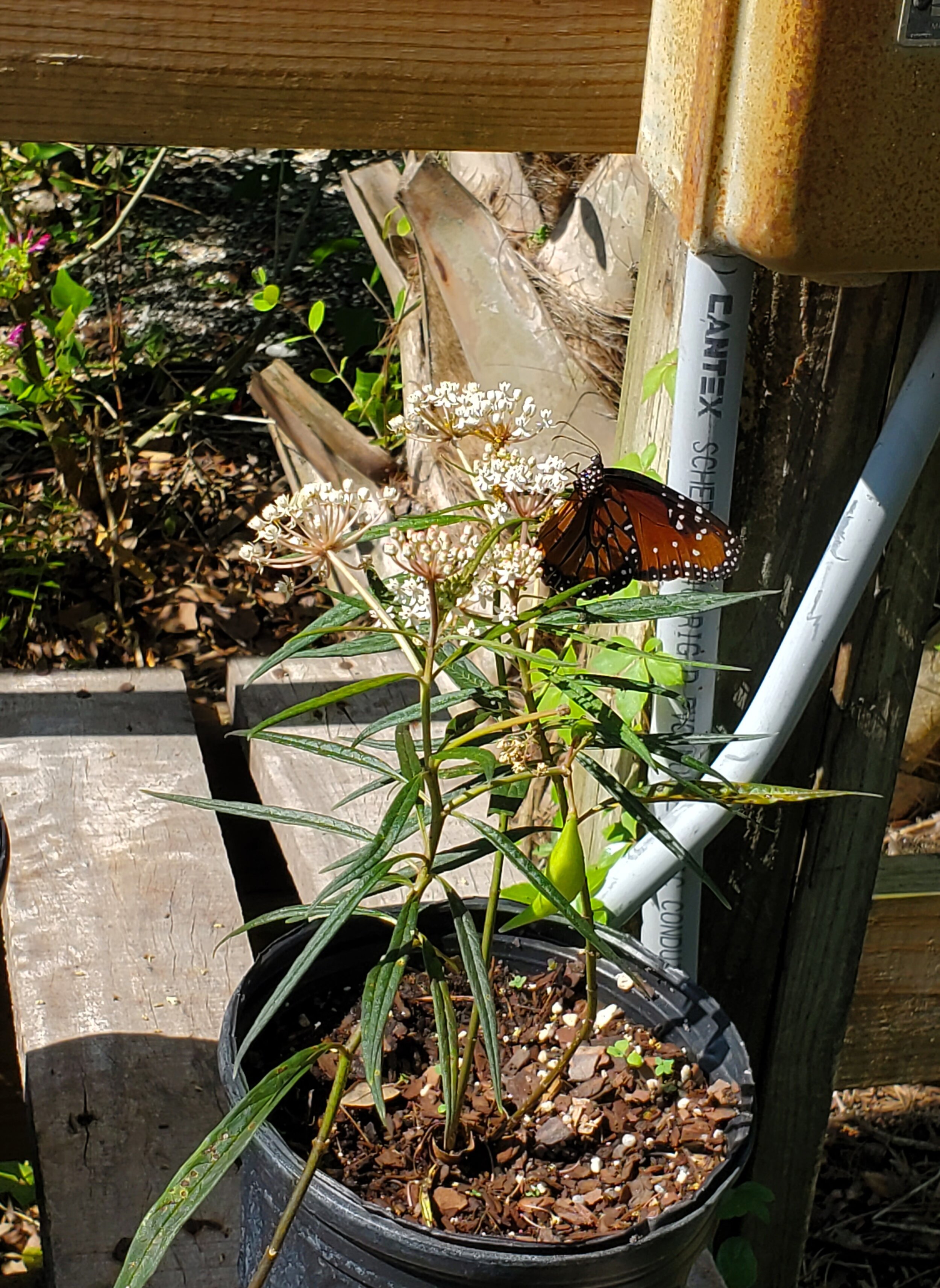
Asclepias perennis
aka Aquatic Milkweed
A. perennis is a perennial, reseeding small wildflower that likes wetter conditions but if planted in shadier spots can be quite drought tolerant once established. It's white flowers bloom from spring though fall and serve as a nectar source for many pollinators. As a native milkweed, this plant is a well-known host for Monarch and Queen butterflies, but it also serves as a host plant for a few cool moths and unique to this genus bugs. A. perennis works well in butterfly gardens, along pond edges and in containers.

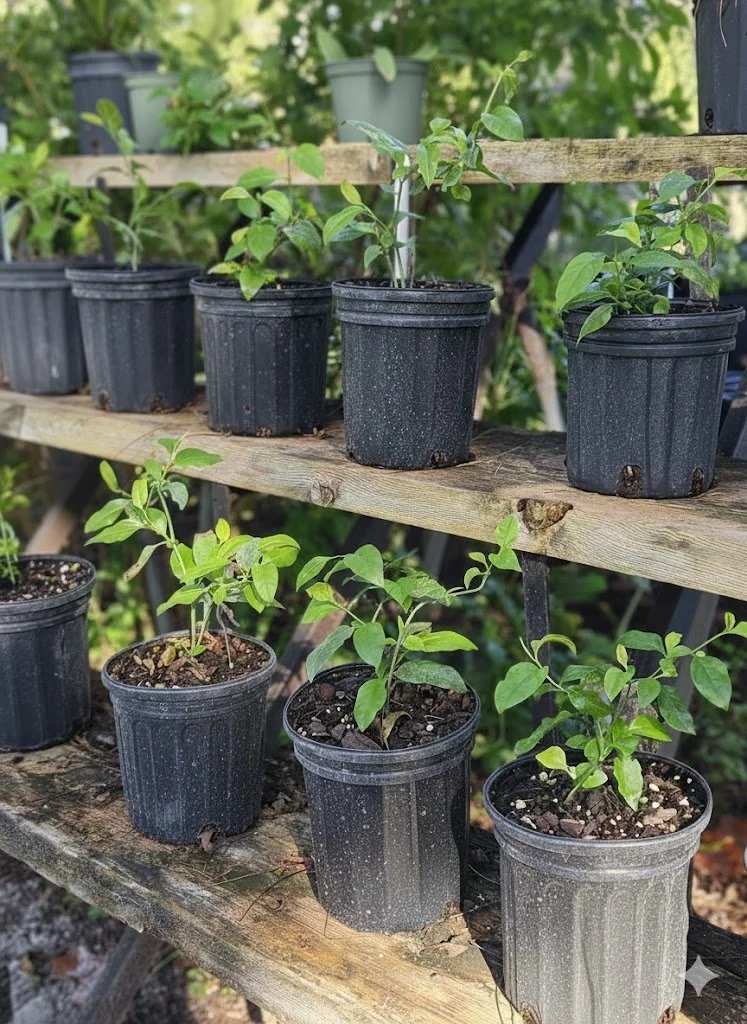
Plumbago zeylanica
White Plumbago is a charming, evergreen, perennial, native vine that deserves a spot in every Florida garden! White Plumbago is a vigorous climber or groundcover, reaching 4', with a sprawling growth habit featuring delicate white tubular flowers and sticky seed capsules that attract butterflies and beneficial pollinators. It thrives in partial shade to full sun and is deer resistant and drought tolerant once established.

Lysiloma latisiliquum
Wild Tamarind is a native, semi-deciduous, small shade tree that grows to be 30’-60’ tall with a 30’-50’ spread. It grows best in full sun and well-drained sandy soil. With its fern-like leaves and beautiful, white pom-pom flowers, Wild Tamarind makes a lovely addition to pollinator gardens and landscapes that need a shade tree that won’t get too large. They also serve as a larval host for the Mimosa Yellow and Cassius Blue butterflies.


Viola sororia
Common Violet is a stemless, rhizomatous perennial native to Florida. This low-growing species features glossy, heart-shaped leaves that are edible. It produces attractive white flowers with some blue veining that bloom in mid-spring and in winter. It thrives in moist, rich soils and dappled sunlight but adapts to various light conditions and soil types. Known for spreading to form pollinator-friendly ground cover it's valued for naturalizing in woodland gardens and shaded areas.
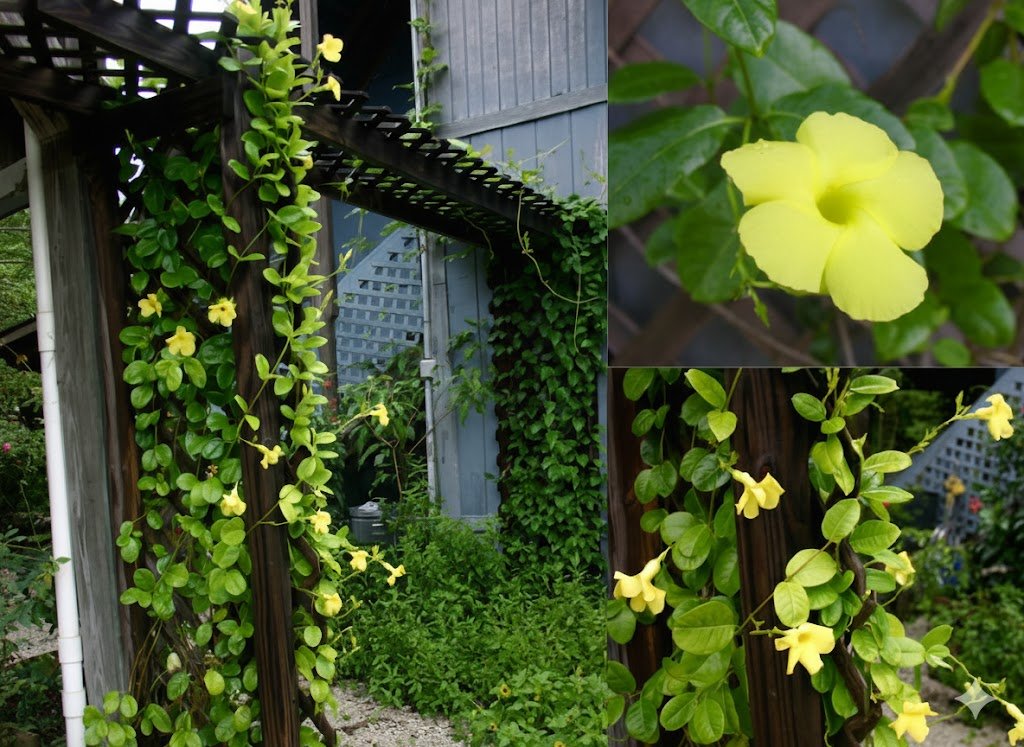
Pentalinon luteum
Wild Allamanda is a vigorous, evergreen vine that produces clusters of bright yellow, trumpet-shaped flowers nearly year-round. It can climb or sprawl 10-20 ft, making it ideal for trellises, fences, or as a sprawling groundcover. This low-maintenance native is drought-tolerant once established and thrives in full sun to partial shade. Its cheerful blooms attract butterflies and hummingbirds, while its glossy foliage provides lush, tropical appeal to the landscape.
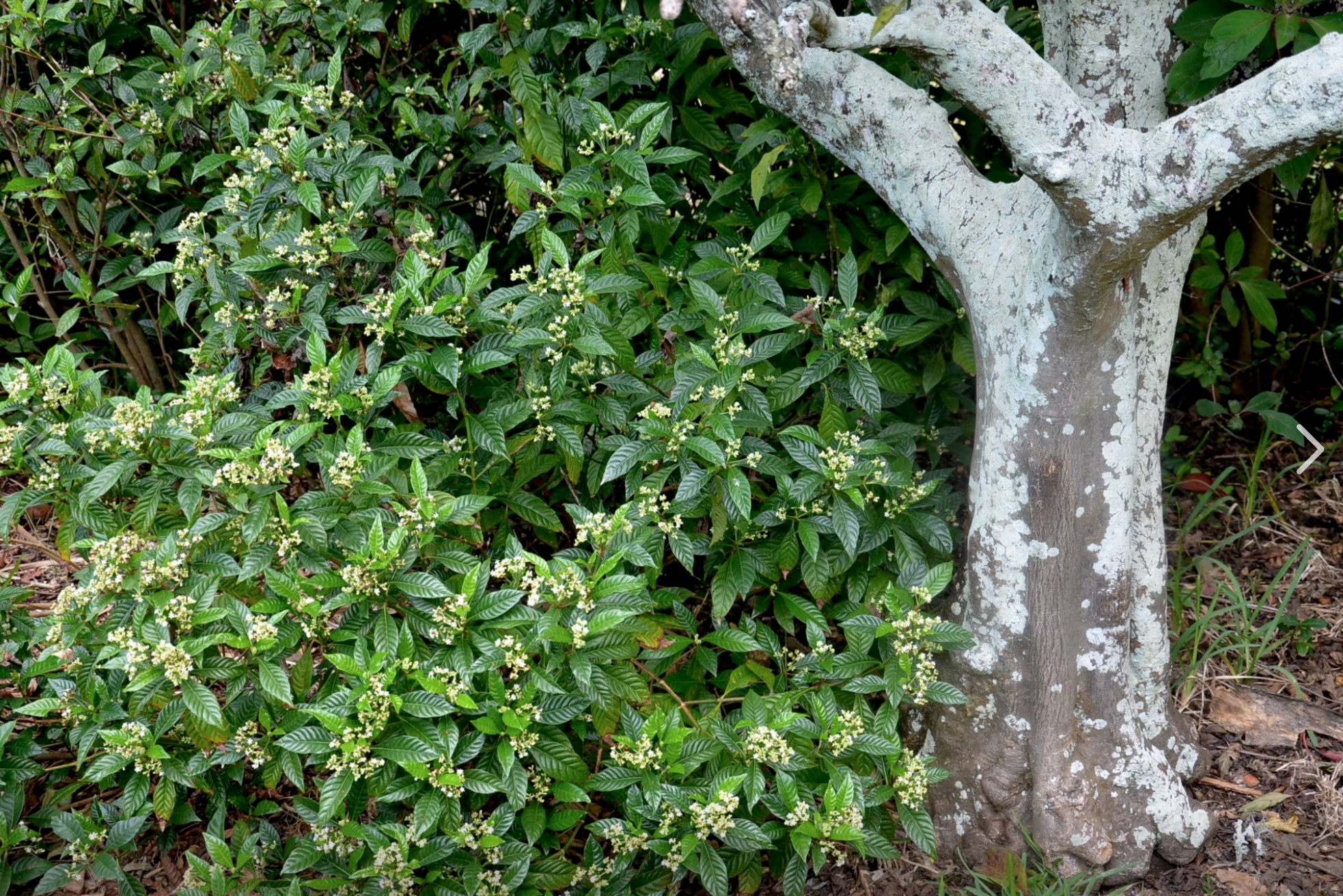
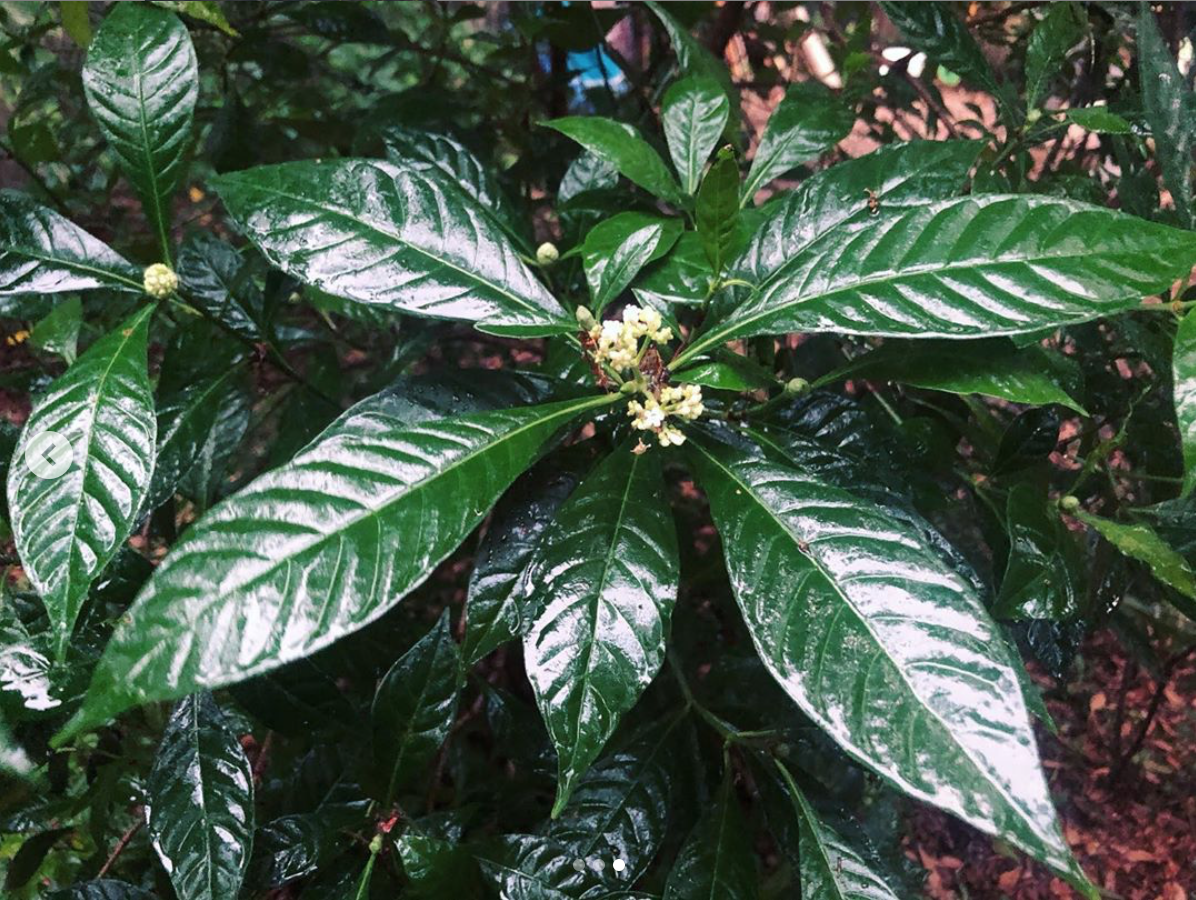
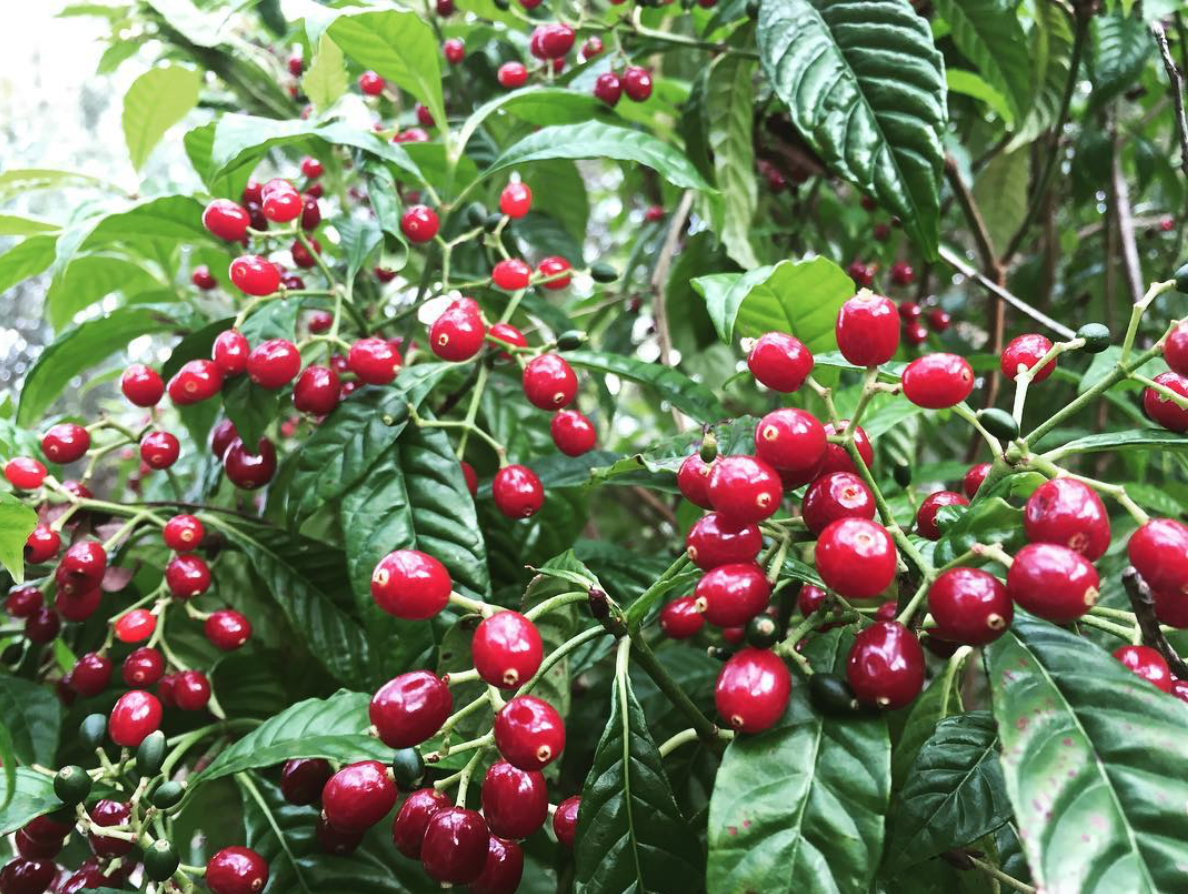
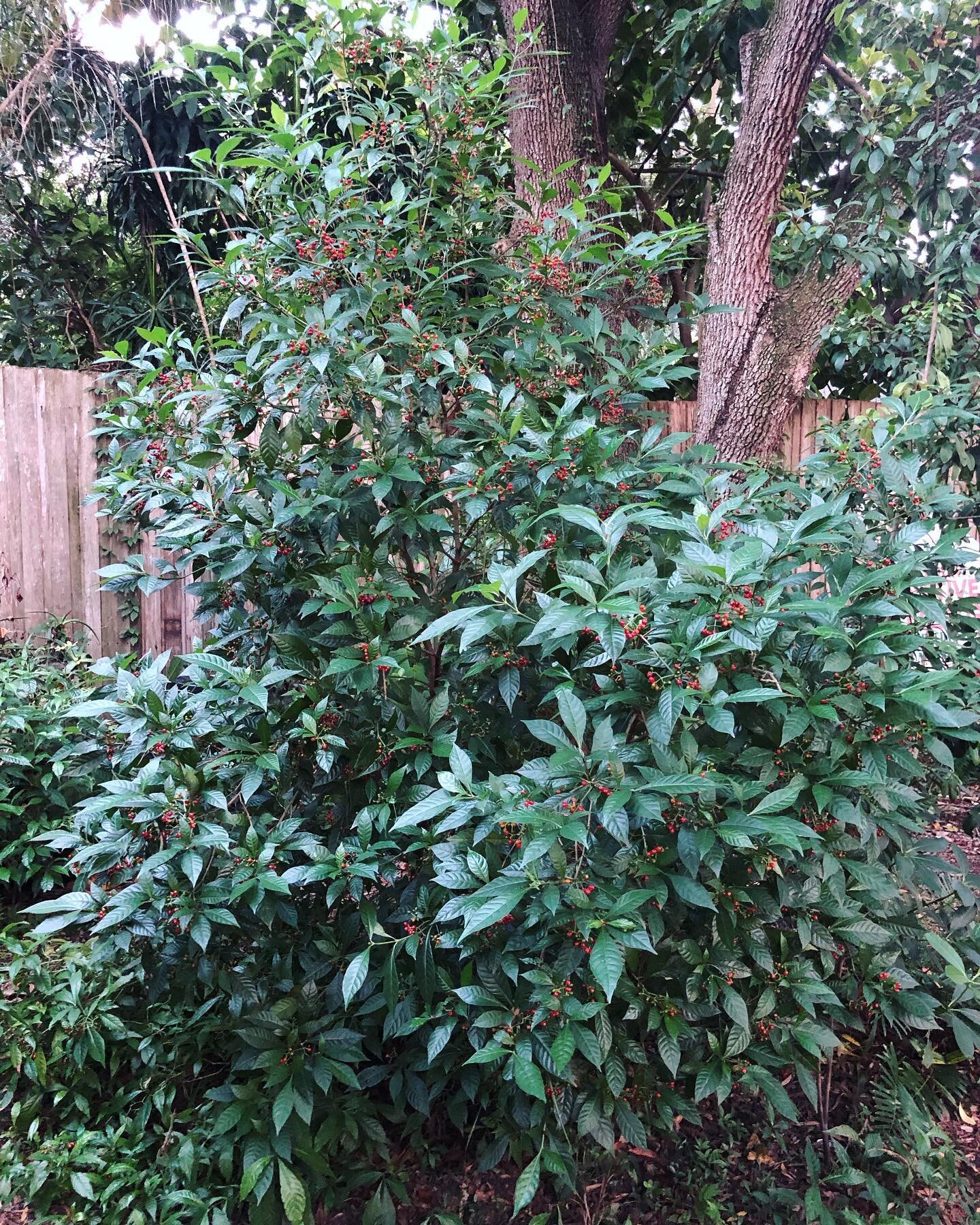
Psychotria nervosa
Wild Coffee is an evergreen shrub native to Florida and the southeastern United States that grows 4’-10’ tall with glossy, dark green leaves featuring deeply impressed veining. This versatile member of the coffee family produces clusters of small, fragrant white flowers at branch tips in spring and summer, followed by bright red berry-like fruits that resemble coffee beans but contain no caffeine. The attractive red berries provide important food for birds and wildlife throughout summer and fall. Extremely shade-tolerant and adaptable to various growing conditions, it thrives in partial to full shade with moderate drought tolerance, making it an excellent choice for informal hedges, understory plantings, and natural landscapes in zones 9-11.
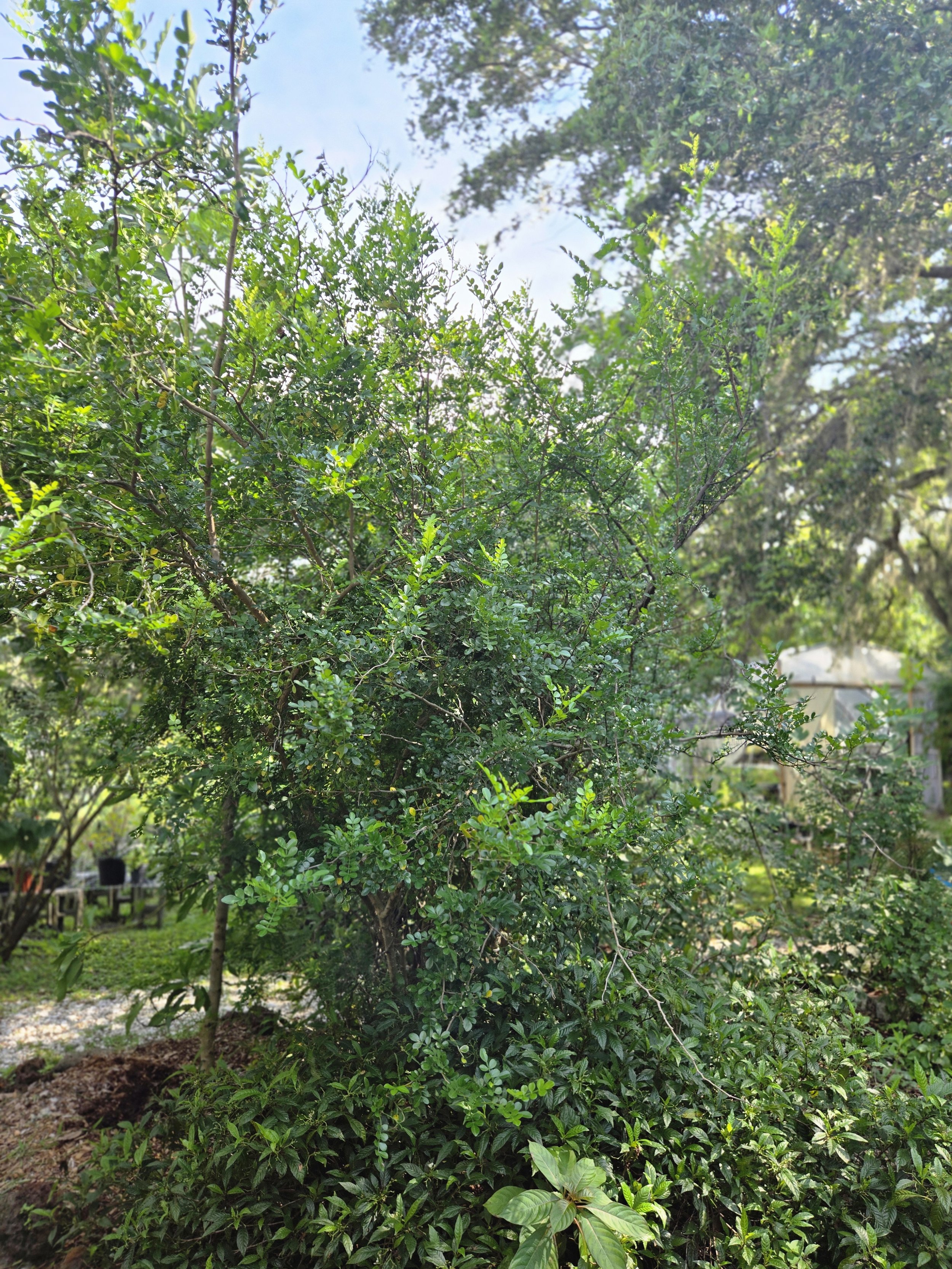
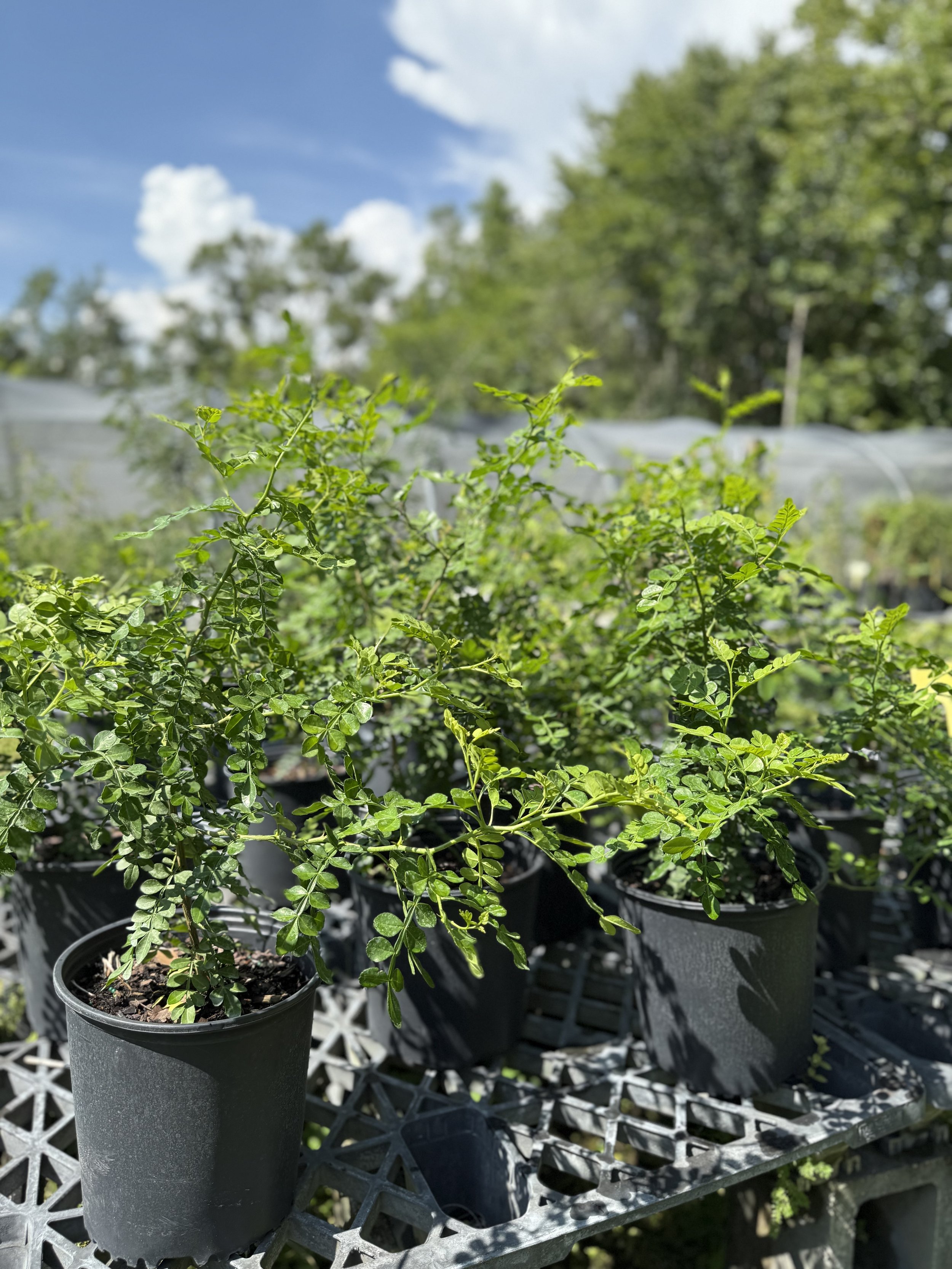
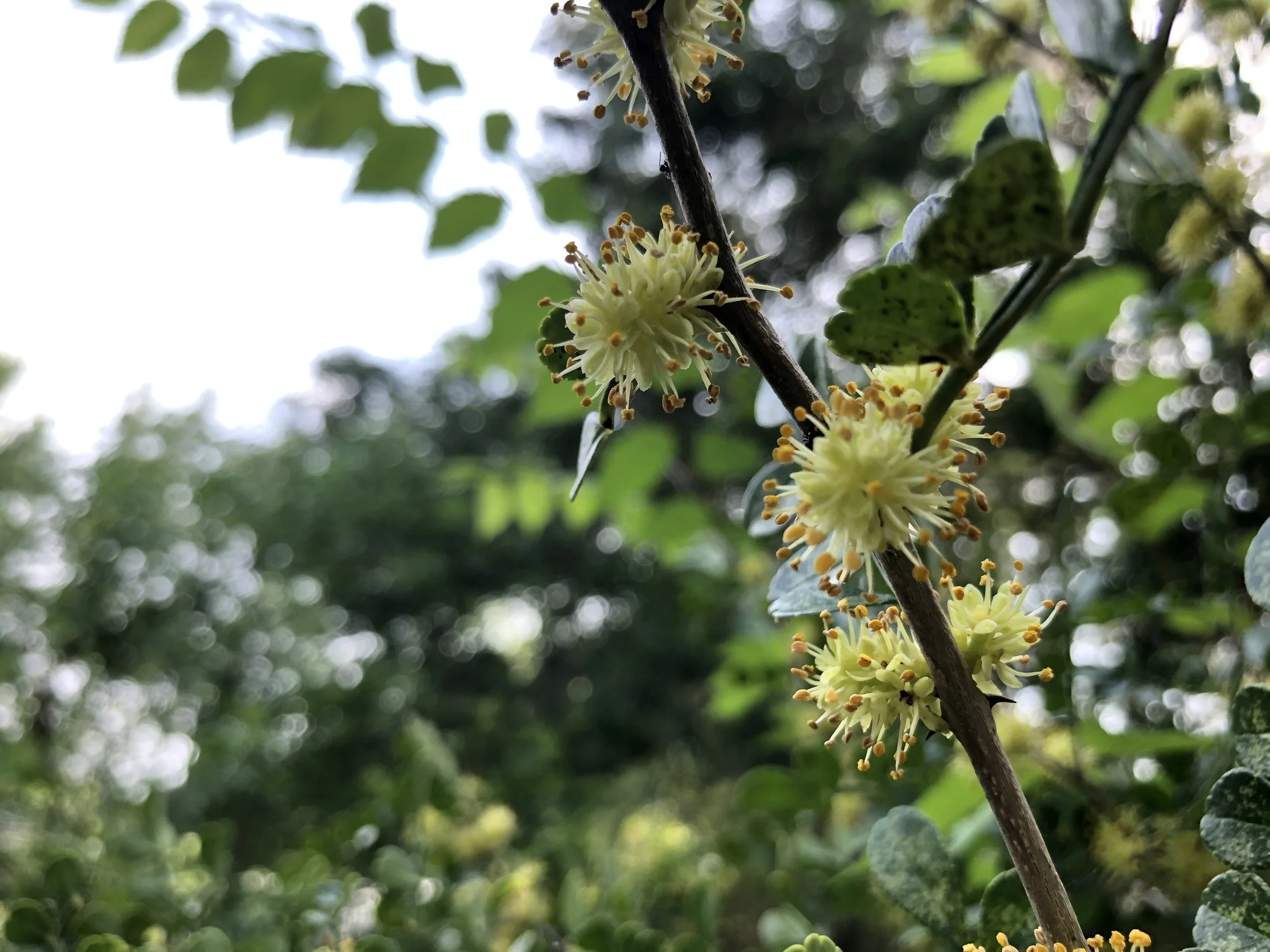
Zanthoxylum fagara
Wild Lime is a native evergreen shrub or small tree native to southern Florida and the Florida Keys that grows up to 23 feet tall with a spreading, often multi-trunked form. This member of the citrus family features compound leaves with distinctly winged leaf stems and 7-11 rounded leaflets that emit a strong lime fragrance when crushed. The trunk and branches are armed with sharp spines, and it produces small, greenish-yellow flowers in dense clusters followed by brown seed capsules containing black seeds. Thriving in hammocks and woodland edges, it serves as a larval host plant for giant swallowtail butterflies and provides cover and food for various wildlife species. With its dense, thorny foliage, it makes an excellent natural barrier or privacy screen for central and south Florida landscapes.

Fragaria virginiana
Wild Strawberry is a native North American strawberry species that grows naturally in Florida's cooler, higher elevation areas and shaded woodlands. This low-growing perennial produces small, intensely flavorful berries that are much smaller than commercial strawberries but pack more concentrated taste. It's an important native plant that provides food for wildlife and for people. Does well in a hanging basket, pot, or shady garden beds.


Ilex vomitoria
Yaupon Holly is a tough, evergreen shrub or small tree native to the southeastern United States that grows 15’-25’ tall with a distinctive vase-shaped form. This adaptable species features small, dark green leathery leaves and produces inconspicuous greenish-white flowers in spring, followed by brilliant red berries on female plants that attract birds and wildlife. Historically used by Native Americans to make caffeinated ceremonial tea, it's extremely drought and salt-tolerant, thriving in a wide range of conditions from full sun to shade and various soil types. Hardy in zones 7-10, it's valued for its versatility as a hedge, specimen tree, or screen, though it tends to sucker from the roots and may require regular pruning to maintain form.
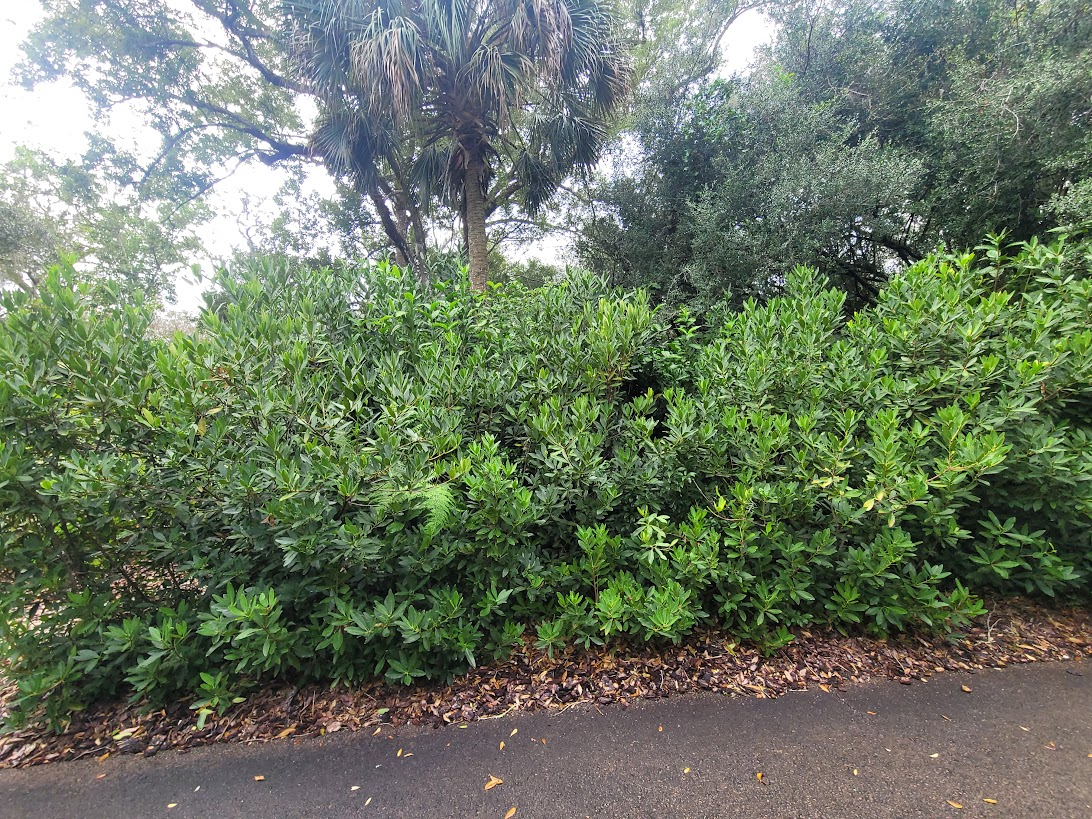
Illiium parviflorum
Yellow Anise is an evergreen, deer-resistant, fragrant shrub that gets about 10’ tall (but is easily pruned) with a rounded, spreading form. This rare species features glossy, leathery olive-green leaves that emit a strong anise-like fragrance when crushed. The small, yellow-green flowers in late spring attract butterflies and pollinators and are followed by star-shaped seed clusters. Yellow Anise does well in an area of the garden with partial to full shade and consistent moisture (or irrigation).
No results match your search. Try removing a few filters.