Hi Friends!
We offer PICK UP or LOCAL DELIVERY only (NO SHIPPING).
Thank you!
Thursday–Sunday, 10am–4pm | 941-322-1915
We offer PICK UP or LOCAL DELIVERY only (NO SHIPPING).
Thank you!
Thursday–Sunday, 10am–4pm | 941-322-1915
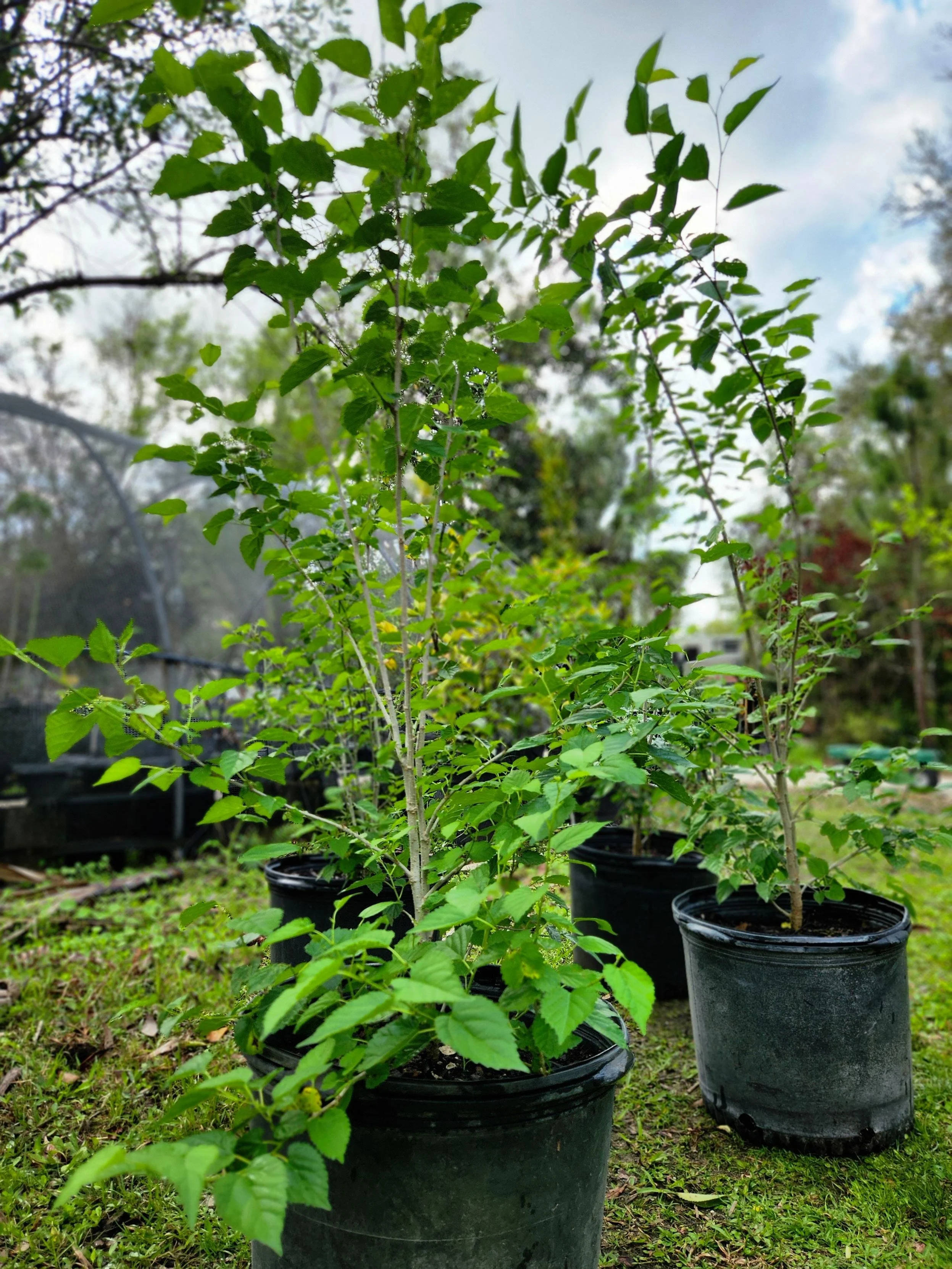
Morus nigra
Florida-friendly, dwarf variety. The Everbearing Mulberry is a low-maintenance, self-fertile, edible black mulberry. Perennial shrub or small tree. They do well in full sun, with moist, but well-drained soil. Use an organic, slow release fertilizer. They bloom year-round and fruit Spring through Summer. Also works well as a potted plant!
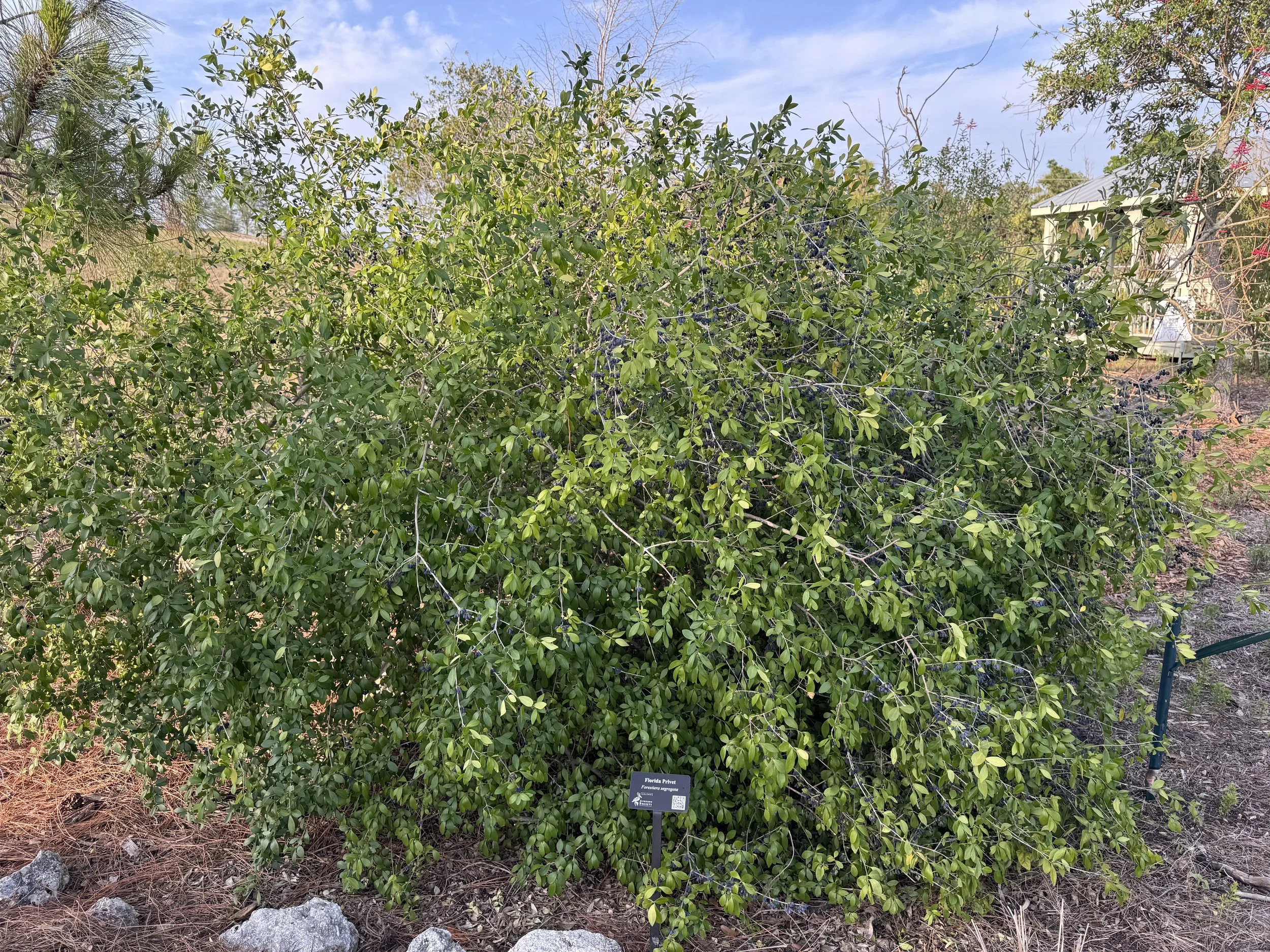
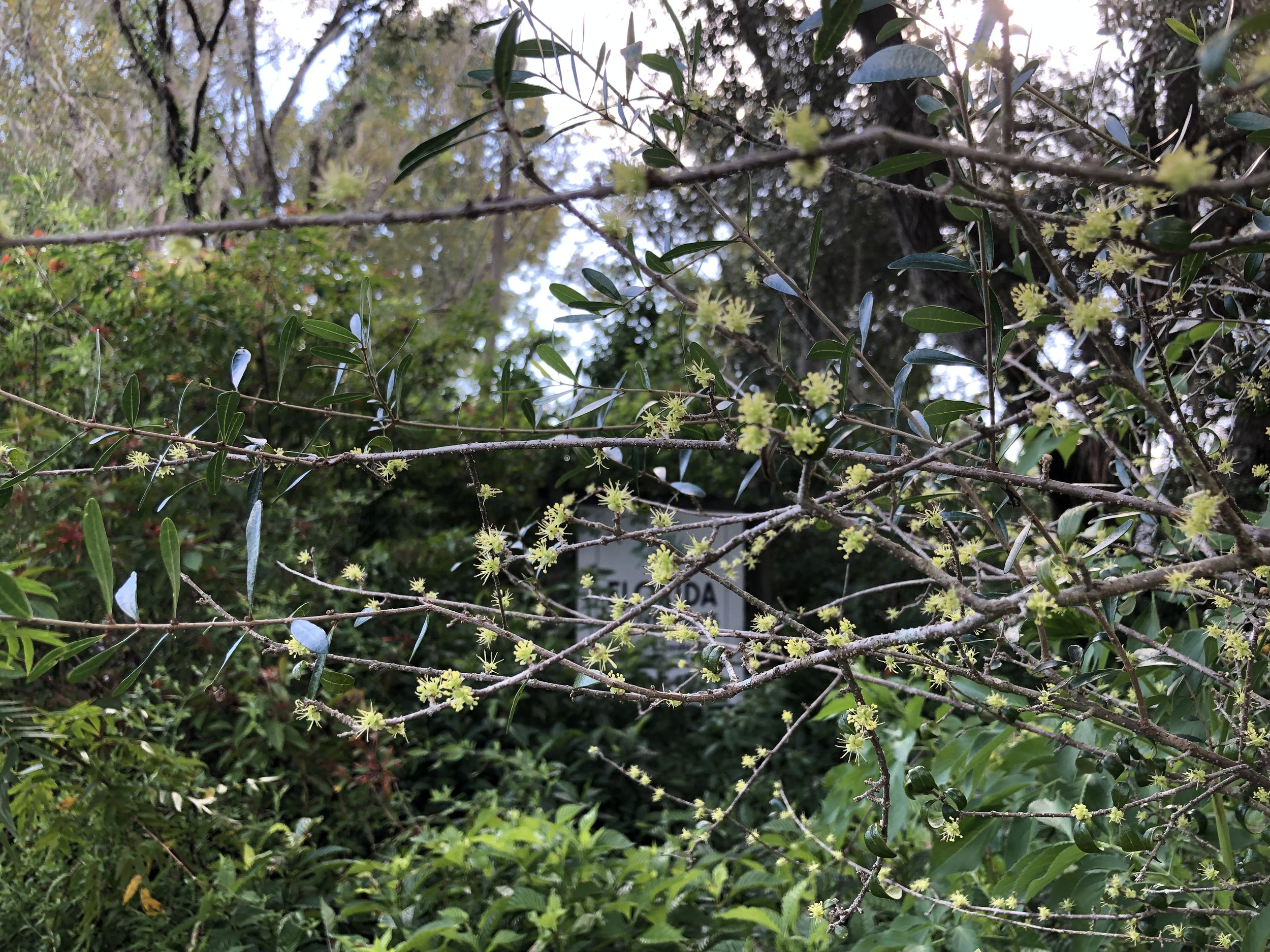
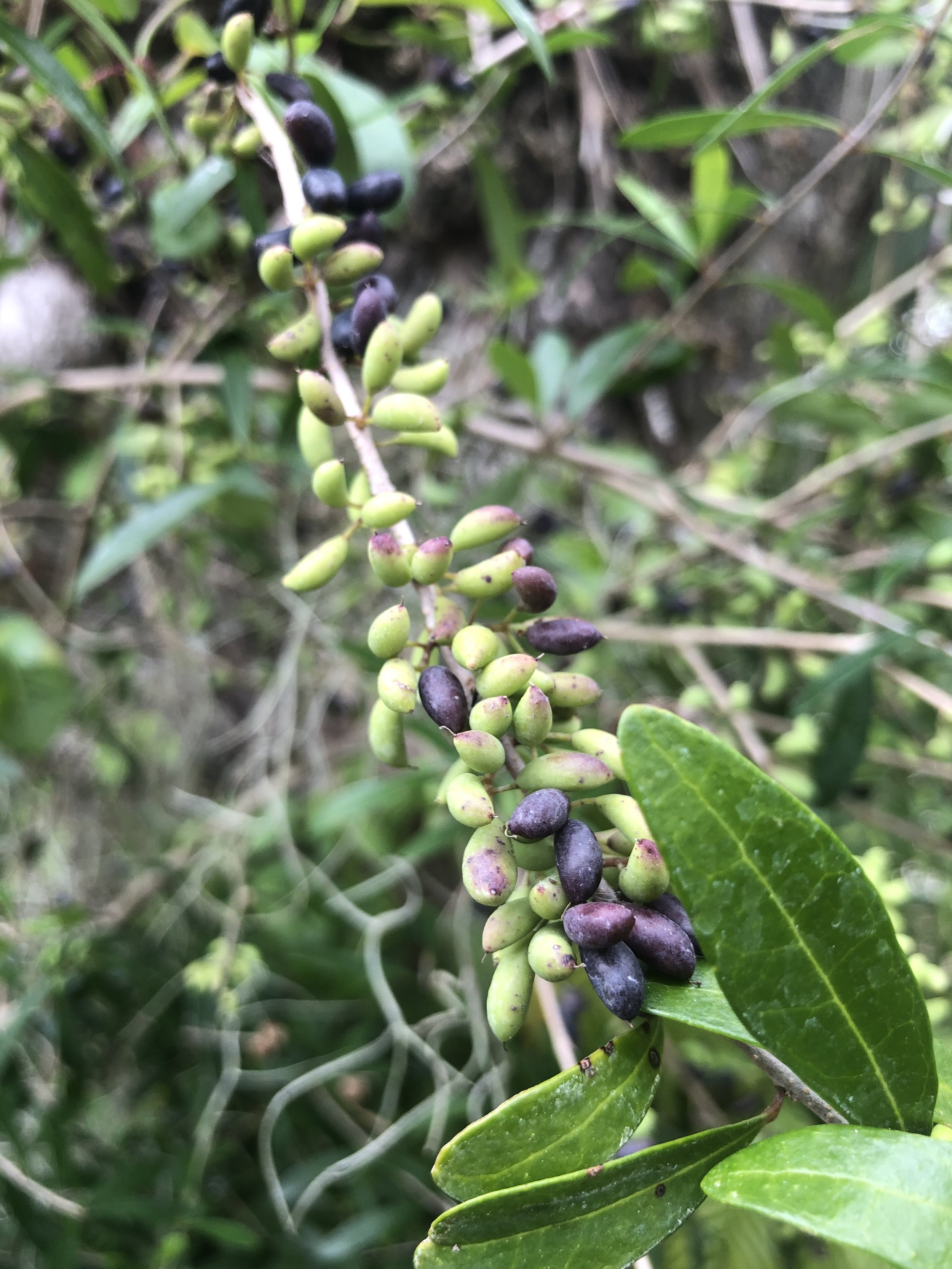
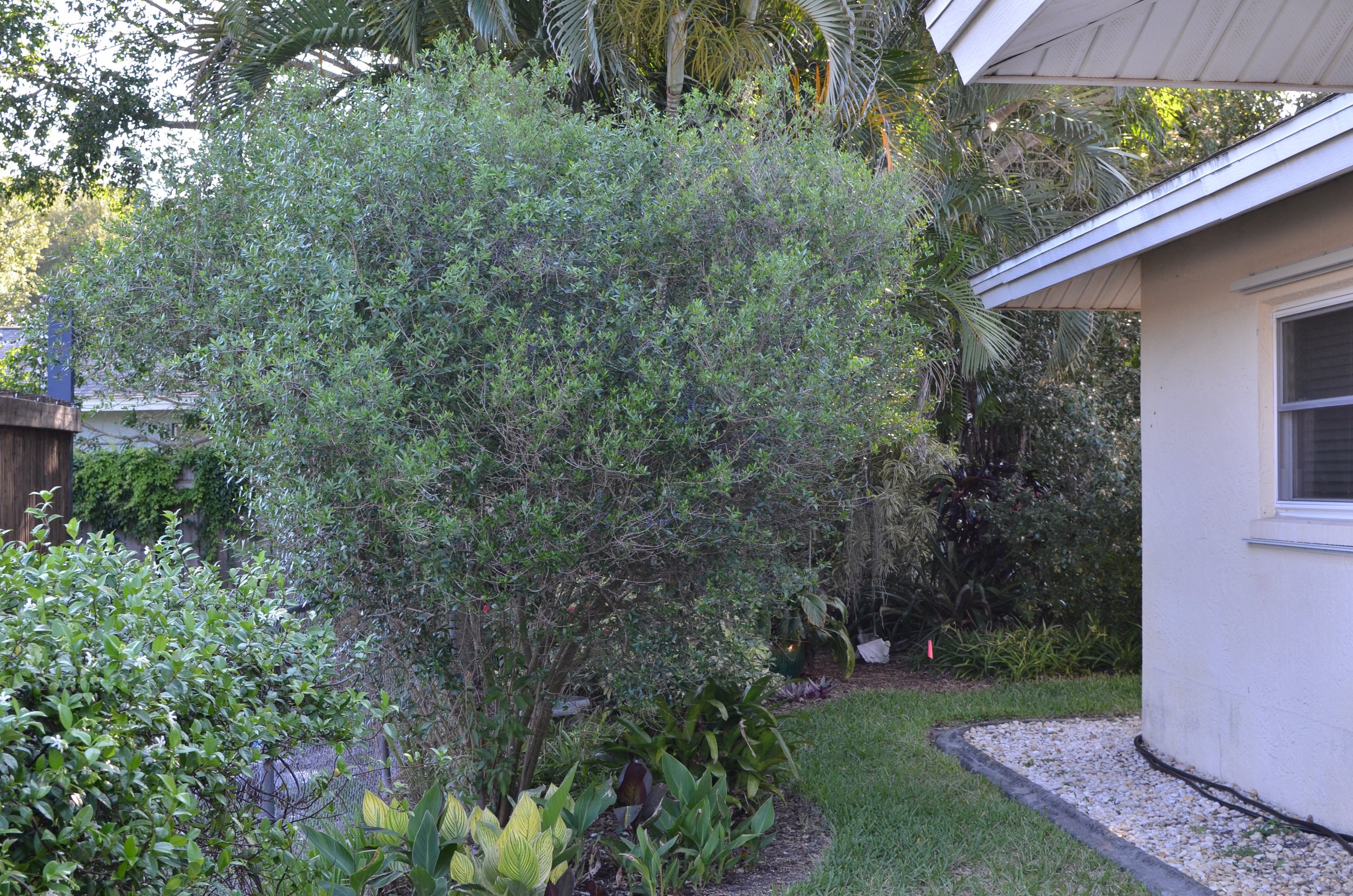
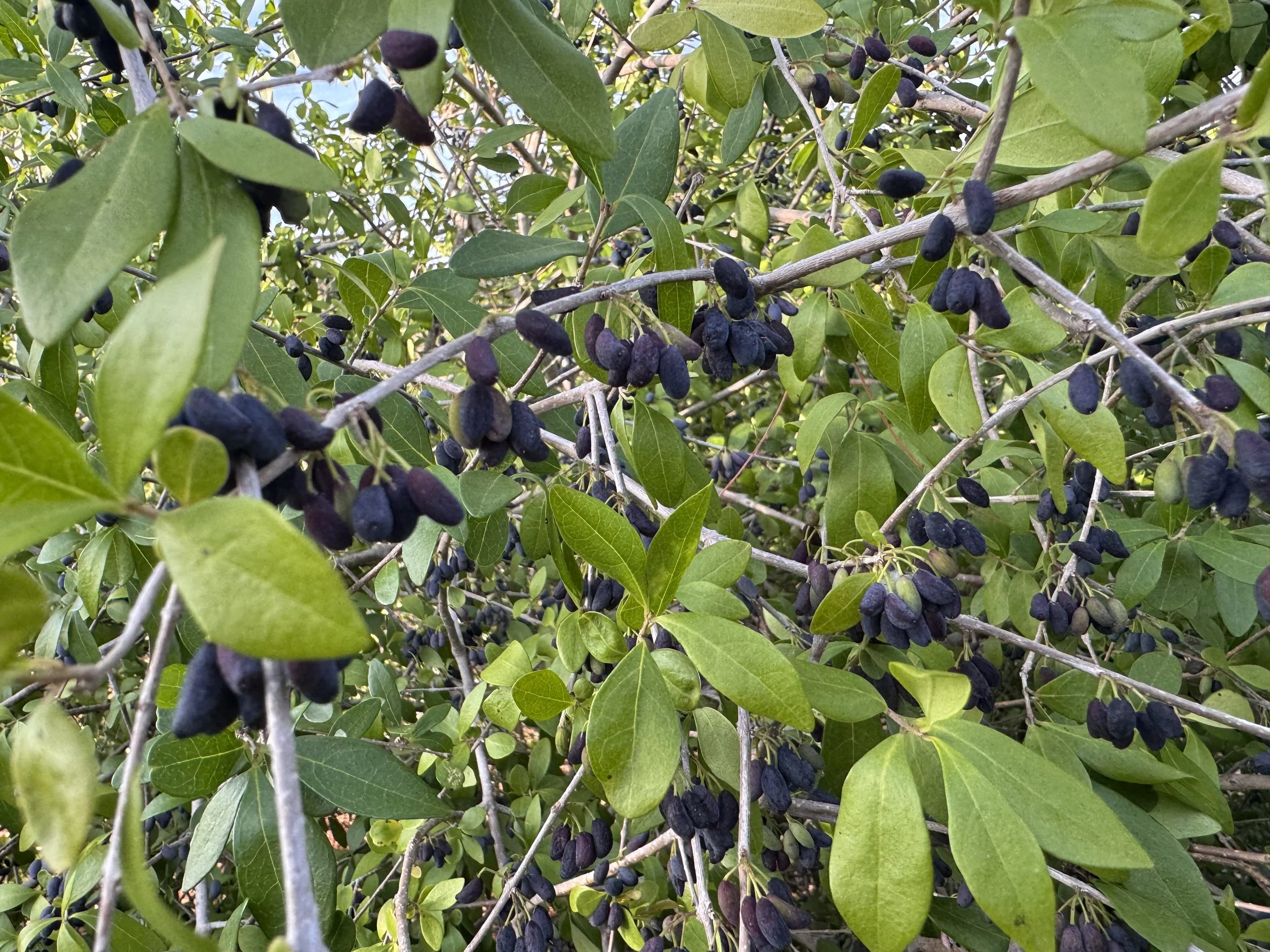
Forestiera segregata
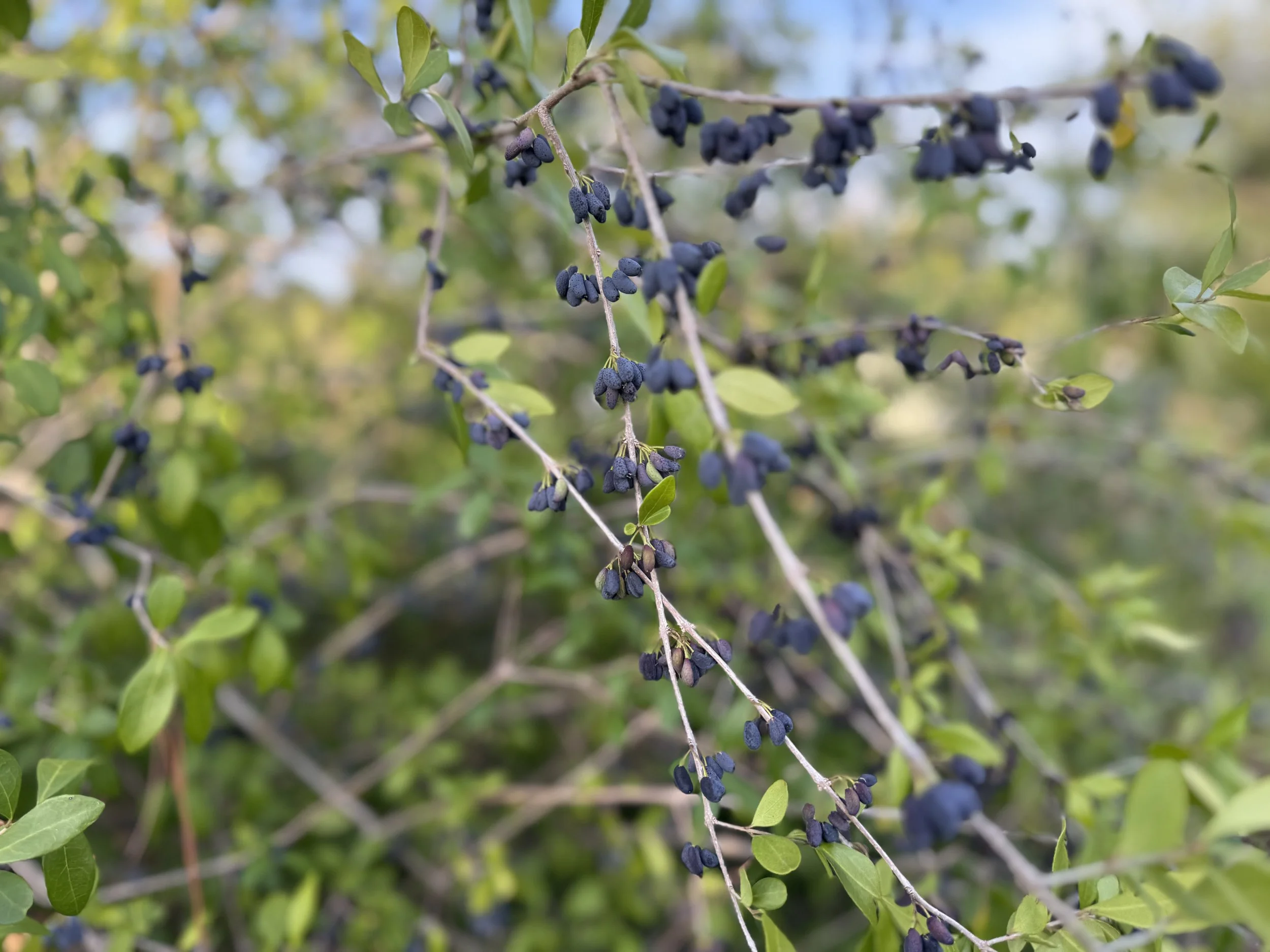
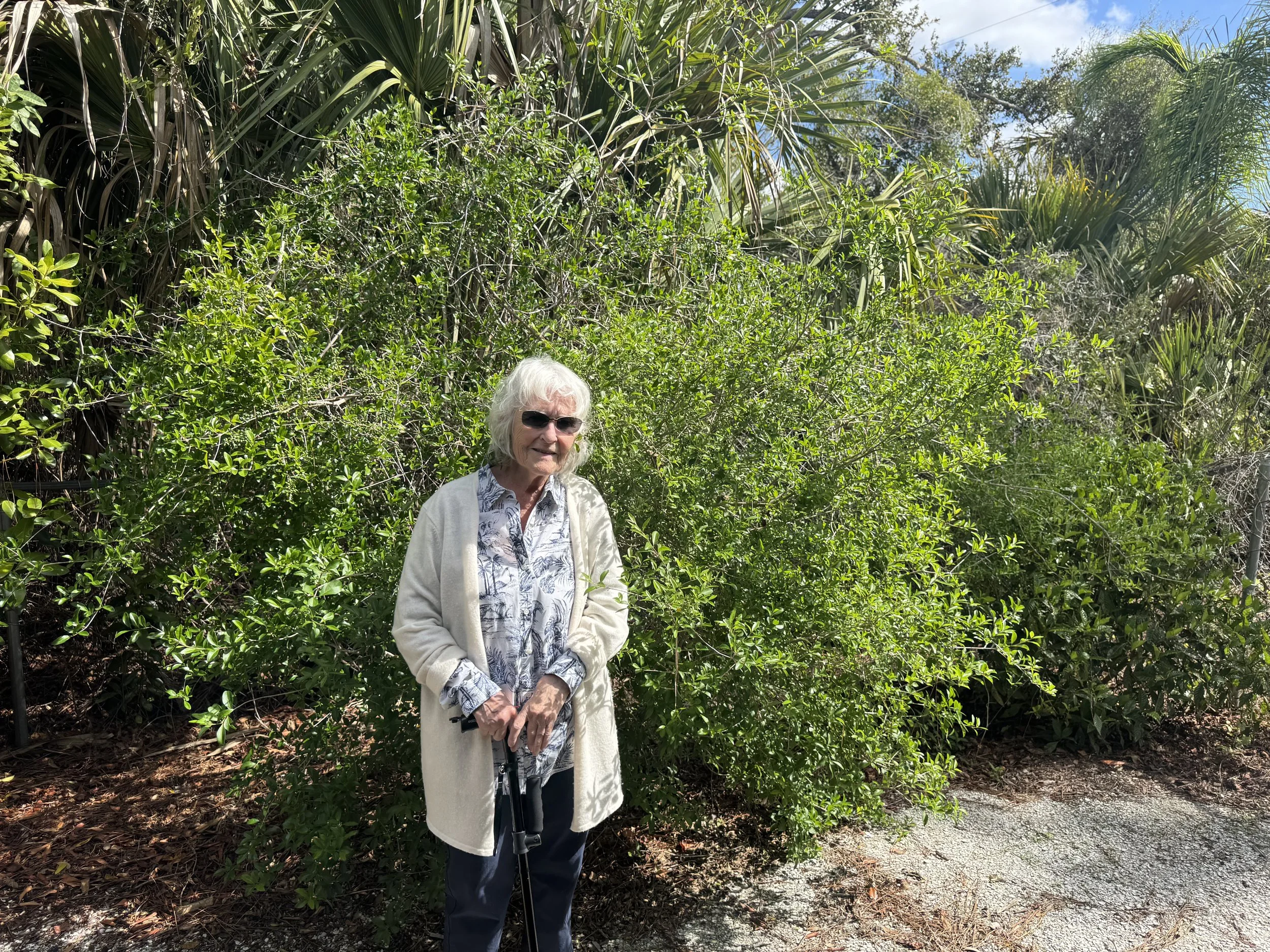
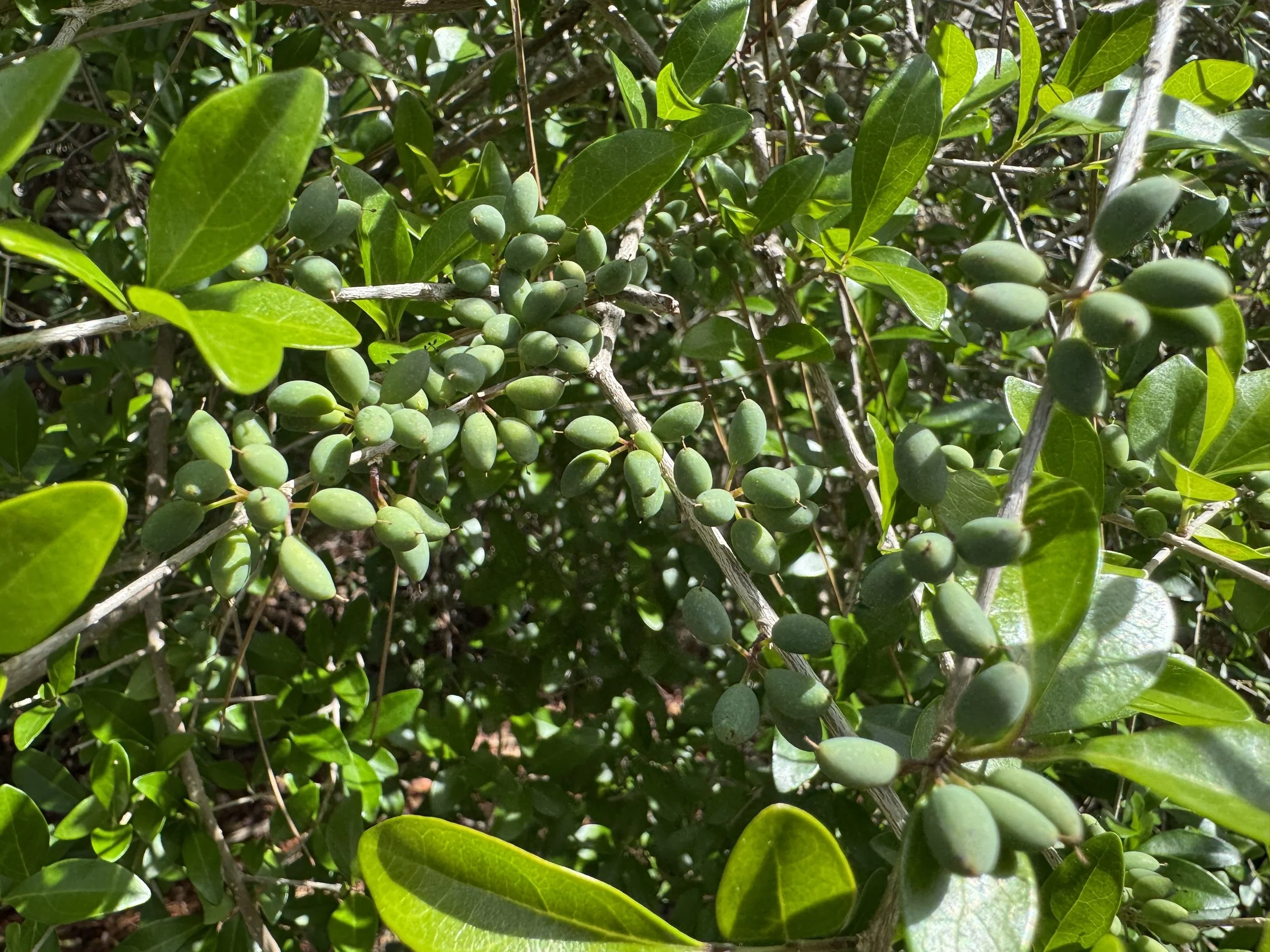
Florida Privet is a versatile native evergreen shrub that typically grows up to 15’t tall and 10’ wide. It is highly adaptable and easy to maintain, as it responds well to pruning and can be kept as a formal hedge or a small specimen tree. It thrives in full sun to light shade and prefers average to dry, well-drained soils.
This hardy shrub is exceptionally salt-tolerant, making it an ideal choice for coastal landscapes. Beyond its greenery, it provides essential habitat and food for local wildlife; its small flowers attract pollinators, while the dark berries serve as a valuable food source for birds.

Conocarpus erectus
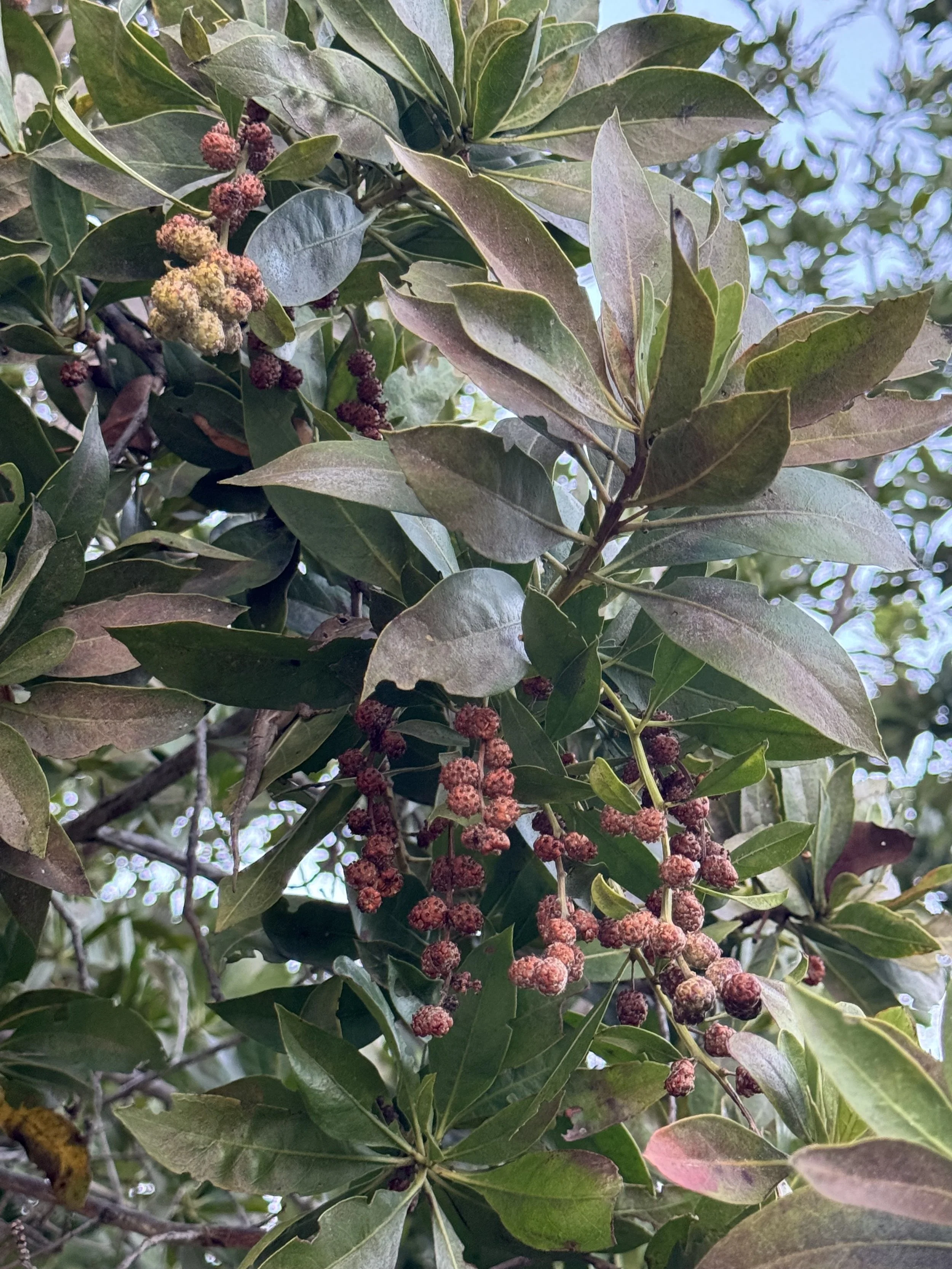
The Green Buttonwood is an evergreen, coastal, native small tree or large shrub that can reach 20' and has vibrant green leaves and small brown berries that look like wood buttons. This buttonwood is considered the 4th type of mangrove and really thrives in coastal conditions, and can take salt water inundation and salty soils. The Buttonwood also has high wind tolerance making it a great windscreen on coastal properties.
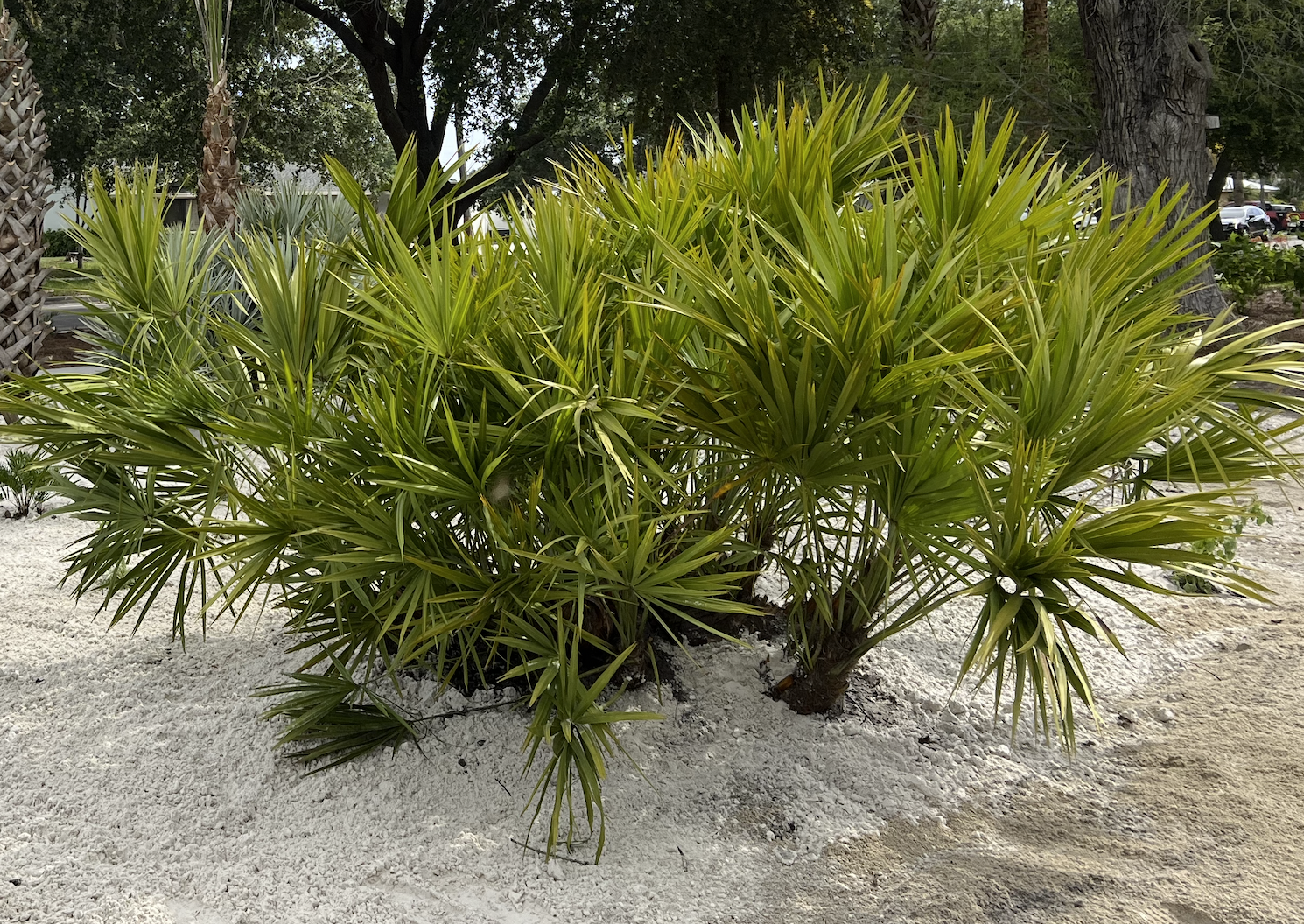
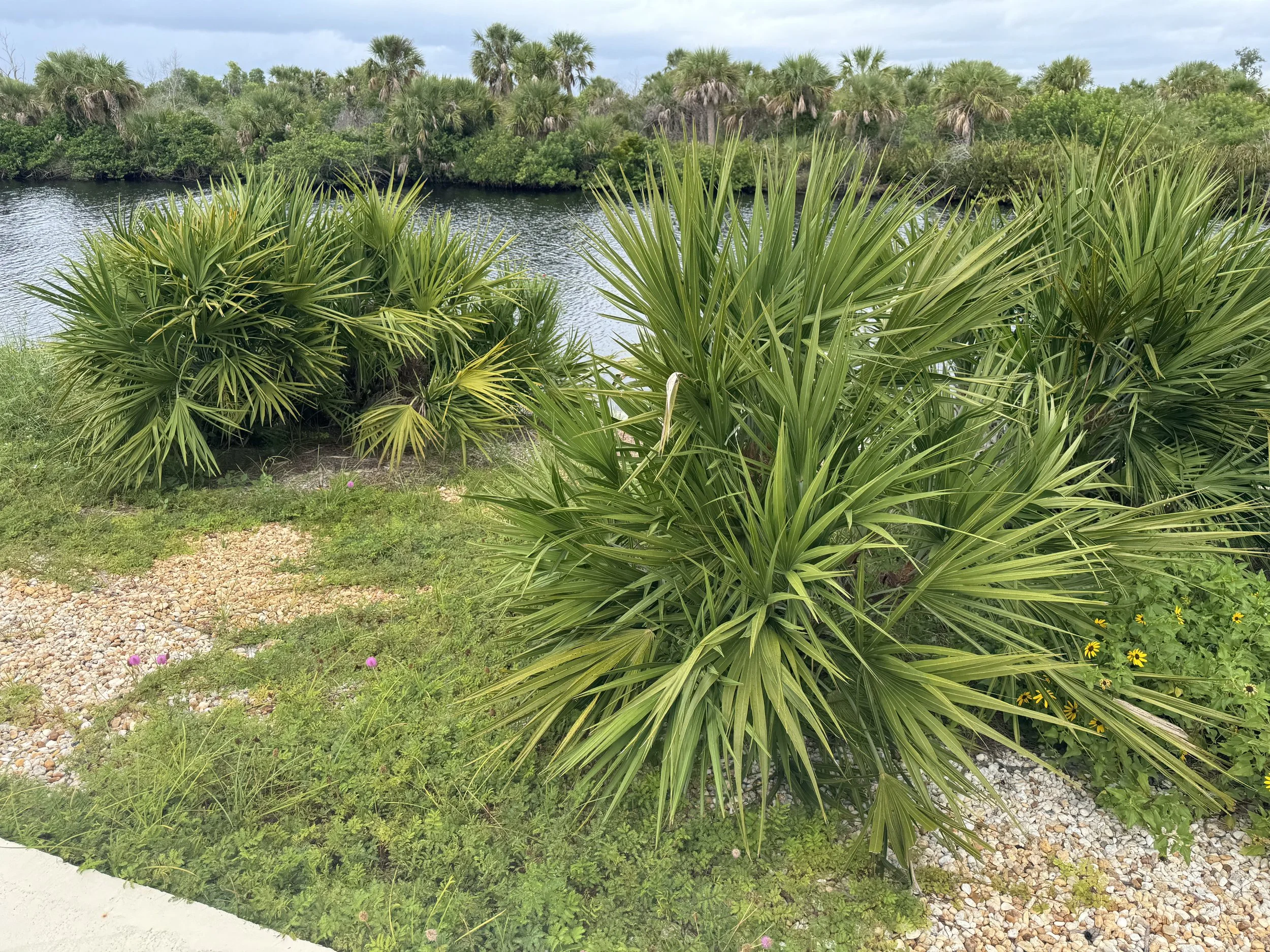
Serenoa repens
The Green Saw Palmetto is a tough, drought-tolerant Florida native fan palm perfect for coastal landscapes and understory planting. It features sprawling horizontal stems, brilliant green fronds, and distinctive saw-toothed leaf stalks. In spring, it produces fragrant blooms that attract pollinators, followed by wildlife-supporting berries. Plant in full sun or shade and dry, sandy soil.
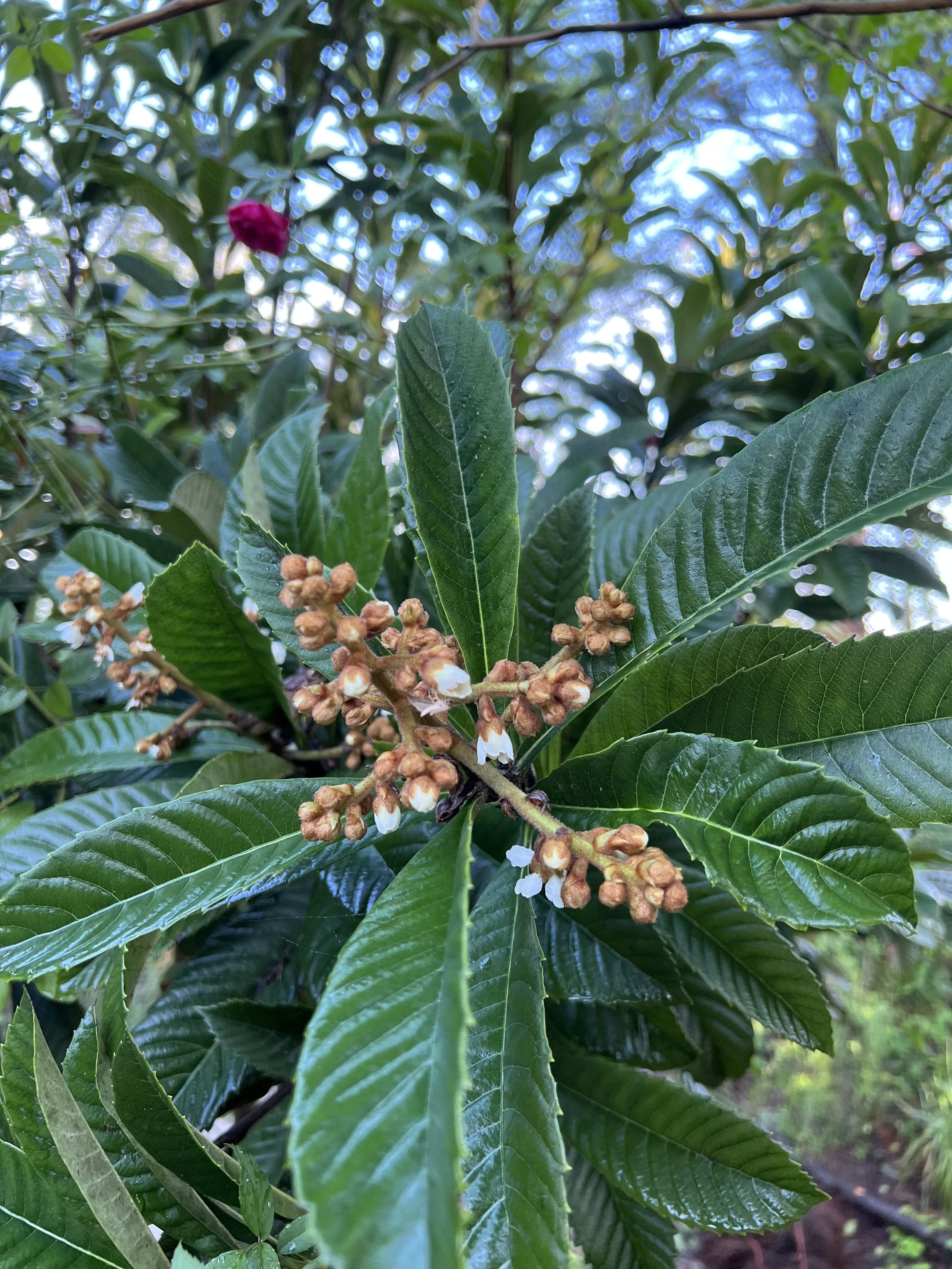
Eriobotrya japonica
Loquat is a non-native, Florida-friendly, evergreen fruiting tree that grows 15’-25’ tall. They grow best in full sun to partial shade, with average, well-draining sandy, clay, or loamy soil. Their flowers are highly attractive to butterflies and other pollinators, and their apricot-like fruit can be enjoyed by humans and wildlife alike.
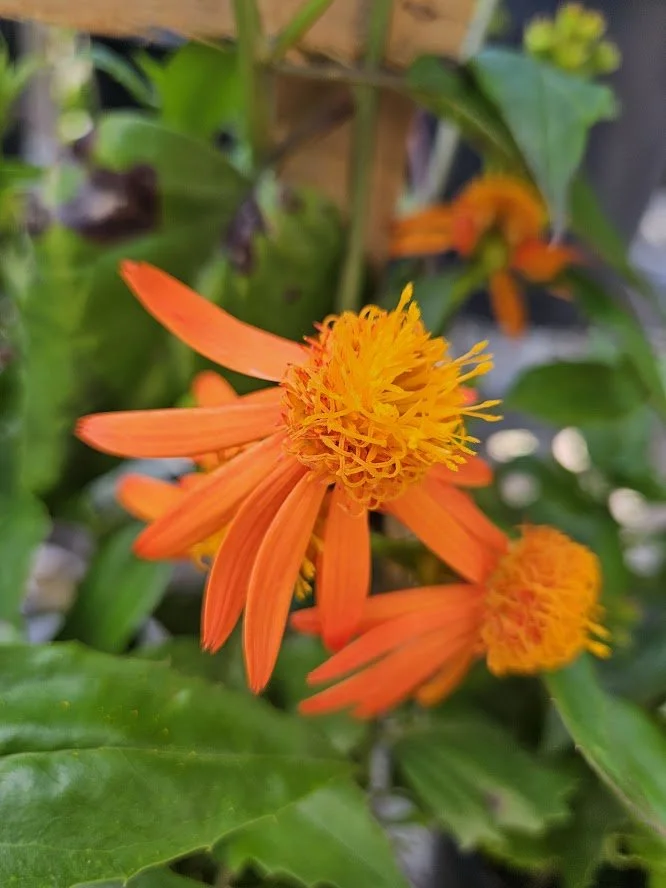
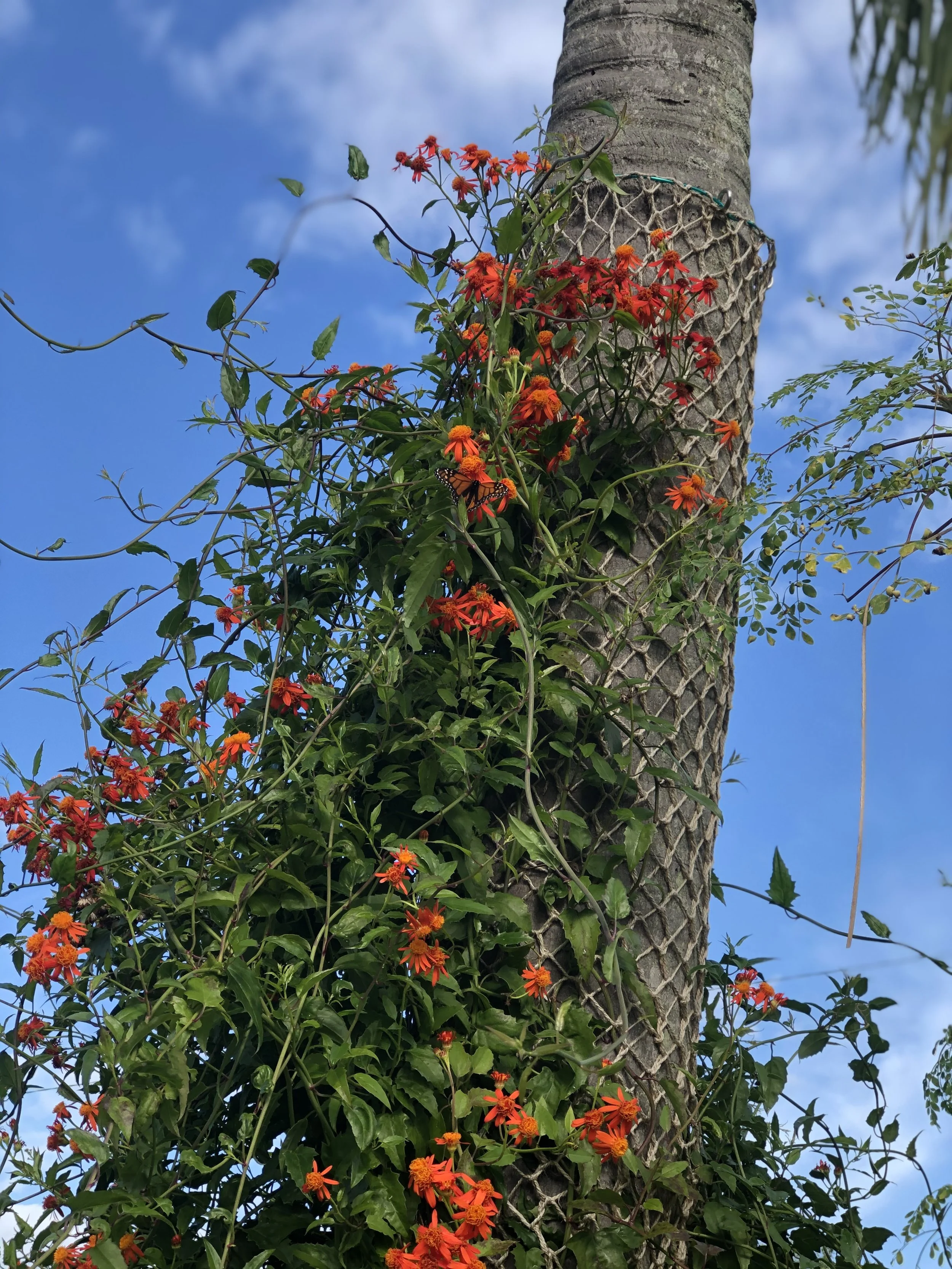
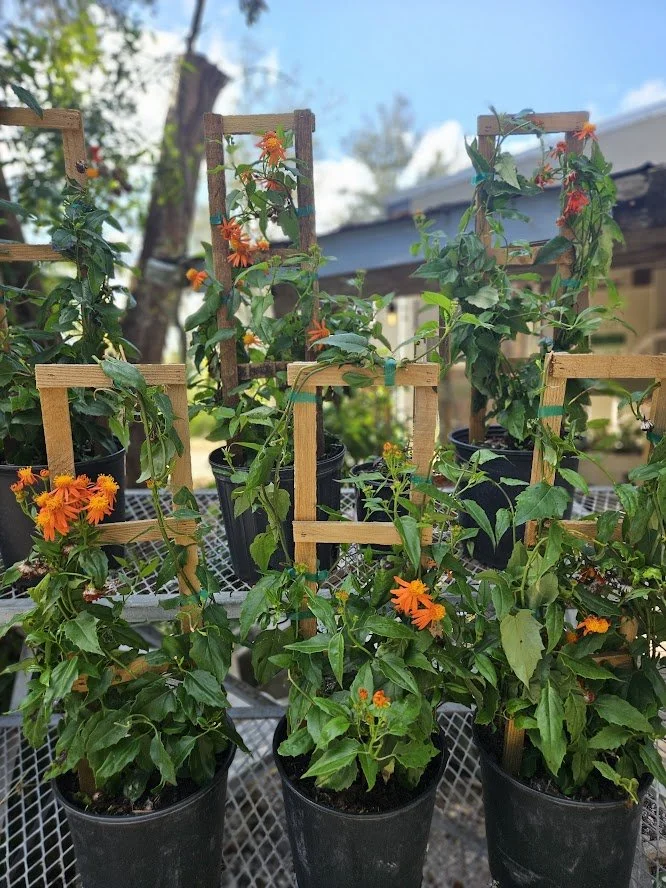
Pseudogynoxys chenopodioides
Mexican Flame Vine is a vigorous, fast-growing evergreen climber native to Mexico and Central America that reaches 12 feet in length with a 6-foot spread. This ornamental vine features attractive arrowhead-shaped leaves with purple undersides and produces clusters of brilliant orange-red daisy-like flowers from late spring through fall. The showy blooms are highly attractive to butterflies, hummingbirds, and bees, making it an excellent choice for pollinator gardens. Hardy in zones 9-11, it thrives in average to organically rich, well-drained soils in full sun to partial shade and tolerates short periods of drought once established.
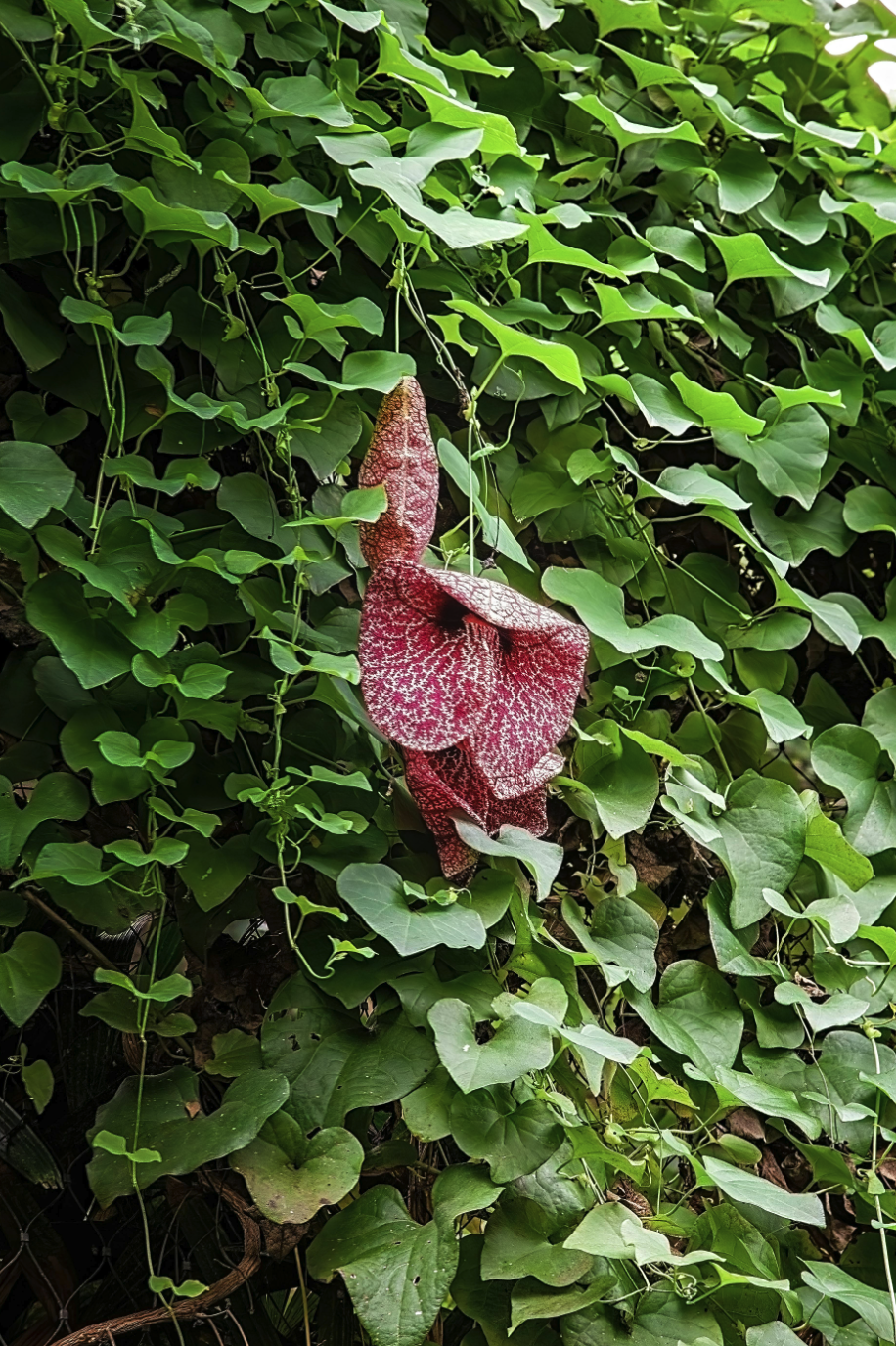
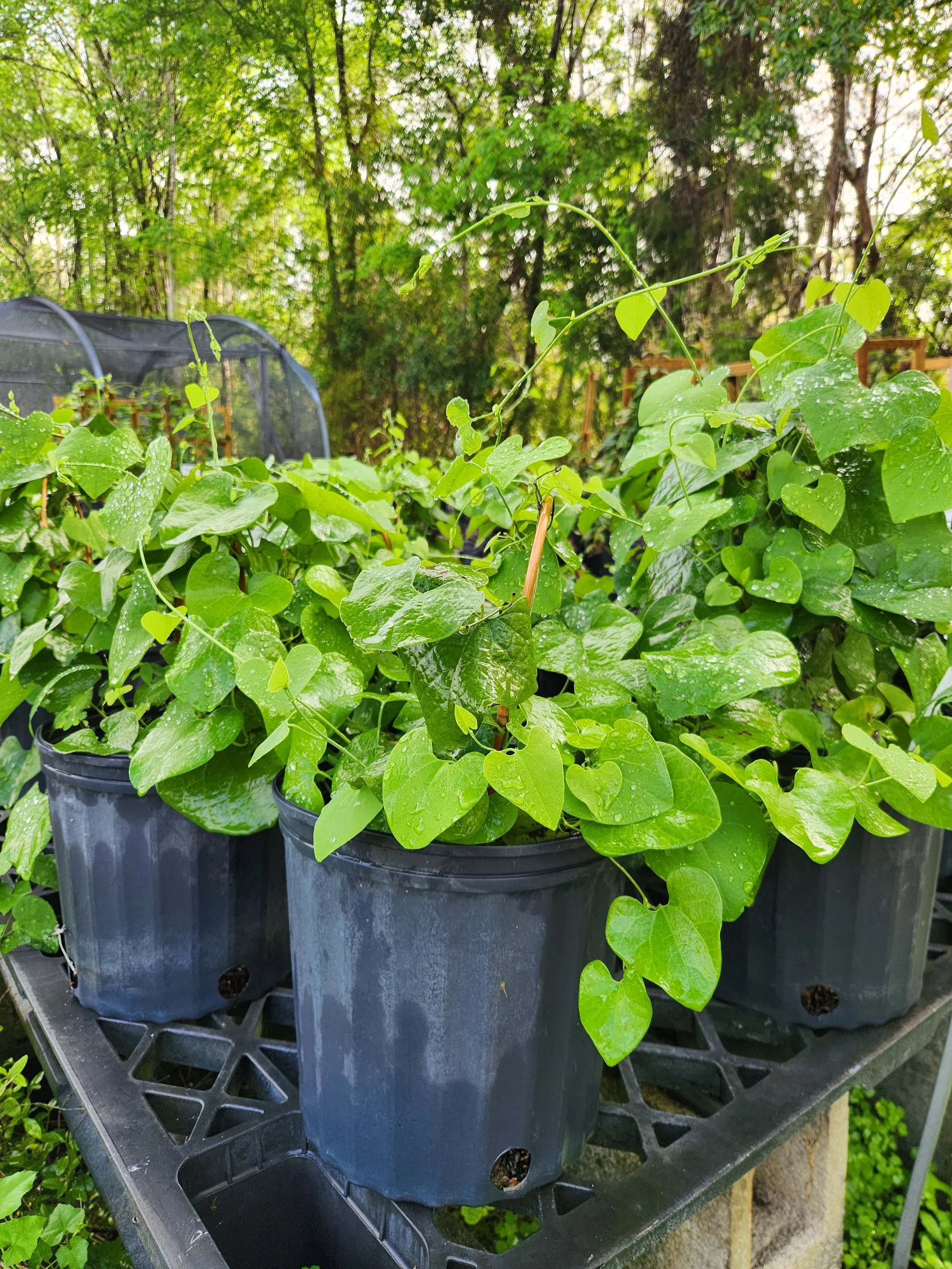
Aristolochia macrophylla
Pipevine is a Florida-friendly deciduous climbing vine that grows up to 15ft with large, heart-shaped leaves reaching 12in long. The leaves overlap in a shingle-like pattern to create dense screening, making it excellent for privacy on arbors, trellises, or fences. In late spring to early summer, it produces distinctive pipe-shaped flowers that are greenish-yellow and mottled with burgundy, though they're often hidden beneath the lush foliage. Native to moist woodlands and stream banks, it serves as the primary host plant for the Pipevine Swallowtail butterfly. This shade-tolerant vine prefers rich, moist soil and requires consistent moisture, making it unsuitable for dry conditions.
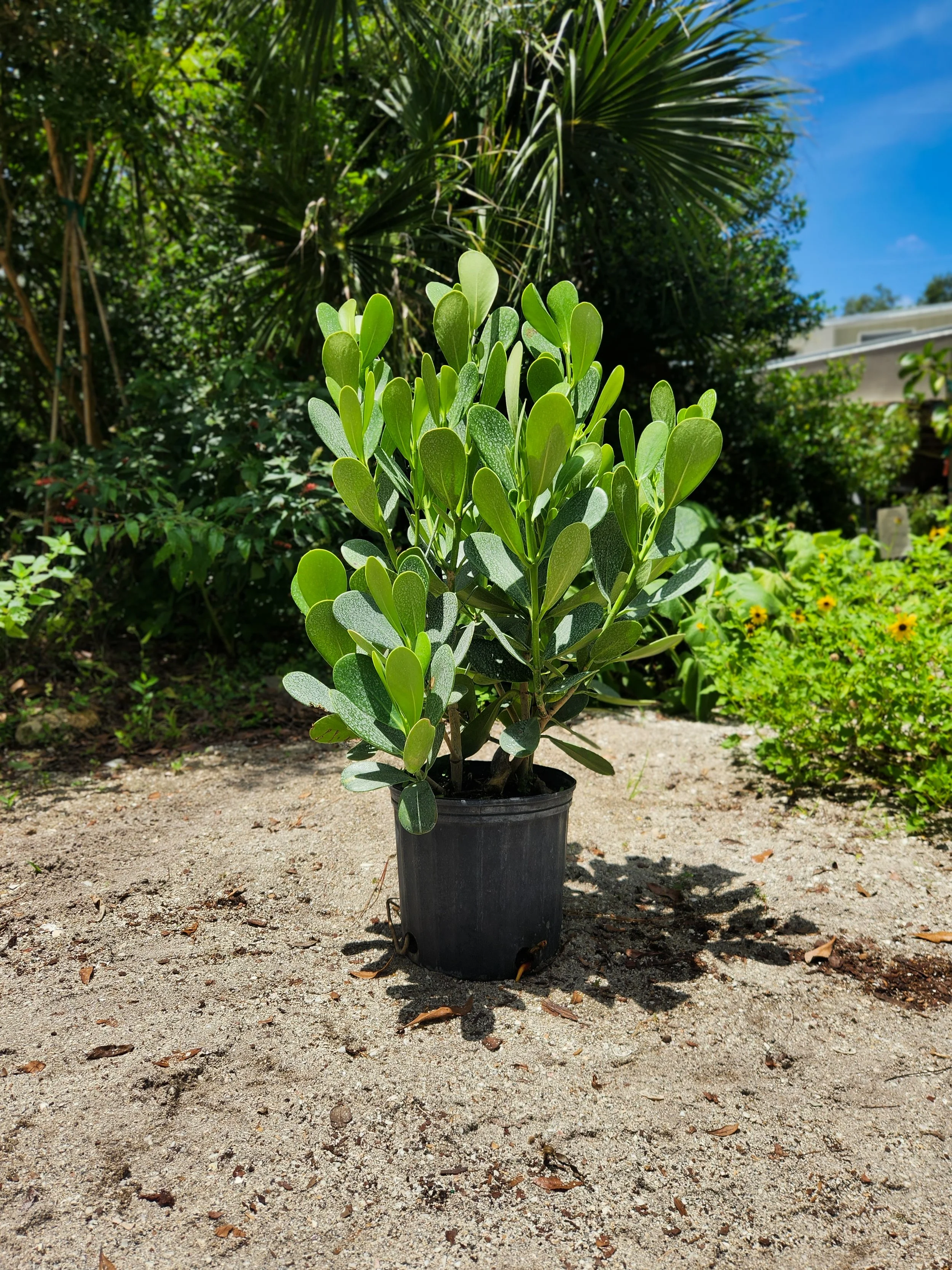
Clusia guttiferra
Non-native, Florida-friendly, prunable evergreen shrub. Pitch Apples can reach a height of about 15’, with a 15’ spread. These shrubs do well in full sun to shade, well-drained sandy or loamy soil, and are salt-tolerant once established. They are fast growing, and make a great hedge or buffer, specimen, or container plant.
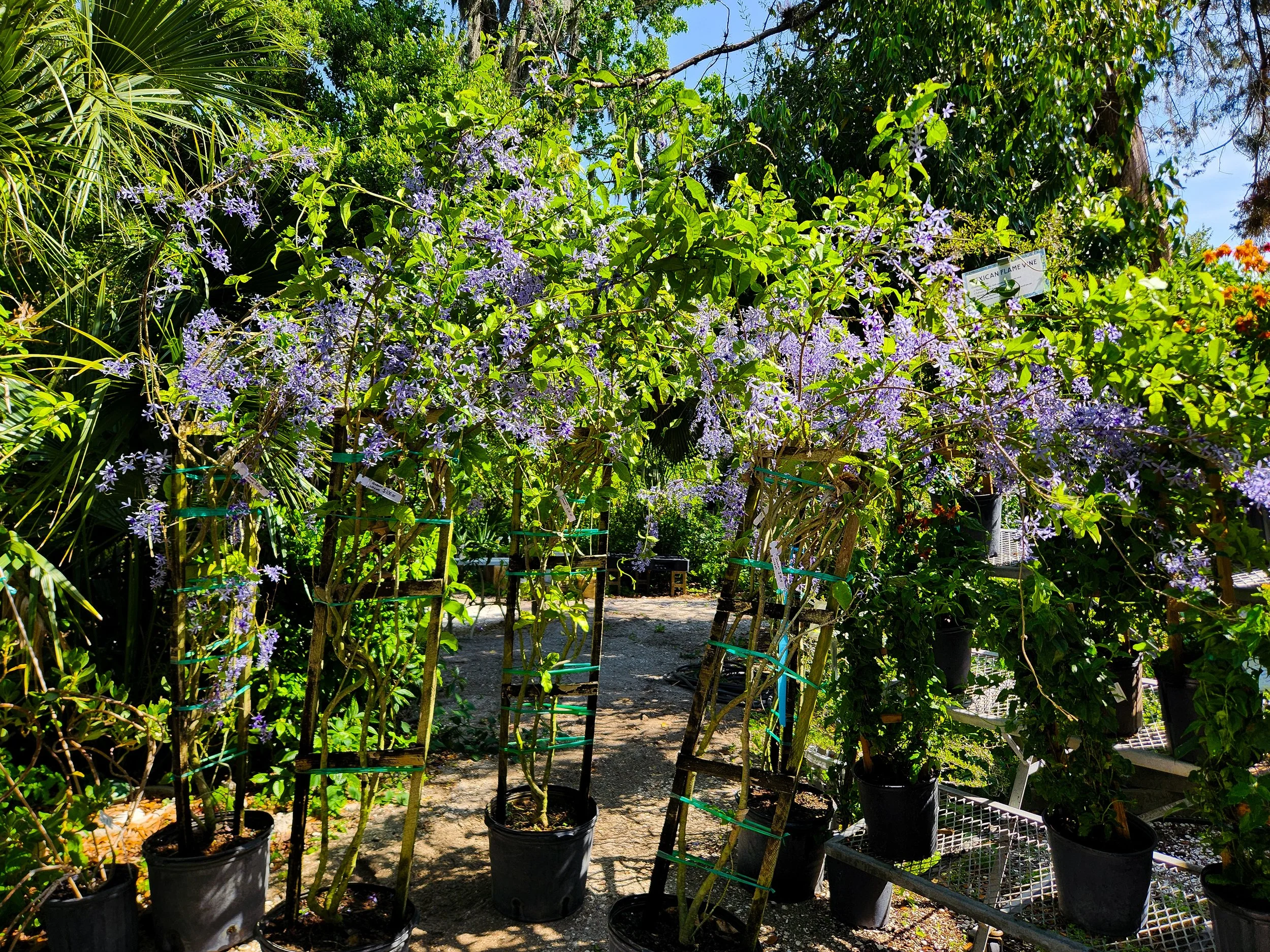
Petrea volubilis
Queen’s Wreath is a non-native, Florida-friendly, fast-growing evergreen vine. It grows best in full sun to part shade, but flowers more abundantly in full sun, and average soil; they are somewhat drought tolerant once established. These vines have showy purple flowers that bloom profusely from Feb-June, which are highly attractive to bees, butterflies, and hummingbirds.
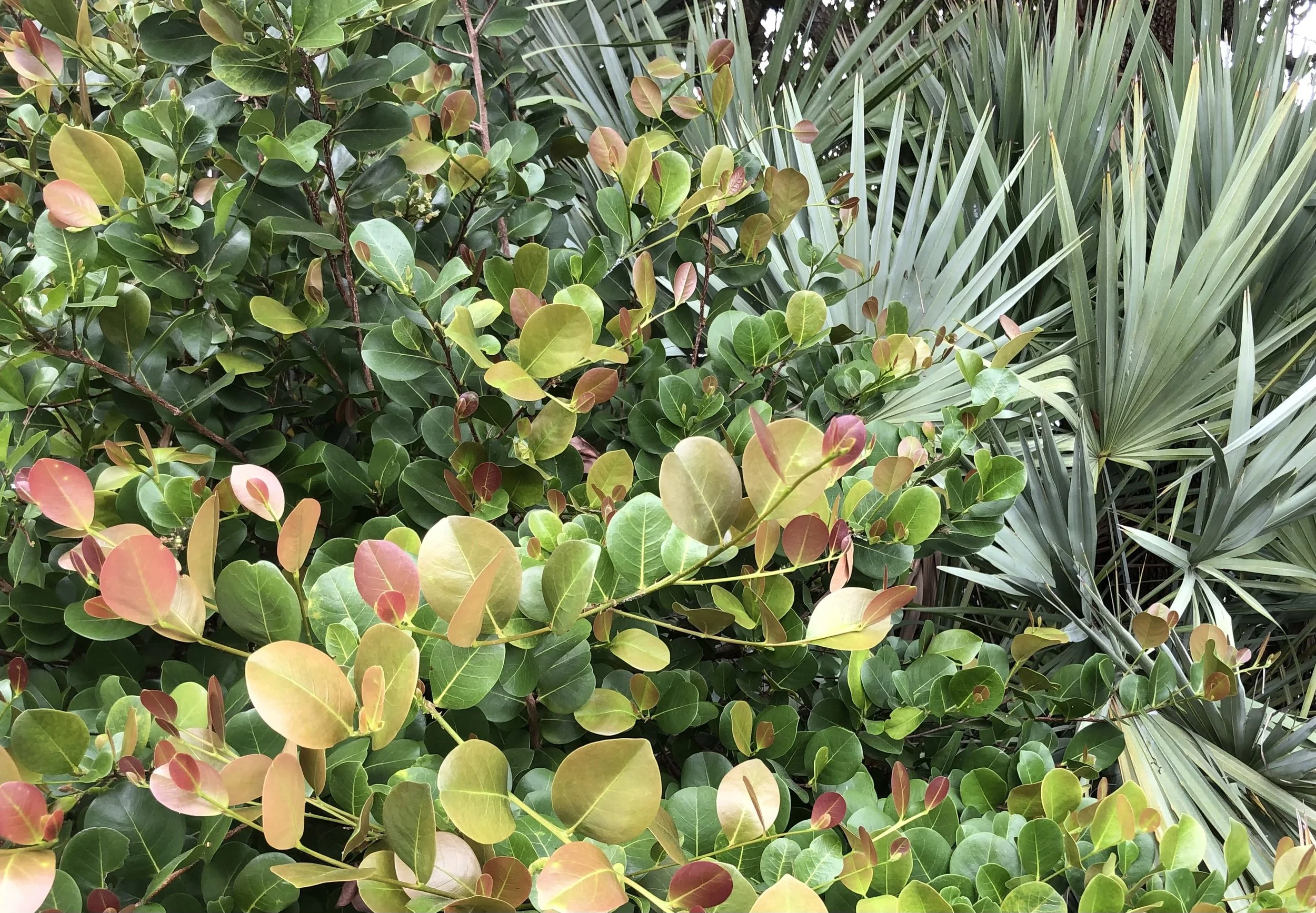
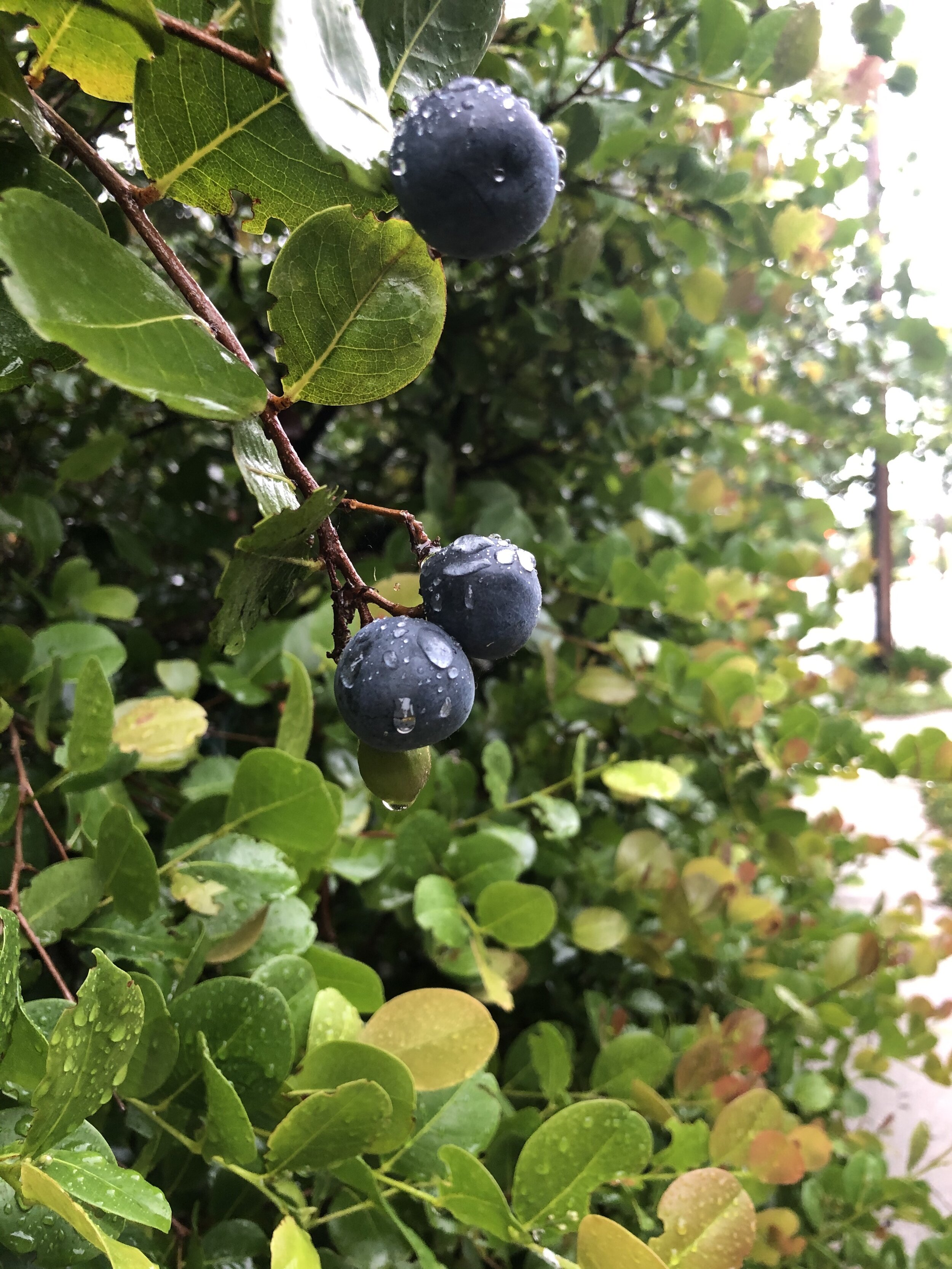
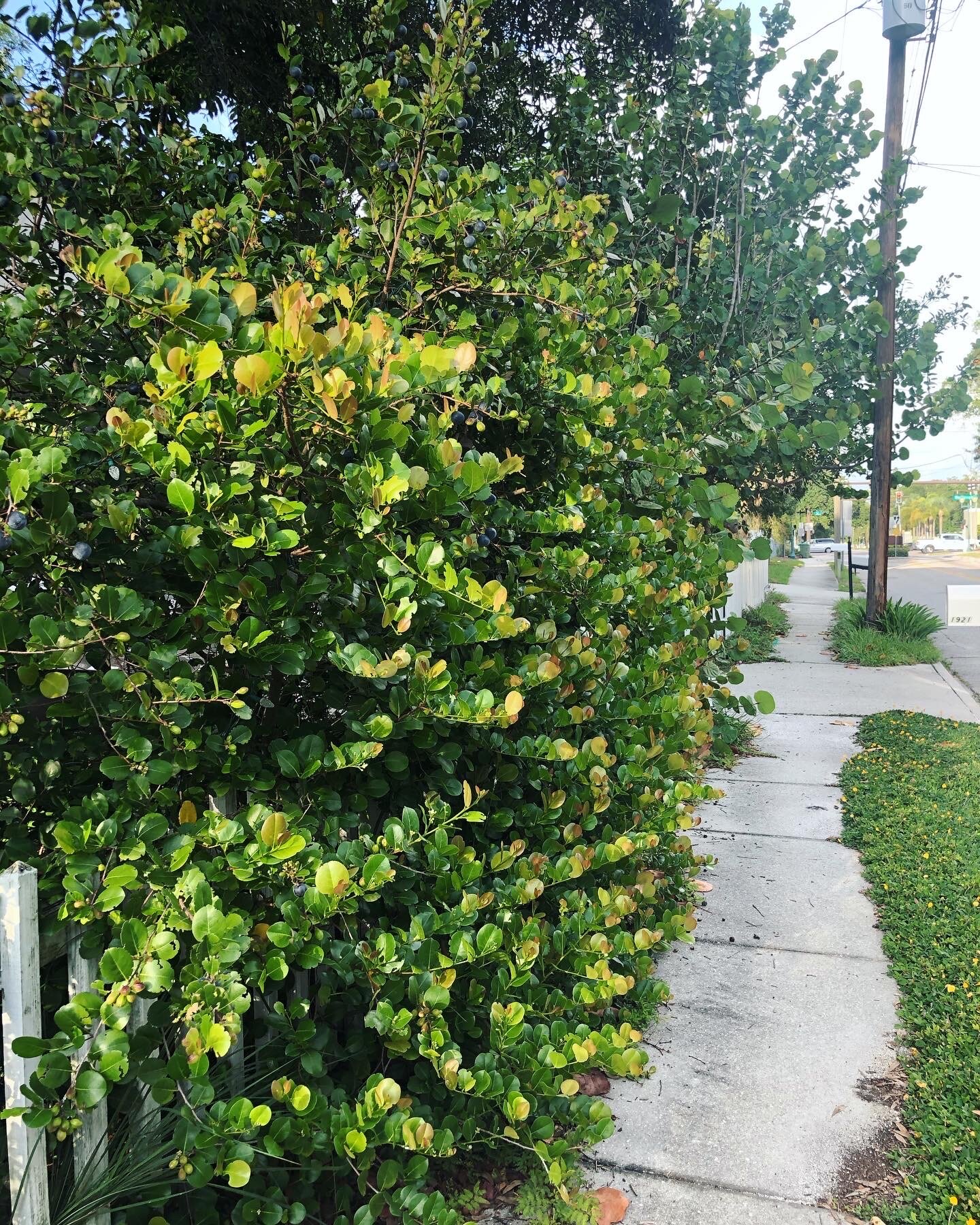
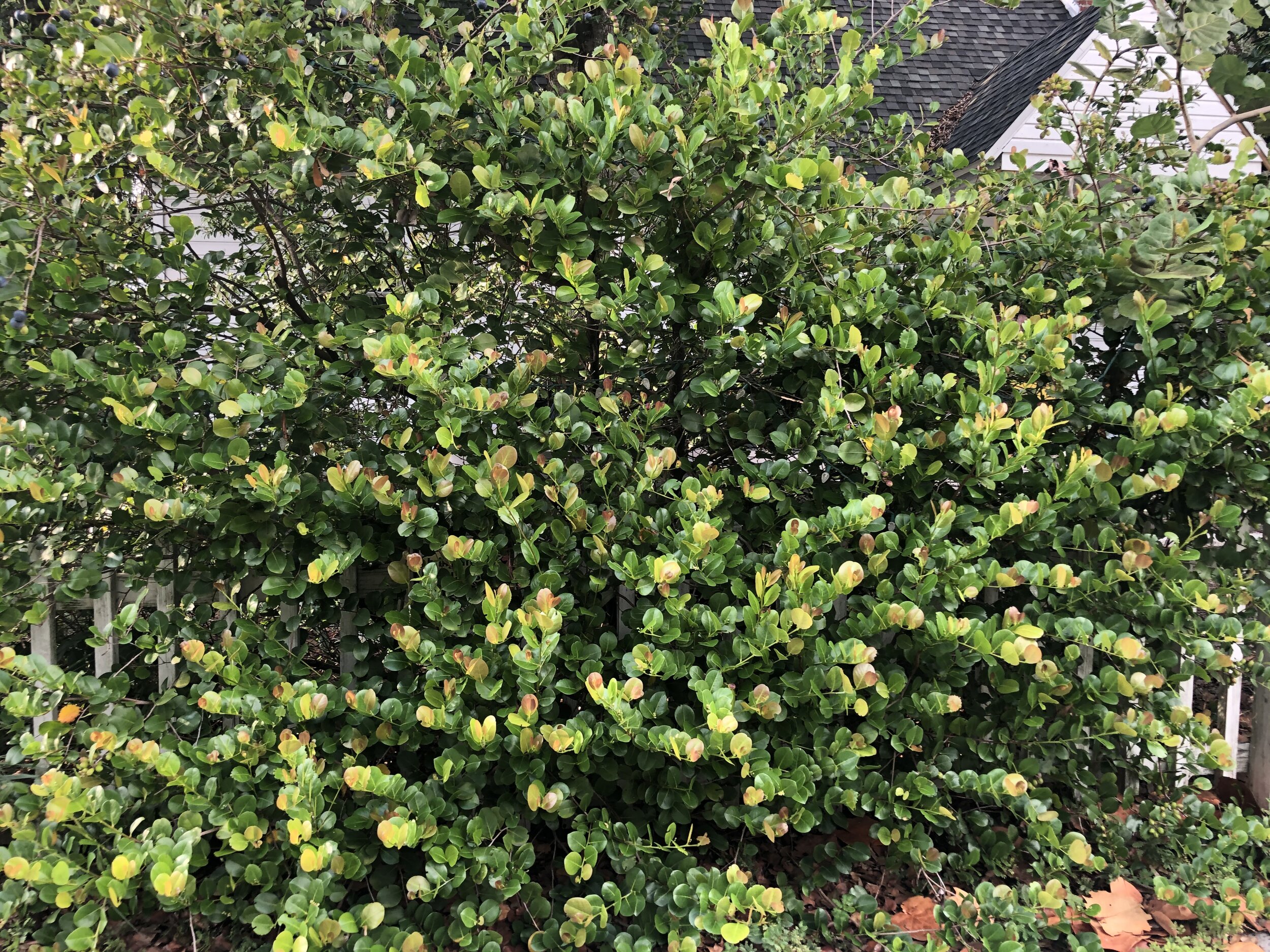
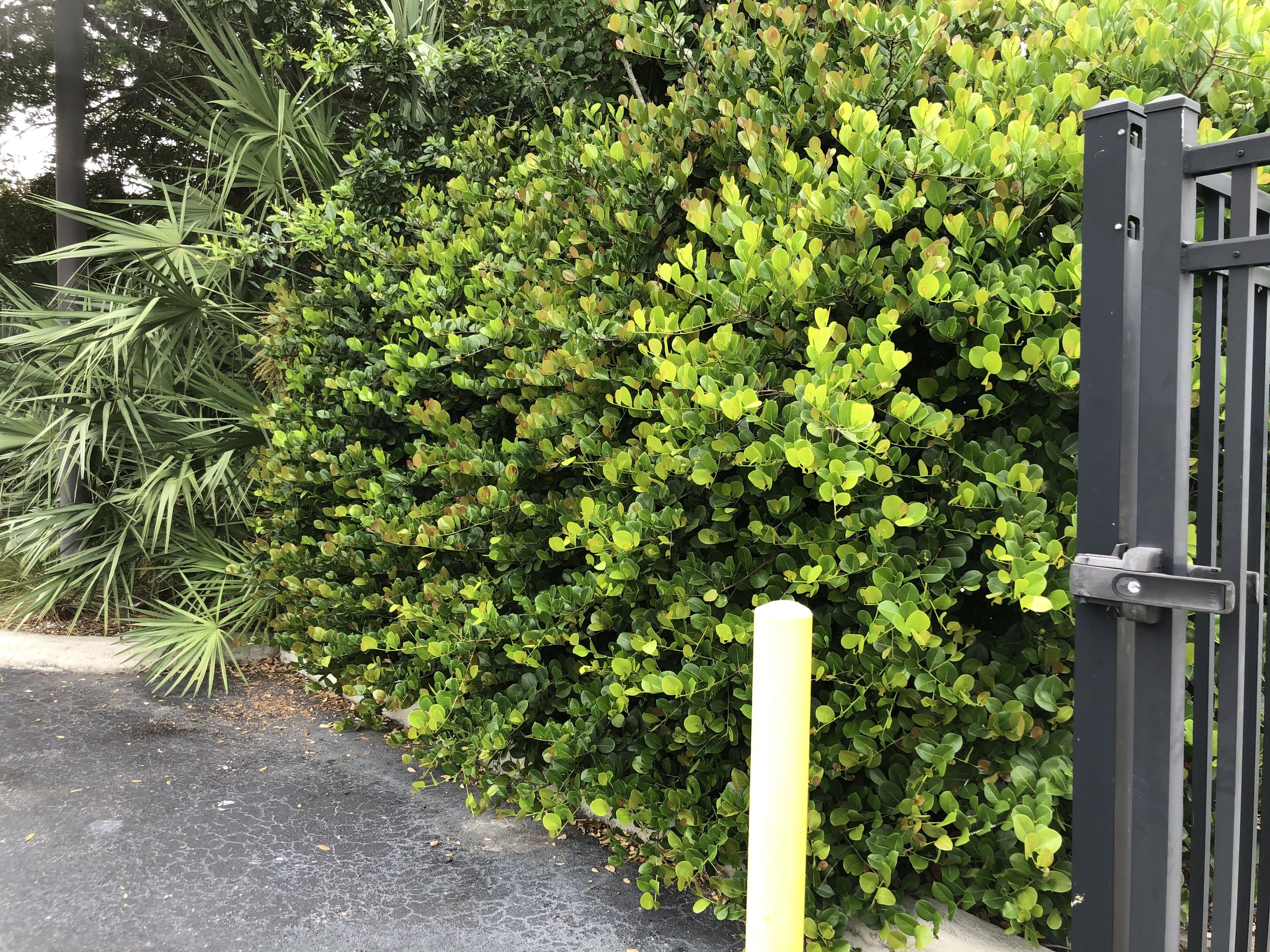
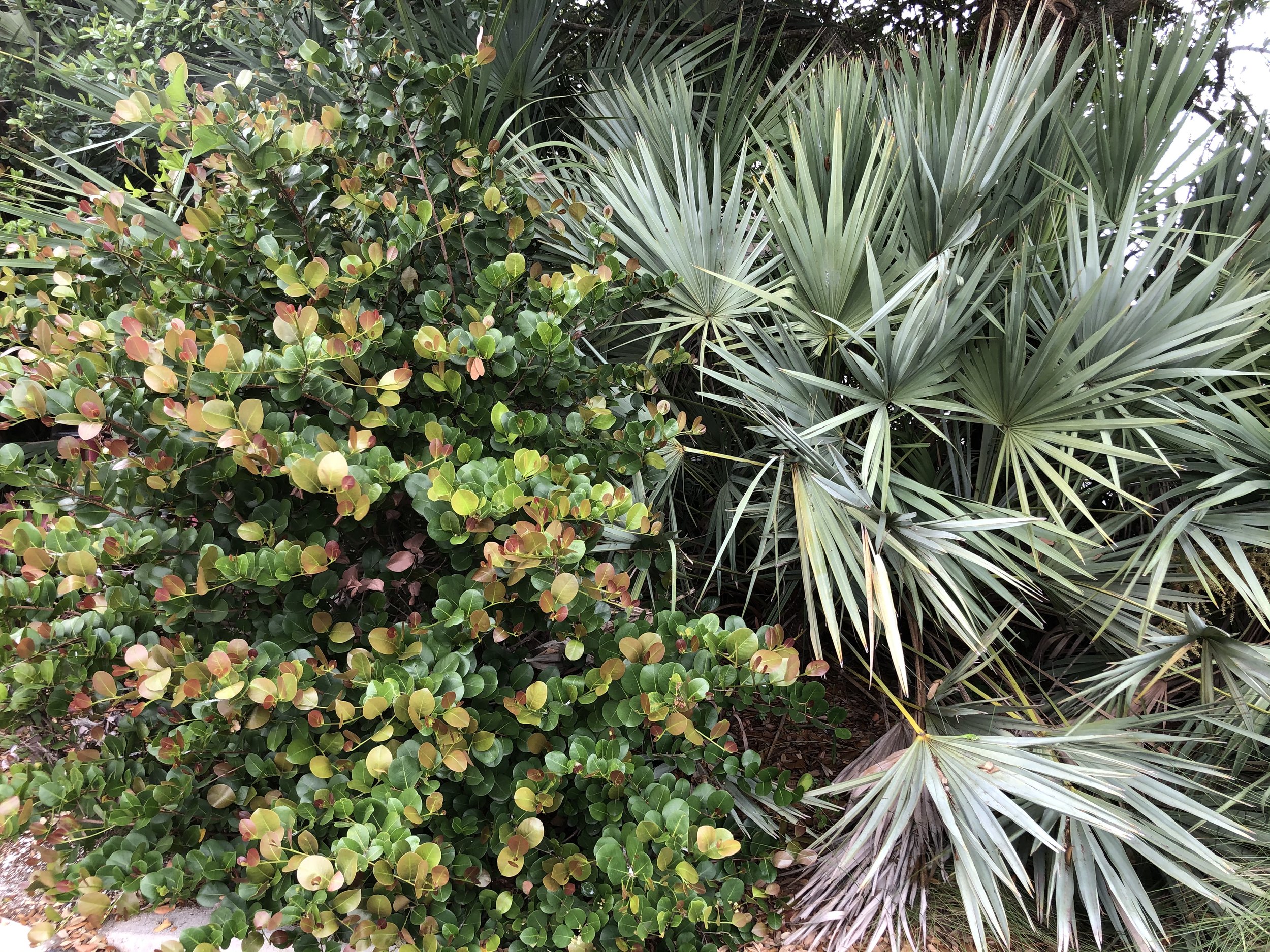
Chrysobalanus icaco ‘Red Tip’
Red Tip Cocoplum is a popular cultivar of the native Florida cocoplum that grows 5’-20’ tall with an attractive upright to spreading form. This evergreen shrub is distinguished by its striking new growth that emerges bright red to orange-bronze before maturing to glossy, dark green rounded leaves. It produces clusters of small white flowers in summer followed by edible dark purple fruits that can be used for jellies and preserves. It thrives in full sun to partial shade with well-drained soils, making it an excellent choice for hedging, privacy screens, and buffer plantings in zones 10-11.
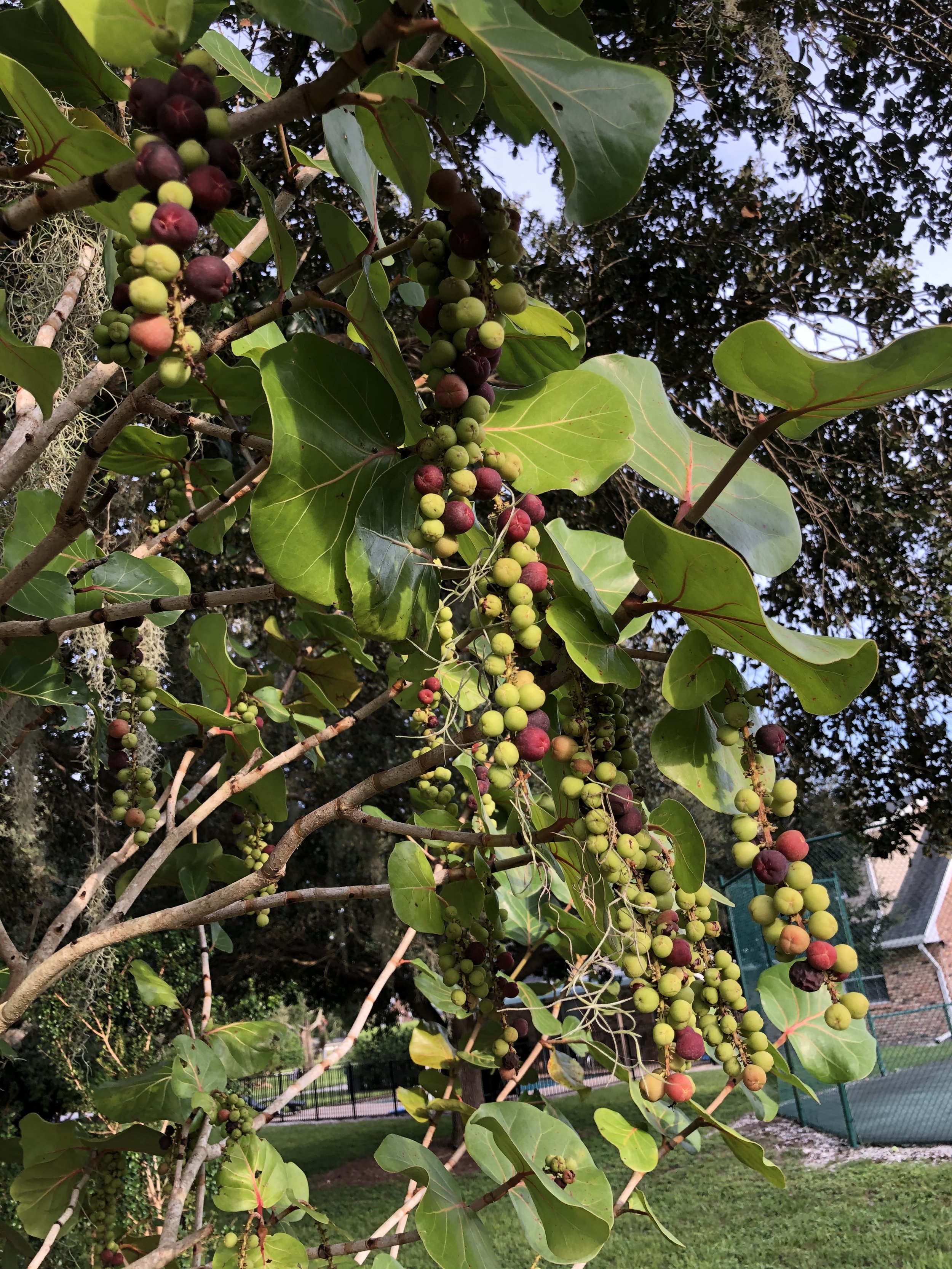
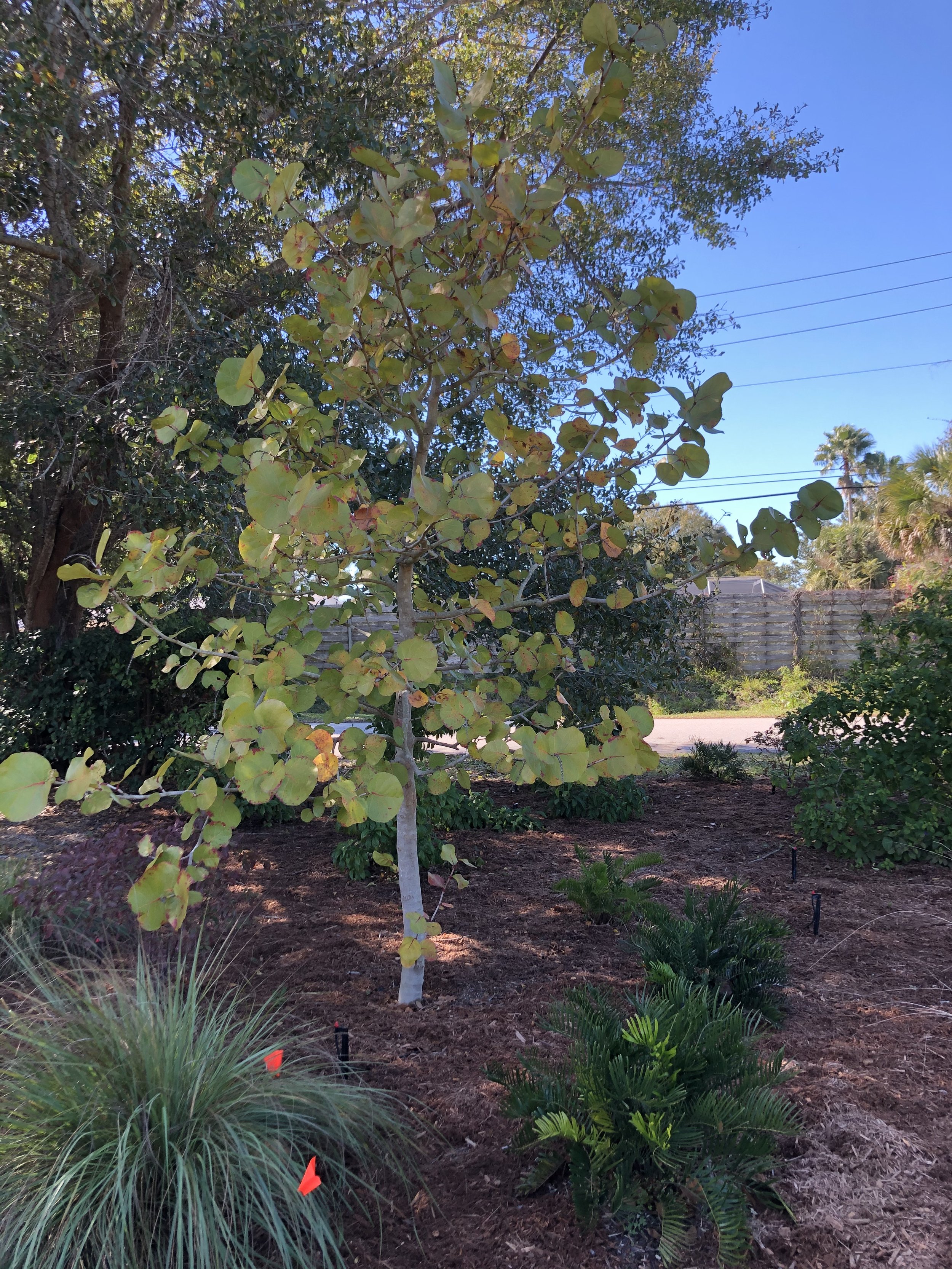
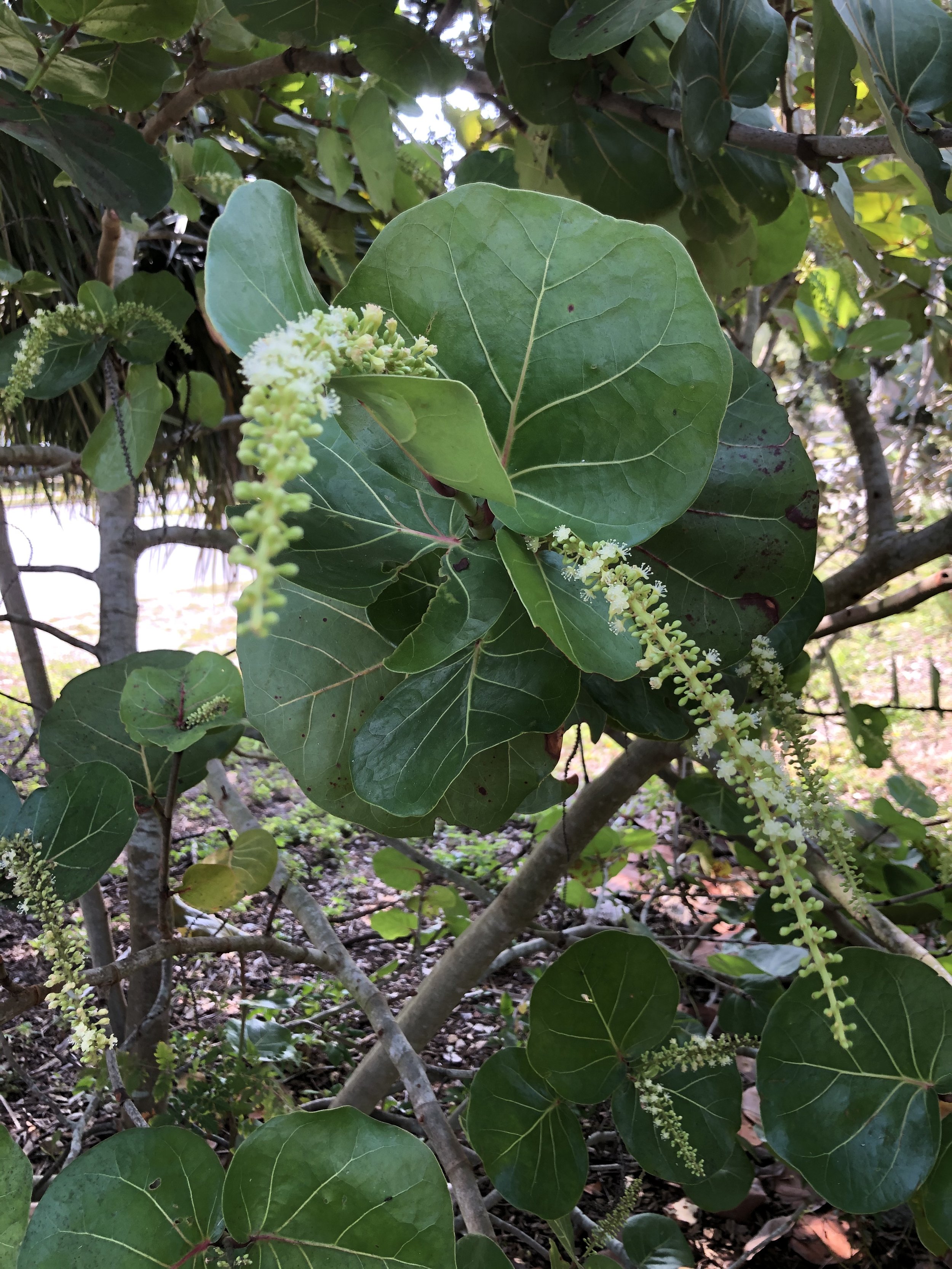
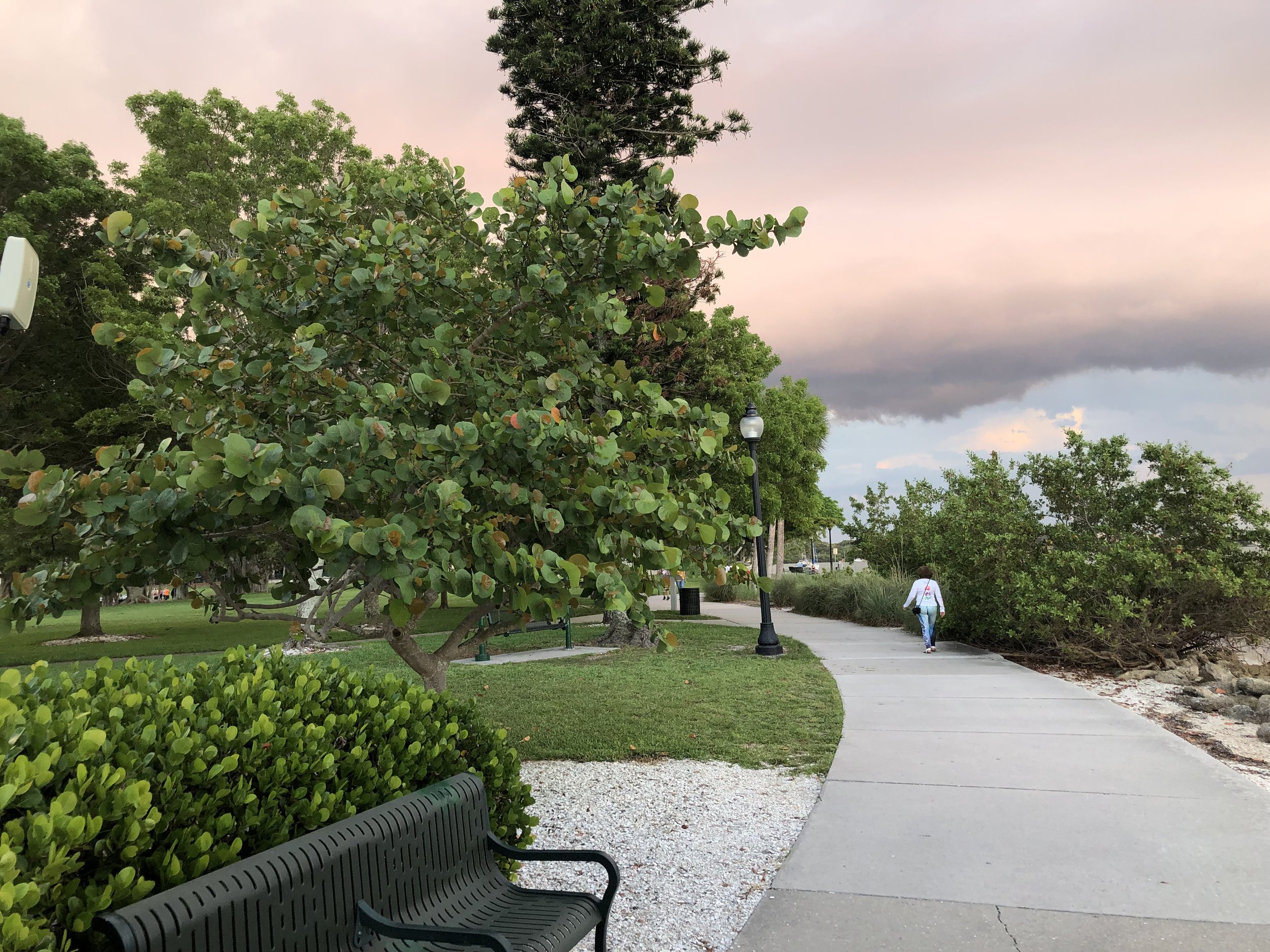
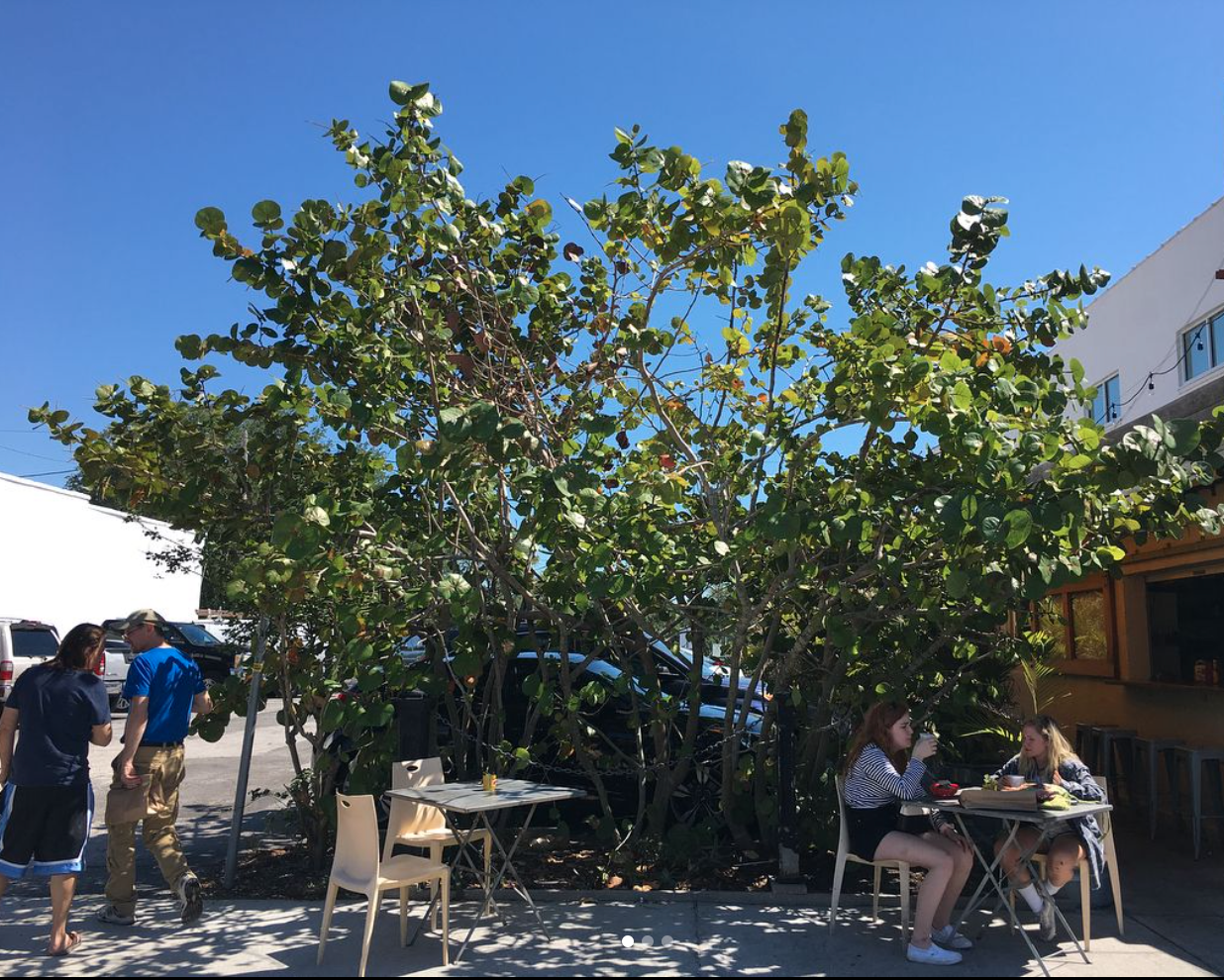
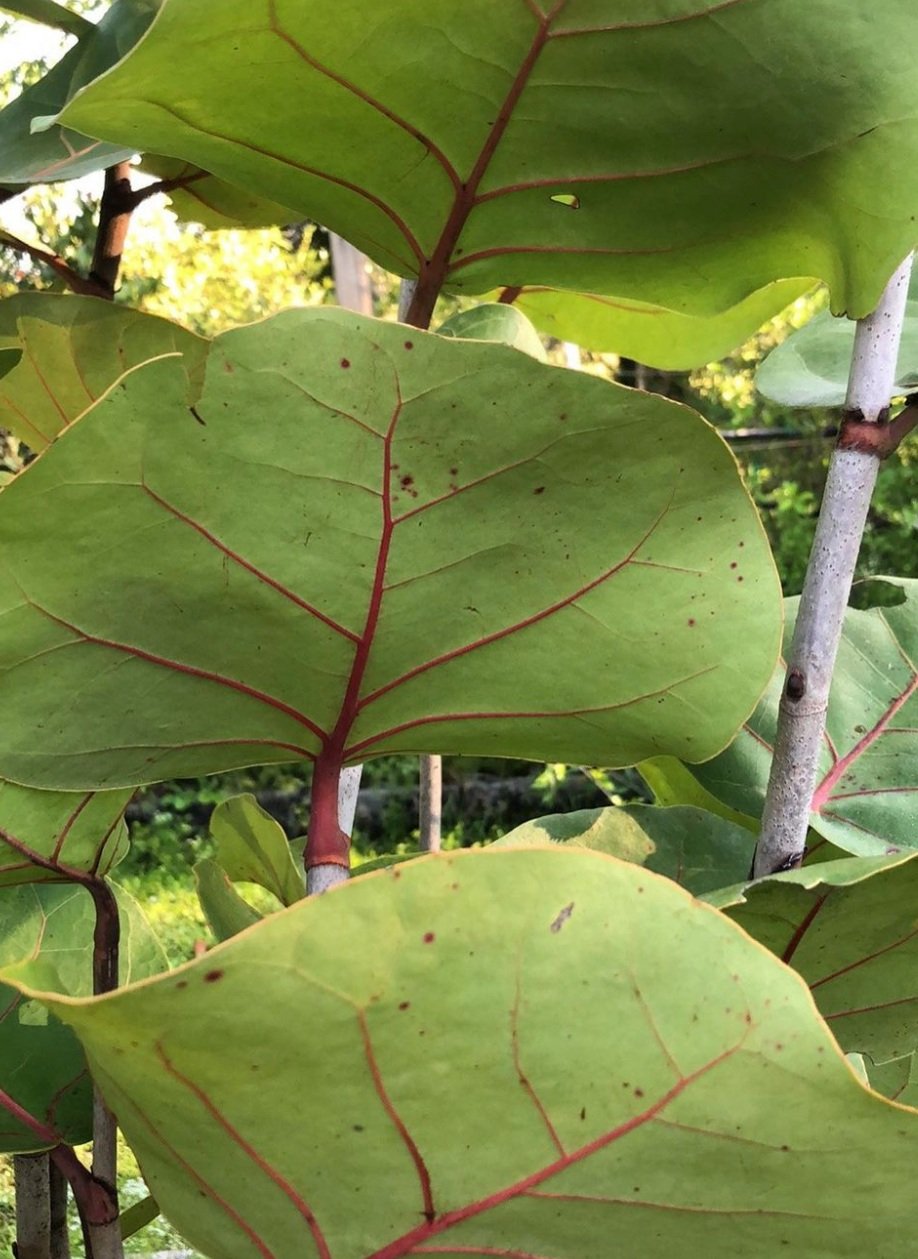
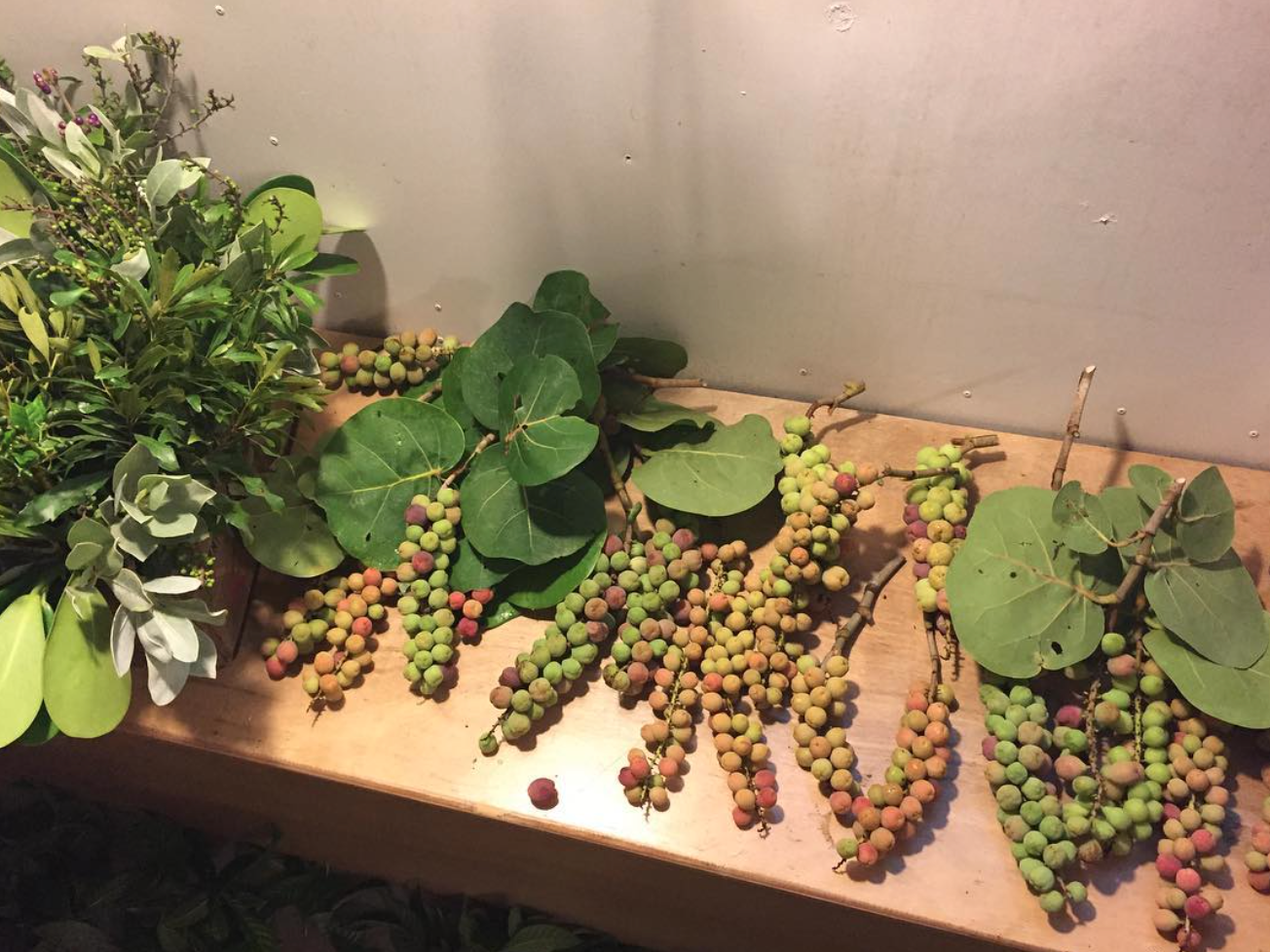
Coccoloba uvifera
A tropical-looking and unique native plant, Sea Grape grows to 10-30 ft tall and can be trimmed. Grow in full sun as a large shrub for screening and privacy or as a large sculptural tree in semi-shade. The leaves of Sea Grape are lightly deciduous and interesting with seasonal changes in color. The fruit grows in beautiful clusters and is enjoyed by both birds and people.
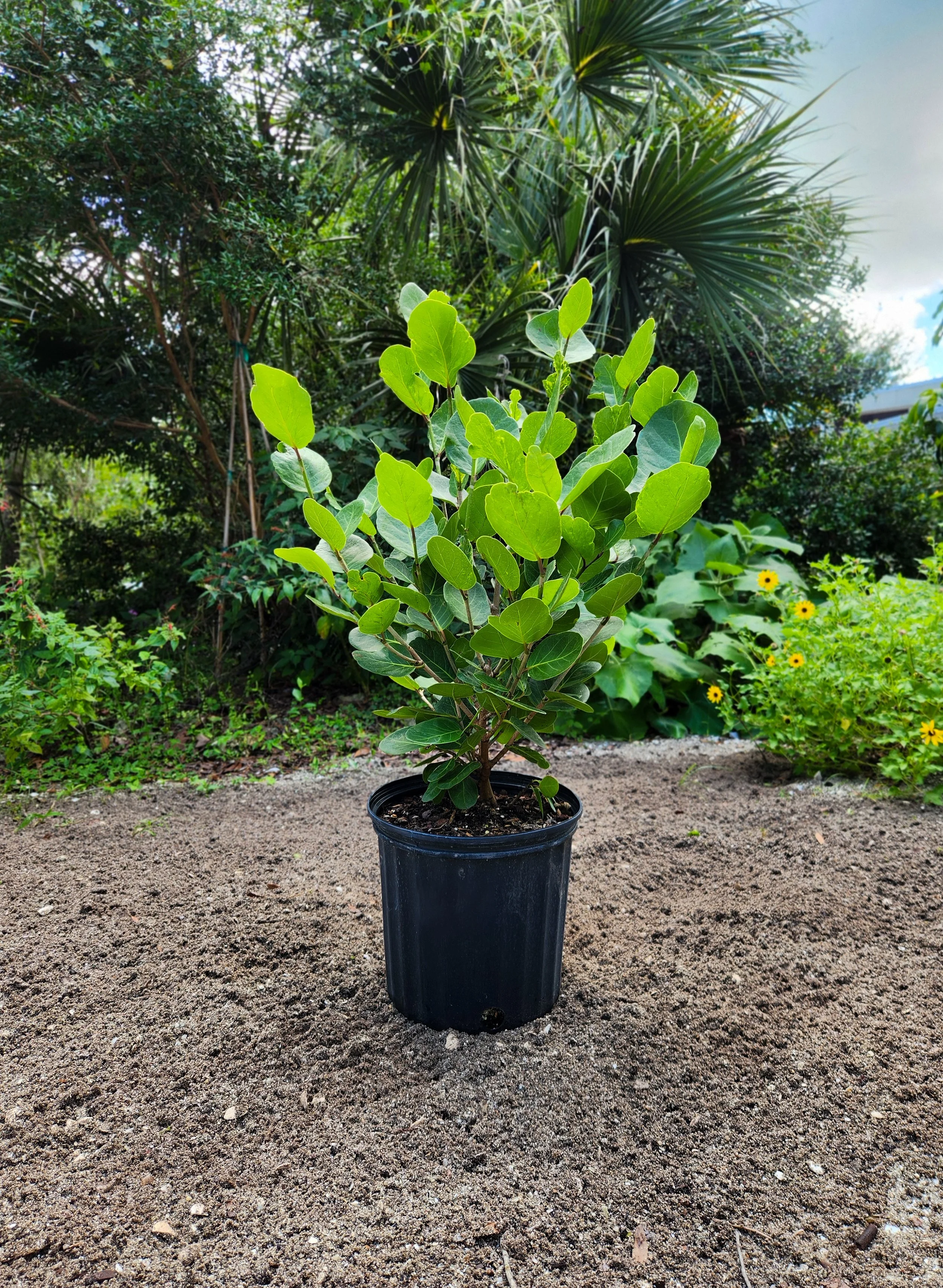
Coccoloba uvifera x diversifolia
Sea Plum is a naturally occurring hybrid between Sea Grape and Pigeon Plum that combines the best traits of both native Florida parents. This evergreen shrub typically grows 6’-12’ tall and 4’-6’ wide, though it has the potential to reach larger sizes given its parentage. It features attractive foliage that blends characteristics of both parents and produces fruit on female plants that birds readily consume. Exceptionally hardy and low-maintenance, it thrives in full sun to light shade with well-draining sandy soils and demonstrates excellent tolerance to wind, salt spray, and drought conditions. This versatile hybrid works well as a specimen plant or screening hedge and is particularly valuable for beachfront landscapes in zones 9-11.
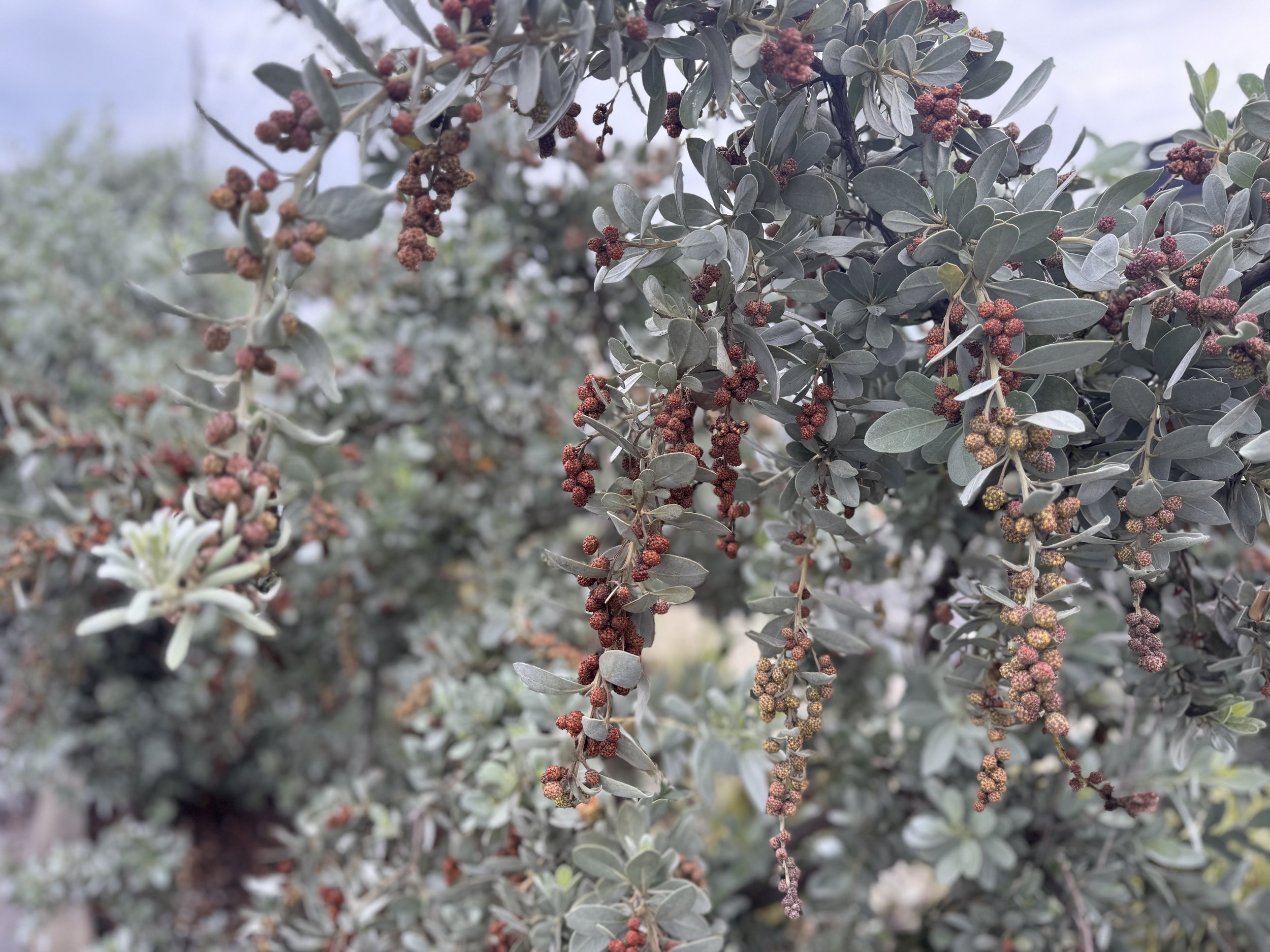
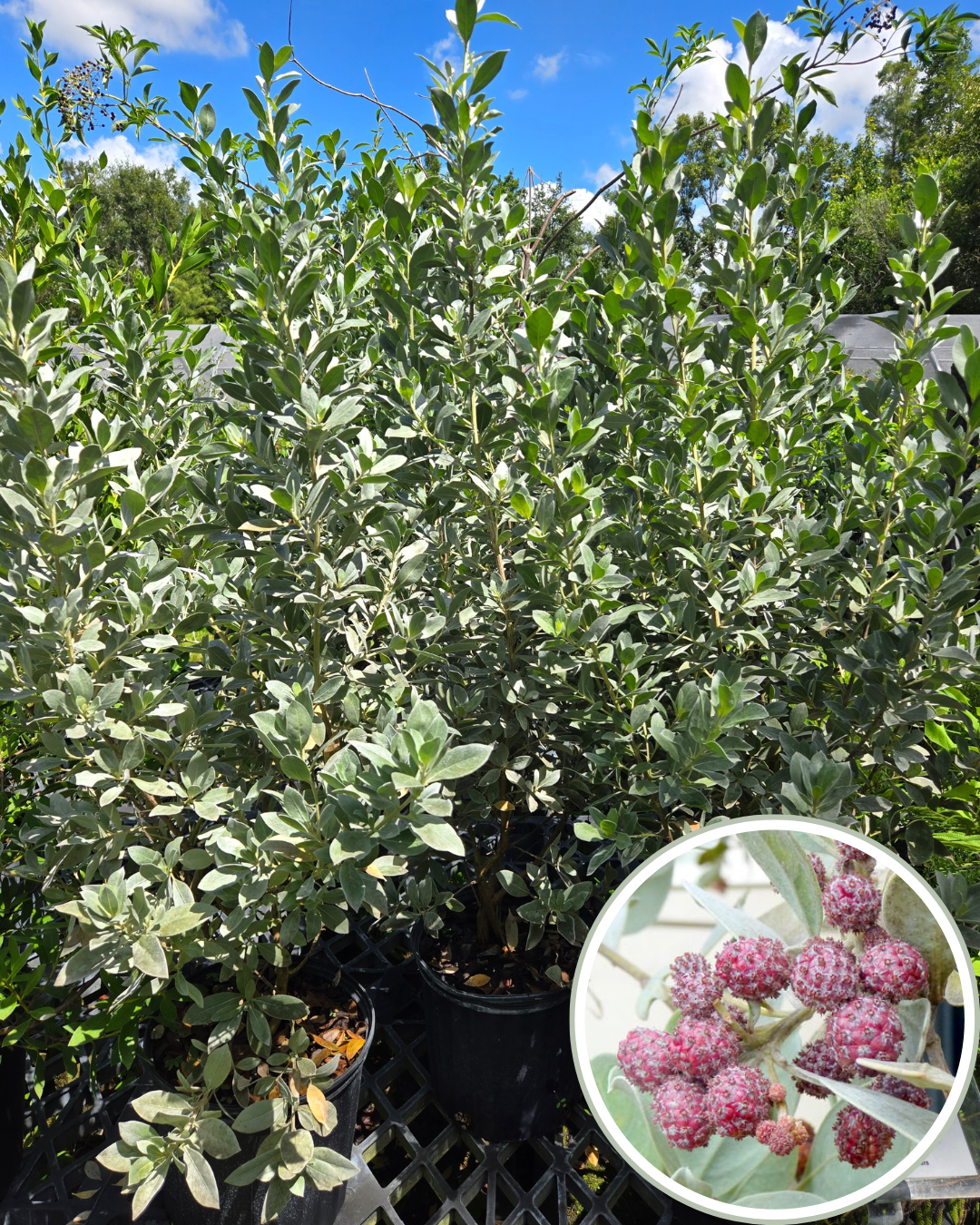
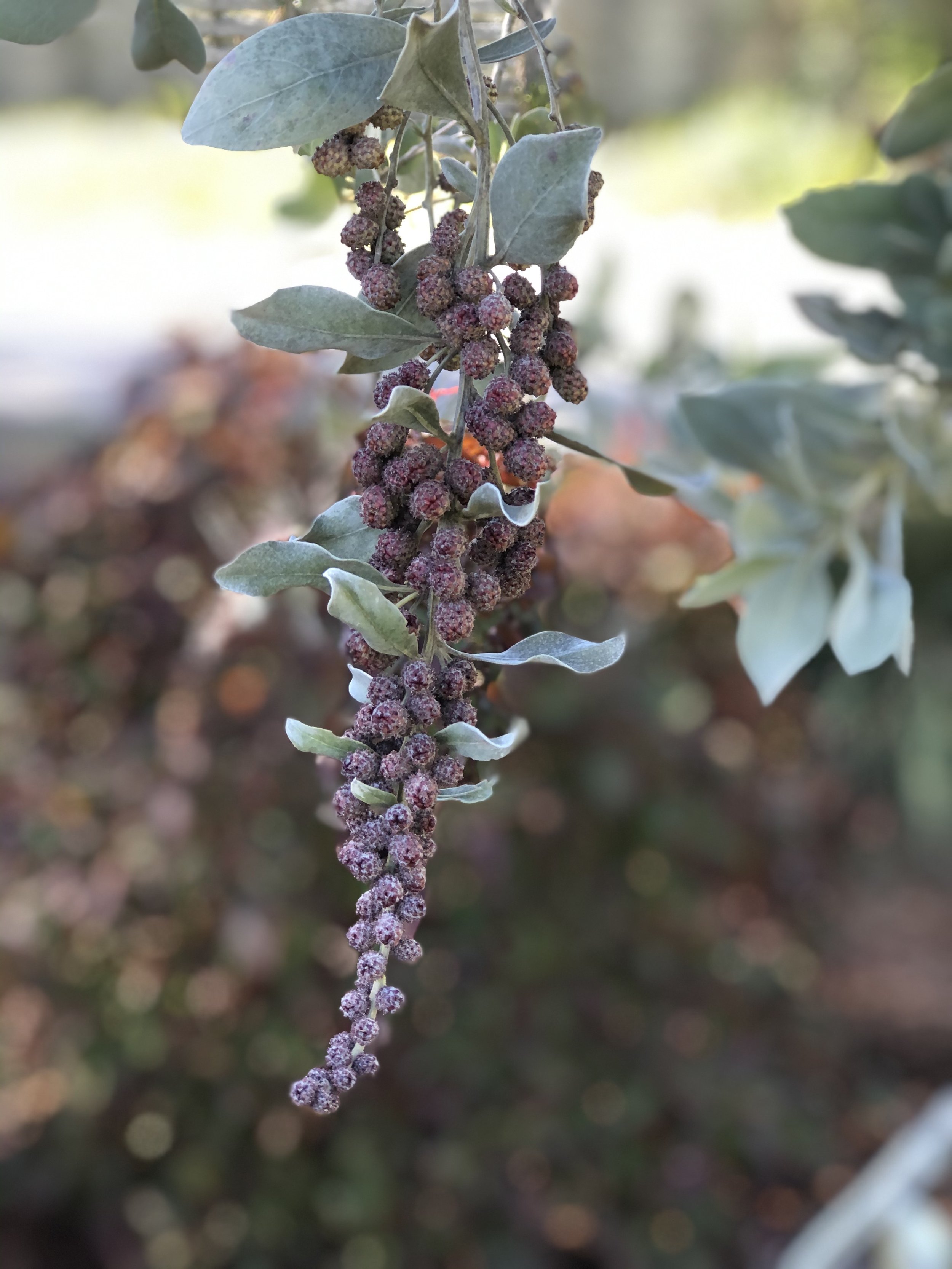
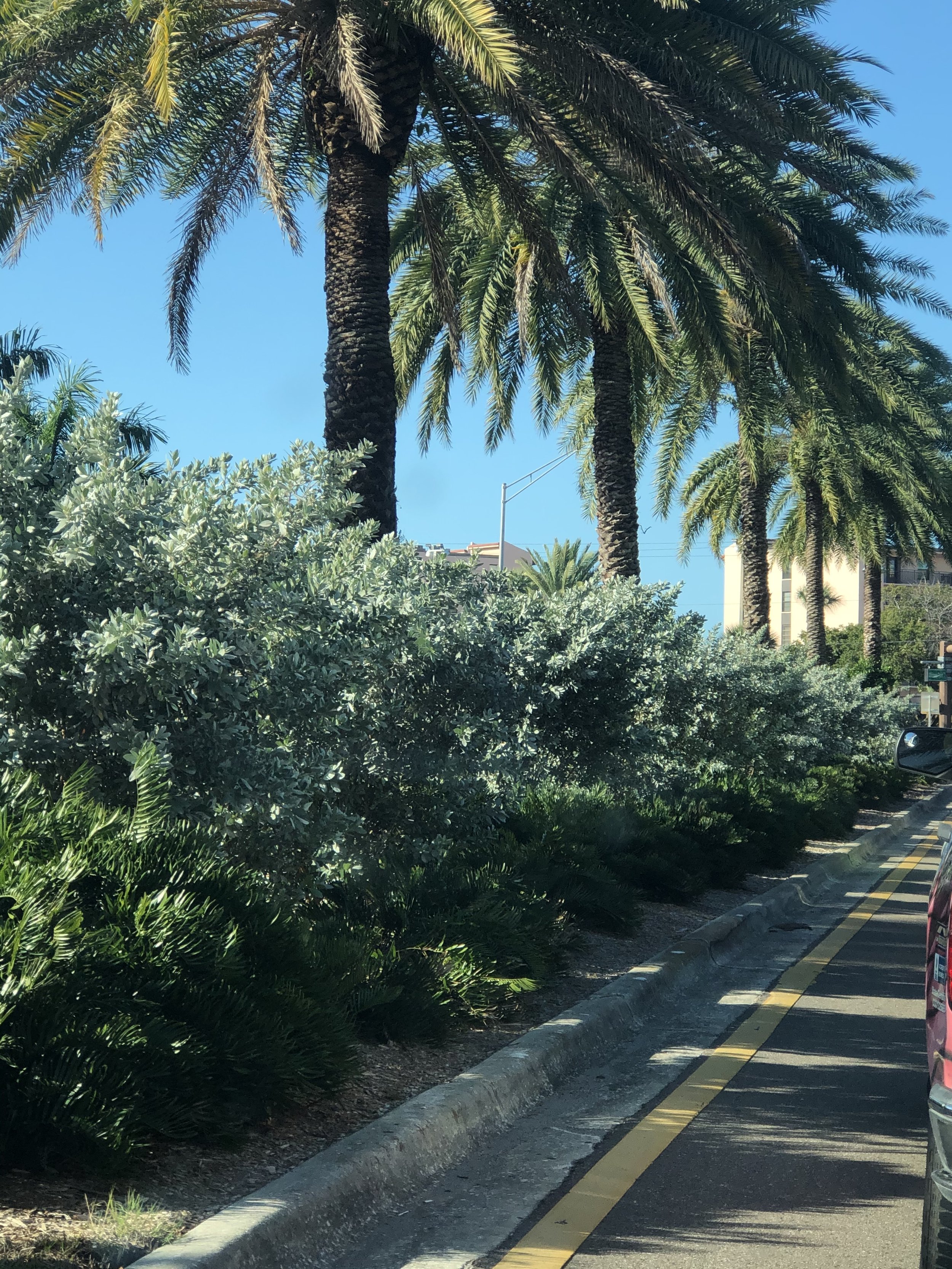
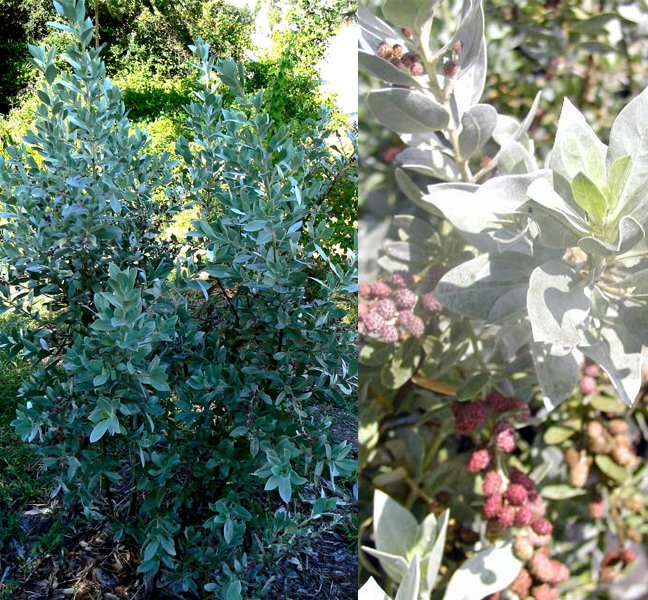
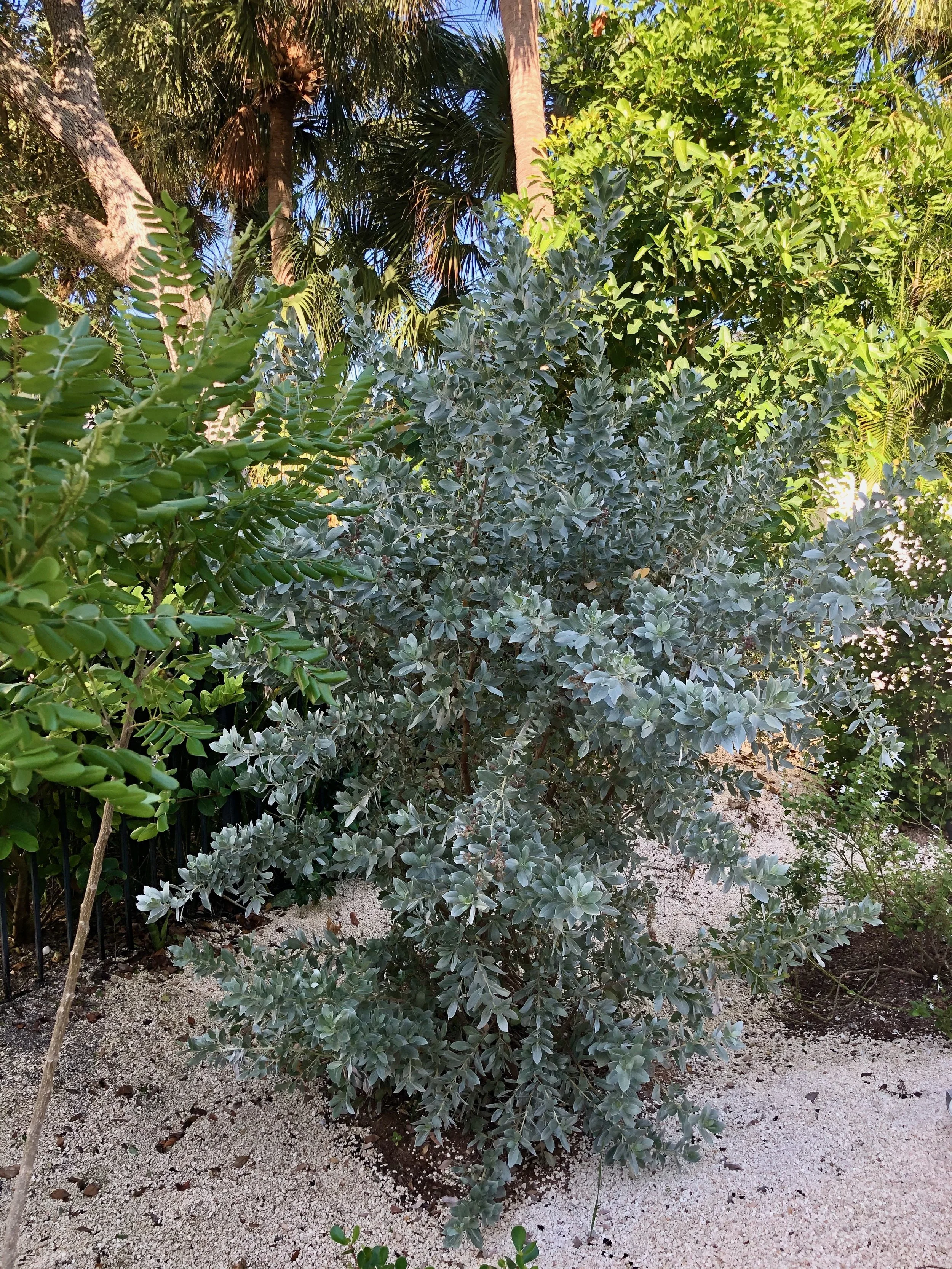
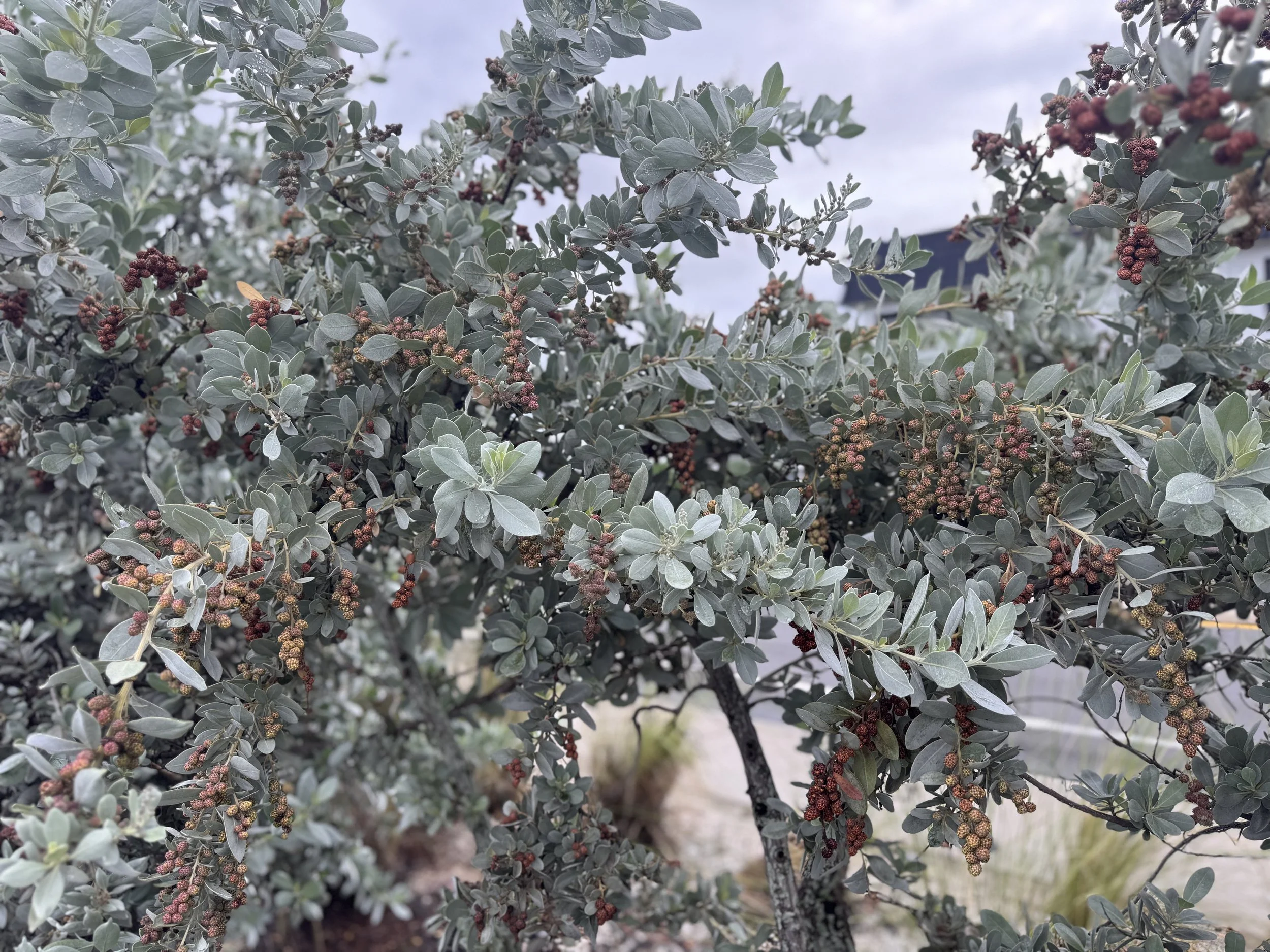
Conocarpus erectus var. sericeus
Silver Buttonwood is a unique coastal native shrub or small tree that can reach 20' and has soft silvery leaves and small brown berries that look like wood buttons. While it thrives in coastal landscapes, taking salt inundation and salty soils like a champ, it can be planted inland as well. Silver Buttonwood can be used as a specimen tree, part of a natural privacy screen or pruned into hedge.
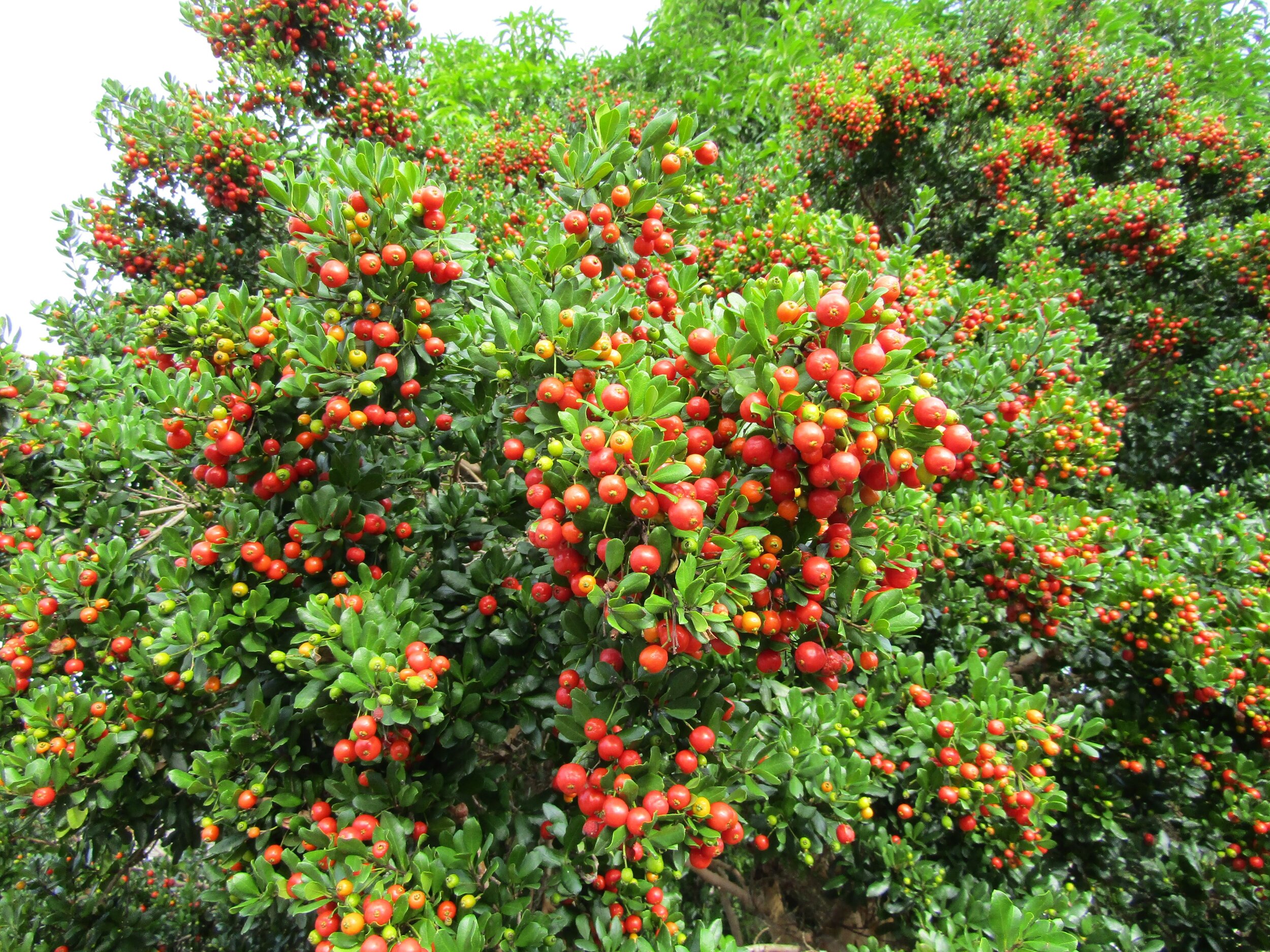

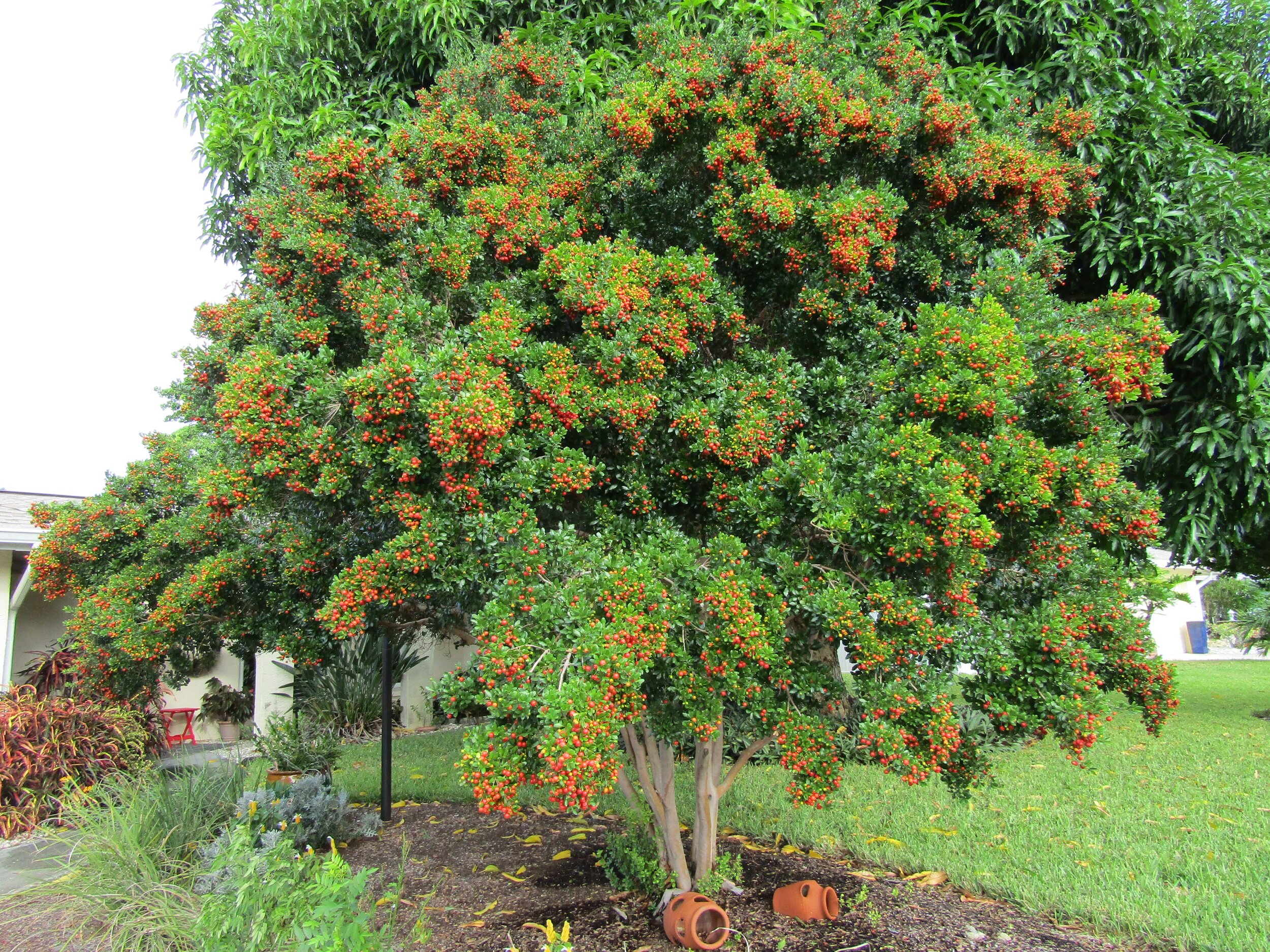
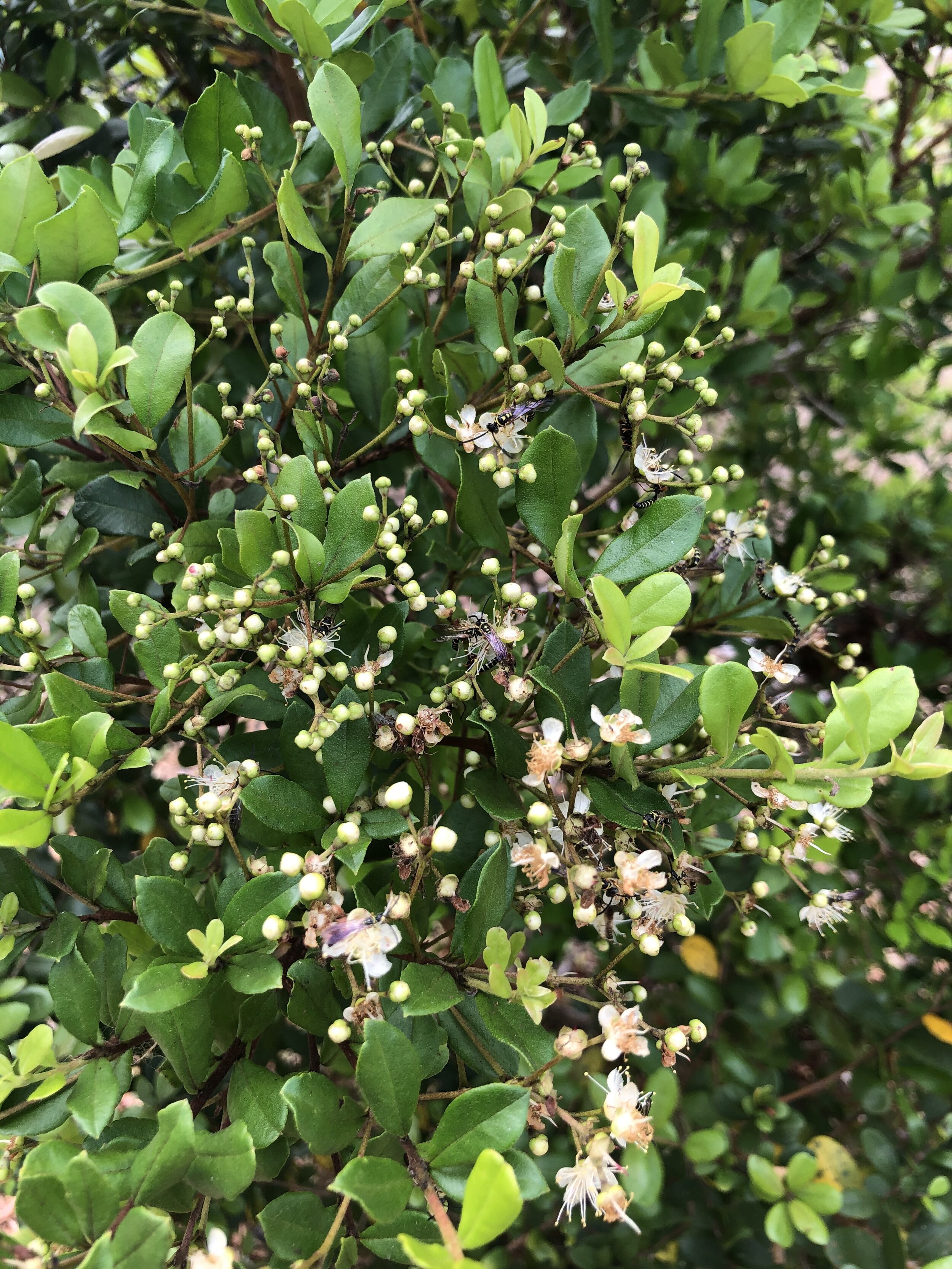
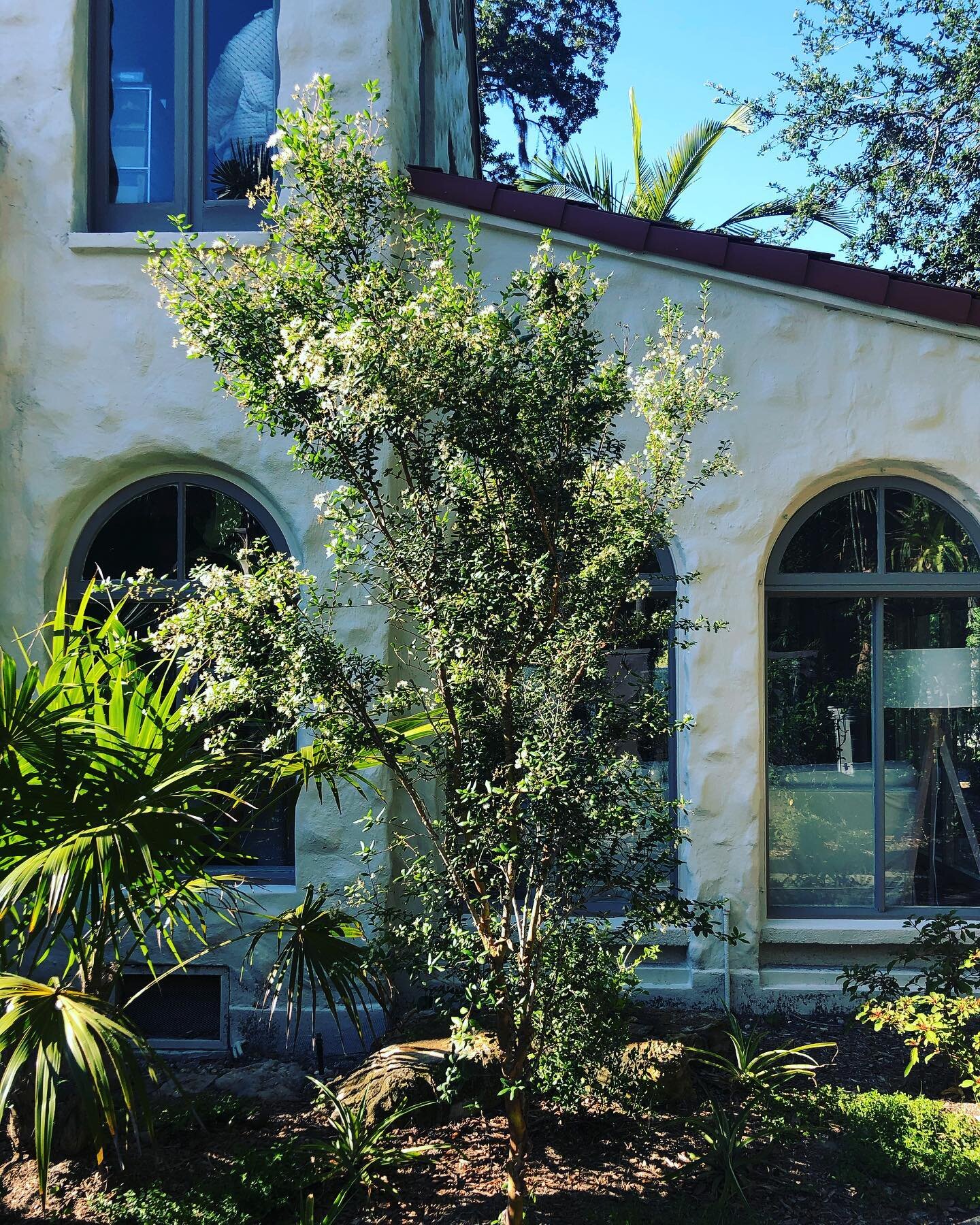
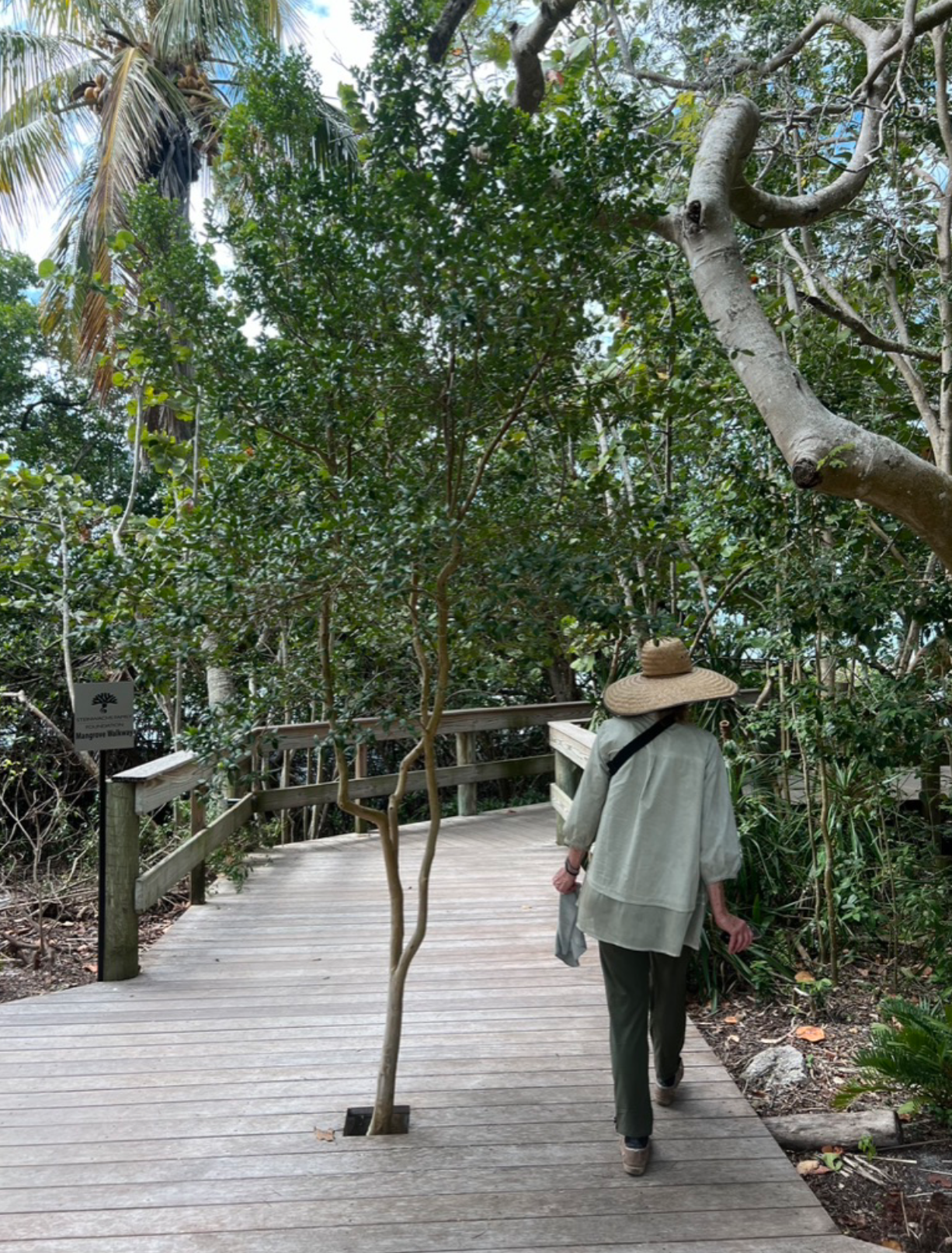
Myrcianthes fragrans
Simpson's Stopper is an evergreen shrub or small tree native to Florida and the Caribbean that grows 5’-20’ tall with glossy, dark green leaves. The new growth emerges in attractive colors ranging from pale chartreuse to deep wine red, and the leaves emit a spicy, nutmeg-like fragrance when crushed. In spring, it produces clusters of fragrant white flowers followed by orange to red berries that attract birds including cardinals, blue jays, and mockingbirds. The plant features distinctive exfoliating bark that flakes off to reveal reddish-brown underneath, providing year-round visual interest. Extremely versatile and low-maintenance, it thrives in full sun to partial shade, tolerates salt, drought, and poor drainage, and can be used as a hedge, specimen tree, or even container plant in zones 8b-11.


Aloysia virgata
Sweet Almond bush is a Florida-friendly, non-native, highly scented, large, climbing vining shrub with almond colored flower drupes and nicely textured leaves. It is very attractive to pollinators including multiple butterfly species and bees. Adaptable to most garden conditions, this shrub has a place in any Florida Friendly landscape!
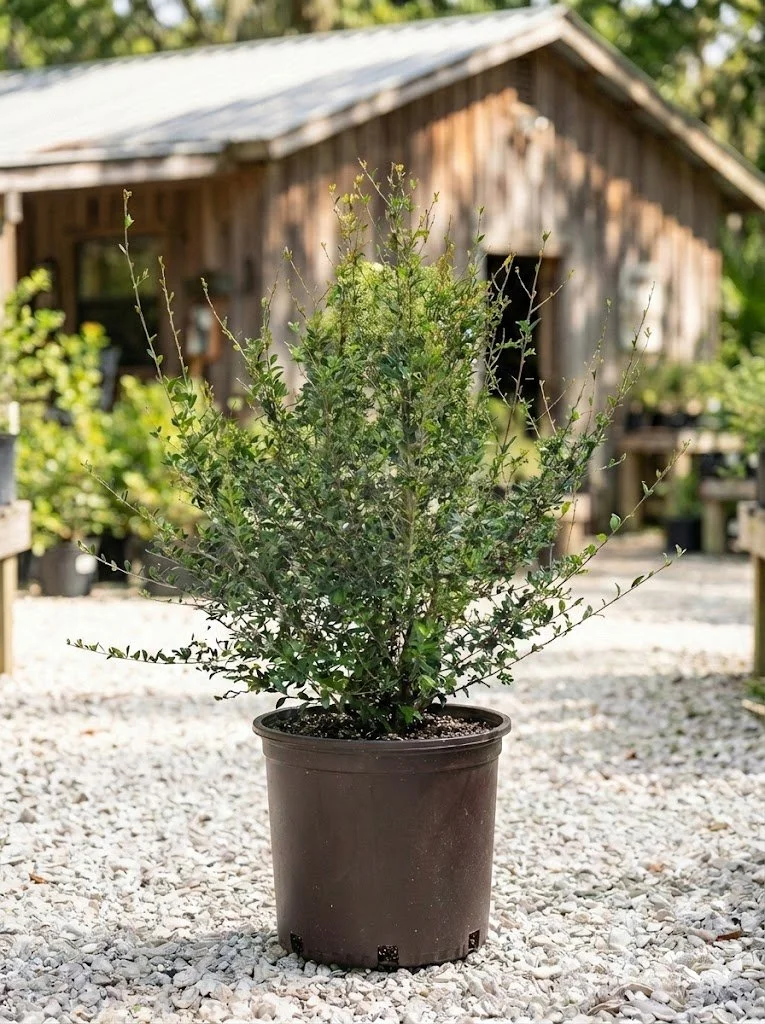
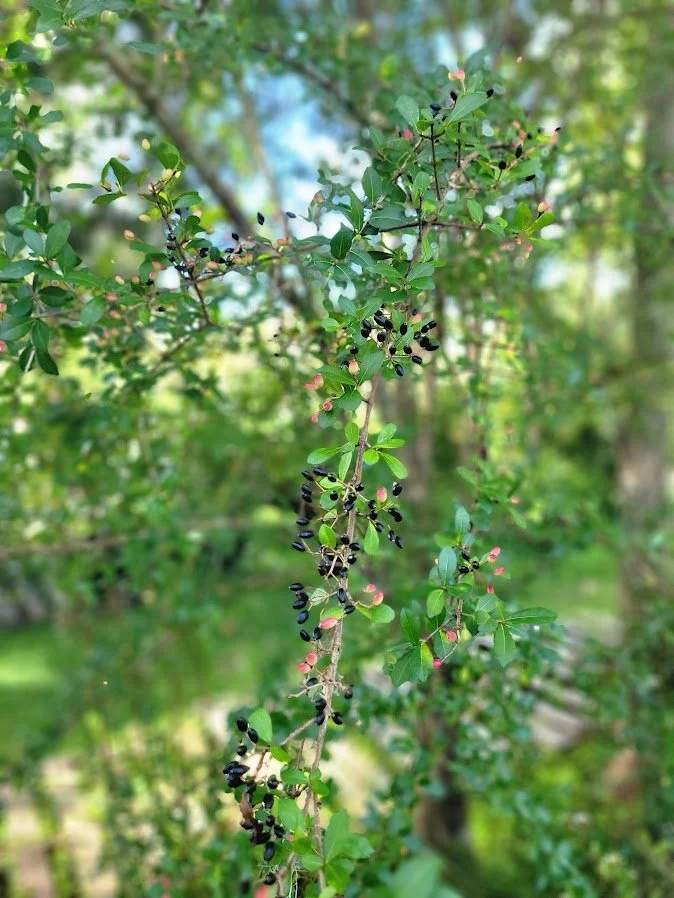
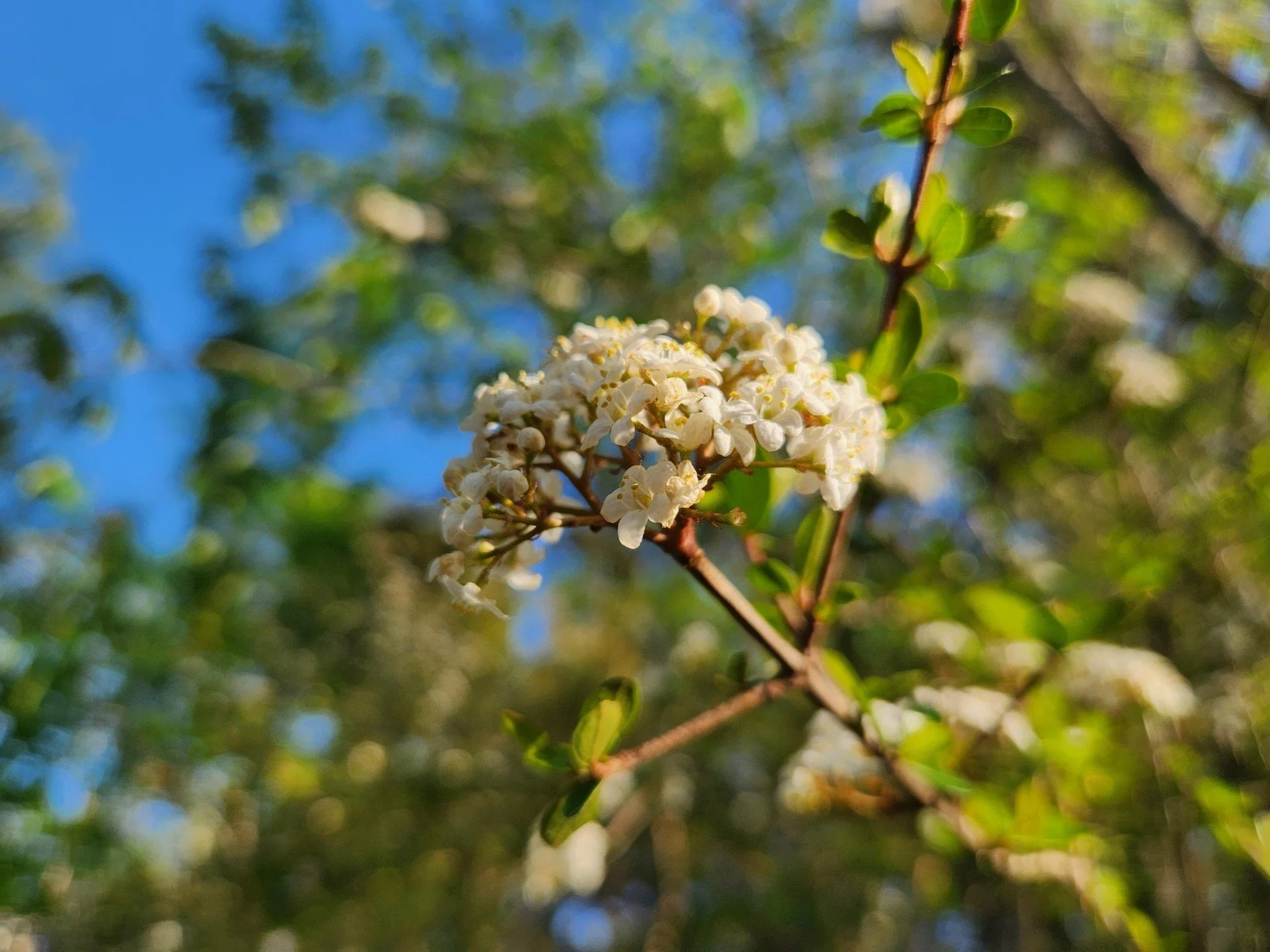
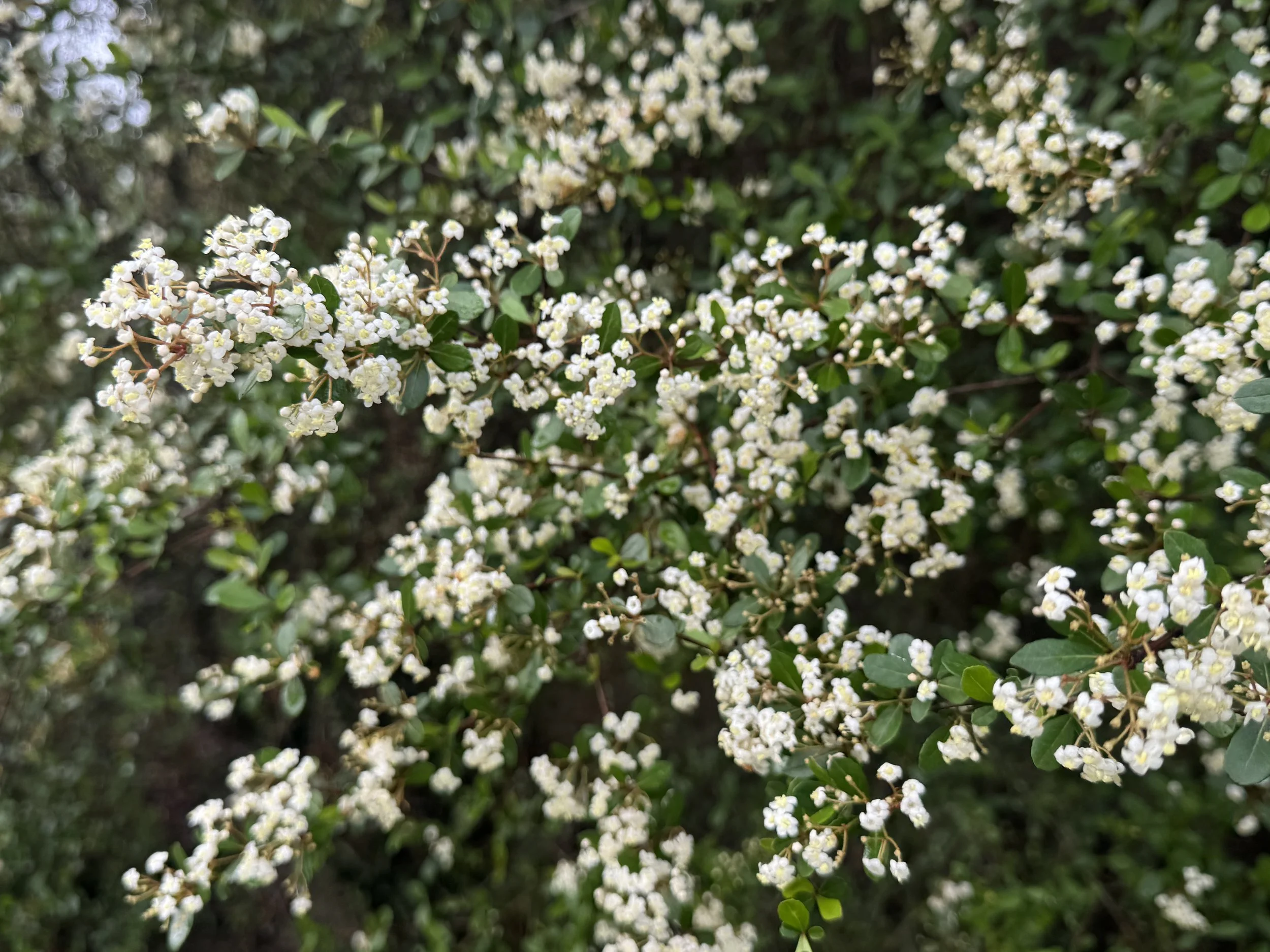
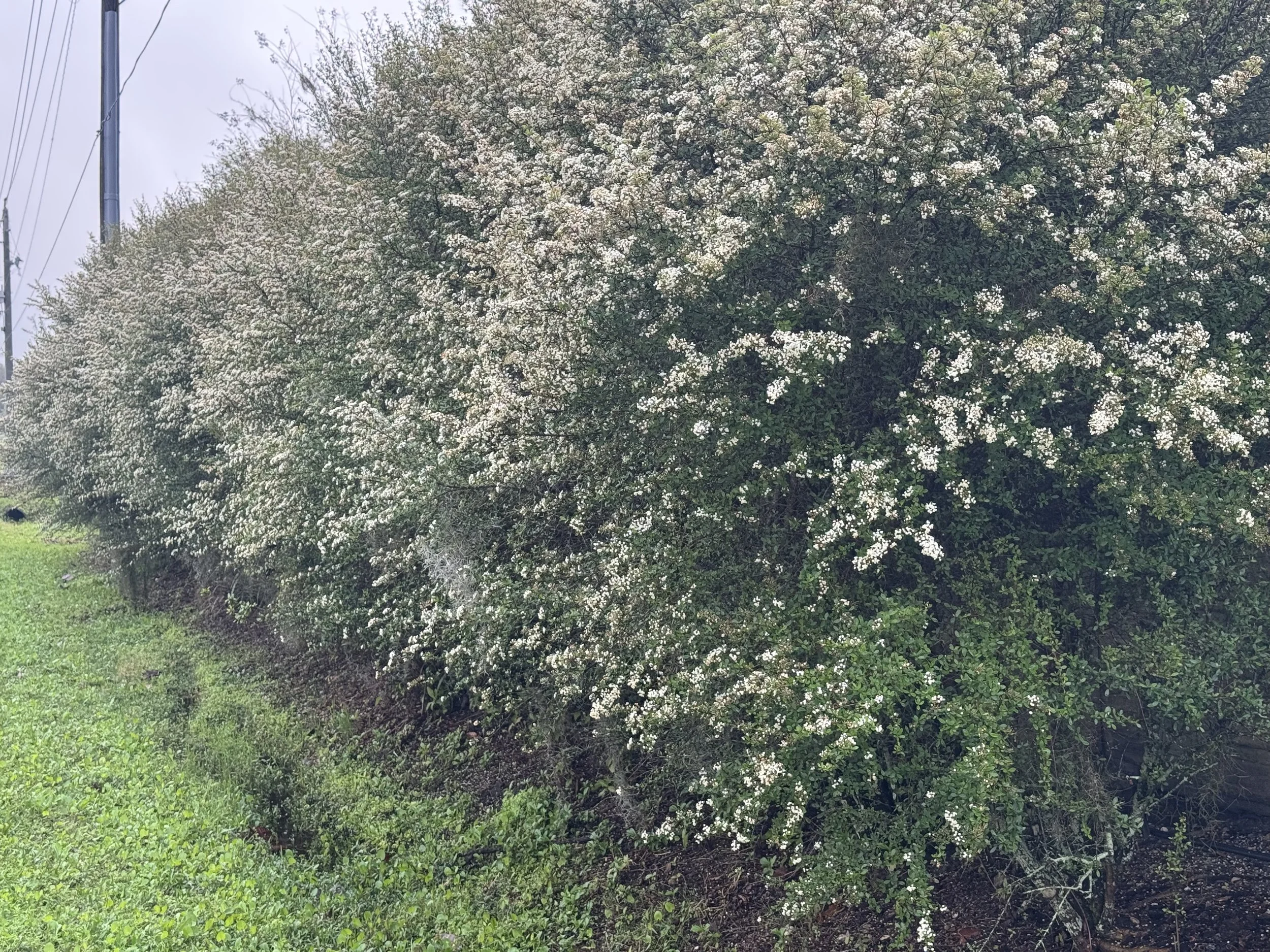
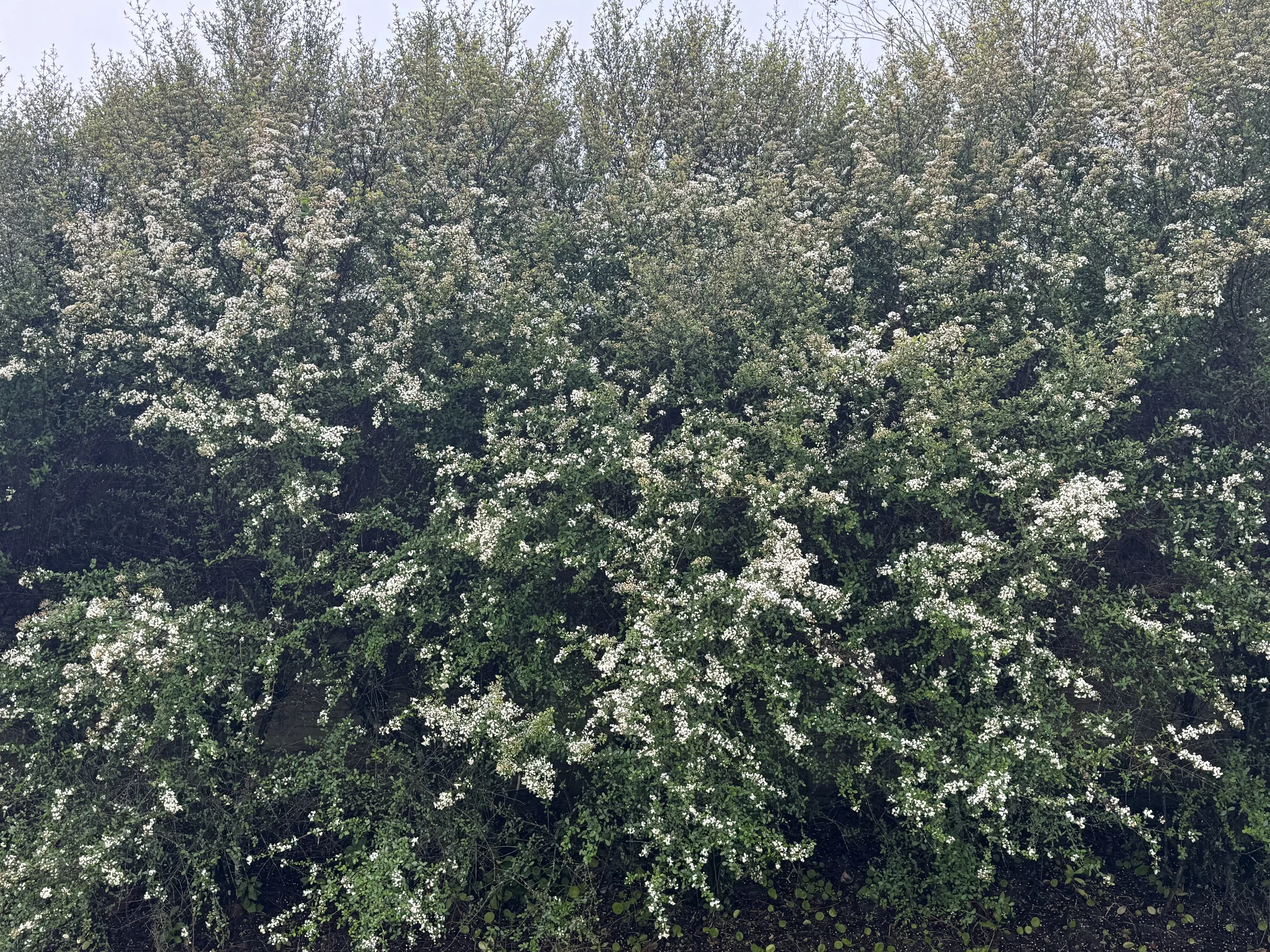
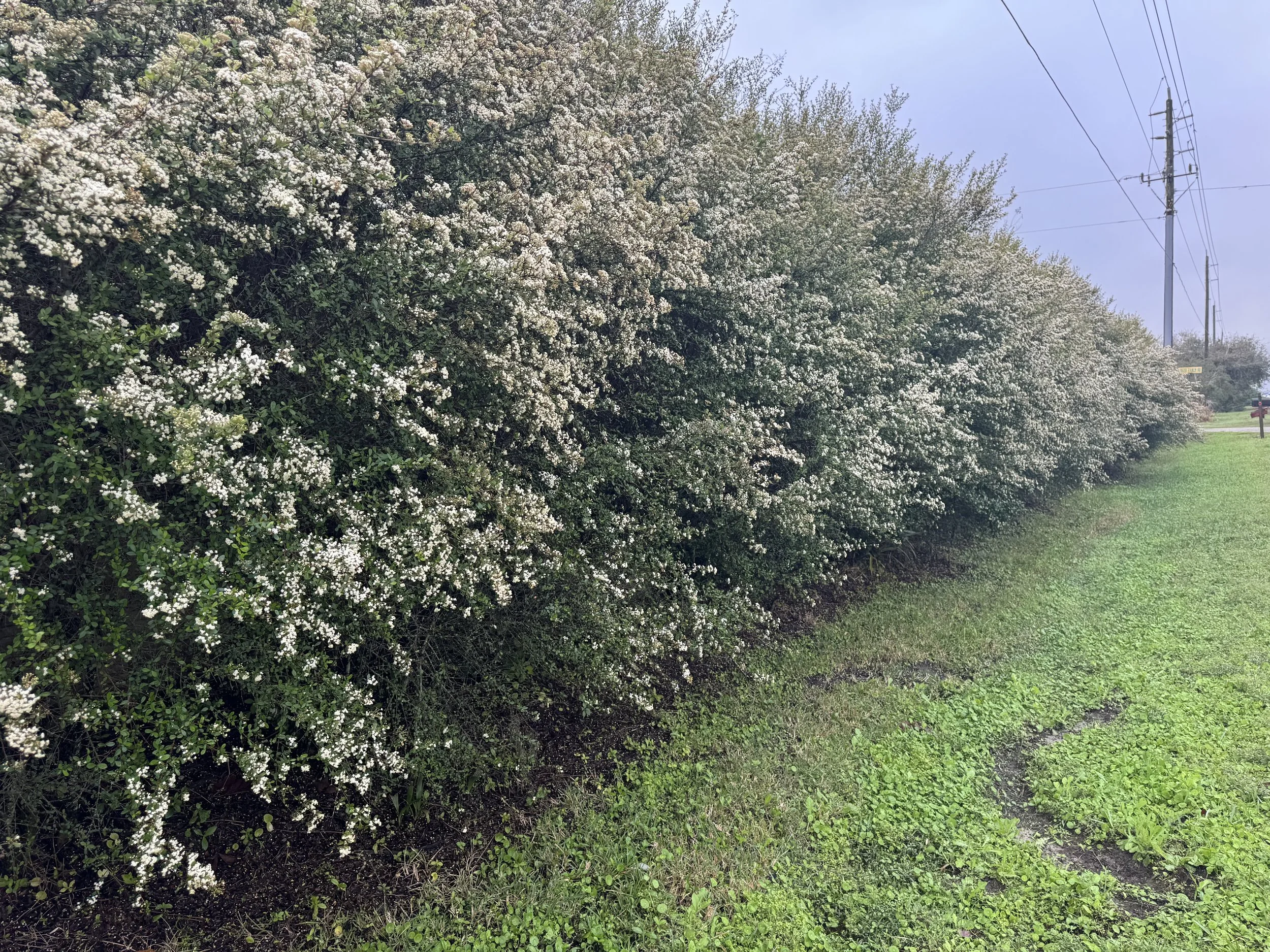
Viburnum obovatum
Walter's Viburnum is an evergreen shrub or small tree native to the southeastern United States that can reach up to 20’ tall but is commonly pruned as a hedge or screen. This densely branched species features fine-textured foliage and produces masses of small, fragrant white flower clusters in early spring, giving it its nickname "Florida snow," that attract butterflies and other pollinators. In fall, it develops dark blue berries that provide food for birds and wildlife. Thriving in zones 7-10, it adapts to various soil types and light conditions from full sun to partial shade, making it an excellent choice for native landscaping, wildlife gardens, and as a Florida-friendly alternative to boxwood hedges.
Sizing of cultivars:
‘Withlacoochee’ - 12’-15’
‘Select’ - 6’-8’
‘Densa’ - 4’-5’
‘Snow Fury’ - 5’-10’
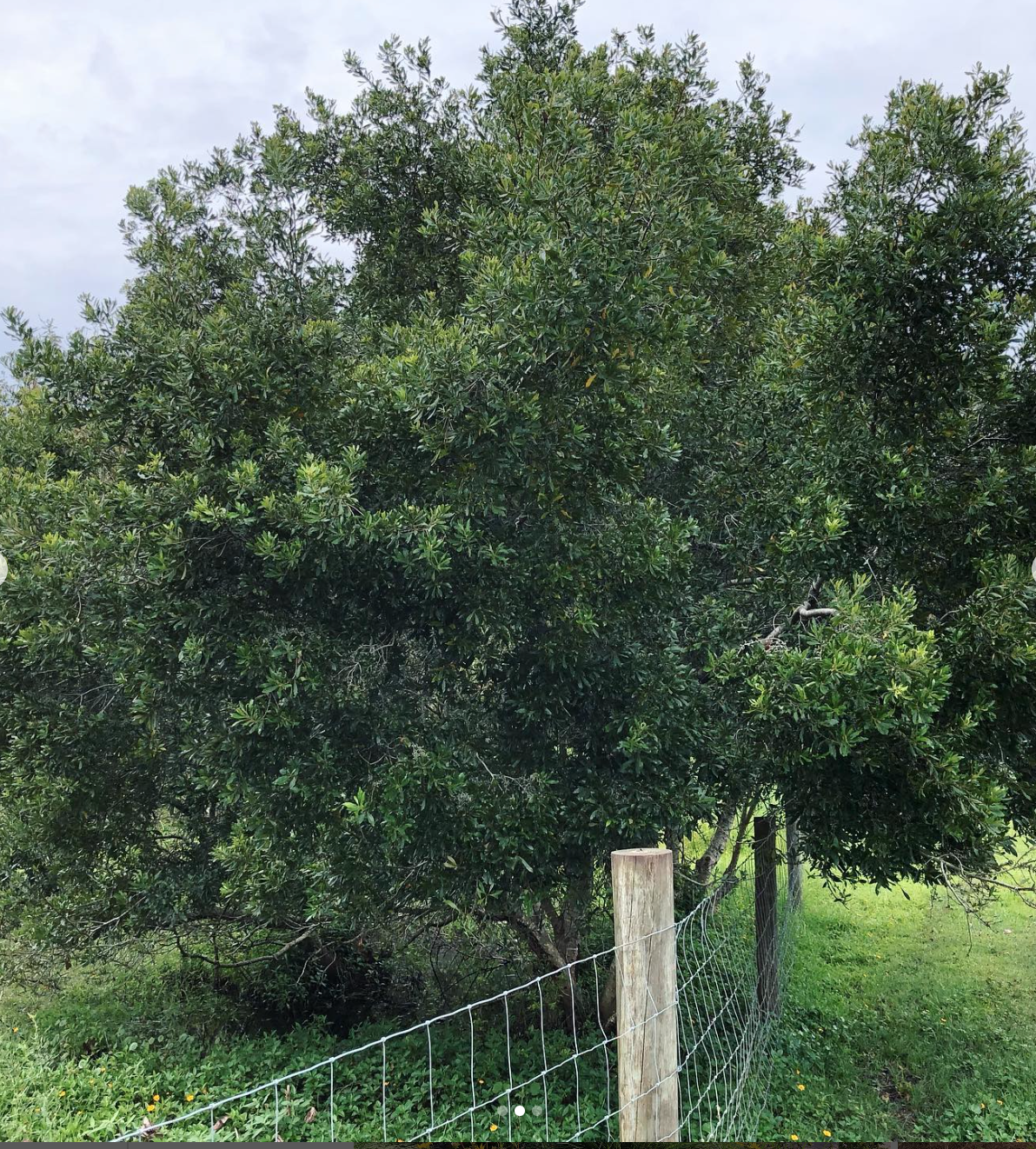
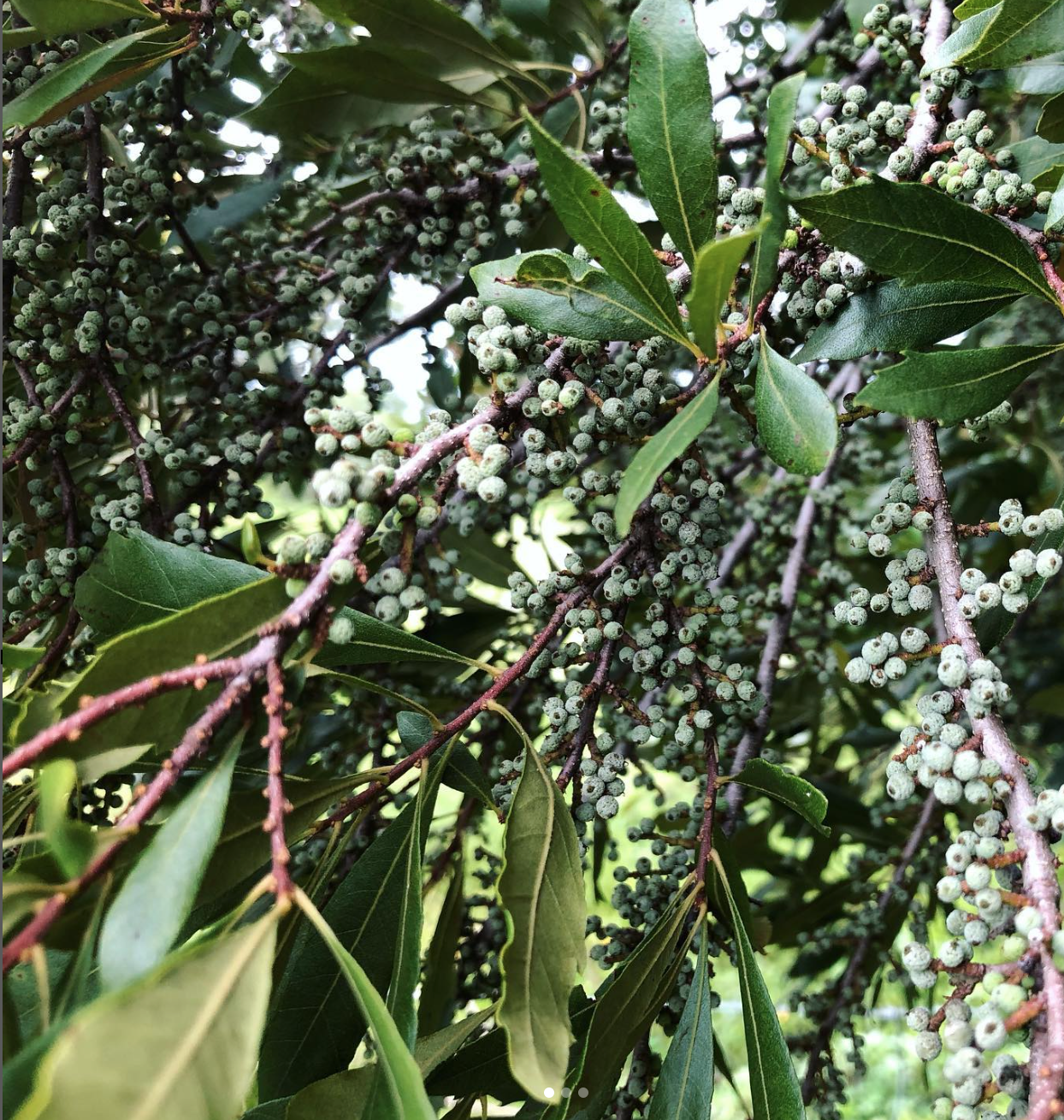
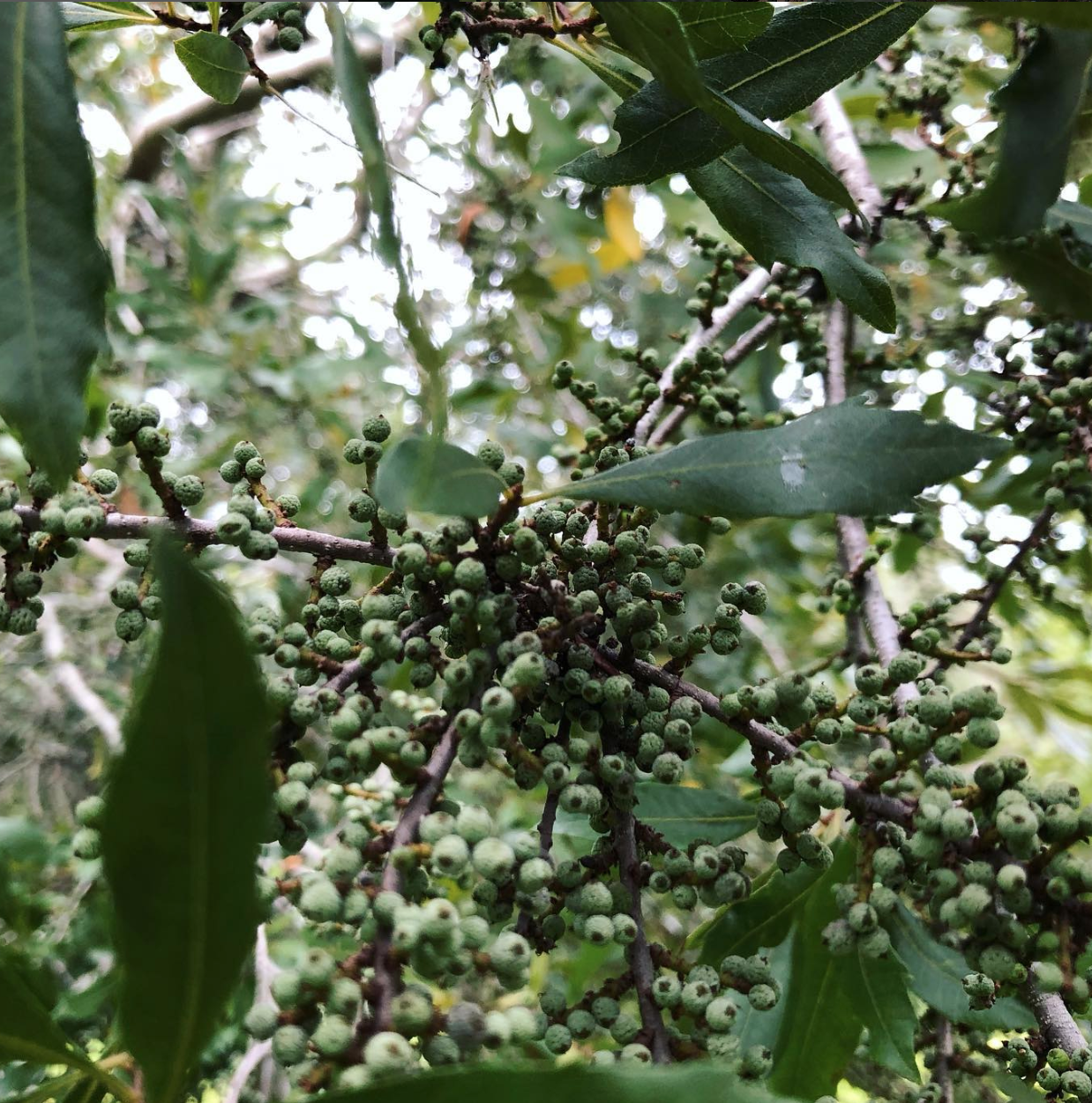
aka Southern Bayberry
Myrica cerifera
Southern Bayberry is a go-to large shrub for tough conditions that require plants that can tolerate moist soils and full sun. It’s also highly adaptable to dry soils and partial shade. It is evergreen and best left untrimmed and allowed to get to its natural height of about 15’. Southern Bayberry makes a nice hedge, natural screen or buffer planting or a specimen shrub and it is an excellent wildlife attractor. The waxy berries on the female plants are a food source for birds, and also used to make traditional bayberry candles.
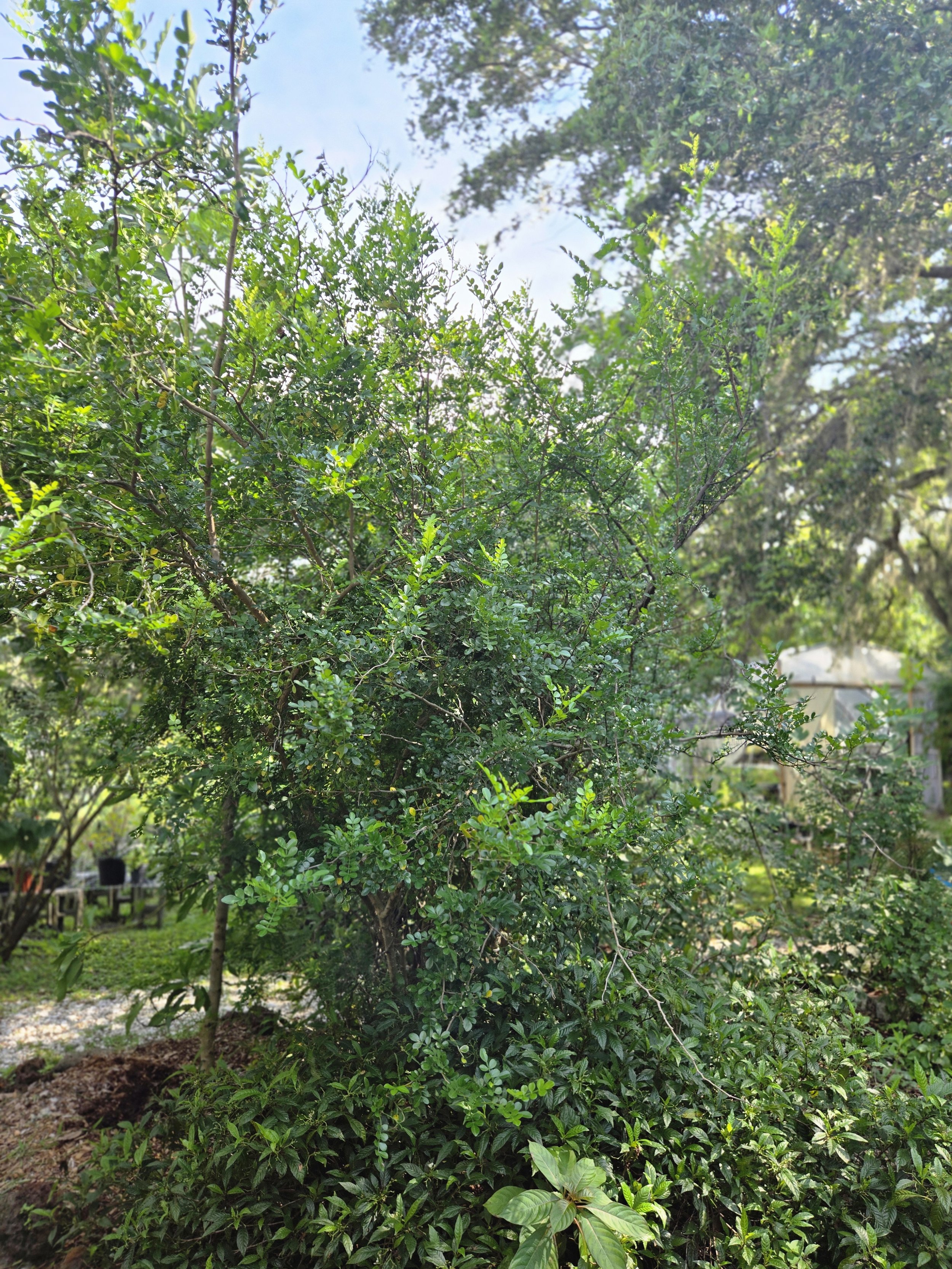
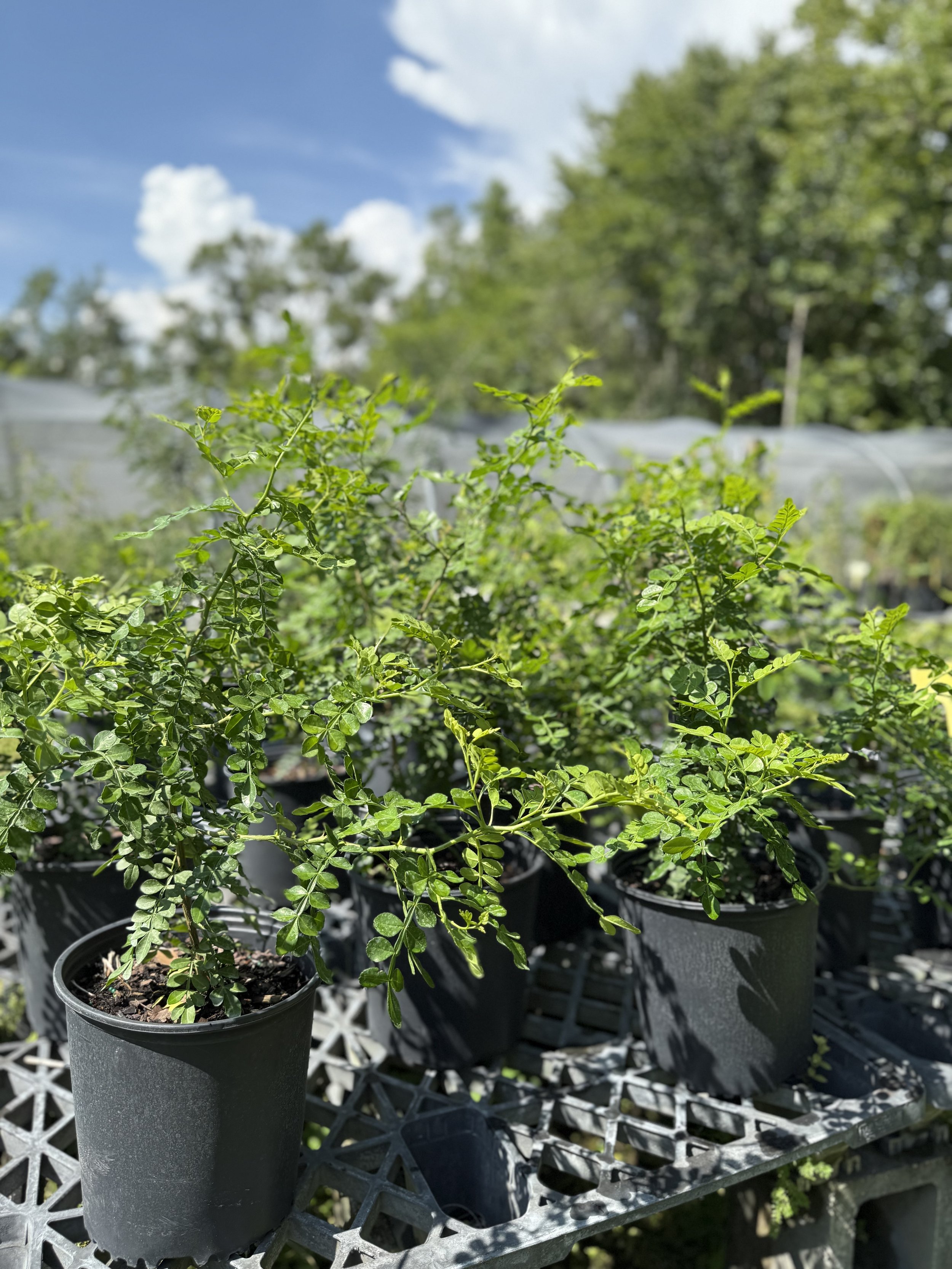
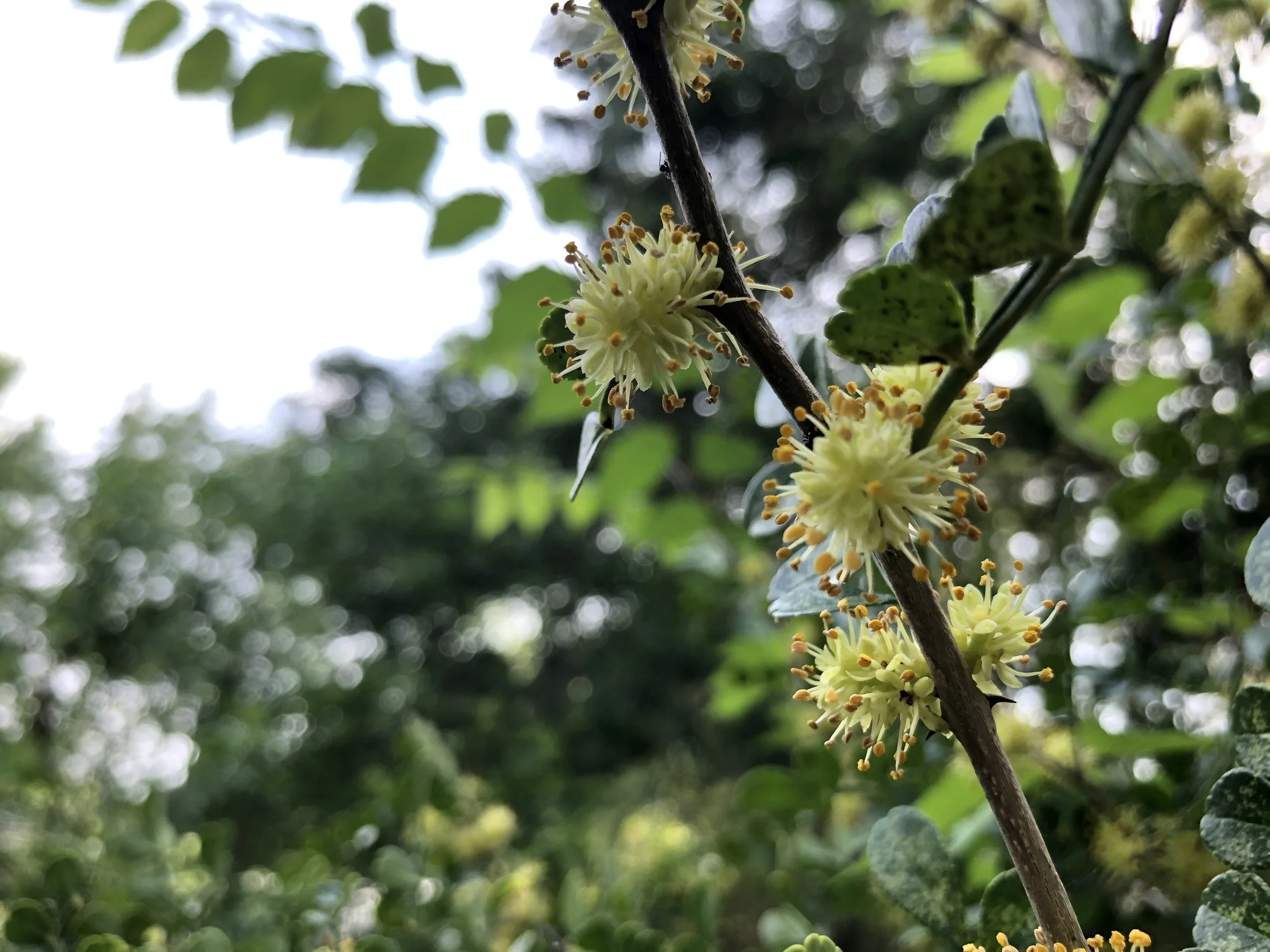
Zanthoxylum fagara
Wild Lime is a native evergreen shrub or small tree native to southern Florida and the Florida Keys that grows up to 23 feet tall with a spreading, often multi-trunked form. This member of the citrus family features compound leaves with distinctly winged leaf stems and 7-11 rounded leaflets that emit a strong lime fragrance when crushed. The trunk and branches are armed with sharp spines, and it produces small, greenish-yellow flowers in dense clusters followed by brown seed capsules containing black seeds. Thriving in hammocks and woodland edges, it serves as a larval host plant for giant swallowtail butterflies and provides cover and food for various wildlife species. With its dense, thorny foliage, it makes an excellent natural barrier or privacy screen for central and south Florida landscapes.


Ilex vomitoria
Yaupon Holly is a tough, evergreen shrub or small tree native to the southeastern United States that grows 15’-25’ tall with a distinctive vase-shaped form. This adaptable species features small, dark green leathery leaves and produces inconspicuous greenish-white flowers in spring, followed by brilliant red berries on female plants that attract birds and wildlife. Historically used by Native Americans to make caffeinated ceremonial tea, it's extremely drought and salt-tolerant, thriving in a wide range of conditions from full sun to shade and various soil types. Hardy in zones 7-10, it's valued for its versatility as a hedge, specimen tree, or screen, though it tends to sucker from the roots and may require regular pruning to maintain form.
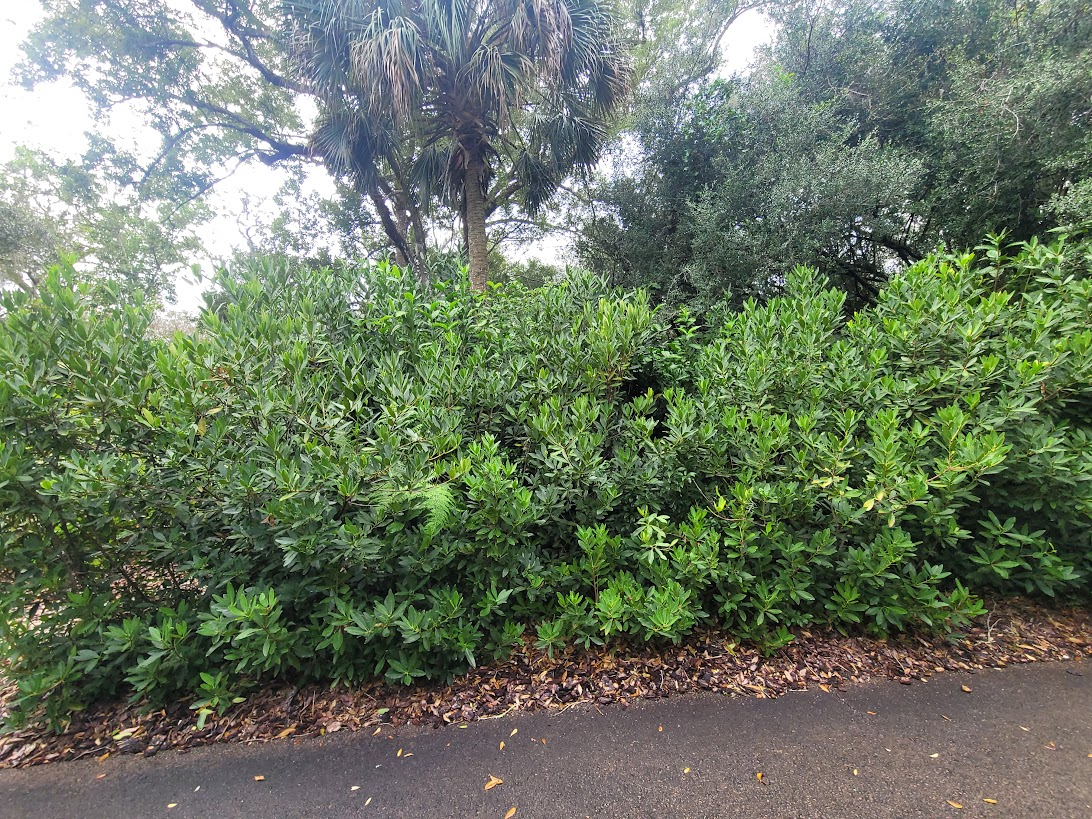
Illiium parviflorum
Yellow Anise is an evergreen, deer-resistant, fragrant shrub that gets about 10’ tall (but is easily pruned) with a rounded, spreading form. This rare species features glossy, leathery olive-green leaves that emit a strong anise-like fragrance when crushed. The small, yellow-green flowers in late spring attract butterflies and pollinators and are followed by star-shaped seed clusters. Yellow Anise does well in an area of the garden with partial to full shade and consistent moisture (or irrigation).
No results match your search. Try removing a few filters.