Hi Friends!
We offer PICK UP or LOCAL DELIVERY only (NO SHIPPING).
Thank you!
Thursday–Sunday, 10am–4pm | 941-322-1915
We offer PICK UP or LOCAL DELIVERY only (NO SHIPPING).
Thank you!
Thursday–Sunday, 10am–4pm | 941-322-1915
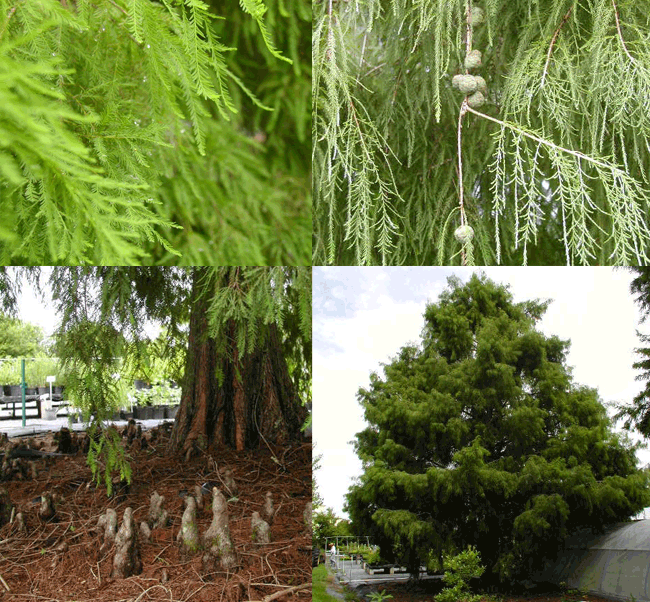

Taxodium distichum
Bald Cypress is a majestic deciduous conifer native to the southeastern United States that can reach 50’-120’ tall with a distinctive buttressed base when growing in water. This long-lived species features feathery, light green needles that turn brilliant russet-orange in fall before dropping, and fibrous, reddish-brown bark. Its most distinctive characteristic is the development of "knees" - woody projections that grow upward from the root system when the tree is in standing water or wet soils. Naturally occurring in swamps, bayous, floodplains, and along rivers from Maryland to Texas, it's remarkably adaptable, tolerating both permanently flooded conditions and surprisingly dry soils once established. This iconic tree provides critical habitat for wildlife, including nesting sites for wood ducks and various wading birds, and serves as an excellent specimen or street tree in zones 4-10.
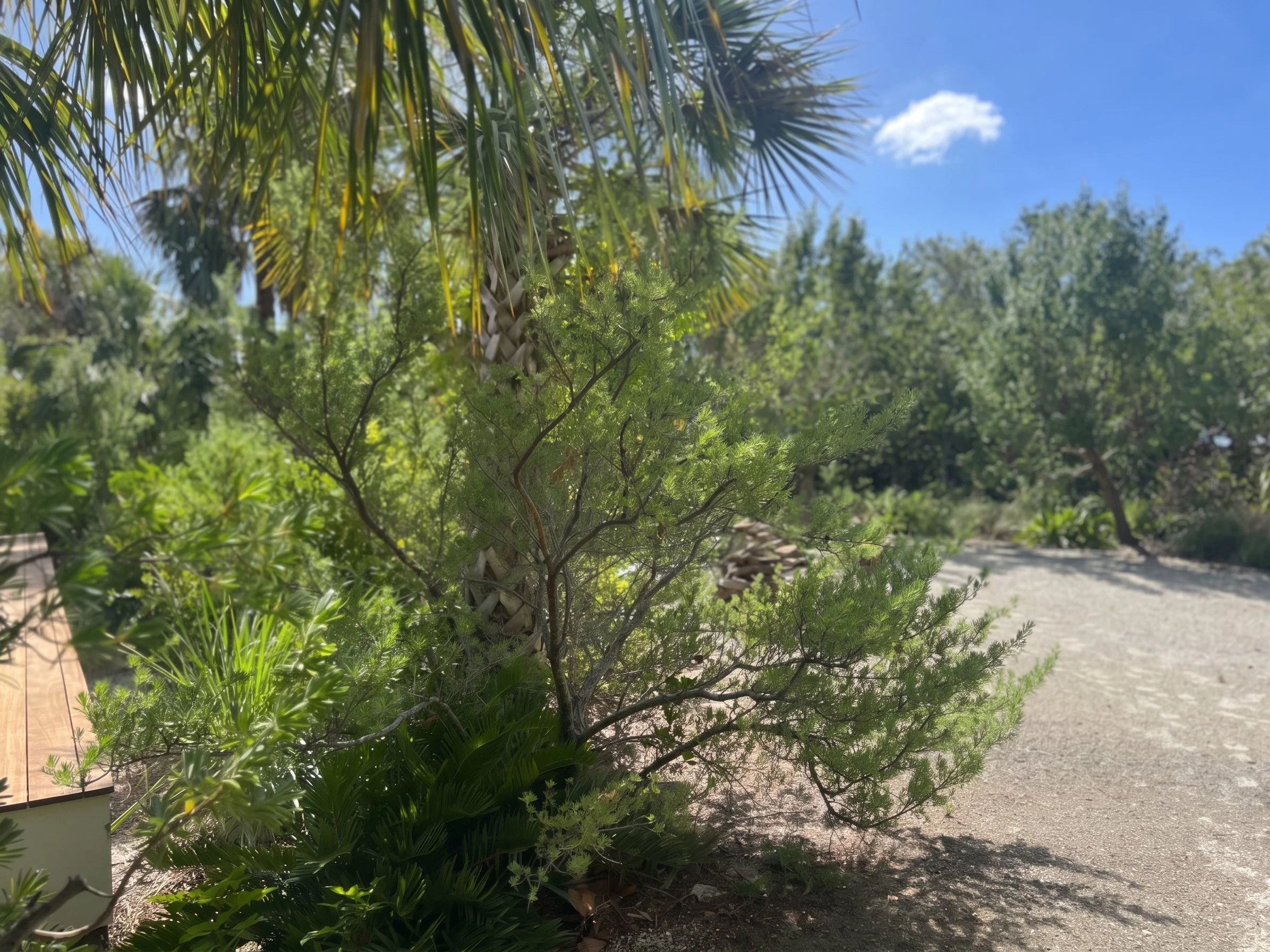
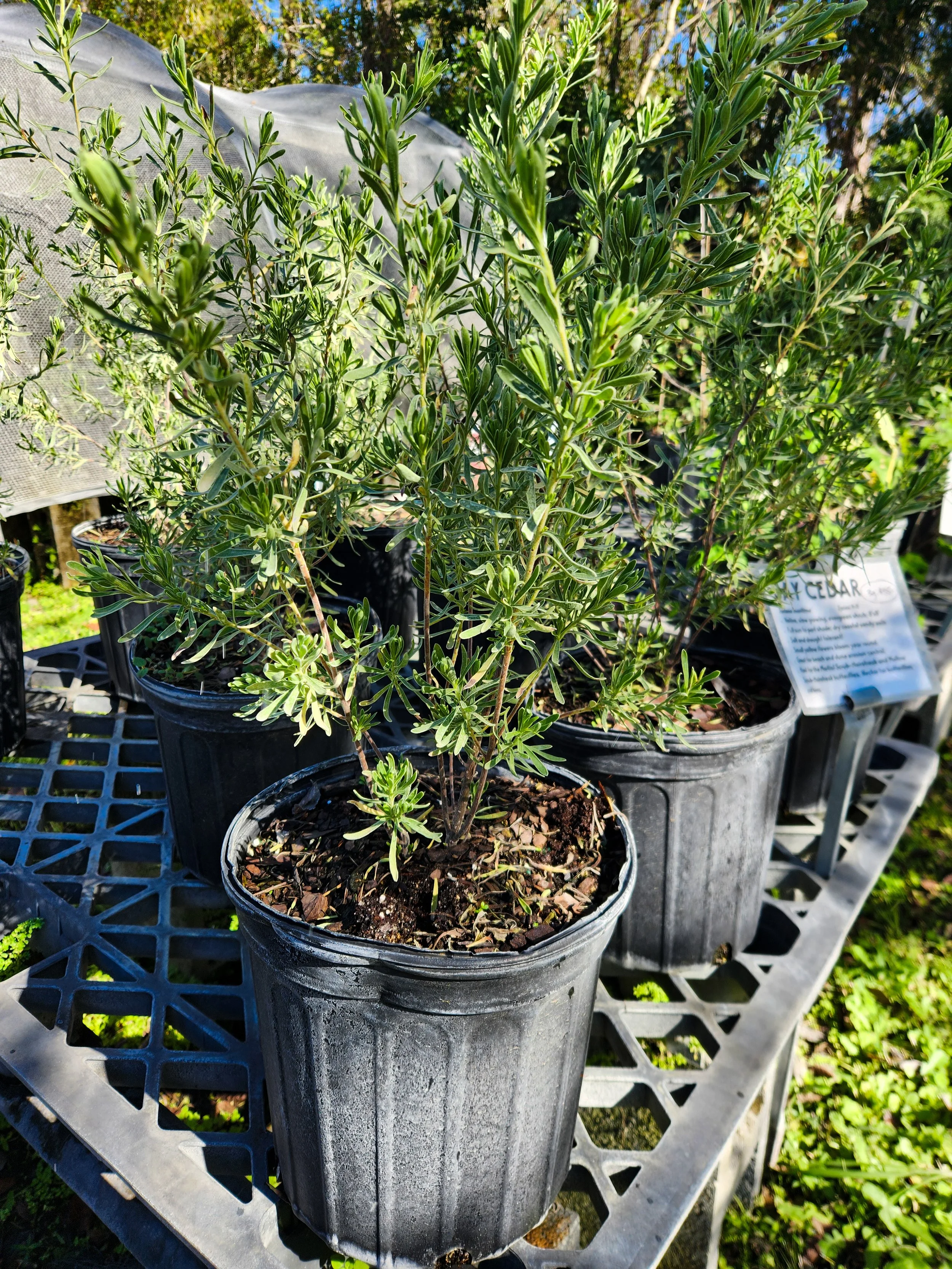
Suriana maritima
Bay Cedar is a slower growing, native, evergreen coastal shrub that is naturally found on sand dunes and beaches. This hurricane resistant shrub can weather storm surges, and is salt spray and drought tolerant! The Bay Cedar is excellent for erosion control of dunes and beaches. Small yellow flowers bloom year round and attract pollinators, and it is a host plant for certain hairstreak butterflies.
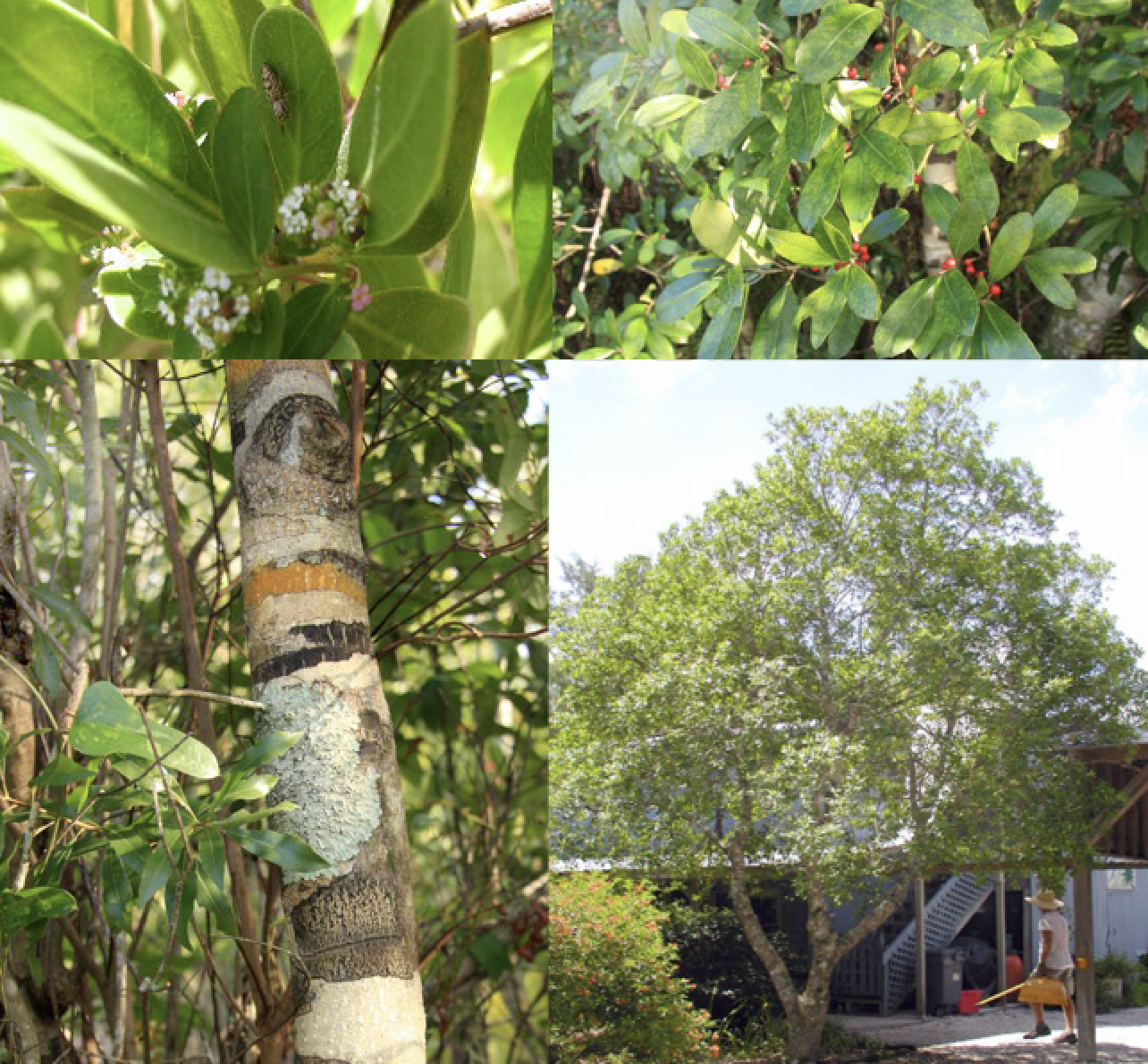
Ilex cassine
Dahoon Holly is a native, evergreen tree, with heights ranging from 20-30ft and it grows best in full sun to partial shade with moist, clay, loamy, or sandy soils. While they are moderately drought tolerant, they may need irrigation in dry, sandy conditions. Moderately salt-spray tolerant. Their foliage is dark green, with clumps of white flowers in spring that are replaced by red berries in fall and winter that provide food for birds and small mammals.
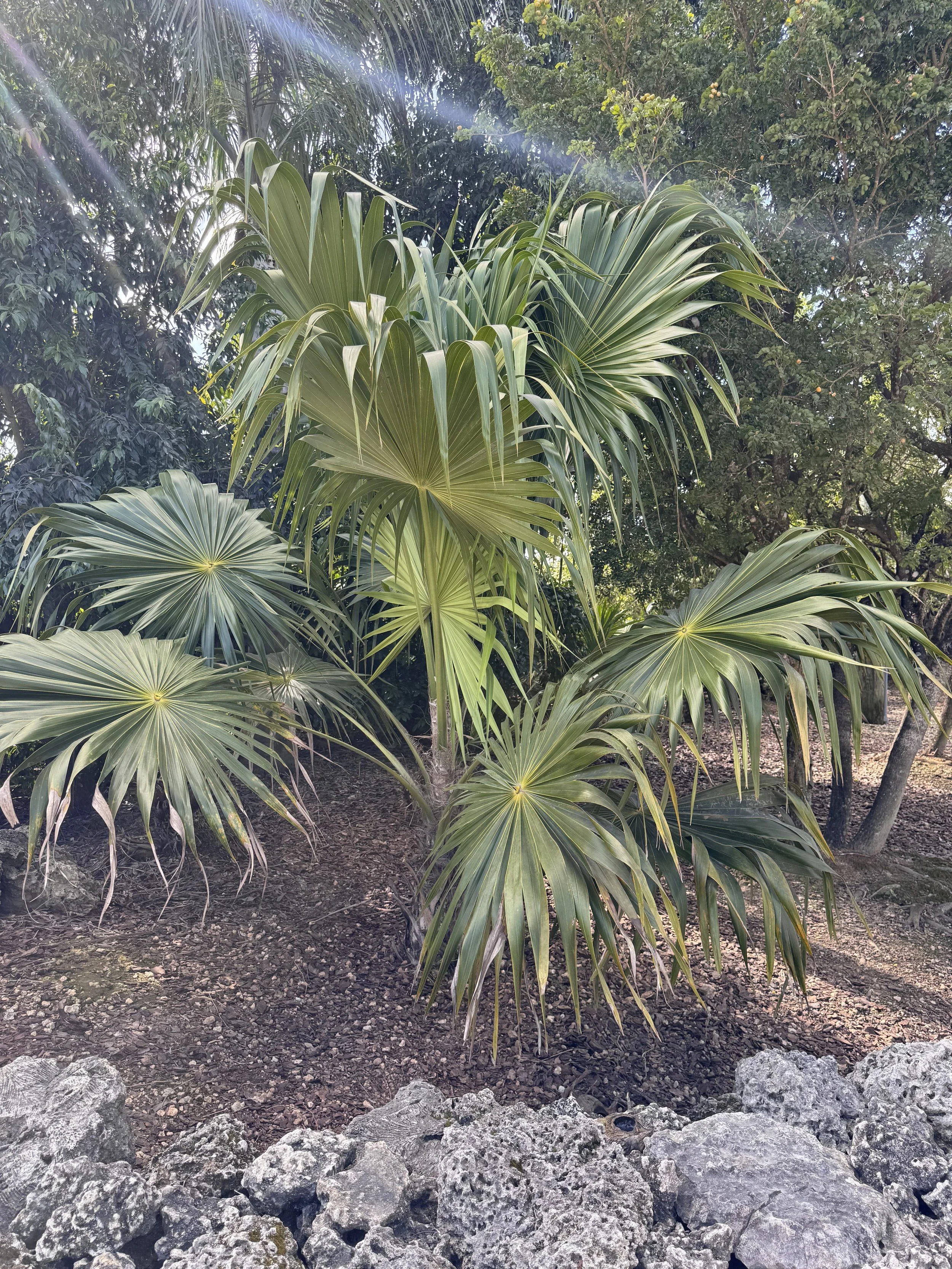
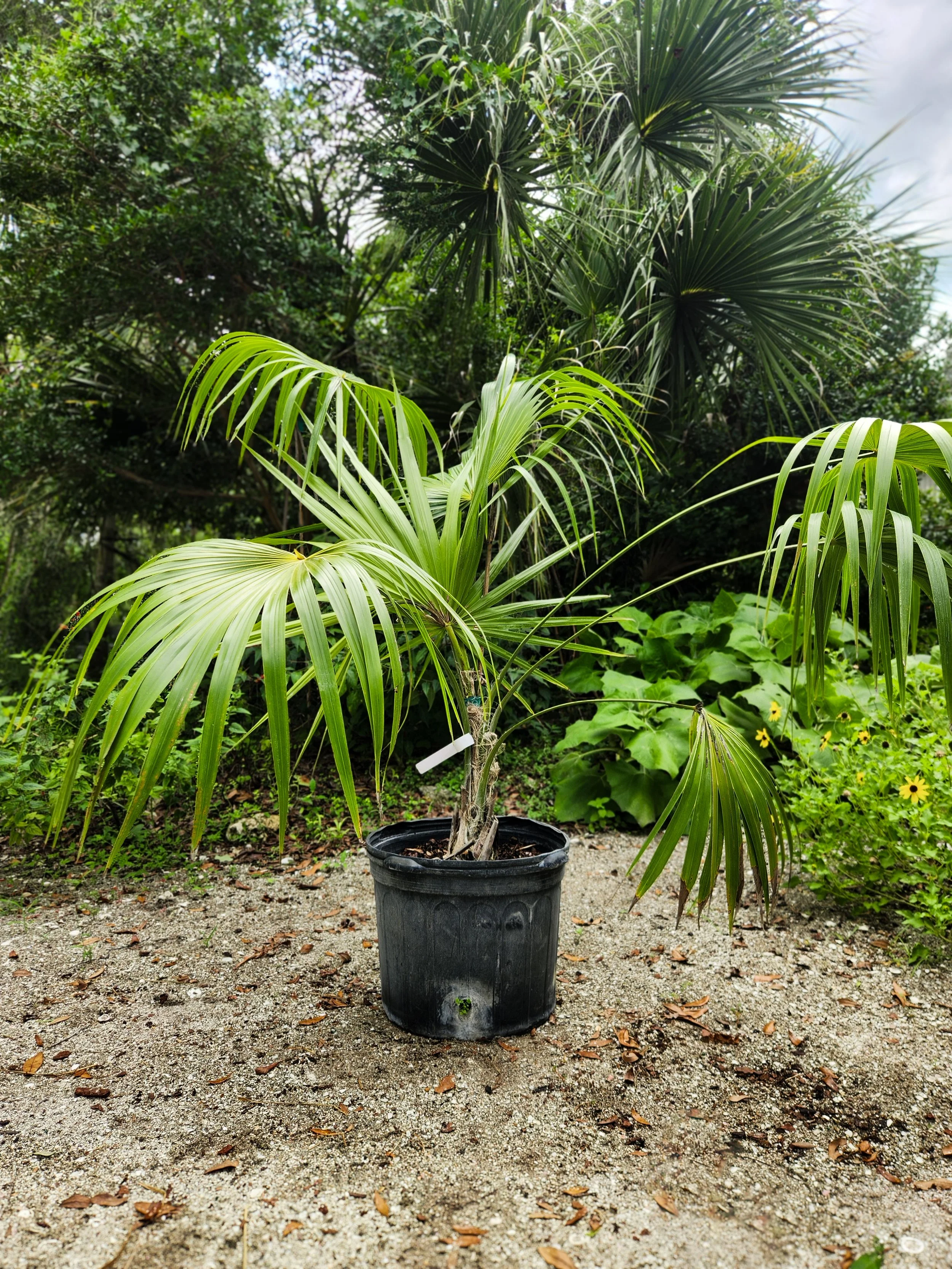
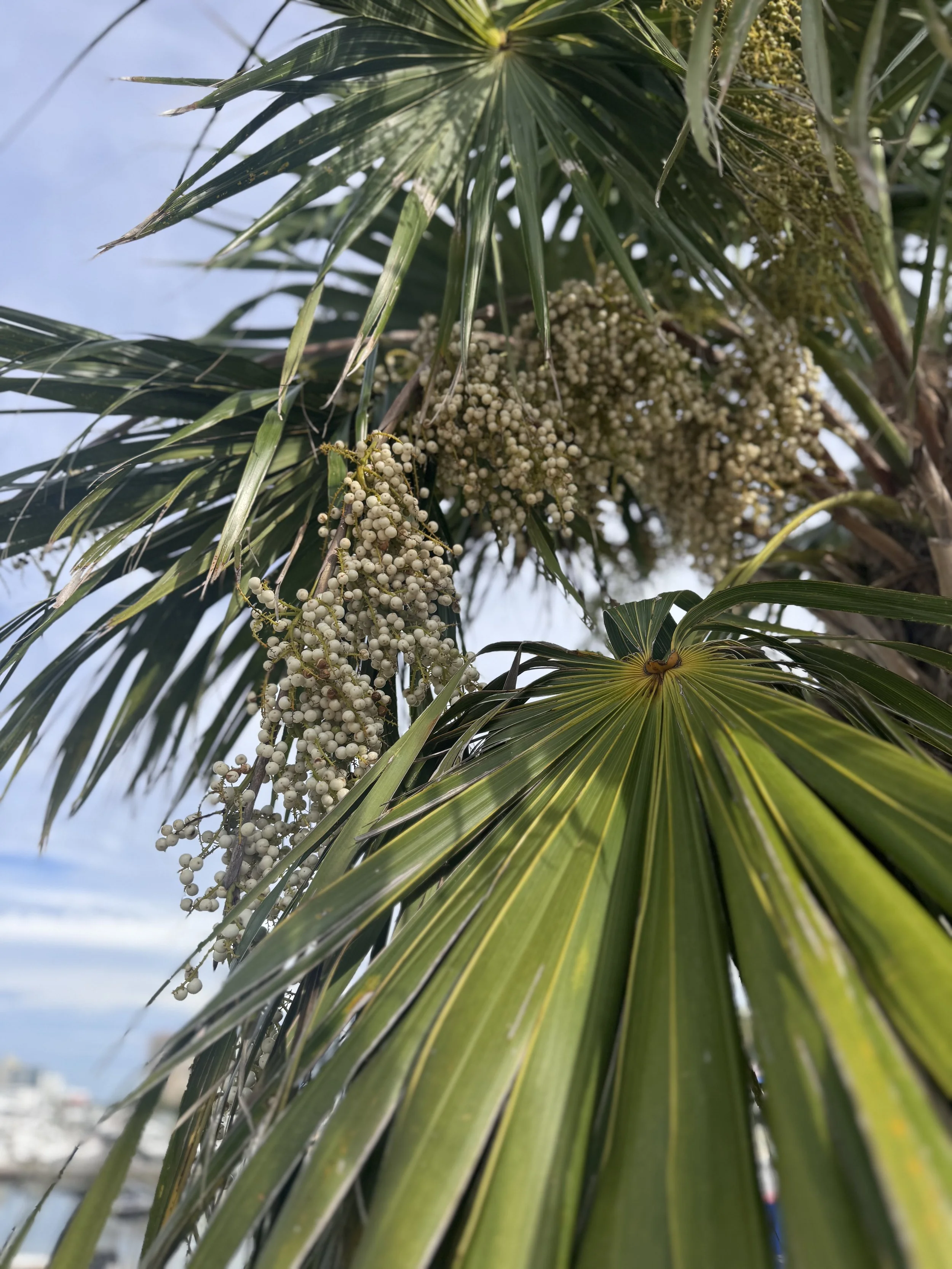
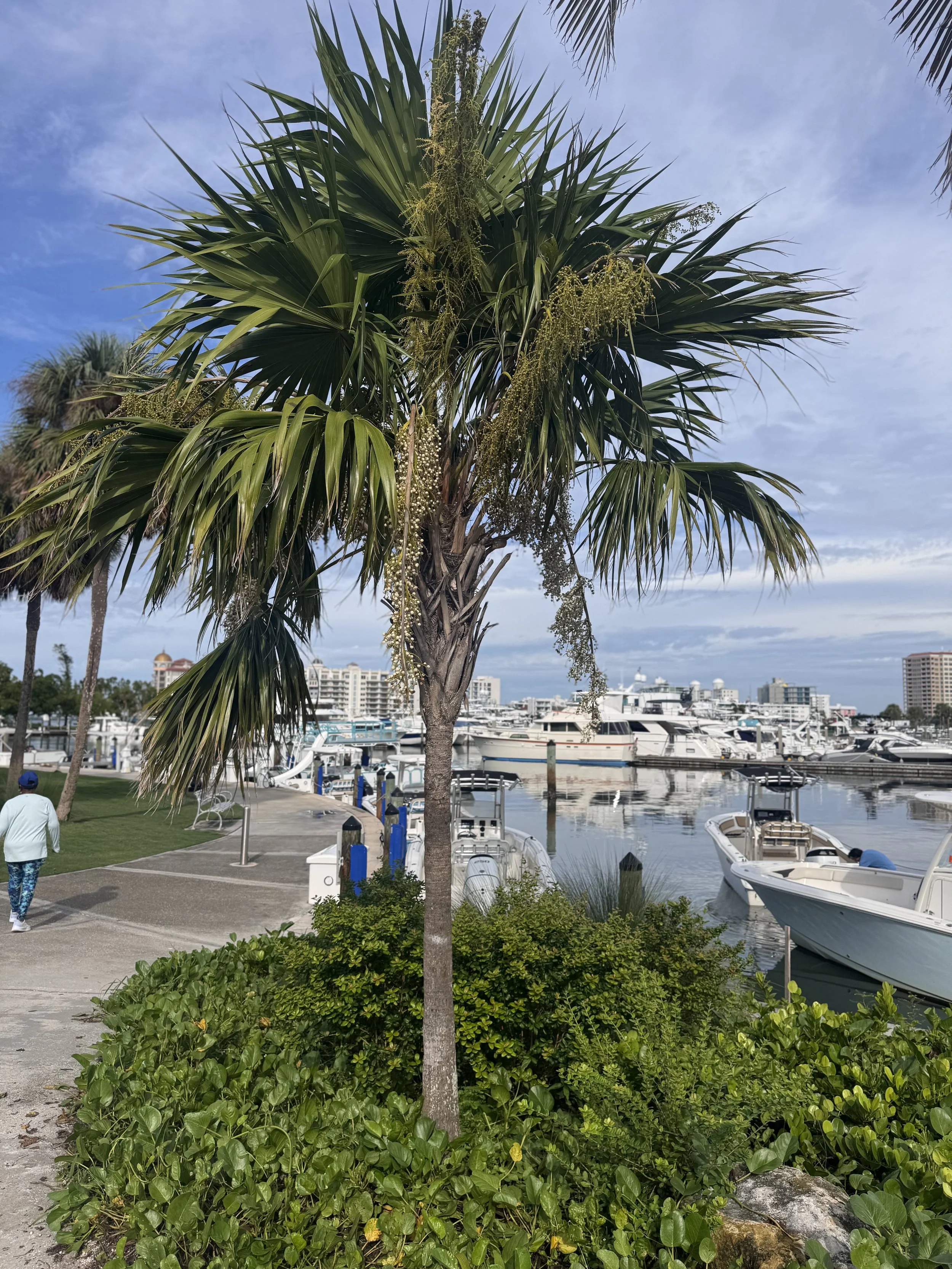
Coccothrinax argentata
Florida Thatch Palm is native evergreen palm that grows to be 6’-15’ tall and 5’-7’ wide. They grow best in full sun and are highly adaptable with their soil environment once established. With flowers in summer that bring in pollinators, followed by berries that bring in birds, Florida Thatch Palm is the perfect plant for attracting wildlife to the space. They are also highly salt and drought tolerant, and can stand up to hurricane winds.
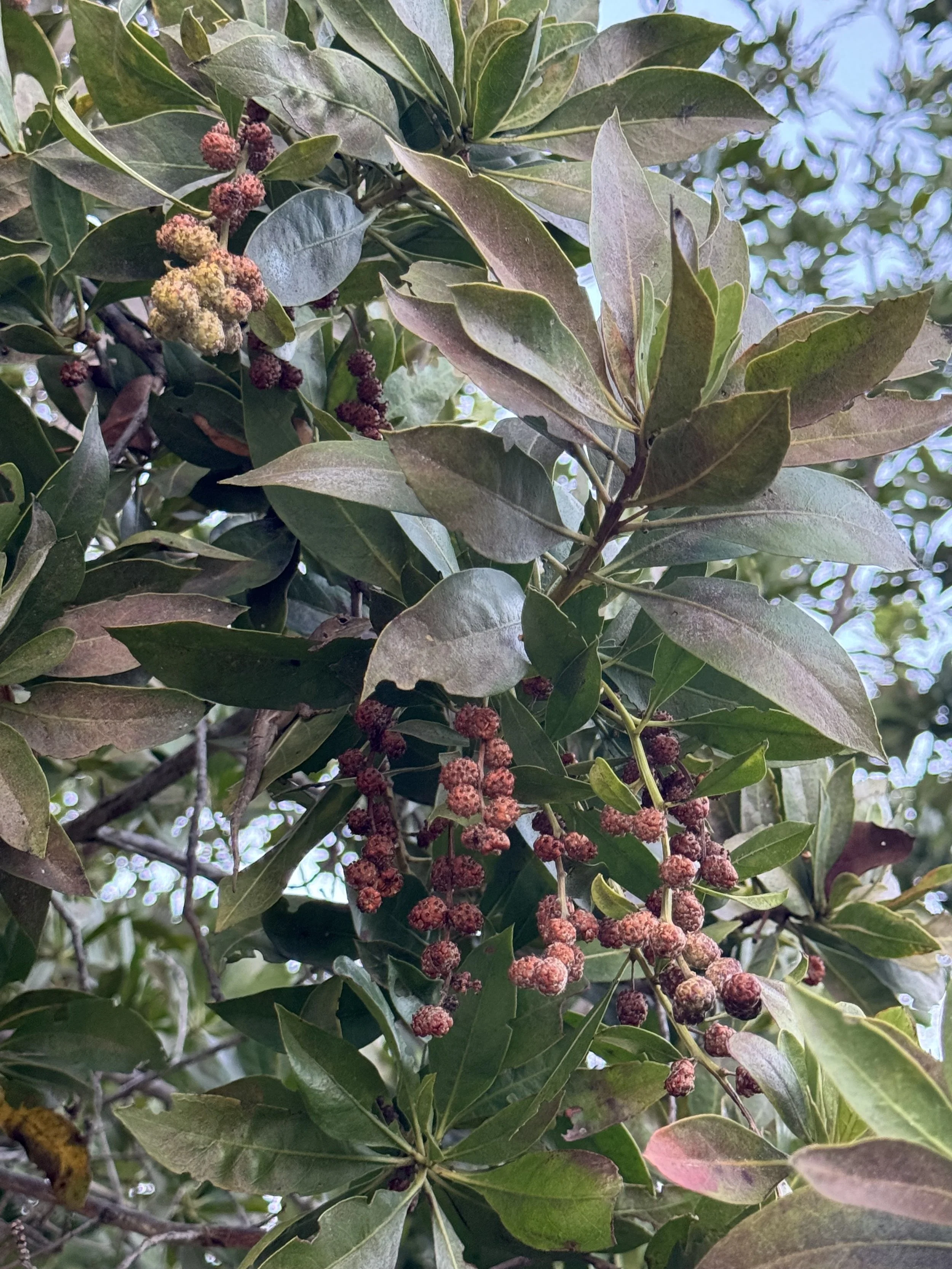

Conocarpus erectus
The Green Buttonwood is an evergreen, coastal, native small tree or large shrub that can reach 20' and has vibrant green leaves and small brown berries that look like wood buttons. This buttonwood is considered the 4th type of mangrove and really thrives in coastal conditions, and can take salt water inundation and salty soils. The Buttonwood also has high wind tolerance making it a great windscreen on coastal properties.
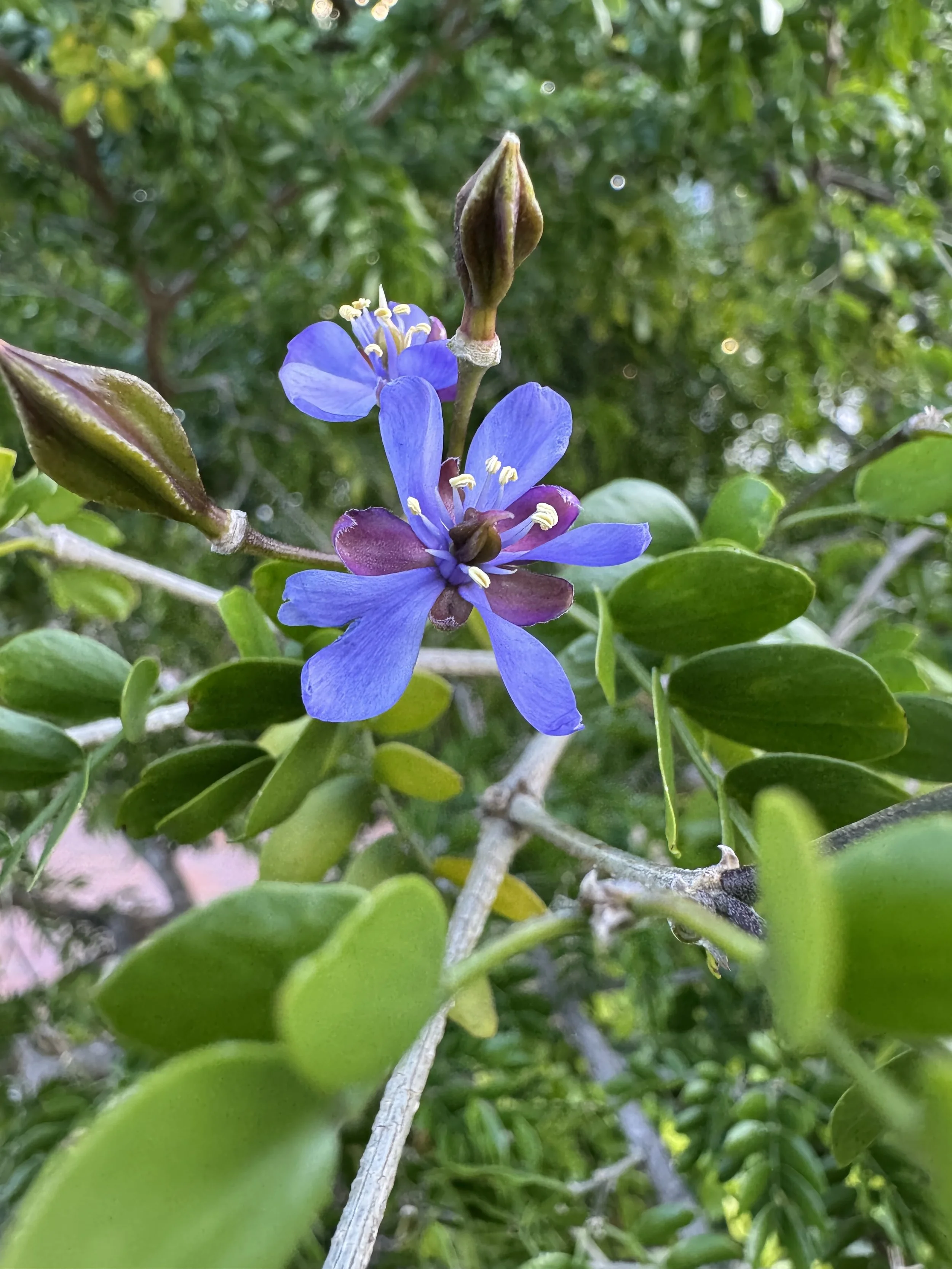

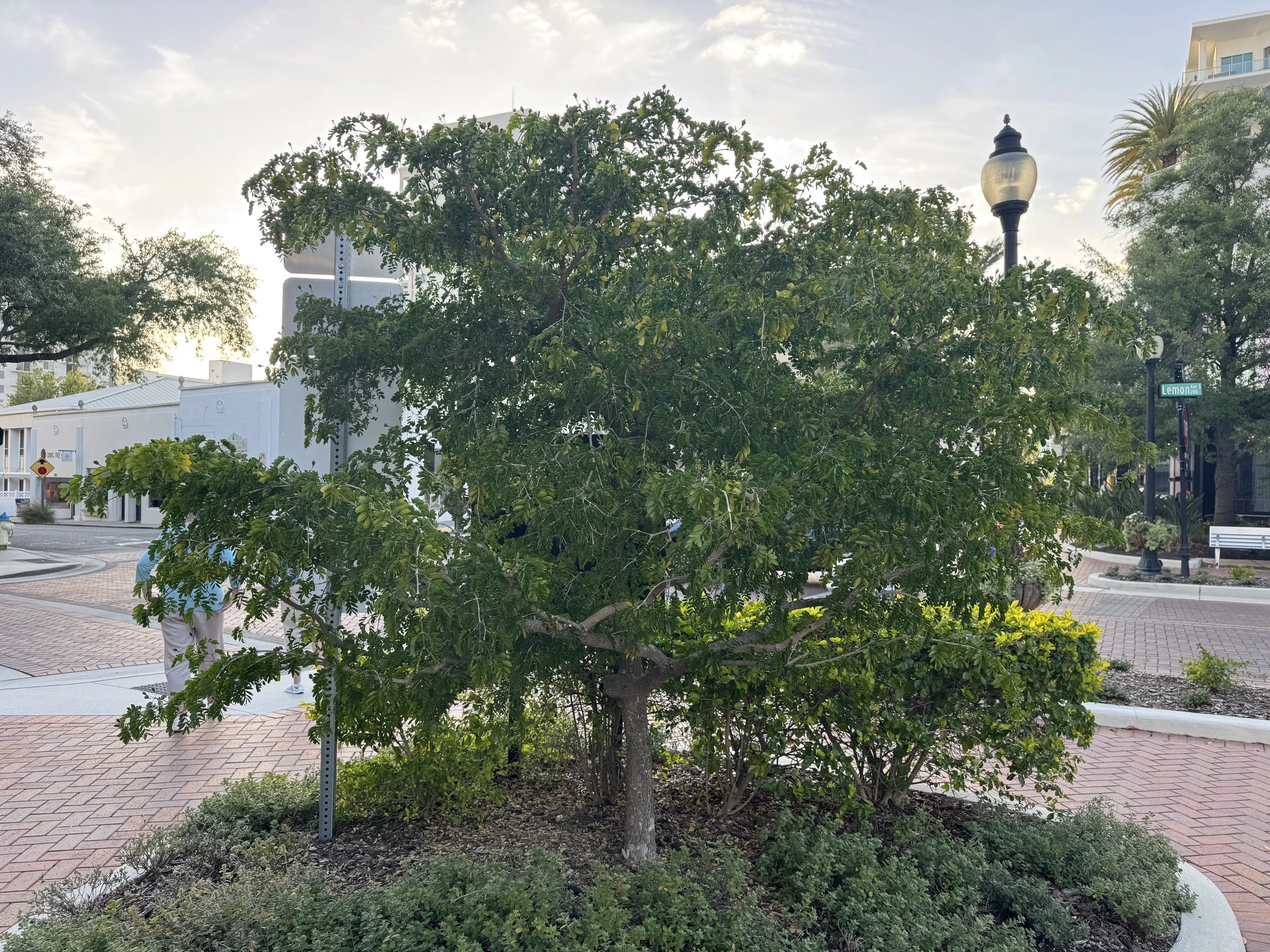
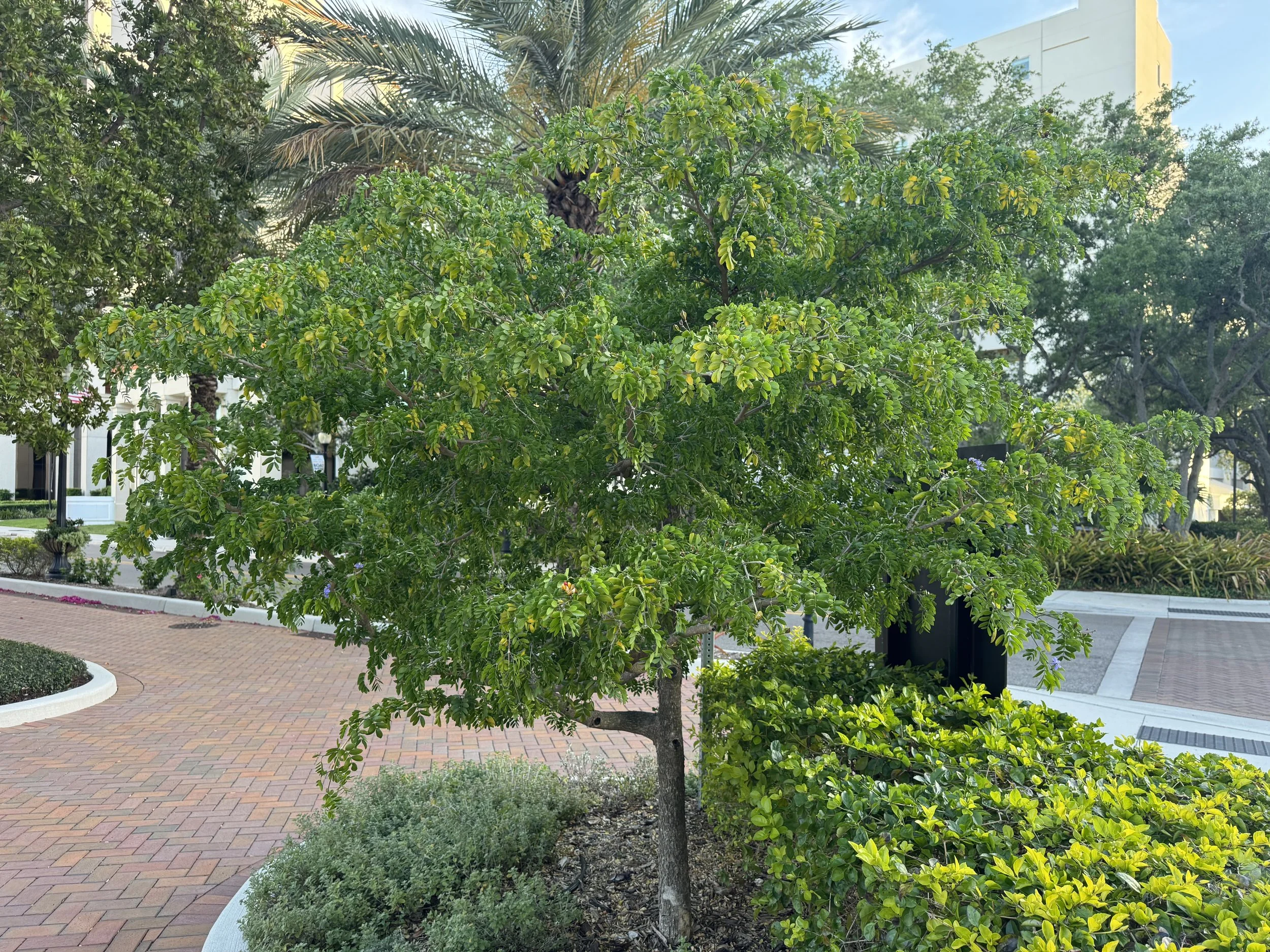
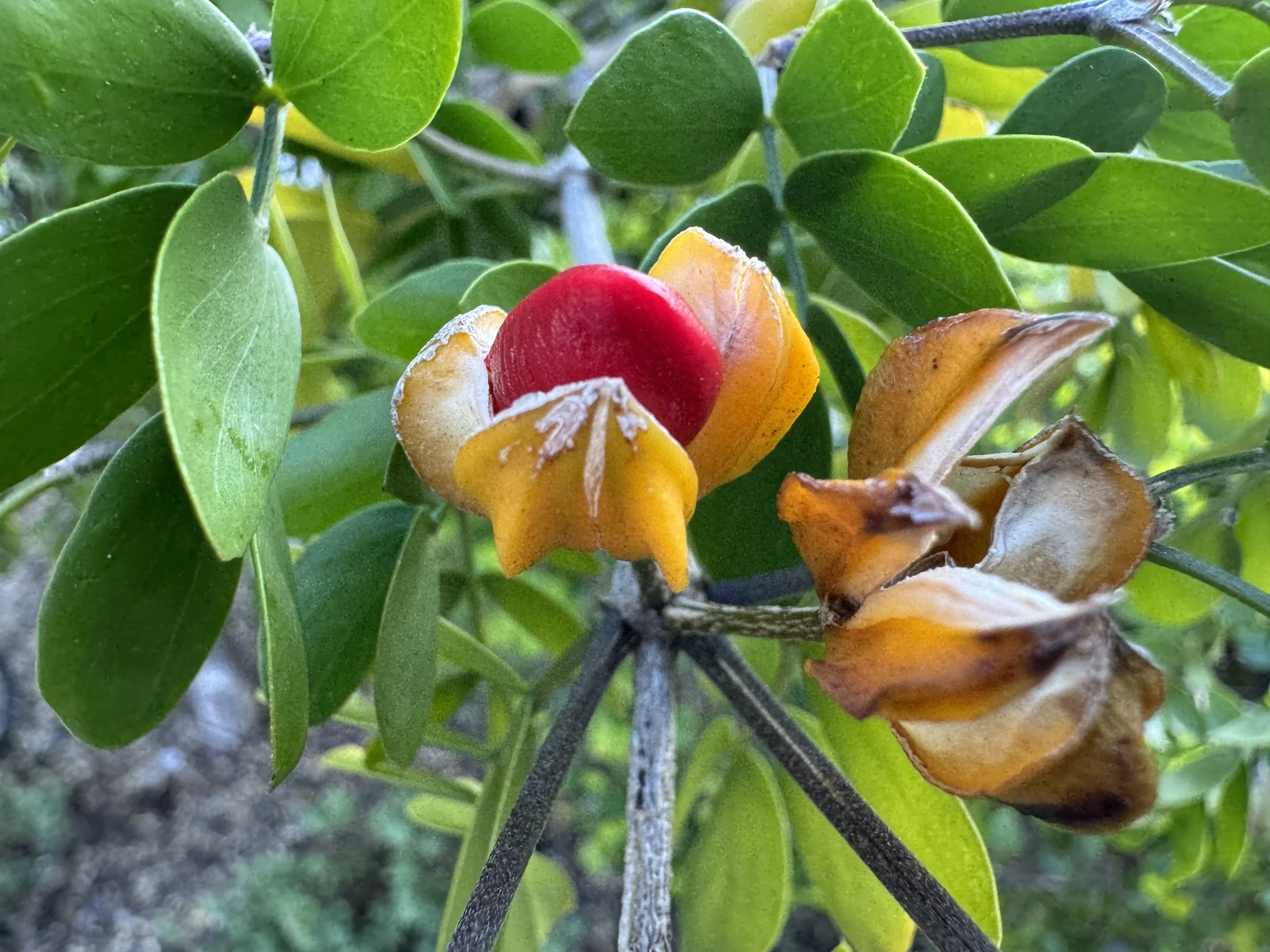

Guaiacum sanctum
The “Wood of Life” tree has a rich ethnobotanical history due to its dense wood and spectacular flowers. For best growth, plant in full sun to partial shade, with well-drained soil. This small tree is slow growing but worth the wait. Rich blue blooms lead to orange fruits which Catbirds adore. Its drought tolerance, hurricane resistance and ability to take salt spray make this tree a great choice for coastal landscapes.
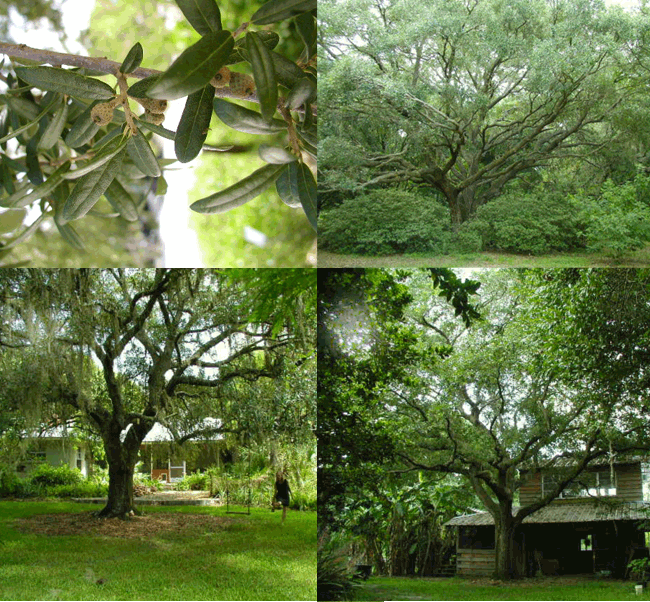
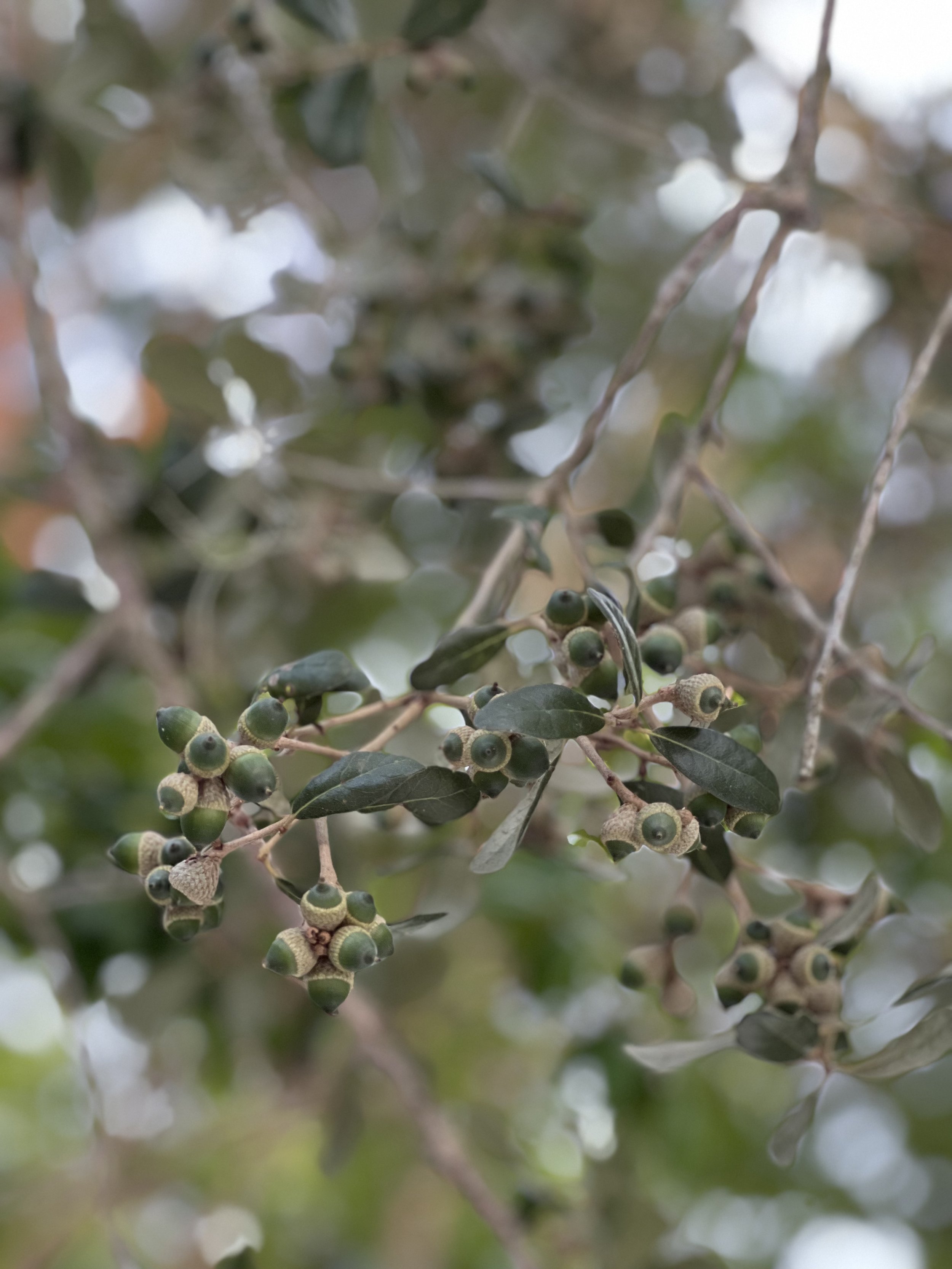
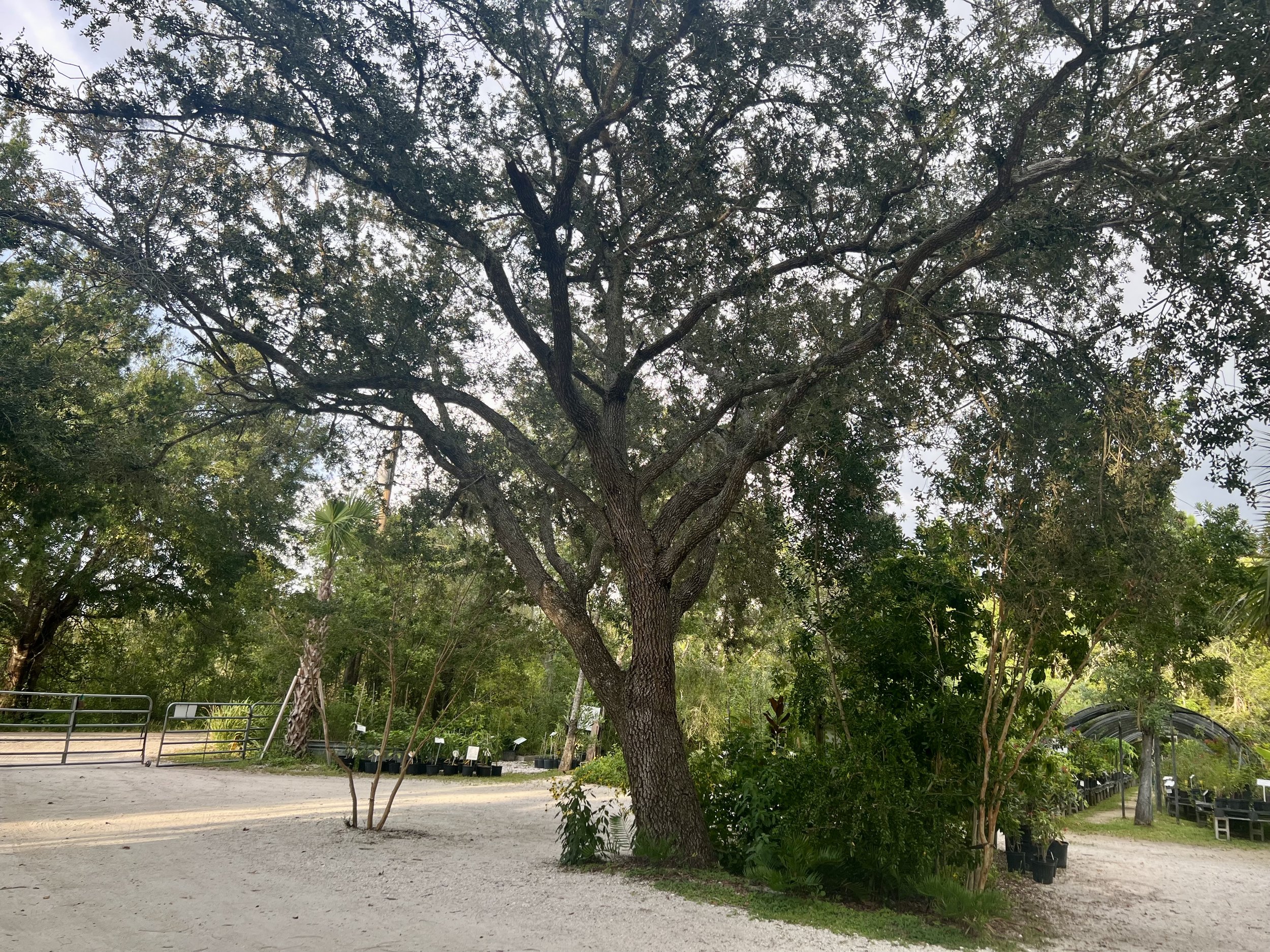
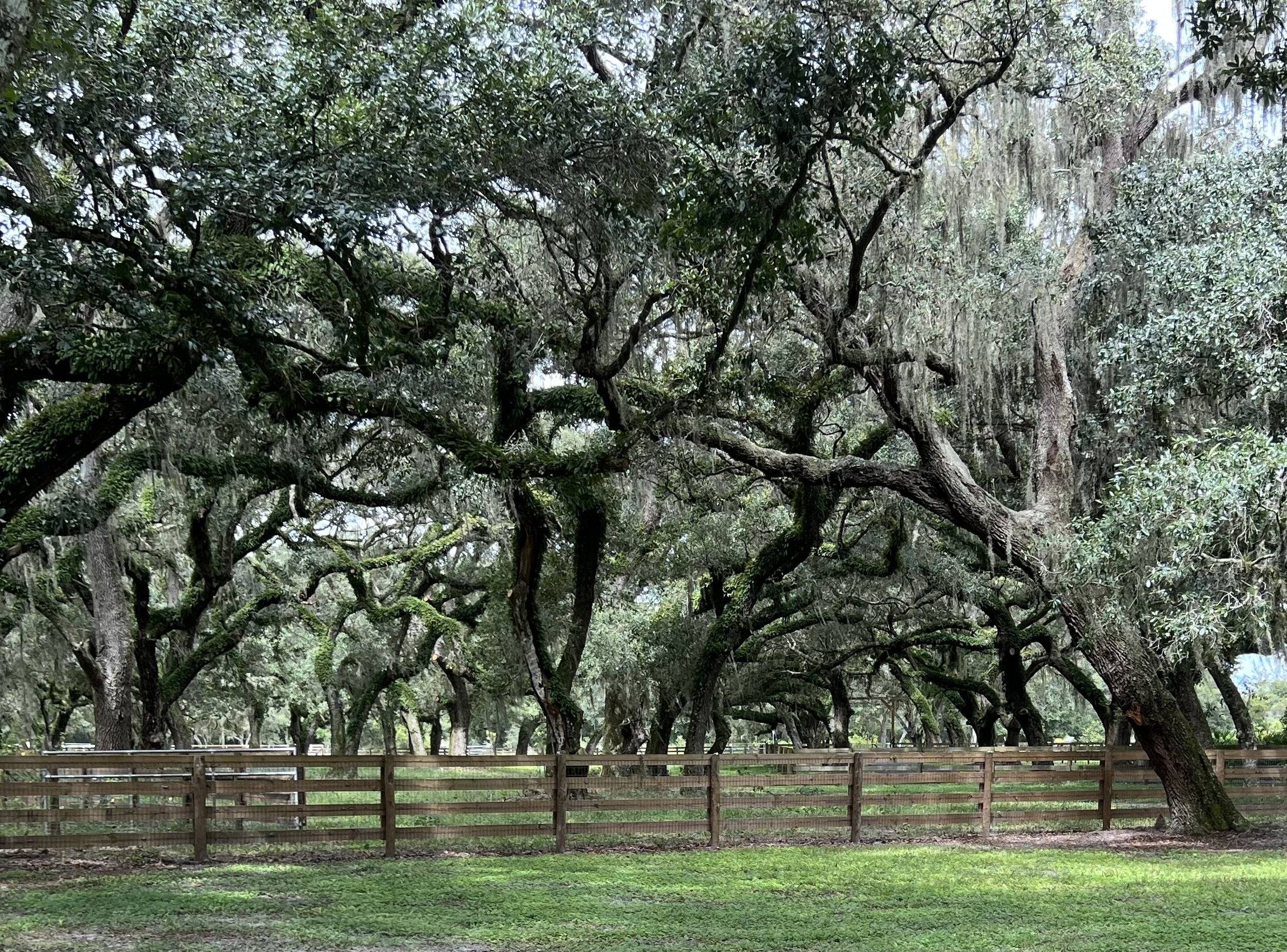
Quercus virginiana
Live Oak is a magnificent, slow-growing evergreen oak native to the southeastern United States from Virginia to Texas that can live for centuries. This iconic tree typically grows 40’-60’ tall but spreads dramatically wider, with massive horizontal and arching branches forming a broad, rounded canopy that can extend 100’ or more. The thick, leathery leaves are dark green and elliptical, often draped with Spanish moss in its native range. It produces inconspicuous flowers followed by acorns that provide critical food for squirrels, deer, and numerous bird species. Extremely durable and salt-tolerant, it thrives in sandy coastal soils and can withstand hurricanes, making it a symbol of the Old South and an excellent choice for large landscapes, parks, and street plantings in zones 8-10.
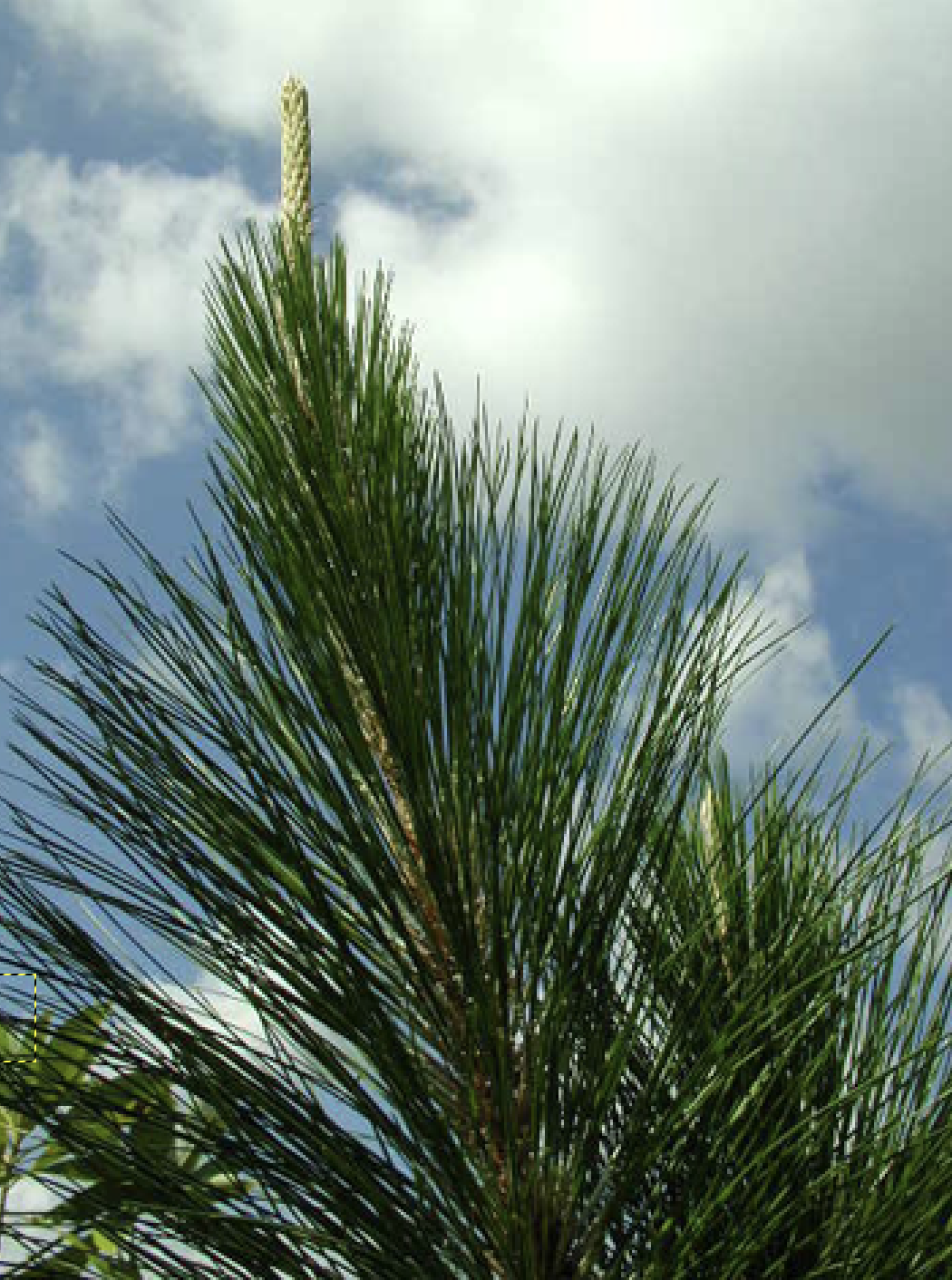
Pinus palustris
Native, evergreen, long-needle pine tree, can grow to be 125’ tall. Native to Florida sandhills, this tree does best in full sun with well-drained sandy soils. Very drought tolerant once established. Younger trees will grow slowly while they establish a healthy root system, with growth picking up after the first 5-7 years. While Longleaf Pines can make a lovely addition to a landscape, in their natural habitat, they are part of an incredibly biodiverse ecosystem, supporting deer, wild turkeys, and the endangered red-cockaded woodpecker, due to the frequent natural fires that provide rich undergrowth which provides food and shelter for many different species.
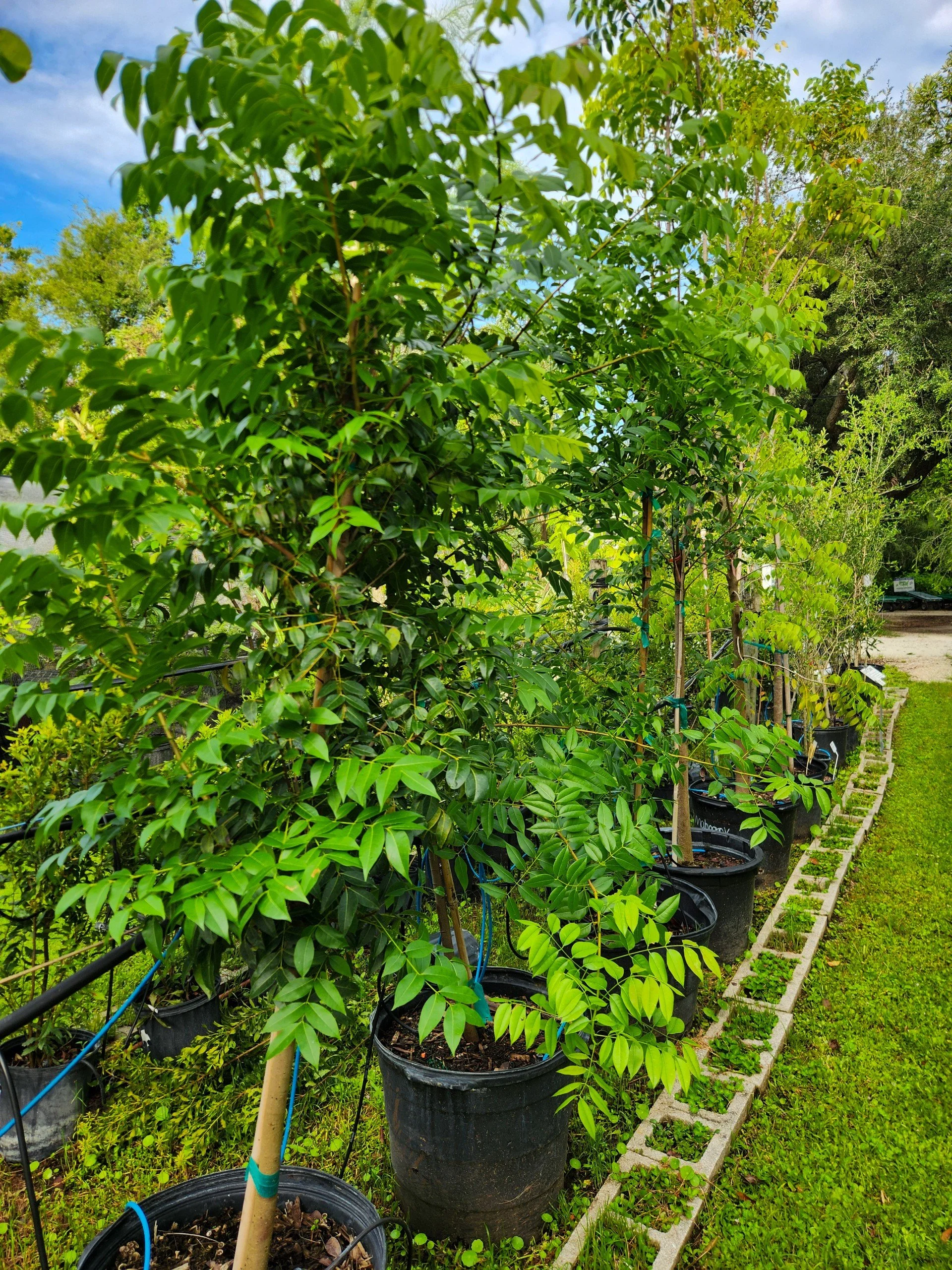
Swietenia mahagoni
Native semi-evergreen tree that grows to be 40’-70’ tall. The foliage is dark green, with inconspicuous white and yellow flowers. Plant in full sun to partial shade, with moist, but well-drained sandy soil. Salt-spray resistant once established, with dense, strong wood that is wind-resistant if properly trained. Mahogany is prone to growing multiple leader trunks, which reduces wind-resistance, so prune the tree to promote strength against wind.
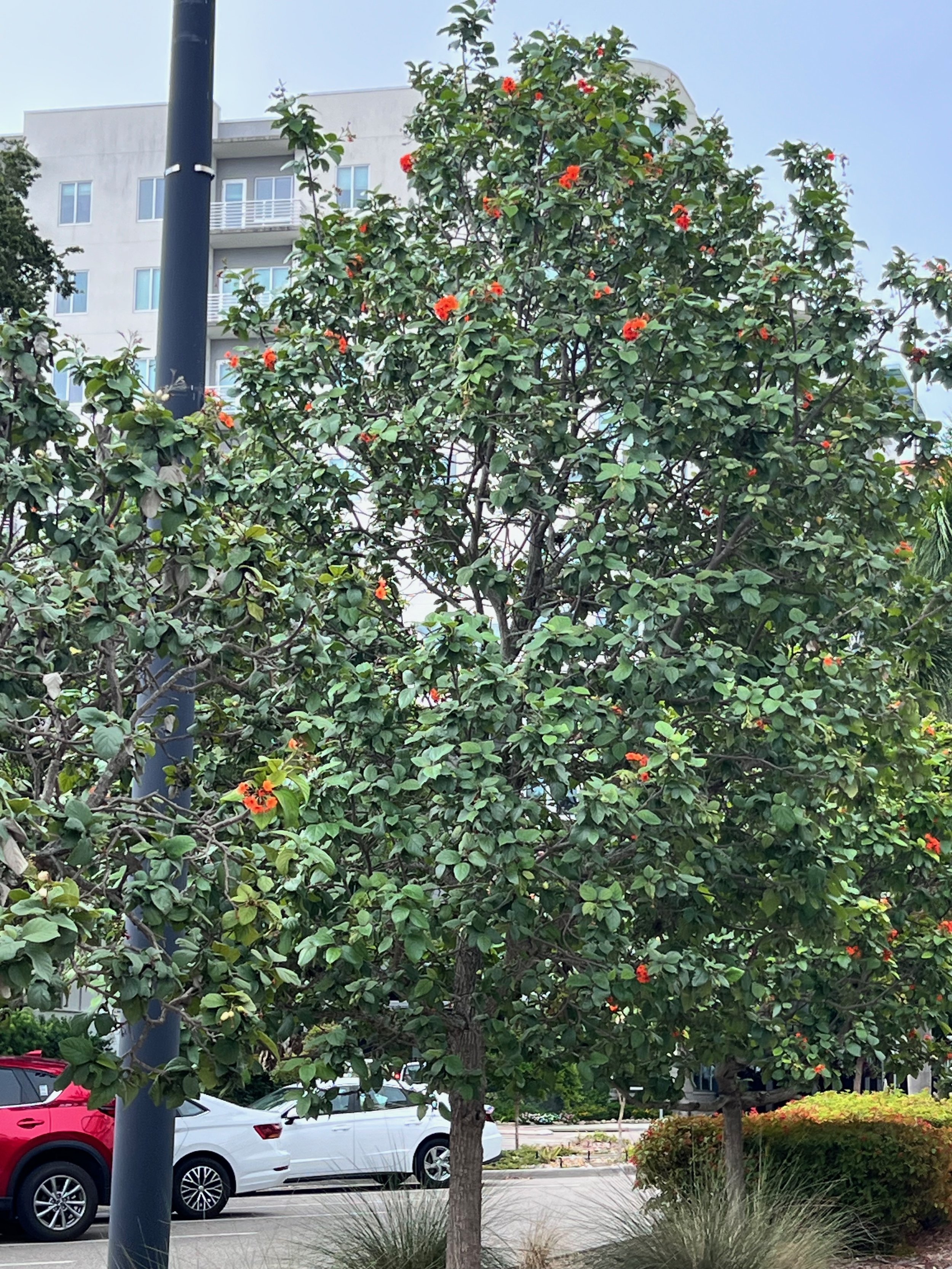
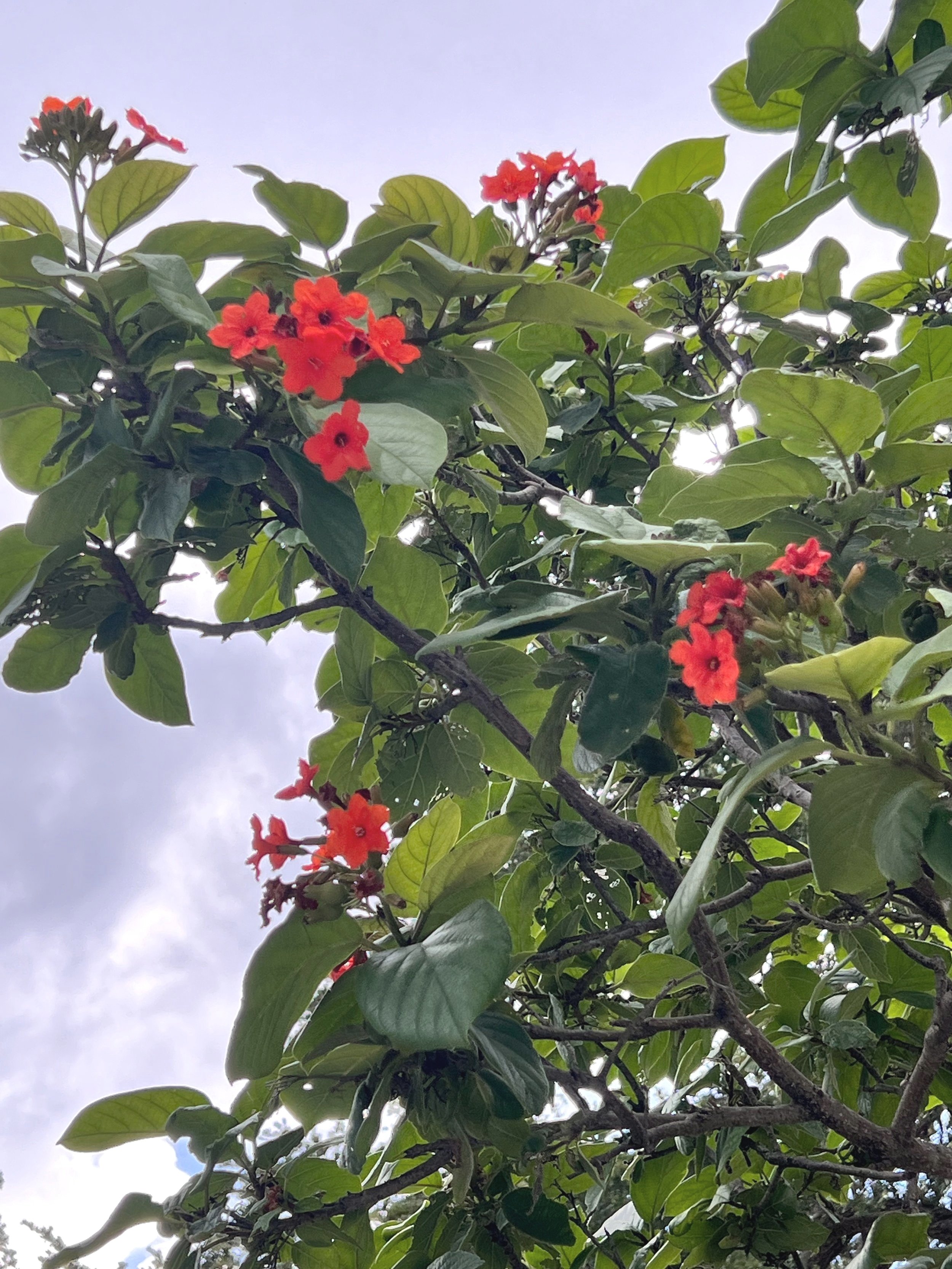
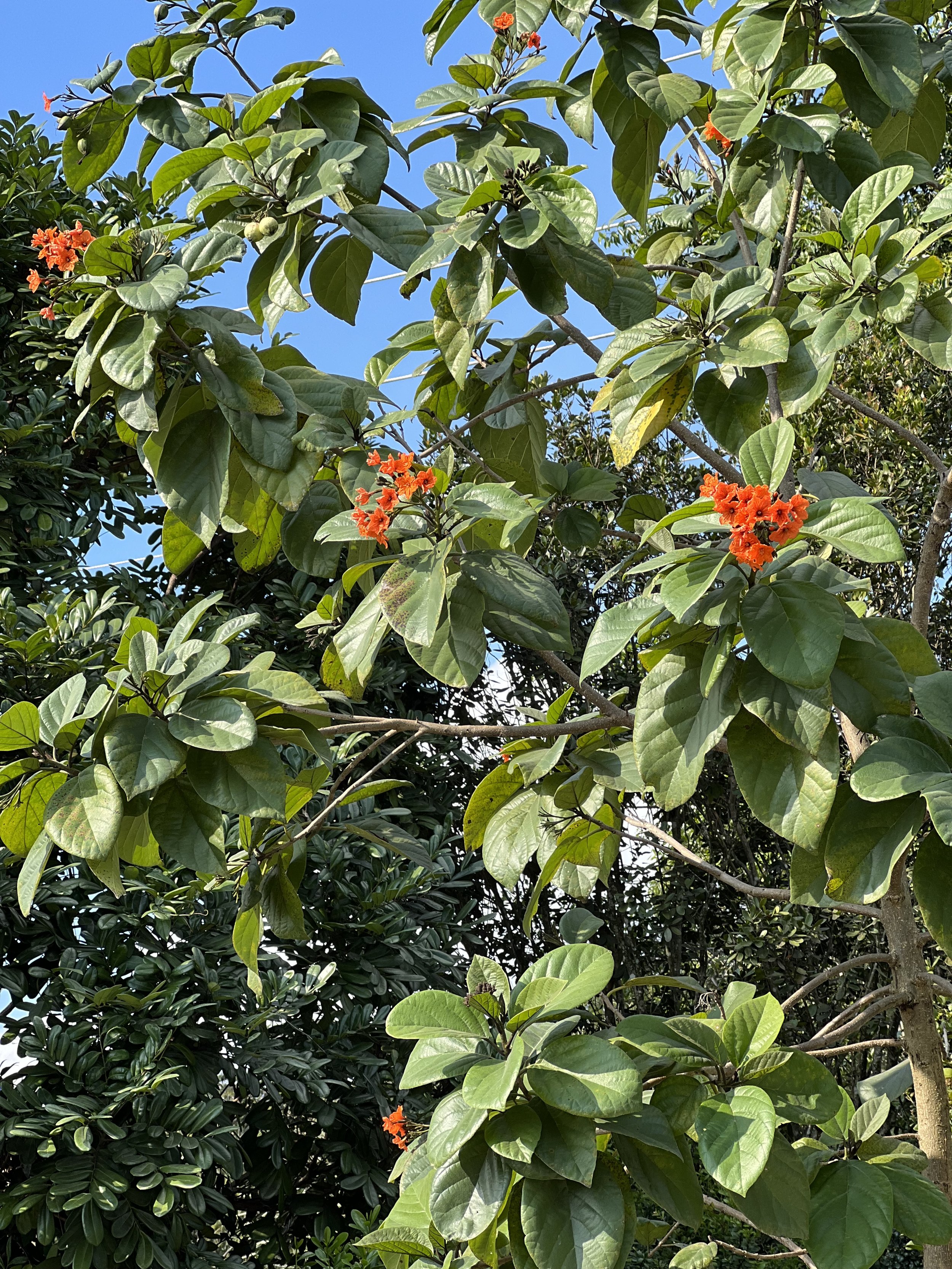
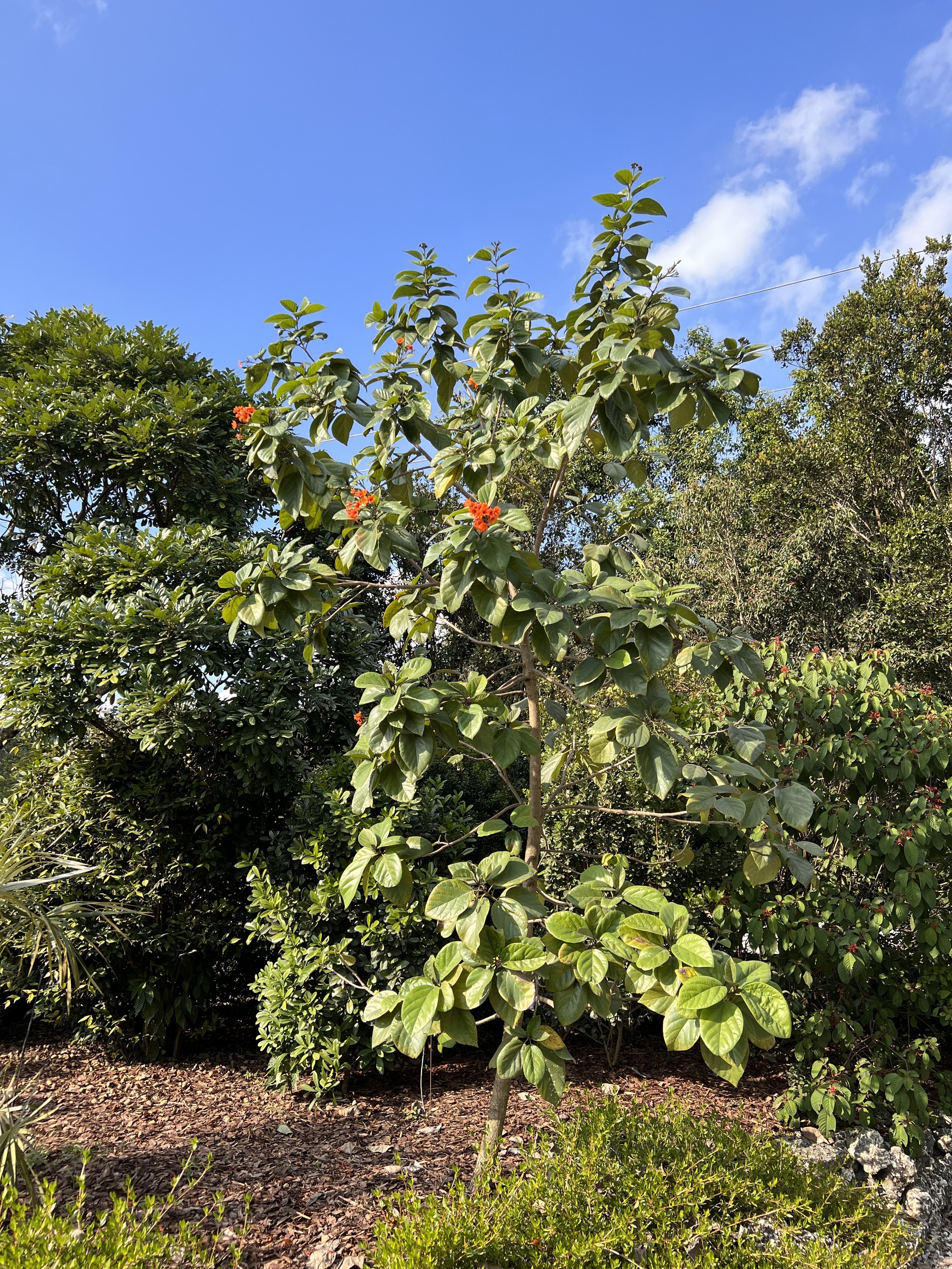
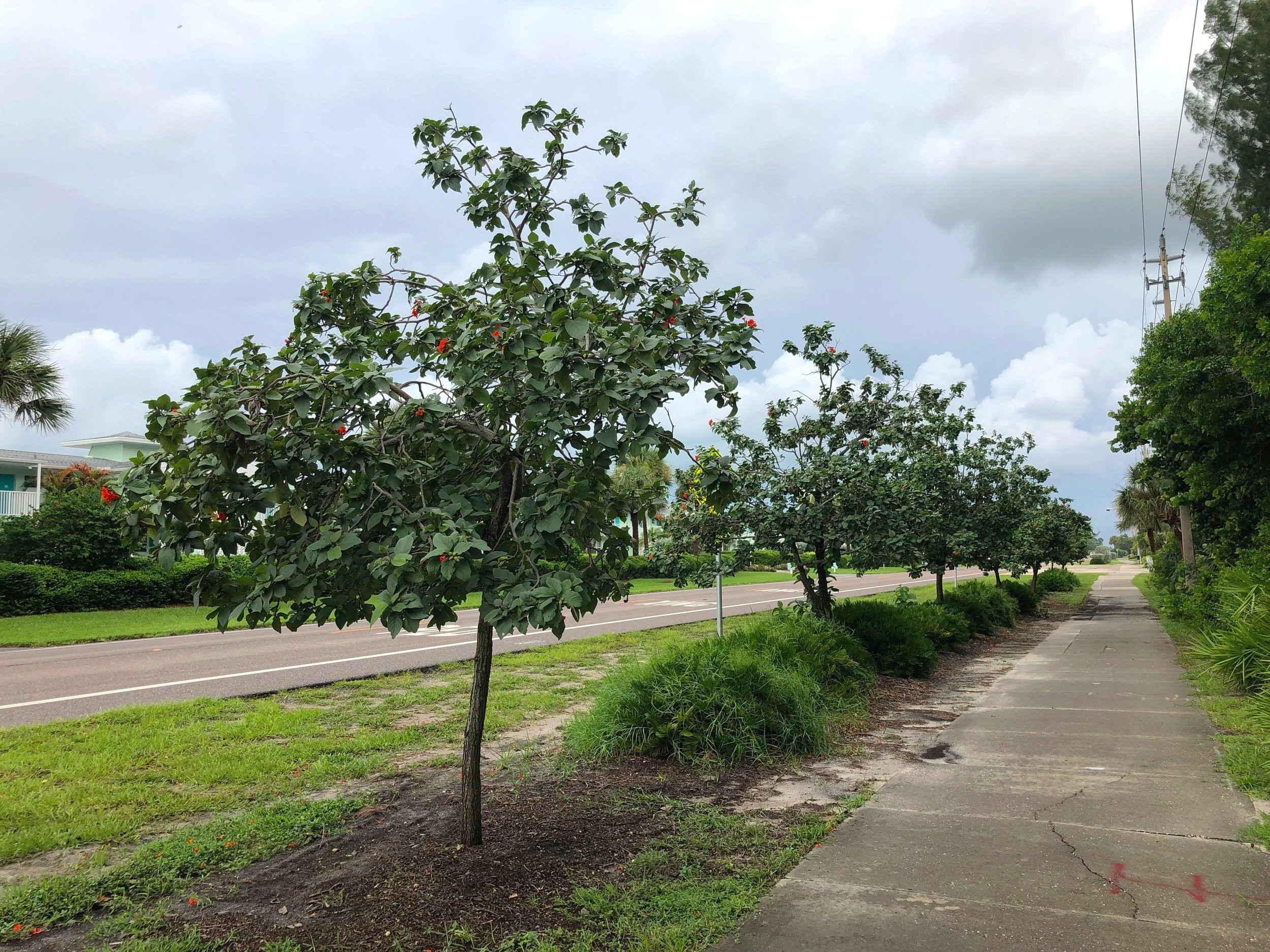
Cordia sebestena
Orange Geiger is a small, native, coastal, evergreen, flowering tree that likes full sun to light shade and well-drained soils. Orange Geiger is drought, wind and salt tolerant with large dark green leaves and showy orange flowers almost all year that attract butterflies and hummingbirds.
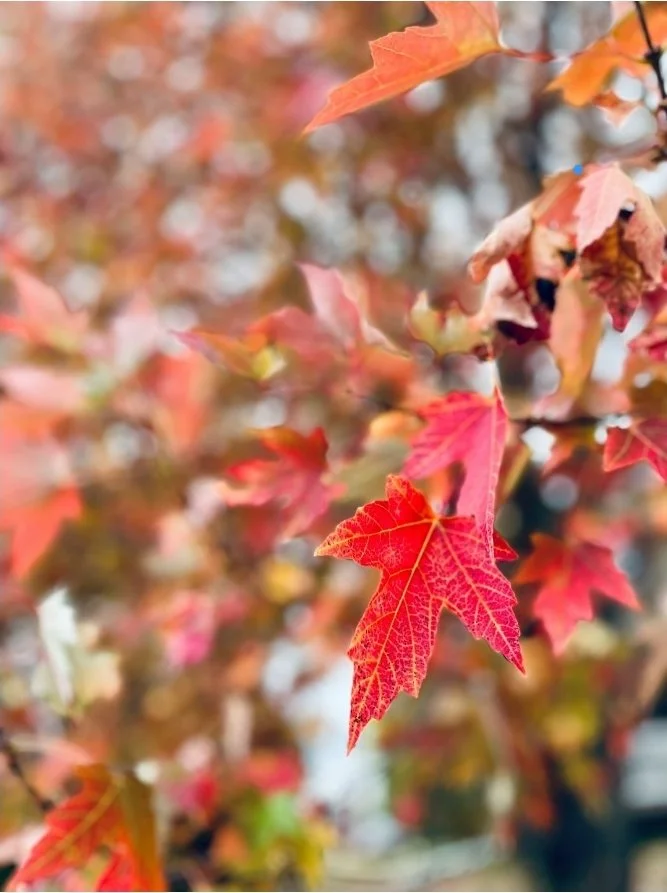
Acer rubrum
Red Maple is a native deciduous tree that can grow 40’-70’ tall and 30’-50’ wide. They grow best in full sun to partial shade and moist, well-draining, slightly acidic soils. They can tolerate both short dry periods and very wet soil once established. In spring, they produce showy pink to red blooms that attract pollinators, which are followed by seeds that feel local birds and small mammals.
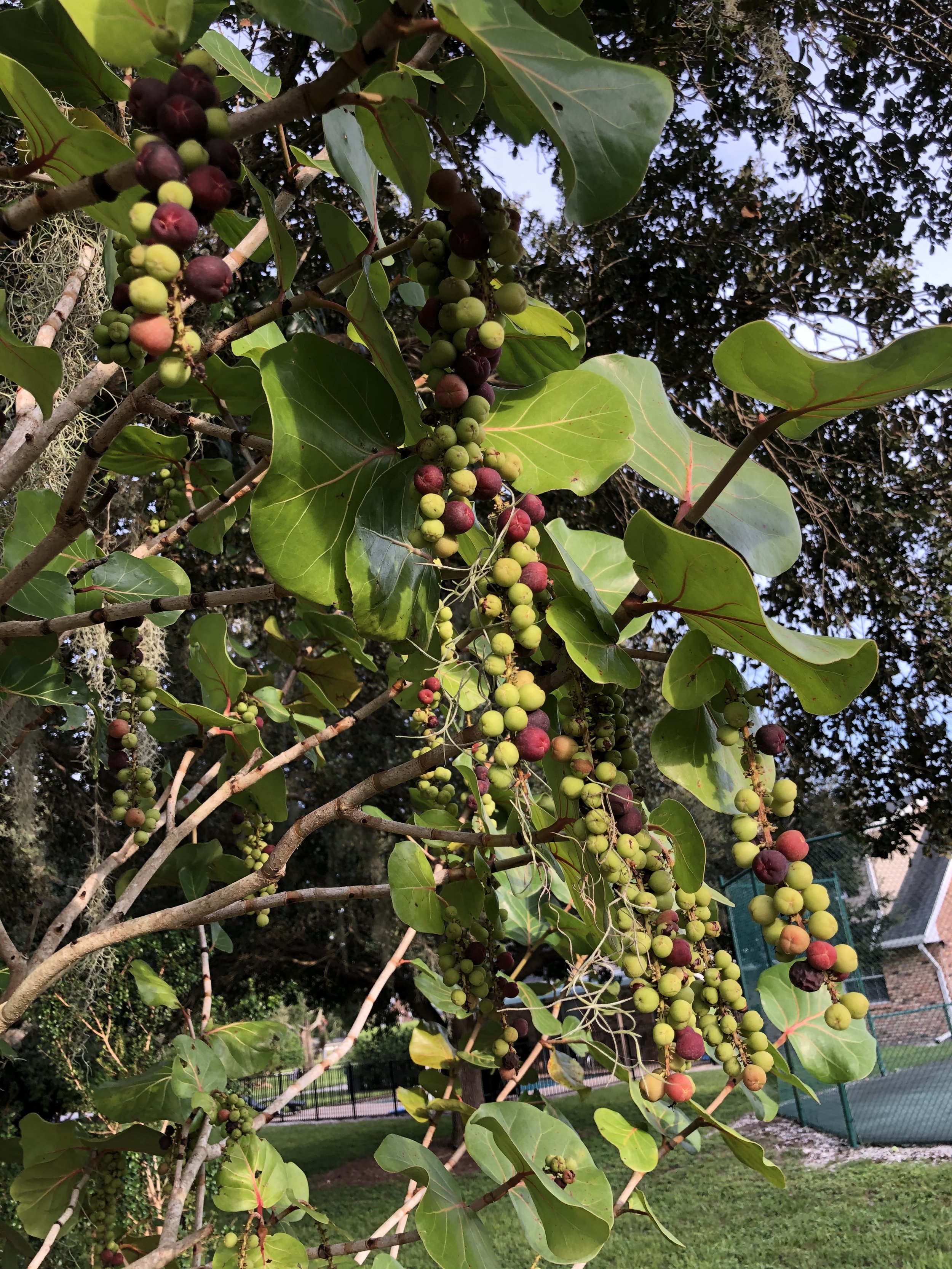
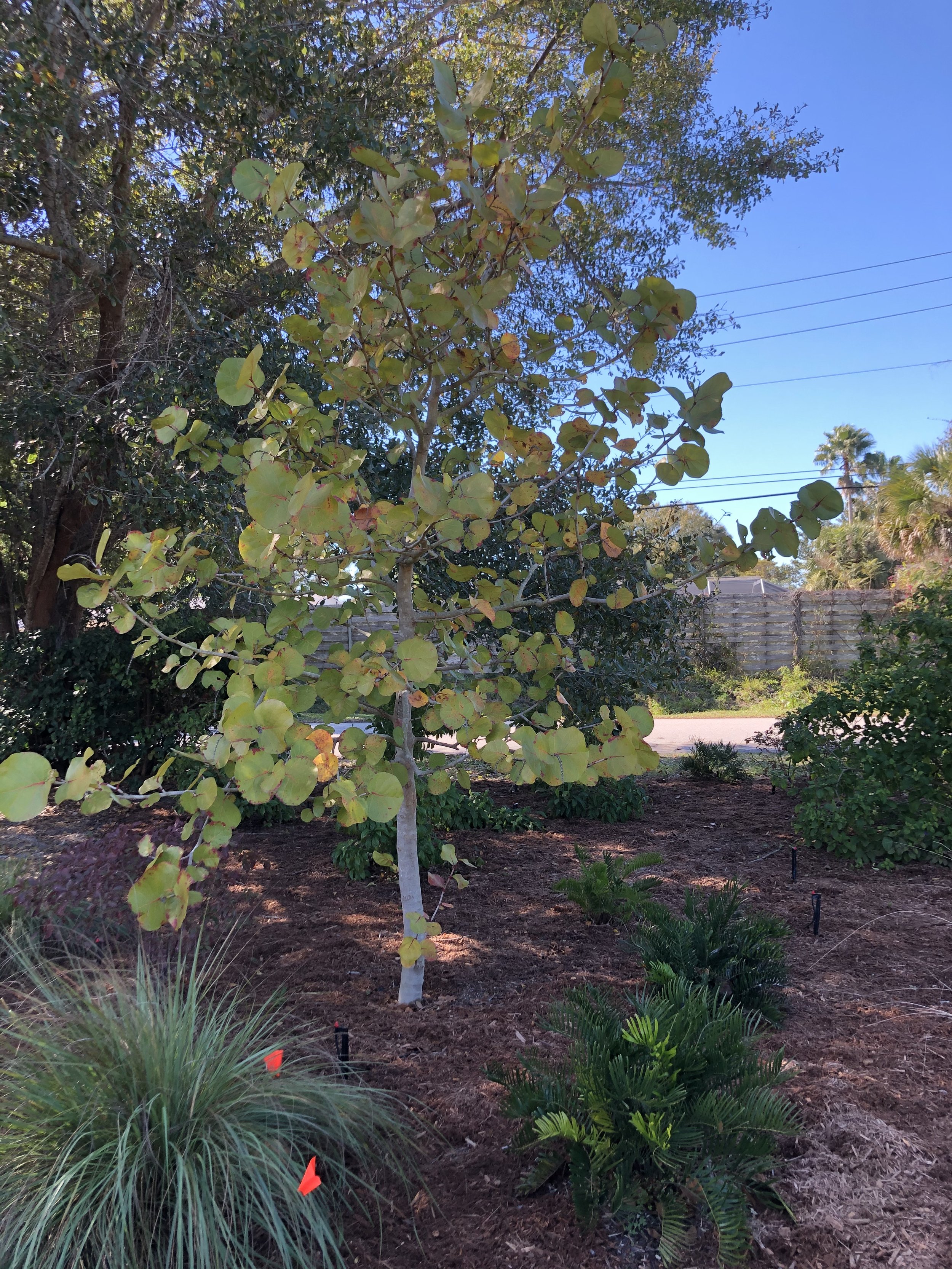
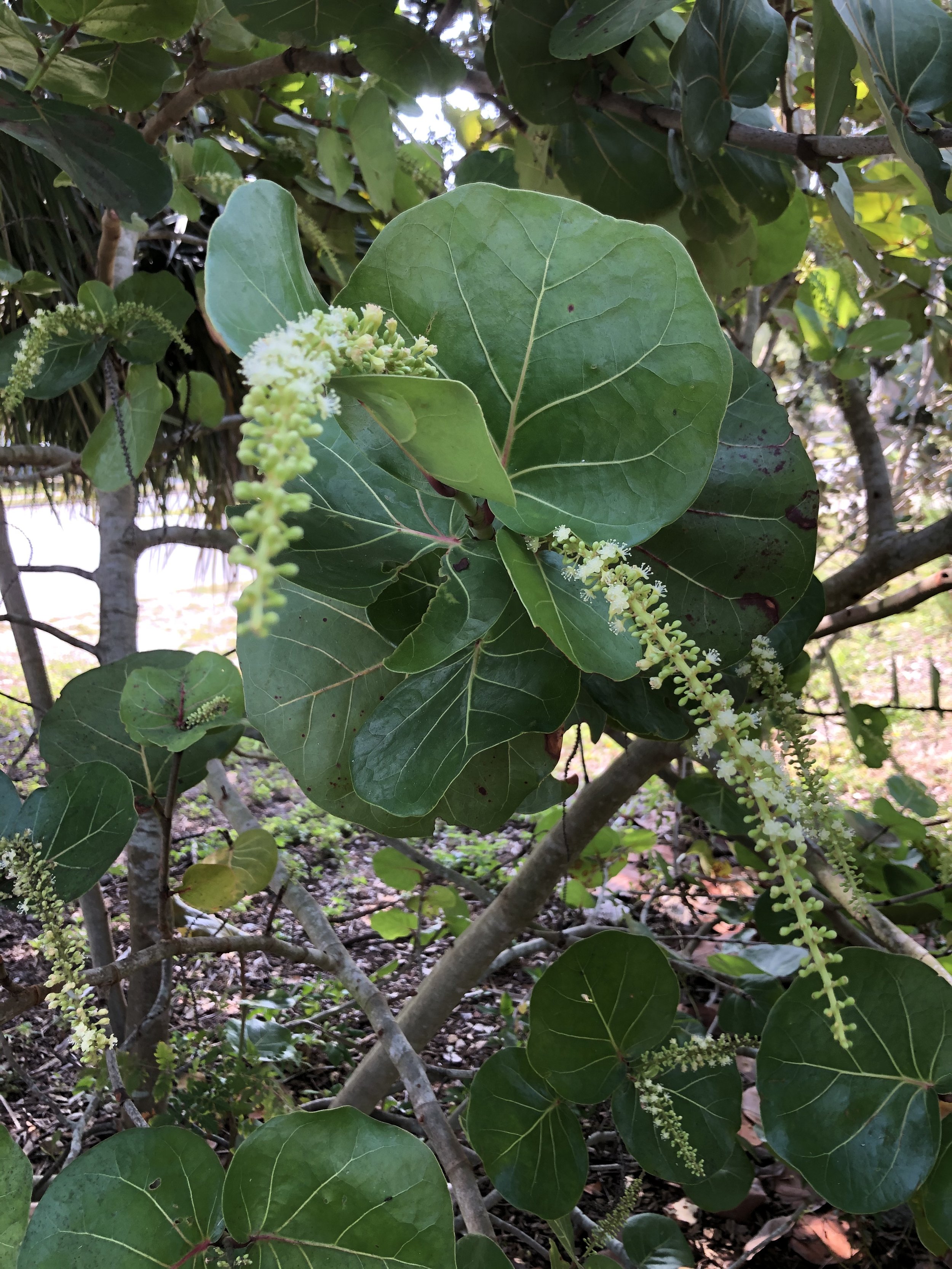
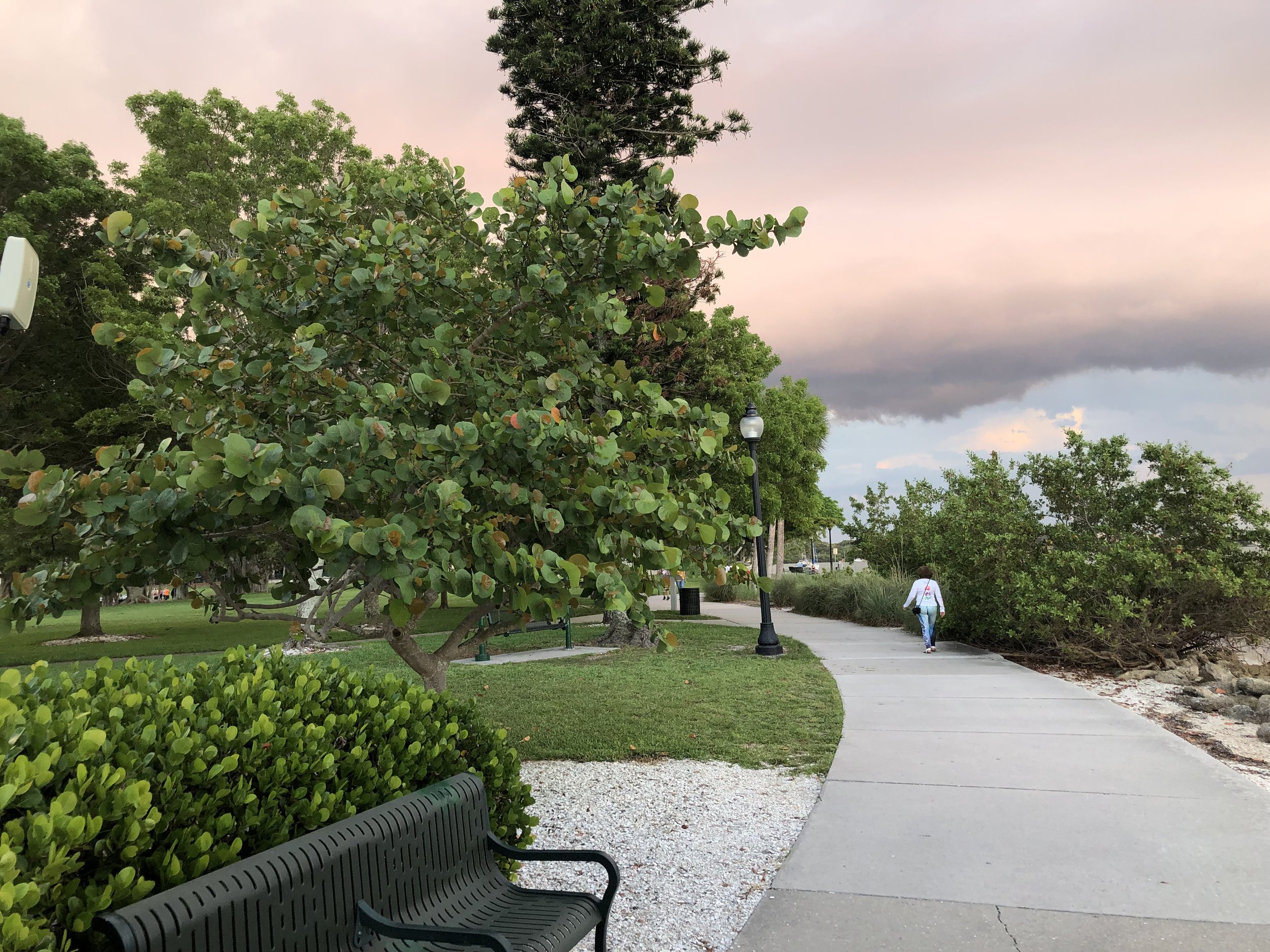
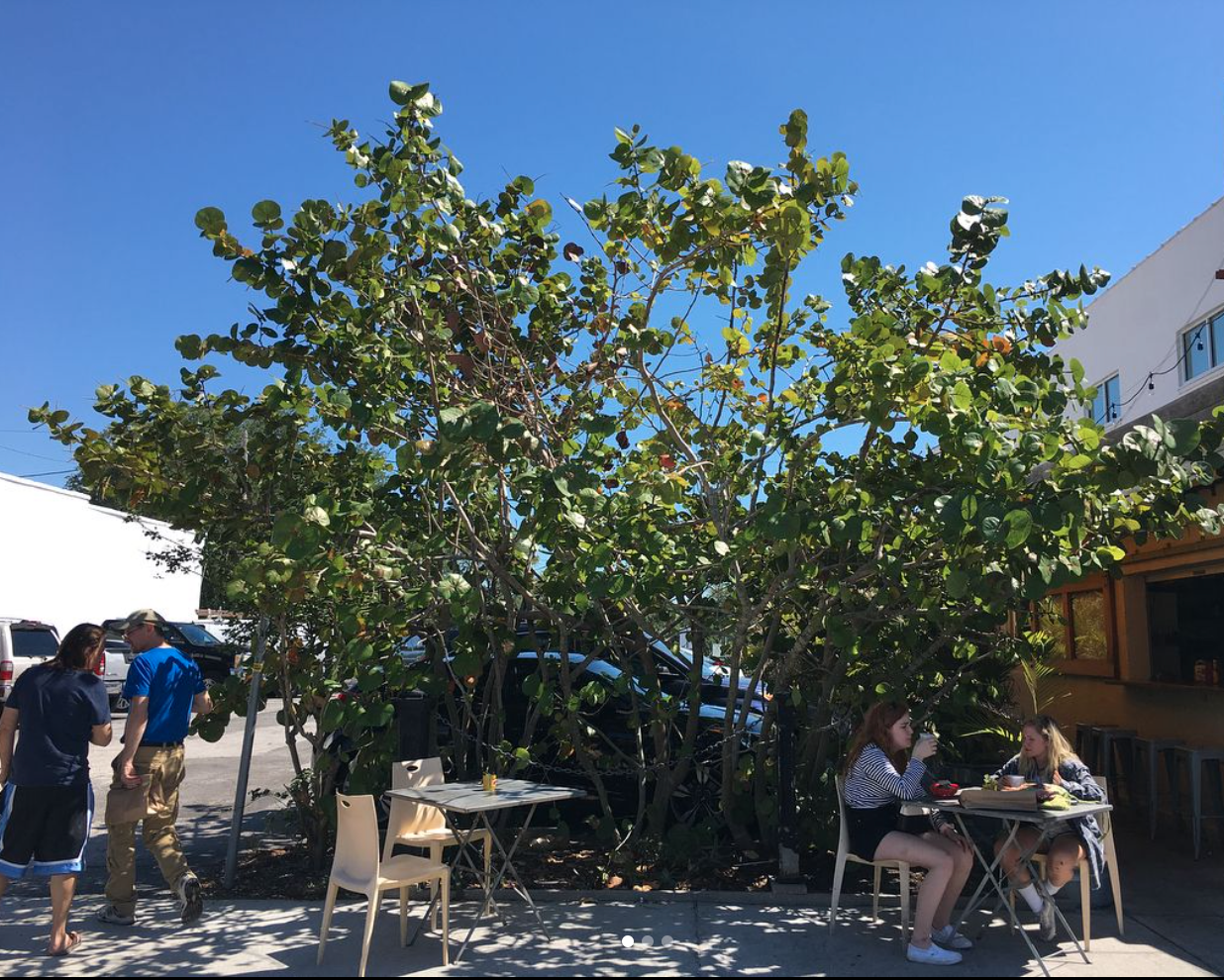
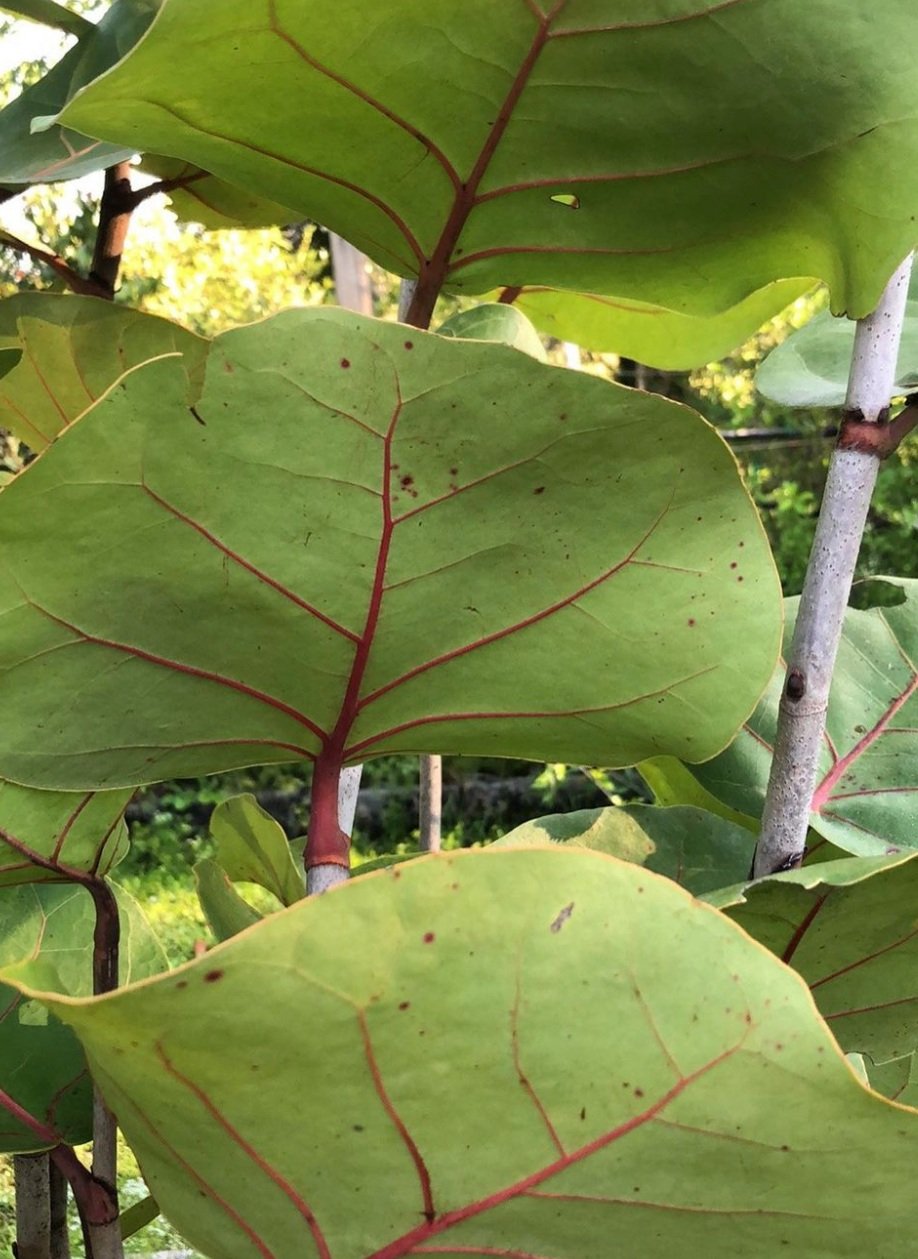
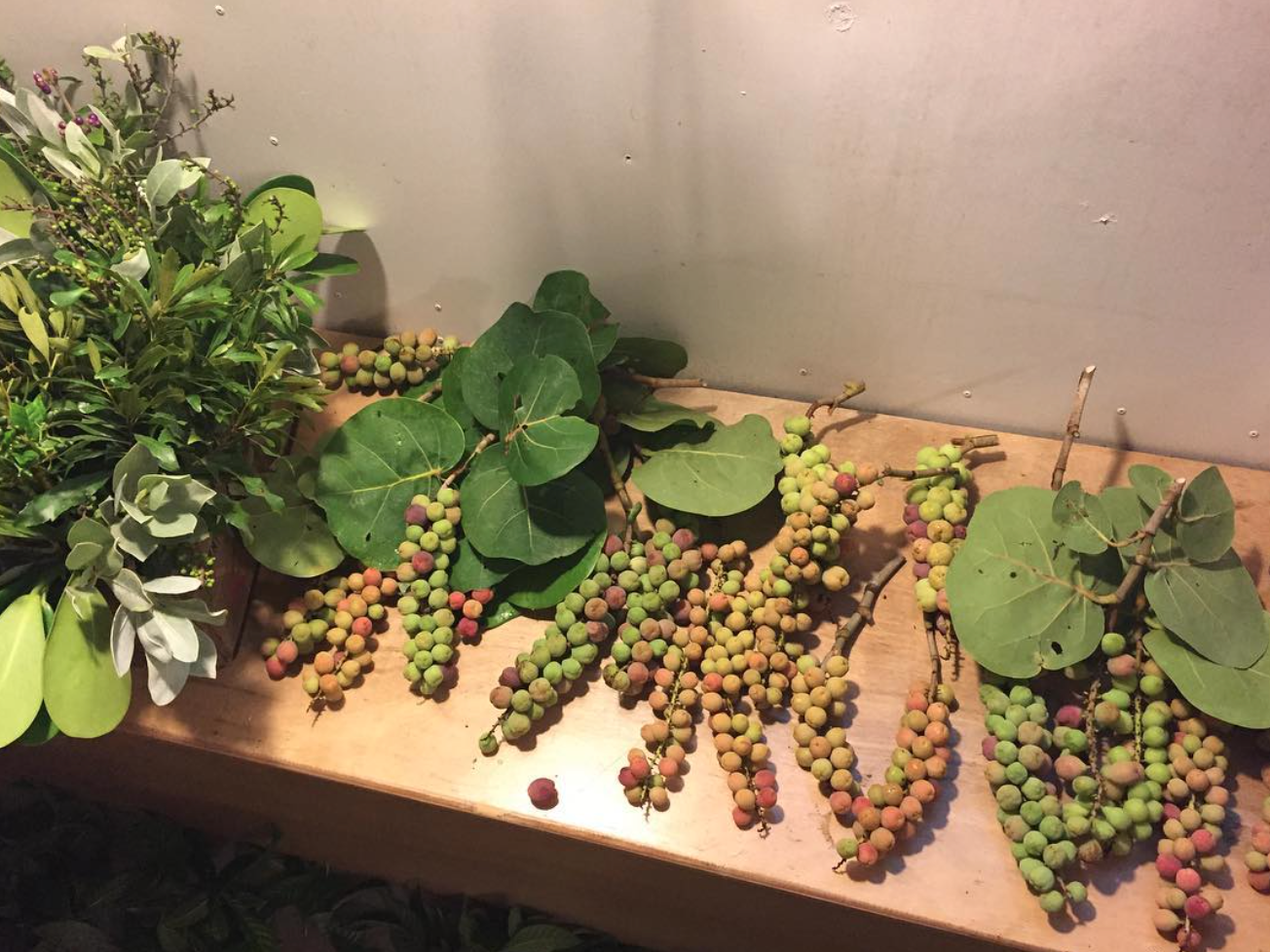
Coccoloba uvifera
A tropical-looking and unique native plant, Sea Grape grows to 10-30 ft tall and can be trimmed. Grow in full sun as a large shrub for screening and privacy or as a large sculptural tree in semi-shade. The leaves of Sea Grape are lightly deciduous and interesting with seasonal changes in color. The fruit grows in beautiful clusters and is enjoyed by both birds and people.
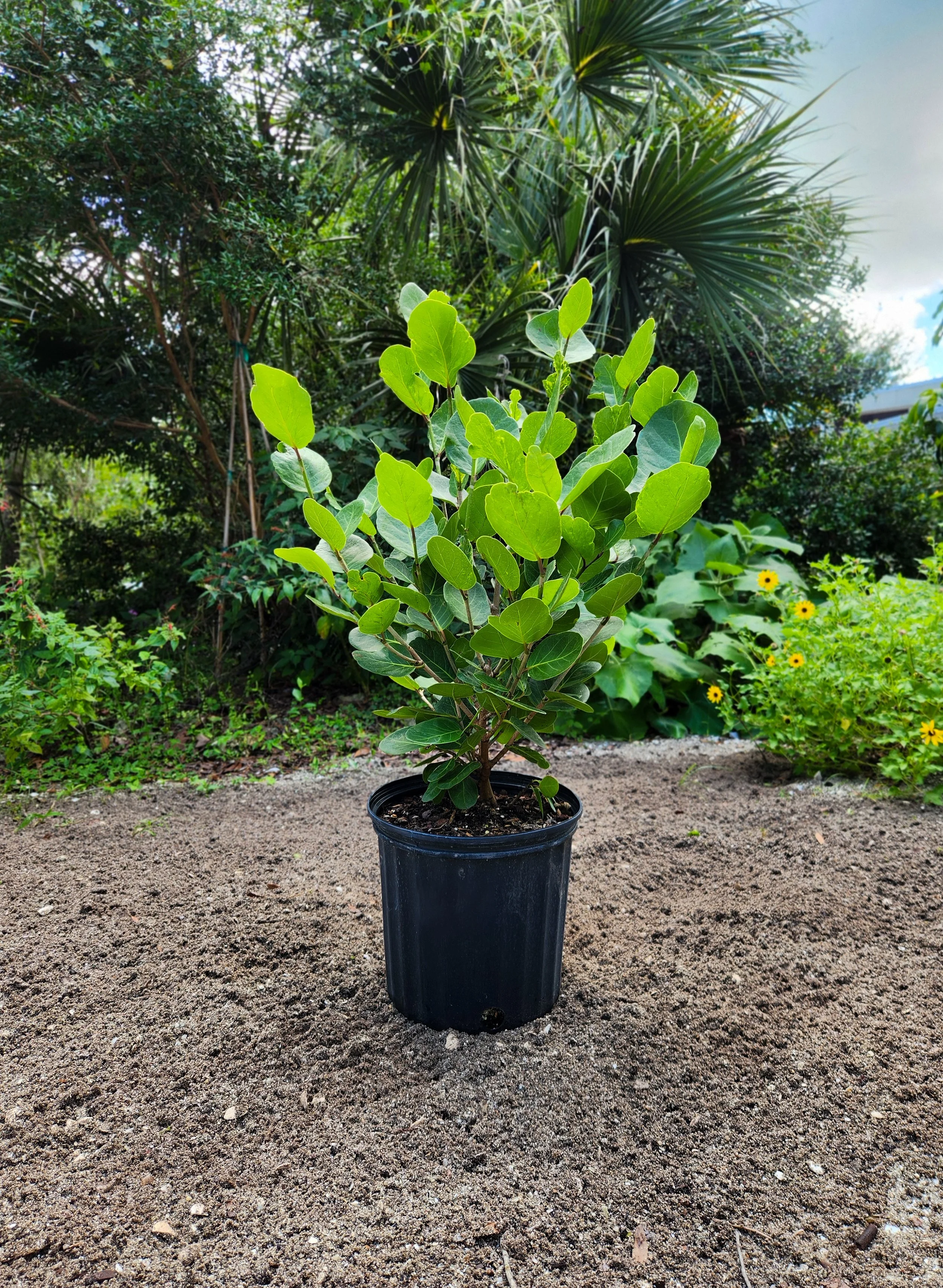
Coccoloba uvifera x diversifolia
Sea Plum is a naturally occurring hybrid between Sea Grape and Pigeon Plum that combines the best traits of both native Florida parents. This evergreen shrub typically grows 6’-12’ tall and 4’-6’ wide, though it has the potential to reach larger sizes given its parentage. It features attractive foliage that blends characteristics of both parents and produces fruit on female plants that birds readily consume. Exceptionally hardy and low-maintenance, it thrives in full sun to light shade with well-draining sandy soils and demonstrates excellent tolerance to wind, salt spray, and drought conditions. This versatile hybrid works well as a specimen plant or screening hedge and is particularly valuable for beachfront landscapes in zones 9-11.
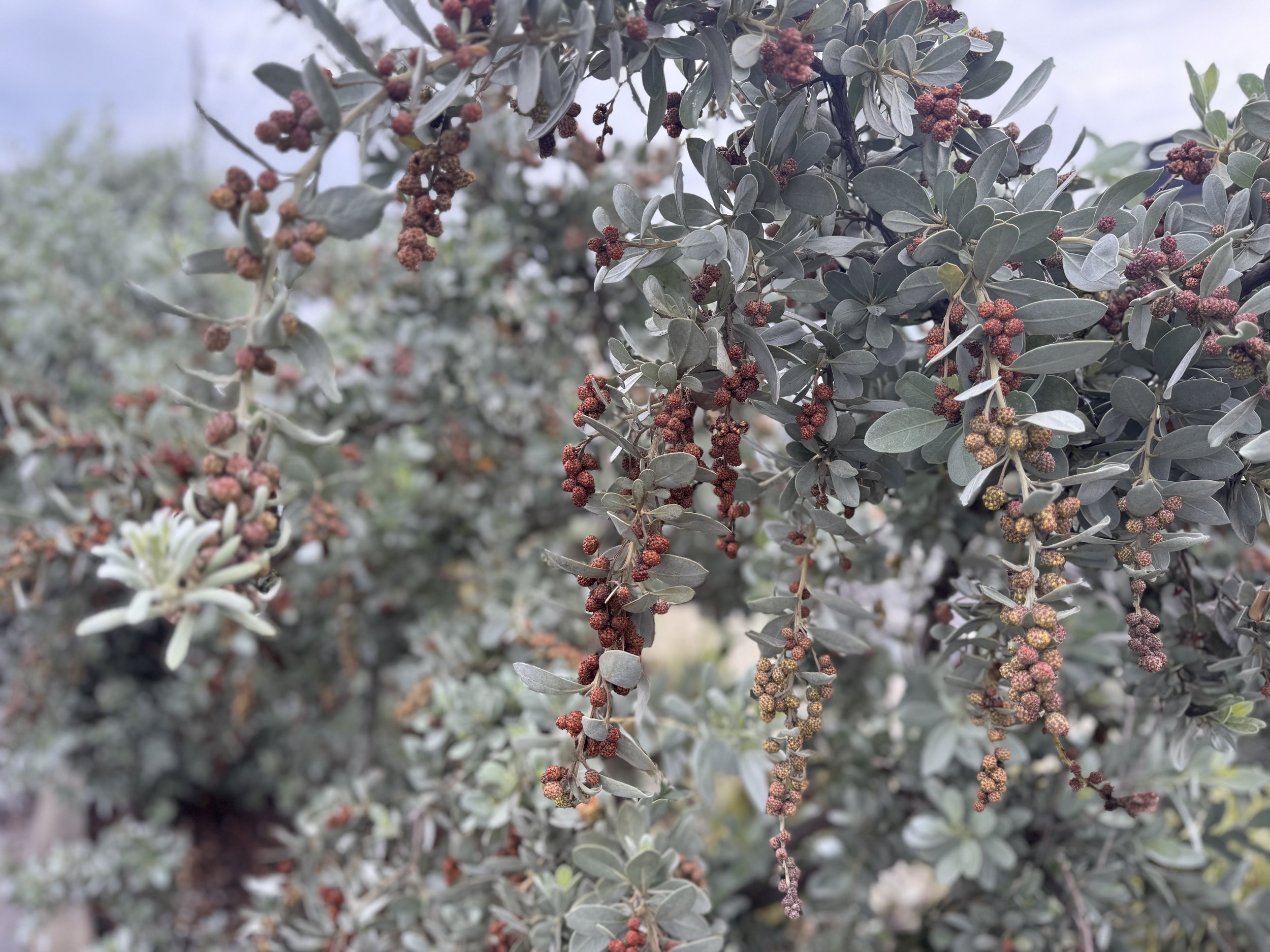
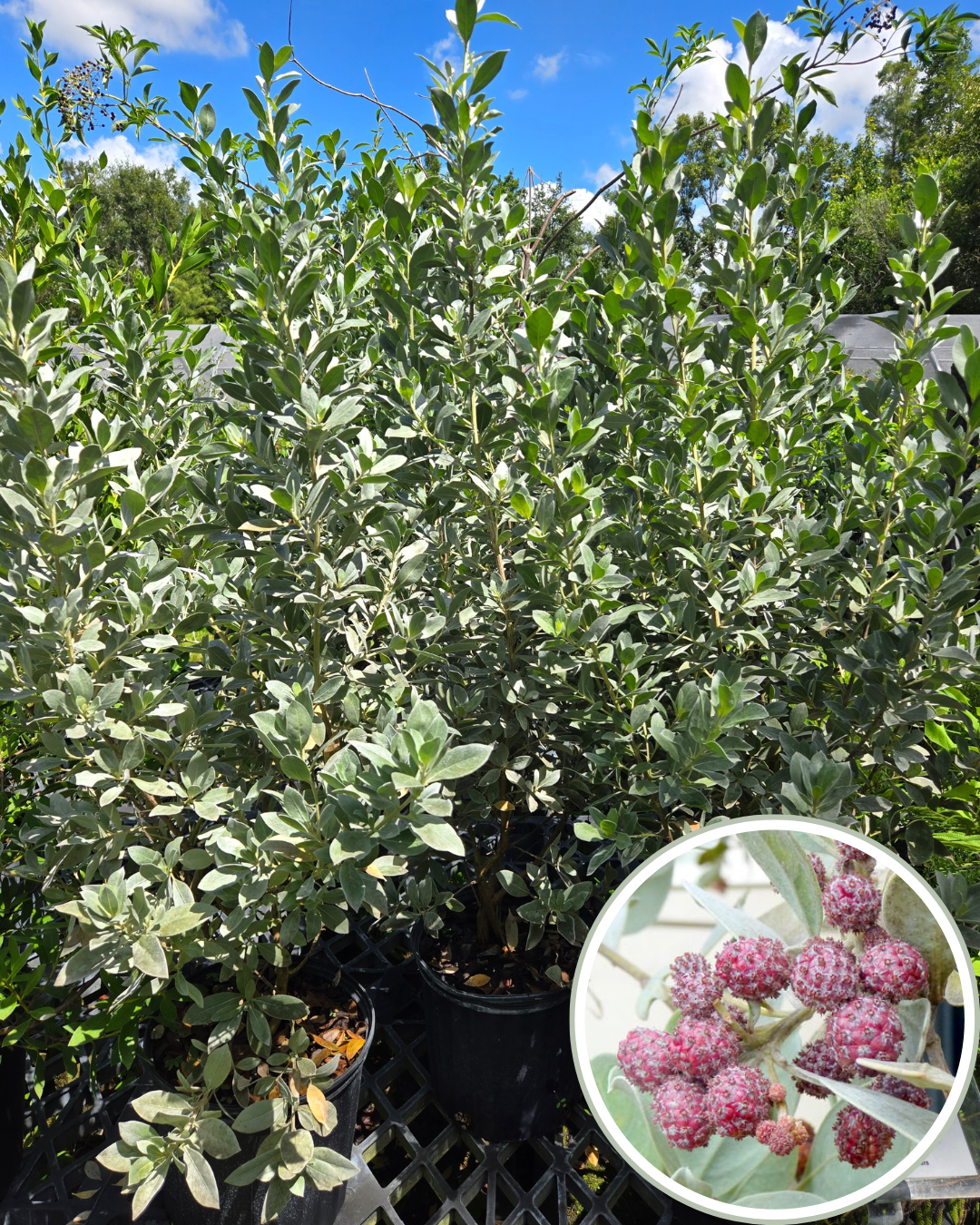
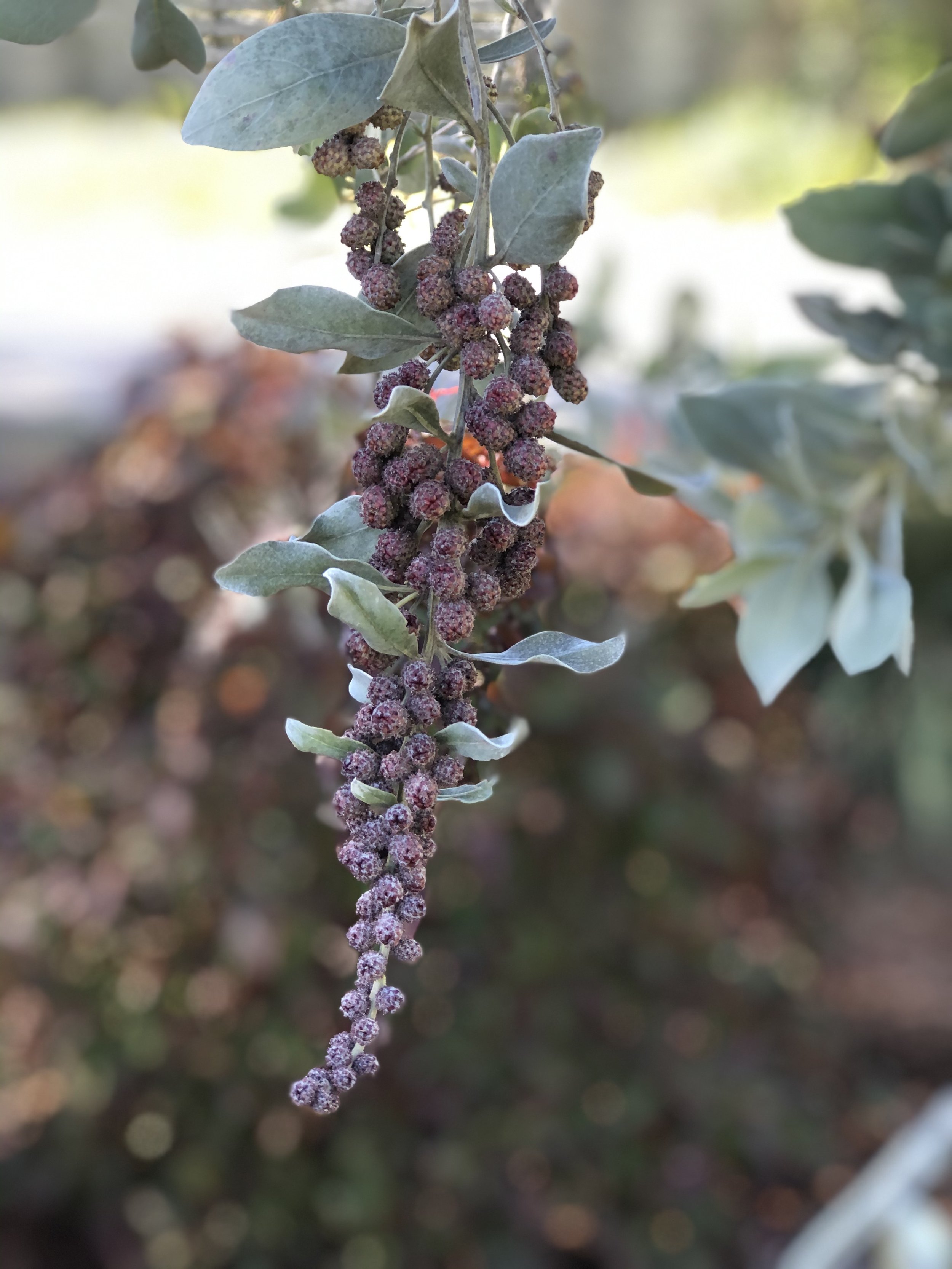
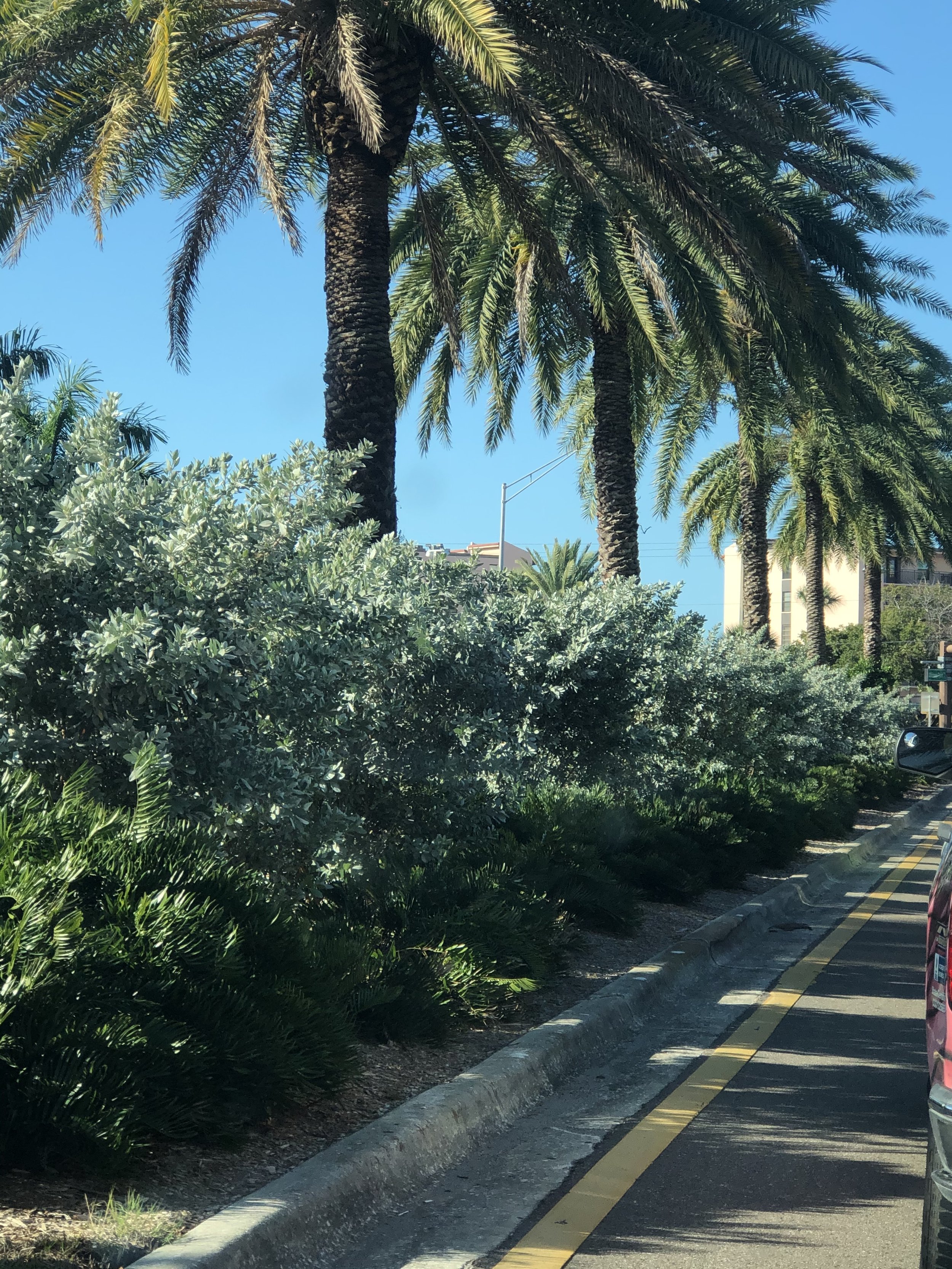
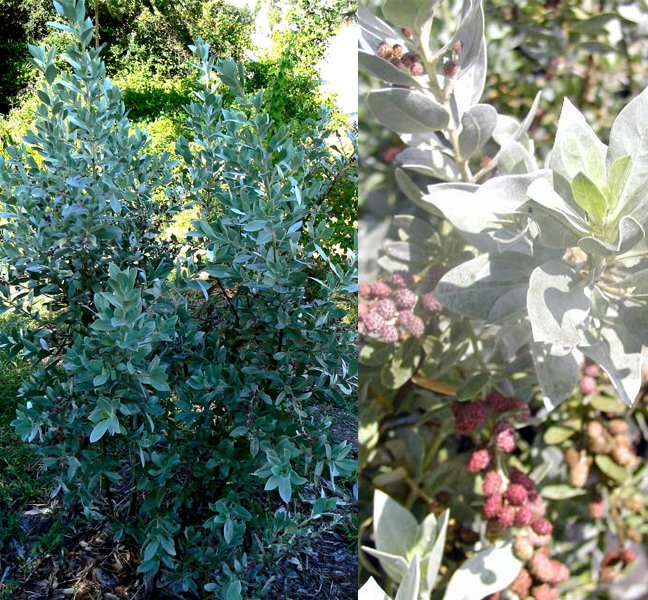
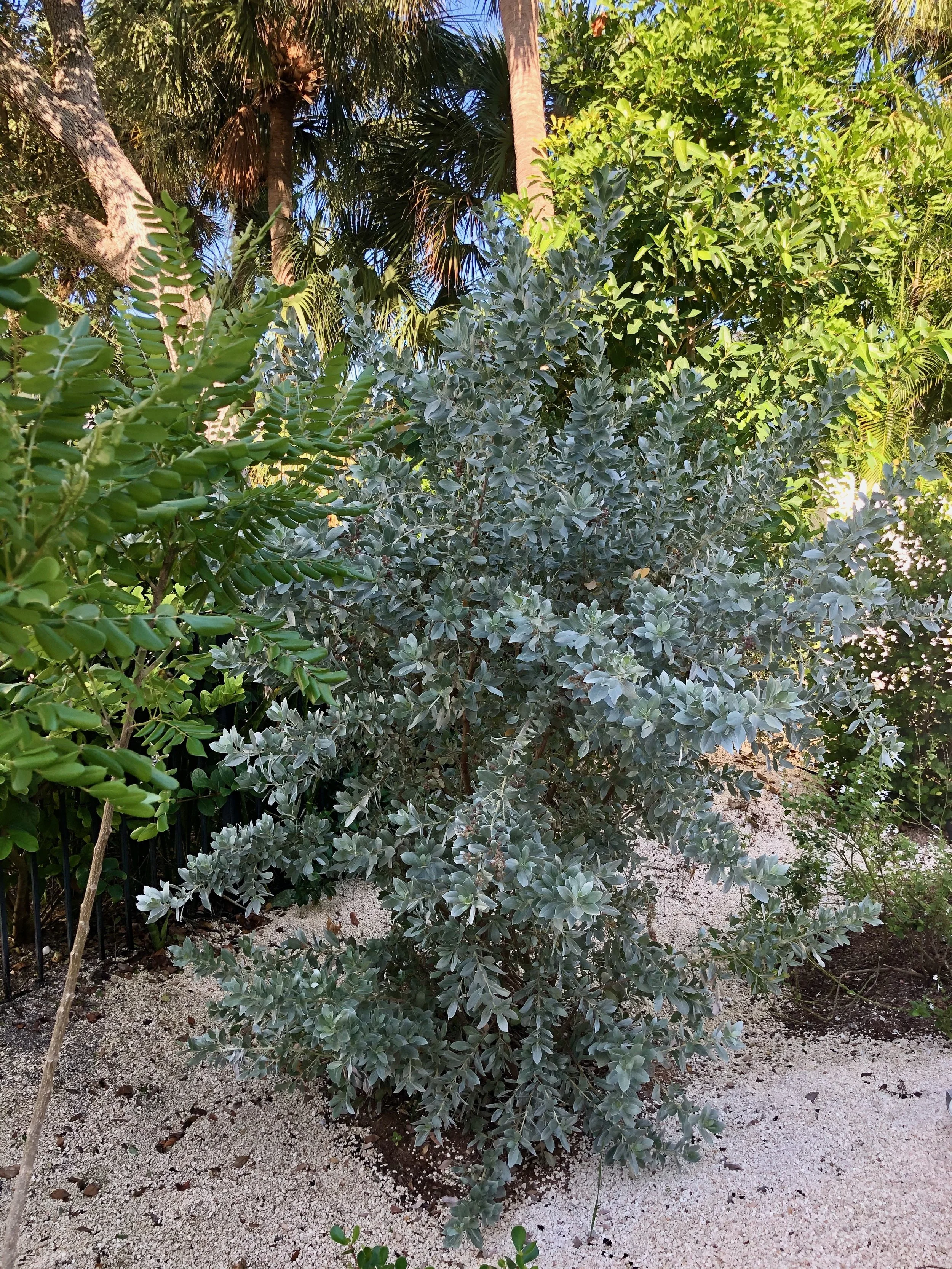
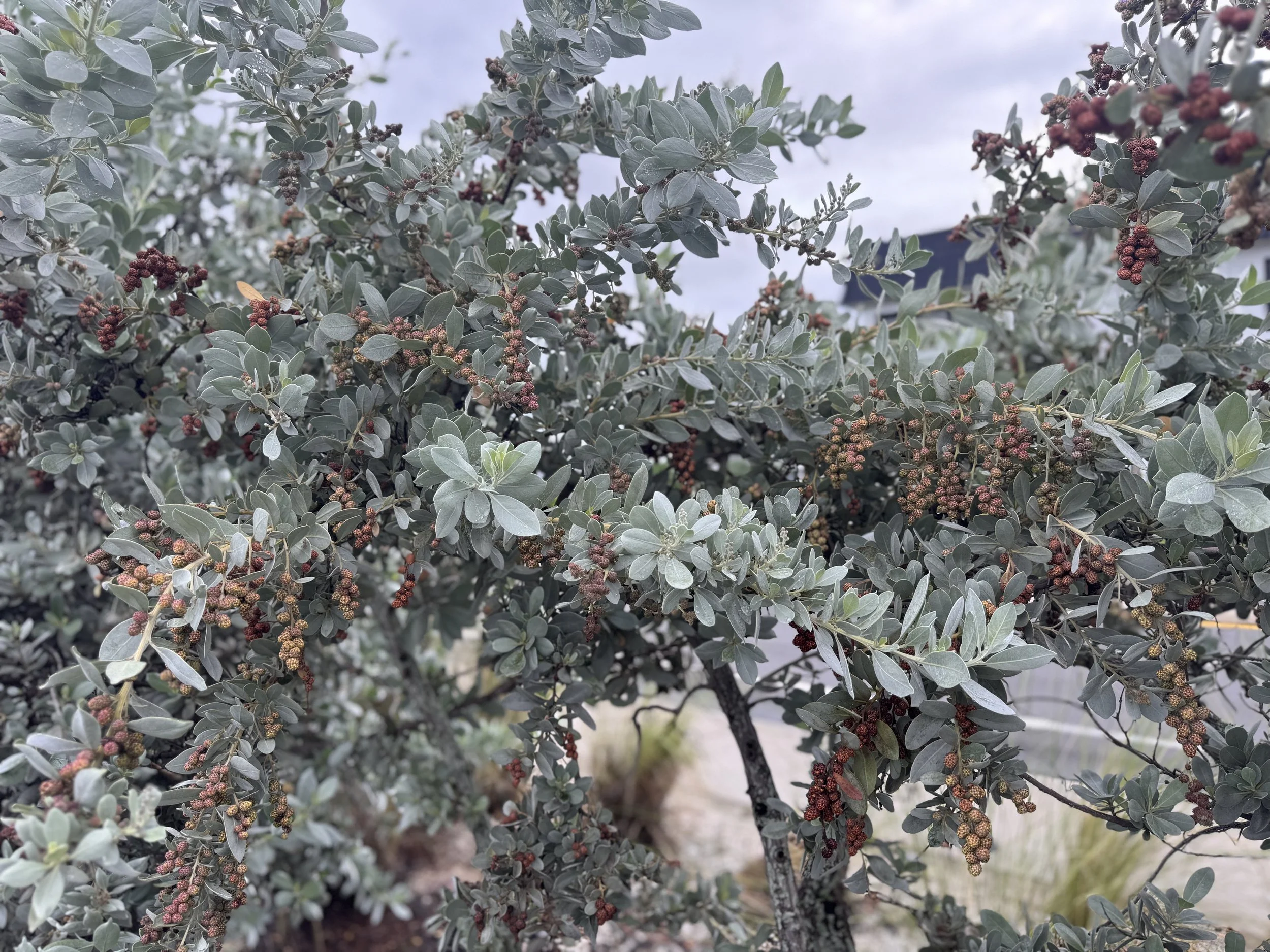
Conocarpus erectus var. sericeus
Silver Buttonwood is a unique coastal native shrub or small tree that can reach 20' and has soft silvery leaves and small brown berries that look like wood buttons. While it thrives in coastal landscapes, taking salt inundation and salty soils like a champ, it can be planted inland as well. Silver Buttonwood can be used as a specimen tree, part of a natural privacy screen or pruned into hedge.
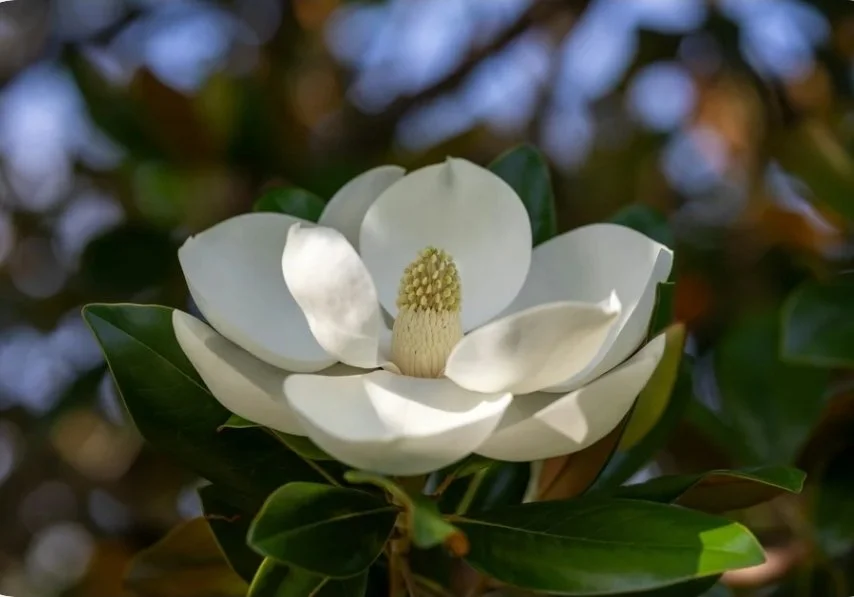
Magnolia grandiflora
Southern Magnolia is a native, evergreen flowering tree that grows to be 60’-80’ tall and 30’-50’ wide. They grow best in full sun to partial shade, with moist, rich, acidic well-drained soils. With their dark green leathery leaves and their large, heavily fragrant white flowers in late spring and summer, Southern Magnolias make a great addition to Florida landscapes as part of a privacy screen or specimen plant. Their flowers predate bees, so they are instead pollinated by beetles, but their seeds provide food for birds and small mammals, and their dense branches provide year-round cover for local wildlife.
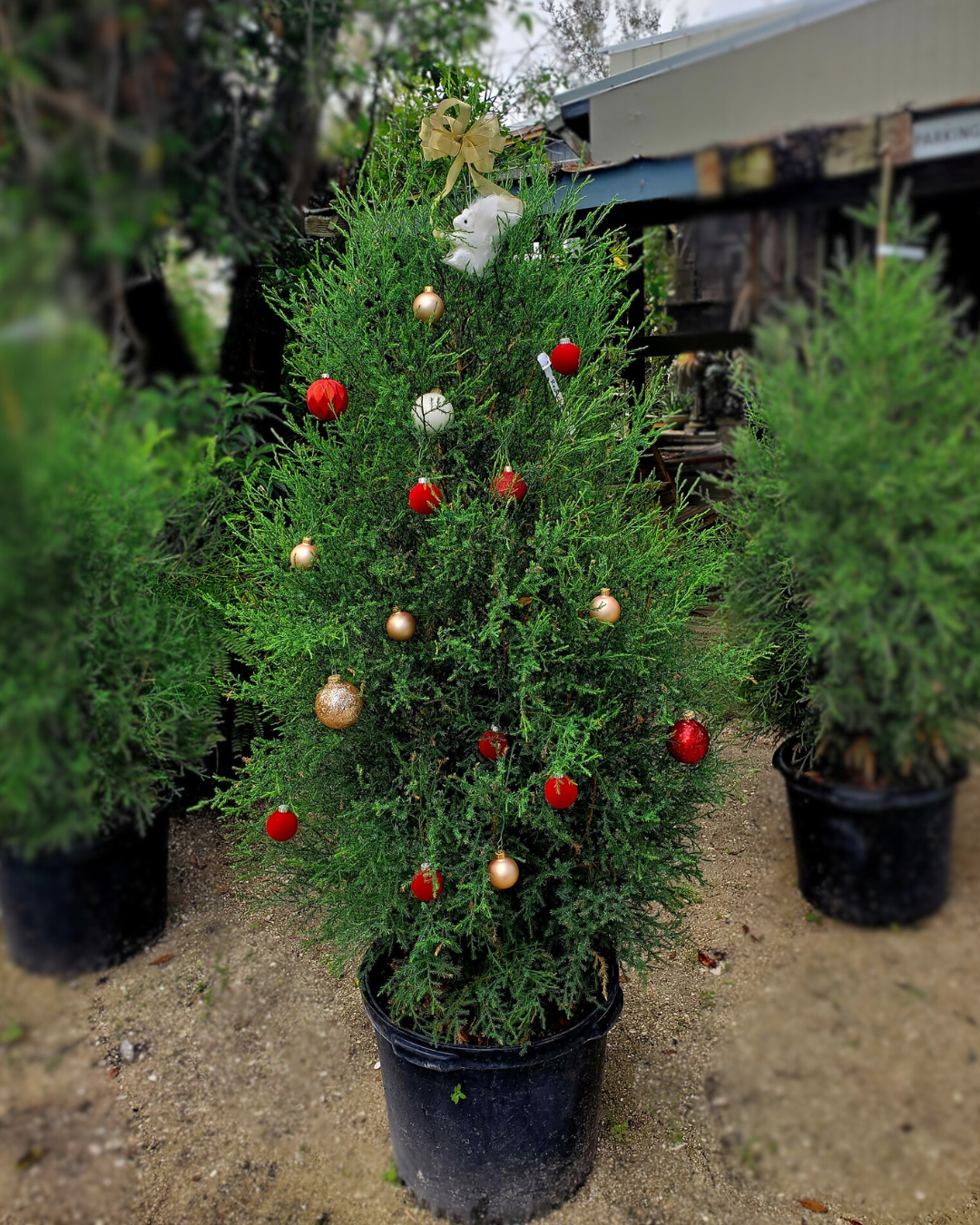
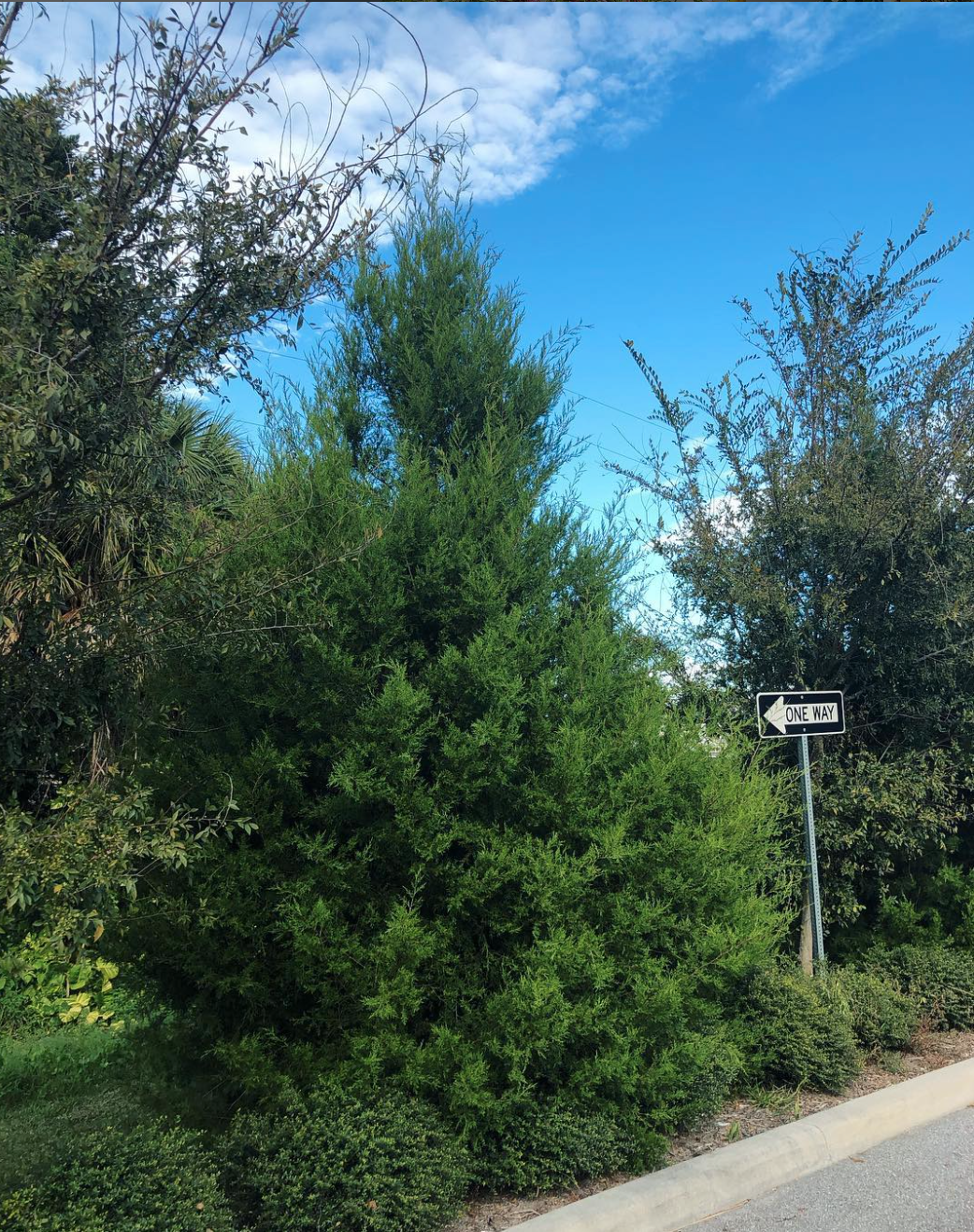
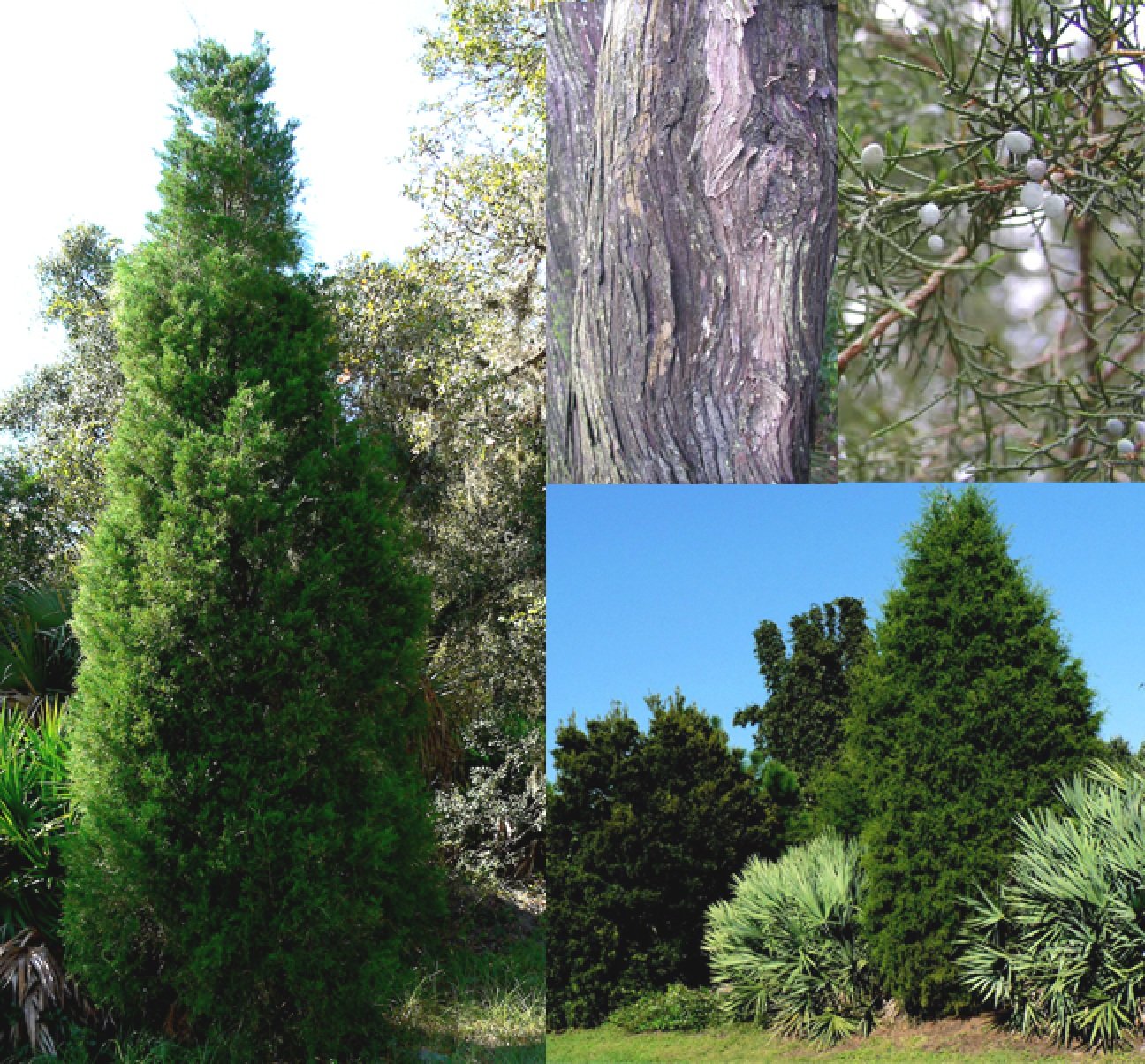
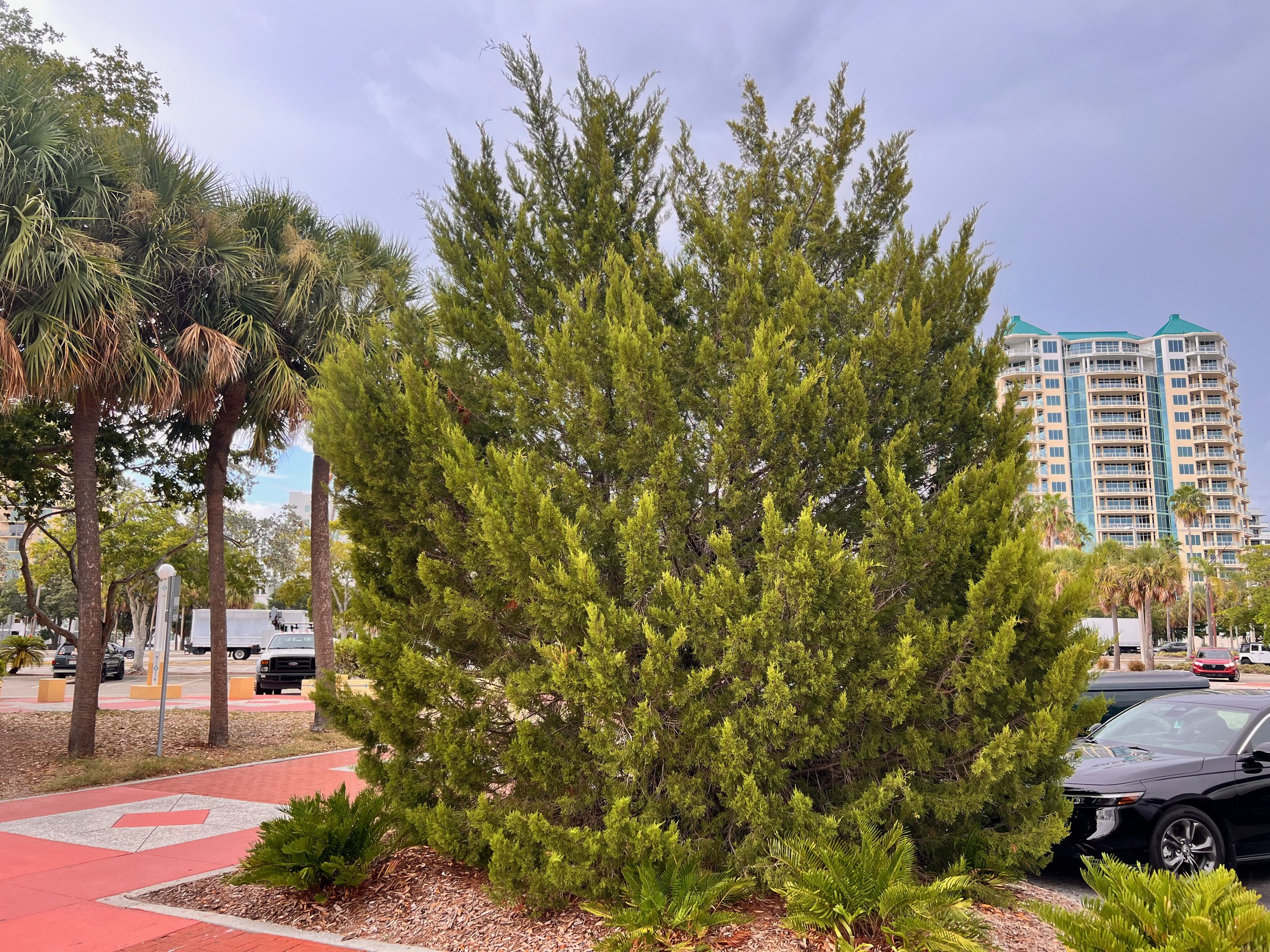
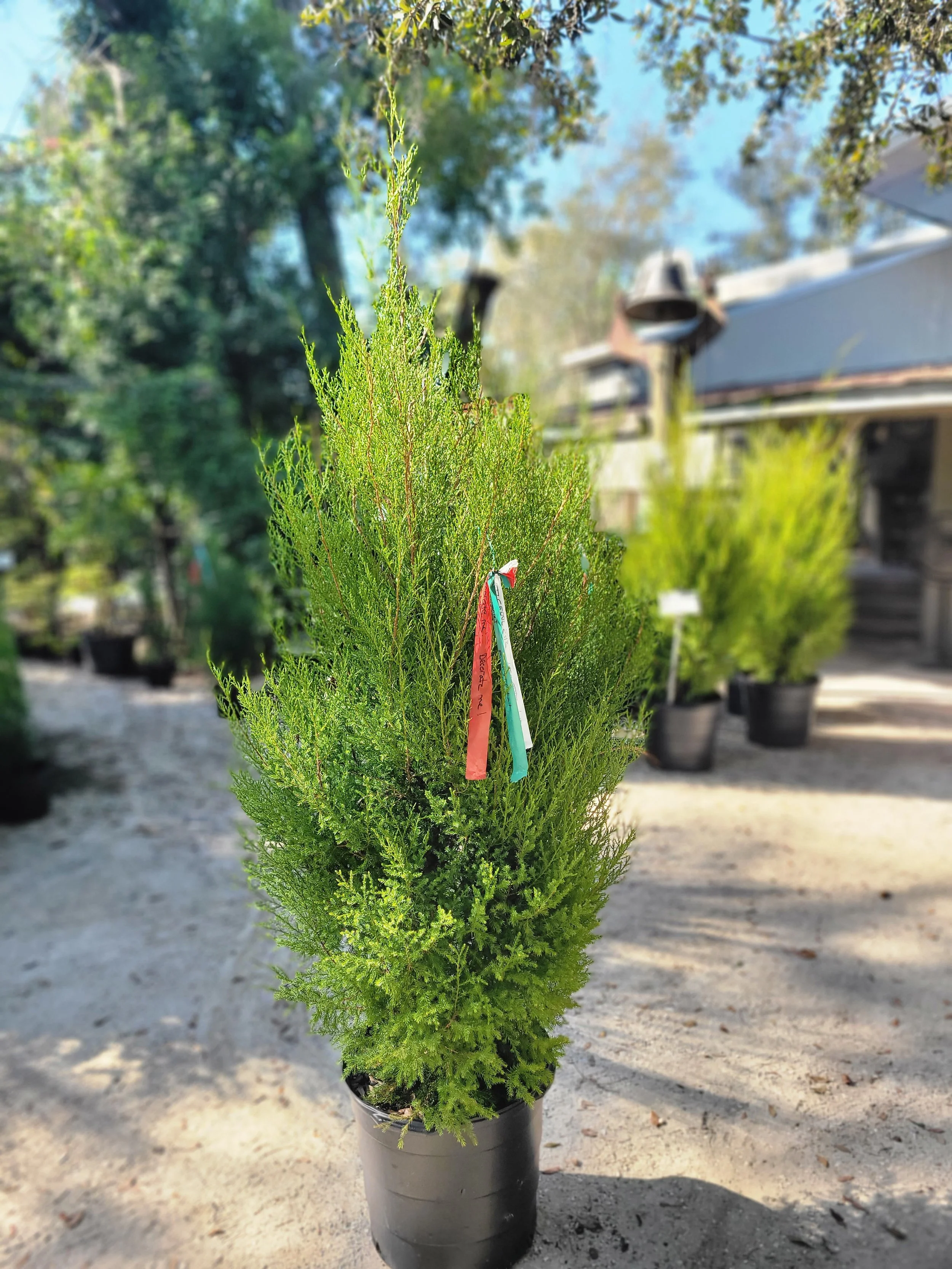
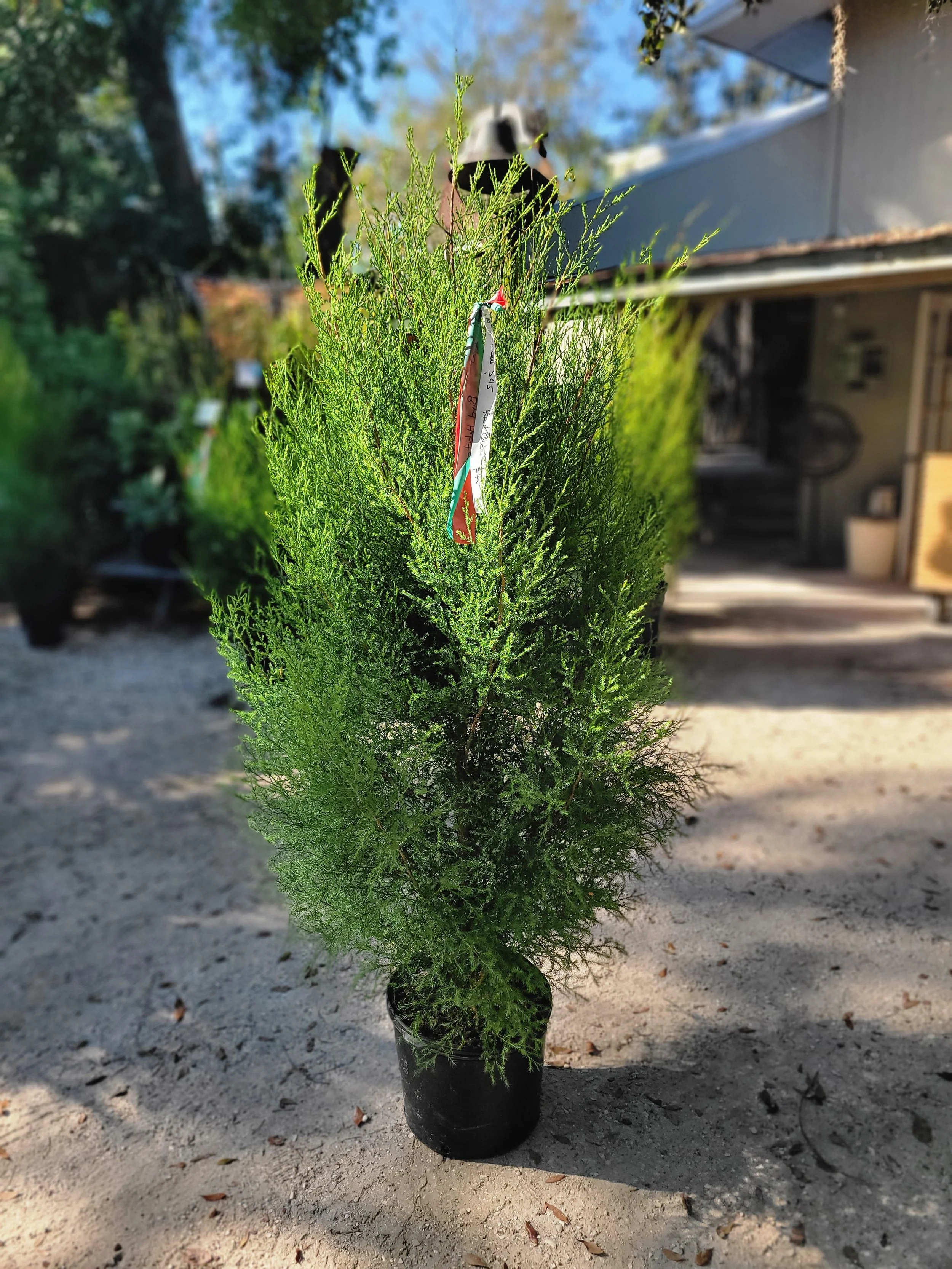
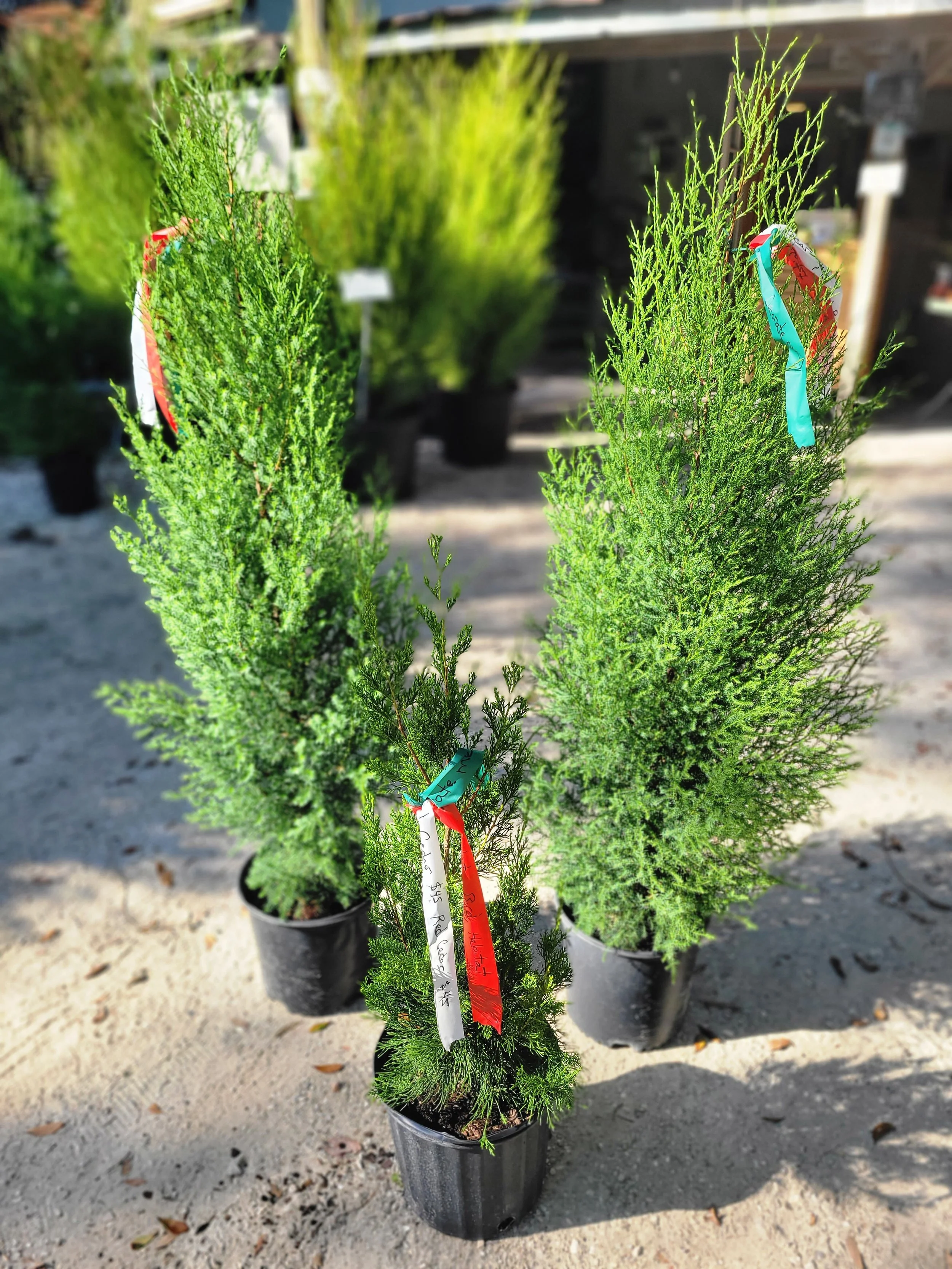
Juniperus virginiana silicoa
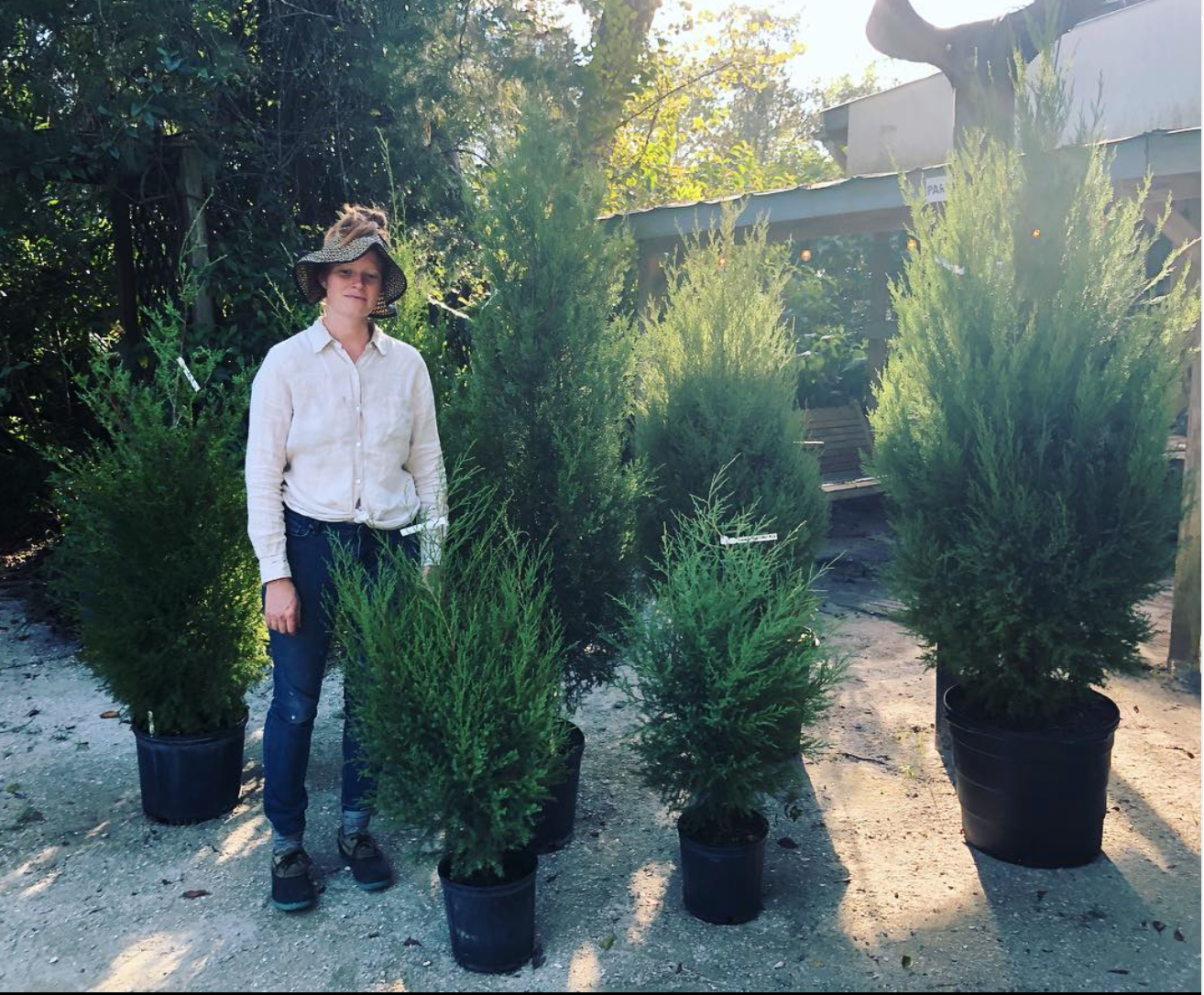
Red Cedar is an evergreen shade tree that is also excellent for a privacy screen or buffer planting. It’s long-lived, it can grow to approximately 30’ over many years, is adaptable to dry and moist soils and does well in full sun to light shade. It can be used as a coastal plant as it is salt tolerant. Red Cedars are an important nesting and food source for birds.
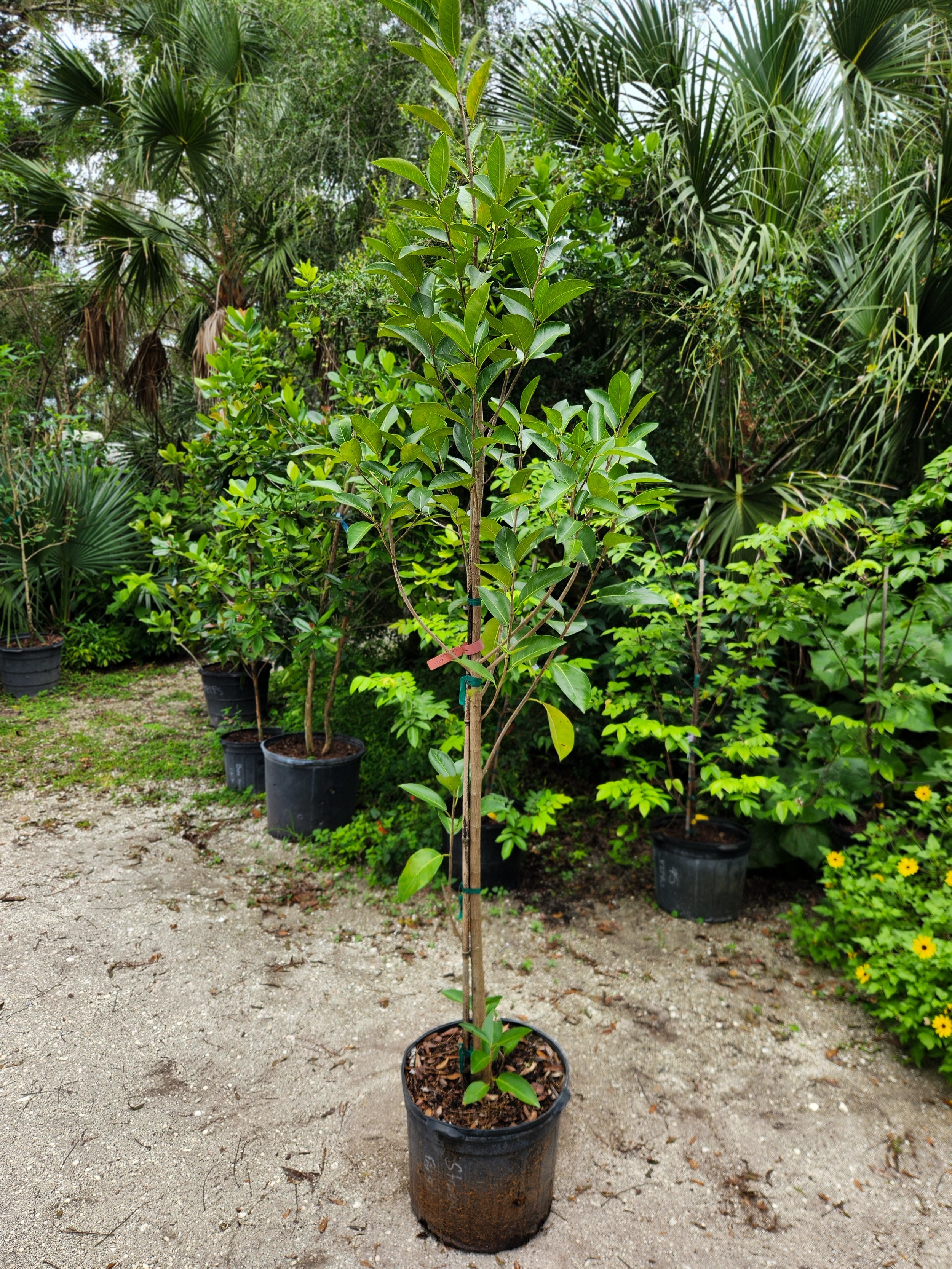
Ficus aurea
Strangler Fig is a native evergreen tree that grows to be 40’-60’ tall with an equally large canopy. They have dark green leathery leaves and produce small, dark figs that provide a food source for birds and other wildlife. They grow best in full sun to partial shade, and thrive in a wide range of soil types and are moderately drought and salt tolerant once established.
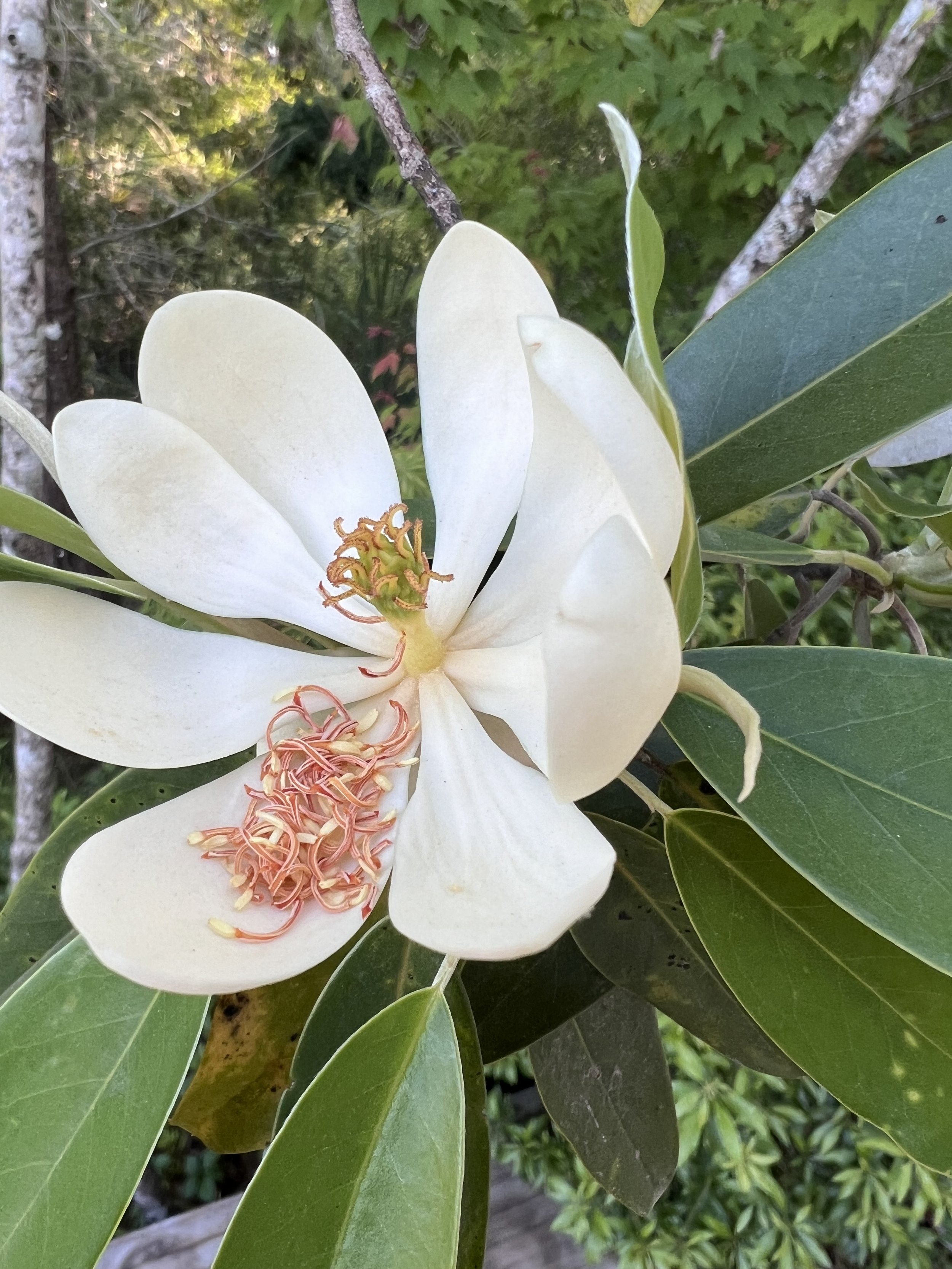
Magnolia virginiana
Sweetbay Magnolia is a native, evergreen flowering tree with beautiful, soft-green pointed foliage and heavily fragrant, ivory flowers that are significantly smaller than the large blooms of the Southern Magnolia. They grow to be 15’-30’ tall, and do well in full sun to partial shade and moist to wet sandy, loamy, and clay-heavy soil. Sweetbay Magnolias also serve as a larval host for the Sweetbay Silk Moth, Eastern Tiger Swallowtail, and the Spicebush Swallowtail, and the seeds feed local songbirds.
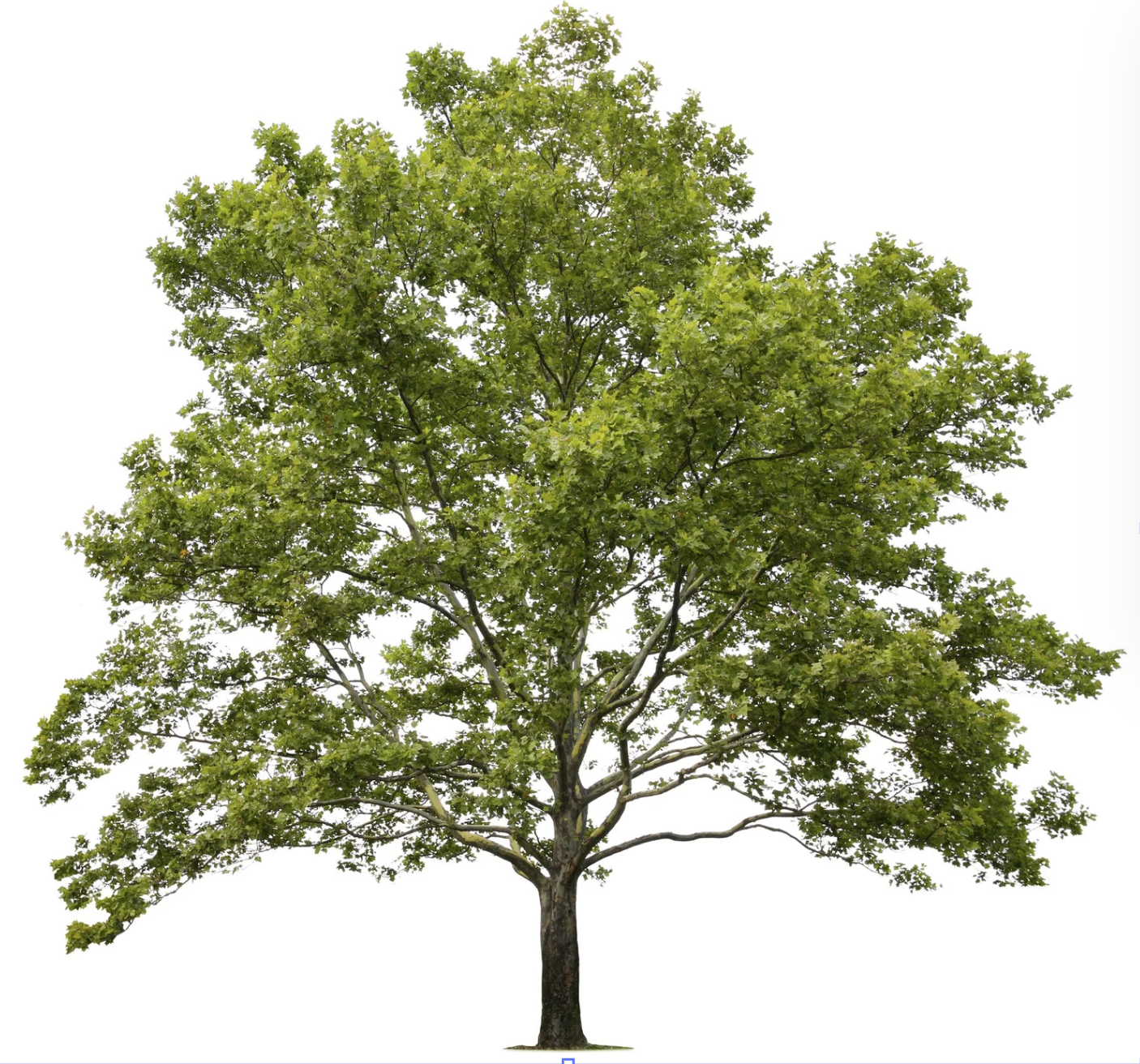
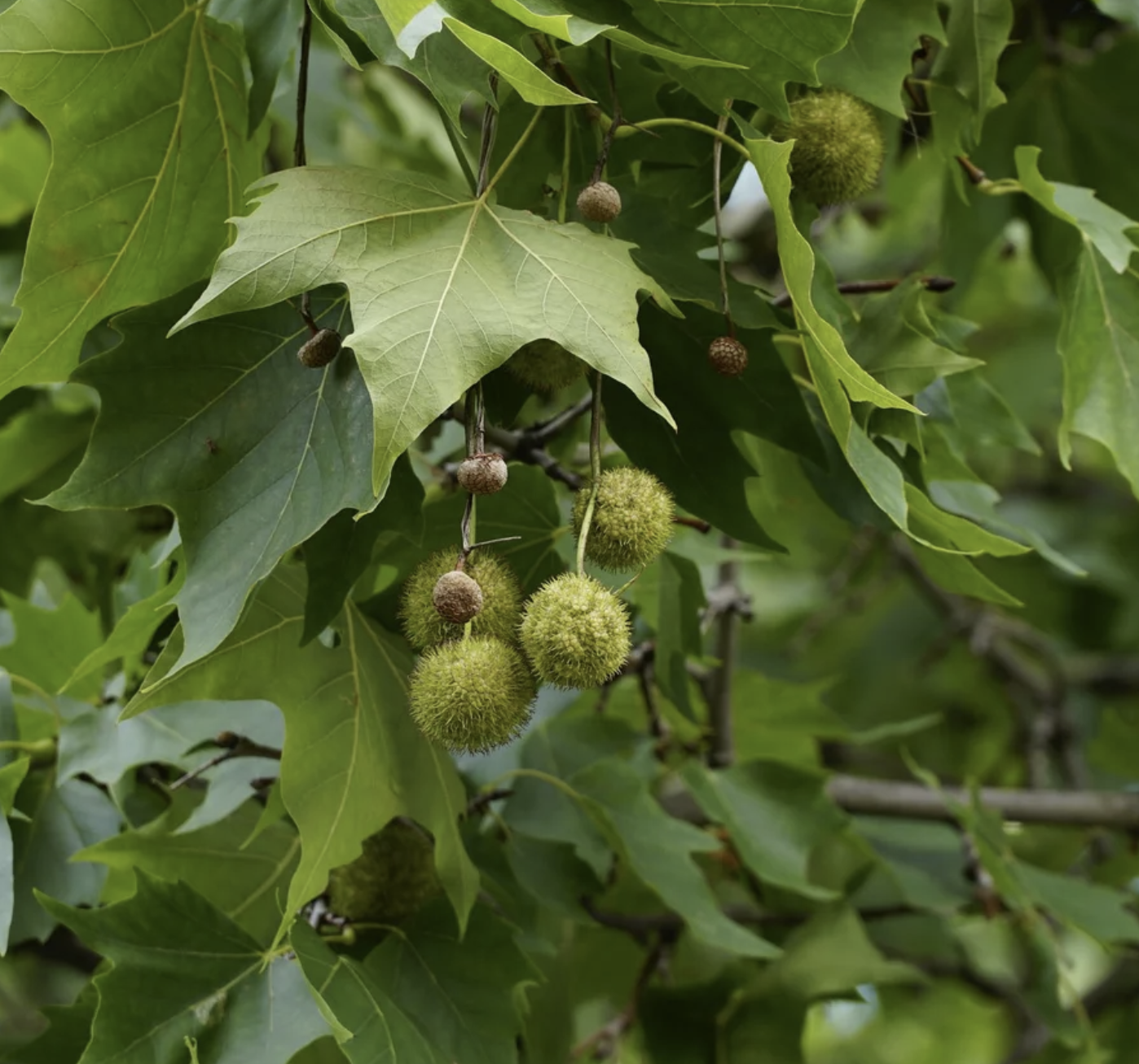
Platanus occidentalis
Sycamore is a large, deciduous, native shade tree that grows to be 75’-100’ tall, with an equally large canopy. They grow best in full sun and moist soil. With their exfoliating camouflage bark and large leaves that seasonally drop off, they are best suited for larger yards where the leaf and bark litter won’t be an issue. Sycamores have large branches that serve as great nesting sites for birds, and as they age, they hollow out, creating cavities which provide cover for owls, raccoons, and other mammals. Their seed pods feed songbirds, and their leaves are a larval host for the Tiger Swallowtail and various native moths.
aka Southern Bayberry
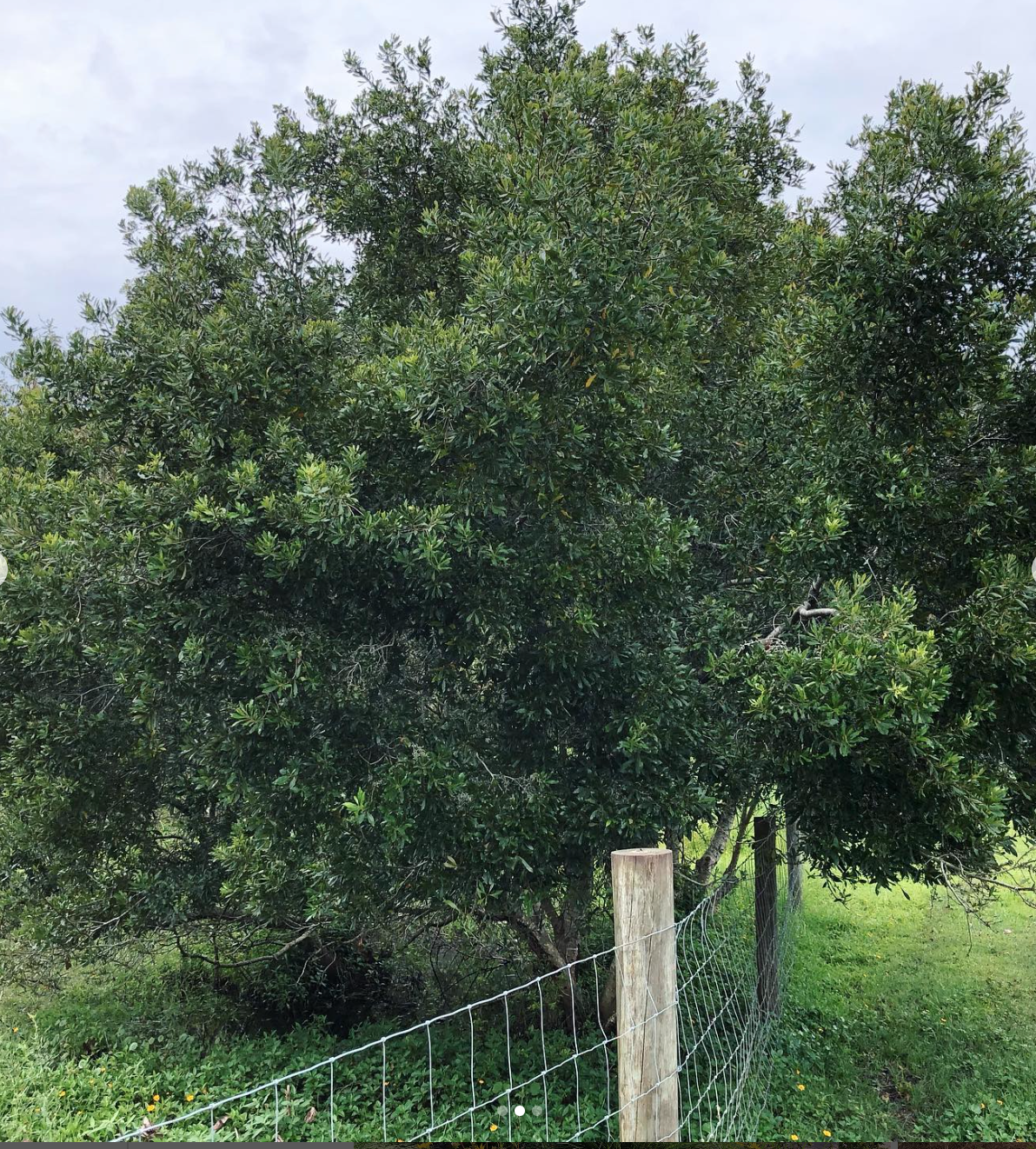
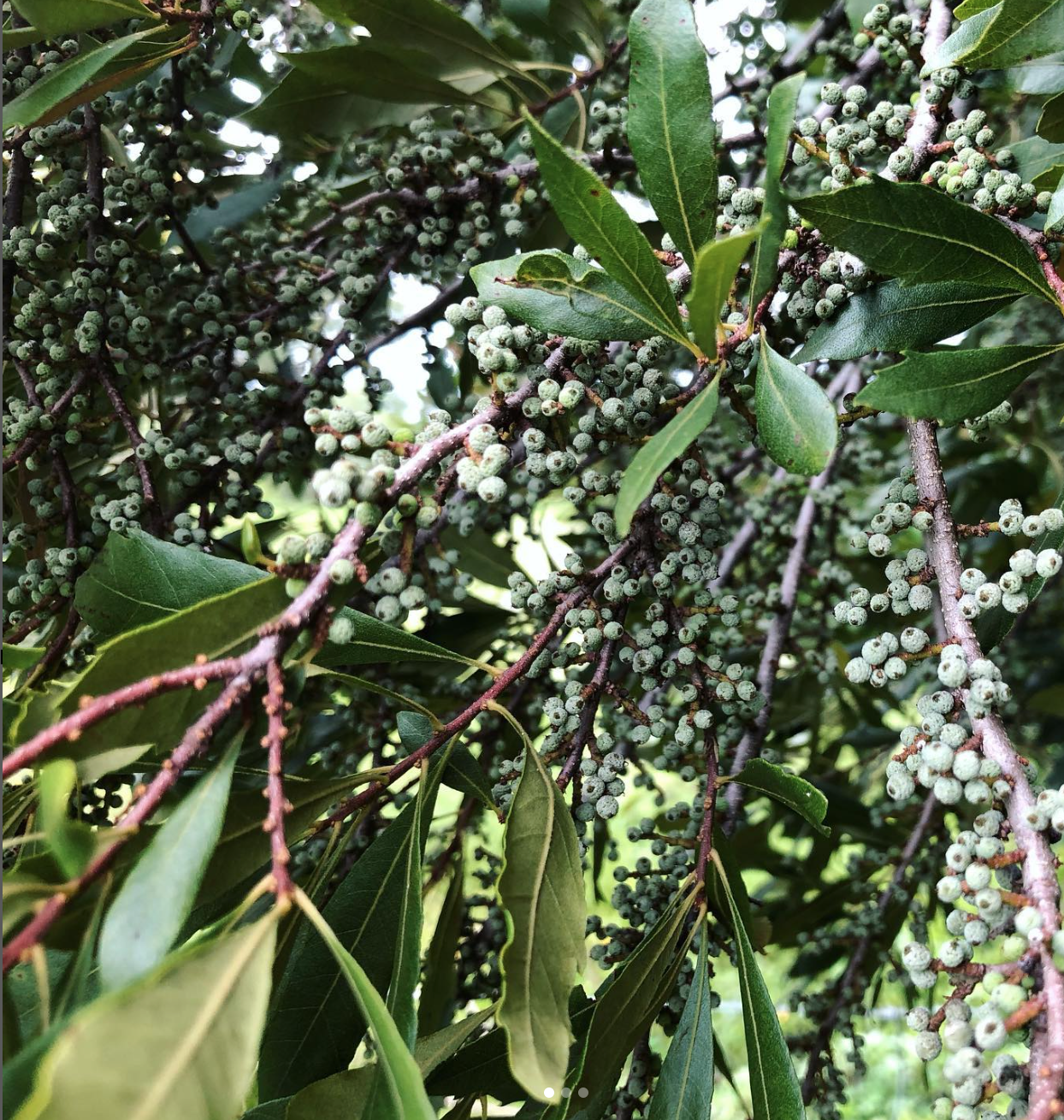
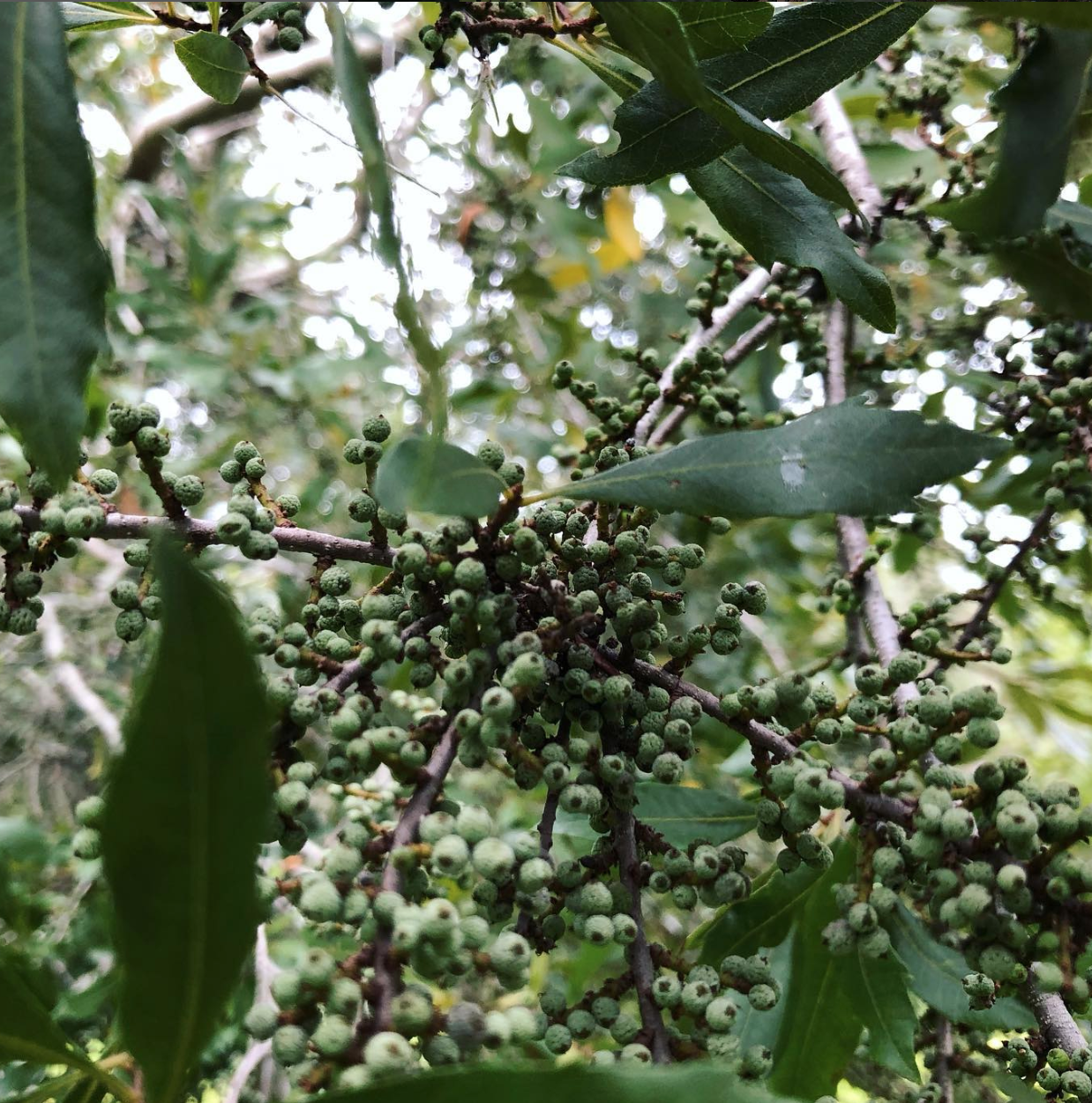
Myrica cerifera
Southern Bayberry is a go-to large shrub for tough conditions that require plants that can tolerate moist soils and full sun. It’s also highly adaptable to dry soils and partial shade. It is evergreen and best left untrimmed and allowed to get to its natural height of about 15’. Southern Bayberry makes a nice hedge, natural screen or buffer planting or a specimen shrub and it is an excellent wildlife attractor. The waxy berries on the female plants are a food source for birds, and also used to make traditional bayberry candles.


Ilex vomitoria
Yaupon Holly is a tough, evergreen shrub or small tree native to the southeastern United States that grows 15’-25’ tall with a distinctive vase-shaped form. This adaptable species features small, dark green leathery leaves and produces inconspicuous greenish-white flowers in spring, followed by brilliant red berries on female plants that attract birds and wildlife. Historically used by Native Americans to make caffeinated ceremonial tea, it's extremely drought and salt-tolerant, thriving in a wide range of conditions from full sun to shade and various soil types. Hardy in zones 7-10, it's valued for its versatility as a hedge, specimen tree, or screen, though it tends to sucker from the roots and may require regular pruning to maintain form.
No results match your search. Try removing a few filters.