Taxodium distichum
Bald Cypress is a majestic deciduous conifer native to the southeastern United States that can reach 50-120 feet tall with a distinctive buttressed base when growing in water. This long-lived species features feathery, light green needles that turn brilliant russet-orange in fall before dropping, and fibrous, reddish-brown bark. Its most distinctive characteristic is the development of "knees" - woody projections that grow upward from the root system when the tree is in standing water or wet soils. Naturally occurring in swamps, bayous, floodplains, and along rivers from Maryland to Texas, it's remarkably adaptable, tolerating both permanently flooded conditions and surprisingly dry soils once established. This iconic tree provides critical habitat for wildlife, including nesting sites for wood ducks and various wading birds, and serves as an excellent specimen or street tree in zones 4-10.
Taxodium distichum
Bald Cypress is a majestic deciduous conifer native to the southeastern United States that can reach 50-120 feet tall with a distinctive buttressed base when growing in water. This long-lived species features feathery, light green needles that turn brilliant russet-orange in fall before dropping, and fibrous, reddish-brown bark. Its most distinctive characteristic is the development of "knees" - woody projections that grow upward from the root system when the tree is in standing water or wet soils. Naturally occurring in swamps, bayous, floodplains, and along rivers from Maryland to Texas, it's remarkably adaptable, tolerating both permanently flooded conditions and surprisingly dry soils once established. This iconic tree provides critical habitat for wildlife, including nesting sites for wood ducks and various wading birds, and serves as an excellent specimen or street tree in zones 4-10.
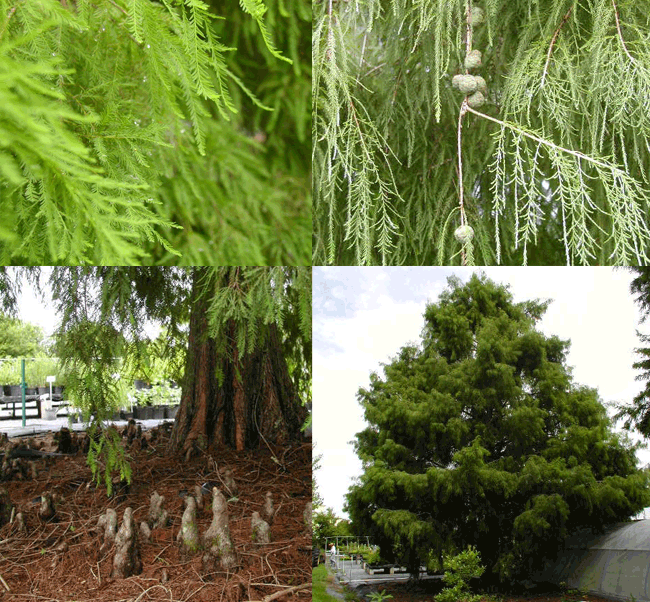 Image 1 of 2
 Image 2 of 2