Hi Friends!
We offer PICK UP or LOCAL DELIVERY only (NO SHIPPING).
Thank you!
Thursday–Sunday, 10am–4pm | 941-322-1915
We offer PICK UP or LOCAL DELIVERY only (NO SHIPPING).
Thank you!
Thursday–Sunday, 10am–4pm | 941-322-1915

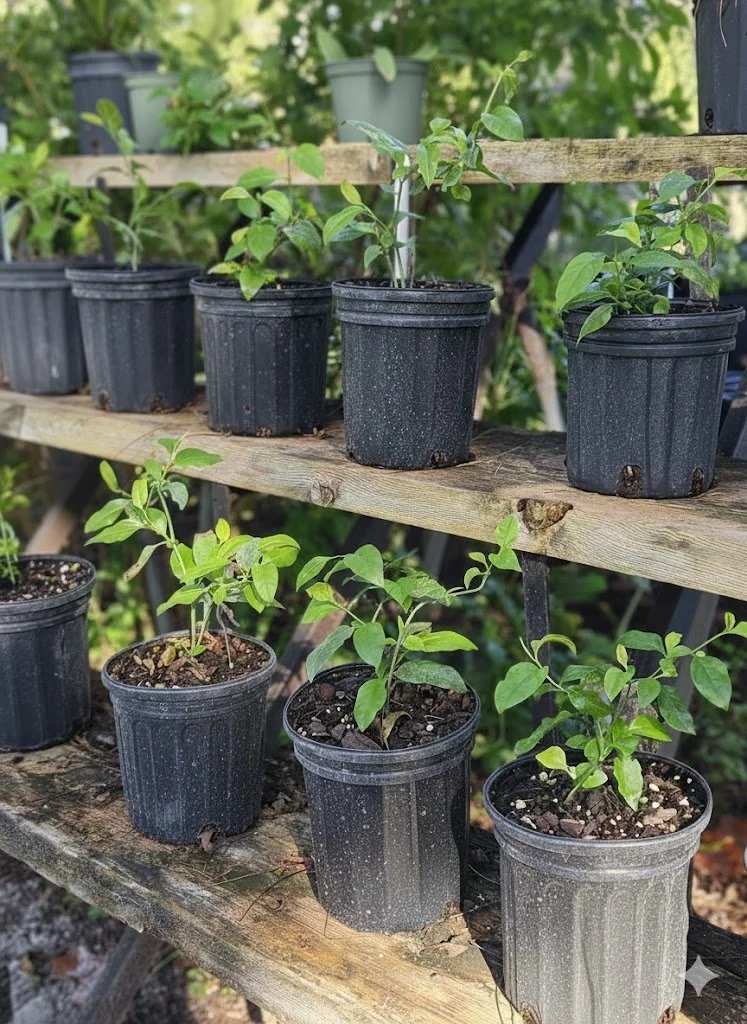
Plumbago zeylanica
White Plumbago is a charming, evergreen, perennial, native vine that deserves a spot in every Florida garden! White Plumbago is a vigorous climber or groundcover, reaching 4', with a sprawling growth habit featuring delicate white tubular flowers and sticky seed capsules that attract butterflies and beneficial pollinators. It thrives in partial shade to full sun and is deer resistant and drought tolerant once established.
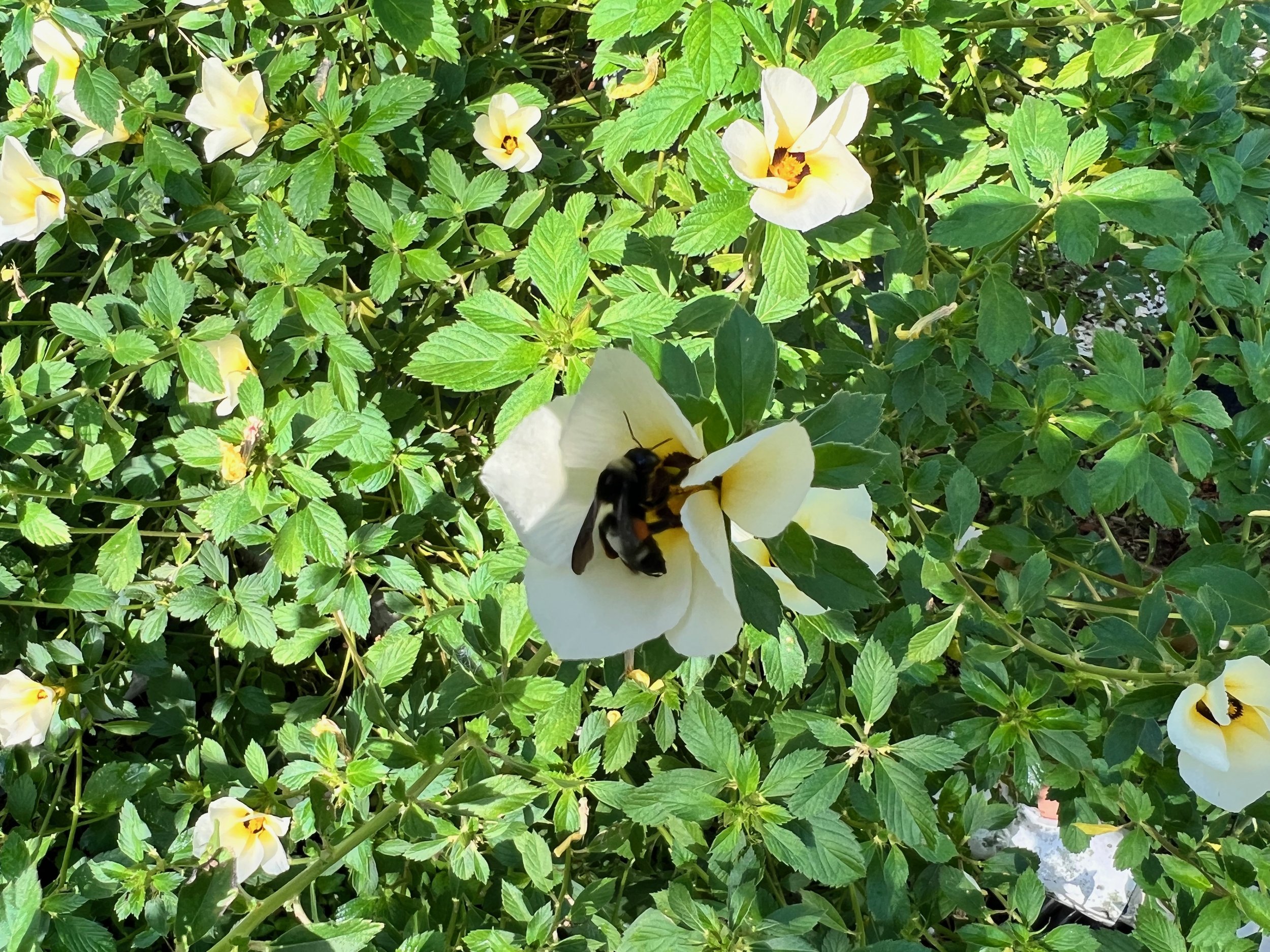
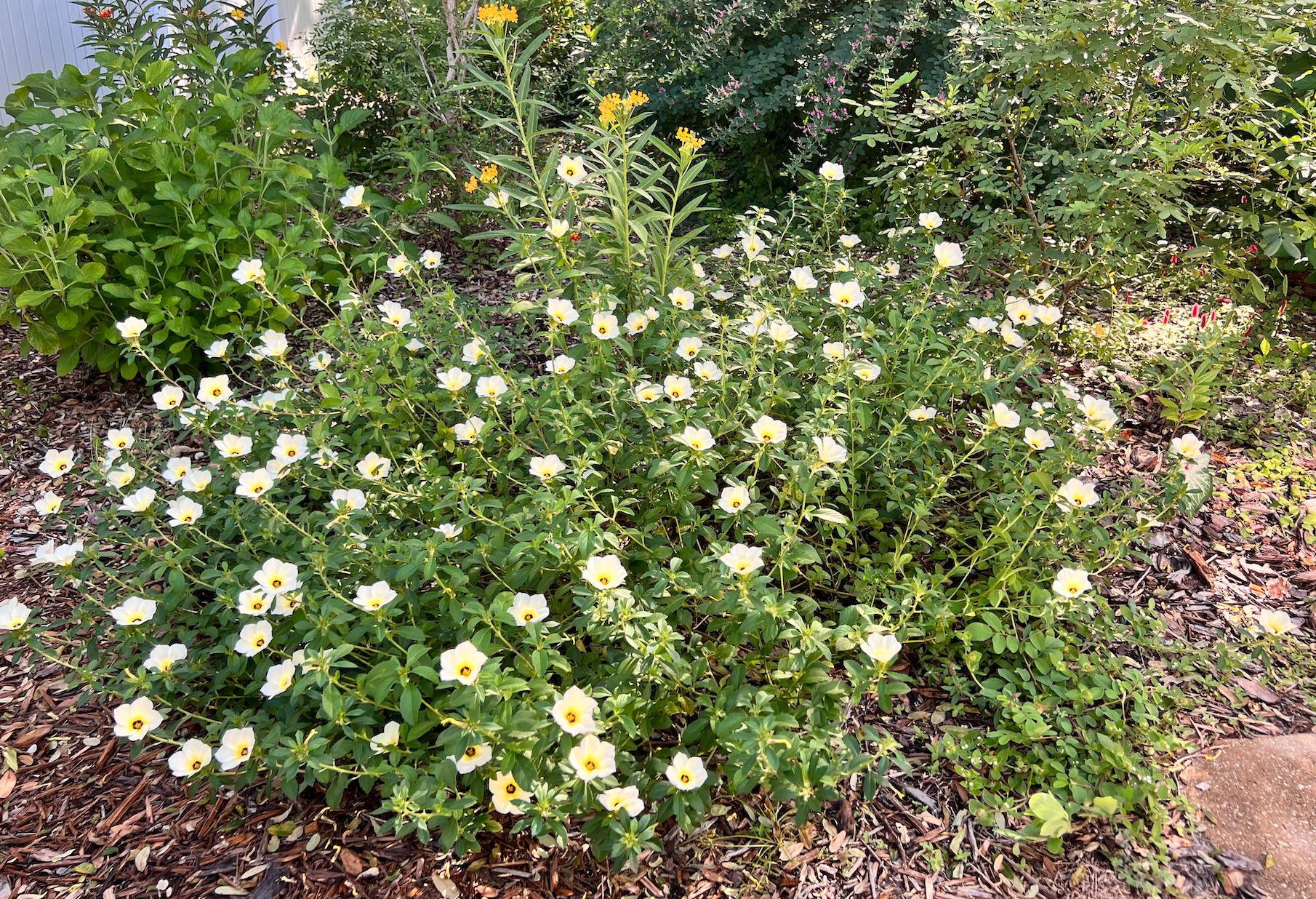
Turnera ulmifolia ‘Alba’
White Beach Buttercup is an eye-catching non-native Florida friendly that blooms throughout the year. It is a low-growing, sprawling subshrub with dark green leaves and flowers that open in the morning and close up by noon. White Beach Buttercup grows in full sun to part shade and average to moist well-draining soils. While it can grow a little leggy, you can trim it back to keep it more dense and amend the soil with a slow-release organic fertilizer or compost occasionally. The creamy-white flowers with a yellow blushed, “black-eye” attract bumblebees, carpenter bees, hummingbirds, and other pollinators.
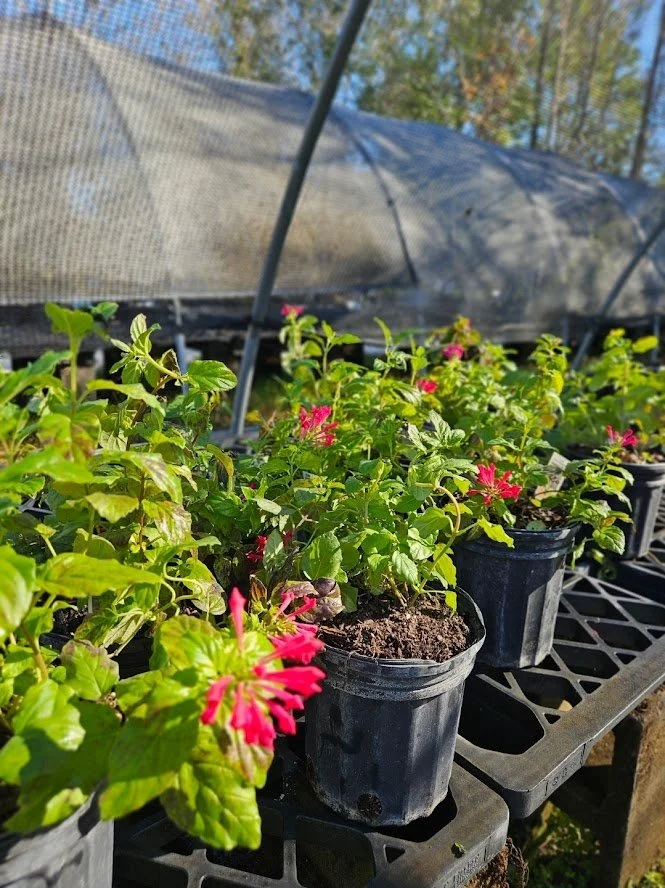
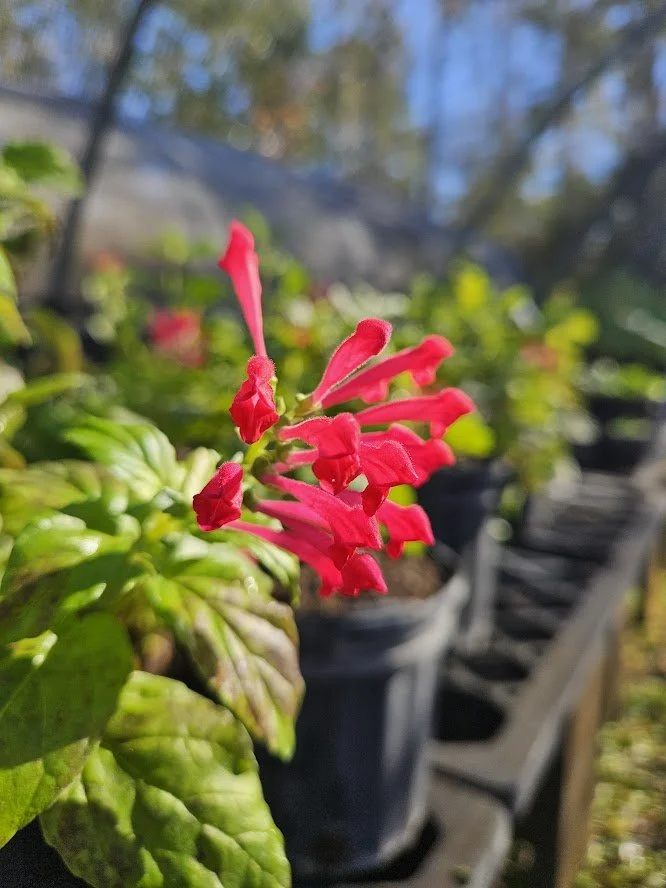
Scutellaria longifolia 'Red Fountains
Hot Pink Skullcap is a perennial wildflower that grows 1-2 ft tall with an upright, branching habit. It produces vibrant hot pink tubular flowers along tall spikes from late spring through summer, creating a stunning display. This hardy native is easy-to-grow and thrives in full sun to partial shade with well-drained to average soil. It attracts hummingbirds, butterflies, and other pollinators while requiring minimal maintenance once established, making it an excellent choice for naturalized gardens and pollinator-friendly landscapes.
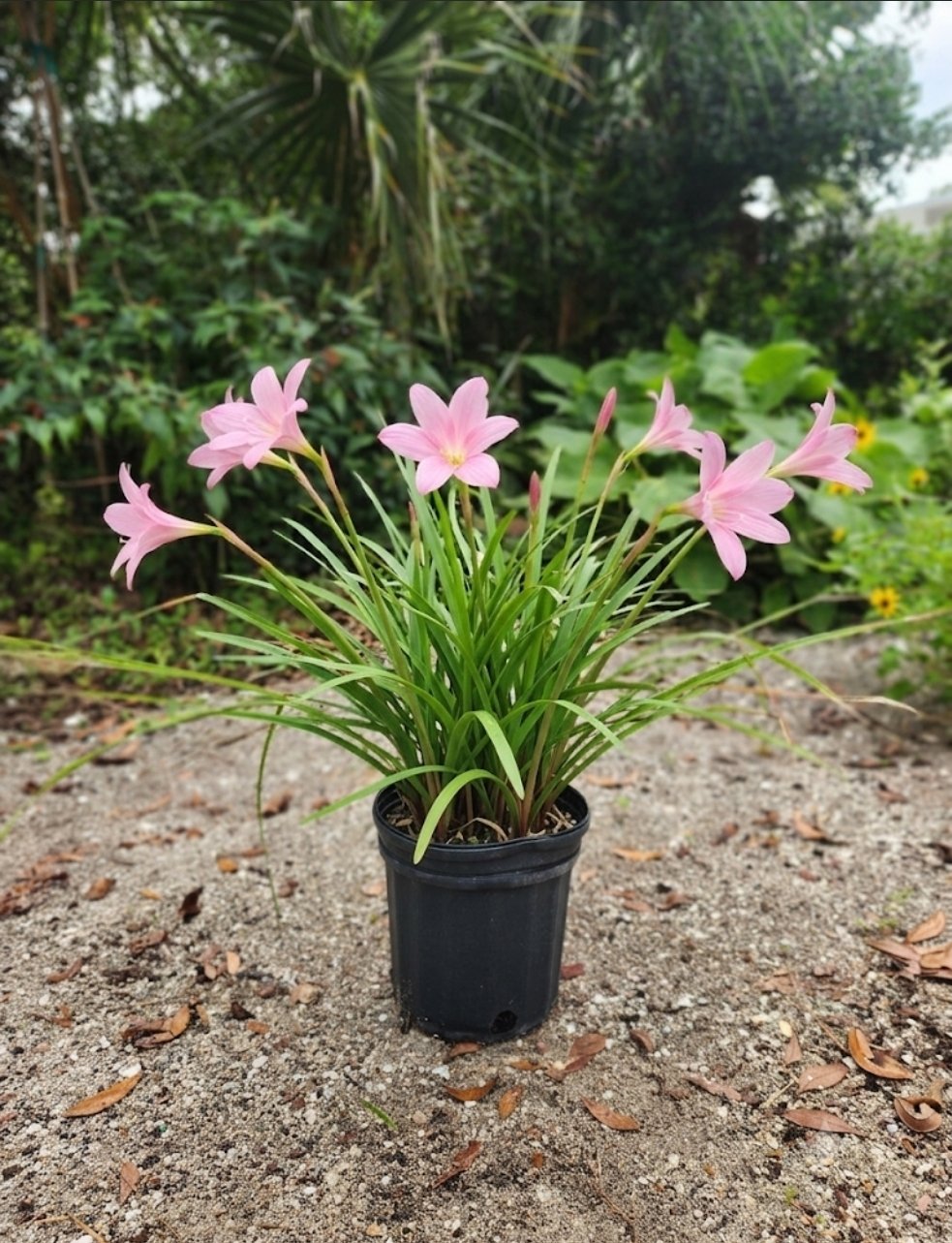
Habranthus robustus
Argentine Rain Lily is a non-native, Florida-friendly, perennial, reseeding wildflower that is a lovely addition to wetland and rain garden applications. They do best in full sun to part shade, and moist to average soil. With showy, pink flowers that bloom after it rains, they are great for attracting pollinators to your space, spreading via seed and bulb.

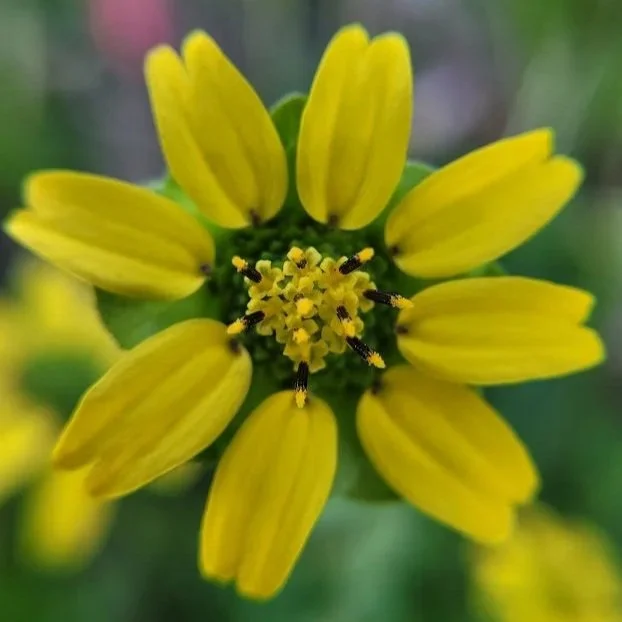
Berlandiera subacaulis
Florida Greeneyes is a long-lived perennial in the daisy family endemic to Florida that grows 1-2 feet tall with short-stemmed, bright yellow flowers. Also known as Florida Chocolate Flower, it produces fragrant blooms that emit a distinctive chocolatey scent and feature yellow ray petals surrounding dark red or maroon disc florets. This drought-tolerant wildflower develops a substantial tuberous root system that can grow up to 12 inches thick, providing exceptional water storage capacity. Blooming from spring through fall, it thrives in full sun to partial shade with well-drained soils and naturally occurs in sandhills, dry pine flatwoods, and disturbed sites throughout Florida, serving as an important nectar source for bees and butterflies.
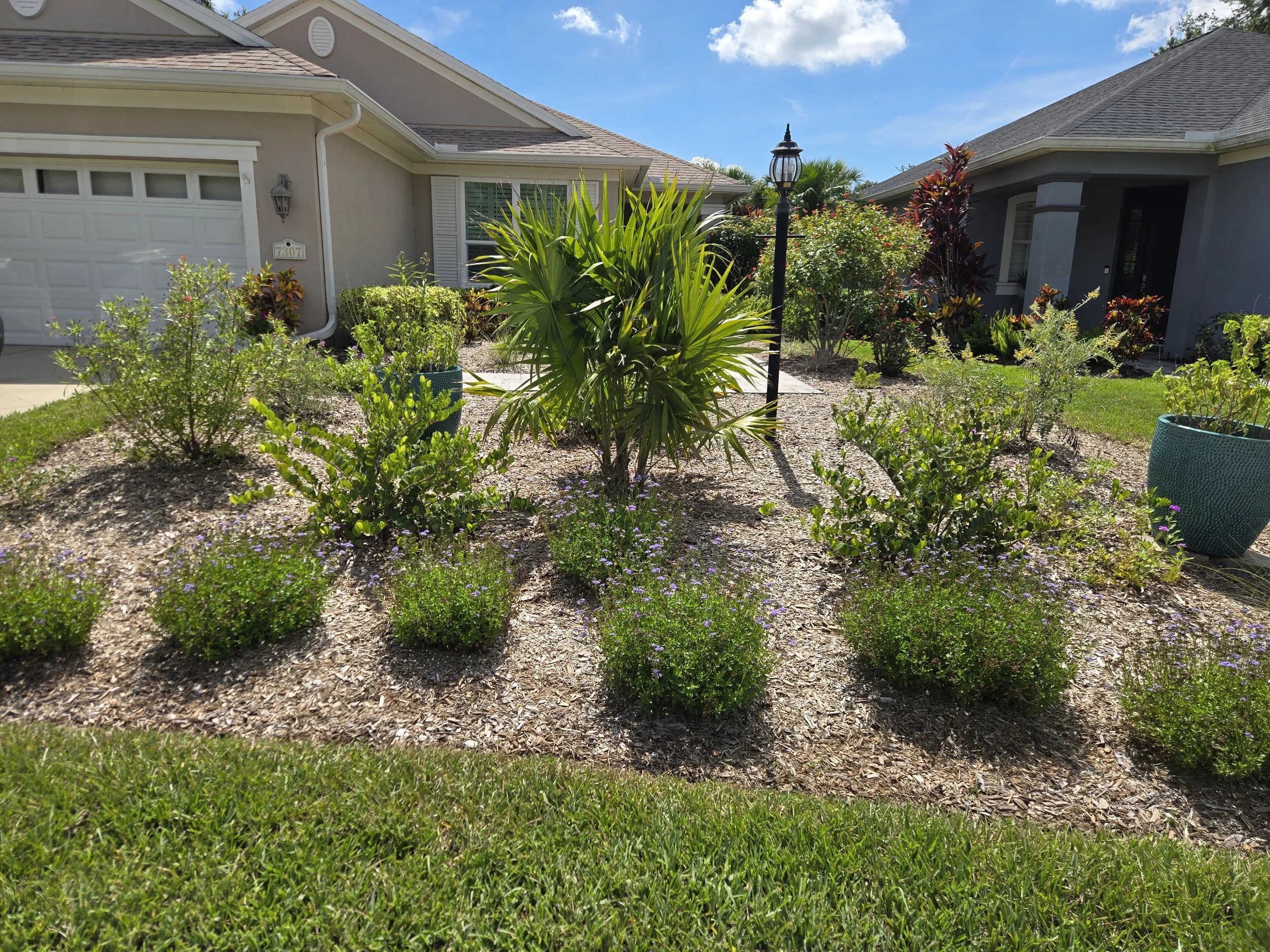
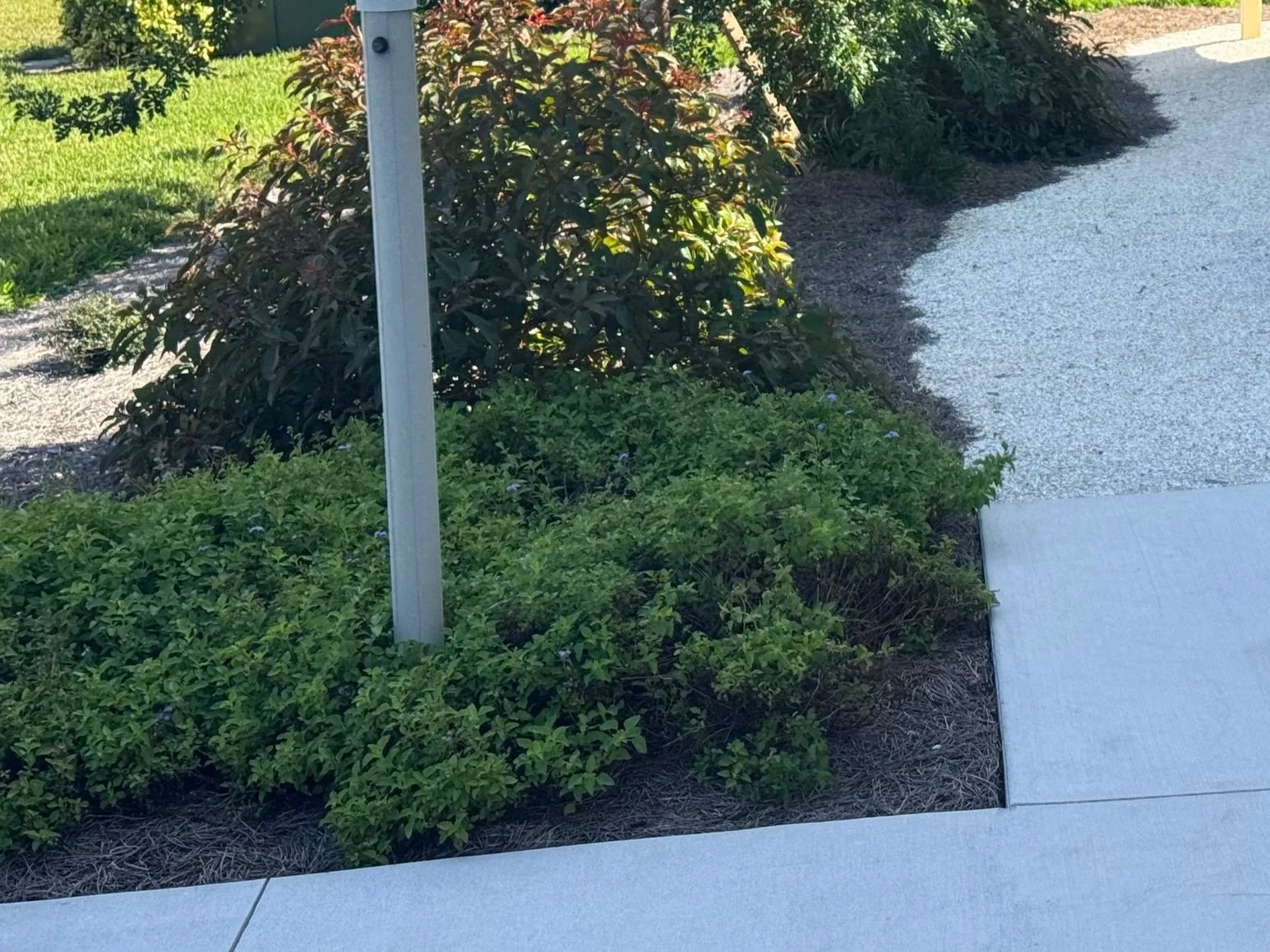
Ageratum maritimum
Seaside Mistlfower or Seaside Ageratum is a charming, low-growing wildflower native to Florida’s coastal habitats. Its soft, bluish-purple blooms attract butterflies and add color to sunny, sandy spots. Perfect for coastal landscape or pollinator gardens, this hardy plant thrives in salty, well-drained conditions.
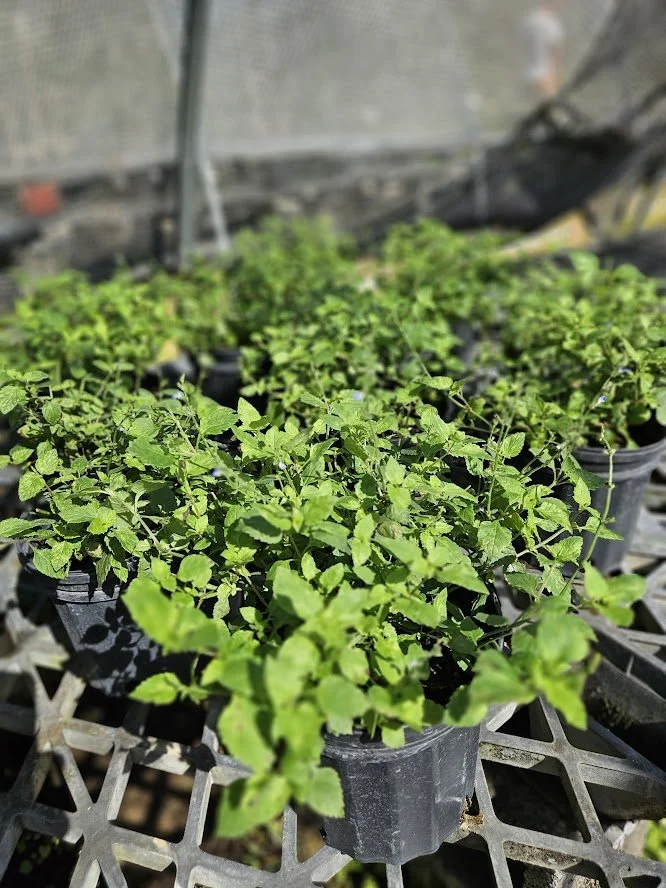
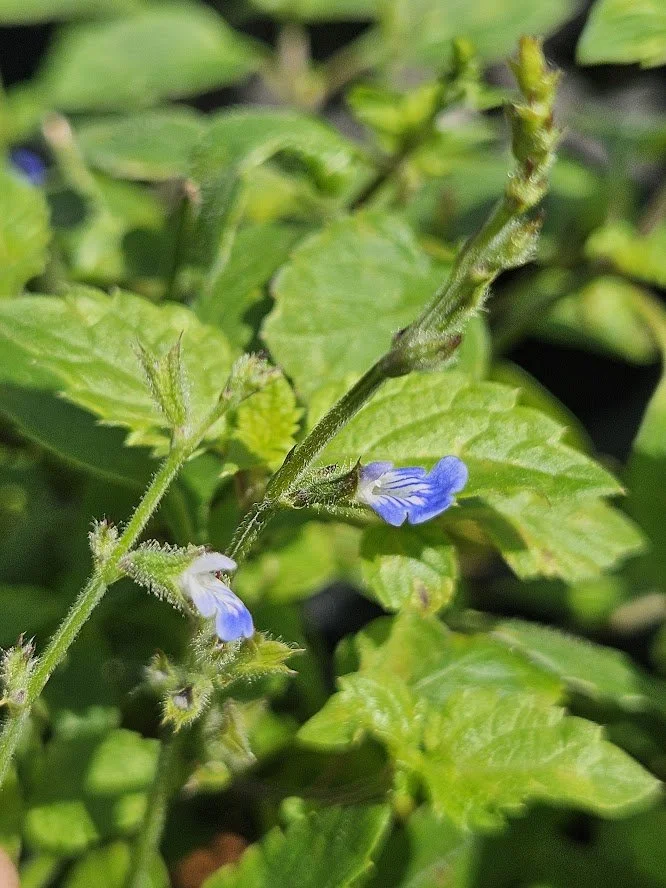
Salvia misella
Creeping Sage is a low-growing perennial native to Florida that forms dense, aromatic ground cover mats. This species produces small blue flowers and thrives in well-drained, average to dry soils. It serves as an excellent choice for planting between shrubs and trees as it prefers dappled sunlight to full shade.

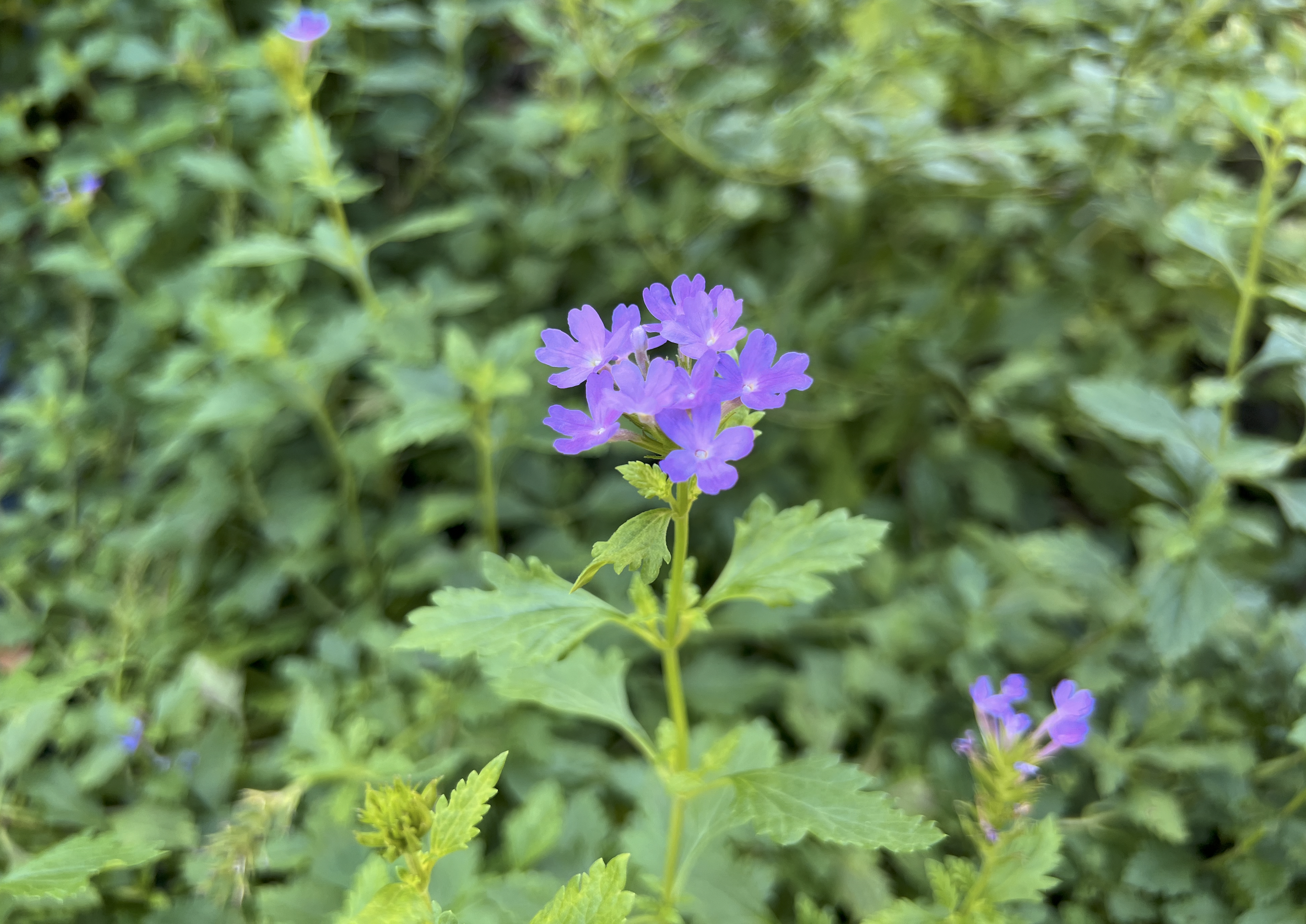
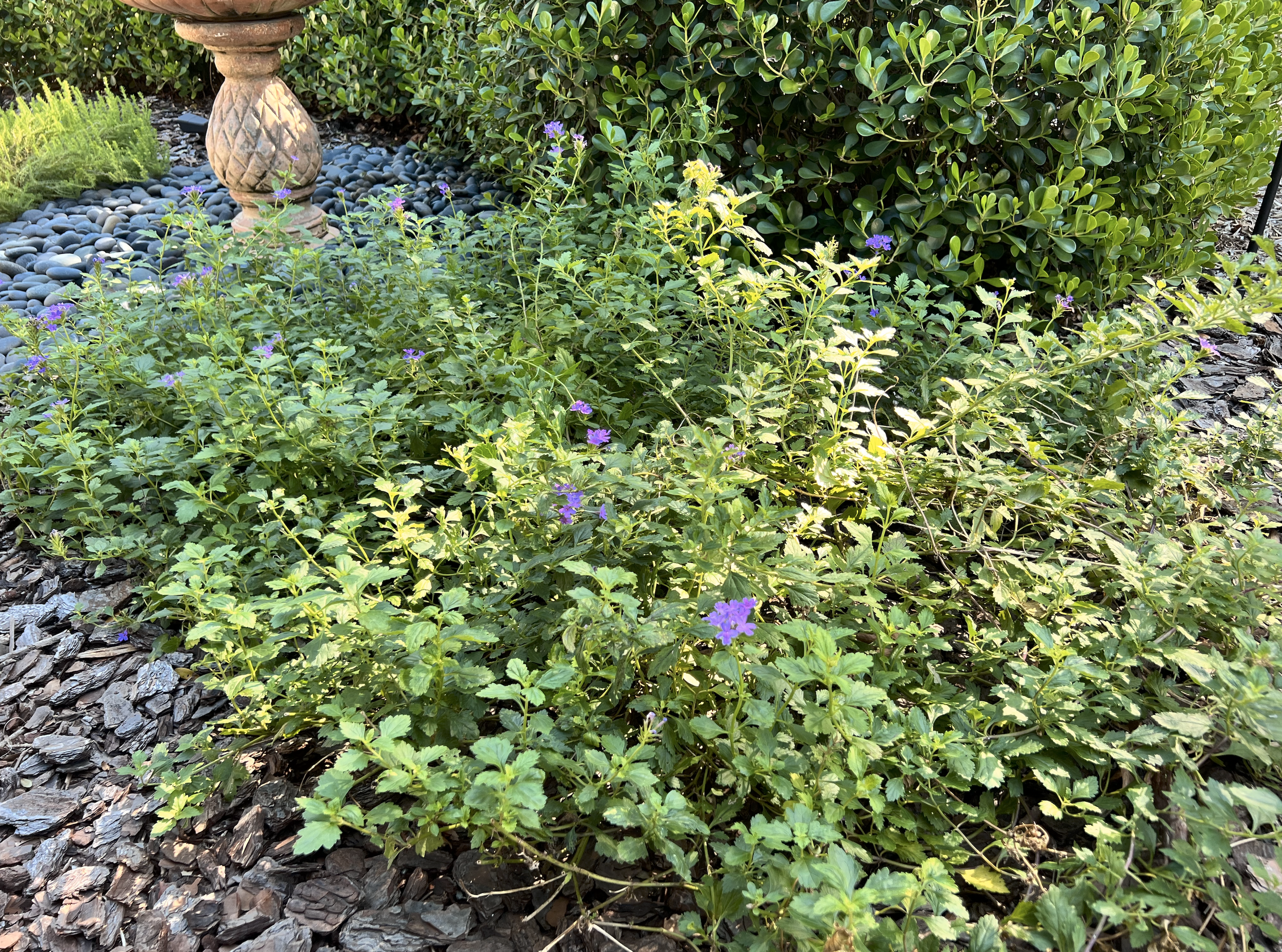
Glandularia maritima
Beach Verbena is an endangered, prostrate perennial native to Florida's coastal dunes that forms dense, evergreen ground cover mats. This spreading species produces deep pink to lavender flowers in flat-topped clusters that bloom year-round with peaks in spring and summer. Extremely salt-tolerant and adapted to sandy soils and full sun, it thrives in harsh coastal environments but can also adapt to less challenging landscape settings. Due to its low-growing, spreading habit and continuous flowering, it serves as an excellent groundcover for sunny, well-drained areas.


Viola sororia
Common Violet is a stemless, rhizomatous perennial native to Florida. This low-growing species features glossy, heart-shaped leaves that are edible. It produces attractive white flowers with some blue veining that bloom in mid-spring and in winter. It thrives in moist, rich soils and dappled sunlight but adapts to various light conditions and soil types. Known for spreading to form pollinator-friendly ground cover it's valued for naturalizing in woodland gardens and shaded areas.

Liatris gracilis
Graceful Blazing Star is a moderately tall perennial wildflower native to Florida, reaching 2-3 ft. height. This drought-tolerant species features a single, slender stem covered in fine hairs and narrow, grasslike leaves. It produces spikes of small, purple star-shaped flowers that bloom from summer into fall, attracting butterflies and other pollinators. Thriving in well-drained soils and full sun, it naturally occurs in flatwoods, sandhills, and open woodlands throughout Florida and is valued for both wildlife gardens and cut flower arrangements.
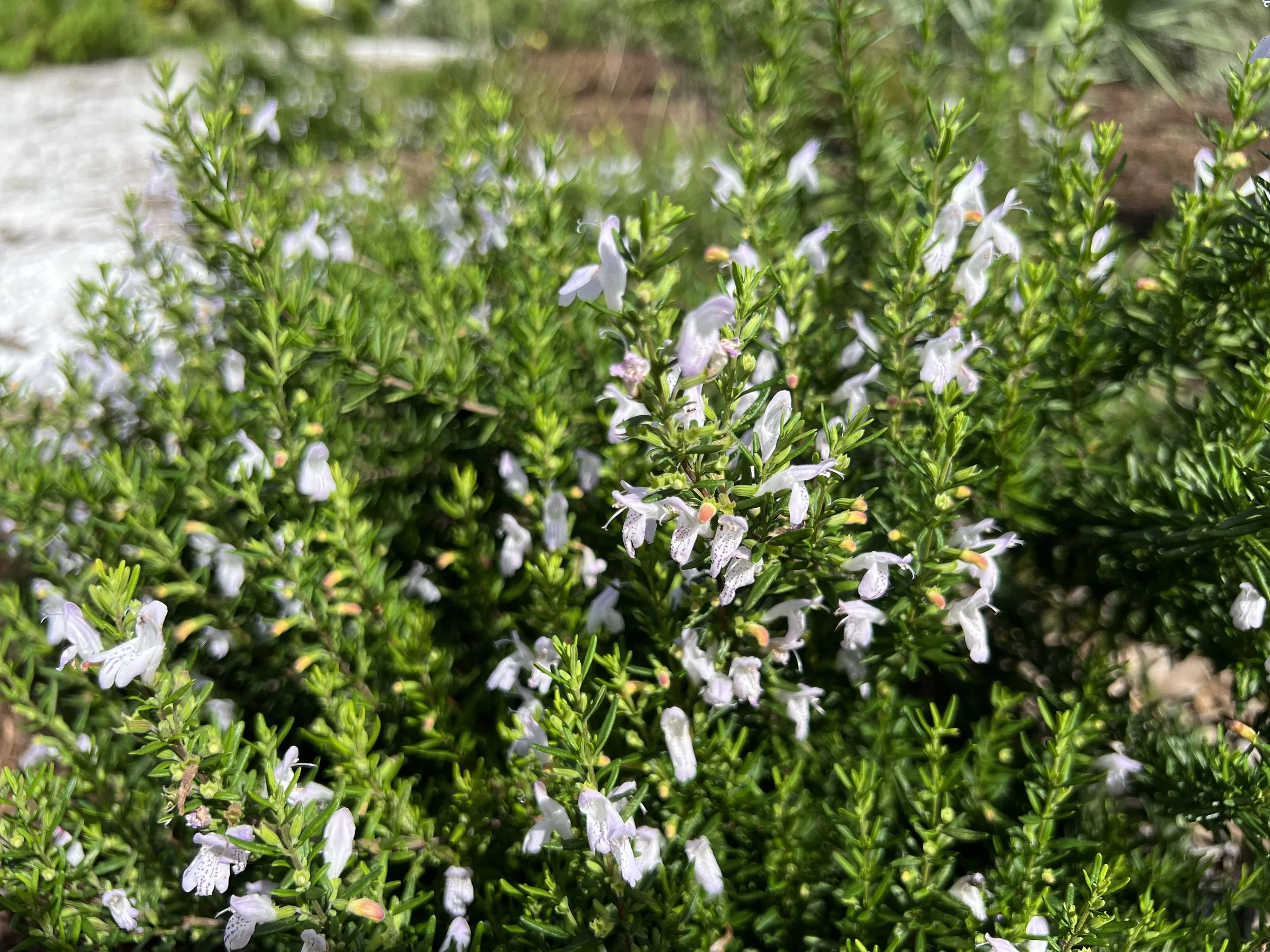
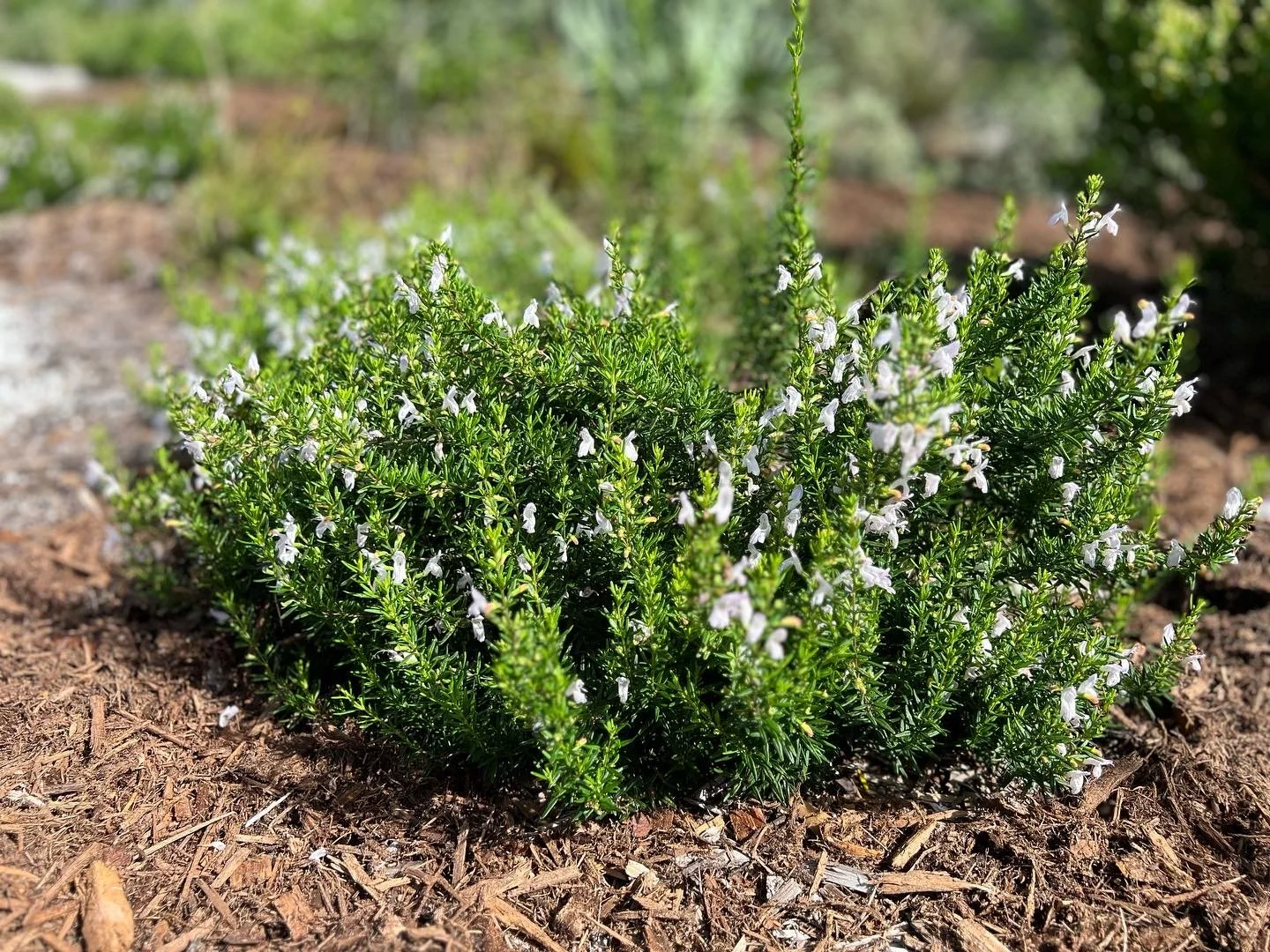
Clinopodium georgianum
A charming native perennial sub-shrub that grows into a tidy 2’ x 2’ mound. It thrives in full sun to partial shade and prefers well-drained, dry to average soil. Its most standout feature is the intensely fragrant foliage, making it a perfect choice for planting along pathways where the scent can be enjoyed by passersby. From summer into fall, it is covered in delicate light pink-to-purple flowers that are a magnet for pollinators, particularly bees.
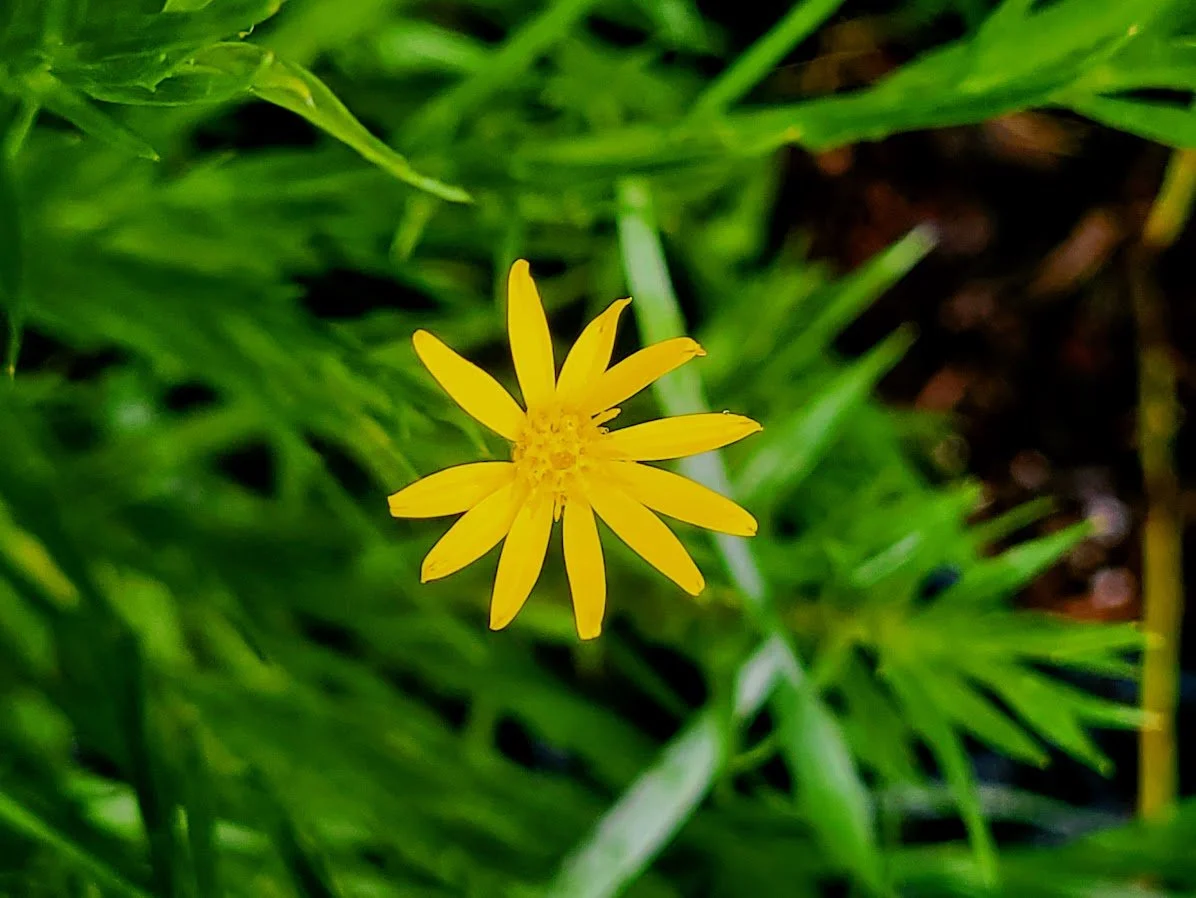
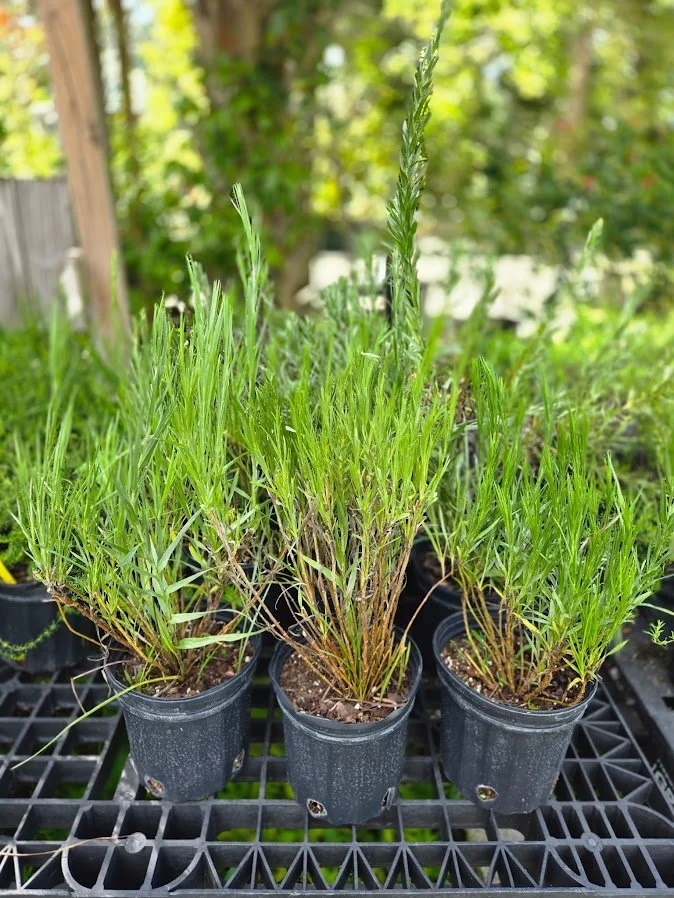
Pityopsis gramnifolia
Narrowleaf Silkgrass is a rhizomatous perennial wildflower native to Florida. This tough, evergreen ground cover thrives in full sun and sandy, well-drained soils. Despite what its name suggests, Silkgrass does not produce silk and is not a true grass, but features grass-like, linear leaves covered in distinctive silvery hairs. Its bright yellow, daisy-like flowers bloom from late summer through early winter, and provide an important source of nectar for pollinators such as native bees.
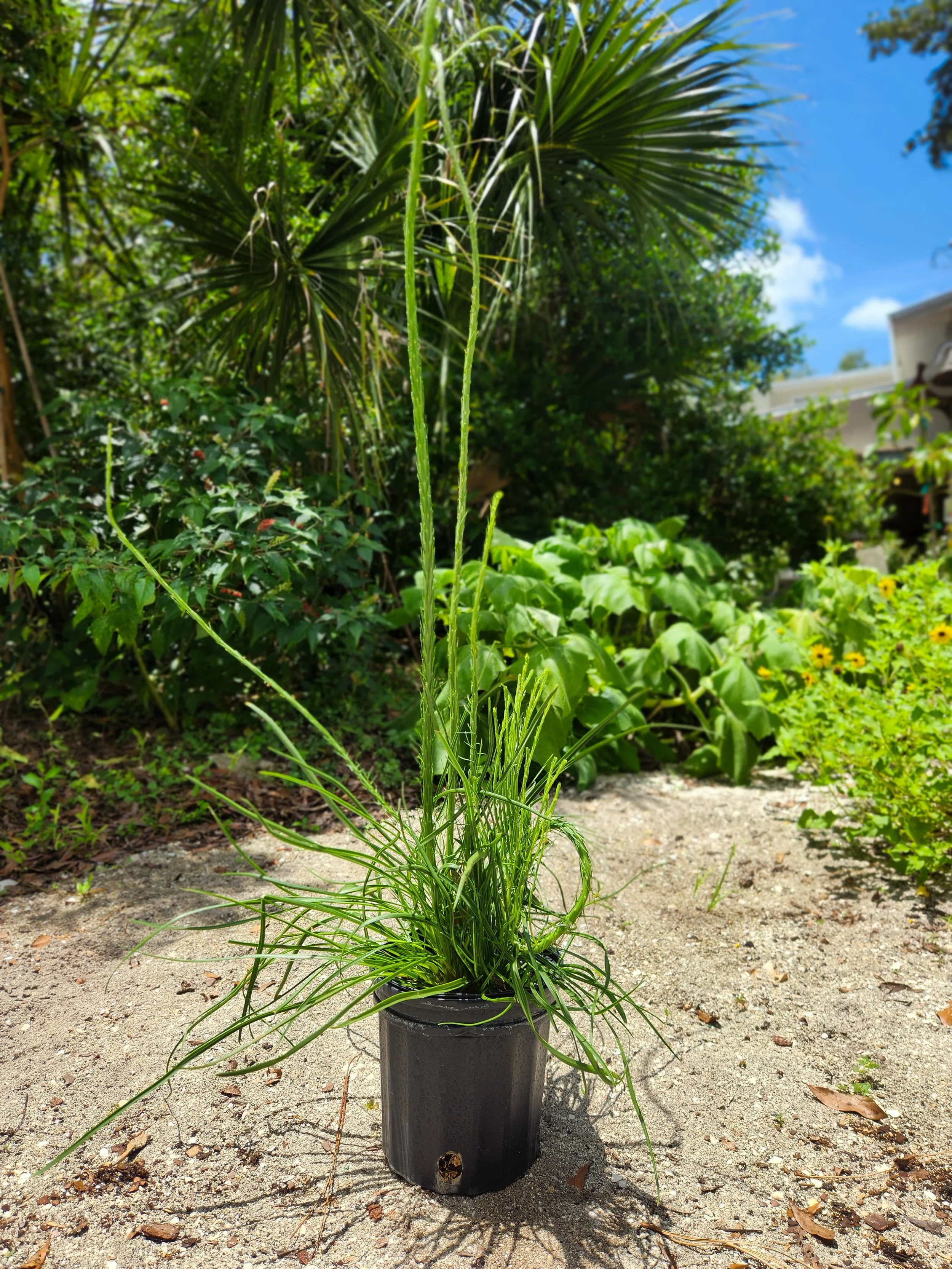
Liatris tenuifolia
Love the idea of Blazing Star but have a super dry, hot yard without irrigation? Try Shortleaf Blazing Star! A statement wildflower for the fall season! This wildflower is unapologetically bold with tall, electric purple spikes that strut through like they own the garden. It is the life of the pollinator party with the amount of bees and butterflies it attracts. If your landscape needs a little drama and a whole lot of fabulous, this is the wildflower you've been waiting for.
Liatris spicata
A statement wildflower for the fall season! Blazing Star is unapologetically bold with tall, electric purple spikes that strut through like they own the garden. It’s the life of the pollinator party with the amount of bees and butterflies it attracts. If your landscape needs a little drama and a whole lot of fabulous in the fall, this is the wildflower you've been waiting for.


Ruellia caroliniana
Petunia’s are a beloved household wildflower that grows and reseeds prolifically in Florida. Often dappling the floors of woodlands and forests, this wildflower likes average to moist soils with dappled sunlight to full shade. It attracts many pollinators but is favored by bees.
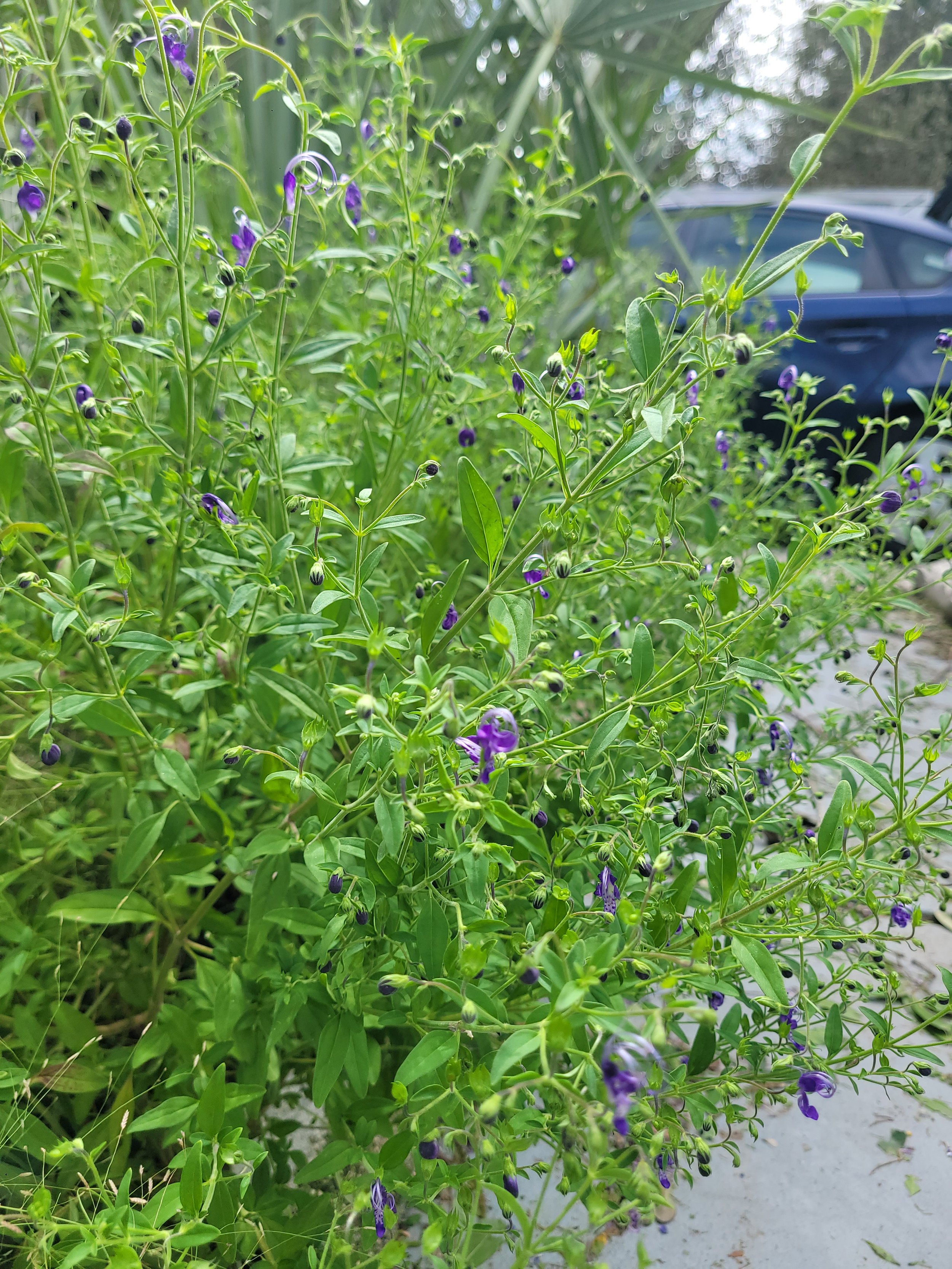
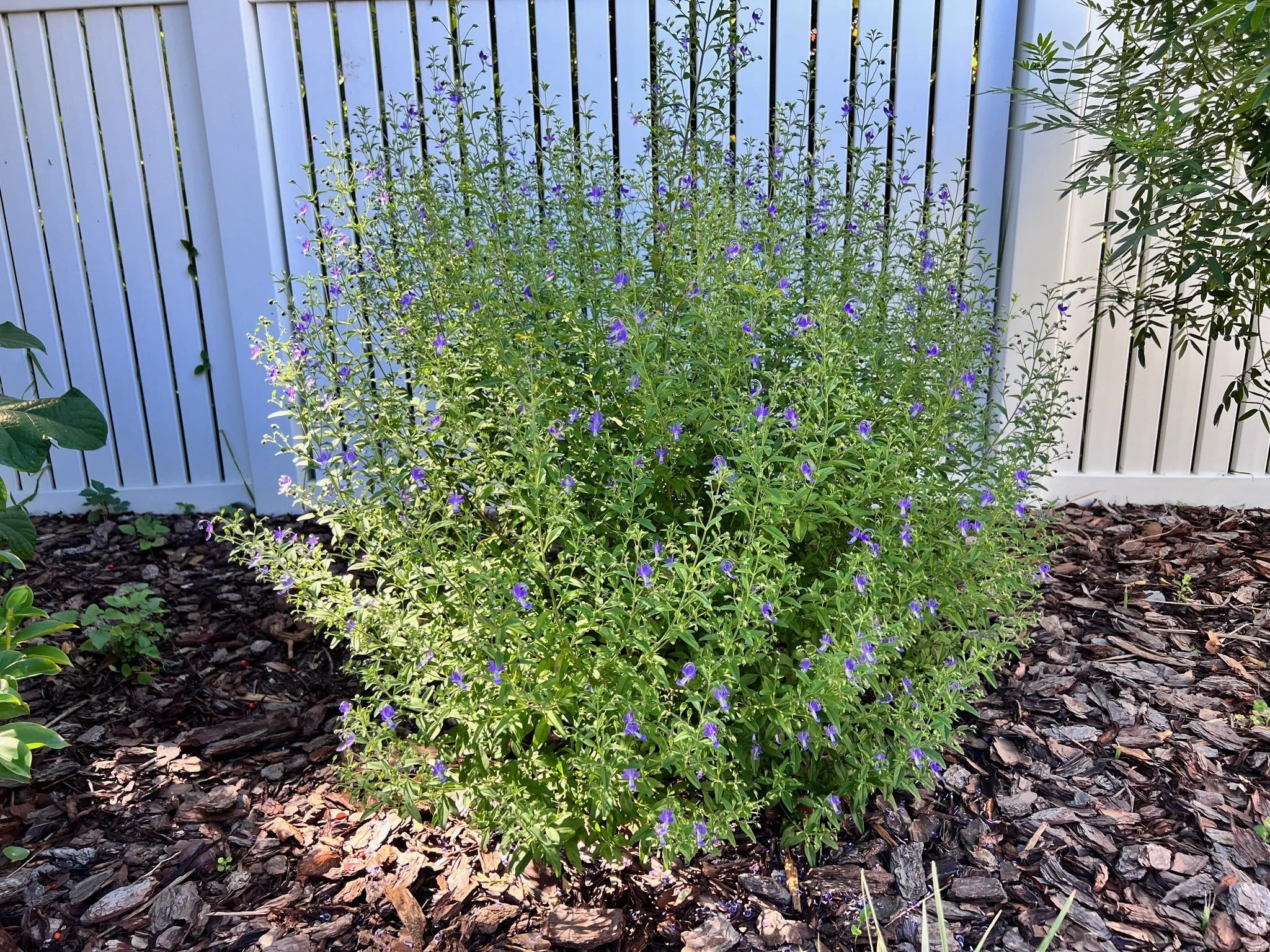

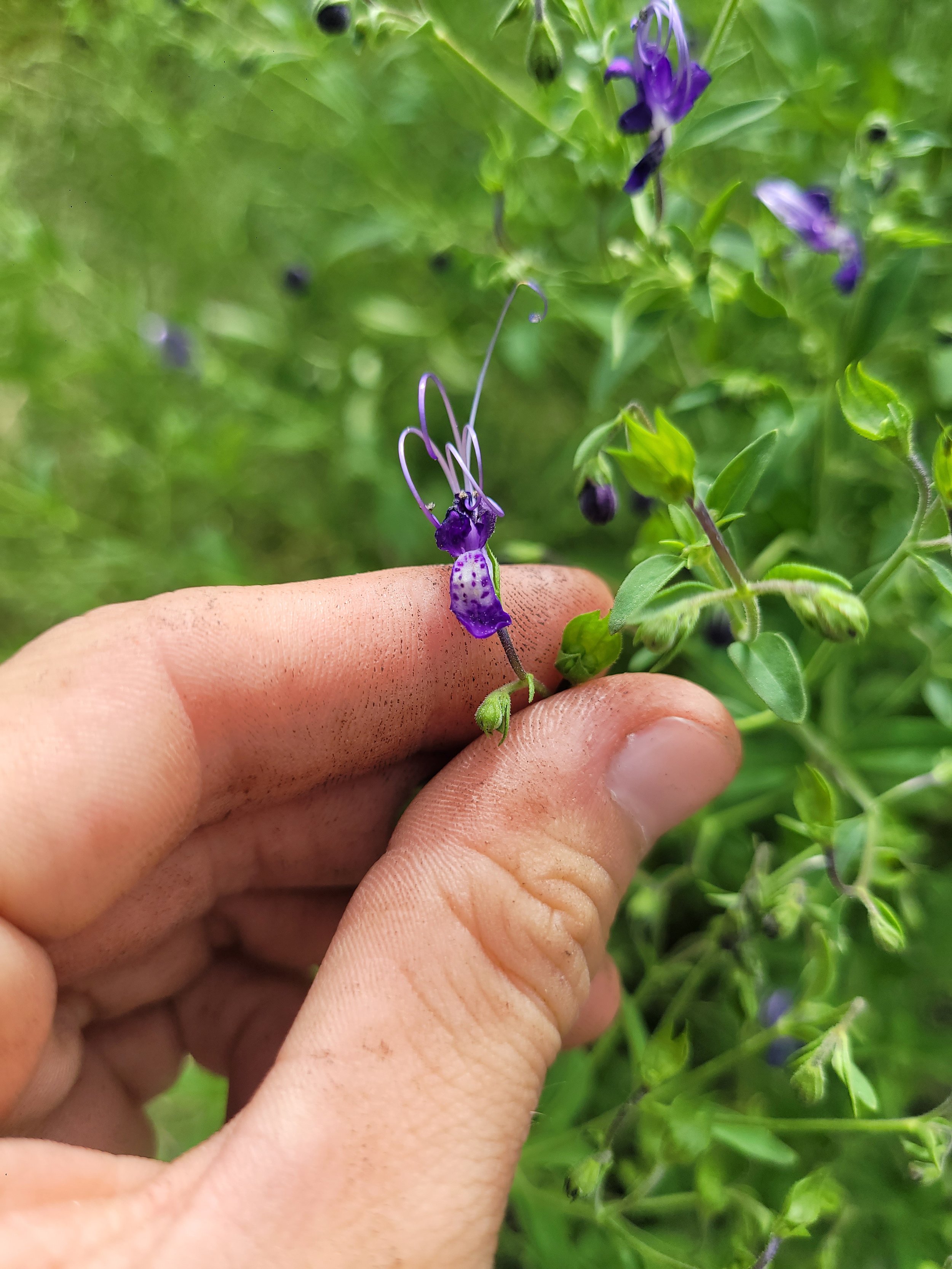

Trichostema dichotomum
Blue Curls is a fabulous reseeding wildflower that will fill in empty spaces. Their lush foliage grows dense till fall when it flowers with ornate blue flowers with a “forked” anther, almost like tiny orchid flowers. An plant that reseeds where you plant it, Blue Curls can create patches of blooms year after year.
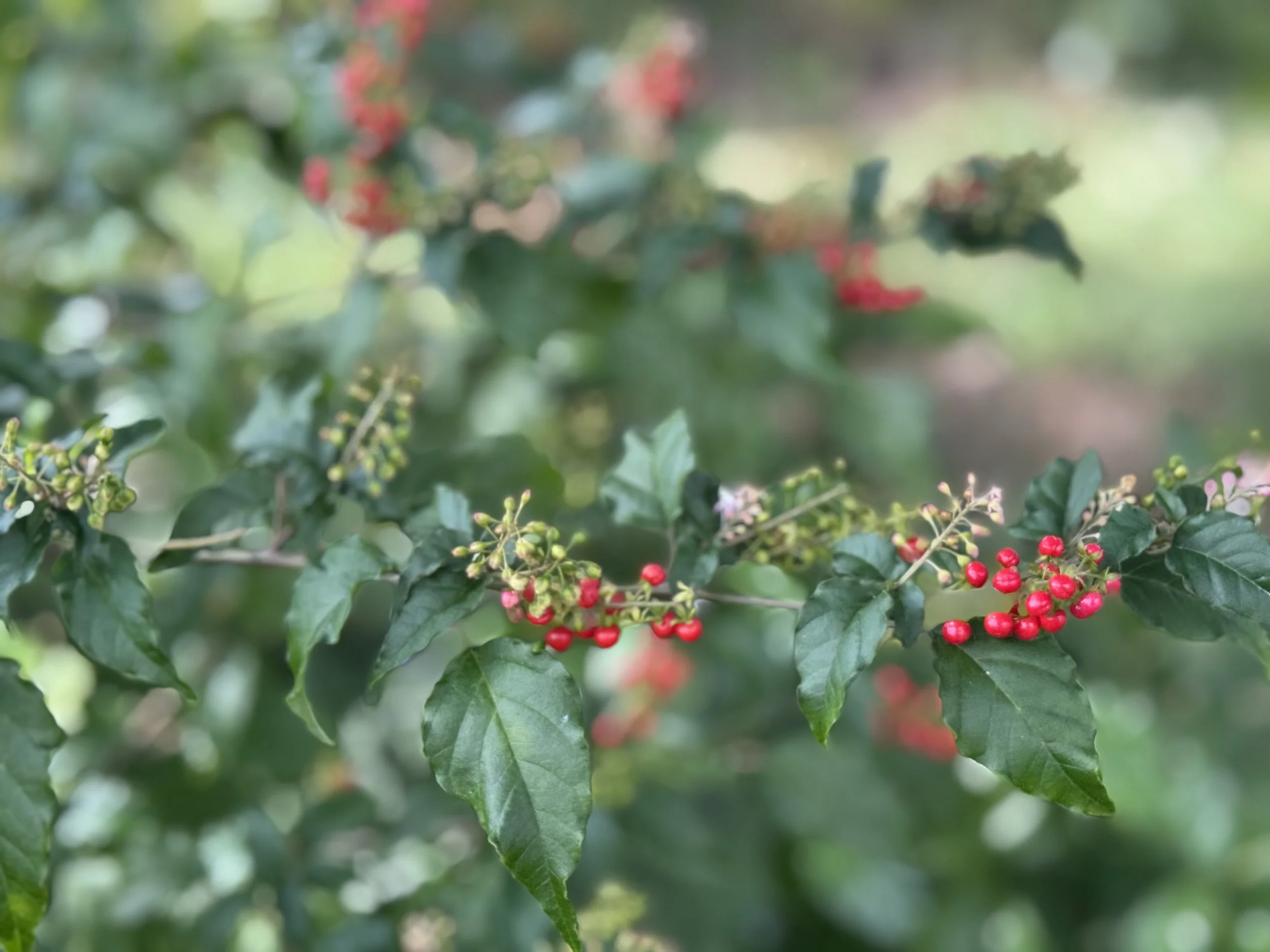


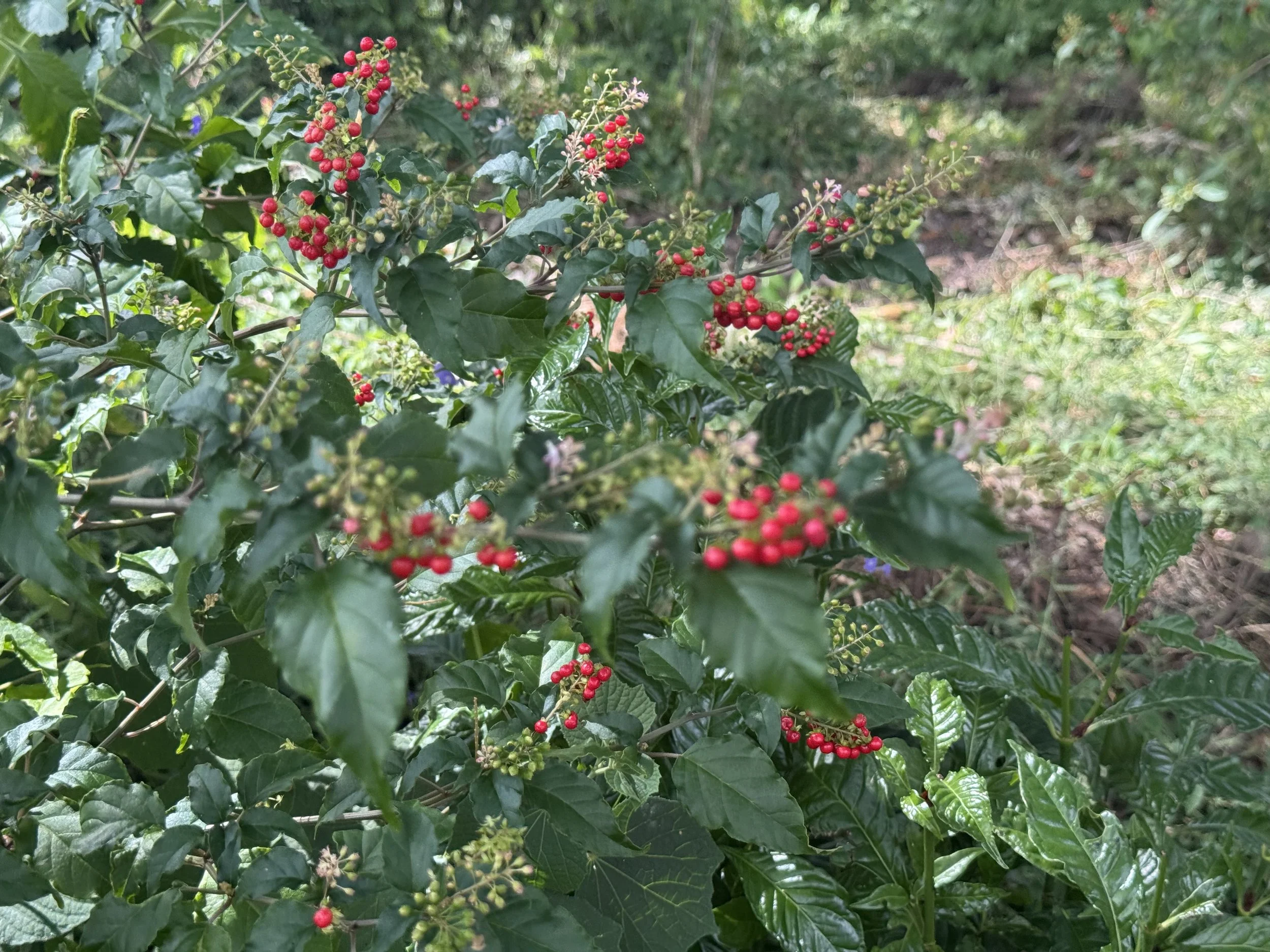
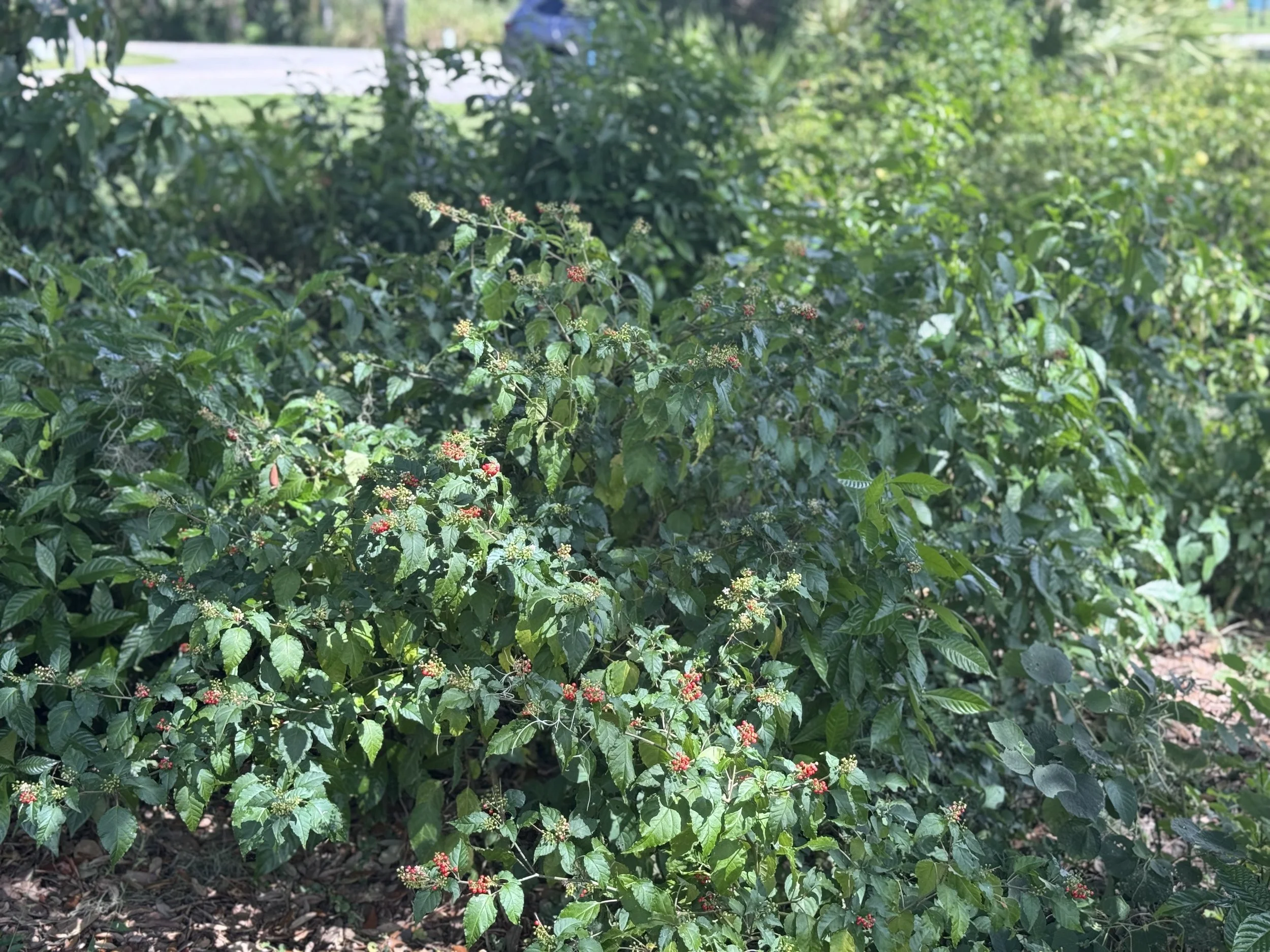
Rivina humilis
Birds will be flocking to your yard if you add this to your garden! This small, flowering shrub produces small red berries after their delicate, white flowers. They flower year-round so there is always a splash of color in their green foliage. They prefer shade to part shade but can handle sun when established.
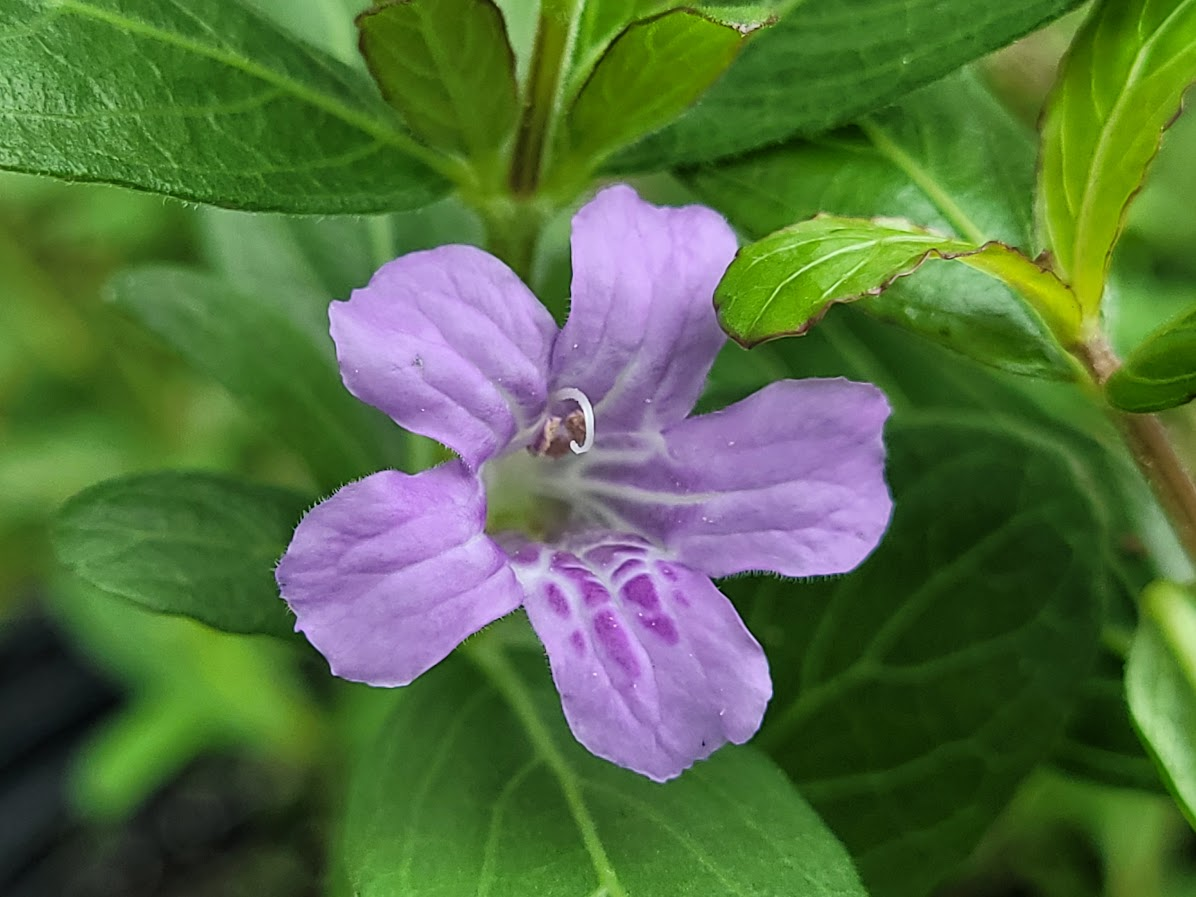
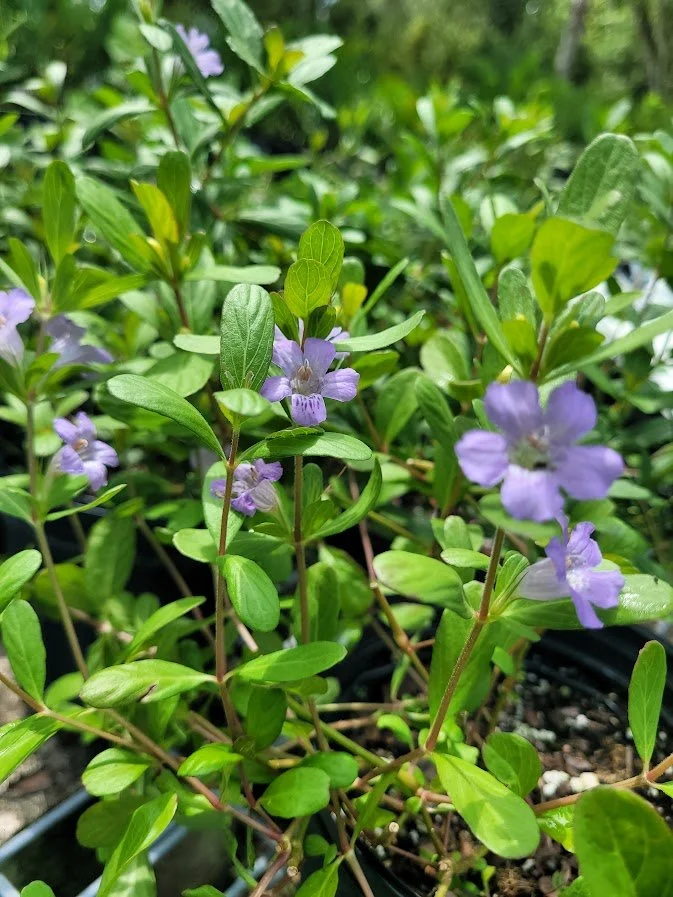
Dyschoriste oblongifolia
This low-growing wildflower acts like a groundcover and is found growing naturally in pine flatwoods, sandhills, and savannas. Twinflower has ornate purple-blue flowers that tend to come in pairs with deep green to reddish colored leaves. This wildflower is best in sunny, dry areas that are well-draining.
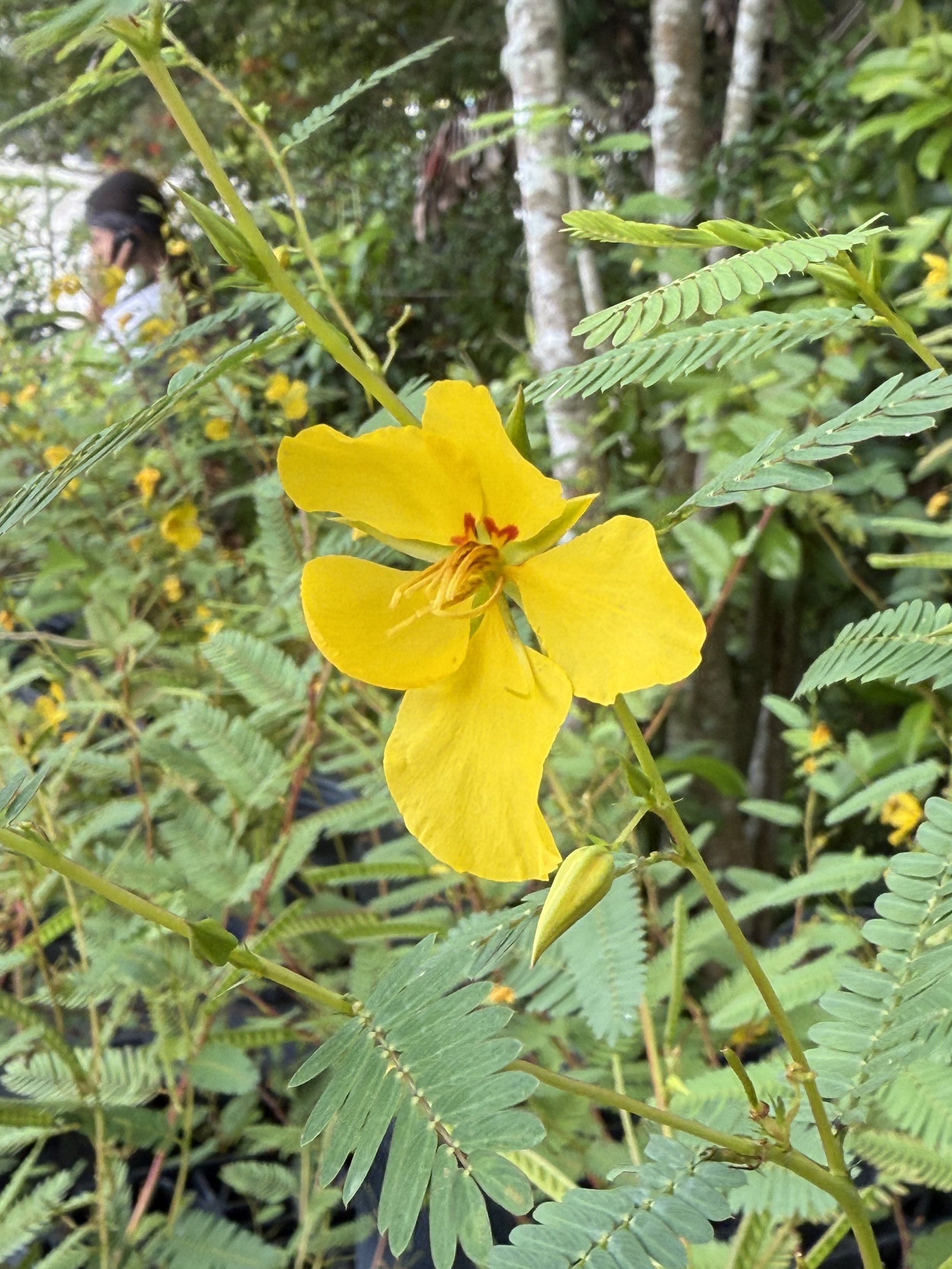

Chamaecrista fasciculata
Partridge pea is a native short-lived wildflower with attractive foliage and bright yellow flowers. Native to scrub, sandhill, flatwoods, beach dunes and disturbed areas in Florida, Partridge Pea does well in dry sandy environments. It appeals to a number of different pollinators such as long-tongued bees and butterflies such as the cloudless sulfer, gray hairstreak, and more!


Eryngium aquaticum
Corn Snakeroot is a standout plant that will call attention to your rain or bog garden. The showy blue flower spikes are are unique and can be used as cut flowers! This Eryngium is one of the best species to add to your moist pollinator garden as they attract the one of the most diverse numbers pollinators in the state.


Heliotropium angiospermum
Scorpiontail is a notable wildflower that grows and reseeds in wildflower gardens quite frequently. The curled flower heads with small white flowers attract an abundant amount of rare, niche wasps and other pollinators. The seeds on the long seed stalks are favored by small songbirds.
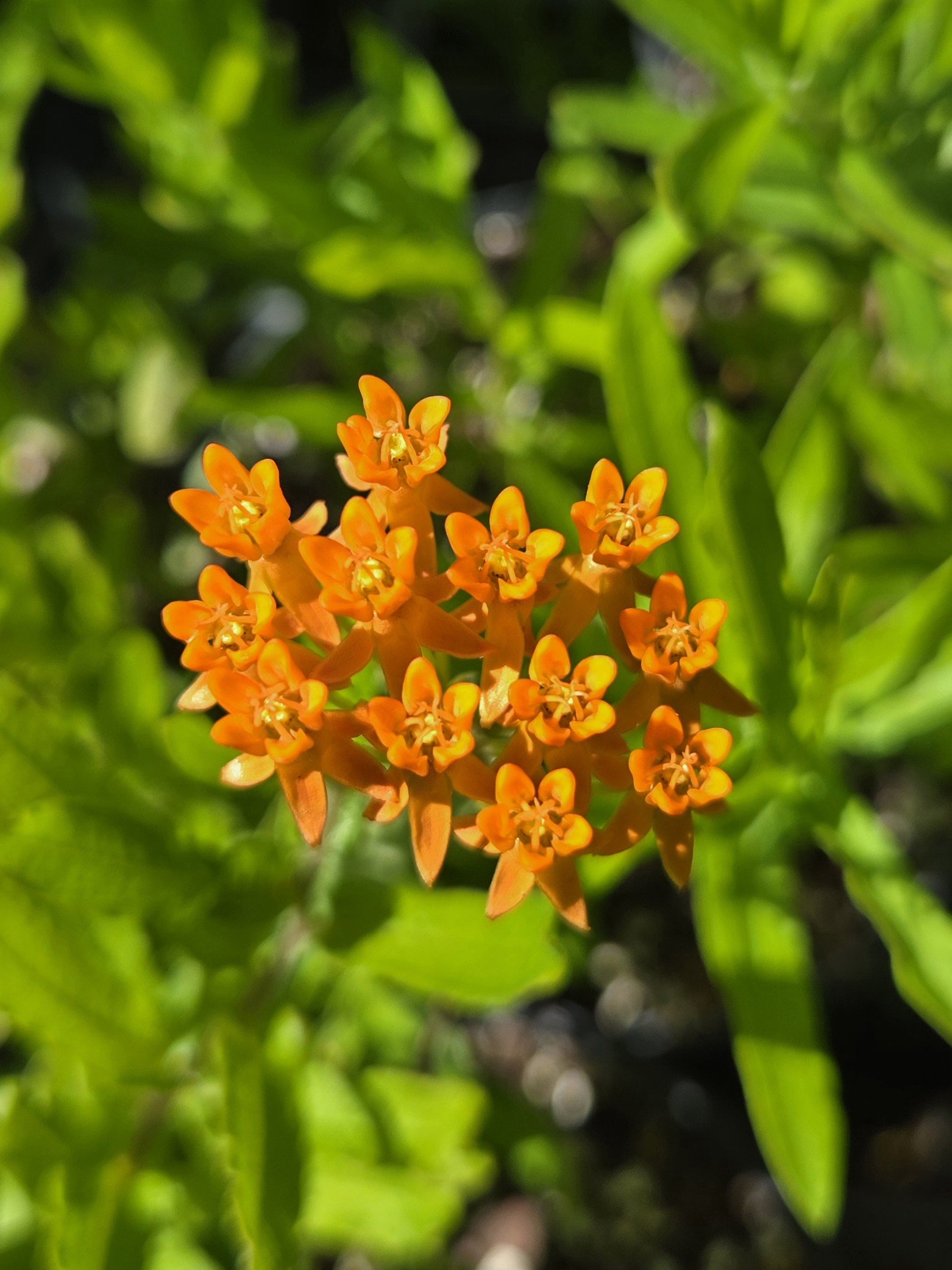
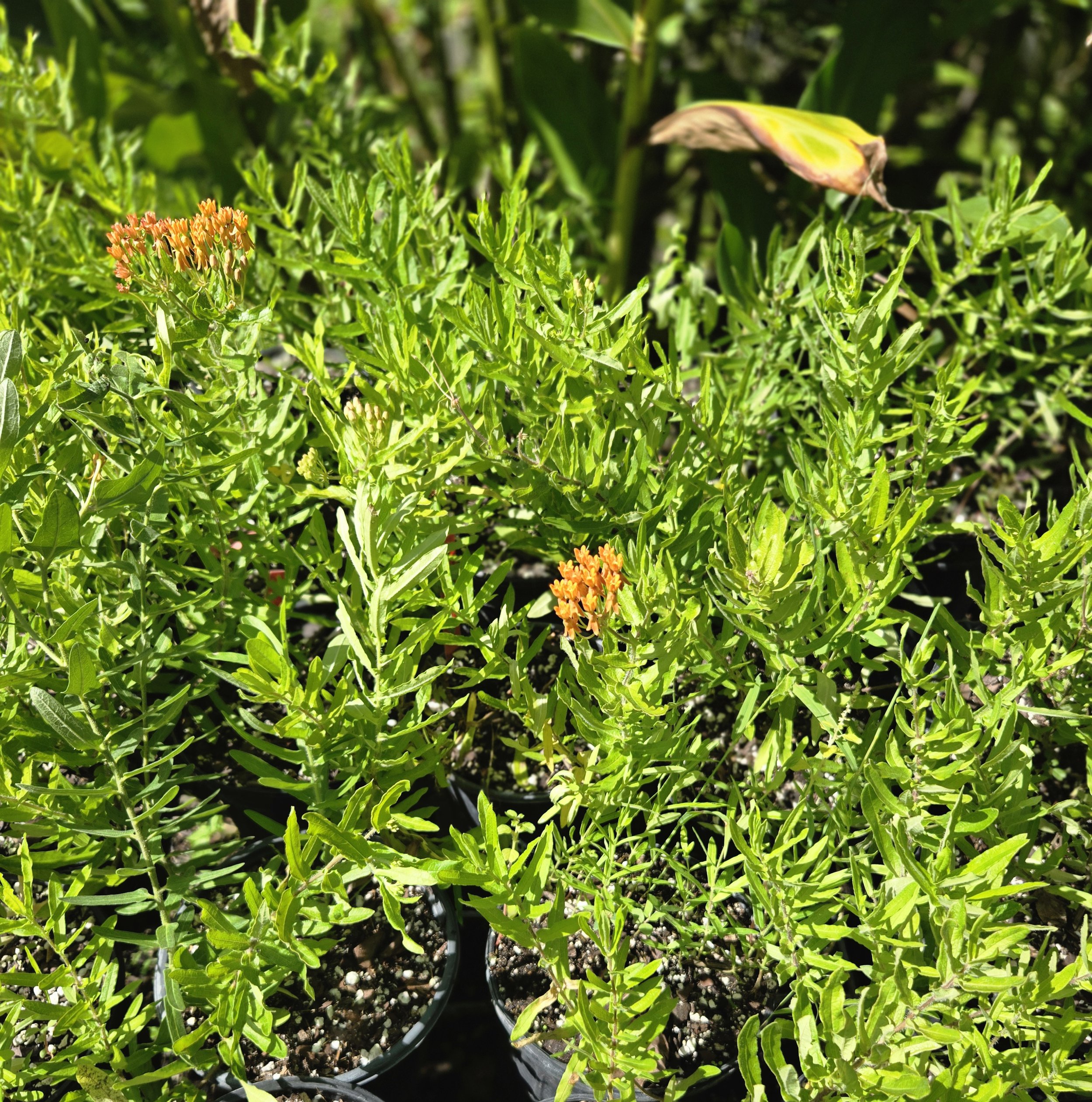
Asclepias tuberosa
This Florida native milkweed is lower growing at 1-3' and has bright red orange blooms summer-fall. Butterfly milkweed is a great choice for Monarch lovers with dry, sunny yards. Found naturally in hot sunny and dry sandhill environments it does well in landscapes with full sun and no irrigation. This milkweed is not only a host to Monarch and Queen butterflies but is also a pollinator magnet!
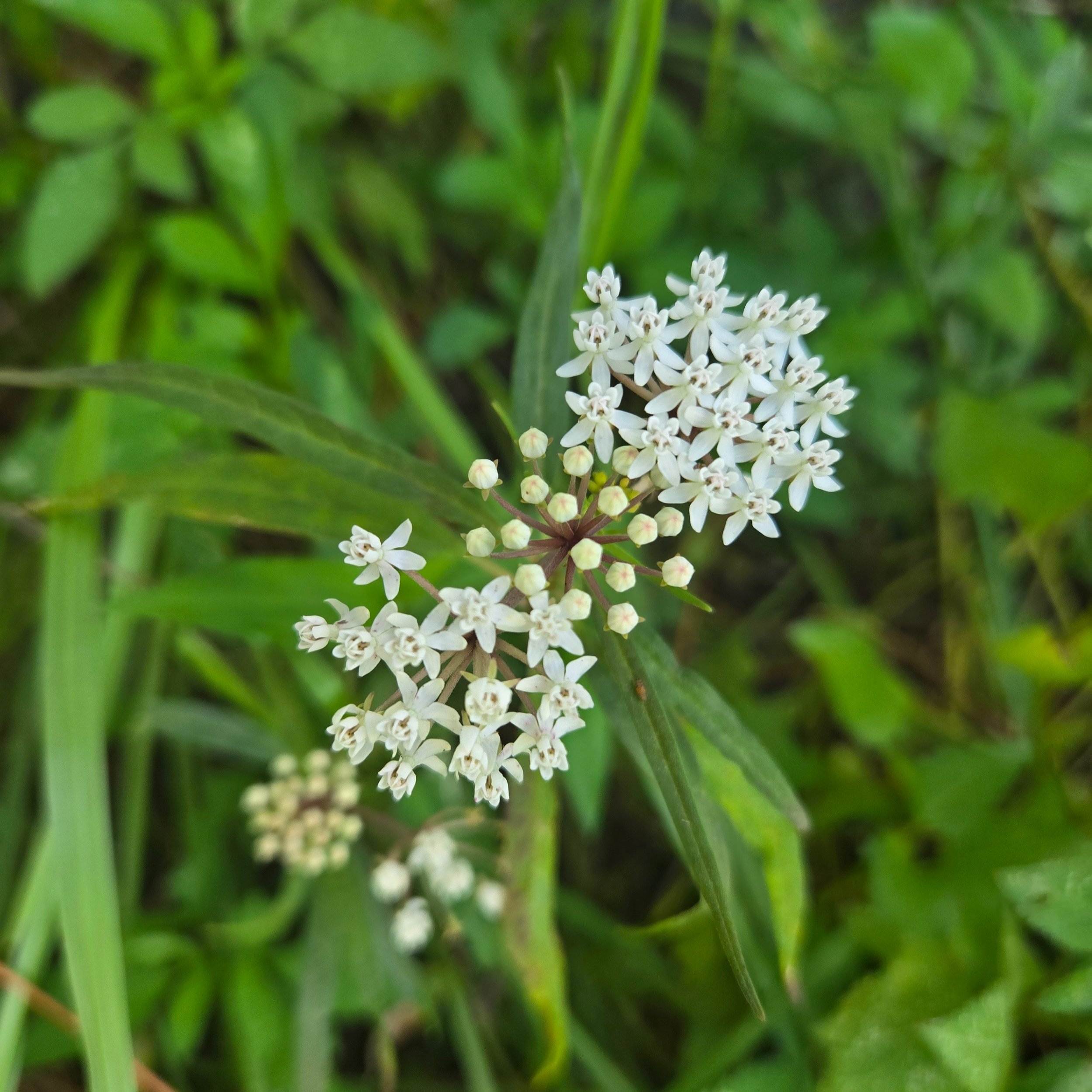

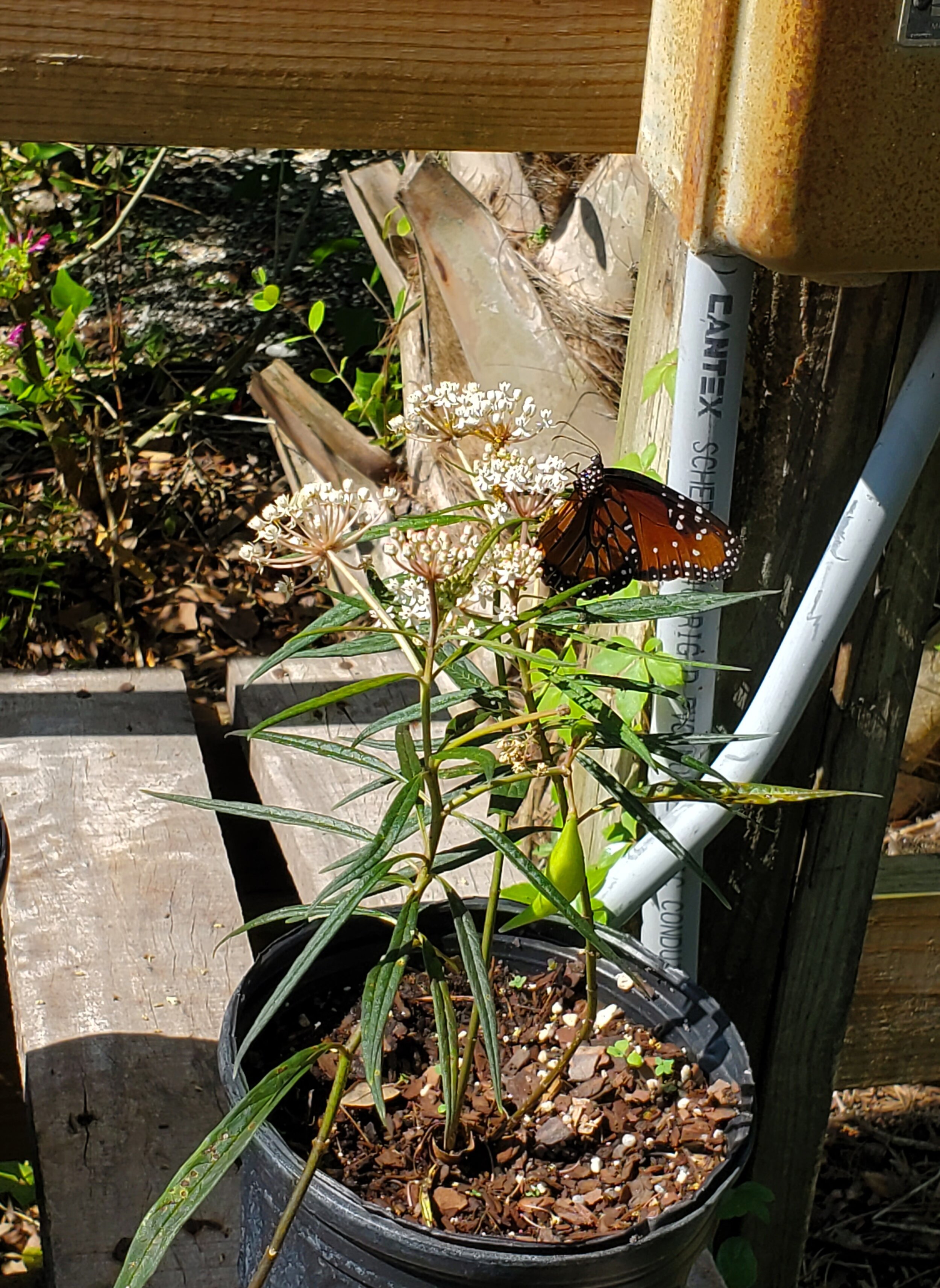
Asclepias perennis
aka Aquatic Milkweed
A. perennis is a perennial, reseeding small wildflower that likes wetter conditions but if planted in shadier spots can be quite drought tolerant once established. It's white flowers bloom from spring though fall and serve as a nectar source for many pollinators. As a native milkweed, this plant is a well-known host for Monarch and Queen butterflies, but it also serves as a host plant for a few cool moths and unique to this genus bugs. A. perennis works well in butterfly gardens, along pond edges and in containers.
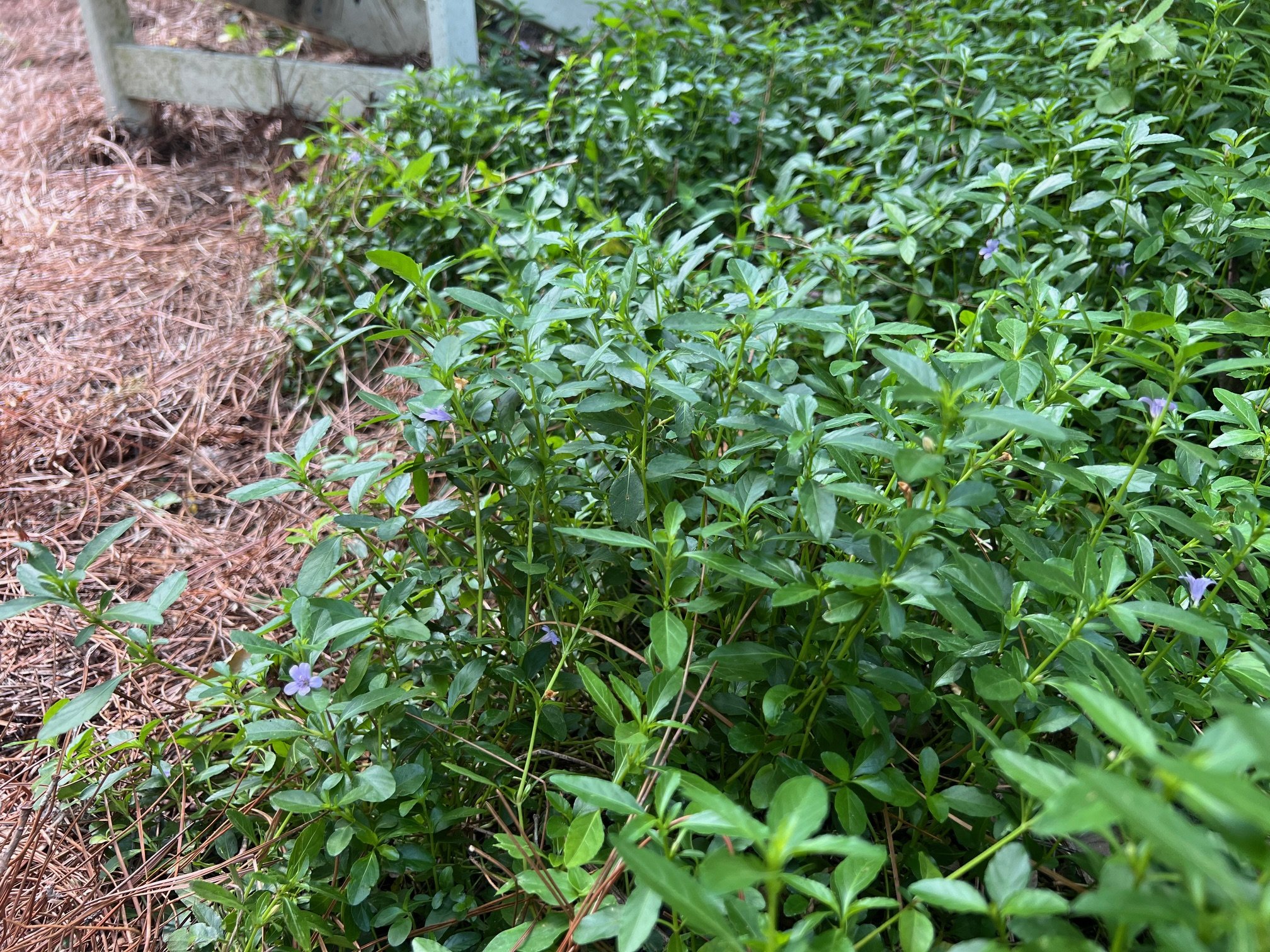

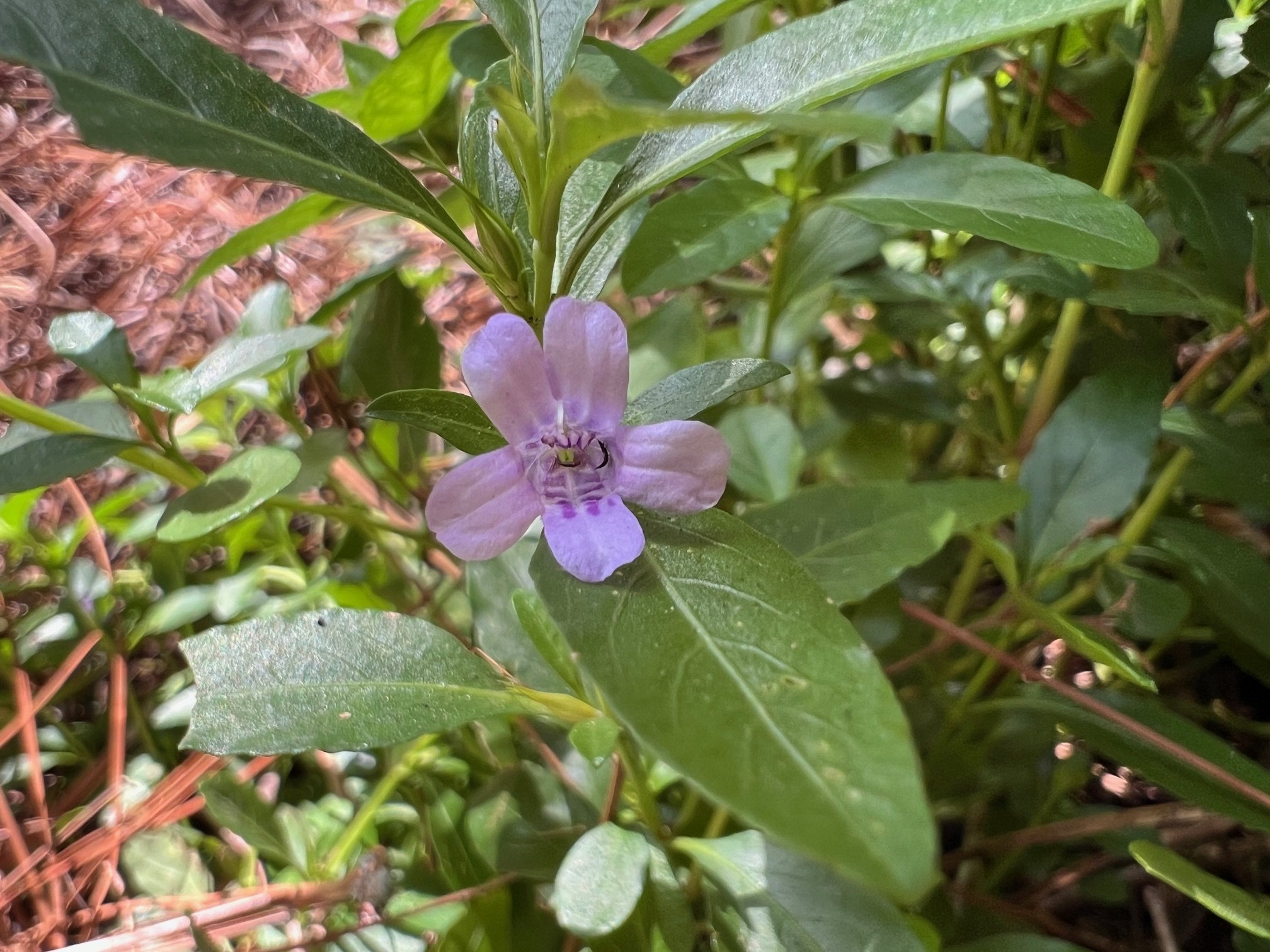
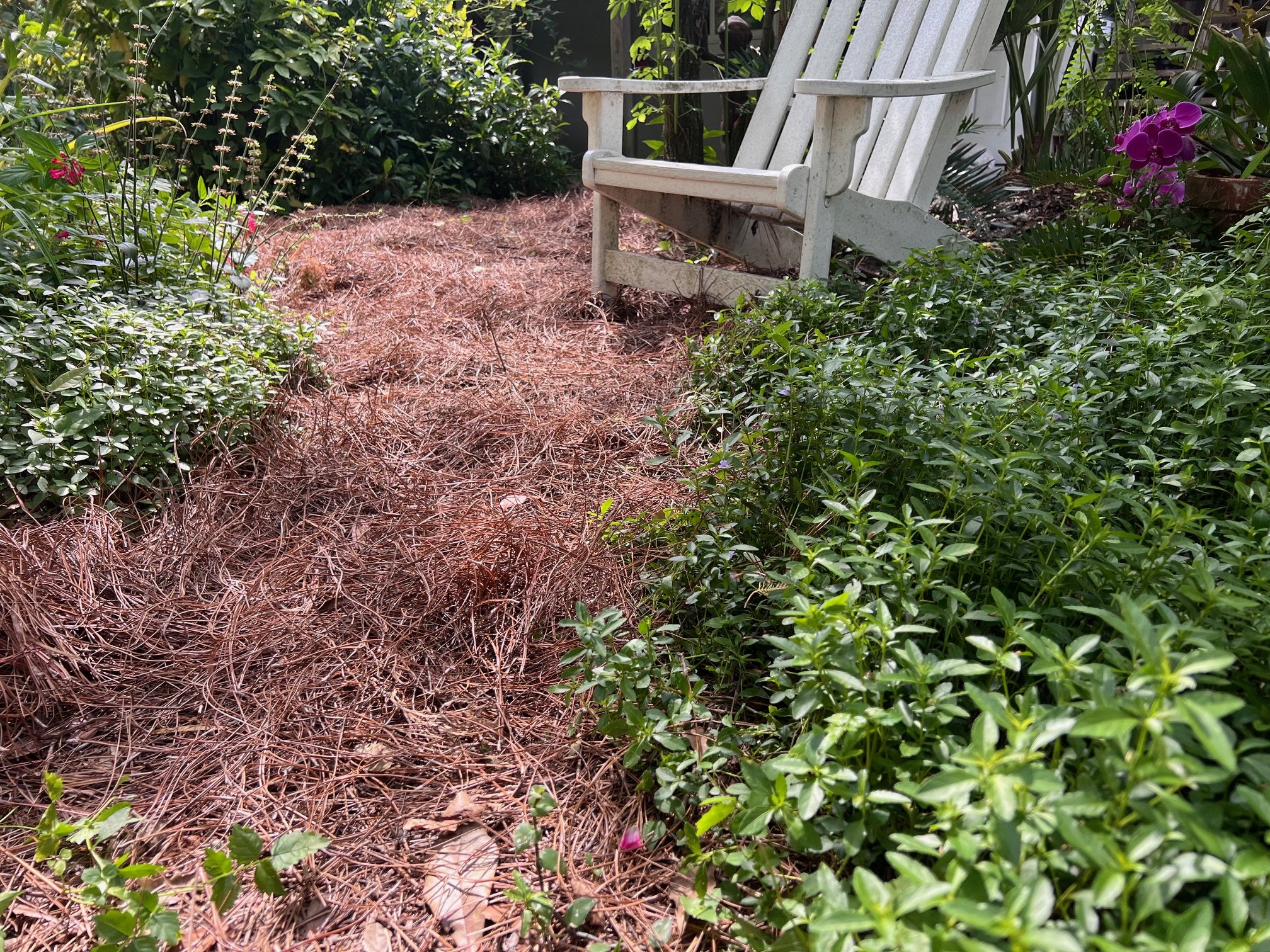
aka Hammock Twinflower or Swamp Twinflower
Dyschoriste humistrata
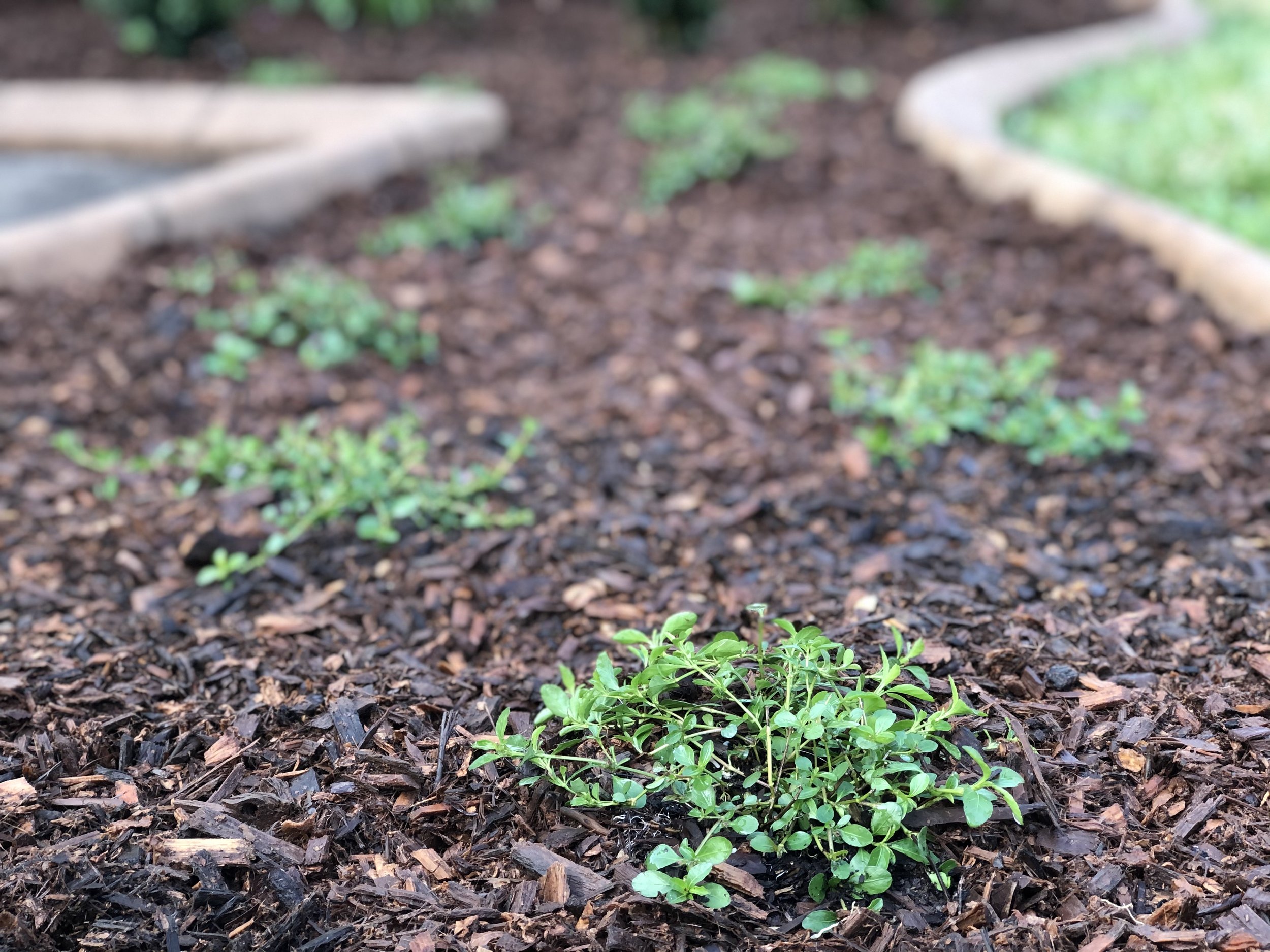
Lakeside Twinflower is a lawn alternative for areas where there is soil moisture (lakesides or swales) and/or regular irrigation. It’s perennial and can be semi-dormant if there is a freeze. Lakeside Twinflower blooms blue/purple flowers spring to fall and is a larval food source for the Buckeye butterfly.
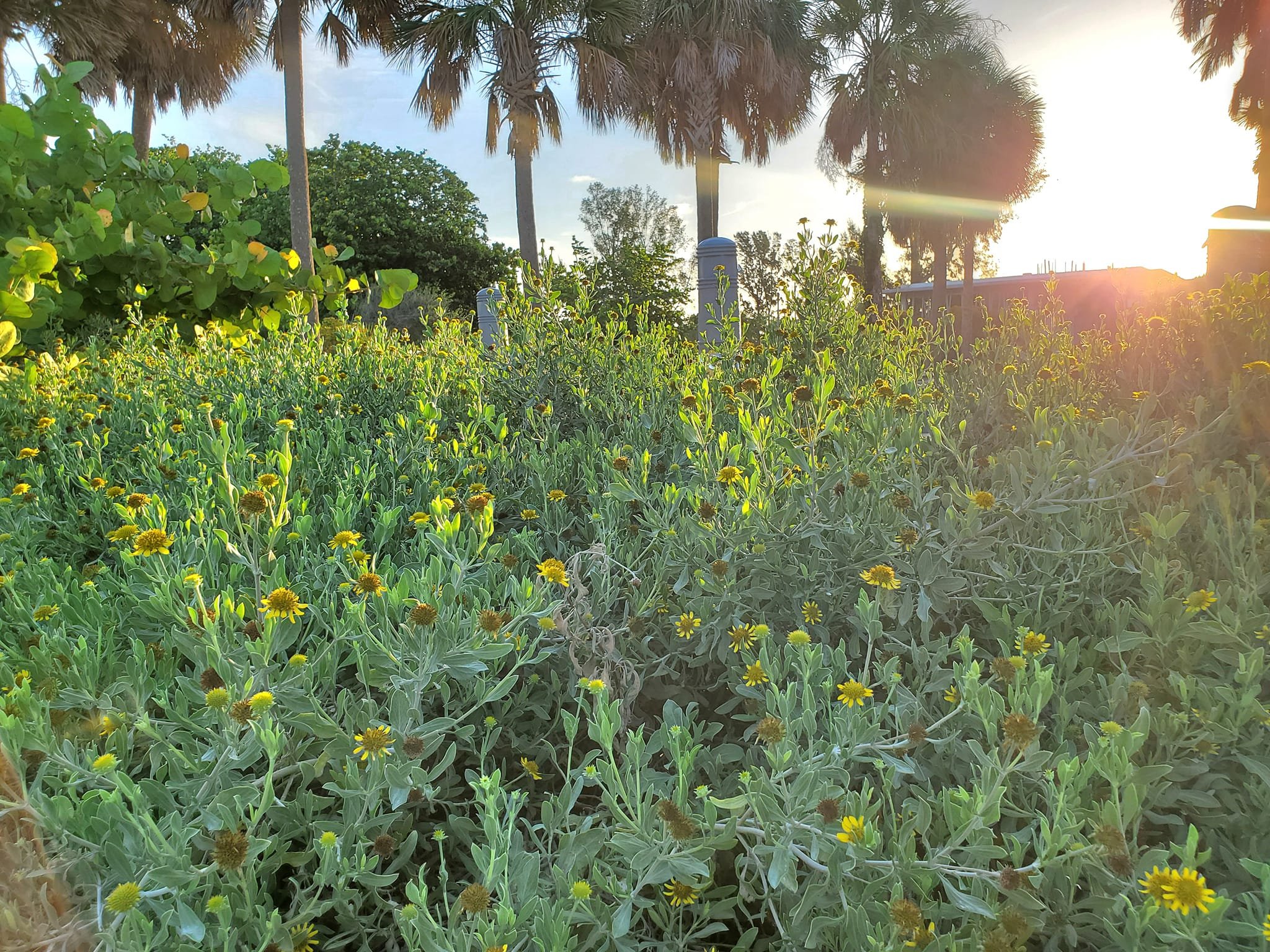
Borrichia frutescens
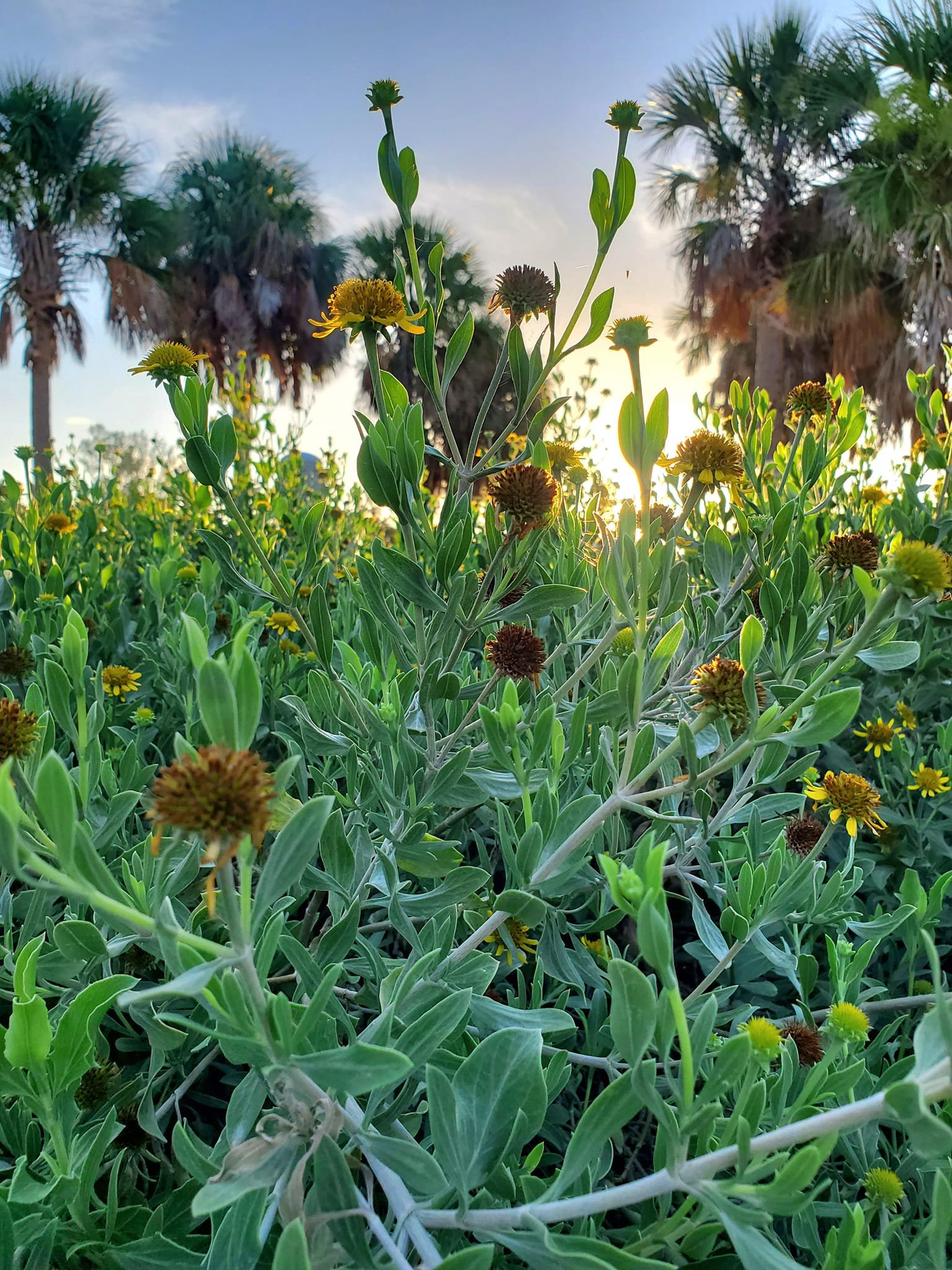
Sea Oxeye Daisy is a great shrubby wildflower for coastal areas. One plant grows to be 3x3' but they can colonize in areas they love creating a beautiful pollinator patch! Great for coastal areas where the tide comes in, this plant is highly salt tolerant and can take flooding, tides, and salty soil and wind. Does best in full sun. Sea Oxeye Daisy attracts many small butterflies like hairstreaks and blues and other pollinators like native bees. Birds eat the seeds. Blooms heavily spring-summer and on and off the rest of the year.
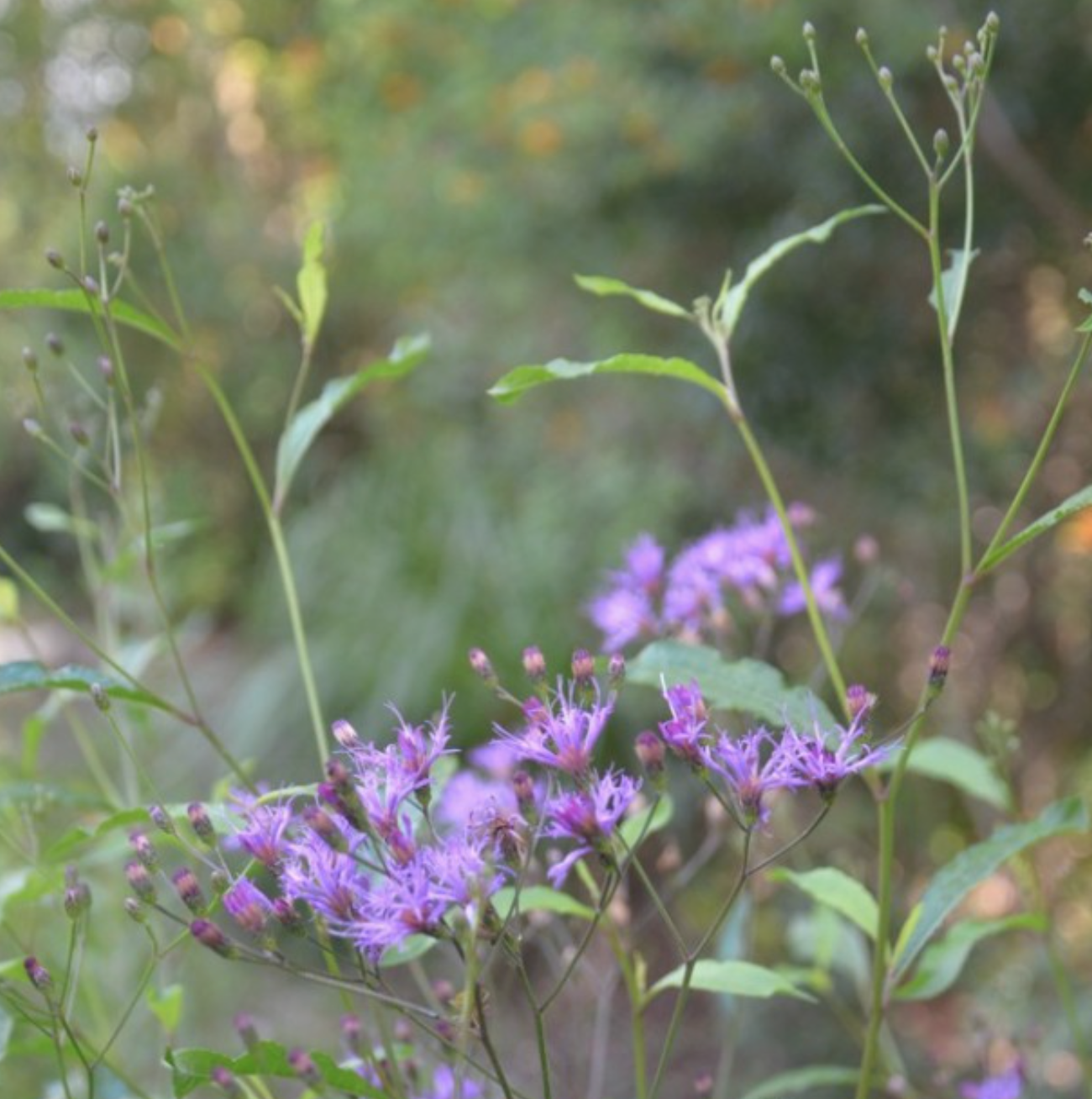
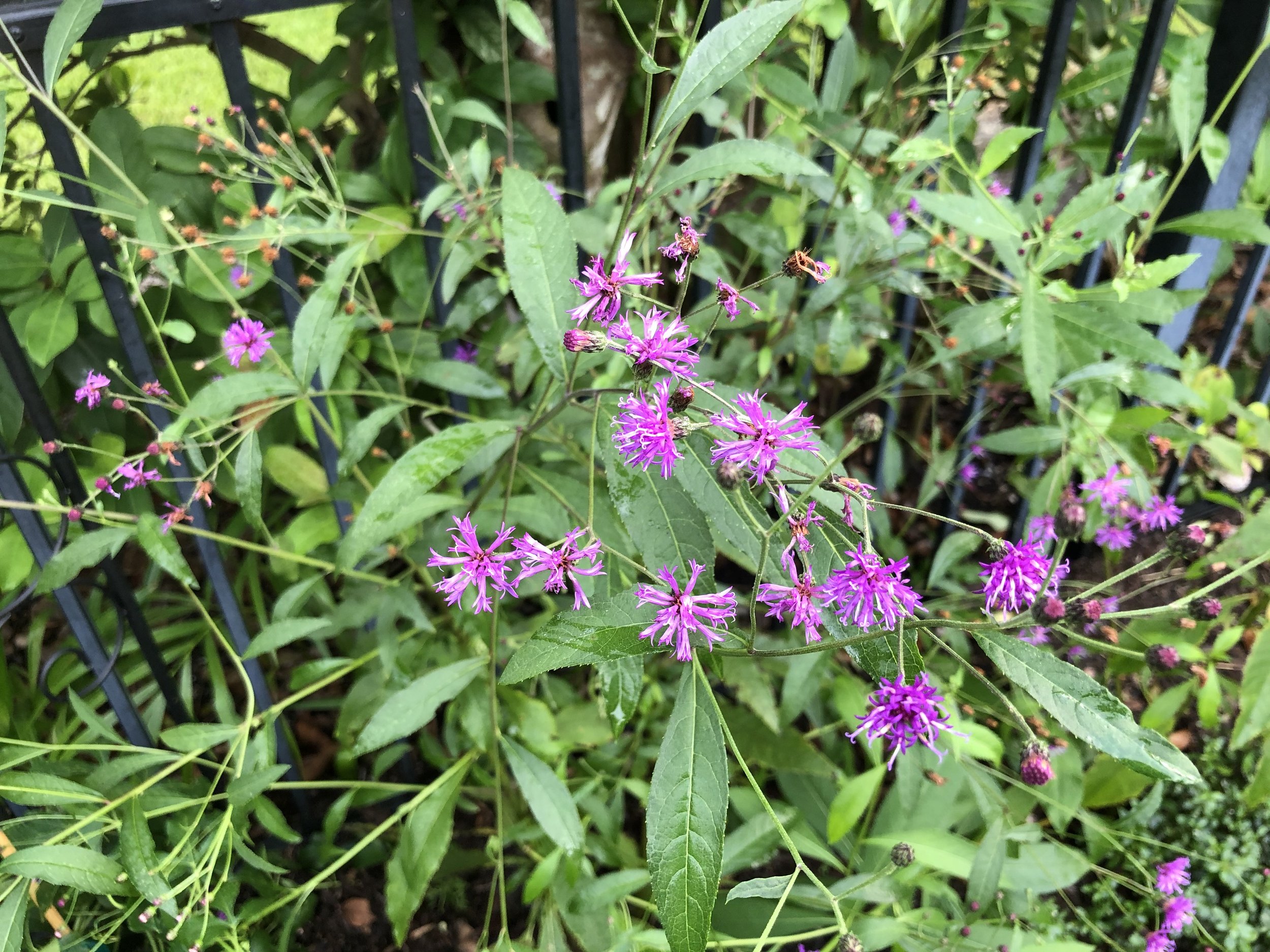
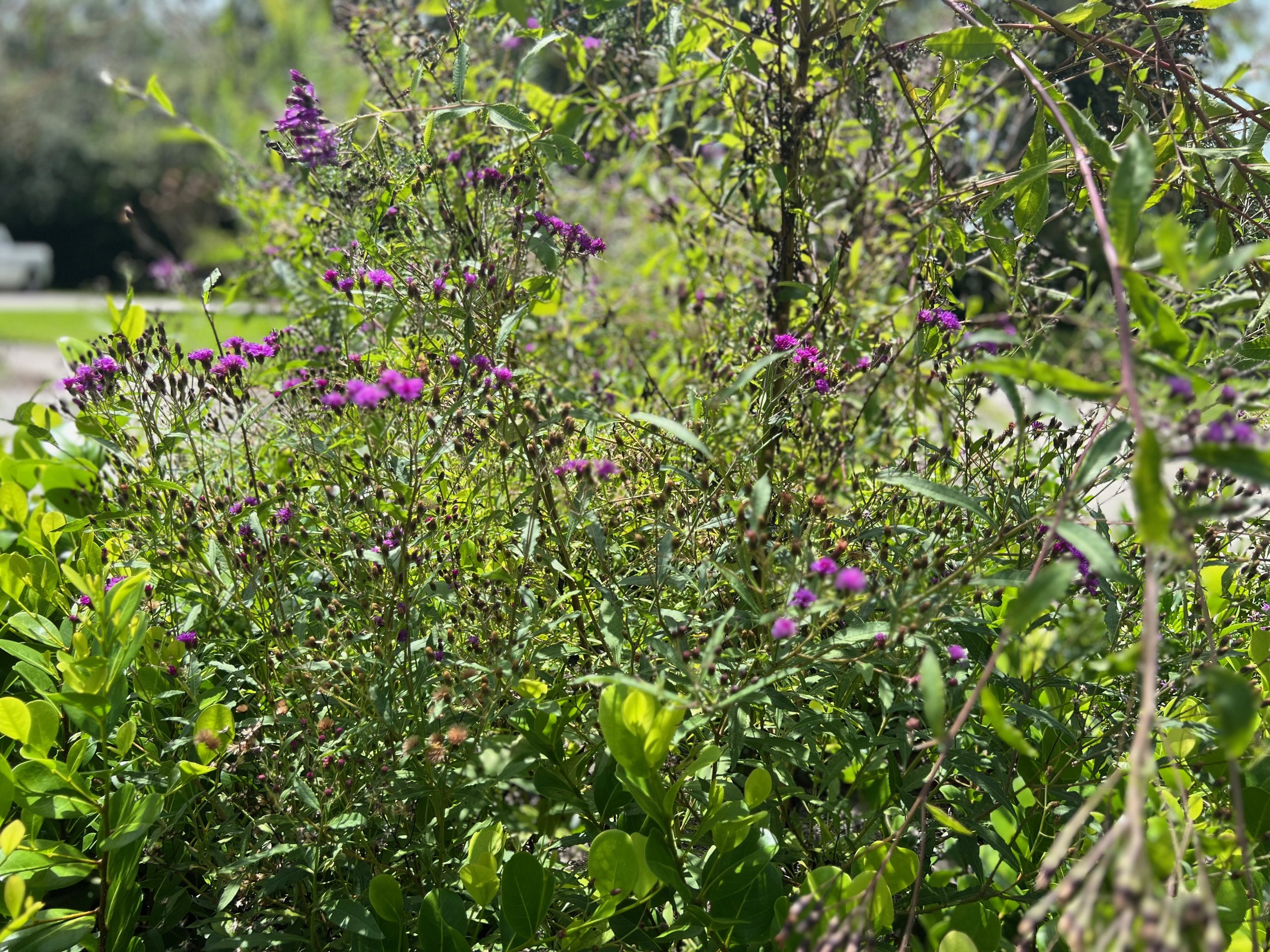
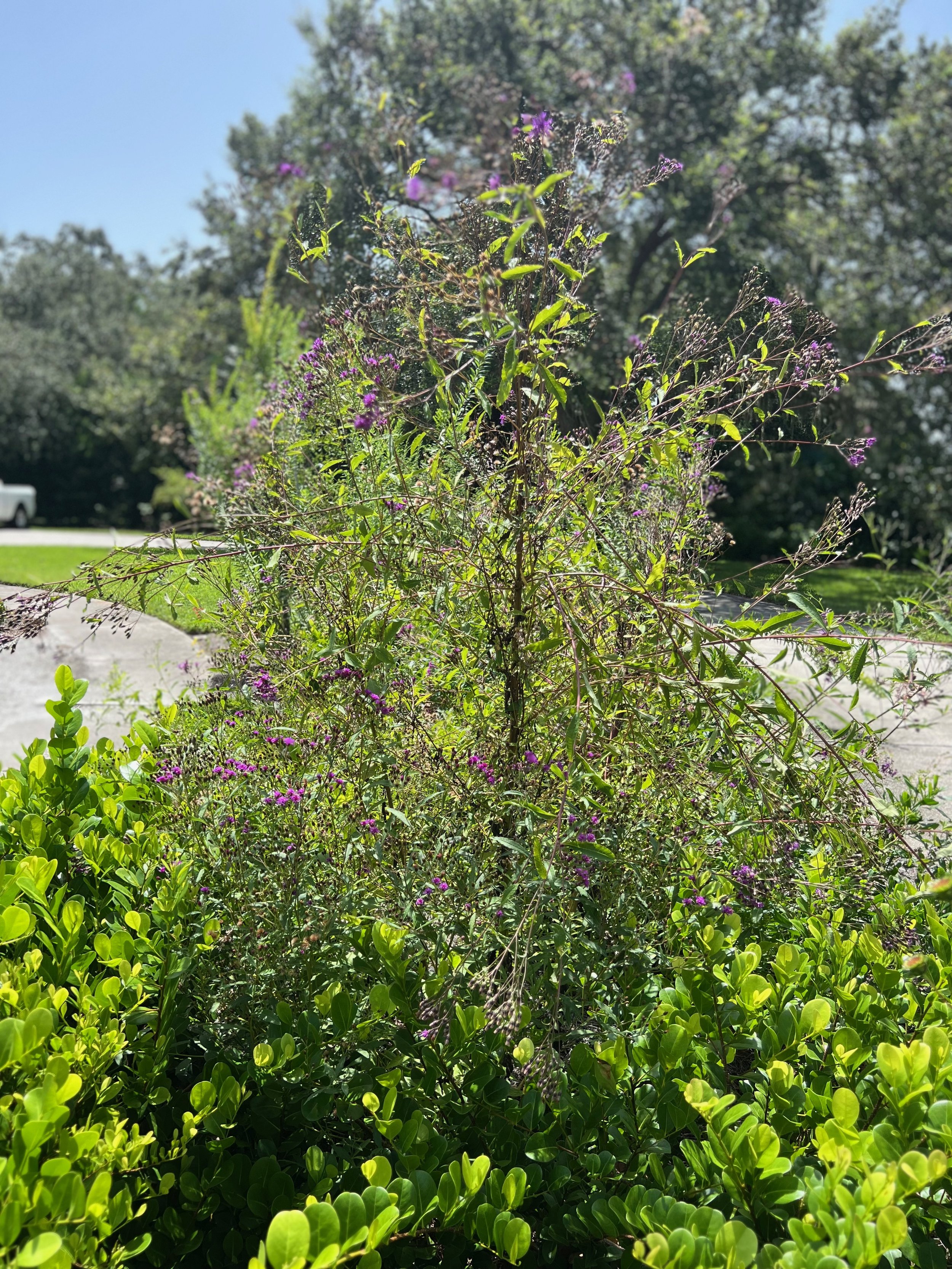
Vernonia gigantea
Giant Ironweed is a perennial, reseeding, native wildflower that prefers sun to light shade and average to moist (well-drained) soils in the garden. The rich purple flowers add bright pops of color to the garden summer through fall. Giant Ironweed brings height and unique color to a butterfly garden and attracts many other pollinators, too.
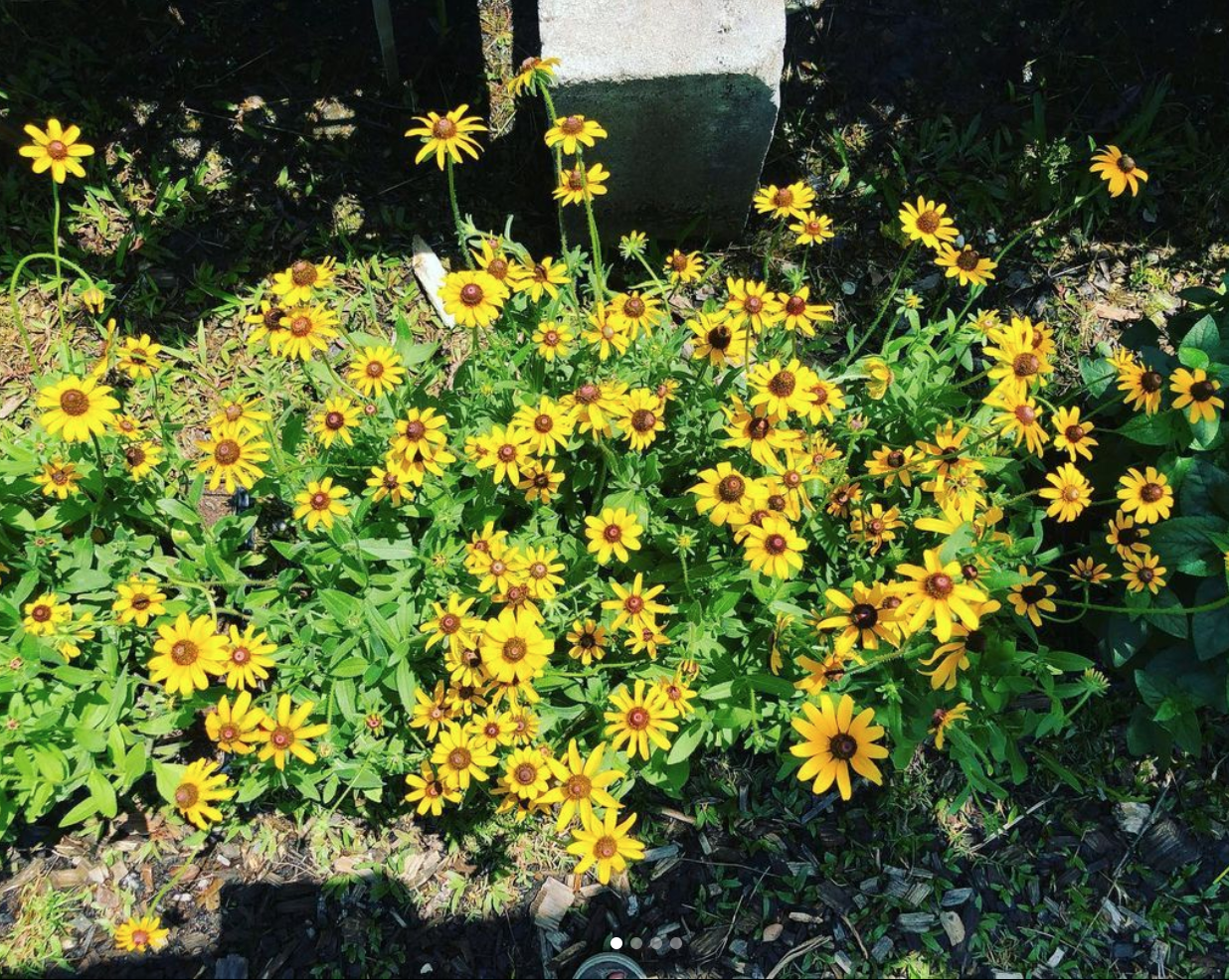
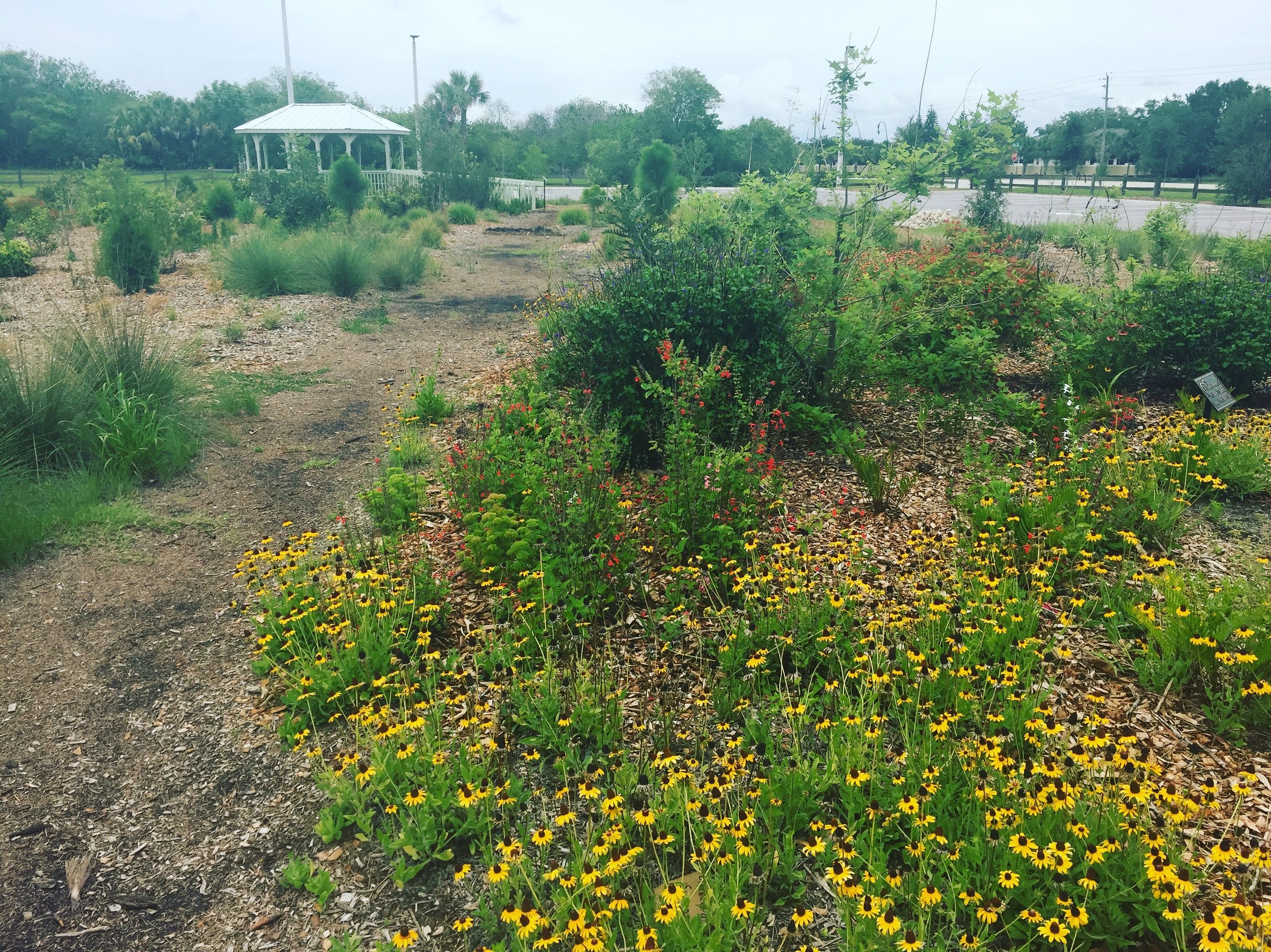
Rudbeckia hirta
Black-Eyed Susan is a classic. It’s a fast-growing, perennial, reseeding, native wildflower that prefers an area of the garden that gets part shade in our area of South Florida. It can adapt to more sun as long as it’s getting ample well-drained but moist to average soils. Its showy yellow flowers have brown centers and attract numerous pollinators.
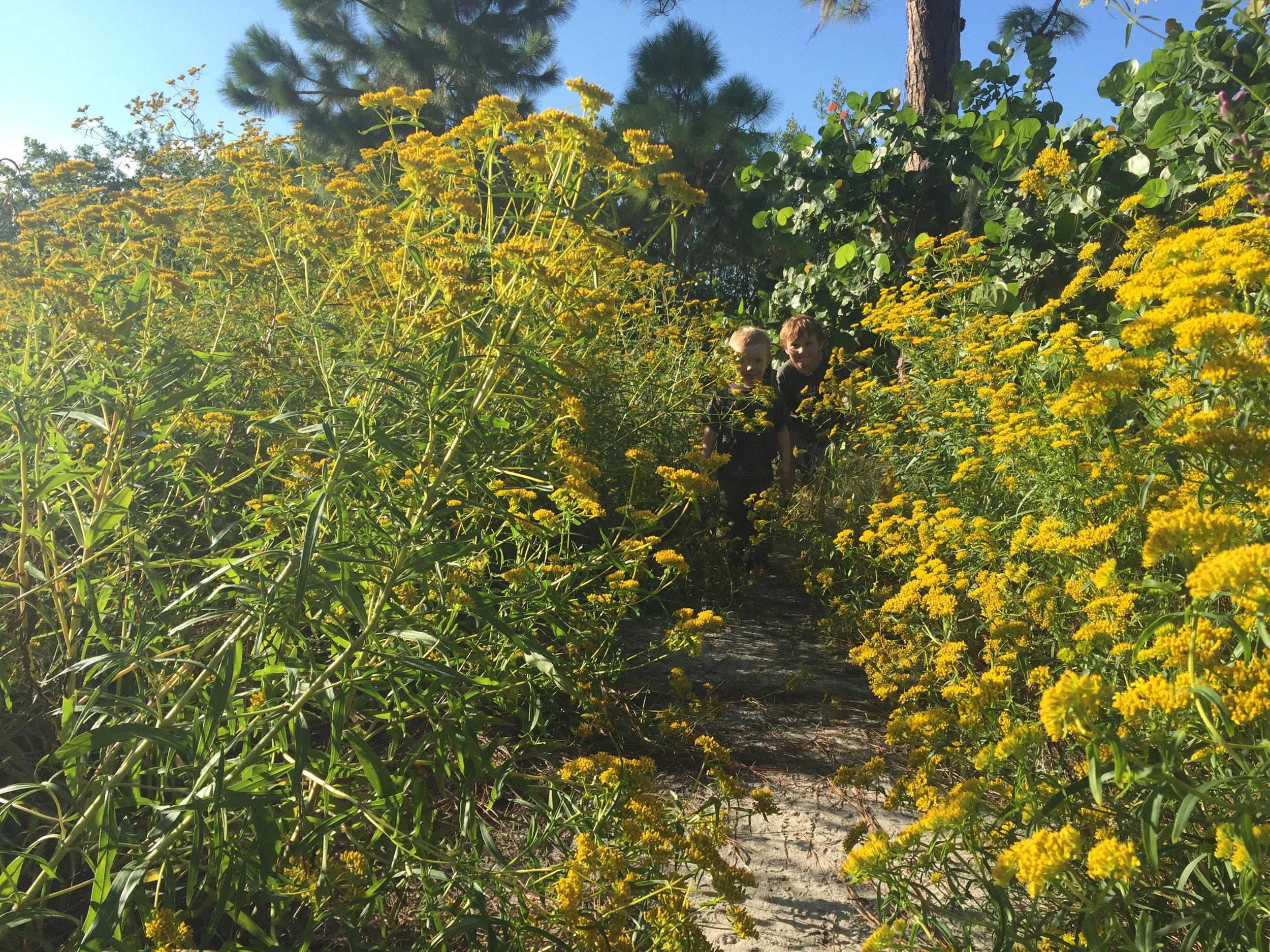
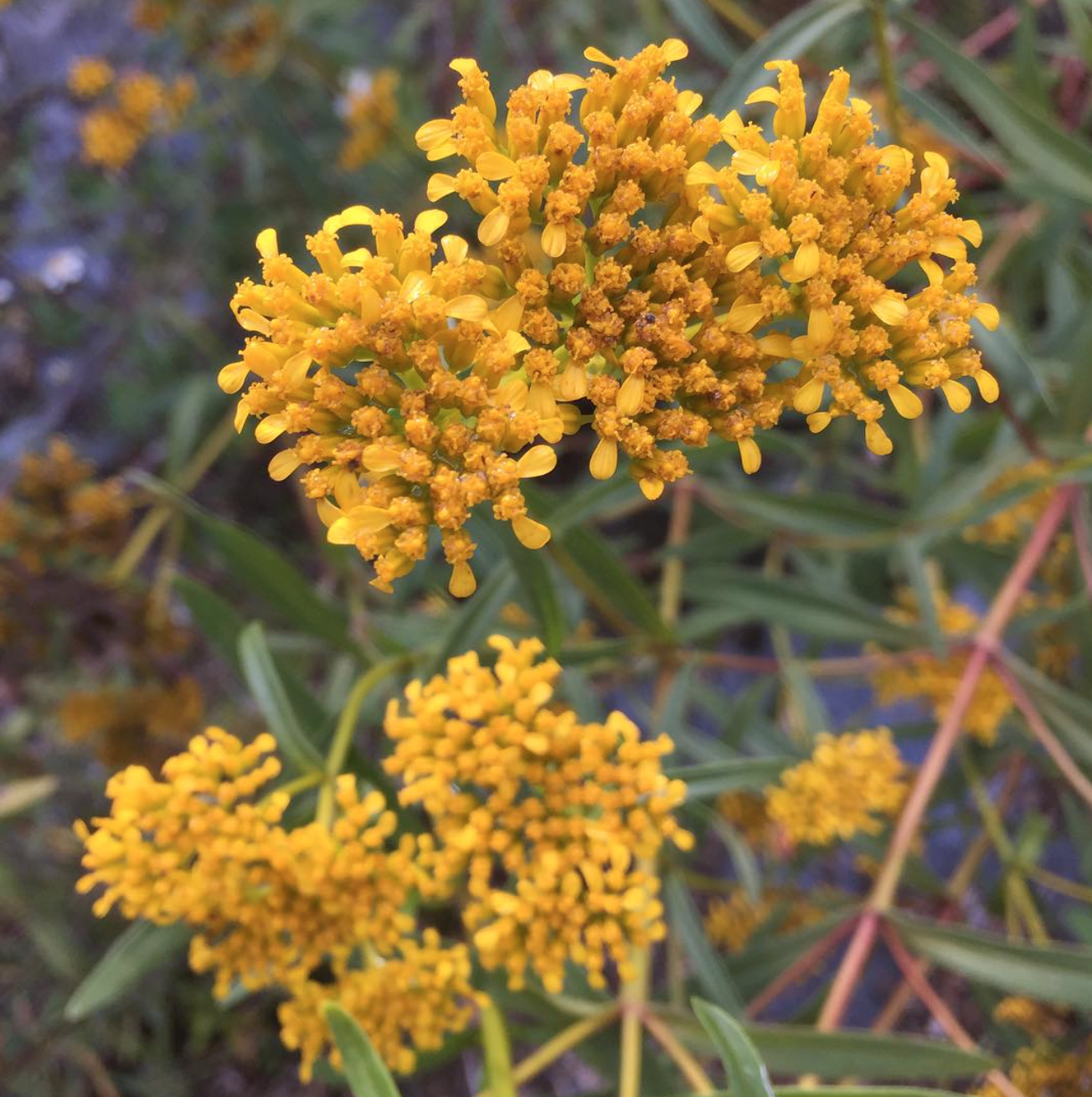
Flaveria linearis
Yellowtop is a perennial, shrub-like wildflower that can get 2’-3’ high. It can be trimmed back 1-2 times a year to keep a round and neat appearance. It is very hardy, easy-to-grow and it reseeds readily into irrigated gardens or gardens with naturally average to moist soil. It attracts numerous pollinators spring through fall and can be very showy.
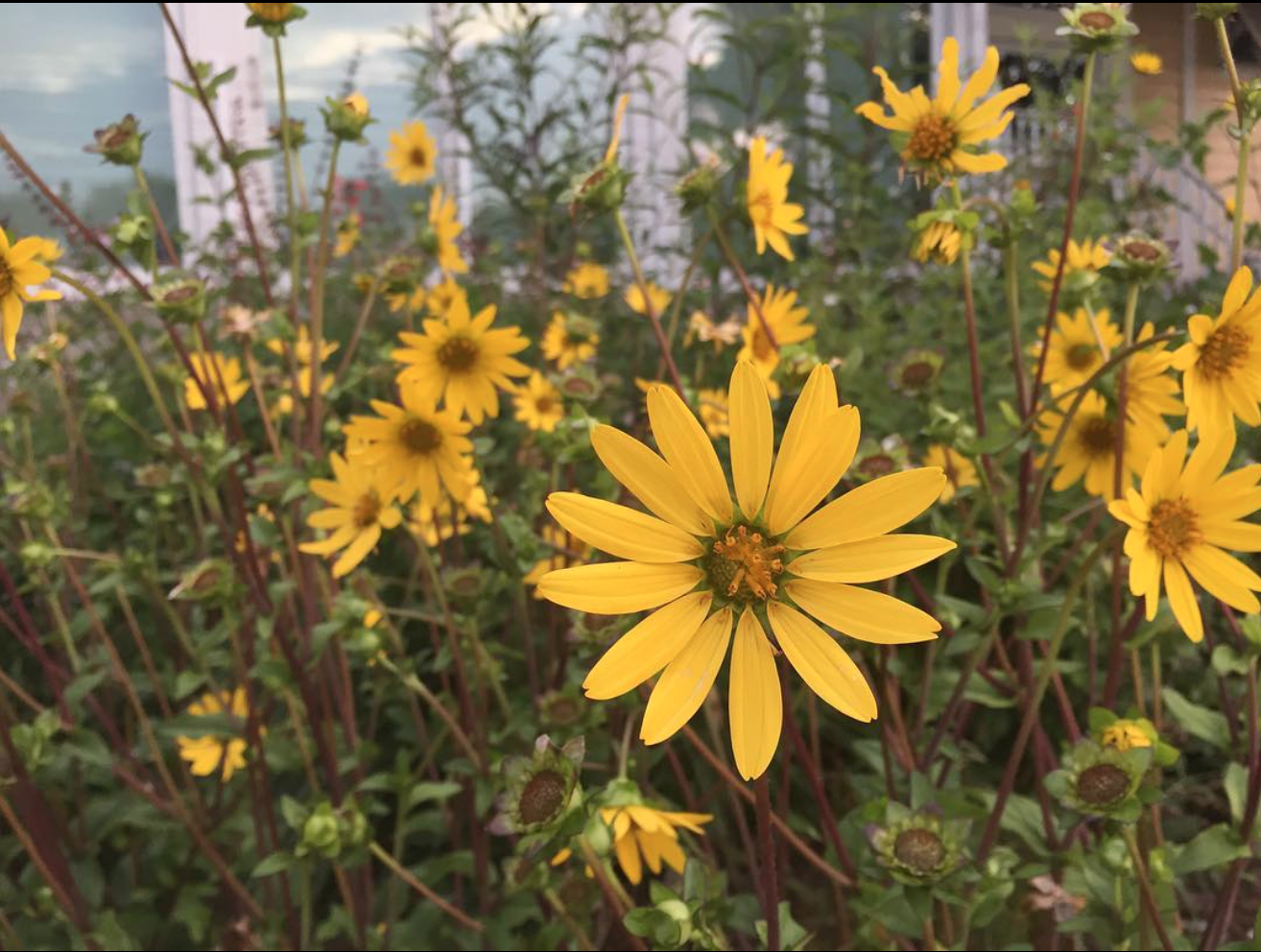
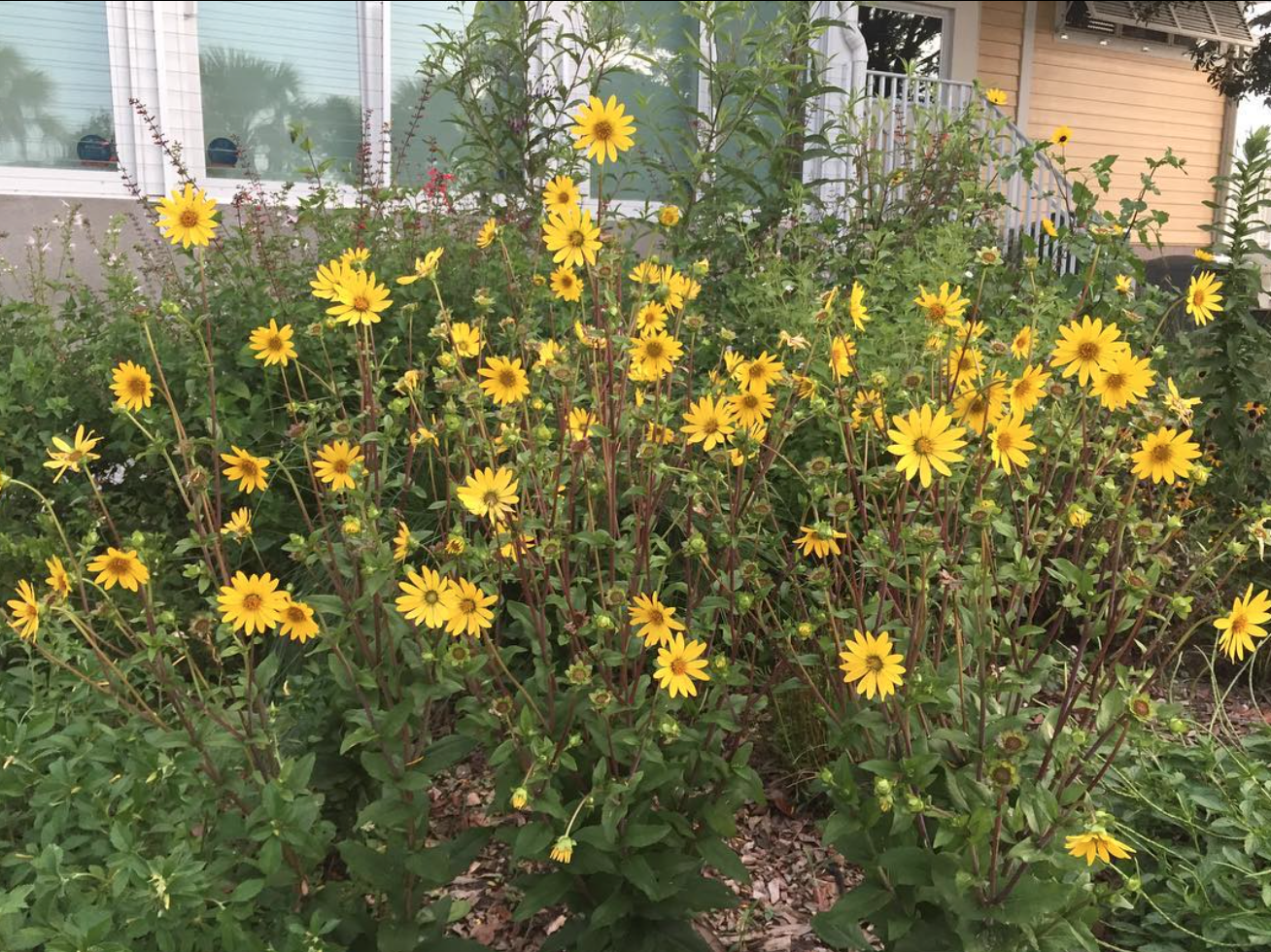
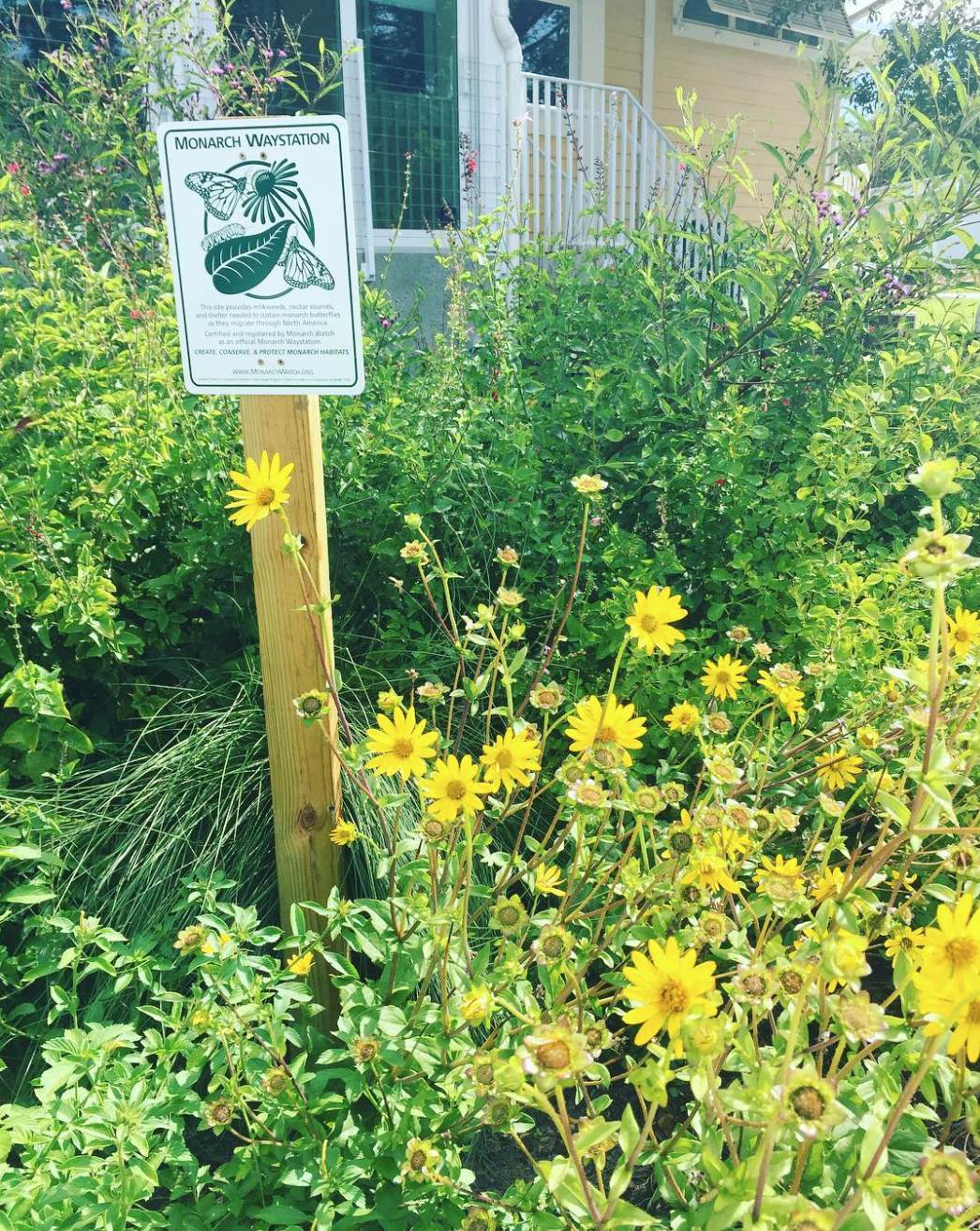
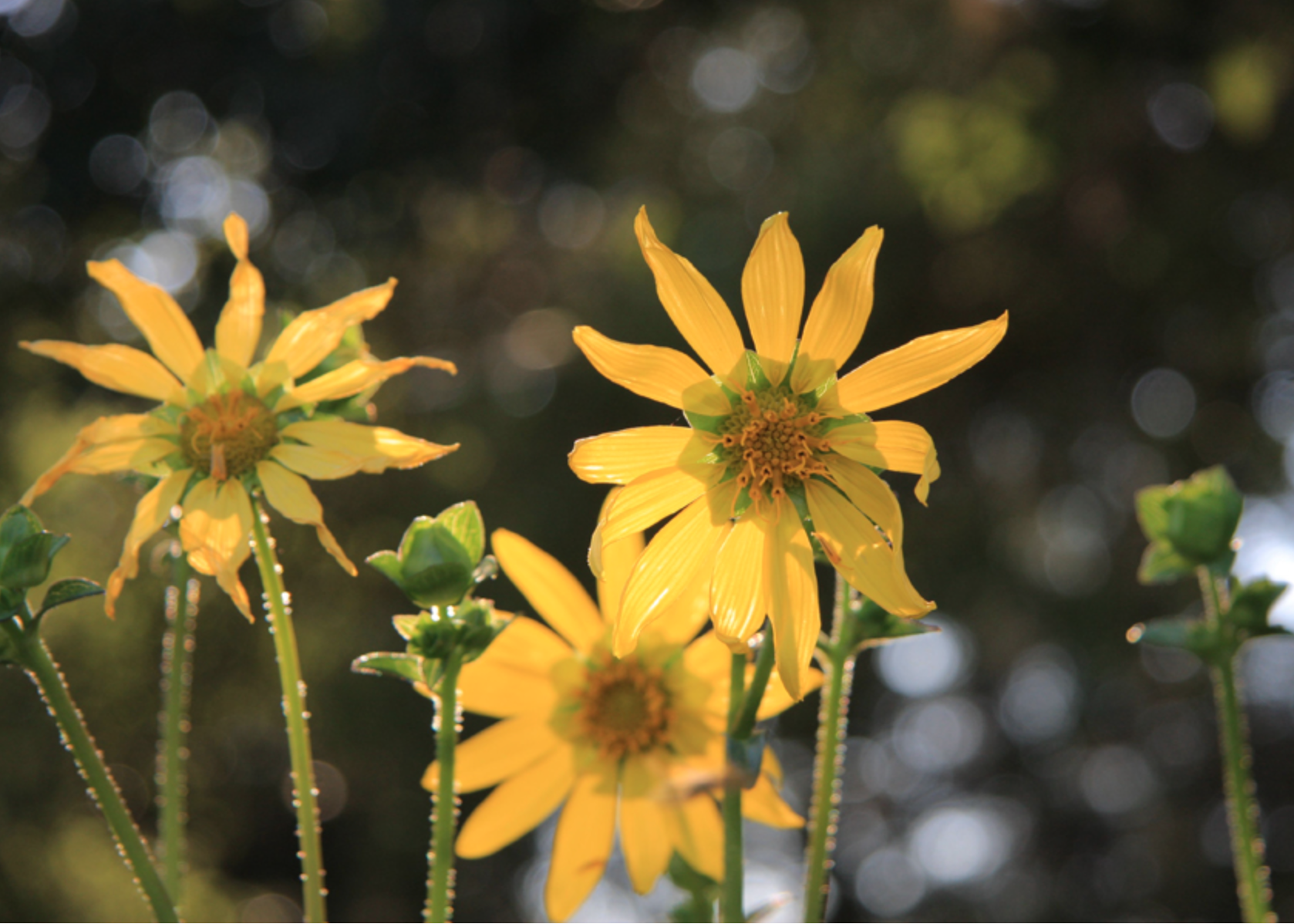
Silphium asteriscus
Starry Rosinflower, also called Starry Rosinweed is a perennial and re-seeding Florida native wildflower. We consider it to be one of the easiest wildflowers to grow in our area because of its adaptability to a variety of local garden conditions such as irrigation, dry soils, semi-shade and full sun. Starry Rosinflower’s yellow, sunflower-like flowers bloom spring through fall and attract many pollinators.
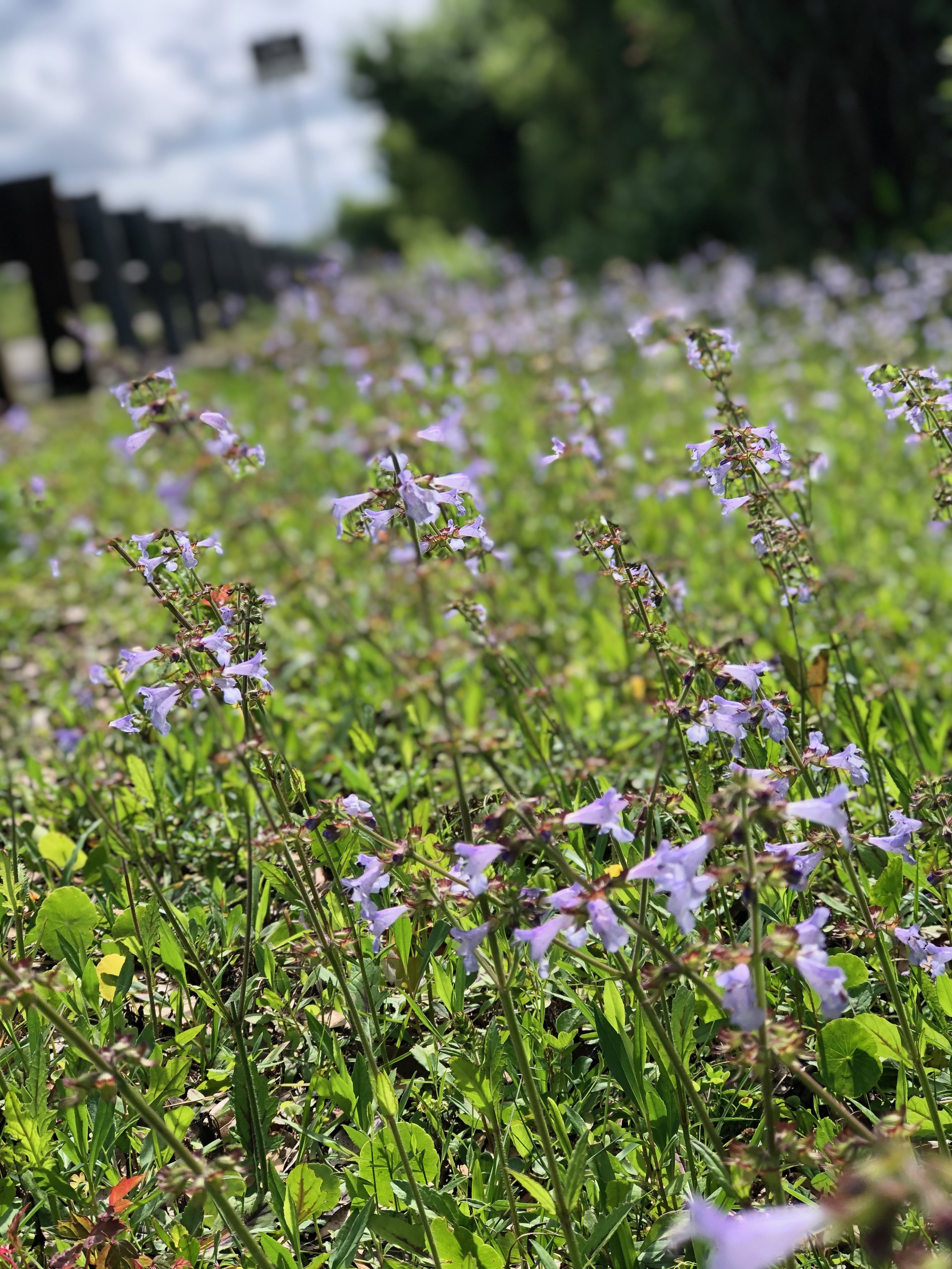
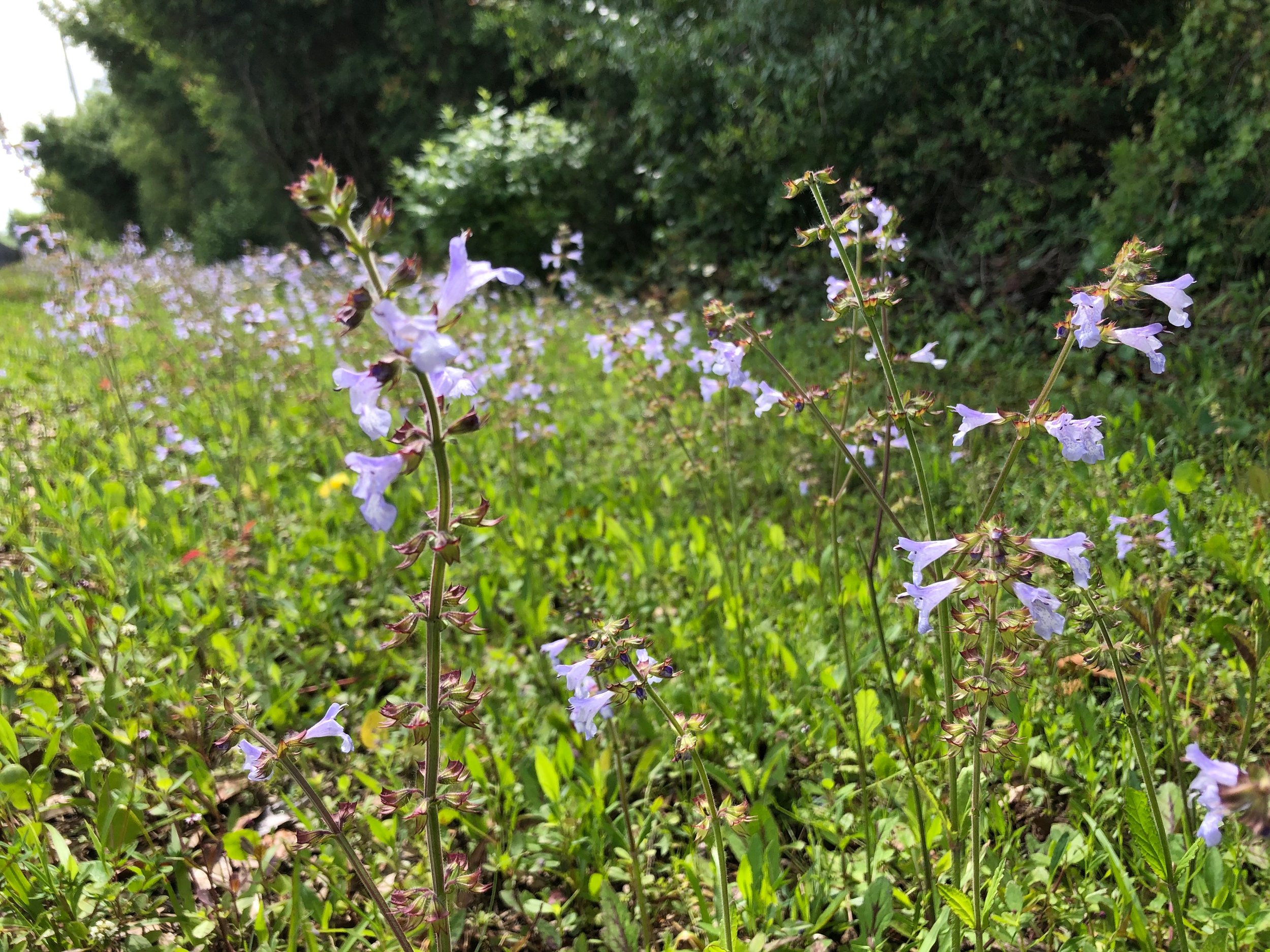
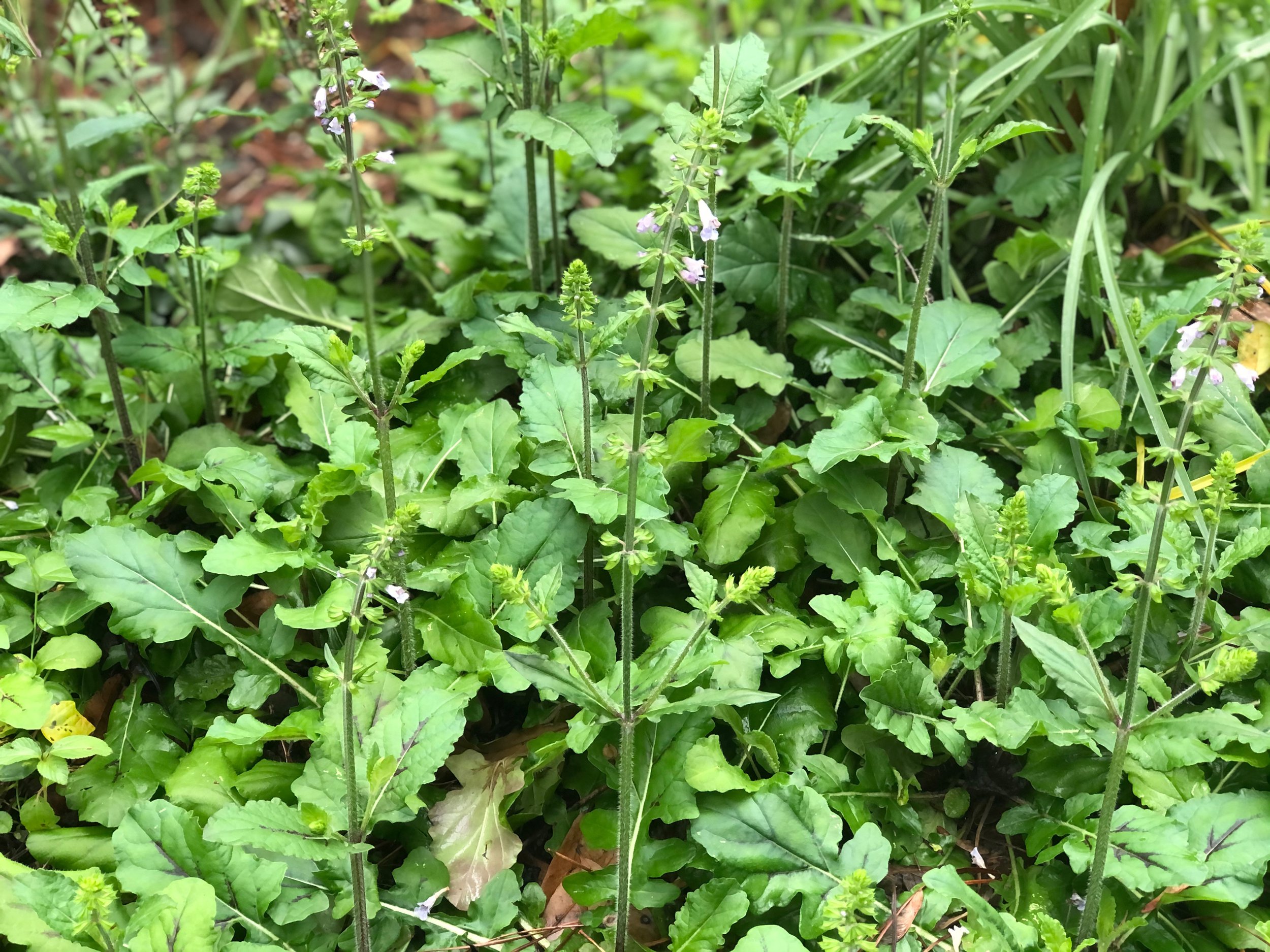
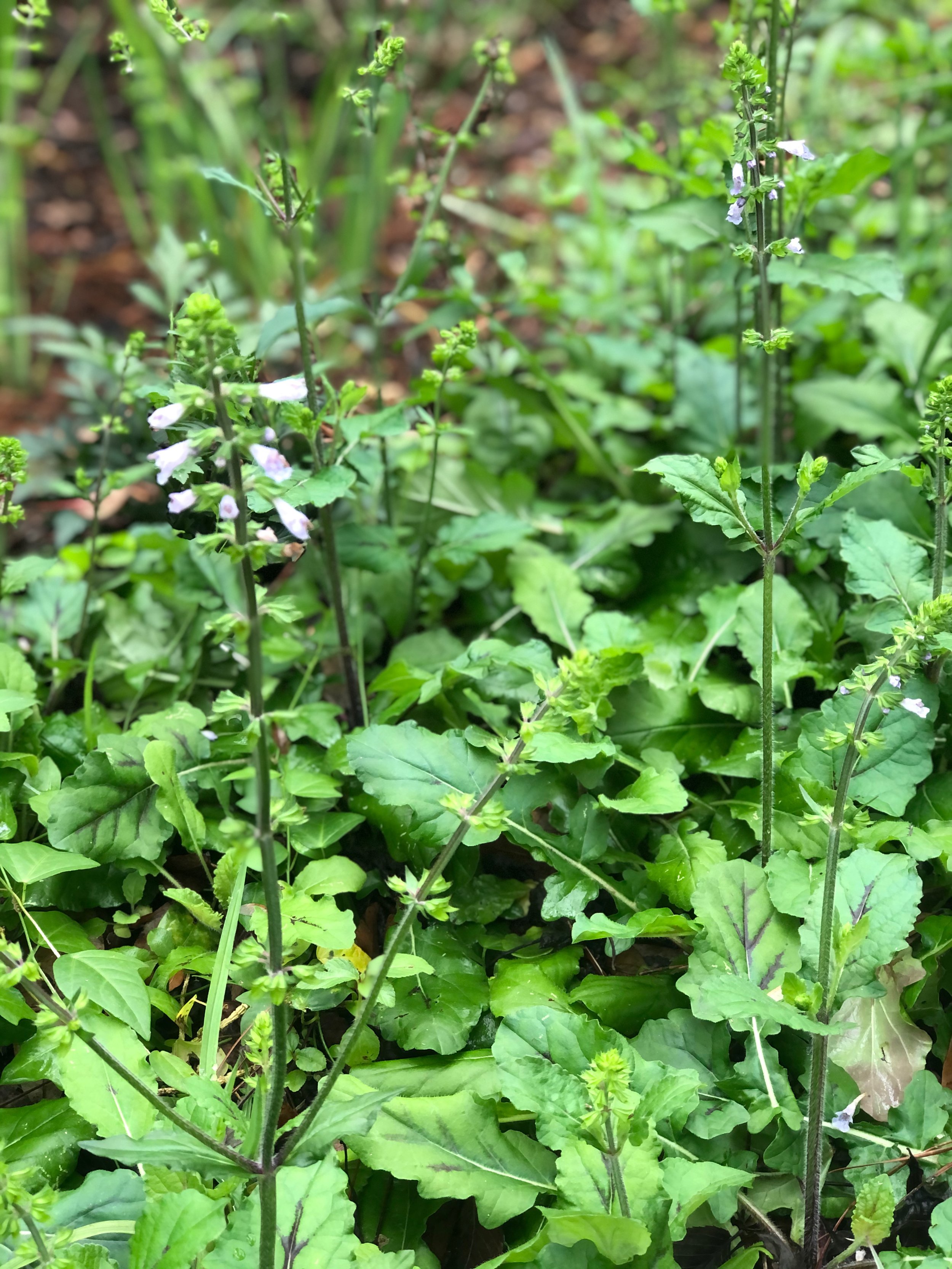
Salvia lyrata
Lyreleaf Sage is a long-lived, reseeding, perennial, evergreen, ground-covering wildflower that blooms in the spring and summer. Lyreleaf likes sun to shade and dry to wet (well-drained) soils. The purple flowers attract hummingbirds as well as other pollinators like butterflies. The young leaves are edible and the plant is used medicinally.

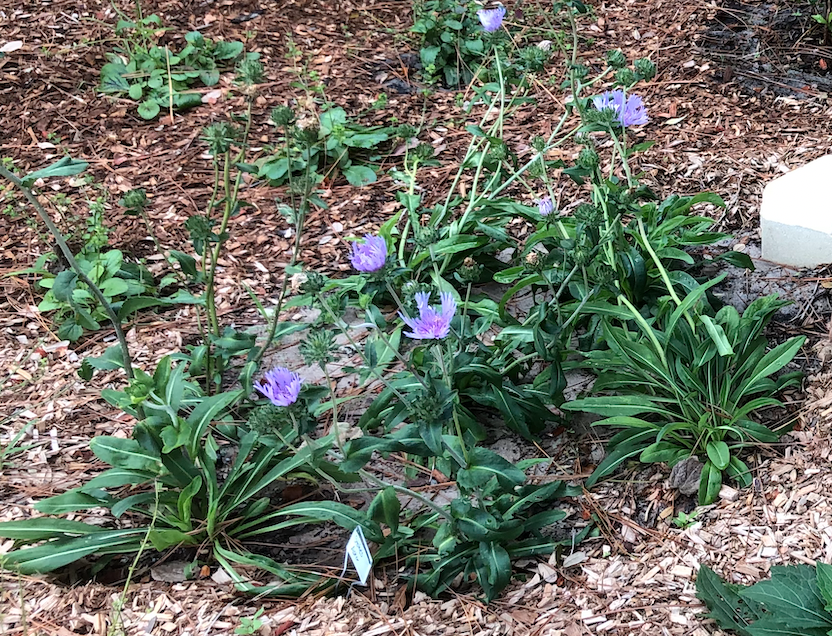
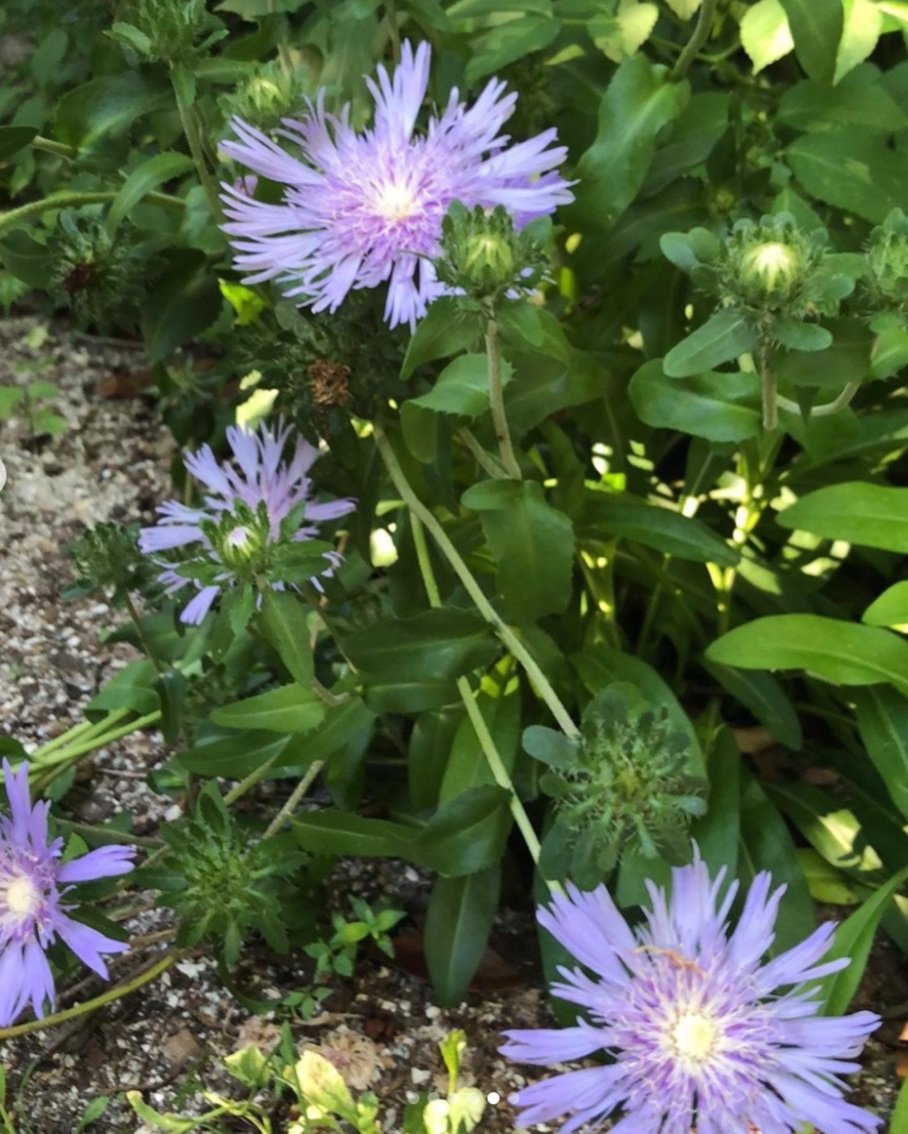
Stokesia laevis
Stokes’ Aster is a hardy, 1’–2’ perennial known for its large, fringed purple-blue flowers. It is a reliable bloomer that provides color from spring all the way through fall. This plant thrives in part sun and prefers moist, well-drained soil. It grows in tidy clumps that are easy to divide every few years. It’s a great choice for borders and is excellent at attracting bees and butterflies.
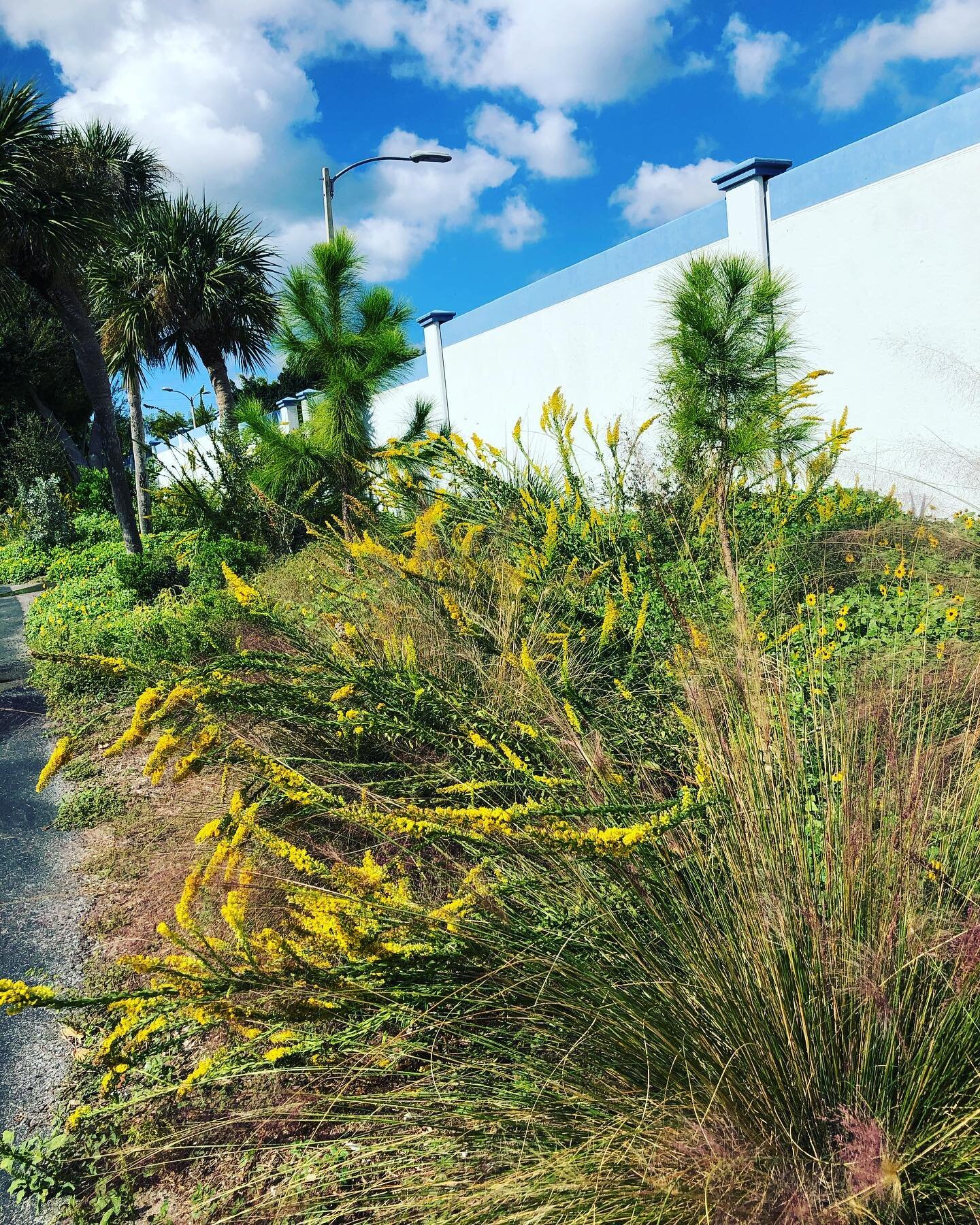
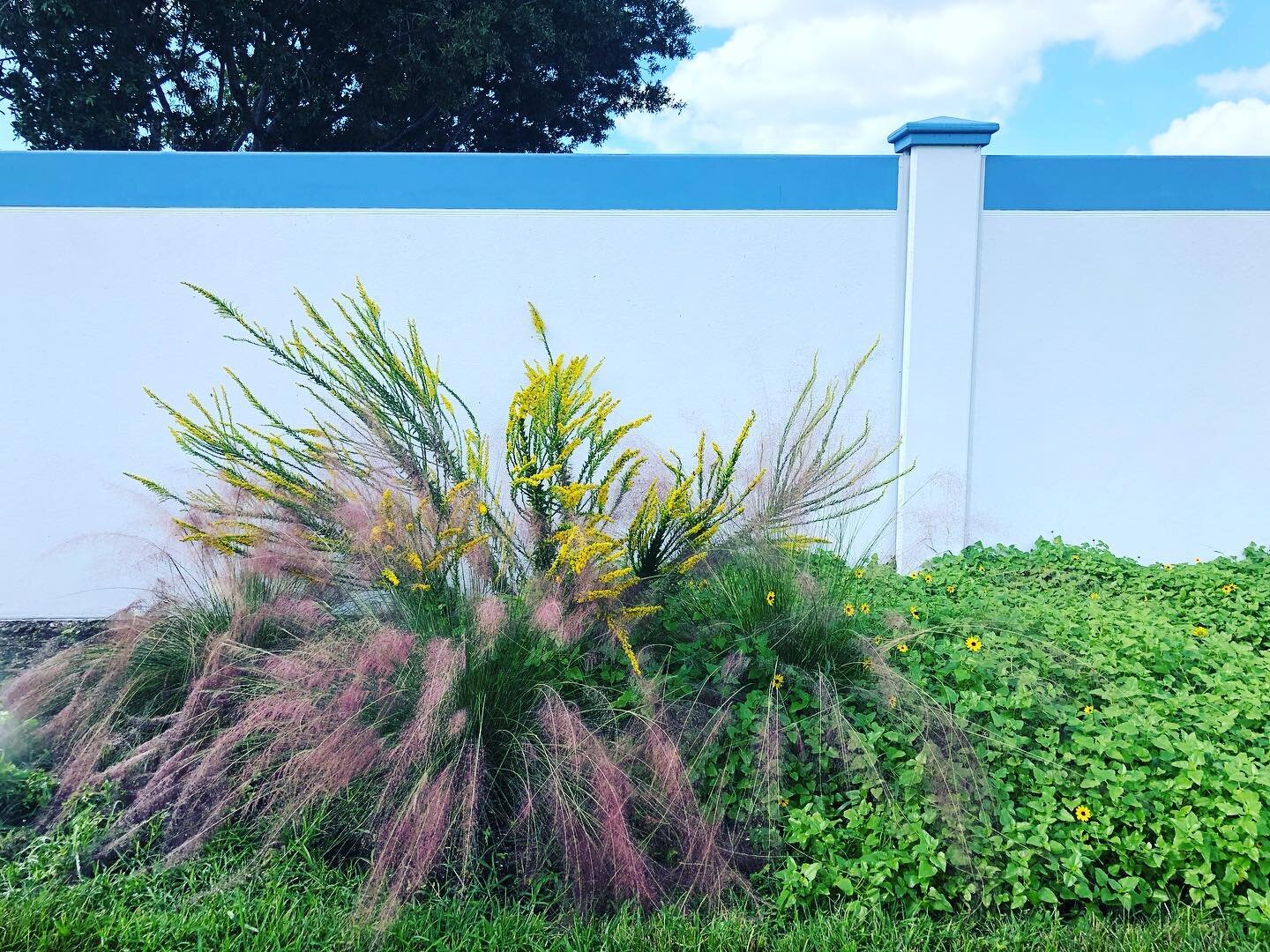

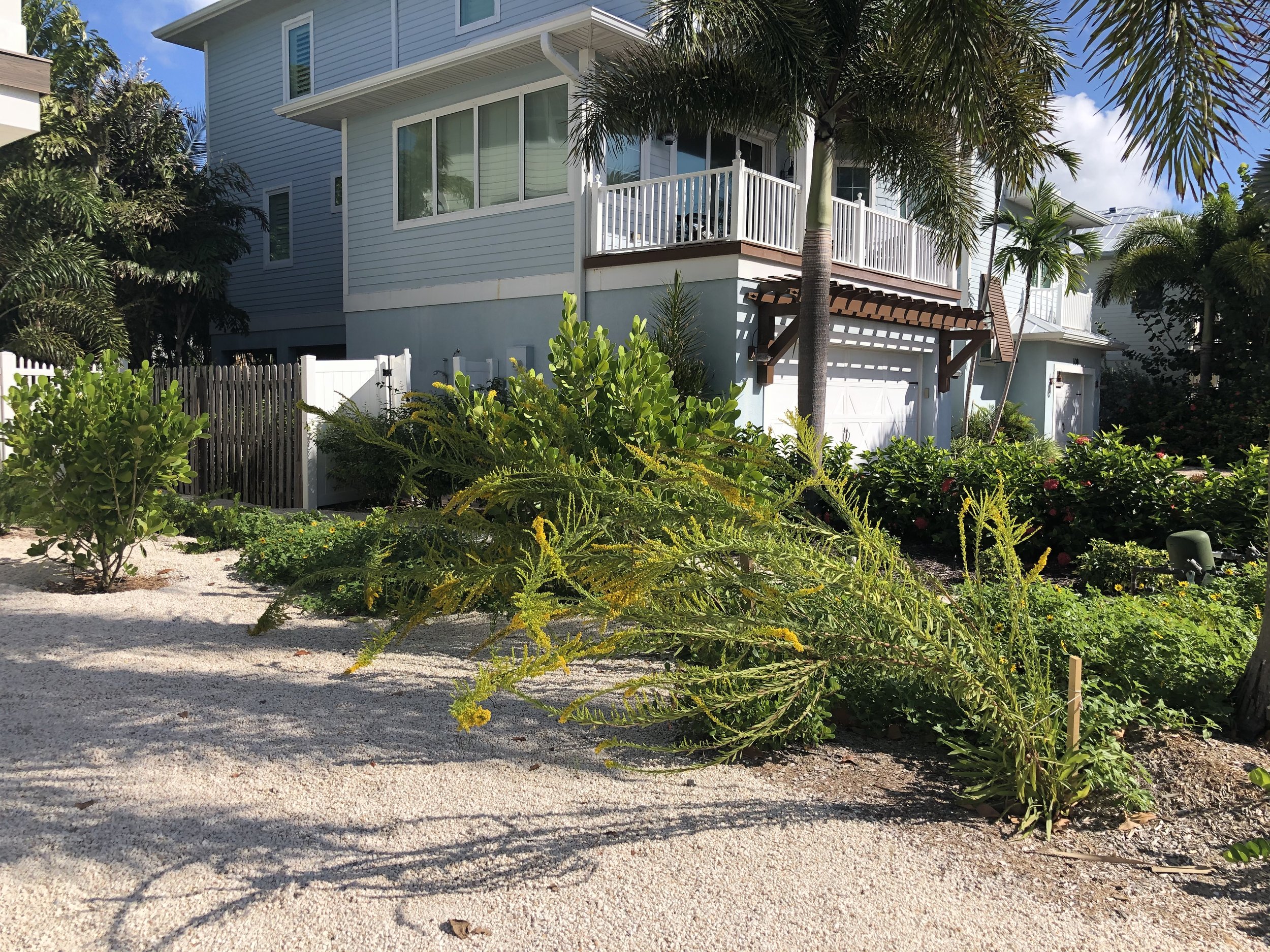
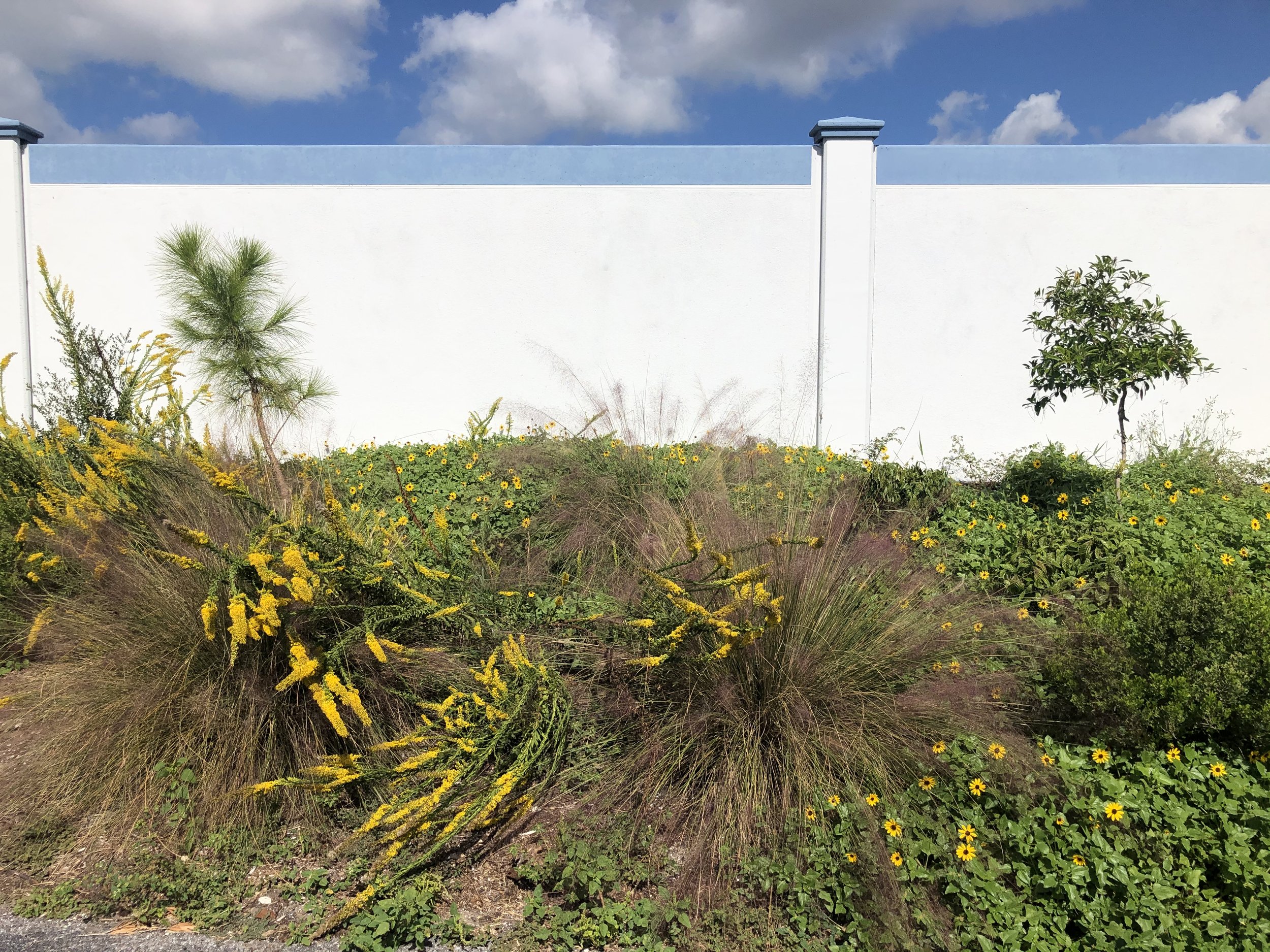
Solidago sempervirens
Seaside Goldenrod is a large, showy goldenrod species that can get showy flower spikes that are up to 7 foot tall! They are salt-tolerant and drought-tolerant as they are a coastal species frequently found near dunes. They attract a plethora of pollinators and are buzzing with action in fall when they bloom.
They are a keystone species! Host plant for over 80 different species of butterflies and moths!
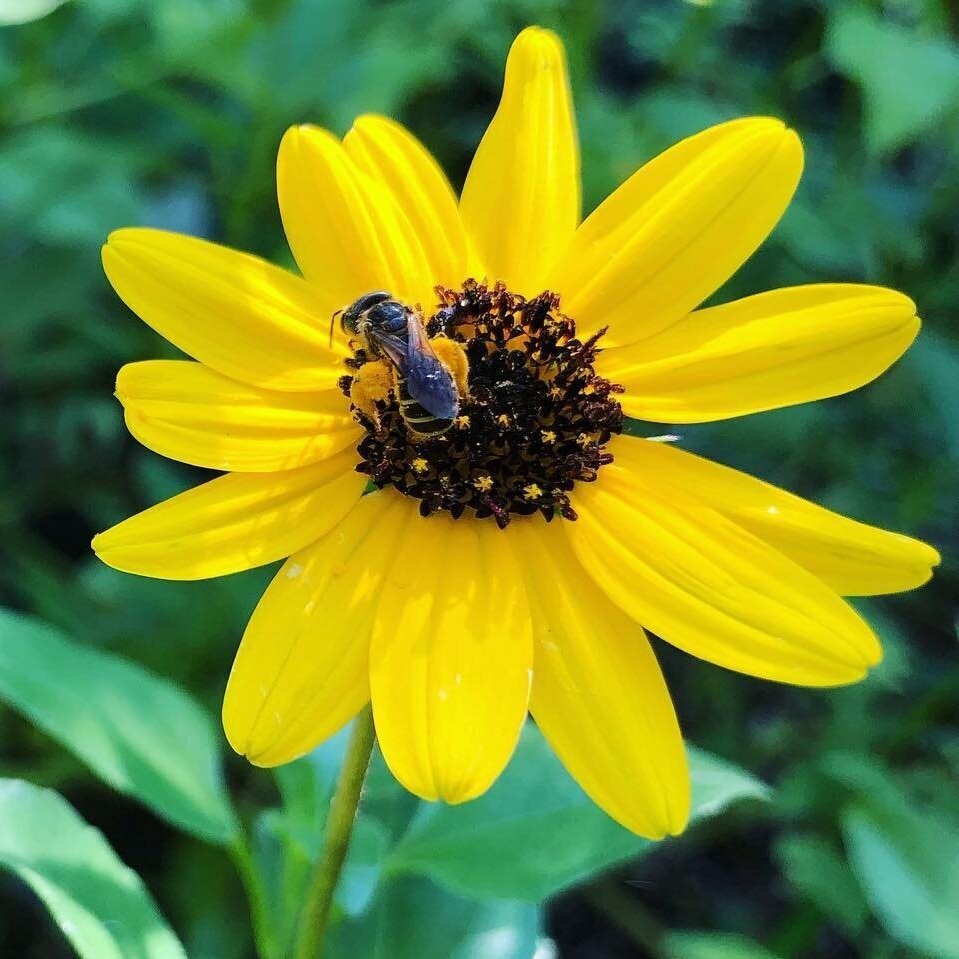
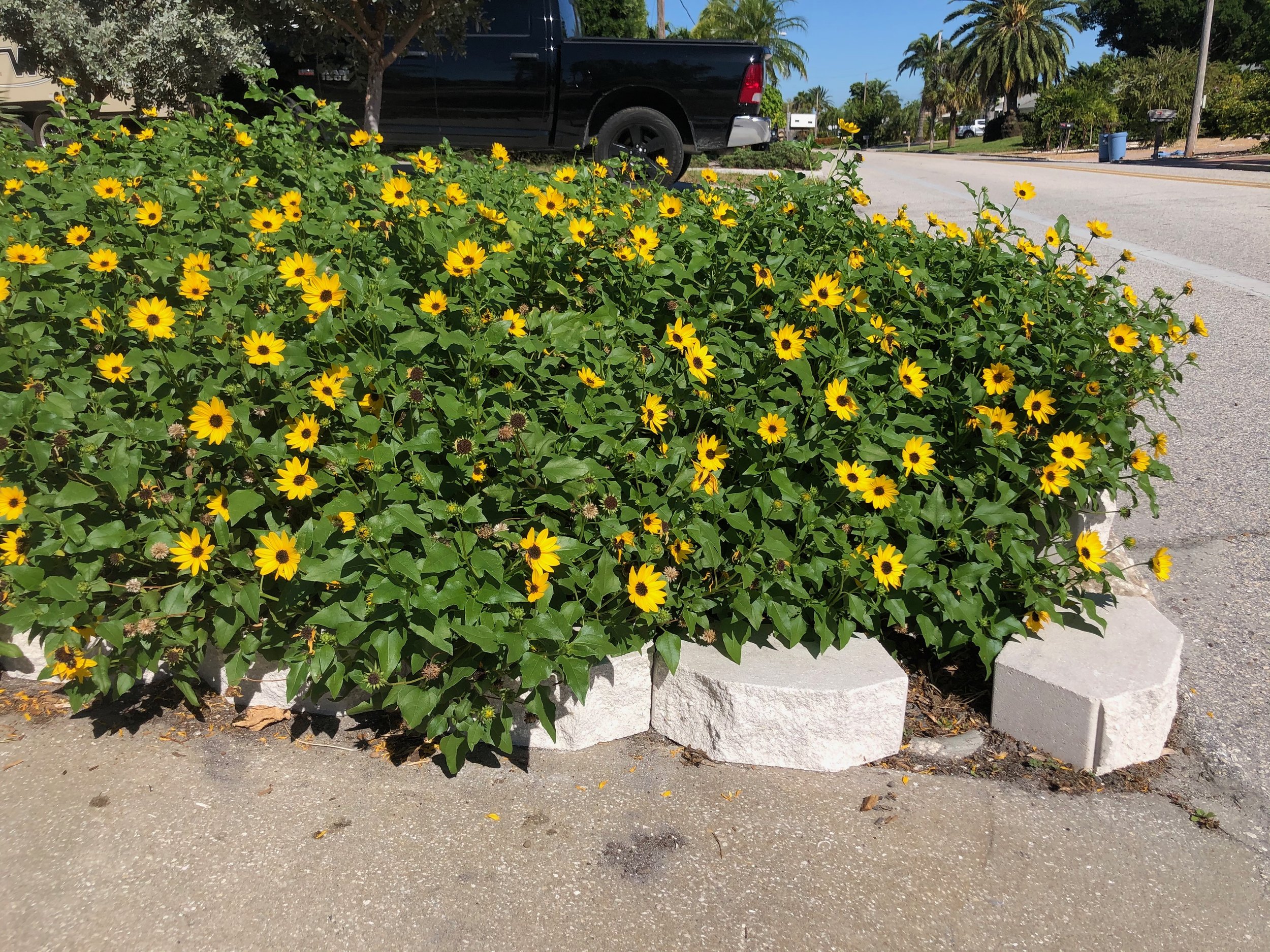
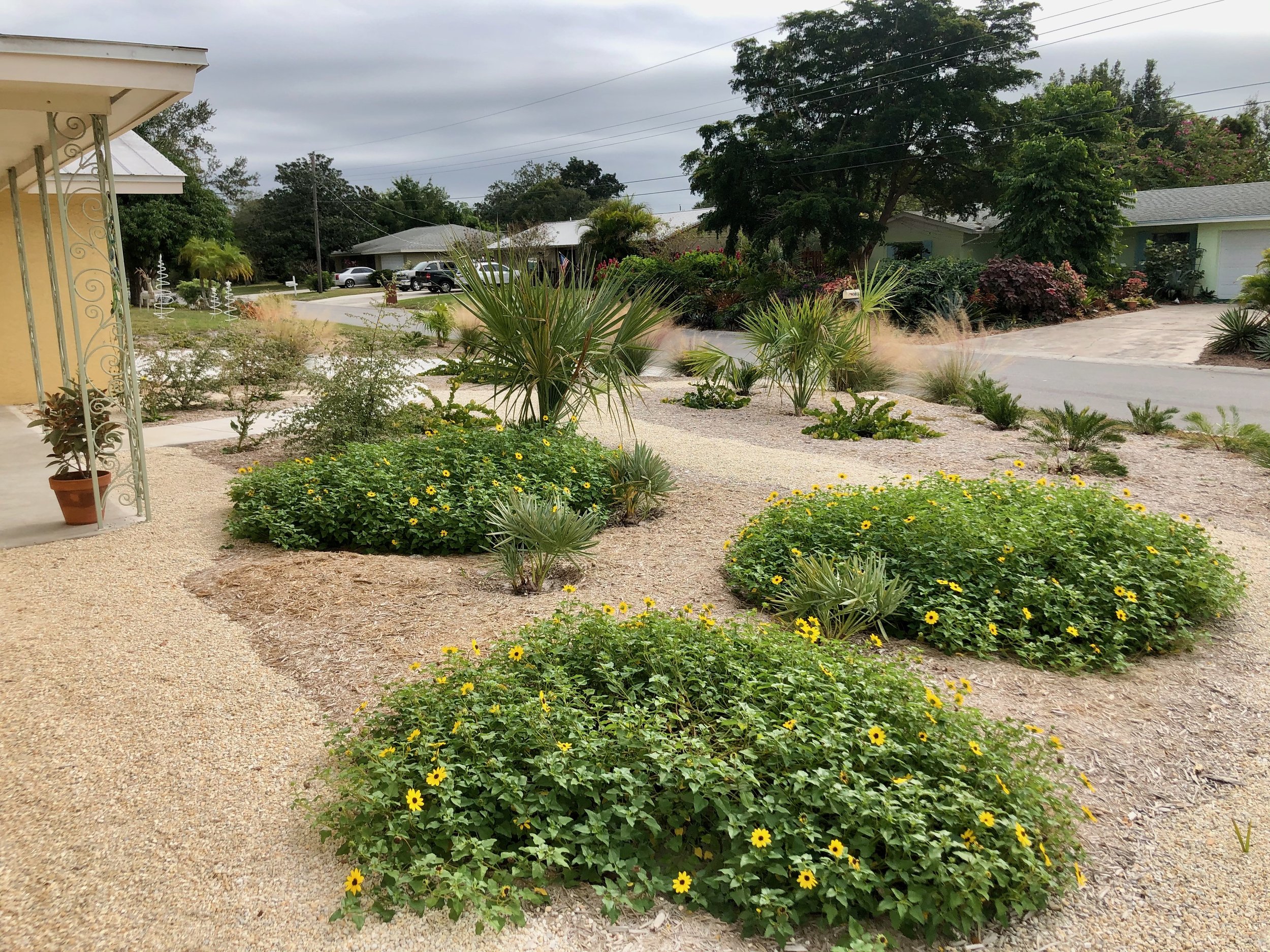
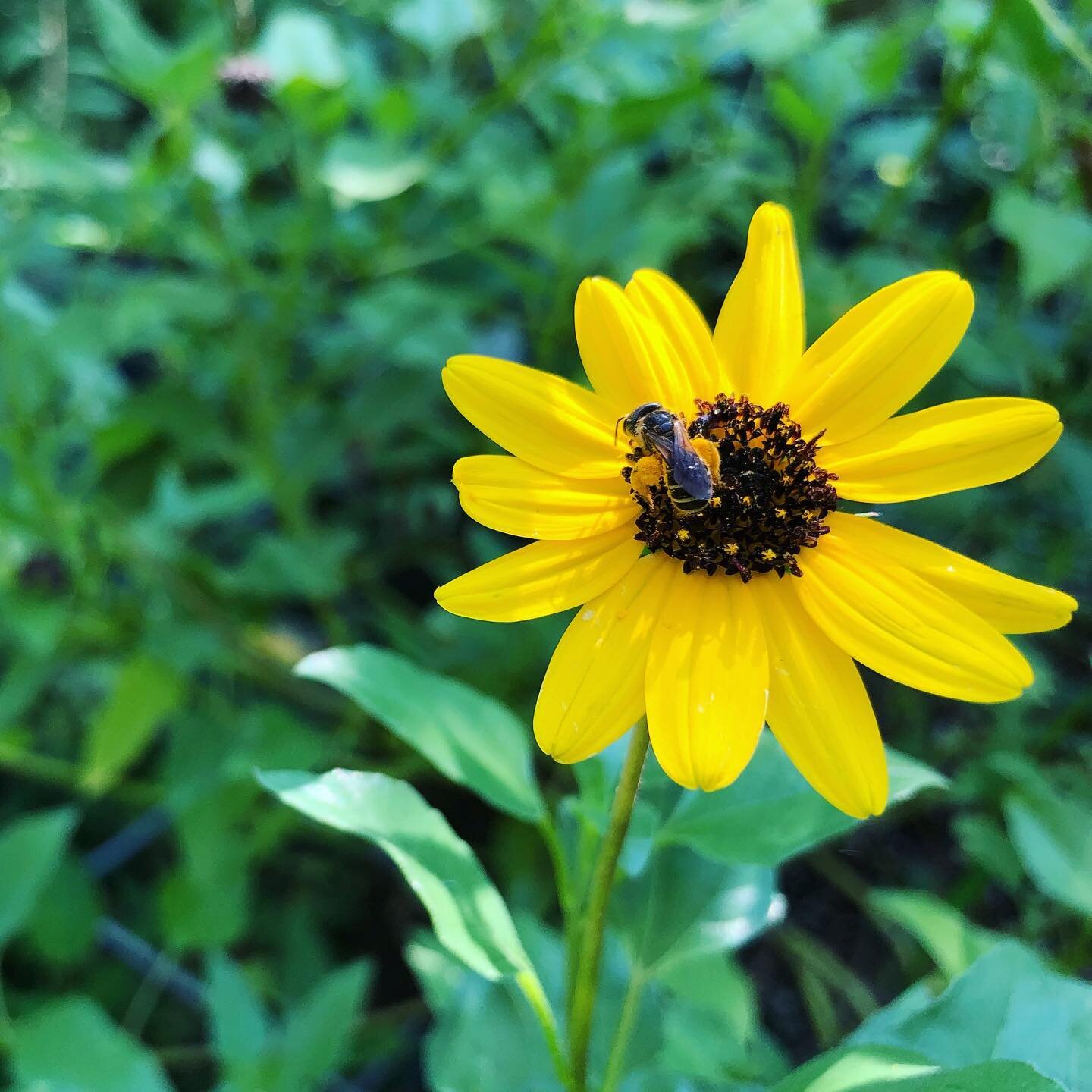
Helianthus debilis ‘vestitus’
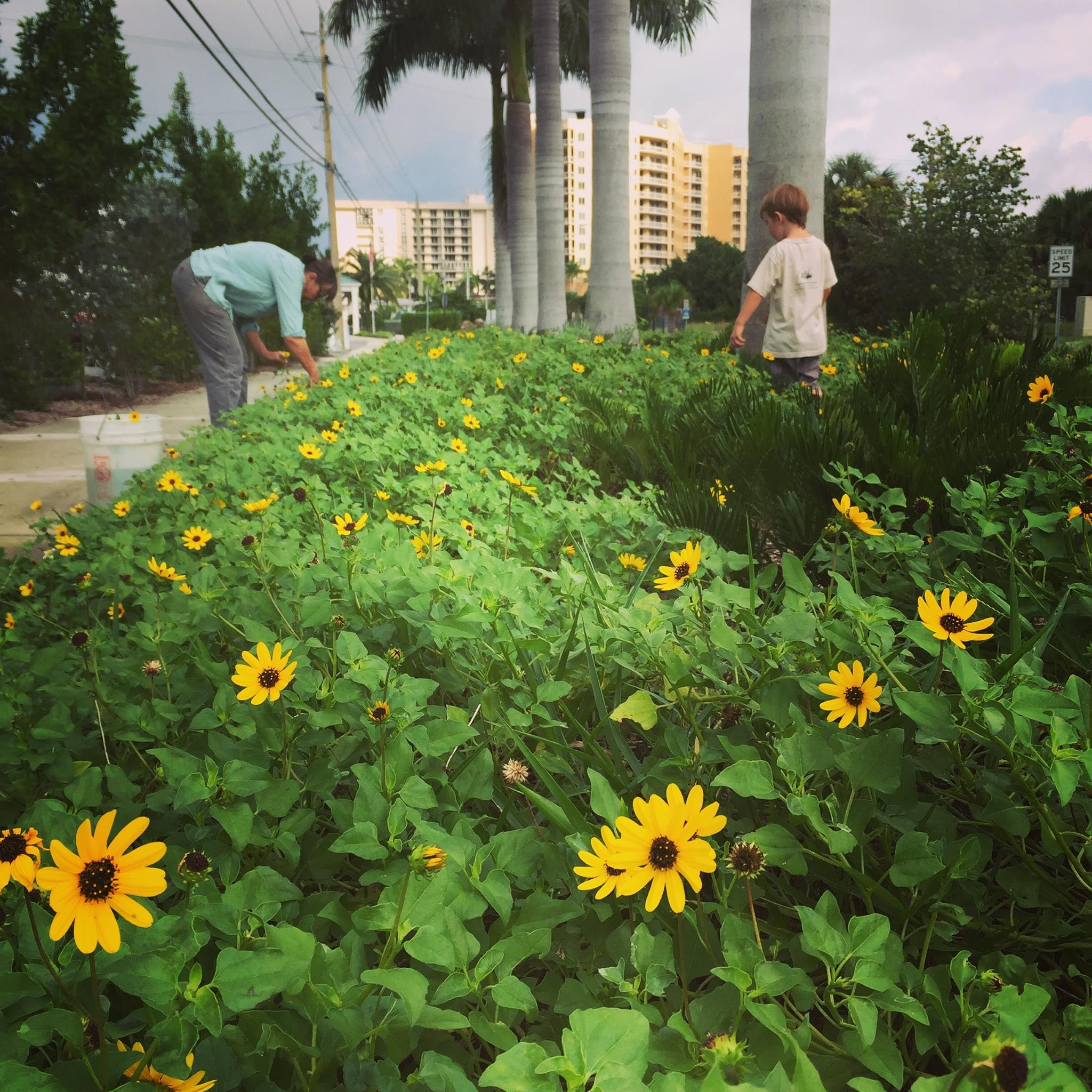
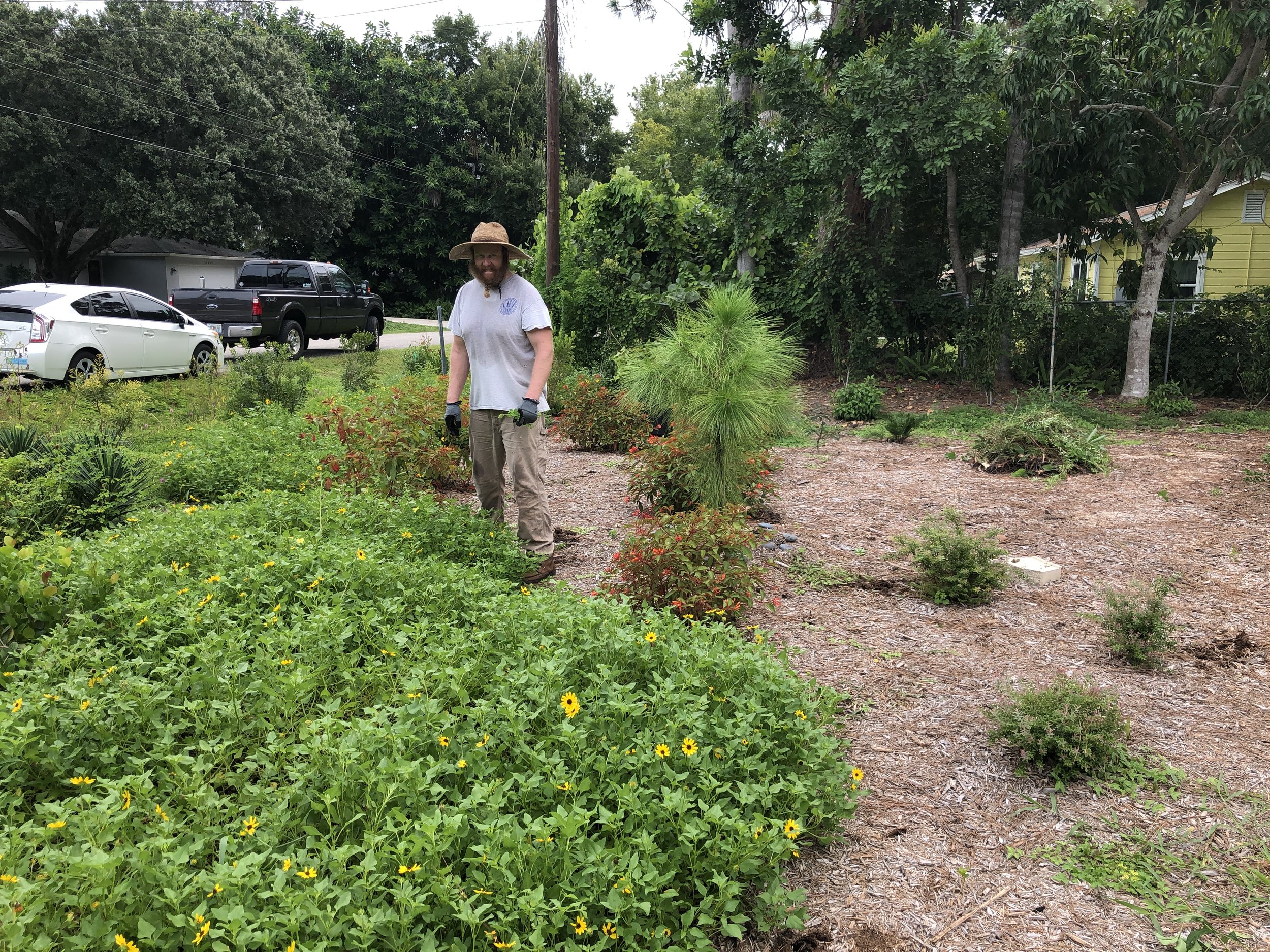
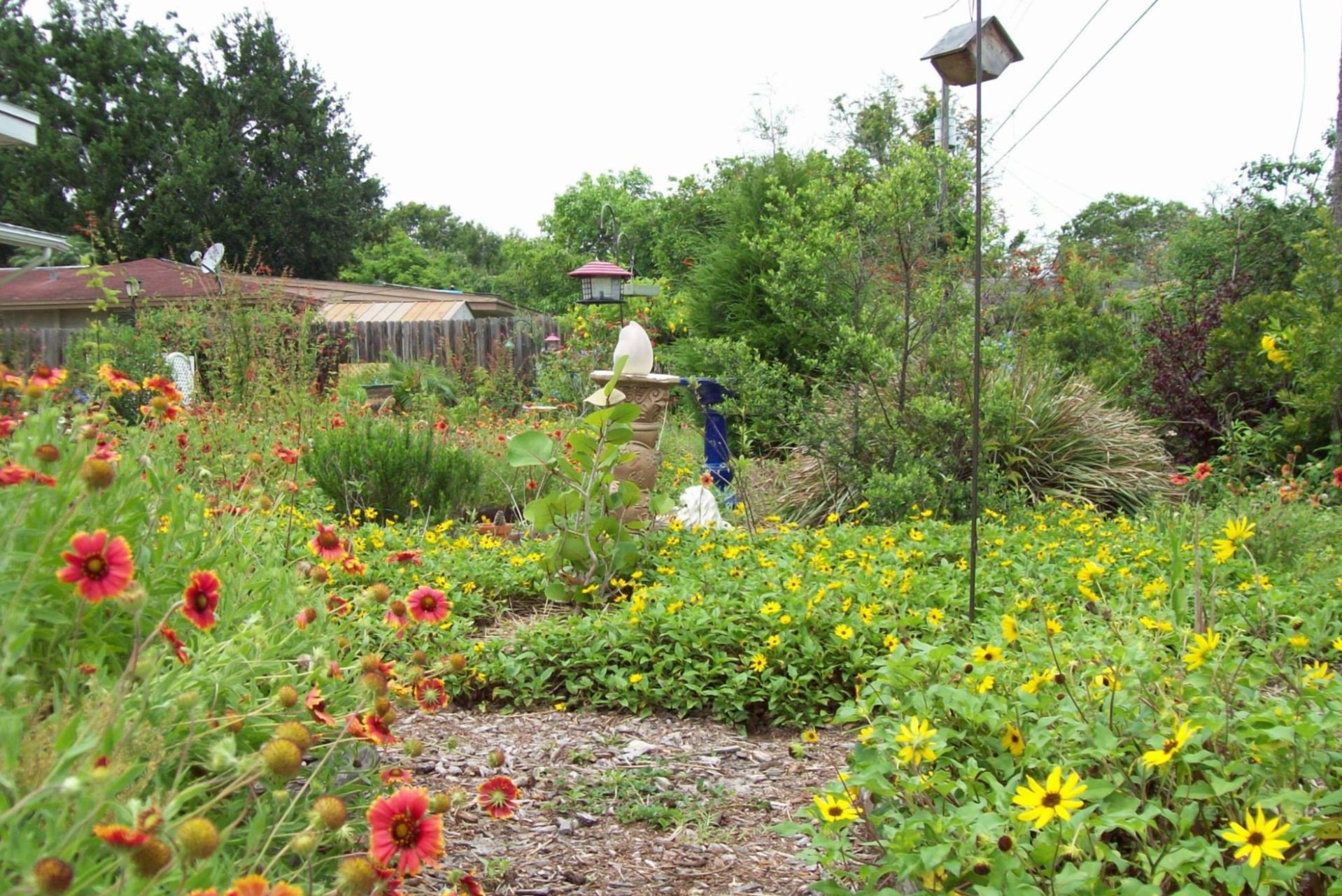
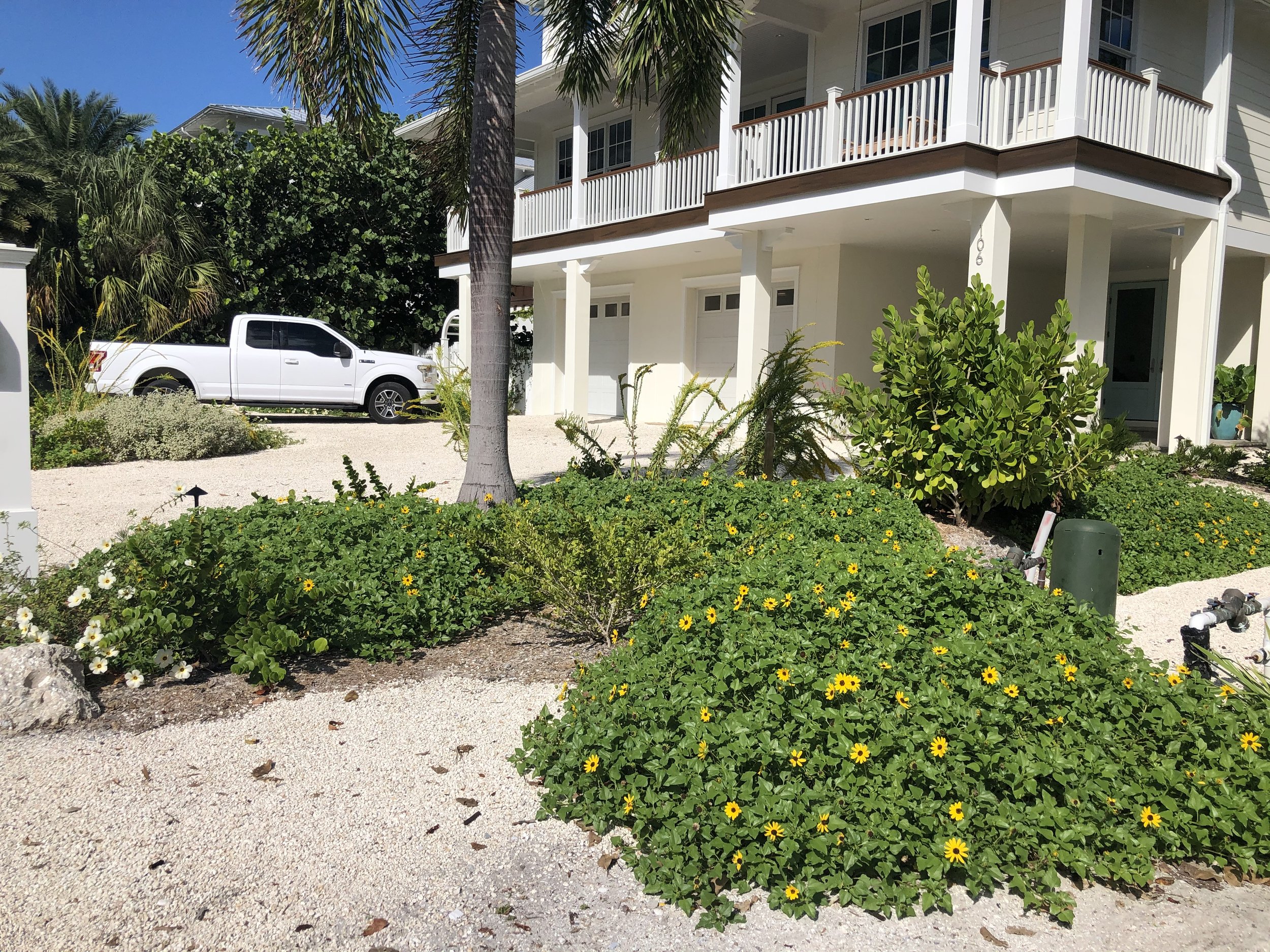
West Coast Beach Dune Sunflower is one of the best ground covers for sunny, dry areas where things just don't grow! One plant can spread 4' wide and grows fast, so you'll see beautiful greens and yellow blooms abound in no time! This sunflower is an annual that reseeds in place so once the mature plants start to die back, just cut them back and watch the babies grow. Loved by pollinators and birds, its the perfect Florida plant in any yard! Want to grow this in a coastal area? You sure can! Beach Dune Sunflower naturally occurs on beach dunes and can take salt spray and brief storm surges. It's extremely drought tolerant too!
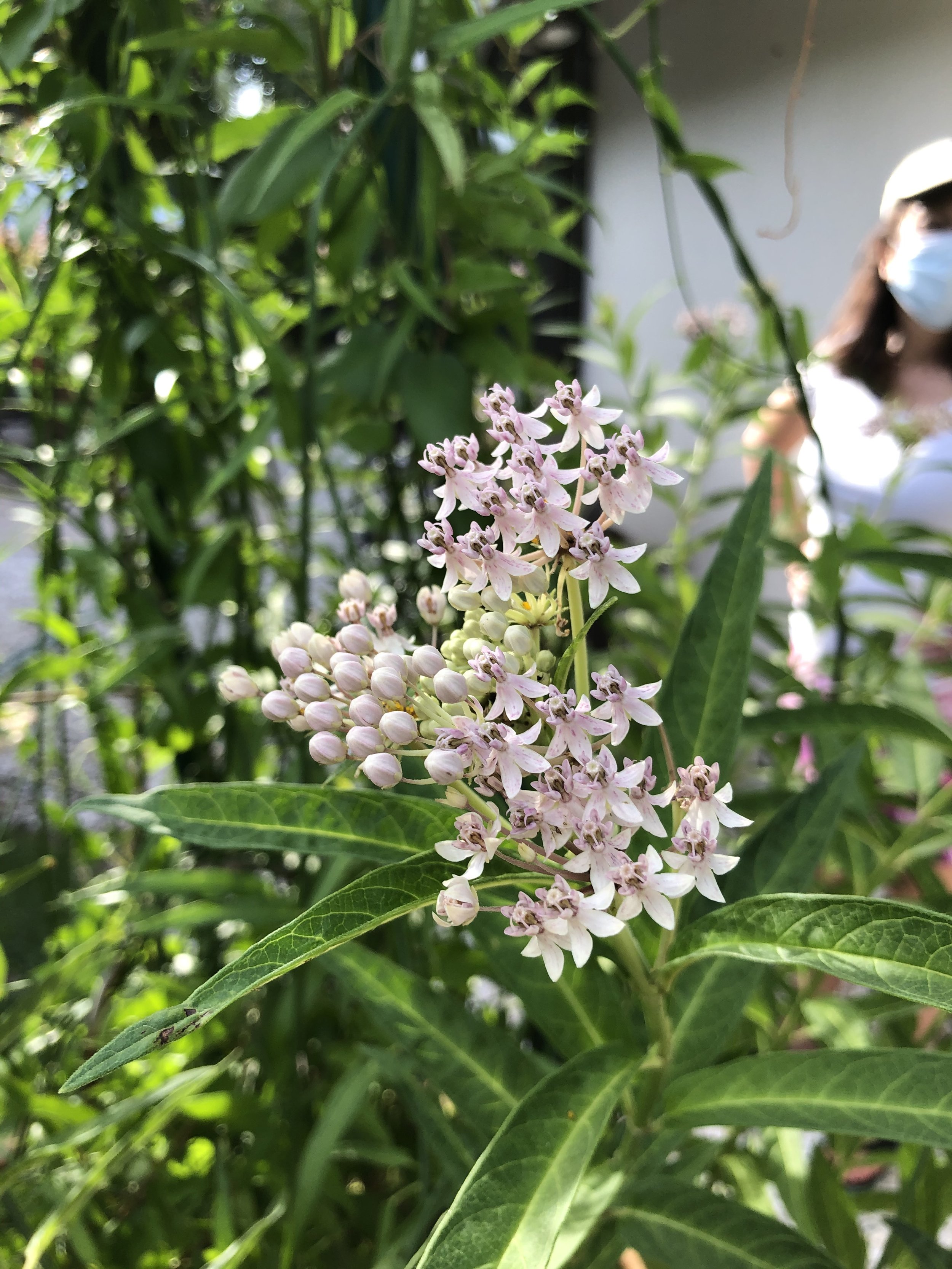
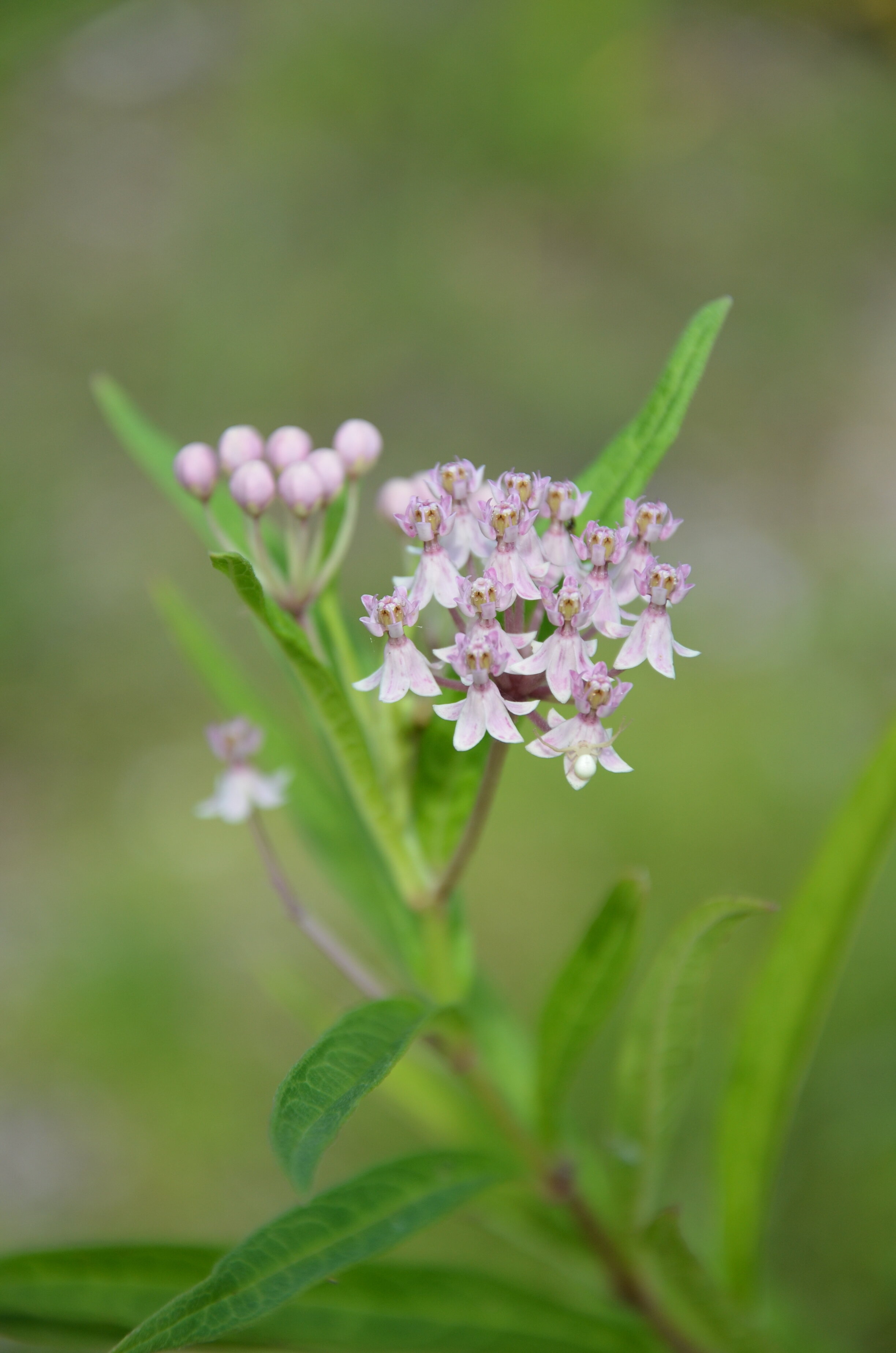
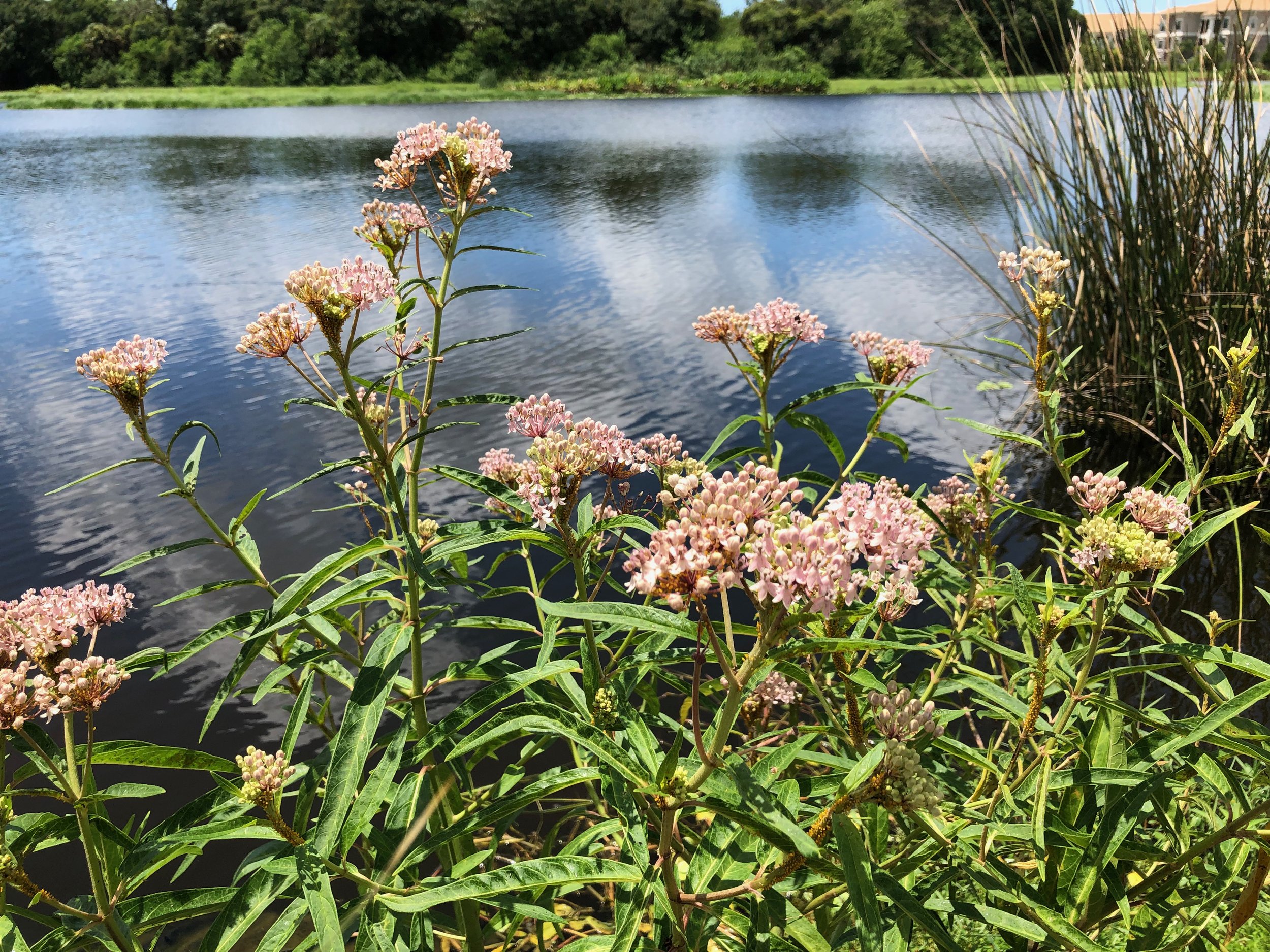
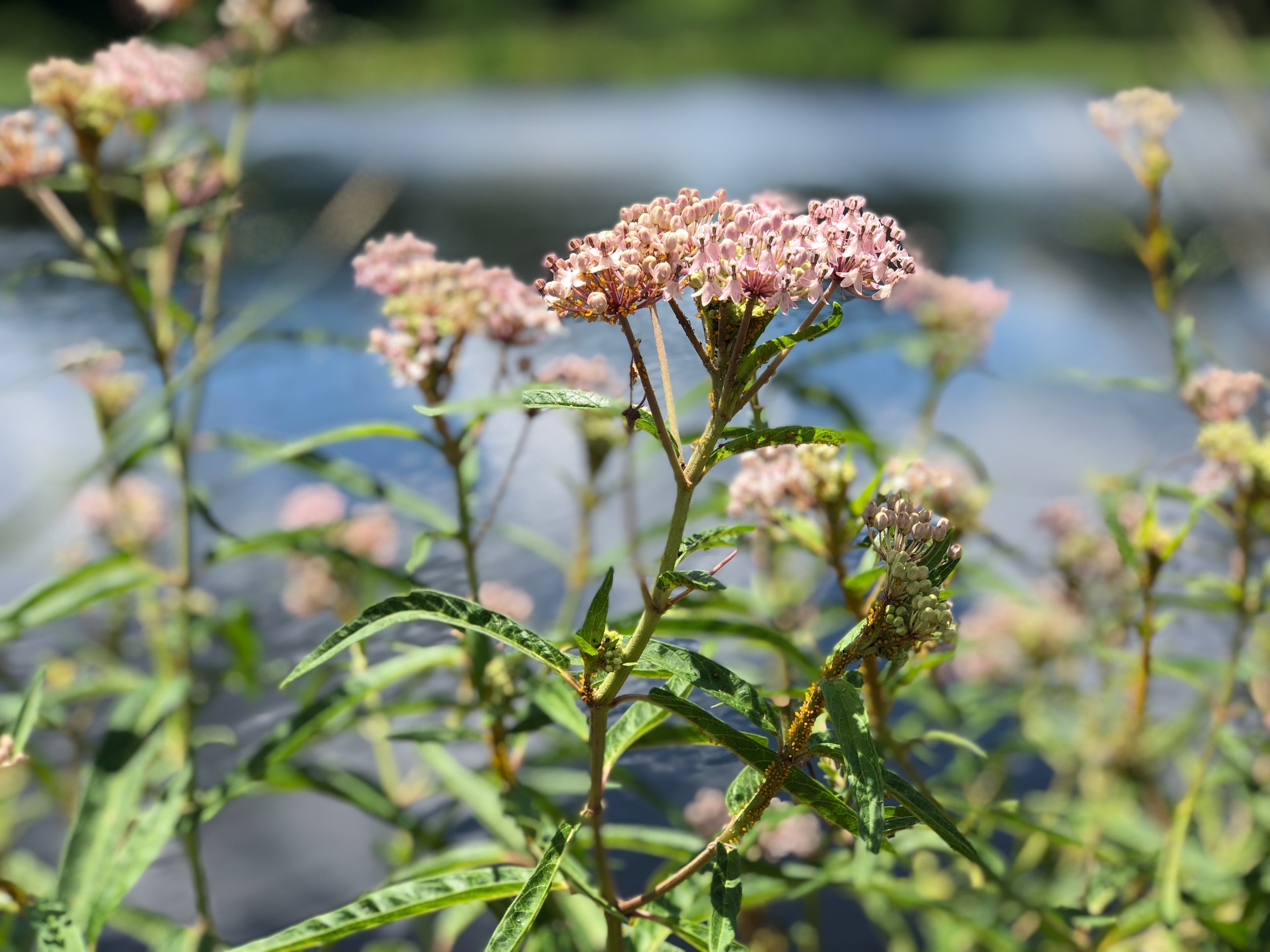
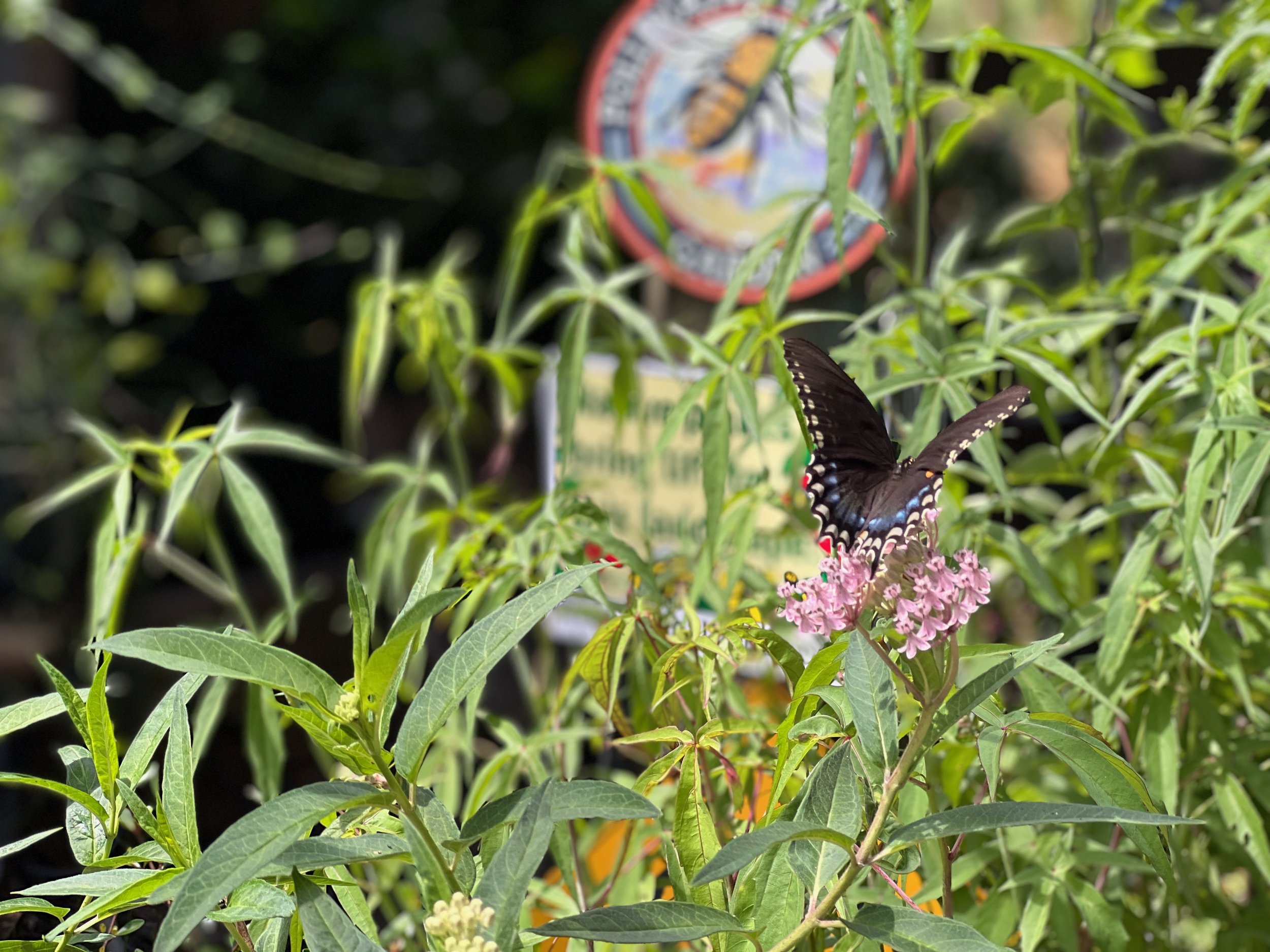
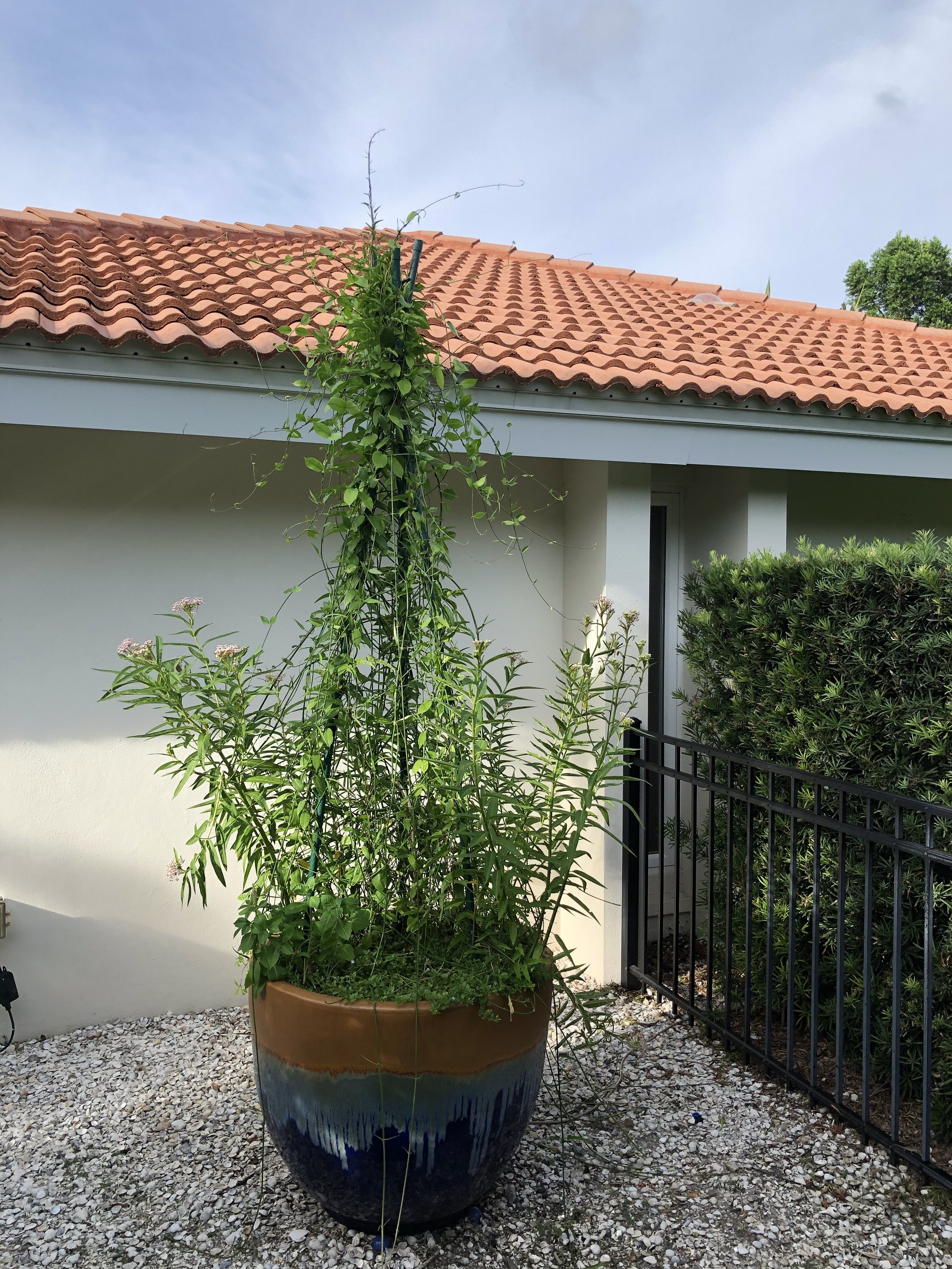
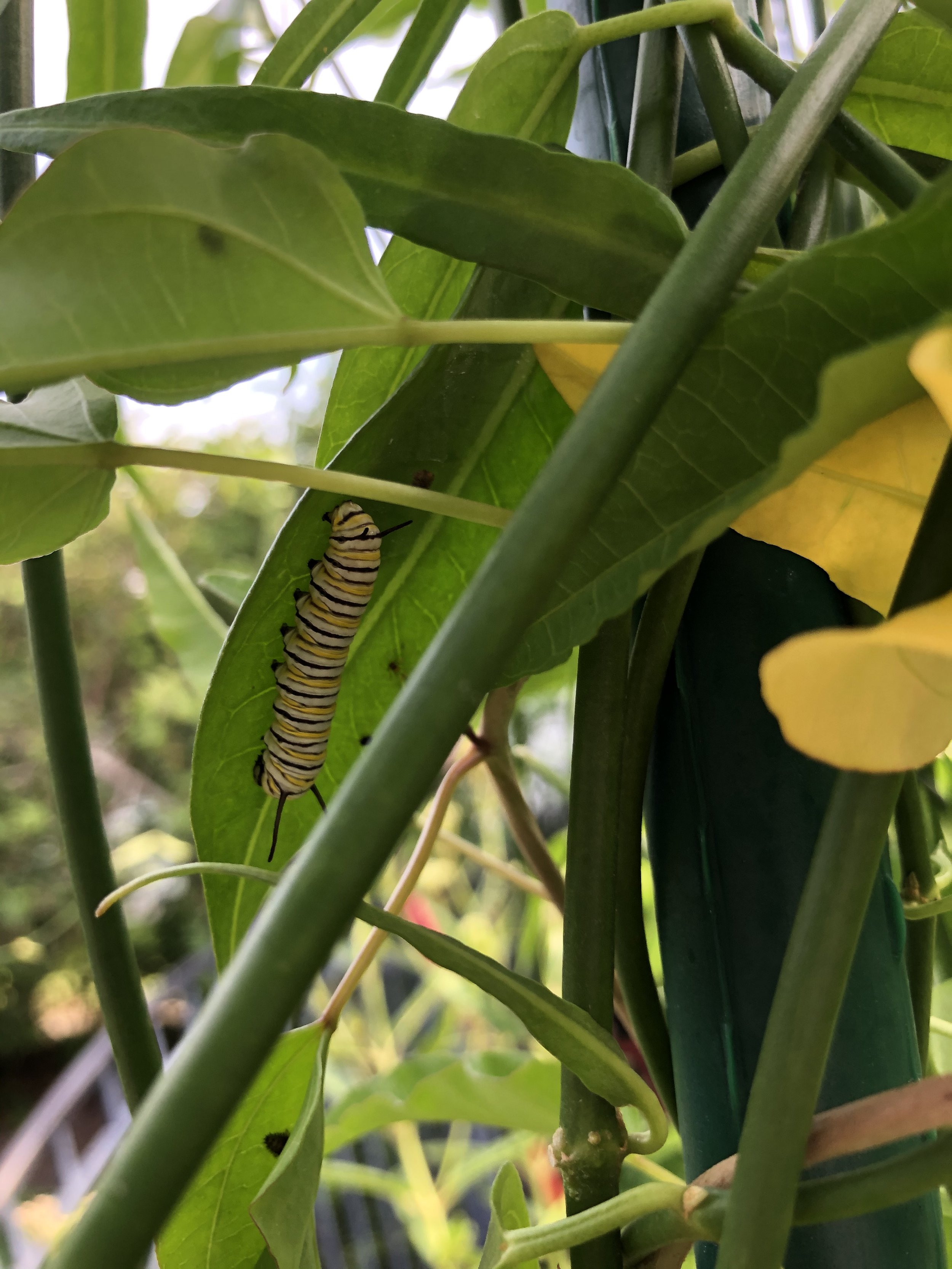
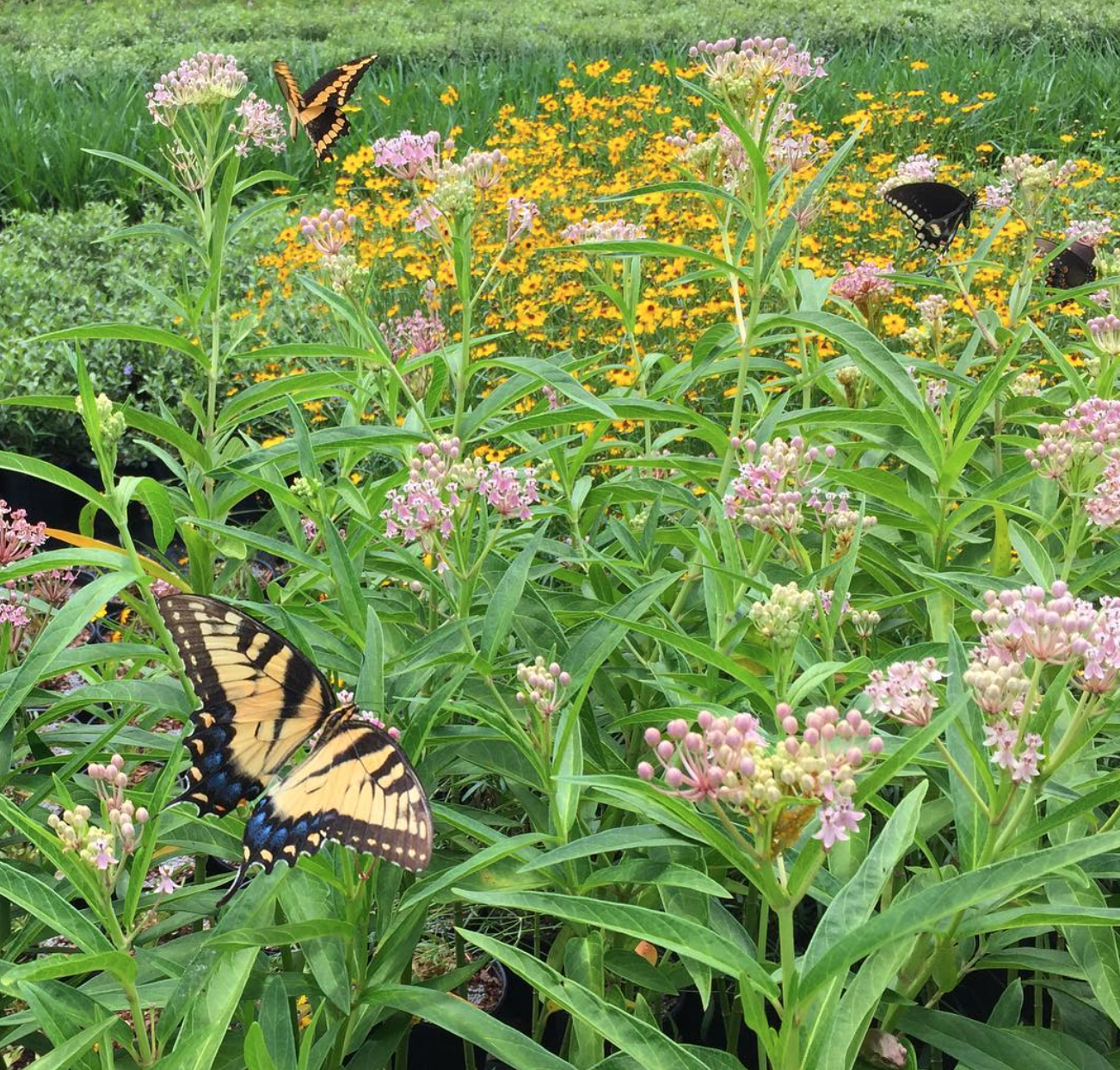
Pink Milkweed is a native, perennial, re-seeding, winter-dormant host plant for monarch and queen butterflies. Its foliage dies back in the winter and returns in the spring. It prefers moist soil conditions but can be grown in containers if kept moist. It is one of the most hardy of the native milkweeds for Florida gardeners to grow.
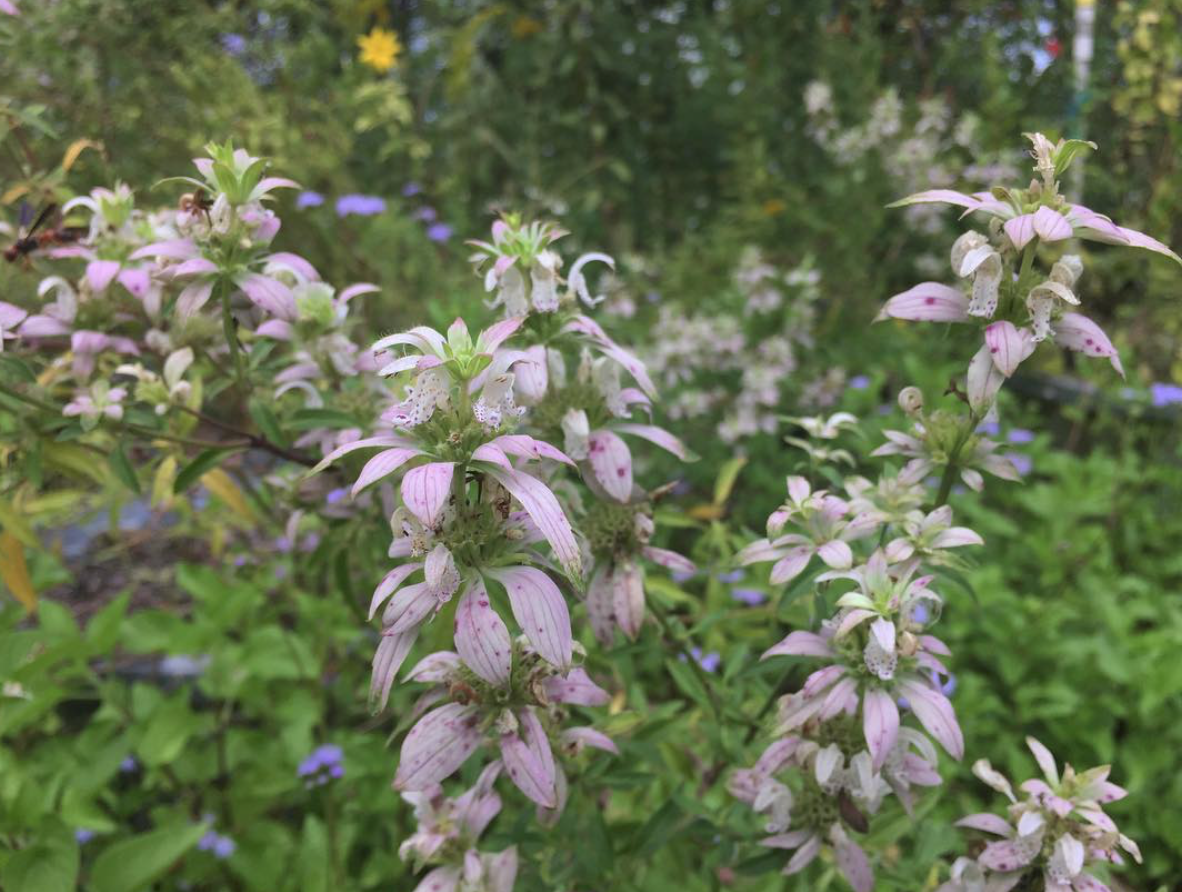

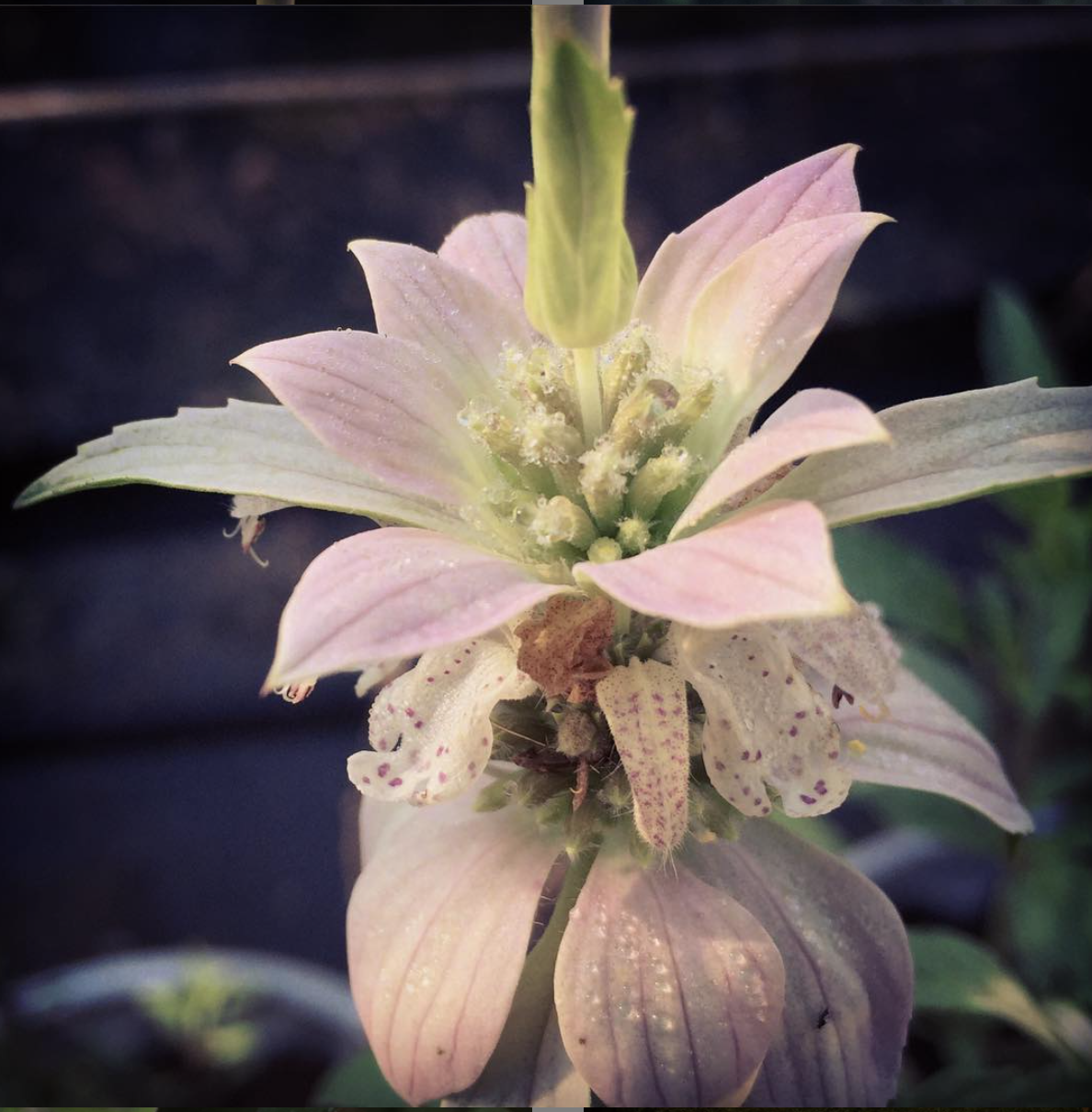
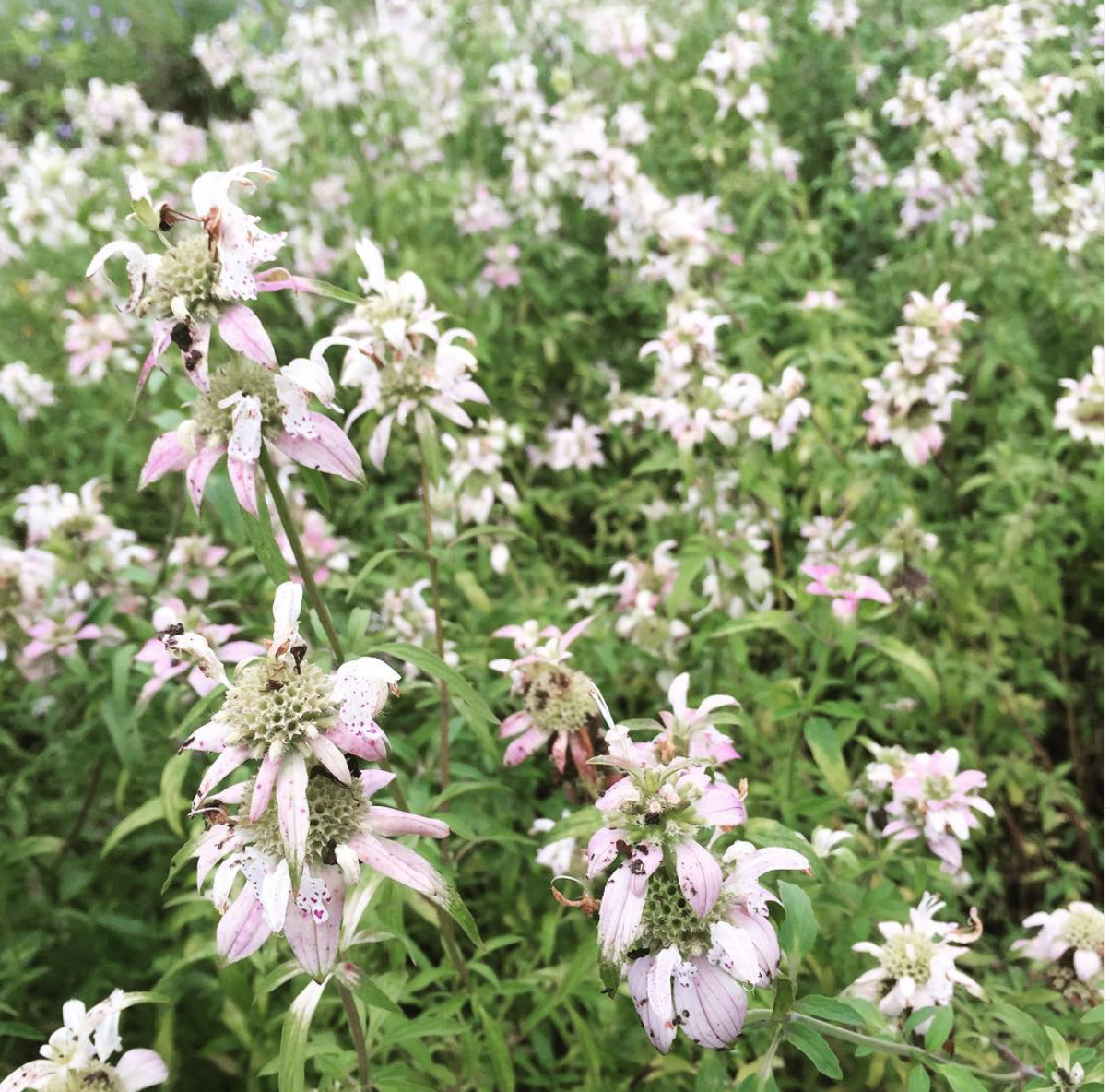
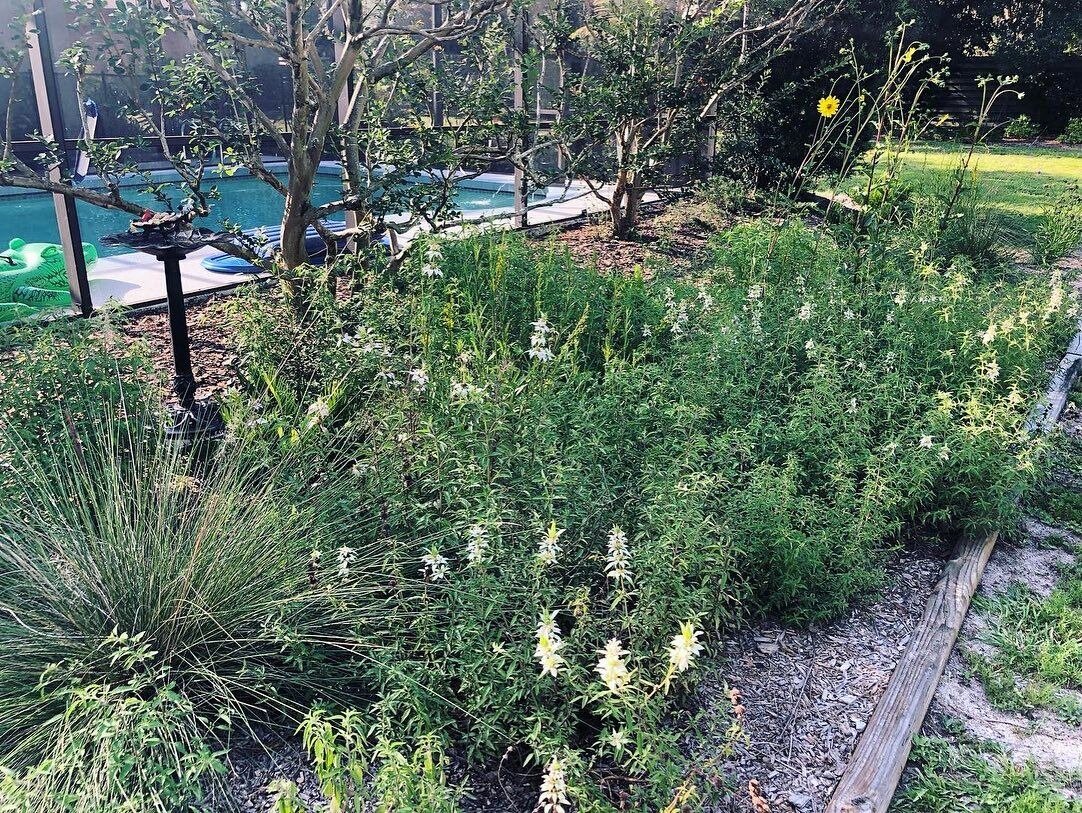
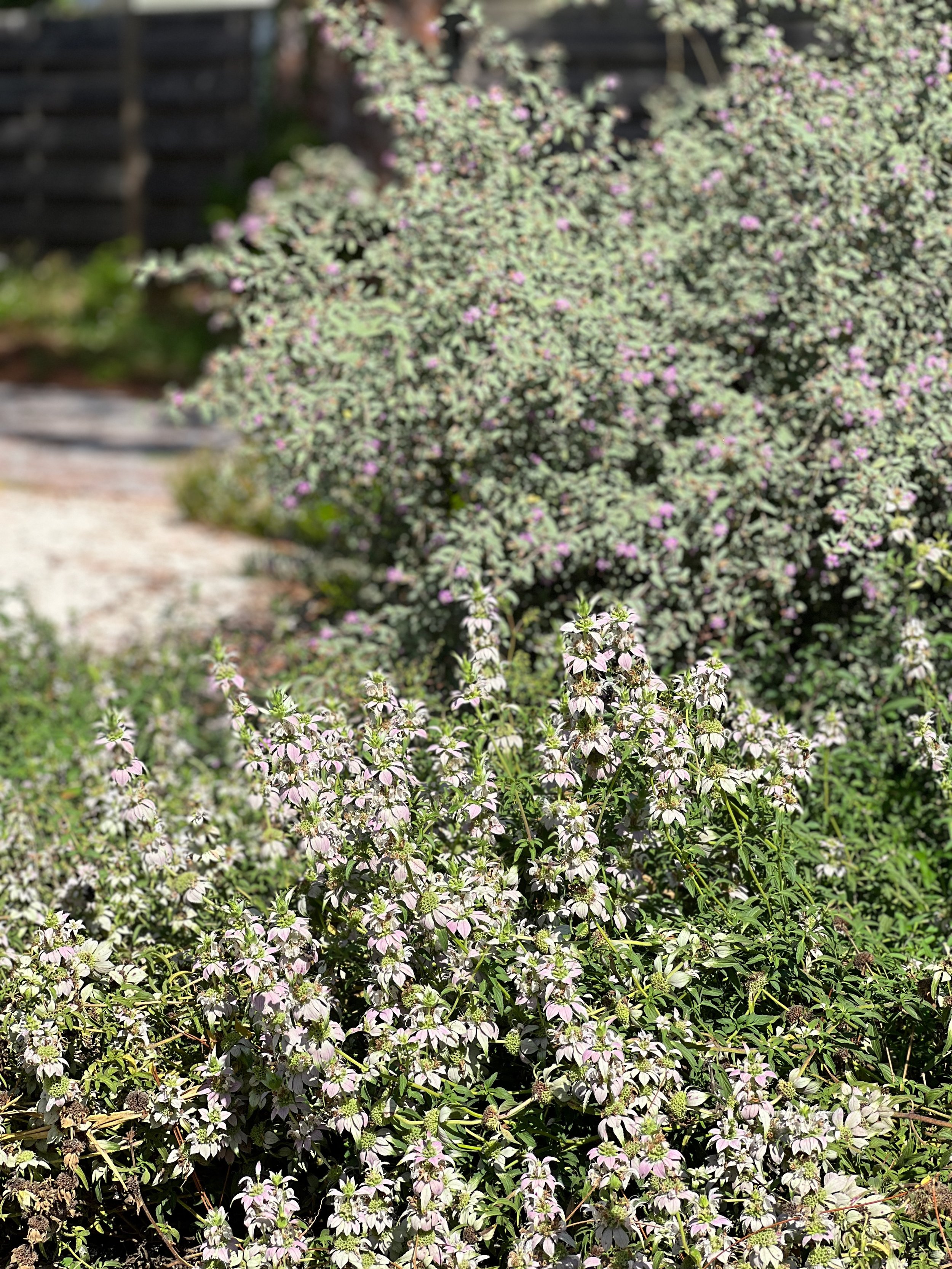
Monarda punctata
Also known as Dotted Horsemint, this perennial, re-seeding, native wildflower grows to about 2’-3’ in the average garden. It can thrive in full sun to light shade, in dry to moist (well-drained) soils, and has light pink to purple flowers from late spring through early fall. It’s aromatic and can be used as a culinary and medicinal herb in the kitchen. Spotted beebalm attracts numerous pollinators including our native bumblebees.
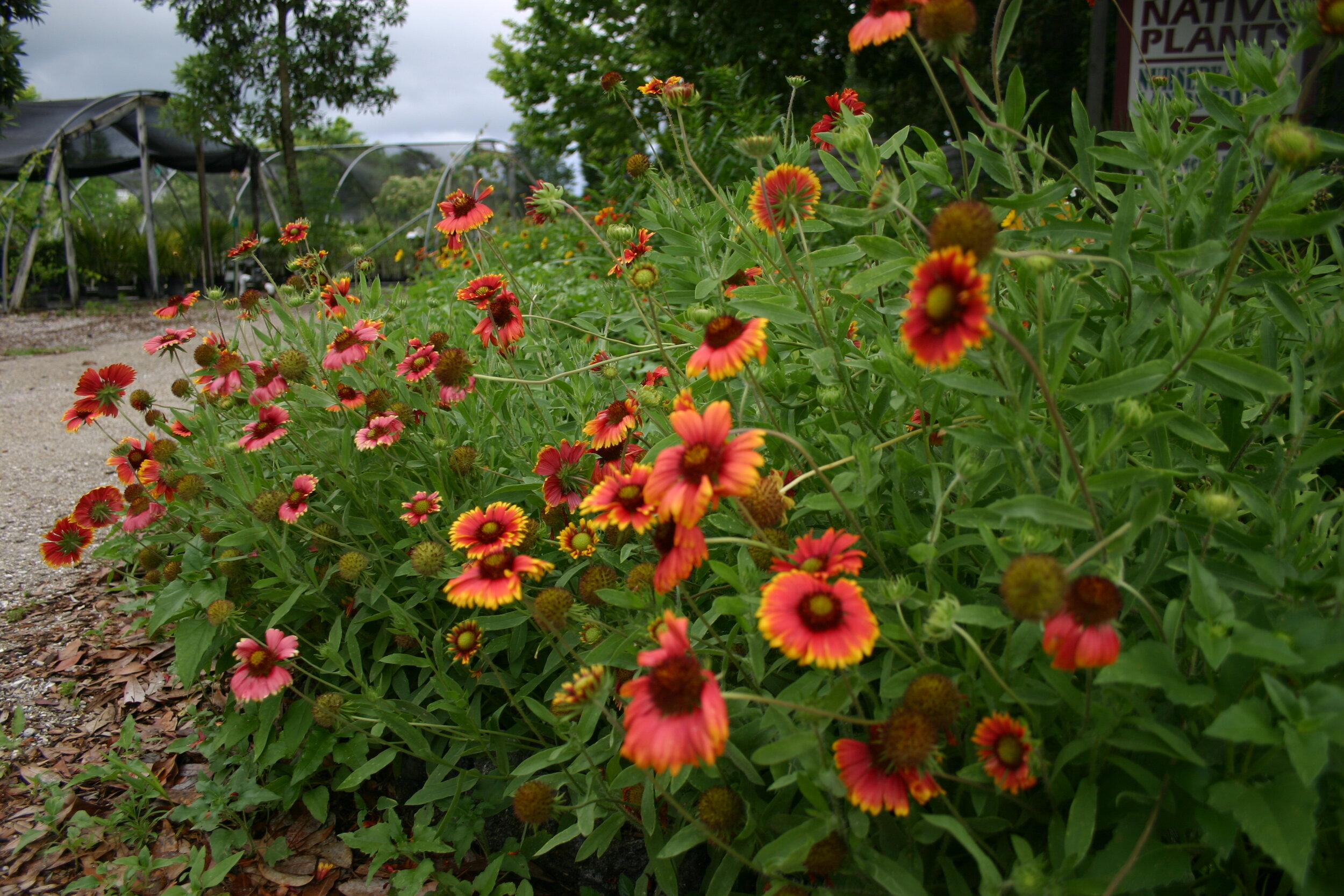

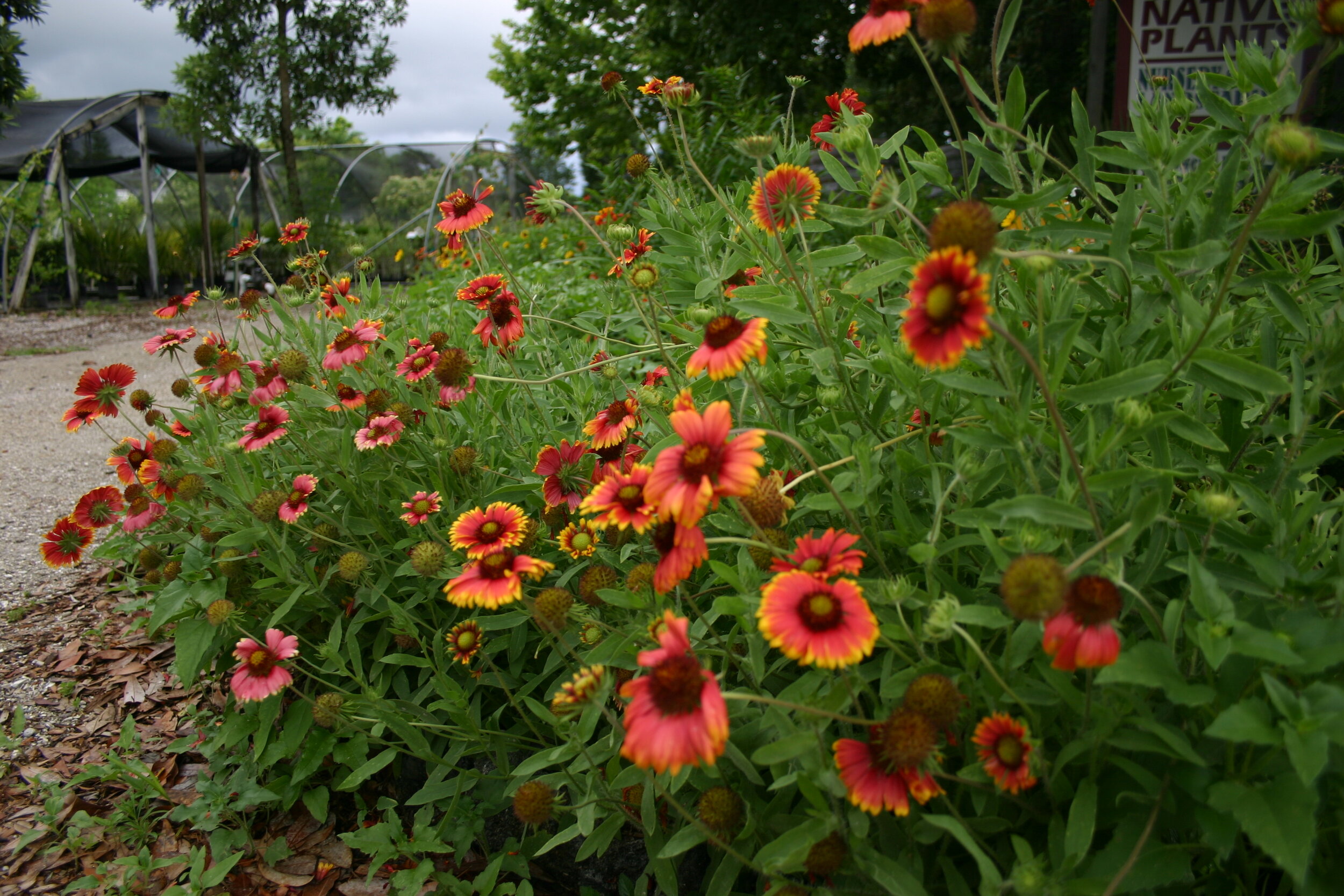
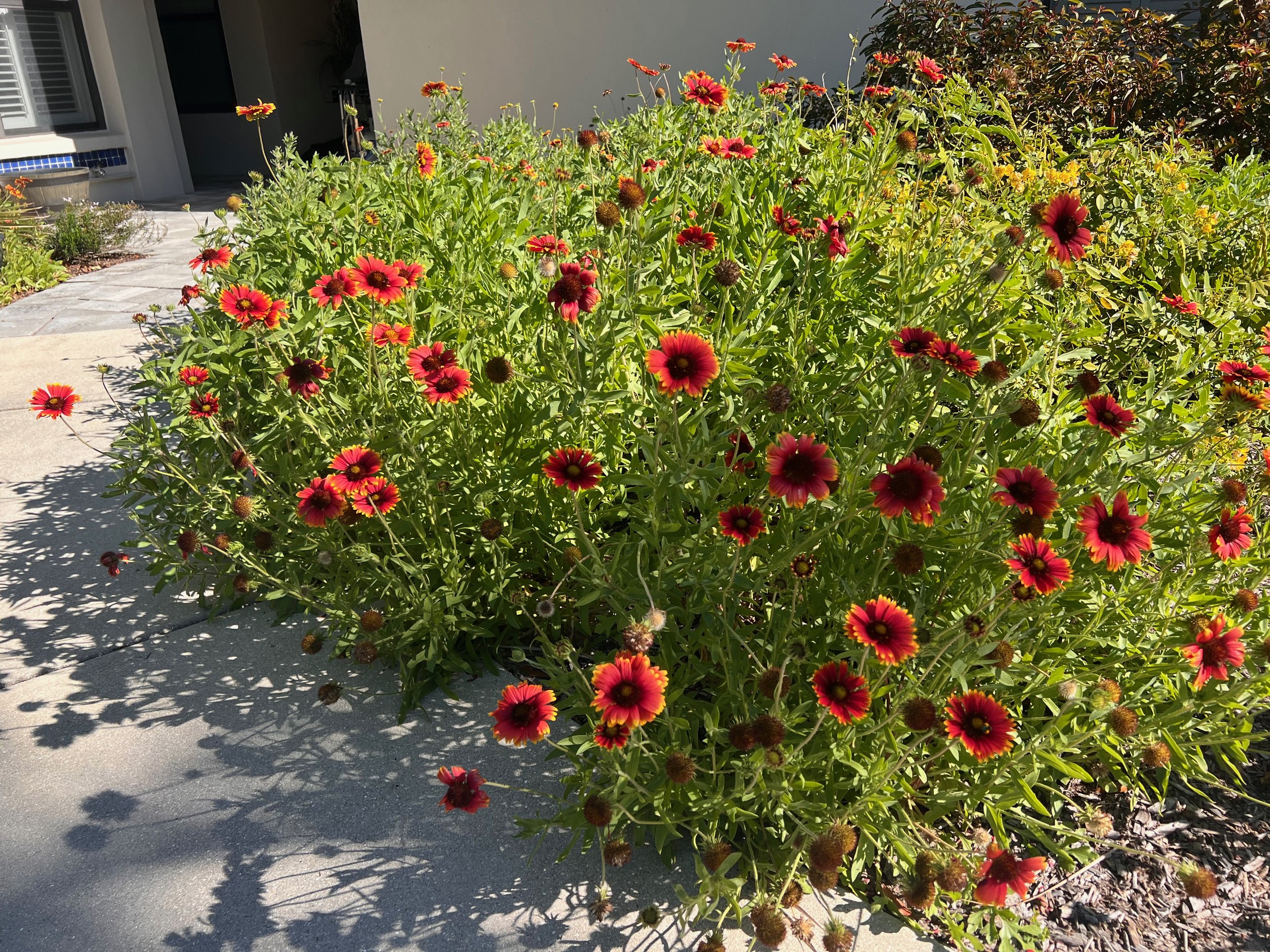
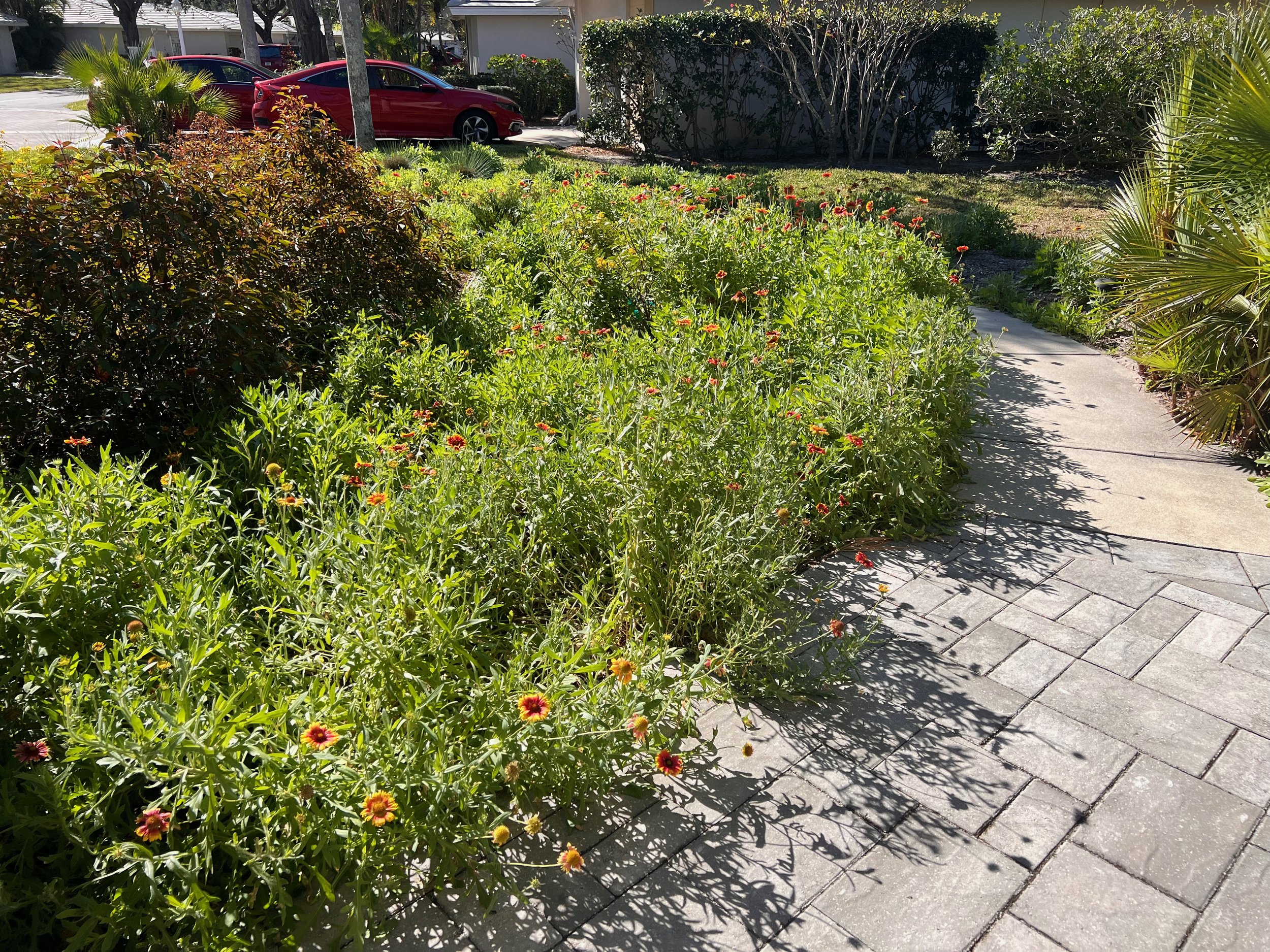
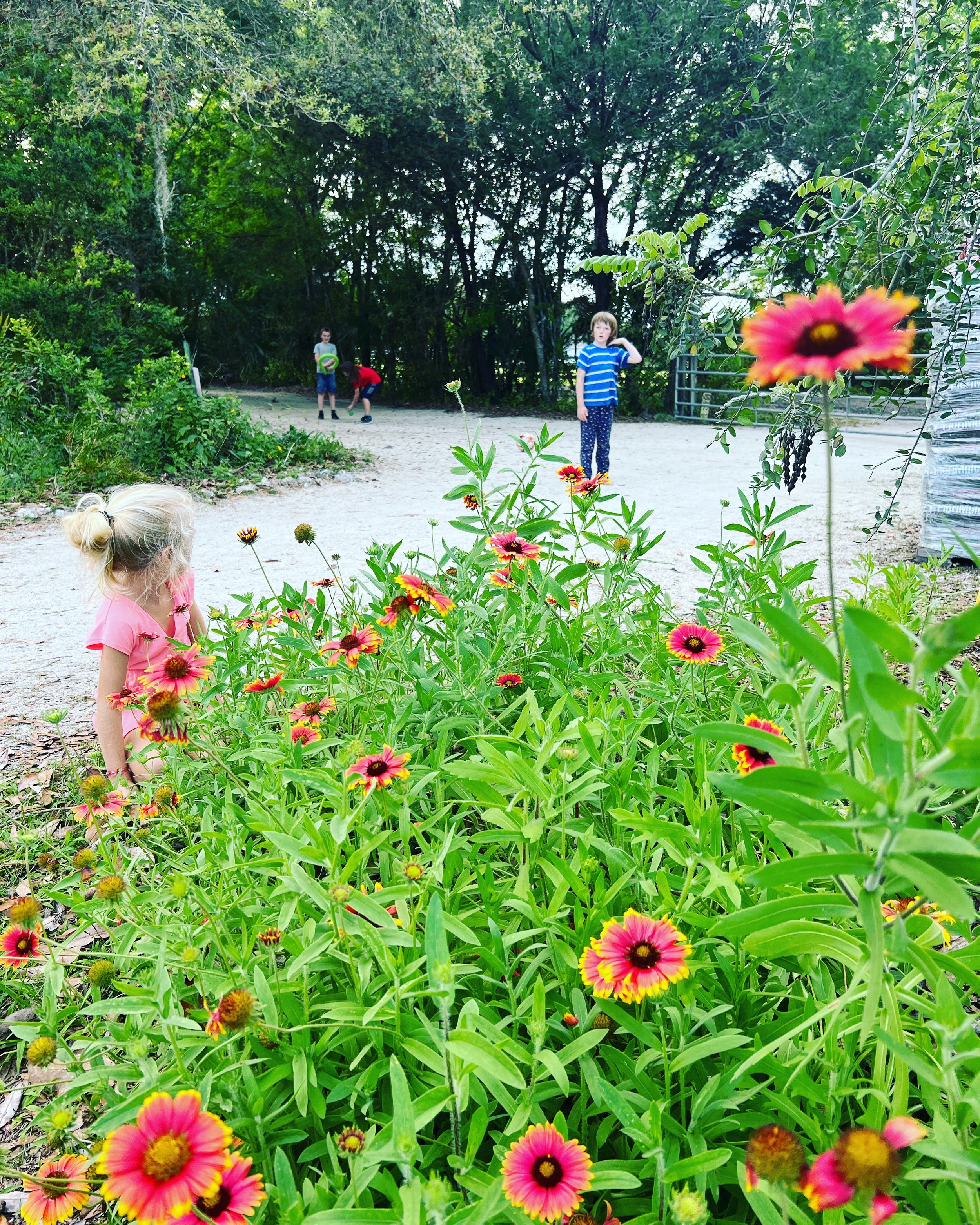
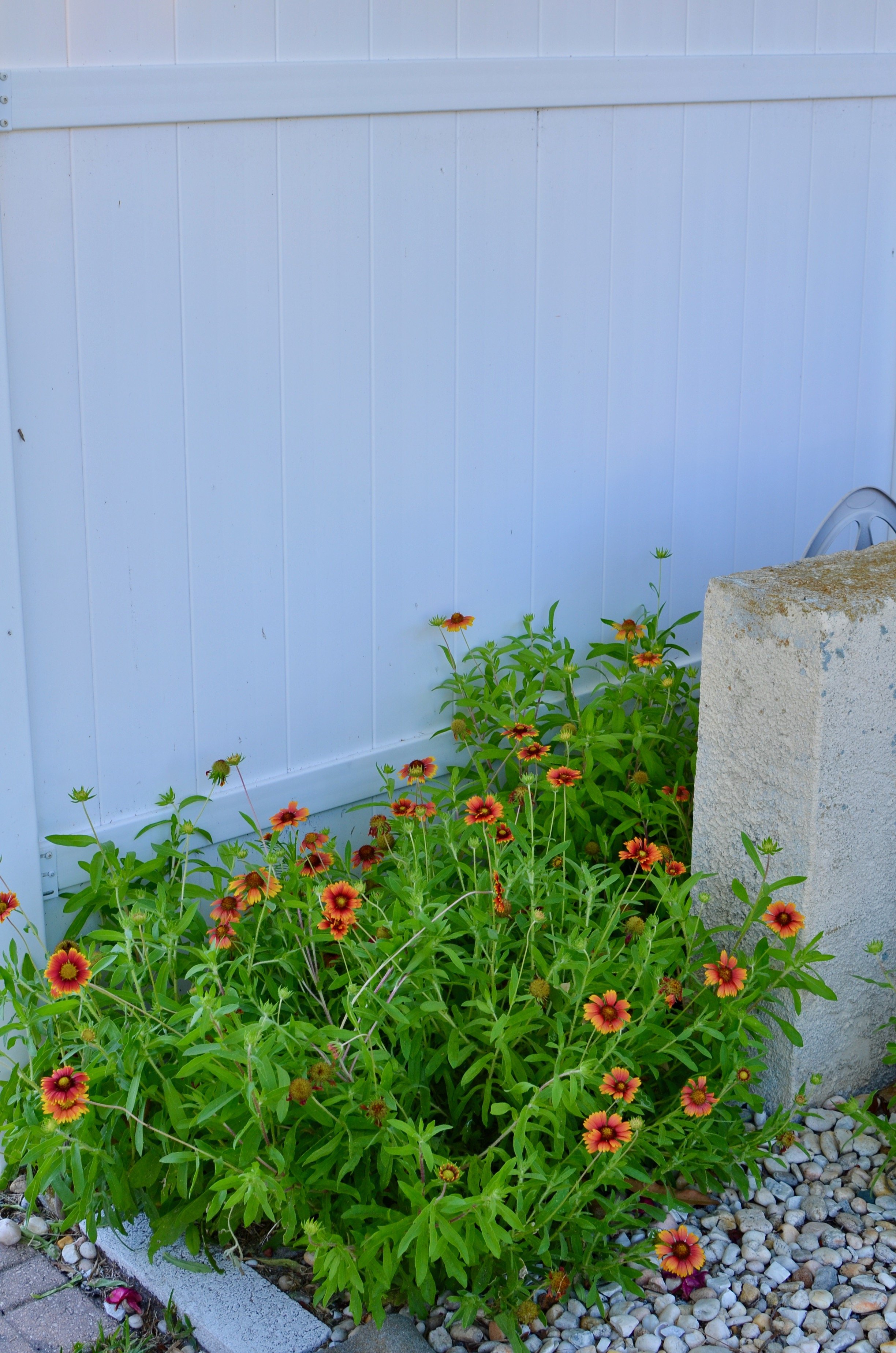
Gaillardia pulchella
Blanket Flower is a non-native, Florida-friendly wildflower that readily reseeds and spreads rapidly. Reaching 1’-2’ in height, they are a great source of nectar for bees and butterflies that bloom in the warm and hot months. They thrive in full sun and dry, sandy soil and are very drought and salt tolerant. Great for coastal applications and dry spots of a landscape as pops of red and yellow.
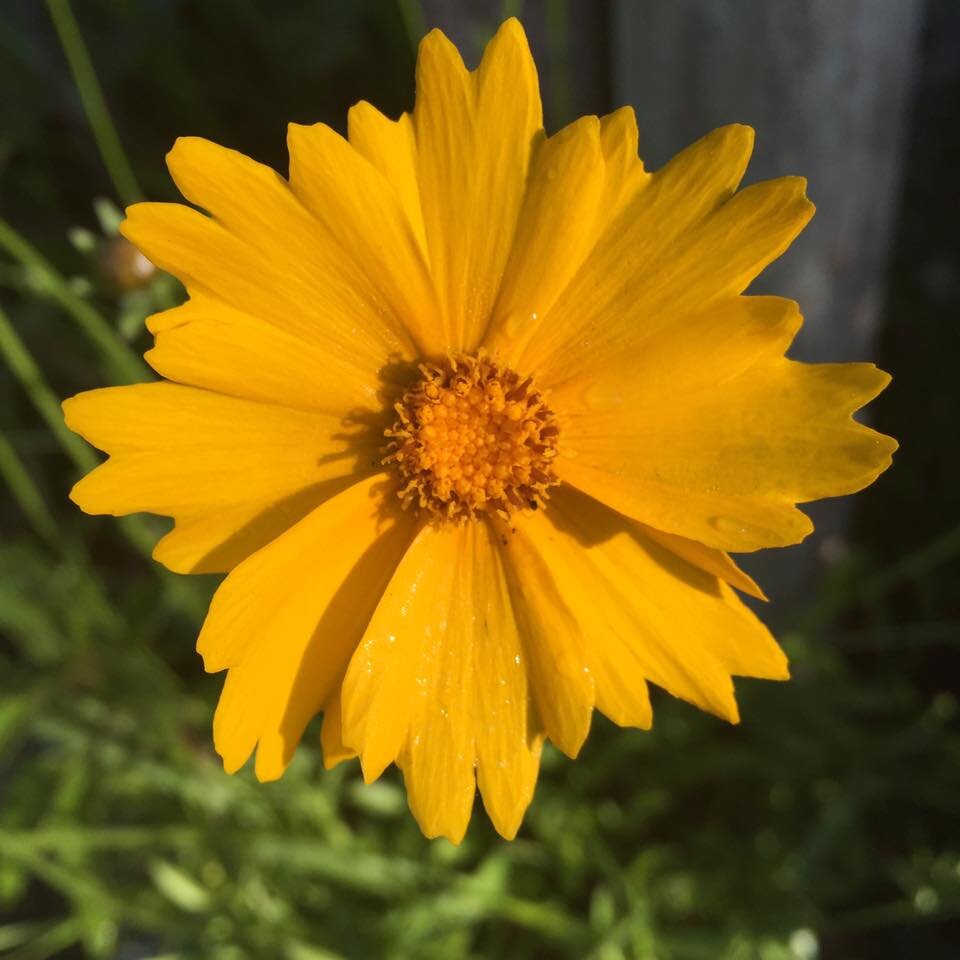

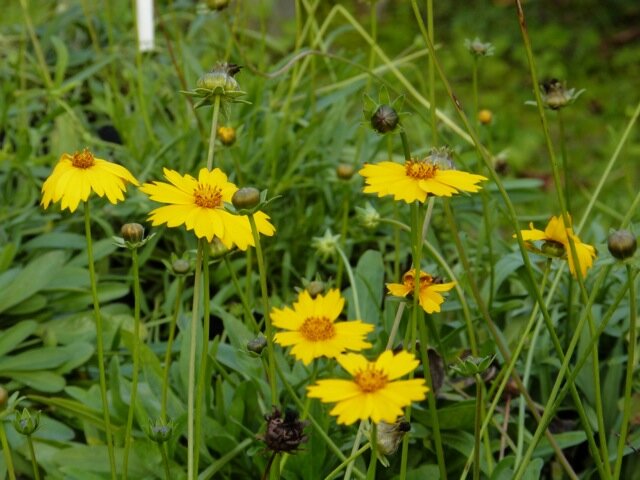
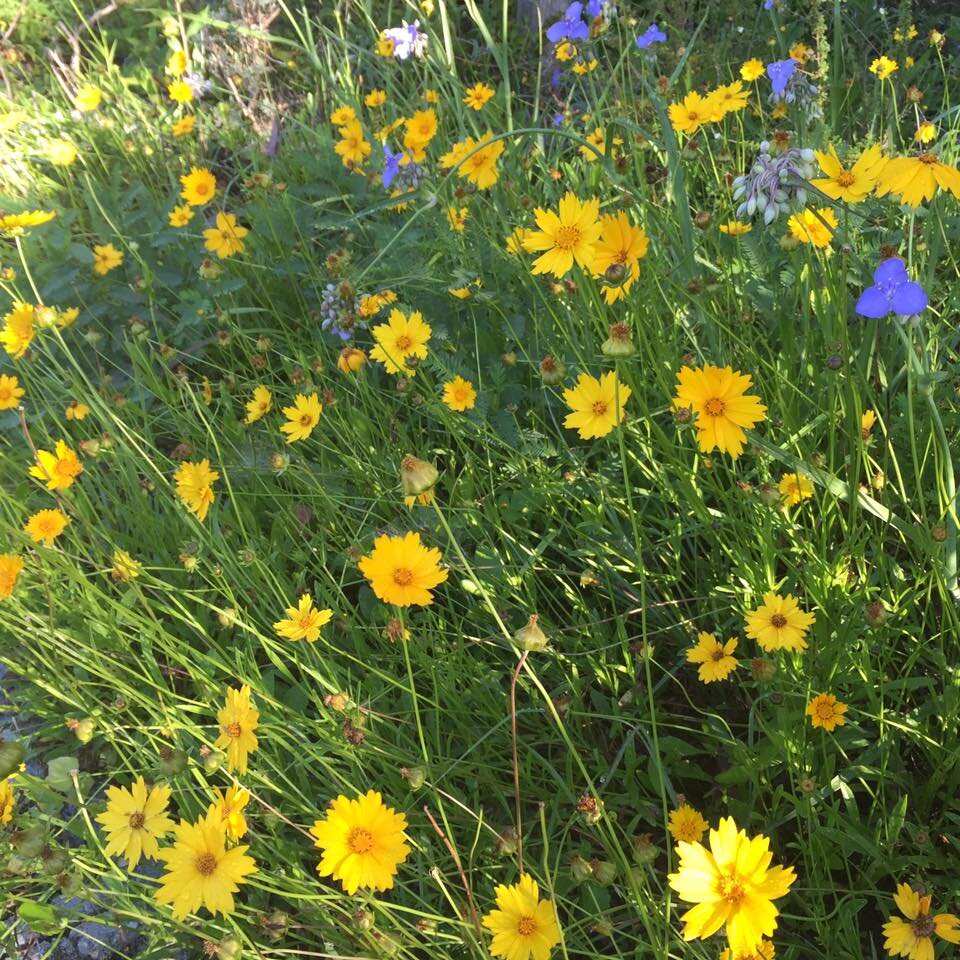
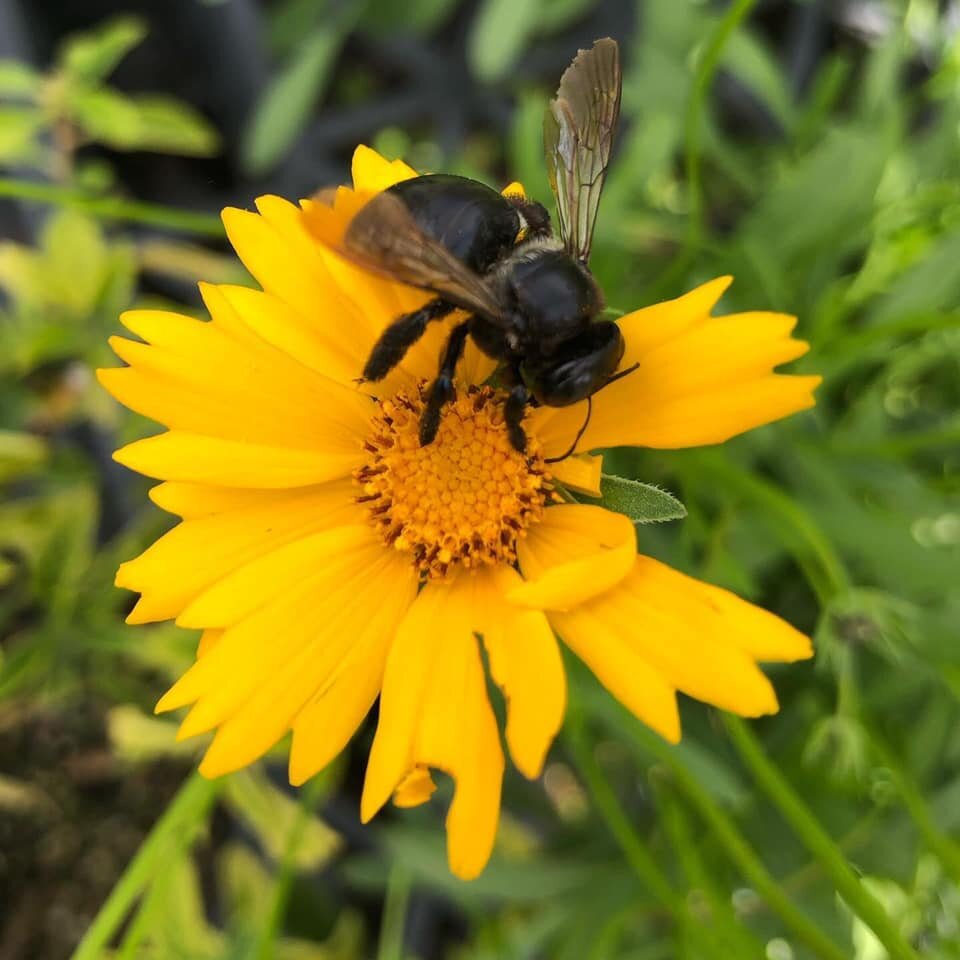
Coreopsis lanceolata
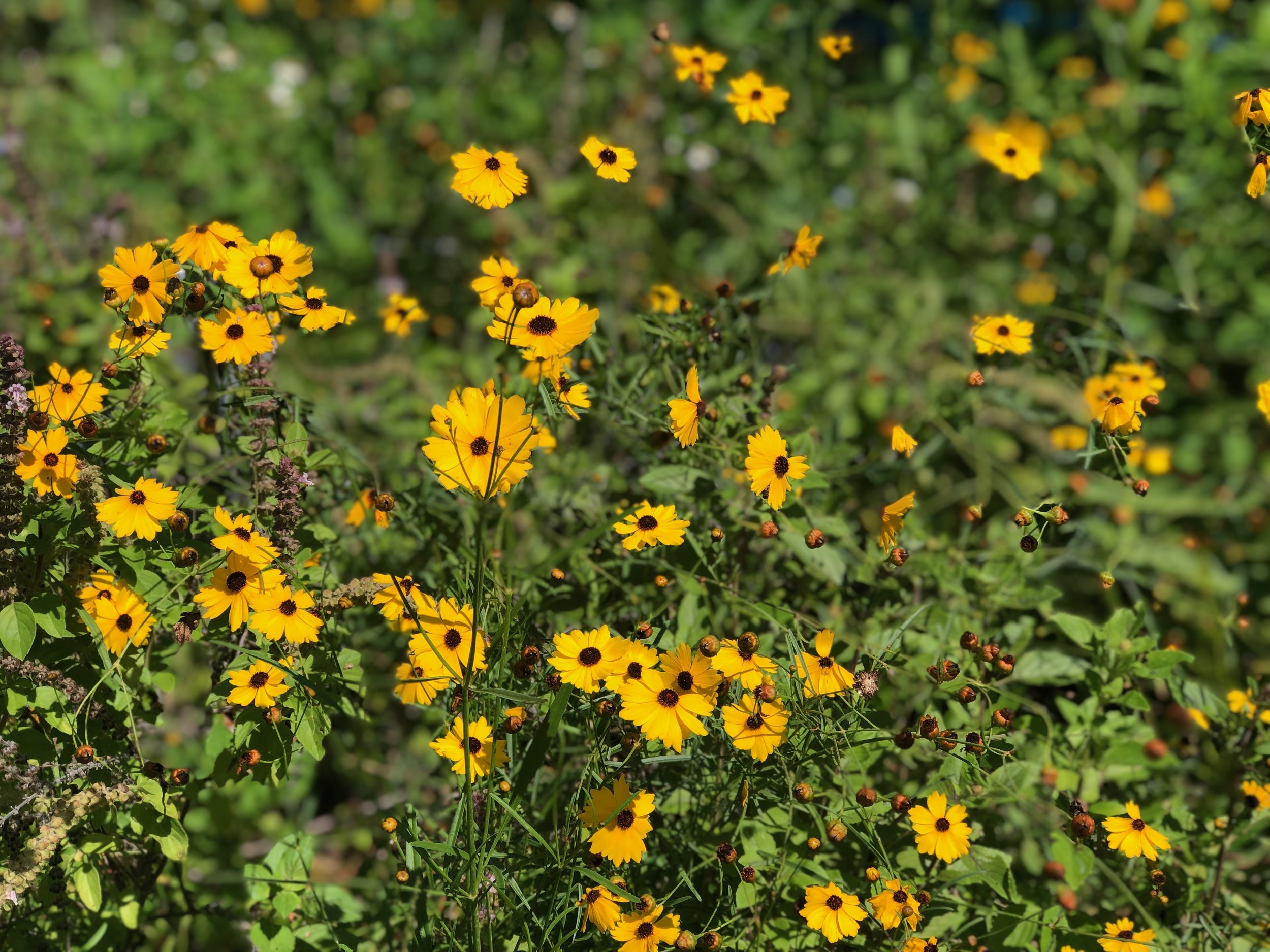
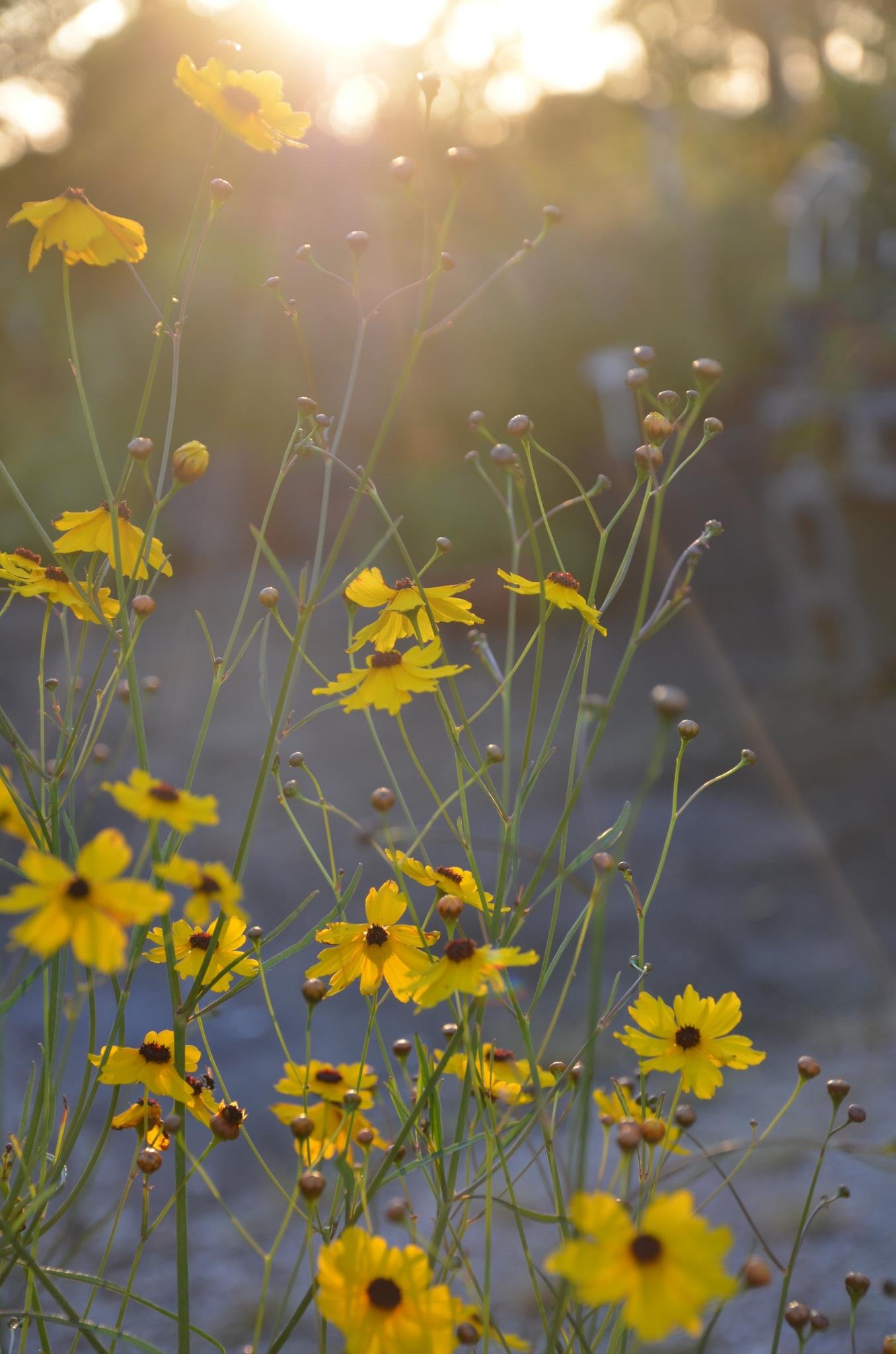
Tickseed is the Florida State Wildflower. Lanceleaf tickseed is a perennial and reseeding wildflower that likes sun to light shade, is 1-2 ft in height and likes average to dry soils. It’s bright yellow flowers attract butterflies and other pollinators mostly year round.
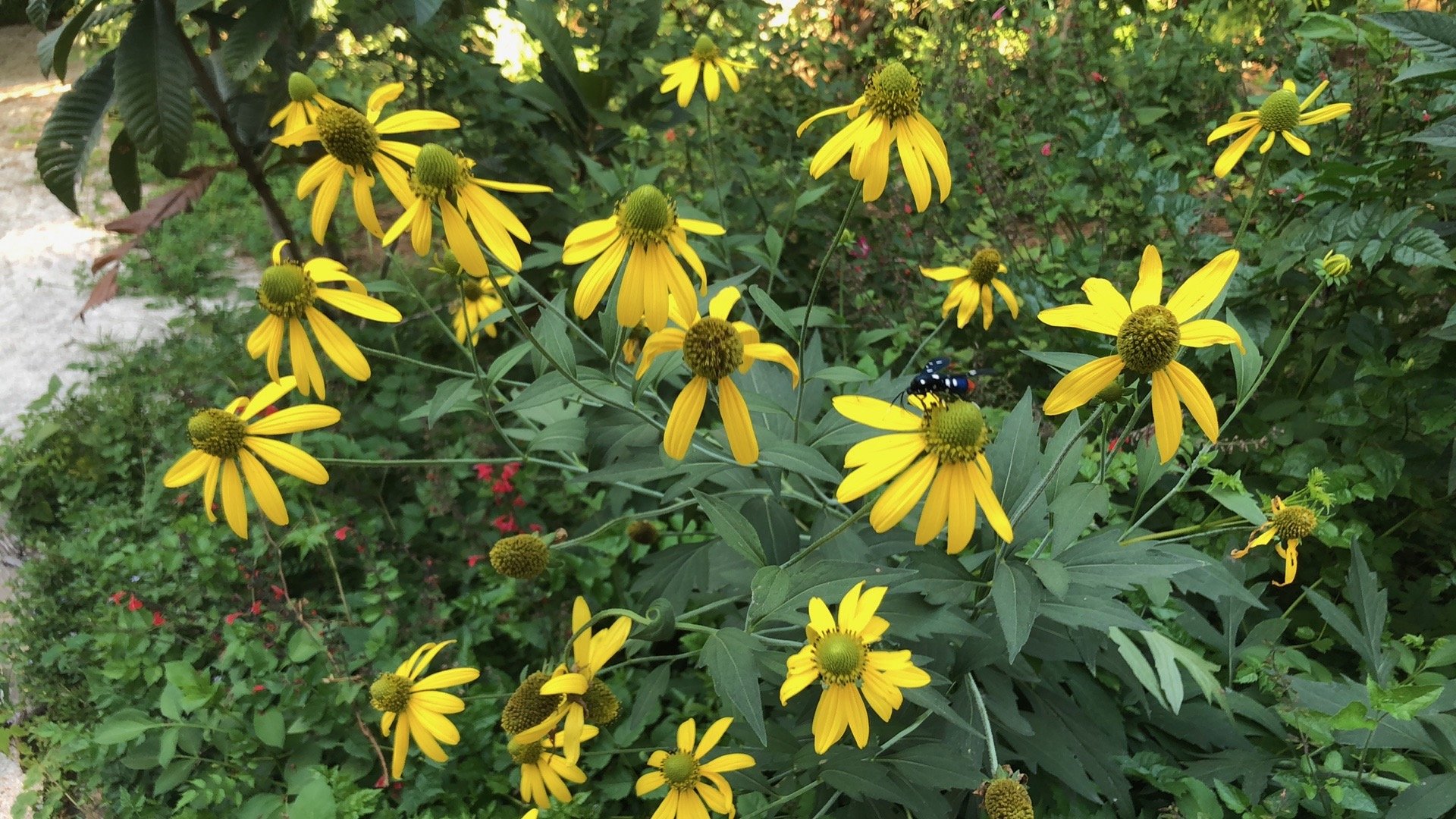
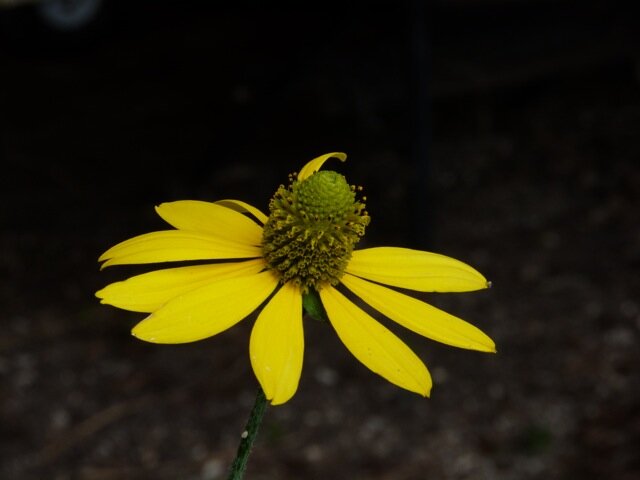
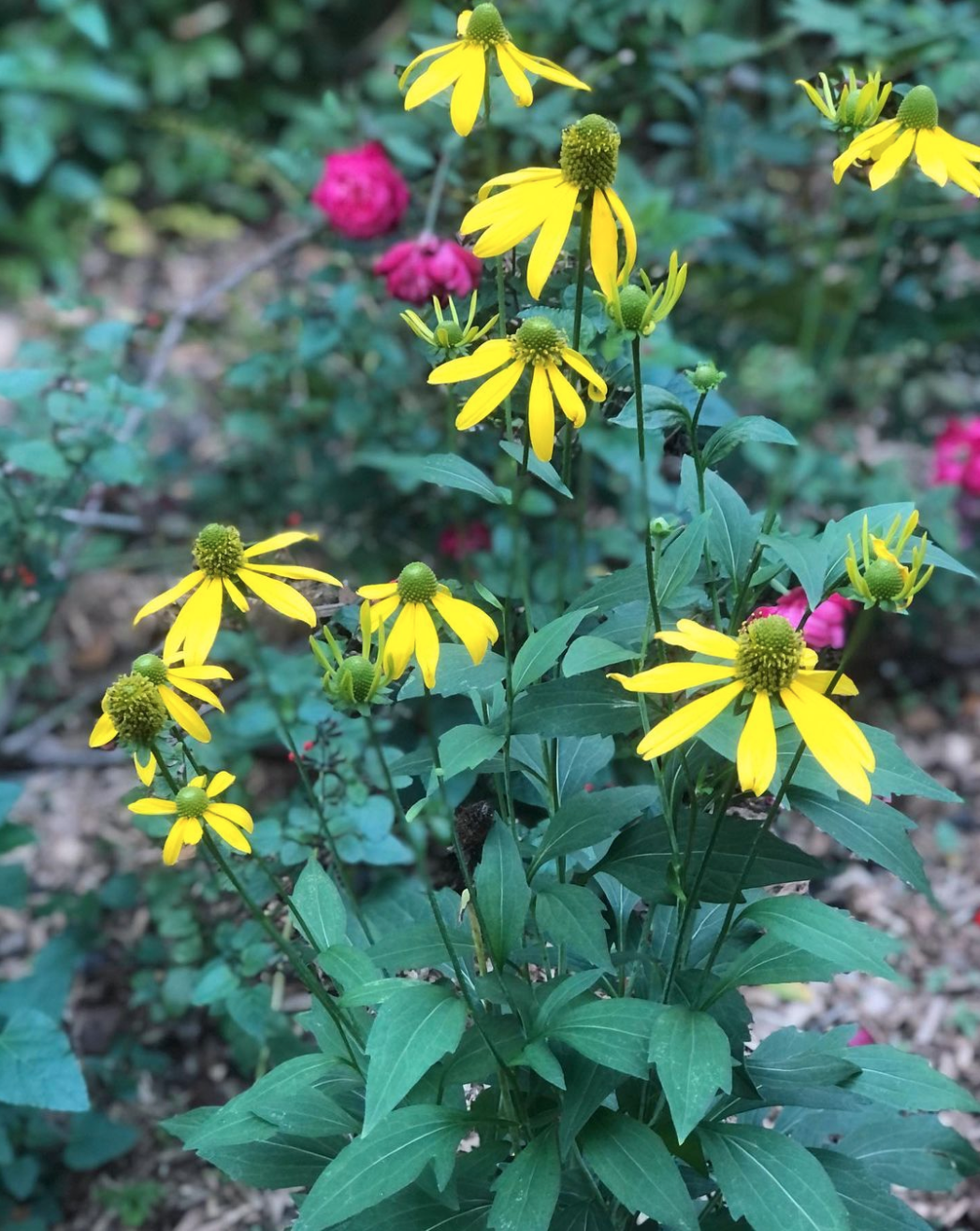
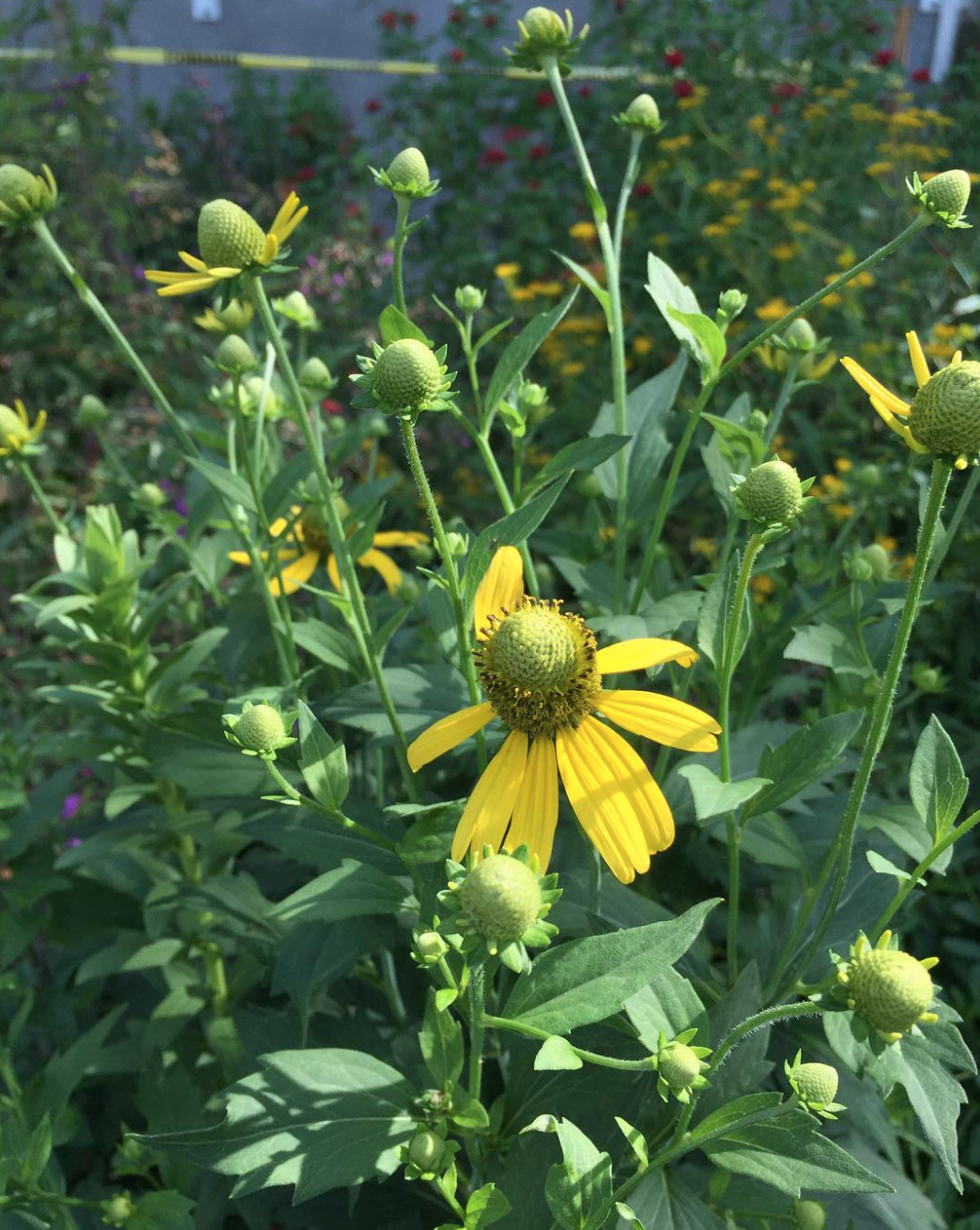
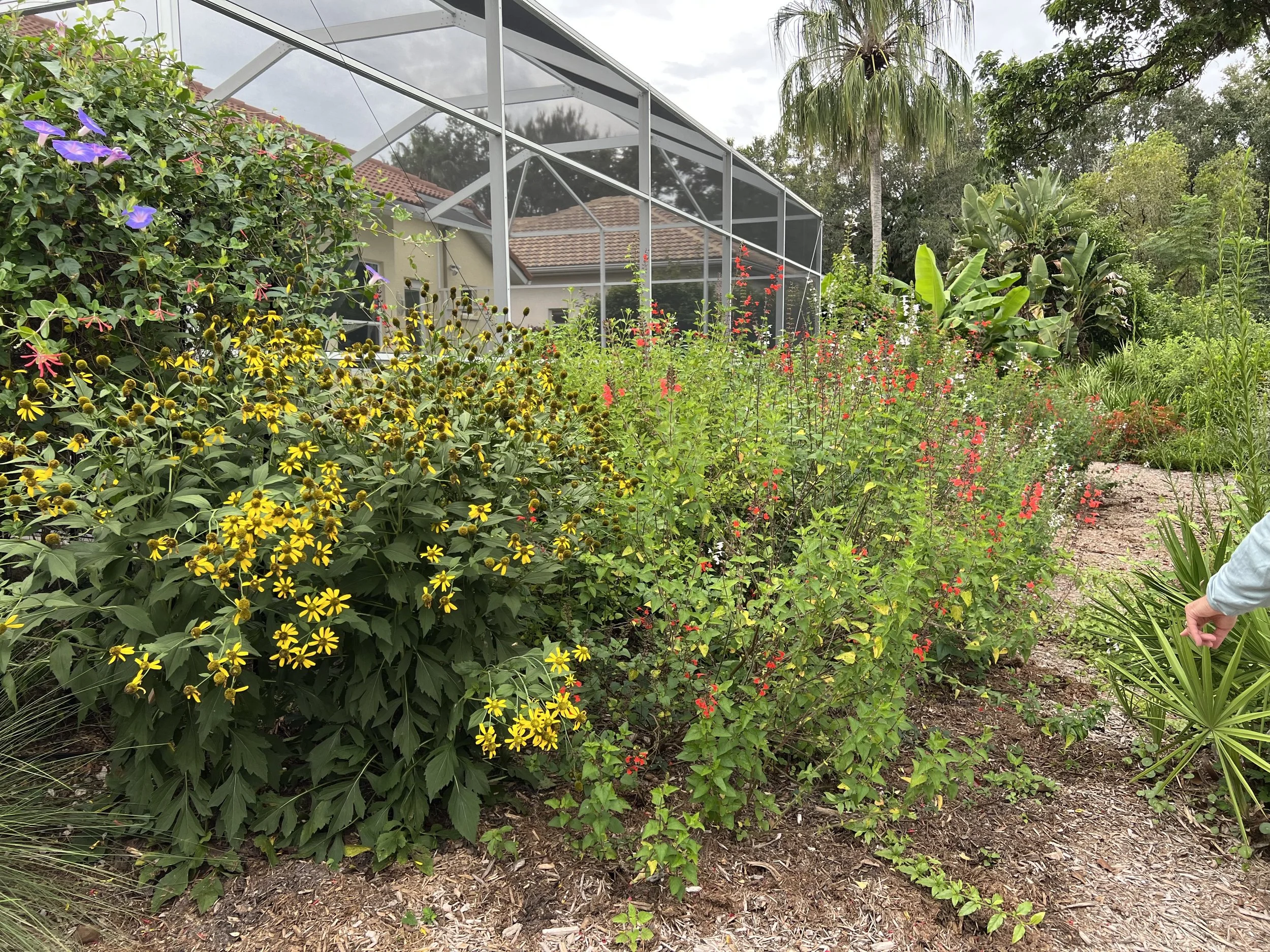
Rudbeckia laciniata
A cold-hardy, reseeding perennial that thrives in light shade to shade. It is easily identified by its unique, deeply dissected basal leaves and bright yellow flowers with distinct green centers. Reaching 2–3 feet in height, it blooms from summer through fall, providing a consistent source of nectar for butterflies and other pollinators. It prefers average to moist soil, making it a great addition to slightly damper or shadier spots in the landscape.
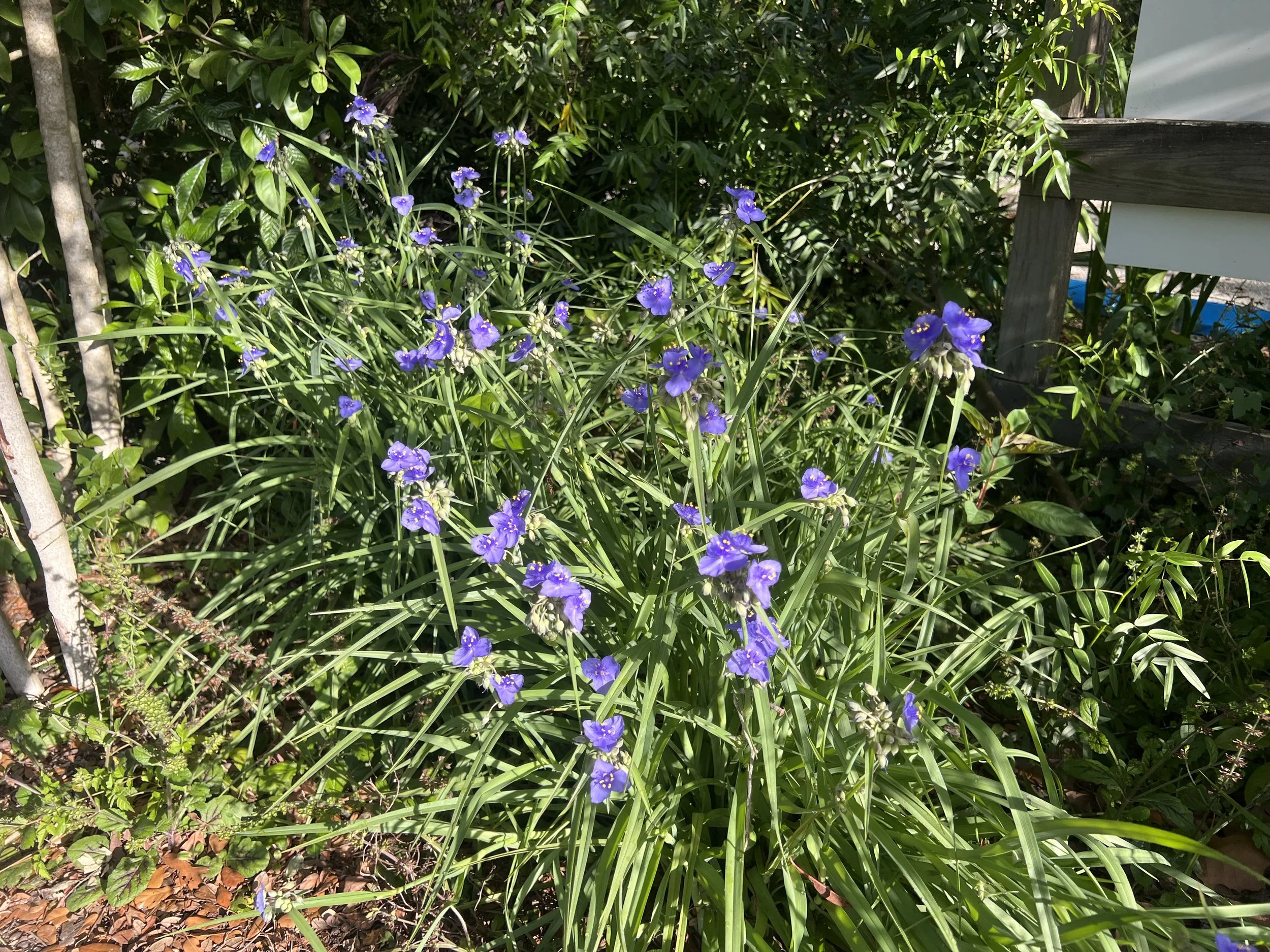
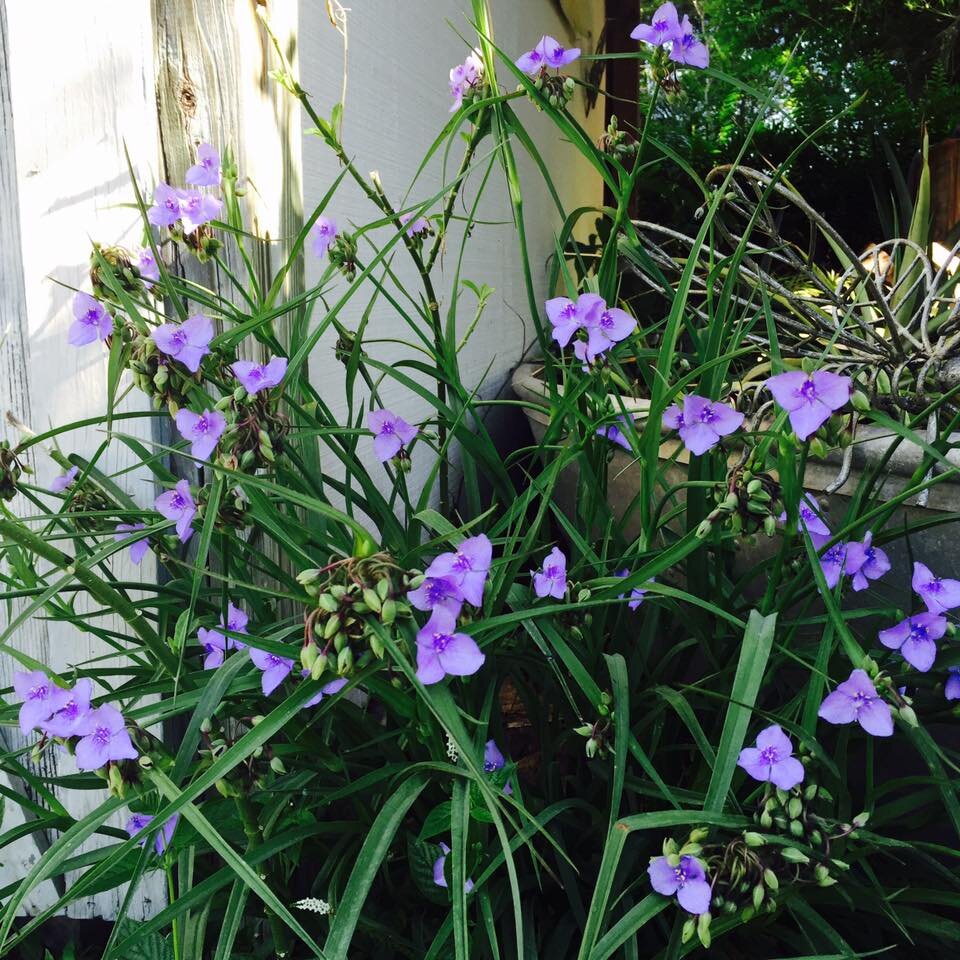
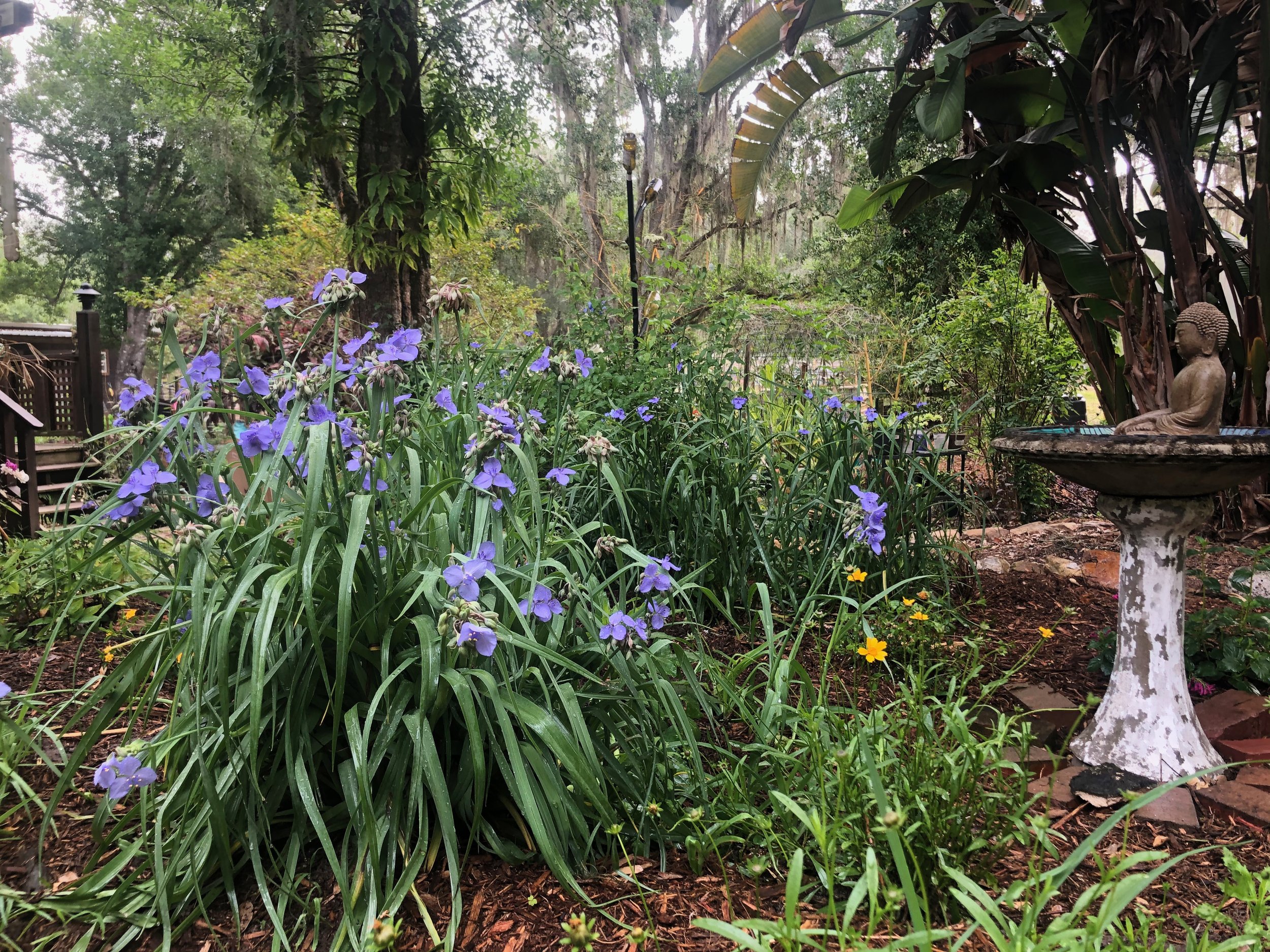
Tradescantia ohiensis
This commonly known wildflower is widespread across the east of the United States in woodlands and forests. It likes part sun to full sun with well-draining soils with average moisture and can grow 2’-4’. Its delicate blue flowers are a pop of color in any garden and attract a variety of native pollinators.
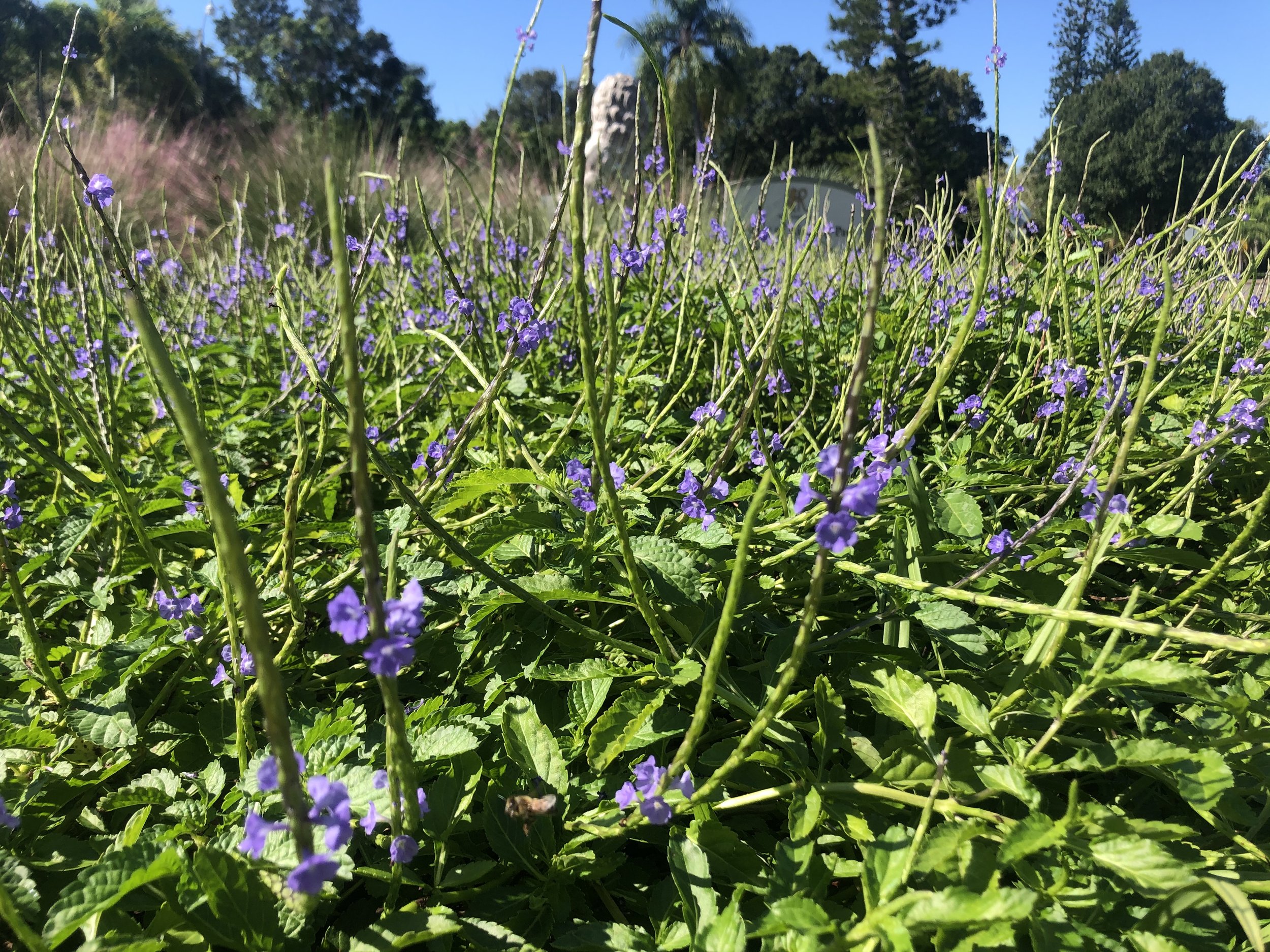

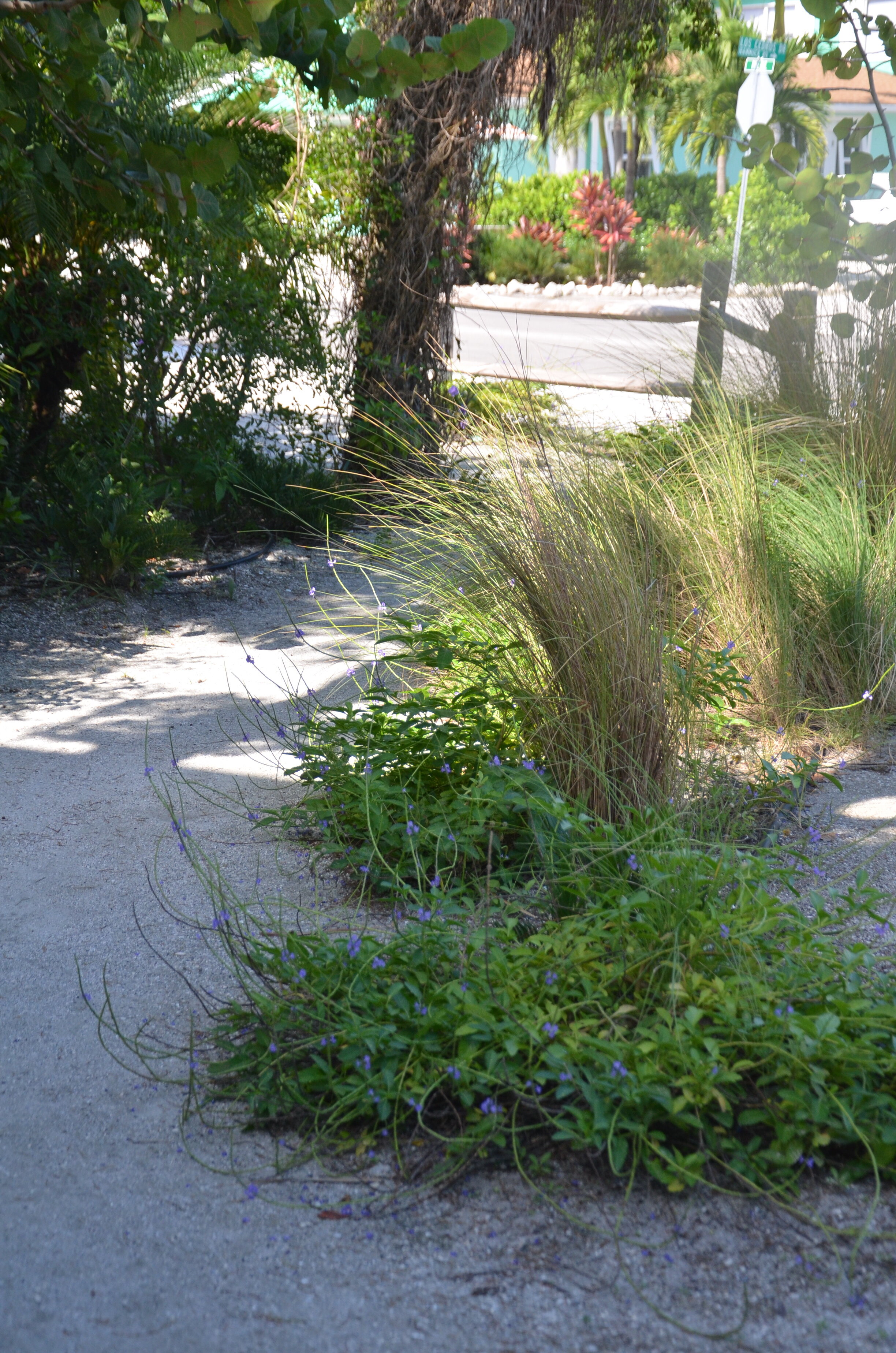
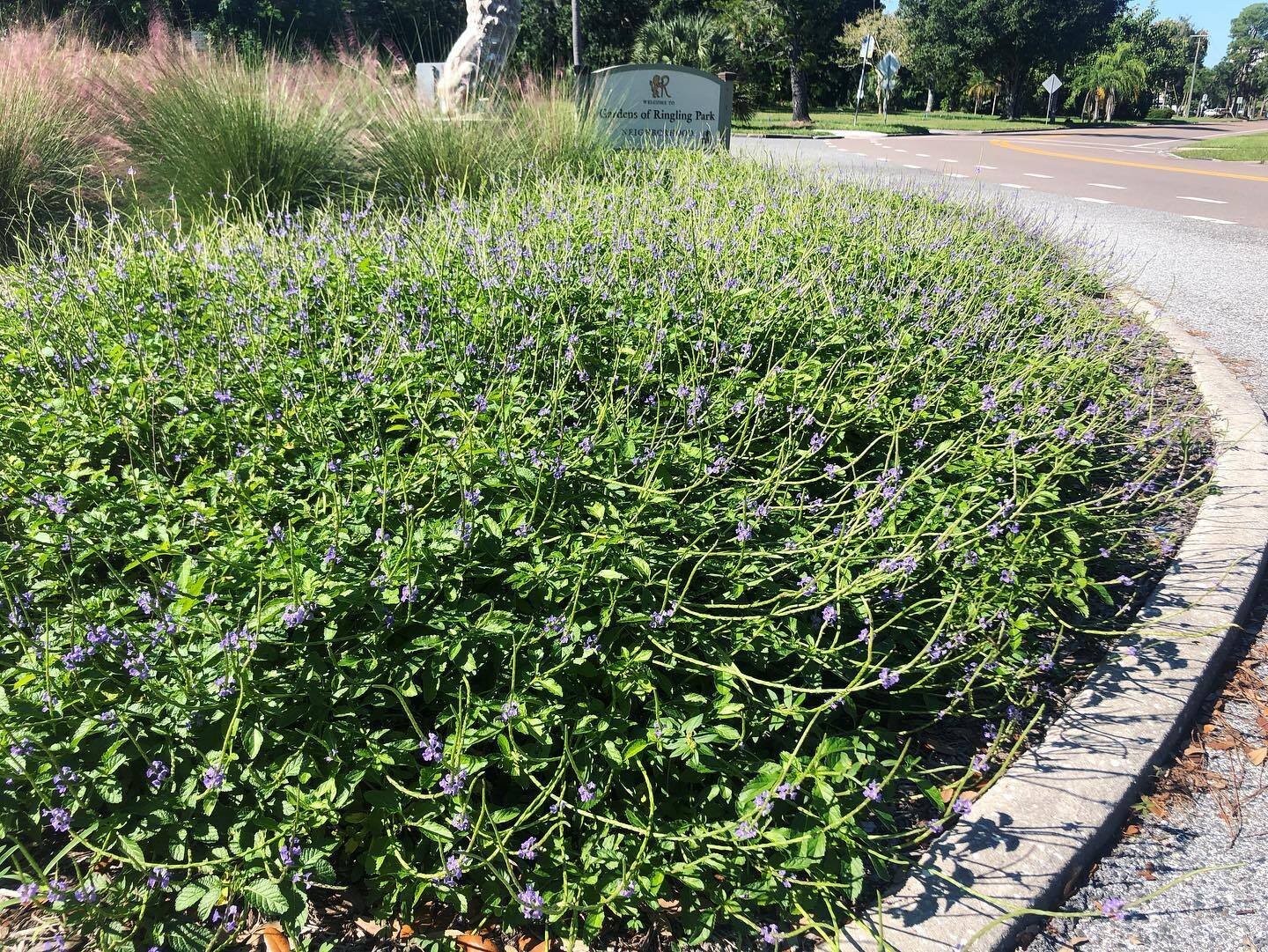
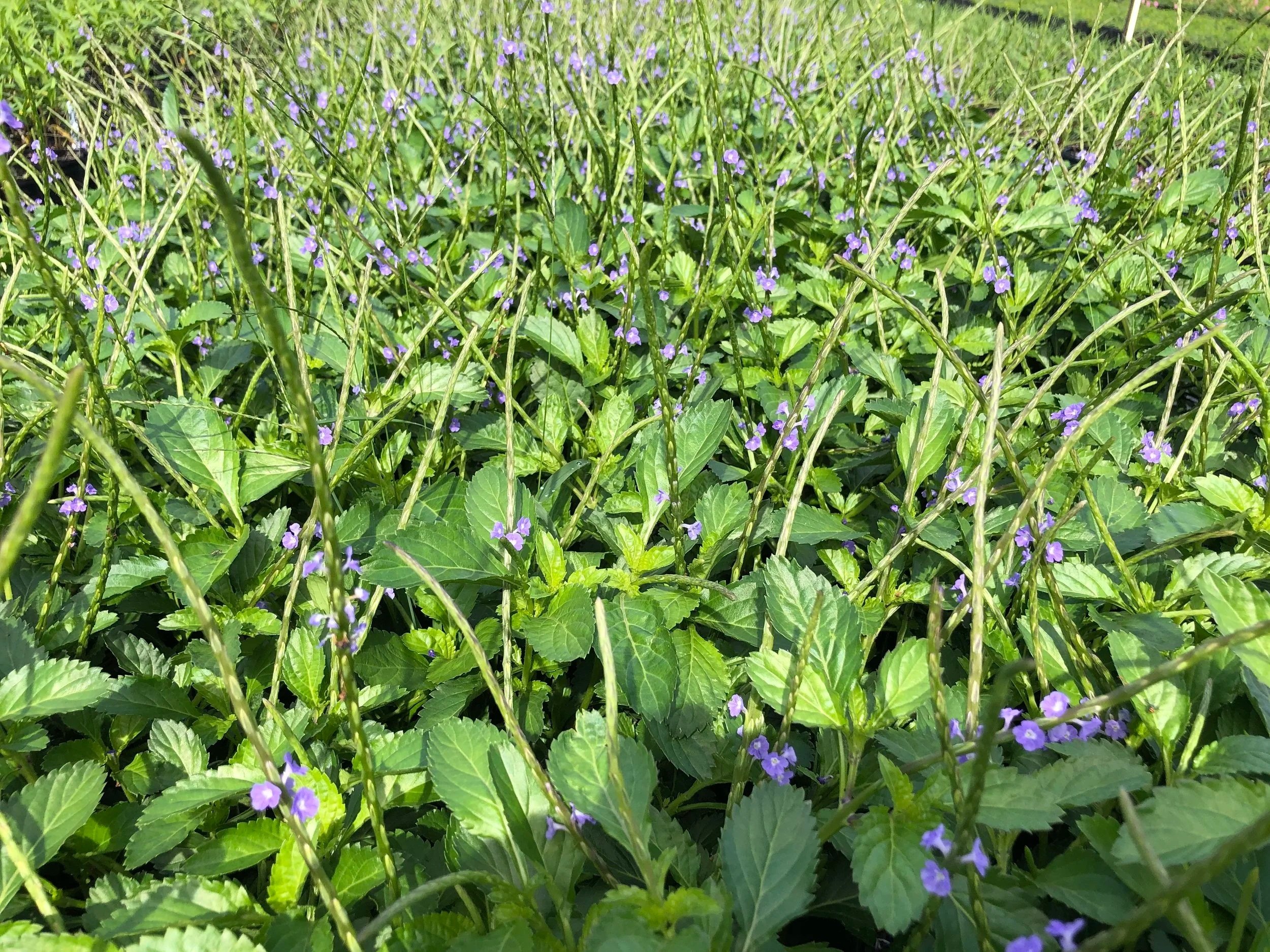
Stachytarpheta jamaicensis
Blue Porterweed is the only porterweed native to Florida. It is a low-growing plant, typically reaching 1 to 2 feet tall, that thrives in full sun or light shade. It is highly drought-tolerant and grows well in average to dry soils. This plant is a favorite for local wildlife. It serves as the primary food source for Tropical Buckeye caterpillars and provides nectar for many other butterflies and hummingbirds. Its unique, spike-like purple flowers bloom year-round, making it a reliable and attractive addition to any low-maintenance garden.
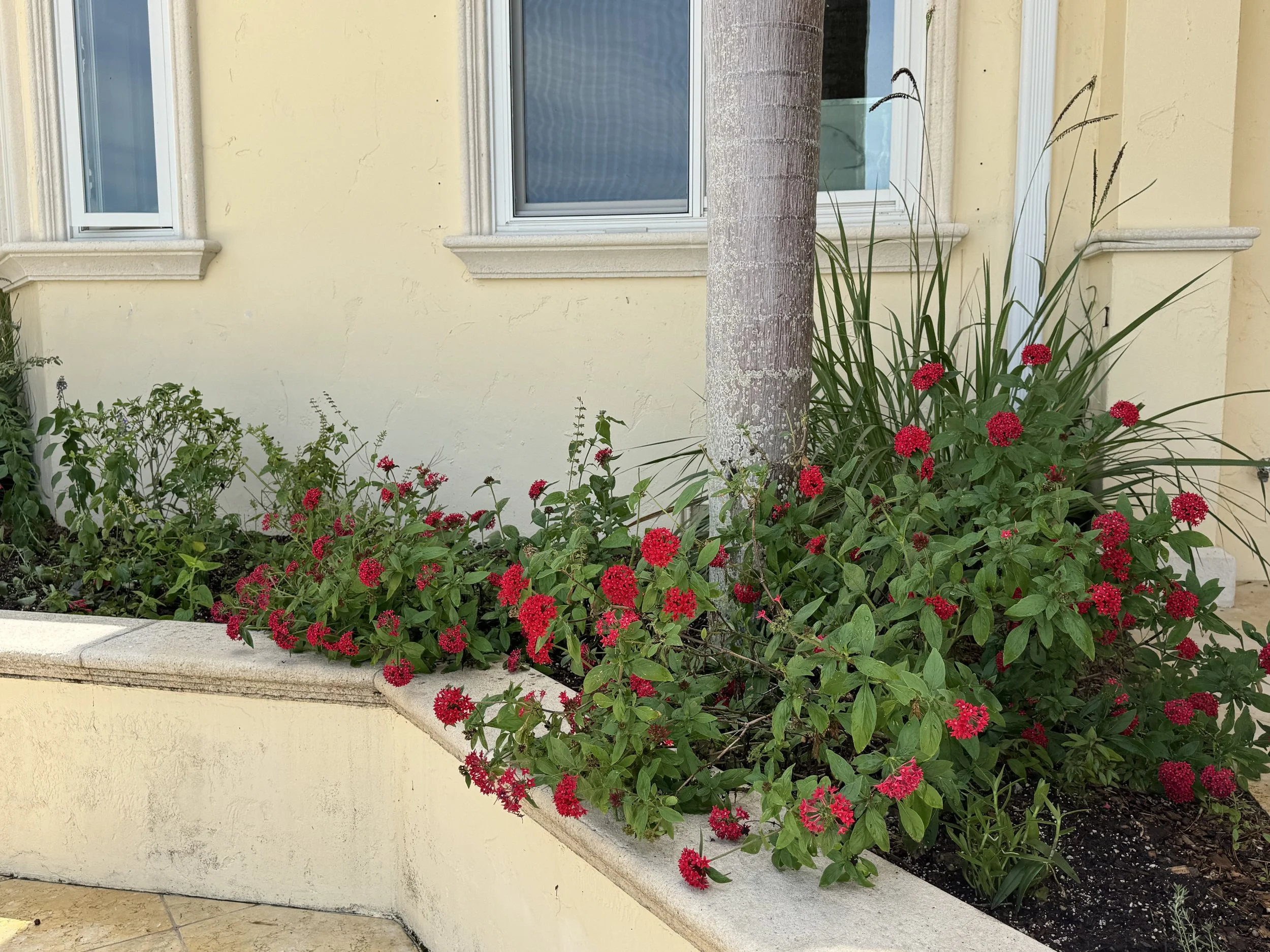
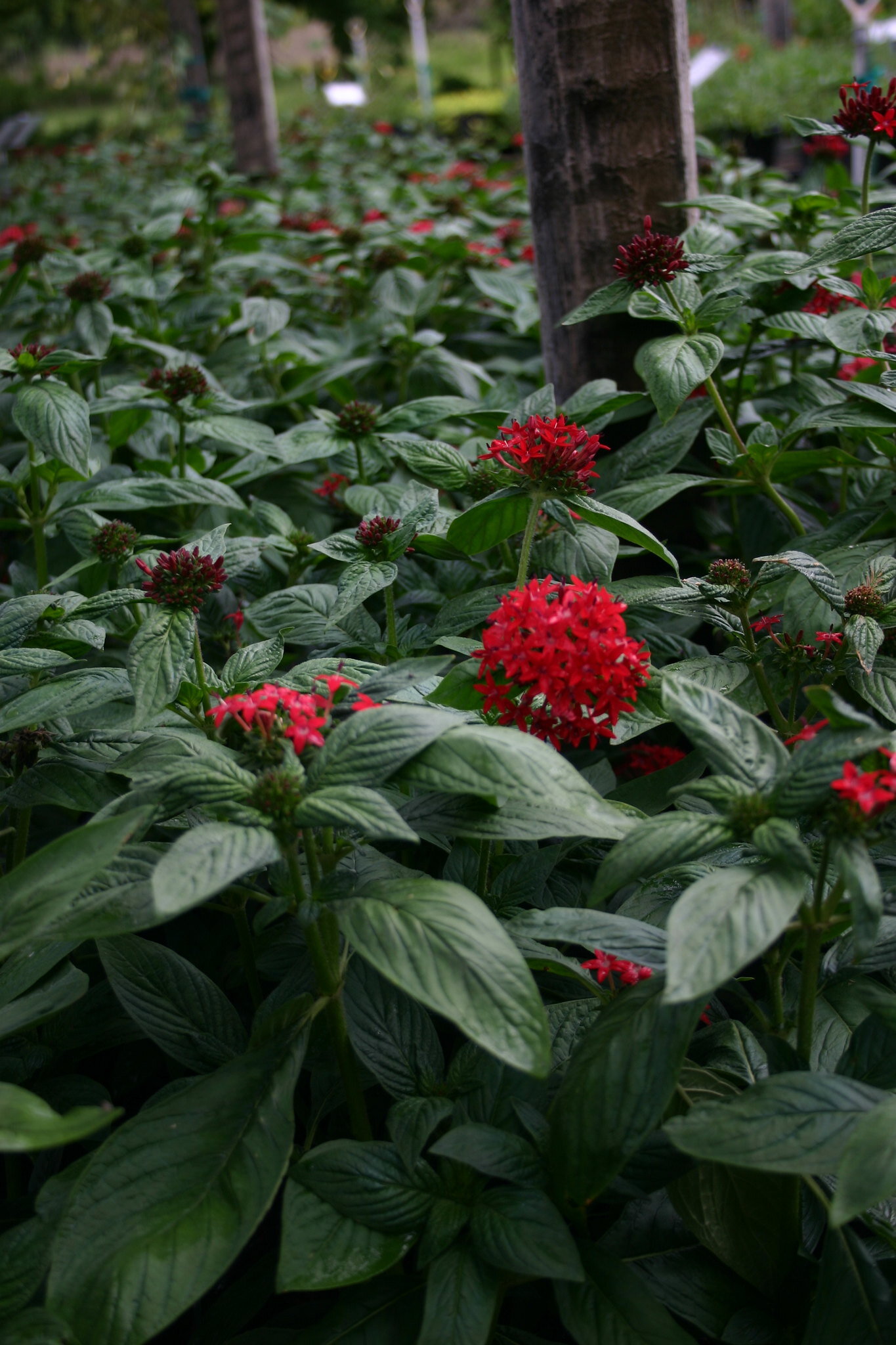
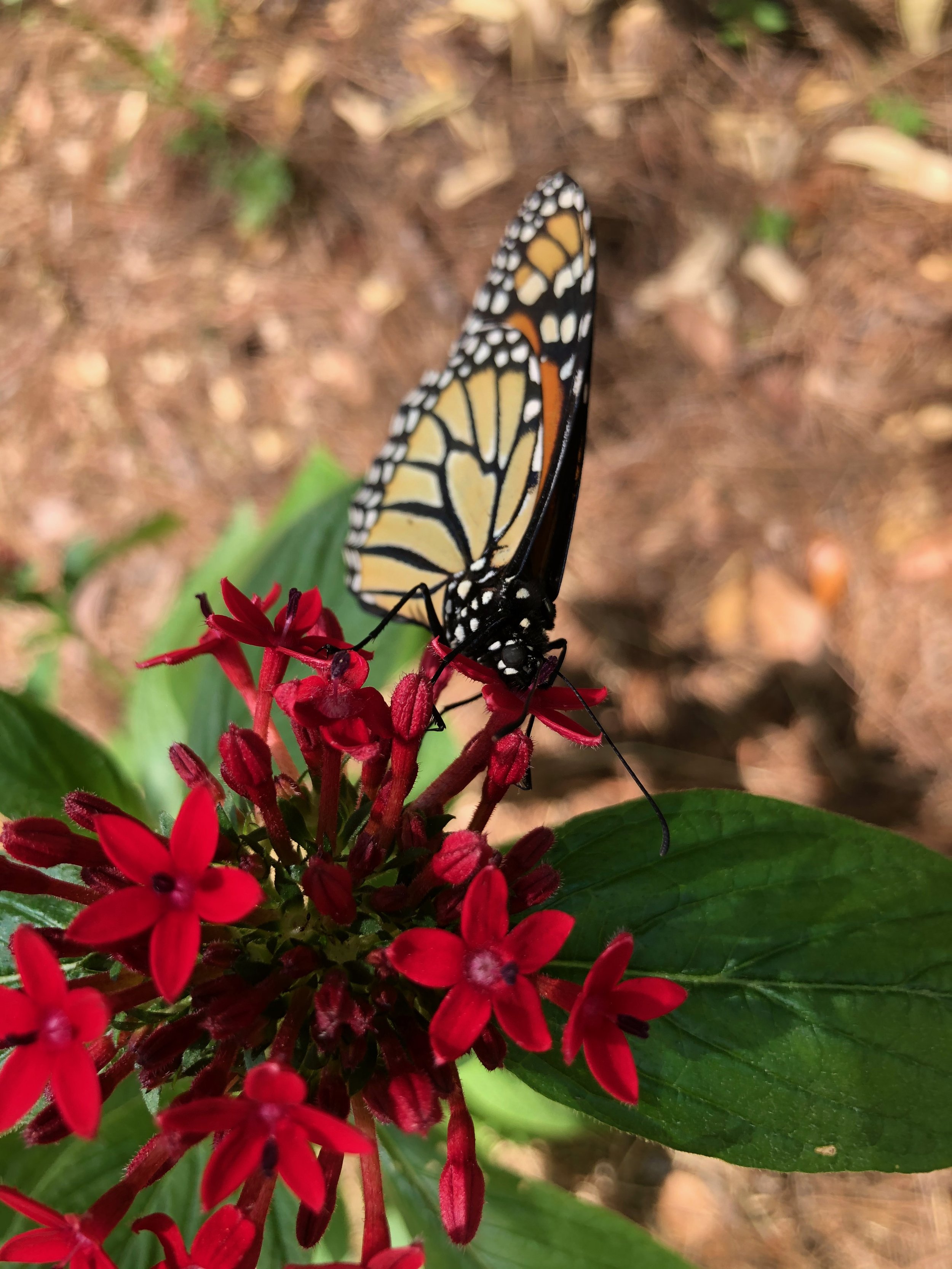
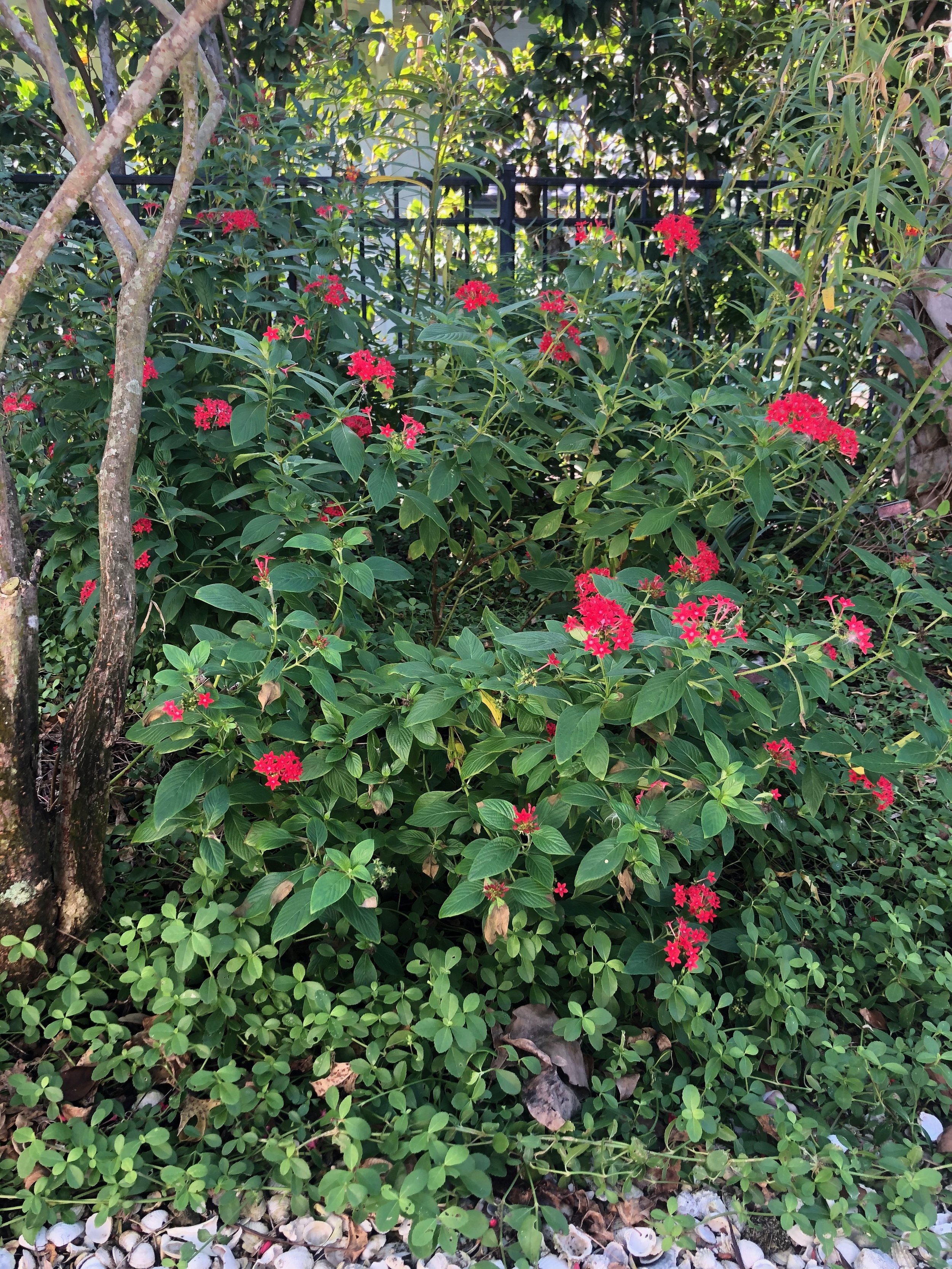
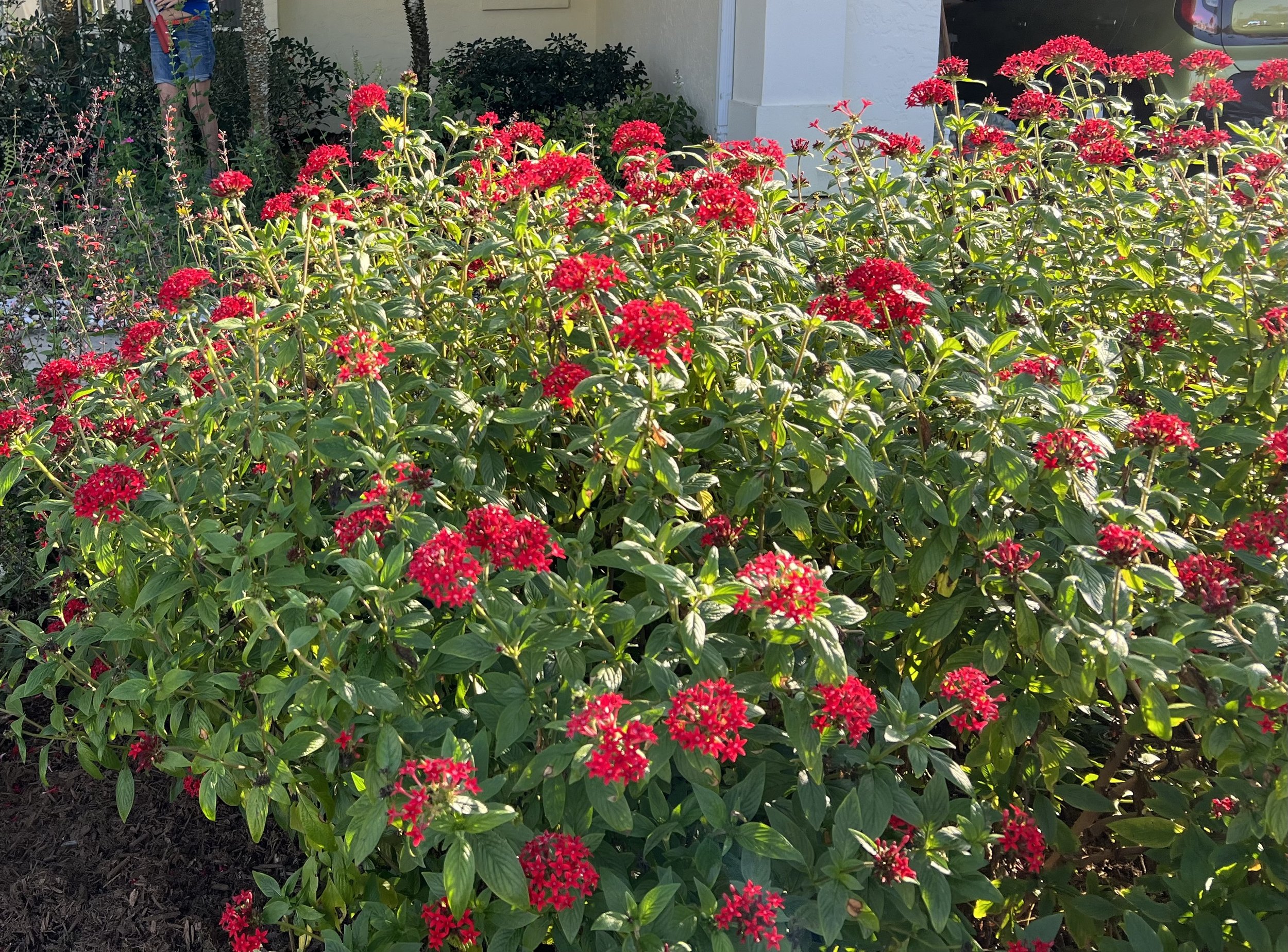
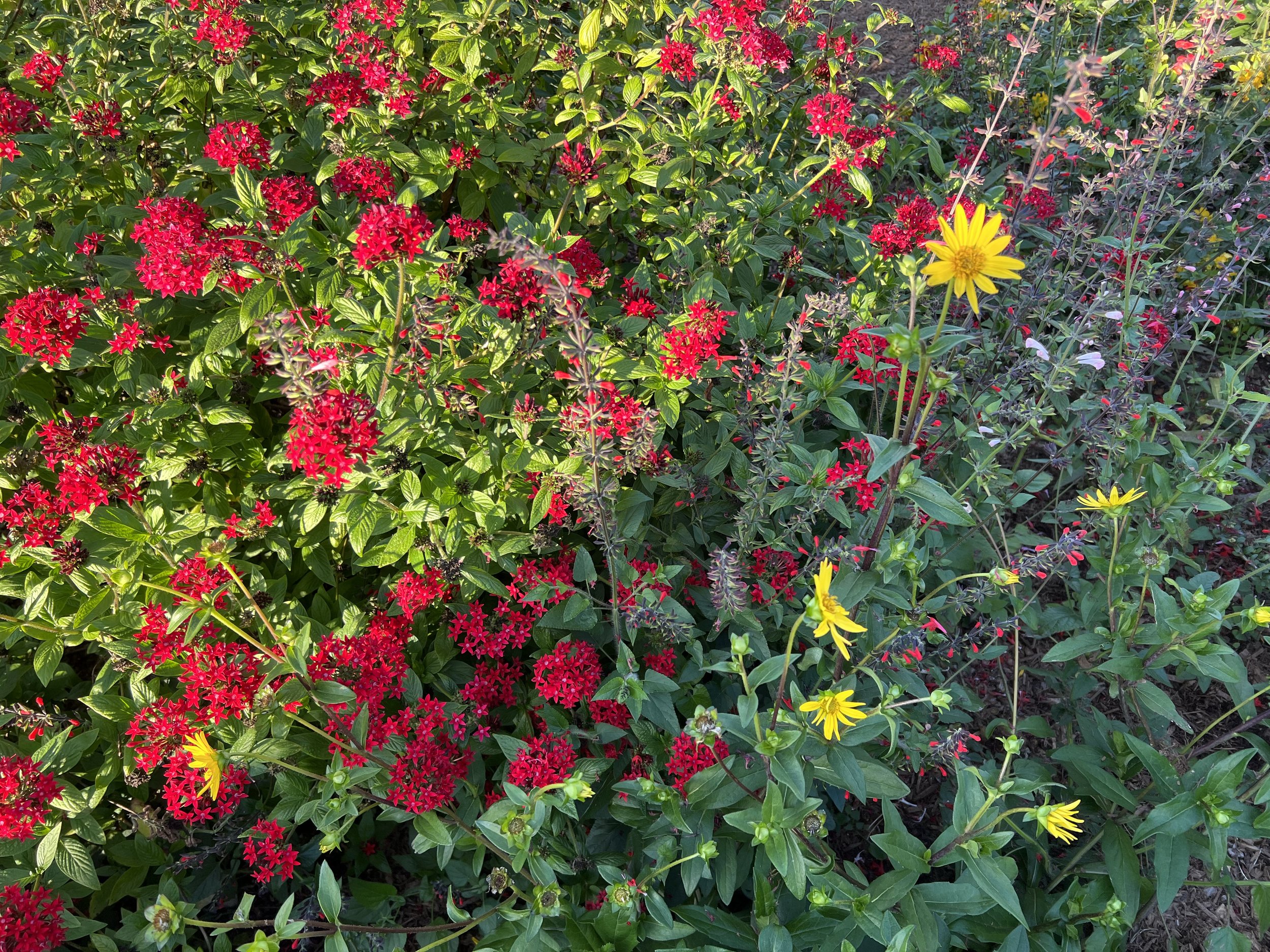

Penta lanceolata ‘Ruby Glow’
Also called “Old-Fashioned Red Penta“ or “Ruby Glow Red Penta” this non-native but Florida-friendly, perennial, evergreen, small flowering shrub is the hardiest of the pentas for Florida gardens. It makes a great addition to a butterfly and pollinator garden as it blooms almost all year (and in the winter months) making it a year-round nectar source year round for many pollinators including Monarch butterflies and hummingbirds. It is adaptable to sun and dry soils but does best in partial shade with average soils. Best planted in groups.
Canna flaccida
Golden Canna is a native, upright flowering wetland plant growing 2’ tall. This plant thrives in very moist to wet, soggy soil, and full submersion up to 6”. It has large, butter-yellow blooms that are highly attractive to hummingbirds, butterflies, and bees; it also serves as a vital larval host plant for the native Canna Skipper butterfly.
No results match your search. Try removing a few filters.