Hi Friends!
We offer PICK UP or LOCAL DELIVERY only (NO SHIPPING).
Thank you!
Thursday–Sunday, 10am–4pm | 941-322-1915
We offer PICK UP or LOCAL DELIVERY only (NO SHIPPING).
Thank you!
Thursday–Sunday, 10am–4pm | 941-322-1915
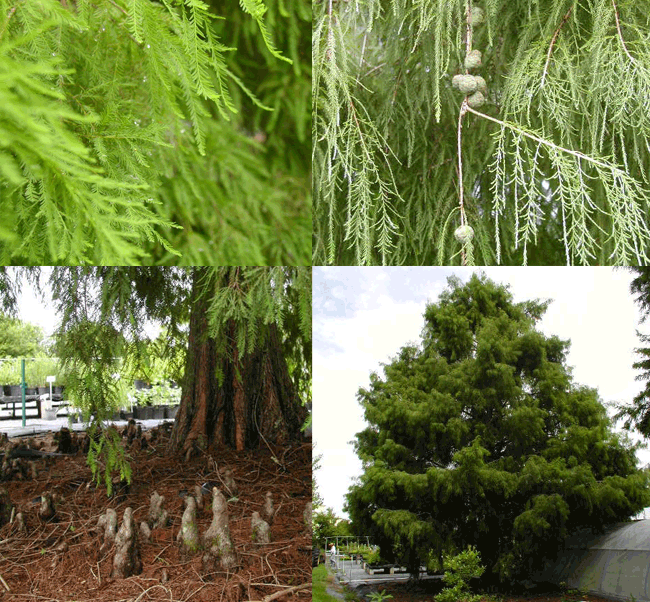

Taxodium distichum
Bald Cypress is a majestic deciduous conifer native to the southeastern United States that can reach 50’-120’ tall with a distinctive buttressed base when growing in water. This long-lived species features feathery, light green needles that turn brilliant russet-orange in fall before dropping, and fibrous, reddish-brown bark. Its most distinctive characteristic is the development of "knees" - woody projections that grow upward from the root system when the tree is in standing water or wet soils. Naturally occurring in swamps, bayous, floodplains, and along rivers from Maryland to Texas, it's remarkably adaptable, tolerating both permanently flooded conditions and surprisingly dry soils once established. This iconic tree provides critical habitat for wildlife, including nesting sites for wood ducks and various wading birds, and serves as an excellent specimen or street tree in zones 4-10.
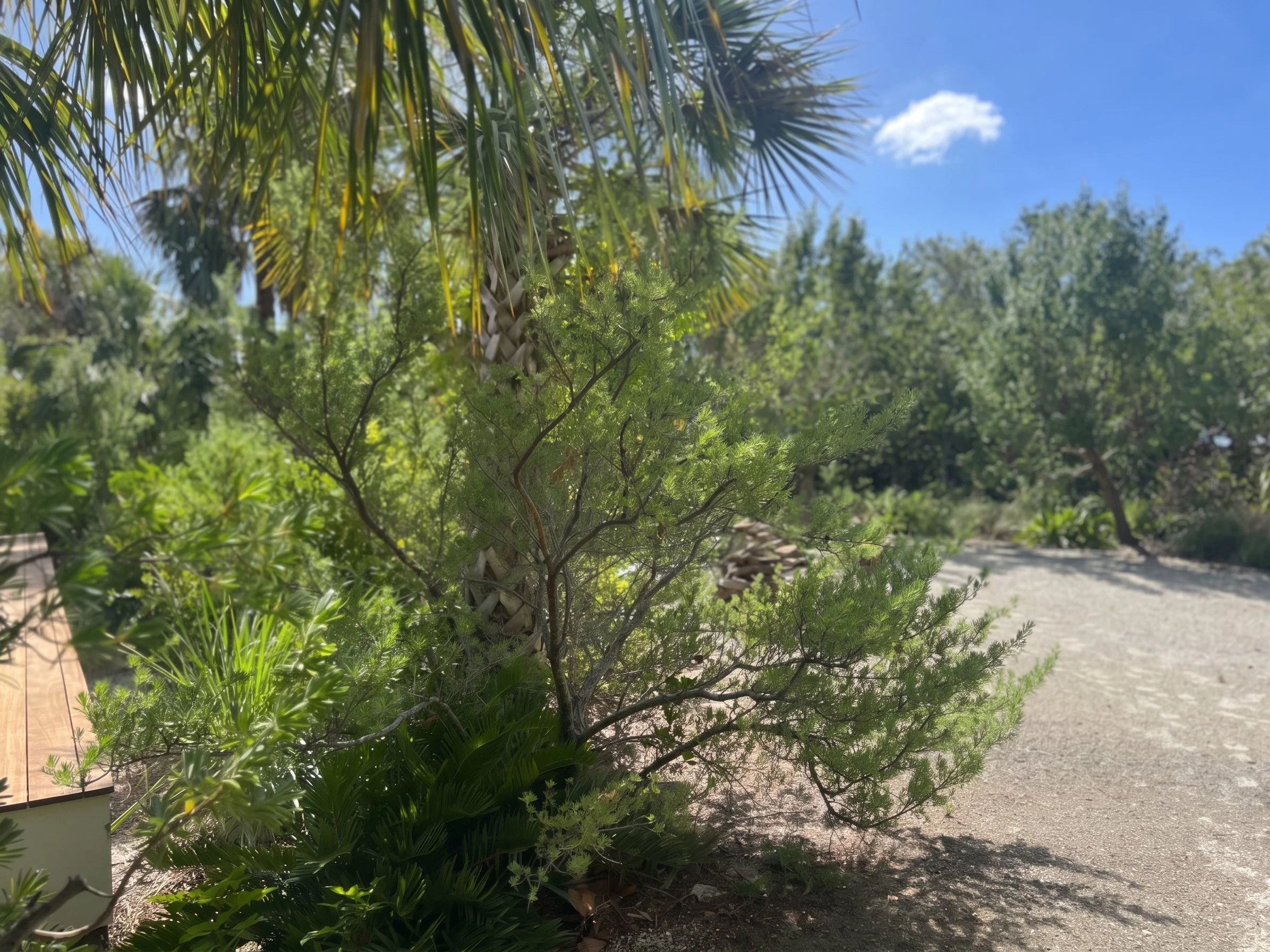
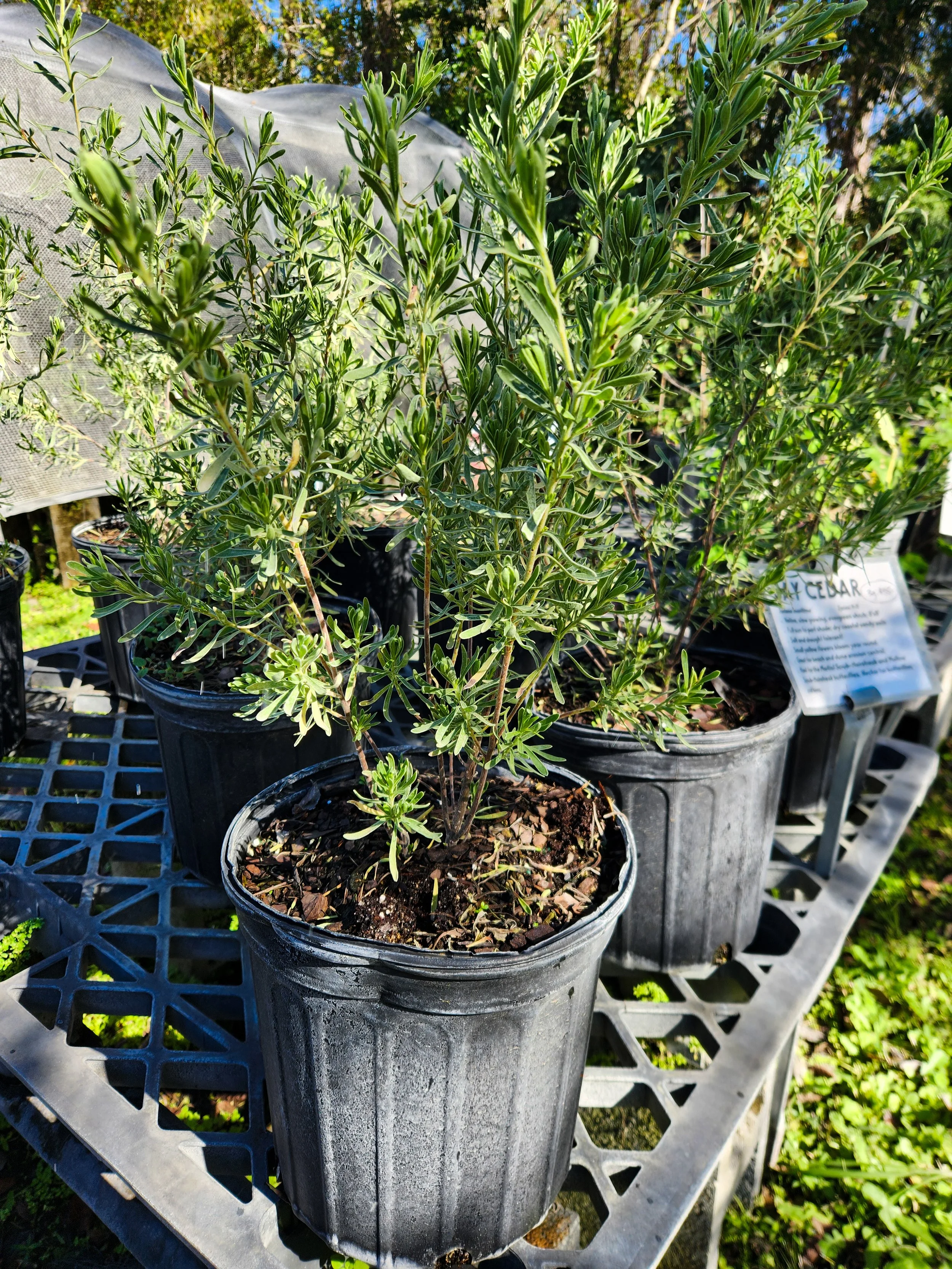
Suriana maritima
Bay Cedar is a slower growing, native, evergreen coastal shrub that is naturally found on sand dunes and beaches. This hurricane resistant shrub can weather storm surges, and is salt spray and drought tolerant! The Bay Cedar is excellent for erosion control of dunes and beaches. Small yellow flowers bloom year round and attract pollinators, and it is a host plant for certain hairstreak butterflies.
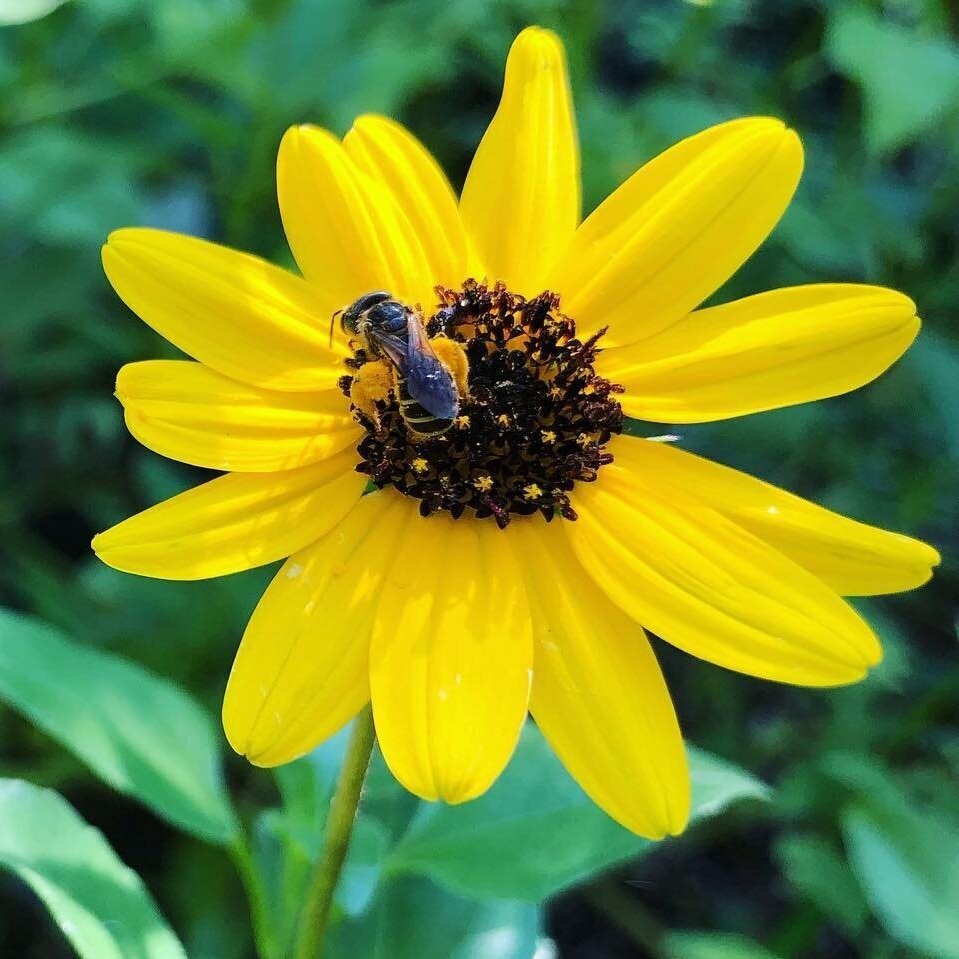
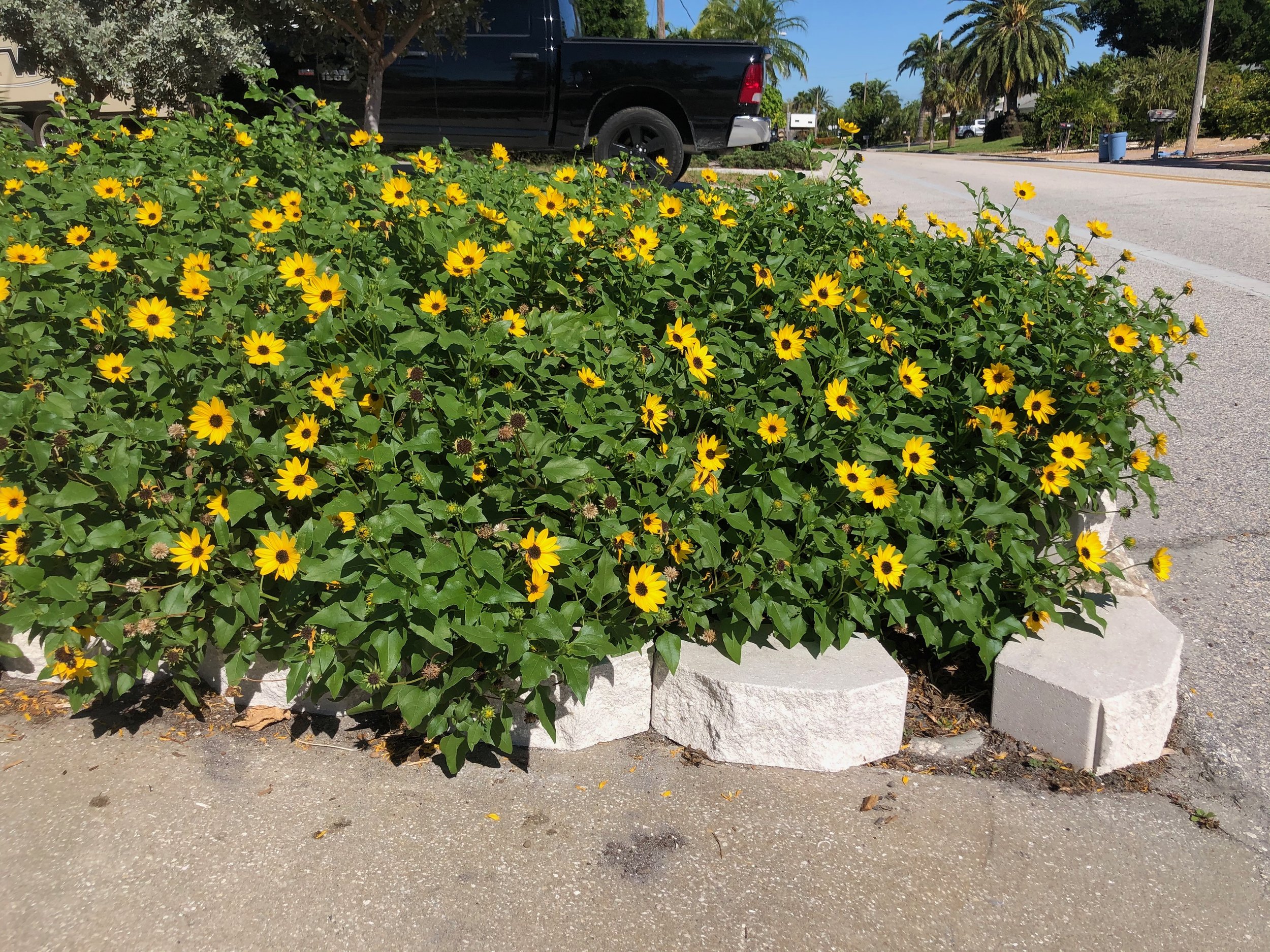
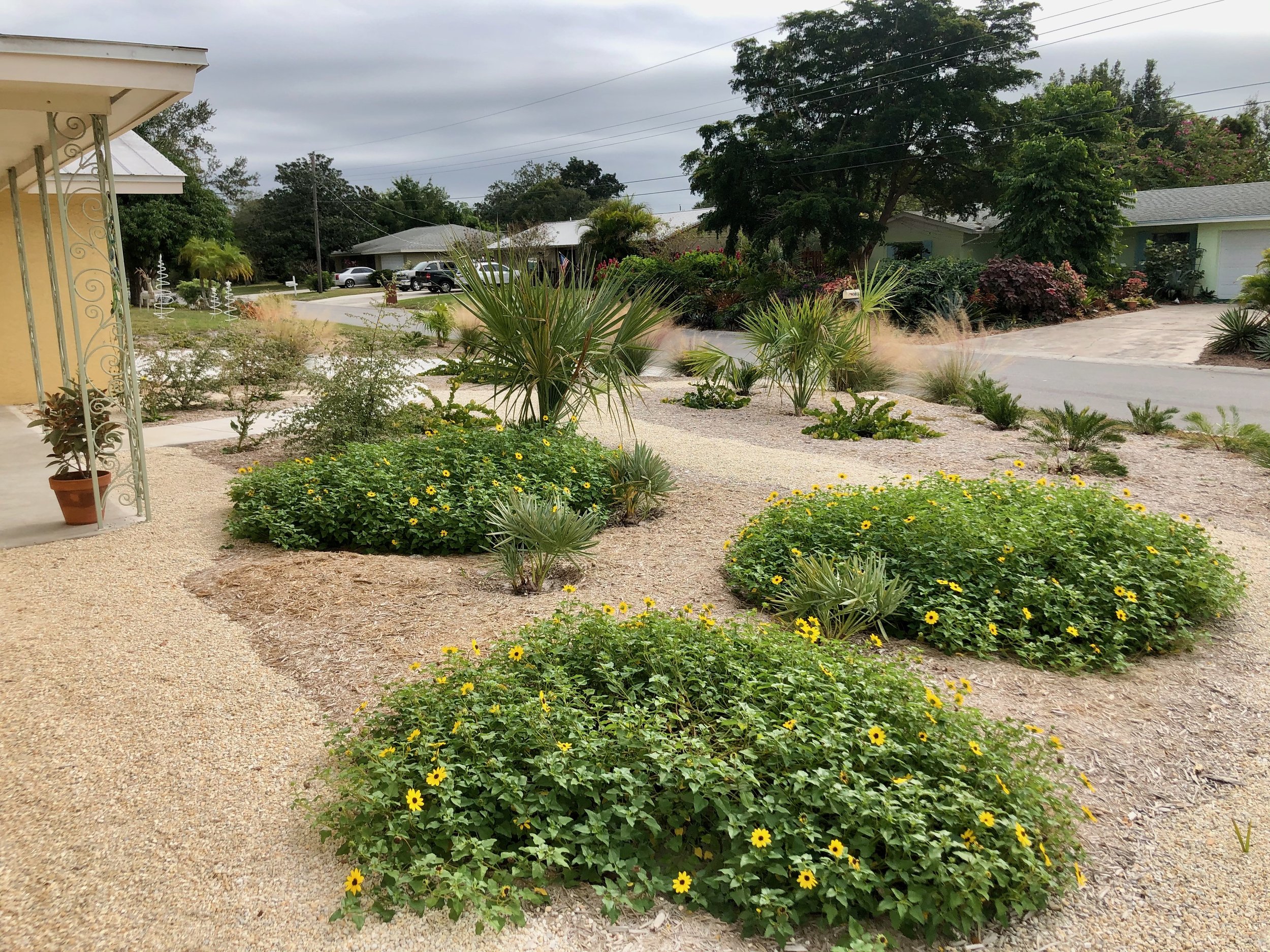
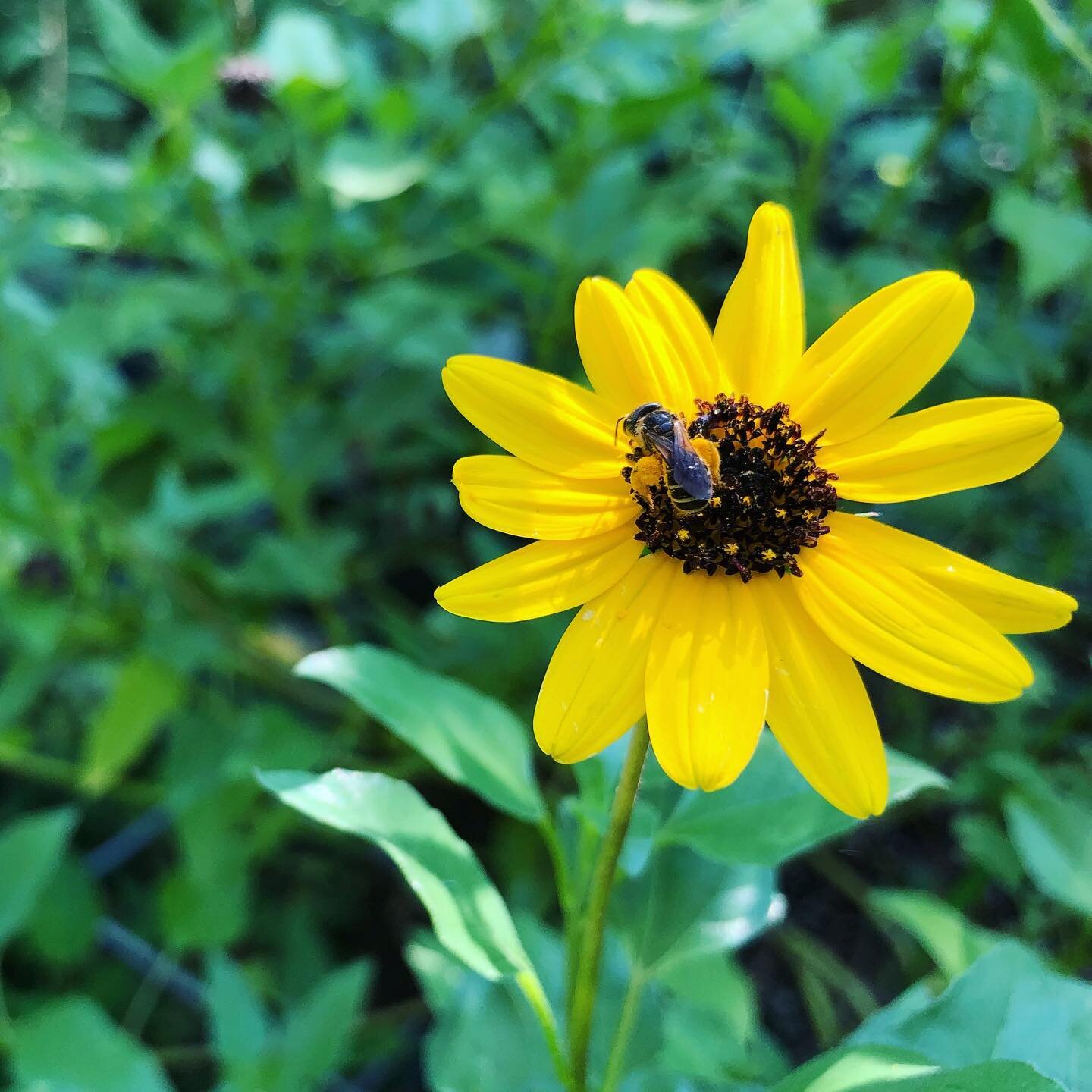
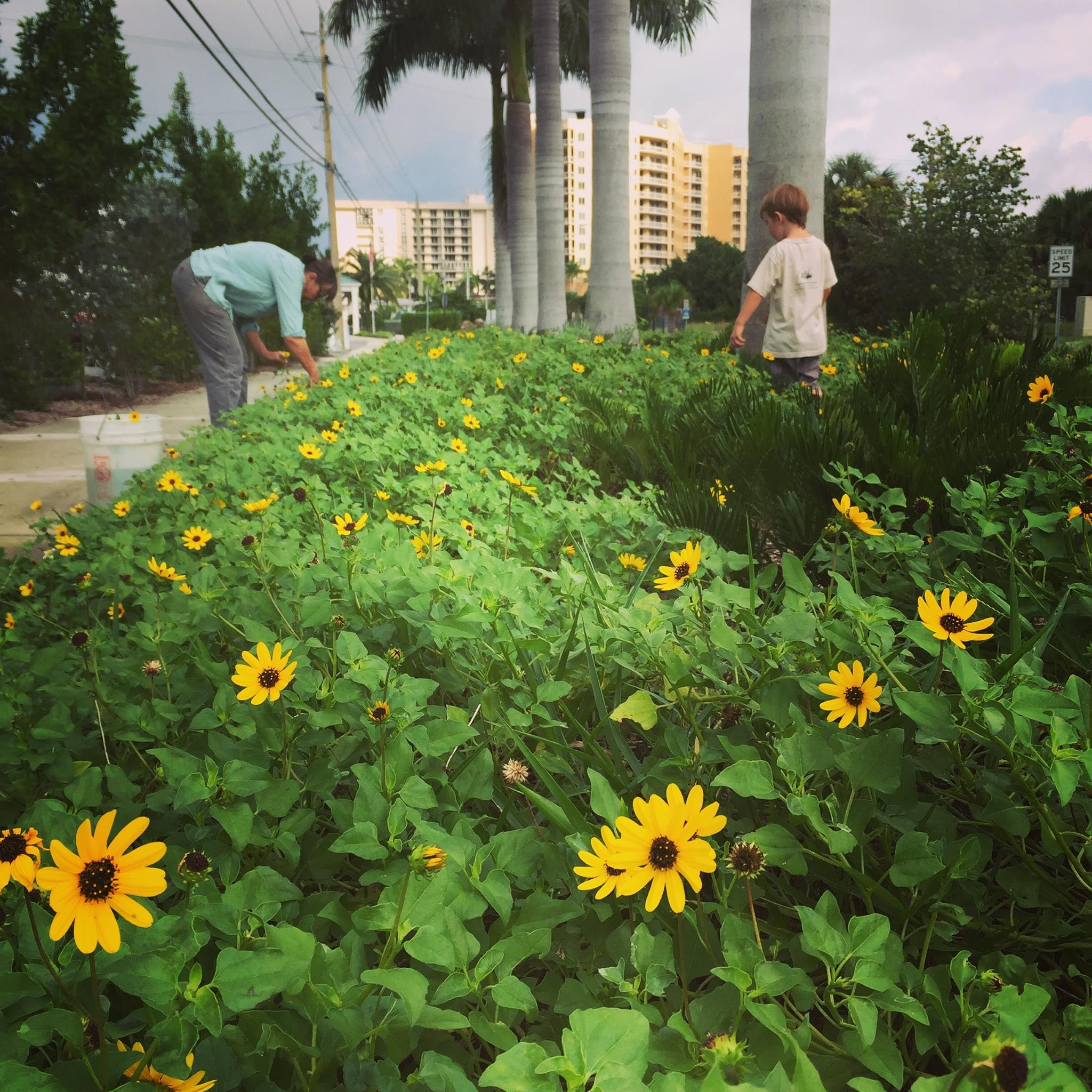
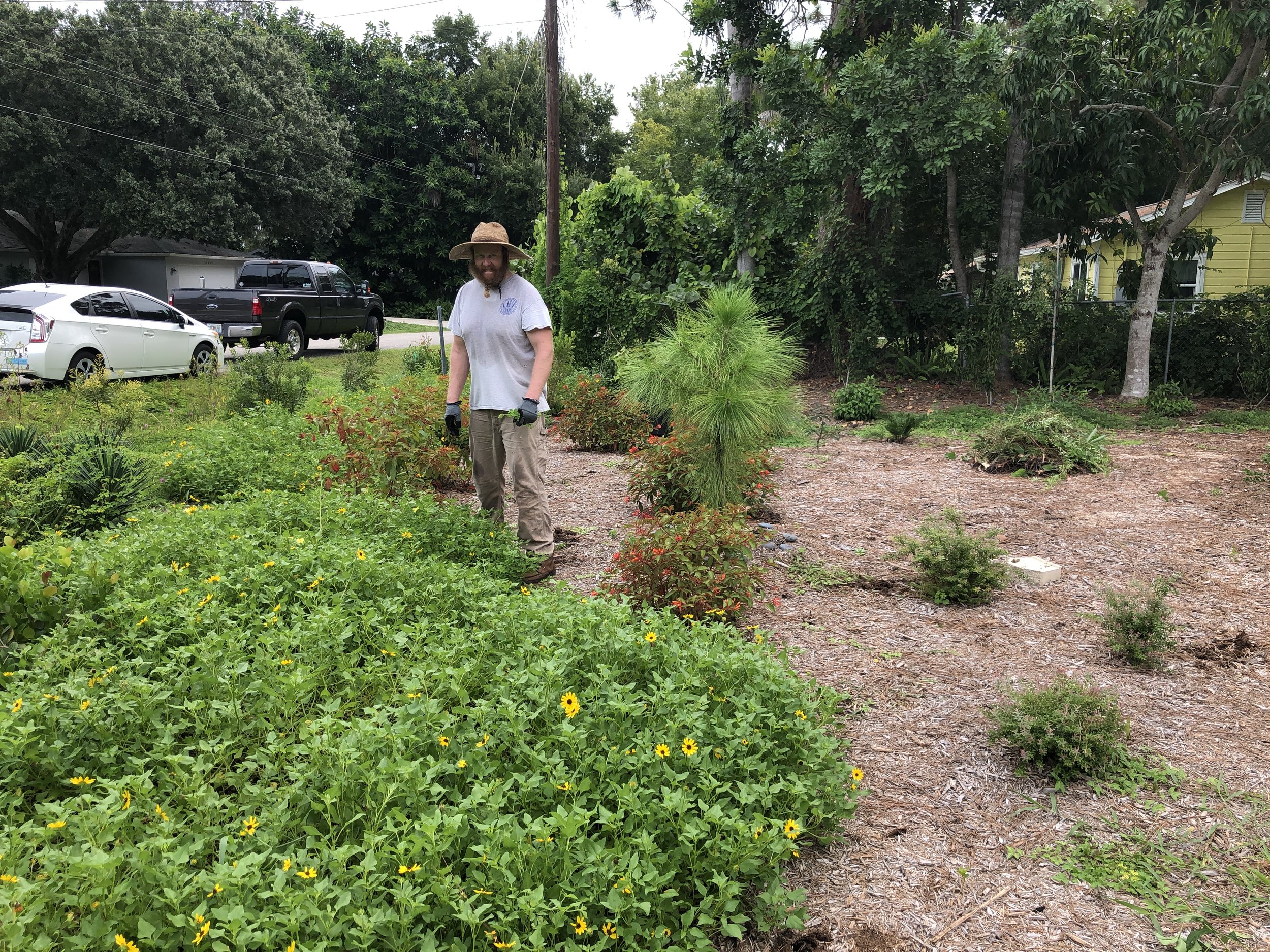
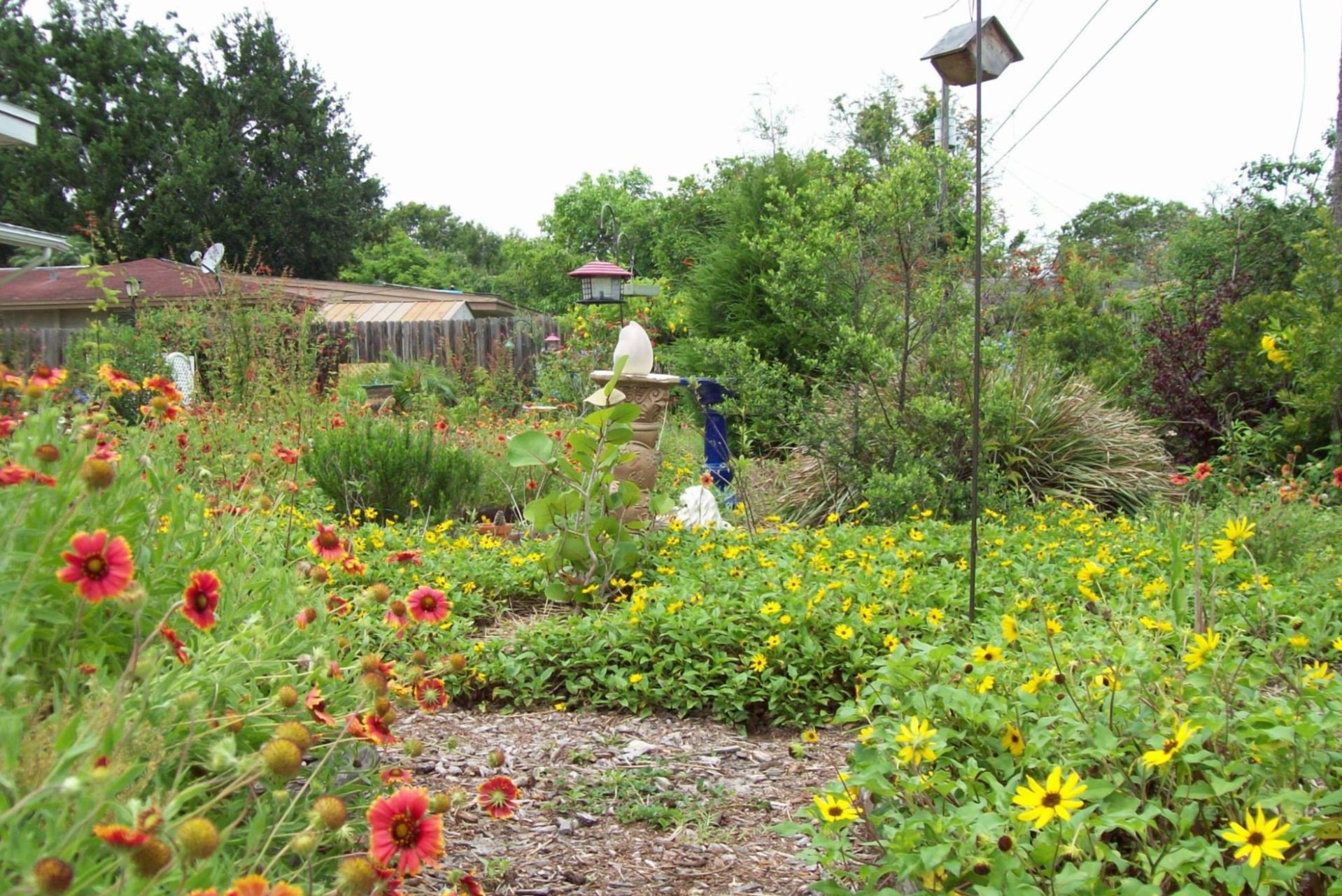
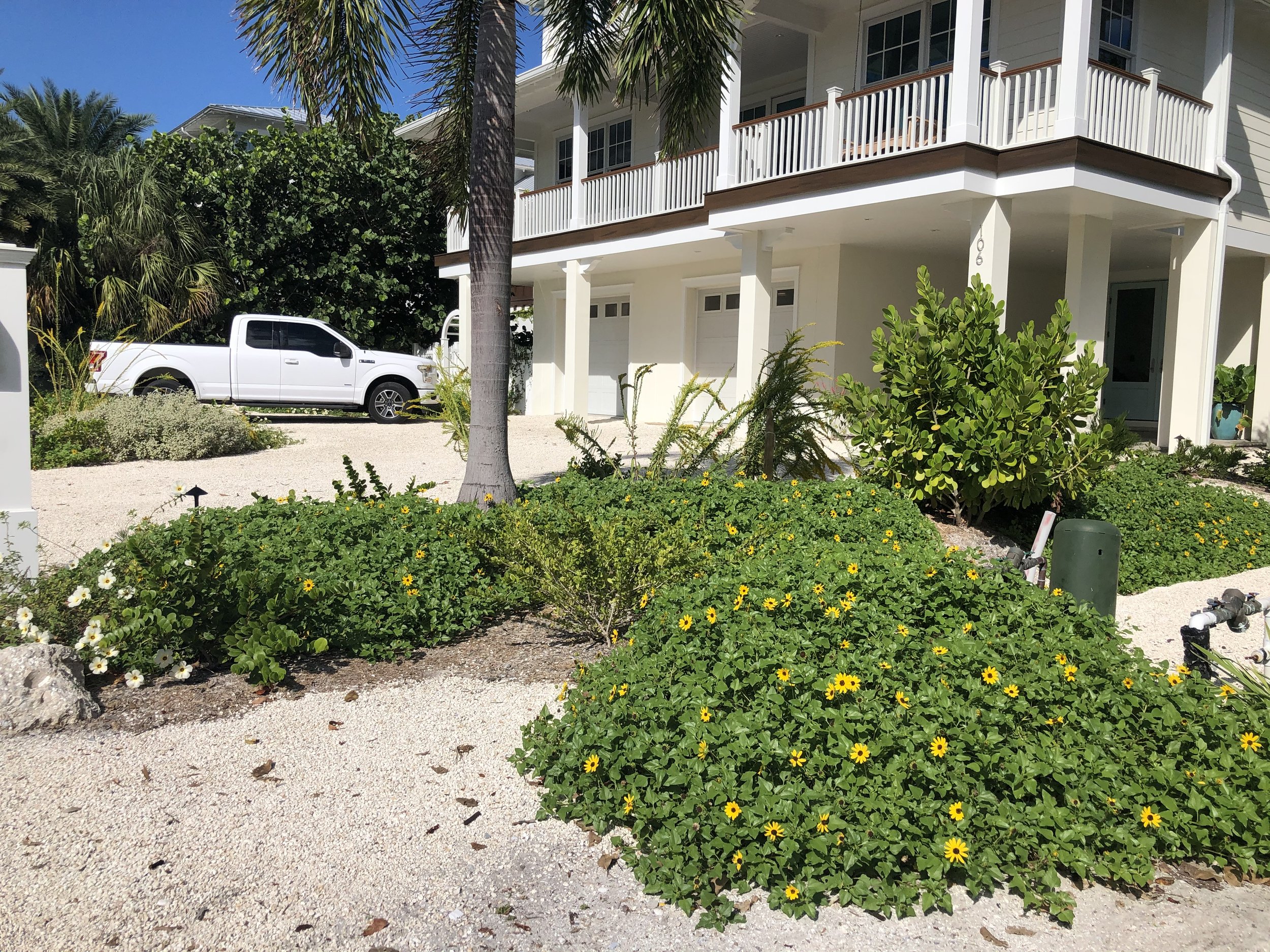
Helianthus debilis ‘vestitus’
West Coast Beach Dune Sunflower is one of the best ground covers for sunny, dry areas where things just don't grow! One plant can spread 4' wide and grows fast, so you'll see beautiful greens and yellow blooms abound in no time! This sunflower is an annual that reseeds in place so once the mature plants start to die back, just cut them back and watch the babies grow. Loved by pollinators and birds, its the perfect Florida plant in any yard! Want to grow this in a coastal area? You sure can! Beach Dune Sunflower naturally occurs on beach dunes and can take salt spray and brief storm surges. It's extremely drought tolerant too!

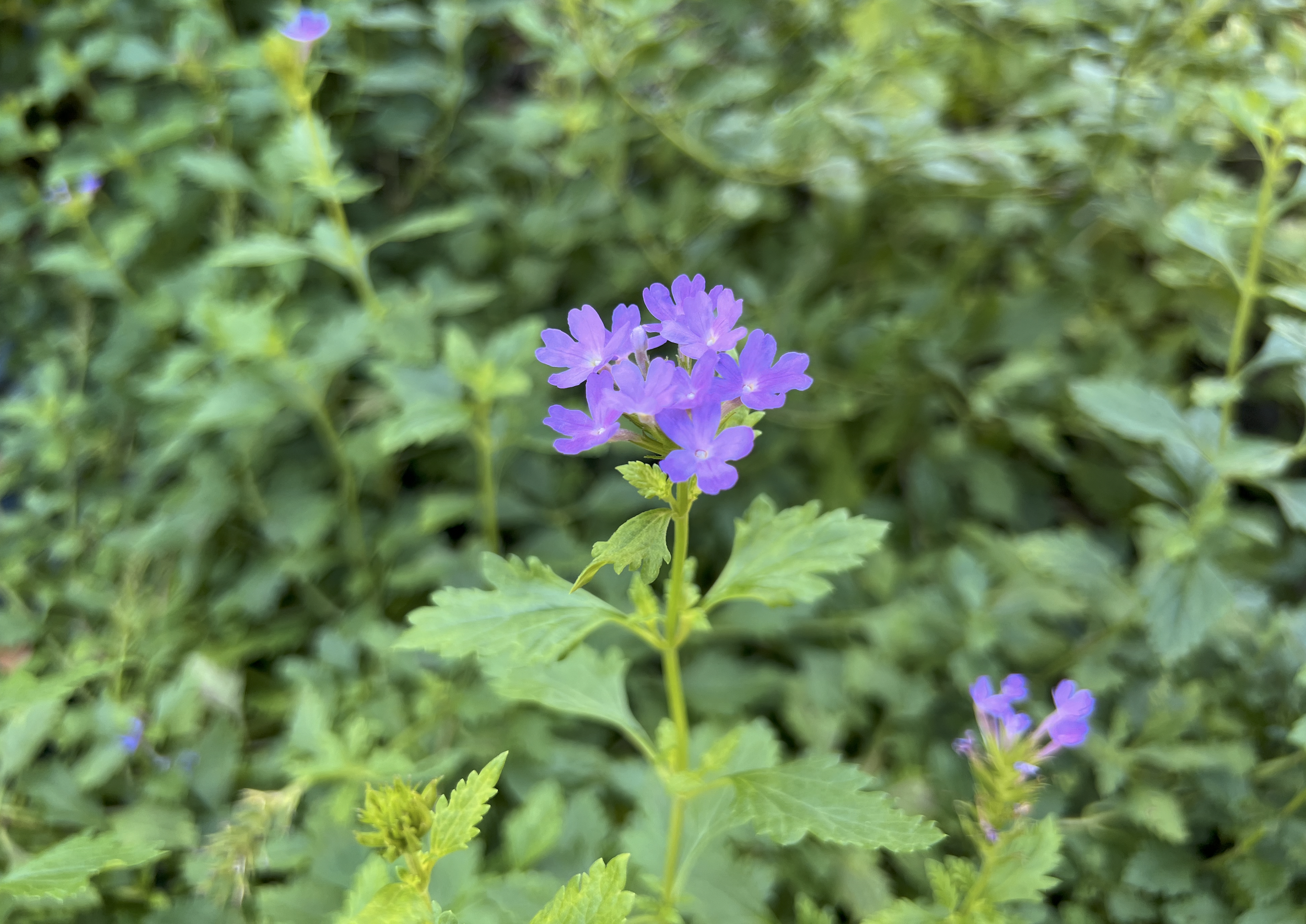
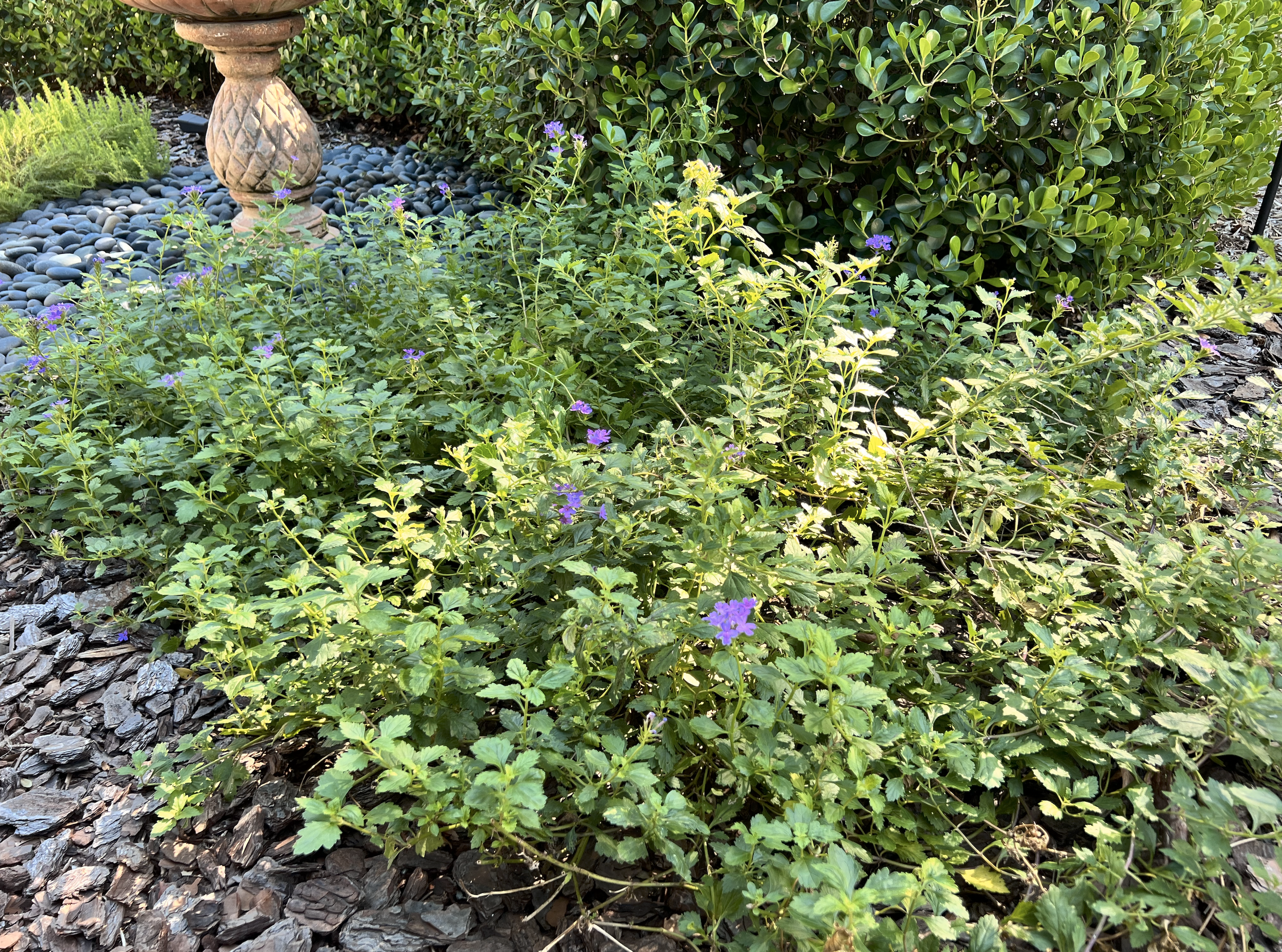
Glandularia maritima
Beach Verbena is an endangered, prostrate perennial native to Florida's coastal dunes that forms dense, evergreen ground cover mats. This spreading species produces deep pink to lavender flowers in flat-topped clusters that bloom year-round with peaks in spring and summer. Extremely salt-tolerant and adapted to sandy soils and full sun, it thrives in harsh coastal environments but can also adapt to less challenging landscape settings. Due to its low-growing, spreading habit and continuous flowering, it serves as an excellent groundcover for sunny, well-drained areas.

Liatris spicata
A statement wildflower for the fall season! Blazing Star is unapologetically bold with tall, electric purple spikes that strut through like they own the garden. It’s the life of the pollinator party with the amount of bees and butterflies it attracts. If your landscape needs a little drama and a whole lot of fabulous in the fall, this is the wildflower you've been waiting for.
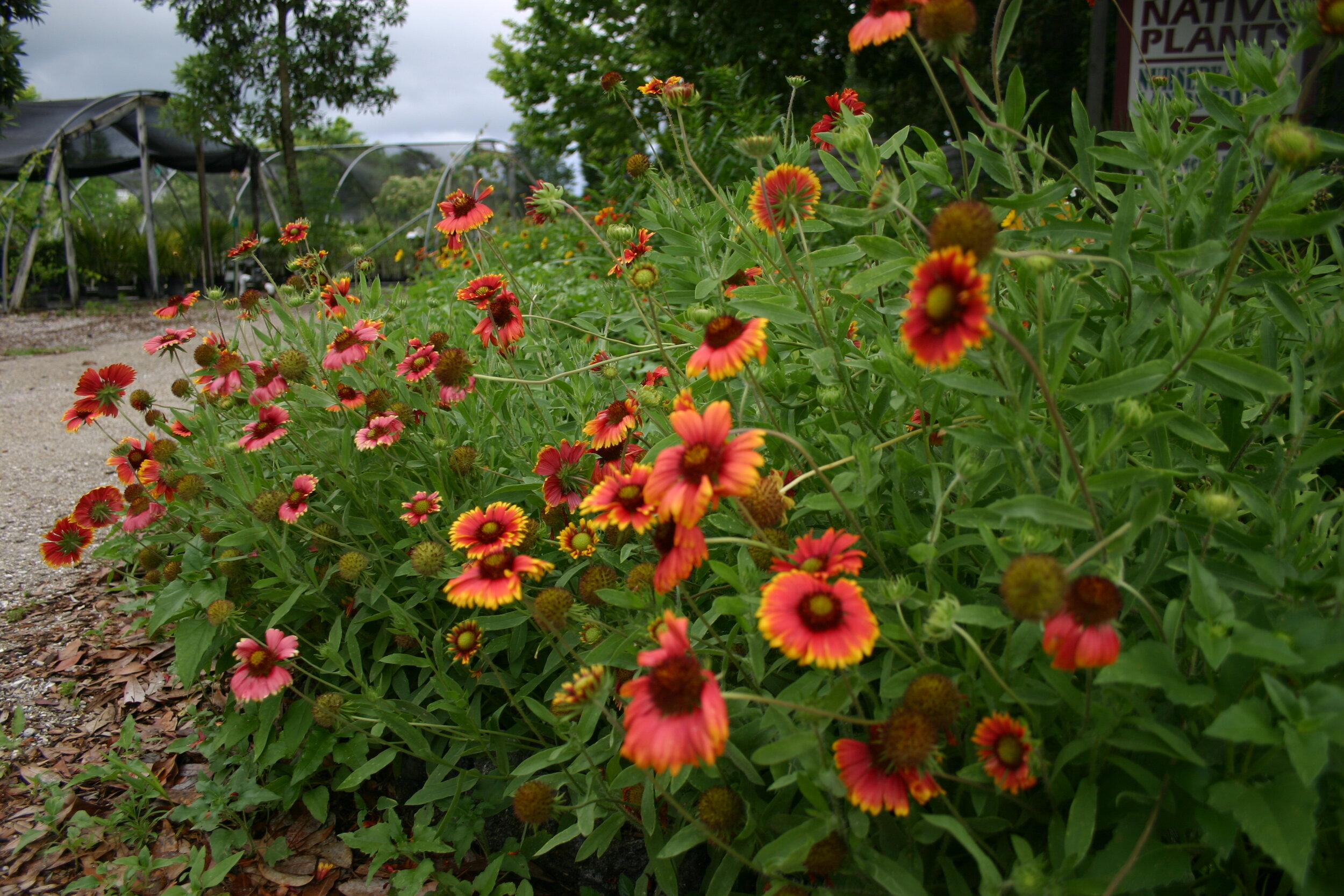

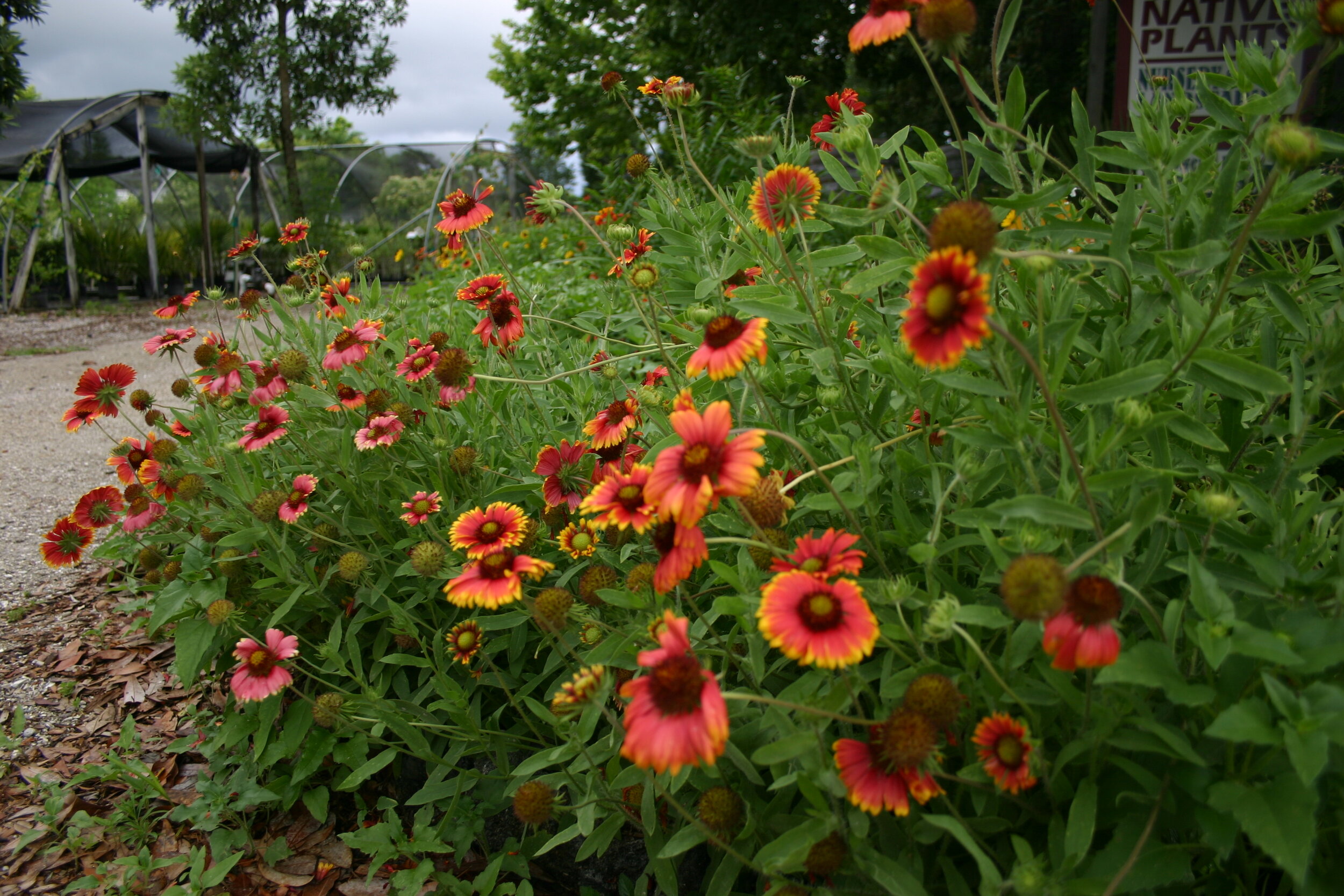
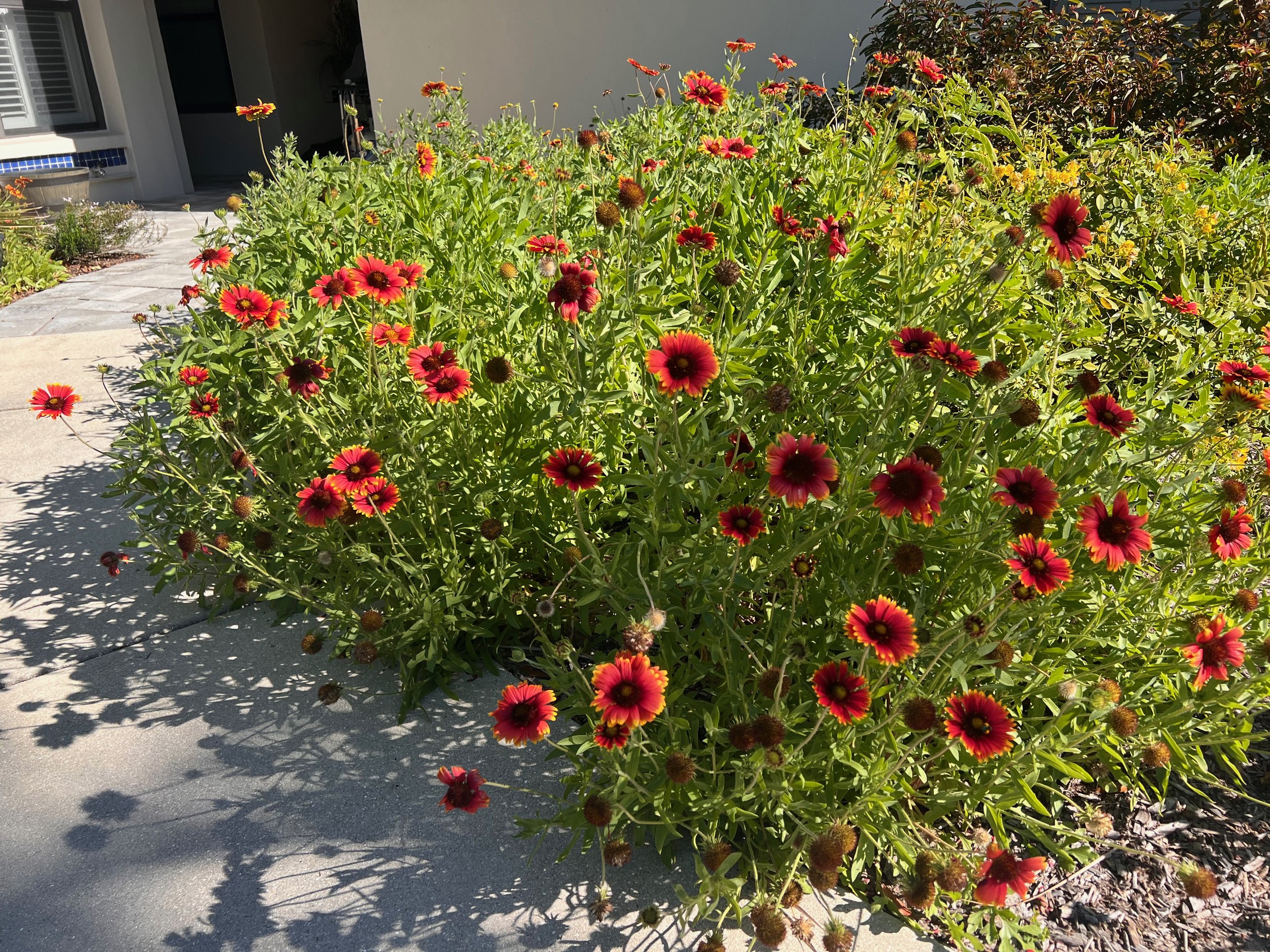
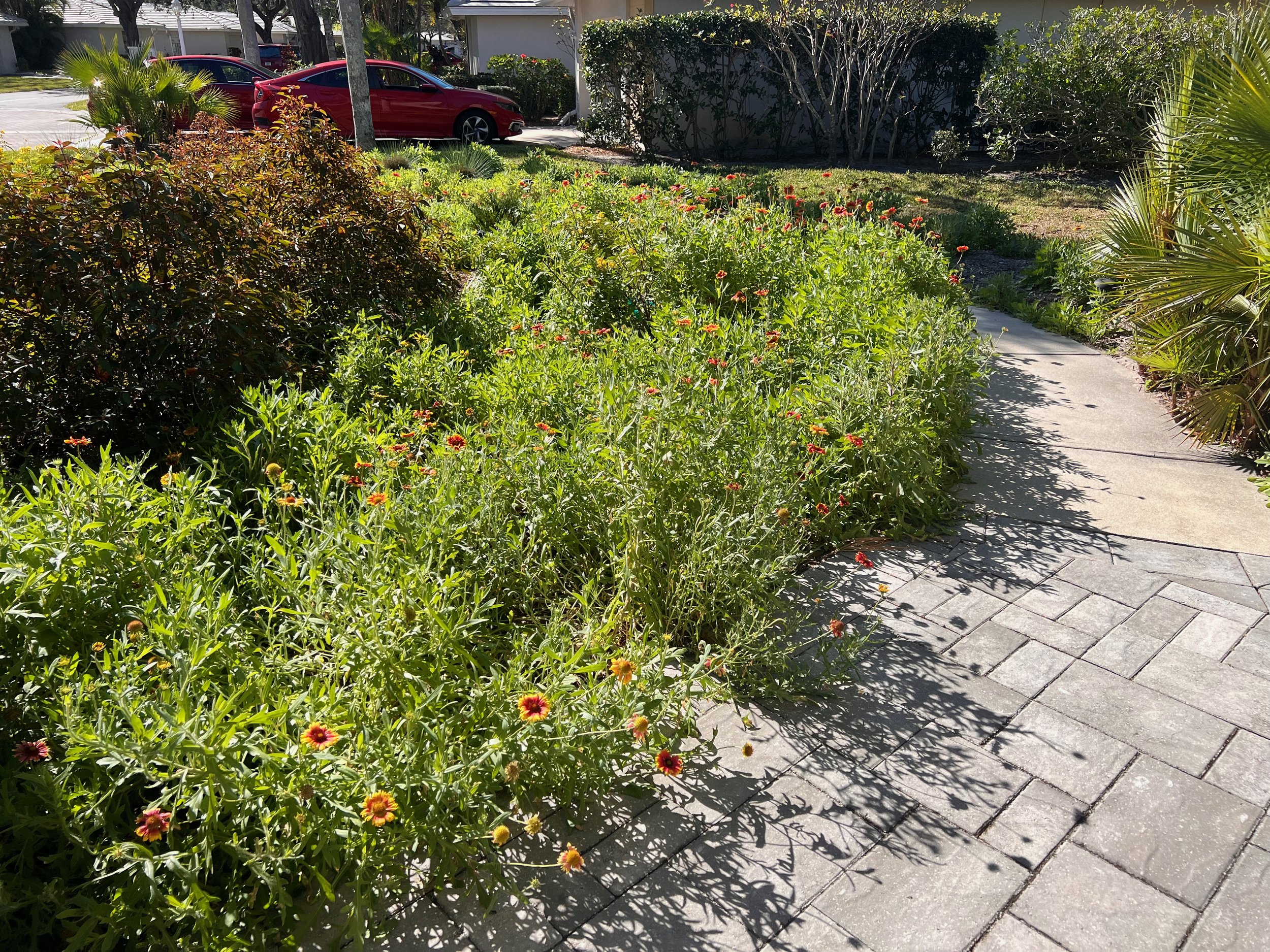
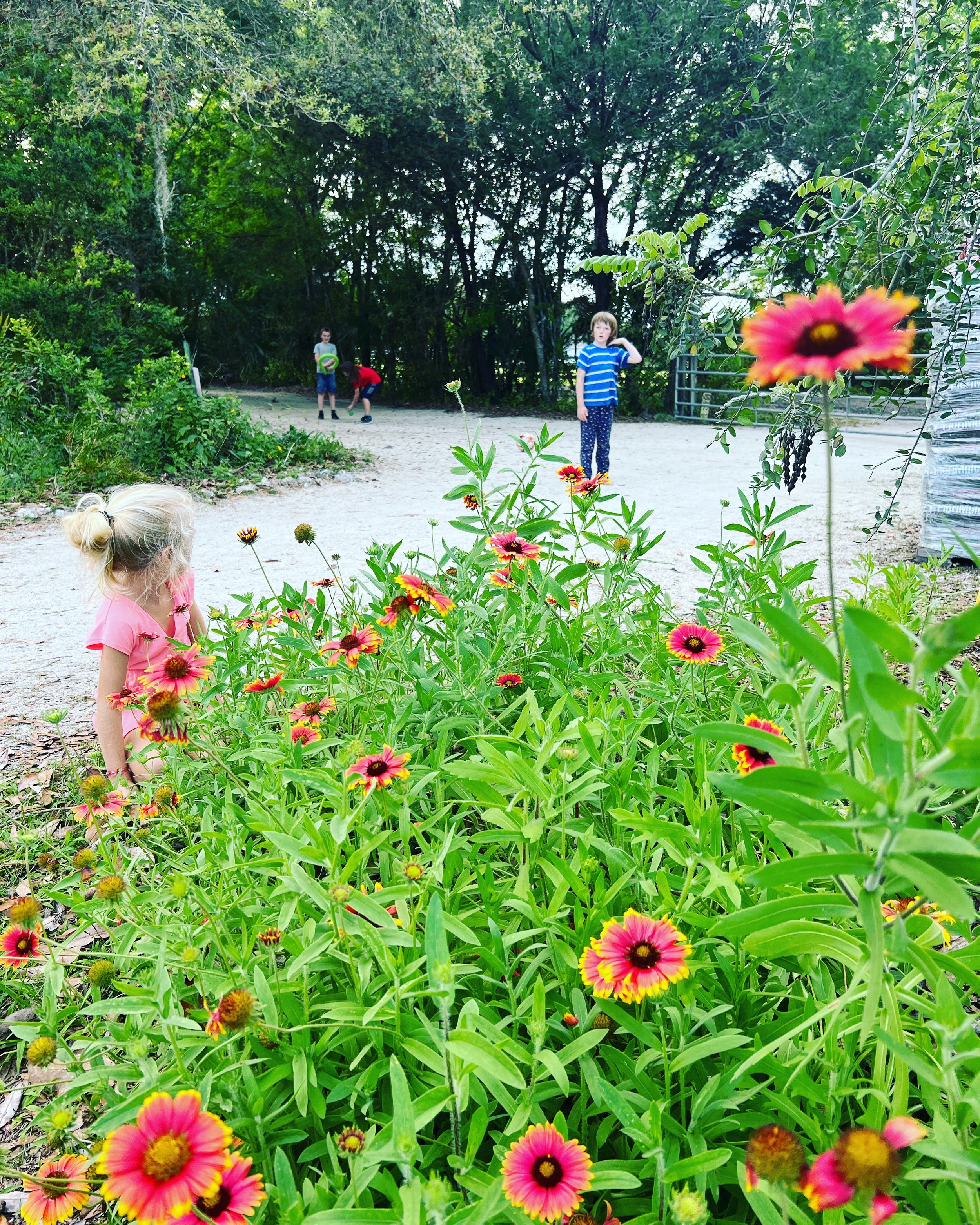
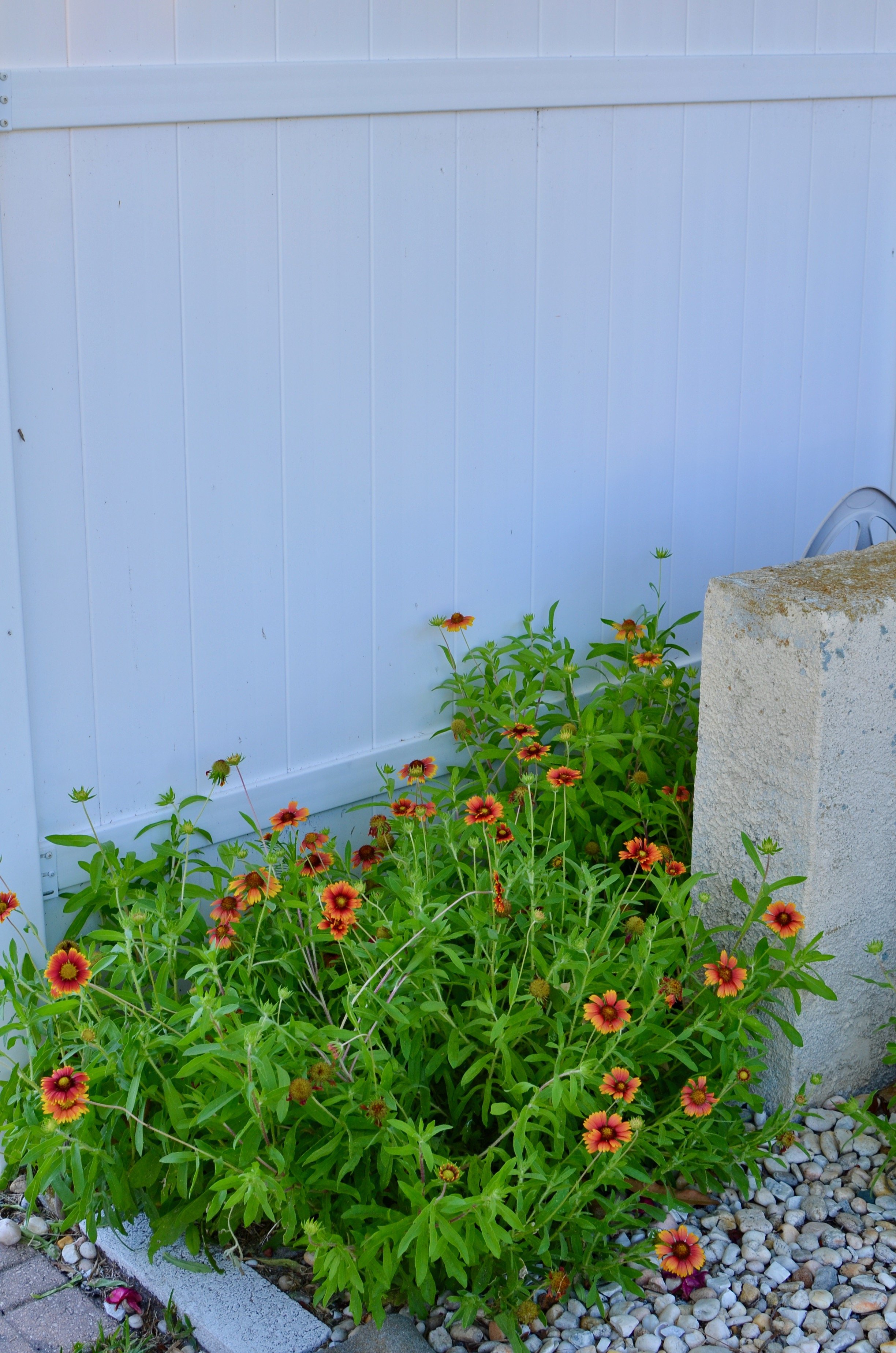
Gaillardia pulchella
Blanket Flower is a non-native, Florida-friendly wildflower that readily reseeds and spreads rapidly. Reaching 1’-2’ in height, they are a great source of nectar for bees and butterflies that bloom in the warm and hot months. They thrive in full sun and dry, sandy soil and are very drought and salt tolerant. Great for coastal applications and dry spots of a landscape as pops of red and yellow.
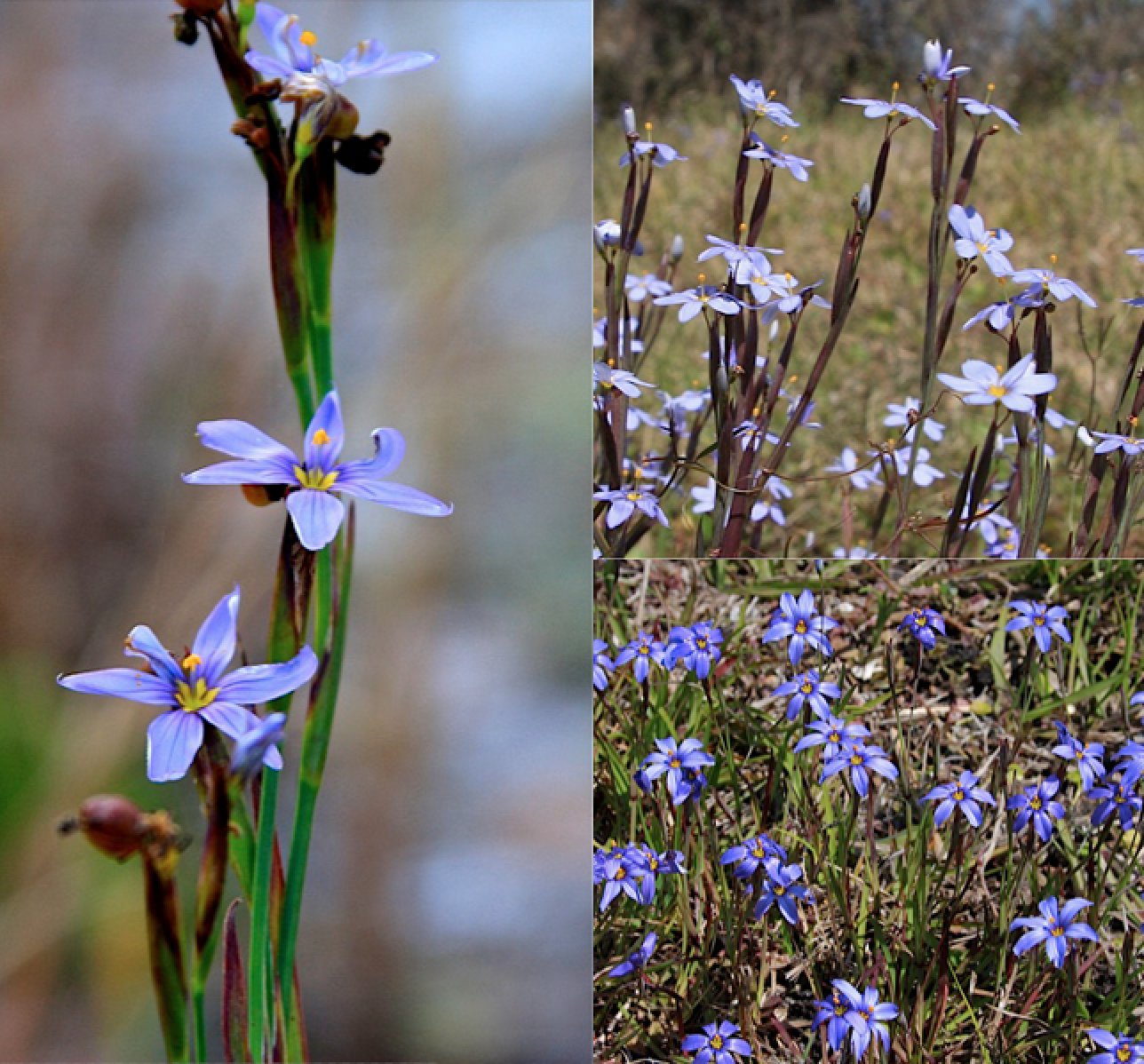
Sisyrinchium angustifolium
Blue Eyed Grass is a native re-seeding, perennial wildflower that likes moist soils. A member of the iris family, it has little blue/purple flowers that bloom profusely in the spring, attracting pollinators, and then it appears as a clump of grass the rest of the year. It likes sun to partial shade, average to wet soils and is best when planted in mass along moist or irrigated garden edges or pathways.
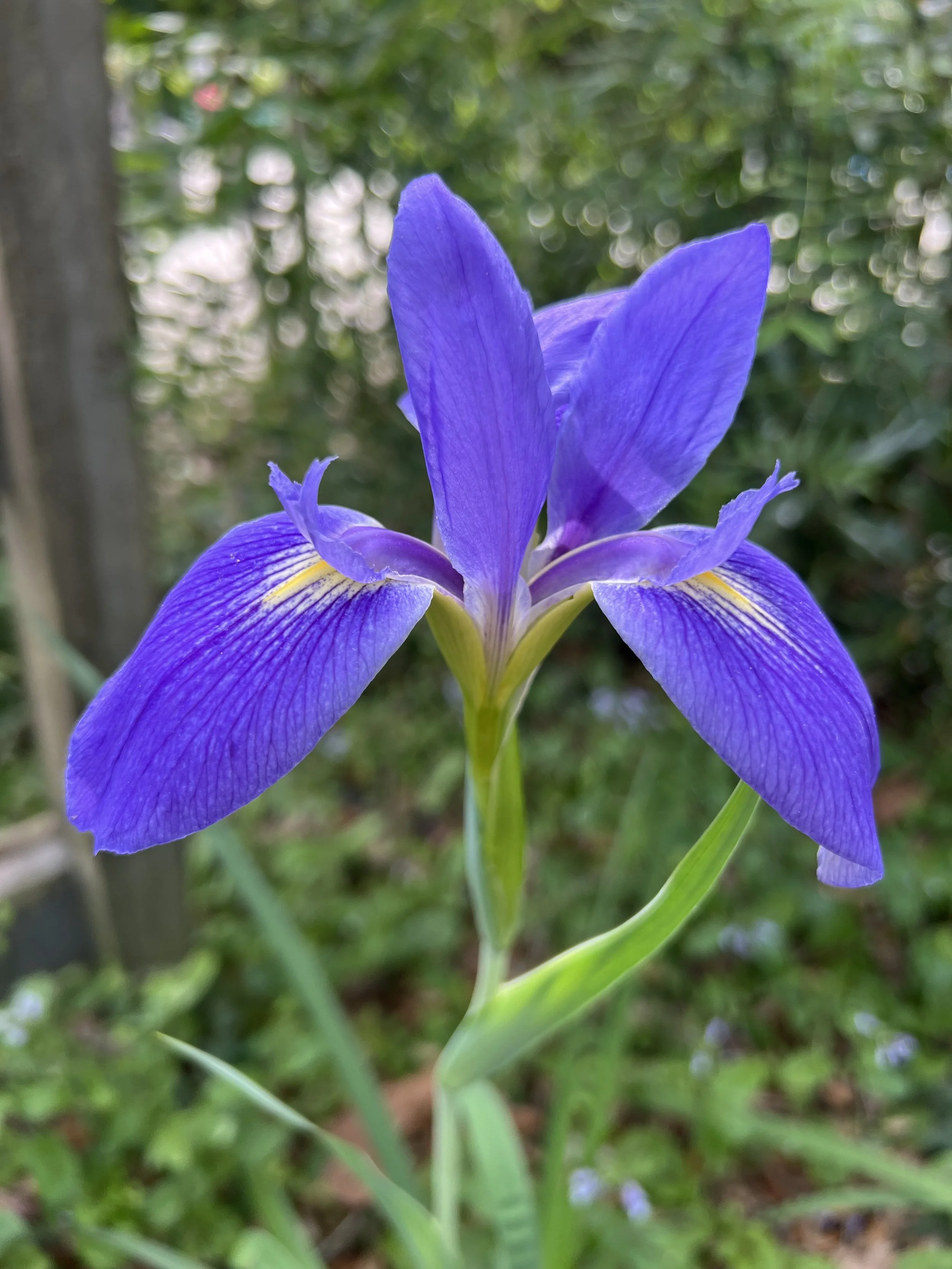
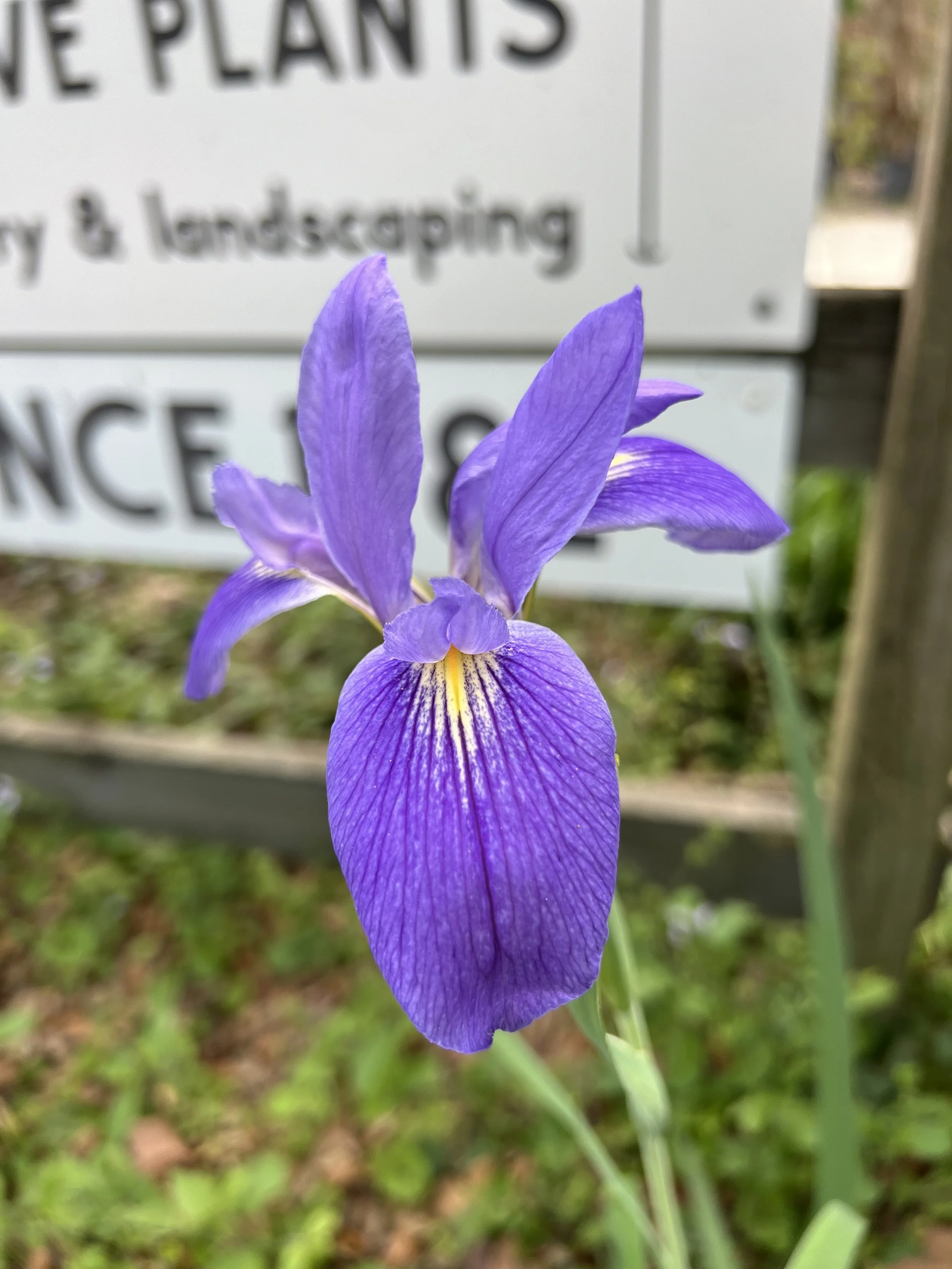
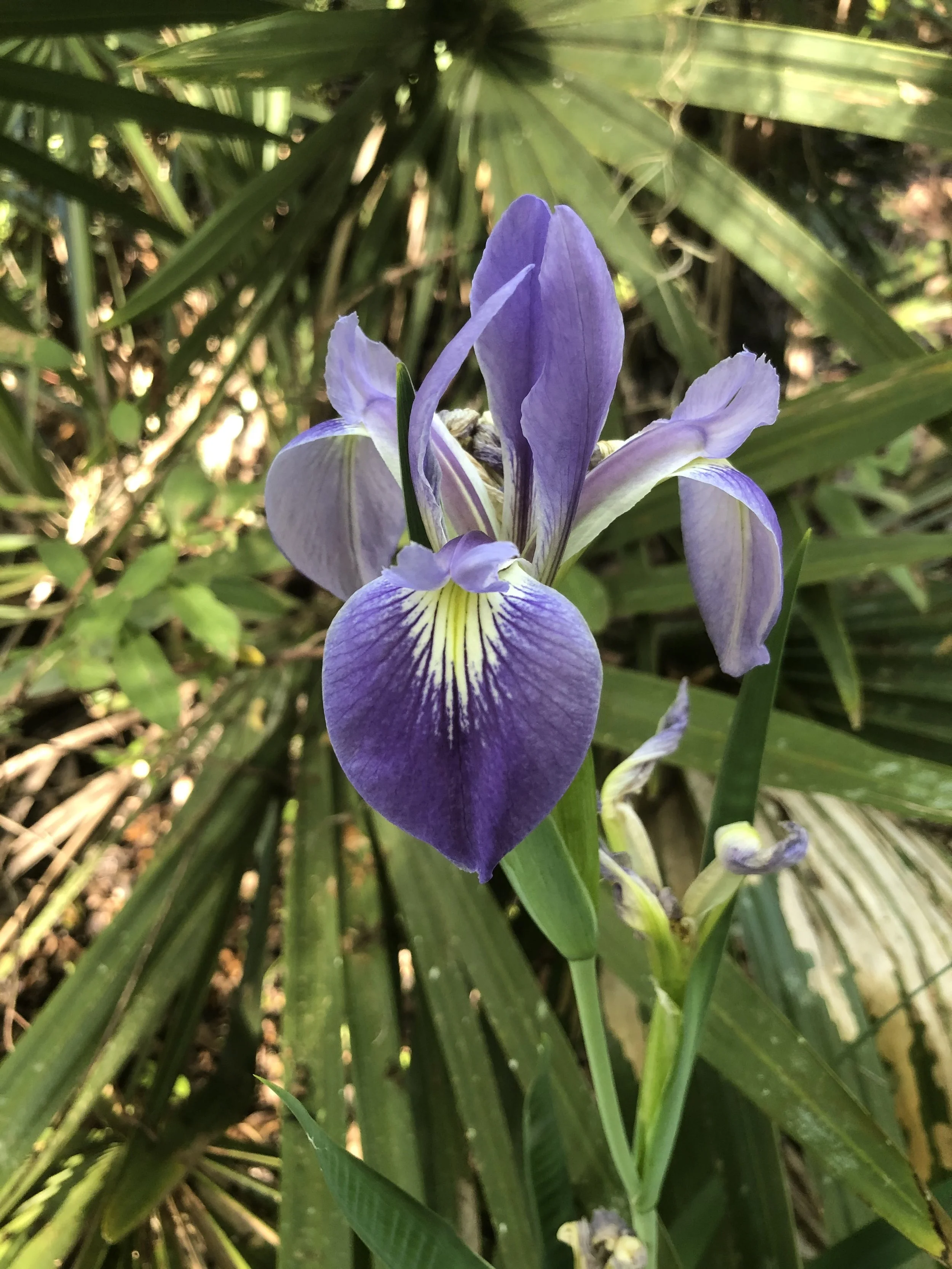
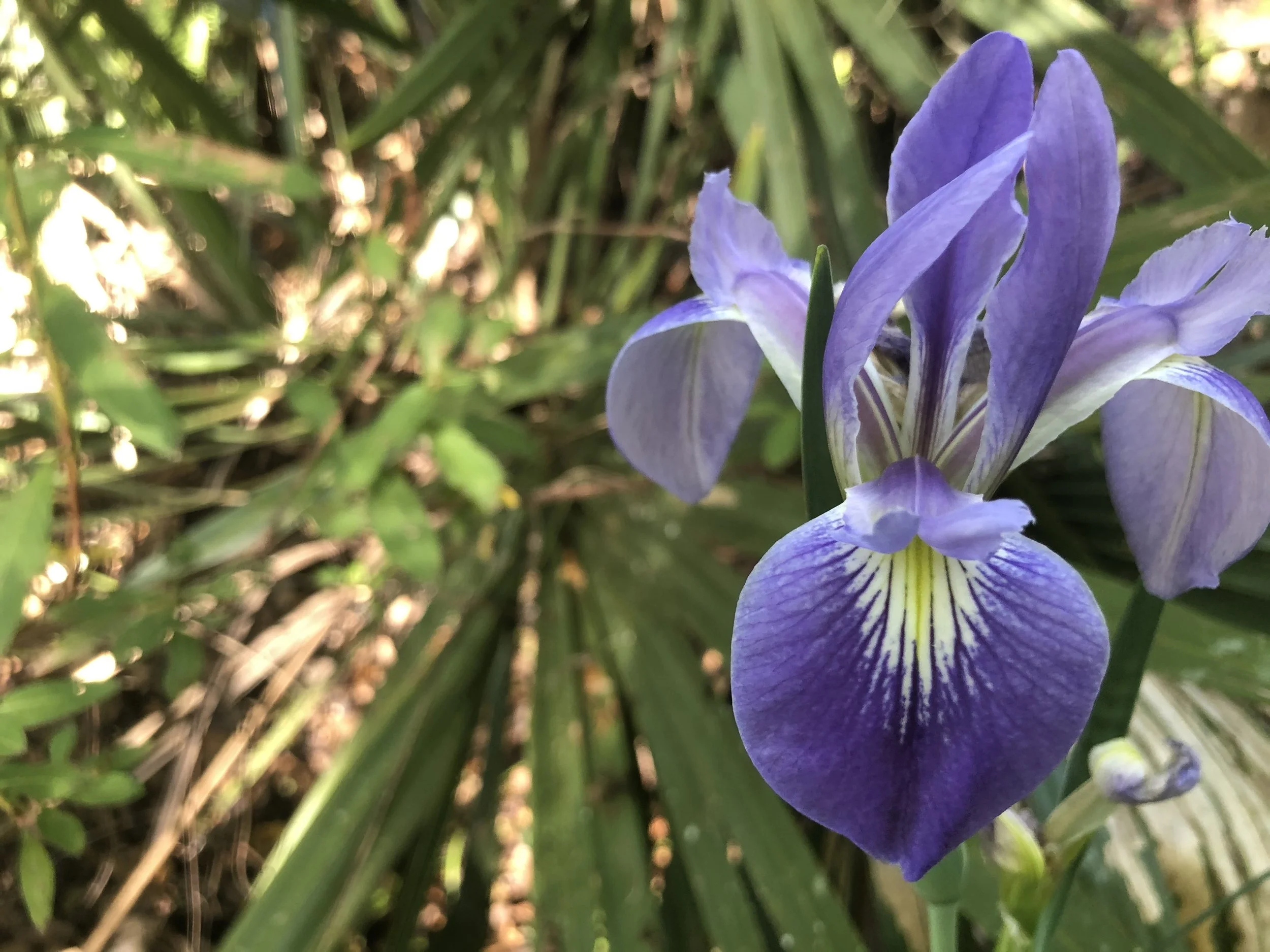
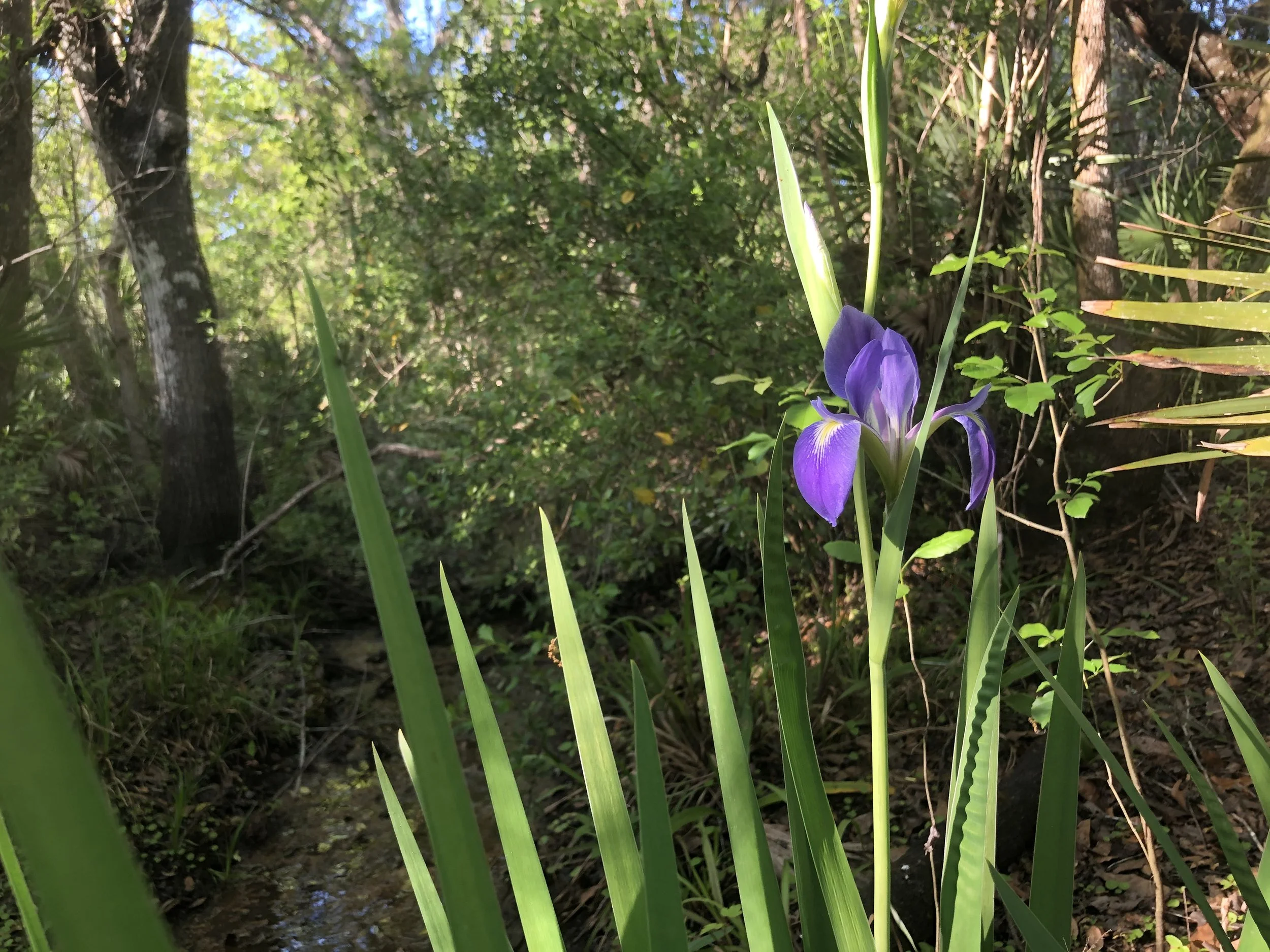
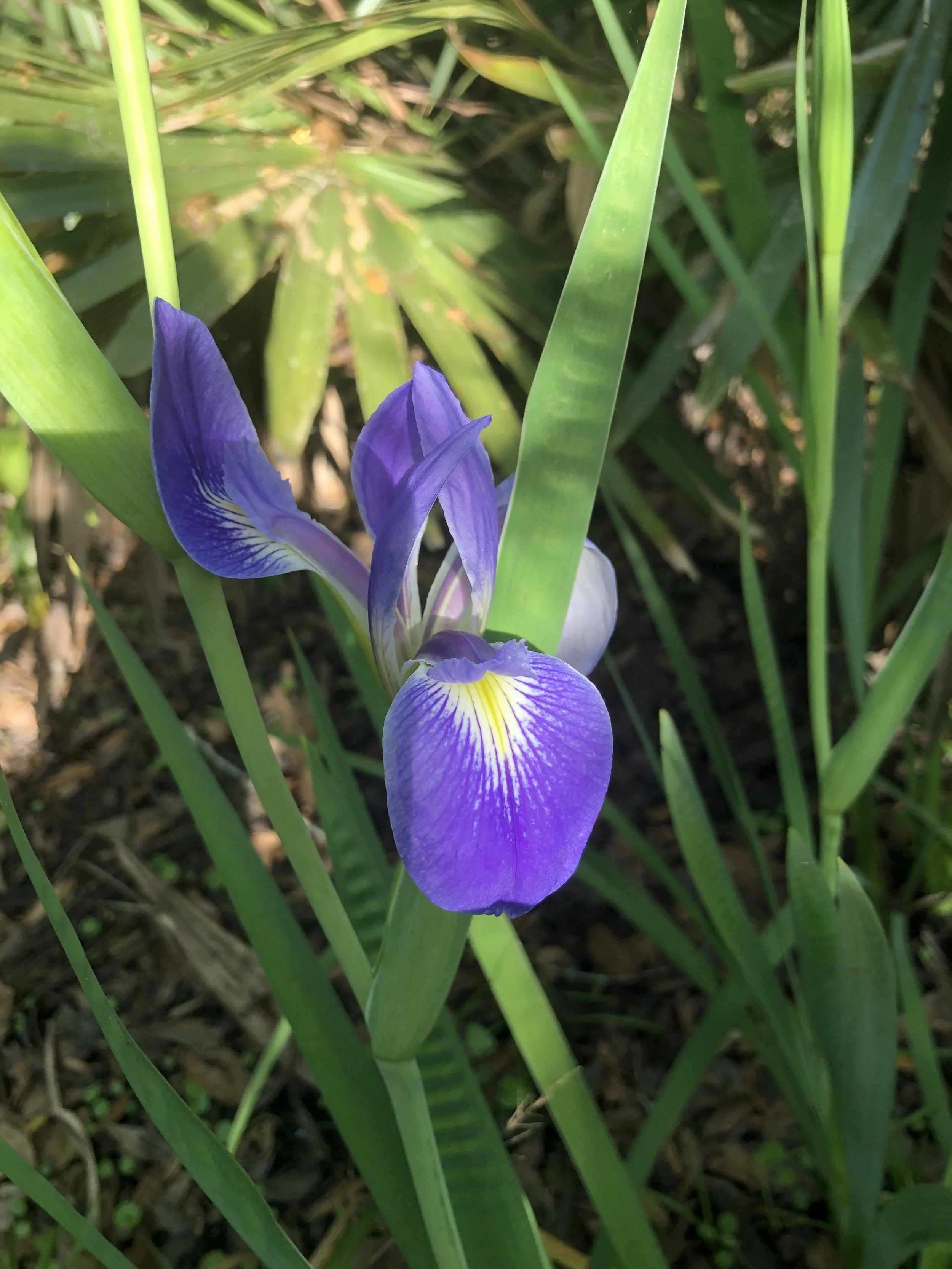
Iris virginica
Blue Flag Iris is a Florida-native perennial wetland plant that grows 2’-3’ tall and wide with bright green, sword-shaped leaves. It produces showy blue to violet flowers in late spring, each measuring 3”-5” across with drooping sepals marked with white and yellow near the throat. Thriving in wet soils and shallow water, it naturally occurs in marshes, swamps, and pond edges throughout Florida, making it excellent for rain gardens and bog plantings in zones 6-10.
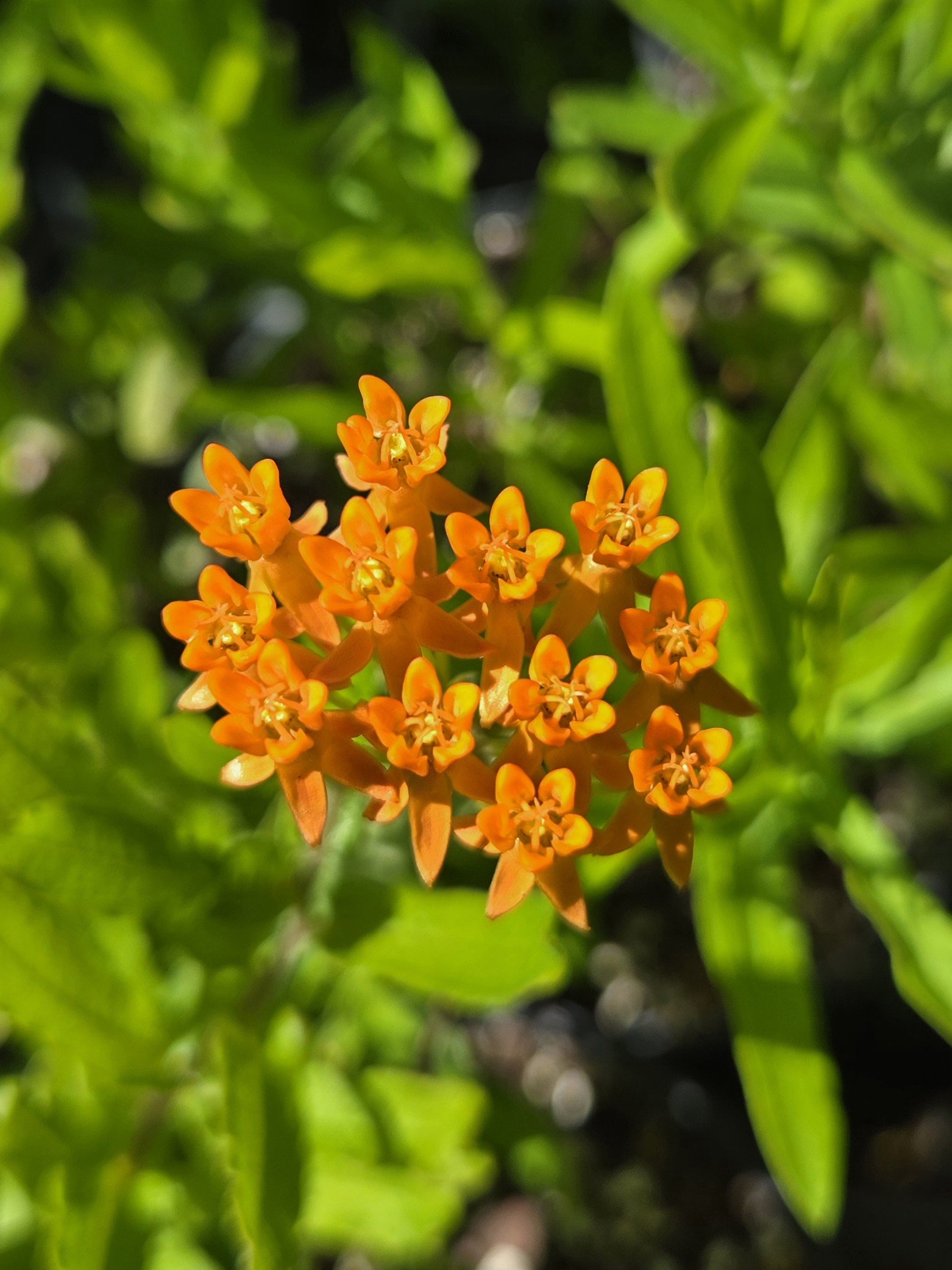
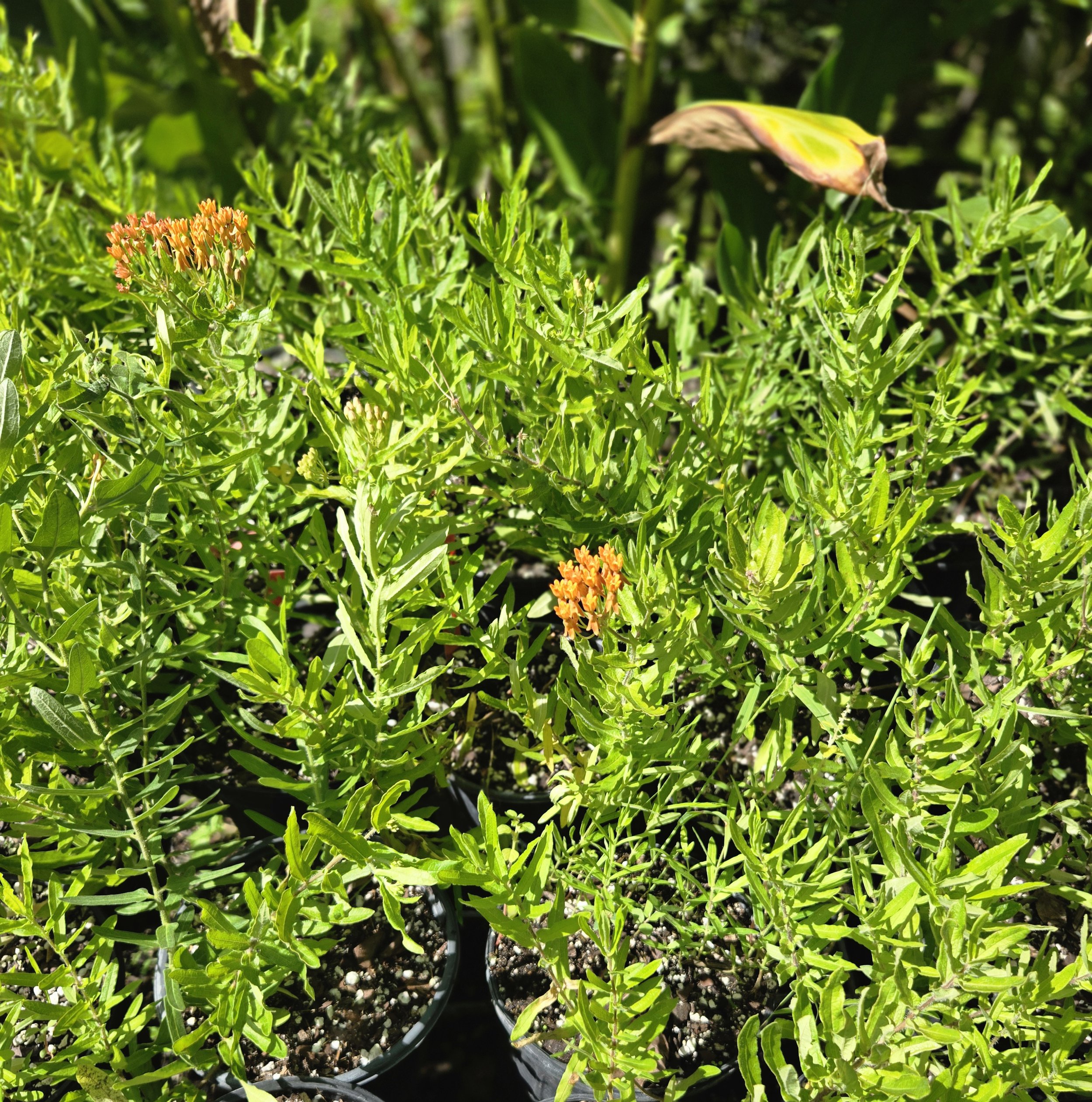
Asclepias tuberosa
This Florida native milkweed is lower growing at 1-3' and has bright red orange blooms summer-fall. Butterfly milkweed is a great choice for Monarch lovers with dry, sunny yards. Found naturally in hot sunny and dry sandhill environments it does well in landscapes with full sun and no irrigation. This milkweed is not only a host to Monarch and Queen butterflies but is also a pollinator magnet!
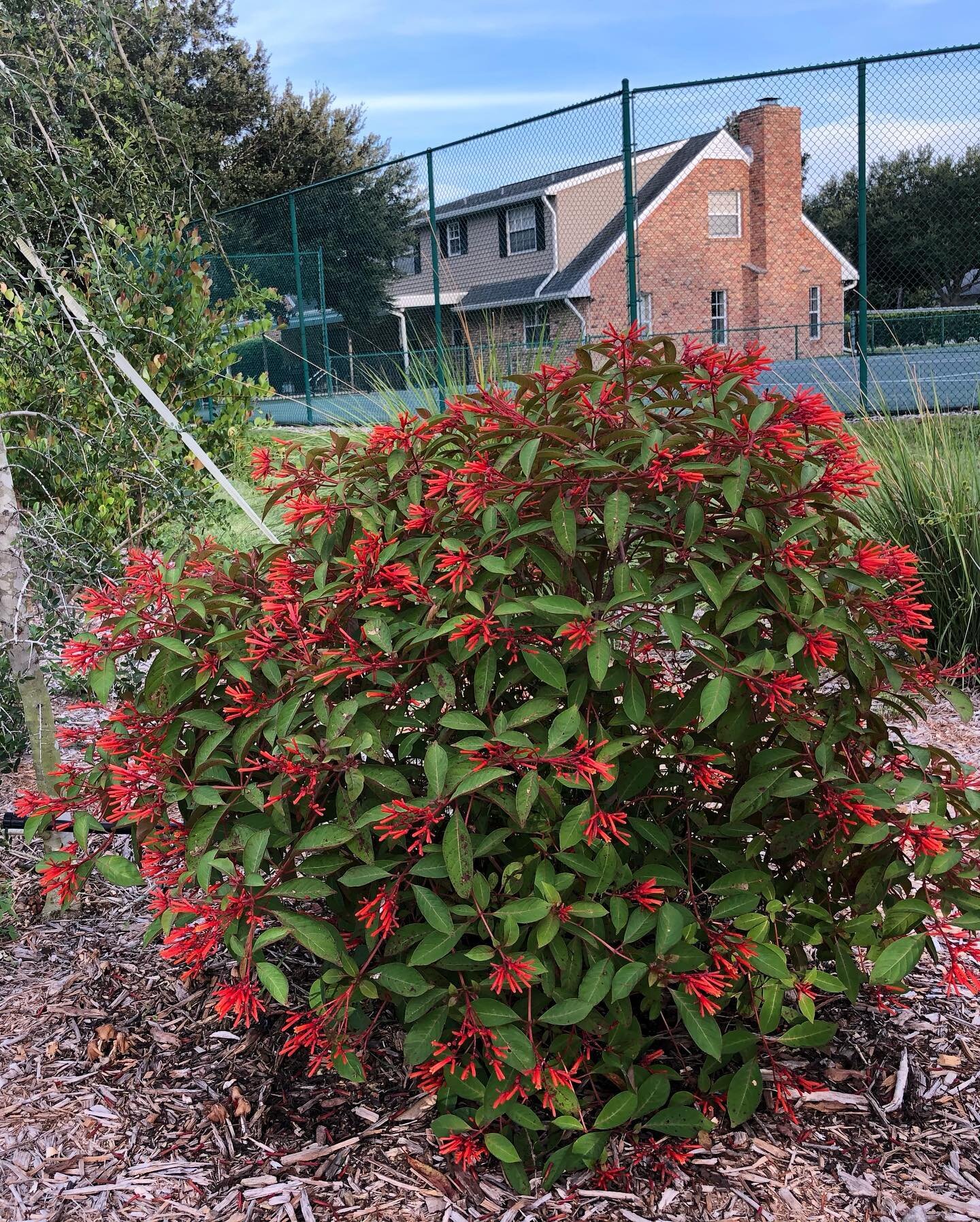
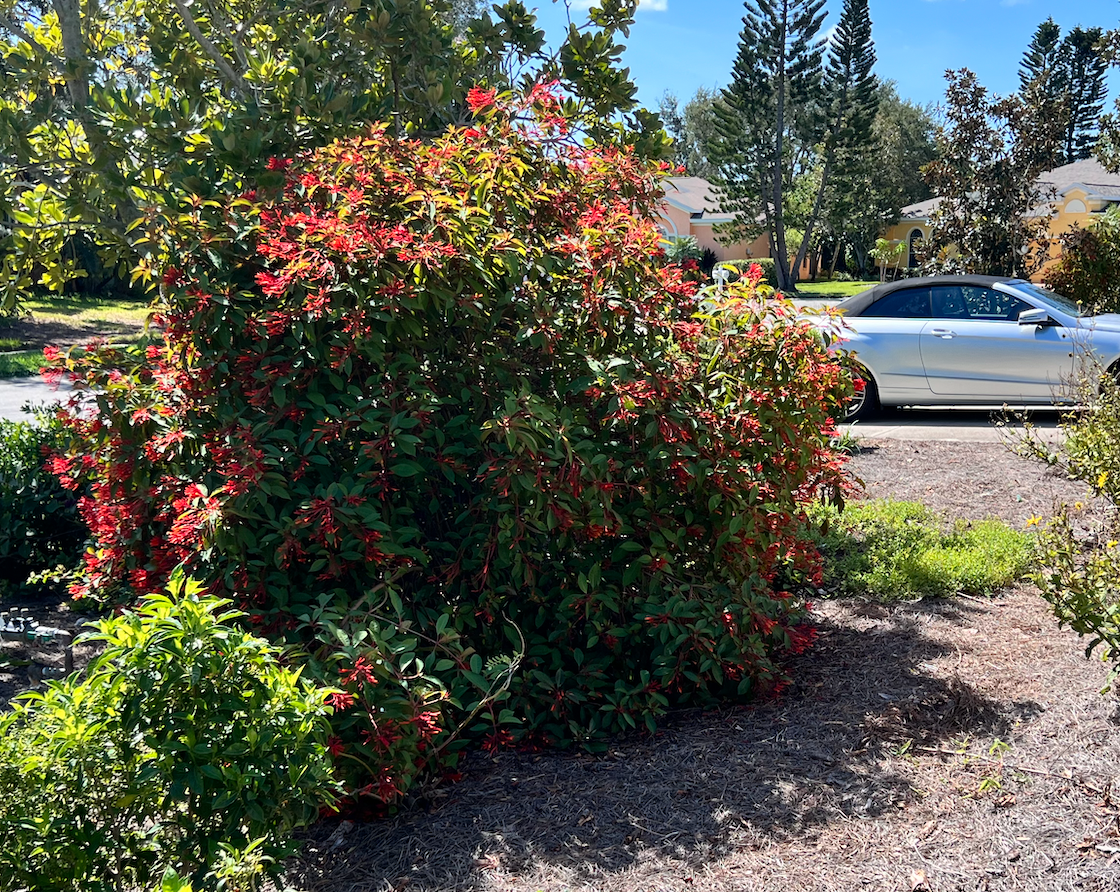
Hamelia patens var. ‘calusa’
Calusa is shorter growing native cultivar of the large native firebush. It is evergreen, flowering, long-lived shrub that can be kept easily at its mature height of approx. 6’. It needs average to moist (well-drained soils) but can adapt to dry in little bit of shade. The year-round red-orange flowers attract hummingbirds and butterflies and provide food for birds. The foliage on Calusa tends to be a deeper red than the larger traditional native firebush and can turn burgundy in cooler weather. The fruit is edible and has a long history of medicinal and industrial use and can be made into syrup or wine.
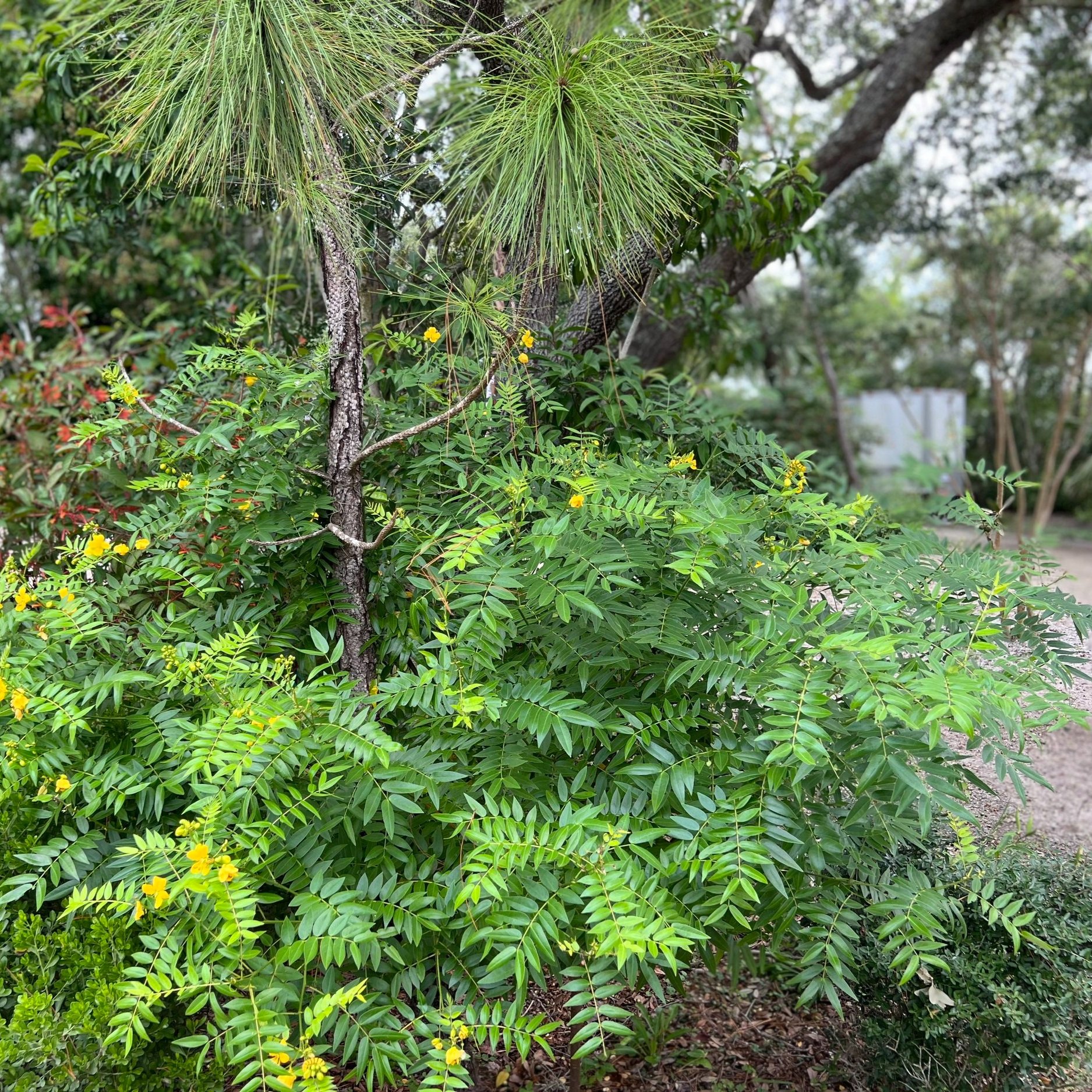
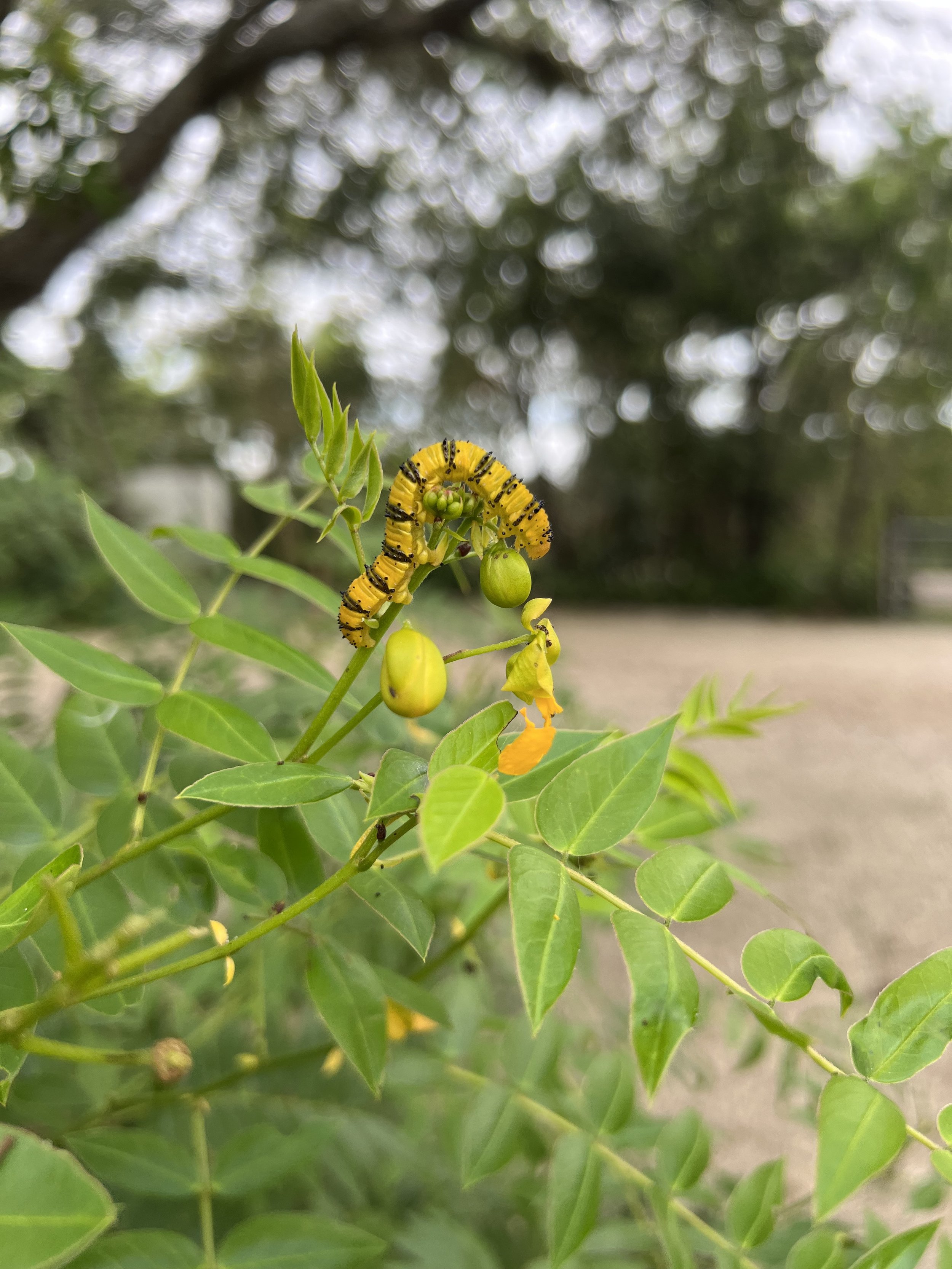
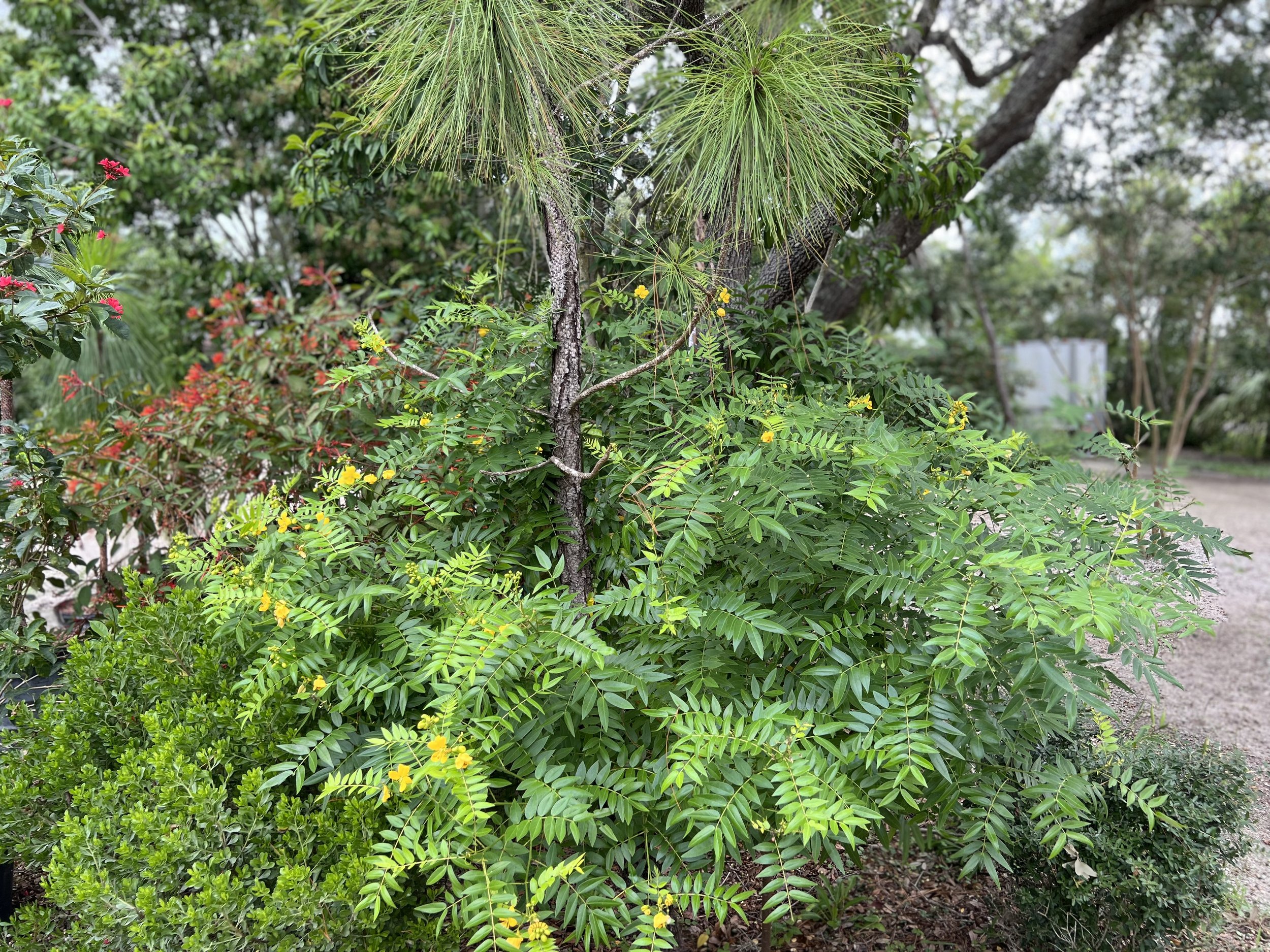
Senna ligustrina
Privet Senna is an evergreen perennial shrub native to Florida that grows 4’-8’ tall with an upright, narrow-crowned habit. This fast-growing member of the legume family features pinnately compound leaves with many small, dark green leaflets and produces clusters of bright yellow, five-petaled flowers from fall through spring. The blooms are followed by thin, brown seed pods approximately 5” long. Serving as a larval host plant for cloudless Sulphur, sleepy orange, and orange-barred Sulphur butterflies, it's an excellent choice for butterfly gardens while also attracting bees and other pollinators. Thriving in full sun to partial shade with well-drained soils, it naturally occurs along forest edges and hammocks from central Florida southward and readily self-seeds in suitable conditions.
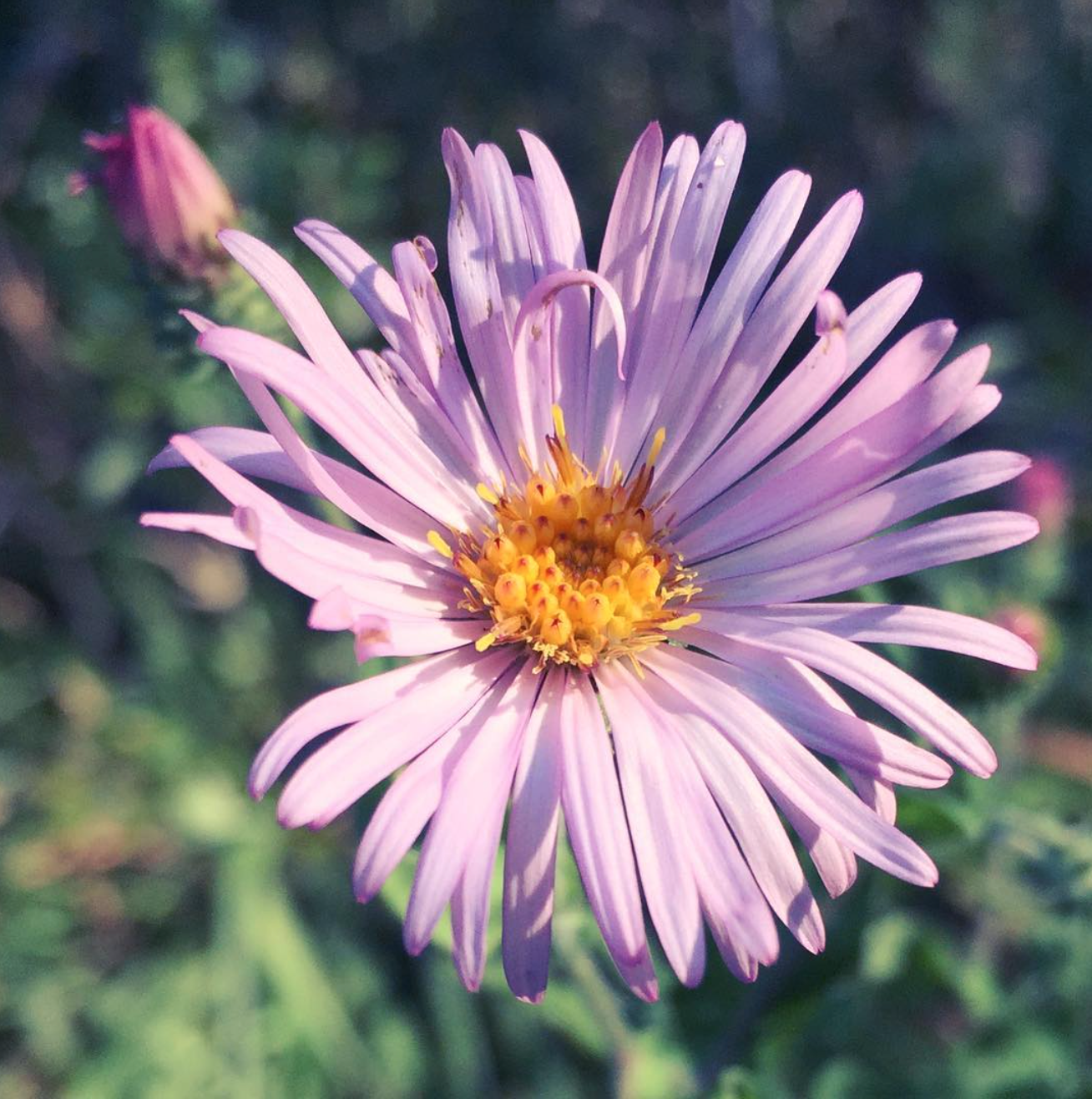

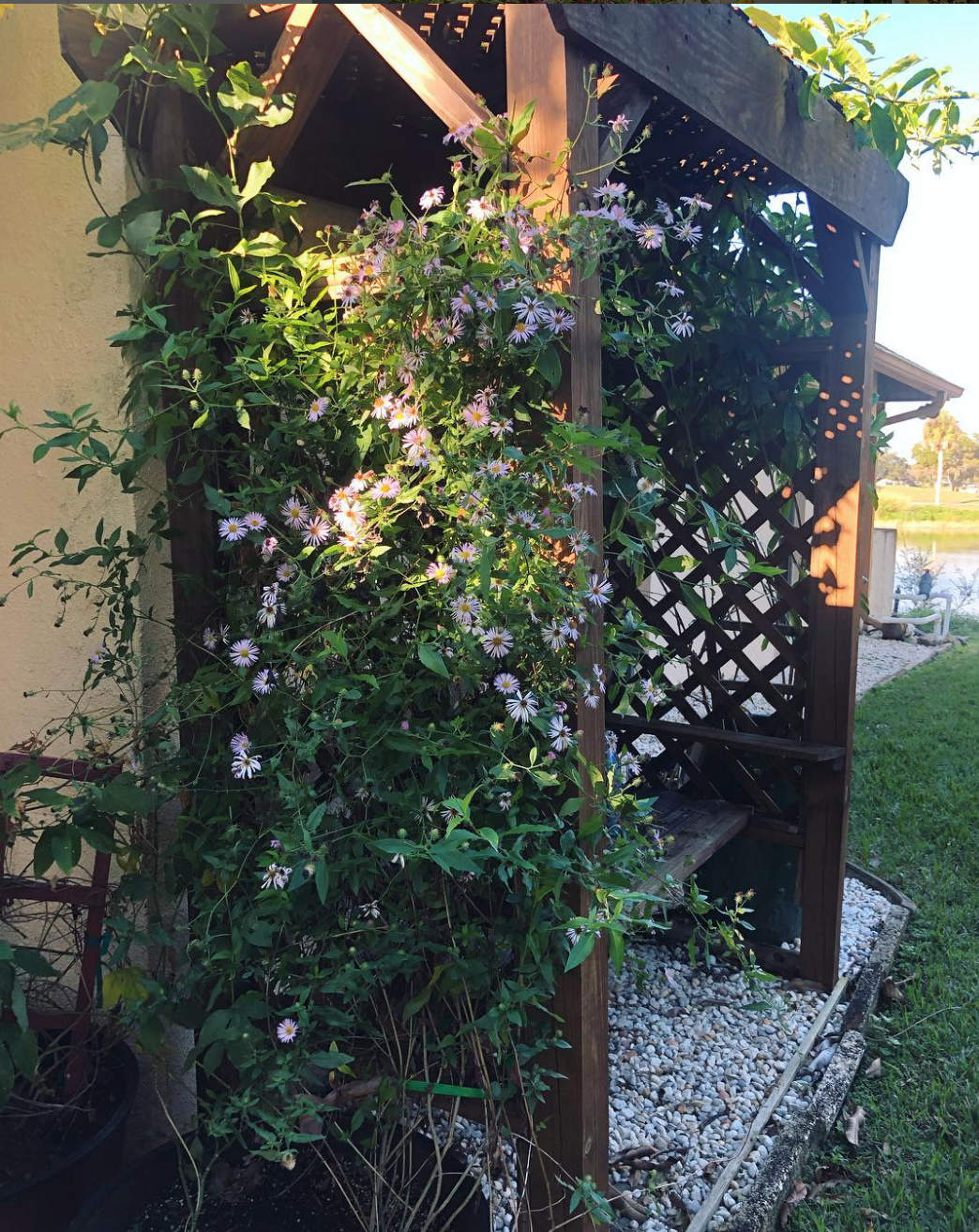
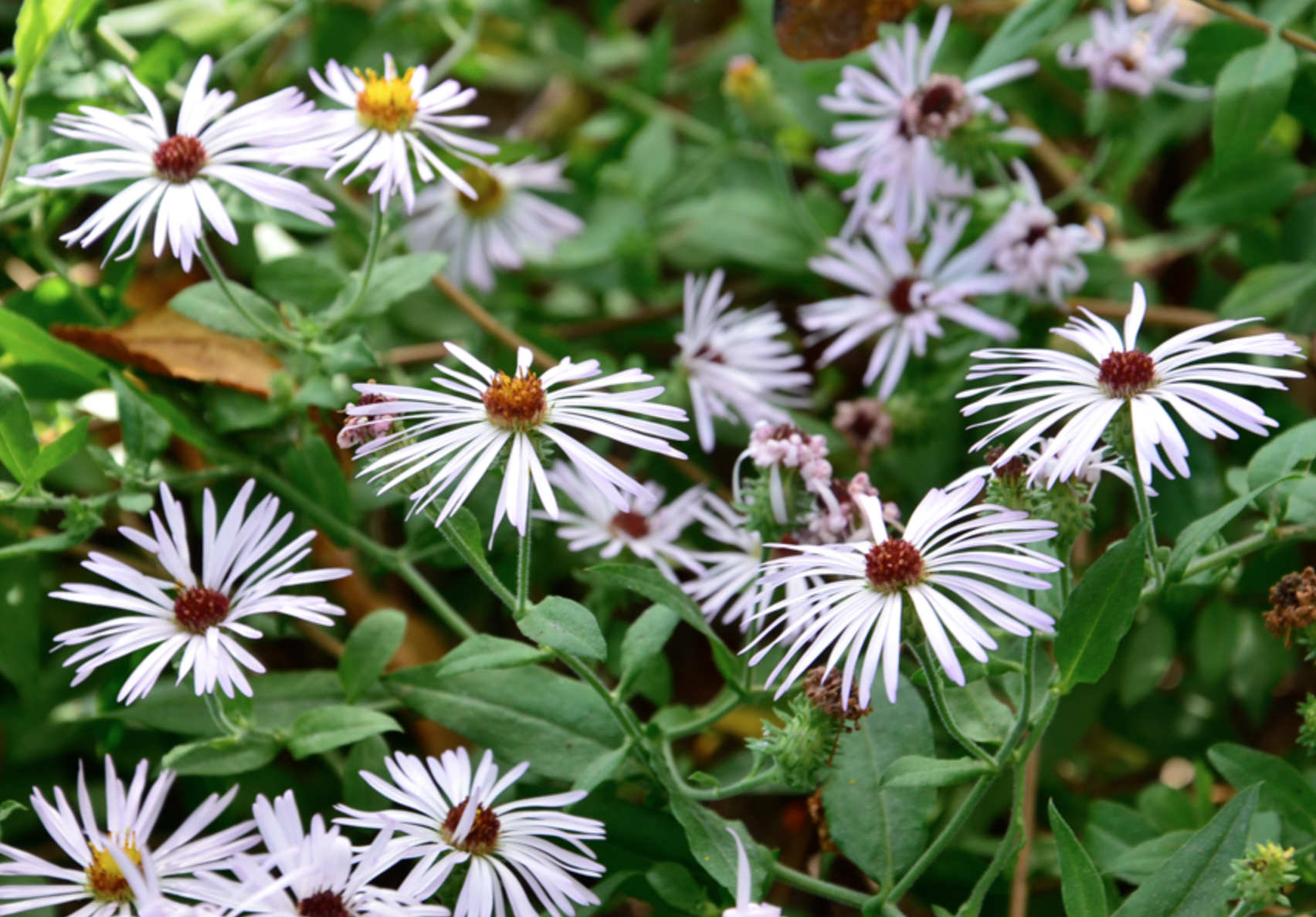
Aster carolinianus
Climbing Aster is a perennial, flowering, vine-like shrub, that can be trained to grow up a trellis or can be trimmed to a more formal shape and lower height. It prefers average to wet soils and full sun to partial shade. In the late summer through winter, it is covered in small lavender aster flowers. It’s a pollinator favorite!
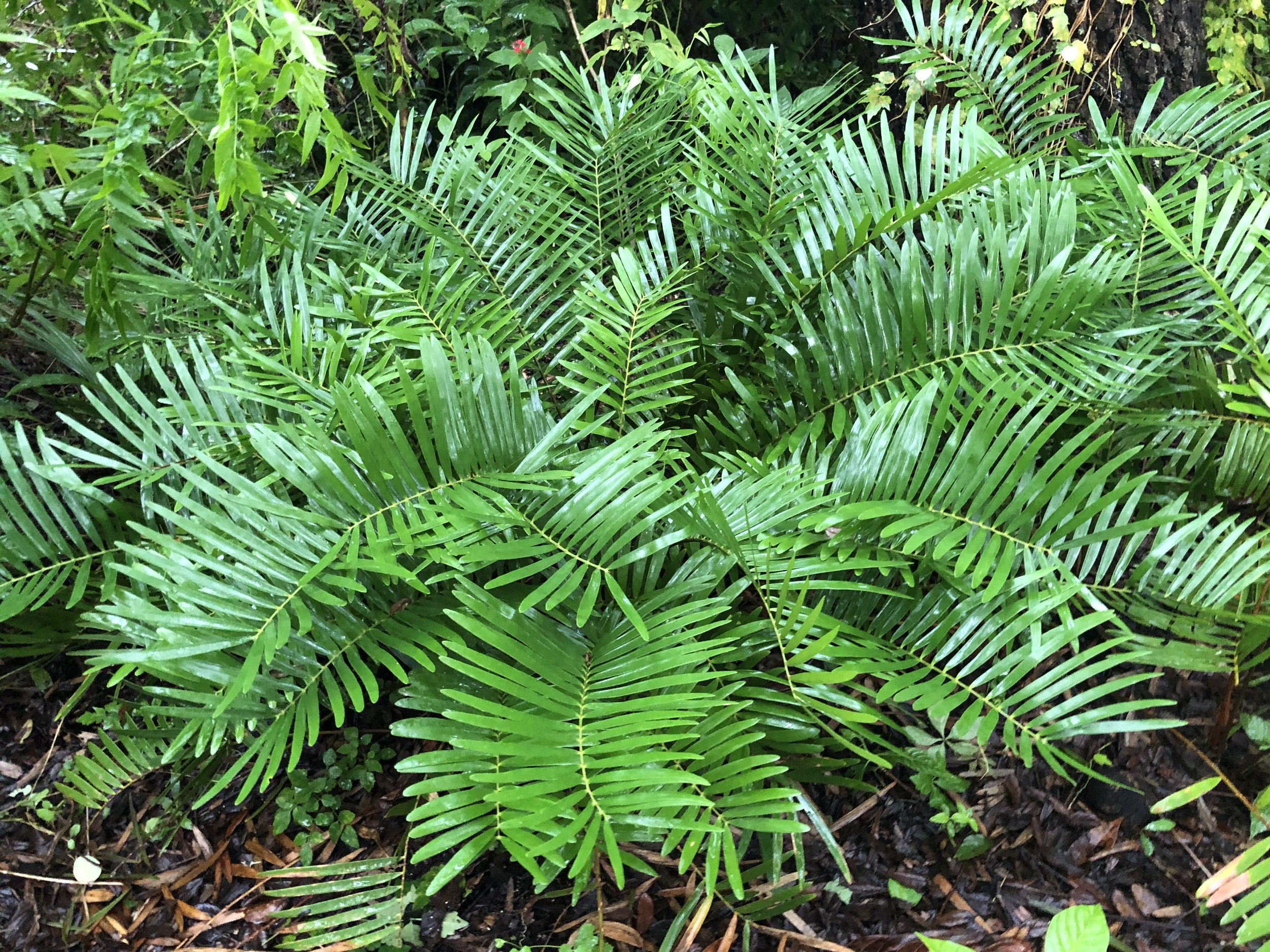
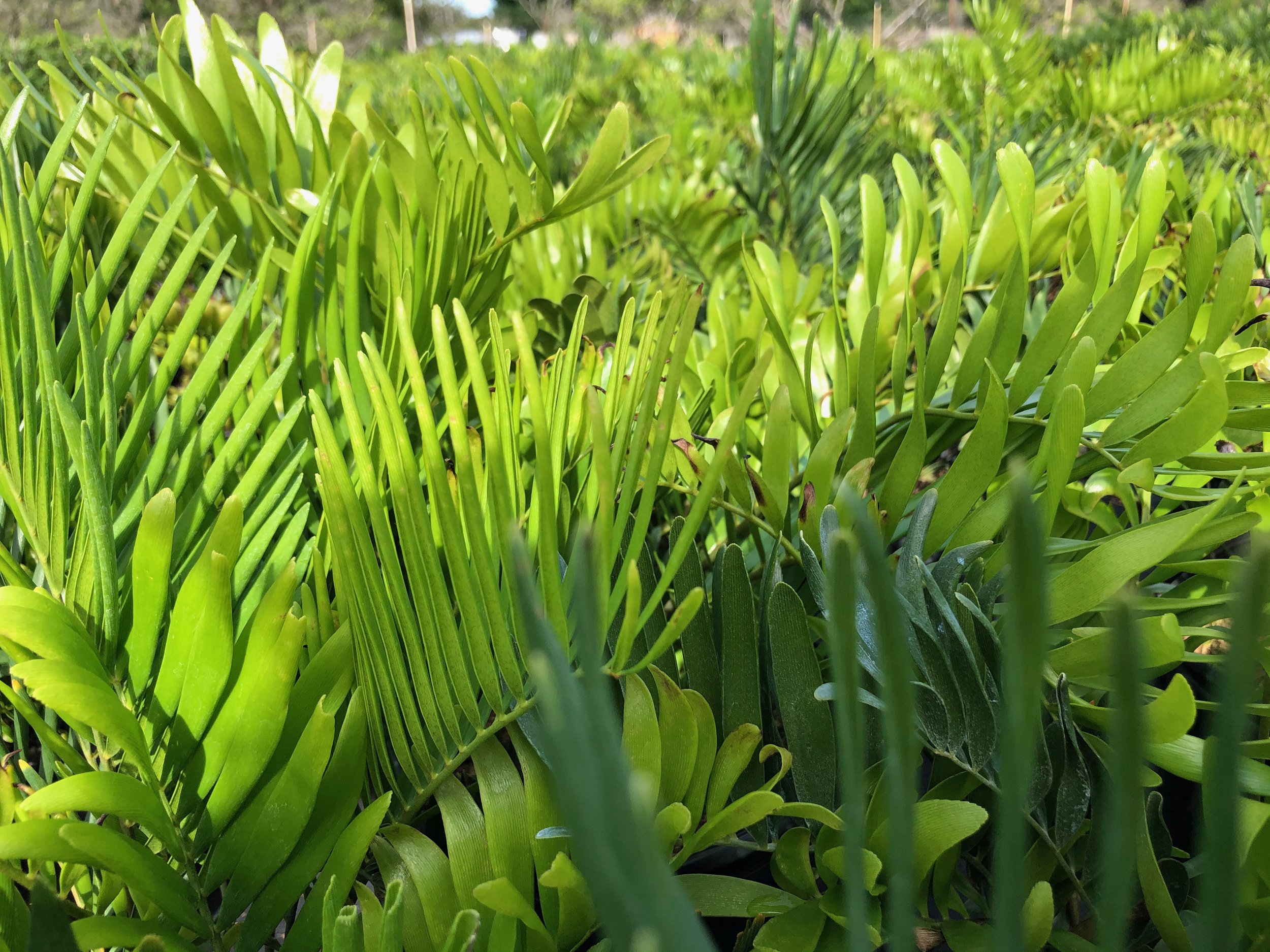
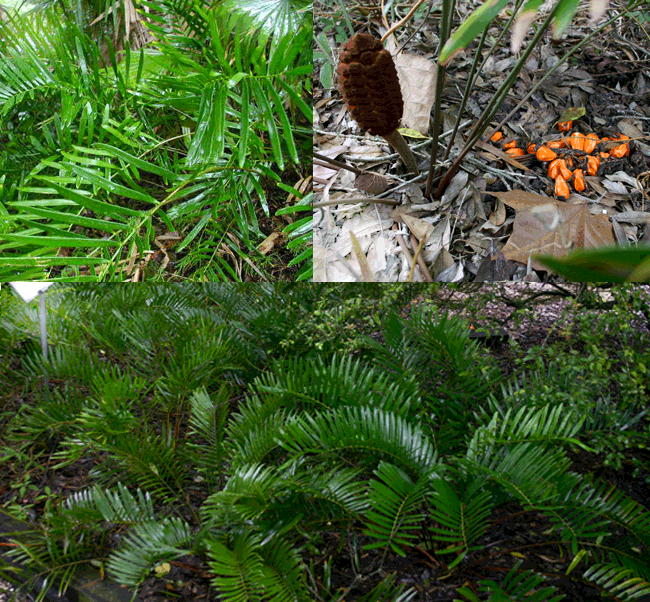
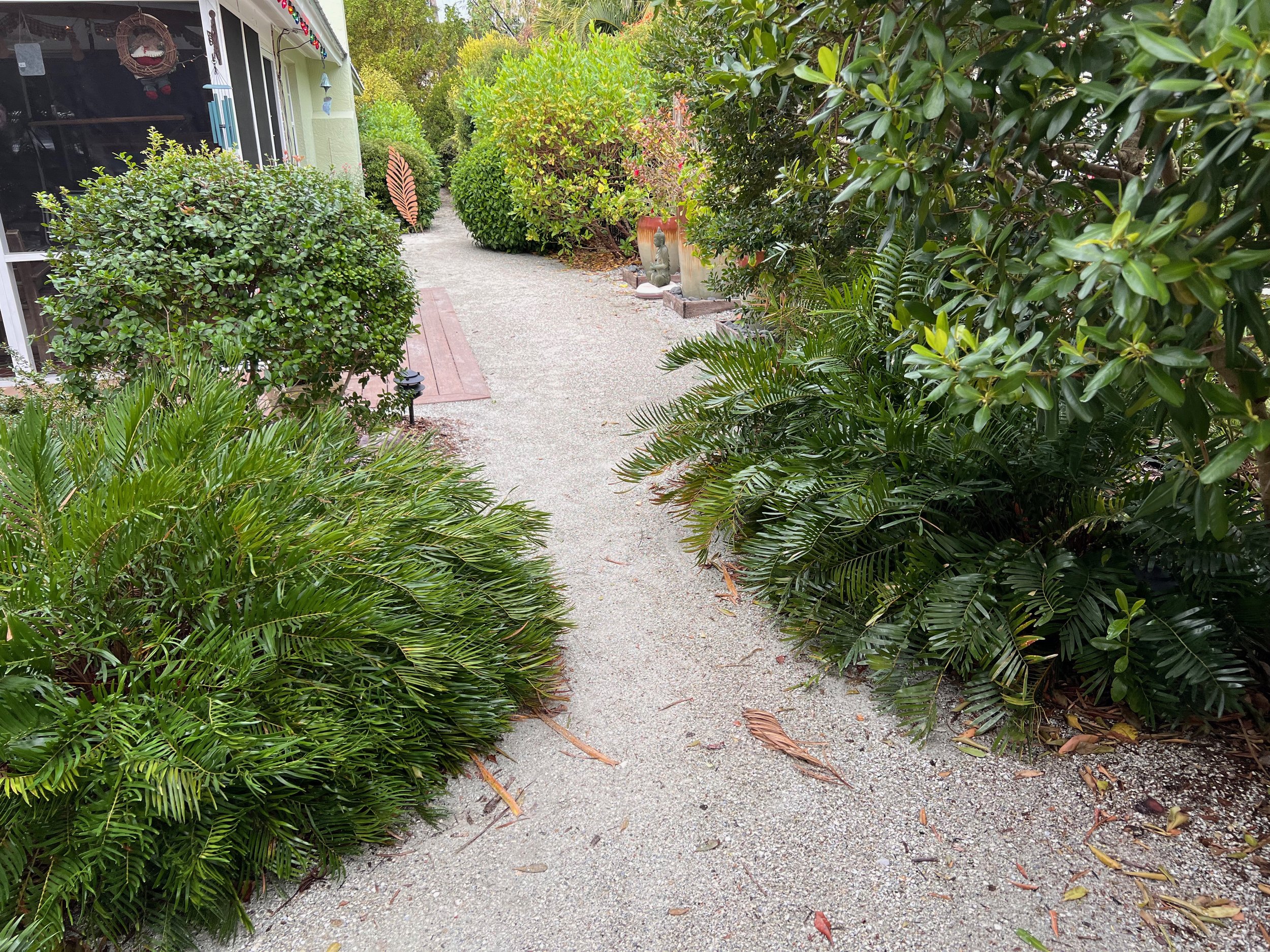
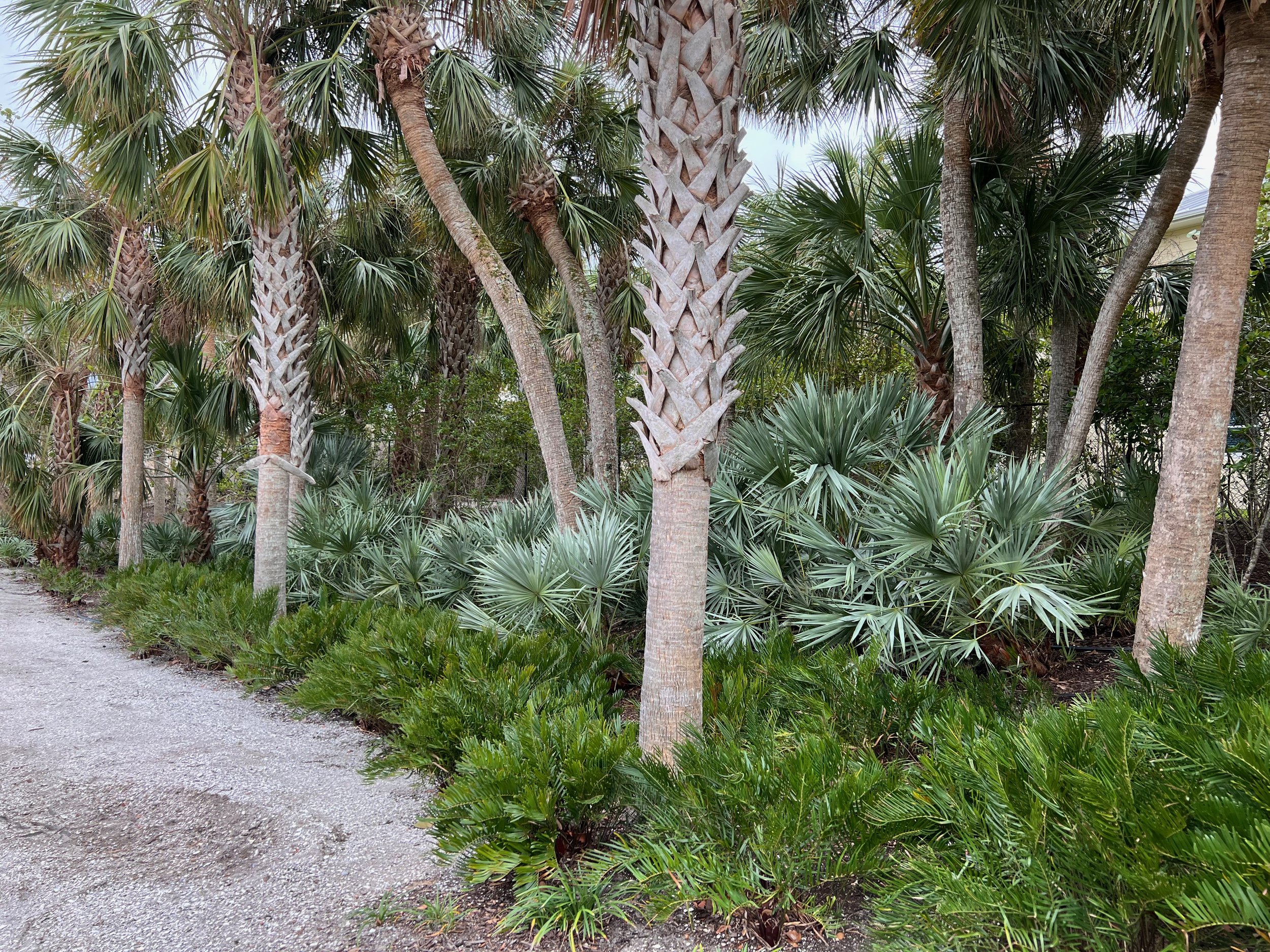
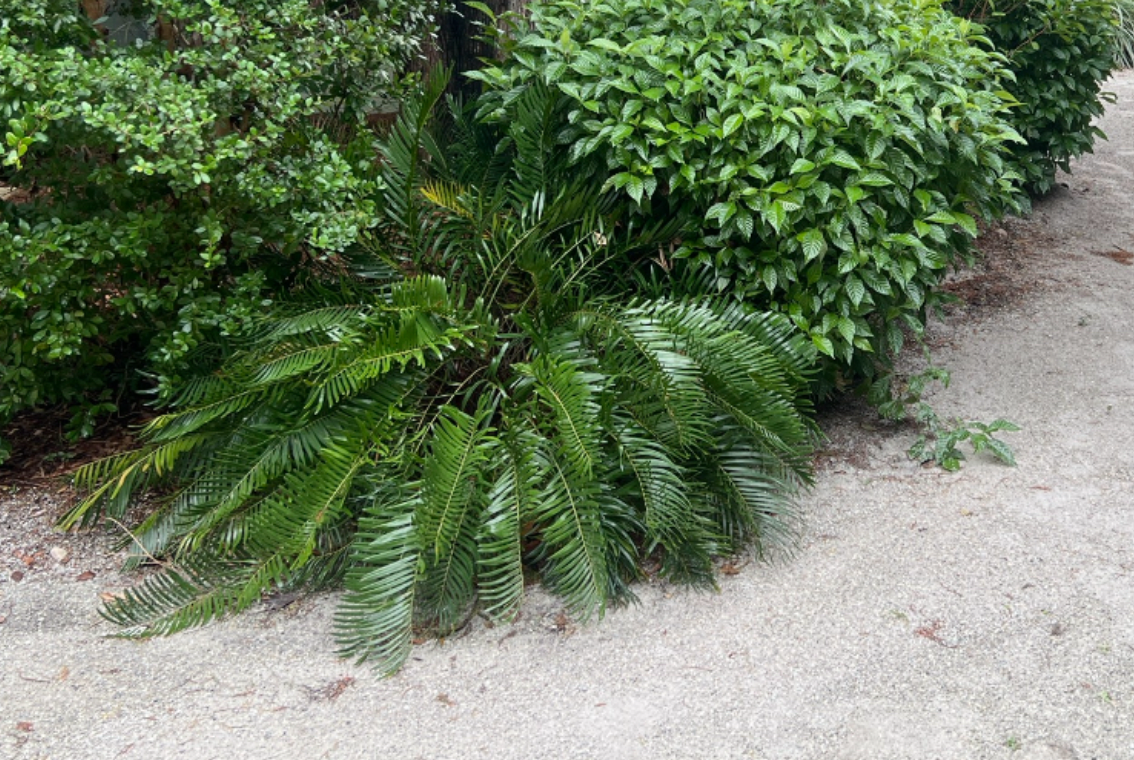
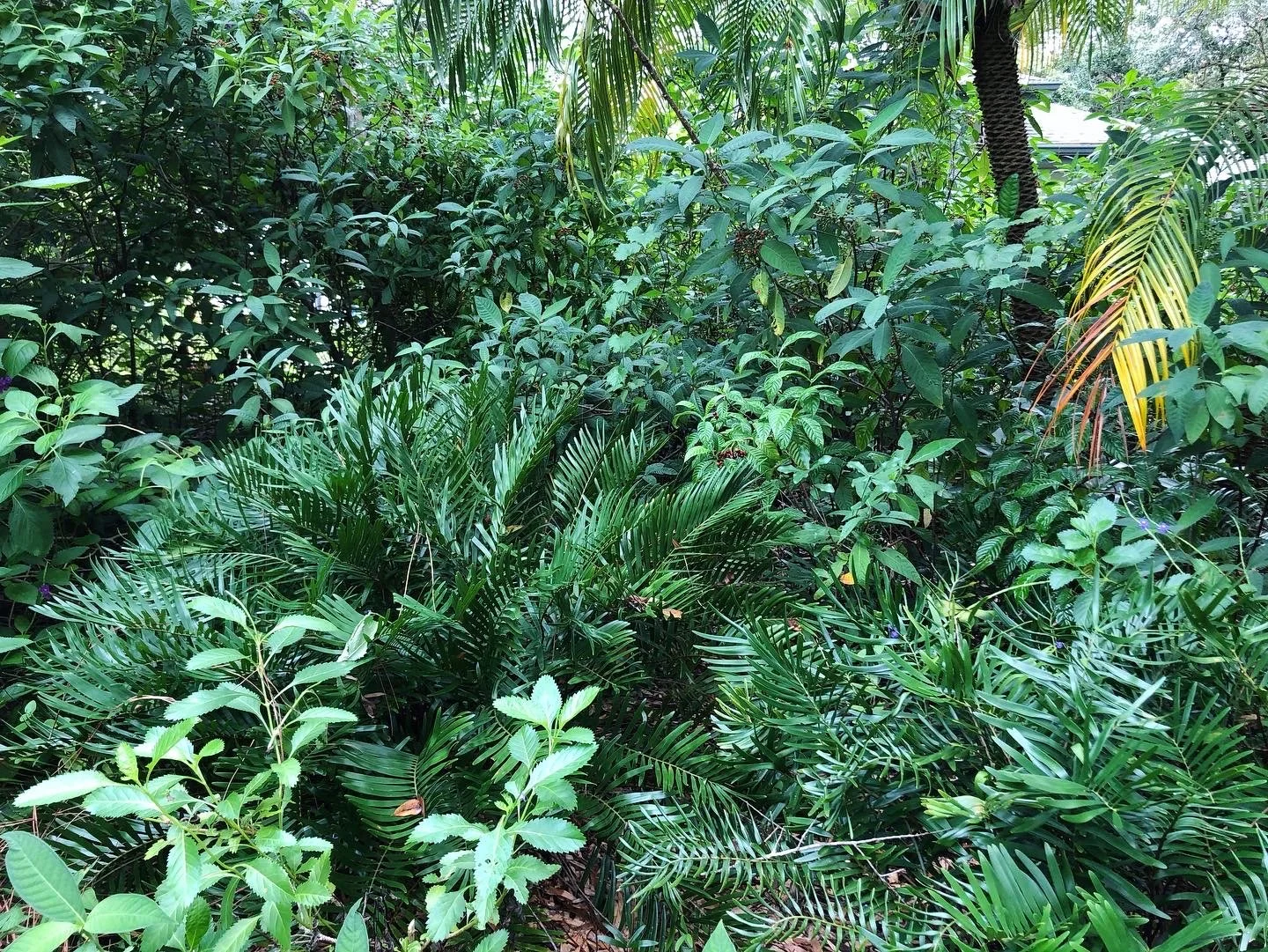
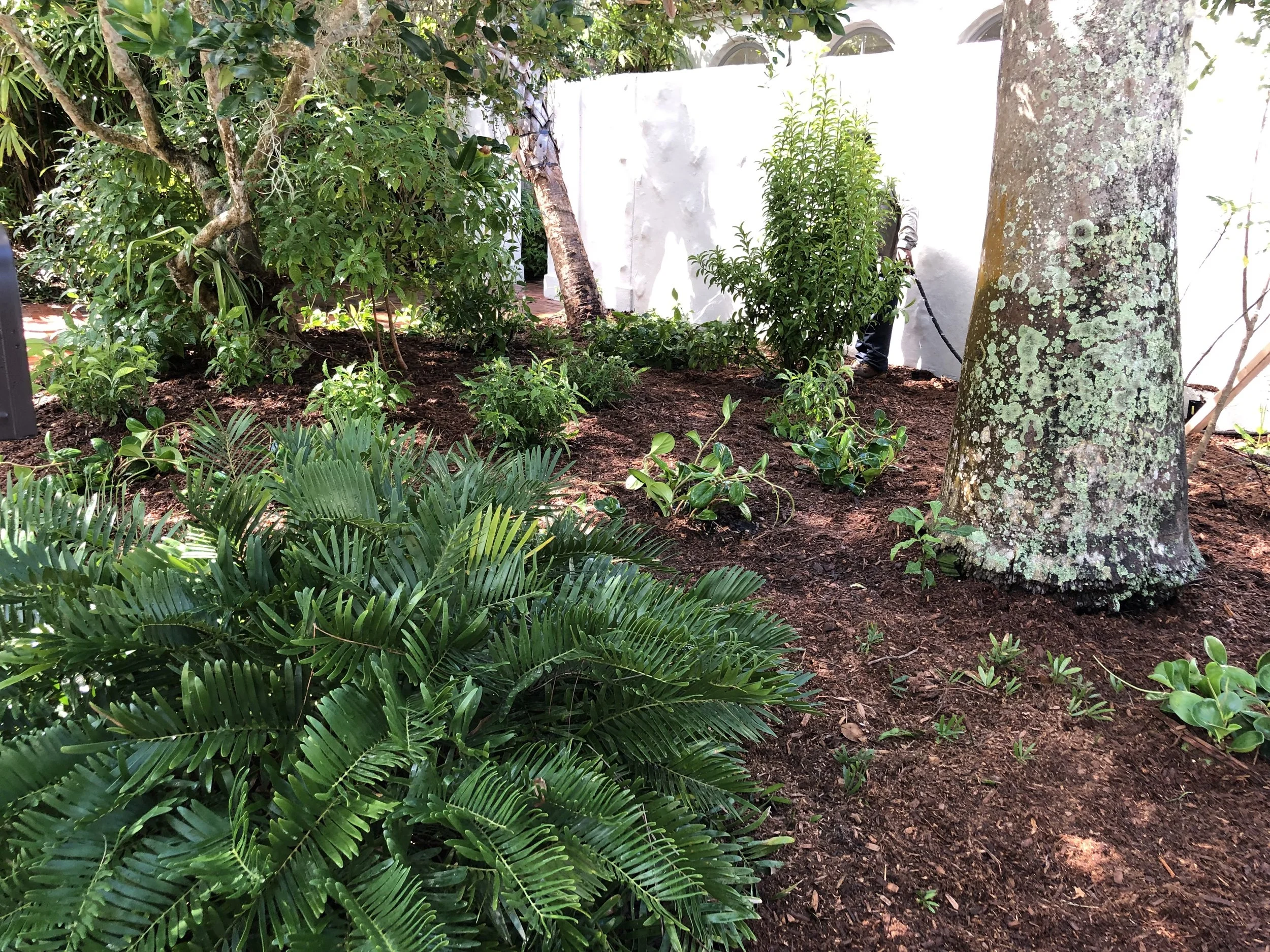
Zamia integrifolia
Coontie is perfect for a dry sunny or shady spot in the garden. It is extremely hardy and drought tolerant and is successful in harsh conditions like highway medians. It generally stays under three feet tall and 3 feet wide and has a tropical Florida feel. Coontie is an ancient plant and is Florida’s only living cycad. It is the important host plant for the Atala butterfly.
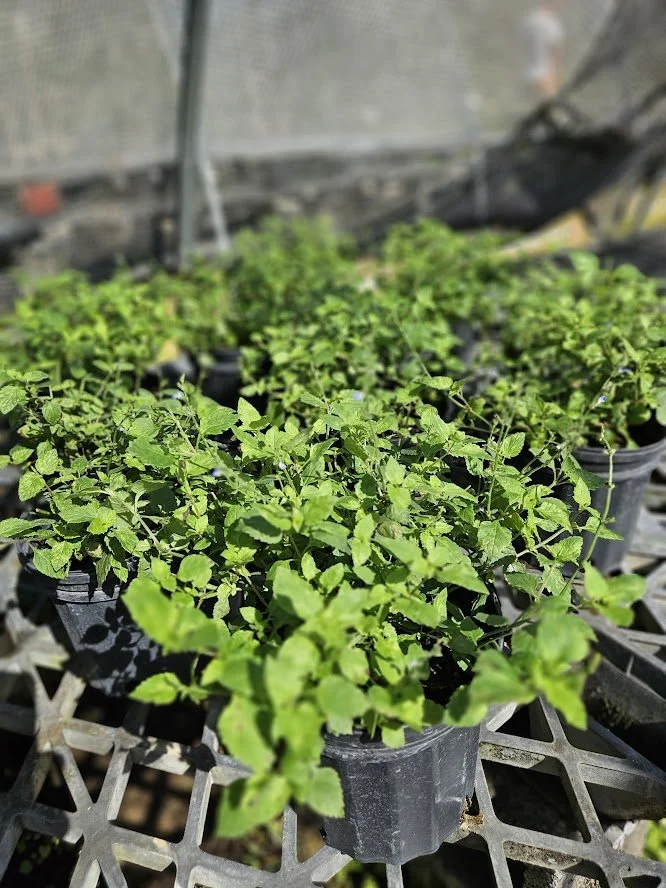
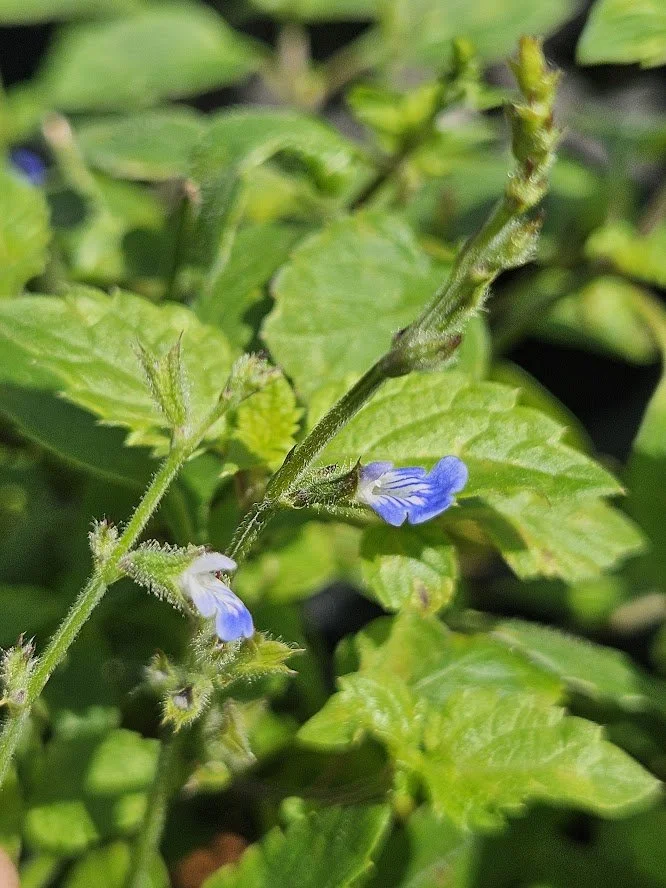
Salvia misella
Creeping Sage is a low-growing perennial native to Florida that forms dense, aromatic ground cover mats. This species produces small blue flowers and thrives in well-drained, average to dry soils. It serves as an excellent choice for planting between shrubs and trees as it prefers dappled sunlight to full shade.
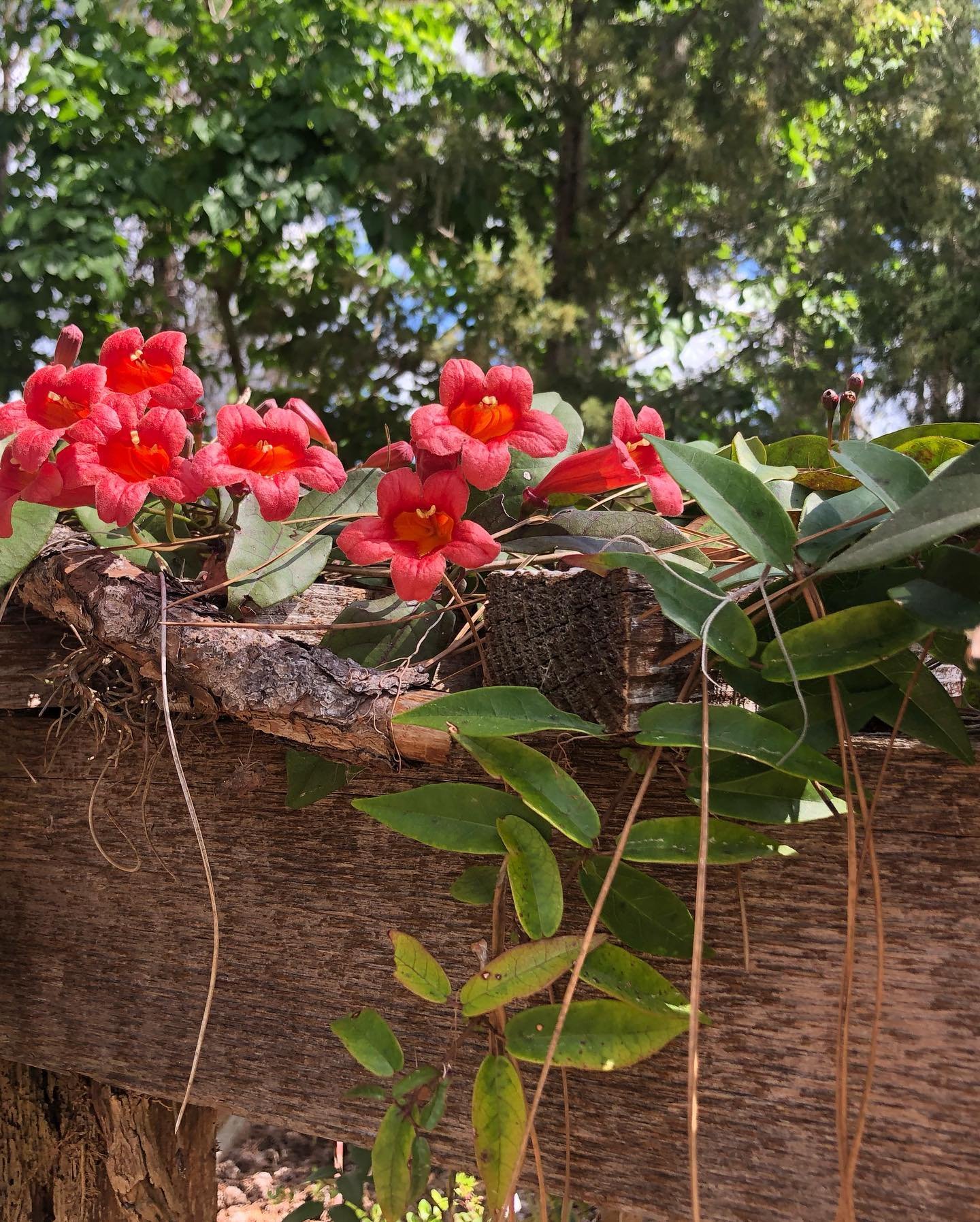
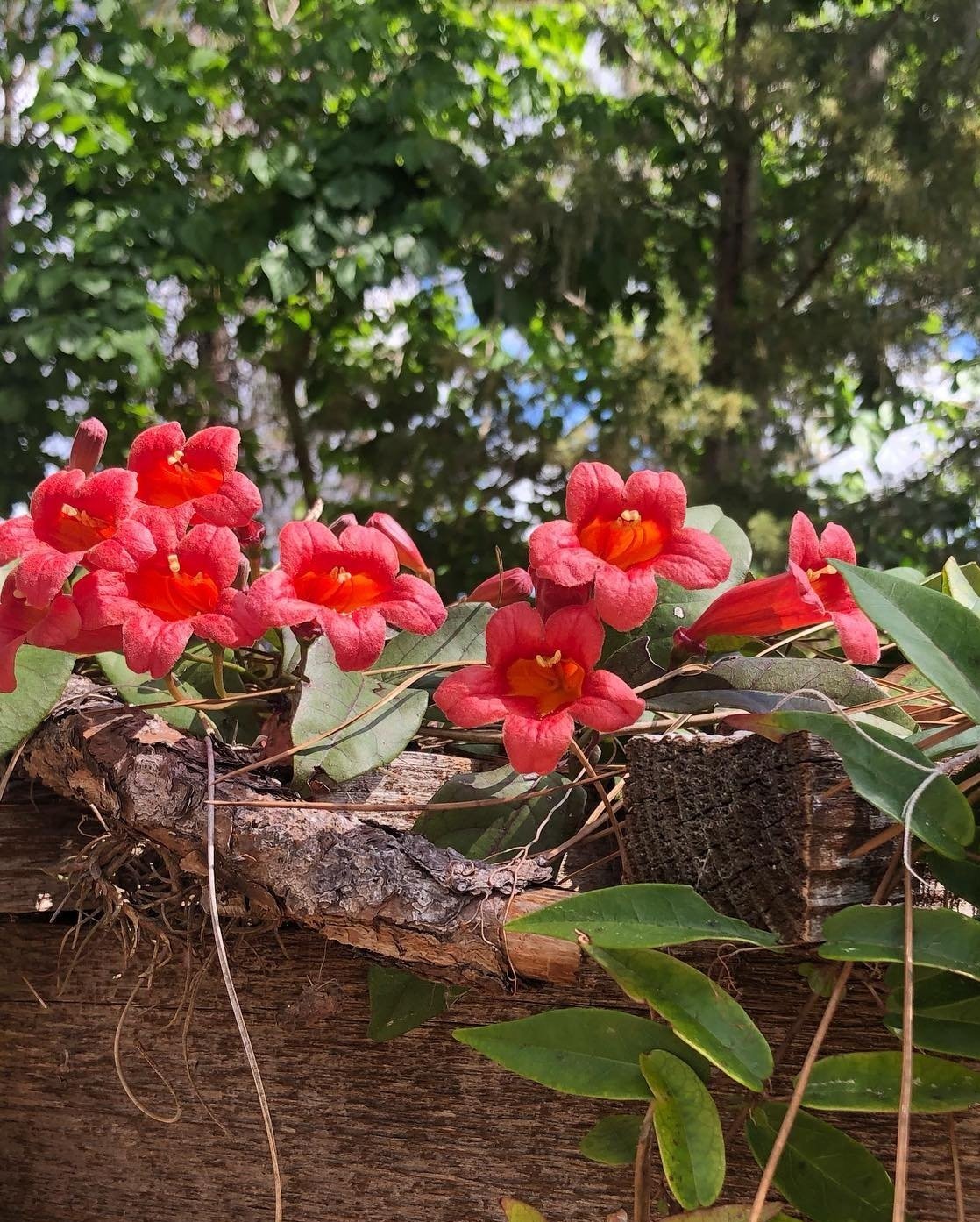
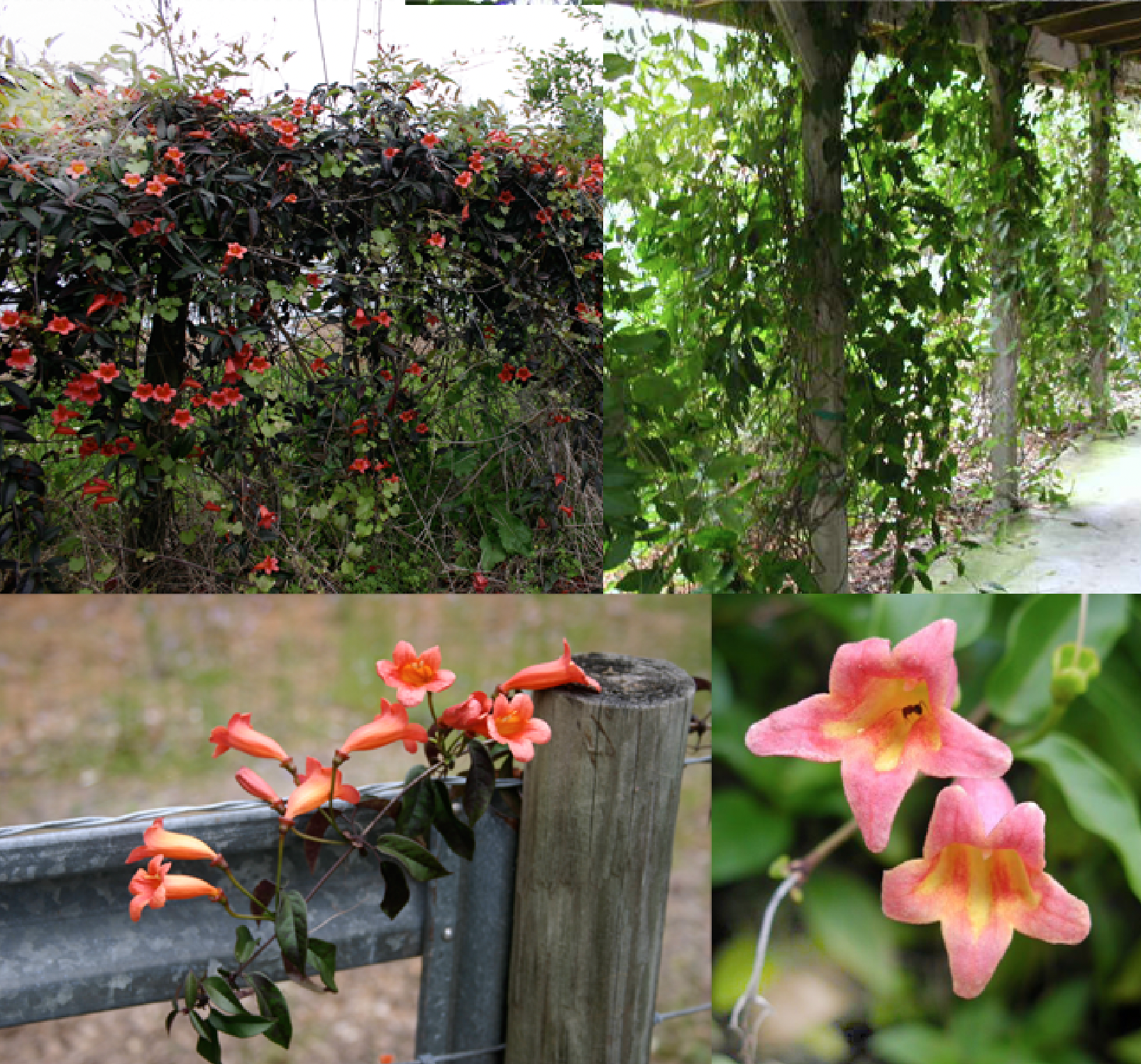
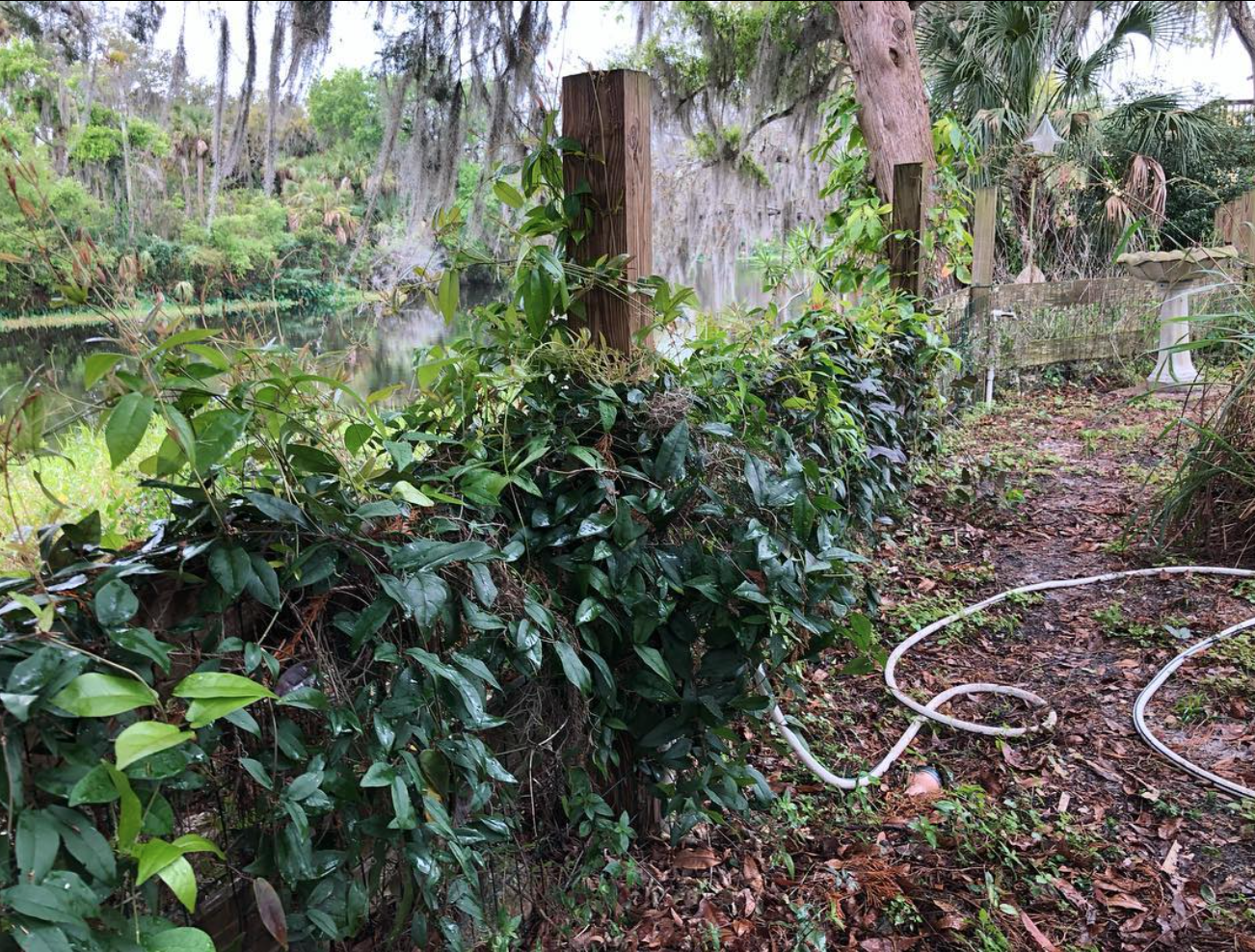
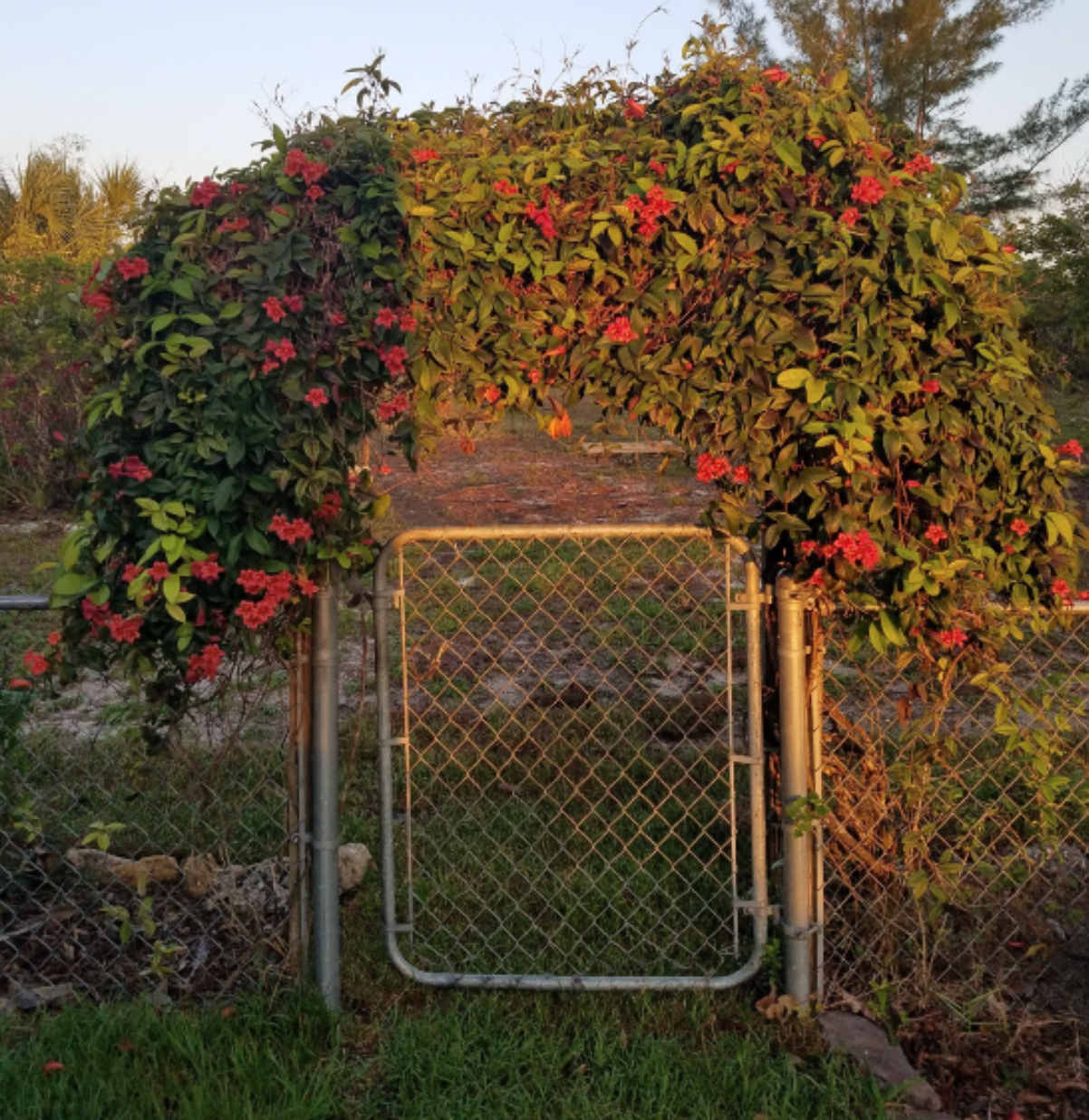
Bignonia capreolata
Crossvine is a perennial, evergreen vine that can bloom late winter through spring through mid summer. Crossvine’s red tubular flowers are an important food source for hummingbirds but also attracts butterflies and other pollinators. It can be grown in full shade or full sun, is cold hardy, drought tolerant and prefers moist soils that are well-drained. It can be controlled if planted on a trellis or in an large container, but can also be planted at the base of large trees like native Live Oak to add flowers to the tree branches and protection for songbirds from birds of prey.
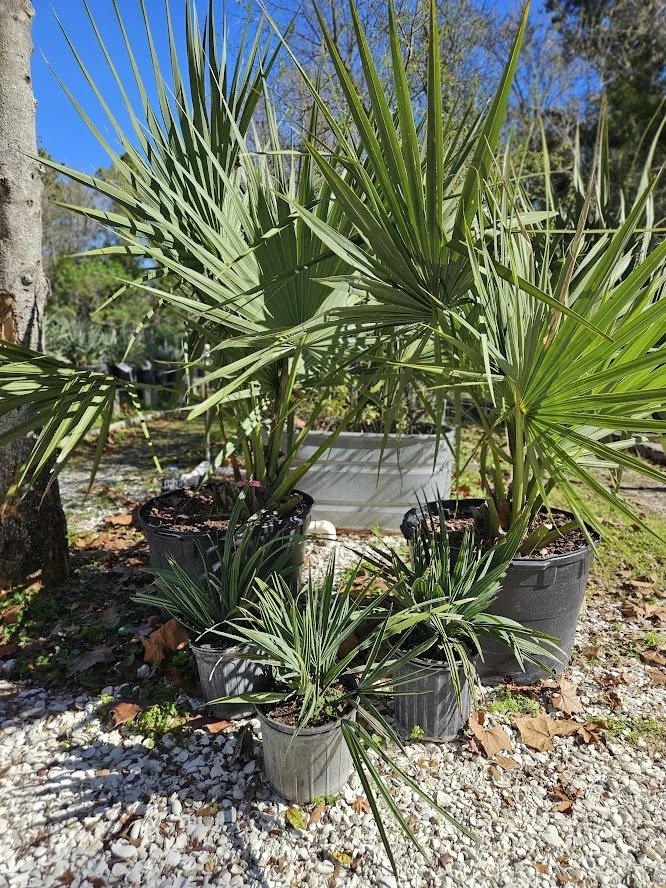
Sabal minor
Dwarf Blue Stem Palmetto is a small, clumping palm that typically grows 3-6 ft tall with a trunkless or short-trunked form. It is extremely cold-hardy, flood-tolerant, and drought-tolerant once established. It thrives in full sun to partial shade with average to moist soil. This low-maintenance native requires little care and provides excellent textural interest and tropical appeal to landscapes. Its fan-shaped fronds create dense, attractive foliage year-round, making it ideal for understory plantings or as a distinctive accent plant.
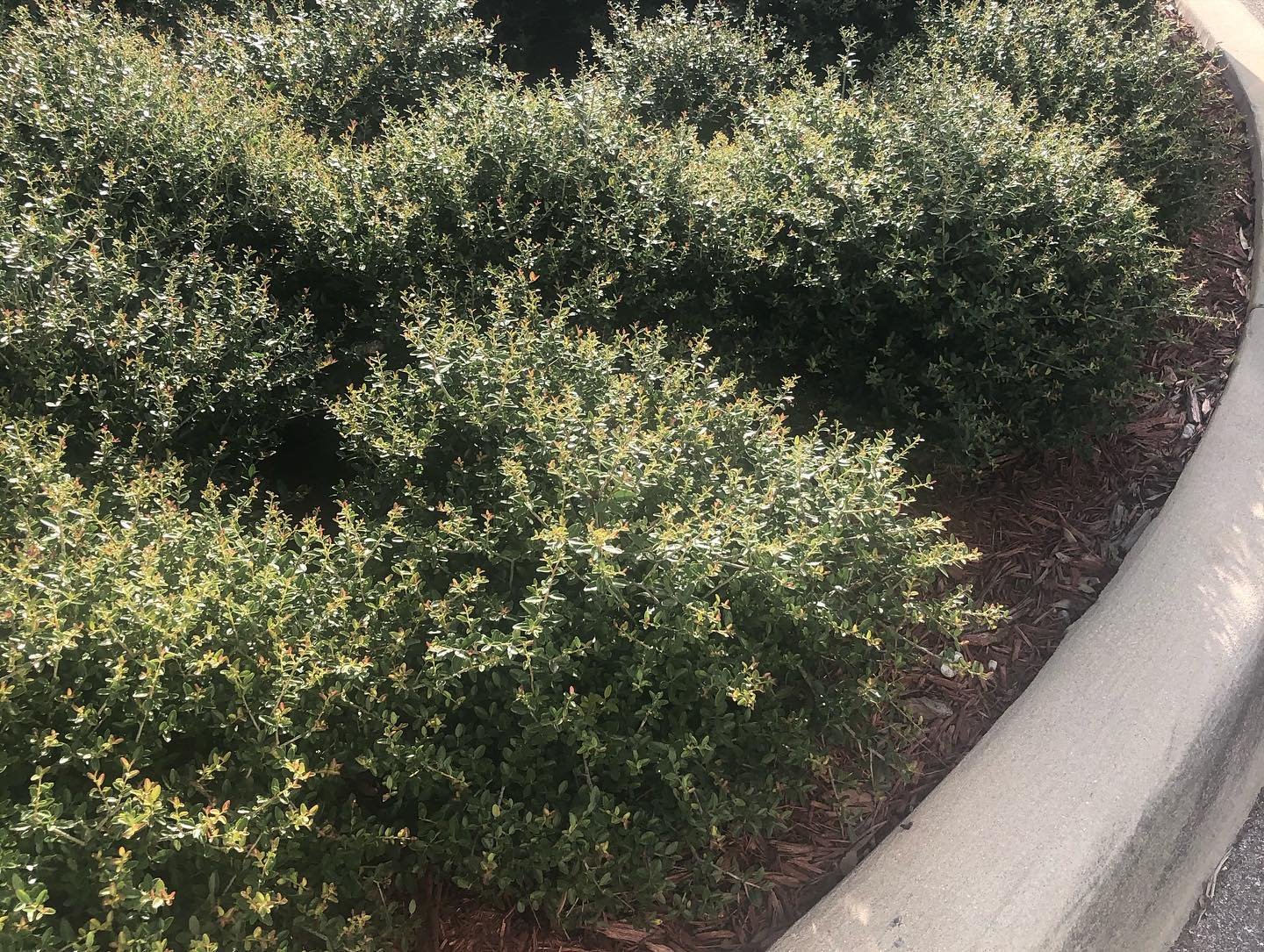
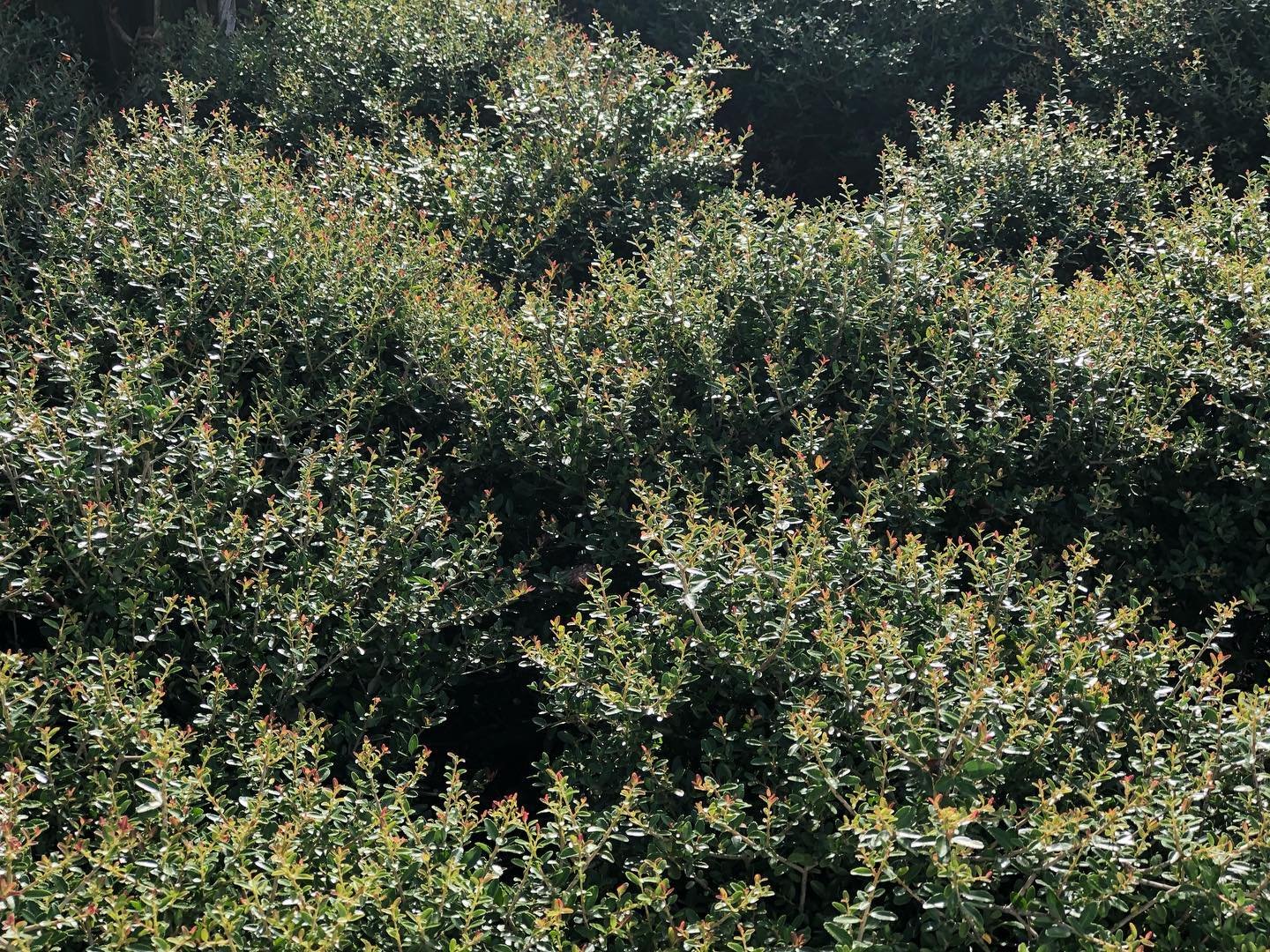
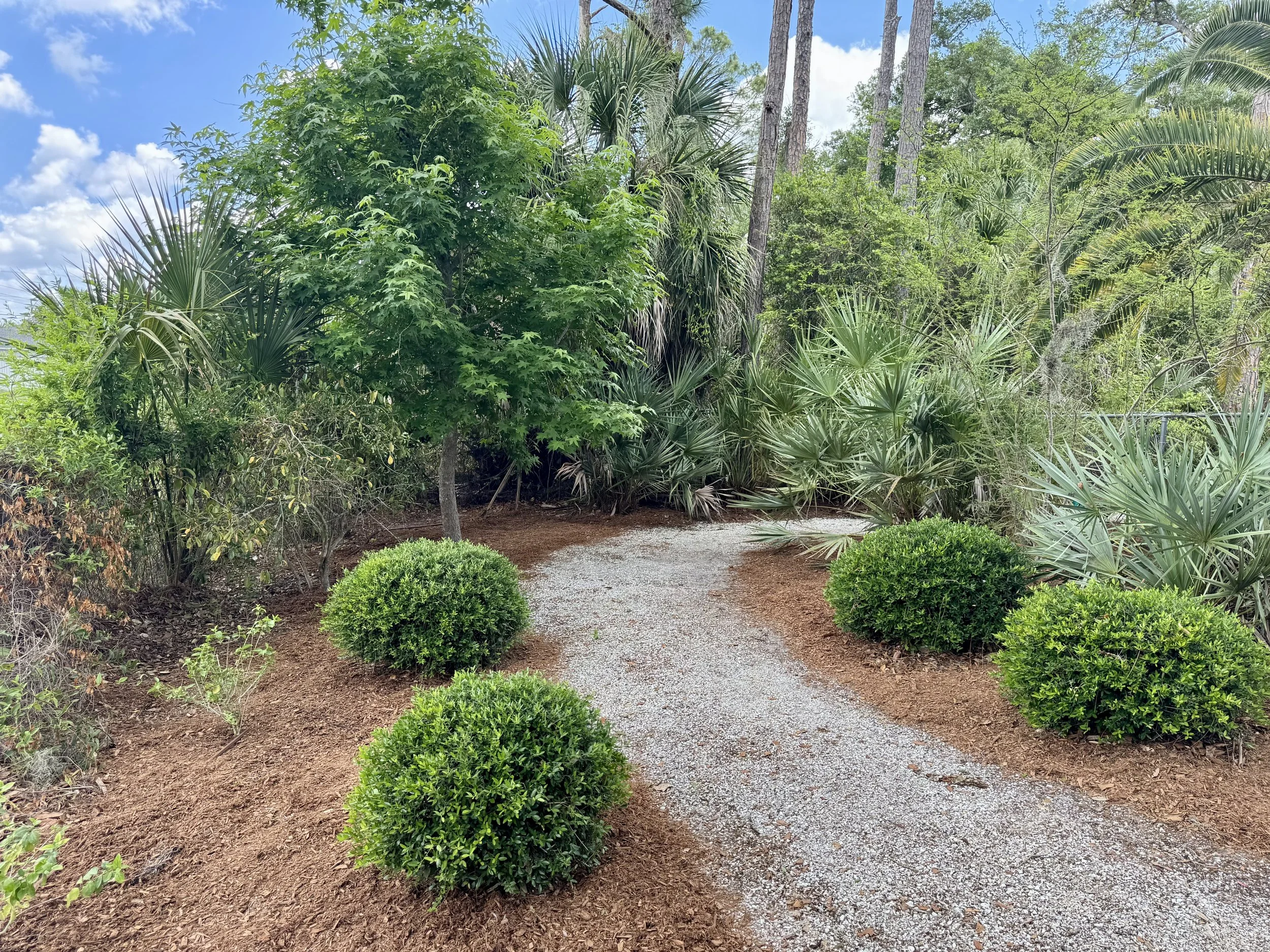
Ilex vomitoria 'Schillings Dwarf'
Dwarf Yaupon Holly is a super hardy and adaptable small shrub that makes a great low growing border or mass planting. It’s easily prunable and it’s full height is 3-4 ft. It does well in full sun to partial shade with dry to moist (well-drained) soils.The dwarf plants are male and produce a flower but no berries, however they help to pollinate female upright Yaupon Hollies and the Yaupon Holly cultivars like Weeping Yaupon Holly.
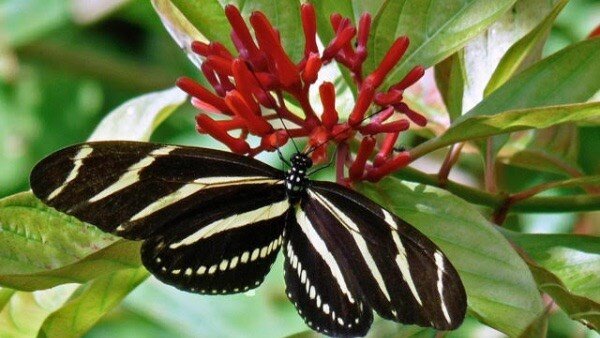
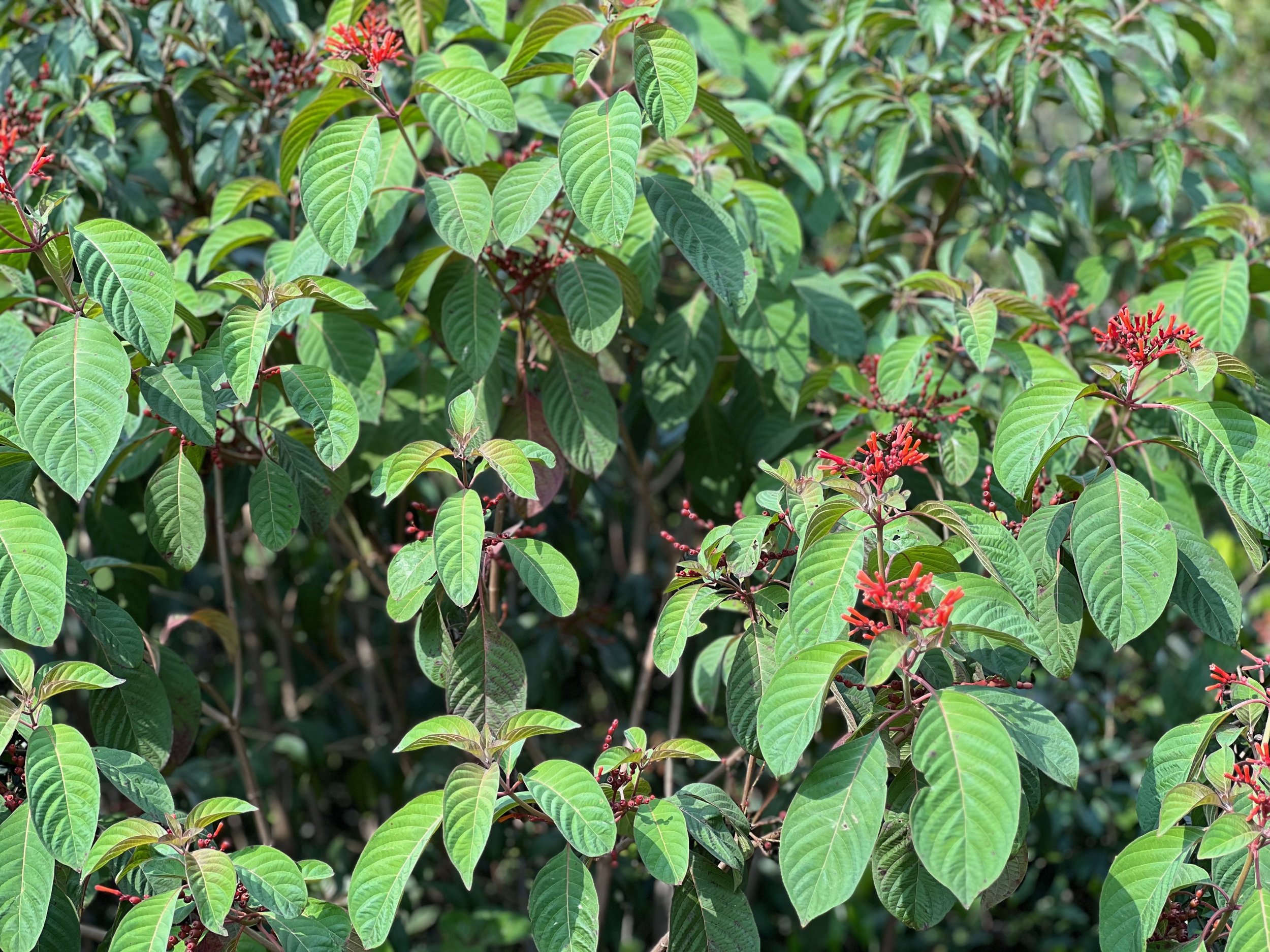
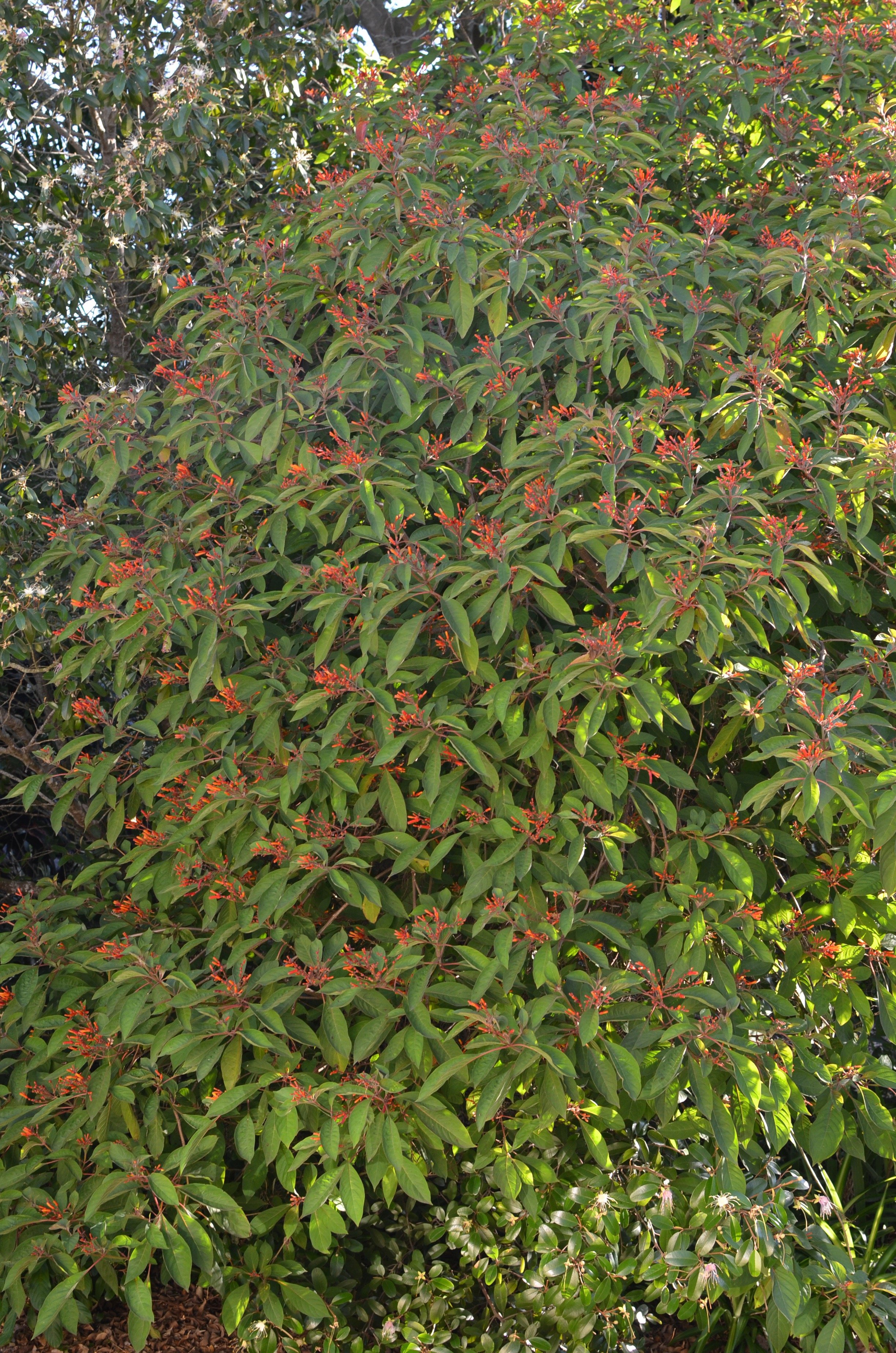


Hamelia patens
Firebush is a native, evergreen, 12’, prunable, shrub. It does best in dry to moist (well-drained) soils, sun/part shade, and is very fast-growing. With year-round, showy flowers that attract hummingbirds and butterflies, and berries that serve as a food source for song birds, Firebush makes a lovely addition to many Florida landscapes, especially pollinator and hummingbird gardens. In addition to its ecological benefits, the fruit is edible and has a long history of medicinal and industrial uses. Ripe fruit is black, edible raw and can be made into a syrup or wine!

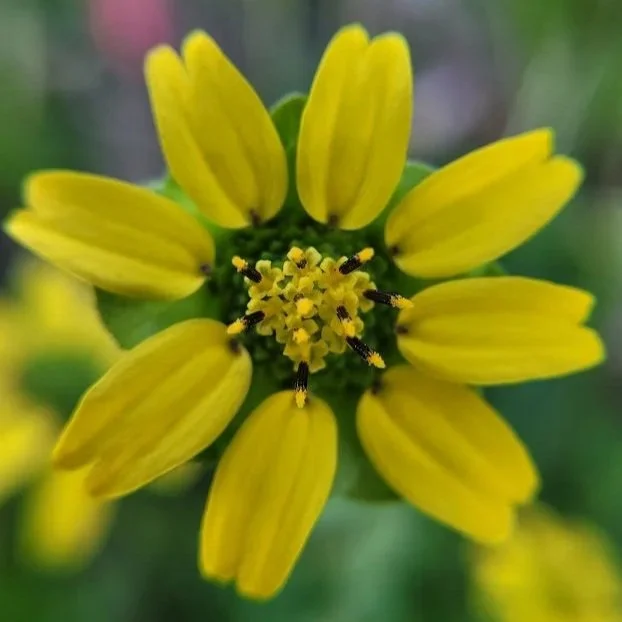
Berlandiera subacaulis
Florida Greeneyes is a long-lived perennial in the daisy family endemic to Florida that grows 1-2 feet tall with short-stemmed, bright yellow flowers. Also known as Florida Chocolate Flower, it produces fragrant blooms that emit a distinctive chocolatey scent and feature yellow ray petals surrounding dark red or maroon disc florets. This drought-tolerant wildflower develops a substantial tuberous root system that can grow up to 12 inches thick, providing exceptional water storage capacity. Blooming from spring through fall, it thrives in full sun to partial shade with well-drained soils and naturally occurs in sandhills, dry pine flatwoods, and disturbed sites throughout Florida, serving as an important nectar source for bees and butterflies.


Ruellia caroliniana
Petunia’s are a beloved household wildflower that grows and reseeds prolifically in Florida. Often dappling the floors of woodlands and forests, this wildflower likes average to moist soils with dappled sunlight to full shade. It attracts many pollinators but is favored by bees.
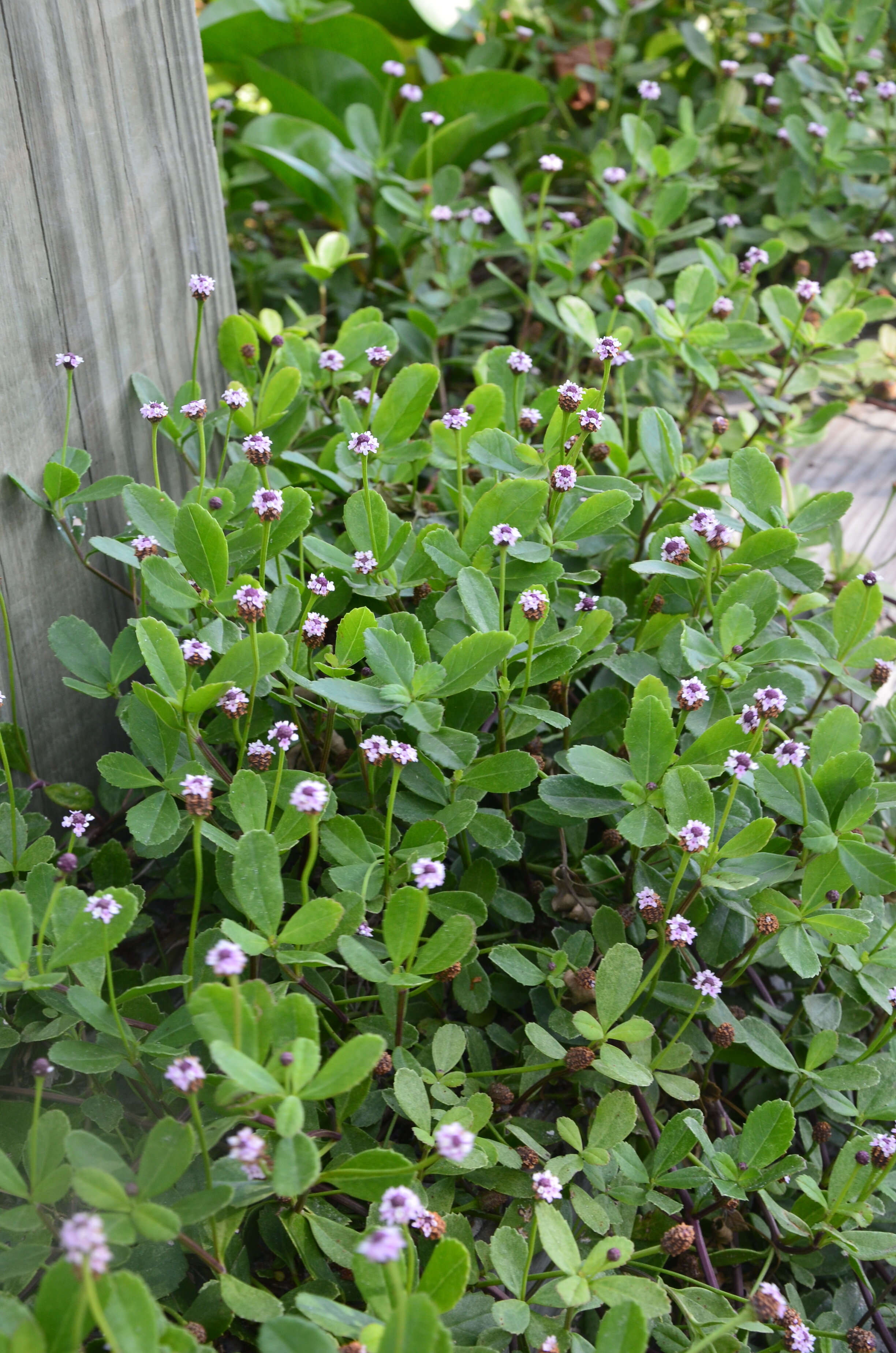
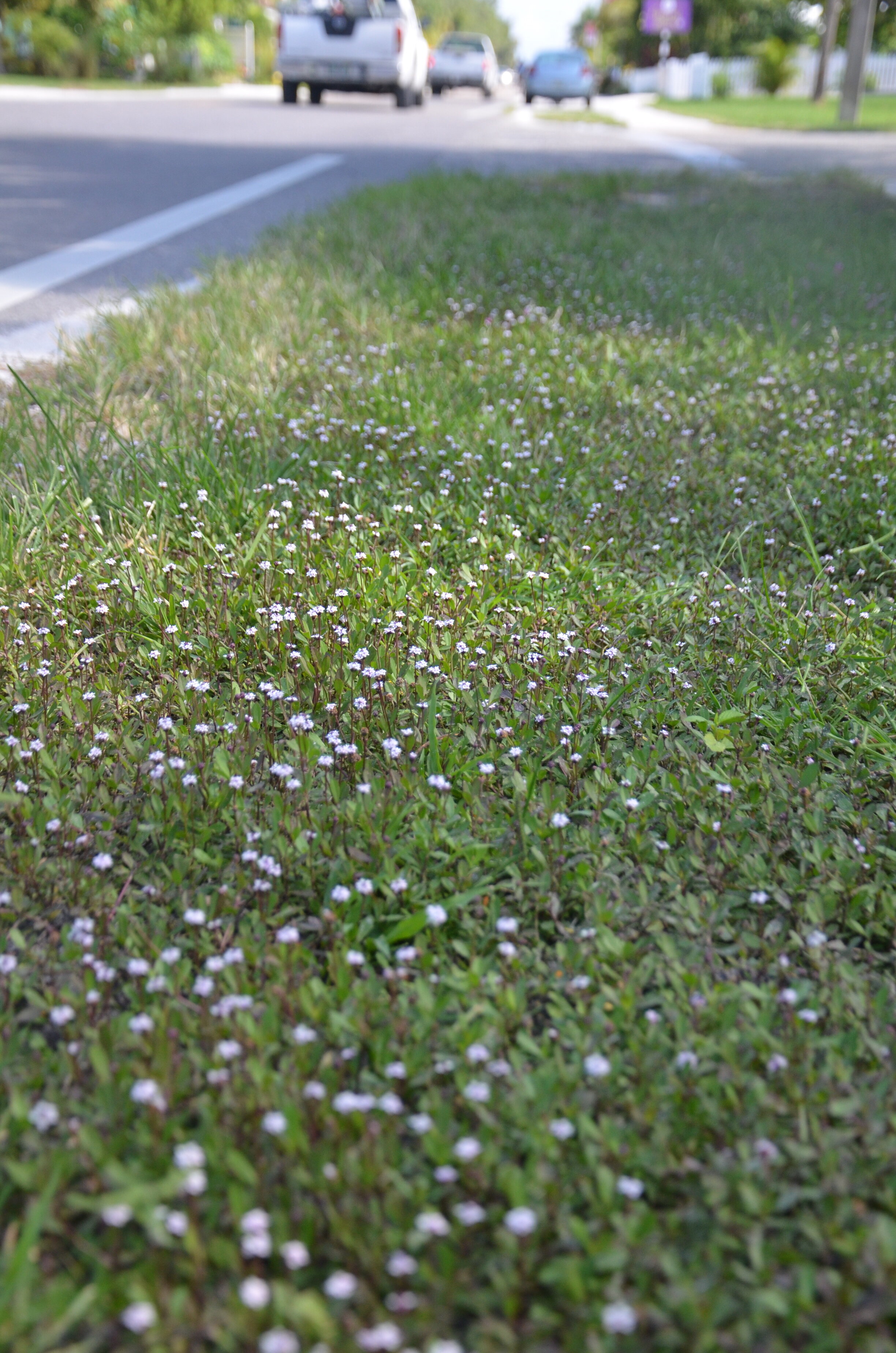
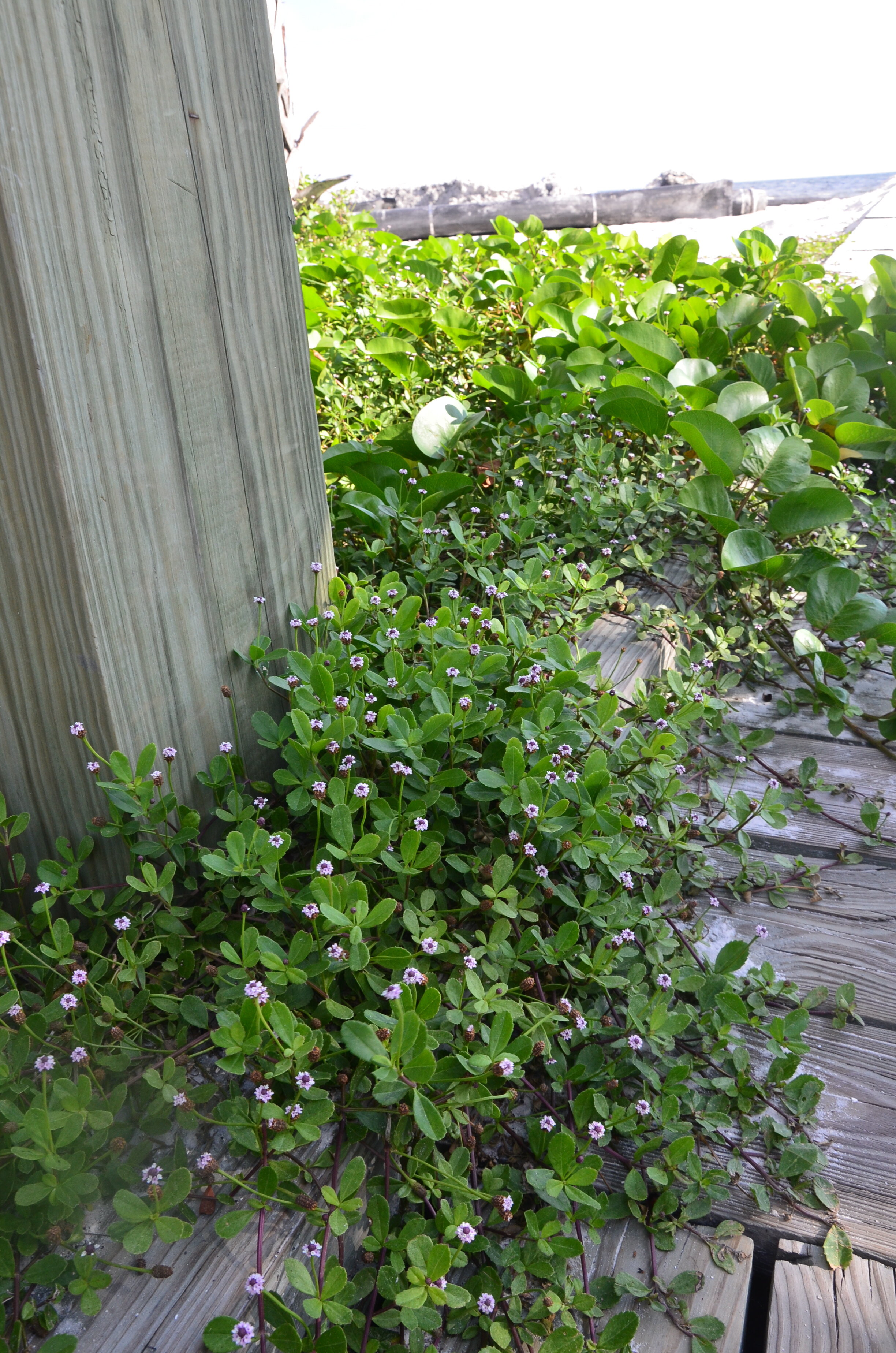
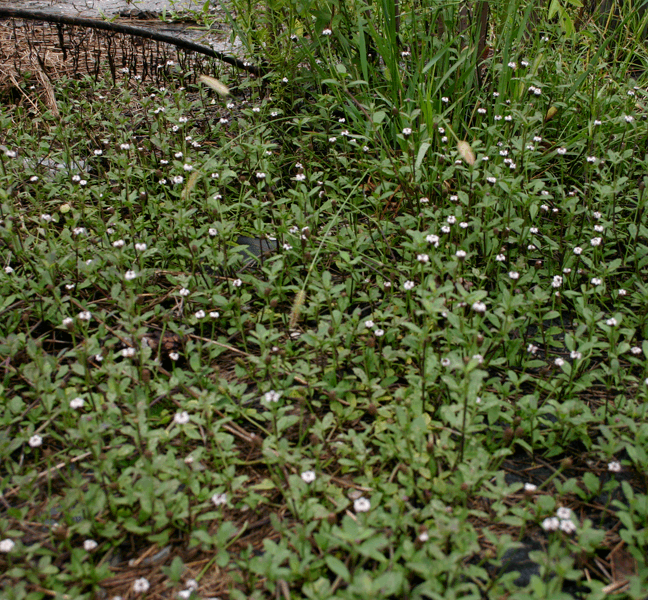
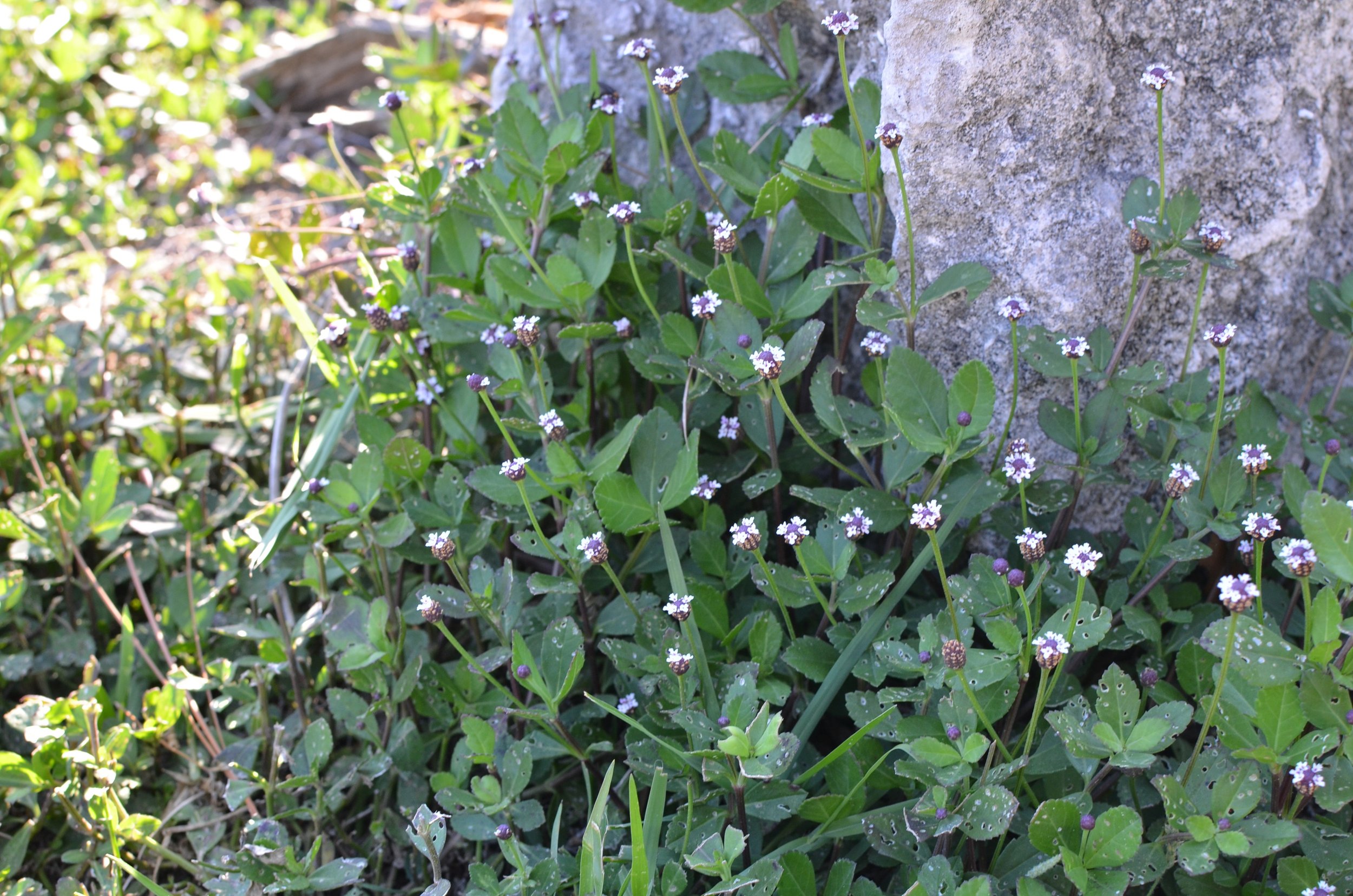
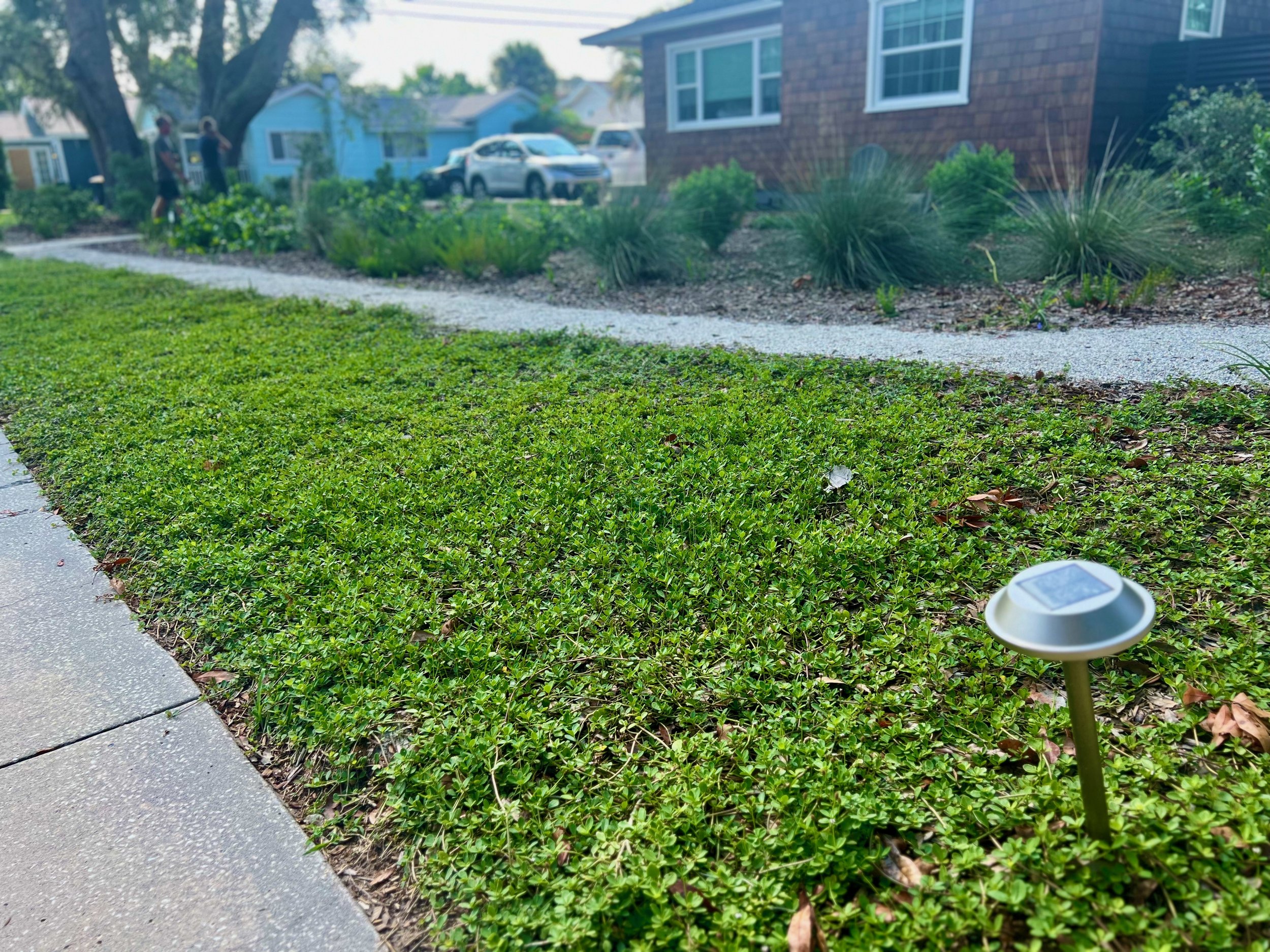
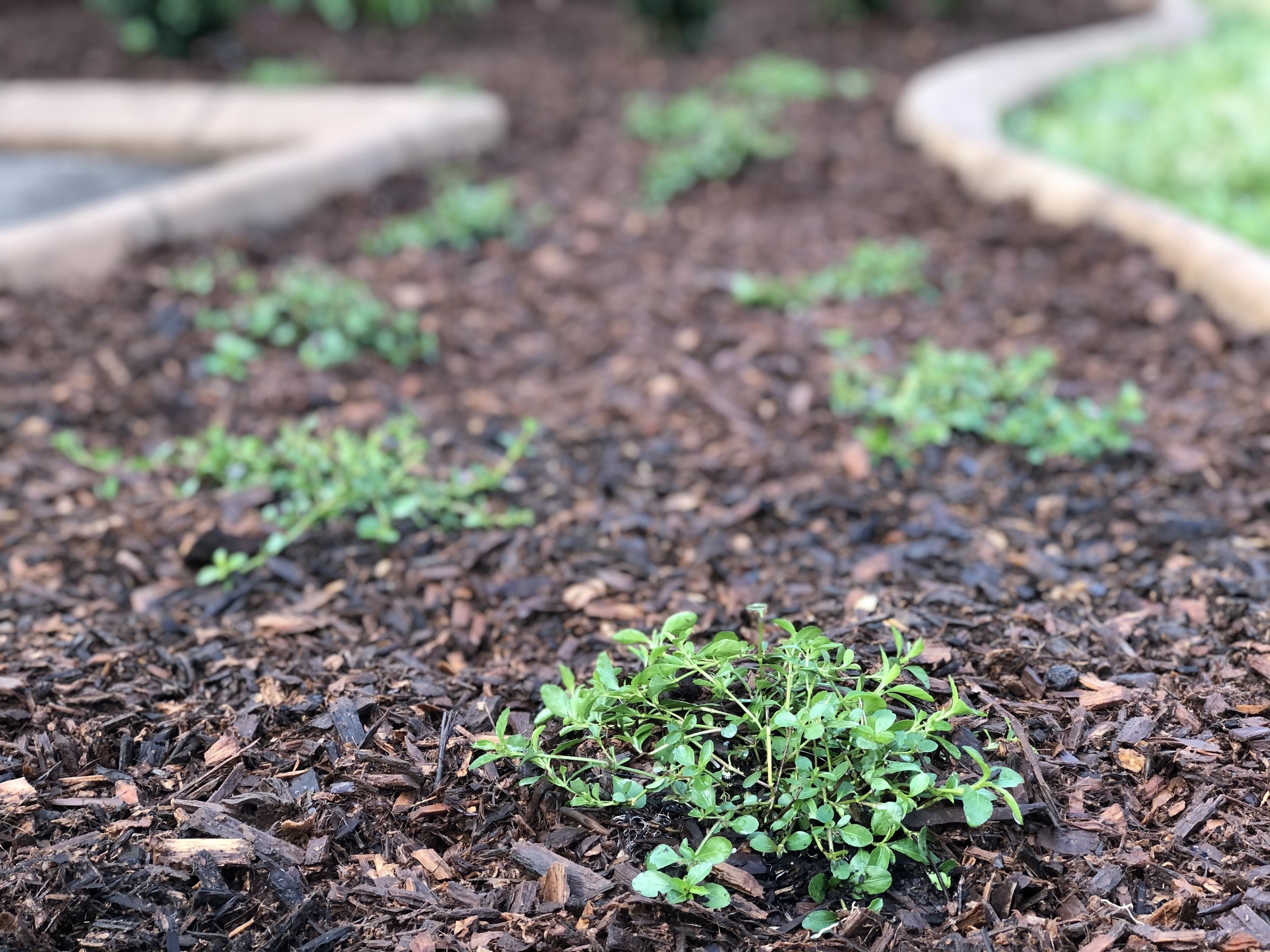
Phyla nodiflora
One of our favorite native plant “lawn alternatives,” Frogfruit is a low growing, perennial evergeen groundcover that grows in full sun to partial shade and in dry to moist soils. Frogfruit is highly salt-tolerant, fast growing, mow-able and lightly walk-able. It’s also an important host plant to the Phaon Crescent, White Peacock and Common Buckeye butterflies and is a nectar source pollinators including hummingbirds.
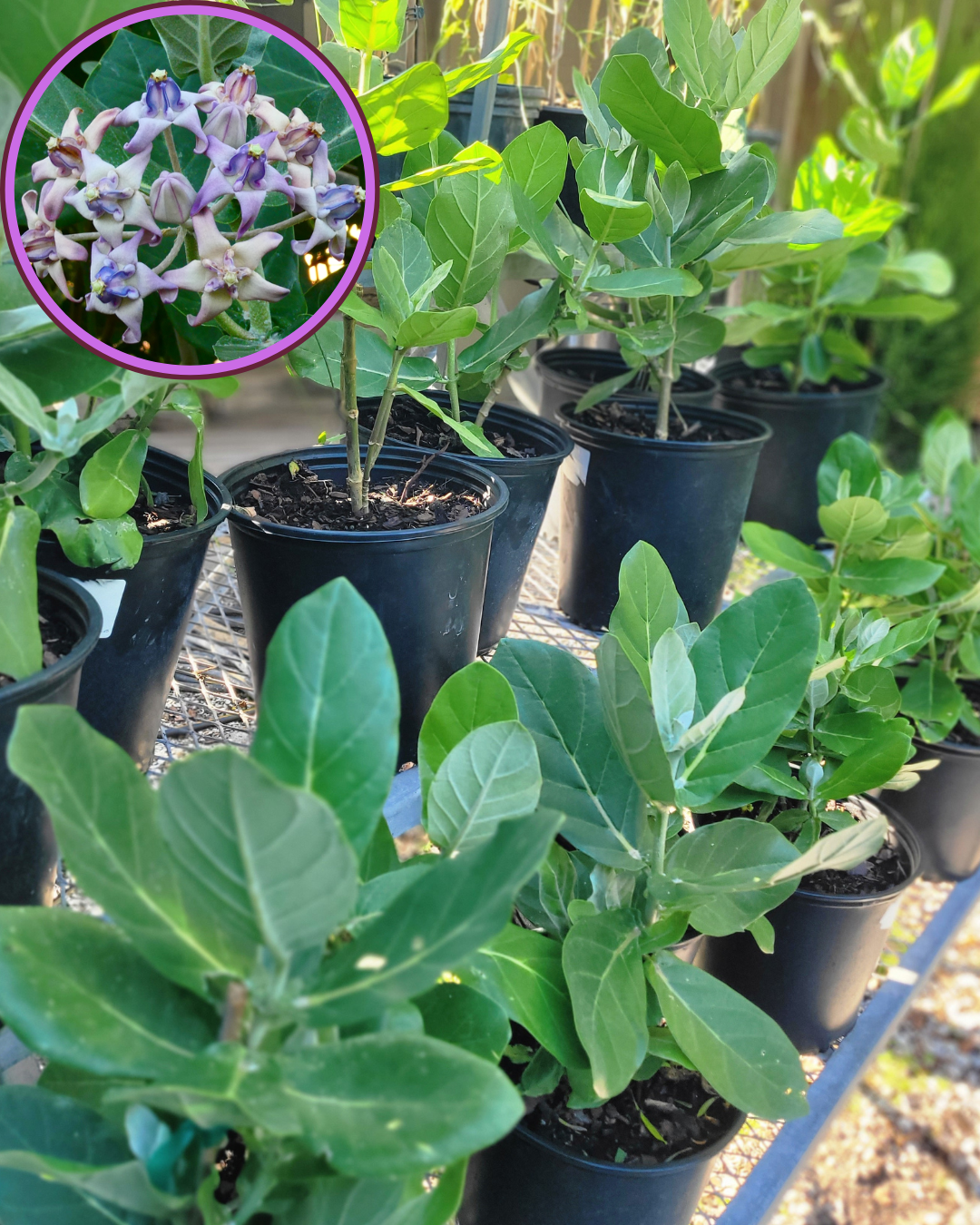
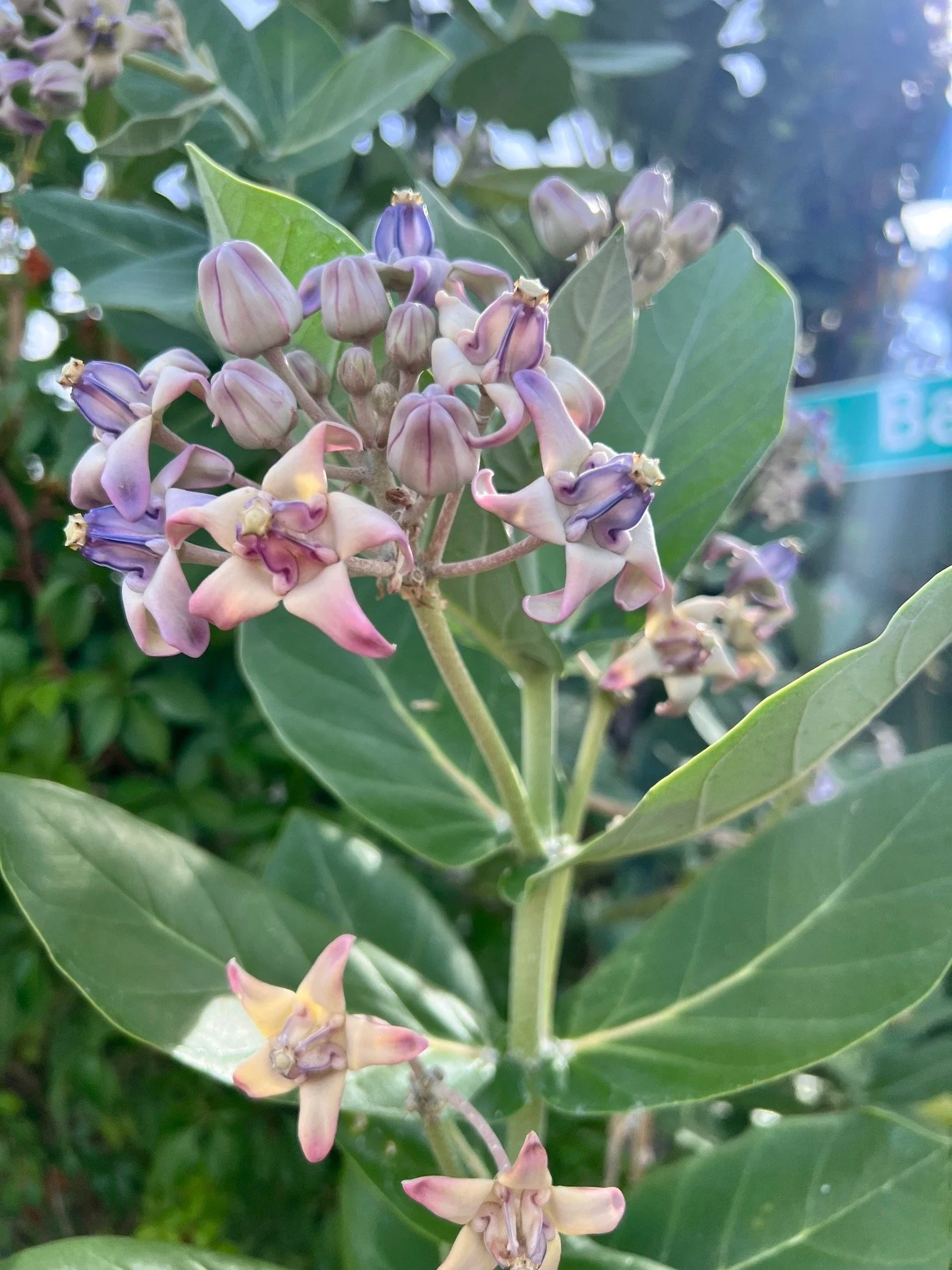
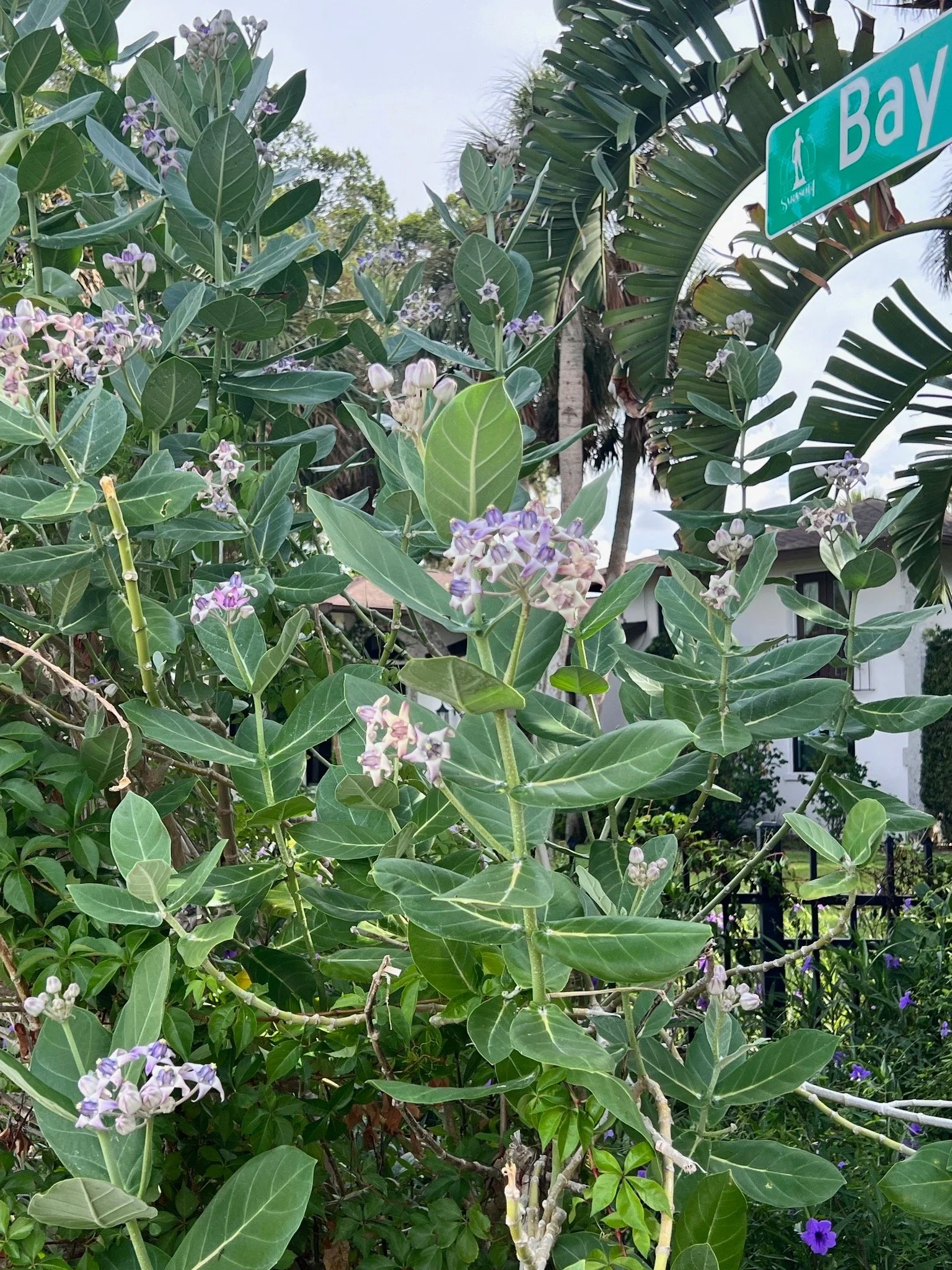
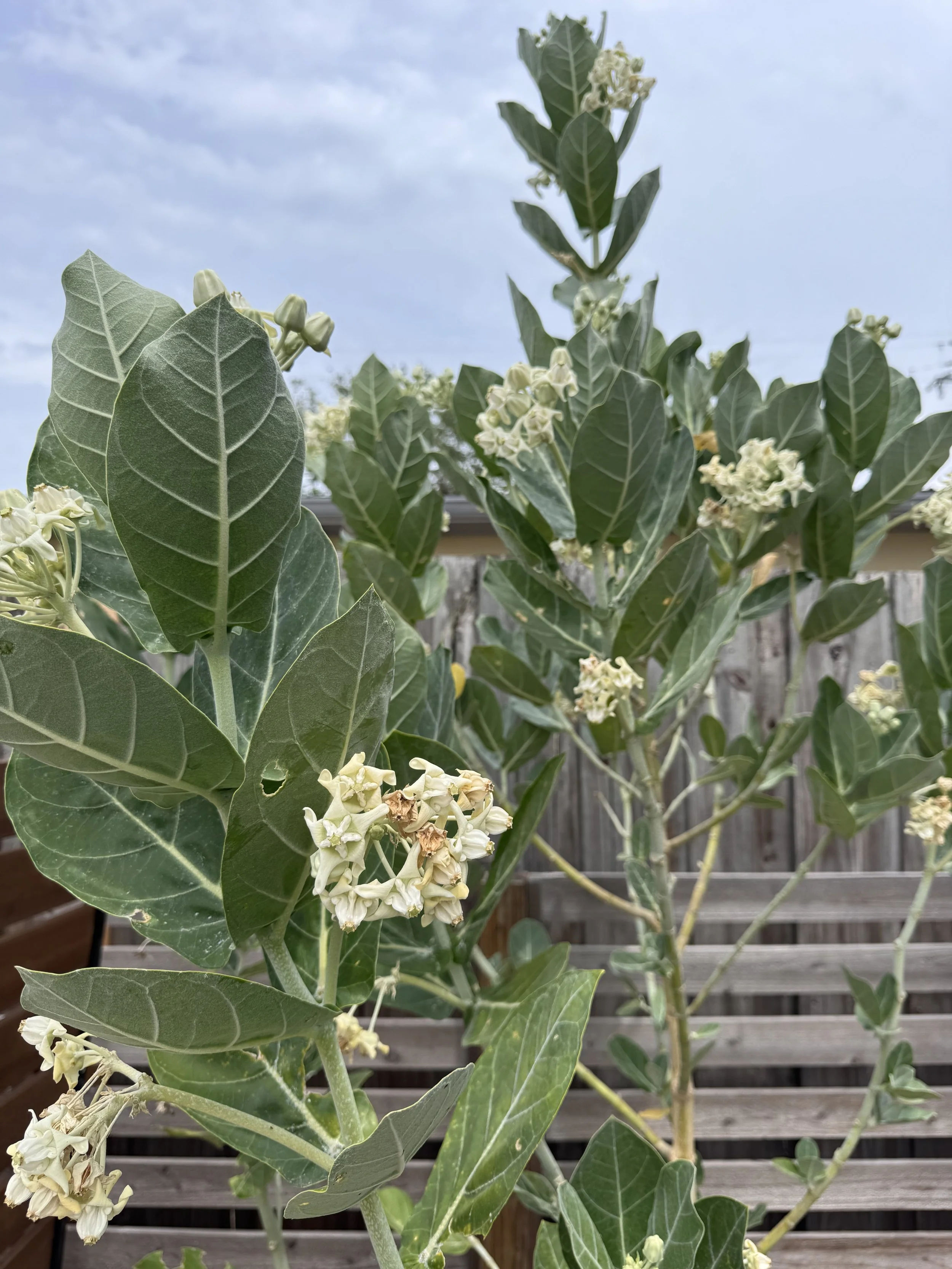
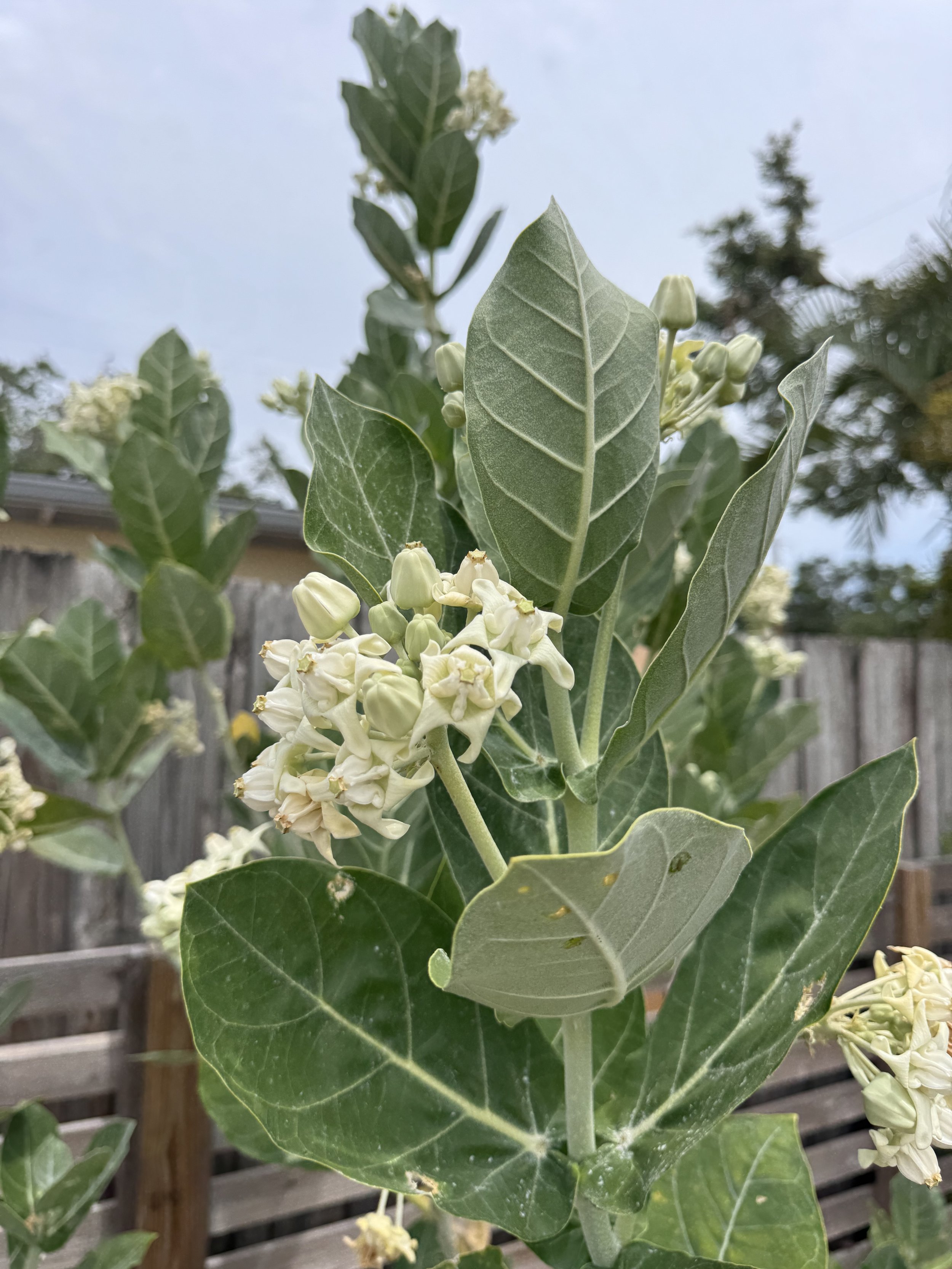
Calotropis gigantea
Giant Milkweed is non-native fast-growing evergreen shrub that can reach 8-15 feet in height. As a member of the milkweed family, it serves as a host plant for Monarch butterfly caterpillars and attracts various pollinators including bees and butterflies. It has thick, leathery, silvery-green leaves and produces clusters of waxy, pale lavender or white flowers that bloom year-round. Extremely drought-tolerant once established, it thrives in full sun and well-drained soils. We sometimes carry a white-flowering variety as well.
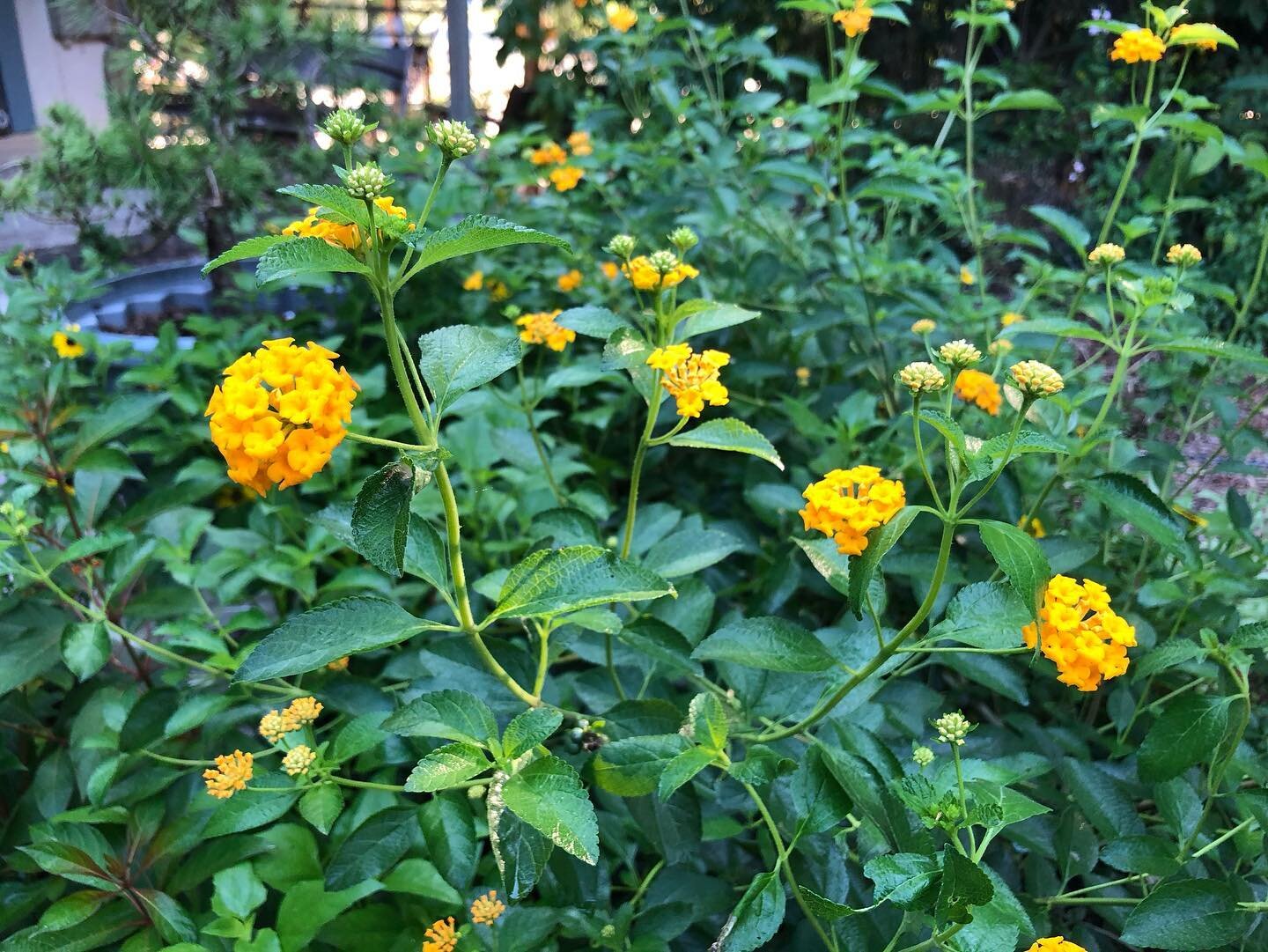
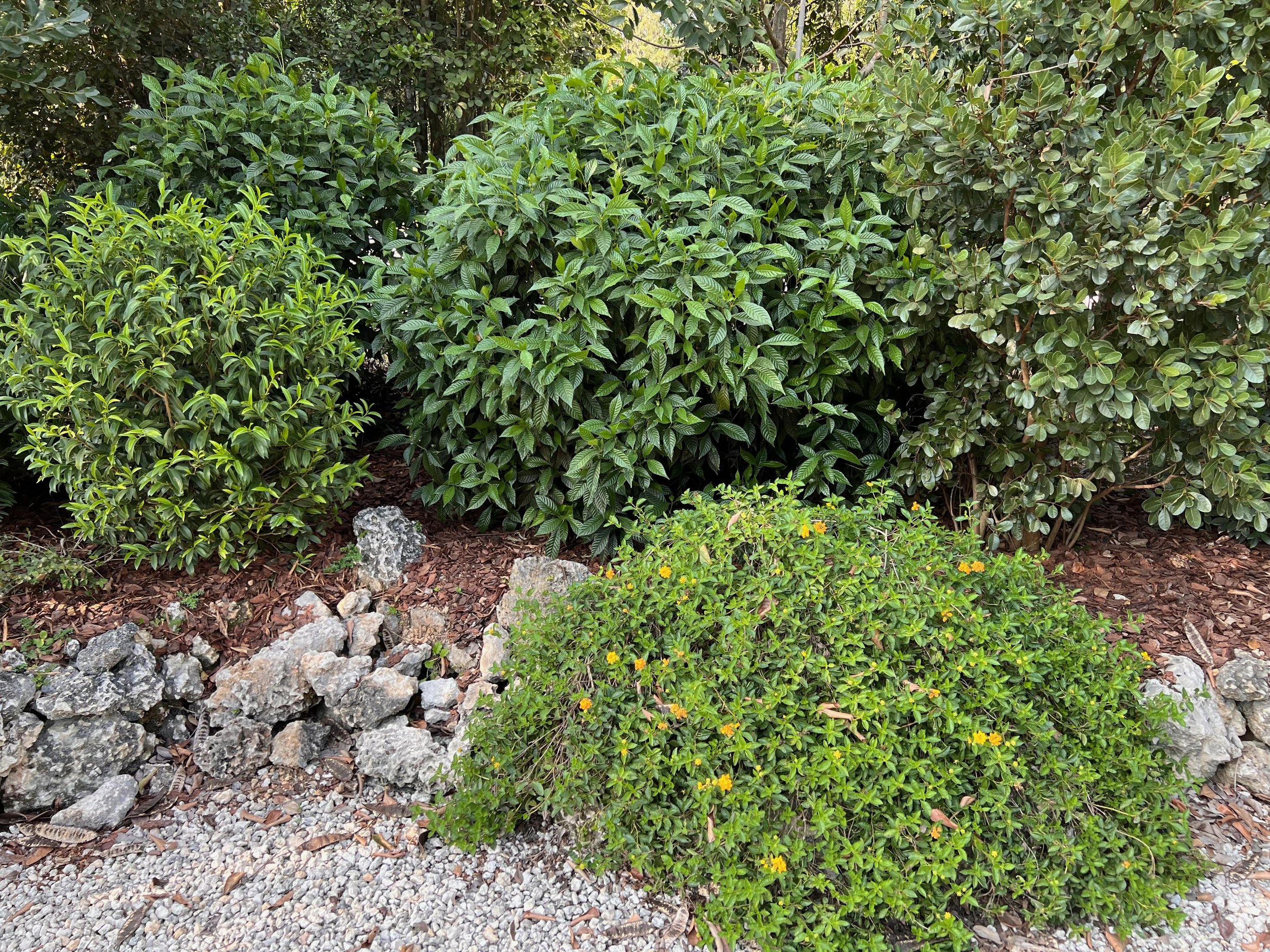
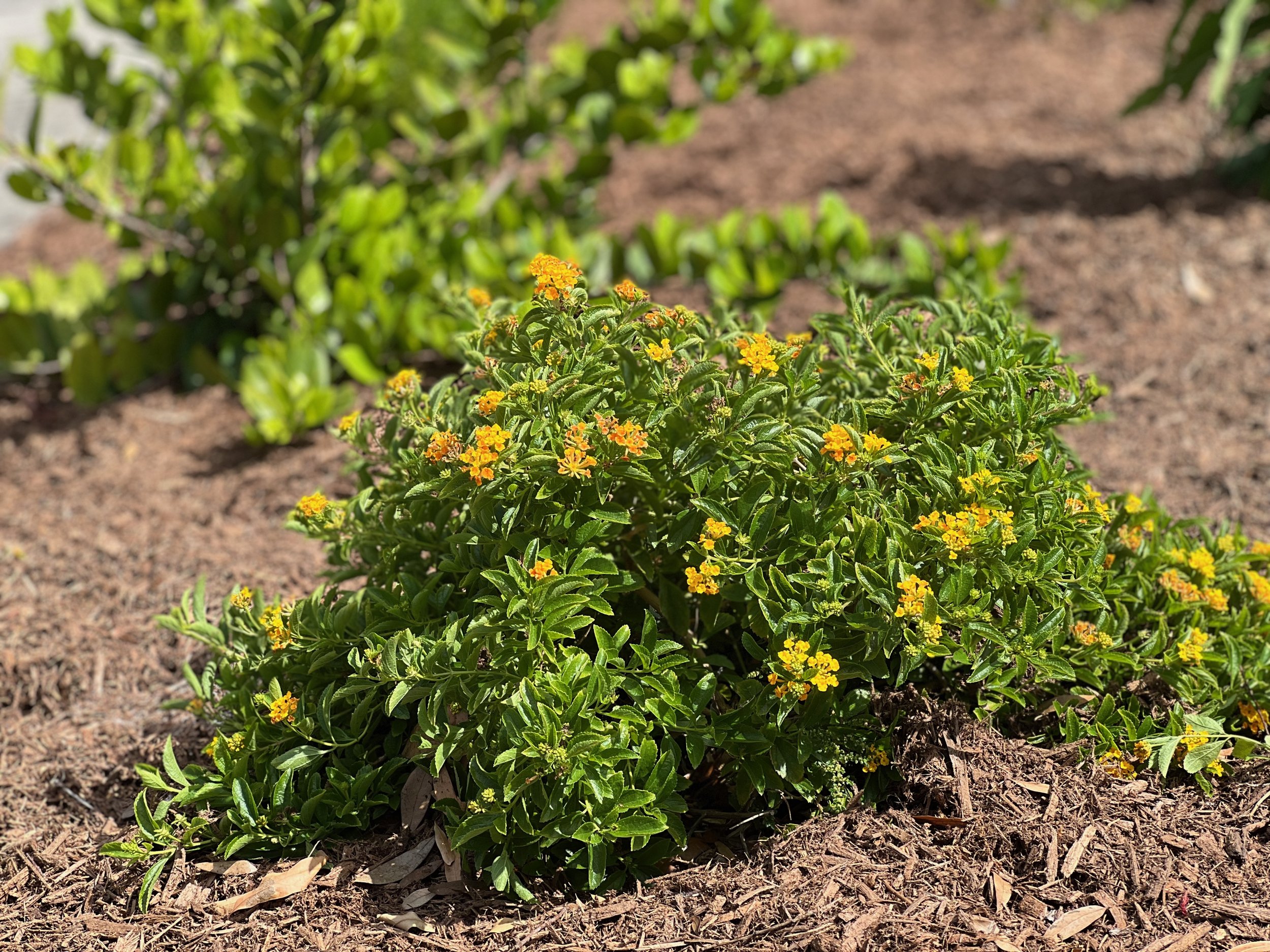
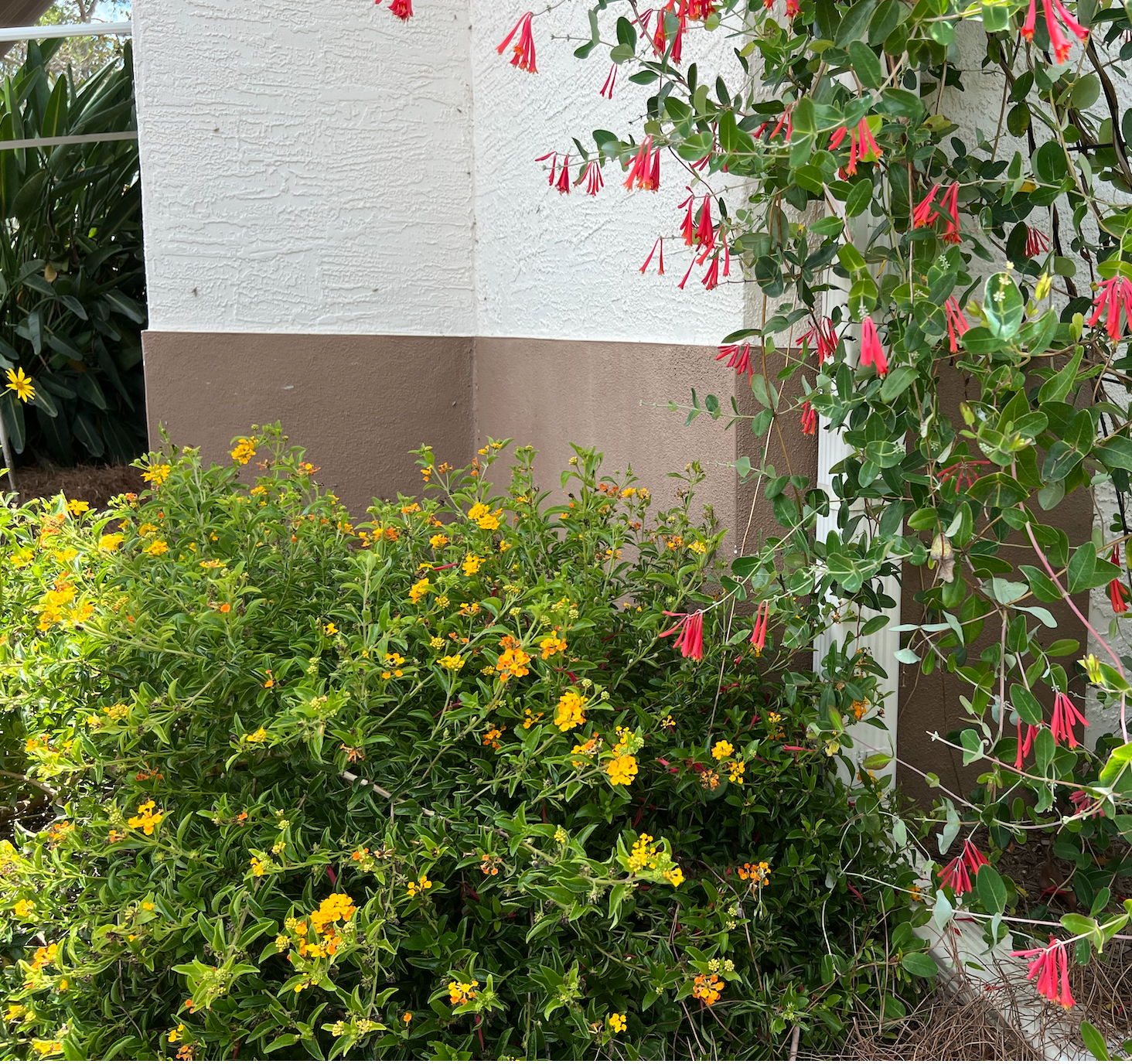
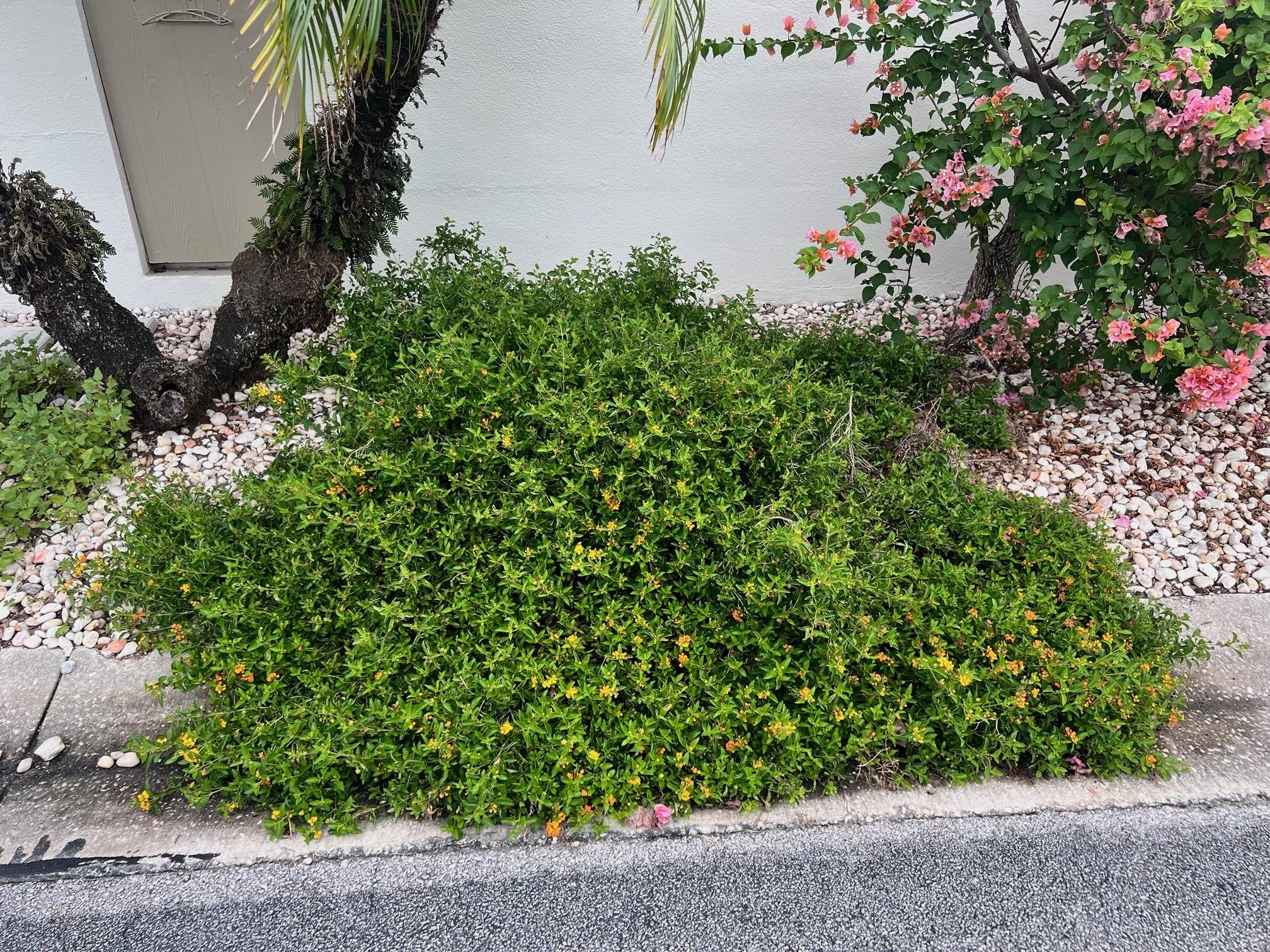
Lantana depressa var. ‘depressa’
Gold Lantana is an evergreen, low-growing, rare, native lantana. Growing 1’-2’ tall and 3’-4’ wide, with showy gold flowers on and off all year that attract butterflies and purple fruit for birds, this plant makes a great addition to landscapes and pollinator gardens. Plant in full sun with average (well-drained) to dry soil, and enjoy this fragrant, semi-salt-tolerant shrub!
Liatris gracilis
Graceful Blazing Star is a moderately tall perennial wildflower native to Florida, reaching 2-3 ft. height. This drought-tolerant species features a single, slender stem covered in fine hairs and narrow, grasslike leaves. It produces spikes of small, purple star-shaped flowers that bloom from summer into fall, attracting butterflies and other pollinators. Thriving in well-drained soils and full sun, it naturally occurs in flatwoods, sandhills, and open woodlands throughout Florida and is valued for both wildlife gardens and cut flower arrangements.
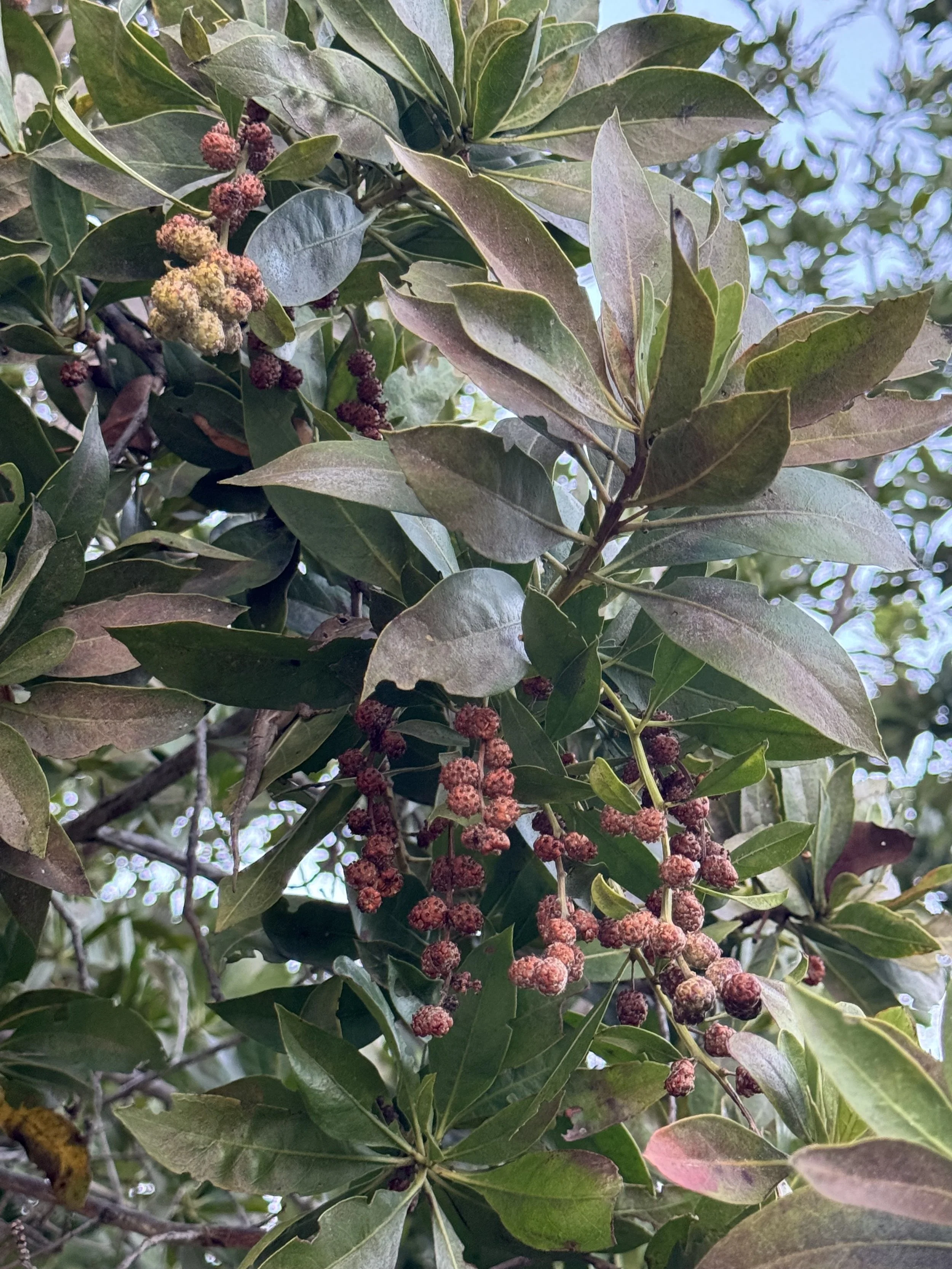

Conocarpus erectus
The Green Buttonwood is an evergreen, coastal, native small tree or large shrub that can reach 20' and has vibrant green leaves and small brown berries that look like wood buttons. This buttonwood is considered the 4th type of mangrove and really thrives in coastal conditions, and can take salt water inundation and salty soils. The Buttonwood also has high wind tolerance making it a great windscreen on coastal properties.
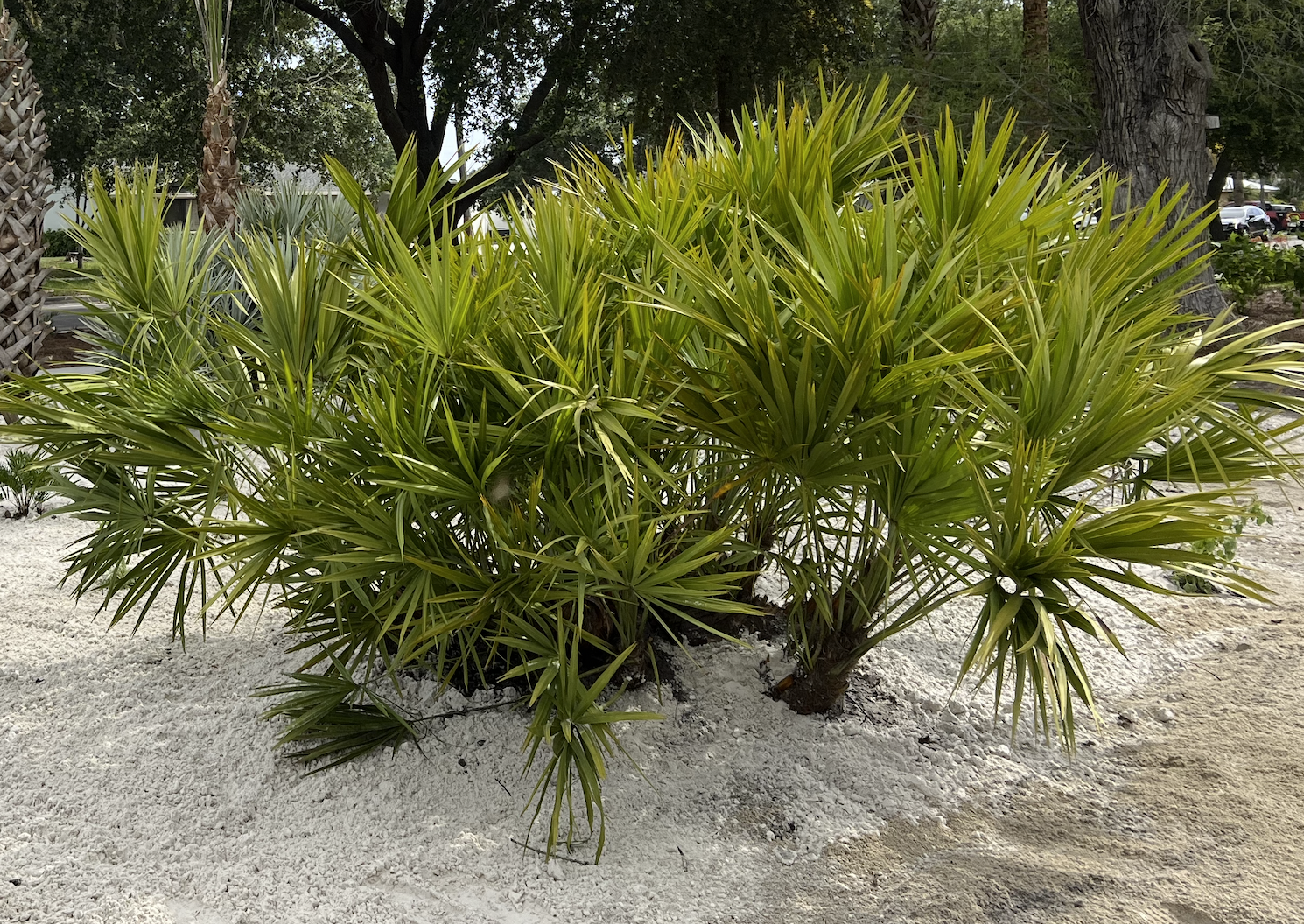
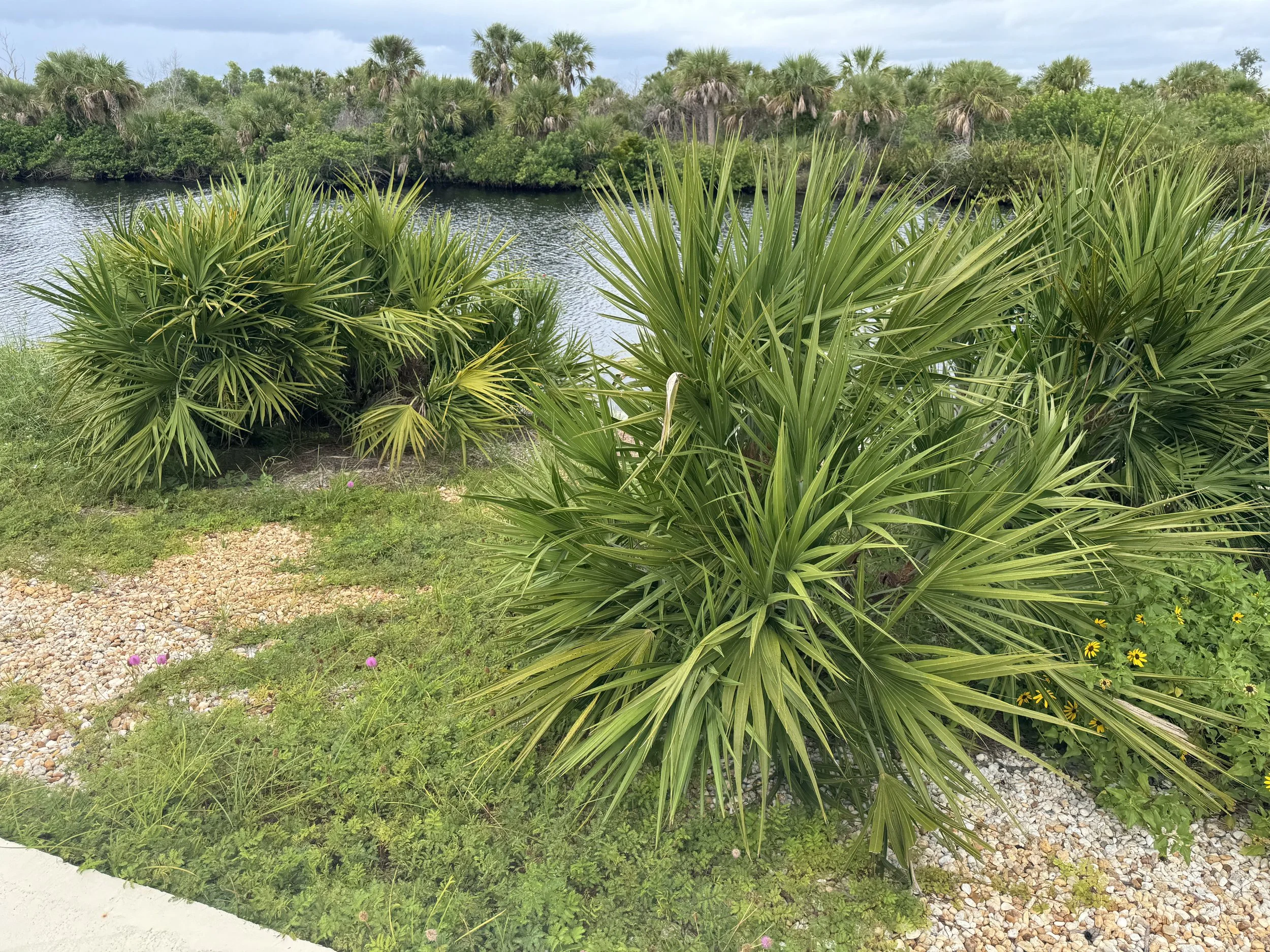
Serenoa repens
The Green Saw Palmetto is a tough, drought-tolerant Florida native fan palm perfect for coastal landscapes and understory planting. It features sprawling horizontal stems, brilliant green fronds, and distinctive saw-toothed leaf stalks. In spring, it produces fragrant blooms that attract pollinators, followed by wildlife-supporting berries. Plant in full sun or shade and dry, sandy soil.
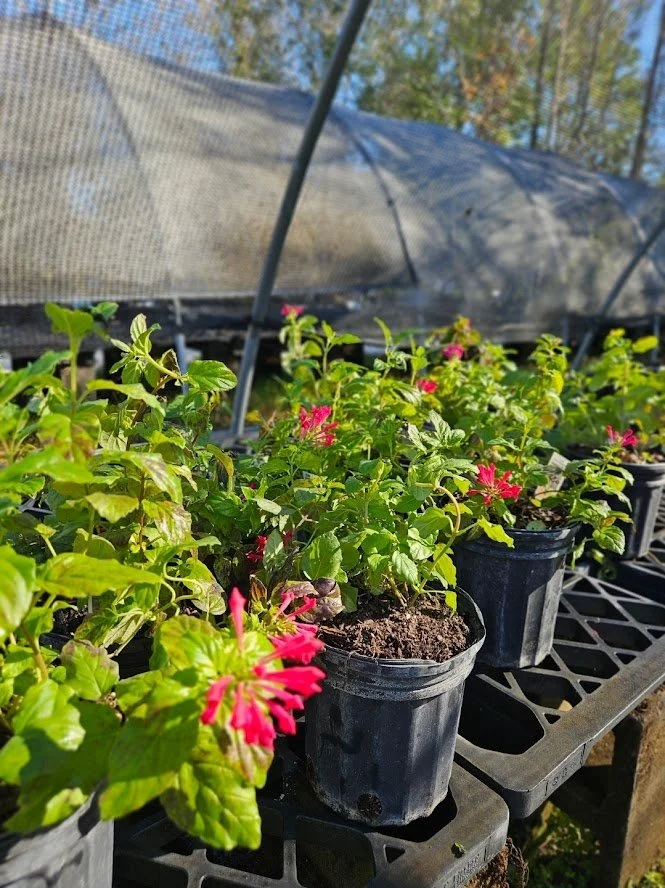
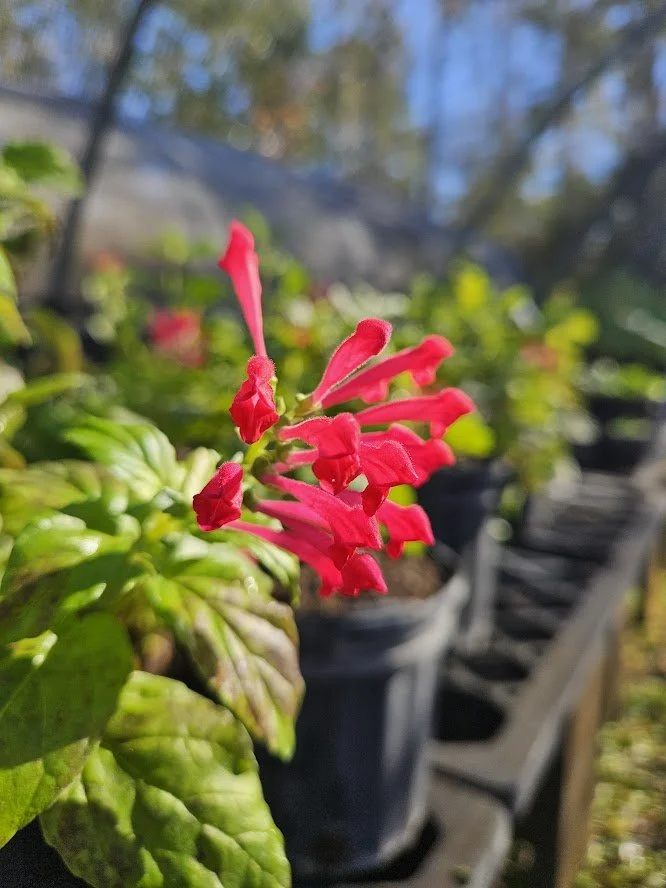
Scutellaria longifolia 'Red Fountains
Hot Pink Skullcap is a perennial wildflower that grows 1-2 ft tall with an upright, branching habit. It produces vibrant hot pink tubular flowers along tall spikes from late spring through summer, creating a stunning display. This hardy native is easy-to-grow and thrives in full sun to partial shade with well-drained to average soil. It attracts hummingbirds, butterflies, and other pollinators while requiring minimal maintenance once established, making it an excellent choice for naturalized gardens and pollinator-friendly landscapes.
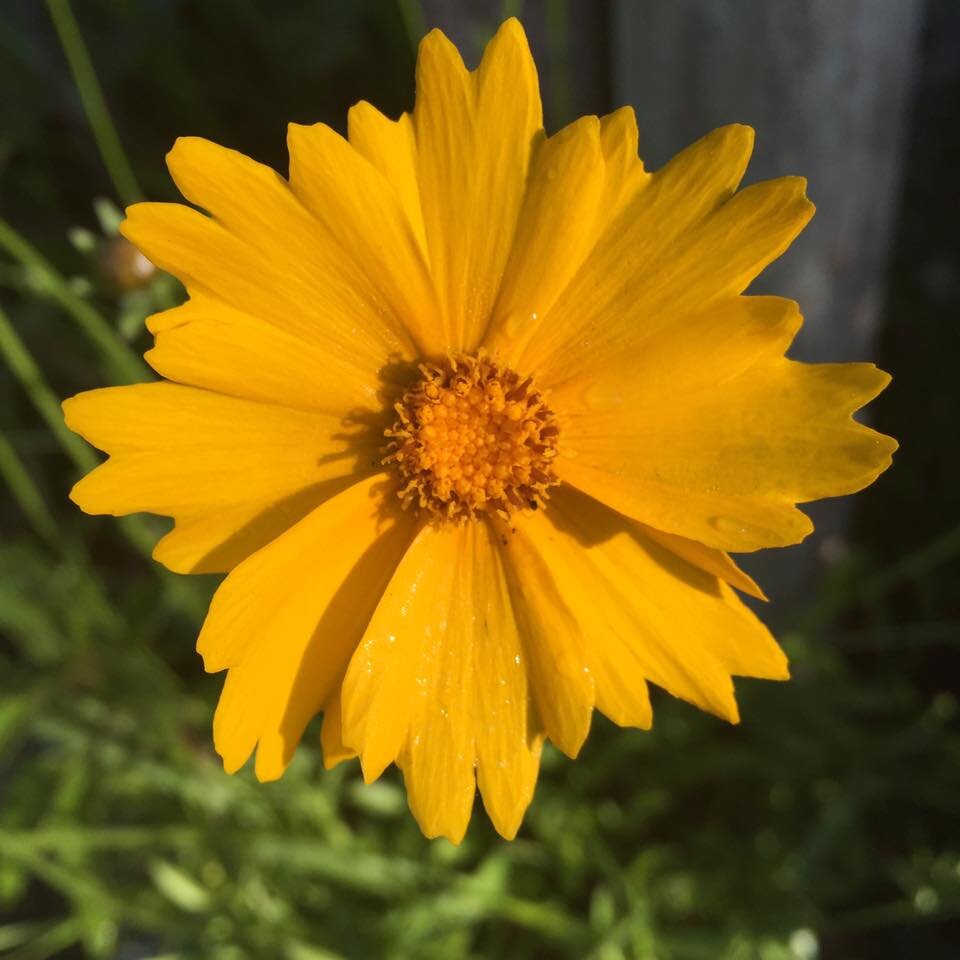

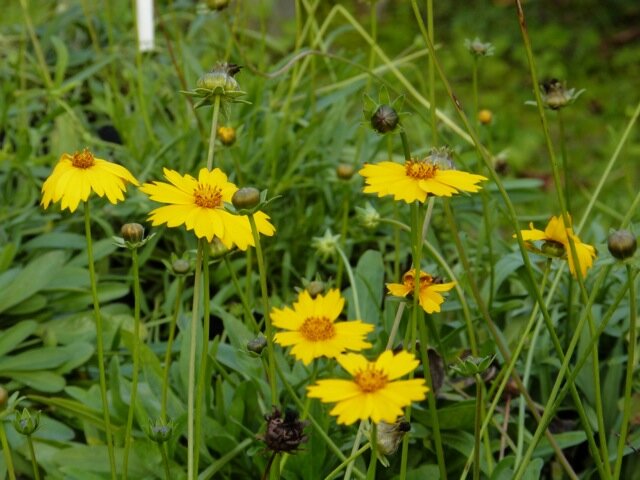
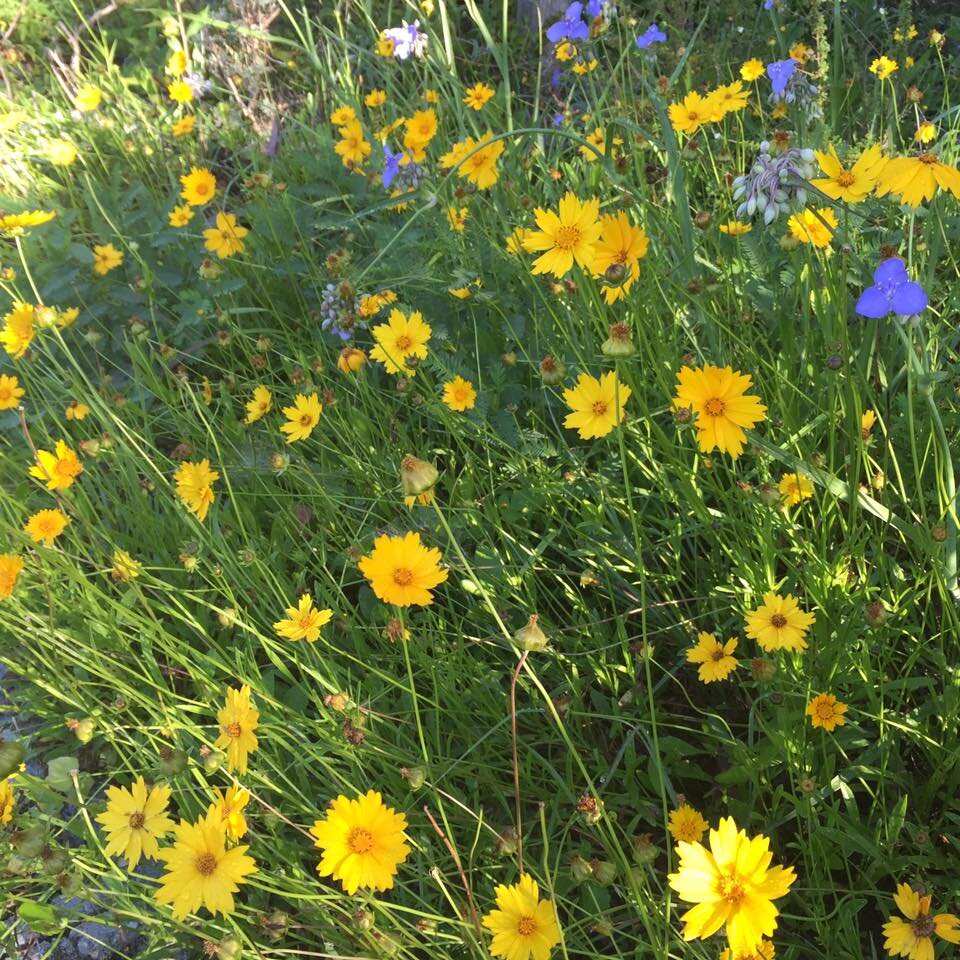
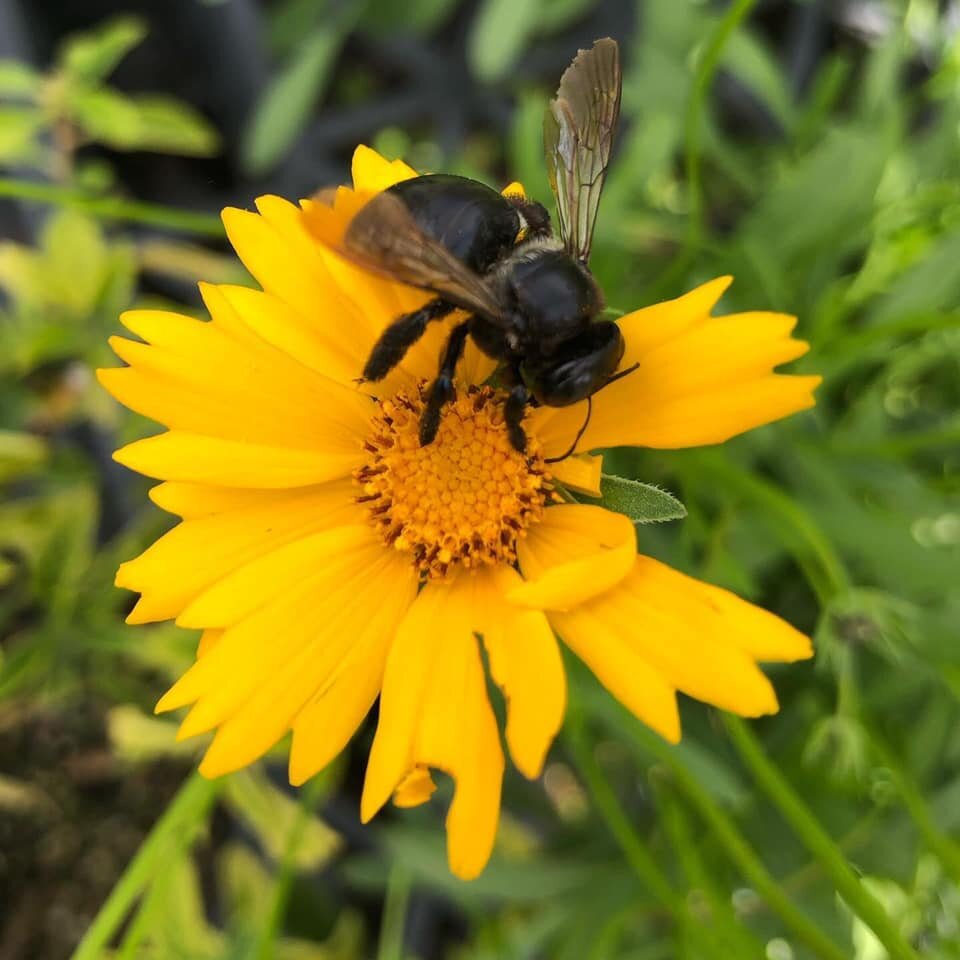
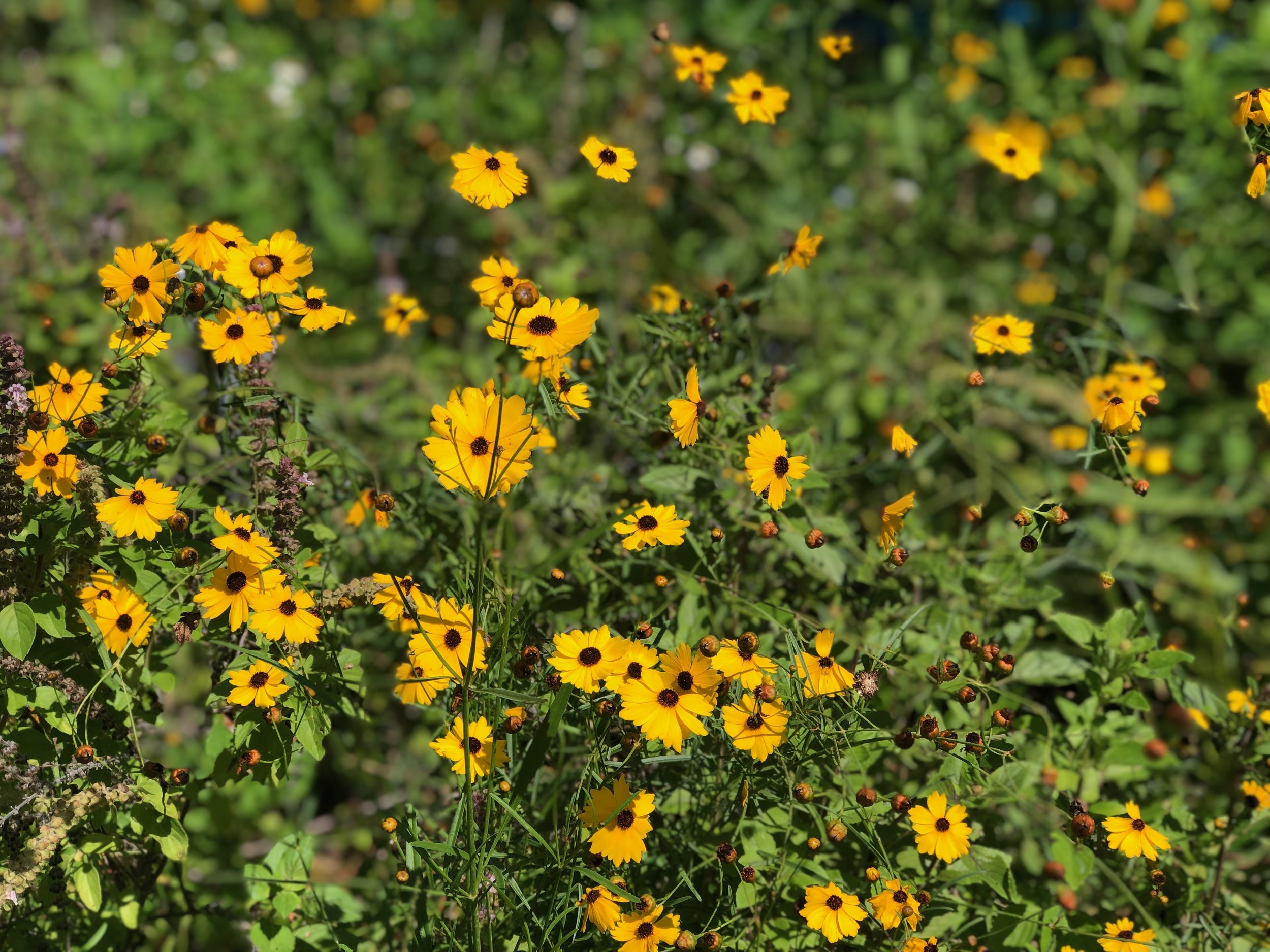
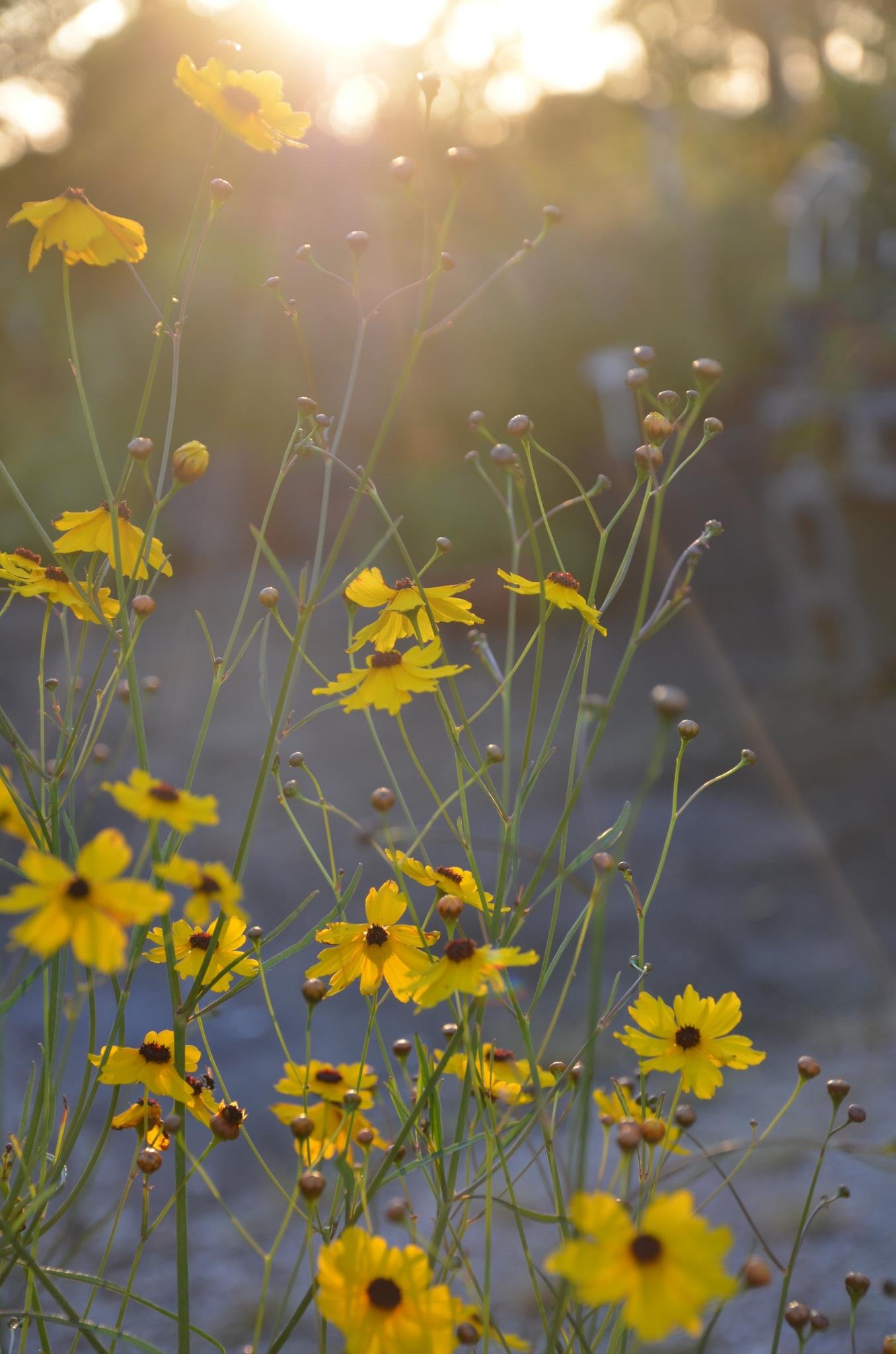
Coreopsis lanceolata
Tickseed is the Florida State Wildflower. Lanceleaf tickseed is a perennial and reseeding wildflower that likes sun to light shade, is 1-2 ft in height and likes average to dry soils. It’s bright yellow flowers attract butterflies and other pollinators mostly year round.
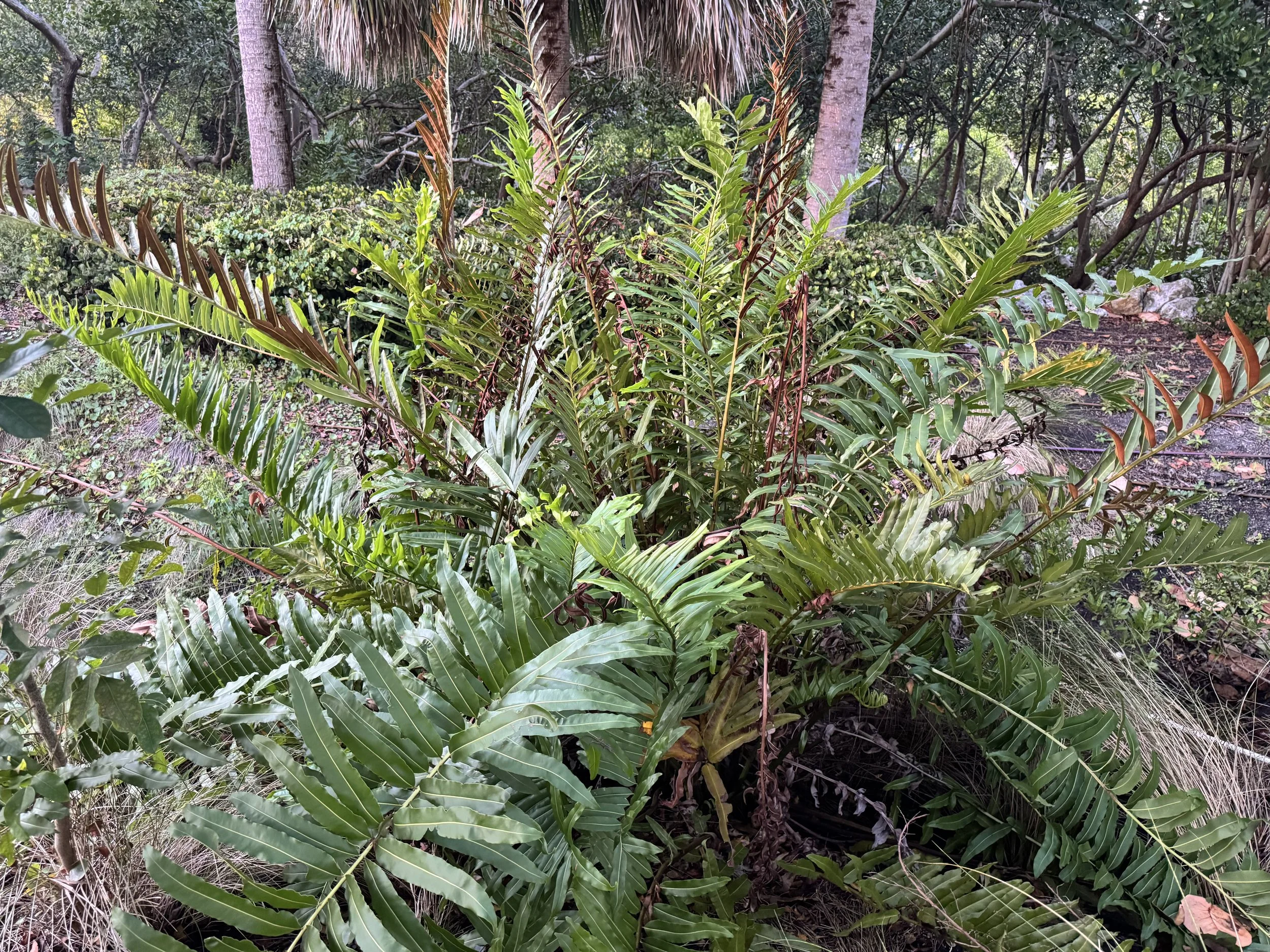
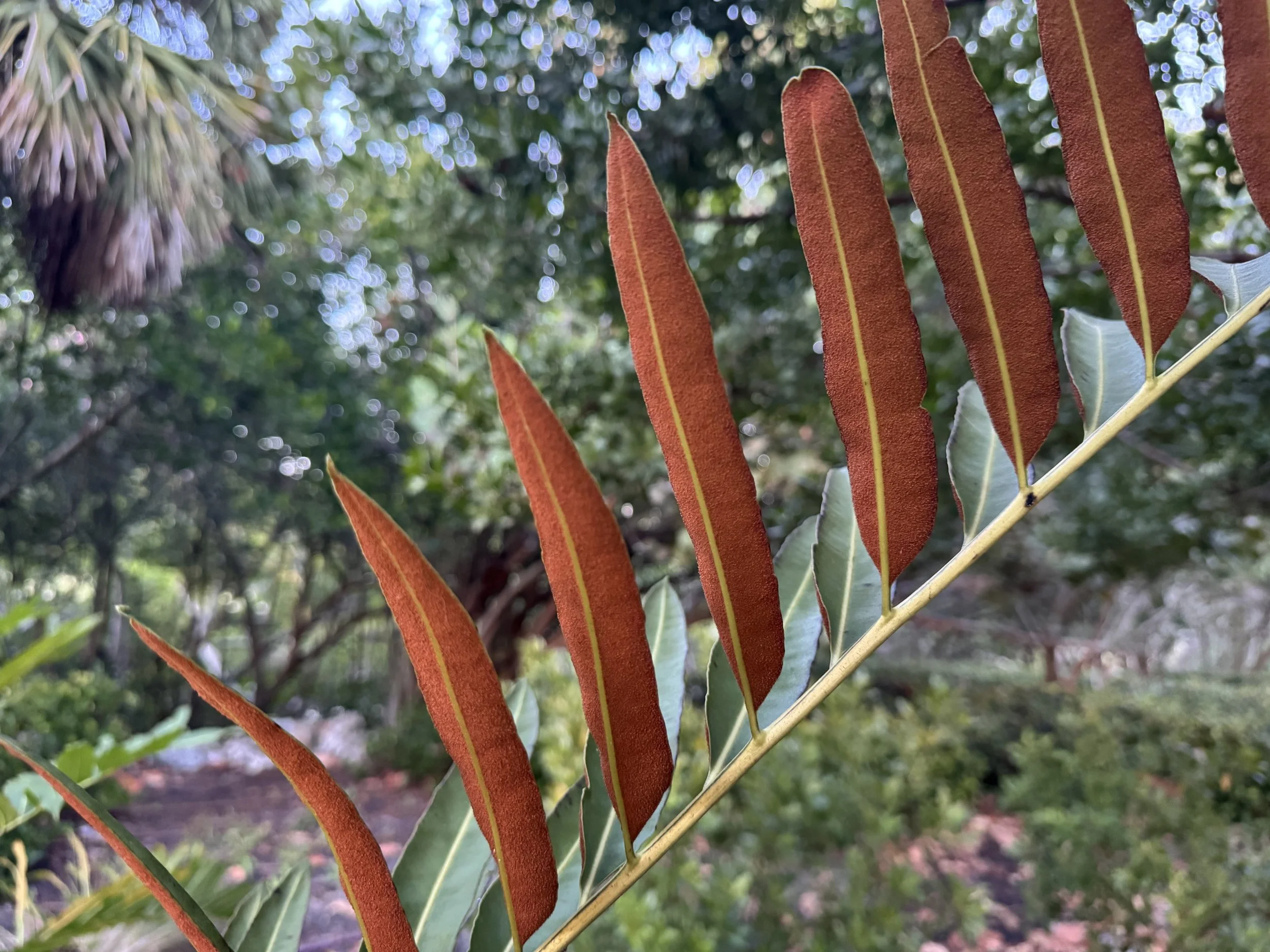
Acrostichum danaeifolium
A majestic and prehistoric-looking native fern that makes a bold architectural statement in the landscape. It features large, upright, leathery fronds that can reach impressive heights of 6 to 12 feet. This robust fern thrives in full sun to deep shade and is particularly well-suited for wet areas, pond edges, or low spots in the garden. It is highly salt-tolerant and adds a lush, tropical texture to any damp or aquatic setting.
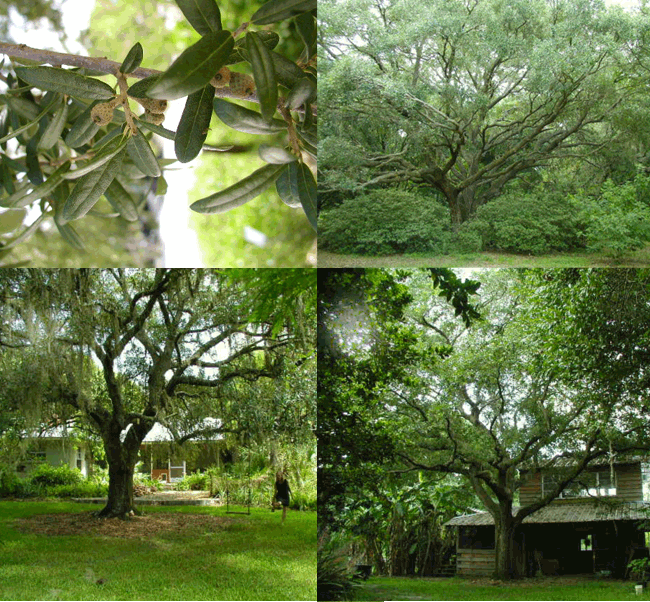
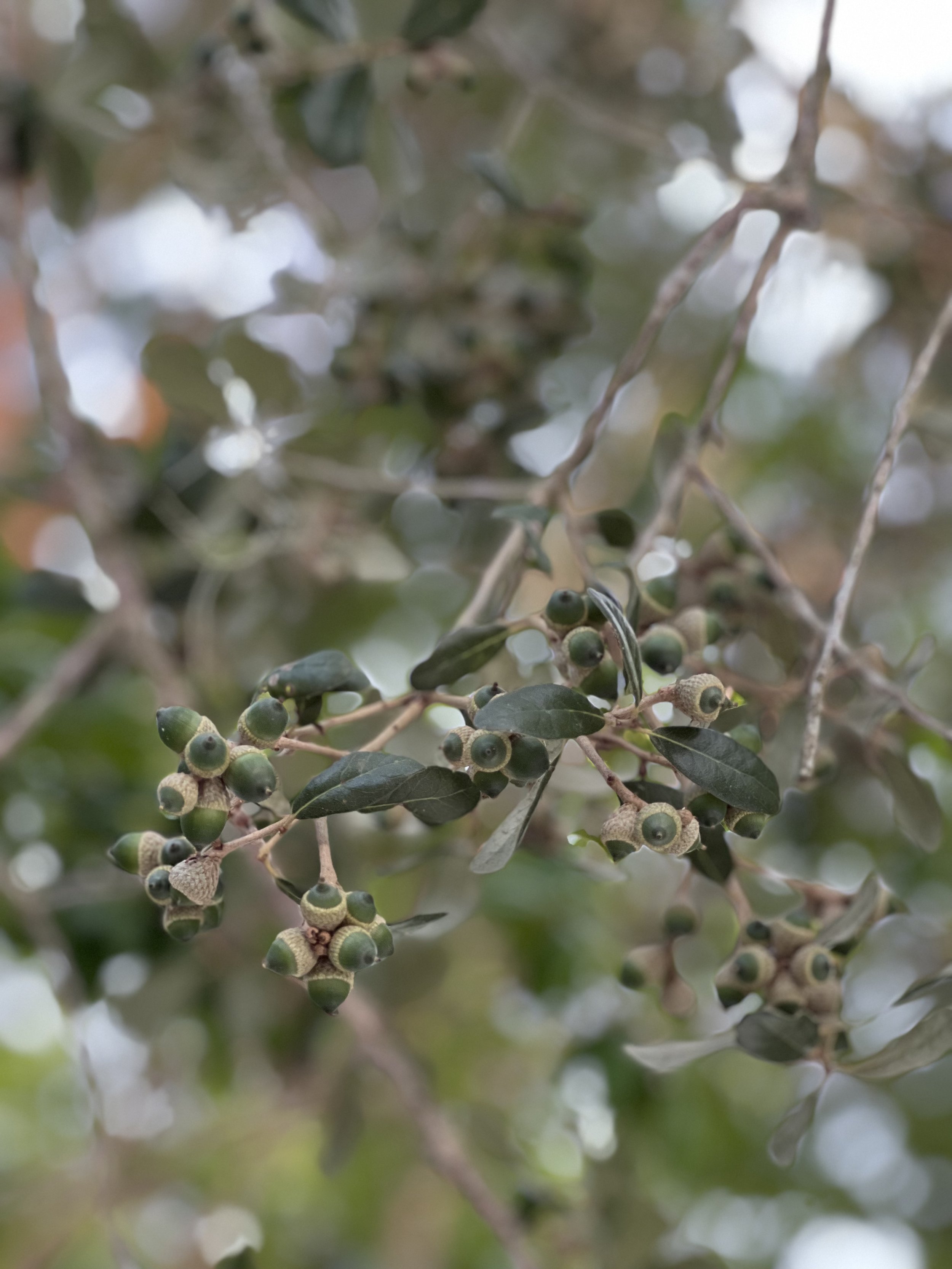
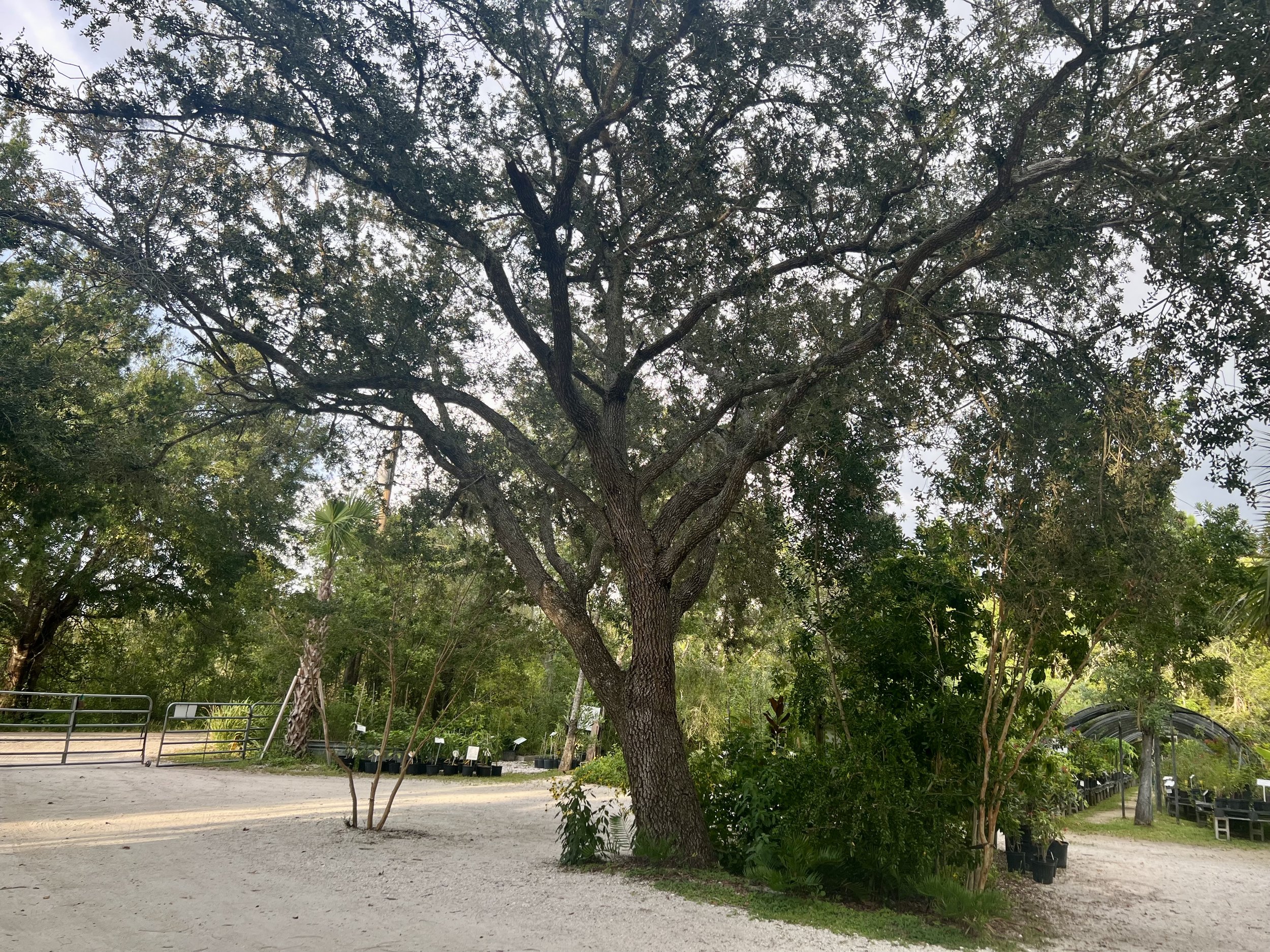
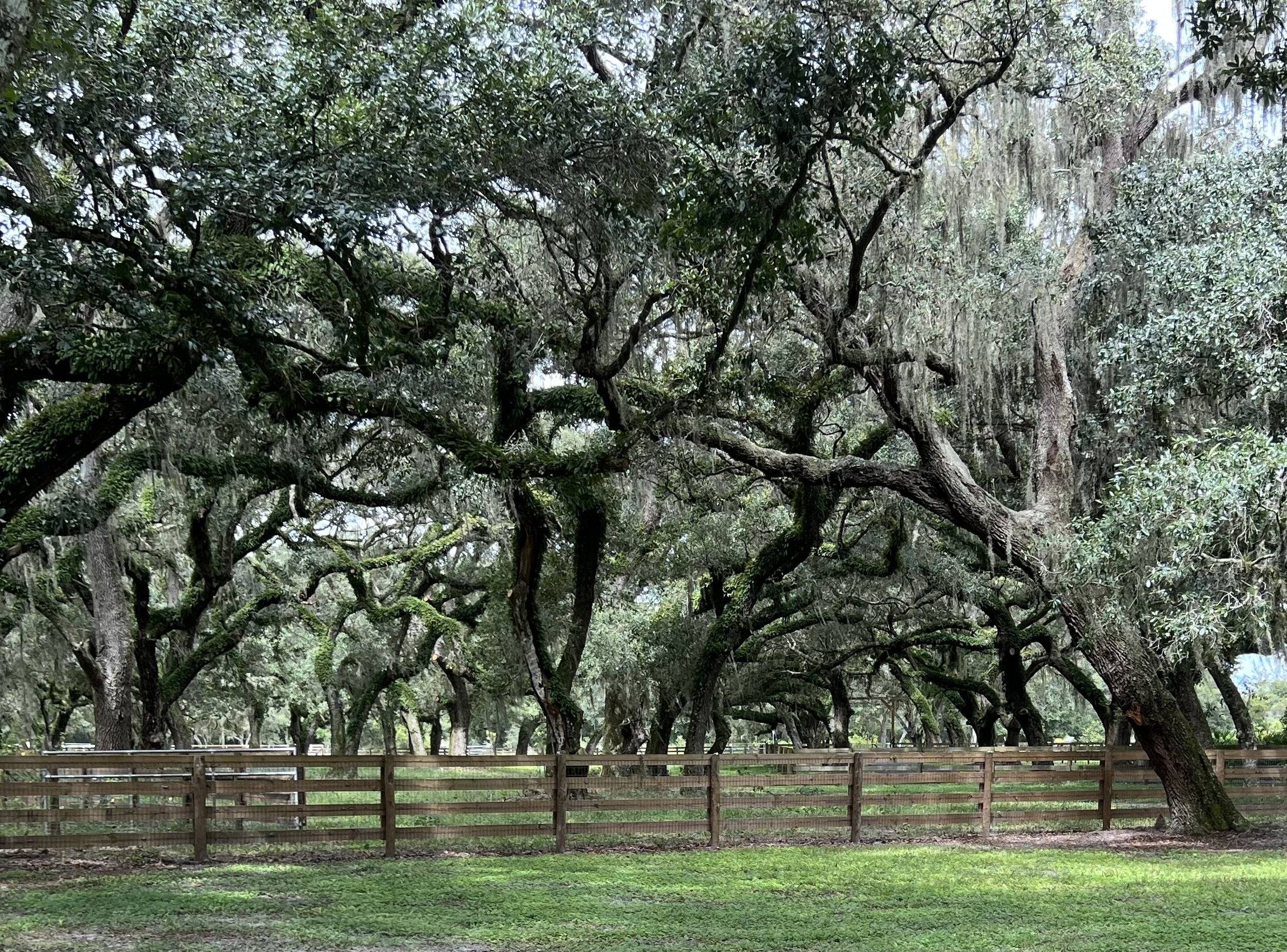
Quercus virginiana
Live Oak is a magnificent, slow-growing evergreen oak native to the southeastern United States from Virginia to Texas that can live for centuries. This iconic tree typically grows 40’-60’ tall but spreads dramatically wider, with massive horizontal and arching branches forming a broad, rounded canopy that can extend 100’ or more. The thick, leathery leaves are dark green and elliptical, often draped with Spanish moss in its native range. It produces inconspicuous flowers followed by acorns that provide critical food for squirrels, deer, and numerous bird species. Extremely durable and salt-tolerant, it thrives in sandy coastal soils and can withstand hurricanes, making it a symbol of the Old South and an excellent choice for large landscapes, parks, and street plantings in zones 8-10.
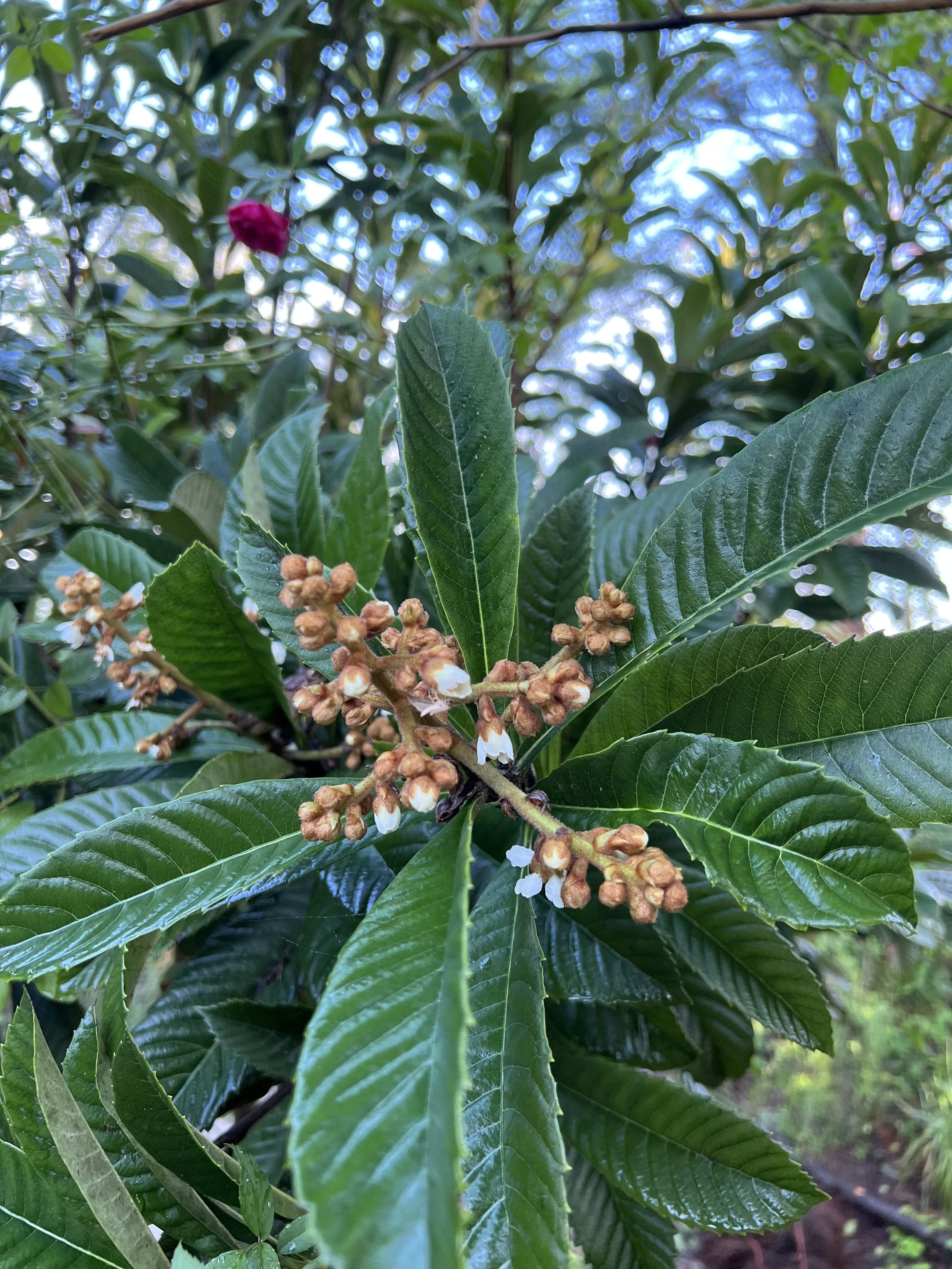
Eriobotrya japonica
Loquat is a non-native, Florida-friendly, evergreen fruiting tree that grows 15’-25’ tall. They grow best in full sun to partial shade, with average, well-draining sandy, clay, or loamy soil. Their flowers are highly attractive to butterflies and other pollinators, and their apricot-like fruit can be enjoyed by humans and wildlife alike.
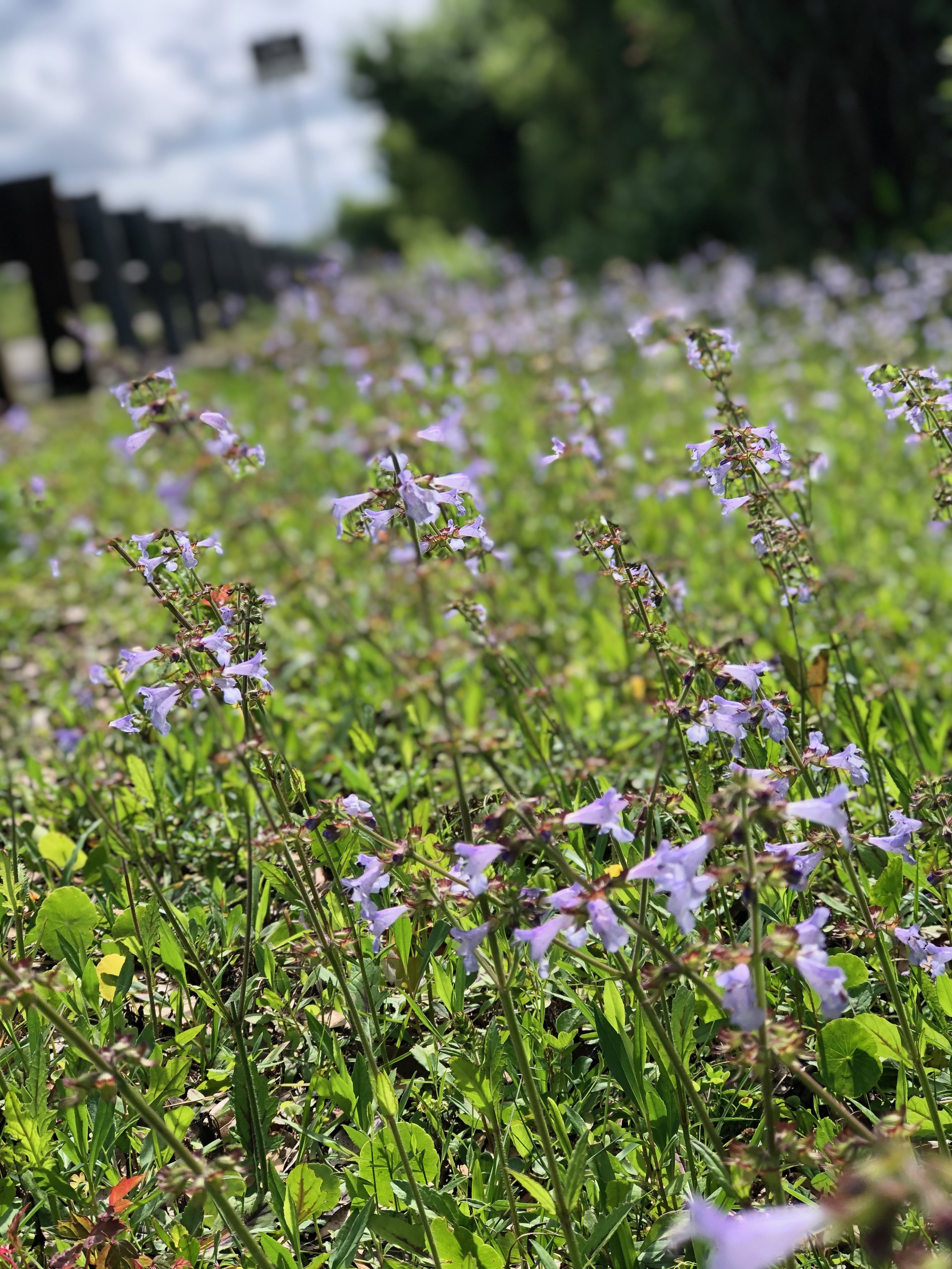
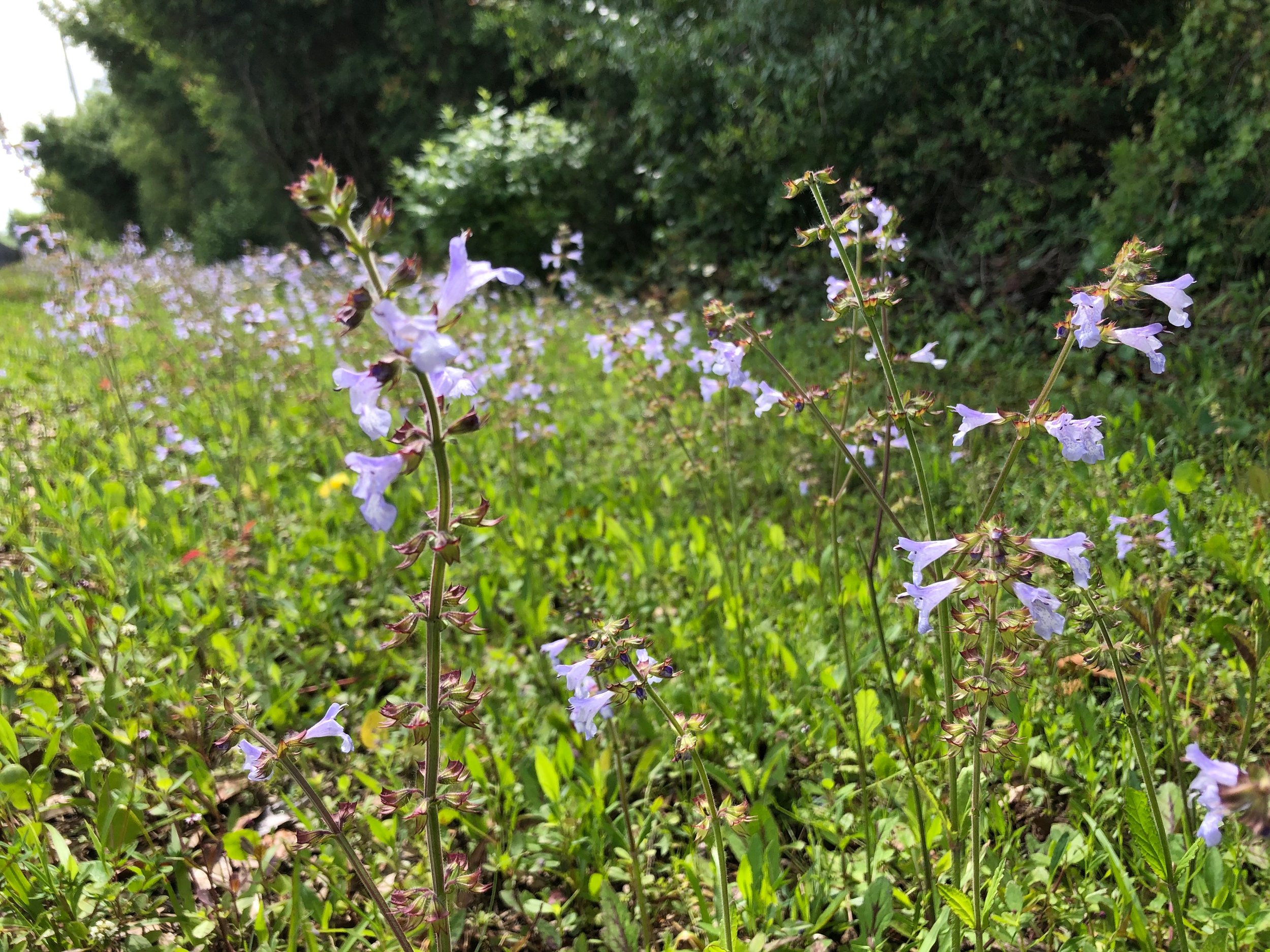
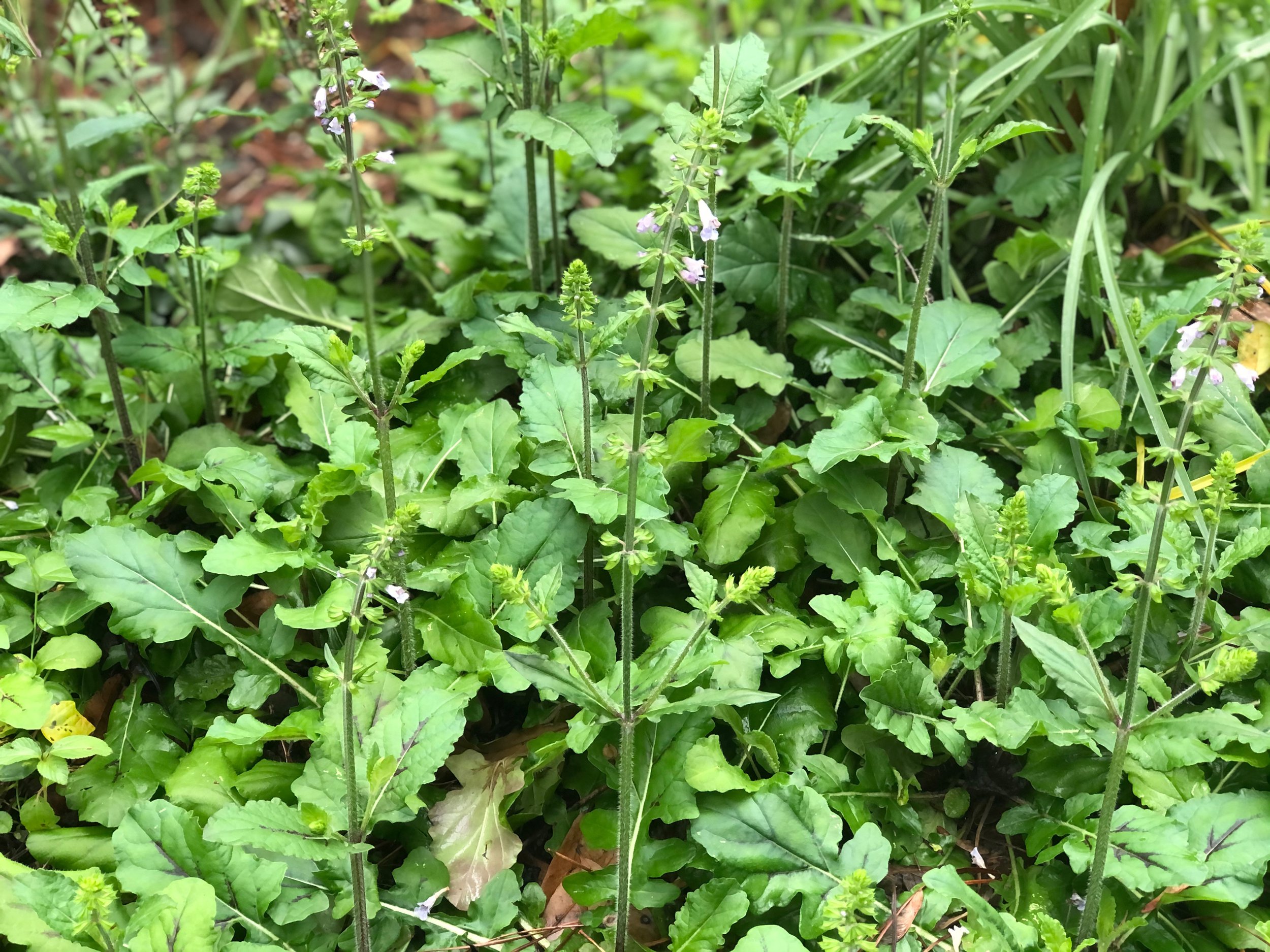
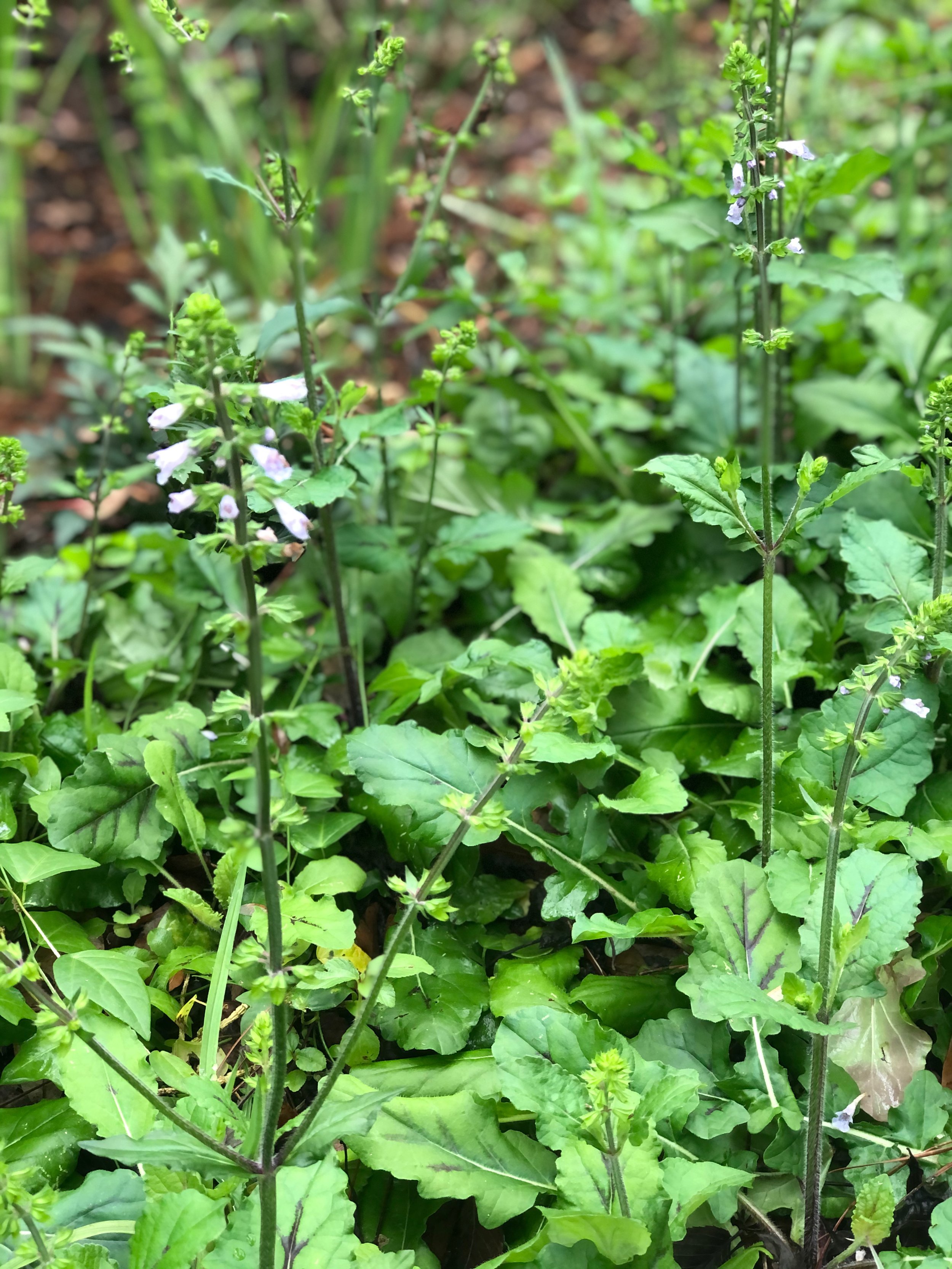
Salvia lyrata
Lyreleaf Sage is a long-lived, reseeding, perennial, evergreen, ground-covering wildflower that blooms in the spring and summer. Lyreleaf likes sun to shade and dry to wet (well-drained) soils. The purple flowers attract hummingbirds as well as other pollinators like butterflies. The young leaves are edible and the plant is used medicinally.
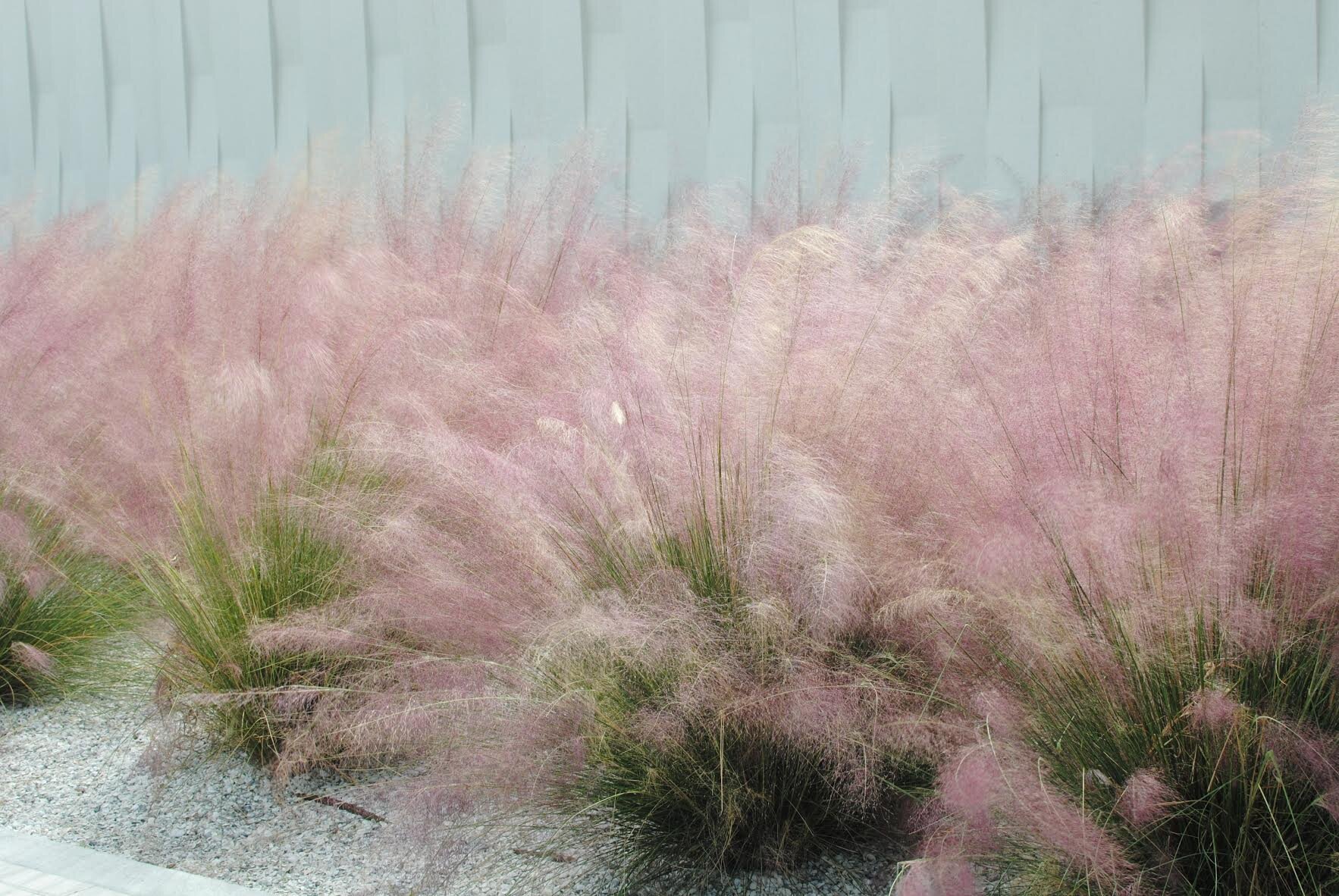


Native, perennial, weeping and thick clumping grass. Full sun to light shade, average soil, 4'. Moderately salt-tolerant, can usually spread by self-sown seeds. Attractive foliage year-round, but showiest in the fall with purple/pink flowering plumes. Combines well with wildflowers.
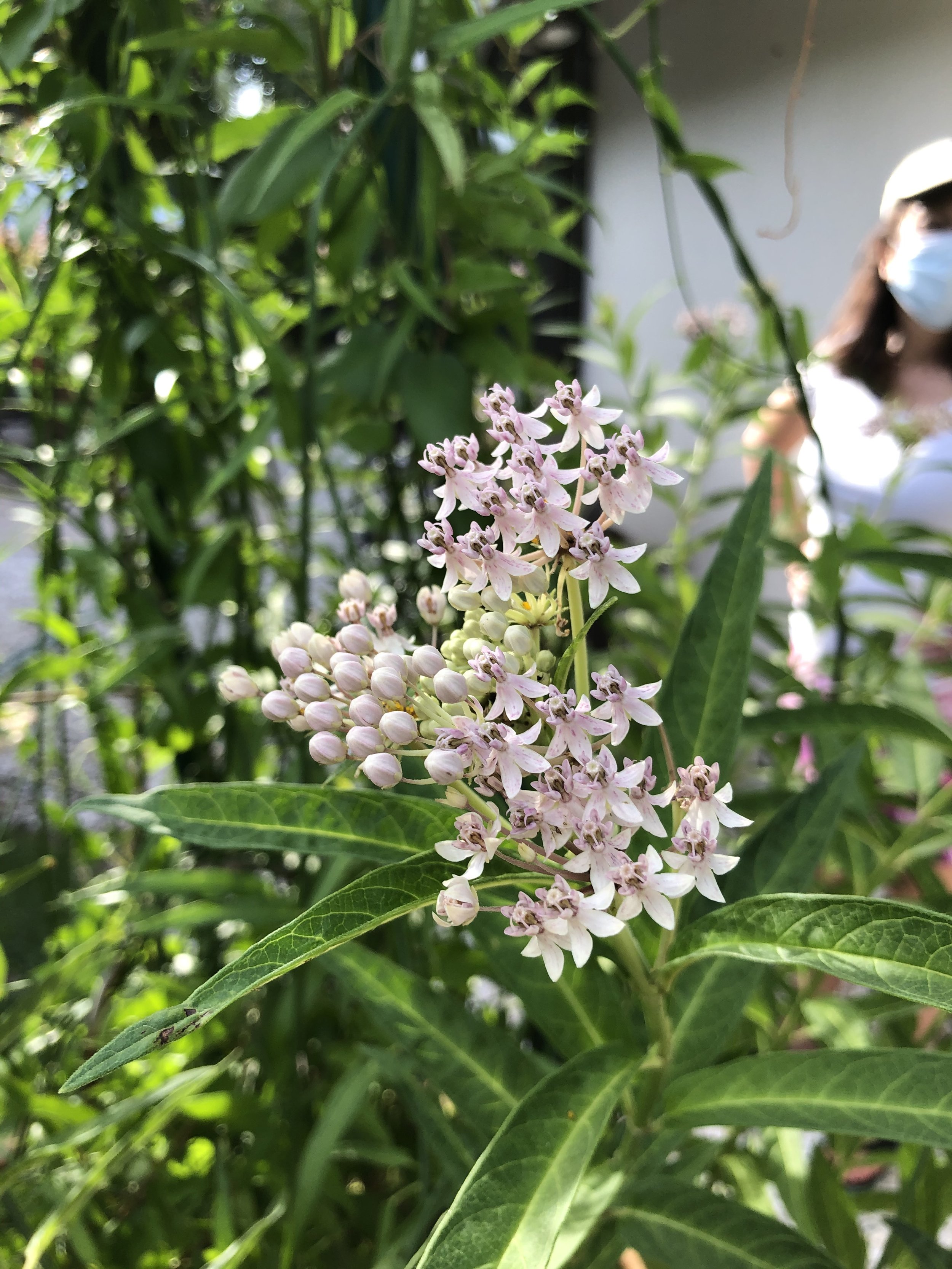
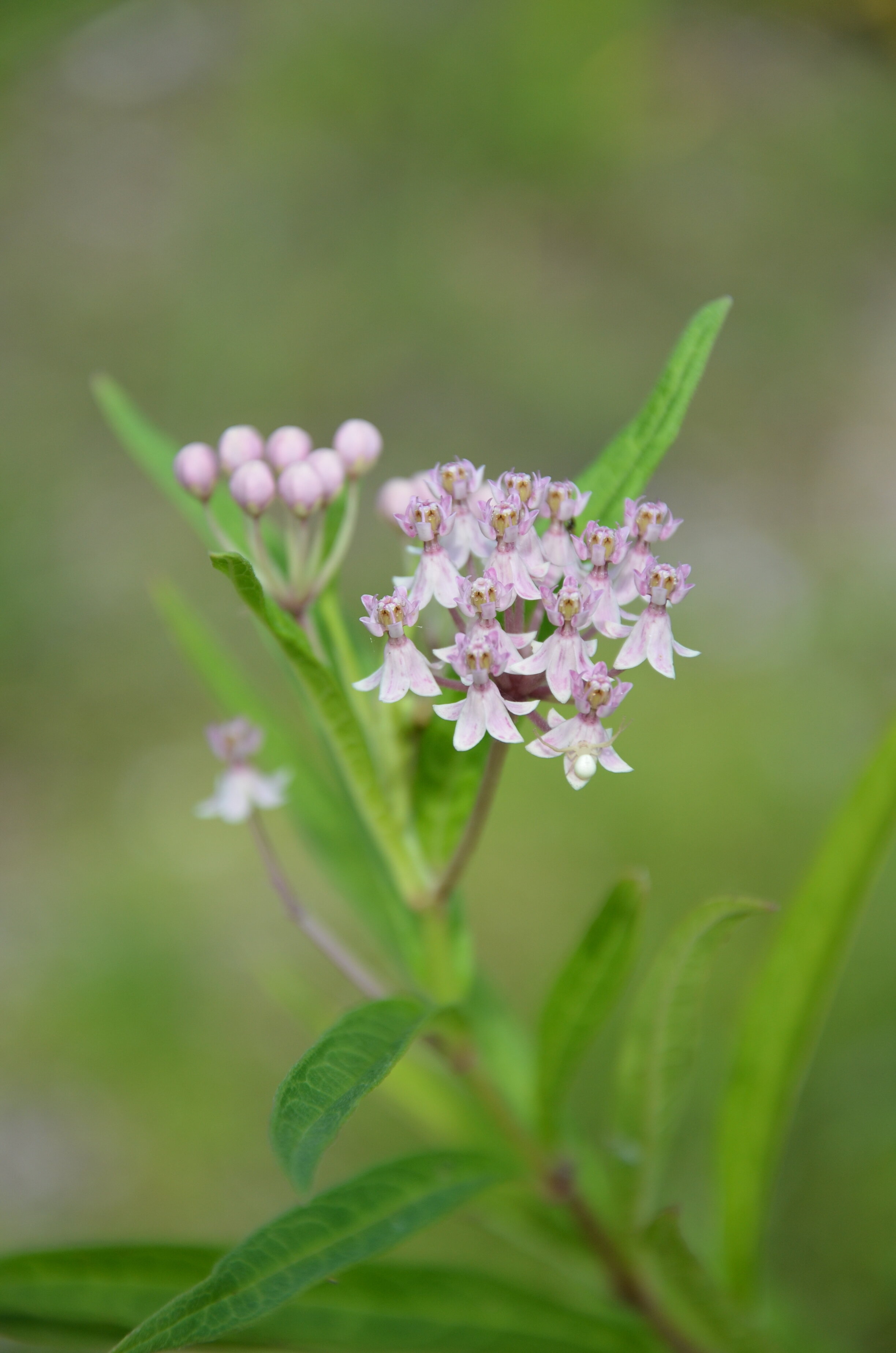
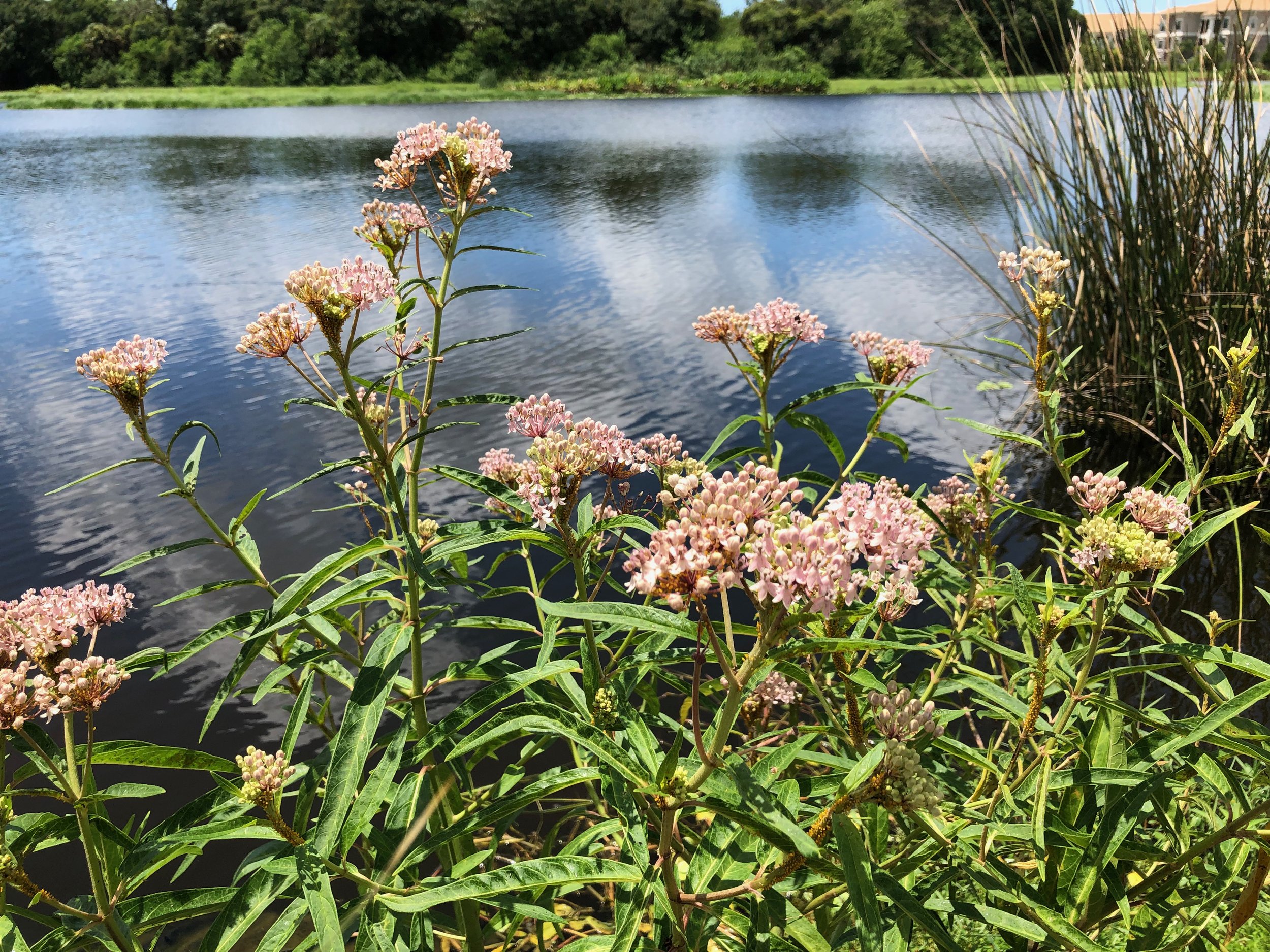
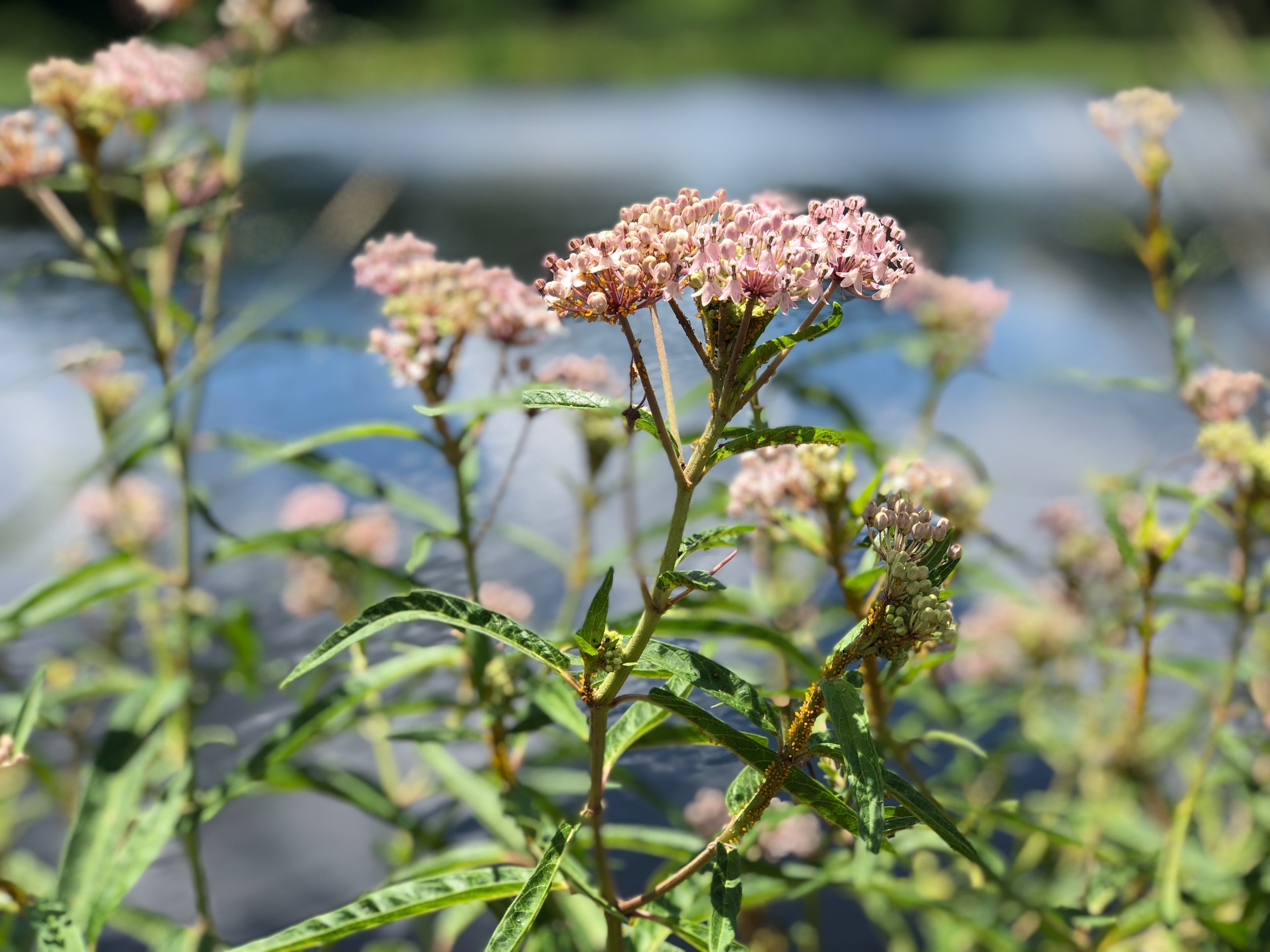
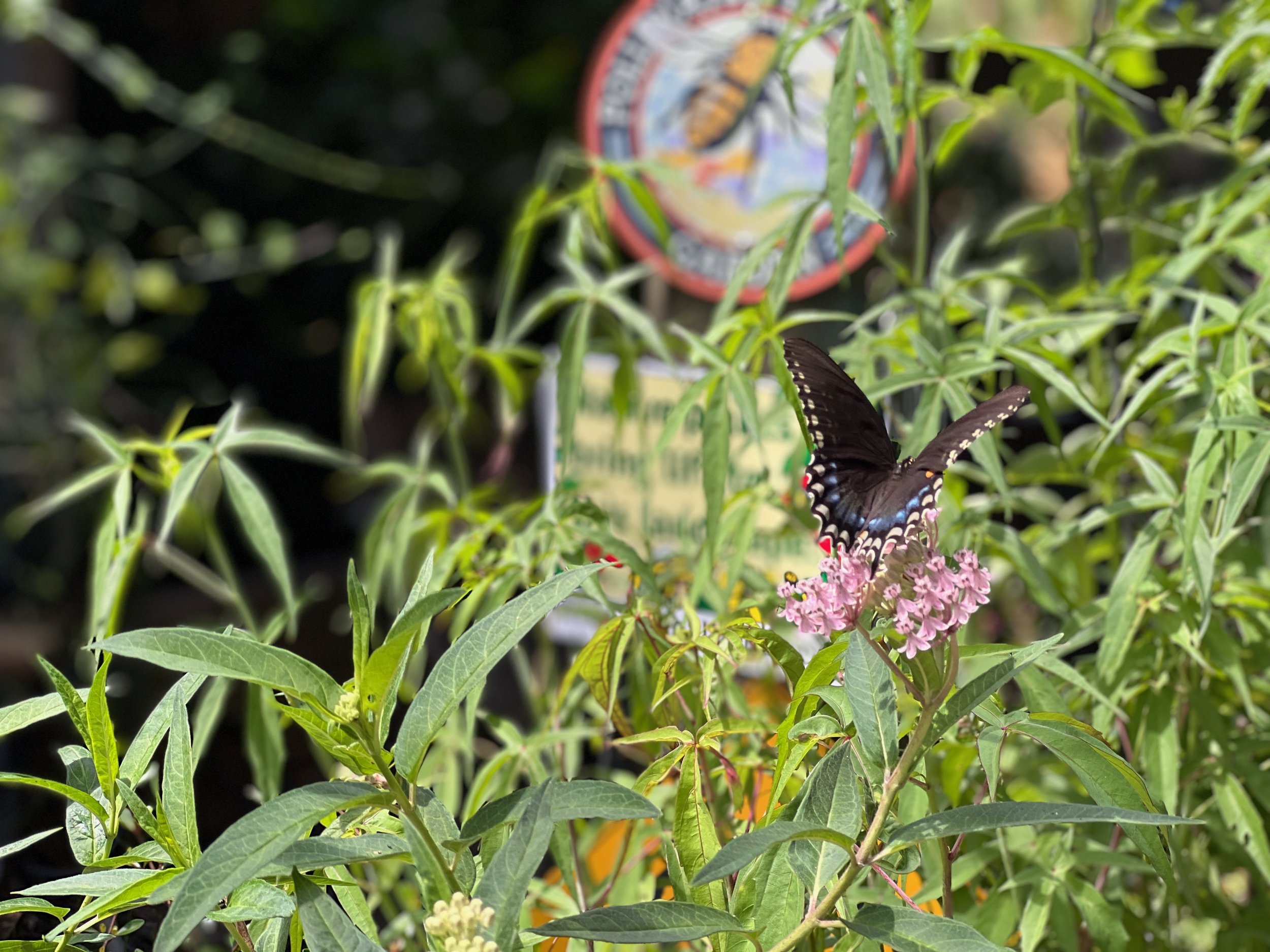
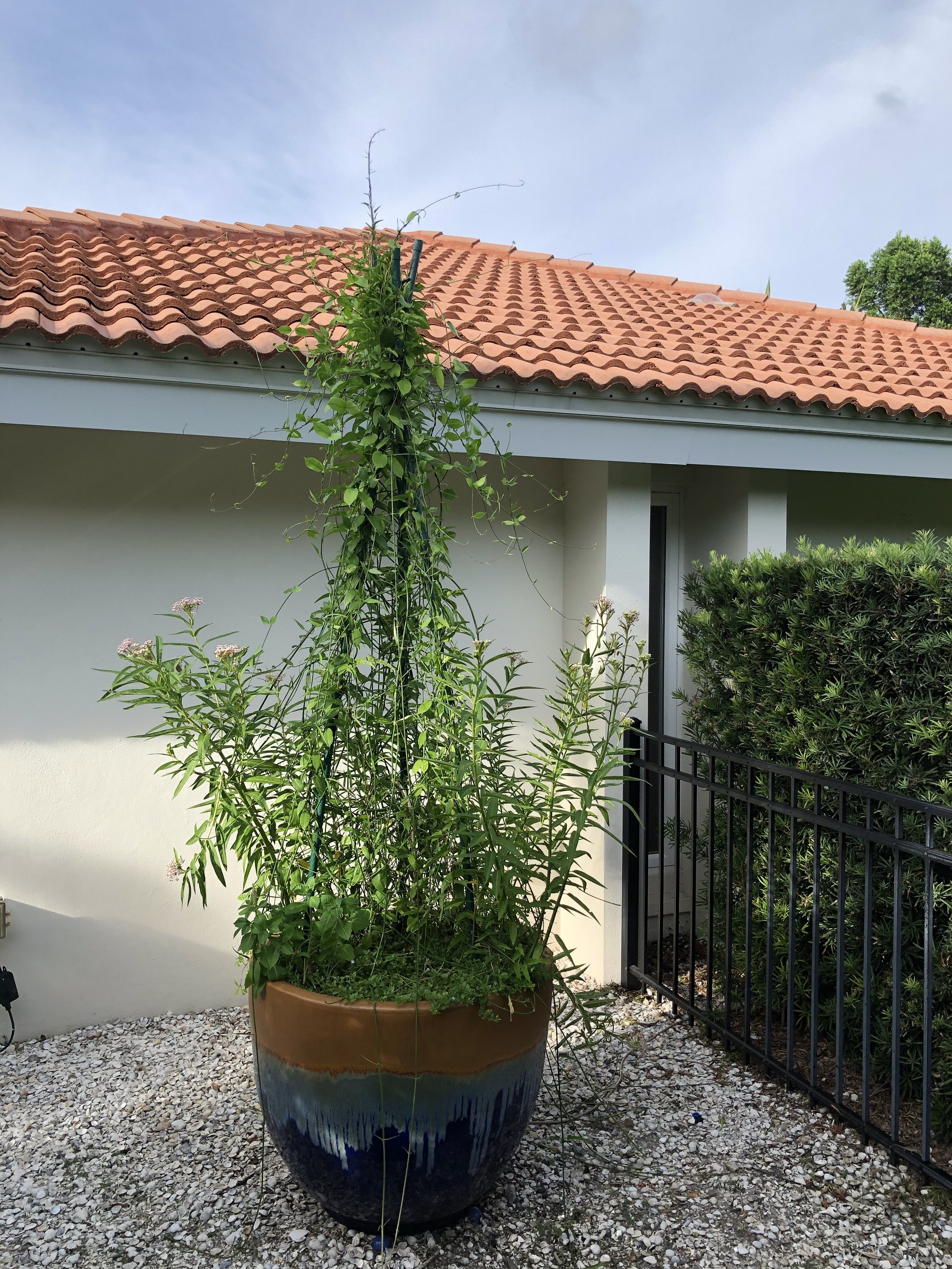
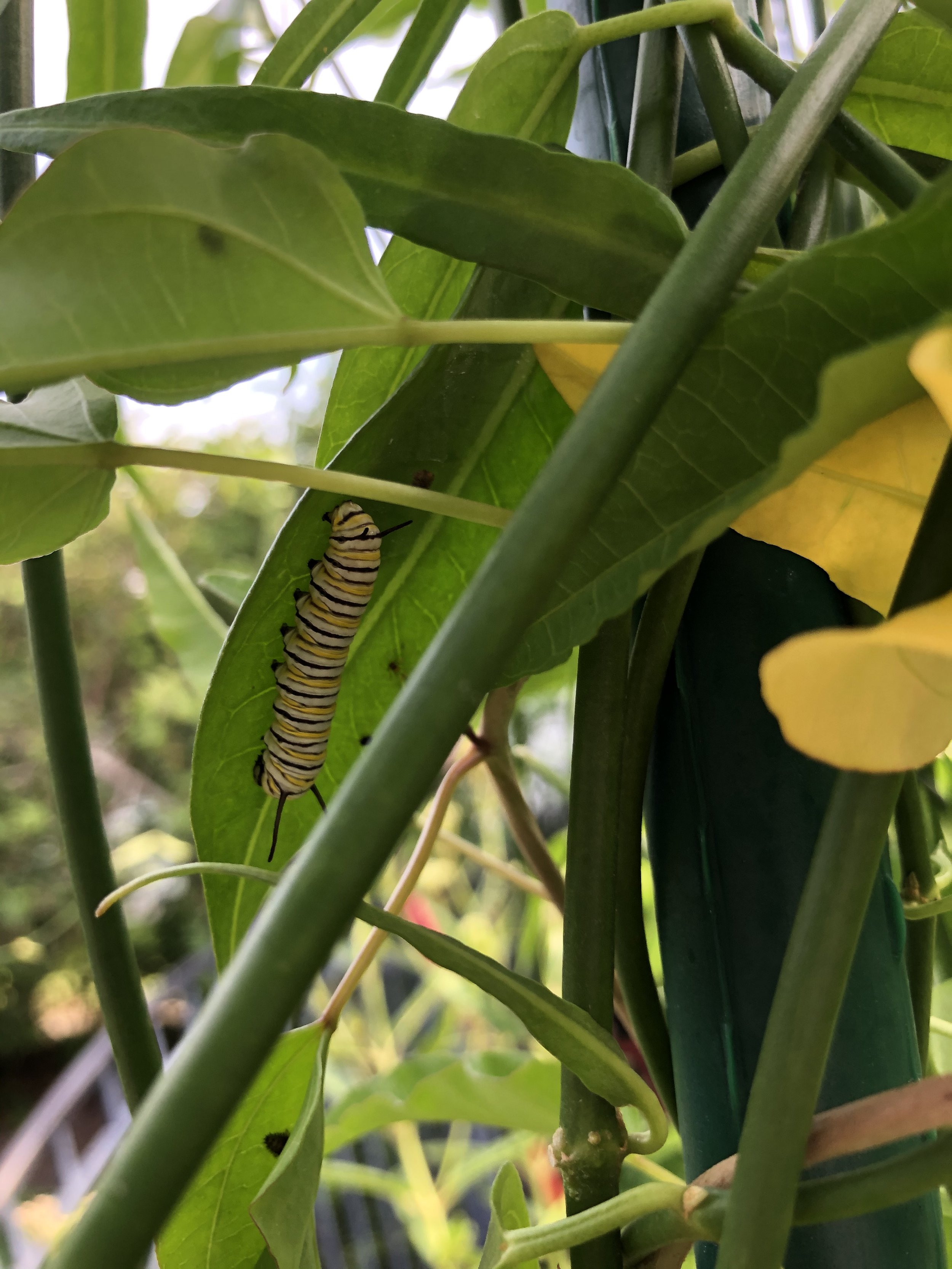
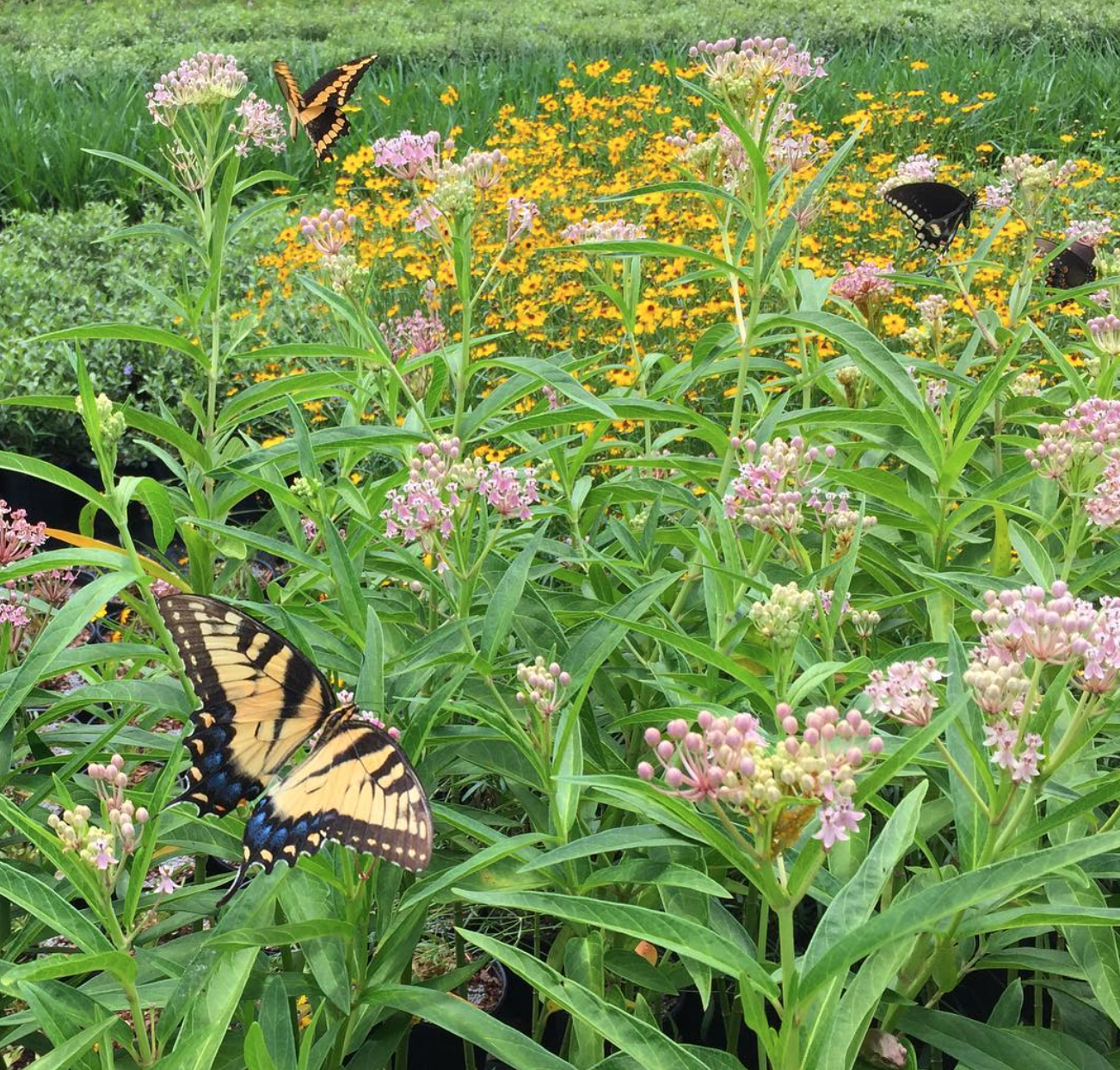
Pink Milkweed is a native, perennial, re-seeding, winter-dormant host plant for monarch and queen butterflies. Its foliage dies back in the winter and returns in the spring. It prefers moist soil conditions but can be grown in containers if kept moist. It is one of the most hardy of the native milkweeds for Florida gardeners to grow.
Passiflora edulis “Purple Possum”
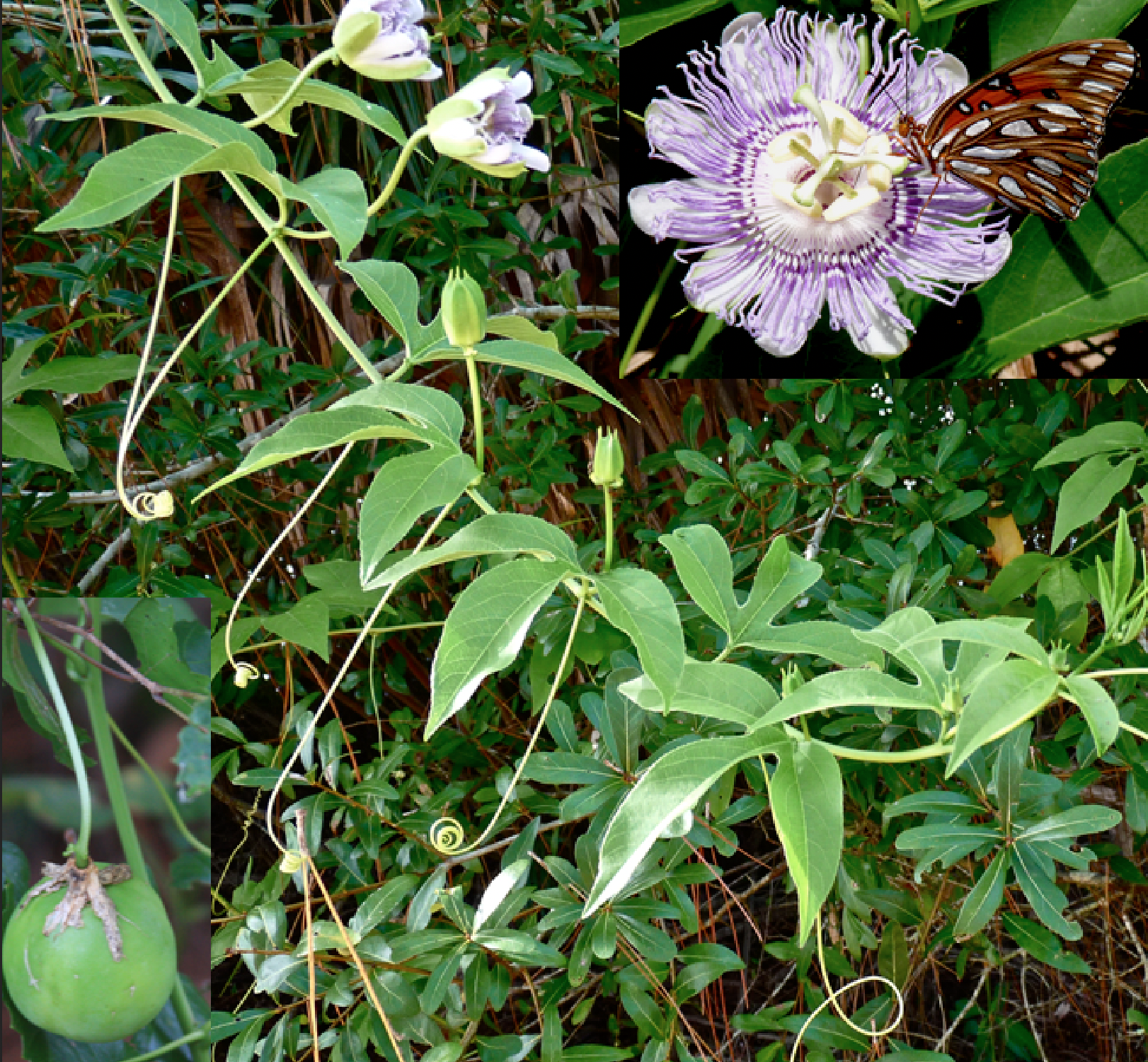
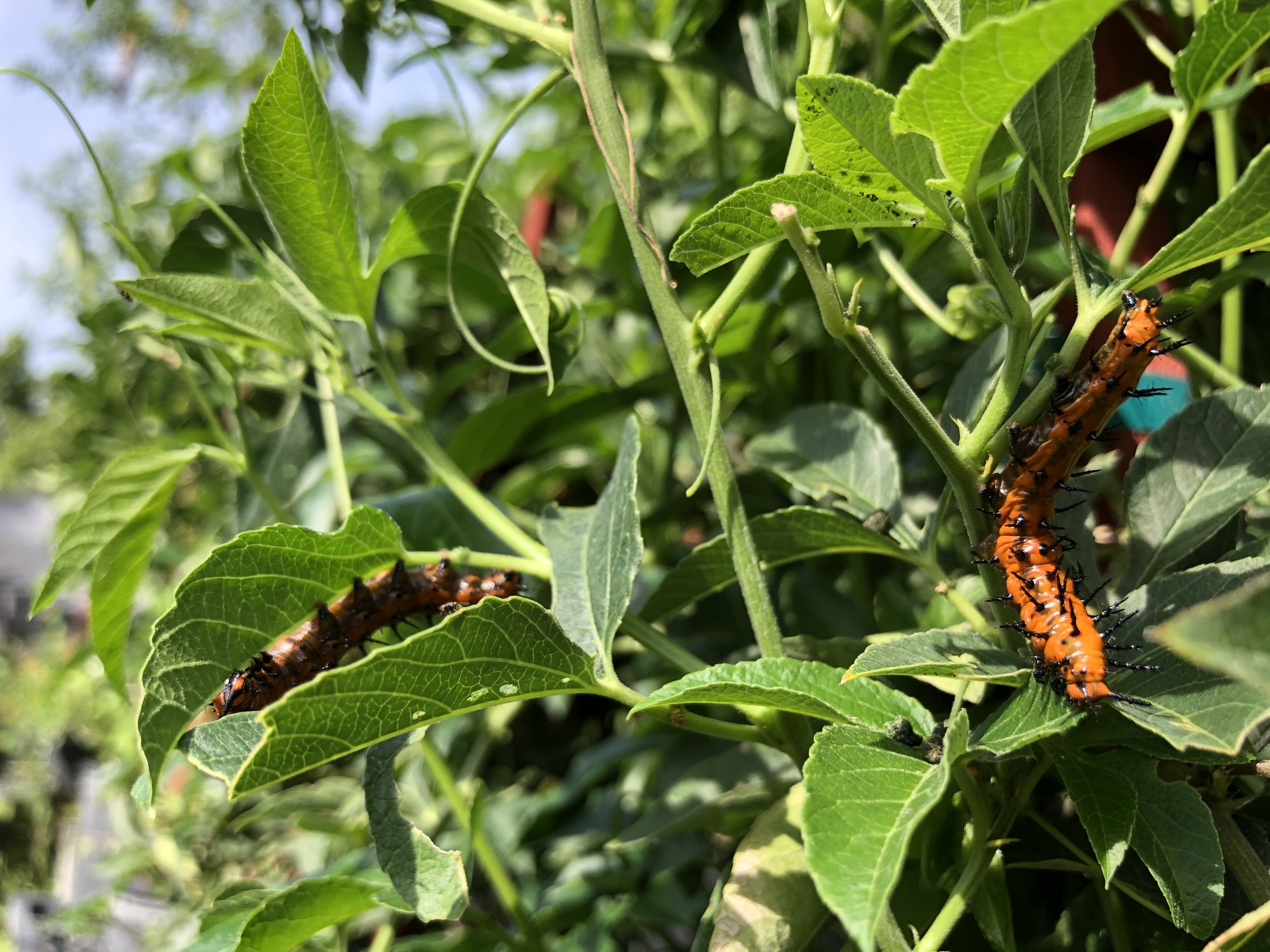
Purple Passionvine is a Florida-friendly, evergreen, perennial, showy passion variety known for it’s fruit, unlike other passion varieties that are known for serving as host plants. While the fruit and the flowers are the stars of the show, Purple Possum also serves as a host plant for Zebra Longwing and Gulf Fritillary caterpillars, so you can use this plant to feed yourself, and your local butterflies! Grow in full sun with rich, well-draining sandy soil for the best blooms and fruit. The vines and fruit get heavy as they grow, so provide a sturdy trellis, arbor, tree, or fence to support them.
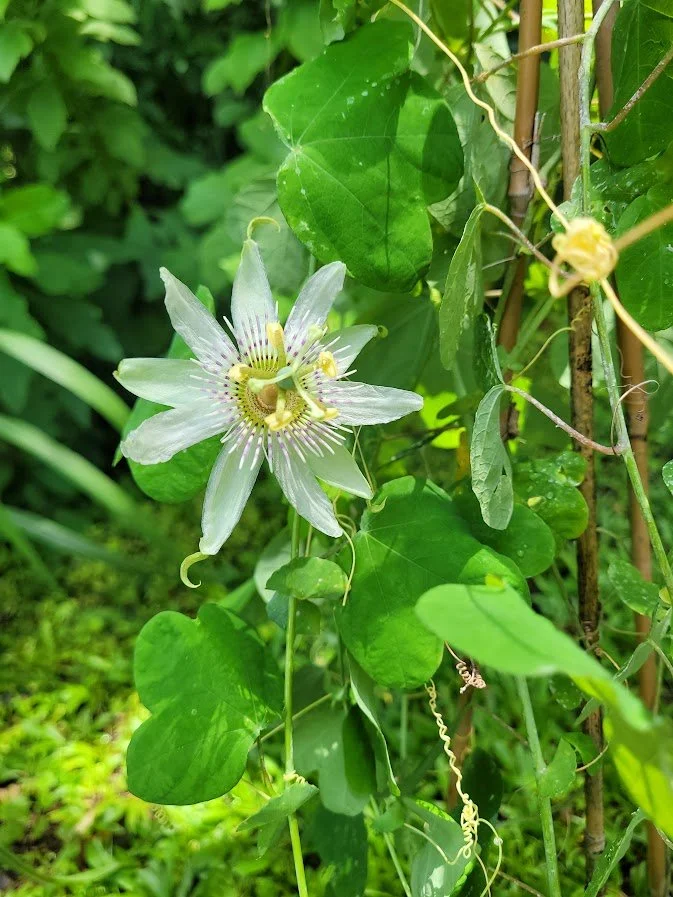
Passiflora pallens
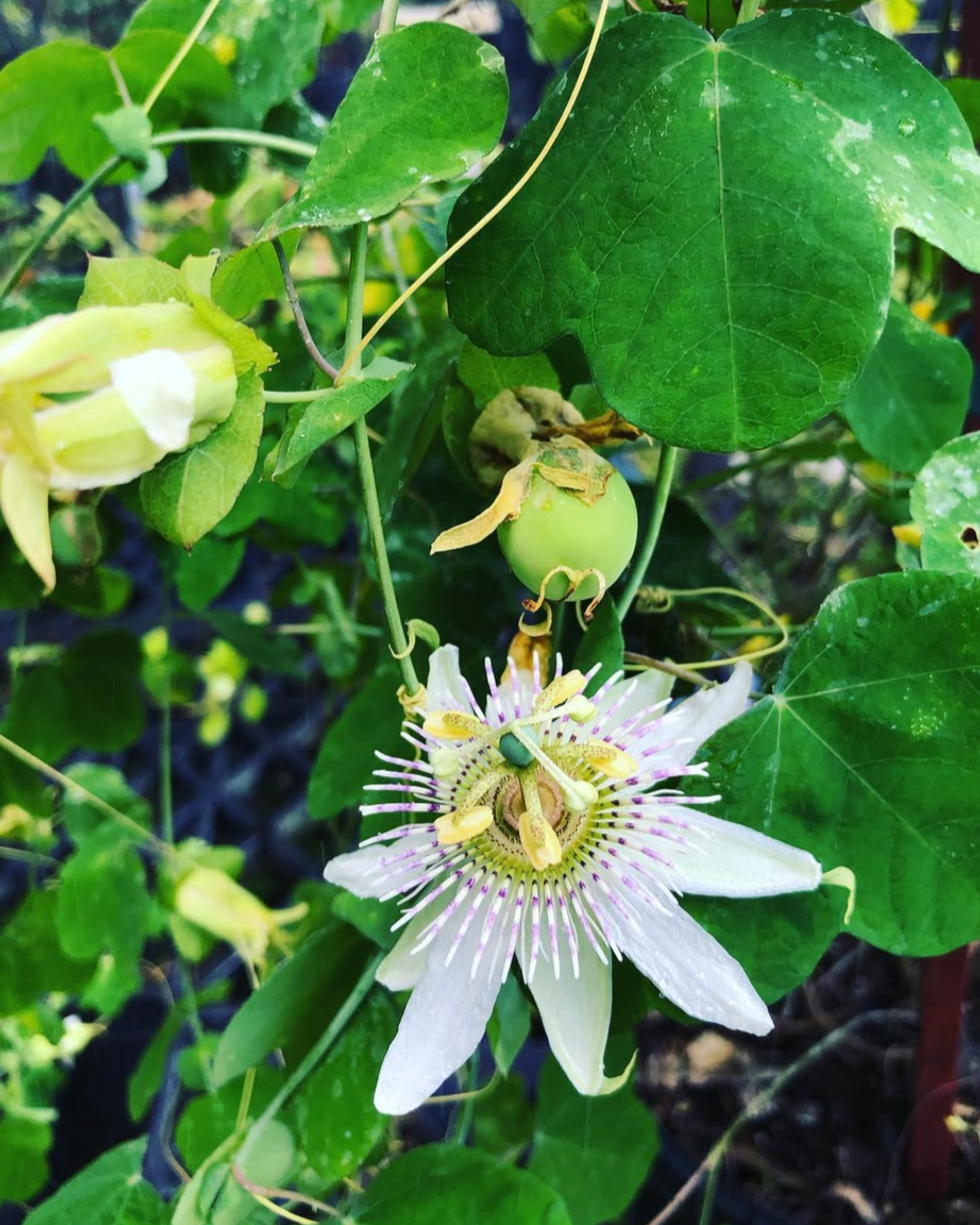
Pineland Passionvine is a rare, state-endangered perennial climbing vine endemic to Florida. This delicate species features small, pale yellow-green flowers with white coronas that are much less conspicuous than those of other passion vines. It thrives in mesic to wet tropical woodlands, preferring sunny openings and woodland margins with well-drained soils. As a host plant for several butterfly species, including the Gulf Fritillary, it serves an important ecological role despite its rarity. This vine requires full sun to filtered light and regular water, making it suitable for specialized native plant gardens and restoration projects in zones 10-11.
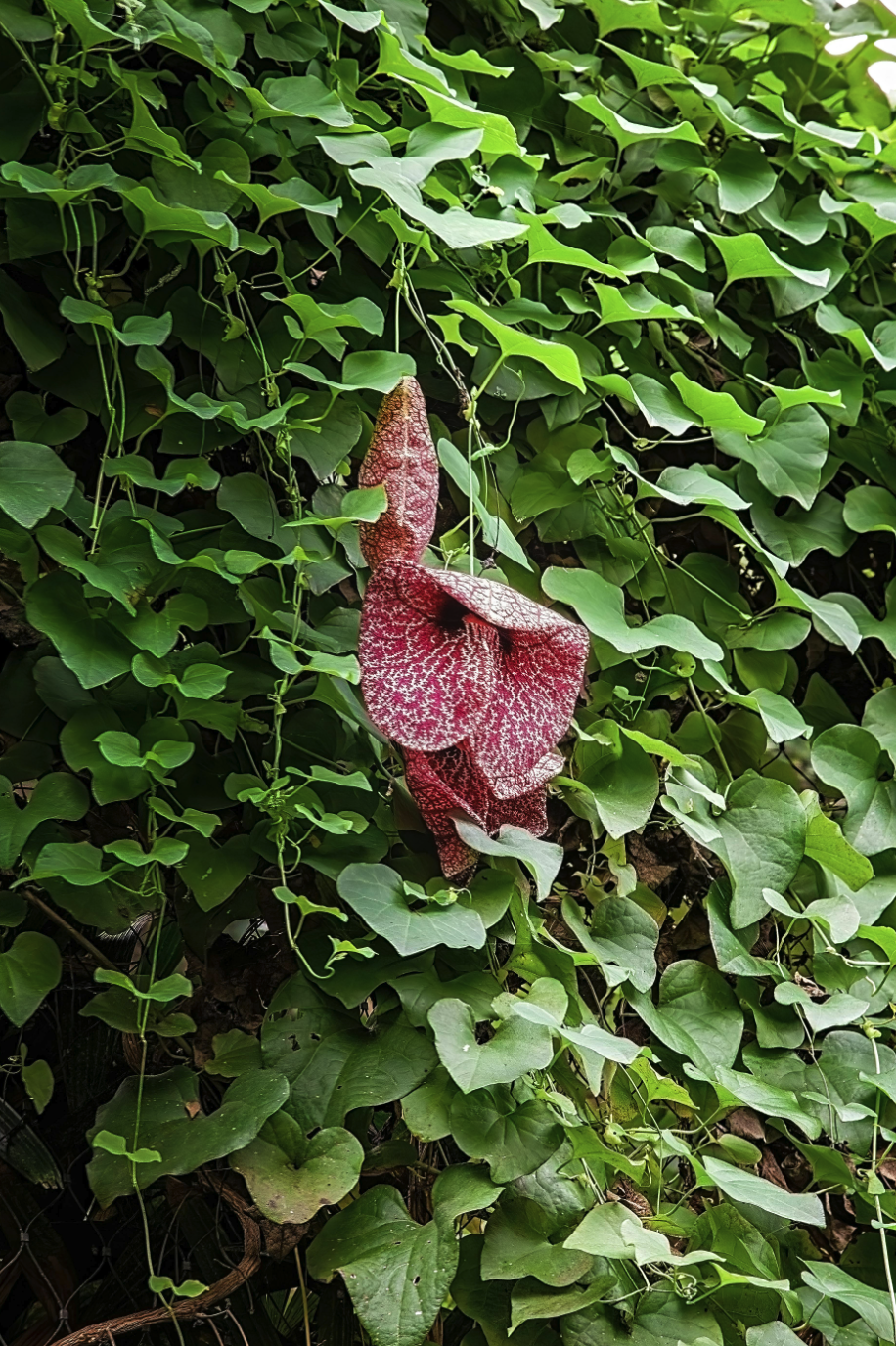
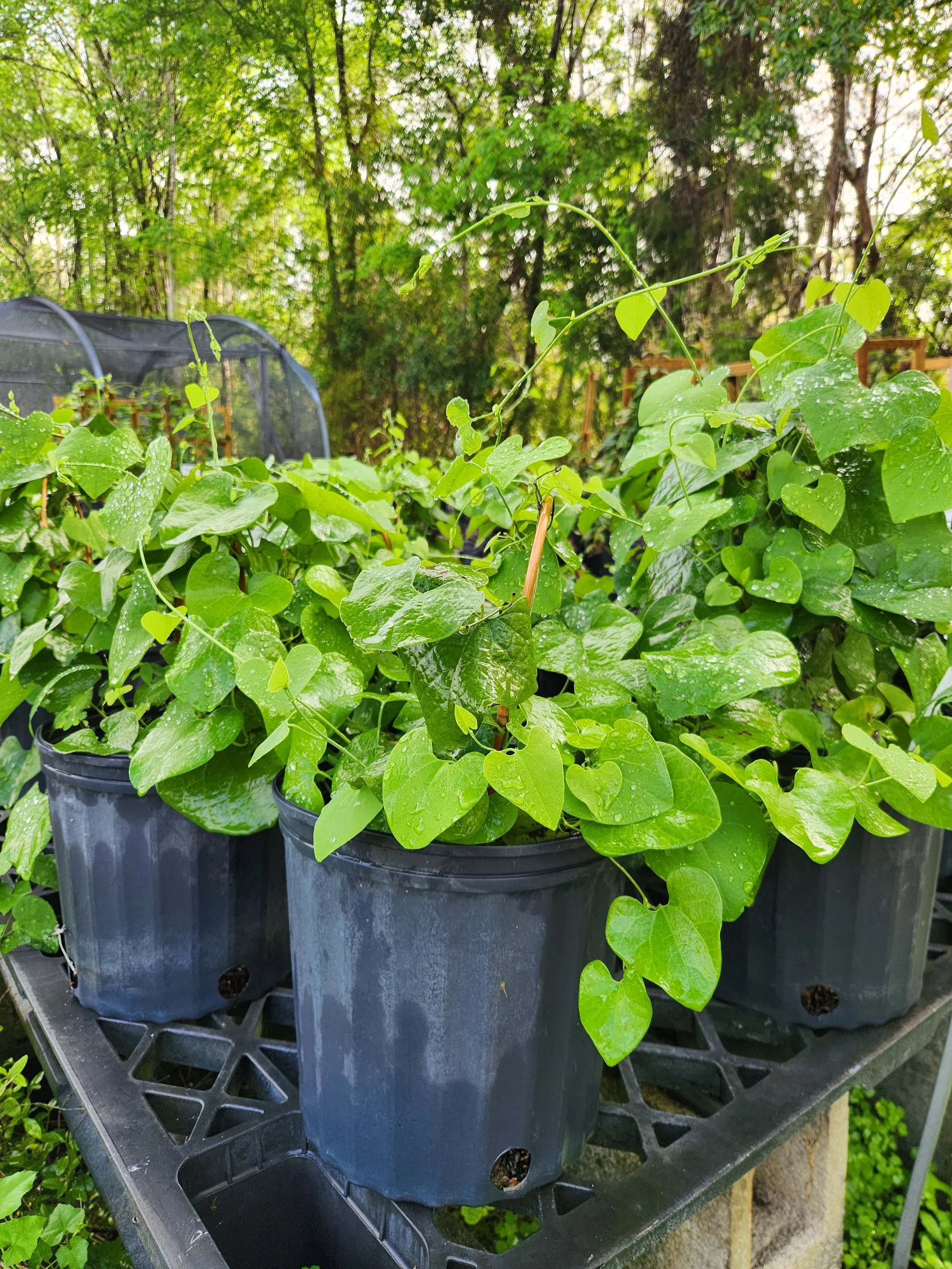
Aristolochia macrophylla
Pipevine is a Florida-friendly deciduous climbing vine that grows up to 15ft with large, heart-shaped leaves reaching 12in long. The leaves overlap in a shingle-like pattern to create dense screening, making it excellent for privacy on arbors, trellises, or fences. In late spring to early summer, it produces distinctive pipe-shaped flowers that are greenish-yellow and mottled with burgundy, though they're often hidden beneath the lush foliage. Native to moist woodlands and stream banks, it serves as the primary host plant for the Pipevine Swallowtail butterfly. This shade-tolerant vine prefers rich, moist soil and requires consistent moisture, making it unsuitable for dry conditions.
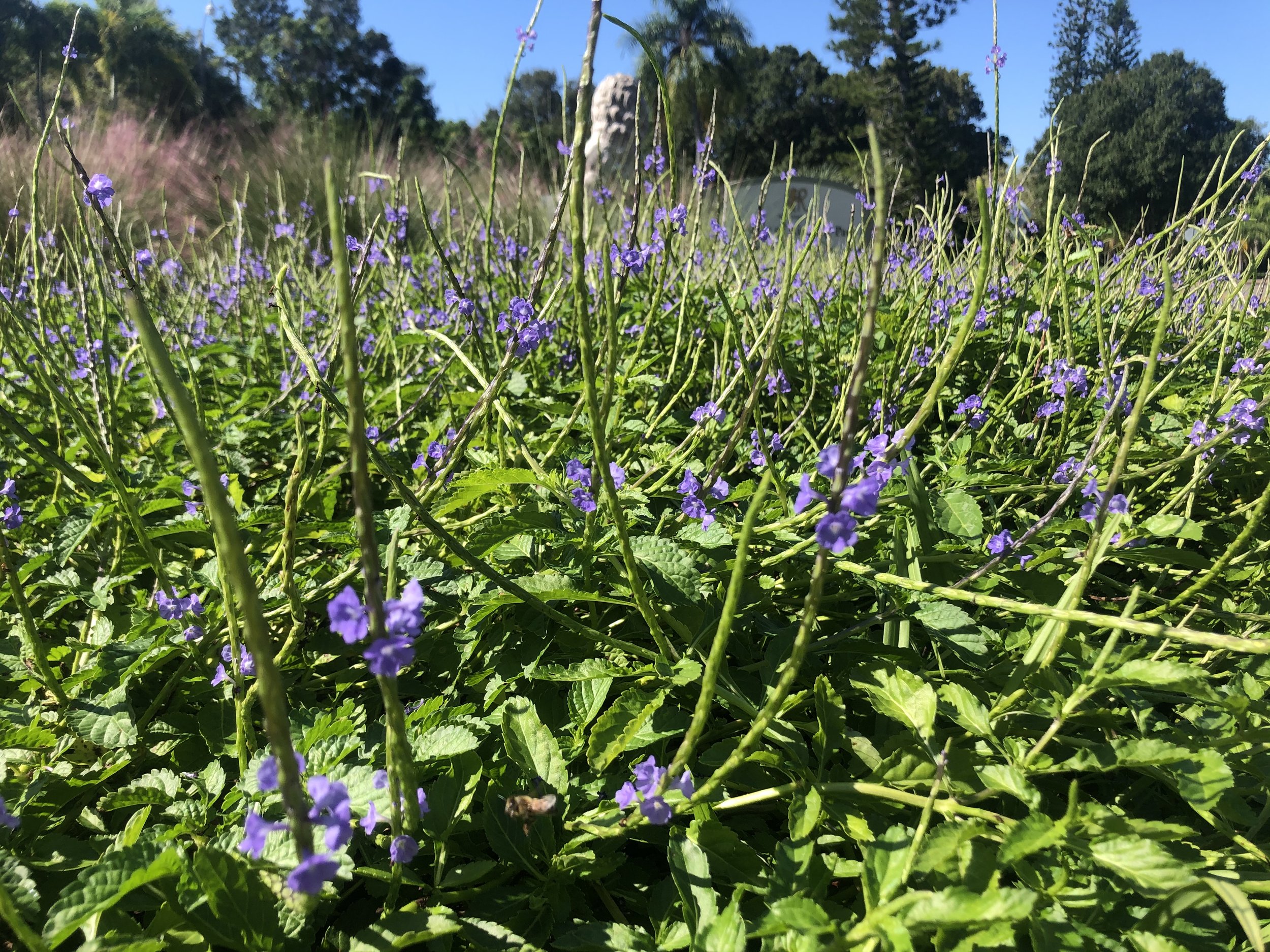

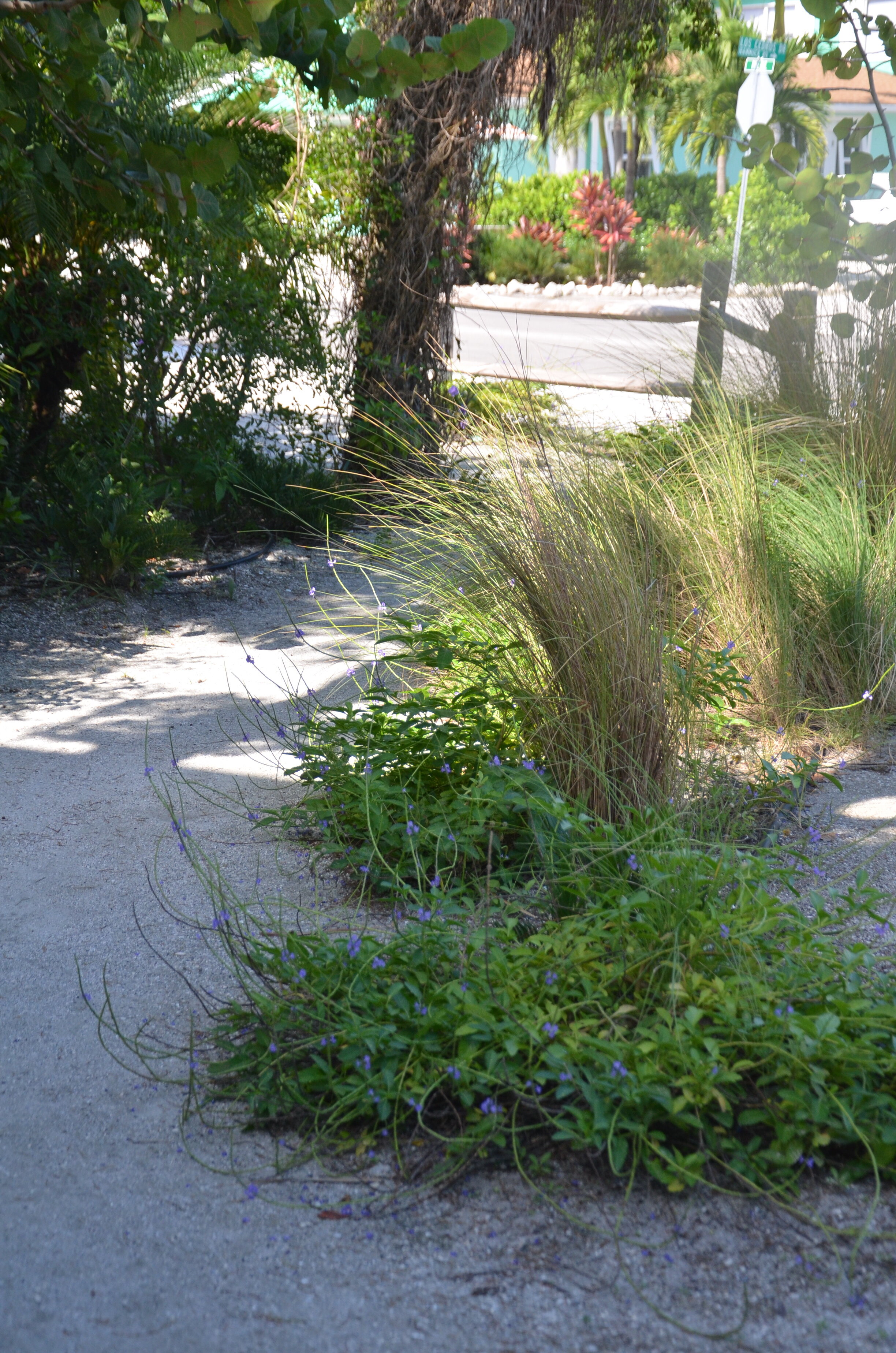
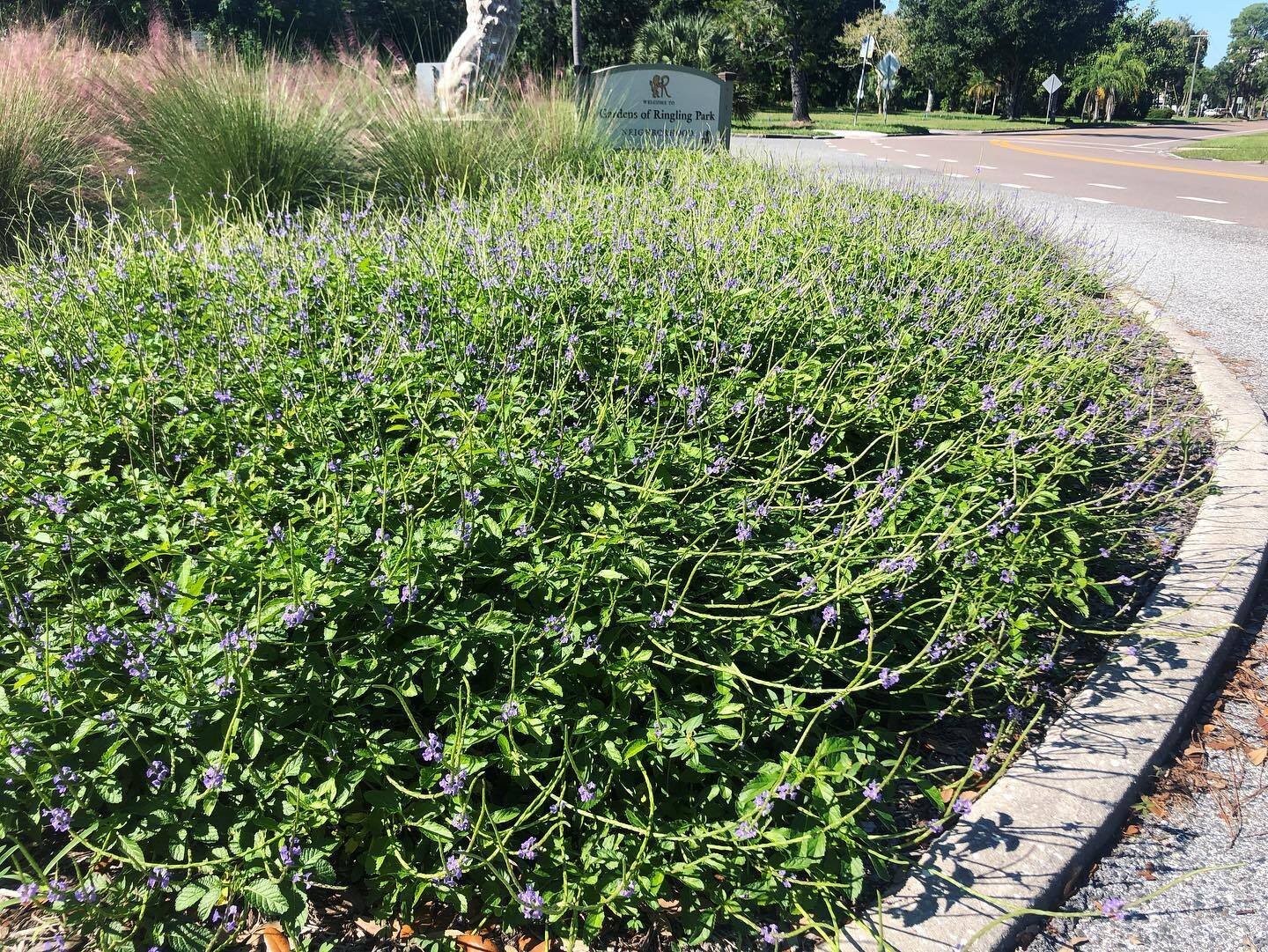
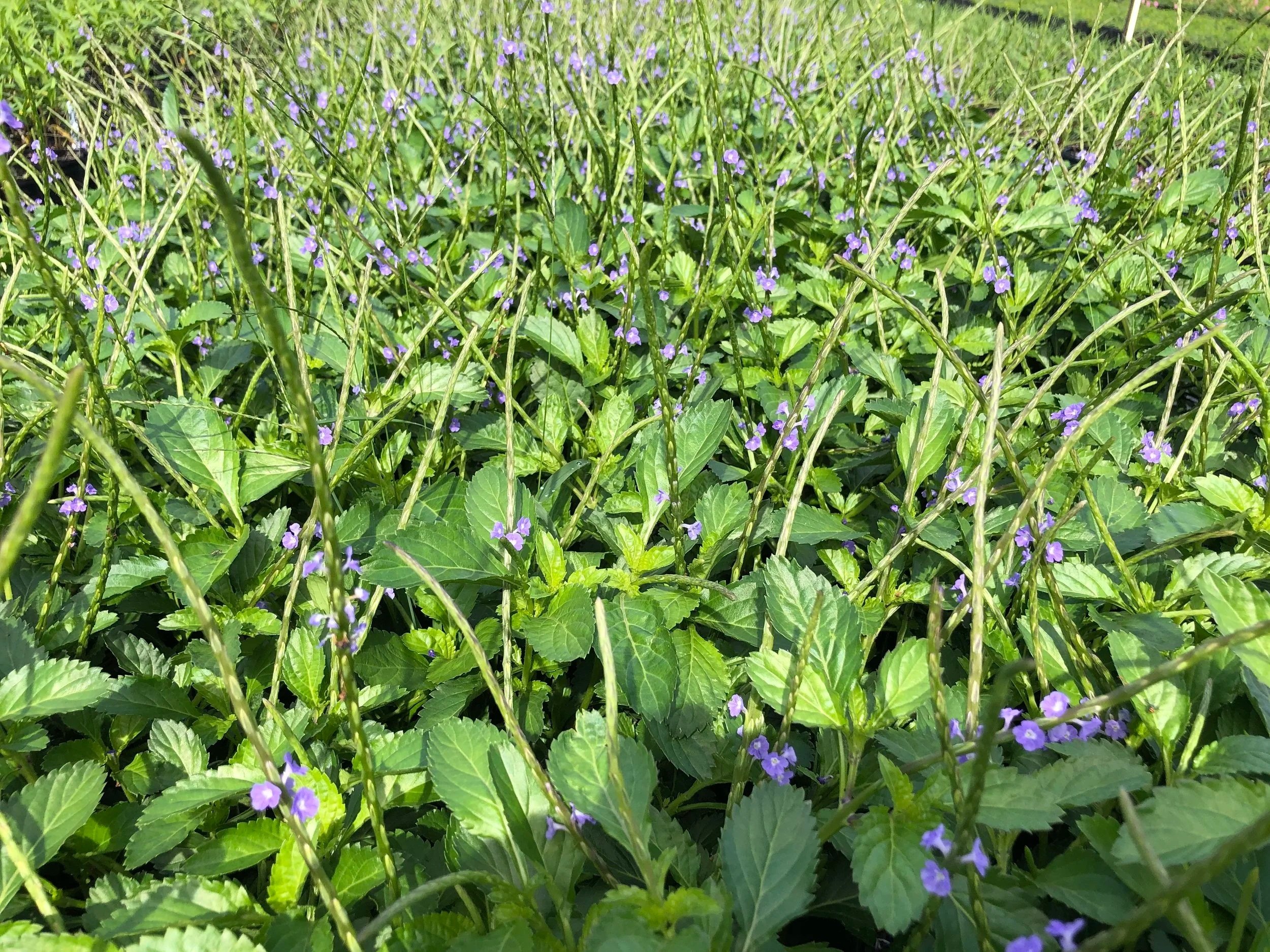
Stachytarpheta jamaicensis
Blue Porterweed is the only porterweed native to Florida. It is a low-growing plant, typically reaching 1 to 2 feet tall, that thrives in full sun or light shade. It is highly drought-tolerant and grows well in average to dry soils. This plant is a favorite for local wildlife. It serves as the primary food source for Tropical Buckeye caterpillars and provides nectar for many other butterflies and hummingbirds. Its unique, spike-like purple flowers bloom year-round, making it a reliable and attractive addition to any low-maintenance garden.
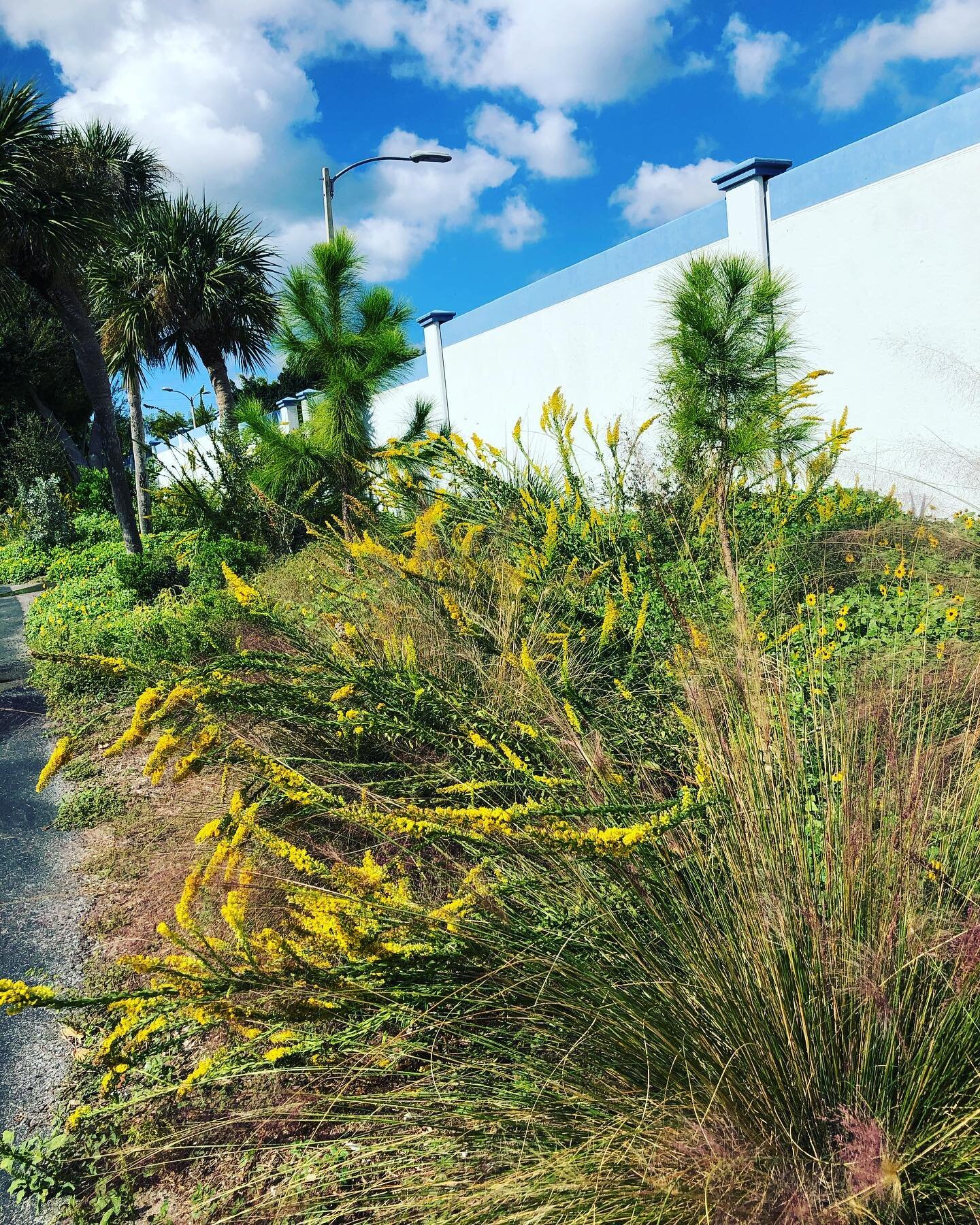
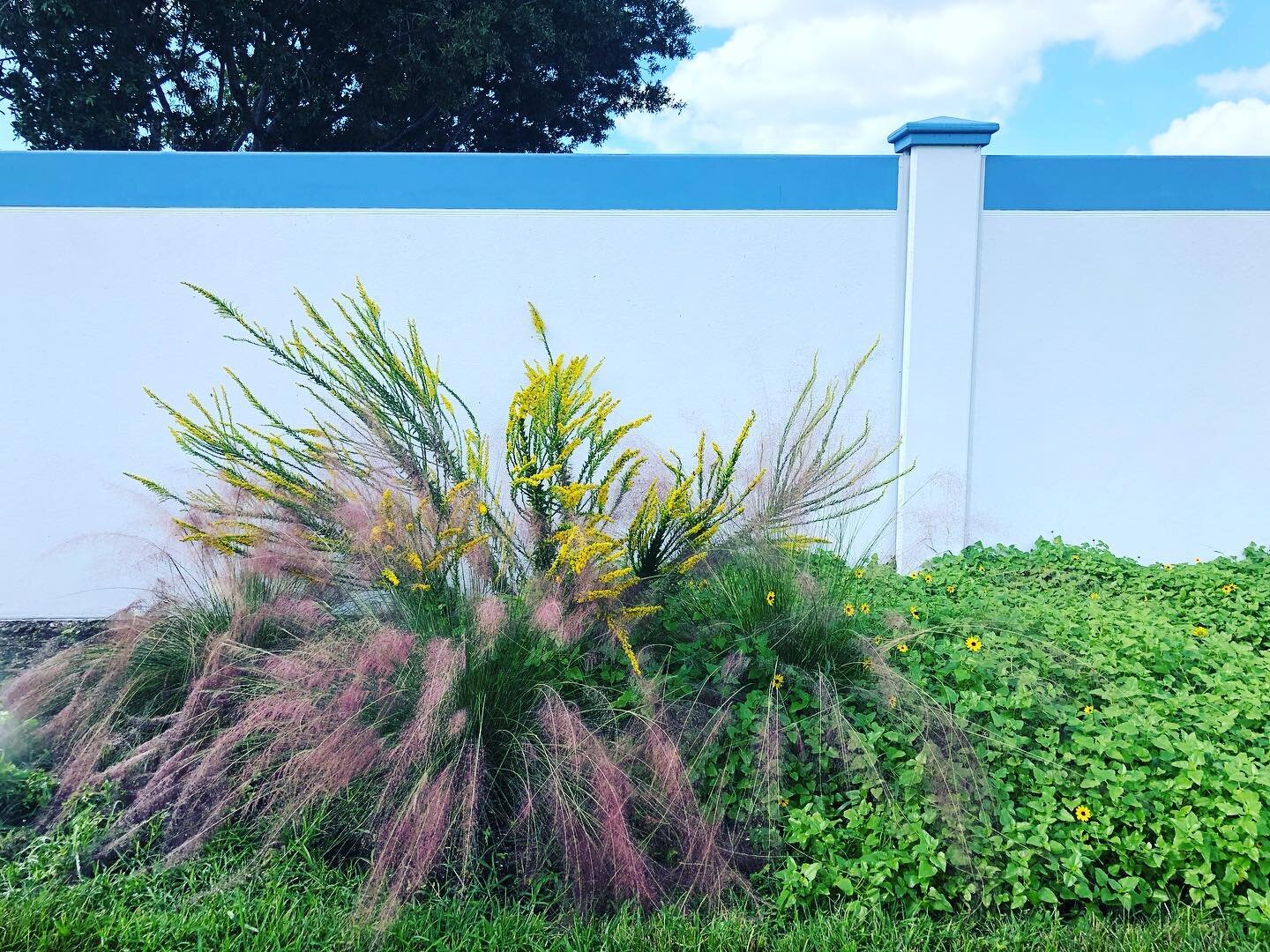

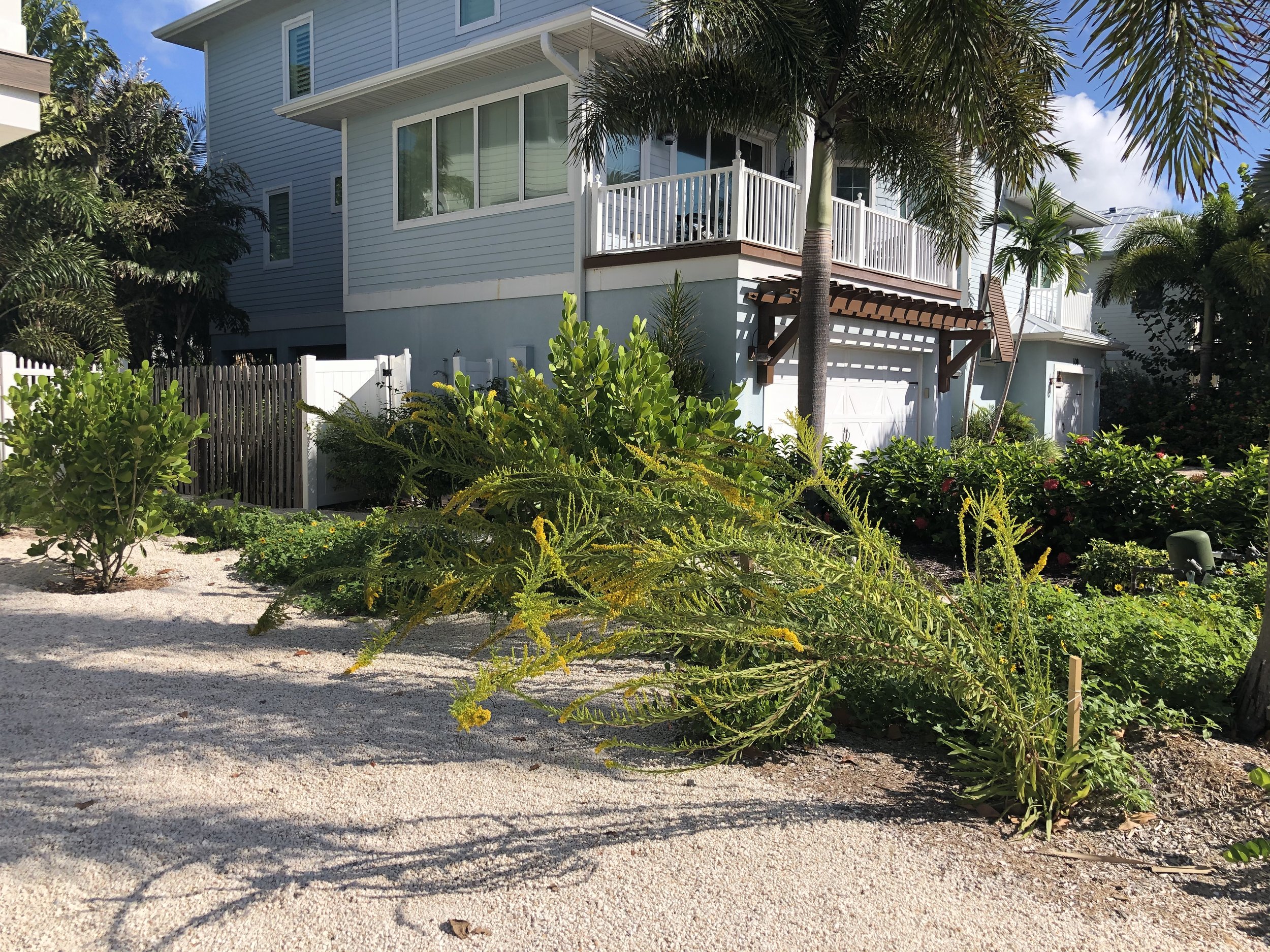
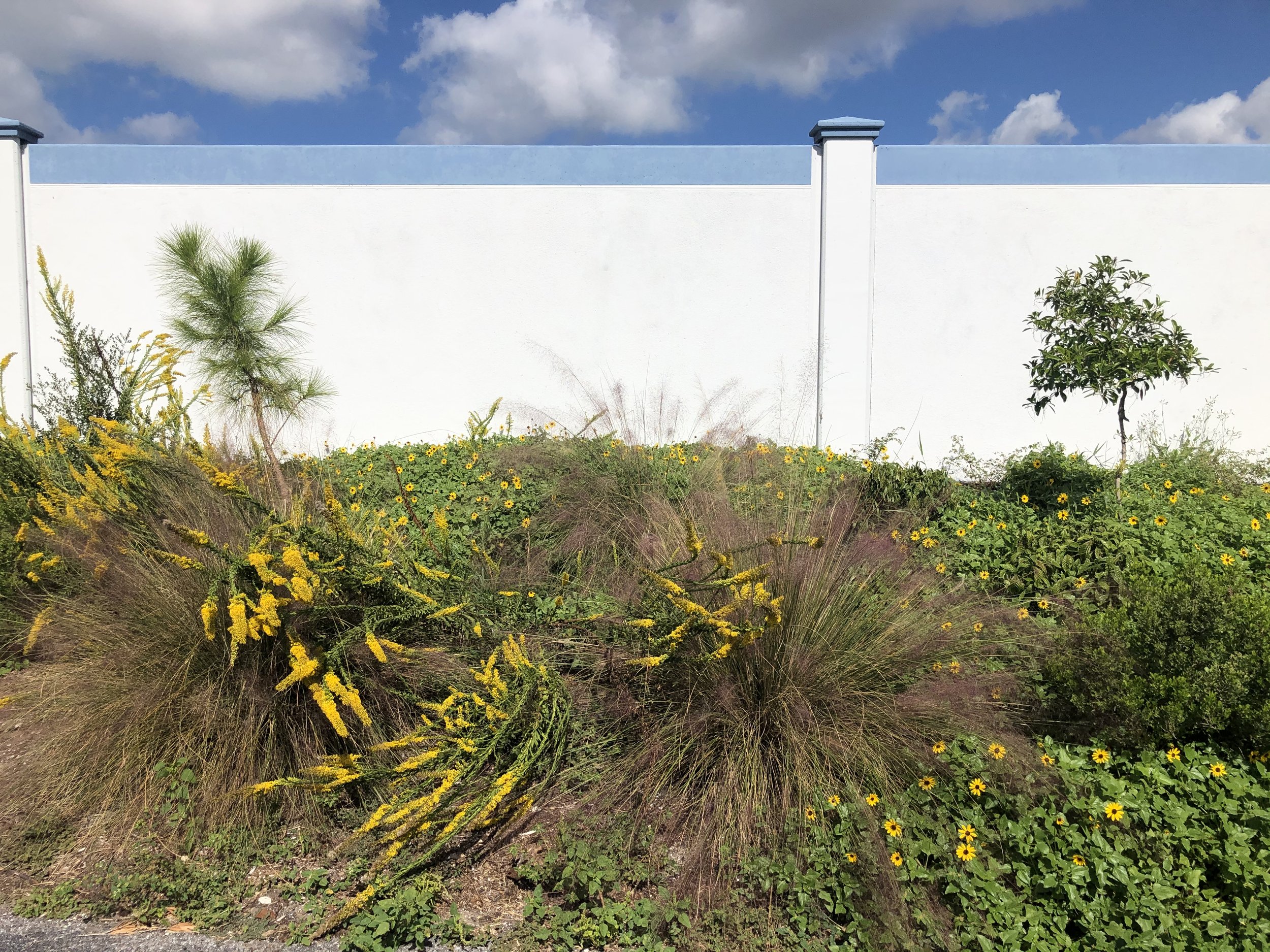
Solidago sempervirens
Seaside Goldenrod is a large, showy goldenrod species that can get showy flower spikes that are up to 7 foot tall! They are salt-tolerant and drought-tolerant as they are a coastal species frequently found near dunes. They attract a plethora of pollinators and are buzzing with action in fall when they bloom.
They are a keystone species! Host plant for over 80 different species of butterflies and moths!
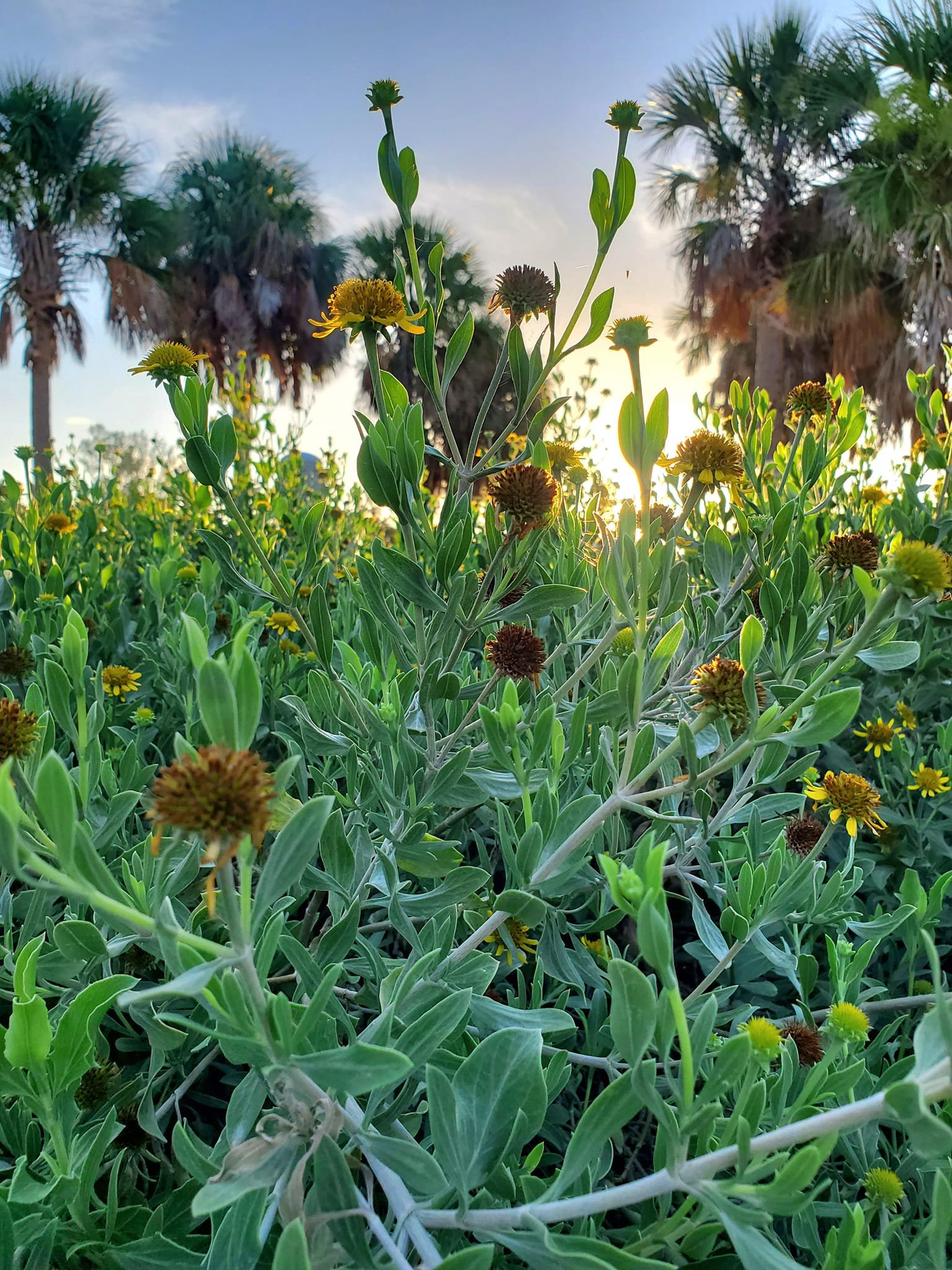
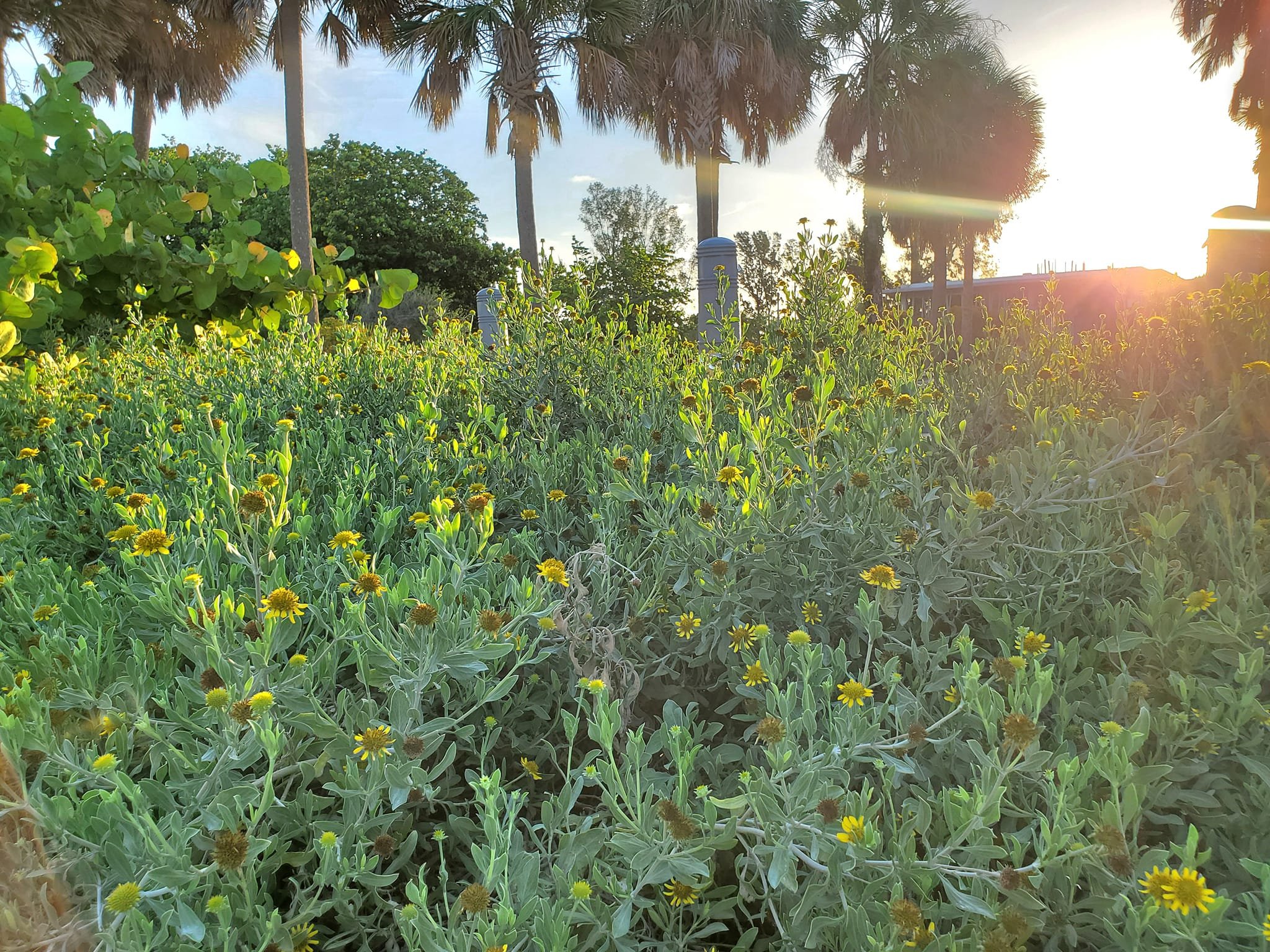
Borrichia frutescens
Sea Oxeye Daisy is a great shrubby wildflower for coastal areas. One plant grows to be 3x3' but they can colonize in areas they love creating a beautiful pollinator patch! Great for coastal areas where the tide comes in, this plant is highly salt tolerant and can take flooding, tides, and salty soil and wind. Does best in full sun. Sea Oxeye Daisy attracts many small butterflies like hairstreaks and blues and other pollinators like native bees. Birds eat the seeds. Blooms heavily spring-summer and on and off the rest of the year.
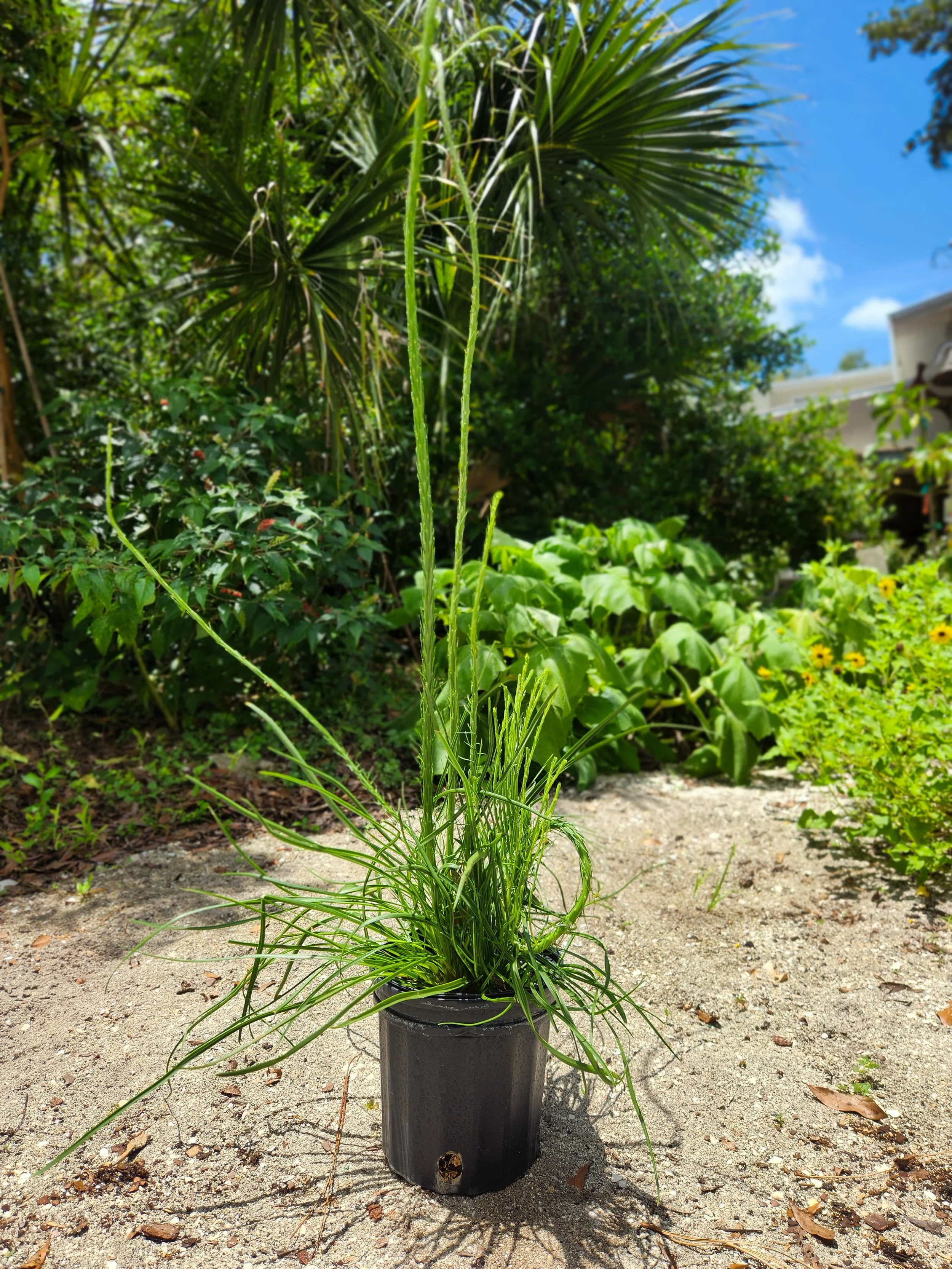
Liatris tenuifolia
Love the idea of Blazing Star but have a super dry, hot yard without irrigation? Try Shortleaf Blazing Star! A statement wildflower for the fall season! This wildflower is unapologetically bold with tall, electric purple spikes that strut through like they own the garden. It is the life of the pollinator party with the amount of bees and butterflies it attracts. If your landscape needs a little drama and a whole lot of fabulous, this is the wildflower you've been waiting for.
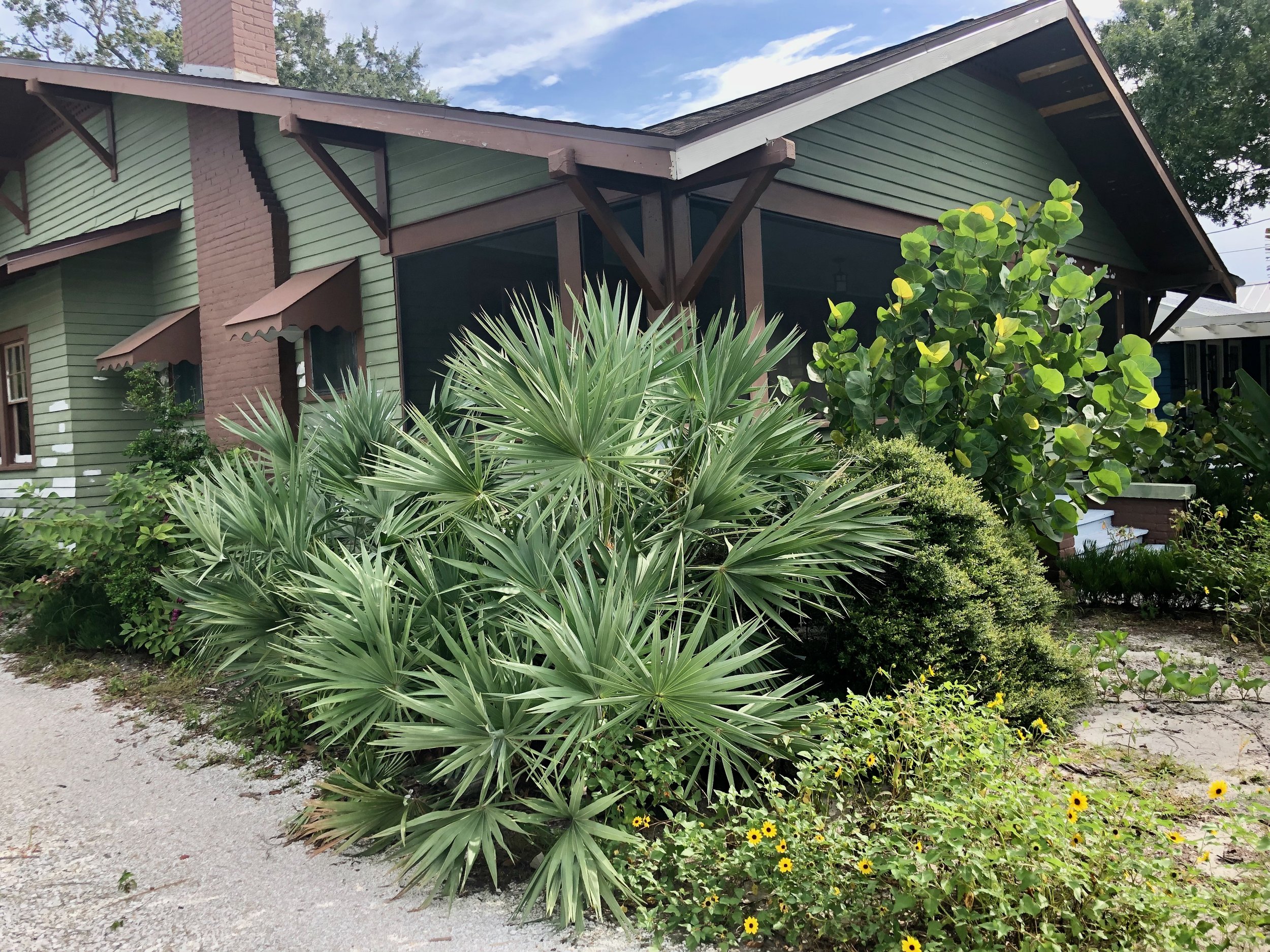
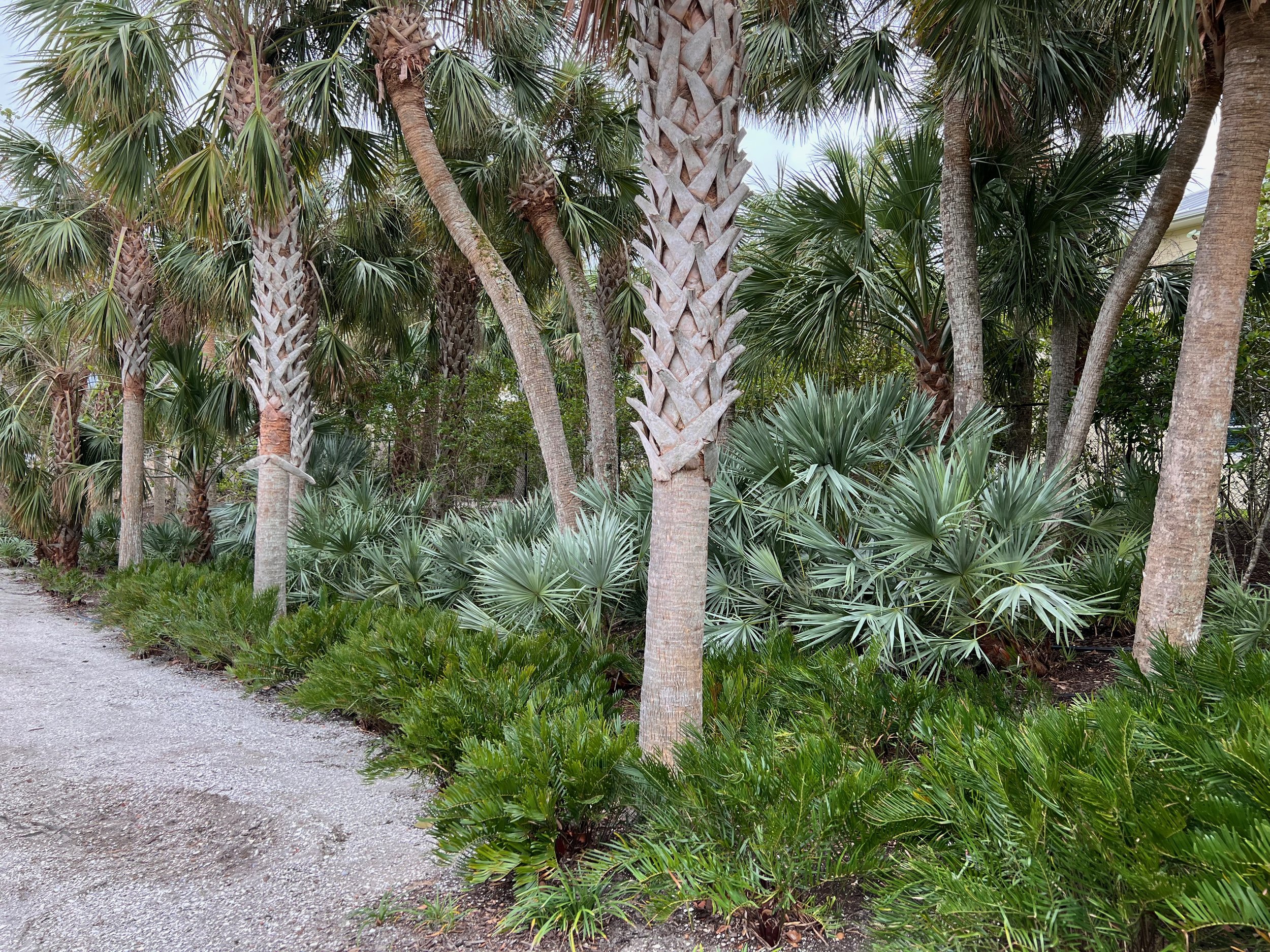
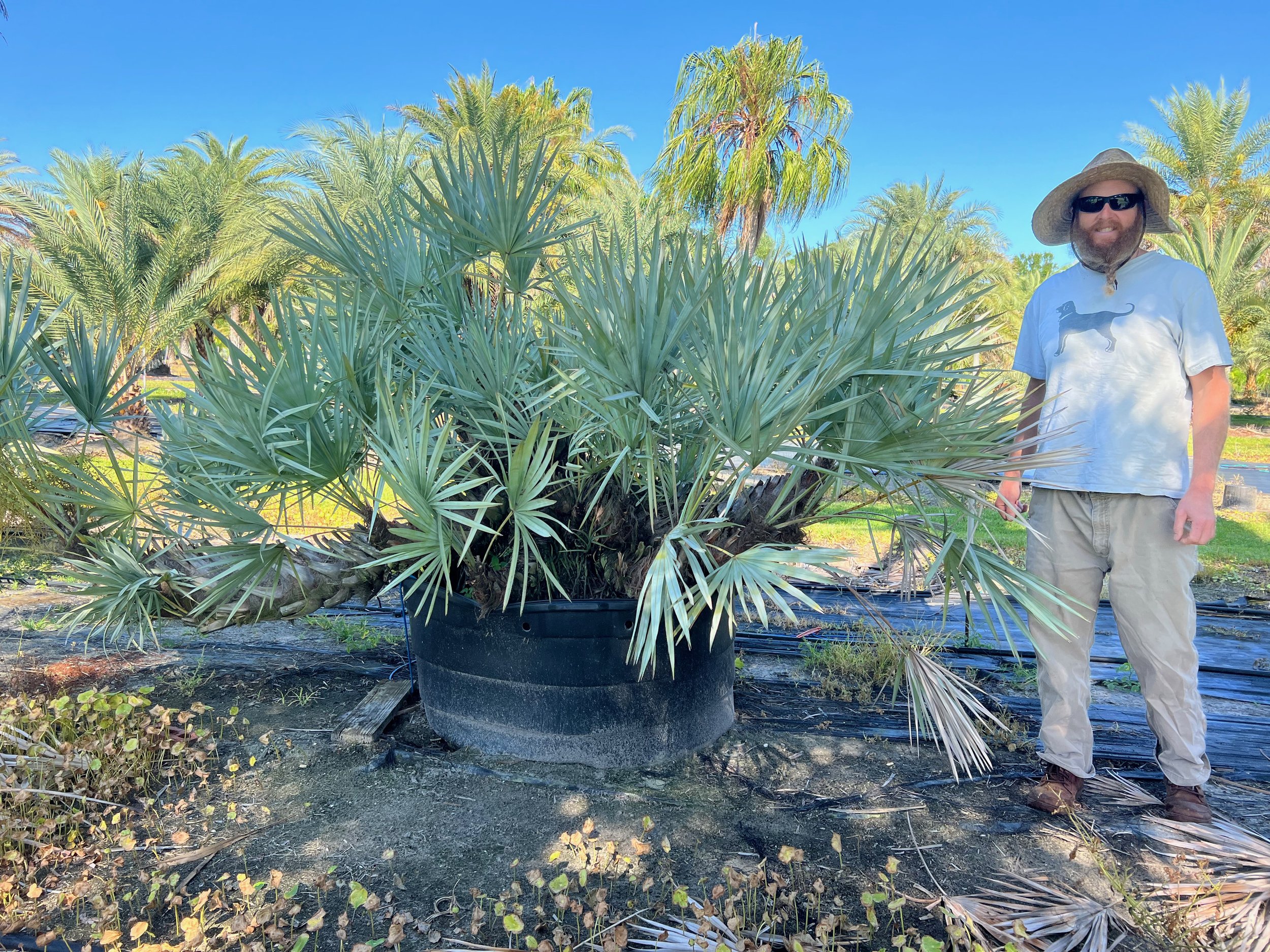
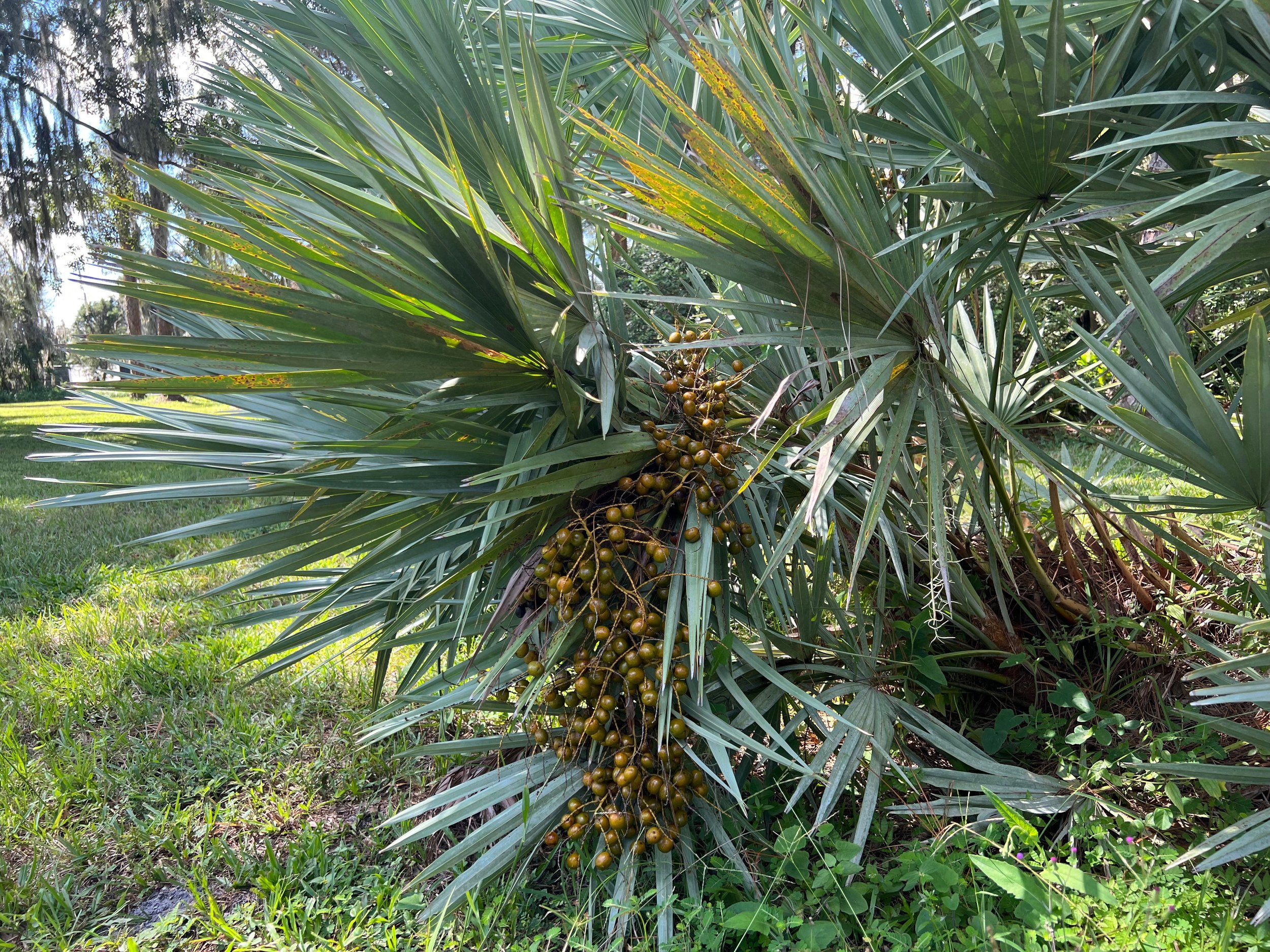
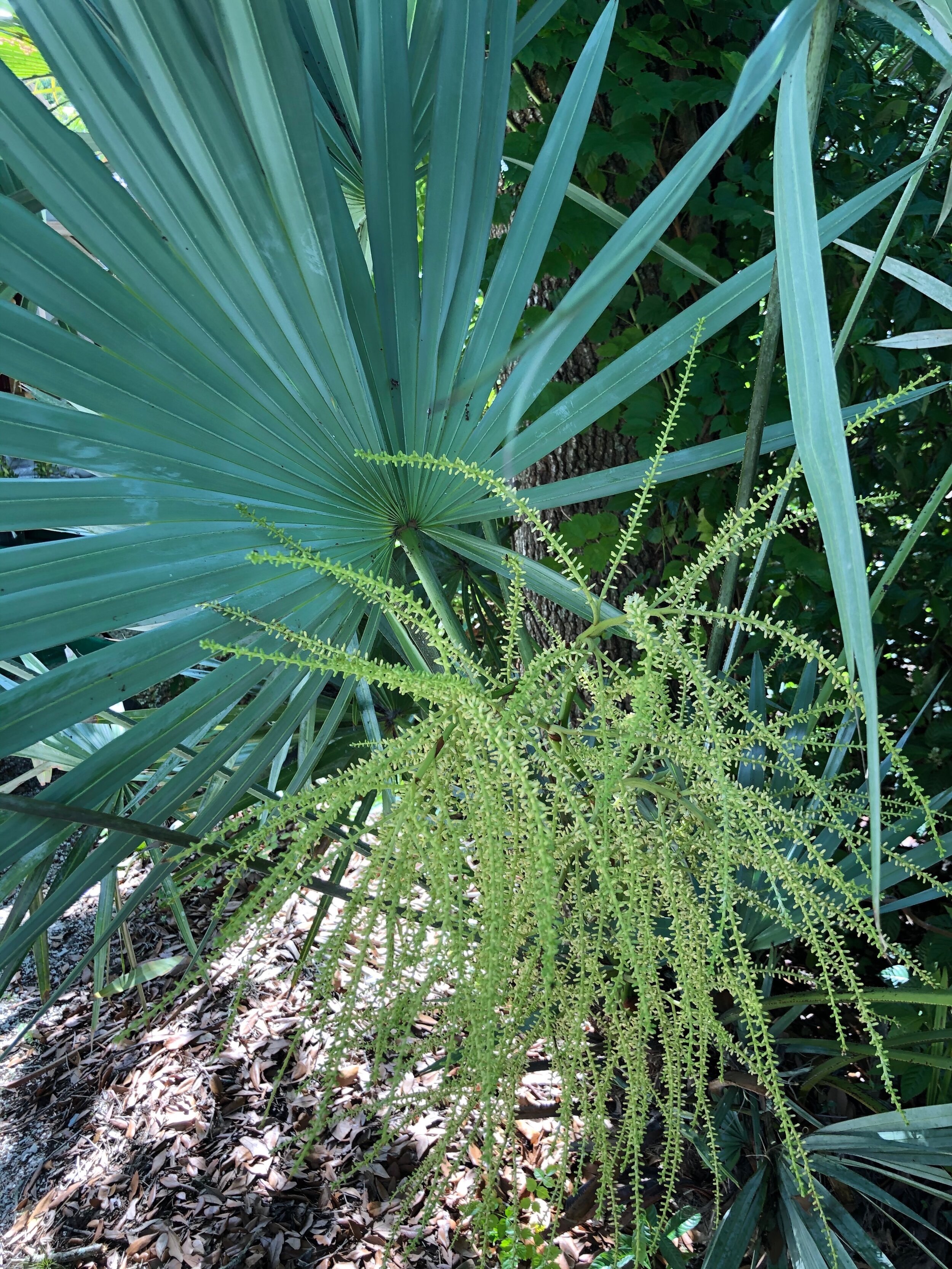
Serenoa repens
The Blue Saw Palmetto is a tough, drought-tolerant Florida native fan palm perfect for coastal landscapes and understory planting. It features sprawling horizontal stems, blue/silver fronds, and distinctive saw-toothed leaf stalks. In spring, it produces fragrant blooms that attract pollinators, followed by wildlife-supporting berries. Plant in full sun or shade and dry, sandy soil.
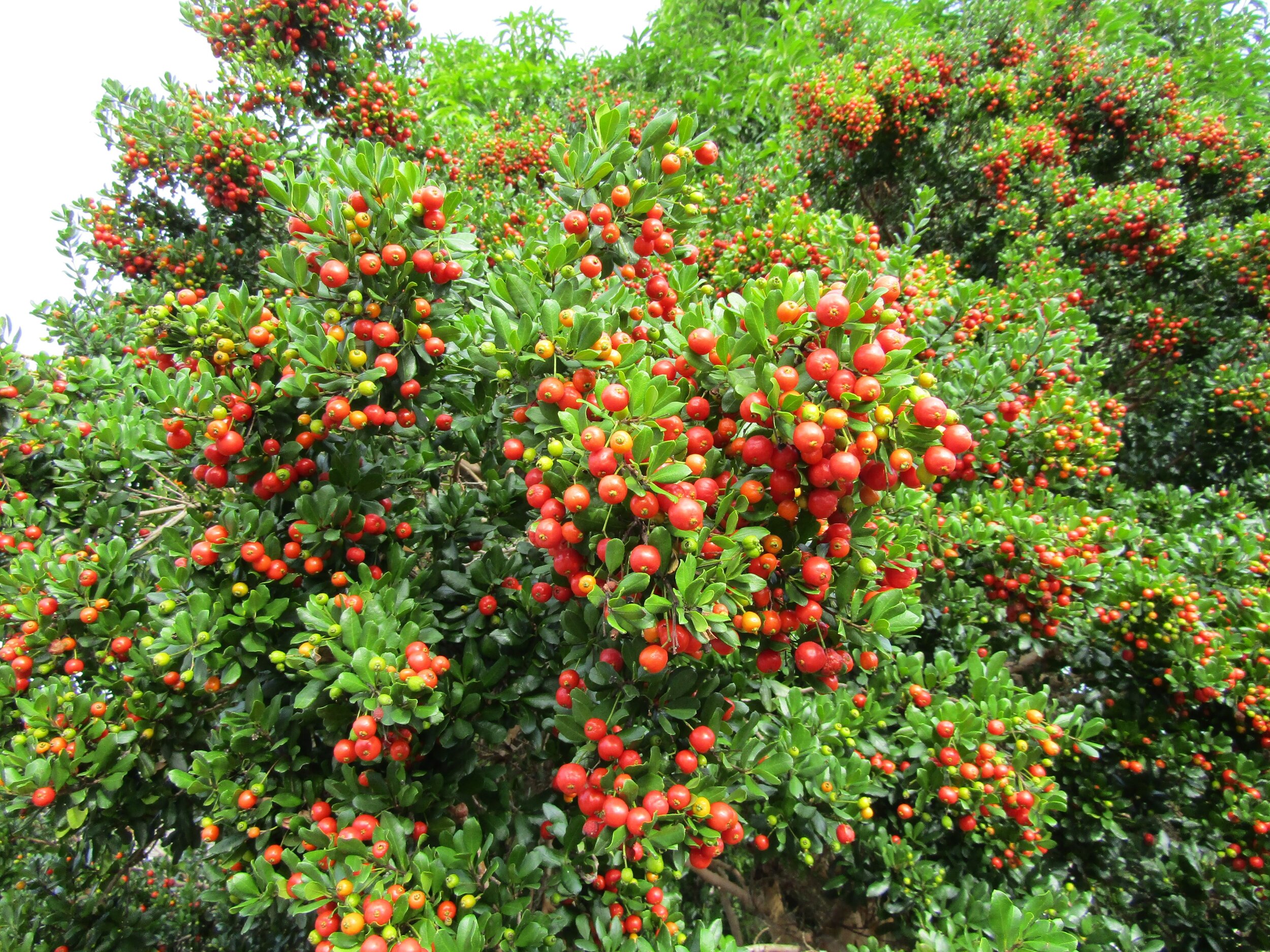

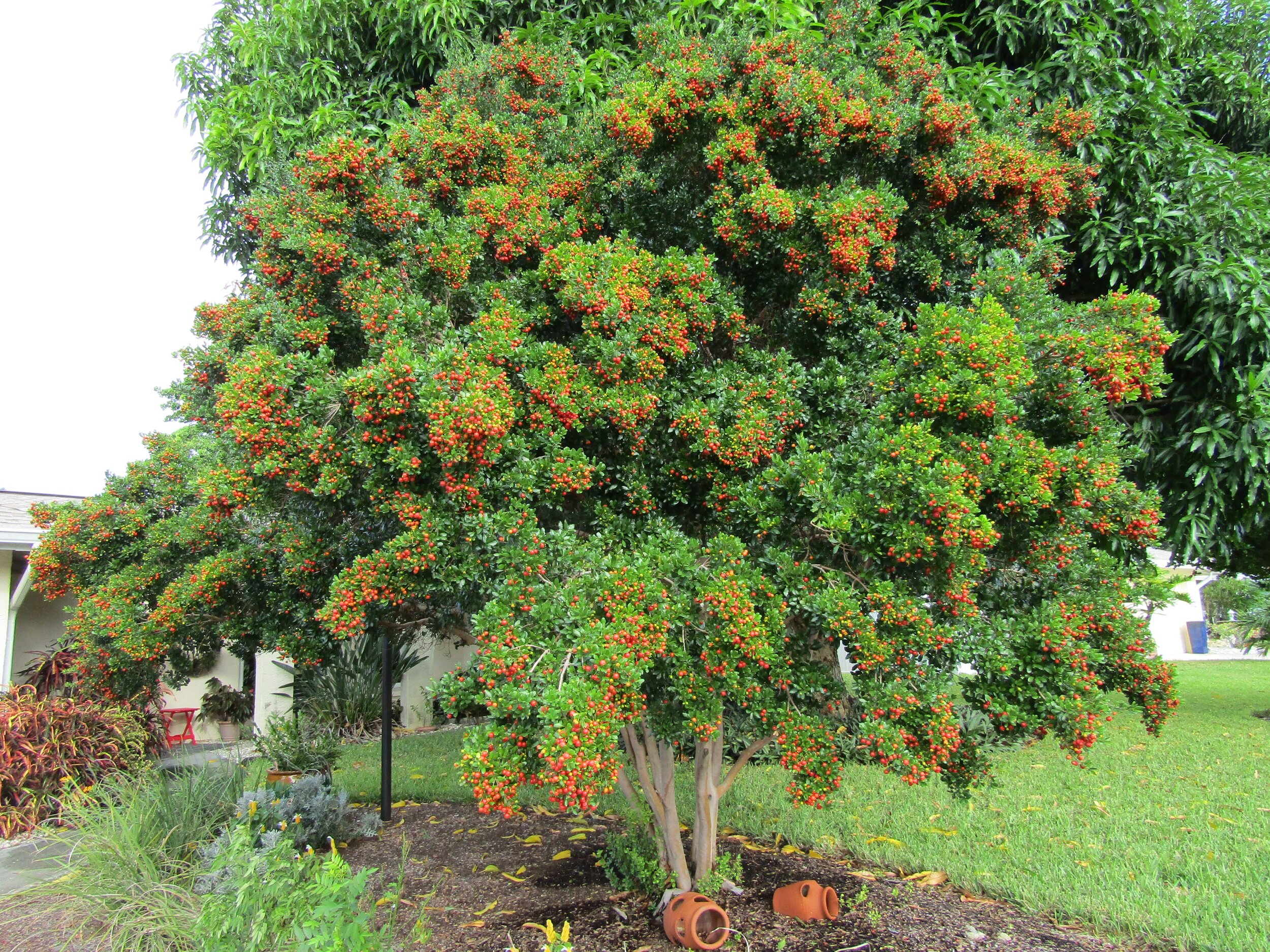
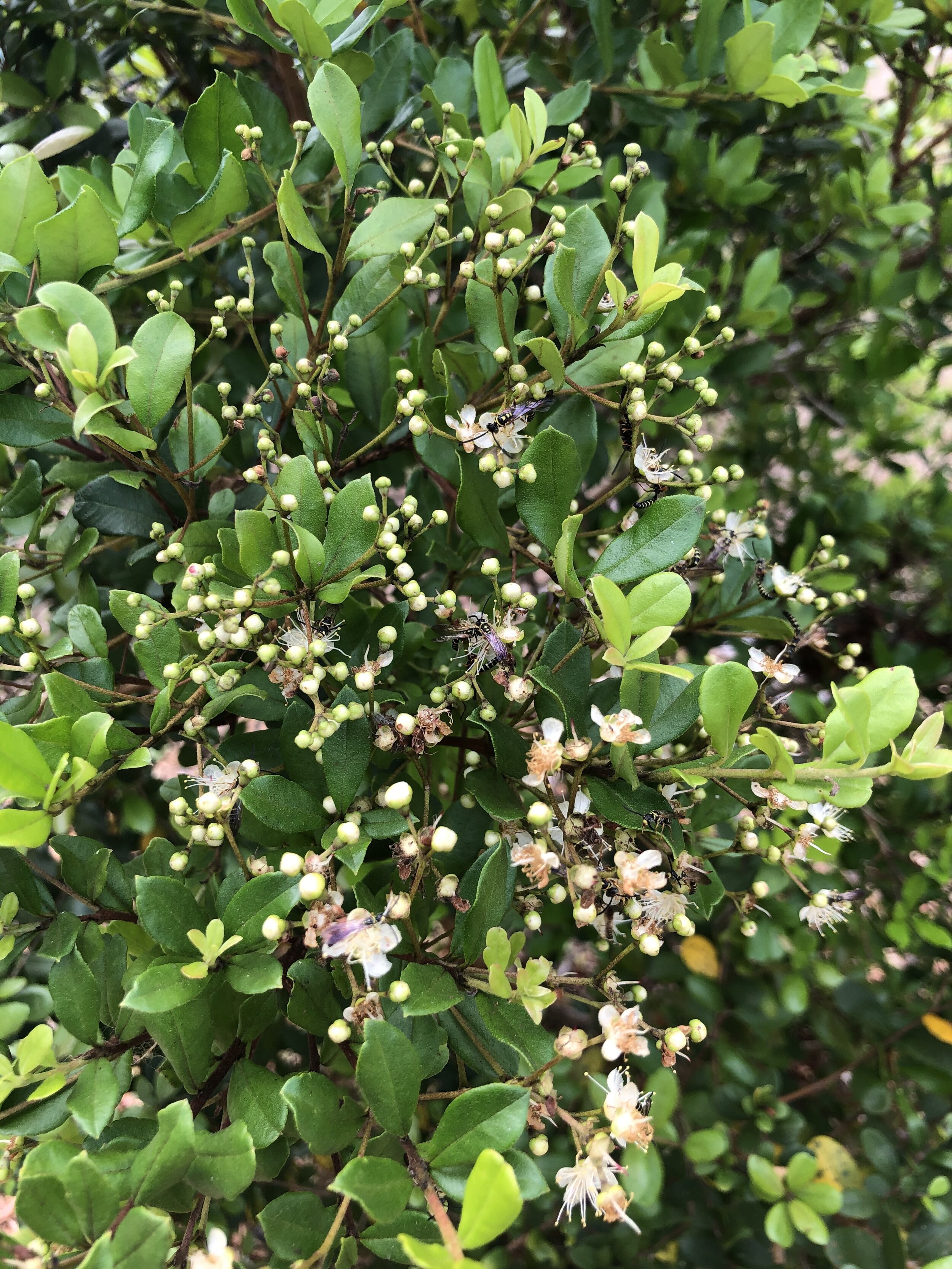
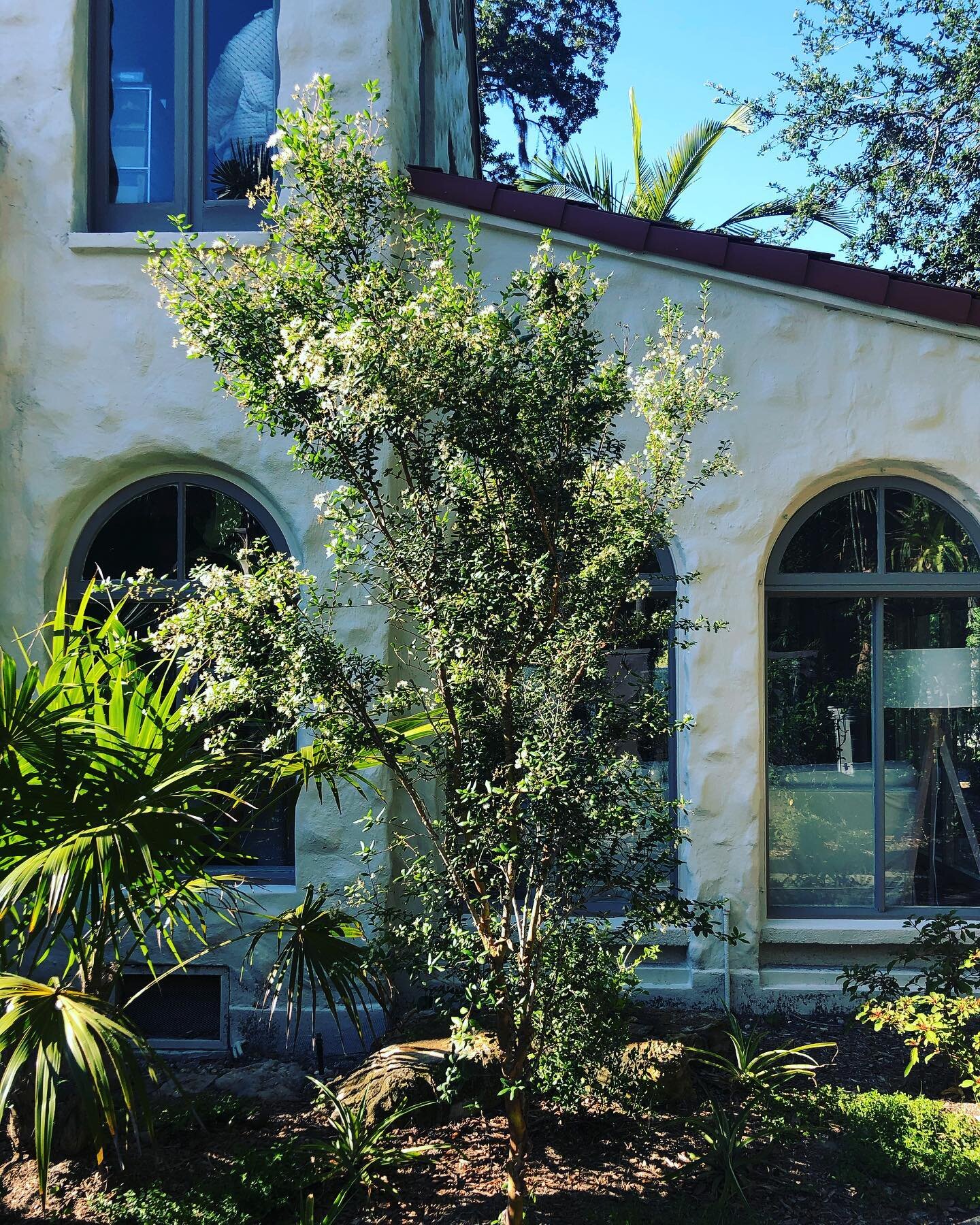
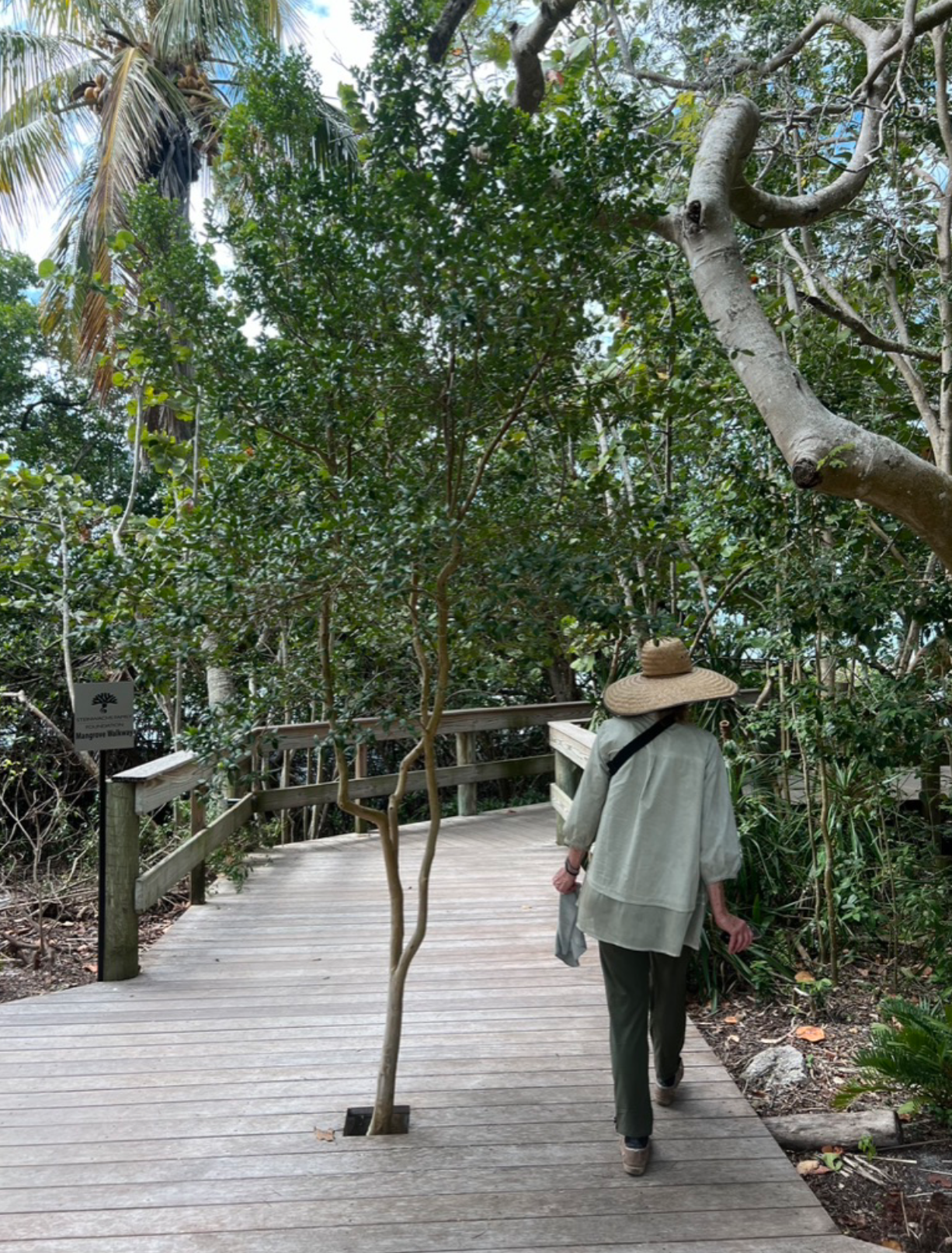
Myrcianthes fragrans
Simpson's Stopper is an evergreen shrub or small tree native to Florida and the Caribbean that grows 5’-20’ tall with glossy, dark green leaves. The new growth emerges in attractive colors ranging from pale chartreuse to deep wine red, and the leaves emit a spicy, nutmeg-like fragrance when crushed. In spring, it produces clusters of fragrant white flowers followed by orange to red berries that attract birds including cardinals, blue jays, and mockingbirds. The plant features distinctive exfoliating bark that flakes off to reveal reddish-brown underneath, providing year-round visual interest. Extremely versatile and low-maintenance, it thrives in full sun to partial shade, tolerates salt, drought, and poor drainage, and can be used as a hedge, specimen tree, or even container plant in zones 8b-11.
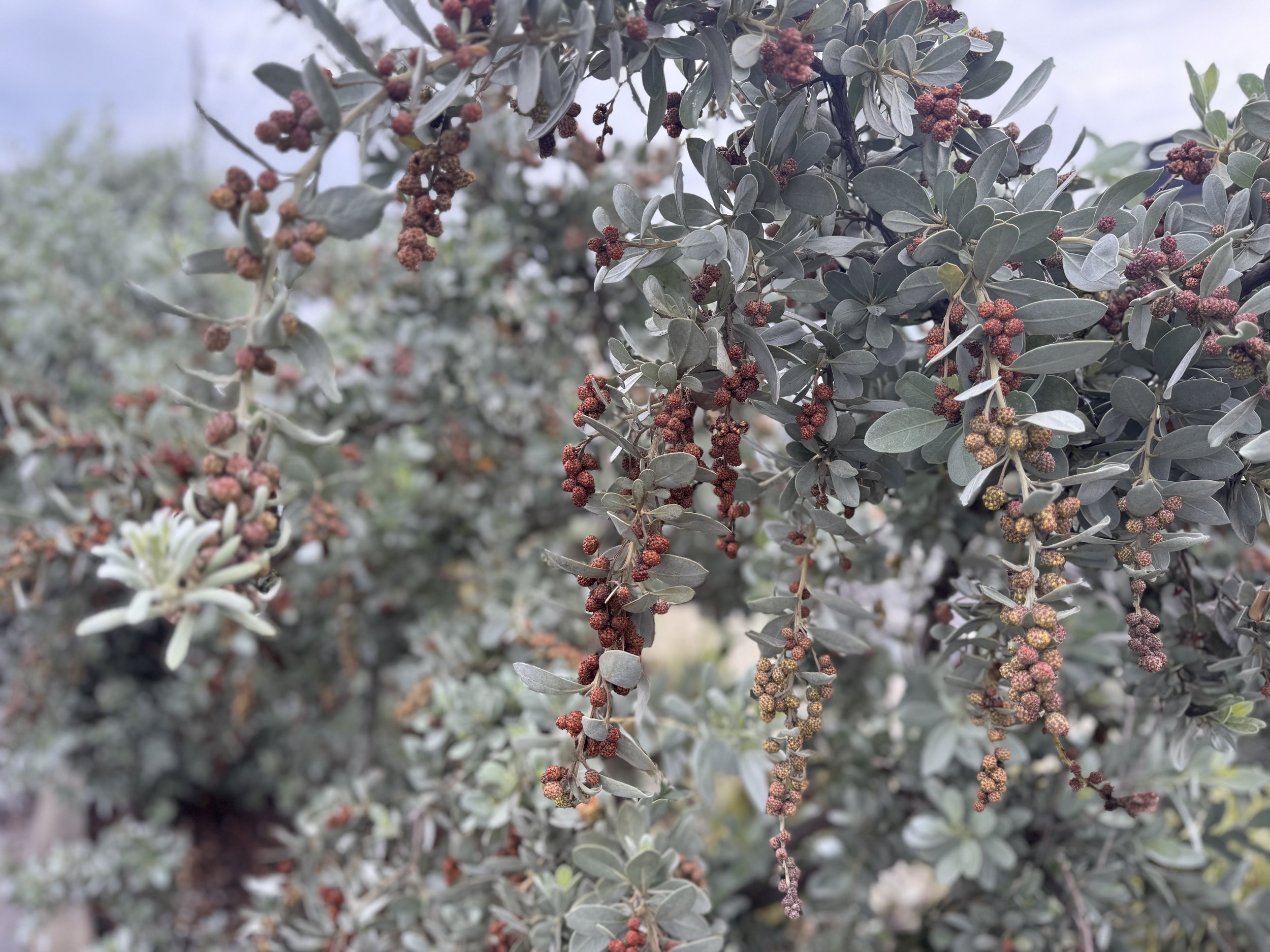
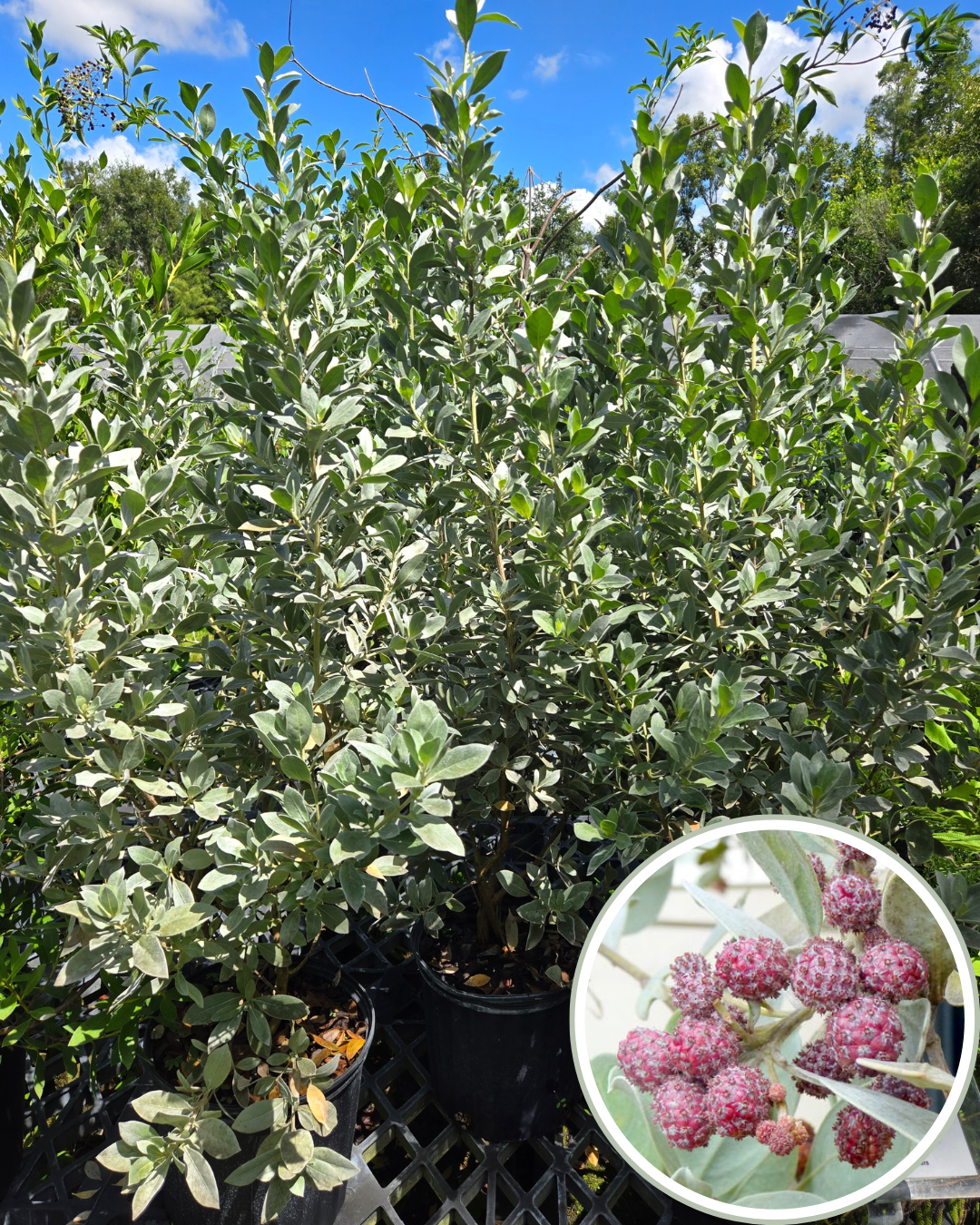
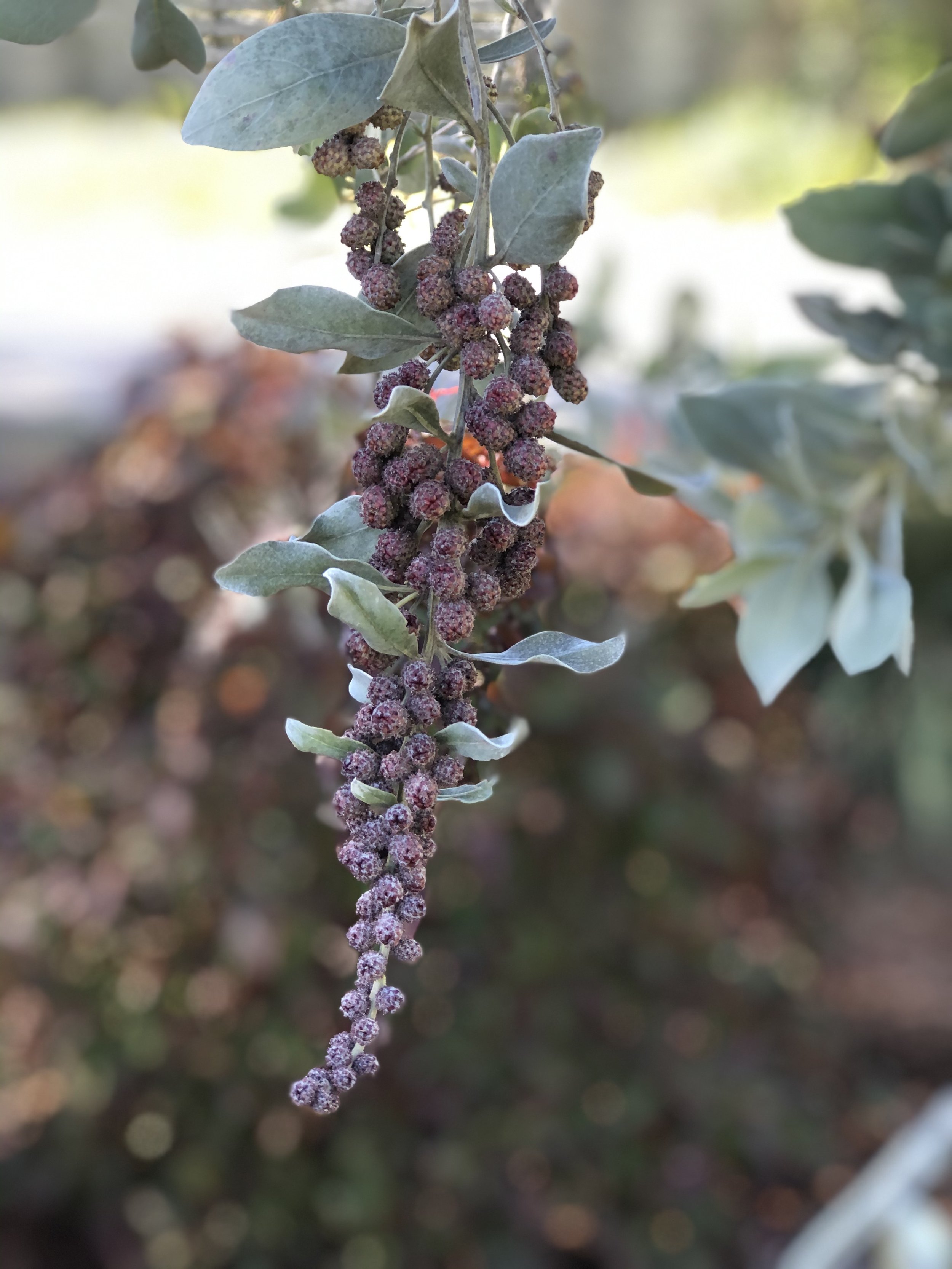
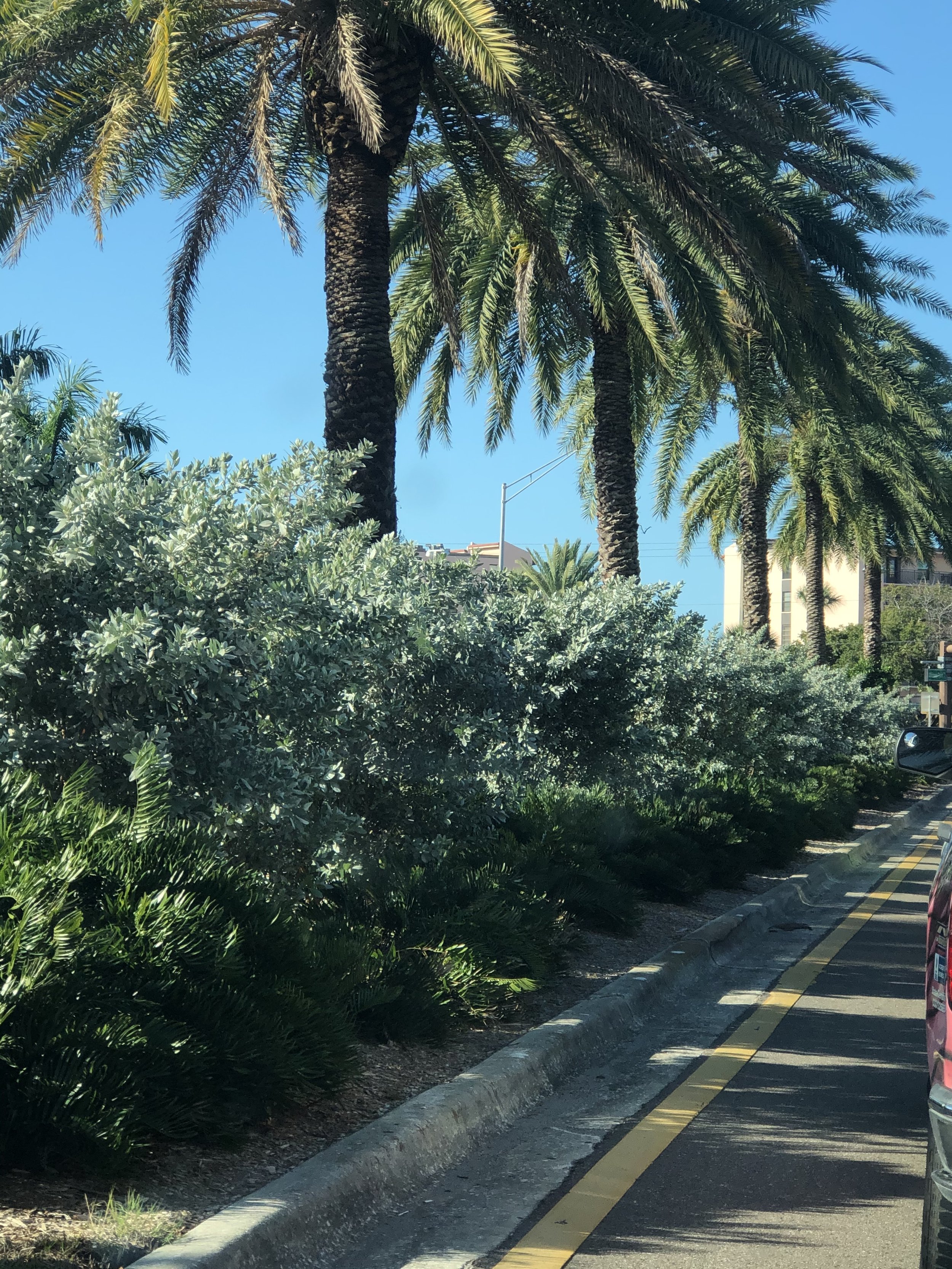
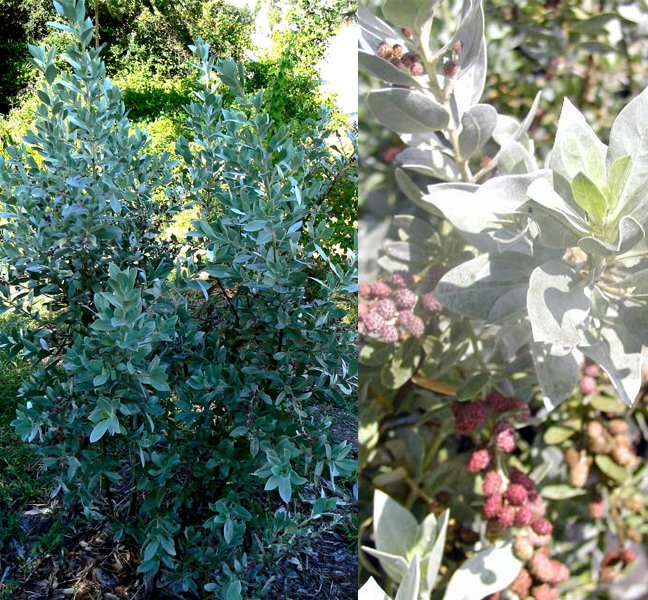
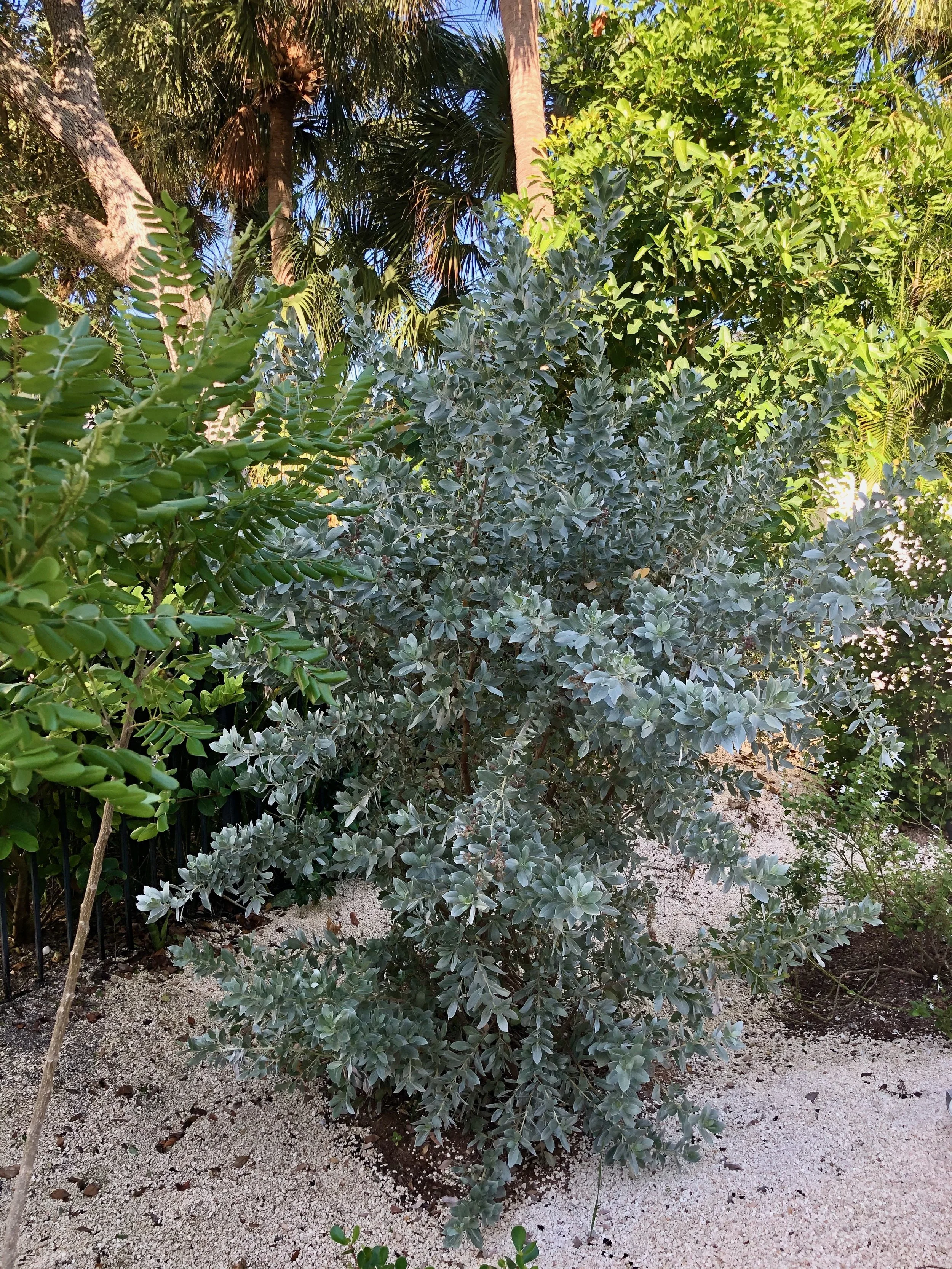
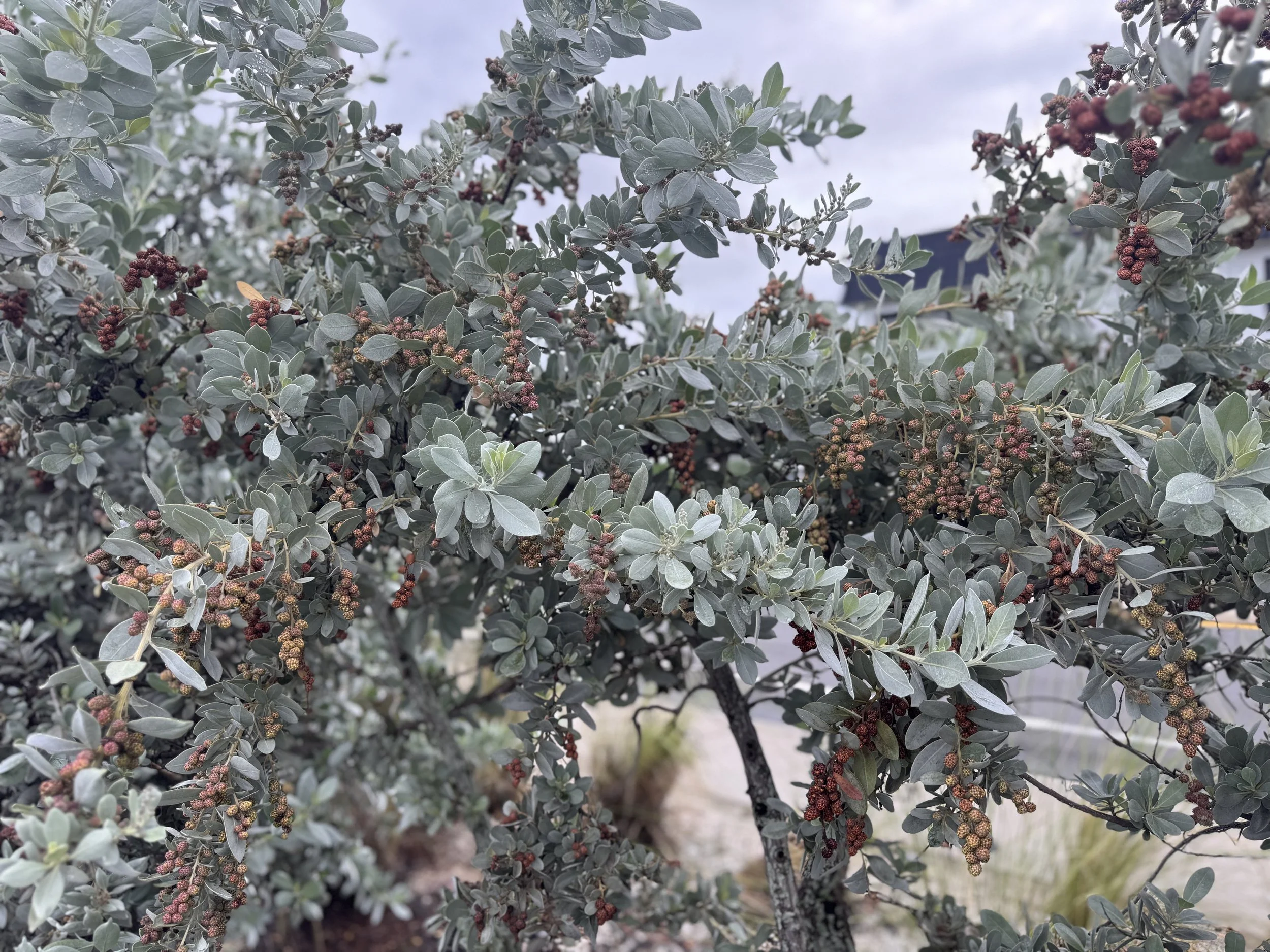
Conocarpus erectus var. sericeus
Silver Buttonwood is a unique coastal native shrub or small tree that can reach 20' and has soft silvery leaves and small brown berries that look like wood buttons. While it thrives in coastal landscapes, taking salt inundation and salty soils like a champ, it can be planted inland as well. Silver Buttonwood can be used as a specimen tree, part of a natural privacy screen or pruned into hedge.
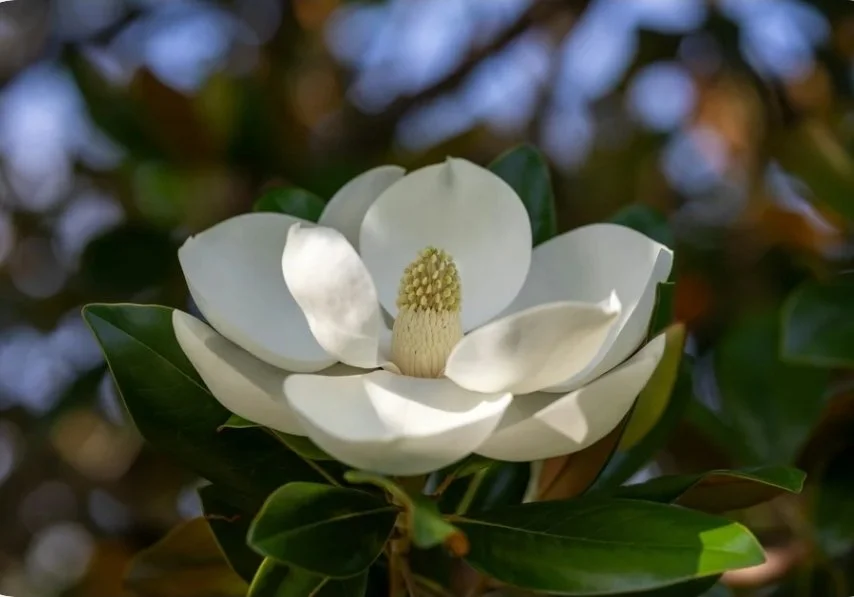
Magnolia grandiflora
Southern Magnolia is a native, evergreen flowering tree that grows to be 60’-80’ tall and 30’-50’ wide. They grow best in full sun to partial shade, with moist, rich, acidic well-drained soils. With their dark green leathery leaves and their large, heavily fragrant white flowers in late spring and summer, Southern Magnolias make a great addition to Florida landscapes as part of a privacy screen or specimen plant. Their flowers predate bees, so they are instead pollinated by beetles, but their seeds provide food for birds and small mammals, and their dense branches provide year-round cover for local wildlife.
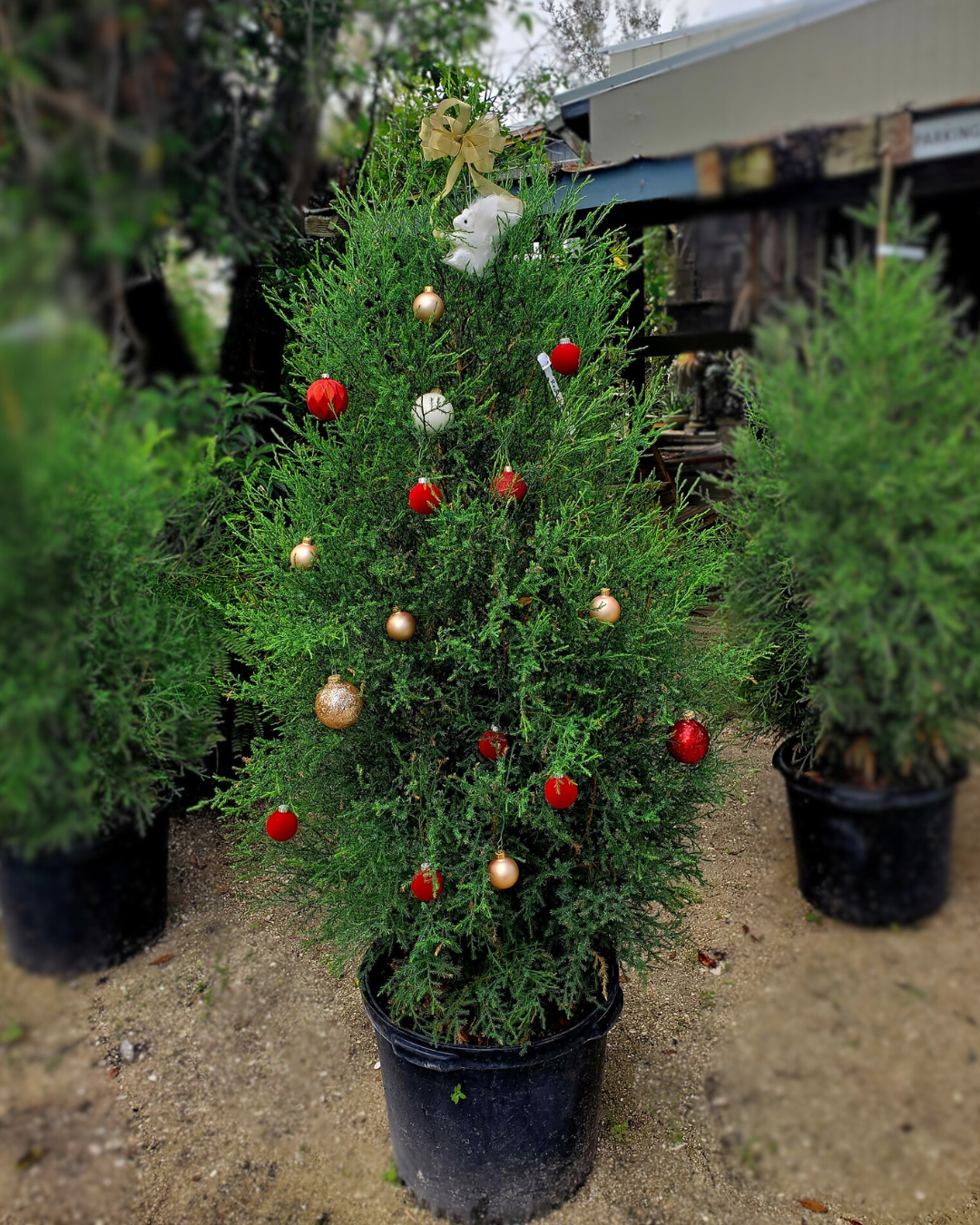
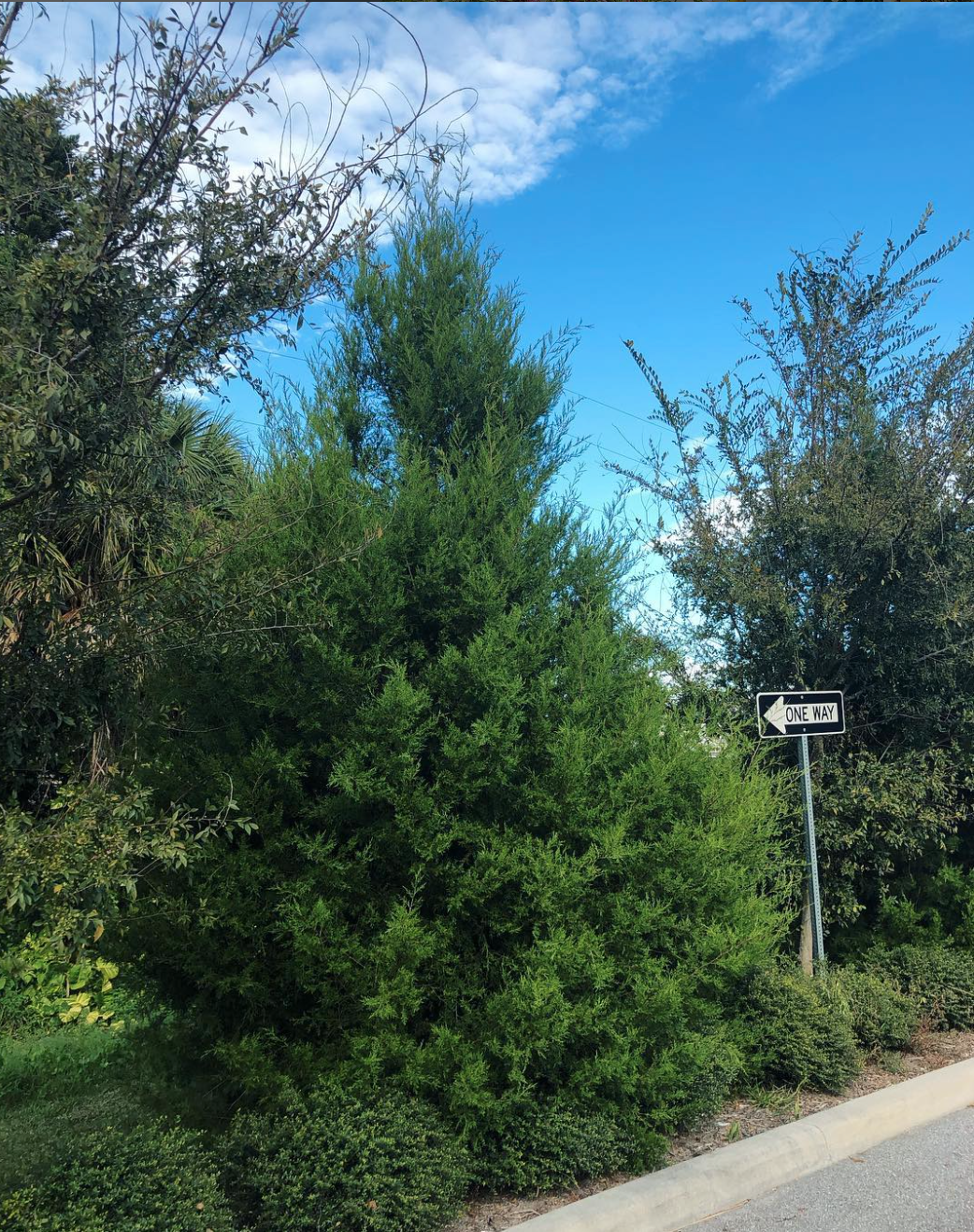
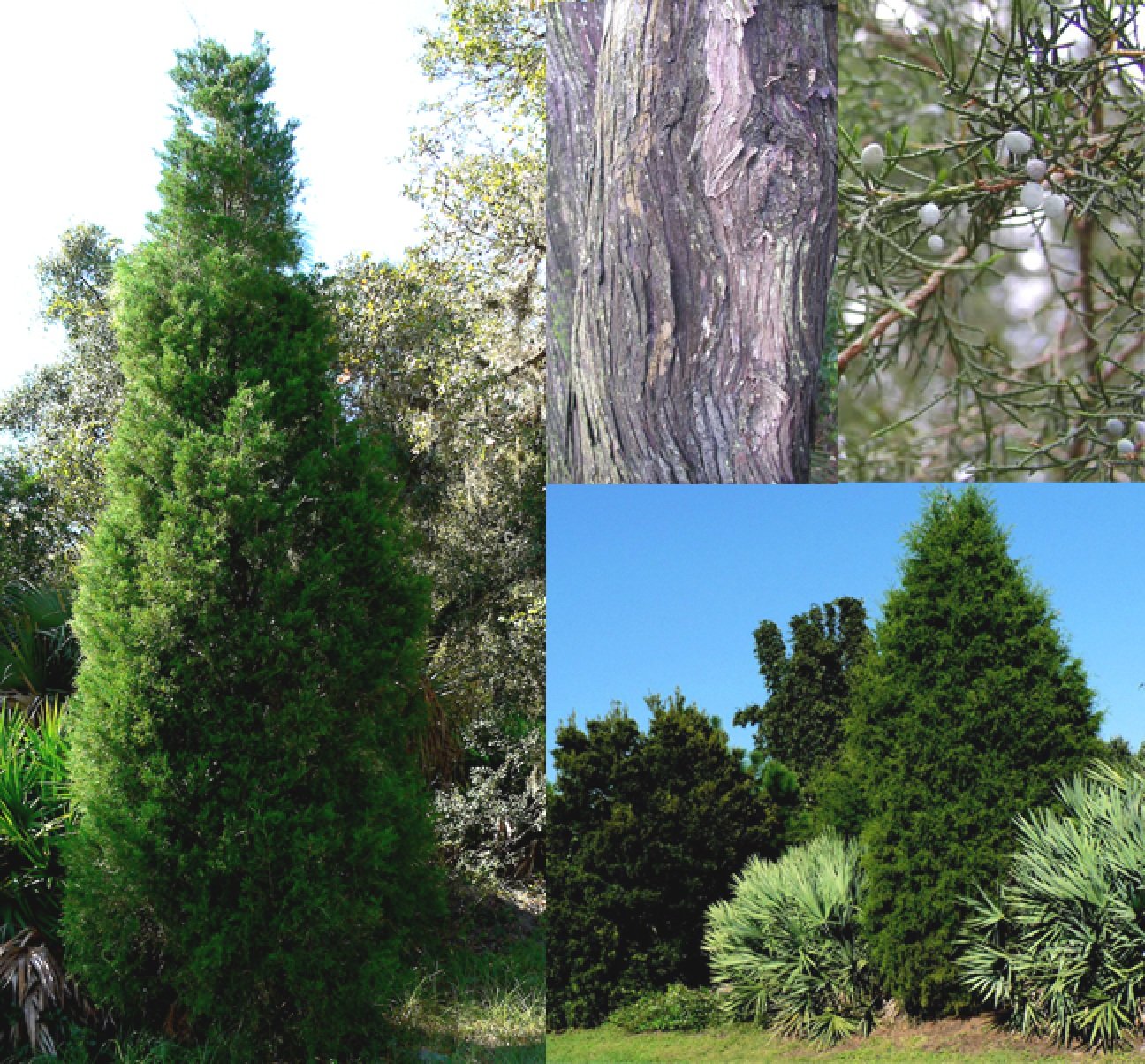
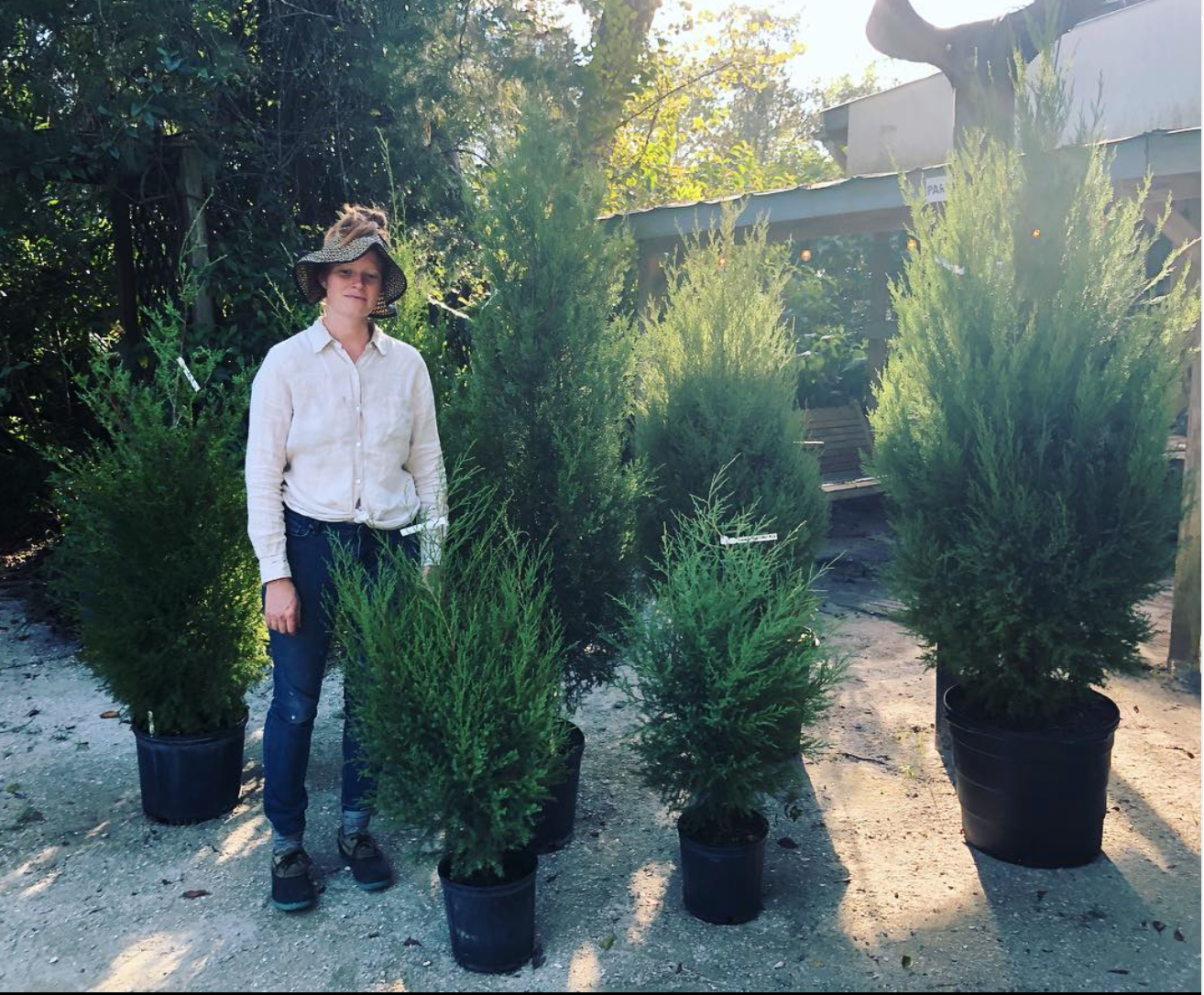
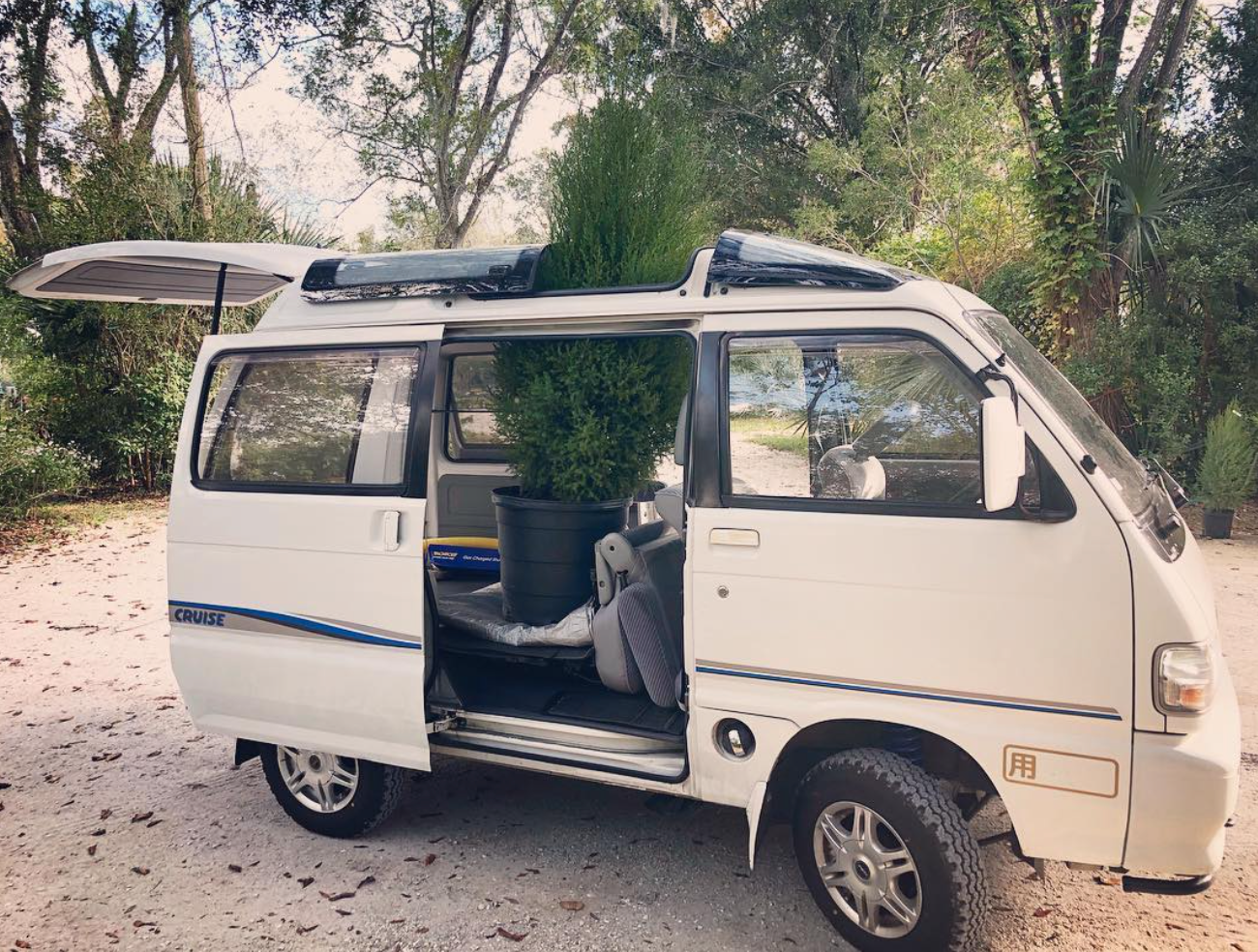
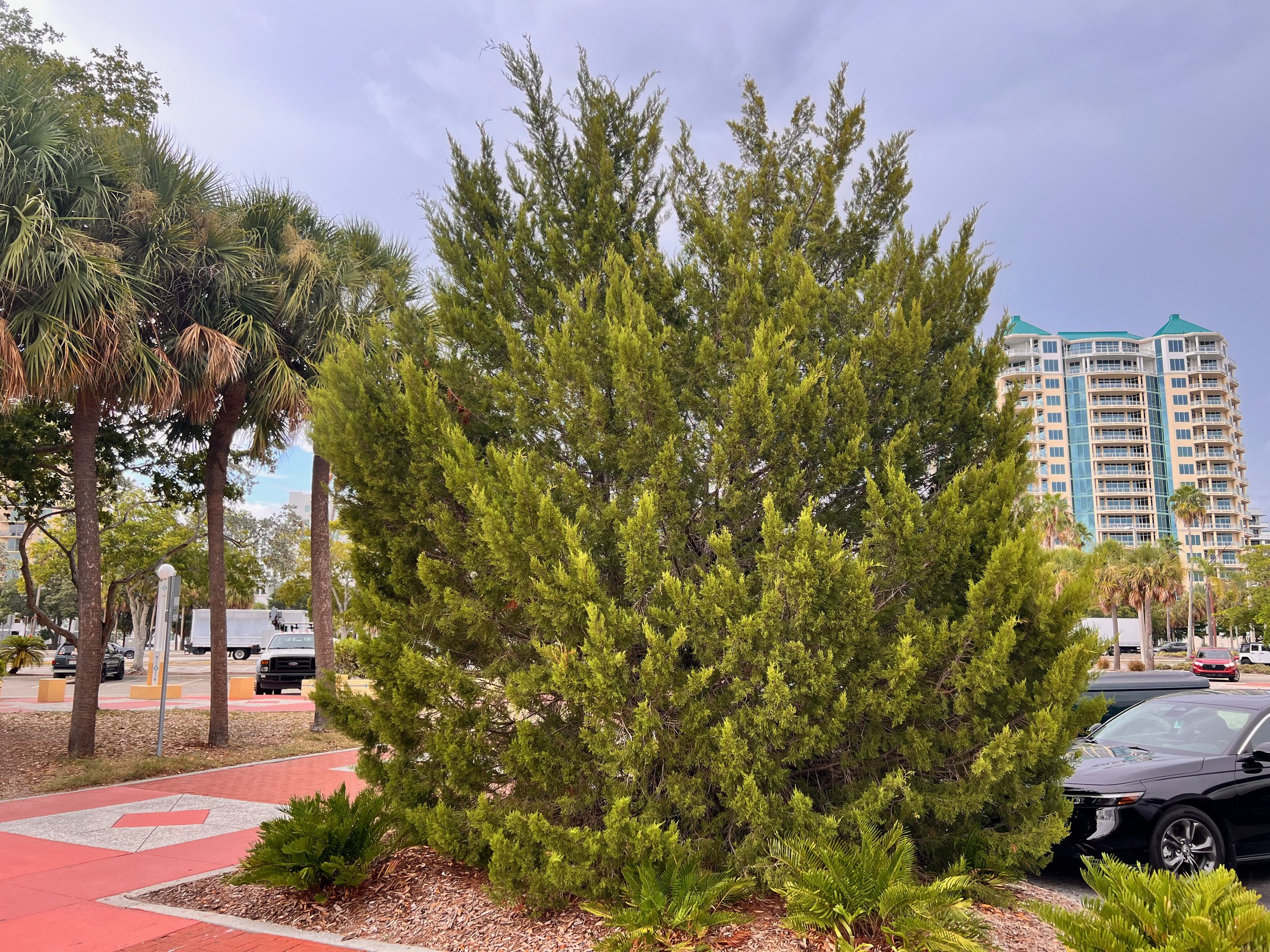
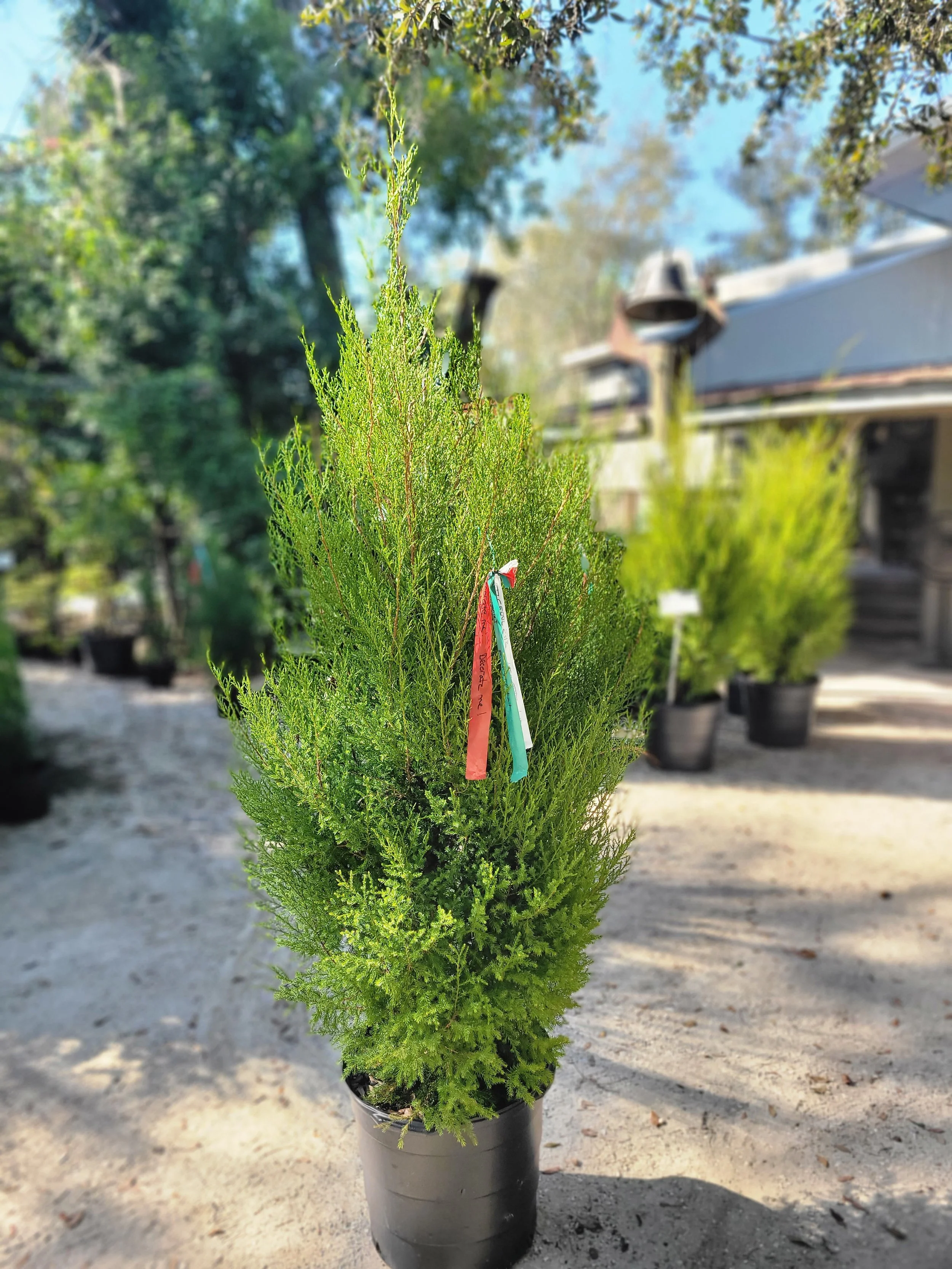
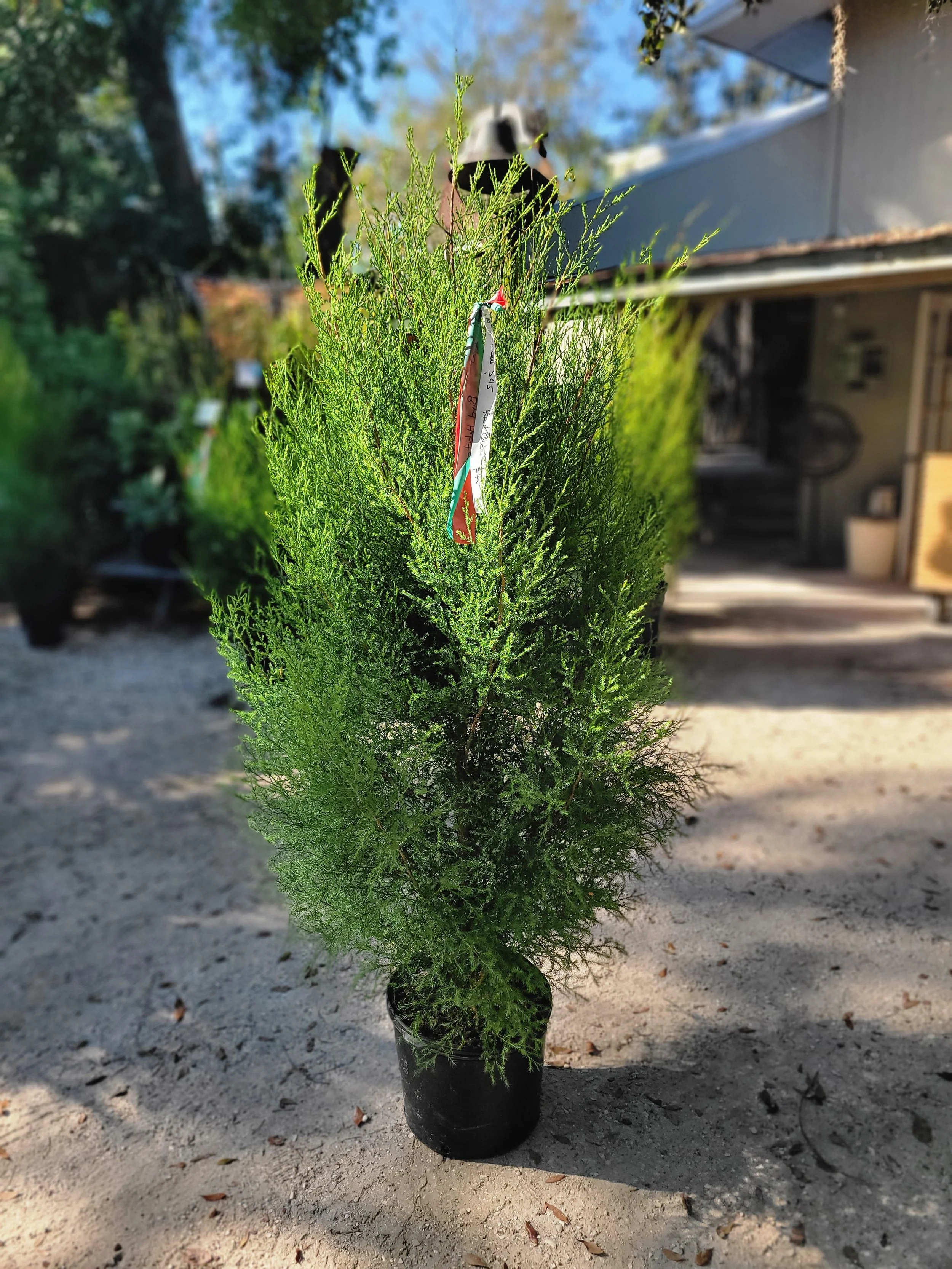
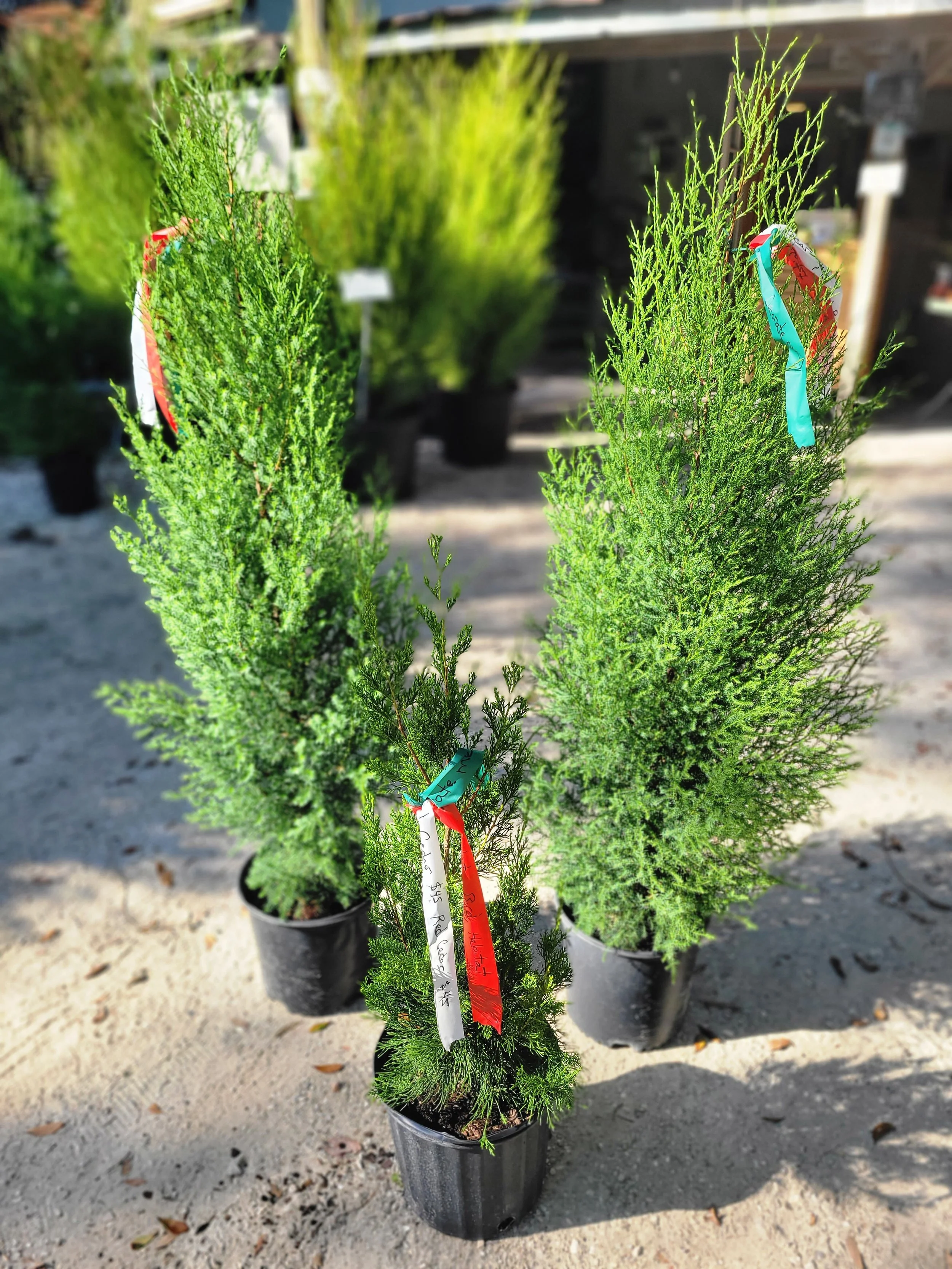
Juniperus virginiana silicoa
Red Cedar is an evergreen shade tree that is also excellent for a privacy screen or buffer planting. It’s long-lived, it can grow to approximately 30’ over many years, is adaptable to dry and moist soils and does well in full sun to light shade. It can be used as a coastal plant as it is salt tolerant. Red Cedars are an important nesting and food source for birds.
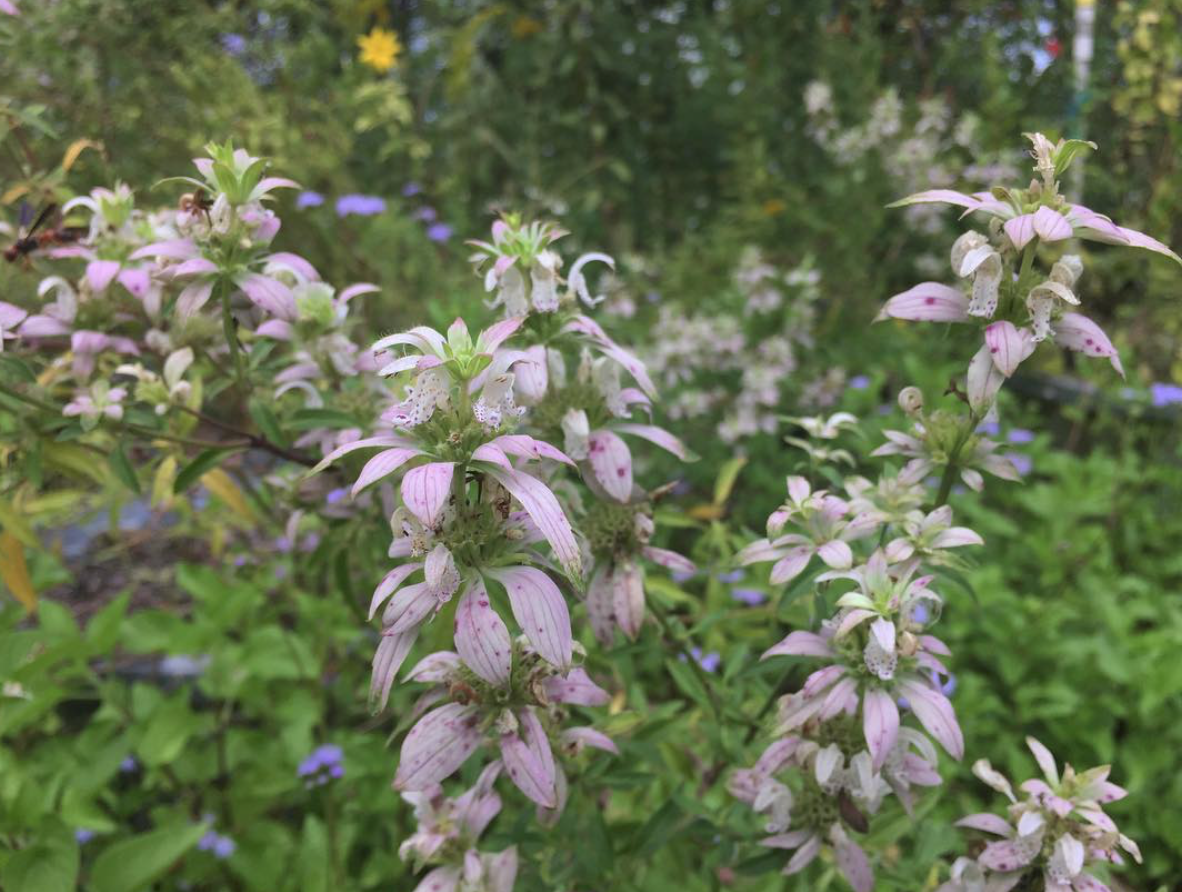

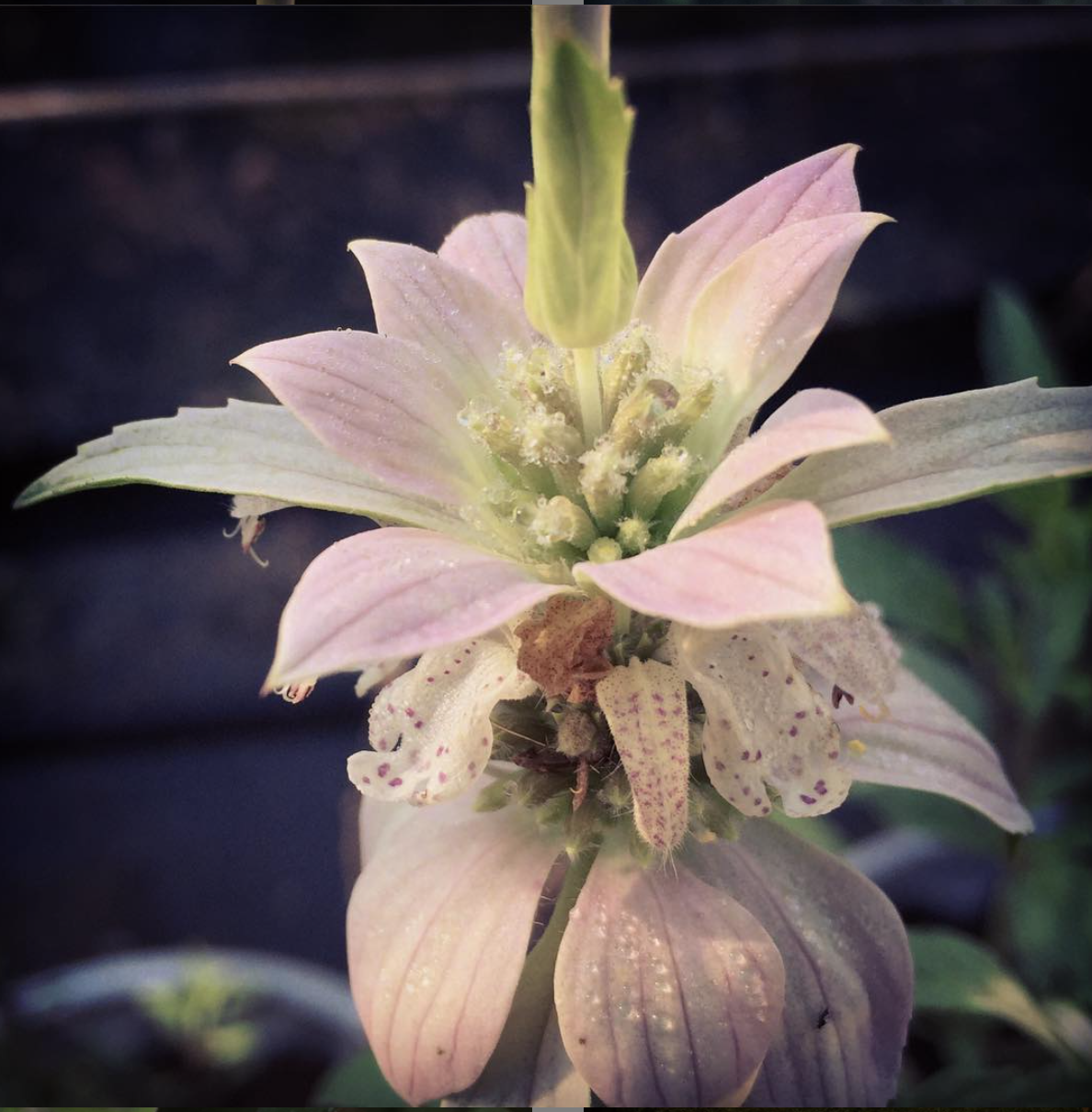
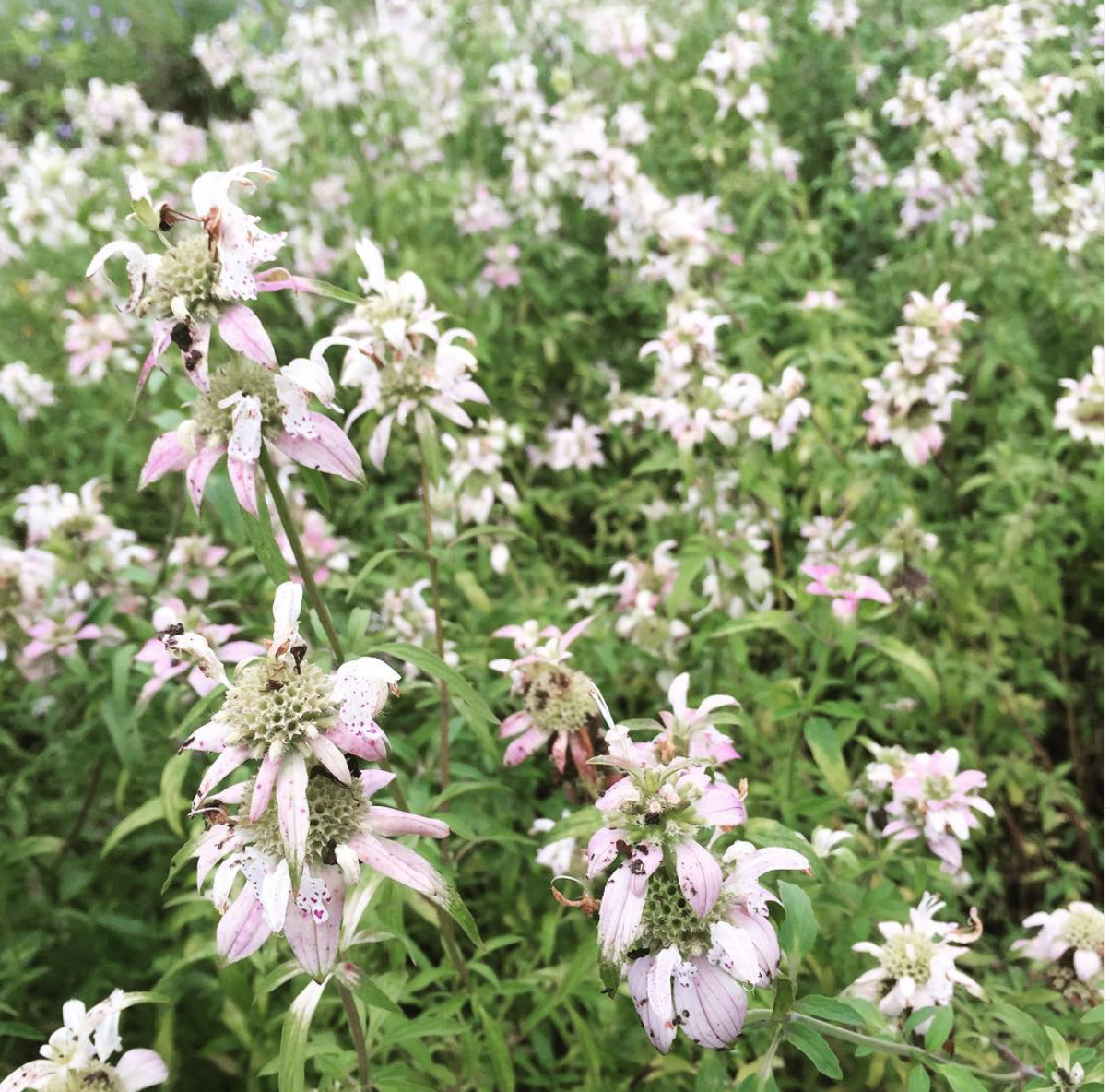
Monarda punctata
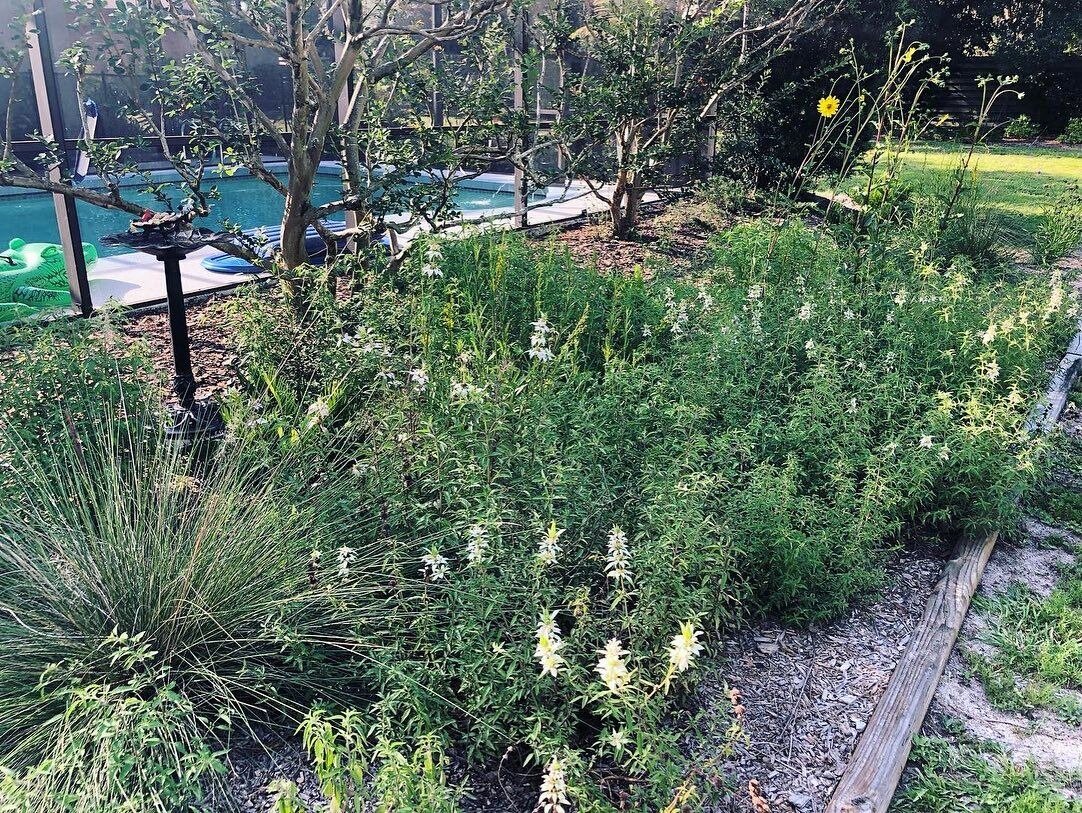
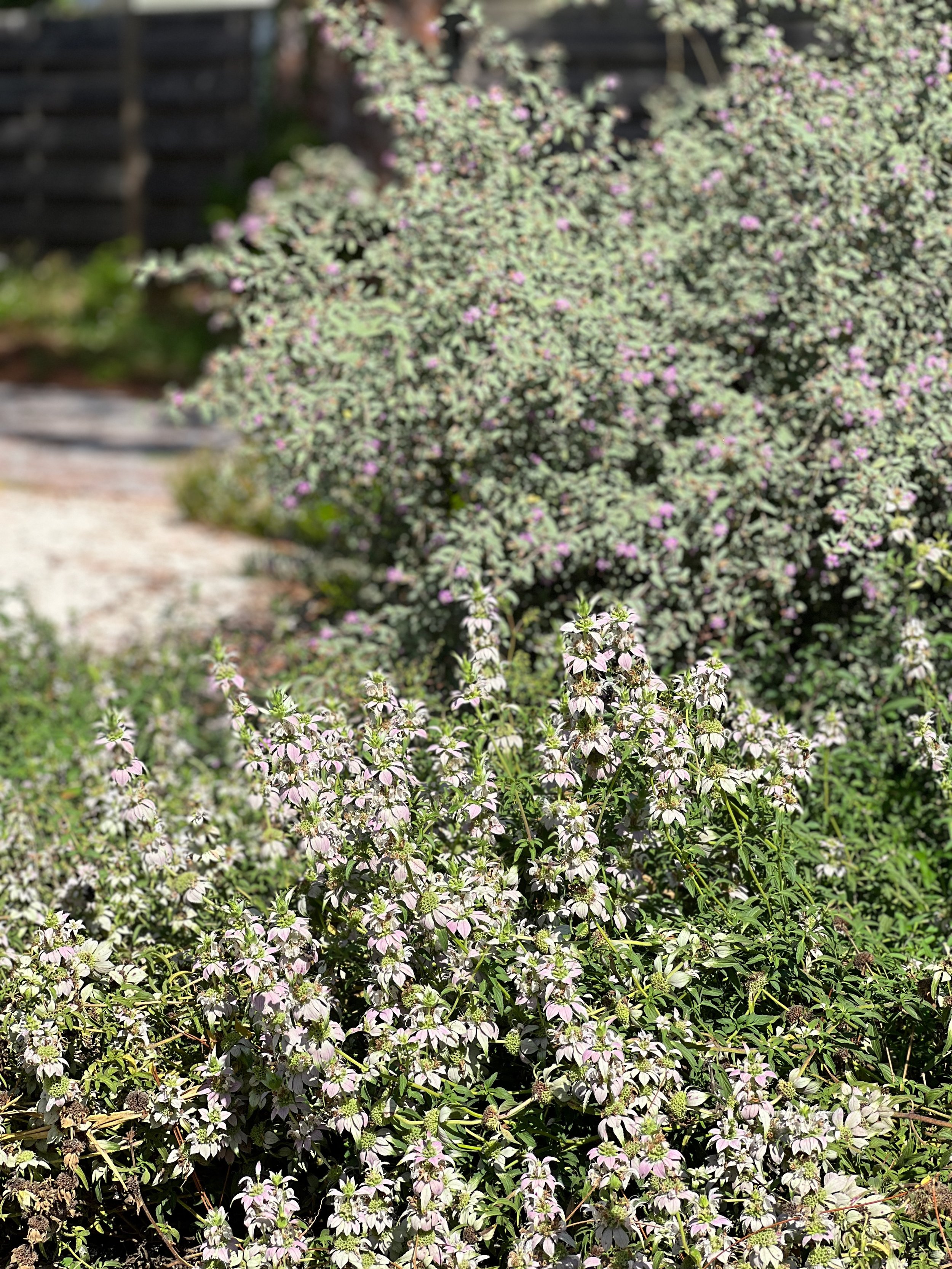
Also known as Dotted Horsemint, this perennial, re-seeding, native wildflower grows to about 2’-3’ in the average garden. It can thrive in full sun to light shade, in dry to moist (well-drained) soils, and has light pink to purple flowers from late spring through early fall. It’s aromatic and can be used as a culinary and medicinal herb in the kitchen. Spotted beebalm attracts numerous pollinators including our native bumblebees.

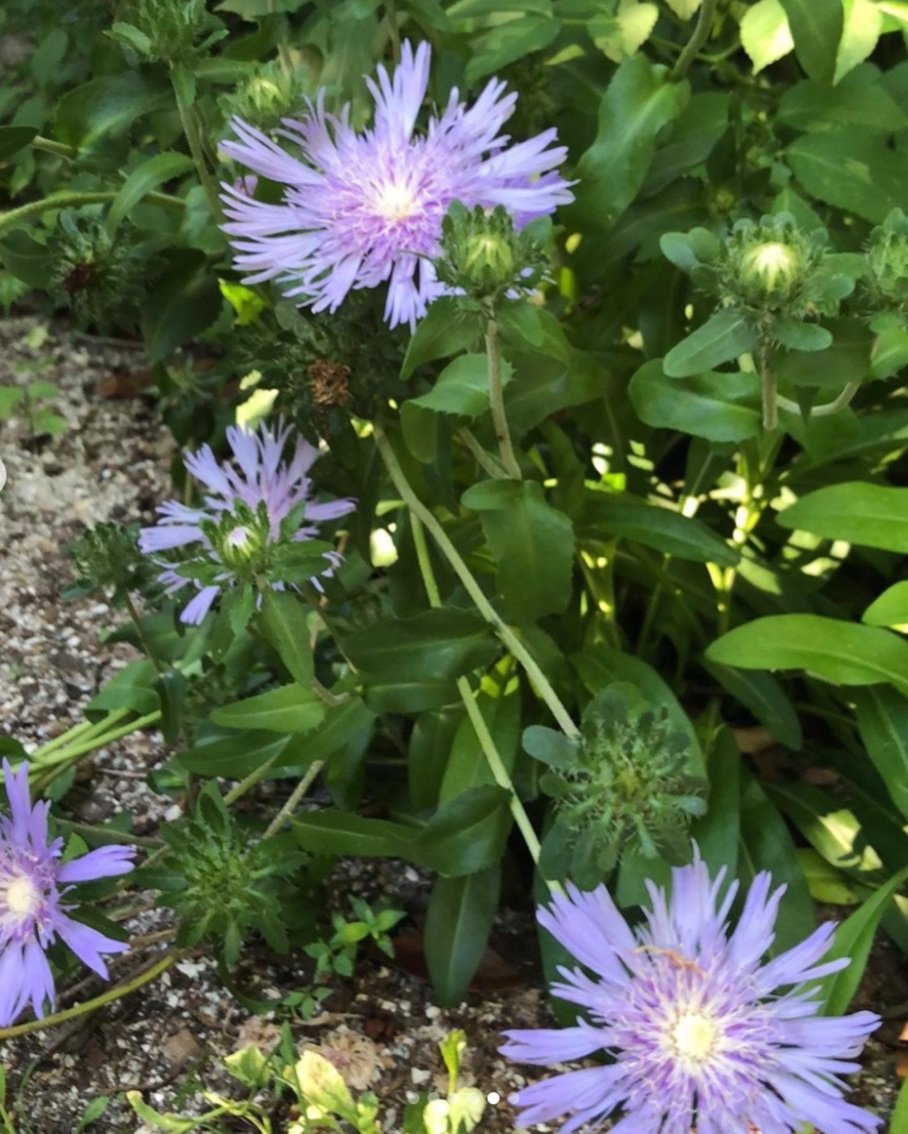
Stokesia laevis
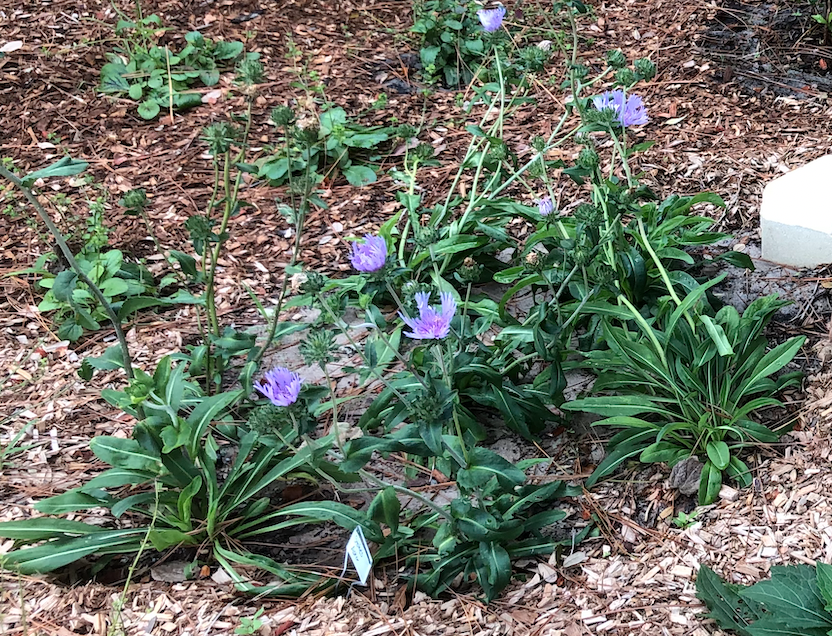
Stokes’ Aster is a hardy, 1’–2’ perennial known for its large, fringed purple-blue flowers. It is a reliable bloomer that provides color from spring all the way through fall. This plant thrives in part sun and prefers moist, well-drained soil. It grows in tidy clumps that are easy to divide every few years. It’s a great choice for borders and is excellent at attracting bees and butterflies.
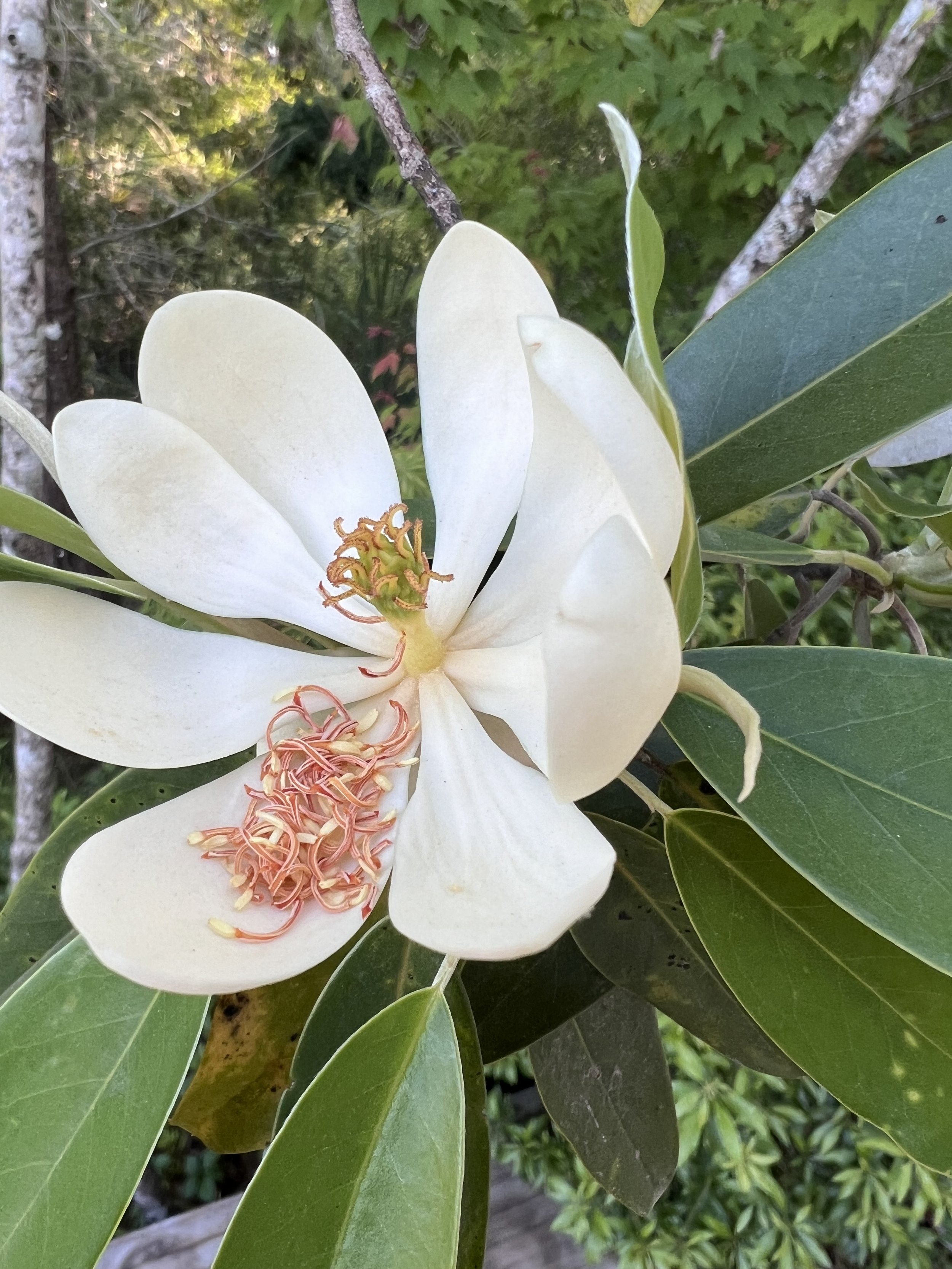
Magnolia virginiana
Sweetbay Magnolia is a native, evergreen flowering tree with beautiful, soft-green pointed foliage and heavily fragrant, ivory flowers that are significantly smaller than the large blooms of the Southern Magnolia. They grow to be 15’-30’ tall, and do well in full sun to partial shade and moist to wet sandy, loamy, and clay-heavy soil. Sweetbay Magnolias also serve as a larval host for the Sweetbay Silk Moth, Eastern Tiger Swallowtail, and the Spicebush Swallowtail, and the seeds feed local songbirds.
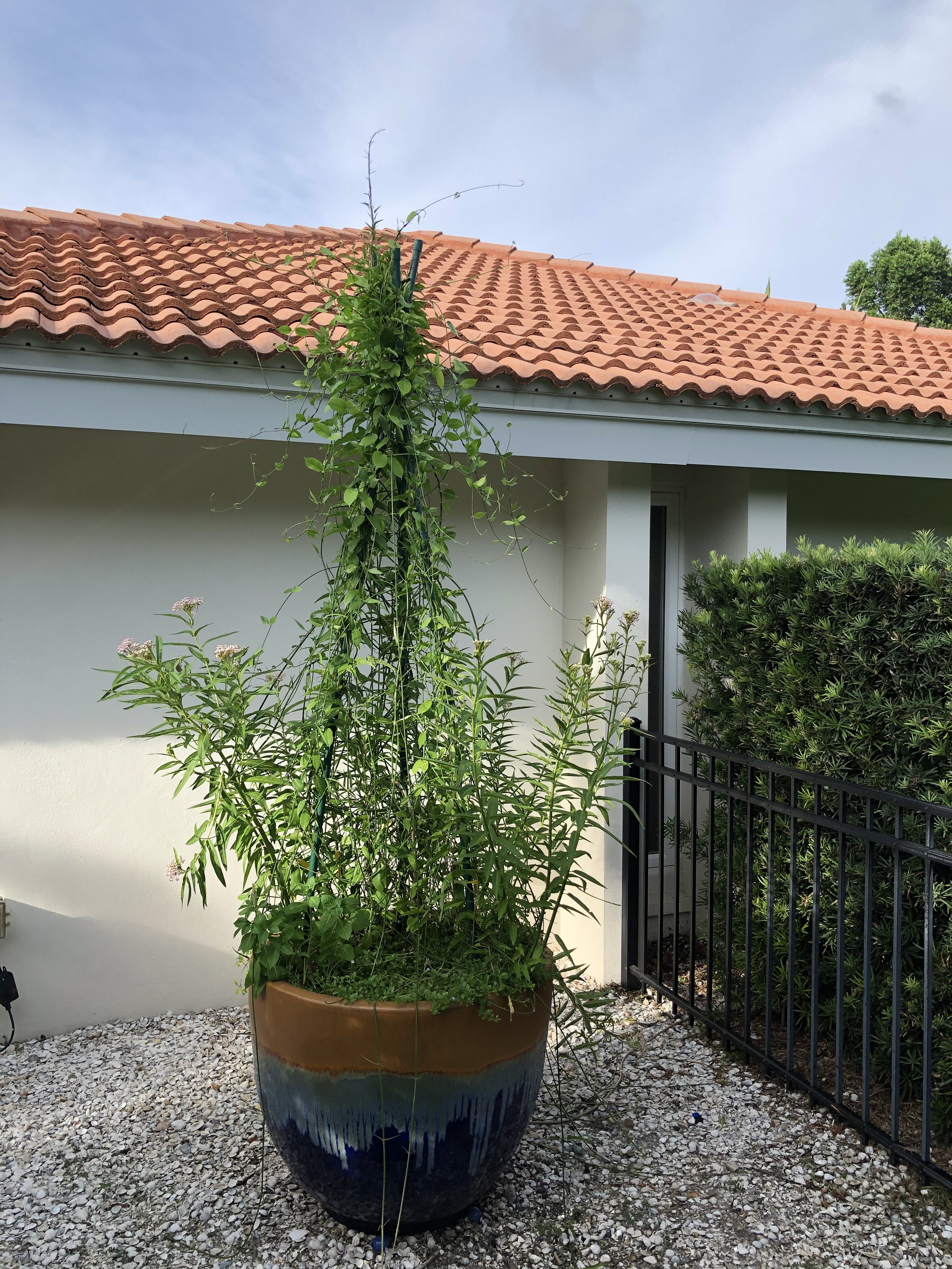
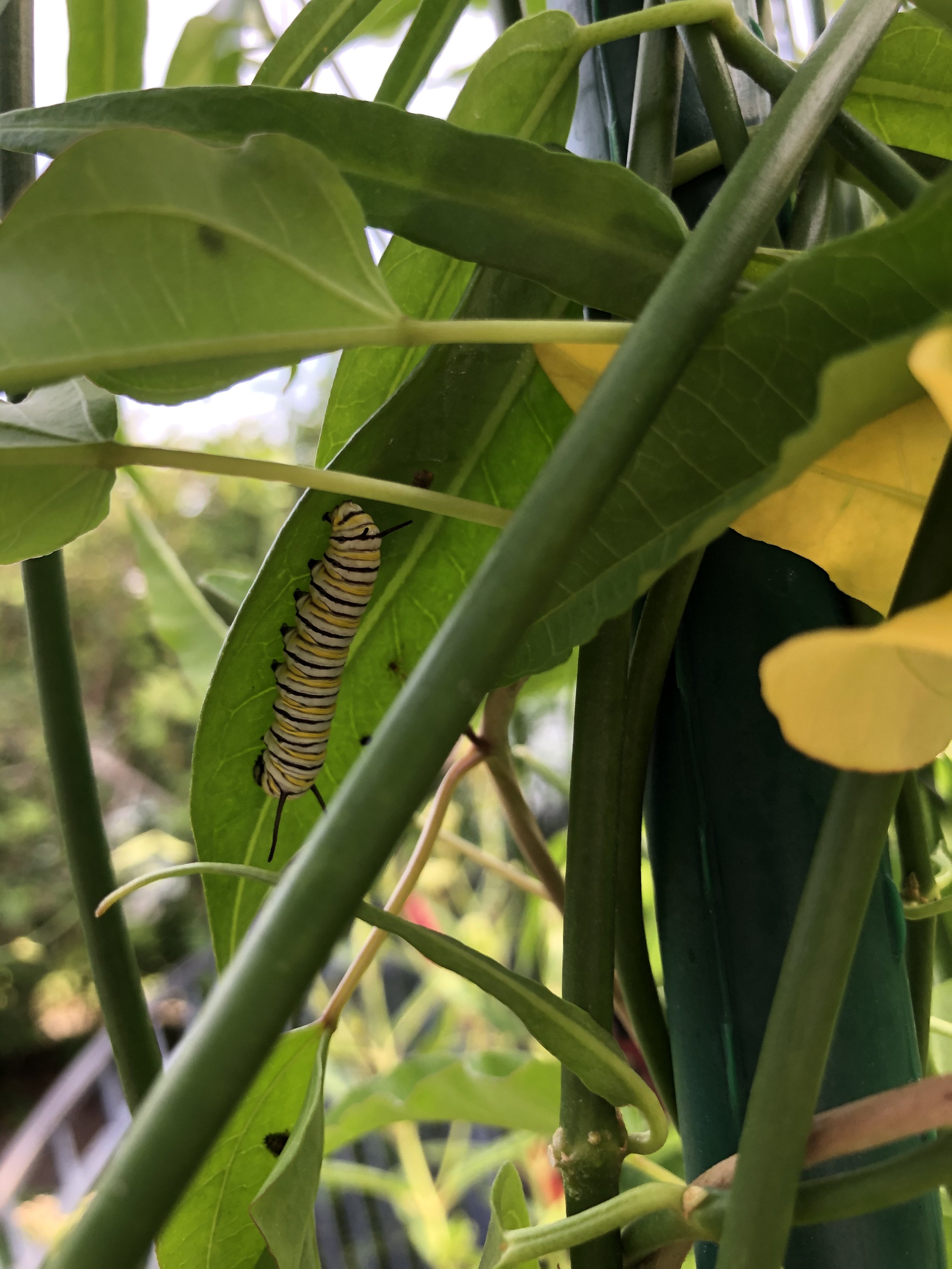
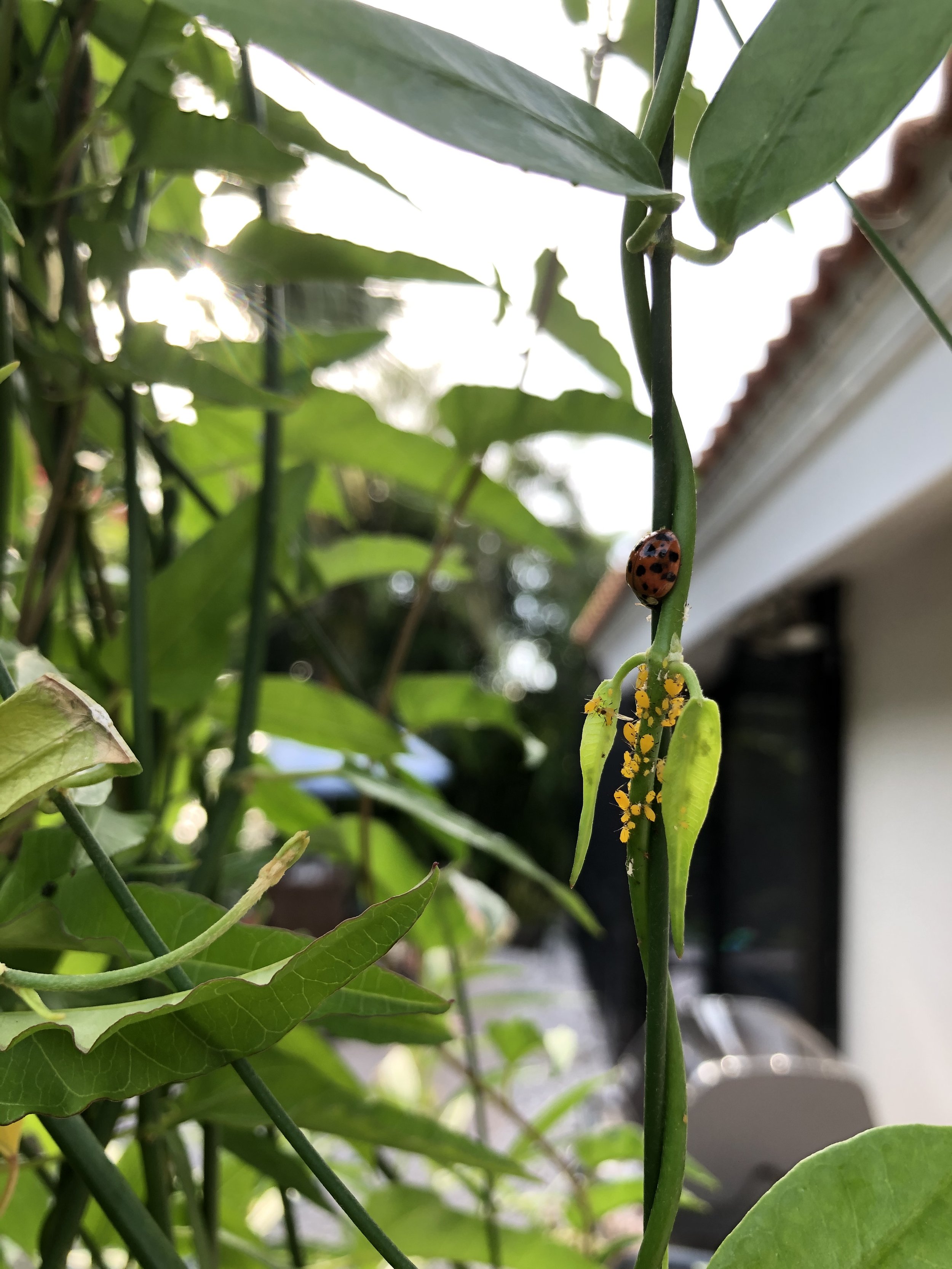
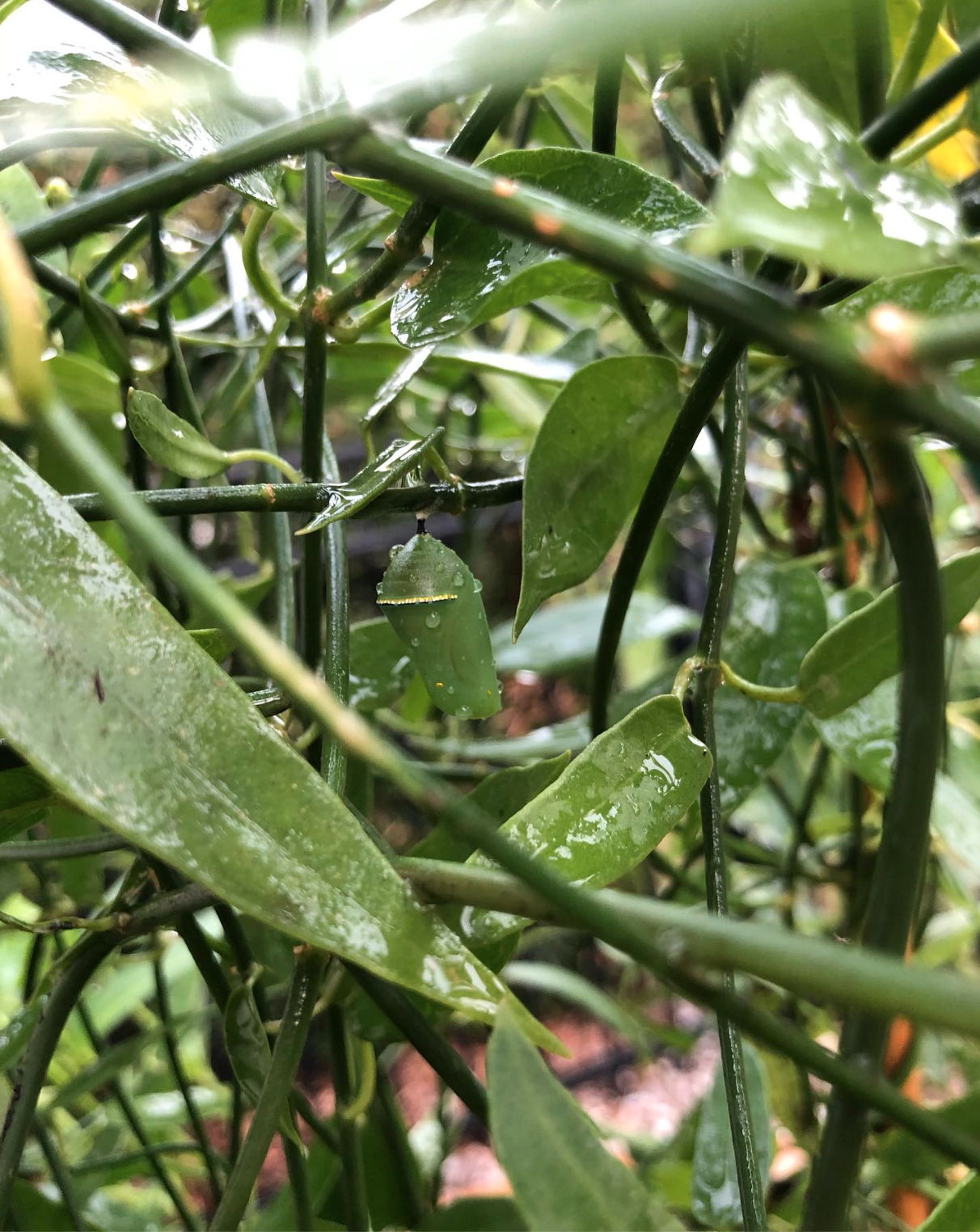
Funastrum clausum
Twine Vine is a native perennial flowering vine that is planted in butterfly gardens. It is a year-round host plant for monarch, queen and soldier butterflies as well as a nectar source for many other butterflies and pollinators. It prefers moist to average soils and can be grown well in a container to control its growth. It’s showy clusters of white flowers can bloom year round.
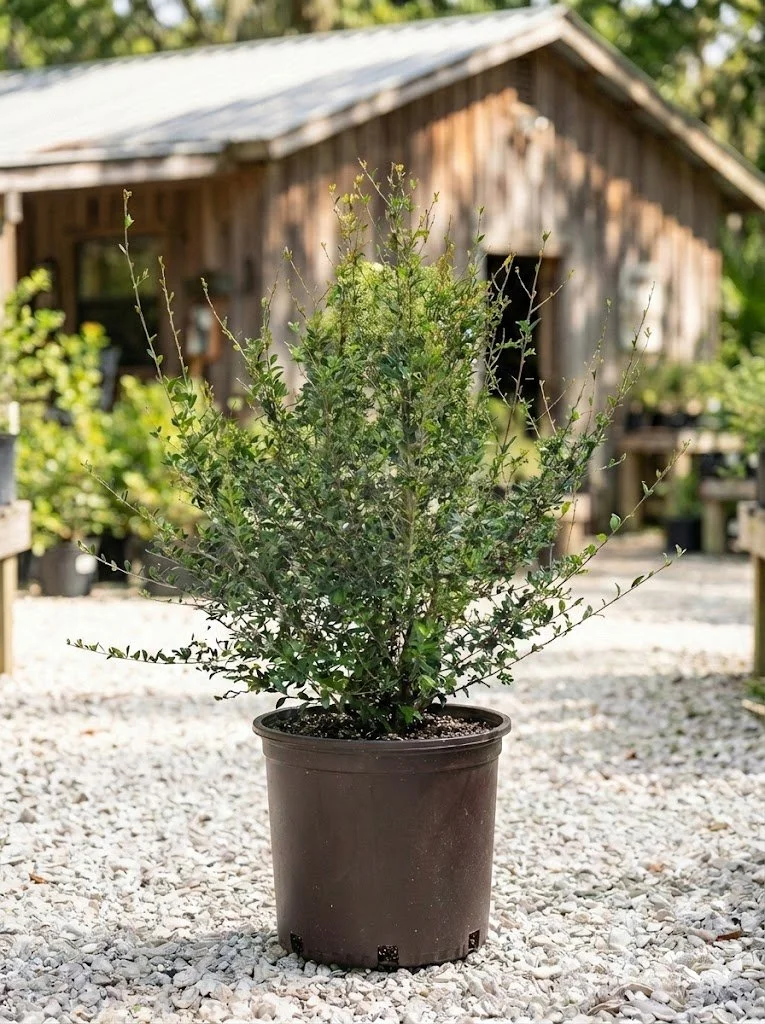
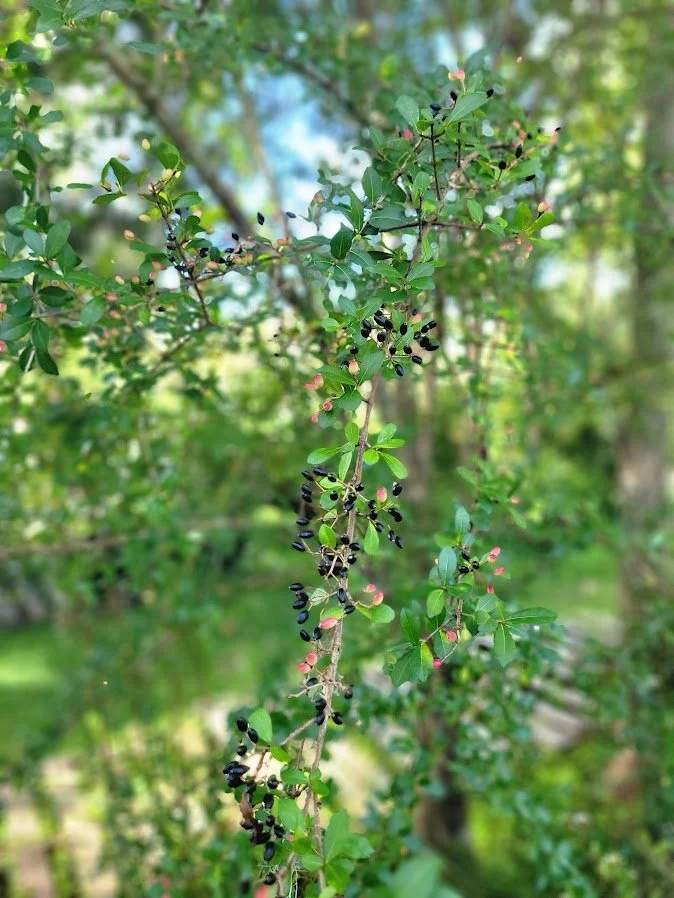
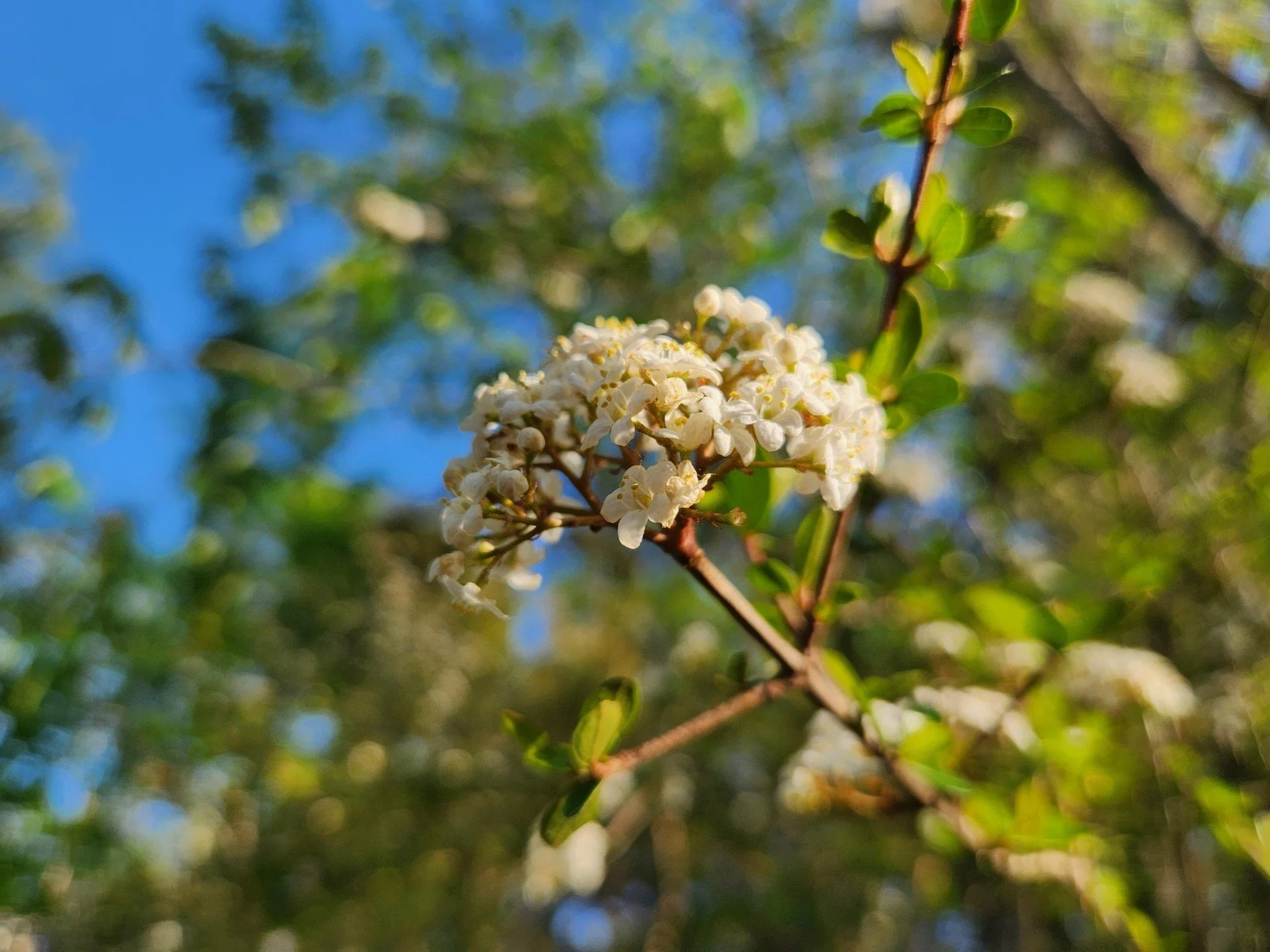
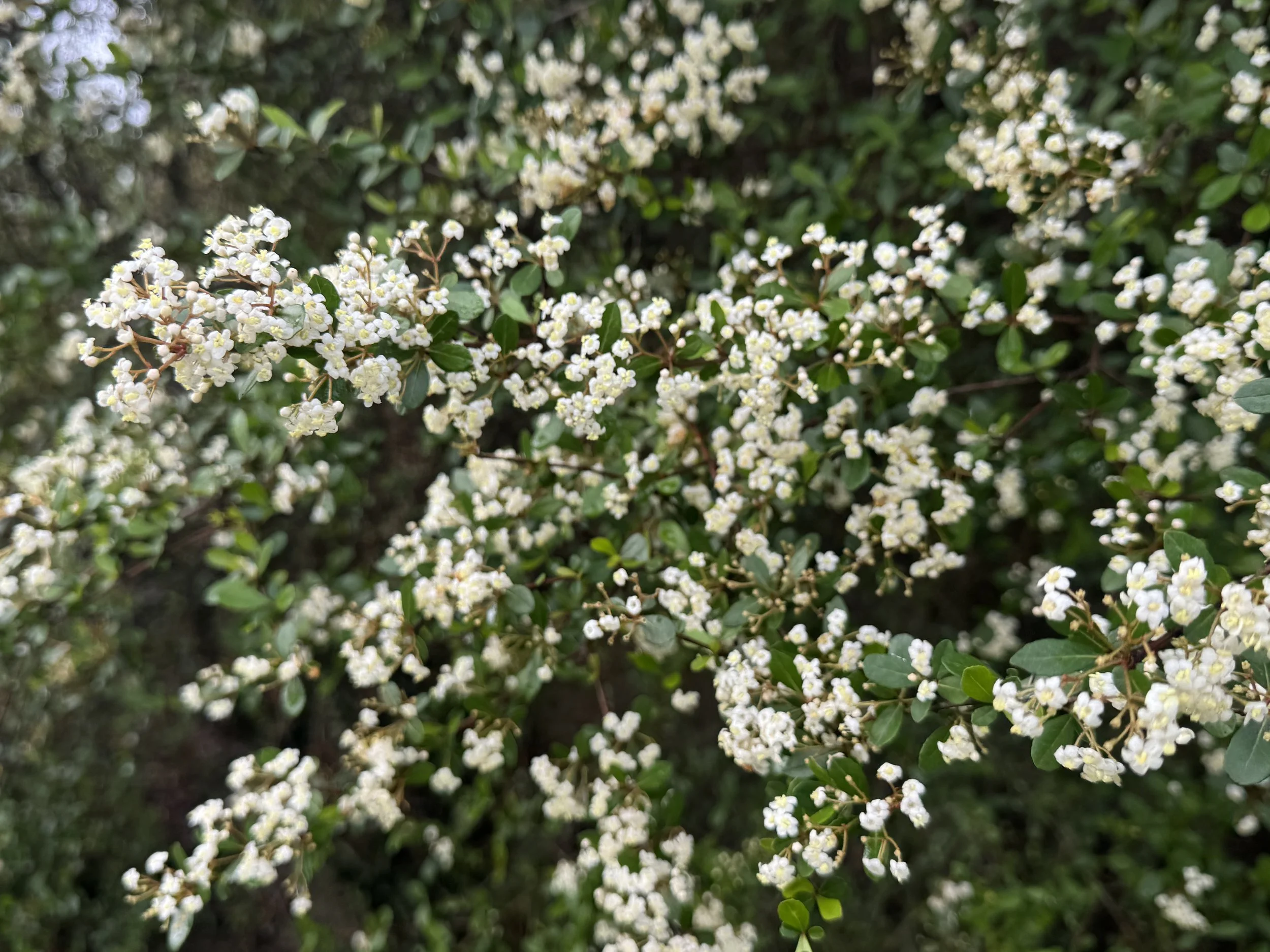
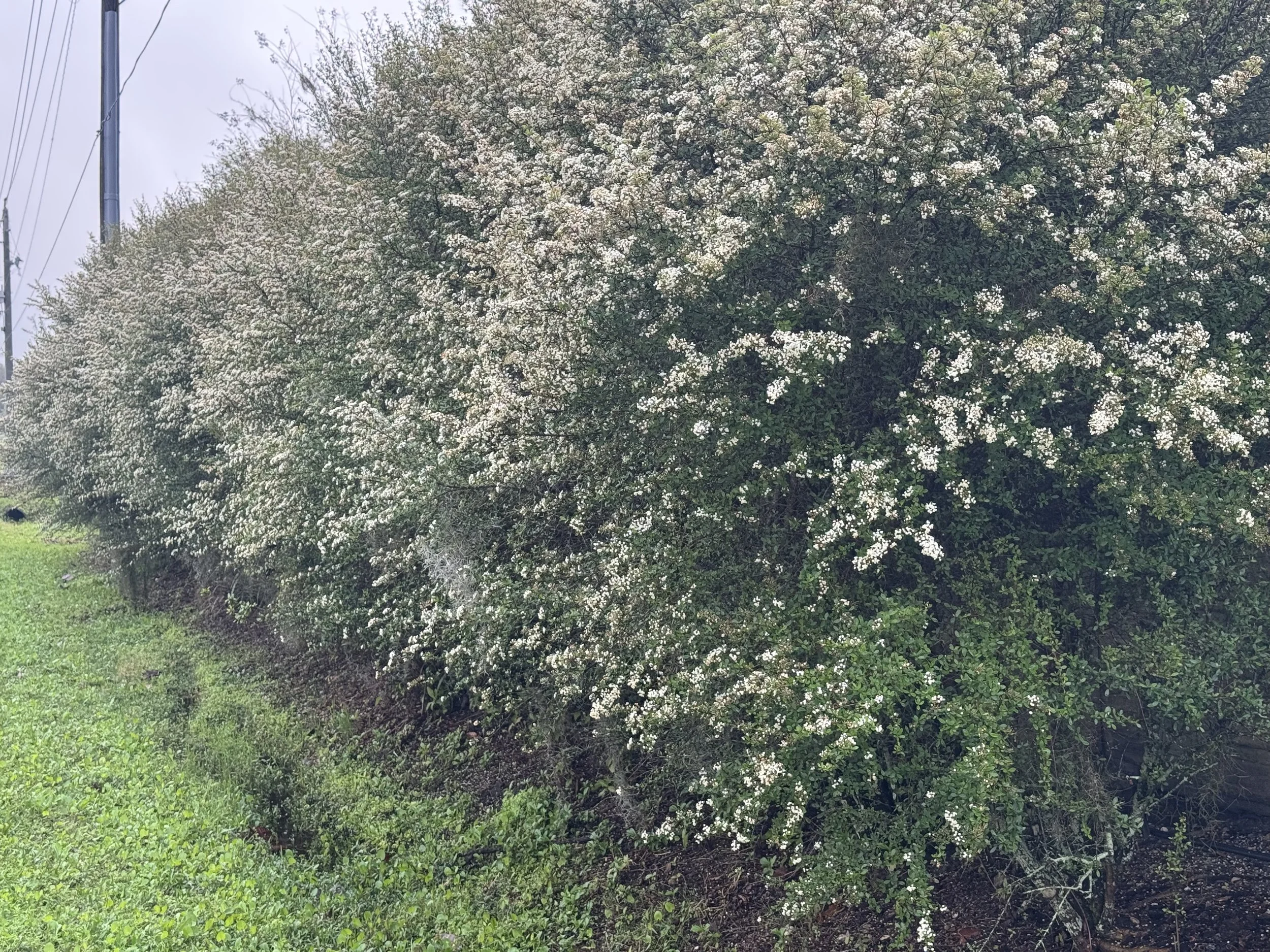
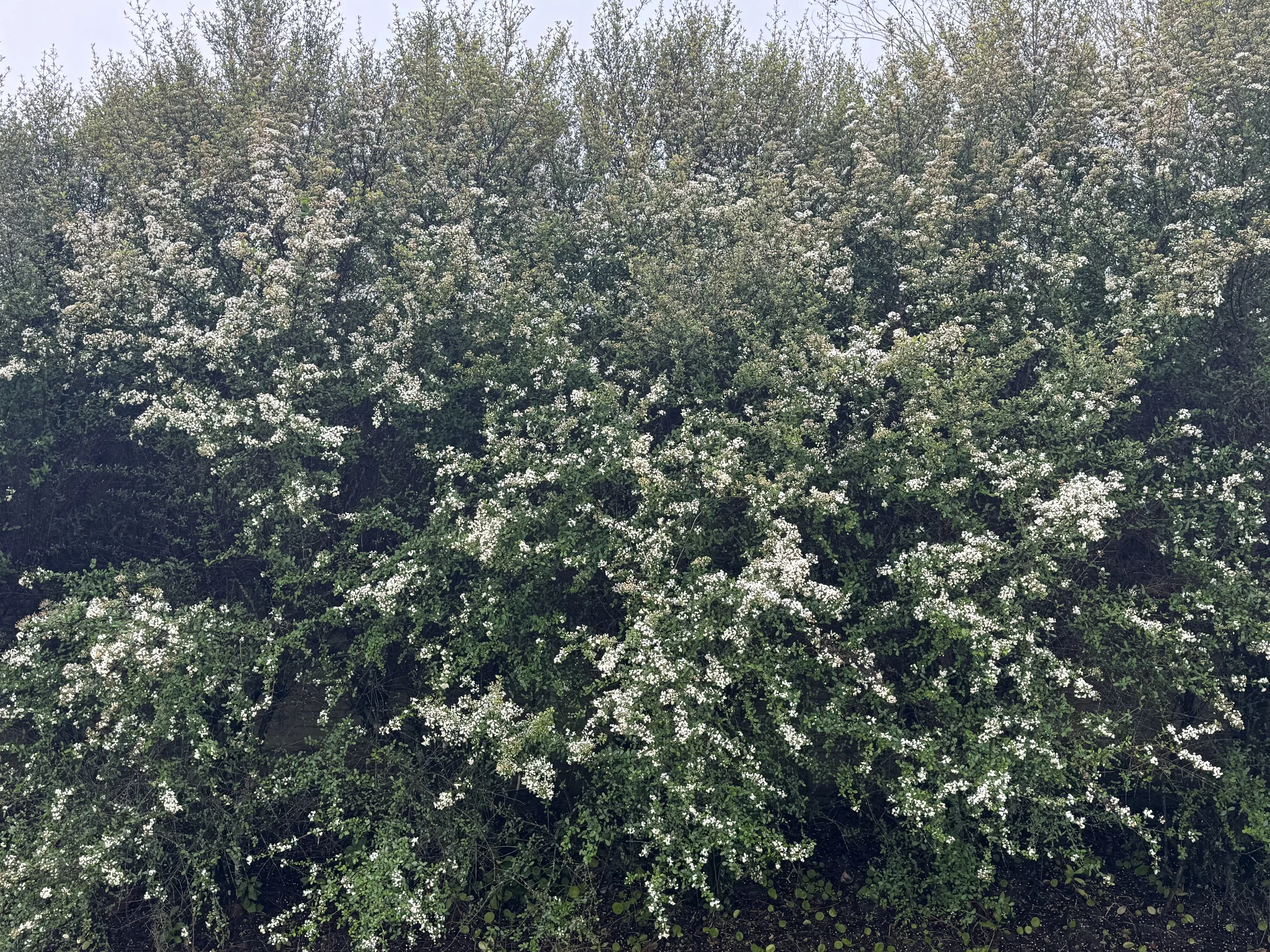
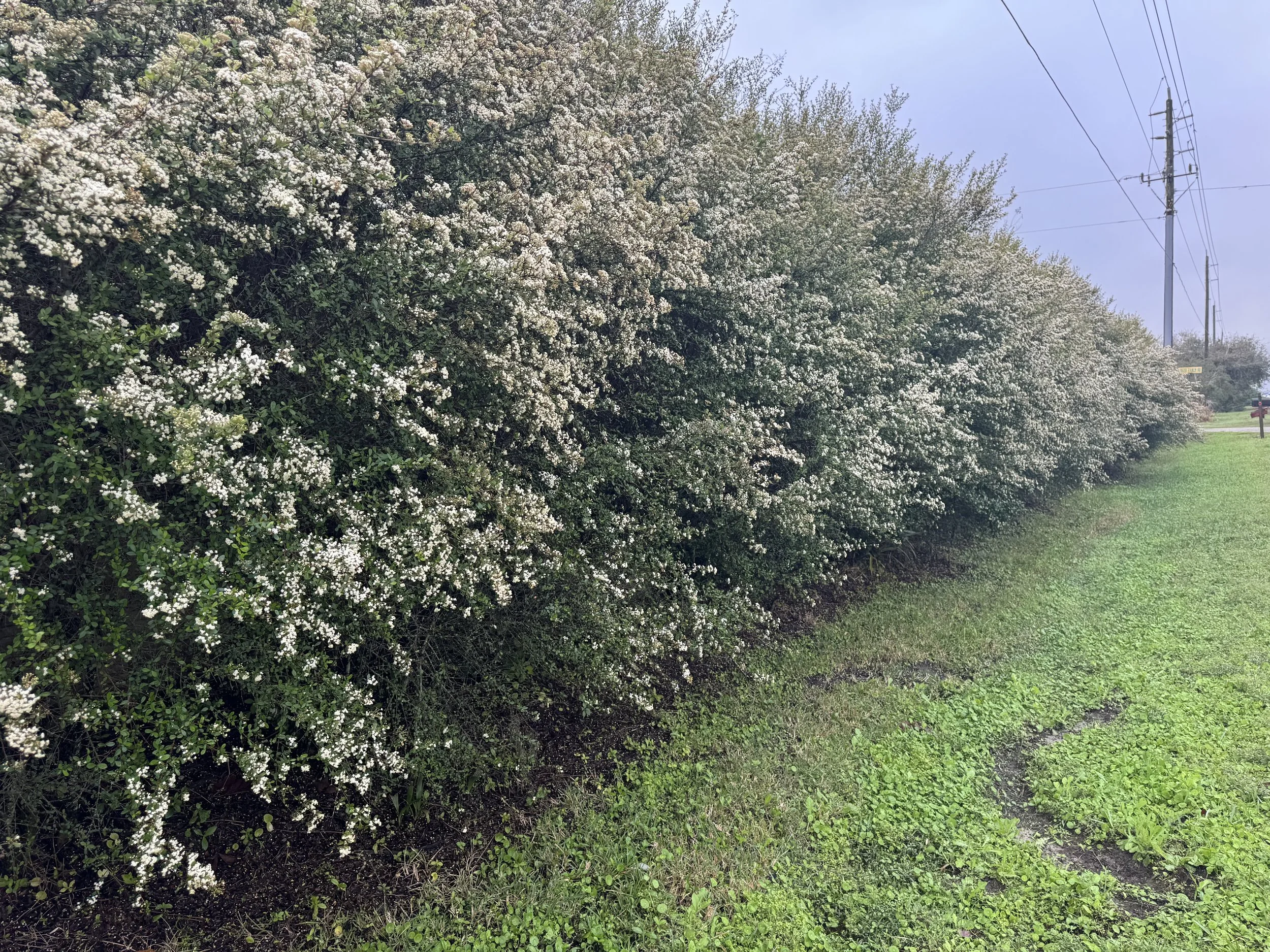
Viburnum obovatum
Walter's Viburnum is an evergreen shrub or small tree native to the southeastern United States that can reach up to 20’ tall but is commonly pruned as a hedge or screen. This densely branched species features fine-textured foliage and produces masses of small, fragrant white flower clusters in early spring, giving it its nickname "Florida snow," that attract butterflies and other pollinators. In fall, it develops dark blue berries that provide food for birds and wildlife. Thriving in zones 7-10, it adapts to various soil types and light conditions from full sun to partial shade, making it an excellent choice for native landscaping, wildlife gardens, and as a Florida-friendly alternative to boxwood hedges.
Sizing of cultivars:
‘Withlacoochee’ - 12’-15’
‘Select’ - 6’-8’
‘Densa’ - 4’-5’
‘Snow Fury’ - 5’-10’
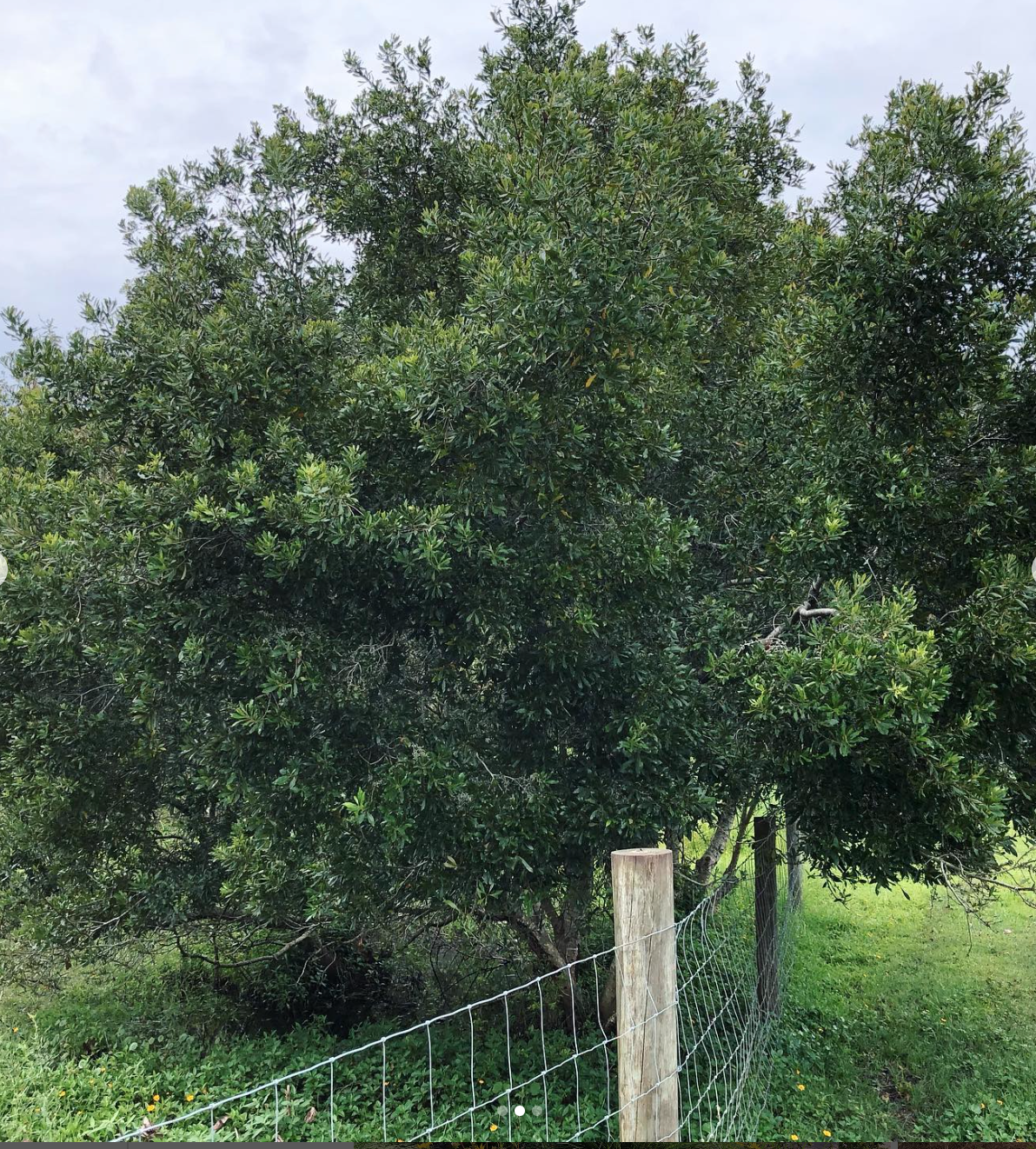
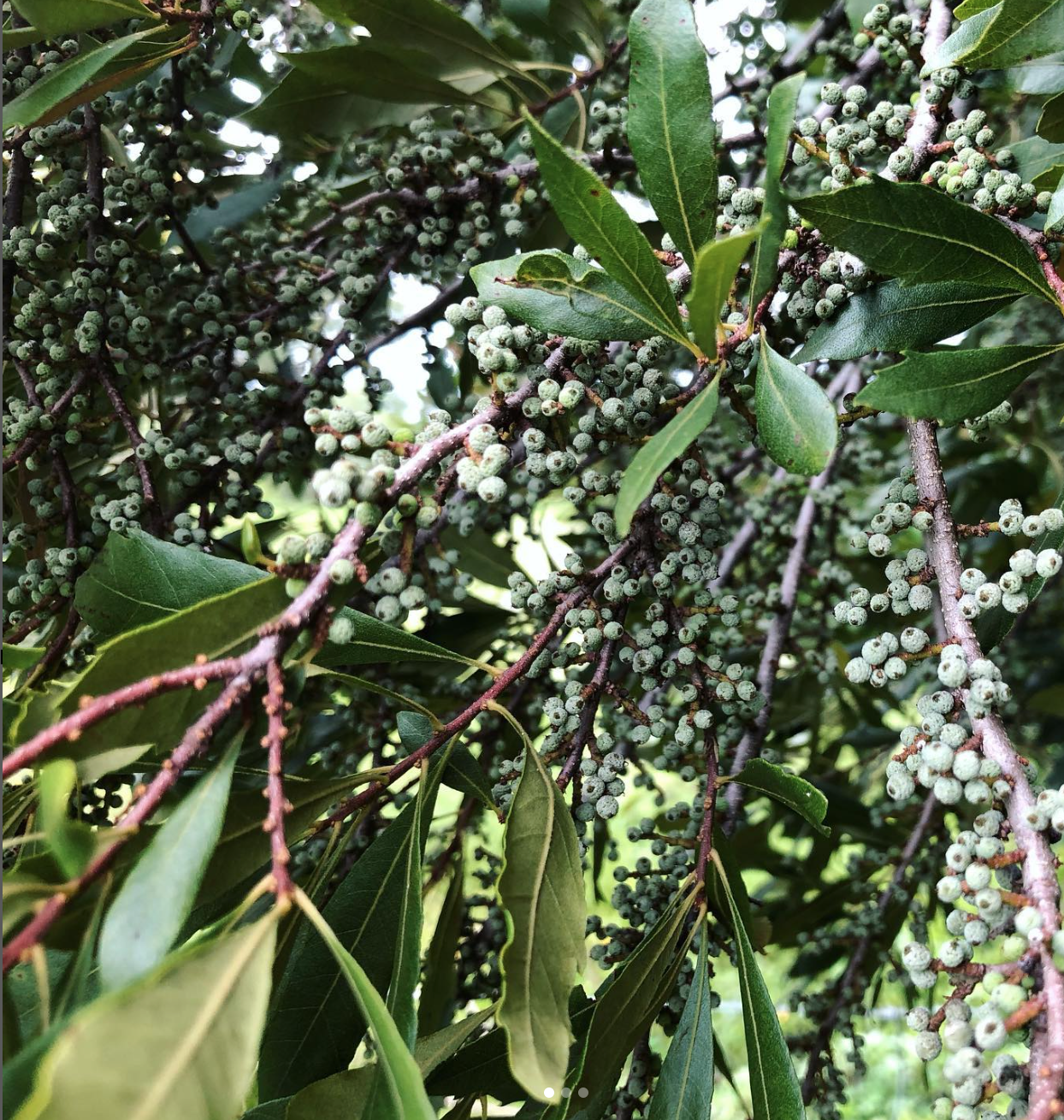
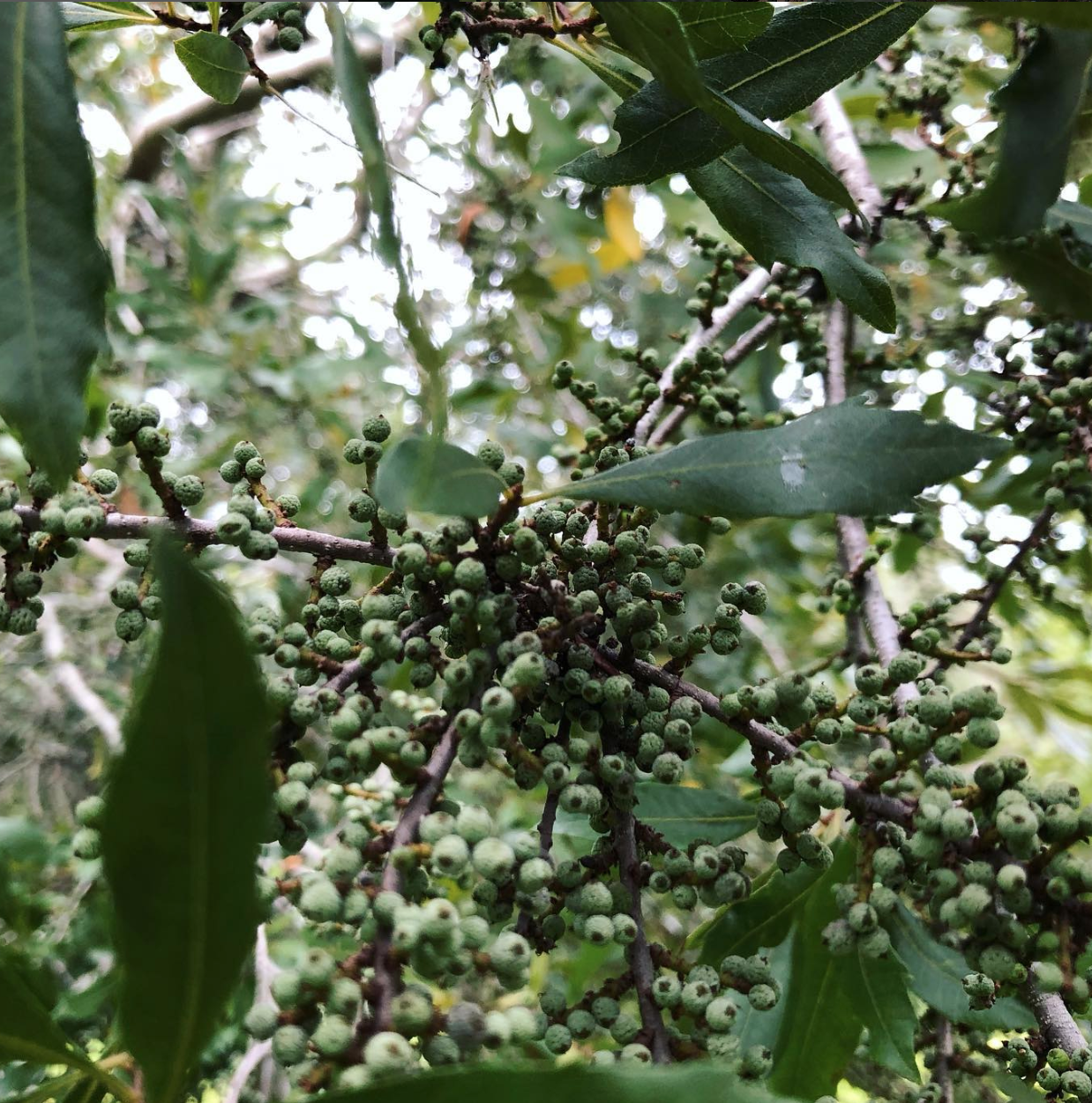
aka Southern Bayberry
Myrica cerifera
Southern Bayberry is a go-to large shrub for tough conditions that require plants that can tolerate moist soils and full sun. It’s also highly adaptable to dry soils and partial shade. It is evergreen and best left untrimmed and allowed to get to its natural height of about 15’. Southern Bayberry makes a nice hedge, natural screen or buffer planting or a specimen shrub and it is an excellent wildlife attractor. The waxy berries on the female plants are a food source for birds, and also used to make traditional bayberry candles.
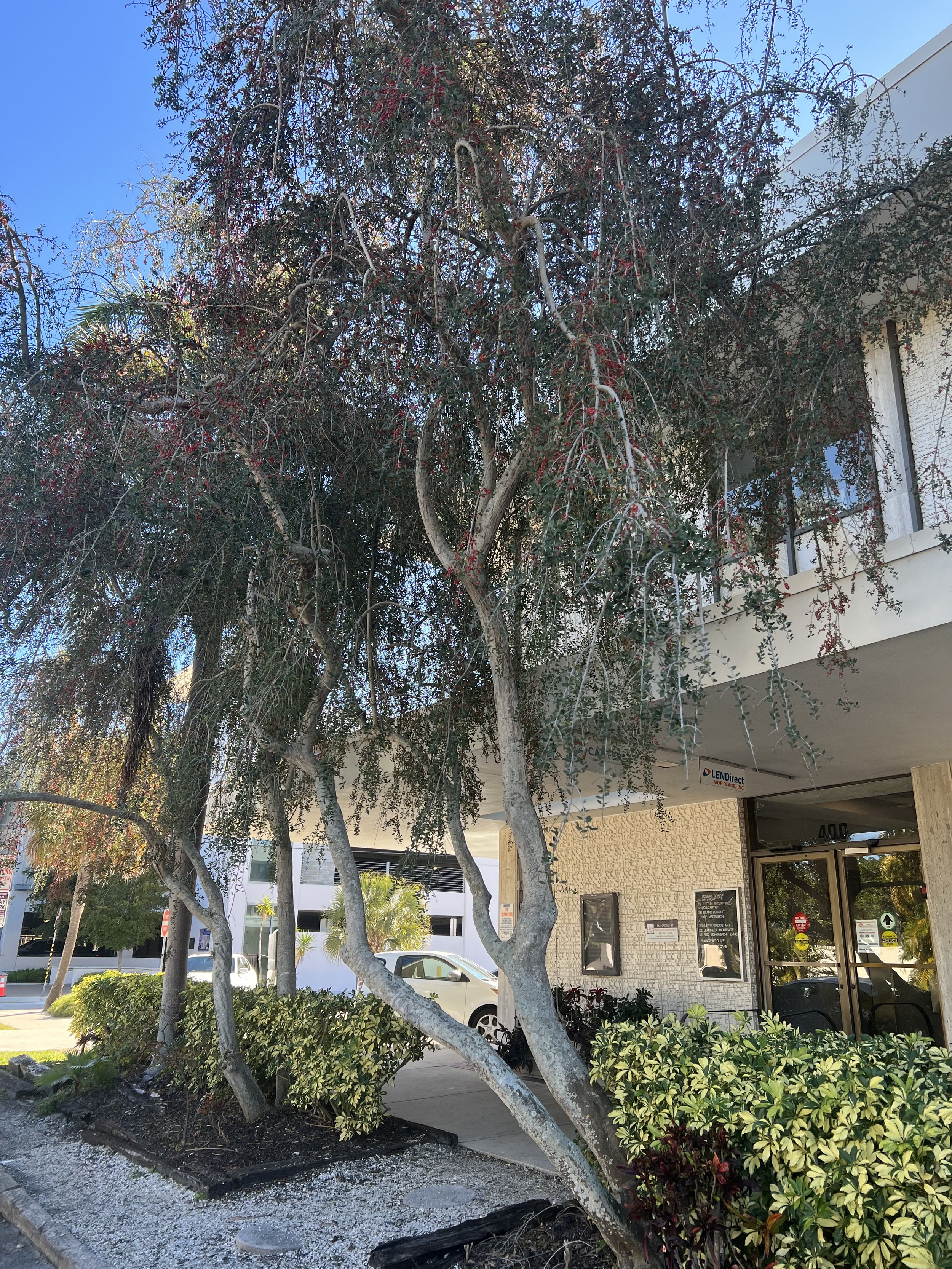
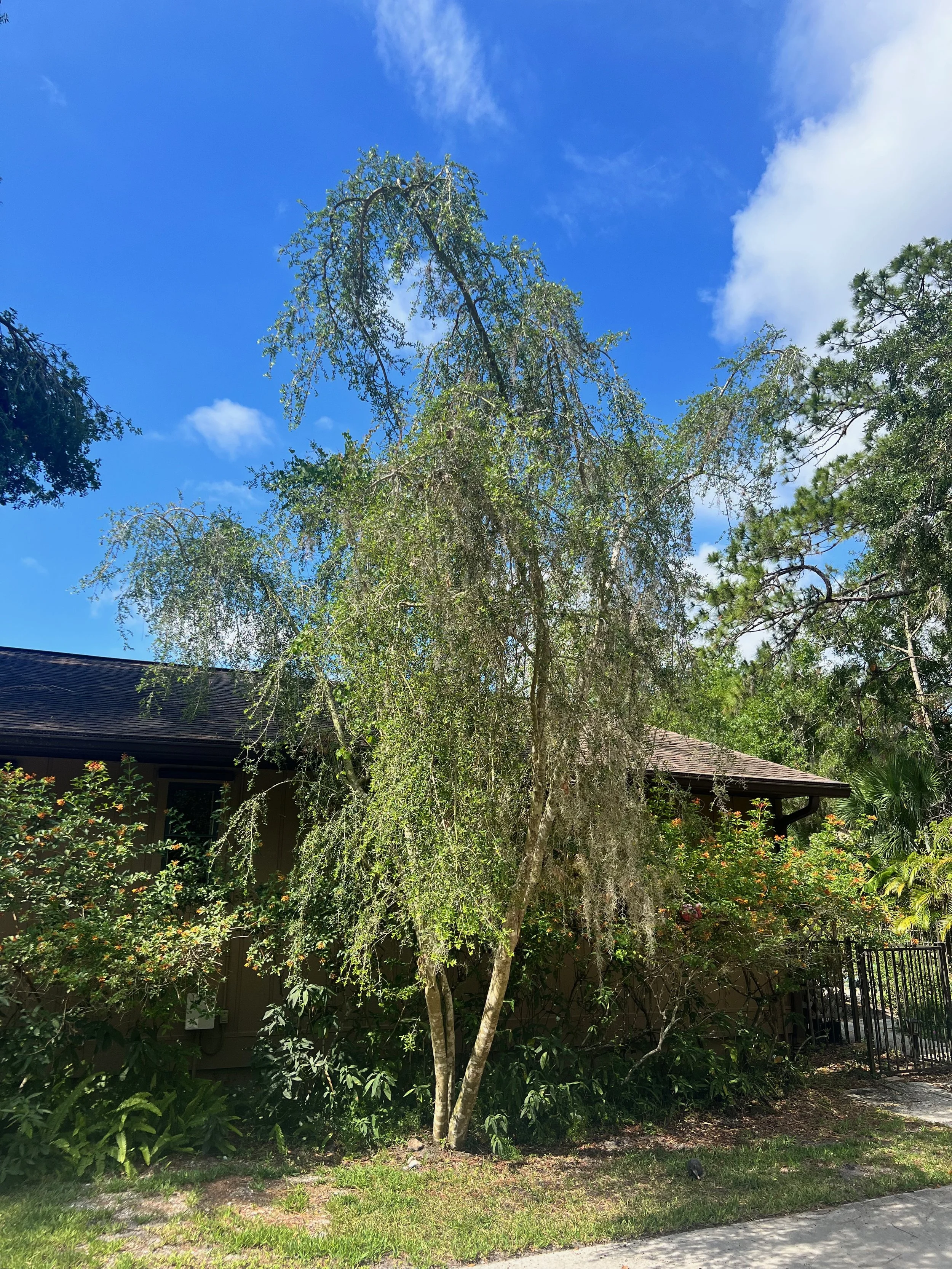
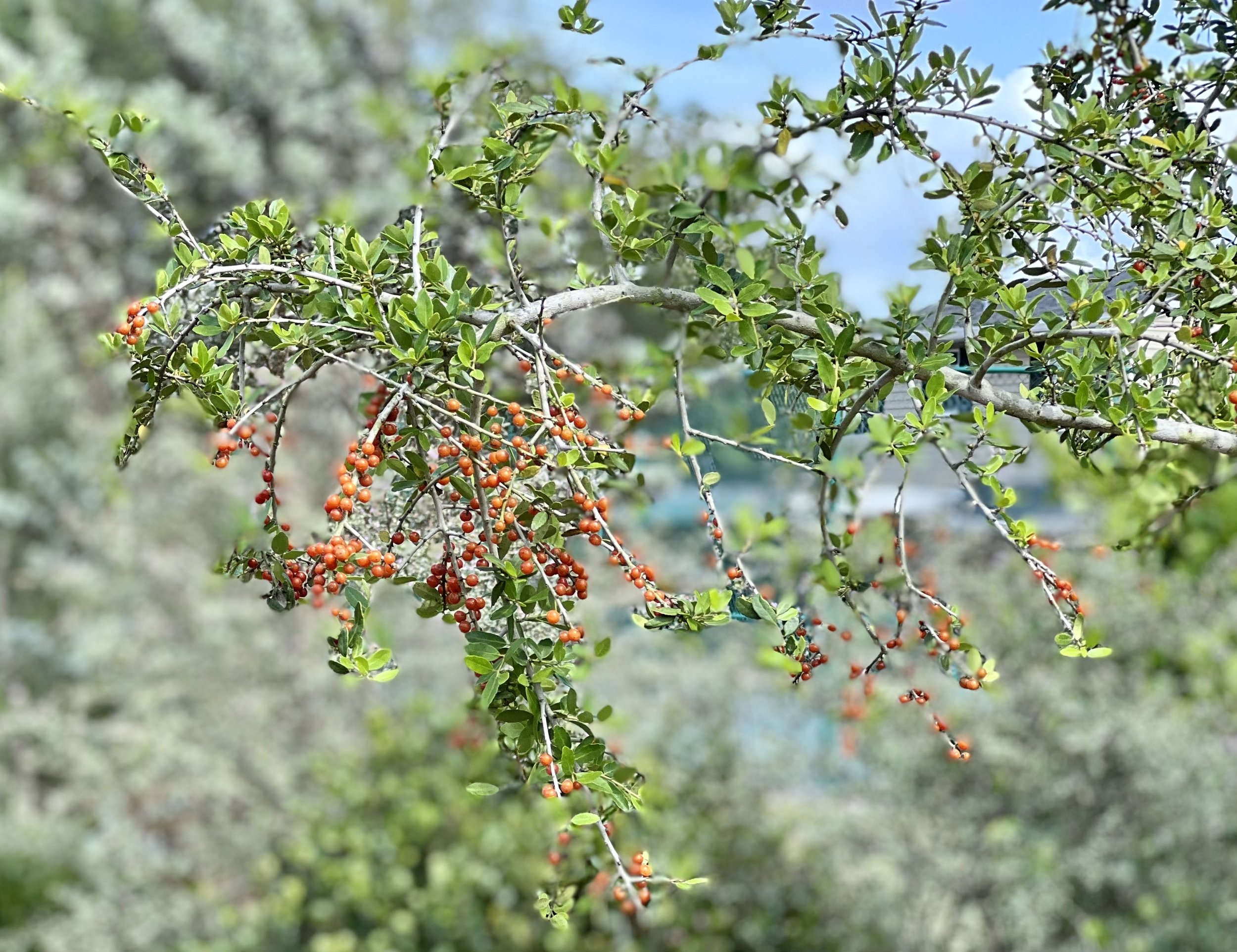
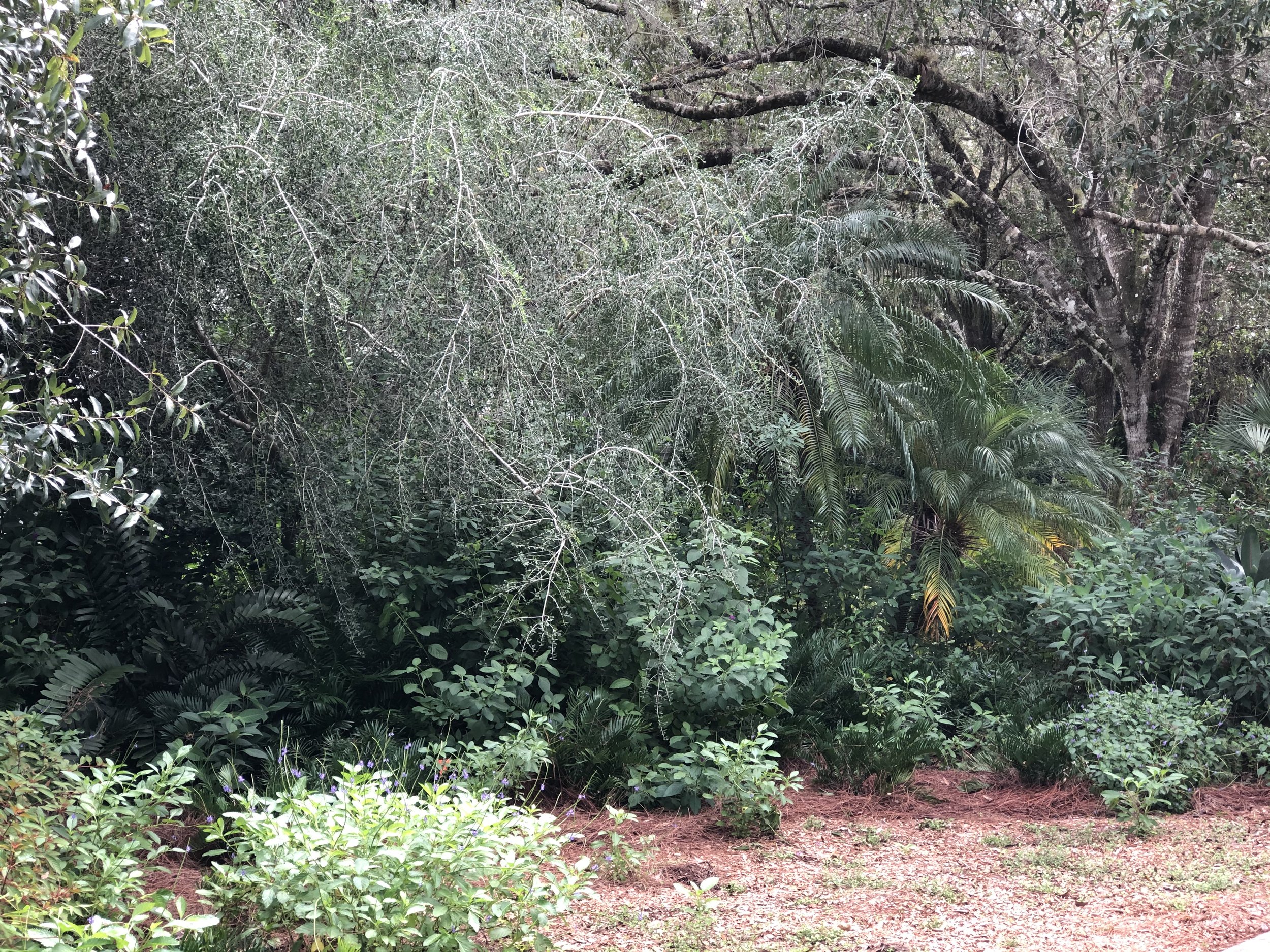
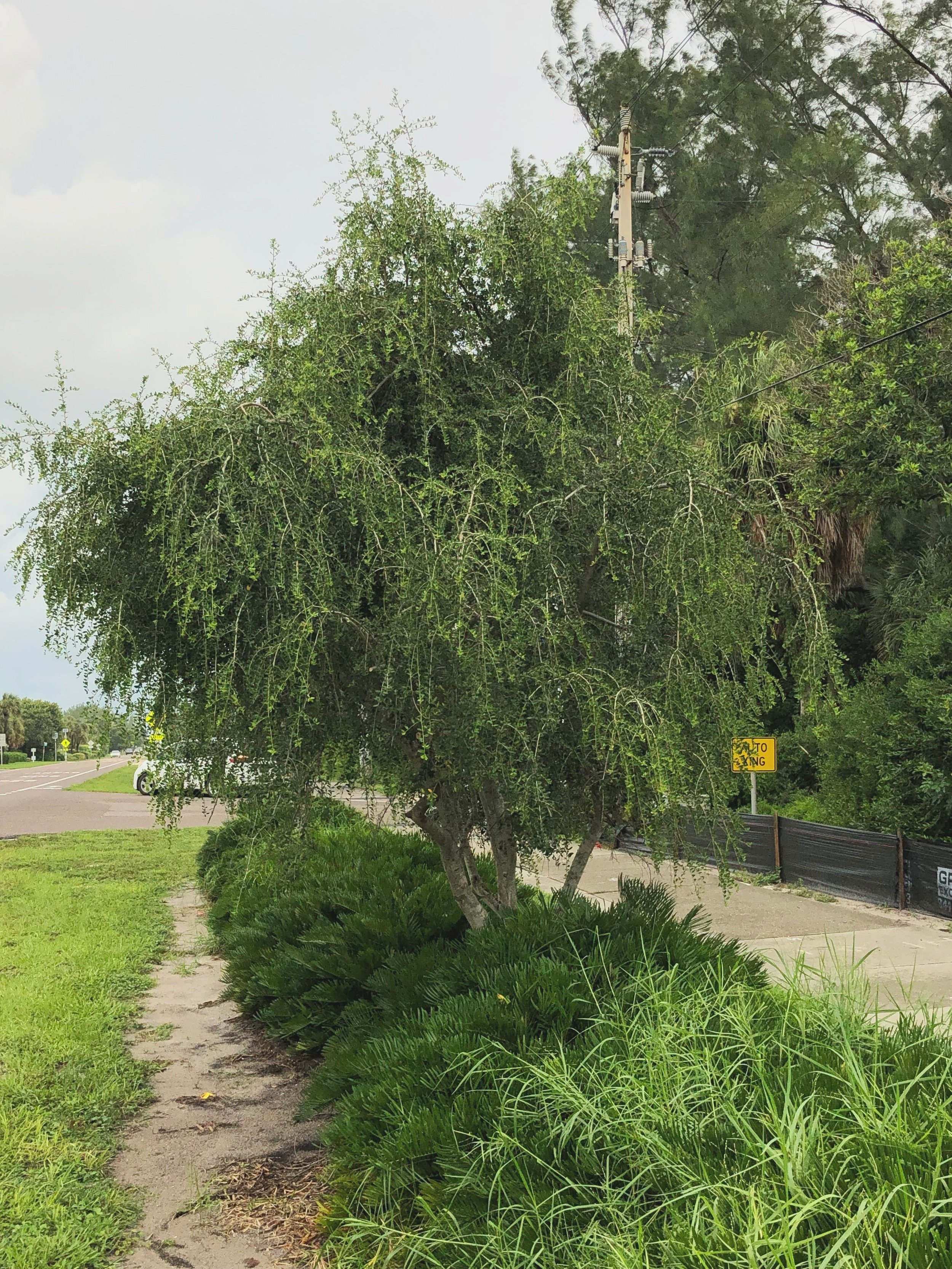
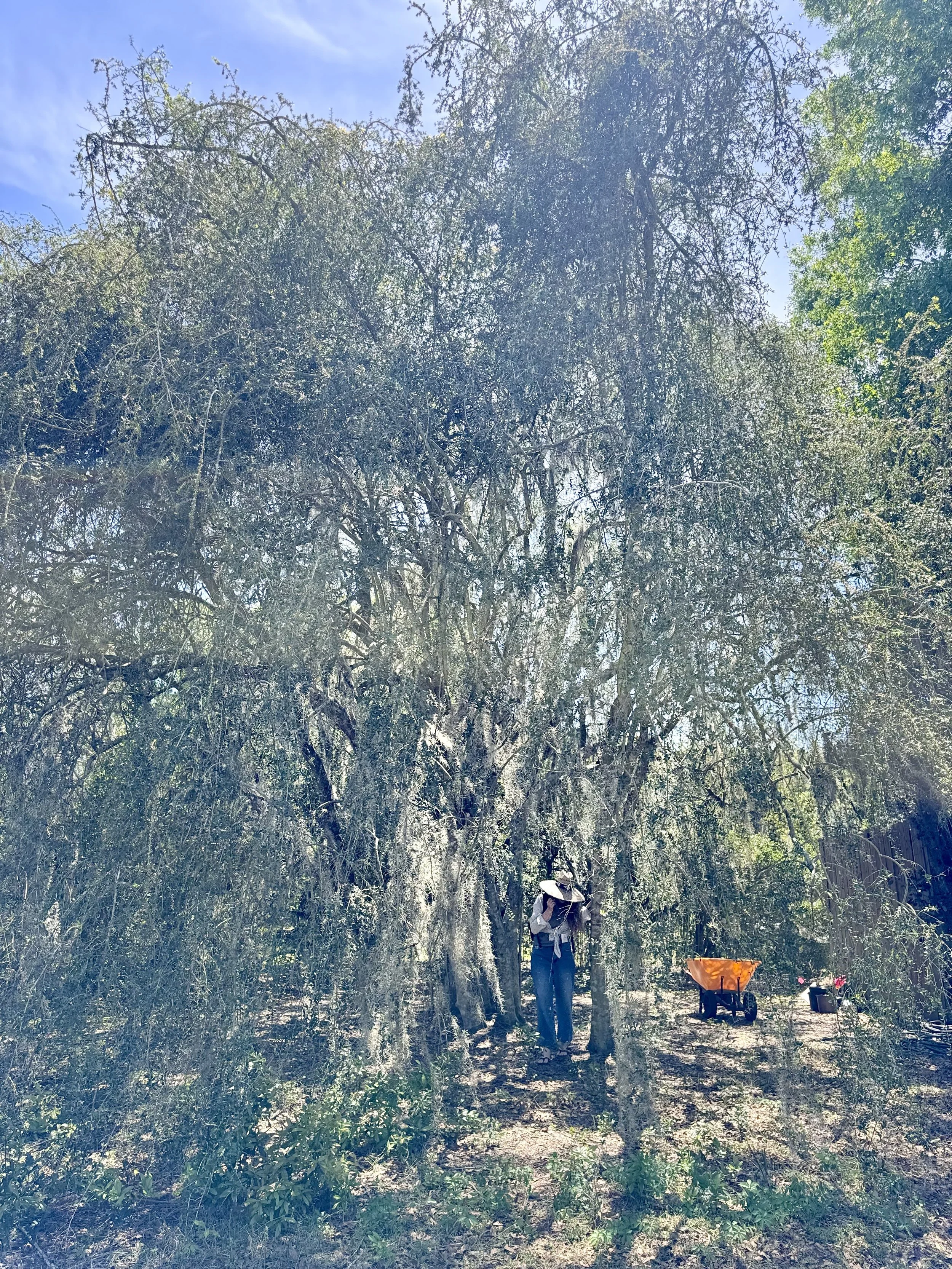
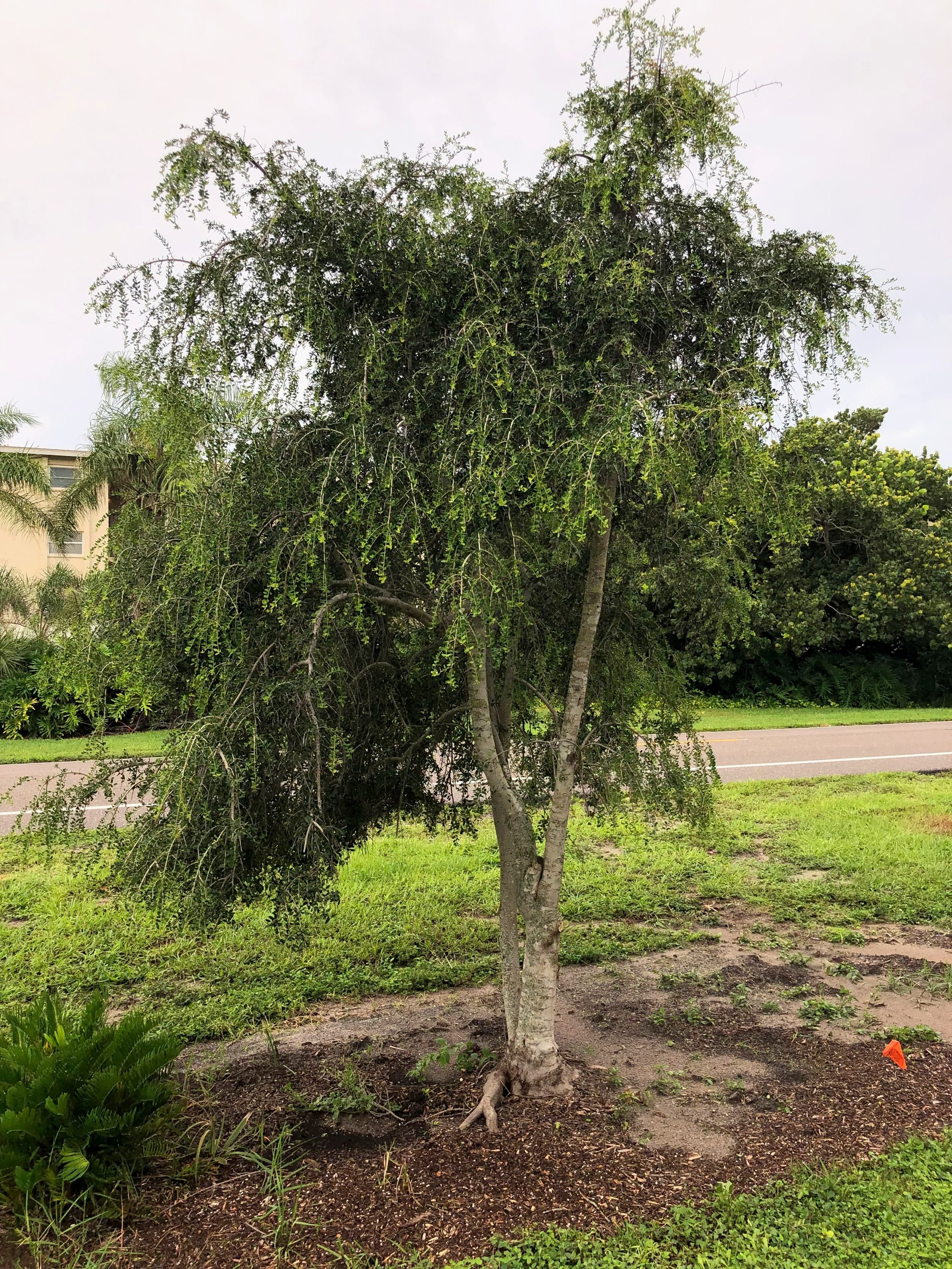
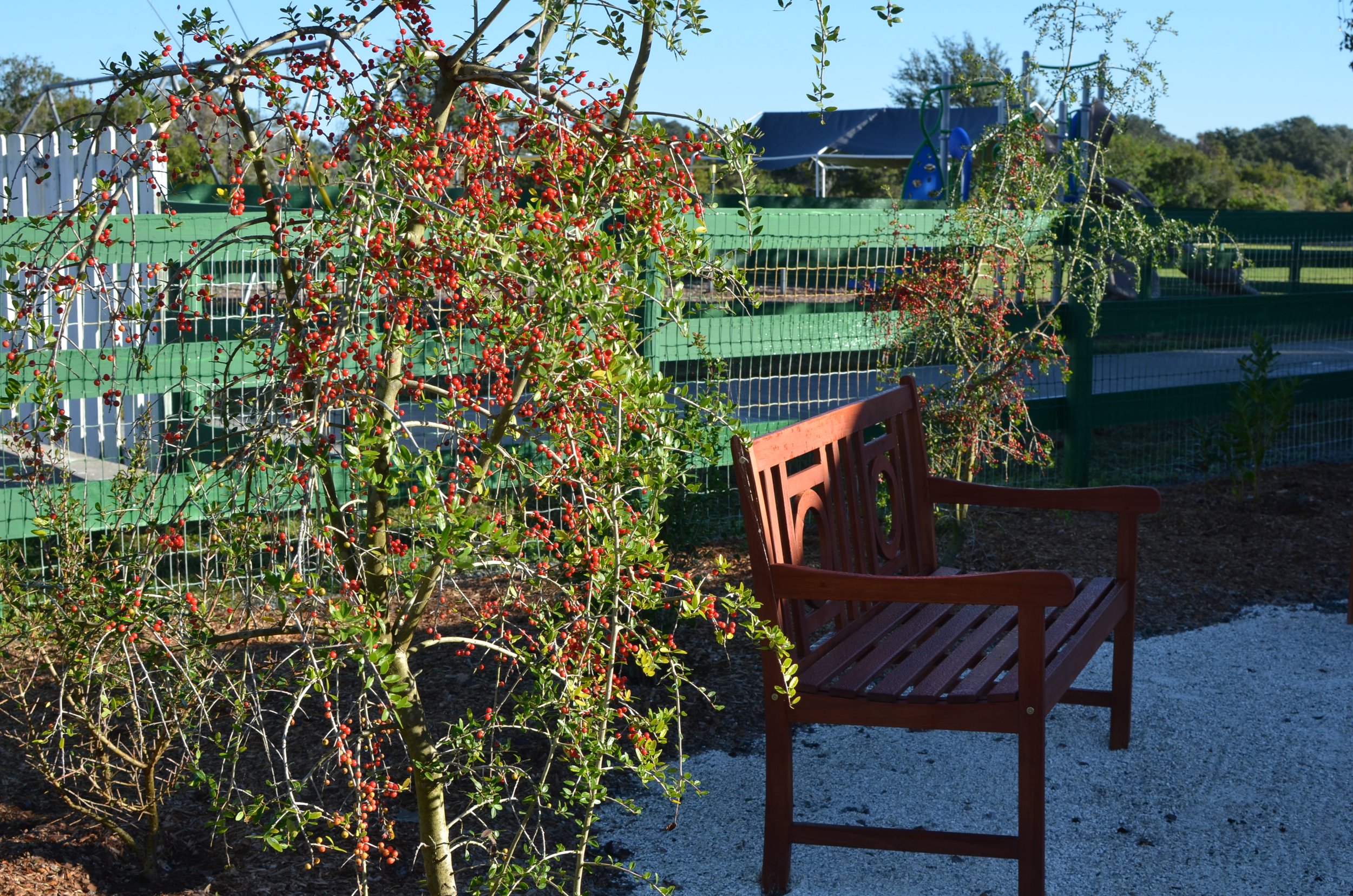
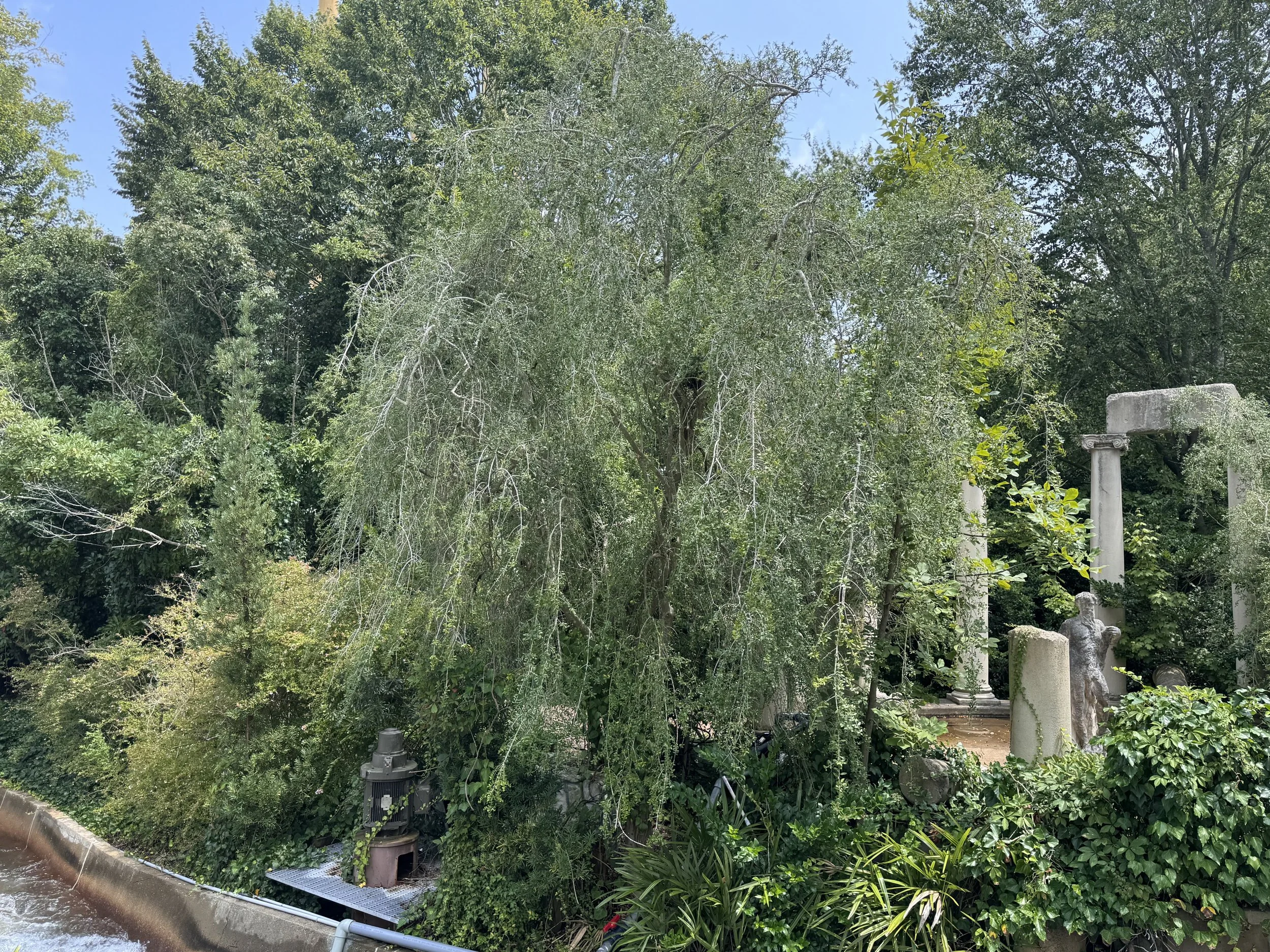
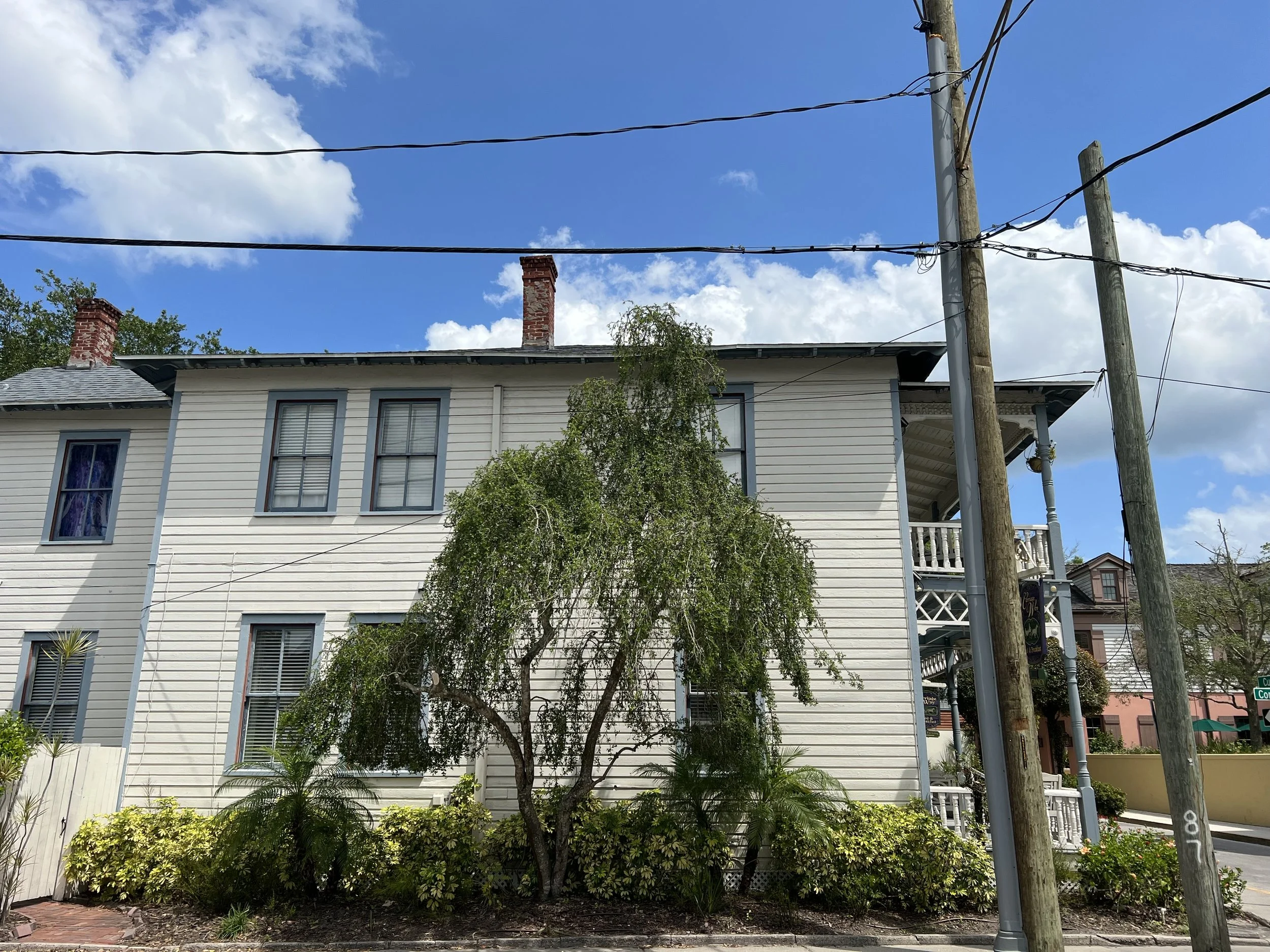
Ilex vomitoria ‘Pendula’
Weeping Yaupon Holly is a graceful cultivar of the native yaupon holly that grows 15-25 feet tall with distinctive drooping, pendulous branches that create an elegant weeping form. This evergreen cultivar features the same small, leathery dark green leaves as the species and produces inconspicuous flowers followed by bright red berries on female plants that attract birds. The cascading branches give it a unique architectural quality, making it an excellent focal point or specimen tree for large landscapes. Like its parent species, it's extremely drought and salt-tolerant, adaptable to various soil conditions, and requires minimal maintenance once established.
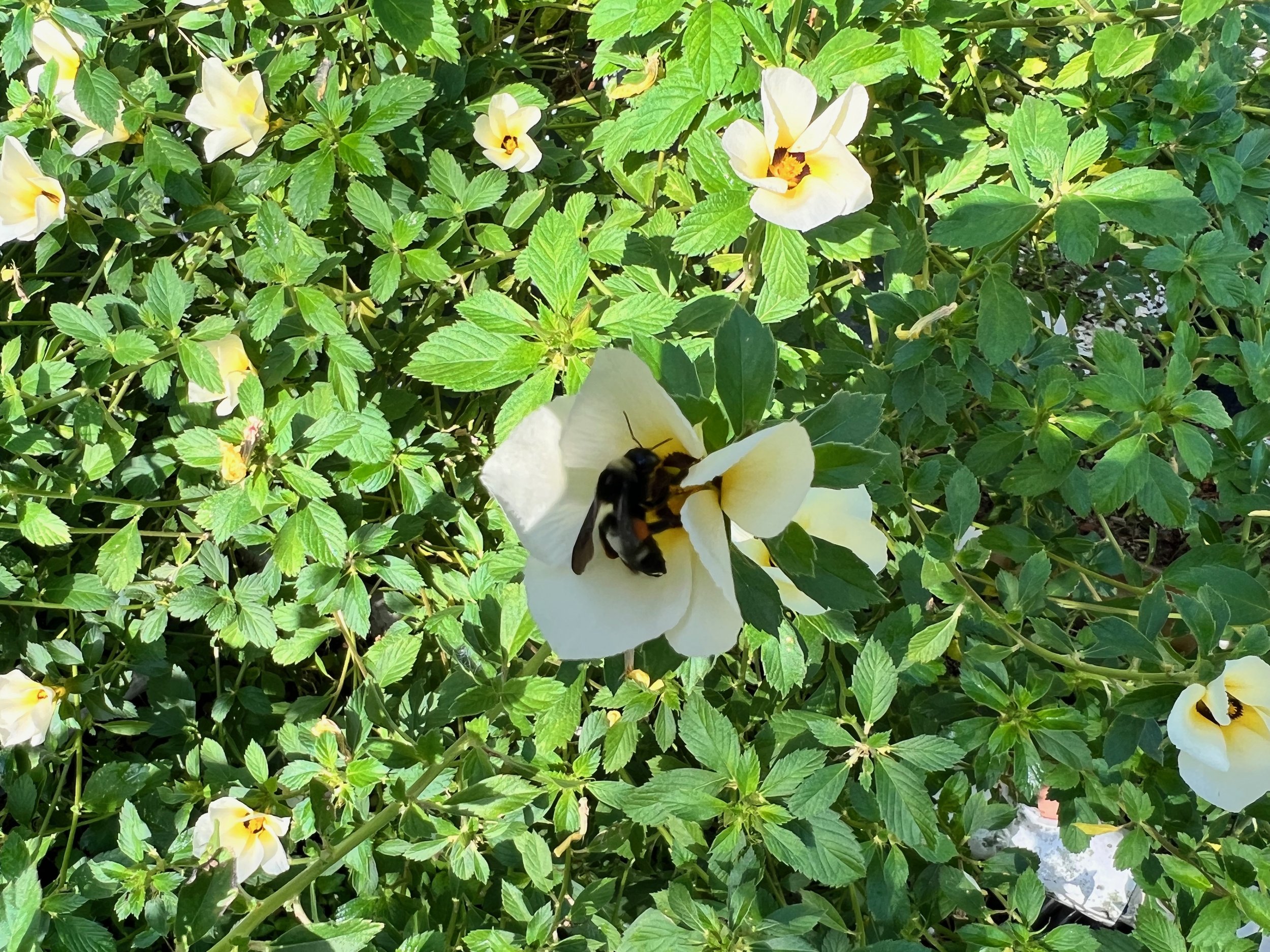
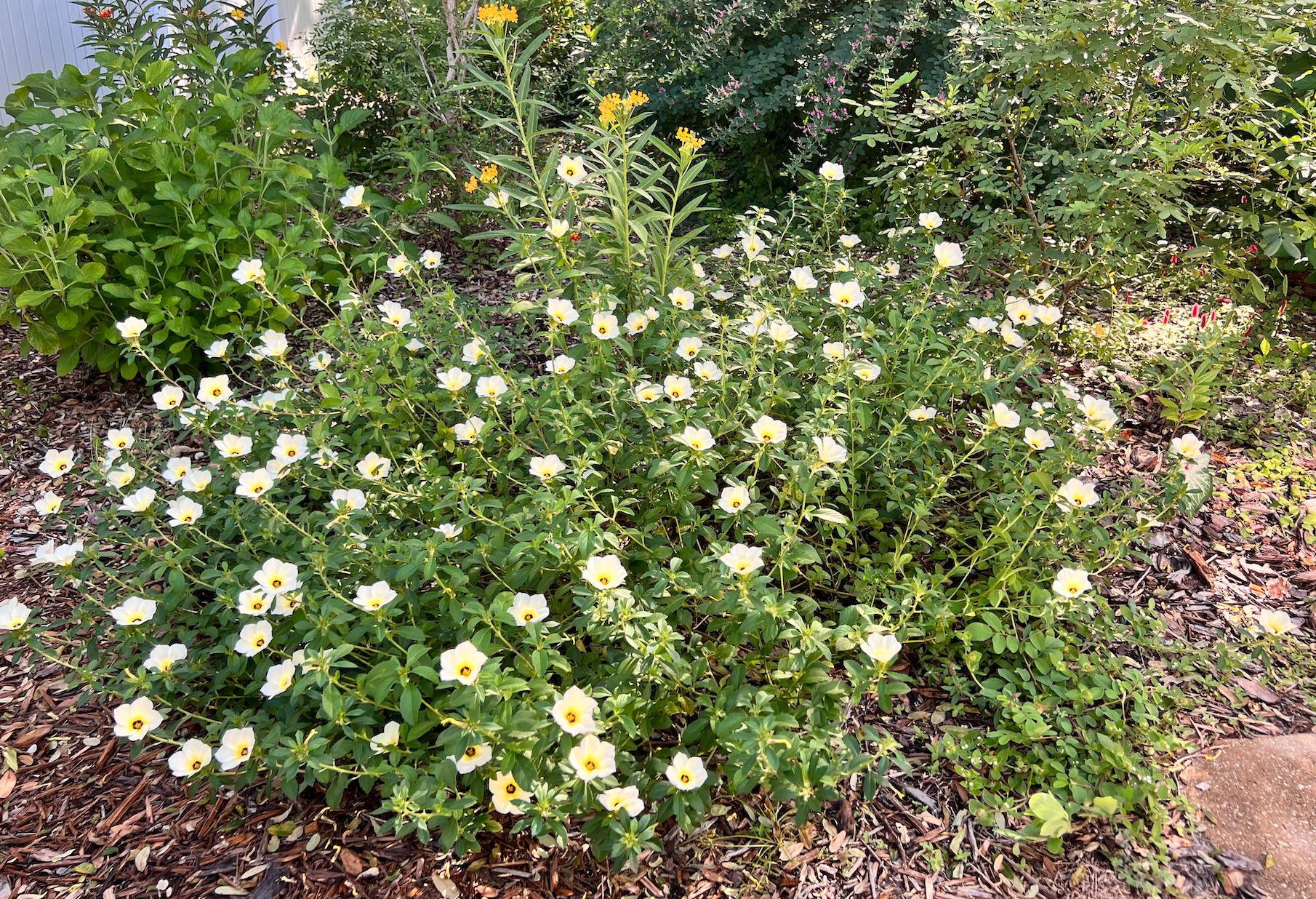
Turnera ulmifolia ‘Alba’
White Beach Buttercup is an eye-catching non-native Florida friendly that blooms throughout the year. It is a low-growing, sprawling subshrub with dark green leaves and flowers that open in the morning and close up by noon. White Beach Buttercup grows in full sun to part shade and average to moist well-draining soils. While it can grow a little leggy, you can trim it back to keep it more dense and amend the soil with a slow-release organic fertilizer or compost occasionally. The creamy-white flowers with a yellow blushed, “black-eye” attract bumblebees, carpenter bees, hummingbirds, and other pollinators.
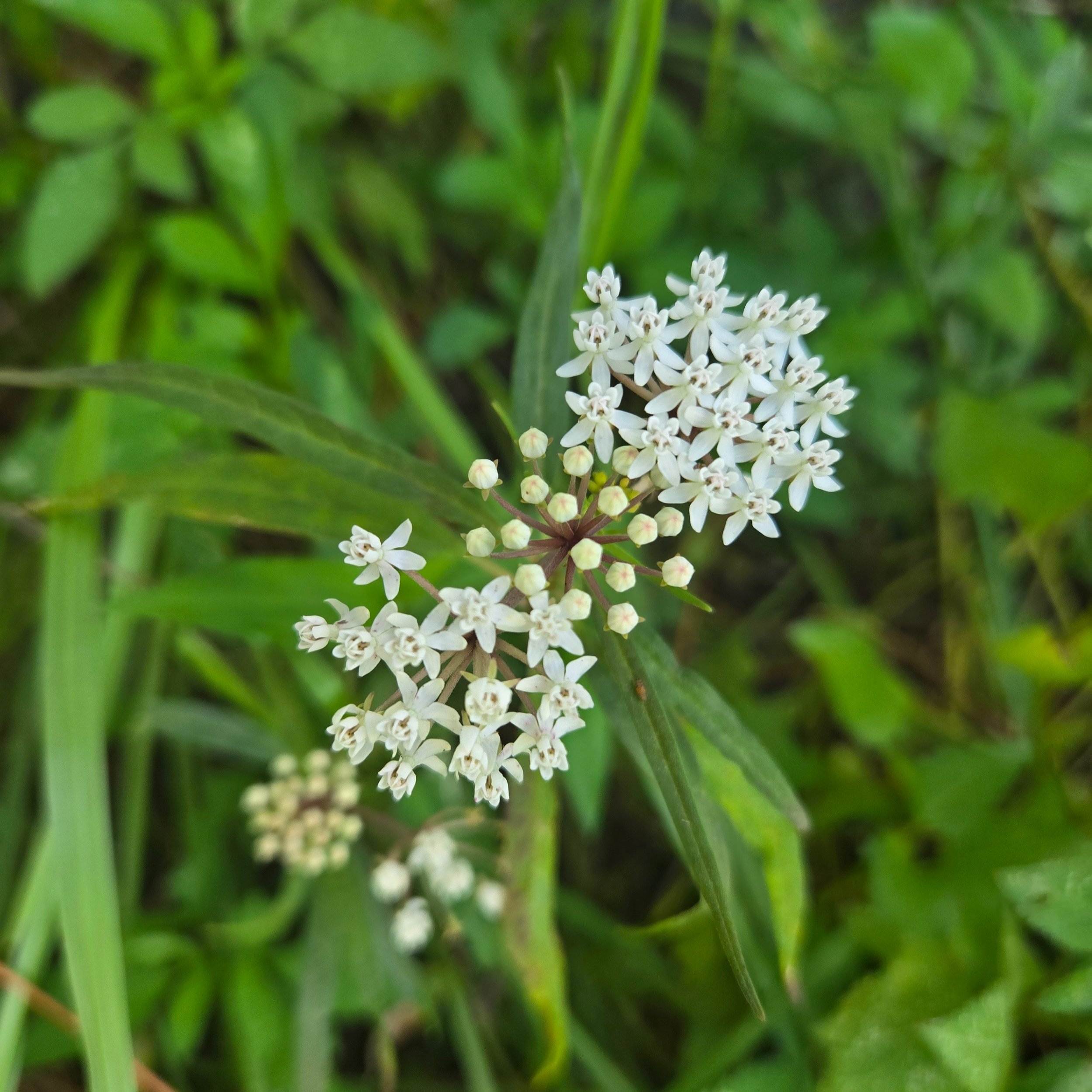

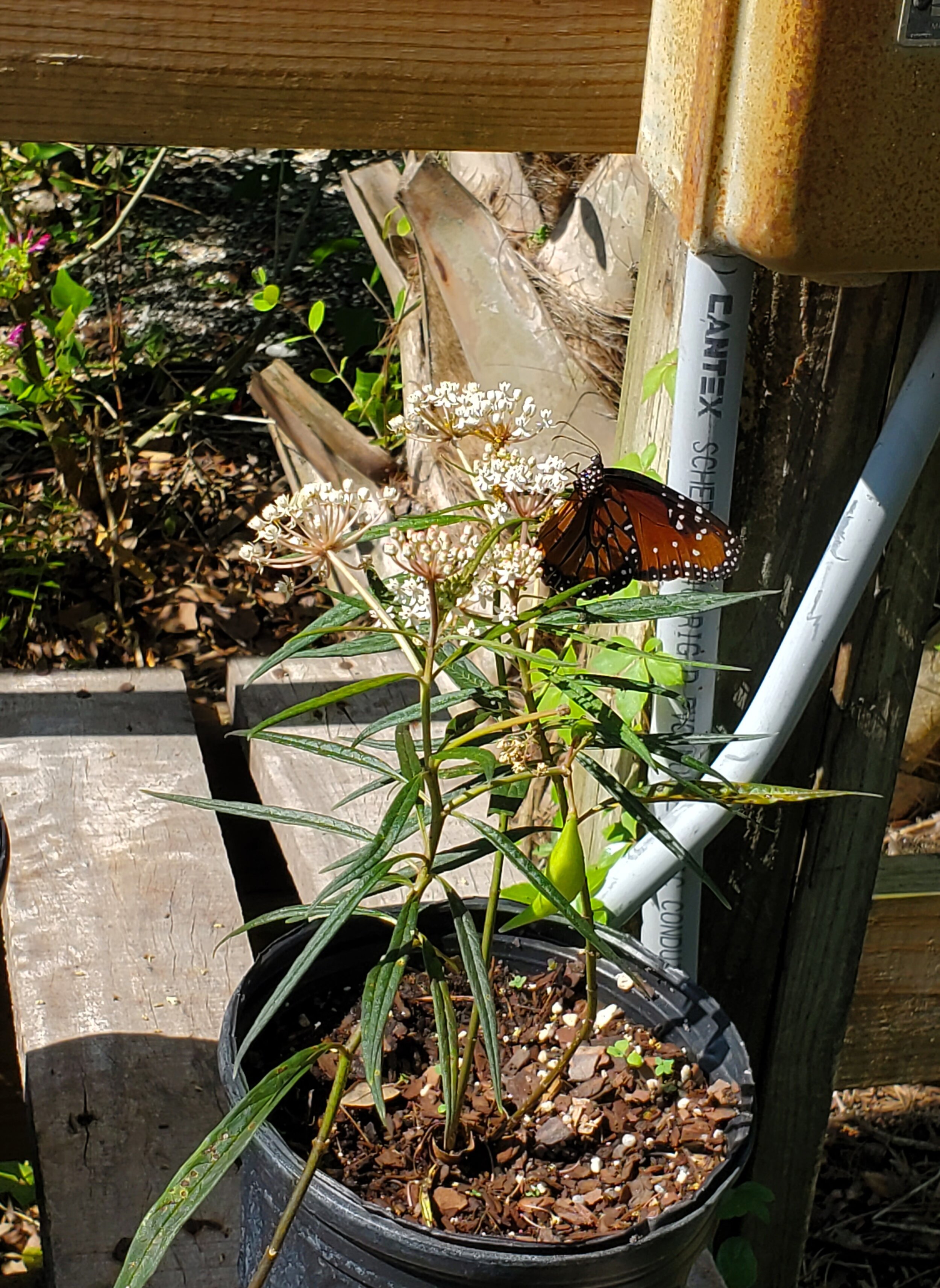
Asclepias perennis
aka Aquatic Milkweed
A. perennis is a perennial, reseeding small wildflower that likes wetter conditions but if planted in shadier spots can be quite drought tolerant once established. It's white flowers bloom from spring though fall and serve as a nectar source for many pollinators. As a native milkweed, this plant is a well-known host for Monarch and Queen butterflies, but it also serves as a host plant for a few cool moths and unique to this genus bugs. A. perennis works well in butterfly gardens, along pond edges and in containers.
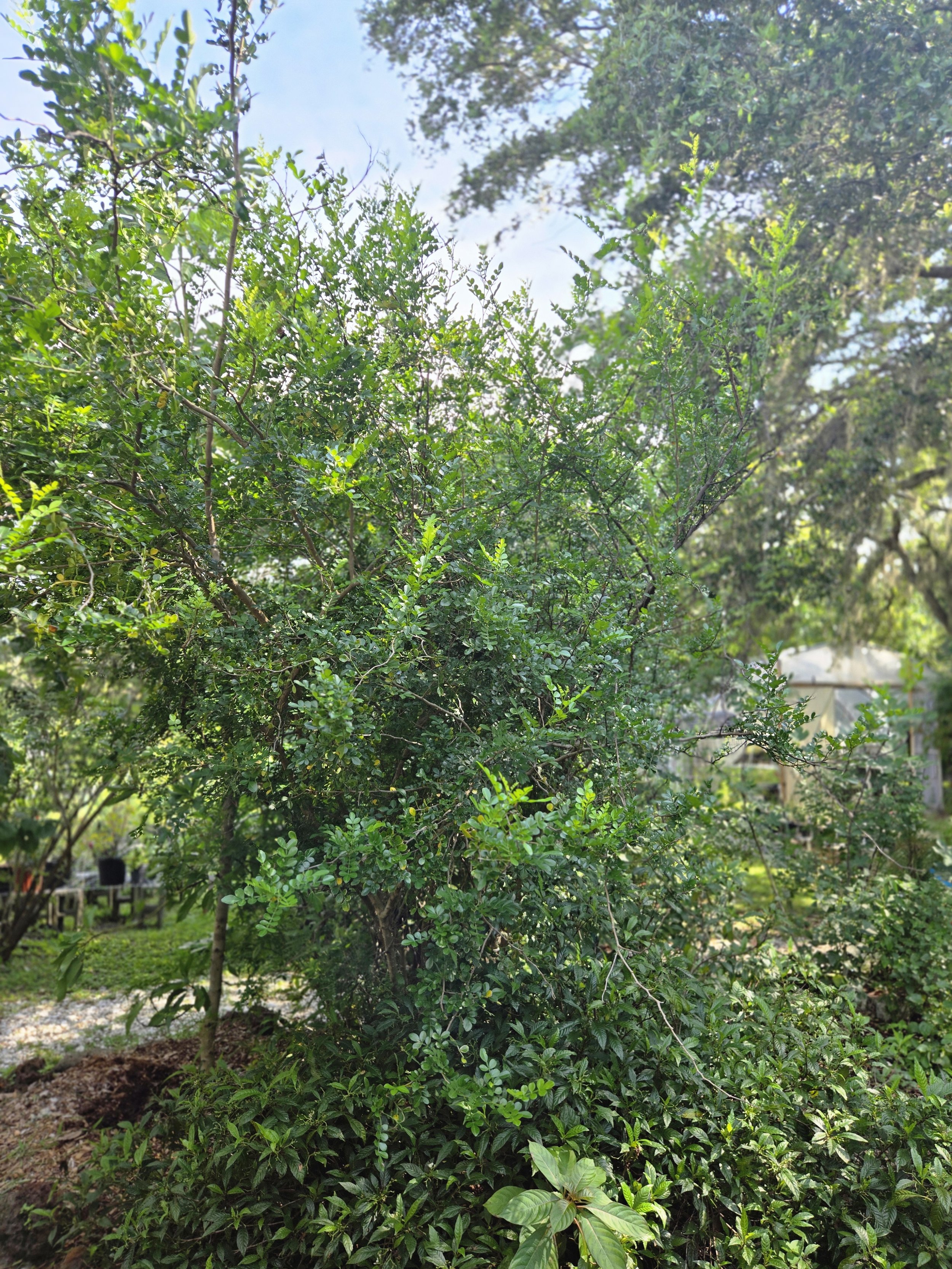
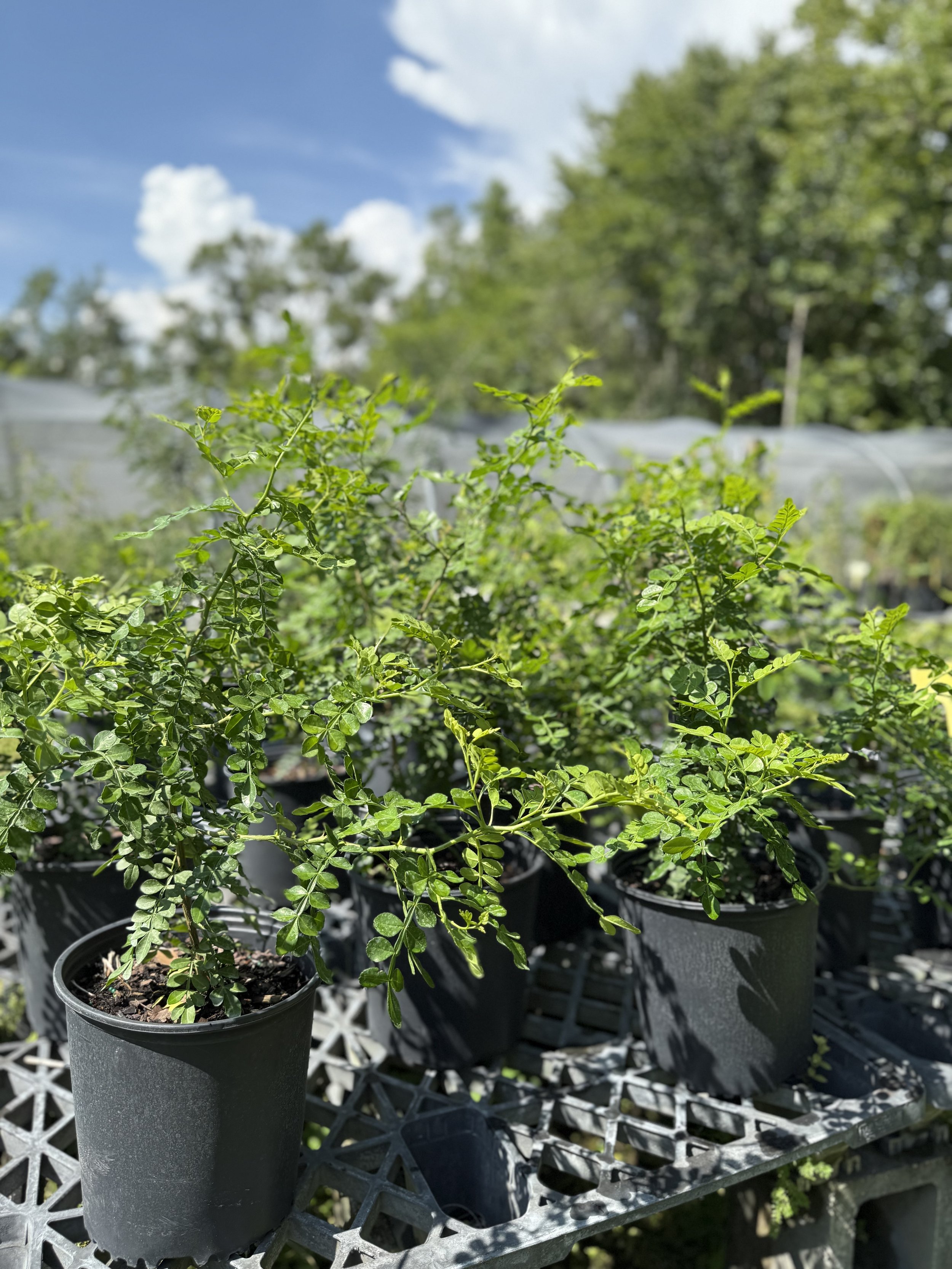
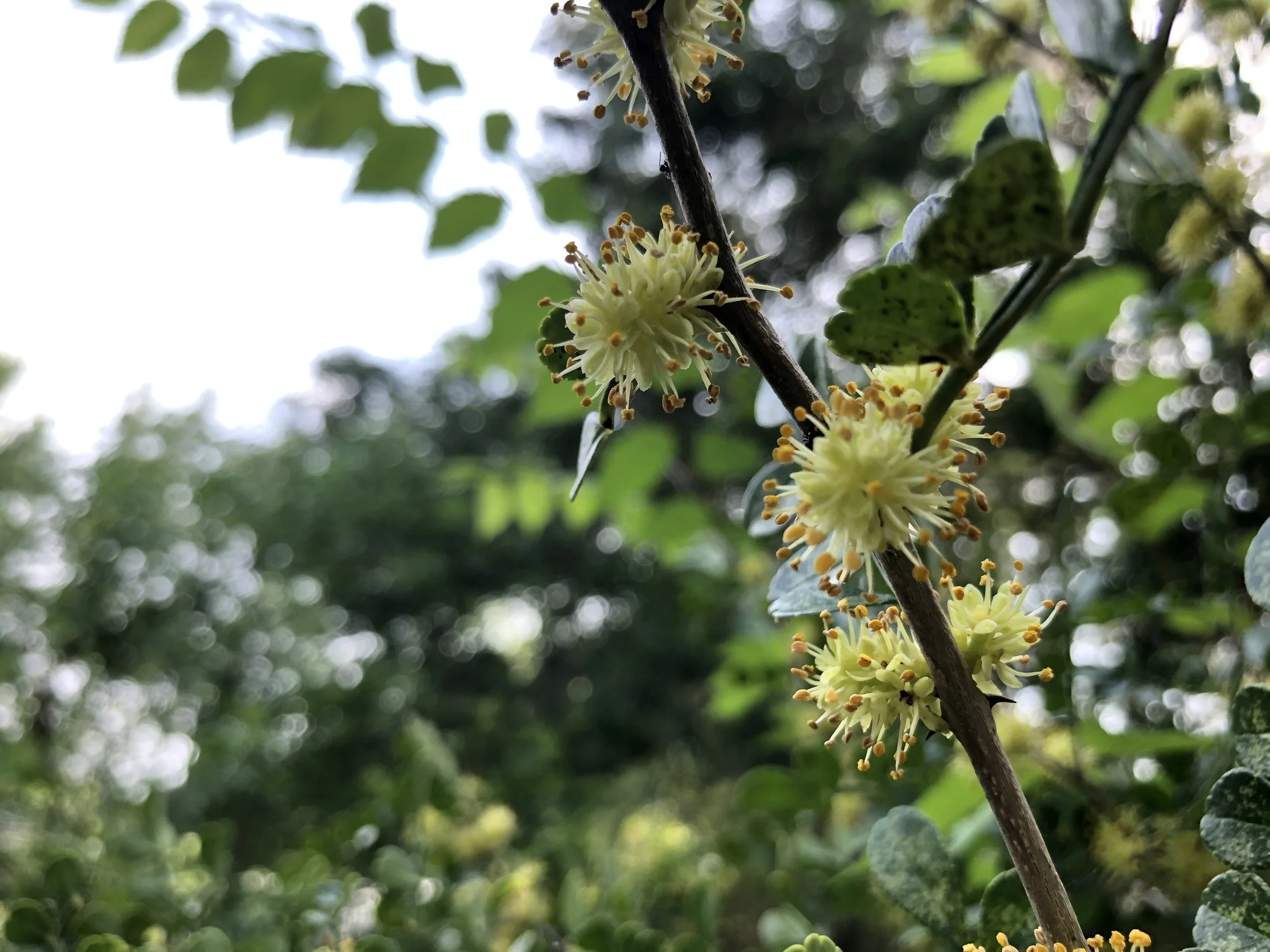
Zanthoxylum fagara
Wild Lime is a native evergreen shrub or small tree native to southern Florida and the Florida Keys that grows up to 23 feet tall with a spreading, often multi-trunked form. This member of the citrus family features compound leaves with distinctly winged leaf stems and 7-11 rounded leaflets that emit a strong lime fragrance when crushed. The trunk and branches are armed with sharp spines, and it produces small, greenish-yellow flowers in dense clusters followed by brown seed capsules containing black seeds. Thriving in hammocks and woodland edges, it serves as a larval host plant for giant swallowtail butterflies and provides cover and food for various wildlife species. With its dense, thorny foliage, it makes an excellent natural barrier or privacy screen for central and south Florida landscapes.
Ulmus alata
Winged Elm is a large, native, deciduous shade tree that grows to be 45’-70’ tall with a 30’-40’ canopy. They grow best in full sun to partial shade and well-draining average soil, though they are highly adaptable to different conditions. These trees have “winged” corky bark and dark green serrated leaves that form a dense canopy, making them an excellent addition to yards in need of shade. Their branches provide cover for birds and small mammals, which feed on the seeds in early spring and the insects that feed on the foliage.


Ilex vomitoria
Yaupon Holly is a tough, evergreen shrub or small tree native to the southeastern United States that grows 15’-25’ tall with a distinctive vase-shaped form. This adaptable species features small, dark green leathery leaves and produces inconspicuous greenish-white flowers in spring, followed by brilliant red berries on female plants that attract birds and wildlife. Historically used by Native Americans to make caffeinated ceremonial tea, it's extremely drought and salt-tolerant, thriving in a wide range of conditions from full sun to shade and various soil types. Hardy in zones 7-10, it's valued for its versatility as a hedge, specimen tree, or screen, though it tends to sucker from the roots and may require regular pruning to maintain form.
No results match your search. Try removing a few filters.