Hi Friends!
We offer PICK UP or LOCAL DELIVERY only (NO SHIPPING).
Thank you!
Thursday–Sunday, 10am–4pm | 941-322-1915
We offer PICK UP or LOCAL DELIVERY only (NO SHIPPING).
Thank you!
Thursday–Sunday, 10am–4pm | 941-322-1915
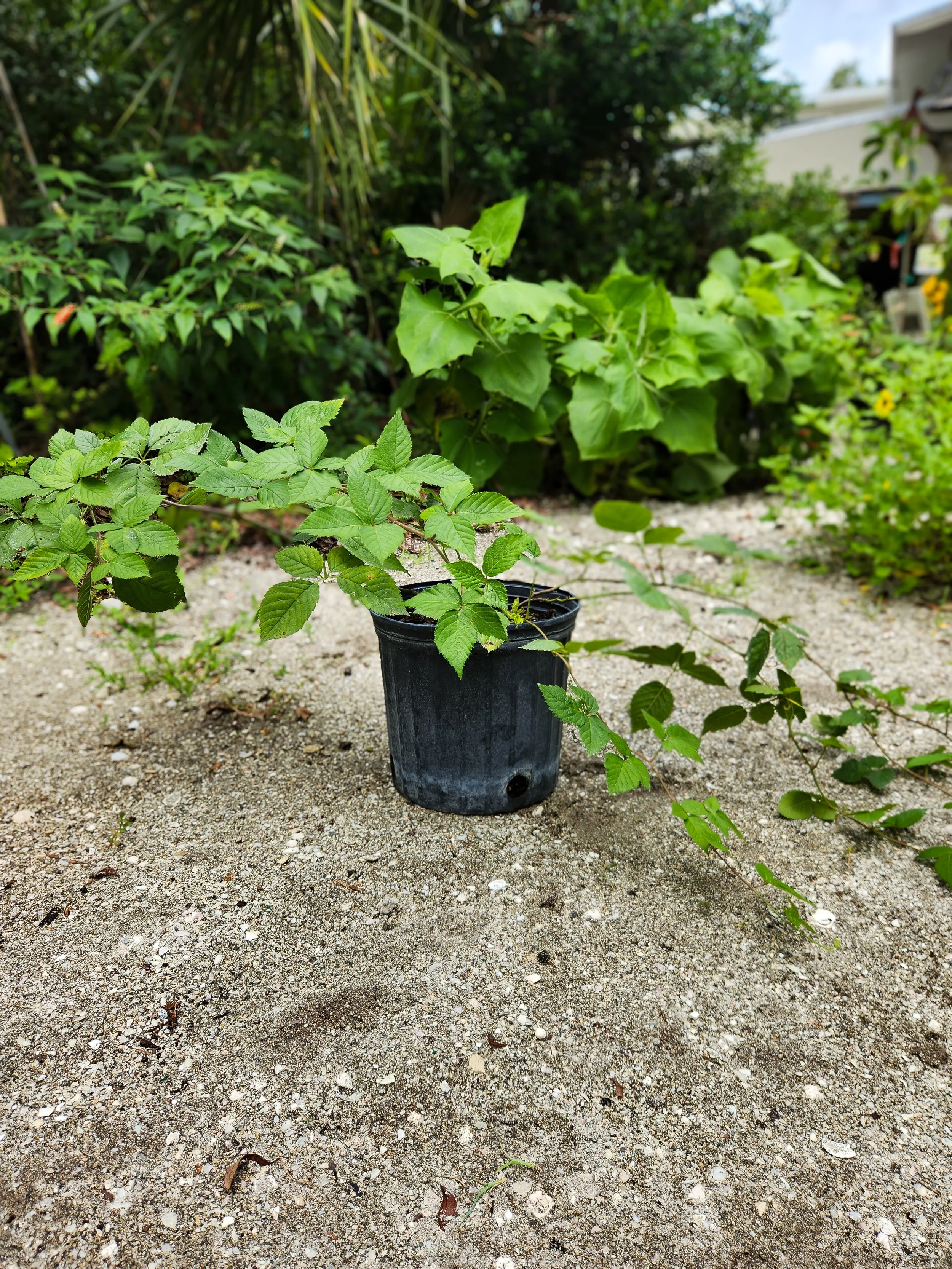
Rubus fruticosus 'Natchez'
Thornless Blackberry ‘Natchez’ is a non-native, Florida-friendly, deciduous, edible vining shrub that grows 4’-6’ tall and 4’-5’ wide. They do well in full sun, and rich, moist, slightly acidic soil. The flowers attract pollinators and the fruit are edible for birds and humans.
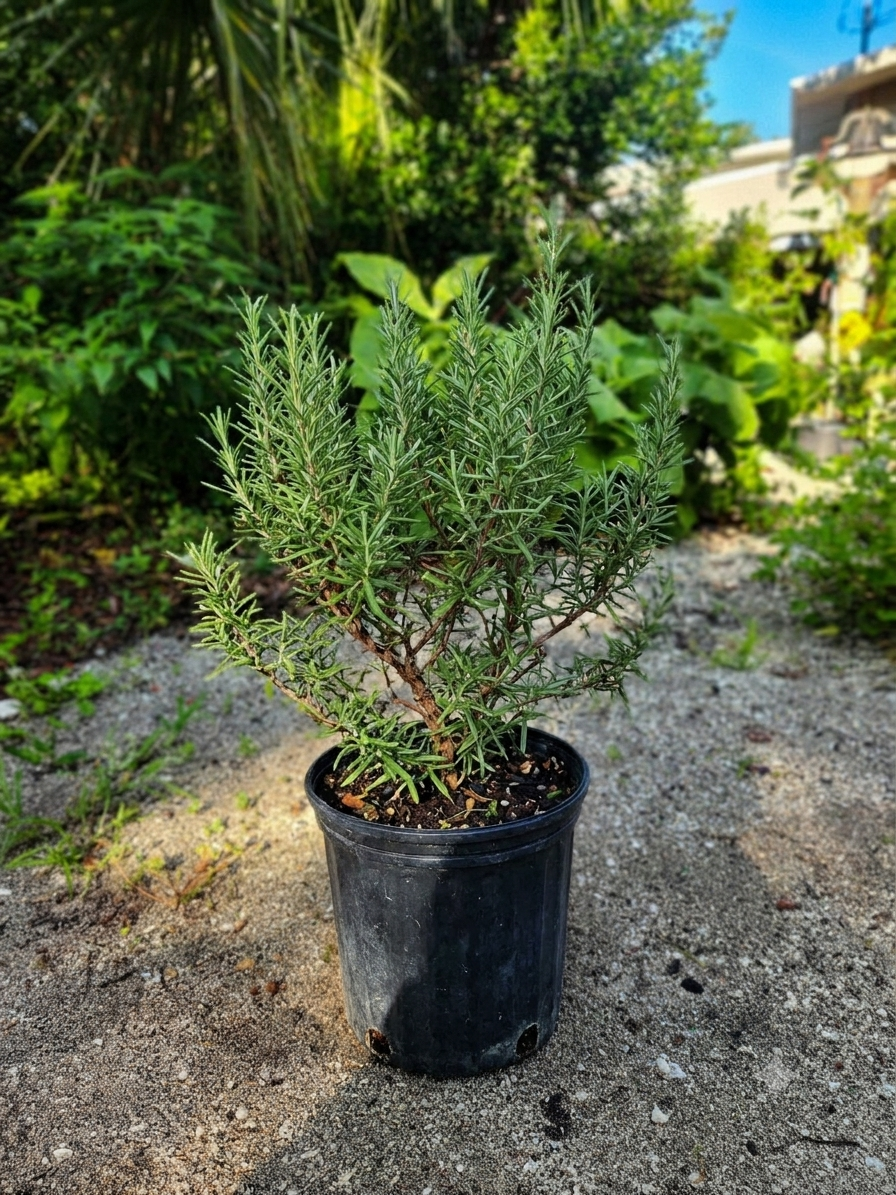
Salvia rosmarinus
Rosemary is a non-native, Florida-friendly evergreen woody herb that serves a purpose in the garden and the kitchen. Reaching 2’-5’ in height, with full sun and dry to average, well-draining sandy or rocky soil, Rosemary is a great drought-tolerant herb that handles the Florida heat very well. With flowers for pollinators from late winter to spring, and an undeniably delicious flavor when using the leaves, this plant can be used in a butterfly garden and in teas, soups, and roasts.
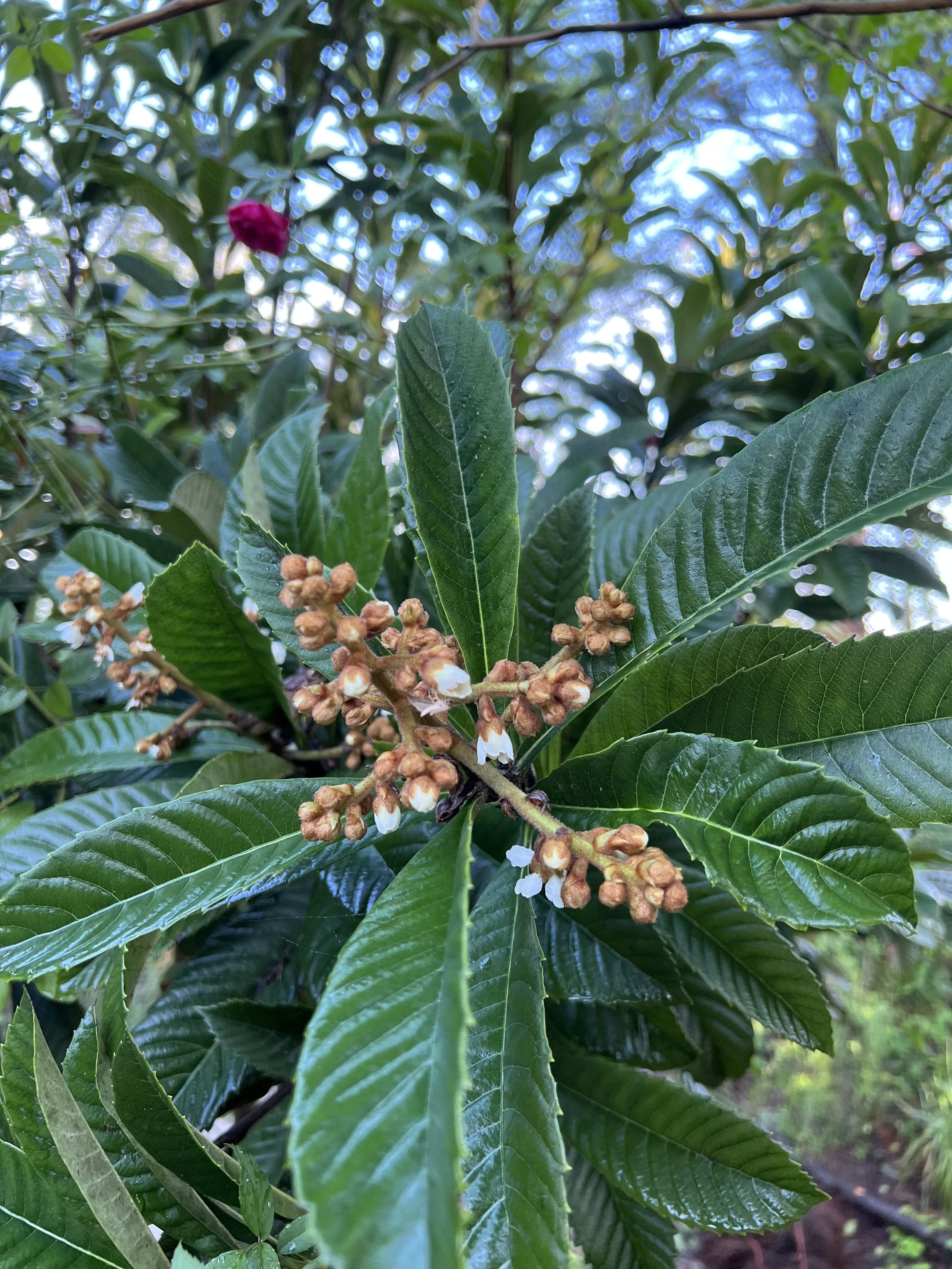
Eriobotrya japonica
Loquat is a non-native, Florida-friendly, evergreen fruiting tree that grows 15’-25’ tall. They grow best in full sun to partial shade, with average, well-draining sandy, clay, or loamy soil. Their flowers are highly attractive to butterflies and other pollinators, and their apricot-like fruit can be enjoyed by humans and wildlife alike.
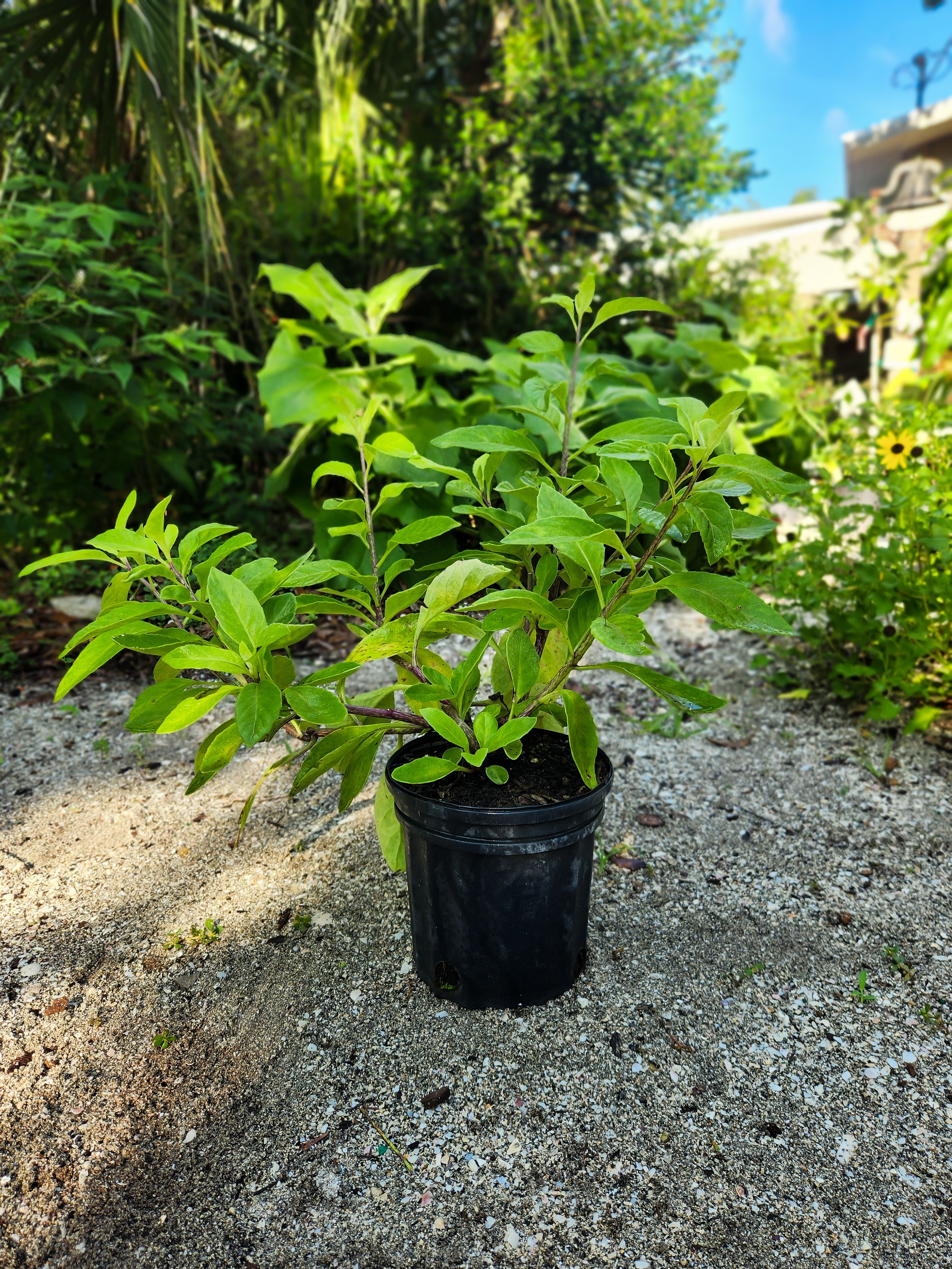
Gynura procumbens
Longevity Spinach is a non-native, Florida-friendly, edible trailing vine that grows best in indirect sun or partial shade, with rich, well-draining soil. Unlike some greens, Longevity Spinach is known for its extreme heat and humidity tolerance, making it an ideal choice for many Florida gardens and landscapes. The leaves can be enjoyed raw or cooked, and have a variety of culinary applications, such as salads, smoothies, and soups and stir-fries.
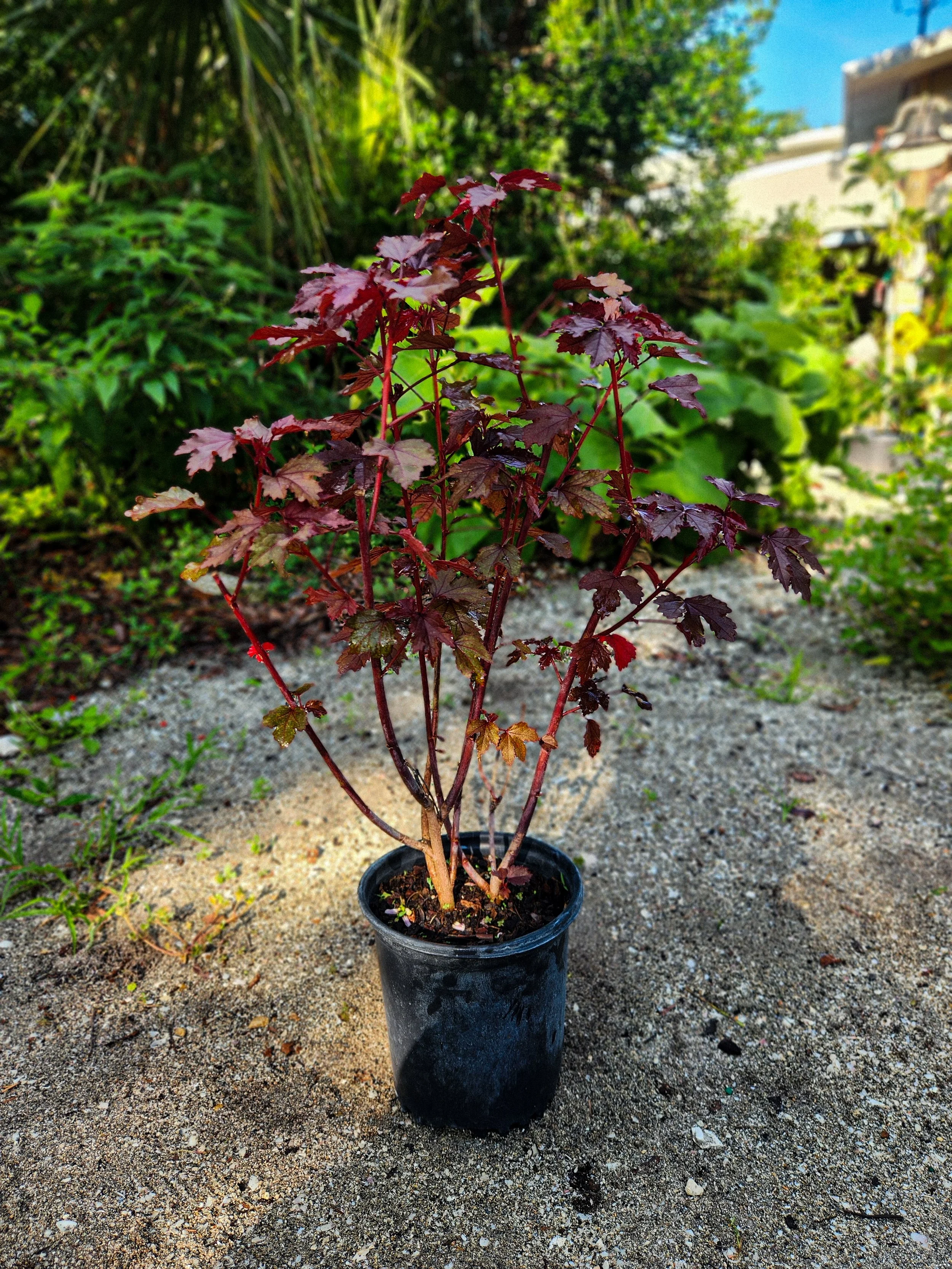
Hibiscus acetosella
Cranberry Hibiscus is a non-native, Florida-friendly flowering shrub that grows to be 3’-5’ tall. These fast-growing plants feature dark red stems, foliage, and flowers, making them a dramatic addition to gardens and landscapes. They grow best in full sun and loose, rich organic soil. In addition to bringing in butterflies, pollinators, and hummingbirds, their flowers are edible for humans, and can be used to make teas, along with the young leaves.
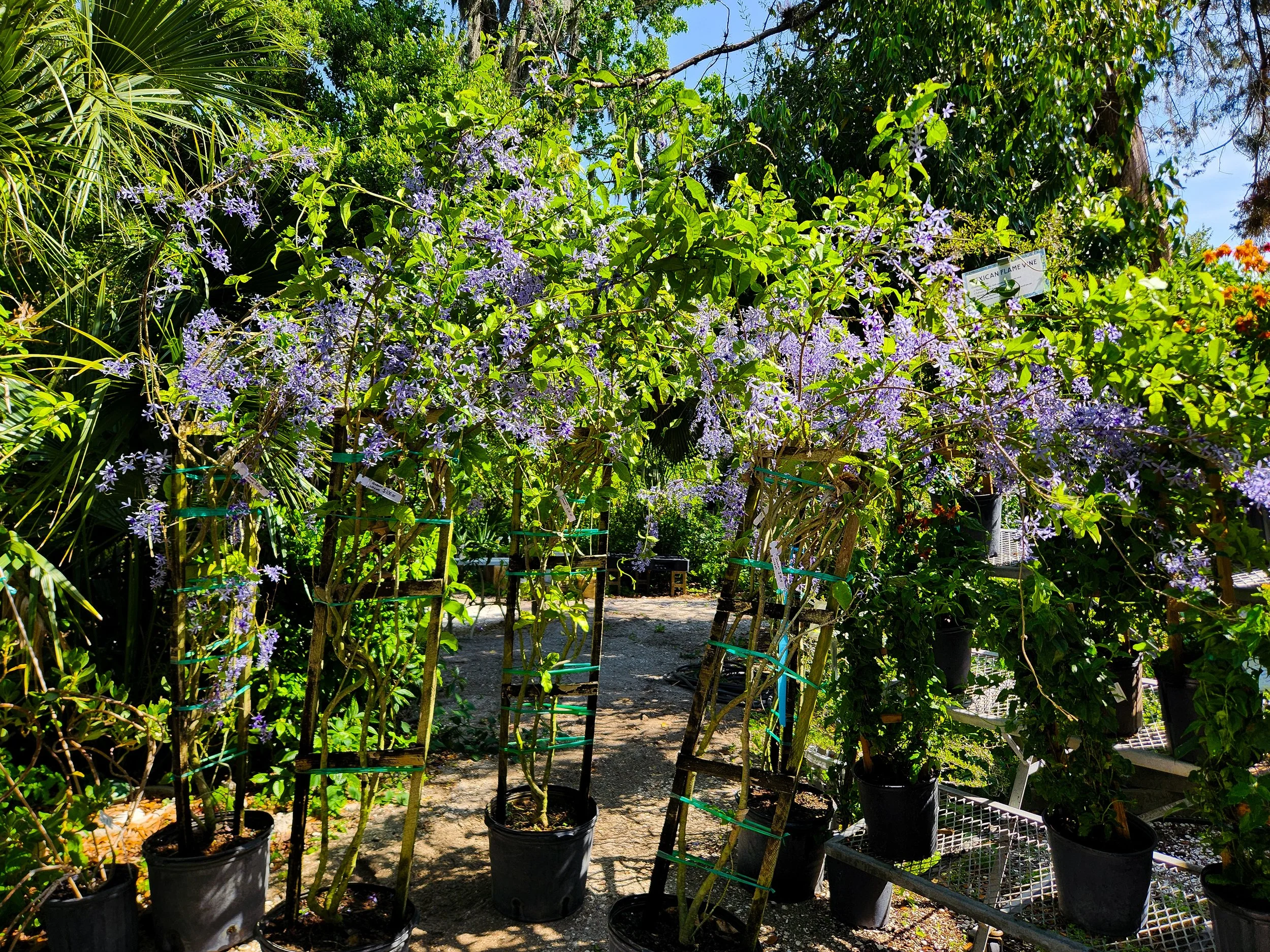
Petrea volubilis
Queen’s Wreath is a non-native, Florida-friendly, fast-growing evergreen vine. It grows best in full sun to part shade, but flowers more abundantly in full sun, and average soil; they are somewhat drought tolerant once established. These vines have showy purple flowers that bloom profusely from Feb-June, which are highly attractive to bees, butterflies, and hummingbirds.
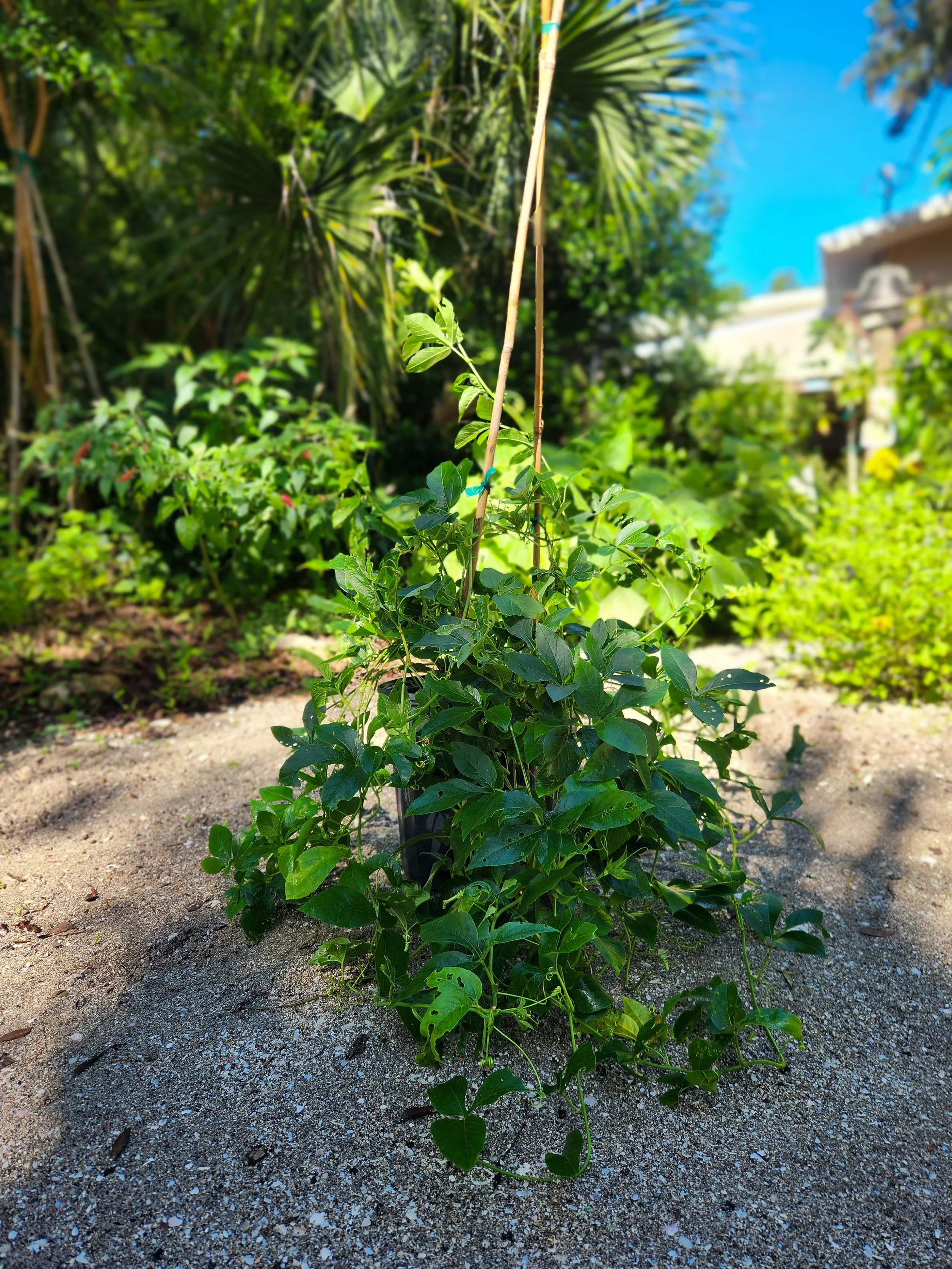
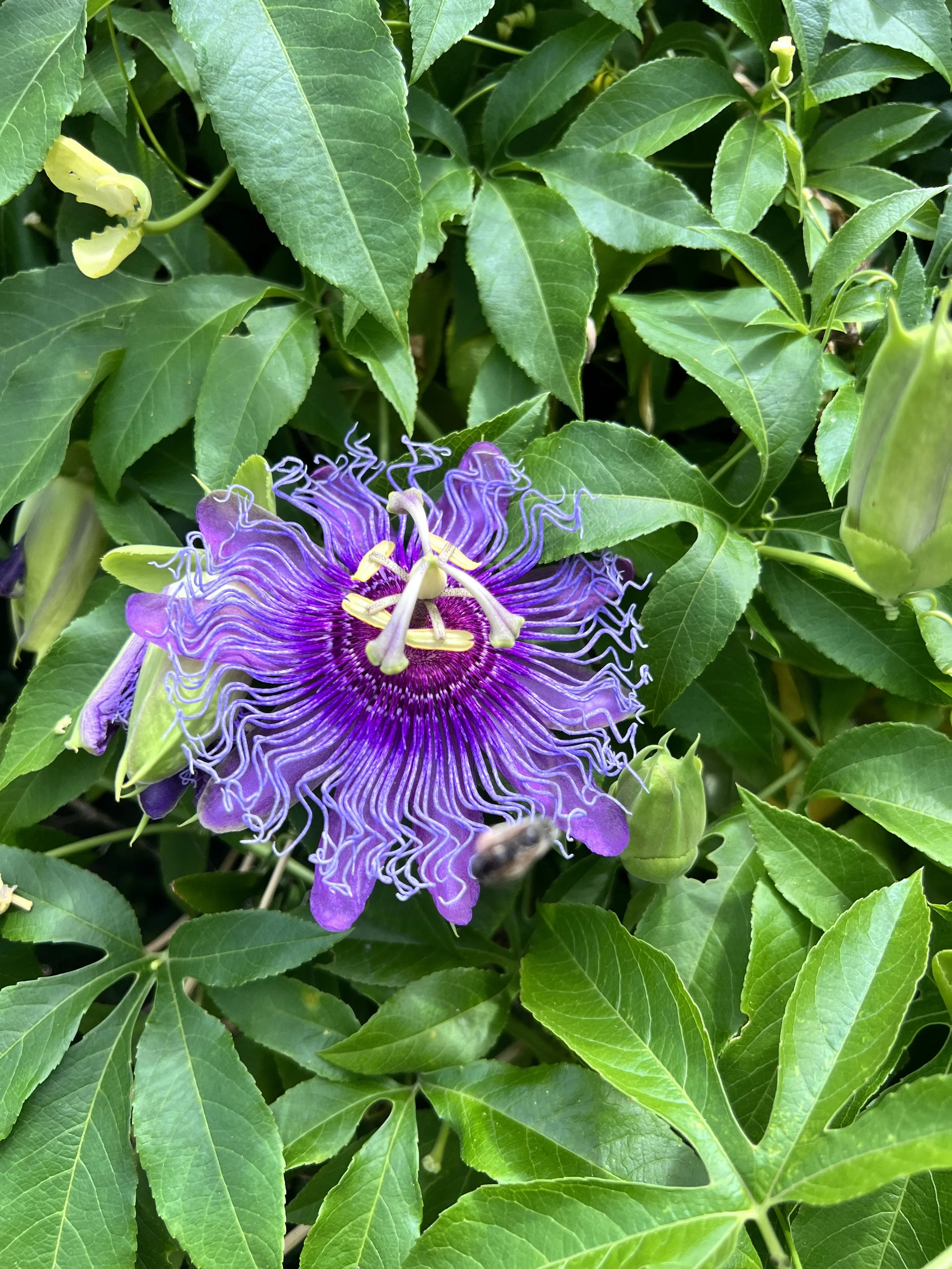
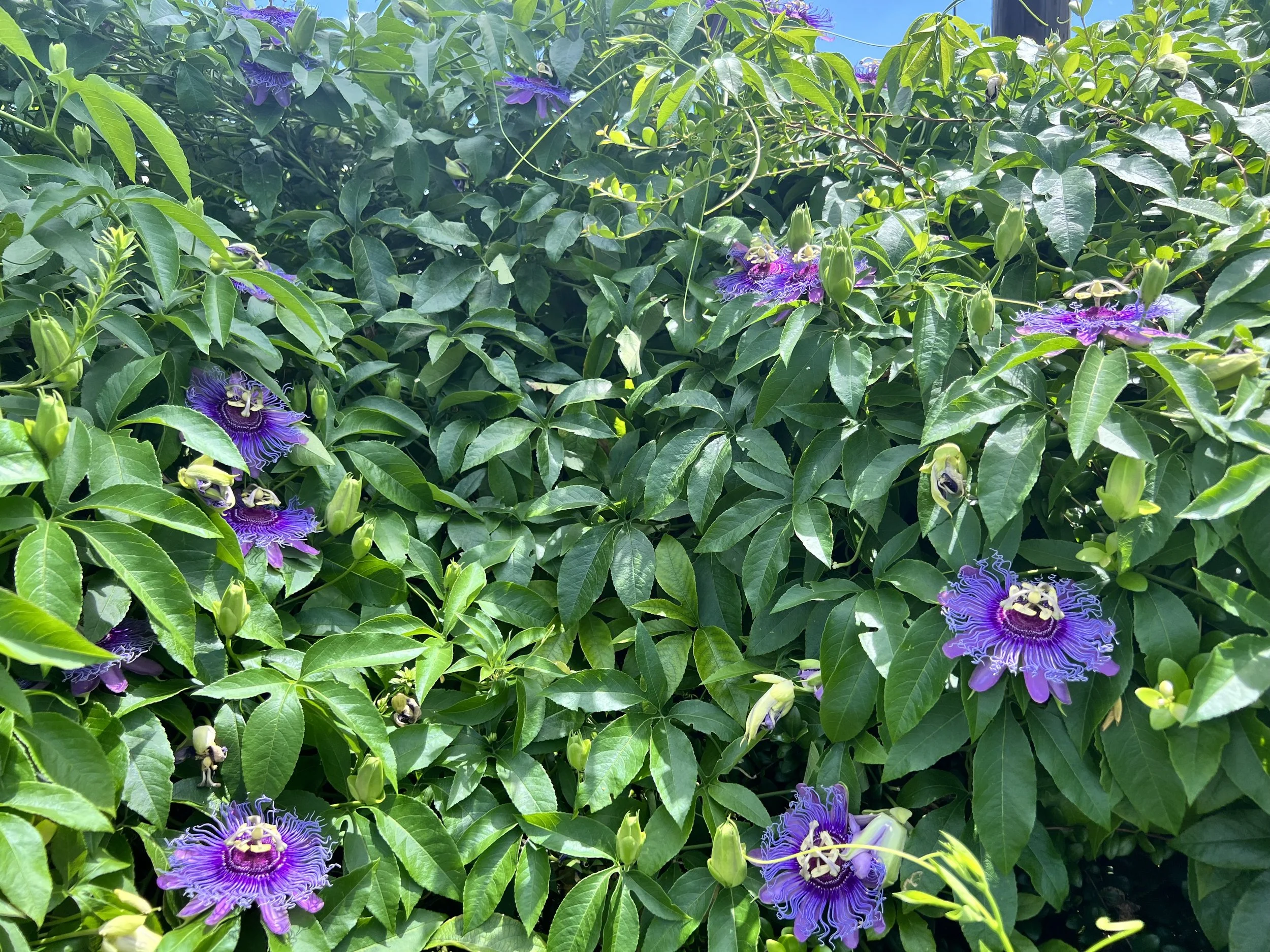
Passiflora 'Incense'
Incense Passionvine is a non-native, Florida-friendly hybrid passionvine that is a cross of the native Maypop Passionvine and a South American variety. They can grow 10’-20’ with support, and do well in full sun to shade, with well-draining, rich organic soil. These vines have dark green leaves and beautiful, fragrant blooms that bring in butterflies and pollinators. They also serve as a larval hot for Gulf Fritillary, Zebra Longwing, and Julia butterflies.

Stachytarpheta frantzii
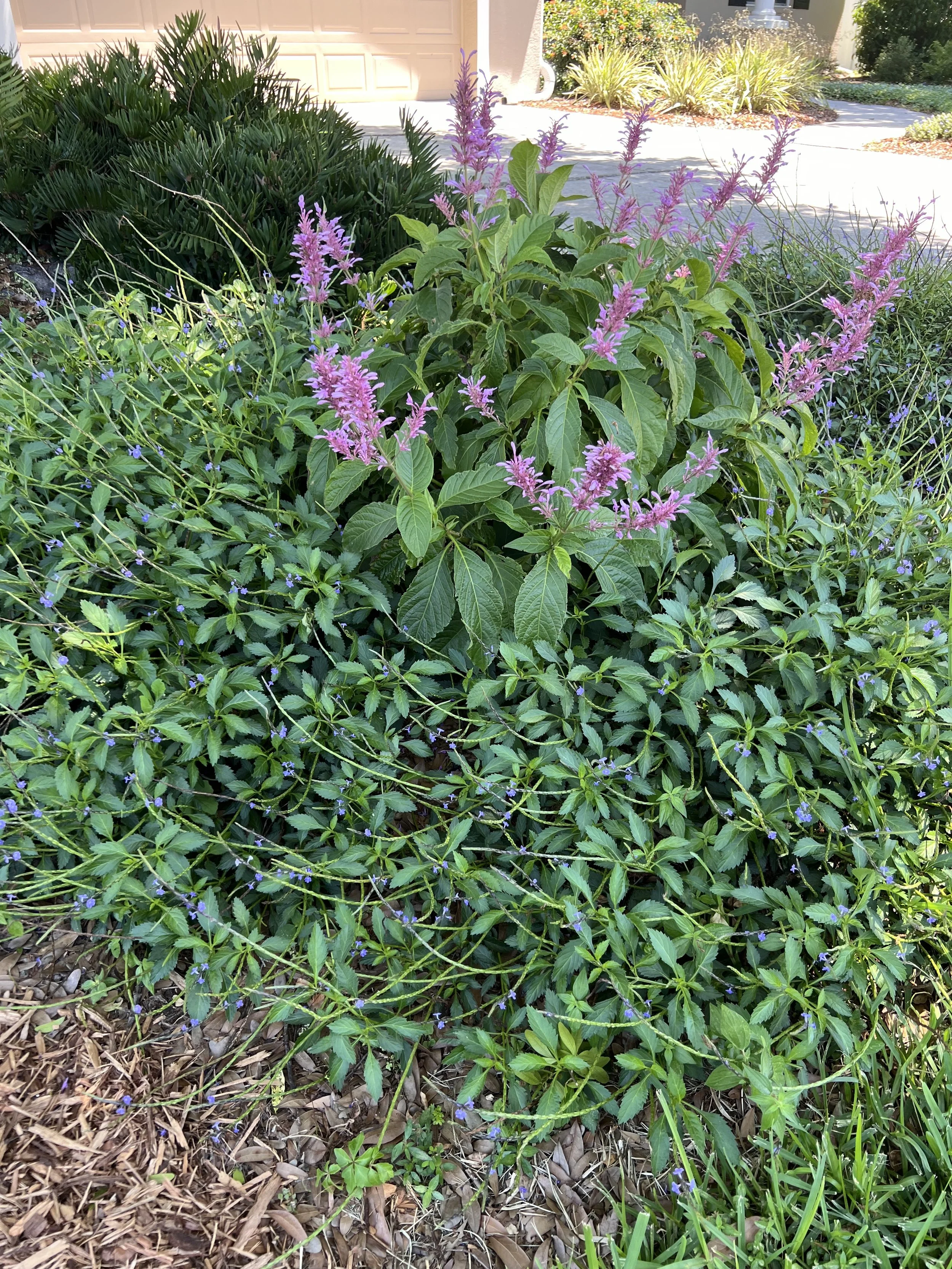
Purple Porterweed is a non-native, Florida-friendly flowering shrub that grows 3’-4’ tall and wide. They grow best in full sun and average to moist sandy soil. Their purple flower spikes bloom from spring until the first frost and serve as a nectar source for bees, butterflies, and hummingbirds.
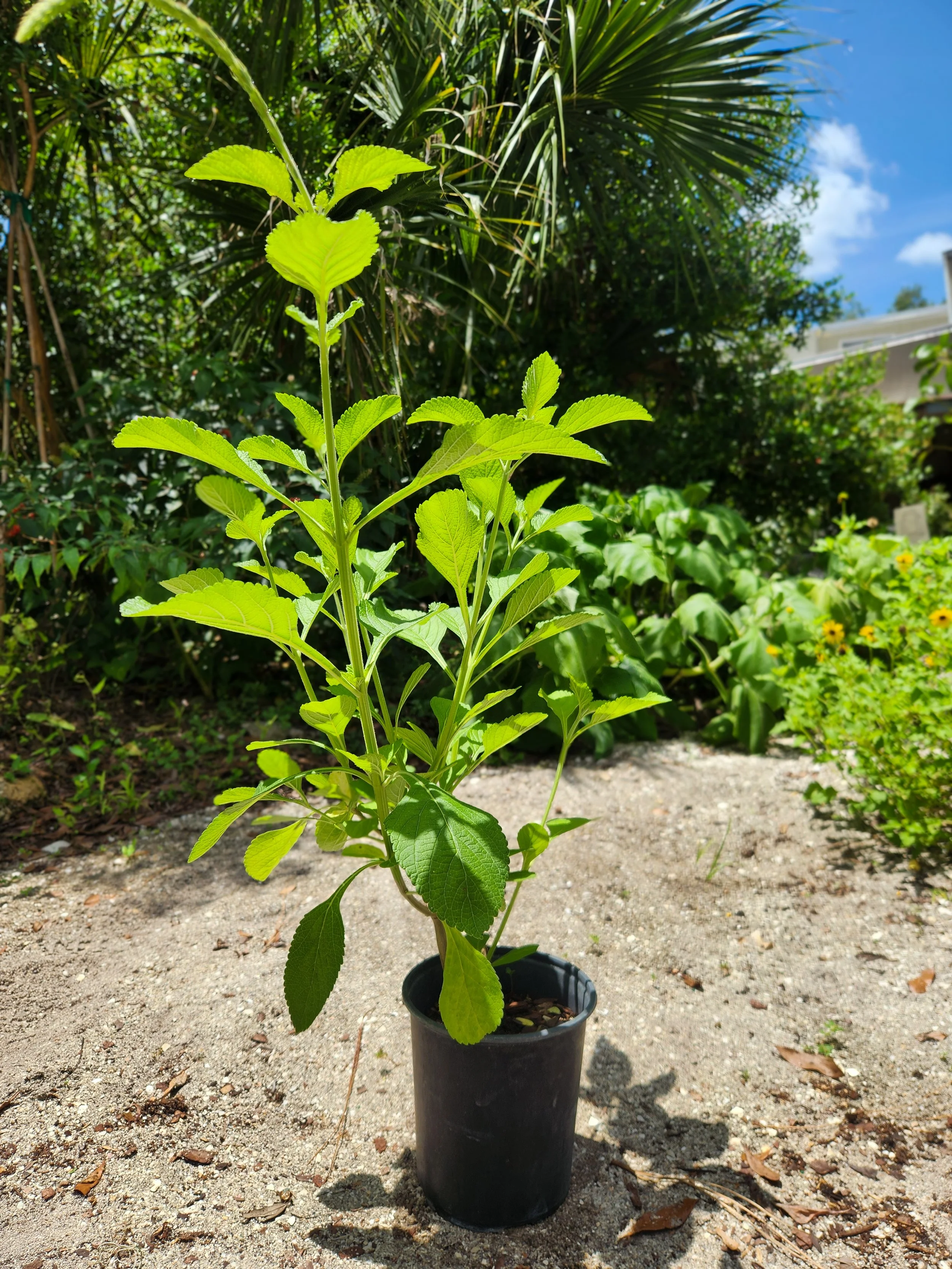
Stachytarpheta mutabilis
Coral Porterweed is a non-native, Florida-friendly fast-growing flowering shrub, growing 4’-6’ tall and 3’-5’ wide. They grow best in full sun to partial shade and average sandy soil, with moderate drought tolerance once they’re established. They bloom throughout the warm months, with salmon-colored bloom spikes that are highly attractive to hummingbirds, bees, and butterflies.
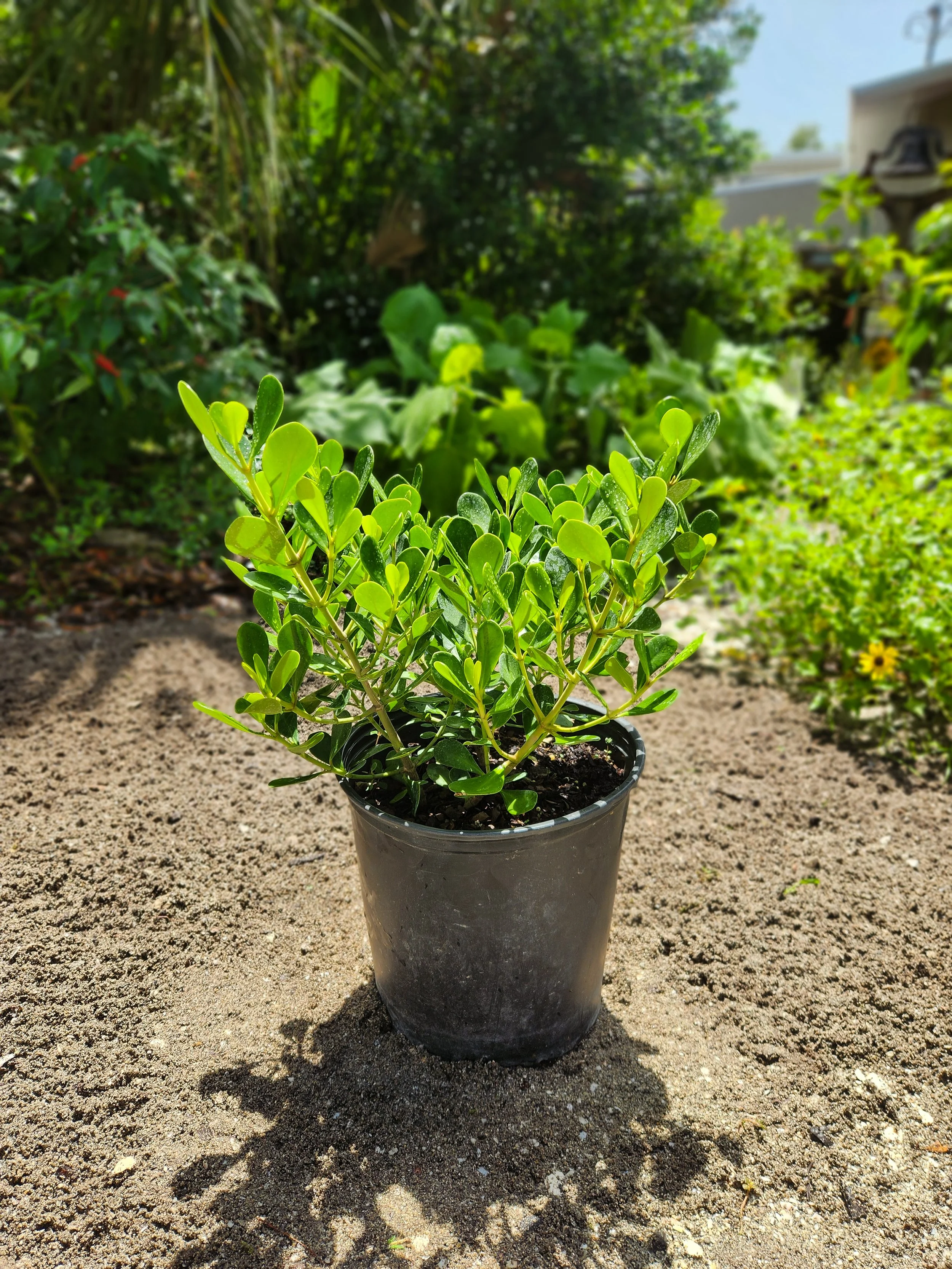
Clusia guttifera ‘Nana’
Dwarf Pitch Apple is a compact, slow-growing cultivar of the native Florida pitch apple that stays low to the ground as a spreading shrub. This semi-succulent plant features the same distinctive thick, leathery paddle-shaped leaves as its full-sized parent but in a much more manageable form, typically reaching only 2-4 feet in height and spreading wider than it is tall. It produces waxy pink and white flowers with apple-like buds and can develop aerial roots, adding to its unique tropical appearance. Extremely low-maintenance and drought-tolerant once established, it thrives in full sun to partial shade and serves as an excellent border plant or accent specimen for South Florida landscapes in zones 9-11.
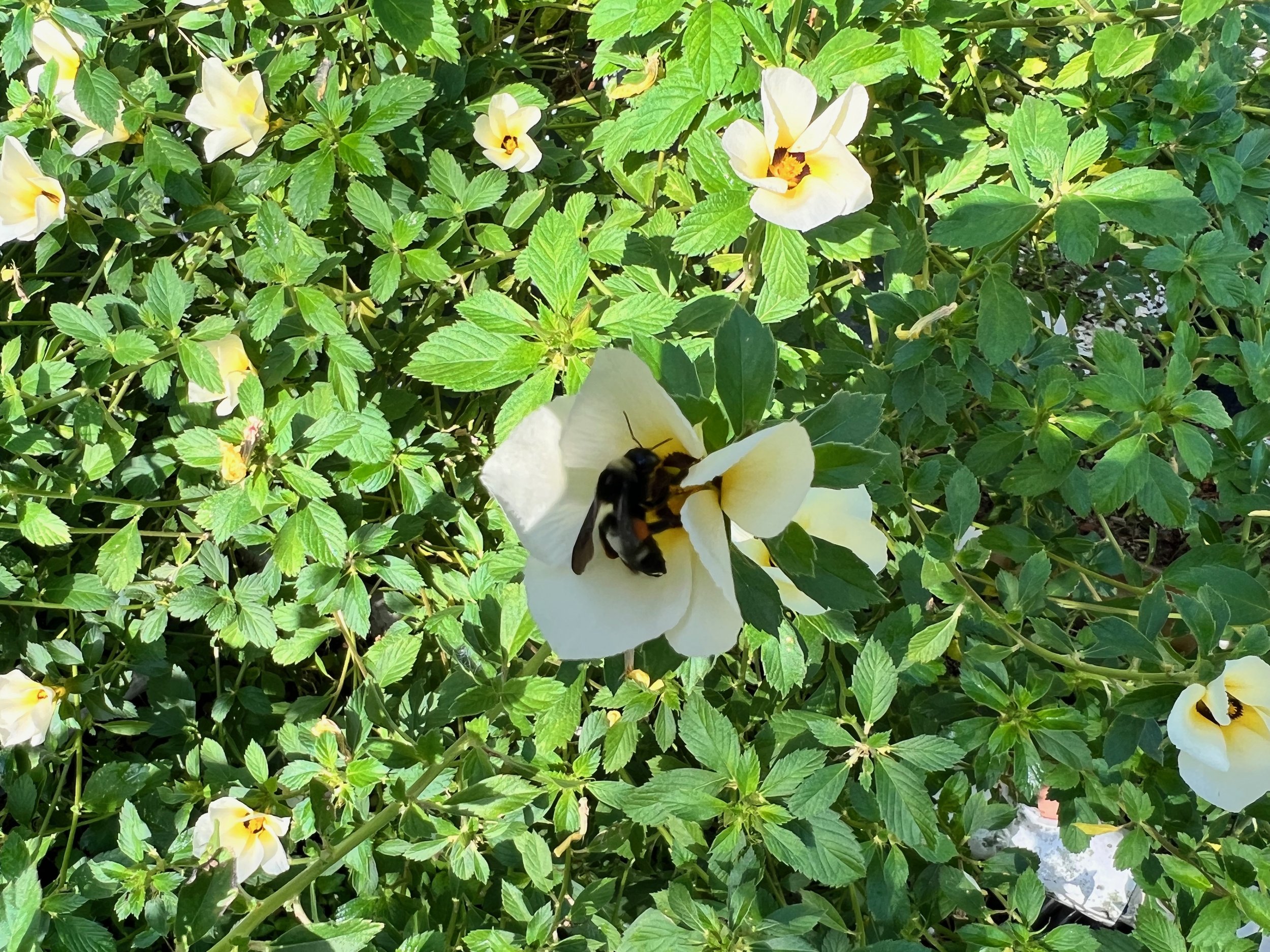
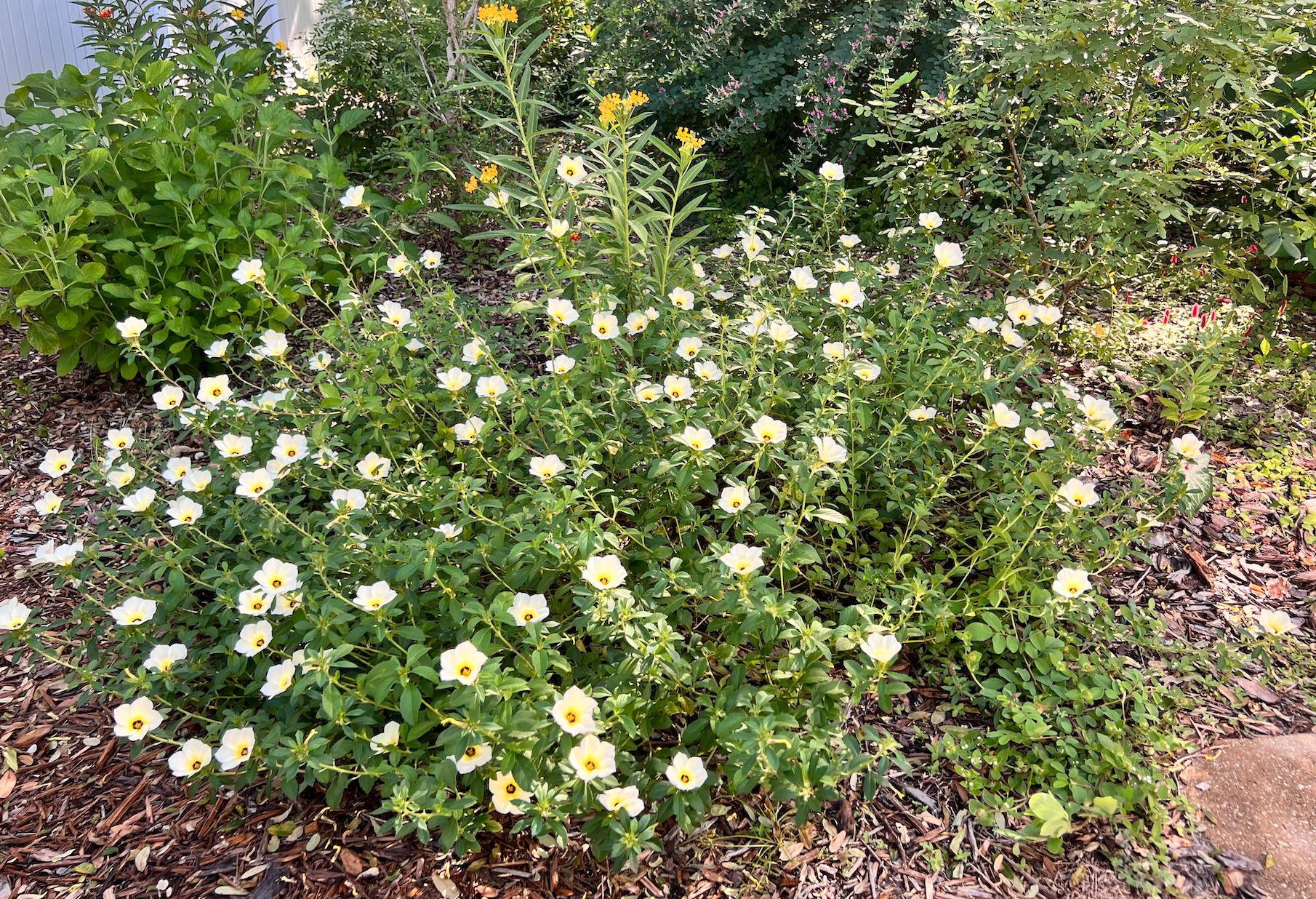
Turnera ulmifolia ‘Alba’
White Beach Buttercup is an eye-catching non-native Florida friendly that blooms throughout the year. It is a low-growing, sprawling subshrub with dark green leaves and flowers that open in the morning and close up by noon. White Beach Buttercup grows in full sun to part shade and average to moist well-draining soils. While it can grow a little leggy, you can trim it back to keep it more dense and amend the soil with a slow-release organic fertilizer or compost occasionally. The creamy-white flowers with a yellow blushed, “black-eye” attract bumblebees, carpenter bees, hummingbirds, and other pollinators.
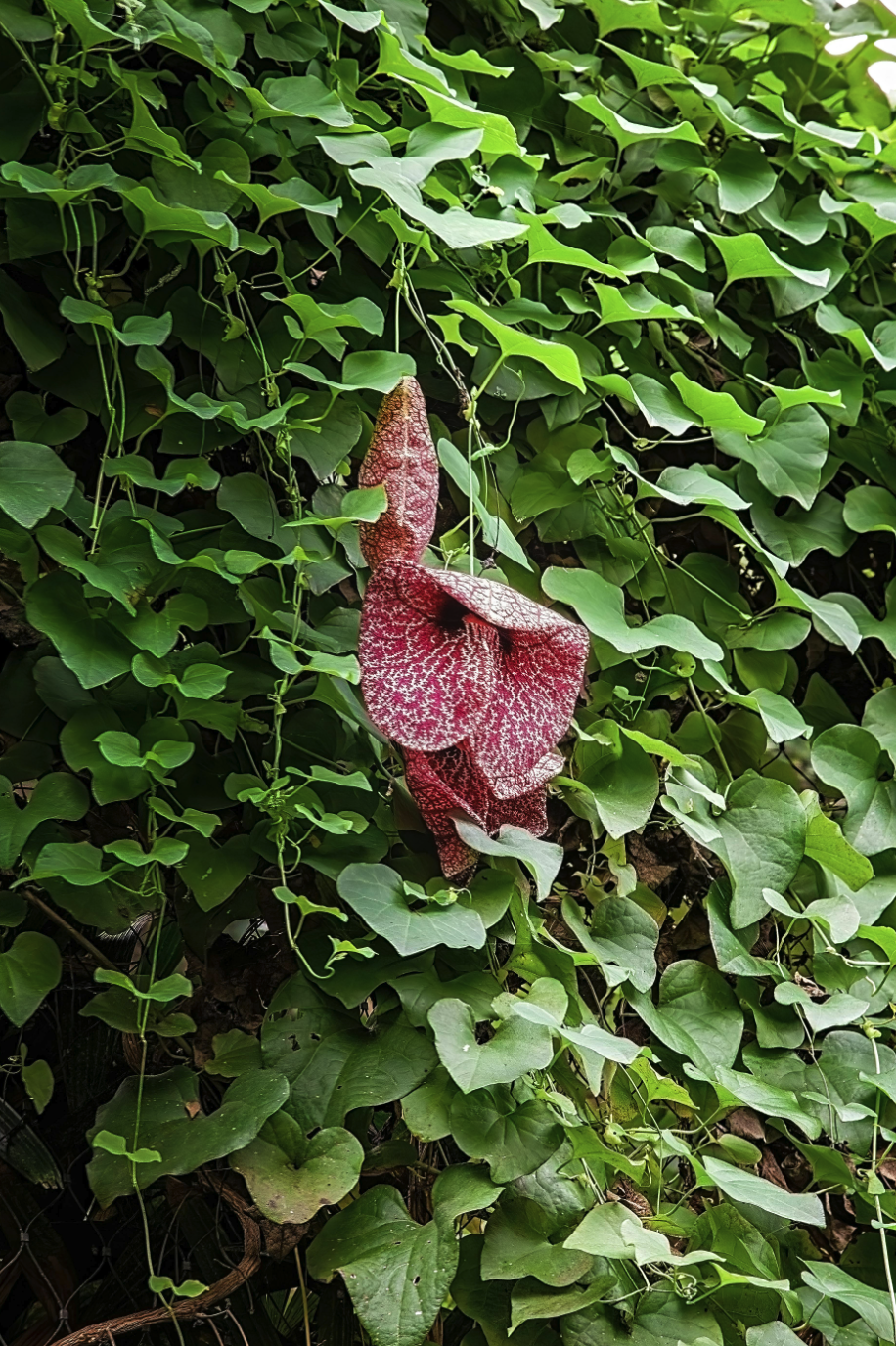
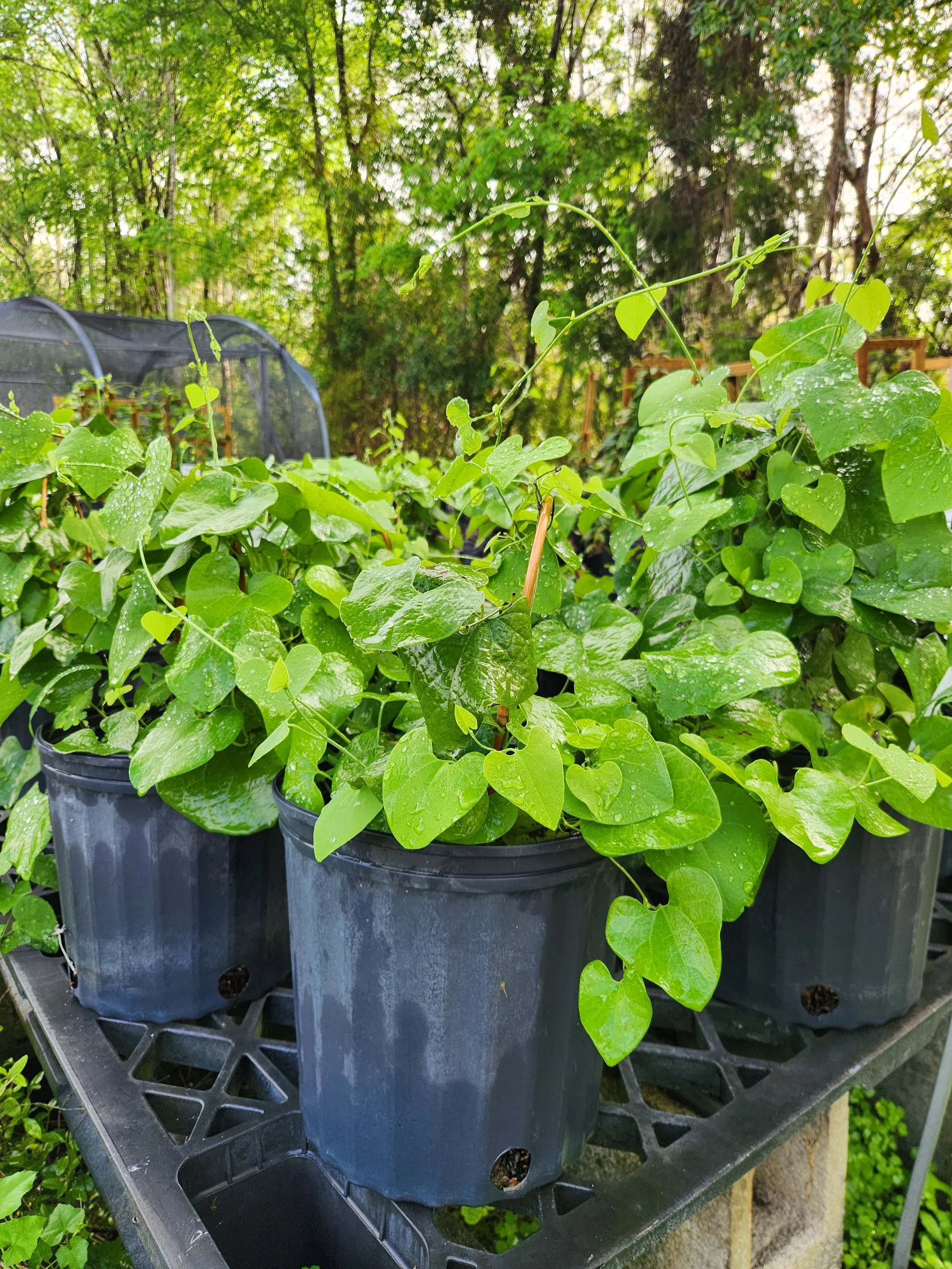
Aristolochia macrophylla
Pipevine is a Florida-friendly deciduous climbing vine that grows up to 15ft with large, heart-shaped leaves reaching 12in long. The leaves overlap in a shingle-like pattern to create dense screening, making it excellent for privacy on arbors, trellises, or fences. In late spring to early summer, it produces distinctive pipe-shaped flowers that are greenish-yellow and mottled with burgundy, though they're often hidden beneath the lush foliage. Native to moist woodlands and stream banks, it serves as the primary host plant for the Pipevine Swallowtail butterfly. This shade-tolerant vine prefers rich, moist soil and requires consistent moisture, making it unsuitable for dry conditions.
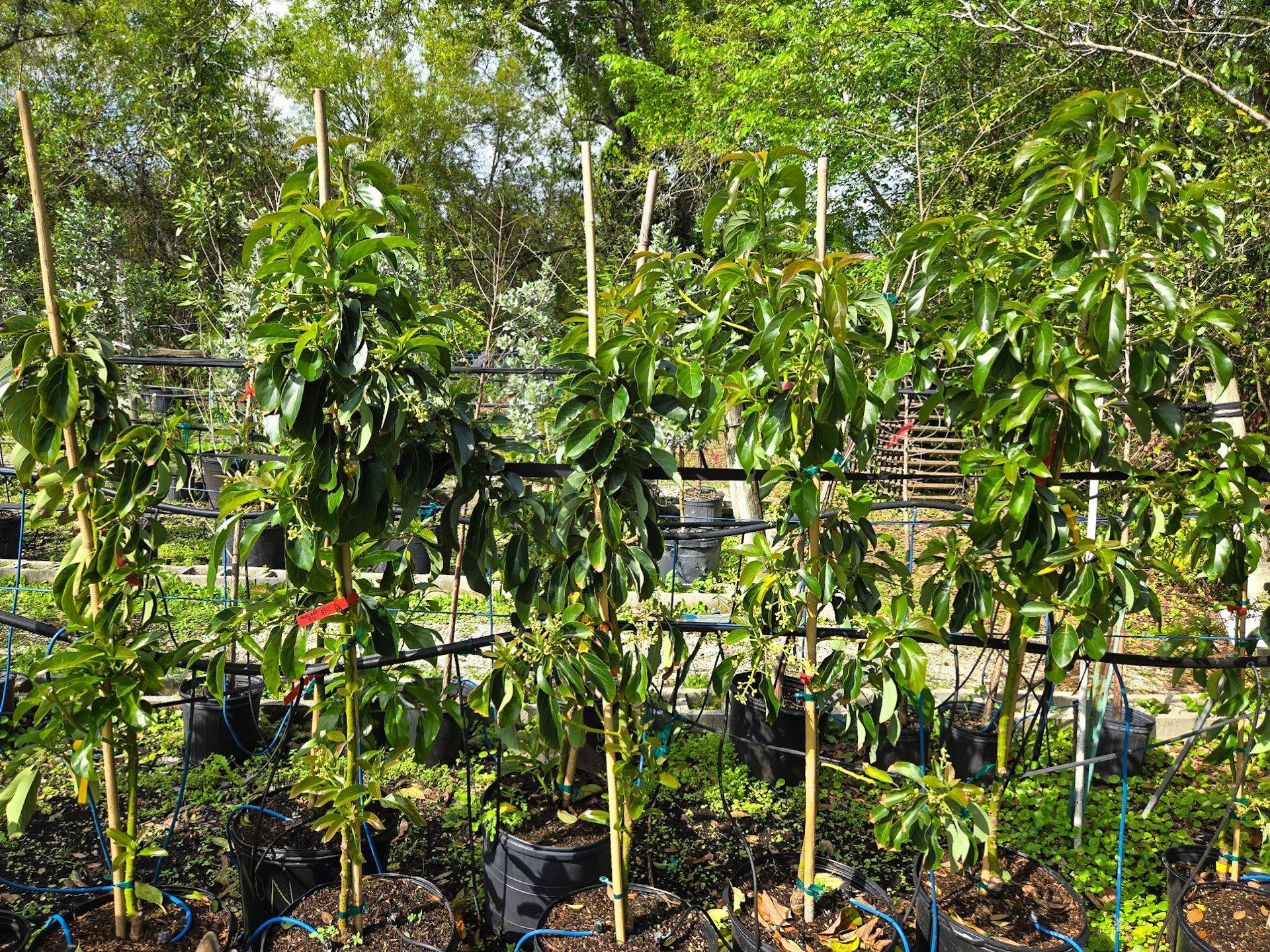
Persea americana
Florida-friendly, evergreen, fast-growing fruit tree; 30’-50’ tall, but can be kept at 10’ tall for easy fruit picking. Full sun is best for fruit production, with average to dry, well-drained soil; not flood-tolerant. Should be planted 25’-30’ away from trees or buildings.
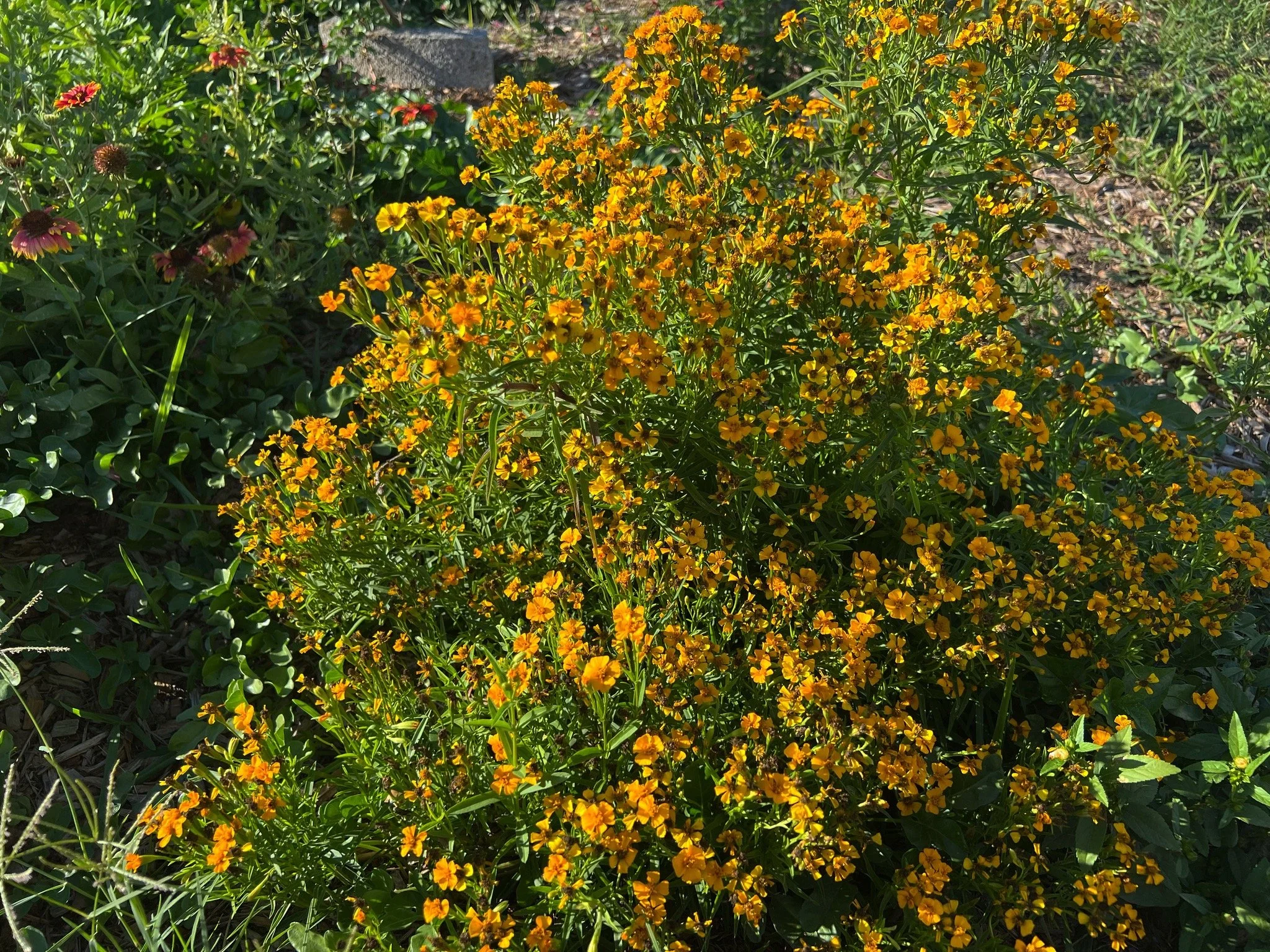
Tagetes lucida
This hardy herb is a must-have for warm-climate herb gardeners. Its glossy, narrow leaves produce a sweet fragrance and flavor remarkably similar to licorice or anise and its golden flowers are super showy.
Flavor Profile: A bold, sweet anise scent and flavor. It holds up much better in cooked dishes than French Tarragon.
Pollinator Friendly: In late summer and fall, the plant is covered in clusters of small, golden-yellow flowers that attract butterflies and bees.
Heat & Drought Tolerant: Unlike traditional tarragon, this variety loves the sun and handles humidity and dry spells with ease.
Garden Versatility: Grows into a tidy, upright bush (roughly 2–3 feet tall), making it perfect for borders, containers, or dedicated herb "cocktail" gardens.
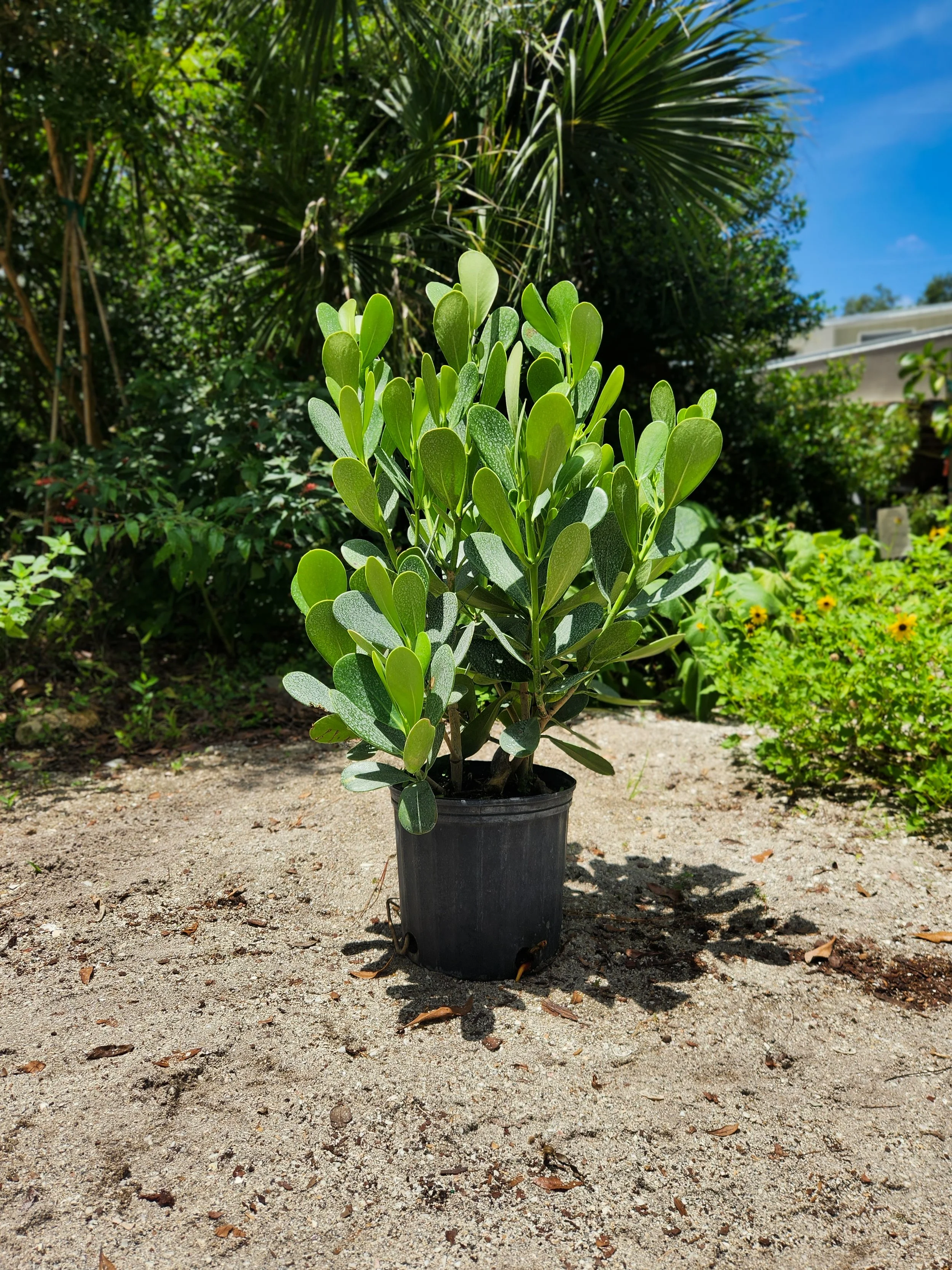
Clusia guttiferra
Non-native, Florida-friendly, prunable evergreen shrub. Pitch Apples can reach a height of about 15’, with a 15’ spread. These shrubs do well in full sun to shade, well-drained sandy or loamy soil, and are salt-tolerant once established. They are fast growing, and make a great hedge or buffer, specimen, or container plant.
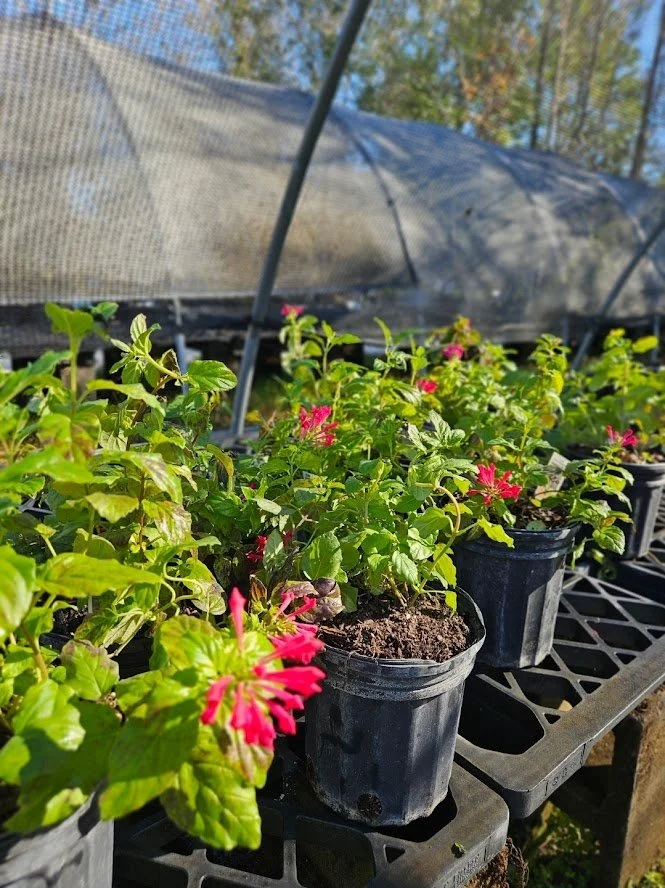
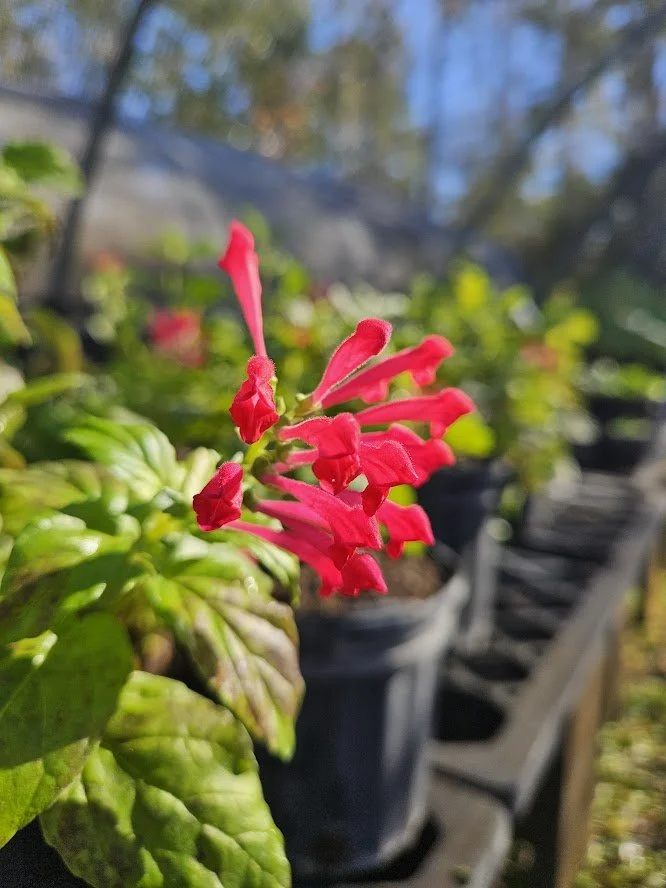
Scutellaria longifolia 'Red Fountains
Hot Pink Skullcap is a perennial wildflower that grows 1-2 ft tall with an upright, branching habit. It produces vibrant hot pink tubular flowers along tall spikes from late spring through summer, creating a stunning display. This hardy native is easy-to-grow and thrives in full sun to partial shade with well-drained to average soil. It attracts hummingbirds, butterflies, and other pollinators while requiring minimal maintenance once established, making it an excellent choice for naturalized gardens and pollinator-friendly landscapes.
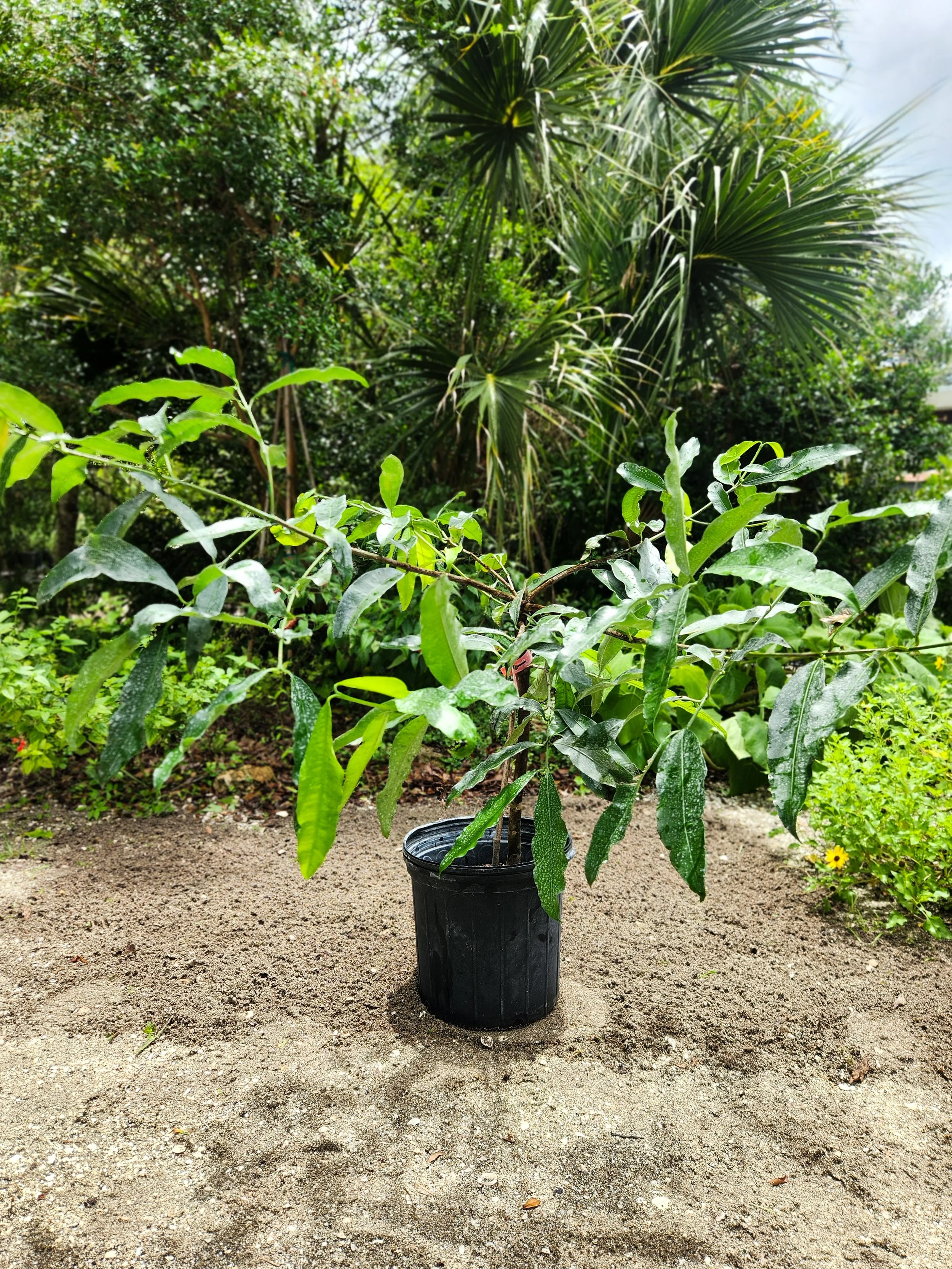
Garcinia humilis
Achachairu is a slow-growing, Florida-friendly tree that can reach a height of 20’ to 50’. Achachairu grows best in full sun to partial shade, with average to moist, nutrient rich soil. Can tolerate some drought and flooding, but is not wind resistant. The new growth emerges copper and then matures to a dark green, and the small, orange fruit is edible for both birds and humans!
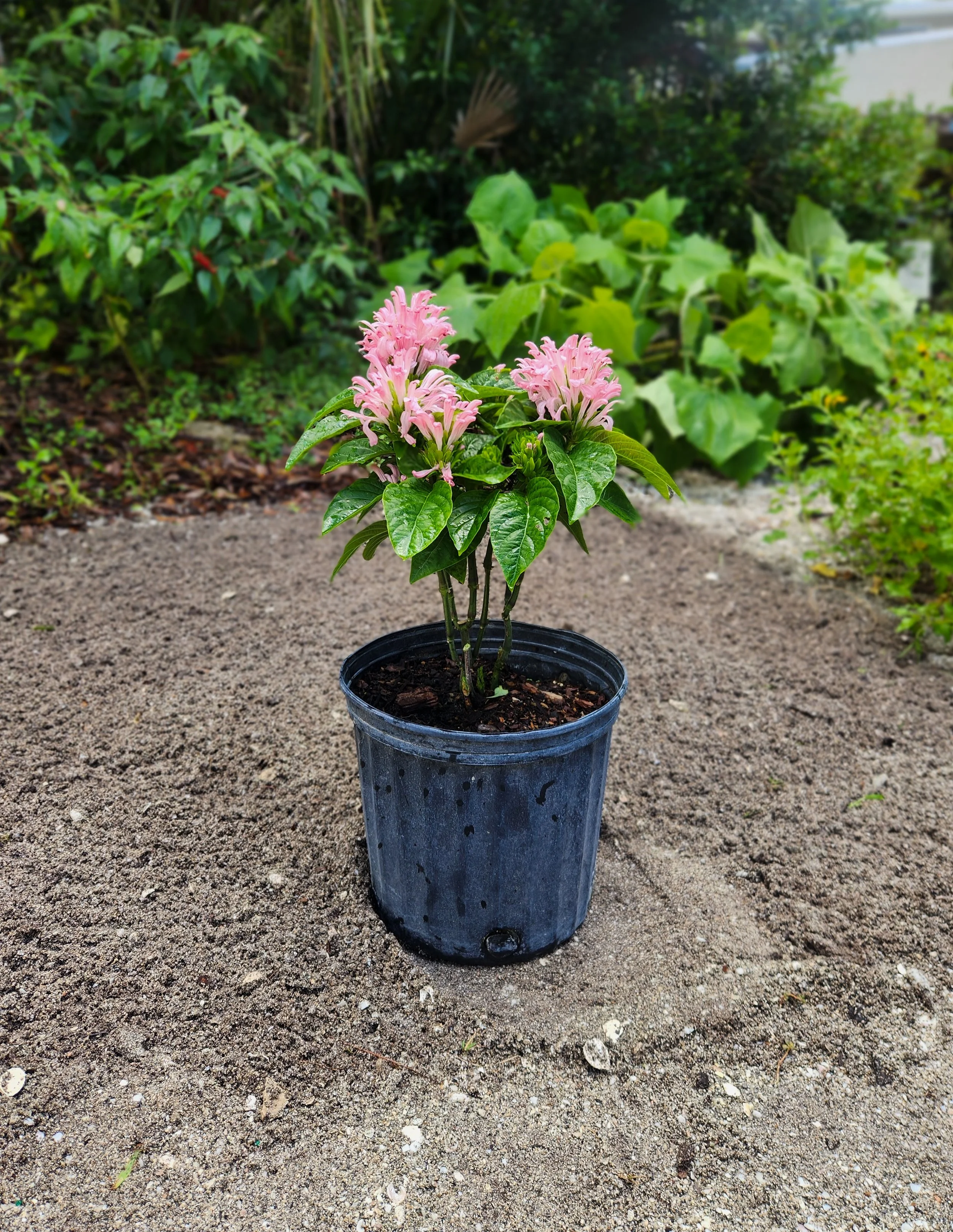
Justicia carnea
Jacobinia is a non-native, Florida-friendly perennial shrub with showy pink blooms and dark green leaves. It grows to be about 4’ tall with a 2’ spread. This plant thrives in shade and requires rich, moist, well-draining soil. The pink flowers are great for attracting butterflies and hummingbirds!
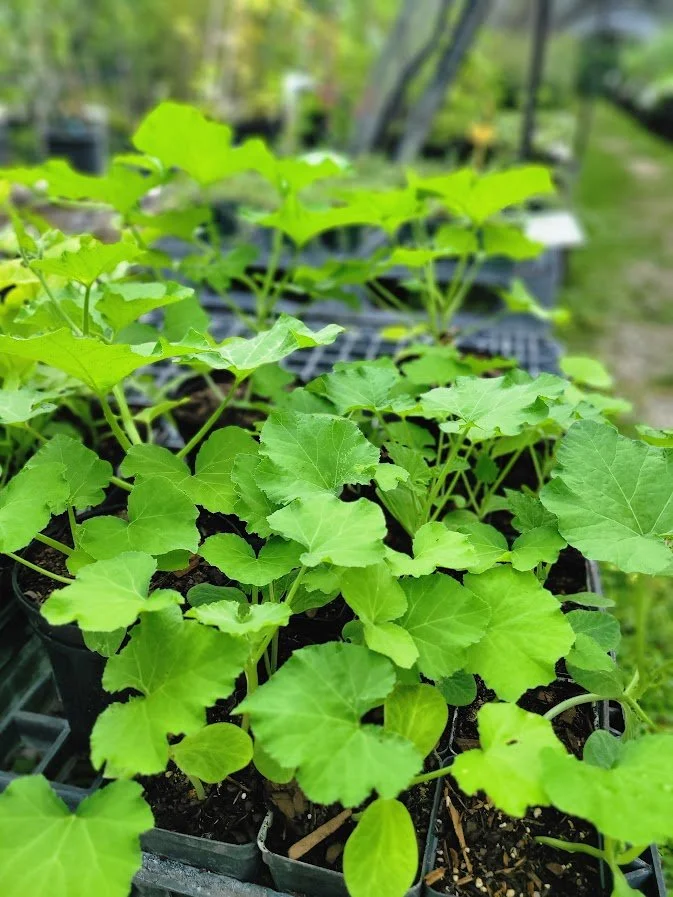
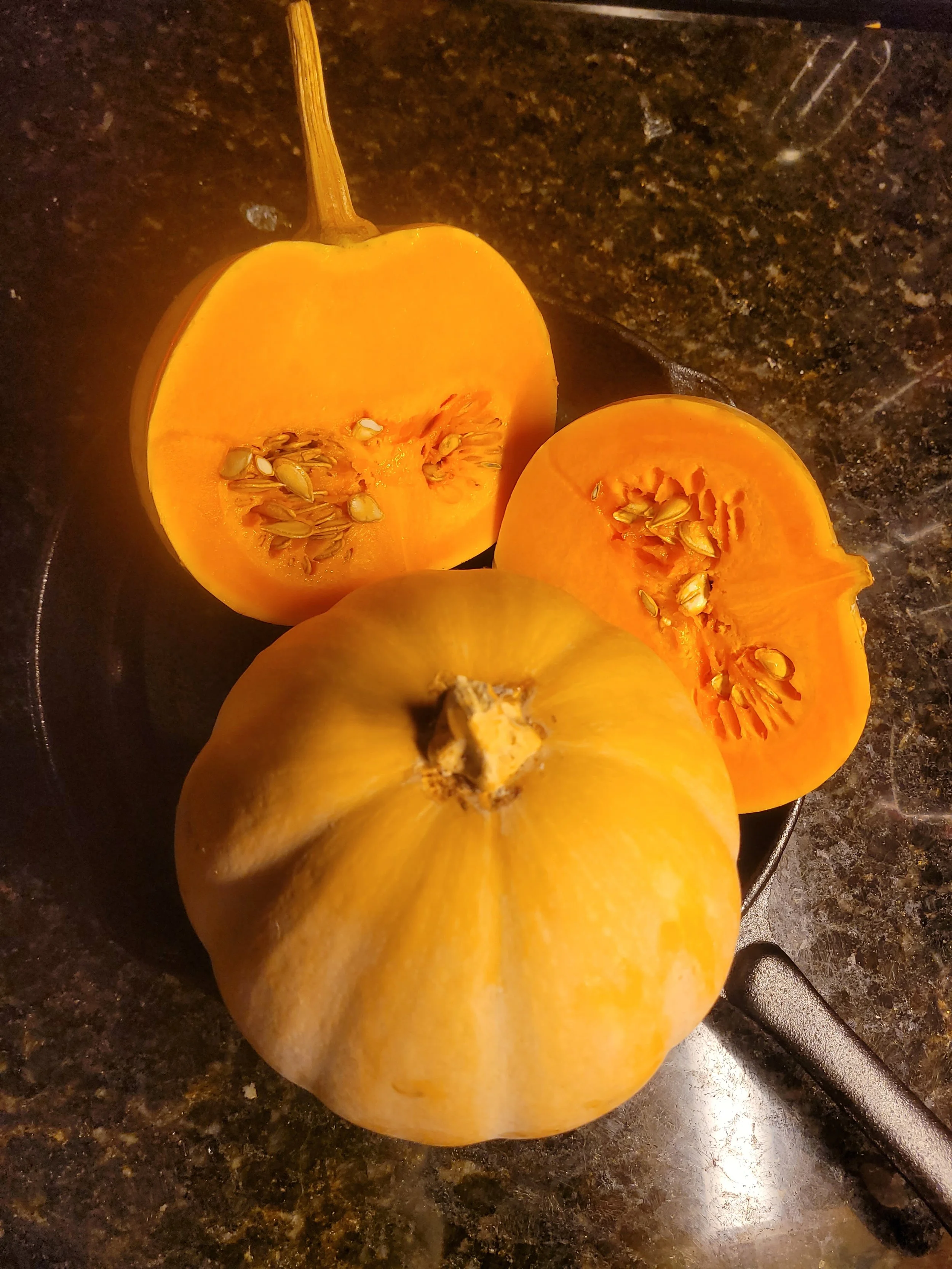

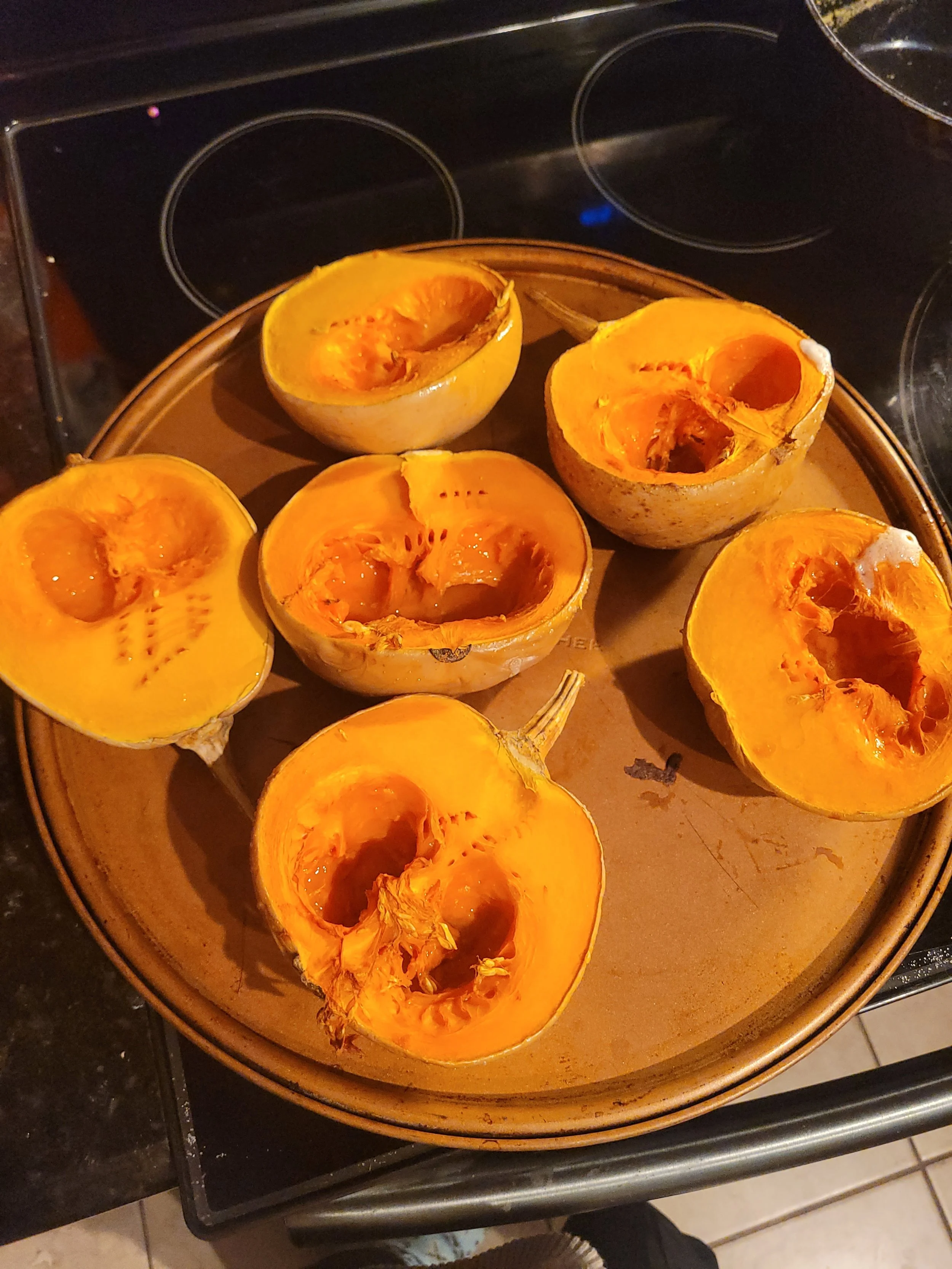
Cucurbita moschata
Seminole pumpkin is a heat-tolerant, vining squash that was traditionally cultivated by the Seminole tribe. This hardy variety produces small to medium-sized, tan or buff-colored fruits with sweet, orange flesh that stores well for months. It's perfectly adapted to hot, humid climates and is prized for both its nutritional value and its ability to thrive in challenging growing conditions where other squash varieties fail.
It takes 90-140 days to go from flower to fruit.
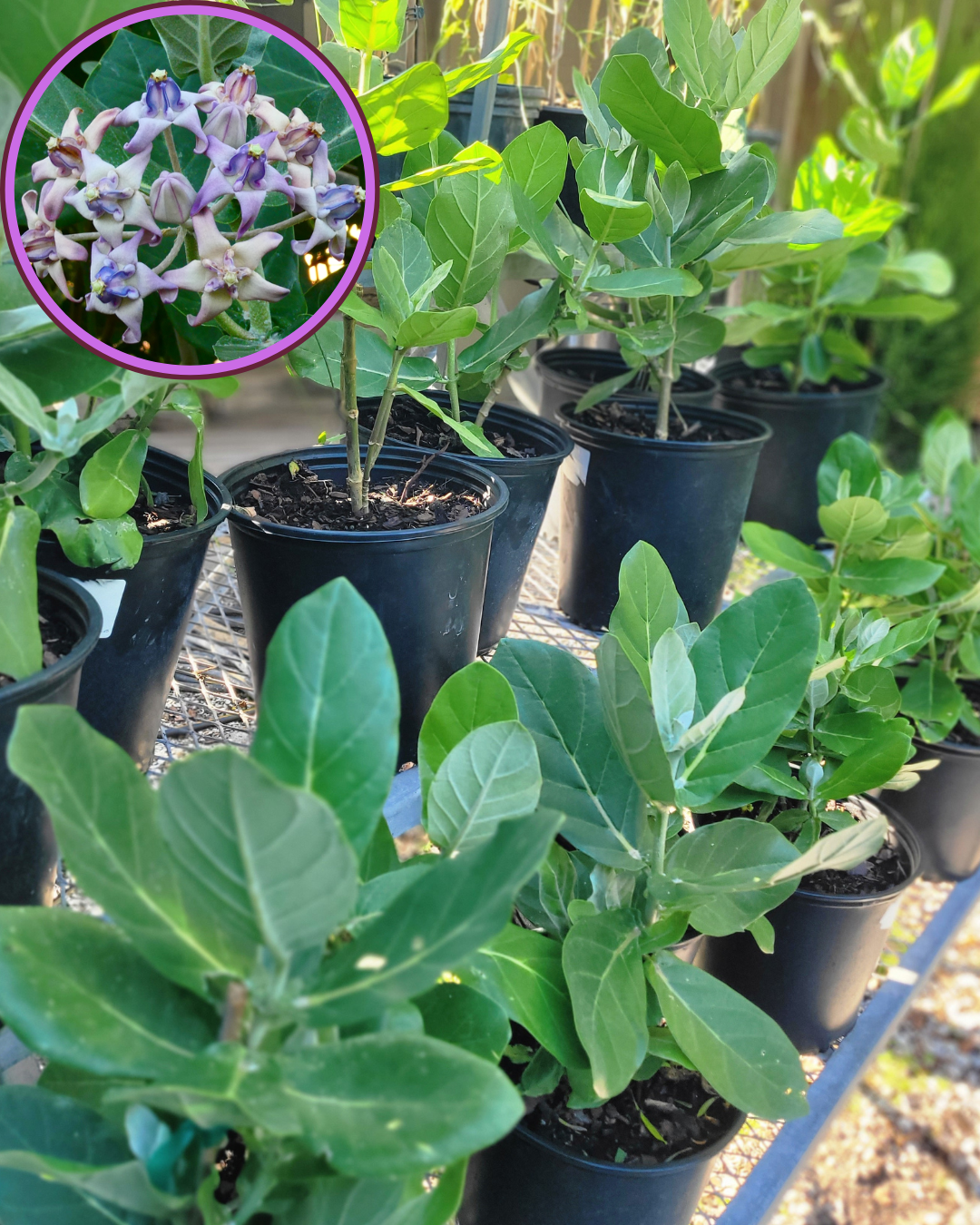
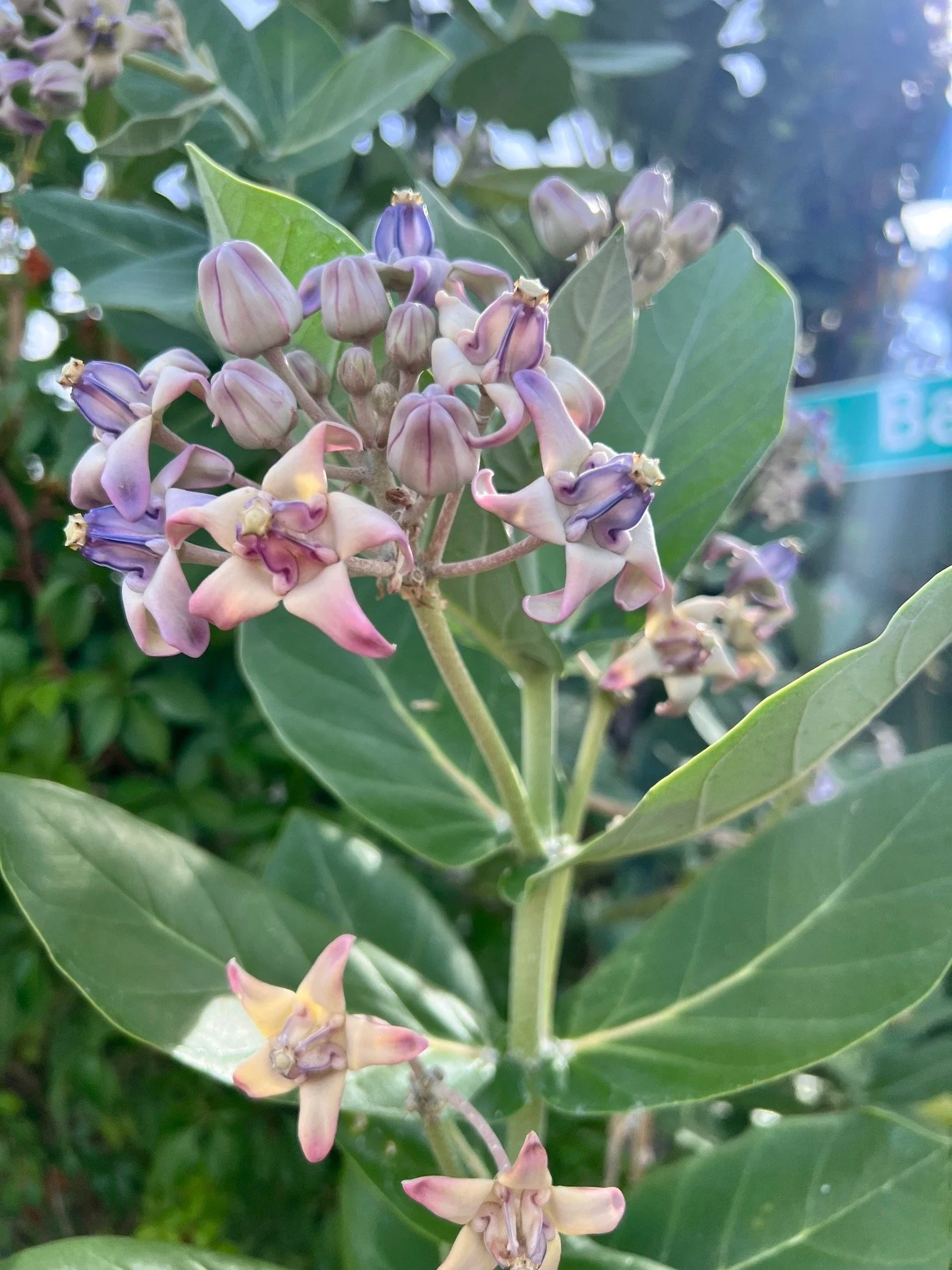
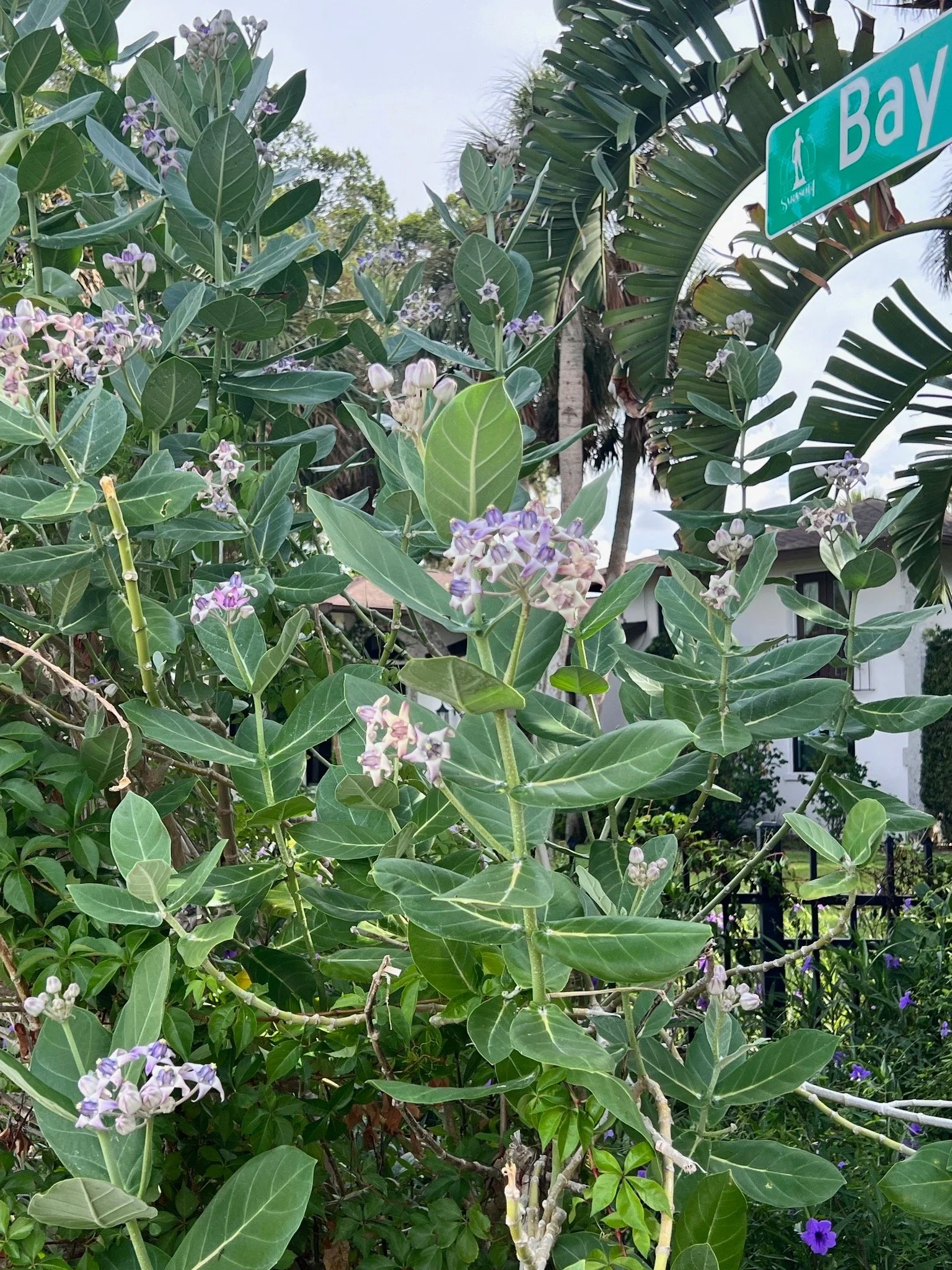
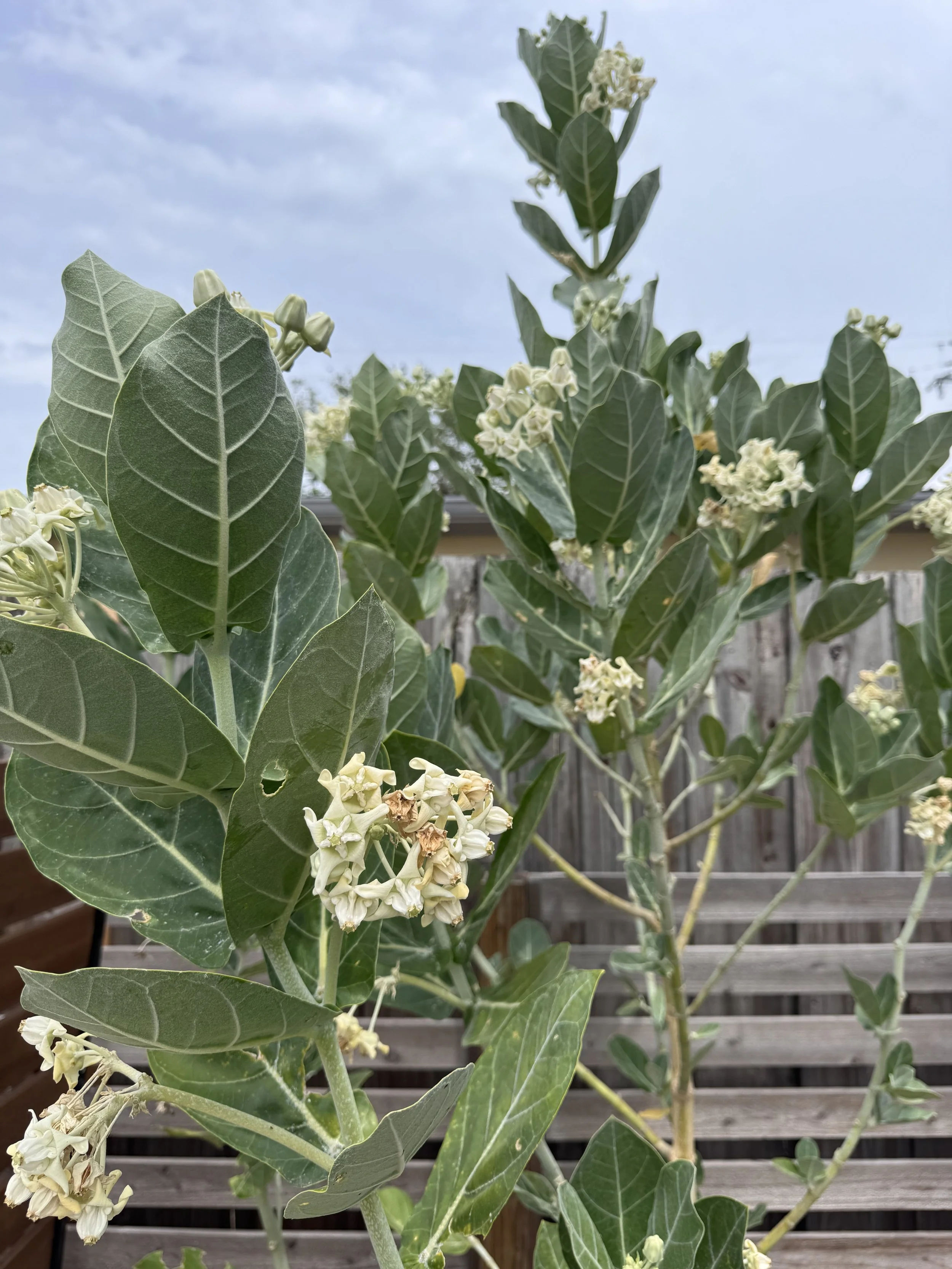
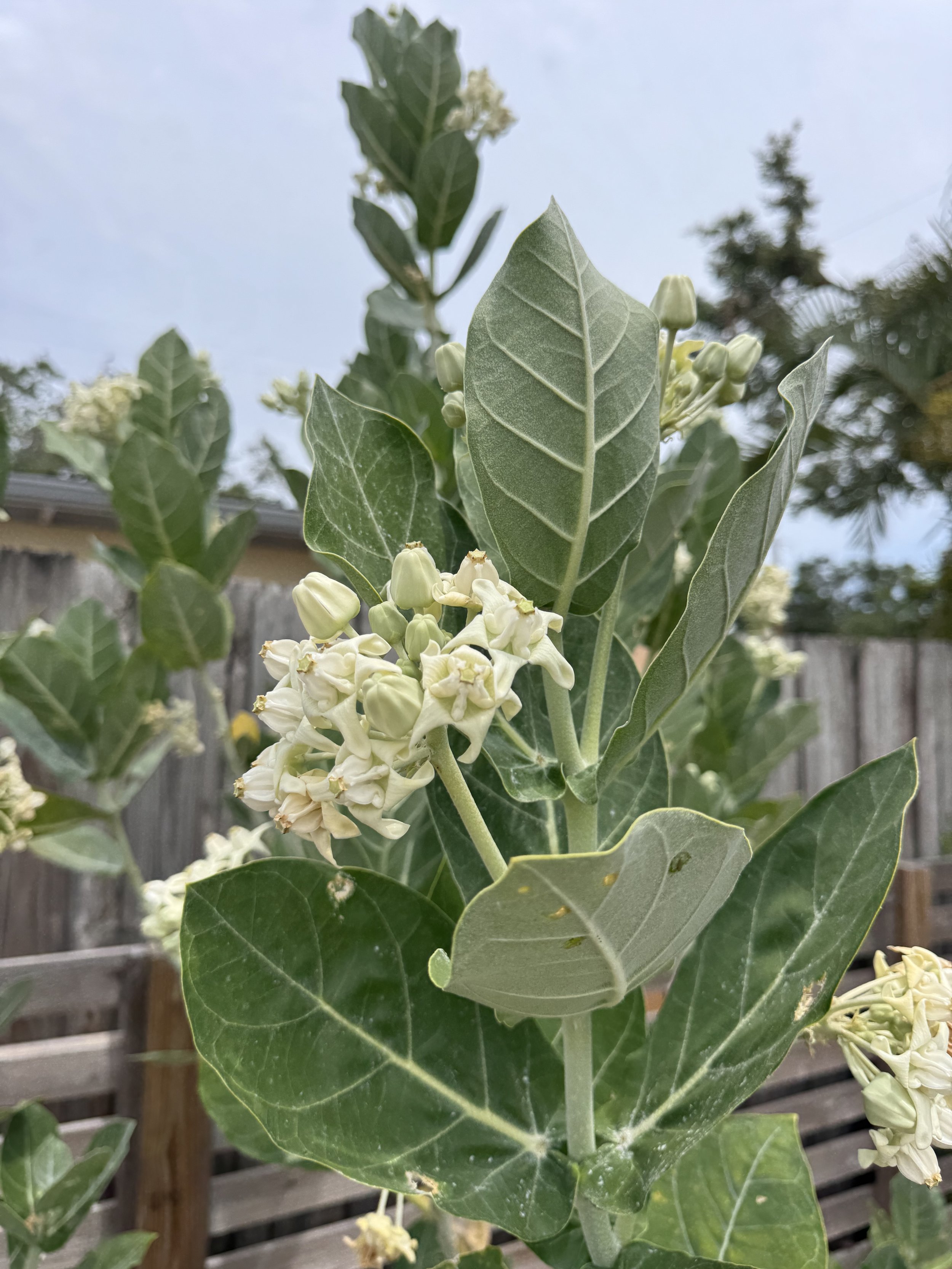
Calotropis gigantea
Giant Milkweed is non-native fast-growing evergreen shrub that can reach 8-15 feet in height. As a member of the milkweed family, it serves as a host plant for Monarch butterfly caterpillars and attracts various pollinators including bees and butterflies. It has thick, leathery, silvery-green leaves and produces clusters of waxy, pale lavender or white flowers that bloom year-round. Extremely drought-tolerant once established, it thrives in full sun and well-drained soils. We sometimes carry a white-flowering variety as well.
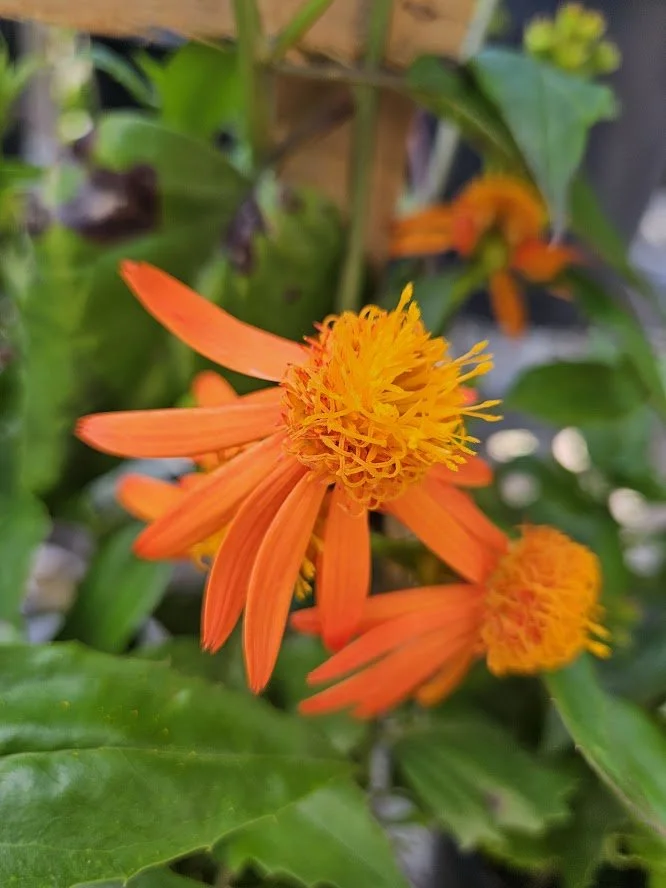
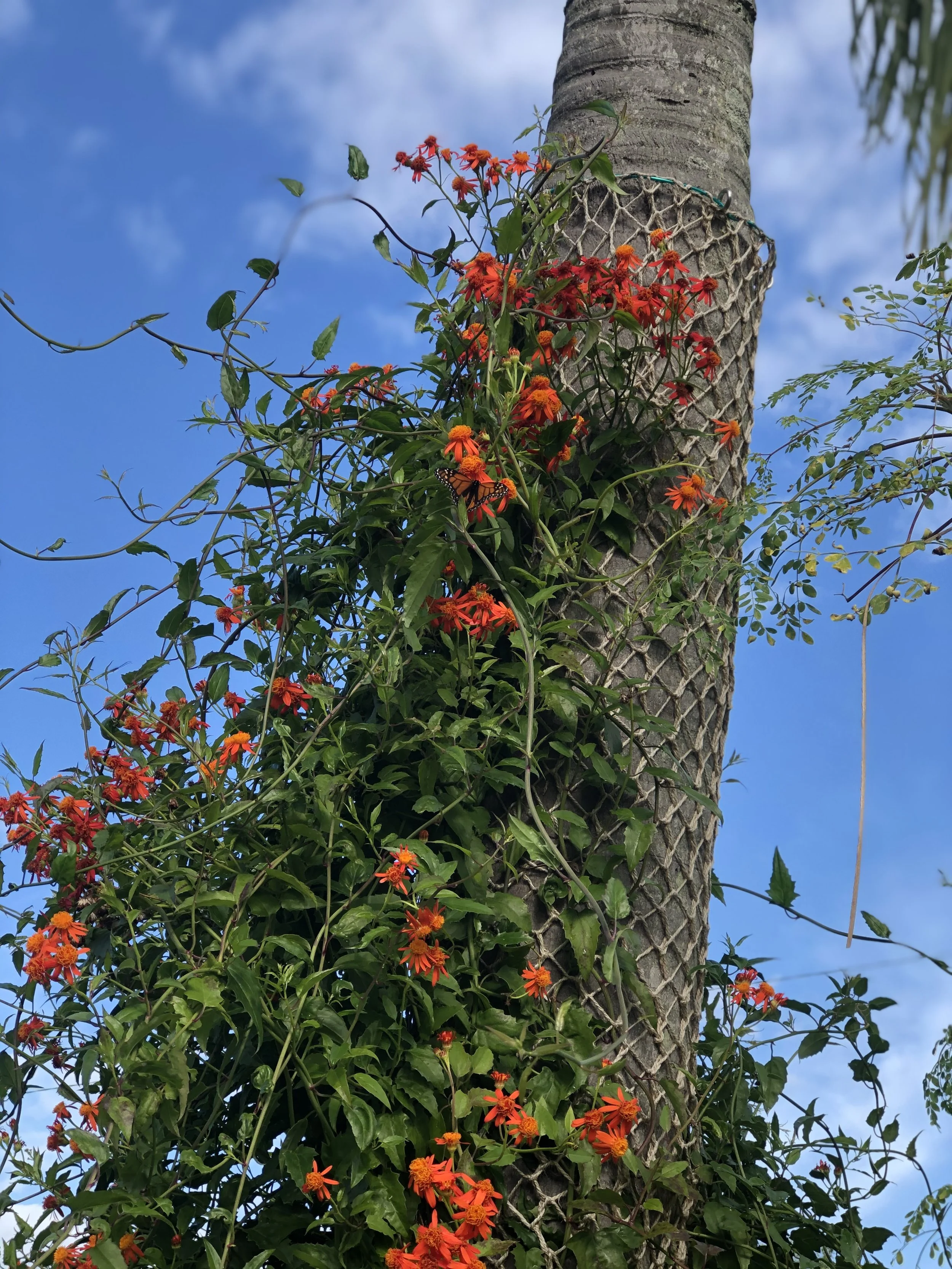
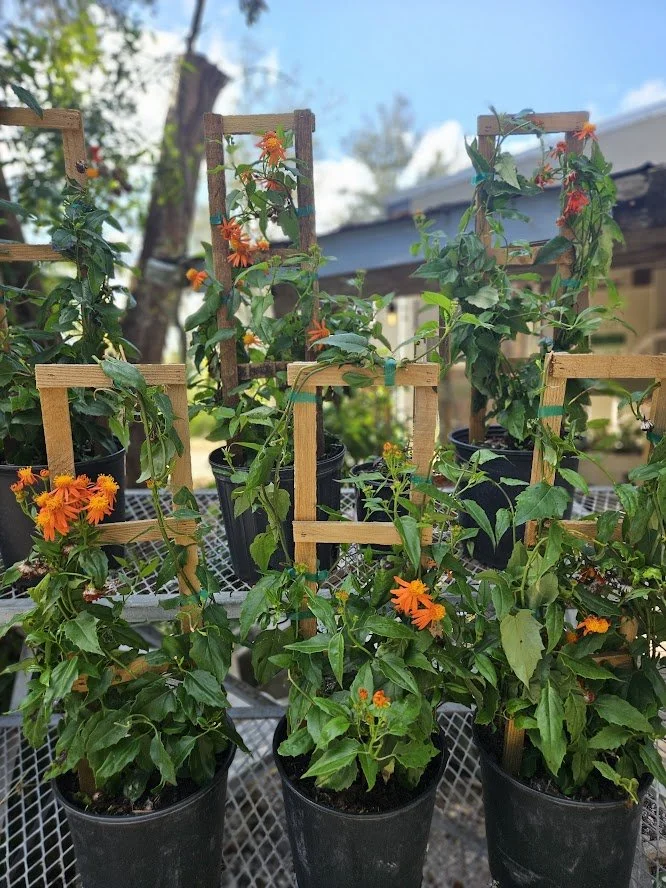
Pseudogynoxys chenopodioides
Mexican Flame Vine is a vigorous, fast-growing evergreen climber native to Mexico and Central America that reaches 12 feet in length with a 6-foot spread. This ornamental vine features attractive arrowhead-shaped leaves with purple undersides and produces clusters of brilliant orange-red daisy-like flowers from late spring through fall. The showy blooms are highly attractive to butterflies, hummingbirds, and bees, making it an excellent choice for pollinator gardens. Hardy in zones 9-11, it thrives in average to organically rich, well-drained soils in full sun to partial shade and tolerates short periods of drought once established.
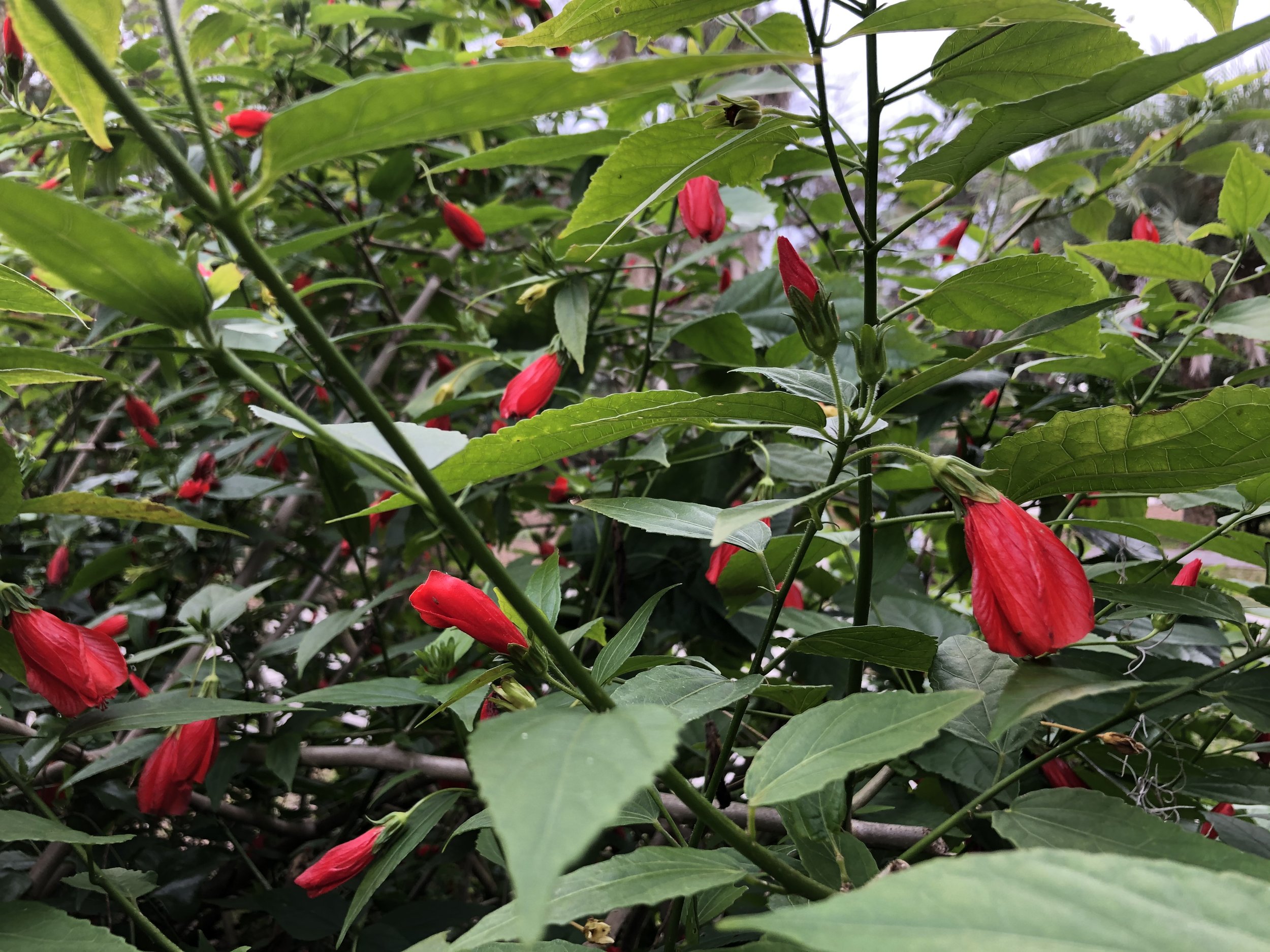
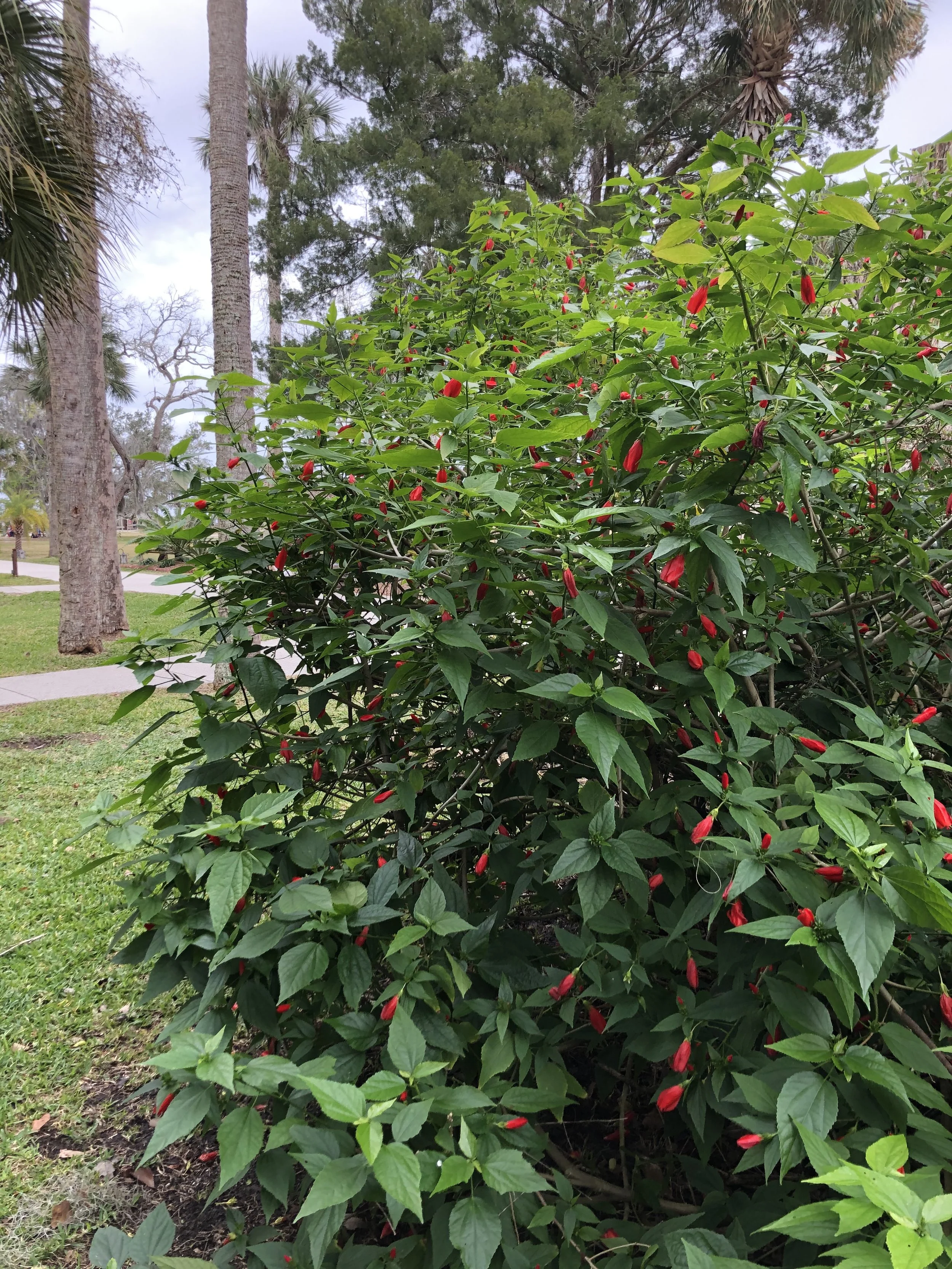
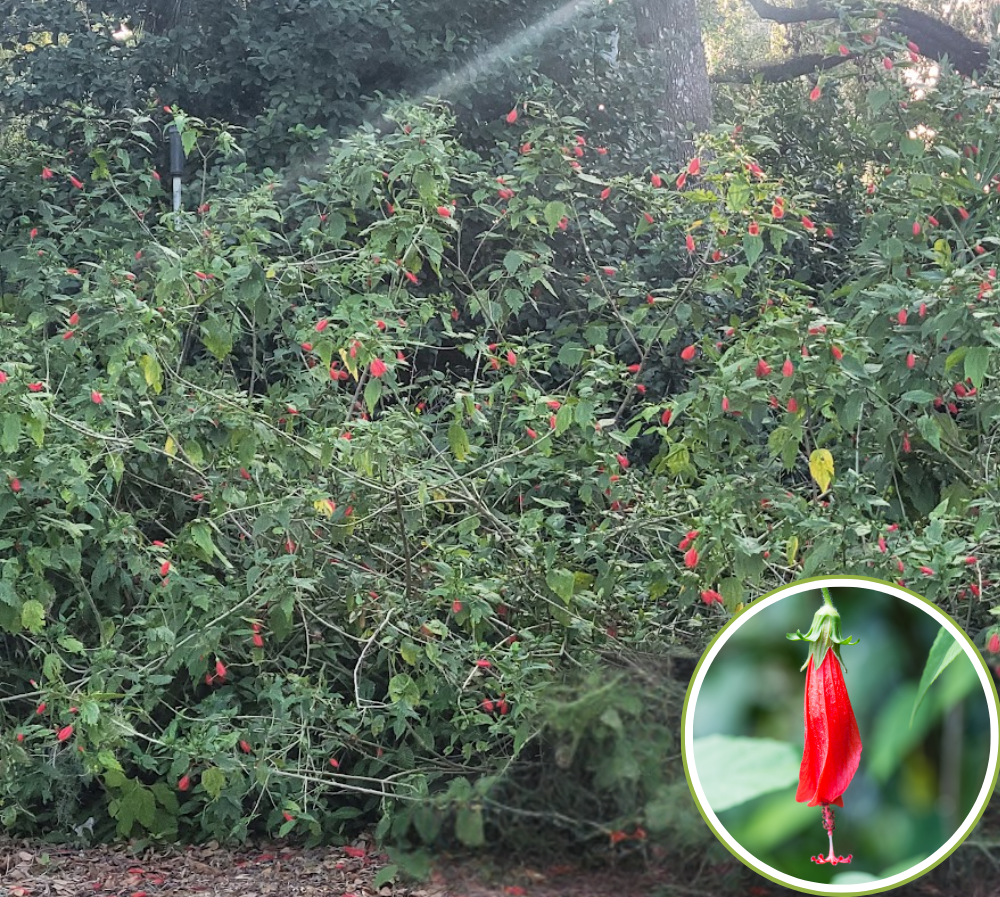
Malvaviscus penduliflorus
Sleeping Hibiscus is a Florida-friendly upright shrub in the hibiscus family that can reach up to 10ft tall and wide. This drought-tolerant plant produces distinctive bright red flowers that never fully open, blooming continuously from early summer until the first frost. This low-maintenance shrub prefers light shade in tropical areas and full sun with afternoon shade in northern regions, making it an excellent choice for adding late-season color to Florida landscapes. With the constant blooms, sleeping hibiscus is a great plant for butterflies and hummingbirds!
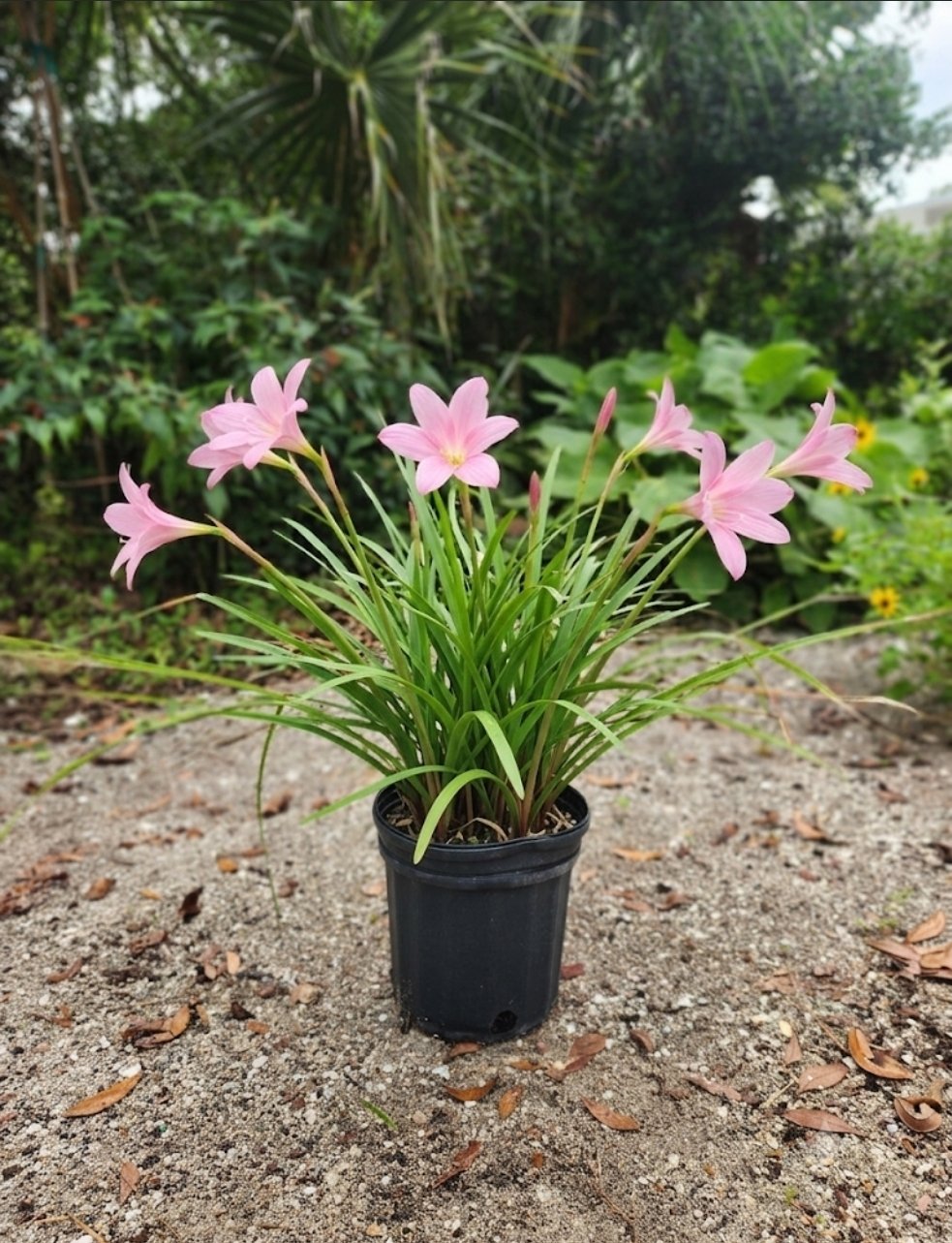
Habranthus robustus
Argentine Rain Lily is a non-native, Florida-friendly, perennial, reseeding wildflower that is a lovely addition to wetland and rain garden applications. They do best in full sun to part shade, and moist to average soil. With showy, pink flowers that bloom after it rains, they are great for attracting pollinators to your space, spreading via seed and bulb.


Stachytarpheta sanguinea
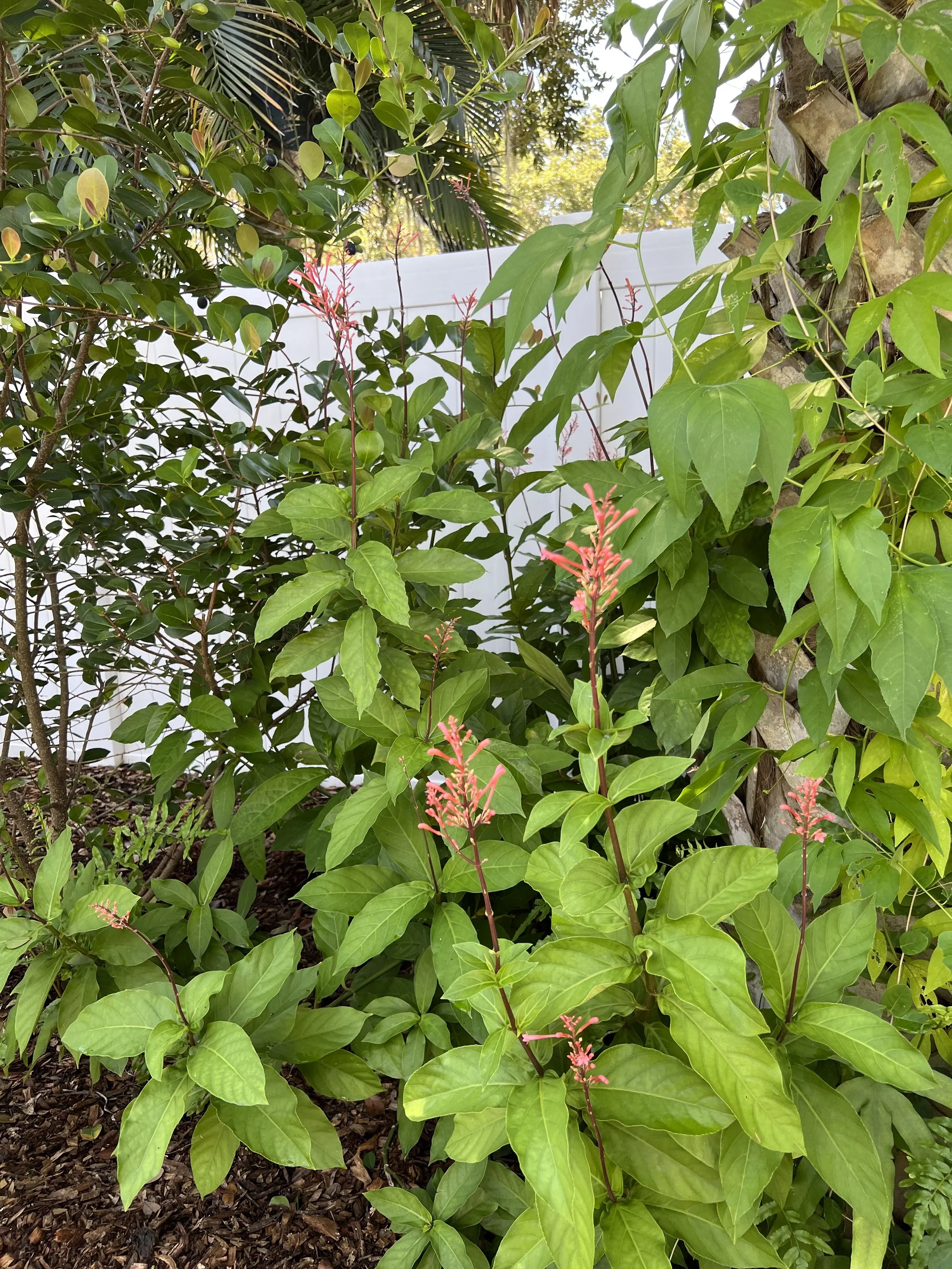
This Florida-friendly, compact, evergreen shrub is a perfect addition to a sunny or partial shade landscape. The vibrant, red spikes of tubular flowers bloom year-round and are a magnet for pollinators like bees, butterflies, and hummingbirds. Growing to just 2-3 feet tall and wide, it’s an excellent choice for borders, groundcovers, or container gardening. Dwarf Red Porterweed thrives in well-drained soil and tolerates drought once established.


Aloysia virgata
Sweet Almond bush is a Florida-friendly, non-native, highly scented, large, climbing vining shrub with almond colored flower drupes and nicely textured leaves. It is very attractive to pollinators including multiple butterfly species and bees. Adaptable to most garden conditions, this shrub has a place in any Florida Friendly landscape!
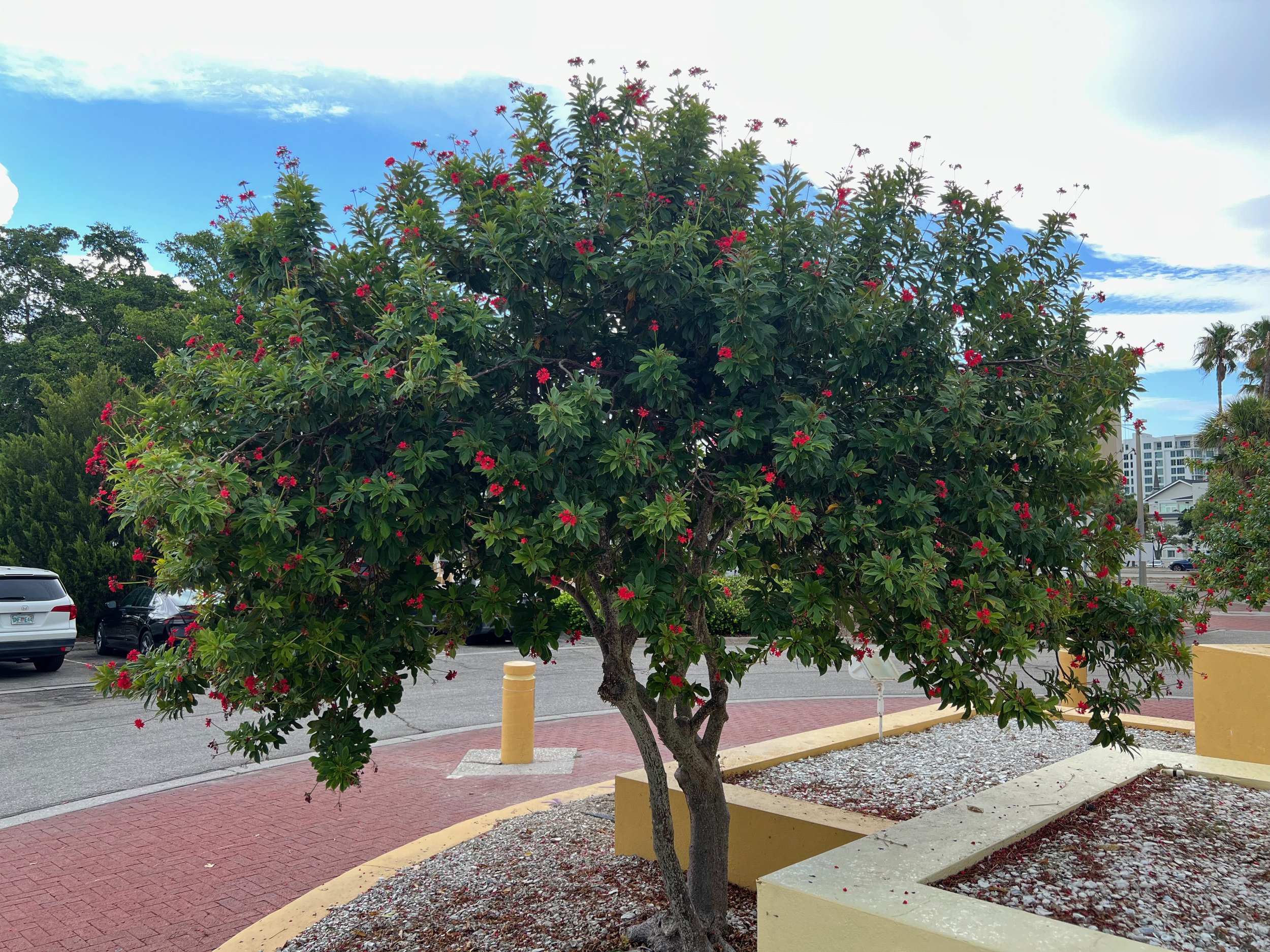
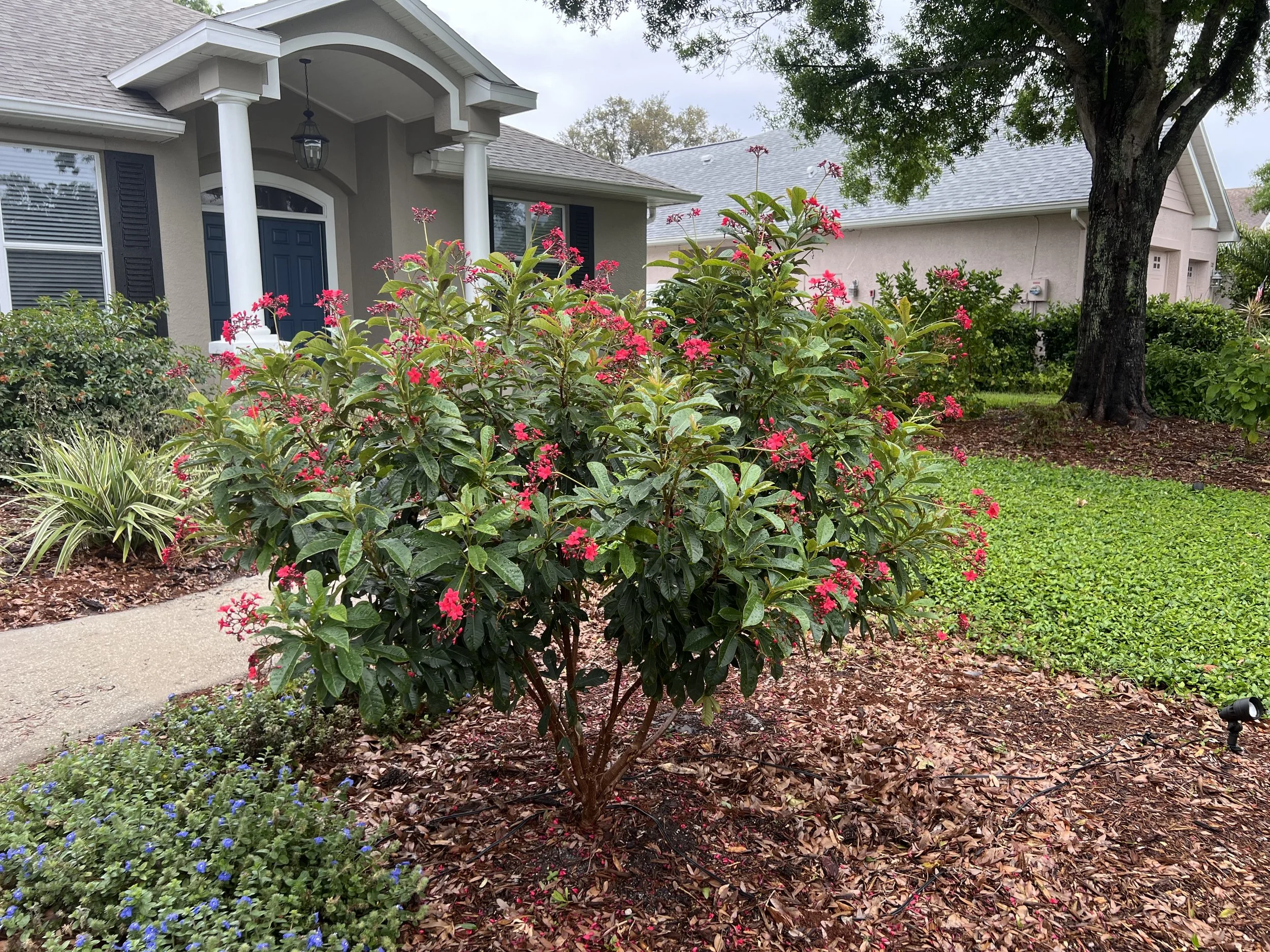
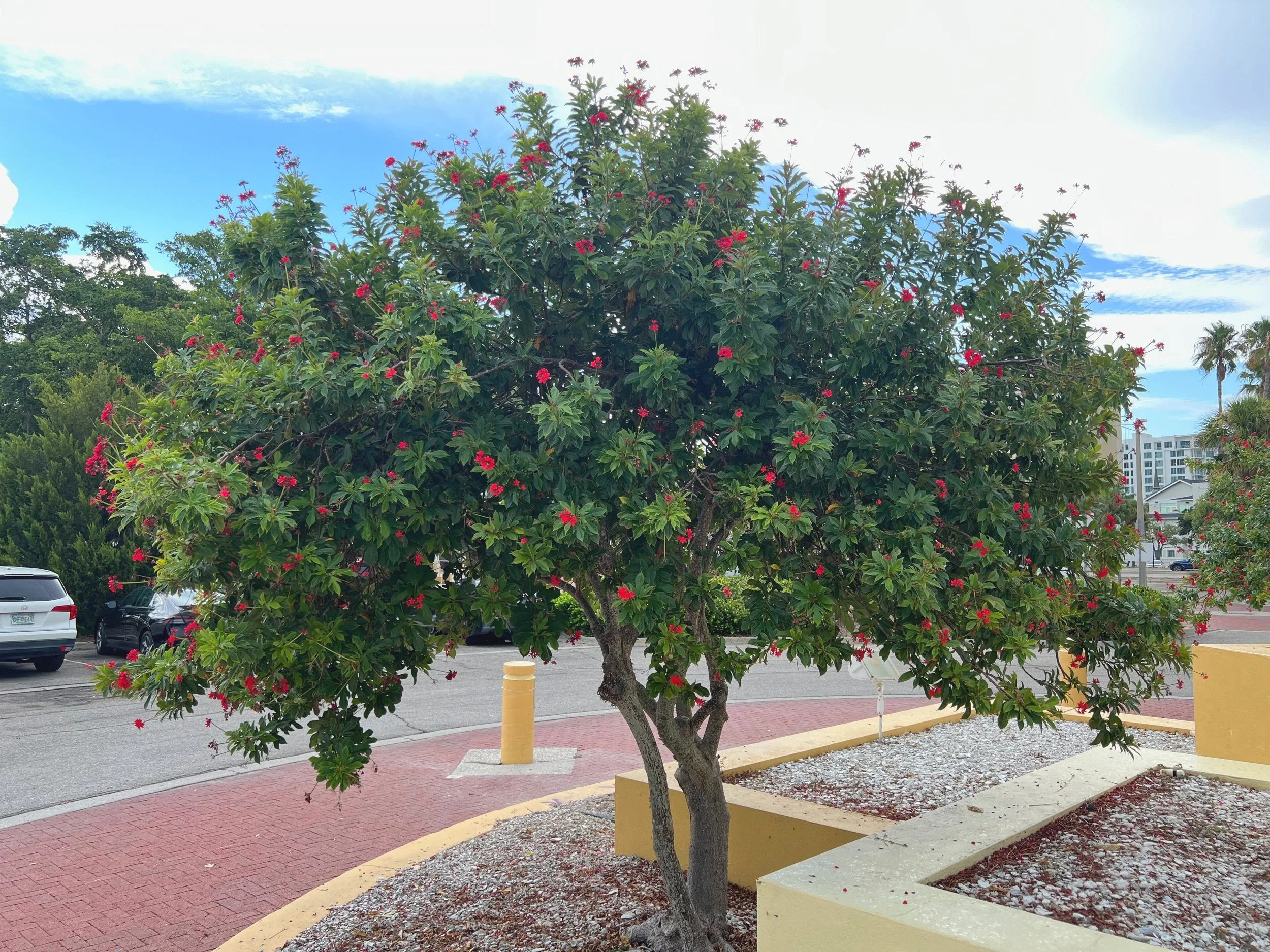
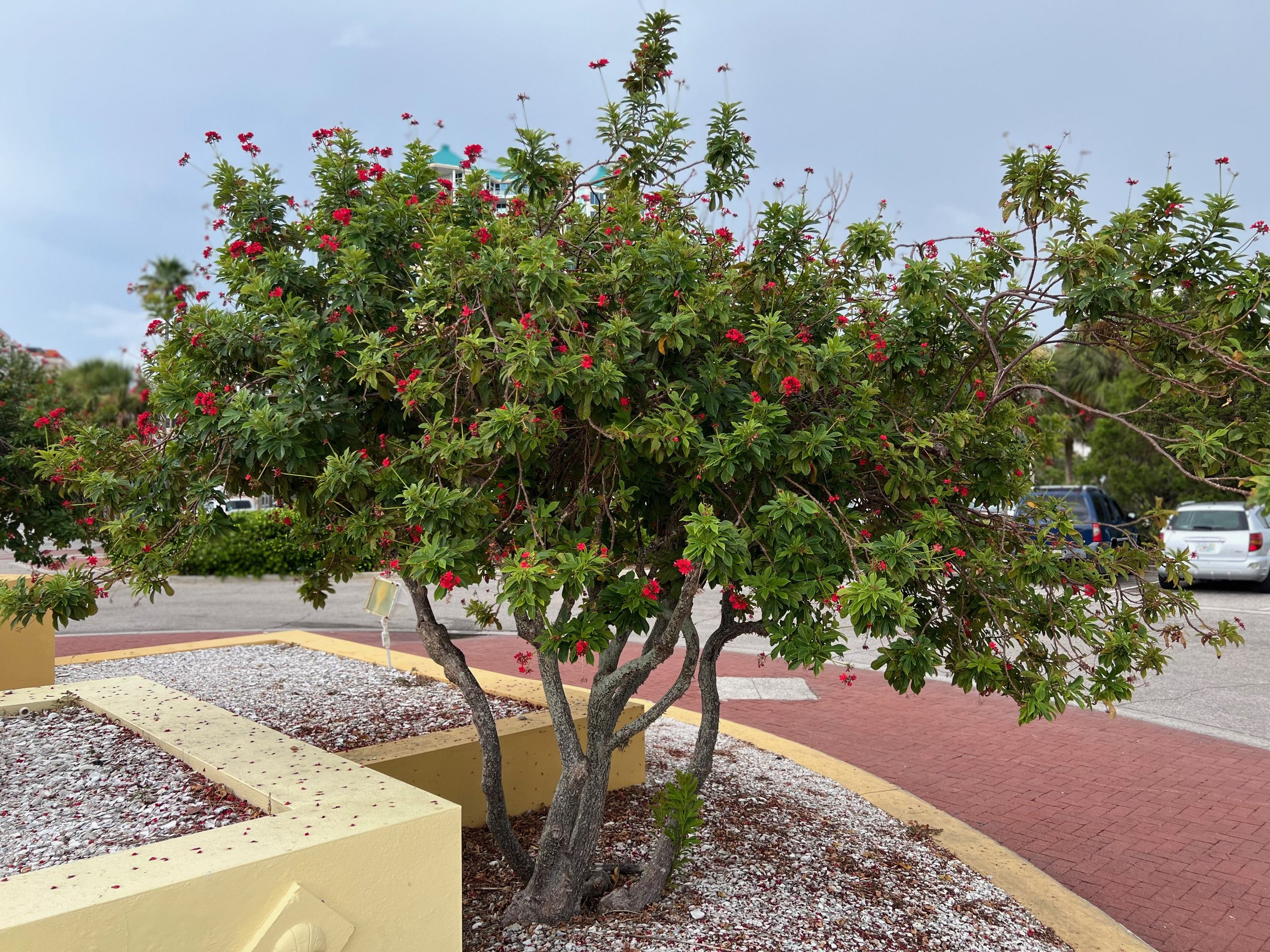
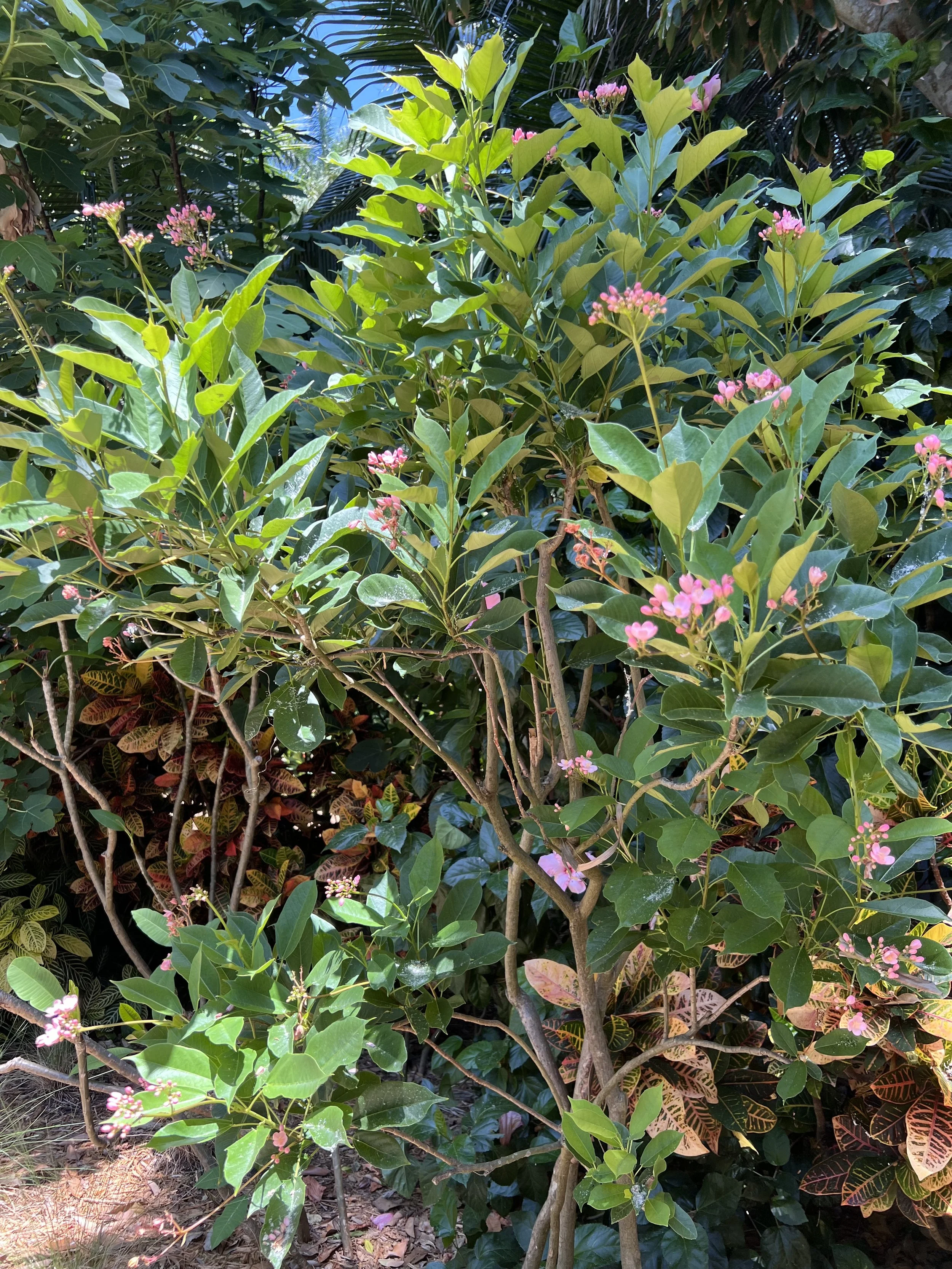
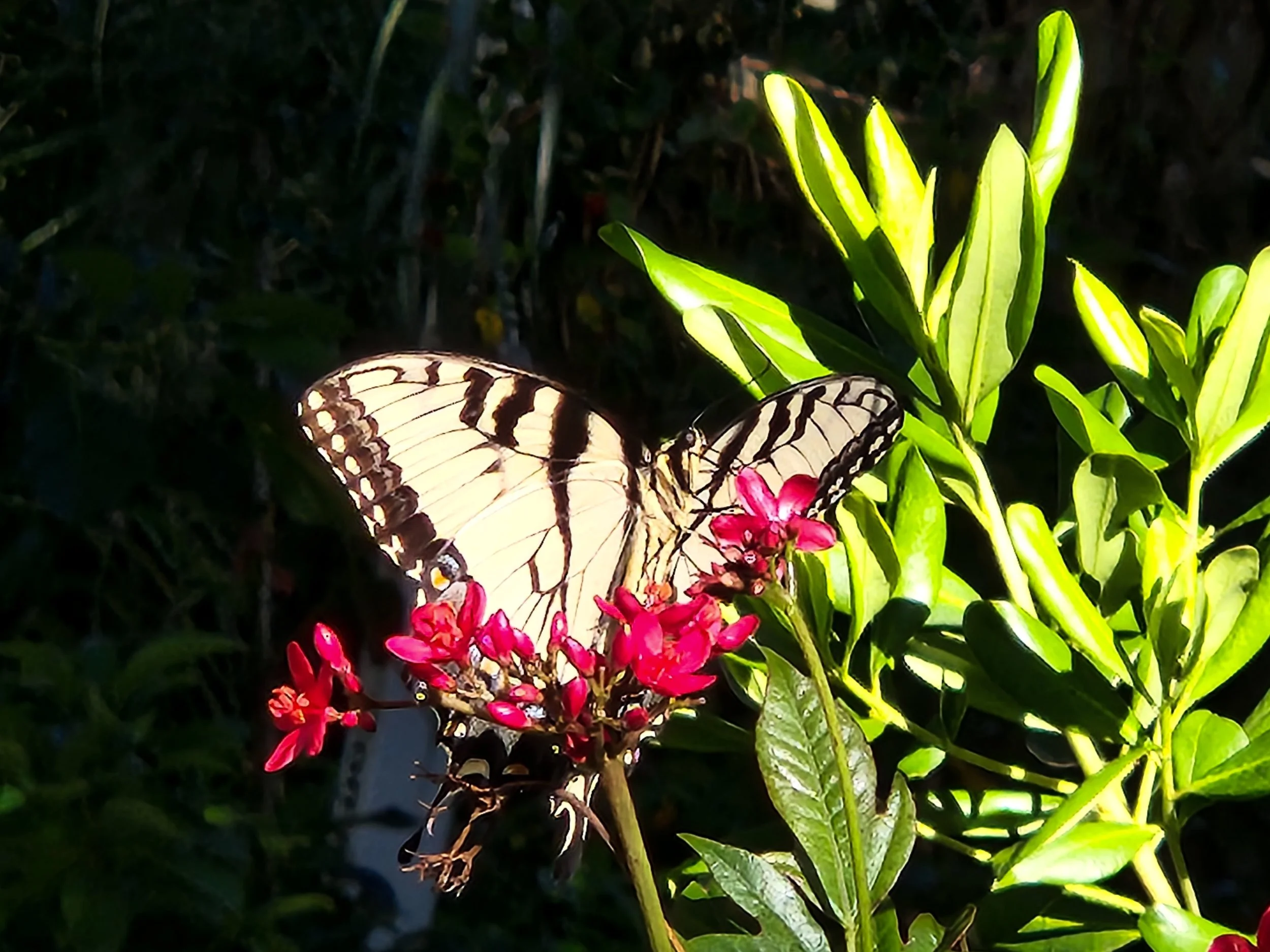
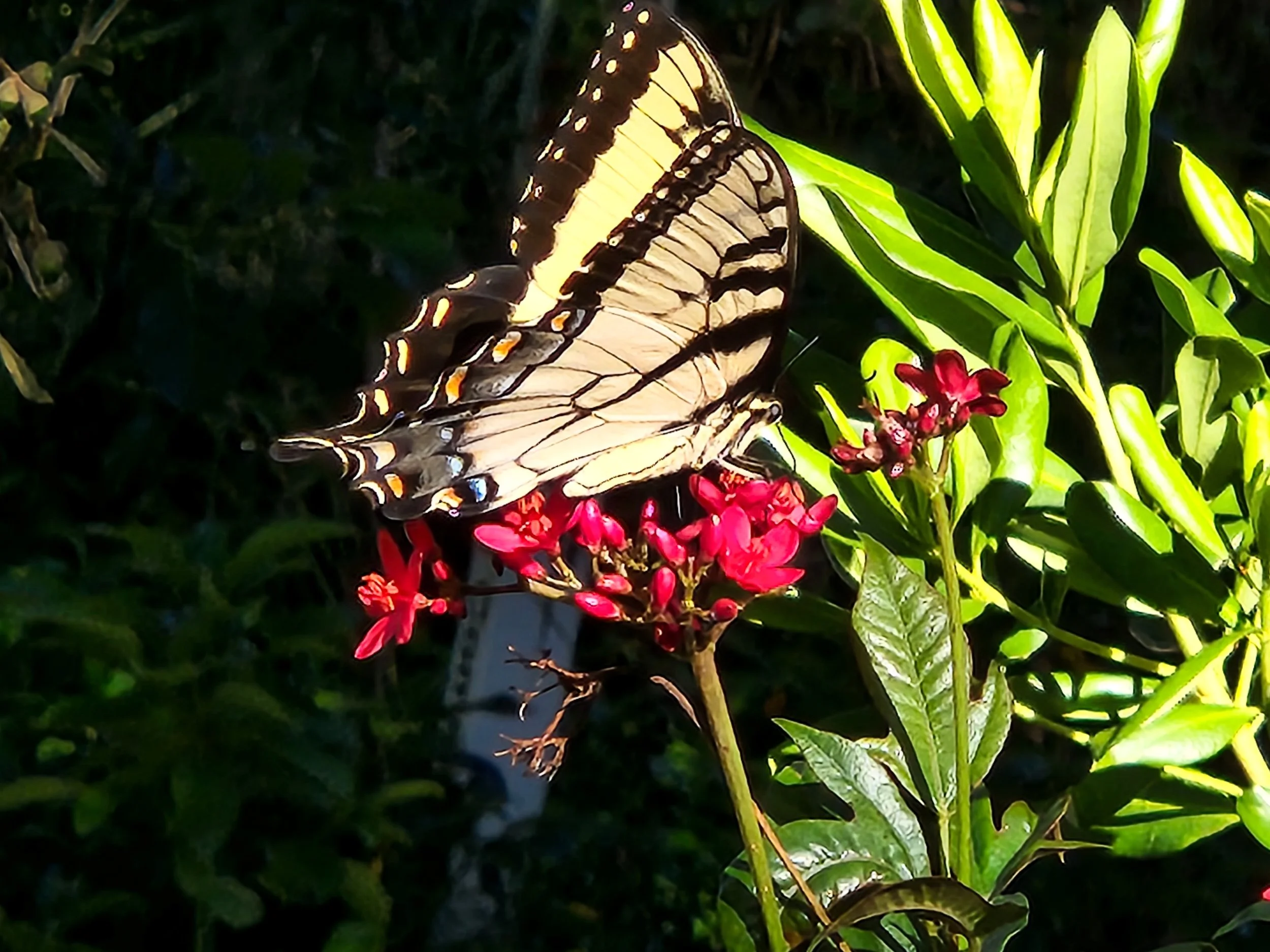
Jatropha integerrima
Jatropha is a non-native, Florida-friendly, evergreen shrub or small tree that attracts butterflies and hummingbirds with its showy red flowers that bloom almost all year round. It grows in full sun to partial sun, dry to average soils. Parts of this plant are poisonous to people and pets.
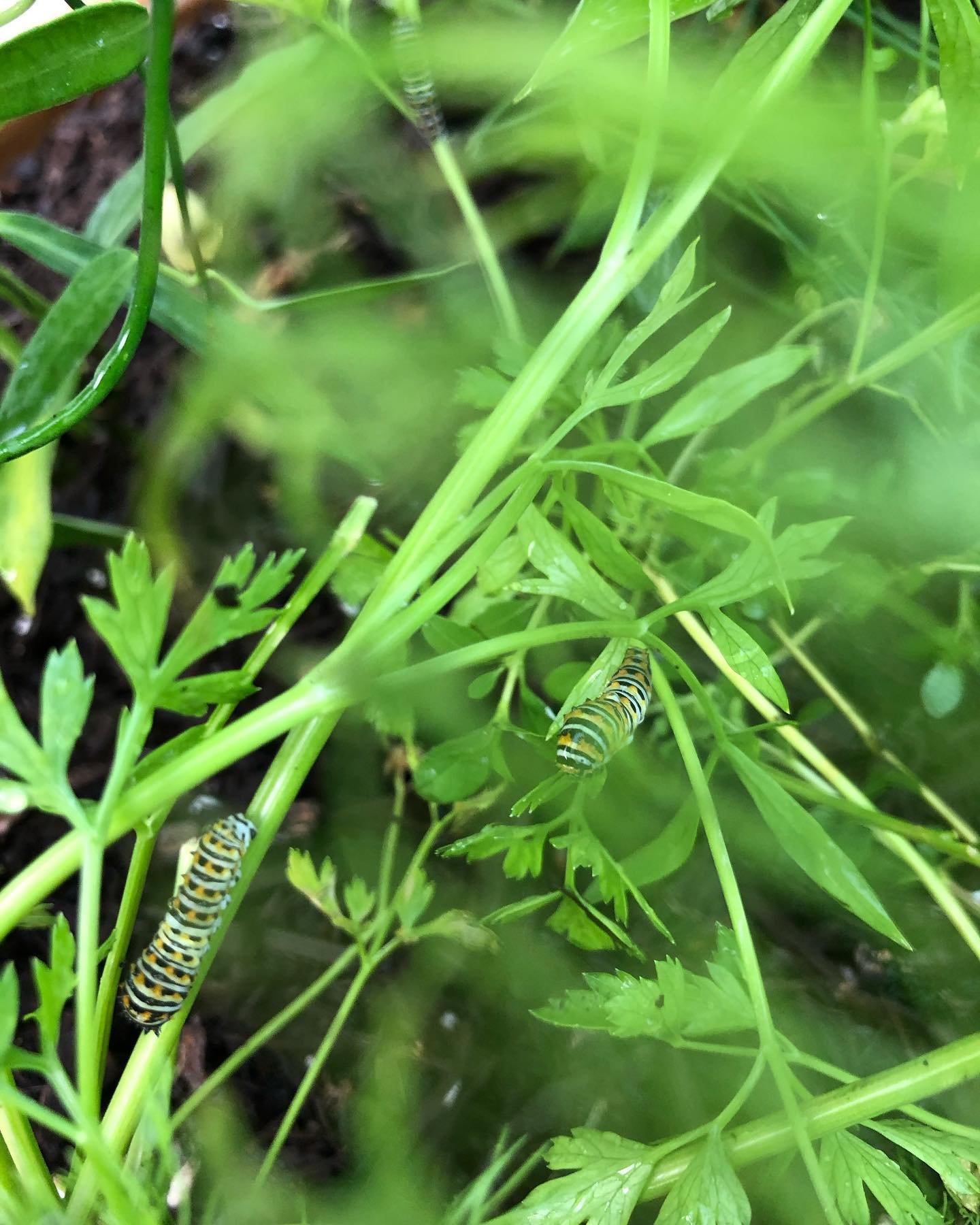
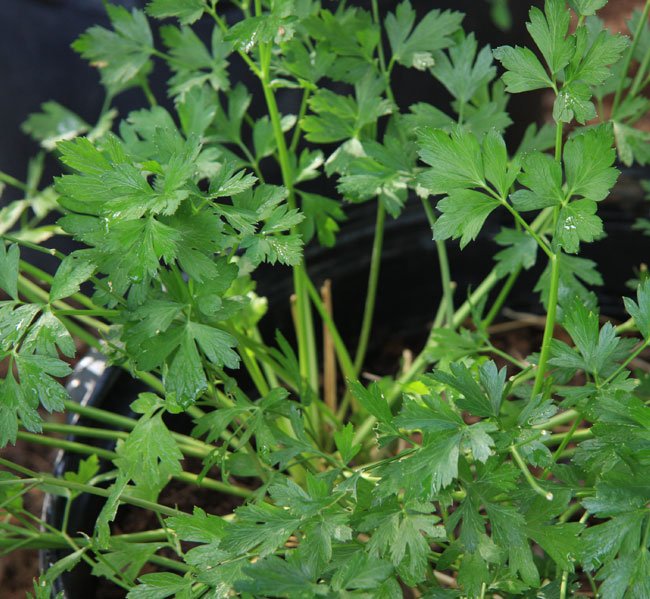
Petroselinum crispum
Parsley is a non-native and Florida-friendly many-purpose garden plant that can be grown year-round in Florida. It is an edible plant for both people and butterflies. Many gardeners include it in their butterflies gardens as it is an easy-to-grow host plant for Black Swallowtail butterflies. It can tolerate sun (in winter) and partial shade (in summer), average to moist (well-drained) soils, and it benefits from amended soils (organic compost/content).
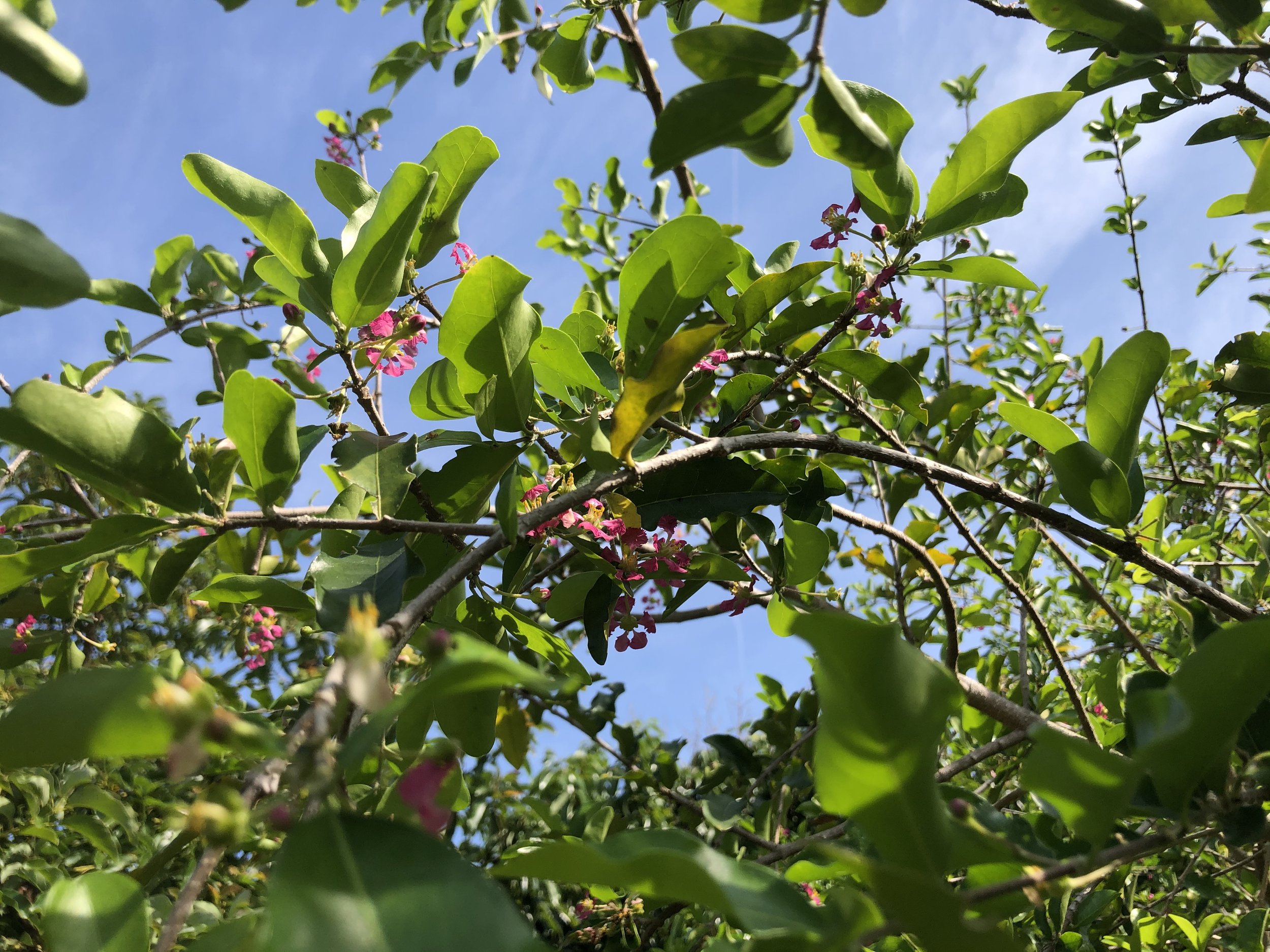
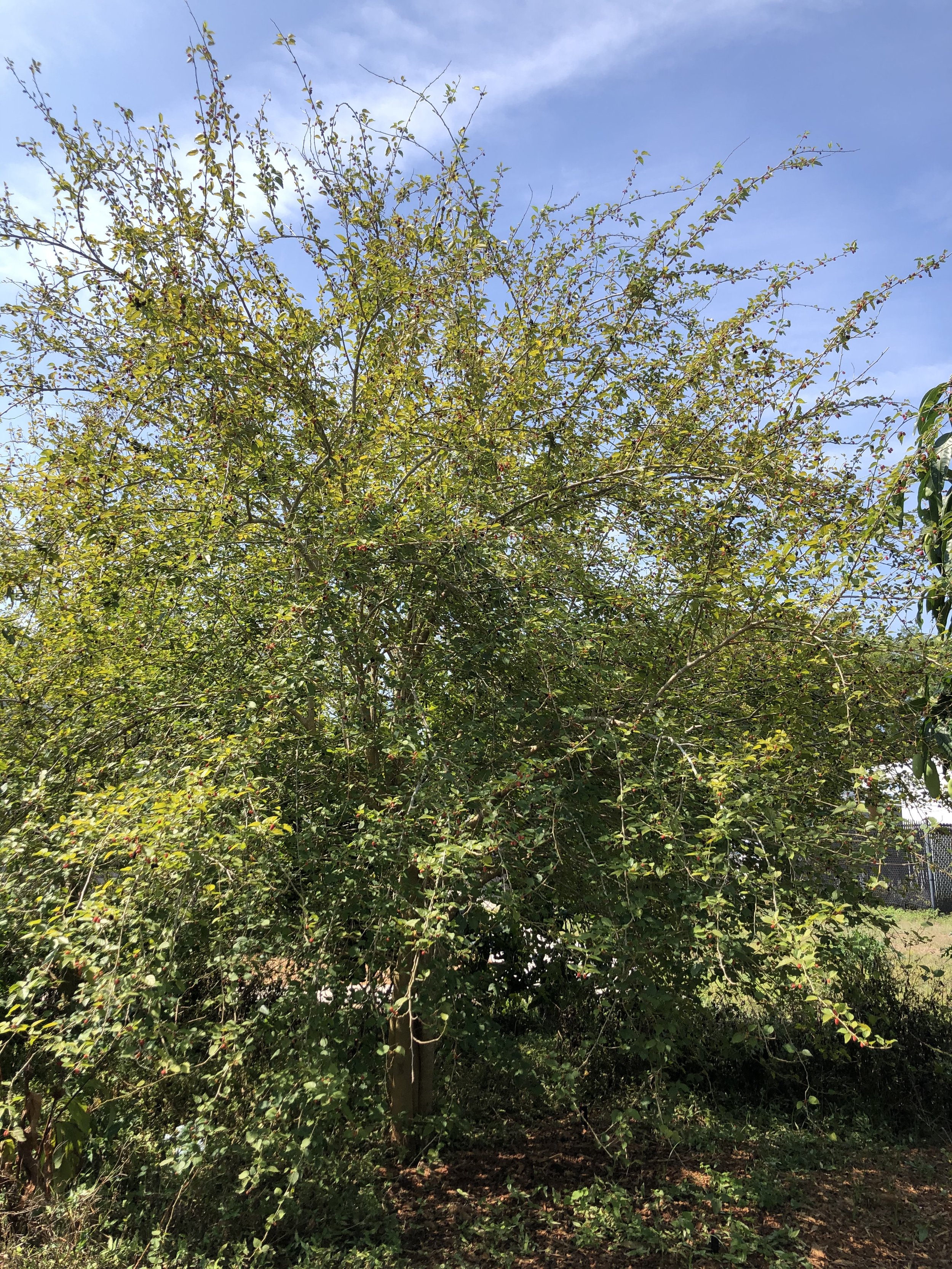
Malpighia emarginata
Barbados Cherry is an evergreen shrub or small tree native to South America, Central America, and the Caribbean that grows up to 12 feet tall and wide with a rounded, multi-trunked form. This fast-growing tropical plant features delicate foliage and produces small, attractive pink flowers intermittently from spring through fall, followed by bright red, cherry-like fruits. The tart, edible fruits are exceptionally high in vitamin C—containing 30 times more than oranges—and ripen about one month after flowering. Thriving in full sun to partial shade with well-drained soils, it's drought-tolerant once established and serves as an excellent ornamental shrub, specimen plant, or container plant in zones 9B-11, attracting butterflies and providing edible fruit for both wildlife and humans.
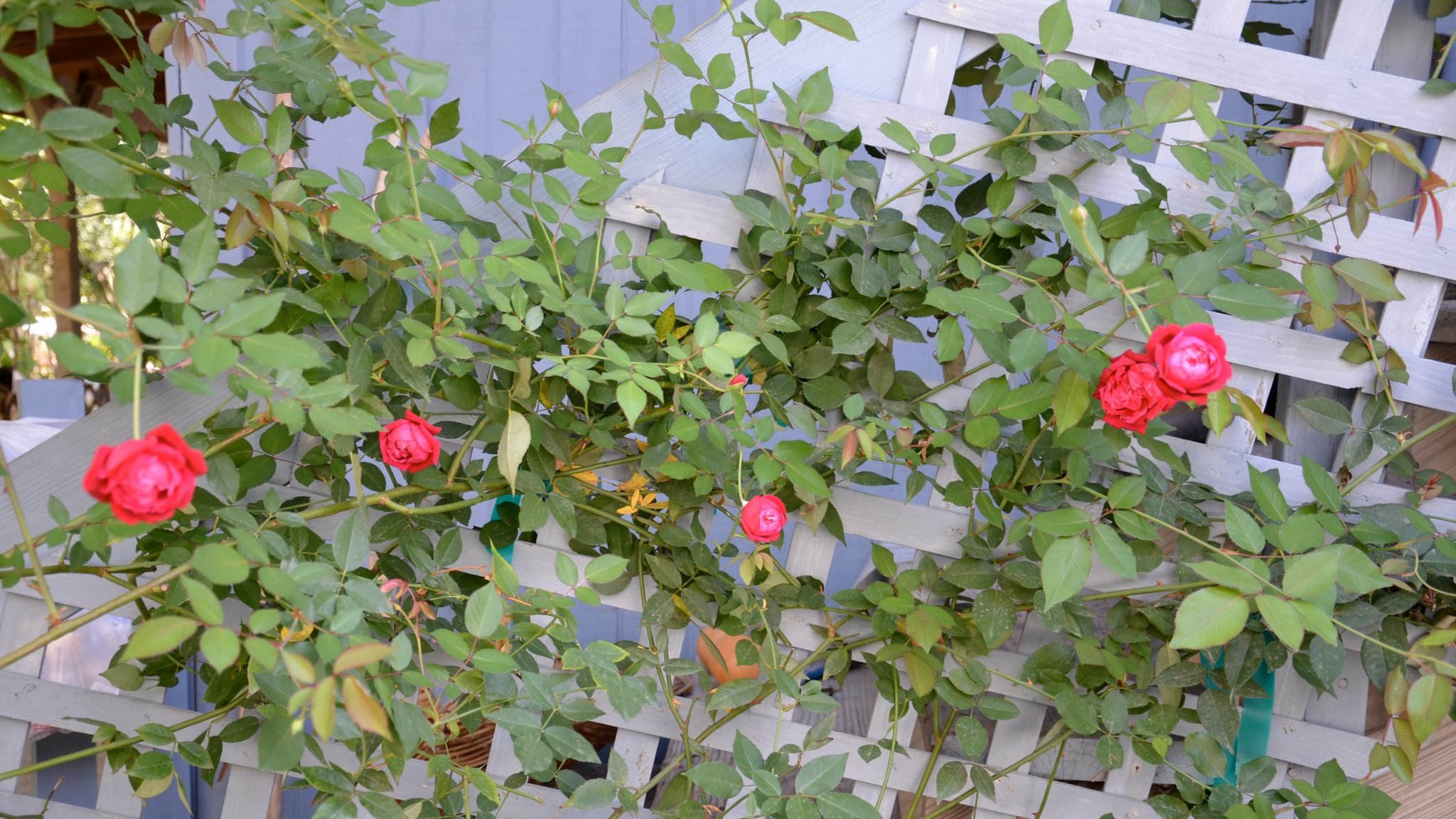
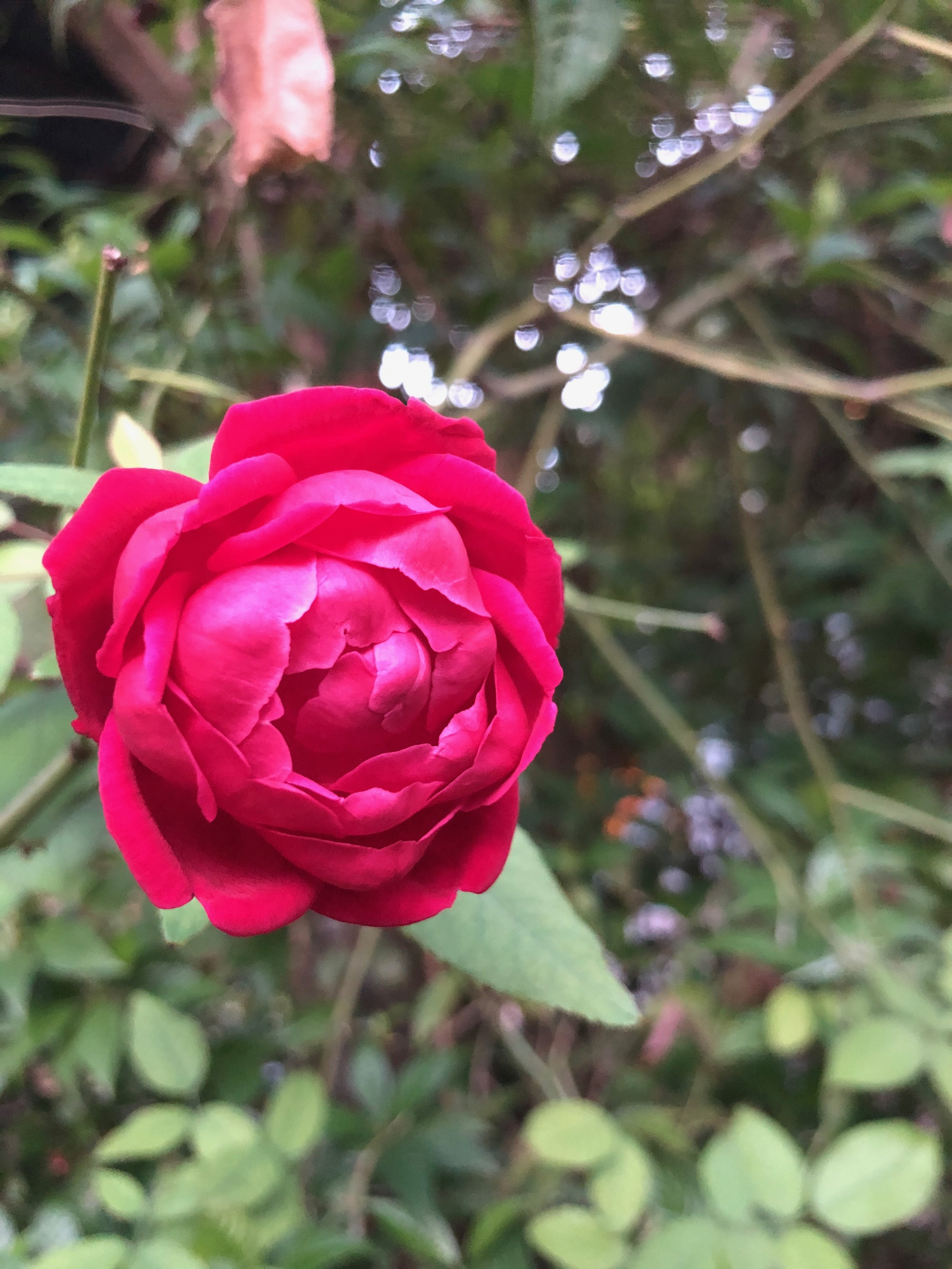
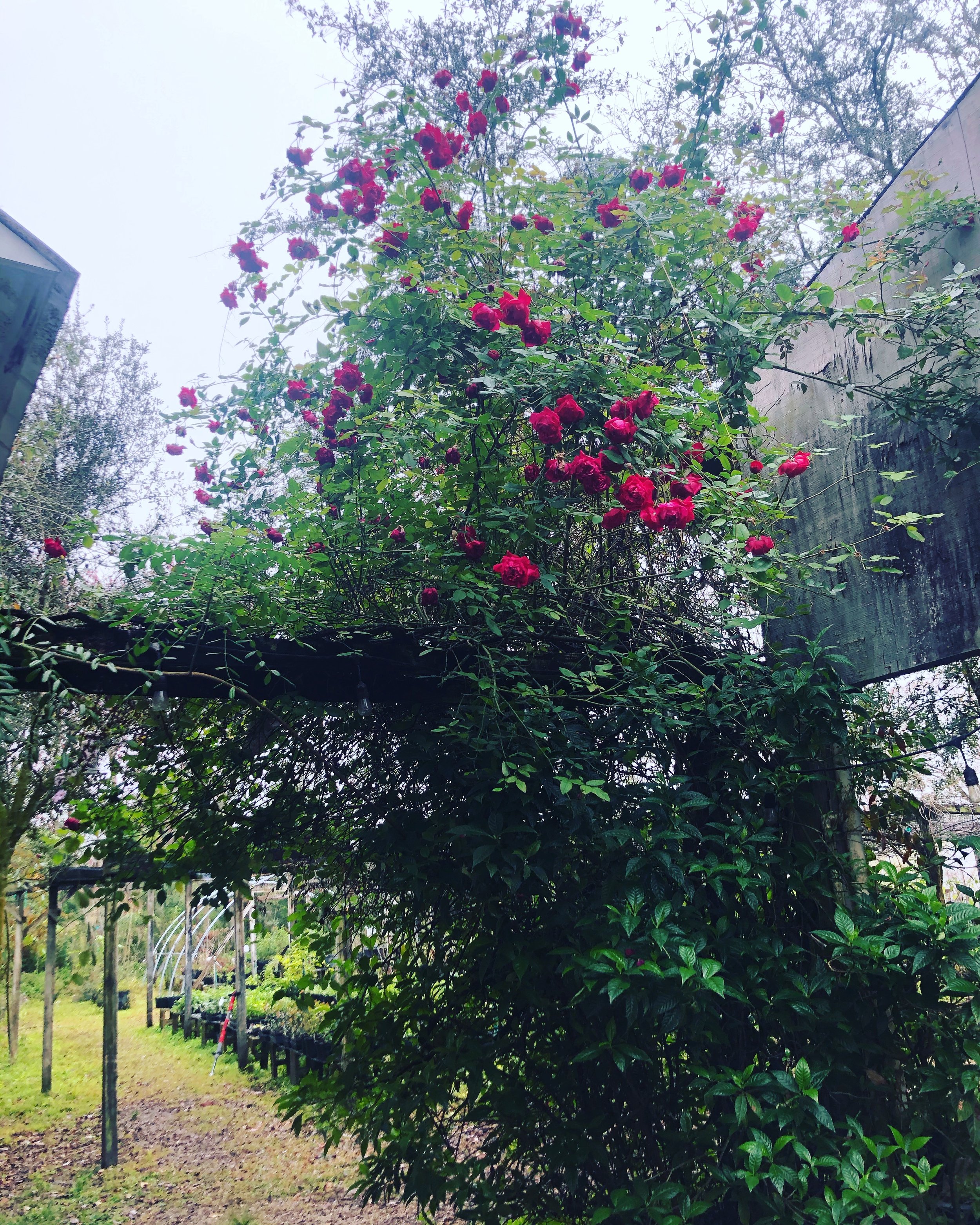
Rosa ‘Louis Philippe’
Louis Philippe Rose is a classic antique China rose introduced in 1834 and named after the French king of the same era. This tough, own-root heirloom grows 3-6 feet tall with a bushy, rounded habit and glossy, dense foliage. It produces loosely double, 2-inch flowers in deep rose red with lighter blush pink centers and occasional white stripes through the petals, blooming continuously throughout the growing season. Known as the "Cracker Rose" in the American South where it has thrived for over a century, it's extremely hardy, drought-tolerant, and disease-resistant. With its sweet fragrance and exceptional adaptability to Southern climates, it remains one of the most reliable roses for Florida gardens in zones 7-10.
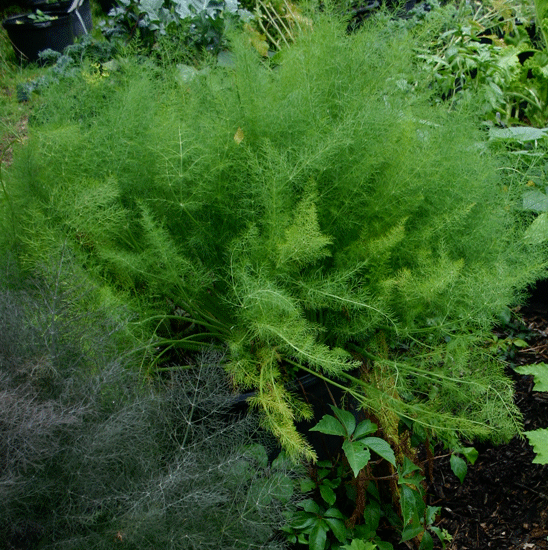
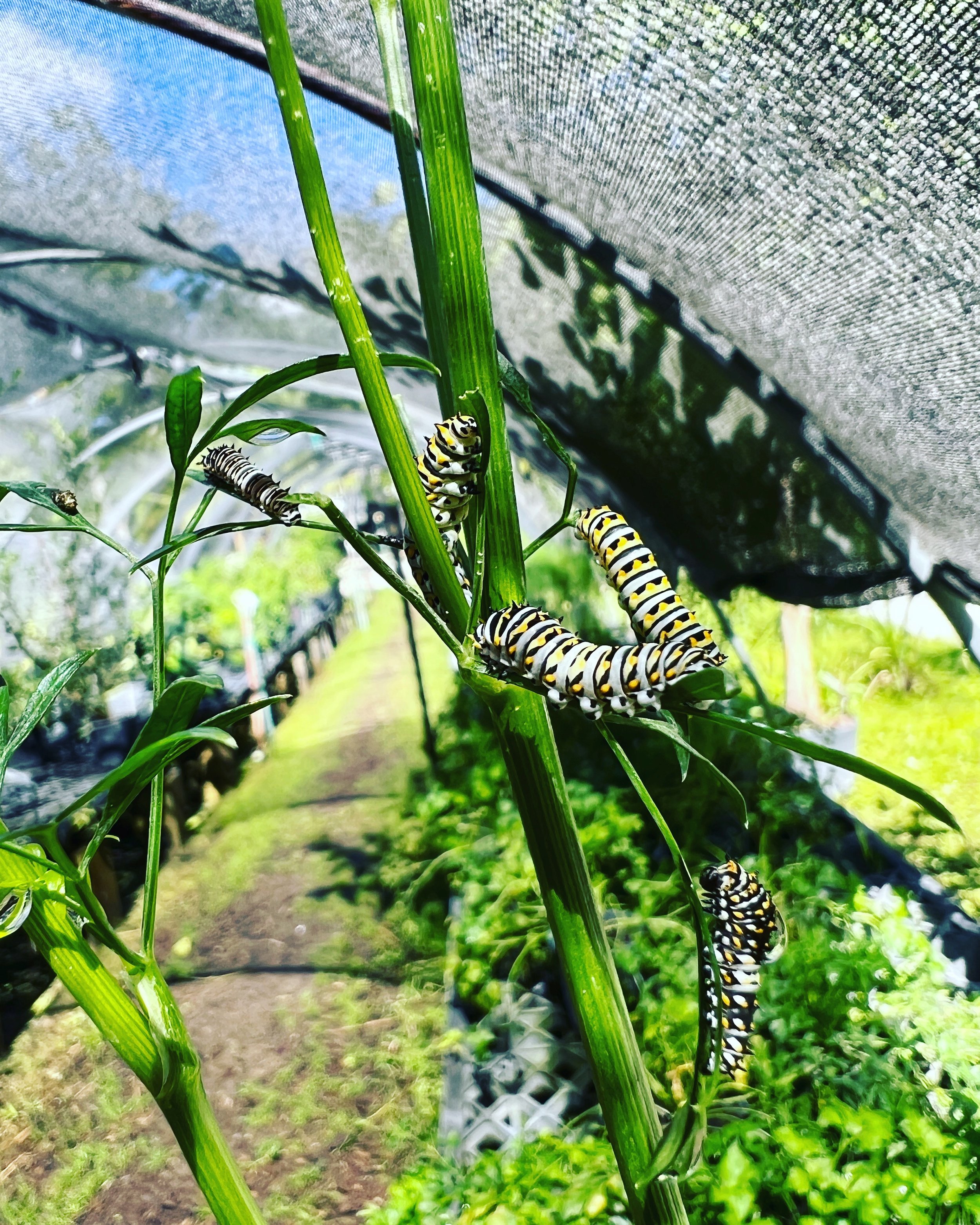
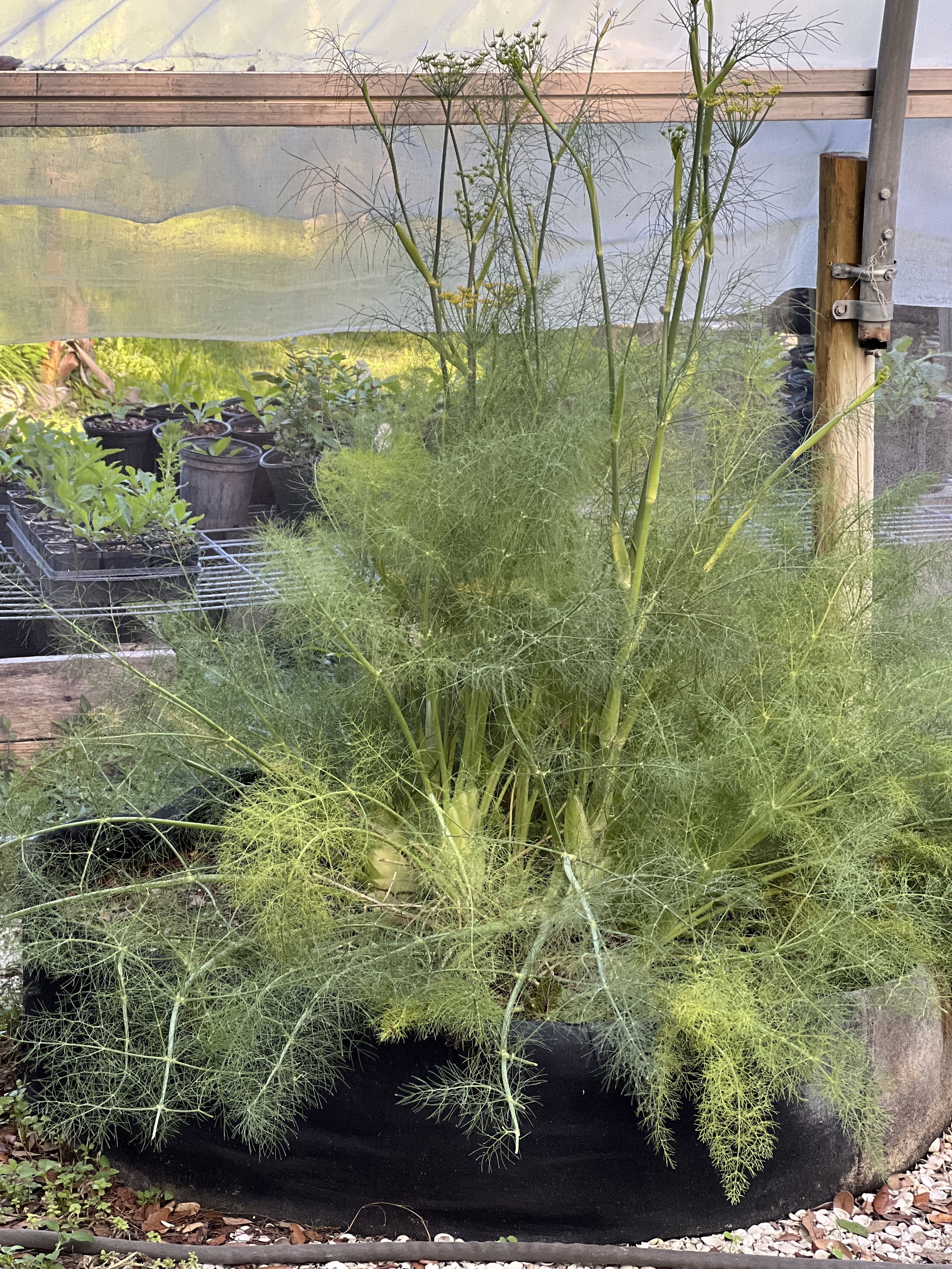
Foeniculum vulgare
Fennel is a highly aromatic, dual-purpose perennial herb that serves both the kitchen garden and the landscape as a vital host plant for swallowtail butterflies. Prefers full sun during the winter but benefits from partial shade during the intense summer heat. Grows best in average to moist, well-drained soil enriched with organic compost. It can be successfully grown as a perennial all year round in Florida, though optimal growth occurs during the cooler months. Features fine, thread-like, feathery foliage and bright yellow umbrella-shaped flower clusters (umbels). It can grow from 3 to 6 feet tall. An essential larval host plant for the Eastern Black Swallowtail butterfly. The plant brings a sweet, anise-like flavor to seafood, soups, and salads.
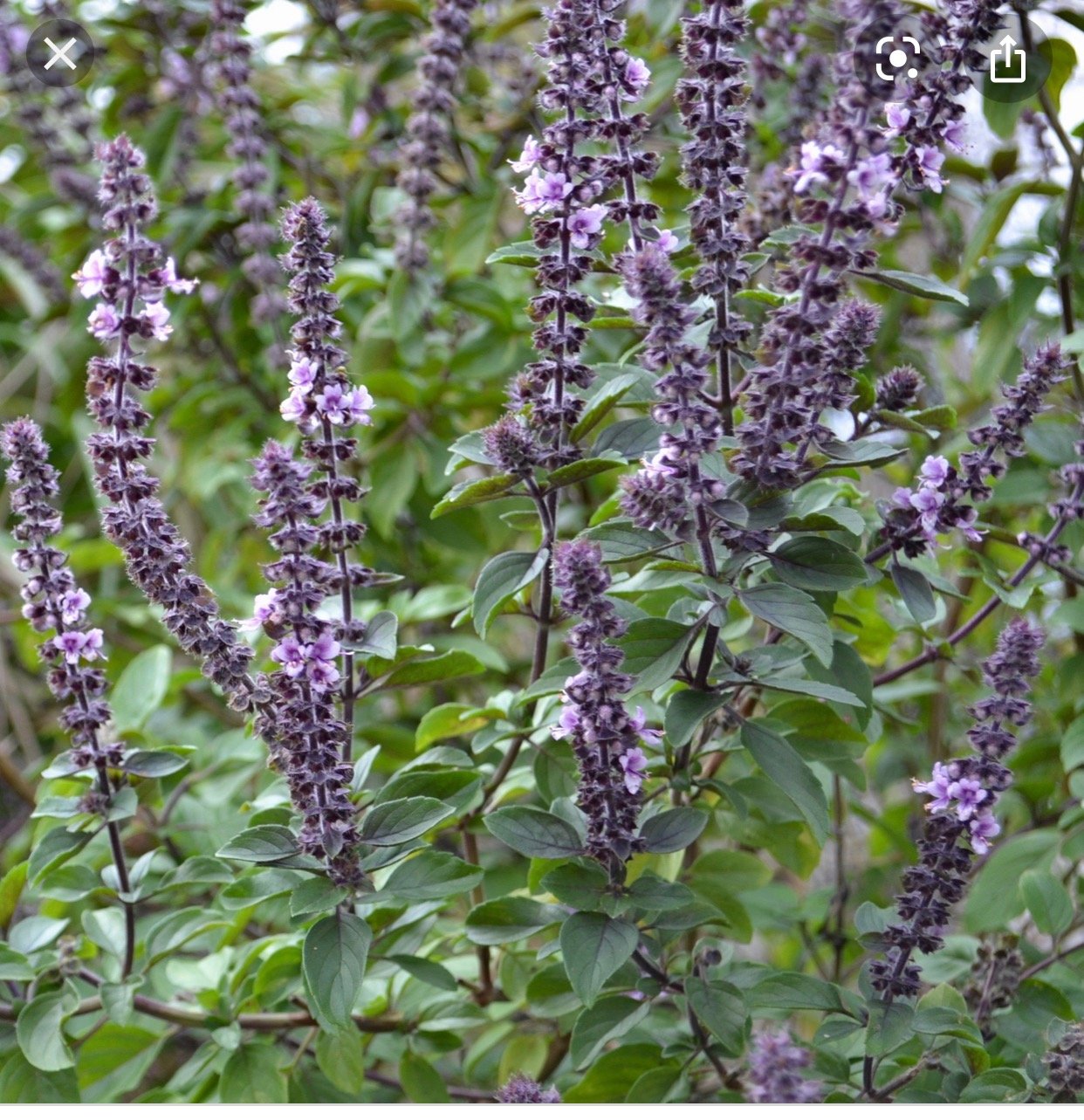
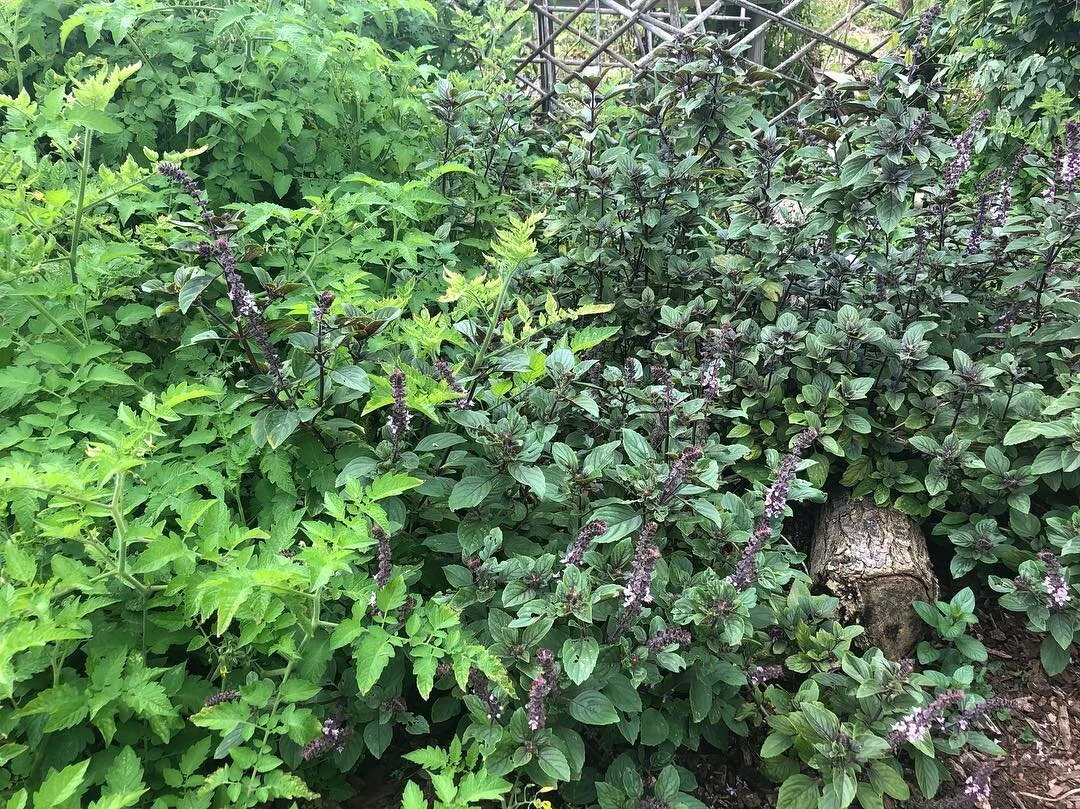
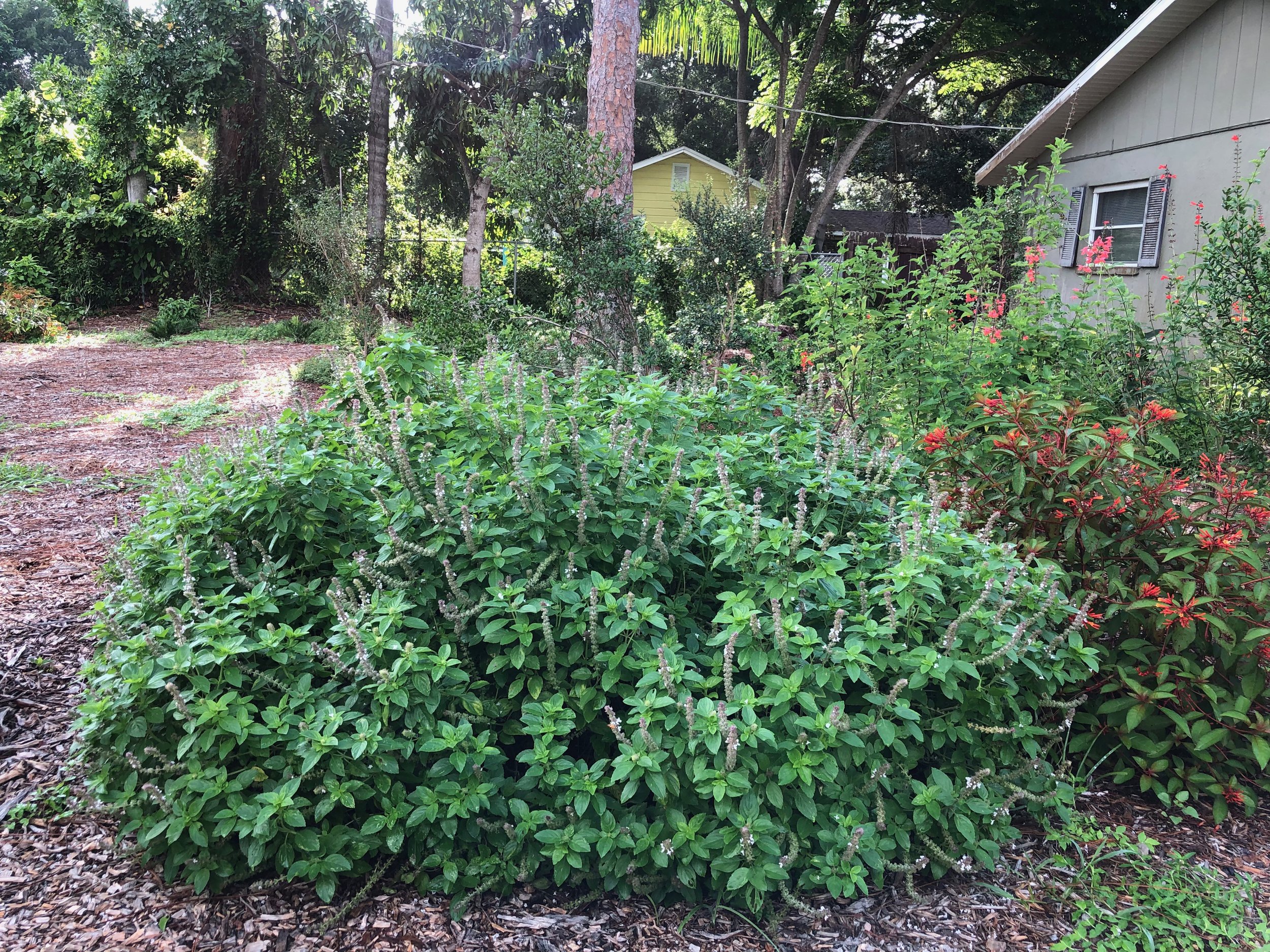
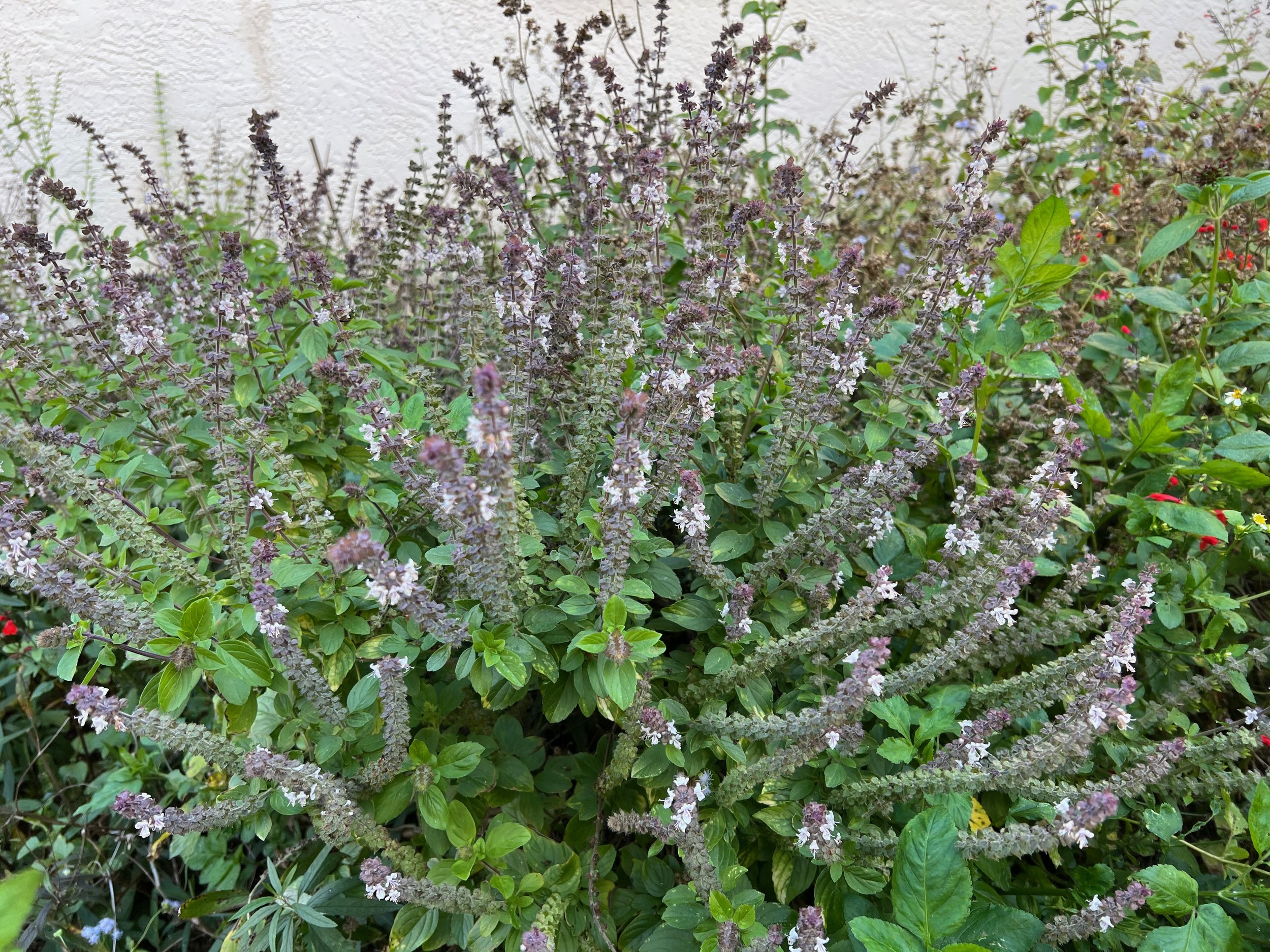
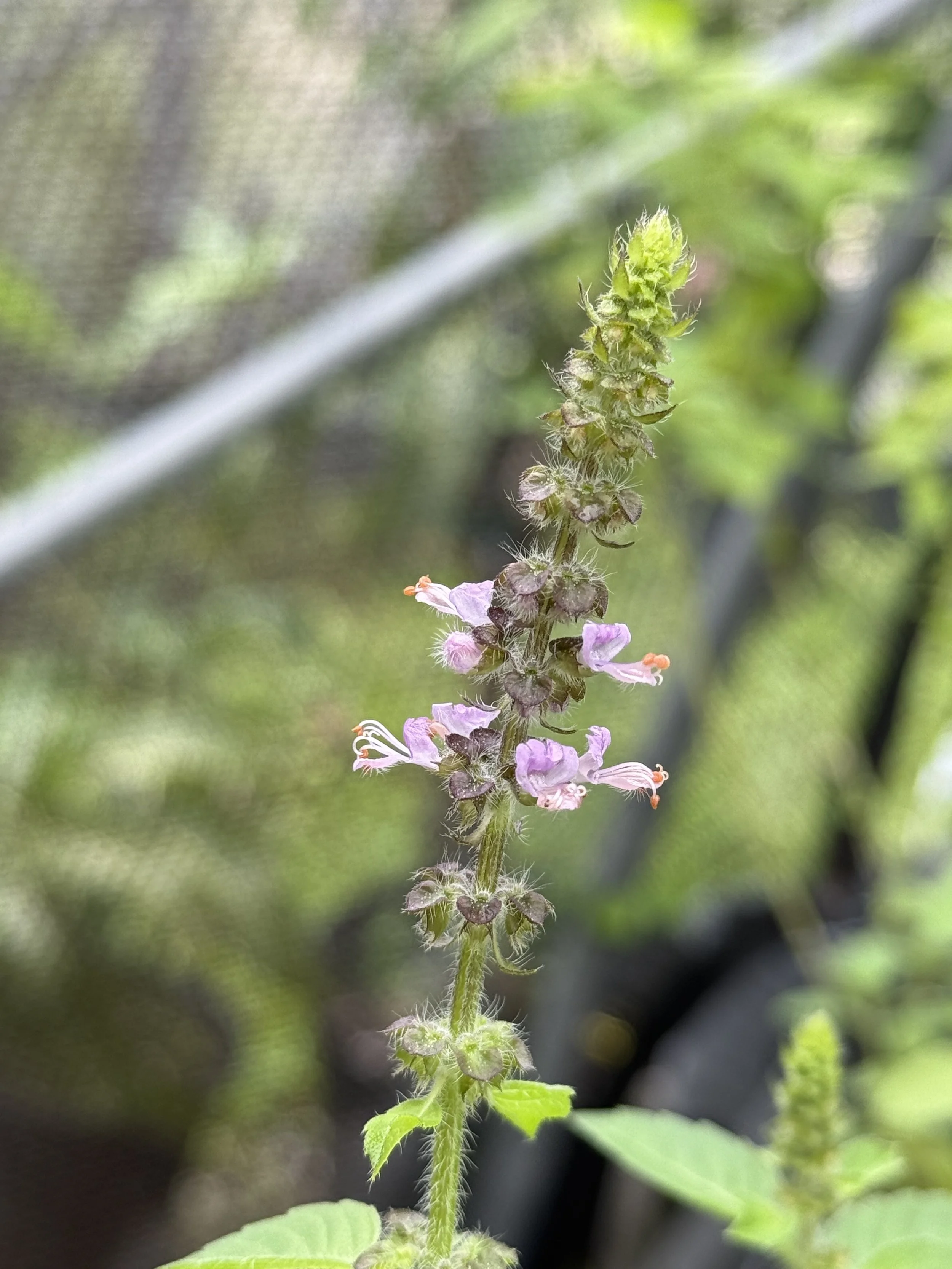
Ocimum kilimandscharicum × basilicum 'Dark Opal'
Non-native, Florida-friendly, fragrant edible perennial herb. African Blue Basil is a hardy herb that prefers full sun in winter and light shade in summer. Grows to be 3’-4’ tall. Average, composted soil, frost protection required. Pollinators, especially honey bees, love this shrub.
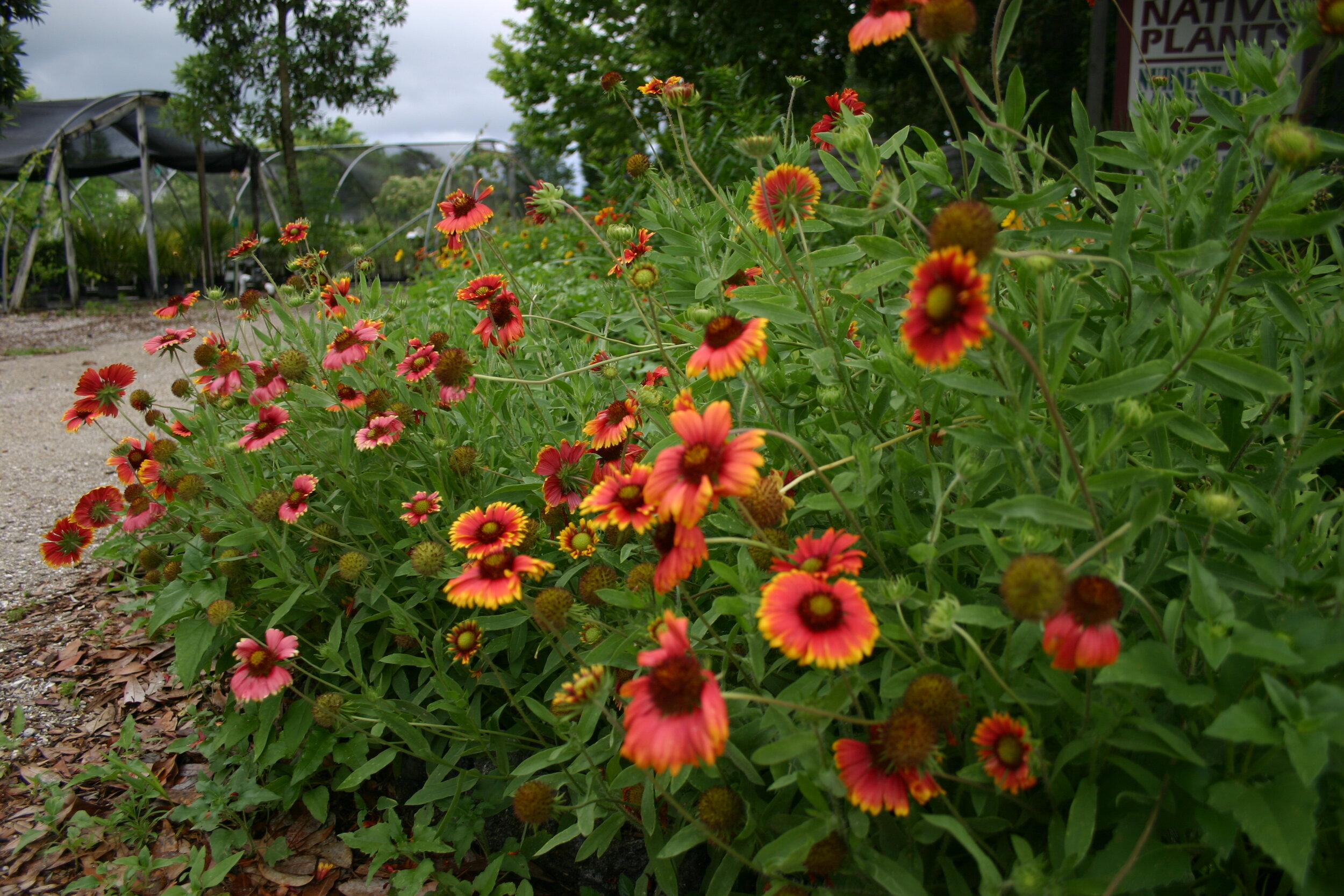

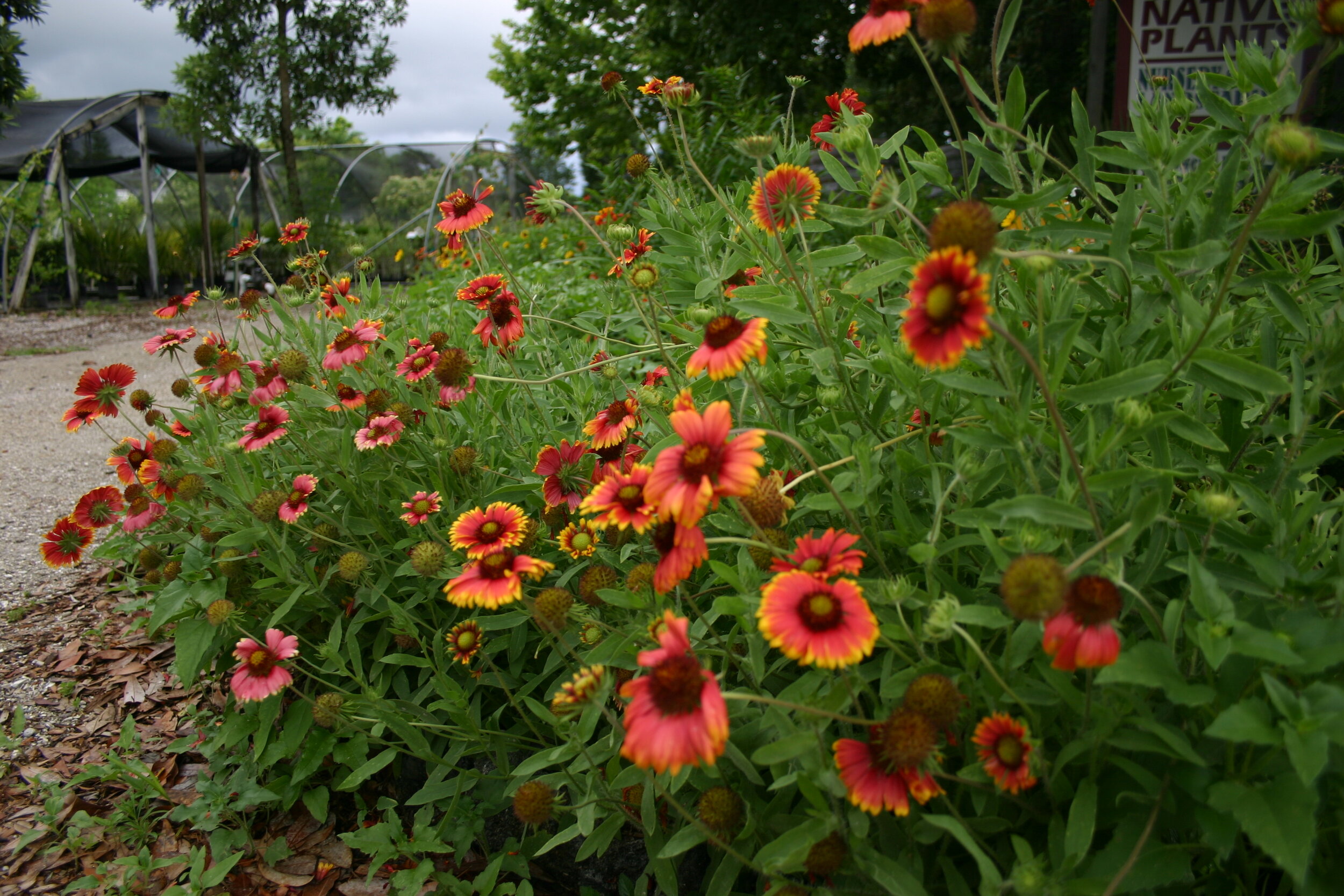
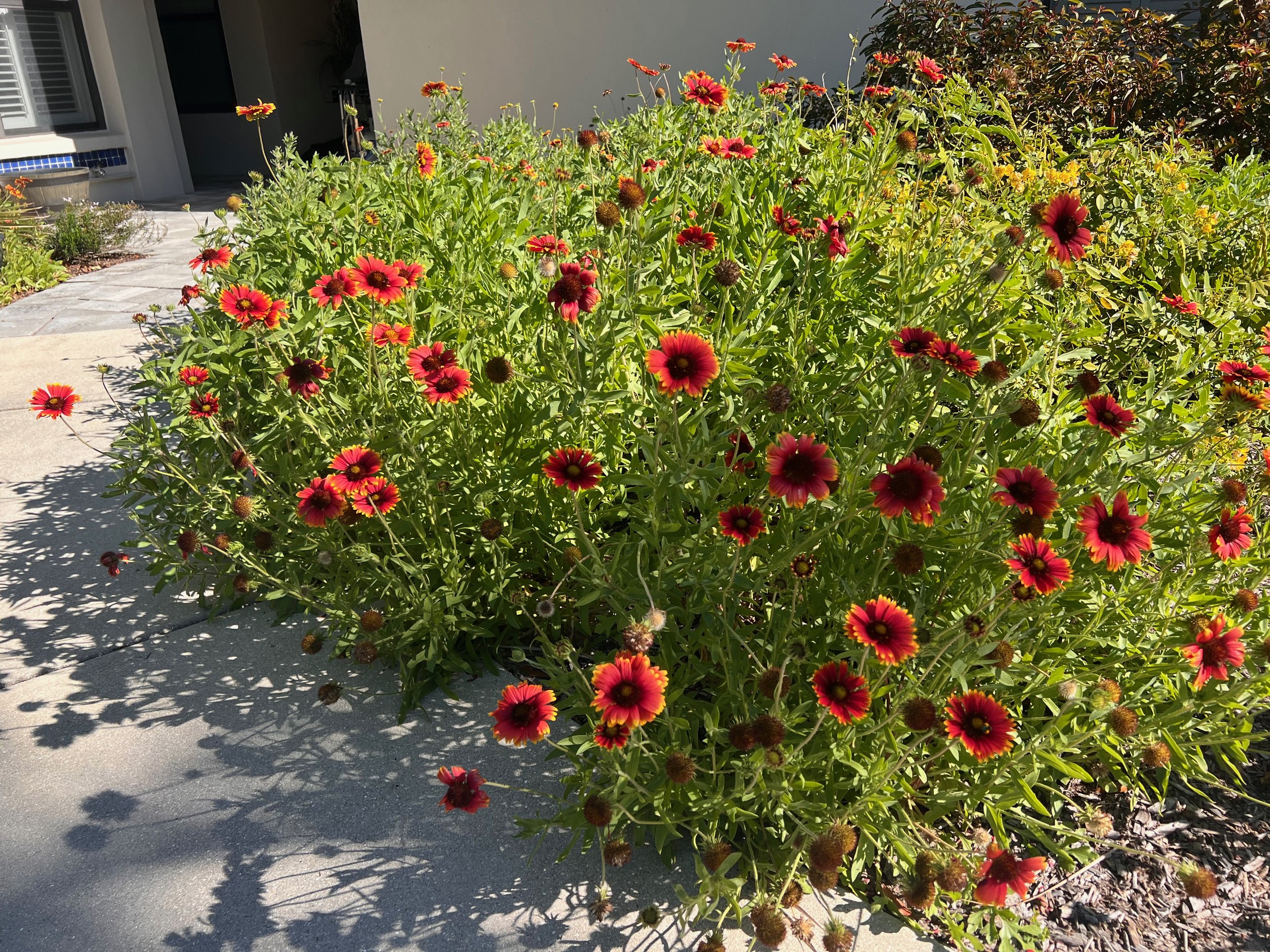
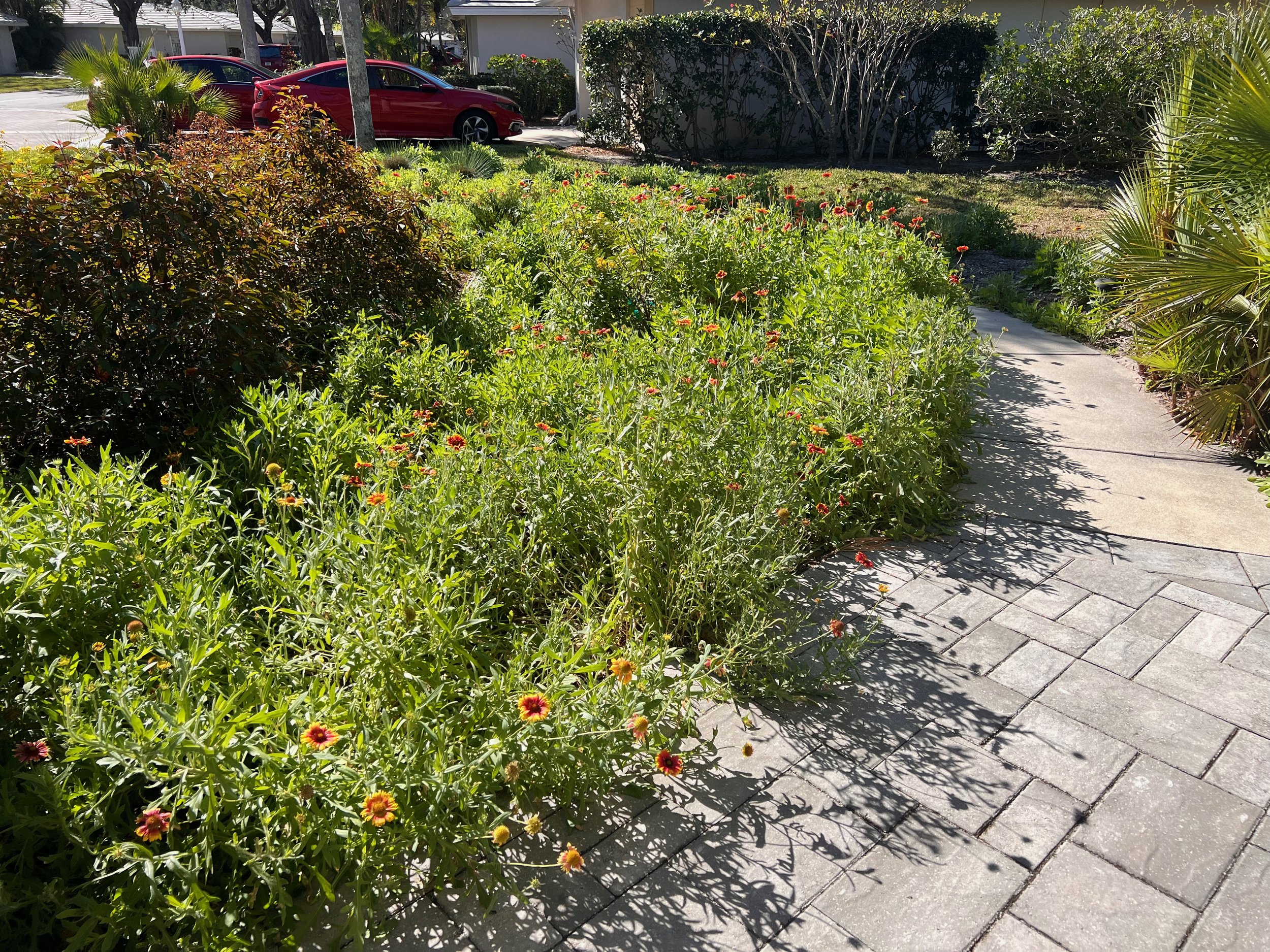
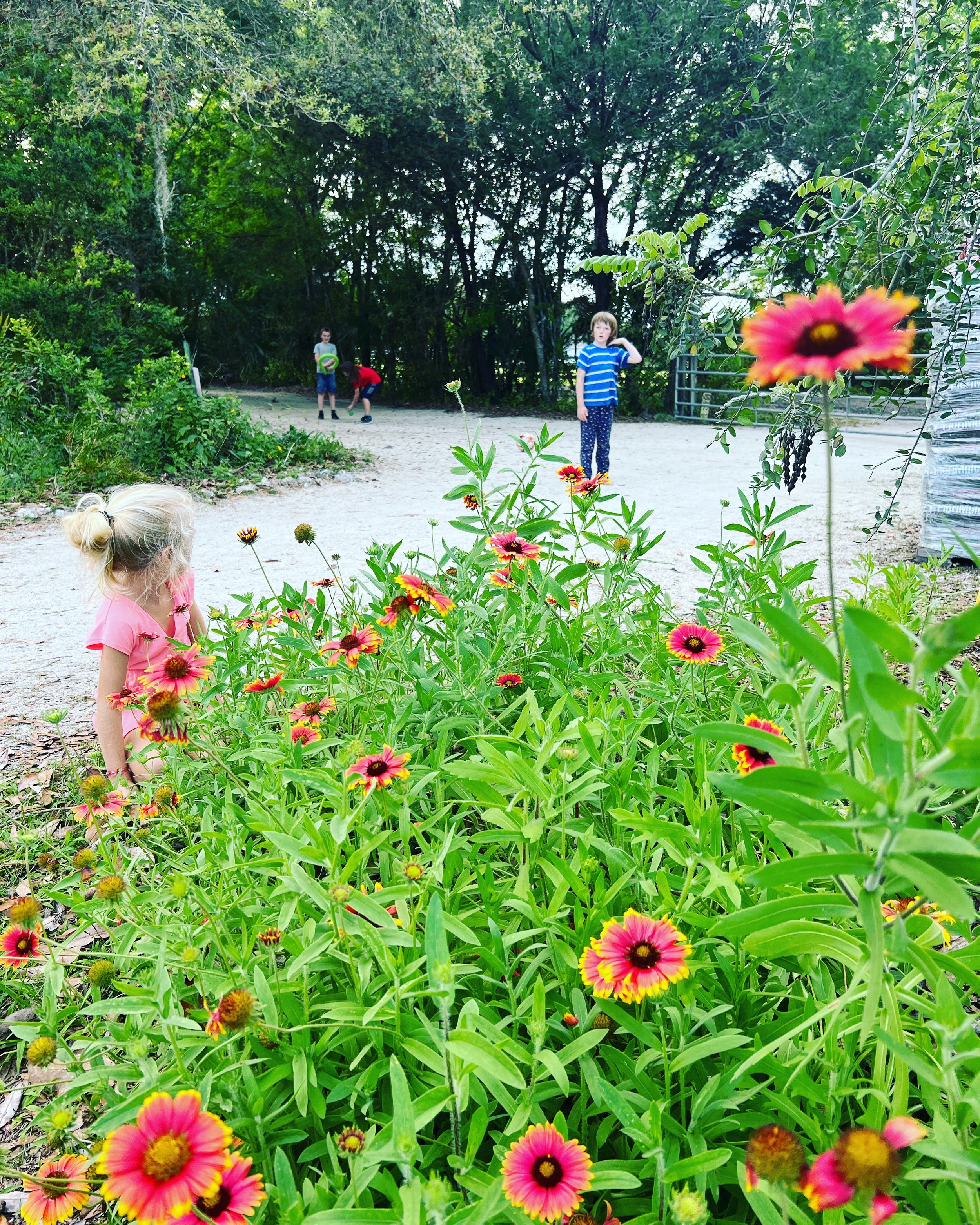
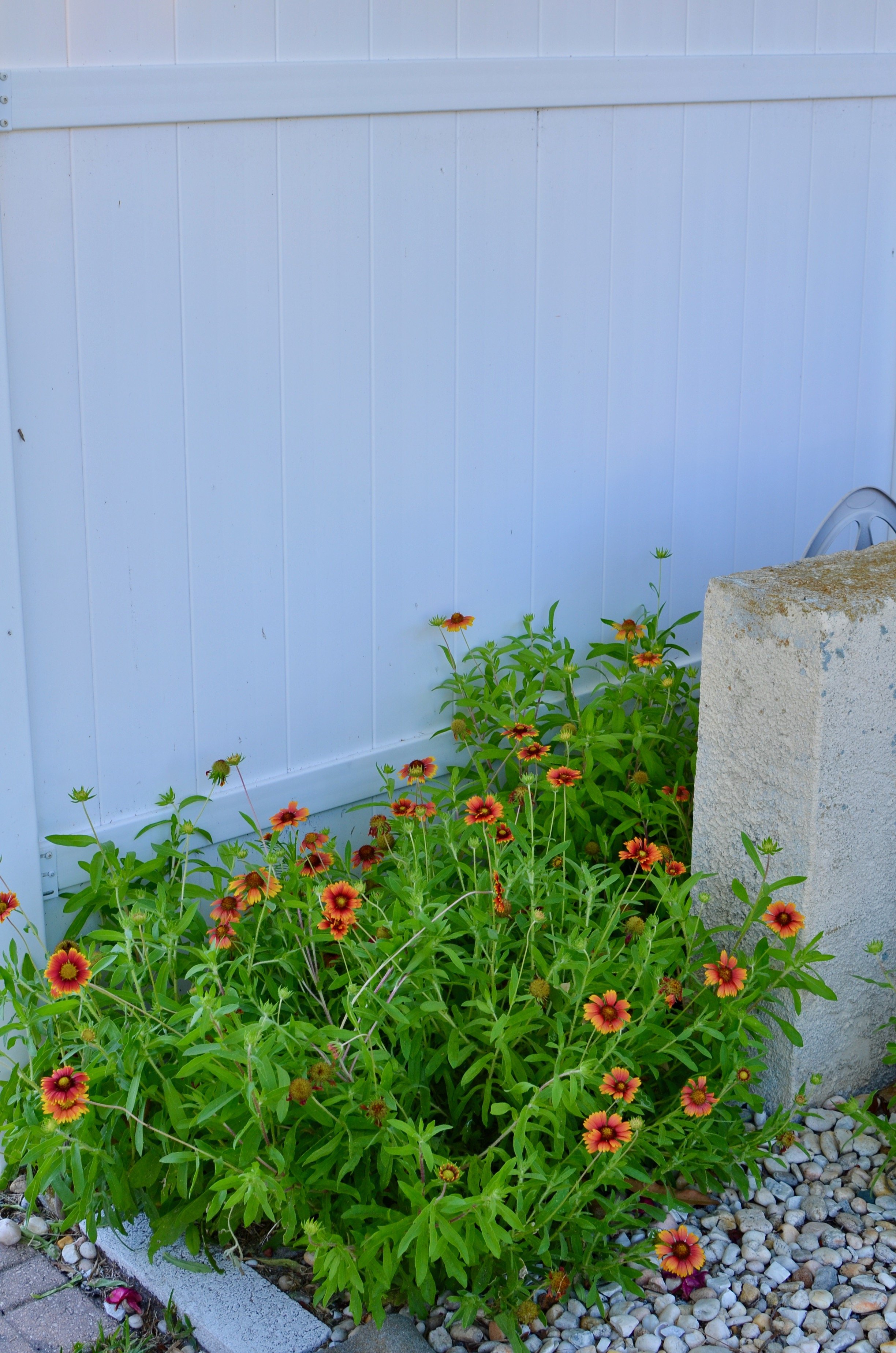
Gaillardia pulchella
Blanket Flower is a non-native, Florida-friendly wildflower that readily reseeds and spreads rapidly. Reaching 1’-2’ in height, they are a great source of nectar for bees and butterflies that bloom in the warm and hot months. They thrive in full sun and dry, sandy soil and are very drought and salt tolerant. Great for coastal applications and dry spots of a landscape as pops of red and yellow.
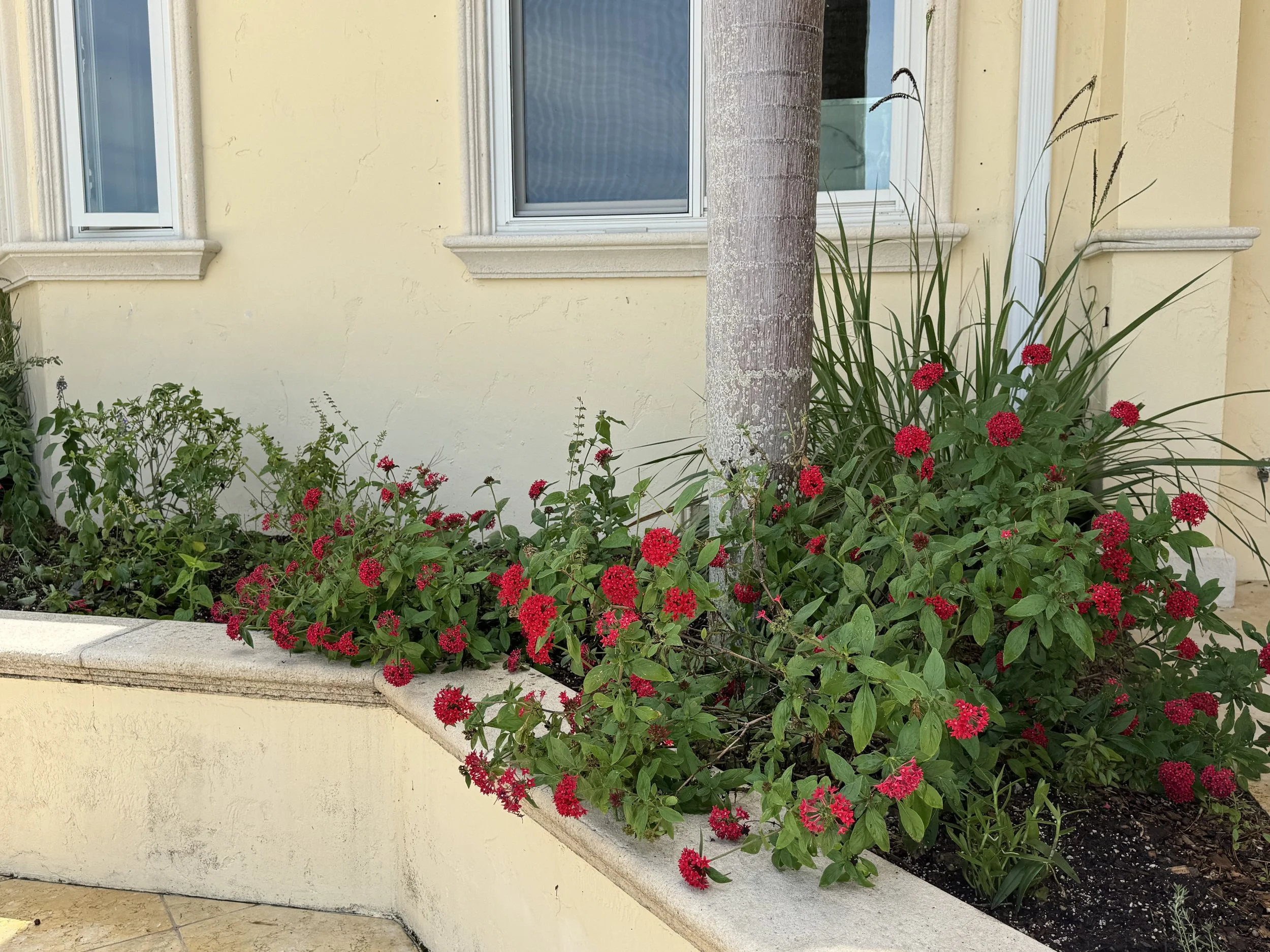
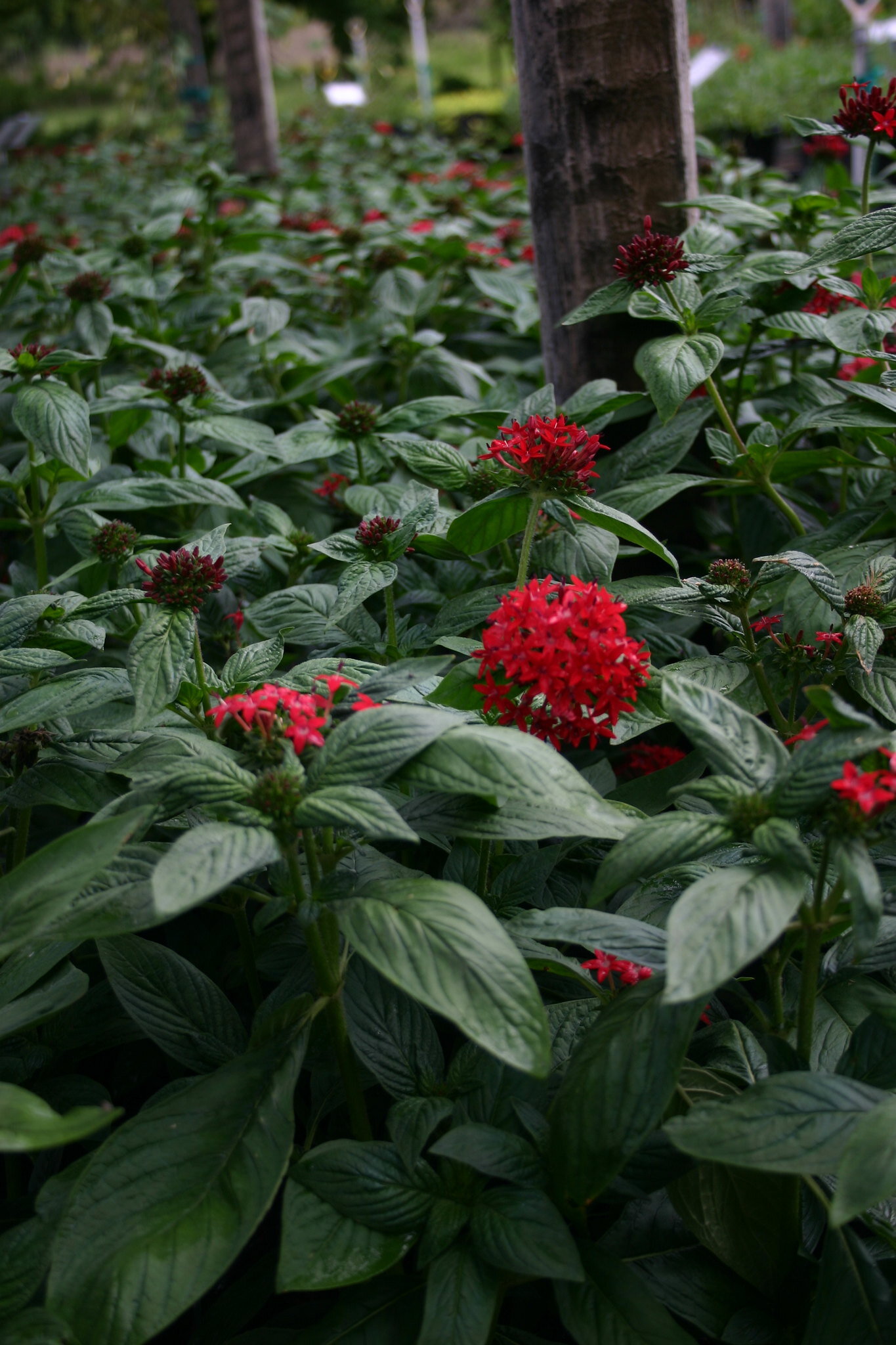
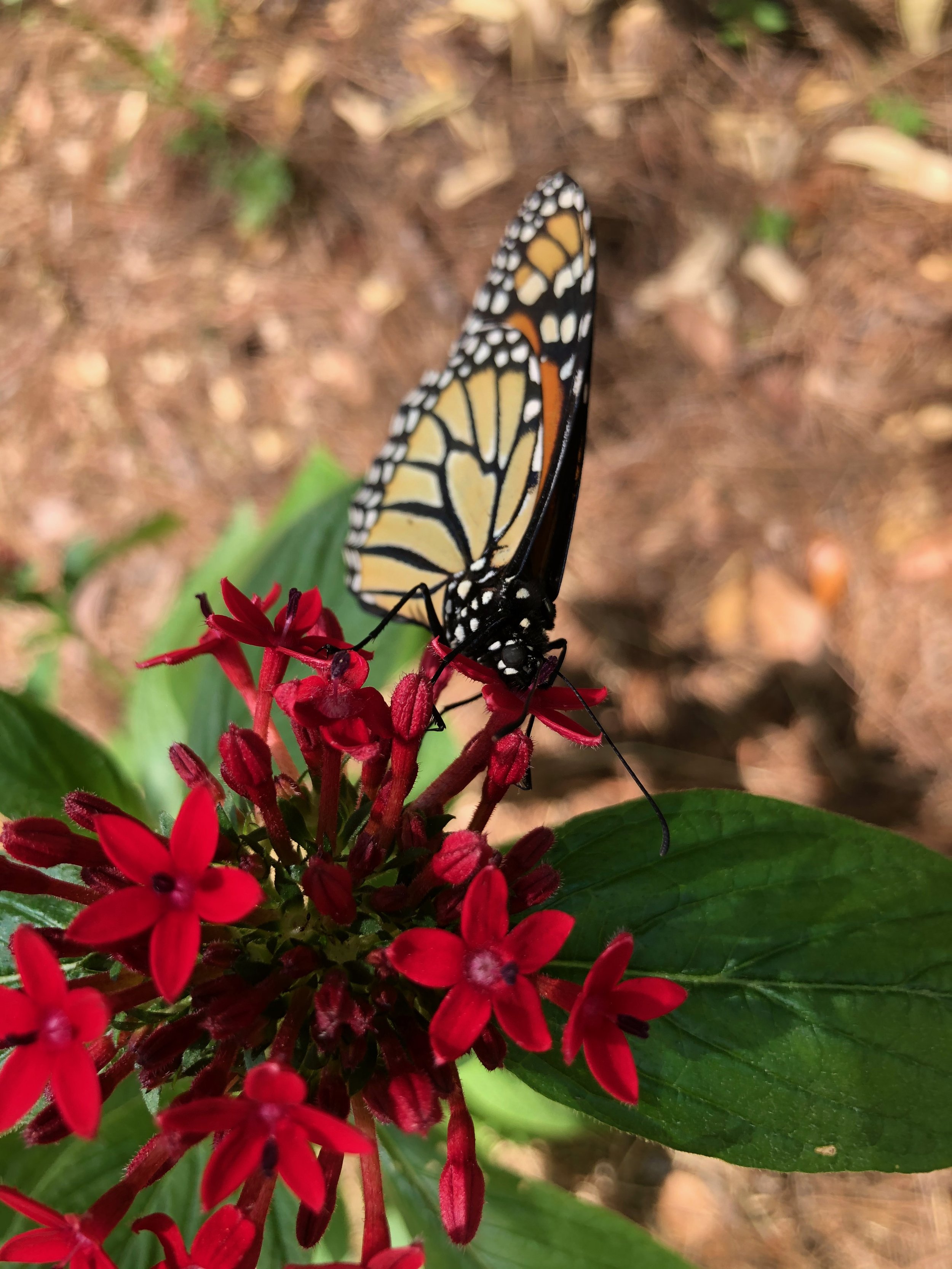
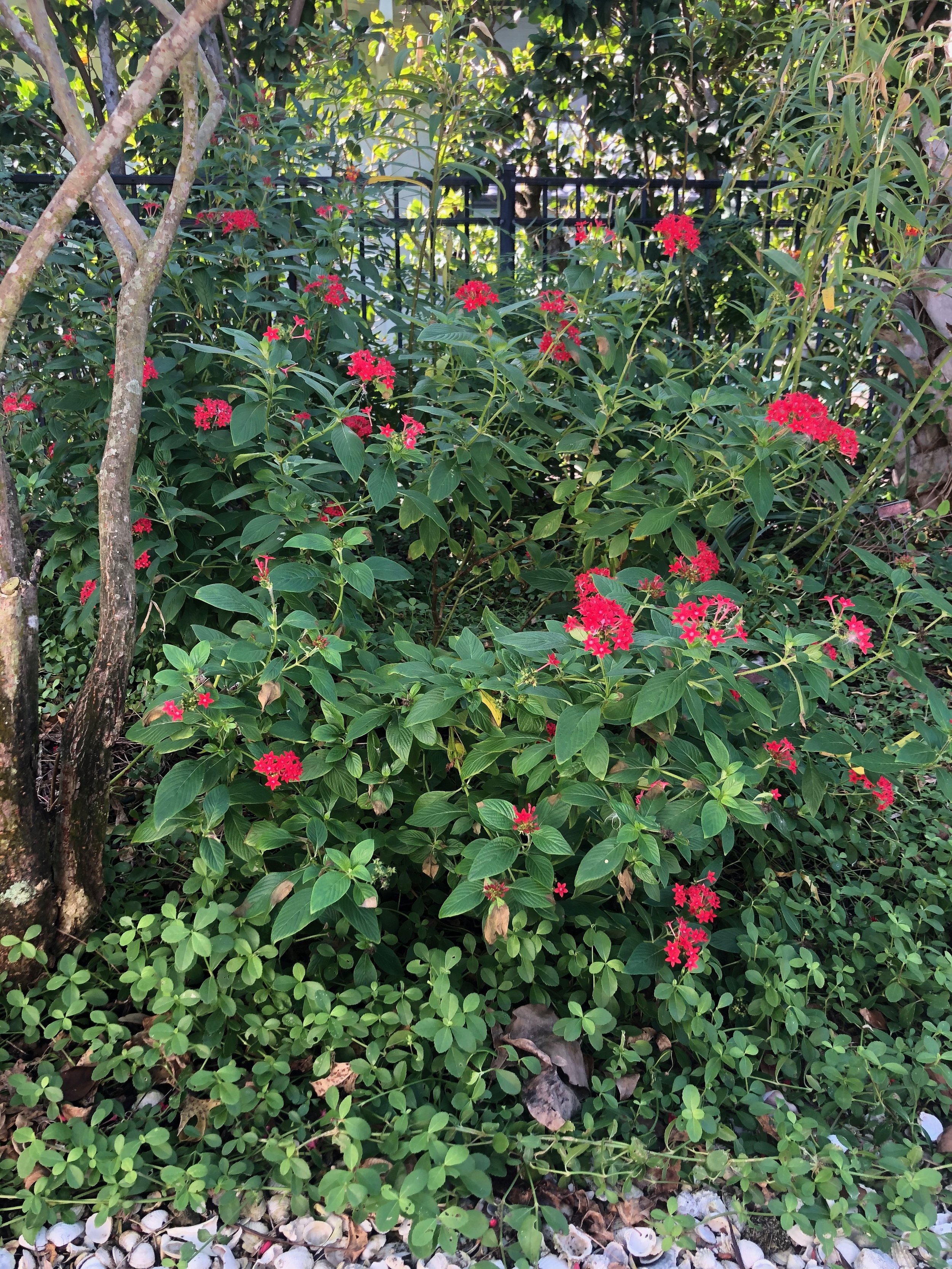
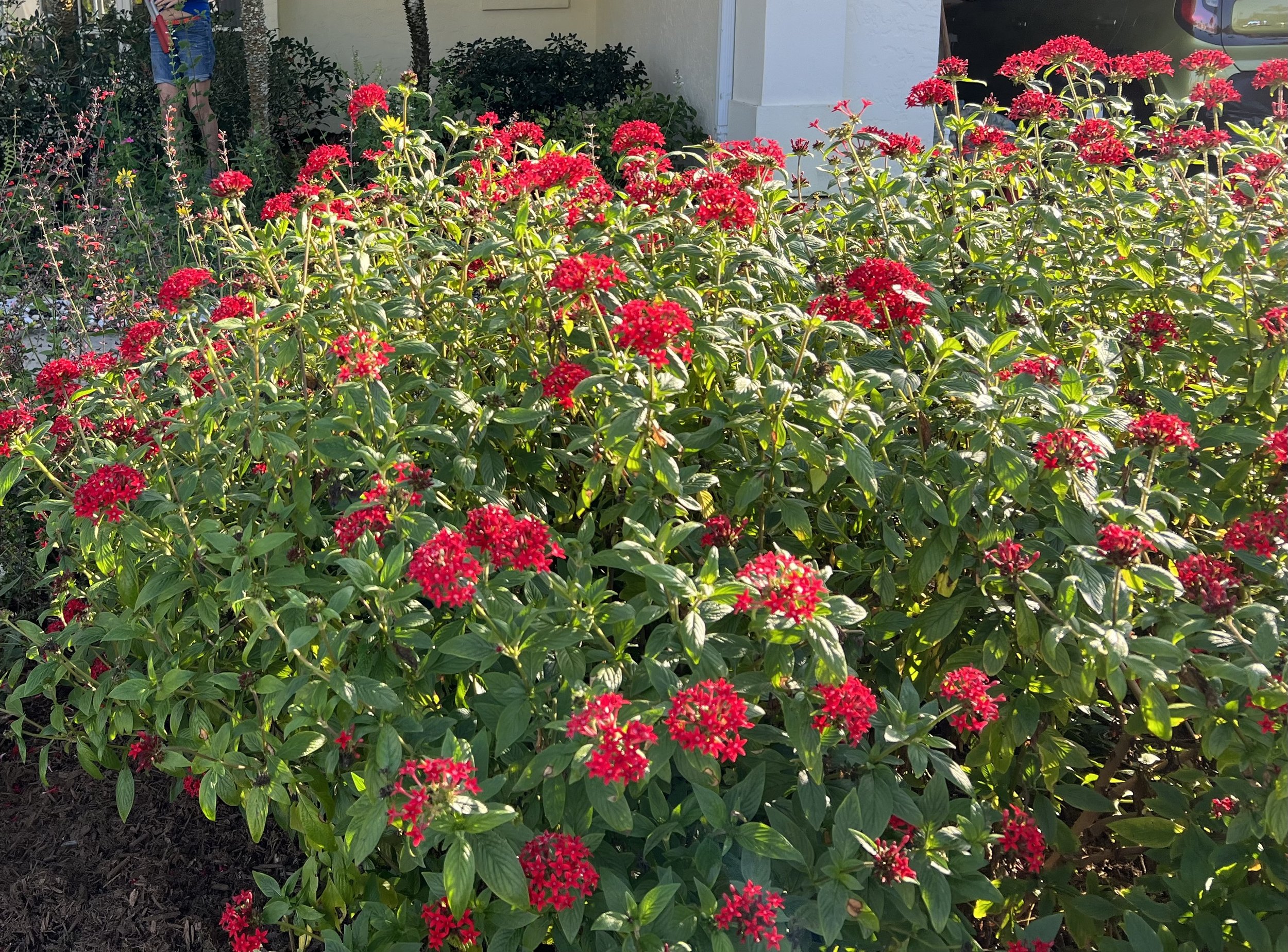
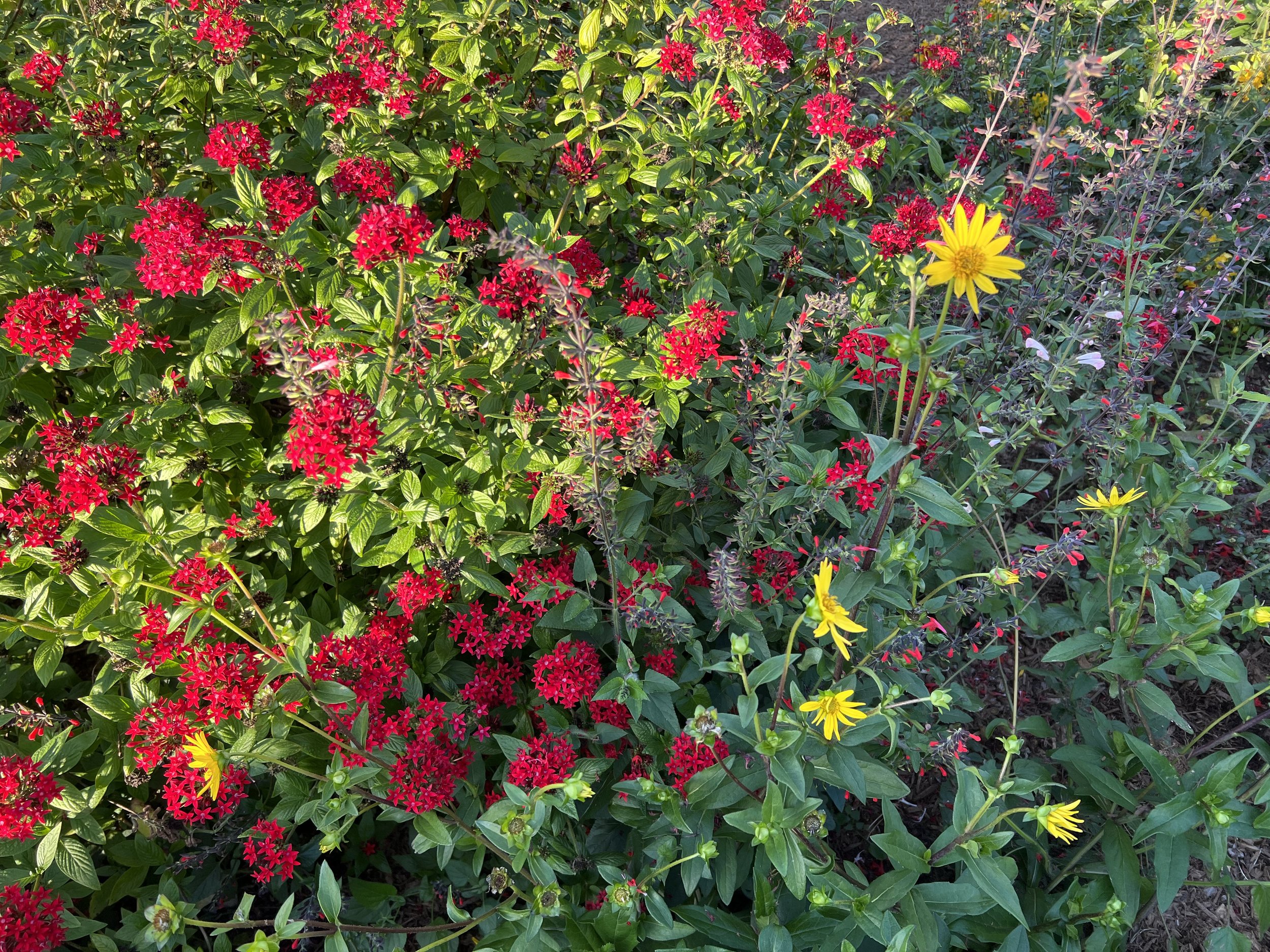

Penta lanceolata ‘Ruby Glow’
Also called “Old-Fashioned Red Penta“ or “Ruby Glow Red Penta” this non-native but Florida-friendly, perennial, evergreen, small flowering shrub is the hardiest of the pentas for Florida gardens. It makes a great addition to a butterfly and pollinator garden as it blooms almost all year (and in the winter months) making it a year-round nectar source year round for many pollinators including Monarch butterflies and hummingbirds. It is adaptable to sun and dry soils but does best in partial shade with average soils. Best planted in groups.
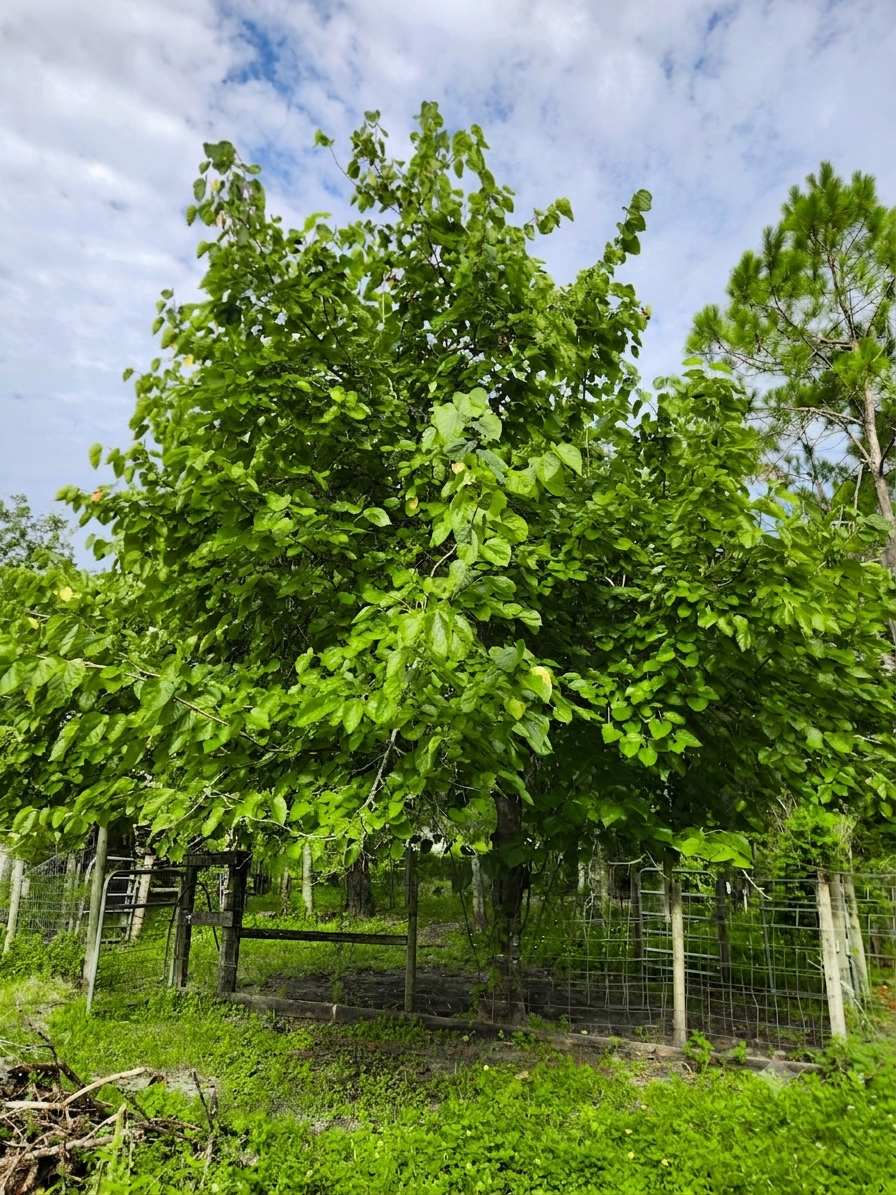
Morus hybr. ‘Tice’
Tice Mulberry is a non-native, Florida-friendly deciduous fruit tree that grows to be 15’-60’ tall, depending on the pruning methods used to maintain it. They grow best in full sun to light shade with rich, well-draining loamy soil, though they are highly adaptable to poor soil conditions. While the Tice Mulberry fruits seasonally, they fruit profusely during their season, producing many large, black, delicious berries that are edible for humans and local wildlife.
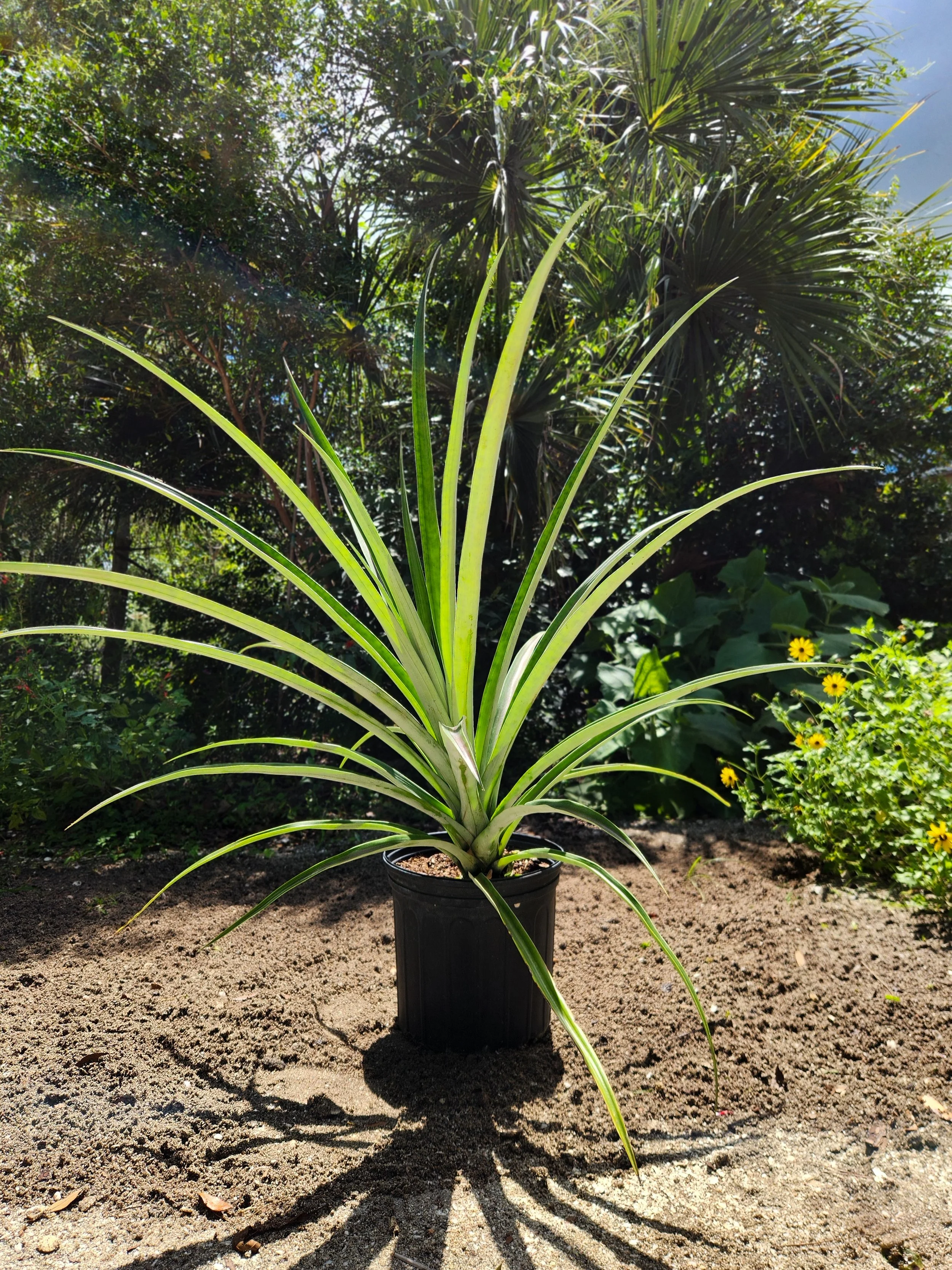
Ananas comosus ‘Florida Special’
Pineapple is a non-native, Florida-friendly edible plant that can grow 2’-3’ tall. They grow best in full sun with average to dry sandy soil. Each plant will produce one pineapple fruit, and they can be planted in the ground or grown in containers. The Florida Special pineapple is a golden variety. It can withstand temperatures down to the mid 30s.
Gynura bicolor
Okinawa Spinach is a non-native, Florida-friendly perennial sprawling mound that can grow to be 2’-3’ tall and wide. They grow well in full sun and partial shade and well-drained organic soil. These plants are very tolerant of the Florida heat, producing crisp, bicolored leaves with a deep green top and dark purple underside. The leaves can be enjoyed raw in salads and smoothies, or cooked into soups and stir-fries.
Rubus niveus
Mysore Raspberry is a non-native, Florida-friendly, edible vining shrub that can grow 8’-10’ tall when trained onto a trellis. They grow best in full sun to partial shade, with moist, well-drained soil. These plants are very tolerant of the heat, unlike some other raspberry varieties, making them an excellent choice for Florida landscapes. Their pink blooms bring in pollinators, and their fruit can be enjoyed by humans and local wildlife.
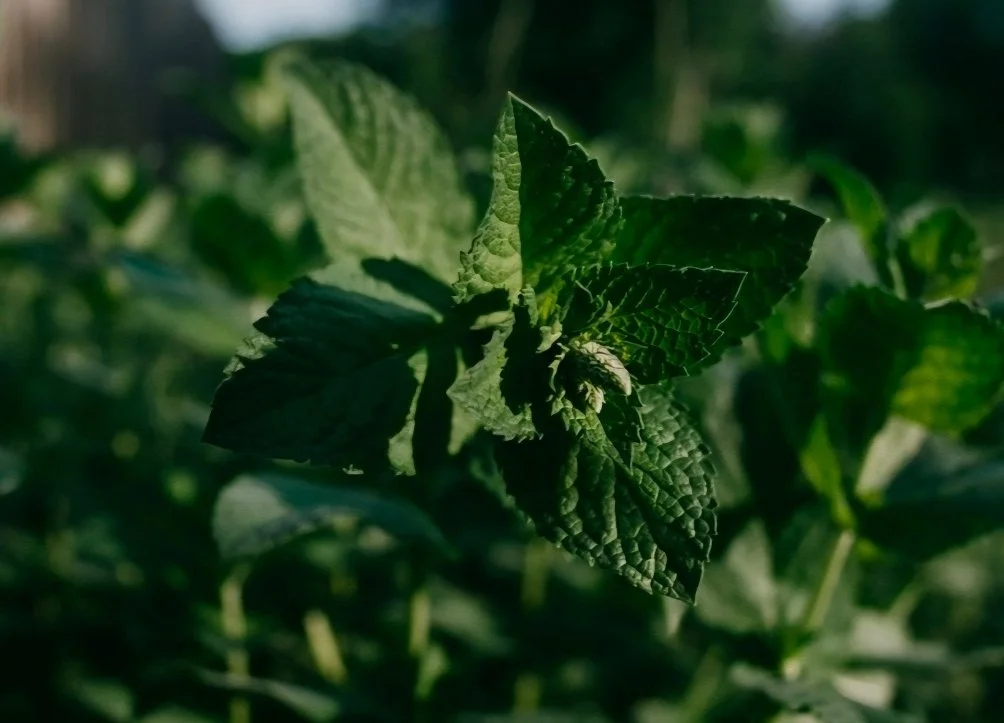
Mentha villosa
Mojito Mint is a non-native, Florida-friendly perennial herb that can grow 1’-3’ tall and 2’-3’ wide. They do well in full sun to partial shade and rich, moist, well-draining soil. The leaves are fragrant and edible, often used in mojitos and teas, salads, and as a garnish. The flowers are also highly attractive to pollinators.

Cymbopogon citratus
Lemongrass is a non-native, Florida-friendly, perennial edible grass that grows 3’-4’ tall and 2’-3’ wide. They require full sun and rich, well-draining, loamy, clay, or sandy soil. When crushed, their leaves give off a lovely citrusy scent, and their lower stalks can be used to flavor soups, curries, and teas. As large clumping grass, they also make great border plants for folks who want to add some texture to their landscape.
Eugenia aggregata
Cherry of the Rio Grande is a non-native, Florida-friendly evergreen fruit tree that grows to be 10’-20’ tall. They grow best in full sun and moist, but well-draining, slightly acidic rich soil. They have fragrant, white flowers that are followed by small, dark purple to almost black fruit with a classic cherry taste.


Averrhoa carambola
Carambola or Star Fruit is a non-native, Florida-friendly, small evergreen fruit tree that grows to be 22’-33’ tall and 20’-25’ wide. They grow best in full sun to partial shade and moist, well-draining soil. They have soft-green leaves and yellow, star-shaped fruit that have a delightful sweet-tart taste.
Pentas lanceolata
The ‘Orchid Illusion’ Penta is a non-native, Florida-friendly perennial wildflower that does best in full sun to partial shade, with dry to average, well-draining soil. With dark green leaves and light lavender blossoms, the Orchid Illusion Penta is a great way to bring color and pollinators into your landscape.
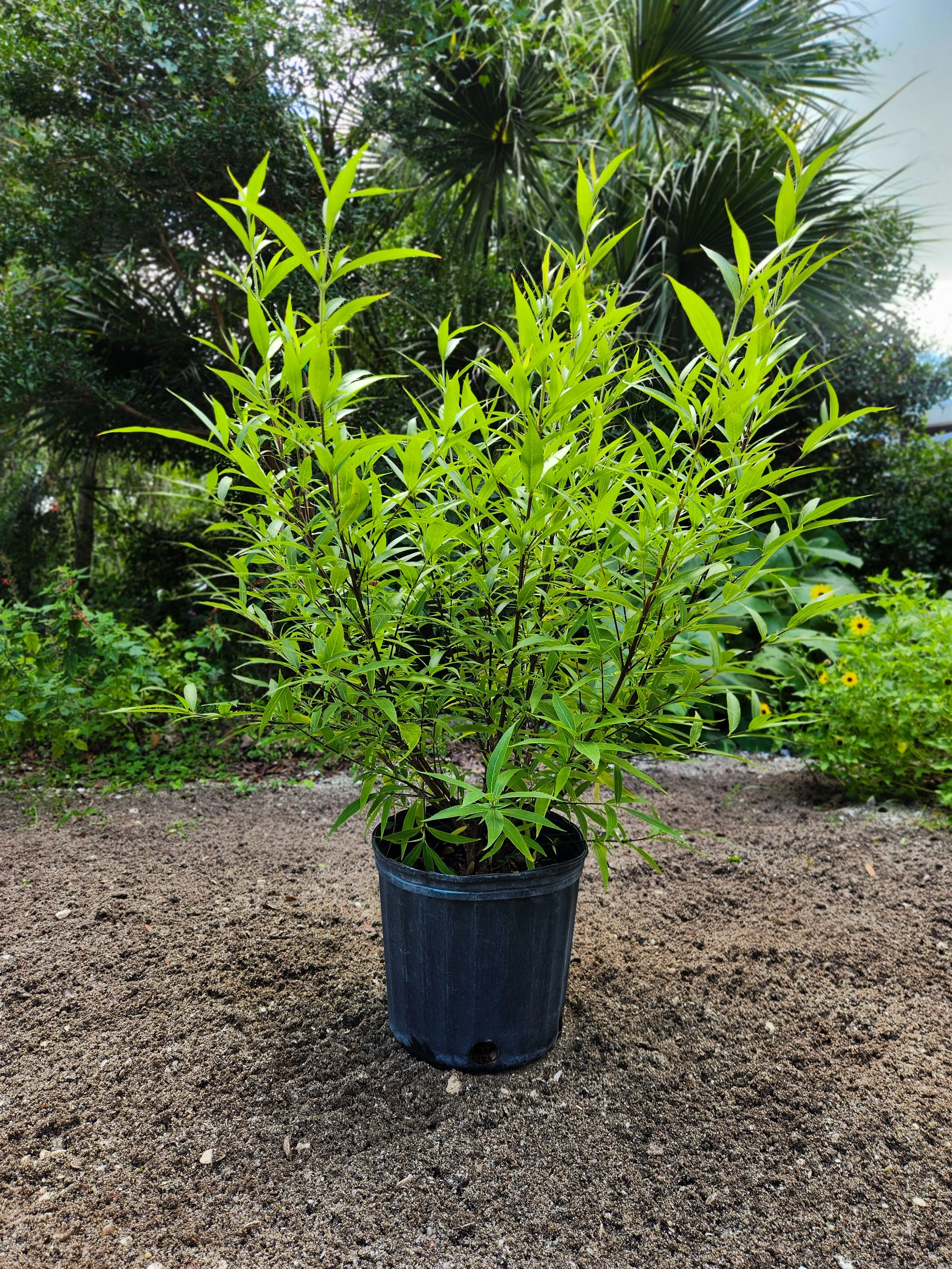
Roneletia leucophylla
Panama Rose is a Florida-friendly, flowering, evergreen shrub, aka “Bush Penta”. They reach heights of 3’-6’, but they are easy to keep at 3’. These plants thrive in full sun to part shade, and do well in average soil. Drought tolerant once established. They have fragrant, bright pink flowers that bloom year-round, and are a butterfly favorite! They attract hummingbirds, butterflies, and other pollinators.
No results match your search. Try removing a few filters.