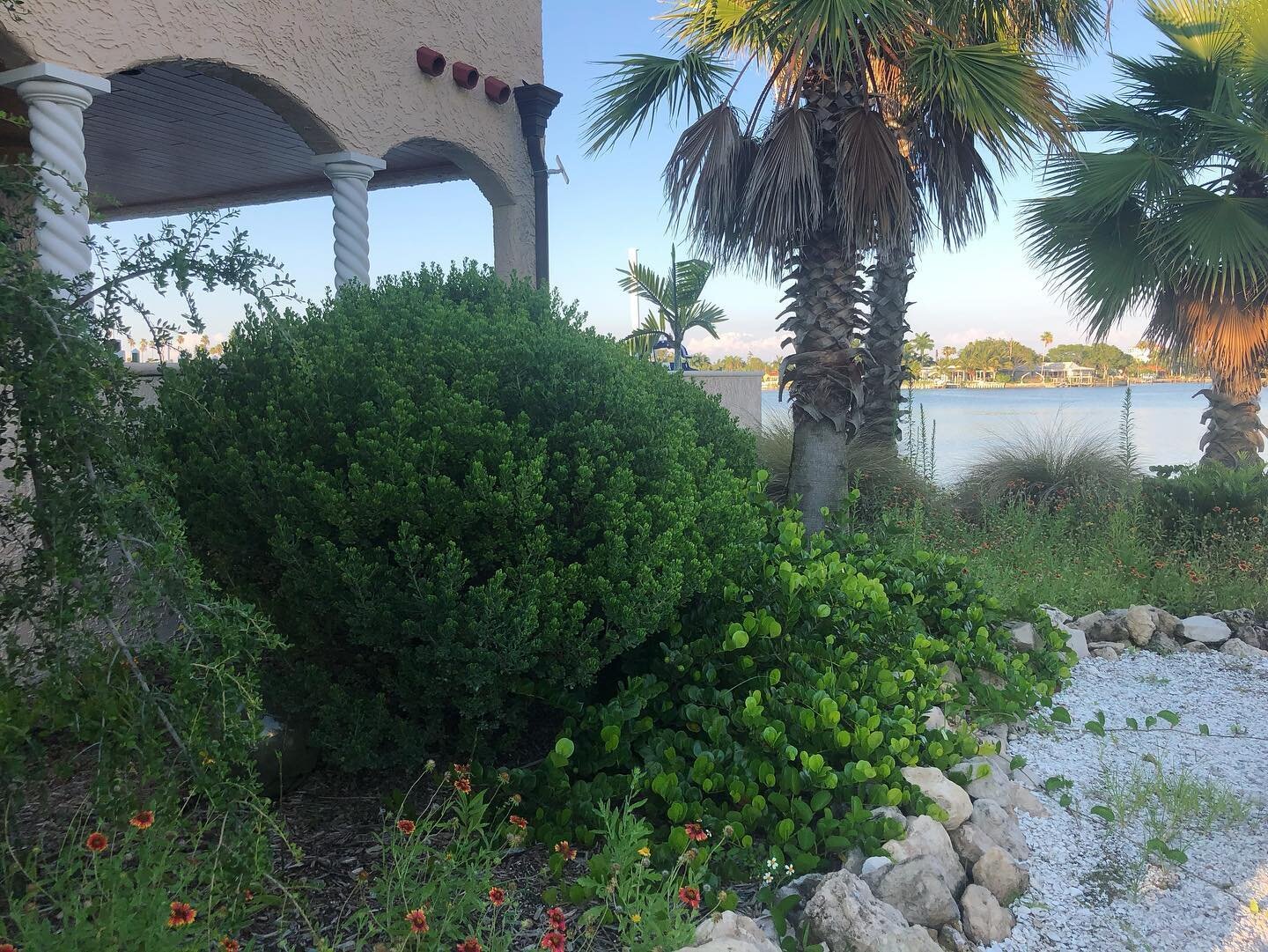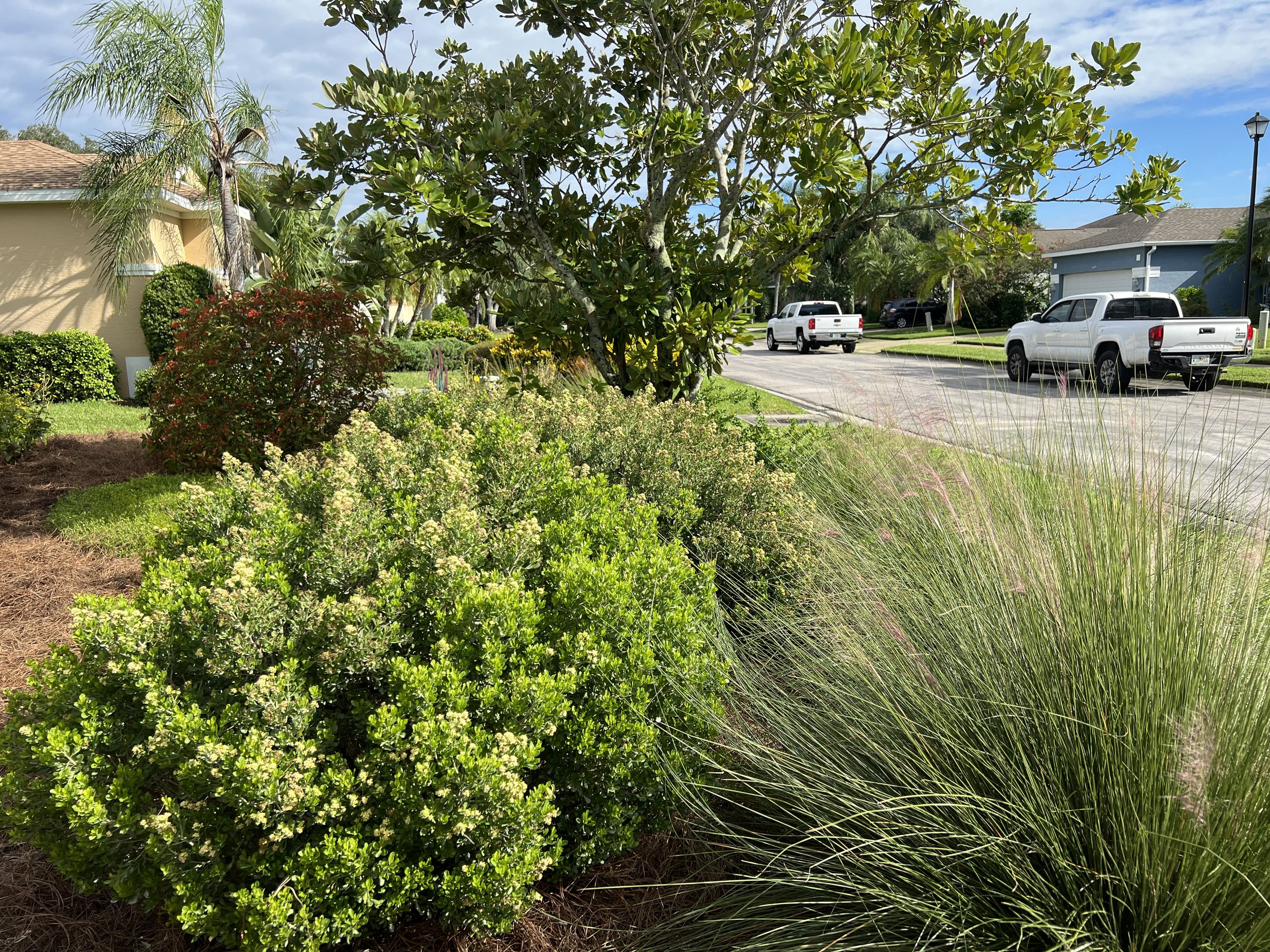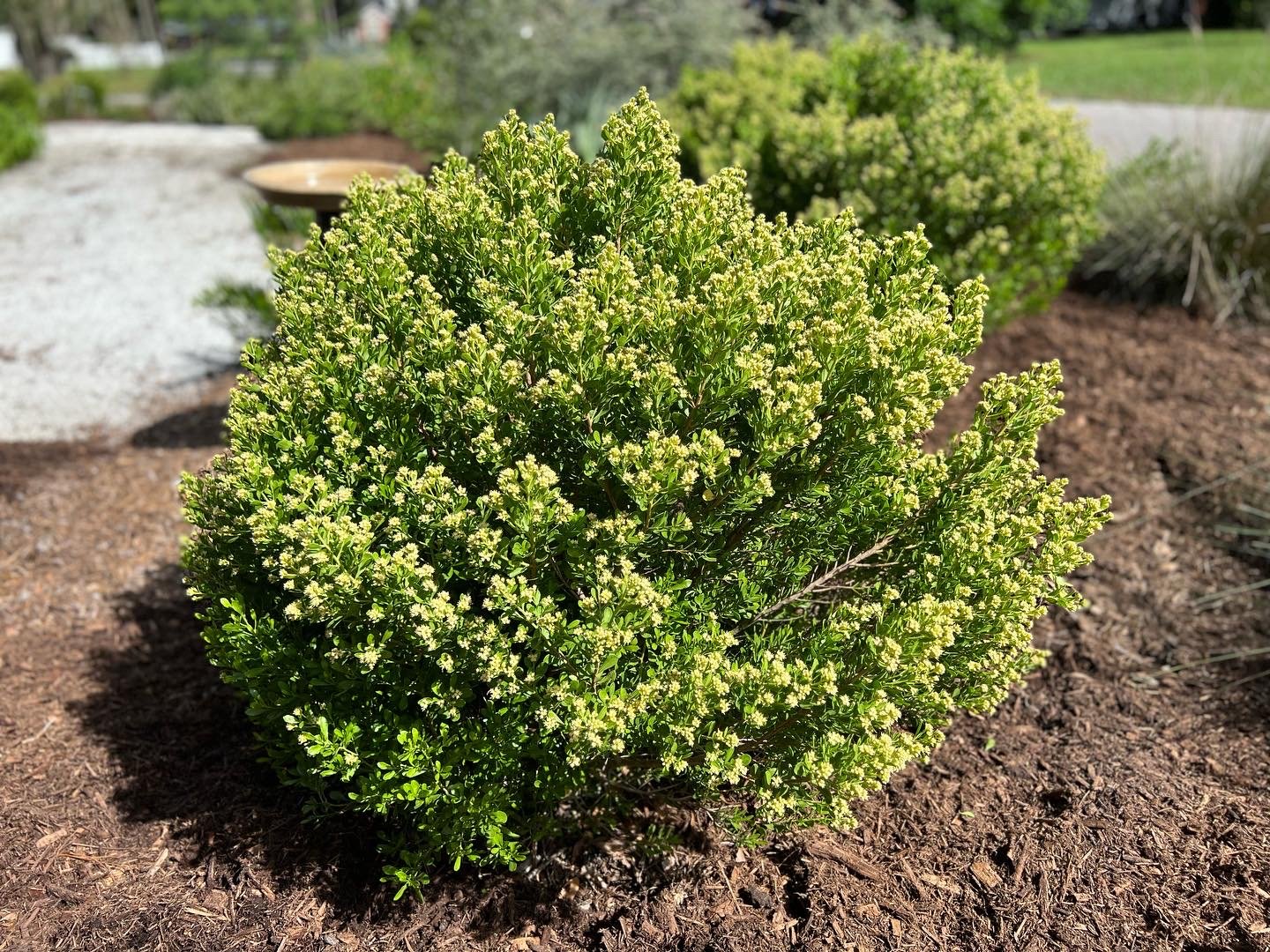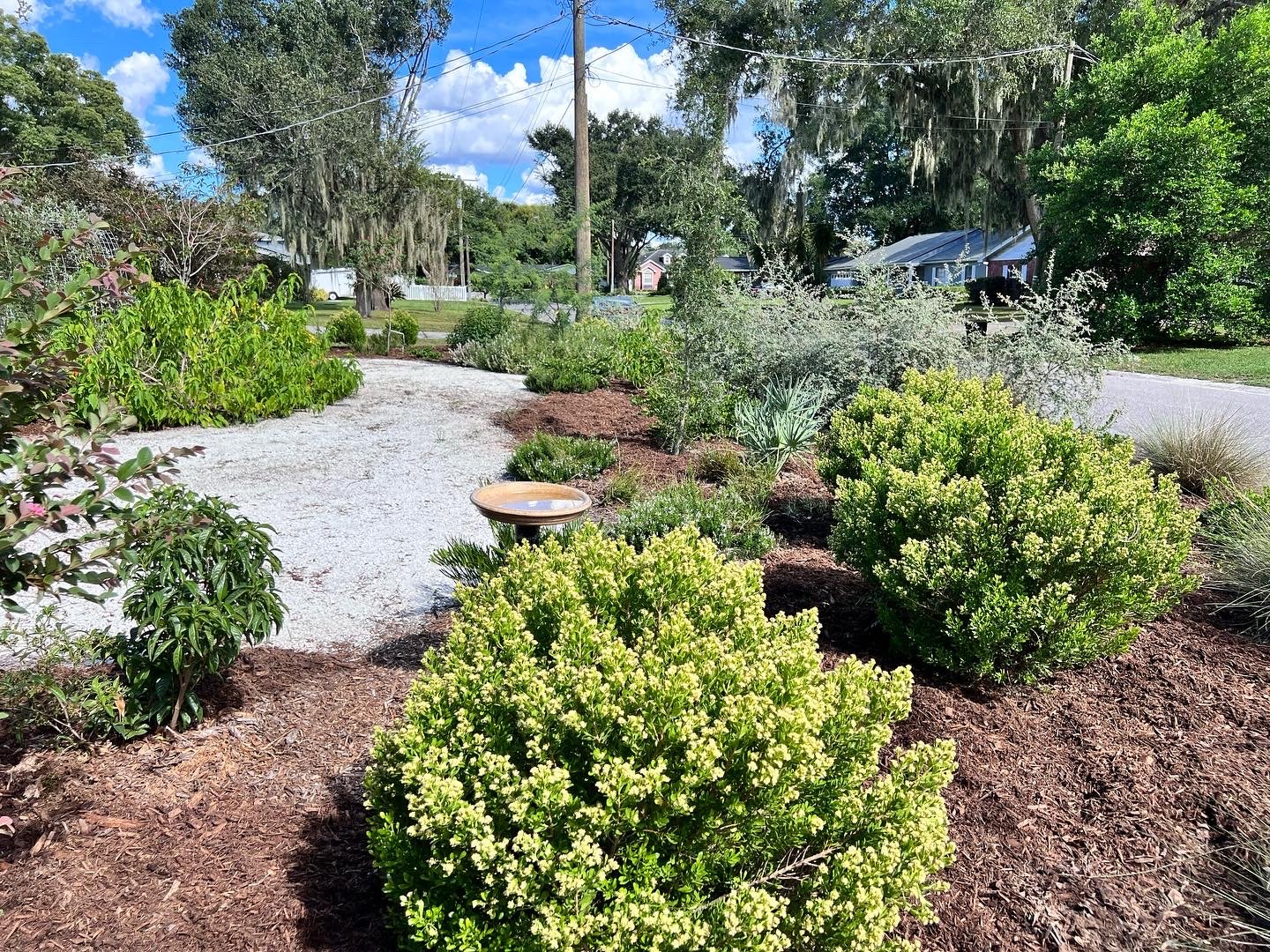
Hi Friends!
We offer PICK UP or LOCAL DELIVERY only (NO SHIPPING).
Thank you!
Thursday–Sunday, 10am–4pm | 941-322-1915
We offer PICK UP or LOCAL DELIVERY only (NO SHIPPING).
Thank you!
Thursday–Sunday, 10am–4pm | 941-322-1915
Averrhoa carambola
Carambola or Star Fruit is a non-native, Florida-friendly, small evergreen fruit tree that grows to be 22’-33’ tall and 20’-25’ wide. They grow best in full sun to partial shade and moist, well-draining soil. They have soft-green leaves and yellow, star-shaped fruit that have a delightful sweet-tart taste.
Quercus virginiana
Live Oak is a magnificent, slow-growing evergreen oak native to the southeastern United States from Virginia to Texas that can live for centuries. This iconic tree typically grows 40’-60’ tall but spreads dramatically wider, with massive horizontal and arching branches forming a broad, rounded canopy that can extend 100’ or more. The thick, leathery leaves are dark green and elliptical, often draped with Spanish moss in its native range. It produces inconspicuous flowers followed by acorns that provide critical food for squirrels, deer, and numerous bird species. Extremely durable and salt-tolerant, it thrives in sandy coastal soils and can withstand hurricanes, making it a symbol of the Old South and an excellent choice for large landscapes, parks, and street plantings in zones 8-10.
Acacia farnesiana
Sweet Acacia is a native, pollinator-attracting, small tree or large shrub. It’s fragrant, golden-yellow puffball flowers bloom in winter and spring. It's highly drought-tolerant once established, making it ideal for water-wise landscapes, and attracts bees, butterflies, and other pollinators.
Acacia choriophylla
Native evergreen tree, ranging from 15-25ft. Cinnecords have dark green foliage and fragrant yellow pom-pom flowers that attract pollinators and people alike. They are fast-growing and salt-tolerant, growing in full sun with well-drained sandy soils. In addition to attracting pollinators, Cinnecords also provide habitat and seeds for birds.
Eriobotrya japonica
Loquat is a non-native, Florida-friendly, evergreen fruiting tree that grows 15’-25’ tall. They grow best in full sun to partial shade, with average, well-draining sandy, clay, or loamy soil. Their flowers are highly attractive to butterflies and other pollinators, and their apricot-like fruit can be enjoyed by humans and wildlife alike.
Suriana maritima
Bay Cedar is a slower growing, native, evergreen coastal shrub that is naturally found on sand dunes and beaches. This hurricane resistant shrub can weather storm surges, and is salt spray and drought tolerant! The Bay Cedar is excellent for erosion control of dunes and beaches. Small yellow flowers bloom year round and attract pollinators, and it is a host plant for certain hairstreak butterflies.
Impomoea imperati
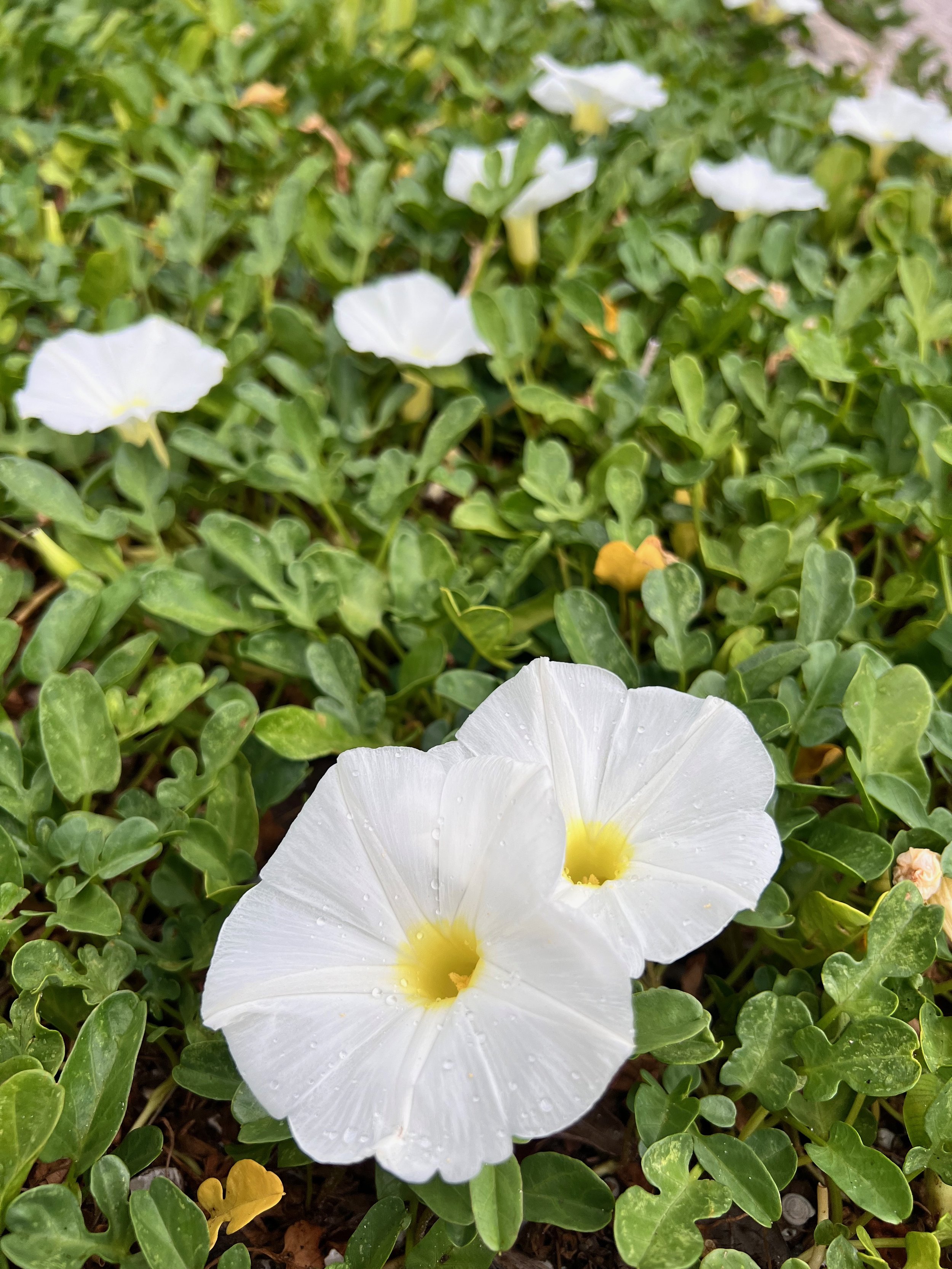
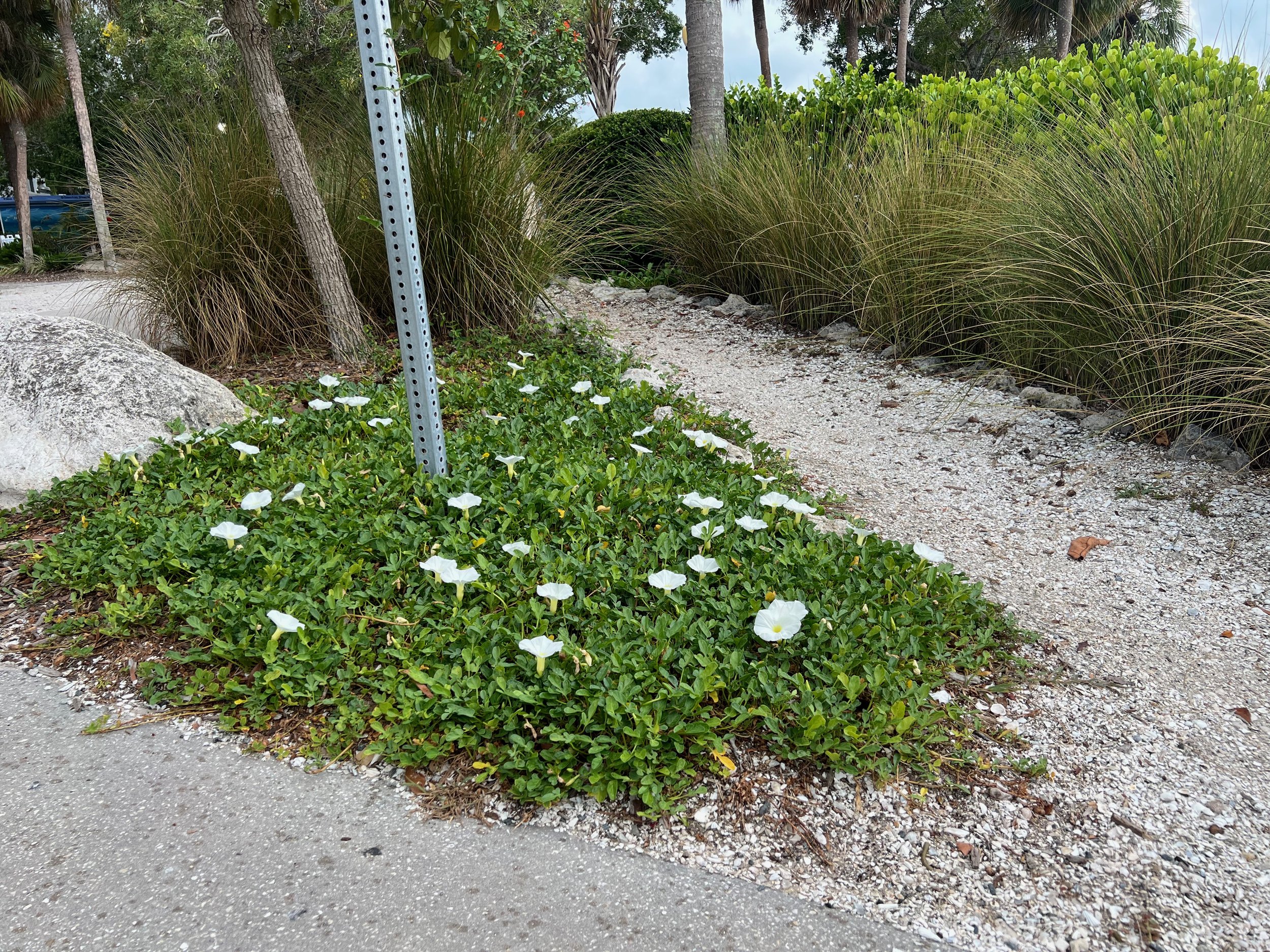
Beach Morning Glory is a native, long-lived, perennial, low-growing, flowering vine that grows along the ground. It is wonderful for coastal sites or full sun, dry sandy soils. It is highly drought and salt tolerant and has showy white flowers that are great for bee, butterflies and pollinators including hummingbirds.
Glandularia maritima
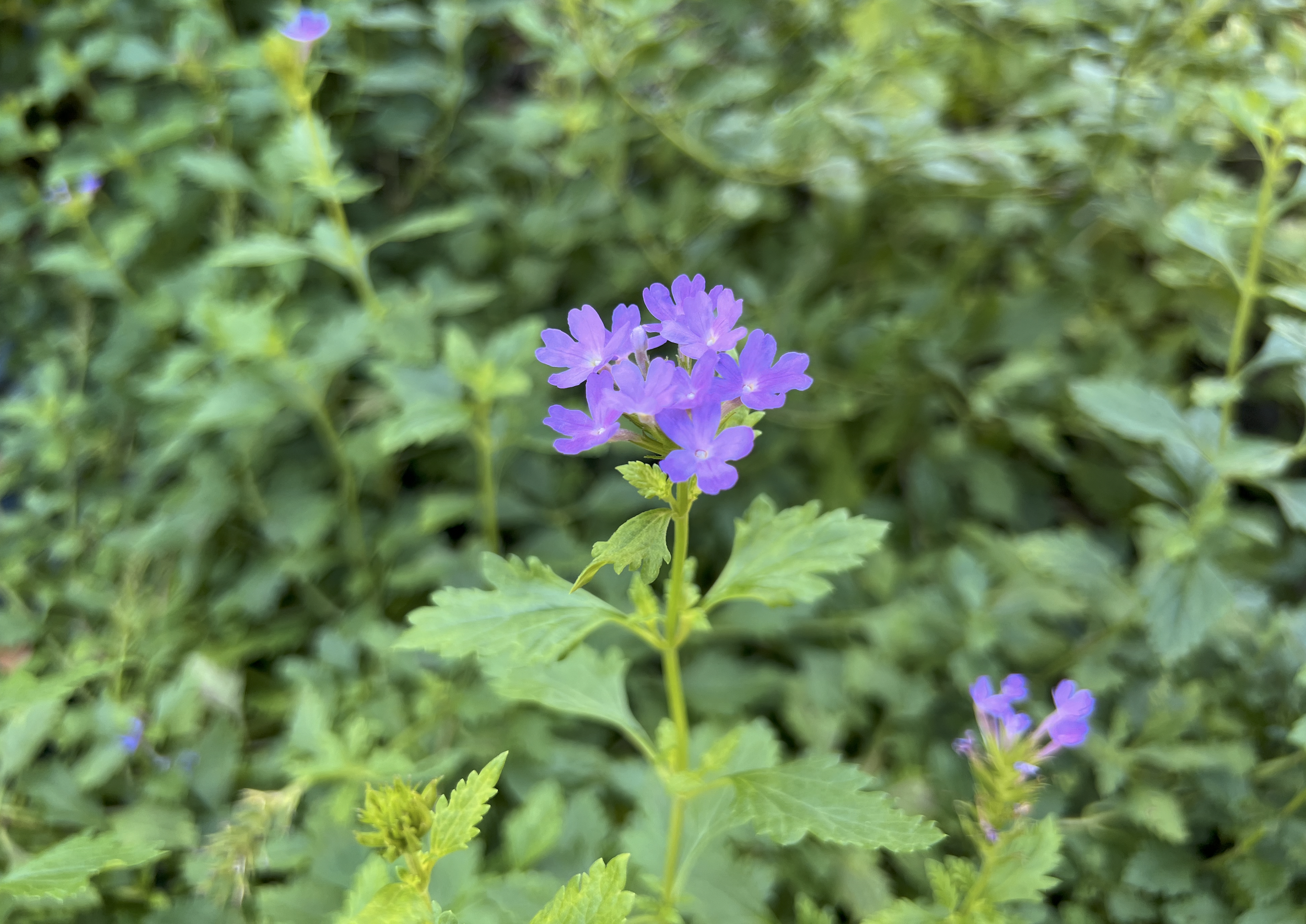
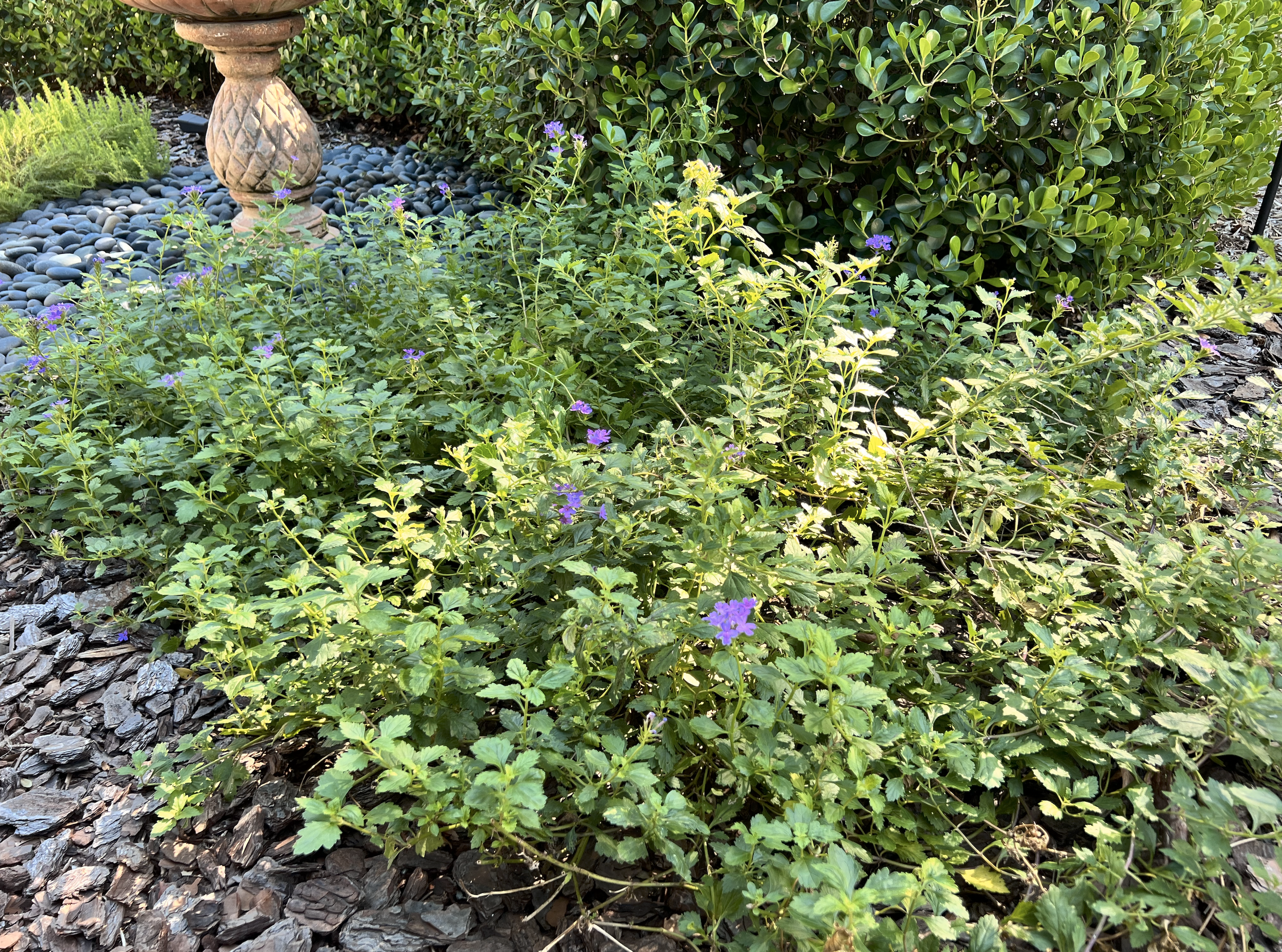
Beach Verbena is an endangered, prostrate perennial native to Florida's coastal dunes that forms dense, evergreen ground cover mats. This spreading species produces deep pink to lavender flowers in flat-topped clusters that bloom year-round with peaks in spring and summer. Extremely salt-tolerant and adapted to sandy soils and full sun, it thrives in harsh coastal environments but can also adapt to less challenging landscape settings. Due to its low-growing, spreading habit and continuous flowering, it serves as an excellent groundcover for sunny, well-drained areas.
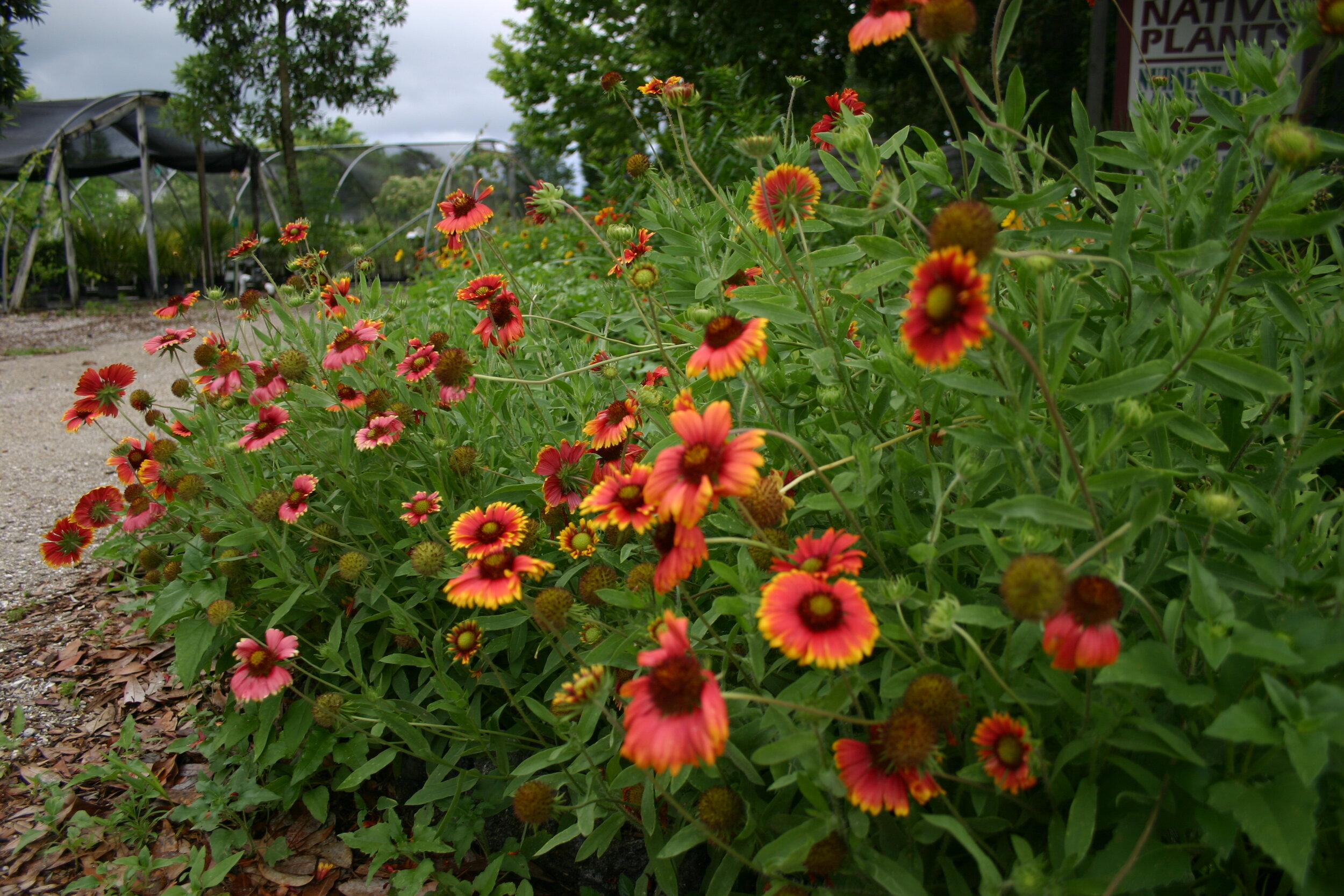
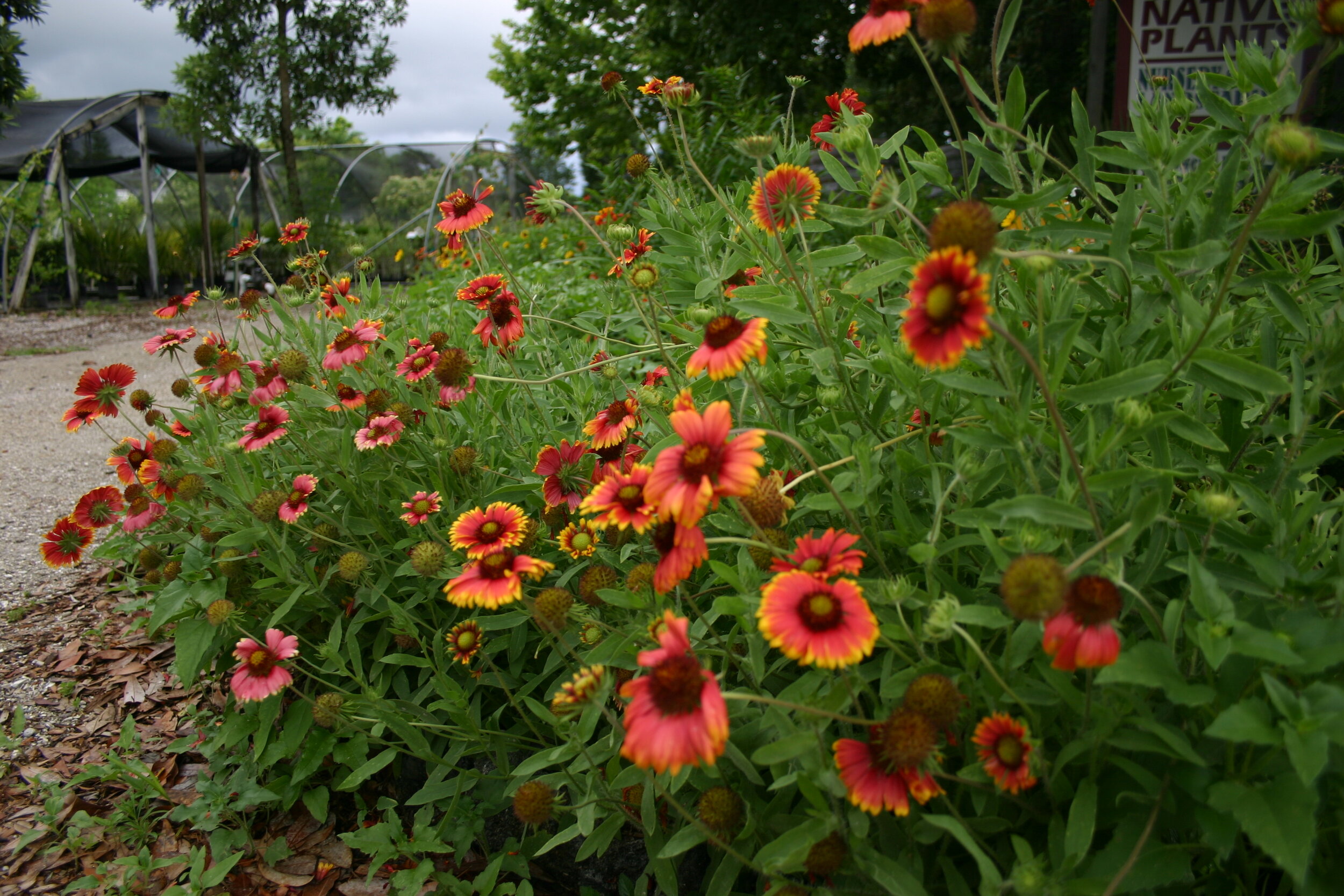
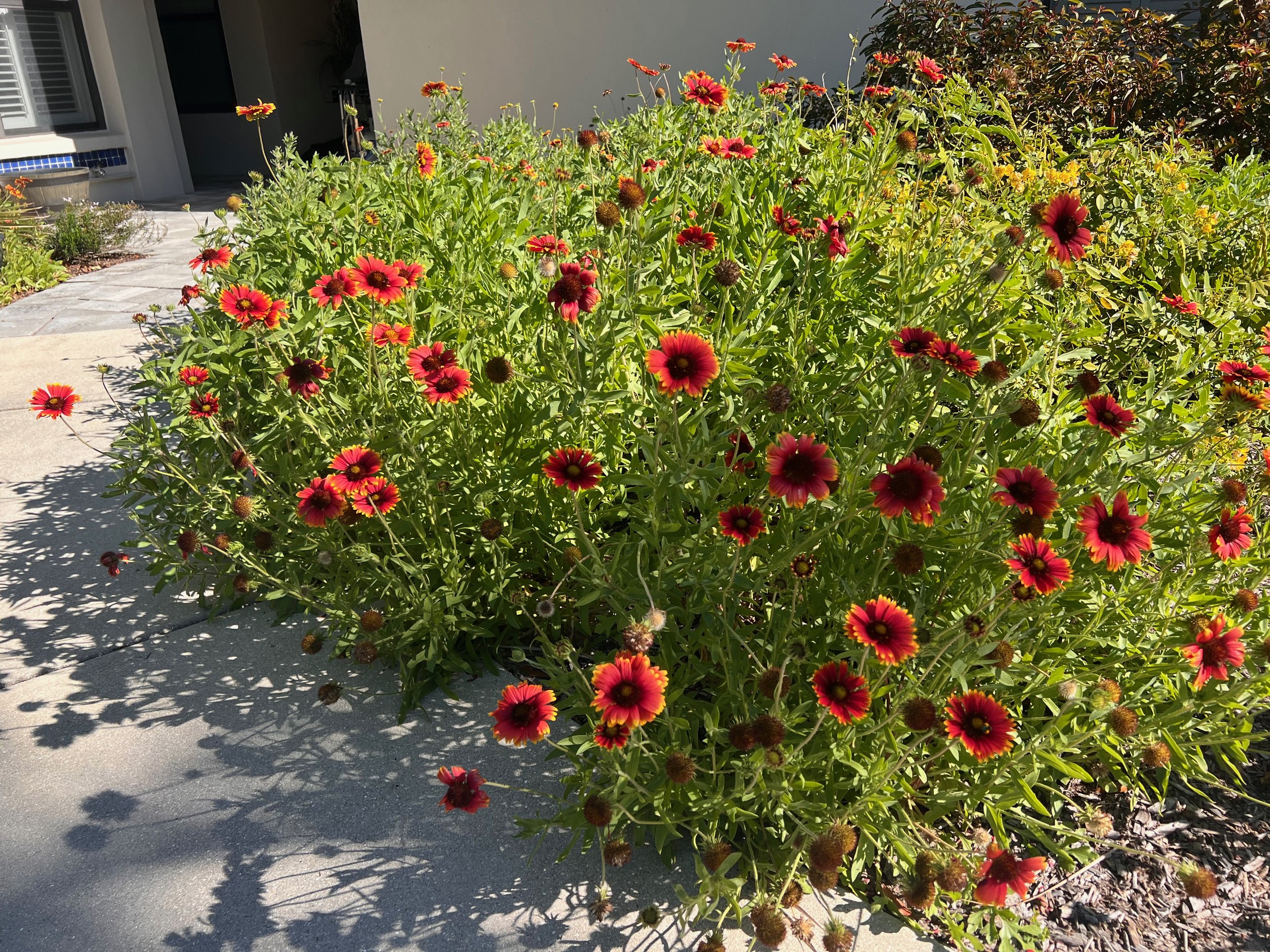
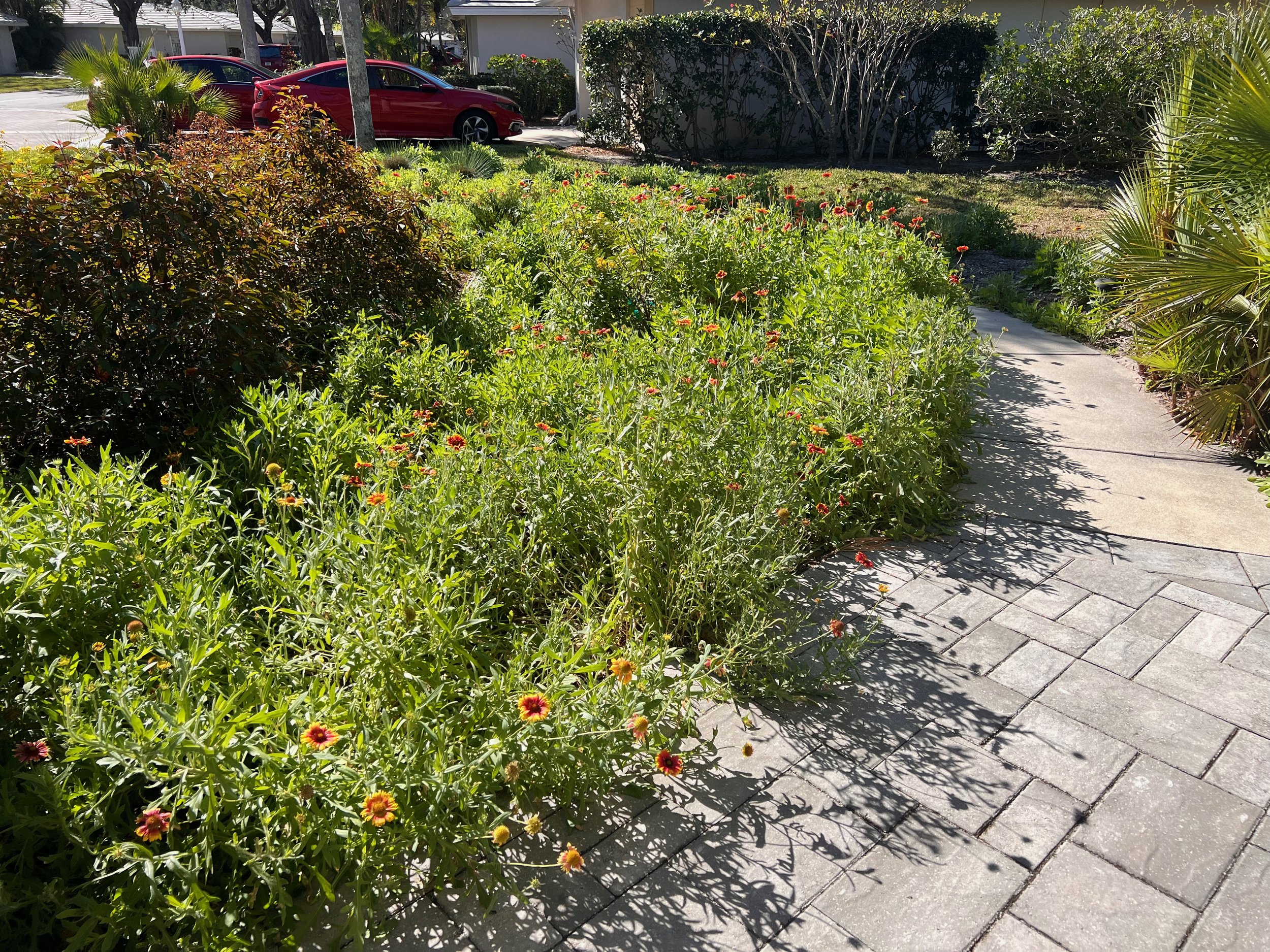
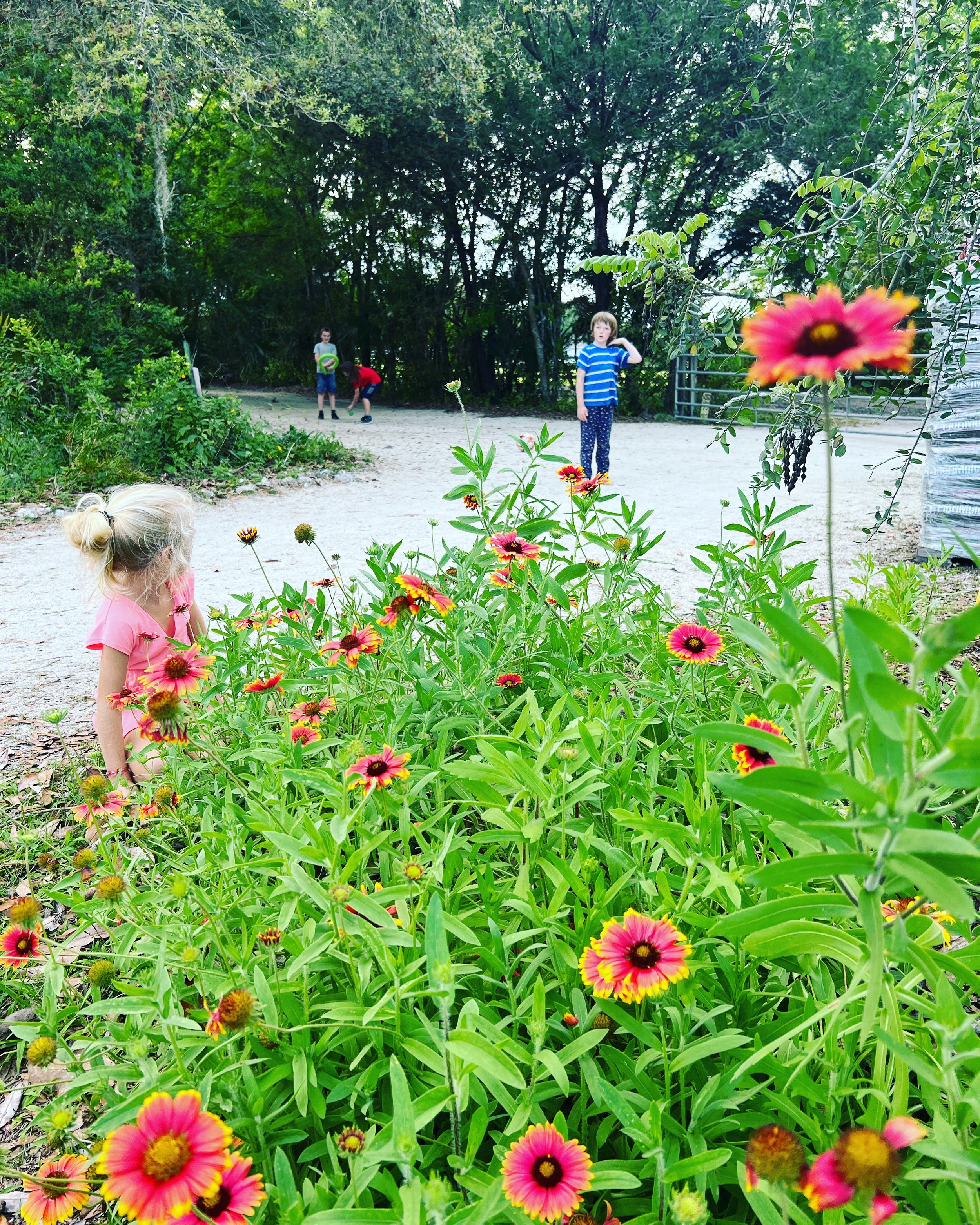
Gaillardia pulchella
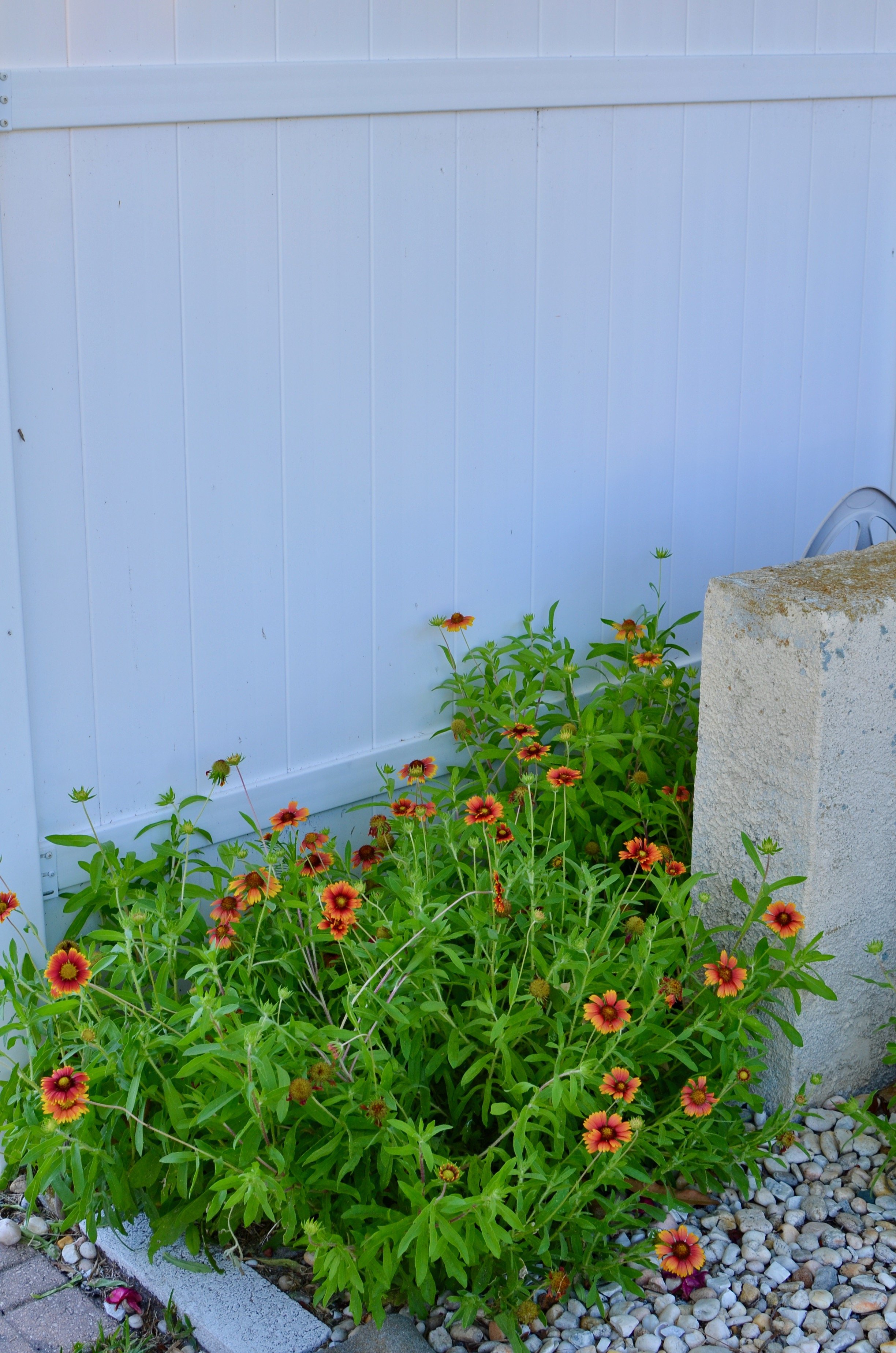
Blanket Flower is a non-native, Florida-friendly wildflower that readily reseeds and spreads rapidly. Reaching 1’-2’ in height, they are a great source of nectar for bees and butterflies that bloom in the warm and hot months. They thrive in full sun and dry, sandy soil and are very drought and salt tolerant. Great for coastal applications and dry spots of a landscape as pops of red and yellow.
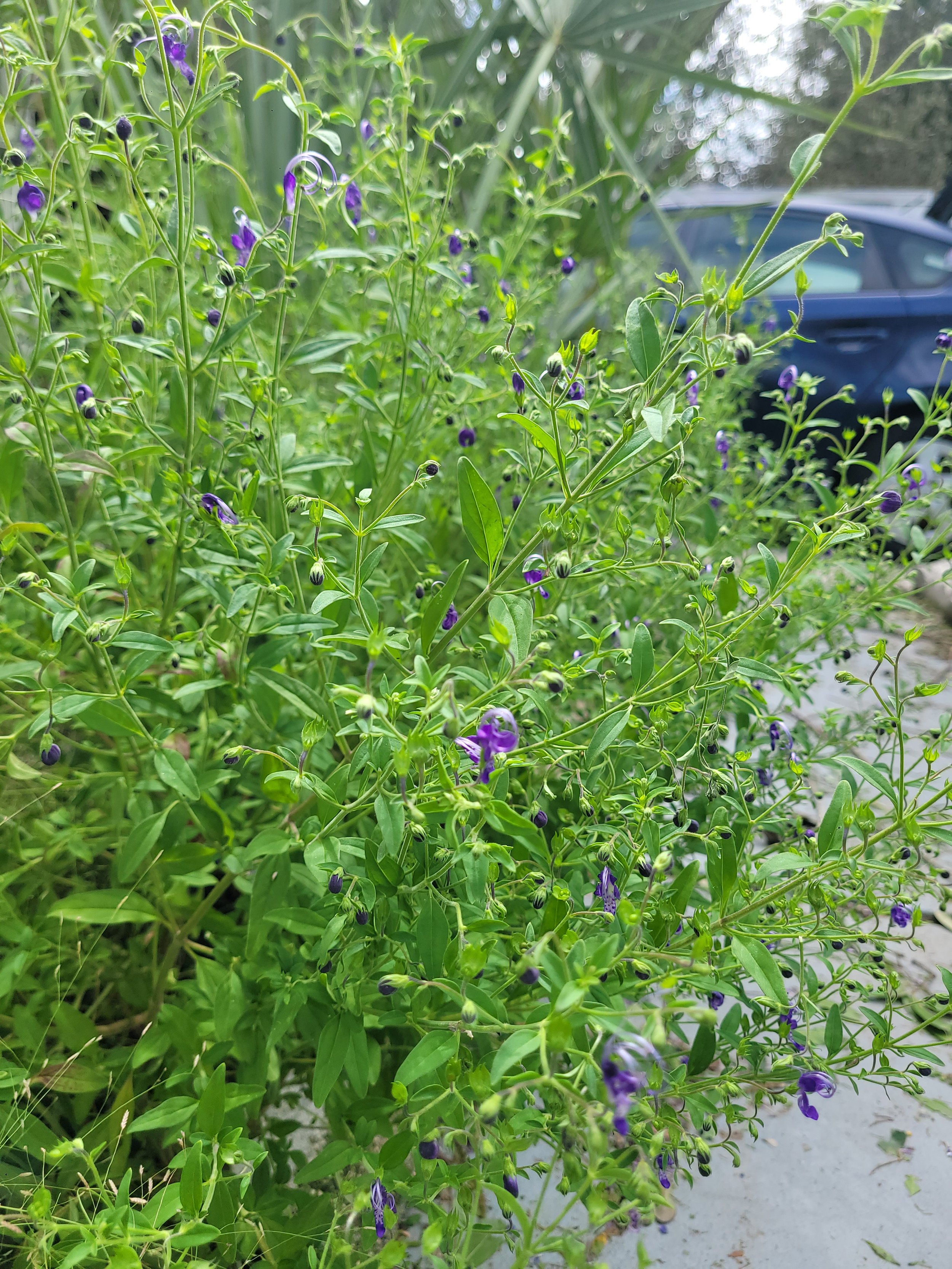
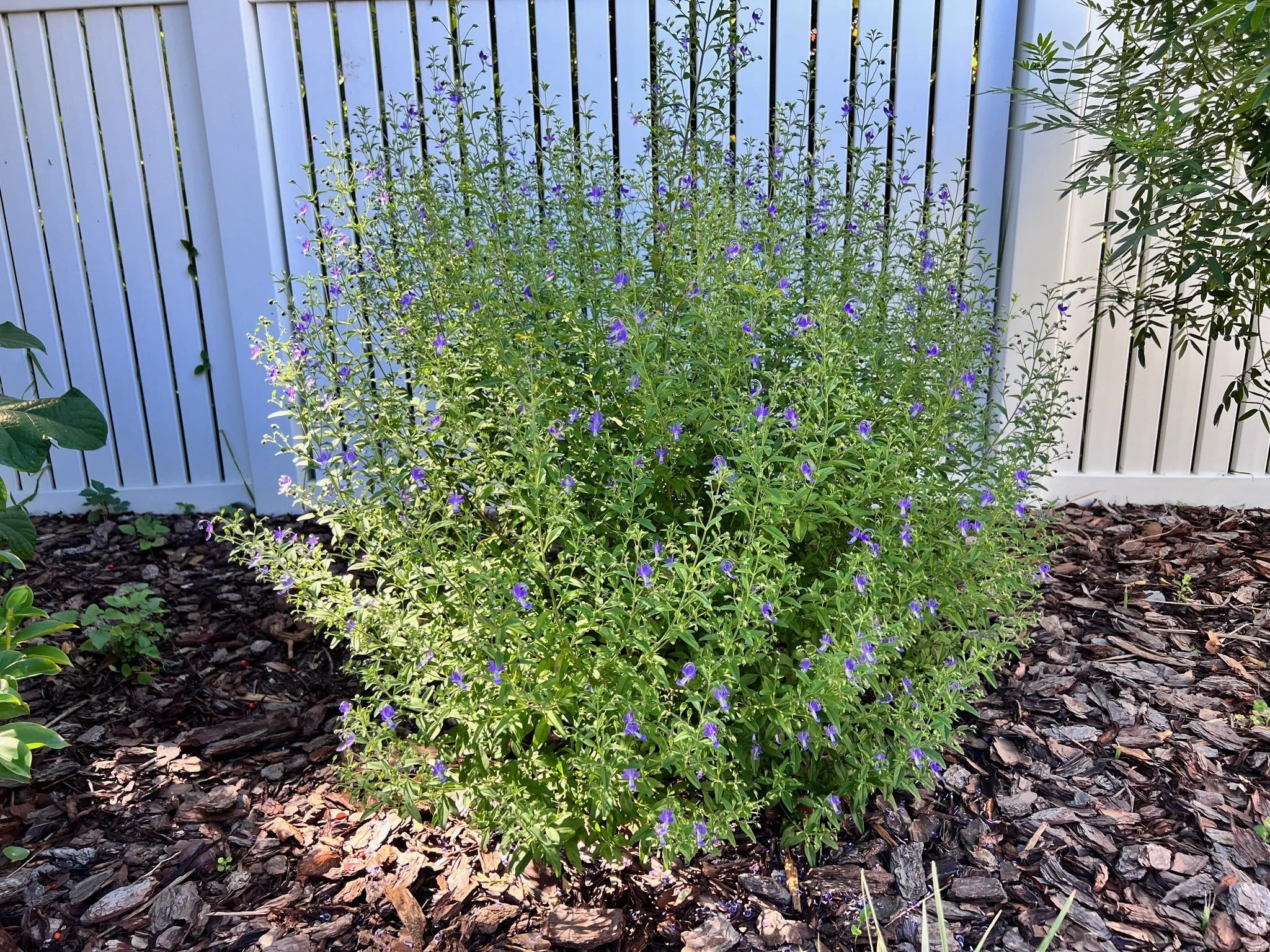
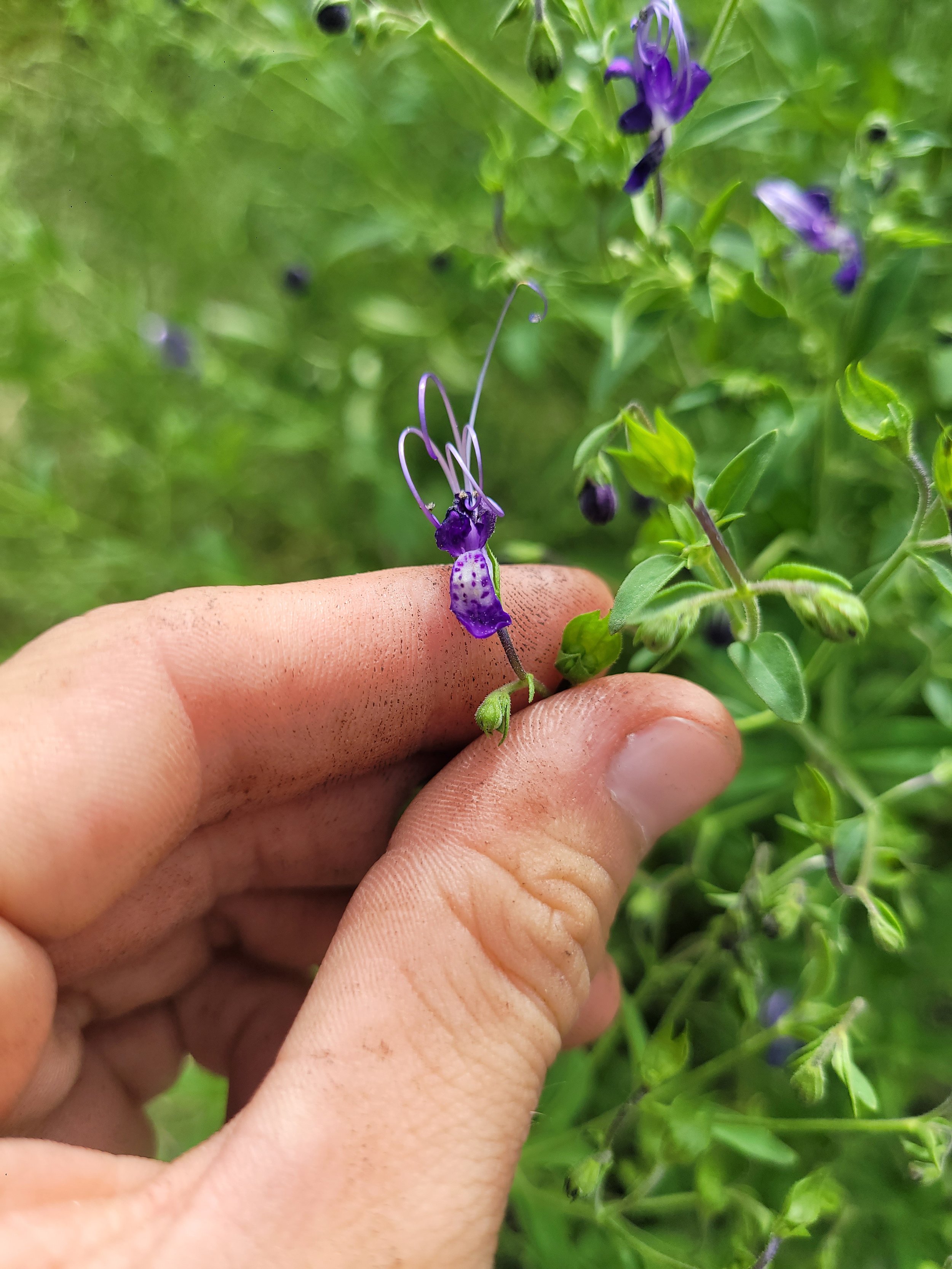
Trichostema dichotomum
Blue Curls is a fabulous reseeding wildflower that will fill in empty spaces. Their lush foliage grows dense till fall when it flowers with ornate blue flowers with a “forked” anther, almost like tiny orchid flowers. An plant that reseeds where you plant it, Blue Curls can create patches of blooms year after year.
Lantana involucrata
Buttonsage or Wild Lantana is a gorgeous, evergreen, perennial, native shrub that has a place in any home landscape! Buttonsage is a mid sized shrub, growing to 5', with a naturally round growth habit with dense clusters of pastel flowers and bright purple berries that attract pollinators and birds. It prefers sunny, dry conditions and is deer resistant and salt and drought tolerant.
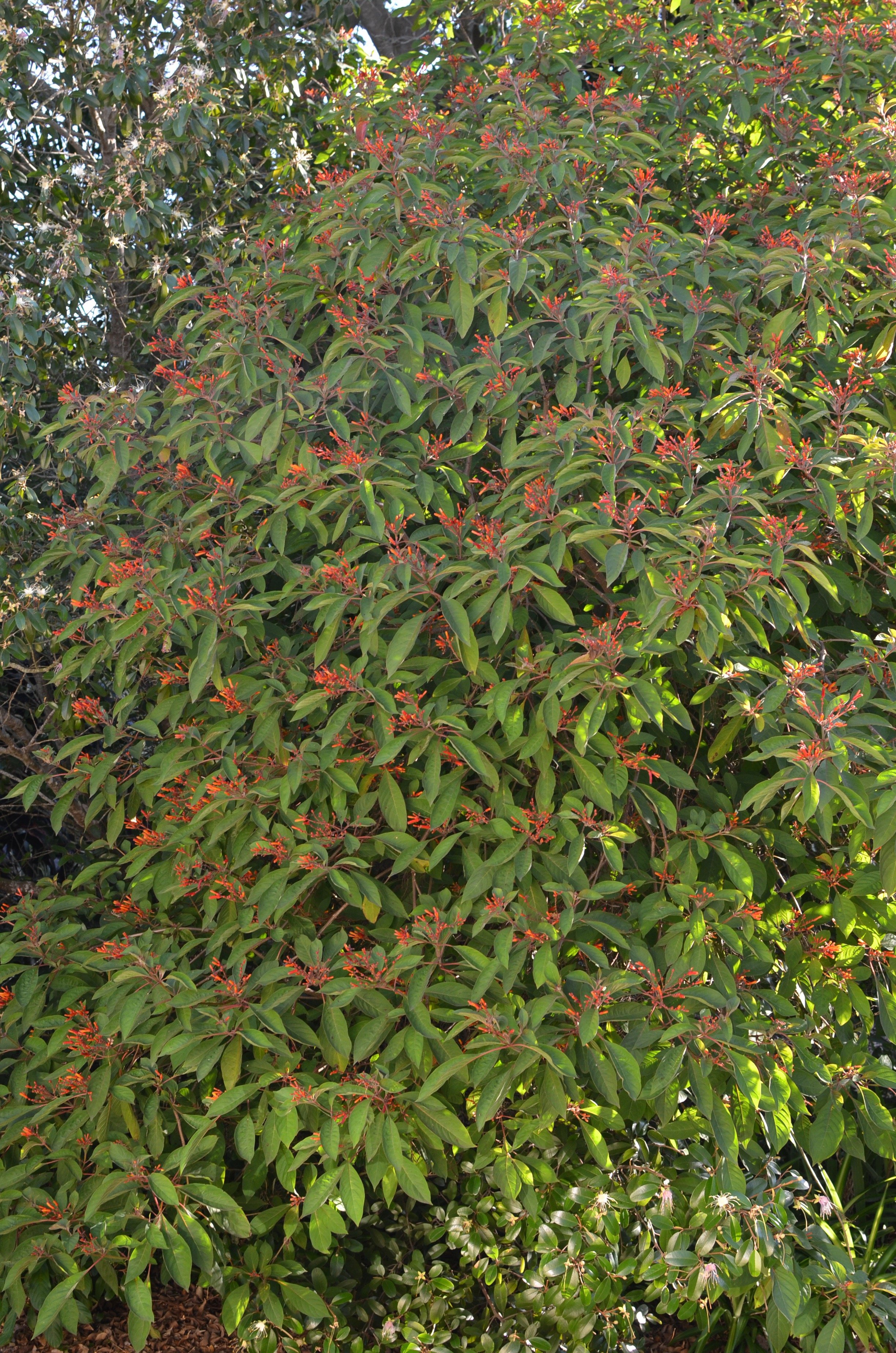
Hamelia patens var. ‘calusa’
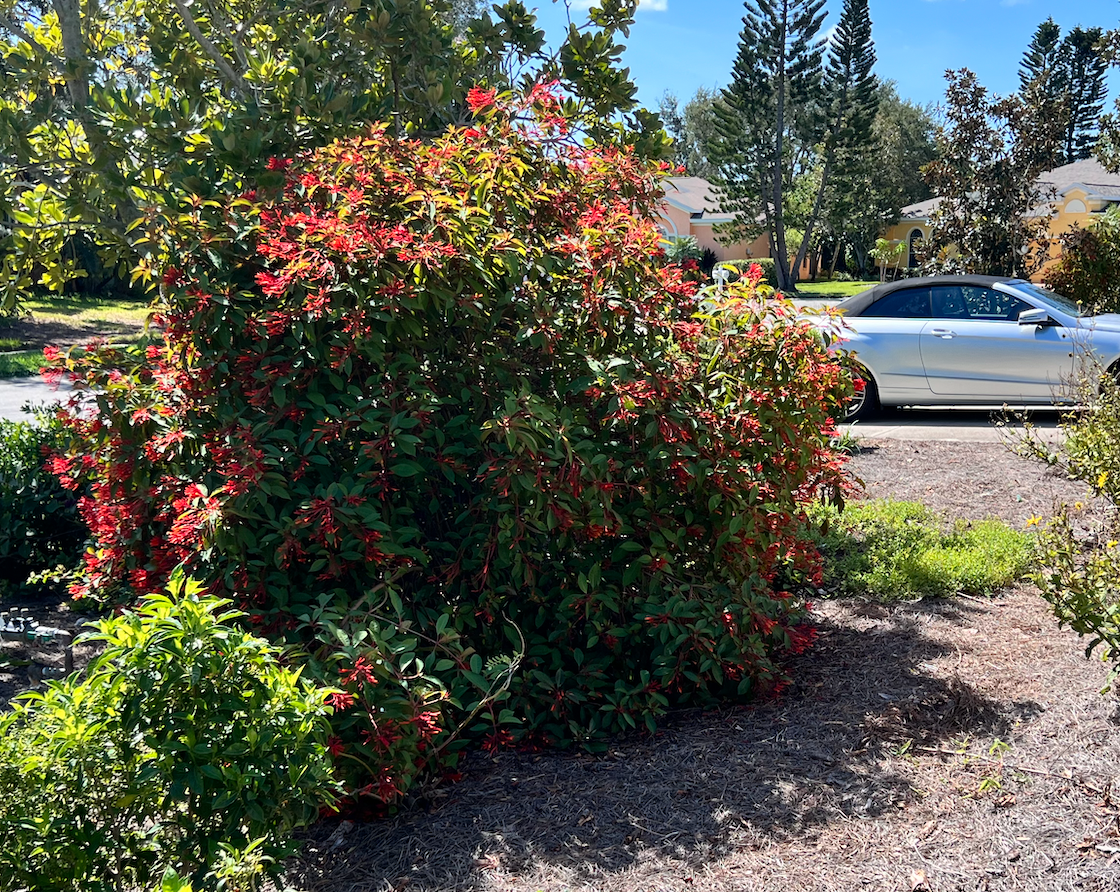
Calusa is shorter growing native cultivar of the large native firebush. It is evergreen, flowering, long-lived shrub that can be kept easily at its mature height of approx. 6’. It needs average to moist (well-drained soils) but can adapt to dry in little bit of shade. The year-round red-orange flowers attract hummingbirds and butterflies and provide food for birds. The foliage on Calusa tends to be a deeper red than the larger traditional native firebush and can turn burgundy in cooler weather. The fruit is edible and has a long history of medicinal and industrial use and can be made into syrup or wine.
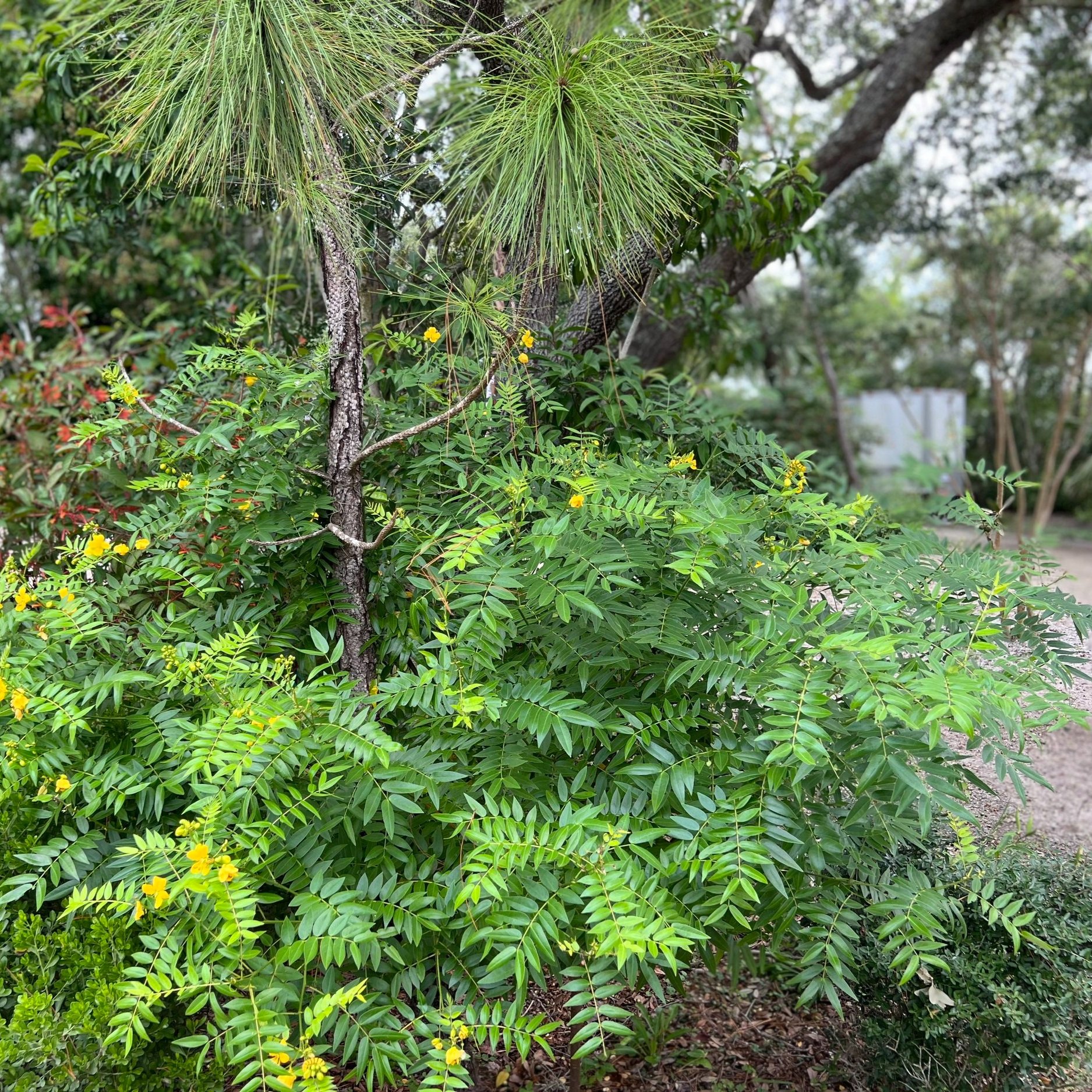
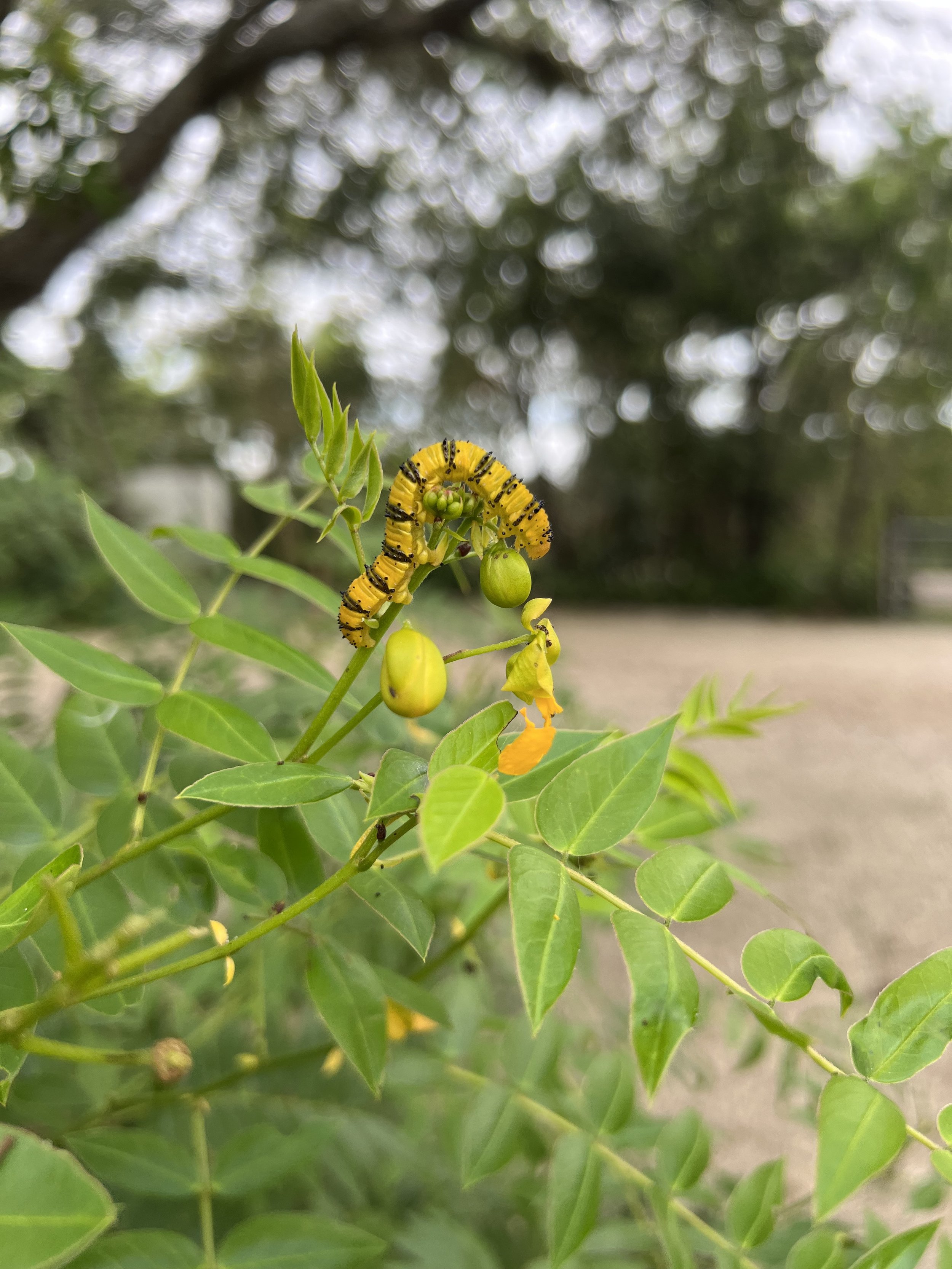
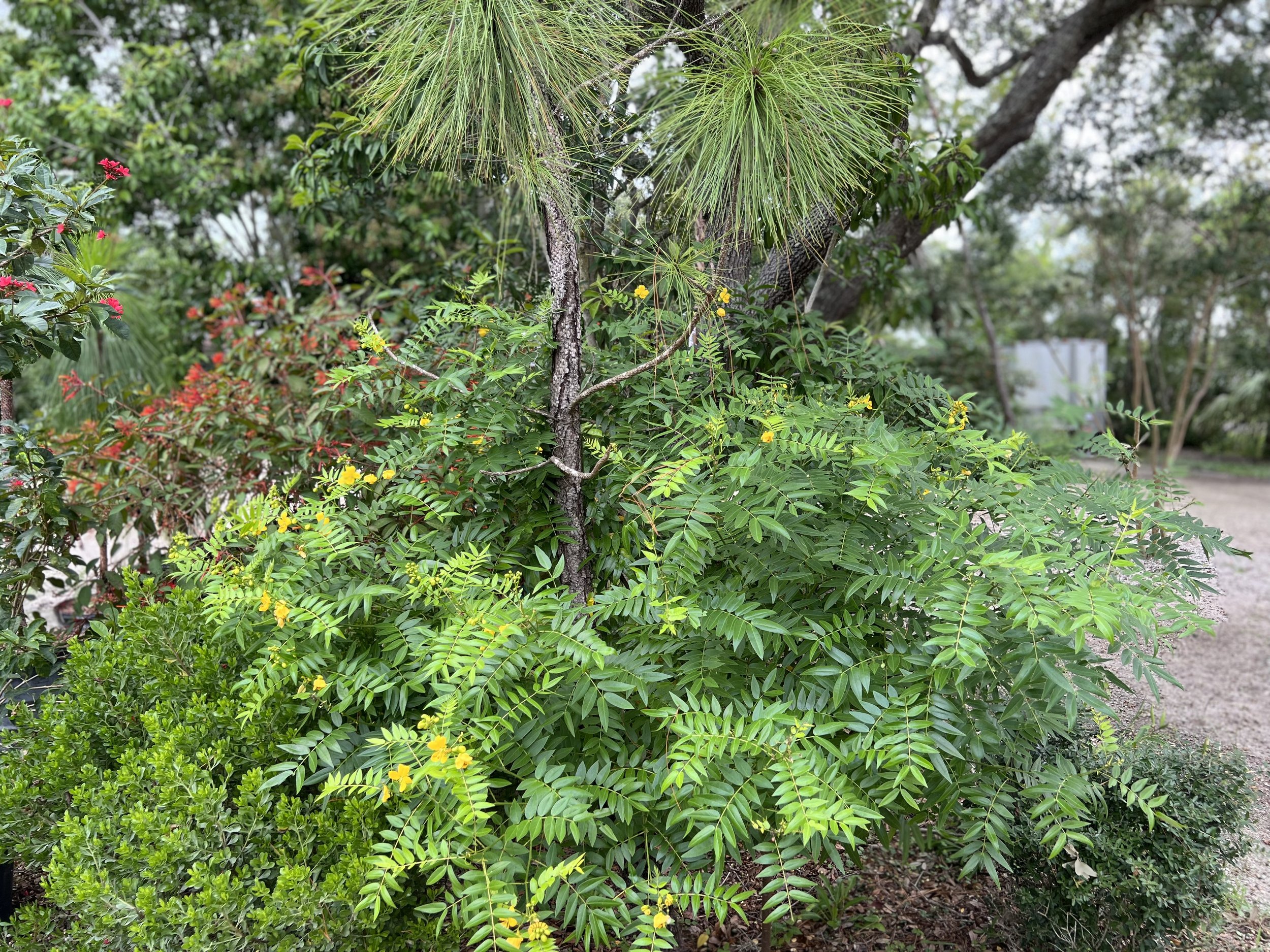
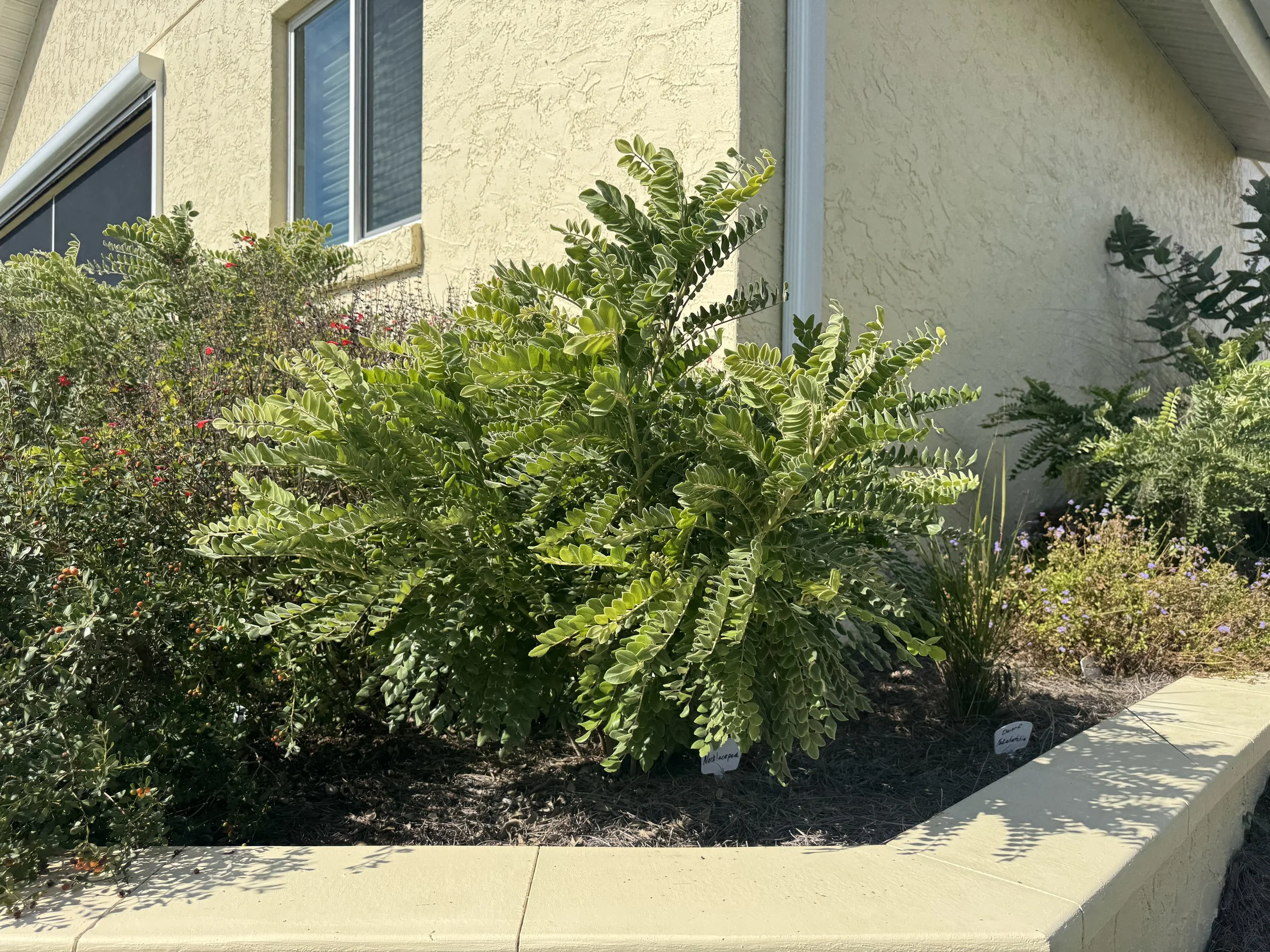
Senna ligustrina
Privet Senna is an evergreen perennial shrub native to Florida that grows 4’-8’ tall with an upright, narrow-crowned habit. This fast-growing member of the legume family features pinnately compound leaves with many small, dark green leaflets and produces clusters of bright yellow, five-petaled flowers from fall through spring. The blooms are followed by thin, brown seed pods approximately 5” long. Serving as a larval host plant for cloudless Sulphur, sleepy orange, and orange-barred Sulphur butterflies, it's an excellent choice for butterfly gardens while also attracting bees and other pollinators. Thriving in full sun to partial shade with well-drained soils, it naturally occurs along forest edges and hammocks from central Florida southward and readily self-seeds in suitable conditions.
Hamelia Patens 'Compacta’
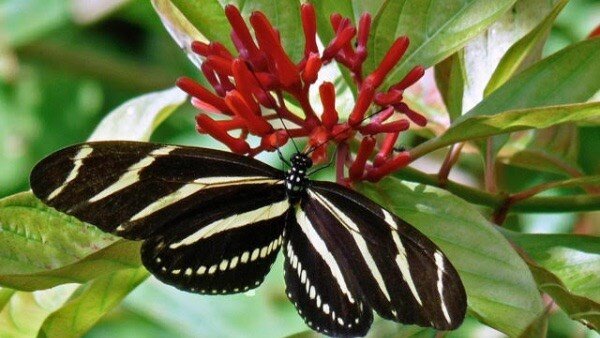
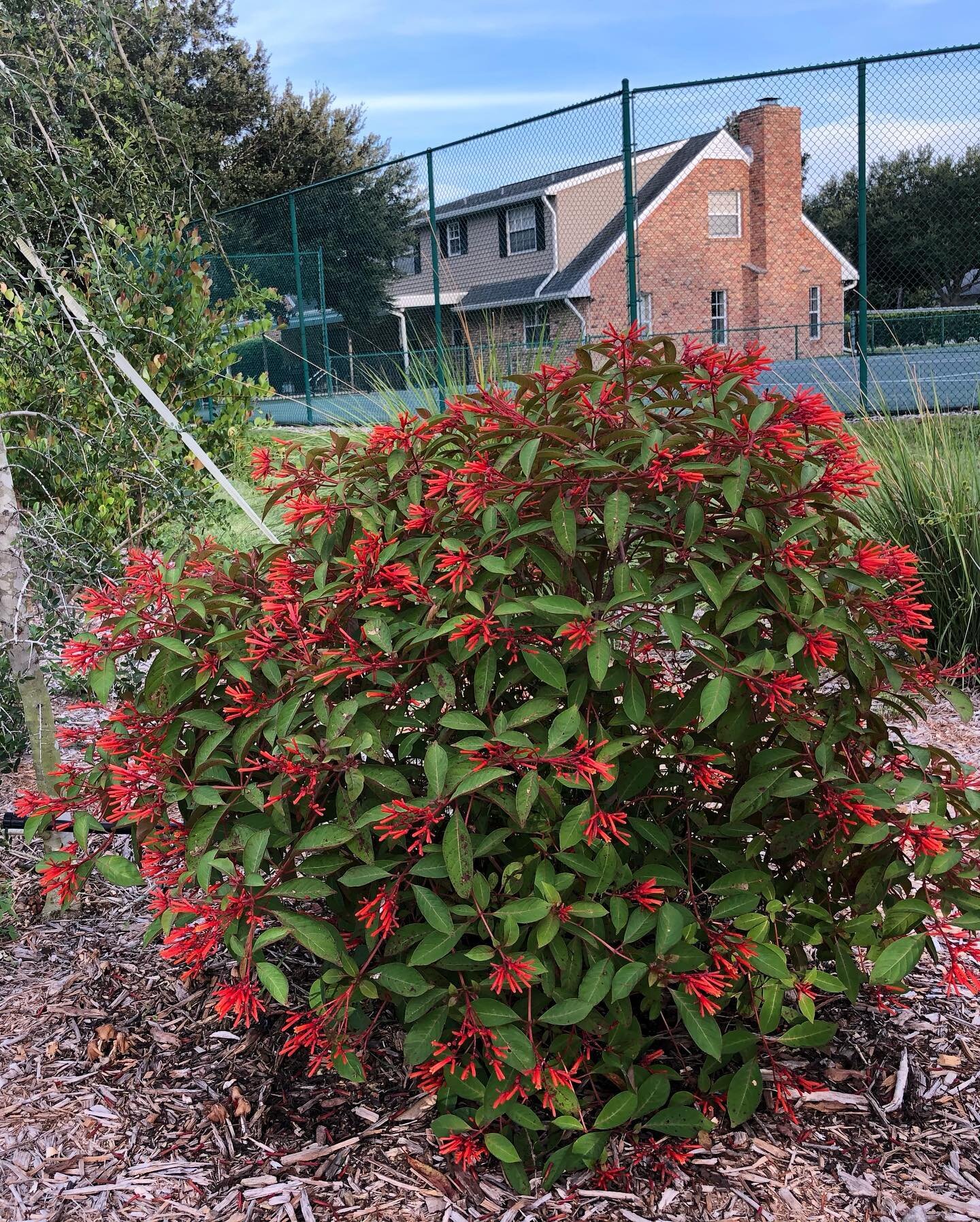
Compact Firebush is a dwarf cultivar of the Florida-native Firebush that grows to be 4’-6’ tall. These plants grow best in full sun to partial shade and average, well-drained soil. With its red and green leaves and red to orange flowers, Compact Firebush can be used as part of a hedge or as a specimen plant. The flowers are highly attractive to hummingbirds, bees, and butterflies, particularly the Zebra Longwing, which often feed on the nectar and pollen of Compact Firebush flowers. The flowers are followed up by small, dark berries that have a long history of medicinal use, but can also be used to make syrups and wine.
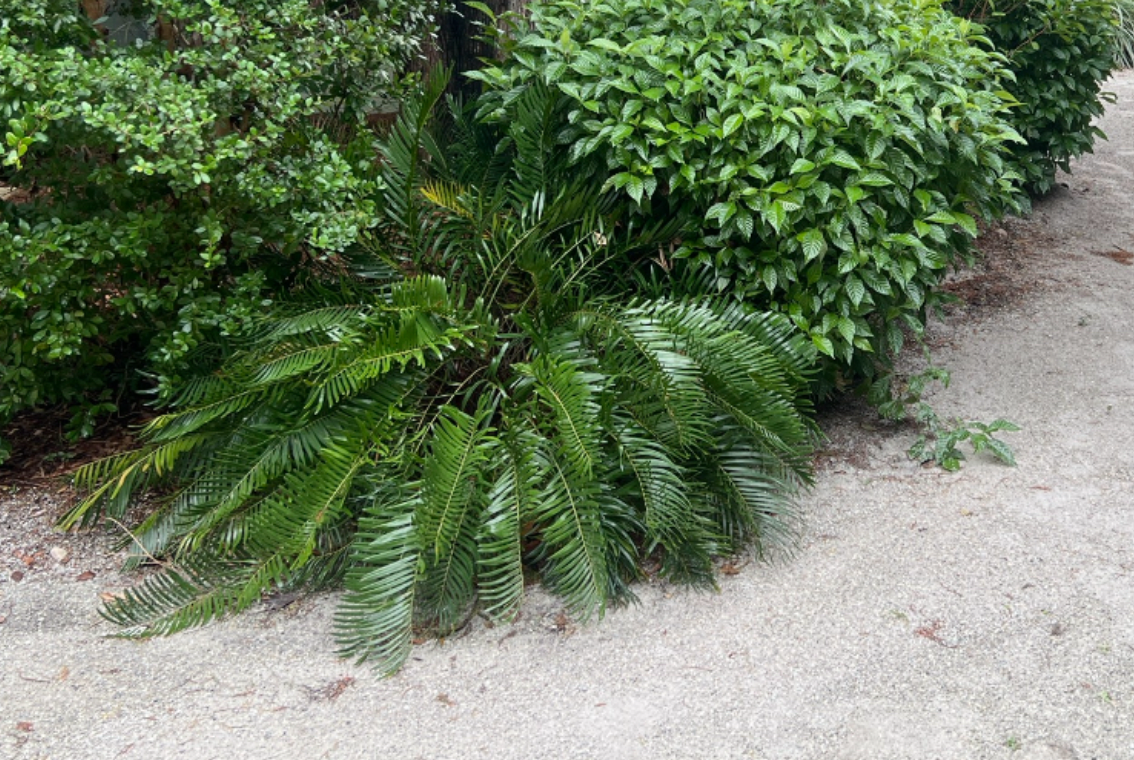
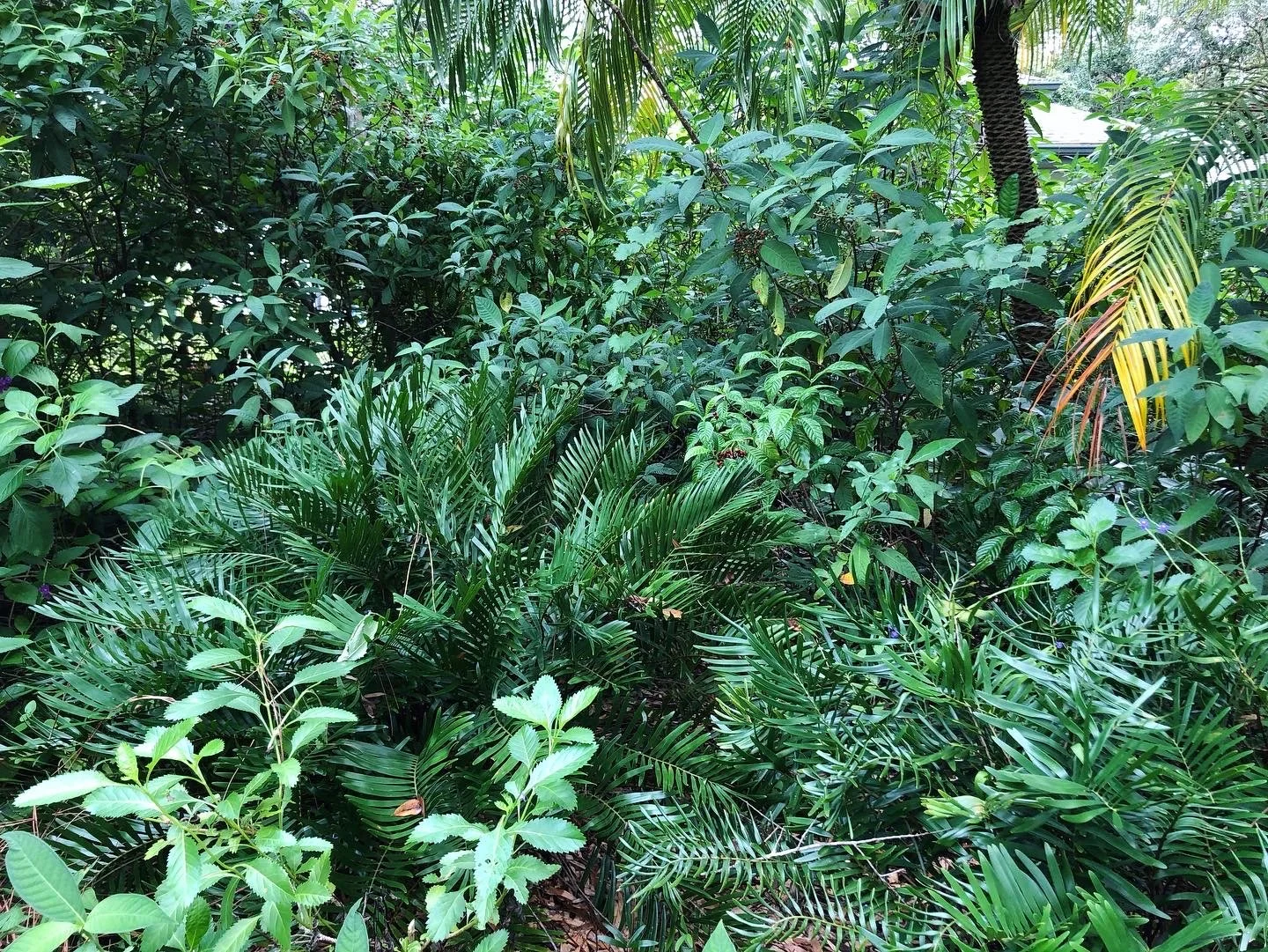
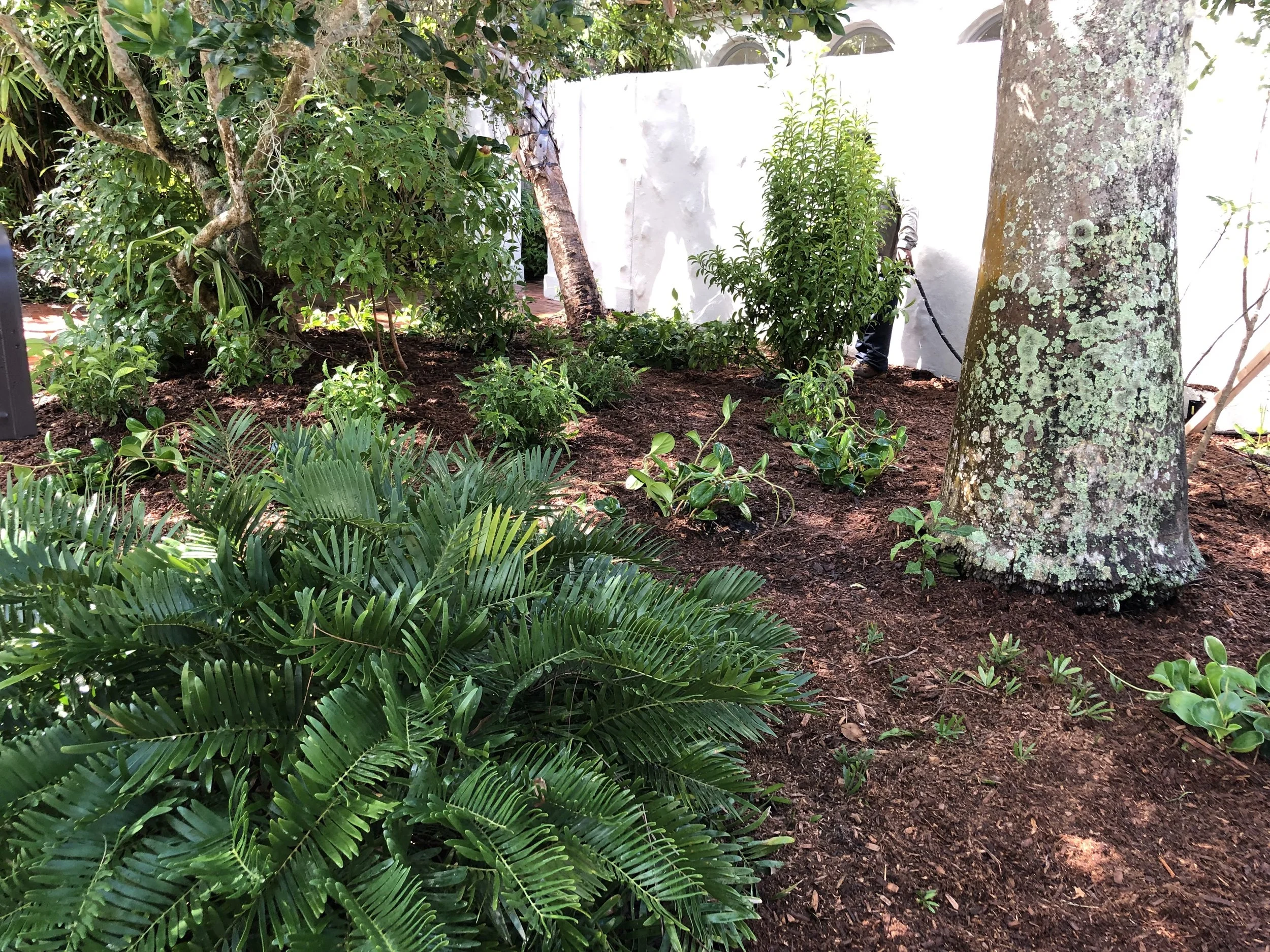
Zamia integrifolia
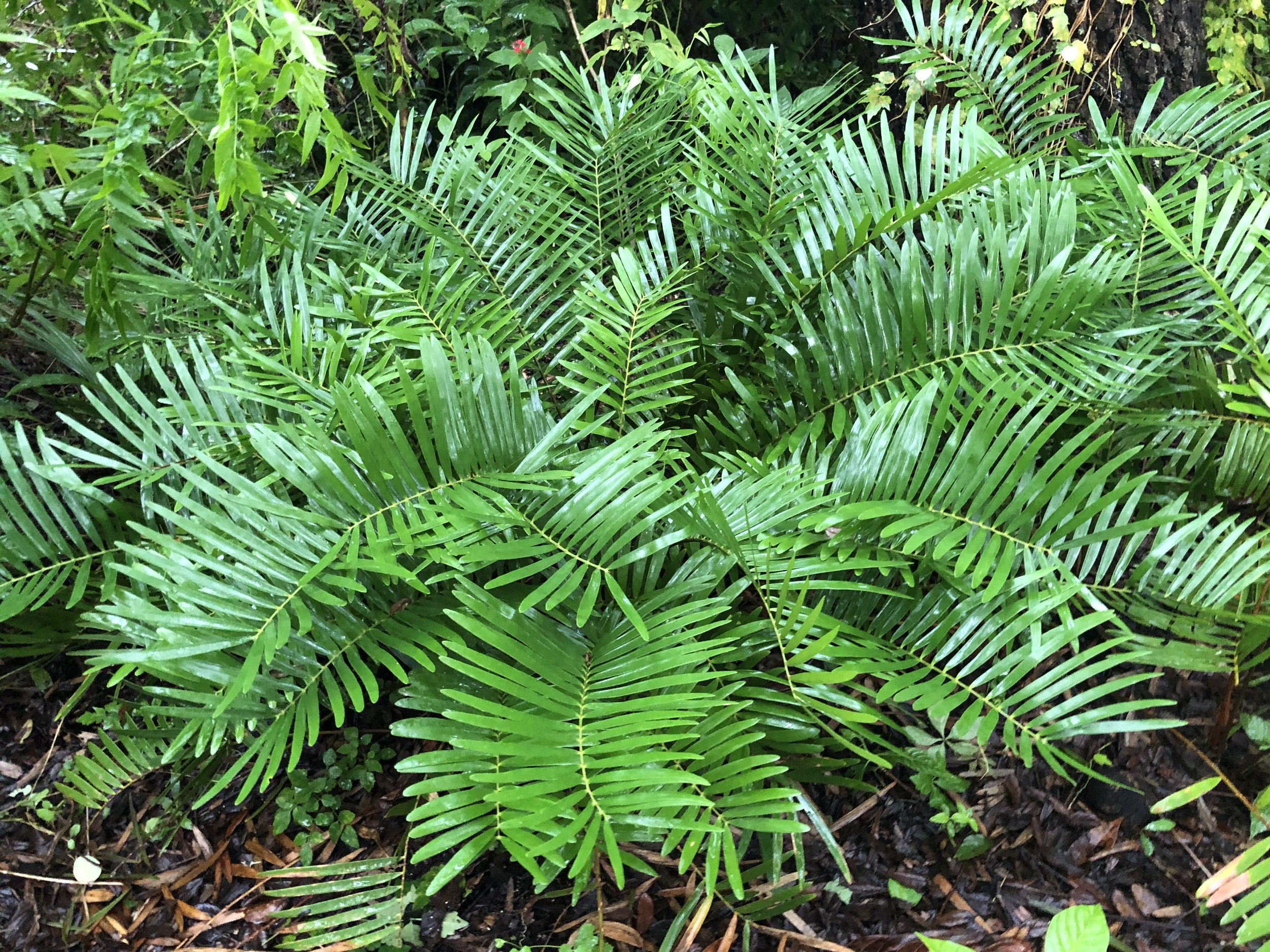
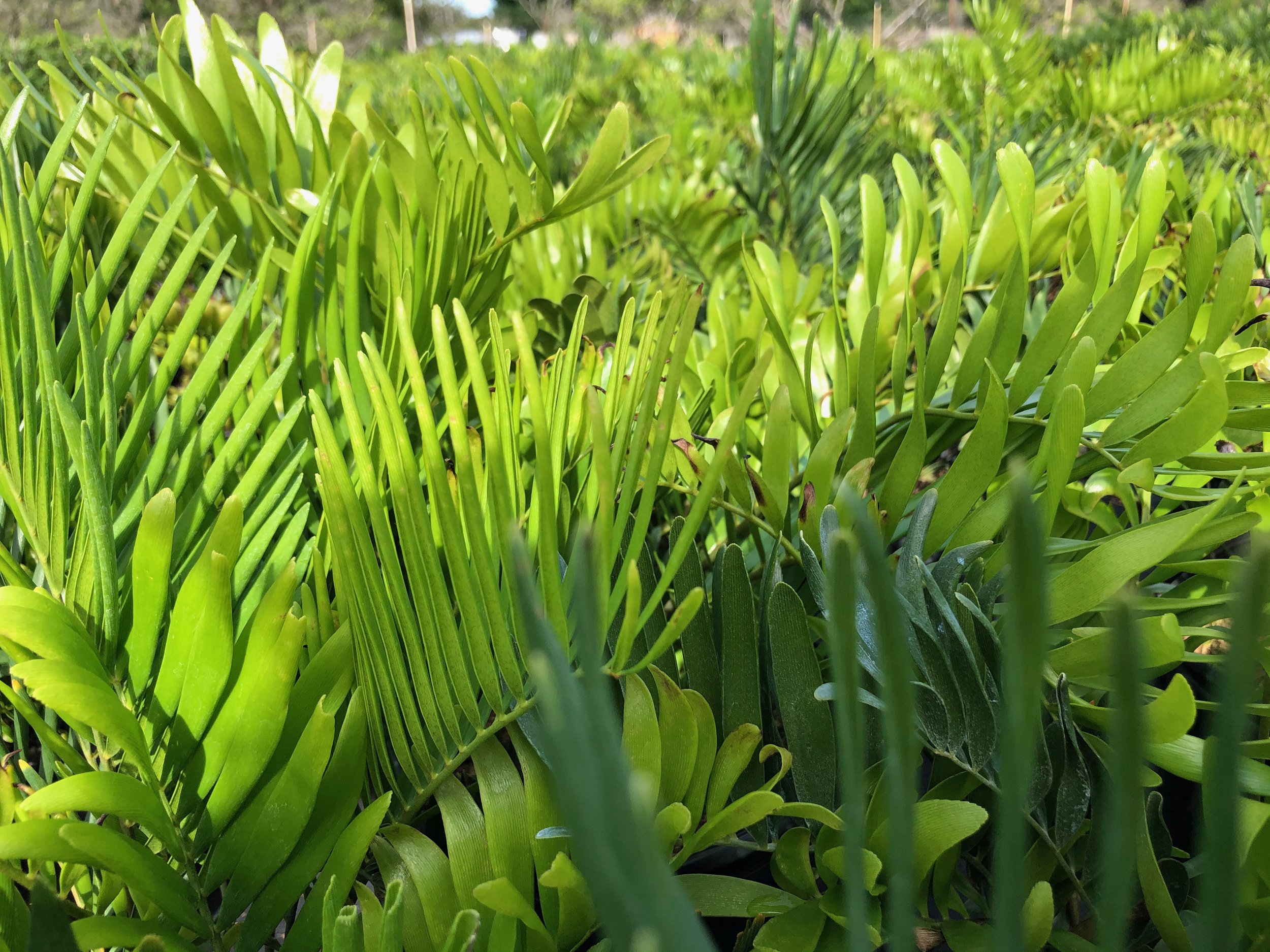
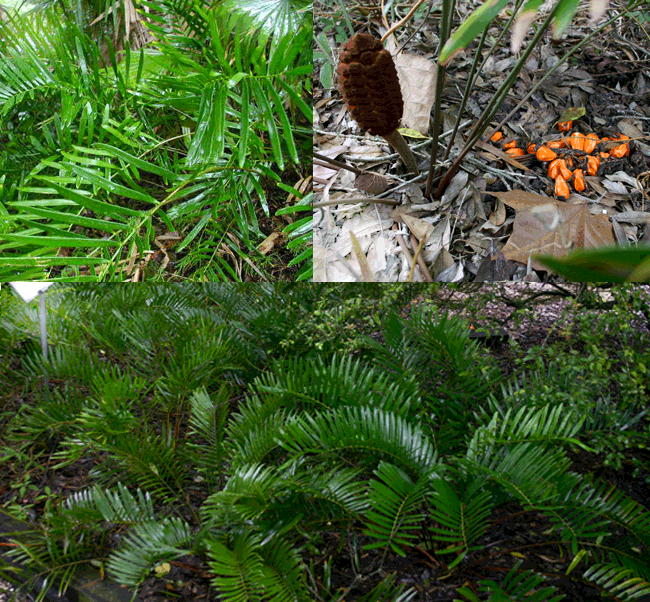
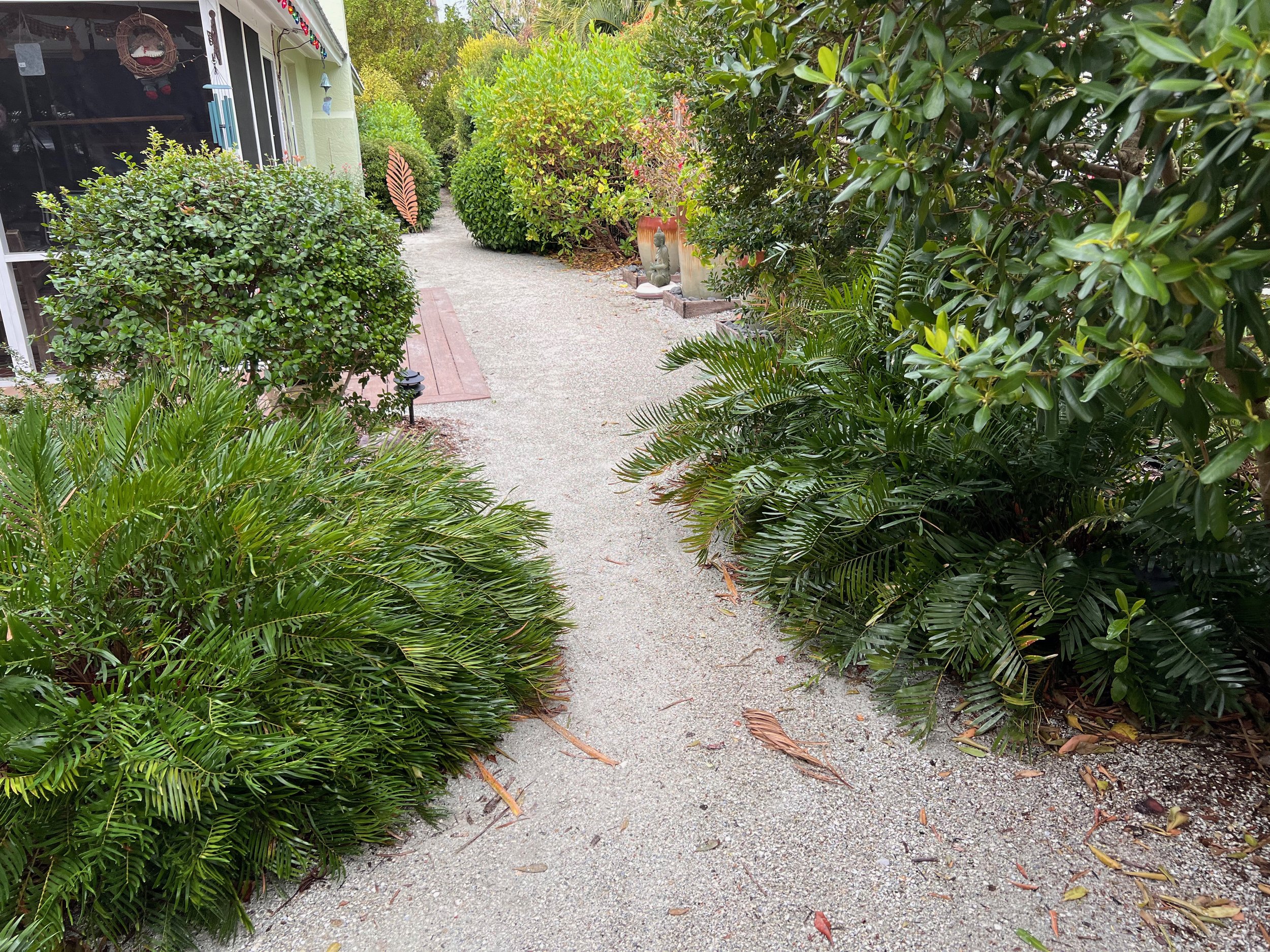
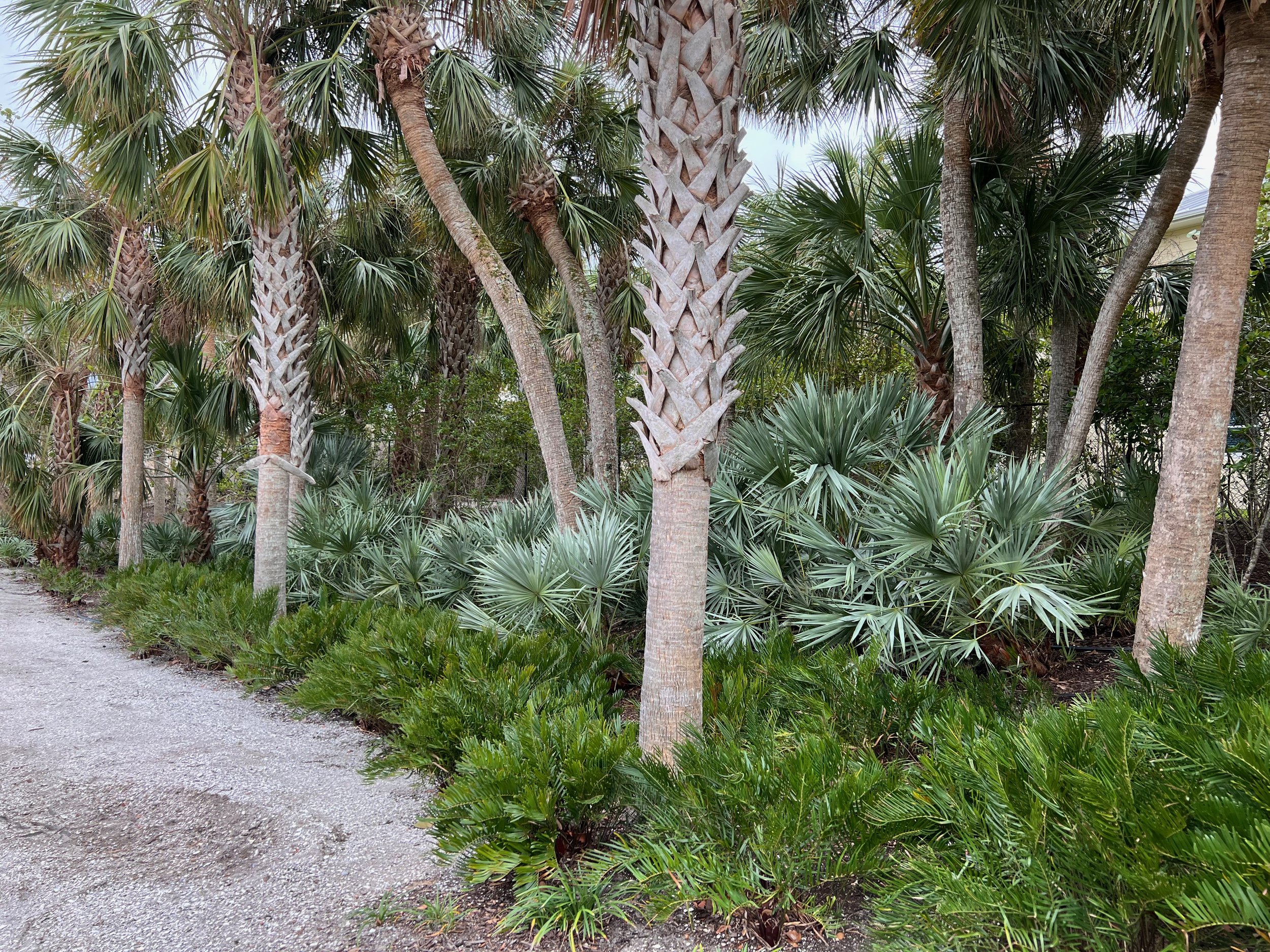
Coontie is perfect for a dry sunny or shady spot in the garden. It is extremely hardy and drought tolerant and is successful in harsh conditions like highway medians. It generally stays under three feet tall and 3 feet wide and has a tropical Florida feel. Coontie is an ancient plant and is Florida’s only living cycad. It is the important host plant for the Atala butterfly.
Erythrina herbacea
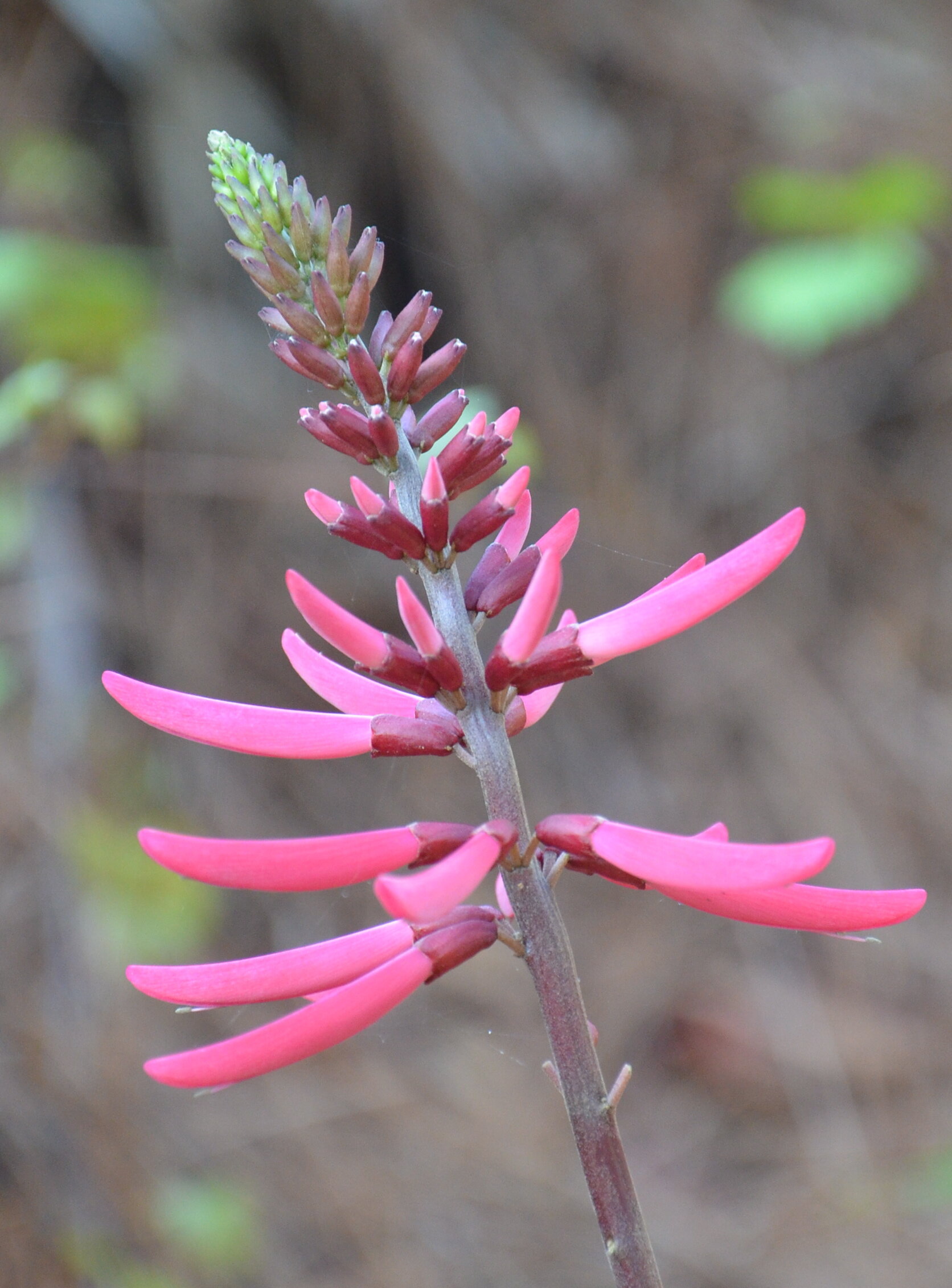
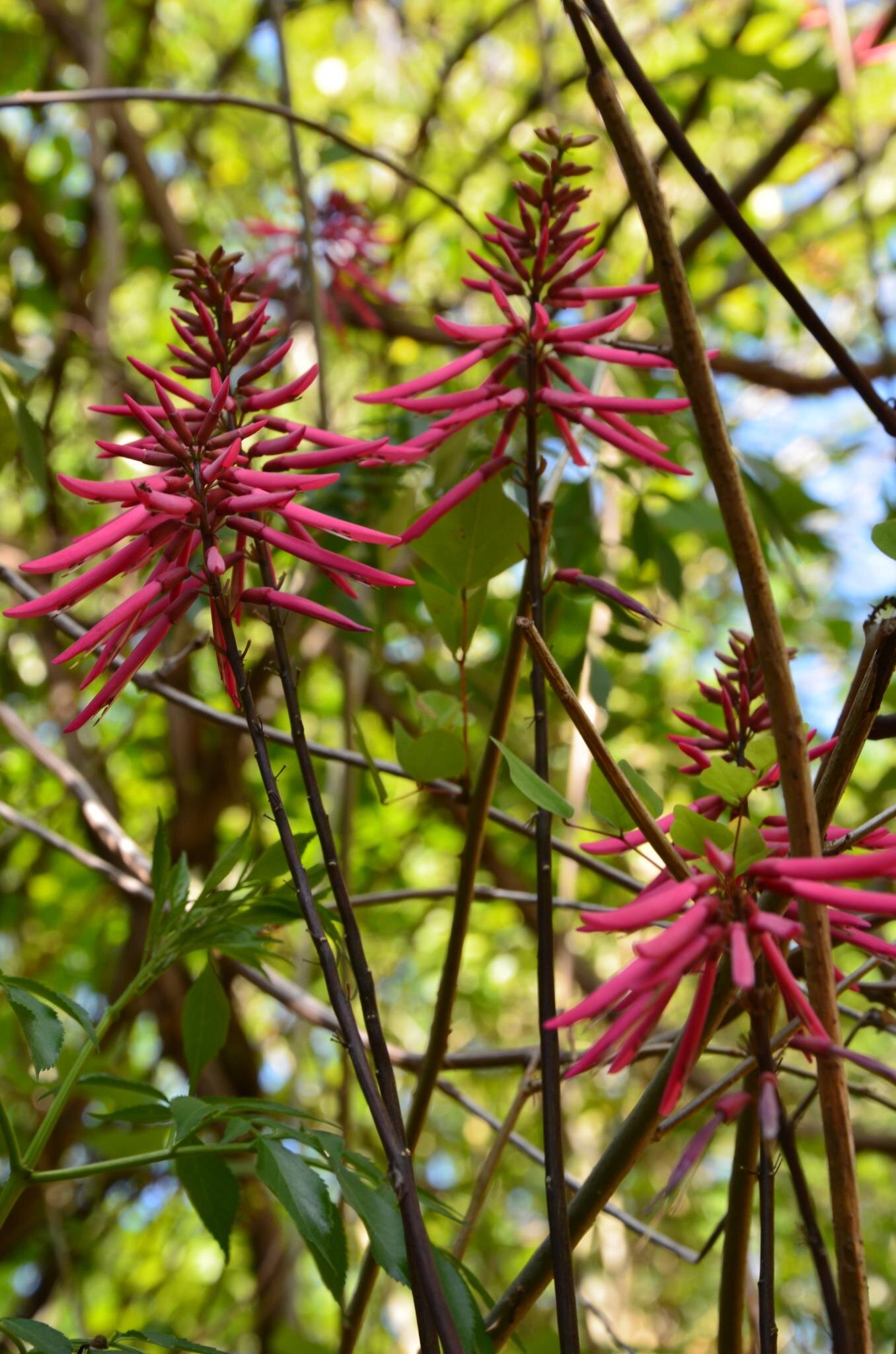
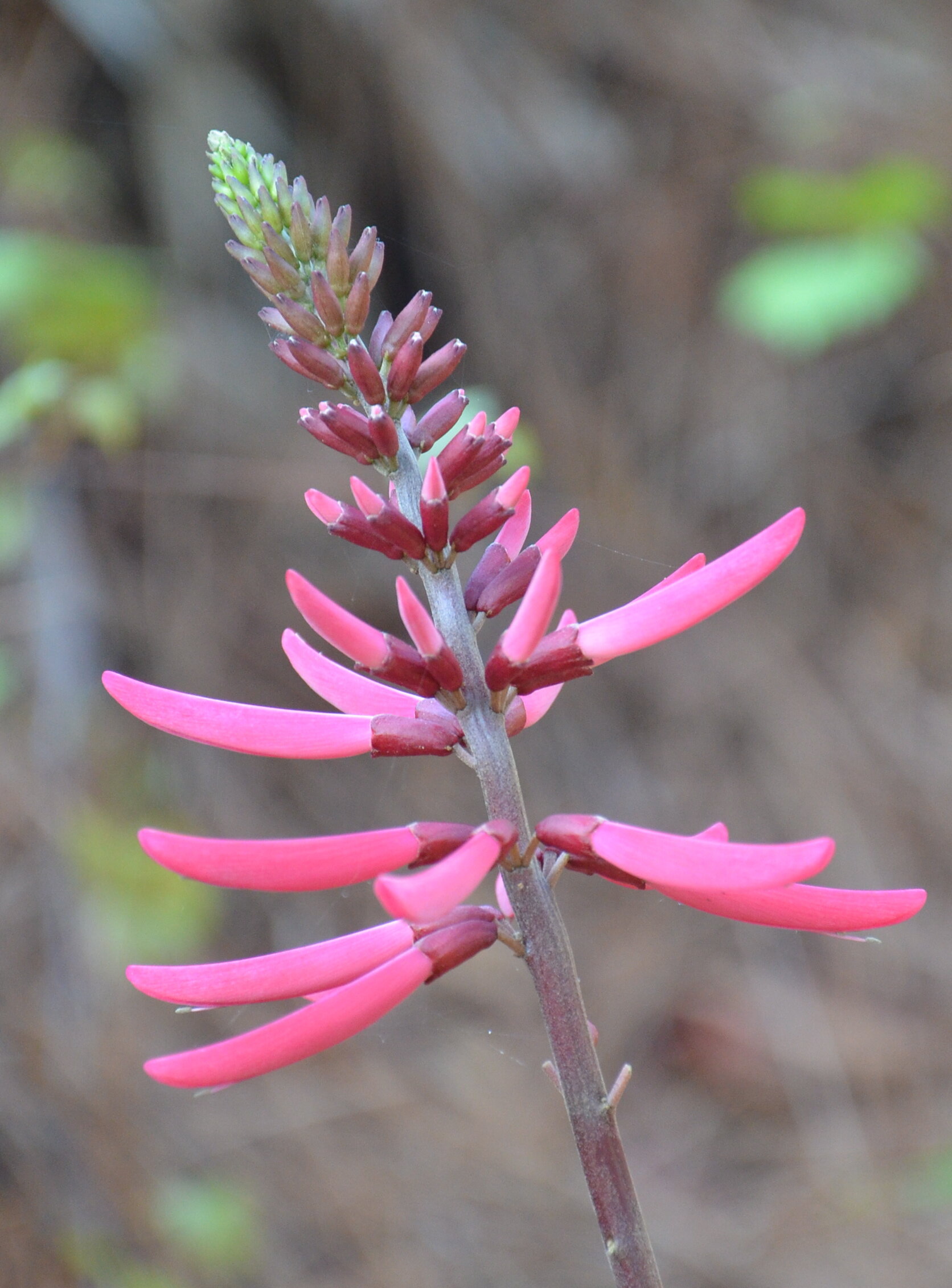
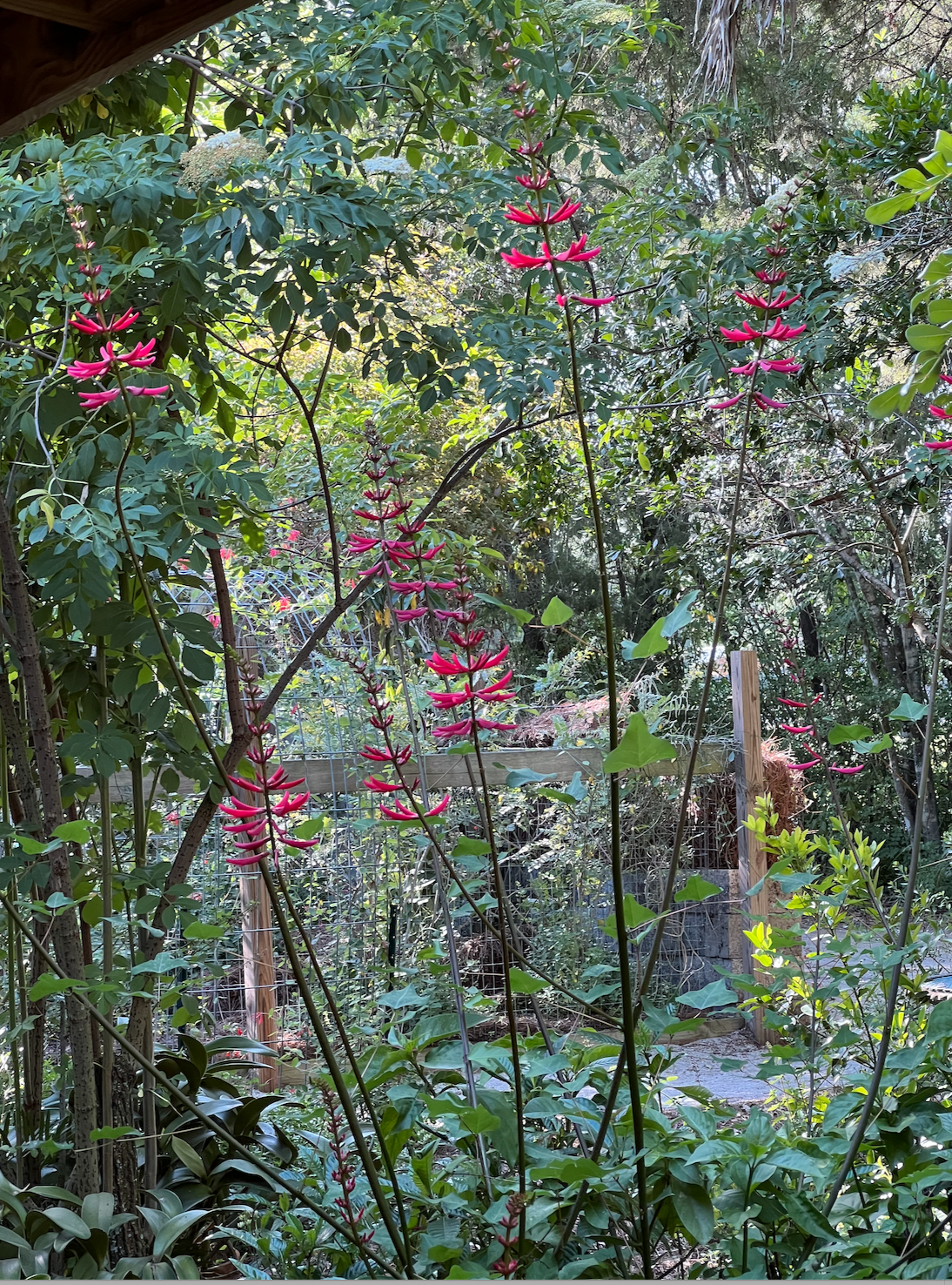
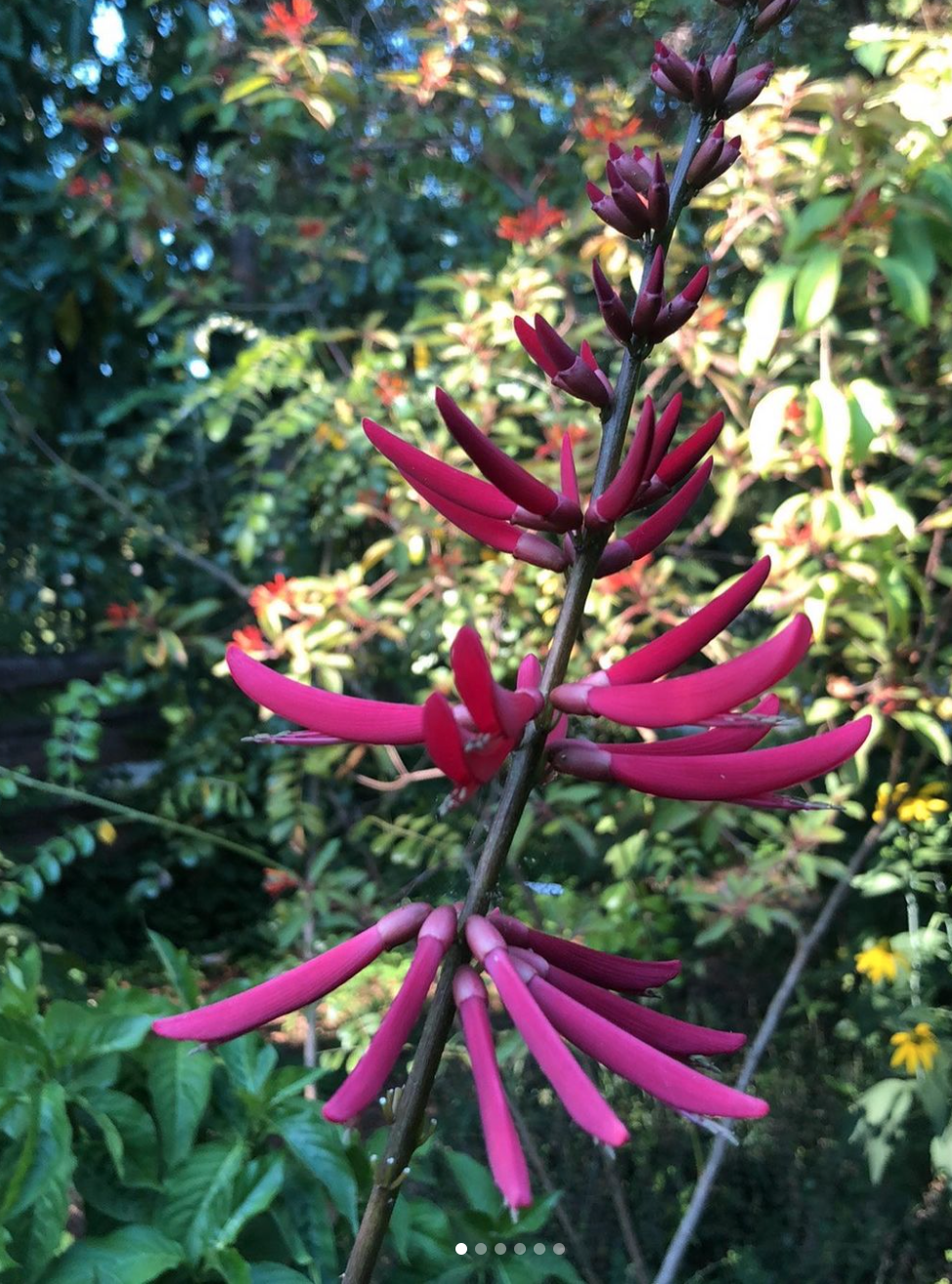
Coral Bean (Erythrina herbacea) is a deciduous perennial shrub or small tree native to the southeastern United States that grows 3-8 feet tall with compound, lance-shaped leaves. This striking plant produces tall spikes of brilliant scarlet, tubular flowers in early spring that are perfectly timed to coincide with Ruby-throated hummingbird migration patterns, providing critical nectar for these travelers. The blooms also attract long-tongued butterflies and bees, while the bright red seeds that follow are dispersed by birds, though all parts of the plant are toxic. Thriving in sandy, well-drained soils in open woods and forest edges, it serves as an excellent specimen plant for wildlife gardens in zones 8-10.
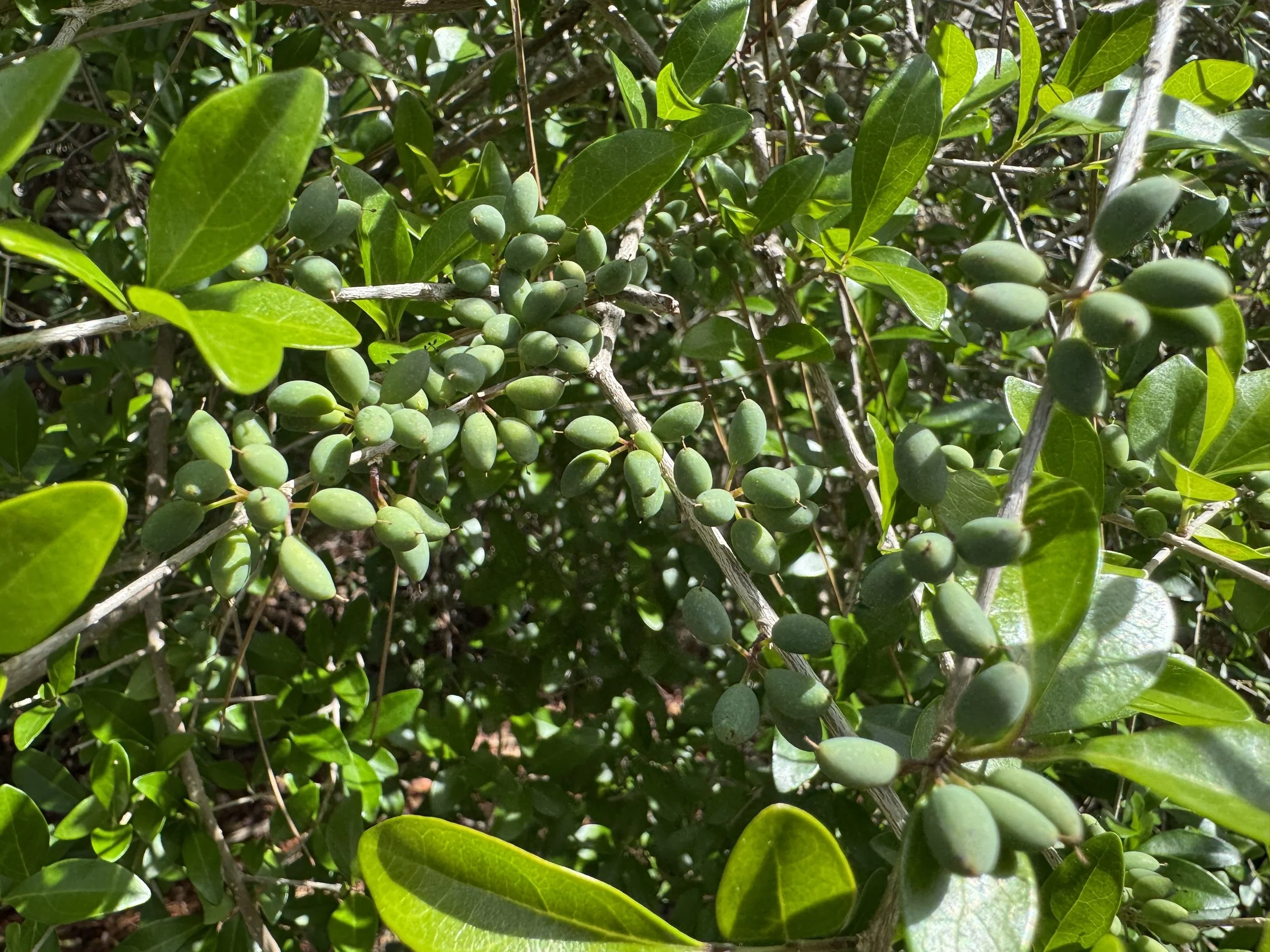
Ilex cassine
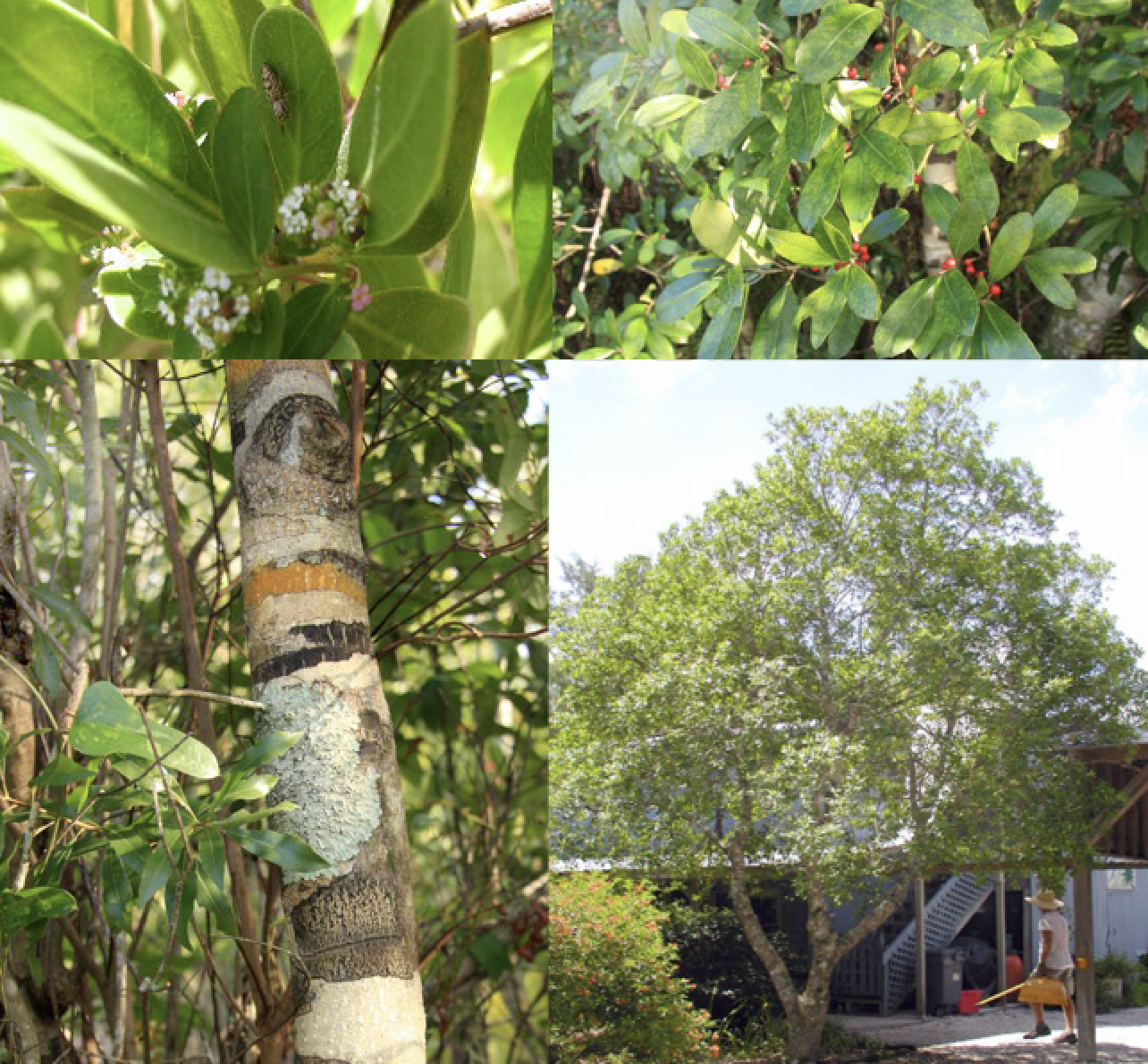
Dahoon Holly is a native, evergreen tree, with heights ranging from 20-30ft and it grows best in full sun to partial shade with moist, clay, loamy, or sandy soils. While they are moderately drought tolerant, they may need irrigation in dry, sandy conditions. Moderately salt-spray tolerant. Their foliage is dark green, with clumps of white flowers in spring that are replaced by red berries in fall and winter that provide food for birds and small mammals.
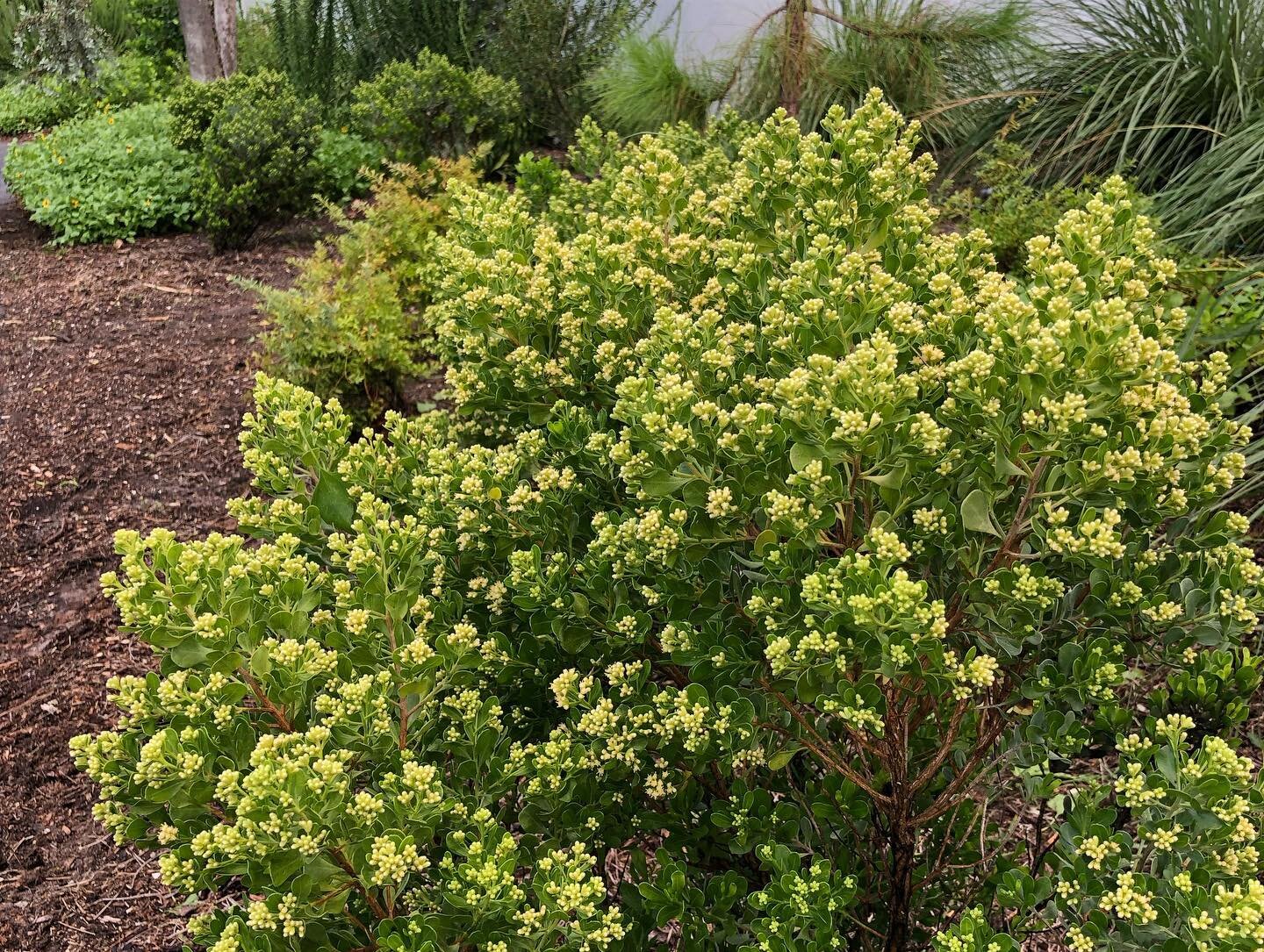
Baccharis dioca
Also known as Broombush and Falsewillow
This hardy, lower-growing native shrub always seems to look great in a garden setting and it does well in a lot of different garden conditions. It holds its space well and has beautiful texture year round. The flowers bloom late summer through early fall and attract numerous pollinators. It is drought tolerant but also high tolerant of salt spray and salt inundation.
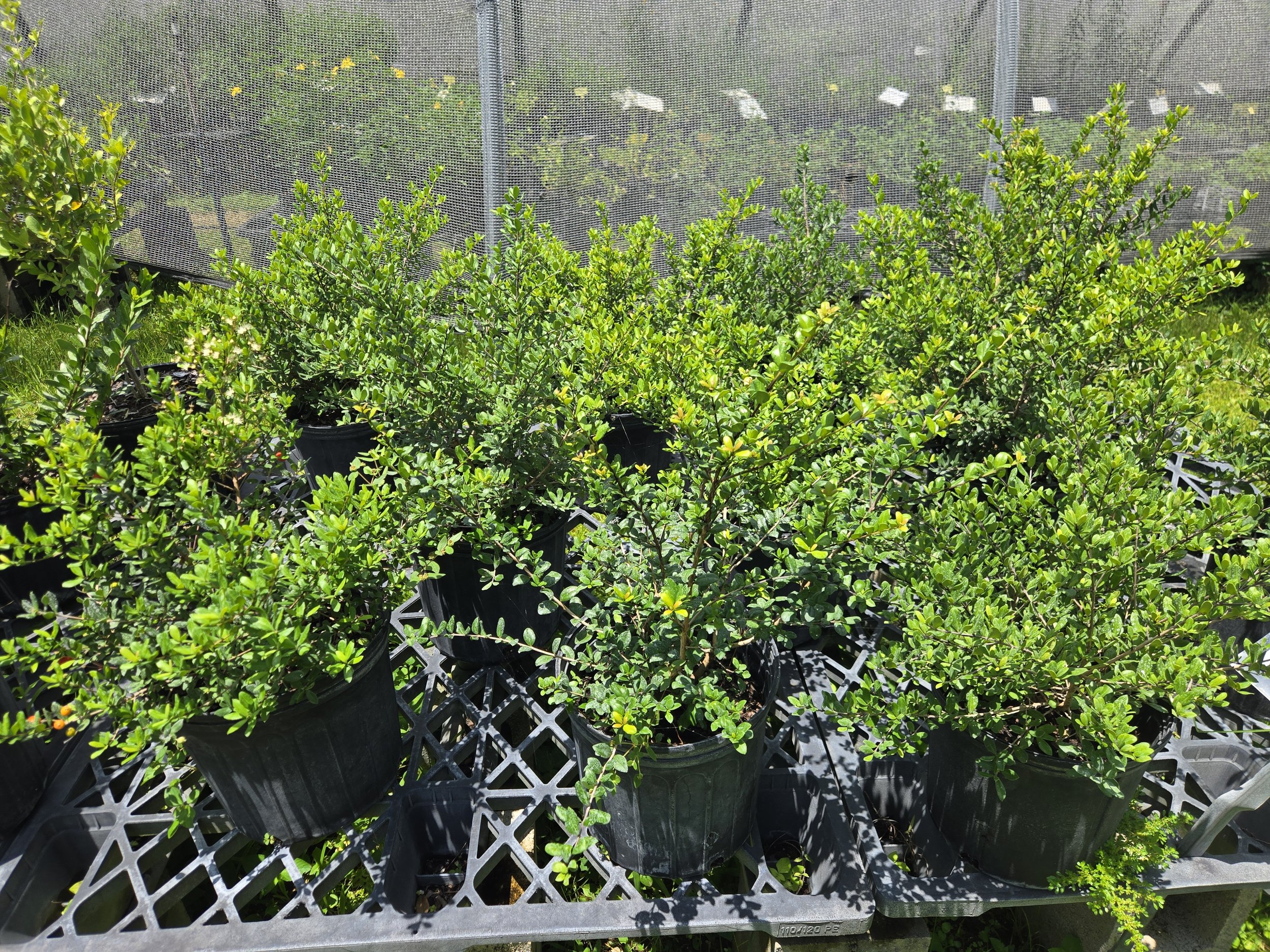
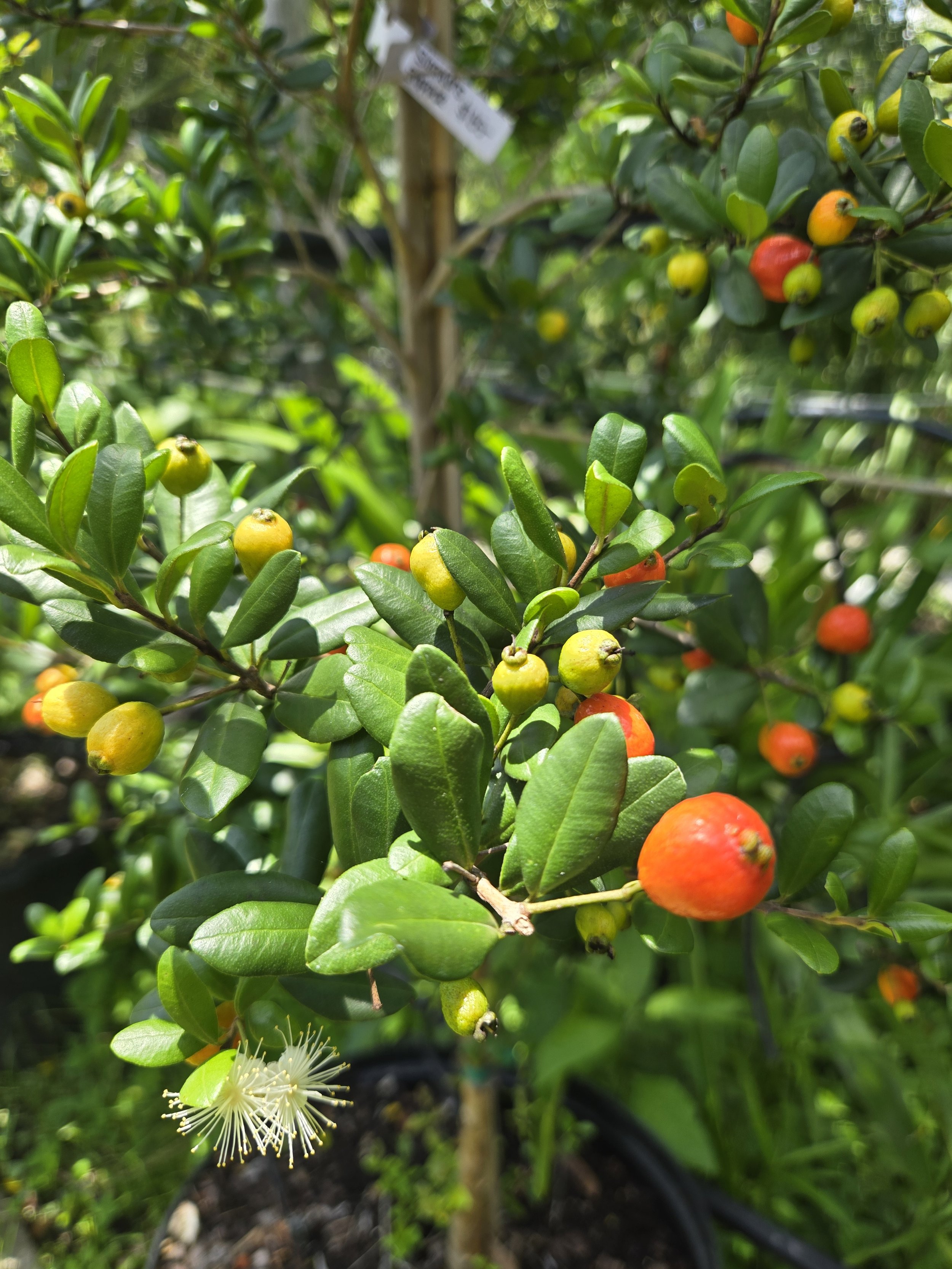
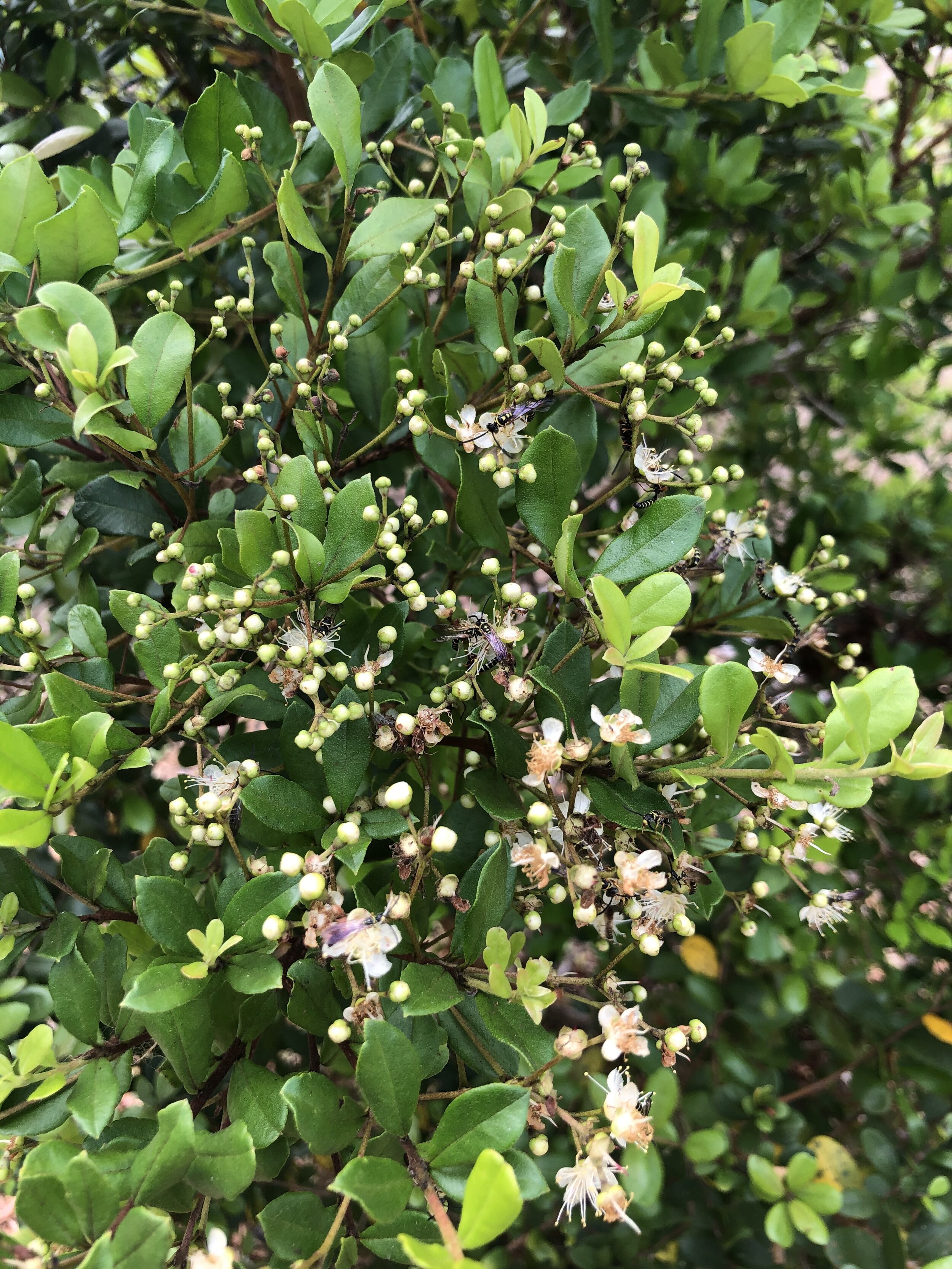
Myrcianthes fragrans ‘Compacta’
Dwarf Simpson Stopper grows to 4’ and creates a nice low hedge or border planting. Cream puff blooms and vibrant red berries add color and texture to any landscape. Drought tolerant once established, these small shrubs work well in non-irrigated landscapes. Of course, they don’t mind irrigation either!
Psychotria nervosa 'Little Psycho'
Little Psycho is a smaller native evergreen shrub that grows to 4'. This dwarf coffee is great for planting under smaller trees or in shadier areas. Pollinators love the summertime flowers and birds eat the berries fall-winter. It's also a host plant for the Tersa Sphinx Moth!
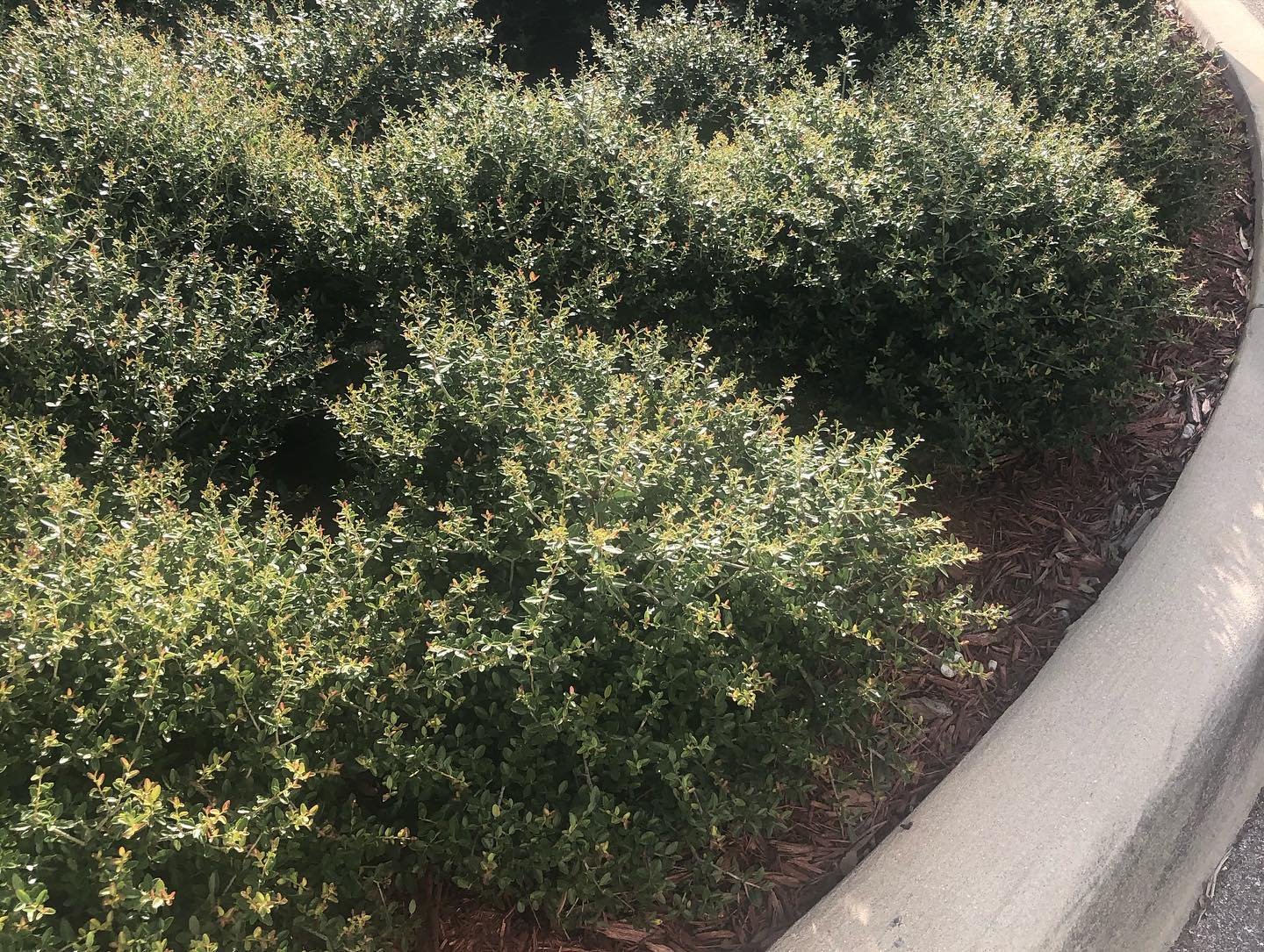
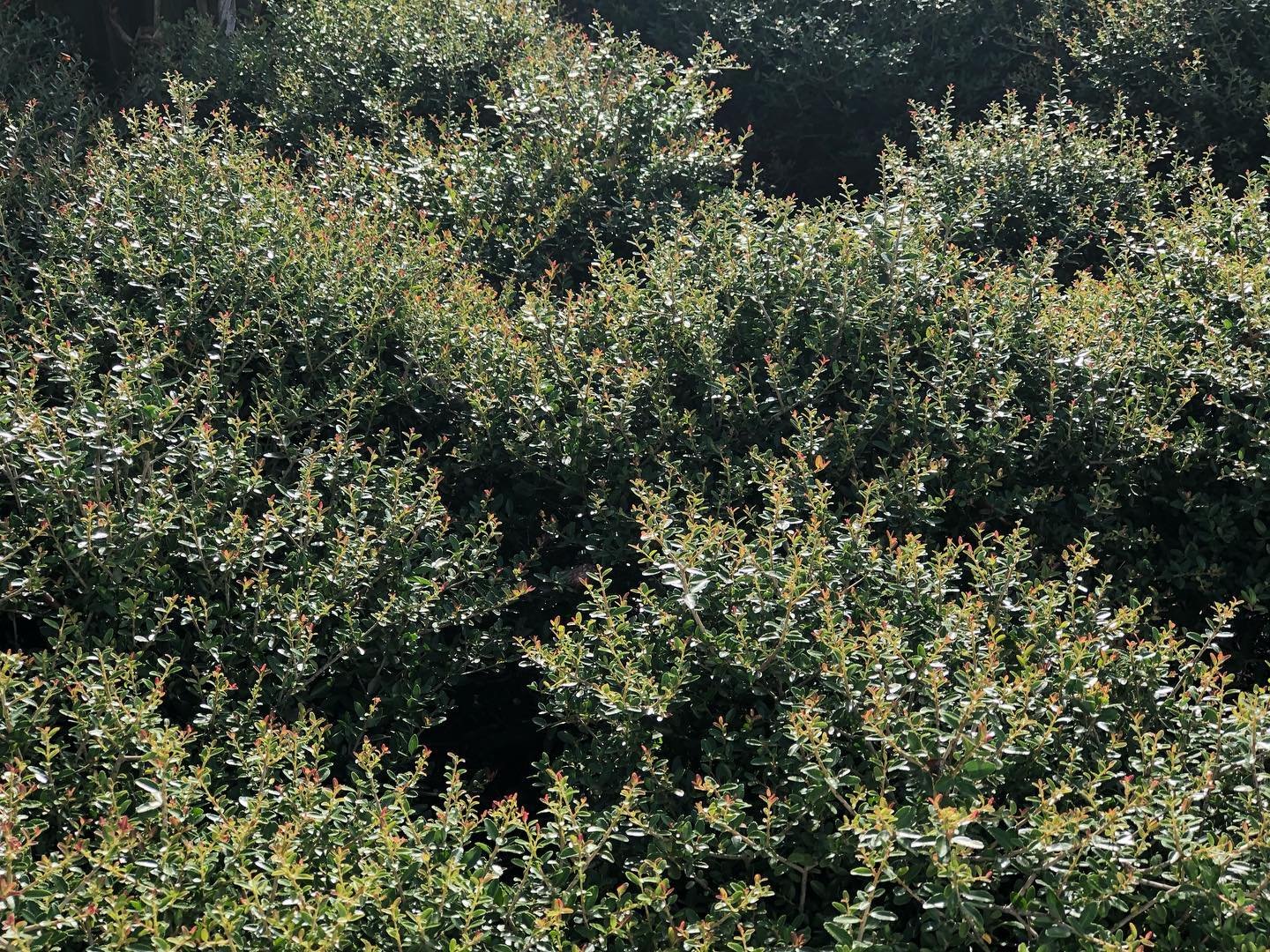
Ilex vomitoria 'Schillings Dwarf'
Dwarf Yaupon Holly is a super hardy and adaptable small shrub that makes a great low growing border or mass planting. It’s easily prunable and it’s full height is 3-4 ft. It does well in full sun to partial shade with dry to moist (well-drained) soils.The dwarf plants are male and produce a flower but no berries, however they help to pollinate female upright Yaupon Hollies and the Yaupon Holly cultivars like Weeping Yaupon Holly.
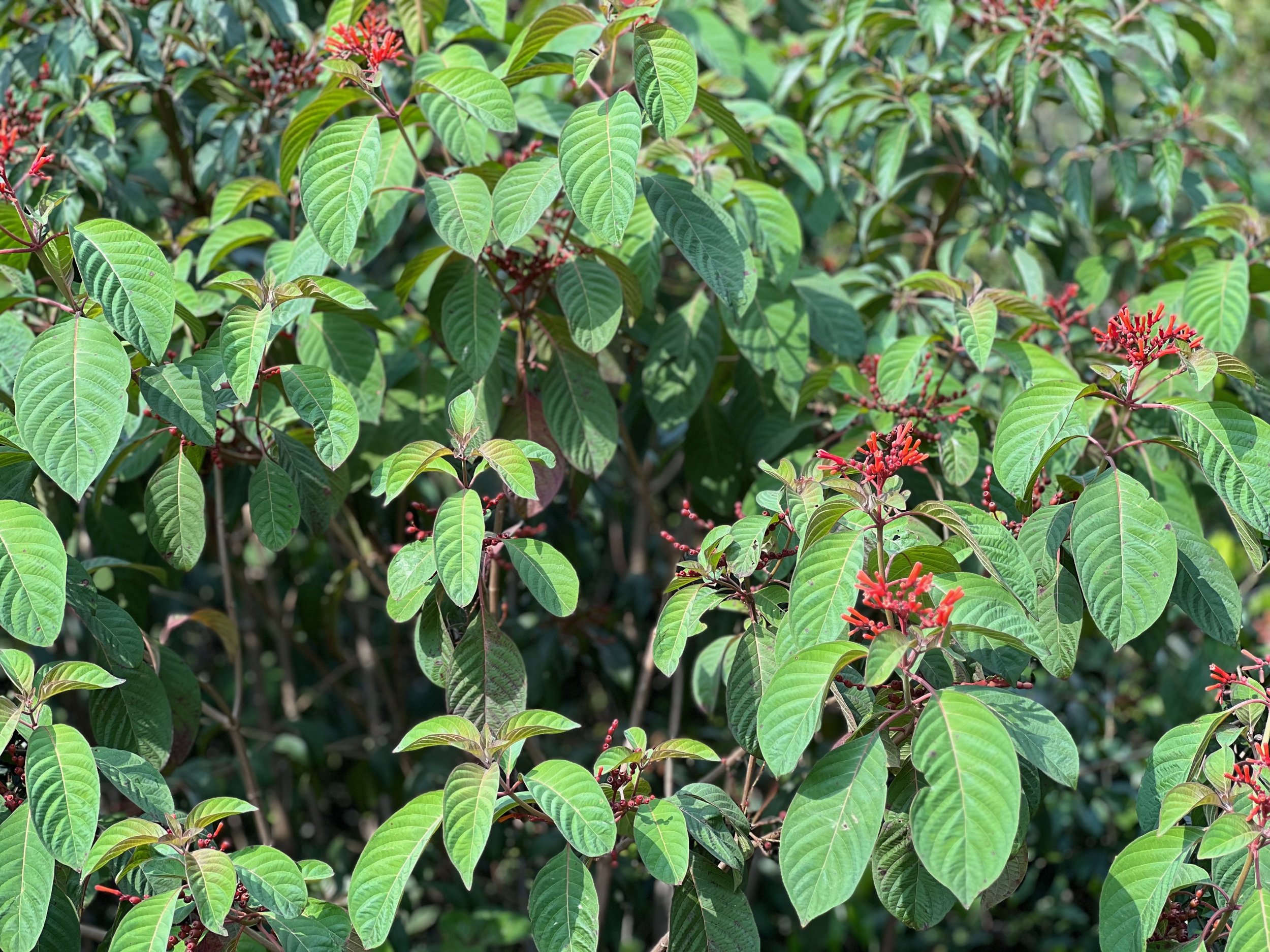
Hamelia patens
Firebush is a native, evergreen, 12’, prunable, shrub. It does best in dry to moist (well-drained) soils, sun/part shade, and is very fast-growing. With year-round, showy flowers that attract hummingbirds and butterflies, and berries that serve as a food source for song birds, Firebush makes a lovely addition to many Florida landscapes, especially pollinator and hummingbird gardens. In addition to its ecological benefits, the fruit is edible and has a long history of medicinal and industrial uses. Ripe fruit is black, edible raw and can be made into a syrup or wine!
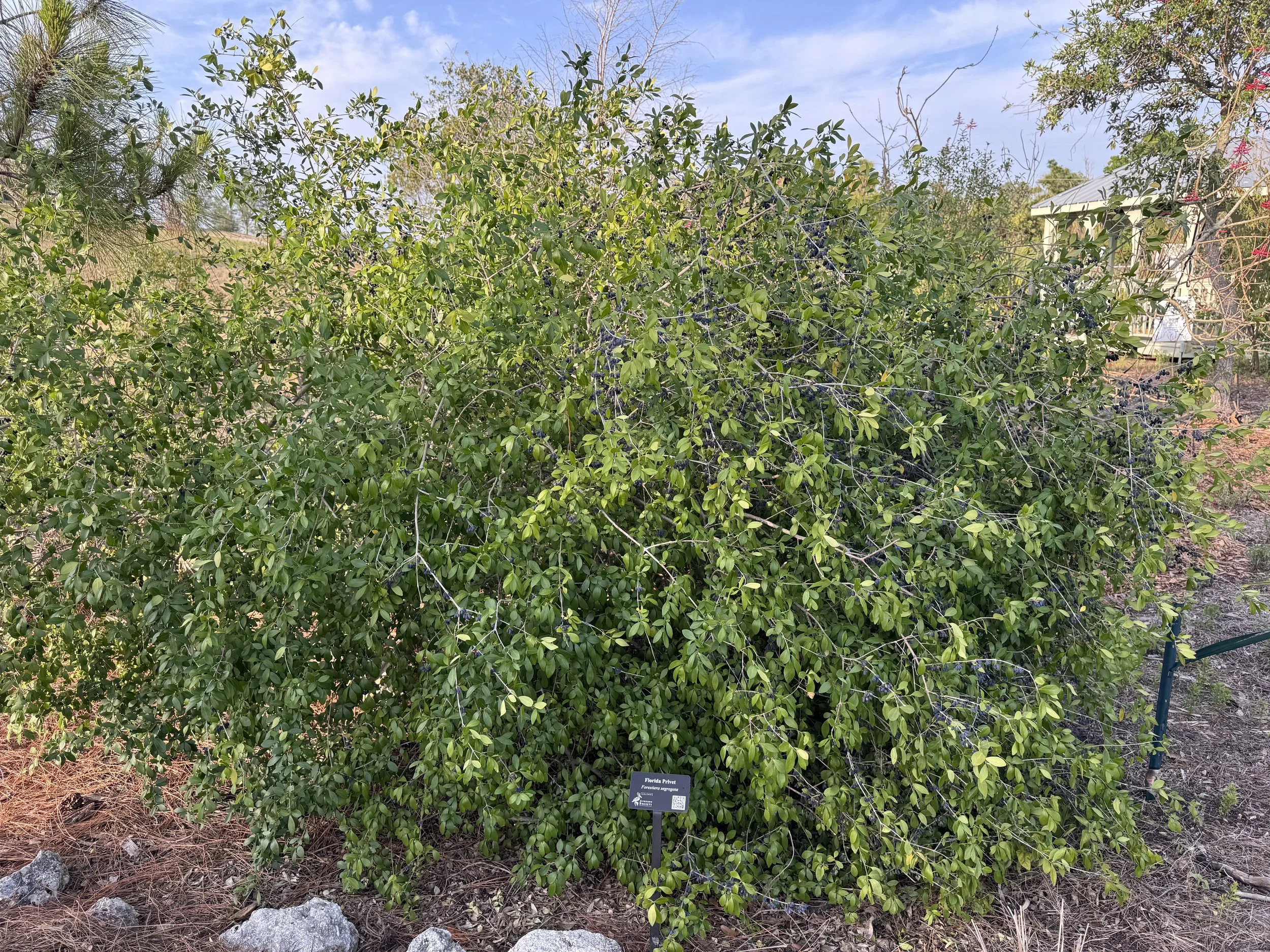
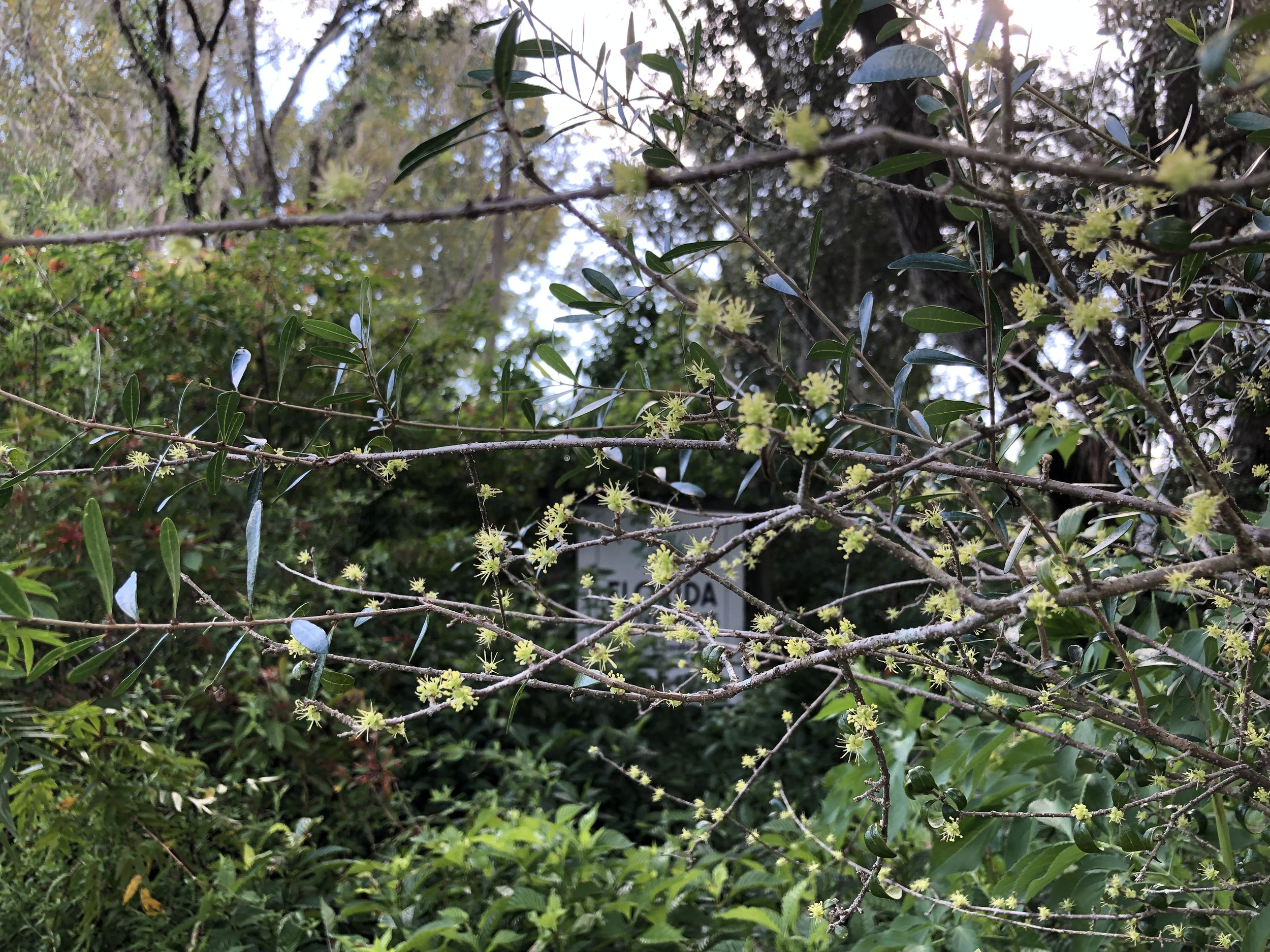
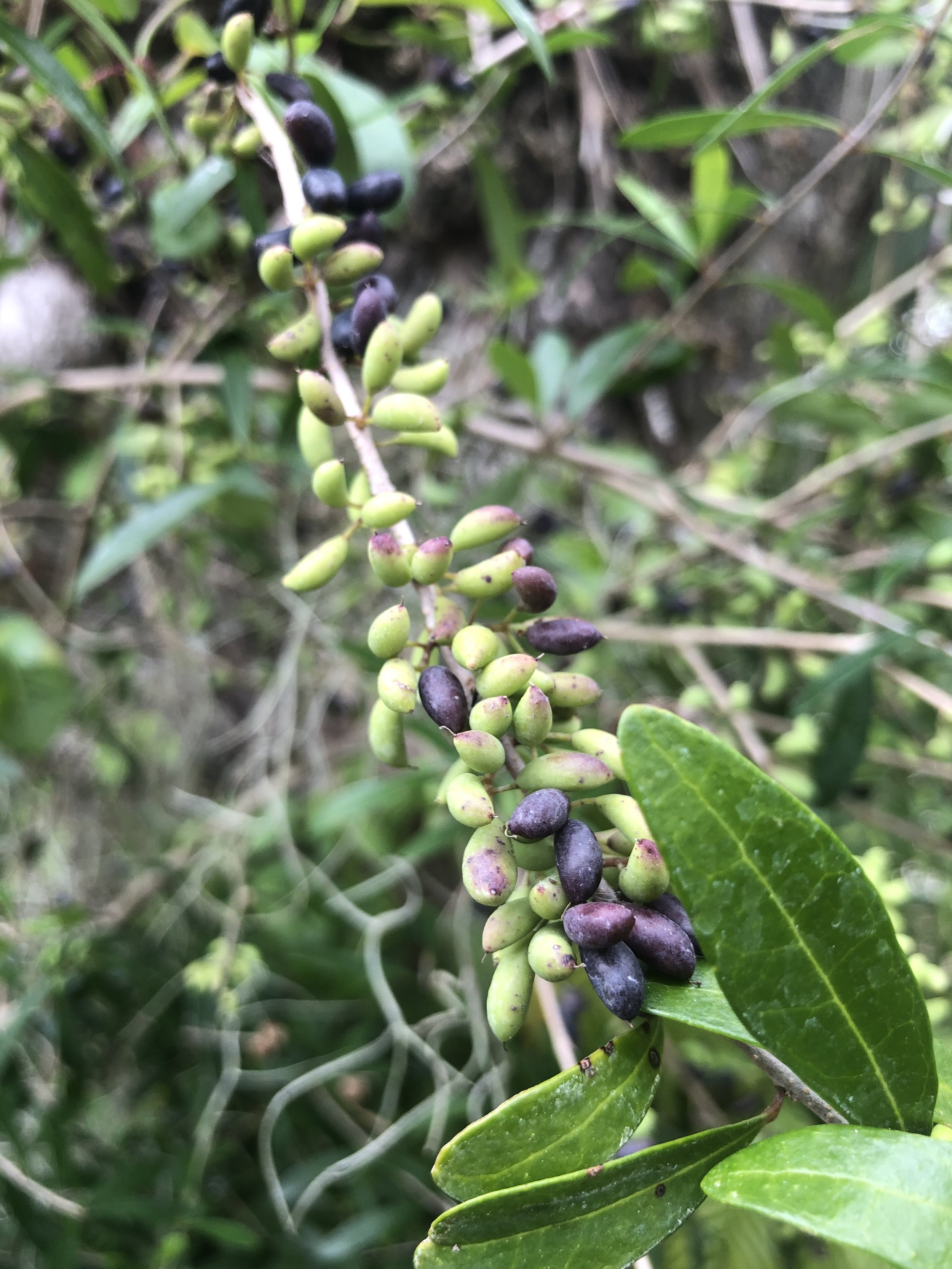
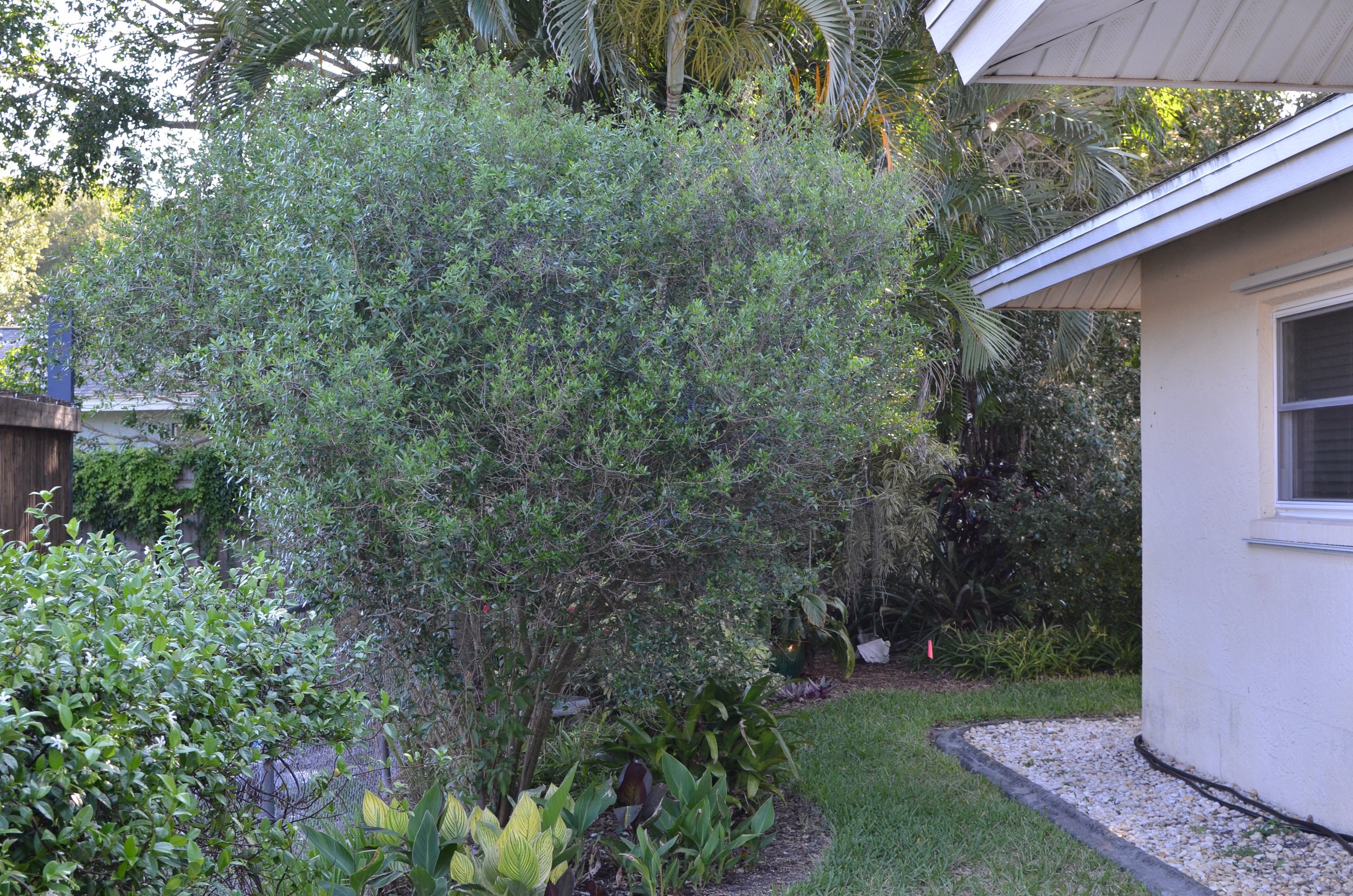
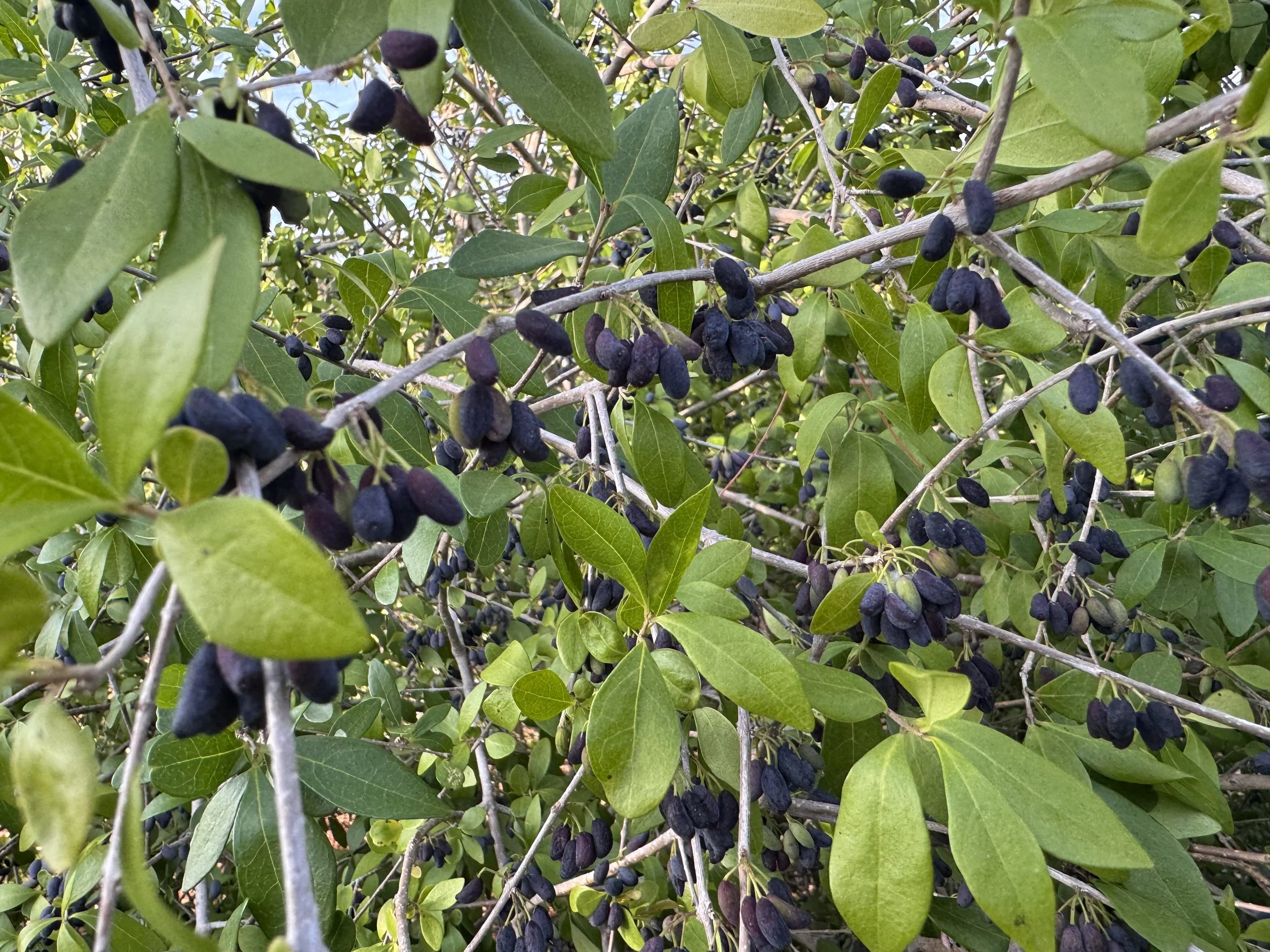
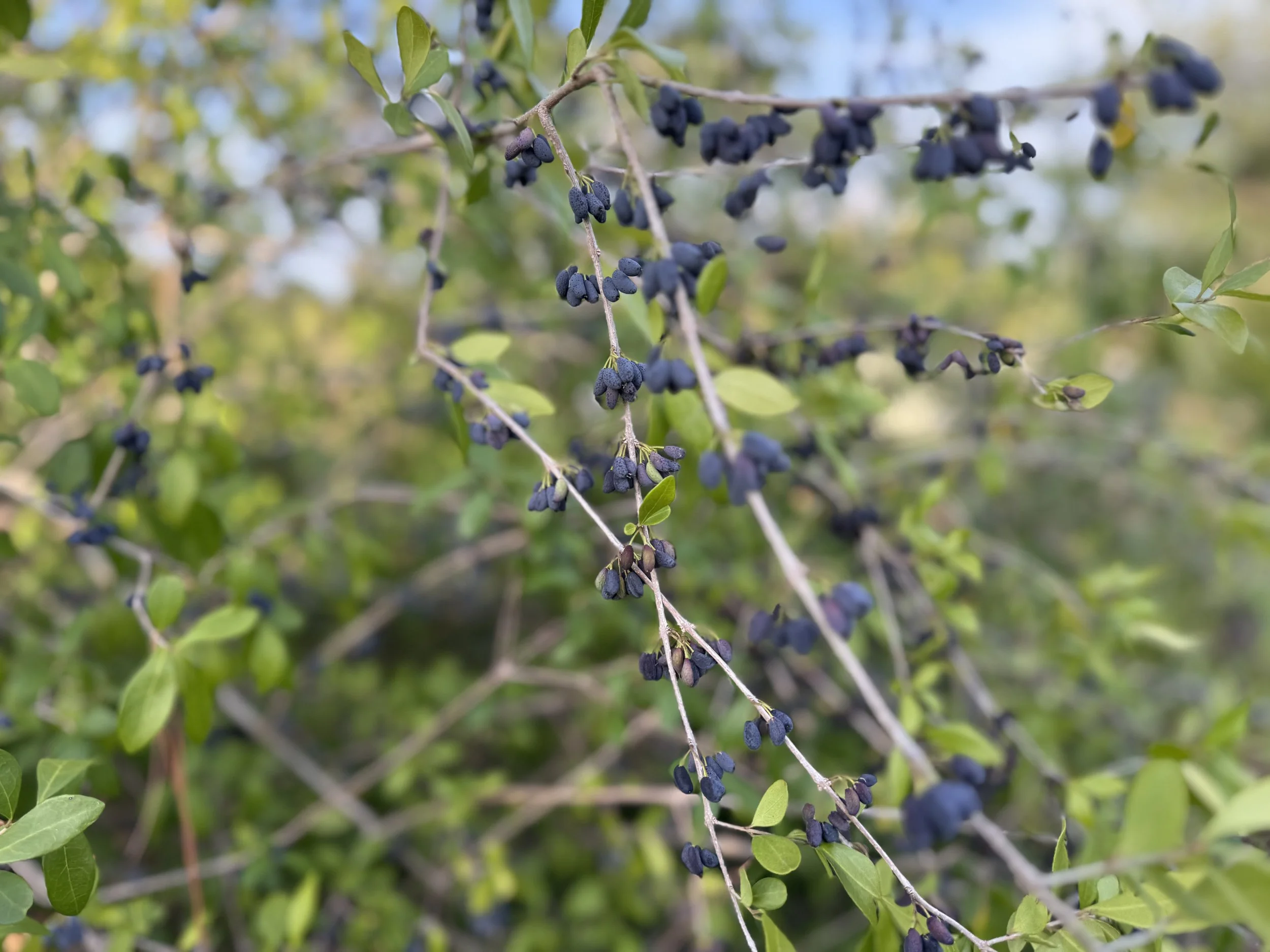
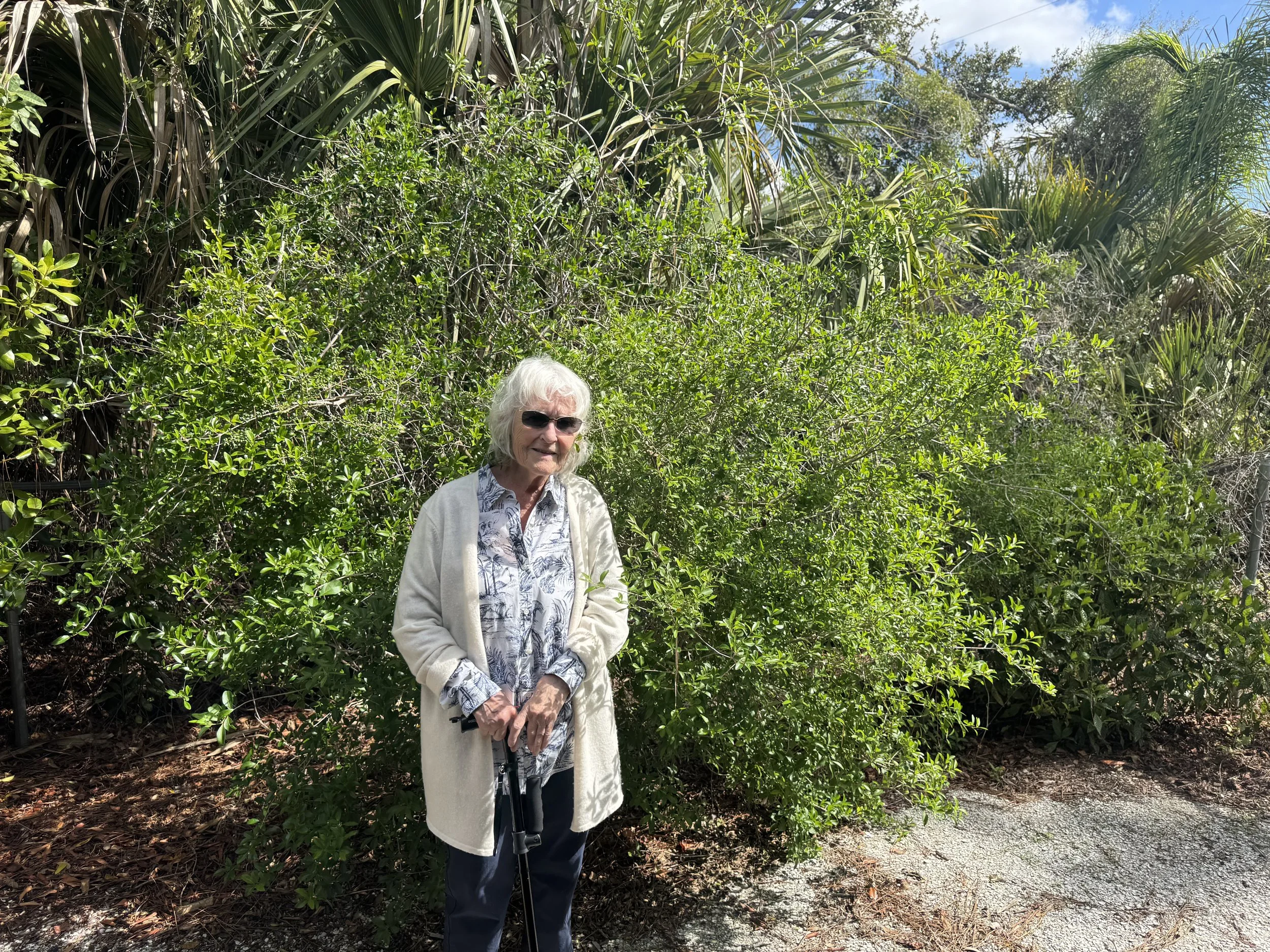
Forestiera segregata
Florida Privet is a versatile native evergreen shrub that typically grows up to 15’t tall and 10’ wide. It is highly adaptable and easy to maintain, as it responds well to pruning and can be kept as a formal hedge or a small specimen tree. It thrives in full sun to light shade and prefers average to dry, well-drained soils.
This hardy shrub is exceptionally salt-tolerant, making it an ideal choice for coastal landscapes. Beyond its greenery, it provides essential habitat and food for local wildlife; its small flowers attract pollinators, while the dark berries serve as a valuable food source for birds.
Coccothrinax argentata
Florida Thatch Palm is native evergreen palm that grows to be 6’-15’ tall and 5’-7’ wide. They grow best in full sun and are highly adaptable with their soil environment once established. With flowers in summer that bring in pollinators, followed by berries that bring in birds, Florida Thatch Palm is the perfect plant for attracting wildlife to the space. They are also highly salt and drought tolerant, and can stand up to hurricane winds.
Phyla nodiflora
One of our favorite native plant “lawn alternatives,” Frogfruit is a low growing, perennial evergeen groundcover that grows in full sun to partial shade and in dry to moist soils. Frogfruit is highly salt-tolerant, fast growing, mow-able and lightly walk-able. It’s also an important host plant to the Phaon Crescent, White Peacock and Common Buckeye butterflies and is a nectar source pollinators including hummingbirds.
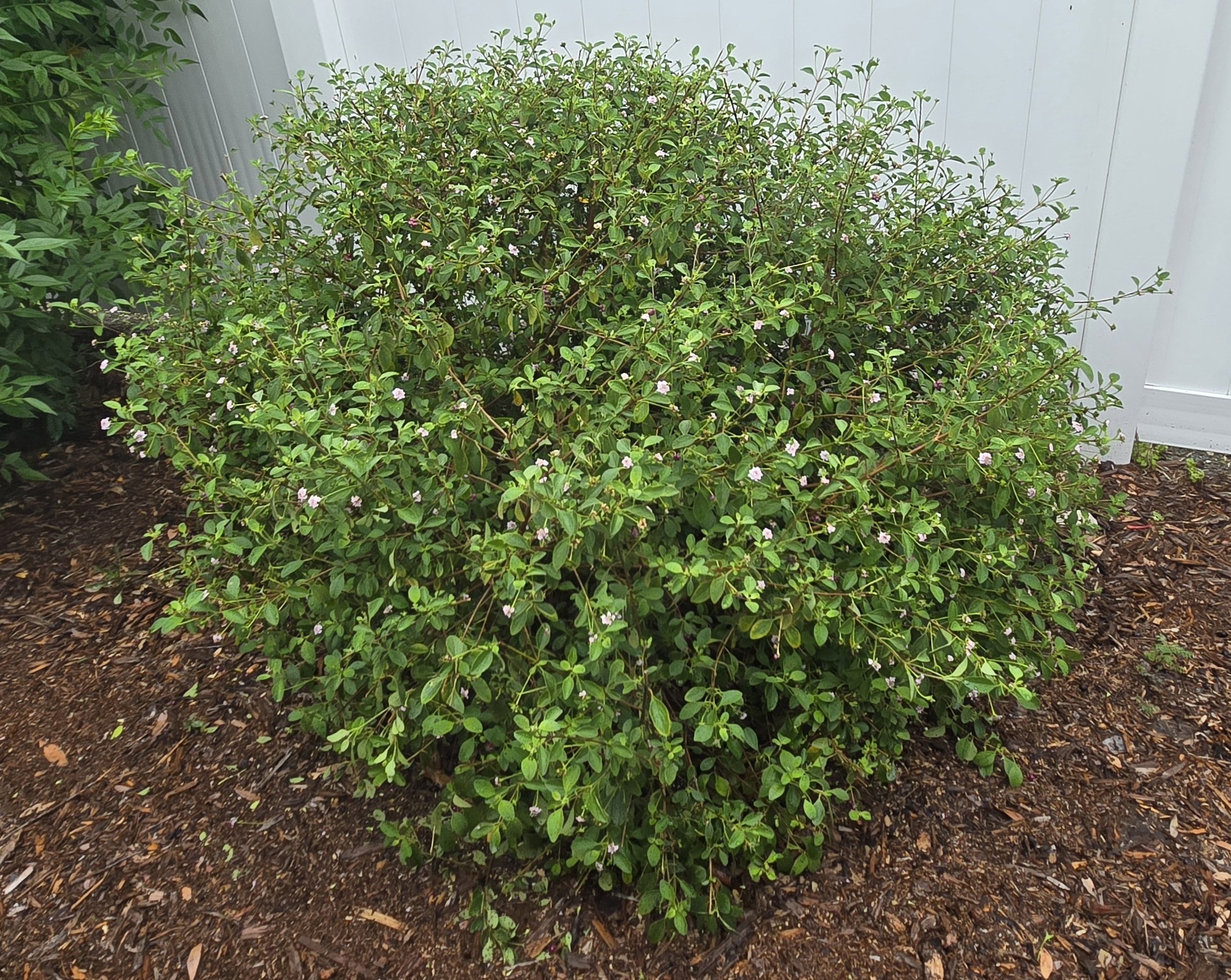
Melochia tomentosa
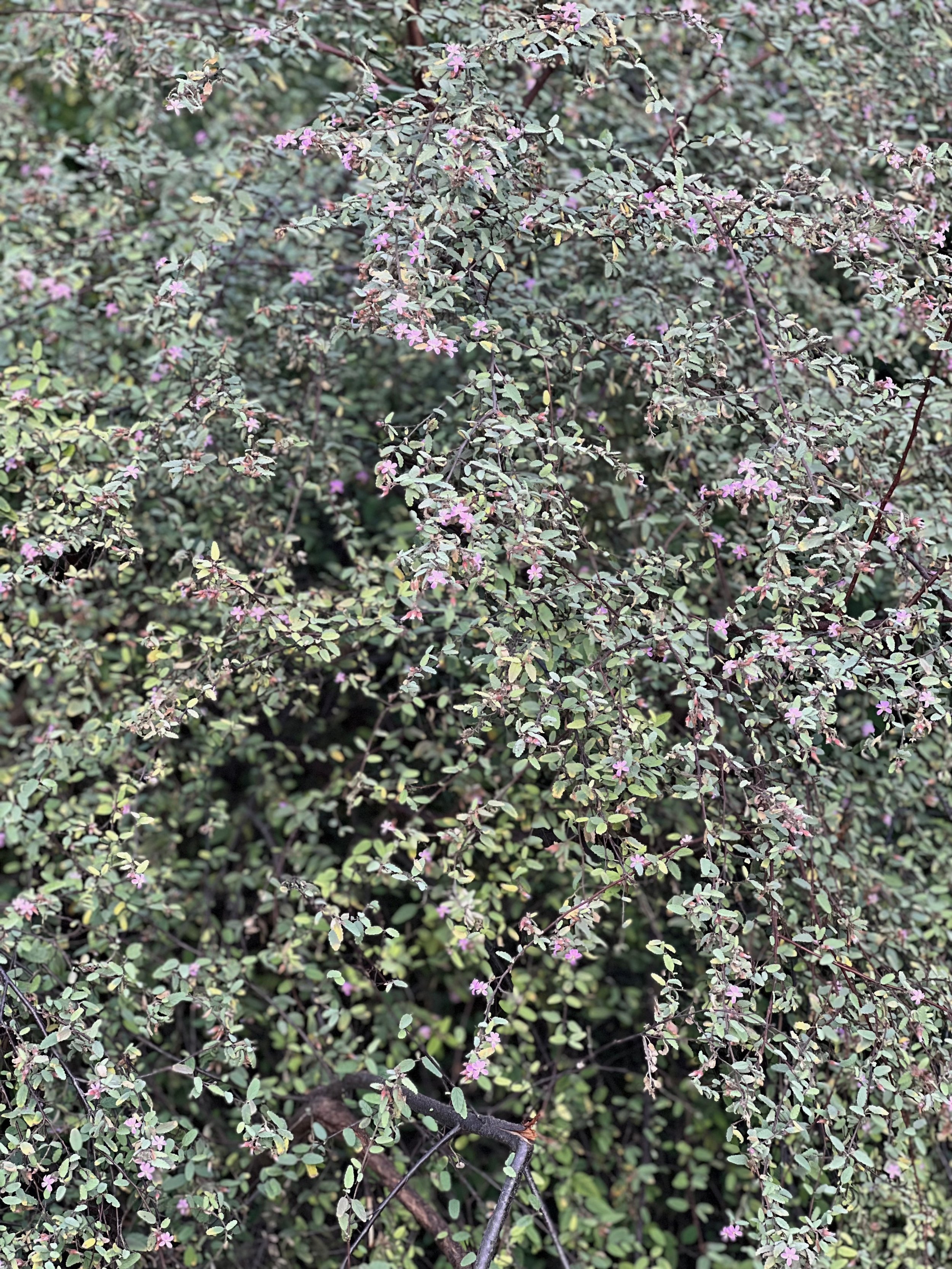
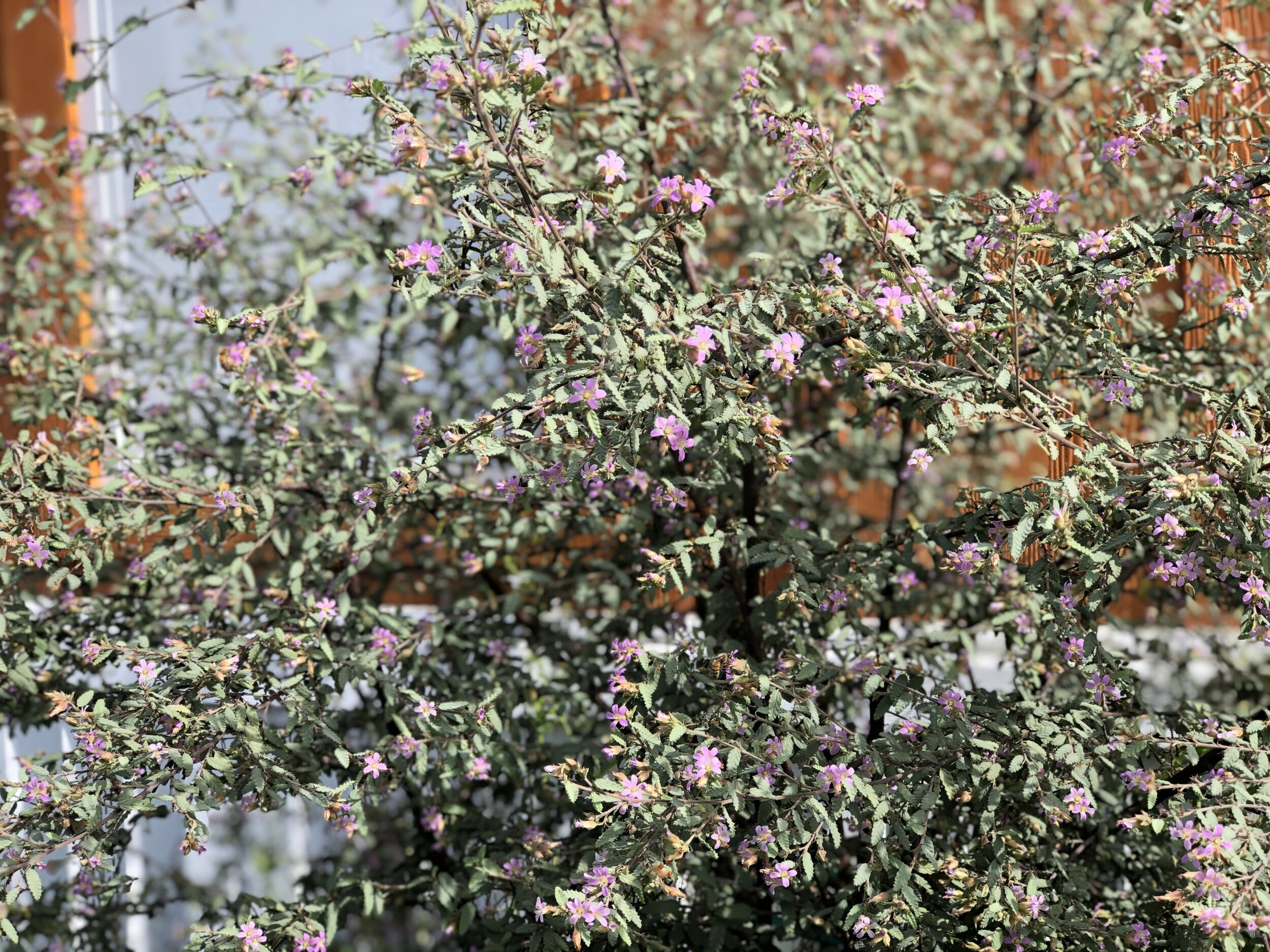
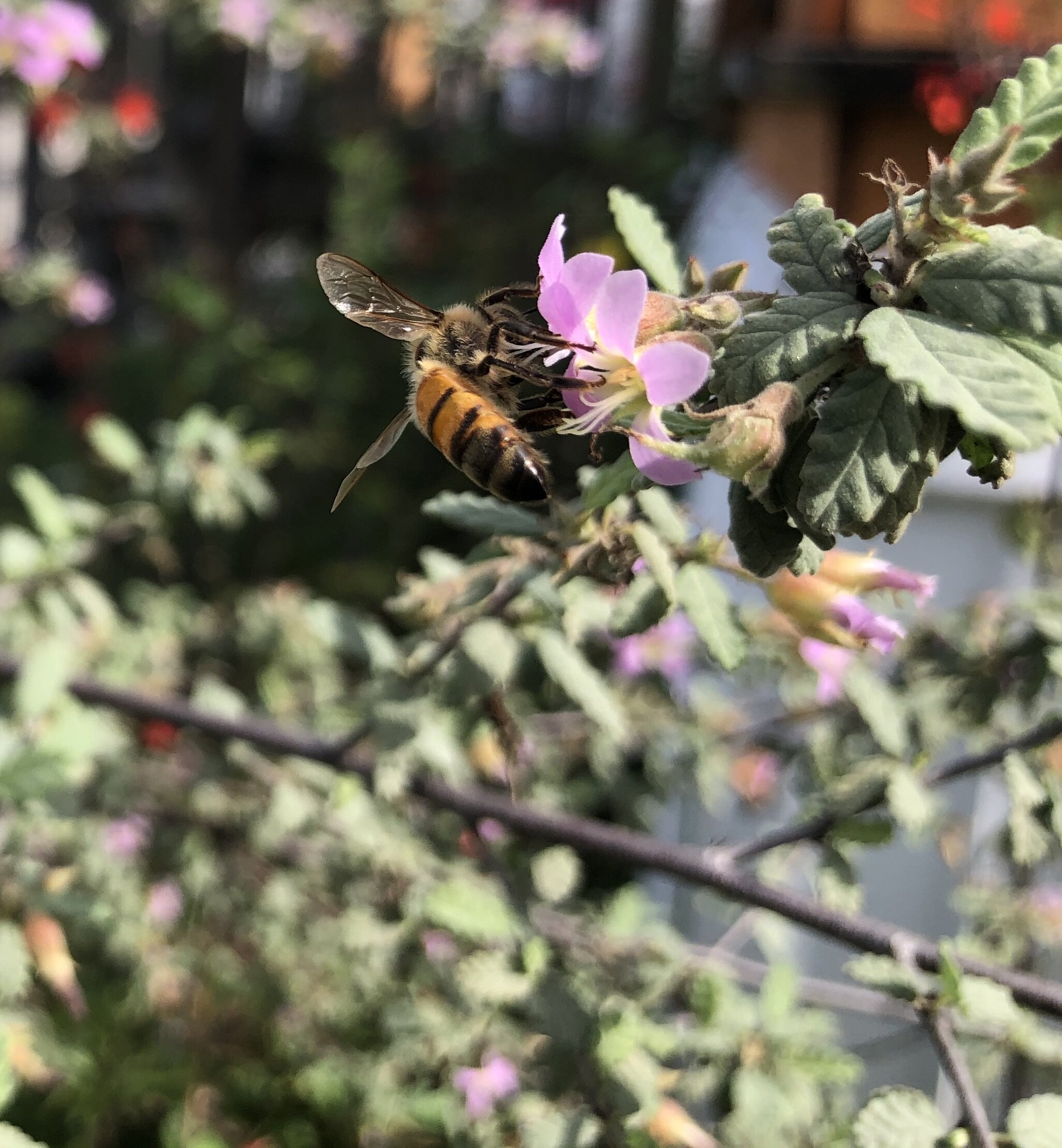
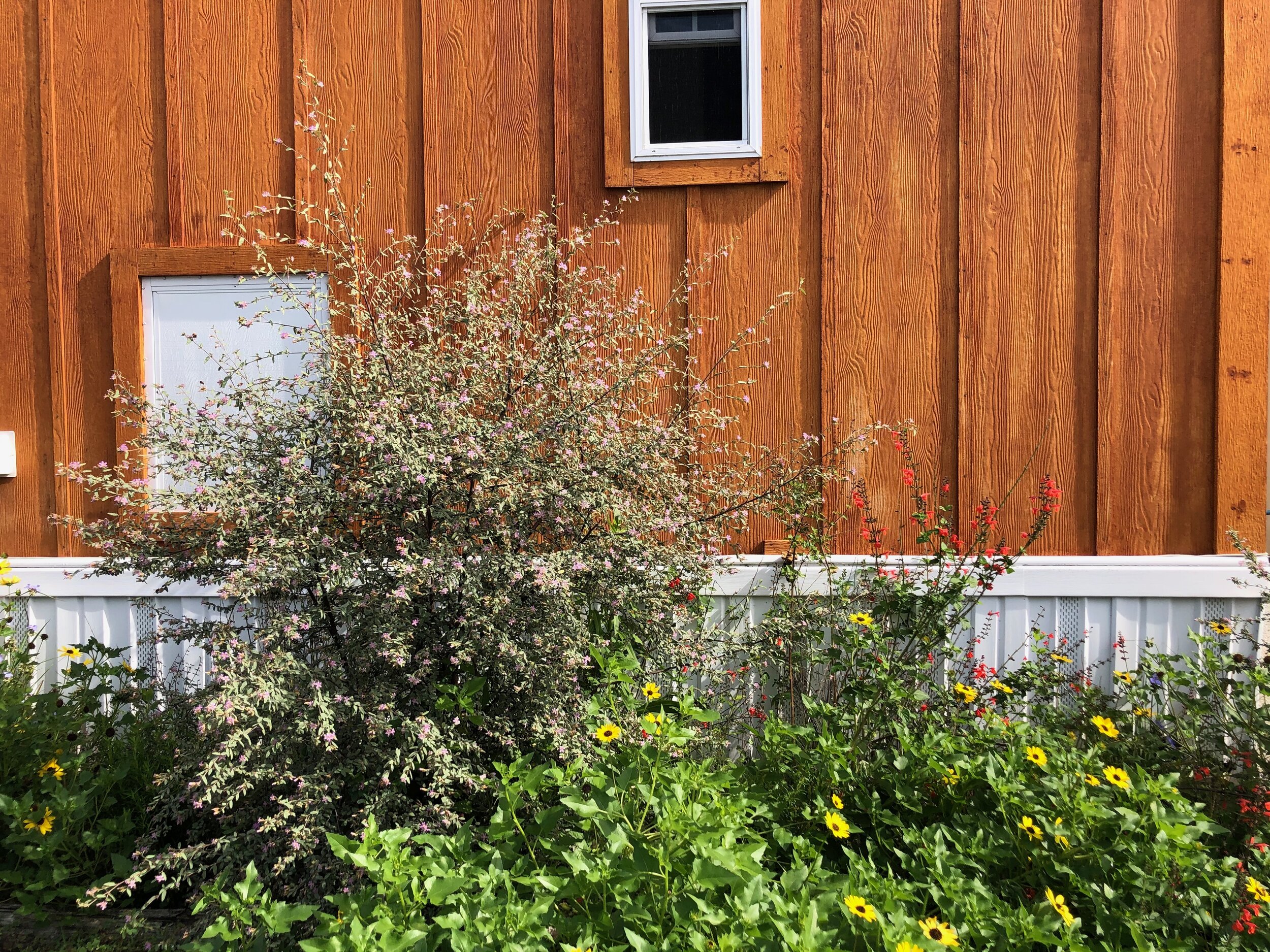
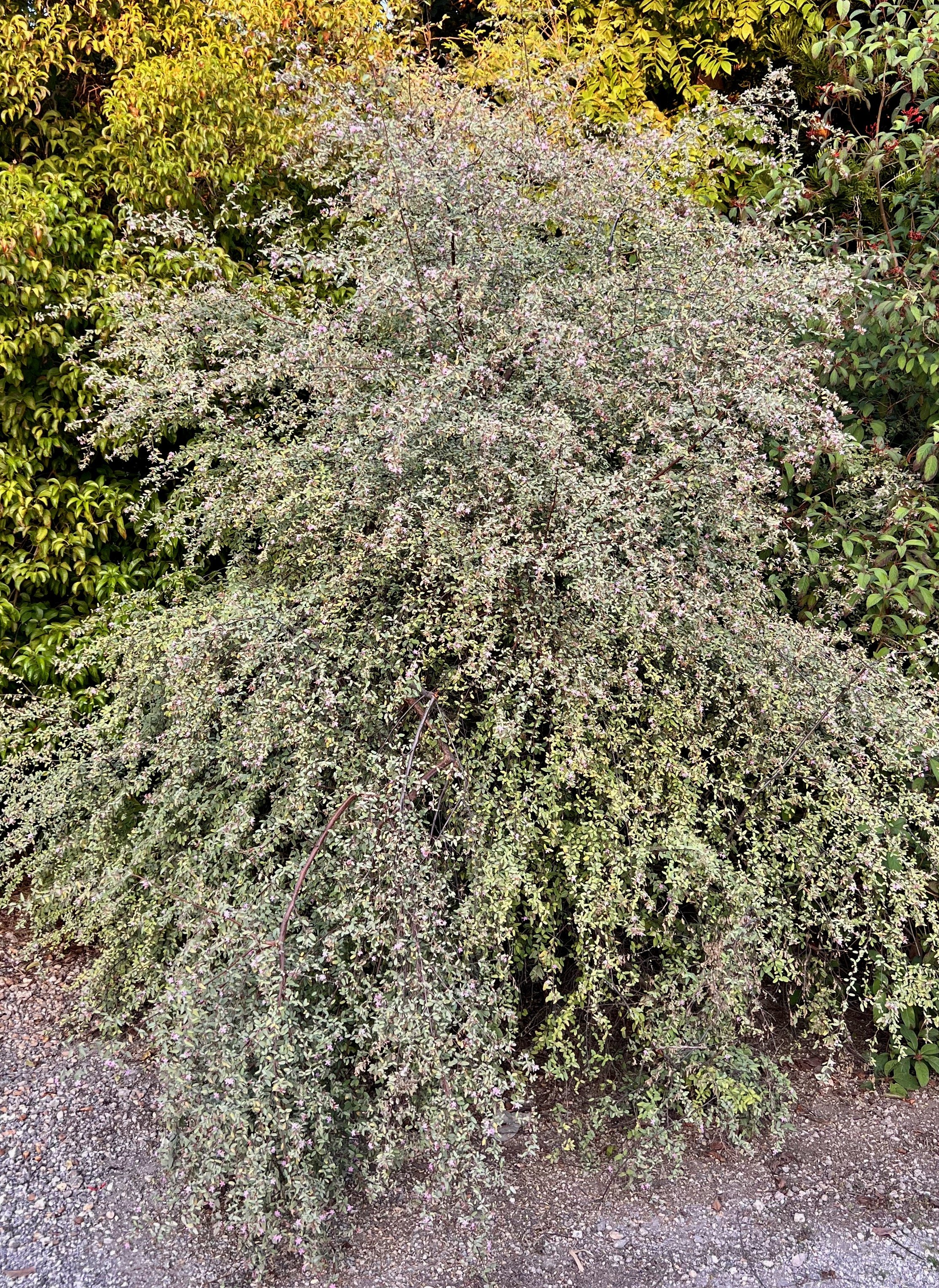
This native, evergreen, large flowering shrub is a super pollinator magnet. It is a keystone species for gardeners in South Florida because of the diversity and numbers of pollinators it attracts, including hummingbirds. Blooming year-round, it has tiny pink flowers and tiny grey leaves on dark stems and a beautiful soft and open habit in the garden.
Conocarpus erectus
The Green Buttonwood is an evergreen, coastal, native small tree or large shrub that can reach 20' and has vibrant green leaves and small brown berries that look like wood buttons. This buttonwood is considered the 4th type of mangrove and really thrives in coastal conditions, and can take salt water inundation and salty soils. The Buttonwood also has high wind tolerance making it a great windscreen on coastal properties.
Serenoa repens
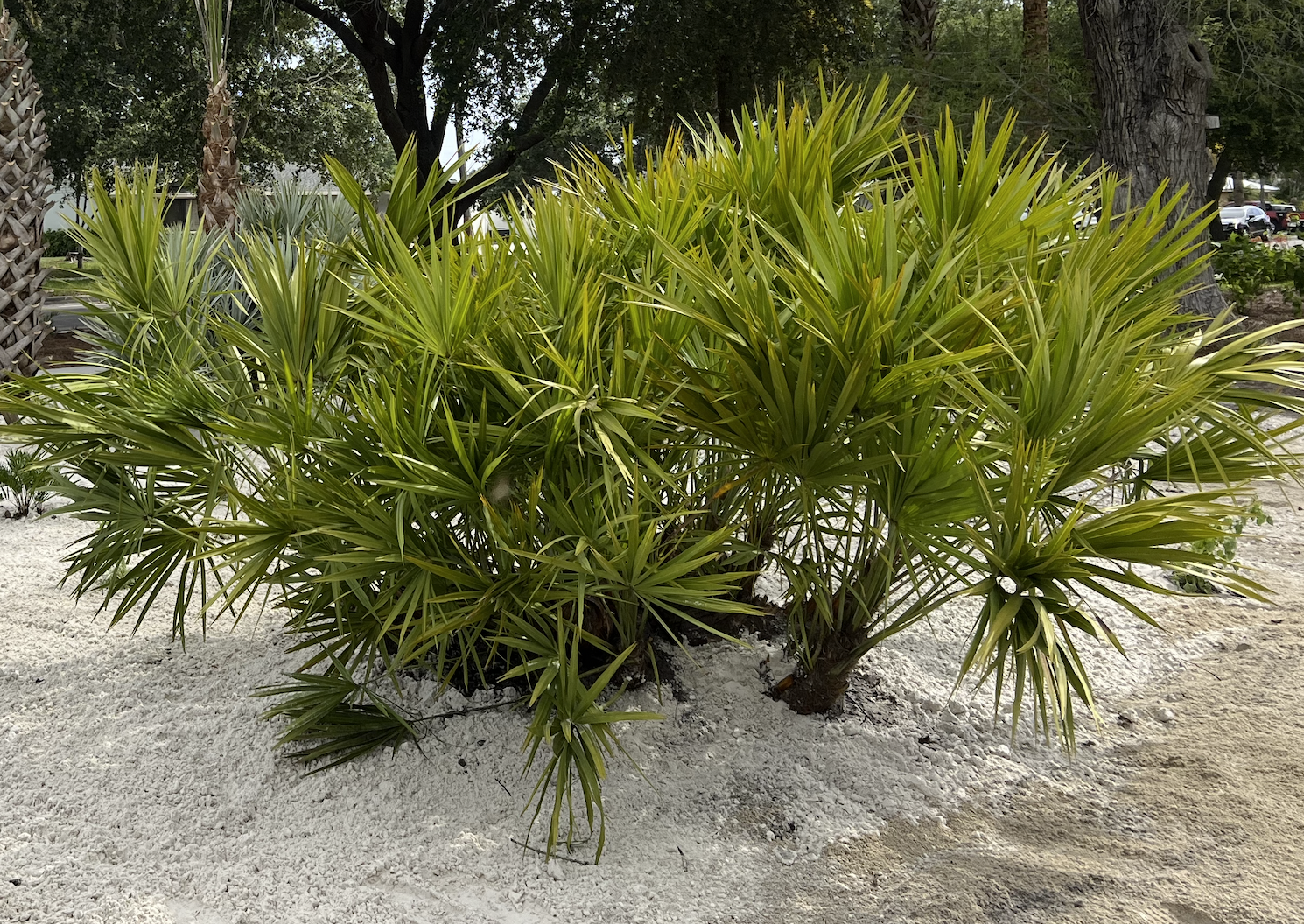
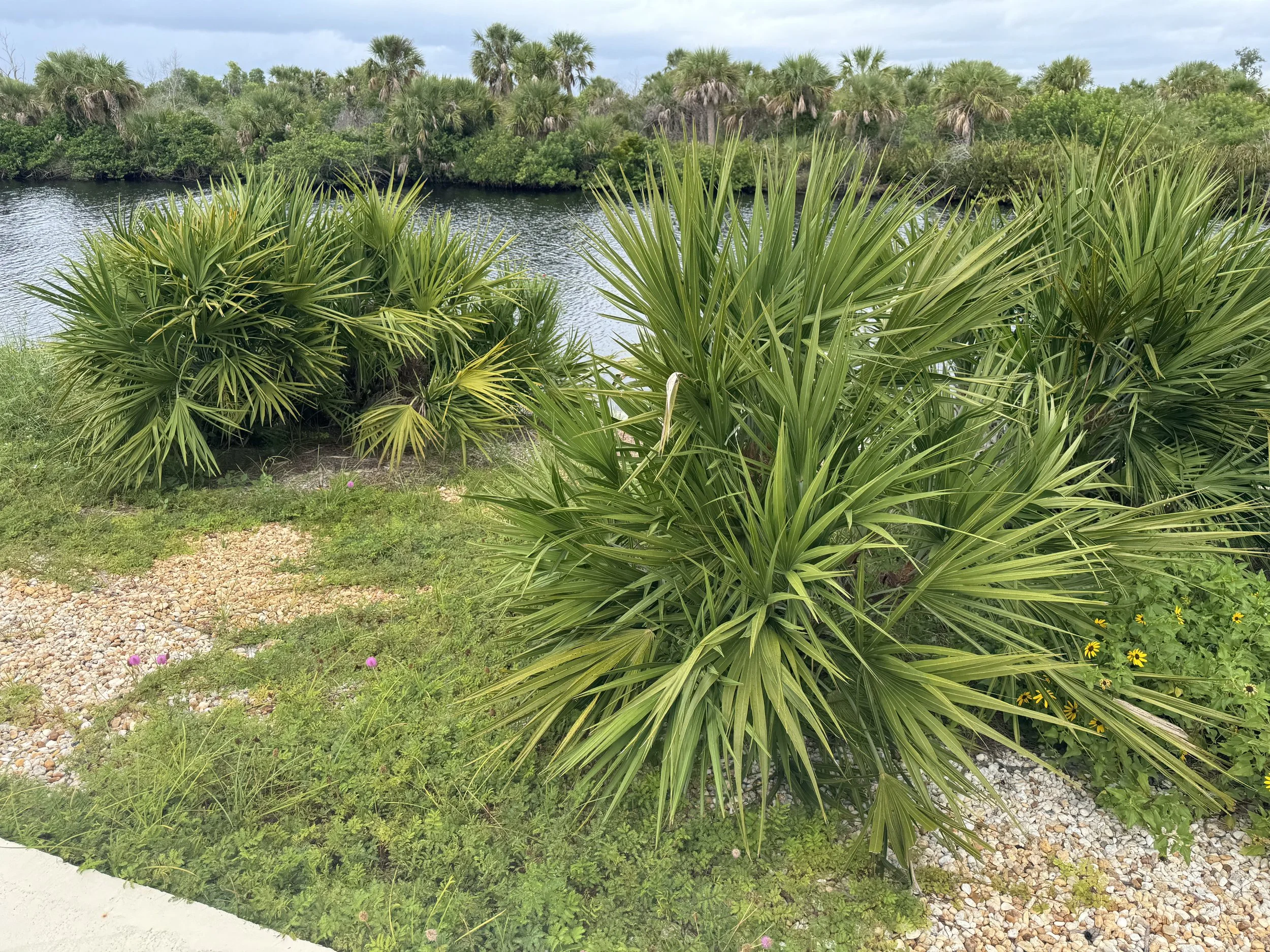
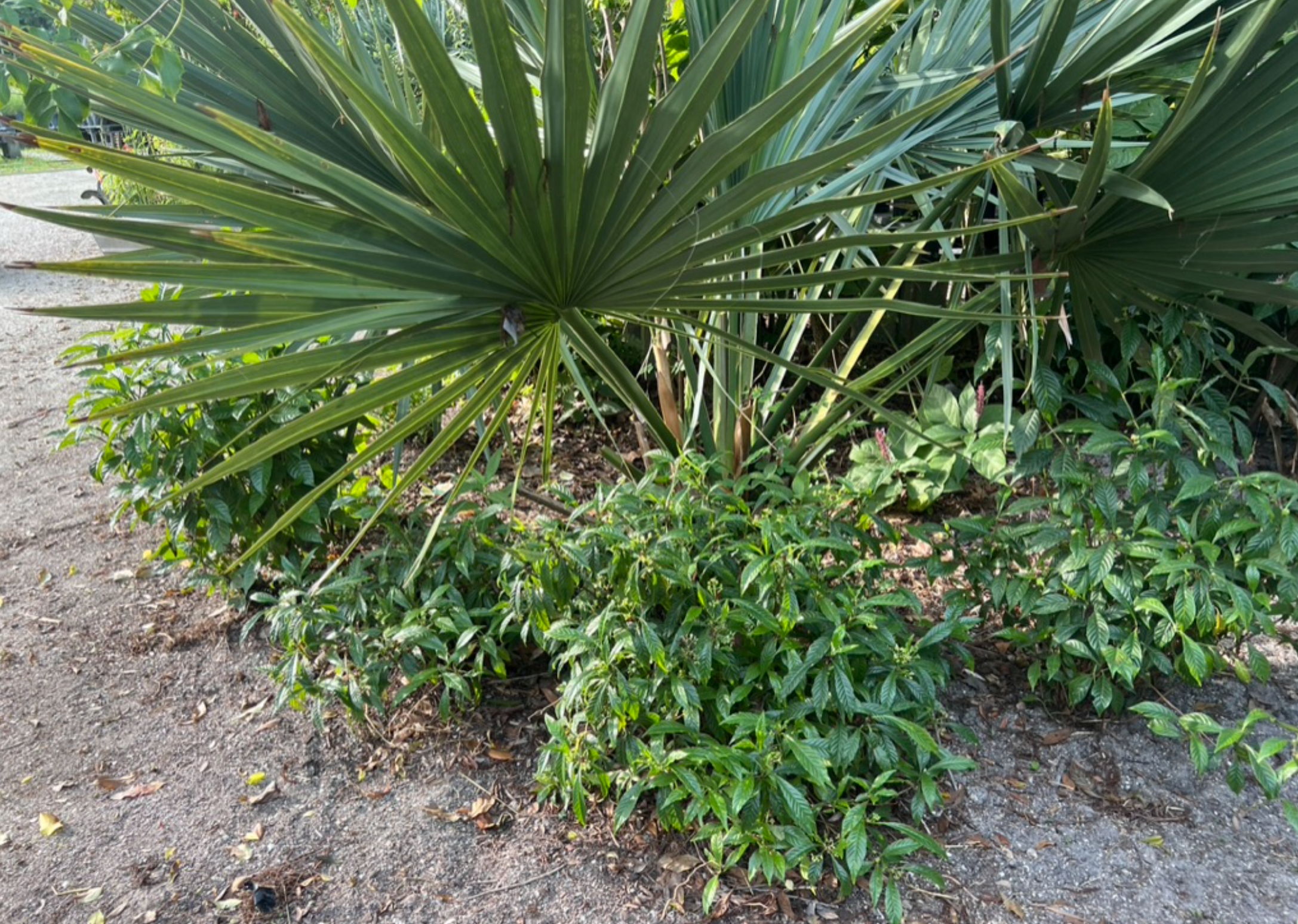
The Green Saw Palmetto is a tough, drought-tolerant Florida native fan palm perfect for coastal landscapes and understory planting. It features sprawling horizontal stems, brilliant green fronds, and distinctive saw-toothed leaf stalks. In spring, it produces fragrant blooms that attract pollinators, followed by wildlife-supporting berries. Plant in full sun or shade and dry, sandy soil.
Bursera simaruba
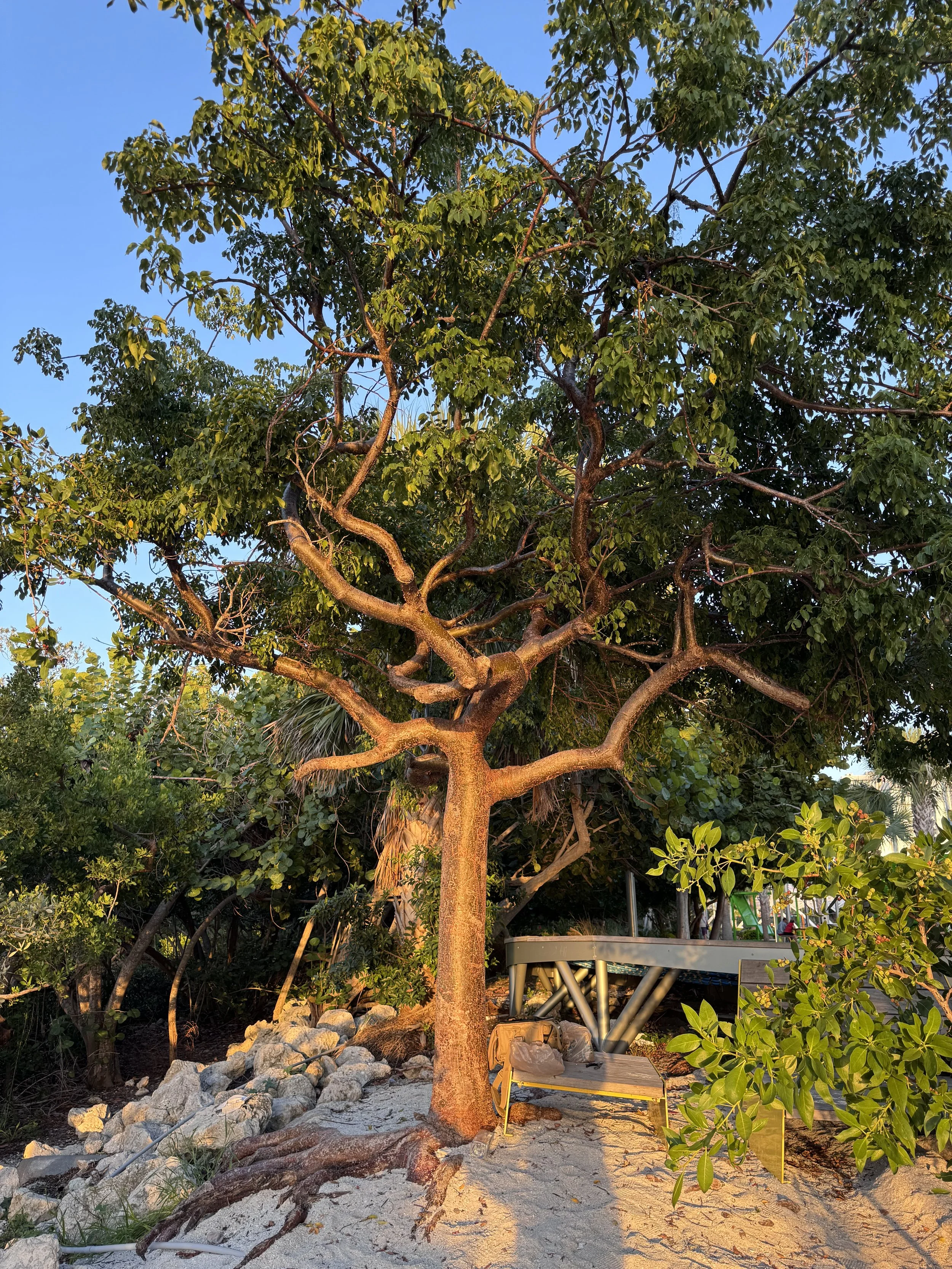
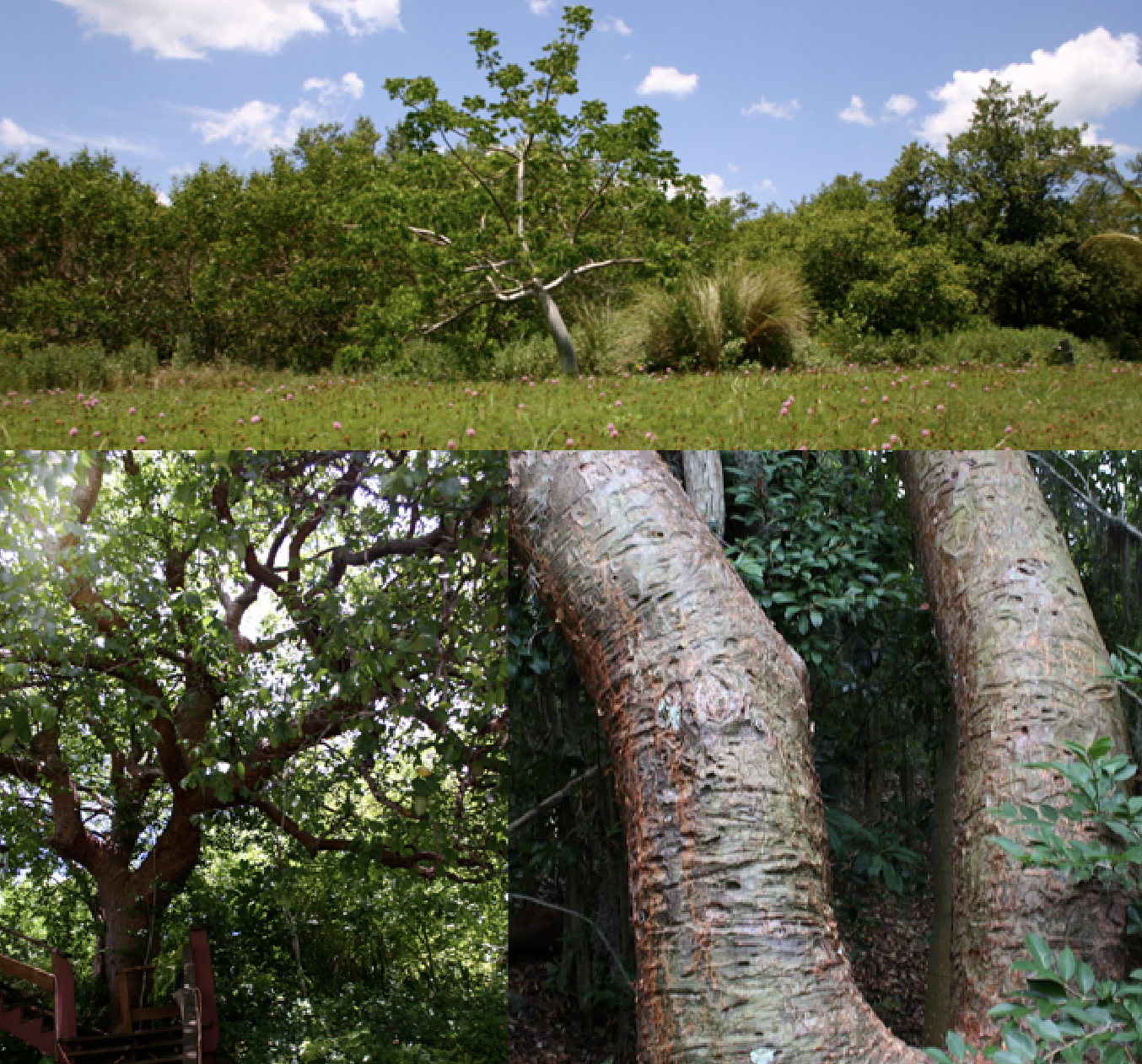
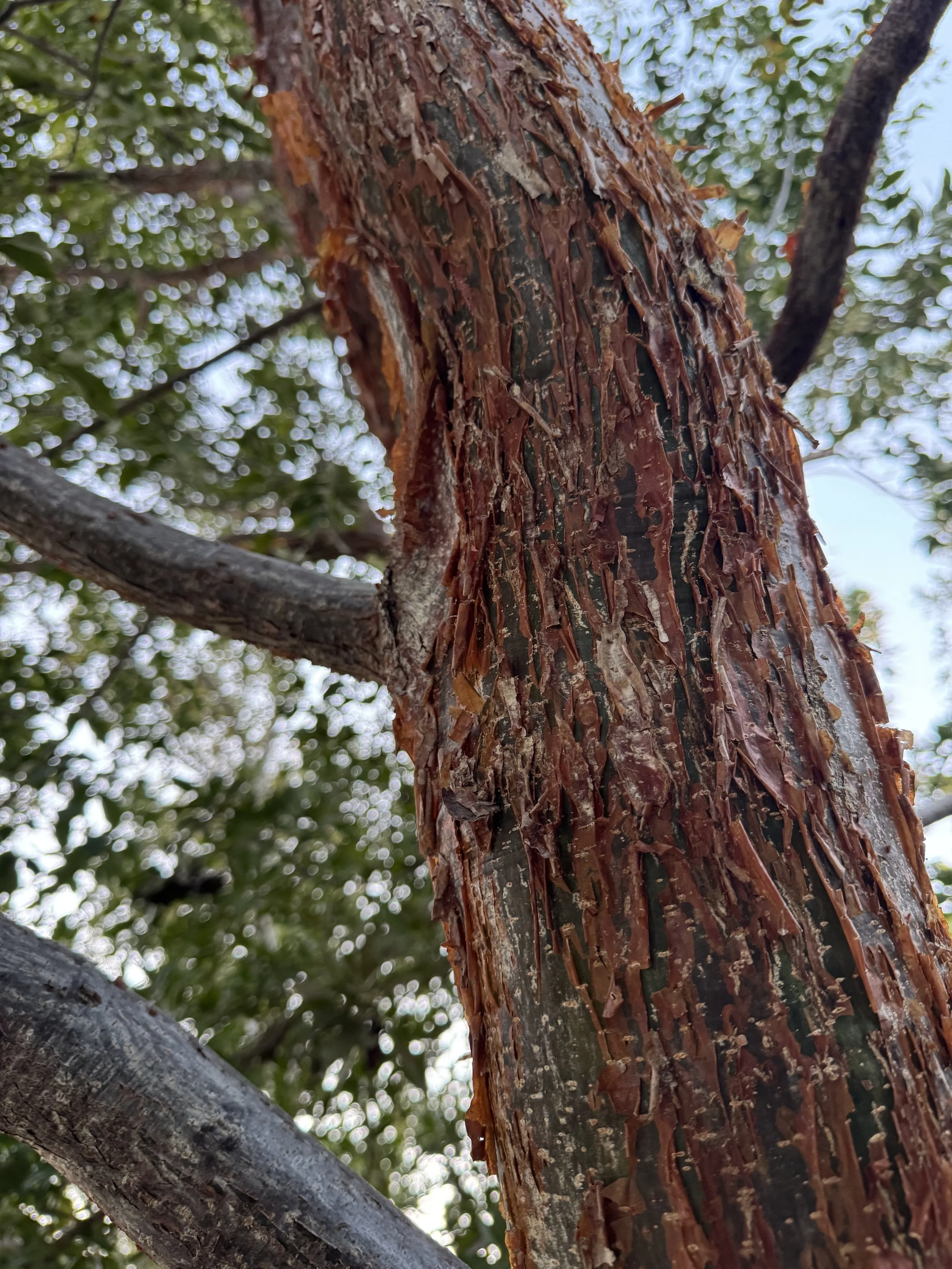
Native semi-deciduous tree. Gumbo Limbos have smooth, red peeling bark that have earned them the nickname “tourist tree”, due to their resemblance to sunburned tourists. For best growth, plant in full sun to partial shade with sandy or rocky soils. They have green leaves that drop but are quickly replaced during dry seasons, and a thick trunk with a wide, rounded canopy, making them a great shade tree. Once established, they are drought and salt-spray tolerant.
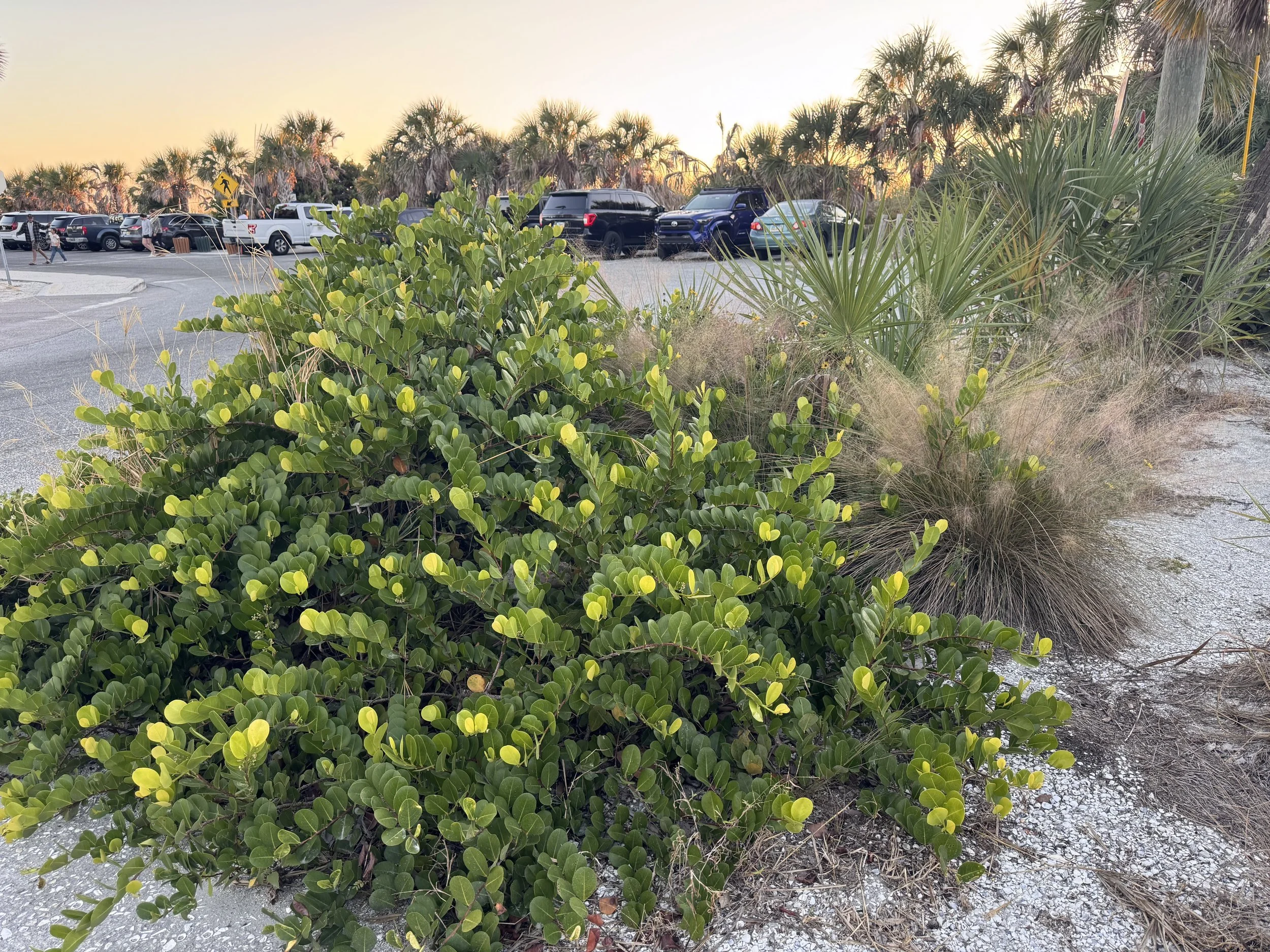
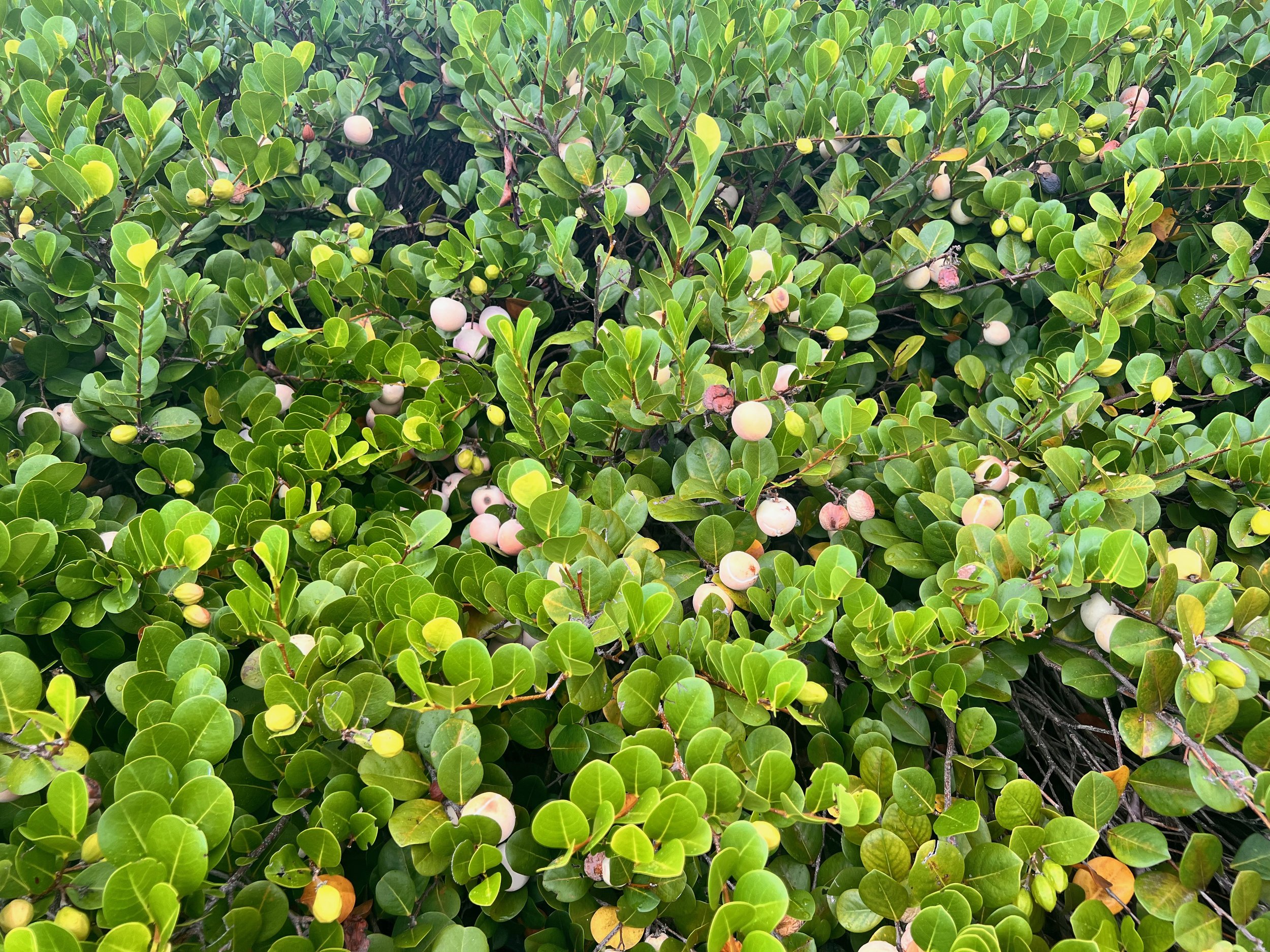
Chrysobalanus icaco var. ‘Horizontal’
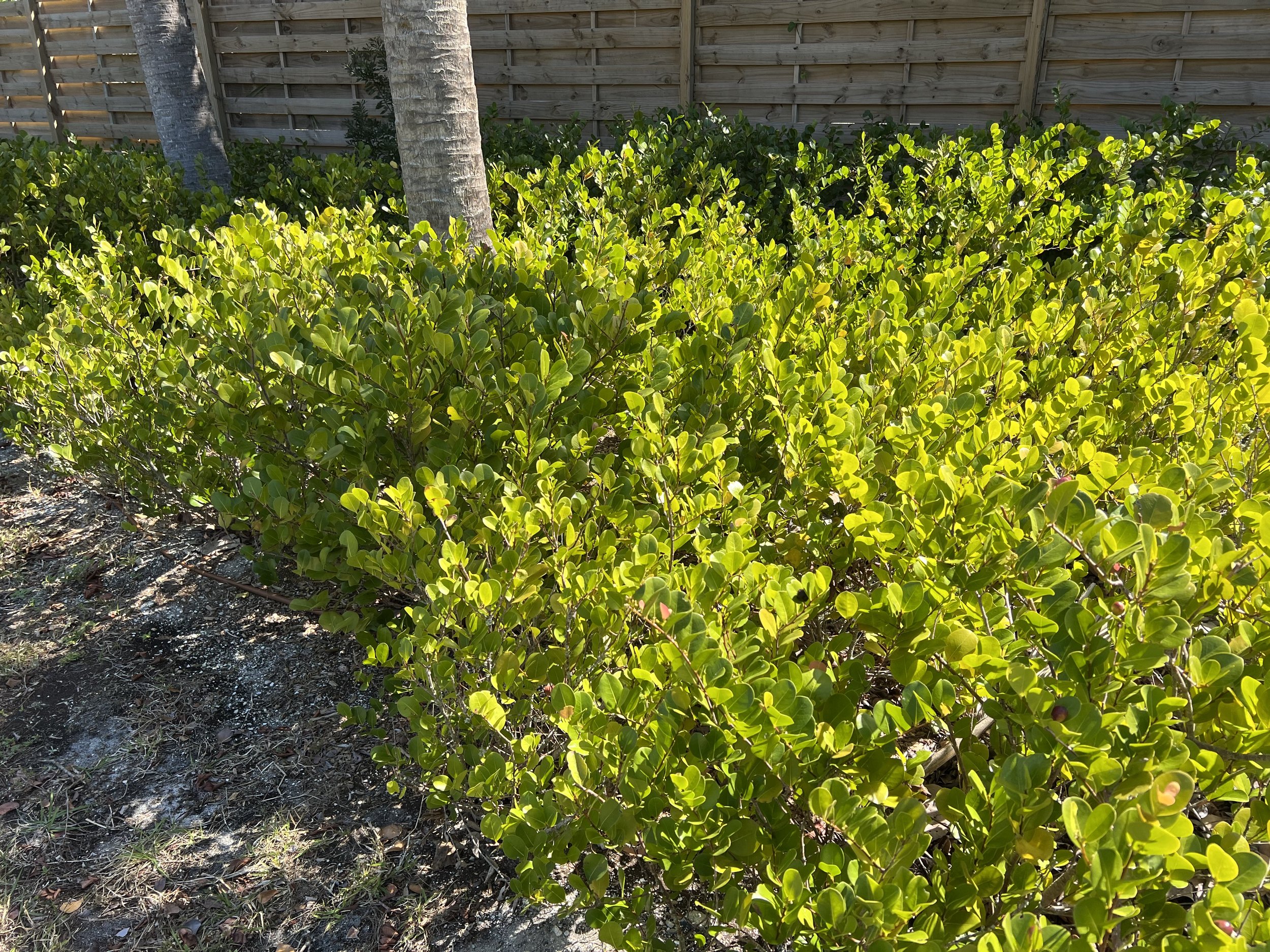
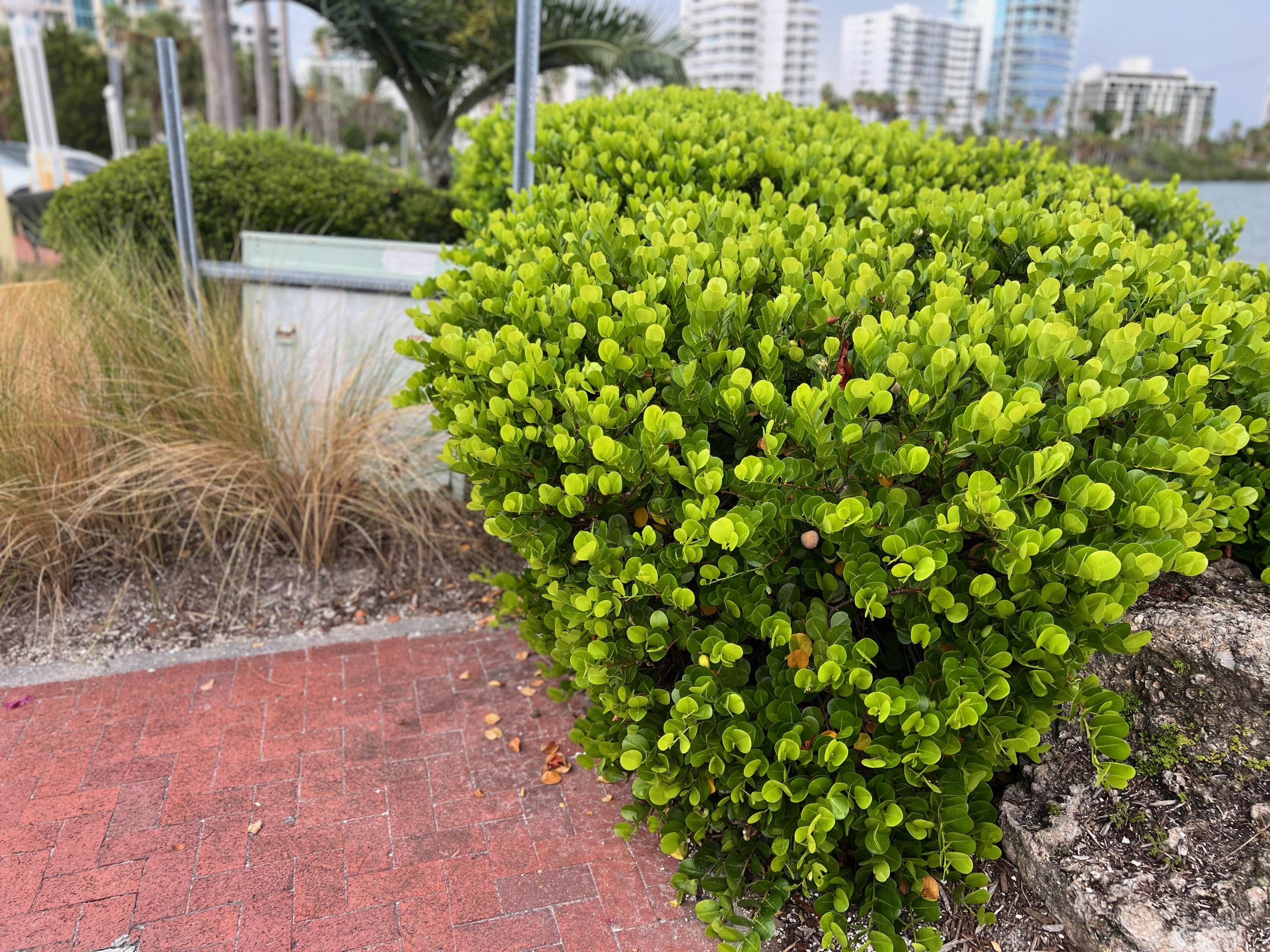
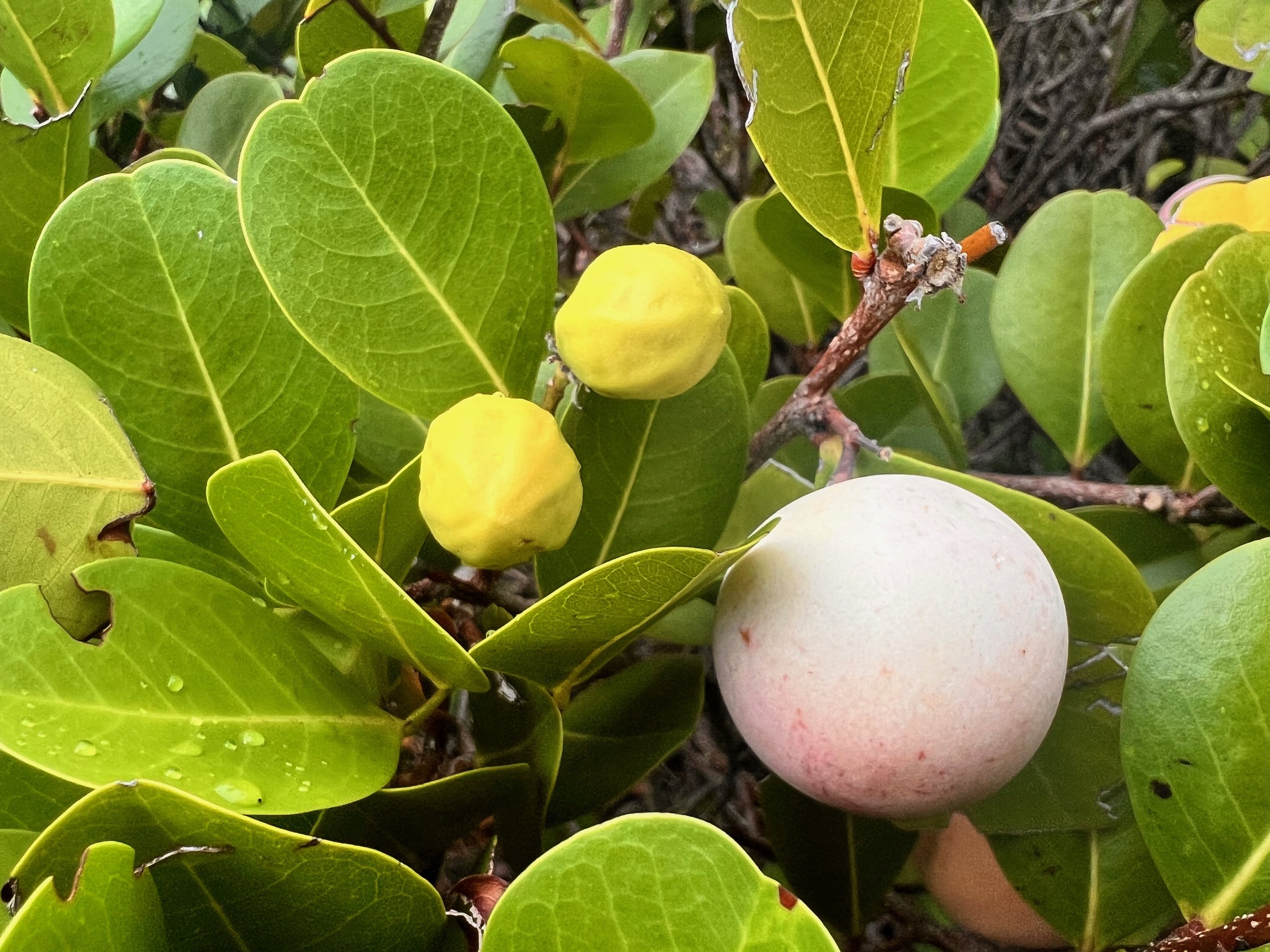
Horizontal cocoplum is a lower-growing, sprawling and easily trim-able native relative of the upright red-tipped or green cocoplum. It does well in coastal conditions because it is highly salt-tolerant and can withstand full sun. It has flowers for pollinators and its fruits are edible for birds and people.
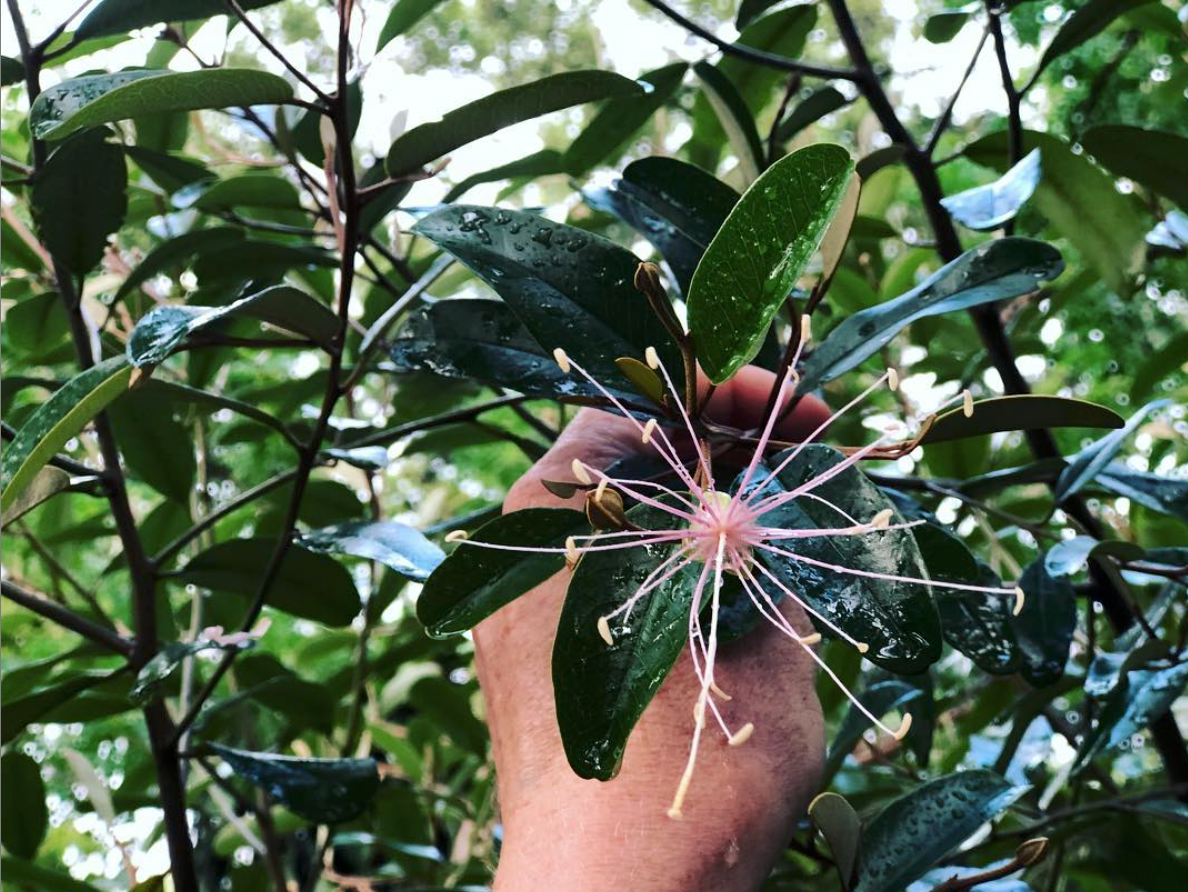
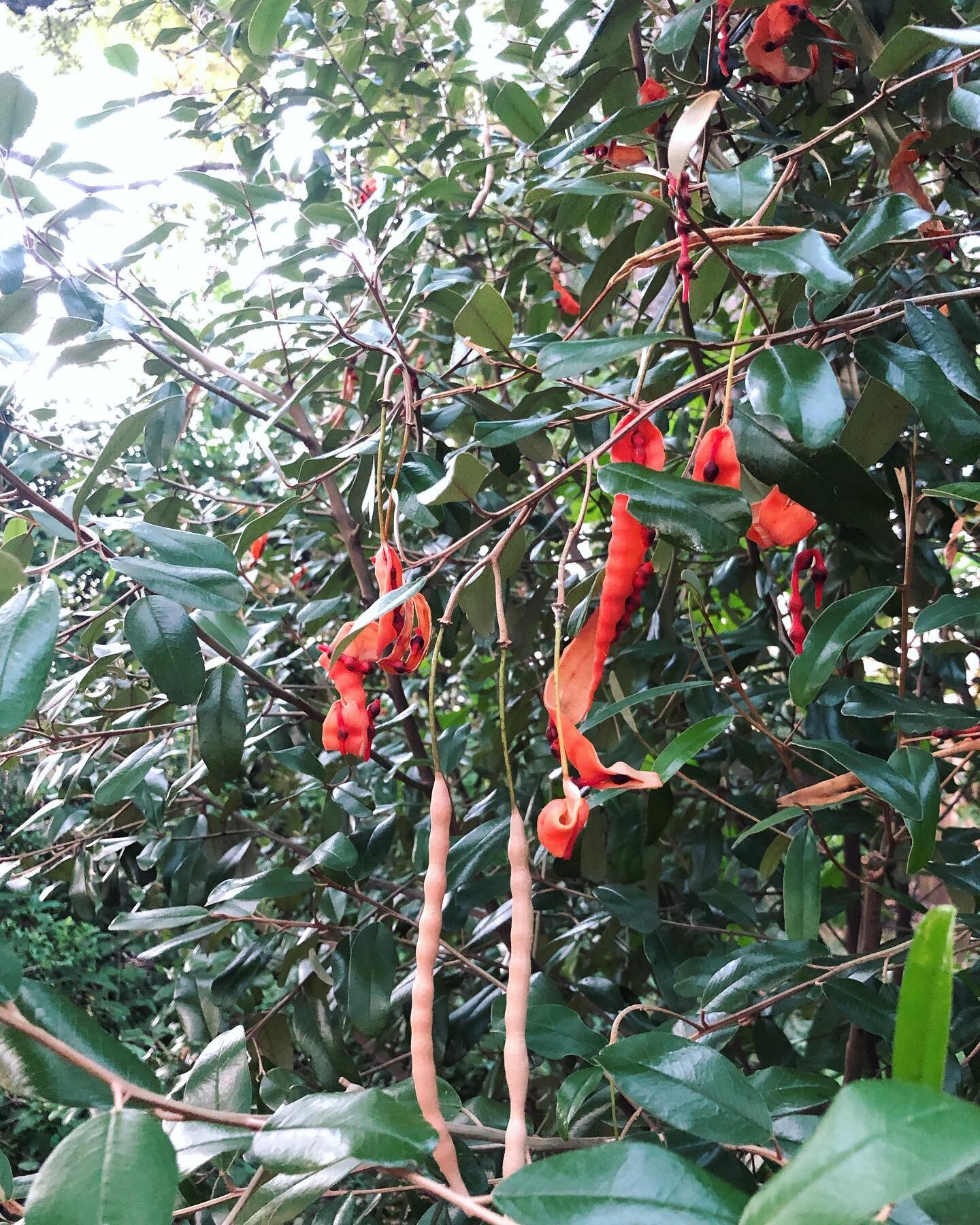
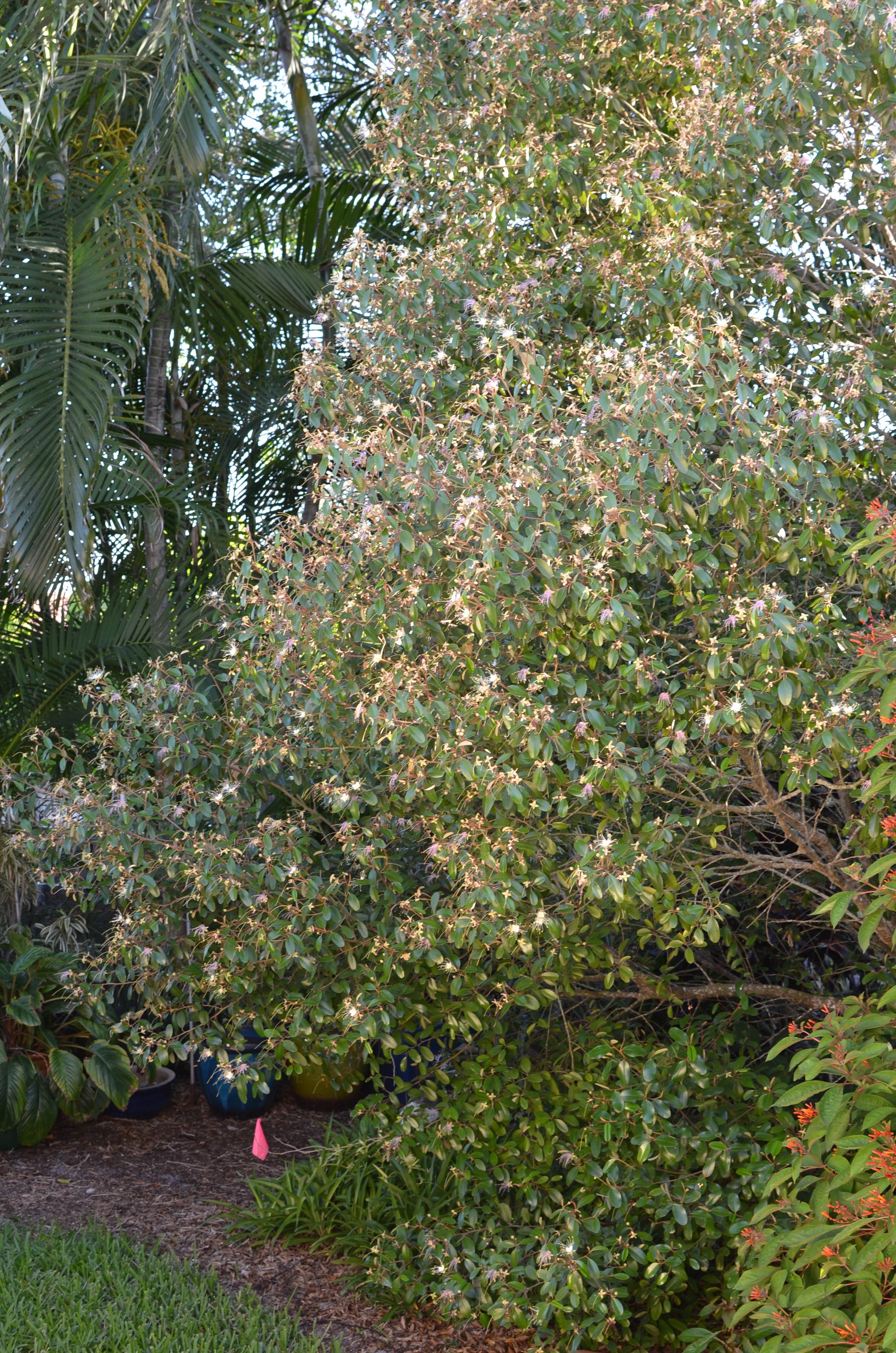
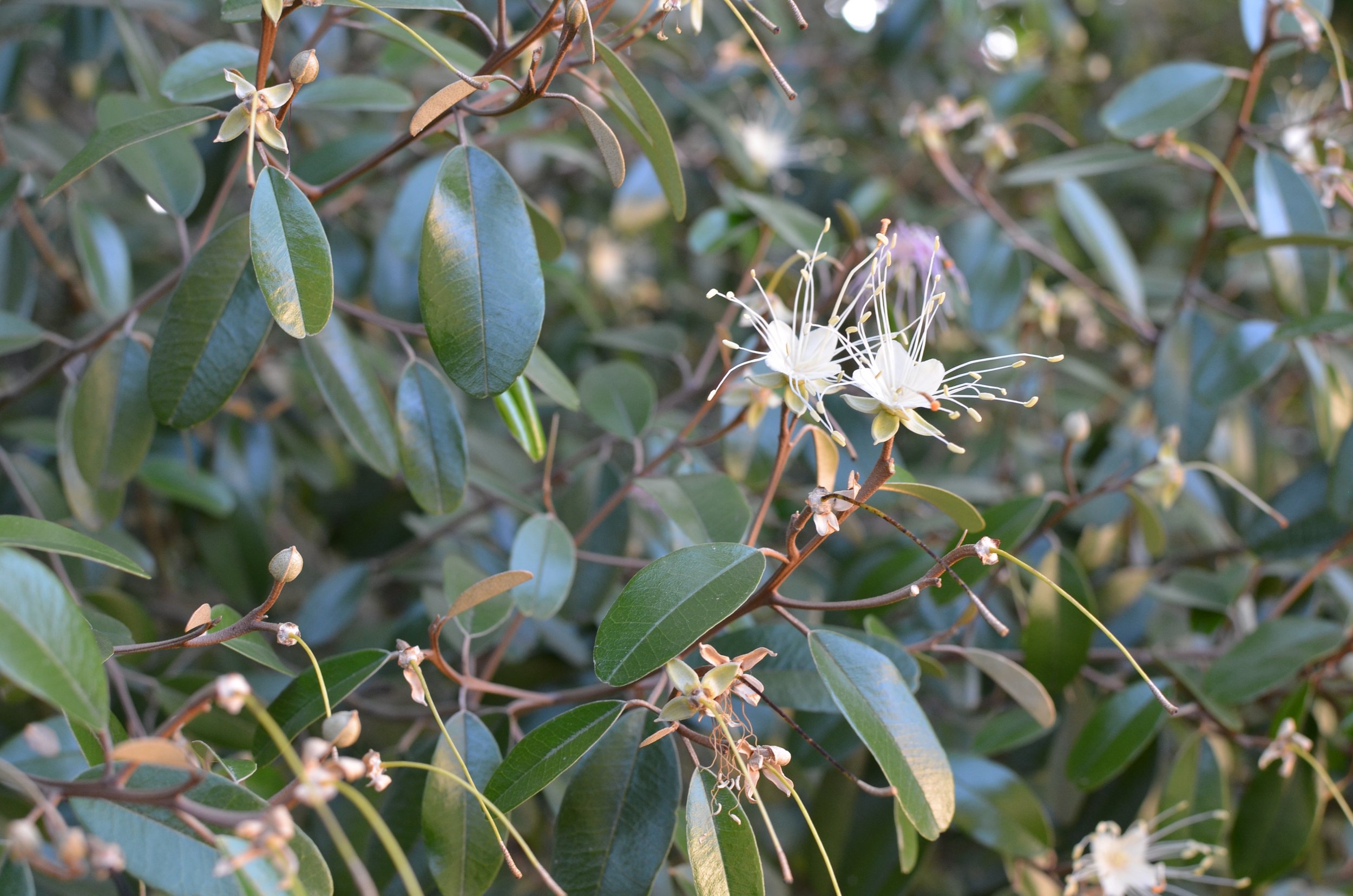
Capparis cynophallophora
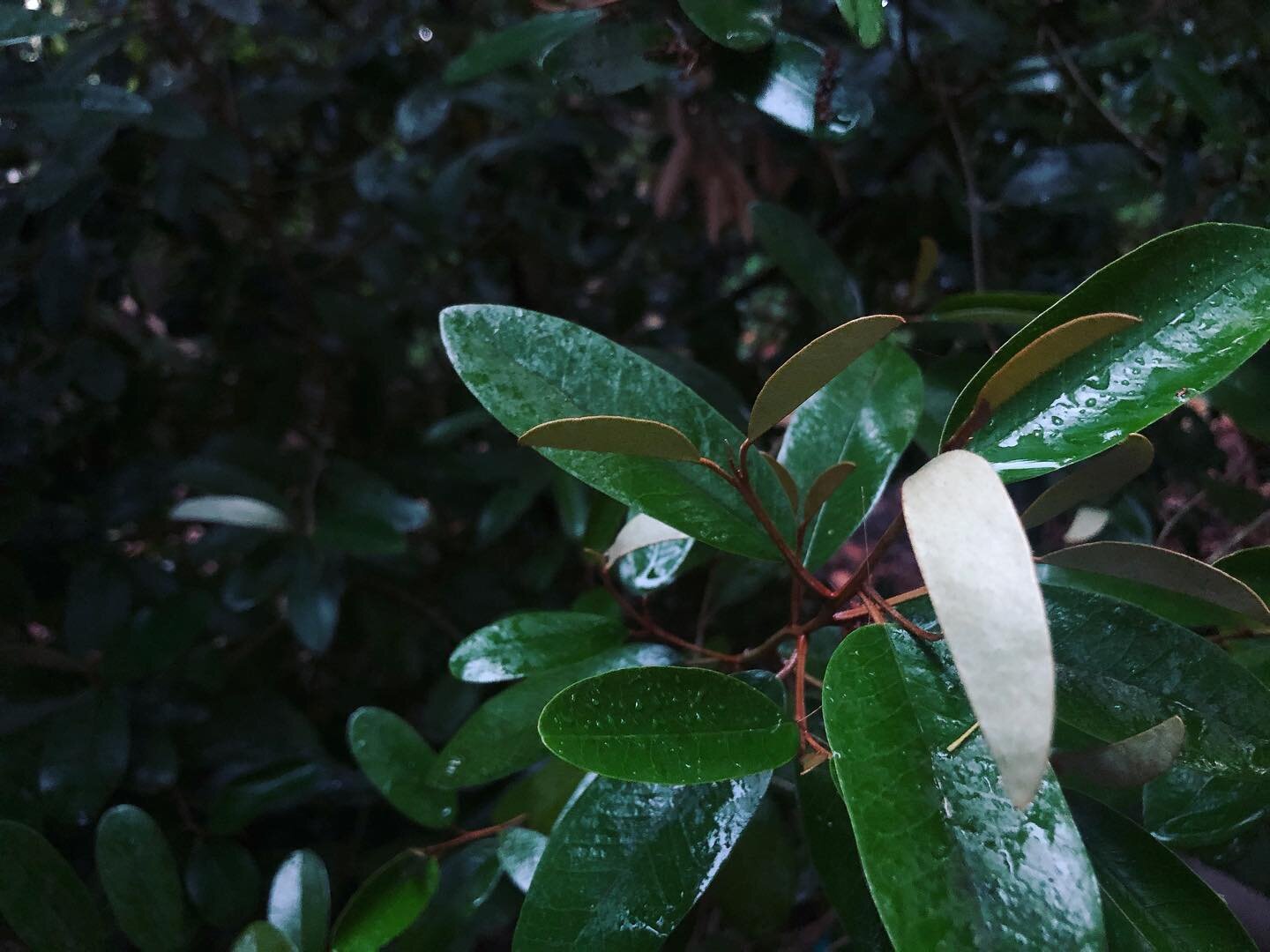
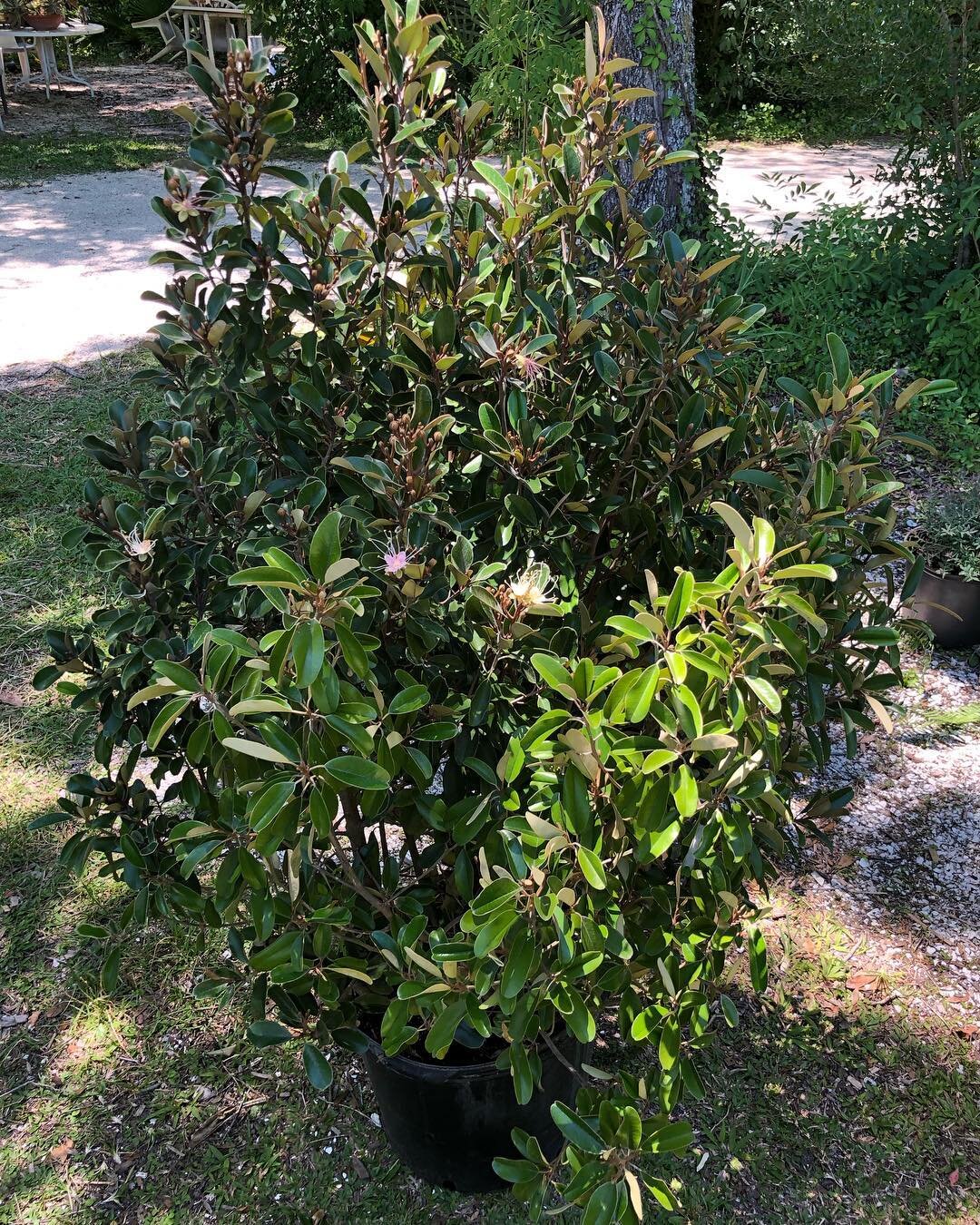
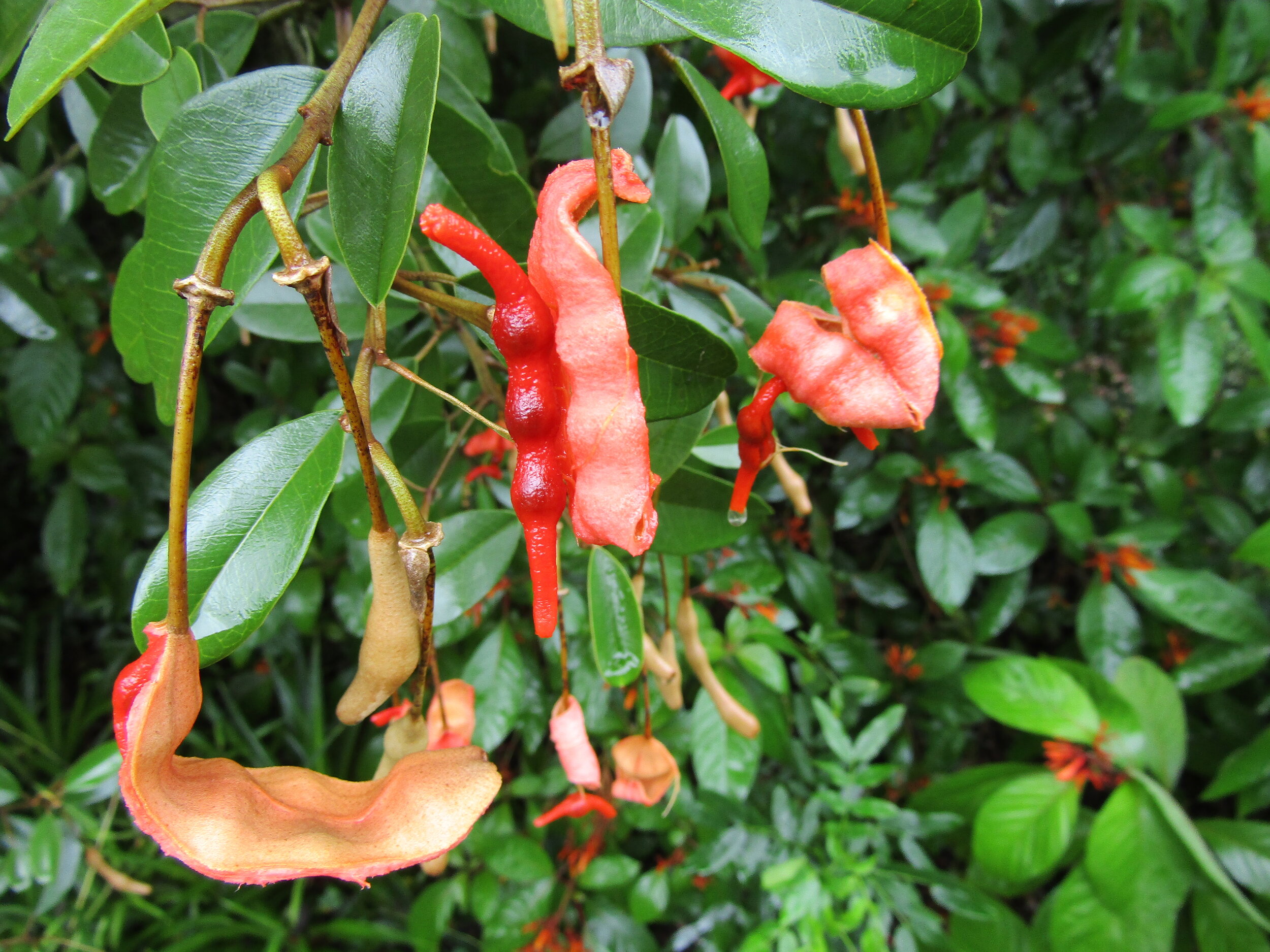
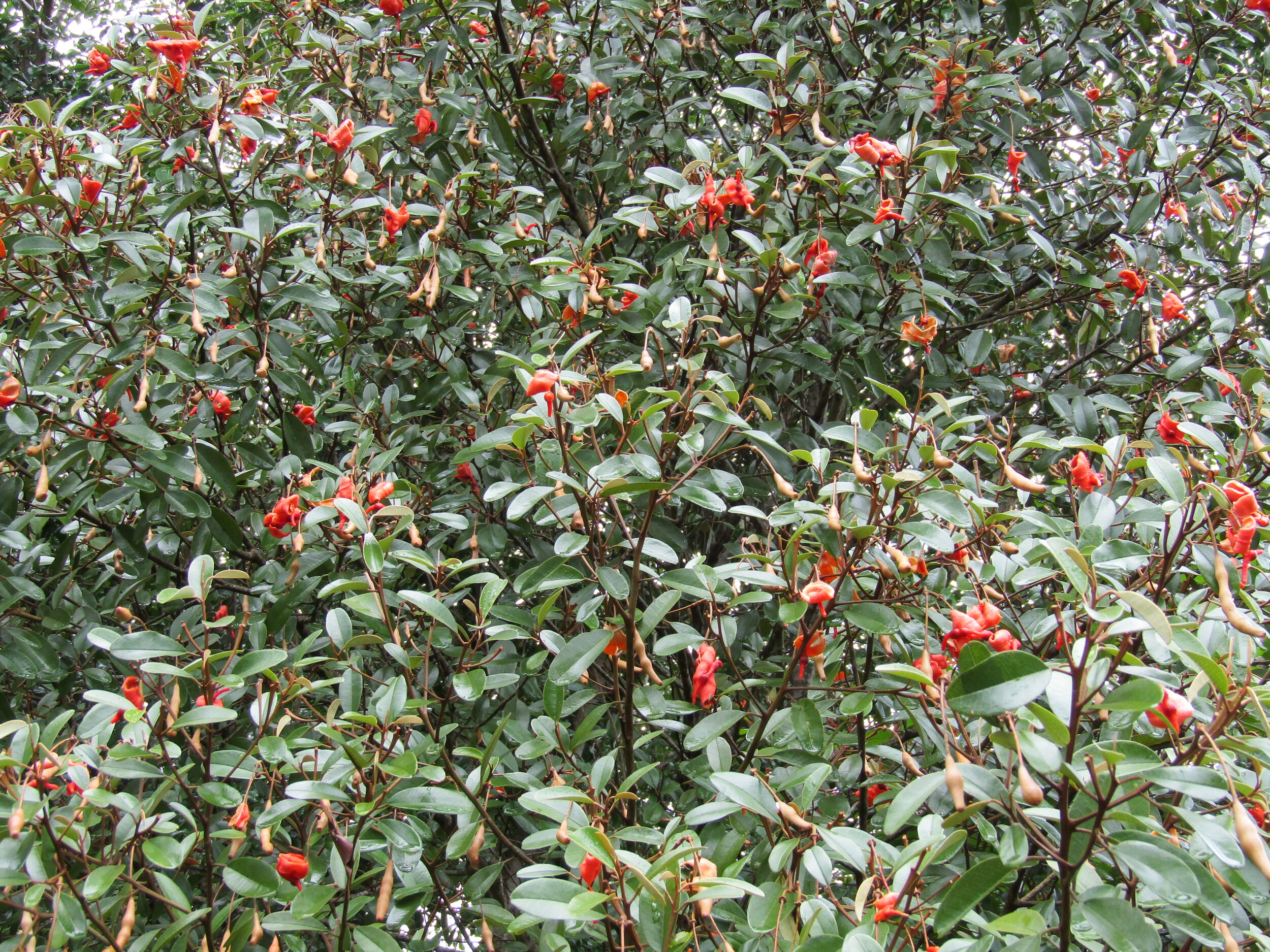
Jamaican Caper is an evergreen shrub or small tree native to coastal Florida that grows 6’-20’ tall with an upright to spreading growth habit. This striking plant features glossy, oval leaves that emerge folded and bronze-colored before maturing to light green with notched tips. In spring, it produces spectacular showy flowers with white petals and prominent purple stamens up to 2” long that attract butterflies and other pollinators. Following flowering, it develops distinctive cylindrical seed pods 3”-8” long containing brown seeds embedded in scarlet pulp. Extremely drought and salt-tolerant, it thrives in full sun to partial shade with well-drained soils, making it an excellent choice for coastal landscapes, screens, or specimen plantings in zones 10-11.
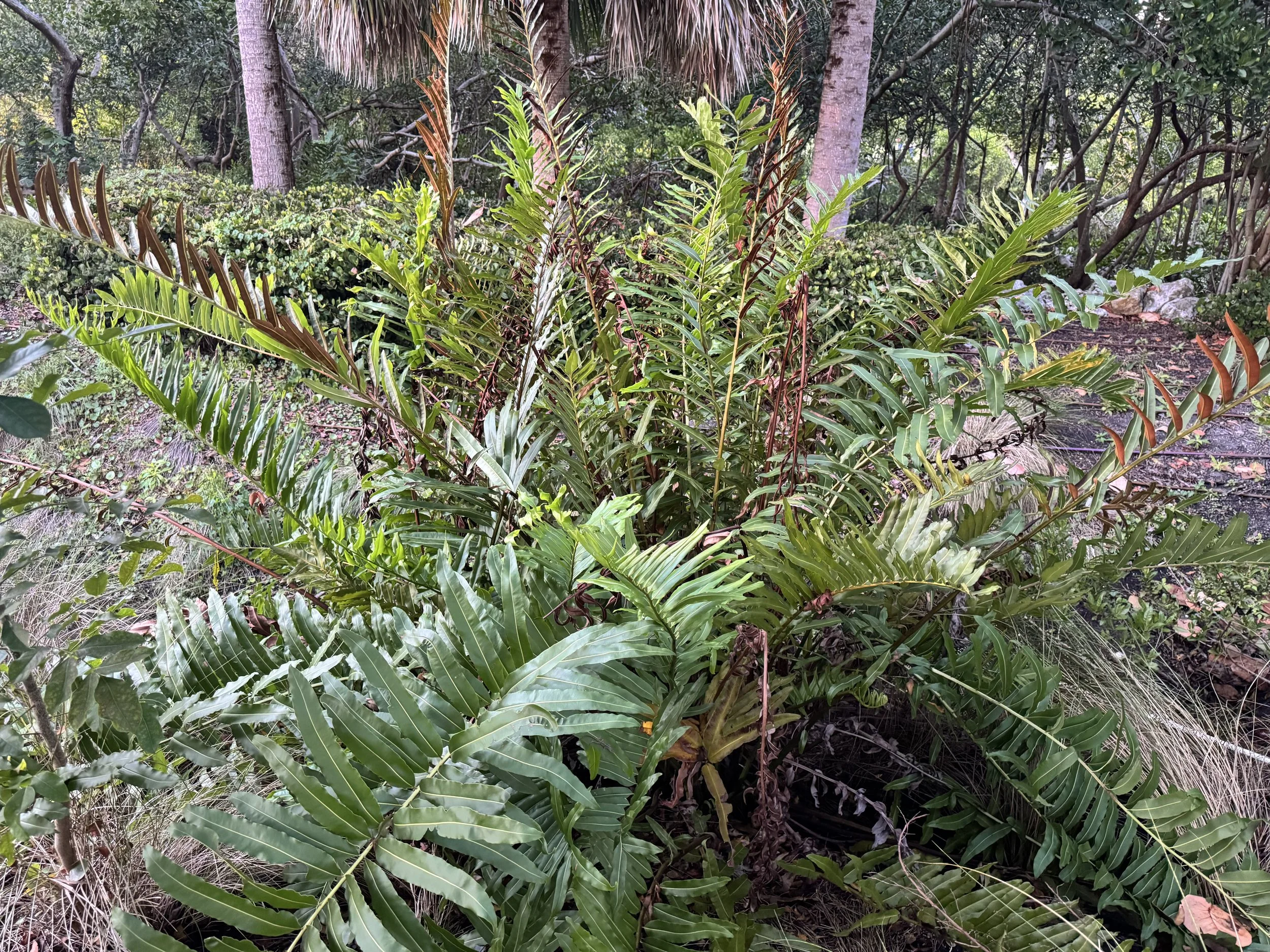
Acrostichum danaeifolium
A majestic and prehistoric-looking native fern that makes a bold architectural statement in the landscape. It features large, upright, leathery fronds that can reach impressive heights of 6 to 12 feet. This robust fern thrives in full sun to deep shade and is particularly well-suited for wet areas, pond edges, or low spots in the garden. It is highly salt-tolerant and adds a lush, tropical texture to any damp or aquatic setting.
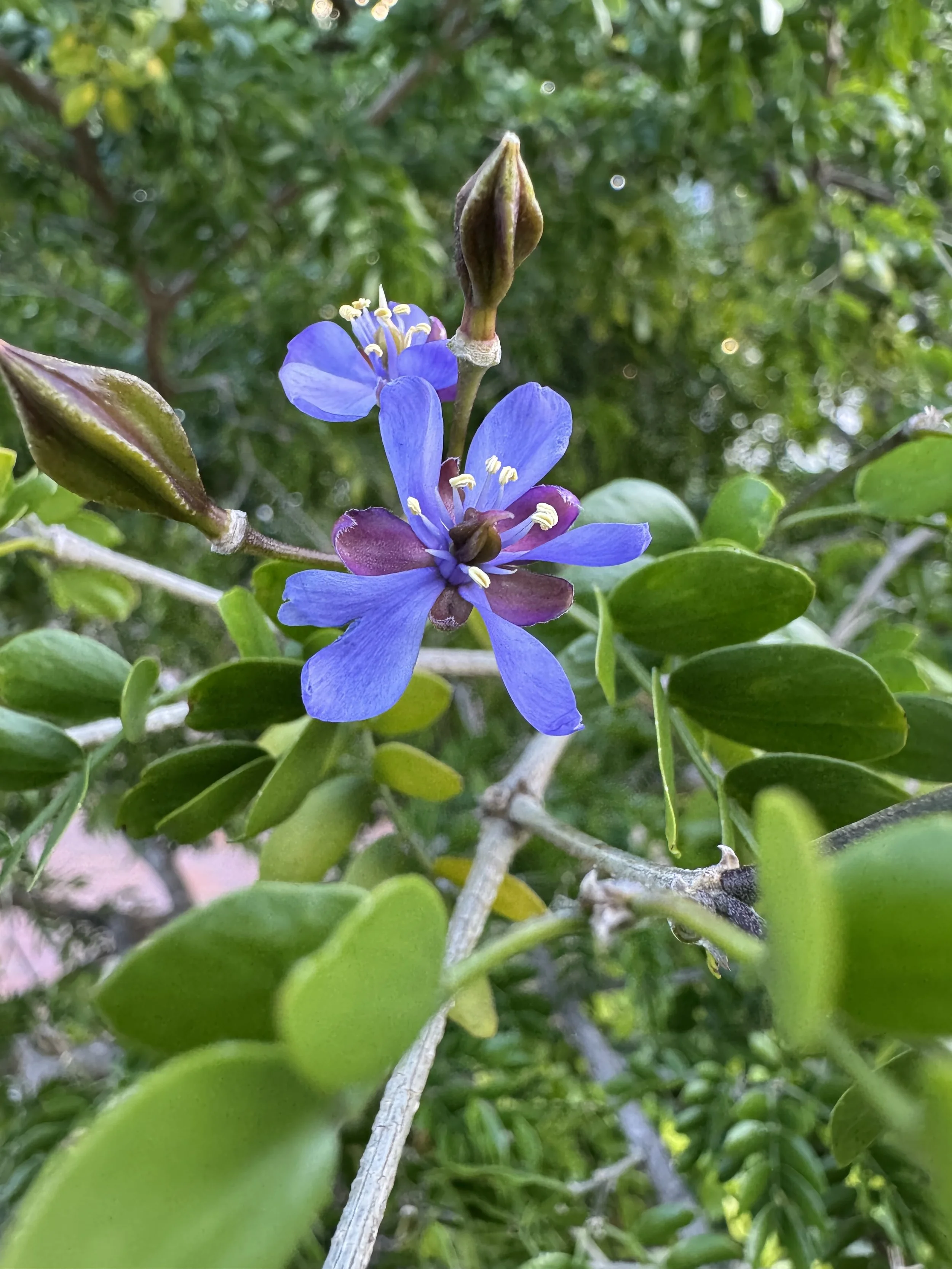
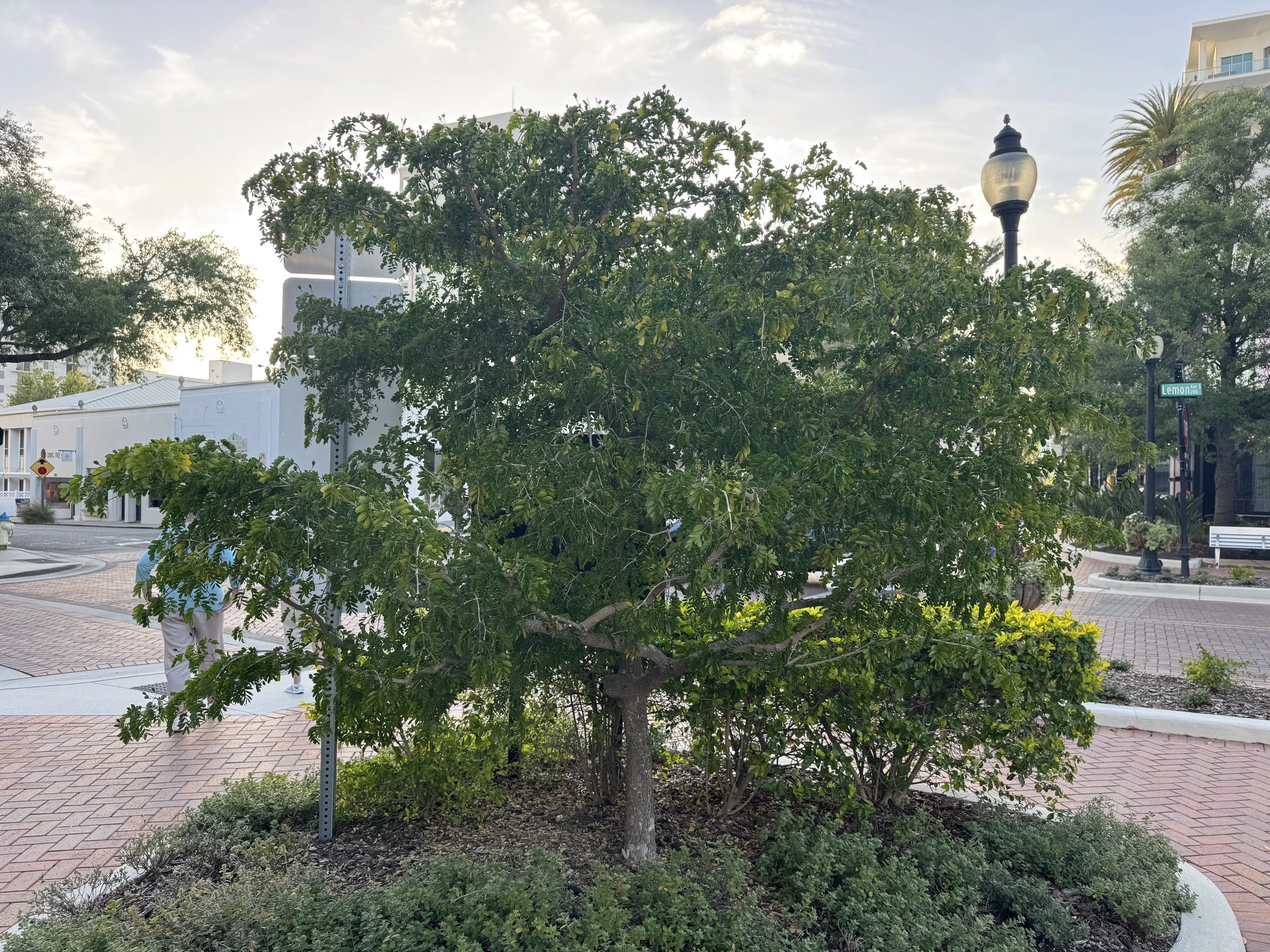
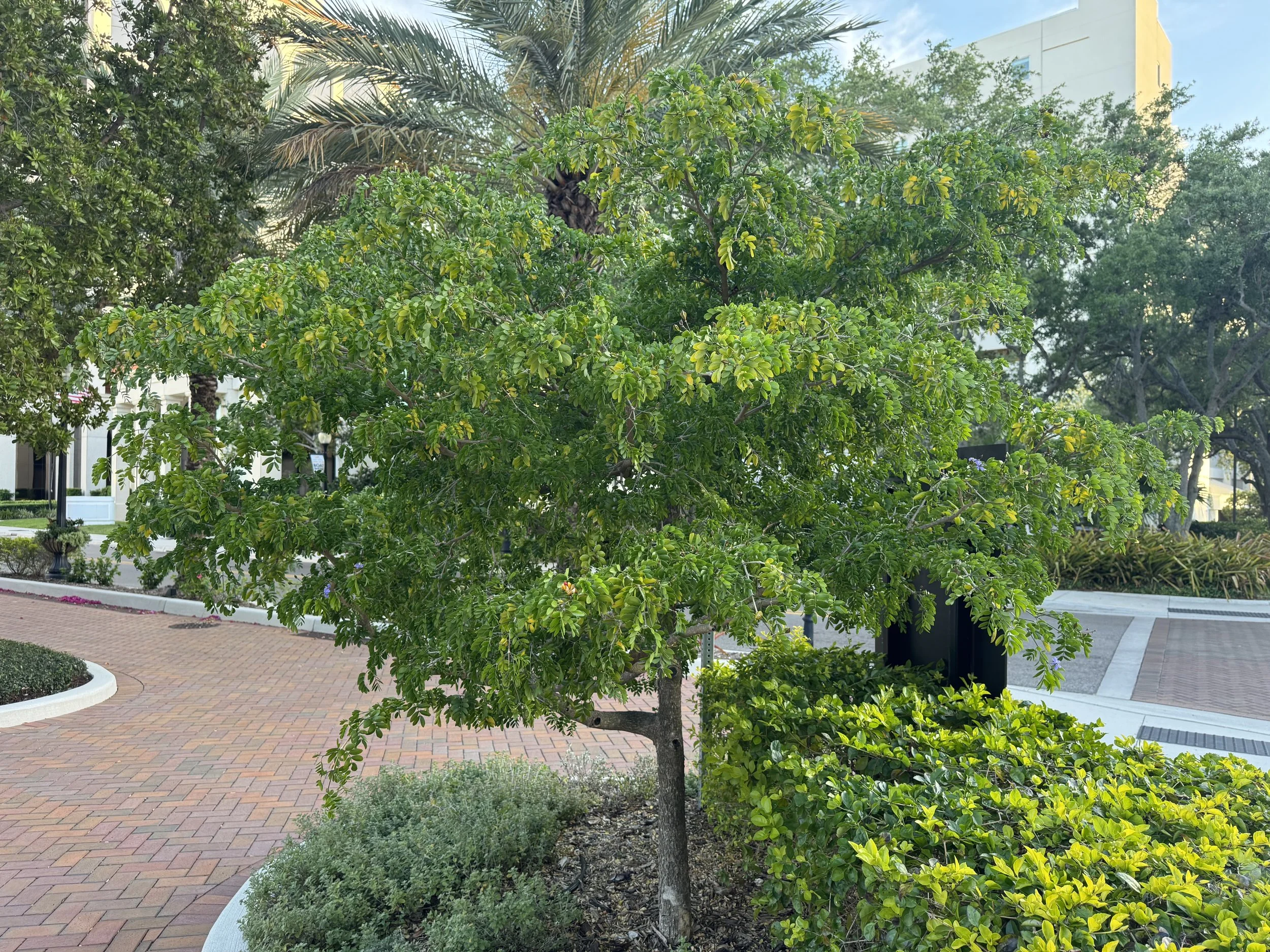
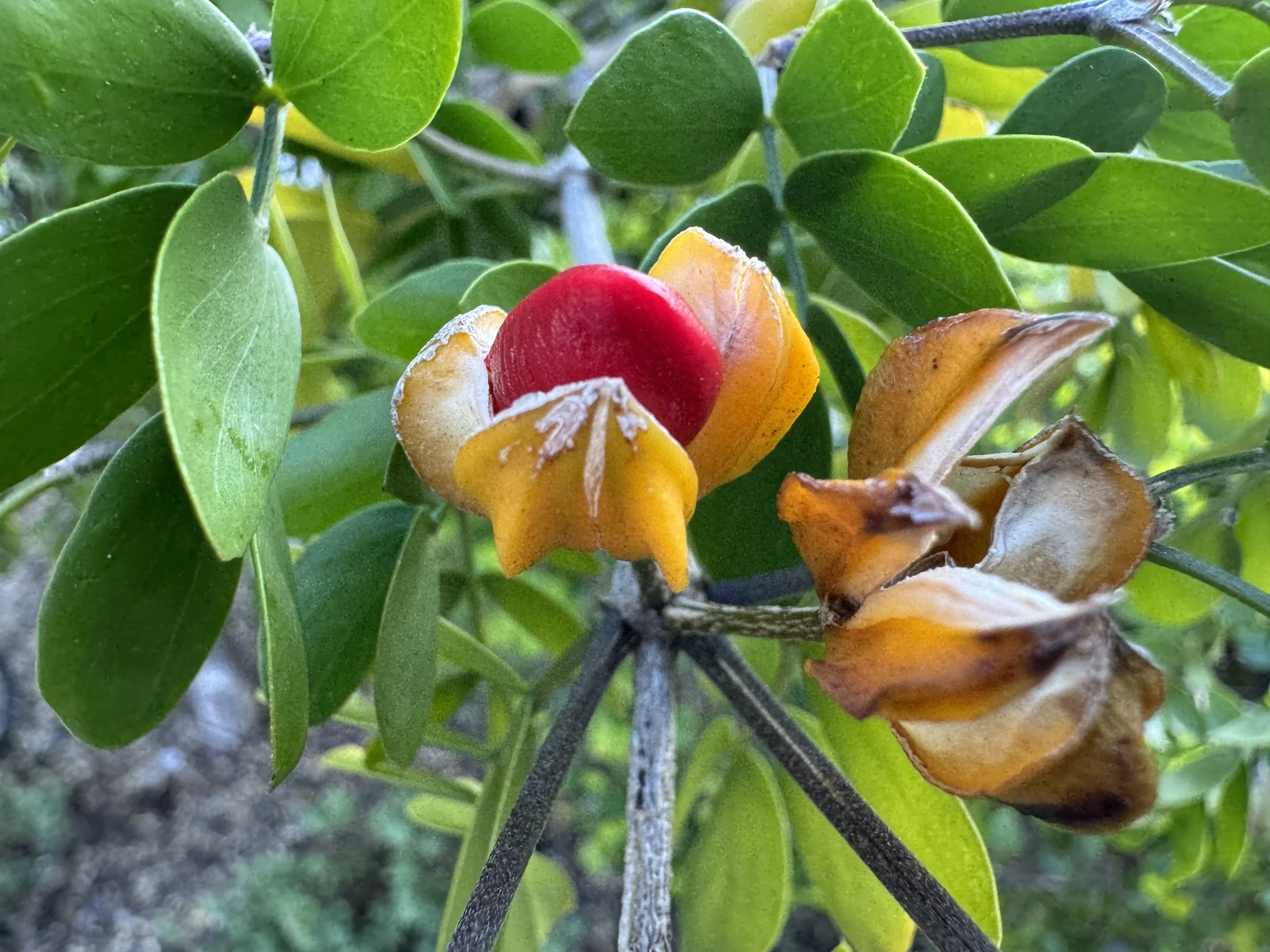
Guaiacum sanctum
The “Wood of Life” tree has a rich ethnobotanical history due to its dense wood and spectacular flowers. For best growth, plant in full sun to partial shade, with well-drained soil. This small tree is slow growing but worth the wait. Rich blue blooms lead to orange fruits which Catbirds adore. Its drought tolerance, hurricane resistance and ability to take salt spray make this tree a great choice for coastal landscapes.
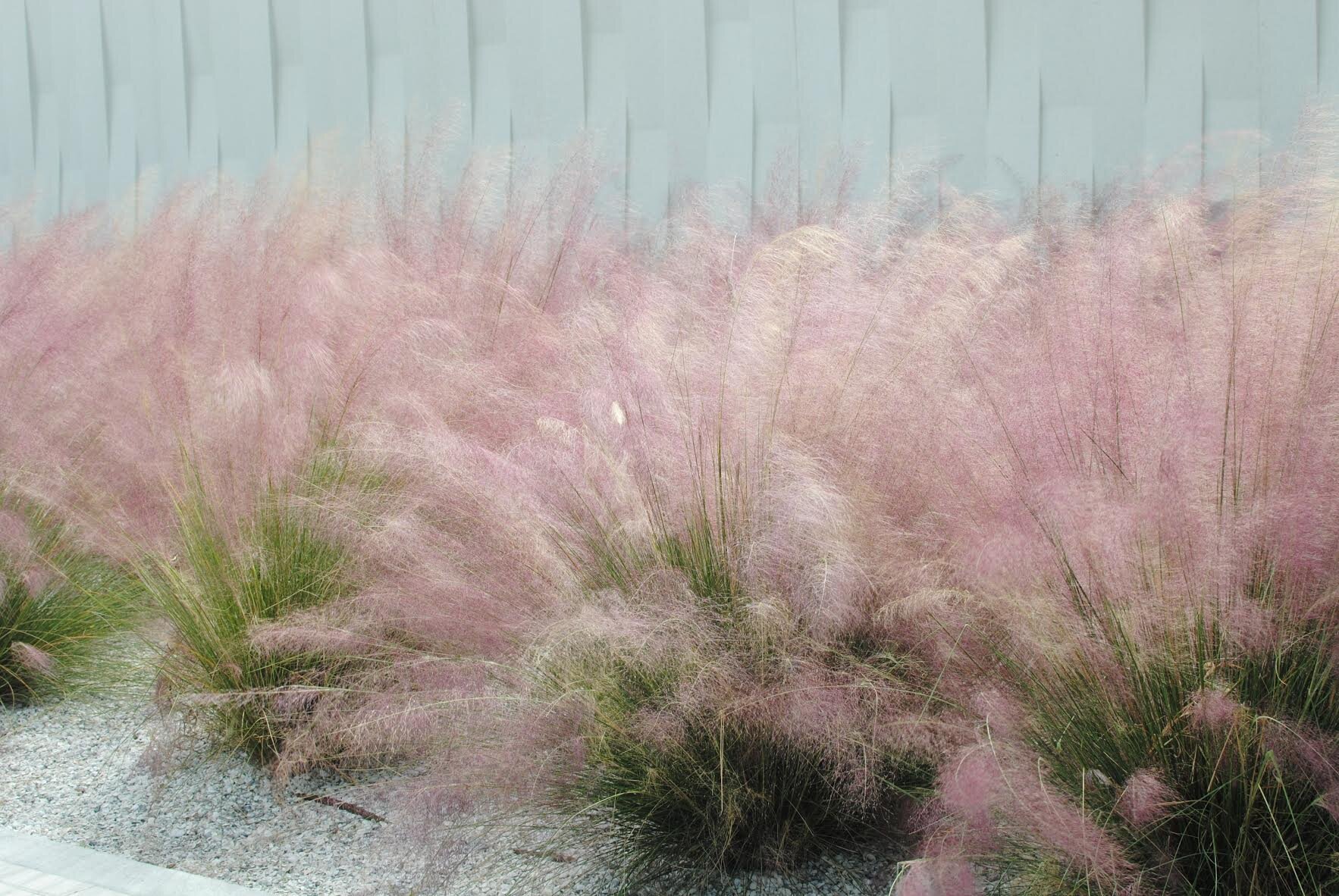
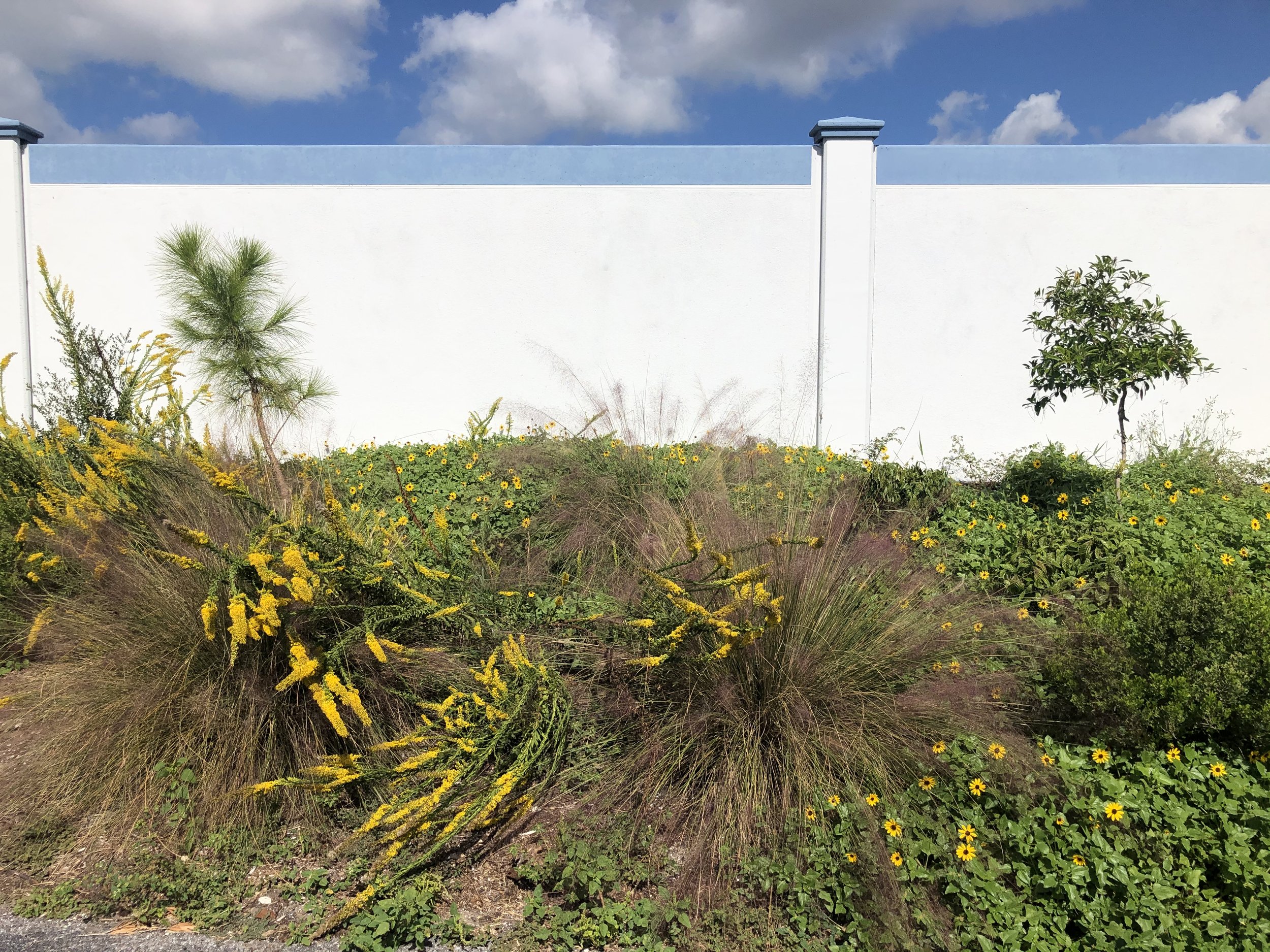
Native, perennial, weeping and thick clumping grass. Full sun to light shade, average soil, 4'. Moderately salt-tolerant, can usually spread by self-sown seeds. Attractive foliage year-round, but showiest in the fall with purple/pink flowering plumes. Combines well with wildflowers.
Myrsine cubana
Myrsine is native, upright evergreen shrub that grows 15’-20’ tall and 8’-12’ wide. They grow well in full sun and full shade, and are highly adaptable with their soil, tolerating poor drainage and drought once they are established. They have shiny, leathery green leaves, inconspicuous green flowers, and clusters of dark berries that provide food for both native and migratory birds.
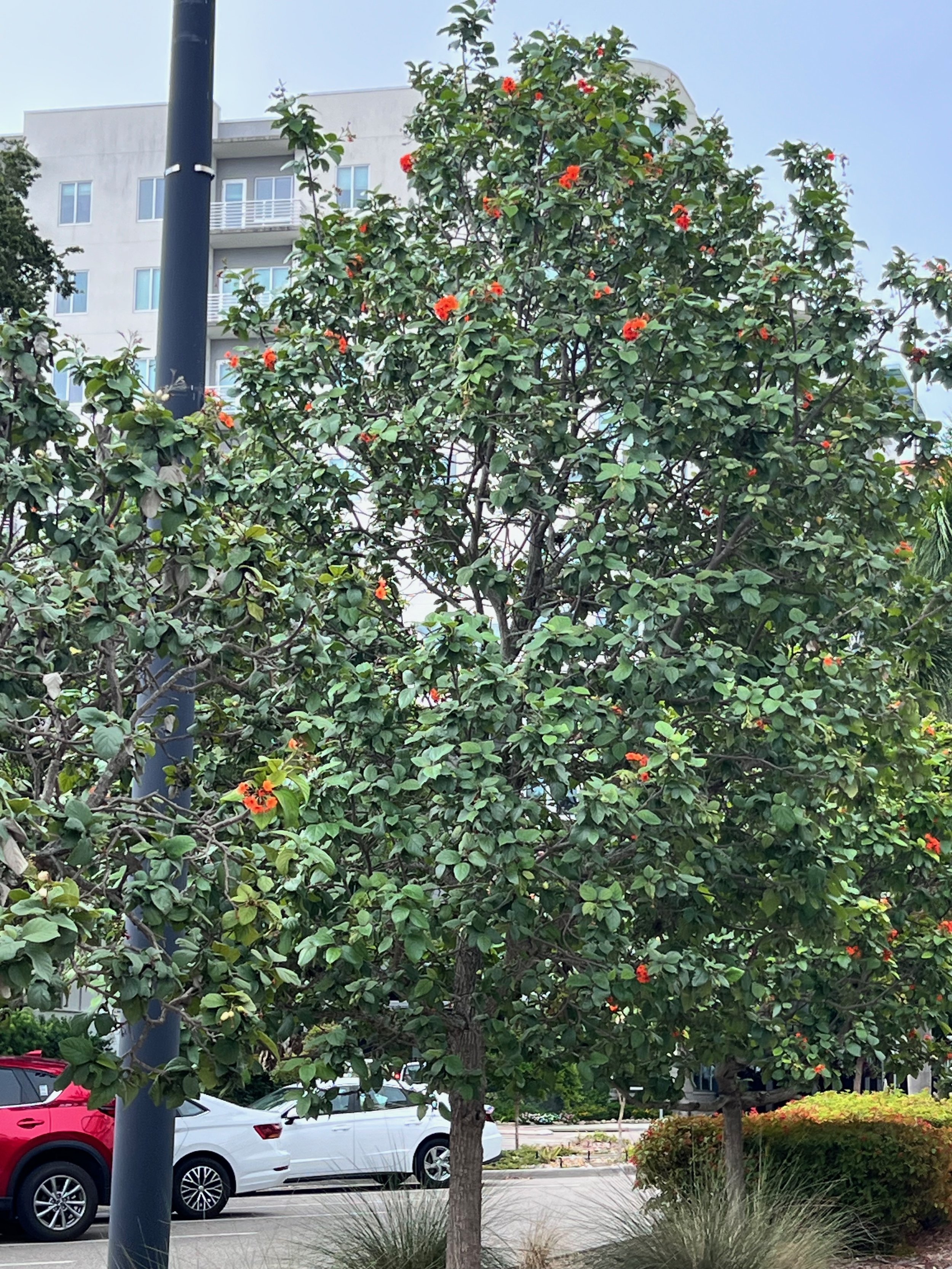
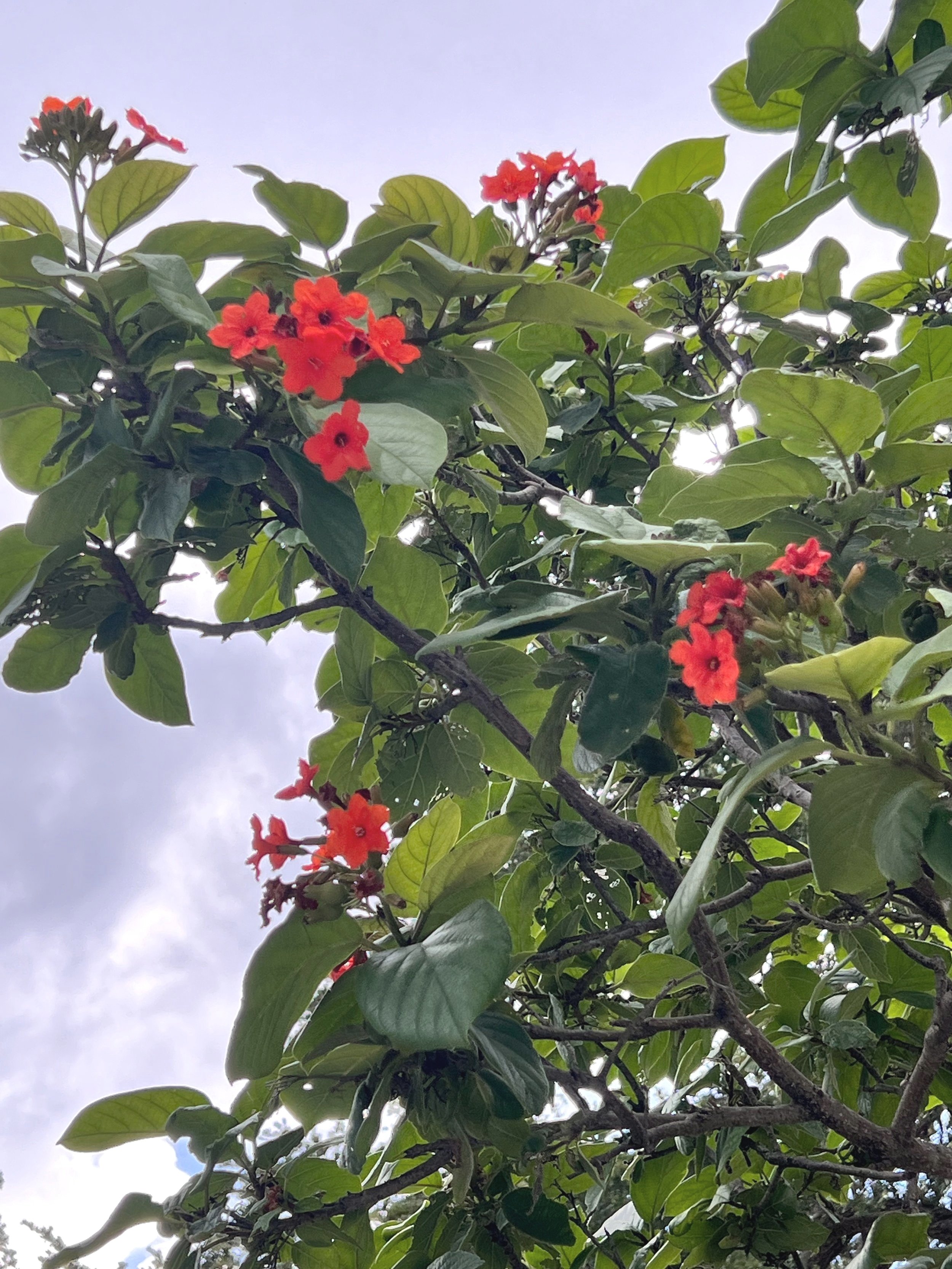
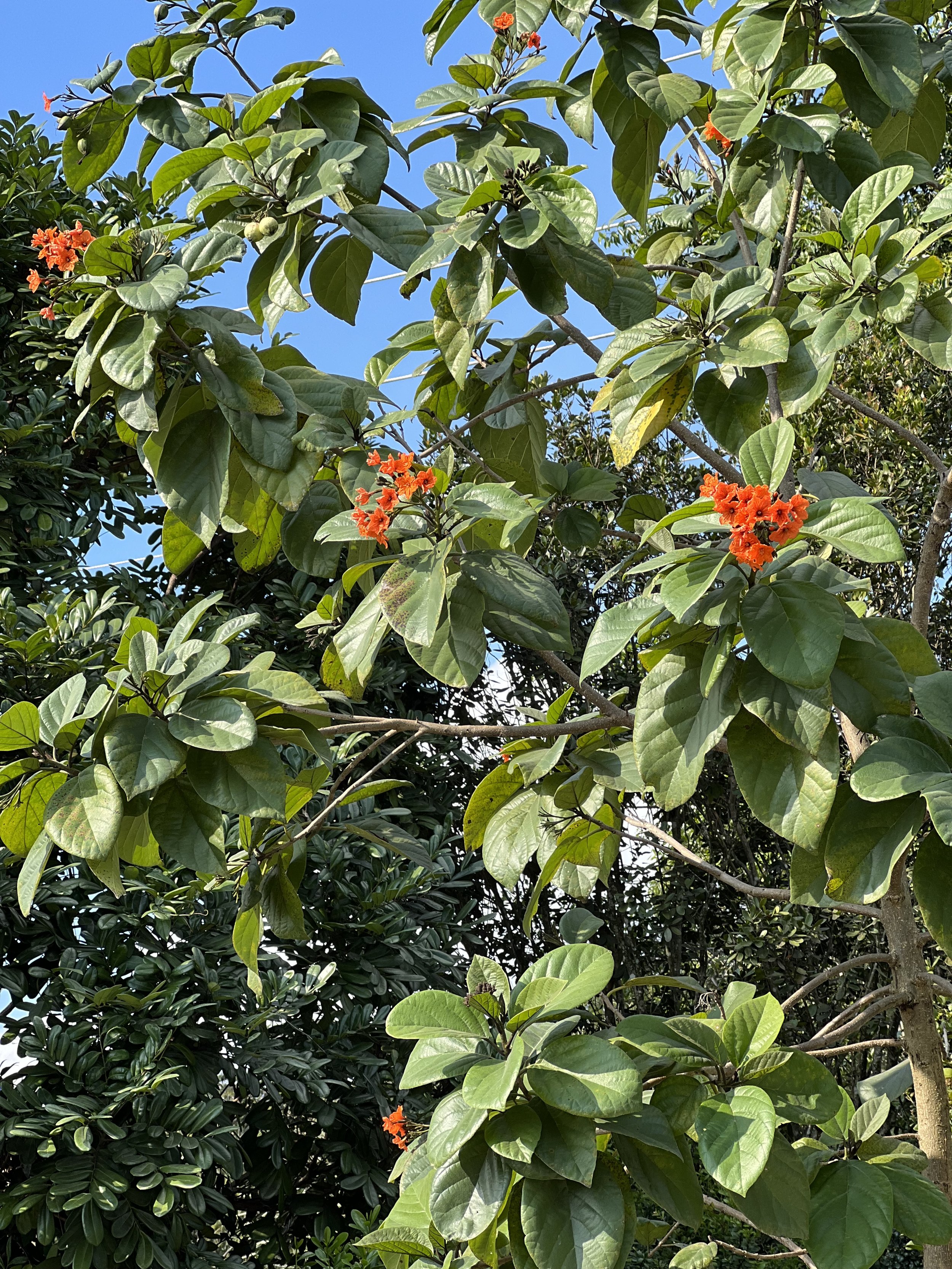
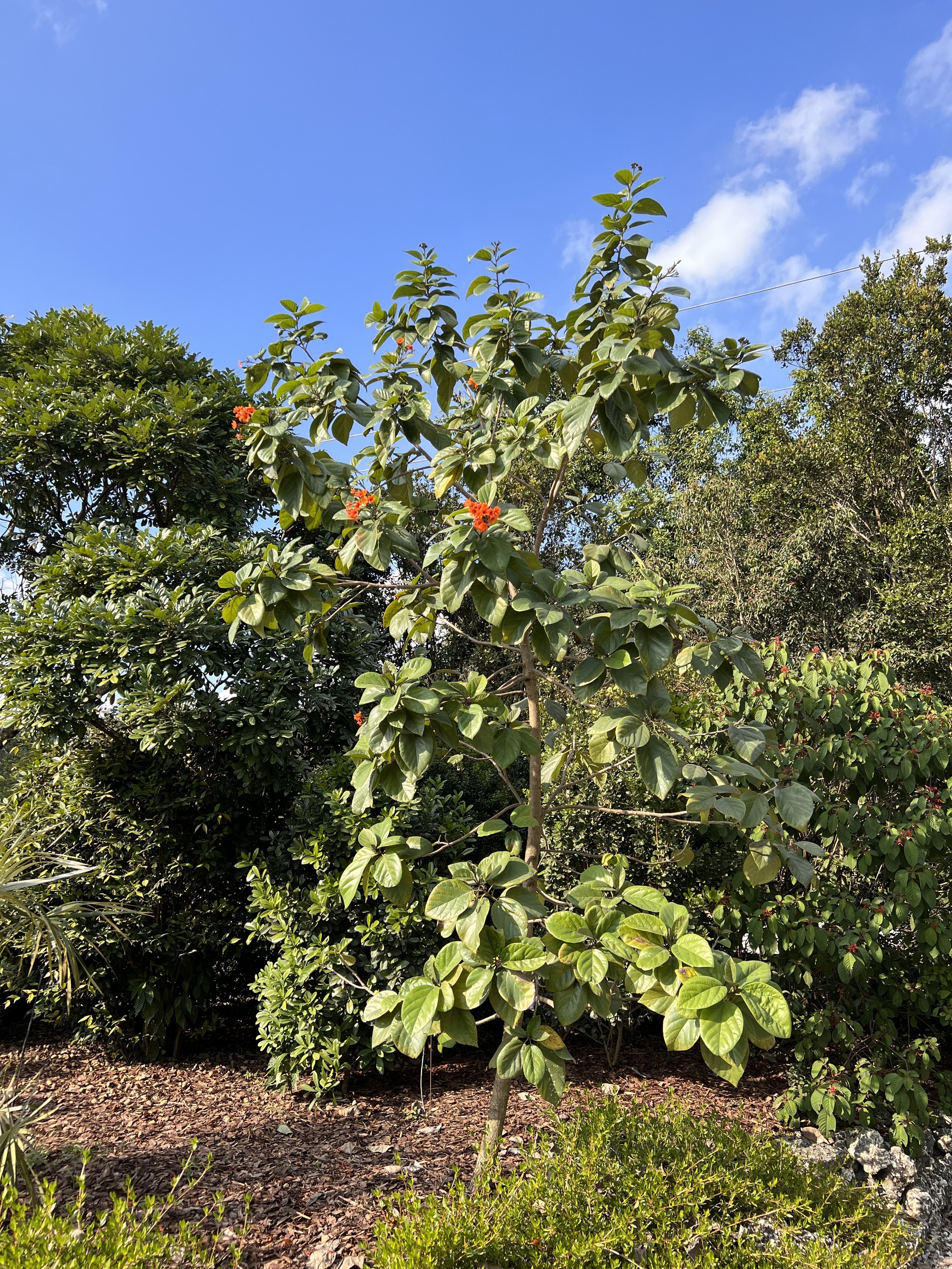
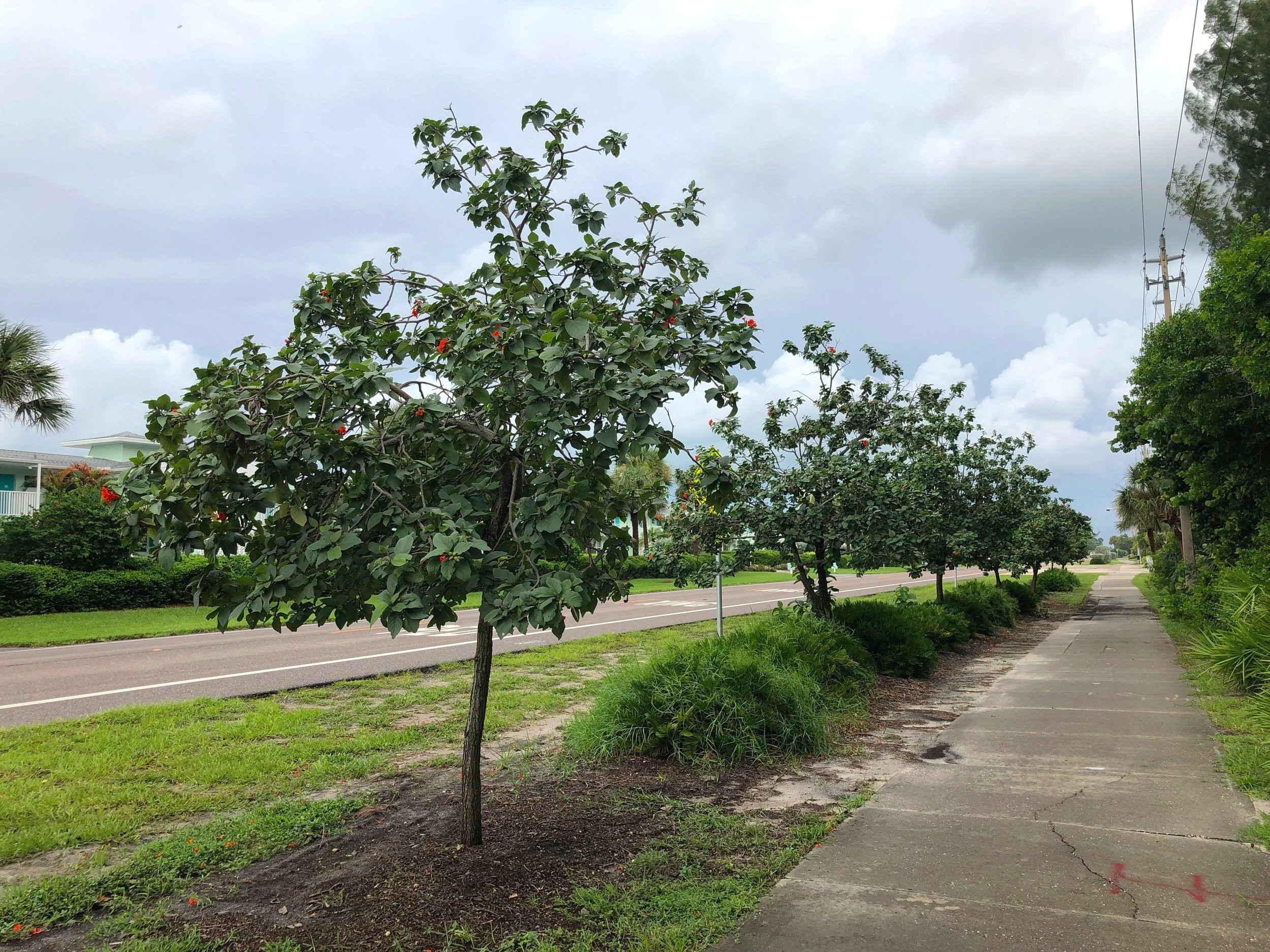
Cordia sebestena
Orange Geiger is a small, native, coastal, evergreen, flowering tree that likes full sun to light shade and well-drained soils. Orange Geiger is drought, wind and salt tolerant with large dark green leaves and showy orange flowers almost all year that attract butterflies and hummingbirds.
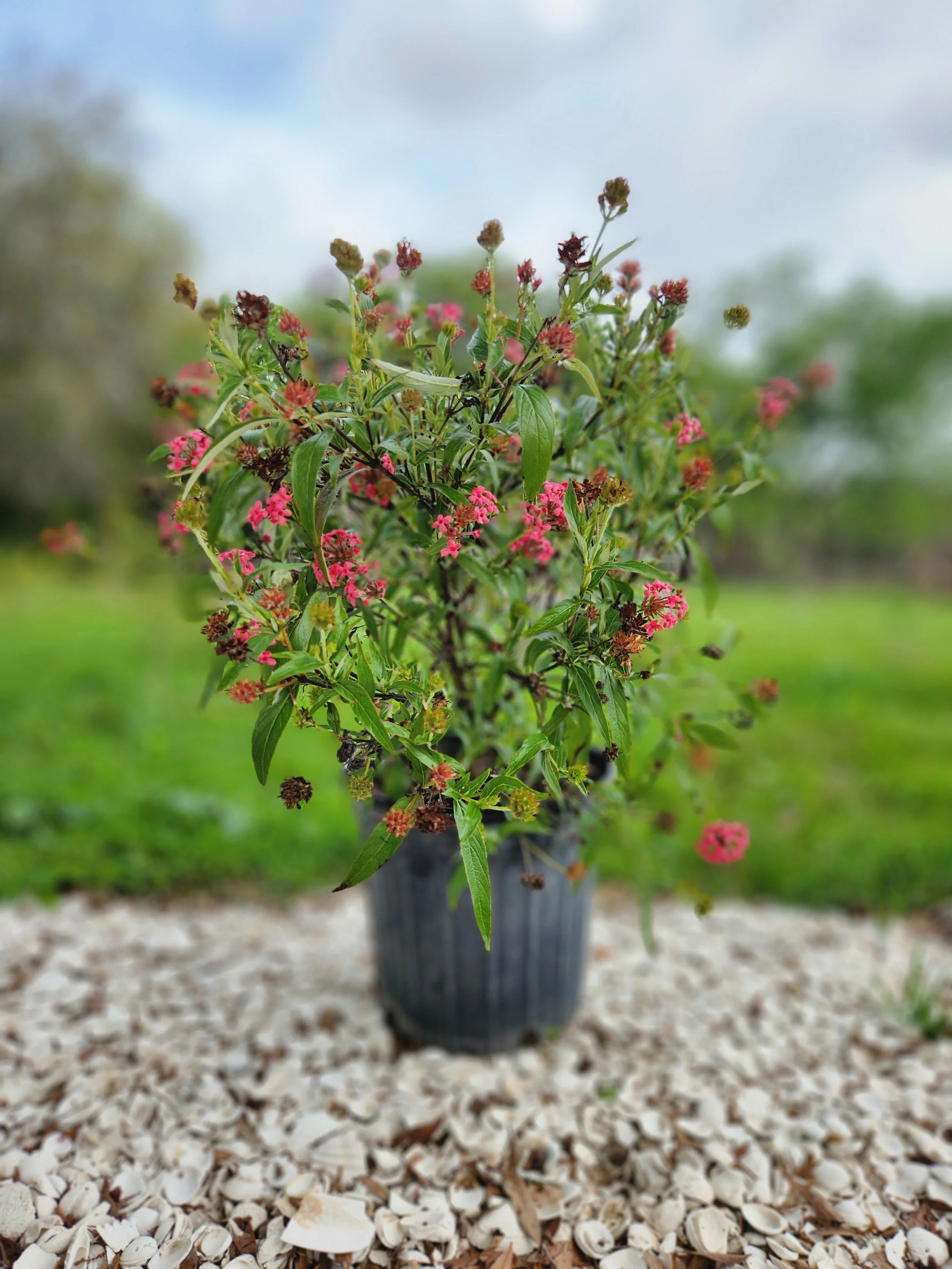
Roneletia leucophylla
Panama Rose is a Florida-friendly, flowering, evergreen shrub, aka “Bush Penta”. They reach heights of 3’-6’, but they are easy to keep at 3’. These plants thrive in full sun to part shade, and do well in average soil. Drought tolerant once established. They have fragrant, bright pink flowers that bloom year-round, and are a butterfly favorite! They attract hummingbirds, butterflies, and other pollinators.
Clusia guttiferra
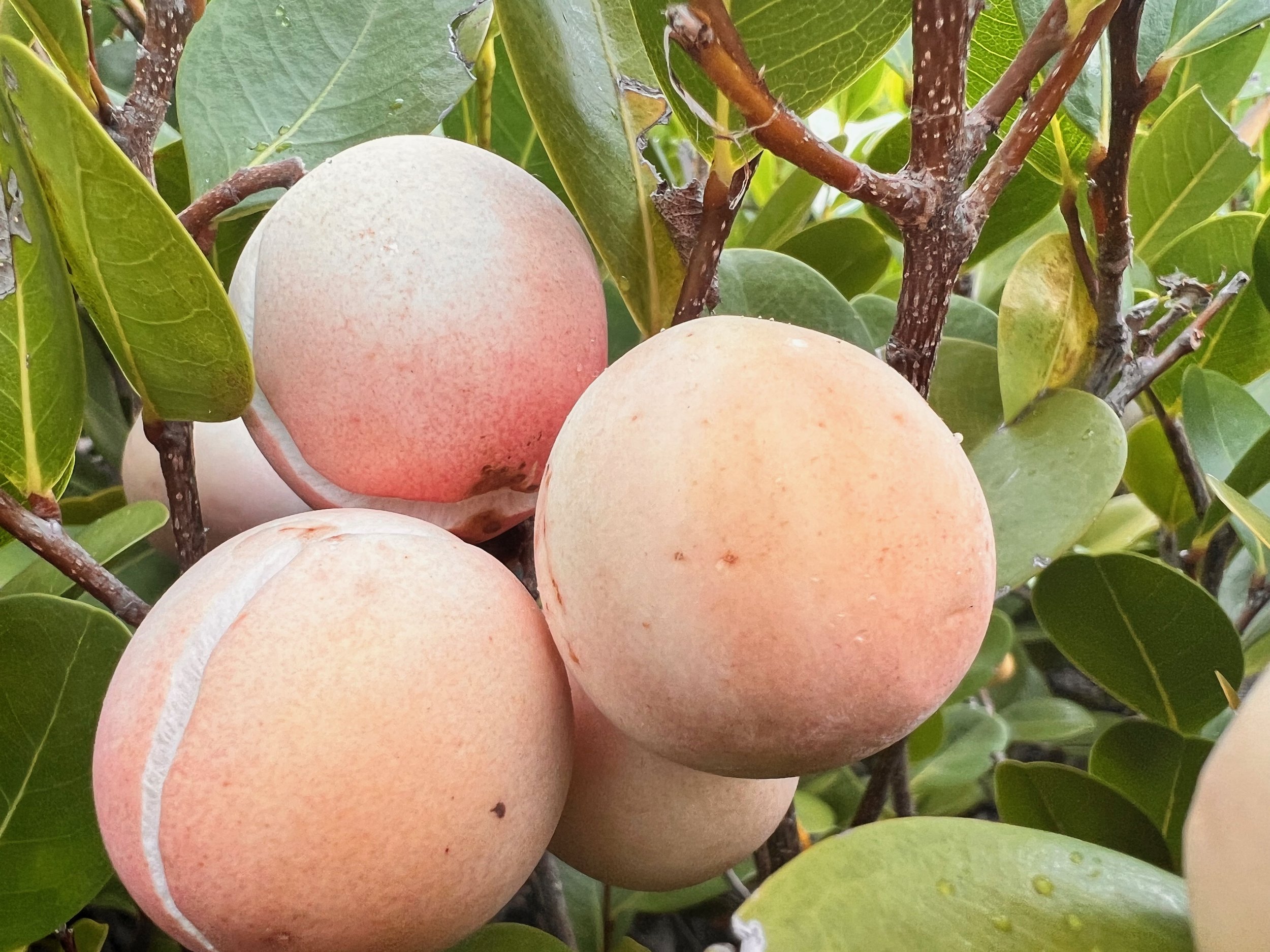
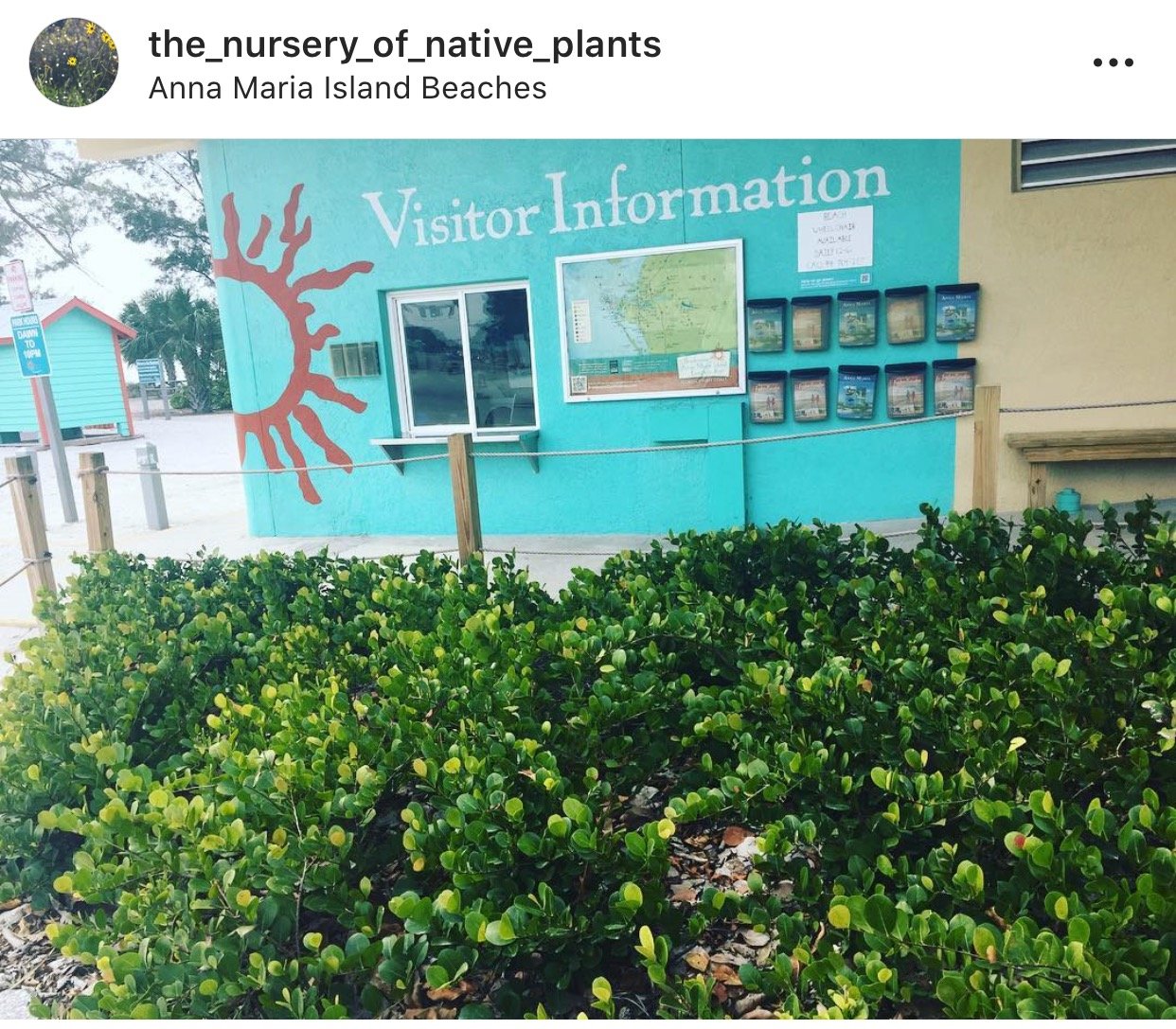
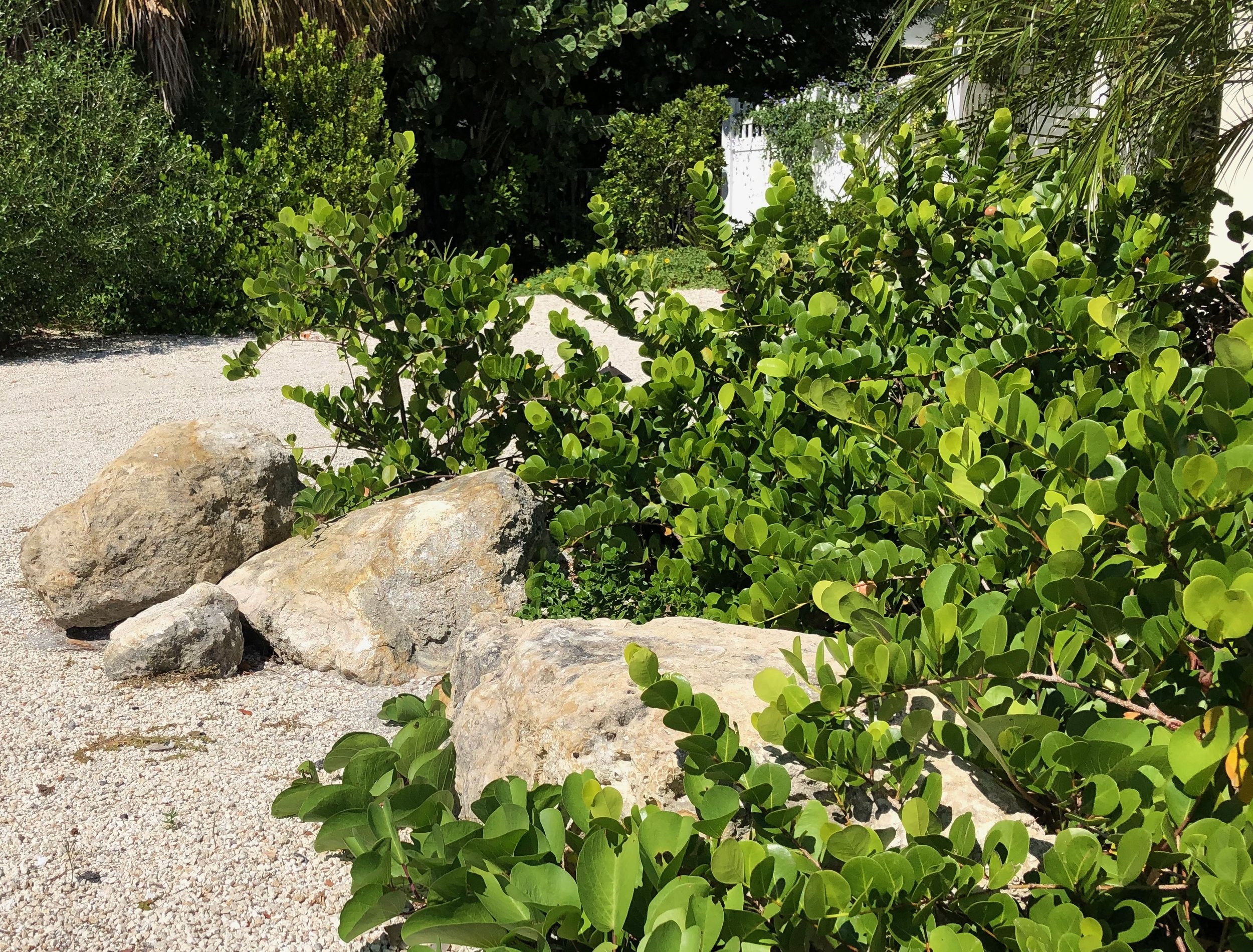
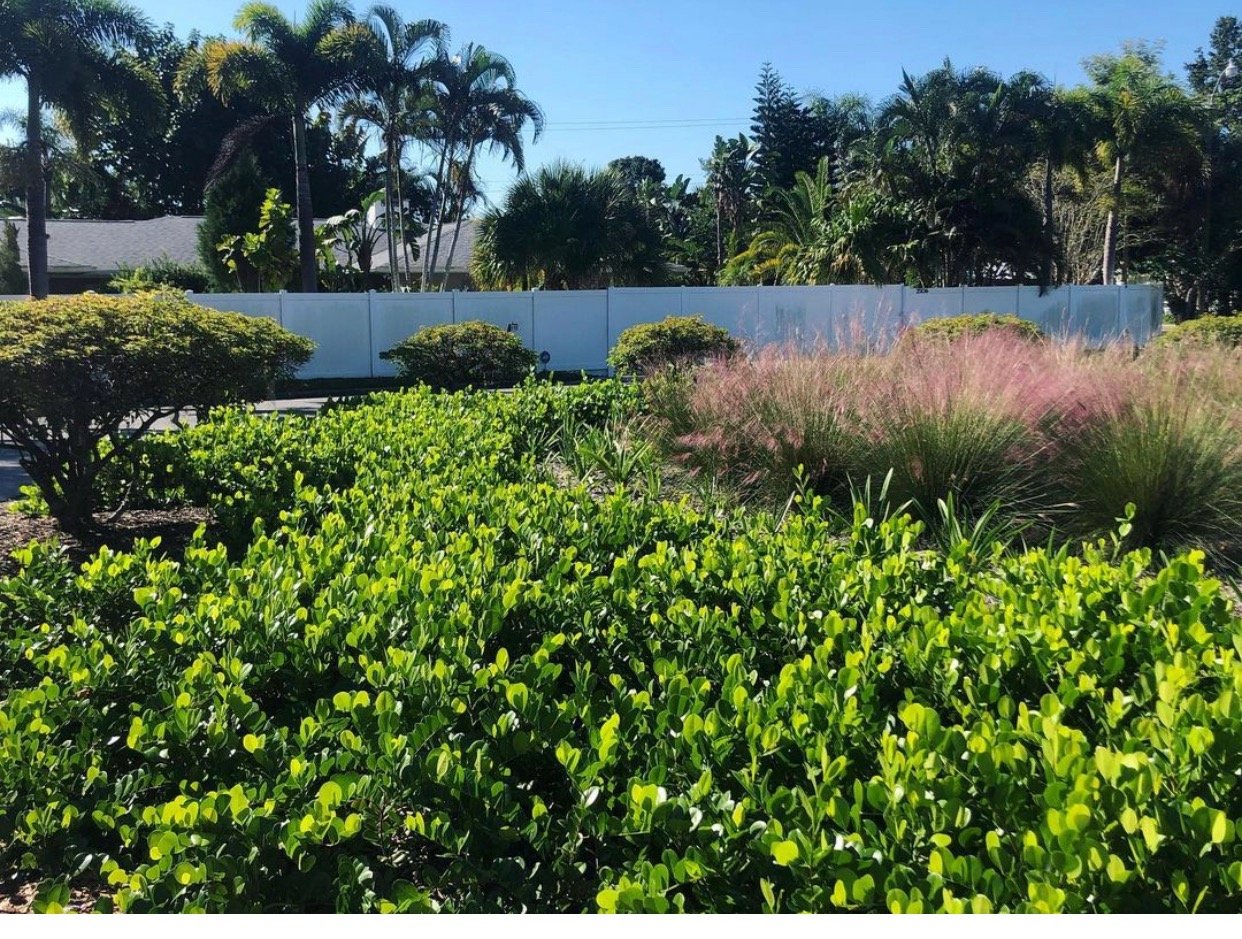
Non-native, Florida-friendly, prunable evergreen shrub. Pitch Apples can reach a height of about 15’, with a 15’ spread. These shrubs do well in full sun to shade, well-drained sandy or loamy soil, and are salt-tolerant once established. They are fast growing, and make a great hedge or buffer, specimen, or container plant.
Petrea volubilis
Queen’s Wreath is a non-native, Florida-friendly, fast-growing evergreen vine. It grows best in full sun to part shade, but flowers more abundantly in full sun, and average soil; they are somewhat drought tolerant once established. These vines have showy purple flowers that bloom profusely from Feb-June, which are highly attractive to bees, butterflies, and hummingbirds.
Ipomoea pes-caprae
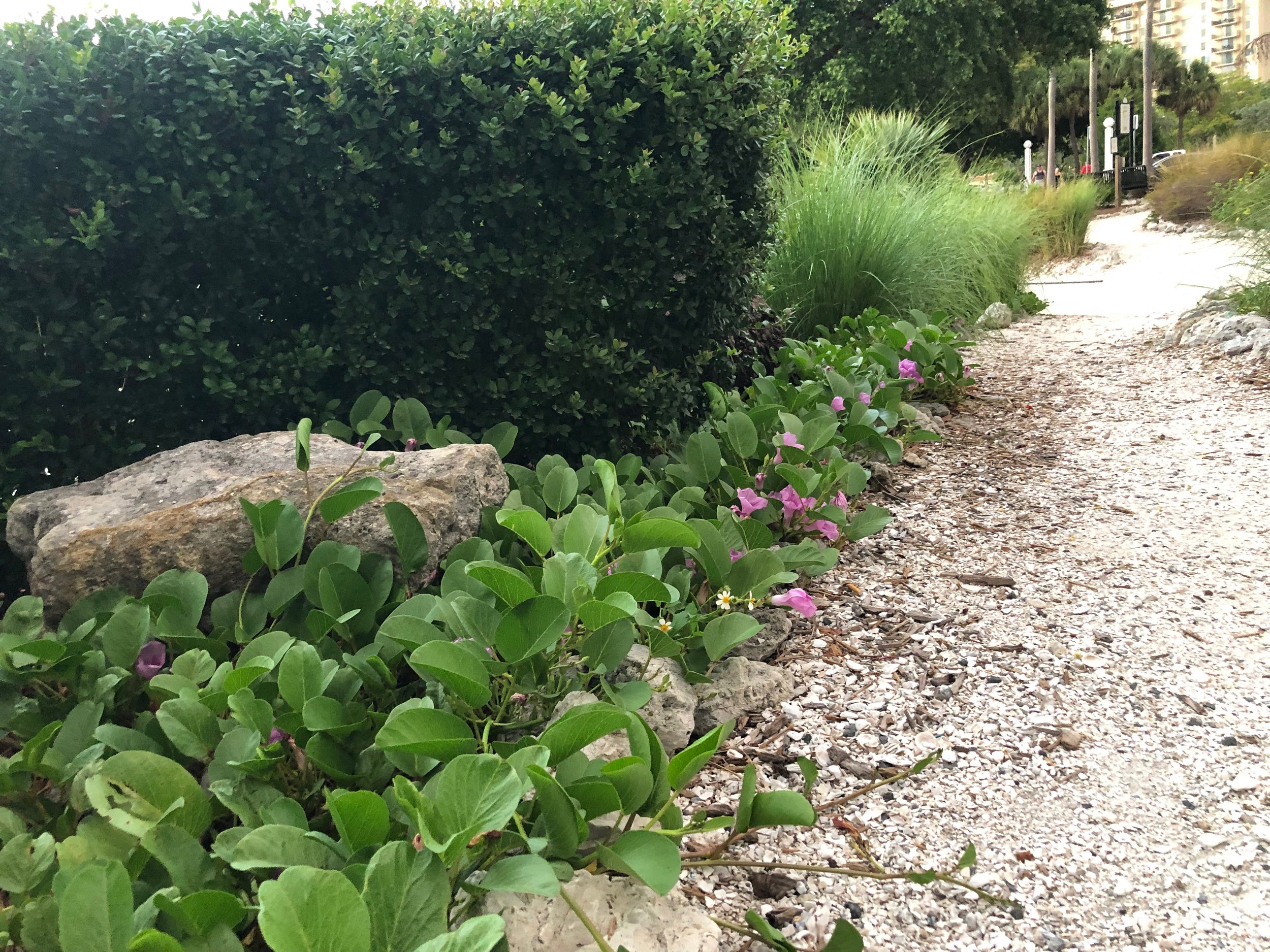
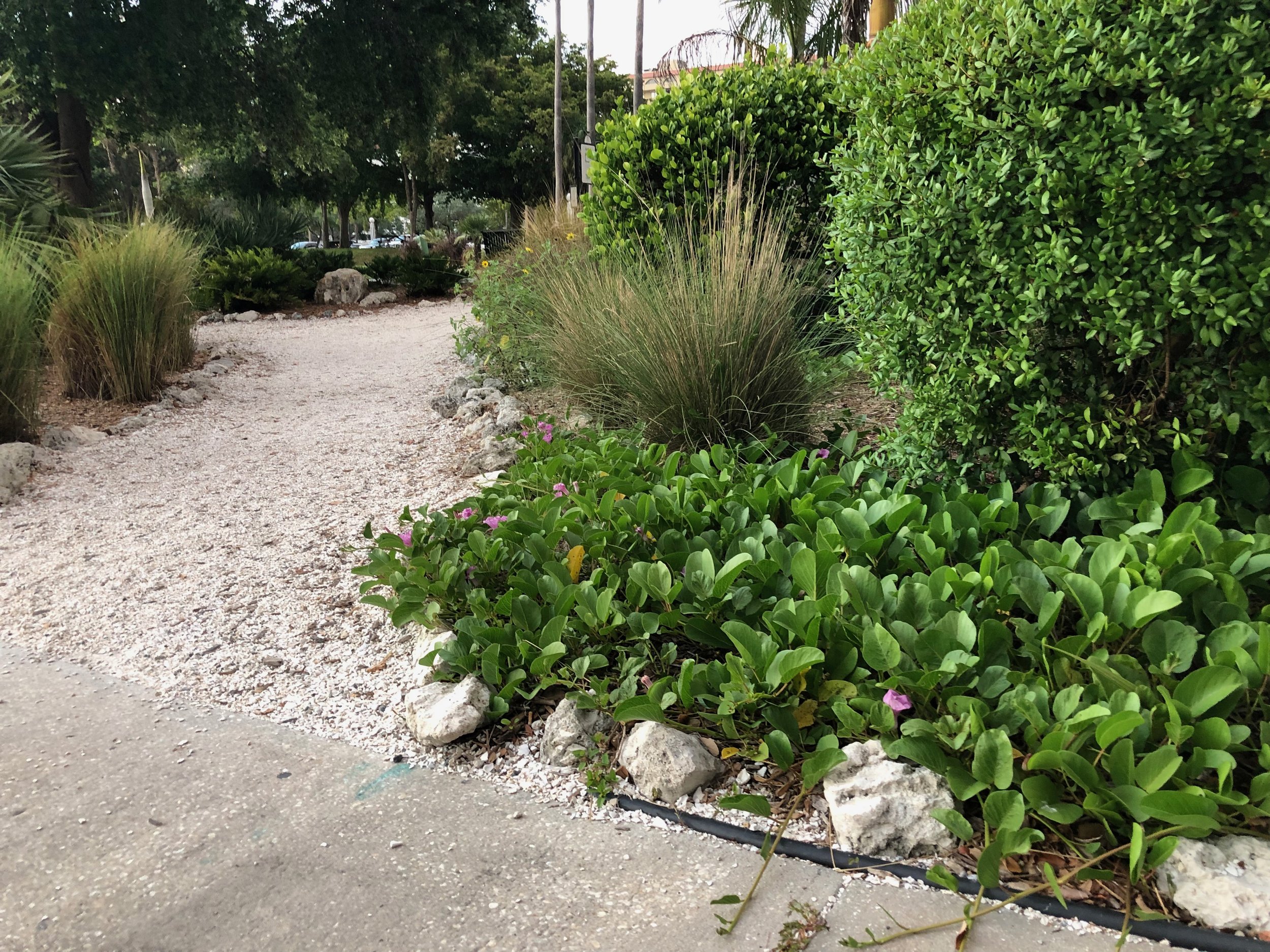
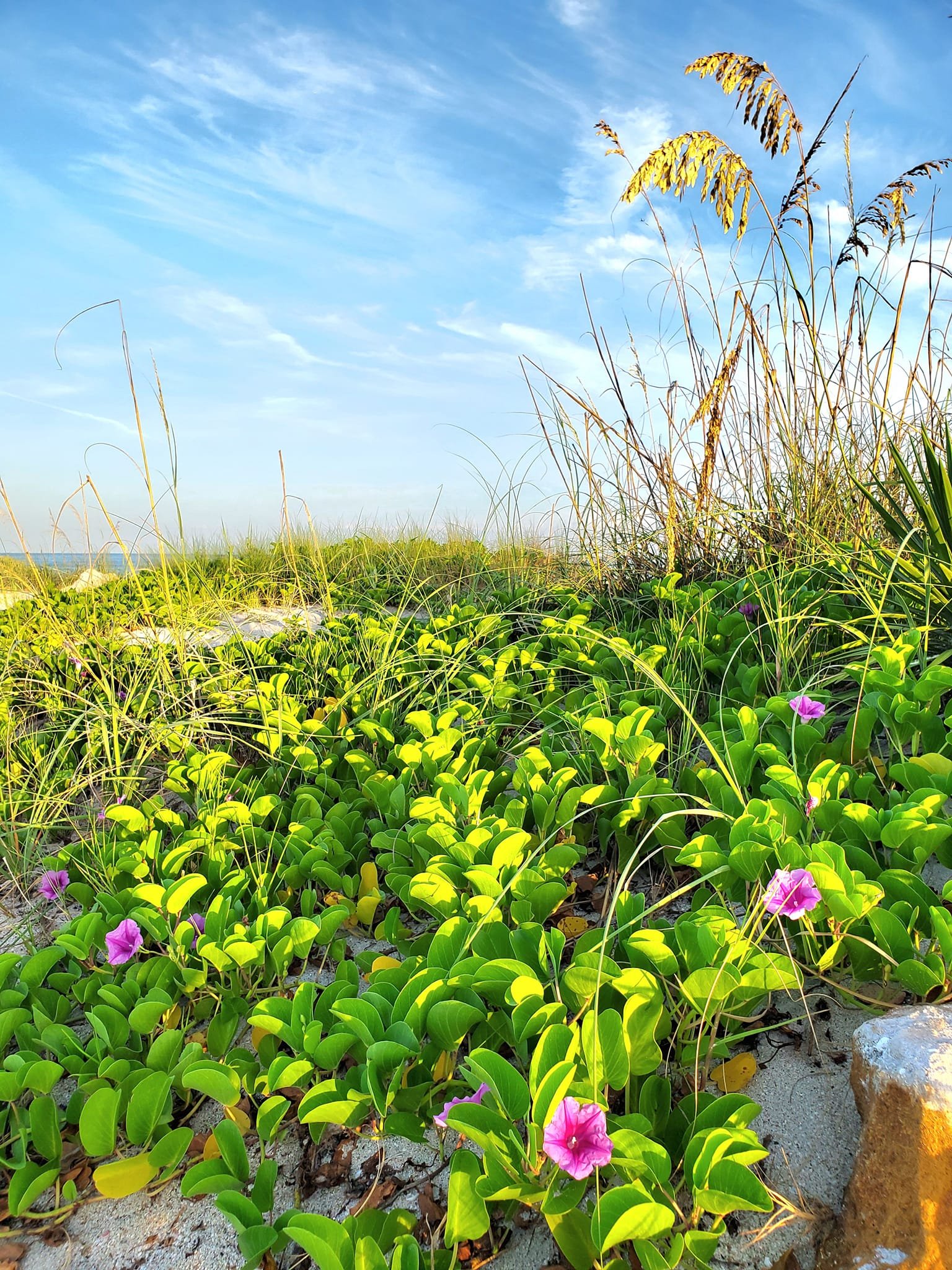
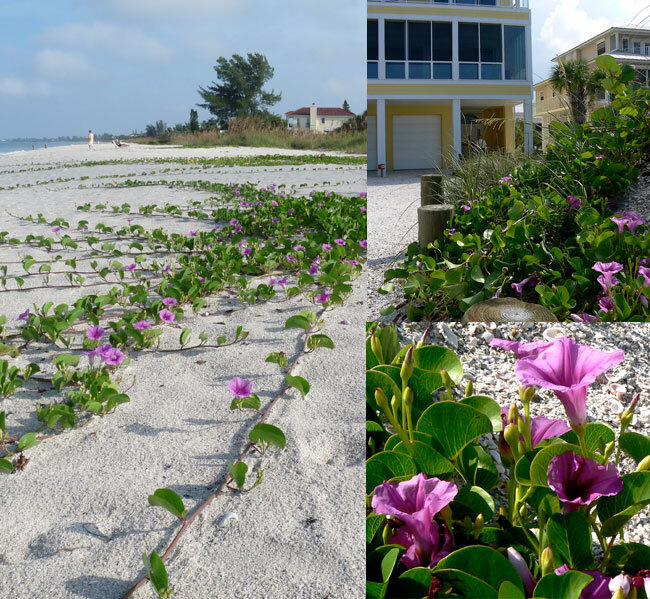
Railroad vine is an evergreen, flowering, vining groundcover. It is fast growing, does not require a trellis, and reaches 1ft in height. It thrives in full sun on coastal landscapes, is salt tolerant, but very cold-sensitive. It needs dry, sandy soils, and is great for stabilizing beach dunes. Showy pink/purple trumpet flowers are great for bees, butterflies and other pollinators.
Roystonea regia
Royal Palm is a Florida native palm that grows to be 50’-100’ tall and 20’-25’ wide. They grow best in full sun and moist, well-draining soil, but they are highly adaptable to different soil conditions once established. Their flowers are highly attractive to pollinators and the fruit that follow are highly attractive to birds, making them an excellent plant for bringing wildlife to the landscape.
Spartina bakeri
Sand Cordgrass is a native clumping grass that grows 3’-5’ tall and 3’-4’ wide. They grow best in full sun to partial shade and moist to wet soils, but they are highly adaptable to drought once they are established. They are tolerant of salt wind, spray, and occasional flooding, and they provide food and cover for native birds and small mammals.
Spartina patens
Saltmeadow Cordgrass is a perennial grass native to Florida's coasts that grows up to 3 feet tall in salt marshes and brackish wetlands. This hardy species features slender, wiry stems and narrow leaves that often form distinctive whorled patterns, creating dense clumps in the high marsh zone above the high-tide line. Highly valuable for Florida wildlife, it provides critical nesting habitat for saltmarsh sparrows, red-winged blackbirds, and boat-tailed grackles, while the seeds feed various shorebirds and waterfowl including mallards and pintails. The dense grass also offers protective cover for diamondback terrapins, marsh rabbits, and juvenile fish during high tide, while serving as foraging areas for great blue herons and snowy egrets. This salt-tolerant native grass plays a vital ecological role in Florida's coastal marsh systems, supporting both resident and migratory species.
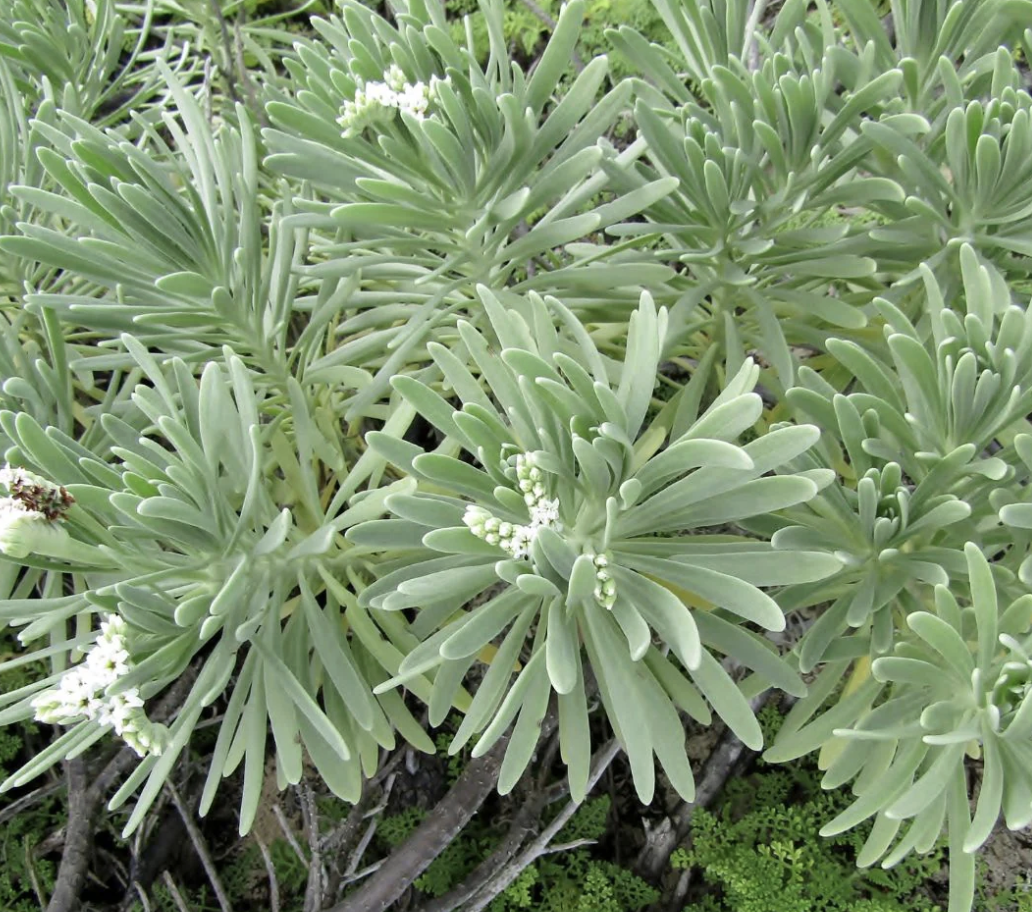
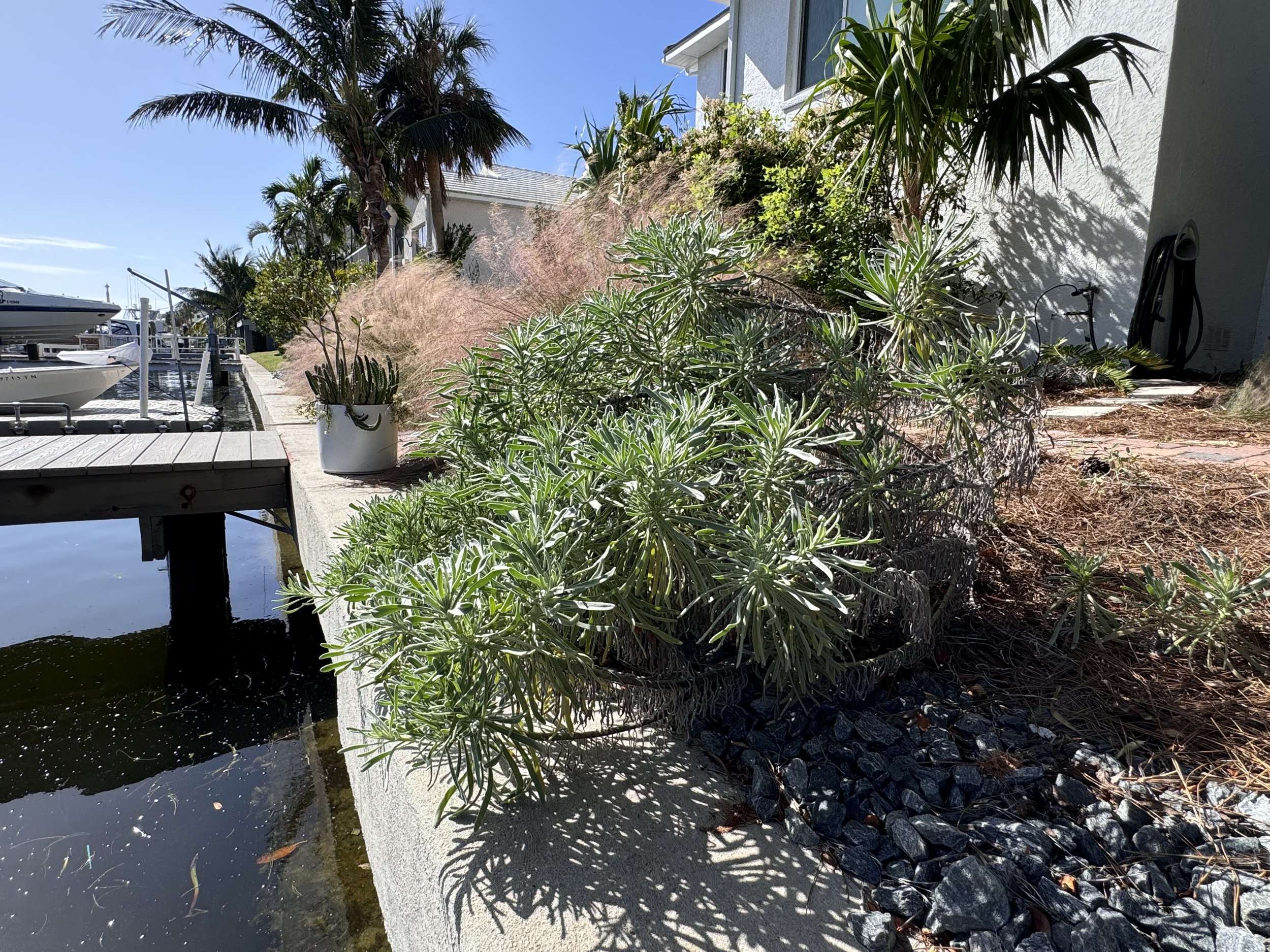
Heliotropium gnaphalodes
Sea Lavender is a coastal shrub that grows up to 6’ tall and 10’ wide. It’s a great plant for hedges, mass planting, and even dune reclamation. It is also highly drought tolerant and tolerant of occasional/brief salt inundation and can survive storm surges.
Uniola paniculata
Sea Oats are a native perennial grass with thin, green foliage and large golden-brown seed heads that sway beautifully in the coastal breeze. They thrive in full sun and dry to moist sand. Once established, they are very salt and drought tolerant, and they are quite useful for stabilizing dunes in coastal applications. They are an excellent shelter and food source for songbirds and coastal wildlife.
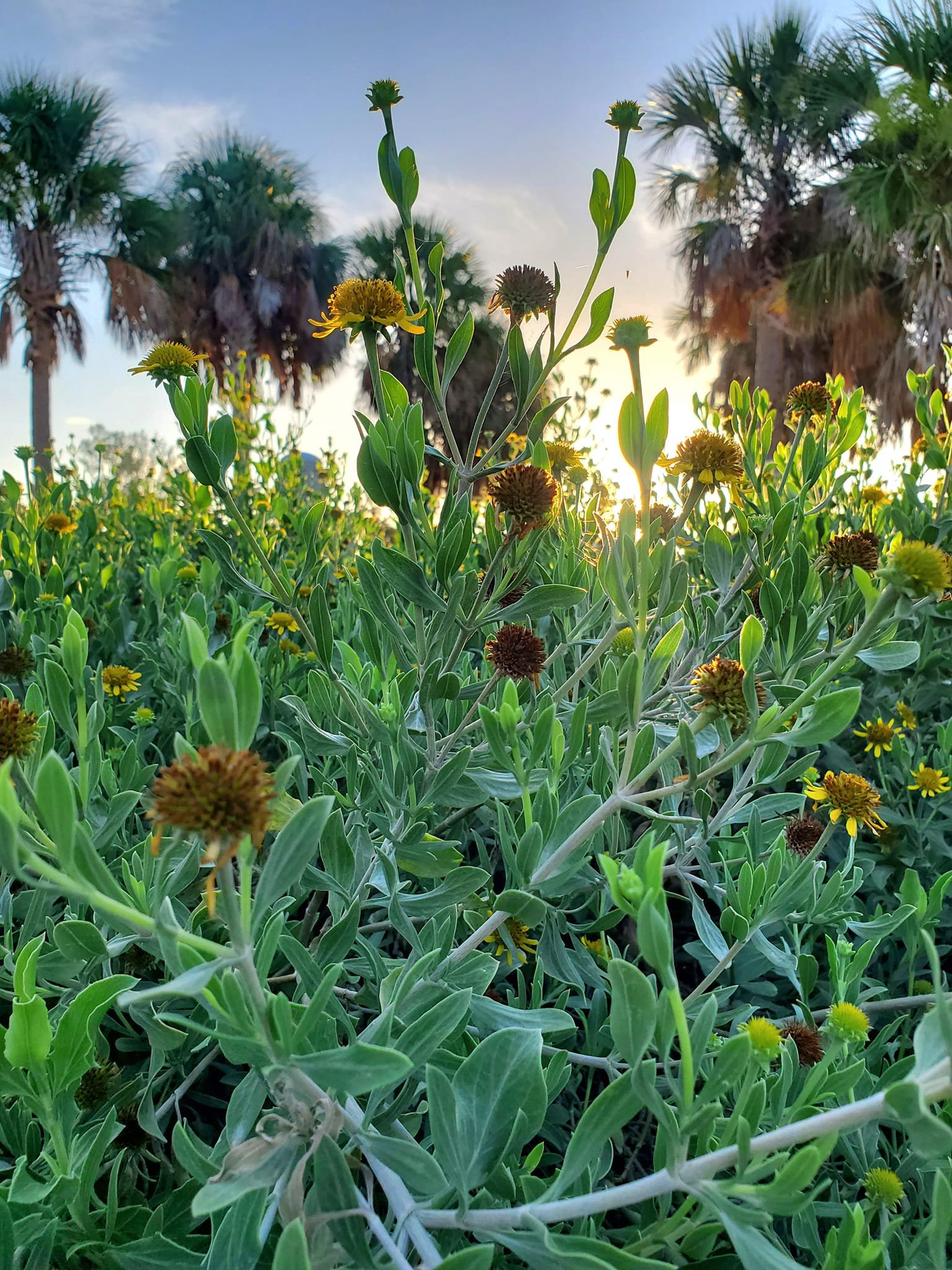
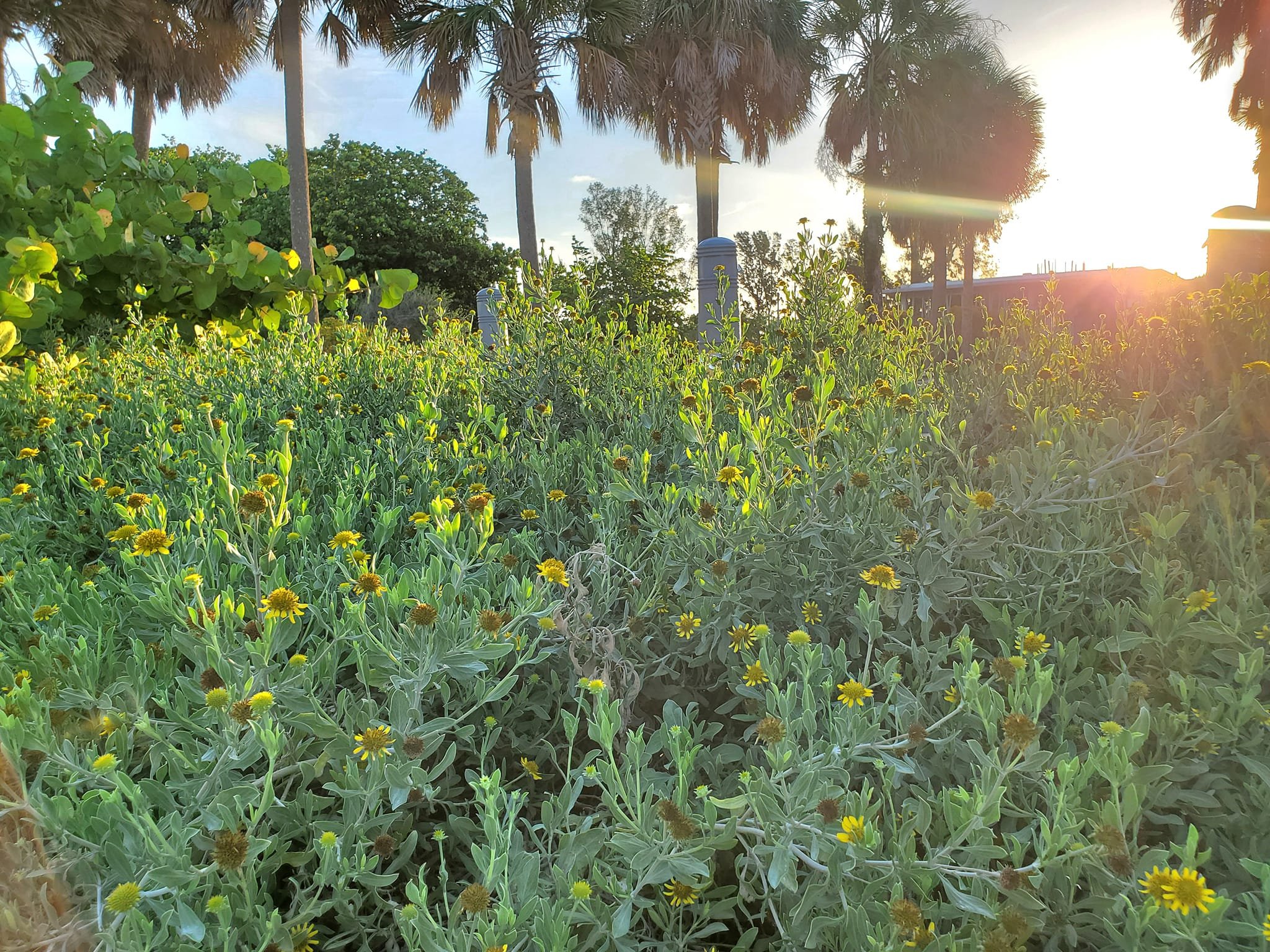
Borrichia frutescens
Sea Oxeye Daisy is a great shrubby wildflower for coastal areas. One plant grows to be 3x3' but they can colonize in areas they love creating a beautiful pollinator patch! Great for coastal areas where the tide comes in, this plant is highly salt tolerant and can take flooding, tides, and salty soil and wind. Does best in full sun. Sea Oxeye Daisy attracts many small butterflies like hairstreaks and blues and other pollinators like native bees. Birds eat the seeds. Blooms heavily spring-summer and on and off the rest of the year.
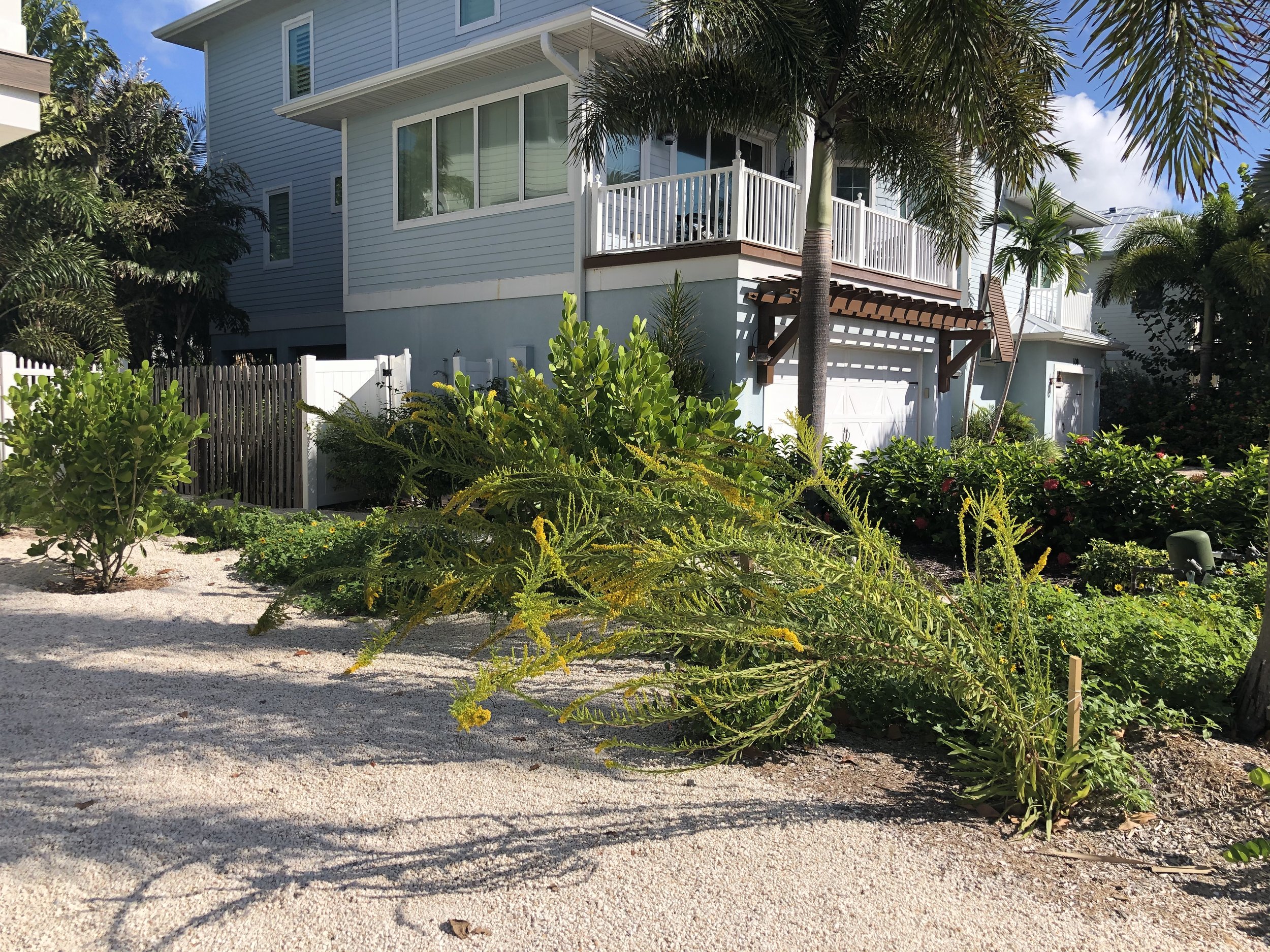
Solidago sempervirens
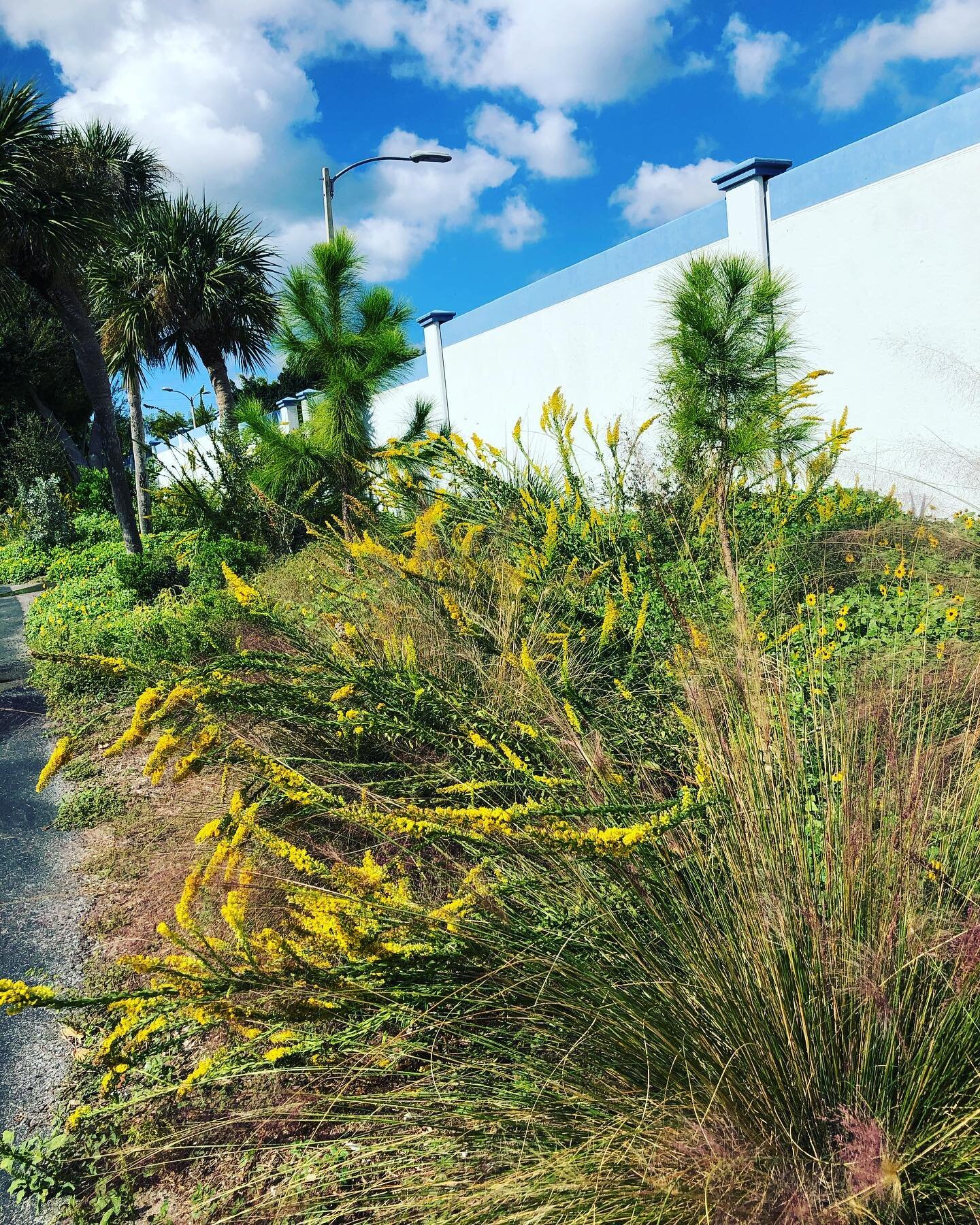
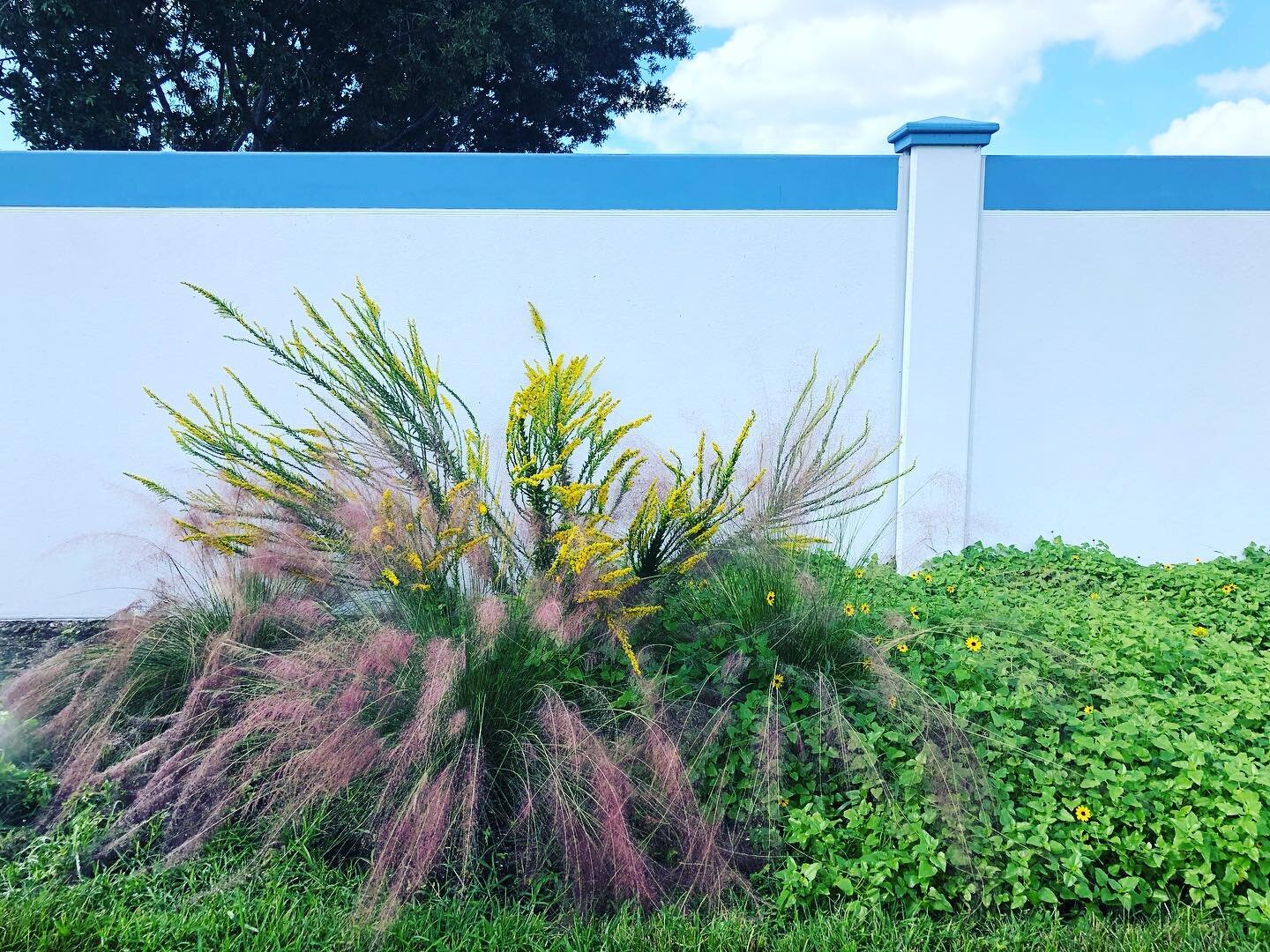
Seaside Goldenrod is a large, showy goldenrod species that can get showy flower spikes that are up to 7 foot tall! They are salt-tolerant and drought-tolerant as they are a coastal species frequently found near dunes. They attract a plethora of pollinators and are buzzing with action in fall when they bloom.
They are a keystone species! Host plant for over 80 different species of butterflies and moths!
Coccoloba uvifera x diversifolia
Sea Plum is a naturally occurring hybrid between Sea Grape and Pigeon Plum that combines the best traits of both native Florida parents. This evergreen shrub typically grows 6’-12’ tall and 4’-6’ wide, though it has the potential to reach larger sizes given its parentage. It features attractive foliage that blends characteristics of both parents and produces fruit on female plants that birds readily consume. Exceptionally hardy and low-maintenance, it thrives in full sun to light shade with well-draining sandy soils and demonstrates excellent tolerance to wind, salt spray, and drought conditions. This versatile hybrid works well as a specimen plant or screening hedge and is particularly valuable for beachfront landscapes in zones 9-11.
Ageratum maritimum
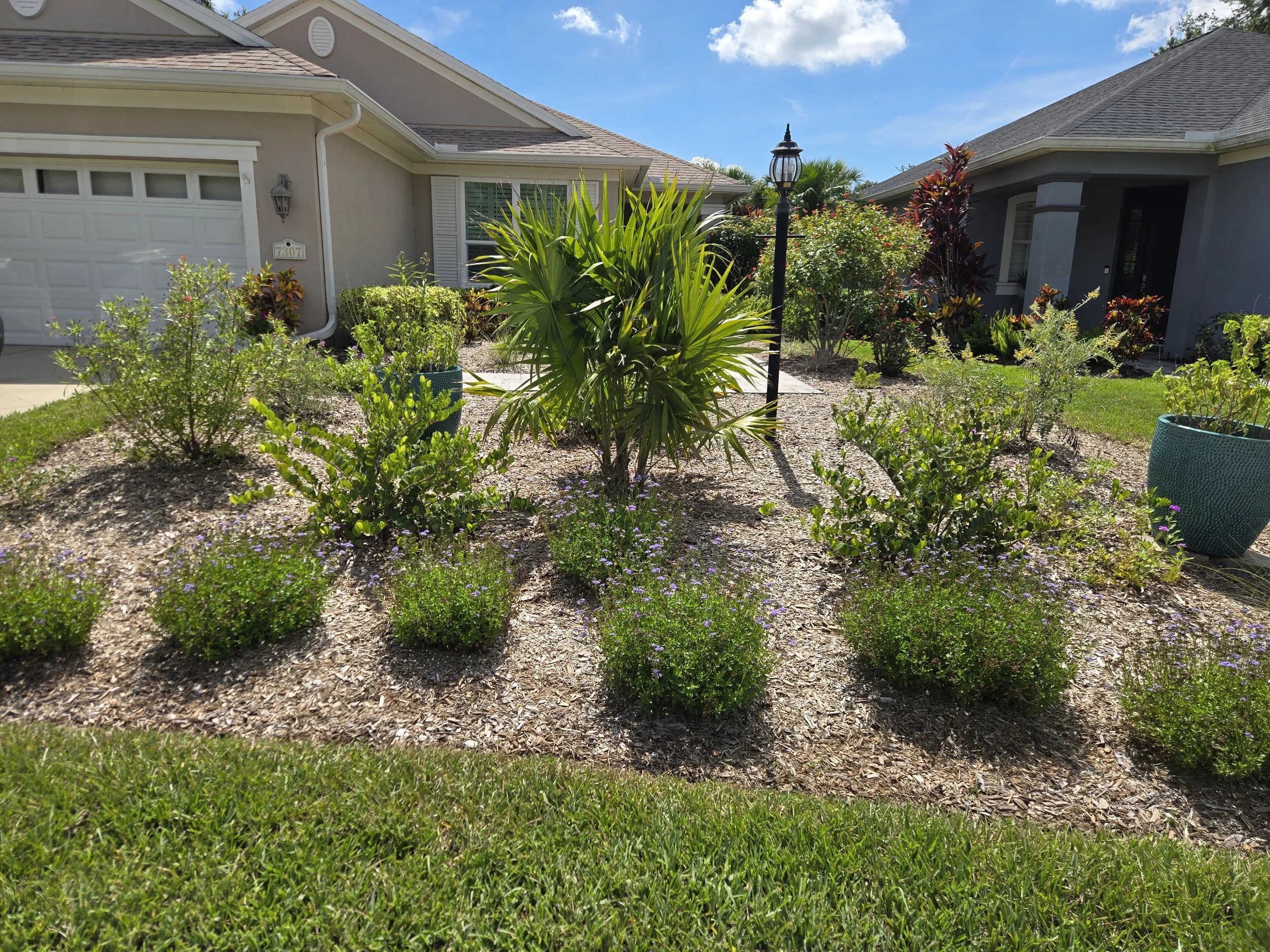
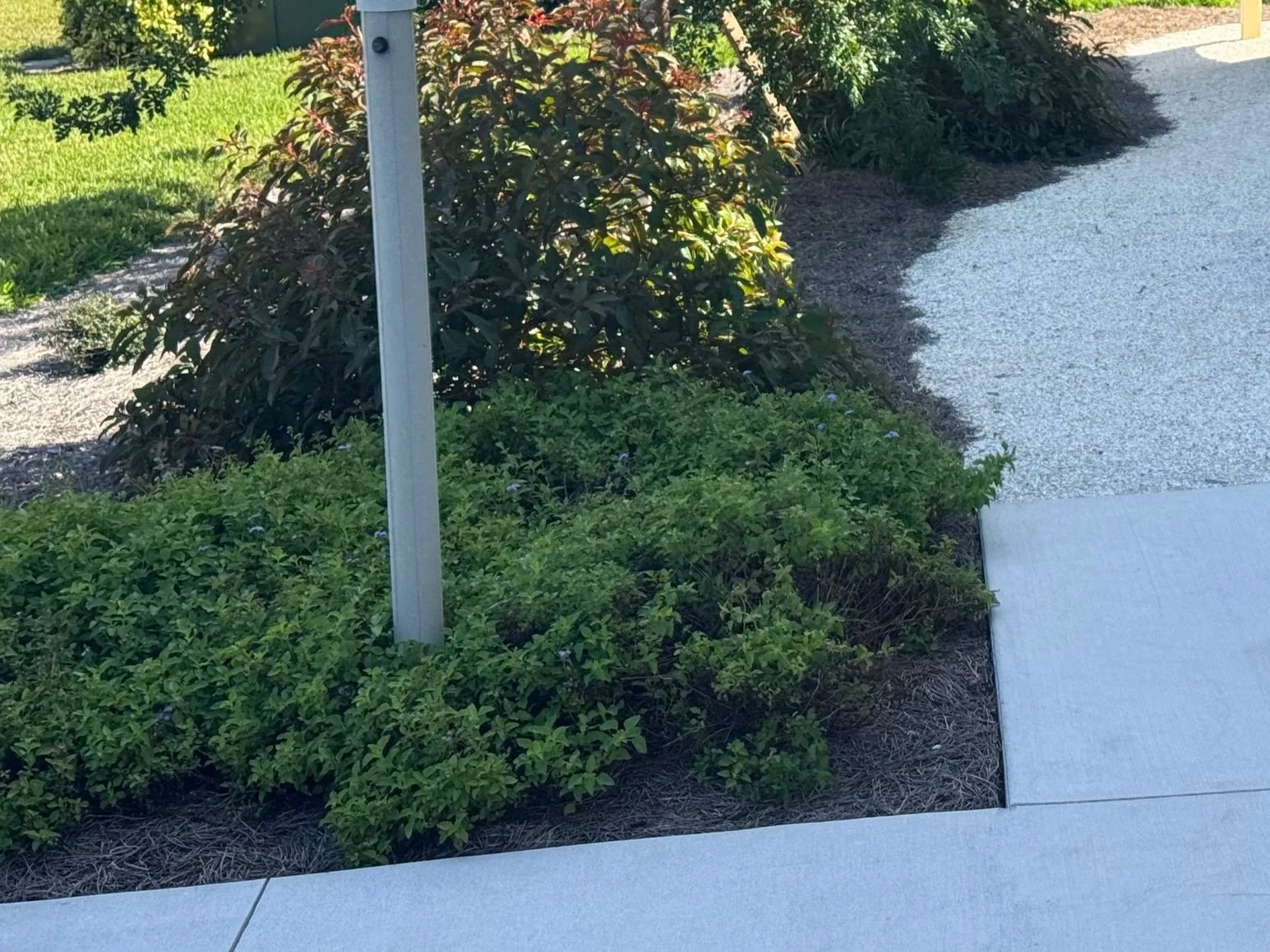
Seaside Mistlfower or Seaside Ageratum is a charming, low-growing wildflower native to Florida’s coastal habitats. Its soft, bluish-purple blooms attract butterflies and add color to sunny, sandy spots. Perfect for coastal landscape or pollinator gardens, this hardy plant thrives in salty, well-drained conditions.
Serenoa repens
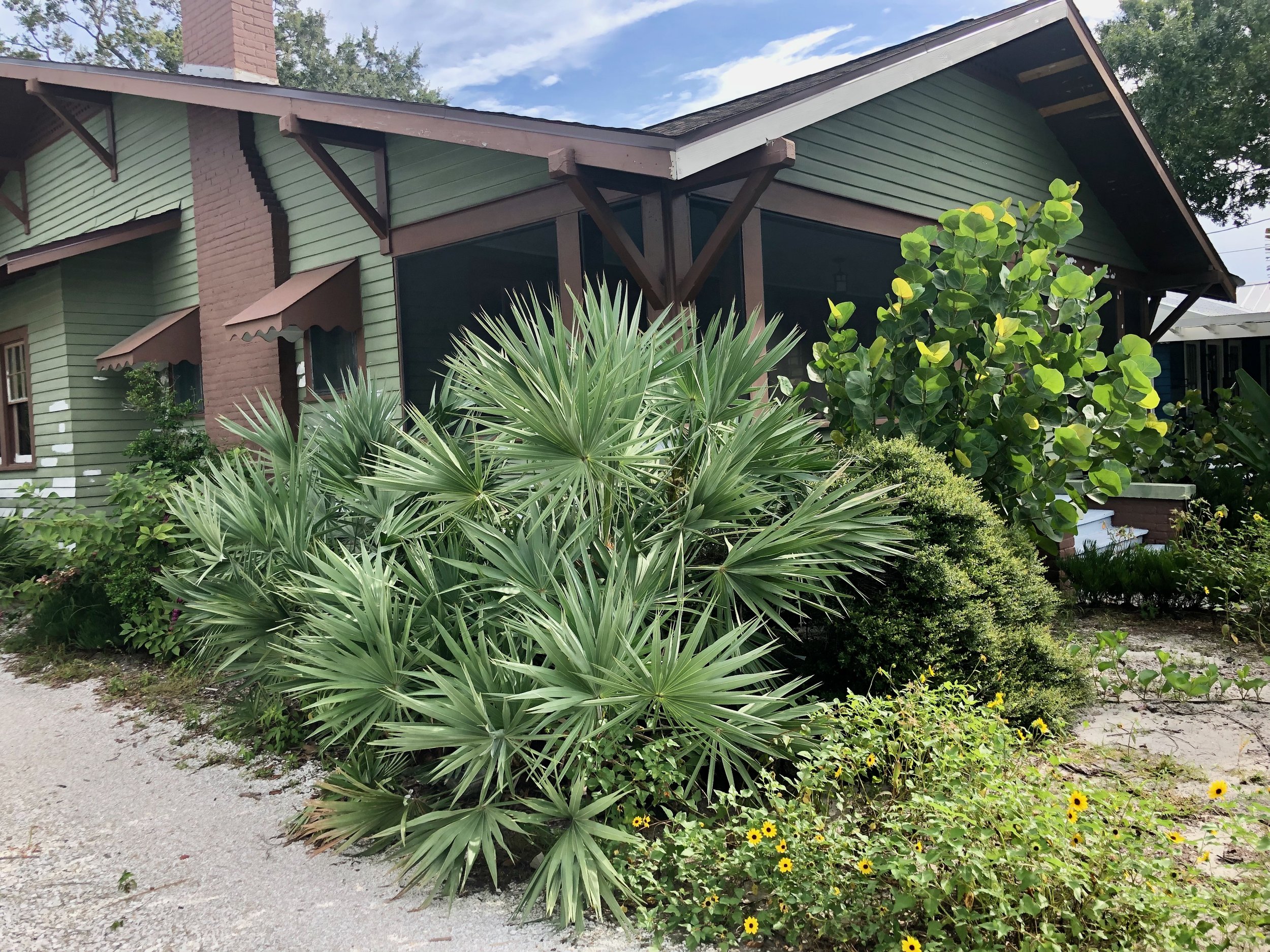
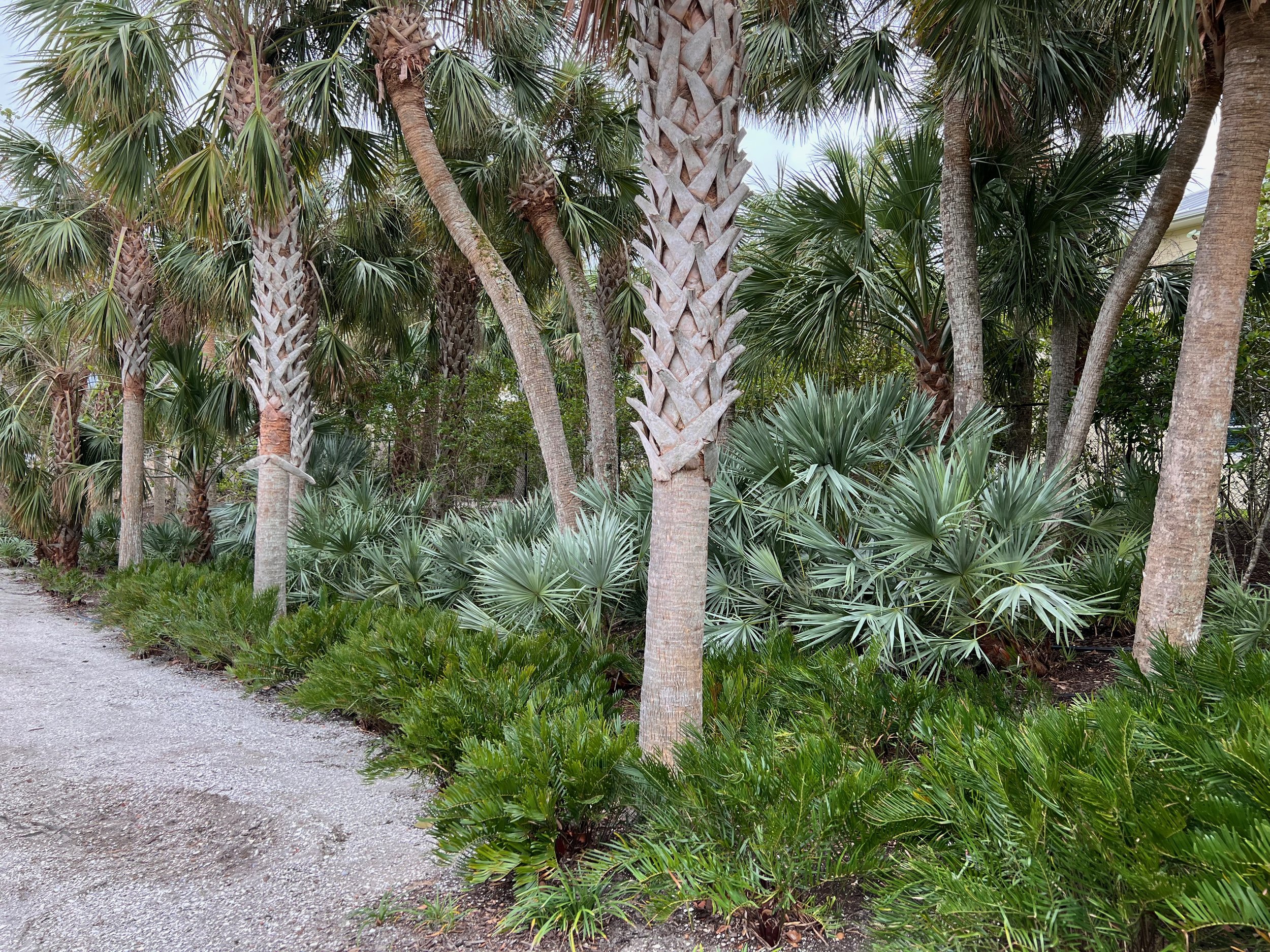
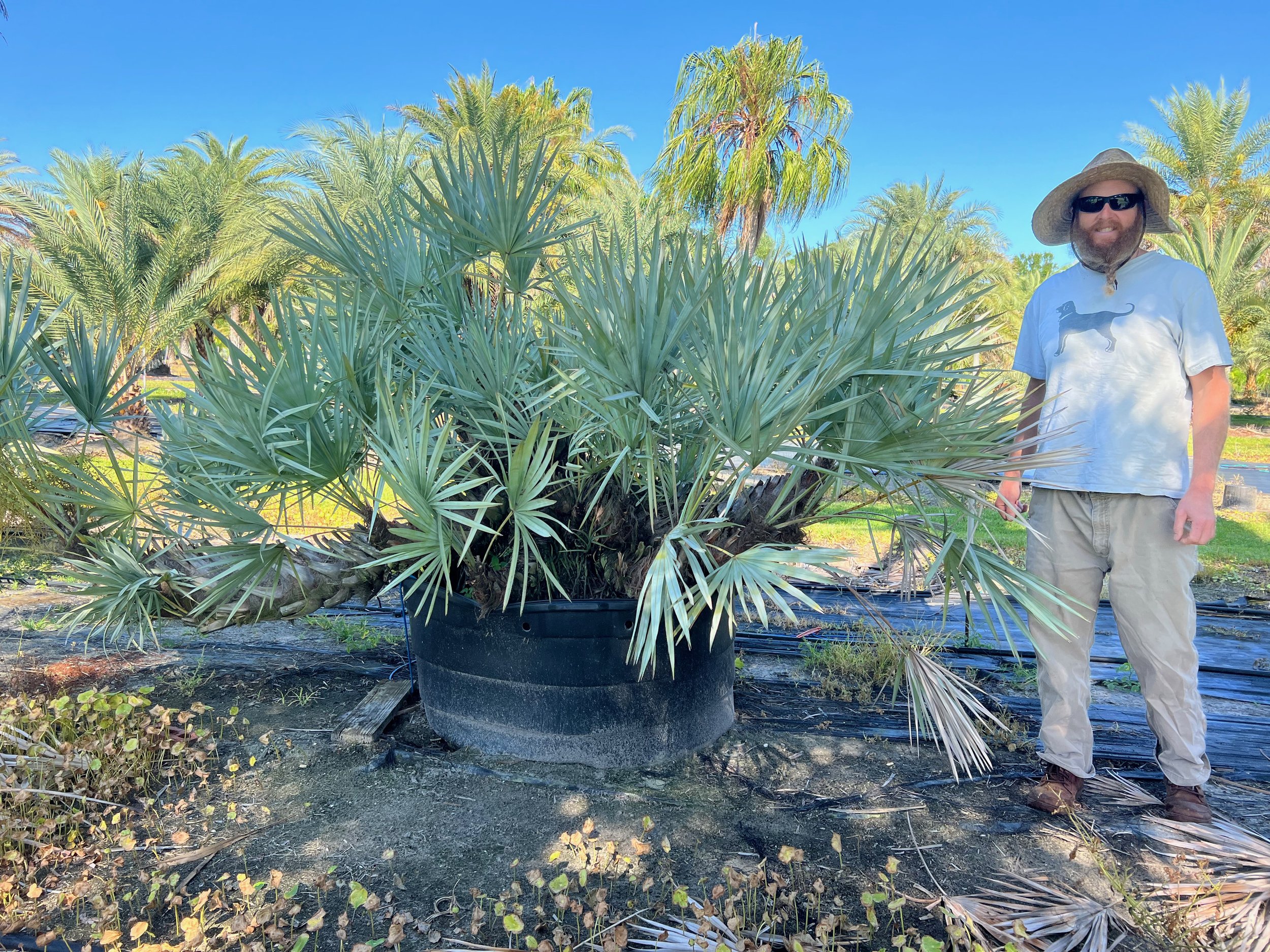
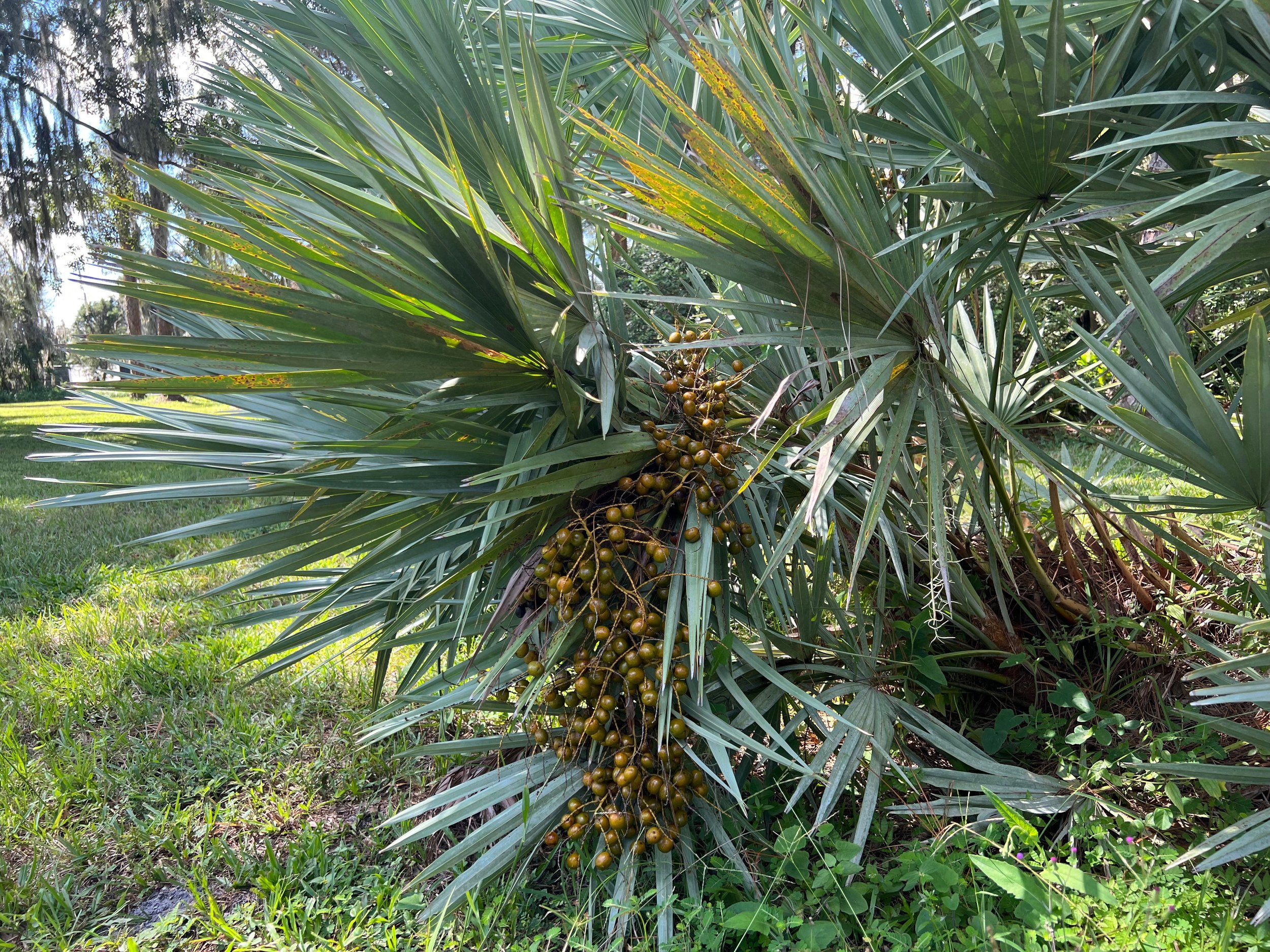
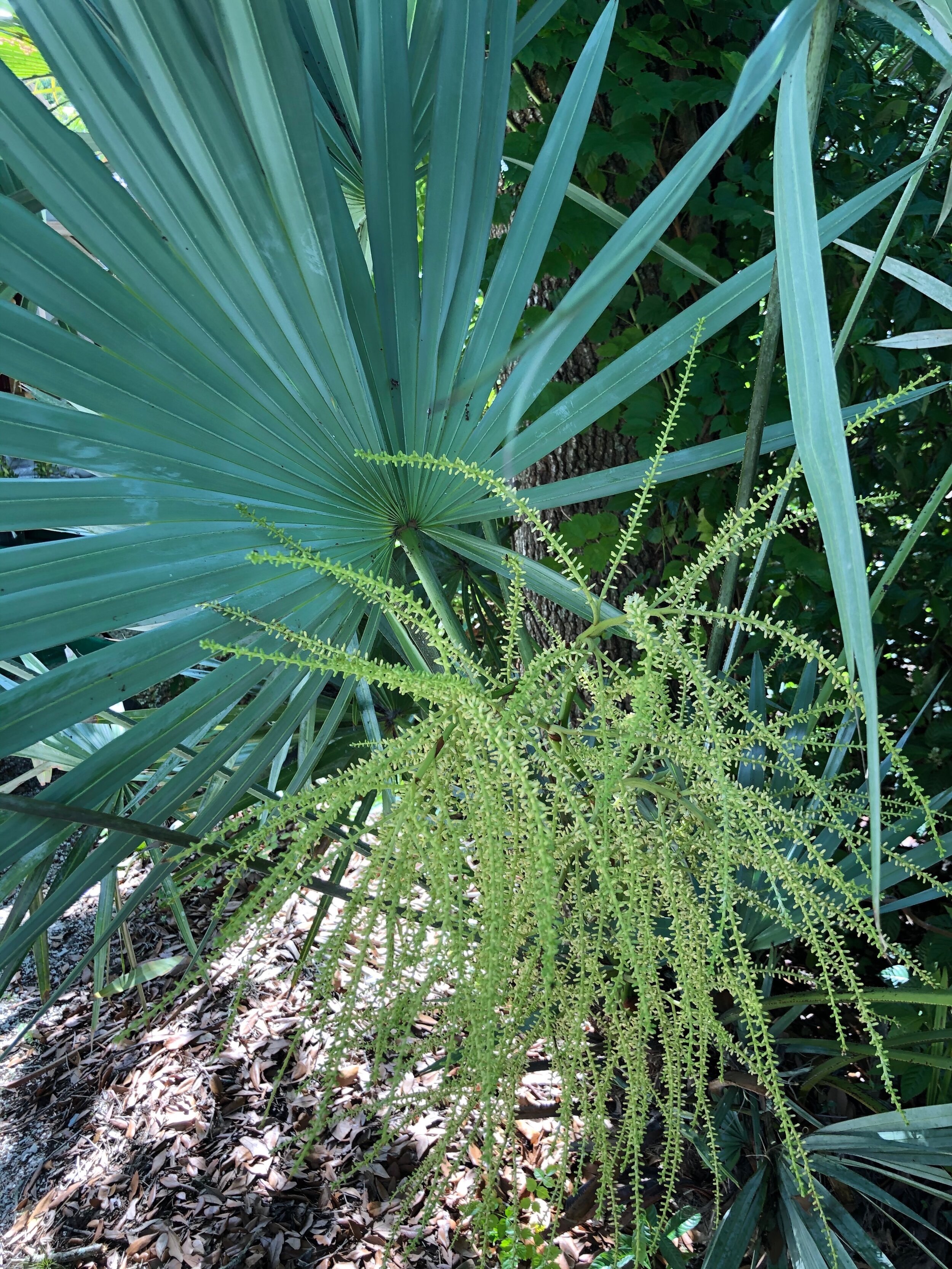
The Blue Saw Palmetto is a tough, drought-tolerant Florida native fan palm perfect for coastal landscapes and understory planting. It features sprawling horizontal stems, blue/silver fronds, and distinctive saw-toothed leaf stalks. In spring, it produces fragrant blooms that attract pollinators, followed by wildlife-supporting berries. Plant in full sun or shade and dry, sandy soil.
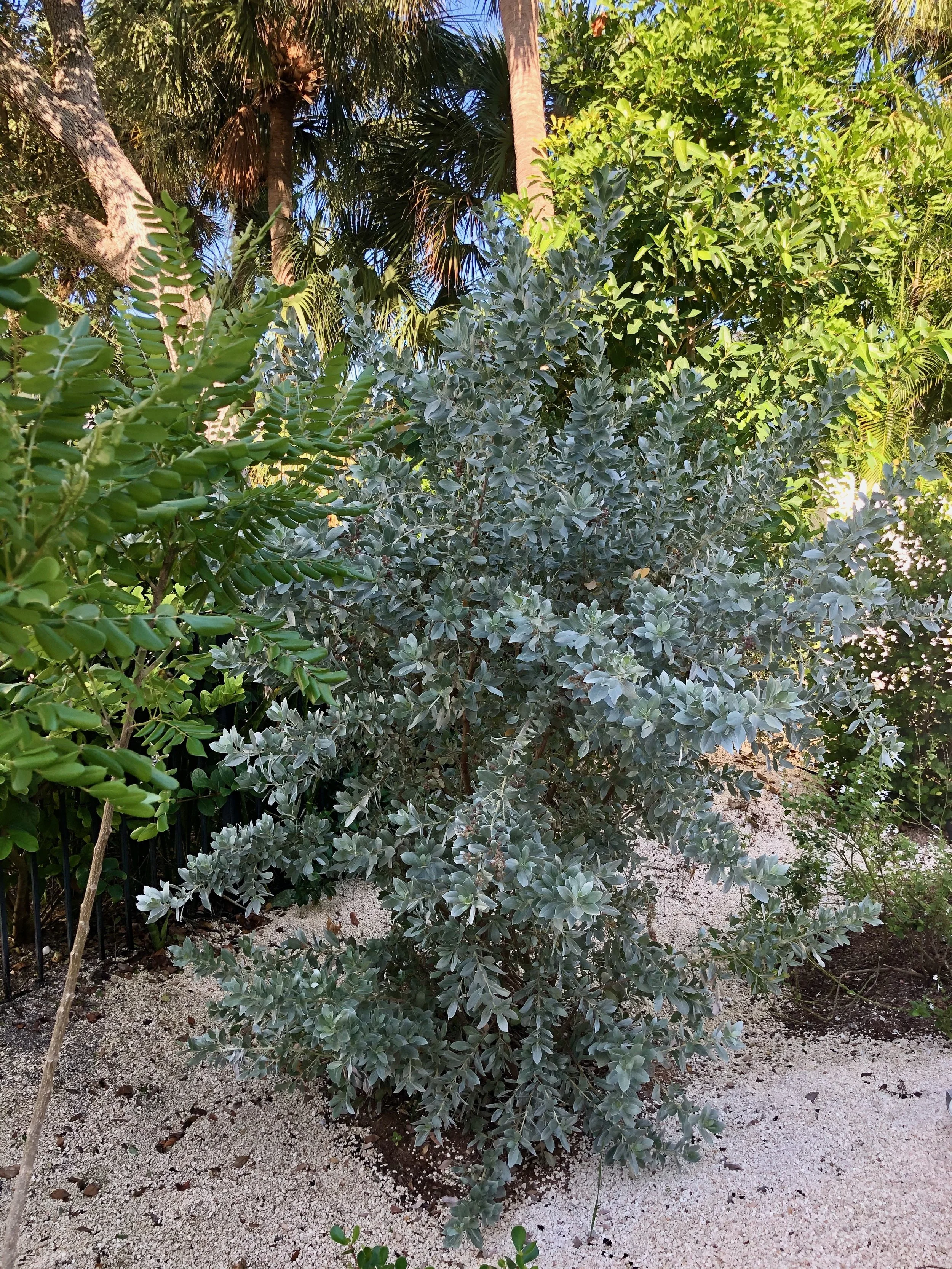
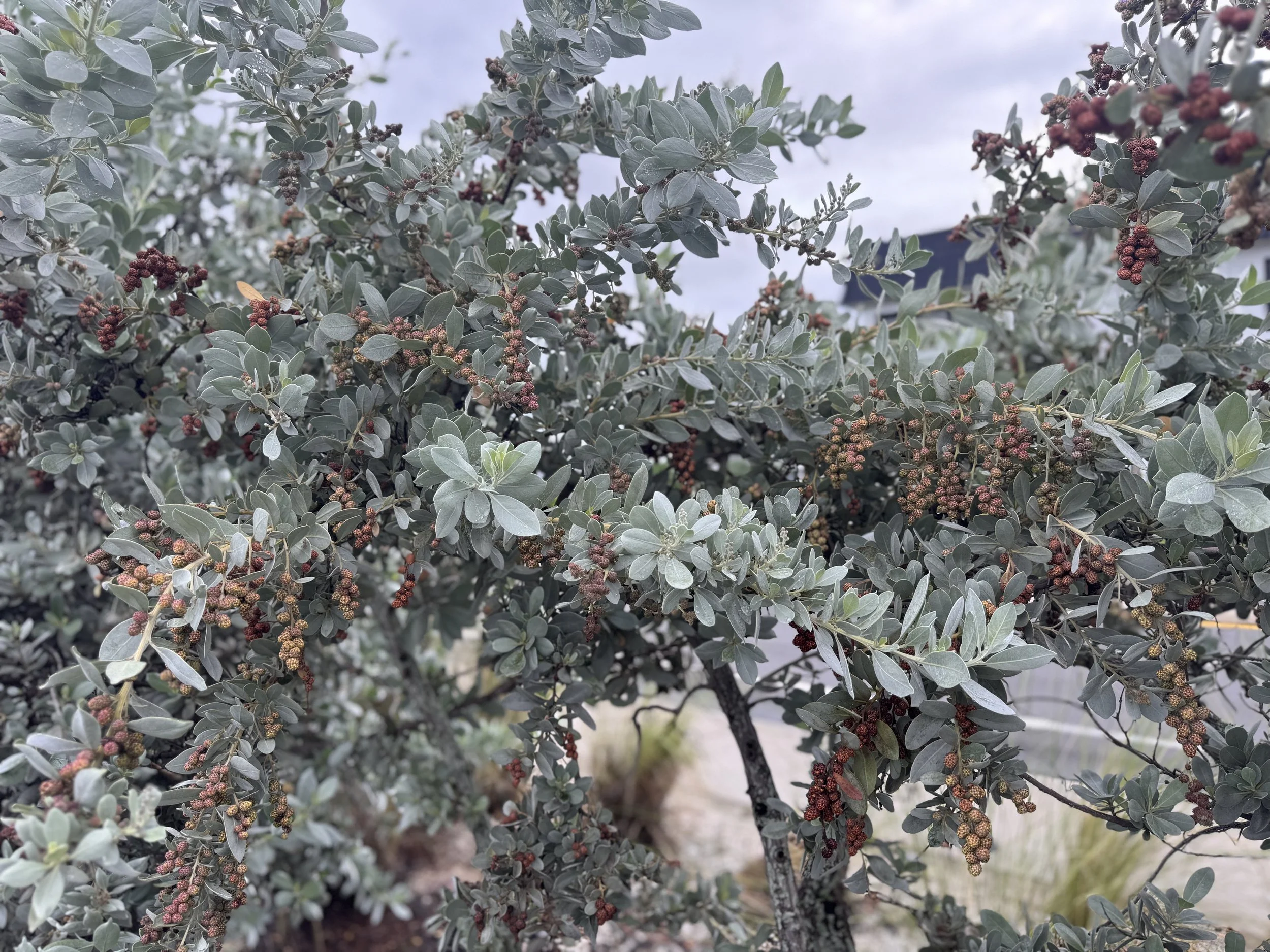
Conocarpus erectus var. sericeus
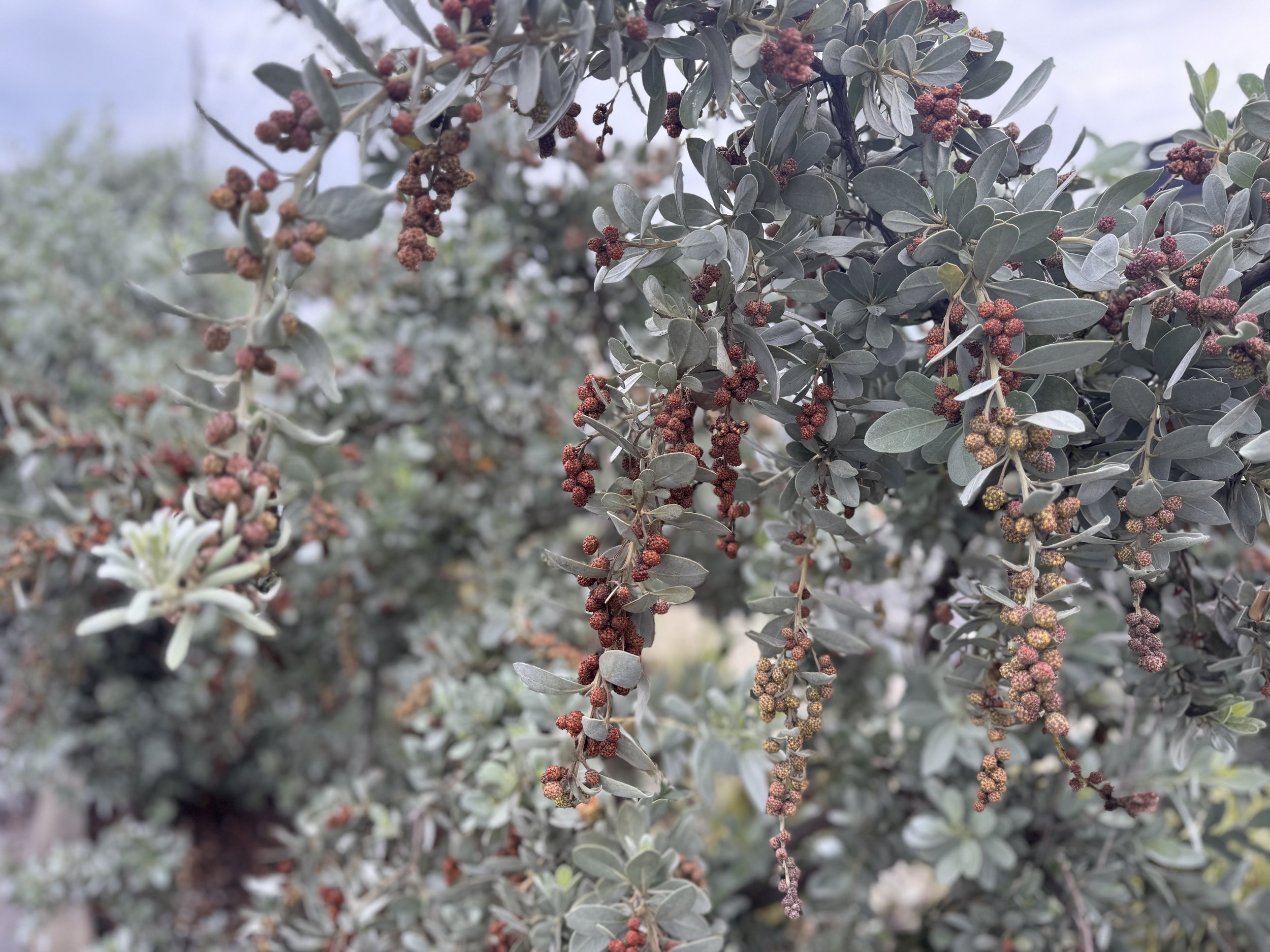
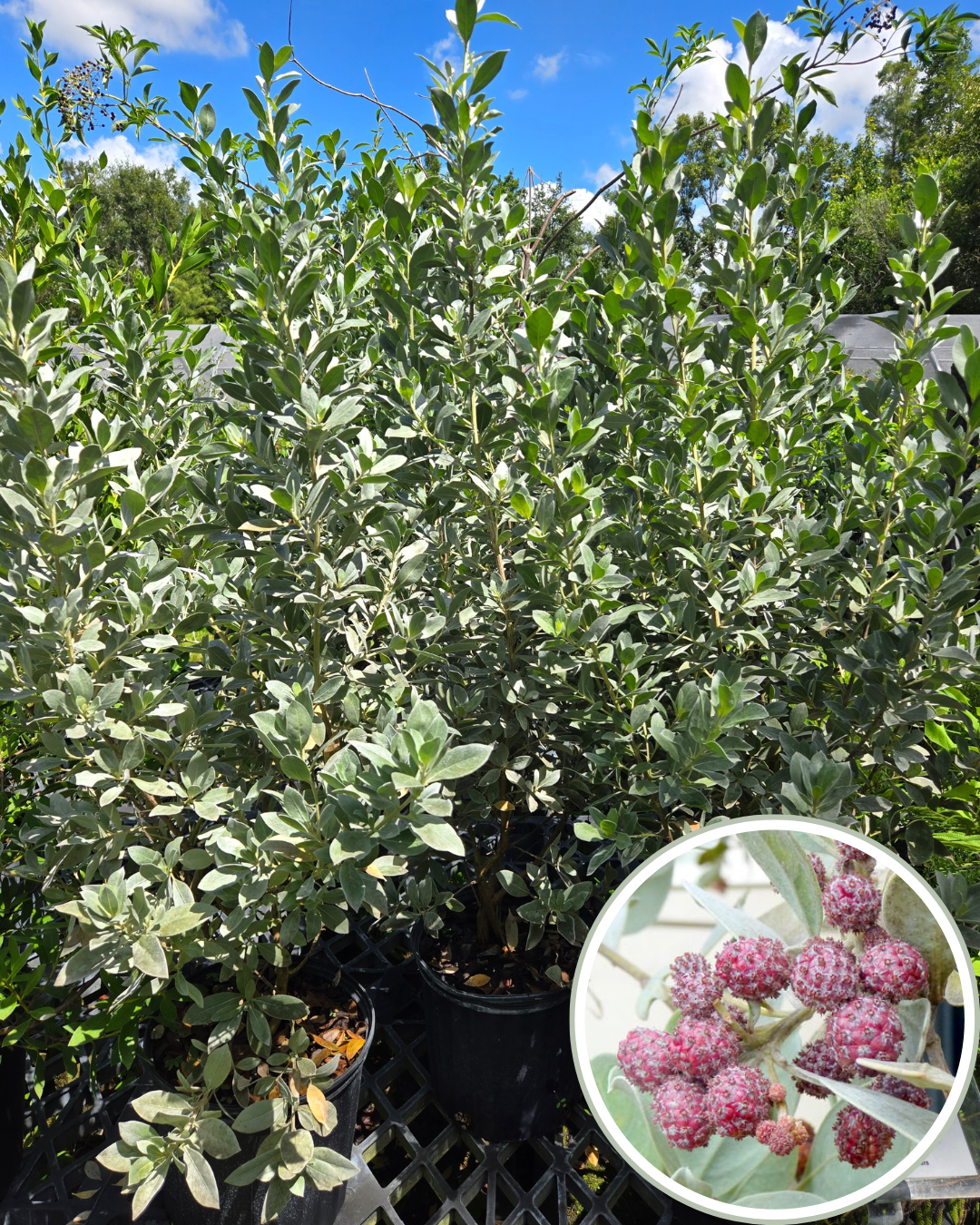
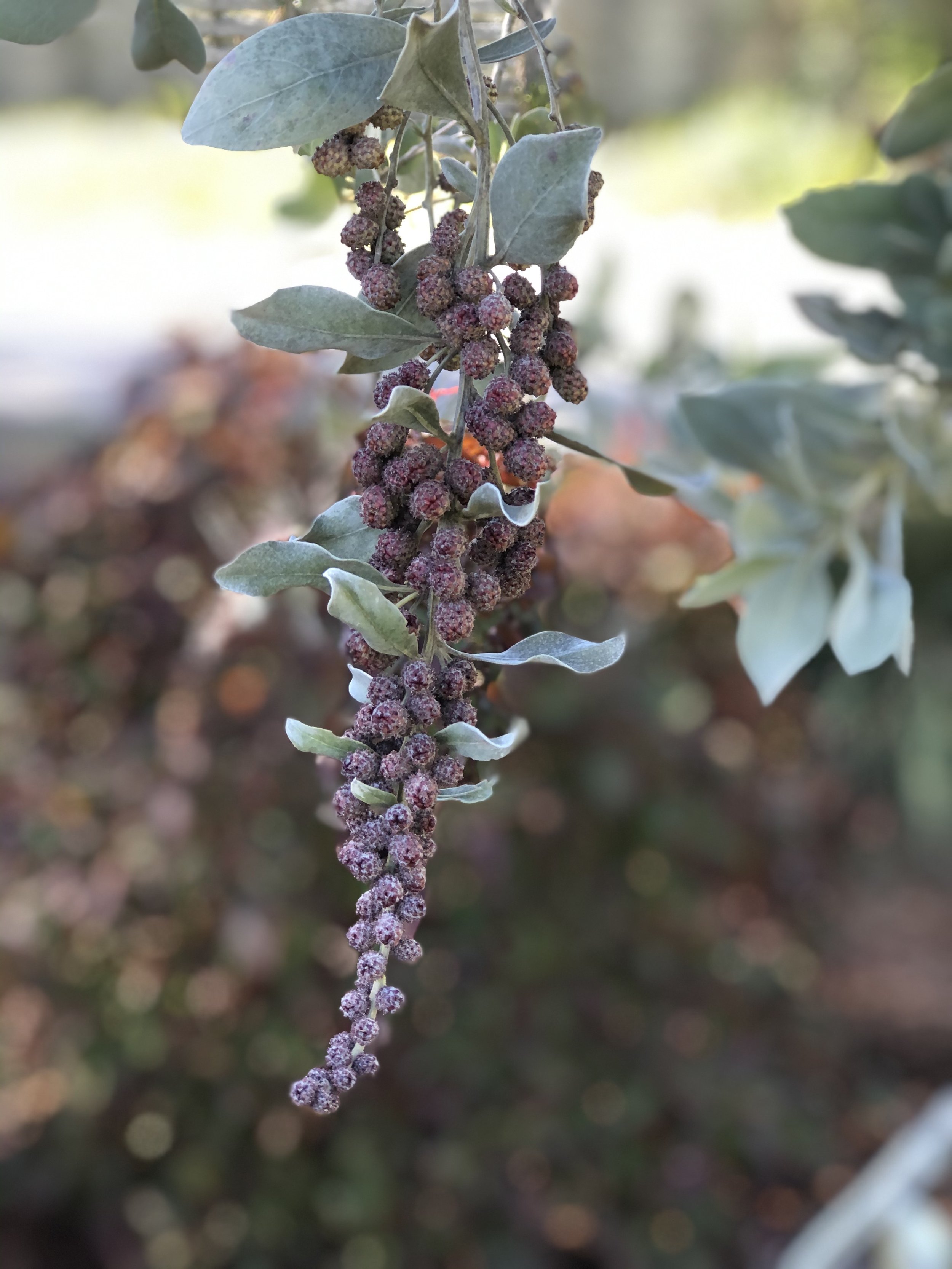
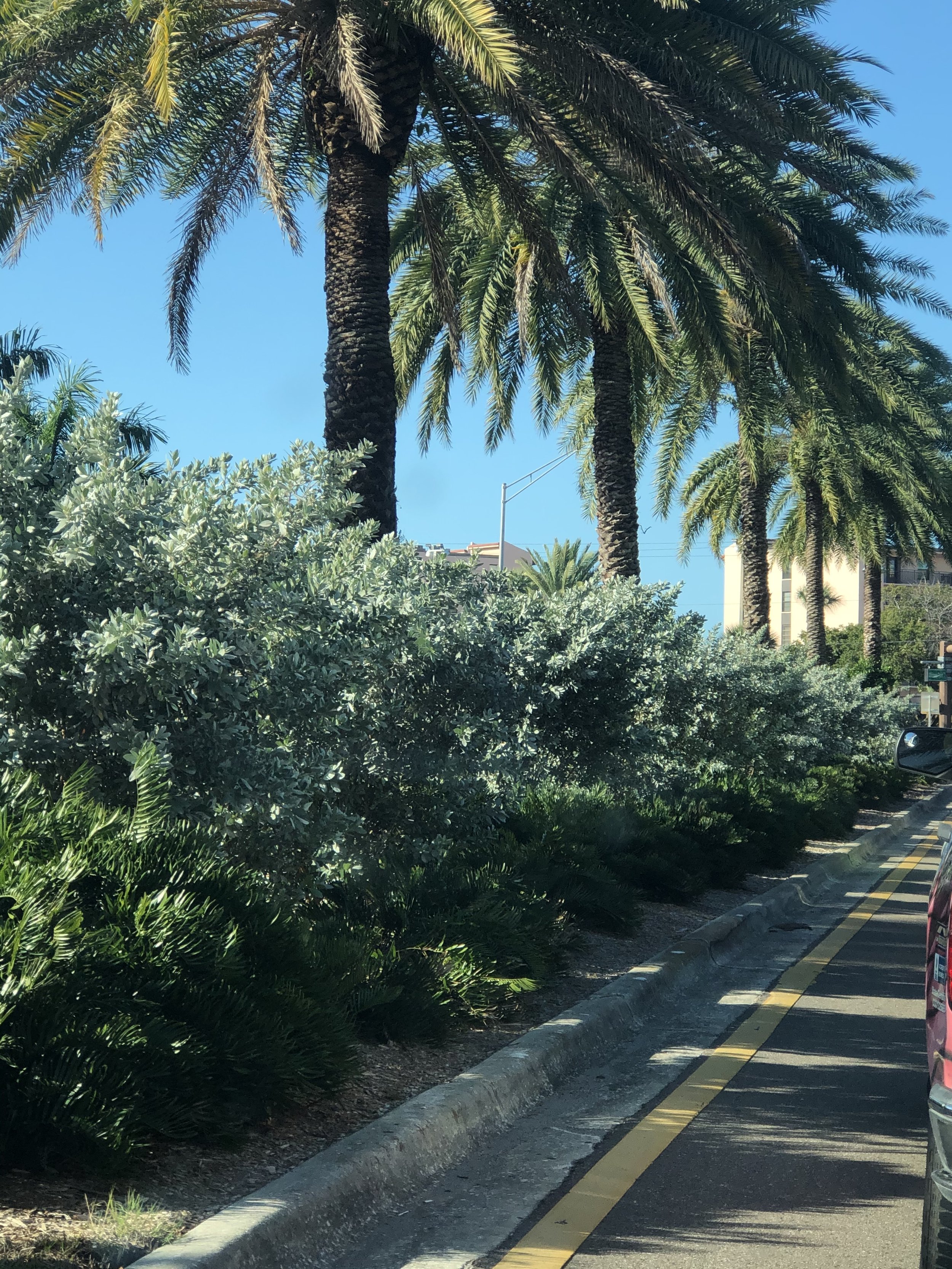
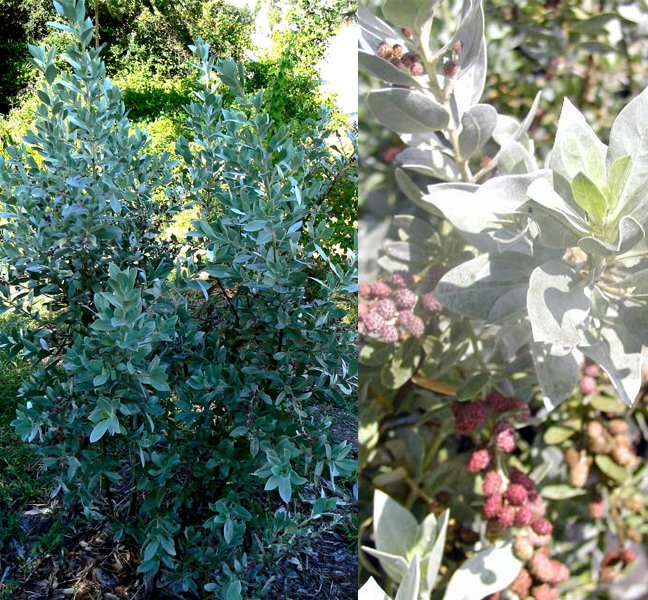
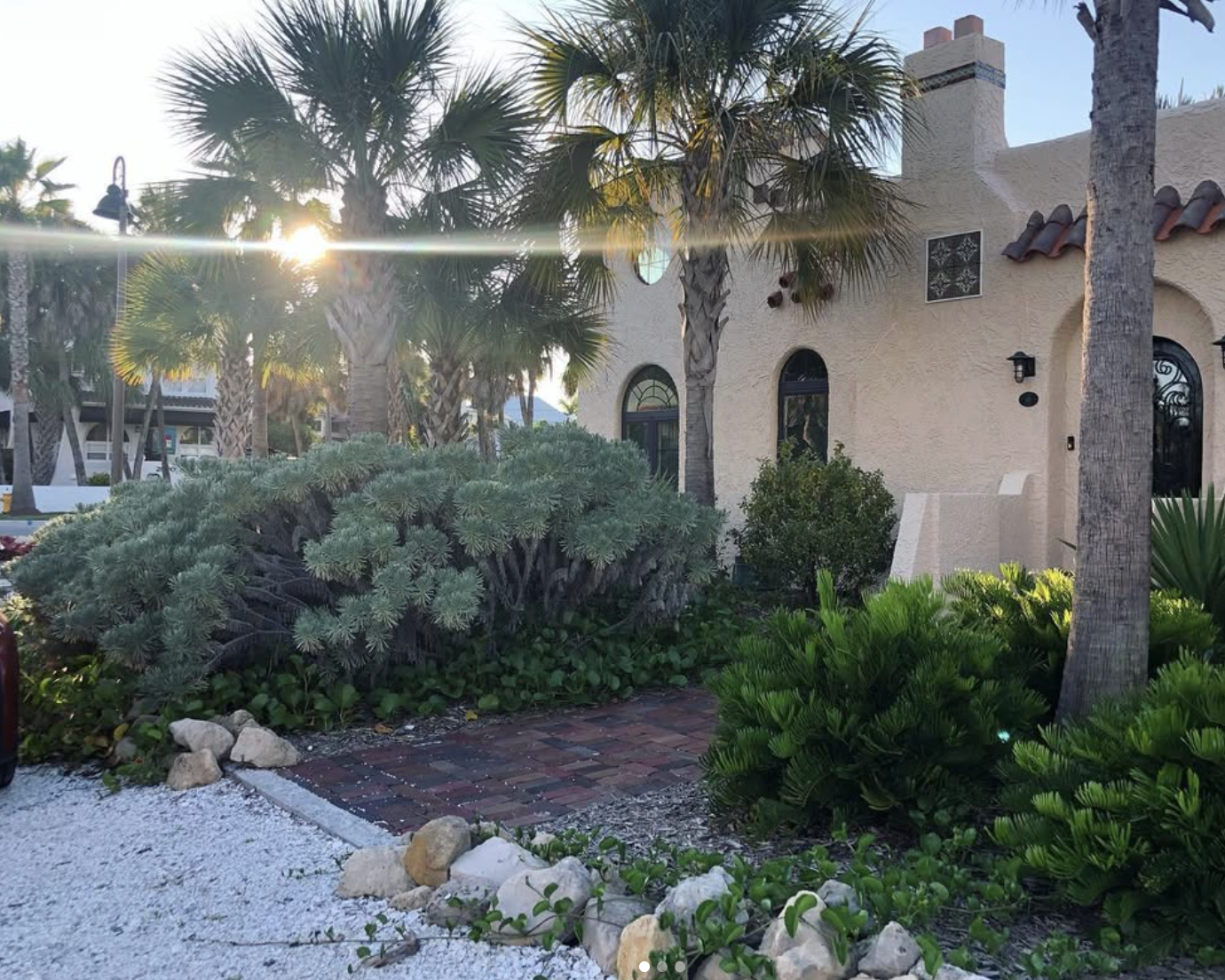
Silver Buttonwood is a unique coastal native shrub or small tree that can reach 20' and has soft silvery leaves and small brown berries that look like wood buttons. While it thrives in coastal landscapes, taking salt inundation and salty soils like a champ, it can be planted inland as well. Silver Buttonwood can be used as a specimen tree, part of a natural privacy screen or pruned into hedge.
Ficus aurea
Strangler Fig is a native evergreen tree that grows to be 40’-60’ tall with an equally large canopy. They have dark green leathery leaves and produce small, dark figs that provide a food source for birds and other wildlife. They grow best in full sun to partial shade, and thrive in a wide range of soil types and are moderately drought and salt tolerant once established.
Ilex vomitoria ‘Pendula’
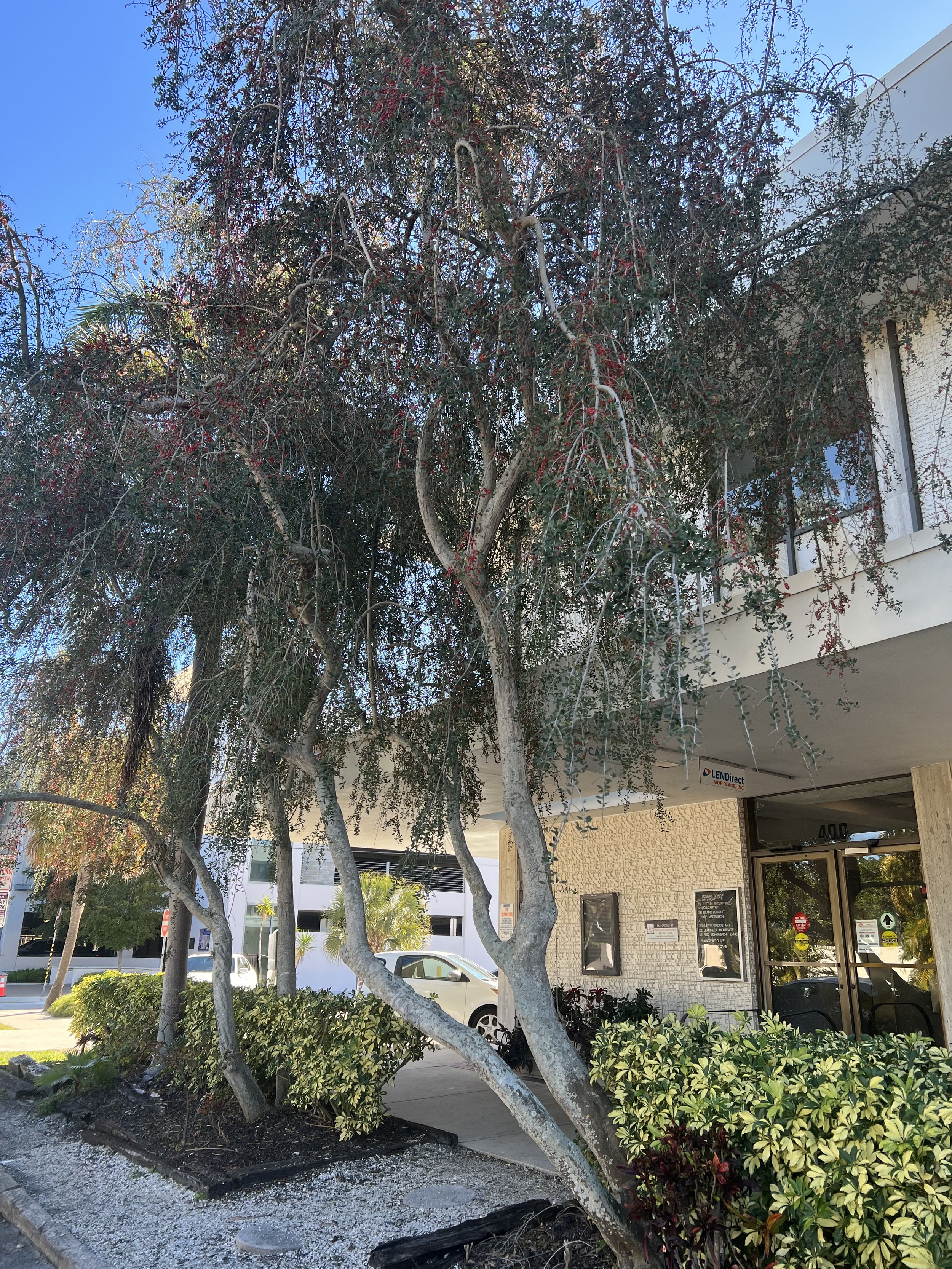
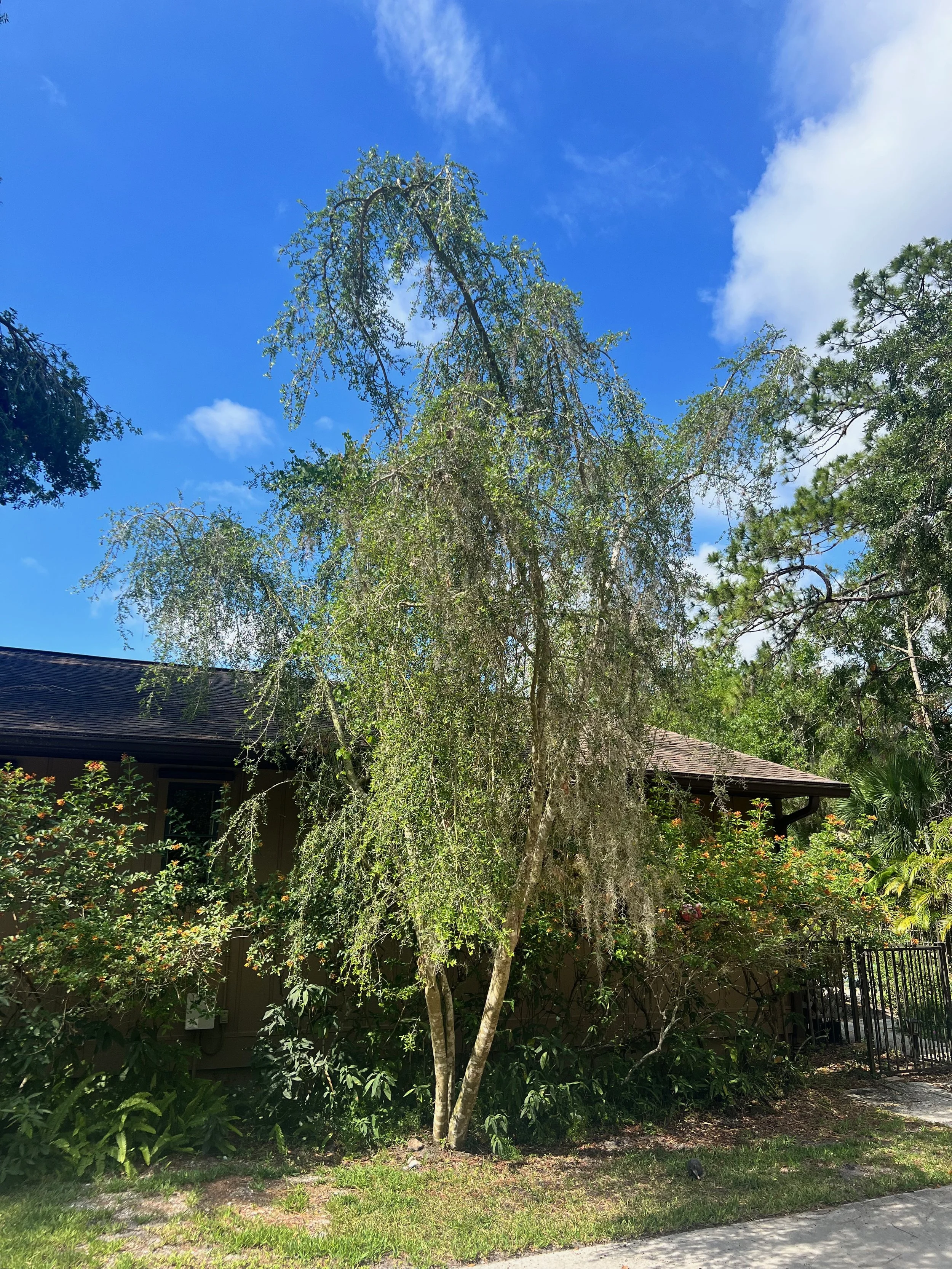
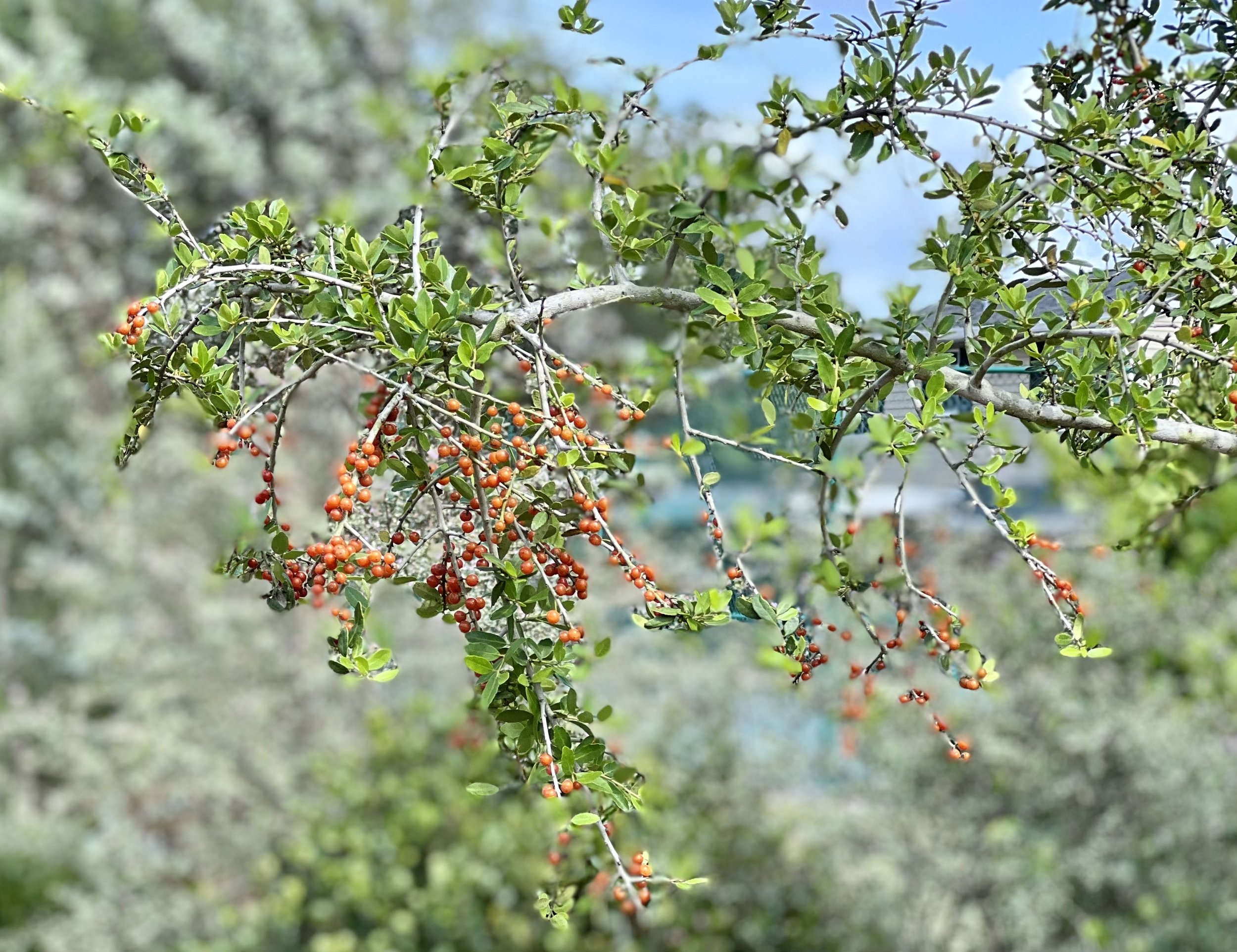
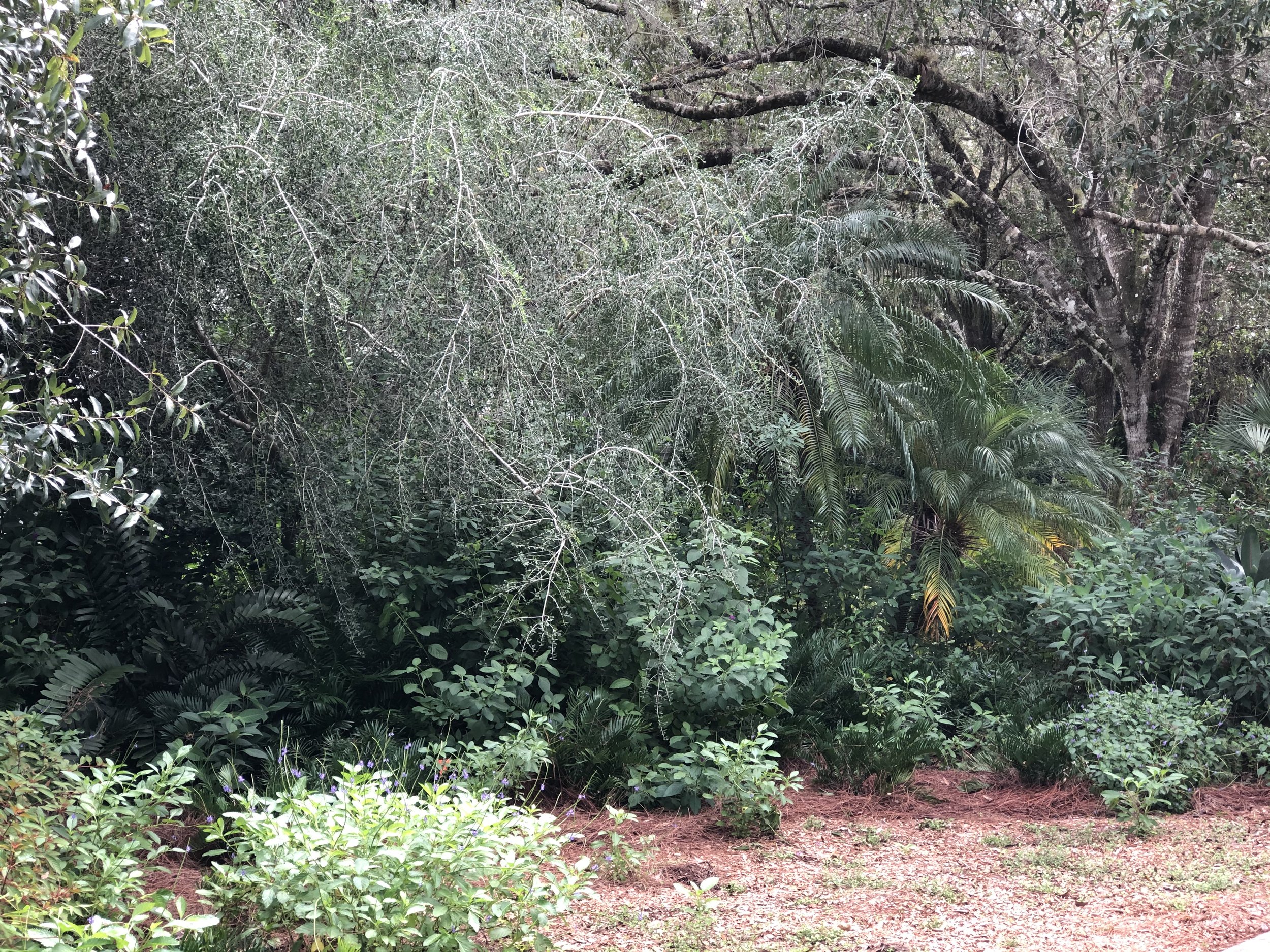
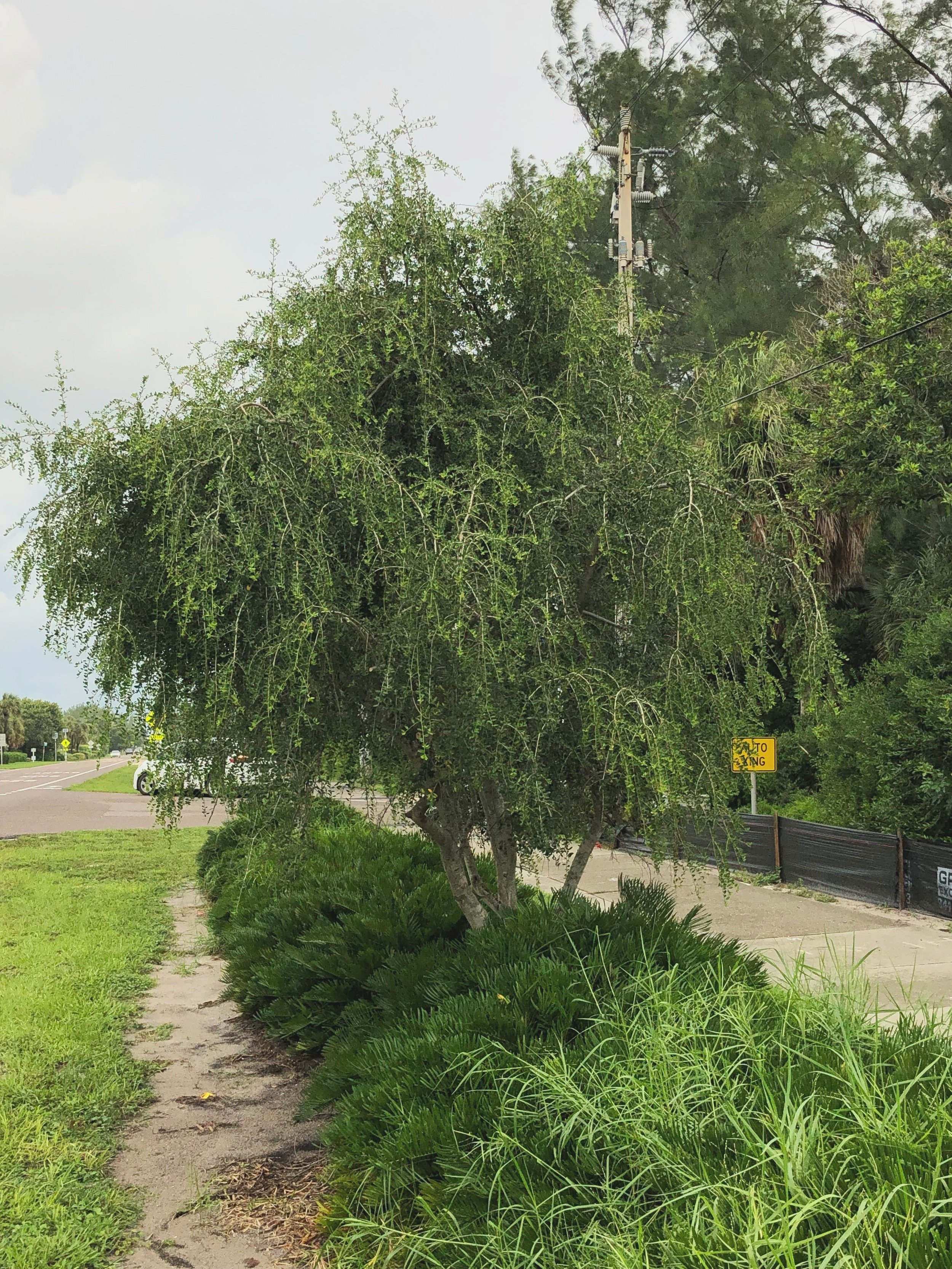
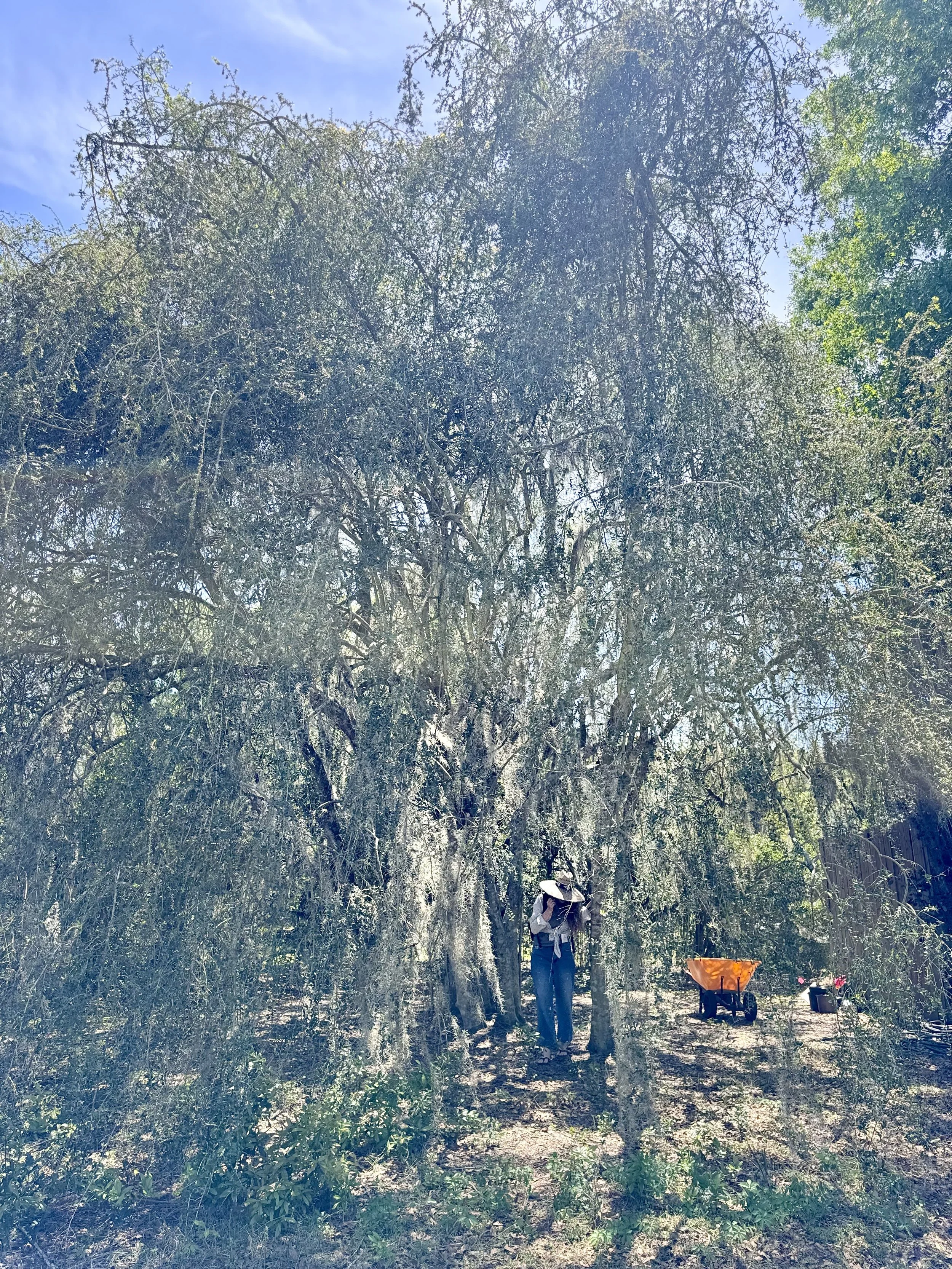
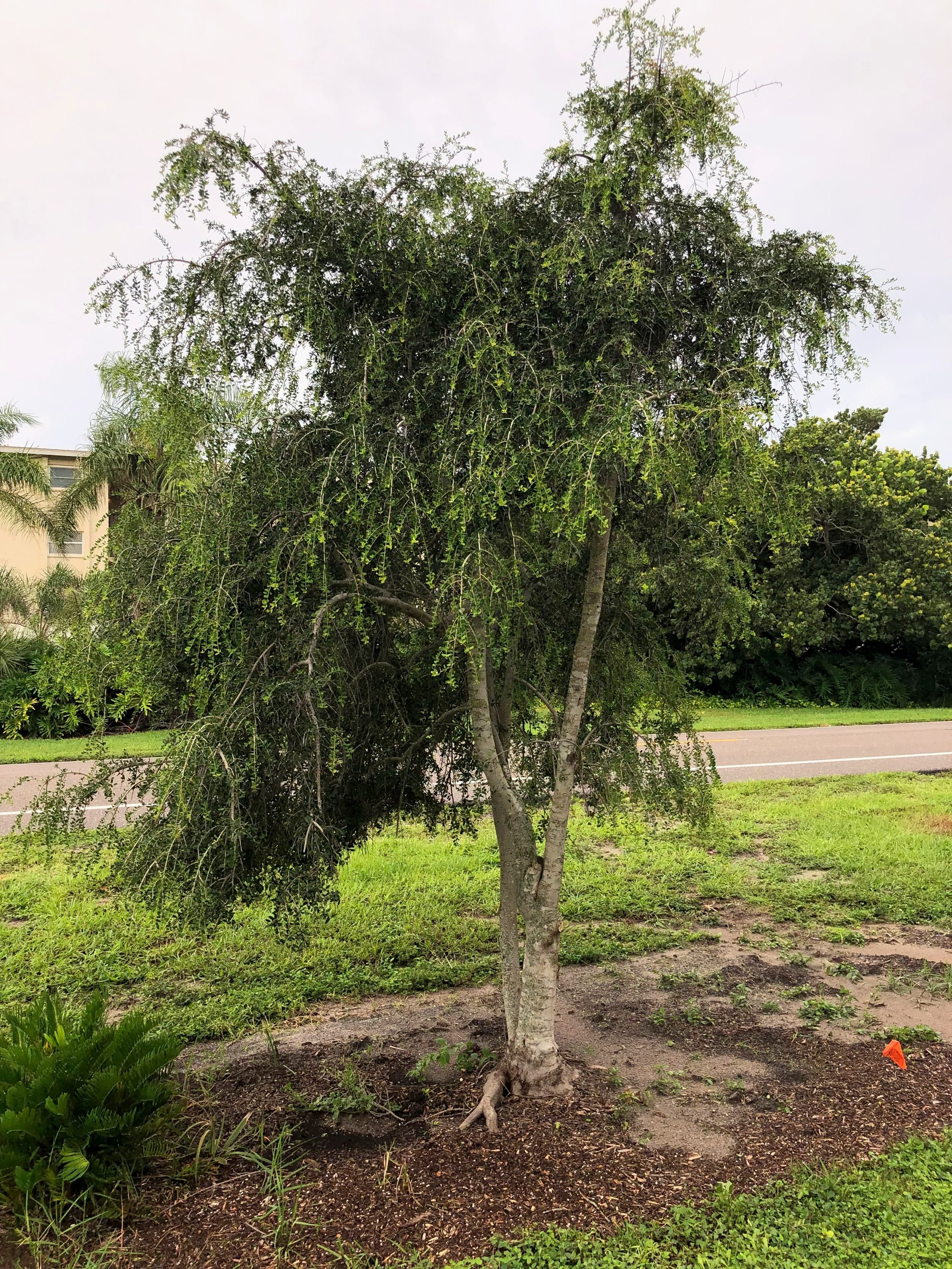
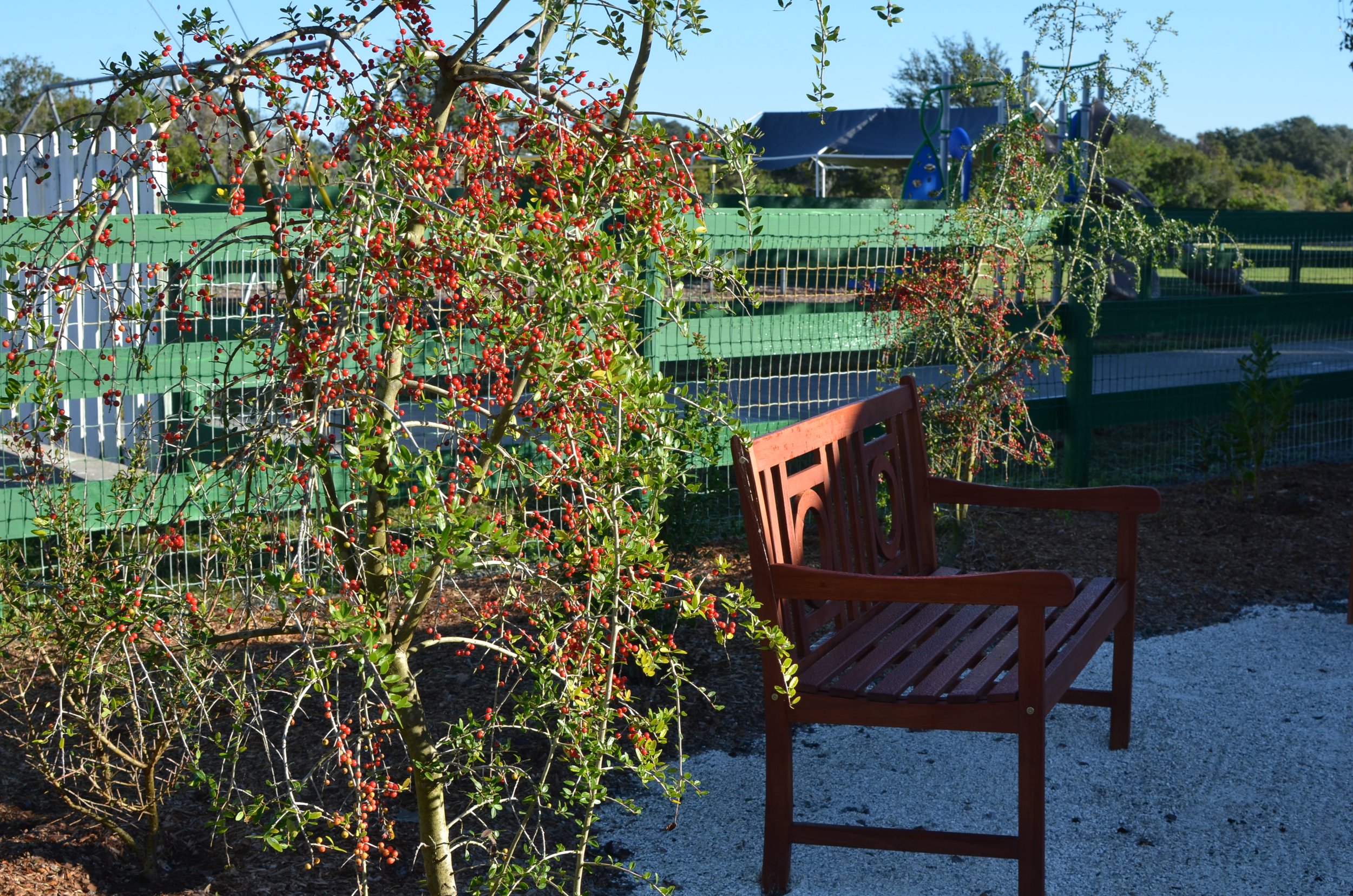
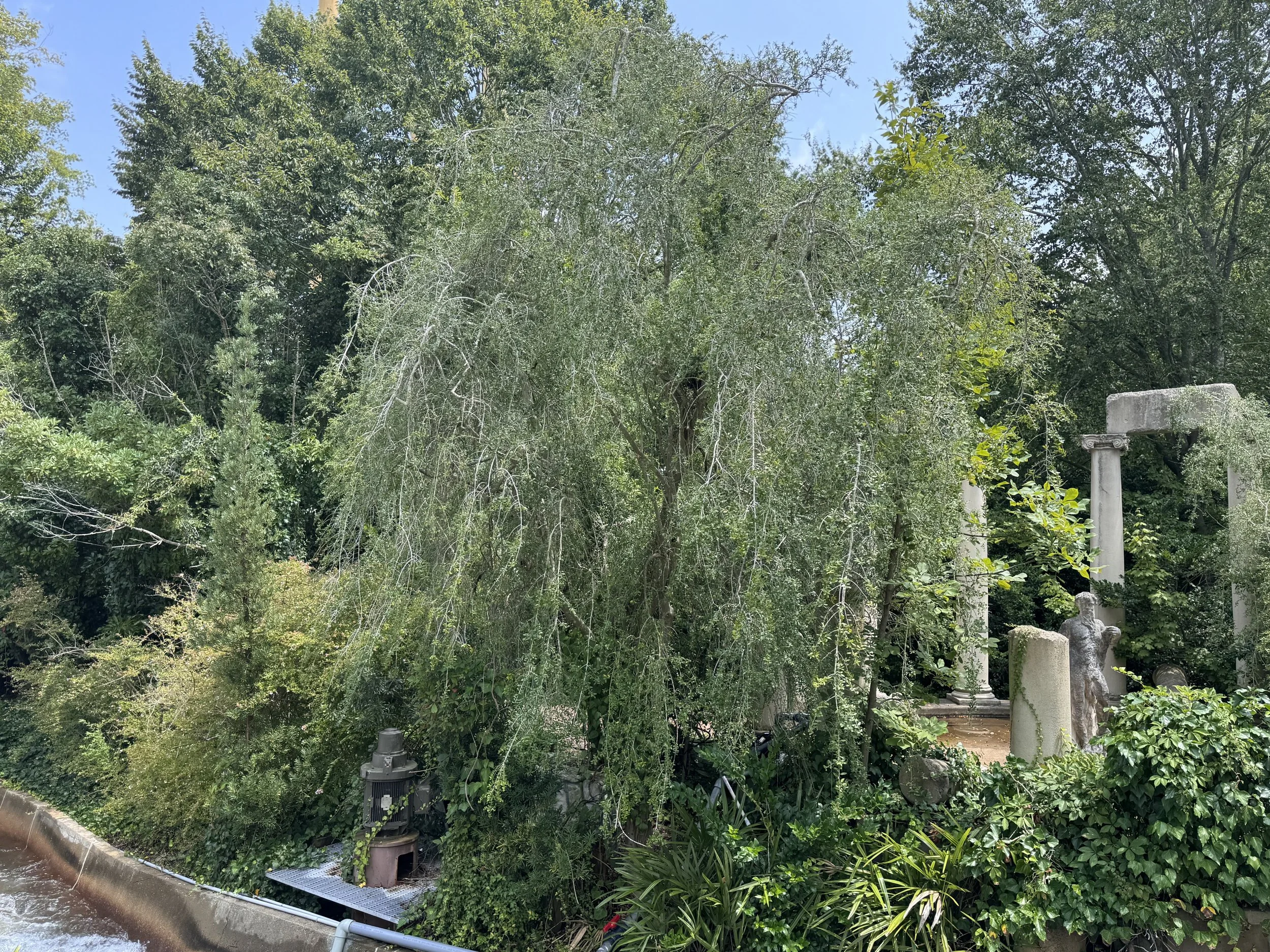
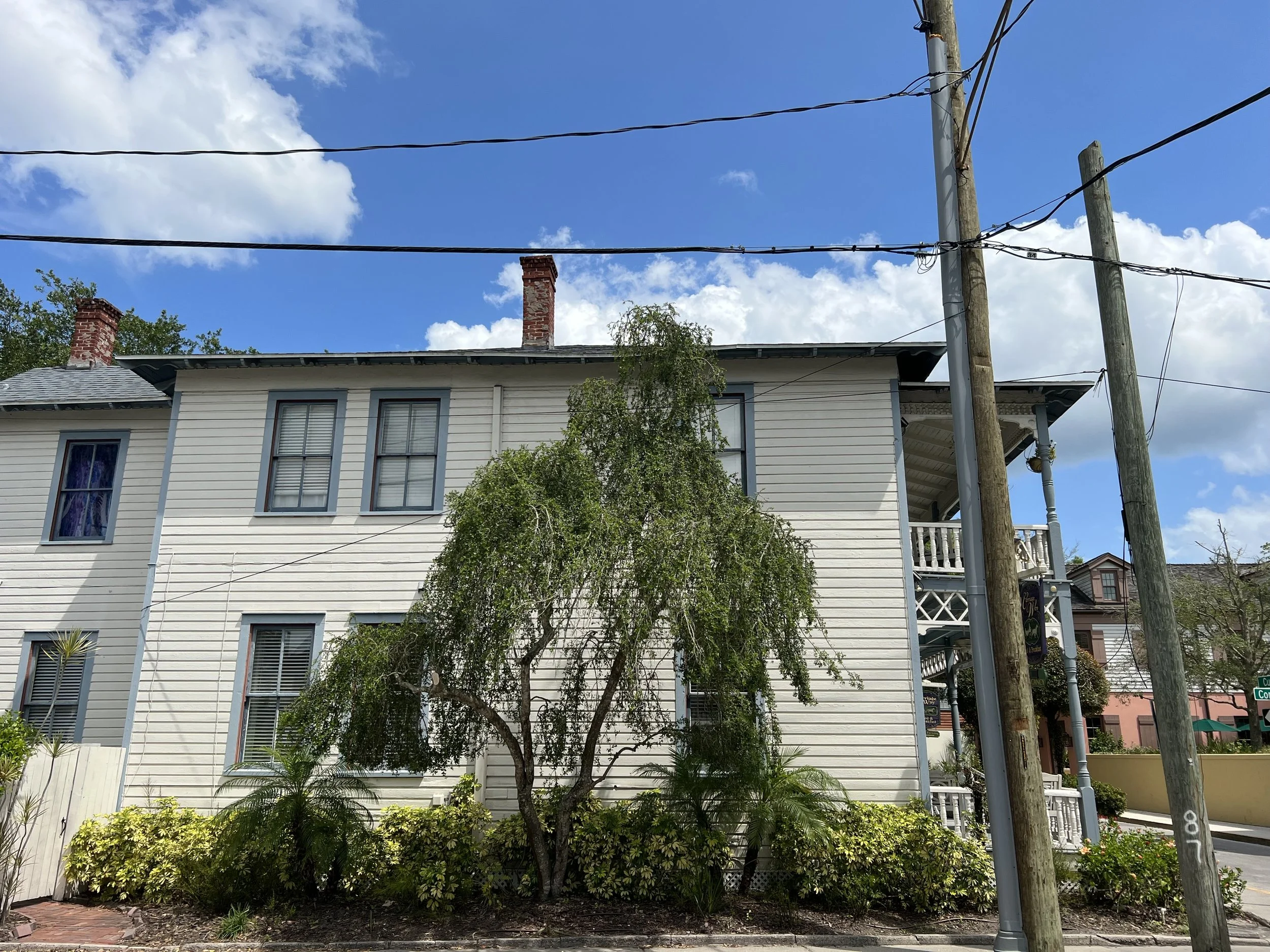
Weeping Yaupon Holly is a graceful cultivar of the native yaupon holly that grows 15-25 feet tall with distinctive drooping, pendulous branches that create an elegant weeping form. This evergreen cultivar features the same small, leathery dark green leaves as the species and produces inconspicuous flowers followed by bright red berries on female plants that attract birds. The cascading branches give it a unique architectural quality, making it an excellent focal point or specimen tree for large landscapes. Like its parent species, it's extremely drought and salt-tolerant, adaptable to various soil conditions, and requires minimal maintenance once established.
Turnera ulmifolia ‘Alba’
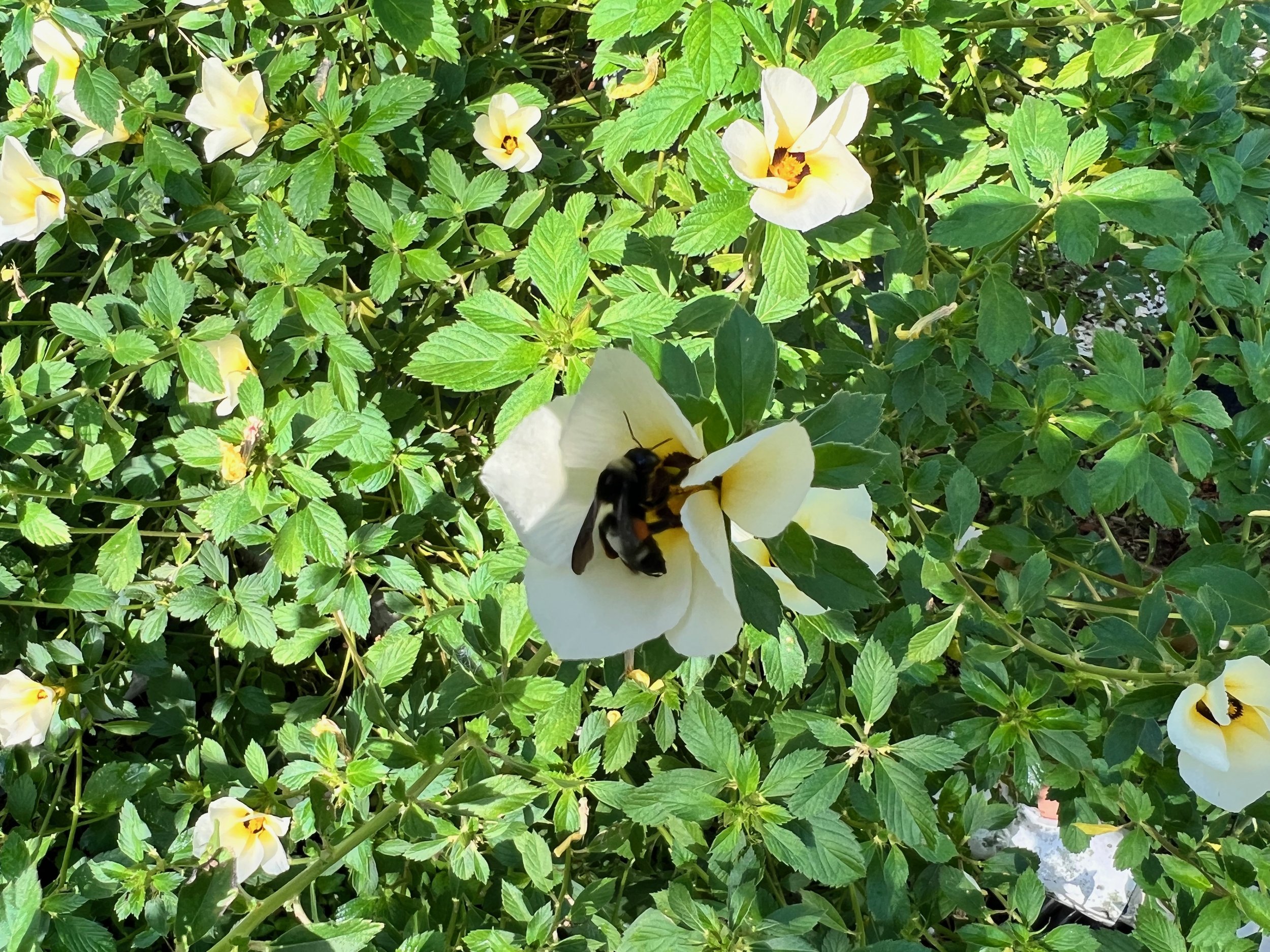
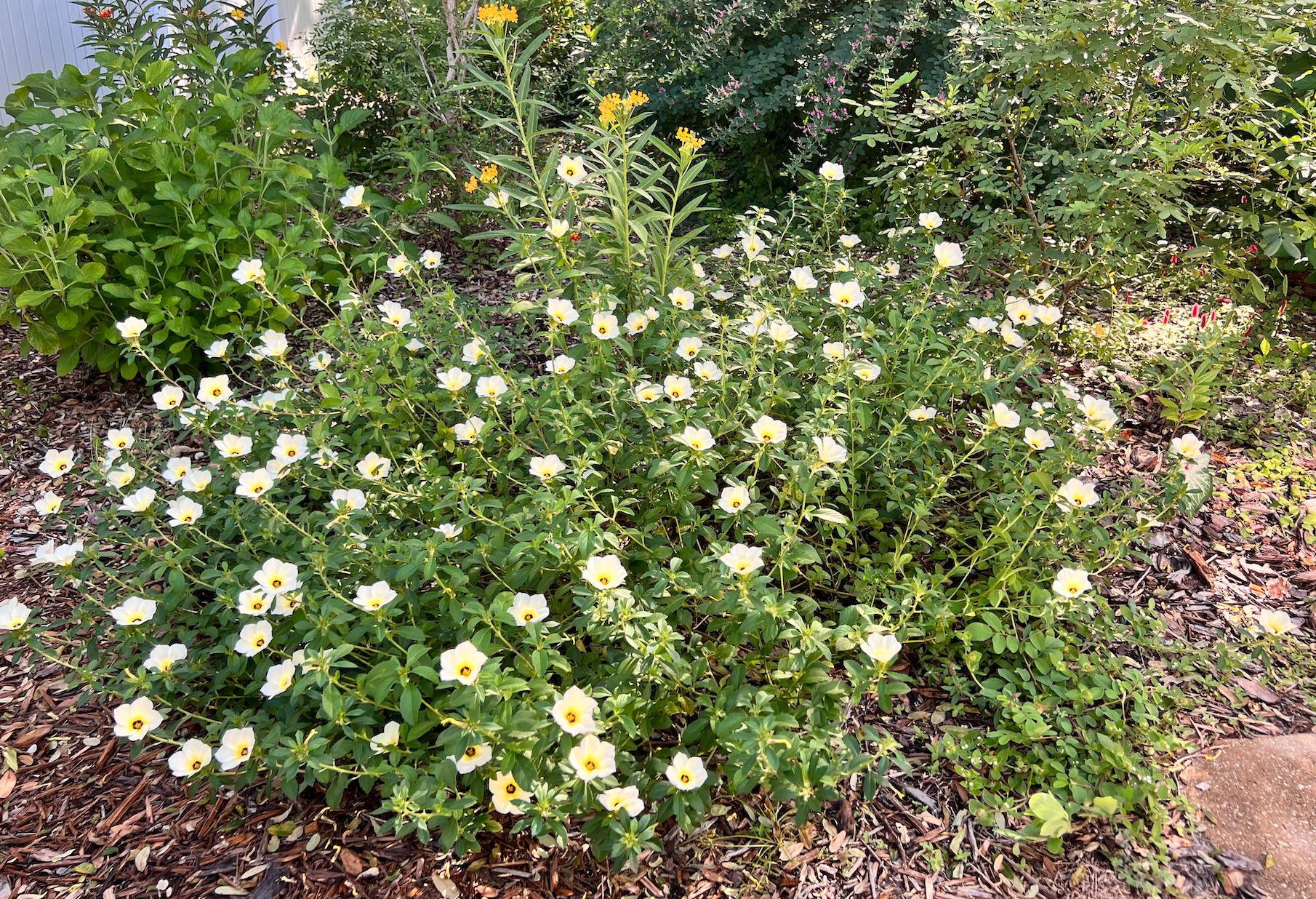
White Beach Buttercup is an eye-catching non-native Florida friendly that blooms throughout the year. It is a low-growing, sprawling subshrub with dark green leaves and flowers that open in the morning and close up by noon. White Beach Buttercup grows in full sun to part shade and average to moist well-draining soils. While it can grow a little leggy, you can trim it back to keep it more dense and amend the soil with a slow-release organic fertilizer or compost occasionally. The creamy-white flowers with a yellow blushed, “black-eye” attract bumblebees, carpenter bees, hummingbirds, and other pollinators.
Plumbago zeylanica
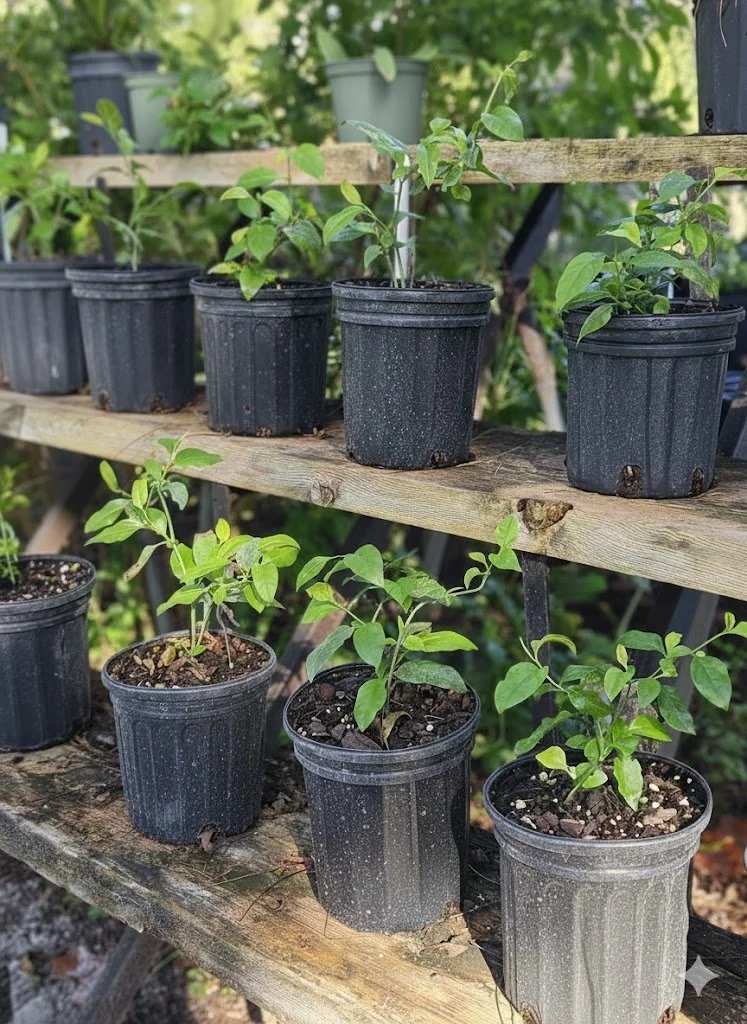
White Plumbago is a charming, evergreen, perennial, native vine that deserves a spot in every Florida garden! White Plumbago is a vigorous climber or groundcover, reaching 4', with a sprawling growth habit featuring delicate white tubular flowers and sticky seed capsules that attract butterflies and beneficial pollinators. It thrives in partial shade to full sun and is deer resistant and drought tolerant once established.
Psychotria nervosa
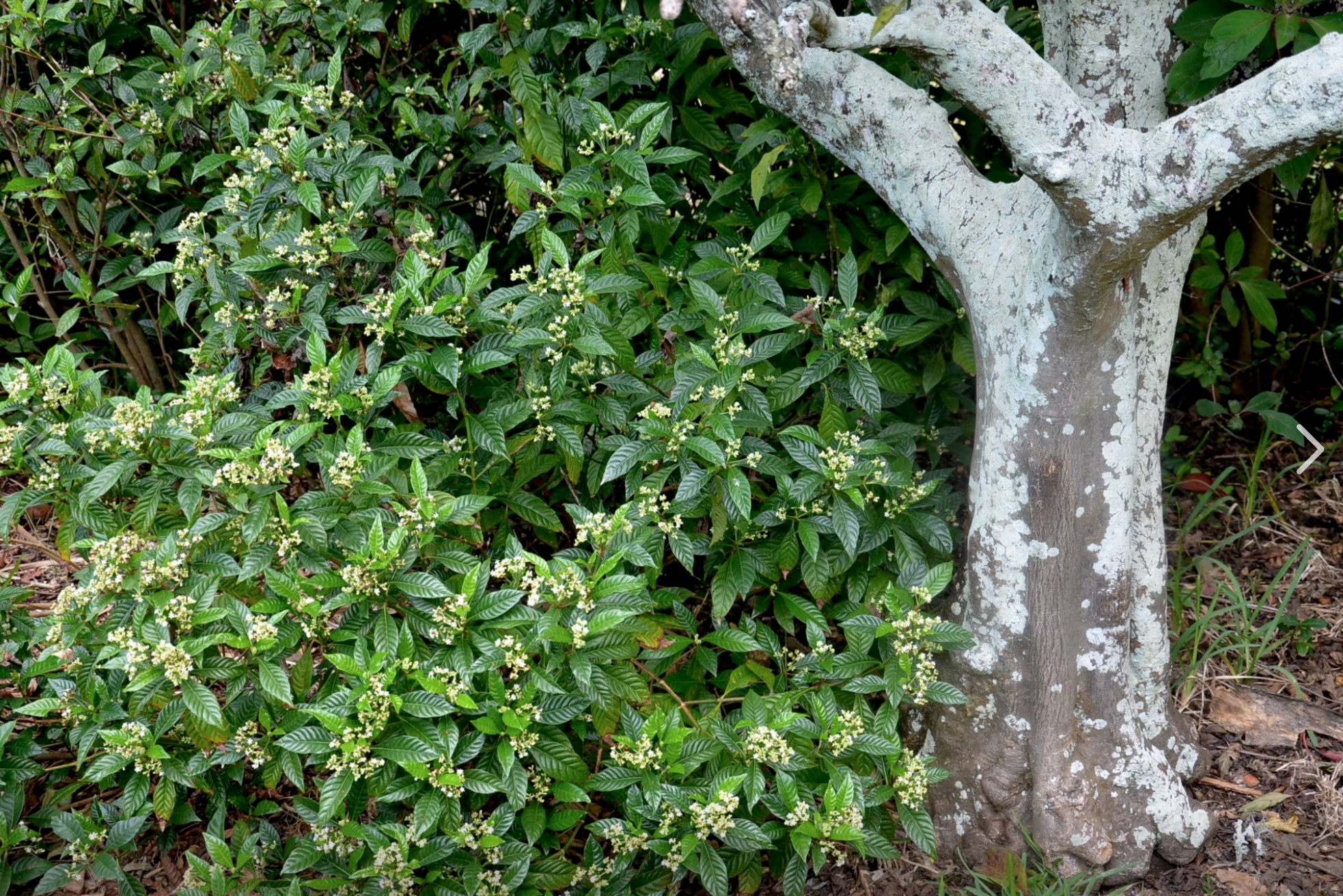
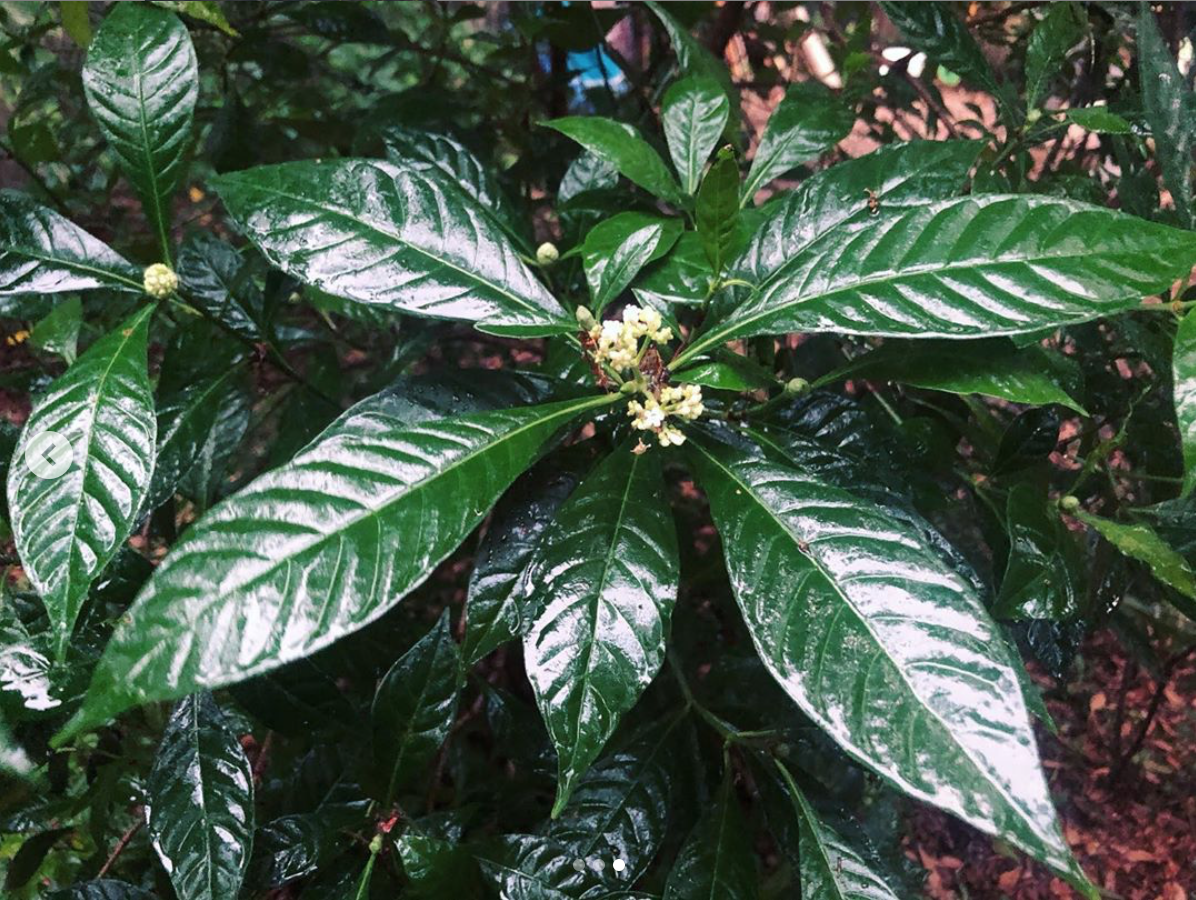
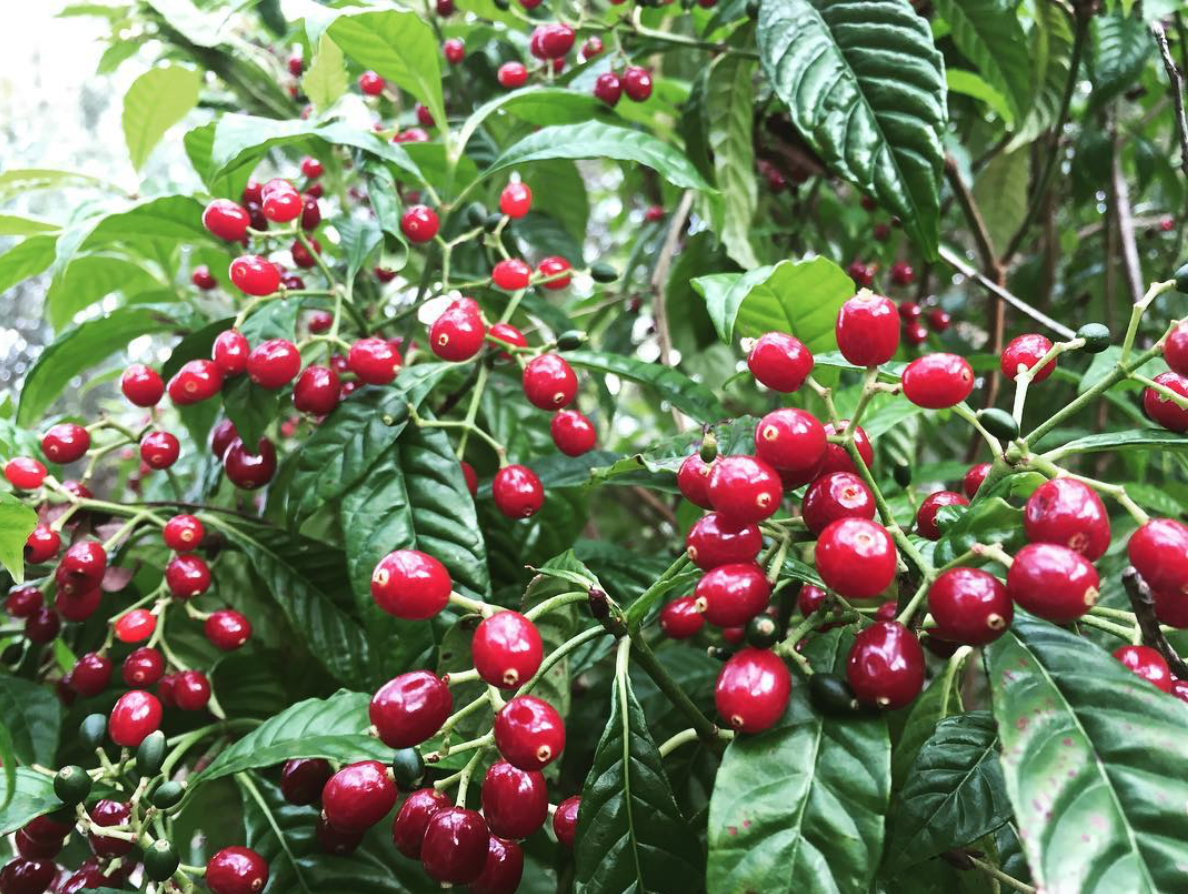
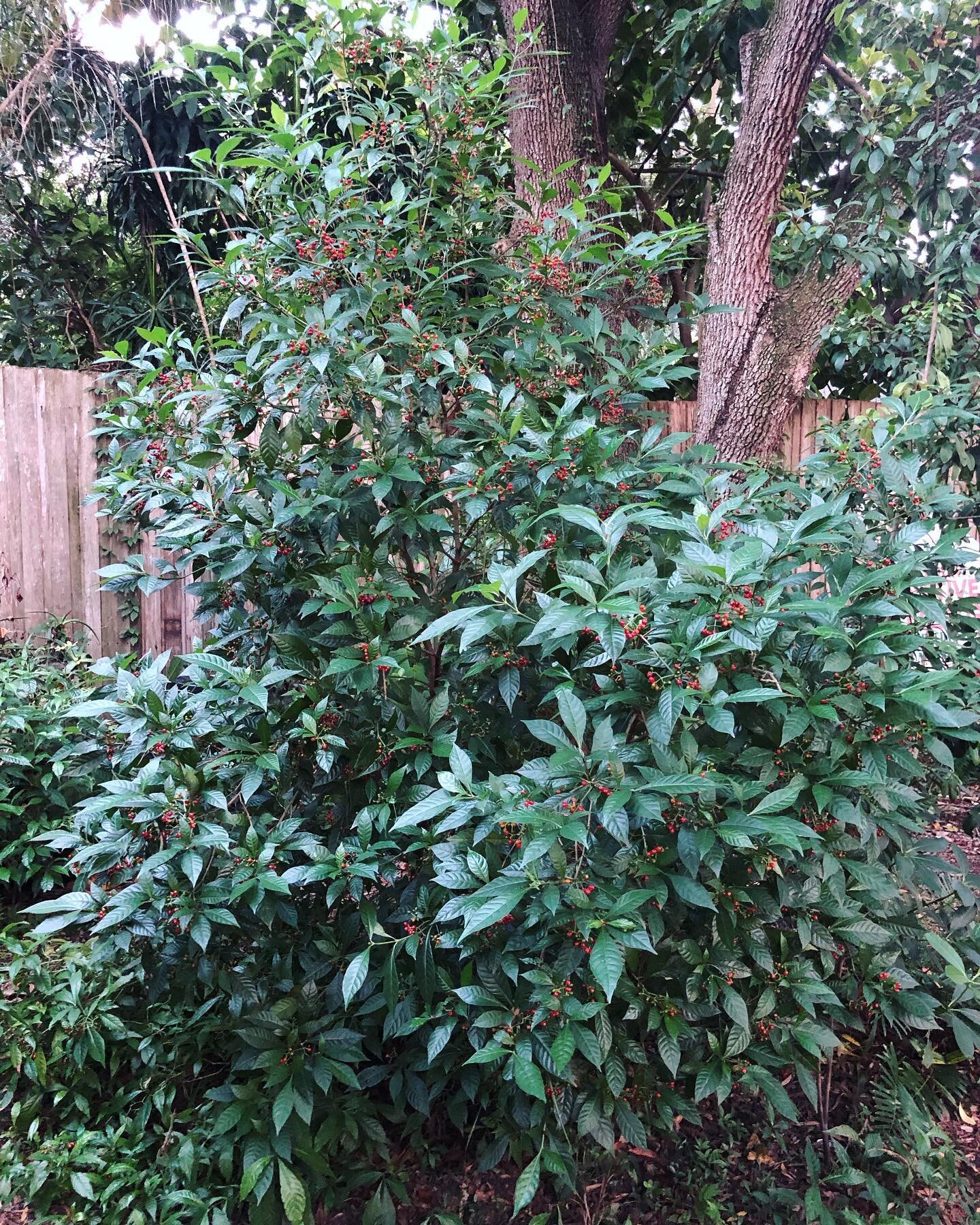
Wild Coffee is an evergreen shrub native to Florida and the southeastern United States that grows 4’-10’ tall with glossy, dark green leaves featuring deeply impressed veining. This versatile member of the coffee family produces clusters of small, fragrant white flowers at branch tips in spring and summer, followed by bright red berry-like fruits that resemble coffee beans but contain no caffeine. The attractive red berries provide important food for birds and wildlife throughout summer and fall. Extremely shade-tolerant and adaptable to various growing conditions, it thrives in partial to full shade with moderate drought tolerance, making it an excellent choice for informal hedges, understory plantings, and natural landscapes in zones 9-11.
No results match your search. Try removing a few filters.