Hi Friends!
We offer PICK UP or LOCAL DELIVERY only (NO SHIPPING).
Thank you!
Thursday–Sunday, 10am–4pm | 941-322-1915
We offer PICK UP or LOCAL DELIVERY only (NO SHIPPING).
Thank you!
Thursday–Sunday, 10am–4pm | 941-322-1915
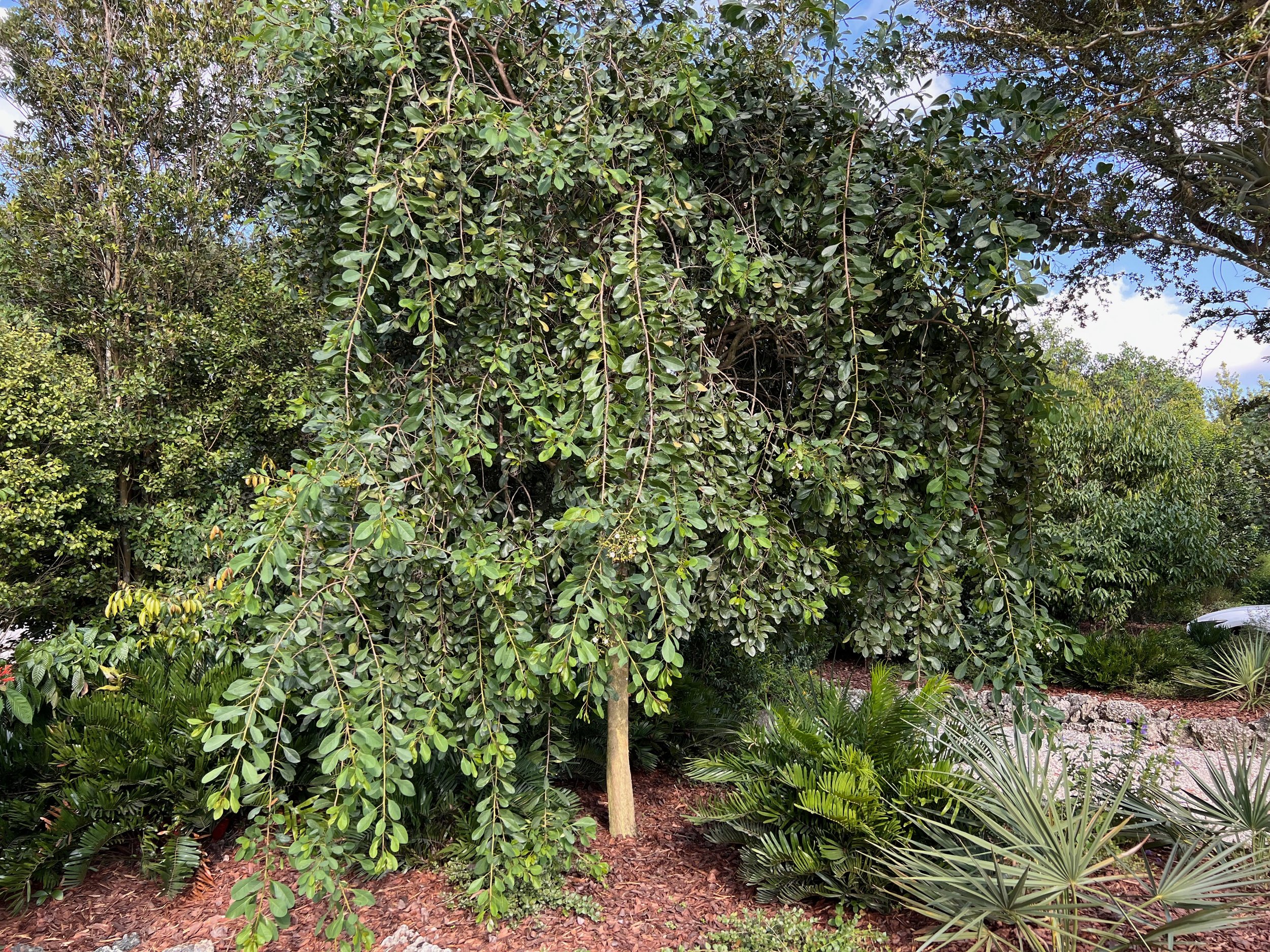
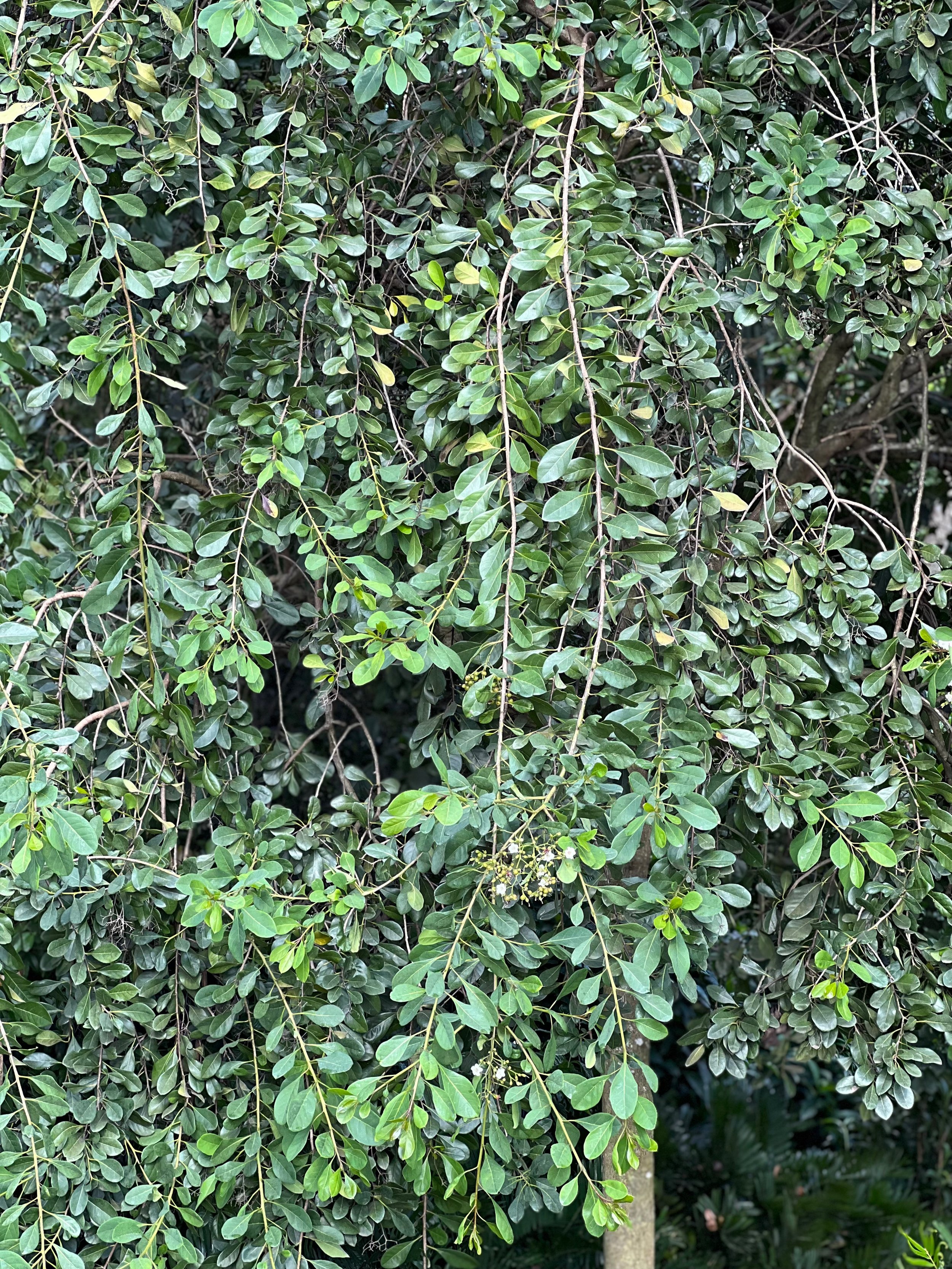
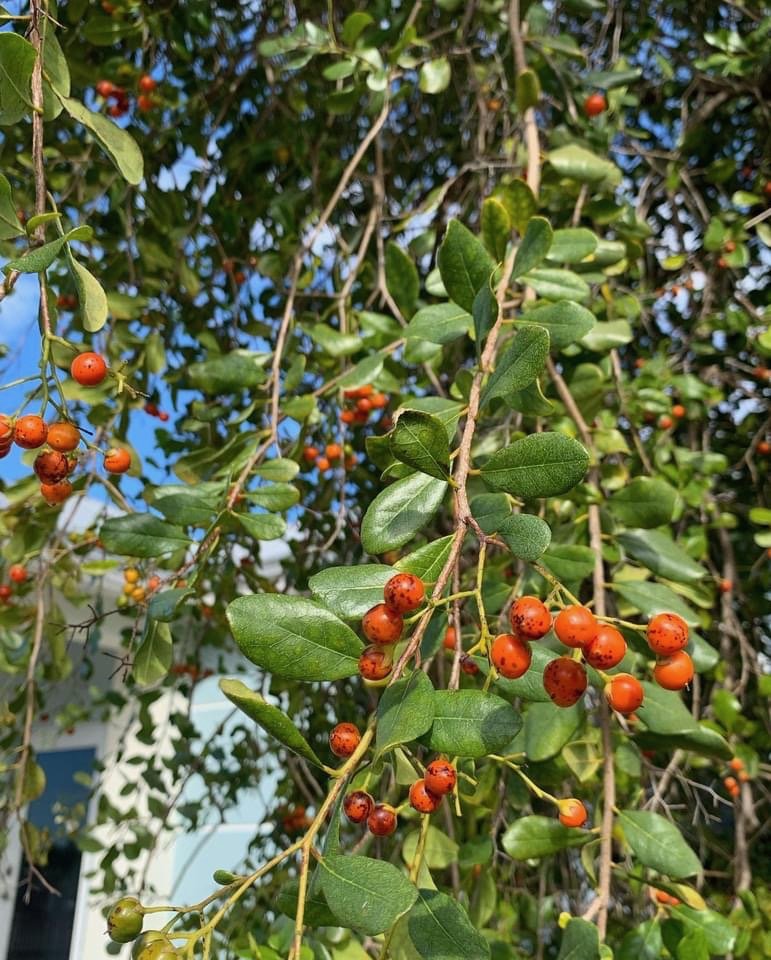
Bourreria succulenta
Bahama Strongbark is a weeping evergreen tree native to South Florida and the Florida Keys that grows 15’-25’ tall with gracefully drooping branches. This member of the borage family features smooth, leathery leaves and produces clusters of fragrant white flowers year-round that attract a diverse array of pollinators including bees, butterflies, hummingbirds, and hummingbird moths. Following the blooms, it develops showy bright orange berries that are highly attractive to birds and other wildlife. Thriving in full sun and well-drained, dry soils with moderate salt tolerance, it naturally occurs in rockland hammocks and can serve as an excellent specimen tree or screening plant in zones 10-11.

Liatris spicata
A statement wildflower for the fall season! Blazing Star is unapologetically bold with tall, electric purple spikes that strut through like they own the garden. It’s the life of the pollinator party with the amount of bees and butterflies it attracts. If your landscape needs a little drama and a whole lot of fabulous in the fall, this is the wildflower you've been waiting for.
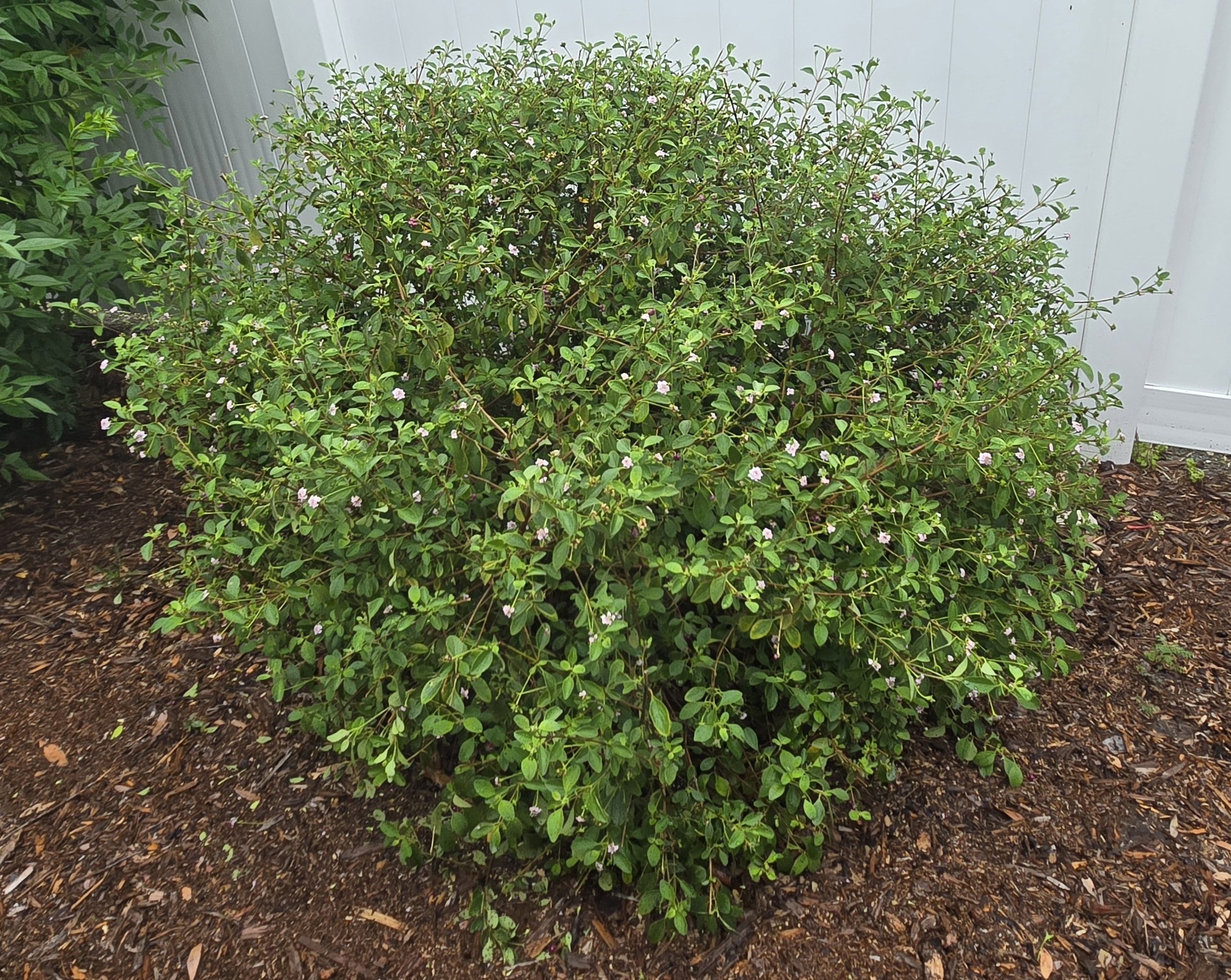
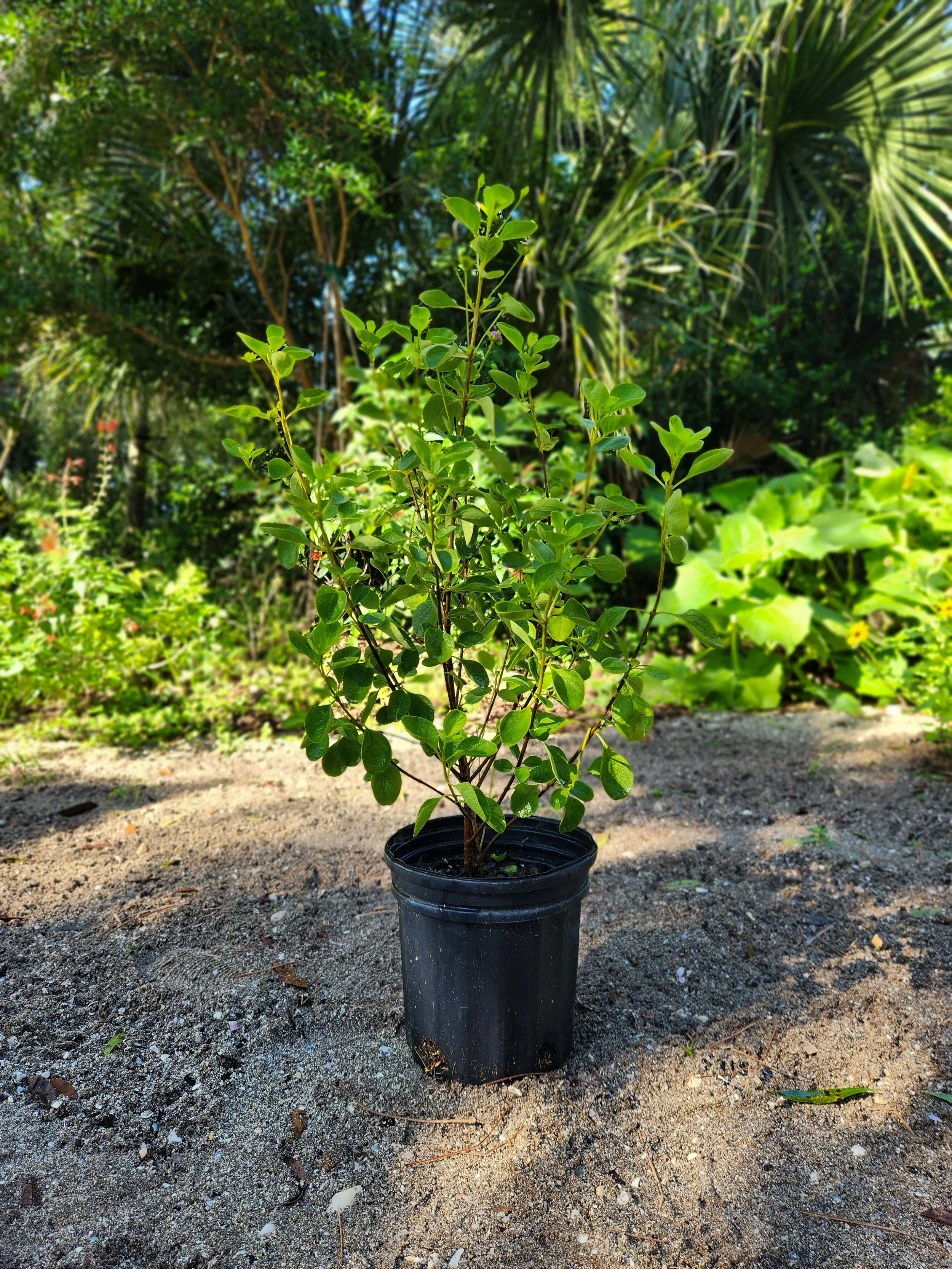
Lantana involucrata
Buttonsage or Wild Lantana is a gorgeous, evergreen, perennial, native shrub that has a place in any home landscape! Buttonsage is a mid sized shrub, growing to 5', with a naturally round growth habit with dense clusters of pastel flowers and bright purple berries that attract pollinators and birds. It prefers sunny, dry conditions and is deer resistant and salt and drought tolerant.
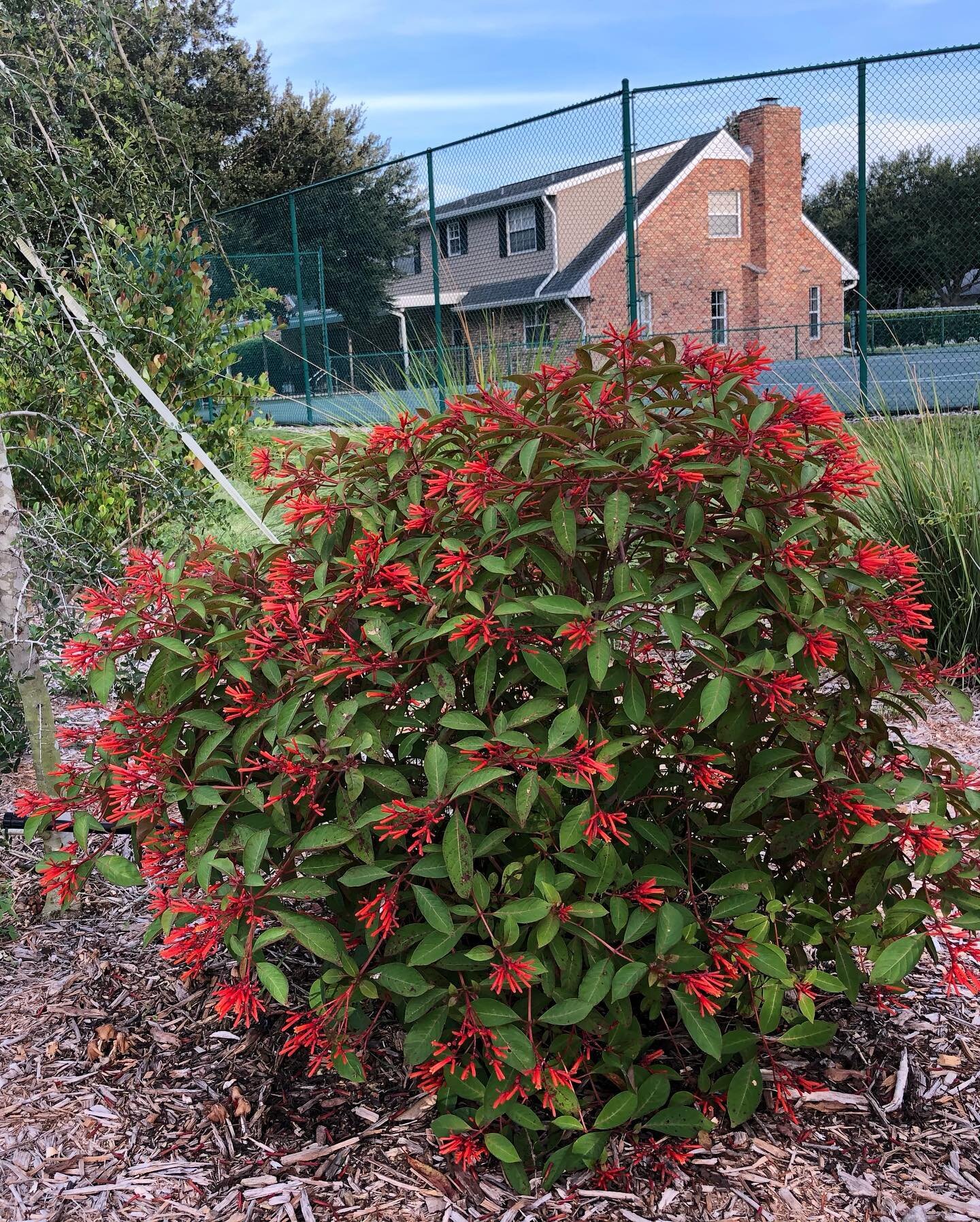
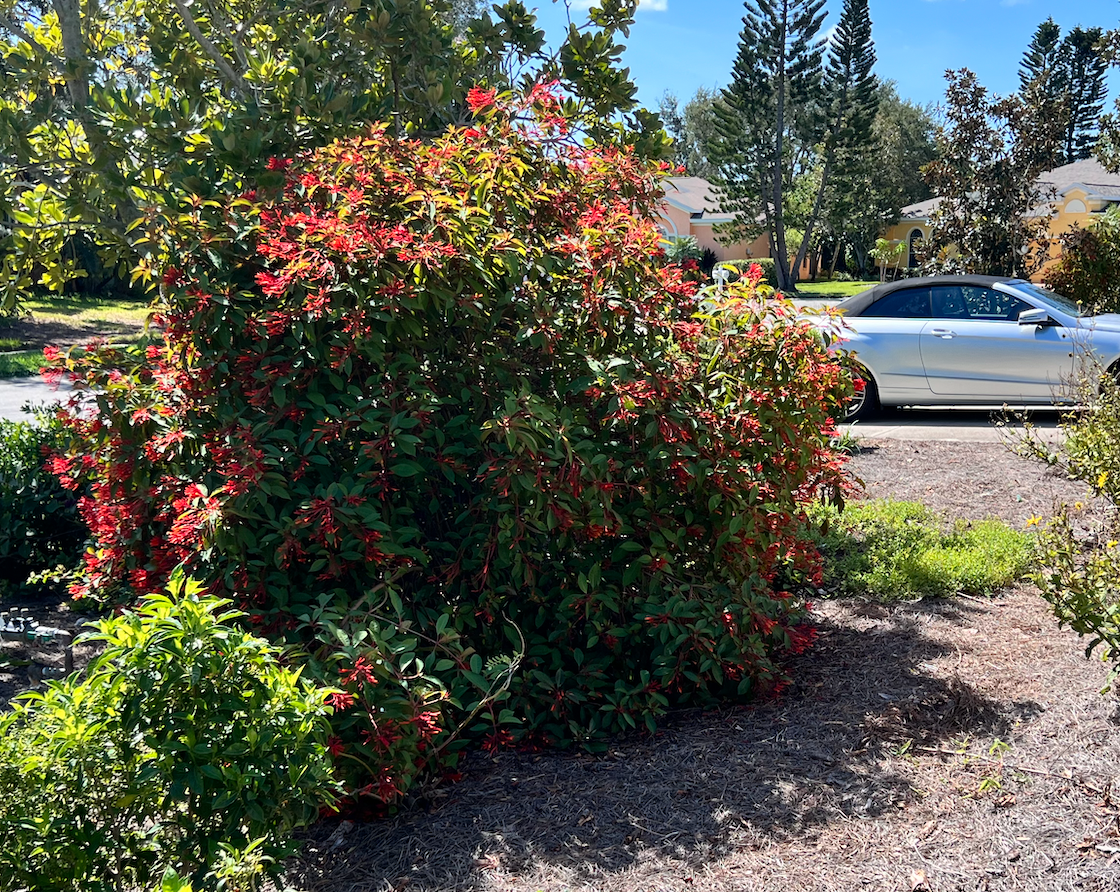
Hamelia patens var. ‘calusa’
Calusa is shorter growing native cultivar of the large native firebush. It is evergreen, flowering, long-lived shrub that can be kept easily at its mature height of approx. 6’. It needs average to moist (well-drained soils) but can adapt to dry in little bit of shade. The year-round red-orange flowers attract hummingbirds and butterflies and provide food for birds. The foliage on Calusa tends to be a deeper red than the larger traditional native firebush and can turn burgundy in cooler weather. The fruit is edible and has a long history of medicinal and industrial use and can be made into syrup or wine.
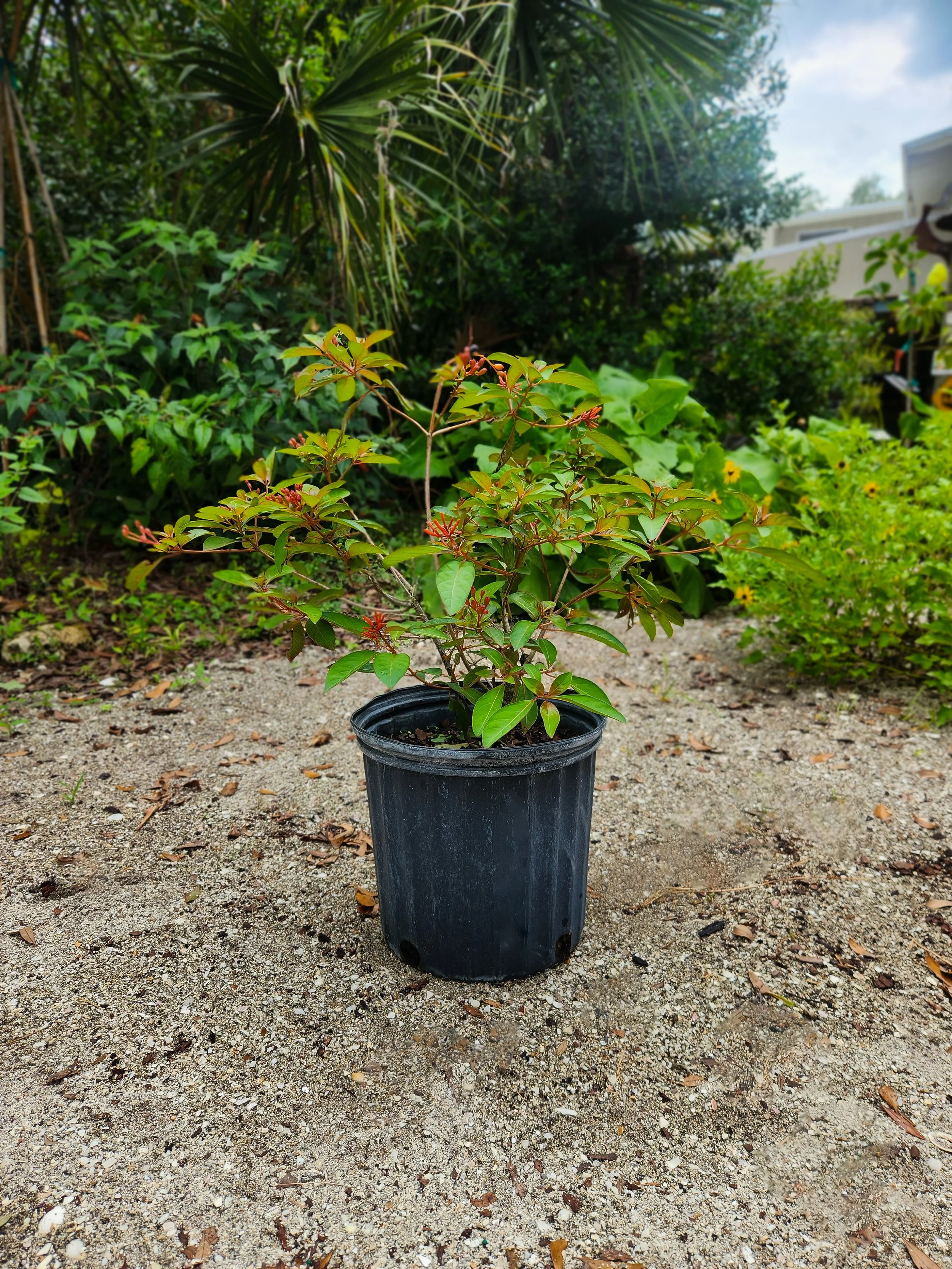
Hamelia Patens 'Compacta’
Compact Firebush is a dwarf cultivar of the Florida-native Firebush that grows to be 4’-6’ tall. These plants grow best in full sun to partial shade and average, well-drained soil. With its red and green leaves and red to orange flowers, Compact Firebush can be used as part of a hedge or as a specimen plant. The flowers are highly attractive to hummingbirds, bees, and butterflies, particularly the Zebra Longwing, which often feed on the nectar and pollen of Compact Firebush flowers. The flowers are followed up by small, dark berries that have a long history of medicinal use, but can also be used to make syrups and wine.
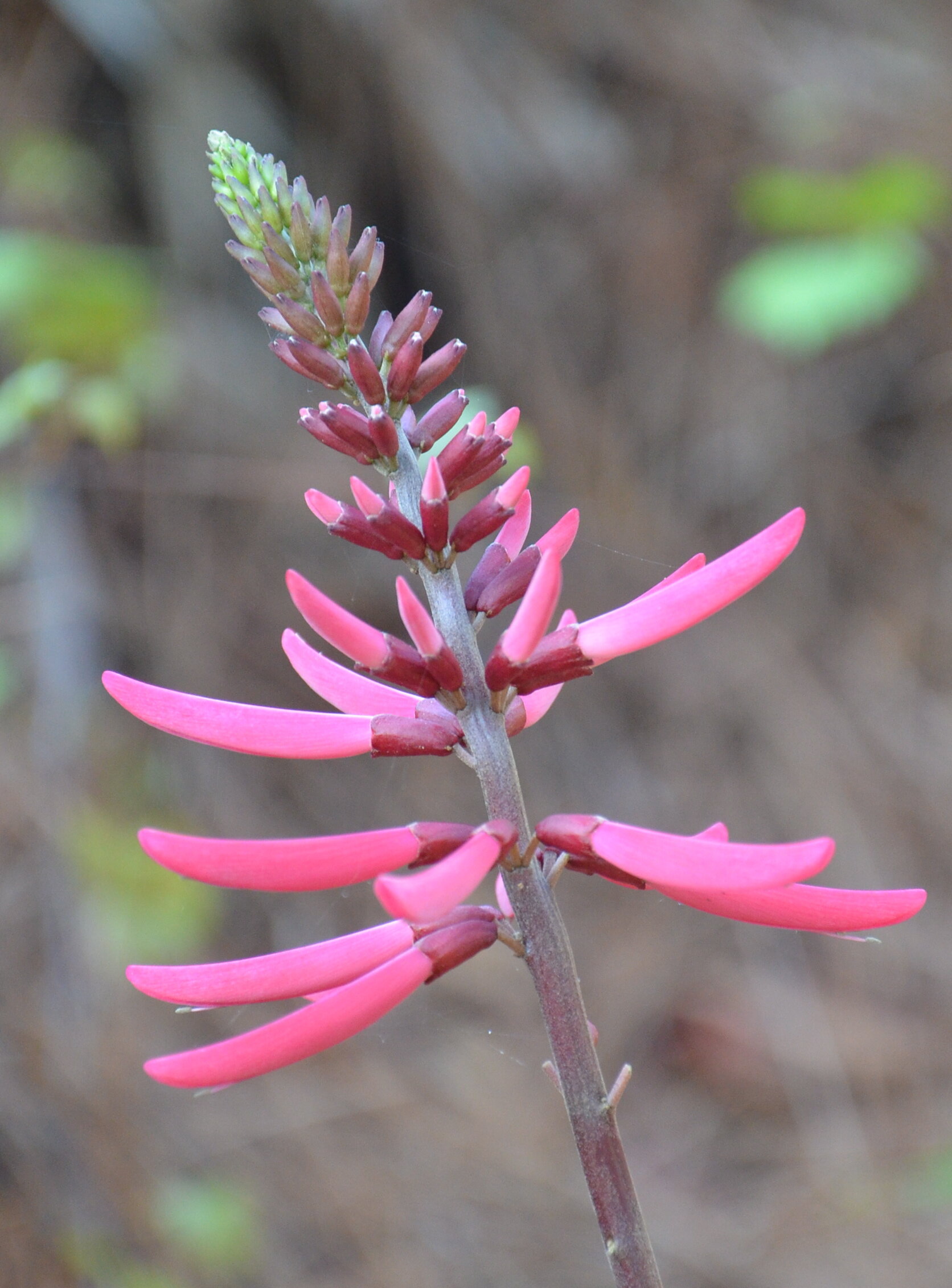

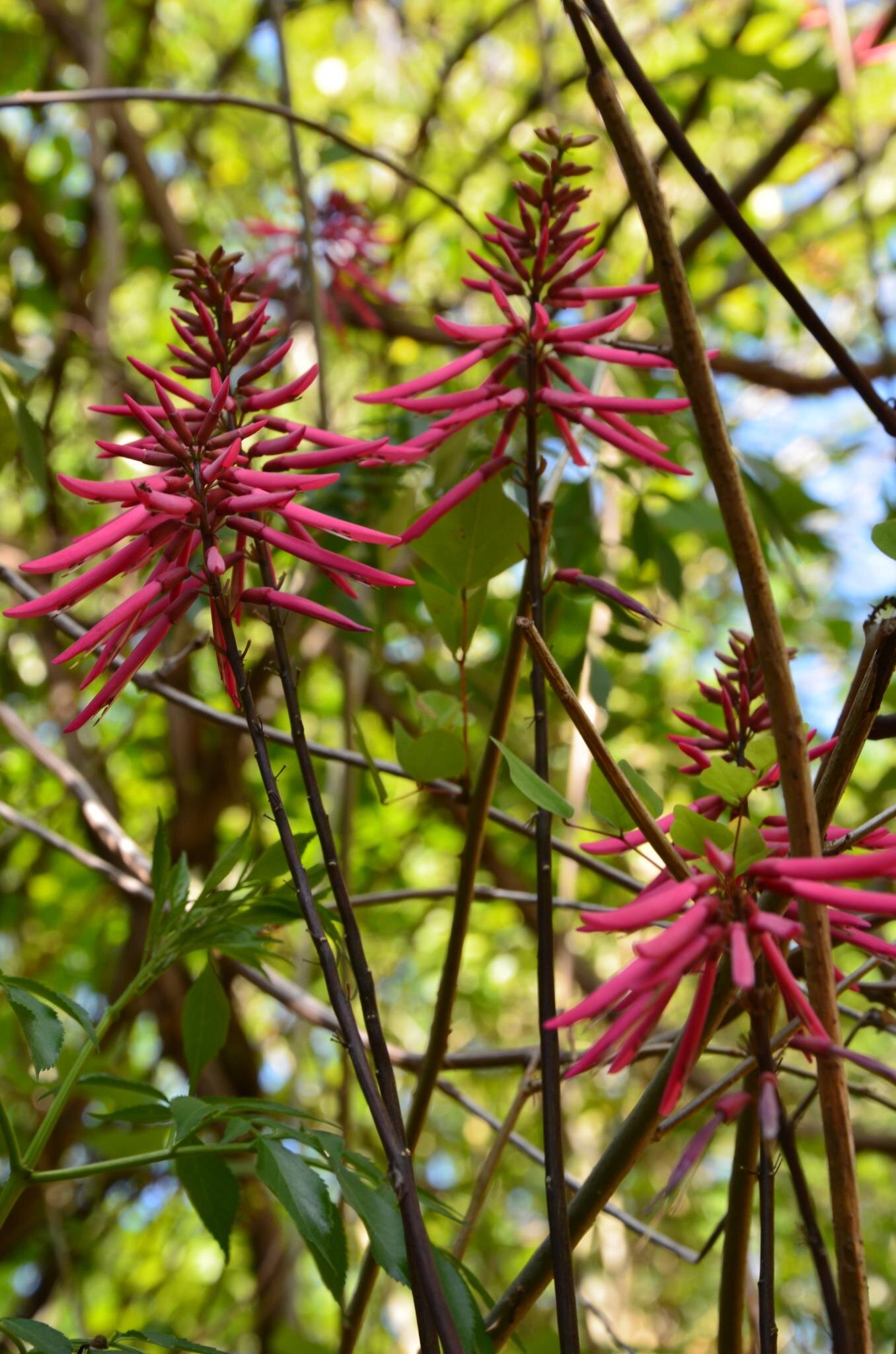
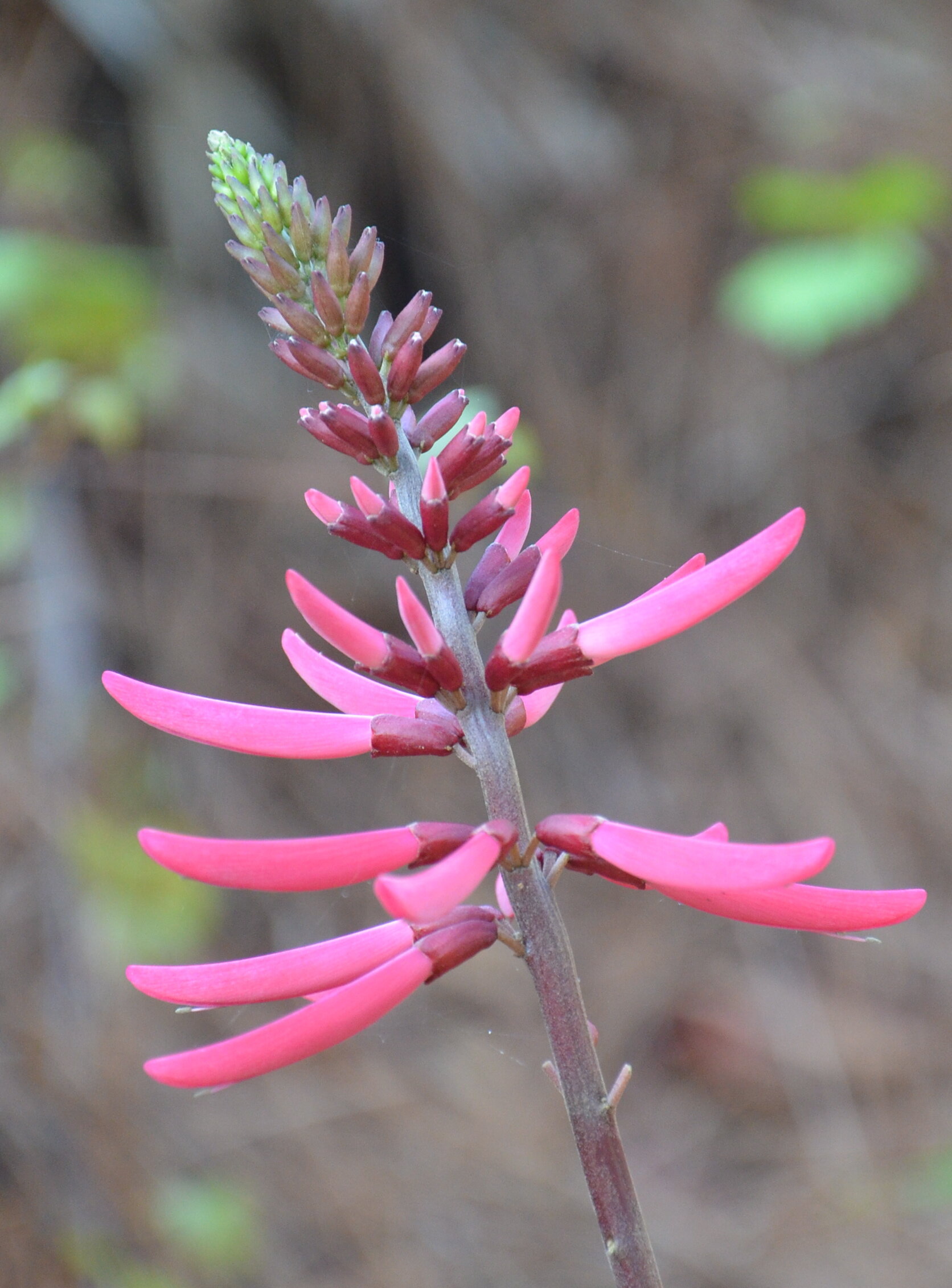
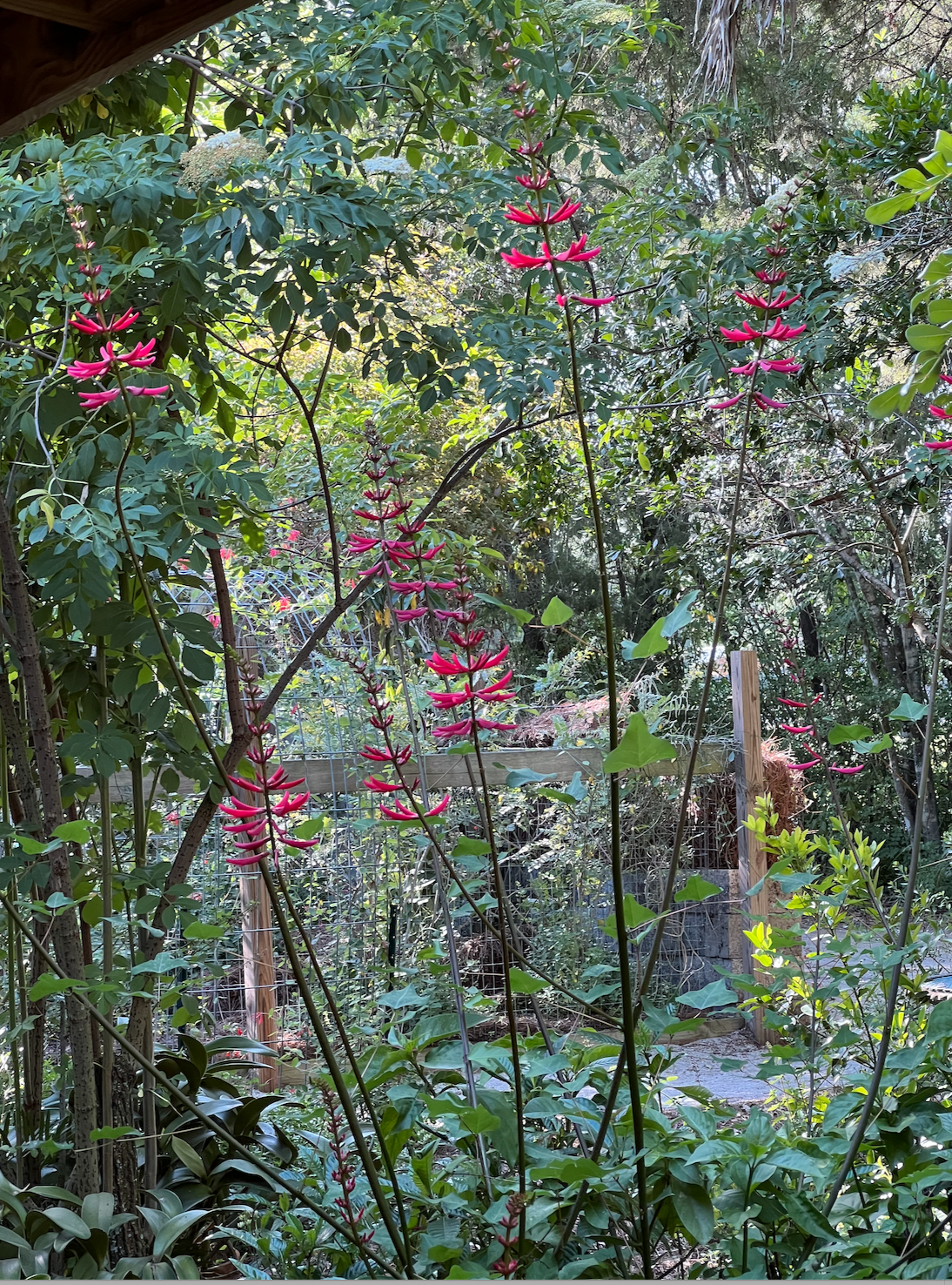
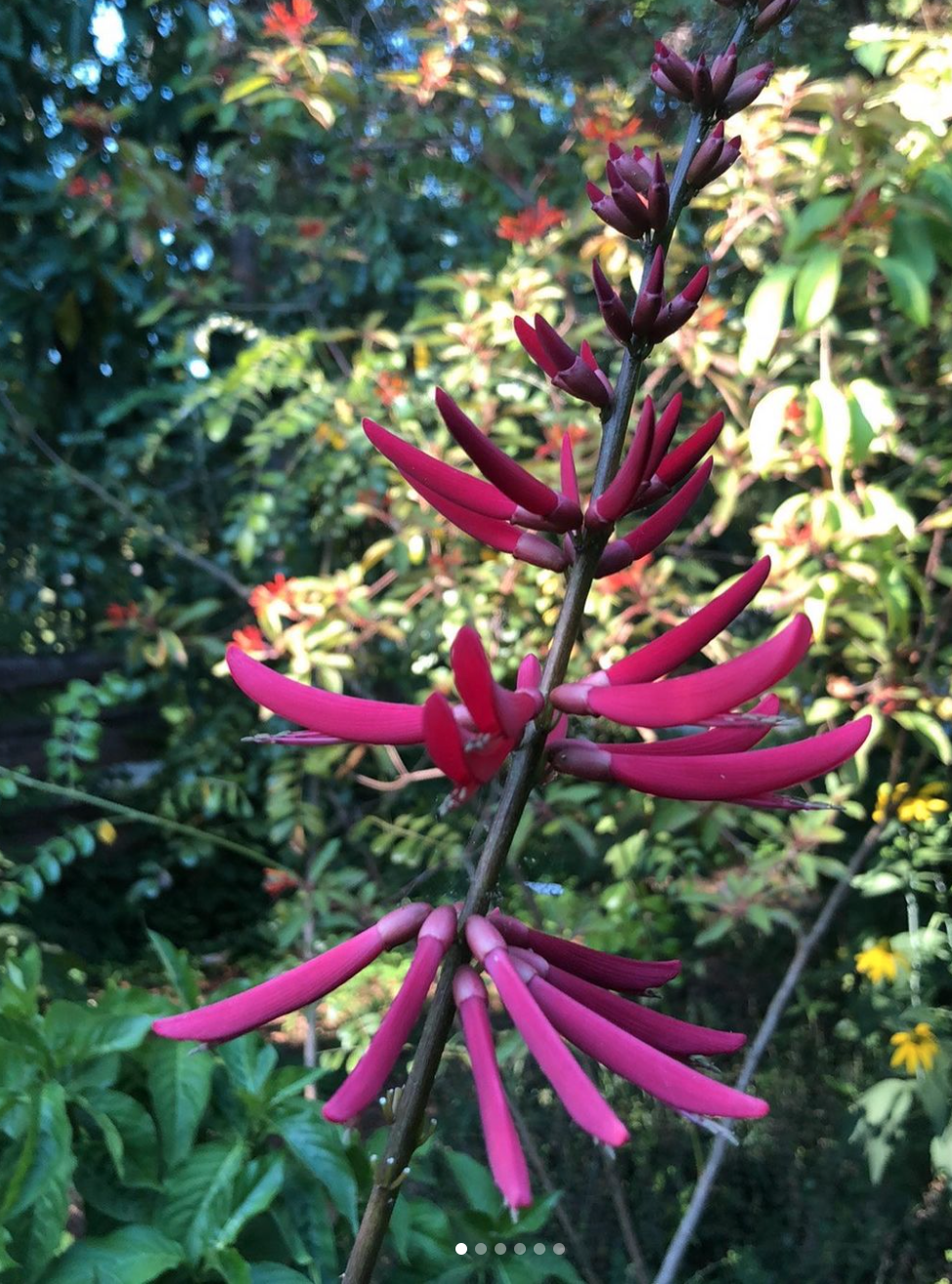
Erythrina herbacea
Coral Bean (Erythrina herbacea) is a deciduous perennial shrub or small tree native to the southeastern United States that grows 3-8 feet tall with compound, lance-shaped leaves. This striking plant produces tall spikes of brilliant scarlet, tubular flowers in early spring that are perfectly timed to coincide with Ruby-throated hummingbird migration patterns, providing critical nectar for these travelers. The blooms also attract long-tongued butterflies and bees, while the bright red seeds that follow are dispersed by birds, though all parts of the plant are toxic. Thriving in sandy, well-drained soils in open woods and forest edges, it serves as an excellent specimen plant for wildlife gardens in zones 8-10.
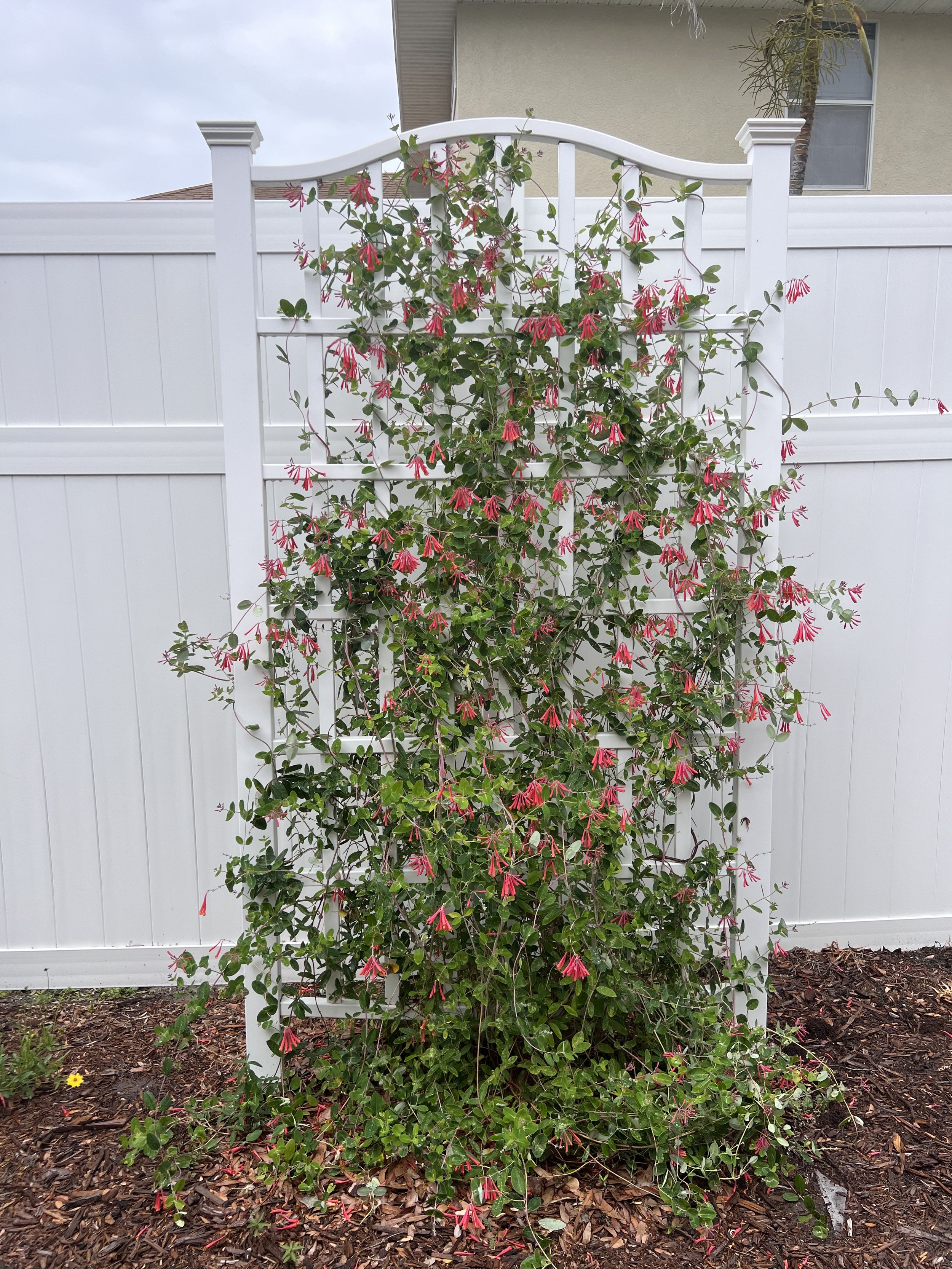
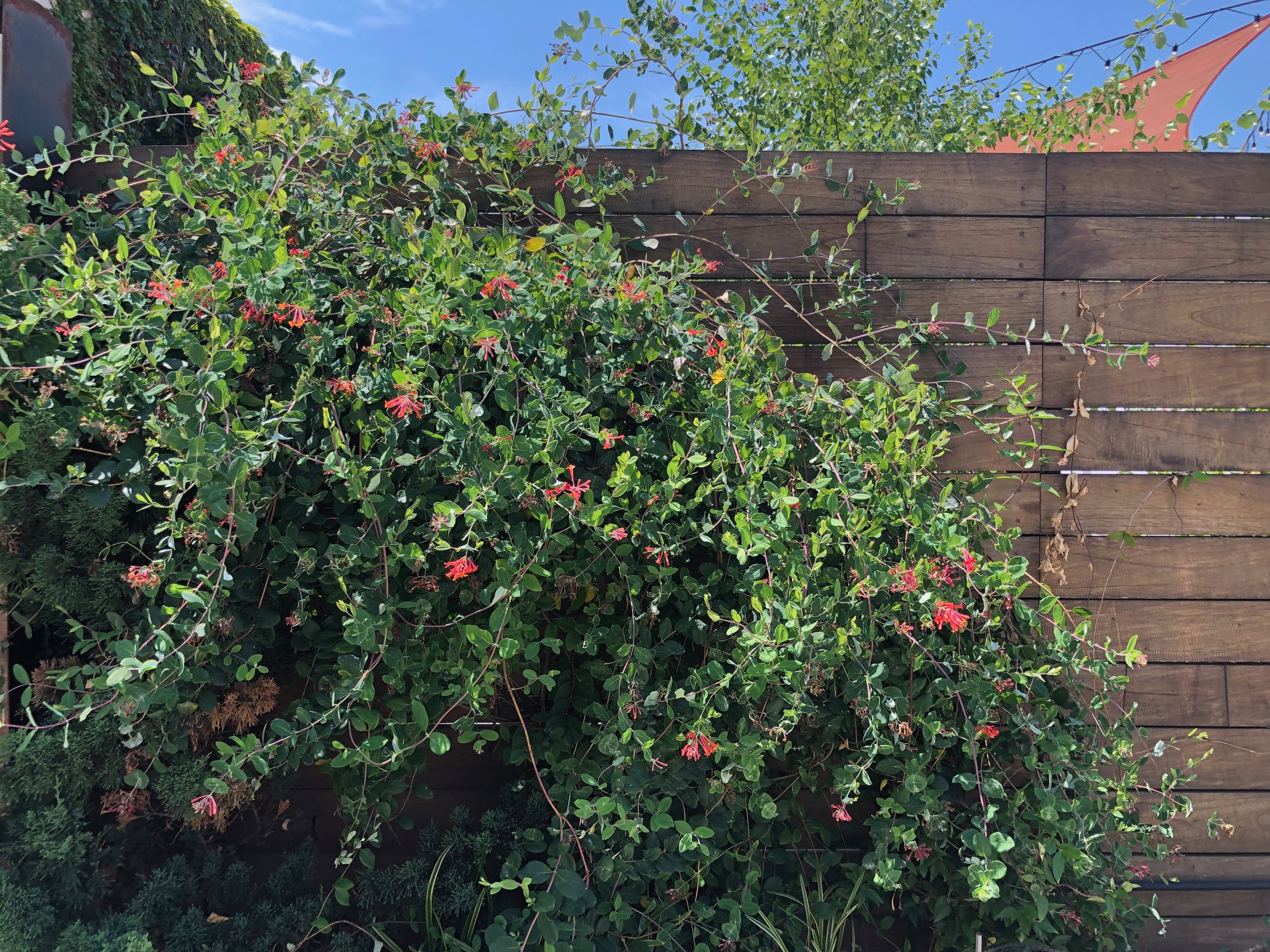
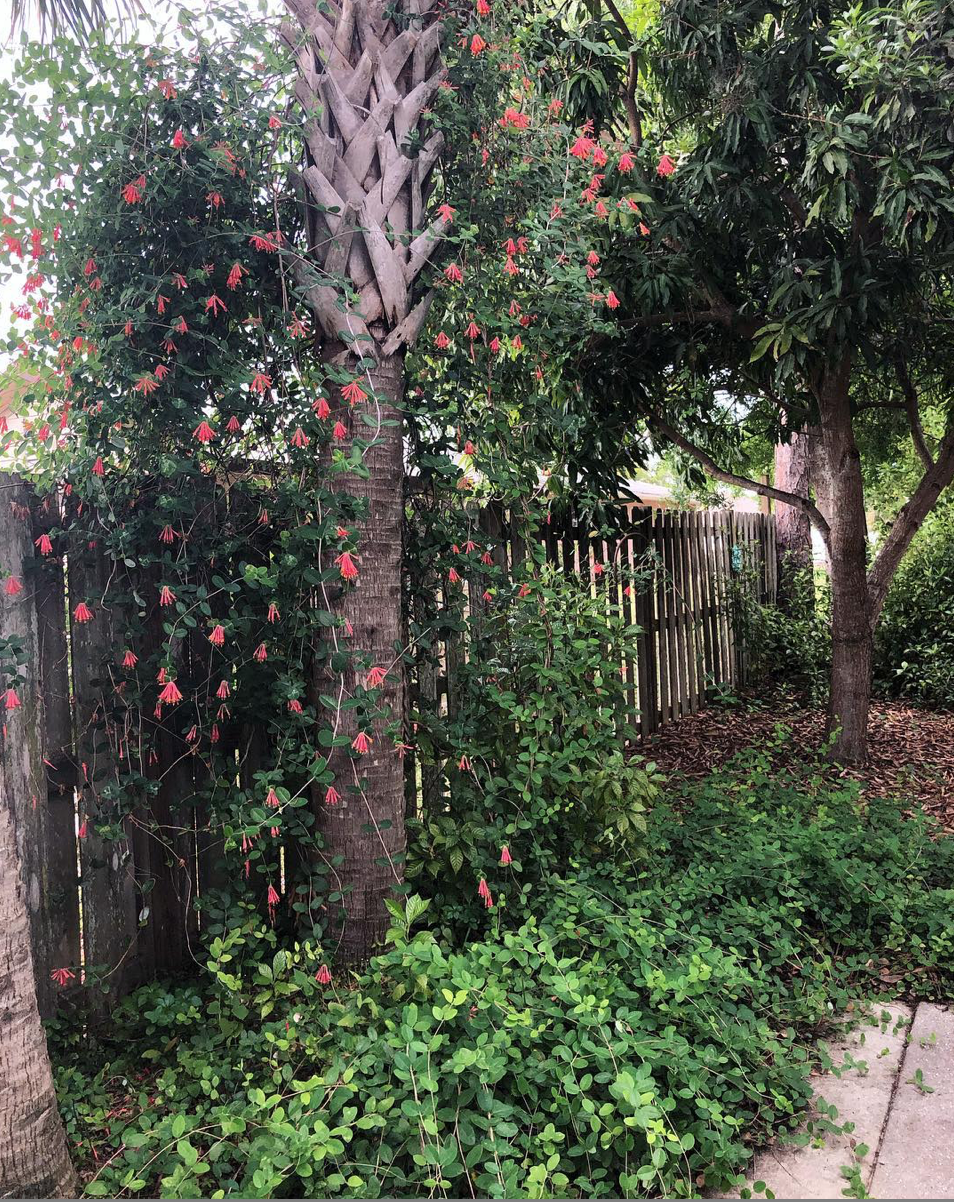
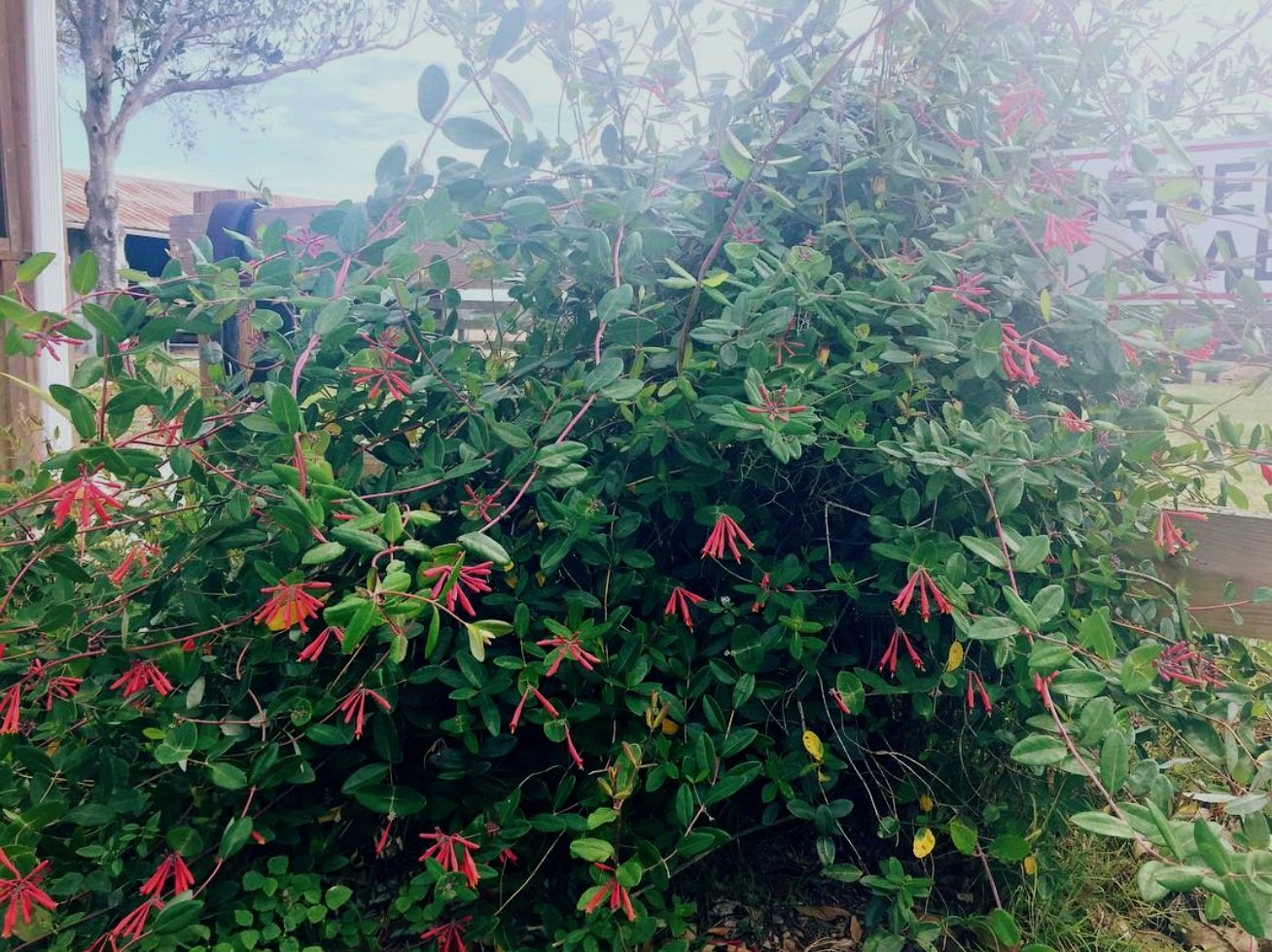
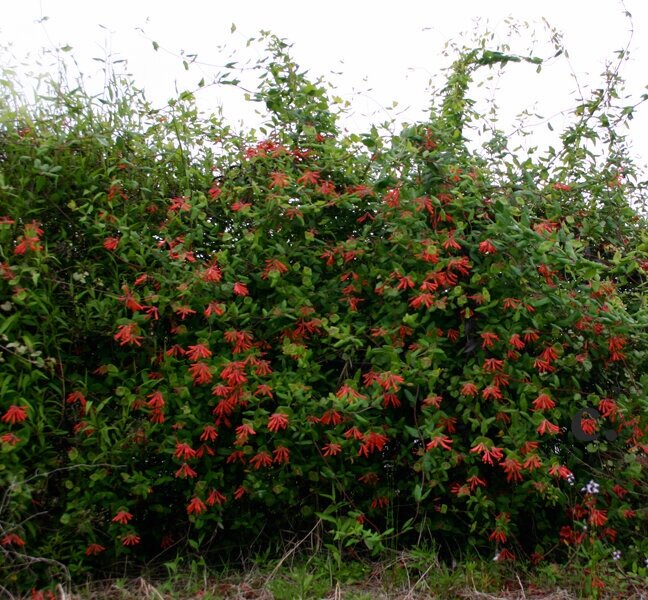
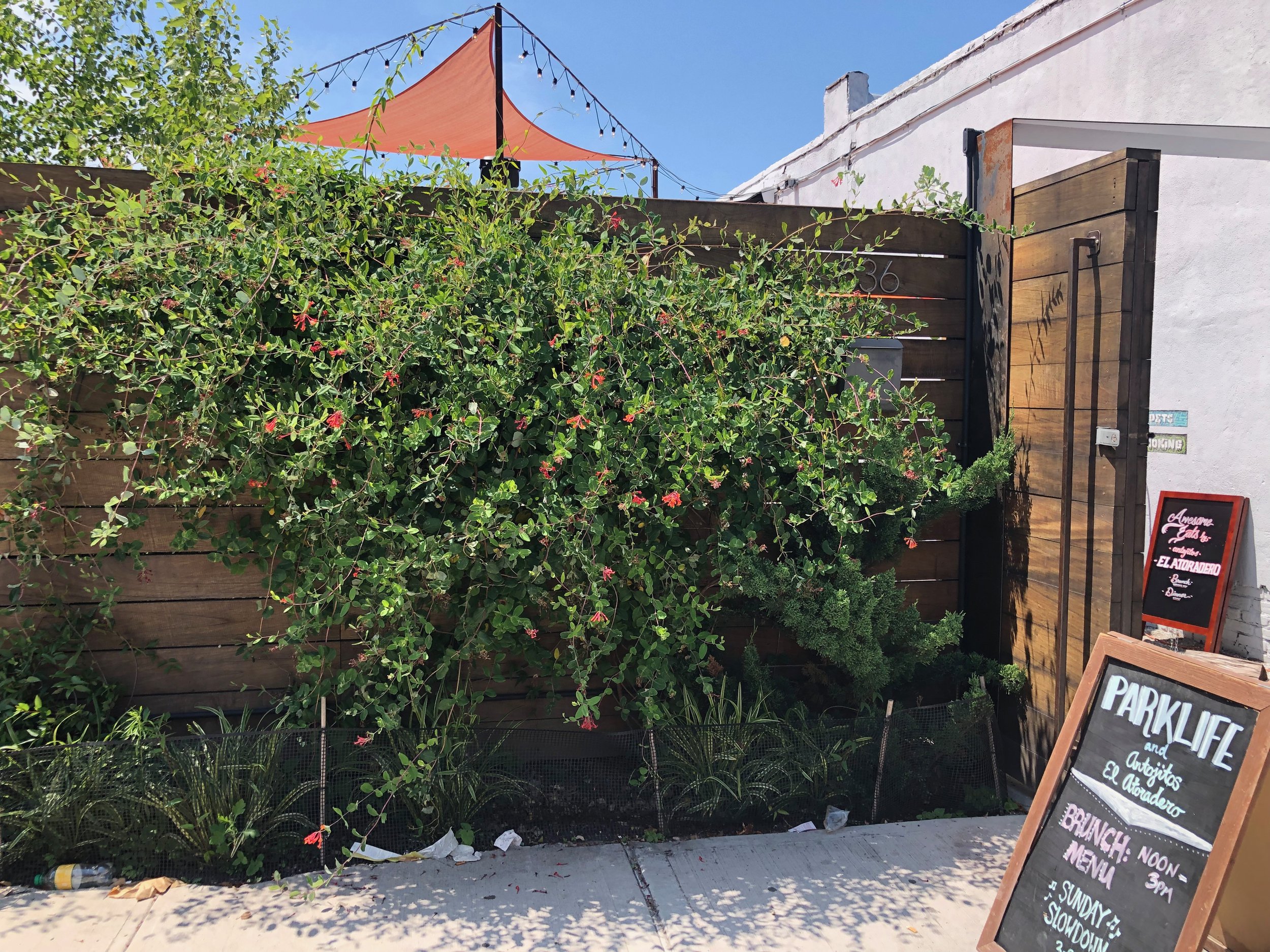
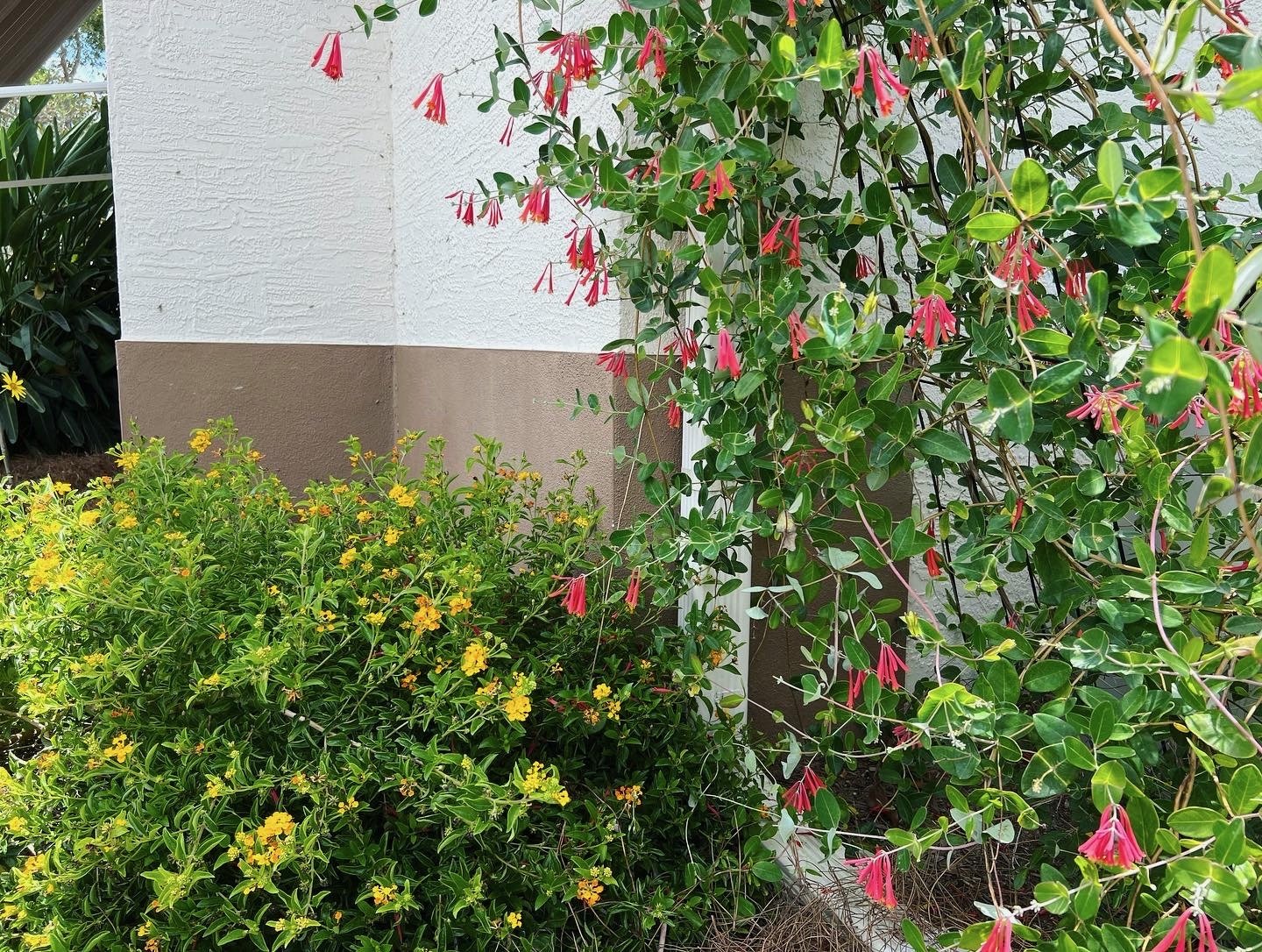
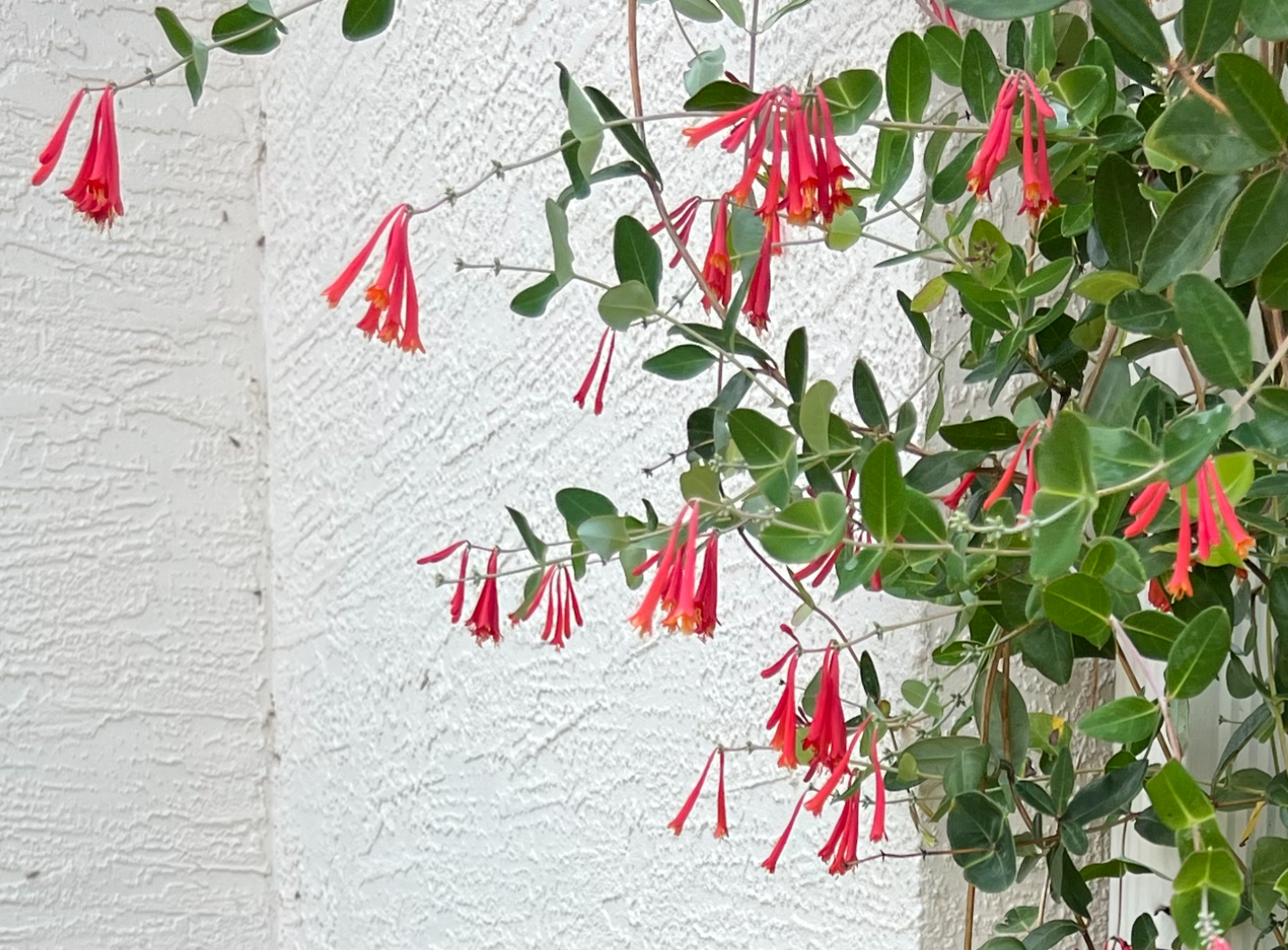
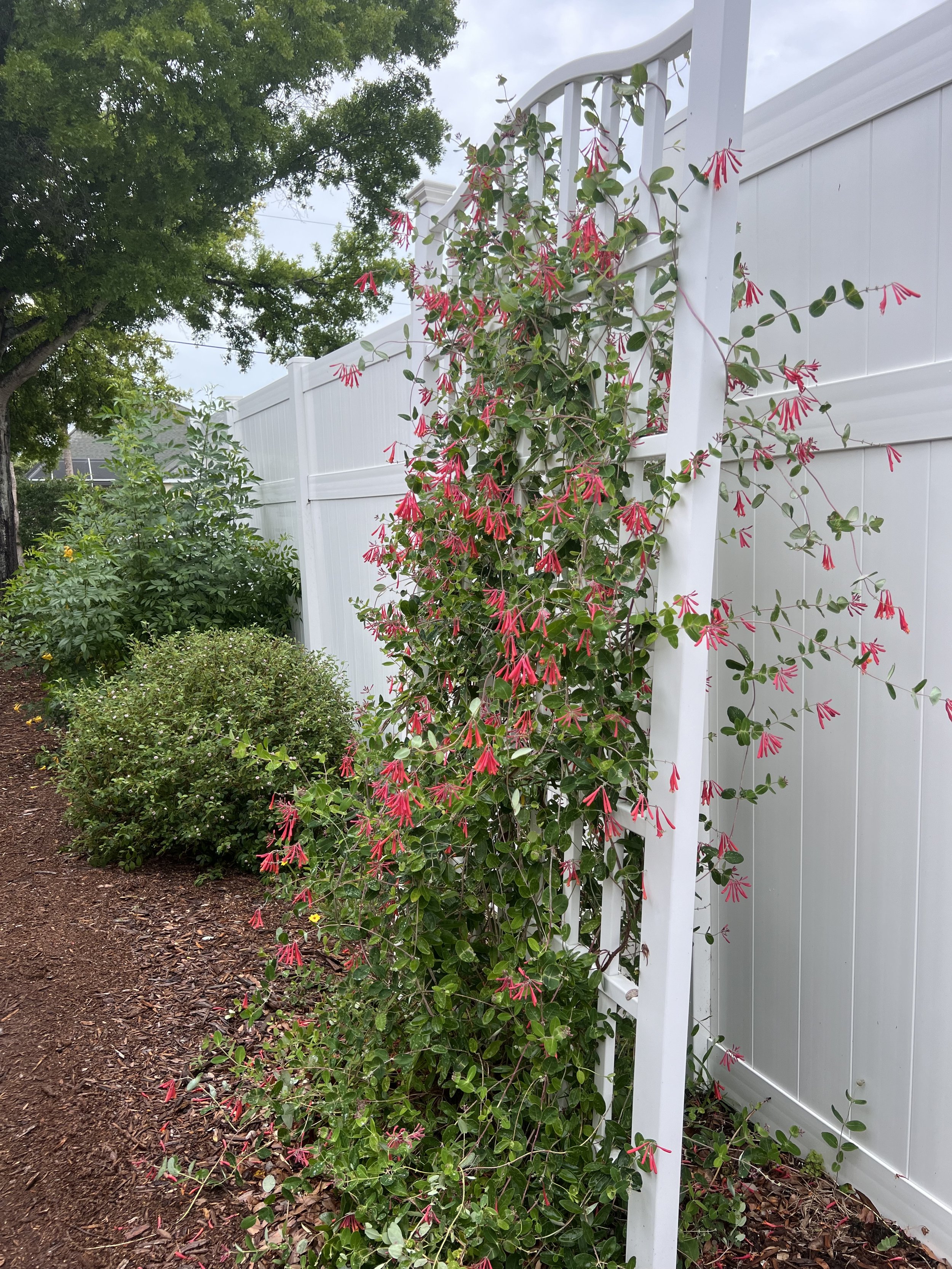
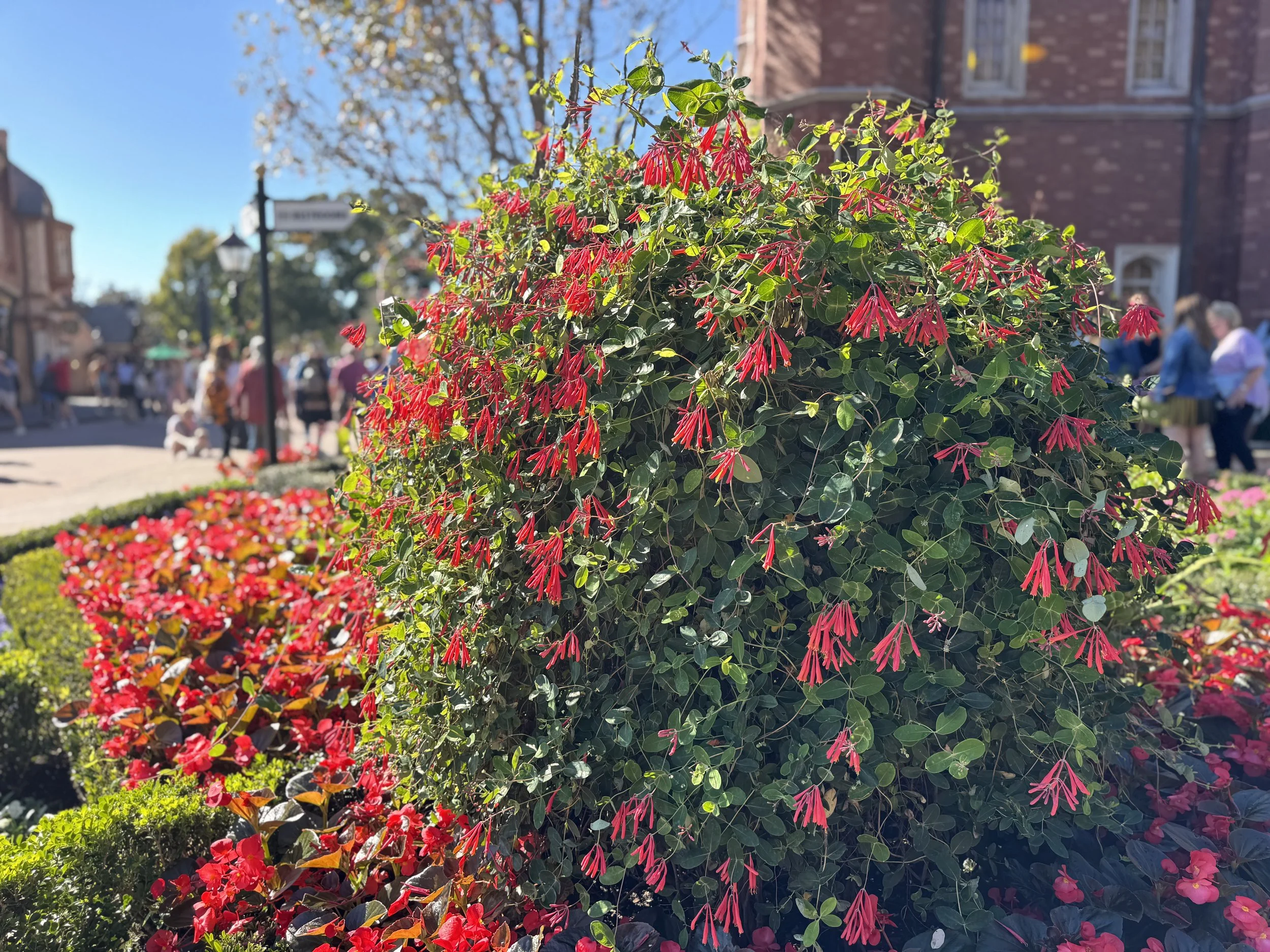
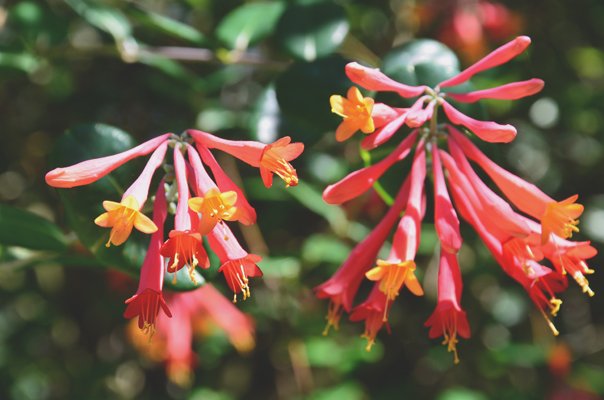
Lonicera sempervirens
Coral Honeysuckle is an easy-to-grow, well-behaved and showy native vine that stays green all year. It thrives in sun or partial shade. You can let it climb a fence, use it as a groundcover, or let it grow like a shrub. Its bright coral flowers bloom nearly year-round, making it a favorite for hummingbirds and butterflies.
Passiflora suberosa
Corkystem Passionvine is a fast-growing, native, flowering vine that can grow to be 10’-15’ long with proper support. They can be grown in full sun, partial shade, or light shade and moist, well-drained, sandy, loamy, and limestone soils. They have small, greenish-yellow flowers for pollinators and dark berries that are loved by birds. They also serve as a host plant for Gulf Fritillary, Zebra Longwing, and Julia butterflies, making them an excellent option for pollinator and butterfly gardens.
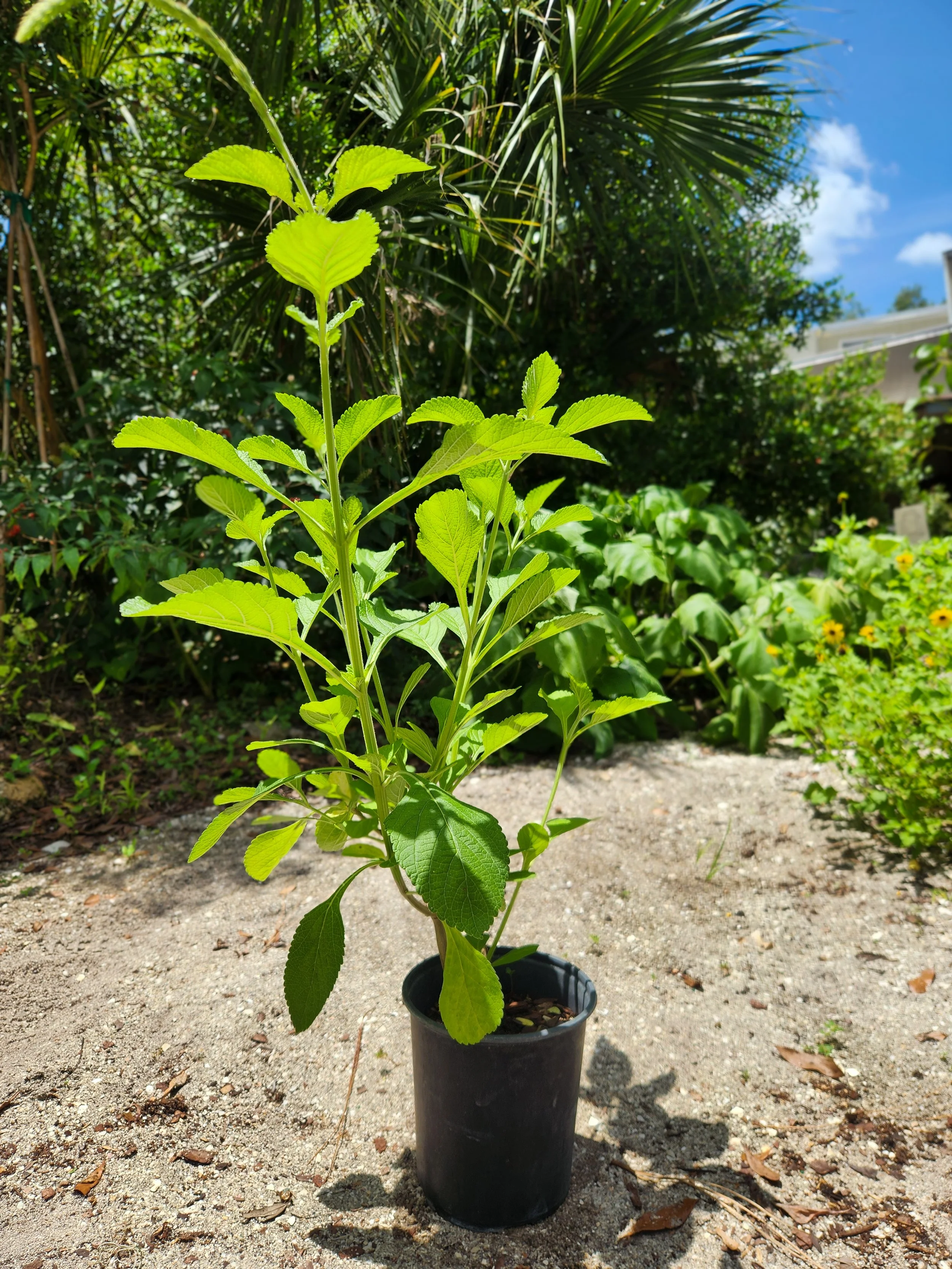
Stachytarpheta mutabilis
Coral Porterweed is a non-native, Florida-friendly fast-growing flowering shrub, growing 4’-6’ tall and 3’-5’ wide. They grow best in full sun to partial shade and average sandy soil, with moderate drought tolerance once they’re established. They bloom throughout the warm months, with salmon-colored bloom spikes that are highly attractive to hummingbirds, bees, and butterflies.
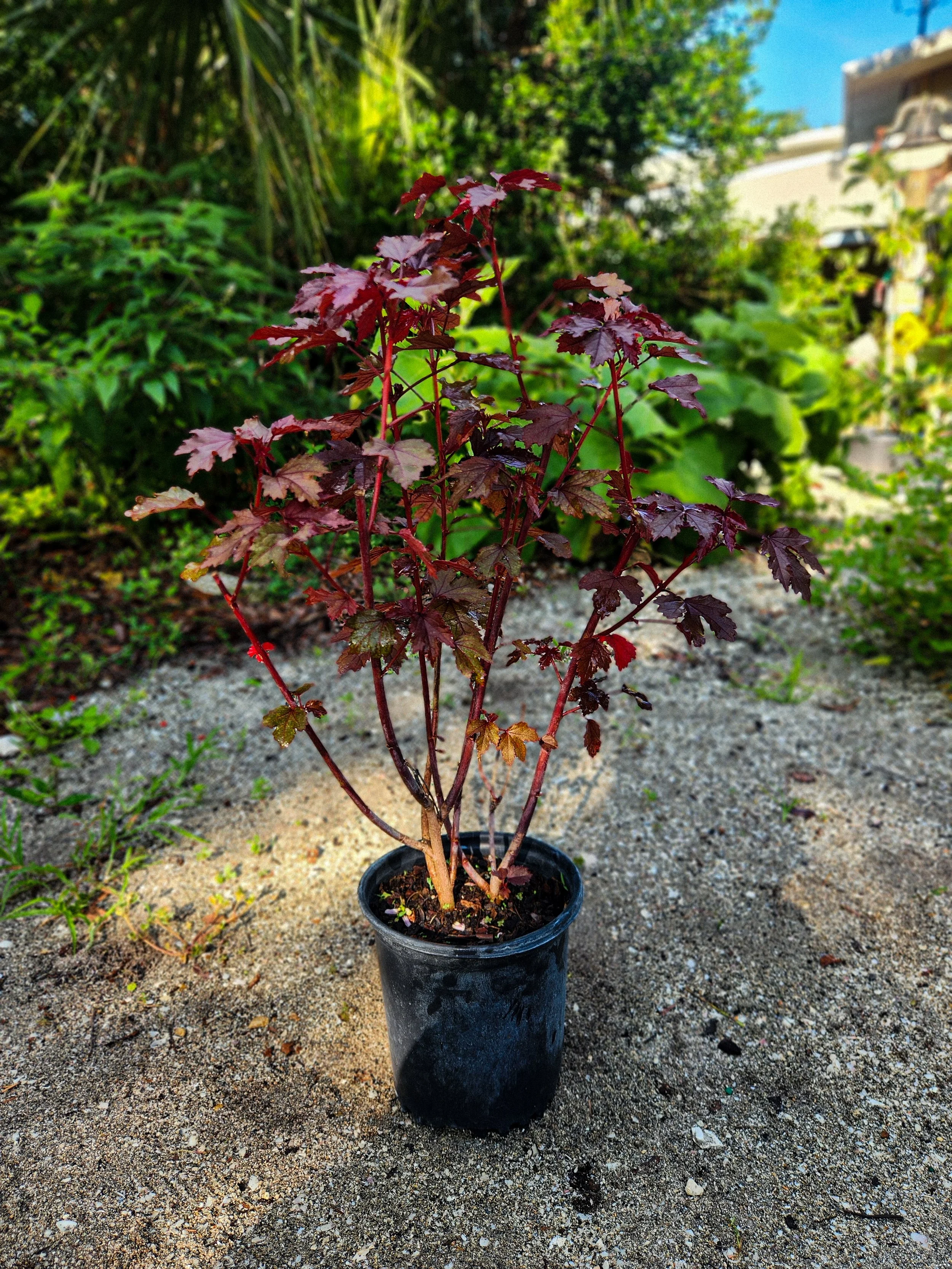
Hibiscus acetosella
Cranberry Hibiscus is a non-native, Florida-friendly flowering shrub that grows to be 3’-5’ tall. These fast-growing plants feature dark red stems, foliage, and flowers, making them a dramatic addition to gardens and landscapes. They grow best in full sun and loose, rich organic soil. In addition to bringing in butterflies, pollinators, and hummingbirds, their flowers are edible for humans, and can be used to make teas, along with the young leaves.
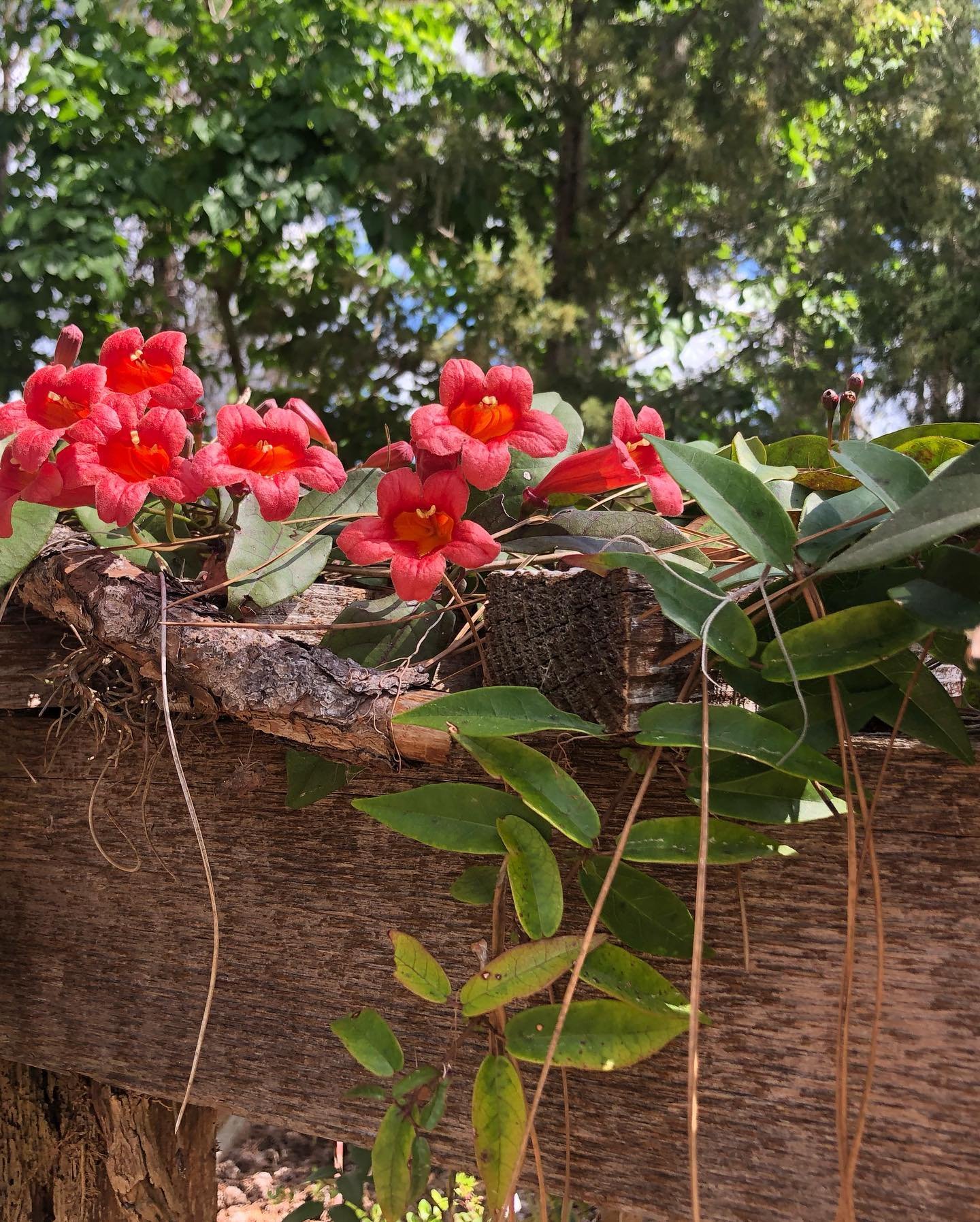
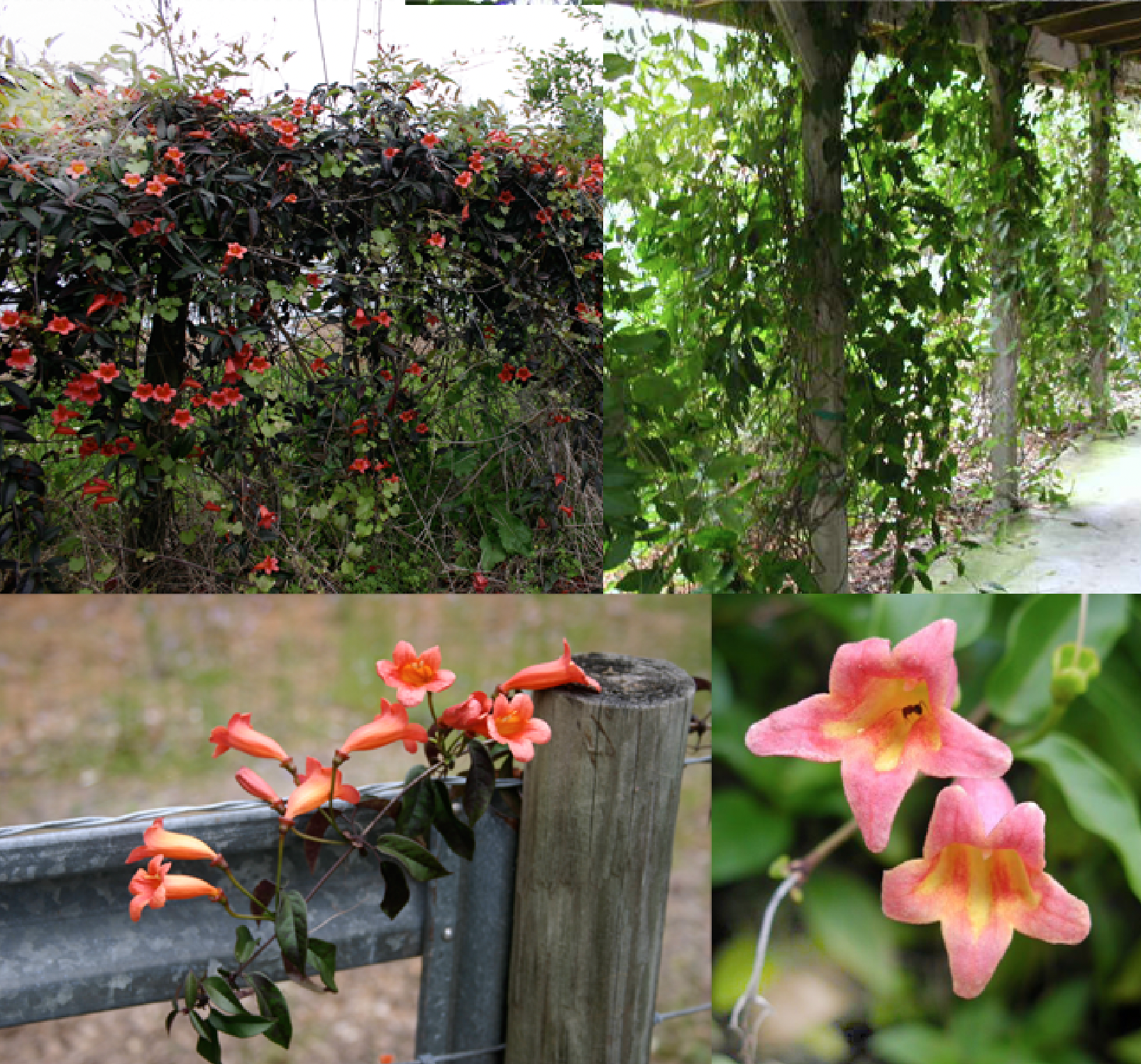
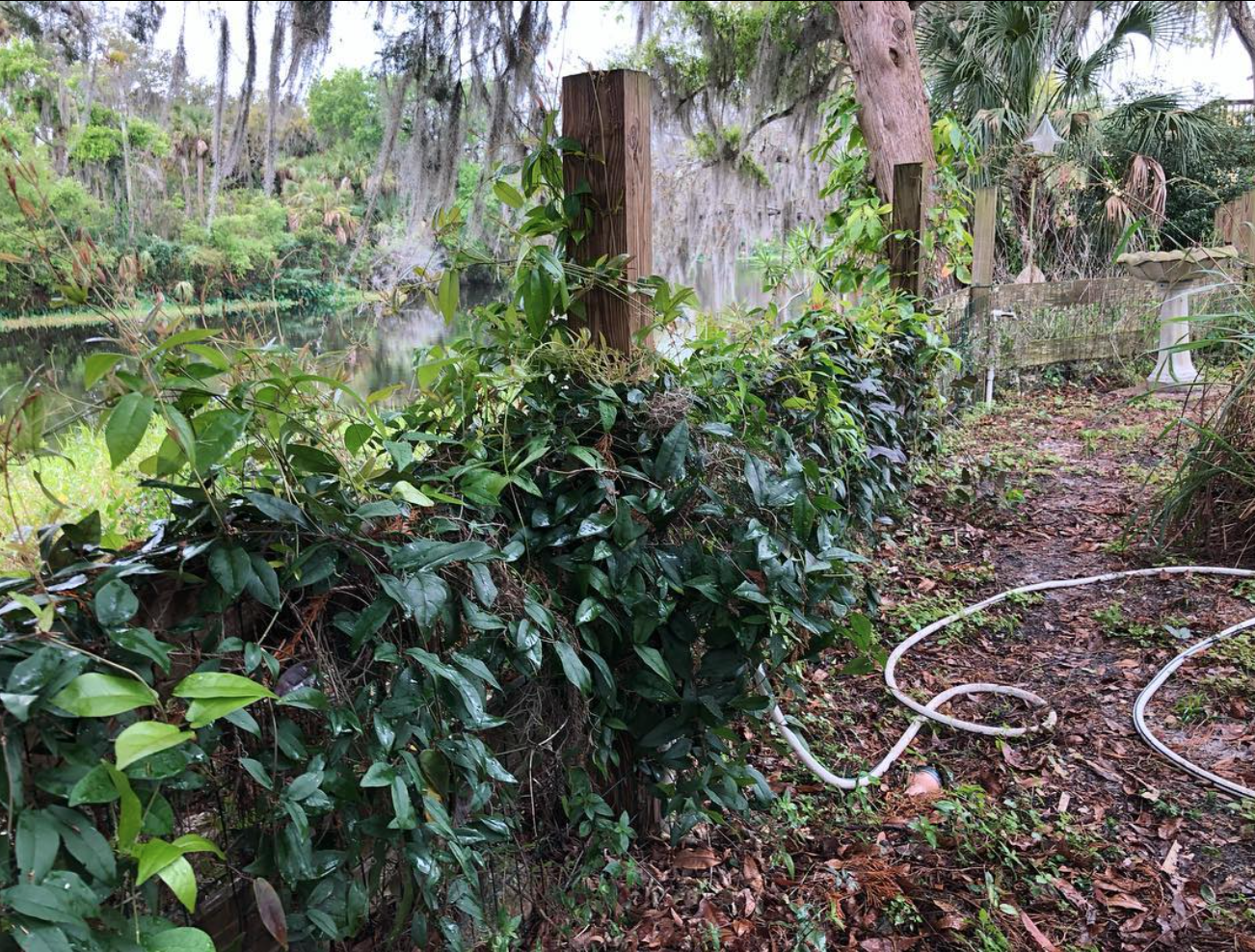
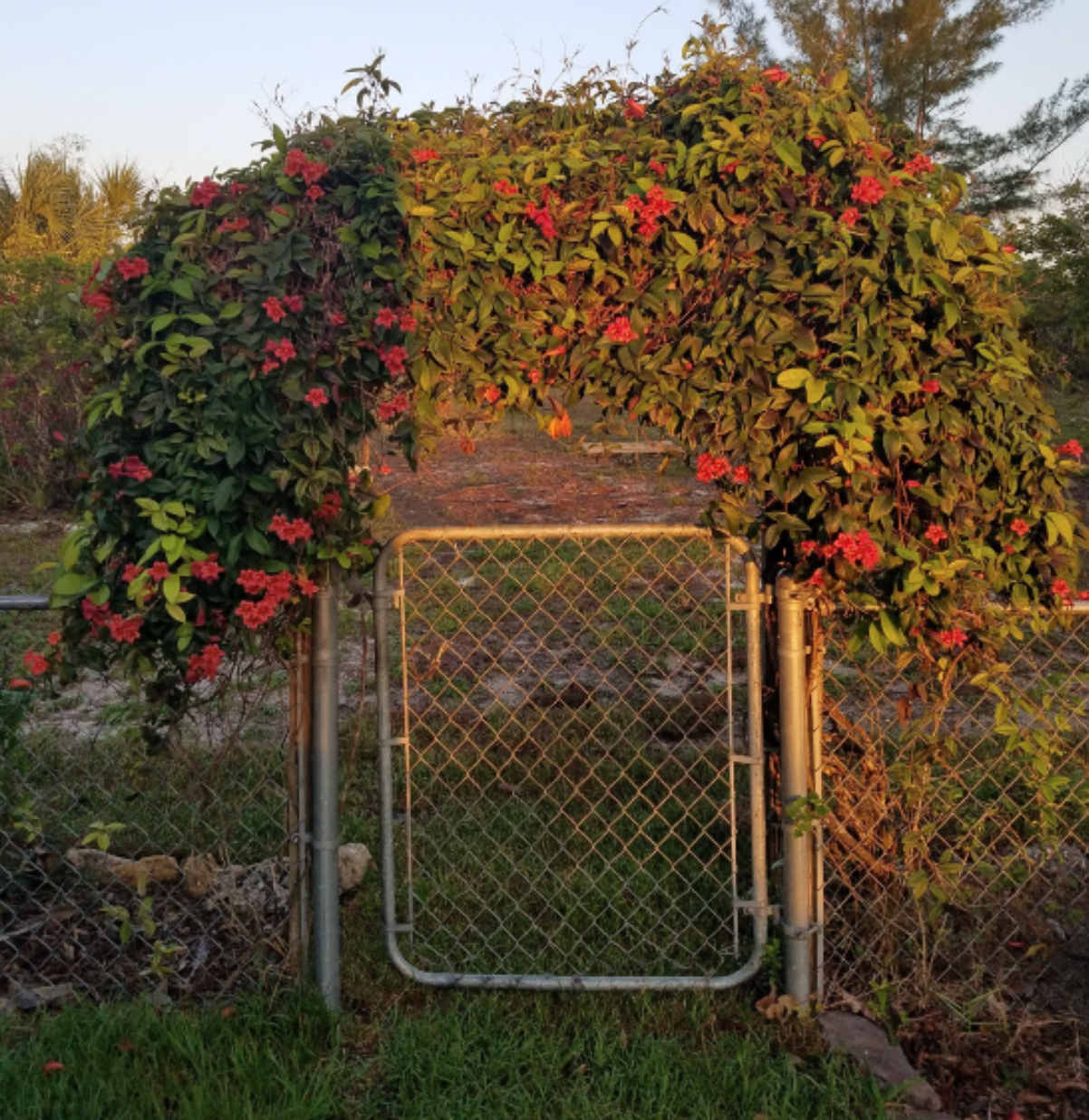
Bignonia capreolata
Crossvine is a perennial, evergreen vine that can bloom late winter through spring through mid summer. Crossvine’s red tubular flowers are an important food source for hummingbirds but also attracts butterflies and other pollinators. It can be grown in full shade or full sun, is cold hardy, drought tolerant and prefers moist soils that are well-drained. It can be controlled if planted on a trellis or in an large container, but can also be planted at the base of large trees like native Live Oak to add flowers to the tree branches and protection for songbirds from birds of prey.


Stachytarpheta sanguinea
This Florida-friendly, compact, evergreen shrub is a perfect addition to a sunny or partial shade landscape. The vibrant, red spikes of tubular flowers bloom year-round and are a magnet for pollinators like bees, butterflies, and hummingbirds. Growing to just 2-3 feet tall and wide, it’s an excellent choice for borders, groundcovers, or container gardening. Dwarf Red Porterweed thrives in well-drained soil and tolerates drought once established.
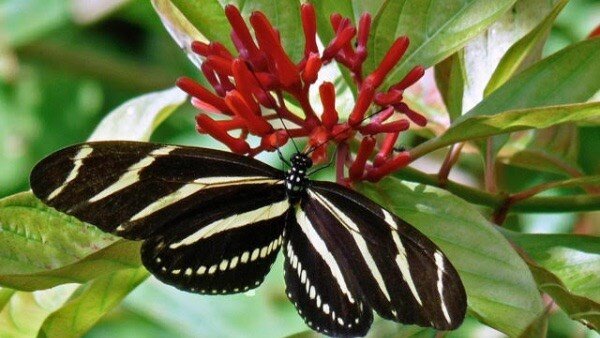
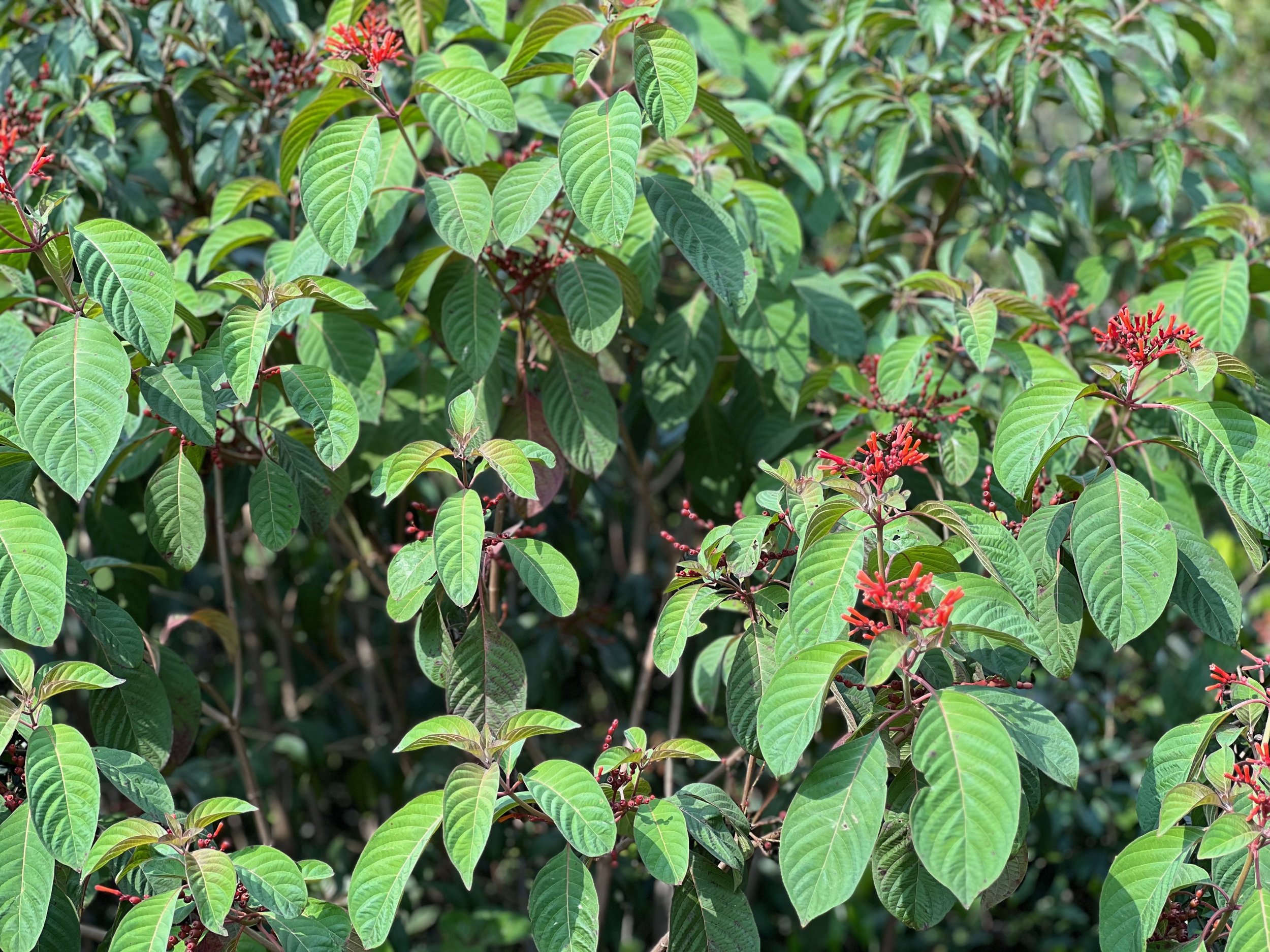
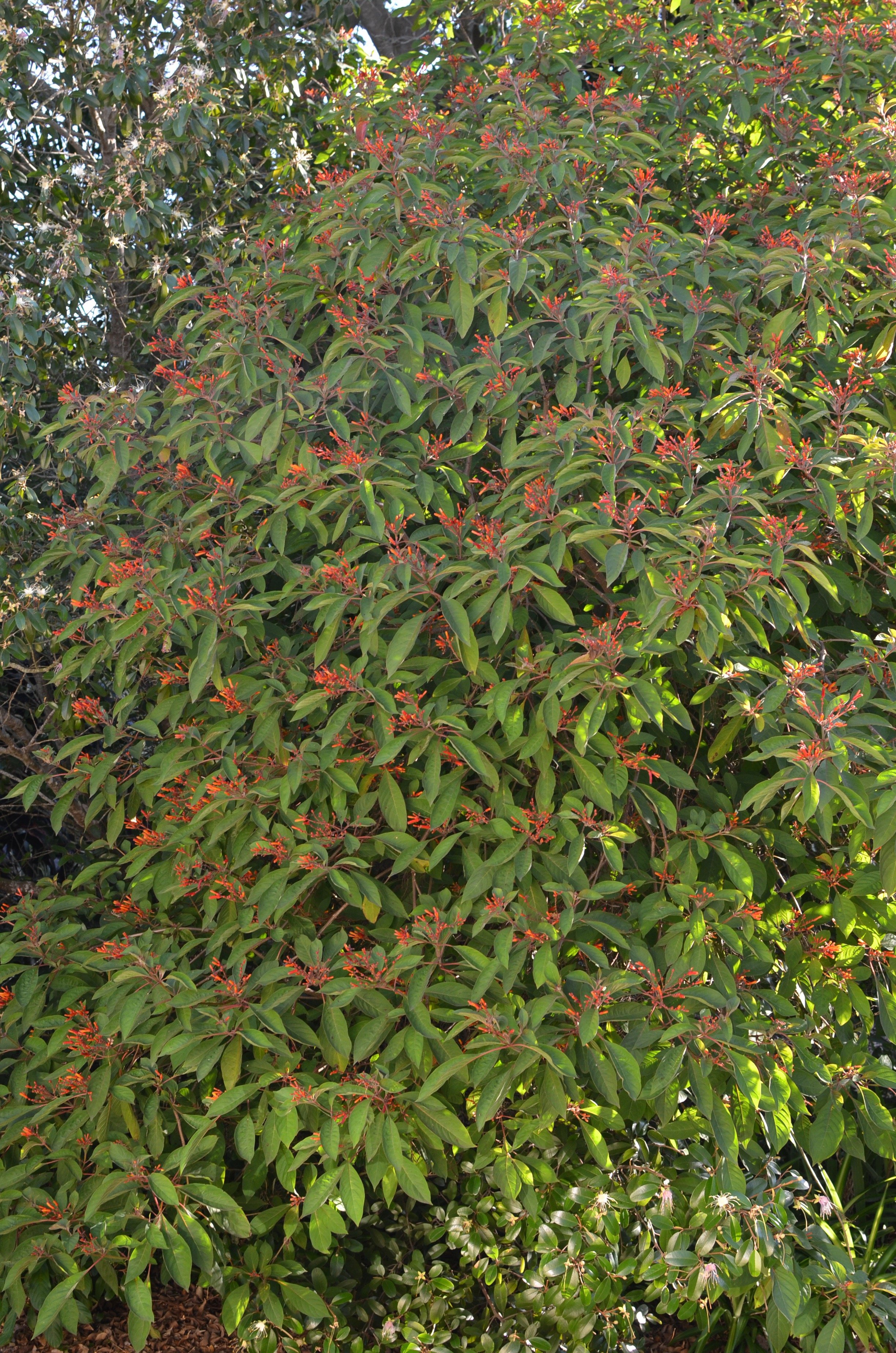


Hamelia patens
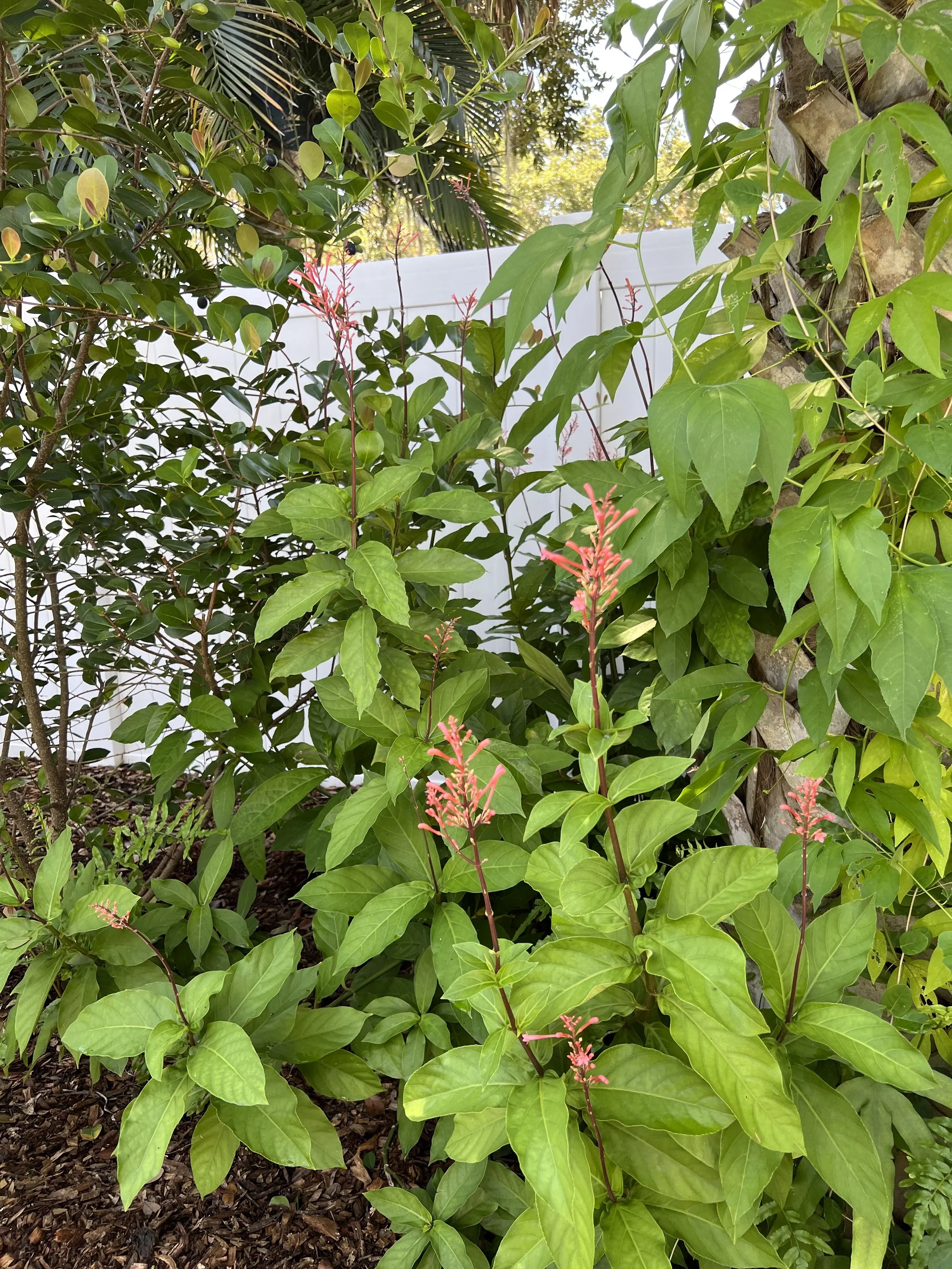
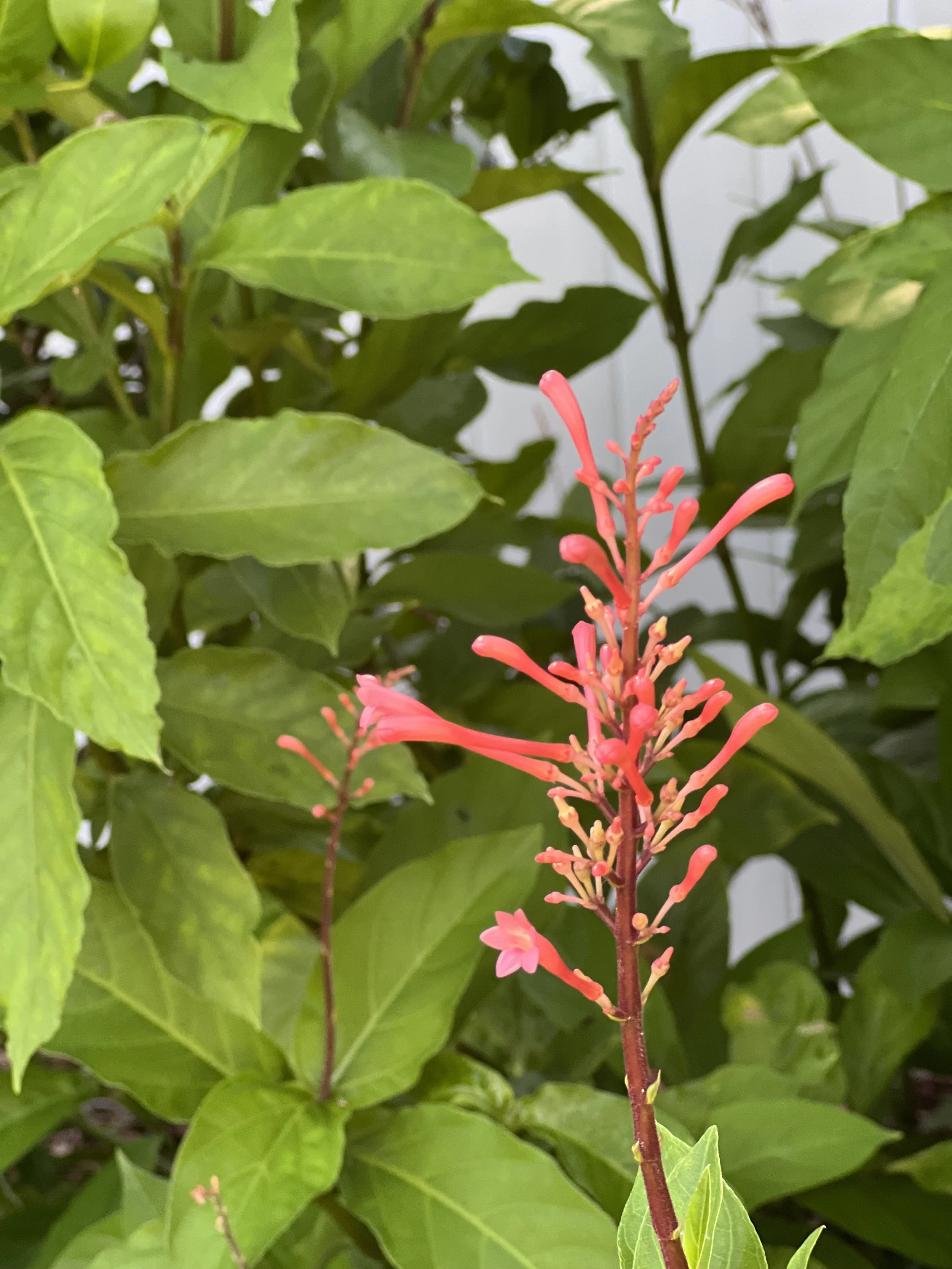
Firebush is a native, evergreen, 12’, prunable, shrub. It does best in dry to moist (well-drained) soils, sun/part shade, and is very fast-growing. With year-round, showy flowers that attract hummingbirds and butterflies, and berries that serve as a food source for song birds, Firebush makes a lovely addition to many Florida landscapes, especially pollinator and hummingbird gardens. In addition to its ecological benefits, the fruit is edible and has a long history of medicinal and industrial uses. Ripe fruit is black, edible raw and can be made into a syrup or wine!
Canna flaccida
Golden Canna is a native, upright flowering wetland plant growing 2’ tall. This plant thrives in very moist to wet, soggy soil, and full submersion up to 6”. It has large, butter-yellow blooms that are highly attractive to hummingbirds, butterflies, and bees; it also serves as a vital larval host plant for the native Canna Skipper butterfly.
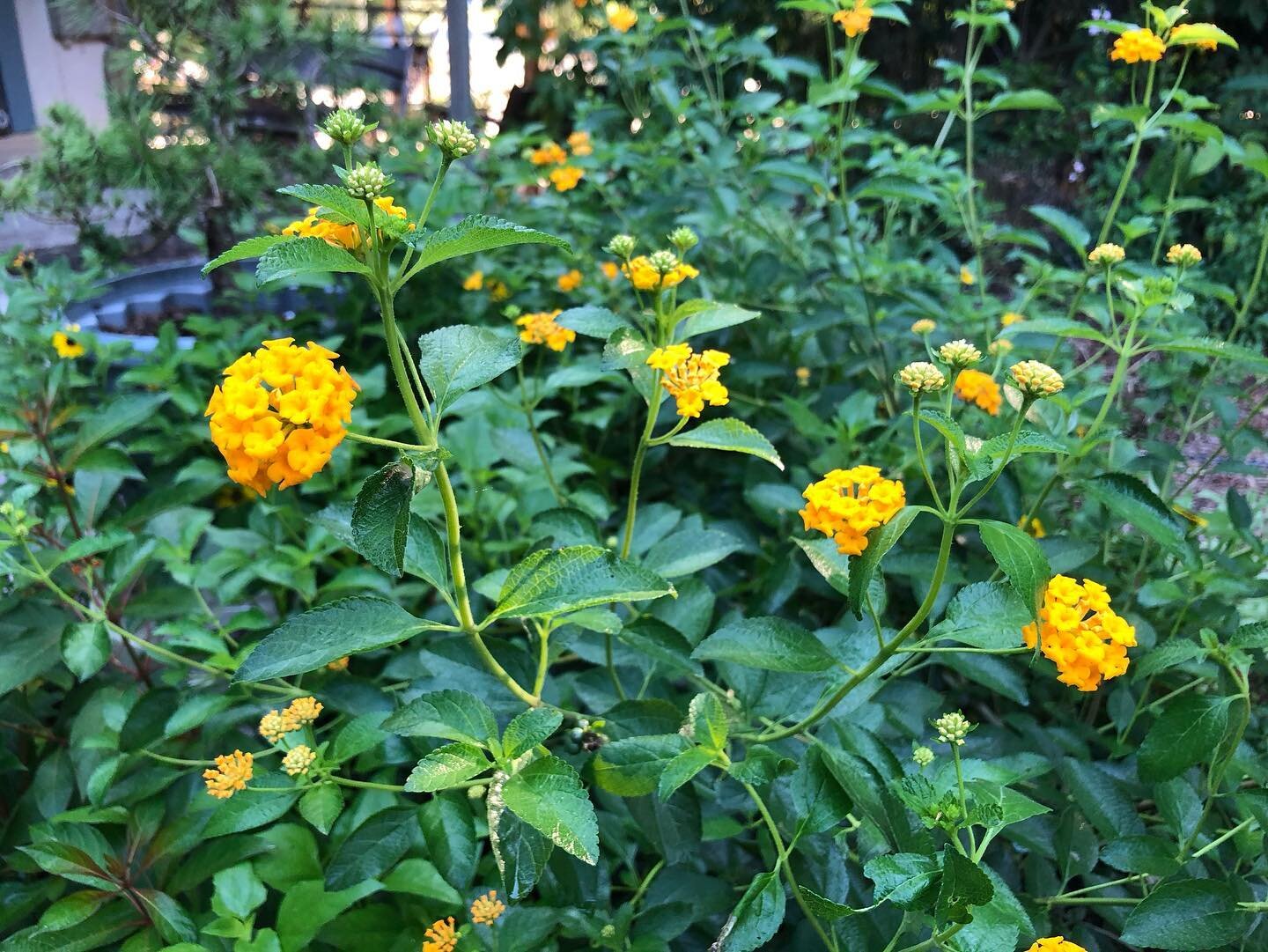
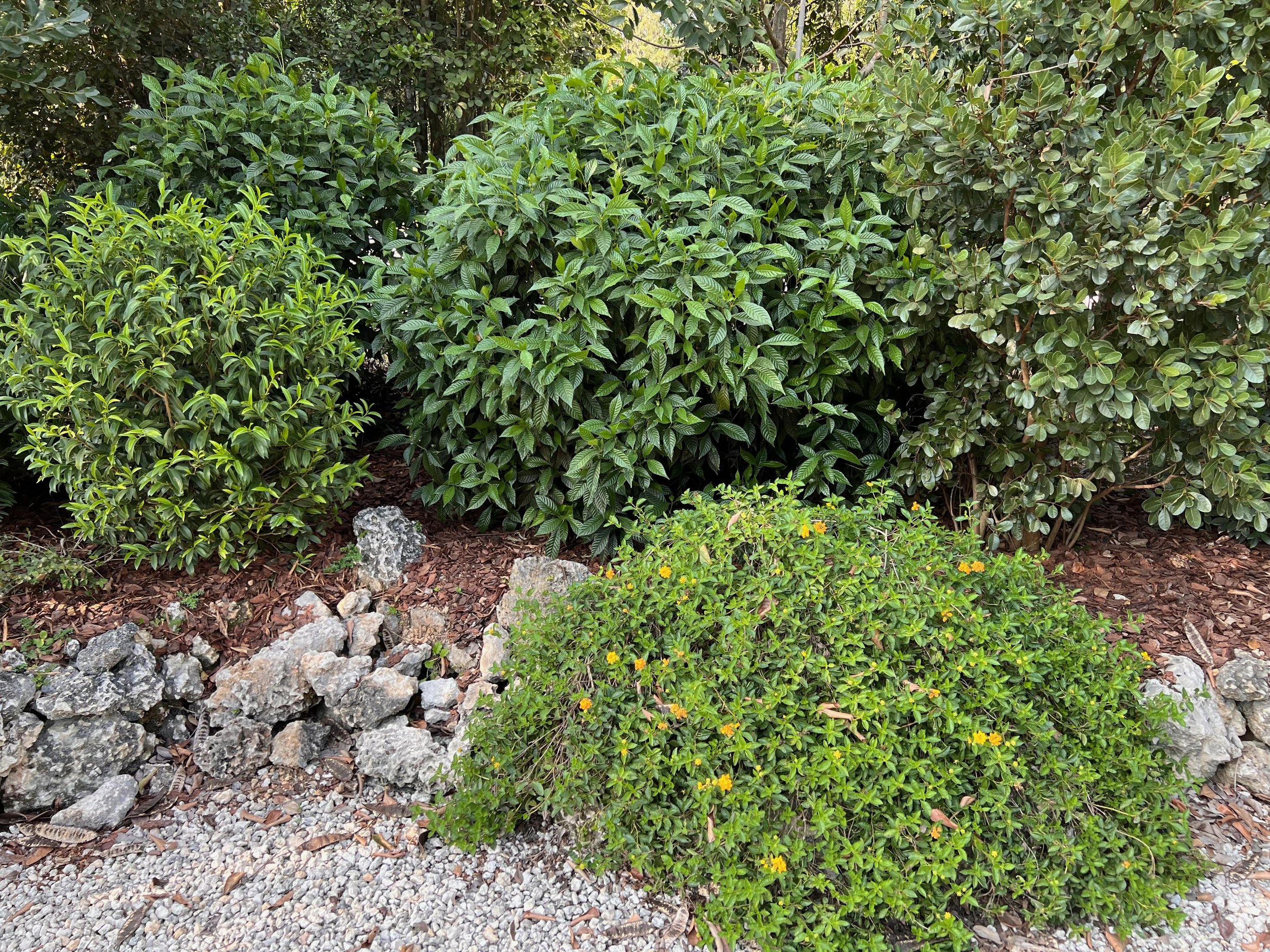
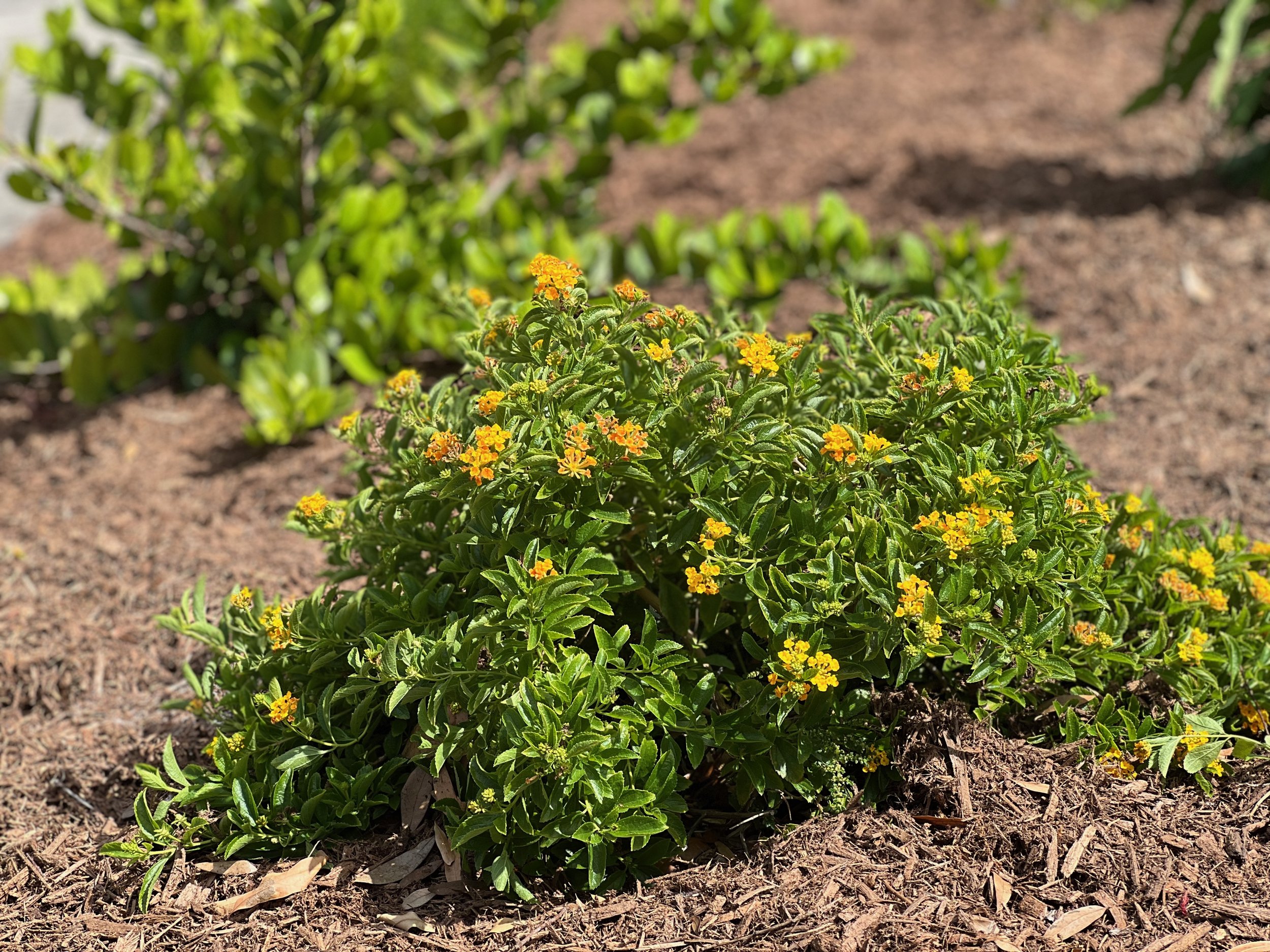
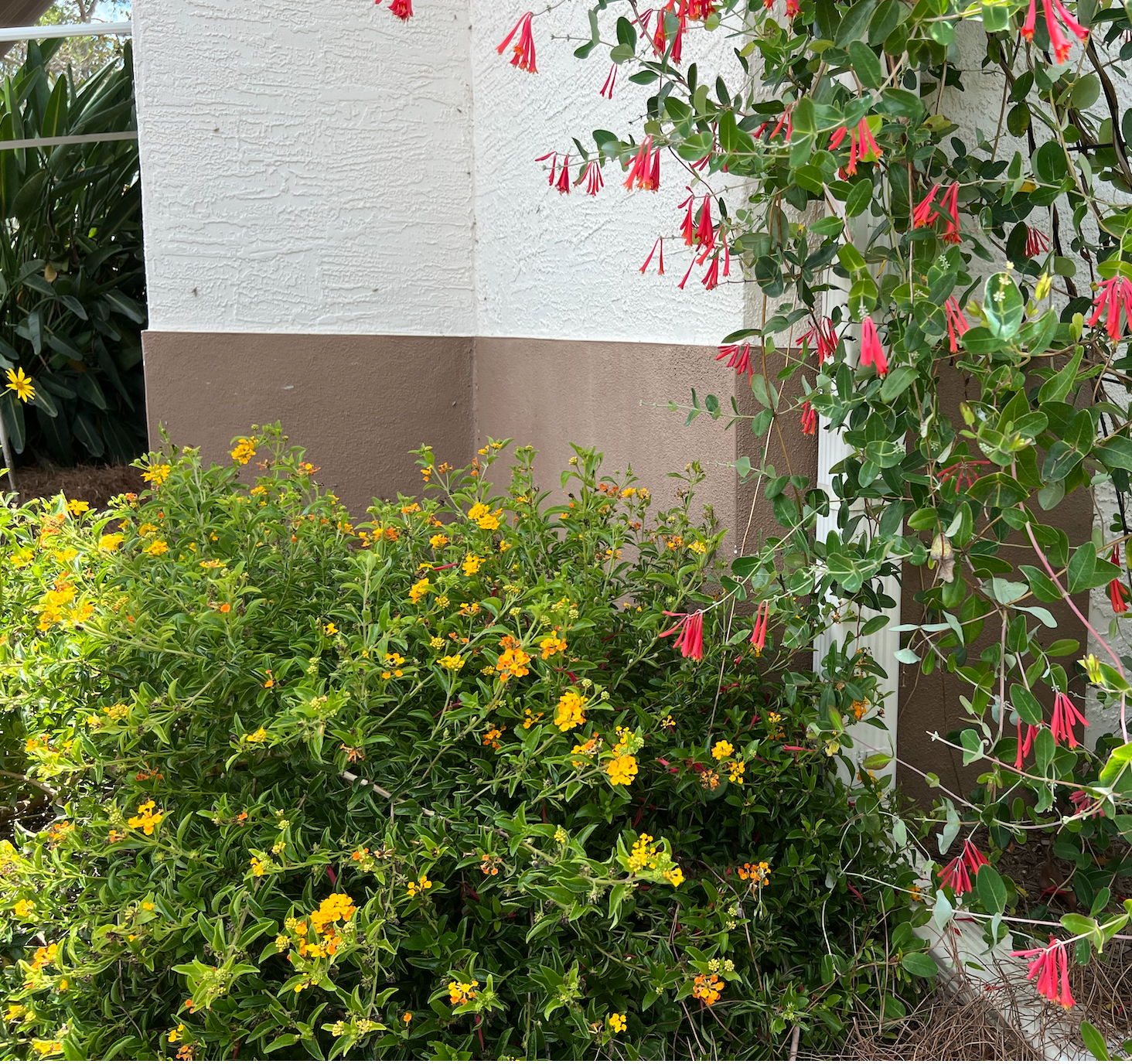
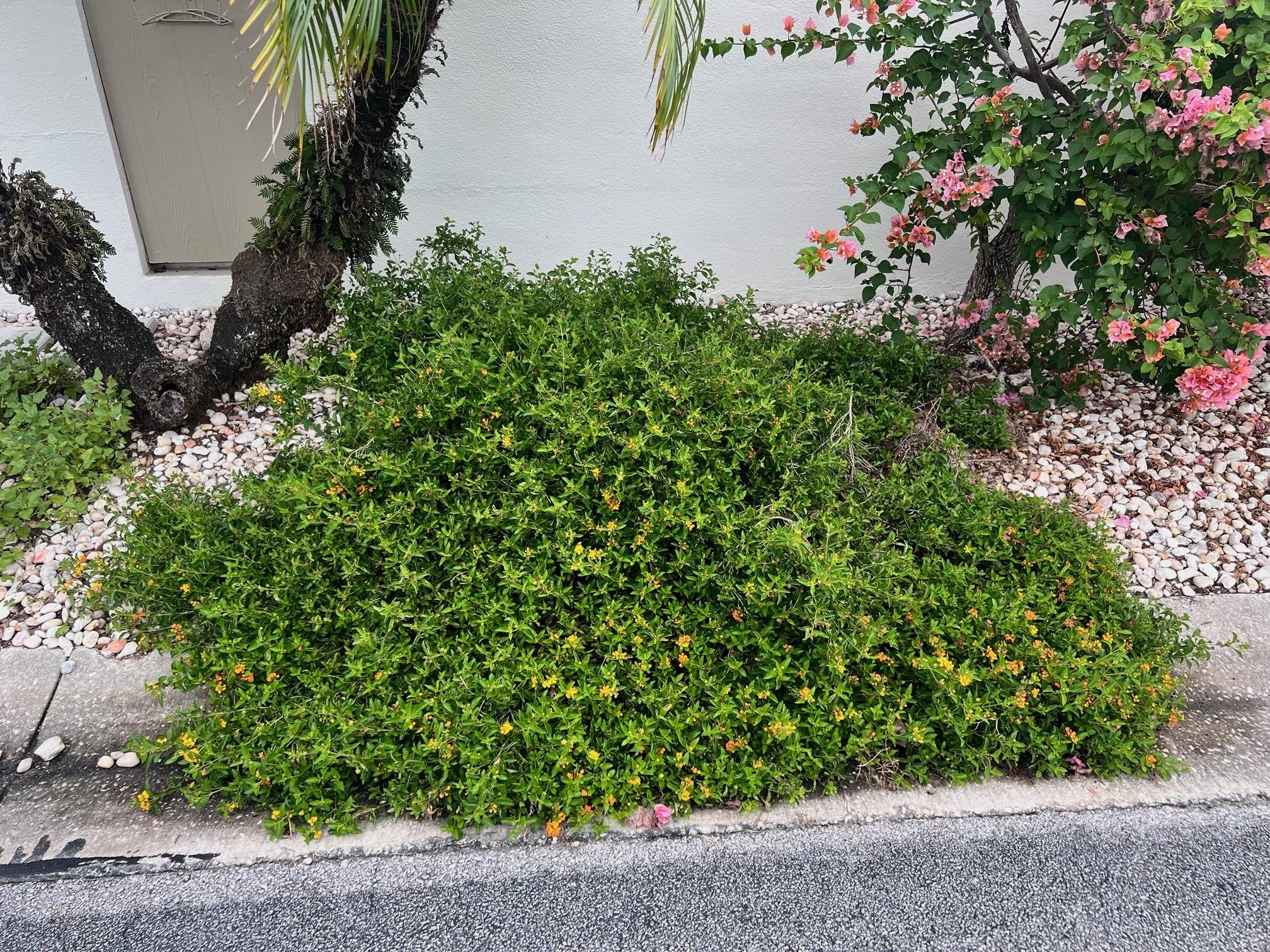
Lantana depressa var. ‘depressa’
Gold Lantana is an evergreen, low-growing, rare, native lantana. Growing 1’-2’ tall and 3’-4’ wide, with showy gold flowers on and off all year that attract butterflies and purple fruit for birds, this plant makes a great addition to landscapes and pollinator gardens. Plant in full sun with average (well-drained) to dry soil, and enjoy this fragrant, semi-salt-tolerant shrub!
Liatris gracilis
Graceful Blazing Star is a moderately tall perennial wildflower native to Florida, reaching 2-3 ft. height. This drought-tolerant species features a single, slender stem covered in fine hairs and narrow, grasslike leaves. It produces spikes of small, purple star-shaped flowers that bloom from summer into fall, attracting butterflies and other pollinators. Thriving in well-drained soils and full sun, it naturally occurs in flatwoods, sandhills, and open woodlands throughout Florida and is valued for both wildlife gardens and cut flower arrangements.
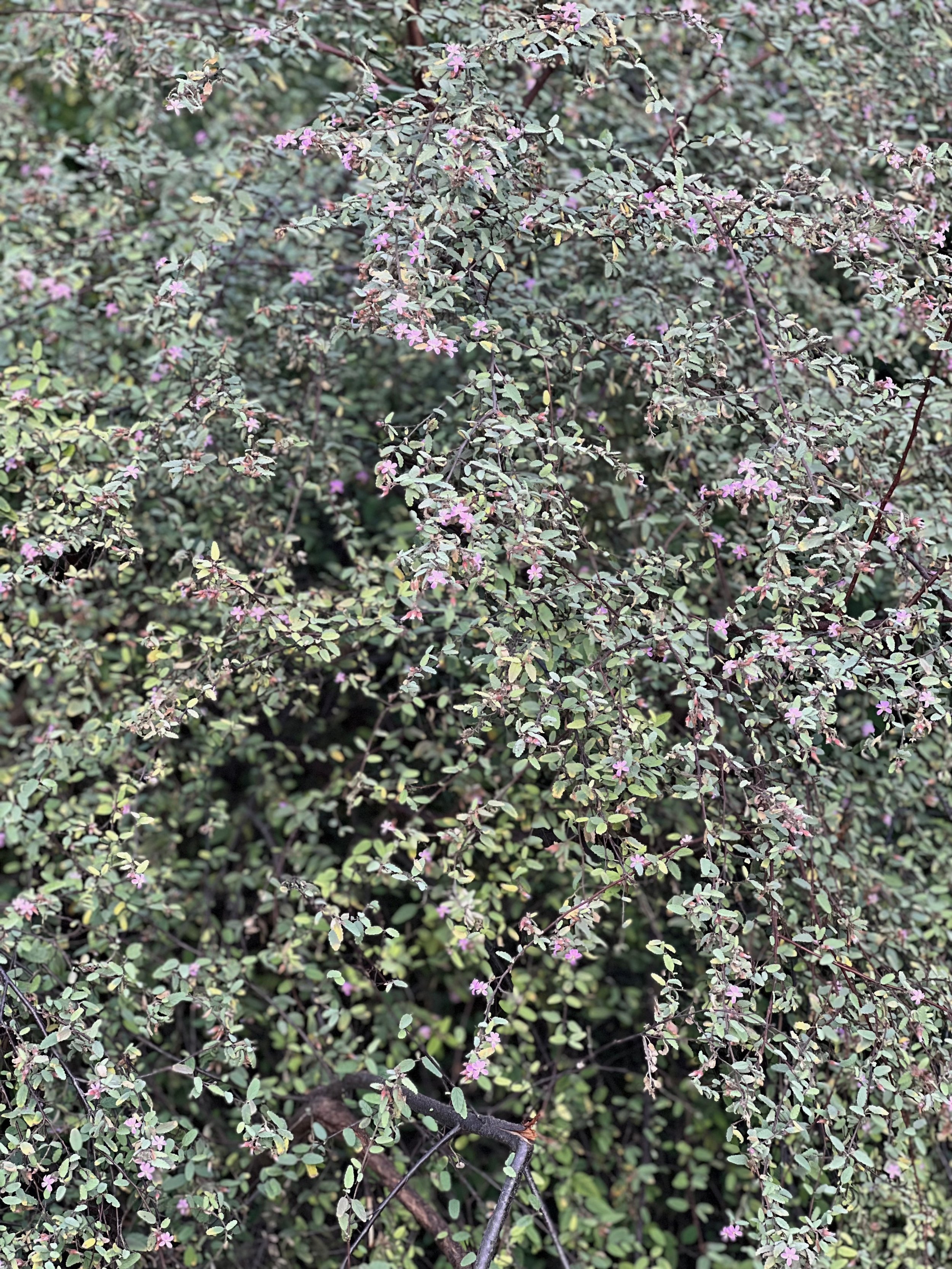
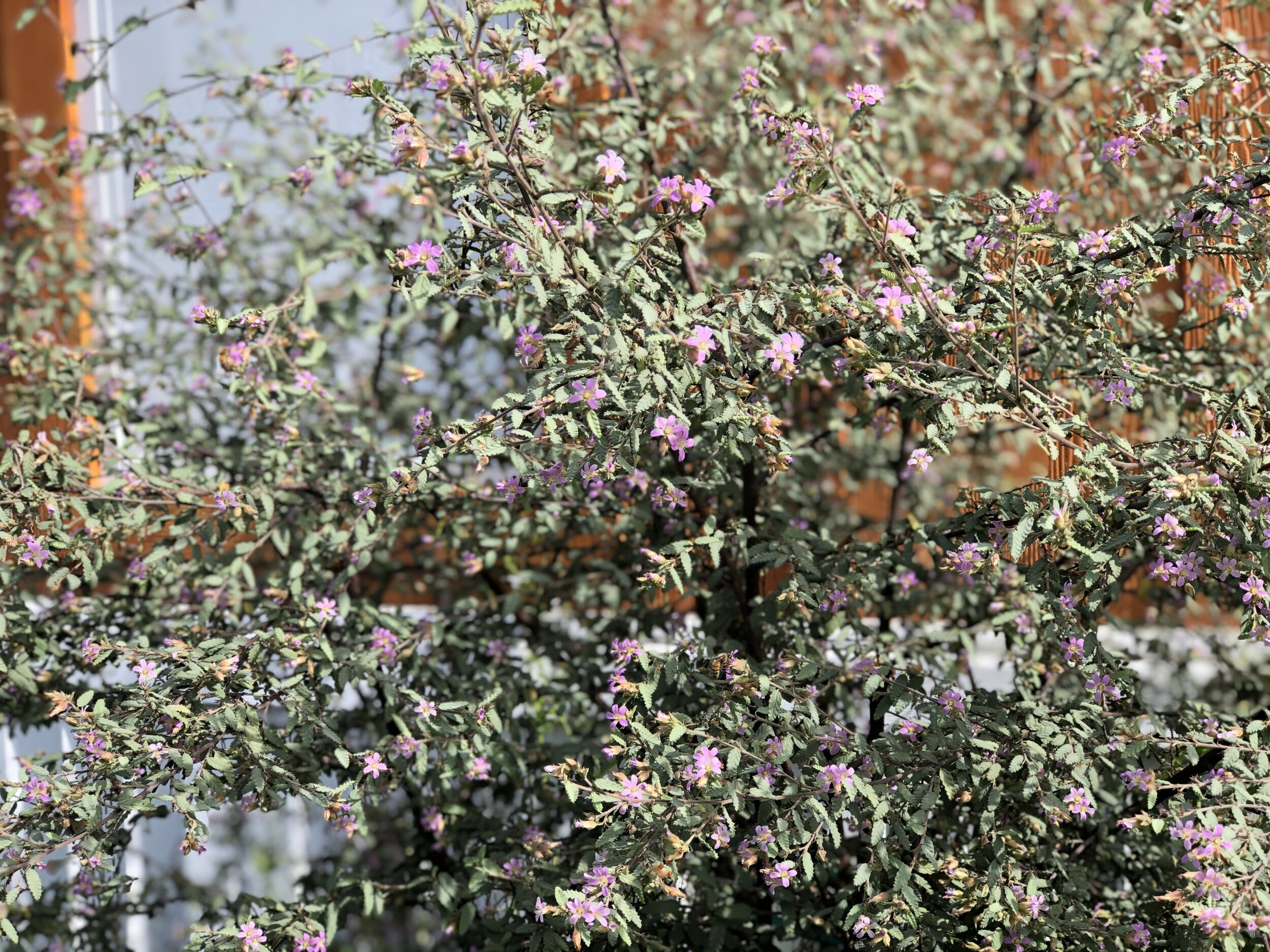
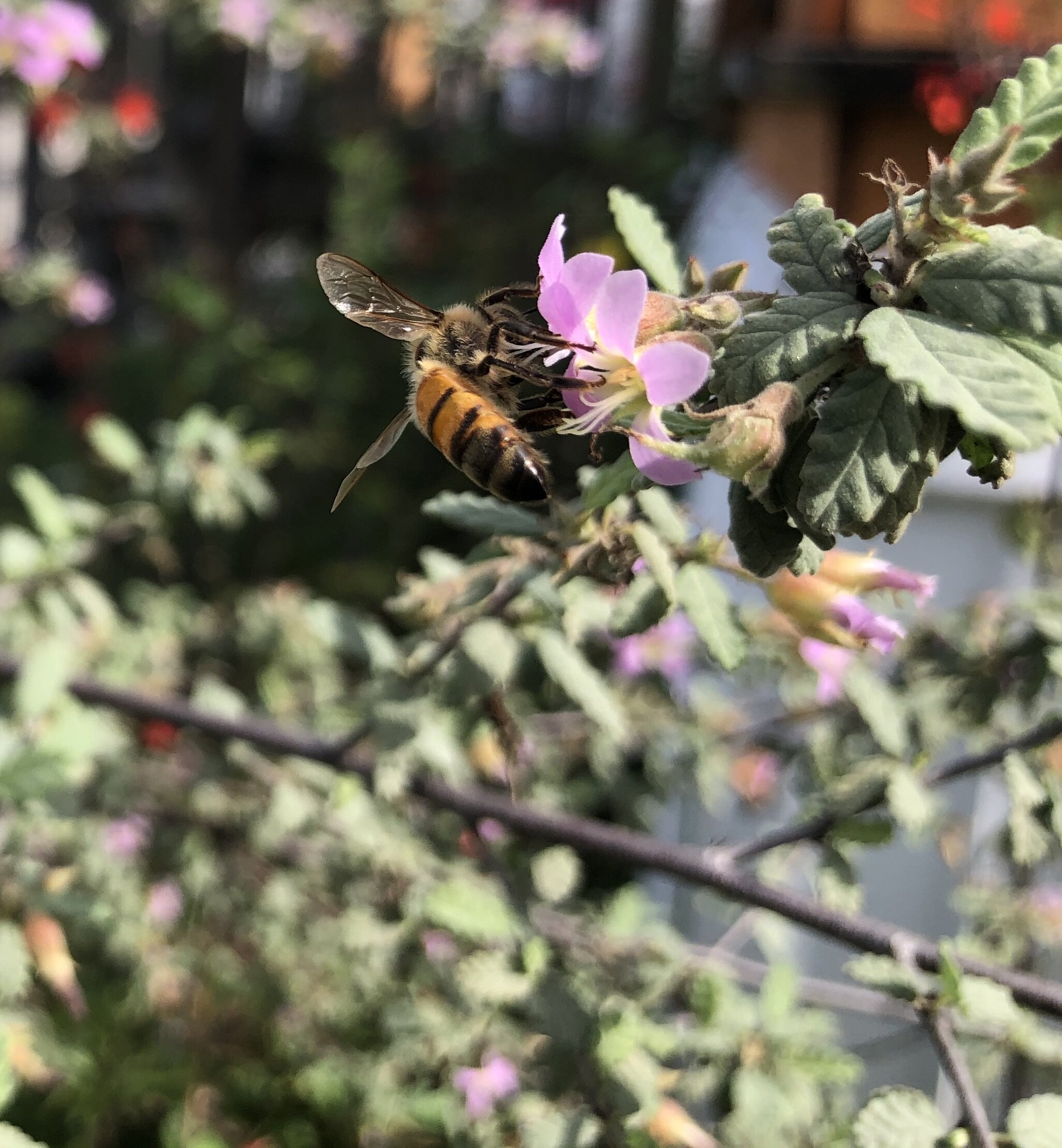
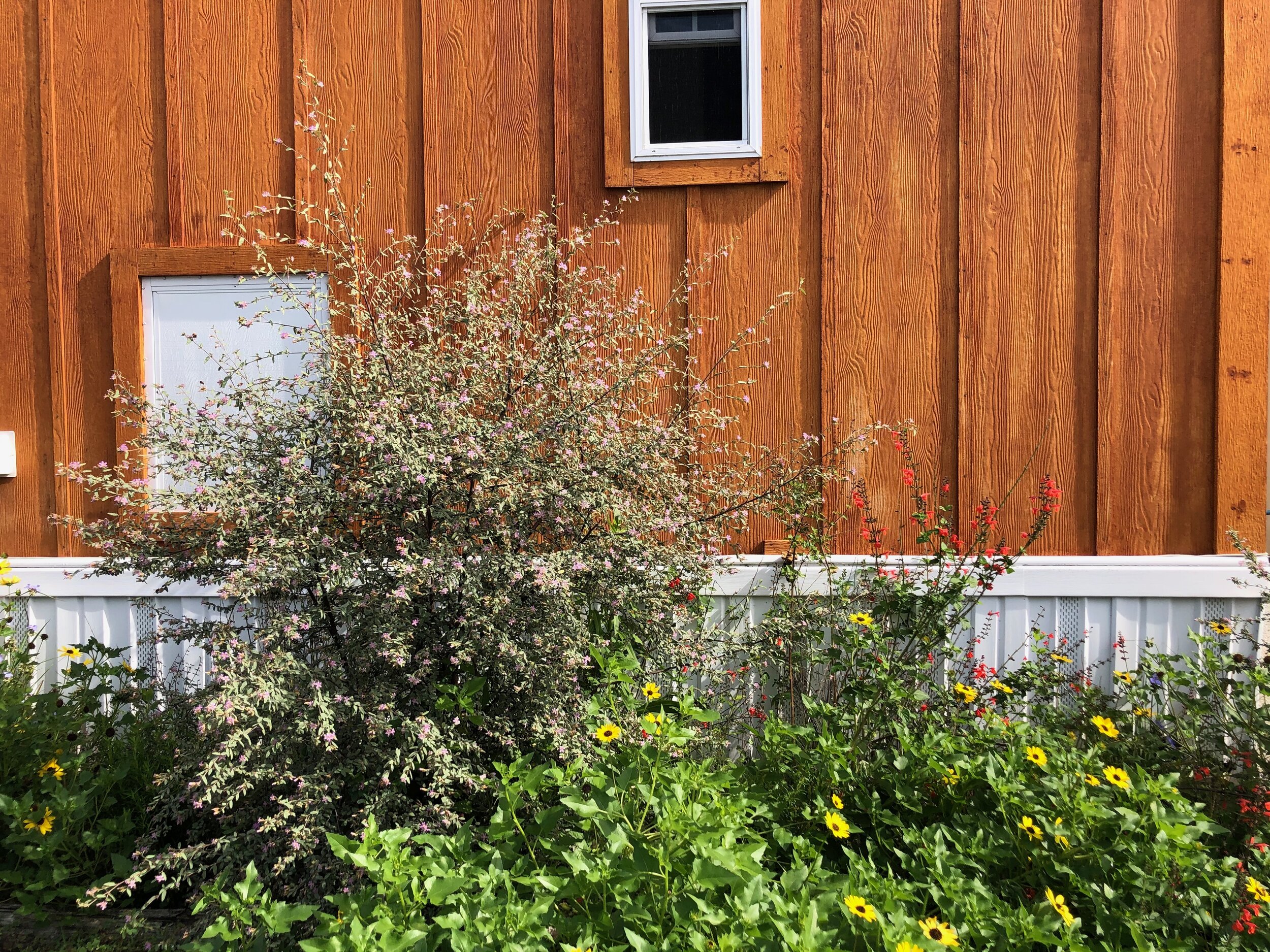
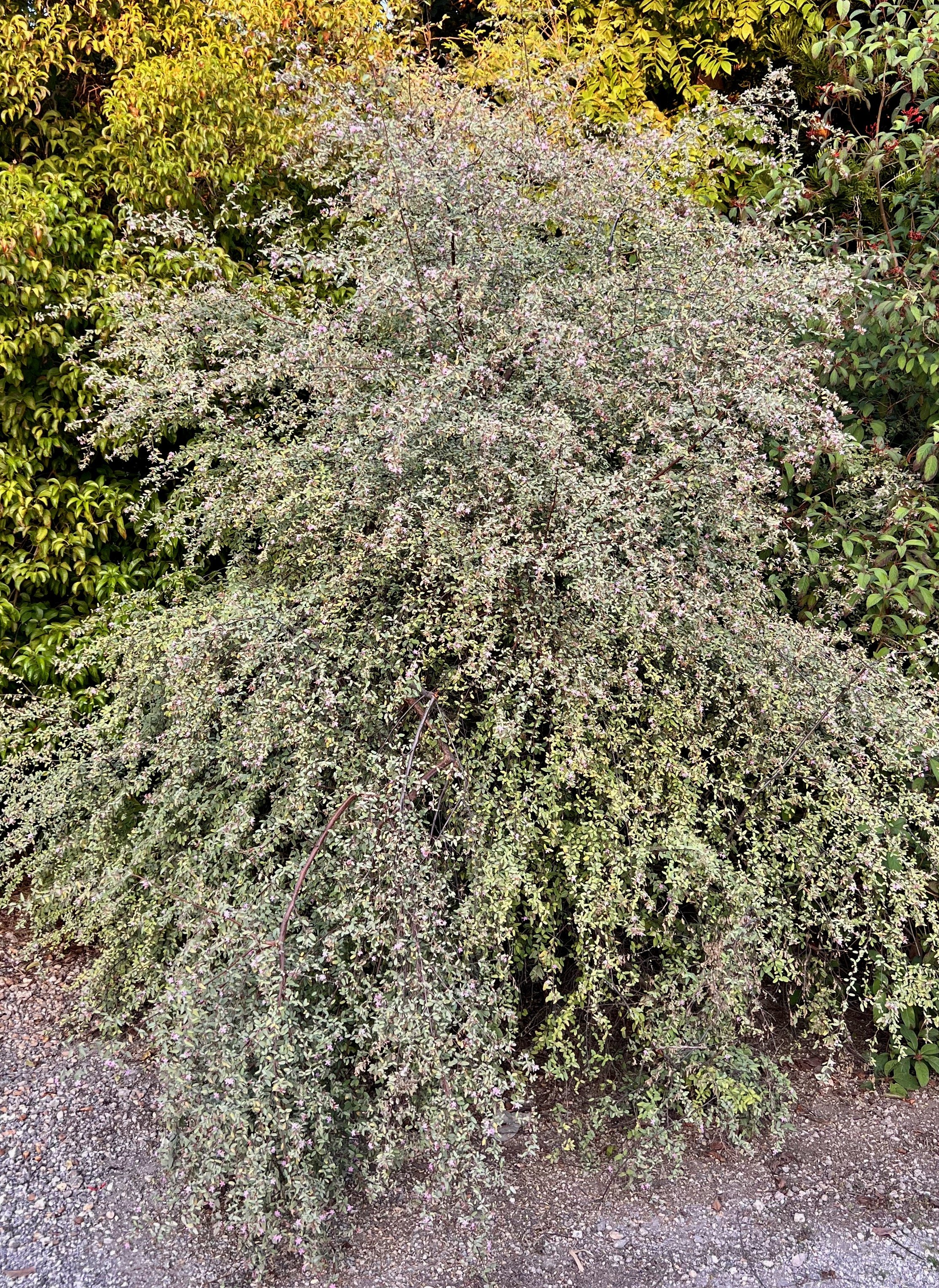
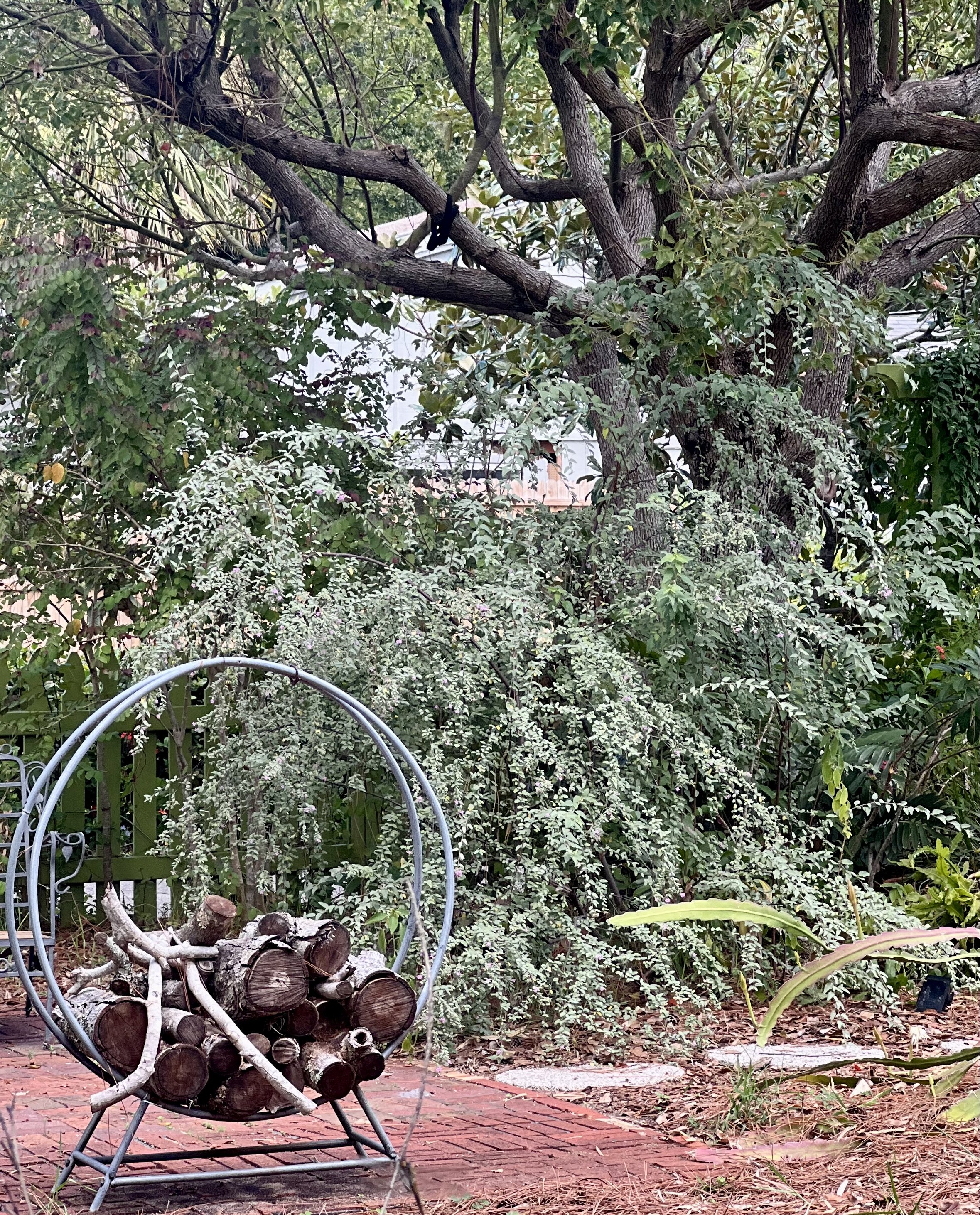
Melochia tomentosa
This native, evergreen, large flowering shrub is a super pollinator magnet. It is a keystone species for gardeners in South Florida because of the diversity and numbers of pollinators it attracts, including hummingbirds. Blooming year-round, it has tiny pink flowers and tiny grey leaves on dark stems and a beautiful soft and open habit in the garden.
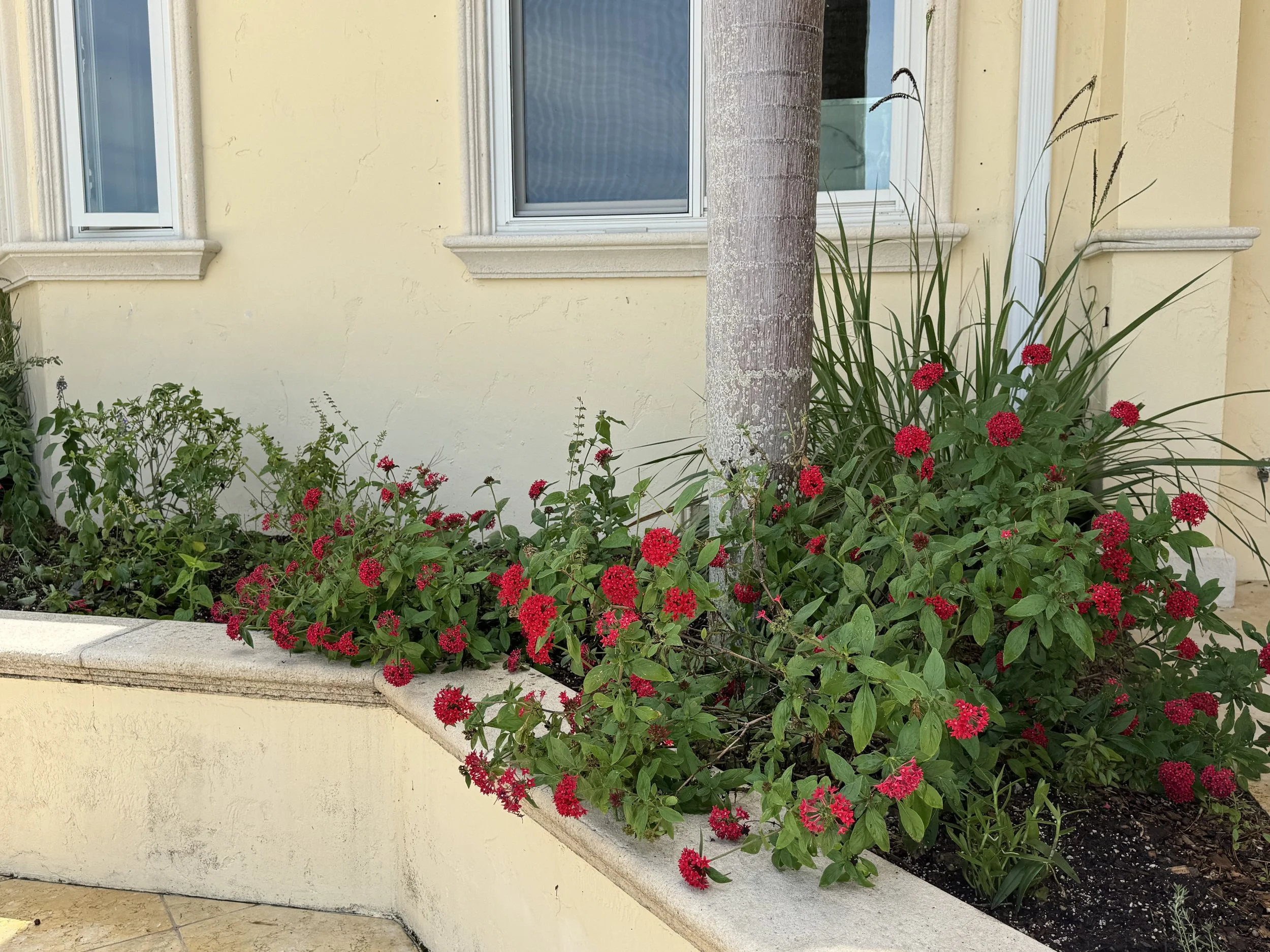
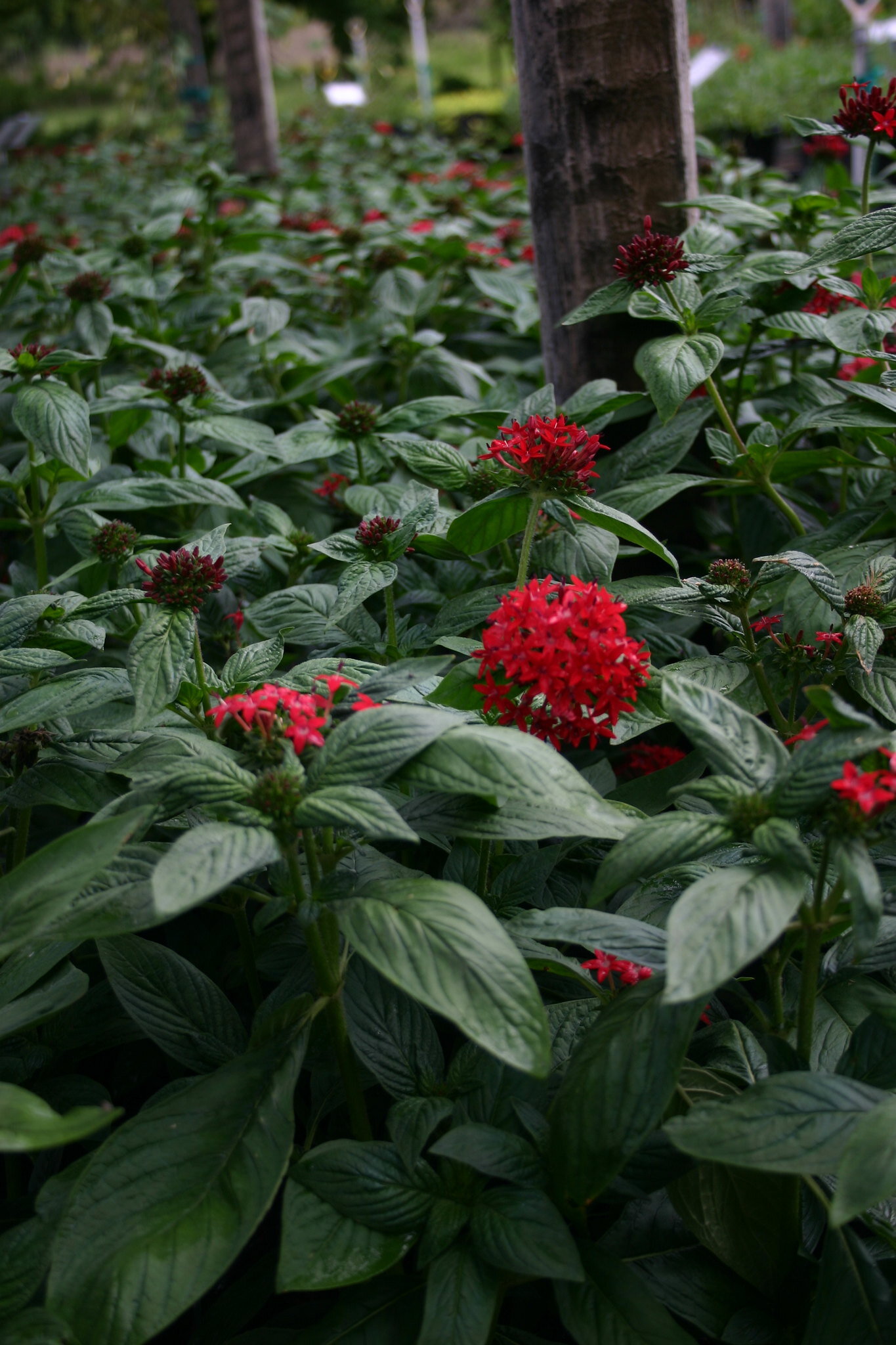
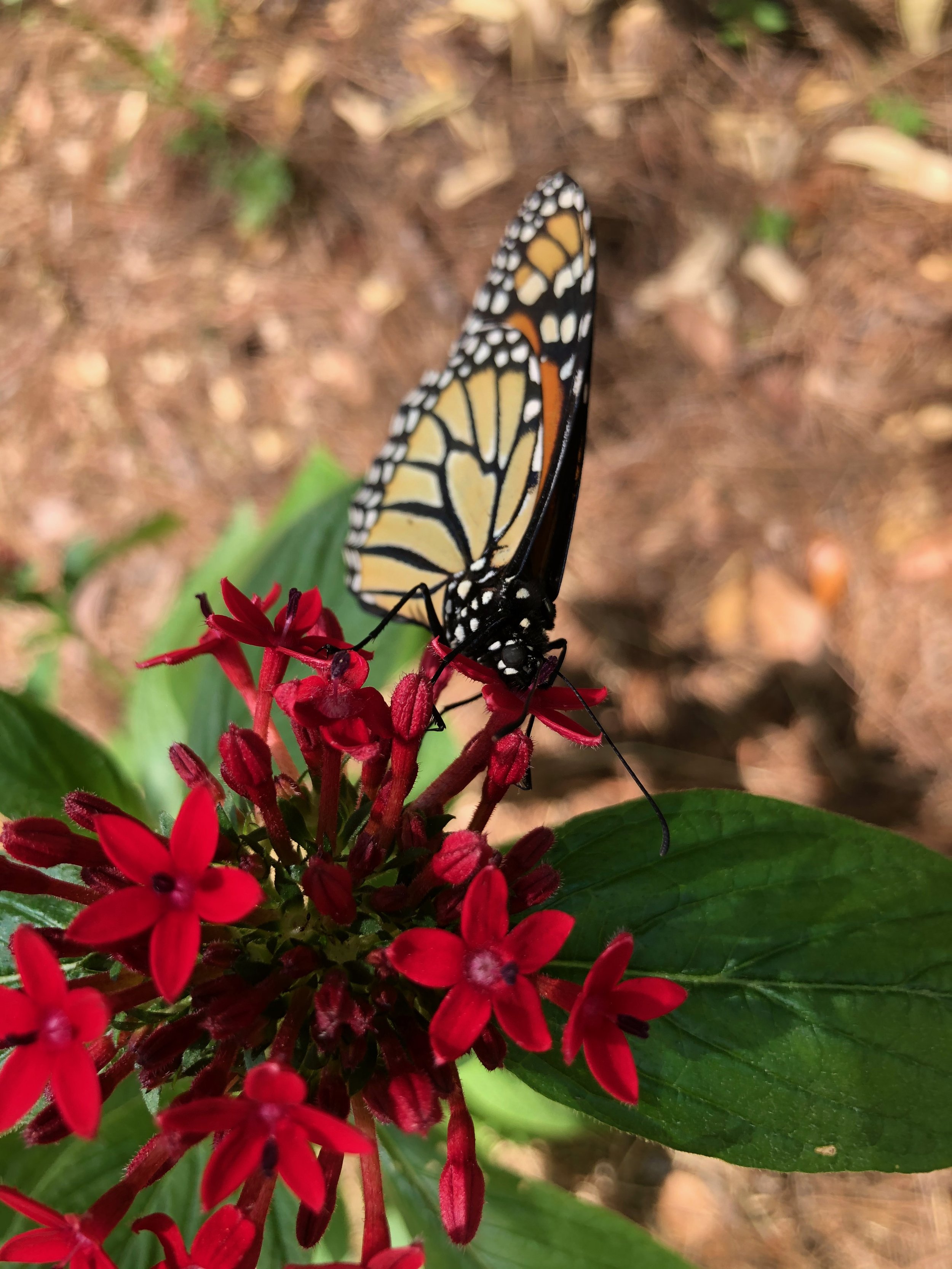
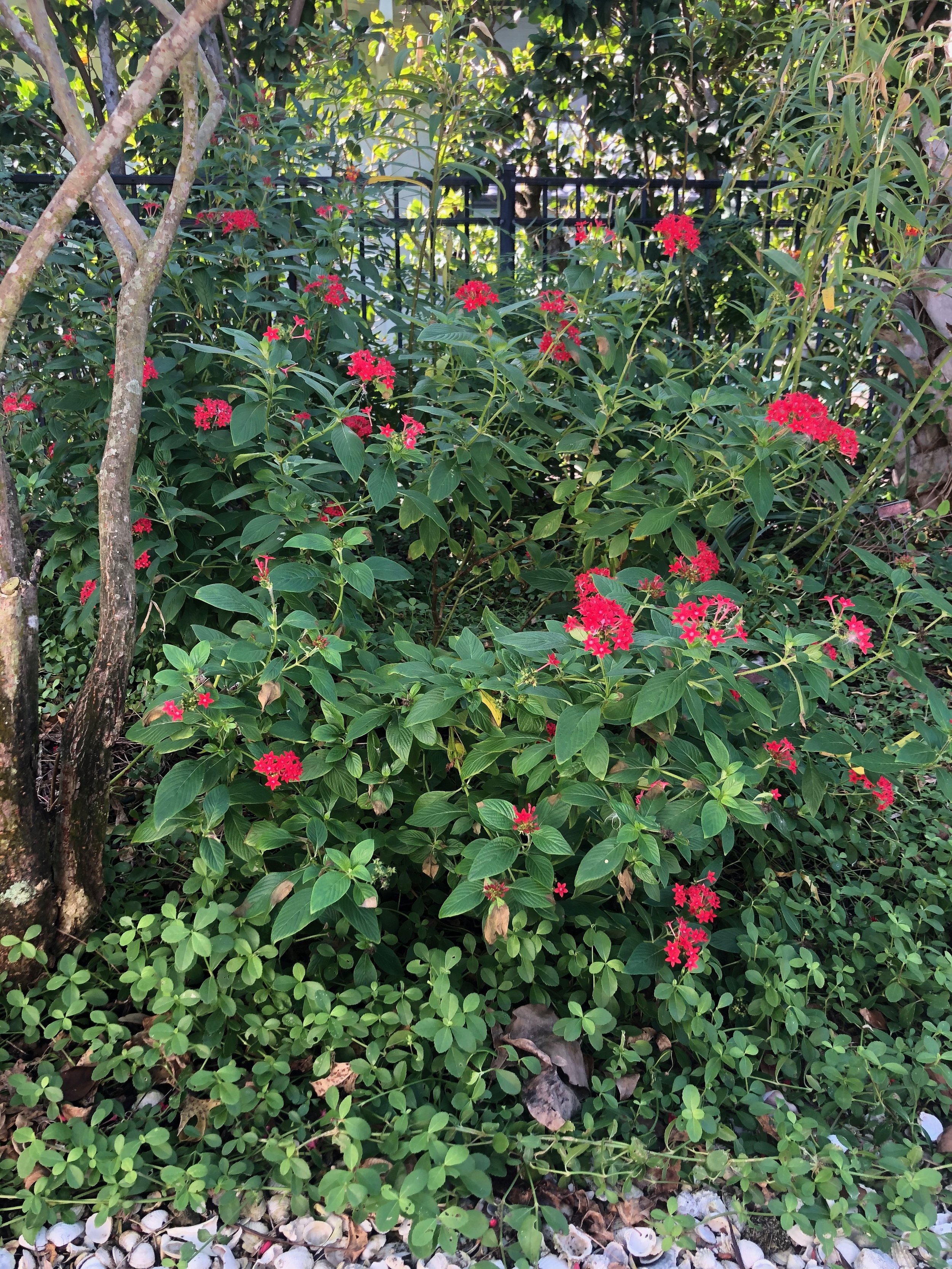
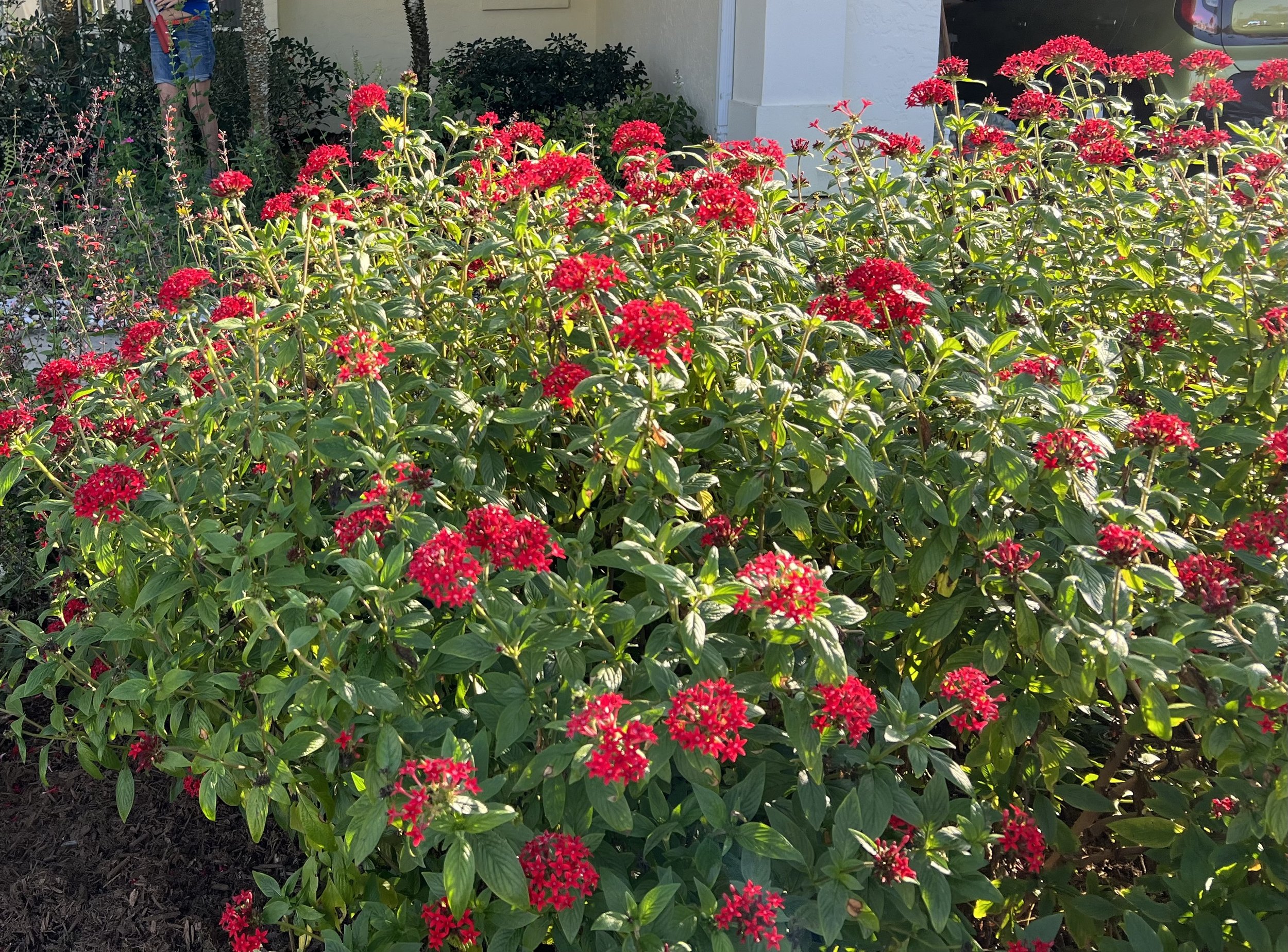
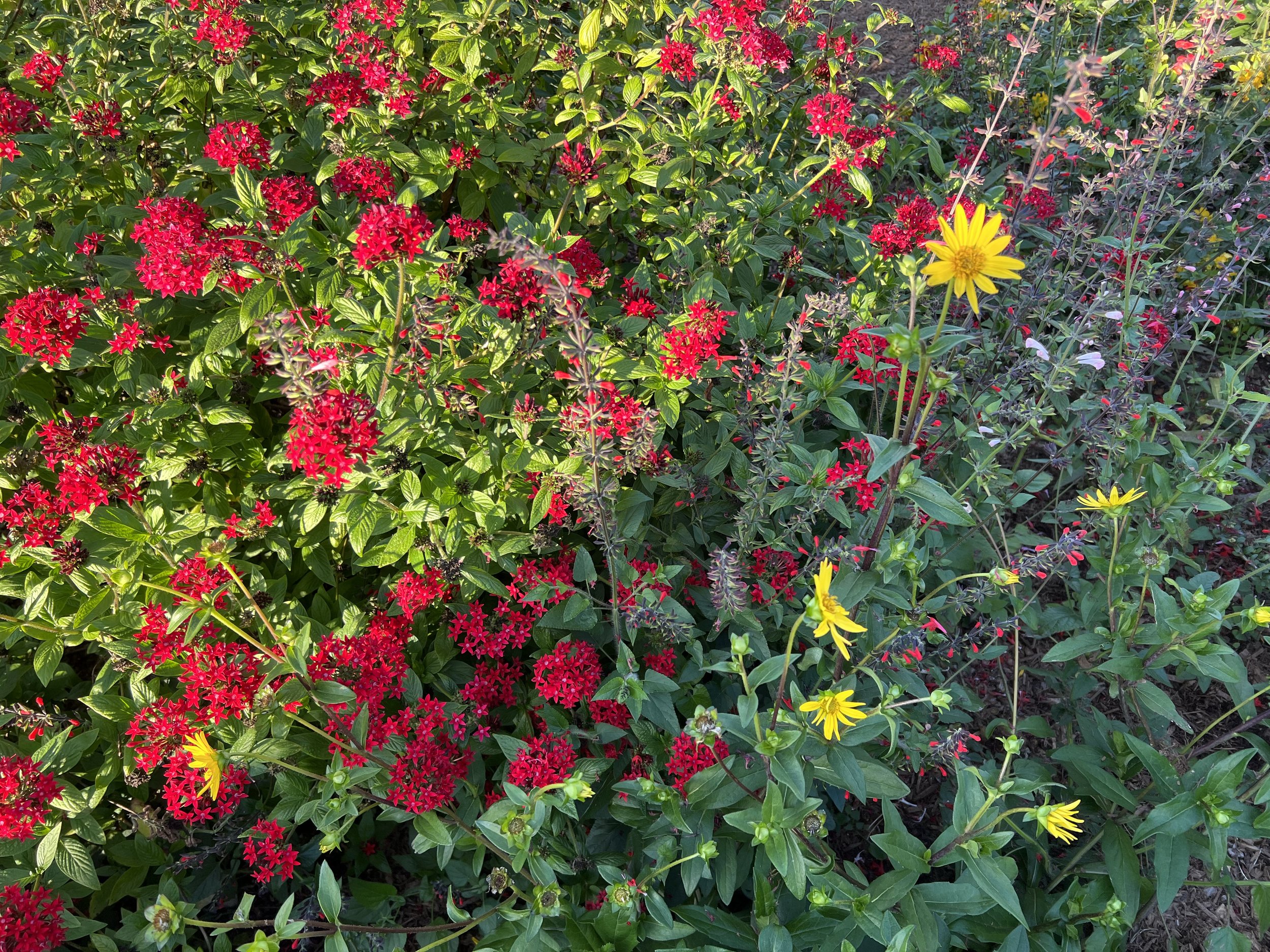

Penta lanceolata ‘Ruby Glow’
Also called “Old-Fashioned Red Penta“ or “Ruby Glow Red Penta” this non-native but Florida-friendly, perennial, evergreen, small flowering shrub is the hardiest of the pentas for Florida gardens. It makes a great addition to a butterfly and pollinator garden as it blooms almost all year (and in the winter months) making it a year-round nectar source year round for many pollinators including Monarch butterflies and hummingbirds. It is adaptable to sun and dry soils but does best in partial shade with average soils. Best planted in groups.
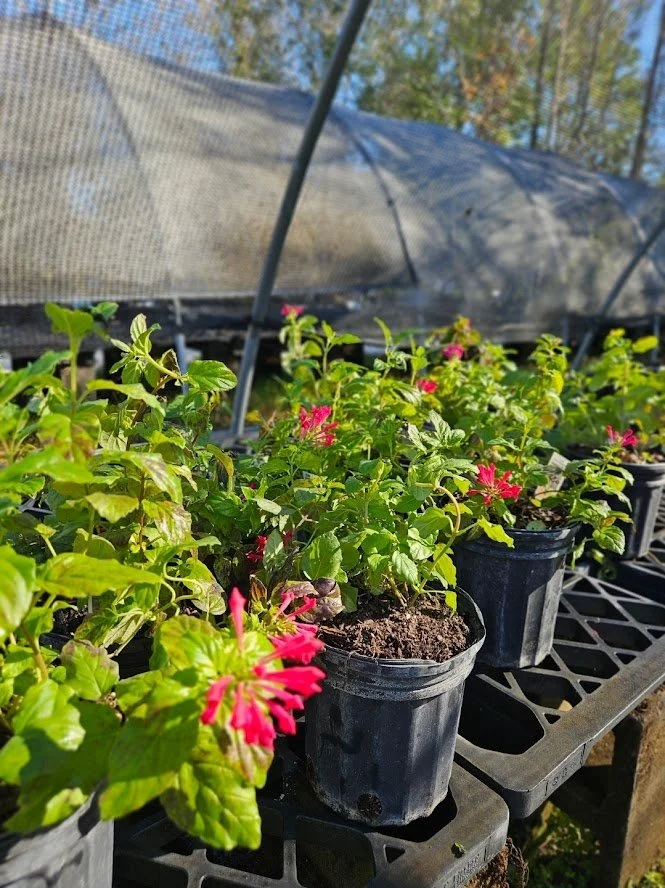
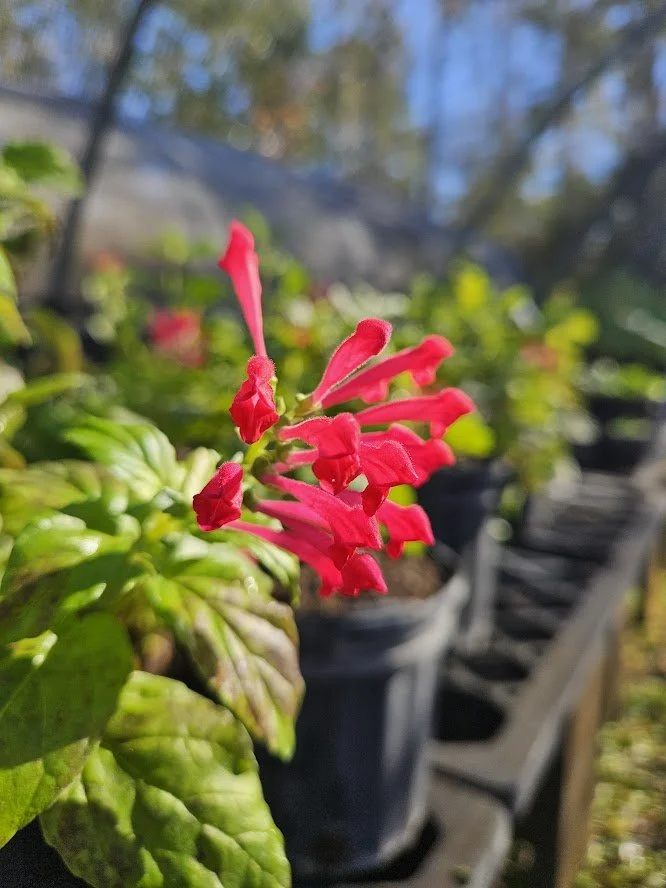
Scutellaria longifolia 'Red Fountains
Hot Pink Skullcap is a perennial wildflower that grows 1-2 ft tall with an upright, branching habit. It produces vibrant hot pink tubular flowers along tall spikes from late spring through summer, creating a stunning display. This hardy native is easy-to-grow and thrives in full sun to partial shade with well-drained to average soil. It attracts hummingbirds, butterflies, and other pollinators while requiring minimal maintenance once established, making it an excellent choice for naturalized gardens and pollinator-friendly landscapes.
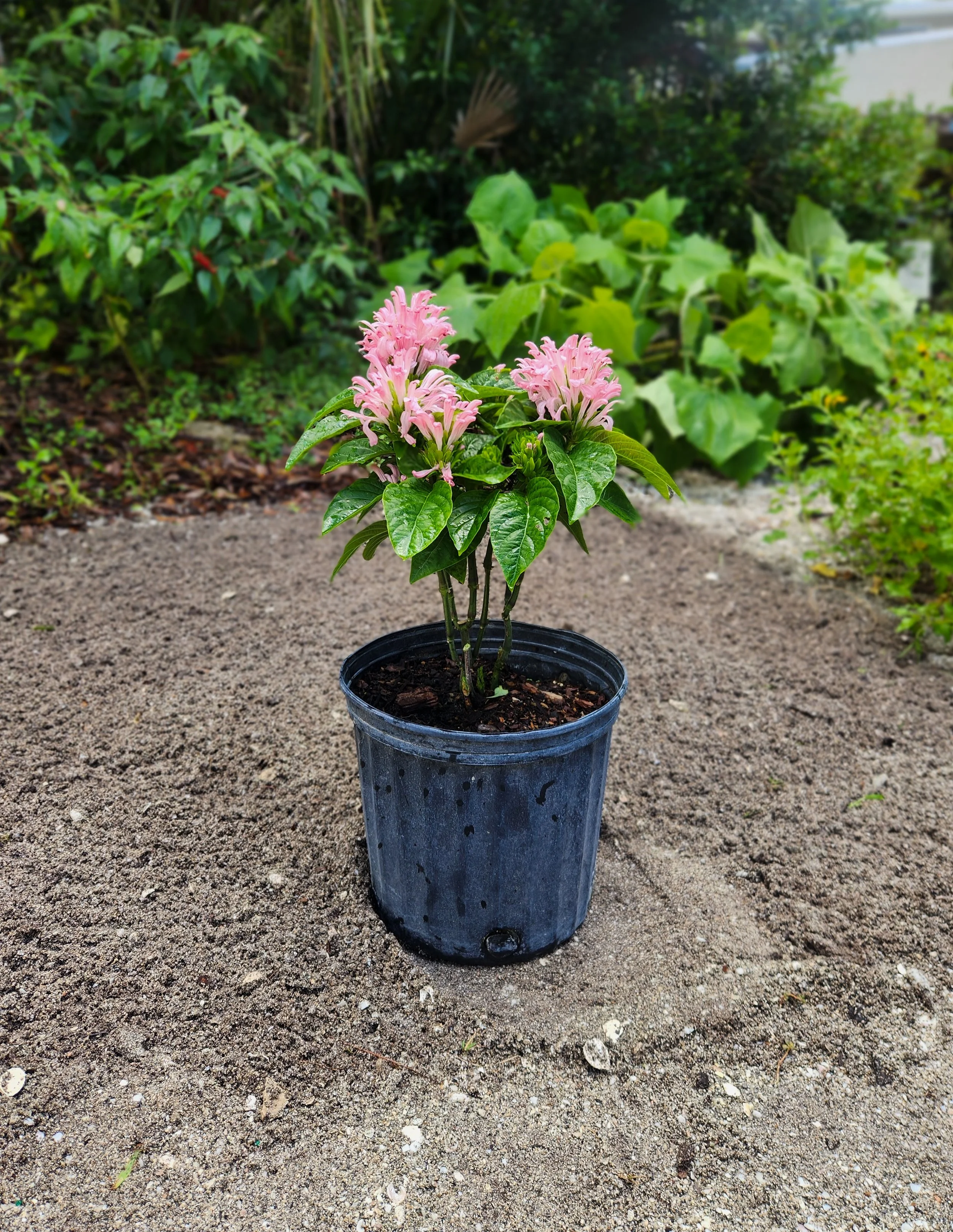
Justicia carnea
Jacobinia is a non-native, Florida-friendly perennial shrub with showy pink blooms and dark green leaves. It grows to be about 4’ tall with a 2’ spread. This plant thrives in shade and requires rich, moist, well-draining soil. The pink flowers are great for attracting butterflies and hummingbirds!
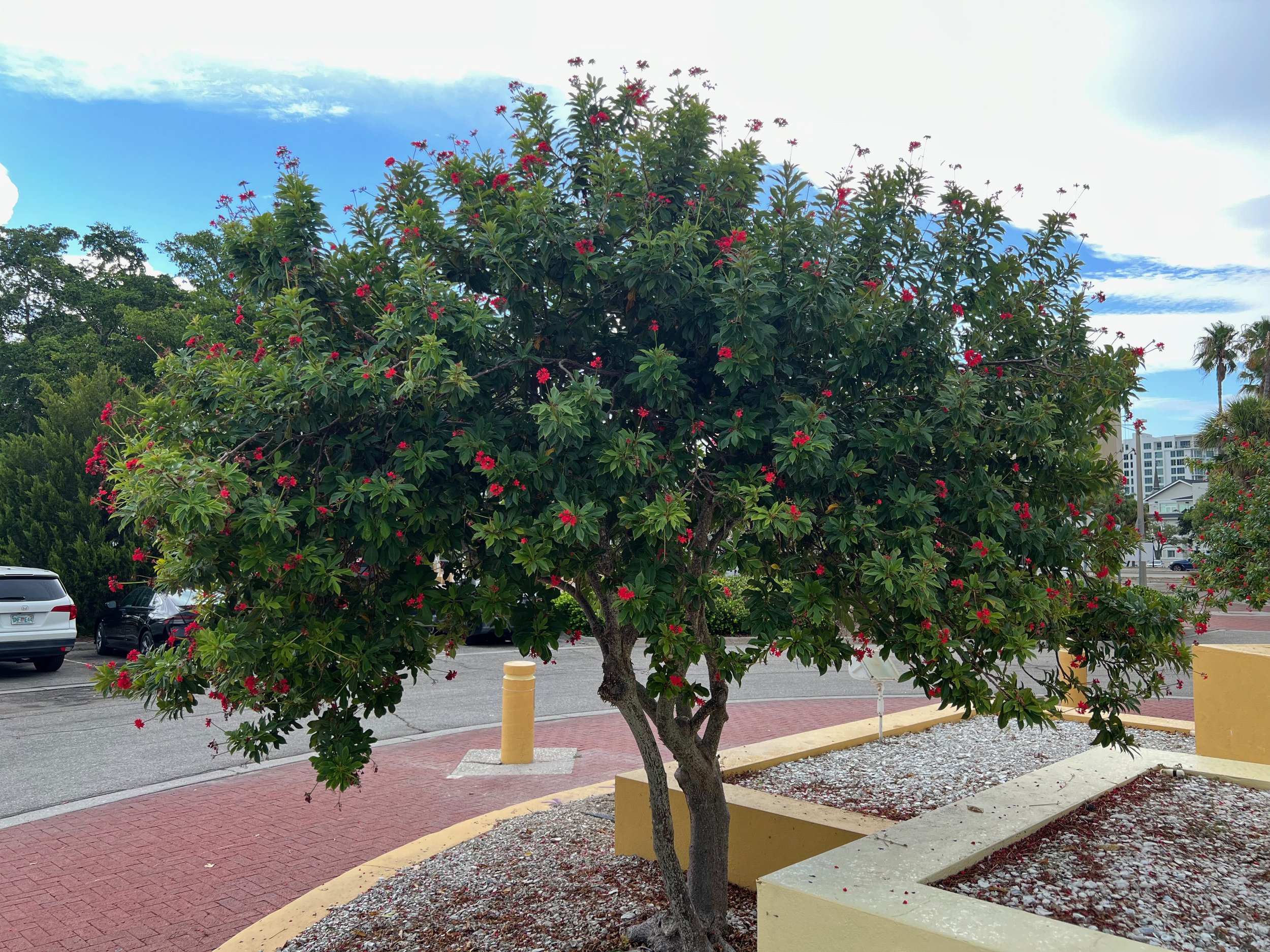
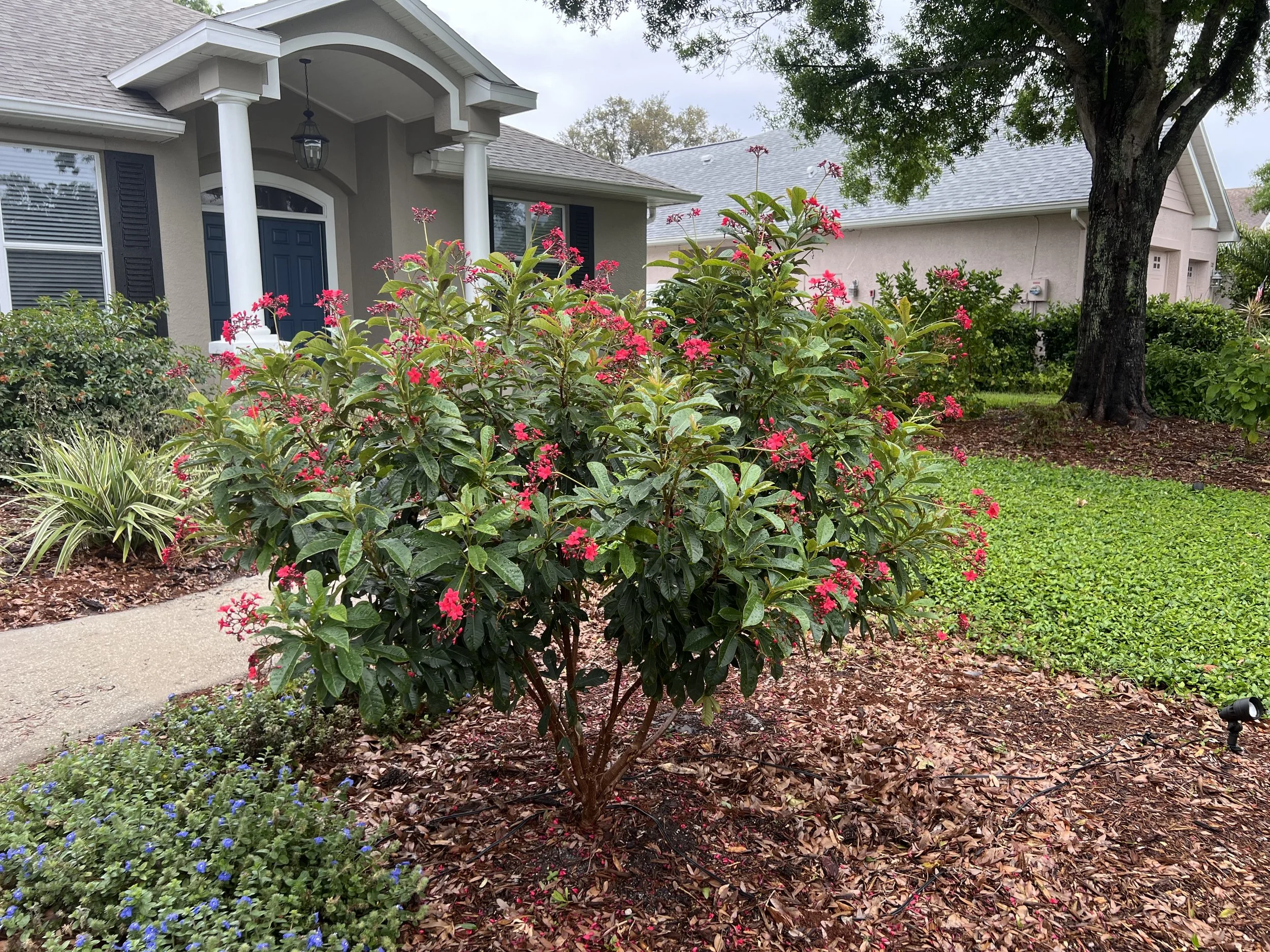
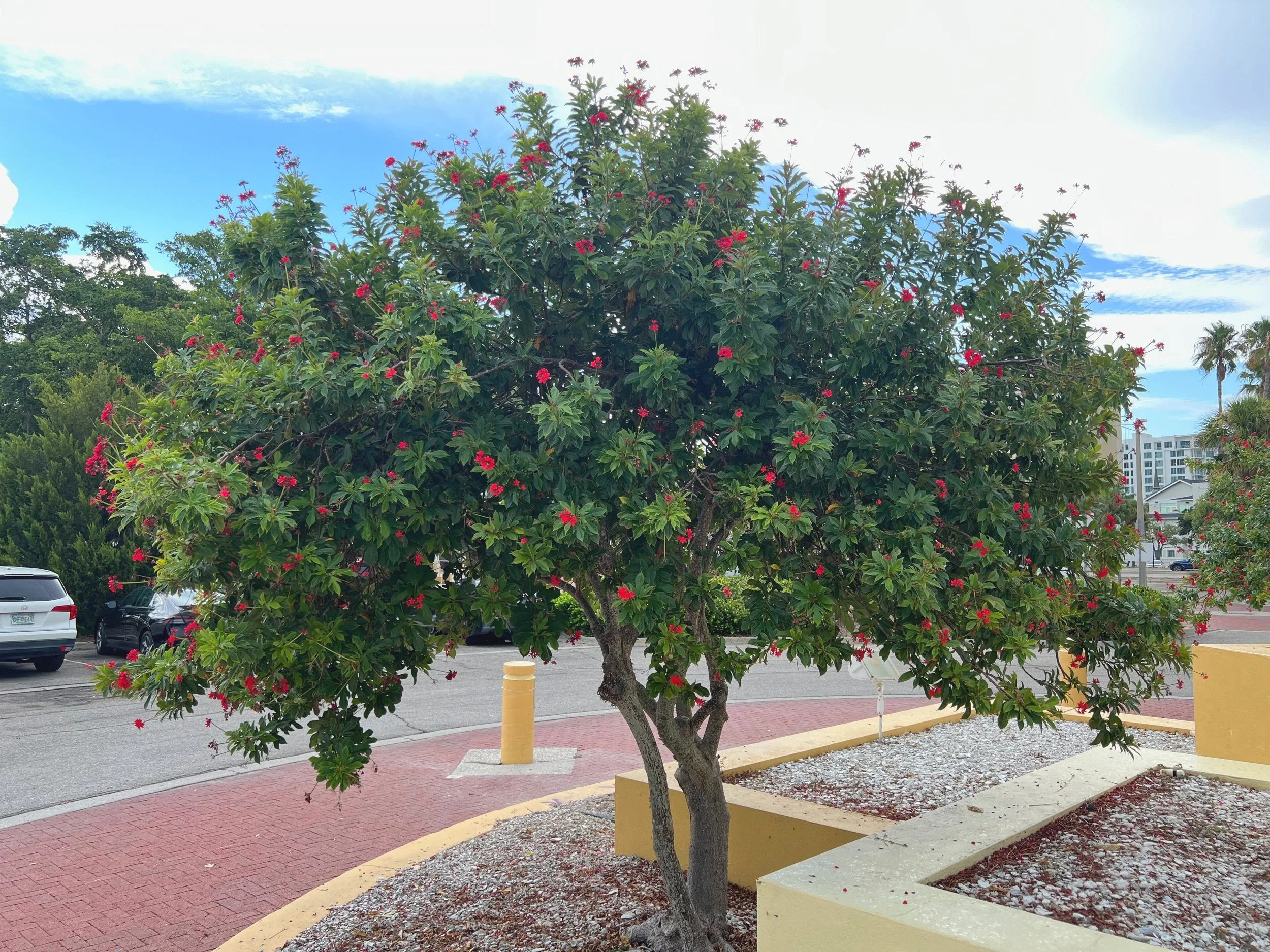
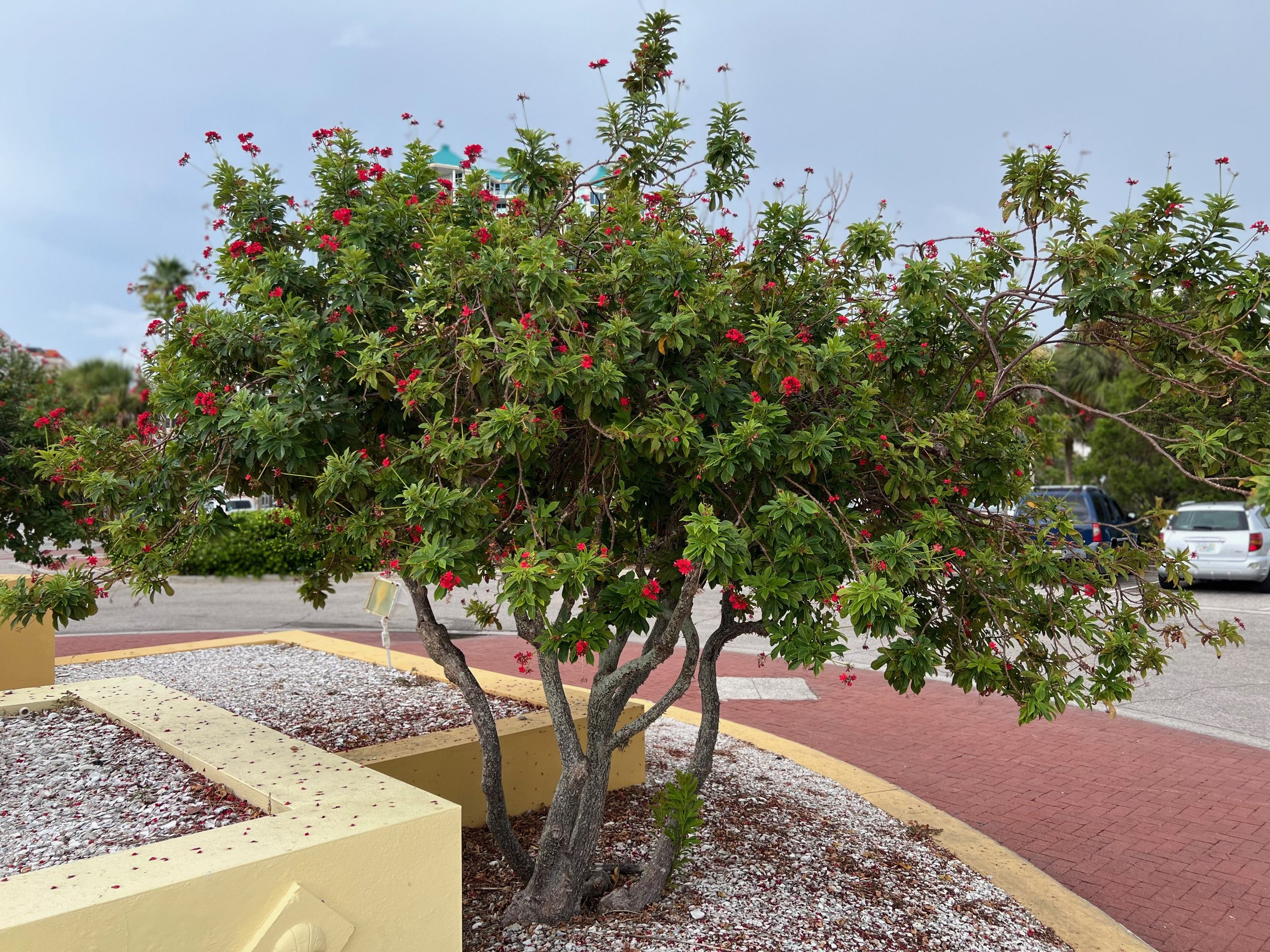
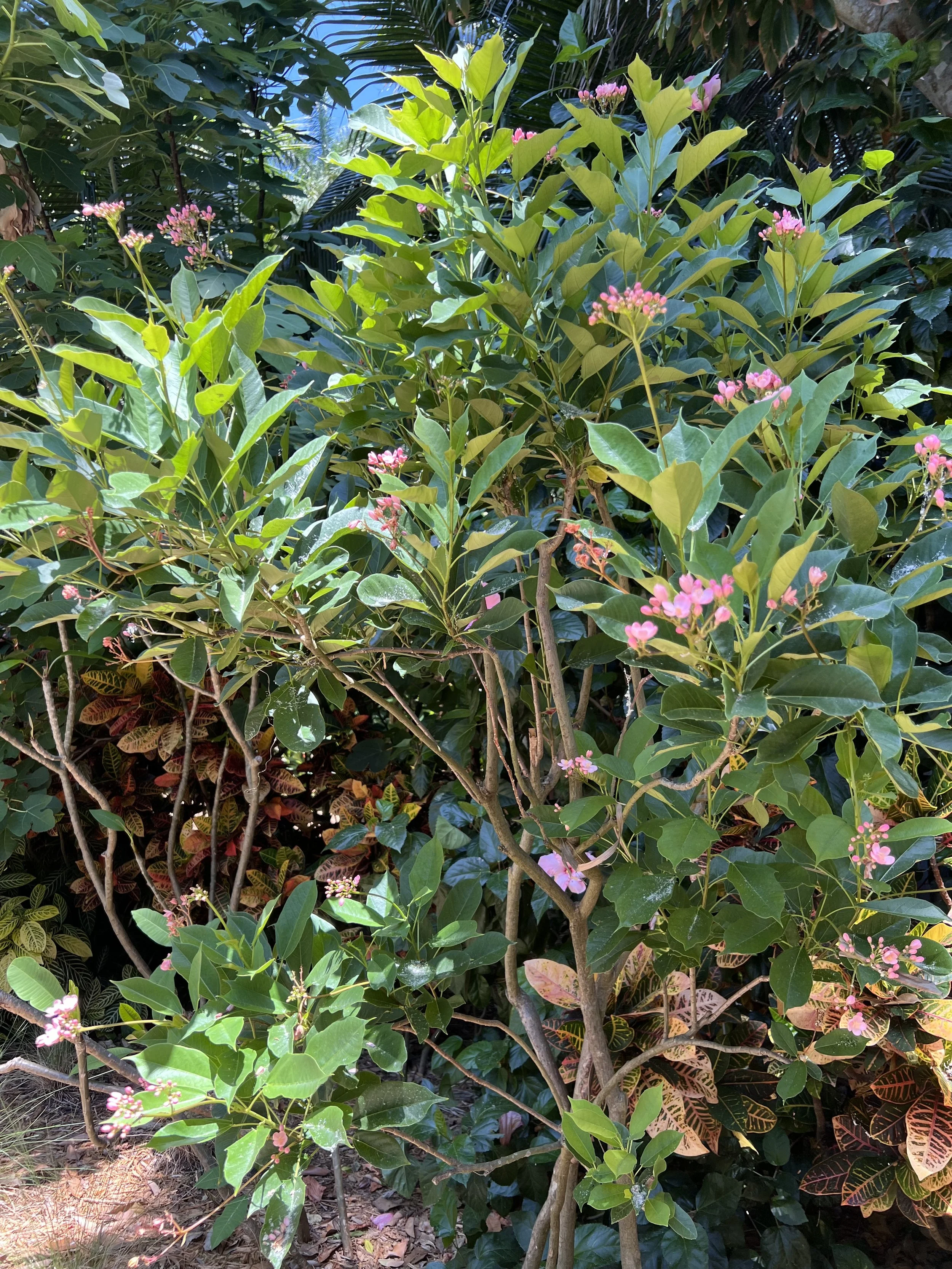
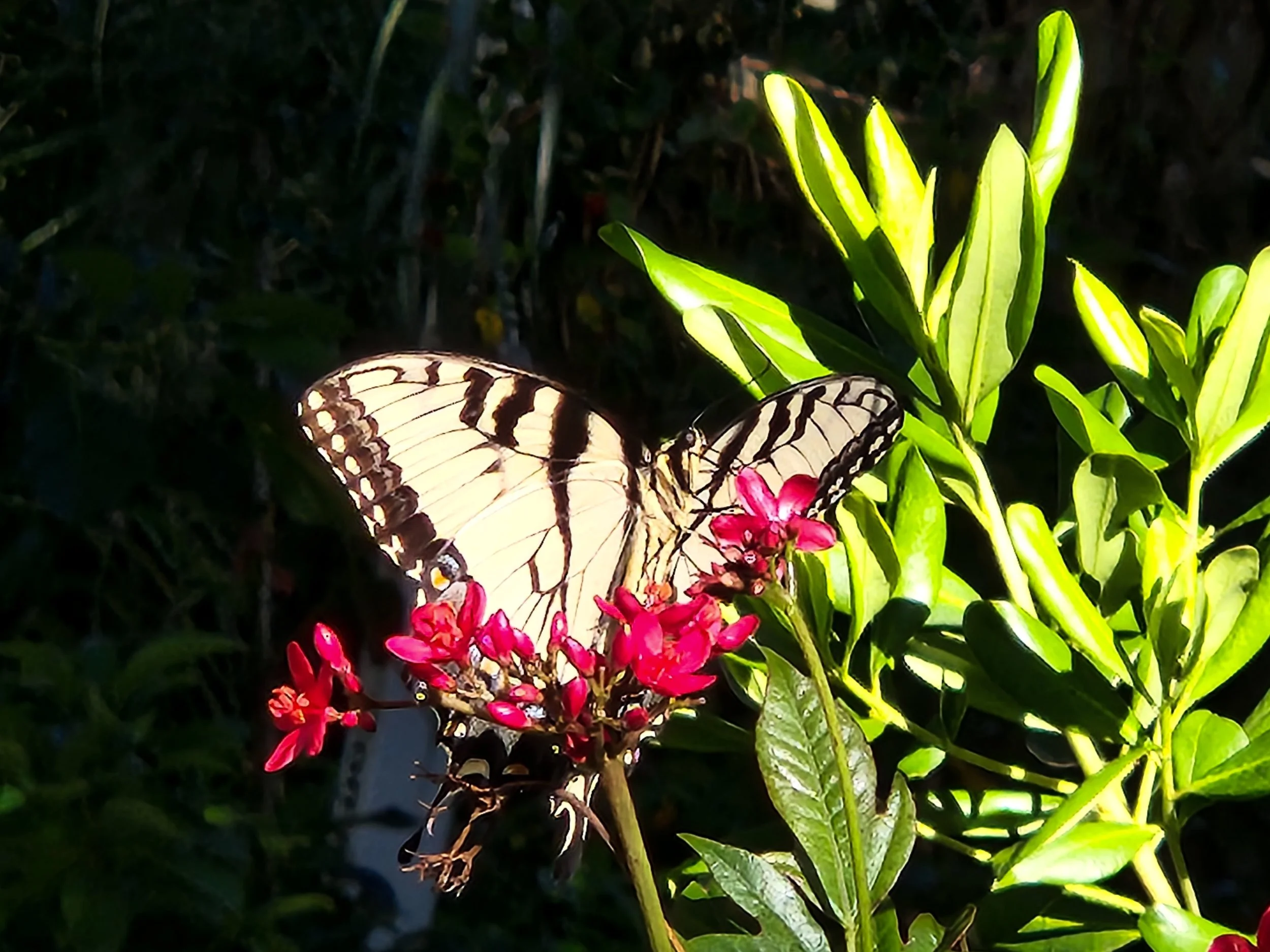
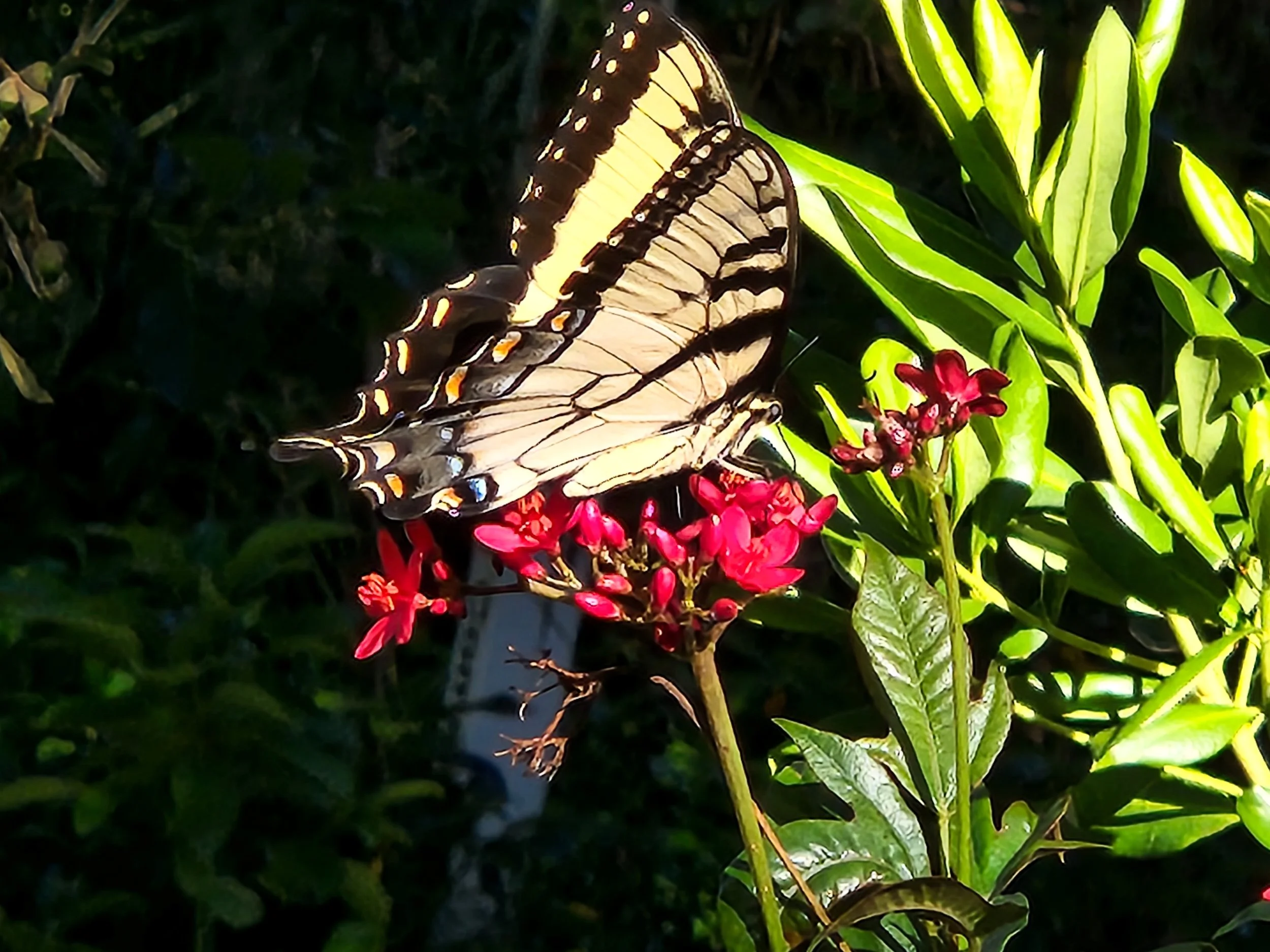
Jatropha integerrima
Jatropha is a non-native, Florida-friendly, evergreen shrub or small tree that attracts butterflies and hummingbirds with its showy red flowers that bloom almost all year round. It grows in full sun to partial sun, dry to average soils. Parts of this plant are poisonous to people and pets.
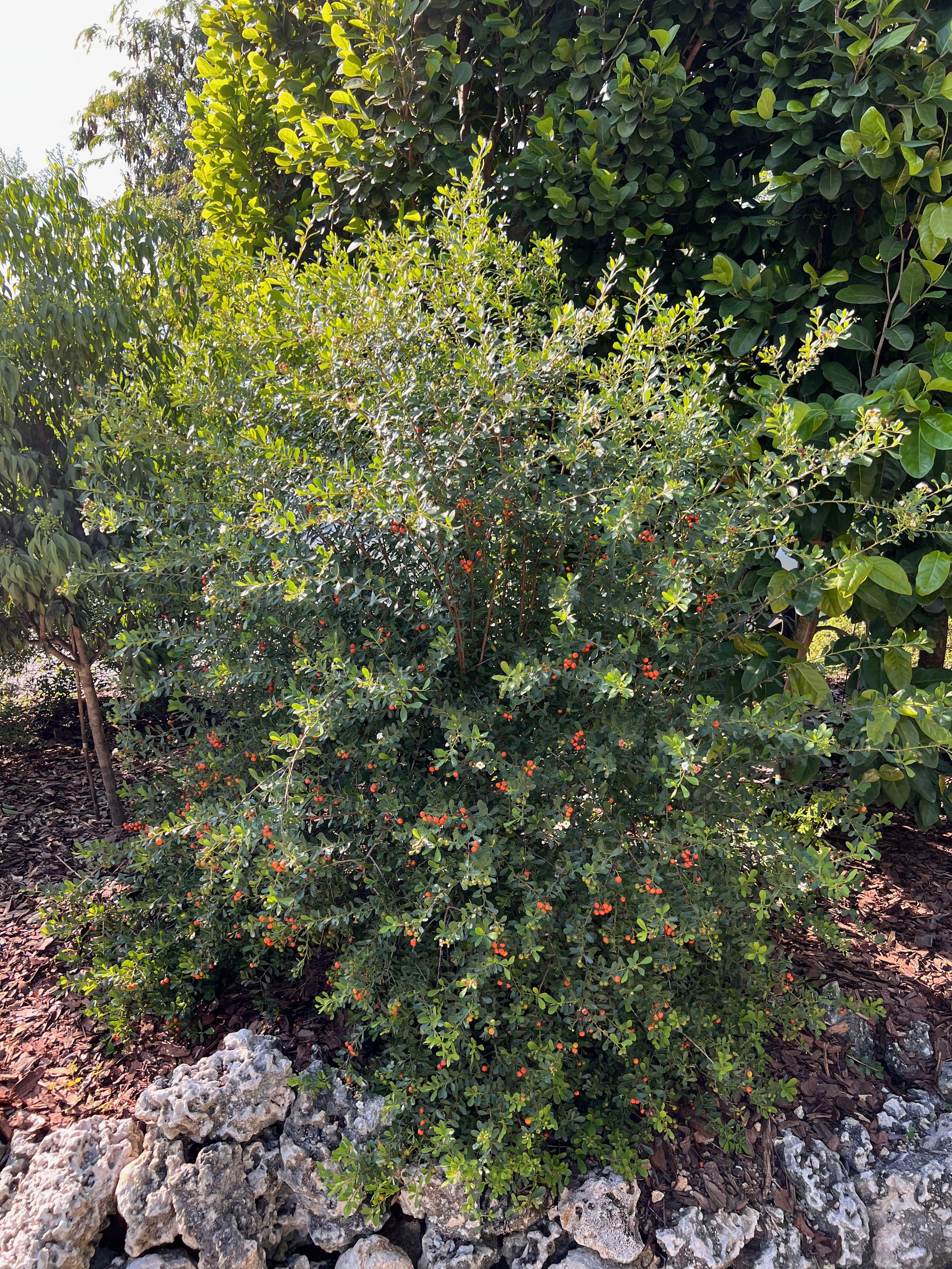
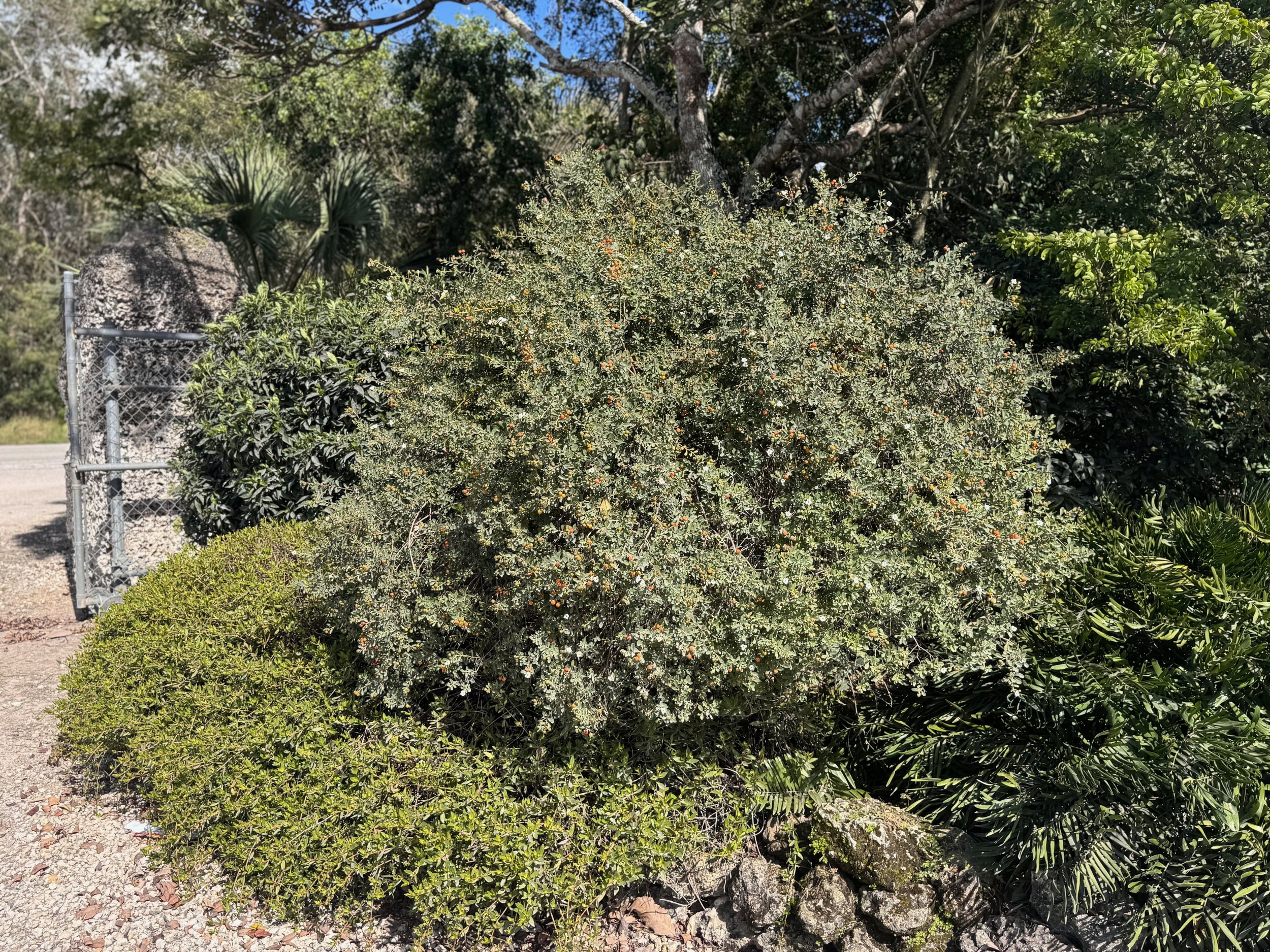
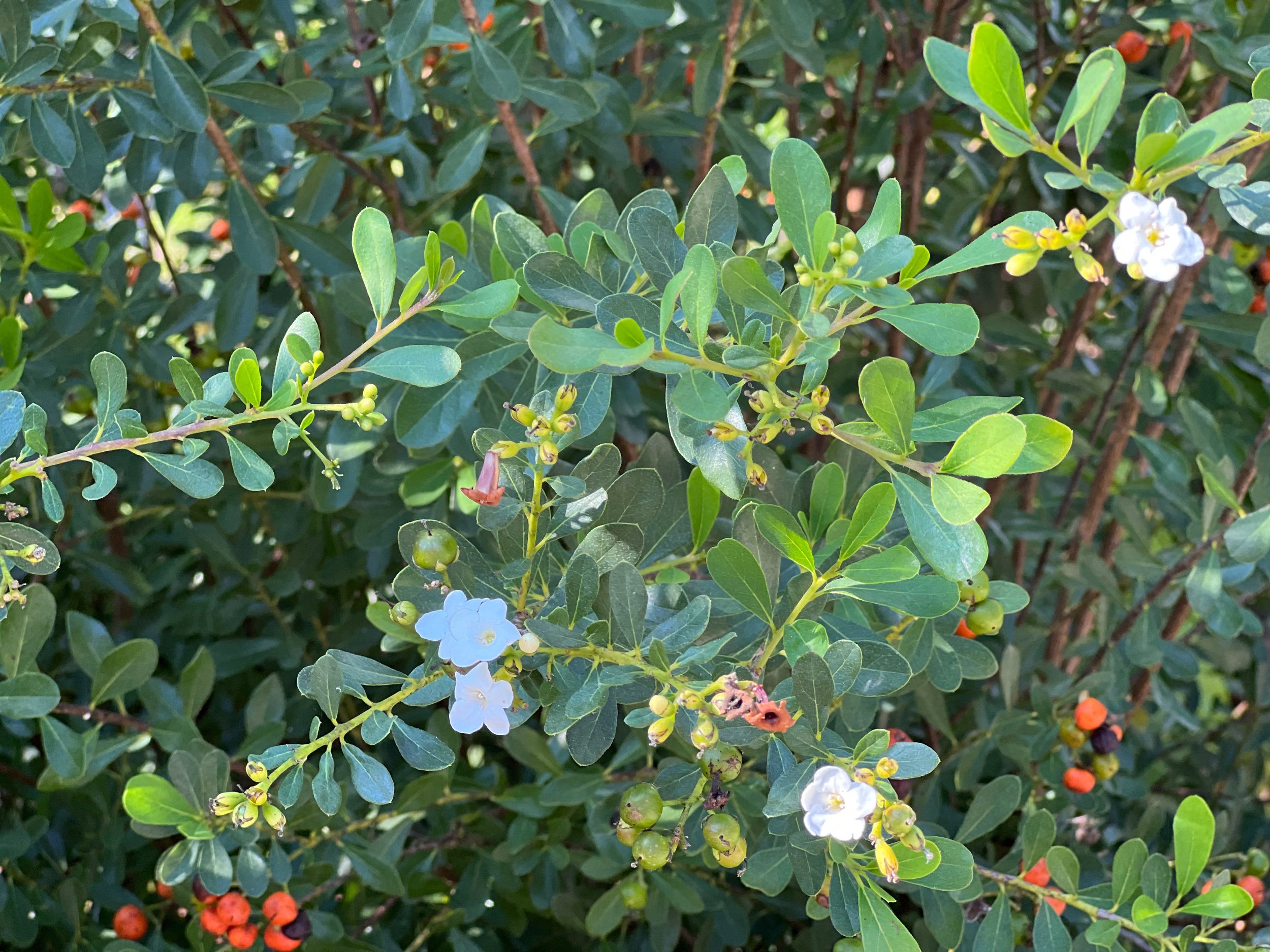
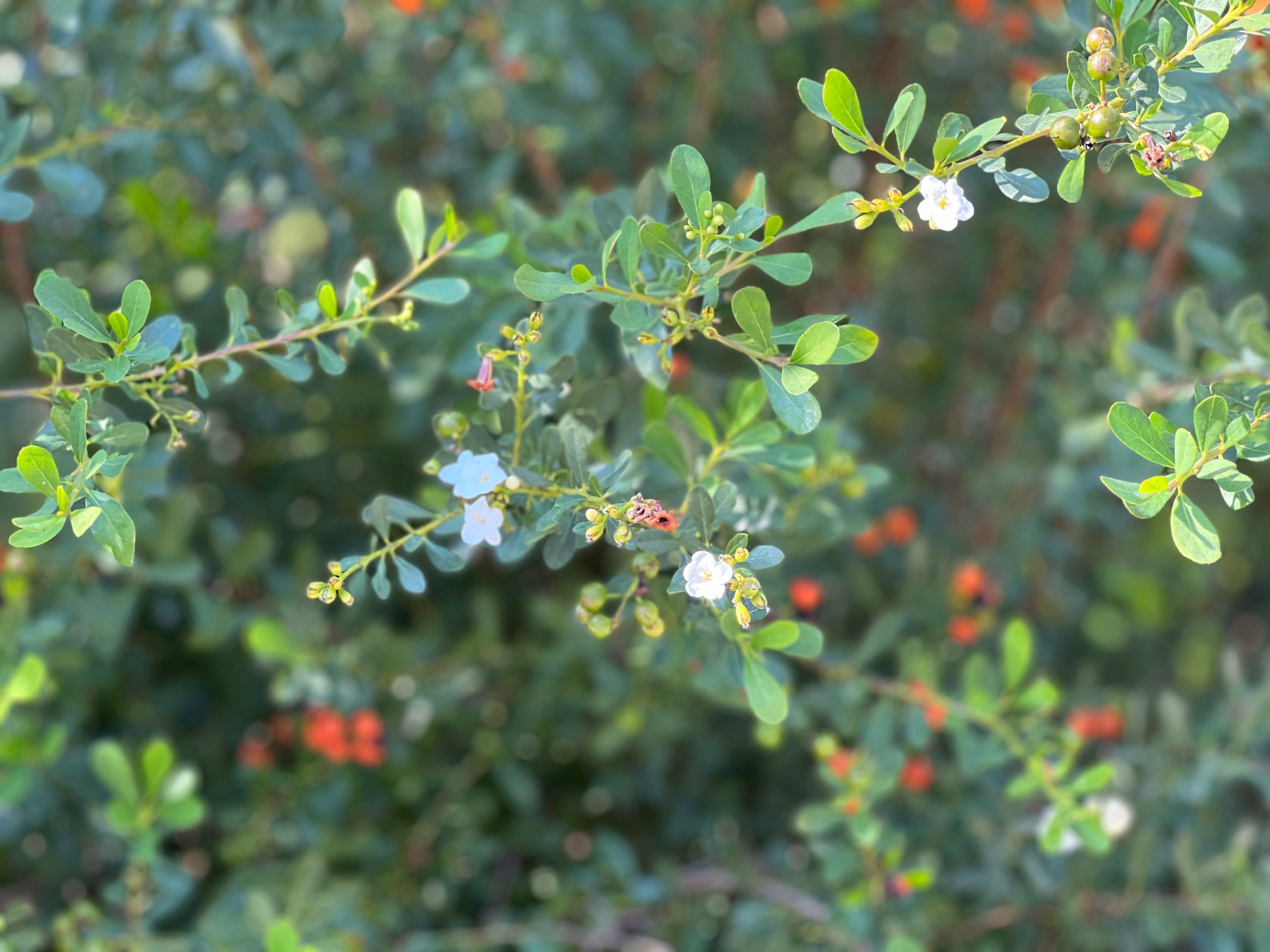
Little Strongbark is a native, evergreen, lower-growing flowering shrub native to pine rocklands of southern Florida. It is listed as endangered in Florida but is found throughout the West Indies. It enjoys full sun to light shade, moist to average well-drained soils. The small white flowers attract a wide variety of pollinators, including hummingbirds. They produce little orange berries that are a favorite food source for birds.
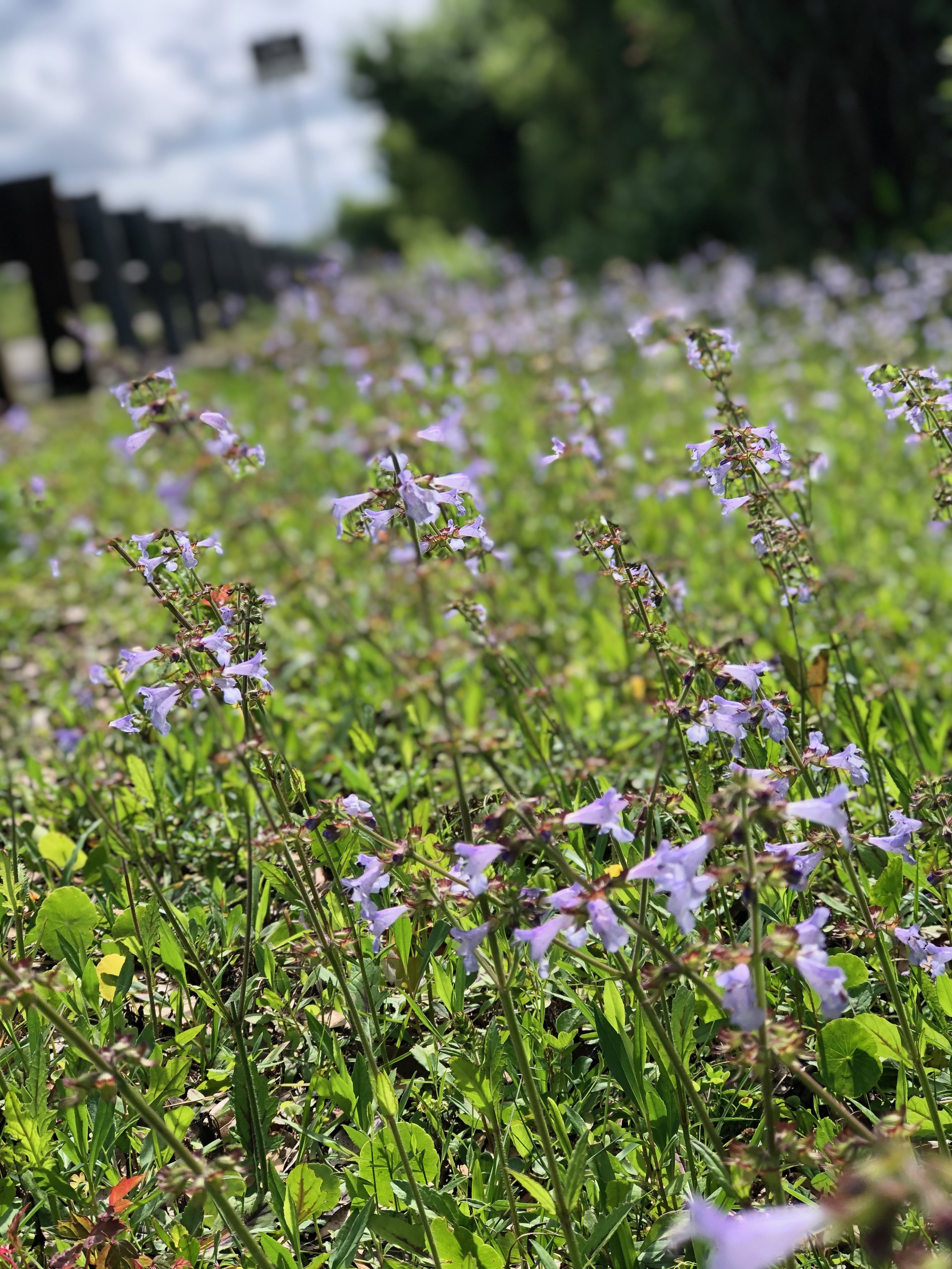
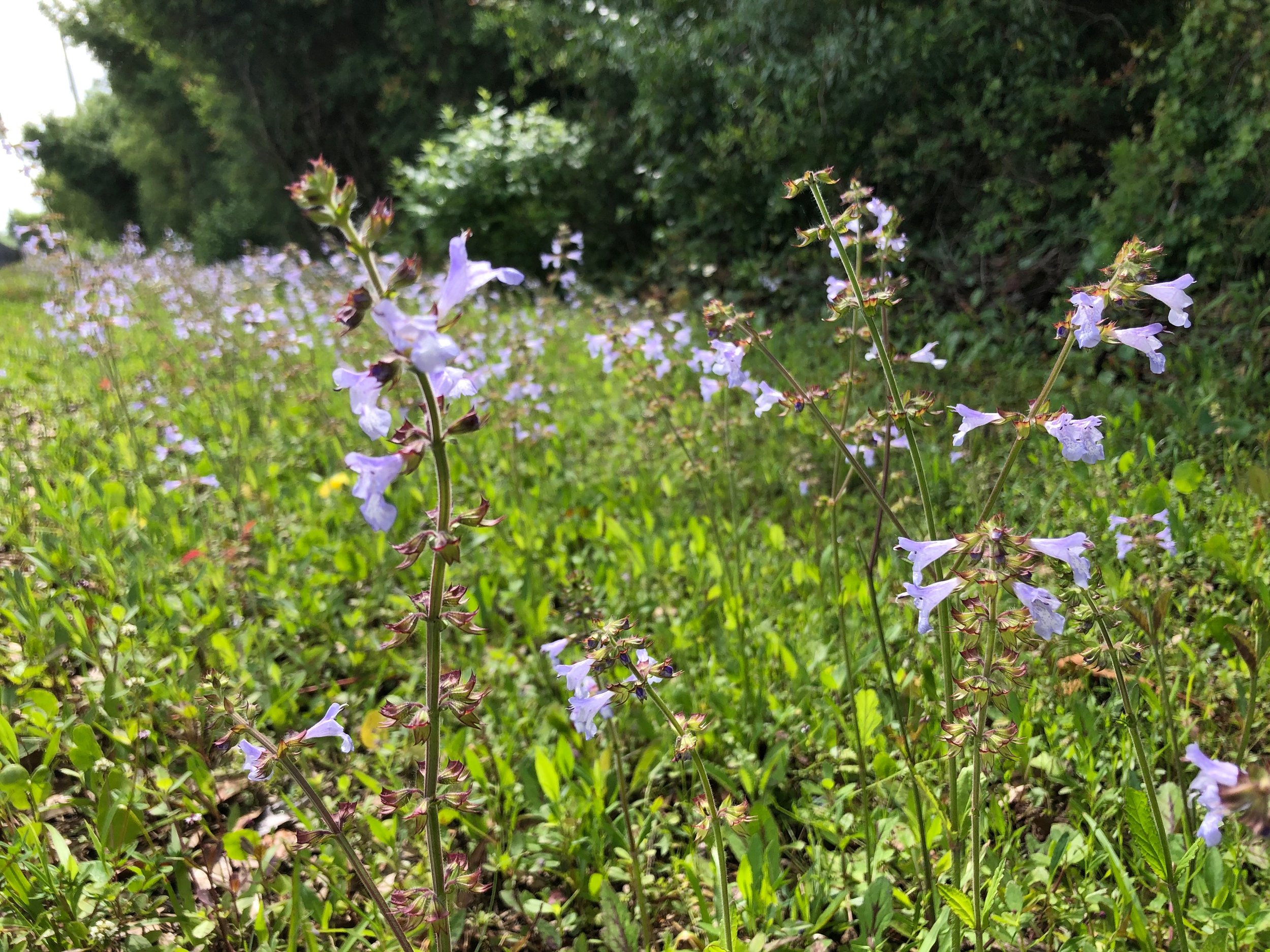
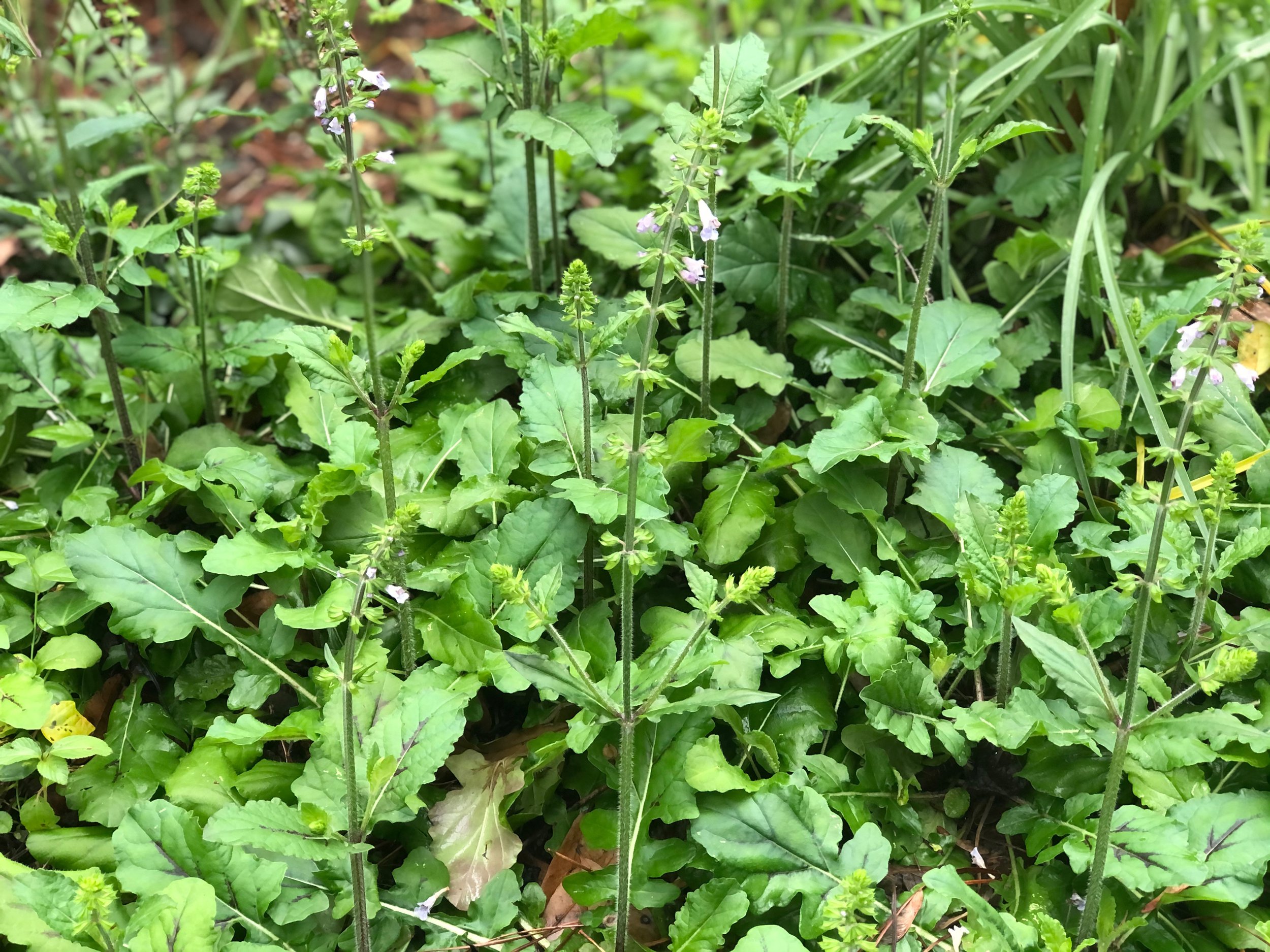
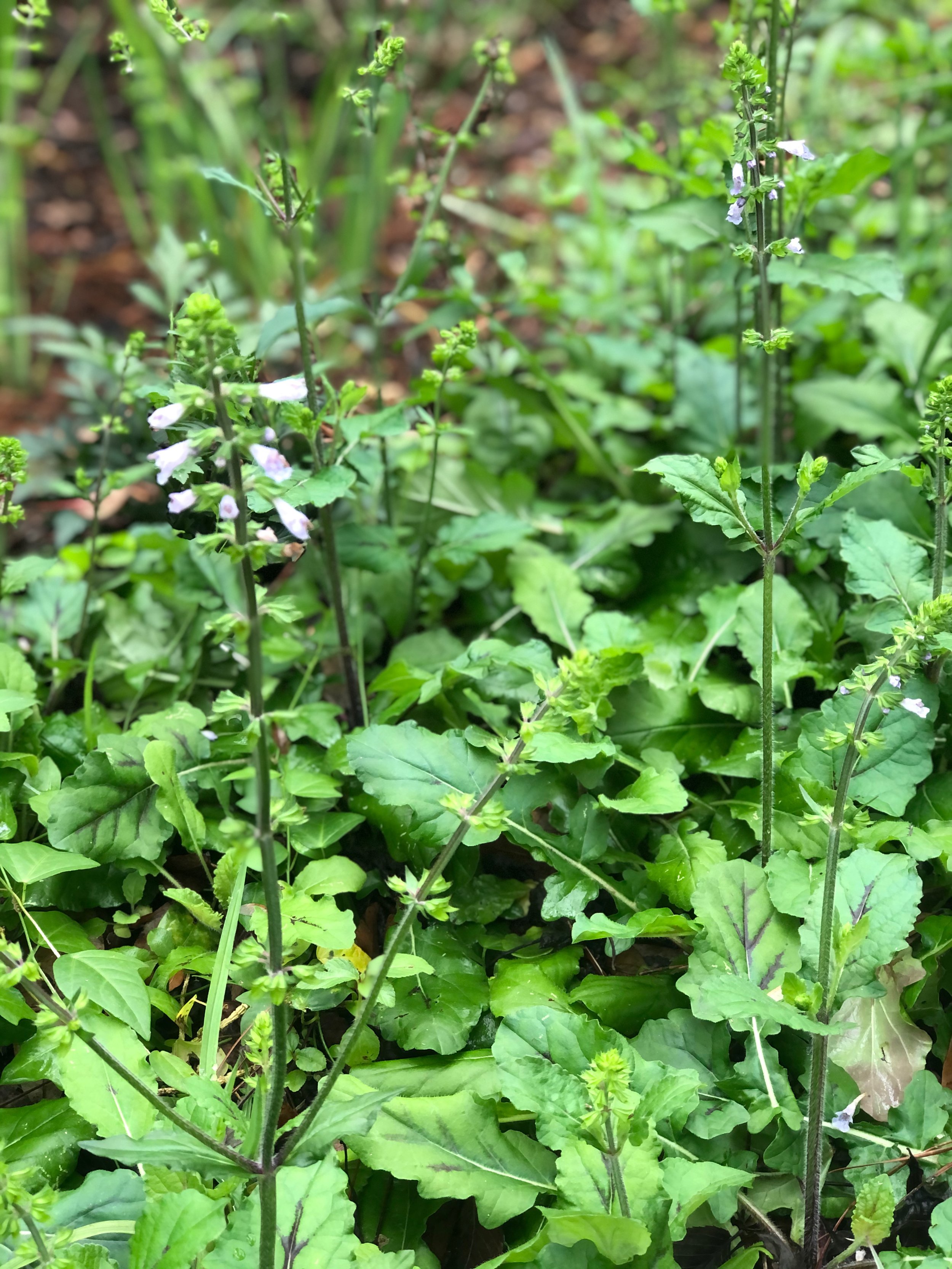
Salvia lyrata
Lyreleaf Sage is a long-lived, reseeding, perennial, evergreen, ground-covering wildflower that blooms in the spring and summer. Lyreleaf likes sun to shade and dry to wet (well-drained) soils. The purple flowers attract hummingbirds as well as other pollinators like butterflies. The young leaves are edible and the plant is used medicinally.
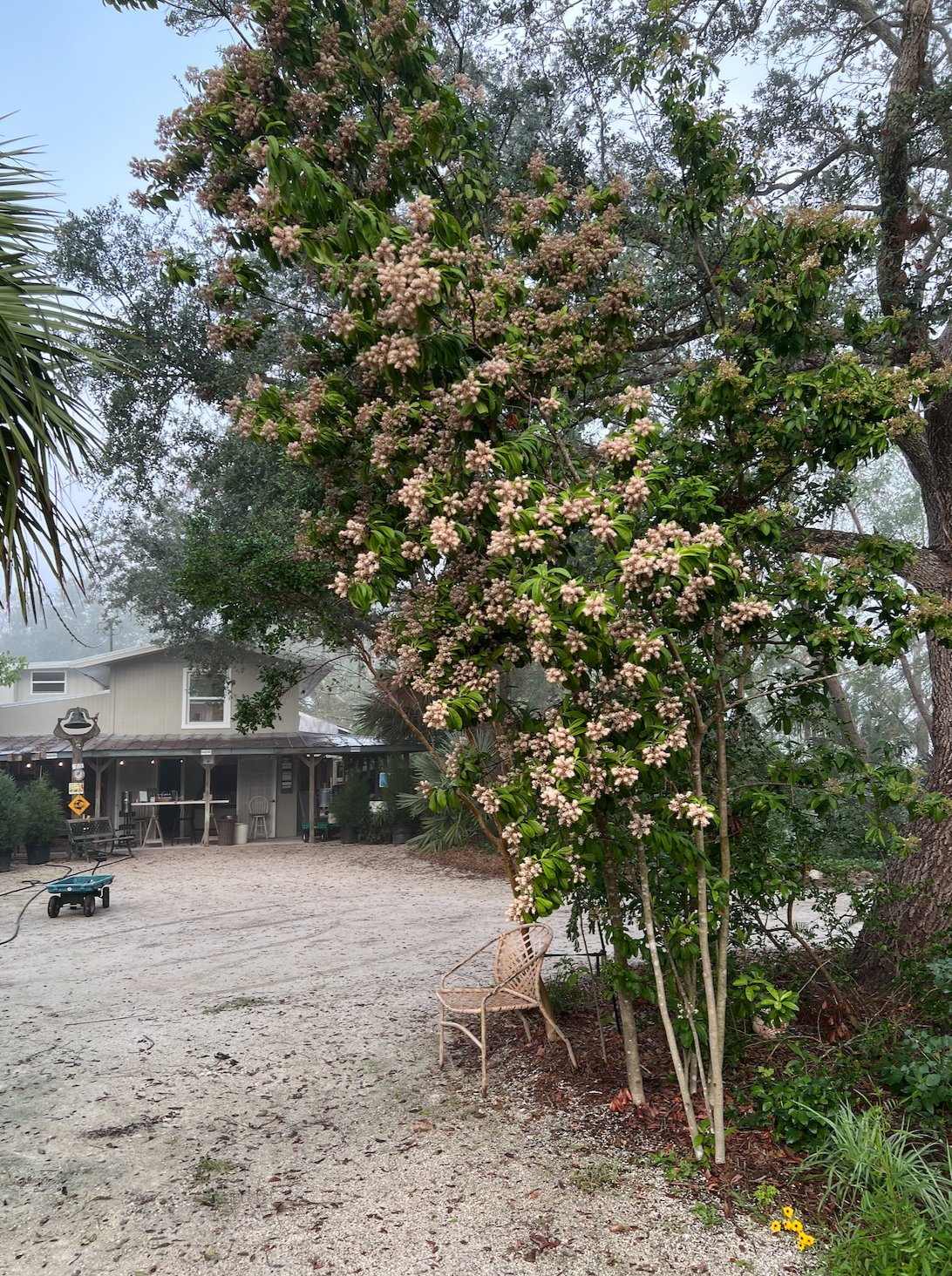
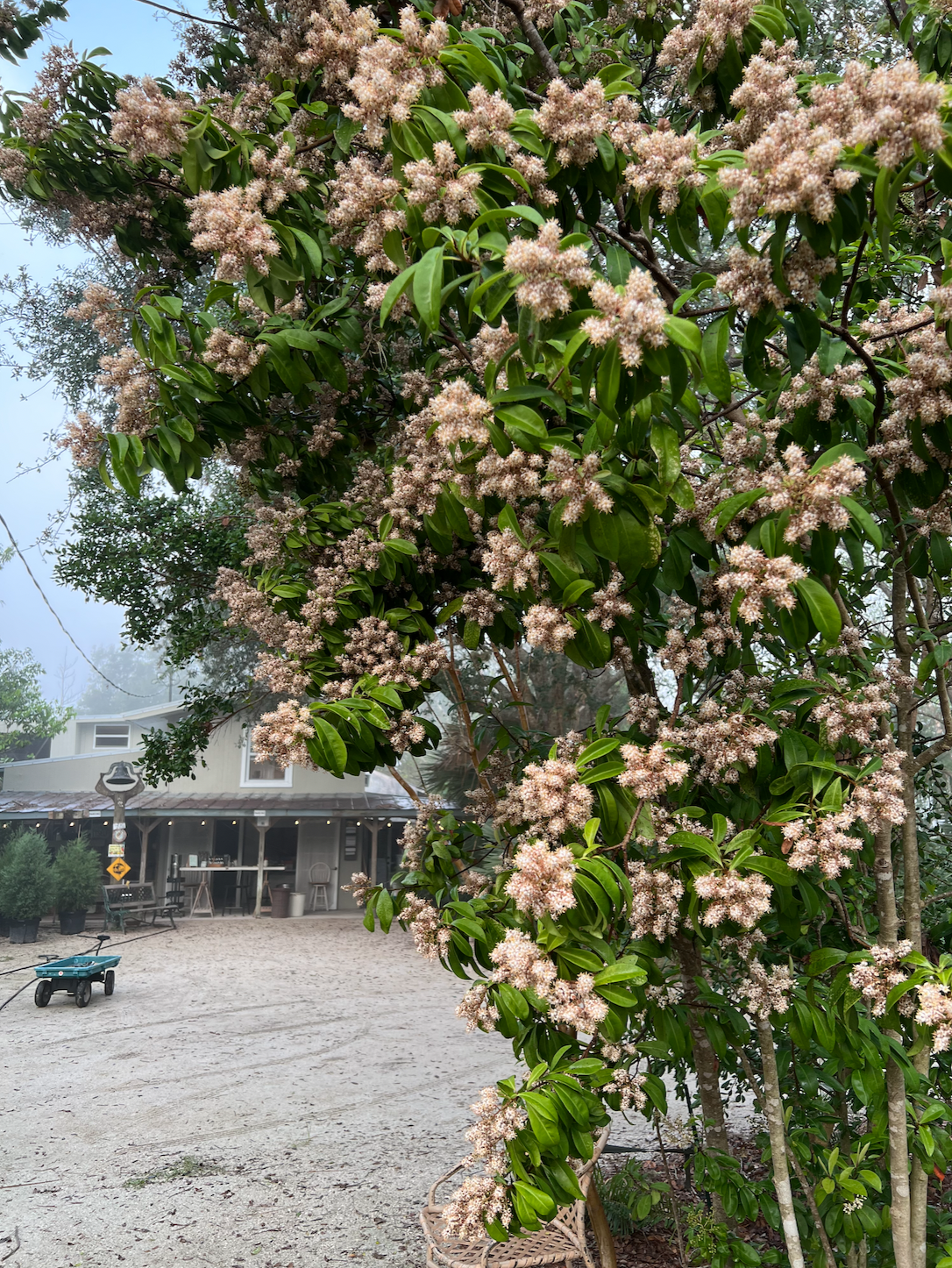
Ardisia escallonioides
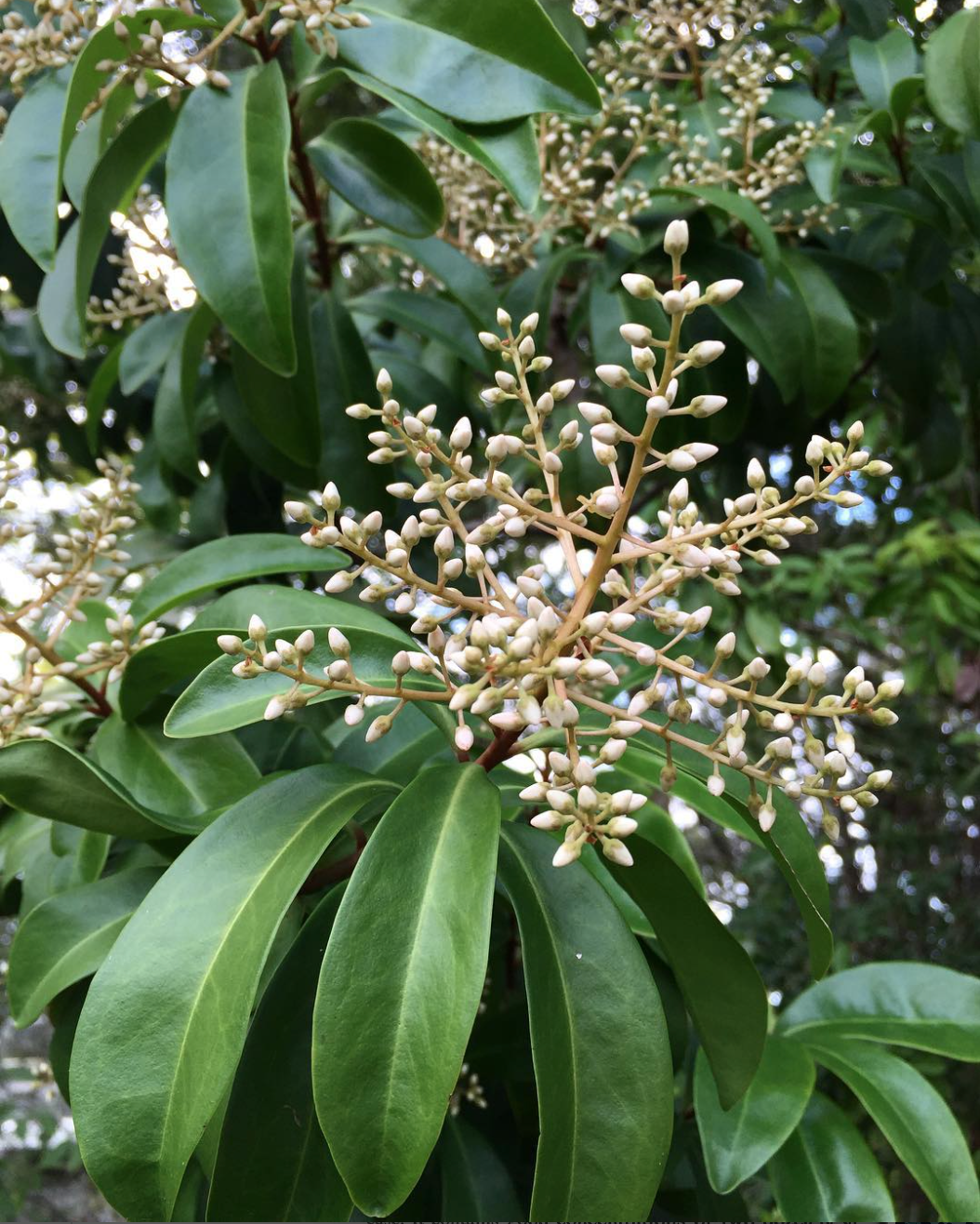
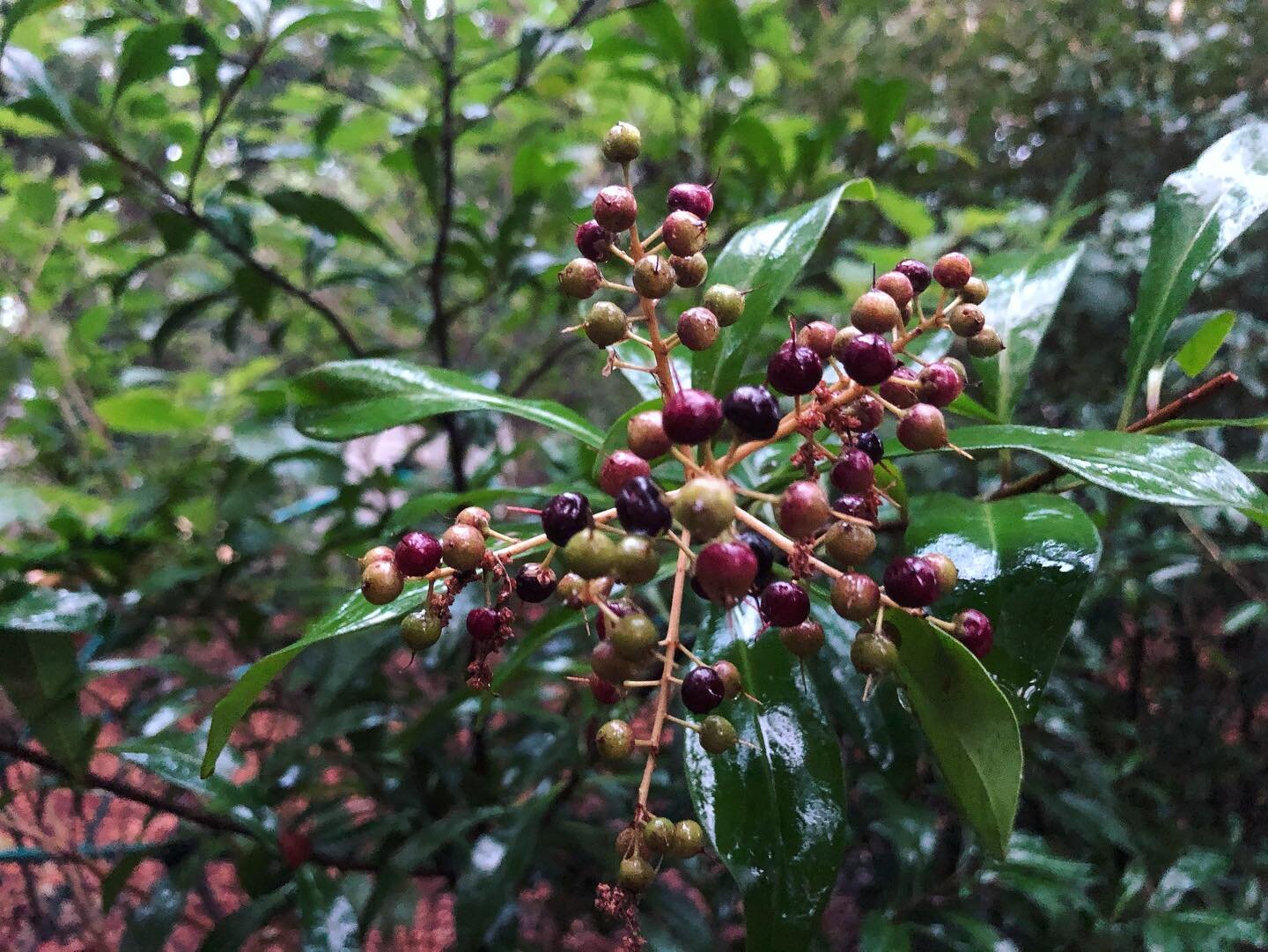
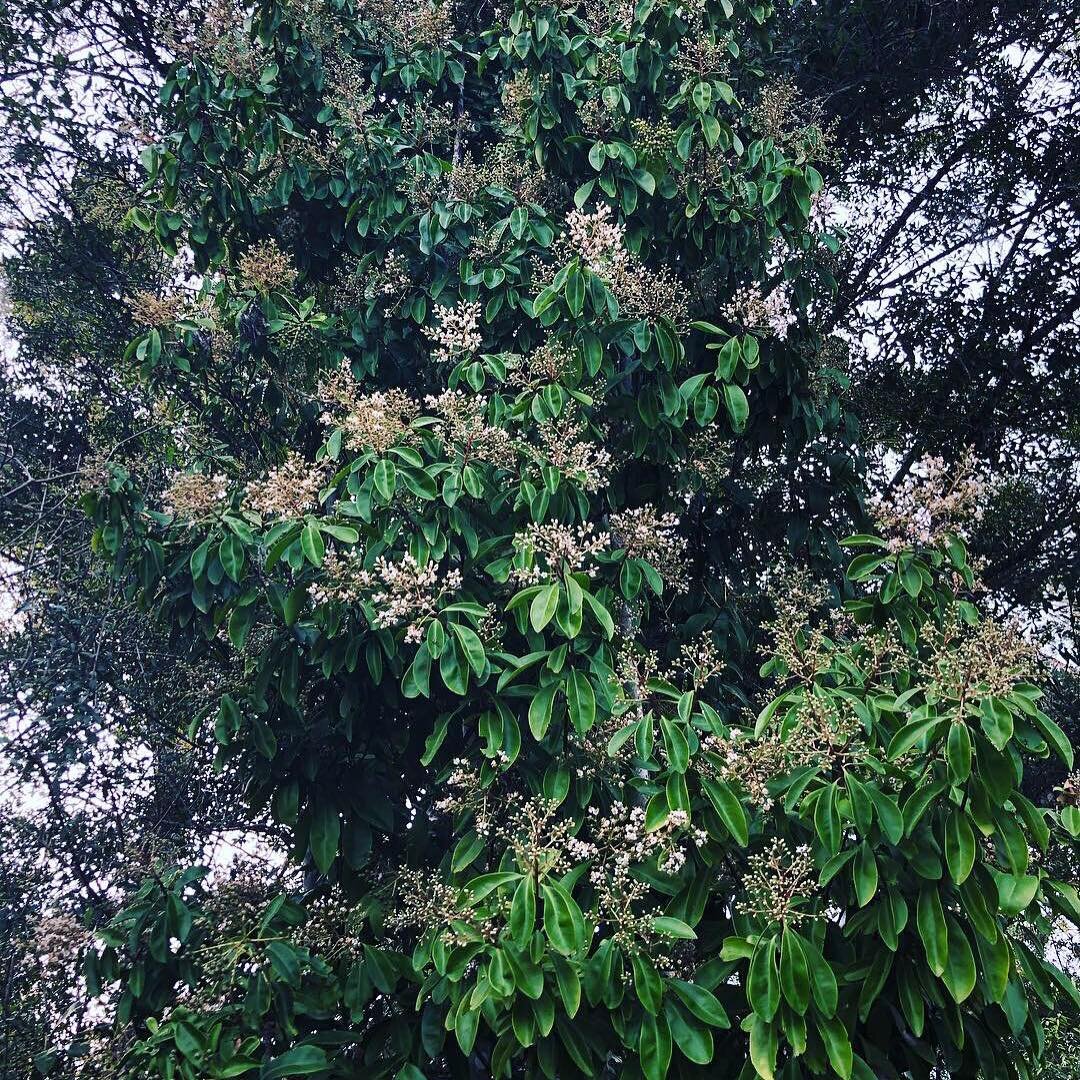
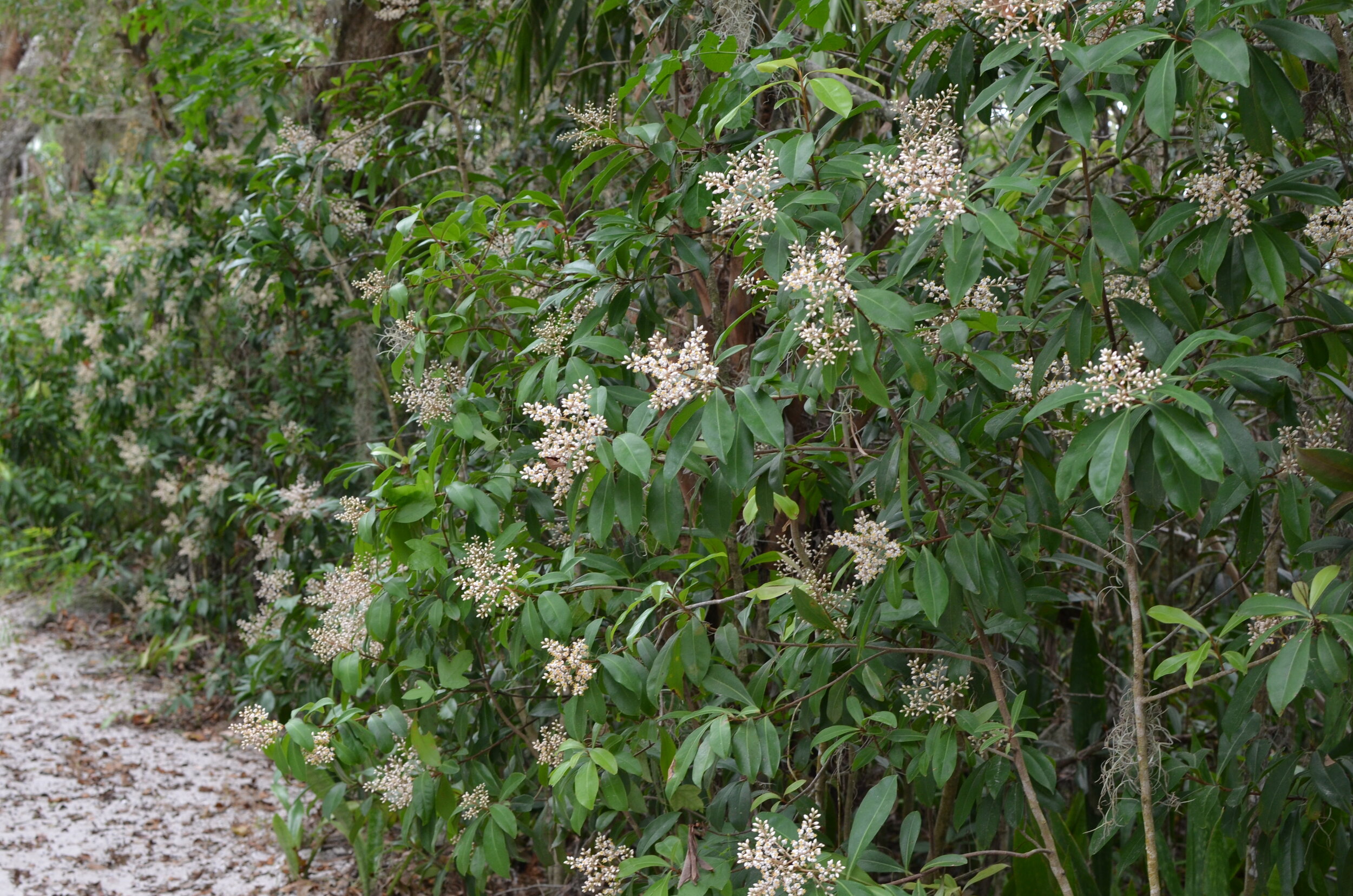
Marlberry is a native evergreen shrub that typically grows 15’ tall and thrives in both shady and sunny moist hammock environments. This attractive plant features glossy, dark green leathery leaves and produces small, super fragrant white flowers followed by clusters of shiny black berries that are an important food source for wildlife.
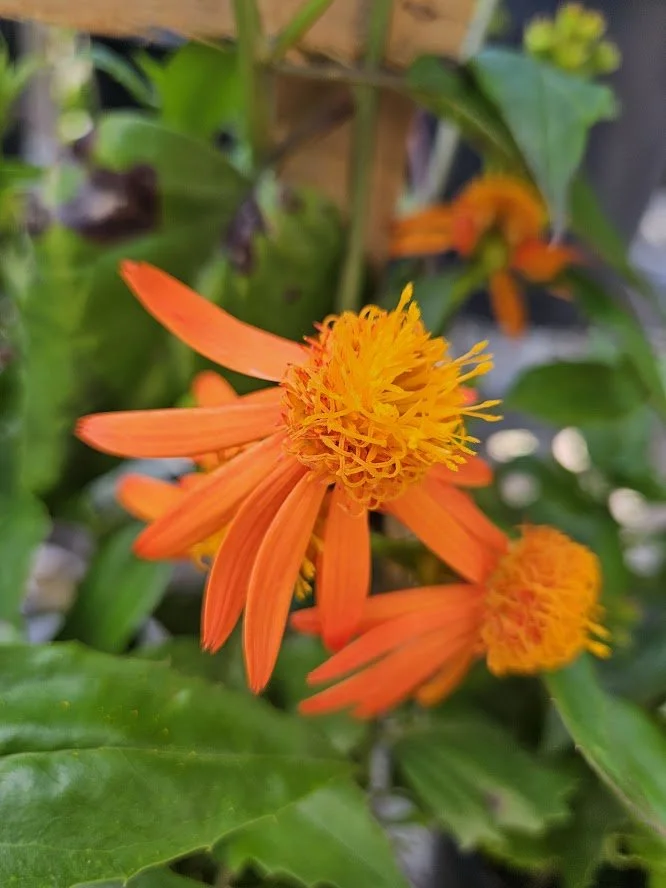
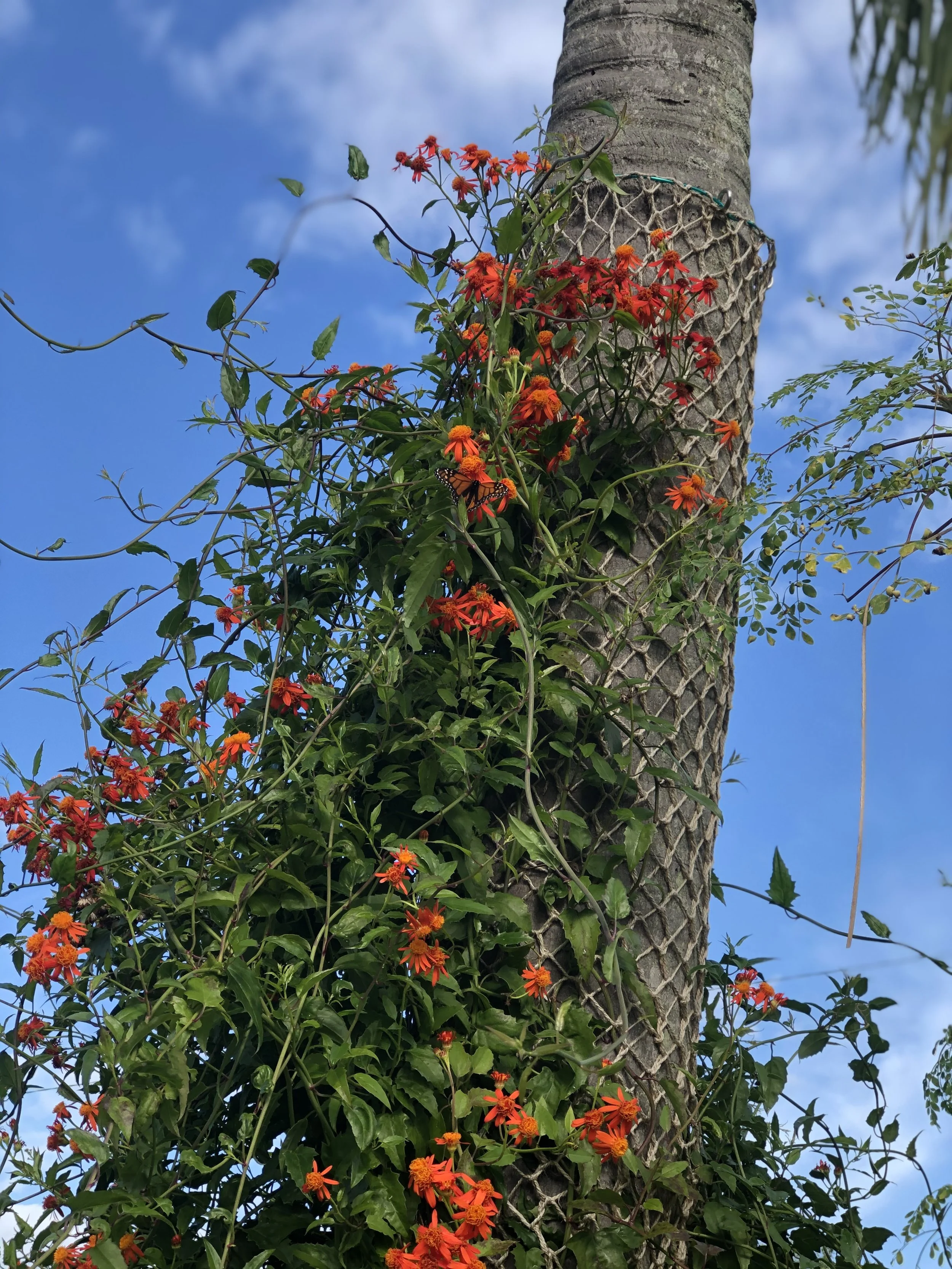
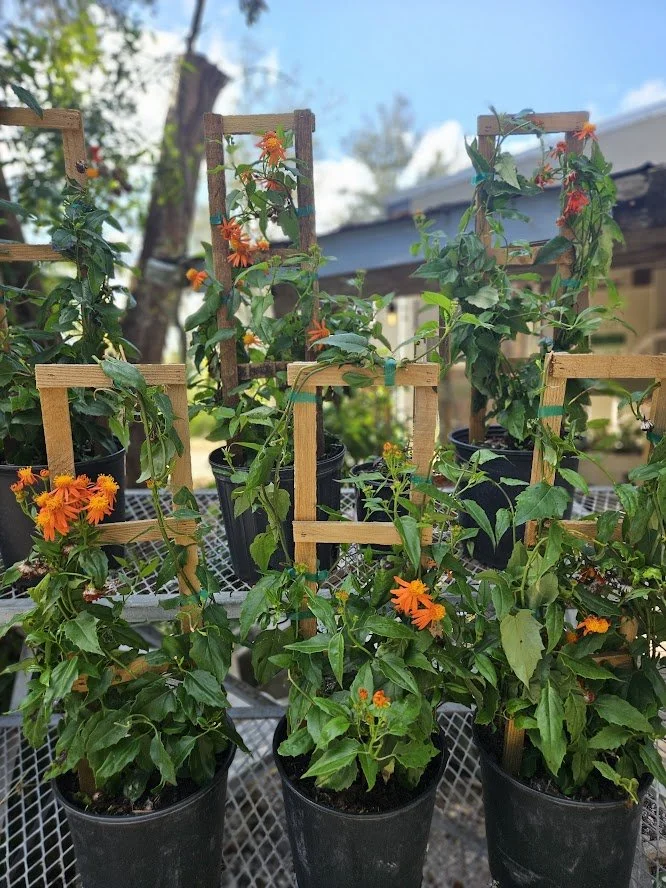
Pseudogynoxys chenopodioides
Mexican Flame Vine is a vigorous, fast-growing evergreen climber native to Mexico and Central America that reaches 12 feet in length with a 6-foot spread. This ornamental vine features attractive arrowhead-shaped leaves with purple undersides and produces clusters of brilliant orange-red daisy-like flowers from late spring through fall. The showy blooms are highly attractive to butterflies, hummingbirds, and bees, making it an excellent choice for pollinator gardens. Hardy in zones 9-11, it thrives in average to organically rich, well-drained soils in full sun to partial shade and tolerates short periods of drought once established.
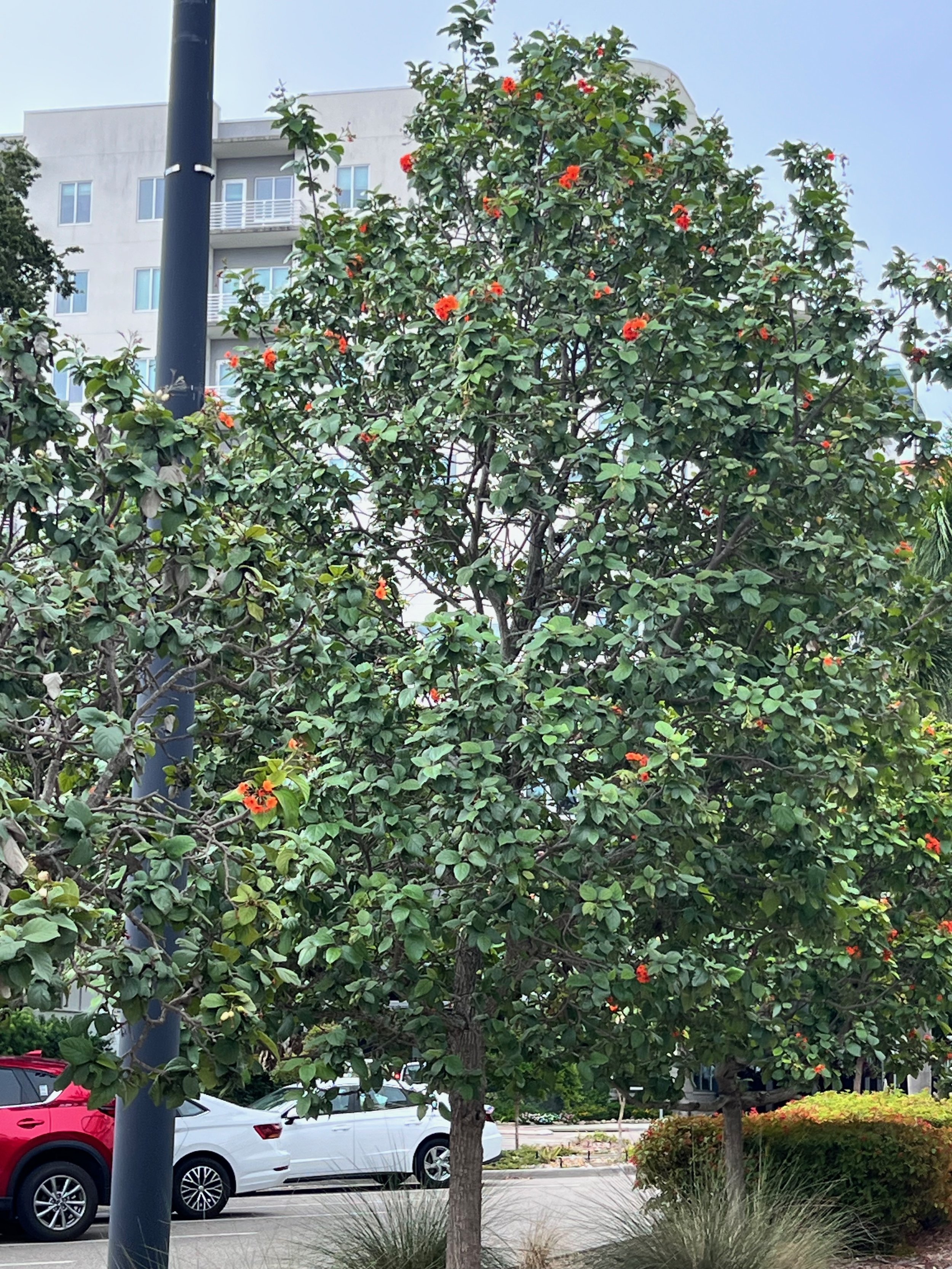
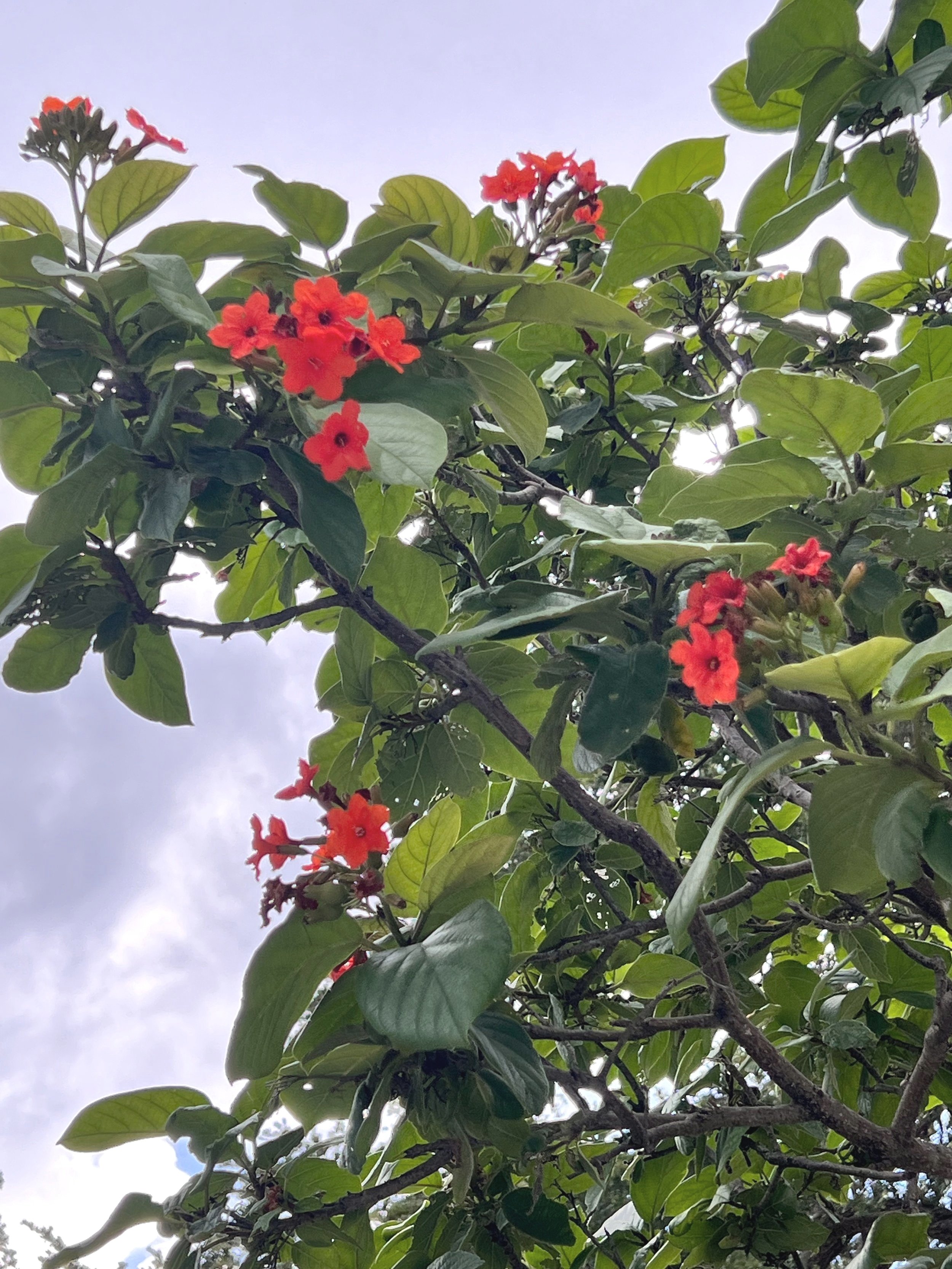
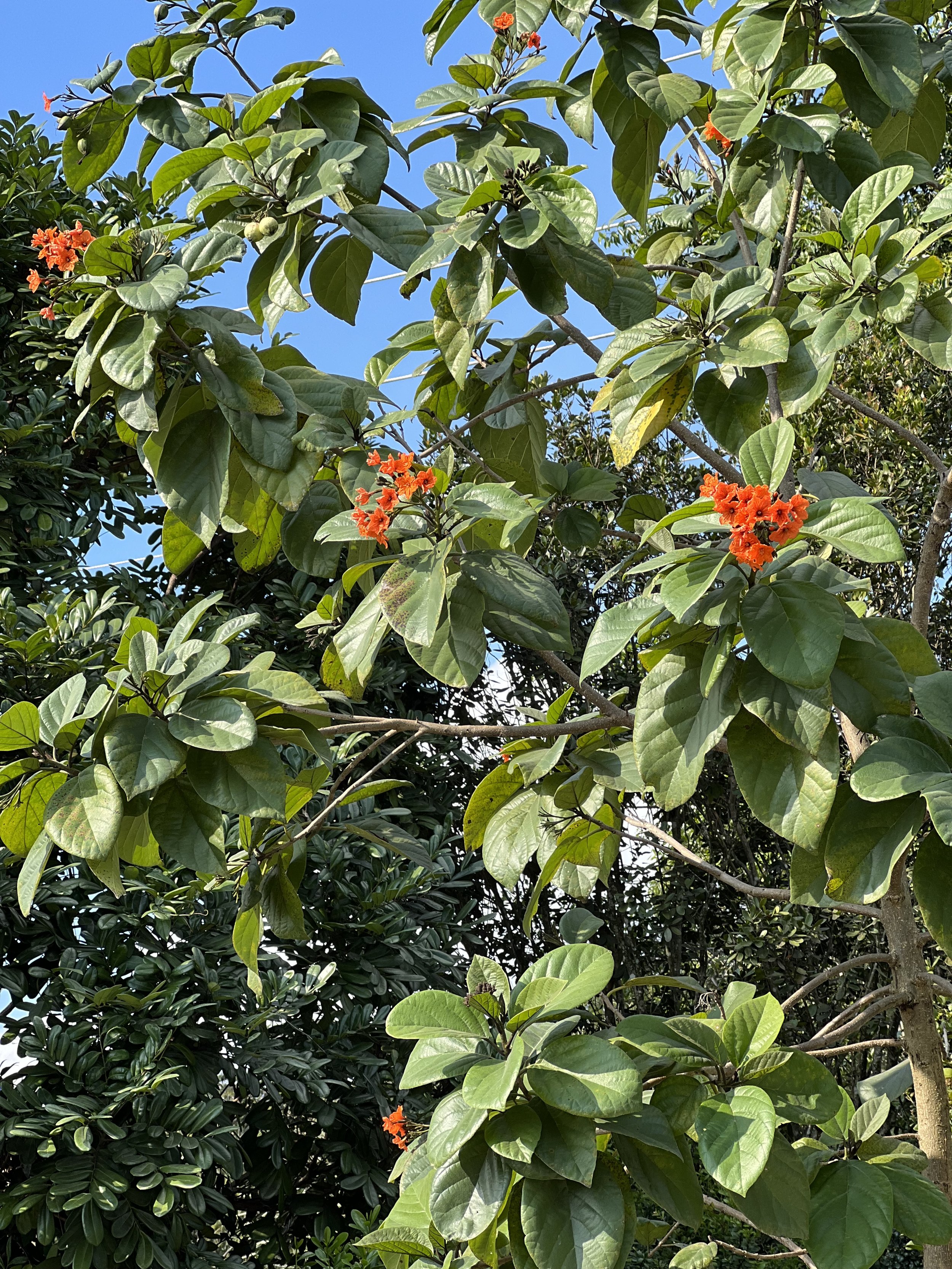
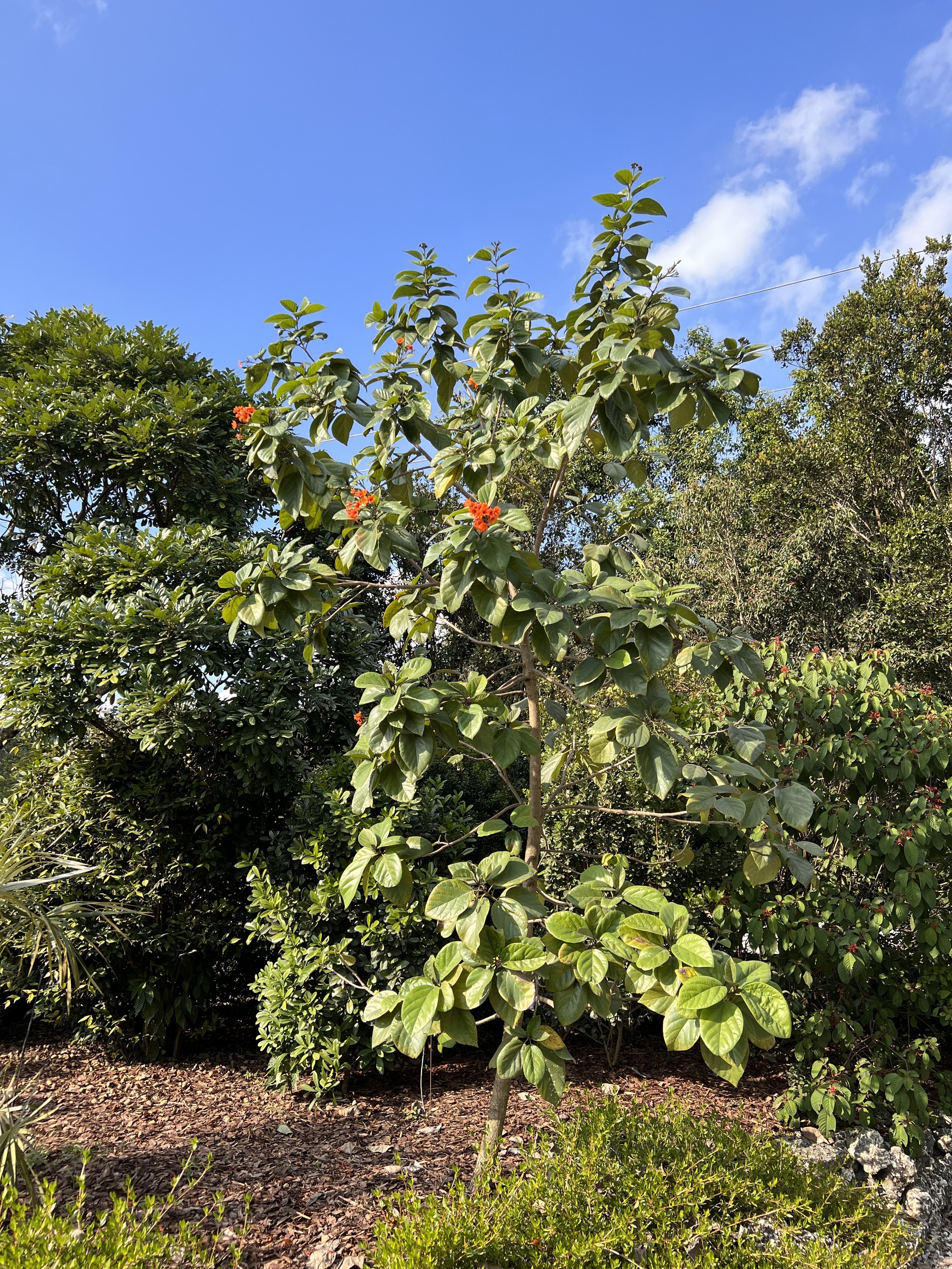
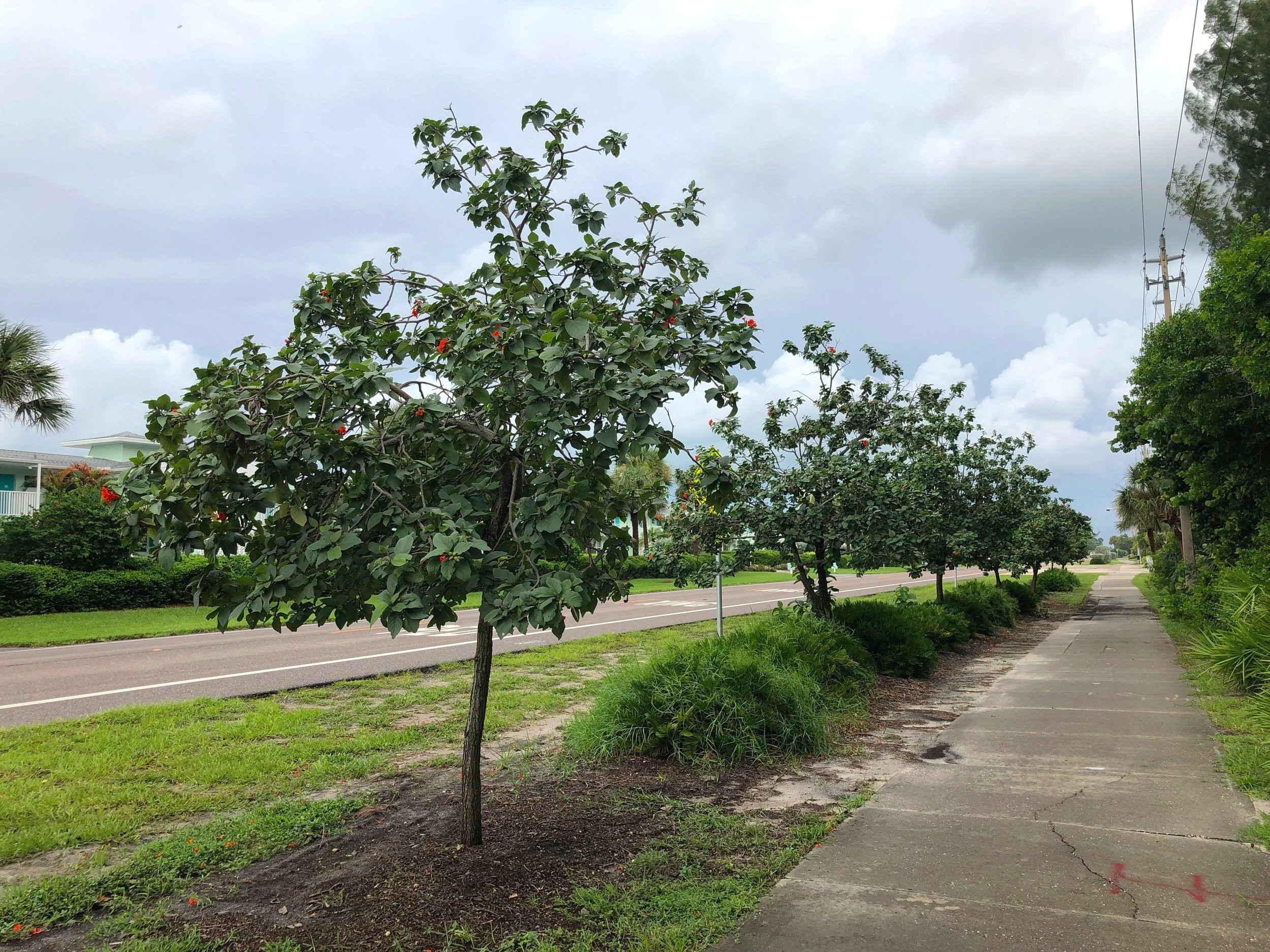
Cordia sebestena
Orange Geiger is a small, native, coastal, evergreen, flowering tree that likes full sun to light shade and well-drained soils. Orange Geiger is drought, wind and salt tolerant with large dark green leaves and showy orange flowers almost all year that attract butterflies and hummingbirds.
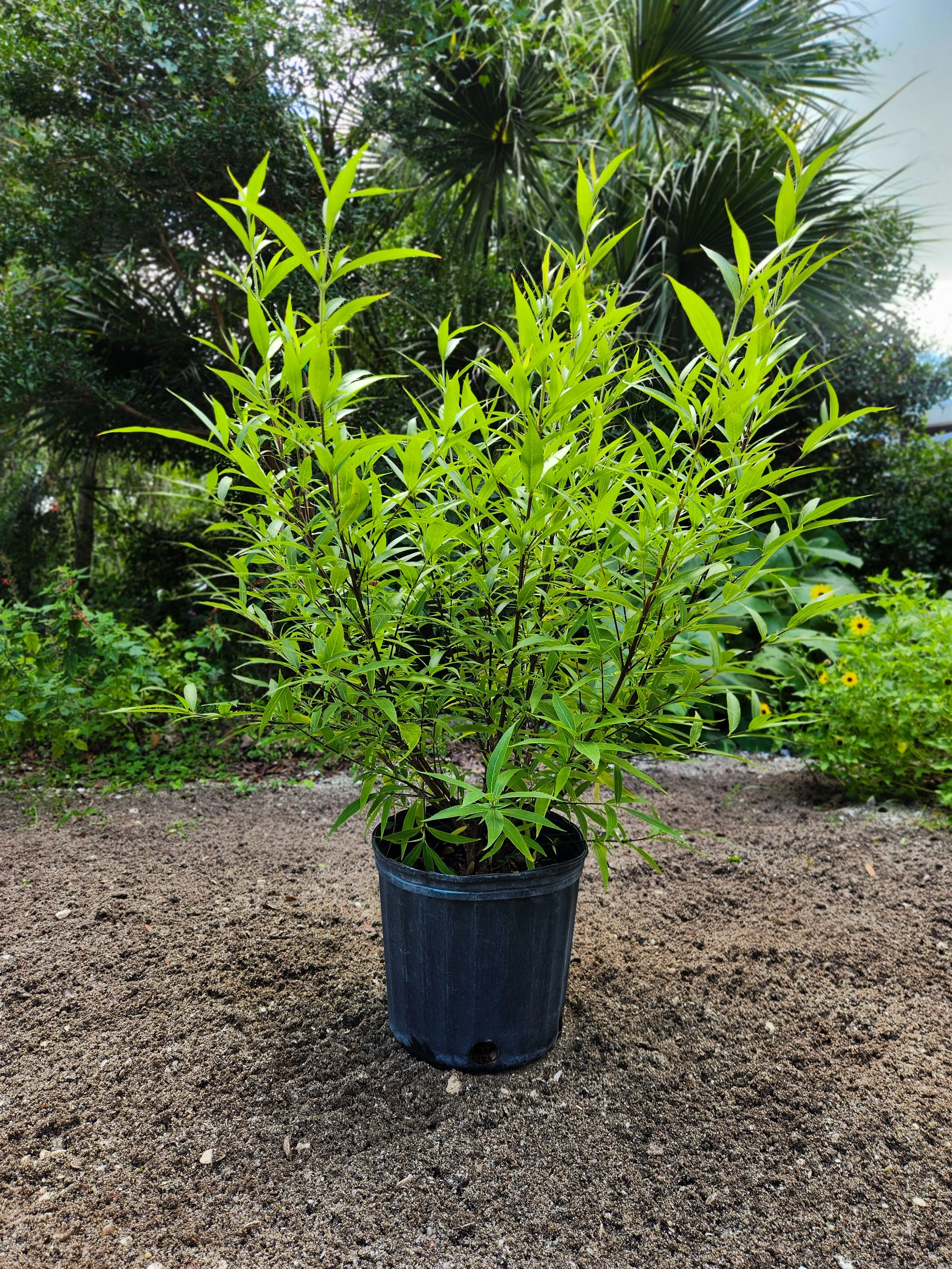
Roneletia leucophylla
Panama Rose is a Florida-friendly, flowering, evergreen shrub, aka “Bush Penta”. They reach heights of 3’-6’, but they are easy to keep at 3’. These plants thrive in full sun to part shade, and do well in average soil. Drought tolerant once established. They have fragrant, bright pink flowers that bloom year-round, and are a butterfly favorite! They attract hummingbirds, butterflies, and other pollinators.
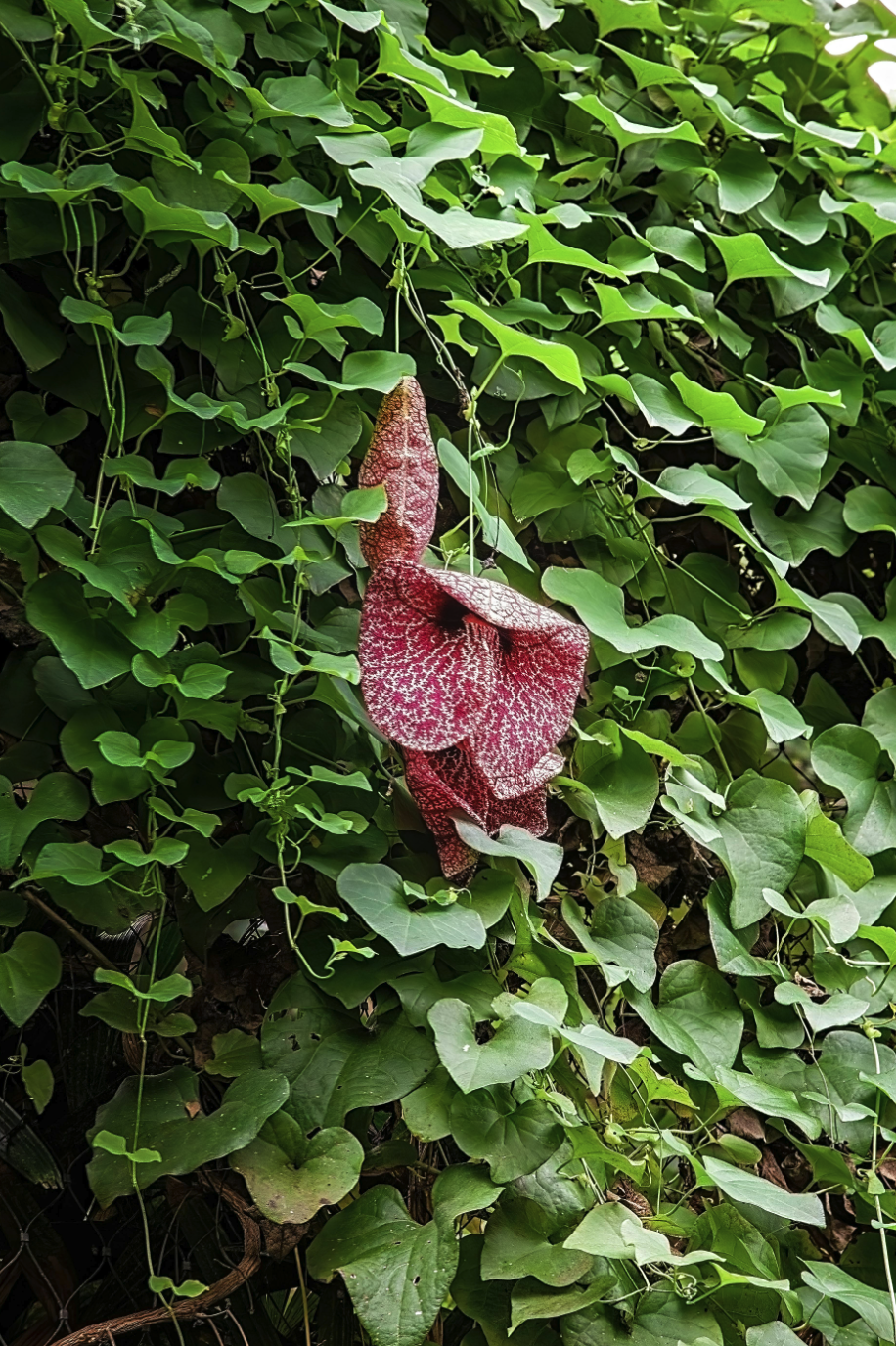
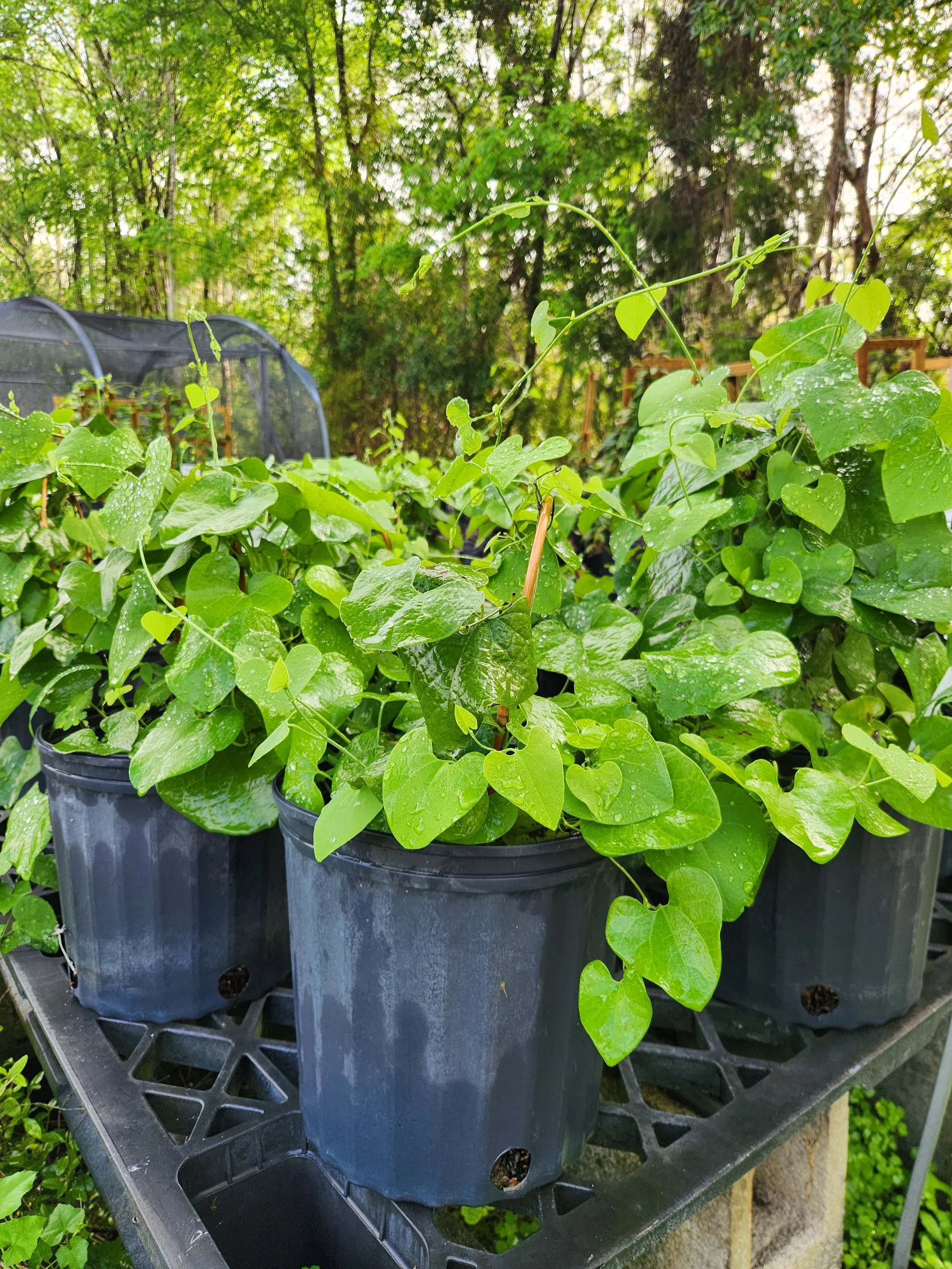
Aristolochia macrophylla
Pipevine is a Florida-friendly deciduous climbing vine that grows up to 15ft with large, heart-shaped leaves reaching 12in long. The leaves overlap in a shingle-like pattern to create dense screening, making it excellent for privacy on arbors, trellises, or fences. In late spring to early summer, it produces distinctive pipe-shaped flowers that are greenish-yellow and mottled with burgundy, though they're often hidden beneath the lush foliage. Native to moist woodlands and stream banks, it serves as the primary host plant for the Pipevine Swallowtail butterfly. This shade-tolerant vine prefers rich, moist soil and requires consistent moisture, making it unsuitable for dry conditions.
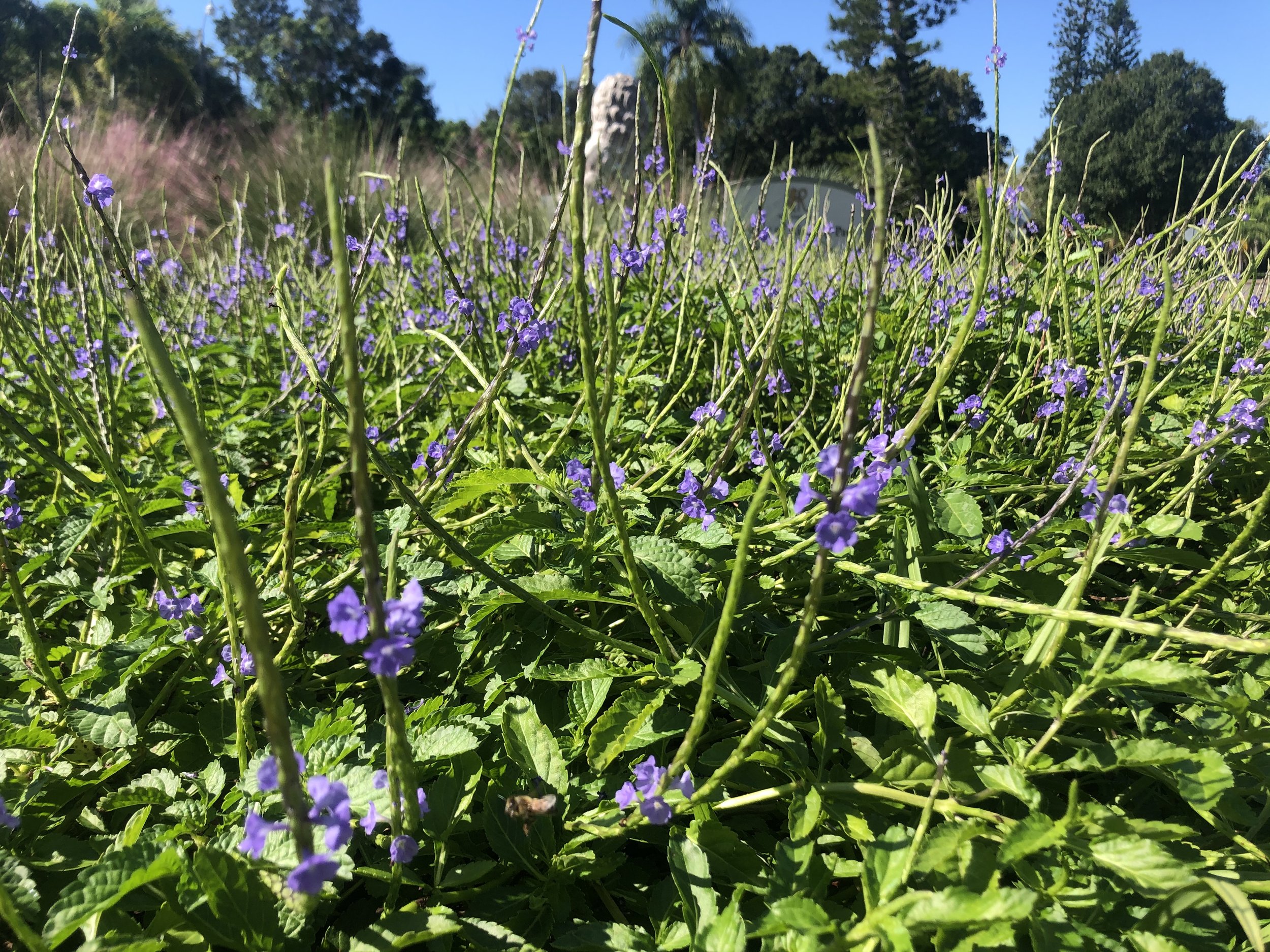

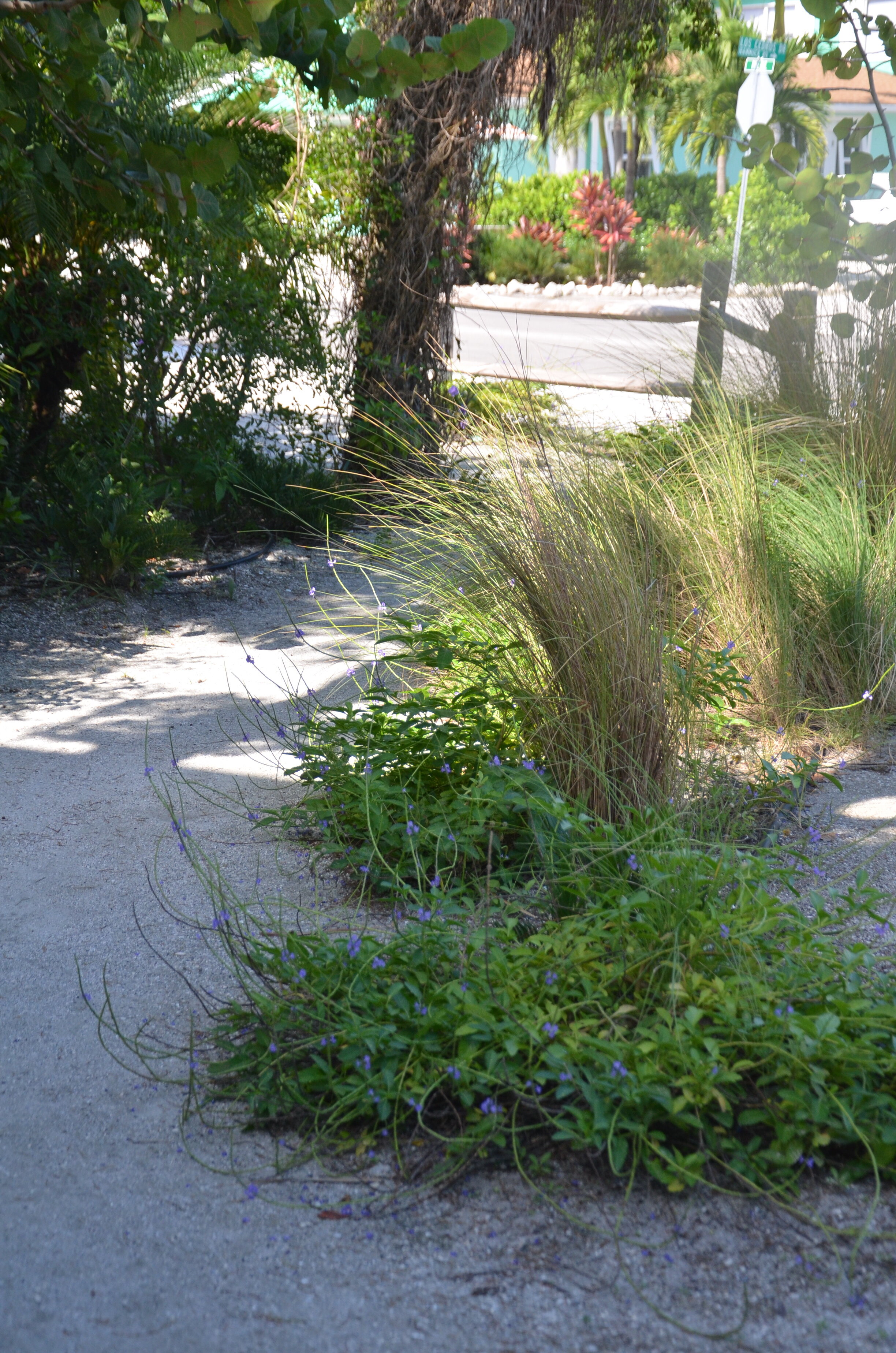
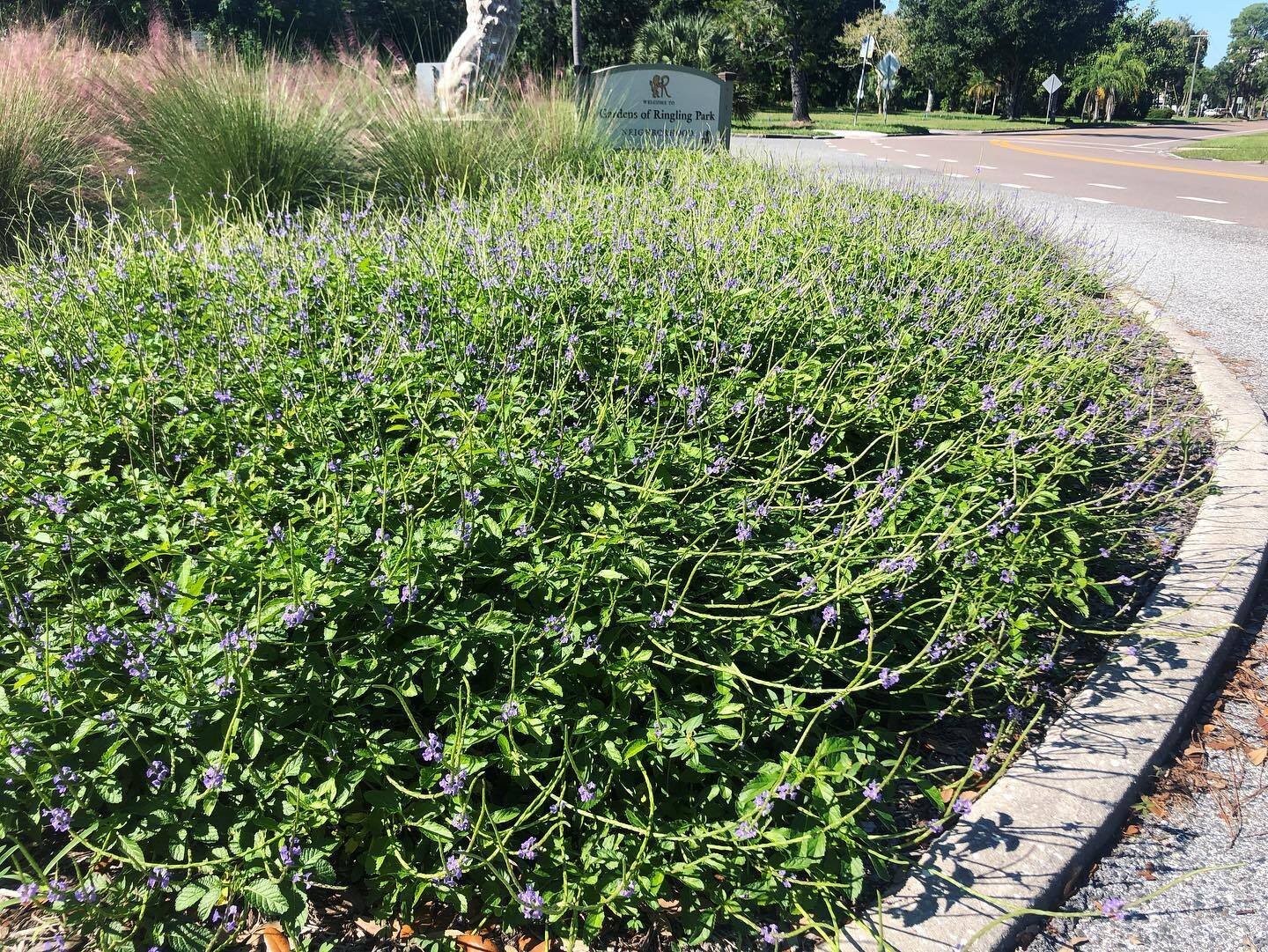
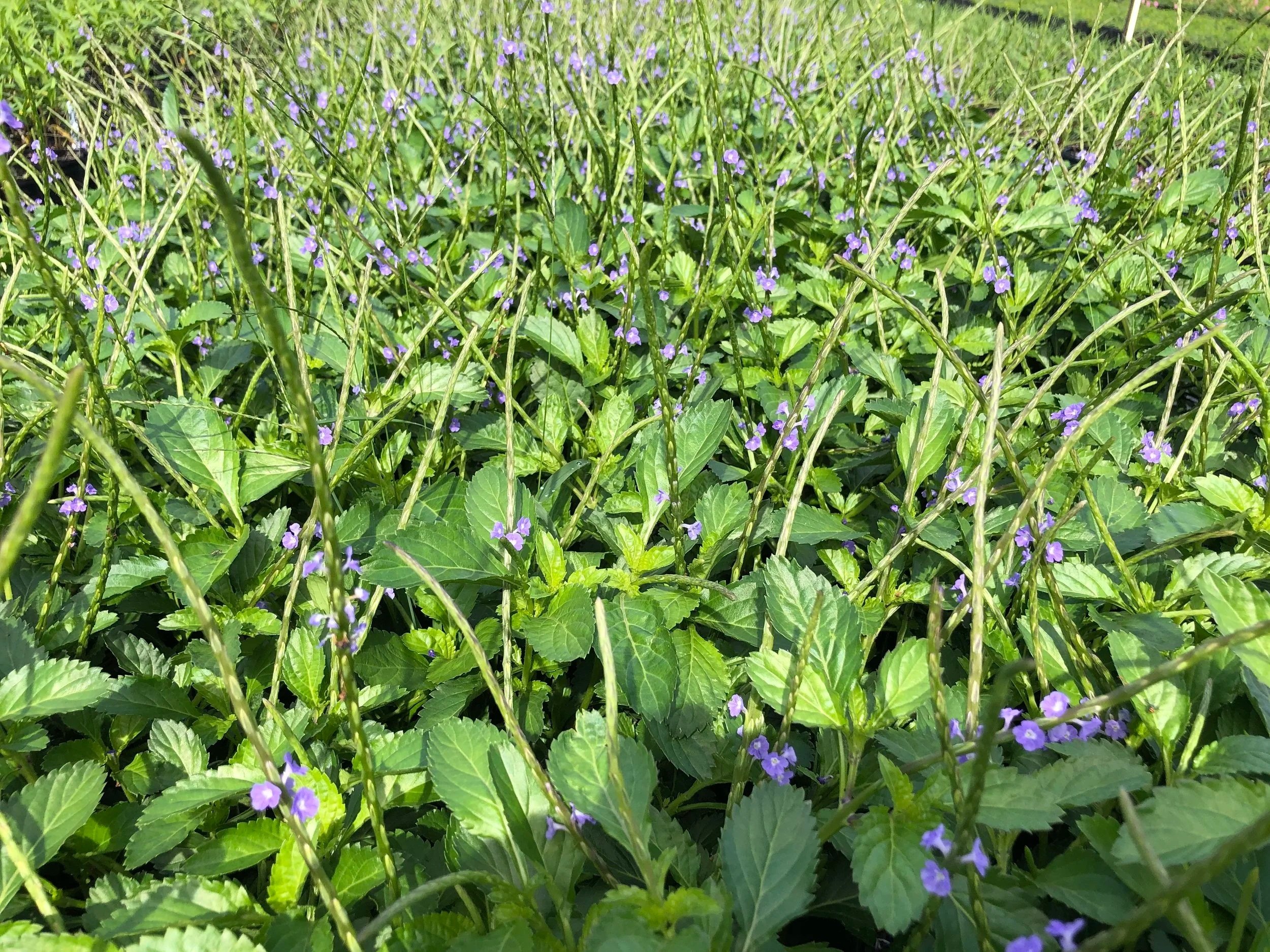
Stachytarpheta jamaicensis
Blue Porterweed is the only porterweed native to Florida. It is a low-growing plant, typically reaching 1 to 2 feet tall, that thrives in full sun or light shade. It is highly drought-tolerant and grows well in average to dry soils. This plant is a favorite for local wildlife. It serves as the primary food source for Tropical Buckeye caterpillars and provides nectar for many other butterflies and hummingbirds. Its unique, spike-like purple flowers bloom year-round, making it a reliable and attractive addition to any low-maintenance garden.

Stachytarpheta frantzii
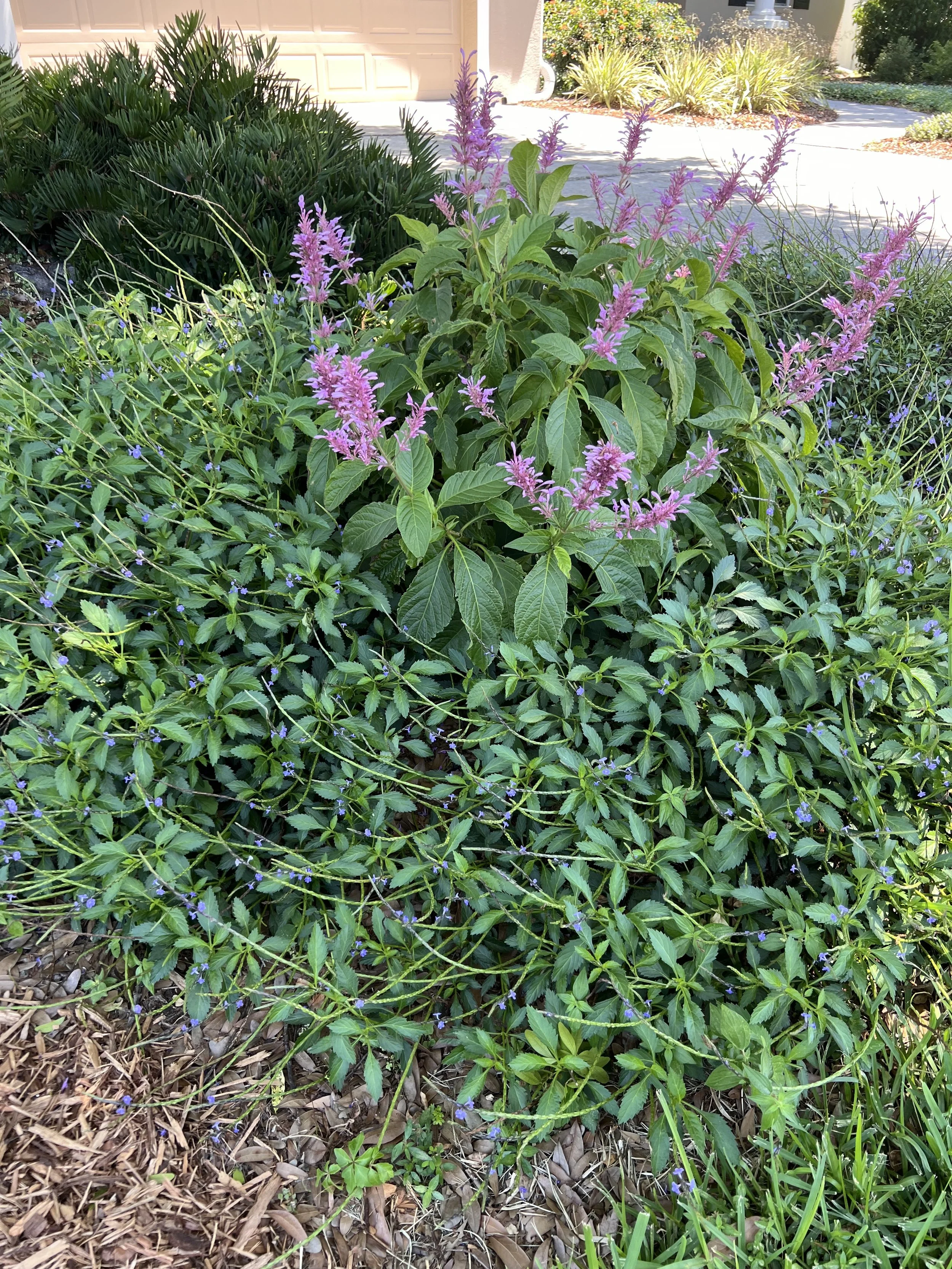
Purple Porterweed is a non-native, Florida-friendly flowering shrub that grows 3’-4’ tall and wide. They grow best in full sun and average to moist sandy soil. Their purple flower spikes bloom from spring until the first frost and serve as a nectar source for bees, butterflies, and hummingbirds.
Hibiscus coccineus
Scarlet Hibiscus is a native, perennial flowering shrub that grows 3’-8’ tall and 2’-4’ wide, with large, lobed leaves and large red star-shaped, long-lasting flowers that bloom from mid-summer to early fall. They grow best in full sun to partial shade with moist to wet, rich soil. They naturally grow in very wet areas and are very tolerant of soggy soil, but they can adapt to average soil environments with adequate watering. They are very attractive to Ruby Throated Hummingbirds, butterflies, and native bees!
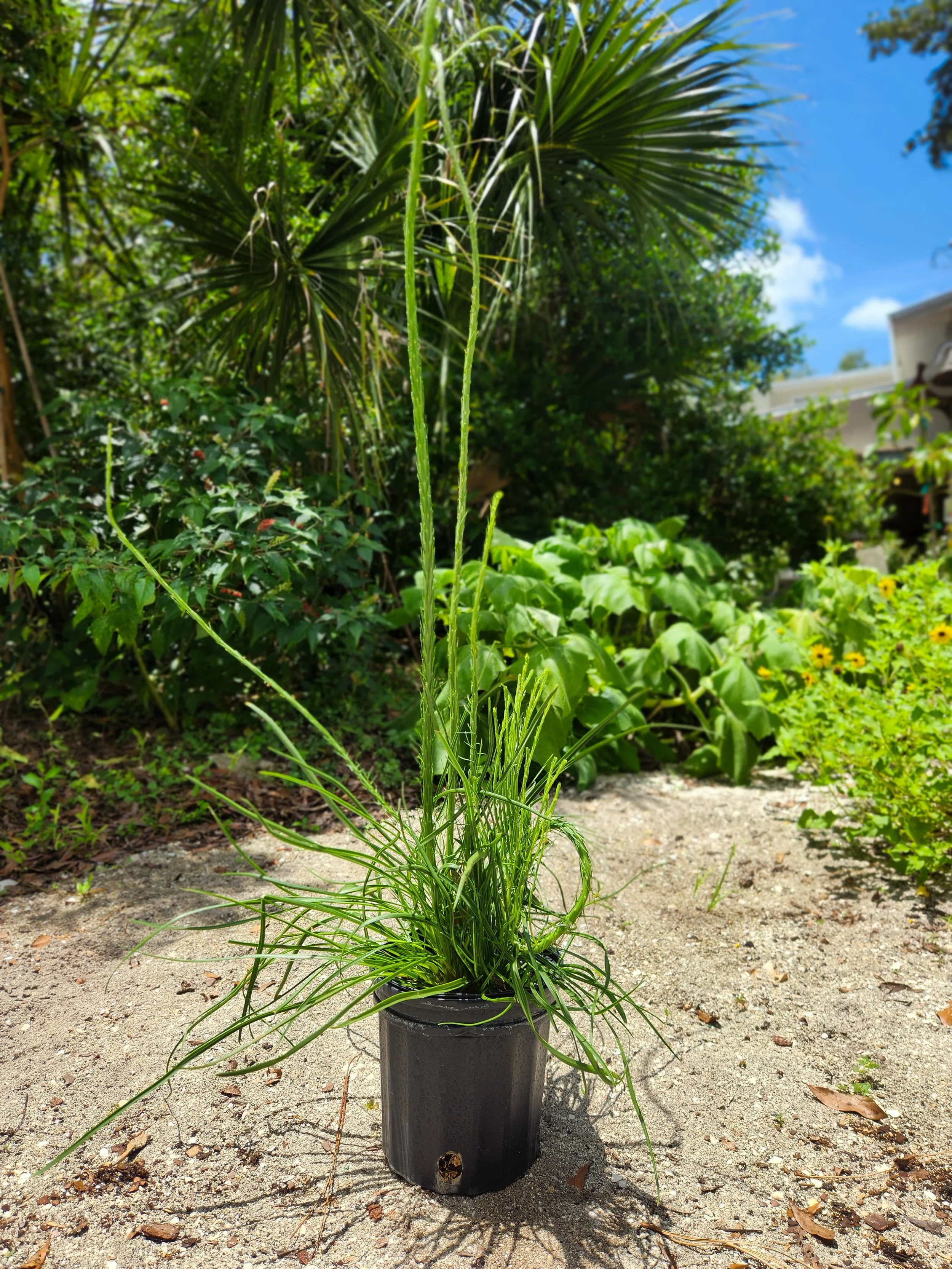
Liatris tenuifolia
Love the idea of Blazing Star but have a super dry, hot yard without irrigation? Try Shortleaf Blazing Star! A statement wildflower for the fall season! This wildflower is unapologetically bold with tall, electric purple spikes that strut through like they own the garden. It is the life of the pollinator party with the amount of bees and butterflies it attracts. If your landscape needs a little drama and a whole lot of fabulous, this is the wildflower you've been waiting for.
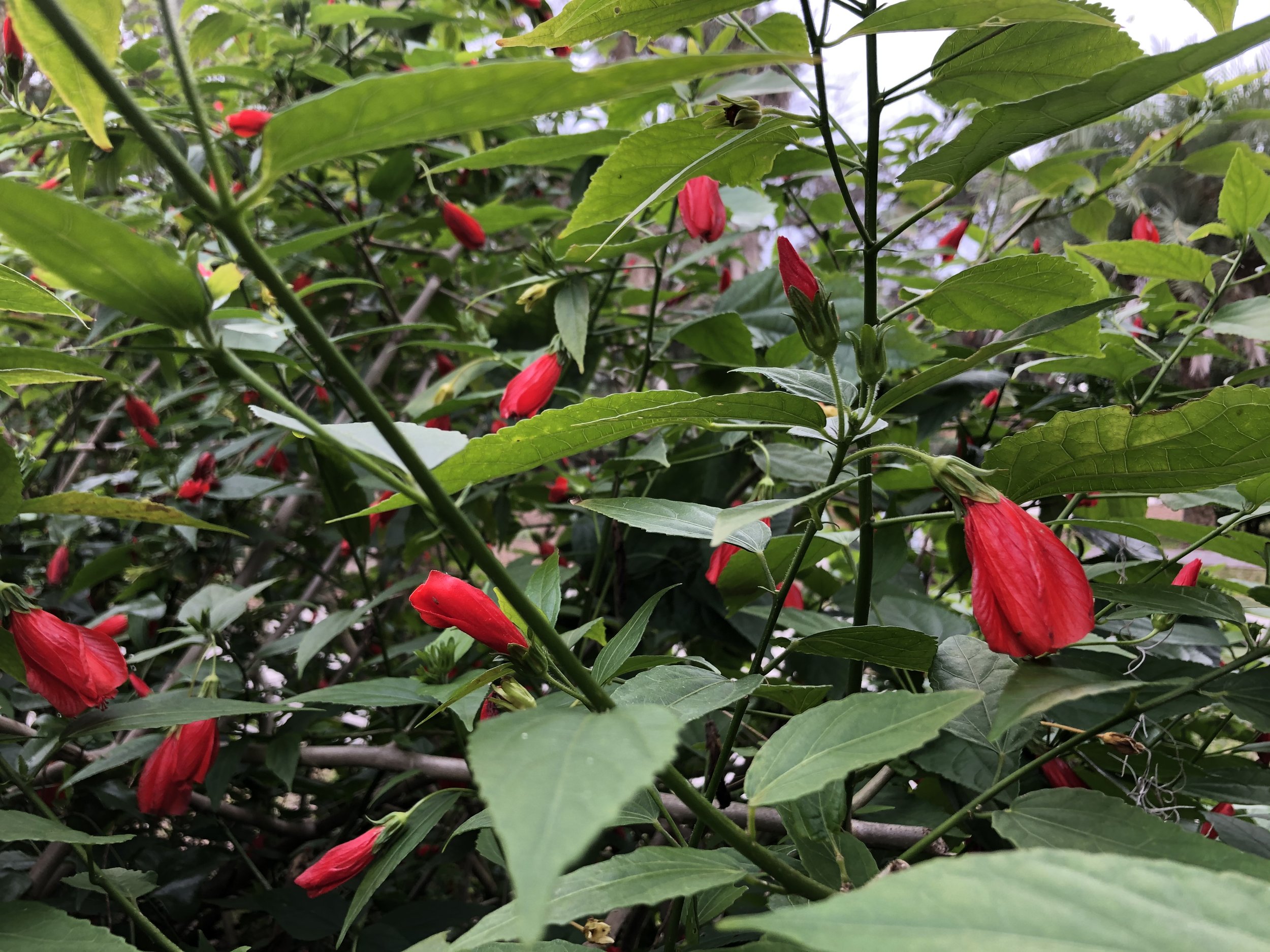
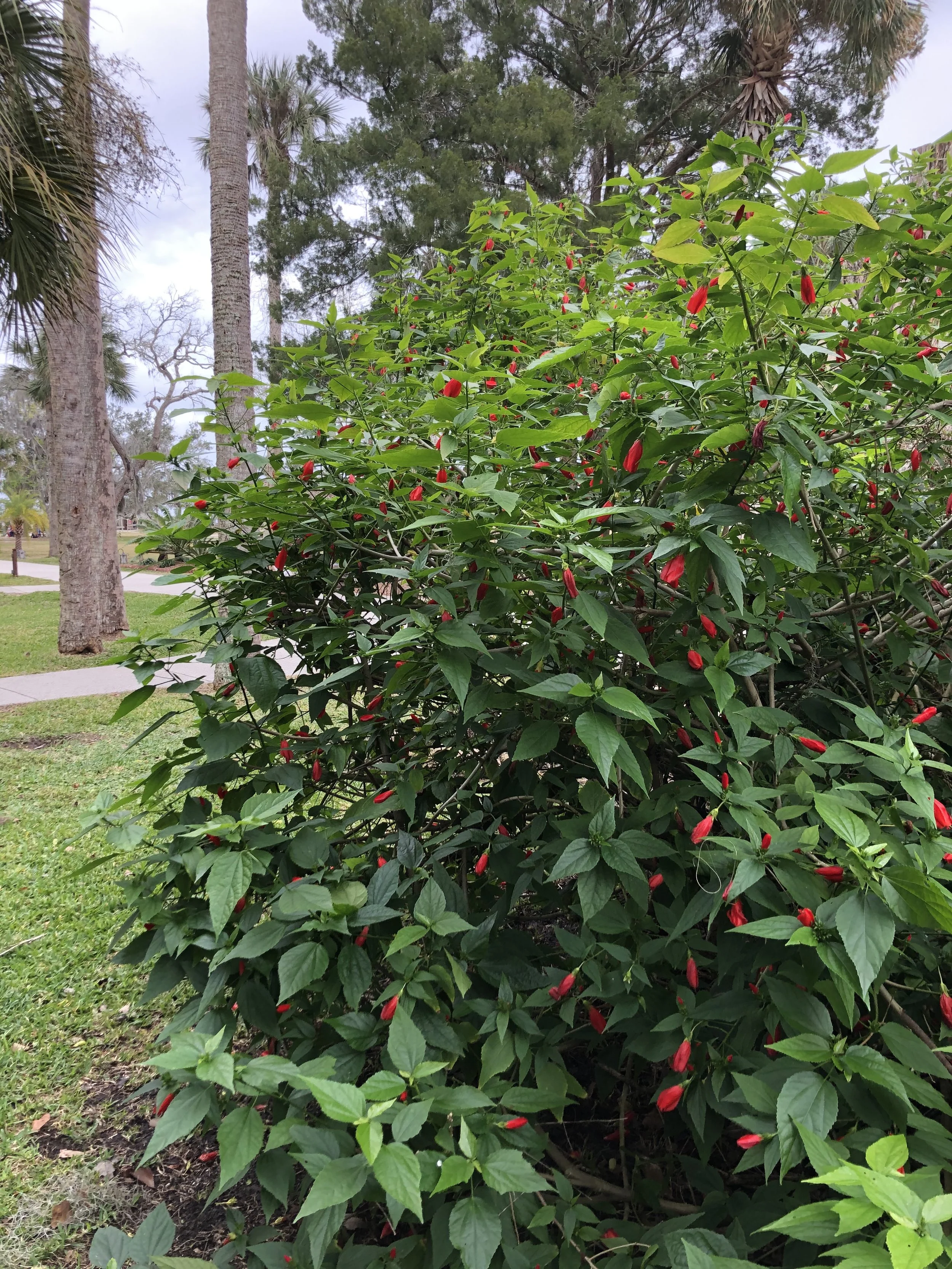
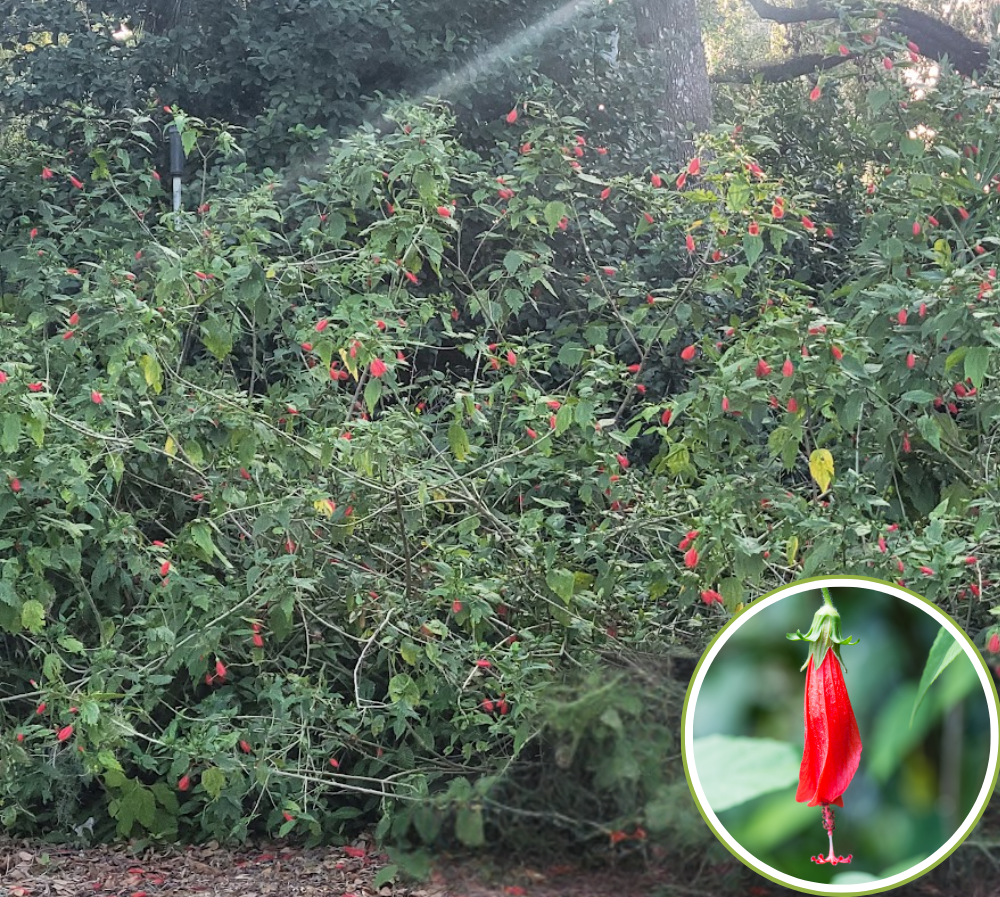
Malvaviscus penduliflorus
Sleeping Hibiscus is a Florida-friendly upright shrub in the hibiscus family that can reach up to 10ft tall and wide. This drought-tolerant plant produces distinctive bright red flowers that never fully open, blooming continuously from early summer until the first frost. This low-maintenance shrub prefers light shade in tropical areas and full sun with afternoon shade in northern regions, making it an excellent choice for adding late-season color to Florida landscapes. With the constant blooms, sleeping hibiscus is a great plant for butterflies and hummingbirds!

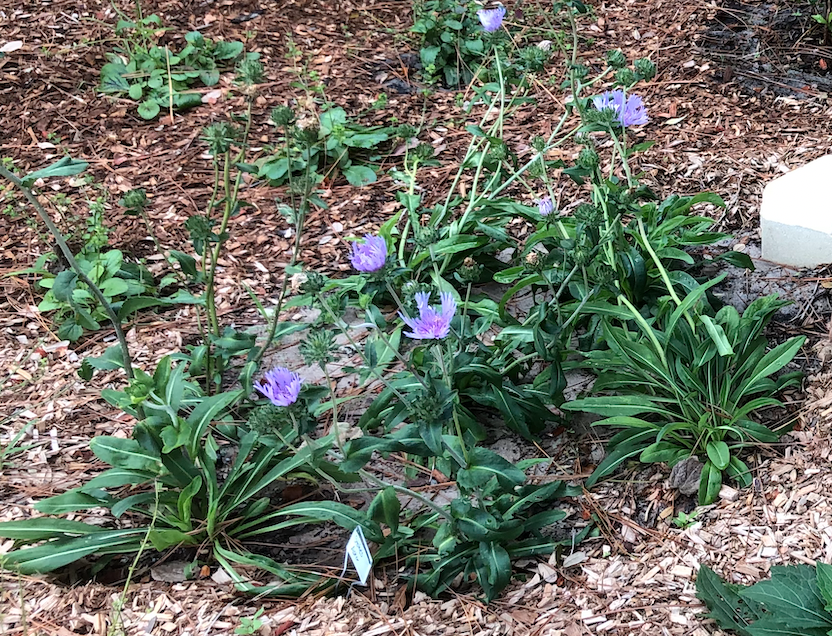
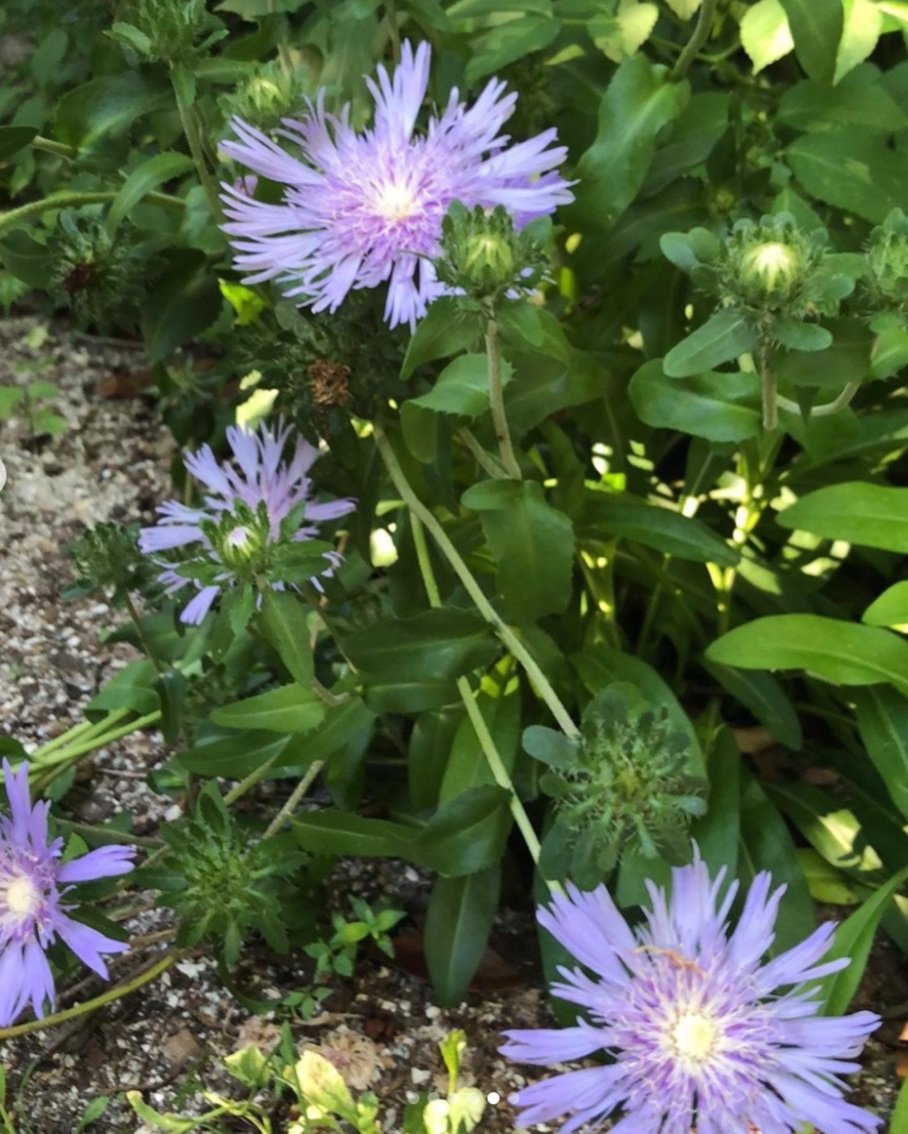
Stokesia laevis
Stokes’ Aster is a hardy, 1’–2’ perennial known for its large, fringed purple-blue flowers. It is a reliable bloomer that provides color from spring all the way through fall. This plant thrives in part sun and prefers moist, well-drained soil. It grows in tidy clumps that are easy to divide every few years. It’s a great choice for borders and is excellent at attracting bees and butterflies.
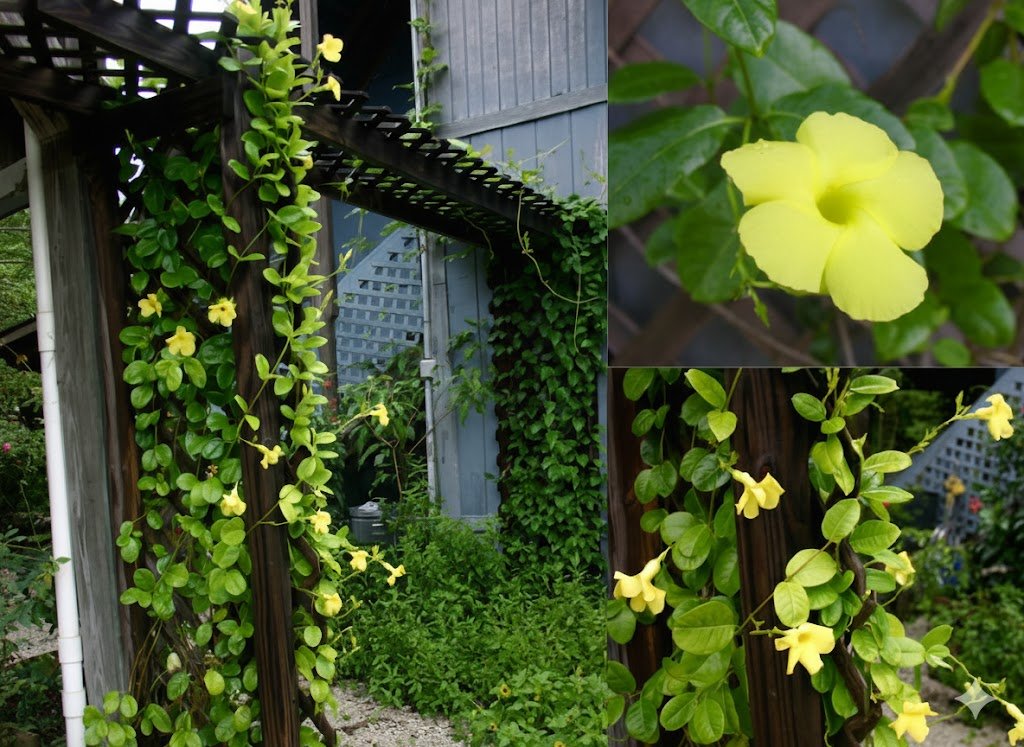
Pentalinon luteum
Wild Allamanda is a vigorous, evergreen vine that produces clusters of bright yellow, trumpet-shaped flowers nearly year-round. It can climb or sprawl 10-20 ft, making it ideal for trellises, fences, or as a sprawling groundcover. This low-maintenance native is drought-tolerant once established and thrives in full sun to partial shade. Its cheerful blooms attract butterflies and hummingbirds, while its glossy foliage provides lush, tropical appeal to the landscape.

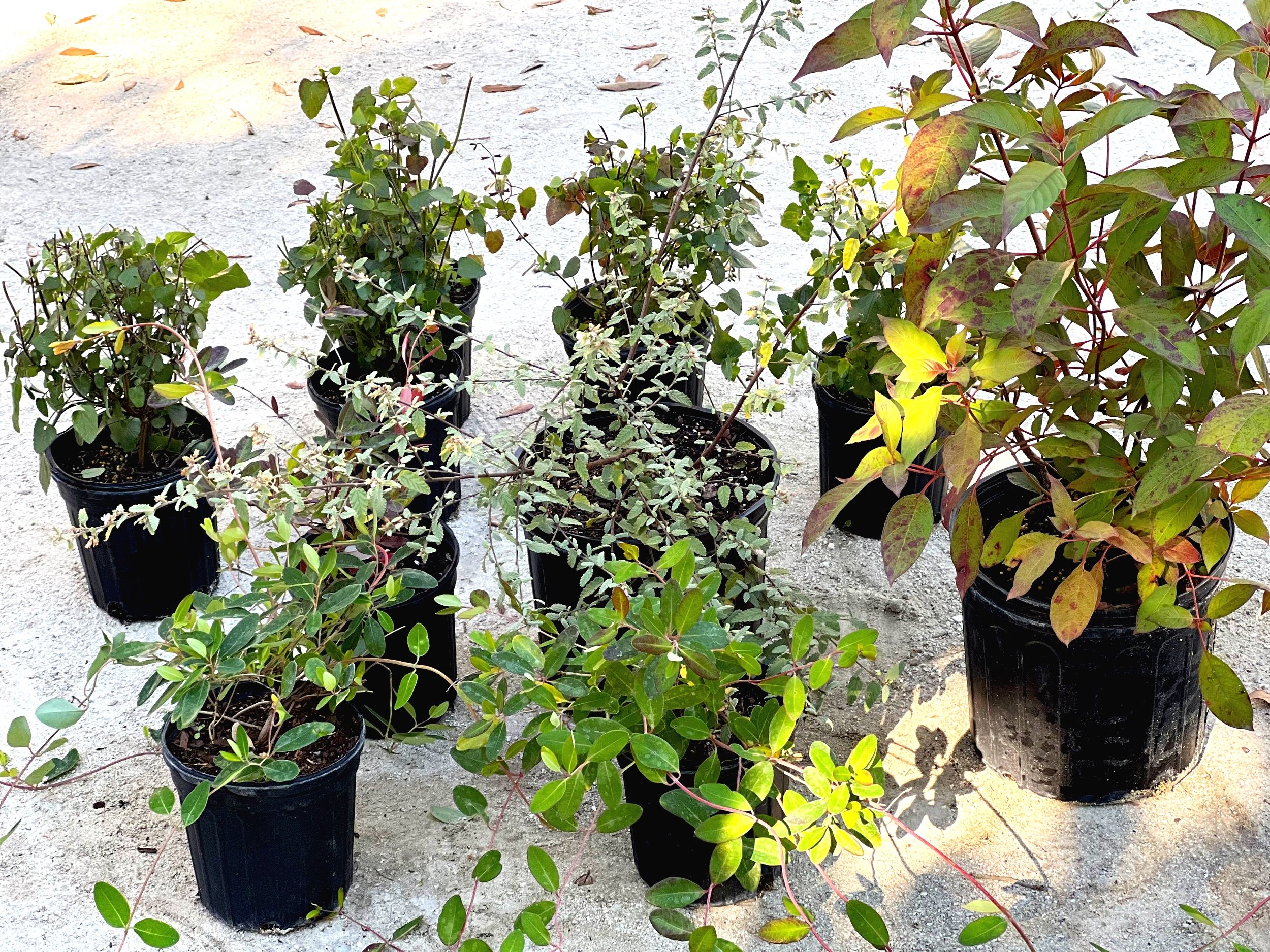
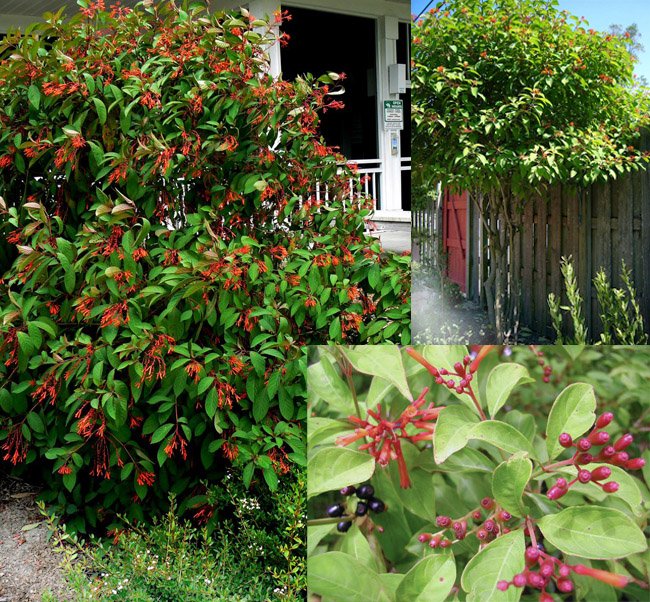
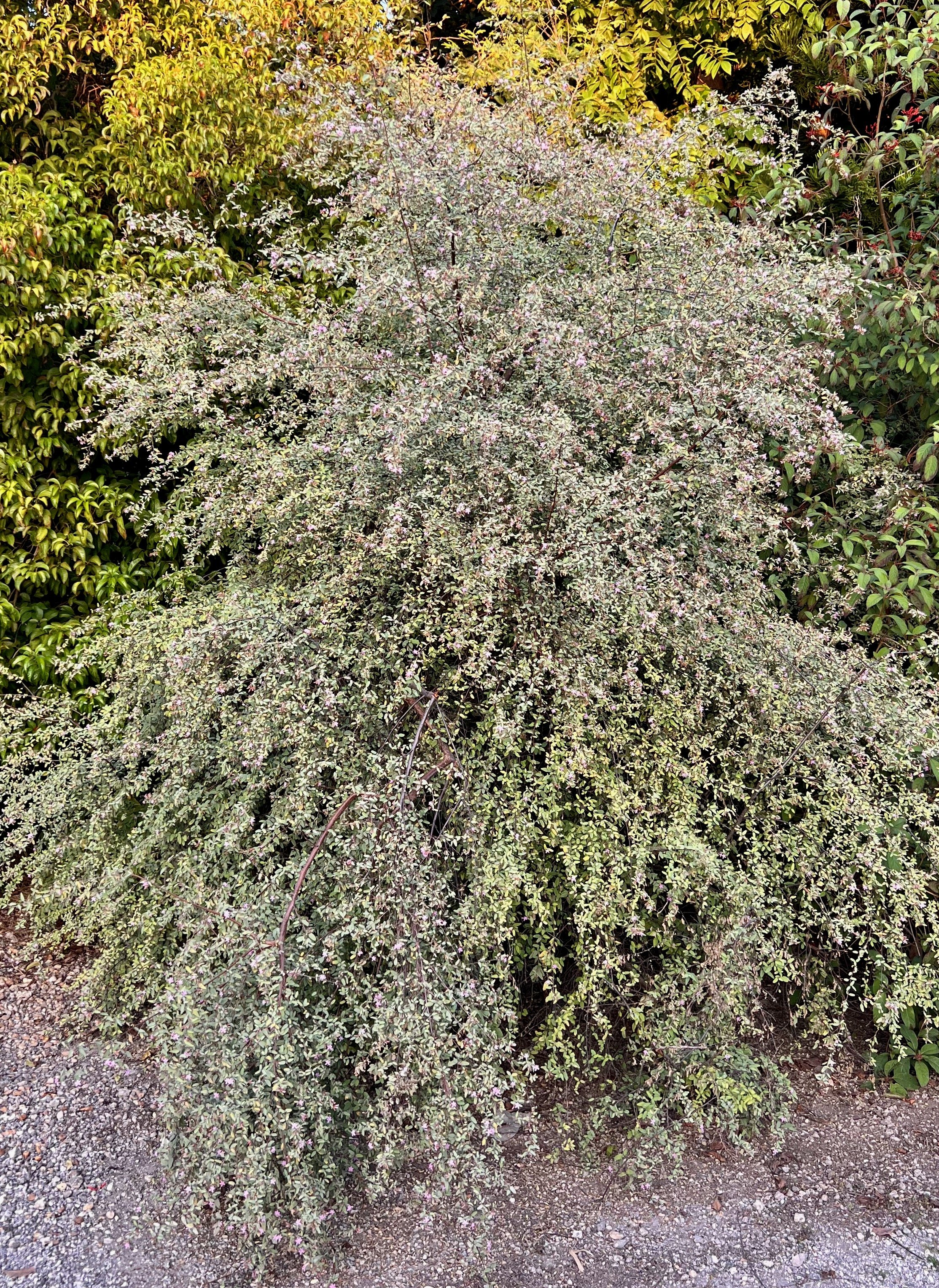
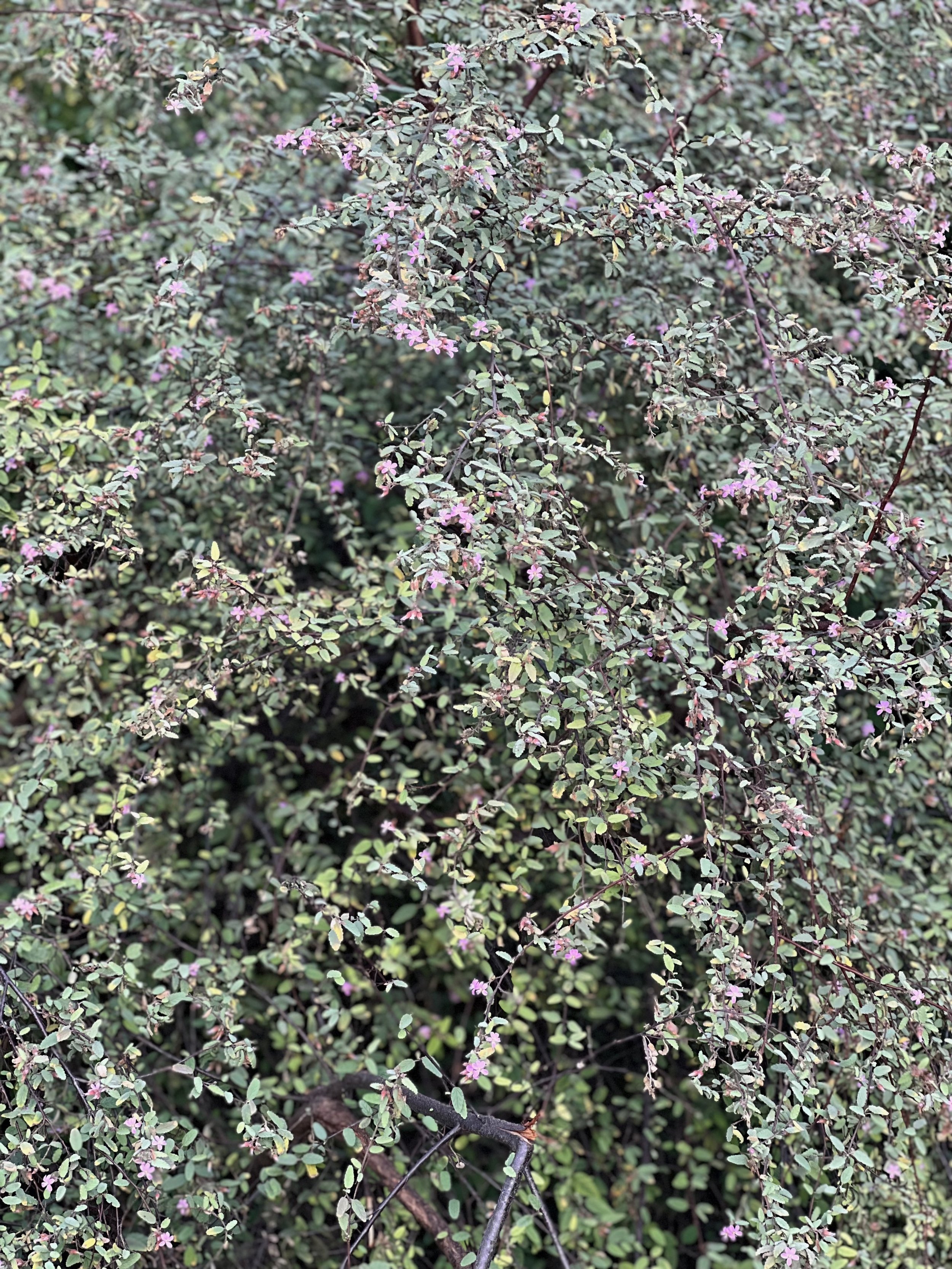
Includes:
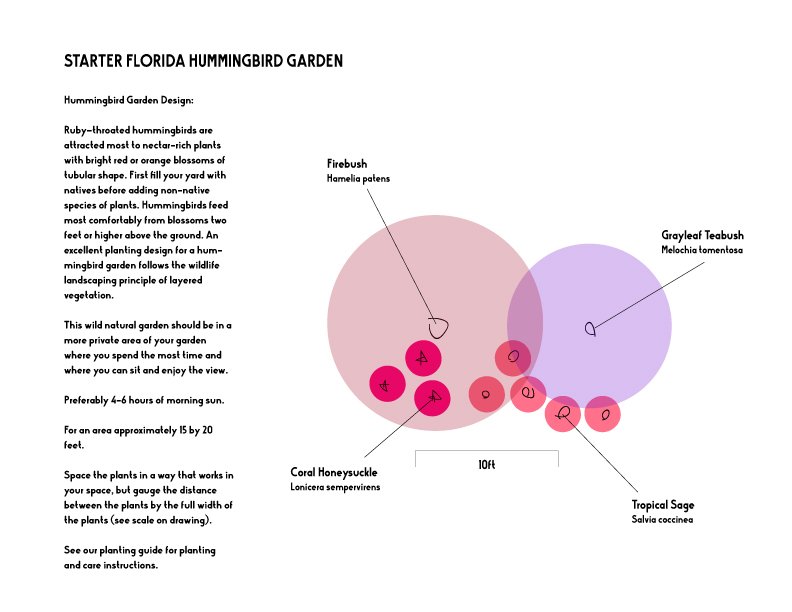
1 Firebush 3 gallon, Hamelia patens, 12 ft tall by 8 ft wide, tallest and largest plant in design
1 Grayleaf Teabush 3 gallon, Melochia tomentosa, 6ft by 6ft, second tallest plant in design
3 Coral Honeysuckle 1 gallon, Lonicera sempervirens , 3 ft by 3ft, stays under 3 ft if planted as a shrubby groundcover OR can be placed along a fence or trellis, if planted near firebush it can eventually by allowed to climb it as it gets larger
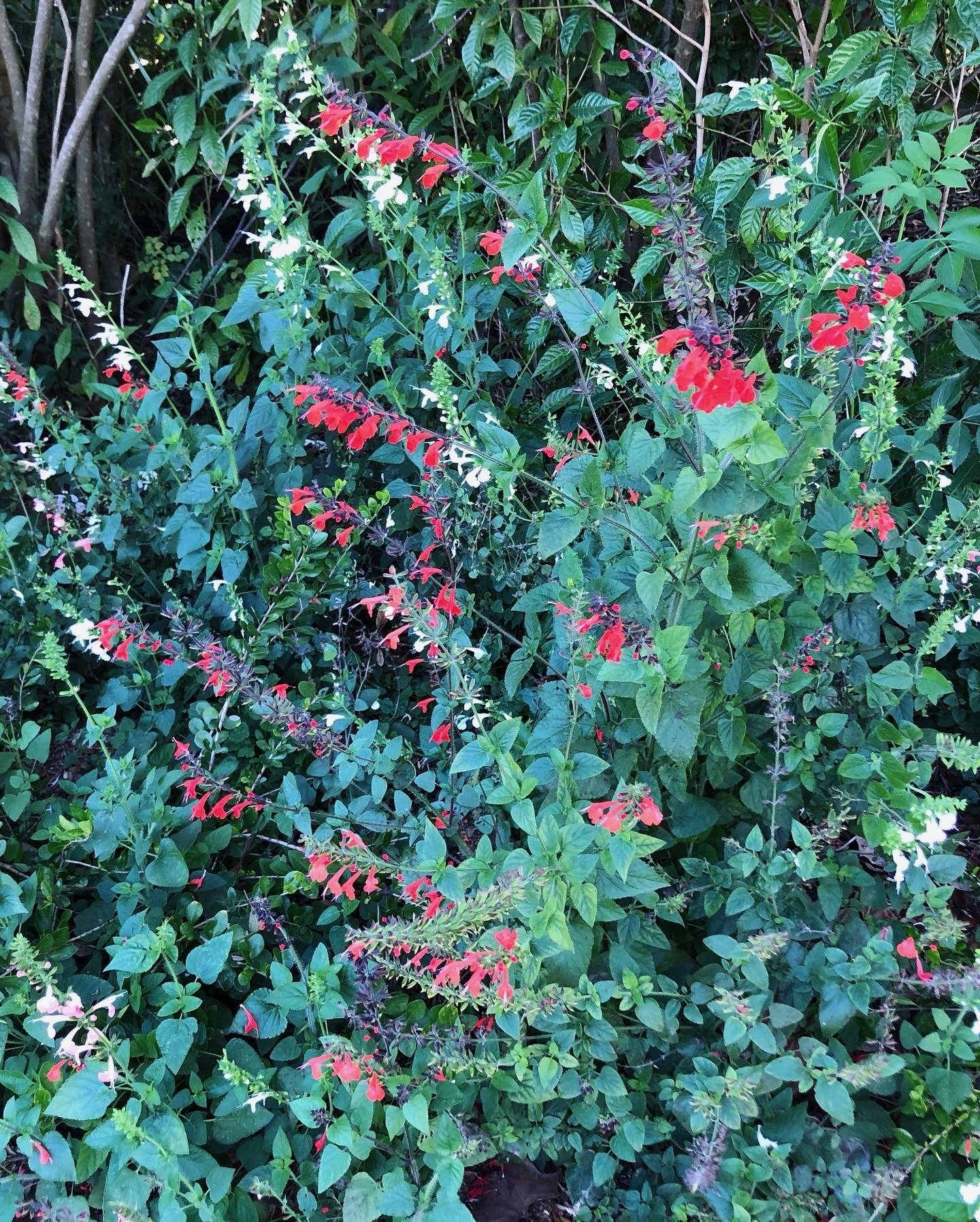
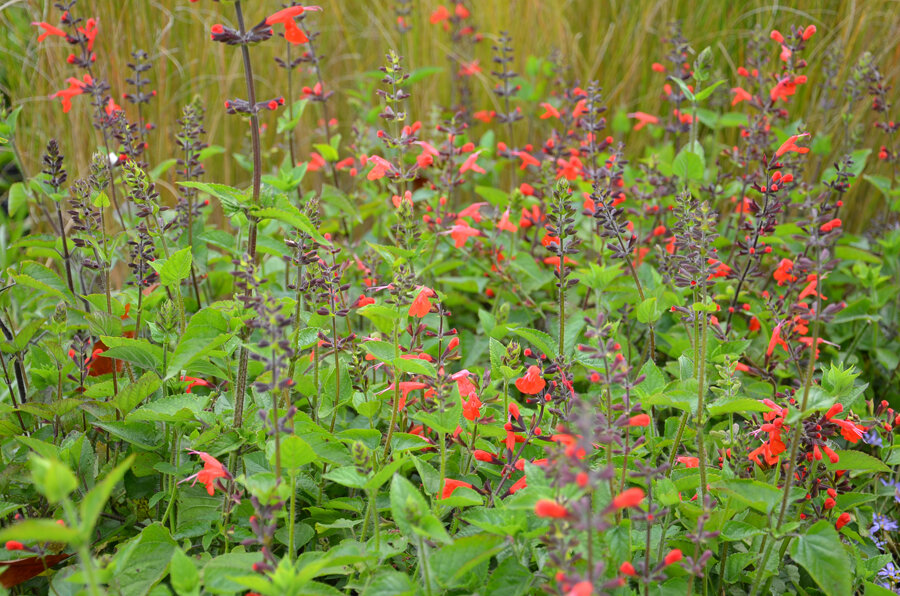
5 Red Tropical Sage 1 gallon, Salvia coccinea, 2ft by 2ft, we suggest placing together in grouping as it does seasonal reseeding
Option of florimulch or pinestraw mulch
A printed graphic design idea for plant spacing.
Preferably 4-6 hours of morning sun.
For an area approximately 15 by 20 feet.
Space the plants in a way that works in your landscape, but gauge the distance between the plants by the full width of the plants (listed below). We will include a simple design with your purchase when you receive your plants.
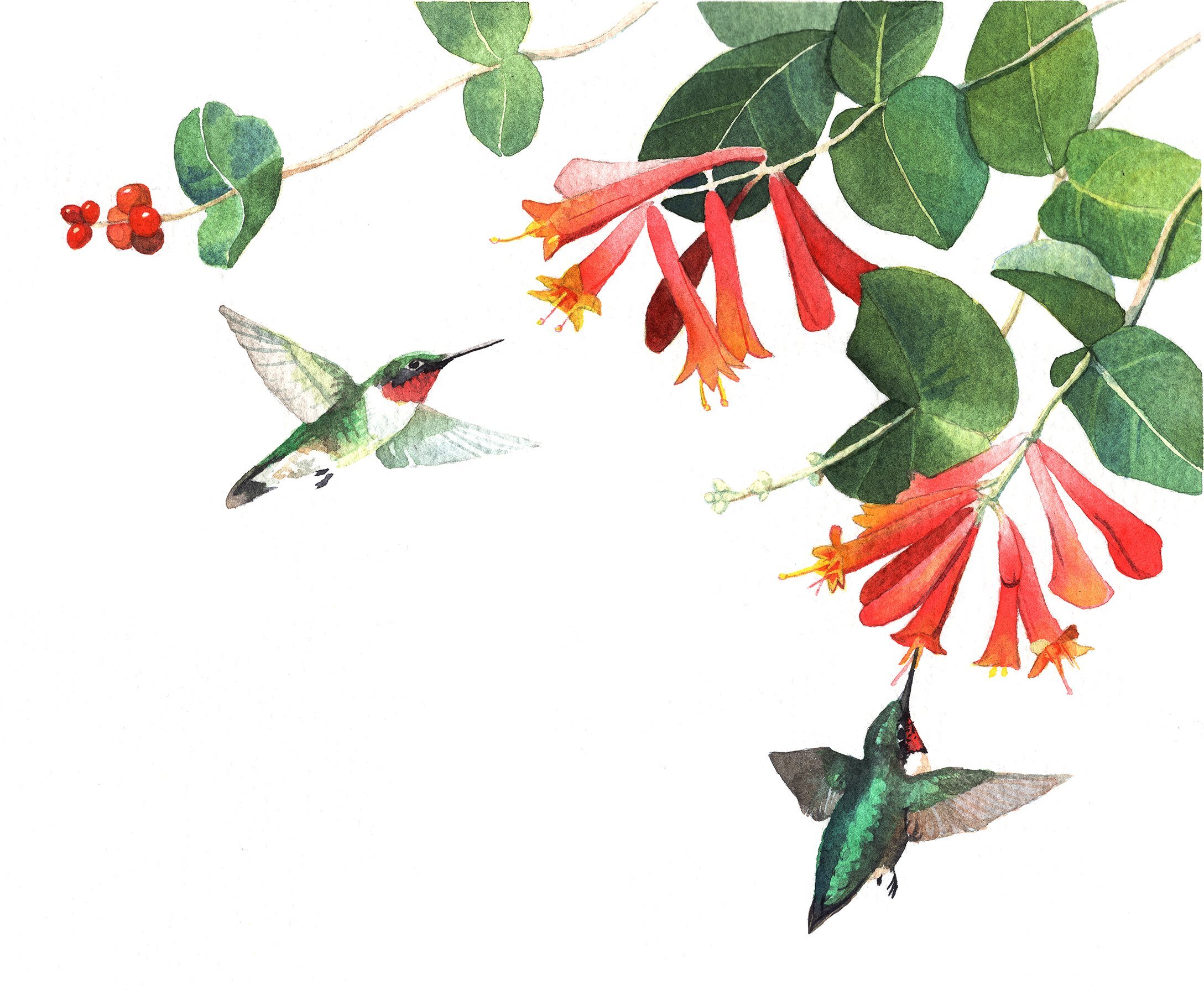
Florida Hummingbirds: Eleven different species have been observed in Florida but the most common is the ruby-throated hummingbird. There are at least two different ruby-throated hummingbird populations: the south-bound ruby-throats migrating into/through the state in fall and winter, and the north-bound ruby-throated hummingbirds coming through the state in the spring. Both spring and fall, Southwest Florida provides important feeding areas for hummingbirds who fly across the Gulf to southern wintering sites or back across the Gulf on their way to summer nesting sites in the North. They seek out native plants, their natural food supply, along their migratory routes. Typically, many birds return to the same feeding sites, so once you start getting them, you are likely to see them year after year unless the sites disappear with habitat changes in your area.
Hummingbird Garden Design: Ruby–throated hummingbirds are attracted most to nectar-rich plants with bright red or orange blossoms of tubular shape. First fill your yard with natives before adding non-native species of plants. Hummingbirds feed most comfortably from blossoms two feet or higher above the ground. An excellent planting design for a hummingbird garden follows the wildlife landscaping principle of layered vegetation.
This wild natural garden should be in a more private area of your garden where you spend the most time and where you can sit and enjoy the view.
No results match your search. Try removing a few filters.