Hi Friends!
We offer PICK UP or LOCAL DELIVERY only (NO SHIPPING).
Thank you!
Thursday–Sunday, 10am–4pm | 941-322-1915
We offer PICK UP or LOCAL DELIVERY only (NO SHIPPING).
Thank you!
Thursday–Sunday, 10am–4pm | 941-322-1915
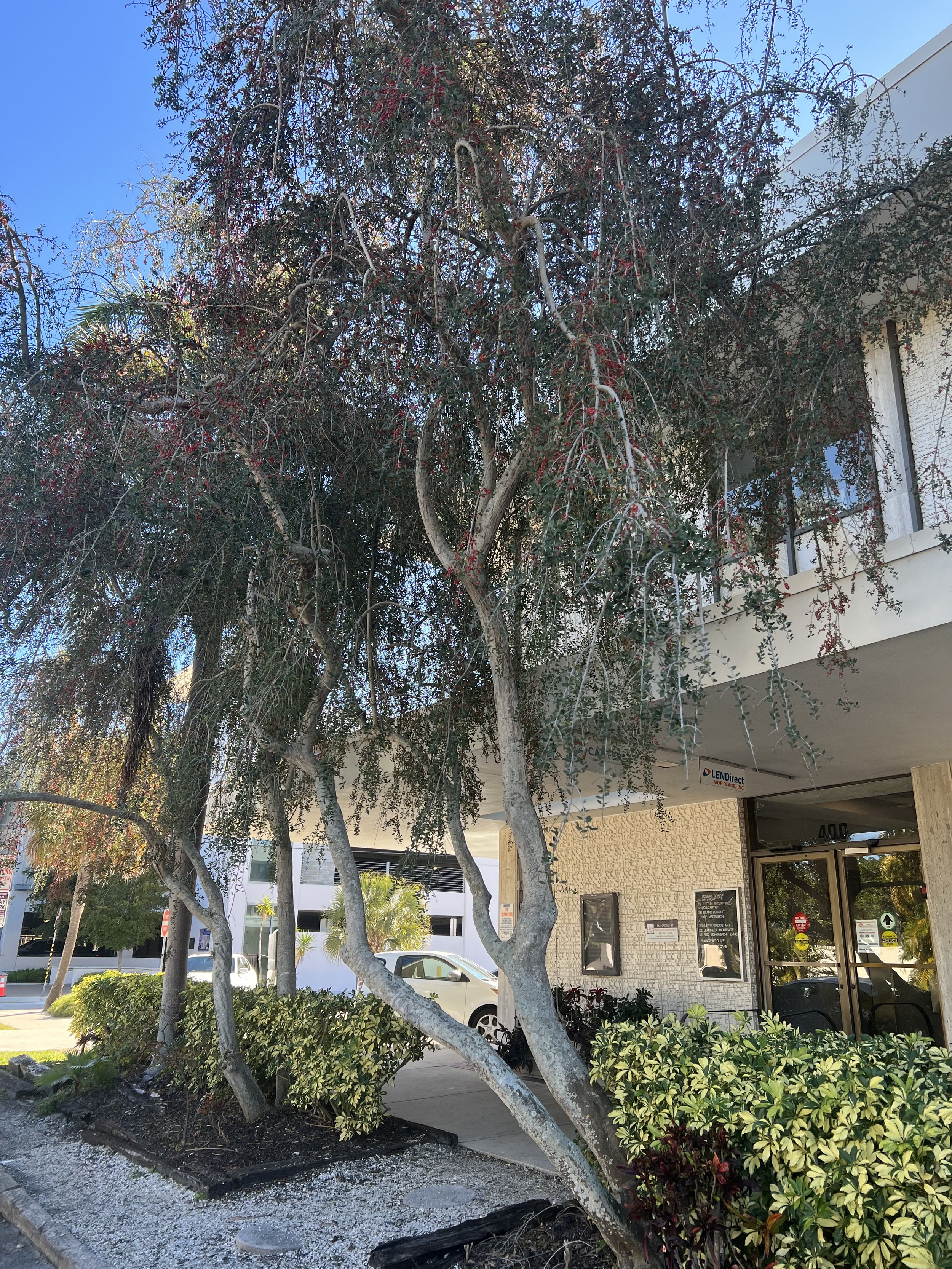
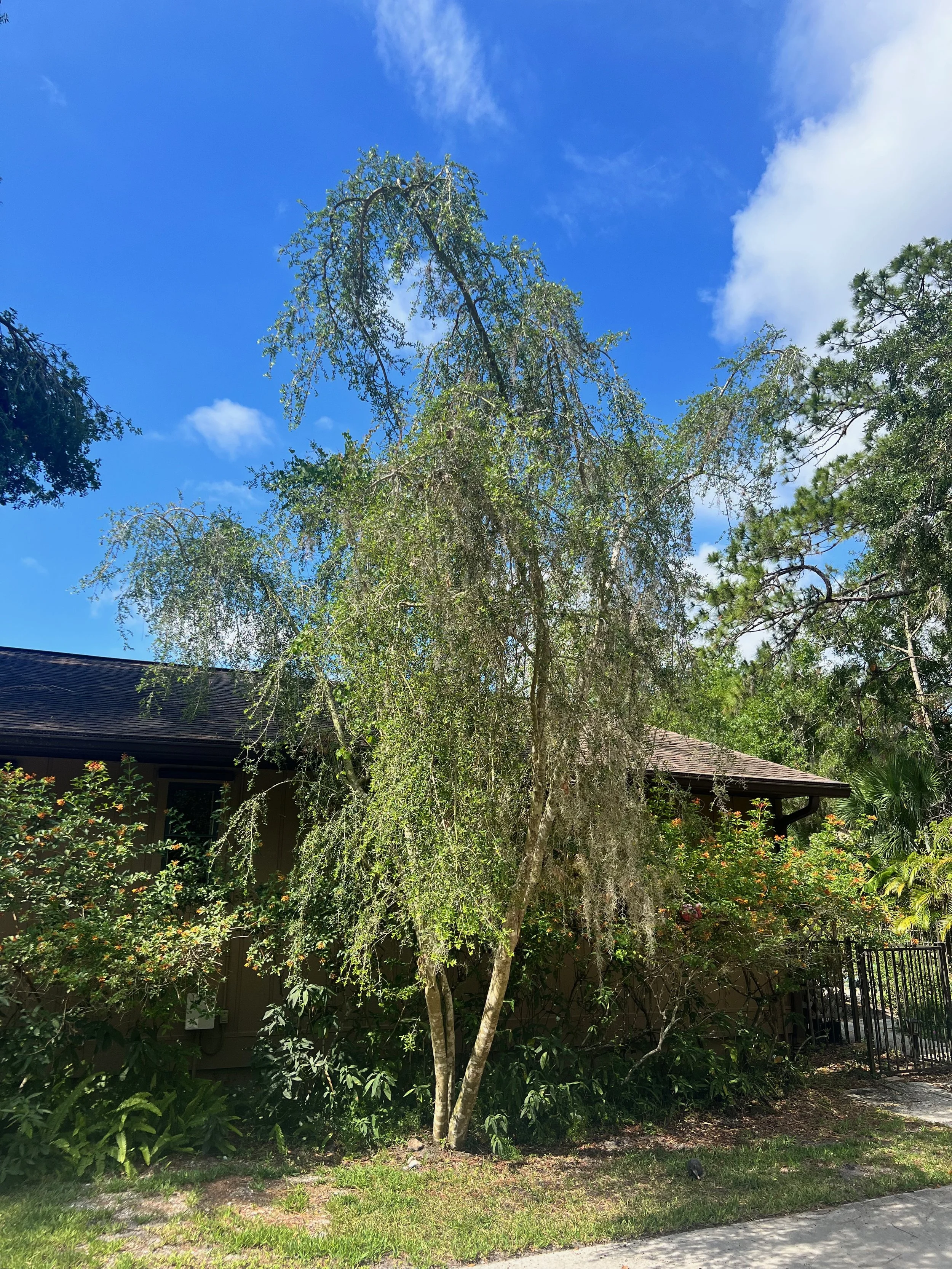
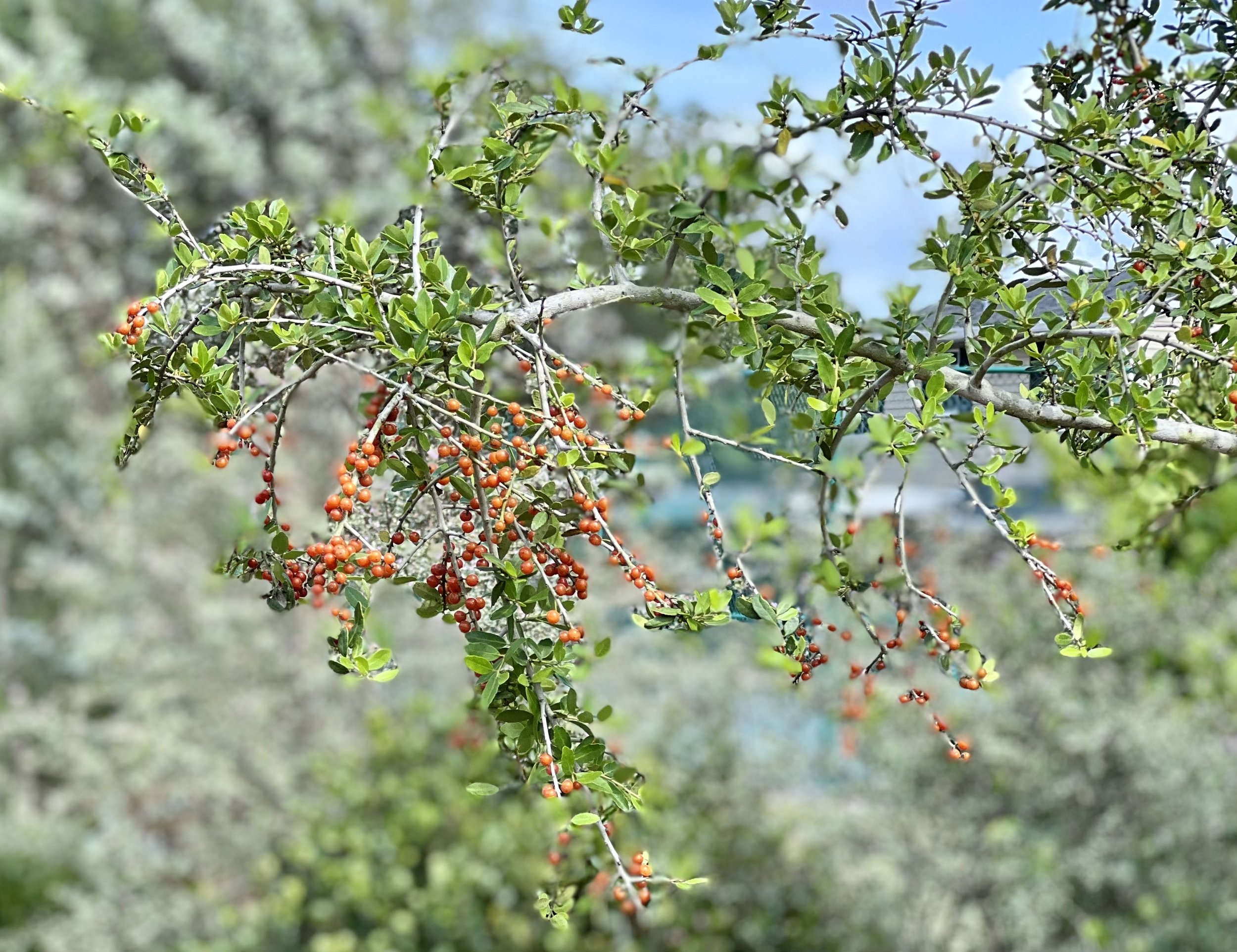
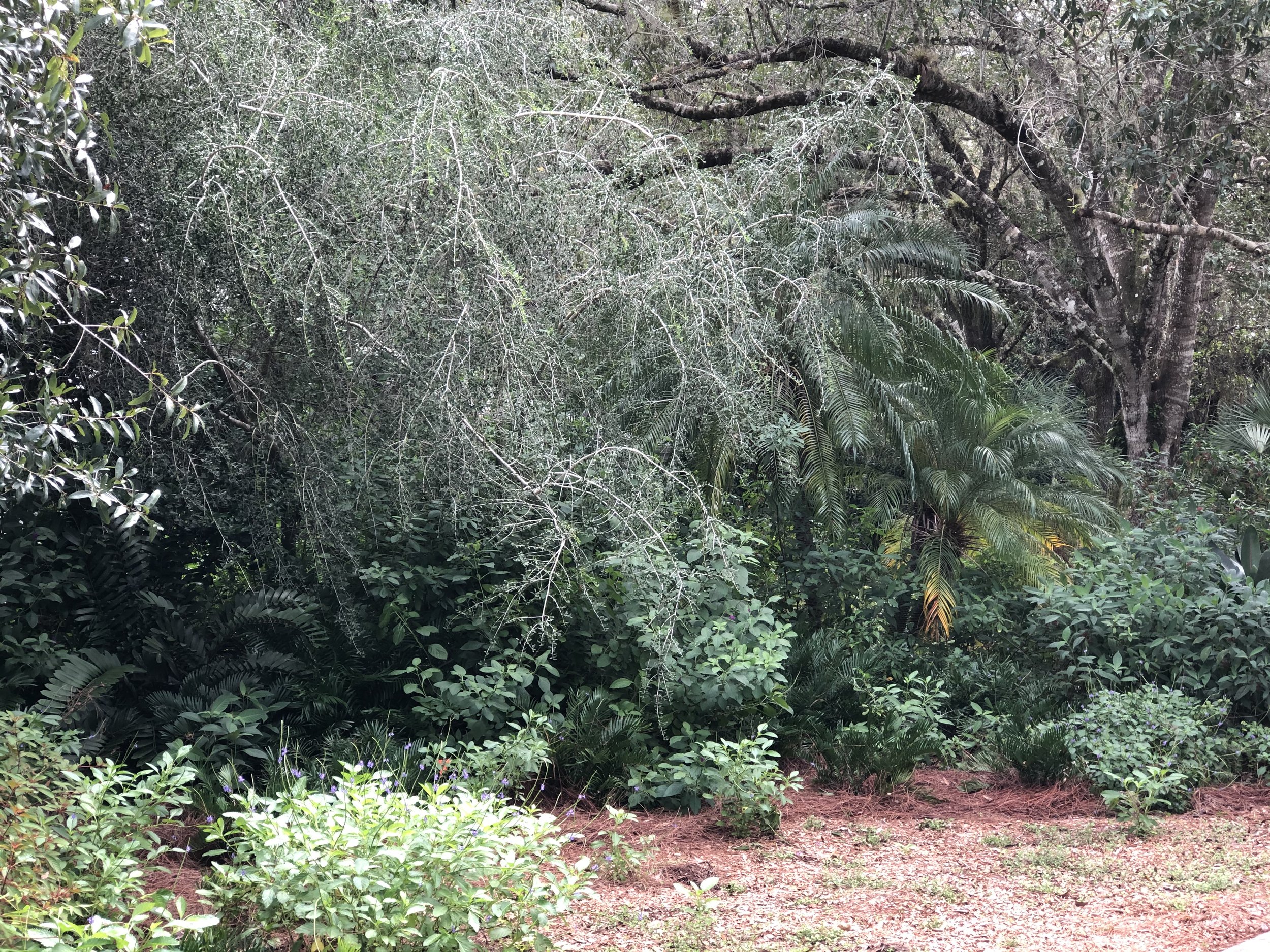
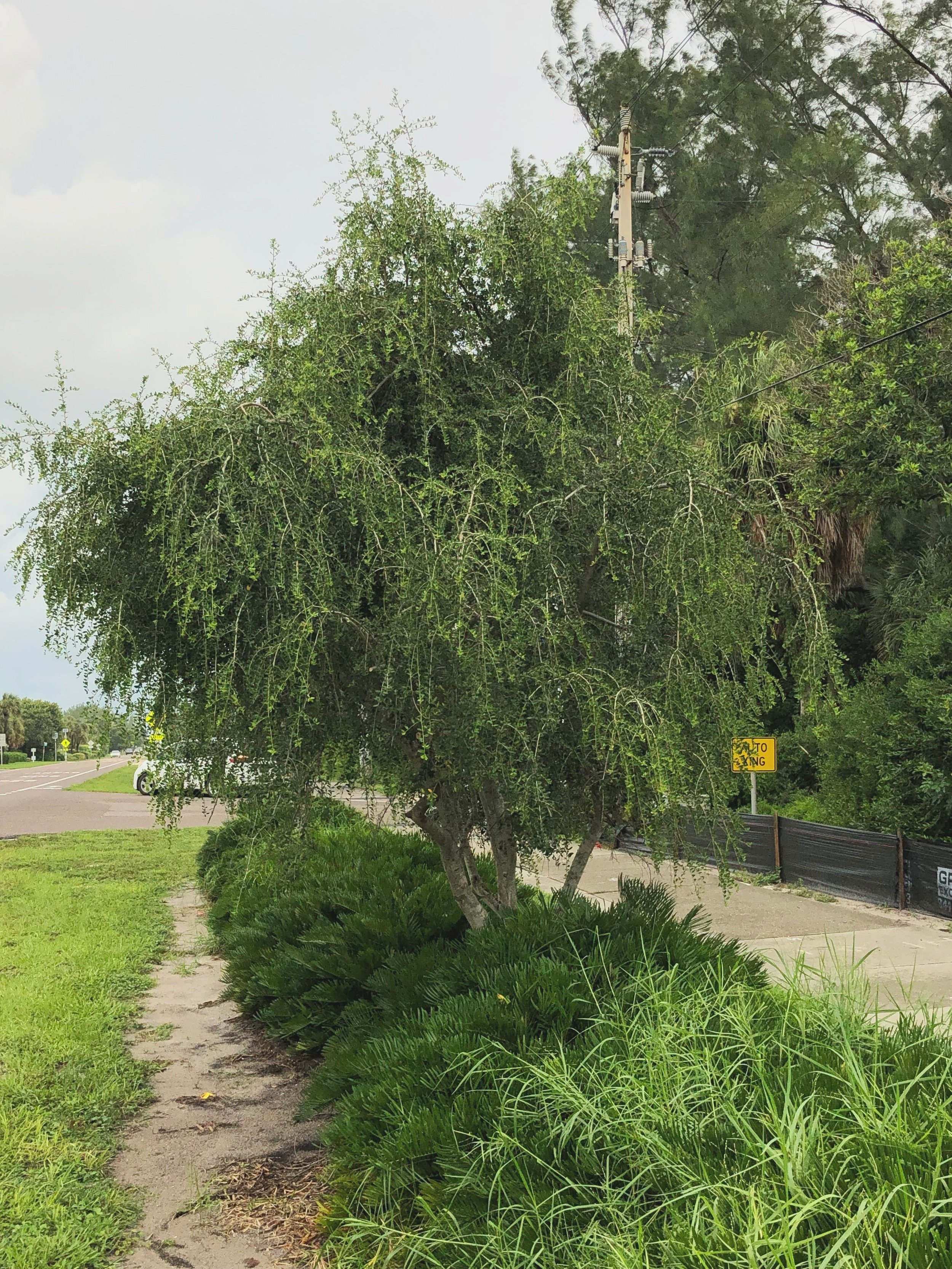
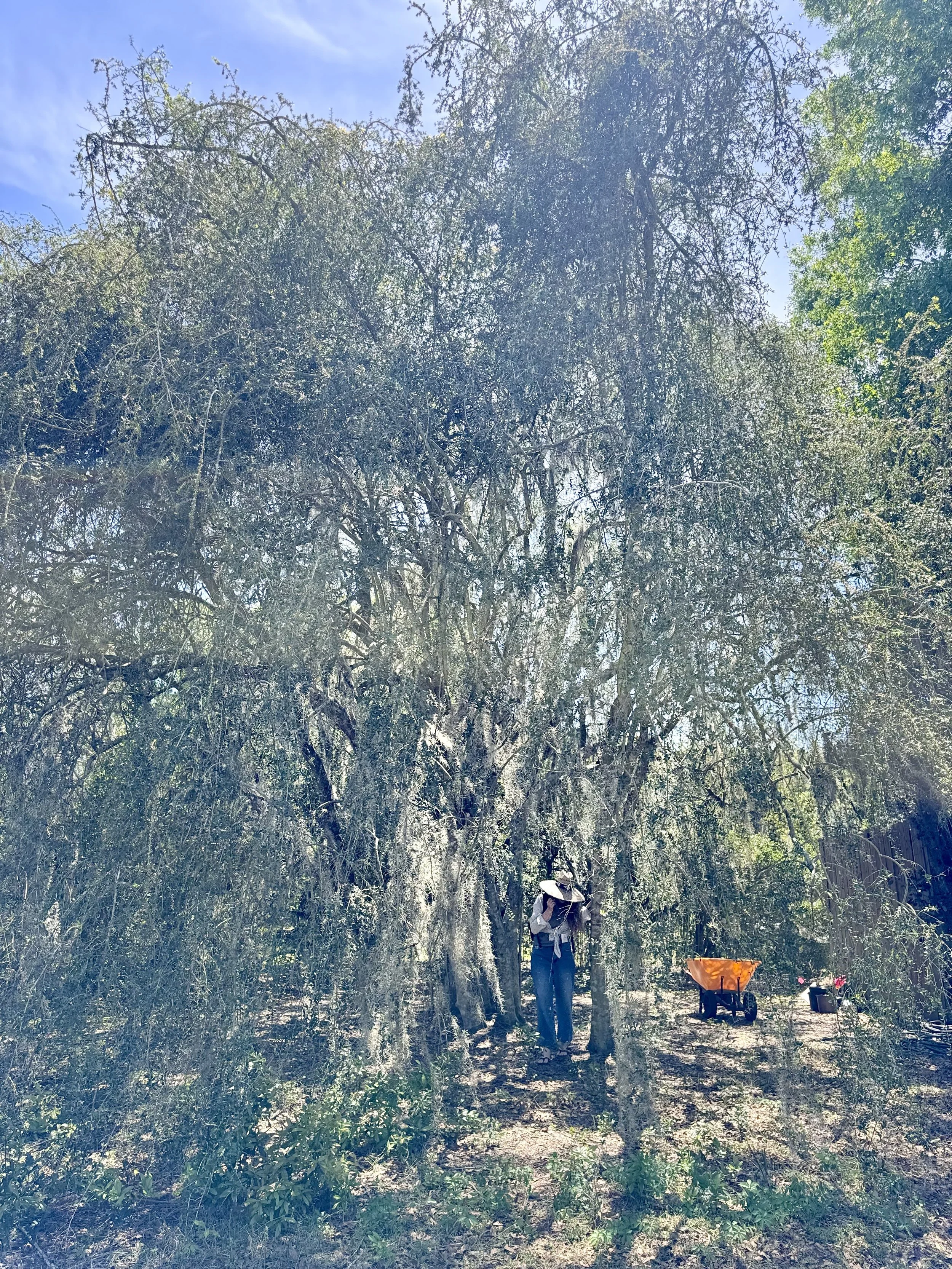
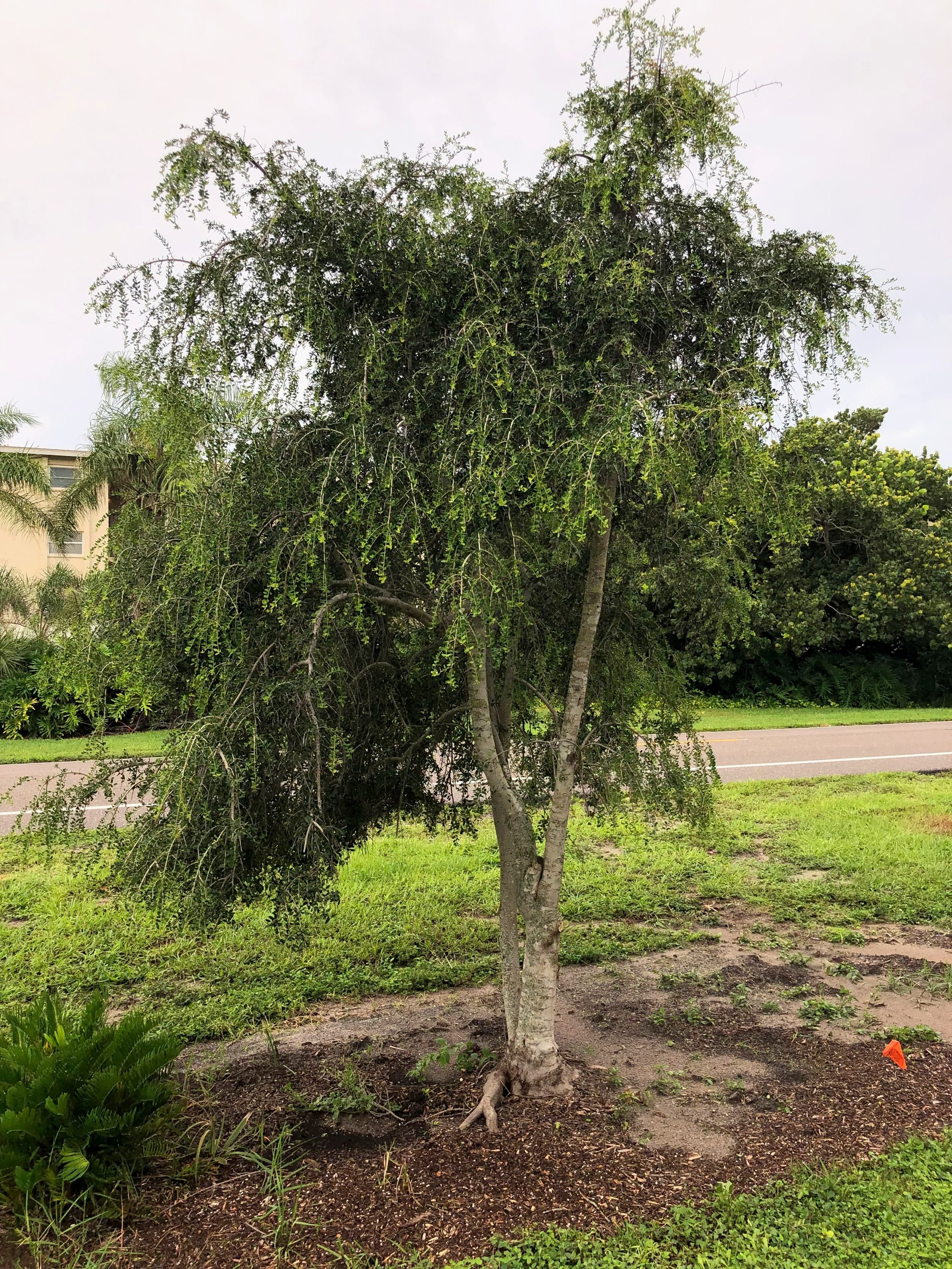
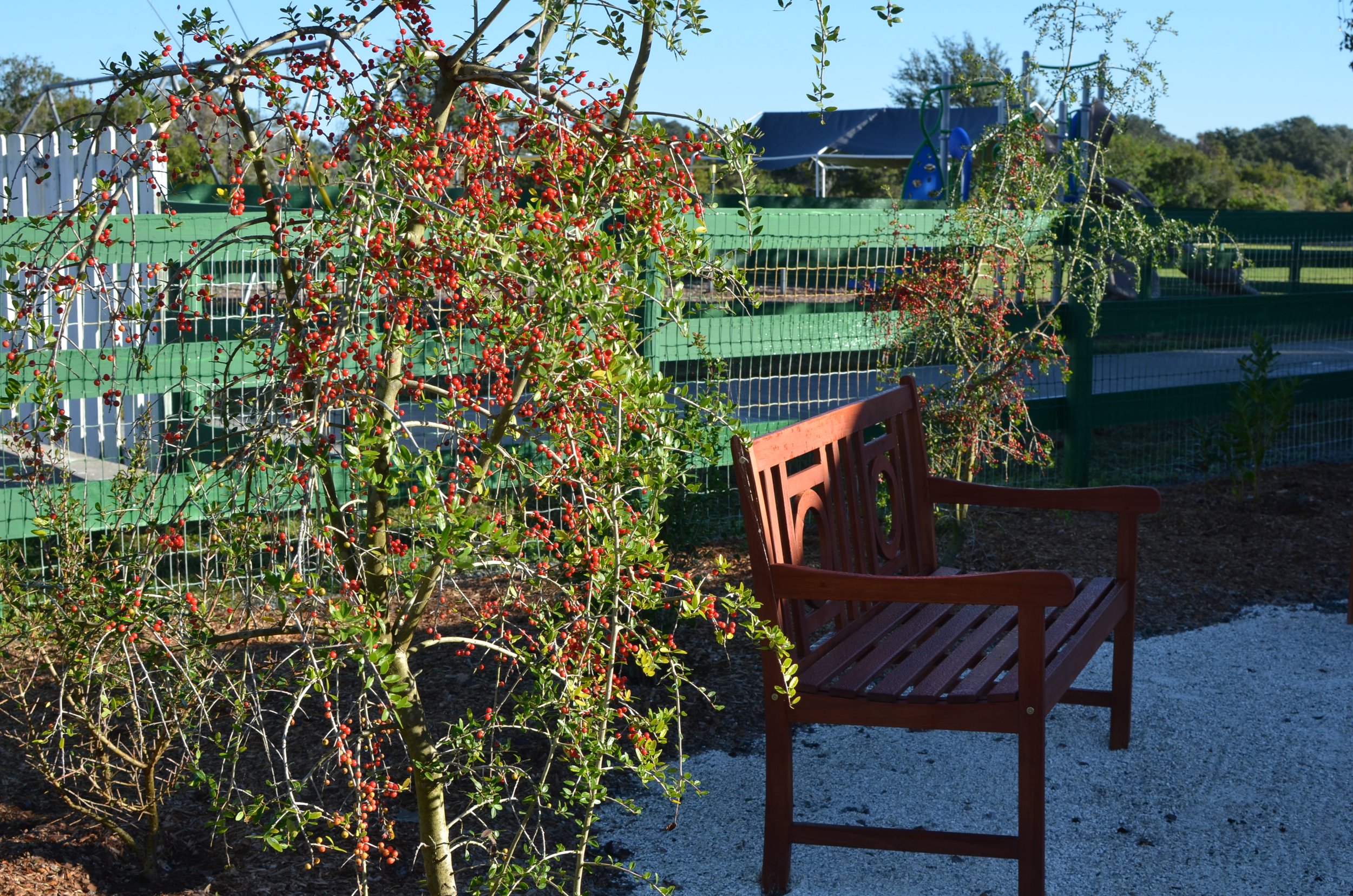
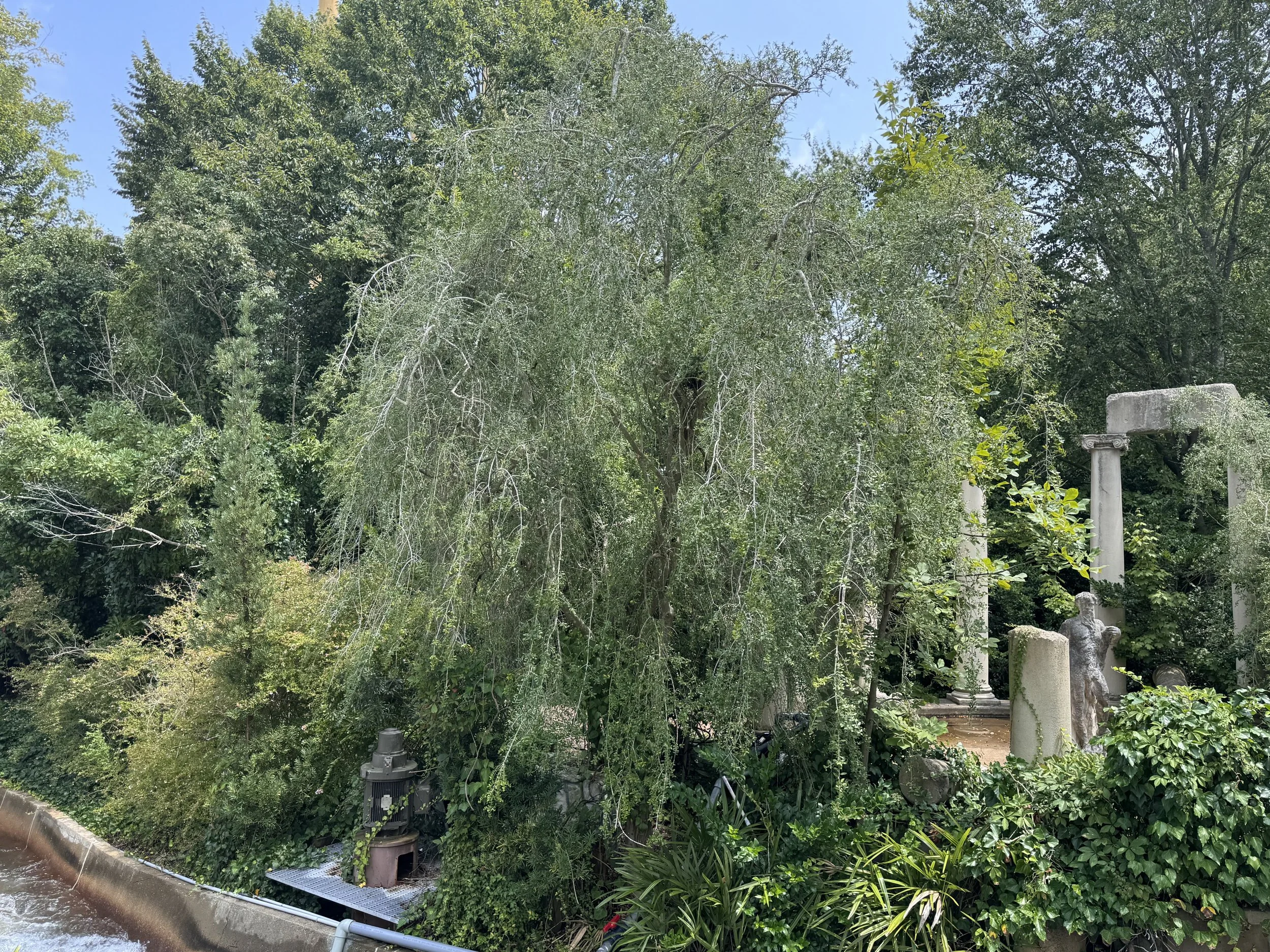
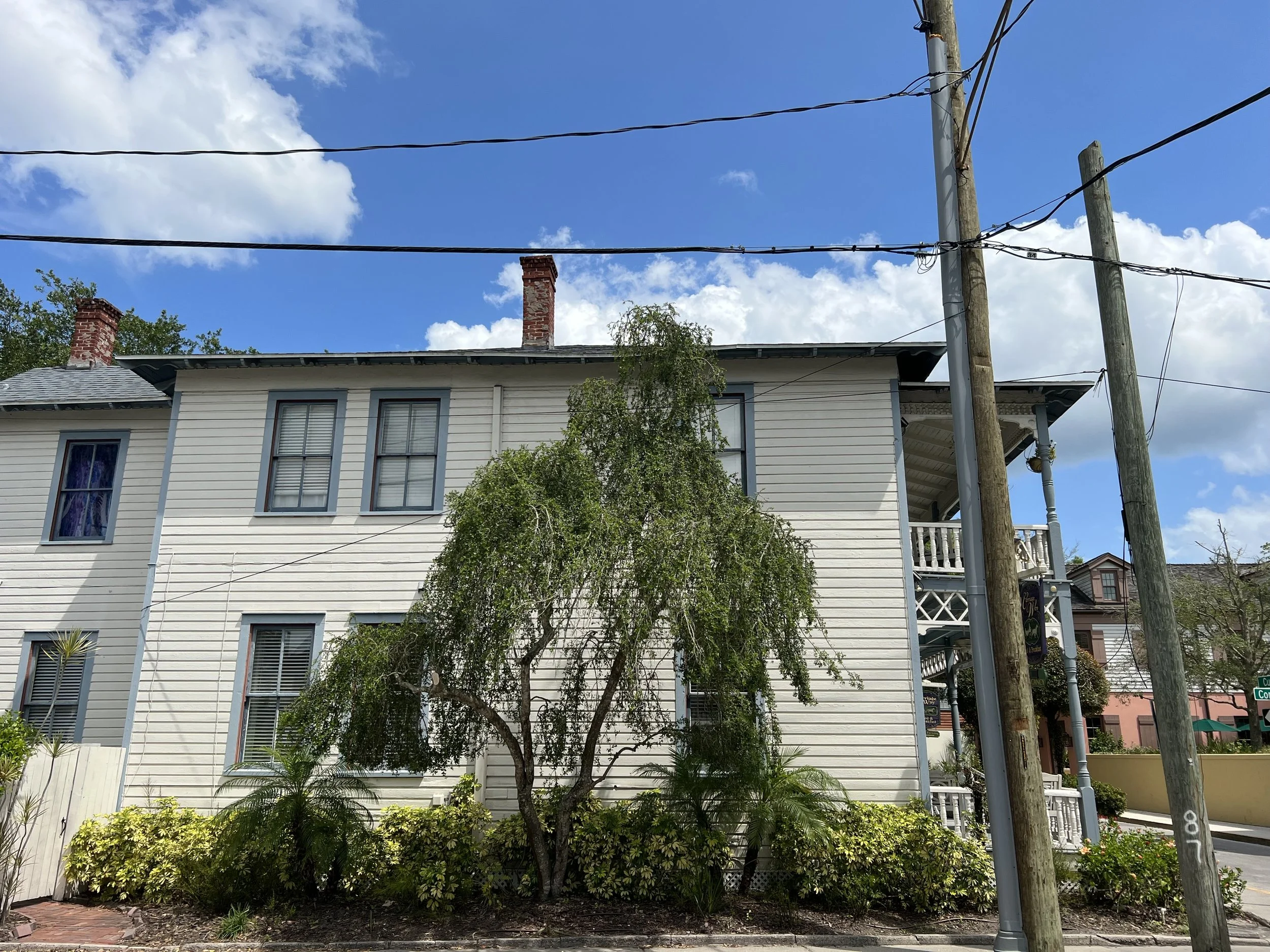
Ilex vomitoria ‘Pendula’
Weeping Yaupon Holly is a graceful cultivar of the native yaupon holly that grows 15-25 feet tall with distinctive drooping, pendulous branches that create an elegant weeping form. This evergreen cultivar features the same small, leathery dark green leaves as the species and produces inconspicuous flowers followed by bright red berries on female plants that attract birds. The cascading branches give it a unique architectural quality, making it an excellent focal point or specimen tree for large landscapes. Like its parent species, it's extremely drought and salt-tolerant, adaptable to various soil conditions, and requires minimal maintenance once established.
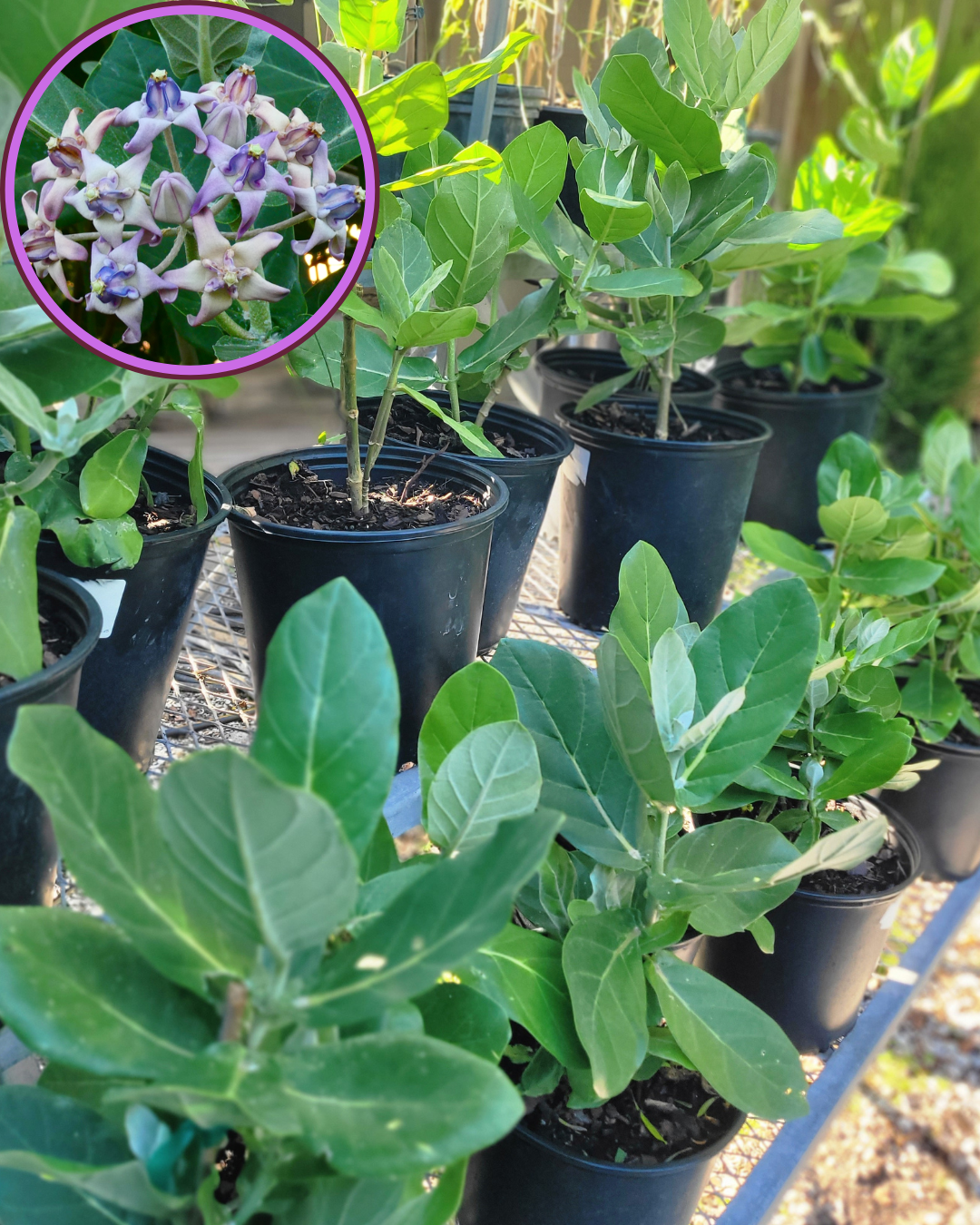
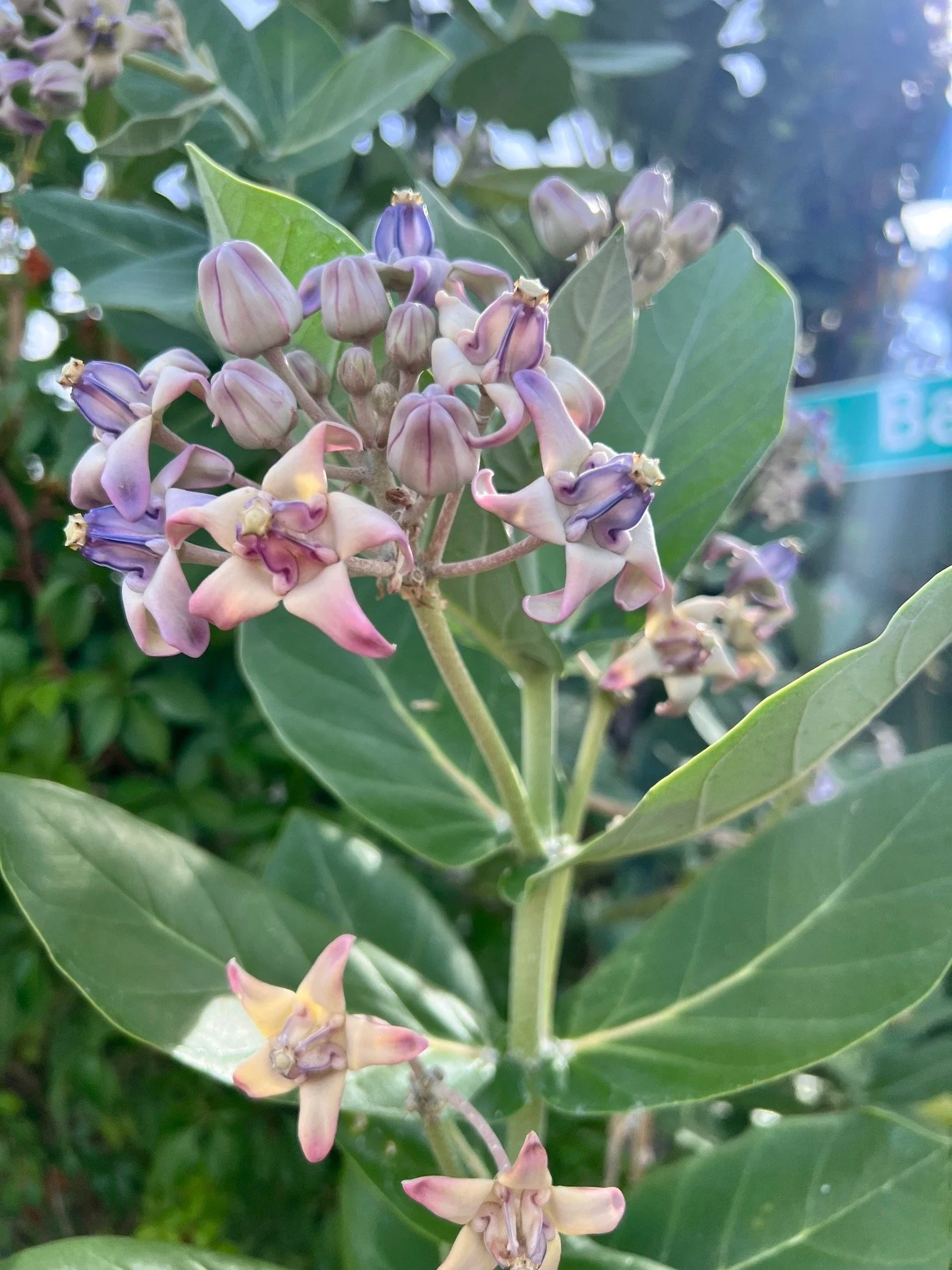
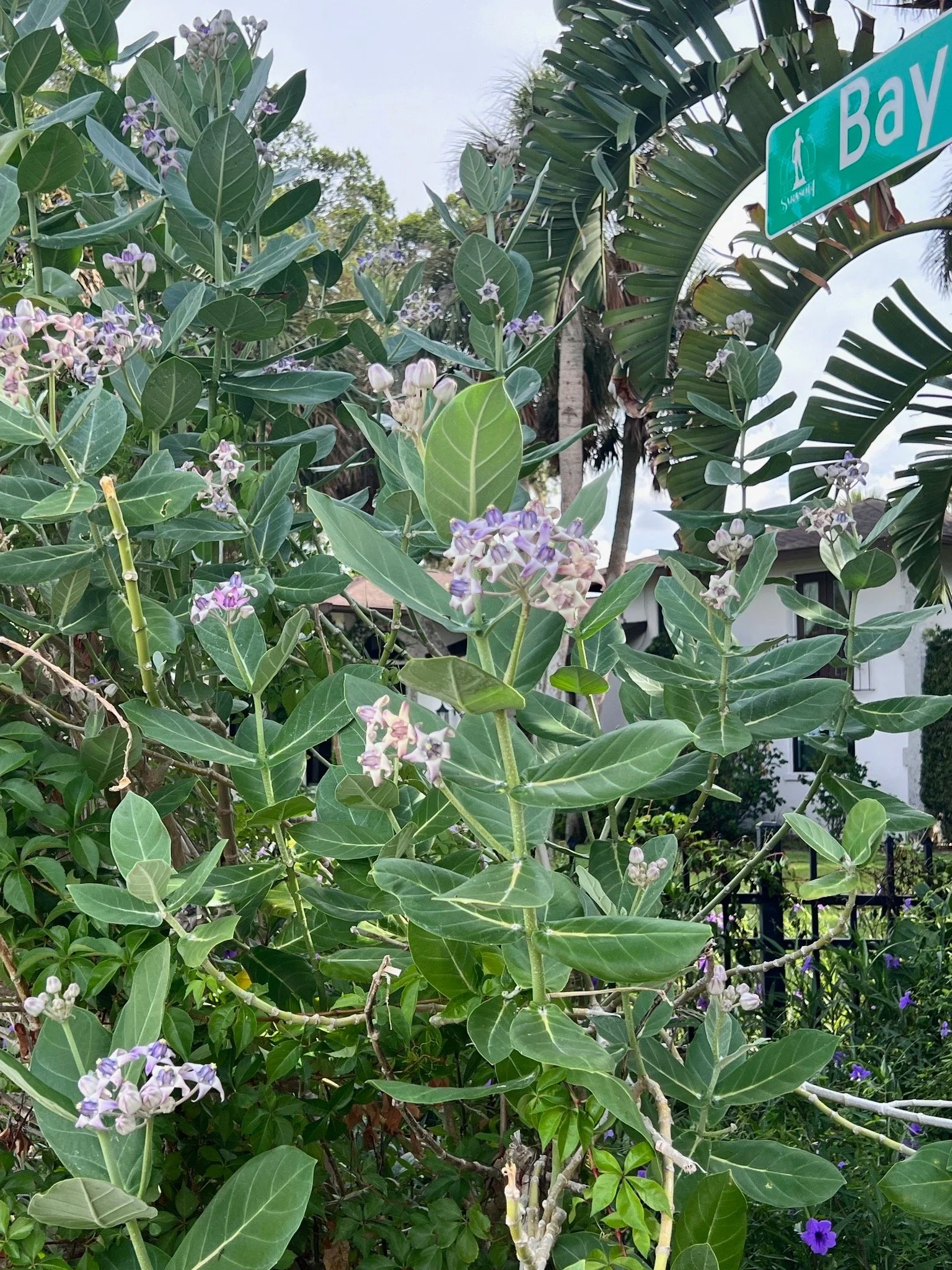
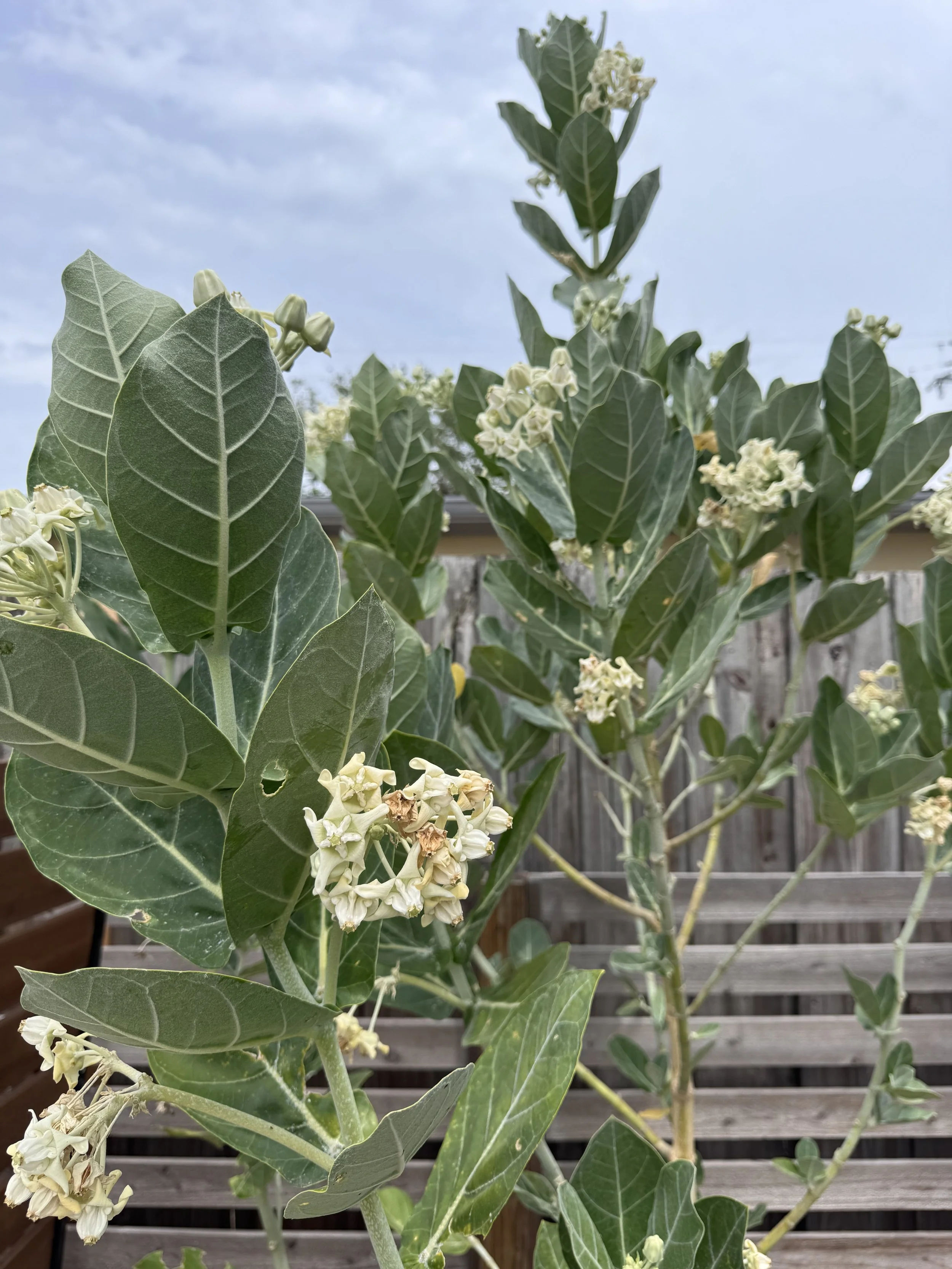
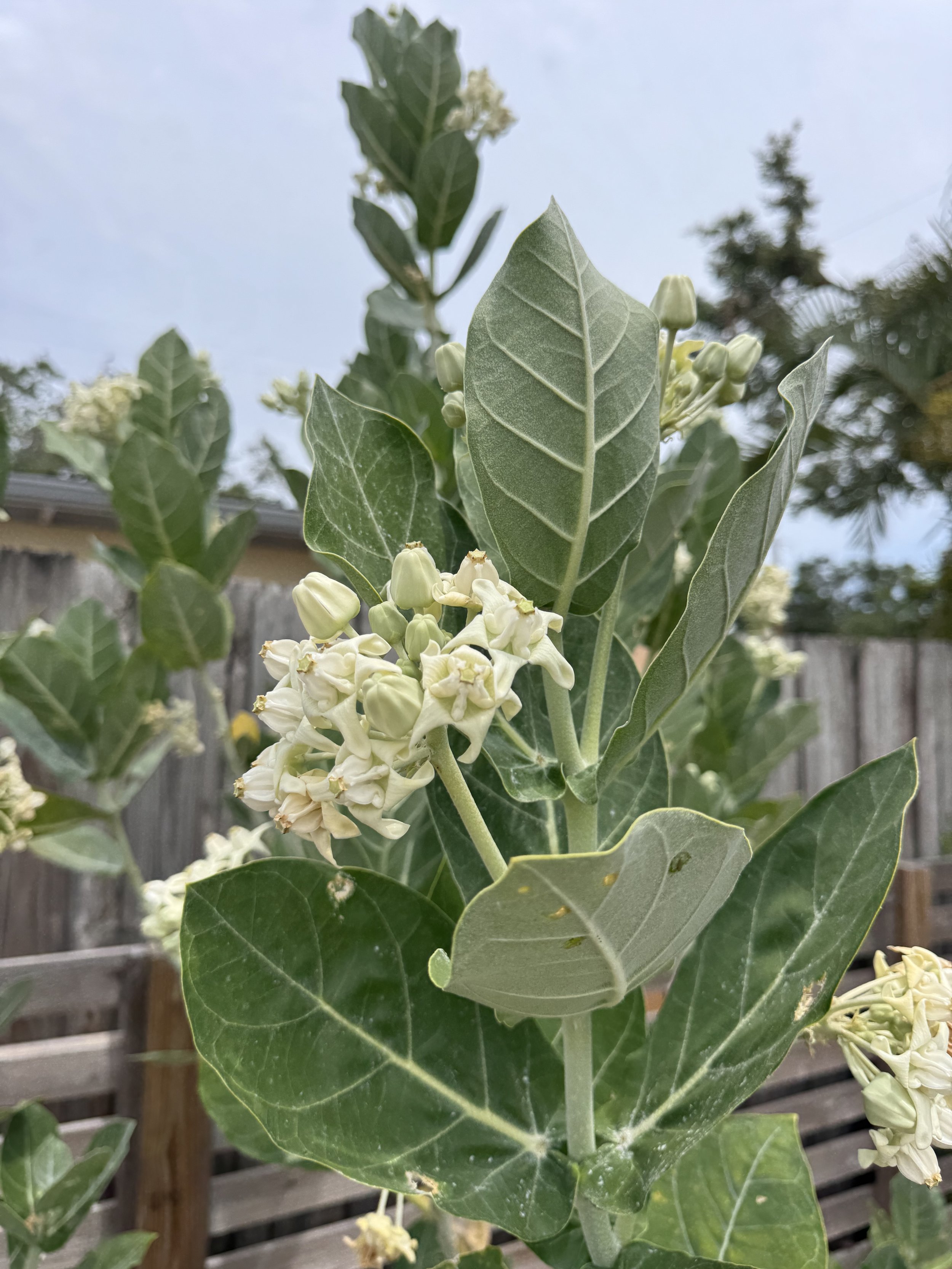
Calotropis gigantea
Giant Milkweed is non-native fast-growing evergreen shrub that can reach 8-15 feet in height. As a member of the milkweed family, it serves as a host plant for Monarch butterfly caterpillars and attracts various pollinators including bees and butterflies. It has thick, leathery, silvery-green leaves and produces clusters of waxy, pale lavender or white flowers that bloom year-round. Extremely drought-tolerant once established, it thrives in full sun and well-drained soils. We sometimes carry a white-flowering variety as well.
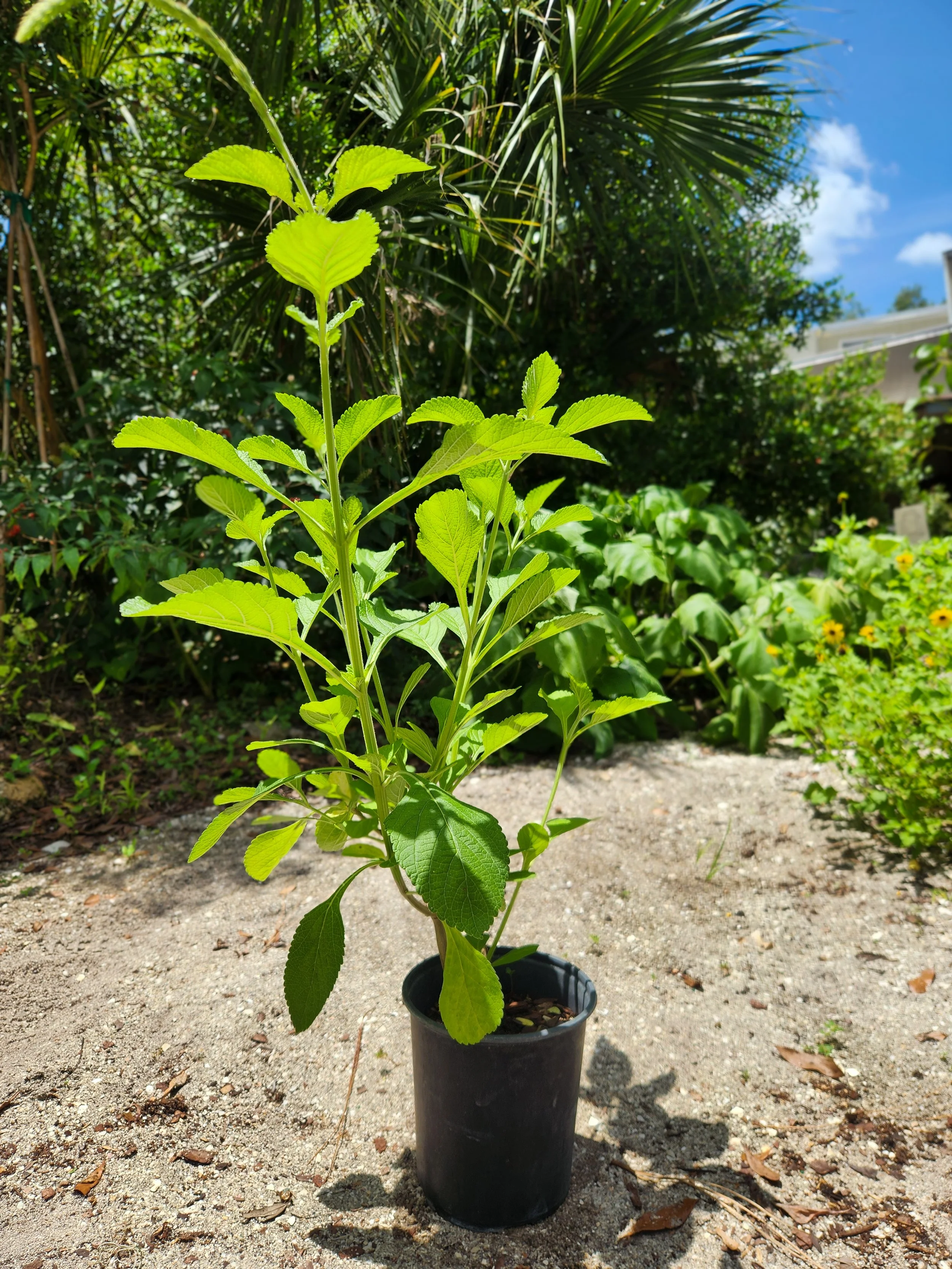
Stachytarpheta mutabilis
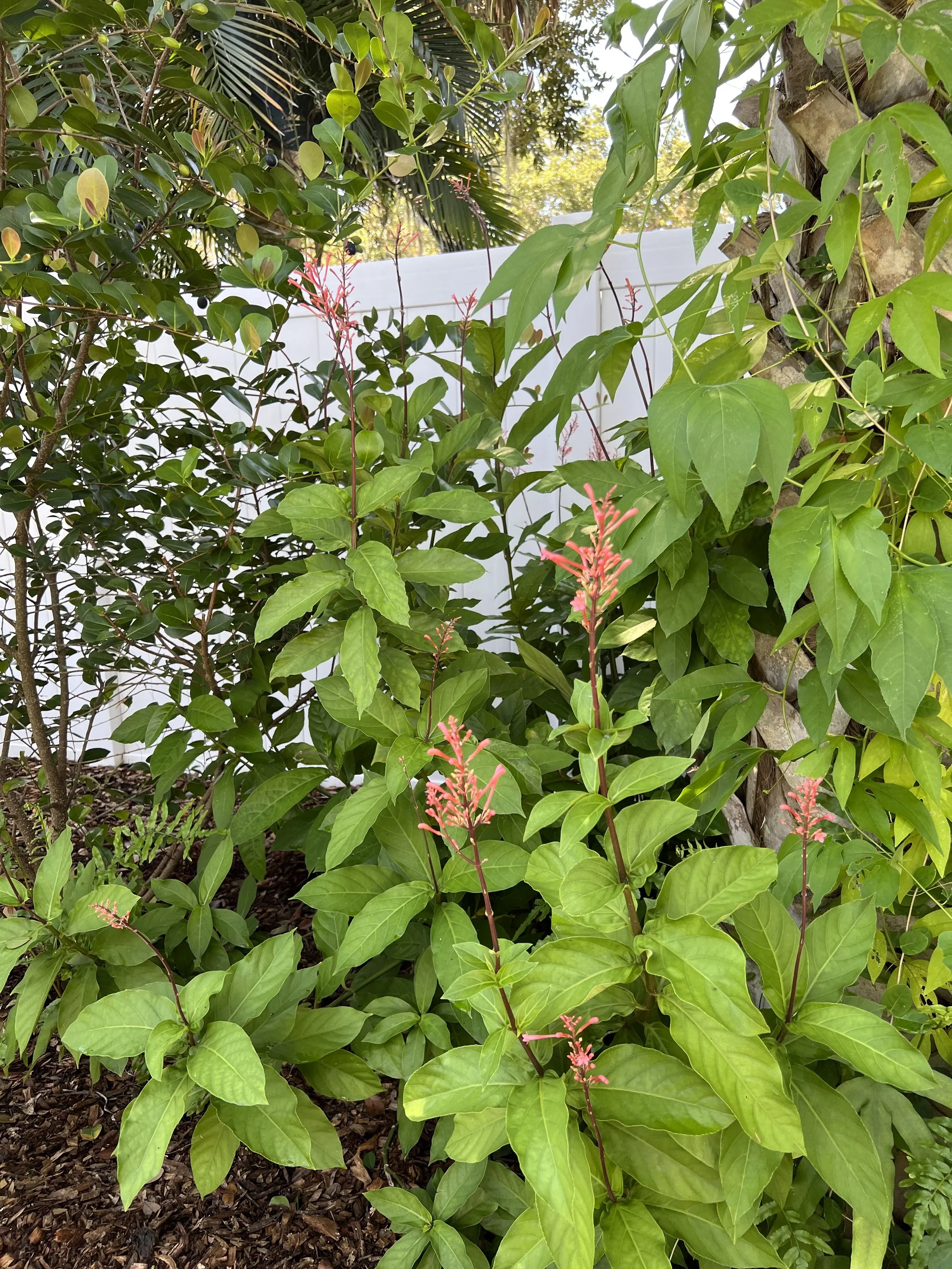
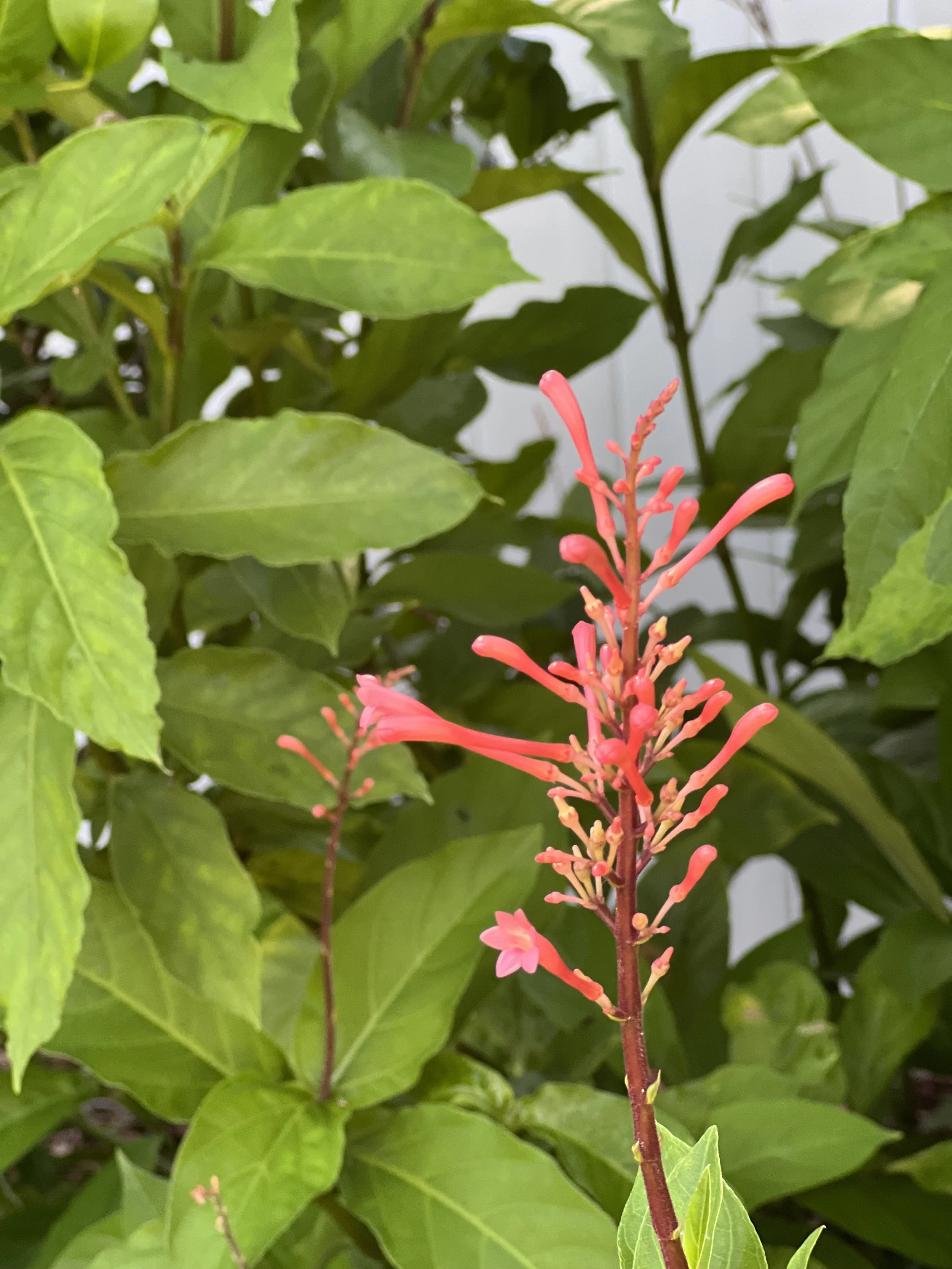
Coral Porterweed is a non-native, Florida-friendly fast-growing flowering shrub, growing 4’-6’ tall and 3’-5’ wide. They grow best in full sun to partial shade and average sandy soil, with moderate drought tolerance once they’re established. They bloom throughout the warm months, with salmon-colored bloom spikes that are highly attractive to hummingbirds, bees, and butterflies.
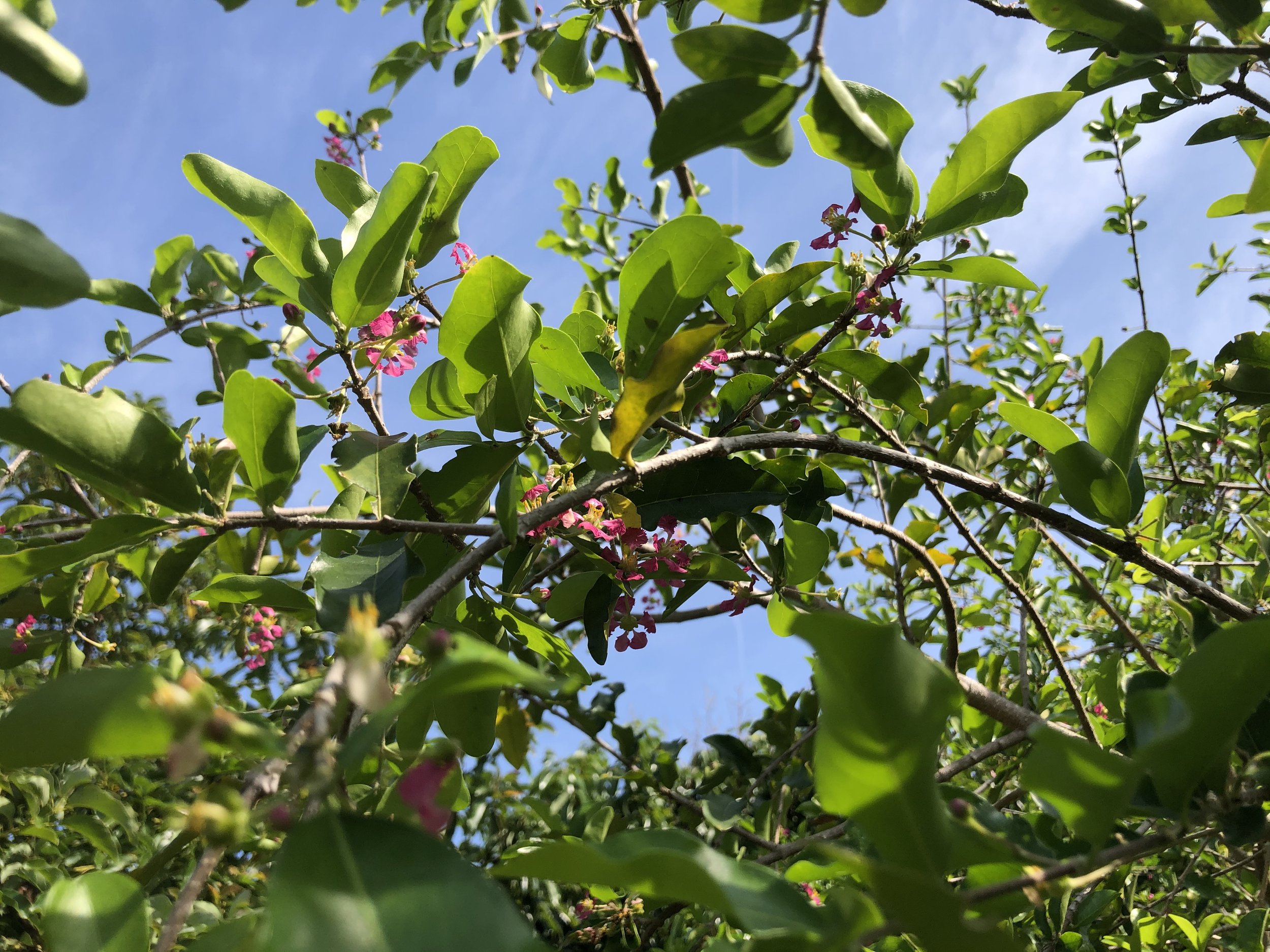
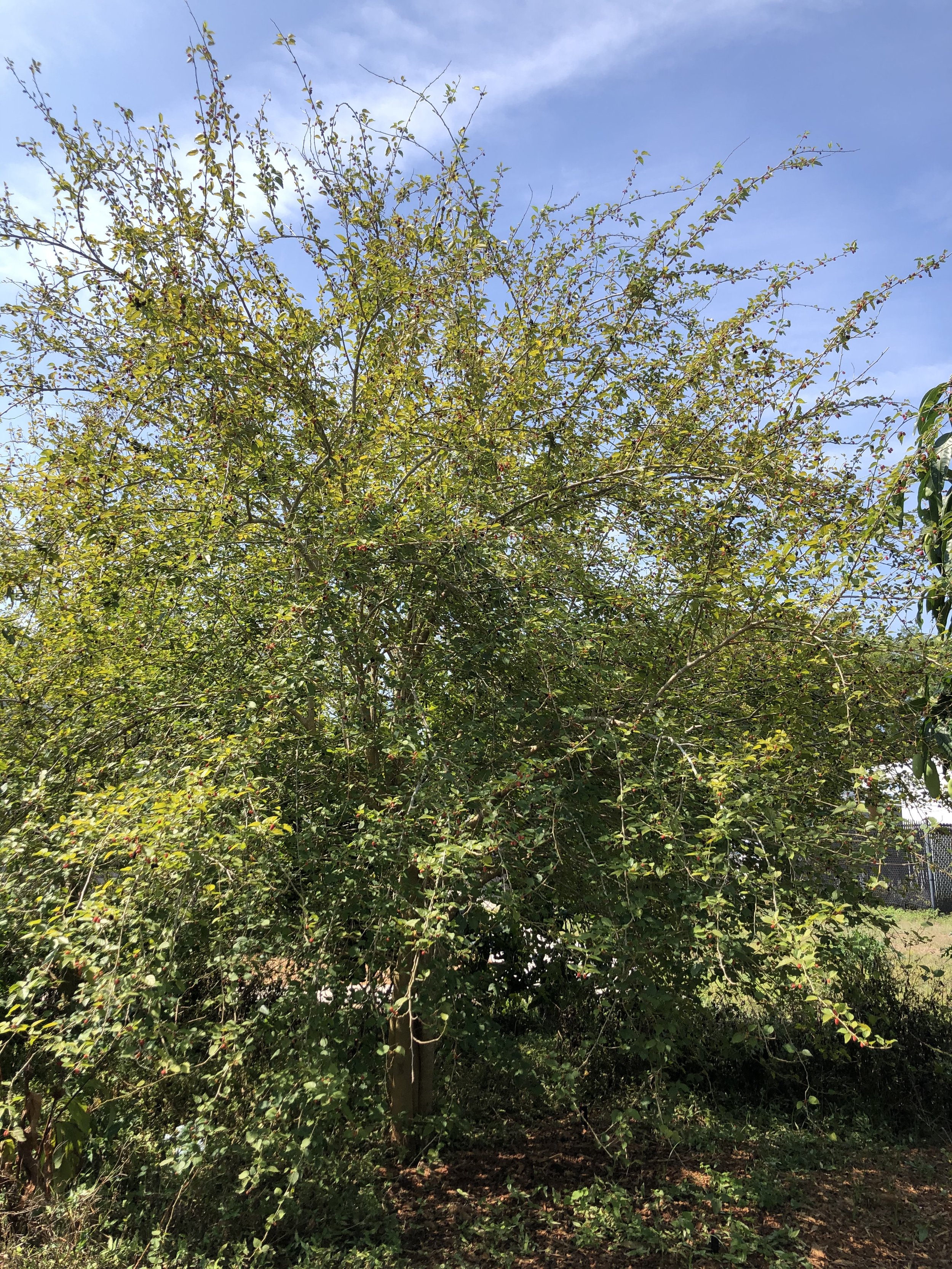
Malpighia emarginata
Barbados Cherry is an evergreen shrub or small tree native to South America, Central America, and the Caribbean that grows up to 12 feet tall and wide with a rounded, multi-trunked form. This fast-growing tropical plant features delicate foliage and produces small, attractive pink flowers intermittently from spring through fall, followed by bright red, cherry-like fruits. The tart, edible fruits are exceptionally high in vitamin C—containing 30 times more than oranges—and ripen about one month after flowering. Thriving in full sun to partial shade with well-drained soils, it's drought-tolerant once established and serves as an excellent ornamental shrub, specimen plant, or container plant in zones 9B-11, attracting butterflies and providing edible fruit for both wildlife and humans.
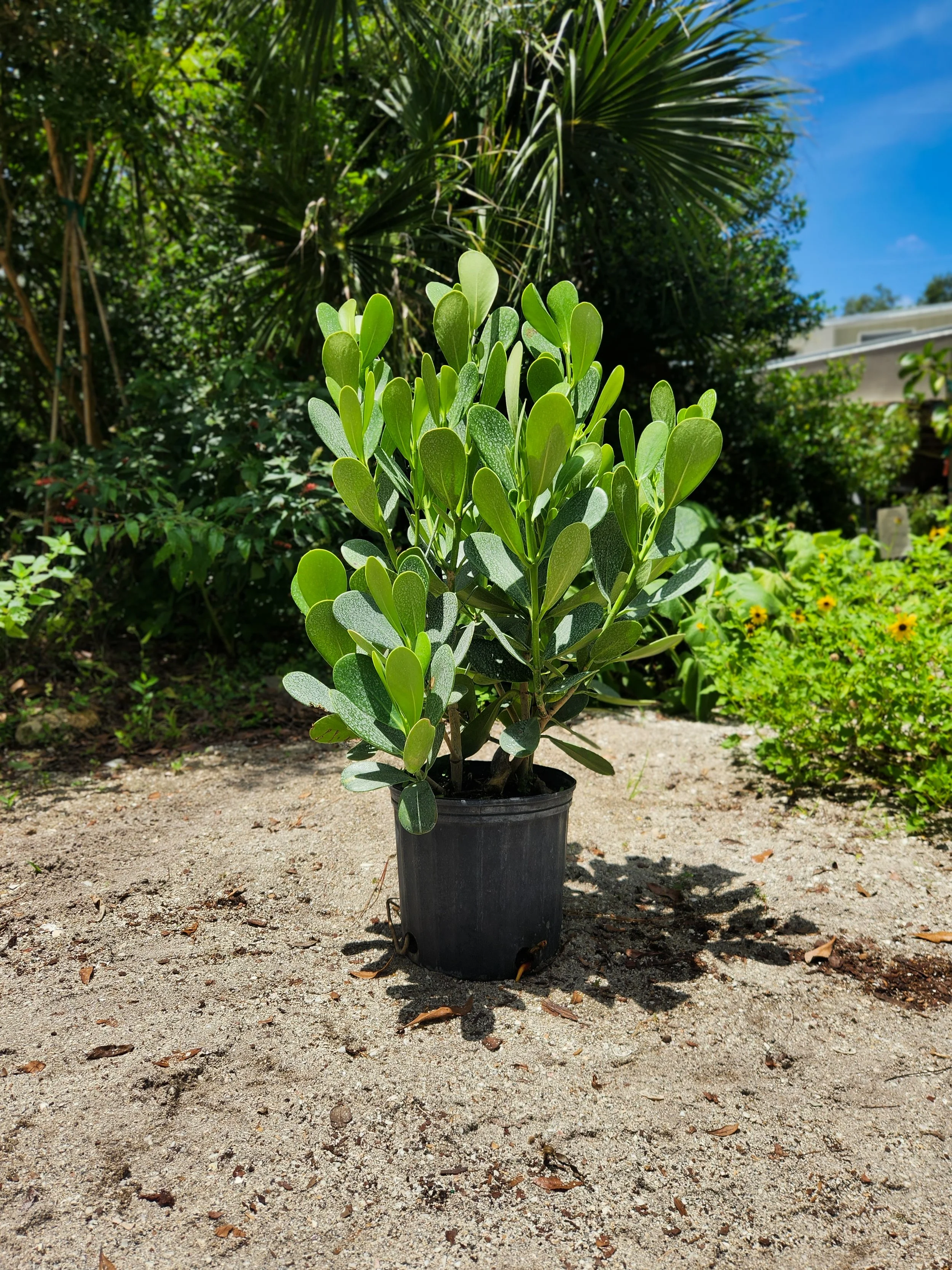
Clusia guttiferra
Non-native, Florida-friendly, prunable evergreen shrub. Pitch Apples can reach a height of about 15’, with a 15’ spread. These shrubs do well in full sun to shade, well-drained sandy or loamy soil, and are salt-tolerant once established. They are fast growing, and make a great hedge or buffer, specimen, or container plant.
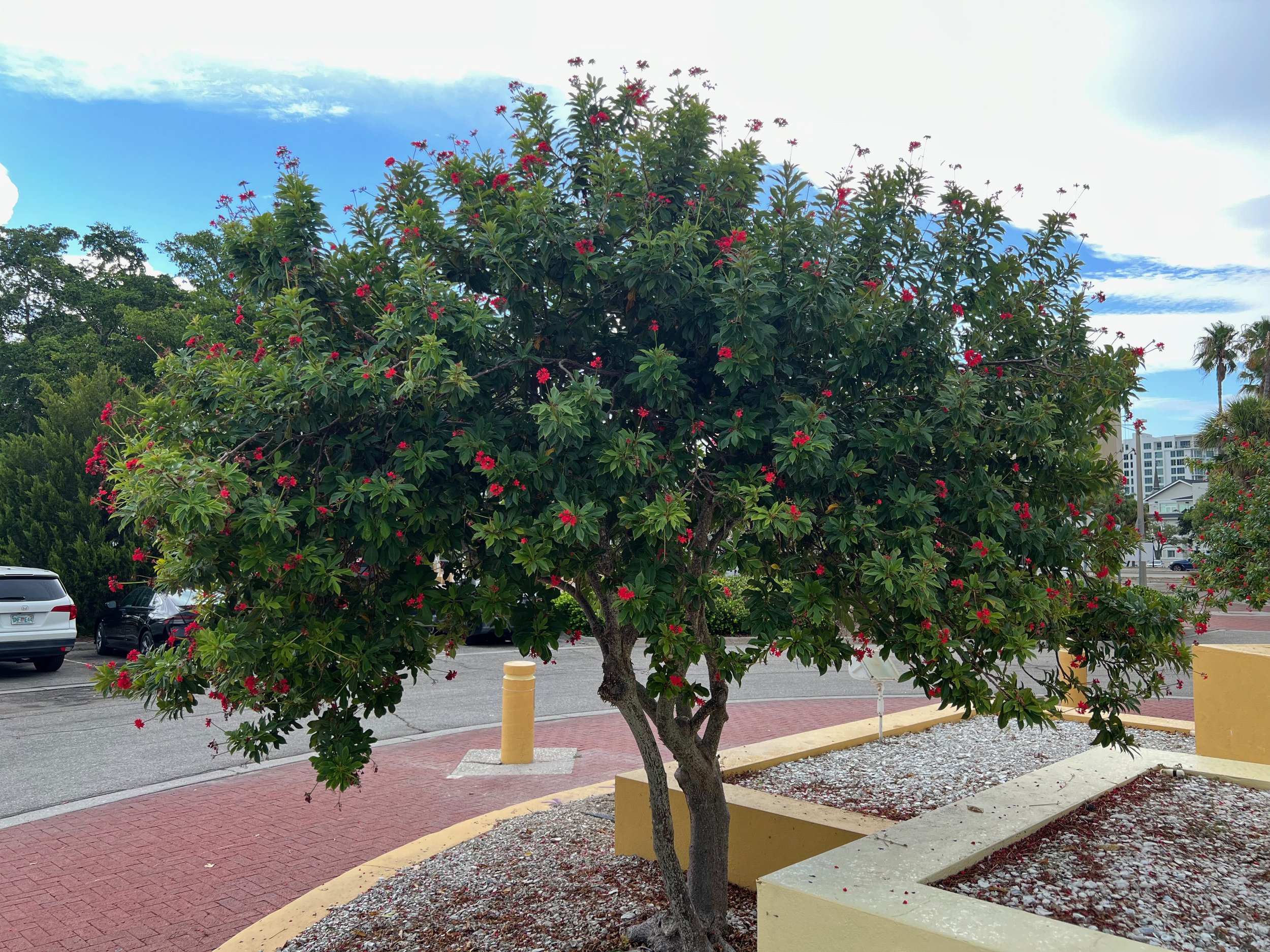
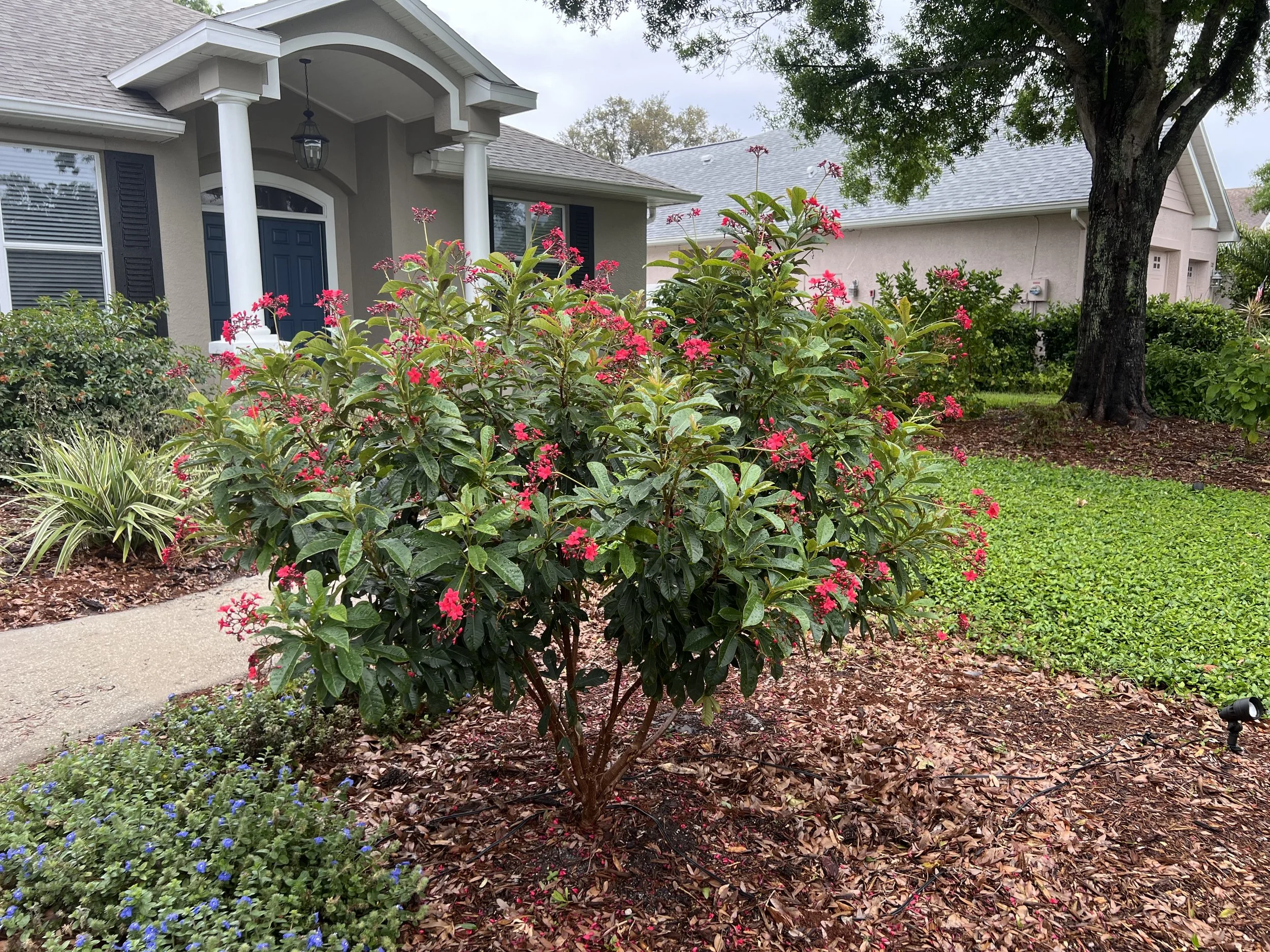
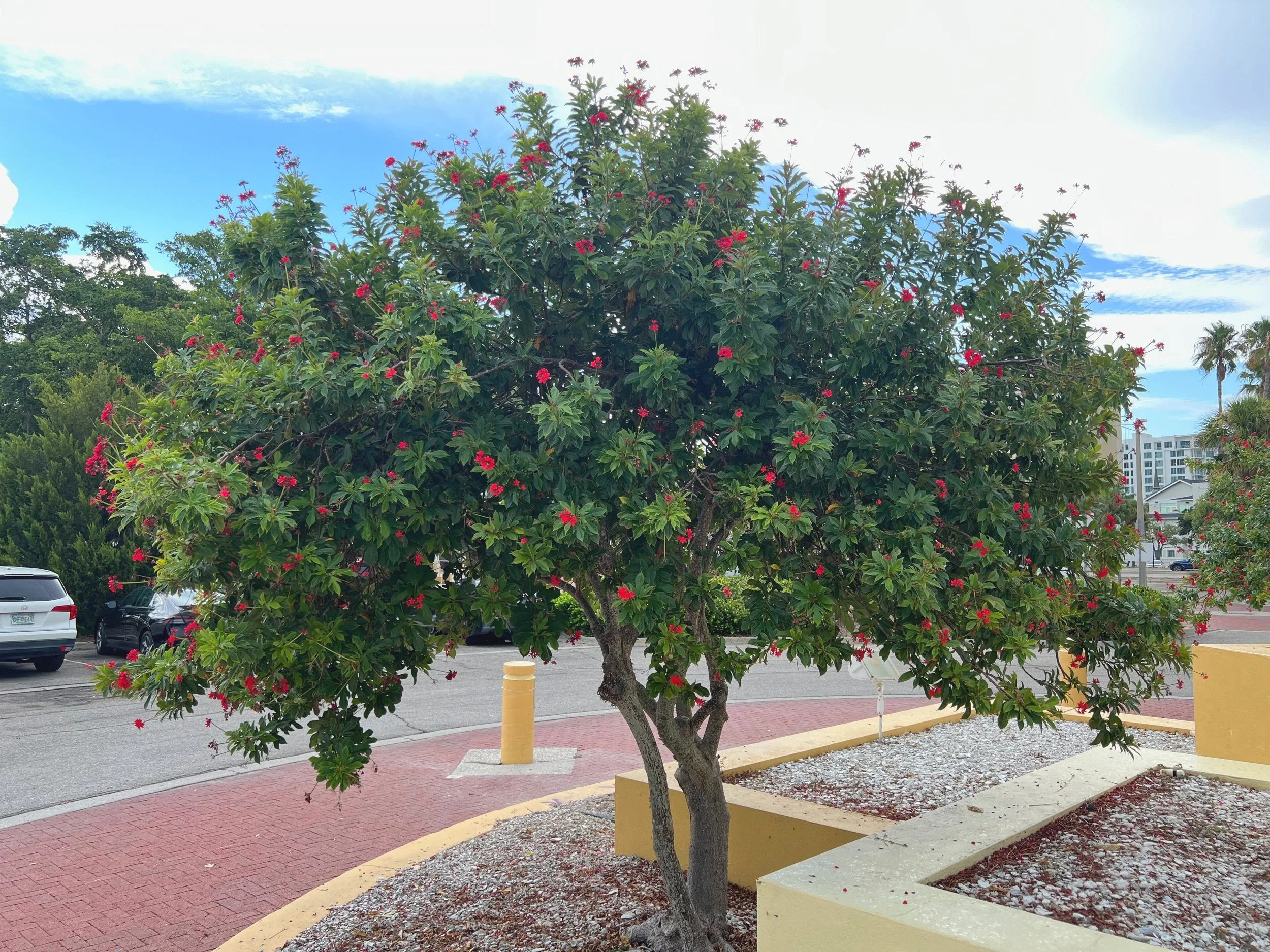
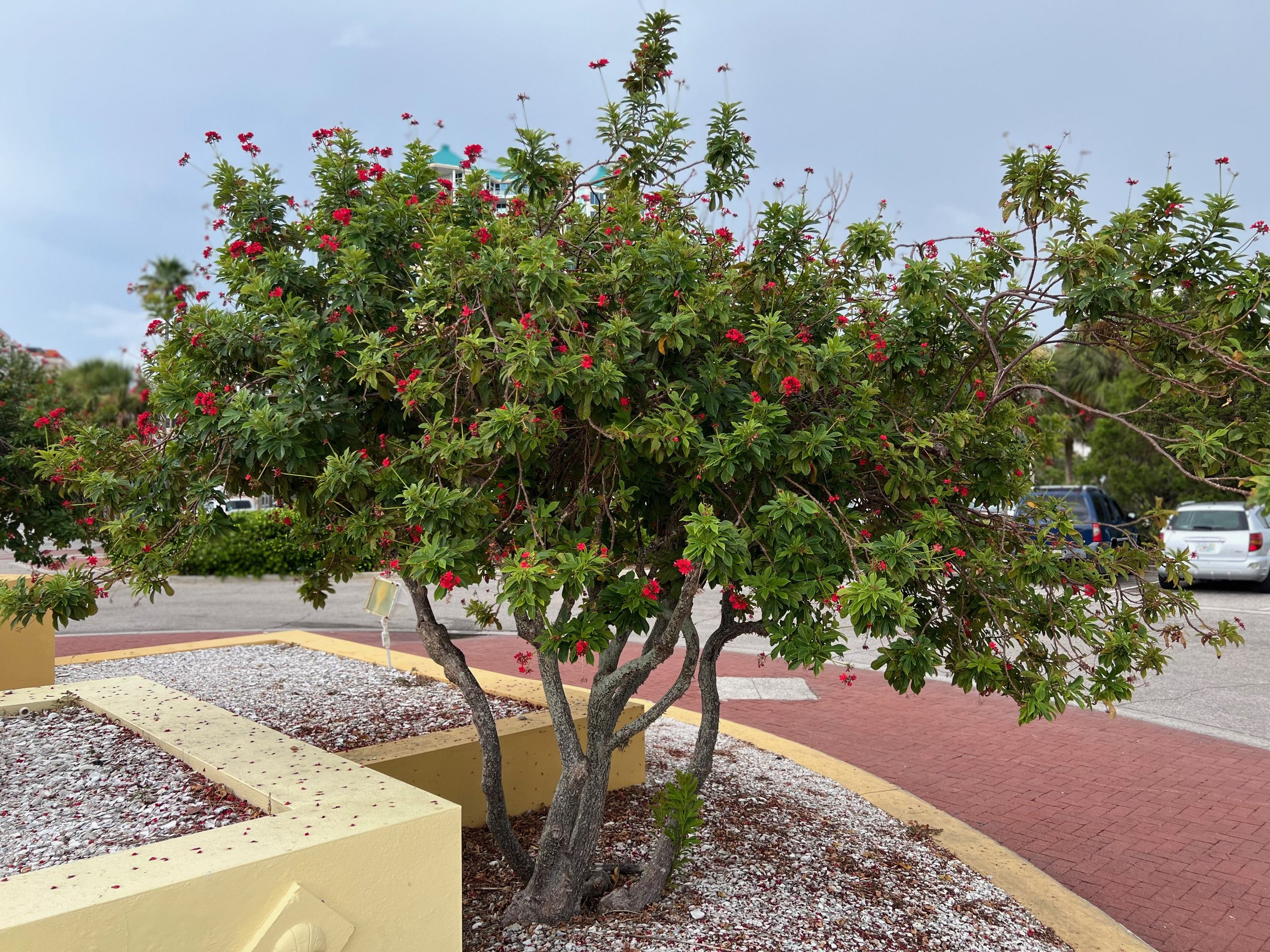
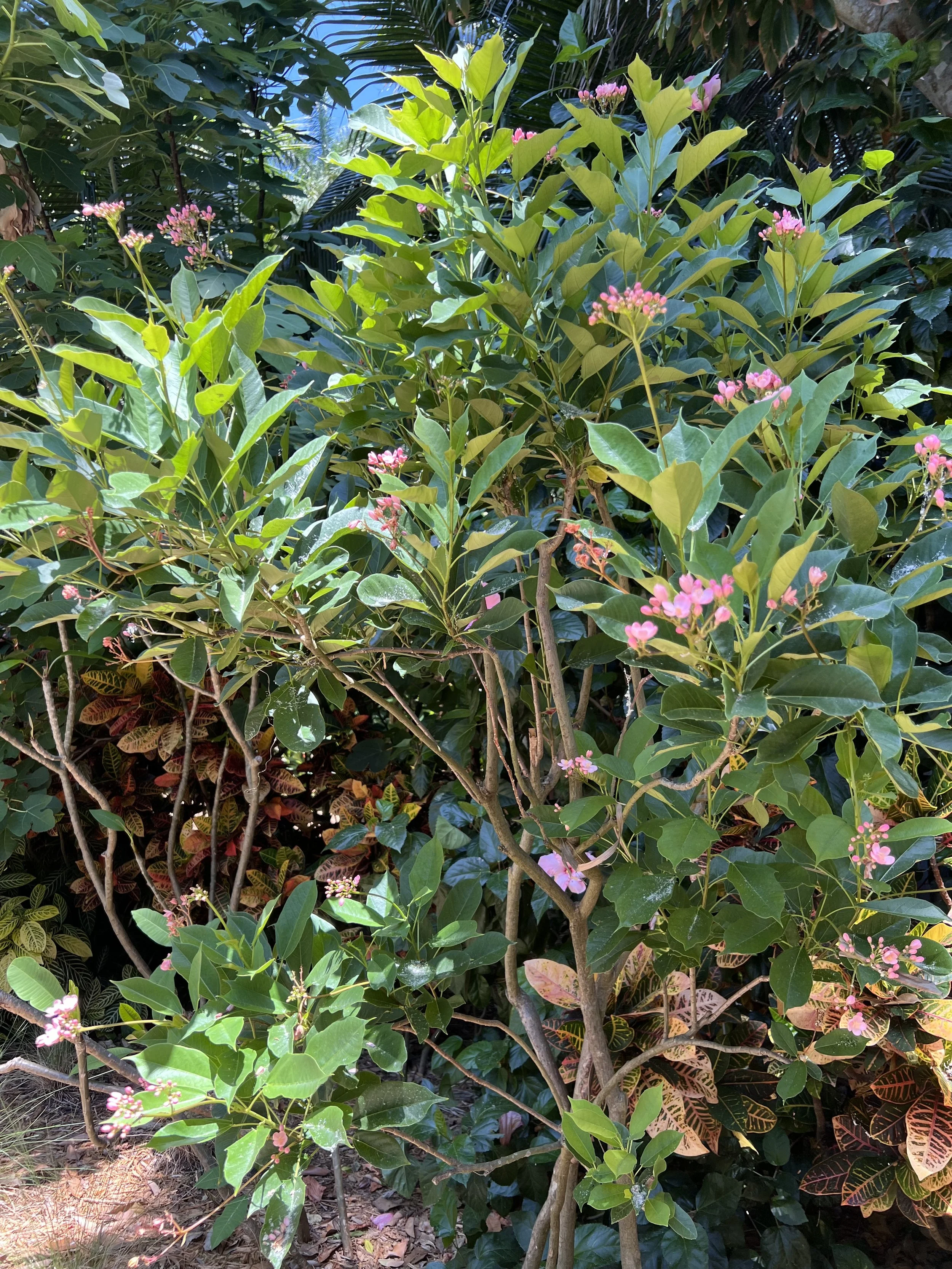
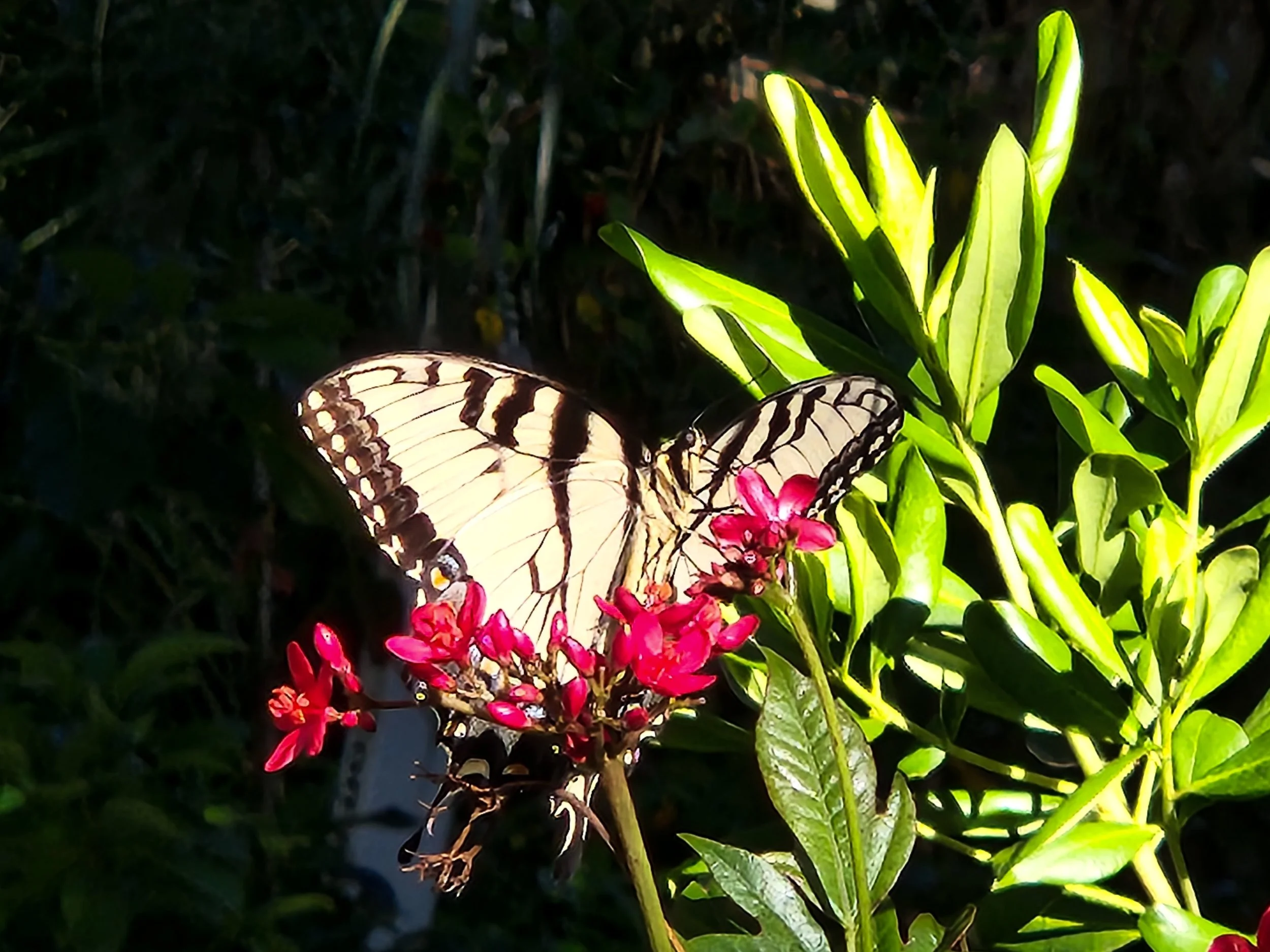
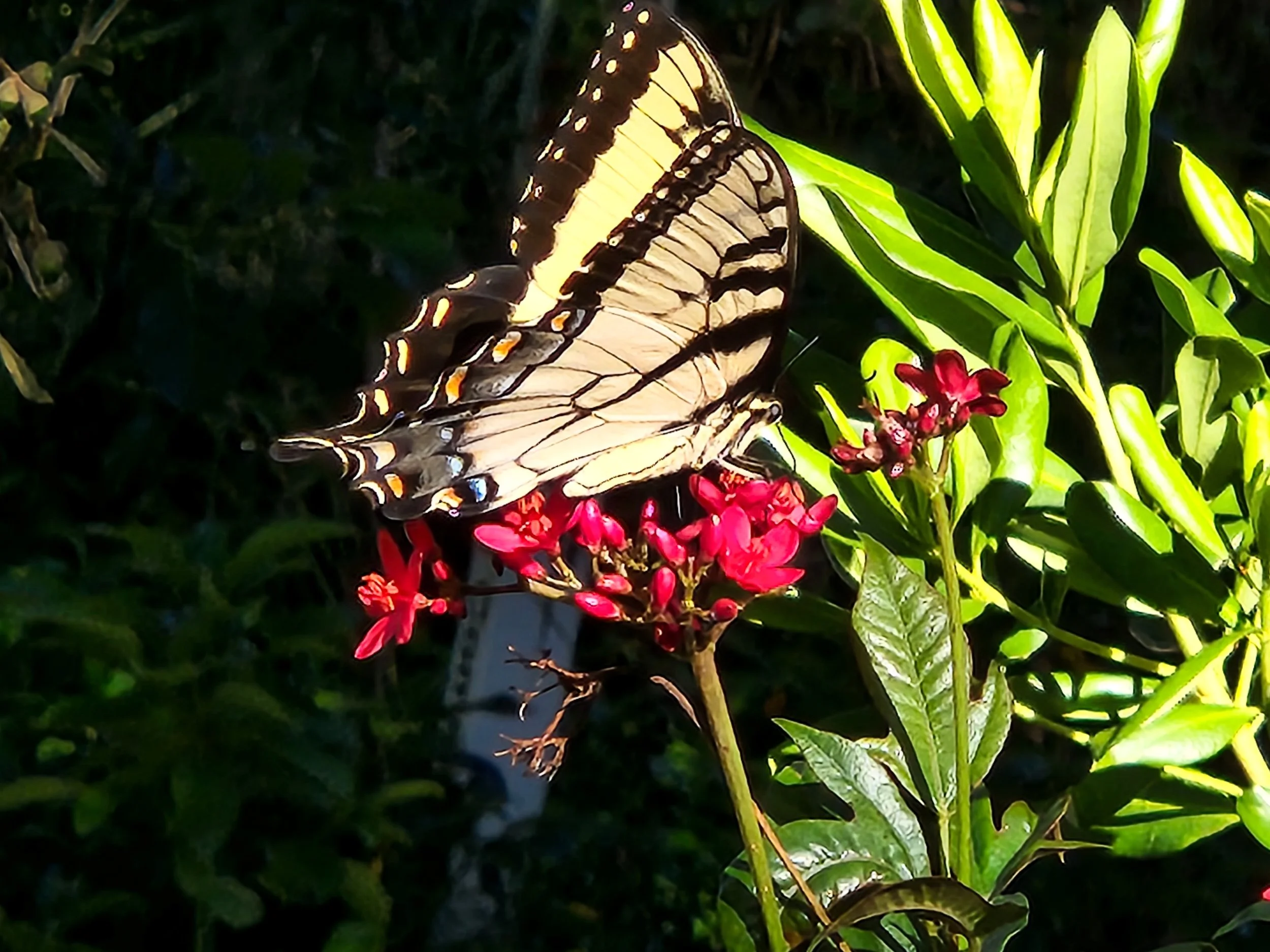
Jatropha integerrima
Jatropha is a non-native, Florida-friendly, evergreen shrub or small tree that attracts butterflies and hummingbirds with its showy red flowers that bloom almost all year round. It grows in full sun to partial sun, dry to average soils. Parts of this plant are poisonous to people and pets.
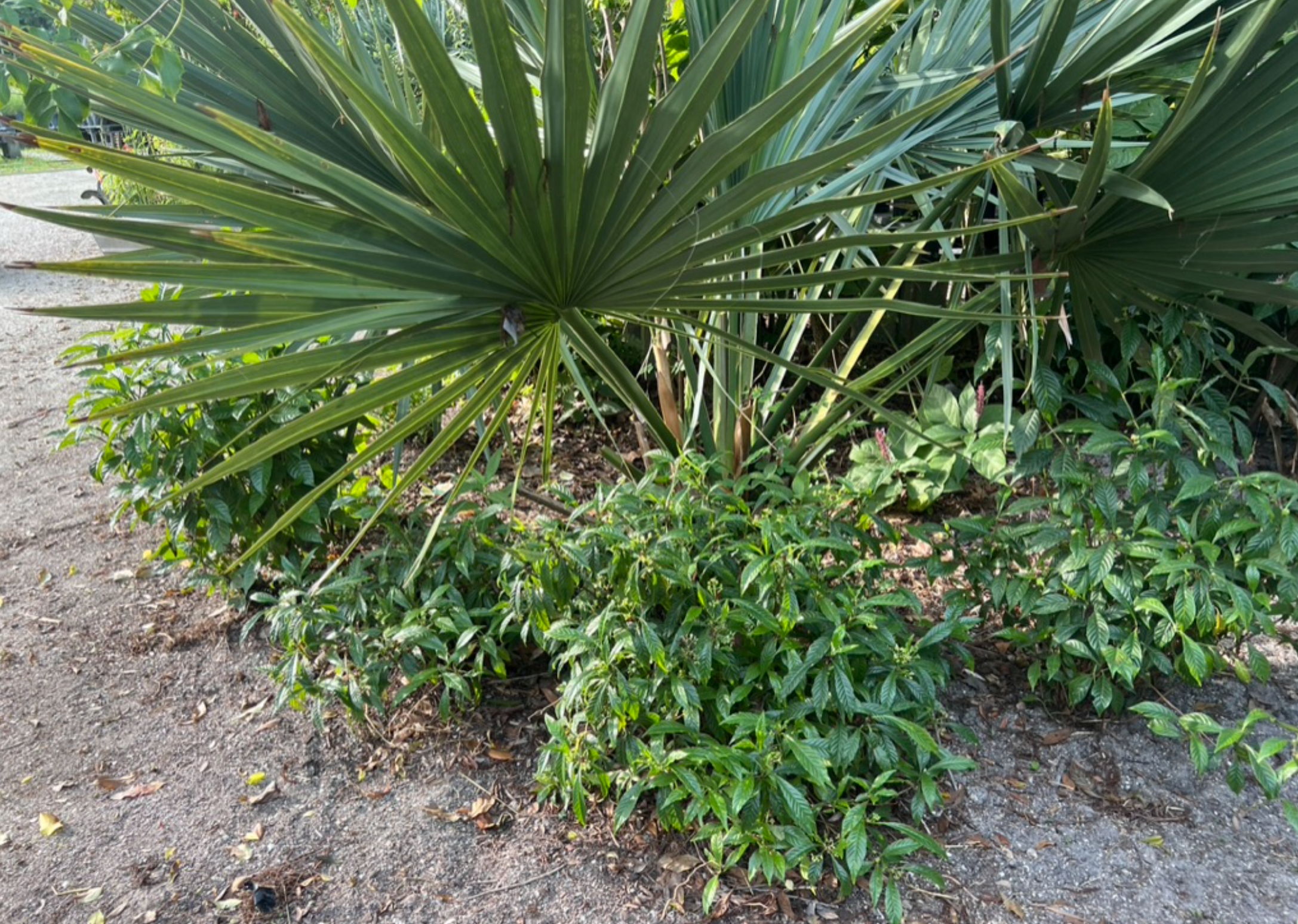
Psychotria nervosa 'Little Psycho'
Little Psycho is a smaller native evergreen shrub that grows to 4'. This dwarf coffee is great for planting under smaller trees or in shadier areas. Pollinators love the summertime flowers and birds eat the berries fall-winter. It's also a host plant for the Tersa Sphinx Moth!
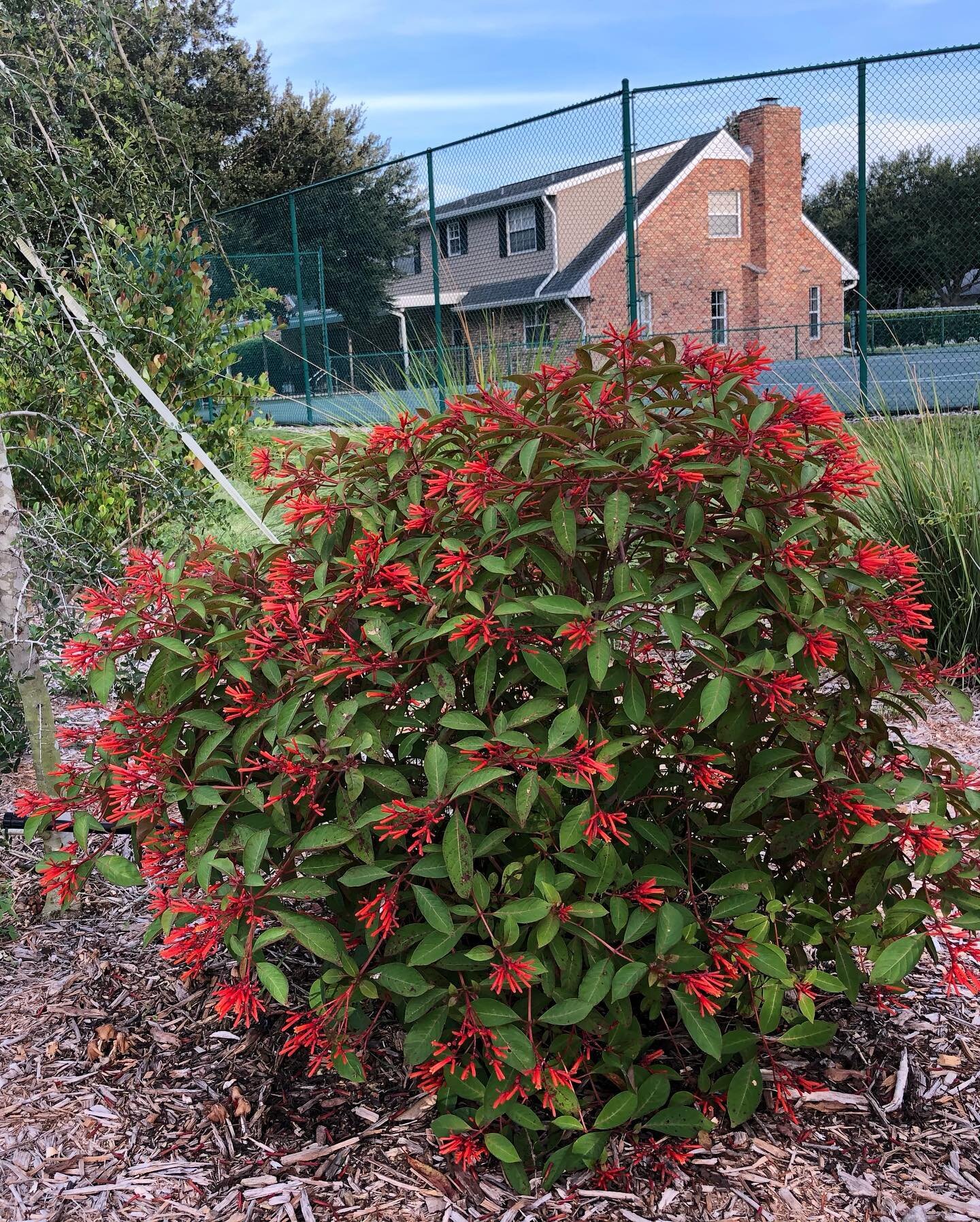
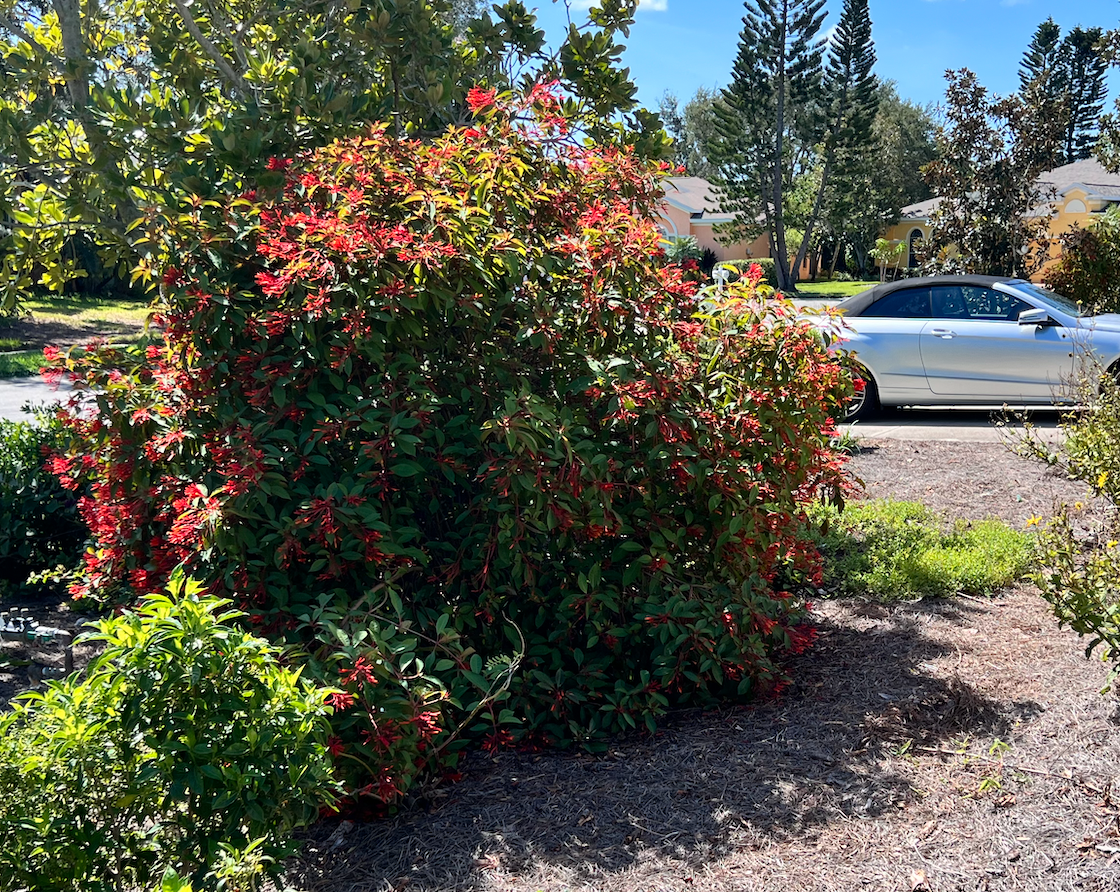
Hamelia patens var. ‘calusa’
Calusa is shorter growing native cultivar of the large native firebush. It is evergreen, flowering, long-lived shrub that can be kept easily at its mature height of approx. 6’. It needs average to moist (well-drained soils) but can adapt to dry in little bit of shade. The year-round red-orange flowers attract hummingbirds and butterflies and provide food for birds. The foliage on Calusa tends to be a deeper red than the larger traditional native firebush and can turn burgundy in cooler weather. The fruit is edible and has a long history of medicinal and industrial use and can be made into syrup or wine.
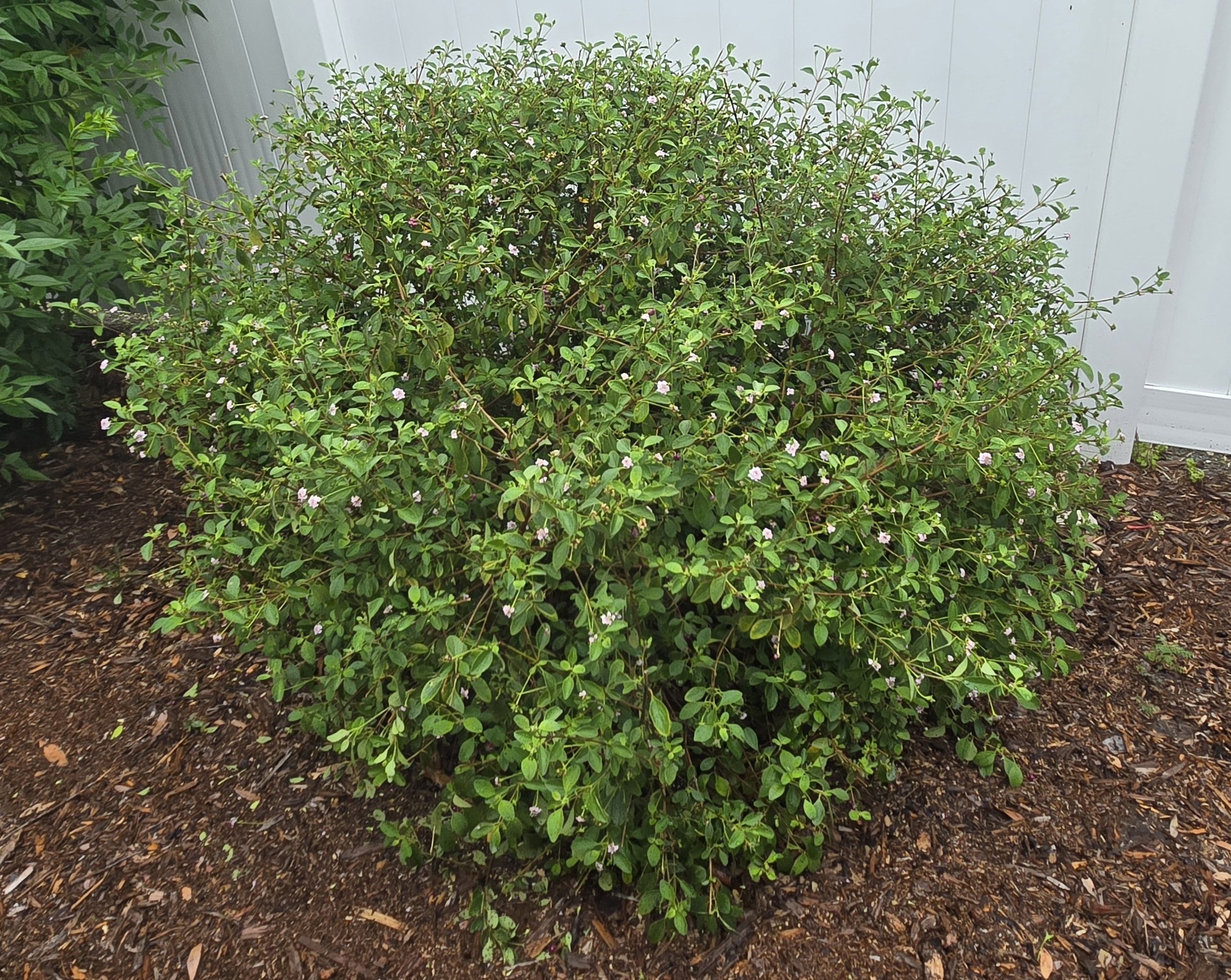
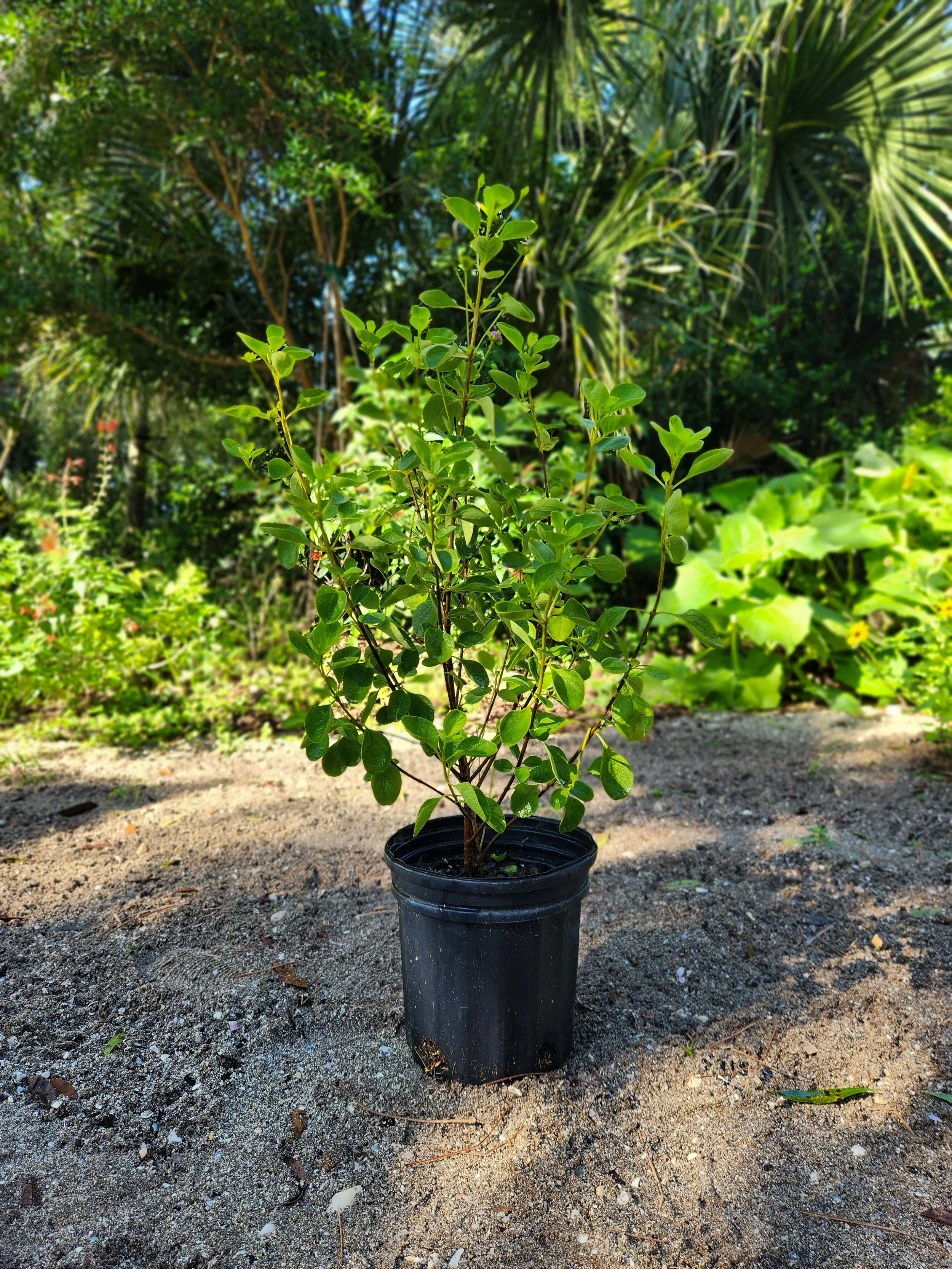
Lantana involucrata
Buttonsage or Wild Lantana is a gorgeous, evergreen, perennial, native shrub that has a place in any home landscape! Buttonsage is a mid sized shrub, growing to 5', with a naturally round growth habit with dense clusters of pastel flowers and bright purple berries that attract pollinators and birds. It prefers sunny, dry conditions and is deer resistant and salt and drought tolerant.
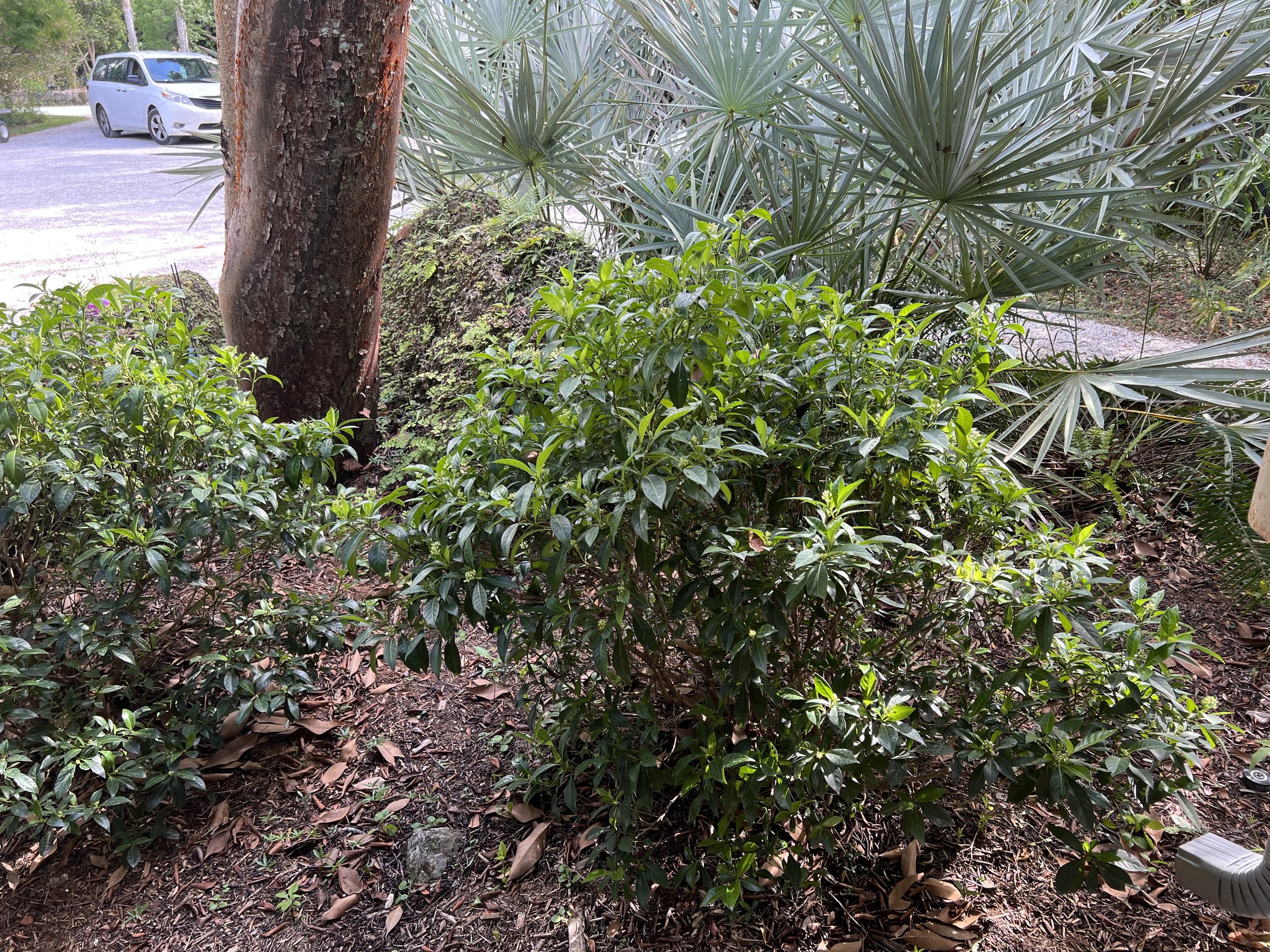
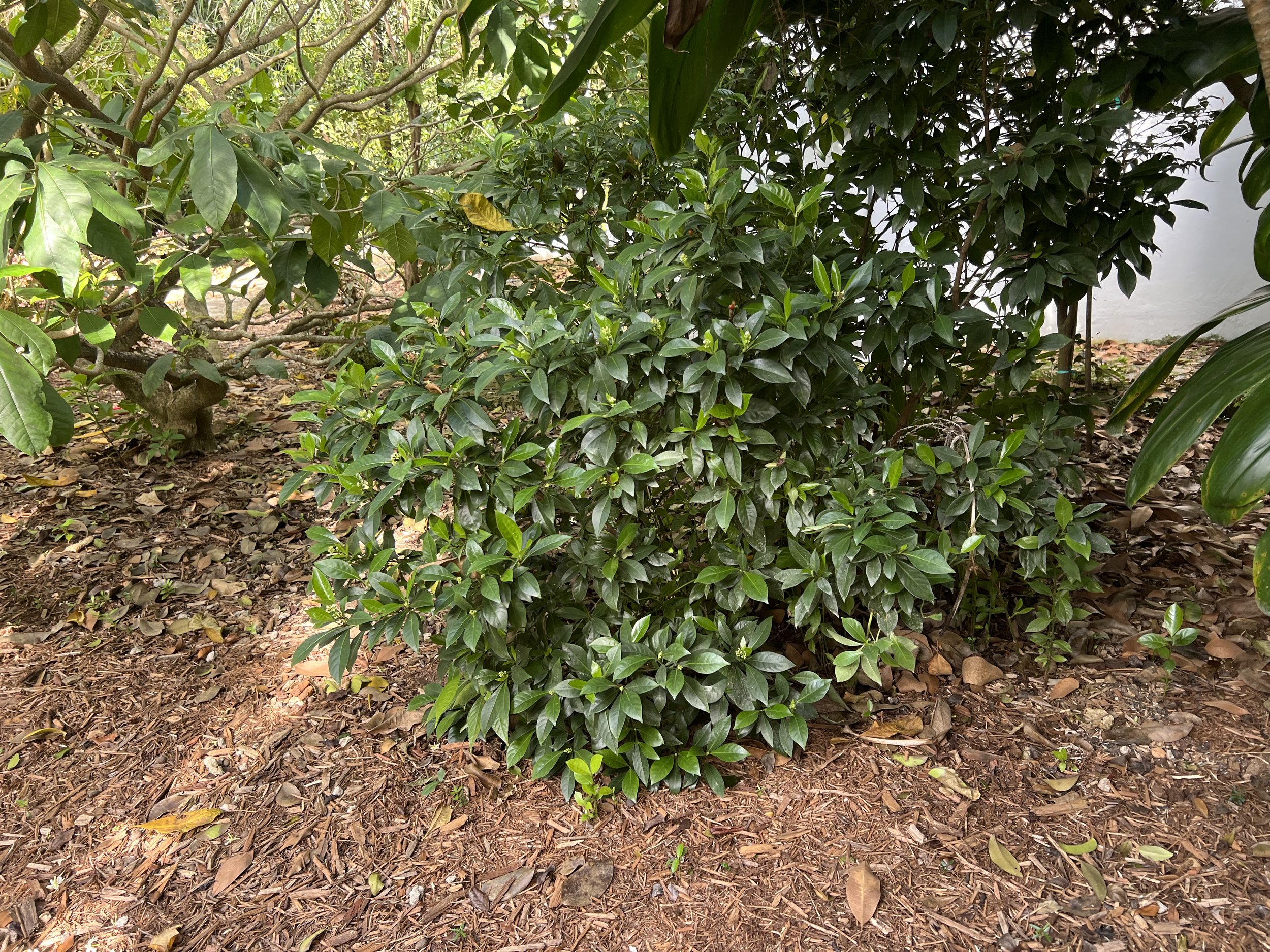
Psychotria ligustrifolia
Bahama Wild Coffee is an evergreen and low-growing understory shrub that can adapt to more sun than it’s relative Wild Coffee (Psychotria nervosa). It’s deep green, glossy leaves are tropical looking and can help a garden feel soft and lush. The berries are a superior food source for birds and they eat them fall through winter. The white flowers feed pollinators in the summer.
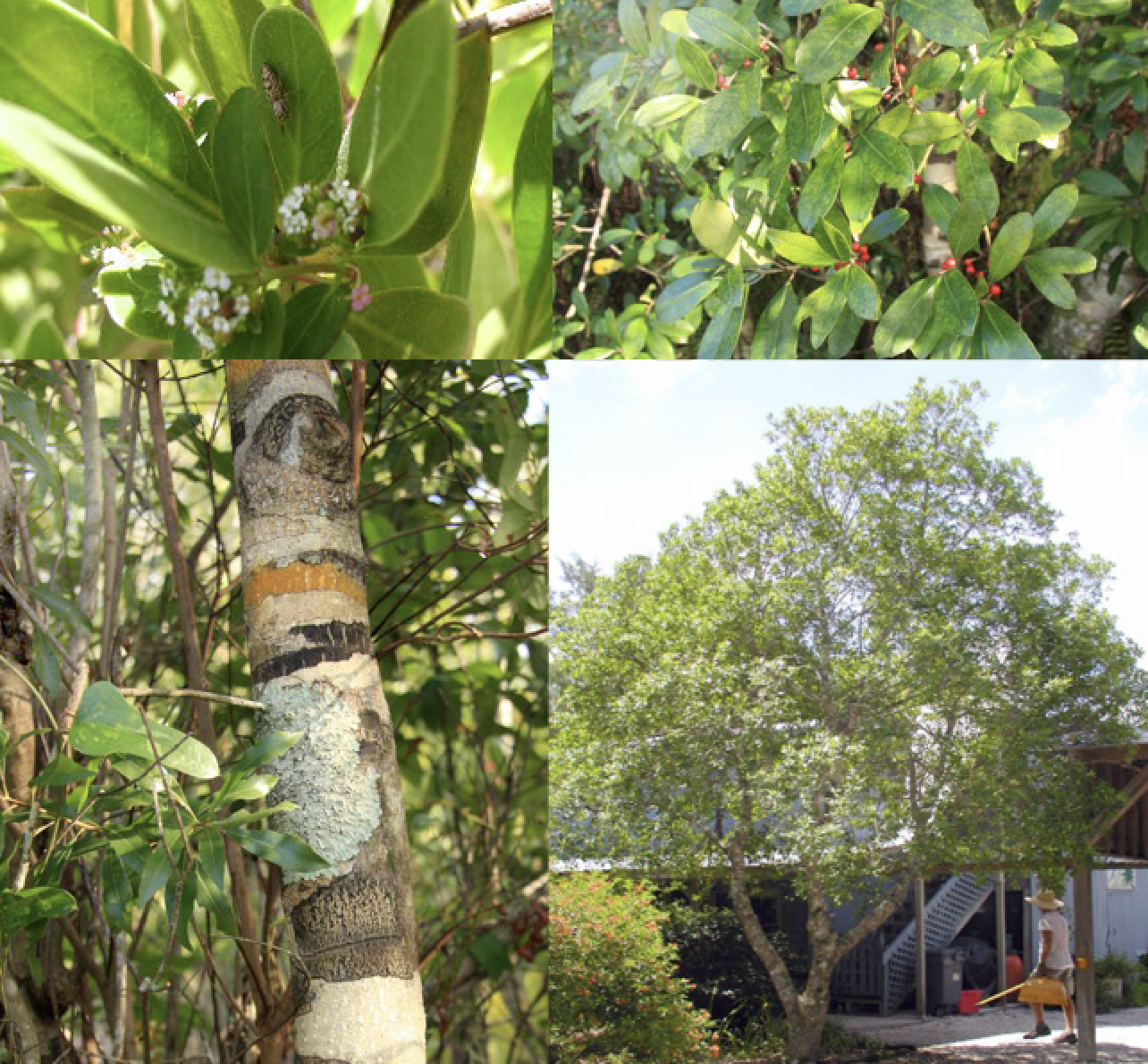
Ilex cassine
Dahoon Holly is a native, evergreen tree, with heights ranging from 20-30ft and it grows best in full sun to partial shade with moist, clay, loamy, or sandy soils. While they are moderately drought tolerant, they may need irrigation in dry, sandy conditions. Moderately salt-spray tolerant. Their foliage is dark green, with clumps of white flowers in spring that are replaced by red berries in fall and winter that provide food for birds and small mammals.
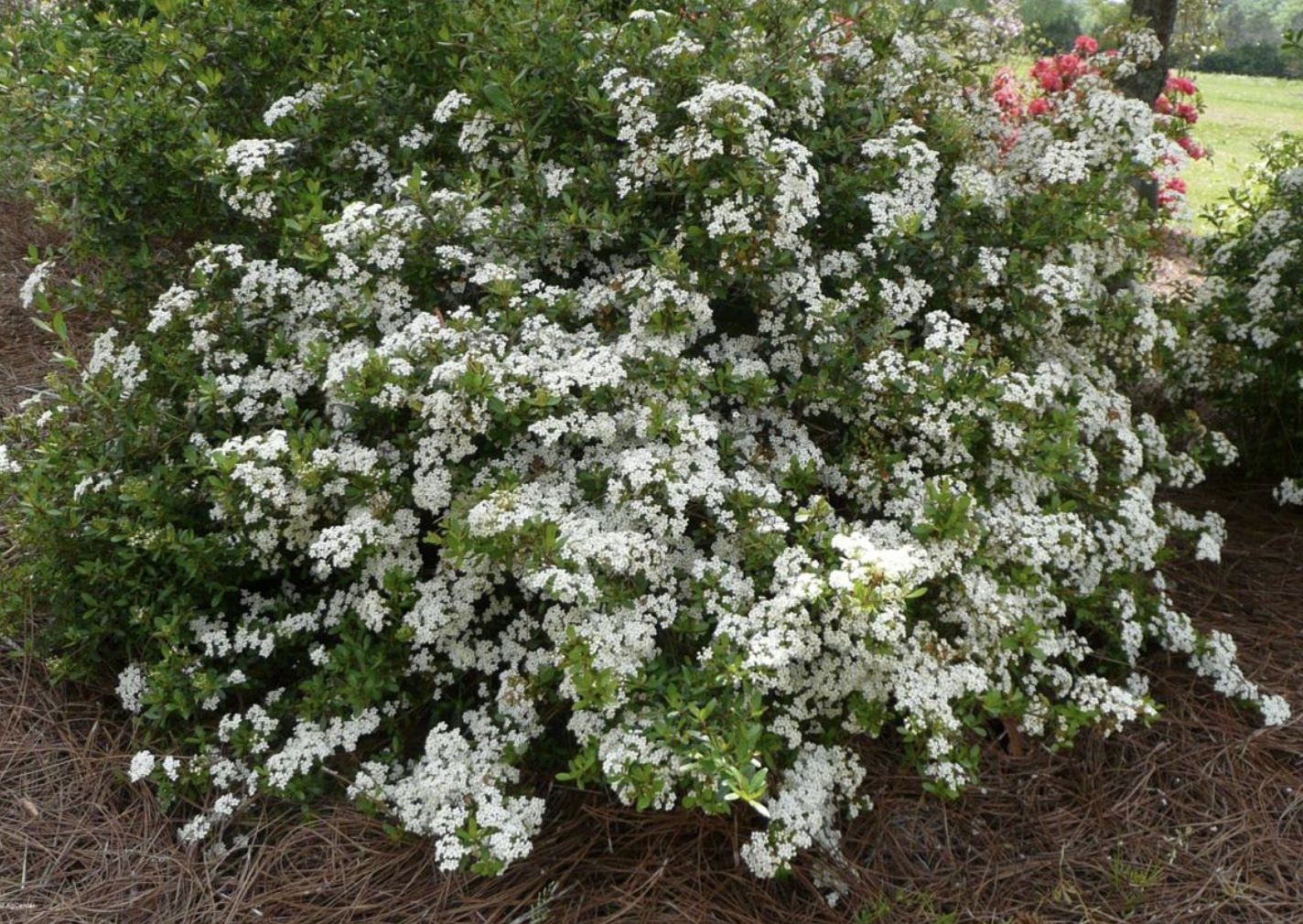
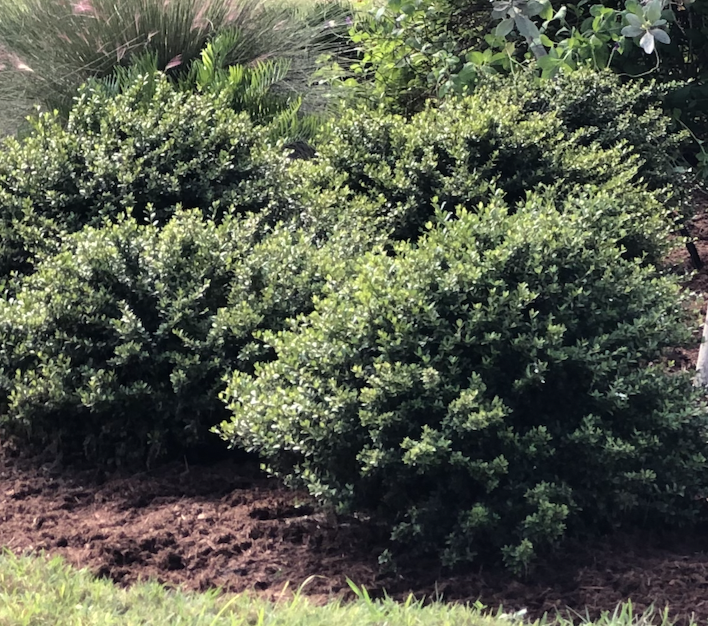
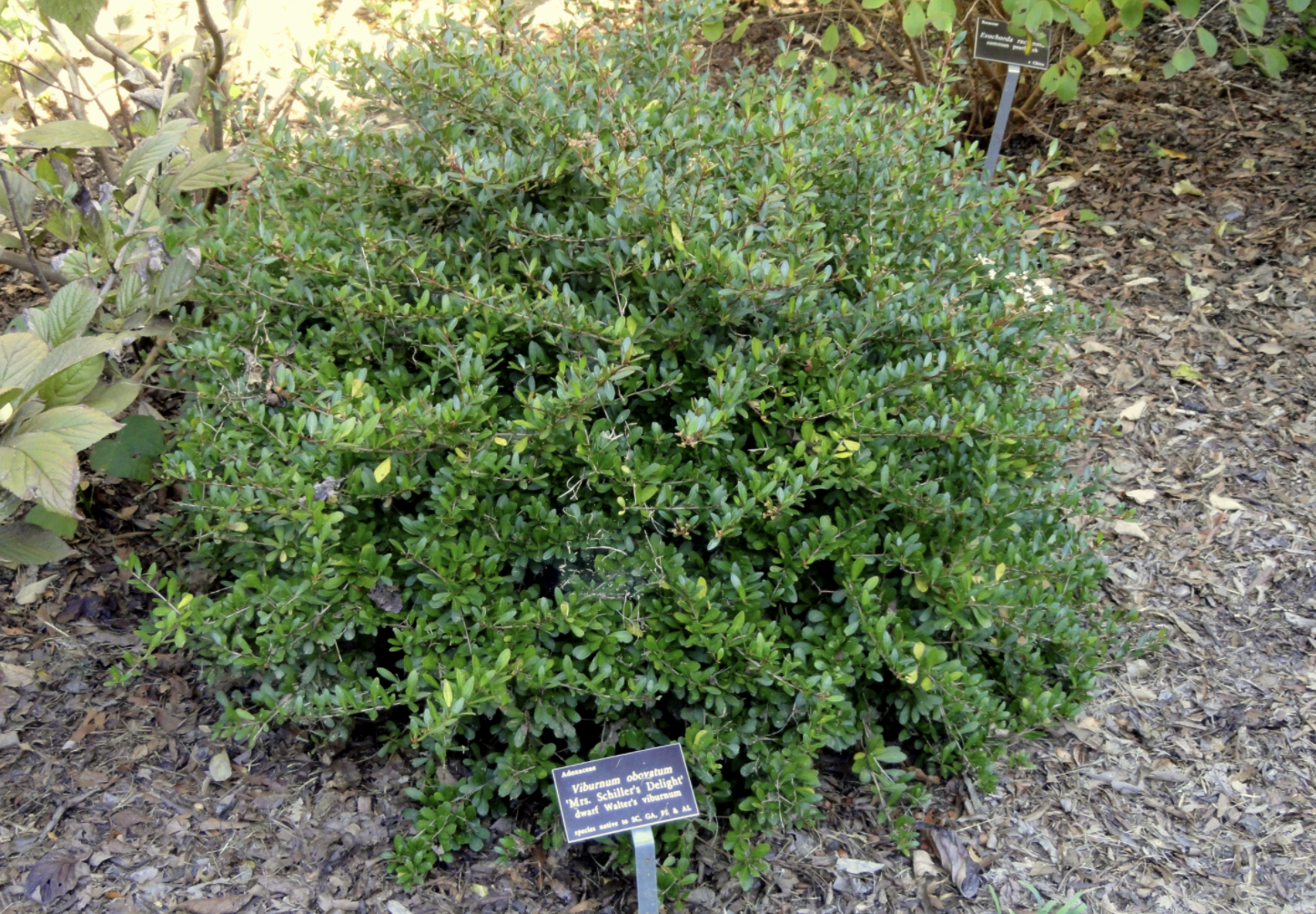
Viburnam obovatum Dwarf
This hardy, evergreen native low-growing shrub is a foundational plant for any Florida garden. With a height of about 4 feet, it provides a dense, low-growing habitat that stays compact without constant maintenance. For the environment, its near-constant clusters of white flowers offer a reliable nectar source for pollinators, while the subsequent berries provide essential forage for local songbirds. Whether used as a sturdy border or in mass plantings, it thrives in everything from full sun to part shade and adapts well to average or moist soils, offering year-round structure and ecological value to your landscape.
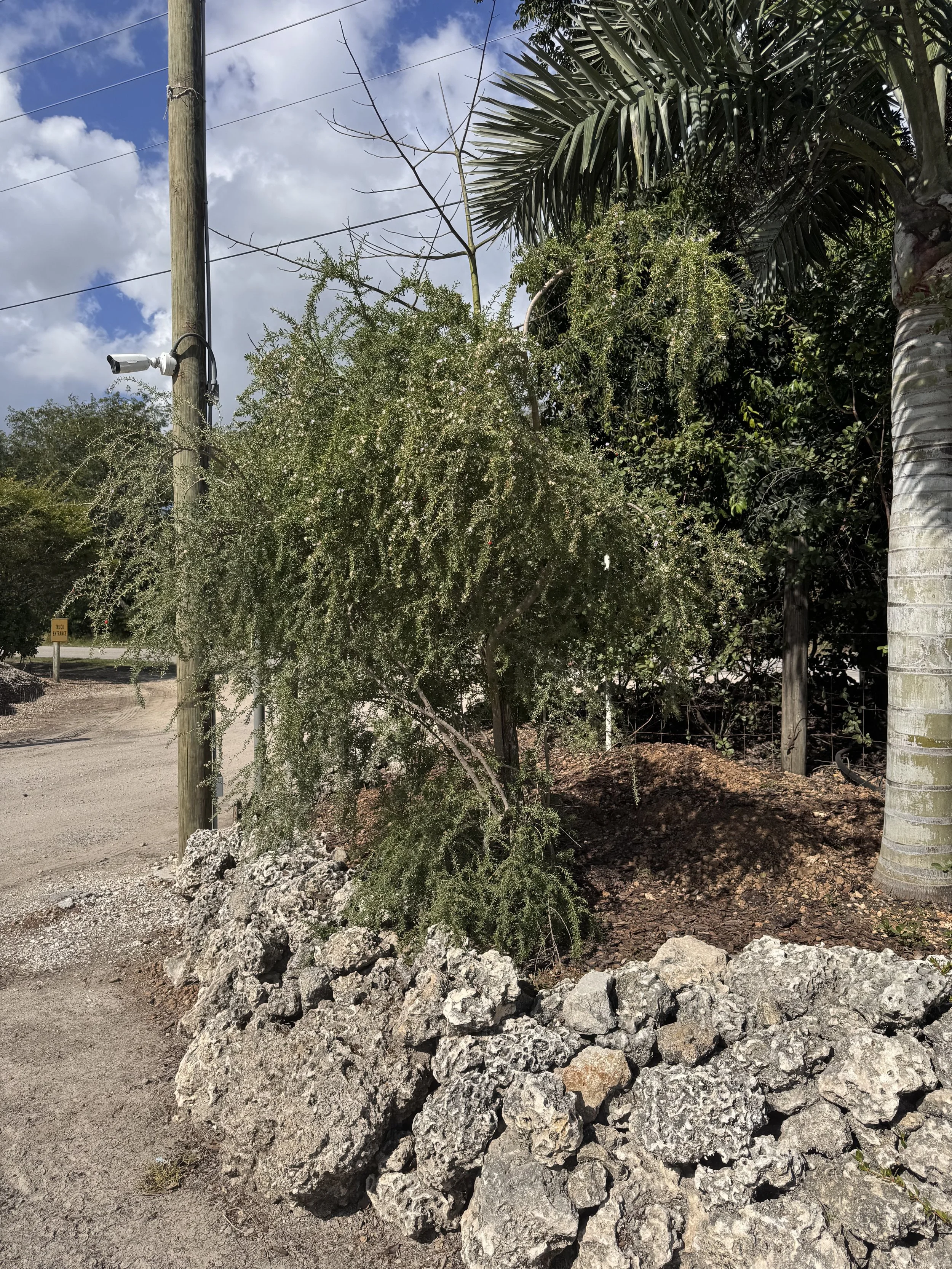
Lycium carolinianum
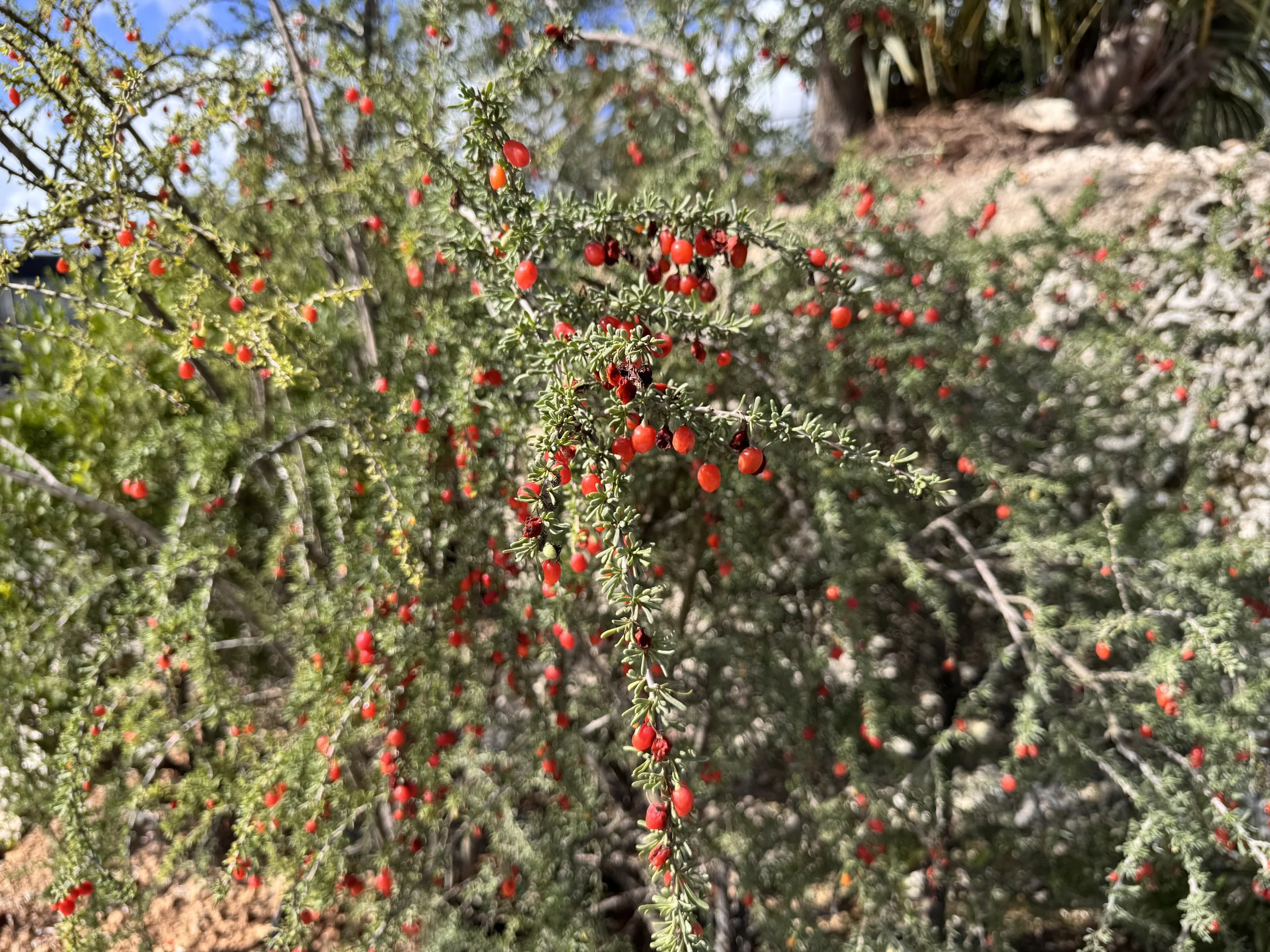
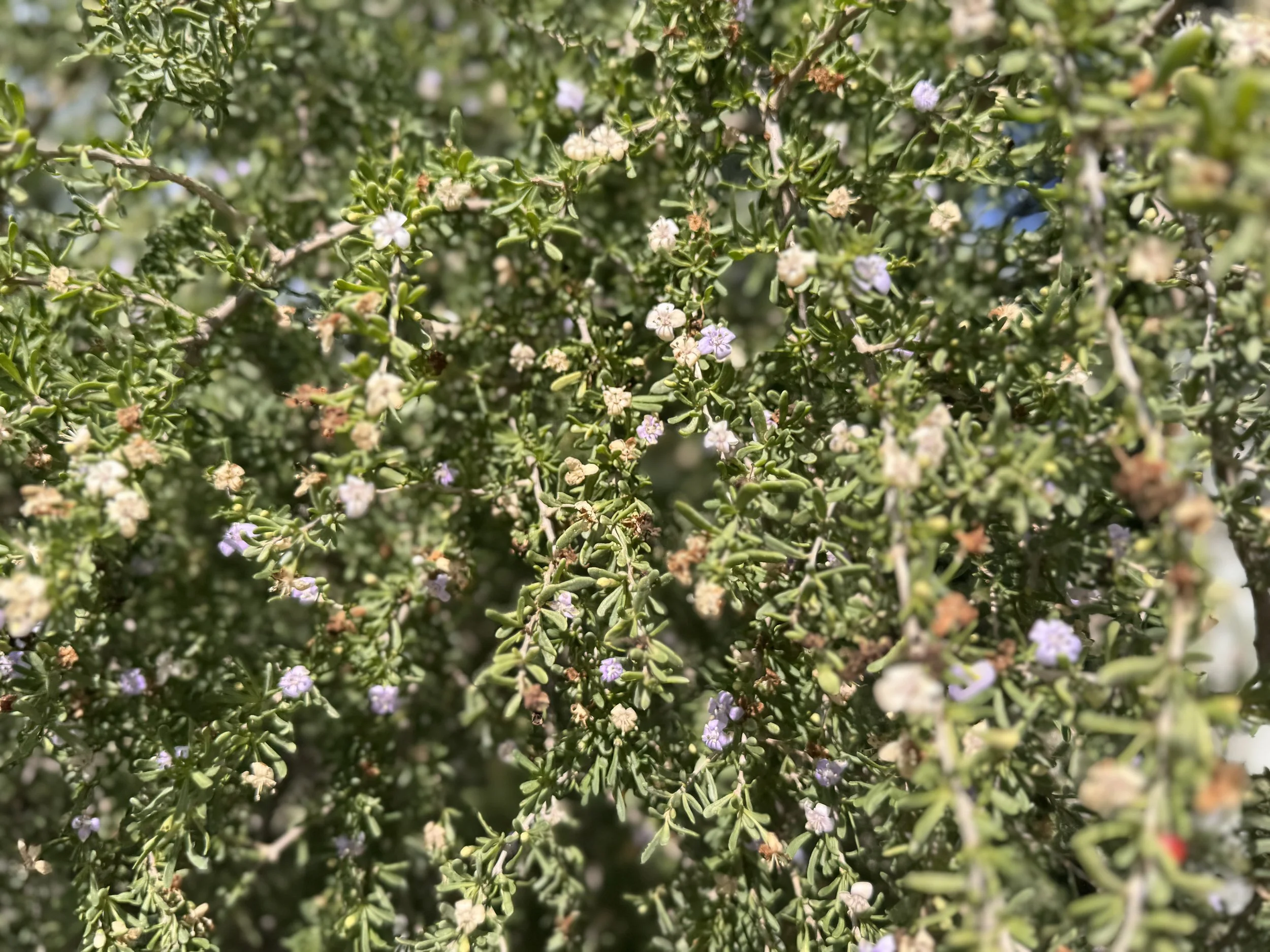
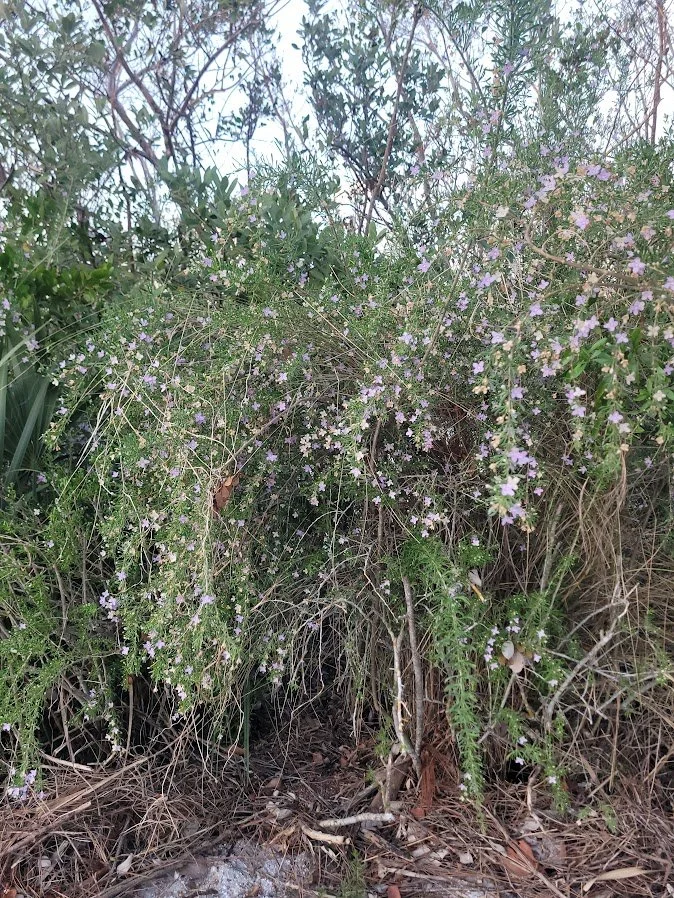
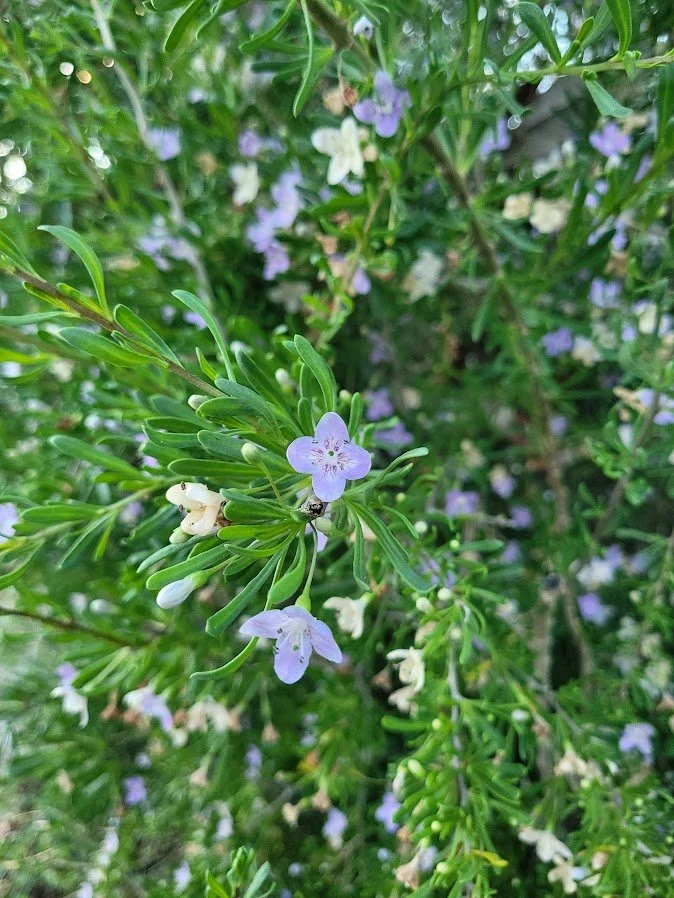
Christmas Berry is a sprawling evergreen shrub native to Florida's coastal regions that grows 3-6 feet tall with rigid, thorn-tipped branches. This hardy species features small, succulent linear leaves clustered along thorny branches and produces small, tubular blue to lavender flowers that bloom primarily in fall. True to its common name, it develops bright scarlet-red berries in December that attract birds and wildlife. Extremely salt and drought tolerant, it naturally occurs in salt marshes, mangrove edges, shell middens, and coastal dunes, making it an excellent choice for harsh coastal conditions.
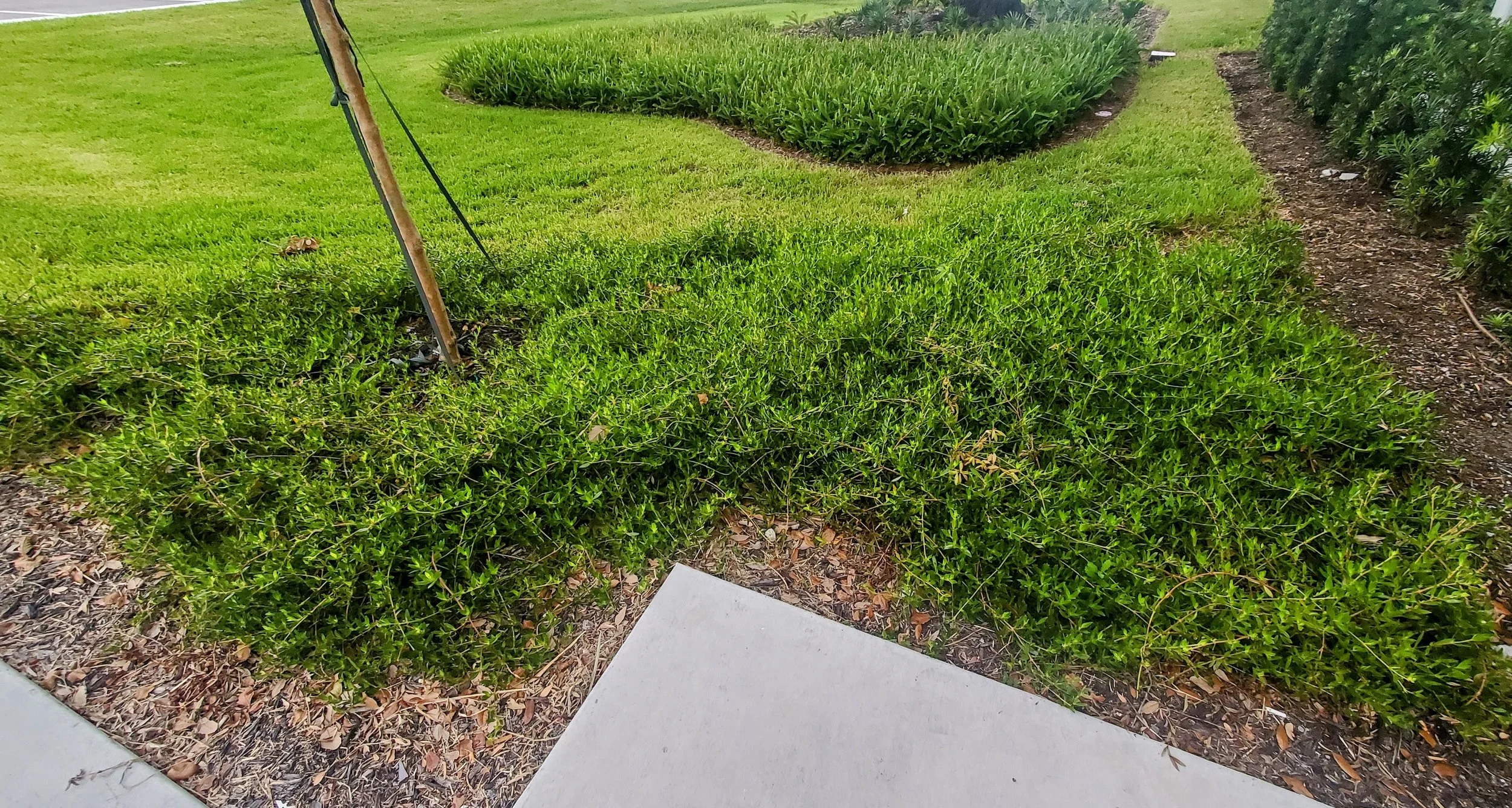
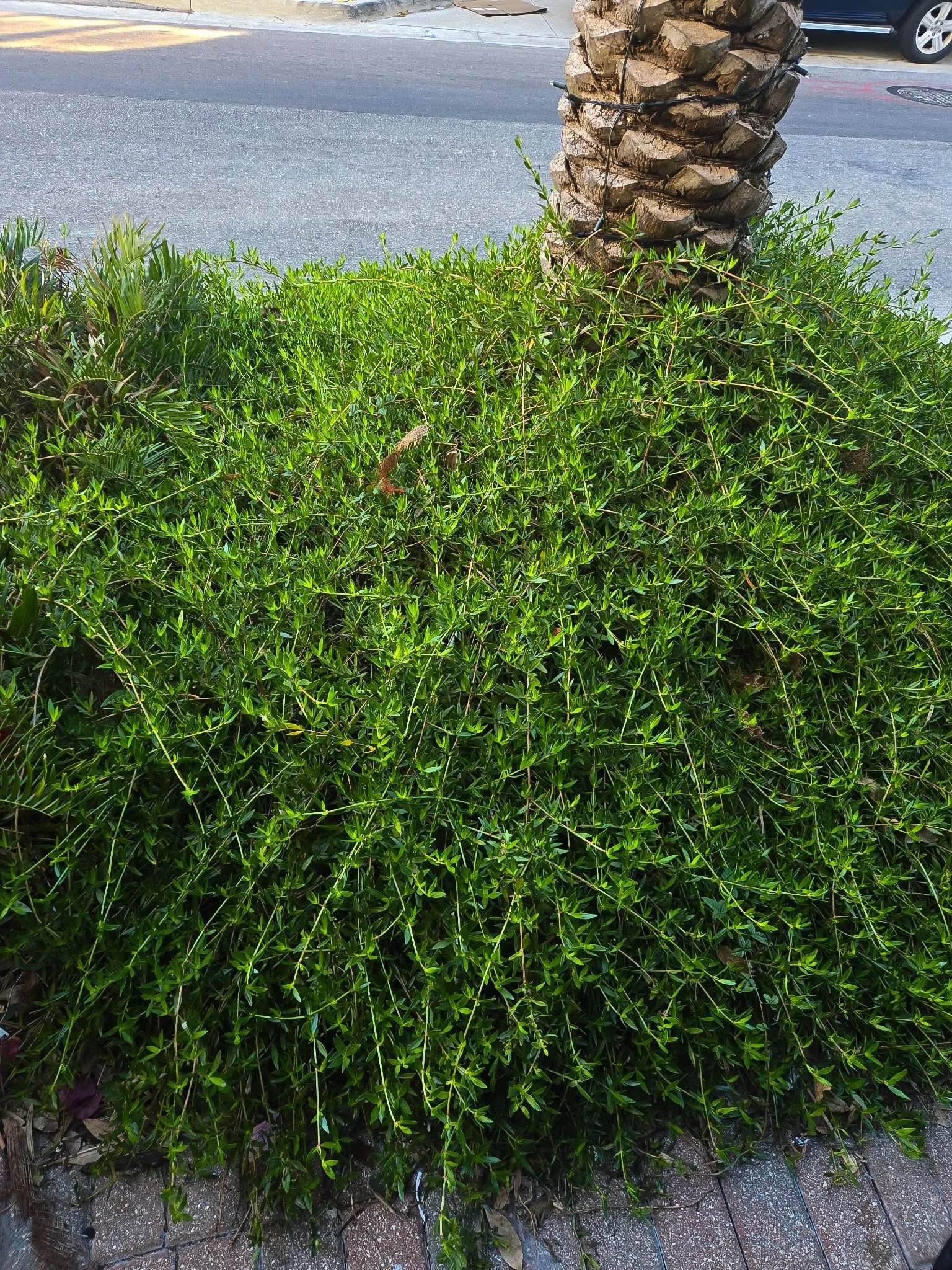
Ernodea littoralis
Golden Beach Creeper (Ernodea littoralis) is a low-growing, prostrate ground cover with small, green, succulent leaves on bright red stems. This hardy plant is extremely salt and drought tolerant, naturally occurring in dune systems and adapted to harsh coastal conditions, including salt winds. It produces inconspicuous pinkish-white tubular flowers and round golden-colored fruits that provide food for birds.
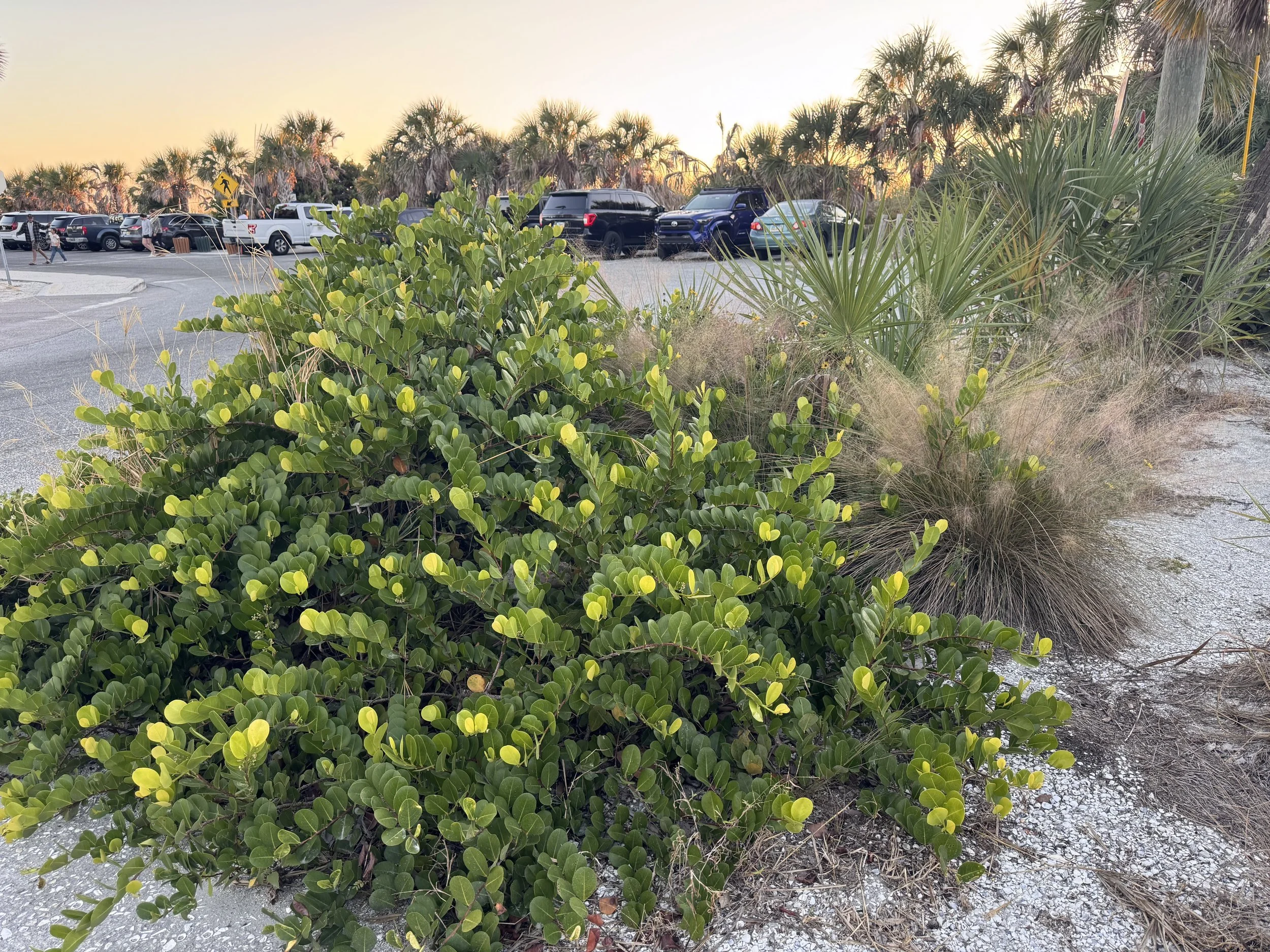
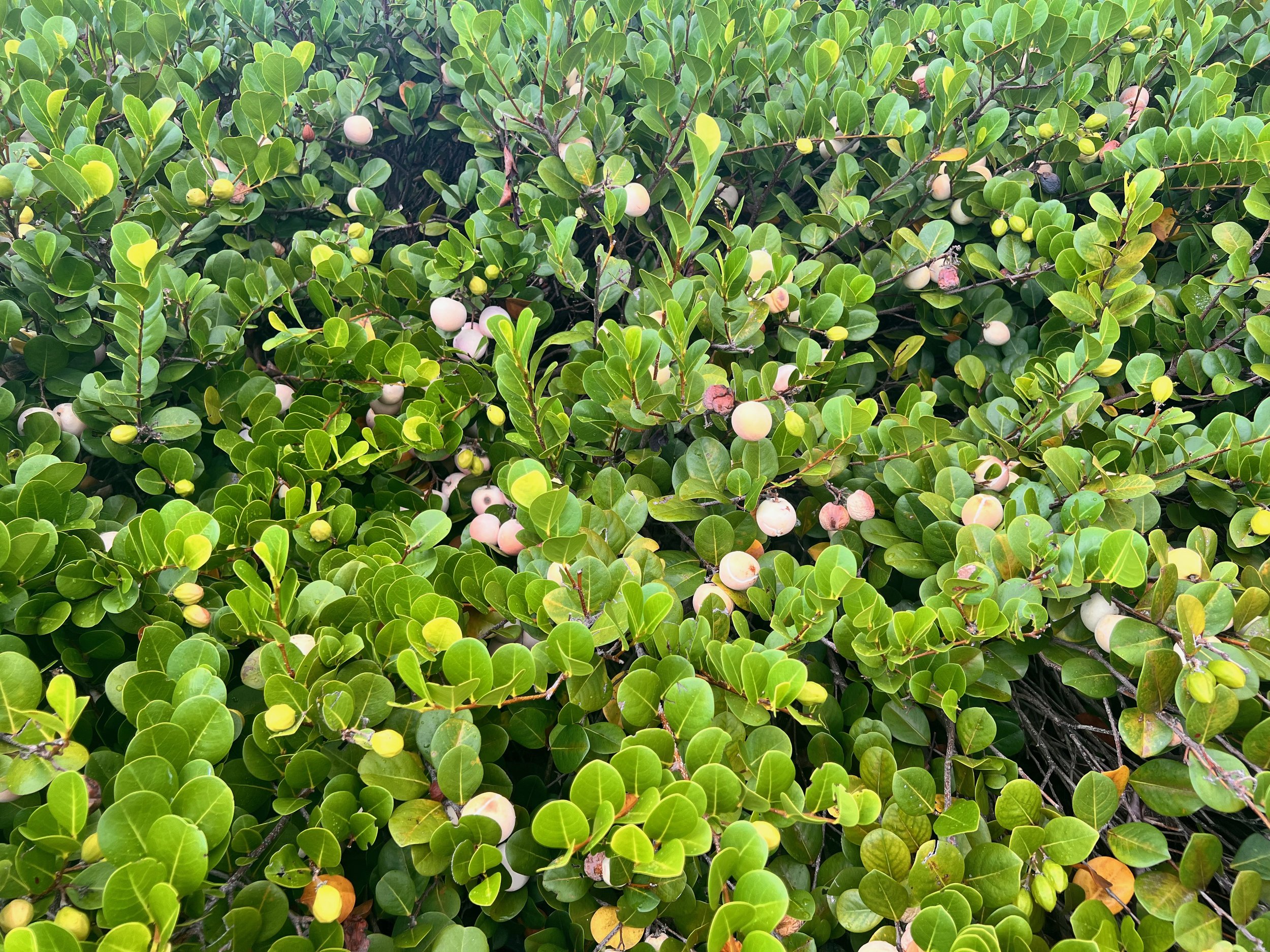
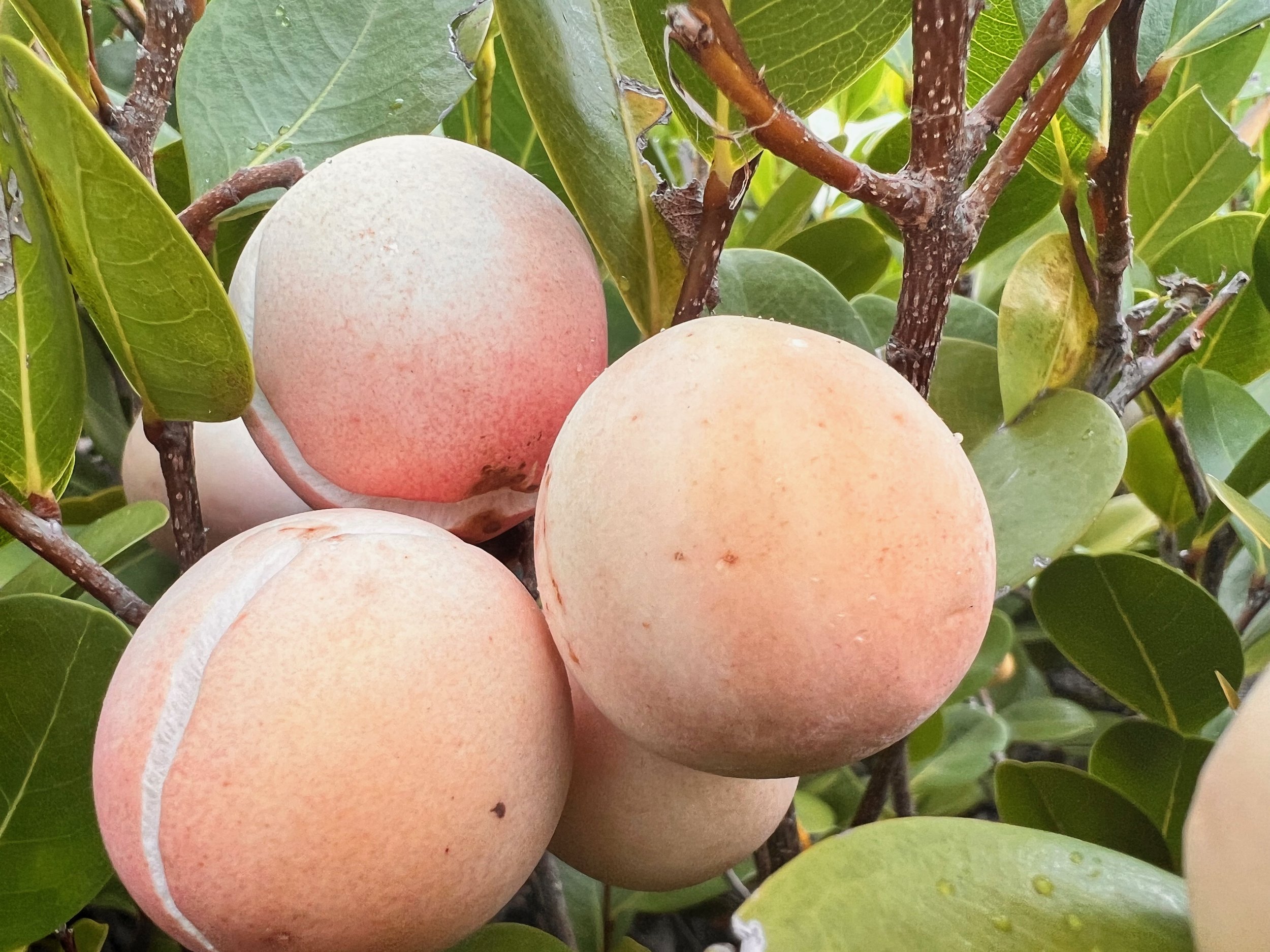
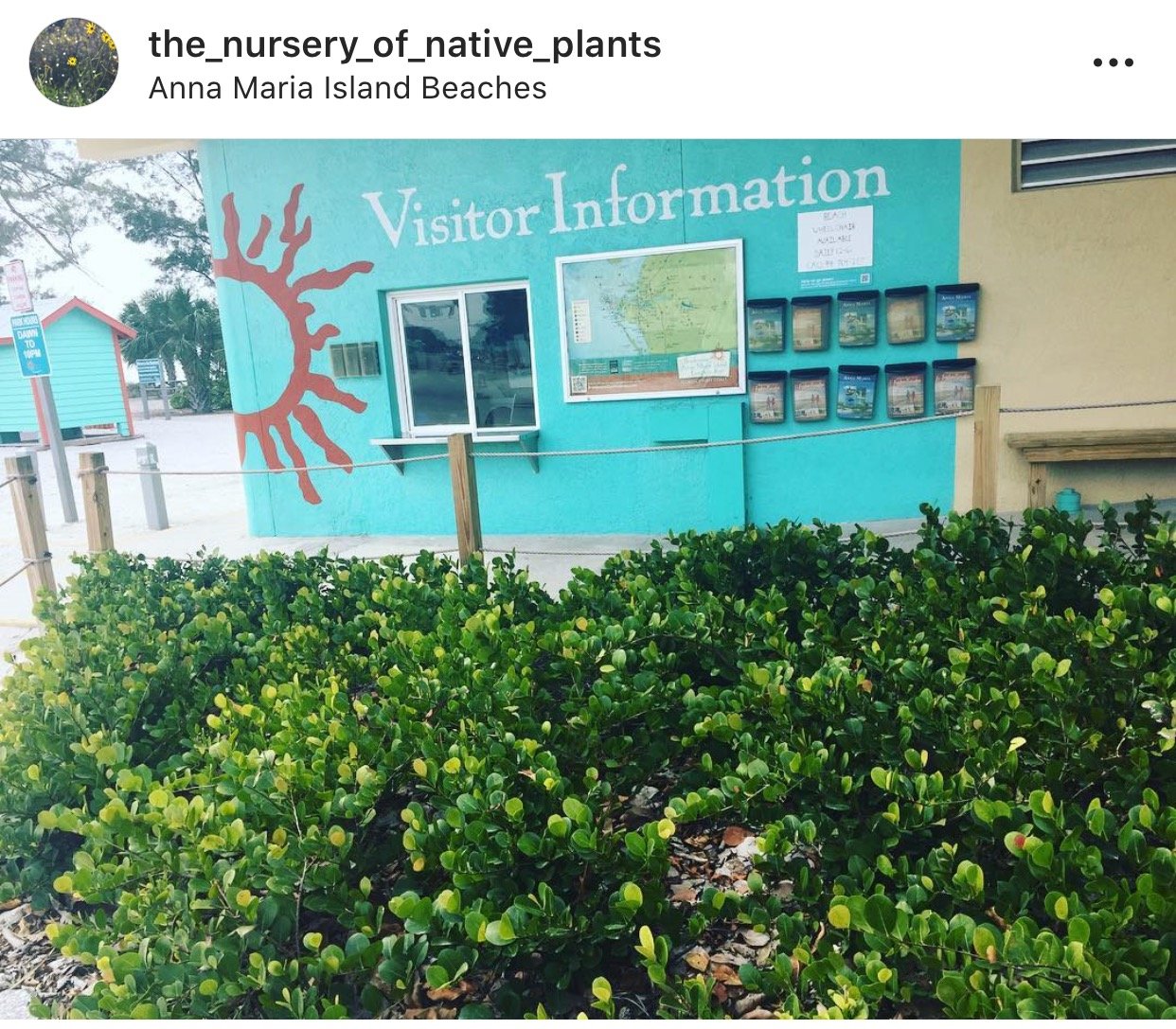
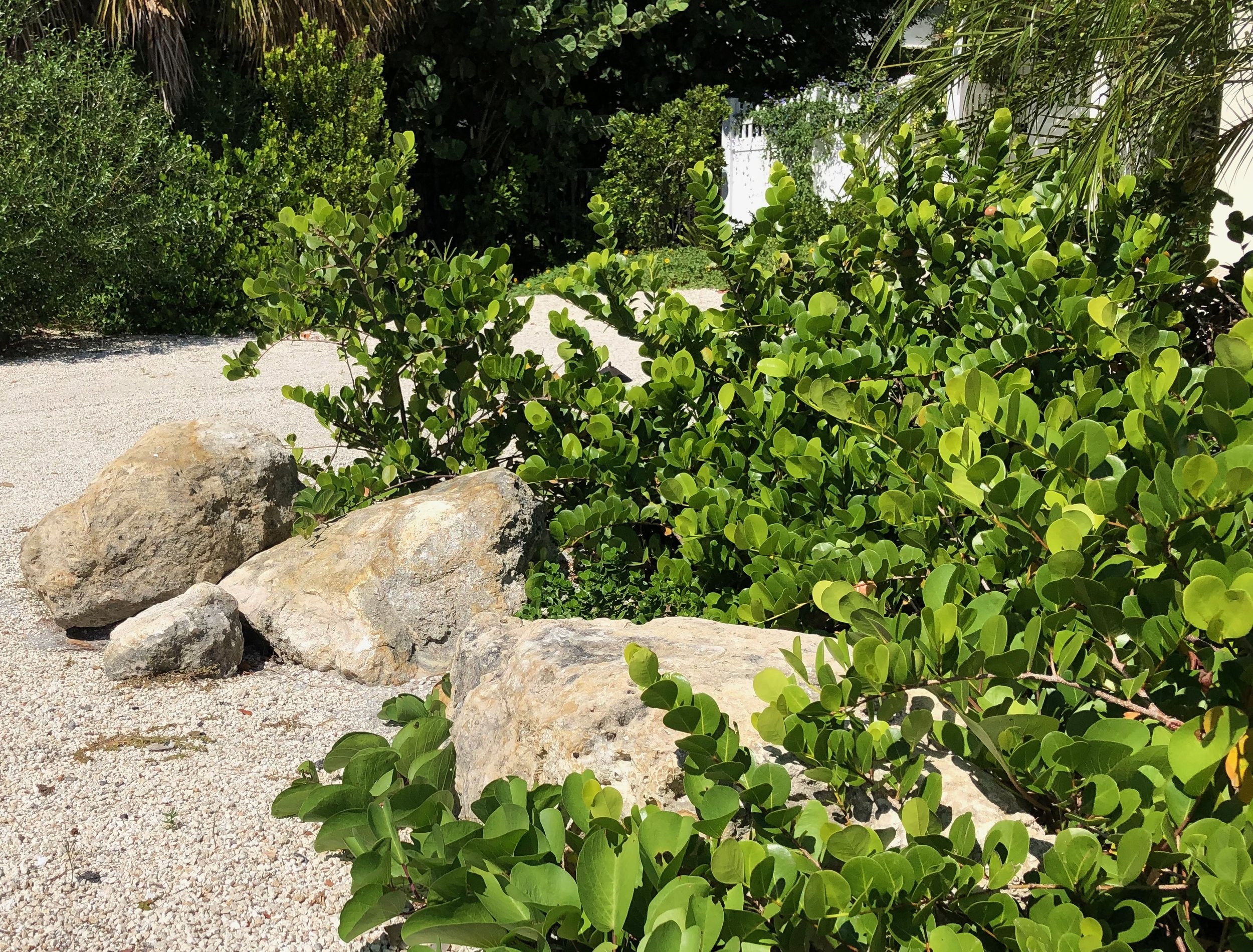
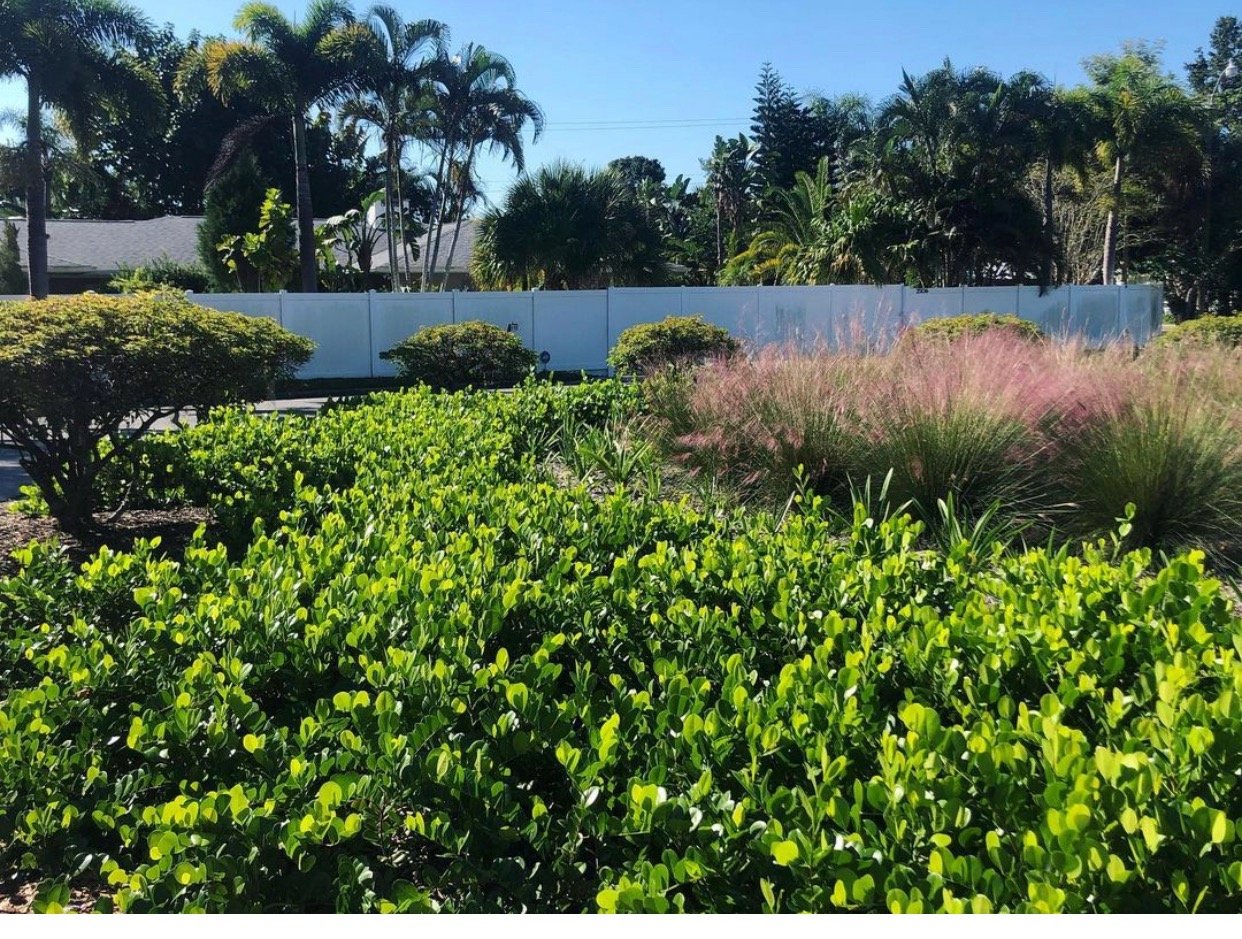
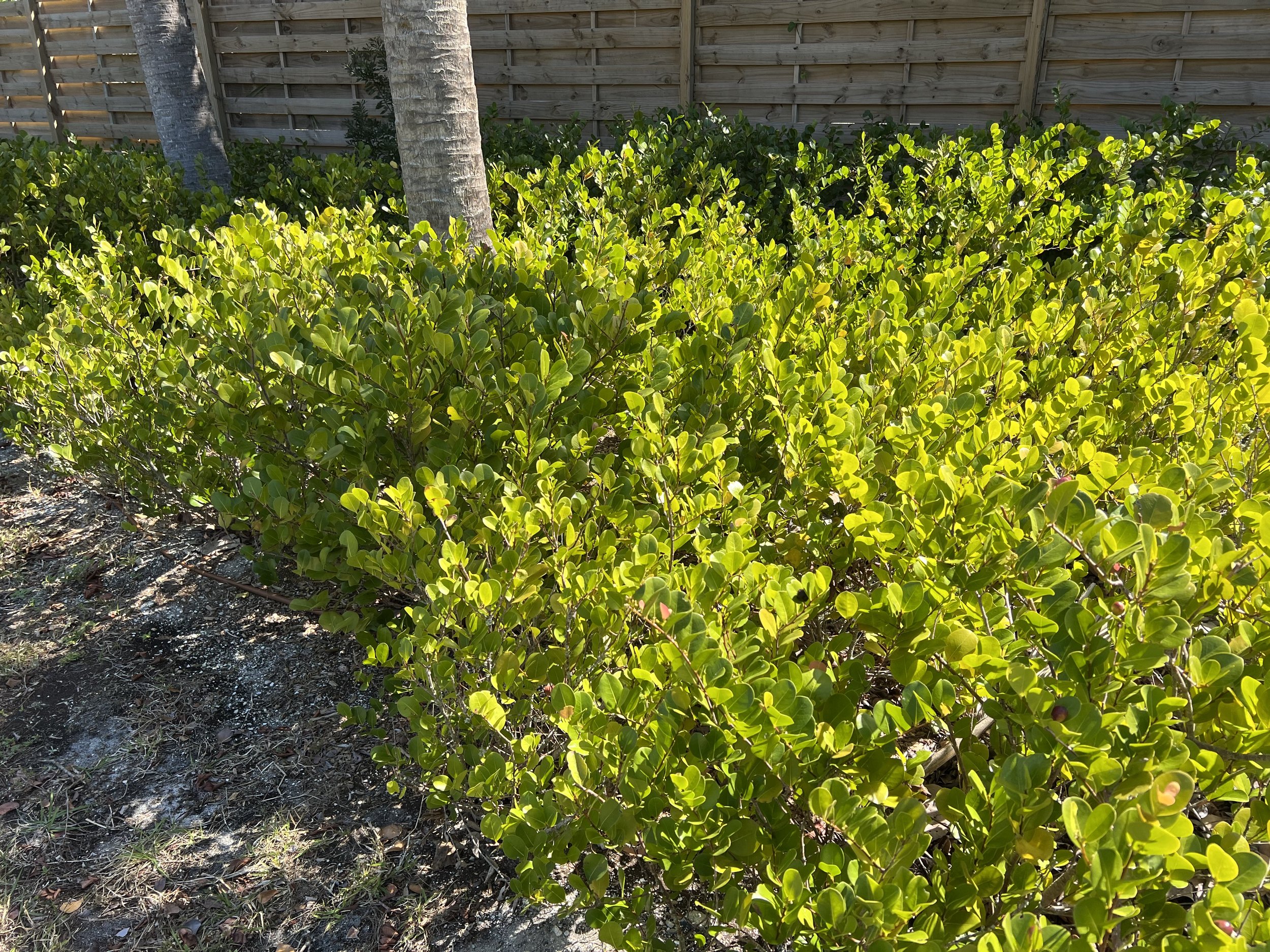
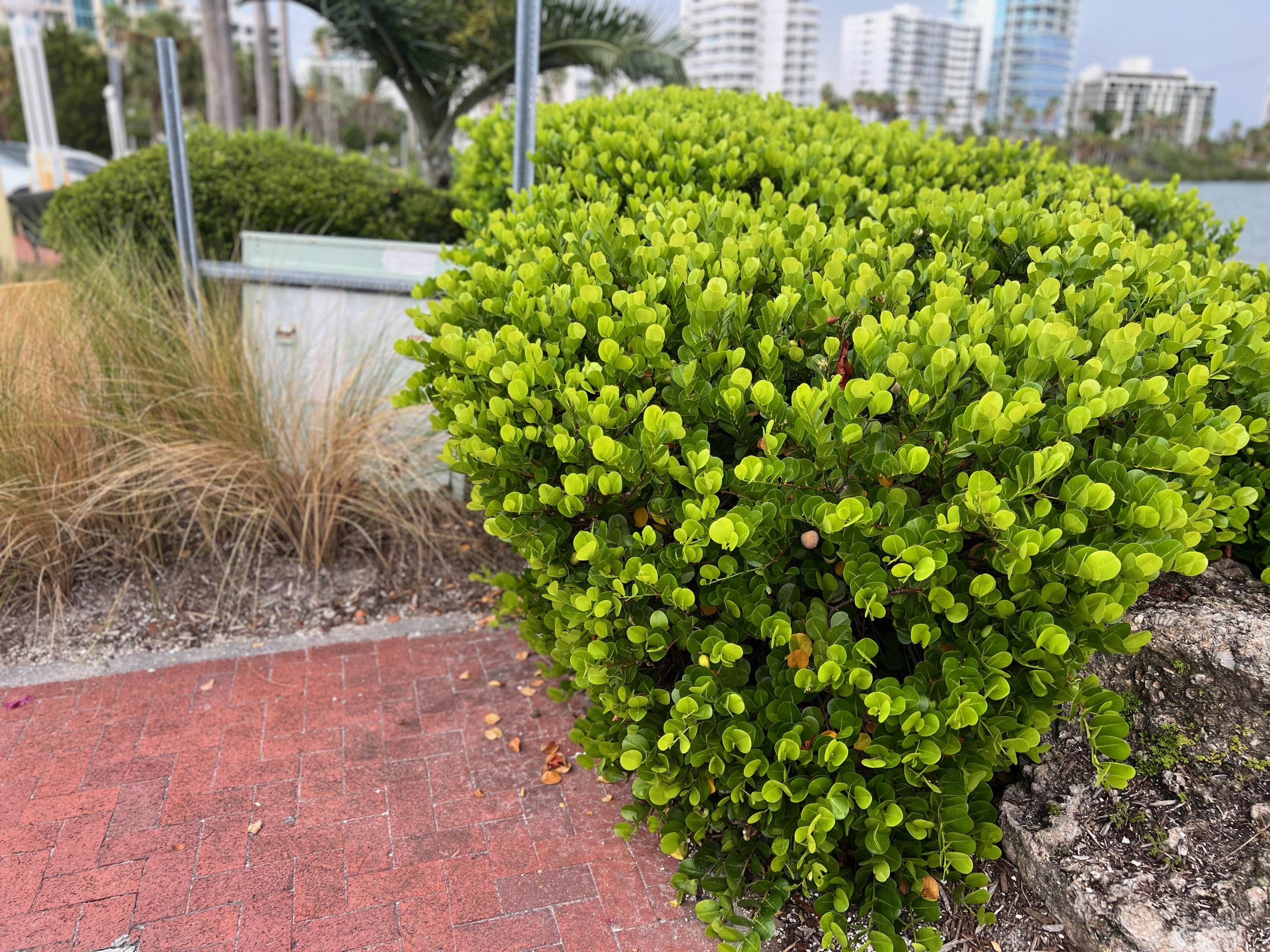
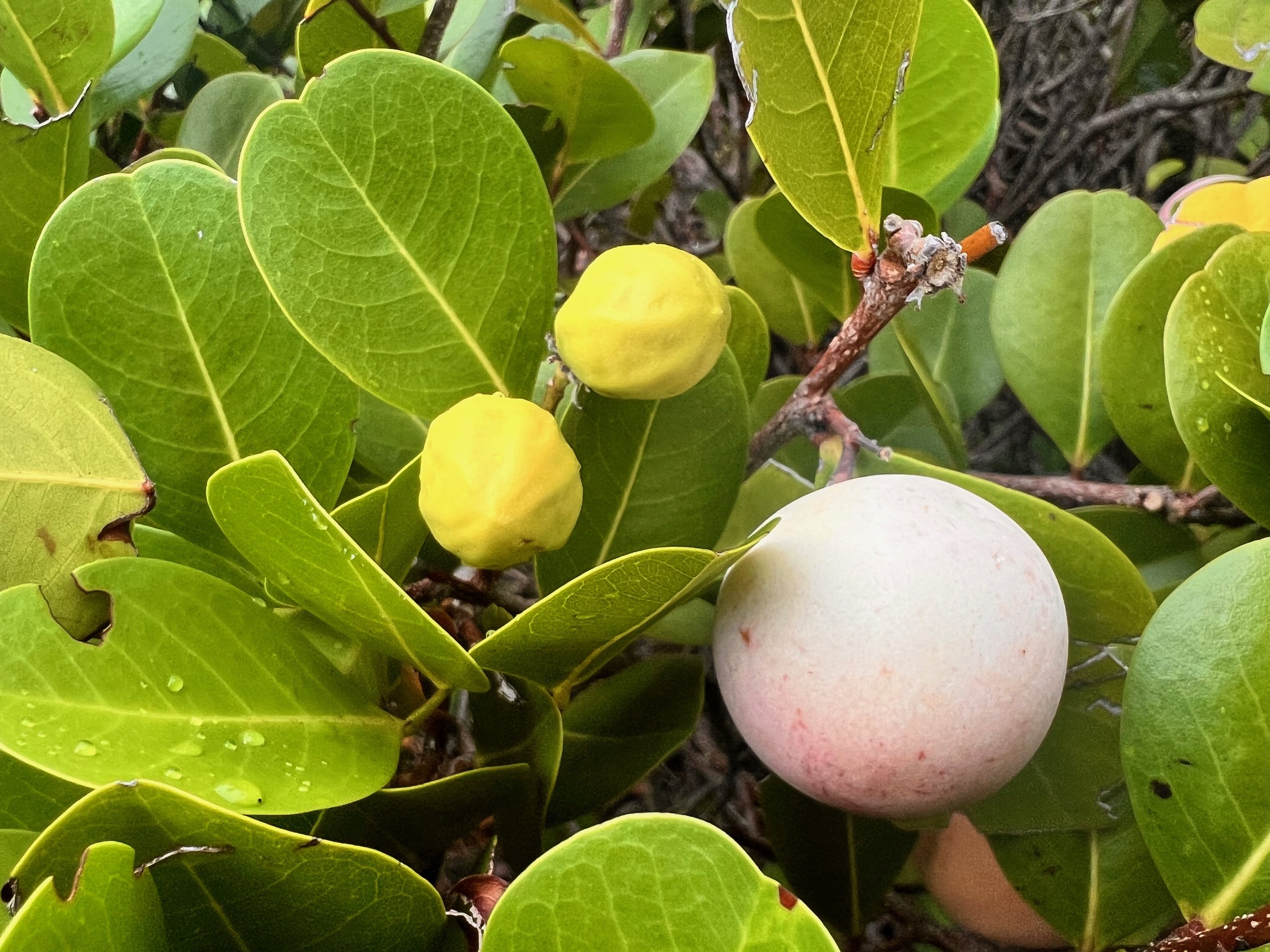
Chrysobalanus icaco var. ‘Horizontal’
Horizontal cocoplum is a lower-growing, sprawling and easily trim-able native relative of the upright red-tipped or green cocoplum. It does well in coastal conditions because it is highly salt-tolerant and can withstand full sun. It has flowers for pollinators and its fruits are edible for birds and people.
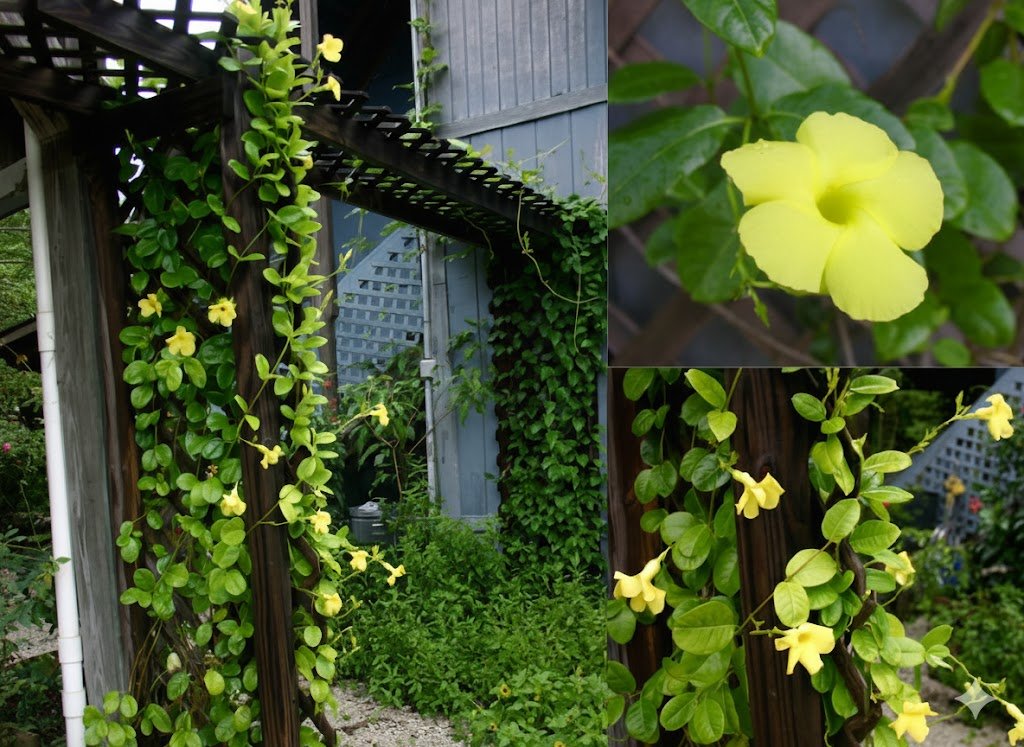
Pentalinon luteum
Wild Allamanda is a vigorous, evergreen vine that produces clusters of bright yellow, trumpet-shaped flowers nearly year-round. It can climb or sprawl 10-20 ft, making it ideal for trellises, fences, or as a sprawling groundcover. This low-maintenance native is drought-tolerant once established and thrives in full sun to partial shade. Its cheerful blooms attract butterflies and hummingbirds, while its glossy foliage provides lush, tropical appeal to the landscape.
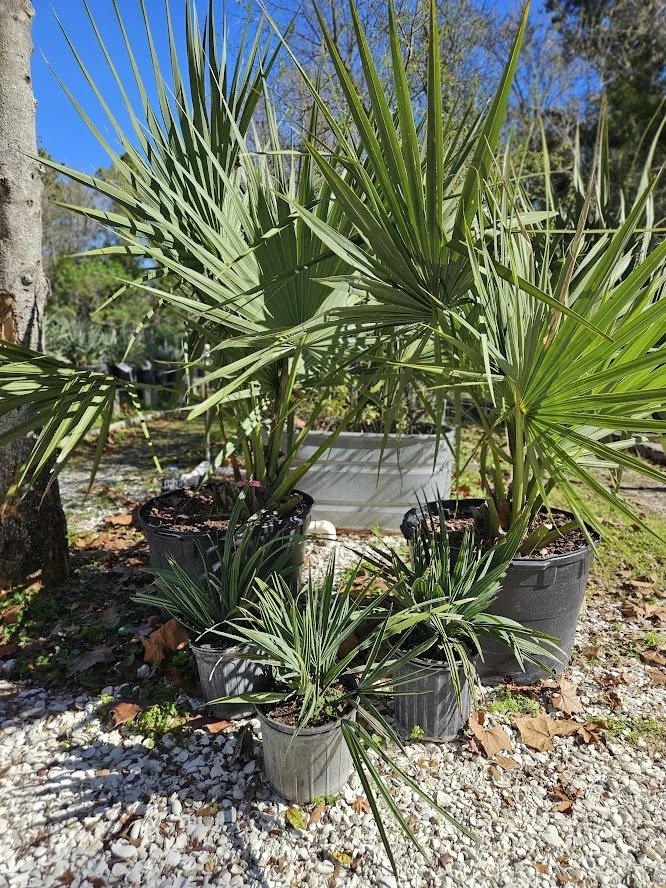
Sabal minor
Dwarf Blue Stem Palmetto is a small, clumping palm that typically grows 3-6 ft tall with a trunkless or short-trunked form. It is extremely cold-hardy, flood-tolerant, and drought-tolerant once established. It thrives in full sun to partial shade with average to moist soil. This low-maintenance native requires little care and provides excellent textural interest and tropical appeal to landscapes. Its fan-shaped fronds create dense, attractive foliage year-round, making it ideal for understory plantings or as a distinctive accent plant.
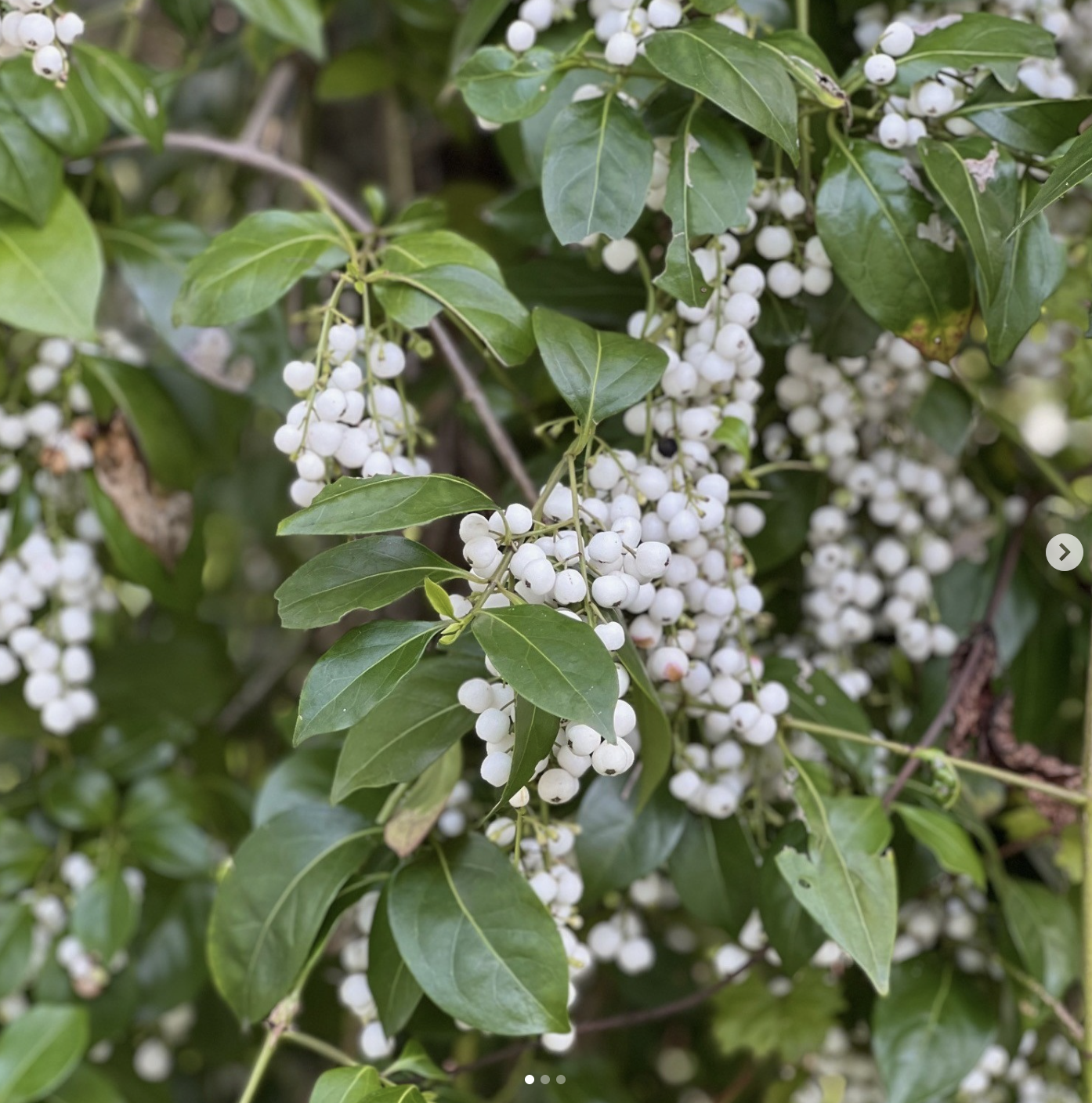
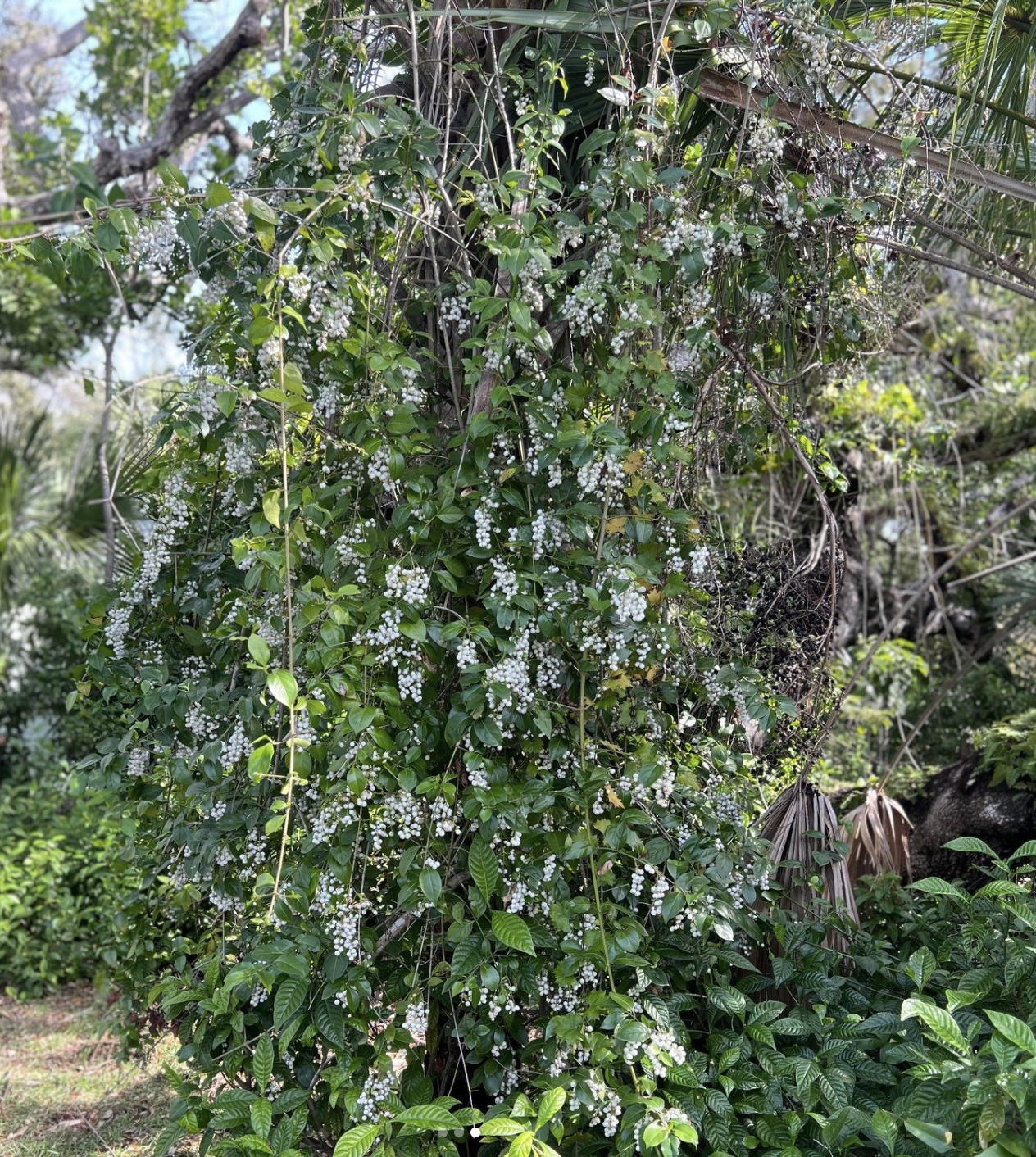
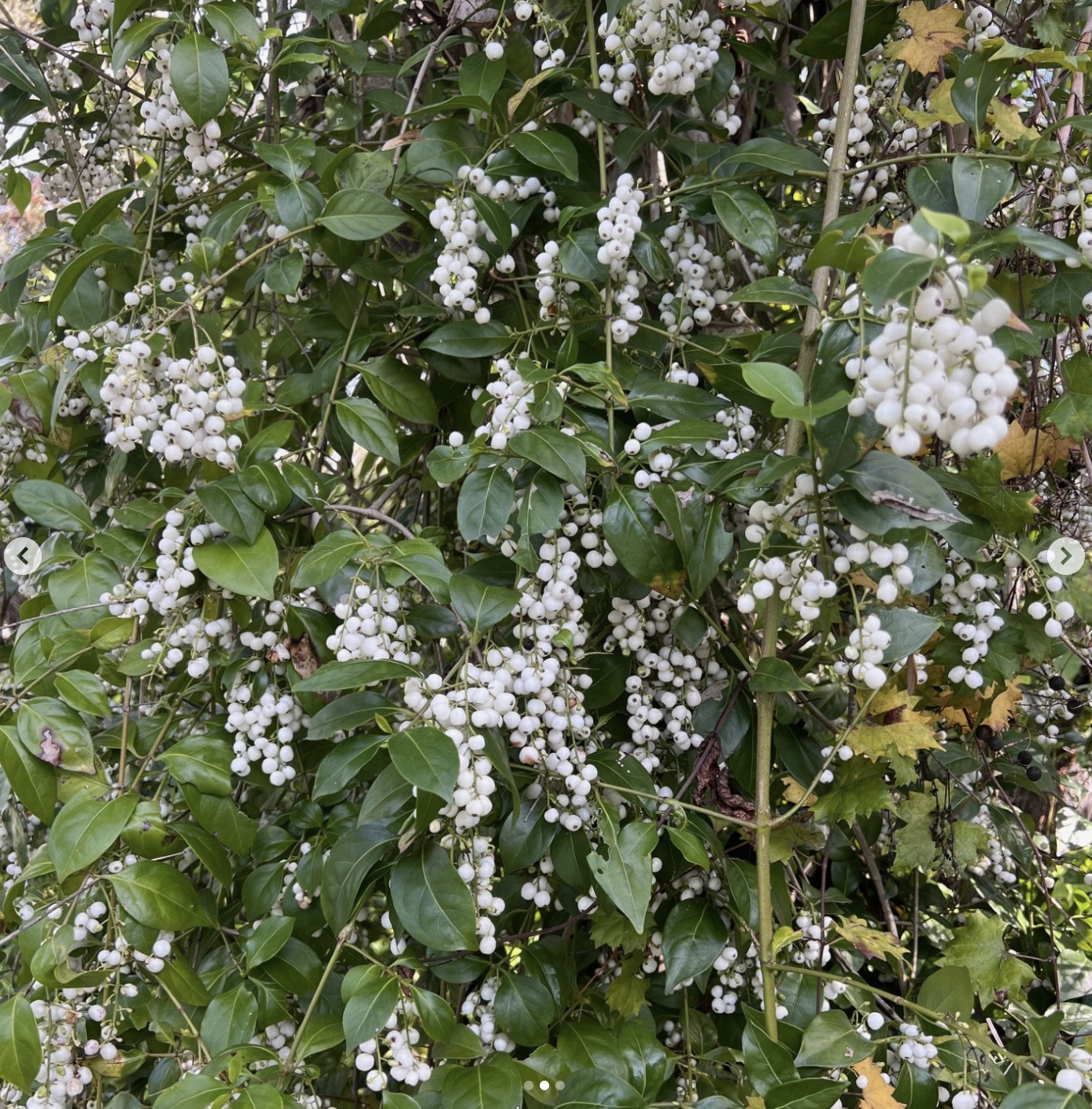
Chiococca alba
Snowberry is a native perennial vine or sprawling shrub found in coastal hammocks and disturbed habitats. Its small white tubular flowers attract butterflies and other pollinators, while the distinctive white berries provide an important food source for birds that disperse its seeds. It tolerates a range of soil conditions and light levels, making it adaptable to various landscape settings including naturalized areas and native plant gardens.
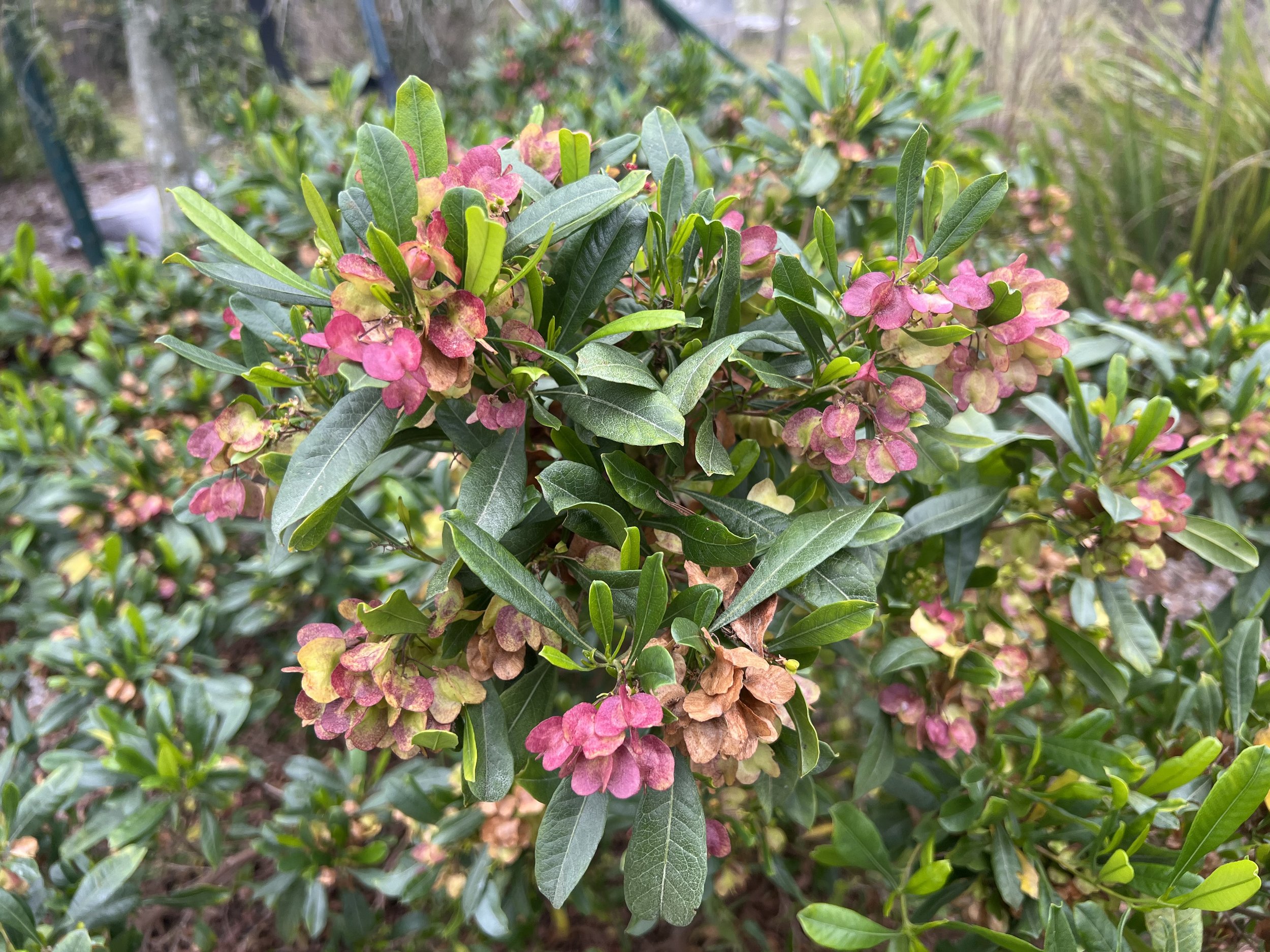
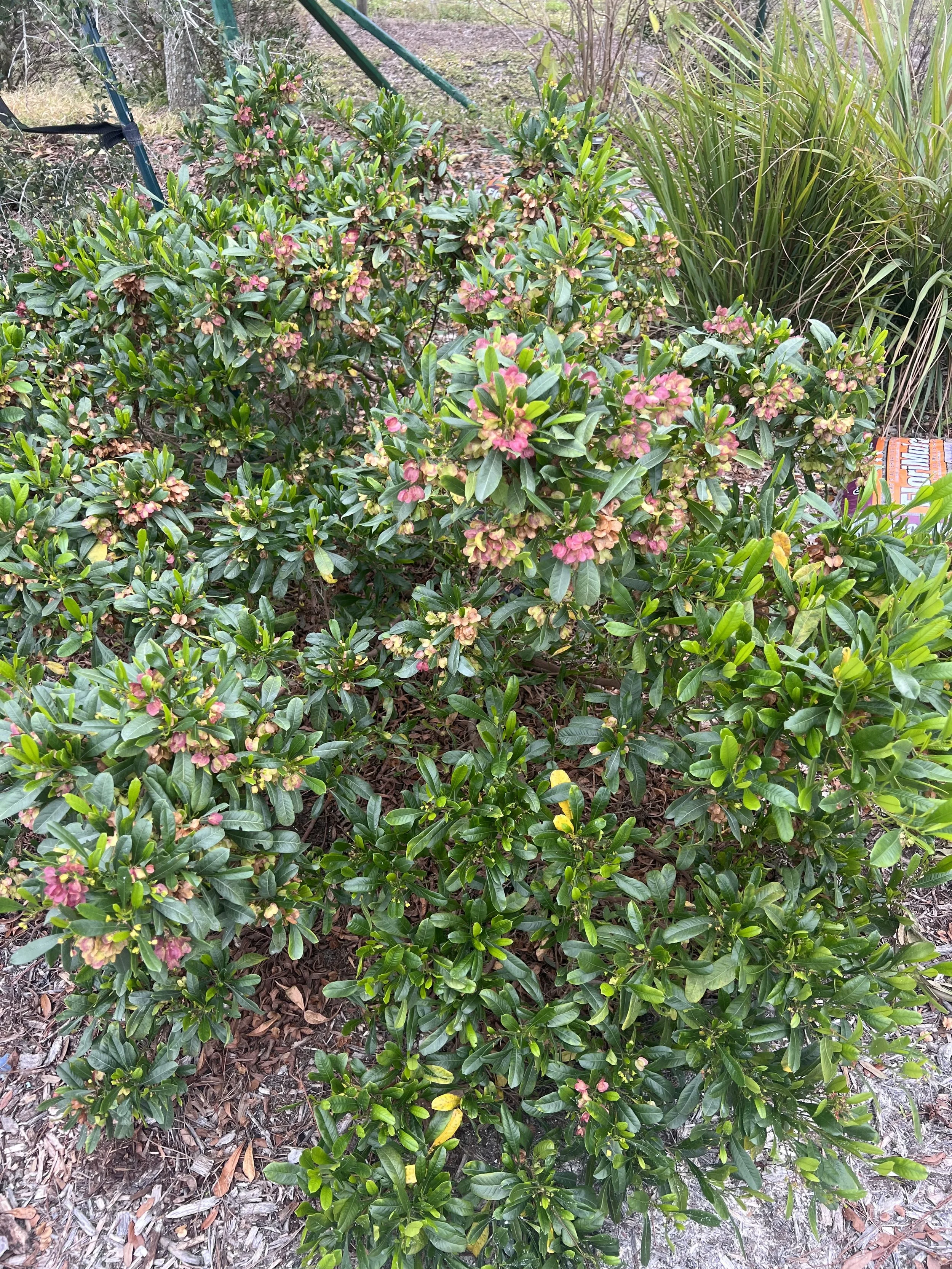
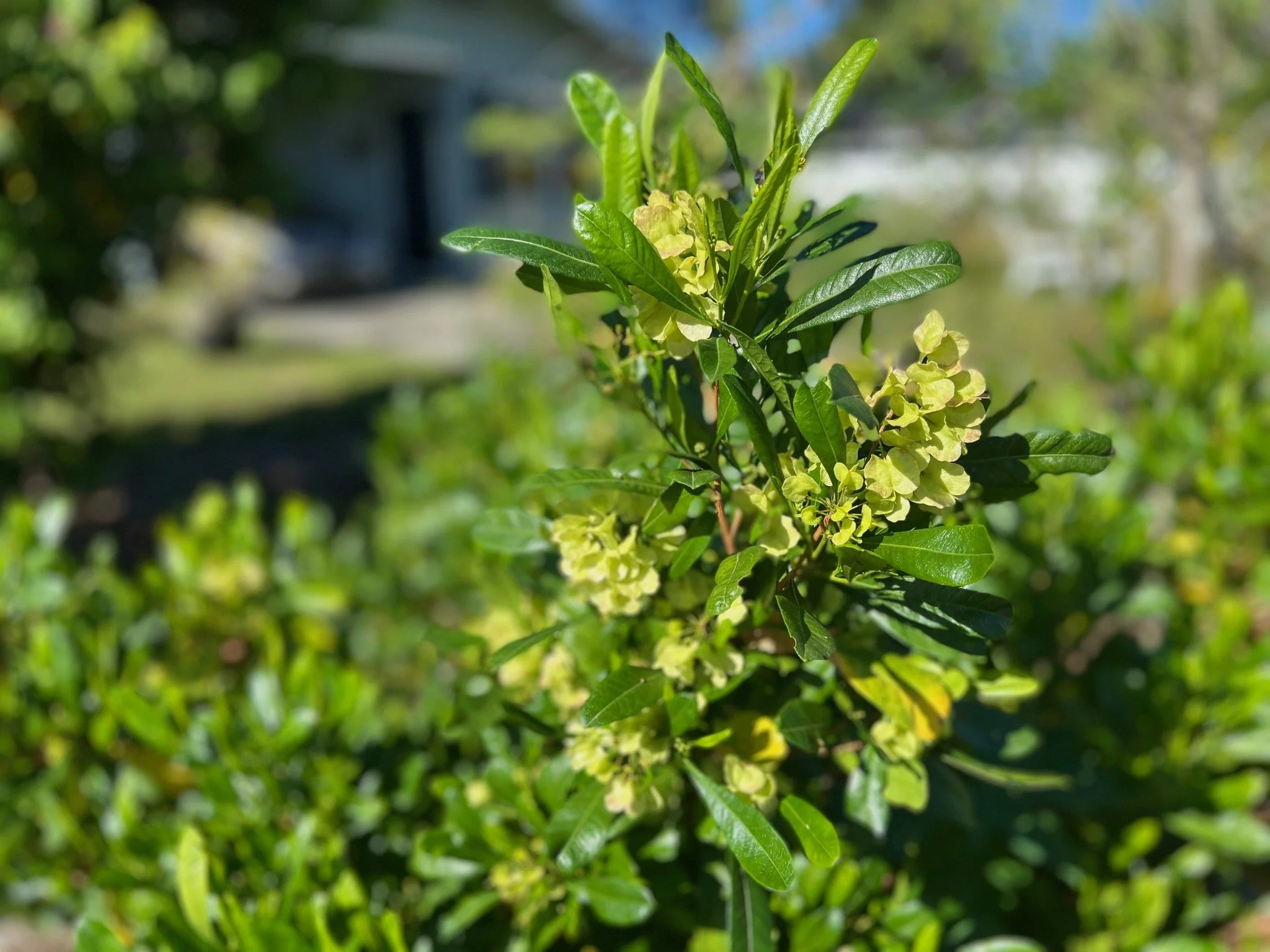
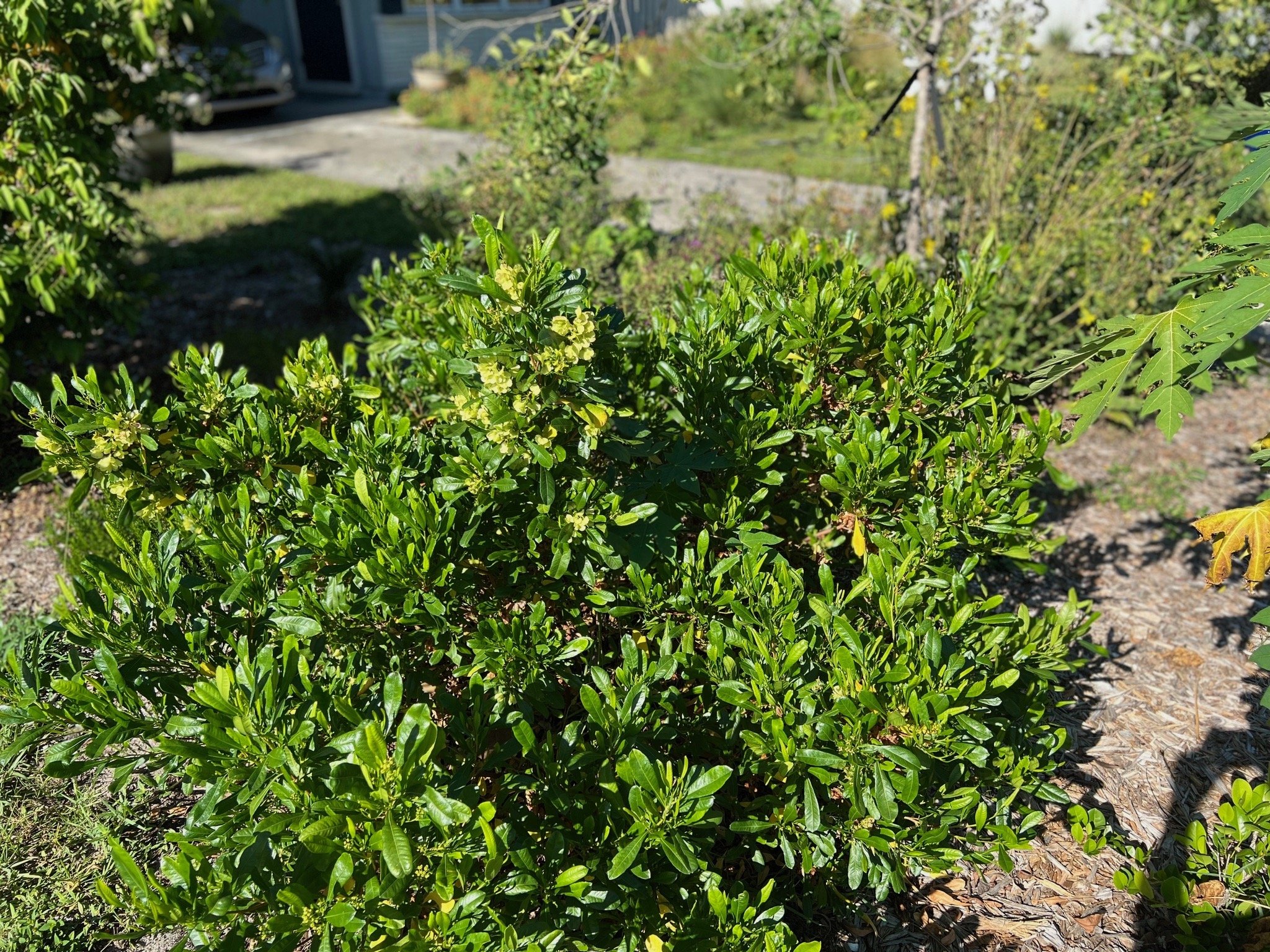
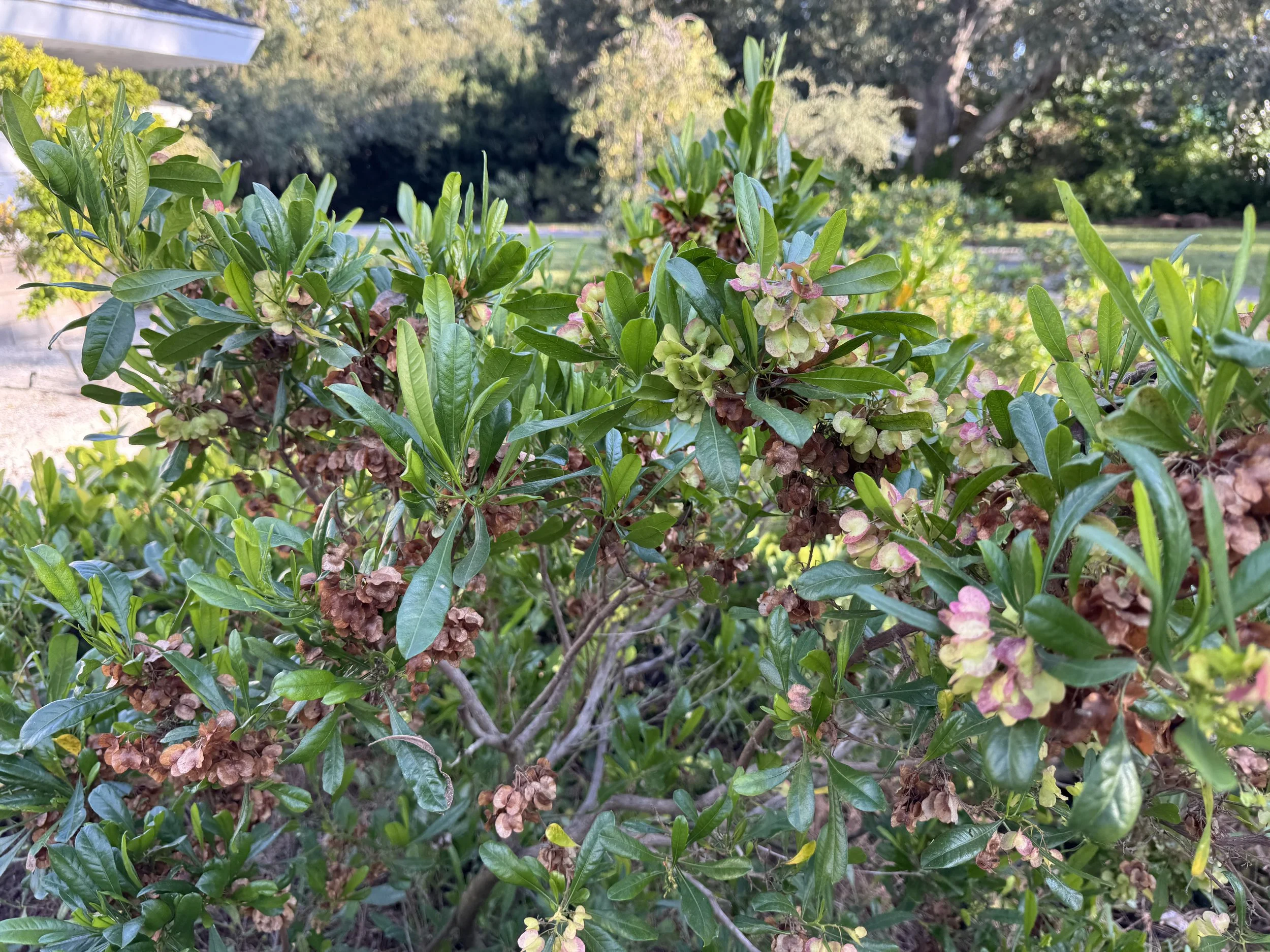
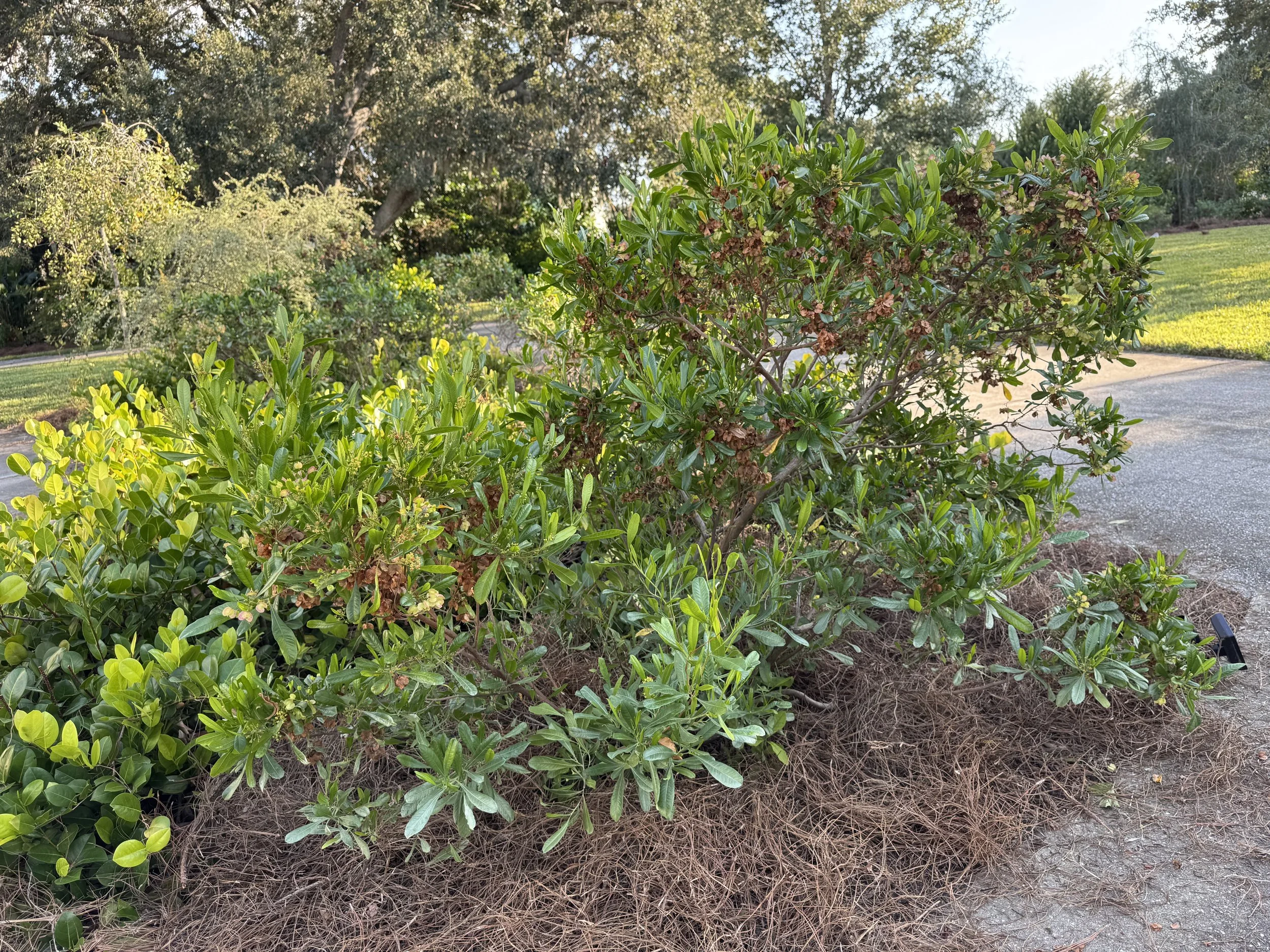
Dodonaea viscosa
Dwarf Varnish Leaf is a fast-growing evergreen shrub that features many upright stems, densely clothed in shiny, narrow green leaves. The leaves are covered with a sticky resin that gives them a distinctive varnished appearance and helps the plant achieve exceptional drought tolerance. This species produces small, inconspicuous yellow flowers followed by striking three-winged papery seed capsules that are highly ornamental. We carry a lower-growing variety that tends to stay in the 6ft range but could possibly get taller and can be trimmed to stay lower. It's extremely hardy and adaptable to various soil types, making it excellent for use as a specimen plant, dense hedge, or evergreen screen in zones 9-11.


Ilex vomitoria
Yaupon Holly is a tough, evergreen shrub or small tree native to the southeastern United States that grows 15’-25’ tall with a distinctive vase-shaped form. This adaptable species features small, dark green leathery leaves and produces inconspicuous greenish-white flowers in spring, followed by brilliant red berries on female plants that attract birds and wildlife. Historically used by Native Americans to make caffeinated ceremonial tea, it's extremely drought and salt-tolerant, thriving in a wide range of conditions from full sun to shade and various soil types. Hardy in zones 7-10, it's valued for its versatility as a hedge, specimen tree, or screen, though it tends to sucker from the roots and may require regular pruning to maintain form.
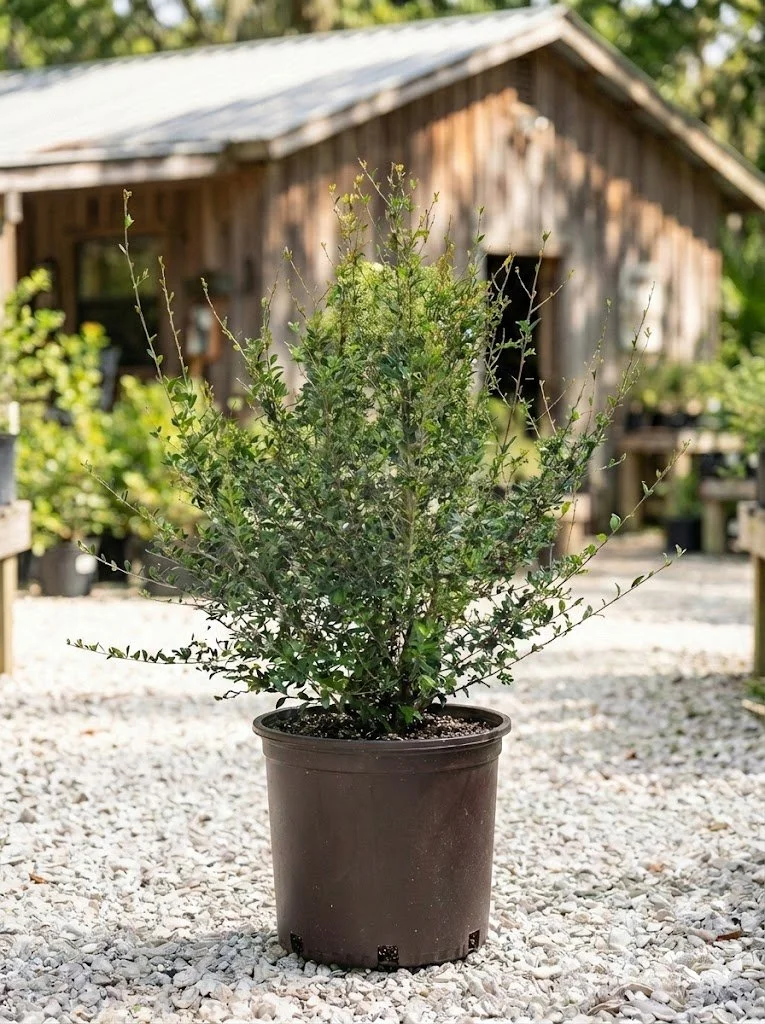
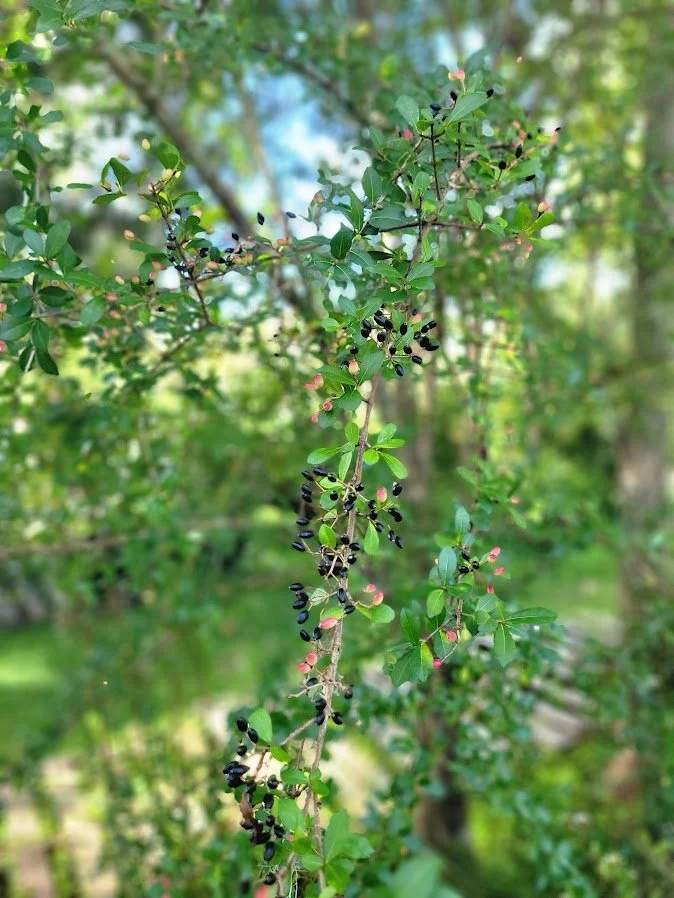
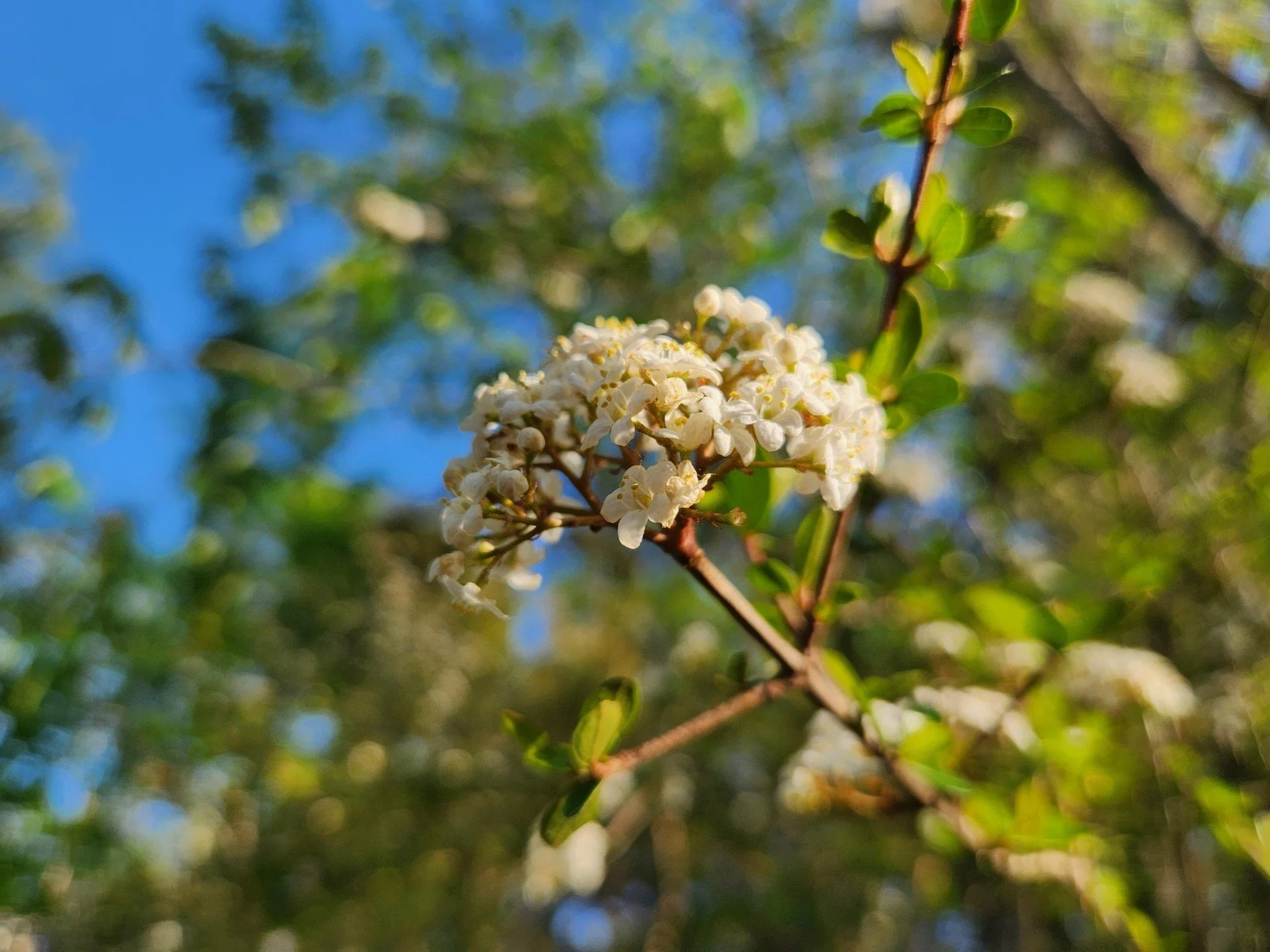
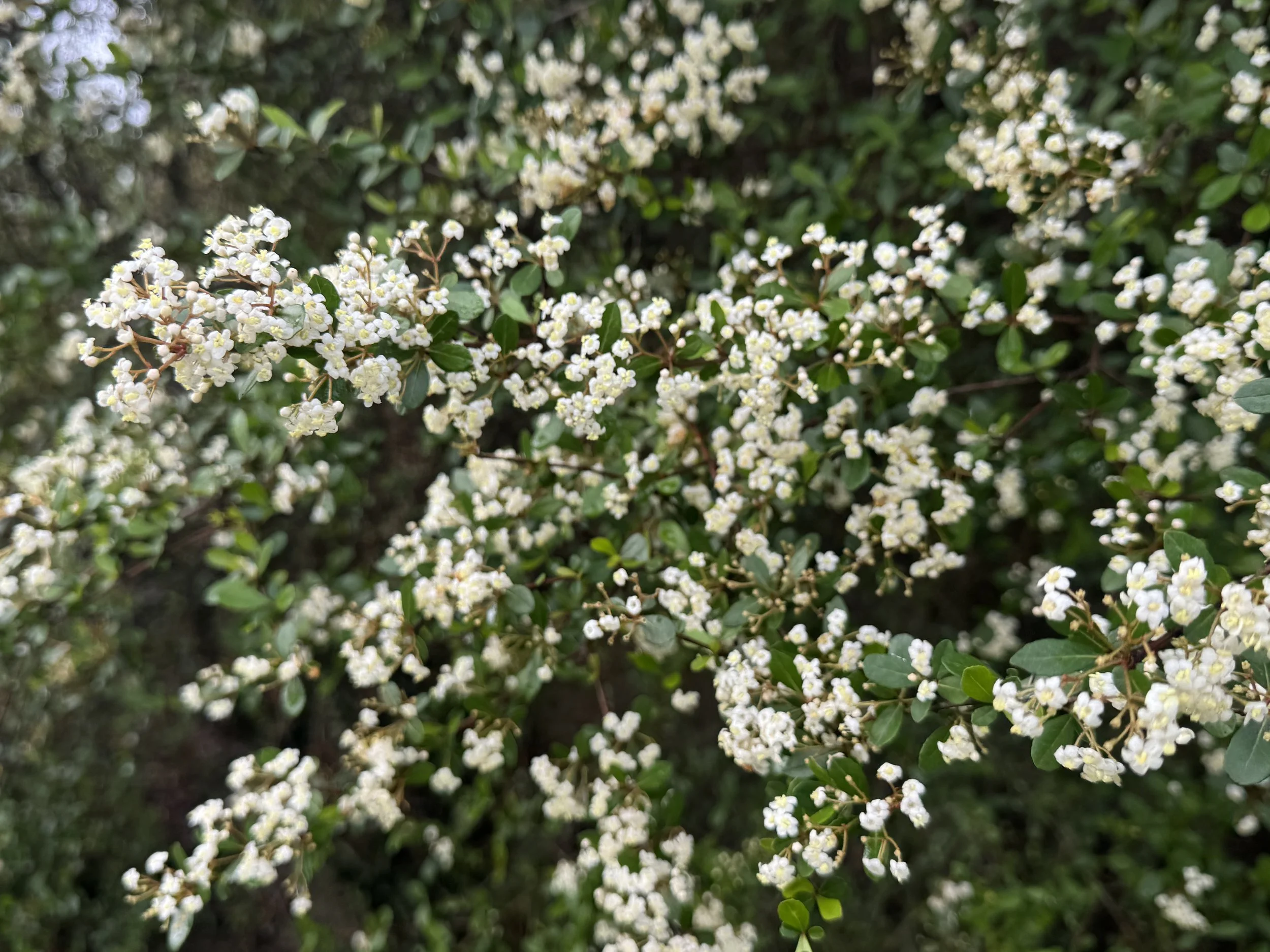
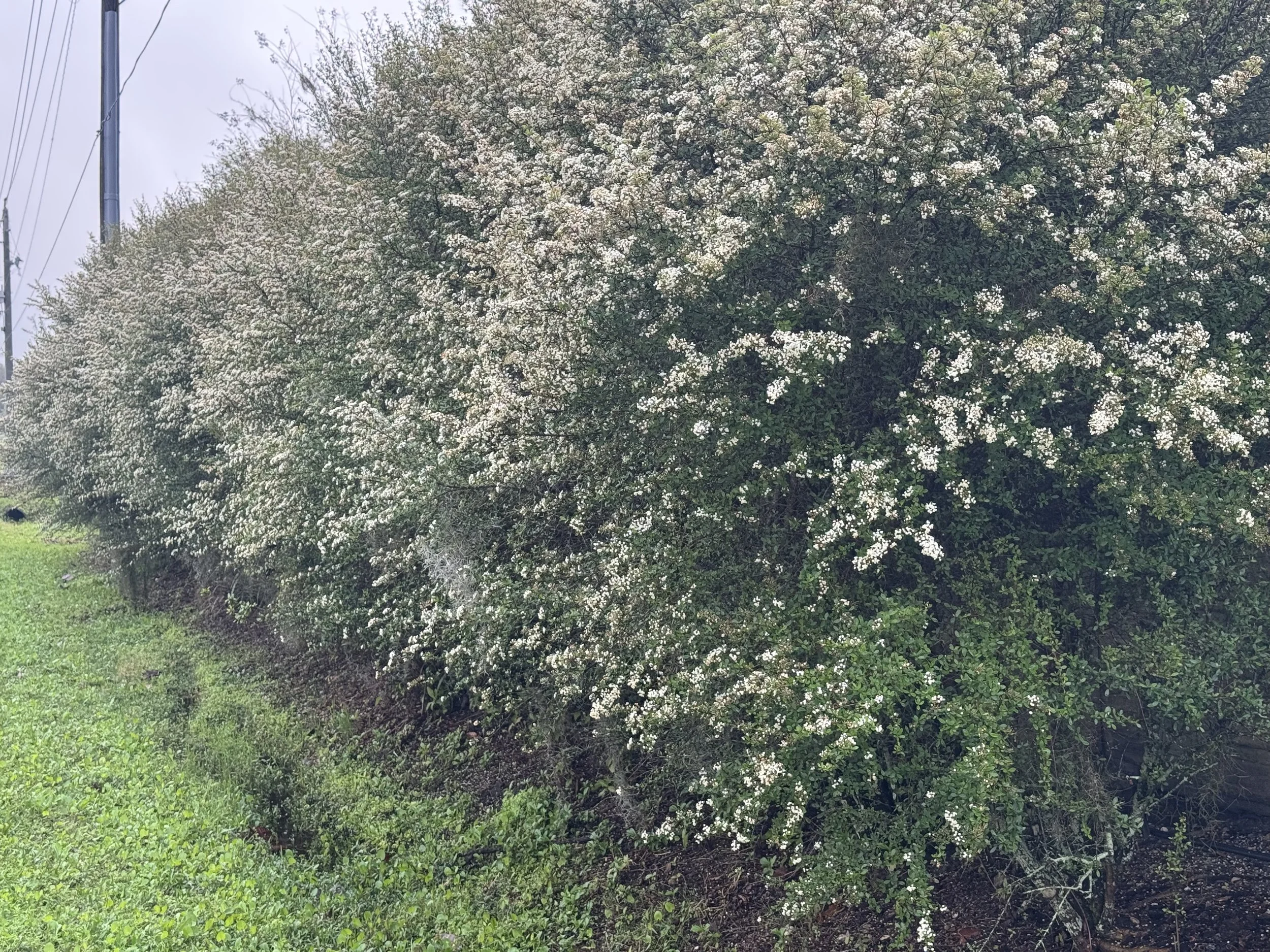
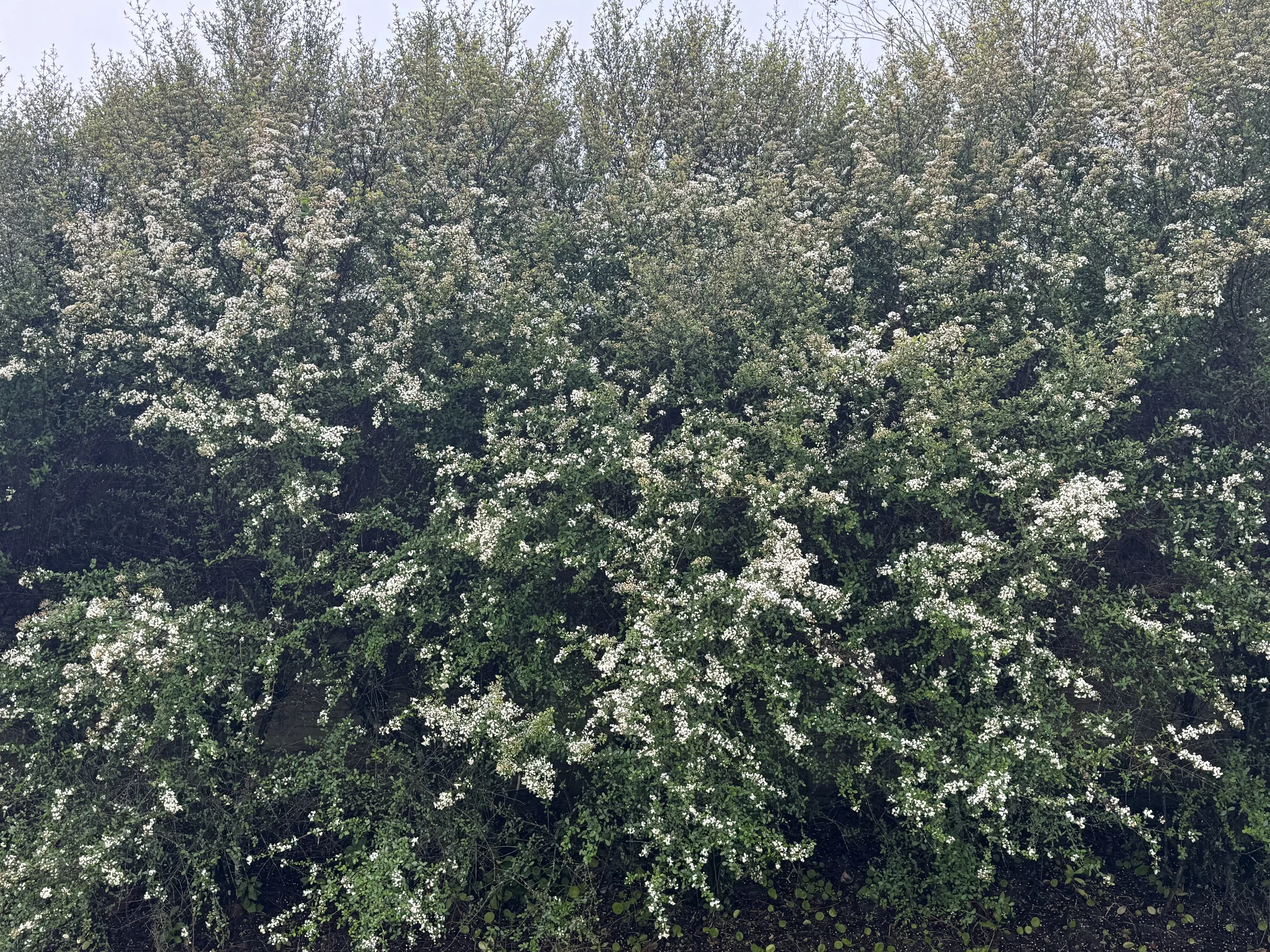
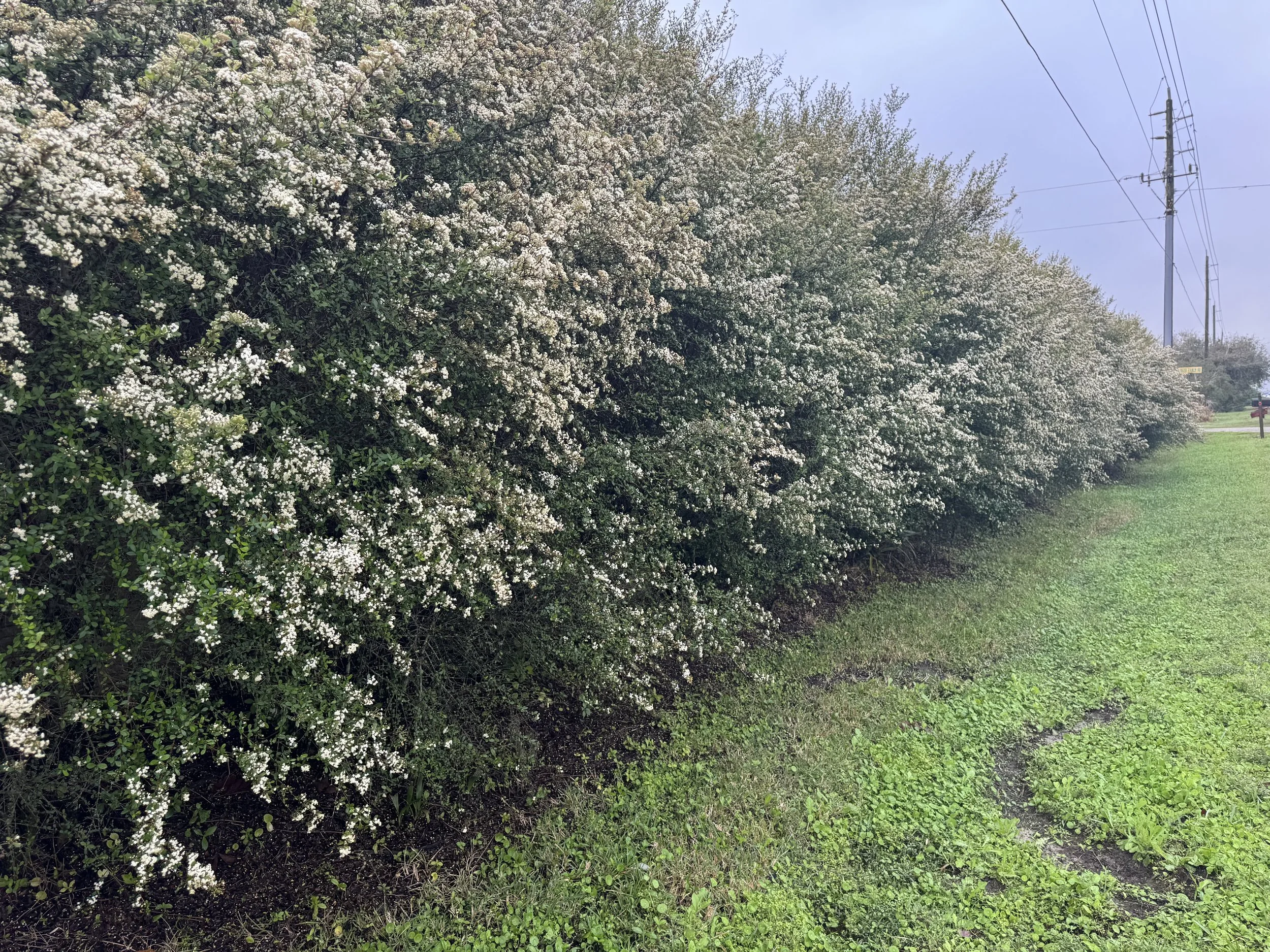
Viburnum obovatum
Walter's Viburnum is an evergreen shrub or small tree native to the southeastern United States that can reach up to 20’ tall but is commonly pruned as a hedge or screen. This densely branched species features fine-textured foliage and produces masses of small, fragrant white flower clusters in early spring, giving it its nickname "Florida snow," that attract butterflies and other pollinators. In fall, it develops dark blue berries that provide food for birds and wildlife. Thriving in zones 7-10, it adapts to various soil types and light conditions from full sun to partial shade, making it an excellent choice for native landscaping, wildlife gardens, and as a Florida-friendly alternative to boxwood hedges.
Sizing of cultivars:
‘Withlacoochee’ - 12’-15’
‘Select’ - 6’-8’
‘Densa’ - 4’-5’
‘Snow Fury’ - 5’-10’
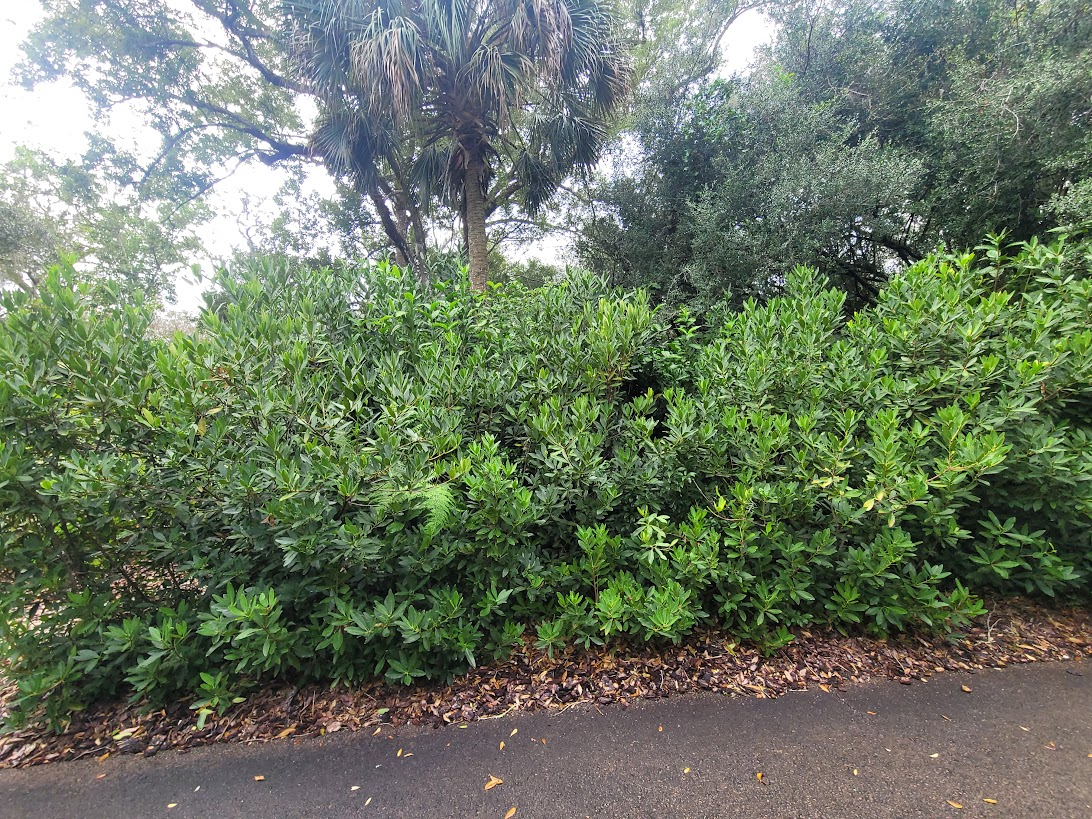
Illiium parviflorum
Yellow Anise is an evergreen, deer-resistant, fragrant shrub that gets about 10’ tall (but is easily pruned) with a rounded, spreading form. This rare species features glossy, leathery olive-green leaves that emit a strong anise-like fragrance when crushed. The small, yellow-green flowers in late spring attract butterflies and pollinators and are followed by star-shaped seed clusters. Yellow Anise does well in an area of the garden with partial to full shade and consistent moisture (or irrigation).
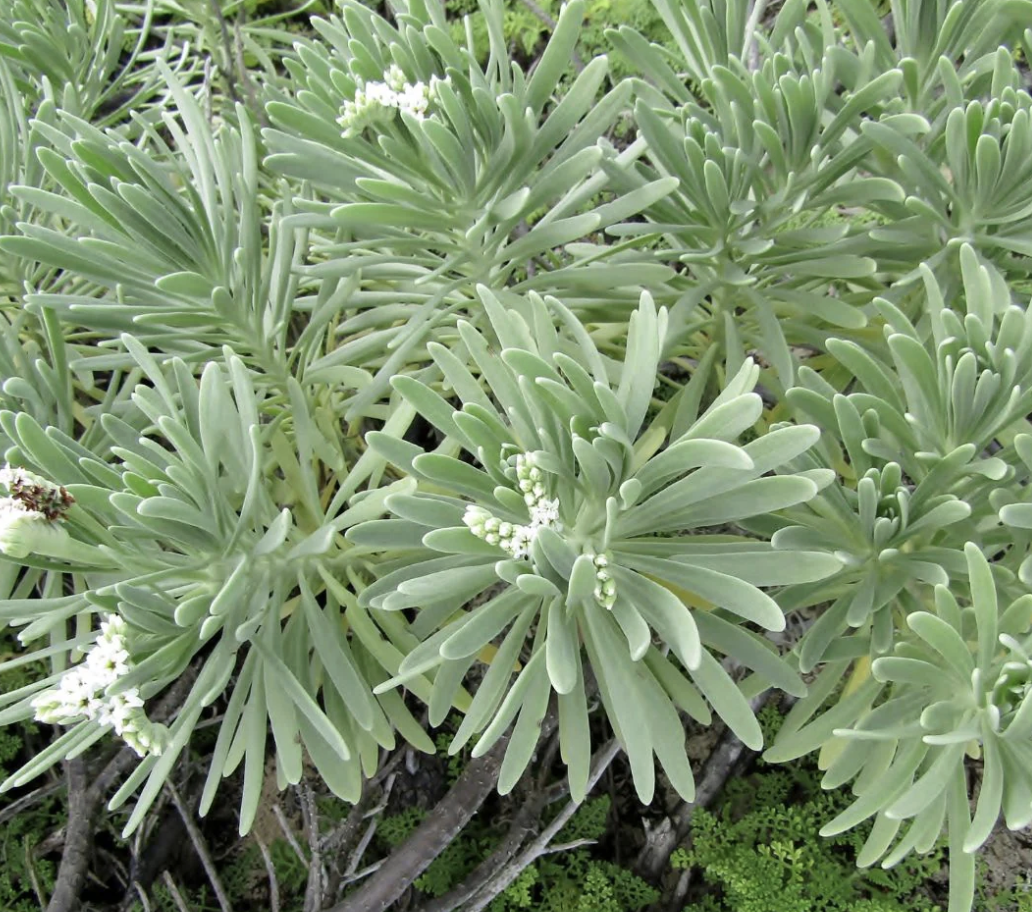


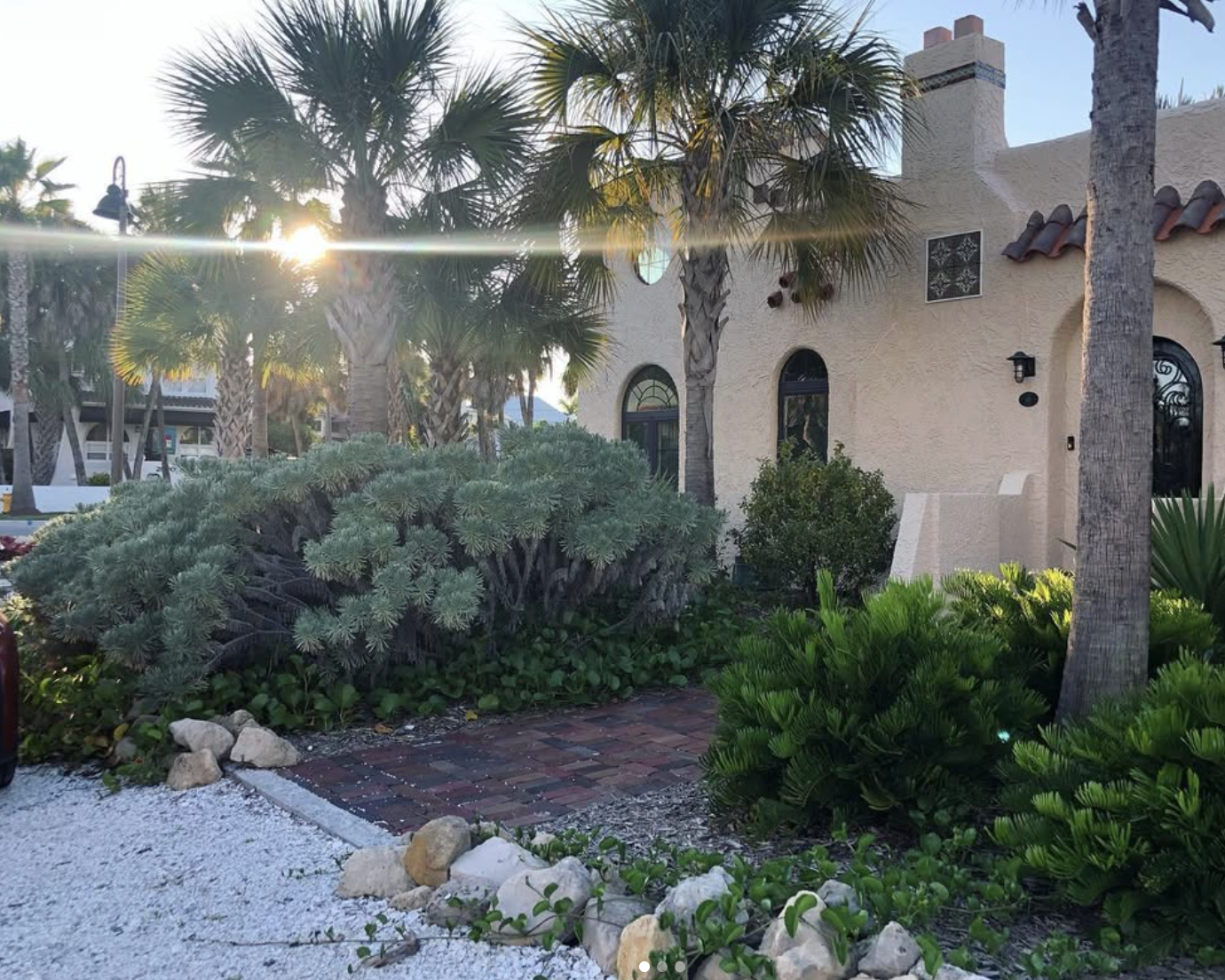
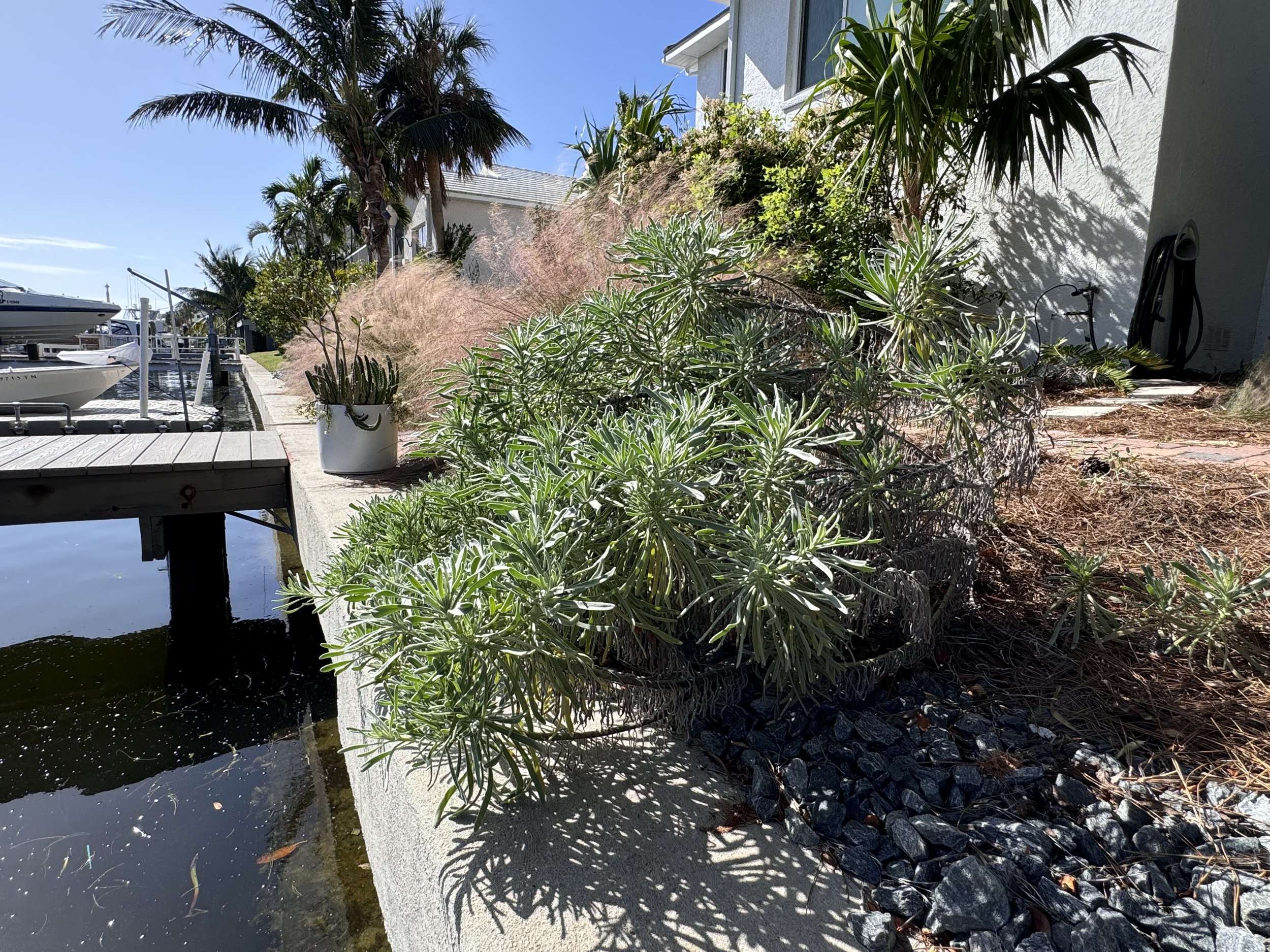
Heliotropium gnaphalodes
Sea Lavender is a coastal shrub that grows up to 6’ tall and 10’ wide. It’s a great plant for hedges, mass planting, and even dune reclamation. It is also highly drought tolerant and tolerant of occasional/brief salt inundation and can survive storm surges.
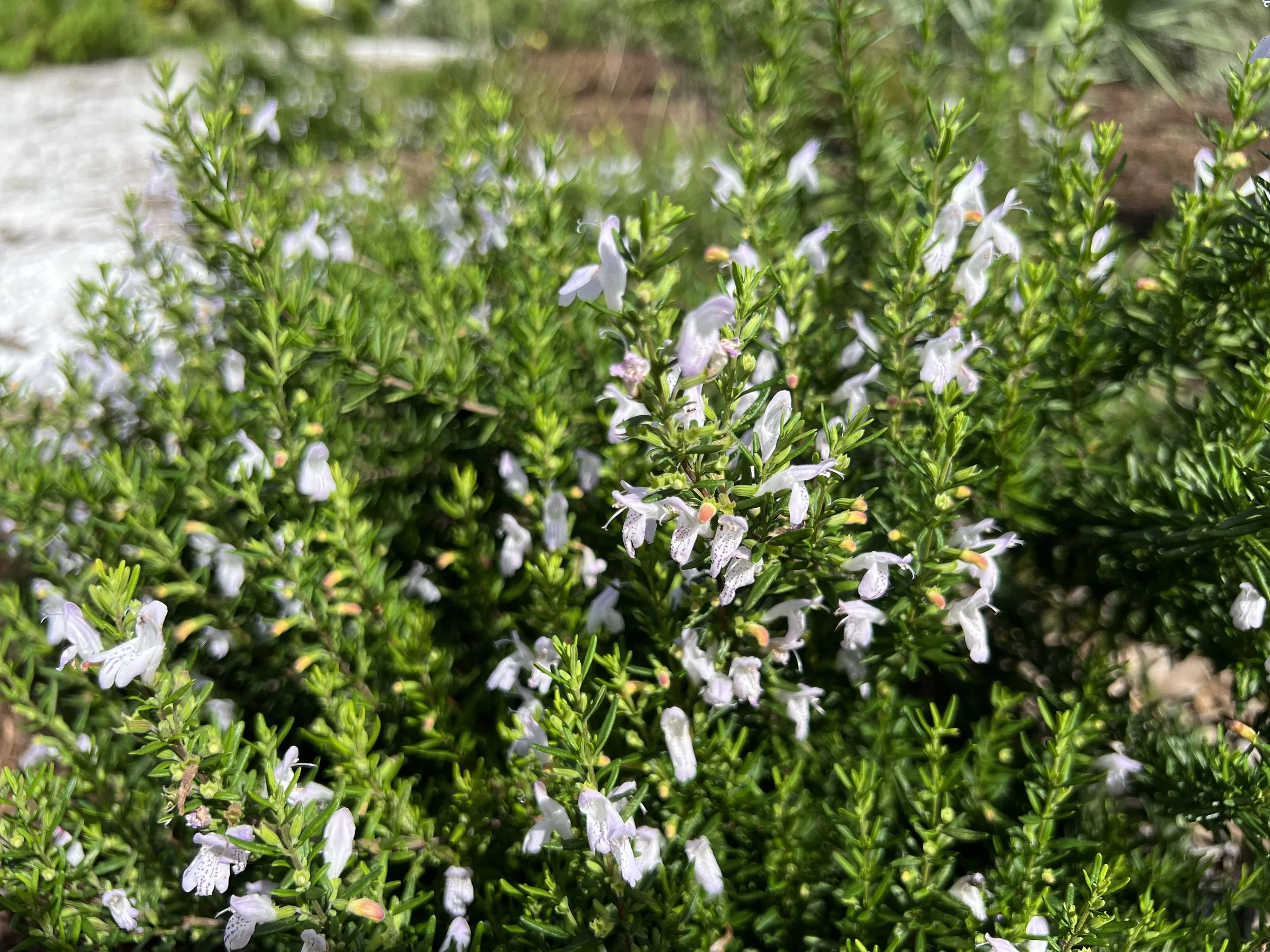
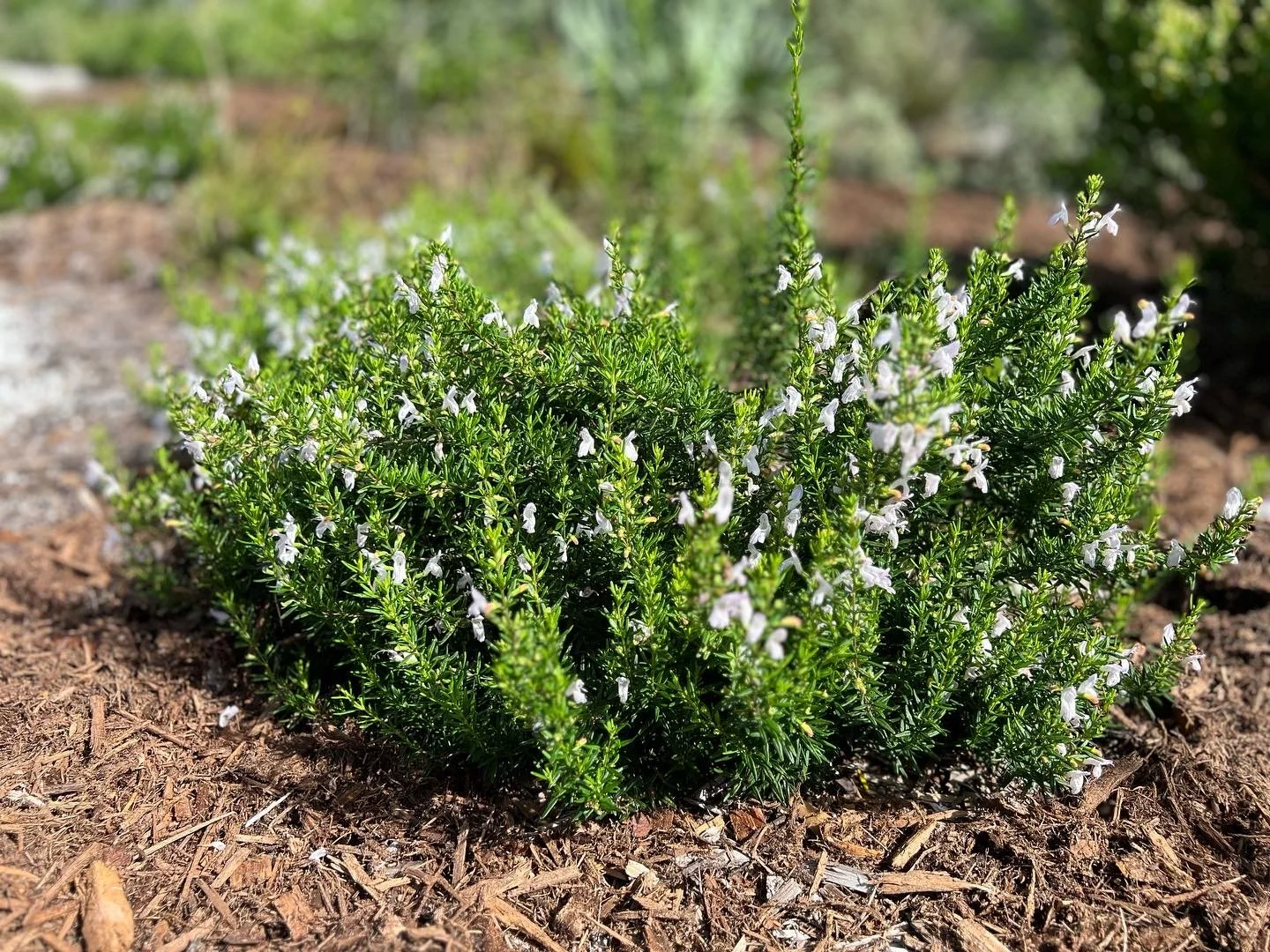
Clinopodium georgianum
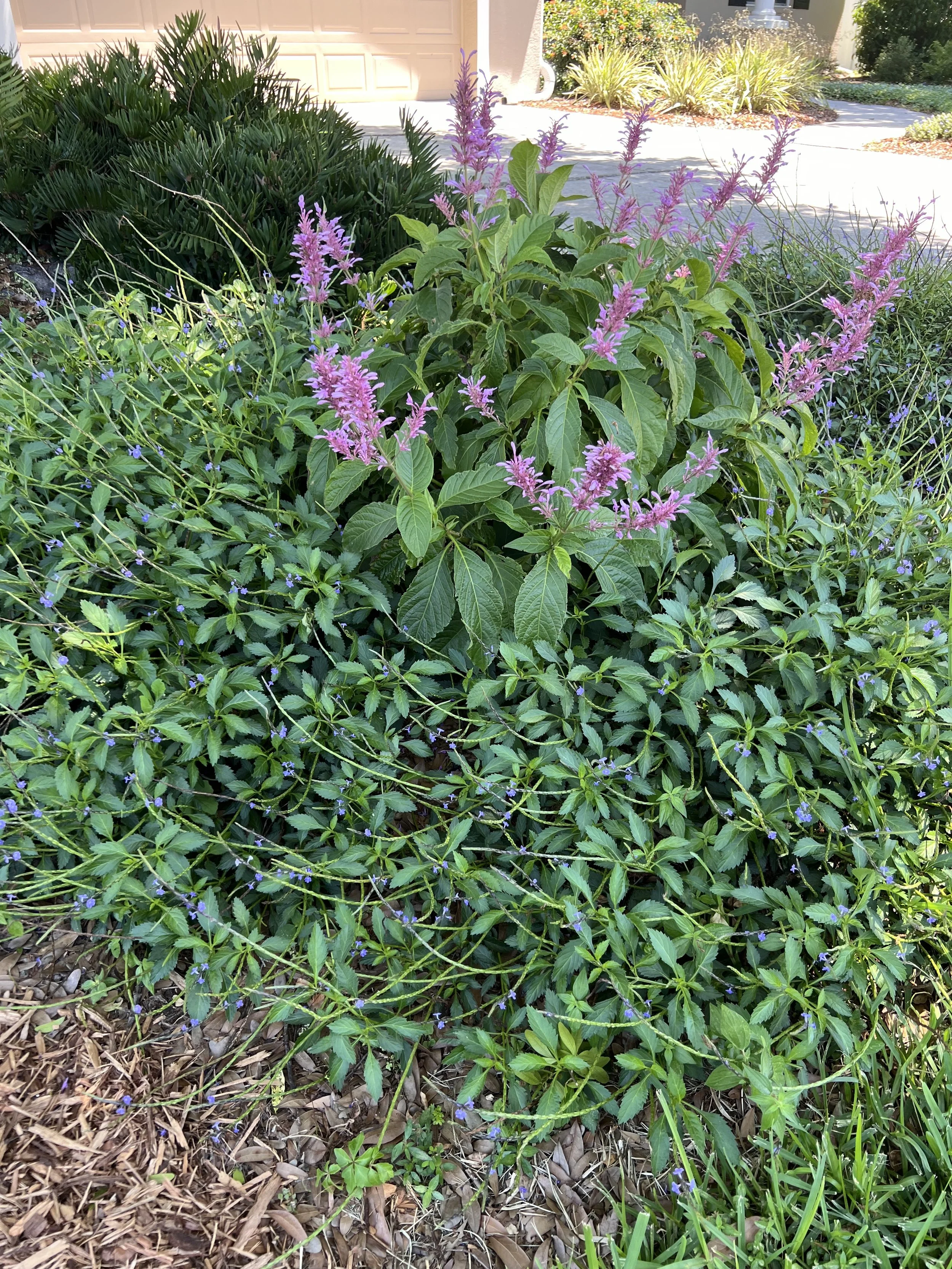
A charming native perennial sub-shrub that grows into a tidy 2’ x 2’ mound. It thrives in full sun to partial shade and prefers well-drained, dry to average soil. Its most standout feature is the intensely fragrant foliage, making it a perfect choice for planting along pathways where the scent can be enjoyed by passersby. From summer into fall, it is covered in delicate light pink-to-purple flowers that are a magnet for pollinators, particularly bees.
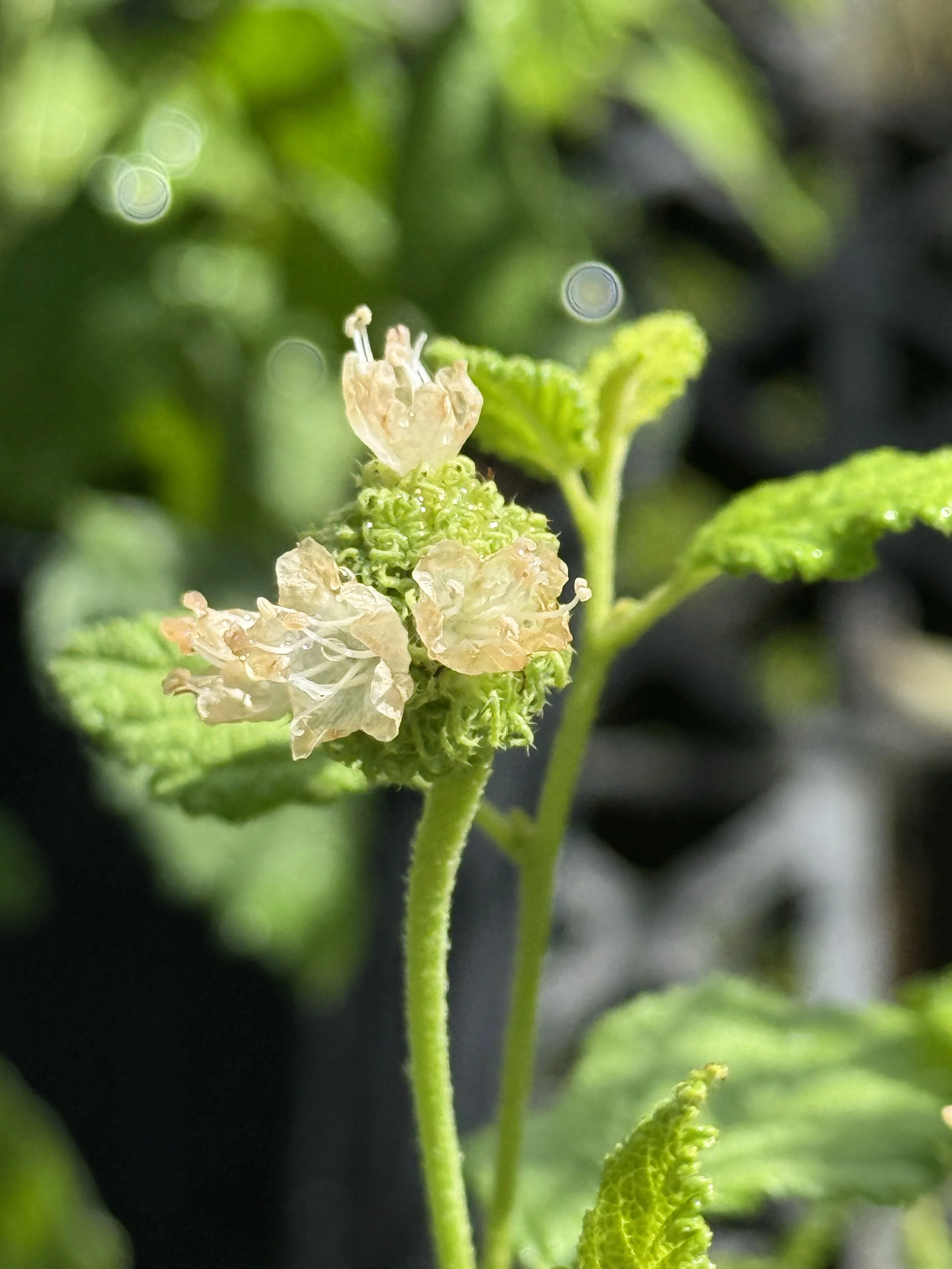
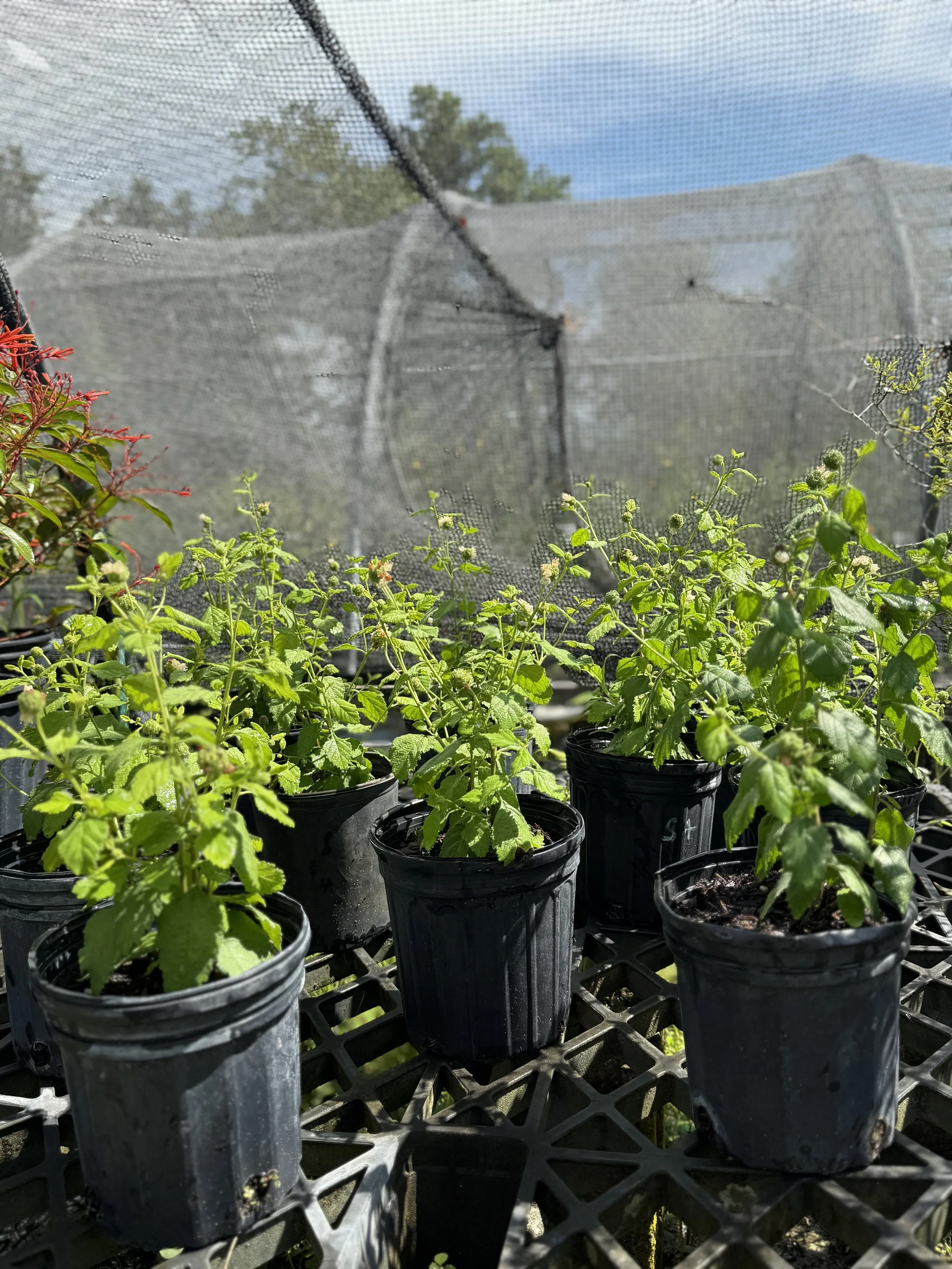
Varronia globosa
Bloodberry aka Butterfly Sage is a native, perennial, evergreen shrub. With clusters of small white blooms followed by bright red berries, it attracts many butterflies, bees and birds. As a smaller shrub, usually not taller than 6 feet, it blends beautifully into a pollinator garden. Bloodberry is salt-tolerant but not for direct salt spray and drought-tolerant.
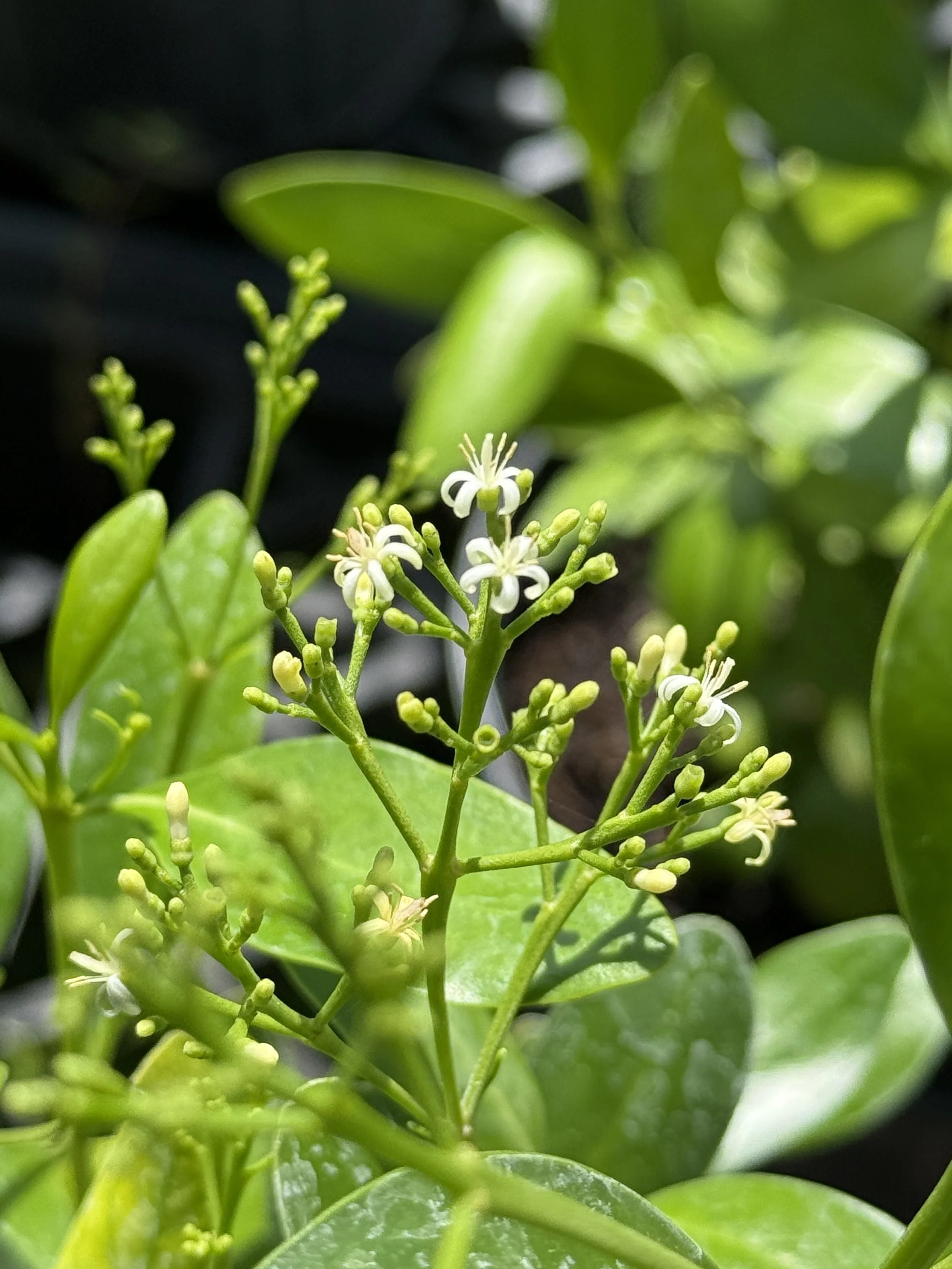
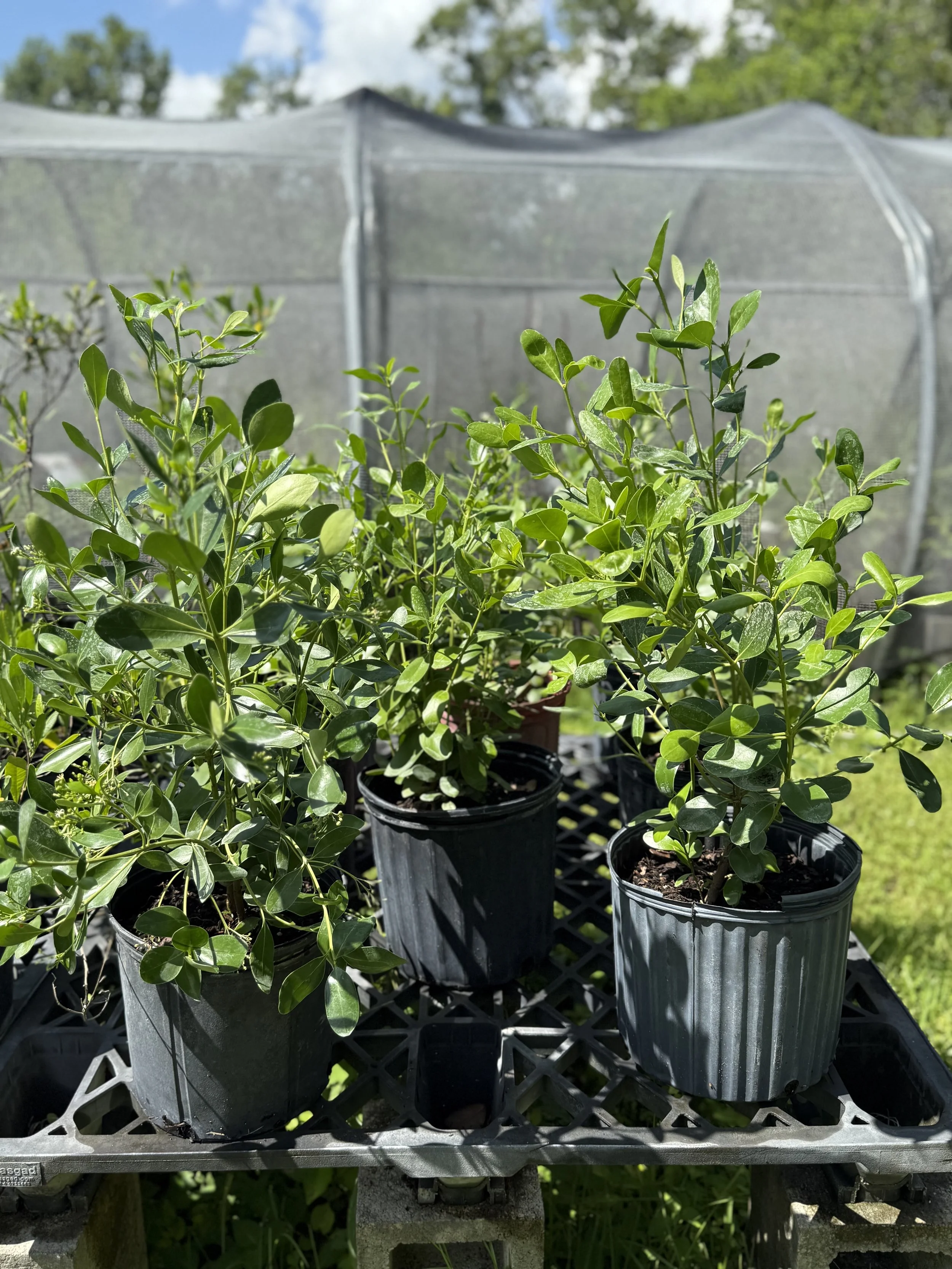
Erithalis fruticosa
Black Torch is a native, evergreen shrub that reaches 8 feet in height. It produces clusters of small, white flowers followed by berry drupes that support both pollinators and birds. Black Torch is perfect for coastal and wildlife gardens and can be grown as a specimen or informal buffer. It is a salt-tolerant, low-maintenance plant that thrives in well-drained alkaline soils with a moderate level of soil moisture.
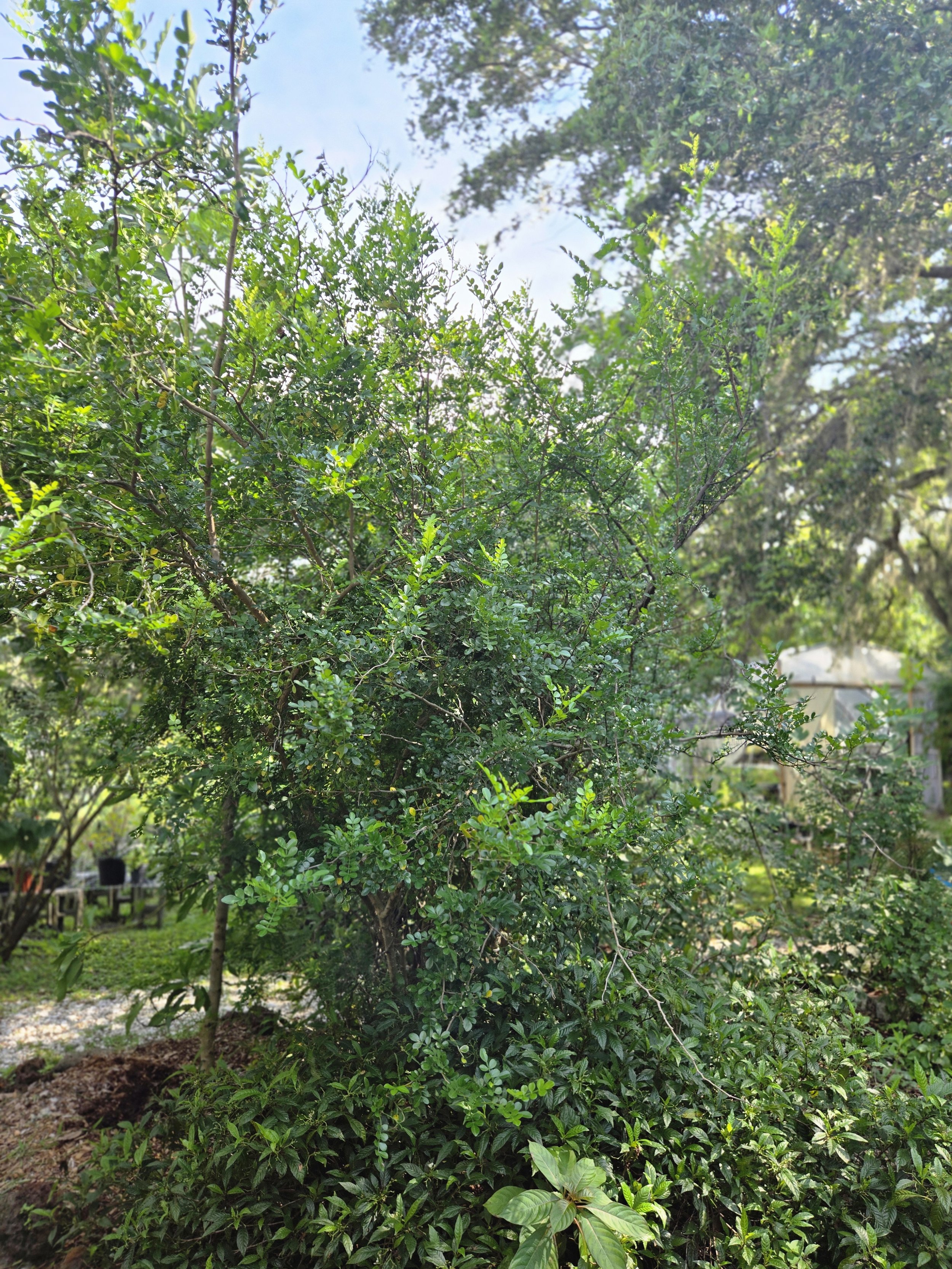
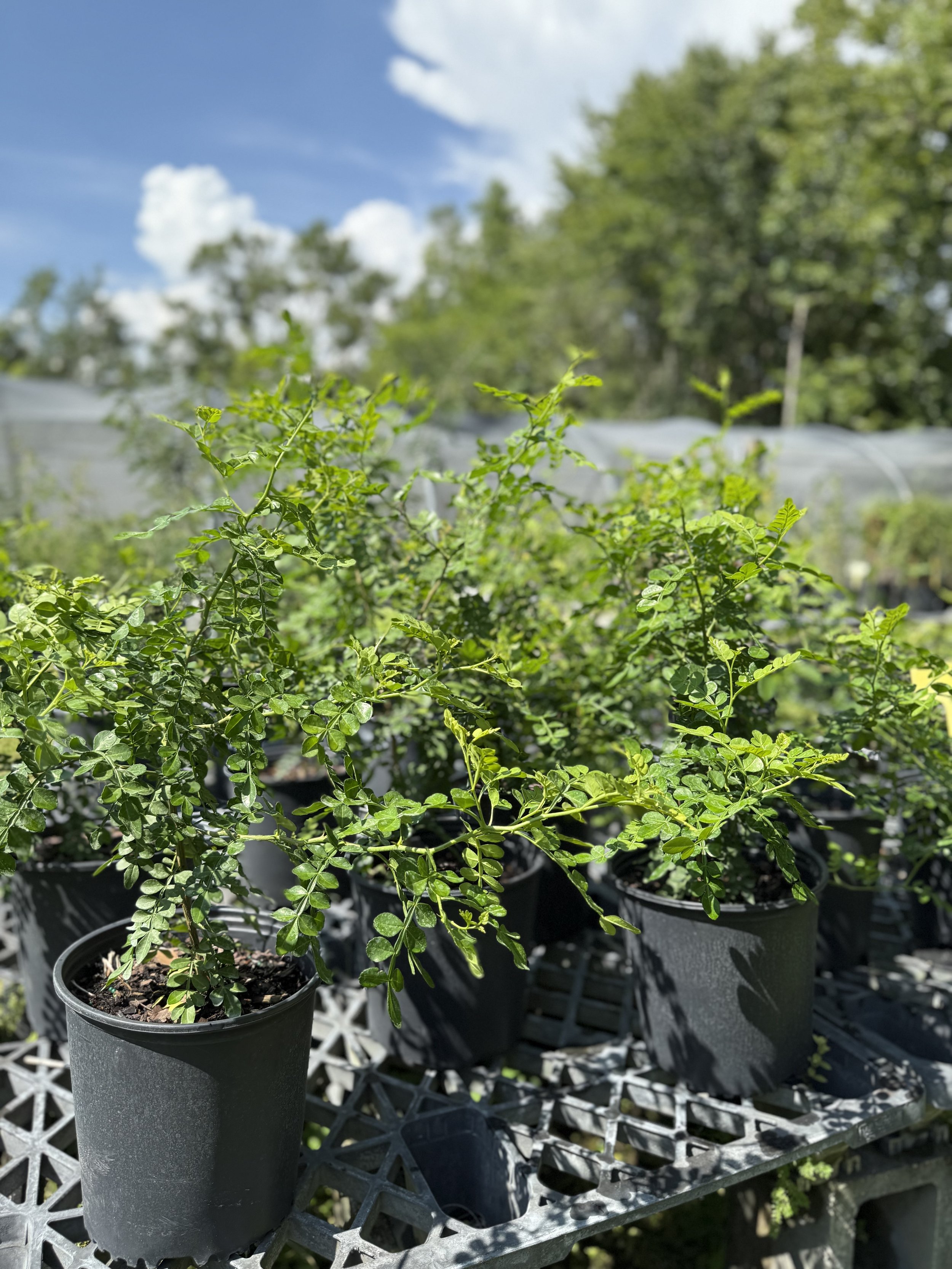
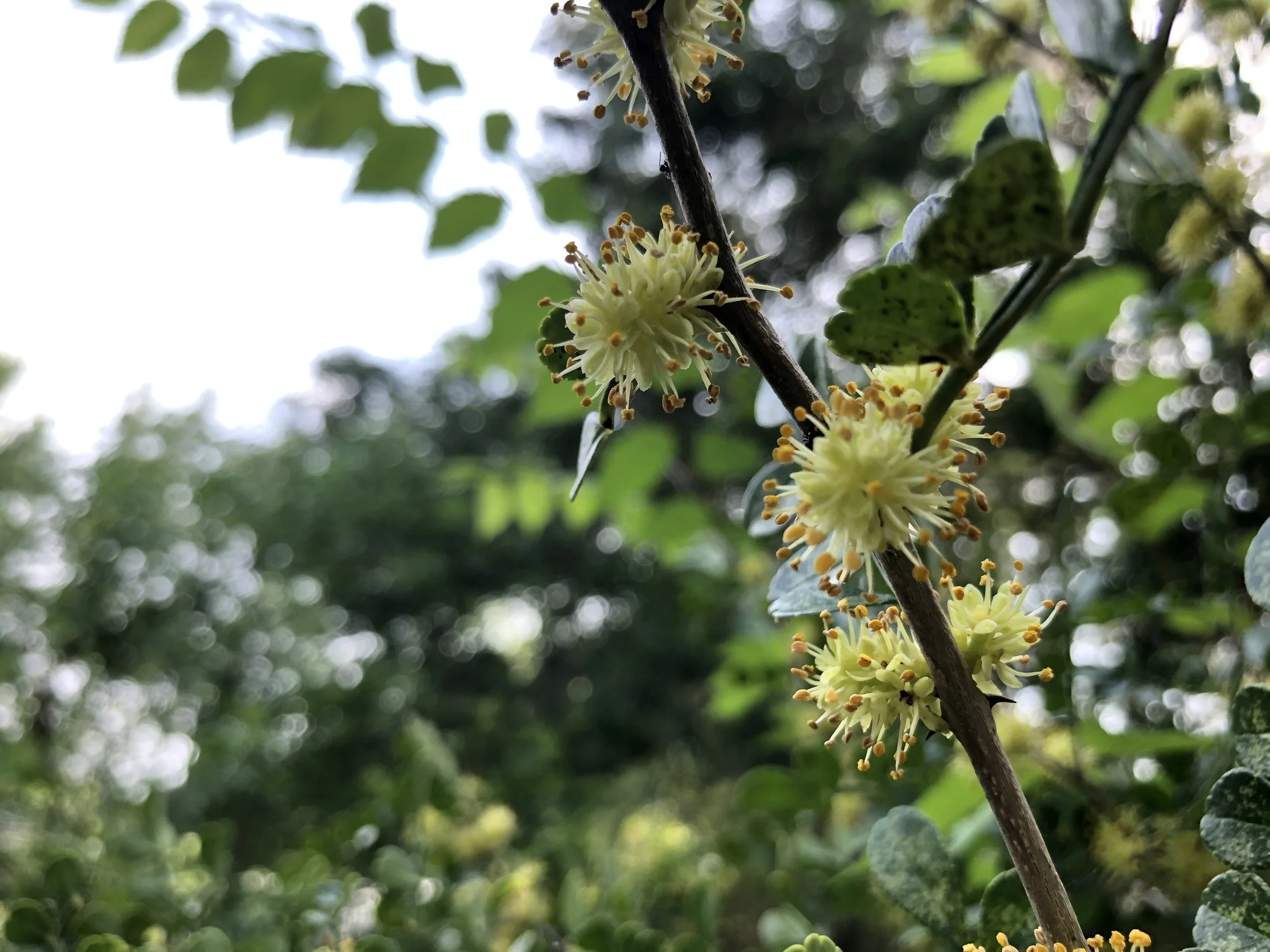
Zanthoxylum fagara
Wild Lime is a native evergreen shrub or small tree native to southern Florida and the Florida Keys that grows up to 23 feet tall with a spreading, often multi-trunked form. This member of the citrus family features compound leaves with distinctly winged leaf stems and 7-11 rounded leaflets that emit a strong lime fragrance when crushed. The trunk and branches are armed with sharp spines, and it produces small, greenish-yellow flowers in dense clusters followed by brown seed capsules containing black seeds. Thriving in hammocks and woodland edges, it serves as a larval host plant for giant swallowtail butterflies and provides cover and food for various wildlife species. With its dense, thorny foliage, it makes an excellent natural barrier or privacy screen for central and south Florida landscapes.
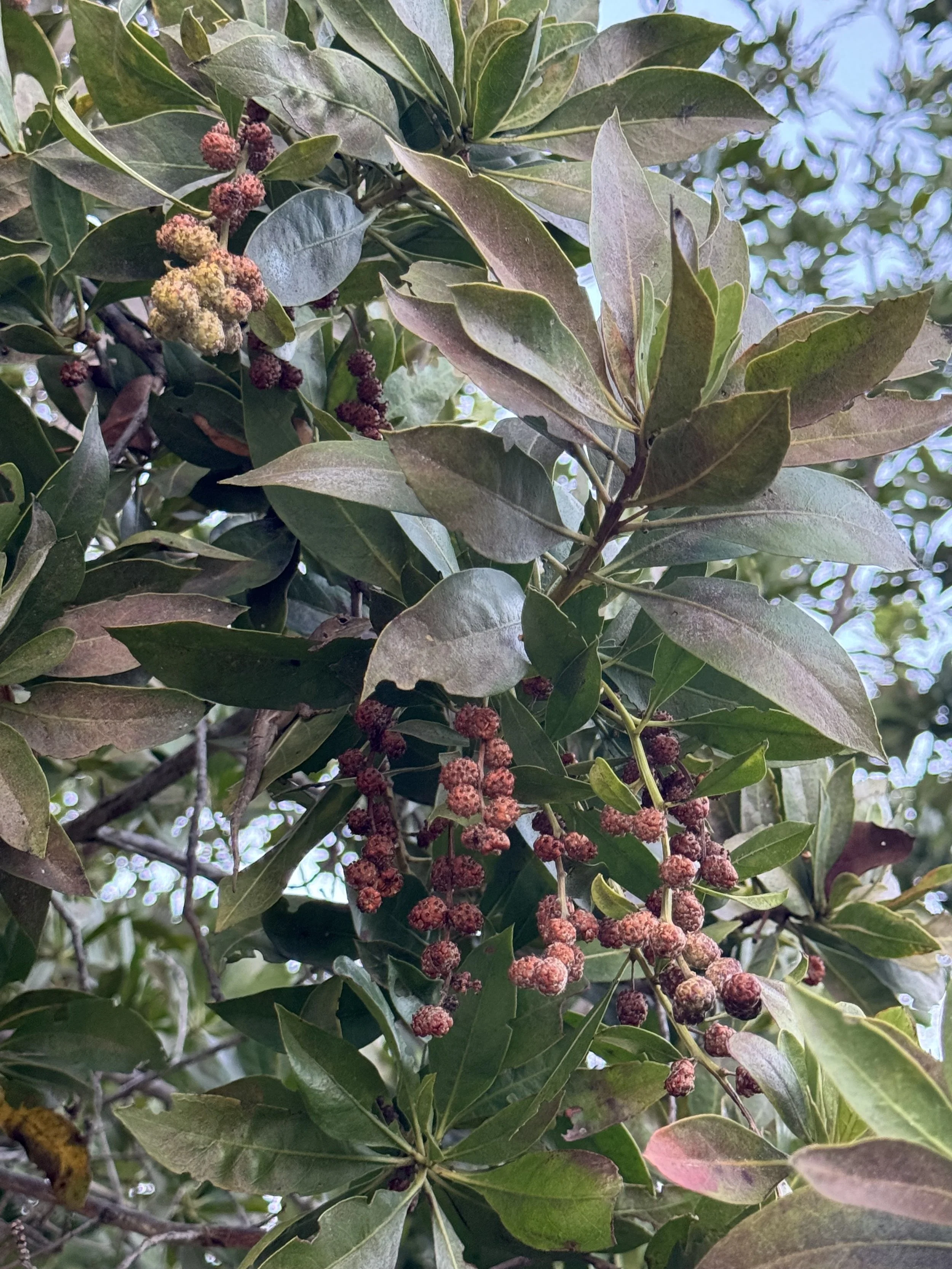

Conocarpus erectus
The Green Buttonwood is an evergreen, coastal, native small tree or large shrub that can reach 20' and has vibrant green leaves and small brown berries that look like wood buttons. This buttonwood is considered the 4th type of mangrove and really thrives in coastal conditions, and can take salt water inundation and salty soils. The Buttonwood also has high wind tolerance making it a great windscreen on coastal properties.
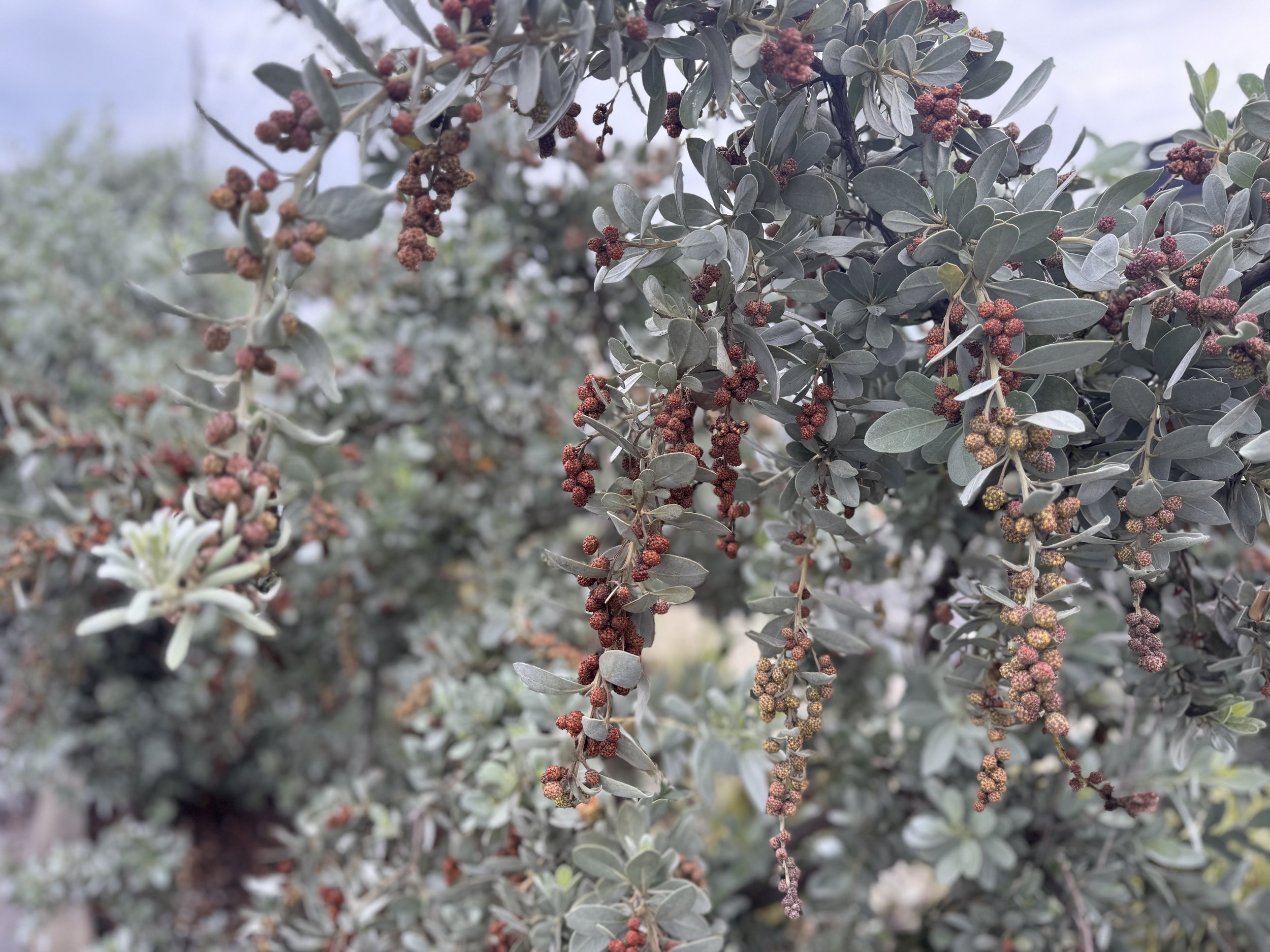
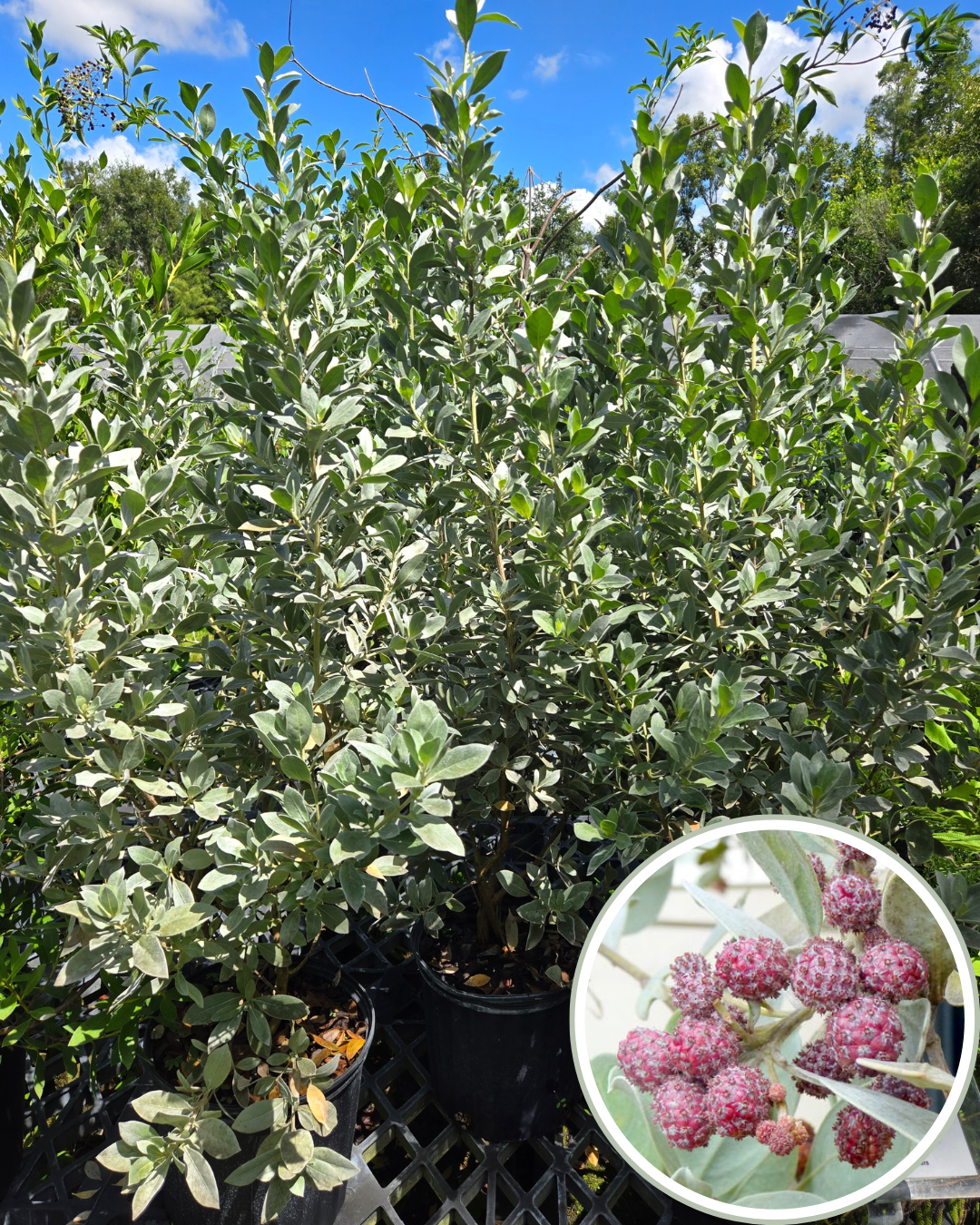
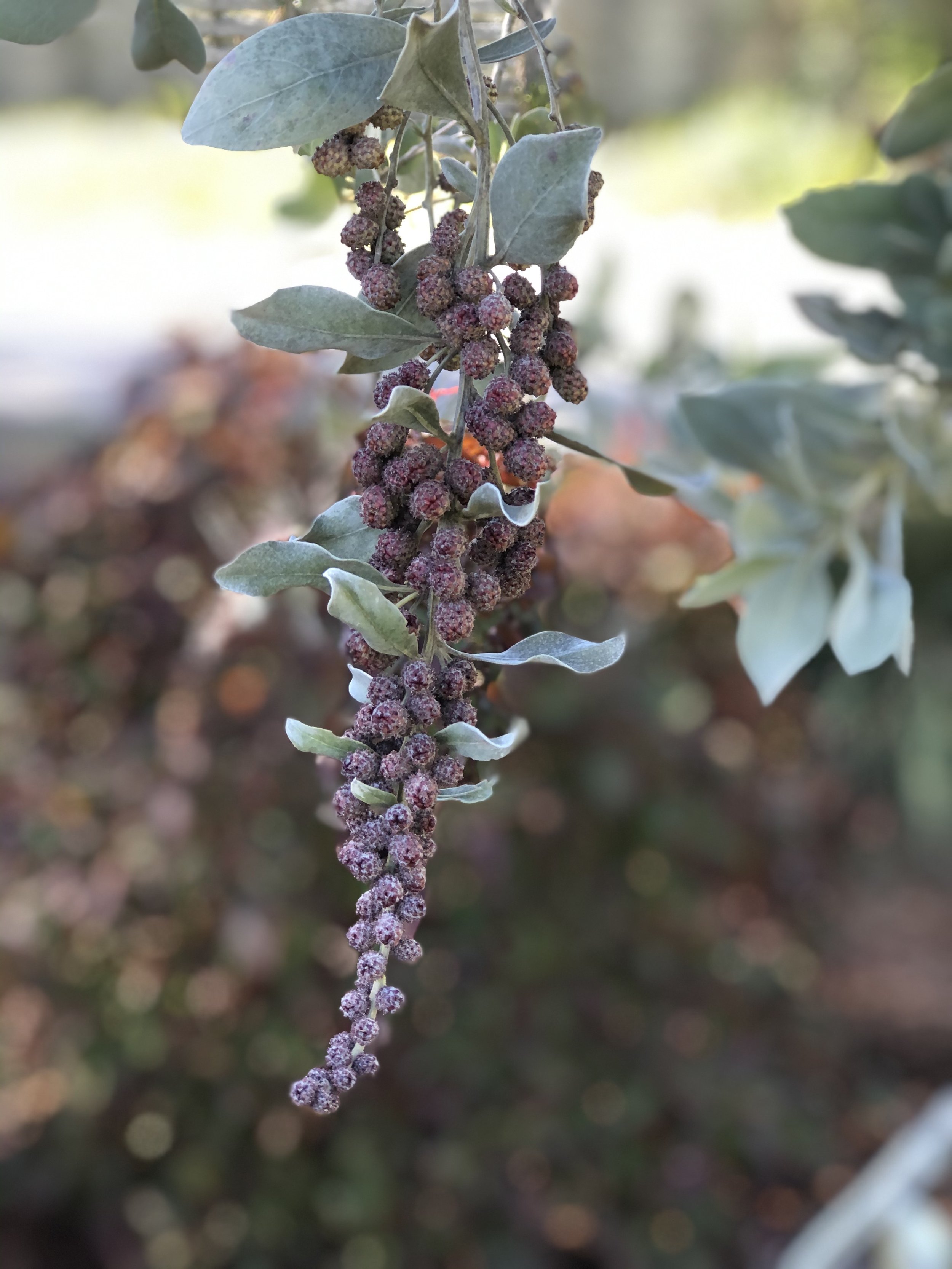
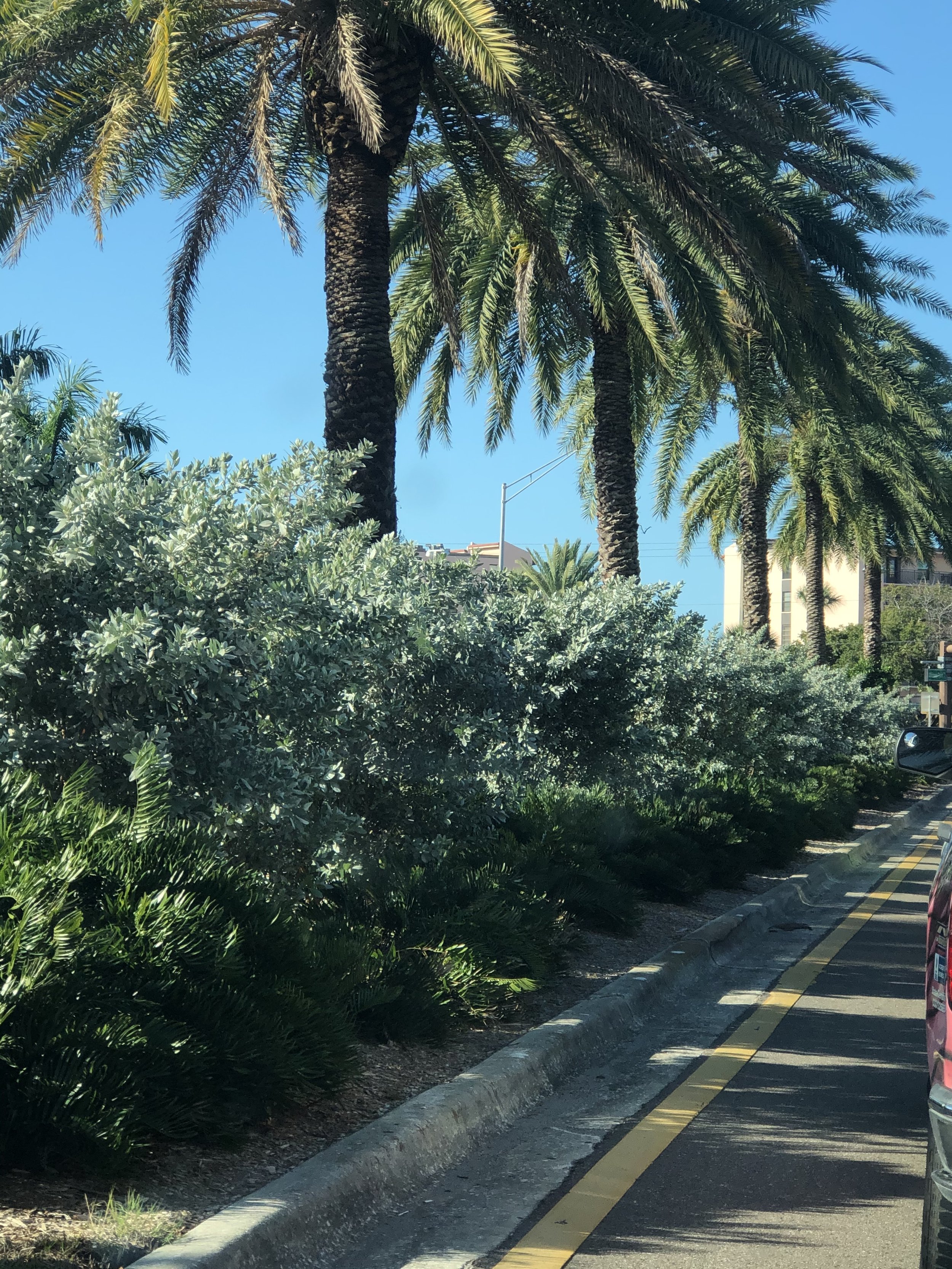
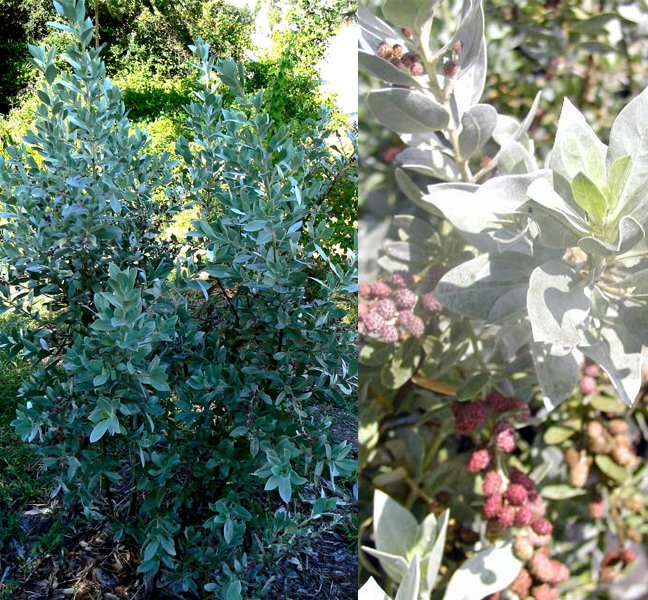
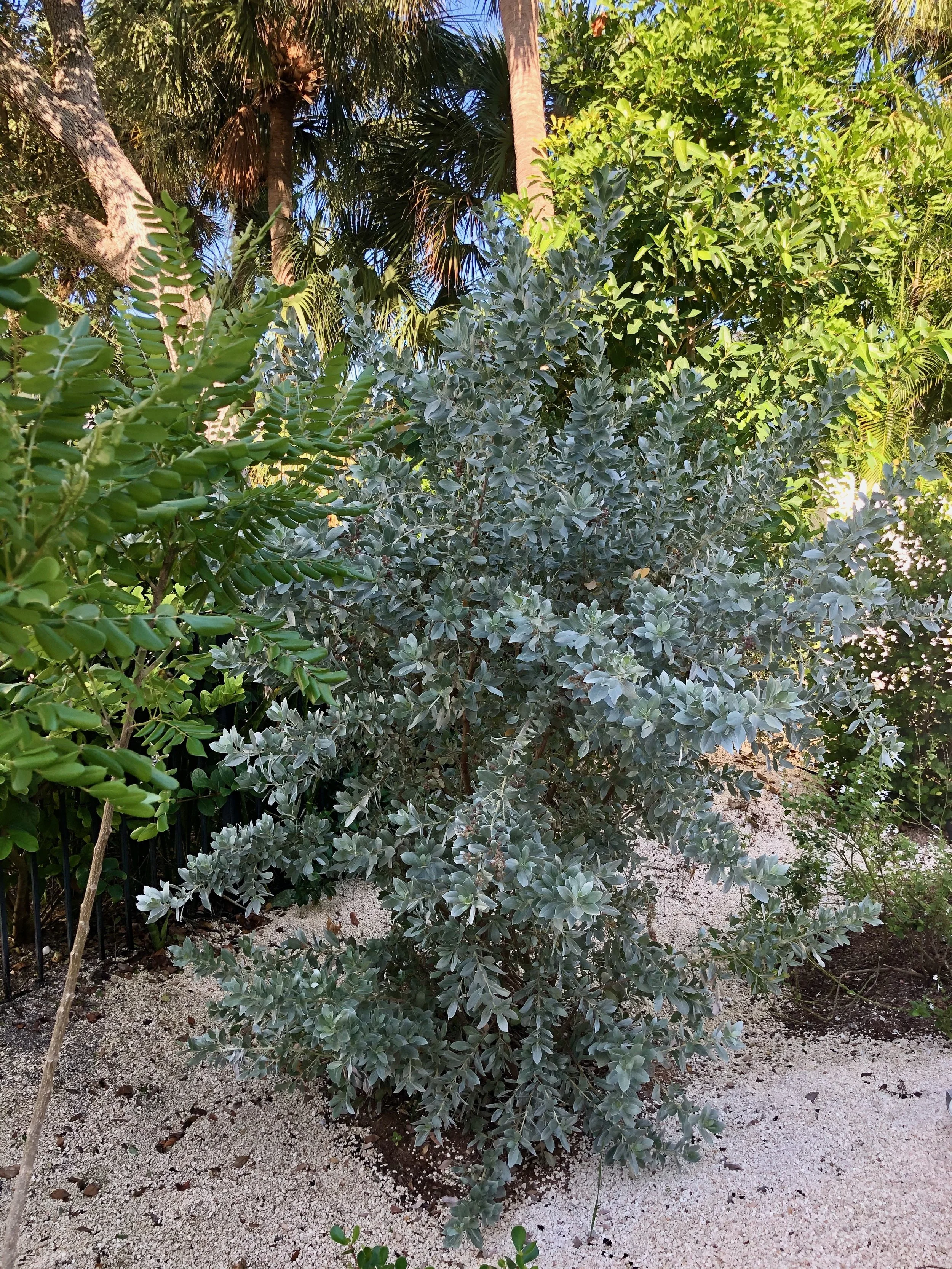
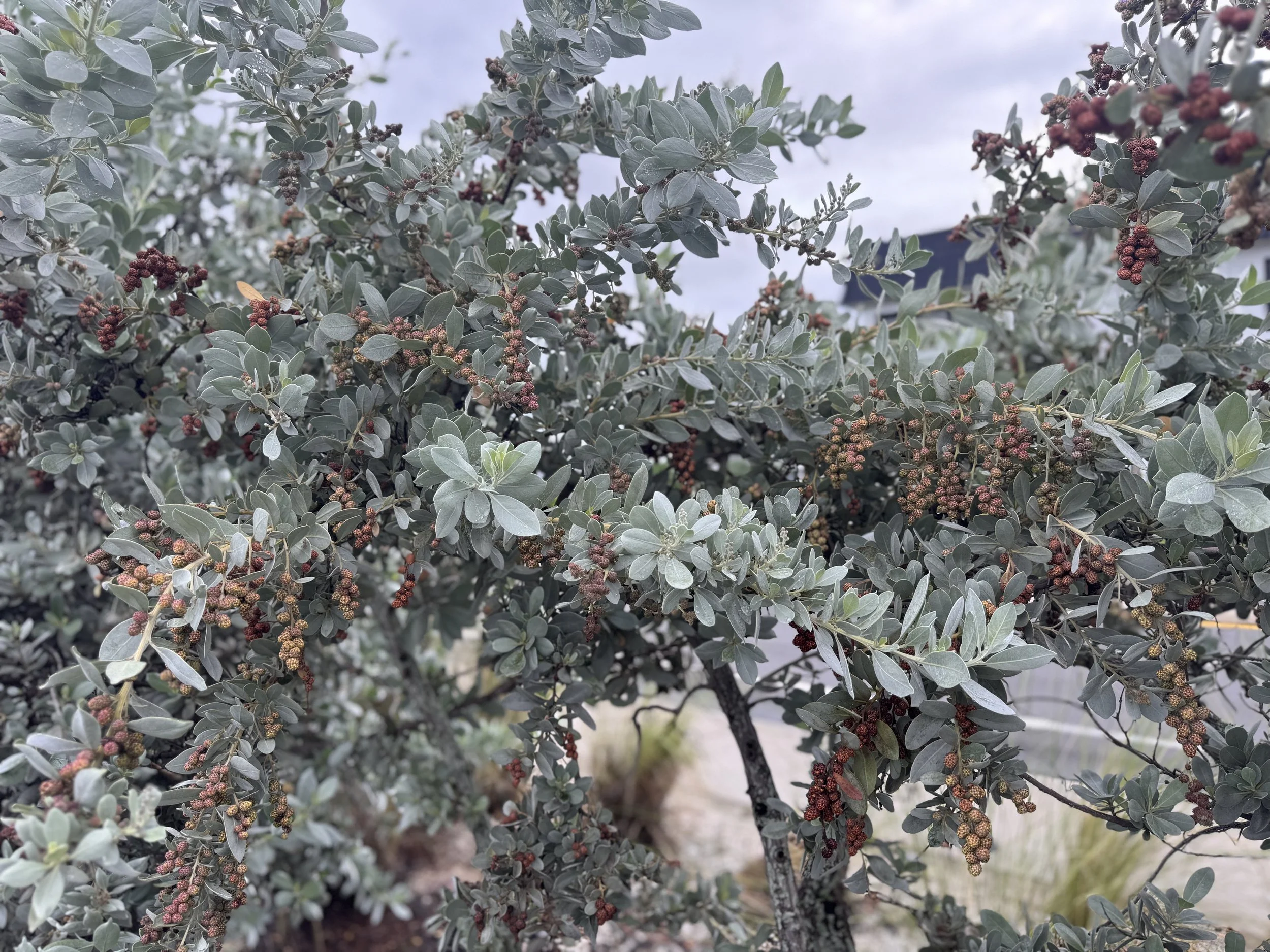
Conocarpus erectus var. sericeus
Silver Buttonwood is a unique coastal native shrub or small tree that can reach 20' and has soft silvery leaves and small brown berries that look like wood buttons. While it thrives in coastal landscapes, taking salt inundation and salty soils like a champ, it can be planted inland as well. Silver Buttonwood can be used as a specimen tree, part of a natural privacy screen or pruned into hedge.
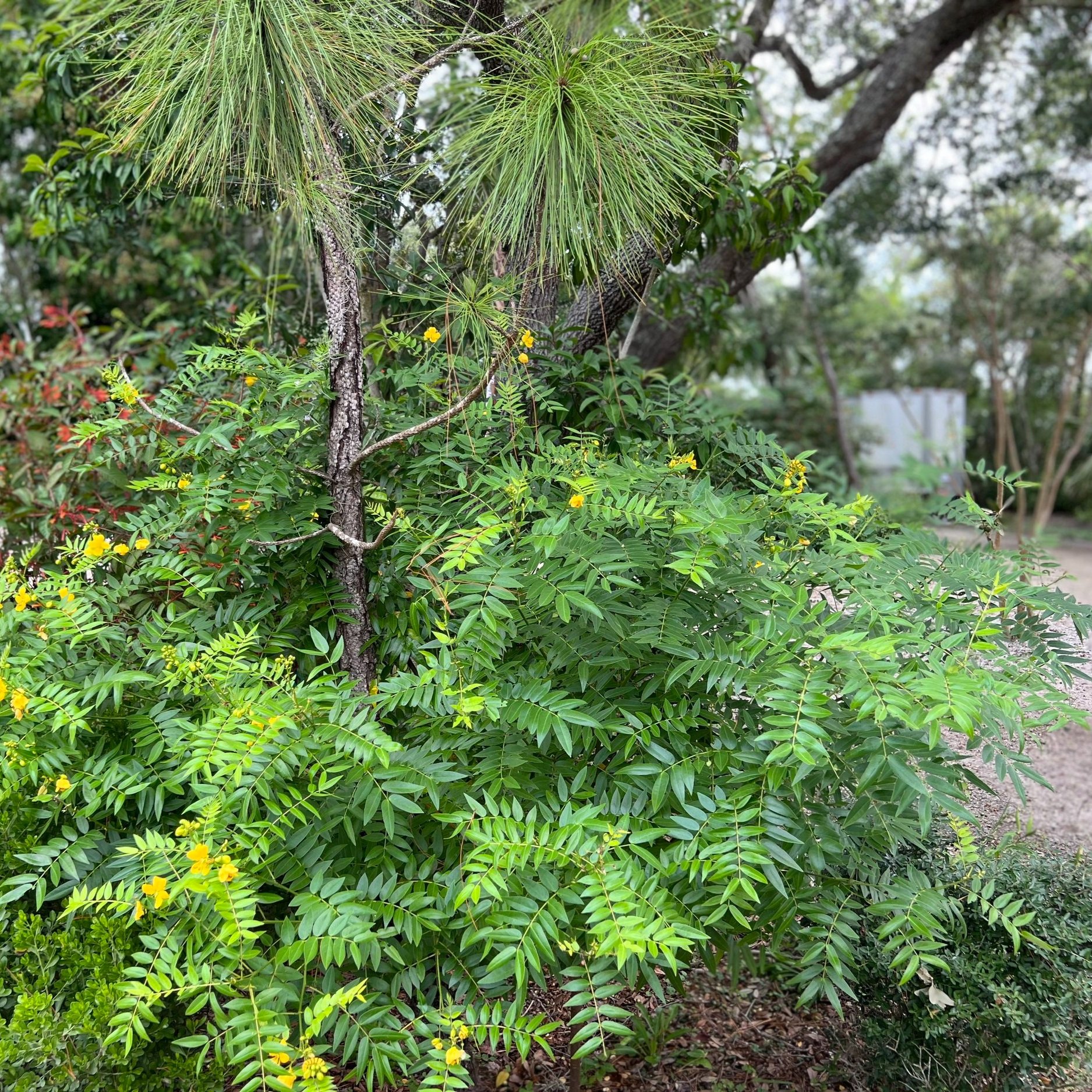
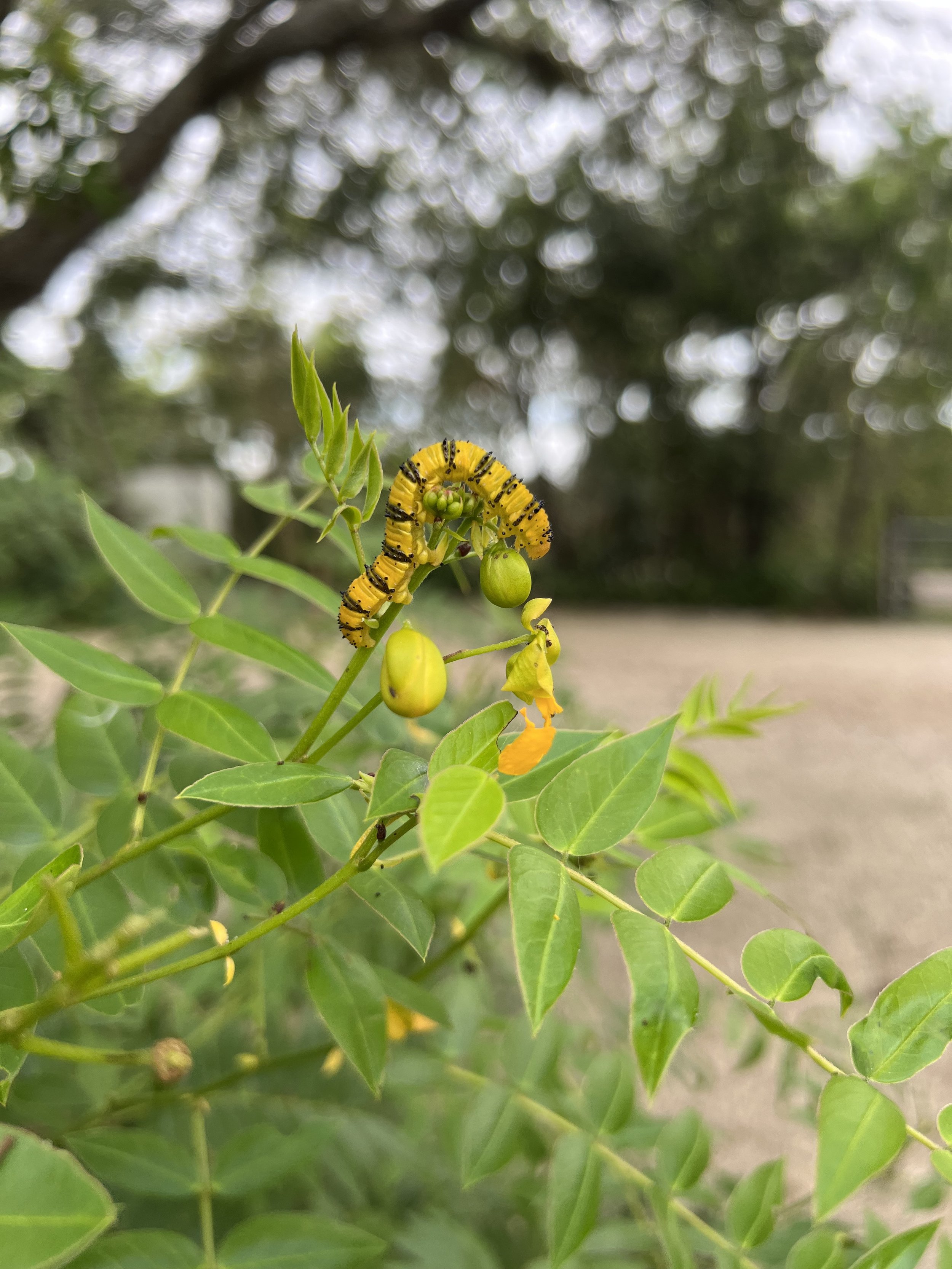
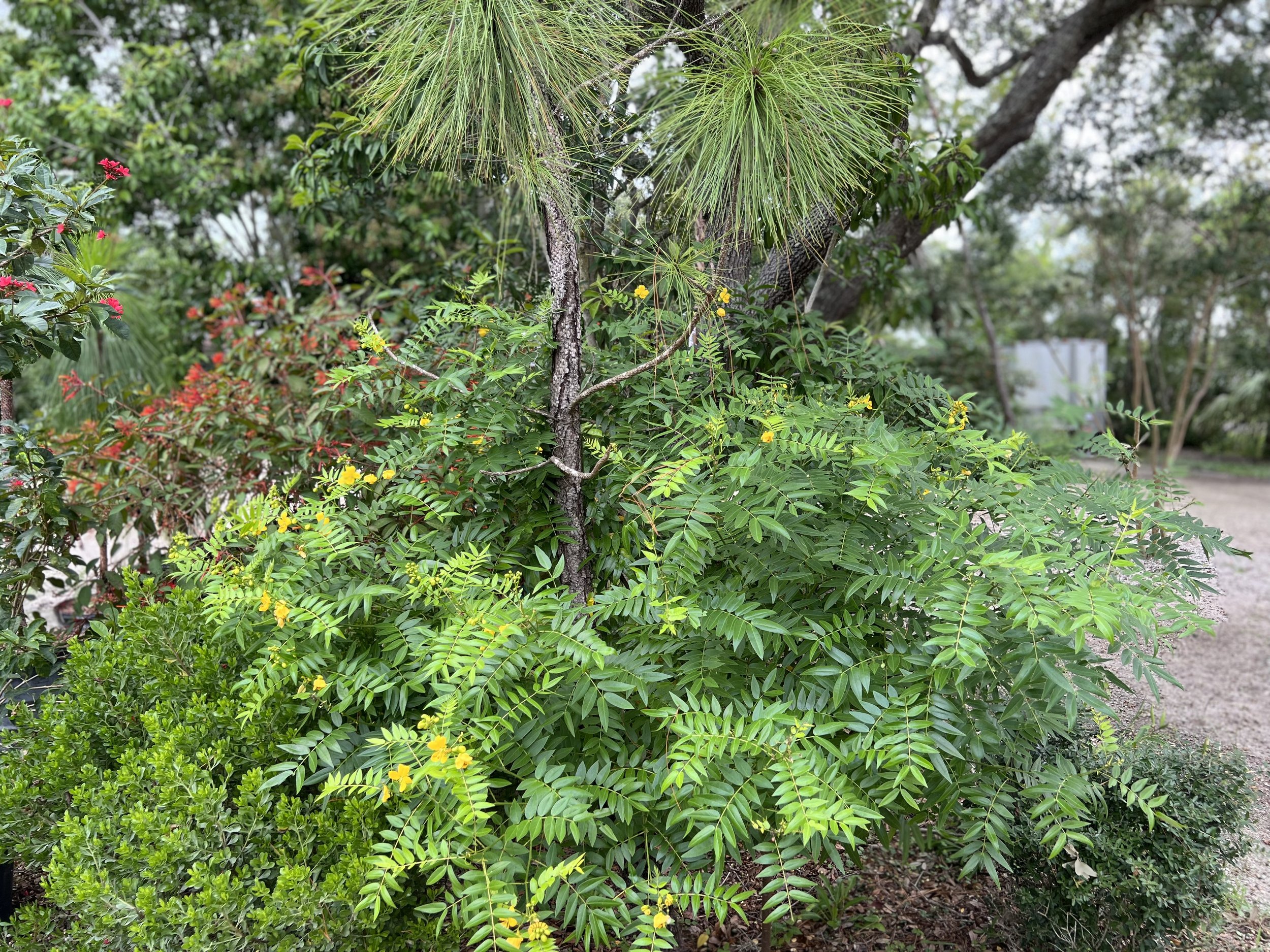
Senna ligustrina
Privet Senna is an evergreen perennial shrub native to Florida that grows 4’-8’ tall with an upright, narrow-crowned habit. This fast-growing member of the legume family features pinnately compound leaves with many small, dark green leaflets and produces clusters of bright yellow, five-petaled flowers from fall through spring. The blooms are followed by thin, brown seed pods approximately 5” long. Serving as a larval host plant for cloudless Sulphur, sleepy orange, and orange-barred Sulphur butterflies, it's an excellent choice for butterfly gardens while also attracting bees and other pollinators. Thriving in full sun to partial shade with well-drained soils, it naturally occurs along forest edges and hammocks from central Florida southward and readily self-seeds in suitable conditions.
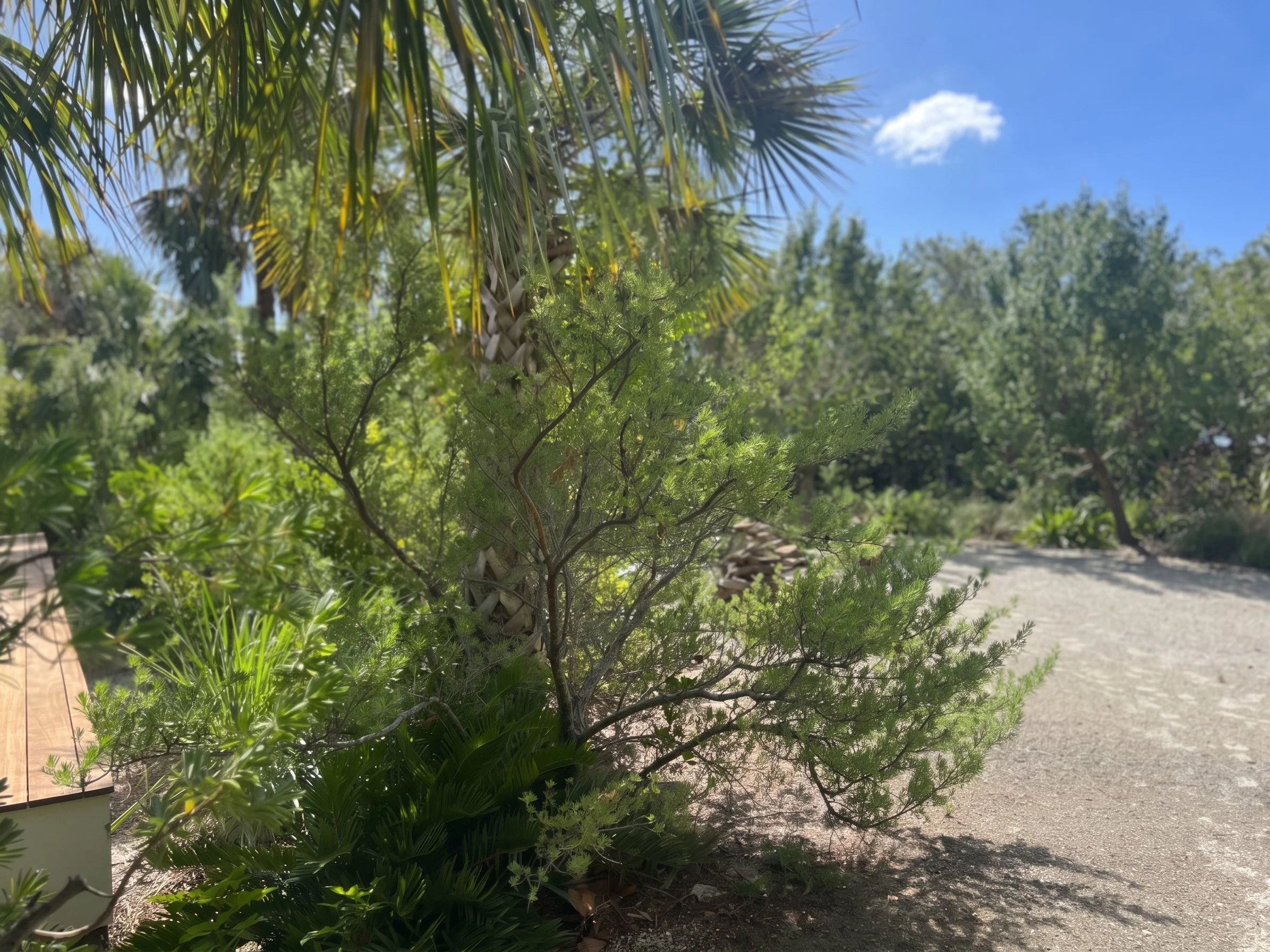
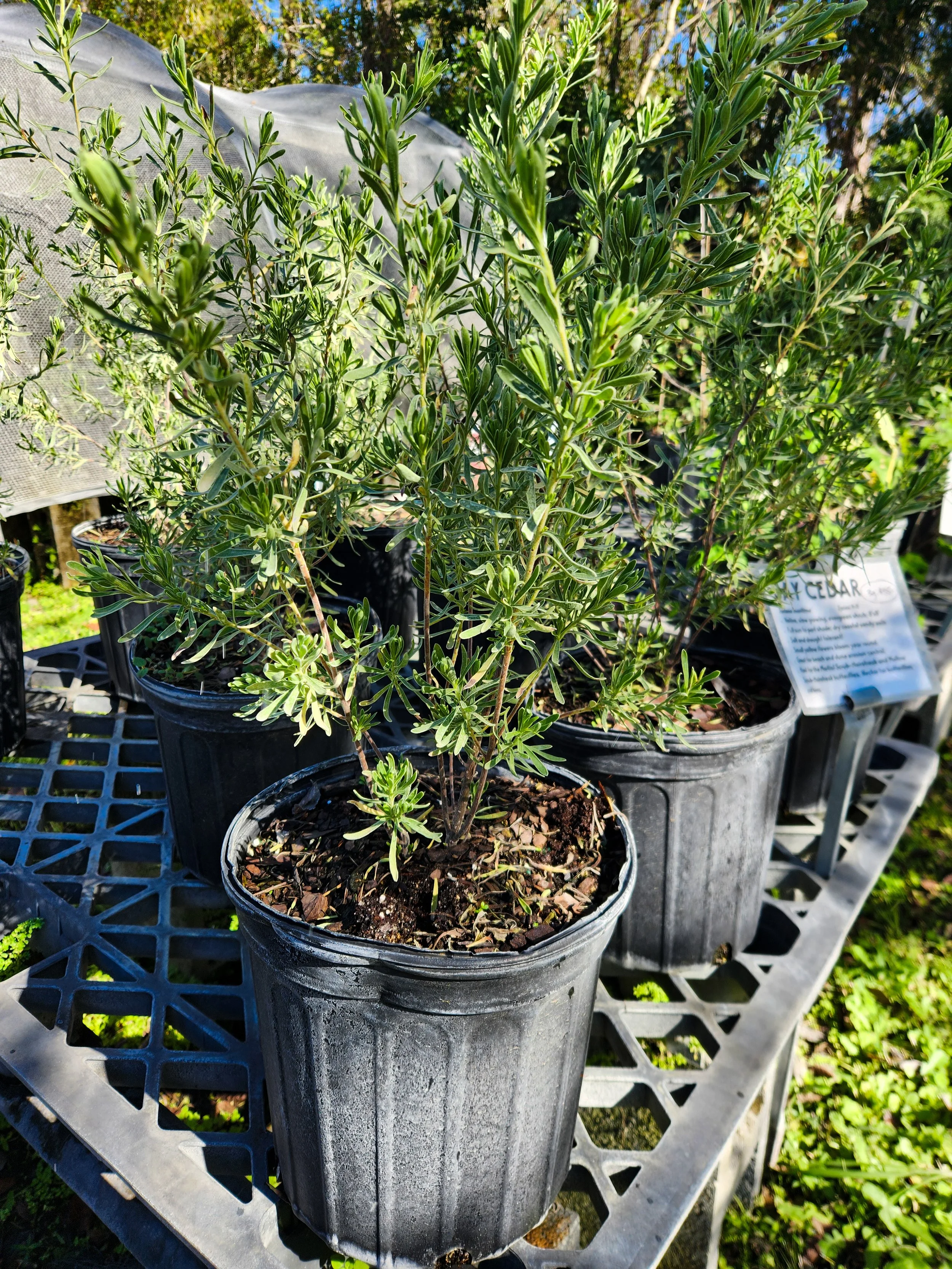
Suriana maritima
Bay Cedar is a slower growing, native, evergreen coastal shrub that is naturally found on sand dunes and beaches. This hurricane resistant shrub can weather storm surges, and is salt spray and drought tolerant! The Bay Cedar is excellent for erosion control of dunes and beaches. Small yellow flowers bloom year round and attract pollinators, and it is a host plant for certain hairstreak butterflies.
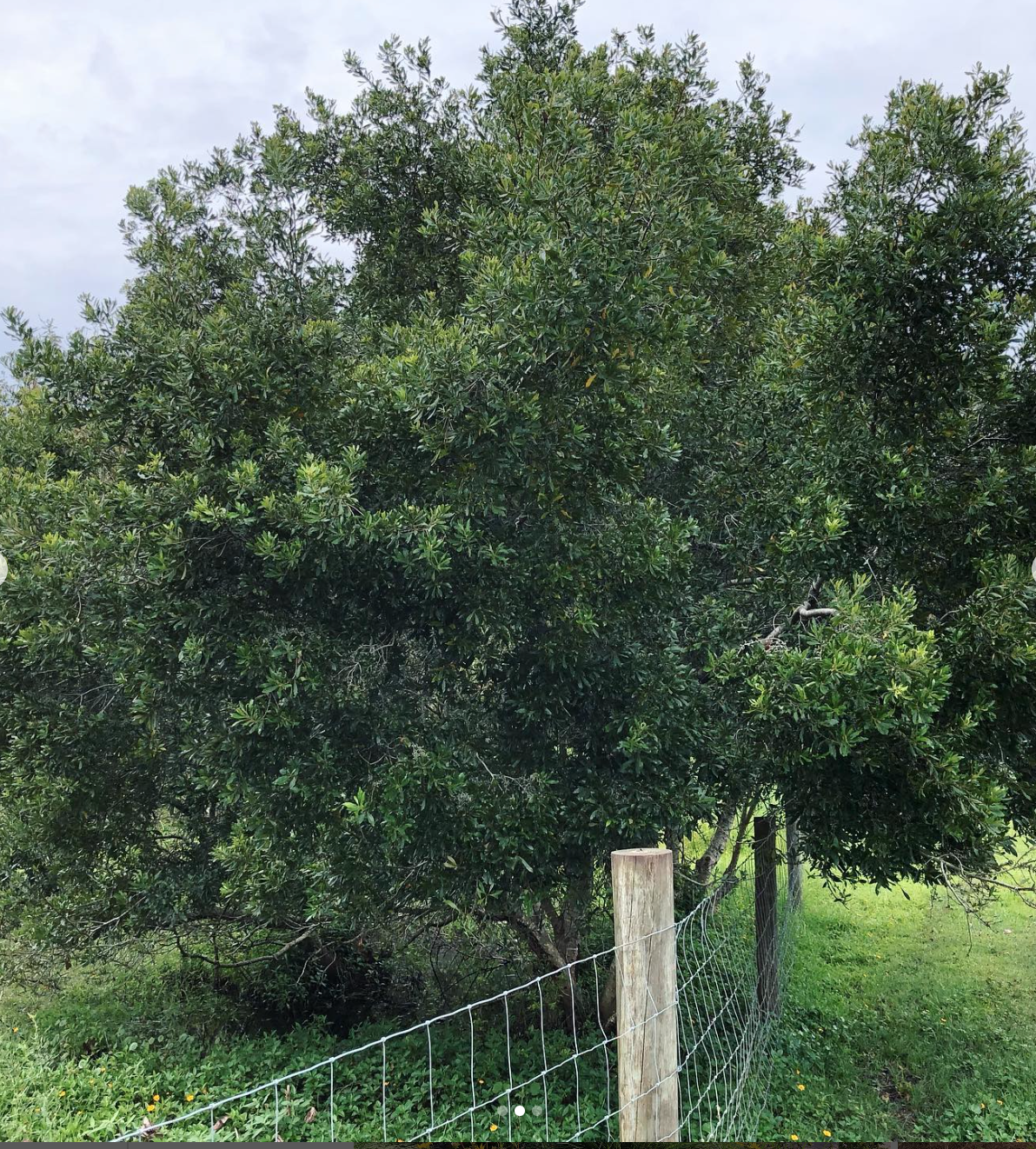
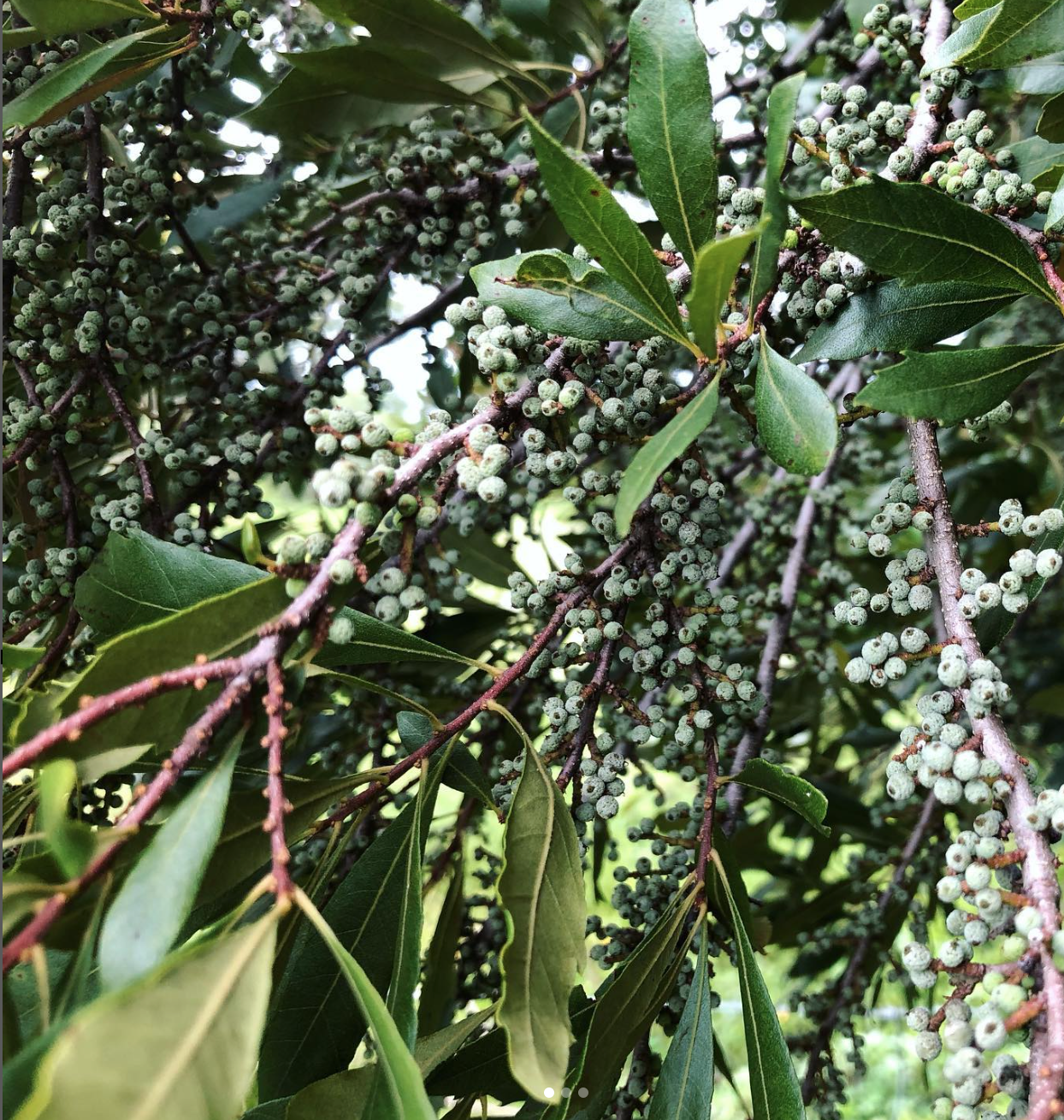
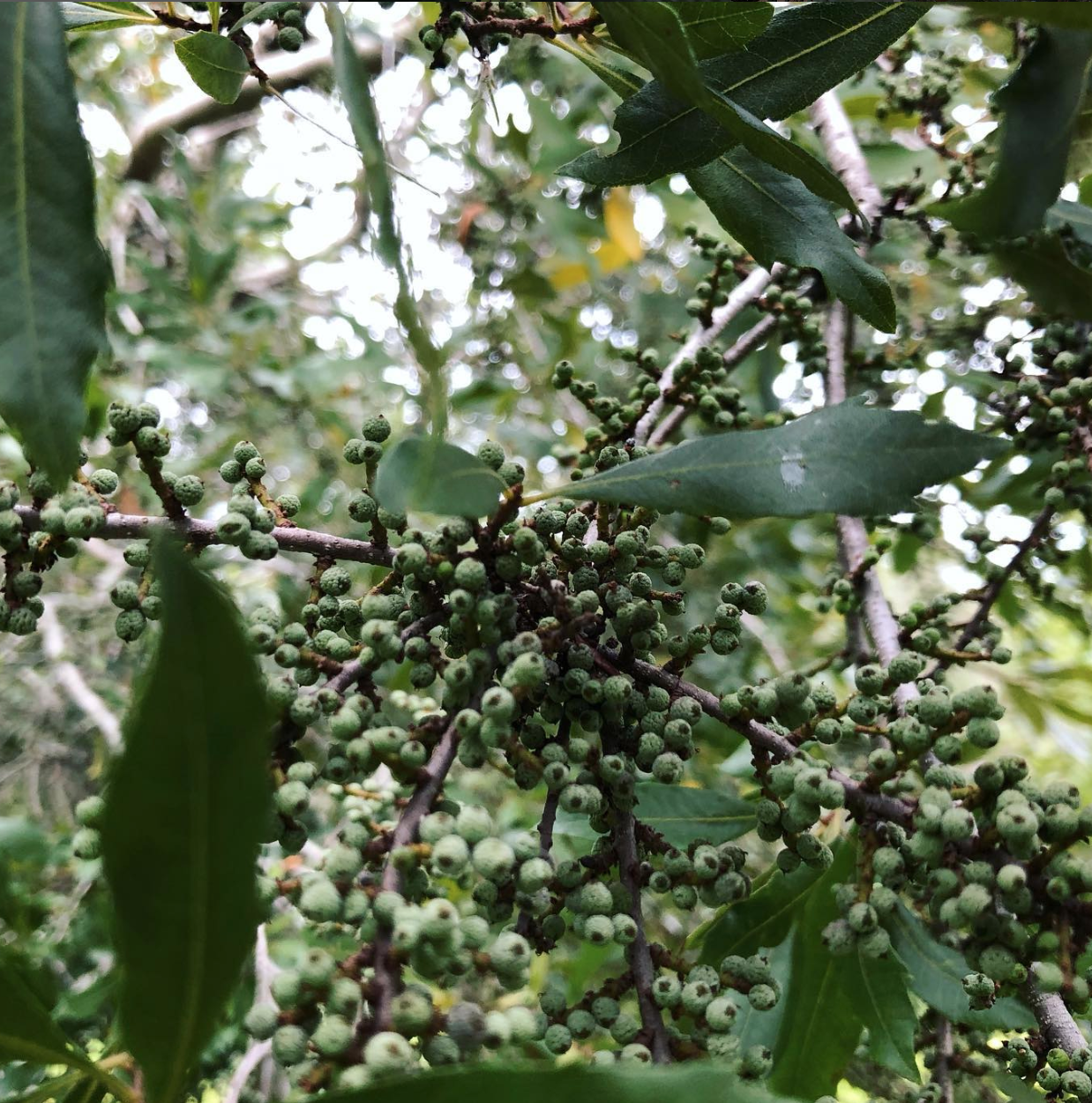
aka Southern Bayberry
Myrica cerifera
Southern Bayberry is a go-to large shrub for tough conditions that require plants that can tolerate moist soils and full sun. It’s also highly adaptable to dry soils and partial shade. It is evergreen and best left untrimmed and allowed to get to its natural height of about 15’. Southern Bayberry makes a nice hedge, natural screen or buffer planting or a specimen shrub and it is an excellent wildlife attractor. The waxy berries on the female plants are a food source for birds, and also used to make traditional bayberry candles.
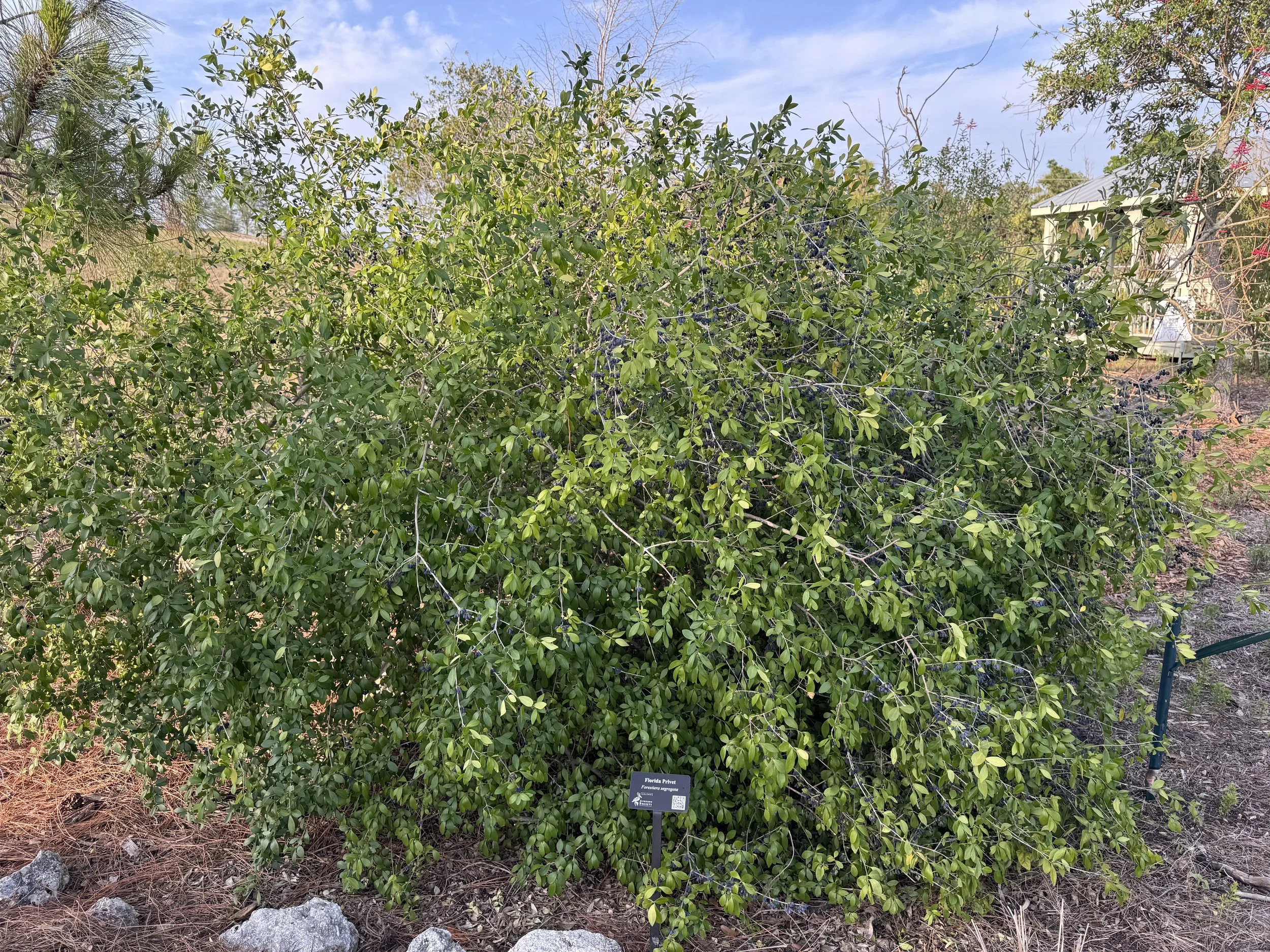
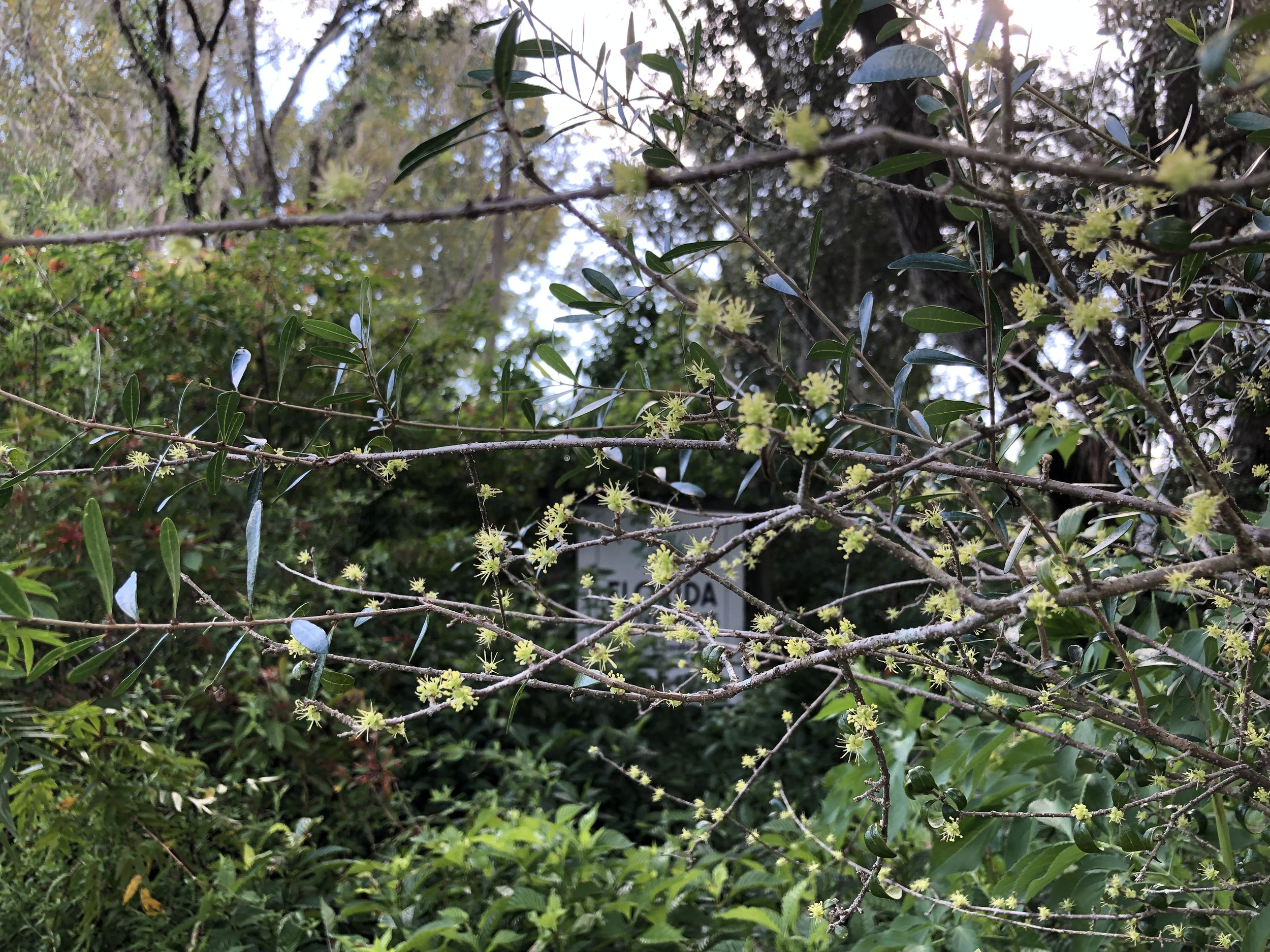
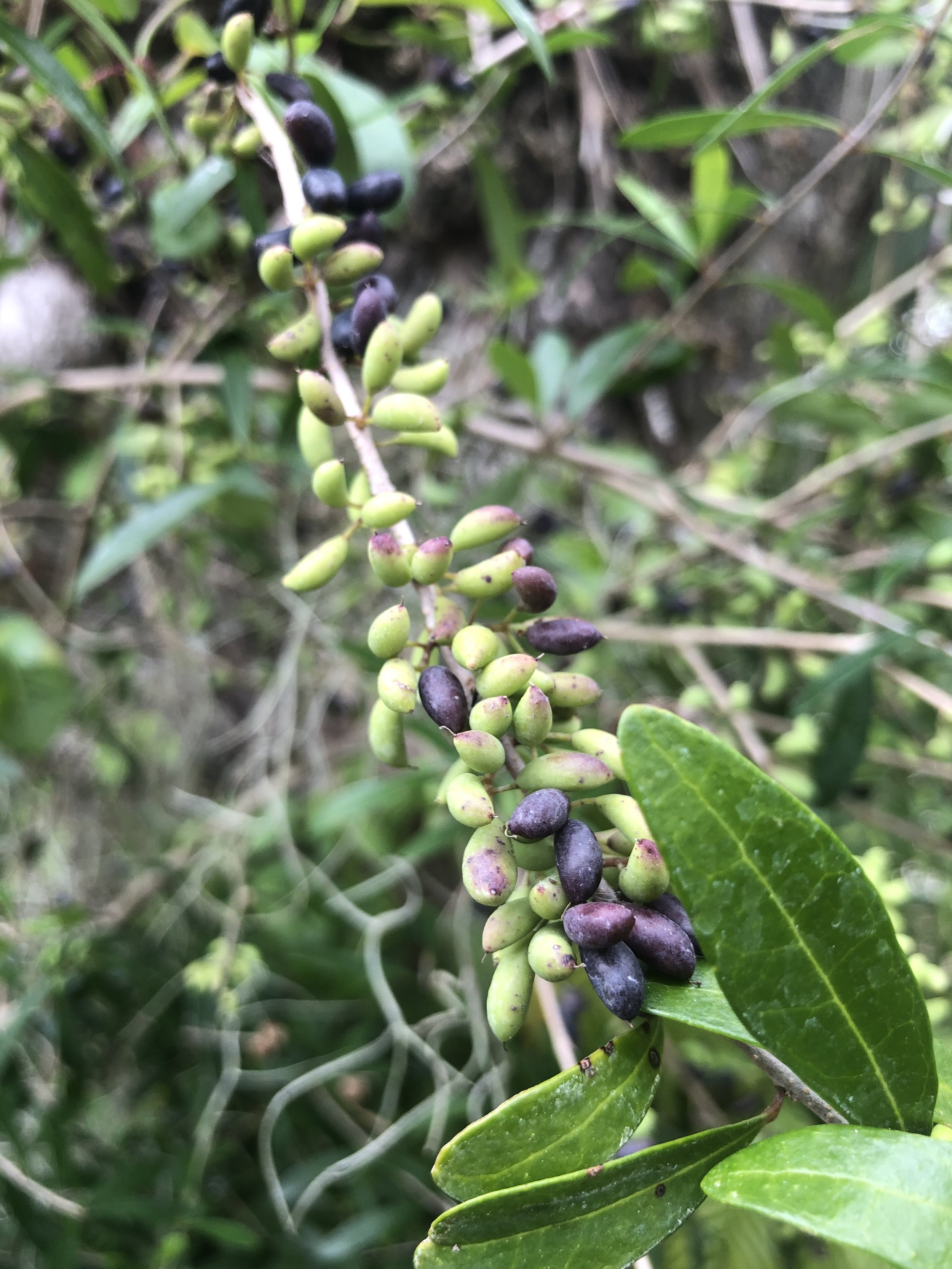
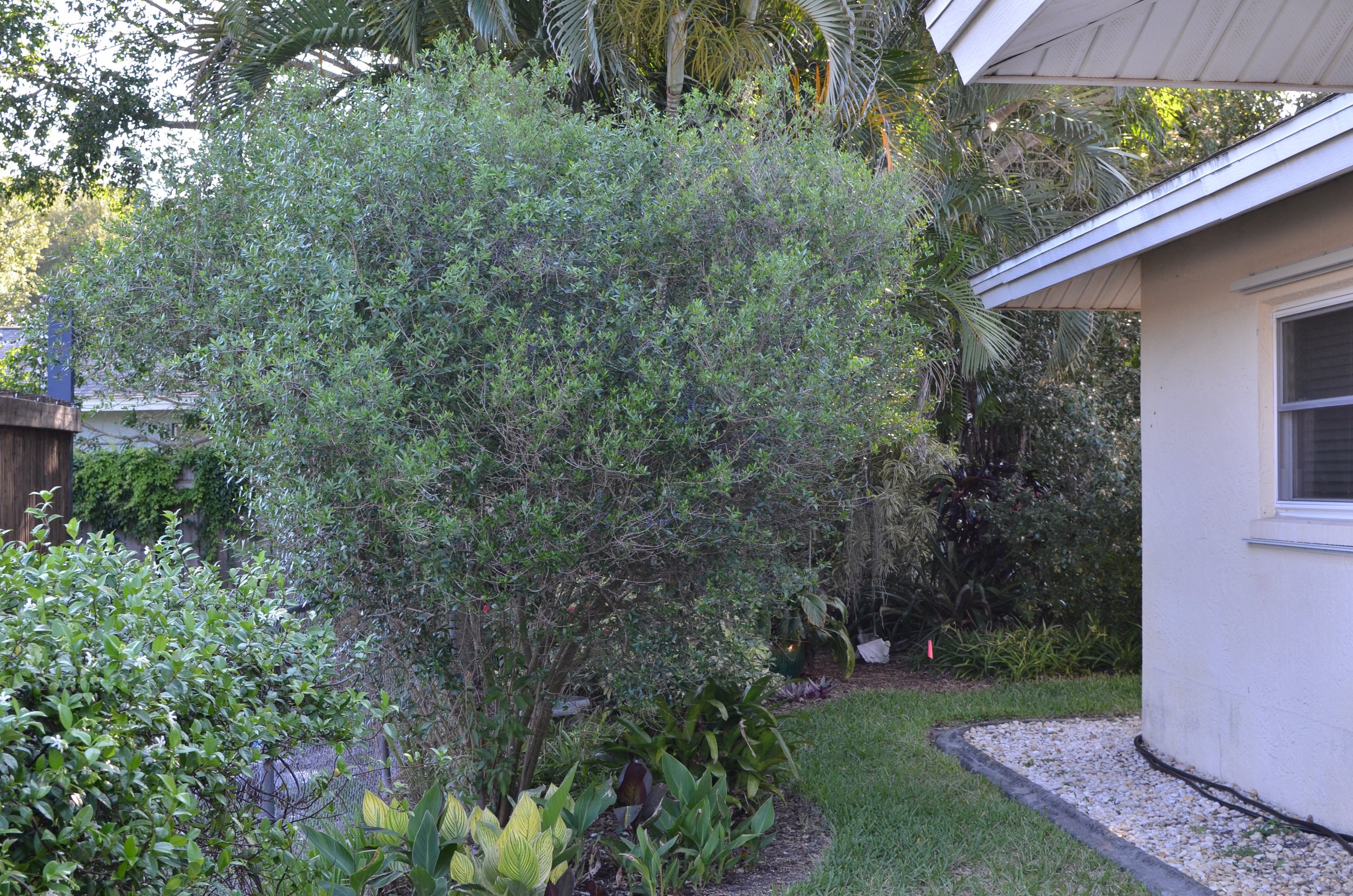
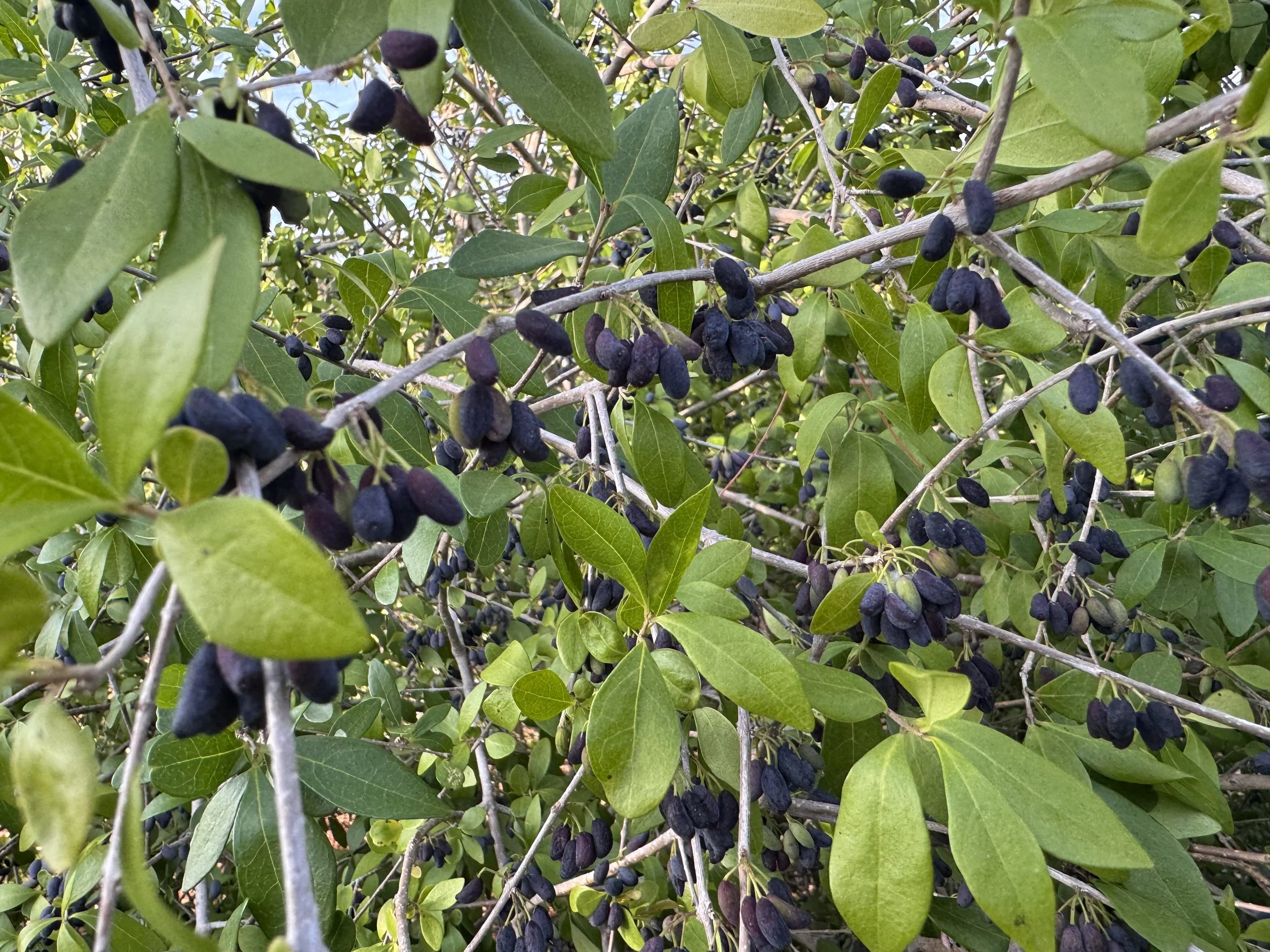
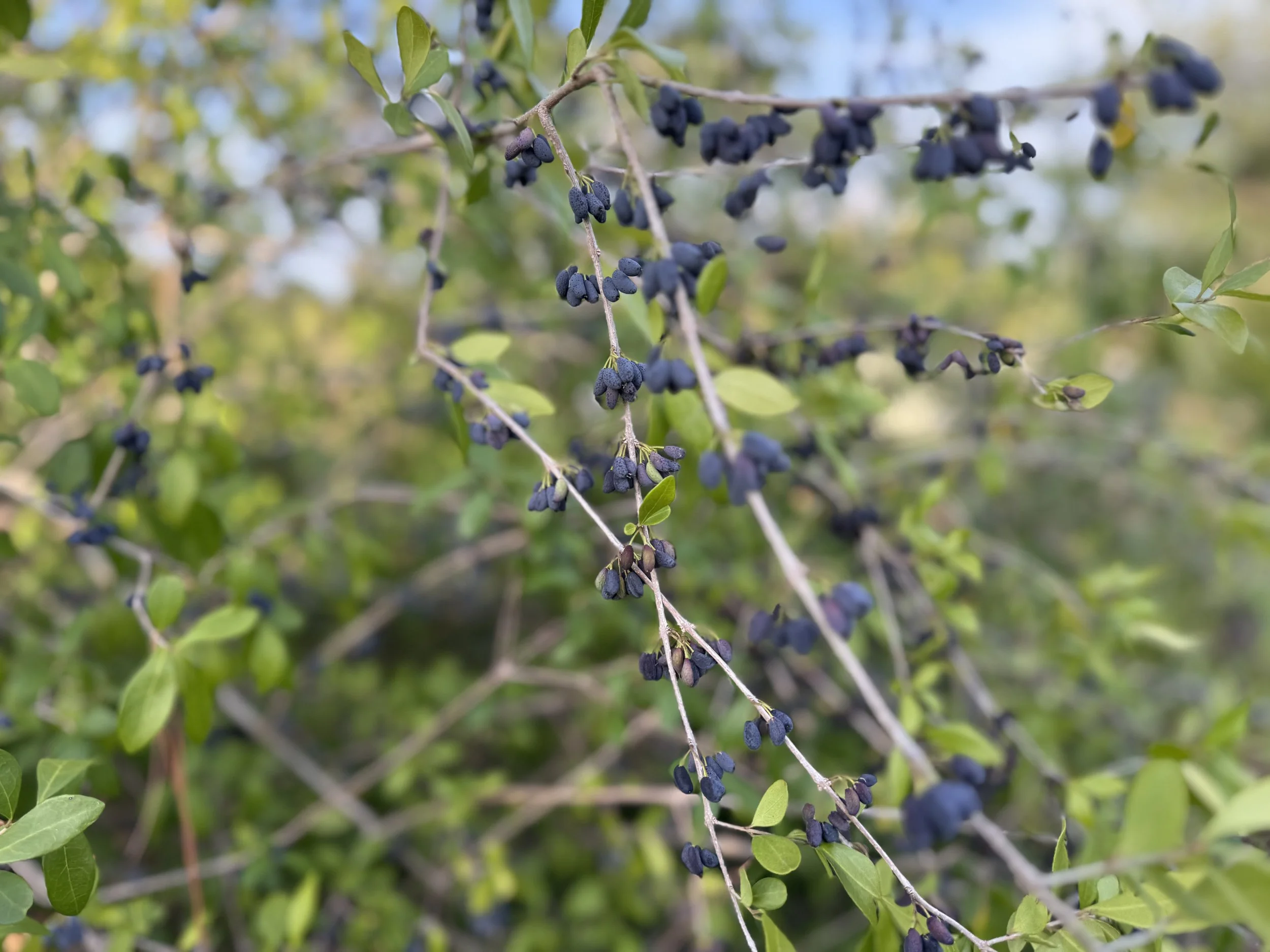
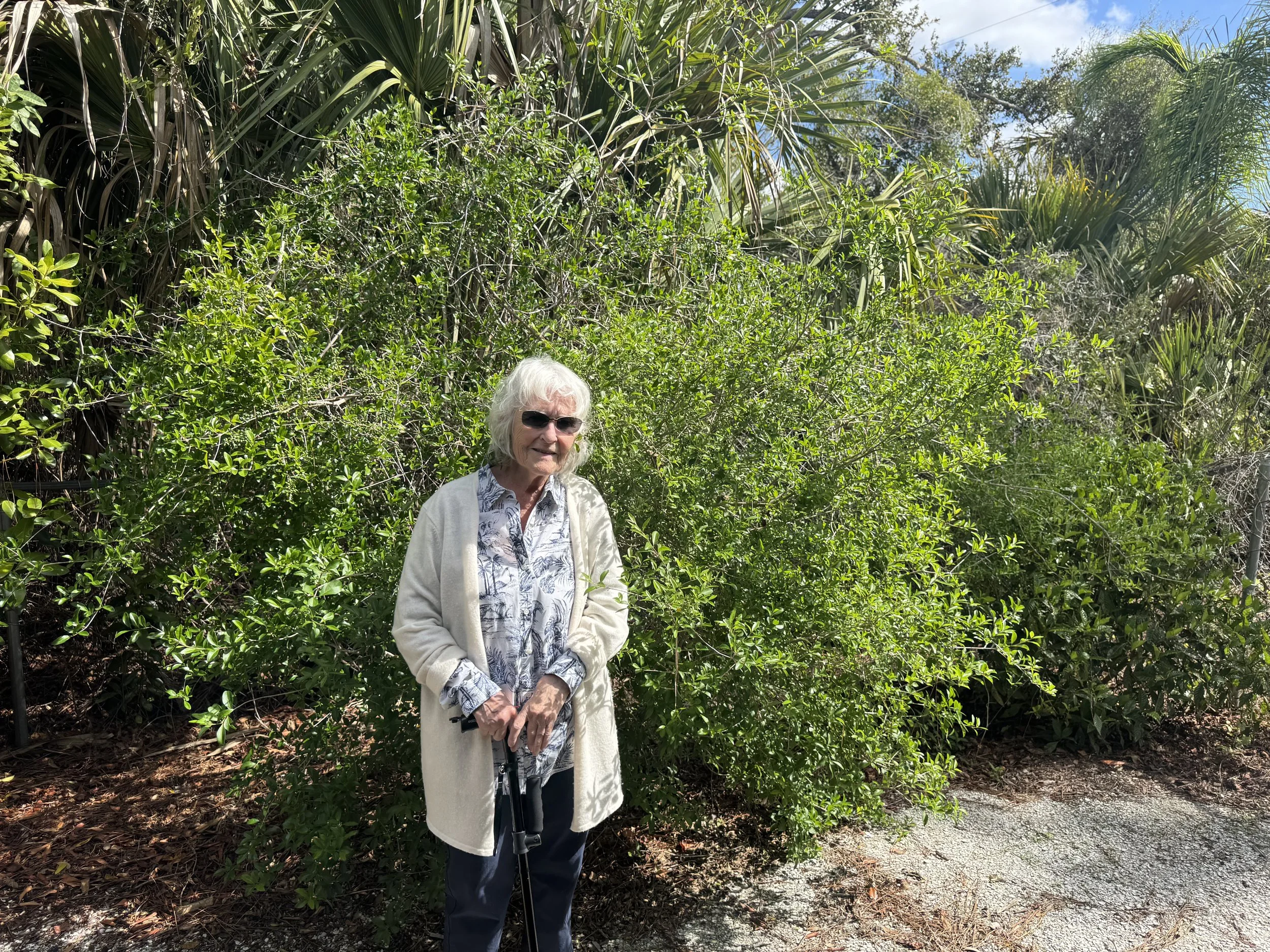
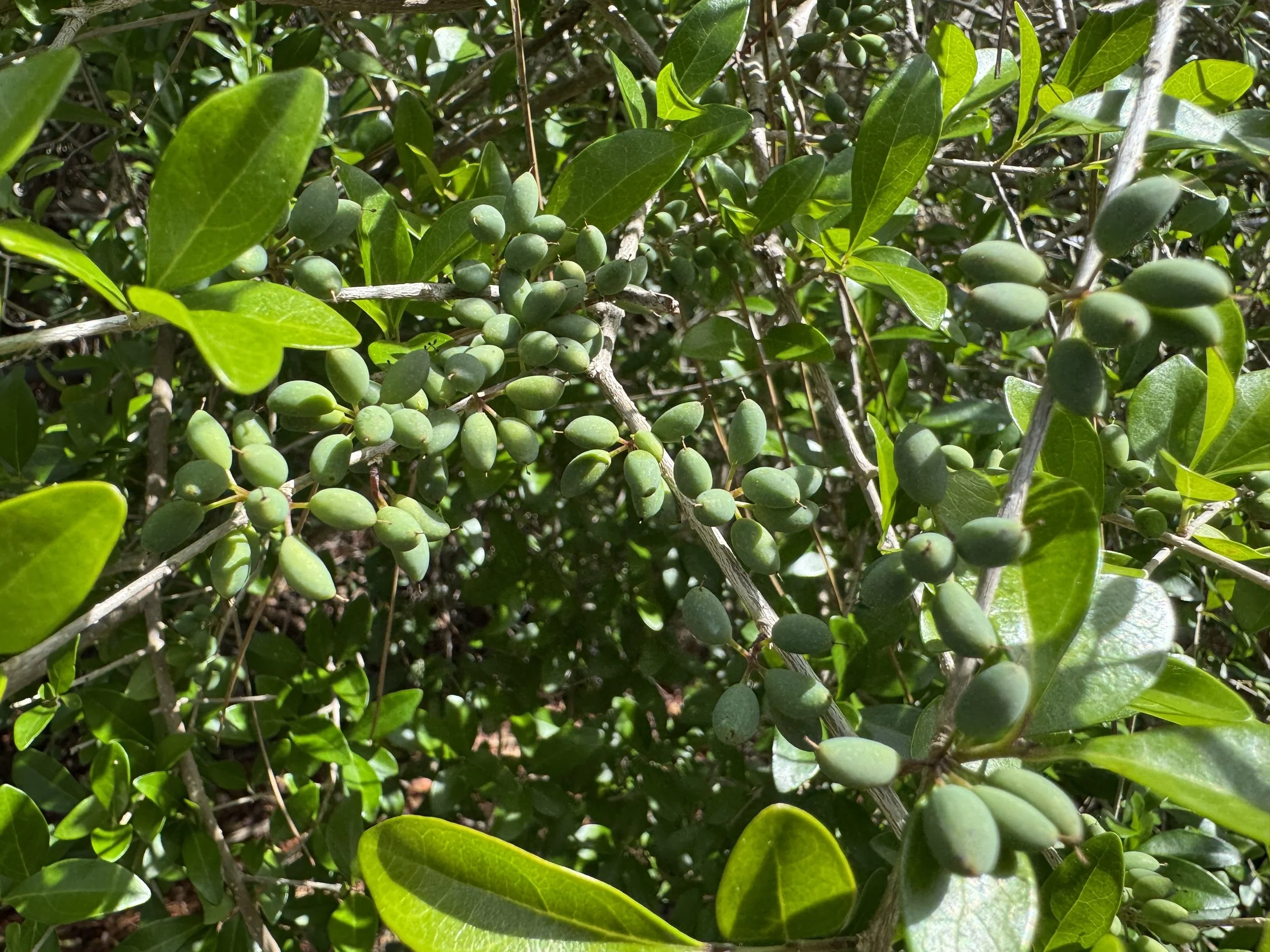
Forestiera segregata
Florida Privet is a versatile native evergreen shrub that typically grows up to 15’t tall and 10’ wide. It is highly adaptable and easy to maintain, as it responds well to pruning and can be kept as a formal hedge or a small specimen tree. It thrives in full sun to light shade and prefers average to dry, well-drained soils.
This hardy shrub is exceptionally salt-tolerant, making it an ideal choice for coastal landscapes. Beyond its greenery, it provides essential habitat and food for local wildlife; its small flowers attract pollinators, while the dark berries serve as a valuable food source for birds.
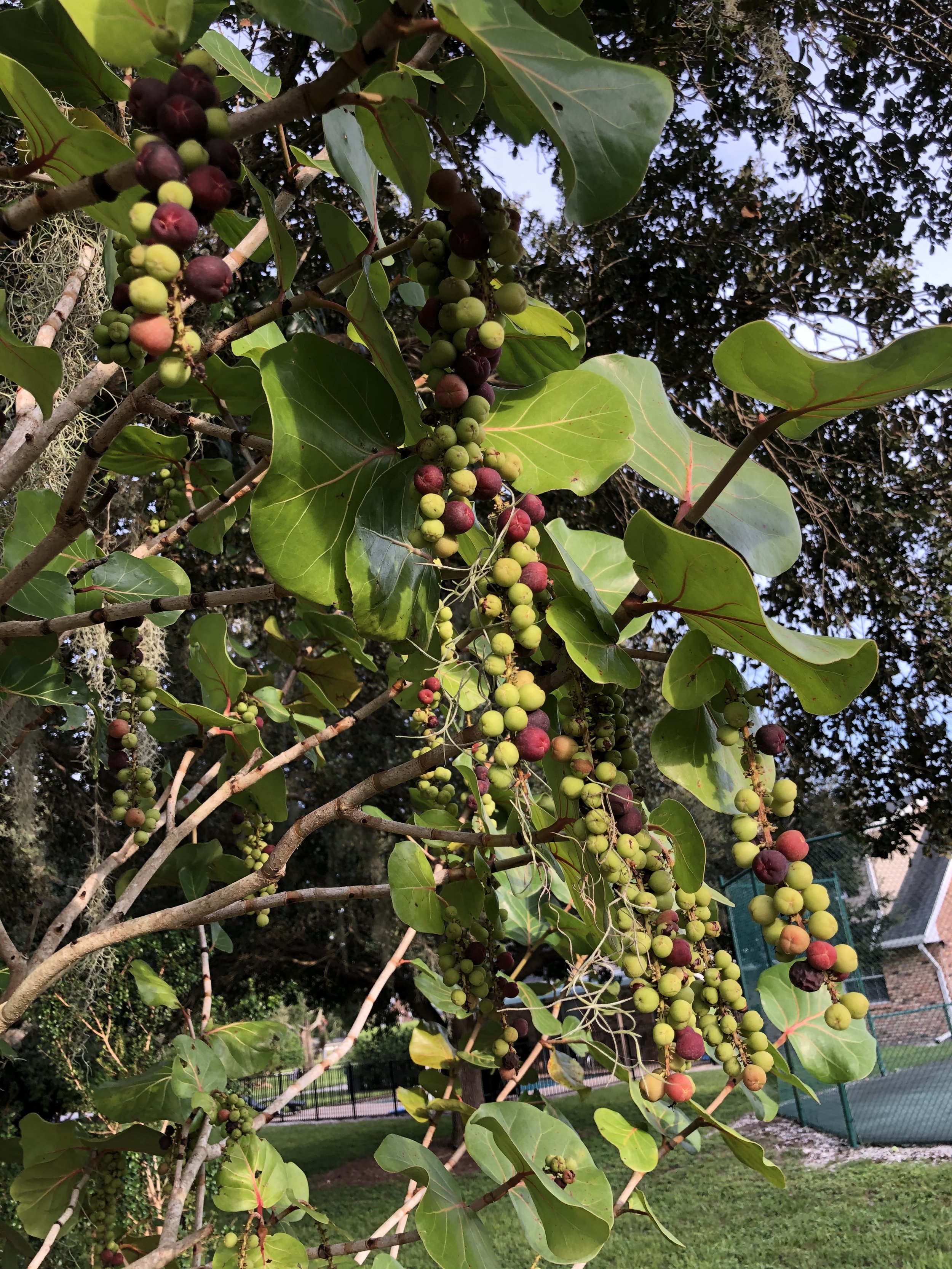
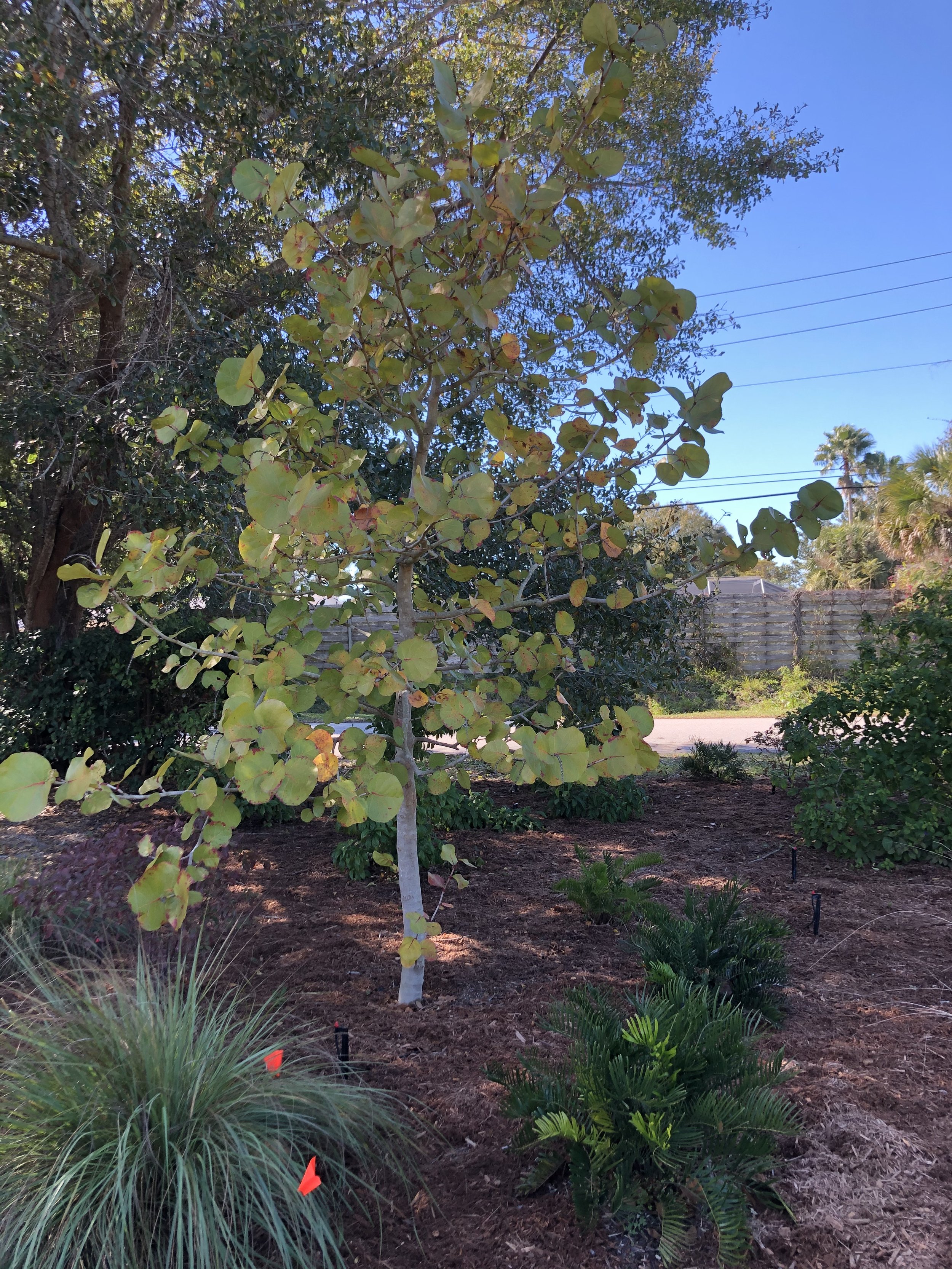
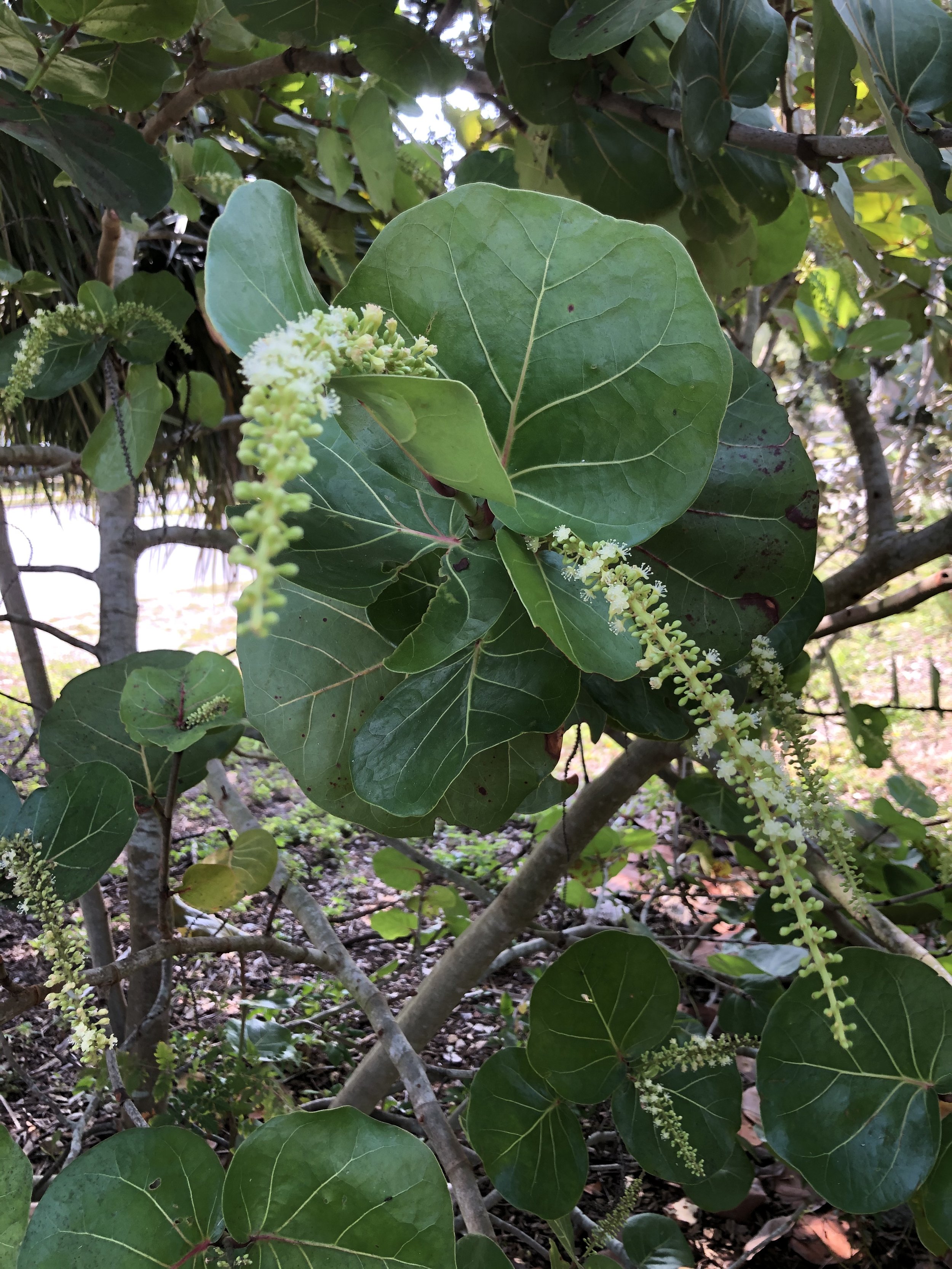
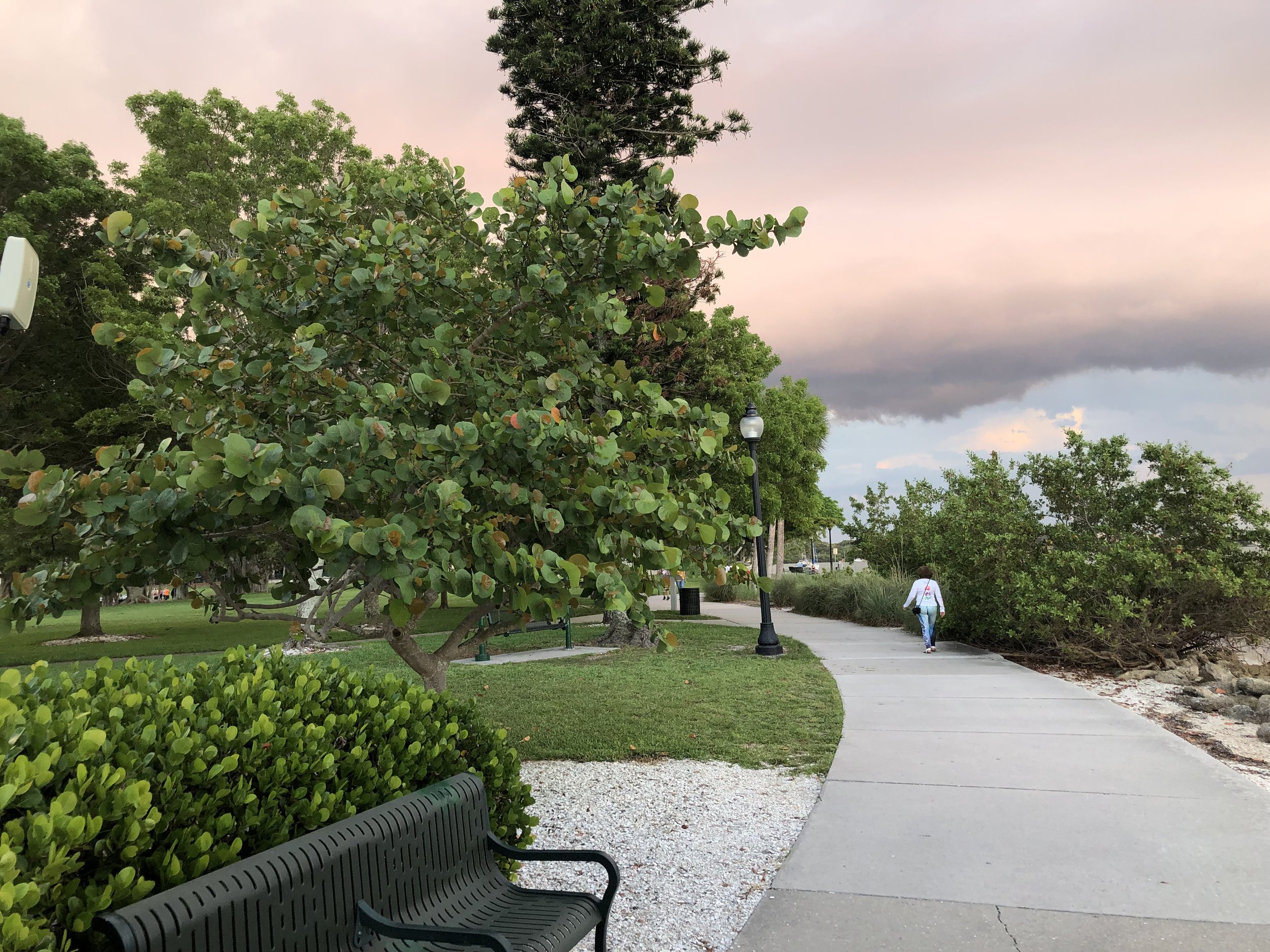
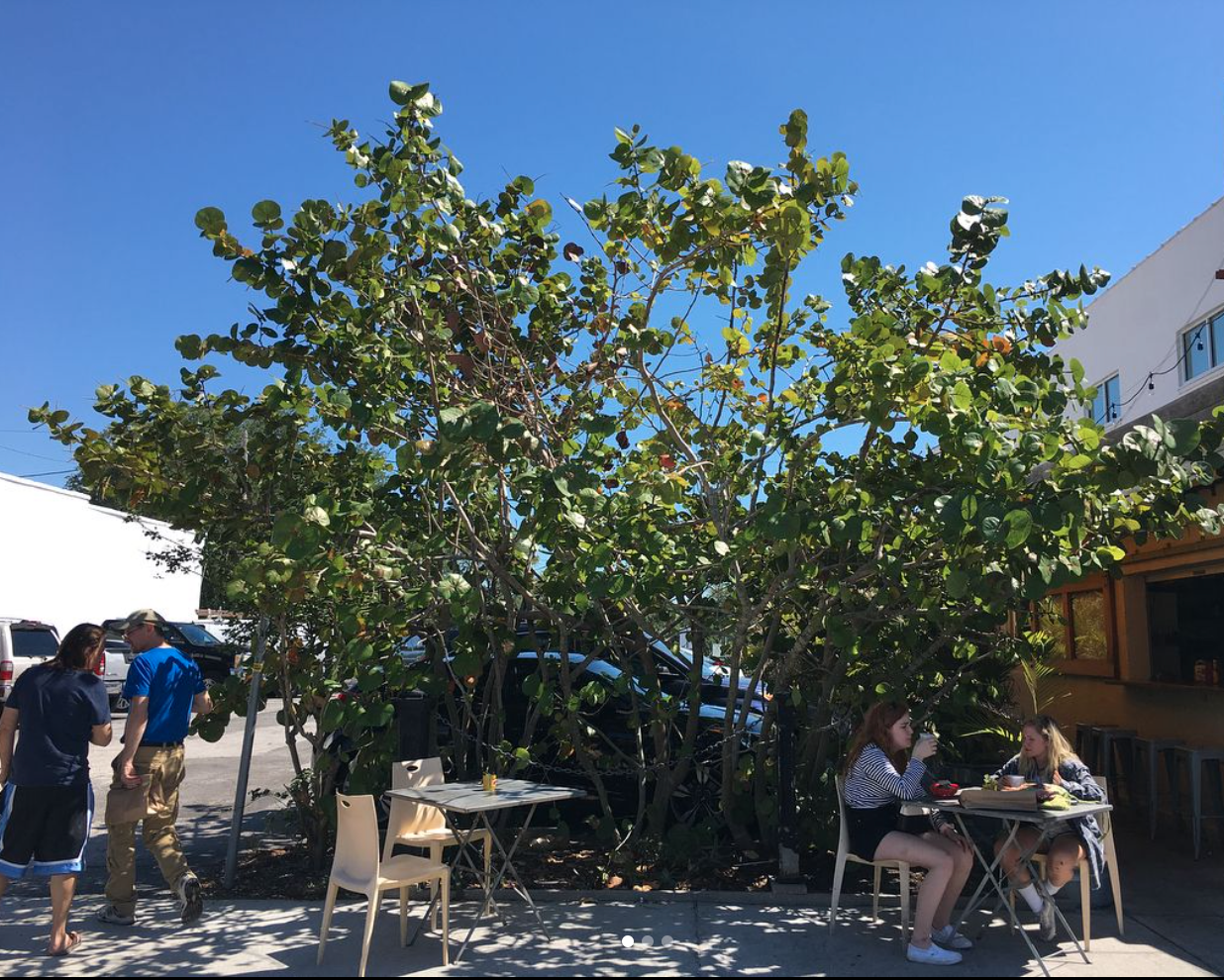
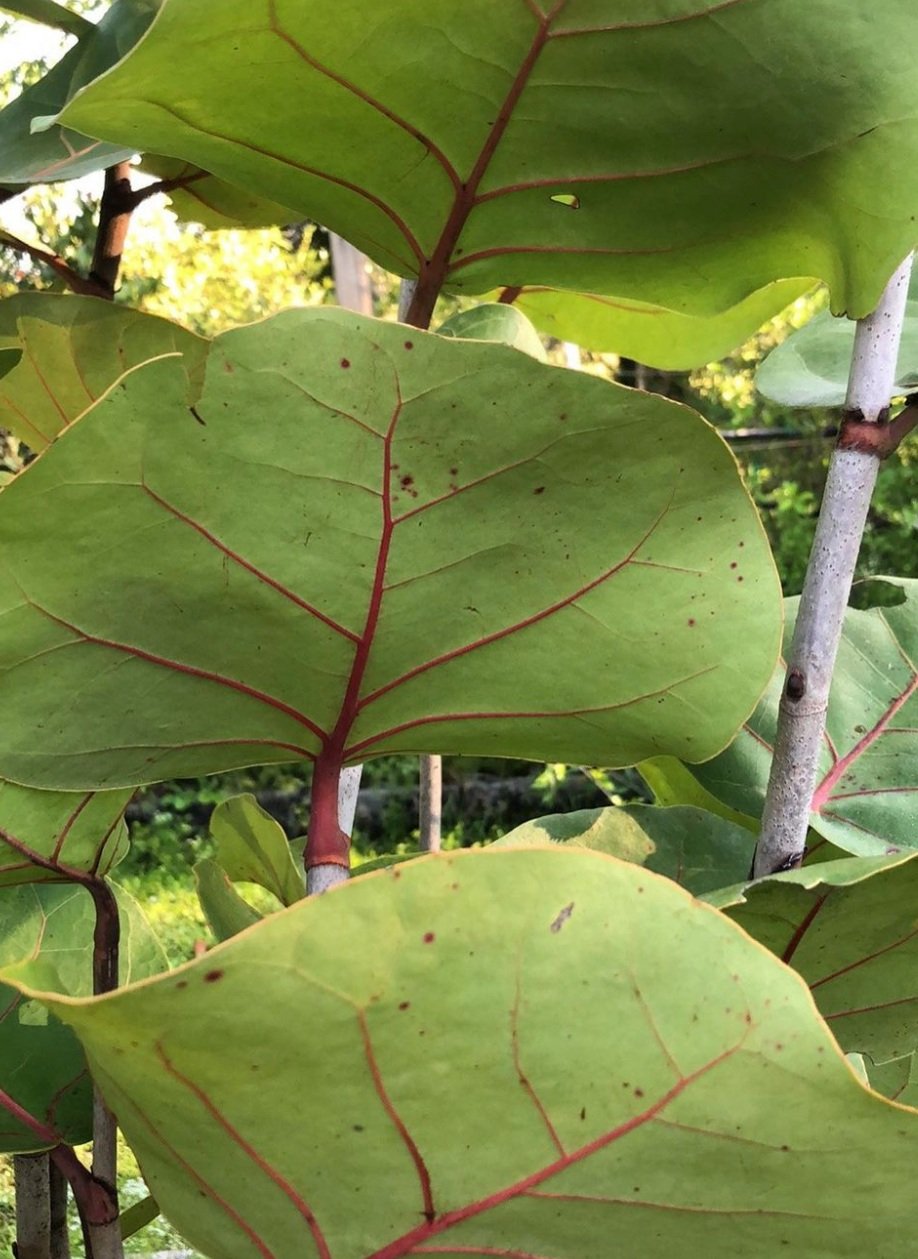
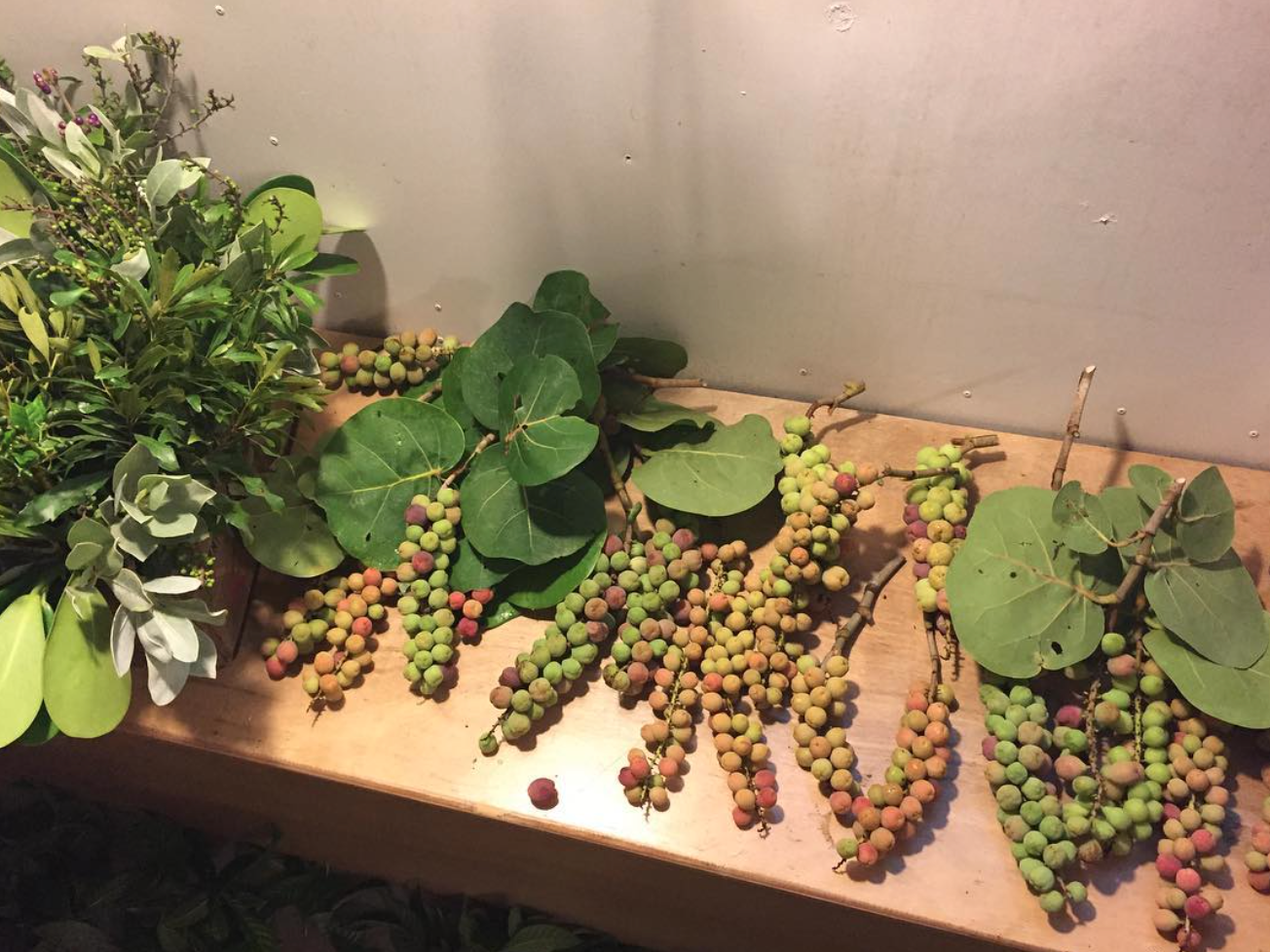
Coccoloba uvifera
A tropical-looking and unique native plant, Sea Grape grows to 10-30 ft tall and can be trimmed. Grow in full sun as a large shrub for screening and privacy or as a large sculptural tree in semi-shade. The leaves of Sea Grape are lightly deciduous and interesting with seasonal changes in color. The fruit grows in beautiful clusters and is enjoyed by both birds and people.
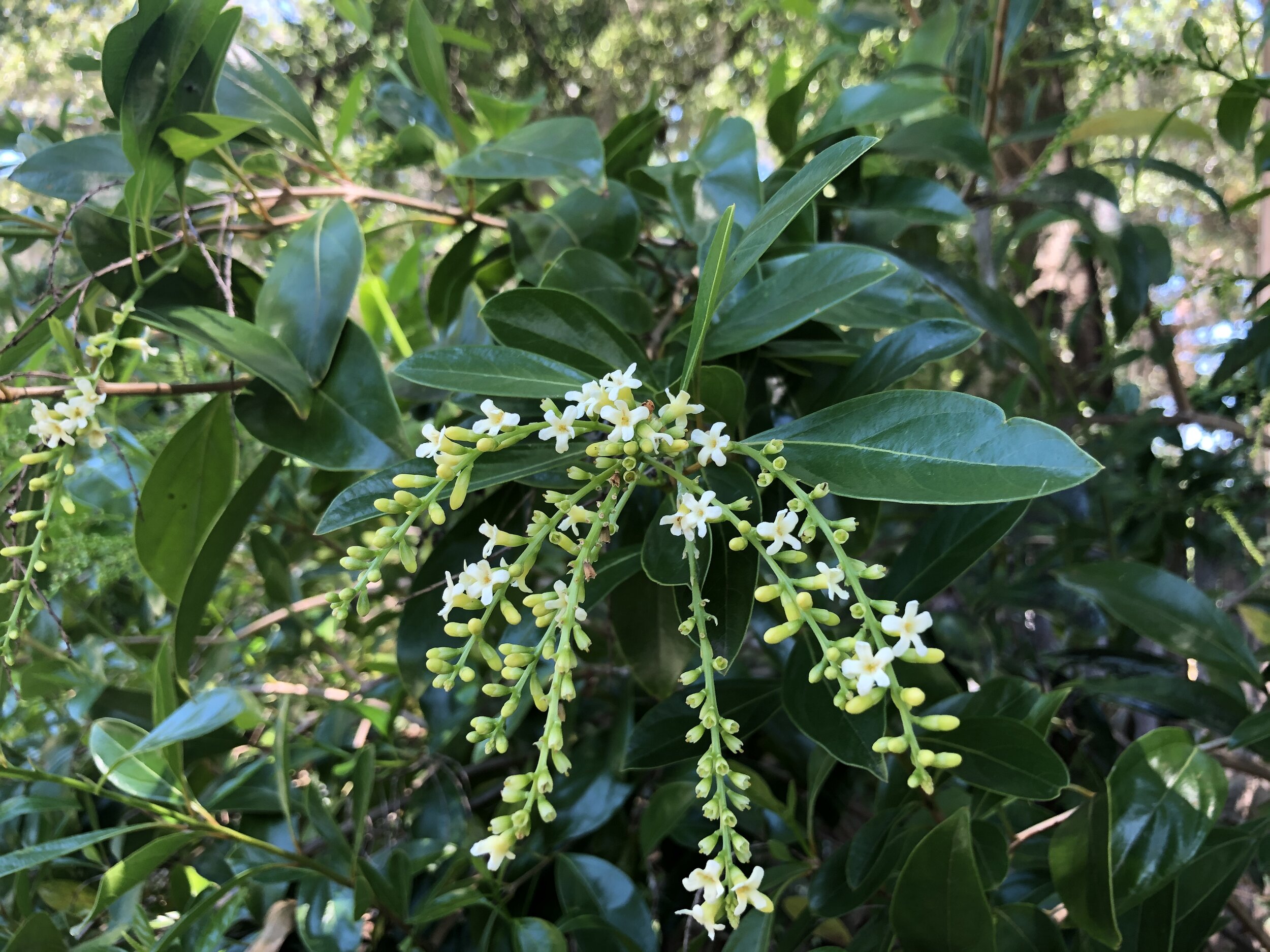
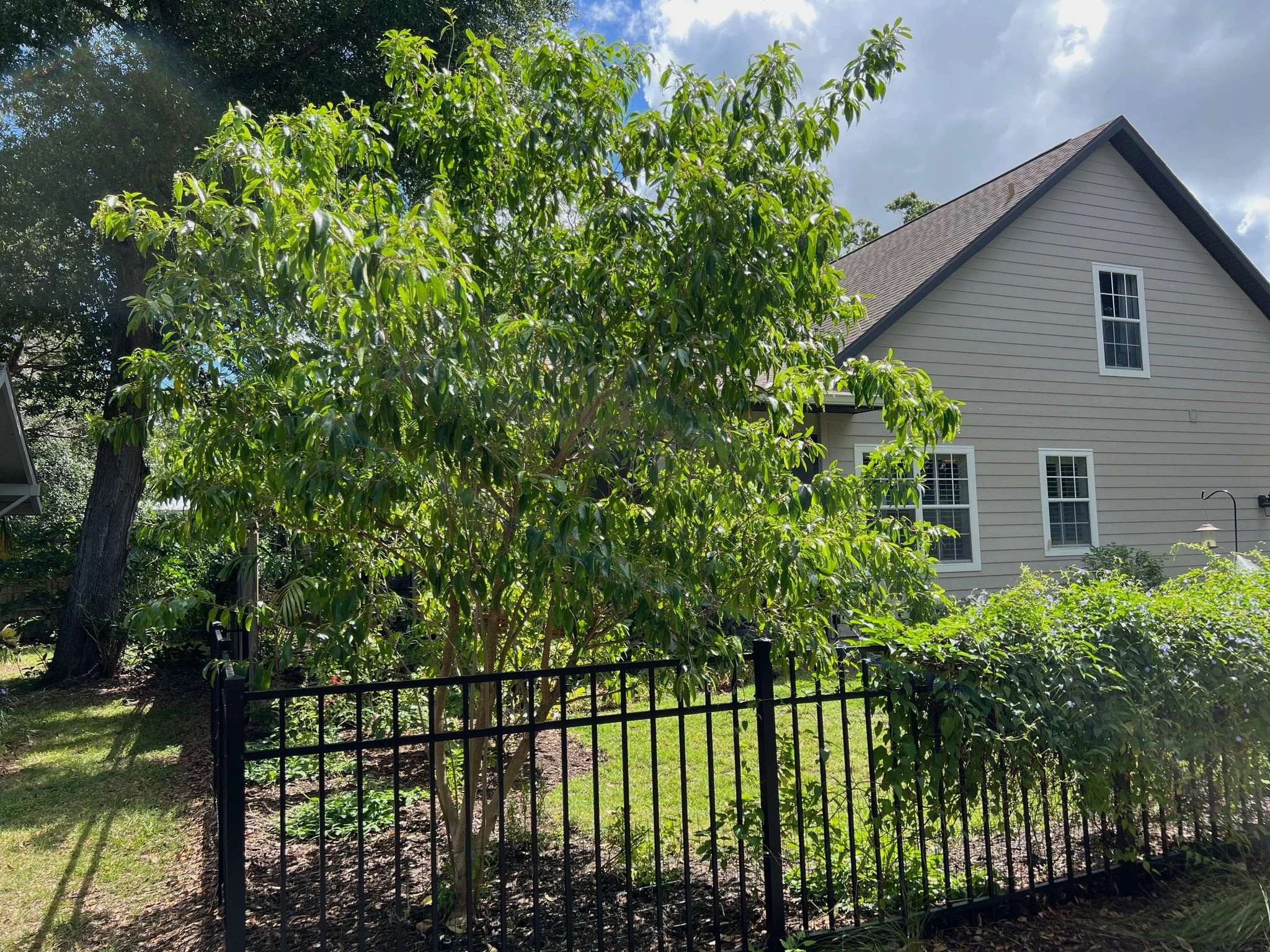
Citharexylum spinosum
Fiddlewood is a delightful fast growing native large shrub or small tree. Fiddlewood is evergreen, with shiny deep green leaves and fragrant white blooms all year long! This plant is dioecious, so if you have a female plant you will also have orange berries throughout the year that birds adore! This wonderful plant can go in full sun or in shade and is drought tolerant once established. It has a moderate salt tolerance so it can be planted in coastal uplands.
Fiddlewood can be used in a mixed hedge or as a specimen plant to make all the neighbors ask "What is that beauty covered in butterflies?!"
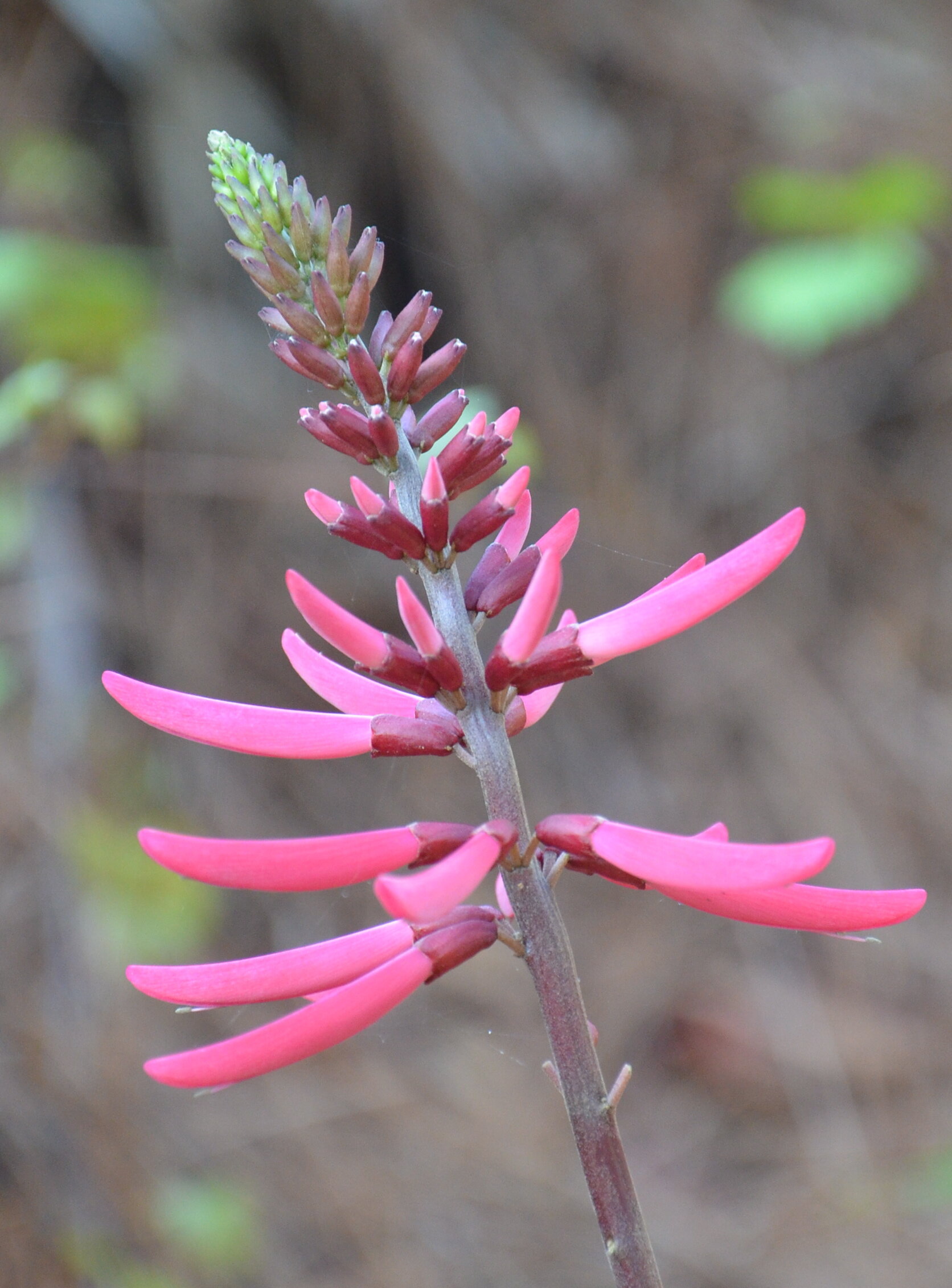

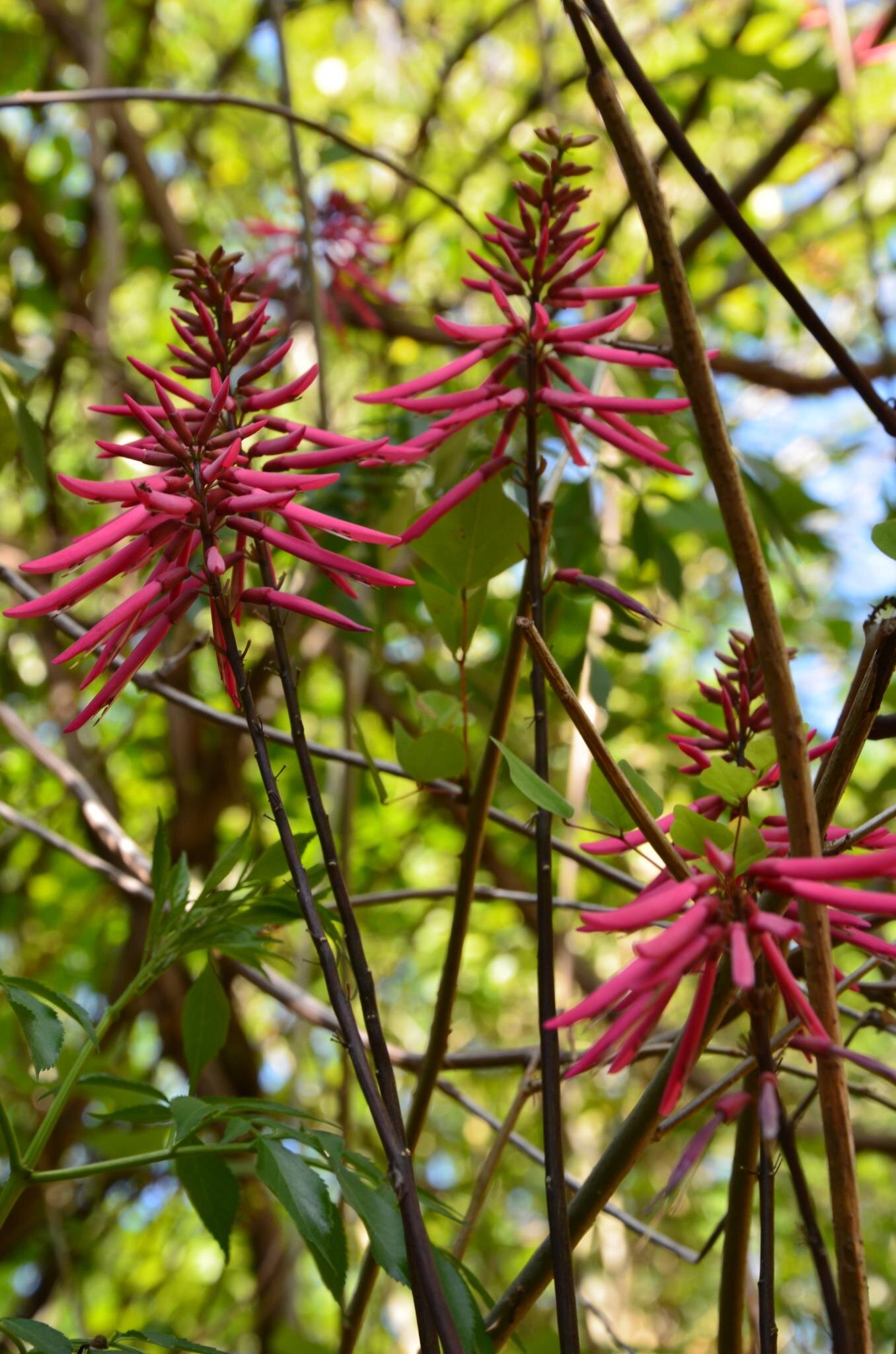
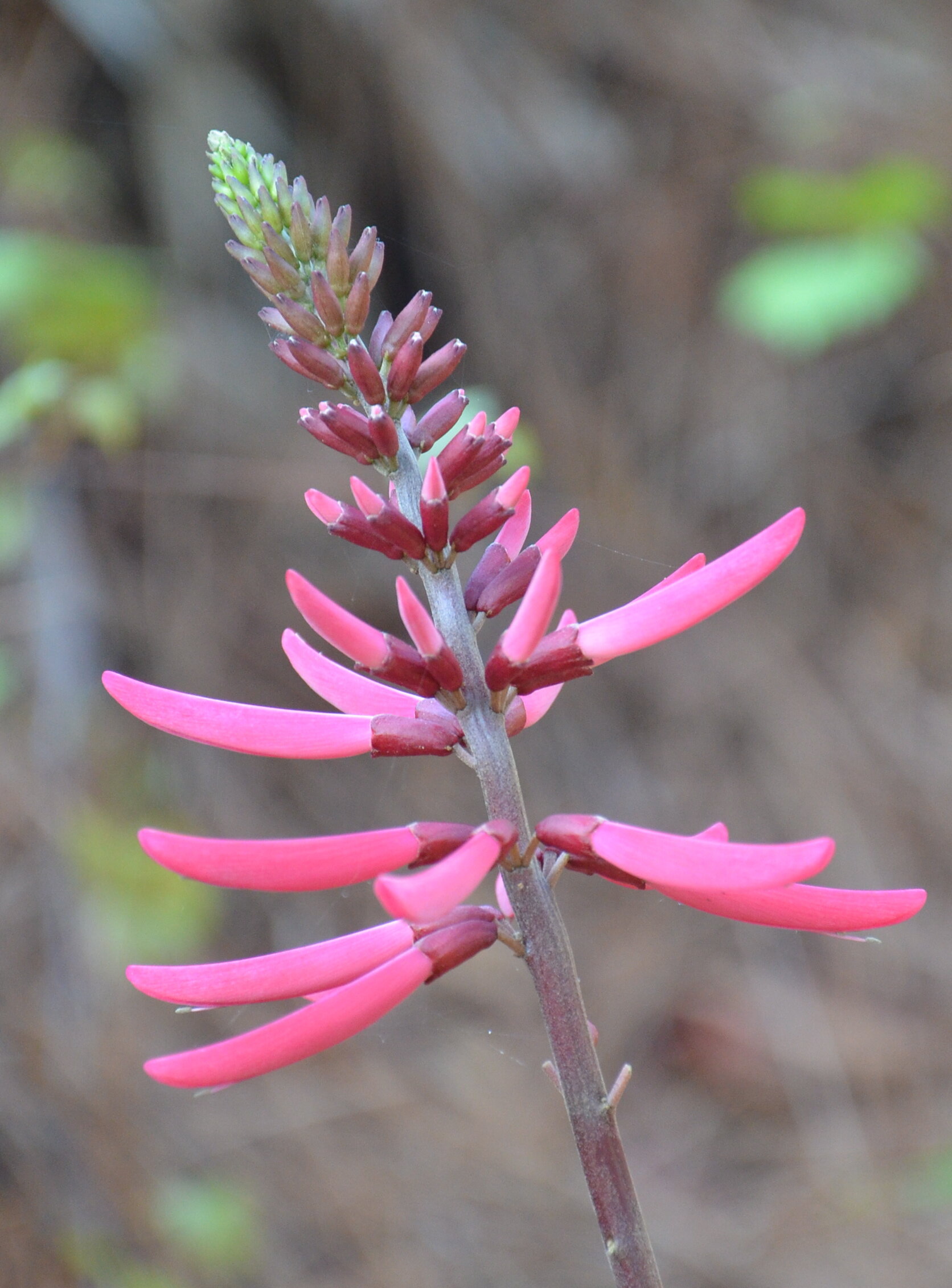
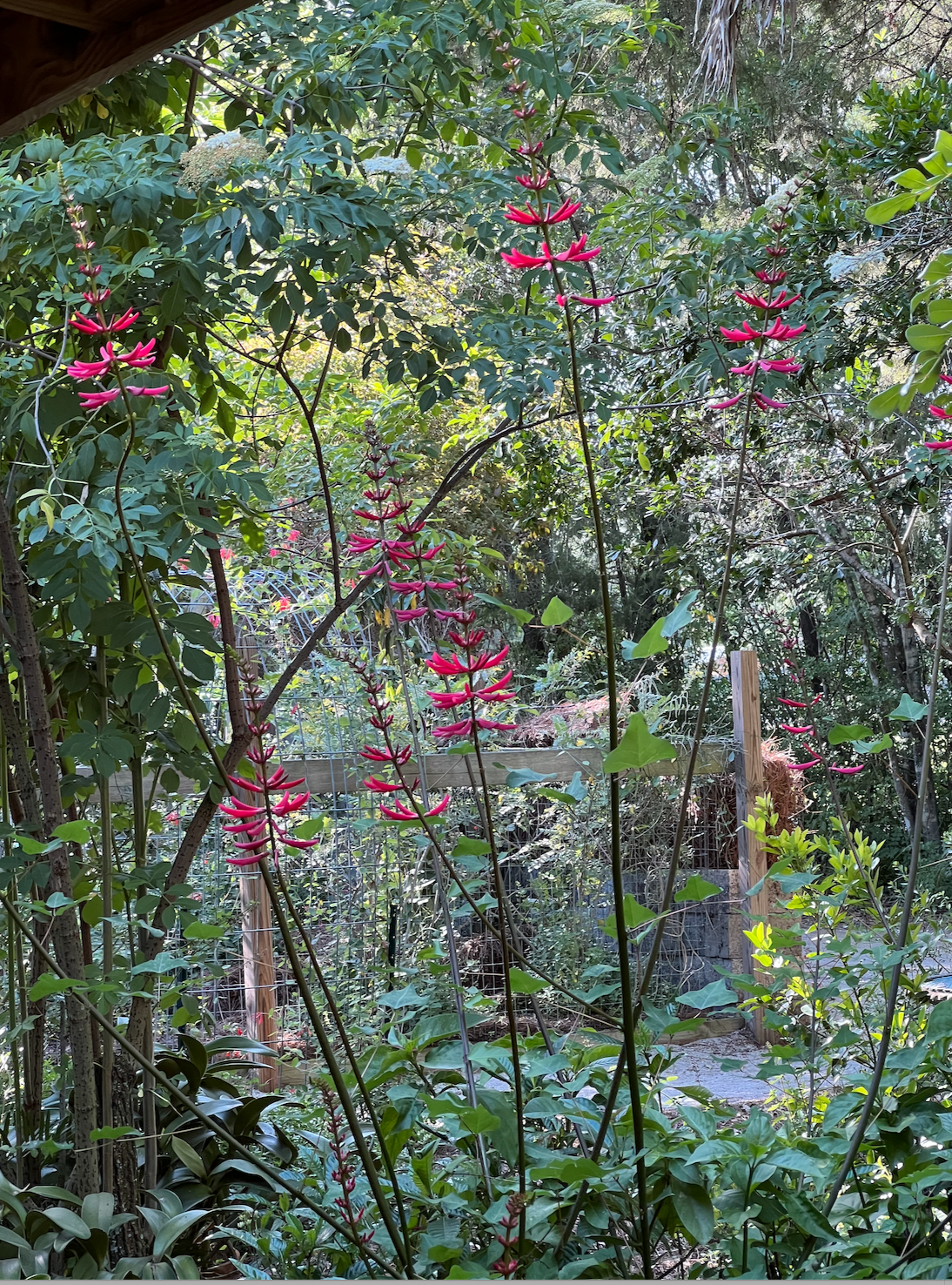
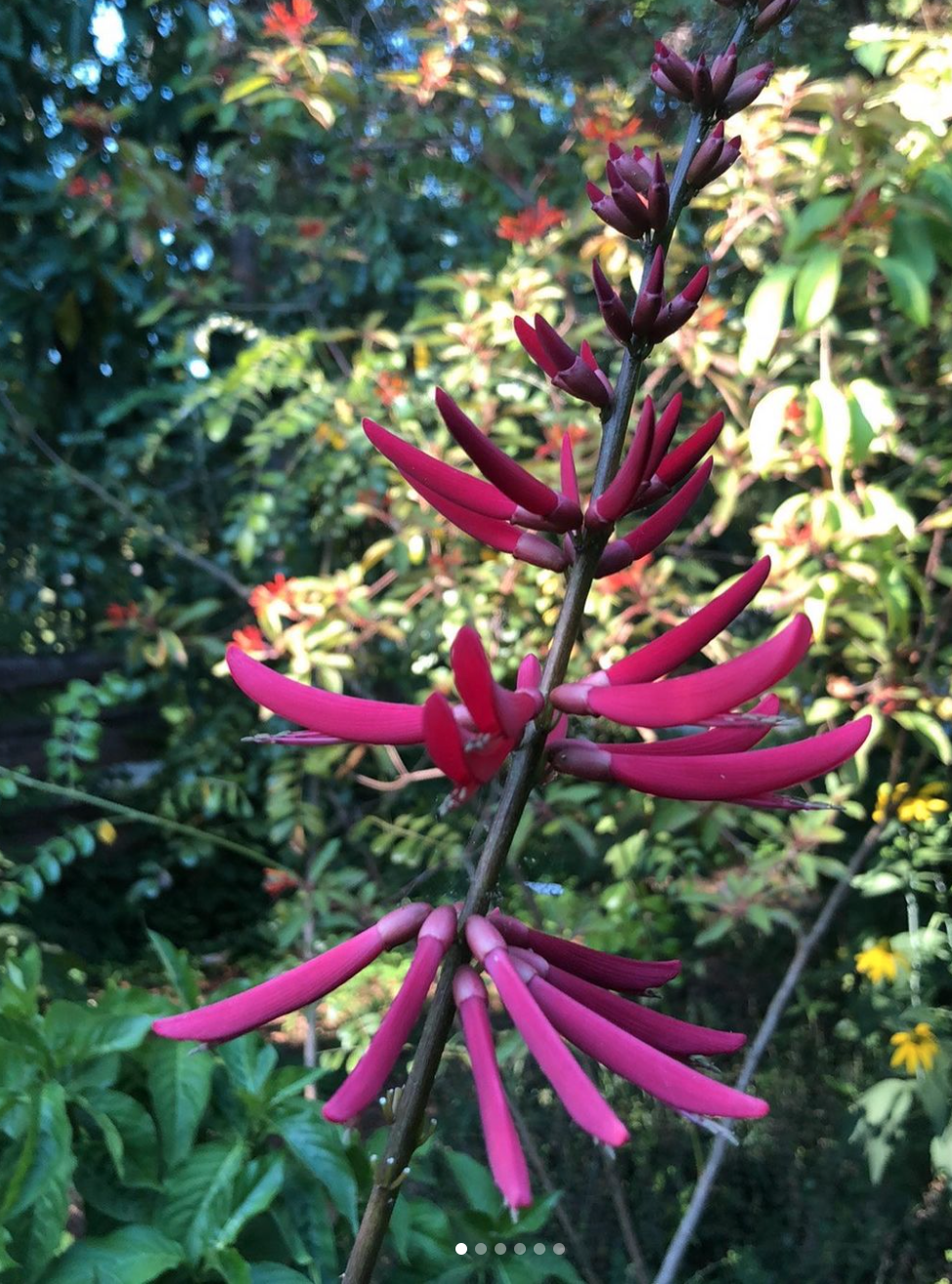
Erythrina herbacea
Coral Bean (Erythrina herbacea) is a deciduous perennial shrub or small tree native to the southeastern United States that grows 3-8 feet tall with compound, lance-shaped leaves. This striking plant produces tall spikes of brilliant scarlet, tubular flowers in early spring that are perfectly timed to coincide with Ruby-throated hummingbird migration patterns, providing critical nectar for these travelers. The blooms also attract long-tongued butterflies and bees, while the bright red seeds that follow are dispersed by birds, though all parts of the plant are toxic. Thriving in sandy, well-drained soils in open woods and forest edges, it serves as an excellent specimen plant for wildlife gardens in zones 8-10.
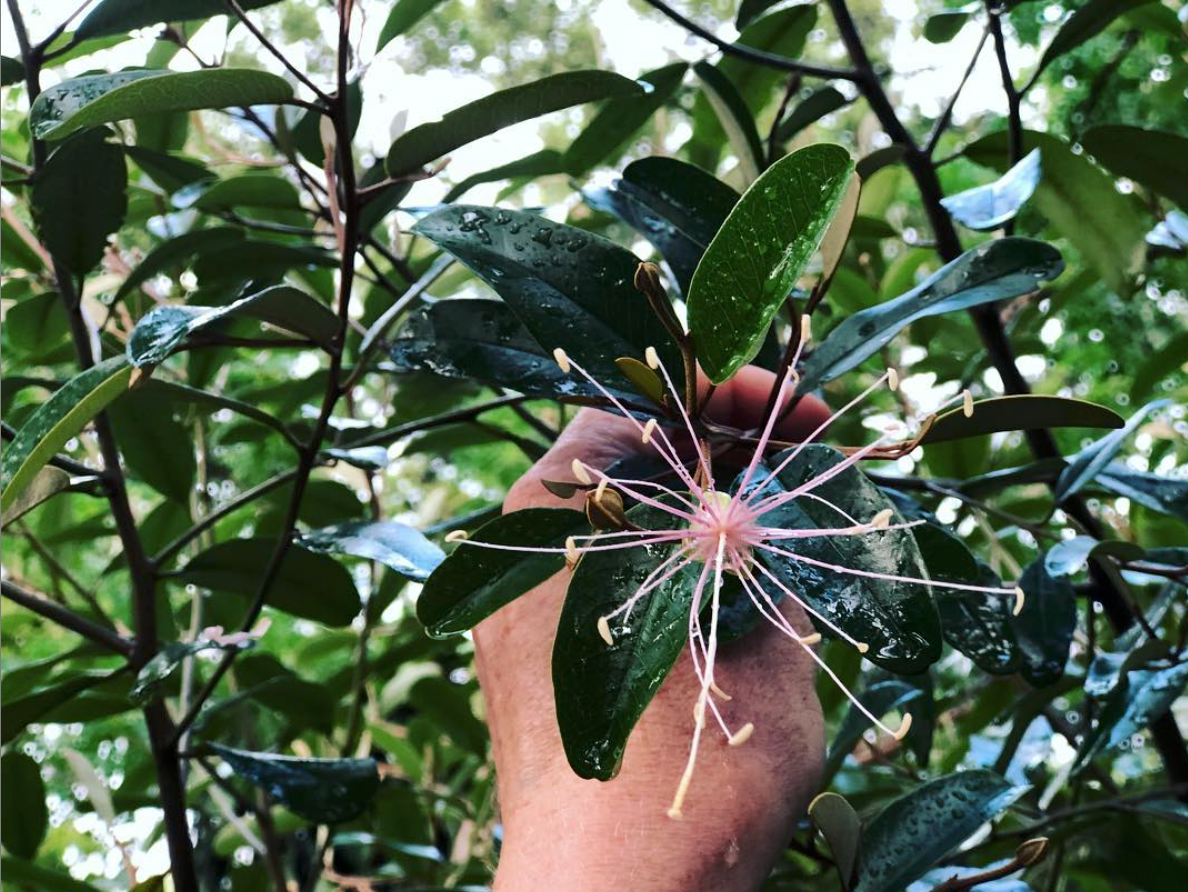

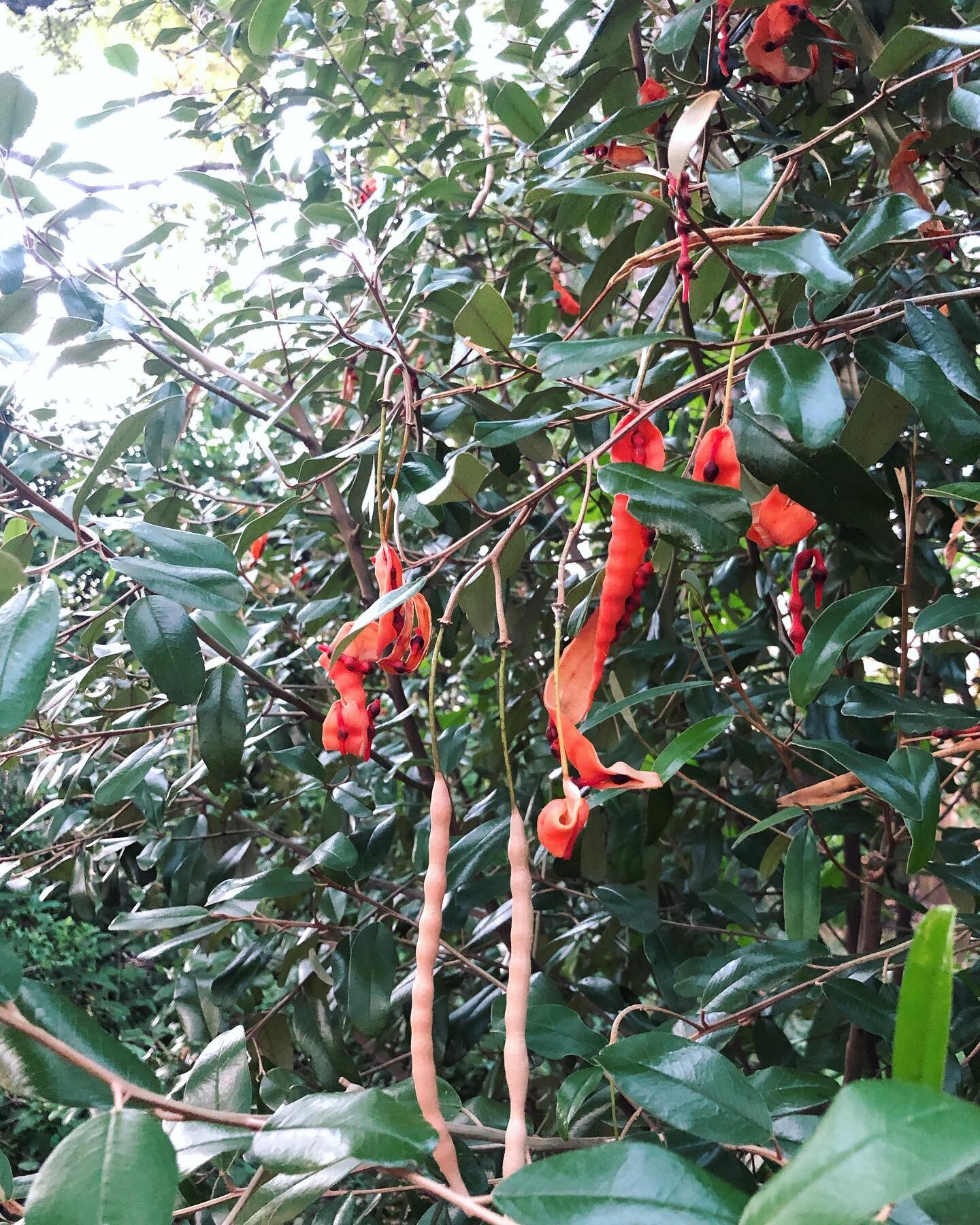
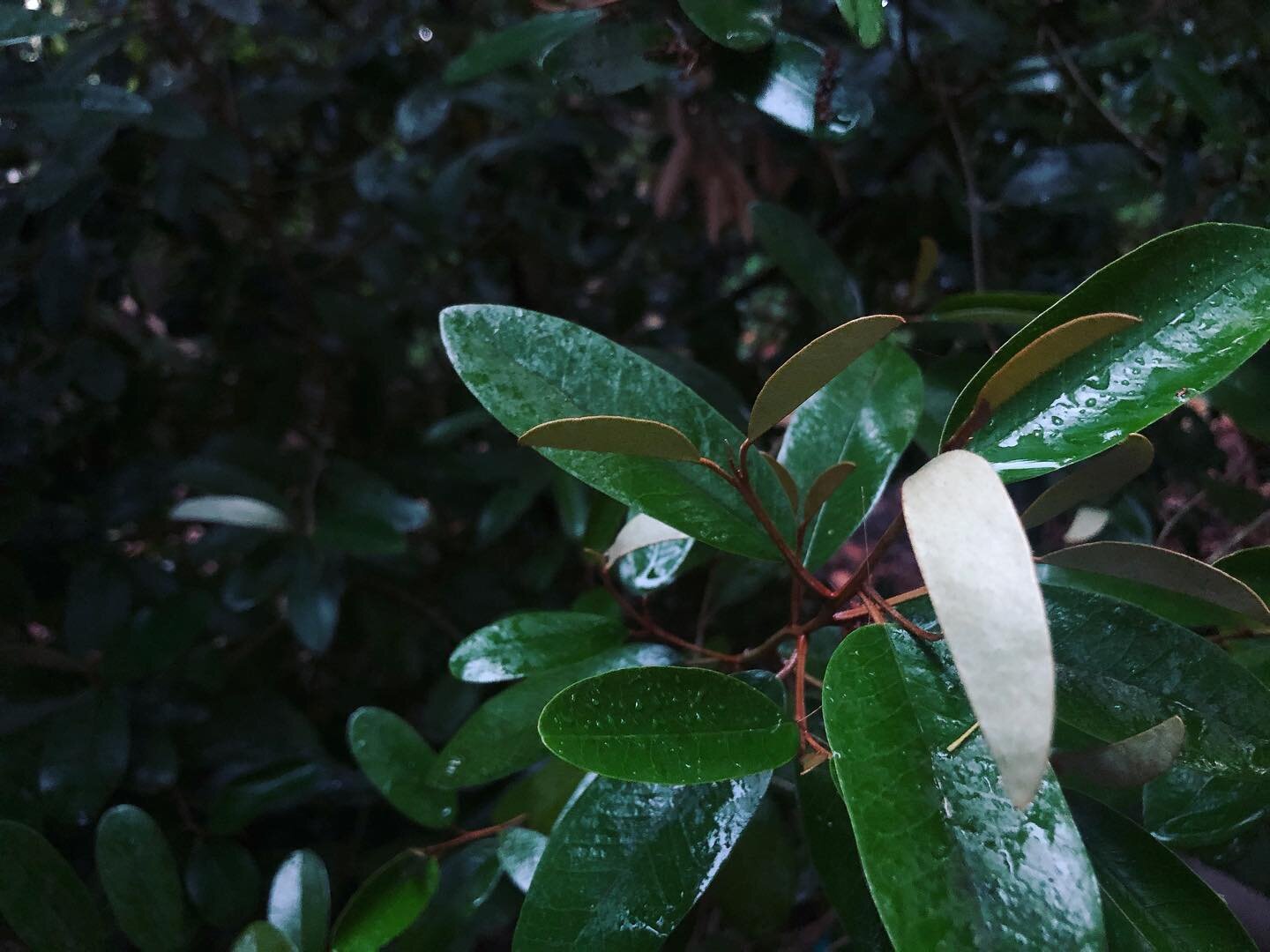
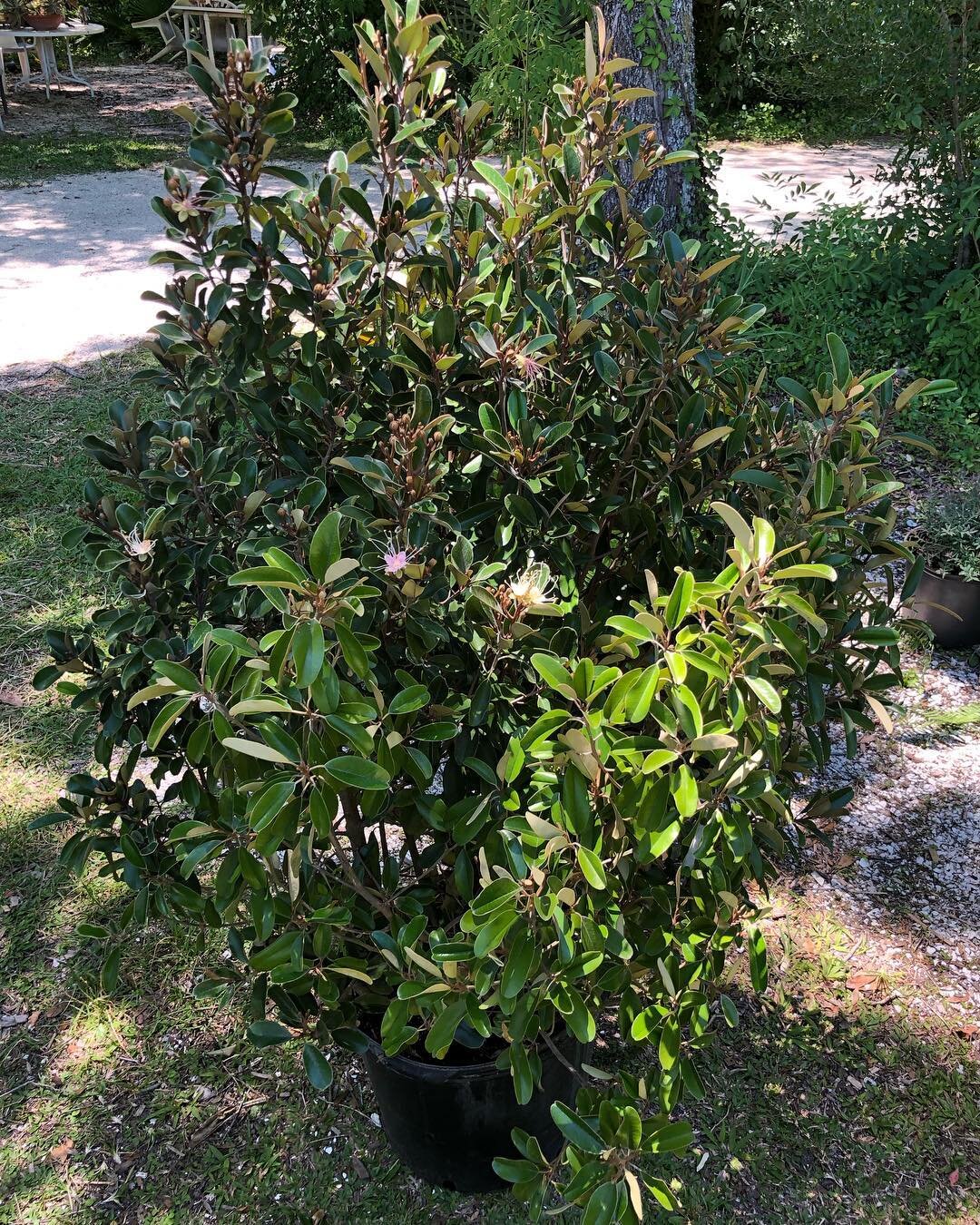
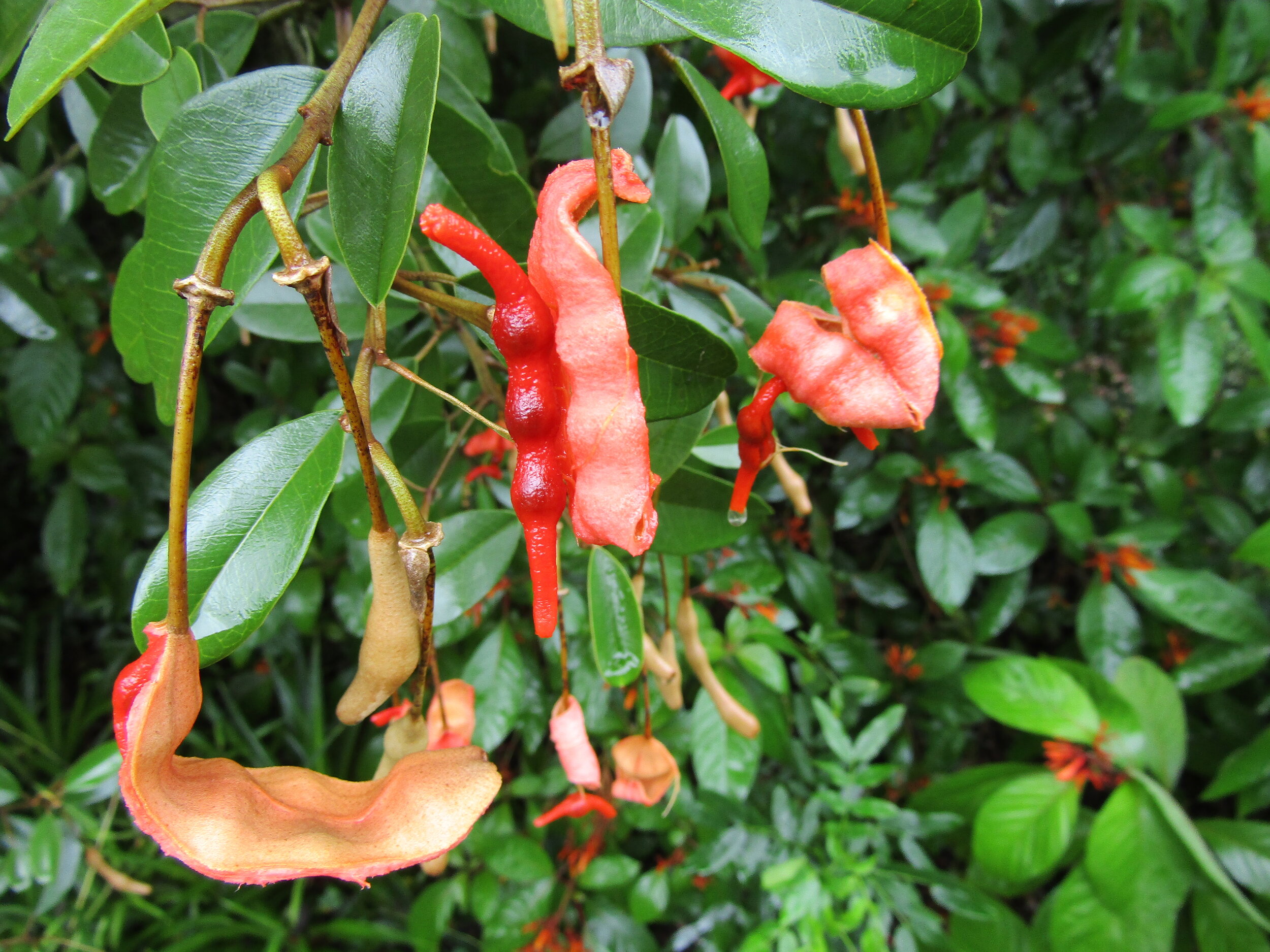
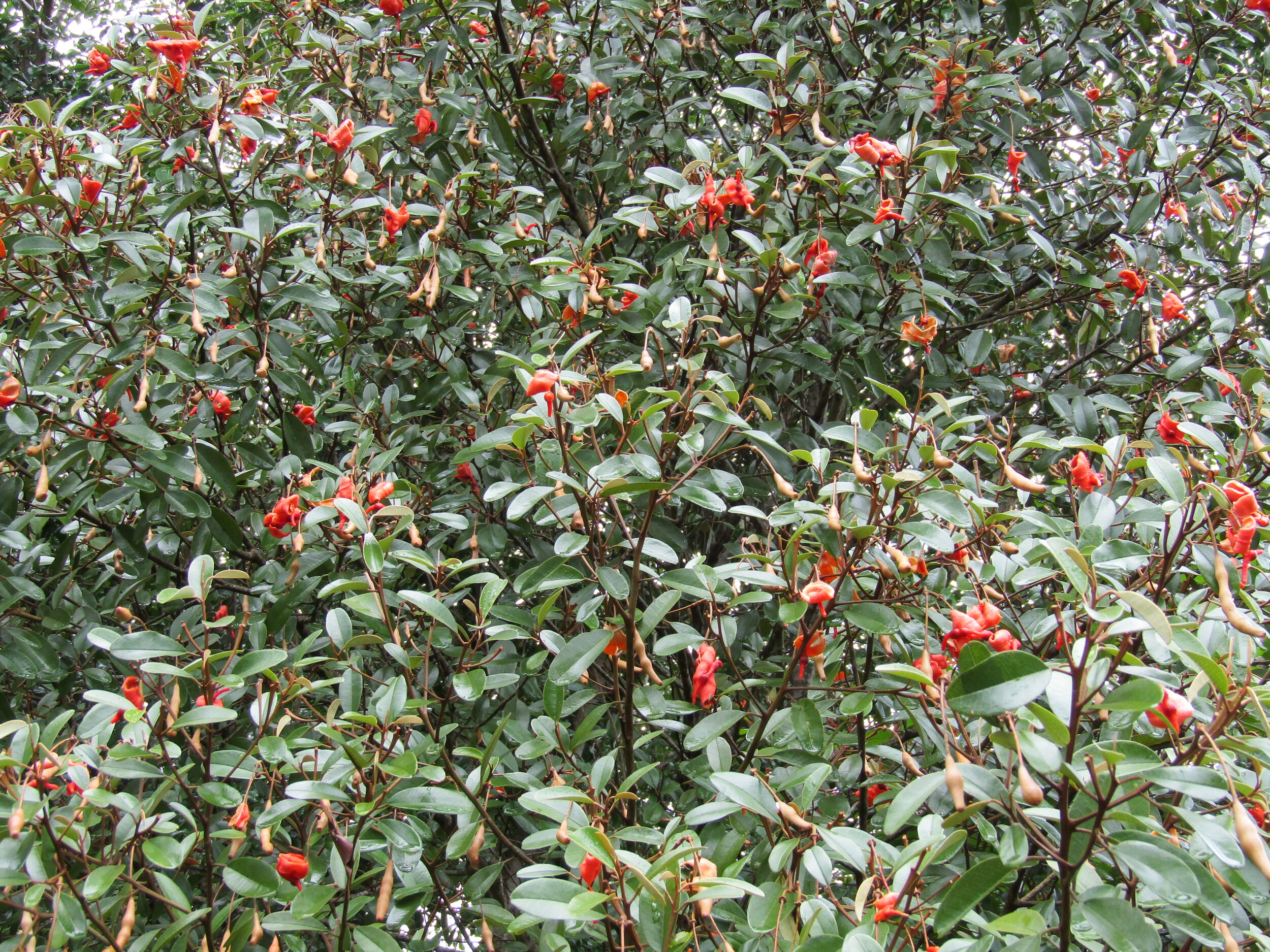
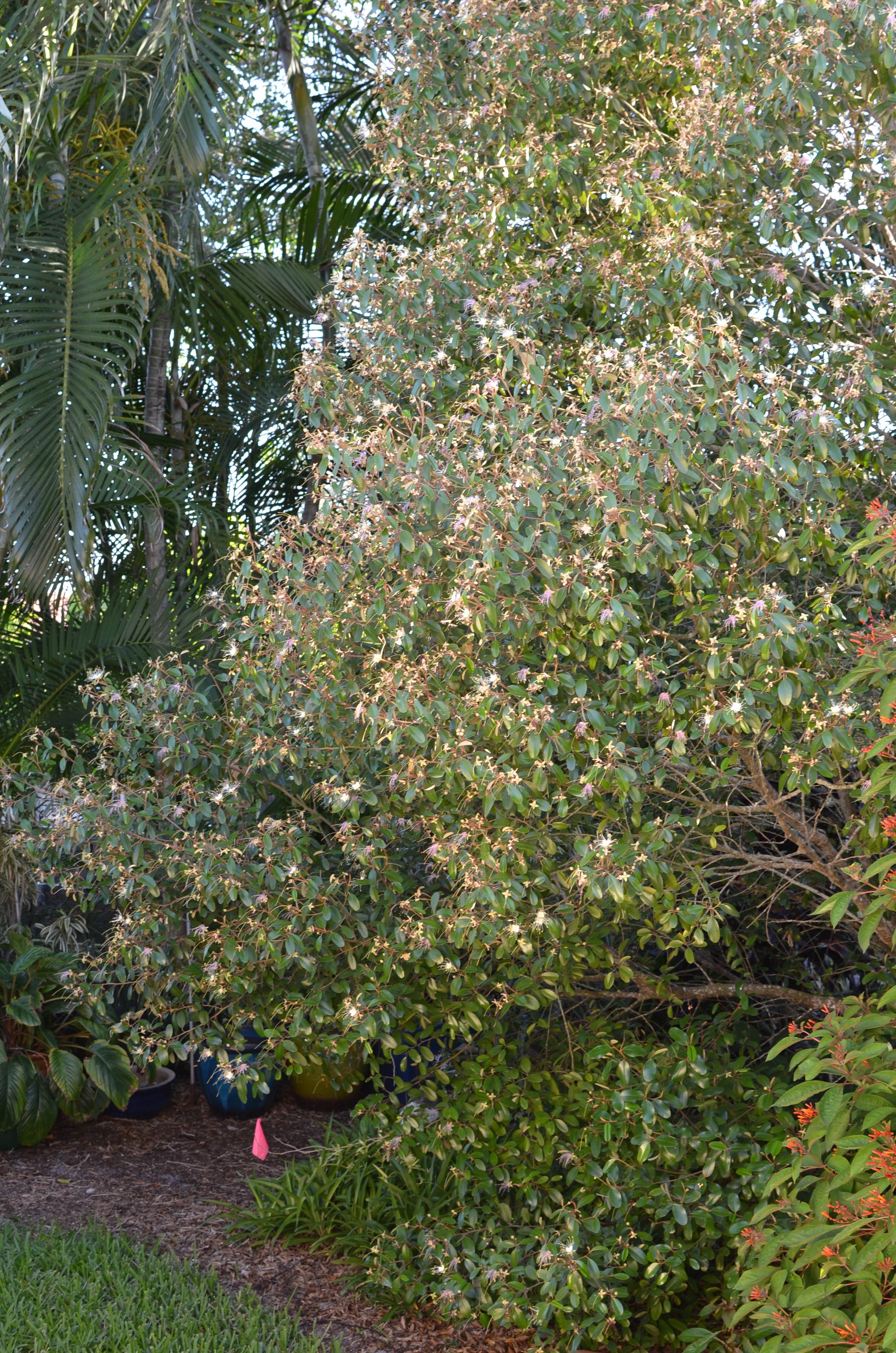
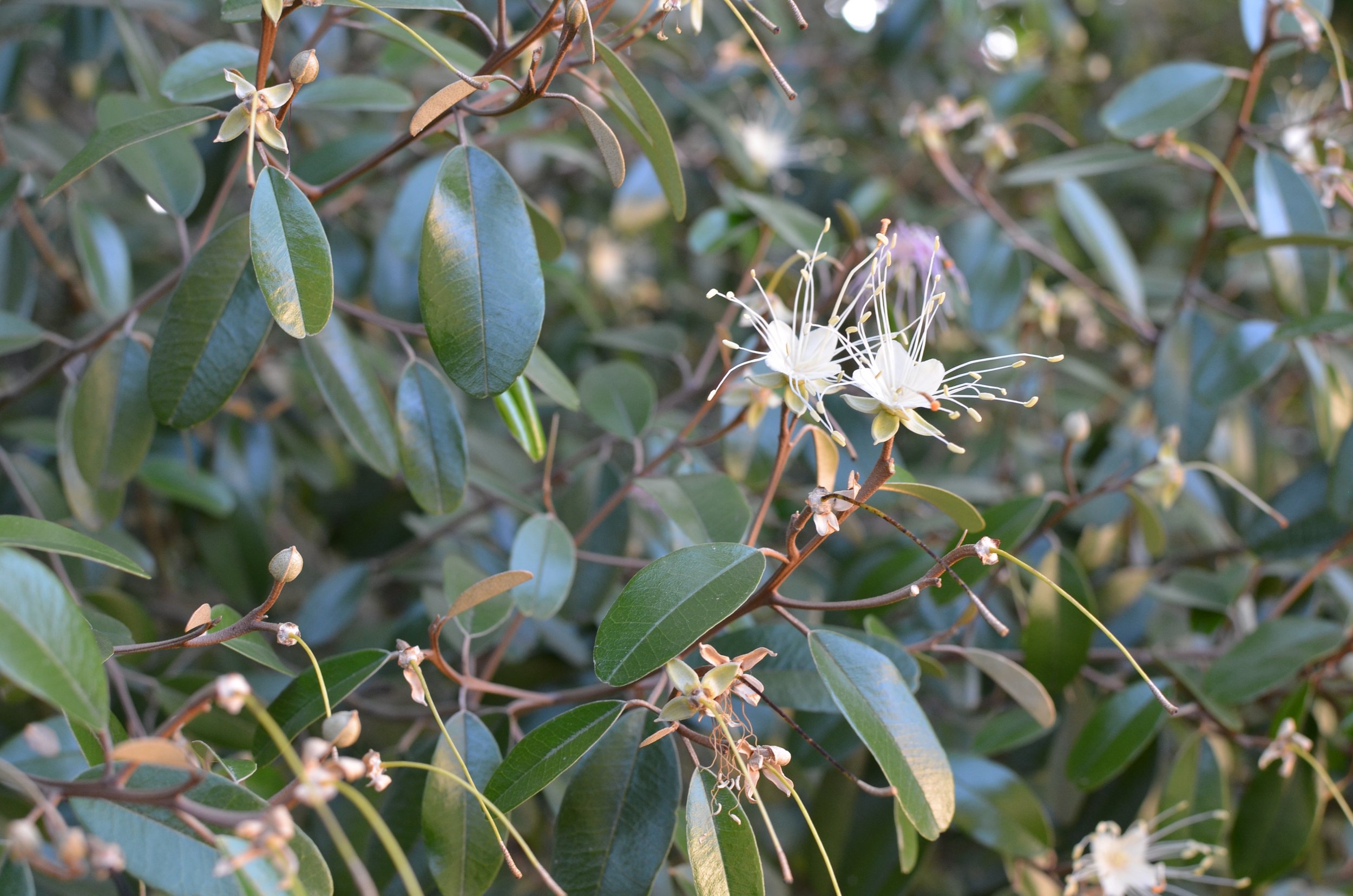
Capparis cynophallophora
Jamaican Caper is an evergreen shrub or small tree native to coastal Florida that grows 6’-20’ tall with an upright to spreading growth habit. This striking plant features glossy, oval leaves that emerge folded and bronze-colored before maturing to light green with notched tips. In spring, it produces spectacular showy flowers with white petals and prominent purple stamens up to 2” long that attract butterflies and other pollinators. Following flowering, it develops distinctive cylindrical seed pods 3”-8” long containing brown seeds embedded in scarlet pulp. Extremely drought and salt-tolerant, it thrives in full sun to partial shade with well-drained soils, making it an excellent choice for coastal landscapes, screens, or specimen plantings in zones 10-11.
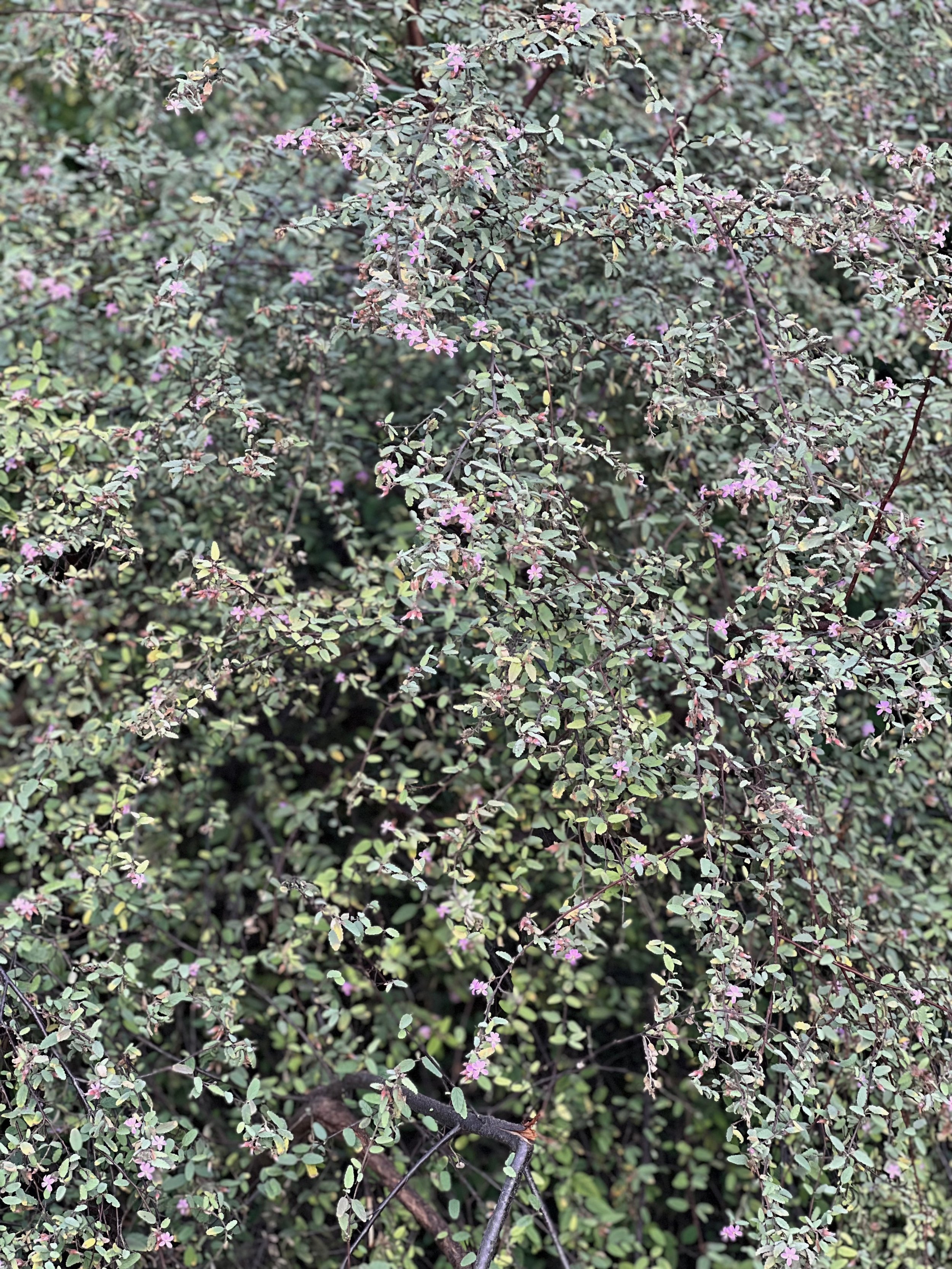
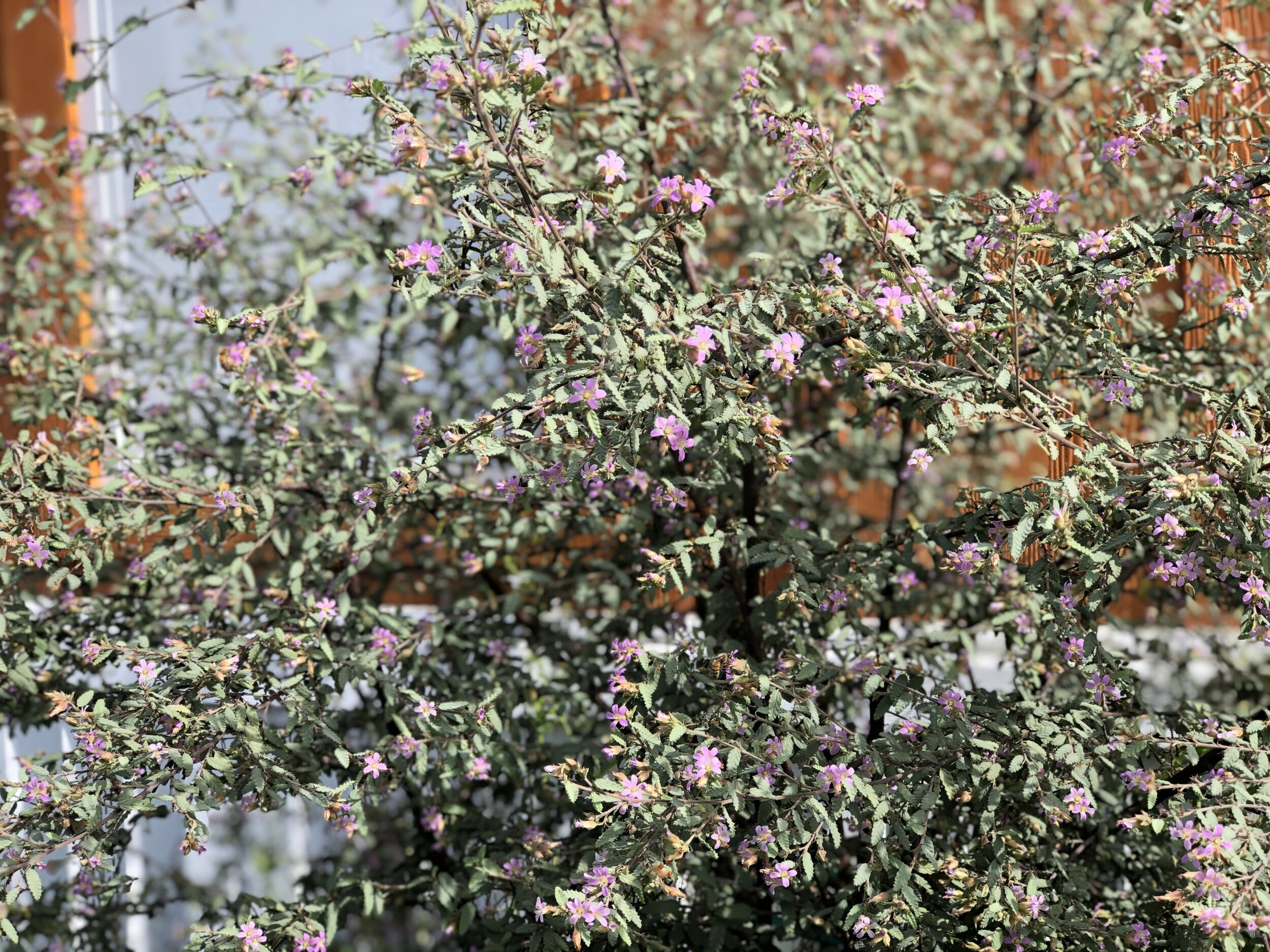
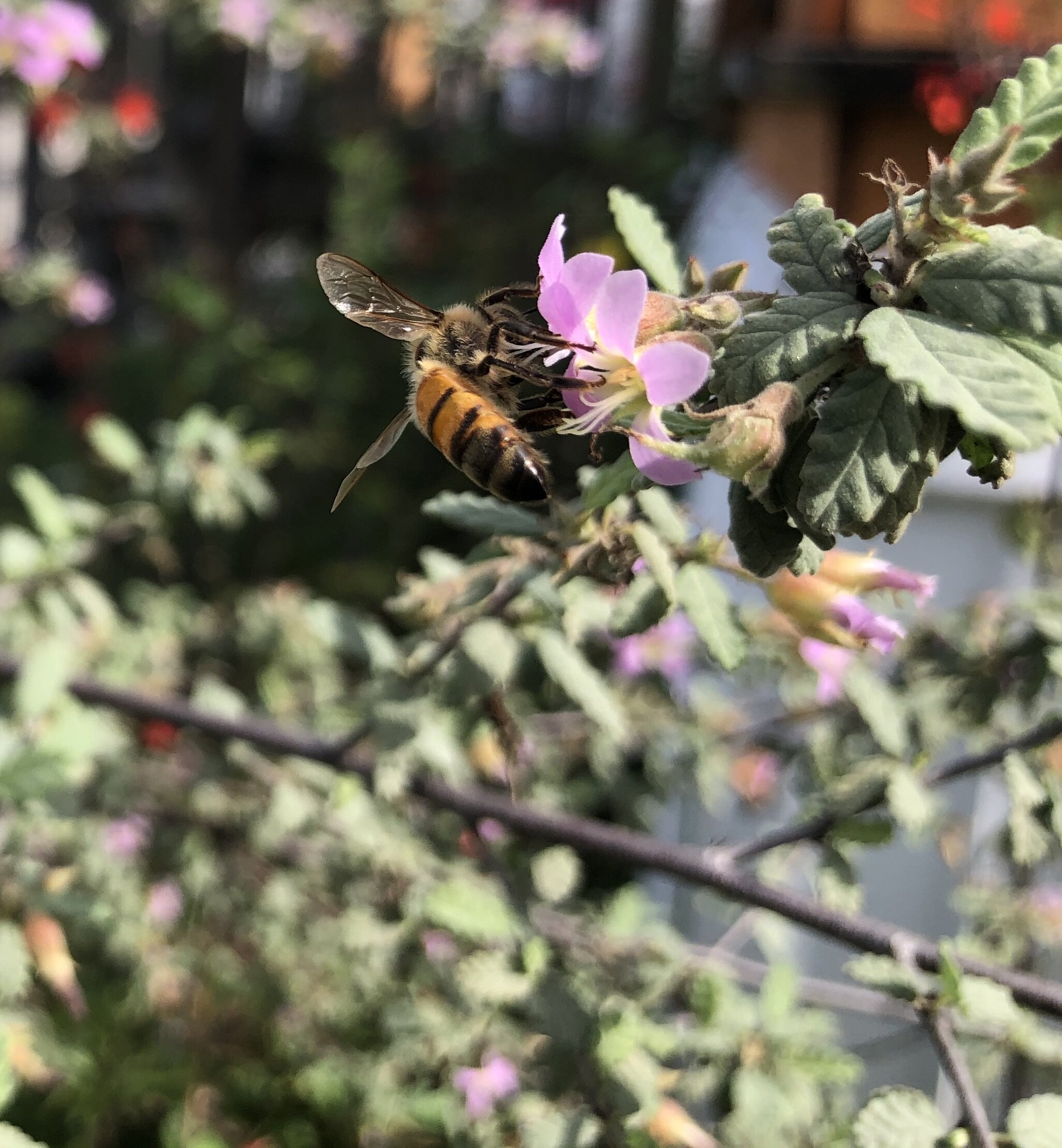
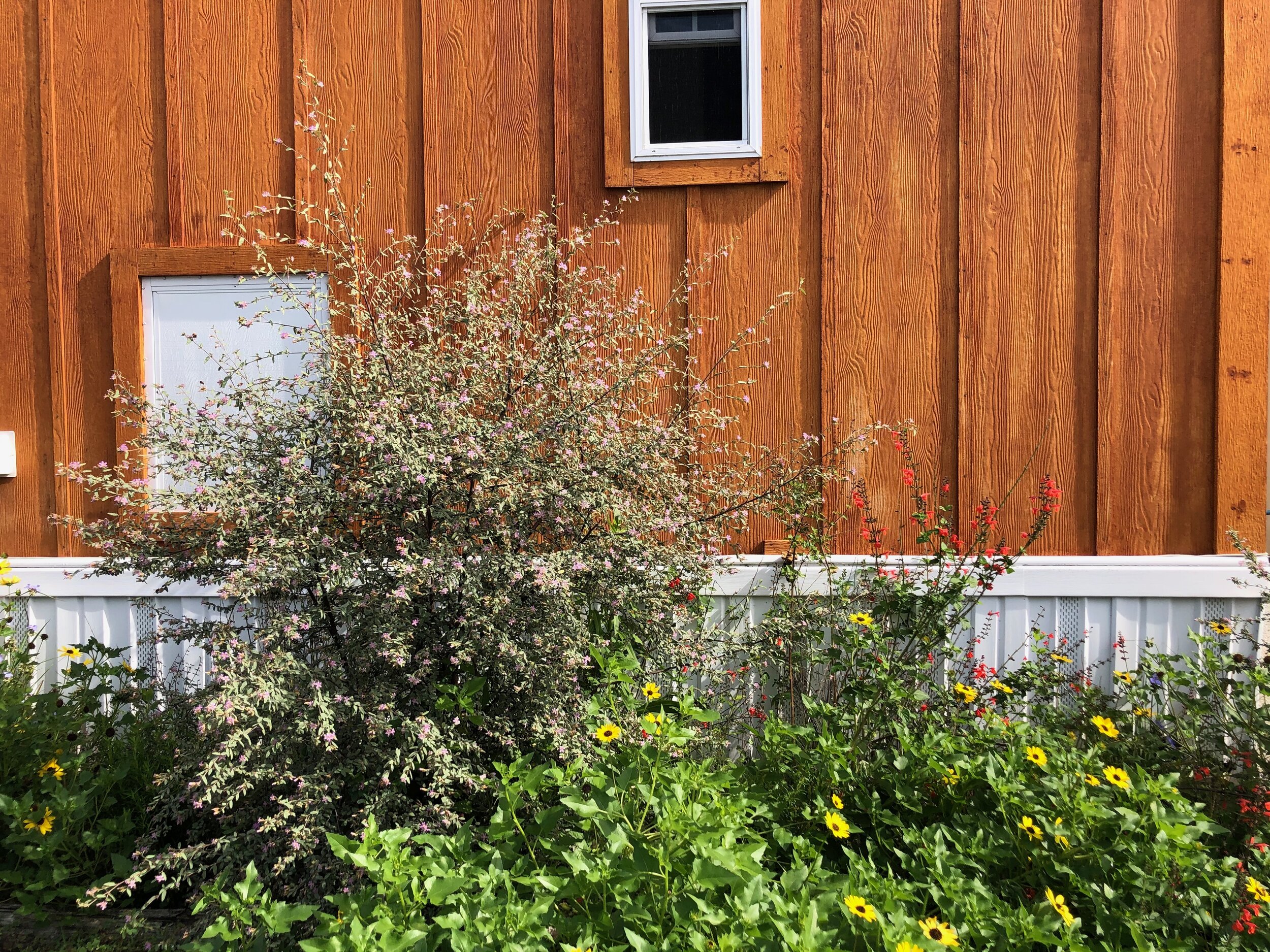
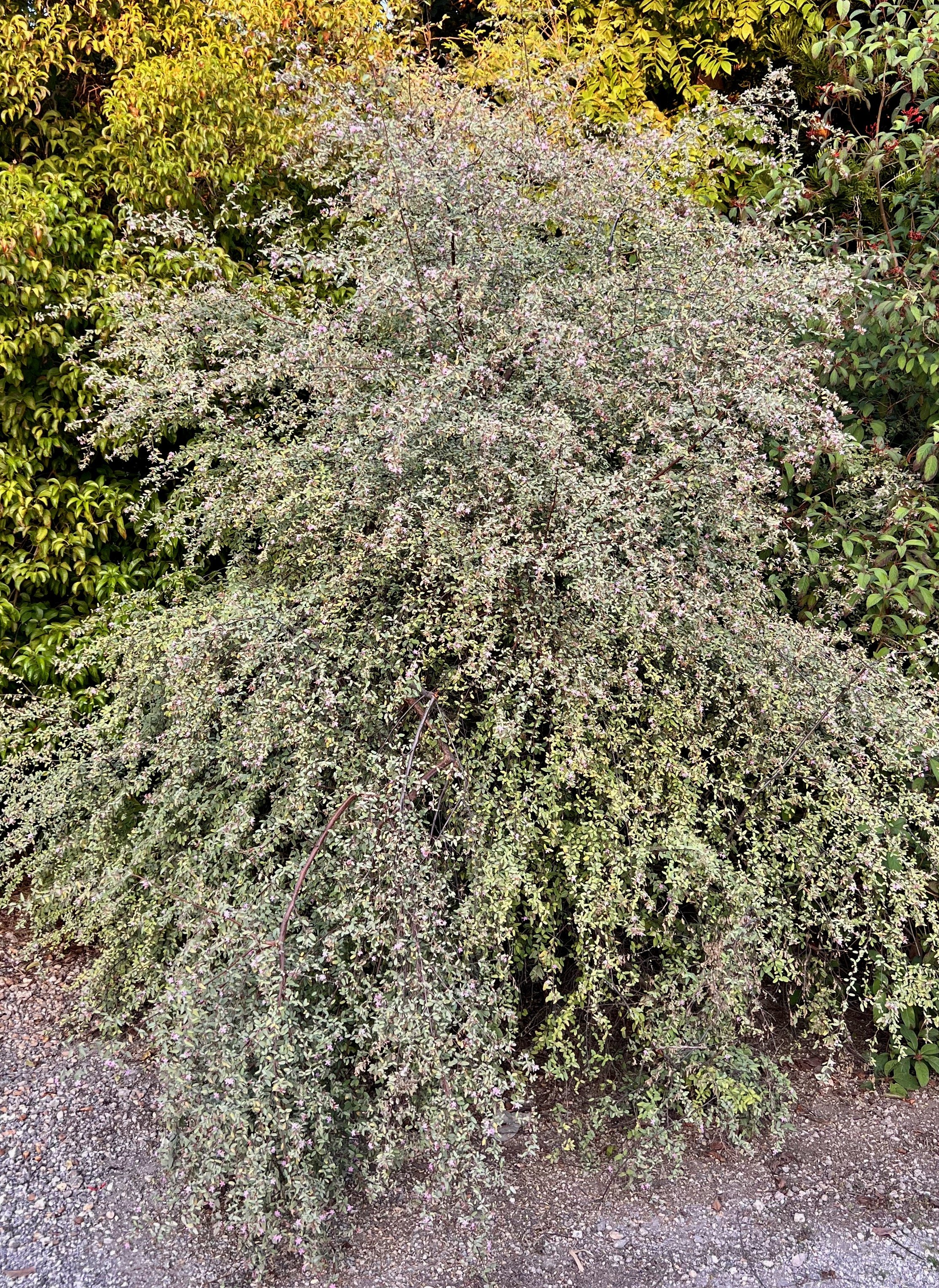
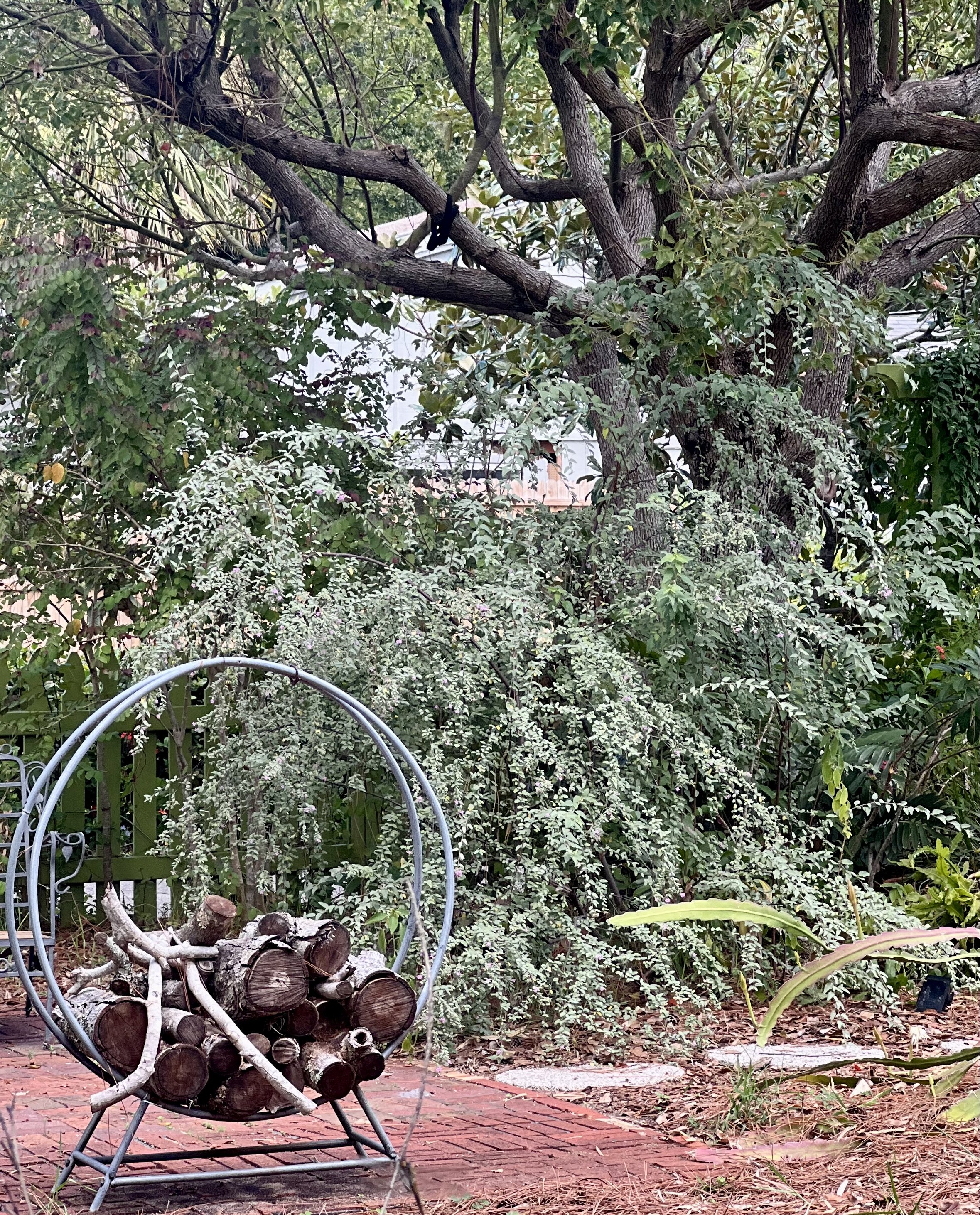
Melochia tomentosa
This native, evergreen, large flowering shrub is a super pollinator magnet. It is a keystone species for gardeners in South Florida because of the diversity and numbers of pollinators it attracts, including hummingbirds. Blooming year-round, it has tiny pink flowers and tiny grey leaves on dark stems and a beautiful soft and open habit in the garden.
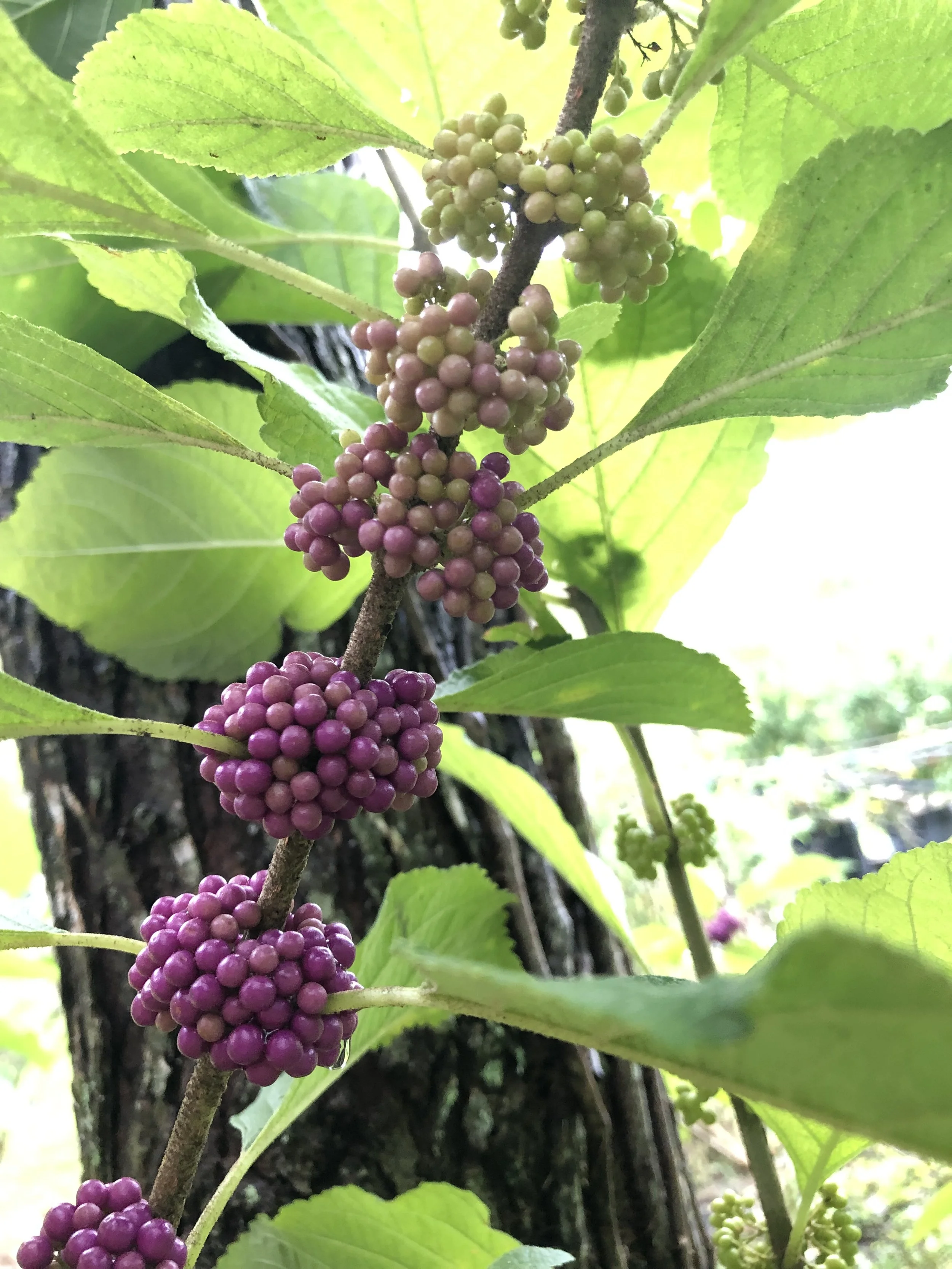
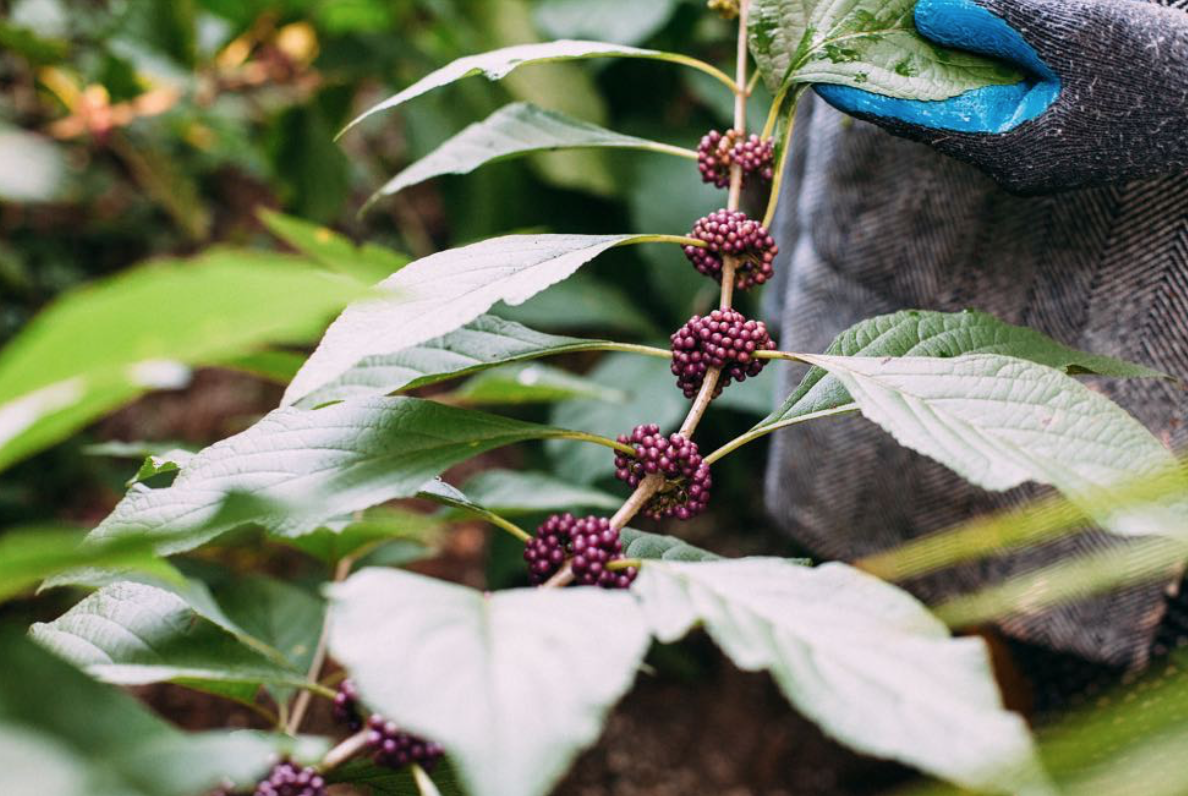


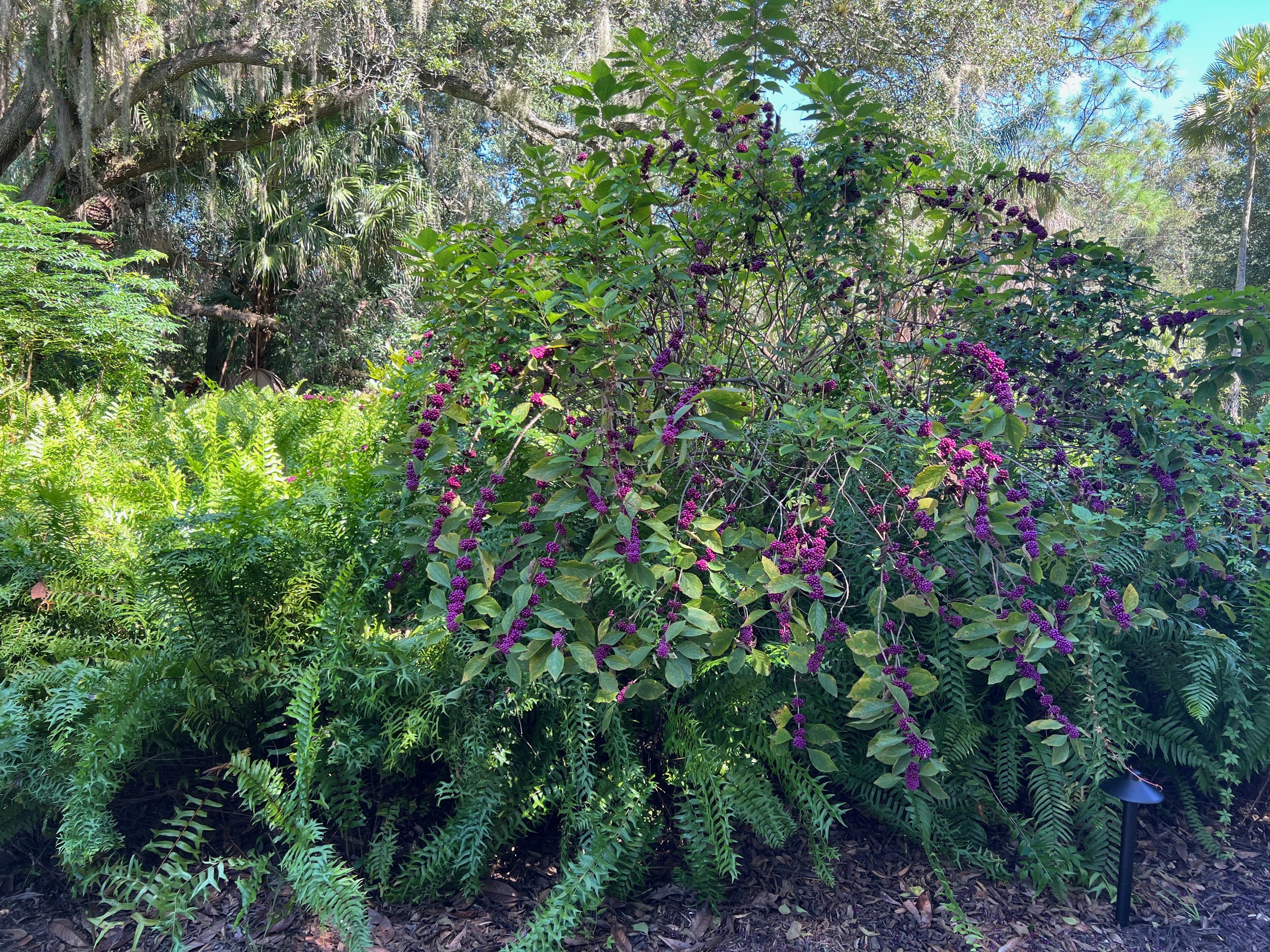
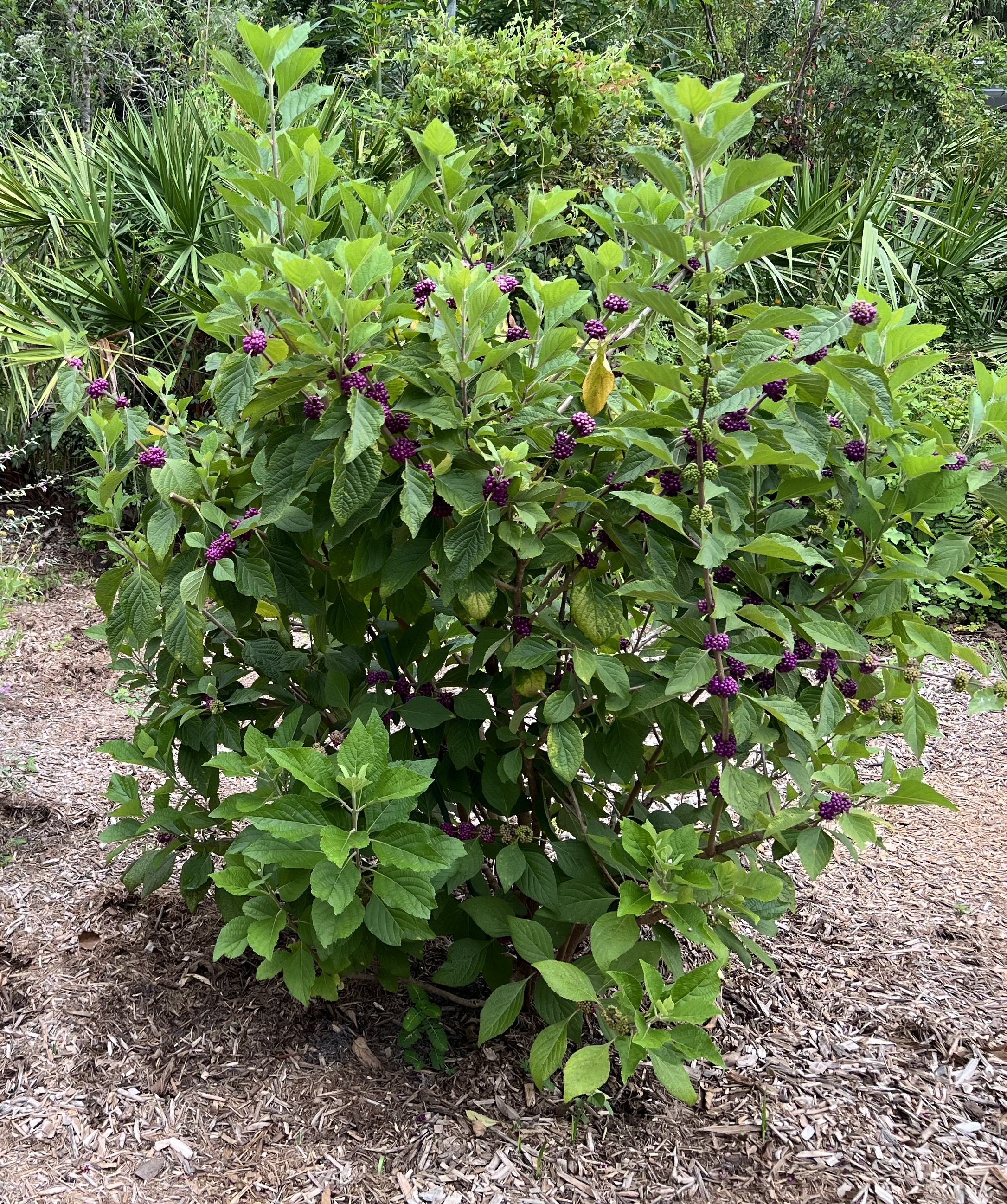
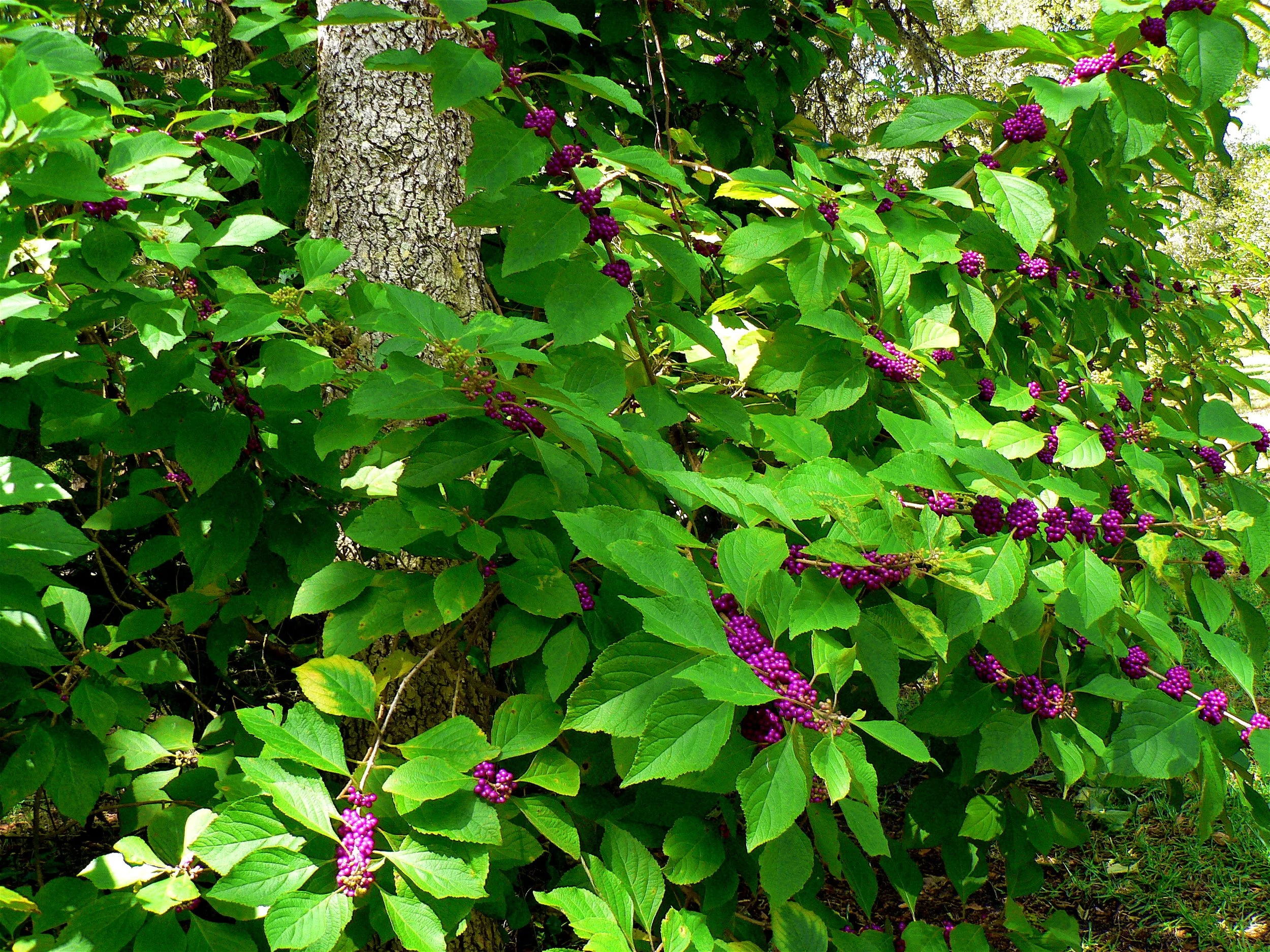
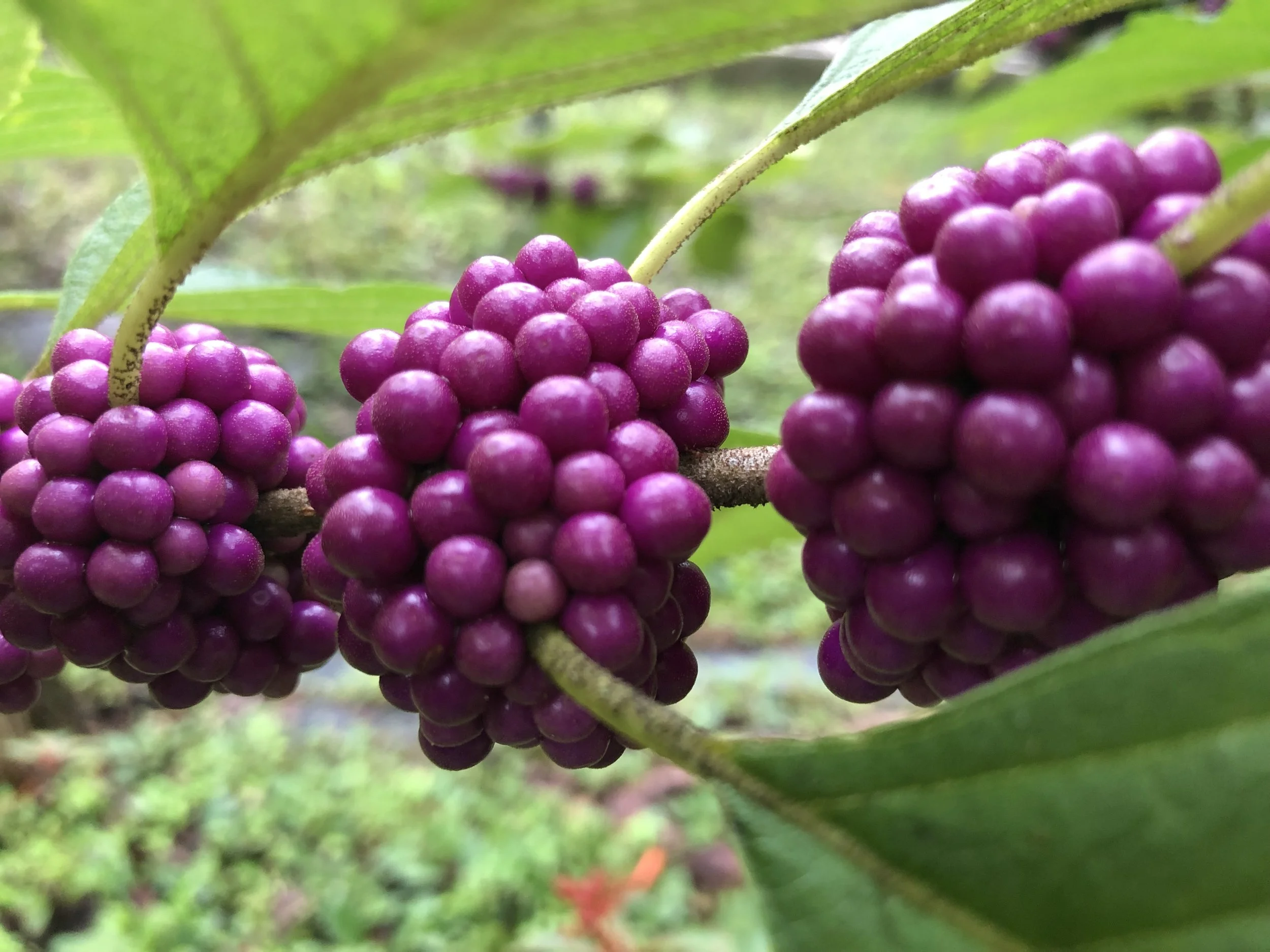
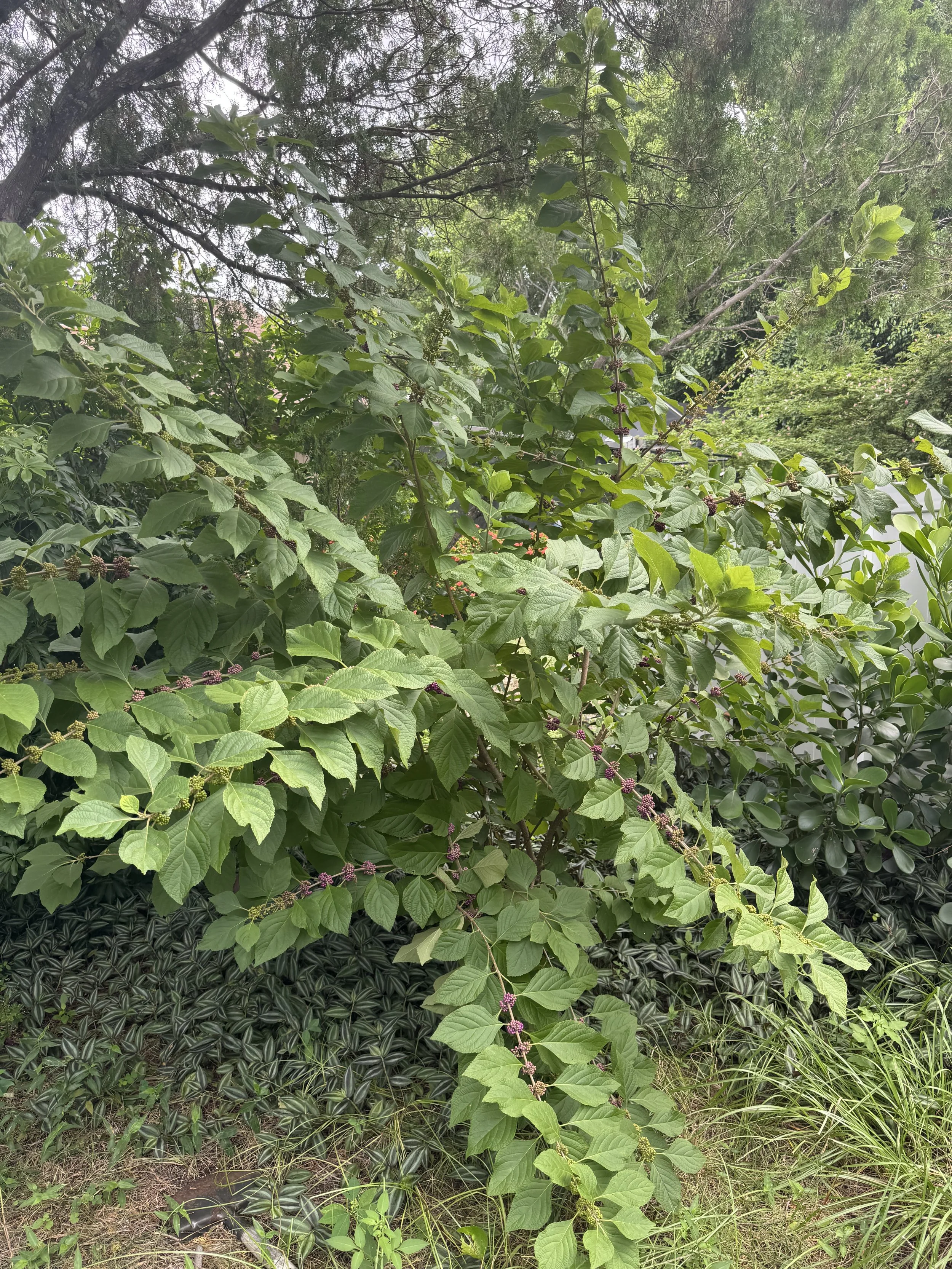
This native, deciduous, prunable shrub grows to be 6’x6’ and does best in dry to moist (well-drained) soils, with full sun to shade. With light purple flowers in spring and showy purple berries in fall, Beautyberry makes a great addition to many Florida landscapes. The attractive weeping branches look lovely when planted under trees, bringing in pollinators with their flowers and birds with the berries. Their berries are edible for humans as well, and can be turned into jams and syrups!
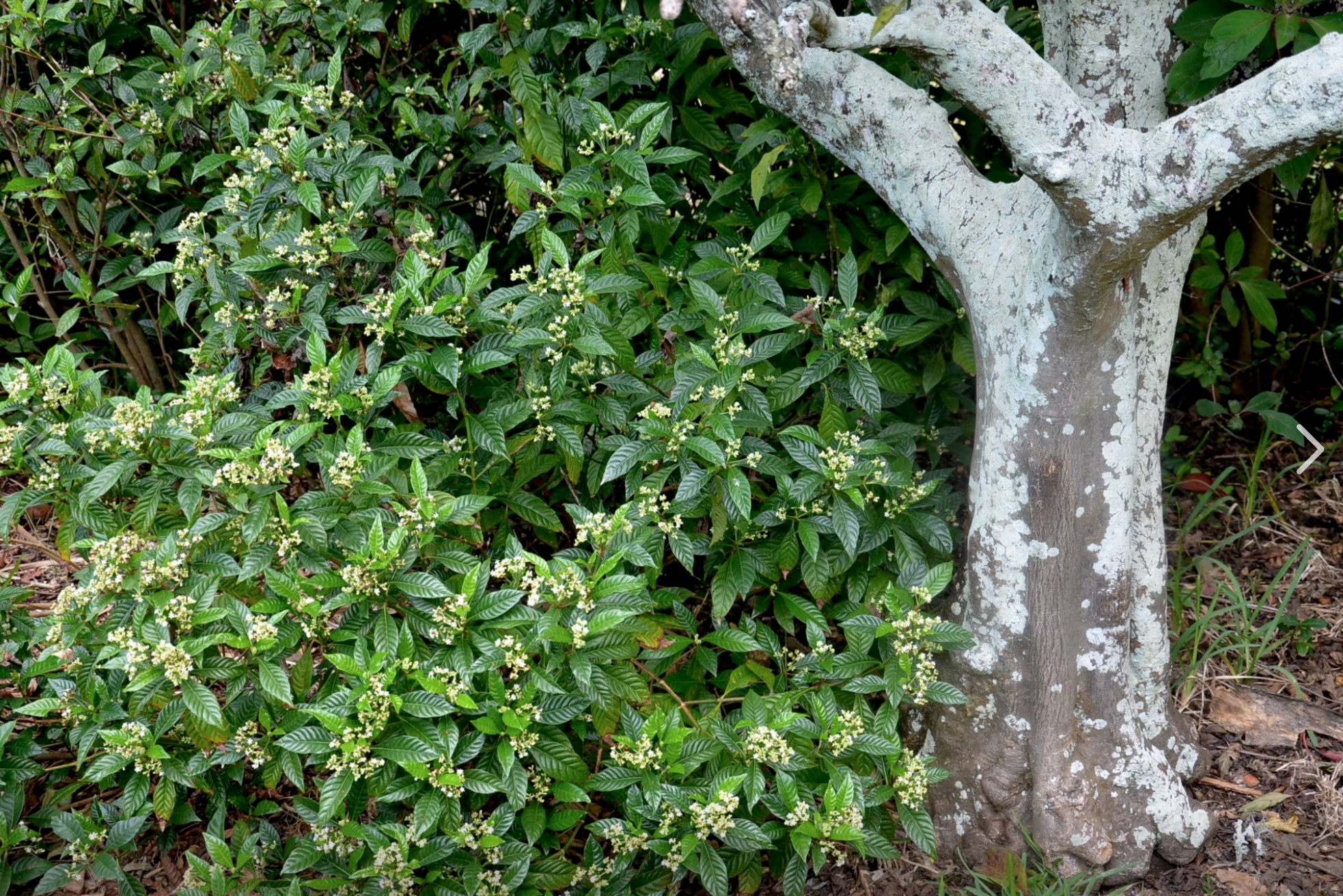
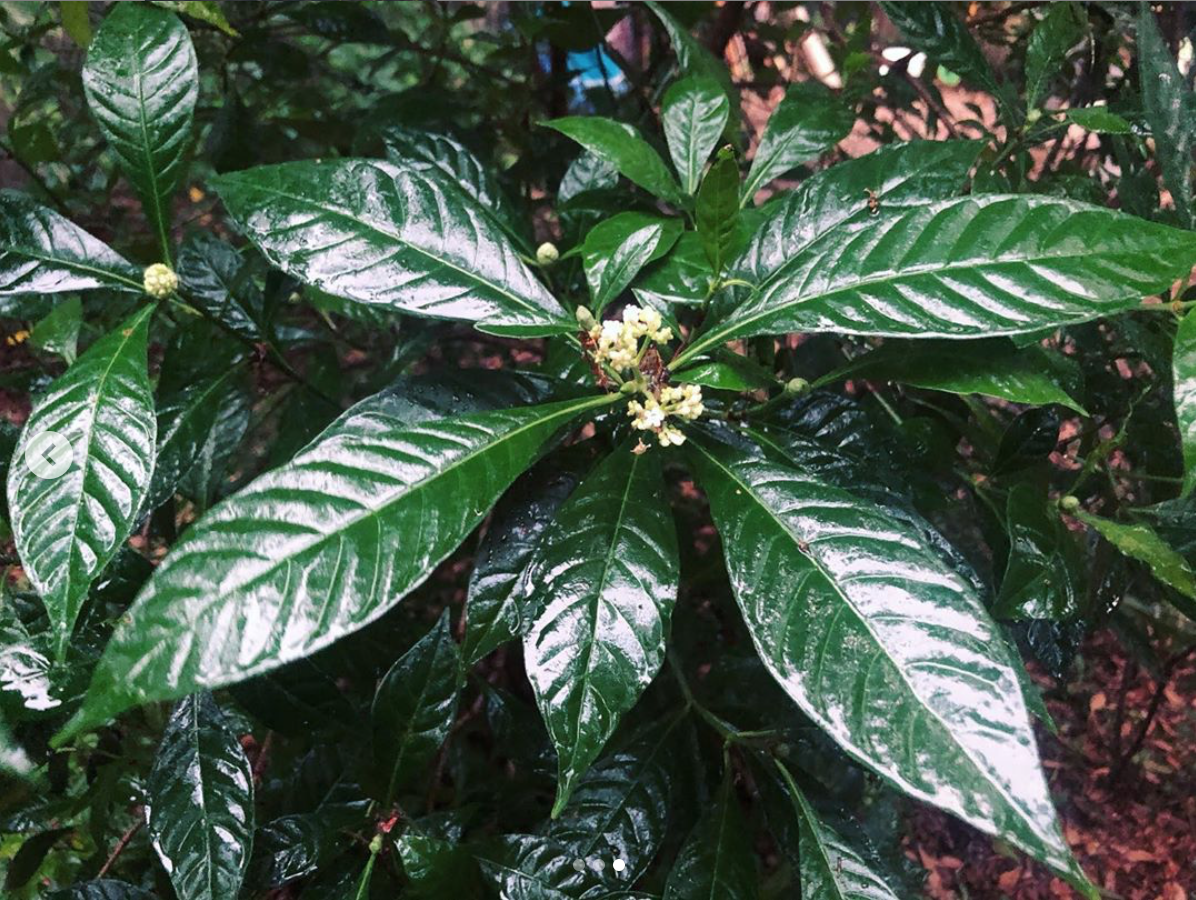
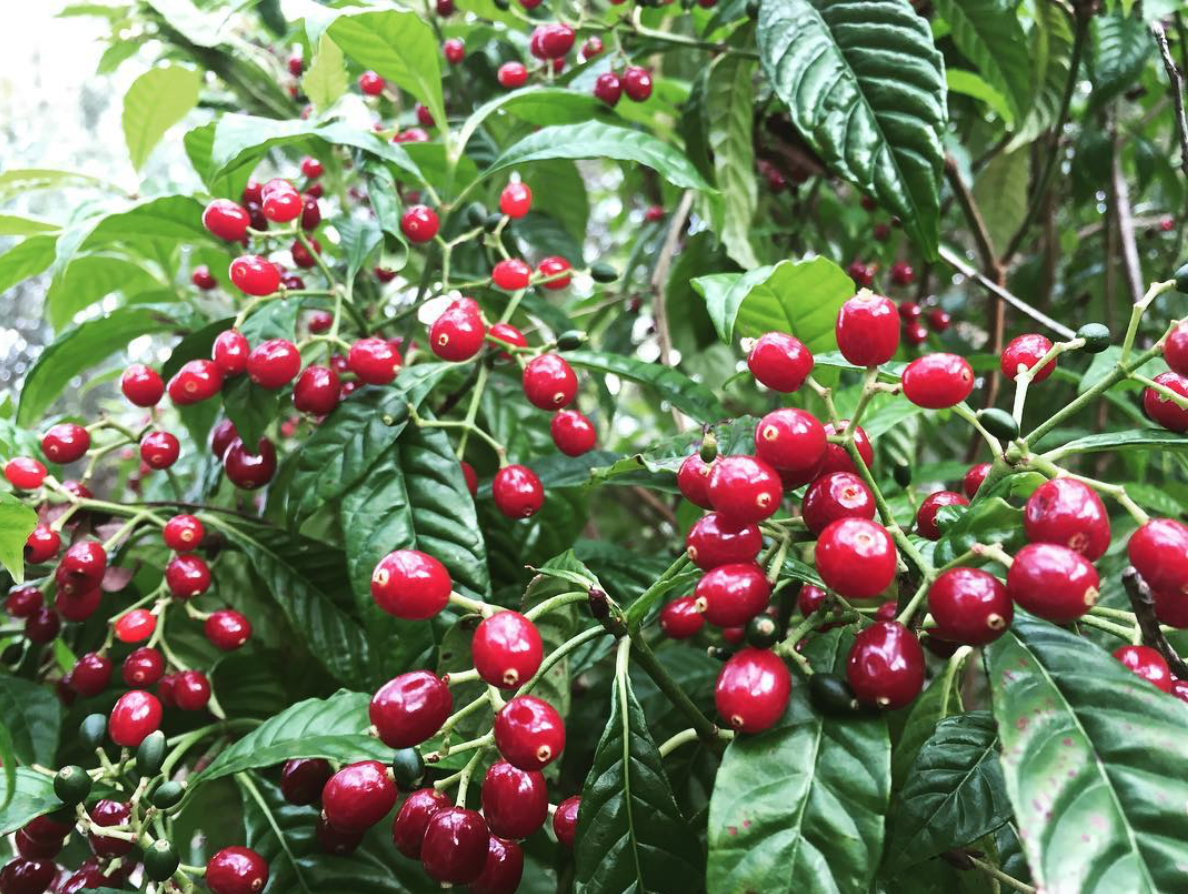
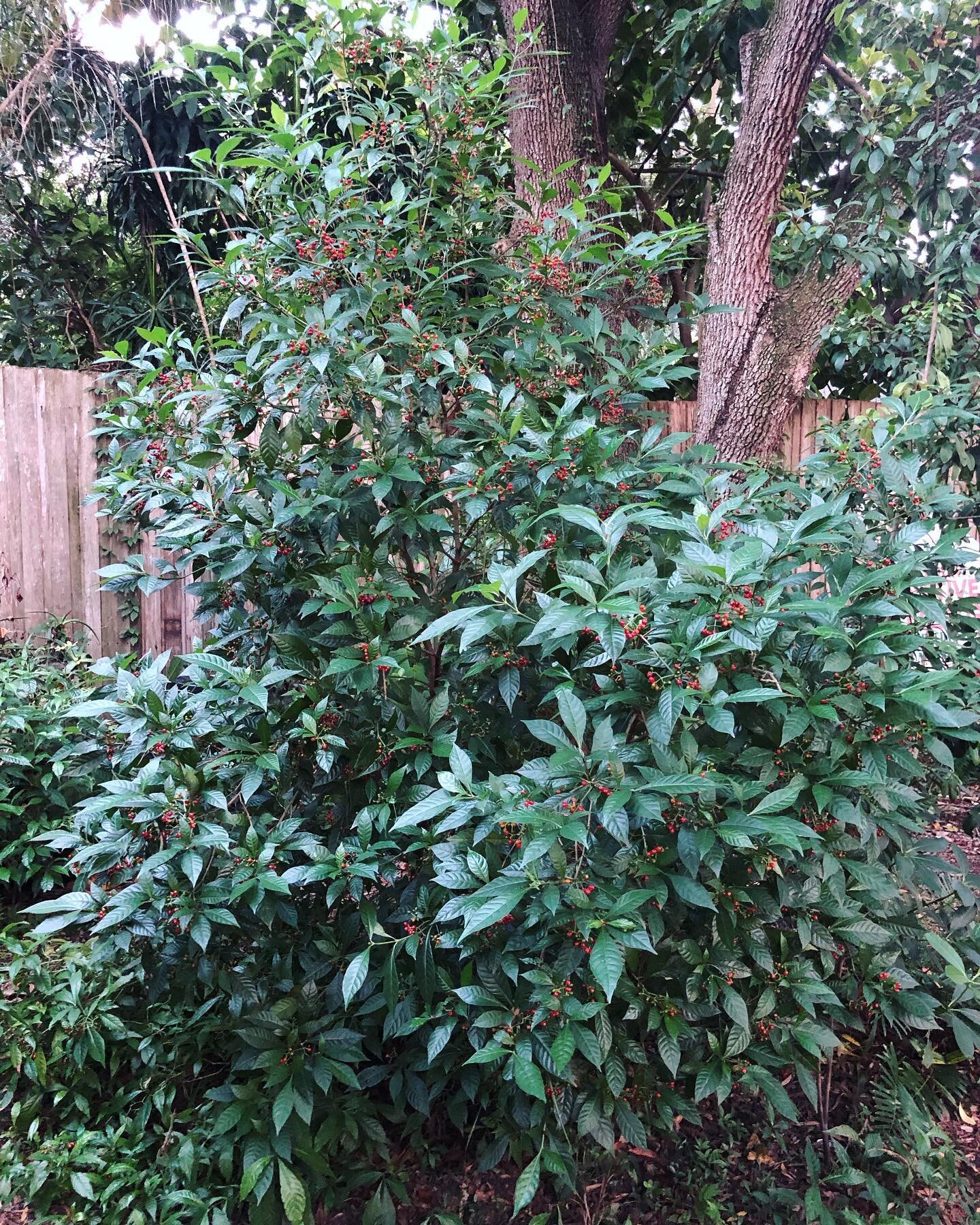
Psychotria nervosa
Wild Coffee is an evergreen shrub native to Florida and the southeastern United States that grows 4’-10’ tall with glossy, dark green leaves featuring deeply impressed veining. This versatile member of the coffee family produces clusters of small, fragrant white flowers at branch tips in spring and summer, followed by bright red berry-like fruits that resemble coffee beans but contain no caffeine. The attractive red berries provide important food for birds and wildlife throughout summer and fall. Extremely shade-tolerant and adaptable to various growing conditions, it thrives in partial to full shade with moderate drought tolerance, making it an excellent choice for informal hedges, understory plantings, and natural landscapes in zones 9-11.
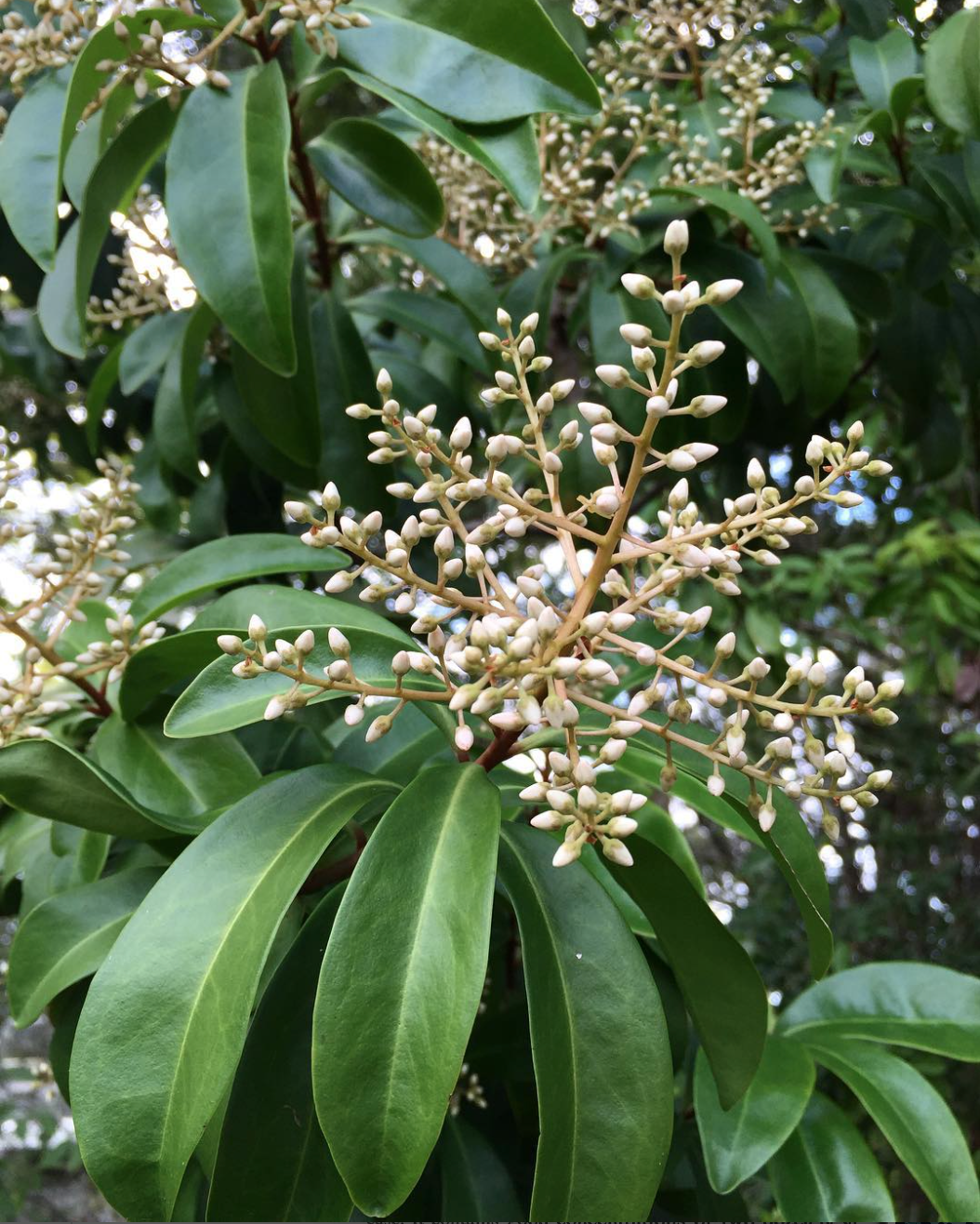
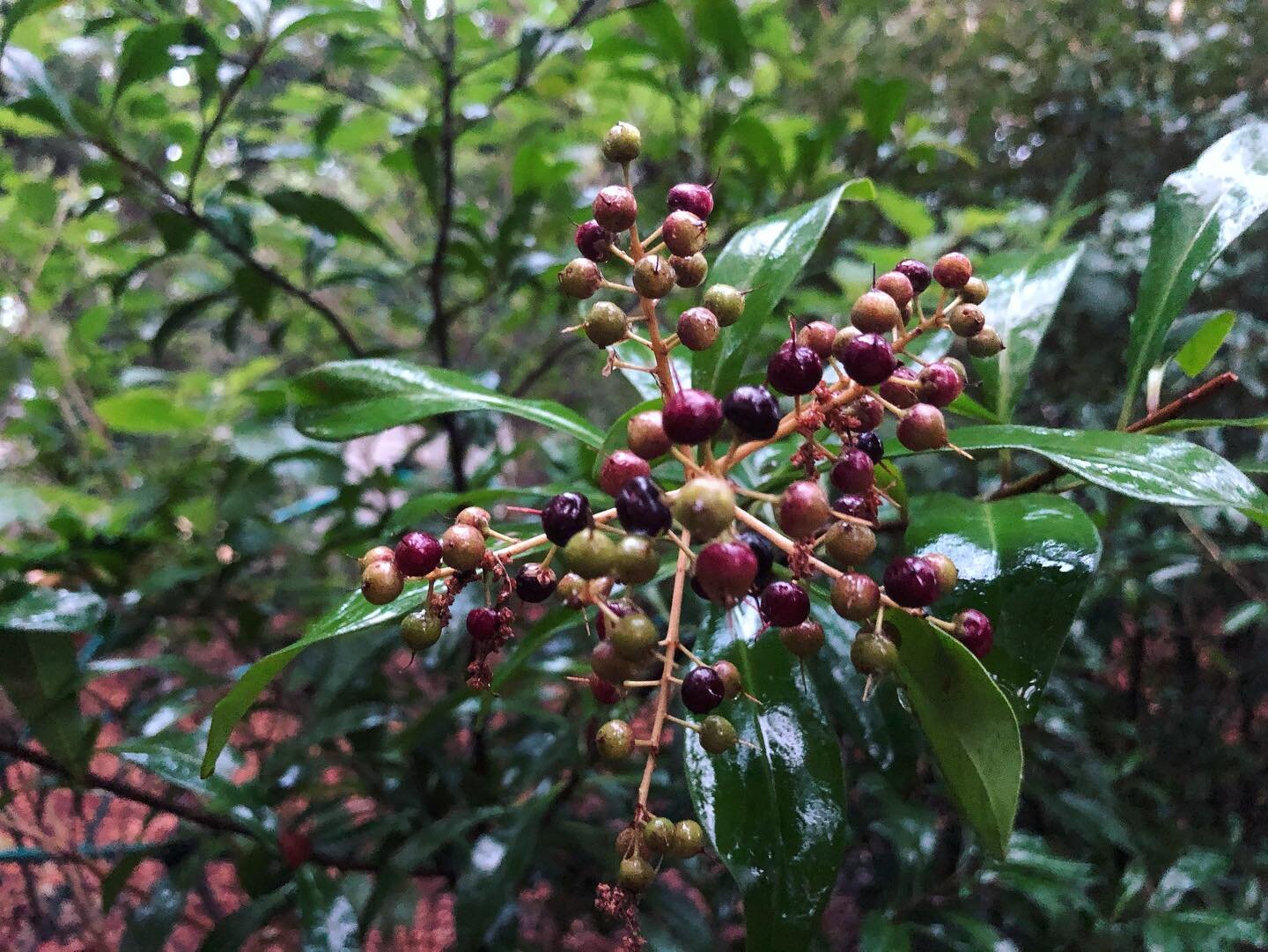
Ardisia escallonioides
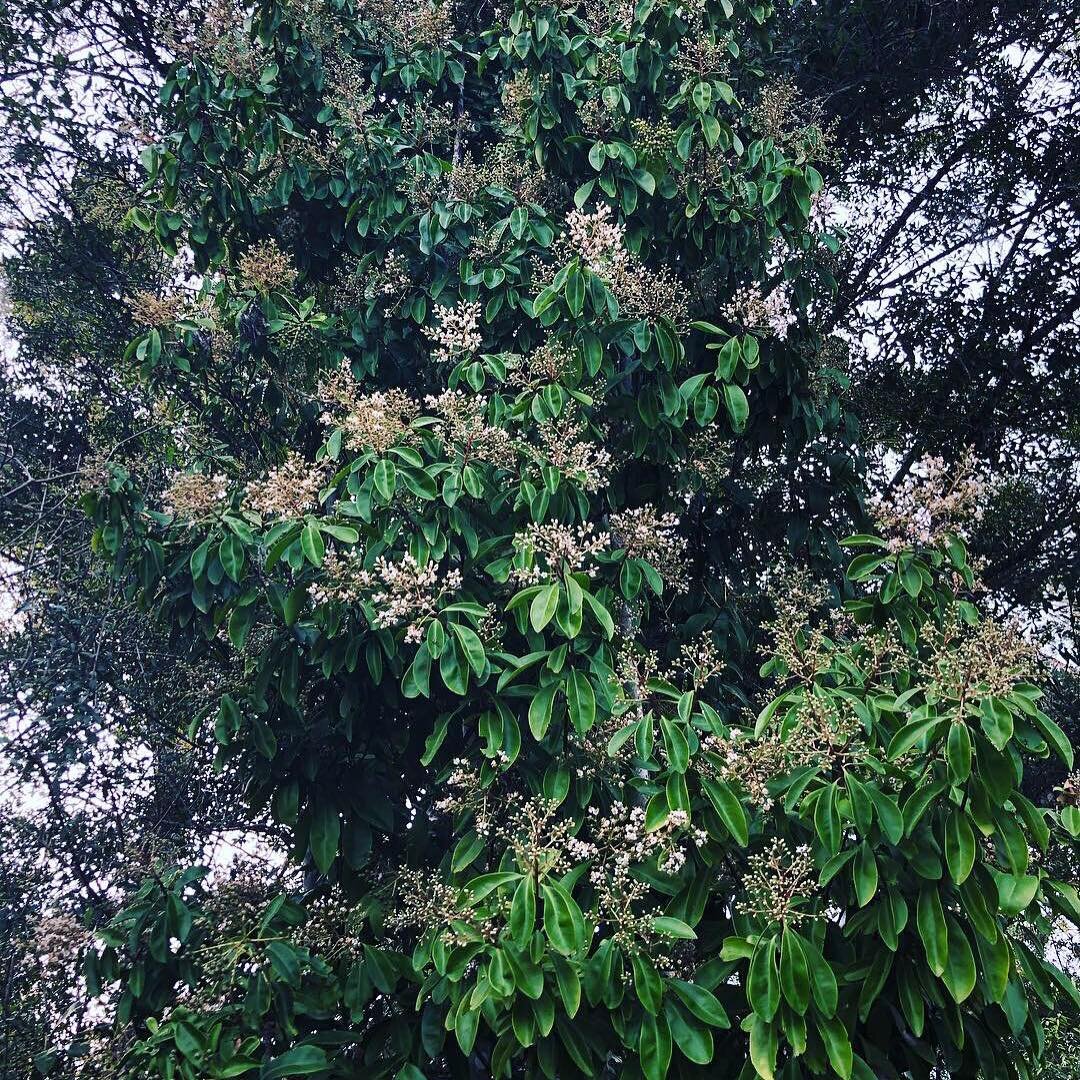
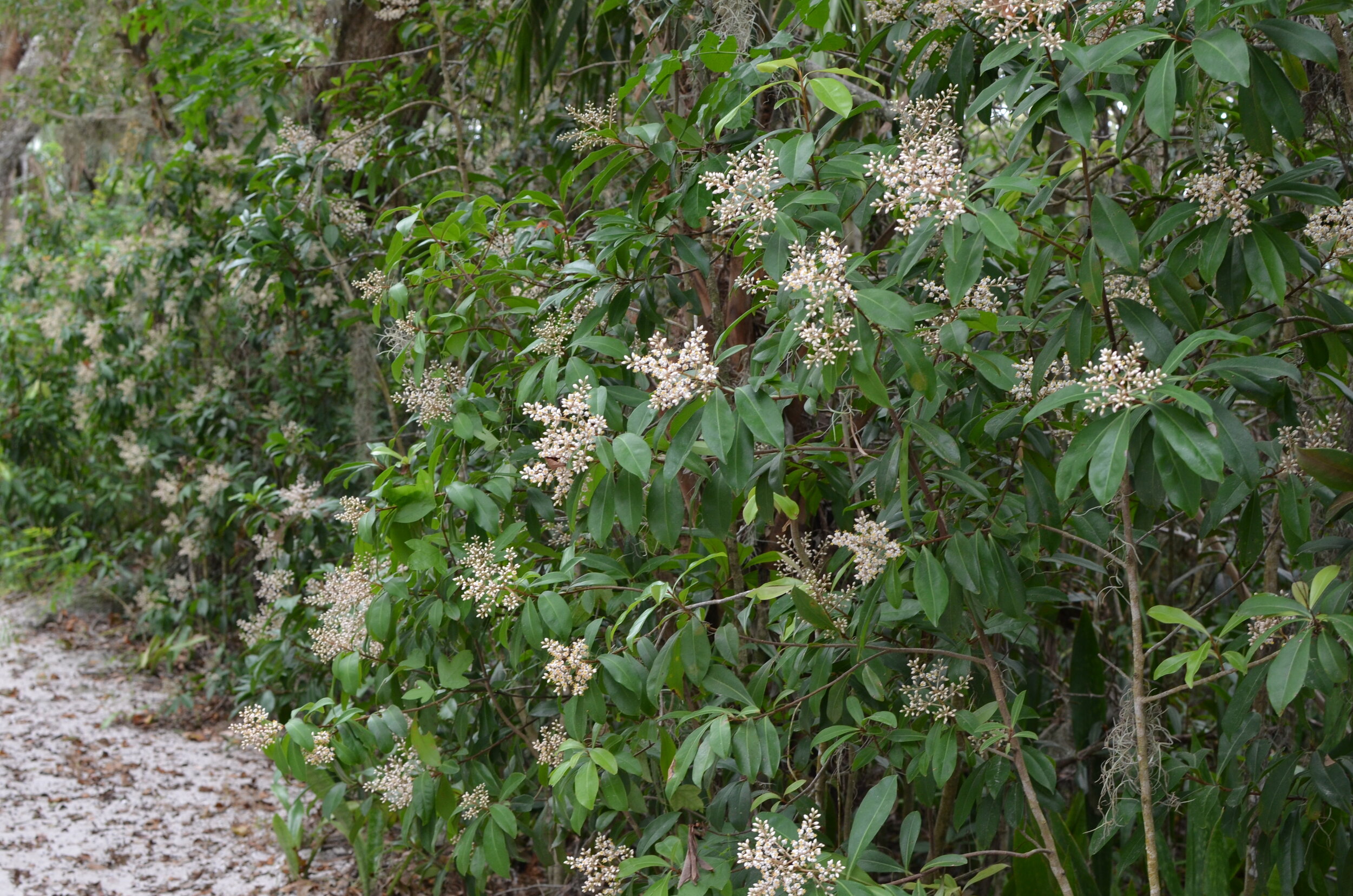
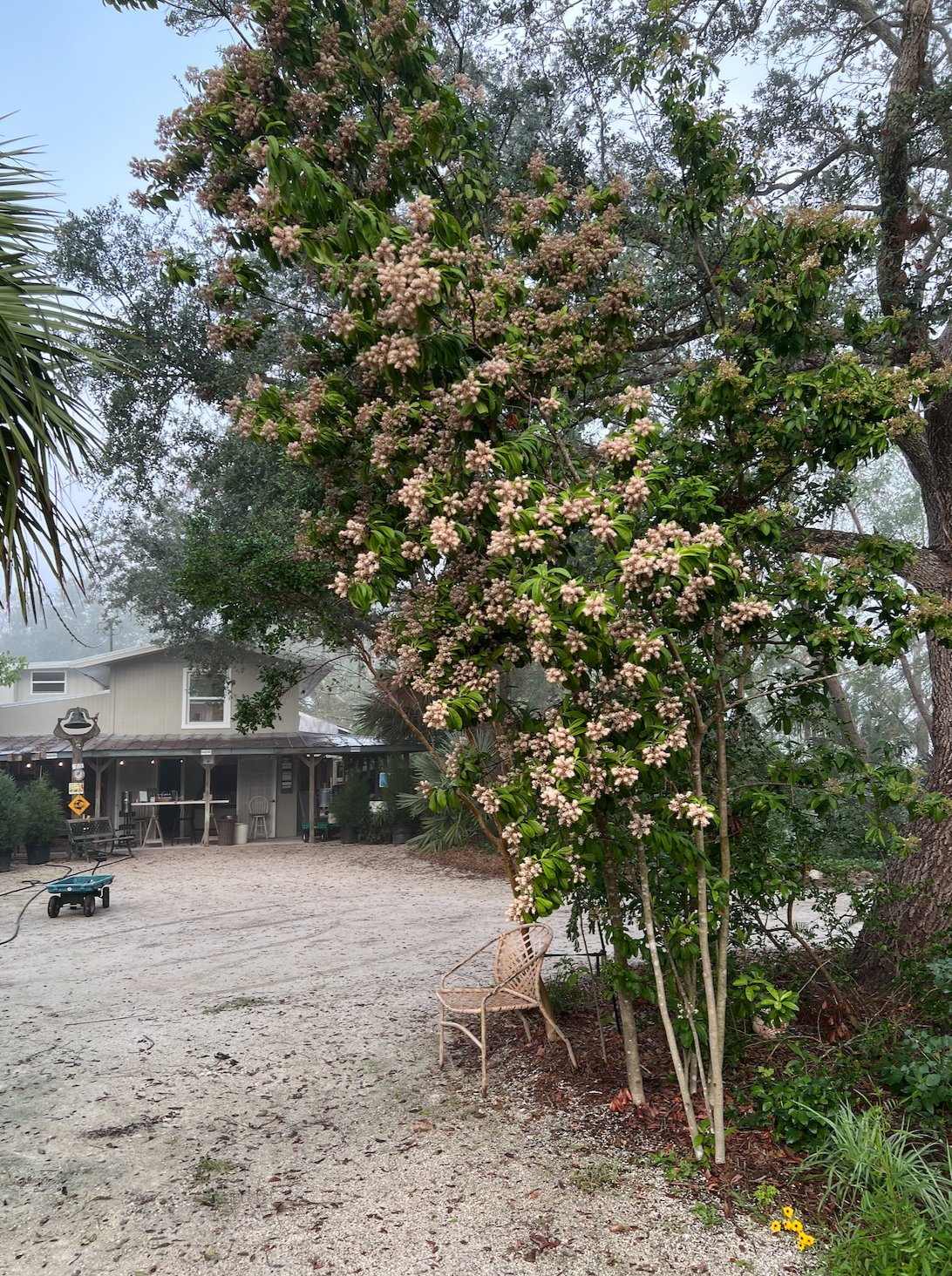
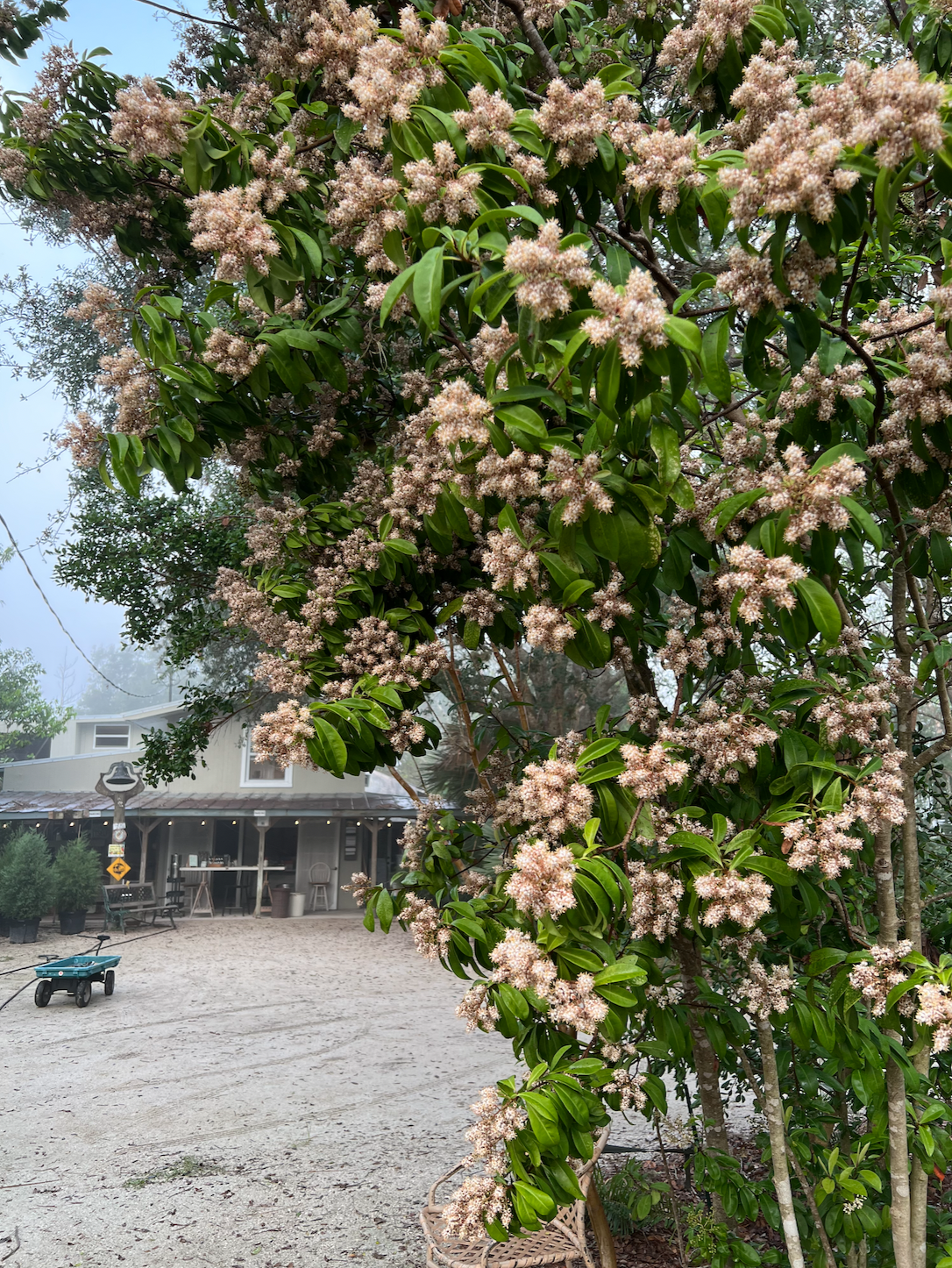
Marlberry is a native evergreen shrub that typically grows 15’ tall and thrives in both shady and sunny moist hammock environments. This attractive plant features glossy, dark green leathery leaves and produces small, super fragrant white flowers followed by clusters of shiny black berries that are an important food source for wildlife.
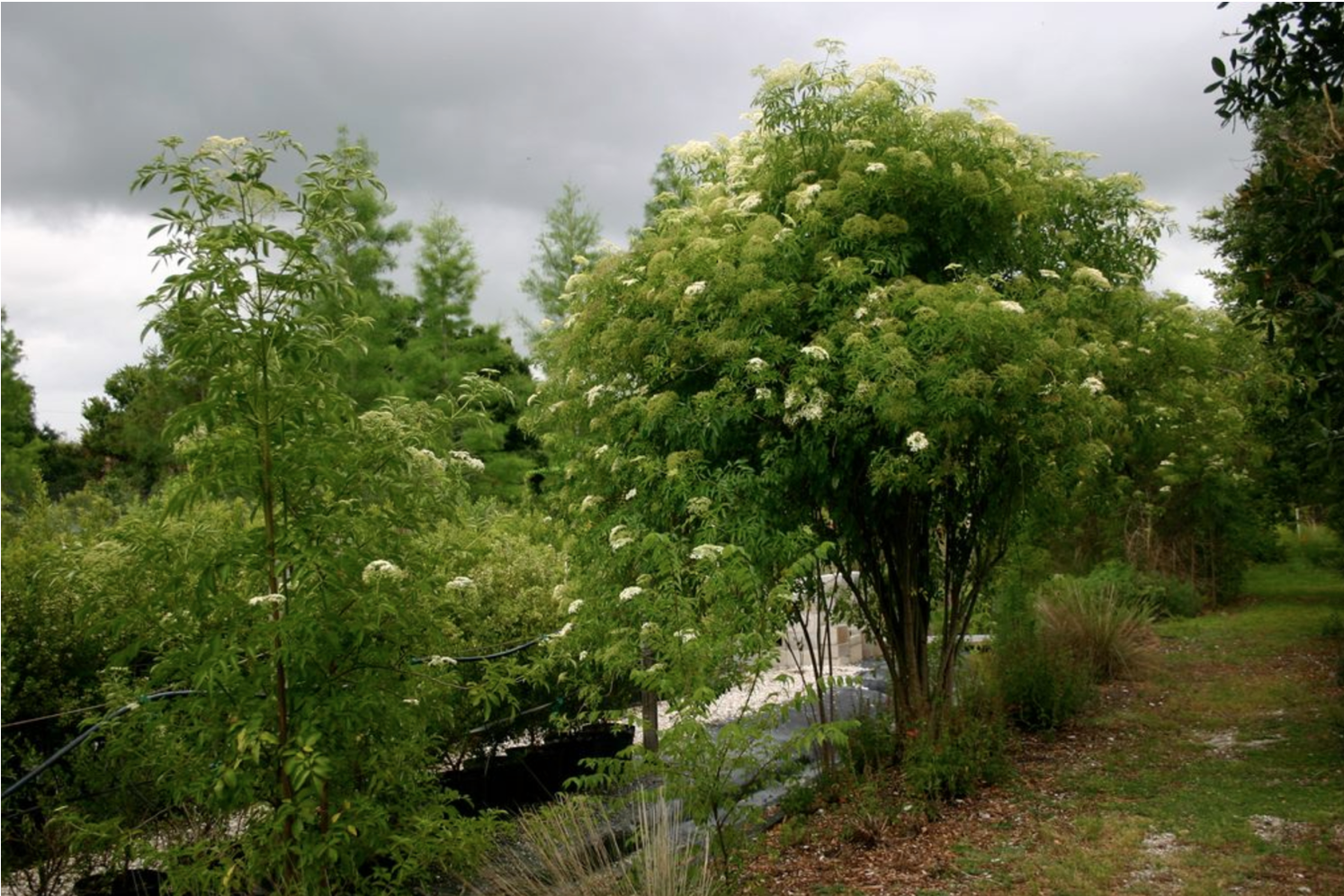

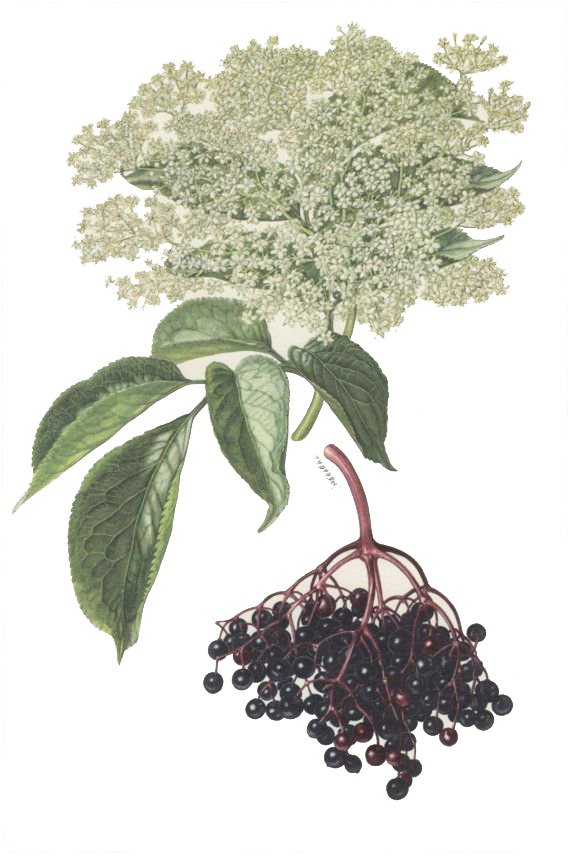
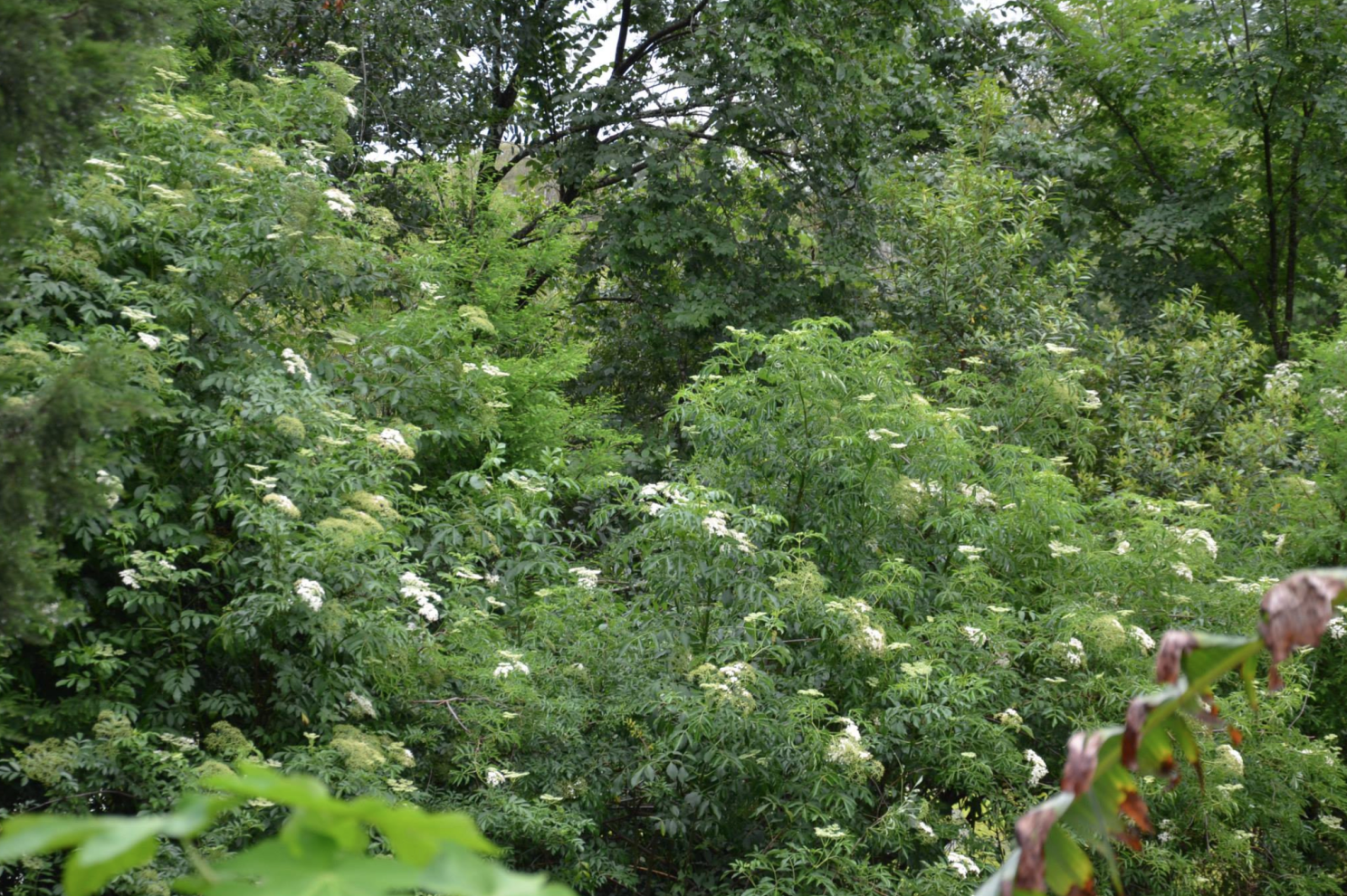
Sambucus canadensis
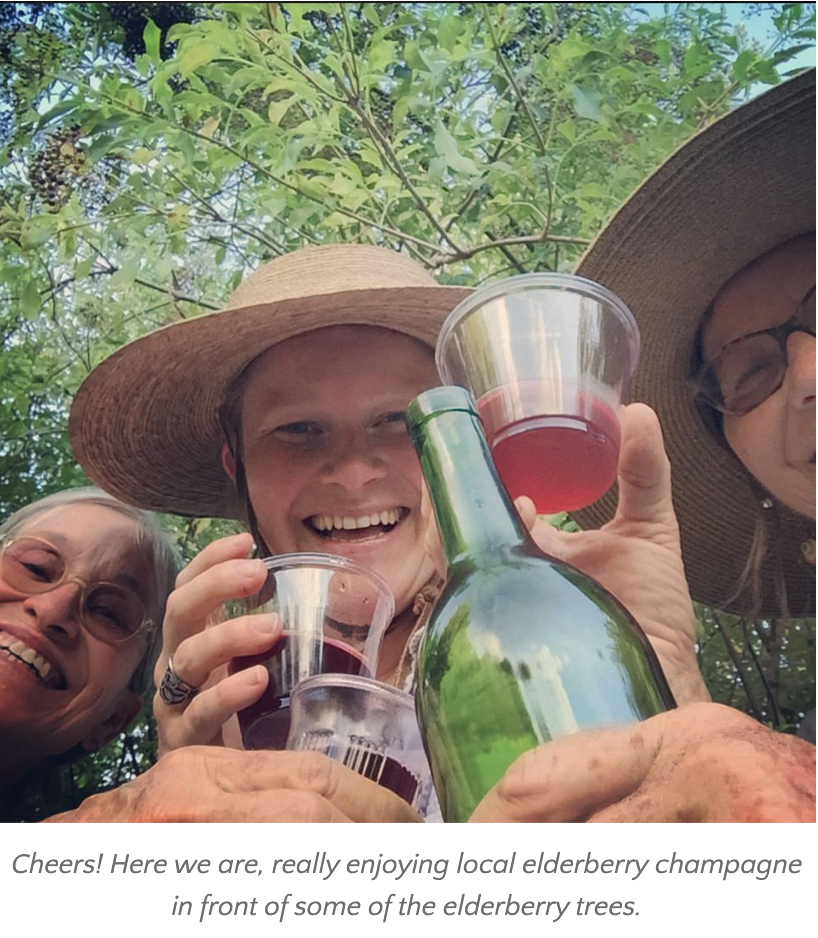
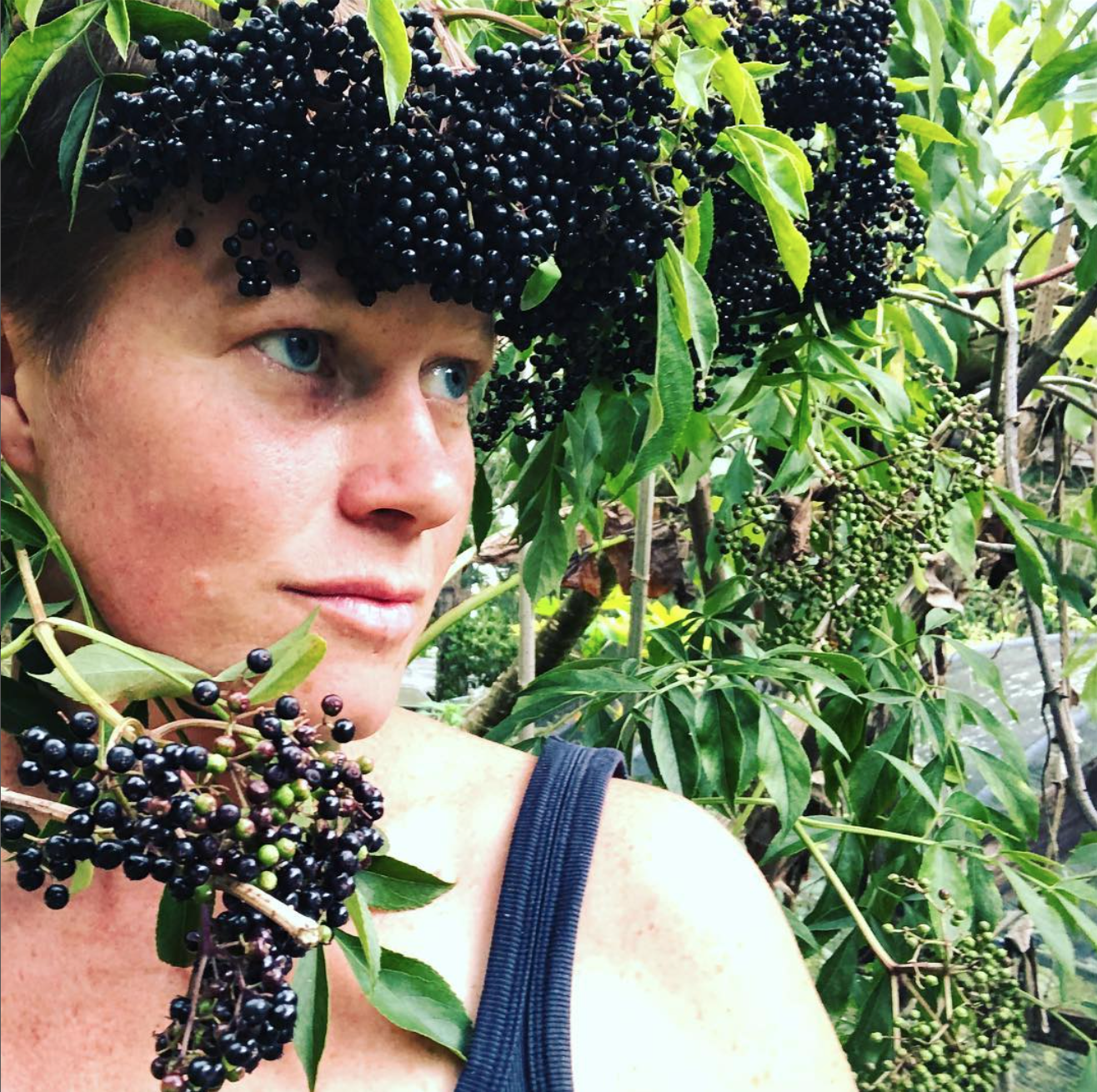
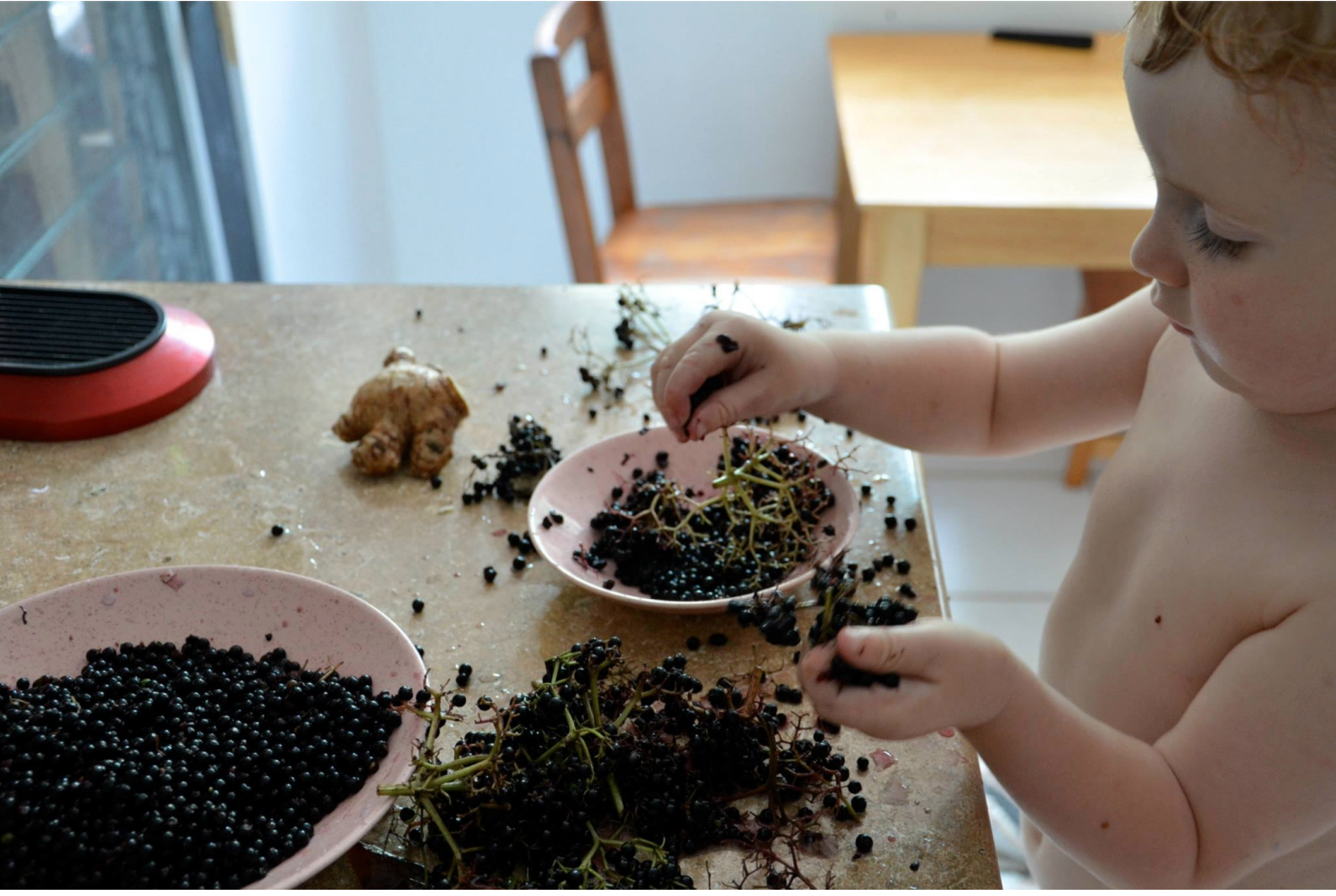
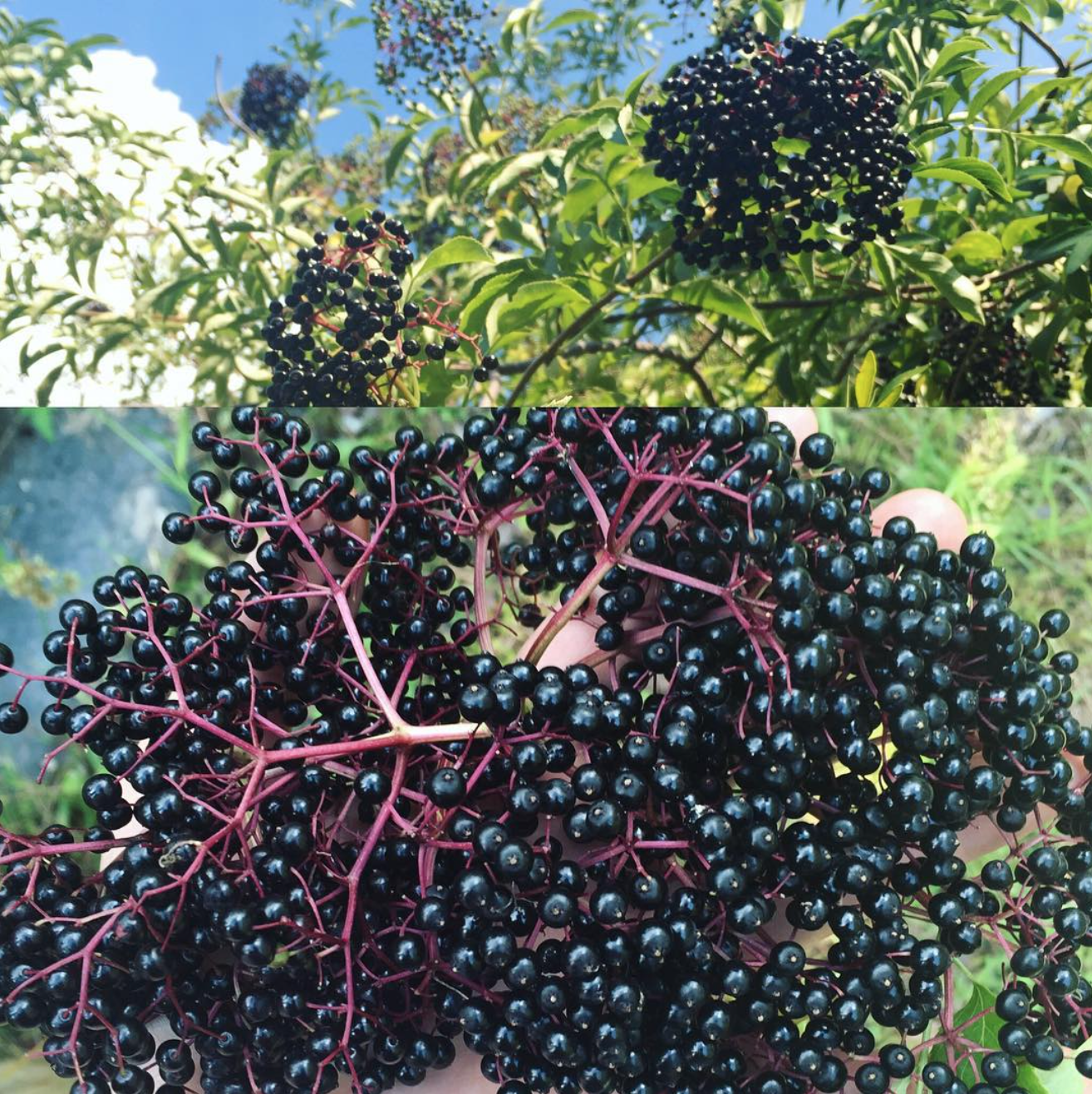
Elderberry is a fast-growing native shrub that offers beauty, food, and unmatched wildlife value. This versatile plant thrives in moist soils and adapts easily to sun or partial shade, reaching 6-20 feet to create a lush, pollinator-friendly hedge or specimen plant. In early summer, you'll enjoy massive clusters of fragrant white flowers that attract butterflies, followed by nutrient-rich dark purple berries perfect for homemade syrups and jams. As a cornerstone of the native wildlife garden, Elderberry is a favorite for songbirds and beneficial insects alike.
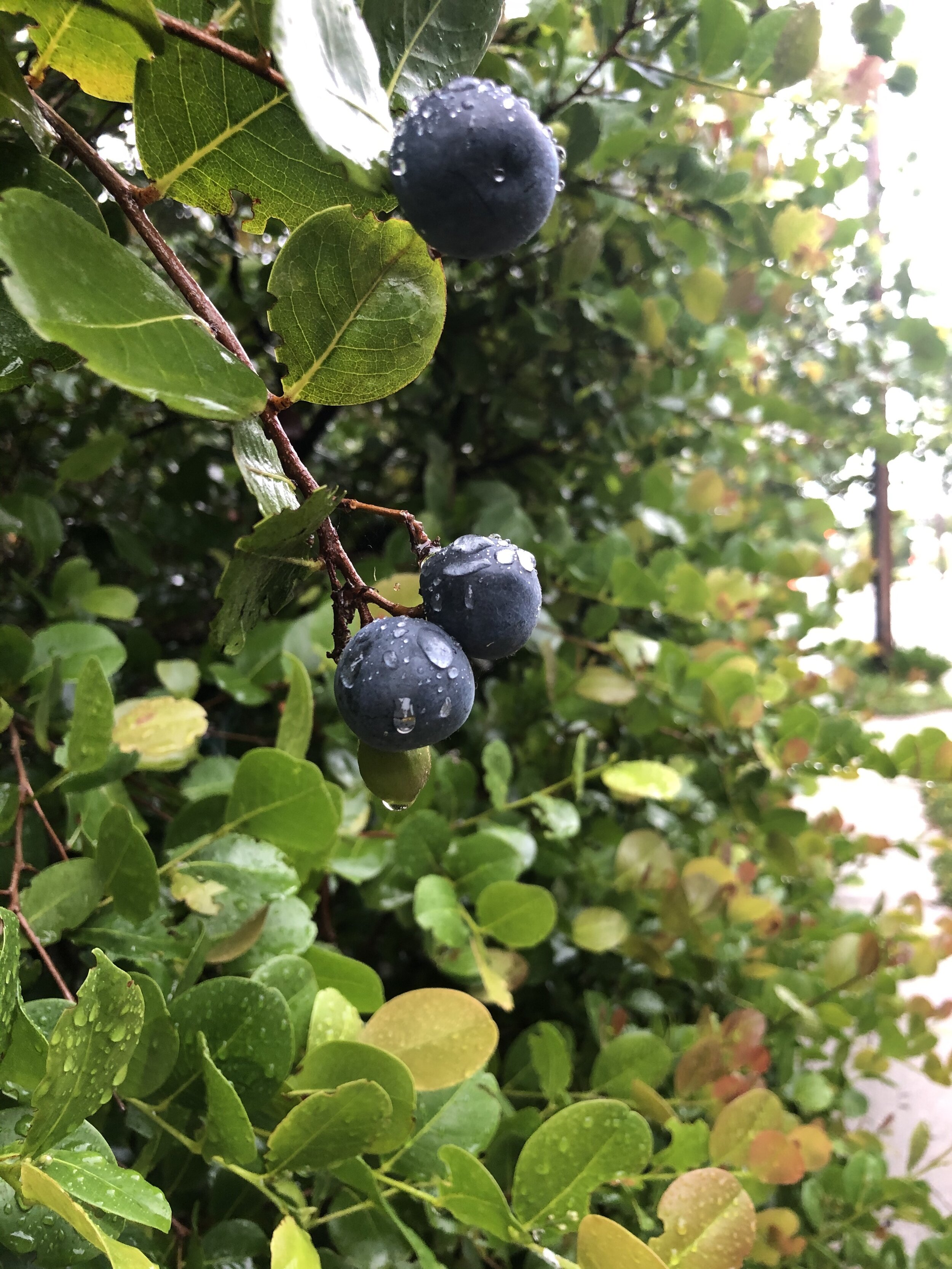
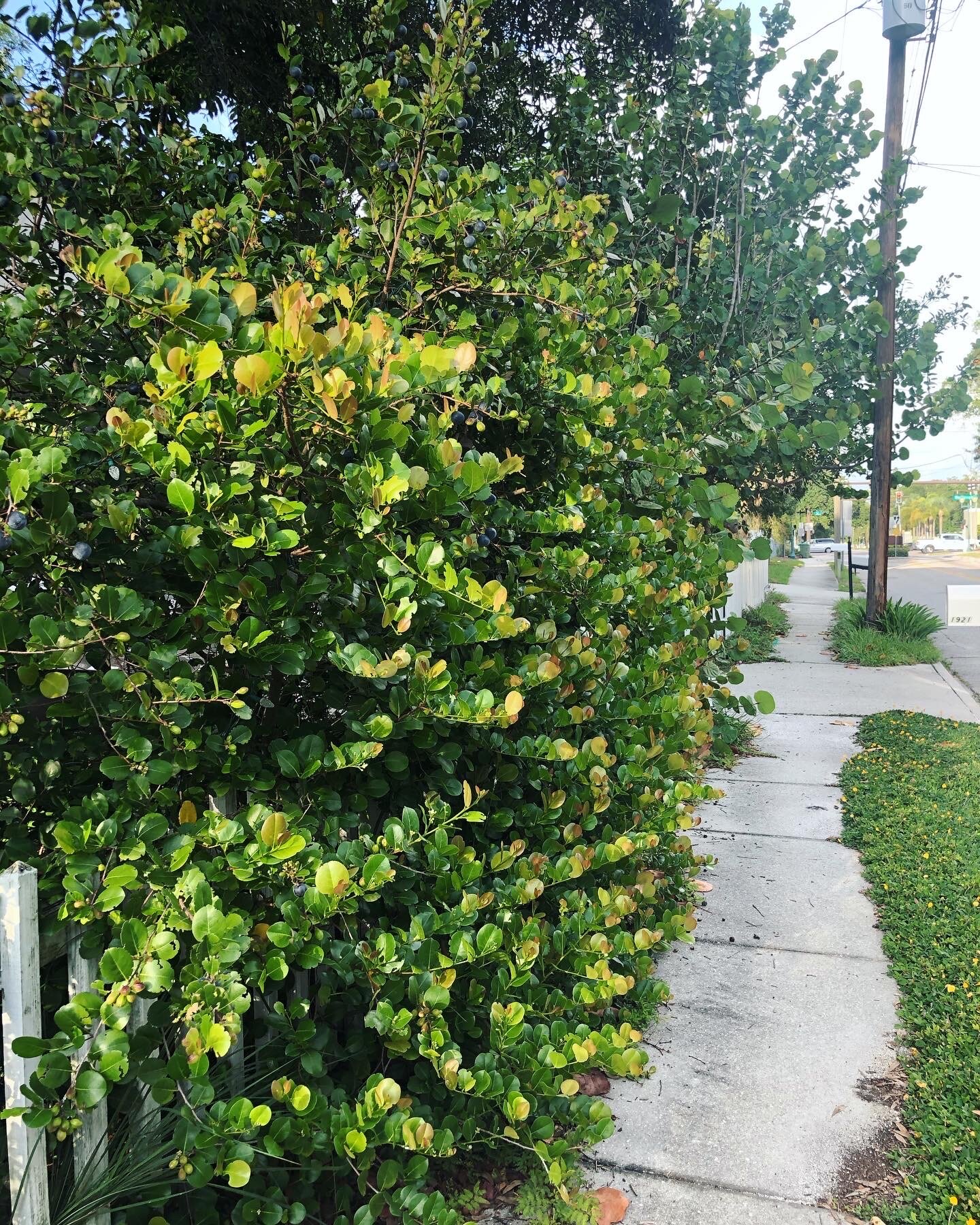
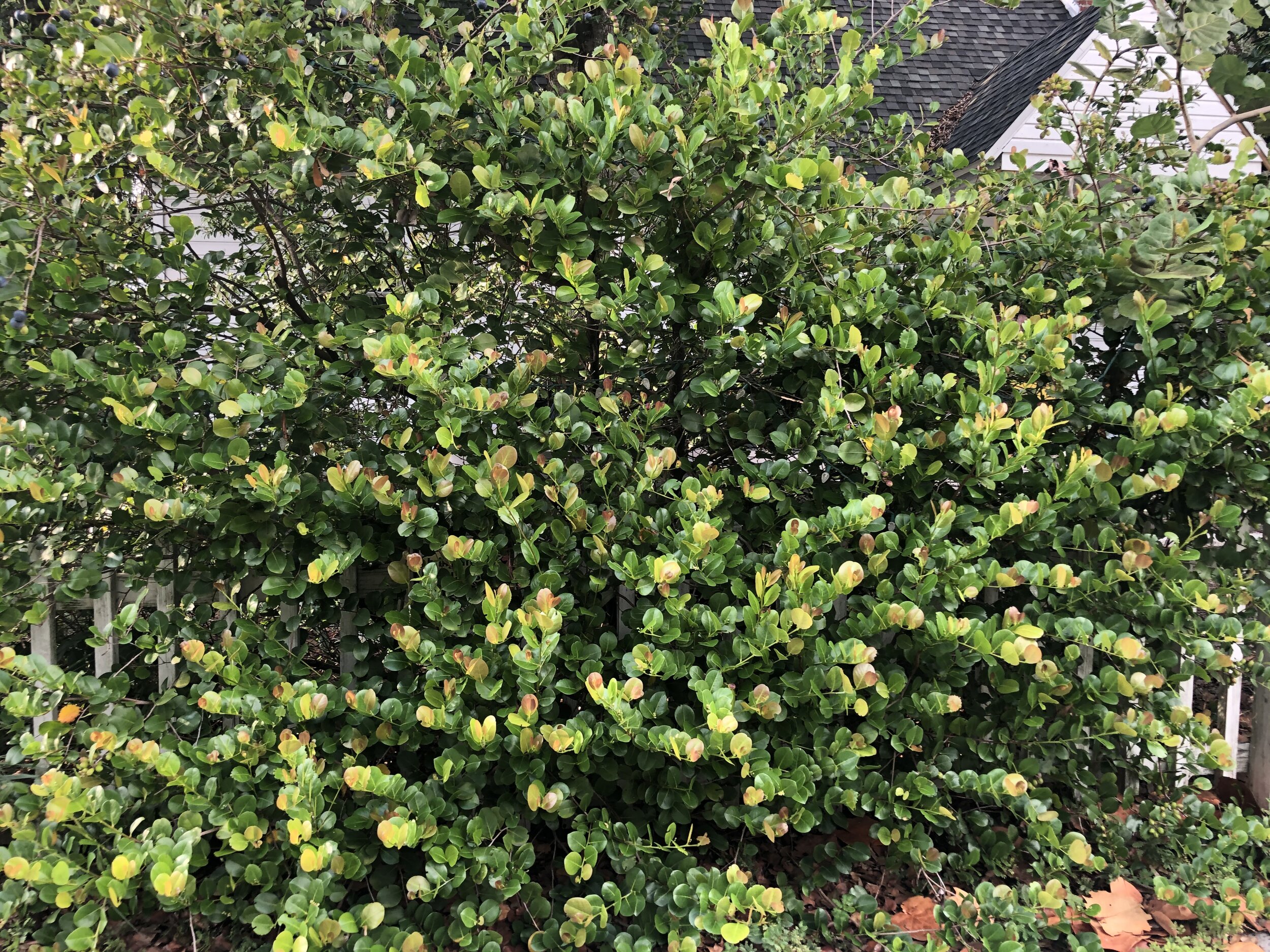
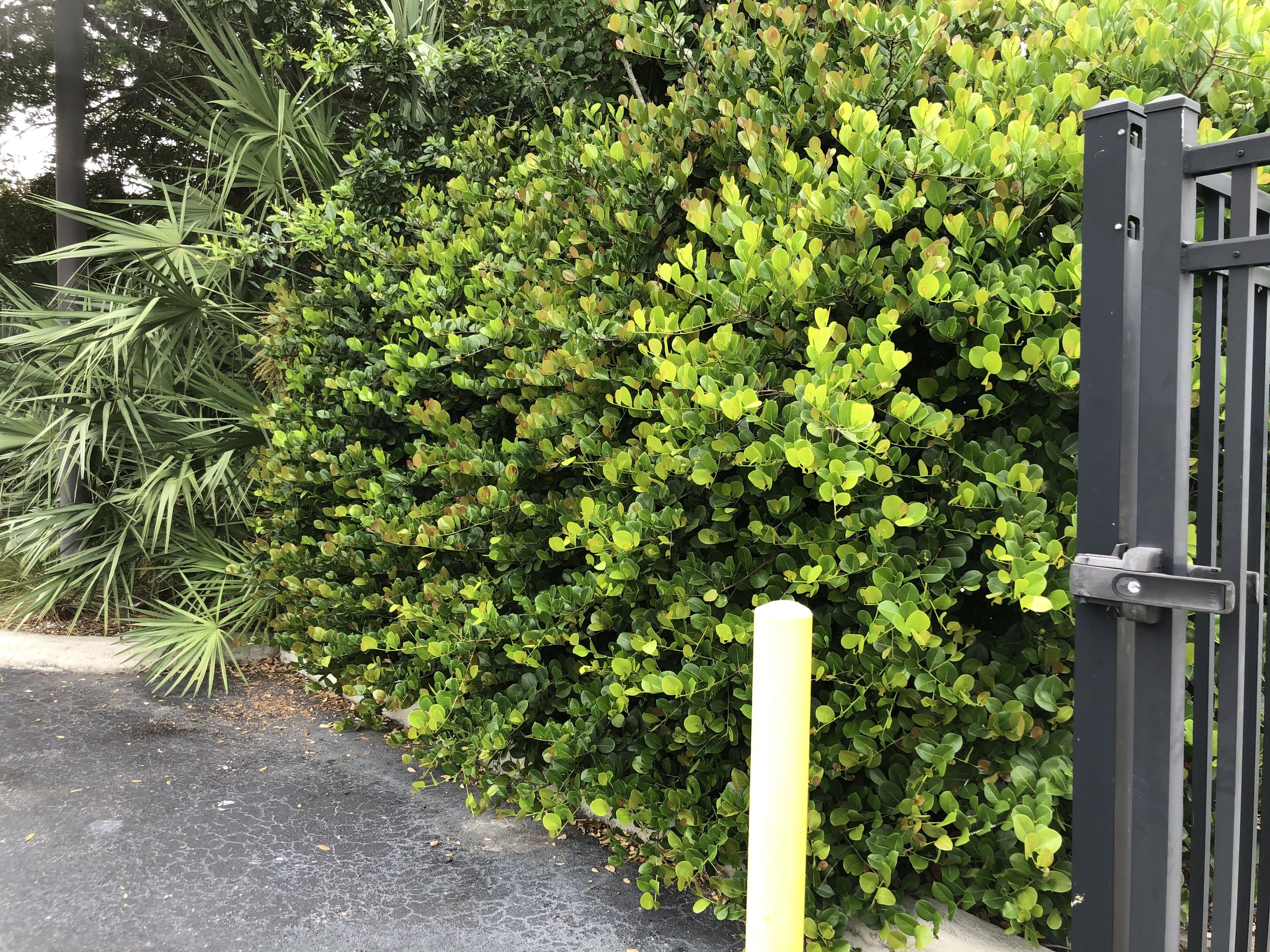
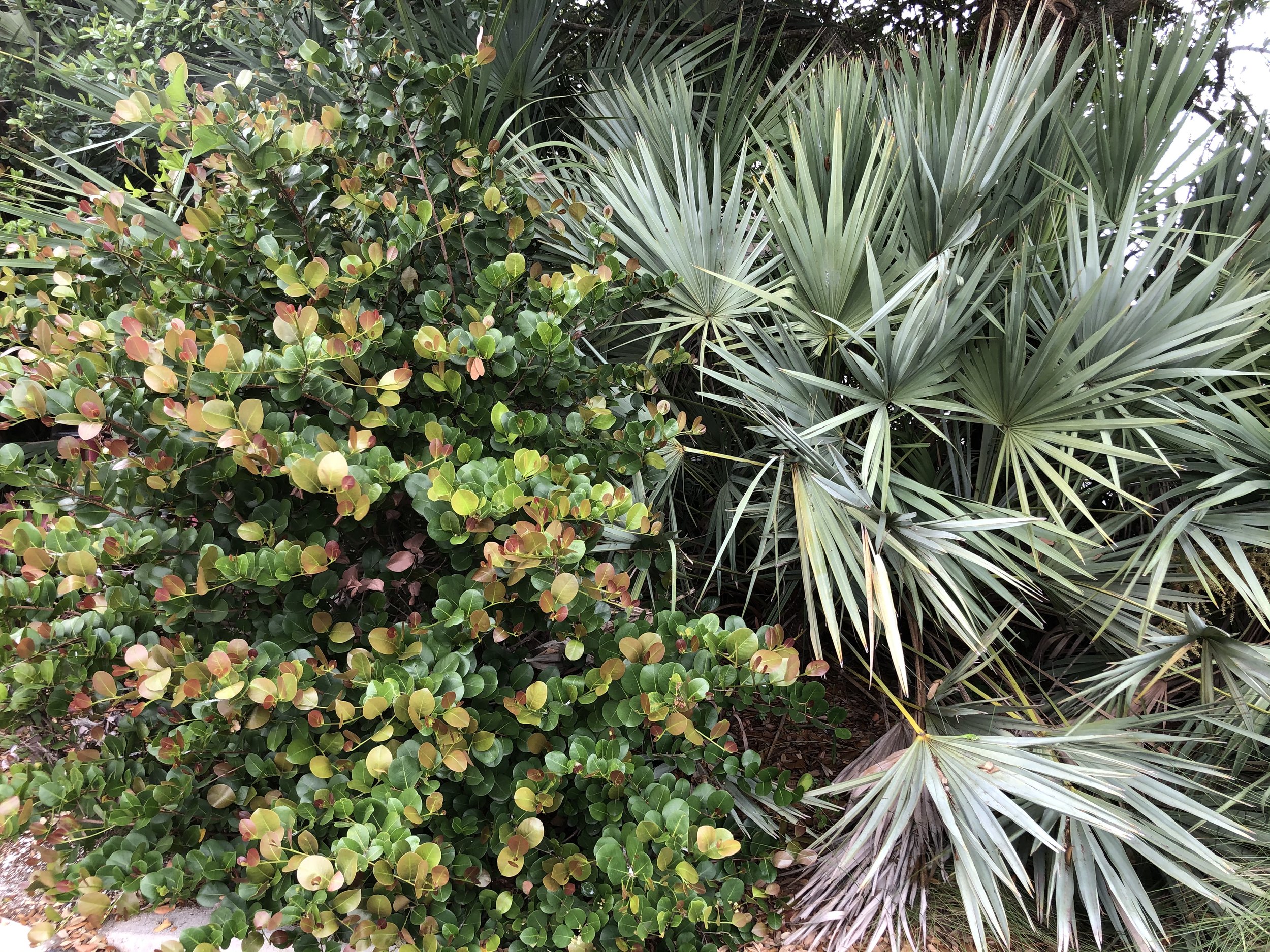
Chrysobalanus icaco ‘Red Tip’
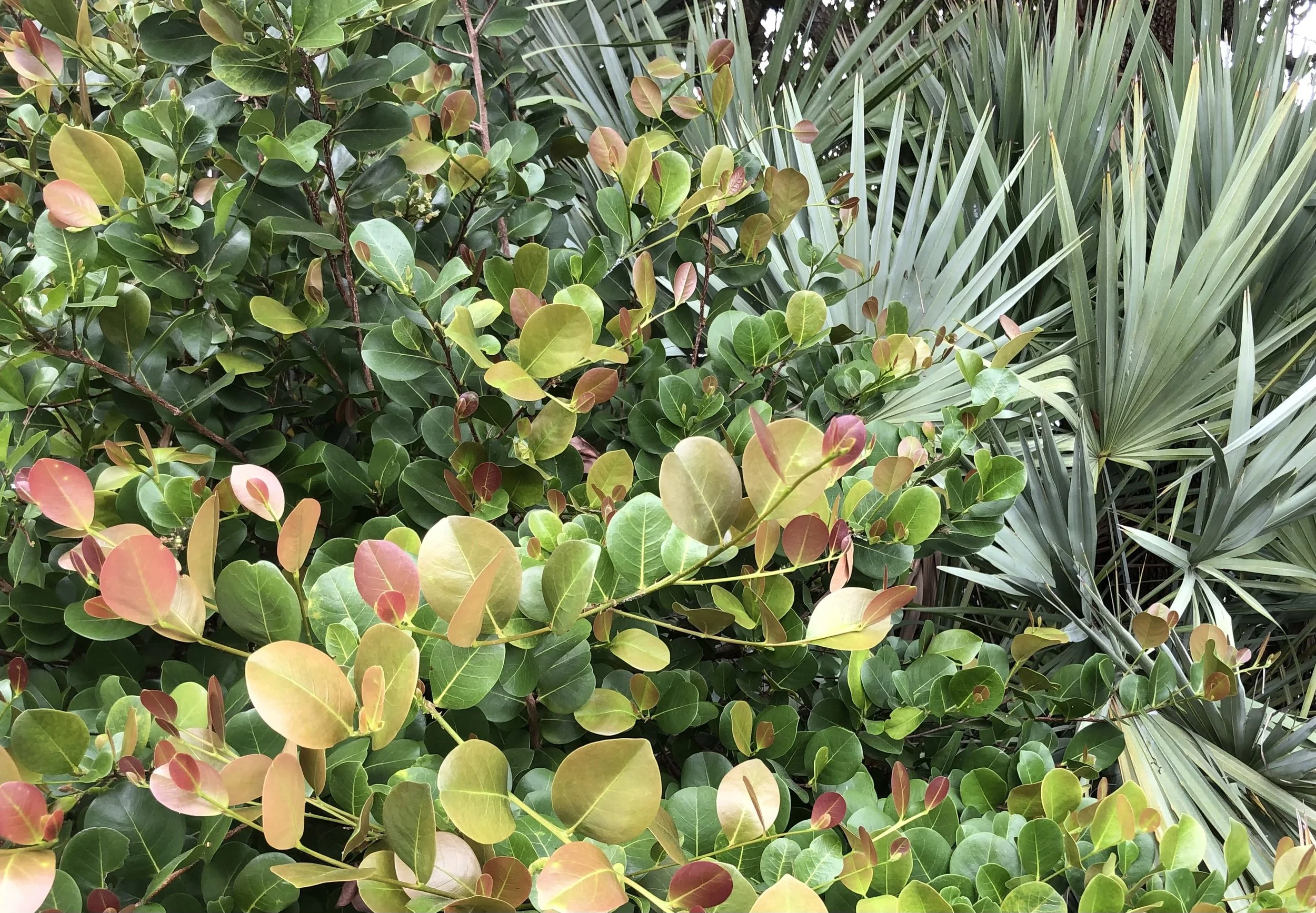
Red Tip Cocoplum is a popular cultivar of the native Florida cocoplum that grows 5’-20’ tall with an attractive upright to spreading form. This evergreen shrub is distinguished by its striking new growth that emerges bright red to orange-bronze before maturing to glossy, dark green rounded leaves. It produces clusters of small white flowers in summer followed by edible dark purple fruits that can be used for jellies and preserves. It thrives in full sun to partial shade with well-drained soils, making it an excellent choice for hedging, privacy screens, and buffer plantings in zones 10-11.
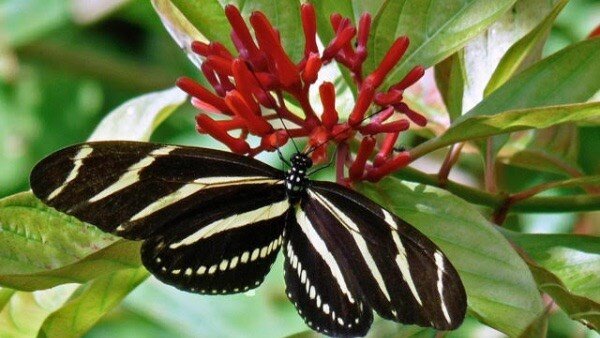
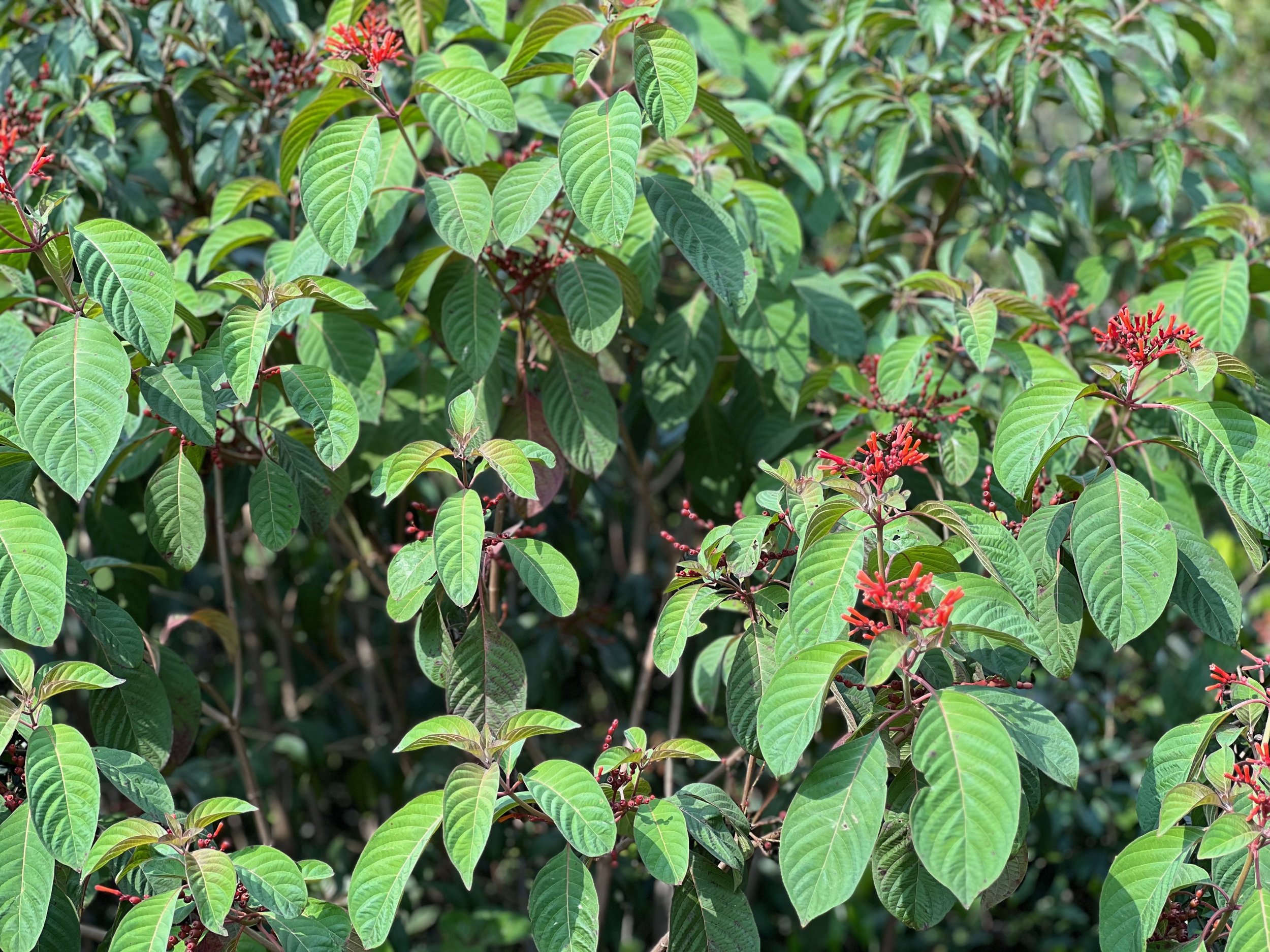
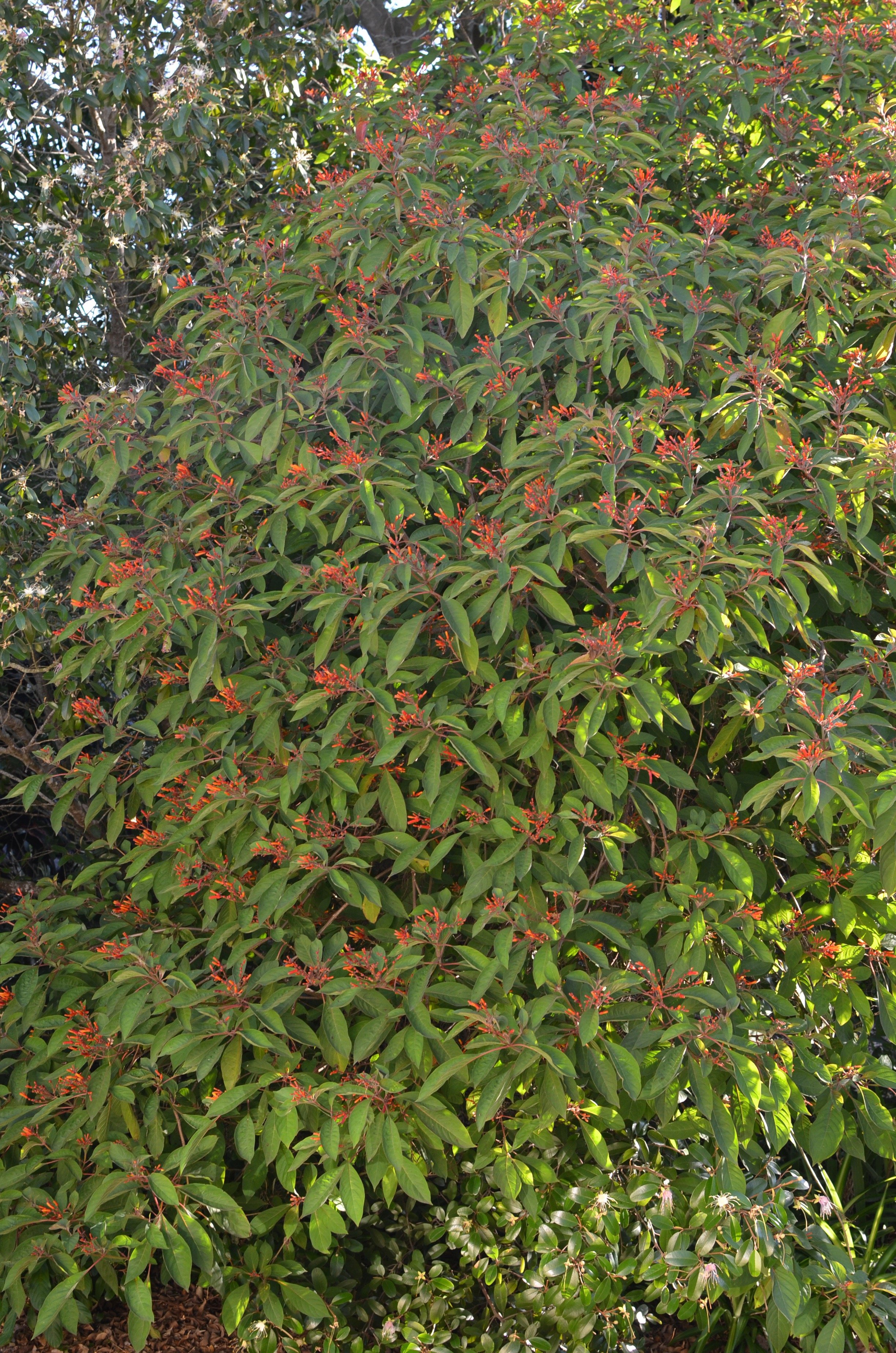


Hamelia patens
Firebush is a native, evergreen, 12’, prunable, shrub. It does best in dry to moist (well-drained) soils, sun/part shade, and is very fast-growing. With year-round, showy flowers that attract hummingbirds and butterflies, and berries that serve as a food source for song birds, Firebush makes a lovely addition to many Florida landscapes, especially pollinator and hummingbird gardens. In addition to its ecological benefits, the fruit is edible and has a long history of medicinal and industrial uses. Ripe fruit is black, edible raw and can be made into a syrup or wine!
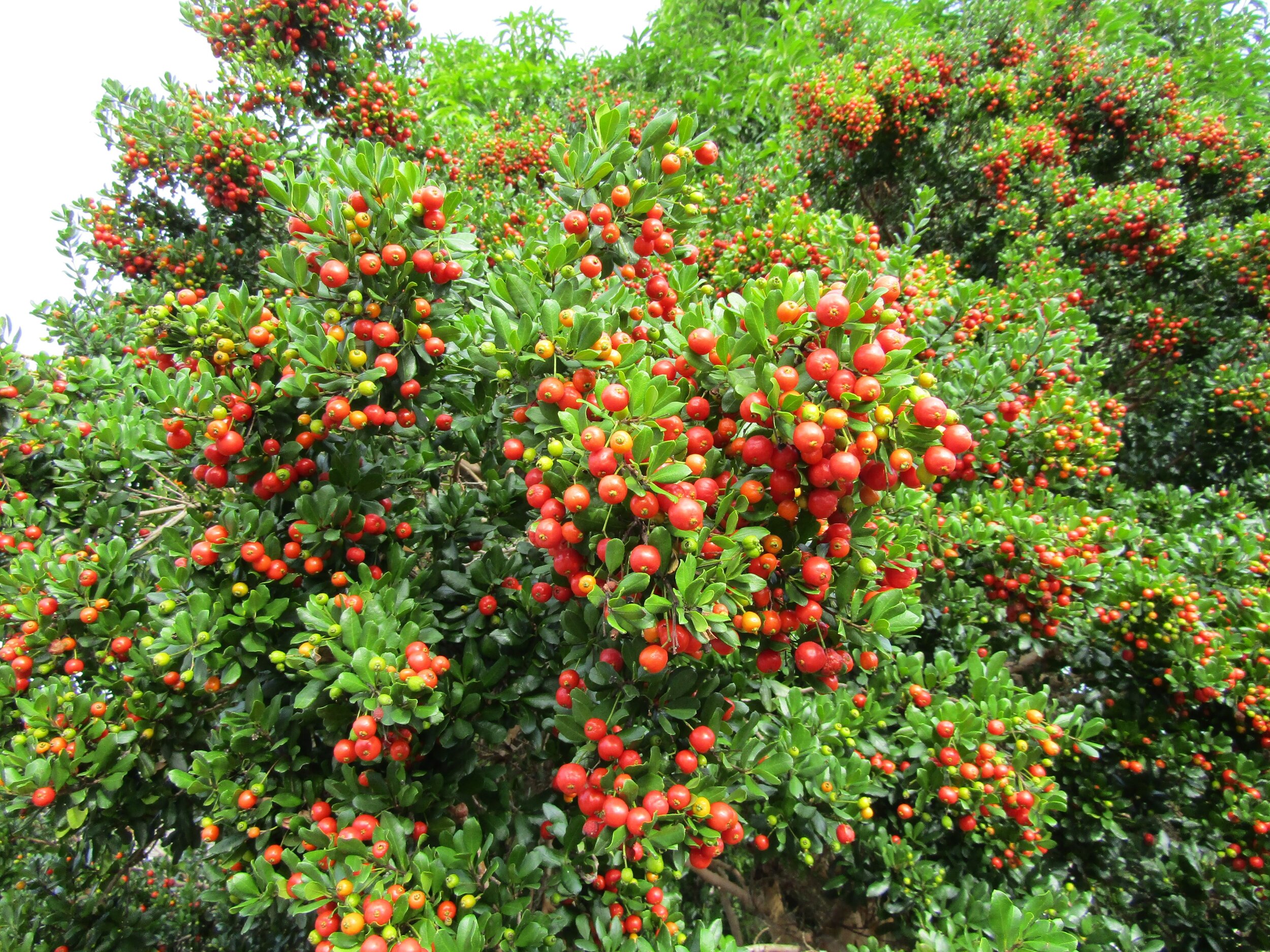

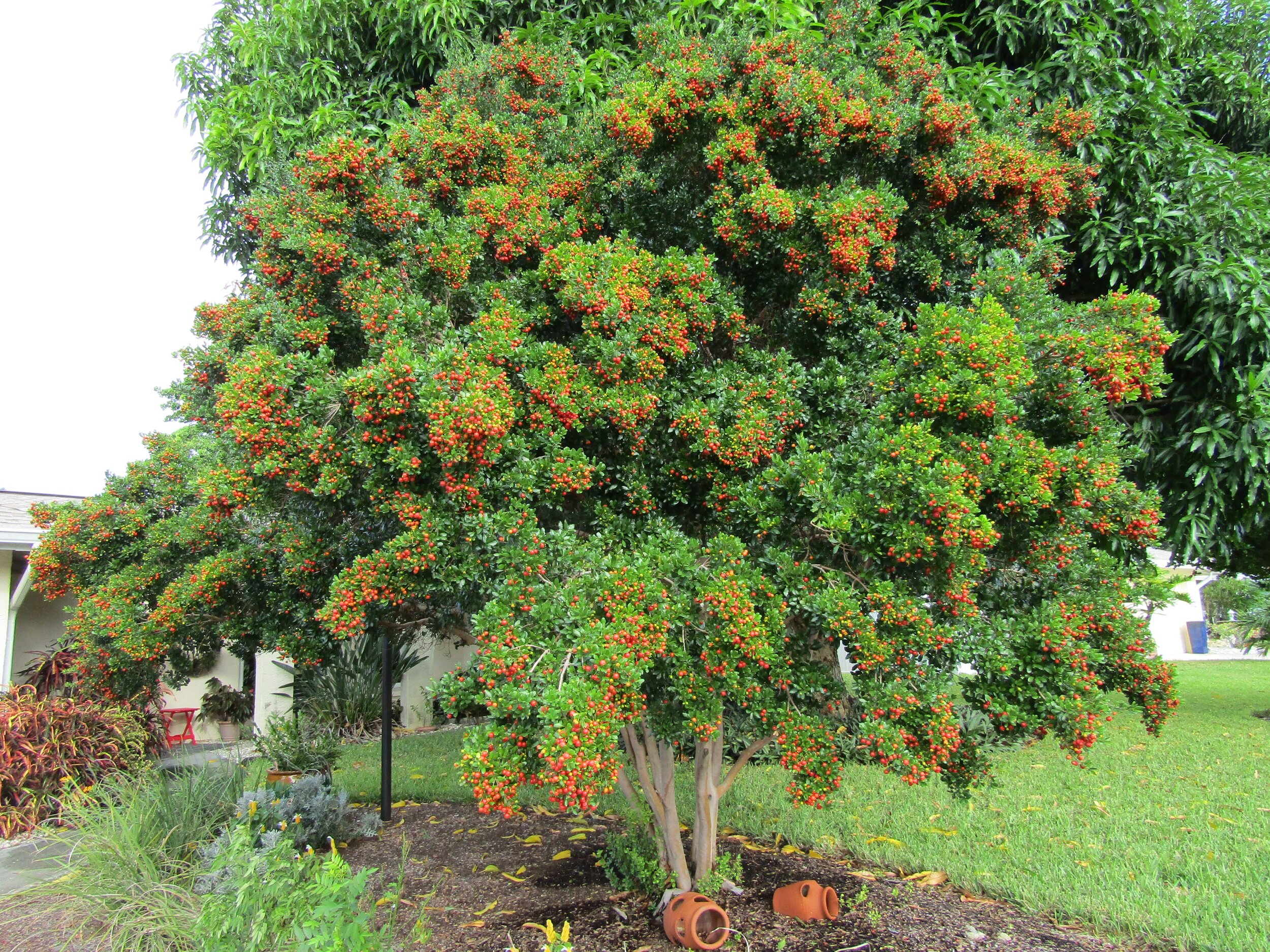
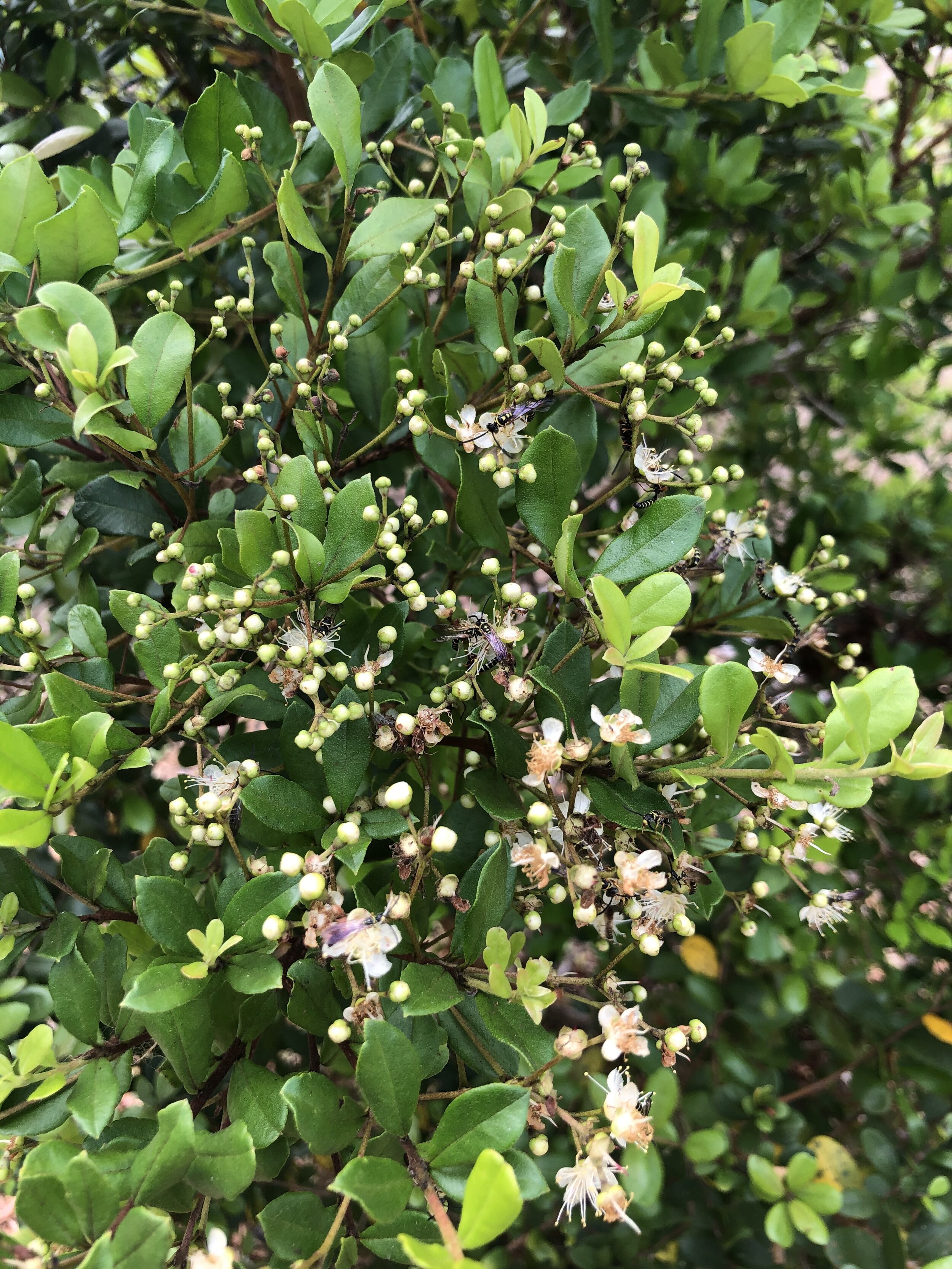
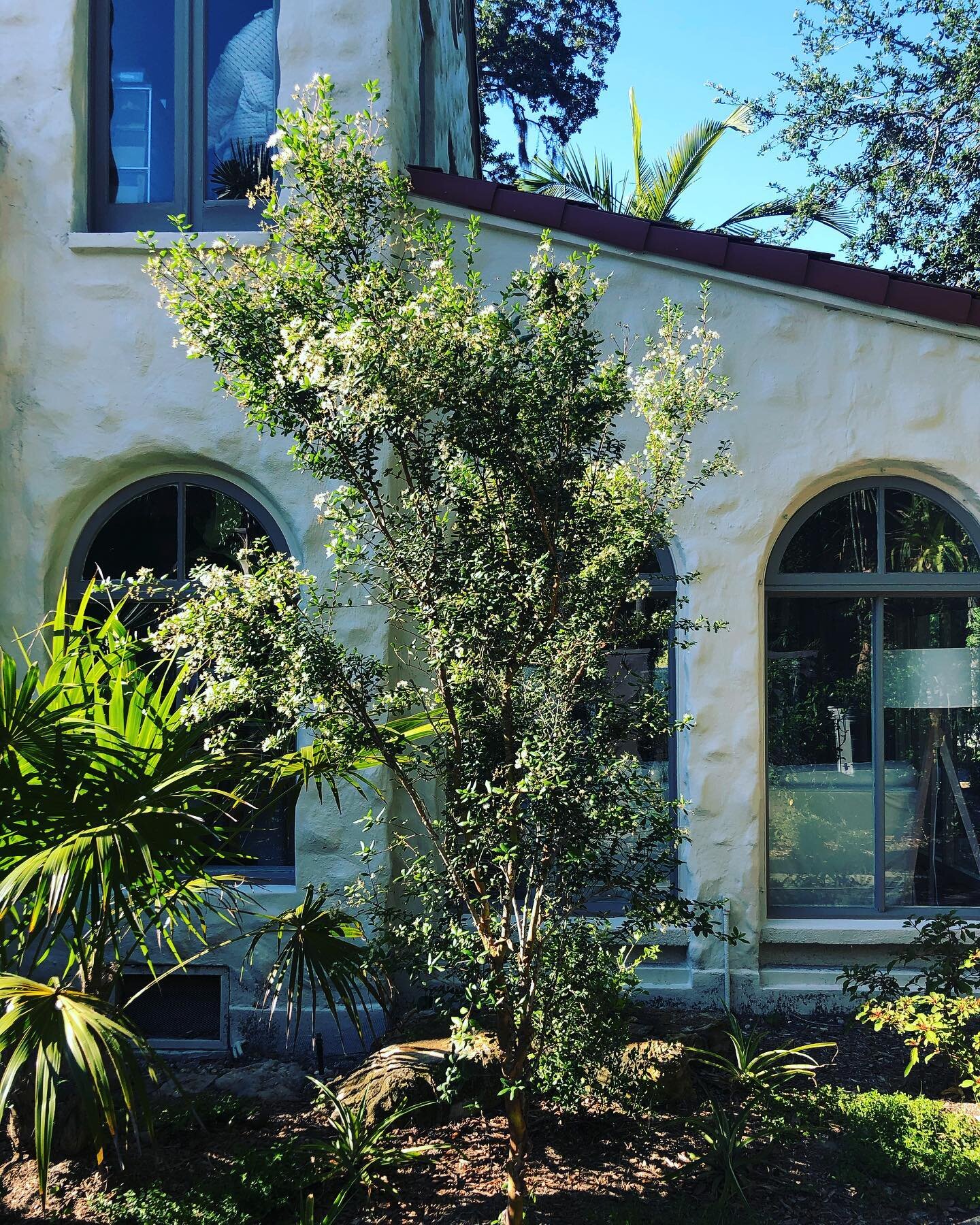
Myrcianthes fragrans
Simpson's Stopper is an evergreen shrub or small tree native to Florida and the Caribbean that grows 5’-20’ tall with glossy, dark green leaves. The new growth emerges in attractive colors ranging from pale chartreuse to deep wine red, and the leaves emit a spicy, nutmeg-like fragrance when crushed. In spring, it produces clusters of fragrant white flowers followed by orange to red berries that attract birds including cardinals, blue jays, and mockingbirds. The plant features distinctive exfoliating bark that flakes off to reveal reddish-brown underneath, providing year-round visual interest. Extremely versatile and low-maintenance, it thrives in full sun to partial shade, tolerates salt, drought, and poor drainage, and can be used as a hedge, specimen tree, or even container plant in zones 8b-11.
Eugenia aggregata
Cherry of the Rio Grande is a non-native, Florida-friendly evergreen fruit tree that grows to be 10’-20’ tall. They grow best in full sun and moist, but well-draining, slightly acidic rich soil. They have fragrant, white flowers that are followed by small, dark purple to almost black fruit with a classic cherry taste.
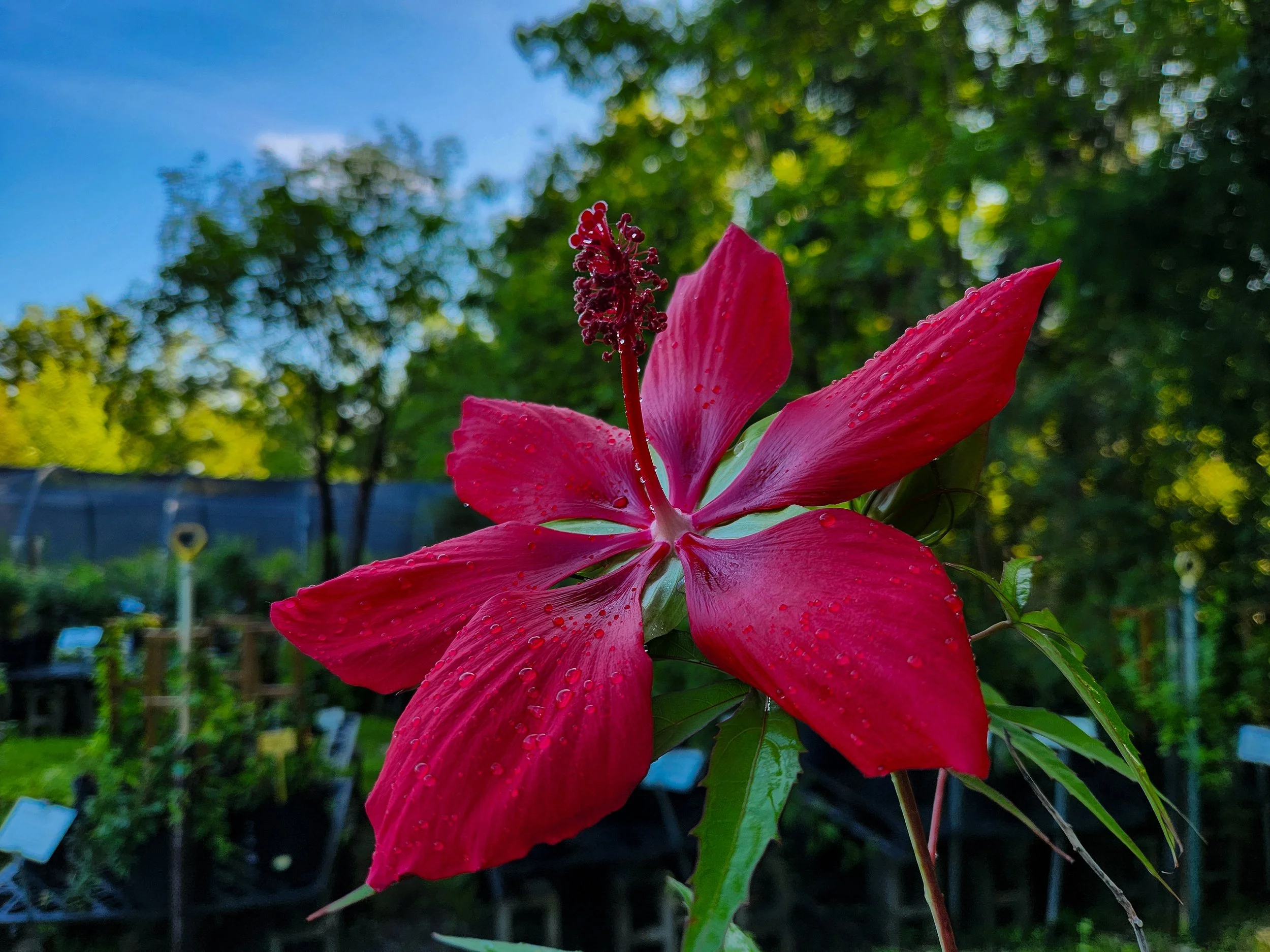
Hibiscus coccineus
Scarlet Hibiscus is a native, perennial flowering shrub that grows 3’-8’ tall and 2’-4’ wide, with large, lobed leaves and large red star-shaped, long-lasting flowers that bloom from mid-summer to early fall. They grow best in full sun to partial shade with moist to wet, rich soil. They naturally grow in very wet areas and are very tolerant of soggy soil, but they can adapt to average soil environments with adequate watering. They are very attractive to Ruby Throated Hummingbirds, butterflies, and native bees!
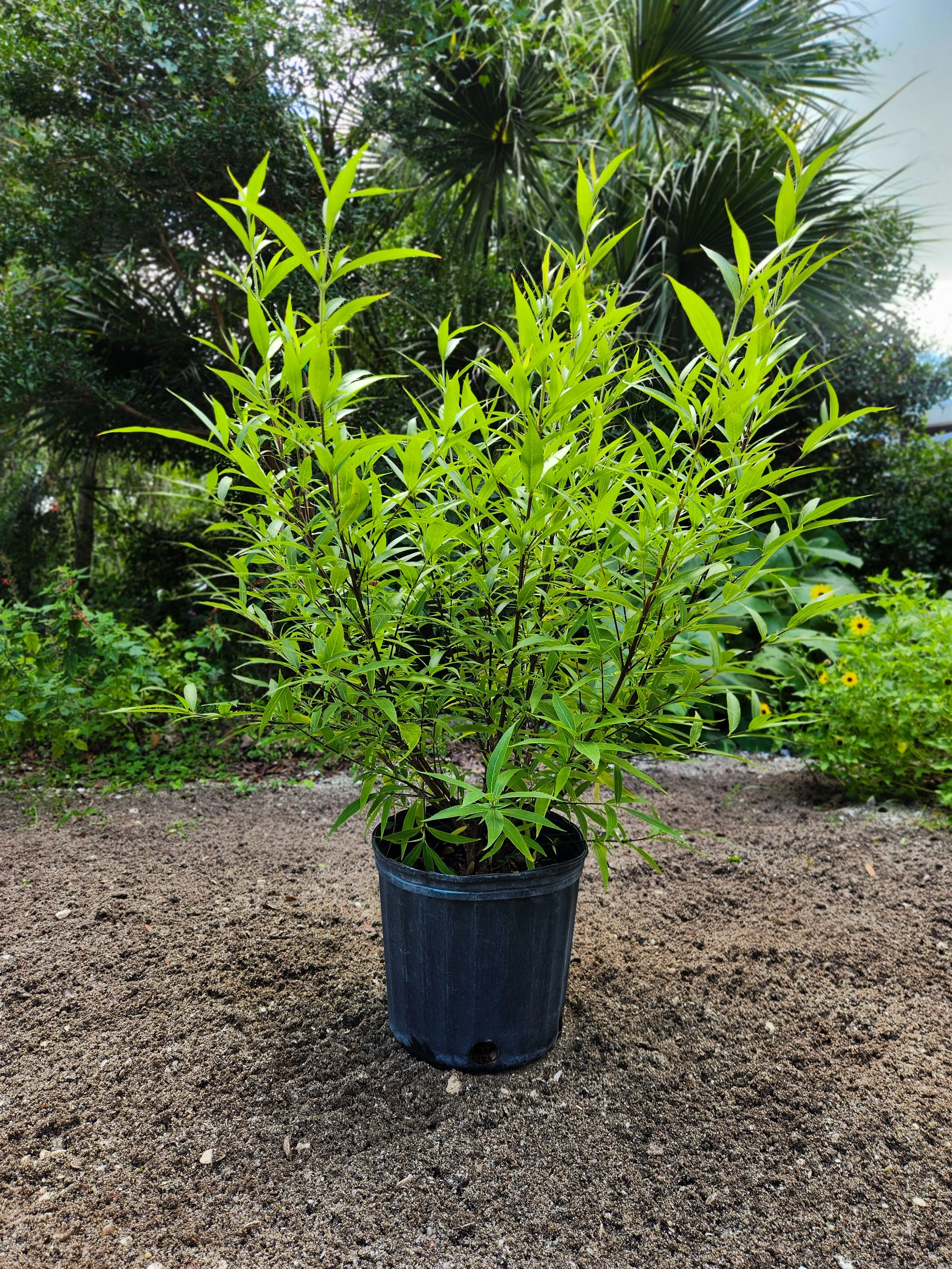
Roneletia leucophylla
Panama Rose is a Florida-friendly, flowering, evergreen shrub, aka “Bush Penta”. They reach heights of 3’-6’, but they are easy to keep at 3’. These plants thrive in full sun to part shade, and do well in average soil. Drought tolerant once established. They have fragrant, bright pink flowers that bloom year-round, and are a butterfly favorite! They attract hummingbirds, butterflies, and other pollinators.
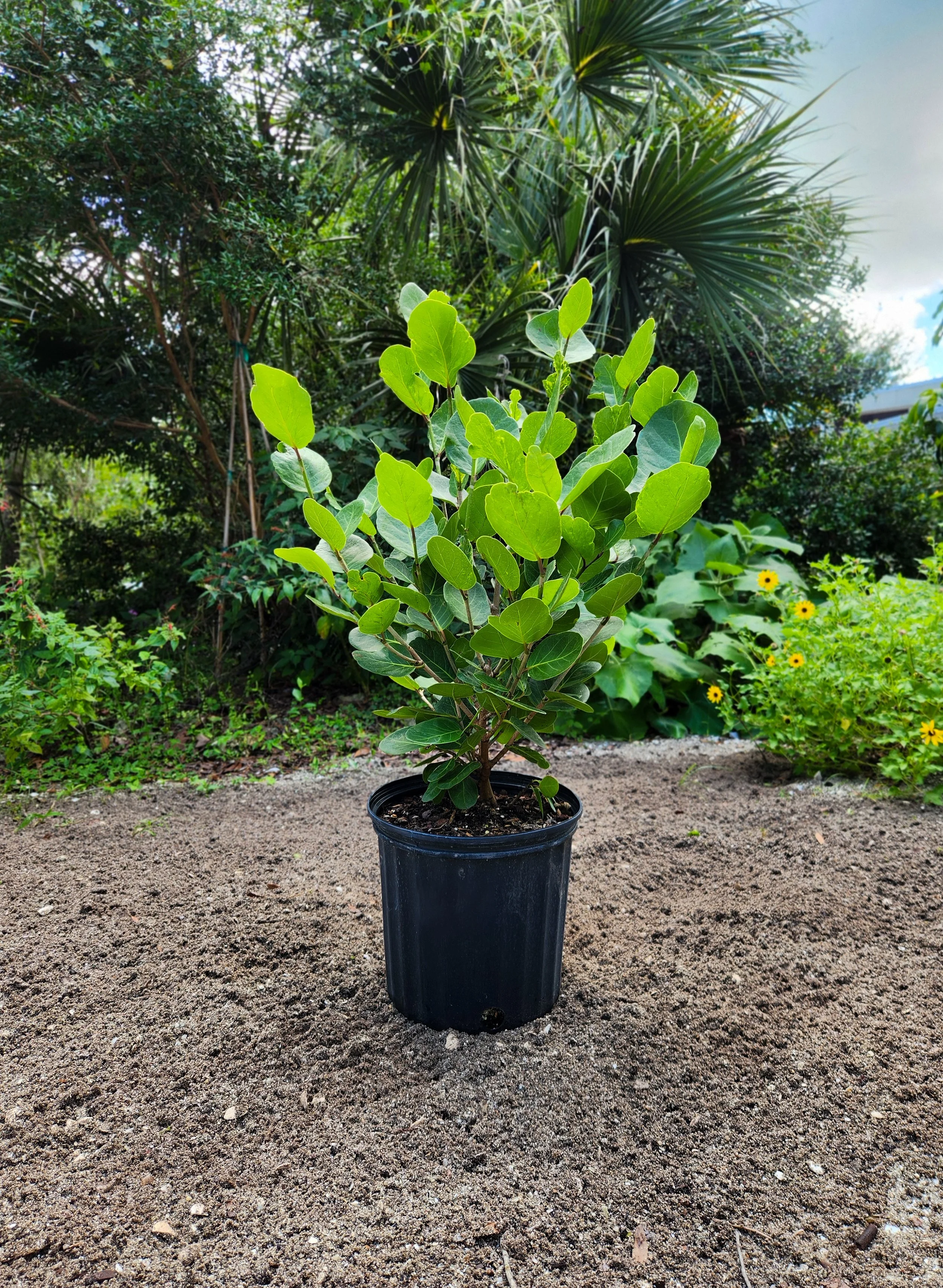
Coccoloba uvifera x diversifolia
Sea Plum is a naturally occurring hybrid between Sea Grape and Pigeon Plum that combines the best traits of both native Florida parents. This evergreen shrub typically grows 6’-12’ tall and 4’-6’ wide, though it has the potential to reach larger sizes given its parentage. It features attractive foliage that blends characteristics of both parents and produces fruit on female plants that birds readily consume. Exceptionally hardy and low-maintenance, it thrives in full sun to light shade with well-draining sandy soils and demonstrates excellent tolerance to wind, salt spray, and drought conditions. This versatile hybrid works well as a specimen plant or screening hedge and is particularly valuable for beachfront landscapes in zones 9-11.
No results match your search. Try removing a few filters.